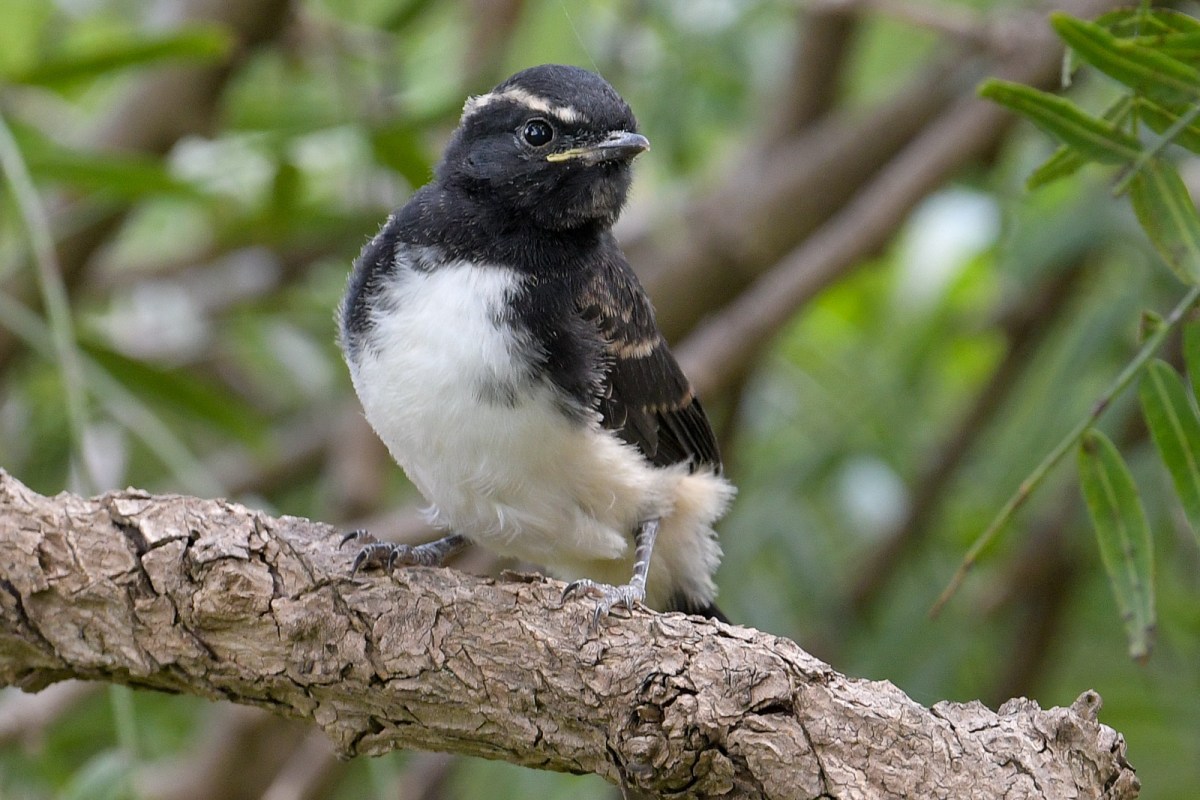
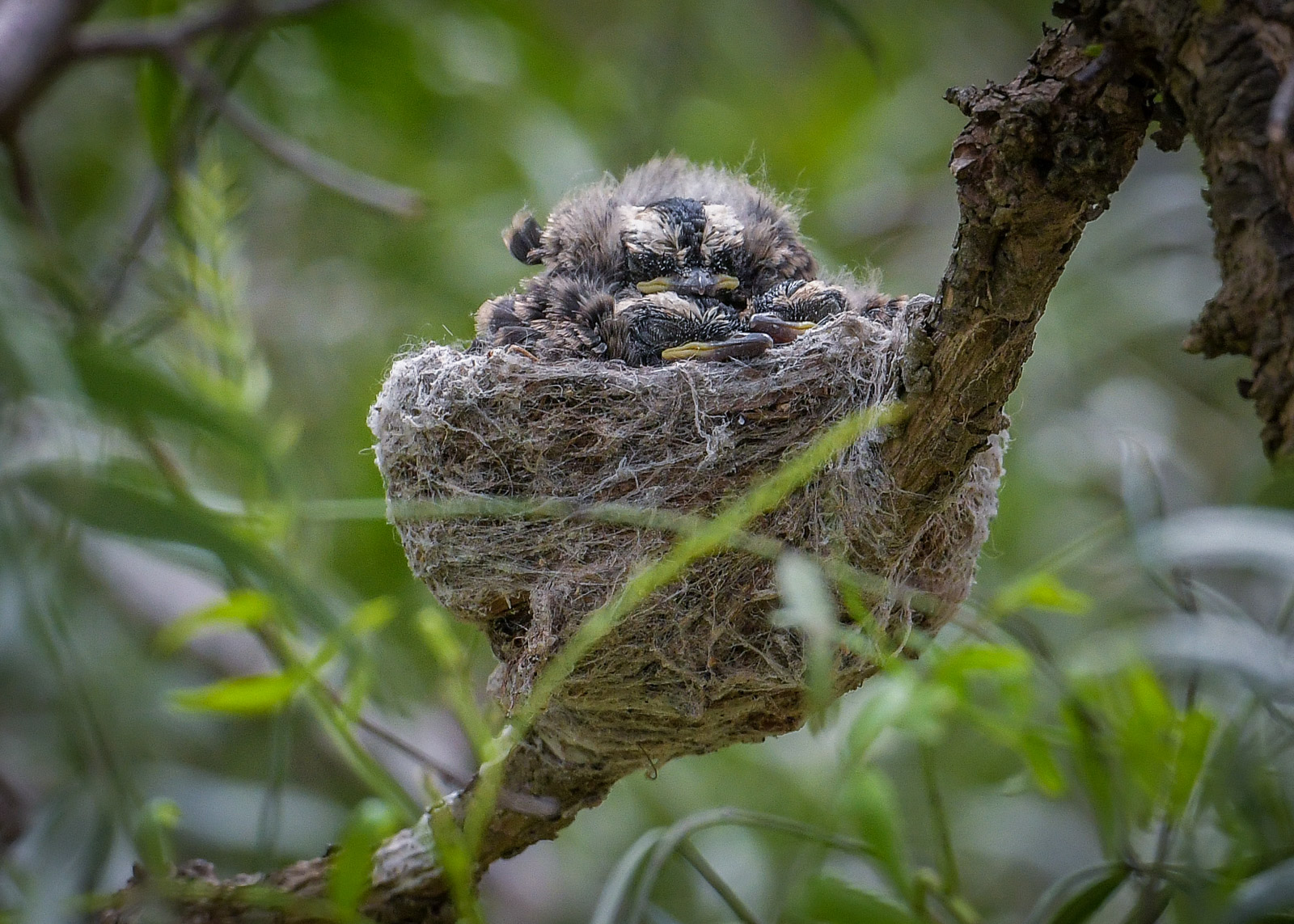
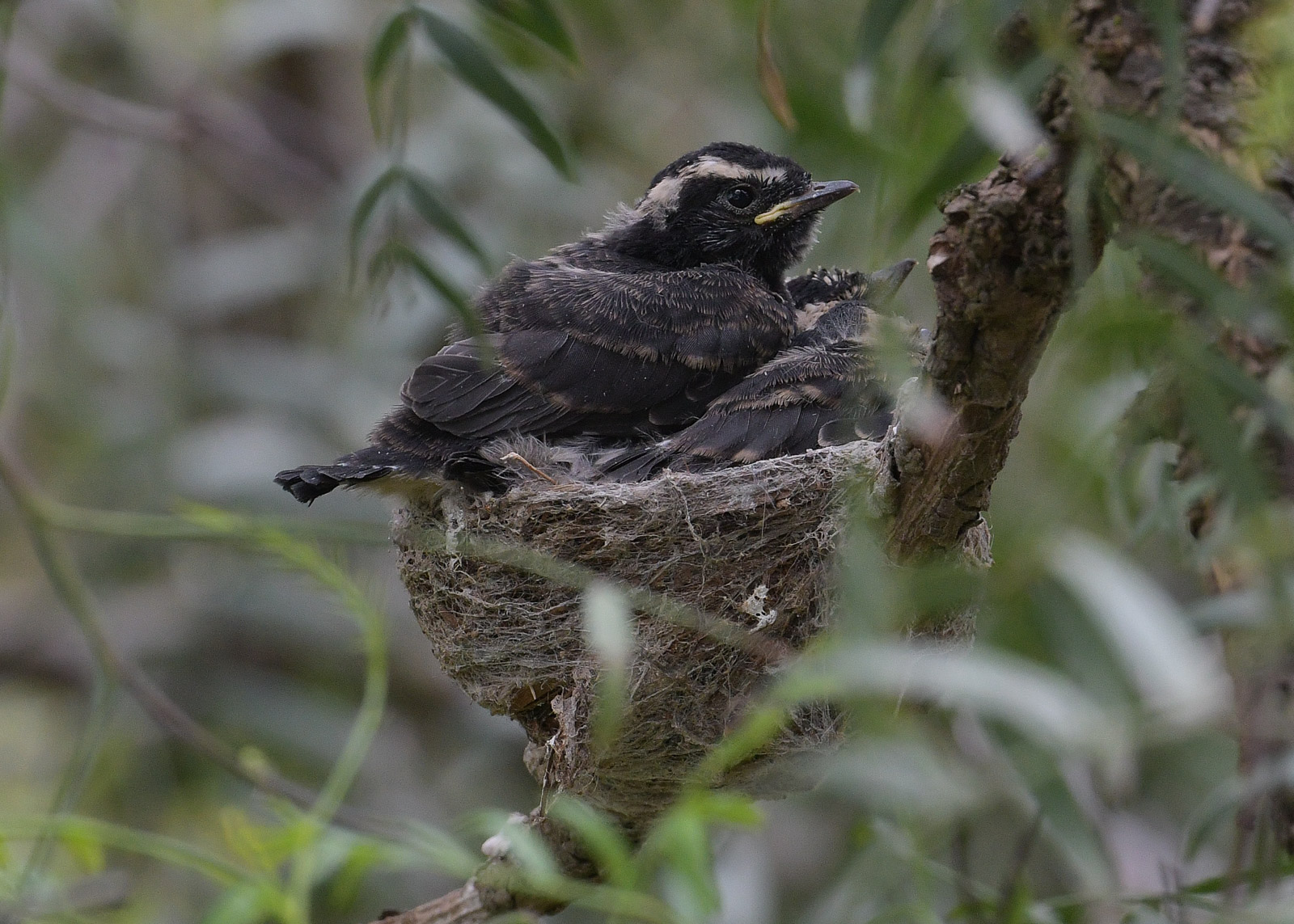
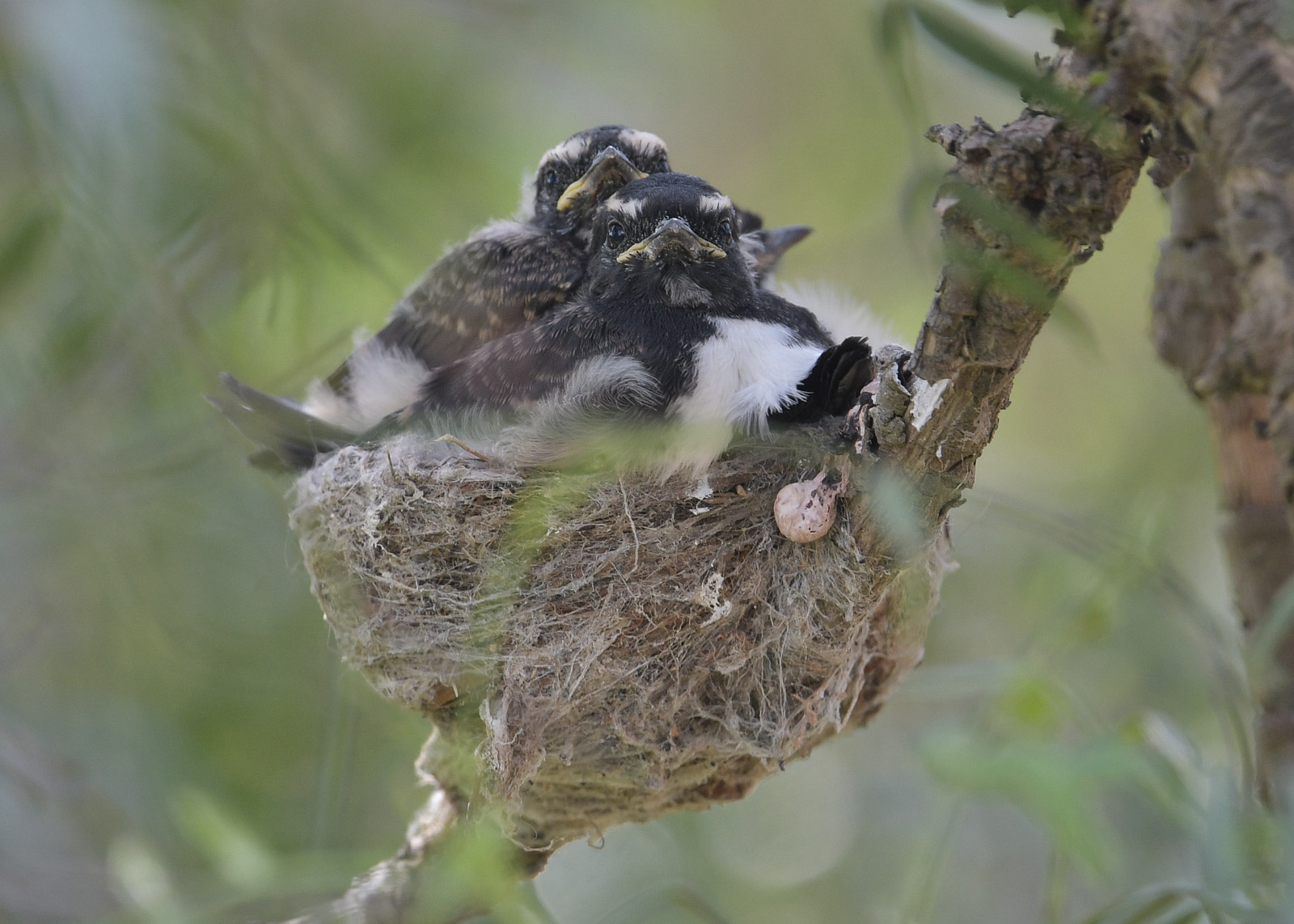
We finally managed a day that at least started out looking sunny, but it did deteriote. However no rain. Bonus!
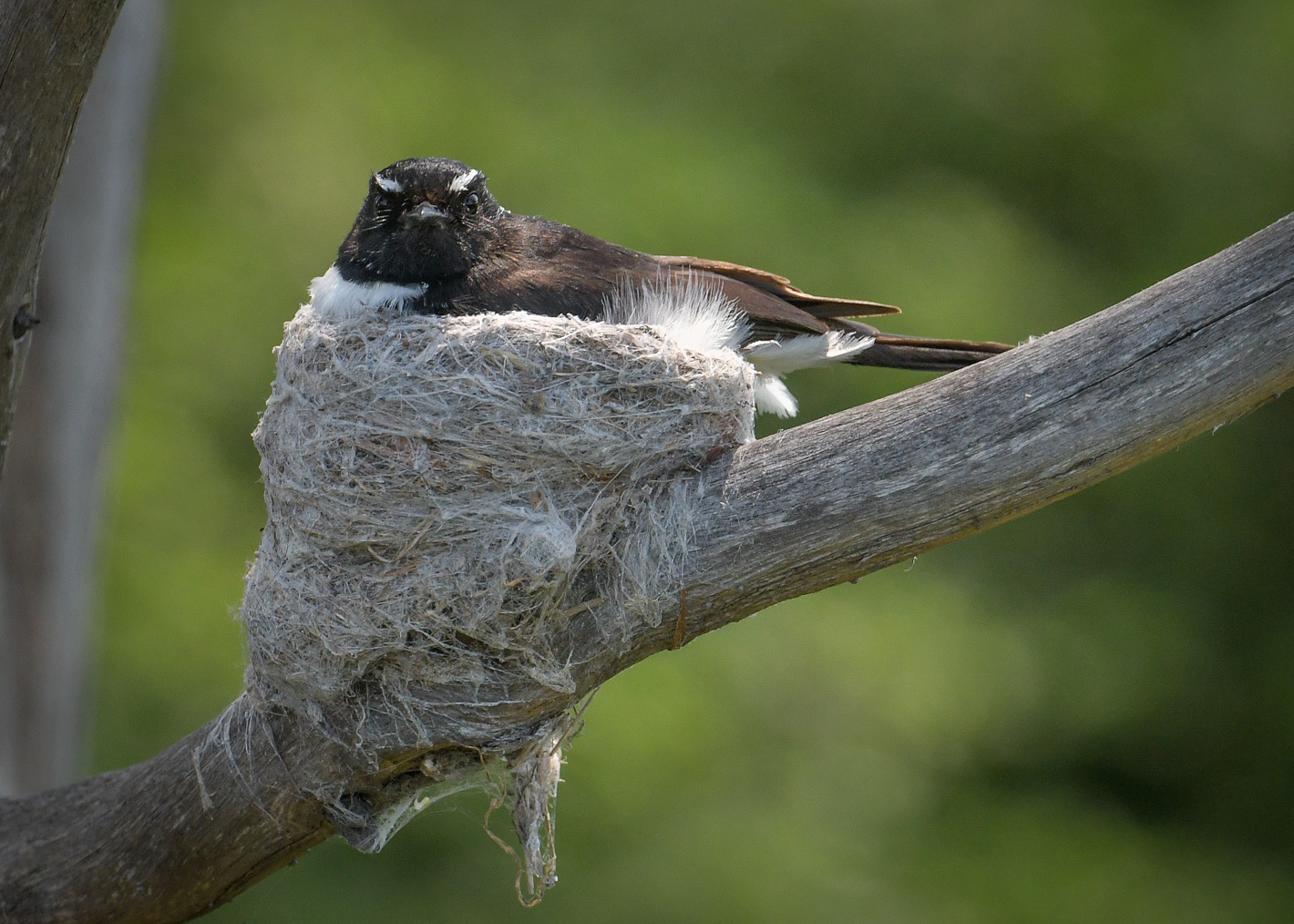
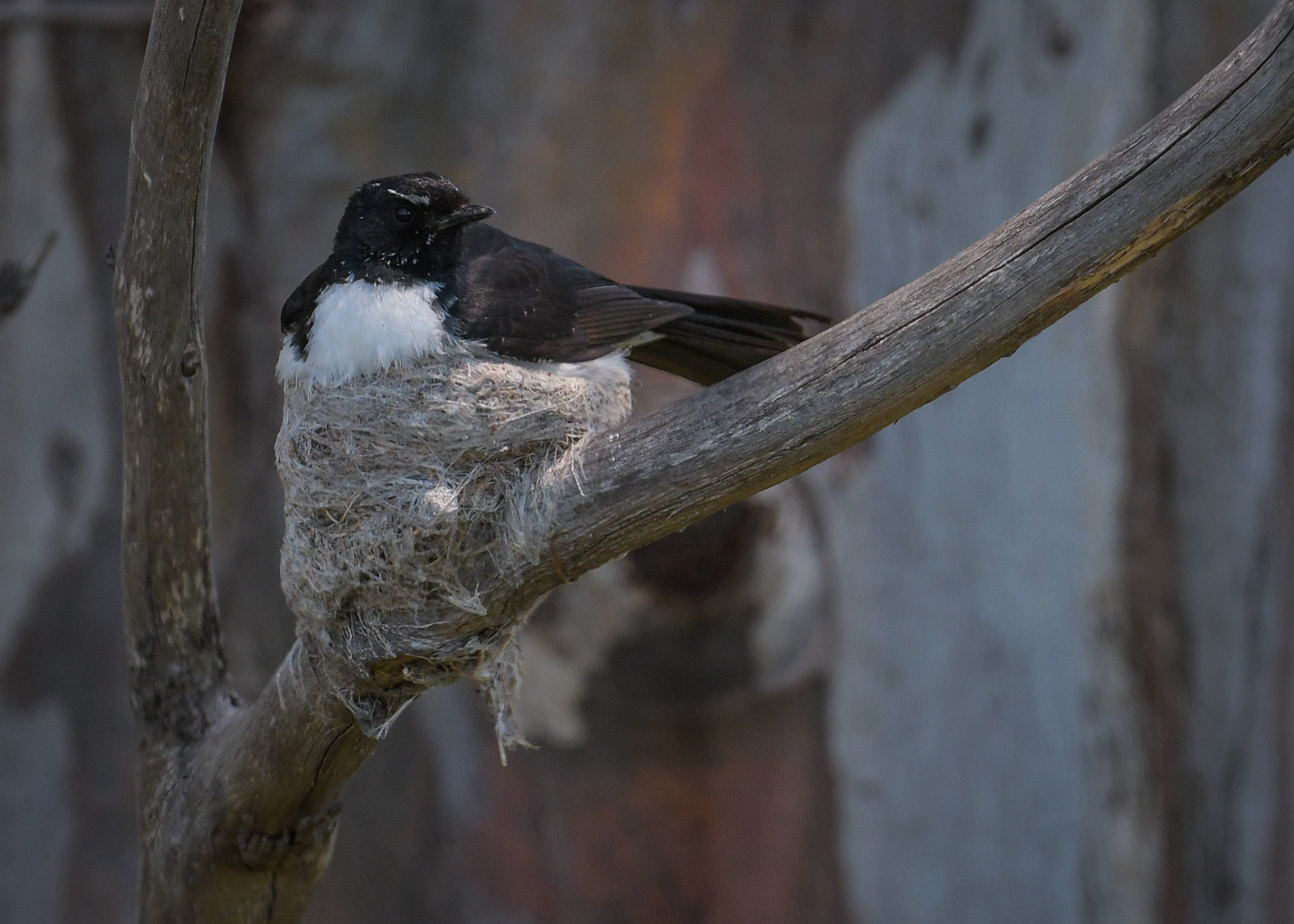
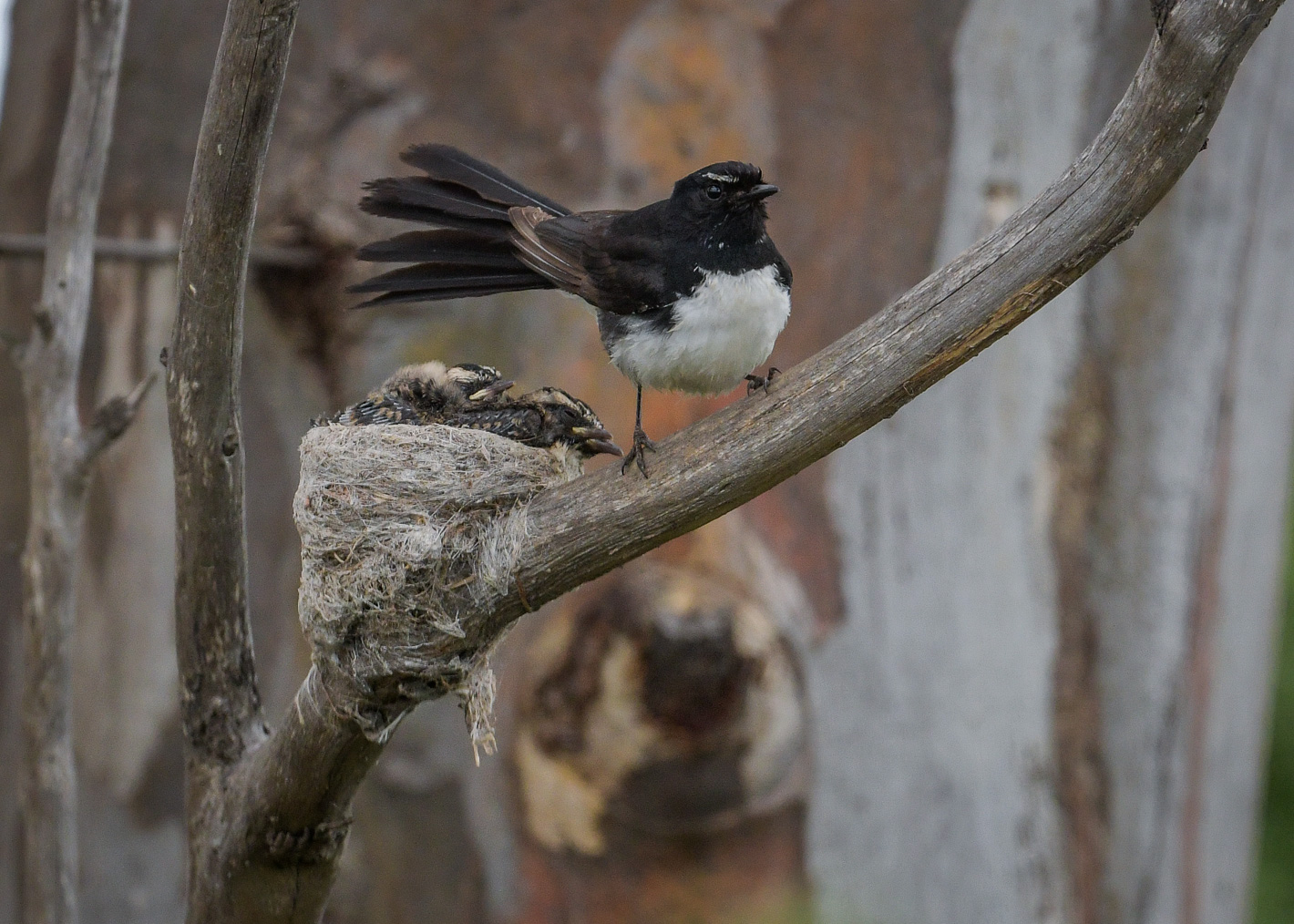
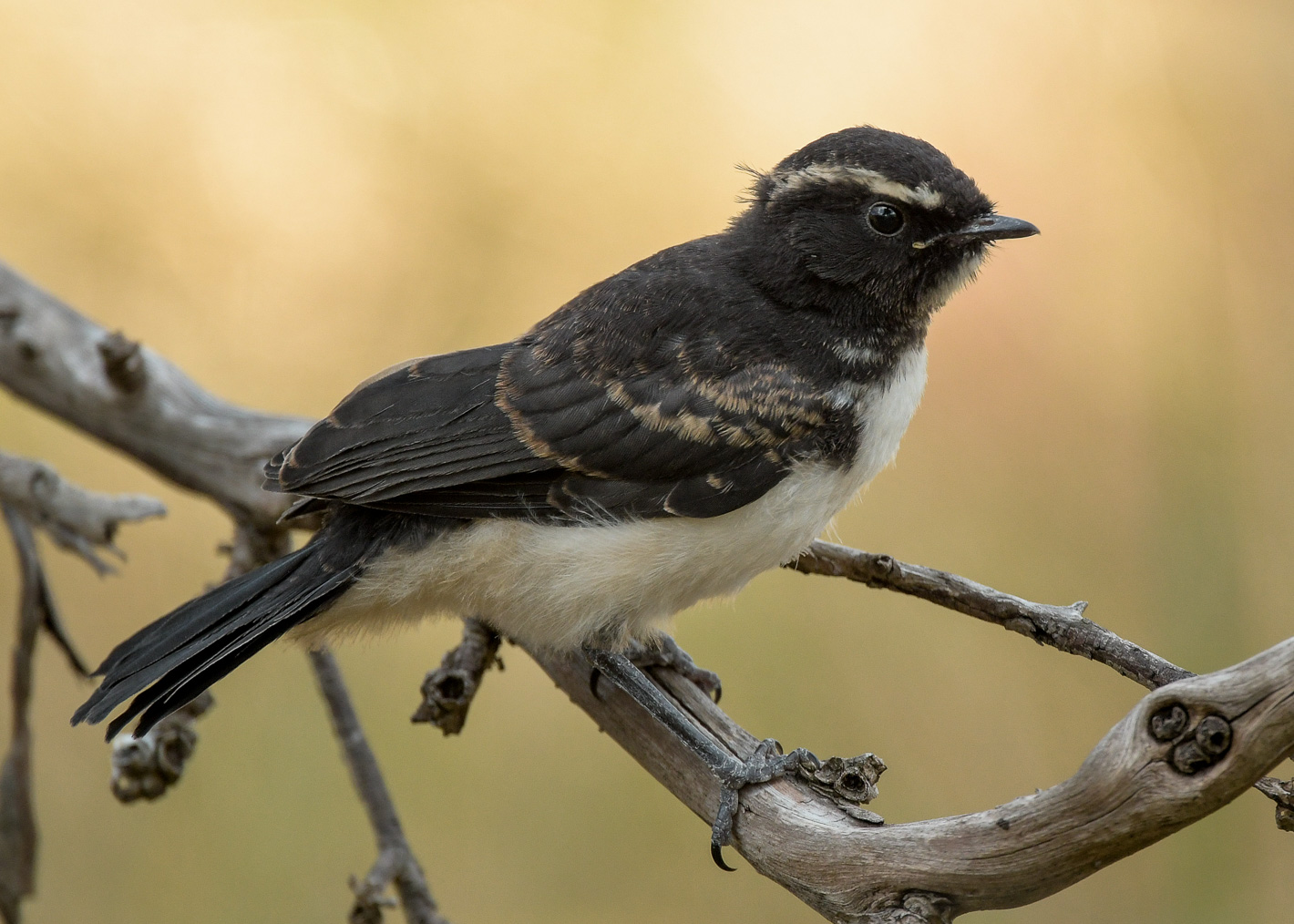
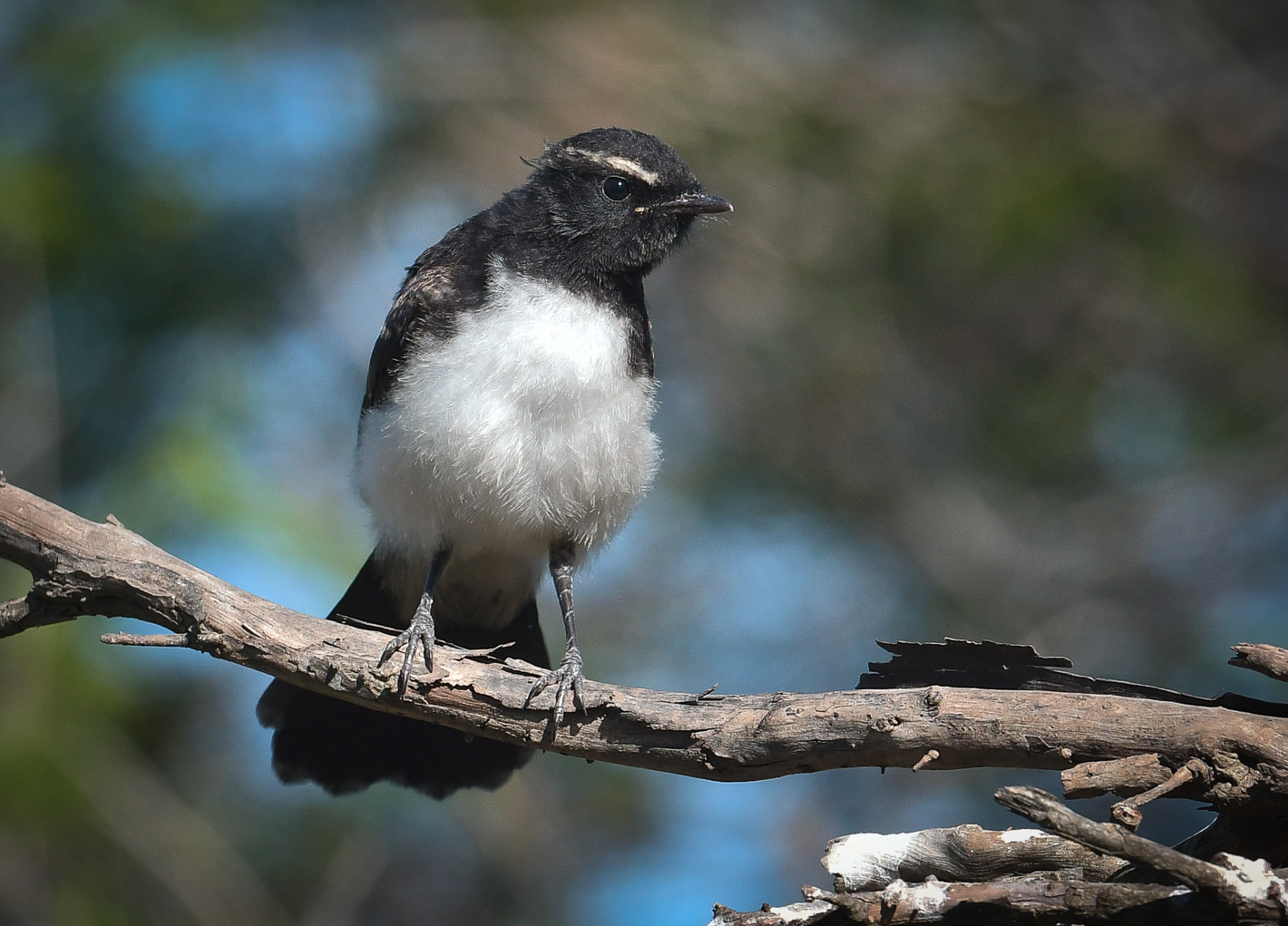
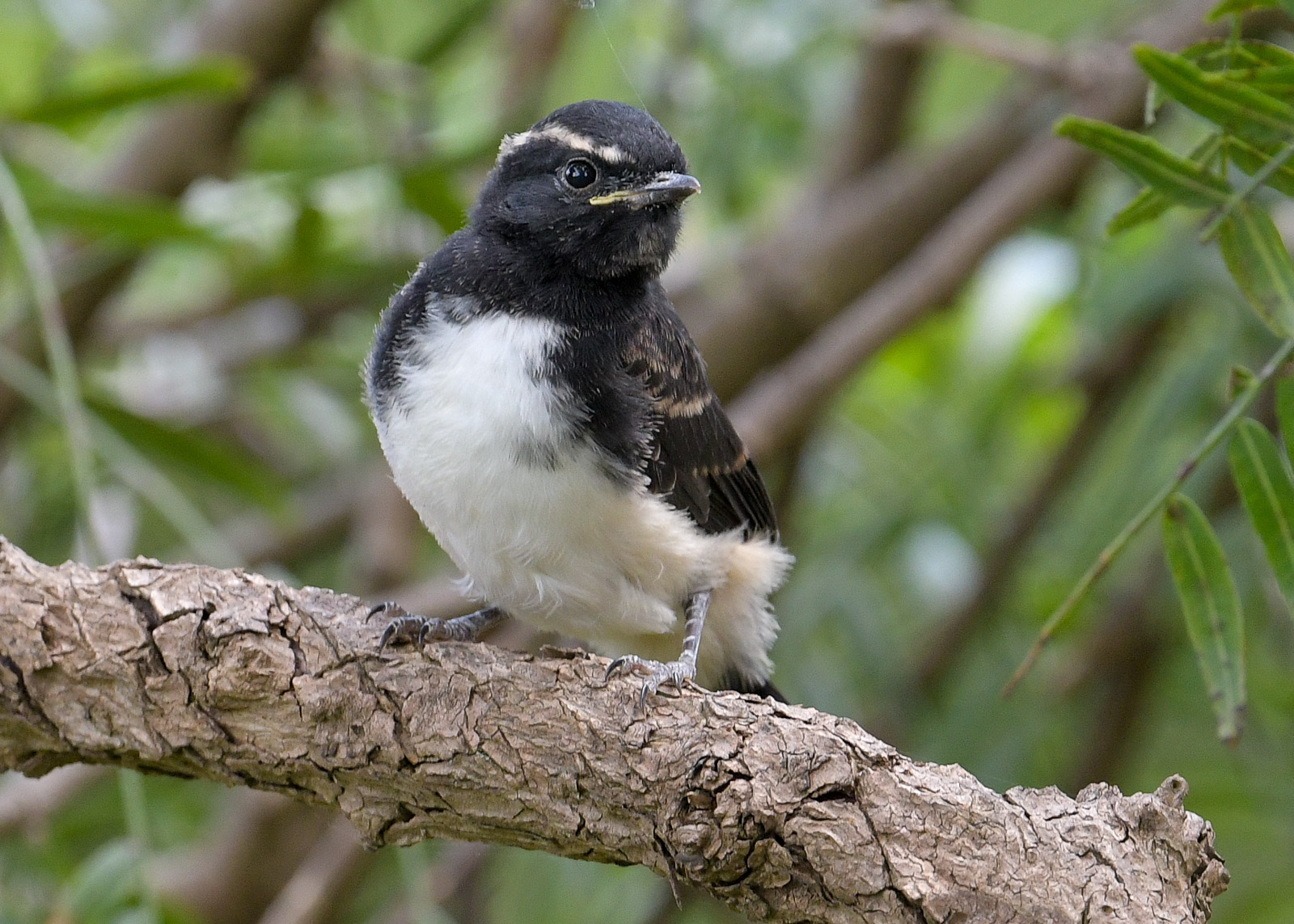
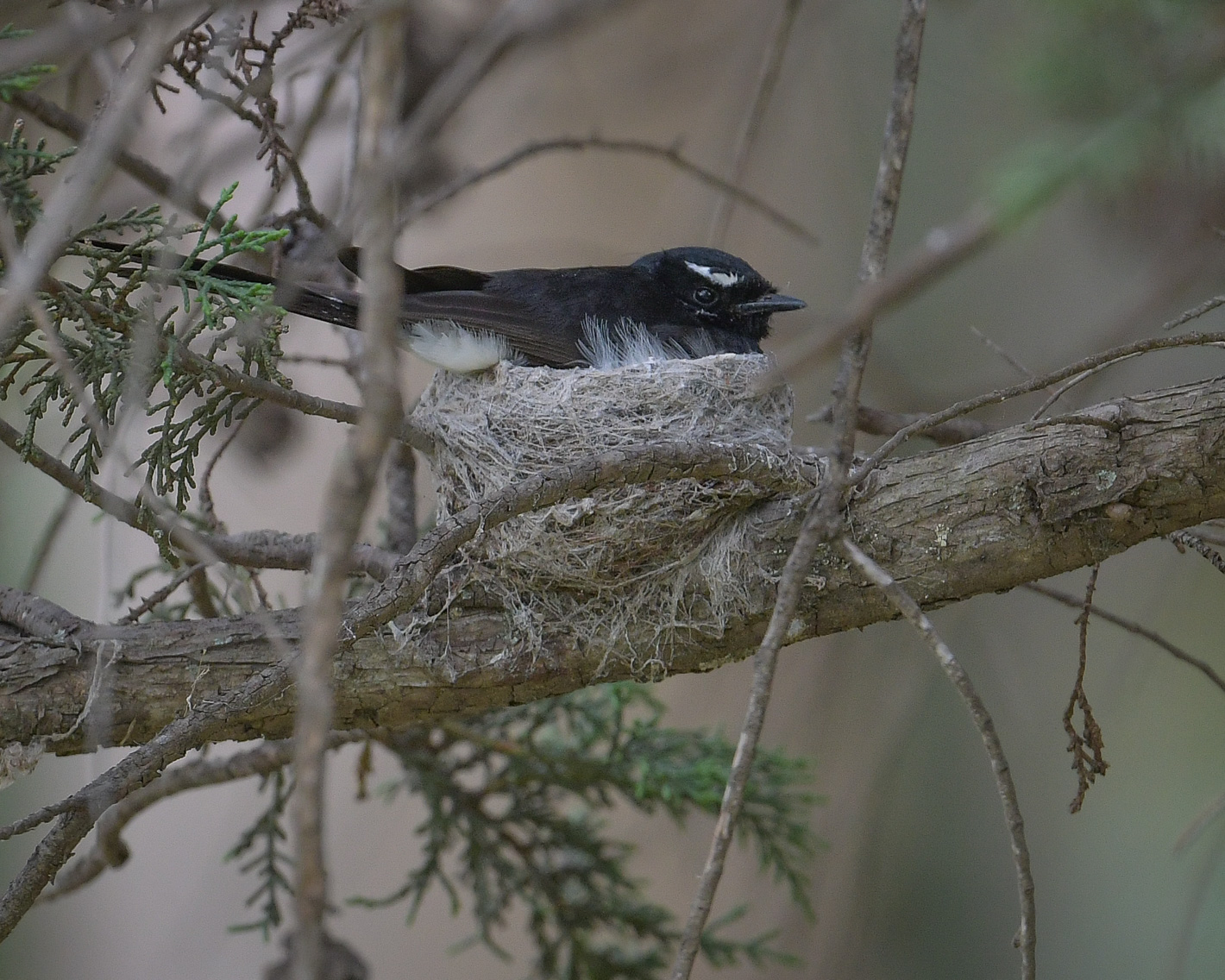
A short stop to catch up on our local Willie Wagtails nesting. All seemed well, and as this pair have been washed and blown off the branch in their past two attempts, it is heartening to see them back on the job.
We also walked about part of the Werribee Mansion precinct and EE managed to spot at least four Wagtails at work on various stages of nesting.
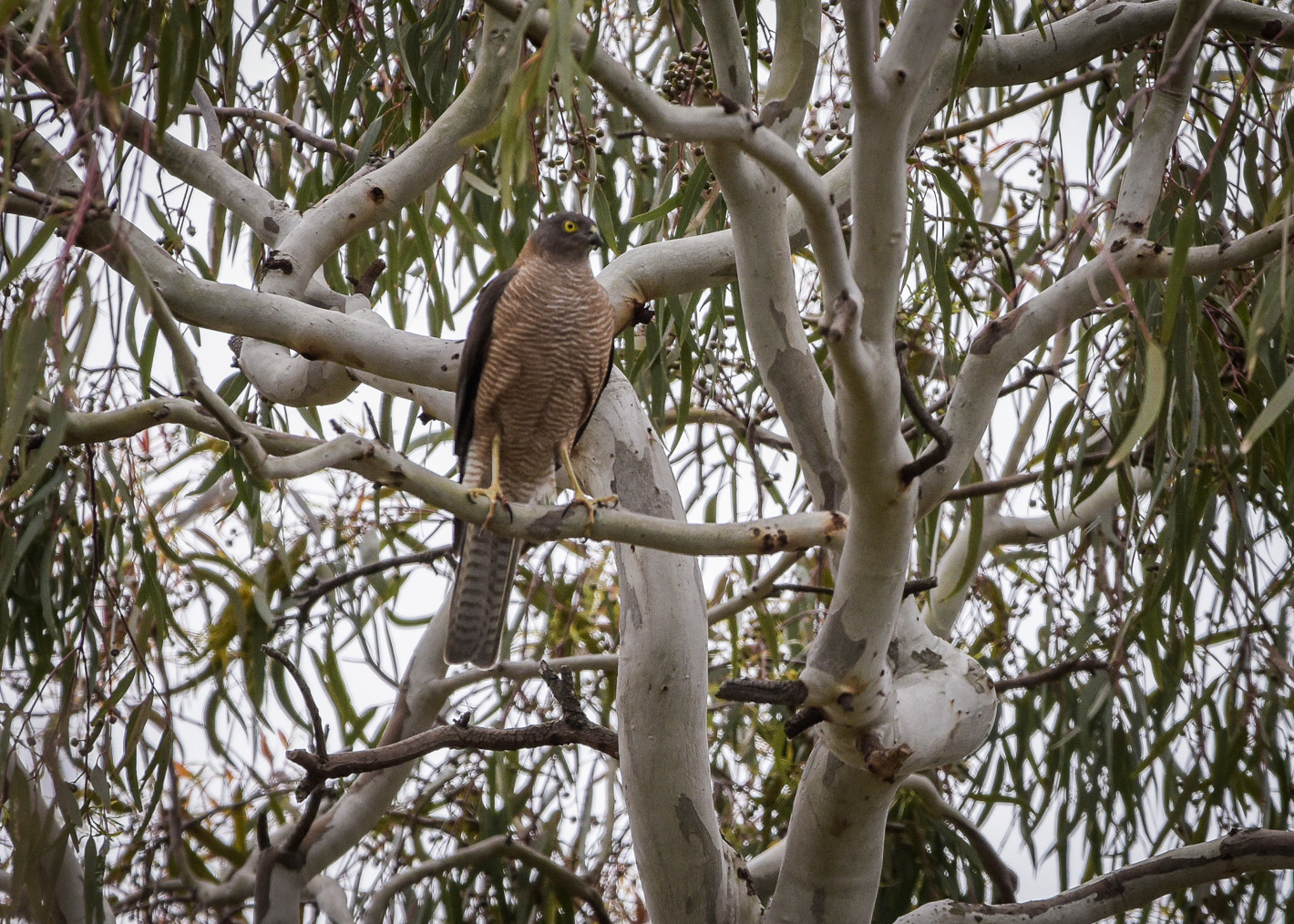
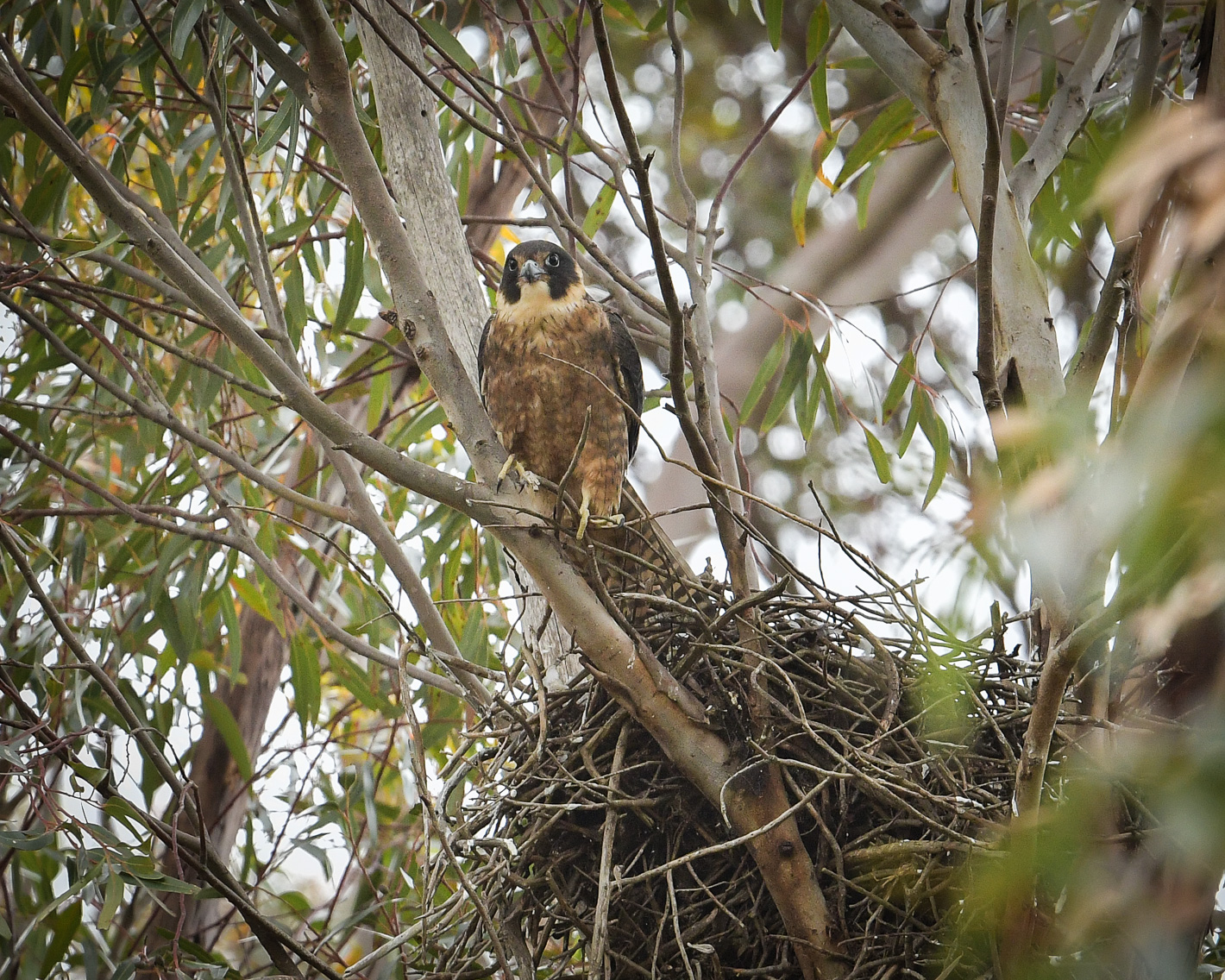
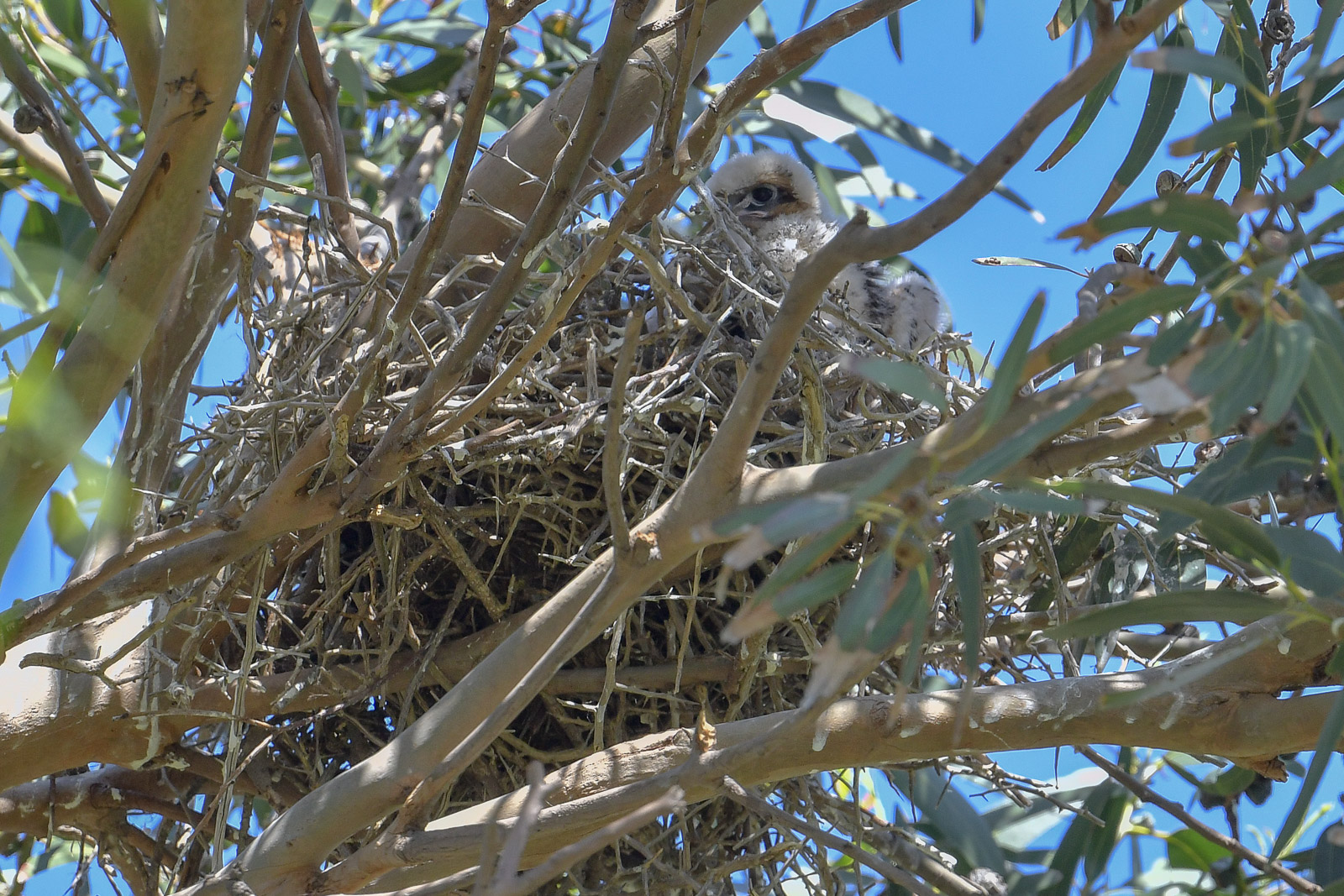
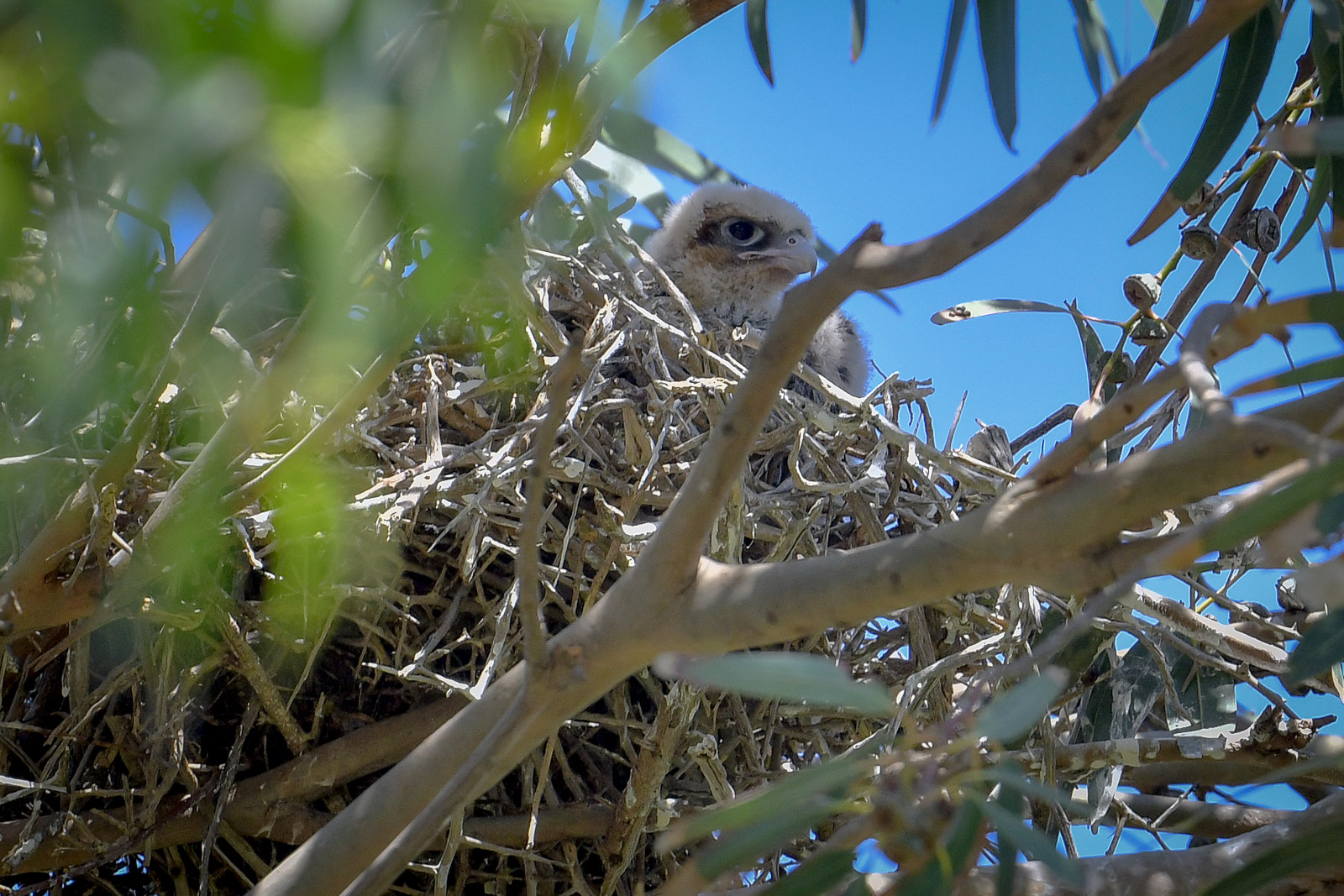
The Hobby pair have also shown they have been able to weather the various weathers that have been given them and have two rather well developed young chicks on the nest. Given the days of constant rain, and exceedingly high winds its says a lot of for these birds to have survived. I had, I must admit begun to think they might have abandoned the project.
EE was at her alert best and found four nesting sites. It seems the Willies have figured out the dreadful weather might be gone, and are keen to make up for lost time. Willies have, it seems two major nesting strategies. I’ve noted over the years that its possible to find a pair building a nest on a branch out in the open. No surrounding cover. In your face. I’m here, “This is Me!” The second strategy is one of the furtive, hide-away in the deepest part of the a thickly covered bush or tree and, Ha! Let someone try and find us in there. I once had one that had nested in what can best be describes as the very centre of a Prickly Wattle bush (Acacia paradoxa) Each time getting into and out of the nest damaged some feathers. The clutch was well protected from self-serving Ravens and other thieves. They fledged three young. And occasionally there is one that just seems to go for location, location, location, a bit like Goldilocks. Not too open, not too hidden.
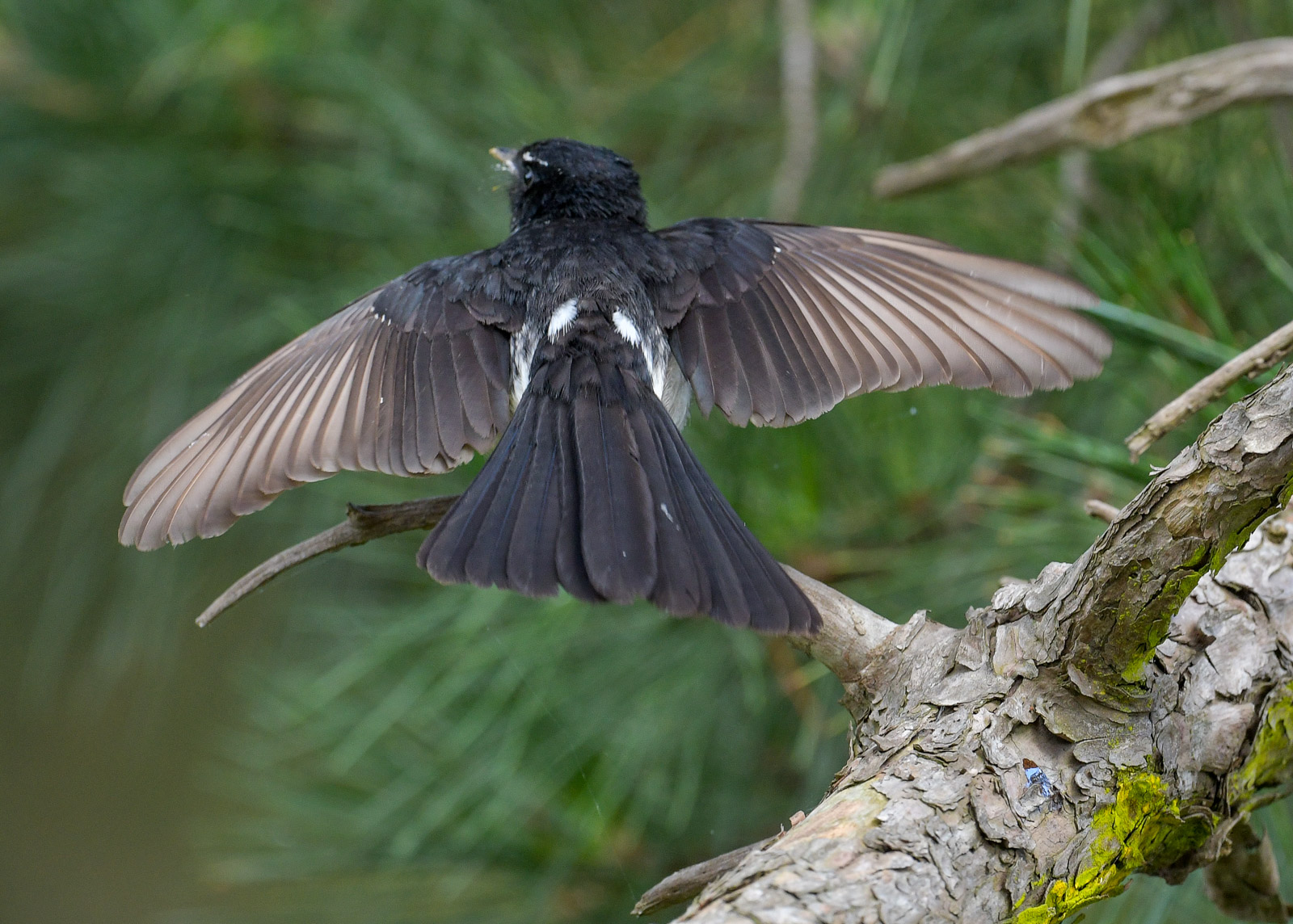
I have to say that over the years, each method has had its successes and failures, so its hard to conclude one is better. I think it just depends on how stubborn the pair are.
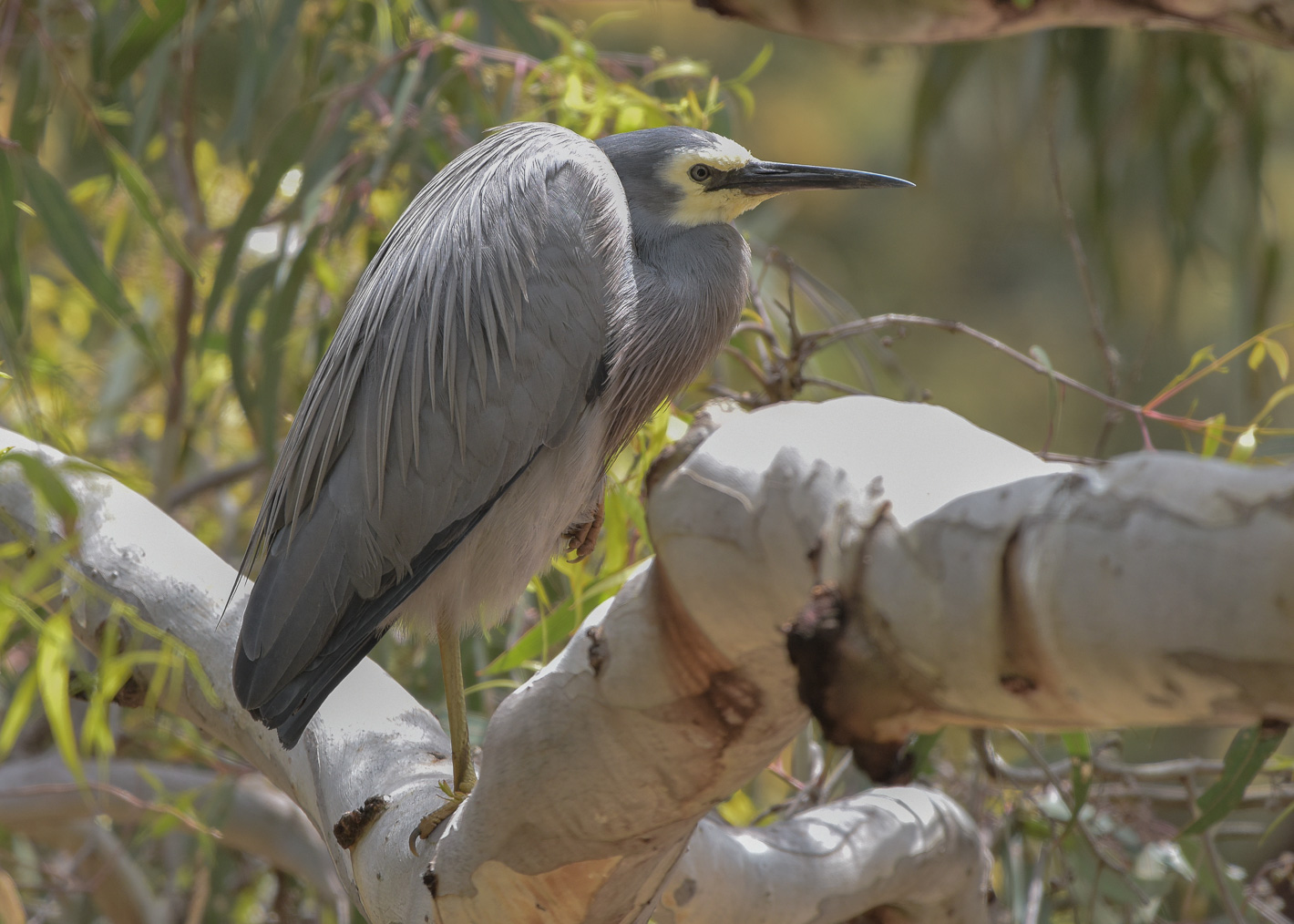
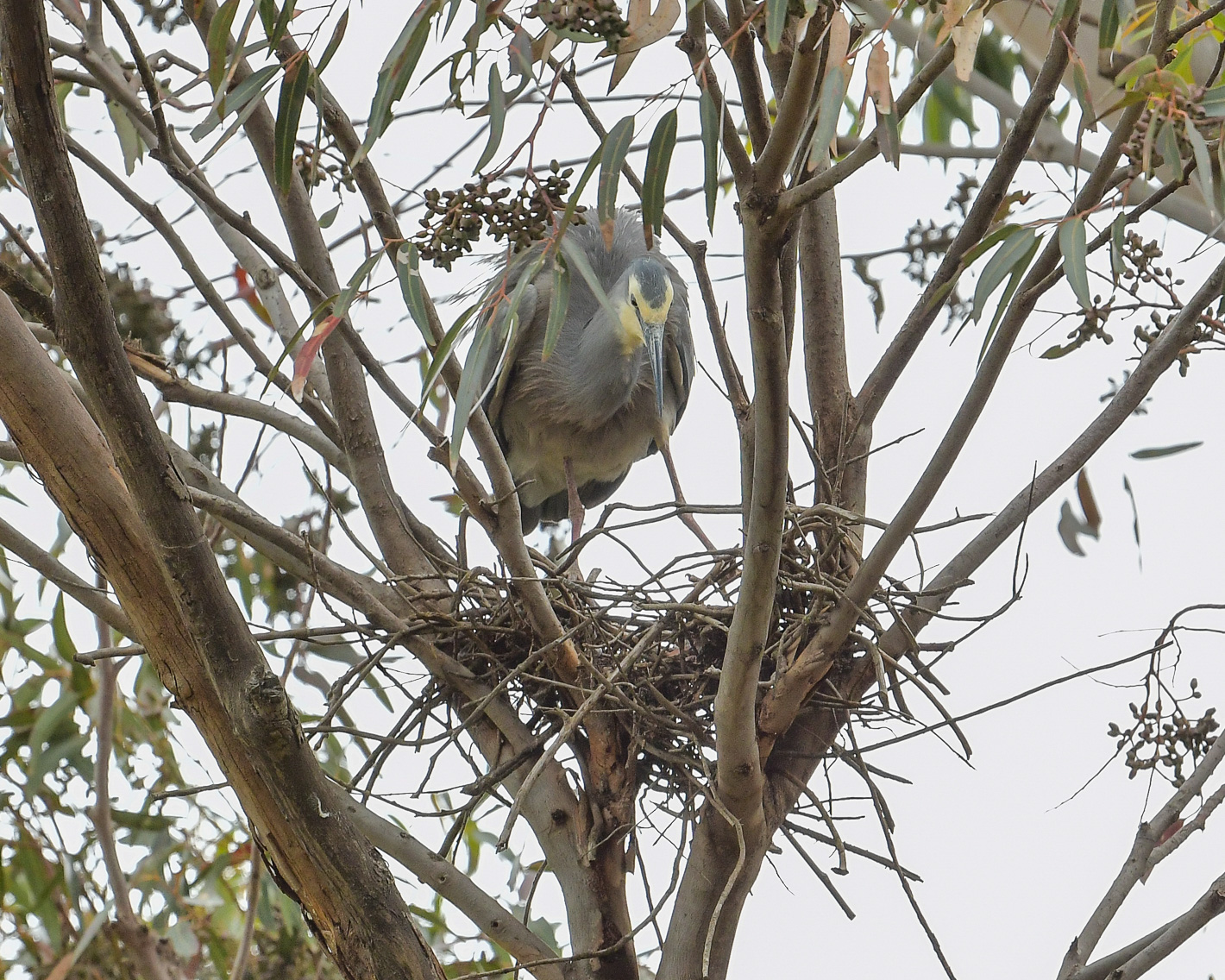
Went to look for Seraphema and see if she was still in residence. Along the way came upon a White-faced Heron that seemed to have started a nest, but wasn’t sure if it should be completed. There was lots of calling disussion among the pair, but not much building. Time will tell. And EE managed to locate a pair of Magpie larks engaged in the fun of building their mud house. The male popped down on the ground for a quick snack or two with his black apron all covered in mud flecks.
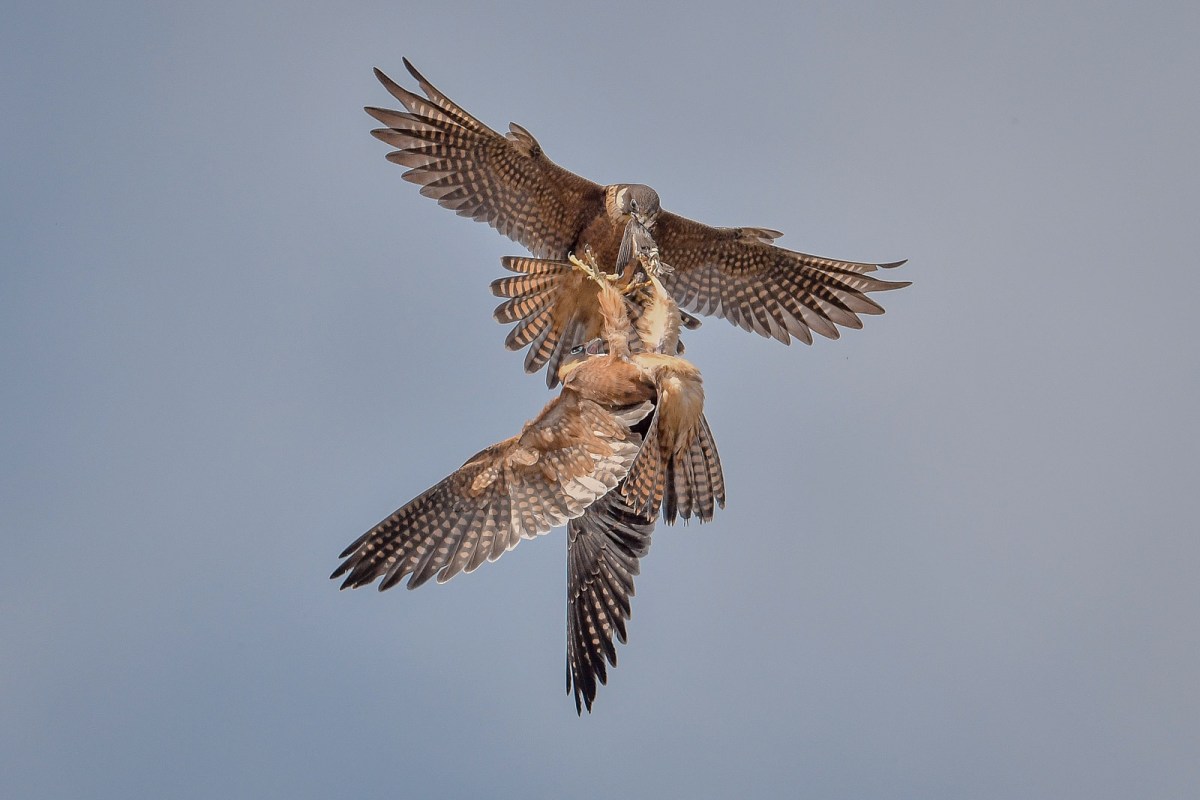
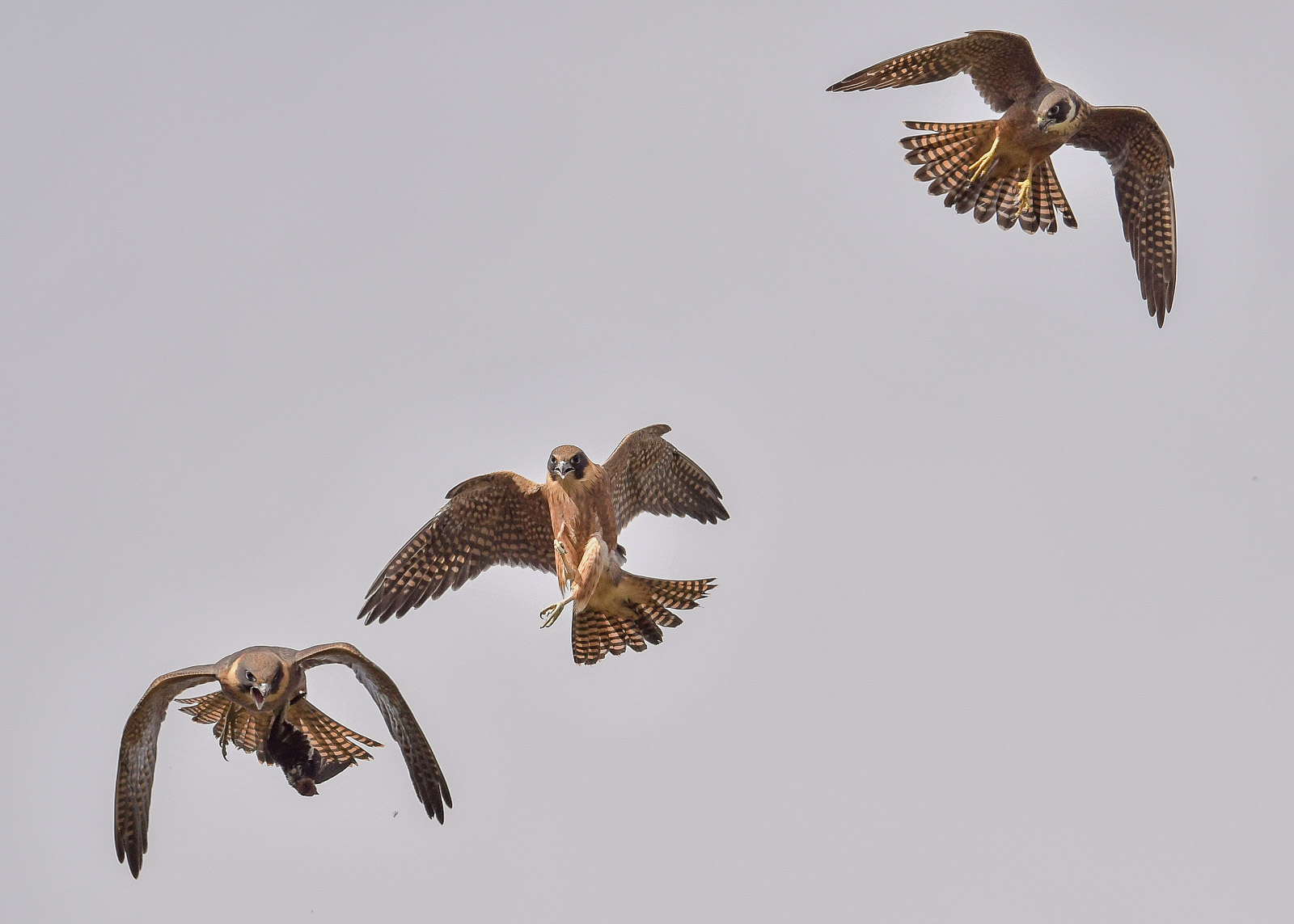
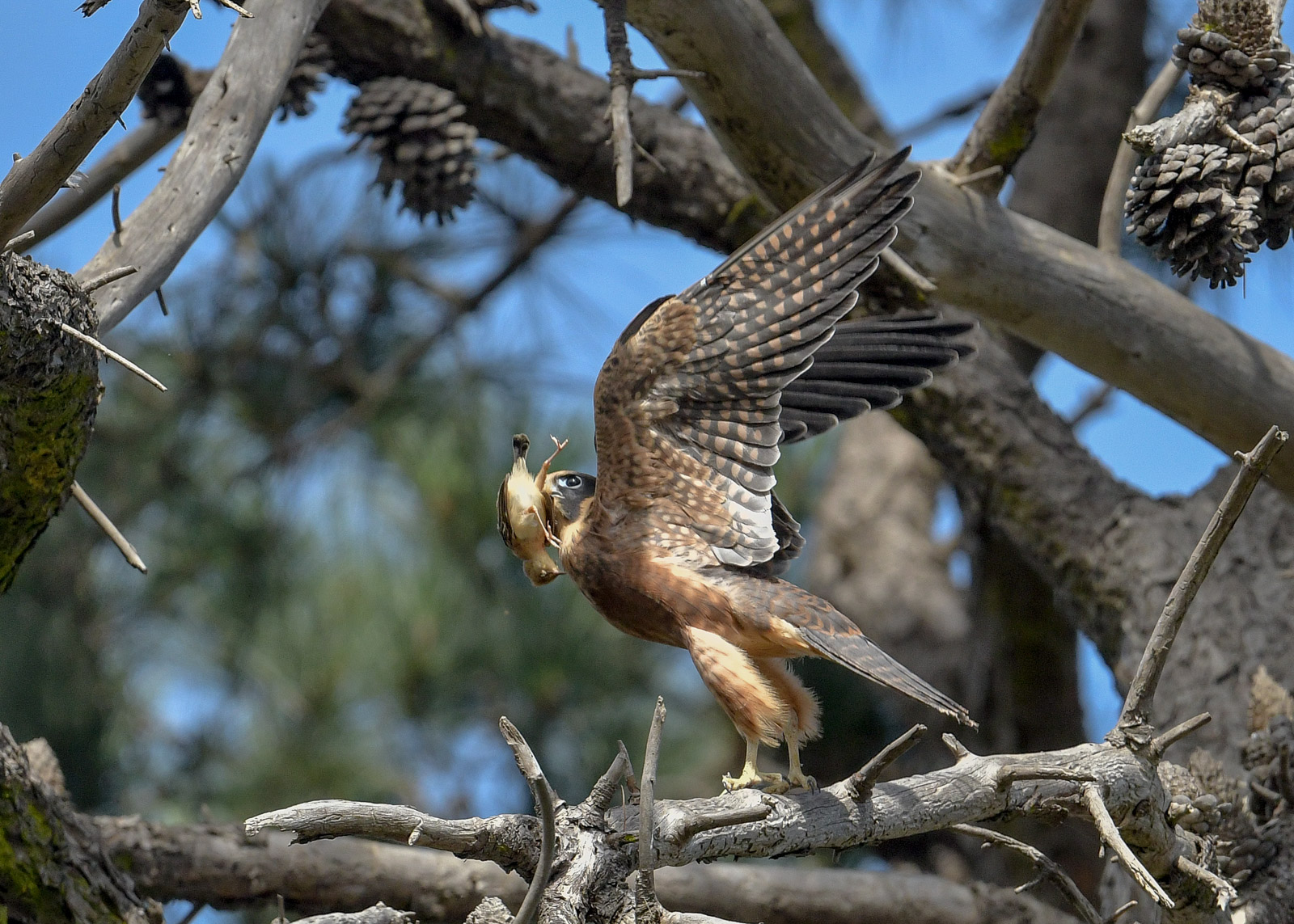
And so to the business in hand. The male Hobby deposited a catch into Serpaphema’s waiting claws and a few minutes later she headed to the nest.
After a feed, the two young climbed to the top of the nest for a look about and a wing-stretch. If a picture is worth a thousand words, here comes a small essay.
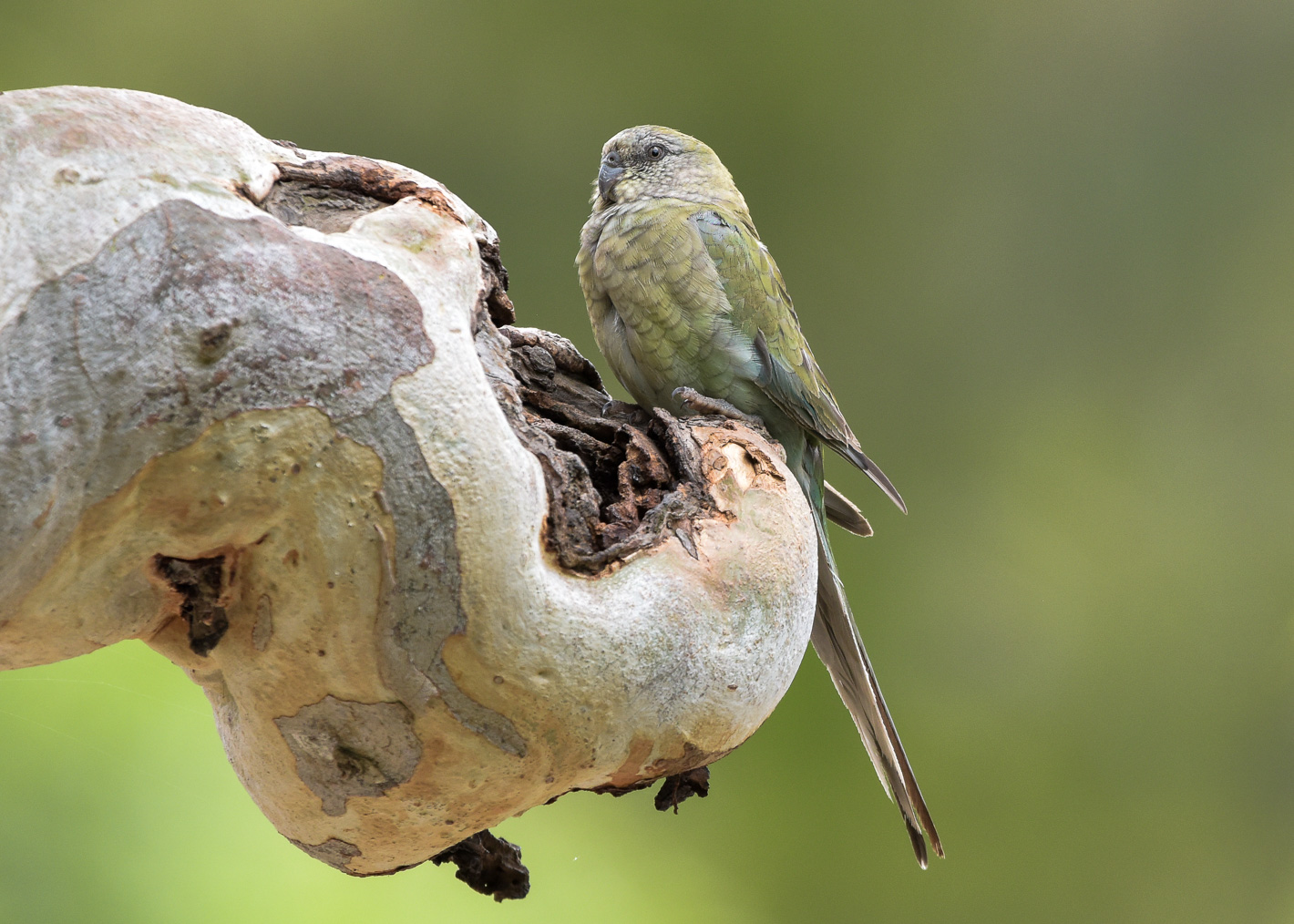
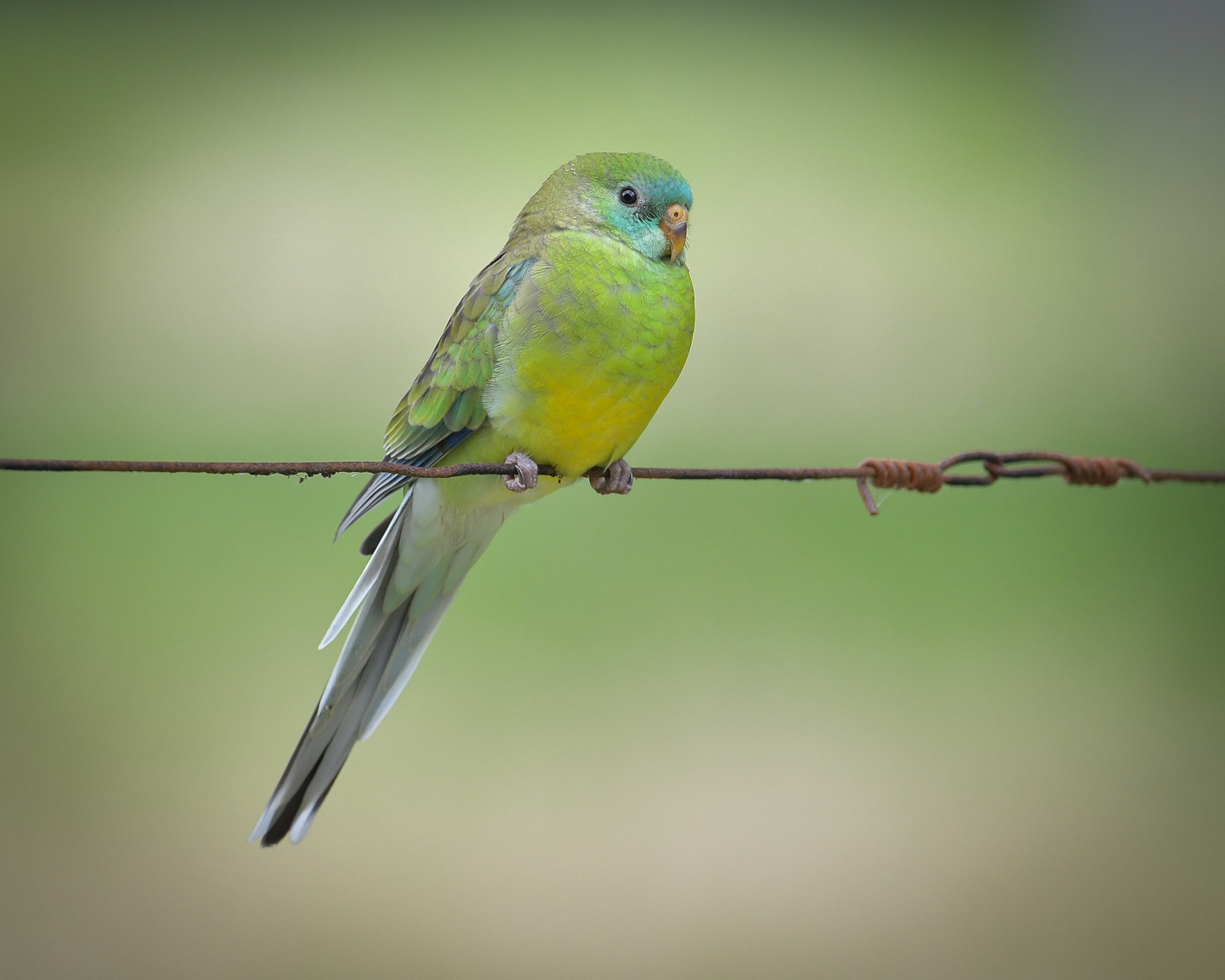
And just as I was leaving I found a young Red-rumped Parrot sitting on a fence line. The soft light seemed to grace those lovely young colours
Enjoy
This bird has been washed out twice that I know of. This time its chosen to rebuild on a previous attempt out in the open.
If tenacity and courage gets the job done then they will be successful.Number #1 The furtive approach. This pair are well inside a small old Peppercorn tree. Took a while to work out as one flys in, the other flys out and it would fool many a casual observer.Number #2 This one is directly beneath the Australian Hobby nest. Still work in progress. This pair are a two way bet. Partly in the open and partly under leaves.
They are overhanging a carpark area.Number #3 Laying the foundatiions. Another one that has chosen to nest under the cover of the treeNumber #4 This one is well on the way and quite secure within the shrub-lineA White-faced Heron and the beginning of a nest. At least I hope it’s a beginning. They are usually pretty rough affairs, but this one does seem a little spartanSeraphema about to leave the nest. She has just feed the two small inhabitants.Two young Hobbys. A Wing stretch in progress for one of them while the other waits for the next round of food.Mr Muddie is in the middle of building a nest and has a fine coat of dried mud on his black apron. After all that work it was time to look arround for a snack.A young Red-rumped Parrot. It must have been told, sit on the fence and don’t talk to strangers
Not sure if you’ve seen this, but here is a link to an ABC story on a Raptor Rehabilitation Centre. Birds of Prey Rehab
Thought I’d continue with the “Showman’ style theme.
We had taken a walk to the far west of the You Yangs Park to where the fenceline runs parallel to Hovell’s Creek. The creek is on private property so the best we are able to do is peek over toward the creek. The Rainbow Bee-eaters come down each year to nest in the creek banks, and hunt out over the You Yangs side of the fence, so it’s possible on the right day to get good views and photos of them in action. Such, however was not to be on our day.
Isn’t marketing wonderful! Hovell’s Creek is one of the few places named for the second half of the Hume and Hovell exploration team that first travelled down this way. Hume gets all the good named spots and also all the good Marketing Opportunities. Hume Highway, Hume City Council, Hume Building Society, Hume Bank, and so it goes. Marketing is such that Hovell City Council just doesn’t have that right appeal, nor would you want to leave you money with Hovell Bank, or build your house along the Hovell Highway. Isn’t Marketing Wonderful!
How about a product we know well. Glad-Wrap. Imagine if it had been called Sad-Wrap. Not much future there I’d guess.
We did hear a few Bee-eater calls from the creek line, but no real glimpses.
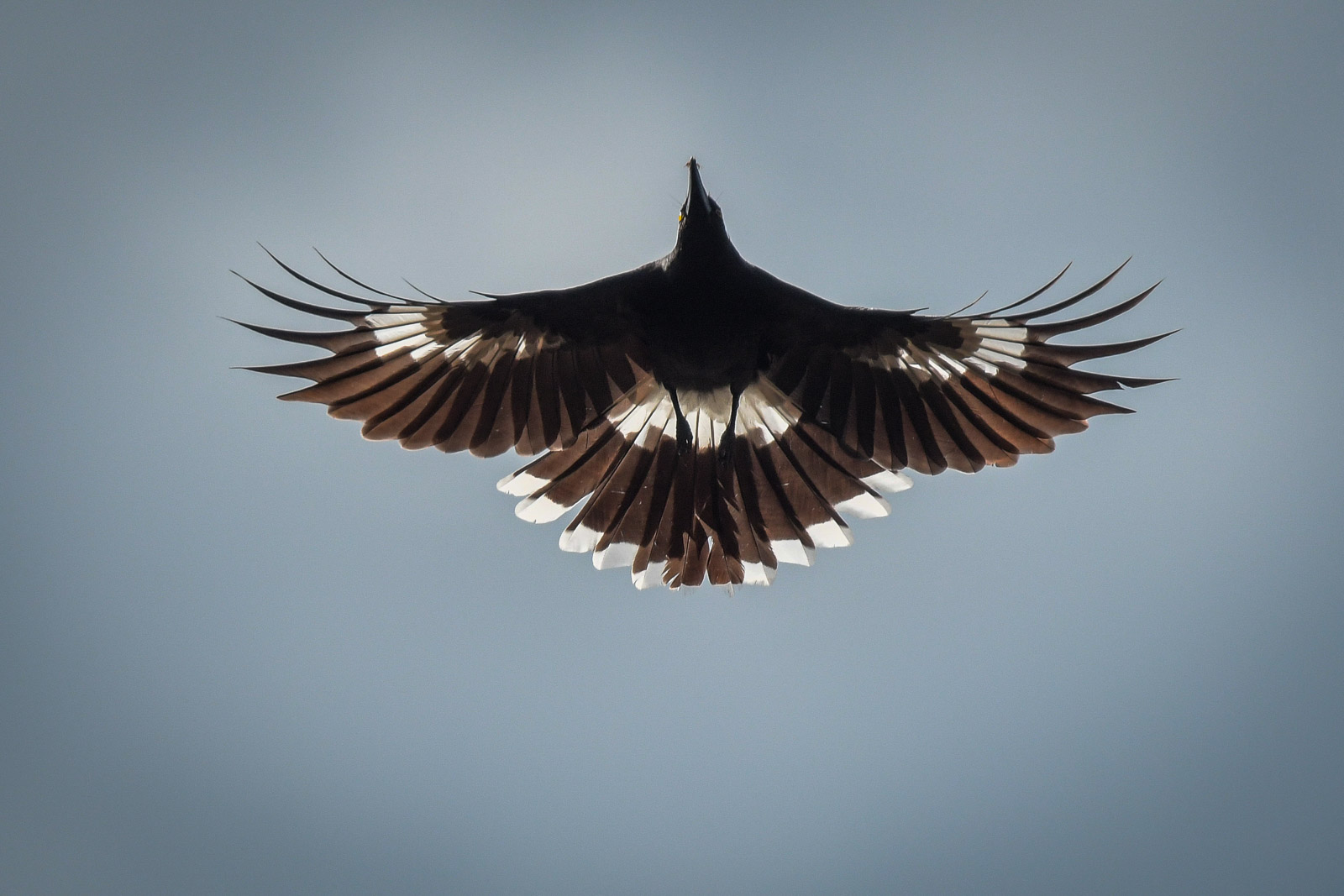
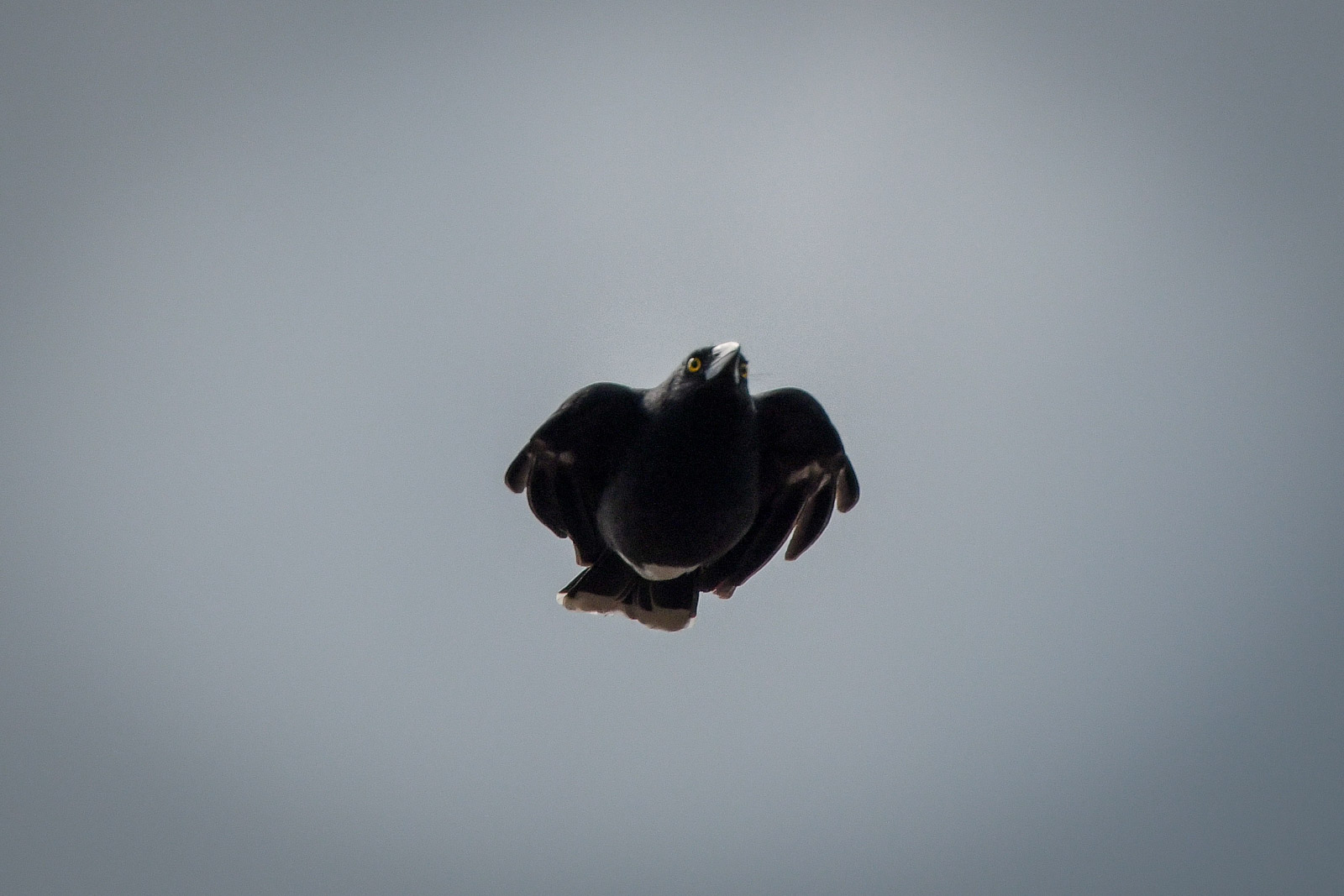
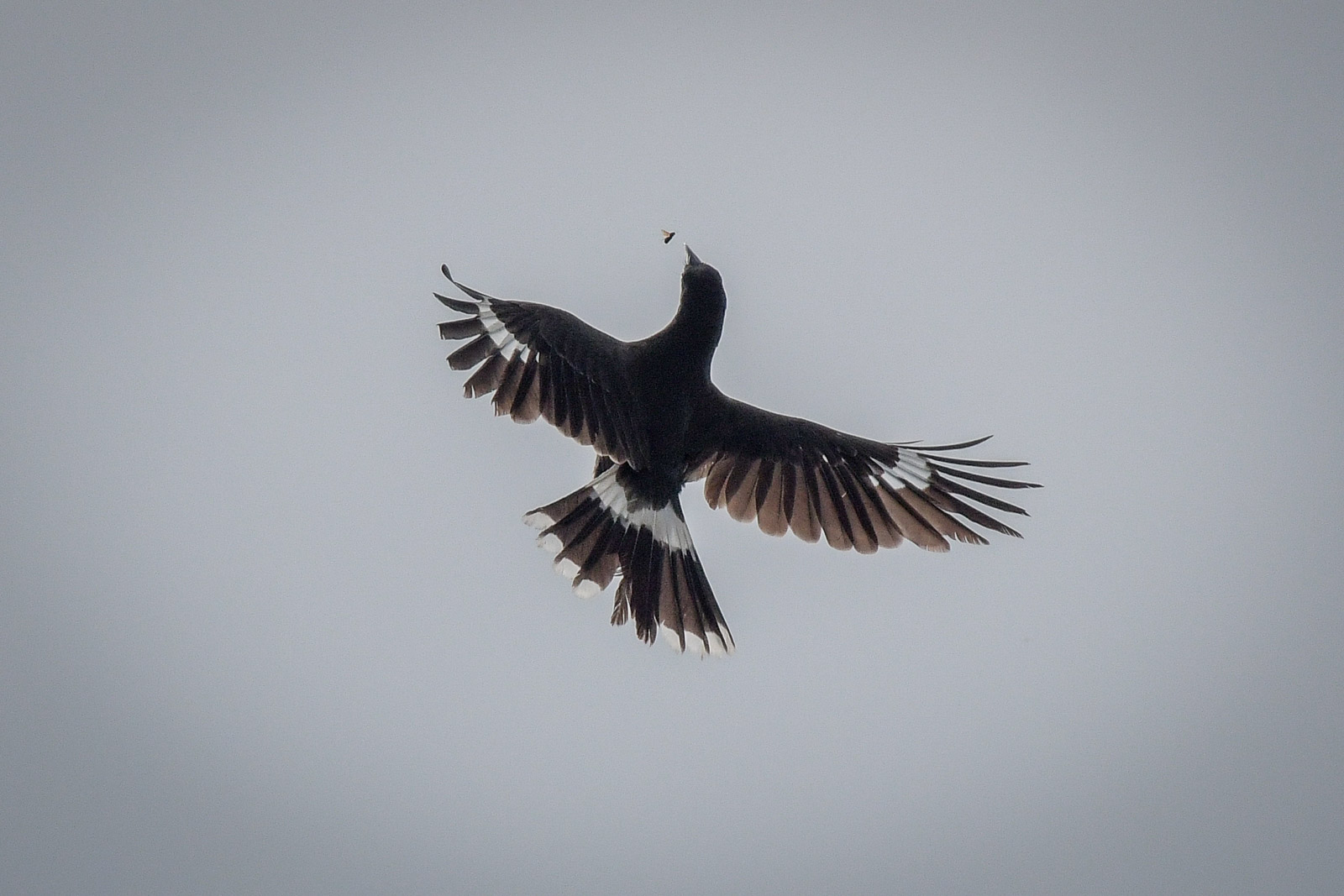
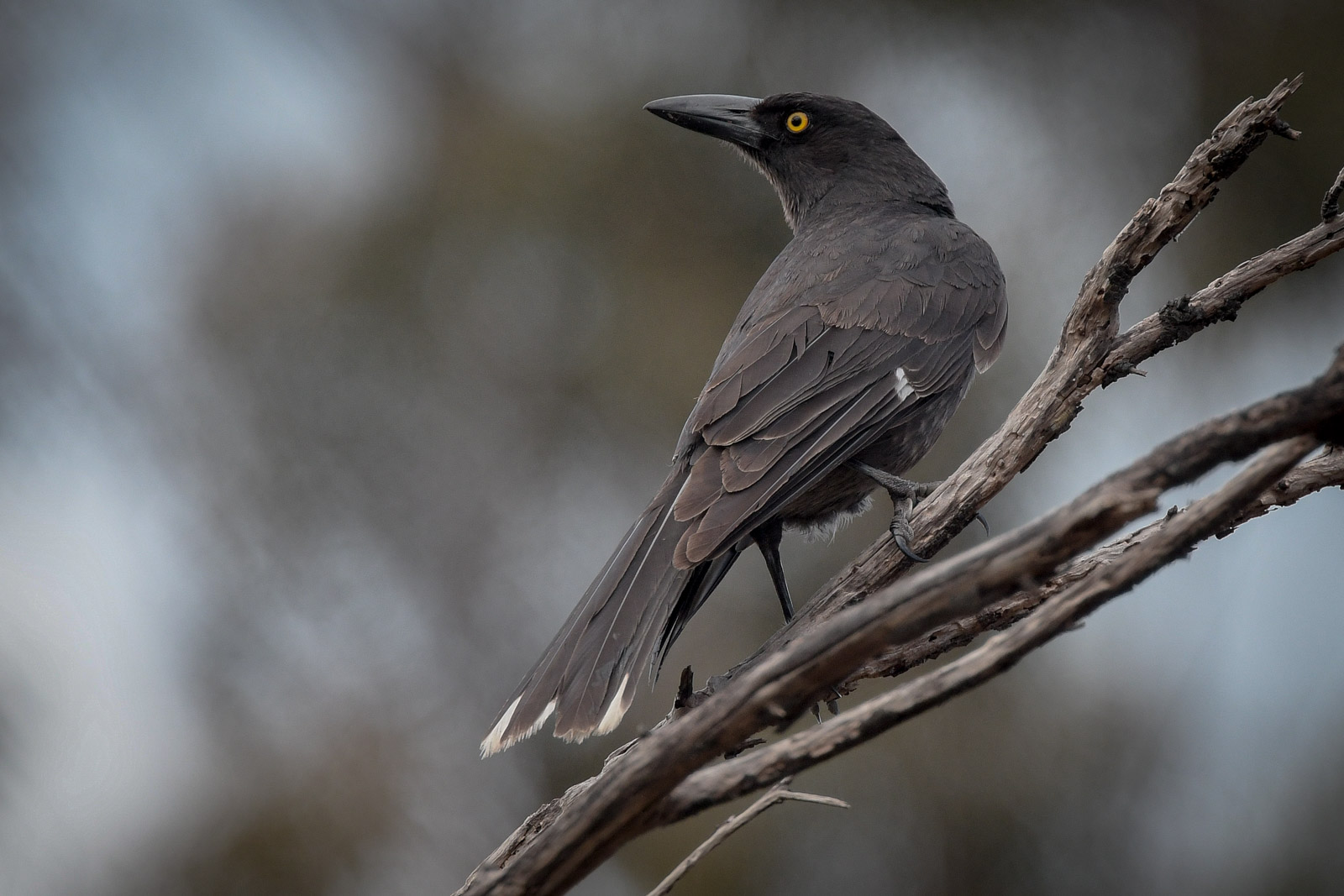
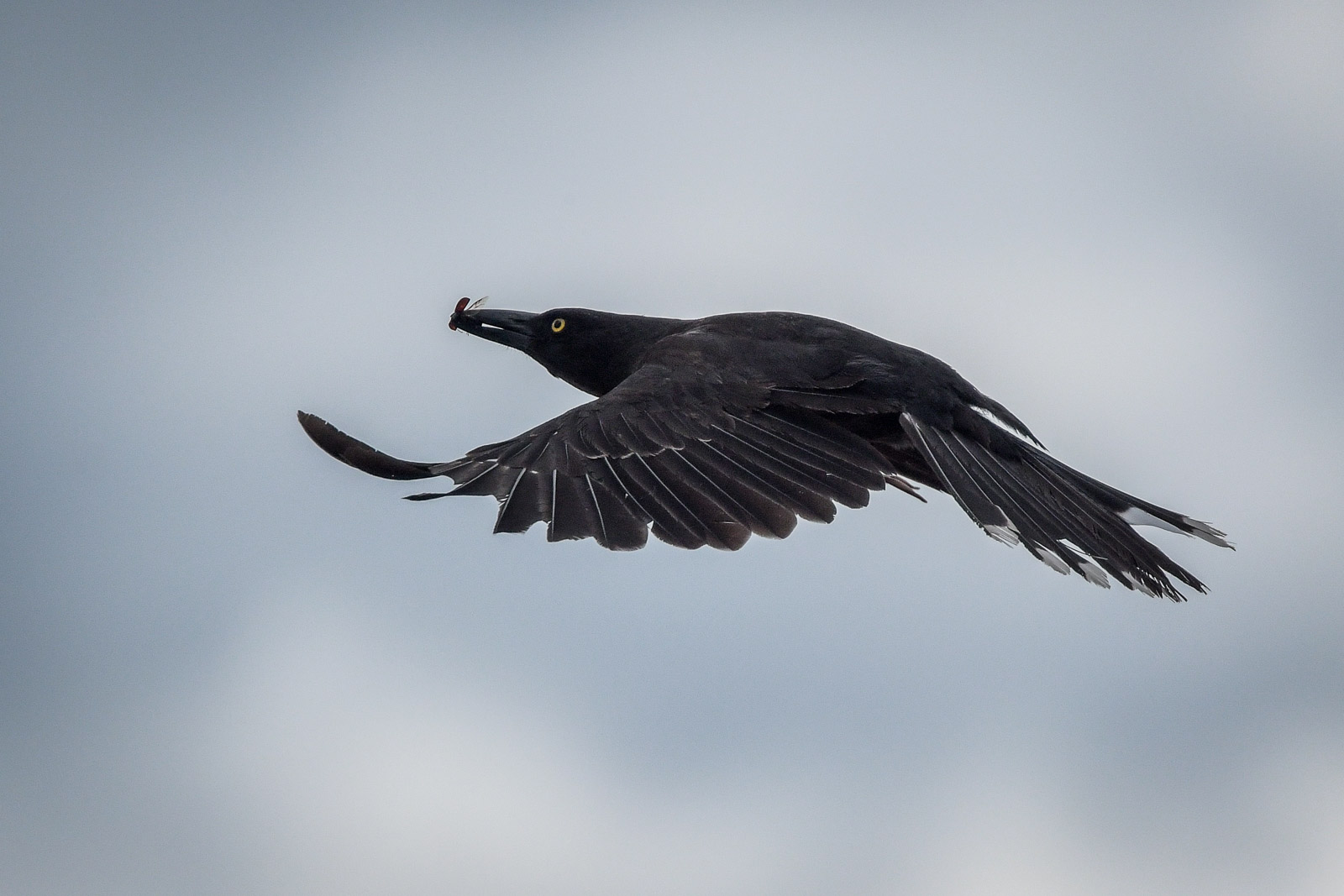
However further along the track we did hear, and see Pied Currawongs. A family group of about a dozen or so birds were working over the grasses catching flying insects (Ants?)
They worked from several trees about 50-60m apart and simply flew from one branch over the open to another branch. Picking off an insect along the way. I’ve seen Wagtails, and Flycatchers, and Jacky Winters work this way, but not such big birds. Hard to imagine they had the twisting and turning skills, but they certainly showed a range of aeronautical abilities and held us spell-bound for about 15 minutes. A pity the light was running against us, but it was still great to be able to get a range of wing and body details.
A movie that I never tire of watching reruns is the Hugh Jackman in, “The Greatest Showman”. I enjoy the fun and the intesity of the music and the dancers. Storyline is well… but the visuals really excite me. There is also some fine songs including the amazing, Keala Settle as the Bearded Lady and her song, “This is Me!” (PS if you want a great version of this song see Keala Settle – This Is Me | Abu Dhabi 2019 Special Olympics Closing Ceremony It is throat-choaking stuff and she looks like she is thoroughly enjoying herself)
Well, the other day, we were invited to enjoy Cassia, of Cinnamon’s version of the “Greatest Show on Earth!”
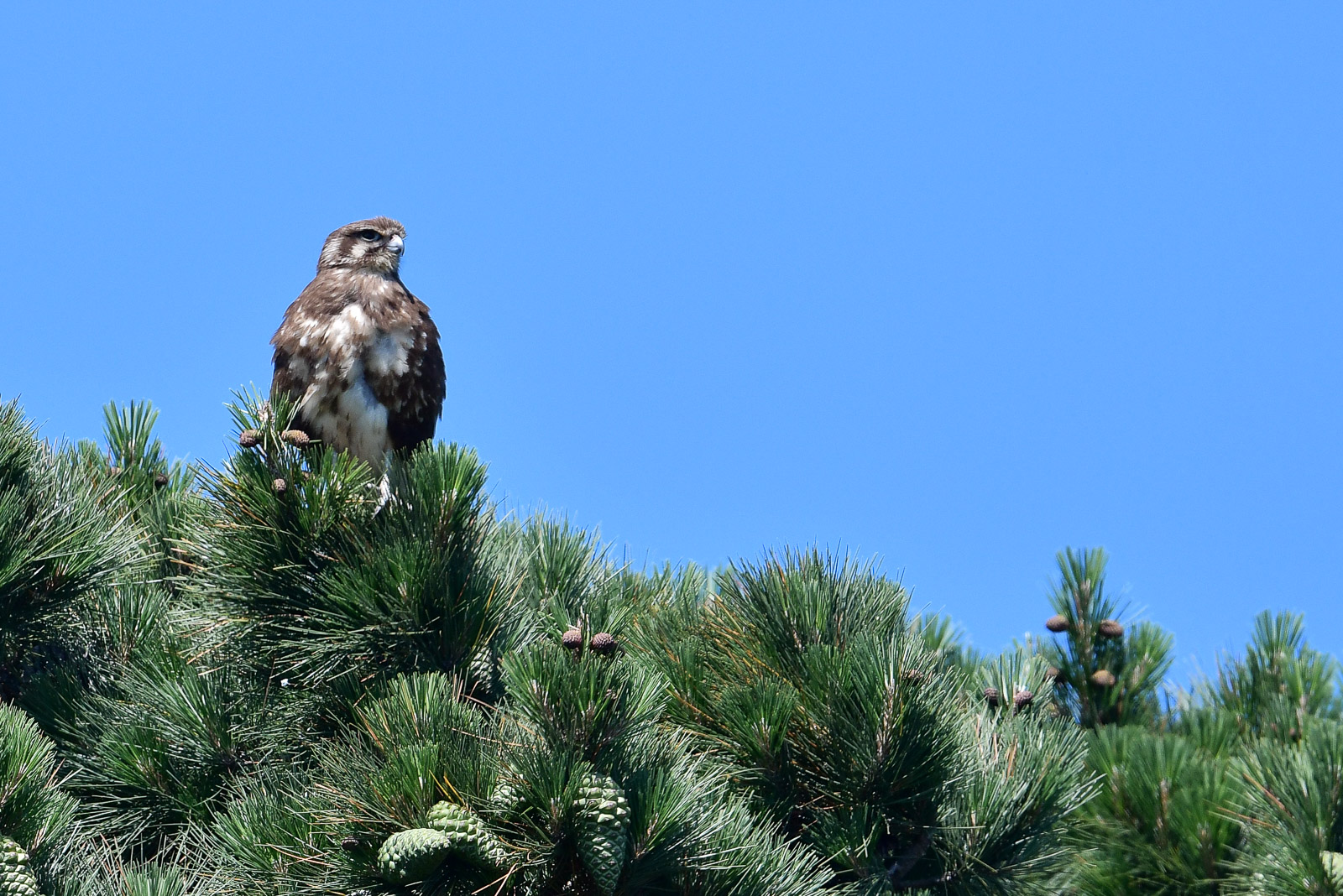
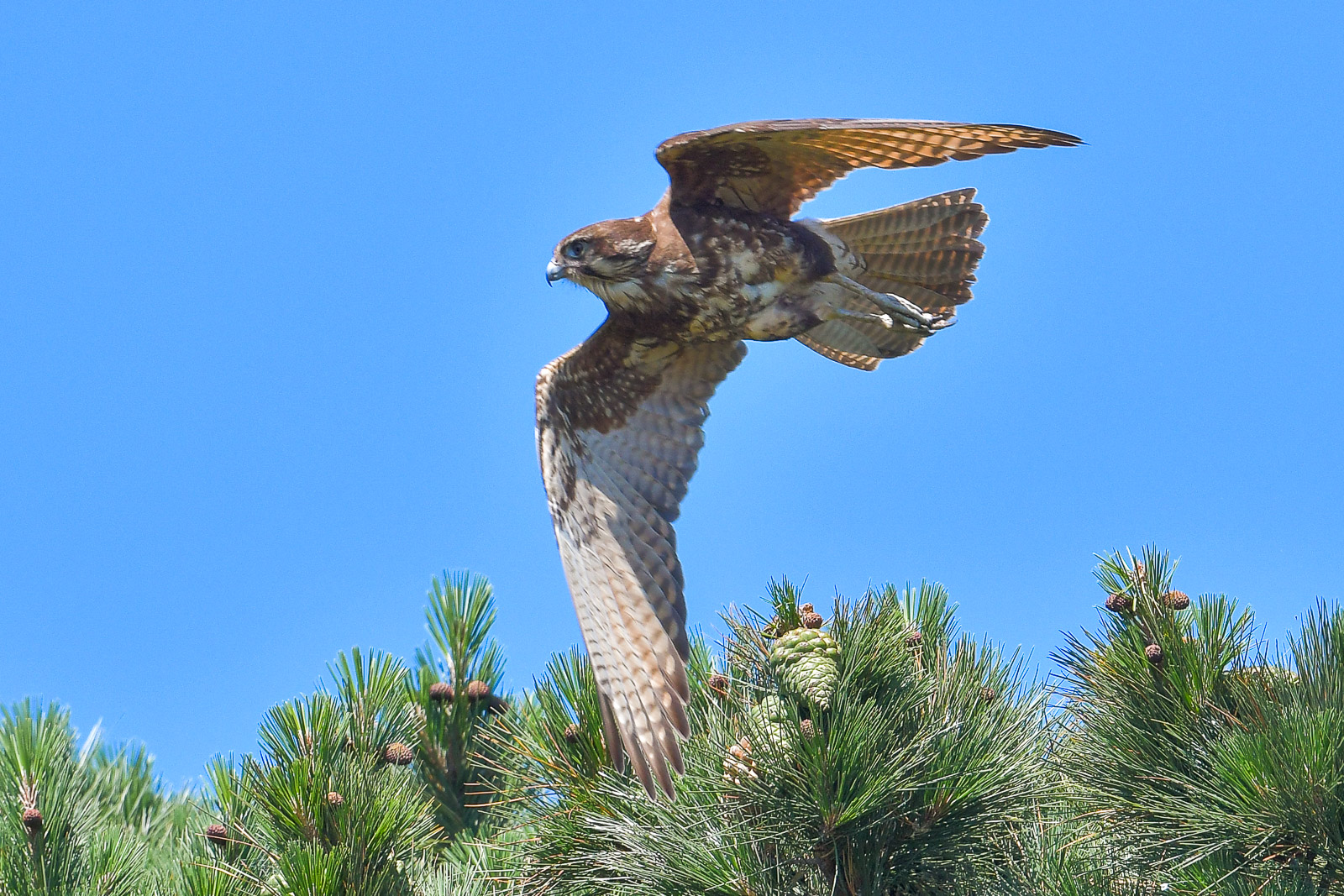
Her young are now well hatched and beginning to show some juvenile feathers under the white down, and so she is able to spend most of her day off the nest waiting for Alistair to being in food, and also to keep watch over the young from a high vantage point in the tallest Umbrella Pine in the park.
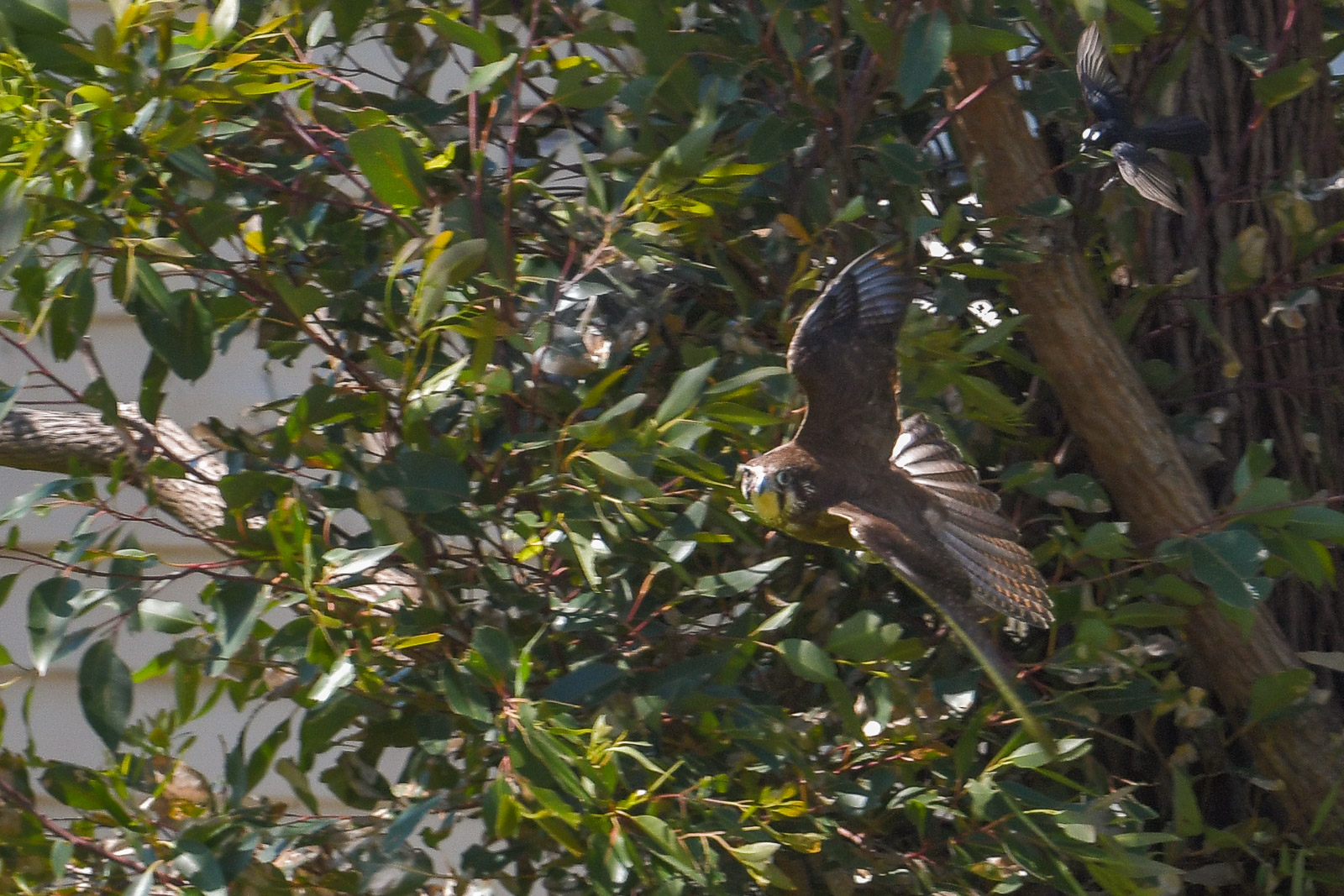
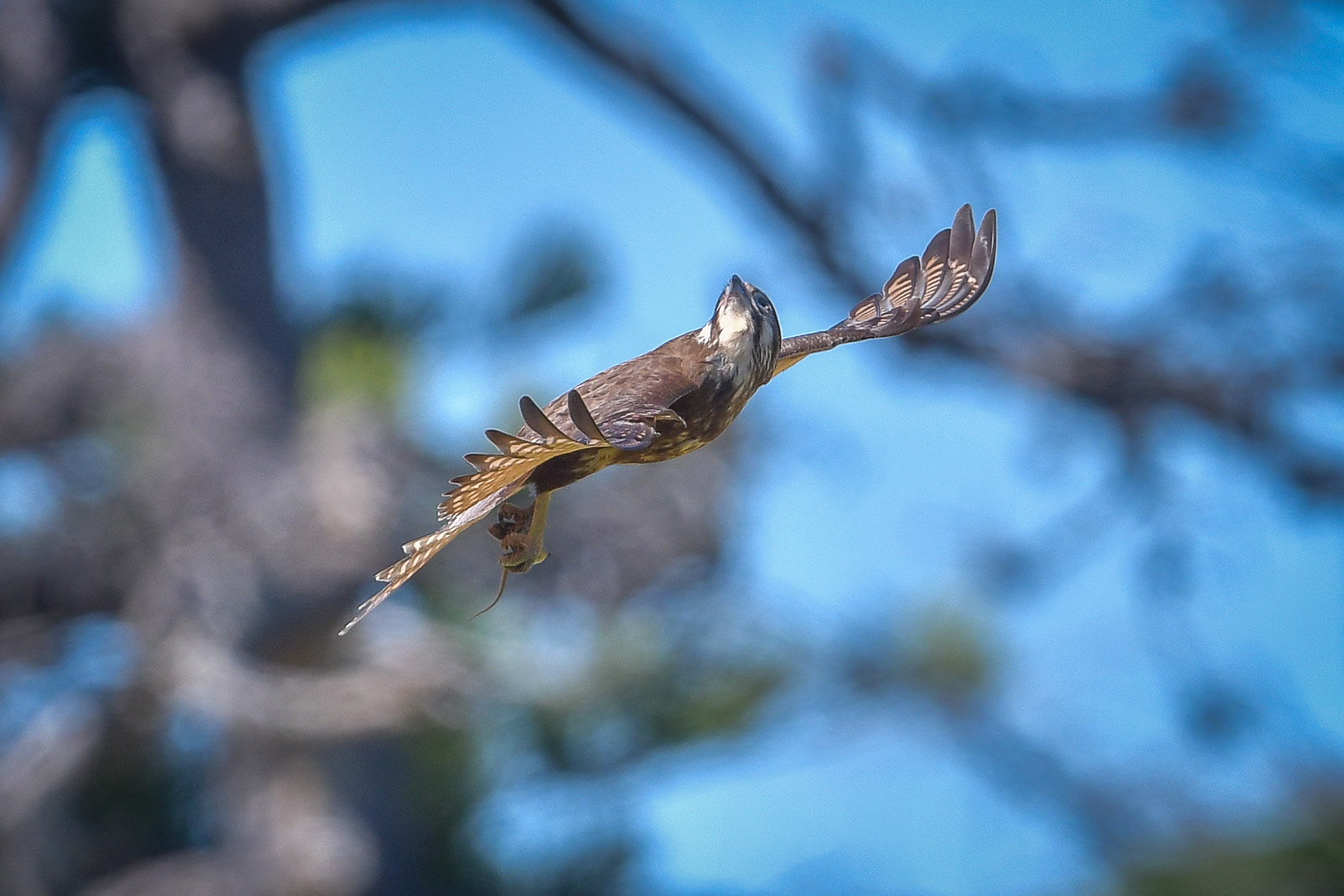
Cassia, of Cinnamon. The young are now well on the way to getting their first real feathers and she is spending more time off the nest.A favourite spot on an Umbrella Pine or Italian Stone Pine. She has a commanding view over the paddocks around and can easily spot the return of her mate, Alistair, wth foodWait, what was that. From her high vantage point she had spotted a likely meal on the groundToo easy not to try.When Cassia flew, I had no idea what was about to unfold, but it was obvious something had her attention.In a typical Brown Falcon move she headed straight down to ground level. We often think of Browns as being somewhat lumbering because of the over-arm rowing wing action. Nowhere near as sleek as their other falcon cousins. However this was a super fast run. I was so enthralled by her appoach on the ground that I didn’t make a single frame. She sped along the roadway just a few centimters above, and then dropped one leg, scooped up a lizard and immediately sped-up to make a climbing turn. No matter how fast you just read that sentence, she was faster.Of couse her arrival and departure didn’t escape the local neighbourhood watchTight turn, falcon wings tucked in.Lined up now for a direct ascent to the treeline.The infuriated Magpies were quick to respond as well, but with a turn of speed not normally seen by a Brown, she powered away to drop the meal in the nest for her growing young.Lining up to get a clean run into the nest.And here is one of the three young mouths that need feeding. This one has just opened for a wing stretch to show the very small wings sheaths still to develop.A tiny hint of the rich ginger colour of juvenile moult beginning to show.
These shots are on my online database, so hopefully this link will work and it will be possible to share some more such compilations without cluttering up the WordPress Media file.
Been a long time between posts, I know. Hope you remember me!
But the excuse—I’m going to use—is that we just haven’t been doing much that is reportable.
Long term readers may remember that the blog was originally set up to record the bird activity at Grey Box forest at Woodlands Historic Park. Quite a few things have changed, in the park, and in my birding life, and in my life since those humble beginnings.
It has been said more than once, sometimes kindly, others not, that I have Grey Box sap running in my veins. Put me in a stand of Grey Box and my heartrate, breathing and all other out of contol faculties calm down.
So when EE said, casually, ‘Why don’t we go to Eynesbury”, on a sunny morning, before you can say, “We’re off” we were!
After all the rain, Eynesbury Grey Box looks a treat. Plenty of green and still good water laying about in the usual dry water courses that cross the forest.
We had hoped to see Speckled Warbler, Diamond Firetail, Sacred Kingfisher and Jacky Winter. In descending order of importance.
We also had hoped to hear the forest ringing with the sounds of Dusky Woodswallows that regularly return to nest in the area.
However Grey Box is not always forthcoming and in the end we had to admit, that today was not going to be our day.
But here’s a small selection of the action.
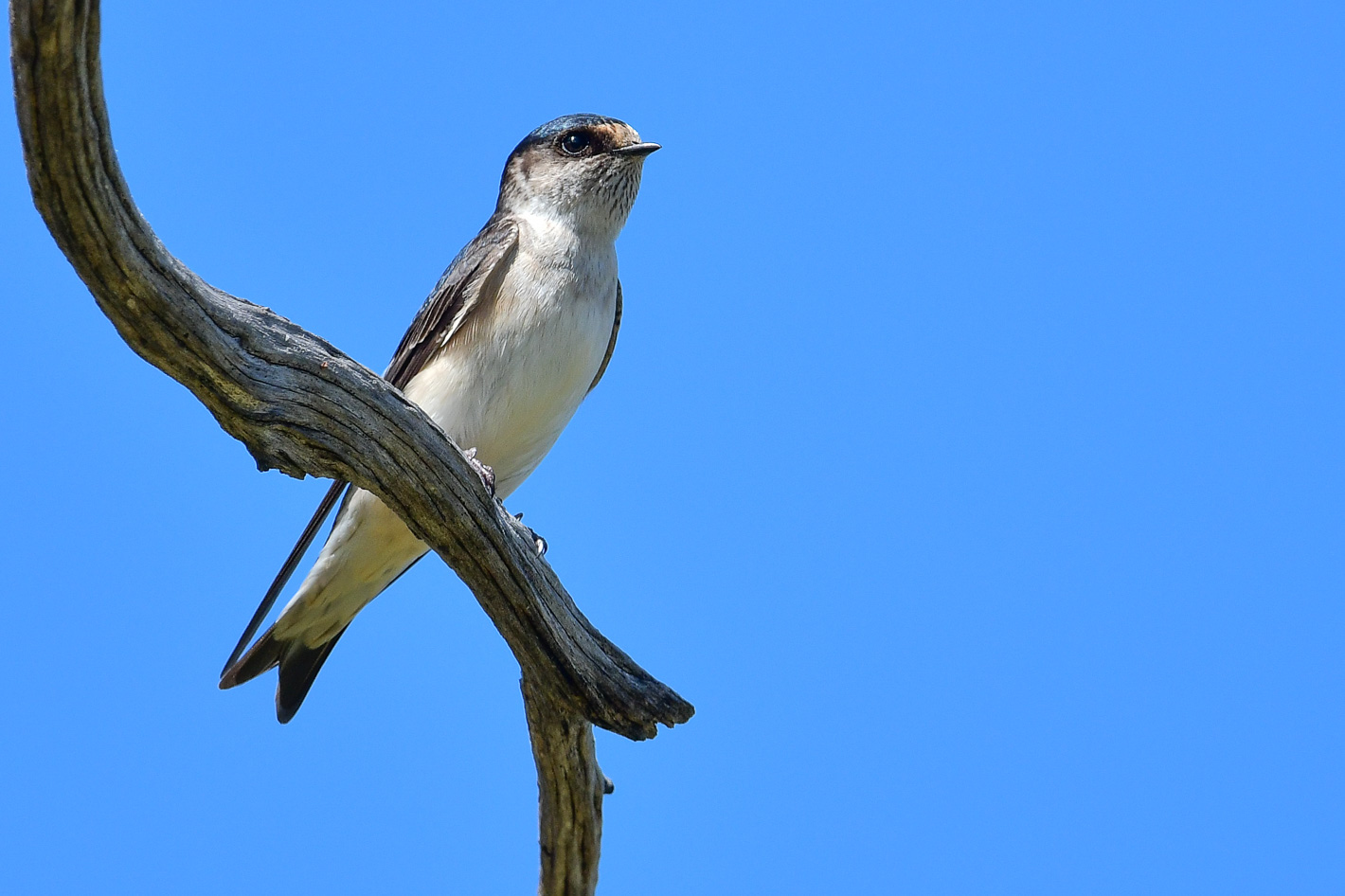
Plenty of Tree Martins. Just about every available hole had its families.
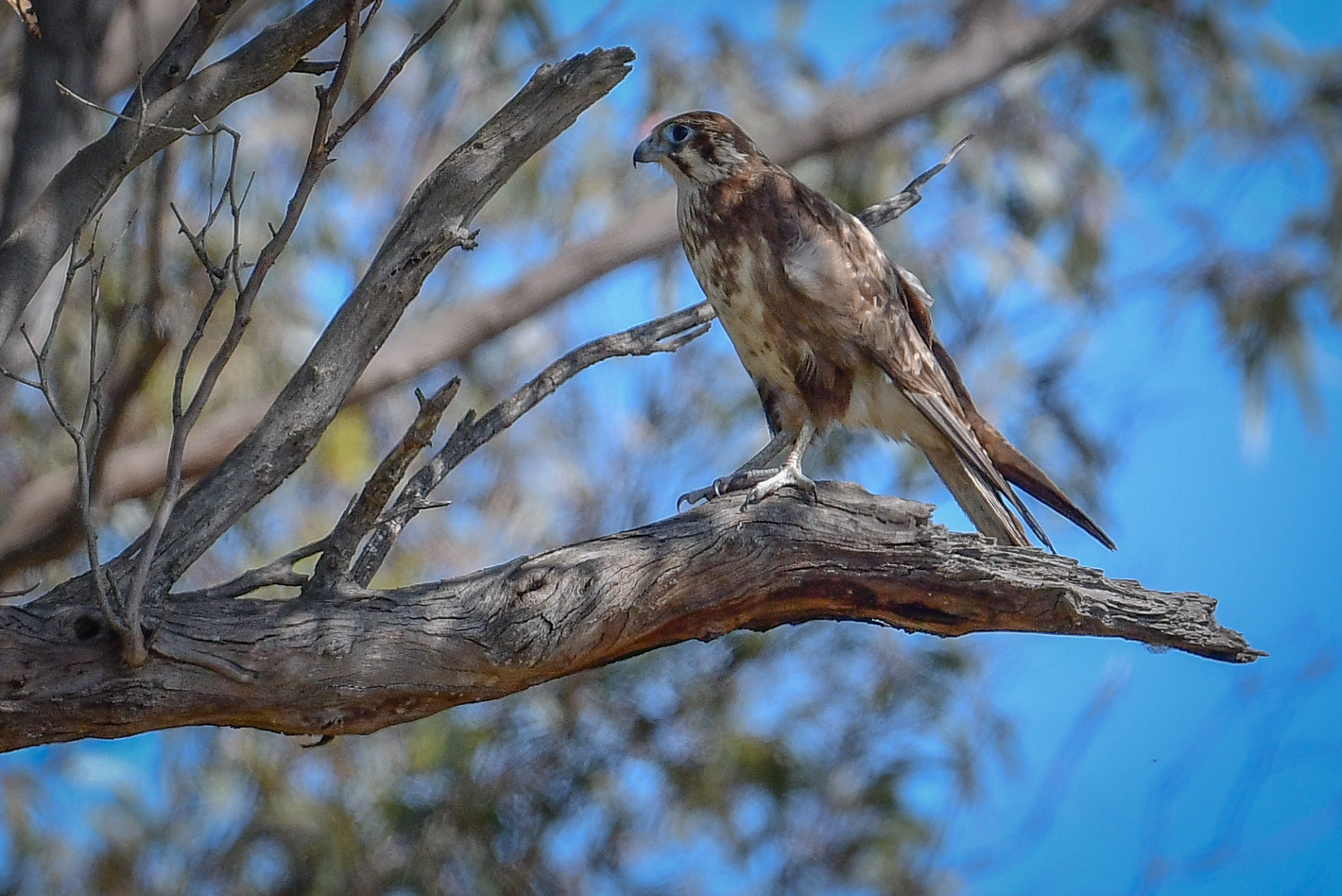
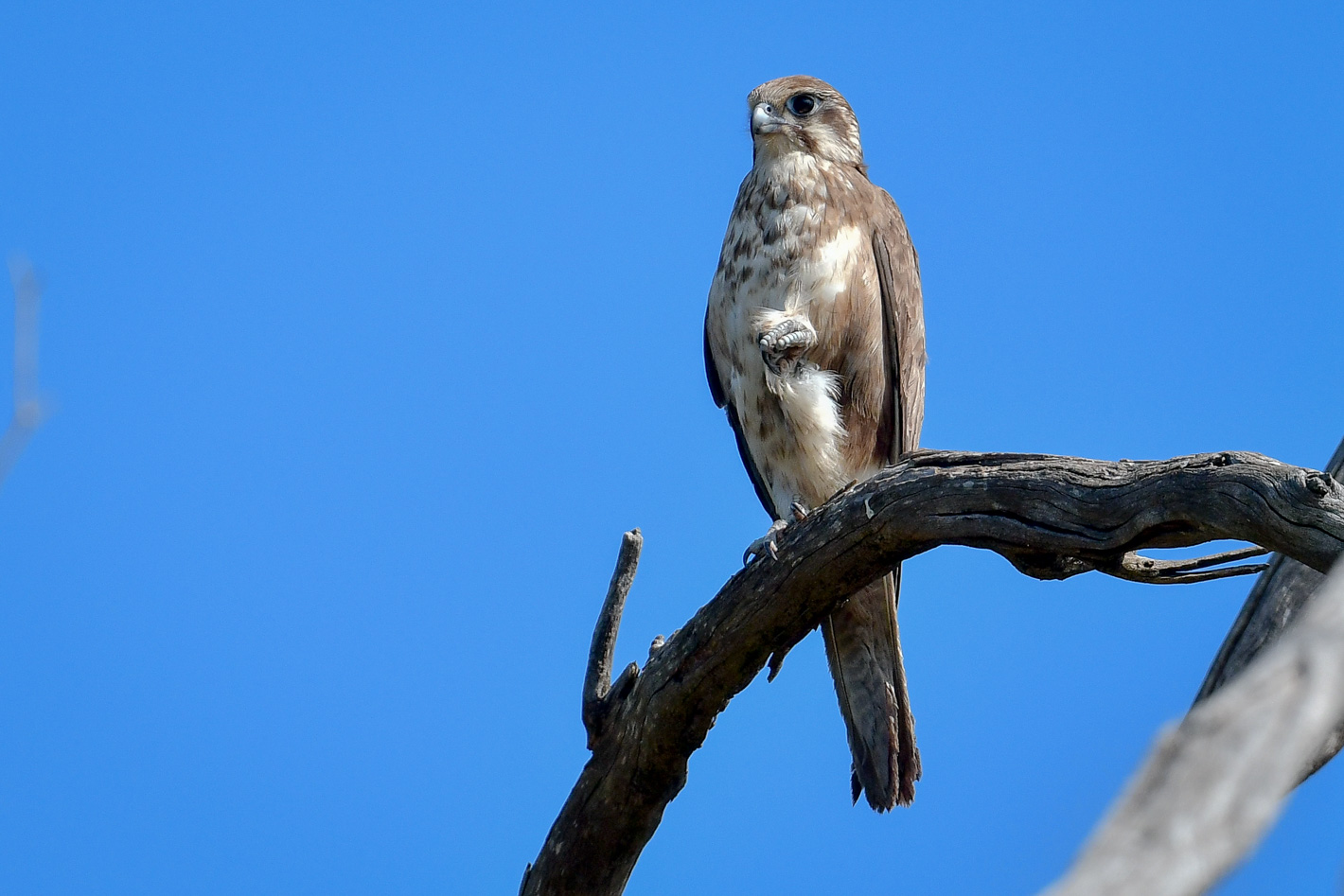
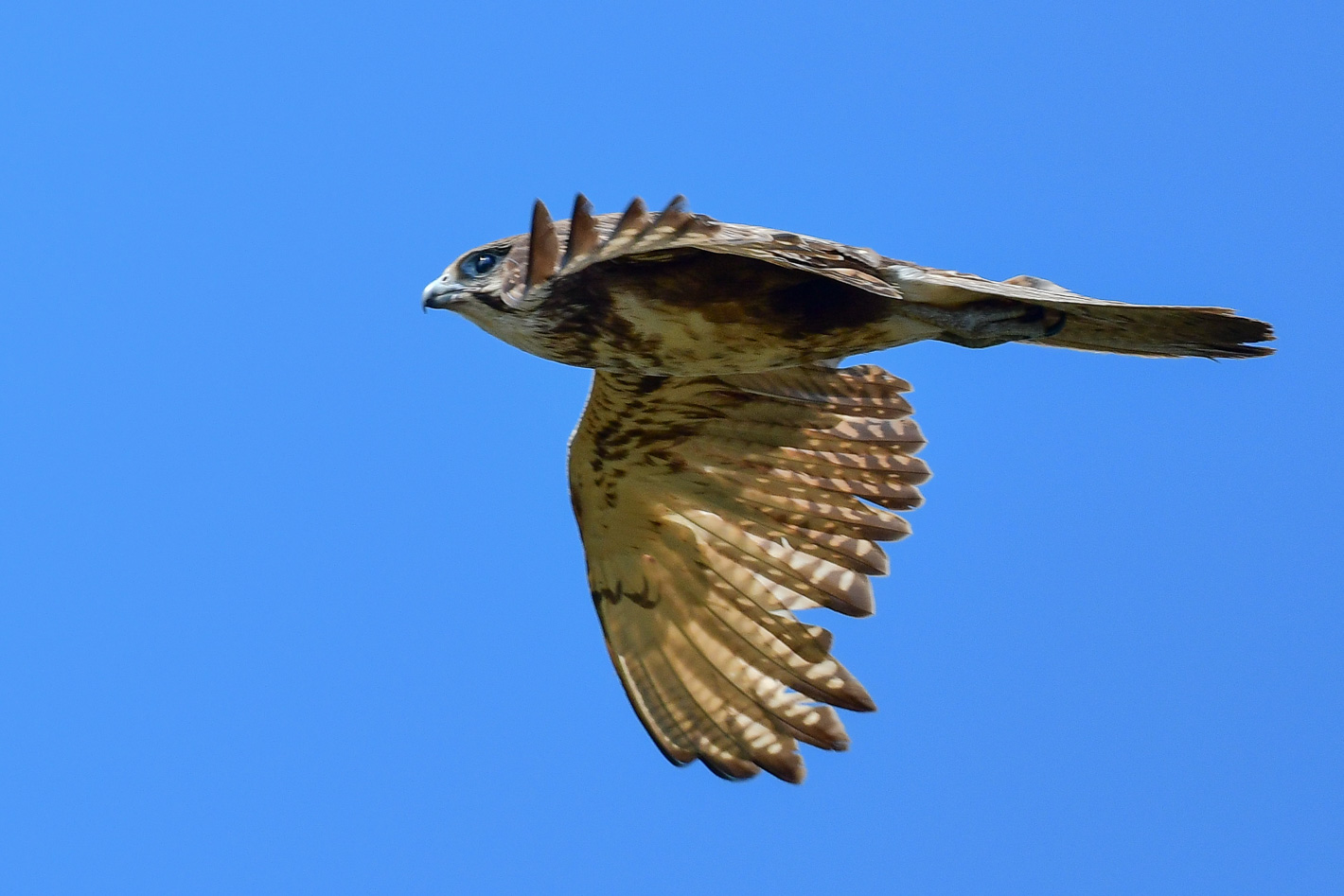
A new Brown Falcon for me. A dark morph male used to work in this area, but time has allowed a new encumbant. The same technque however was being used. It would glide from one perch spot to another and pick off a recently fledged starling or martin along the way.
Satisifed, it had plenty of time to digest its meal before making another foray
That looks like a suitable meal. We often think of Browns as being a bit lumbering or labouring in flight. But, given the right conditions they can put on a turn of speed and manoeuvrability that rivals their more agile cousins
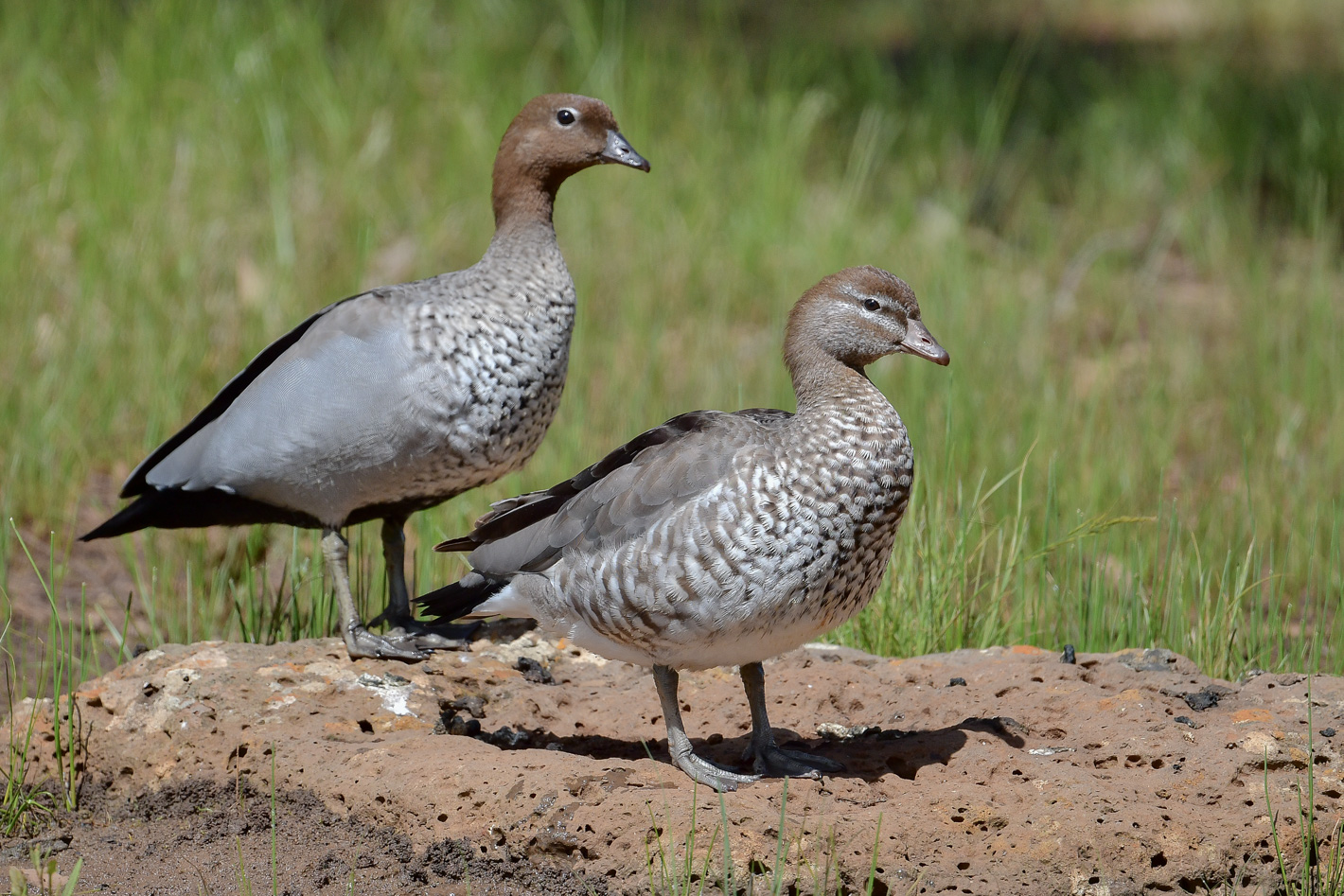
Just what ever small pond needs. Maned Duck. I still think Wood Duck is so much better. I also suspect she was out for a bit of stretch from nesting as he was sole guardian of the pond as we returned
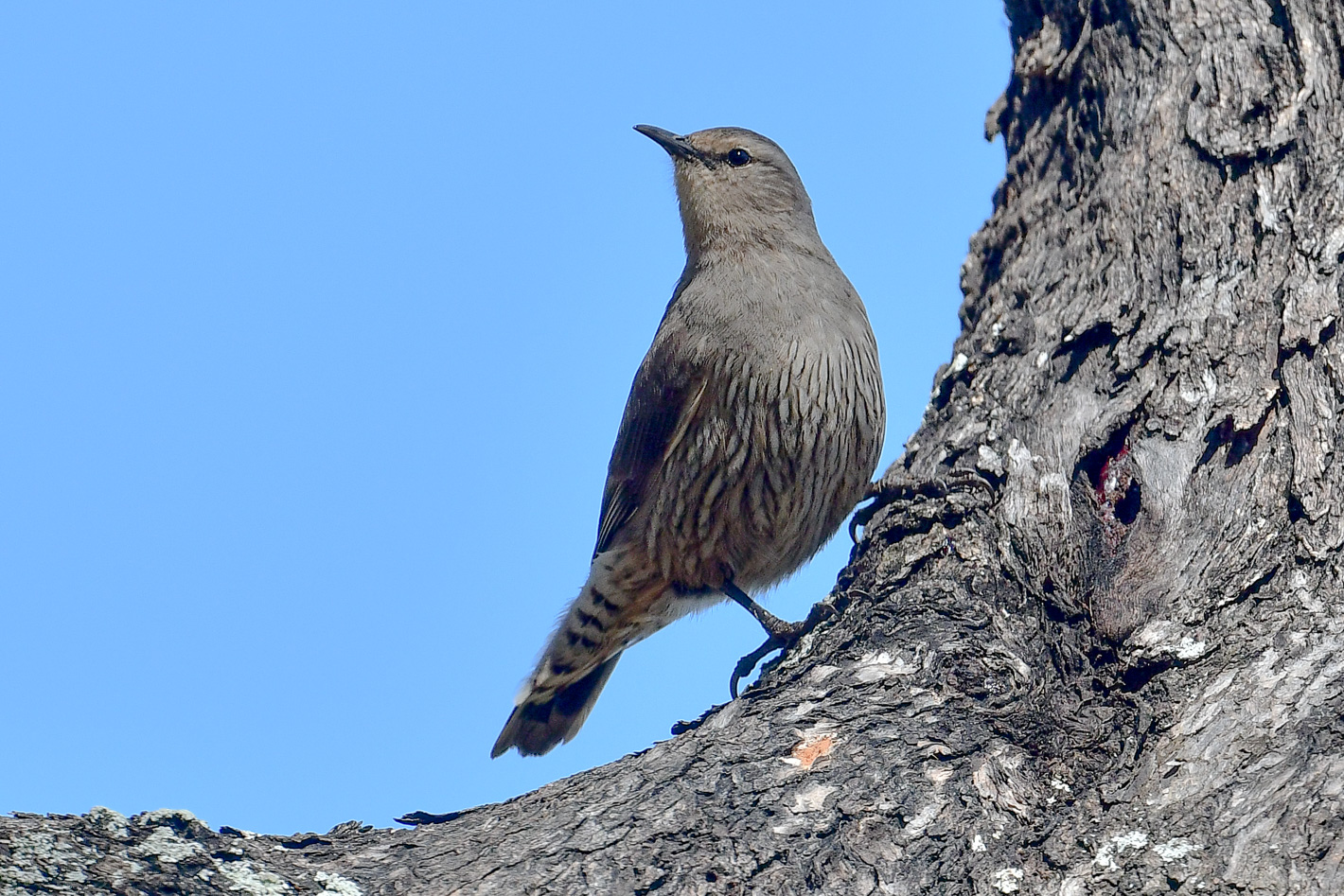
The Brown Treecreepers are feeding the first of their young, and look to be having a good season.
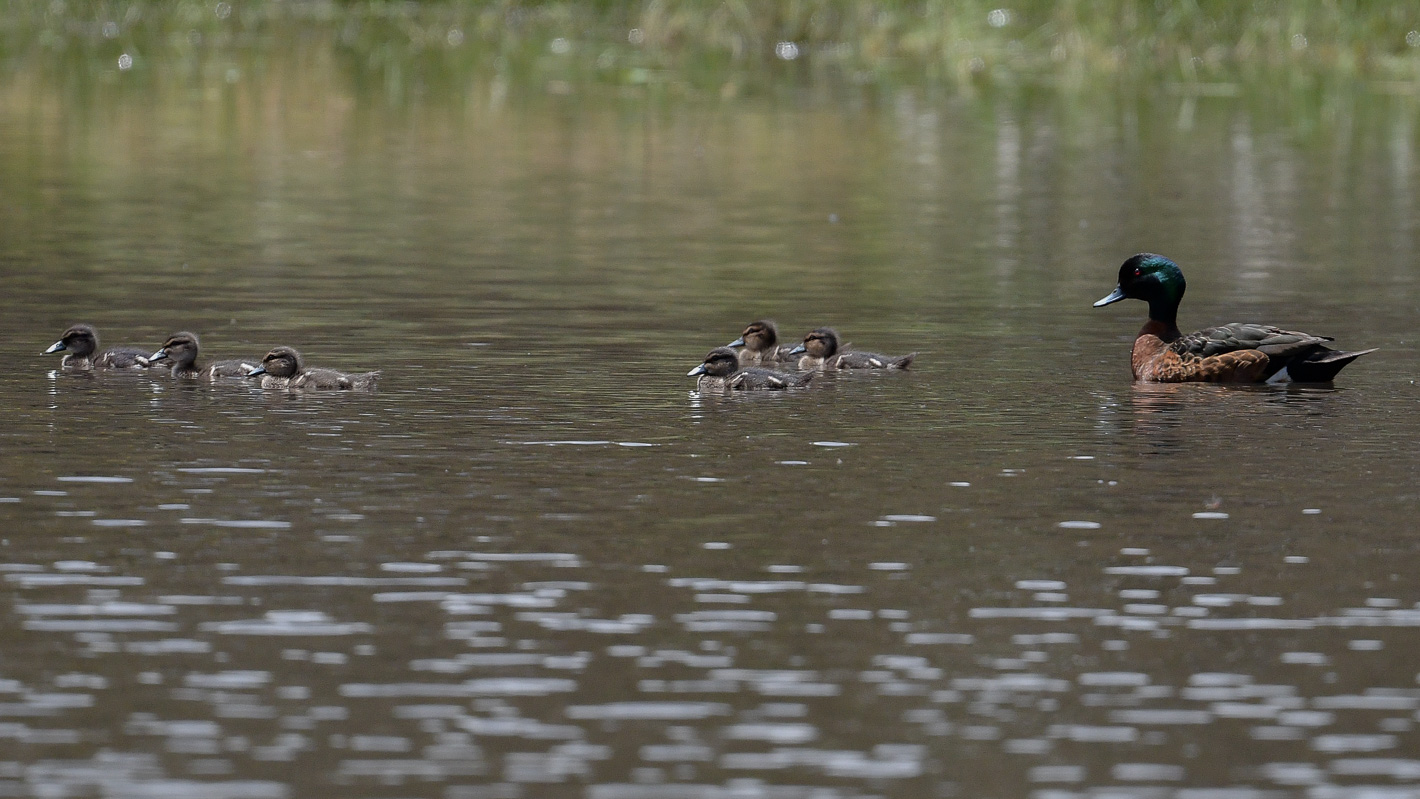
Getting all your duck(lings) in a straight line. At first we thought they must have been orphaned, but the male Chestnut Teal quickly came out and gathered them all up. This is another ephemeral pond, and the first time I’ve seen water in it in over 10 years
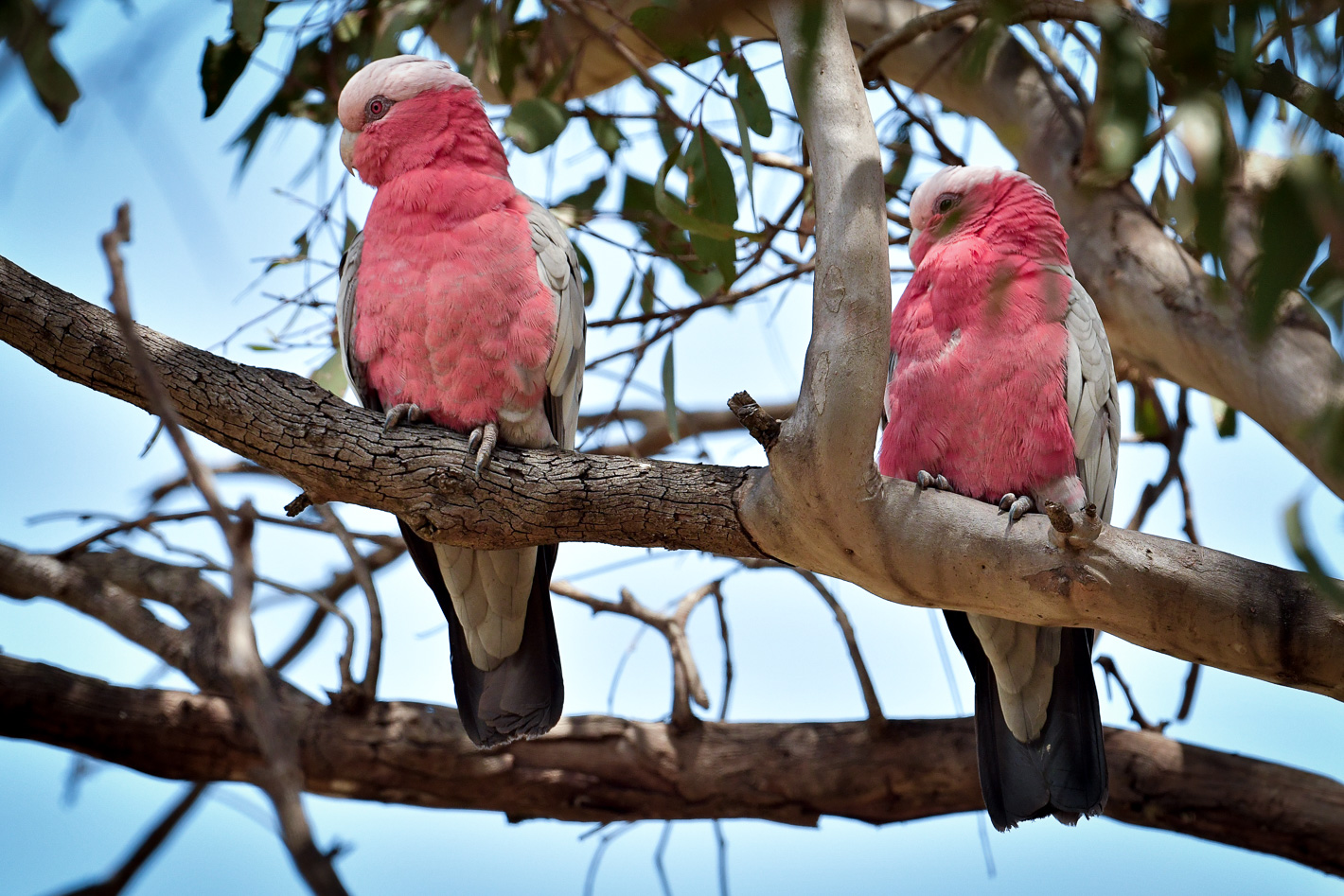
Galahs are also fledging their recent young.
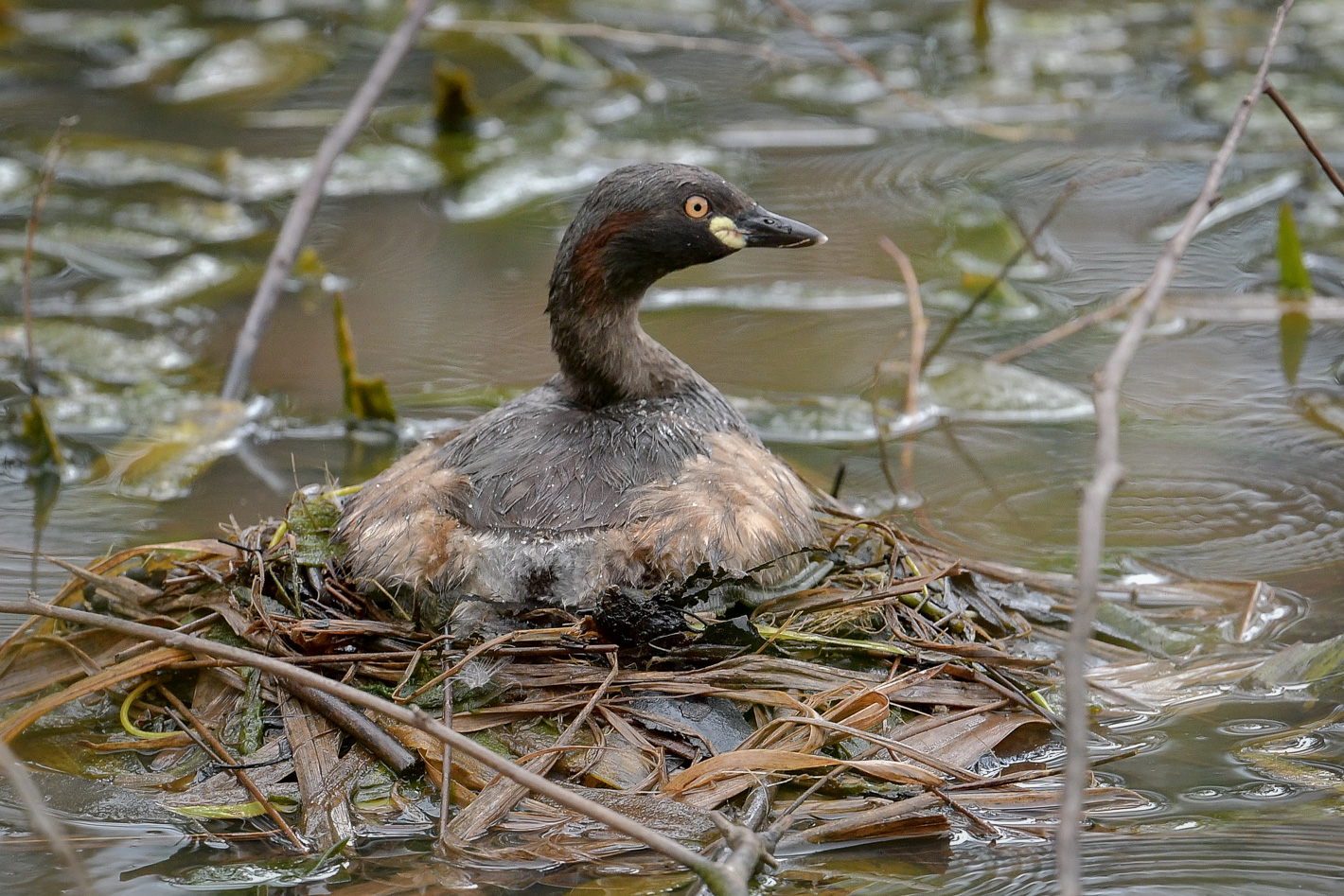
This was the find of the day. The little Aussie Battler has set up a nest in a tiny, narrow arm of the main lake at Eynesbury. It’s right by a walking track, and she didn’t seem at all concerend at our presence.
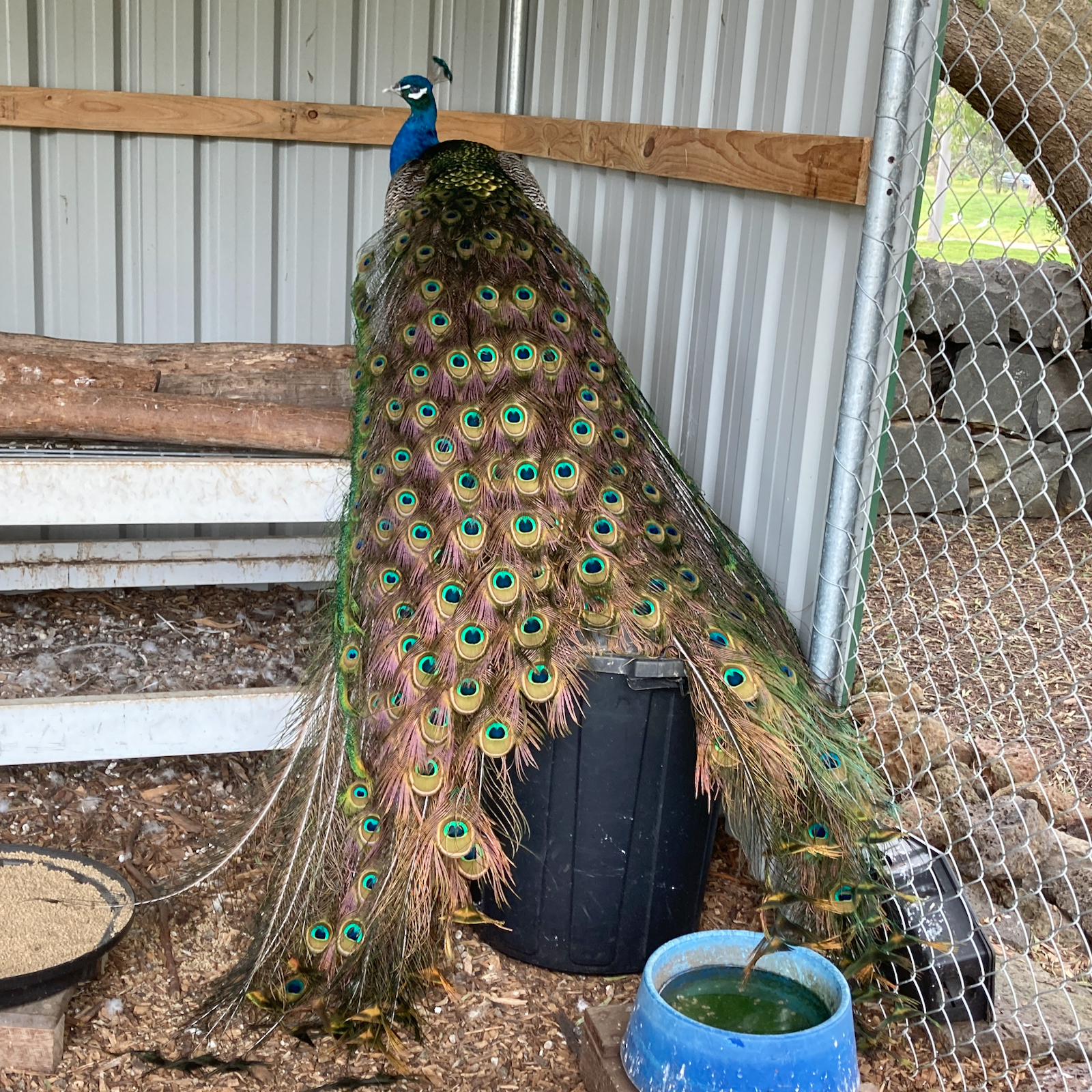
A bit of a show-off. There are several captive peafowl at the Old Homestead. Hard not to resist a look at those amazing tail markings. Excuse the rubbish bin.
Just in case anyone thought from my previous post that I’d abandoned BirdsasPoetry.com, rest assured all is well.
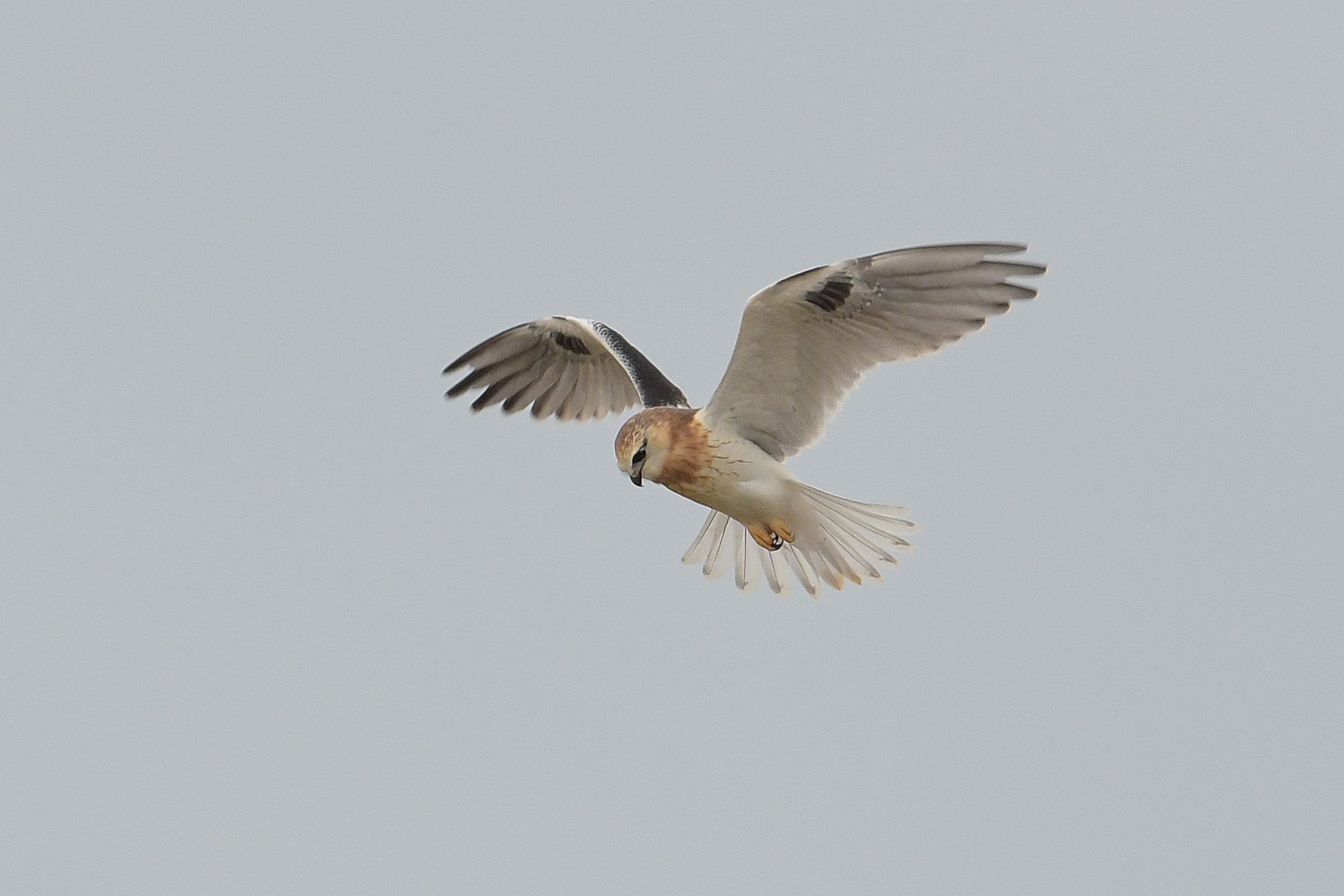
On yet another cold, windy morning we had ventured out to see if the young kites were in residence or if they had finally taken the hint and moved on to explore new areas.
We found them down the paddock about a Kilometre from the home tree, and all three actively engaged in the business of food production.
A little further investigation, and it seems like they have continued to use the home tree as a roosting area, for present. It appears that a line (invisible so to speak) has been drawn through the home territory, and they have access to the western side, and can hunt and roost freely. The eastern side, where Belle has a new nest in production, is a no-go zone and should they venture there they are quickly hunted away. So it means that unlike most clutches, they are still operating in the home territory, if somewhat tenuously.
Bronson it seems is not adverse to sneaking over the line, with a treat for them from time to time. But there is no doubt they are now self-sufficient
Here is a selection showing them in action.
It is interesting to see them pull their head up to look around. Perhaps its to check for danger or perhaps to see if there is a better area to work over
I missed this one going down. It must have spotted the mouse and dove headfirst into the grasses, and I just couldn’t keep up with it. In a few seconds it lifted off with its prize
This is another one on full attack.
And here the two of them, with mouse in claw, arrived back on the home tree within seconds of each other.
And when the fanfare, the party favours, the streamers, and the cheering all die down, its time to face reality.
Number 200 will be the last regular Saturday Evening Post. I’ve decided to call it quits, like many who stop while there is still a glow to the process.
When I first started Saturday Evening Post about four years back, my intent was to publish a photo from the week and explain where, and why i was highlighing it.
Then came covid and in particular the lockdowns. Melbourne ended up enduring the longest lockdown of any city in the world. (As the Ombudsman said in a report on why Victorians were not allowed to return home, “It was hard not to agree with the complainant that such requests were ‘beyond unreasonable… very intrusive and unkind, it’s inhuman actually’. …. But the effect of a complex and constrained bureaucracy meant some outcomes were downright unjust, even inhumane.” See here )
So I turned to the blog as an outlet to the frustration of not being able to travel about. And so the style of the blog changed and we began to cover photographic topics, the work of great photographers and my own recollections of a young lad in a country town with a passion for making images.
But, as insightful readers will have noted, its been harder and harder keep up the flow of that sort of material, and I also began to add a few ”stream of conciousness’ posts along the way. Easy to follow if you were aware of where I was coming from, or even going to, but as a reader explained to me, “It’s to complex and I just click the photo and move on.” That should, I suppose, have been a warning. So it seems that its perhaps better to step of the treadmill of grinding out a page simply to fit a deadline.
But by then the magic of #200 was looming on the horizon and here it is.
So what to expect. Well the normal sections of the blog will continue on their own ad-hoc basis as they are posting now. I am hoping to be able to photograph birds in such a way as to bring an insight into their lives, in a single story. Little Visits and Pages from the Field Note Book, should be regular in an irregular sort of way, and perhaps even an occassional Saturday Evening Post, (perhaps).
So, I hope you’ve enjoyed the journey. I have. Thanks to everyone who has commented, added additional information or insights and generally made the blog a bit larger than just my ramblings. I have truly appreciated all the various interactions.
Thanks again, and as Crobie Morrison used to say, “I hope to catch you Along the Track, somewhere soon.”
We were out the other day around the Altona area and had arrived at the Maddox Street Boatsheds area where the Paisley Drain and the Kororoit Creek empty into the Bay.
The Environmental Team of Hobson’s Bay Council have carried out significant works in the area developing it for walking and bird watching. My good friend, Andrew Webster is part of that team and they have made up special signs to help id birds in the area. One of those signs has been erected at the Boatshed area and as I walked through the bush toward it I was pretty thrilled to see a painting repro of a Nankeen Kestrel. Instantly I knew the source of the picture.
It was one from a series of Kestrels that I made out at Woodlands Homestead several years ago. Hard not to recognise the wing angle and pose of the bird as I see the photo every day as it’s a wall print next to the computer. Pretty chuffed (not Choughed) to see it and it was good to recall the memory of the time with those birds and also that it can go on to help other who are beginning bird observers.
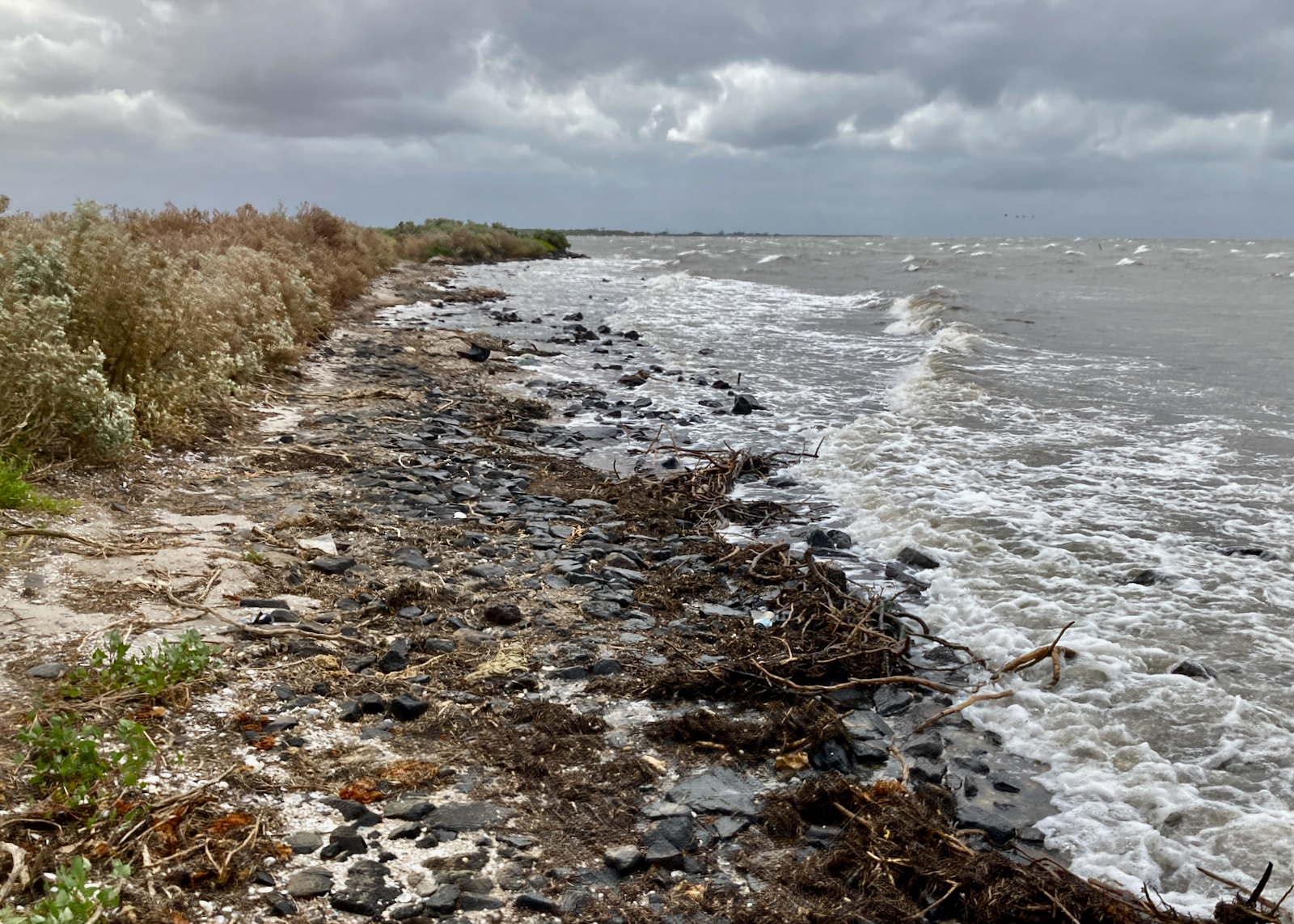
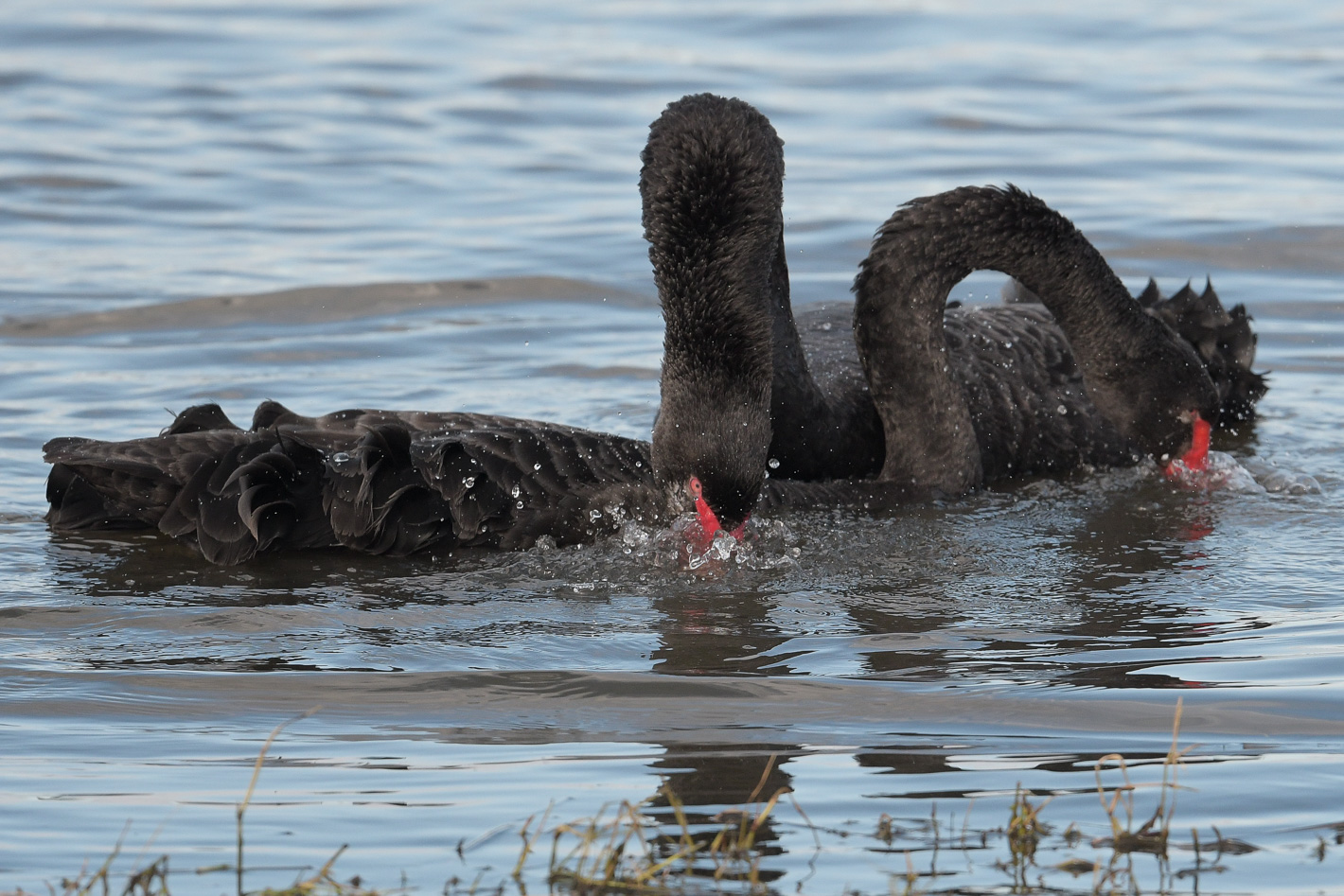
We had a few minutes to spare on the return home past the Western Treatment Plant and decided to look in on the “T Section” area. Not many birds in there at present, except for colonies of nesting swans.
We found this pair in the business of Busy-ness
First step in the process is house building
The male is ready to contribute
Time for a little romance
This involves much swimiming in a circle and heads and necks over bodies
It seems that blowing bubbles was the start of something big.
The main event
She reared up so fast and I was unable to get back further so clipped the top of her beak
The Grand Bard has his heroine, Juliet say, And I have to add she was a somewhat wordy lass,
“‘Tis but thy name that is my enemy; Thou art thyself, though not a Montague. What’s Montague? it is nor hand, nor foot, Nor arm, nor face, nor any other part Belonging to a man. O, be some other name! What’s in a name? that which we call a rose By any other name would smell as sweet; So Romeo would, were he not Romeo call’d, Retain that dear perfection which he owes Without that title. Romeo, doff thy name, And for that name which is no part of thee Take all myself. (Romeo and Juliet: 2.2.38-49)
We’ve had a few days out this past week with several groups of birders. And when it comes to the id of birds it does get a bit Juliet wordy and complicated. For some its a matter of pedantic significance, for others a much more laid back and free approach.
I think, on pondering back over the discussions, and they were all good fun and in good humour, that I’m not a bird chaser. I find much more satisfaction from the Jon Young ‘Sit-Spot” technique of enjoying the surrounds and the few birds that might be in the area. An hour or so with a pair of Brown Falcons or some agile Superb Fairywrens makes me just as happy as traipsing through the bush. Perhaps I’m just getting old and enjoy the odd sit down more. 🙂
To that end, we tend to name birds that we can recognise. Many will have followed the progess of Belle and Bronson. Do they respond to those names. Not that I’ve ever noted. or the female Brown Falcon, “Cassia of Cinnamon” and her unnamed partner.
Those that have travelled the blog for a few years might recall, Jack and Jill, the Eastern Yellow Robins, or Mr Mighty a Red-capped male.
The reason for naming has always been that moment, as the San Bushman says of, “The stengthening of the thread of connection with the bird”. A thread that is not always two-way. Sometimes the birds are unfazed by our presence, and others it more a tolerance. I often say we are invited, by the bird, to enter into its close space. Birds that allow that closeness get names. It’s part of our connectedness. Others, that show aggression or fear are best left alone. No picture is worth an upset bird. Sometimes on approach, and I get scolded, or the bird takes off, I’m the one who is angry with myself, not just becasue a picture opporunity has been missed, but the chance to build awareness.
On the other hand, sometimes birds are just found. And as we walked the boat harbour area near home, we came across these two Little Cormorants and a sign that make a great connection.
It has been said by those who know, that, ” The call of the sea is heard only by those who have the nature of the sea in them”. And as I have an irrational fear of boats, I guess I missed hearing the sea bellowing at me.
But then there are so many other things that call us, and some we reject and others we accept and it becomes a passion, (Which I guess is what the original quote was poetically referring to.)
I have been a photographer nearly all my life, (excluding the first 8 years of said life). Did I hear some faint shutter sound, imperceptible to those around me. Or was it the slosh of developer in a processing tank? Or the biting smell of acetic acid in the stop bath? When asked the inevitable question at a function or such, “What do you do? Or these days, “What Did you do?” I always respond the same way. “I am a photographer, by backgound, training and profession”
Because I discoverd early on, answering “Photographer”, always opens up for scorn and derision. Like, how could that be a real occupation! But the supposed call of photography has rather been more an ear-trumpet to other pursuits. Currently it’s birds. And as I’m getting older, birds in flight, and raptors in particular it seems.
I’ve chased down many alleys in pursuit of images. Two areas I’ve stayed away from are Food photography and Medical photography—can’t stand the sight of blood. 🙂 Each field has usually led me to unusual characters, amazing people, and lots of learning. Sure, I know, I could have done it someother way, but filling it with photos has been the icing on the cake.
Gail Mooney, (you can find her here on WordPress) said, (and she has at least 30 years experience as an illustrative photographer), ” If I was just starting out, or in my 40’s, or 50’s, … I would not be complacent!”
And I look at all the excuses I’ve used in the past. Oh its too cold, I’ll stay home I need a new Lens The light is not right I’m not getting enough ‘likes on facebook” —Trust me. That one is made up 🙂 I just can’t find anything to photograph today Perhaps the client won’t like that shot The Bride’s Mother kept getting in the way
It’s a long list.
If the call of sea drives sailors to make amazing journeys then I’m so glad that the same sort of call by that ever-so-silent shutter, so long ago has kept me from becoming complacent about making the best pictures I can, as often as I can and enjoying the companship of other like minds.
Nailed Mr and Mrs Muddie in flight—albiet on different days. Just happened to notice them while I was shuffling some pictures around. Thought a diptych was the answer.
I’ve been a bit remiss of late keeping the current nesting updated on the blog. I had decided that I’d just wait to make a single story rather than publish in installments.
Belle and Bronson had finished a clutch in early April, and the young were honing the last of their hunting skills, when it became obvious that the pair were planning a second clutch in the same nest. Normally after a clutch, the female takes a well earned break and may not be around for several weeks, and feeds herself, or sometimes moves on to another territory. So it was interesting to see them carrying sticks, Bronson feeding her and mating on a regular basis.
Then. The weather turned. I’m sure she didn’t plan for it, but the weather simply went from bad to dreadful. Rain. Wind. Hail. Gales. Some days all together.
EE and I were talking over the image selection for this set, and noted how few days of bright sunshine there had been and how much of the journey we had missed simply because it was too cold and dreadful to be out in the field.
Yet, to their credit, they persisted. The nest is exposed to the North. So any strong northerly winds, and there were whole days of that, really blasted onto the nesting site. It is a clever nest, among the young leaves and twigs at the end of a branch. It is built over a ‘Y’ at the end of the branch and a short dead stick in the centre of the “Y” takes the load bearing. But on a strong wind, the nest was lifted near vertically and must have been a wild ride for the brooding mother and eventually the hatched young.
Yet. To their credit, they persisted.
There are a few more photos than I’d normally publish and I’ve interspersed them through the text notes.
The first step in the process it seems is for the nest to be refurbished. Some internal material was removed, old feathers, dried leaves and some sticks. Perhaps it was soiled by the young before they could move about. Then a range of new sticks were added to build up the edges of the nest as the young had stood on the edges.
The next step was to top up Belle’s reserves. She will be on the nest and unable to catch for perhaps as long as 45 days. She will let him know when she is hungry.
It’s not often easy to get a glimpse of her on the nest, as she sits well down. This was a little later in the brooding and most likely the young were hatched and she was sitting over them rather than down on the eggs.
Hard to know at first how many are in the nest. For quite awhile we though we only saw two, so one might have been a few days behind the others. But once they get their bearings they are quick to want to see the world around them. It is often interesting to see those rich ginger colours, which at first seem to bright to hide them, but suprisingly (I jest) the grey, white and ginger are a perfect match for the nesting location.
Several days before they fly they move about the branches and twigs, a combination of clambering and jumping. This enterprising one had managed to get right out in the open to plead with Bronson for an extra helping.
Then the big day comes and they step out of the tree and into the air. Getting out is not so much a problem for them as working out how to slow down and stop well enough to land. The first few attempts usually are just dumping into the surrounding leaves—just as well they are soft. But in a day or so they can judge the speed and angle and make it on to the branches, albiet in a haphazard fashion
But the skills develop quickly, as you would expect, and within a few days they are highly manouverable little aeronauts. Wing strengh develops and long forays down the paddocks and out of sight become the norm.
Then begins the process of teaching them to take prey from the male. They take to this execise with great enthusiasm, very little skill, clumsiness and what can best be described as un-coordination. A hard time for the male as he gets buffetted about by the young who judge the speed, height and angle badly and barrell into him with no hope of making split second corrections. He seems to take all this in a stoic manner and I’ve seen him sometimes raise a little higher to match the upward speed, or drop lower with a long outstretched leg to place the mouse in the waiting claws. Other times he seems to be able to hold out the mouse and then slip away sideways to avoid a headon collision.
Eventually all the training comes to fruition and they become highly skilled at judging the parameters and can do it with a minimum of effort and few missed opportunities.
And now they are just bragging. The once unskilled can now make a bold one legged move.
This happened a long way out, and I’ve only got small shots of the entire sequence, but the young one secured the mouse, and somewhere between grasping it, and wanting to eat it in the air, of course it dropped the mouse. Bronson was on to it but as my Flickr site shows, a mouse free-falling is faster than a Kite. They are built for hovereing and do not have the speed of say, a Peregrine or Hobby, and the mouse tumbled to the ground. He was however right behind it, and I think this one was dead, as he quickly retrieved it, took it to a branch and the young one safely collected it.
Soon the colours will fade and they will be ready to face the world on their own. As Eleanor pointed out the orange colouring come from a chemical in the feathers, Porphyrin.
It seems the baby colours out of the nest don’t moult out, the rich copper tones fade out gradually over a few week. The brownish colour on young BSKs comes from Porphyrin, which fades in sunlight.
Eleanor says, “Porphyrin, which has been studied less than other pigments, as it doesn’t occur in large numbers of birds. It is found for example in the reddish-brown feathers of a juvenile Black-shouldered Kite. This fades after a few weeks, without the birds replacing the feathers, as it degrades in sunlight. It is also found in the brown and reddish spots on birds’ eggs.”
Porphyrin also emitts or fluoresces under UV light so the colouring would show up quite brightly for the birds, which may be an indication of individuals, or breeding potential. All just too fascinating.
And so through the sleet, the hail, the rain, the high winds and freezing cold they have matured enough to move on from the nest site. Here Bronson is sitting with them, a symbolic sort of image as they are now banned from the nesting area, as Belle is already preparing a new nest and by the time I publish this, no doubt she will have another clutch on the go.
How quickly Belle and Bronson’s young kites have grown.
Yesterday, in the sunshine I might add, we arrived and expected to see them in the adjacent area. But hunt as we might, there was no sign. Then EE spied them way down the paddock, a long way from the nest. And for reasons that shall be come obvious, the parents seem to have given them their marching orders.
They have been on the wing just about four weeks. Normally they would be ready to leave, if not gone by about week six, so these young are hopefully well enough advanced to look after themselves.
More searching for the third one, and eventually it turned up a little later in the morning to sit with this pair. One had flown up to the home nesting area, but a very speedy adult flew in a direct, straight line to intercept it, and with some outstretched claws and calling, the young quickly got the message and returned to their end of the paddock.
I read somewhere that the attrition rate for young kites is very high, can’t relocate the details, but it was over 50% that would succumb to an accident, or predator, or starvation within the first year. (Please don’t quote me on this, and if I find the reference, I will update here) Once Bronson stops feeding them, there is no further interaction with the parents and they just move on to find food and establish their own territory.
And the reason for their banishment?
It soon became obvious that Belle had a new nest on the go. Normally she would disappear for a few weeks, or month before making a new attempt, but the pair are well on the way to finalising the project and the young kites are unwanted as competition for food.
During the coming week I’ll put up a blog page with some of the actitity from this hatching.
Now some of their findings suggest that Belle and Bronson have either not bothered to read the paper, or the Black-shouldered Kite Instruction book as some of their behaviour differs from the paper’s birds. Still its a fascinating piece of reseach and more power to Stephen Debus and his team for the hours spent in the field and then in collating the findings.
There is an ad currently running on the telly for some sort of icecream confectionary and has someone with a friend how wants a bite of the icecream. Said friend keeps popping up in the most embarrassing moments asking, “Can I have a bite”
Thought the actions and expression of this little kite to its sibling was a bit like the ad. You settle down for a quite rest on a branch and someone comes to disturb.
The pair were actually preening and this one thought it might help by picking through the neck feathers.
We have been struggling a bit this week with very average weather and haven’t been able to put in much time either with the local kites or some other birds we’ve been monitoring. So the weather doesn’t help the attitude either.
Had an interesting online discussion with a photographer who has returned from a trip with something like 4,000 images and the need to ‘process’ them. Along the way we talked about the interesting fact that these days taking a picture is ‘free’ no cost invovled and so we tend to take lots of them. Not just multi-burst, but lots of them and then hopefully edit back later.
Part of his lament was that out of the 4,000 or so images he would only spend some time on just a few. The rest would go unprocessed. Even in the past couple of years the entire multi-burst concept has changed. Once you might get a camera to make 3 frames in a second. The problem for us DSLR users is that mirror has to go up and come down for the next exposure. Now, mirrorless has numbers that match motionpicture speeds. My Dad’s old movie camera ran at 16 frames per second, many of the newer cameras exceed that by a long way.
Sure, editing is easy. Keep going till you get the good one. The one with the right expression, or the moment the bird behaves unusually, or get the perfect wing extention as it lifts of the branch, or lifts the fish out of the water.
The image is the work of Neil Mansfield via Flickr All rights are his.
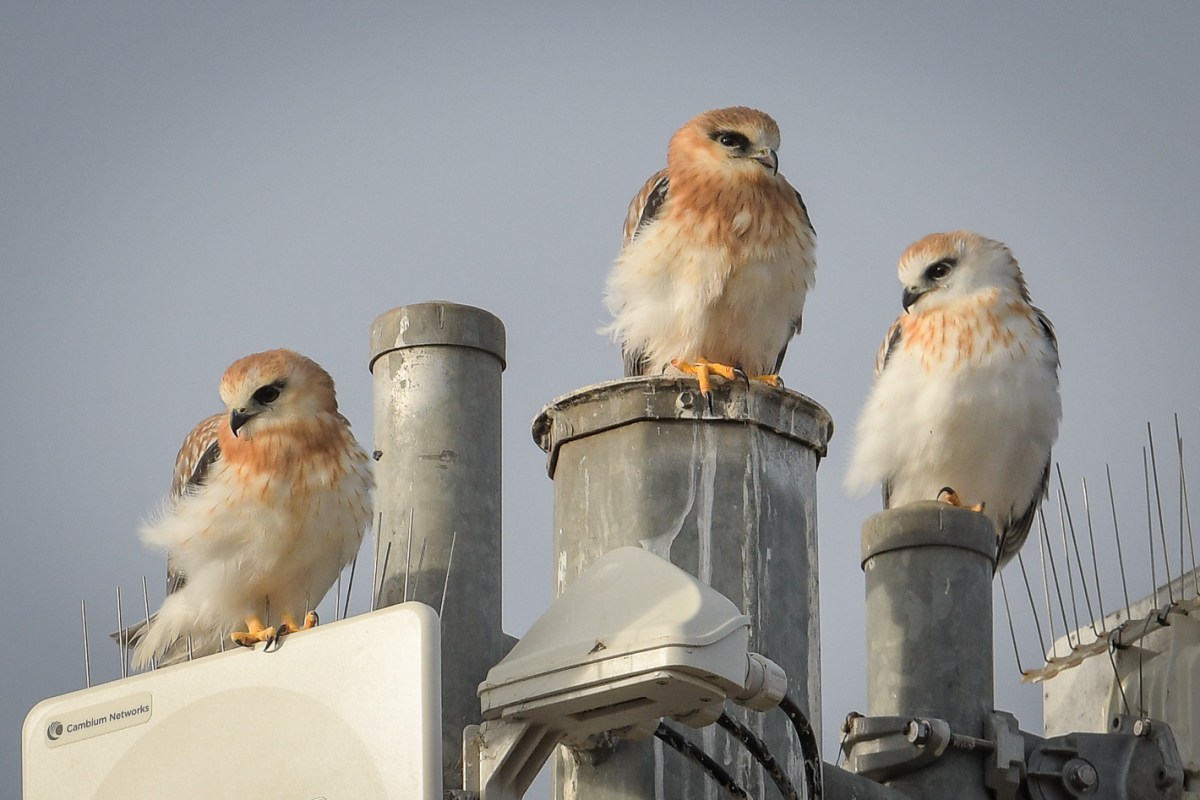
So while the technology is always going to help us achieve some seemingly impossibe shots, sometimes it’s luck. Sometimes it’s patience. Sometimes, perhaps its going through the 4000 shots to find the gem and the rest will just be snapshots.
What if you slept And what if In your sleep You dreamed And what if In your dream You went to heaven And there plucked a strange and beautiful flower And what if When you awoke You had that flower in you hand Ah, what then?
Samuel Taylor Coleridge
“If you spend a long period of time in study and self-cultivation, you will enter Tao. By doing so, you also enter a world of extraordinary perceptions. You experience unimaginable things, receive thoughts and learning as if from nowhere, perceive things that could be classified as prescient. Yet if you try to communicate what you experience, there is no one to understand you, no one who will believe you. The more you walk this road, the farther you are from the ordinary ways of society. You may see the truth, but you will find that people would rather listen to politicians, performers, and charlatans.”
― Wayne W. Dyer
Sometimes people say the most insightful things, but sometimes it takes awhile to sink in, or perhaps other overwhelming thoughts press the useful to background.
Had a cuppa the other day with a few folk who were bemoaning the advent of our societies entrapment or mesmerisation by social media and technology in general. And how things were not like that in ‘the good old days’.
And it seems to me that the policticans, performers and charlatans have been able to make the most of the media, and why are the creatives left behind. But I think perhaps it’s what people dwell on, rather than searching out for the inspirational. There are plenty of pages, blogs and sites that allow creatives to express and reveal so much of their vision. As Mike Johnson of The Online Photographer once said, “Every generation has something new to offer, and you’ve got to take them on their chosen terms.”
Robin Walley, “The Lightweight Photographer”, also was offering some advice on composition. The takeaway for me, was not that the subject or scene conformed to some given set of rules, or even a set of ‘percieved rules’ of the viewer, but rather where was the photographer’s heart. Can I find that in the shot. Thinking back on some of the early photos I (or you) might have made and we were pretty excited about. What would it be like to revisit that same location or subject.
Robin says.
I shot this on my recent trip to Cornwall when walking through some woodland. It could be anywhere, yet I found it rewarding to spot and capture. The shape of the trees, the shadows and the light on the bridge all combined to make me think there is a picture here. I took a moment to capture it and then the light changed, and the moment was gone.
I remember wondering at the time if I had imagined the scene briefly looking good.
It’s also interesting to think back to when I first became interested in photography. I would often see images like this in books and wonder “What was the photographer thinking. It’s just a path, bridge and trees. There’s nothing worth photographing.”
How things change.
The young kites are starting to stretch their wings. For them it’s not an adventure, it’s life. For us it’s an exciting adventure in photography. It’s like finding the flower in your hand.