
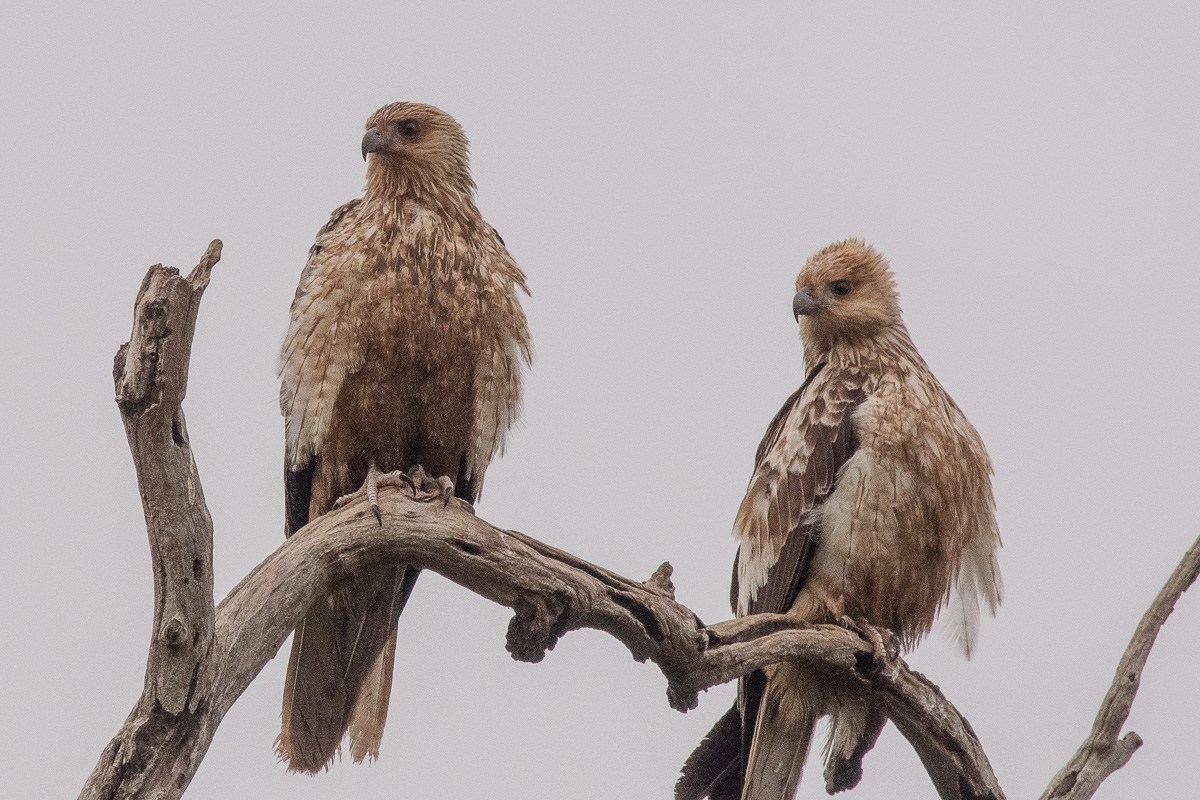
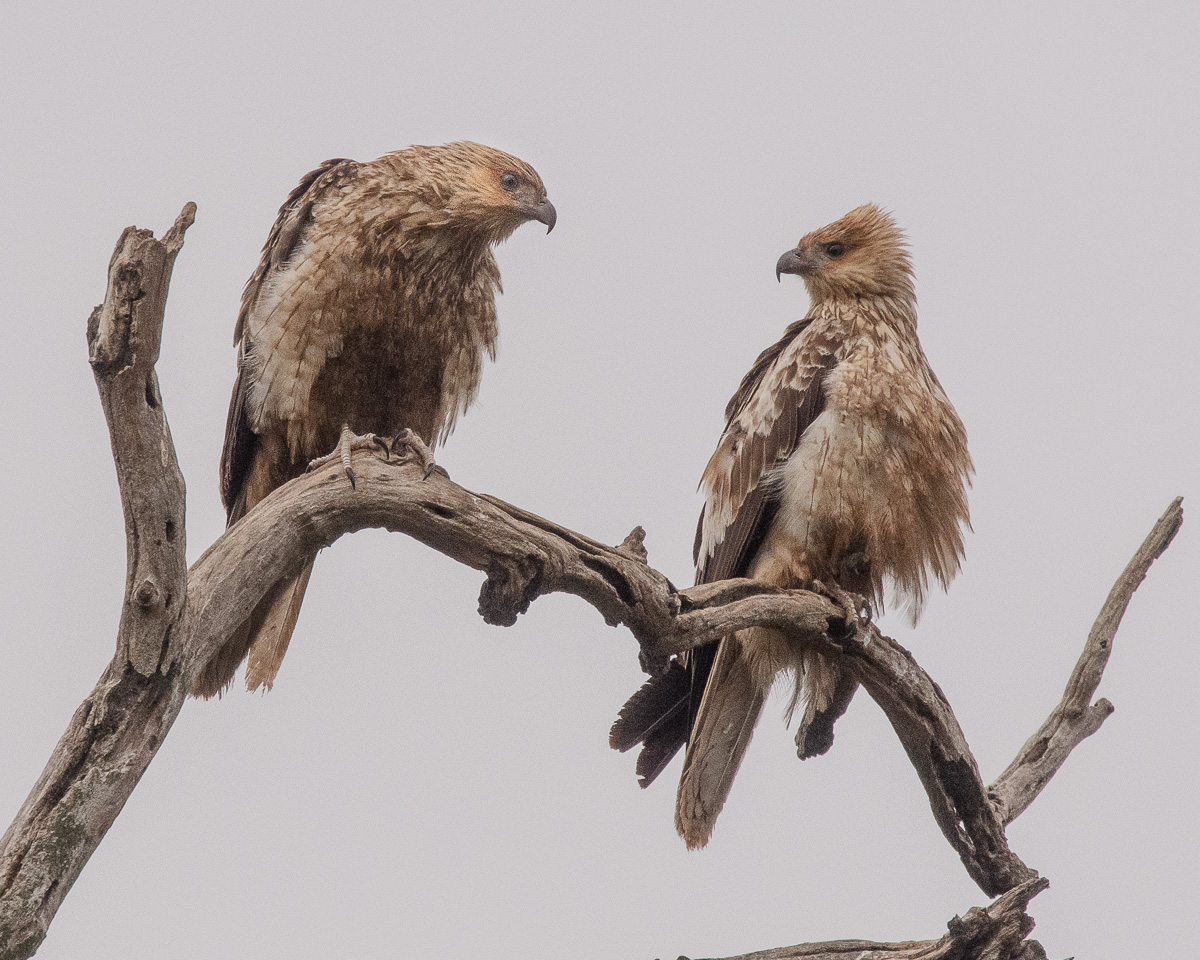
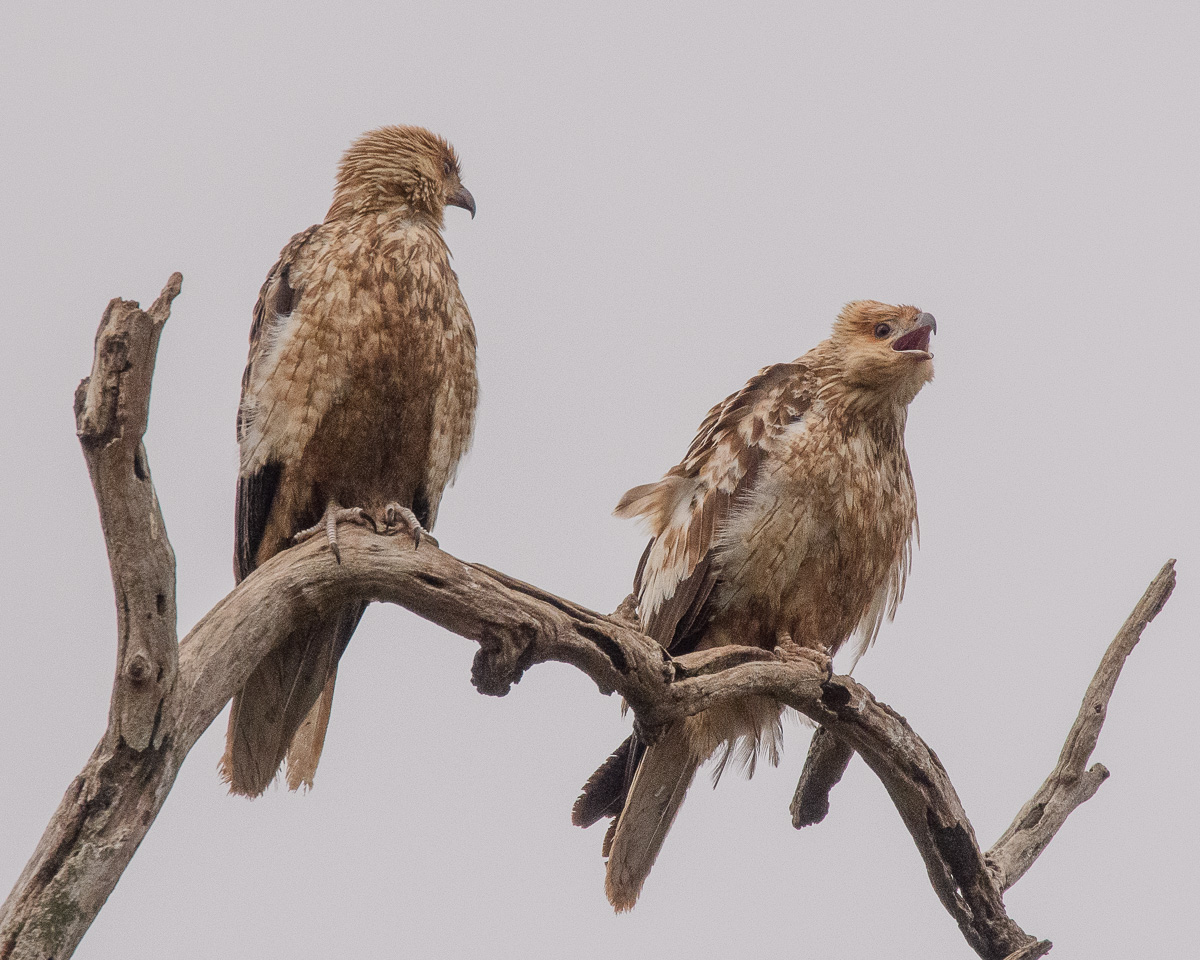
Last season, we managed to meet a pair of Brown Falcon working on the Werribee Riverine.
Had high hopes for them at the time that they might nest locally. I didn’t share here on the blog until I was sure, but they ended up working away. So i posted a few encounters on Flickr.
The birds had been working in a part of the Park that was at that time closed for repairs to a bridge and tracks caused by a flood about 18 months before. So the Browns had been able to enjoy a human-free environment.
The other intrigue is that both birds were light morph. The male particularly has a lovely underwing scalloped feather marking. The female, also is quite distinctive as her eye teardrops extend under her beak.
EE and I had been to a local event and decided to take a ‘quick’ walk down along the river. No cameras of course. As we came to the river we saw two Falcons hard at work hovering in the wind. They both landed close enough for us to get good views and we were sure it was Sally and Harry.
Did I mention no cameras. Out came the ‘fones. To no avail really.
We were back a few days later, good weather and cameras ready.
We spotted Sally on a post at the top of the river cliff. And decided to follow up the walking ramp to see if we could get close.
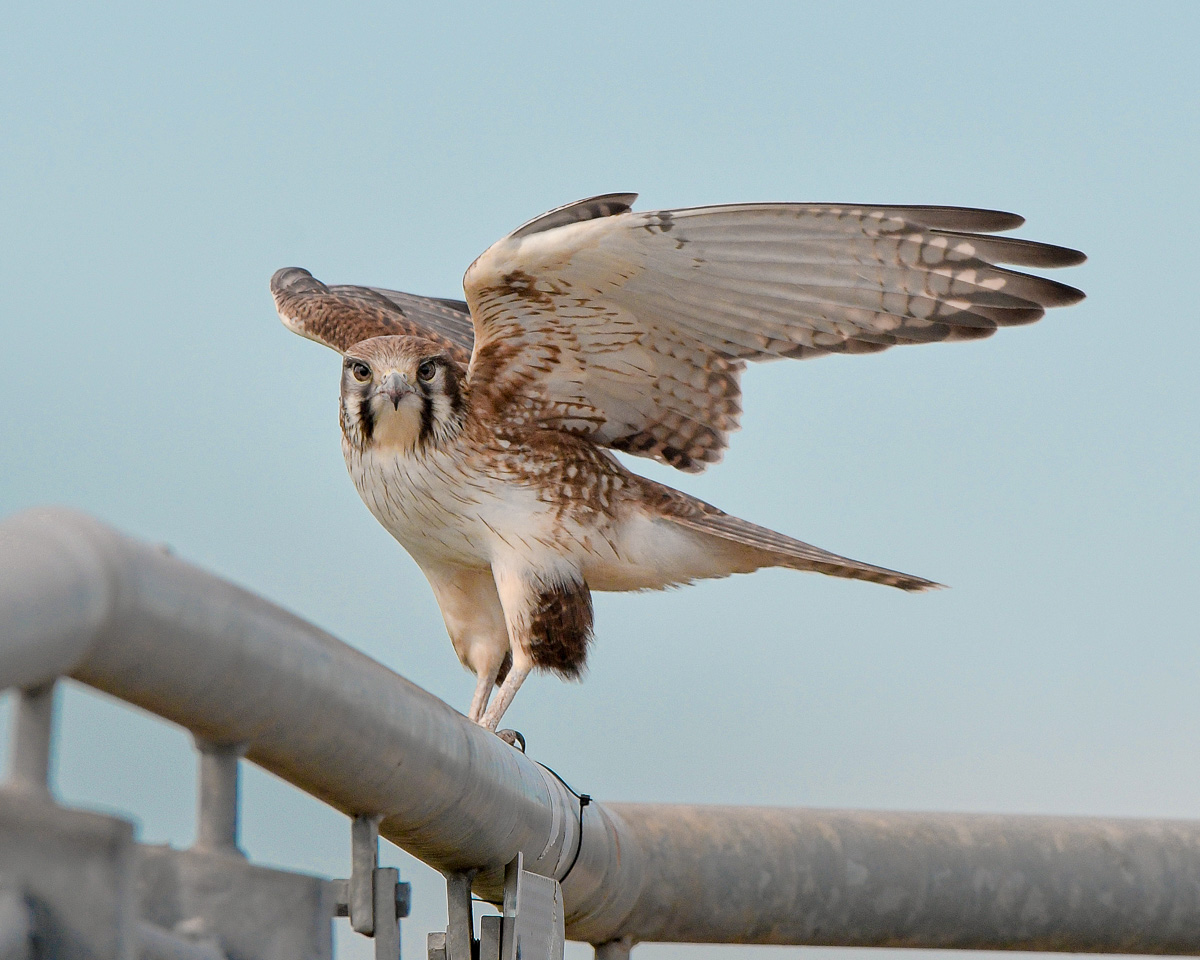
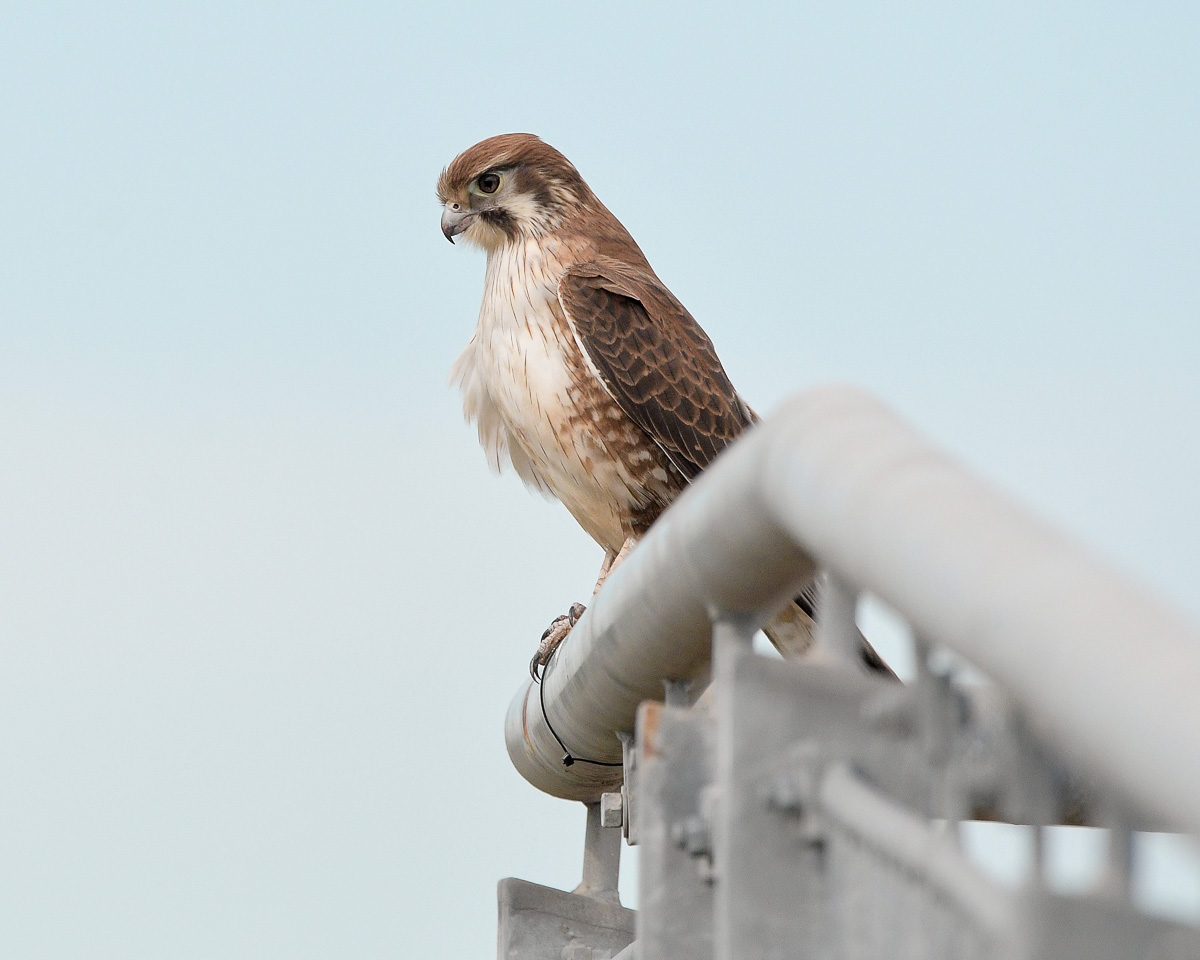
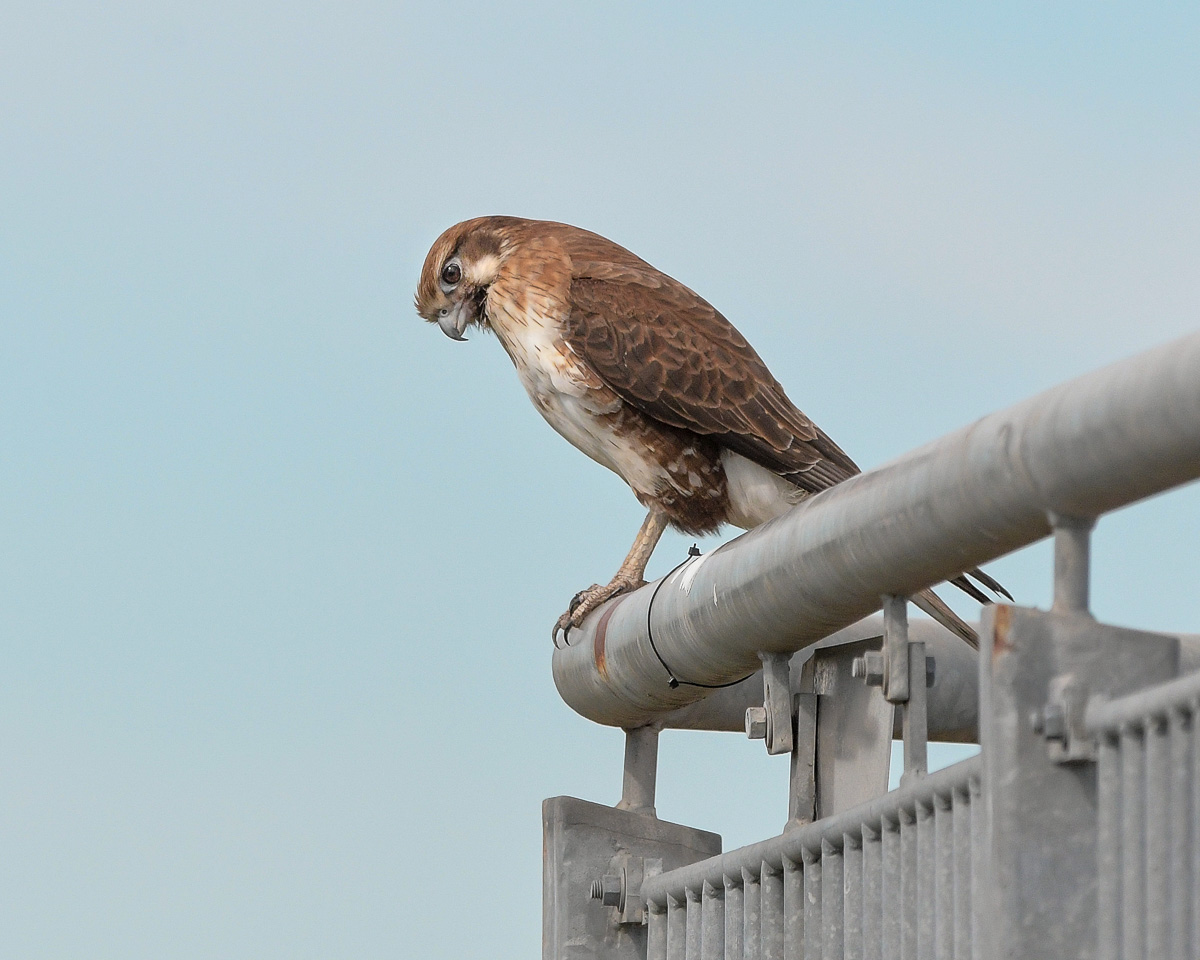
As we reached the top of the ramp, Harry flew in, and landed on the handrail not more than about 10 metres in front of us.
Freeze
If we moved would he fly?
Freeze.
He looked over the rail onto the escarpment below, and it was obvious that he had something in mind. There is no telling Brown Falcon time. It is a slow pace, and he wouldn’t strike until he was sure of the move.
We waited.
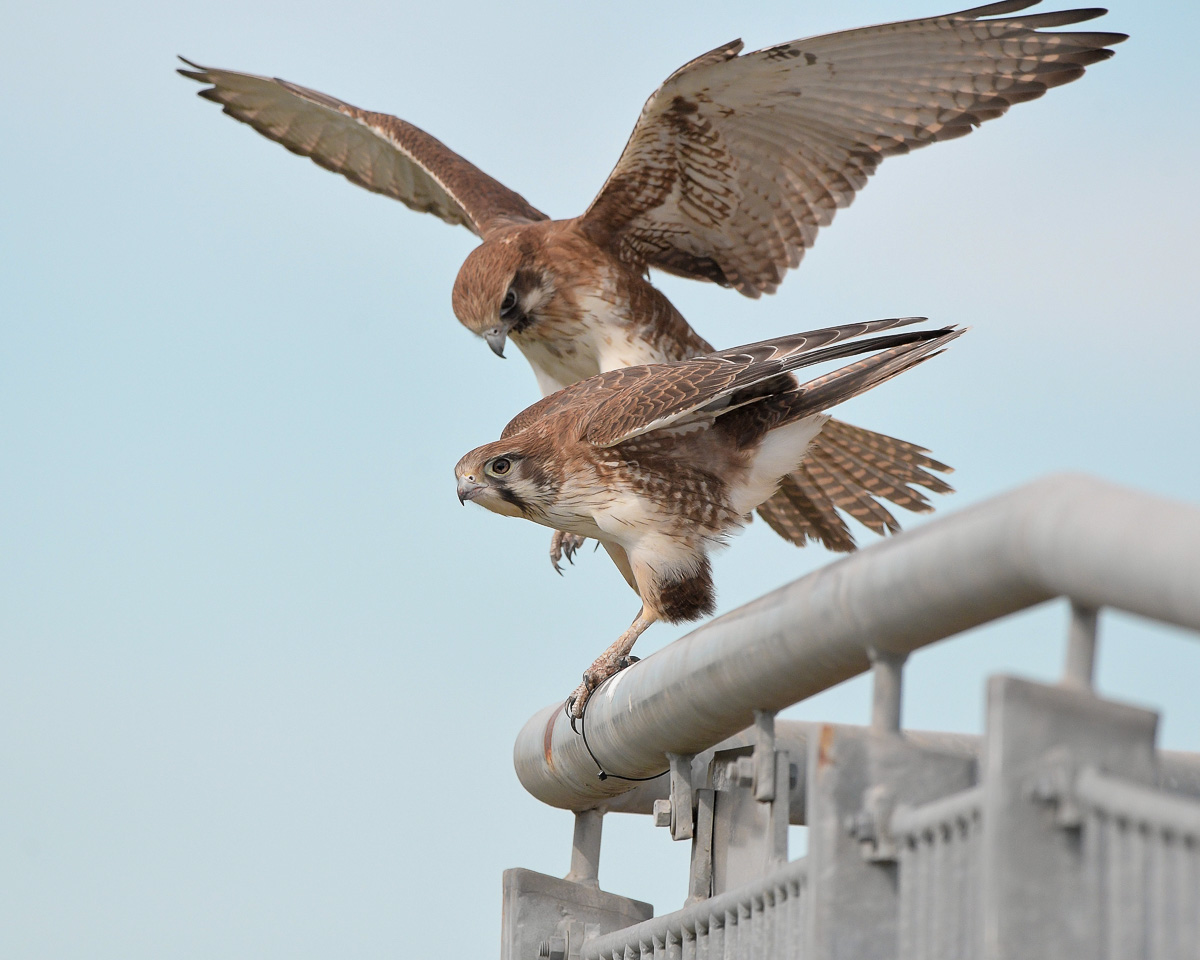
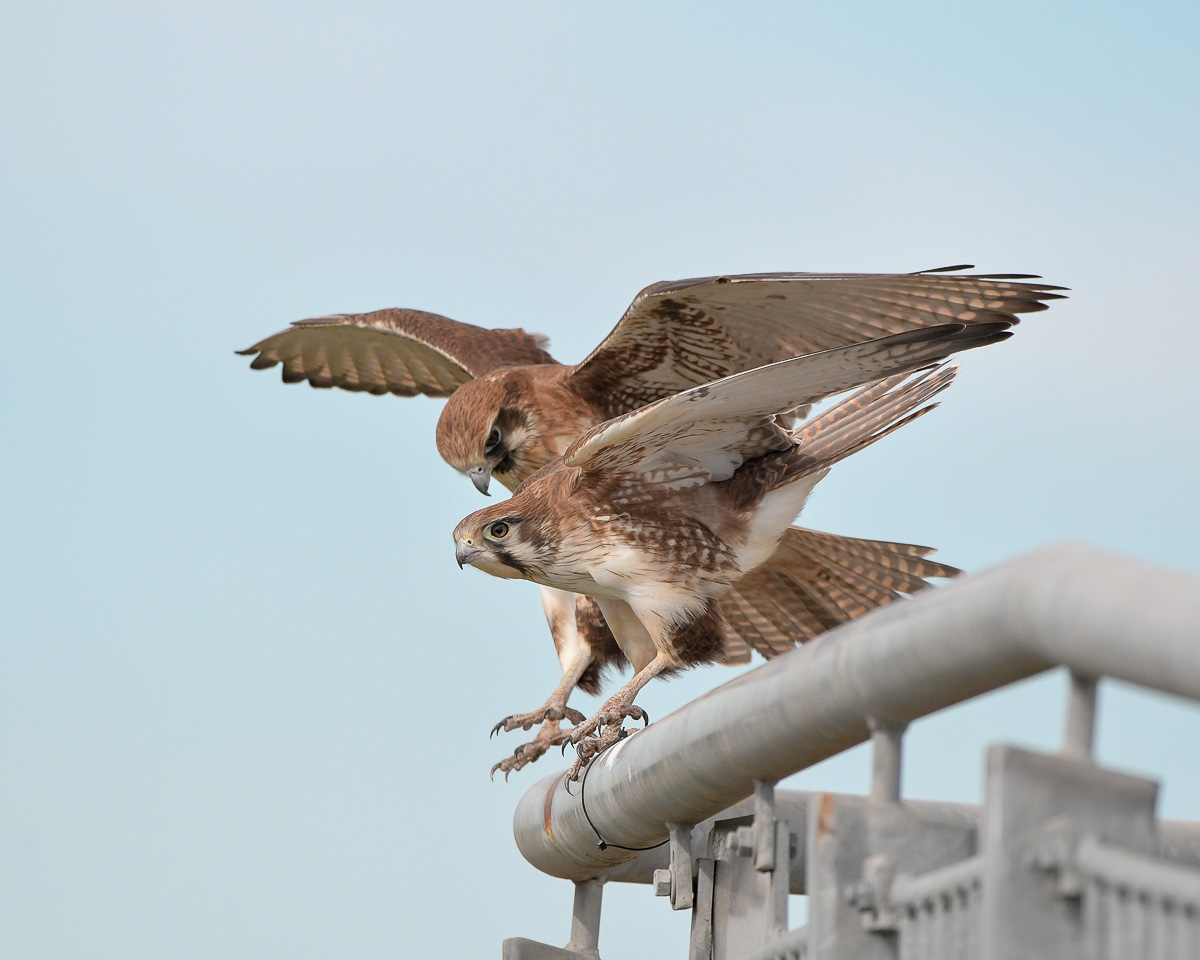
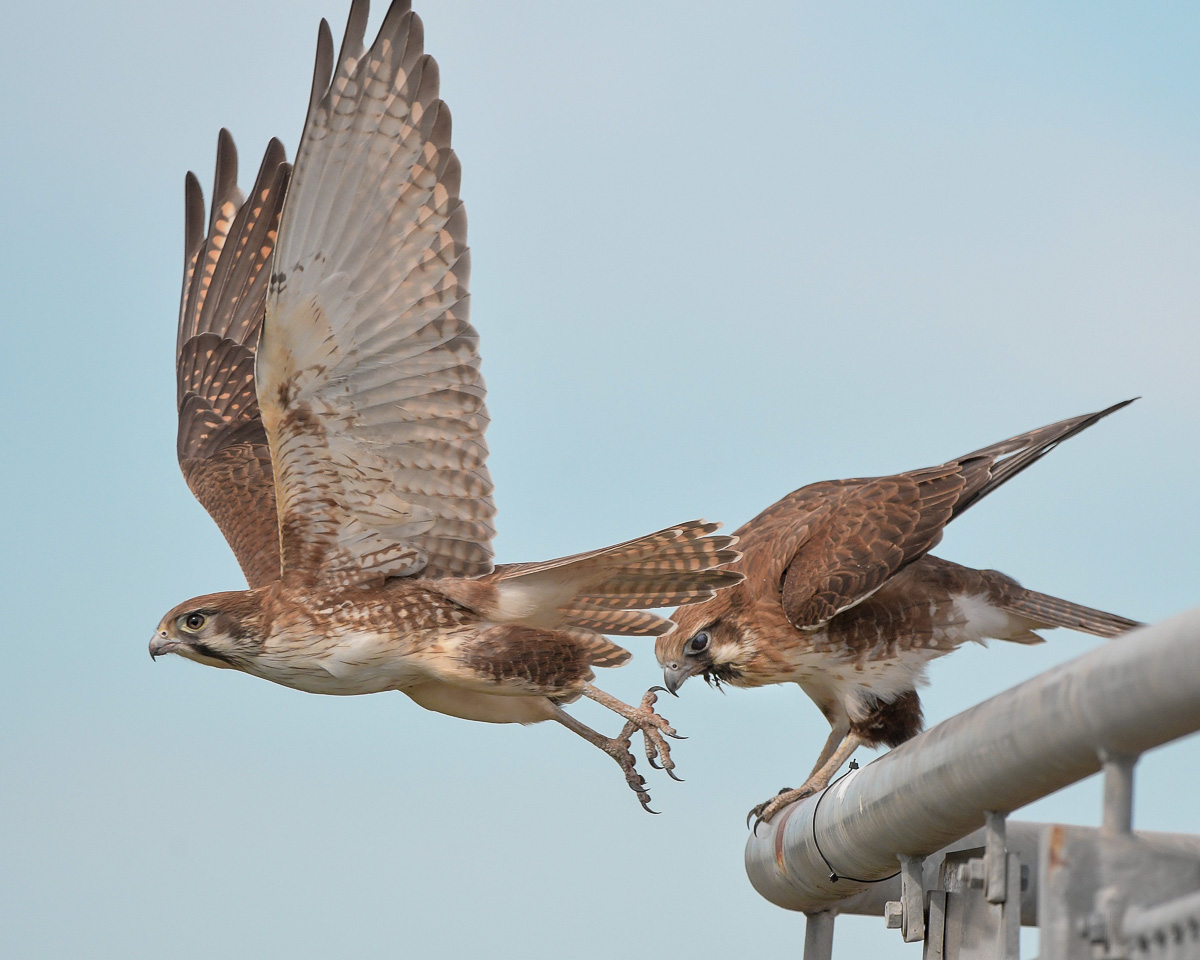
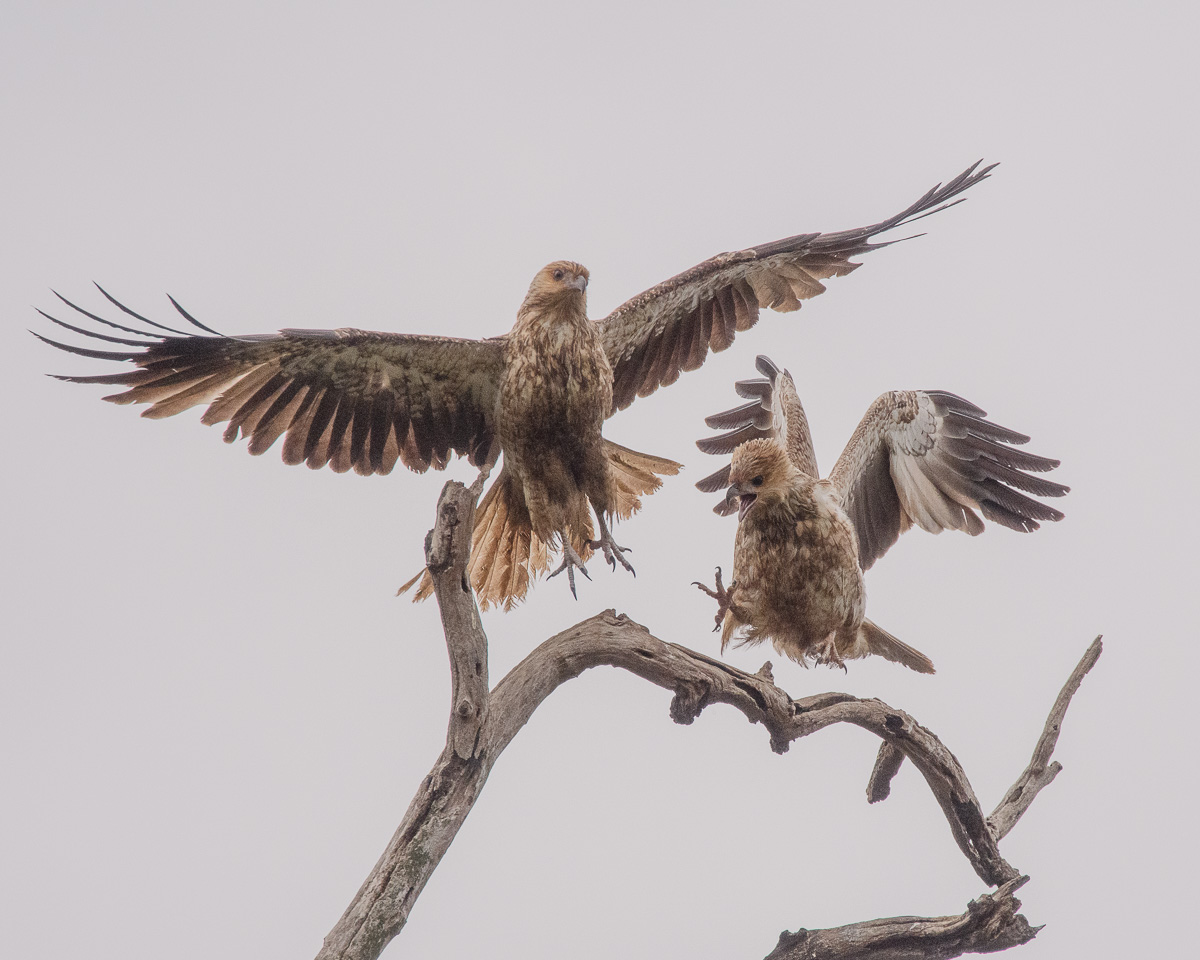
After a few minutes, a second set of wings appeared behind the railing and Sally dropped in, either encourage him, or to move him on. They set together for a few seconds and then he left. Flying far out over the river flat.
There is no doubt both birds knew we were there. In fact the longer we all stood there the more obvious it became that, not only did they see us, but they were not in the least fussed as they had more important Falcon business to attend to.
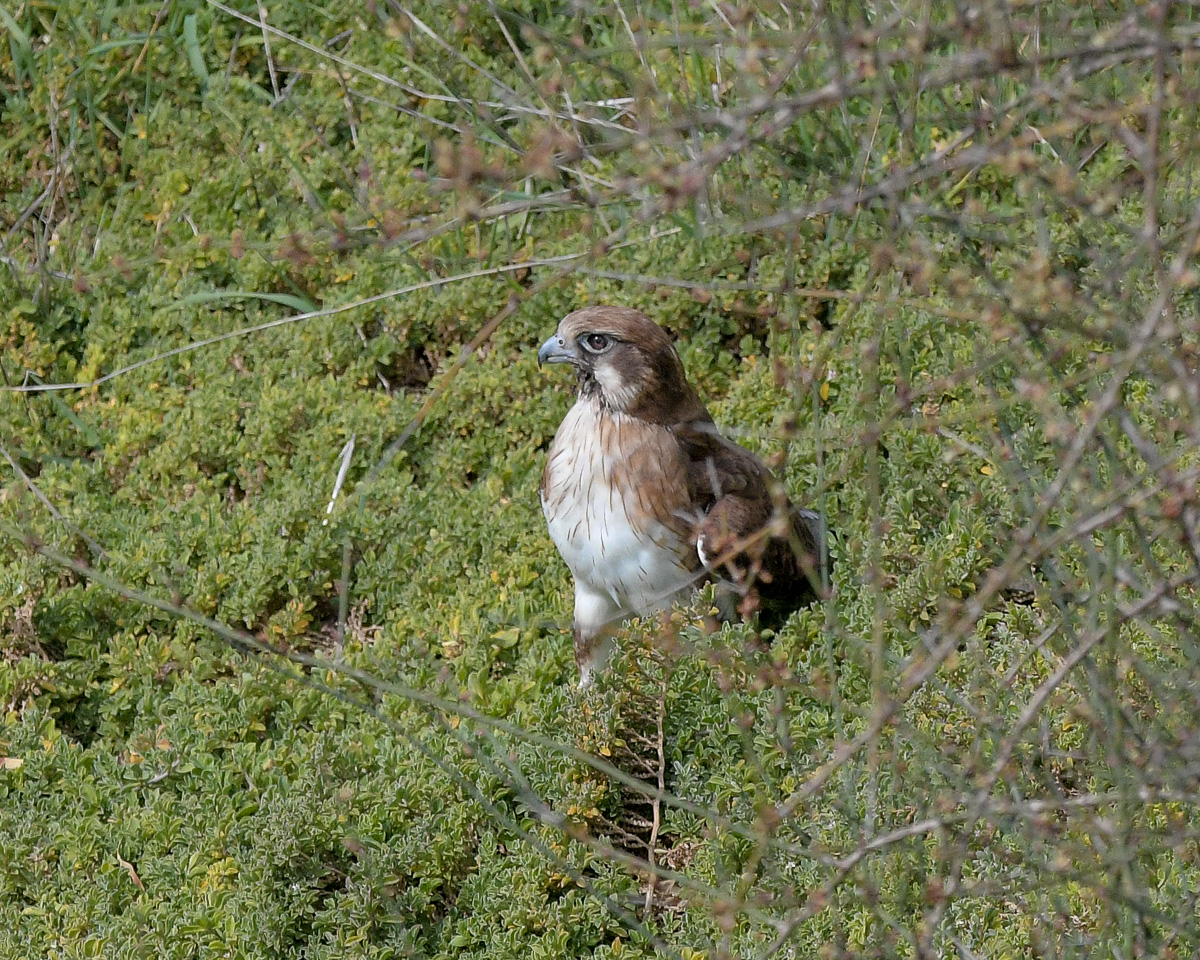
She watched. And after what seemed like 10 minutes, suddenly she wasn’t there. She had dropped straight down from the rail and began to consume her catch. It was so fast, that I missed it completely.
The riverine is a large are, with many old trees and some farmland behind. If they choose to nest in the area, its unlikely we’ll find where.
However it was good to be so close to these very impressive birds
(Click on any image for a larger view)
Enjoy
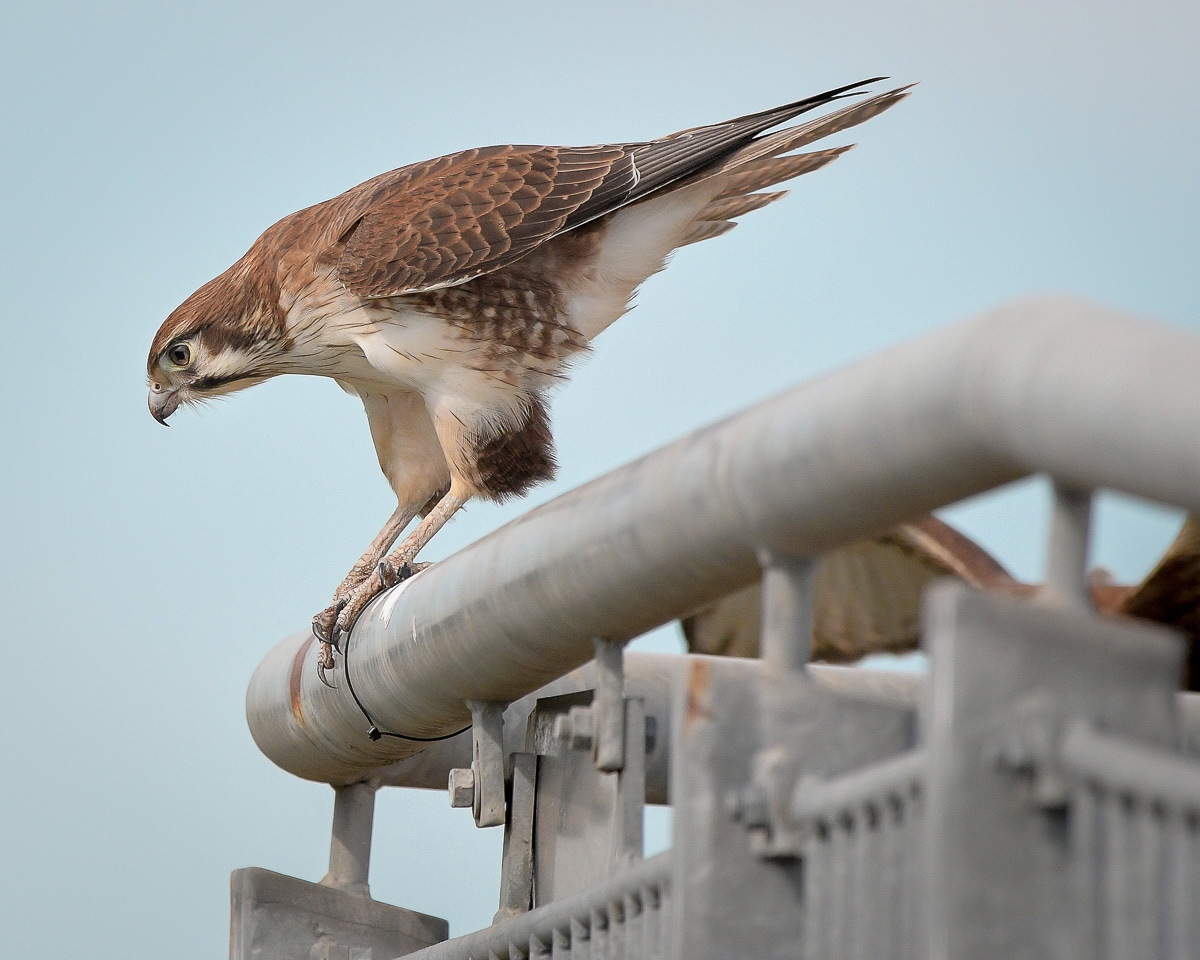
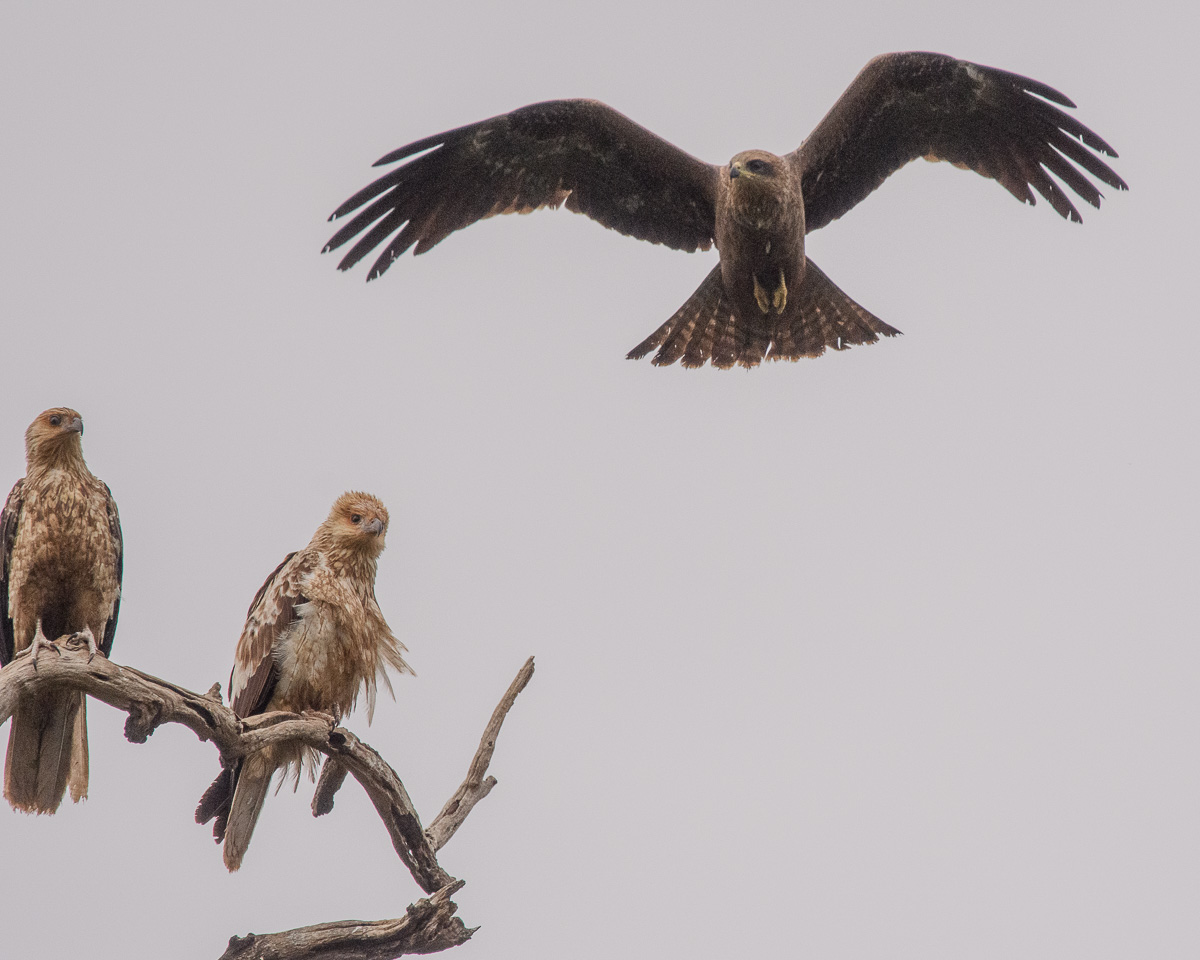
Note the wings coming behind.



 Birds as Poetry —— Just because I WANDER doesn't mean I'm LOST