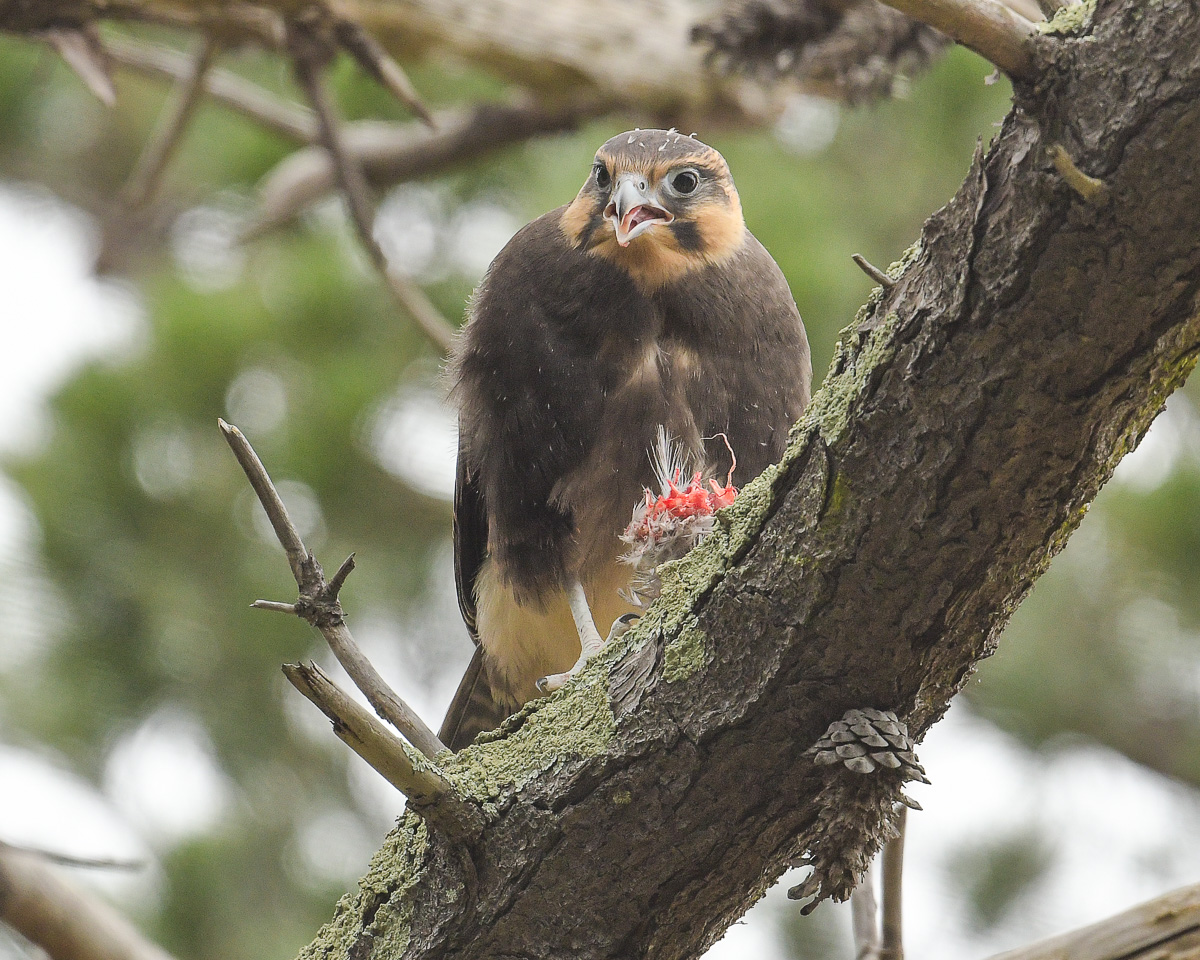
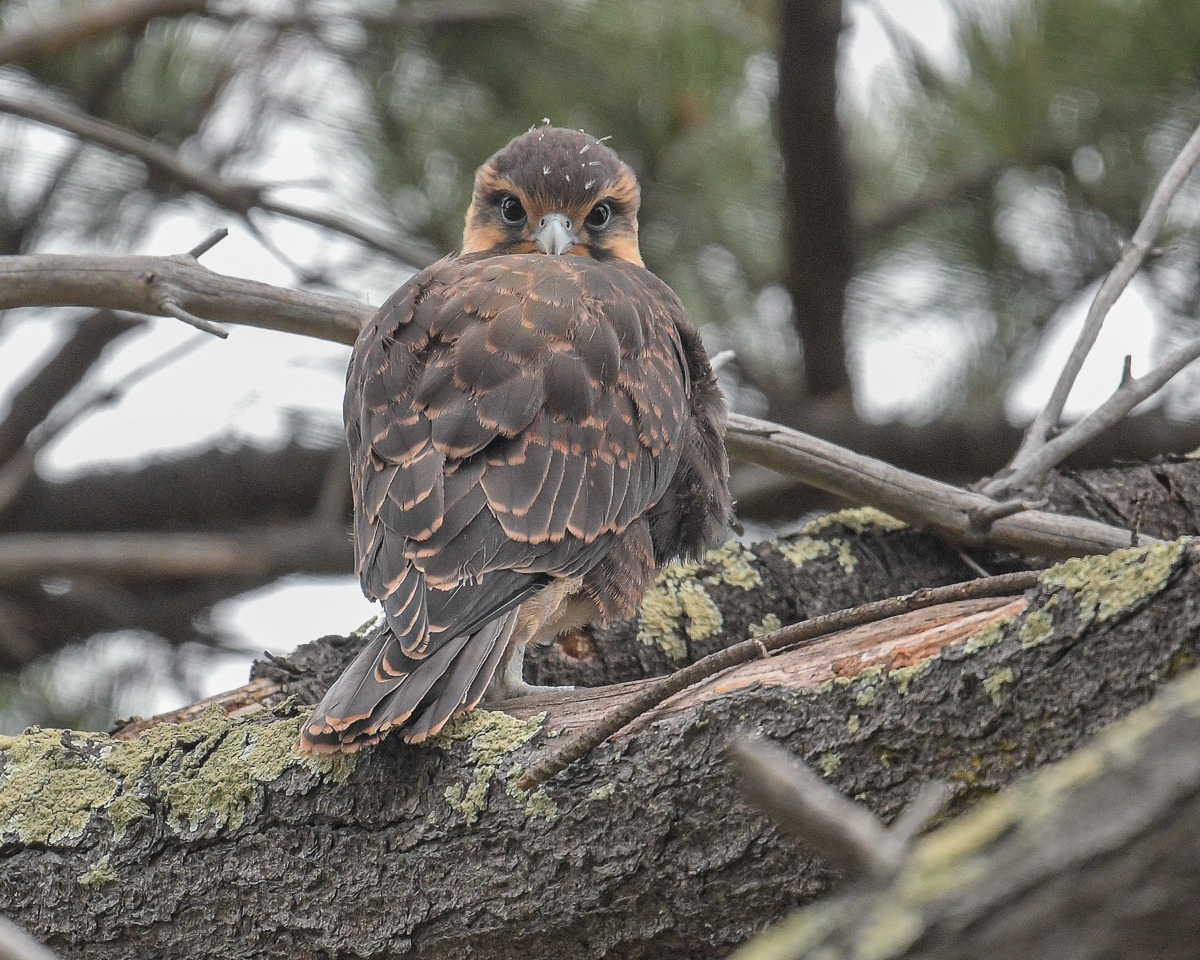
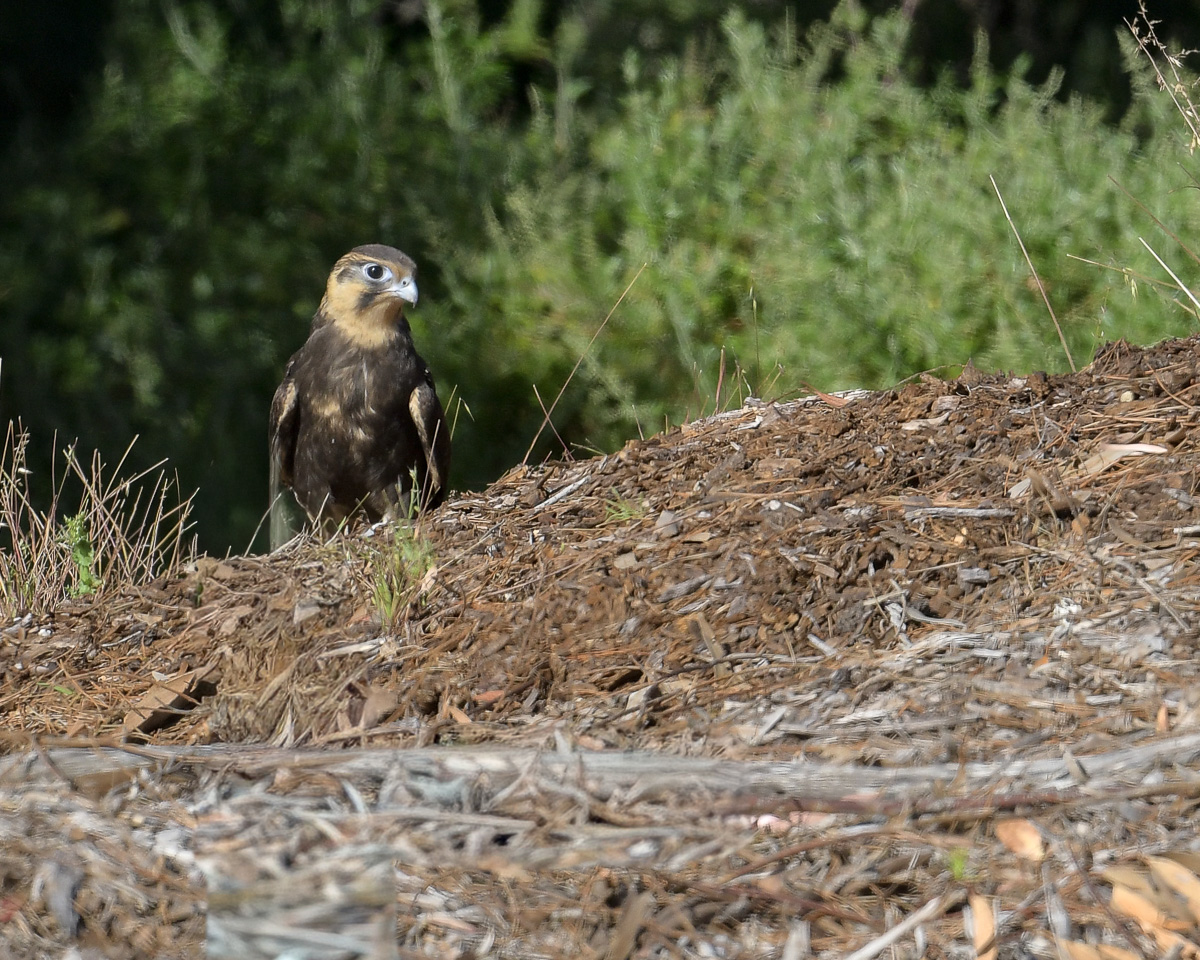
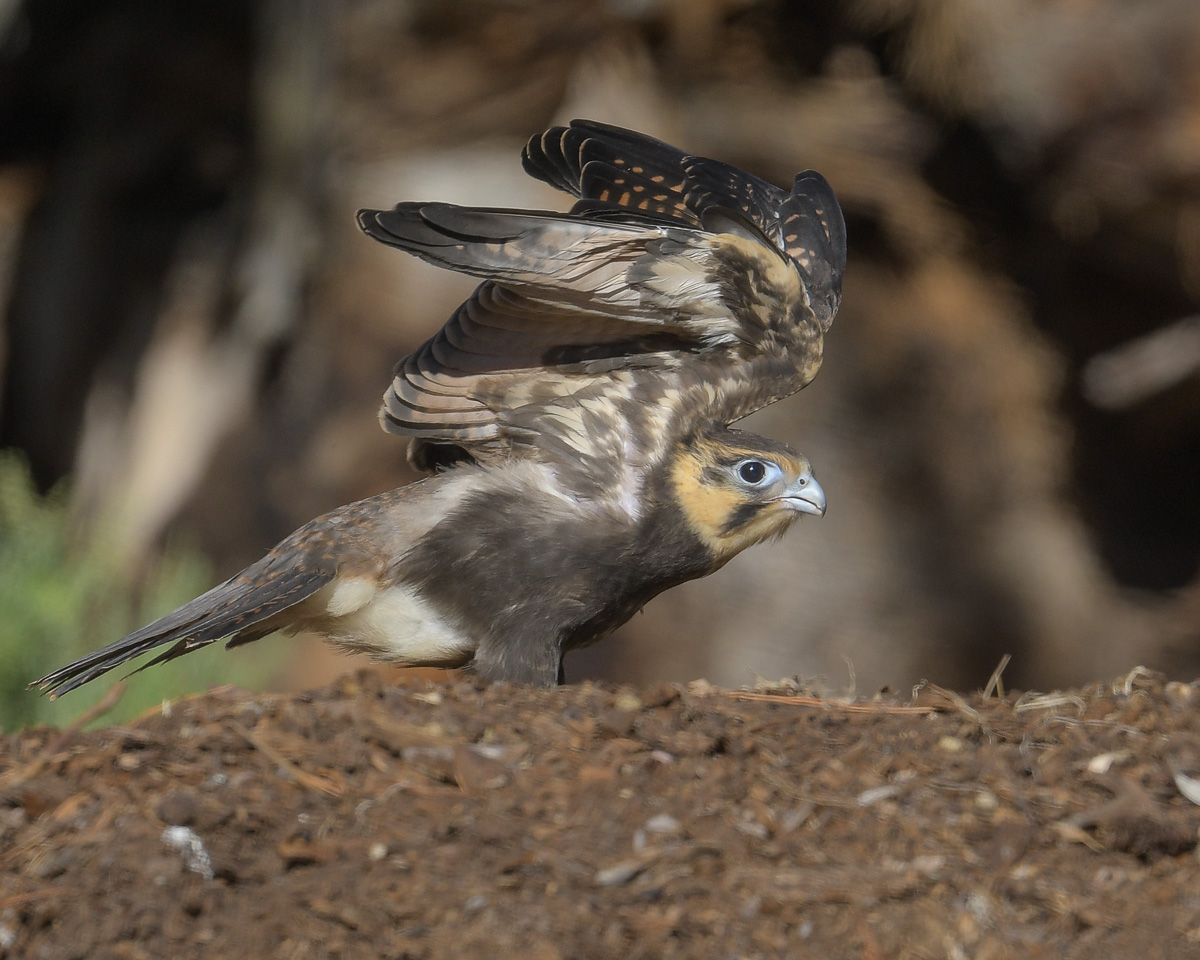
Saturday Night Post: SkyJinks

It has been a fairly lean time for bird photography of late.

The cold weather might have something to do with it. But there does seem to be a shift in populations for many of the ‘usual’ suspects.

There is however a notable shift in the conditions that seems to occur just after the winter (southern) equinox. Now it might just be my observation powers of course, but for example.

For it seems to me as soon as the days begin to get just a little bit longer, the ravens begin their building projects. I’ve never seen one at work carrying sticks before the equinox. The local Magpie clans begin to seperate. Their autumn and winter truce is over and now there are territories to expand, time to send unwanted young packing, and the hunt for a suitable nesting location is selected.

Early trees, like almonds begin to push out buds soon they will become covered in the ‘snow’ of blossoms.

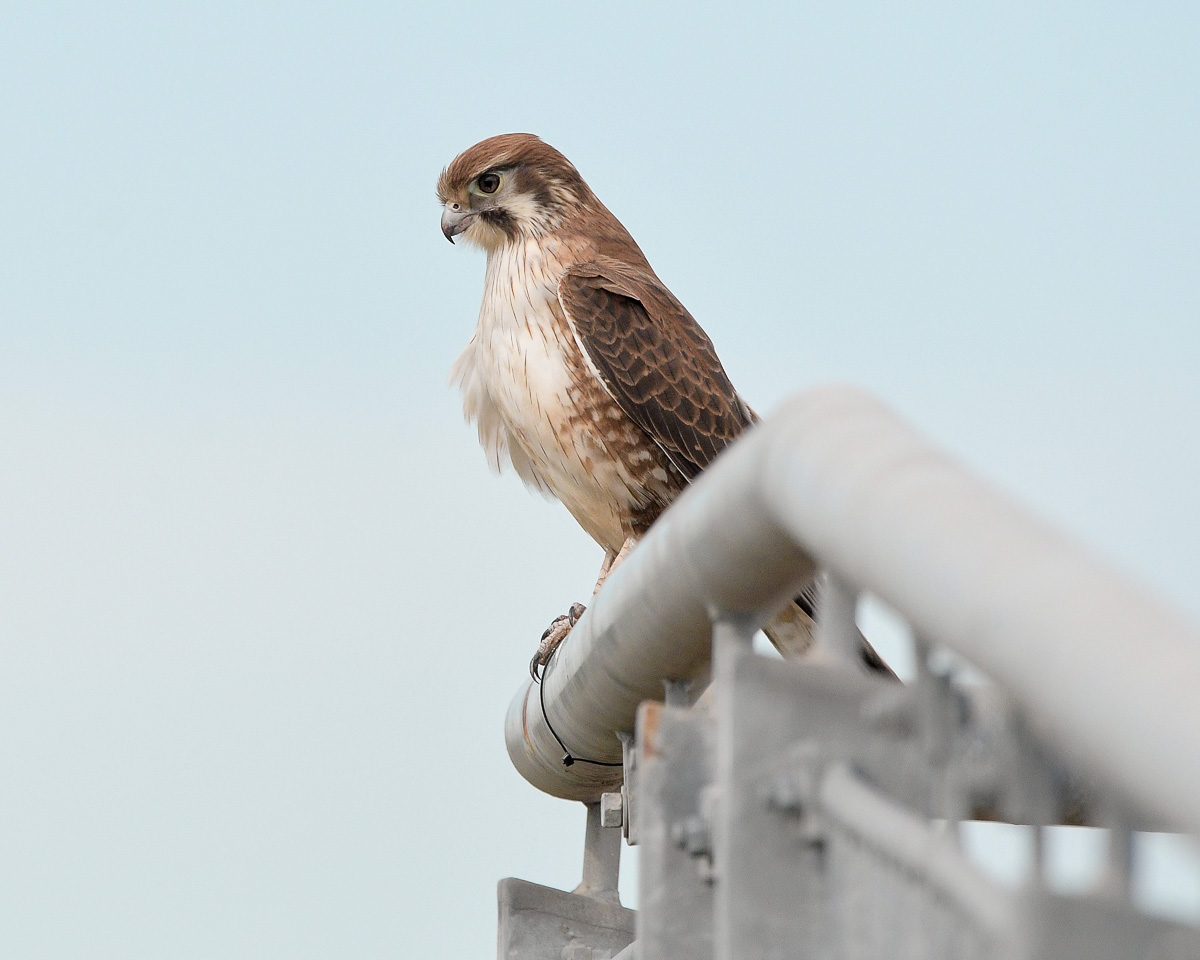
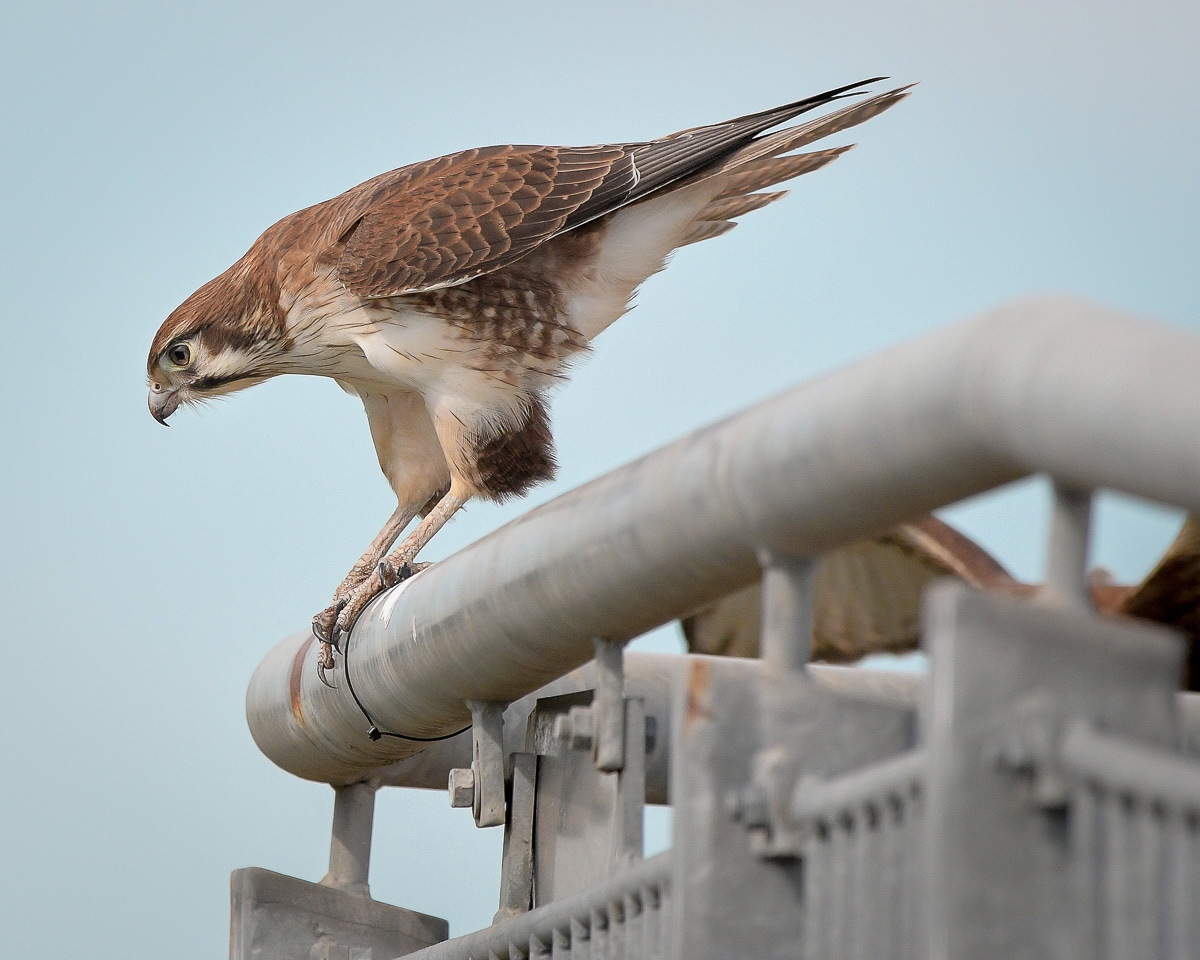
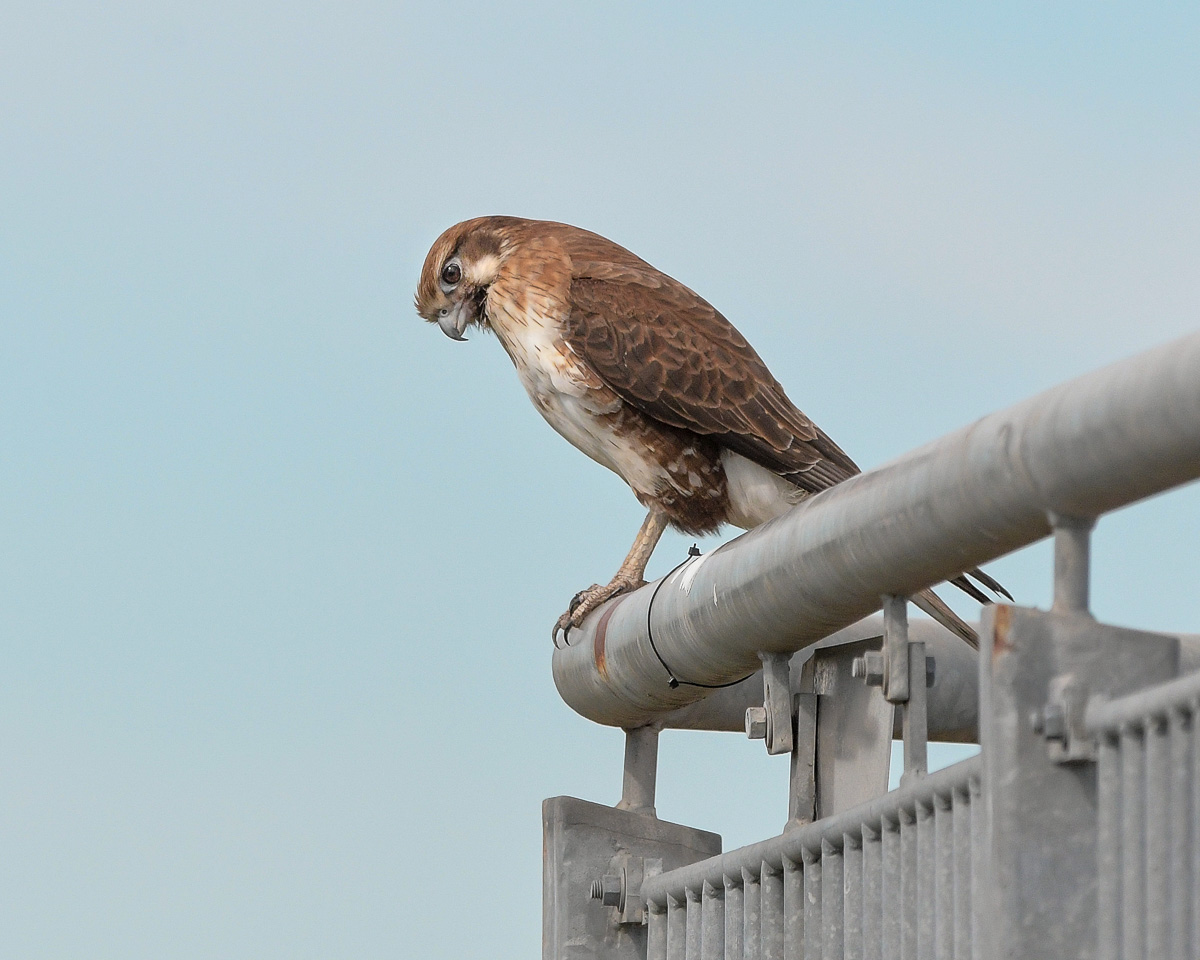
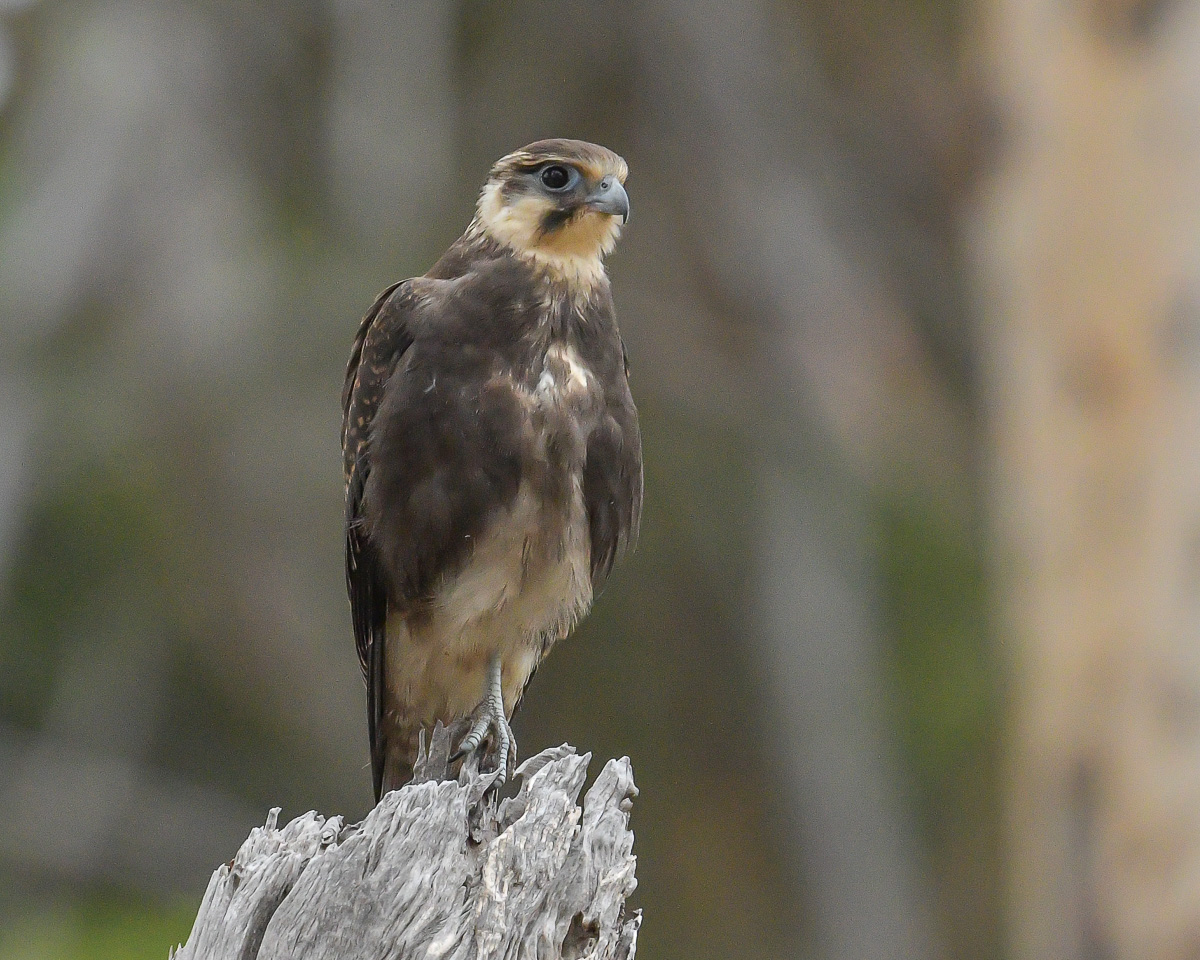
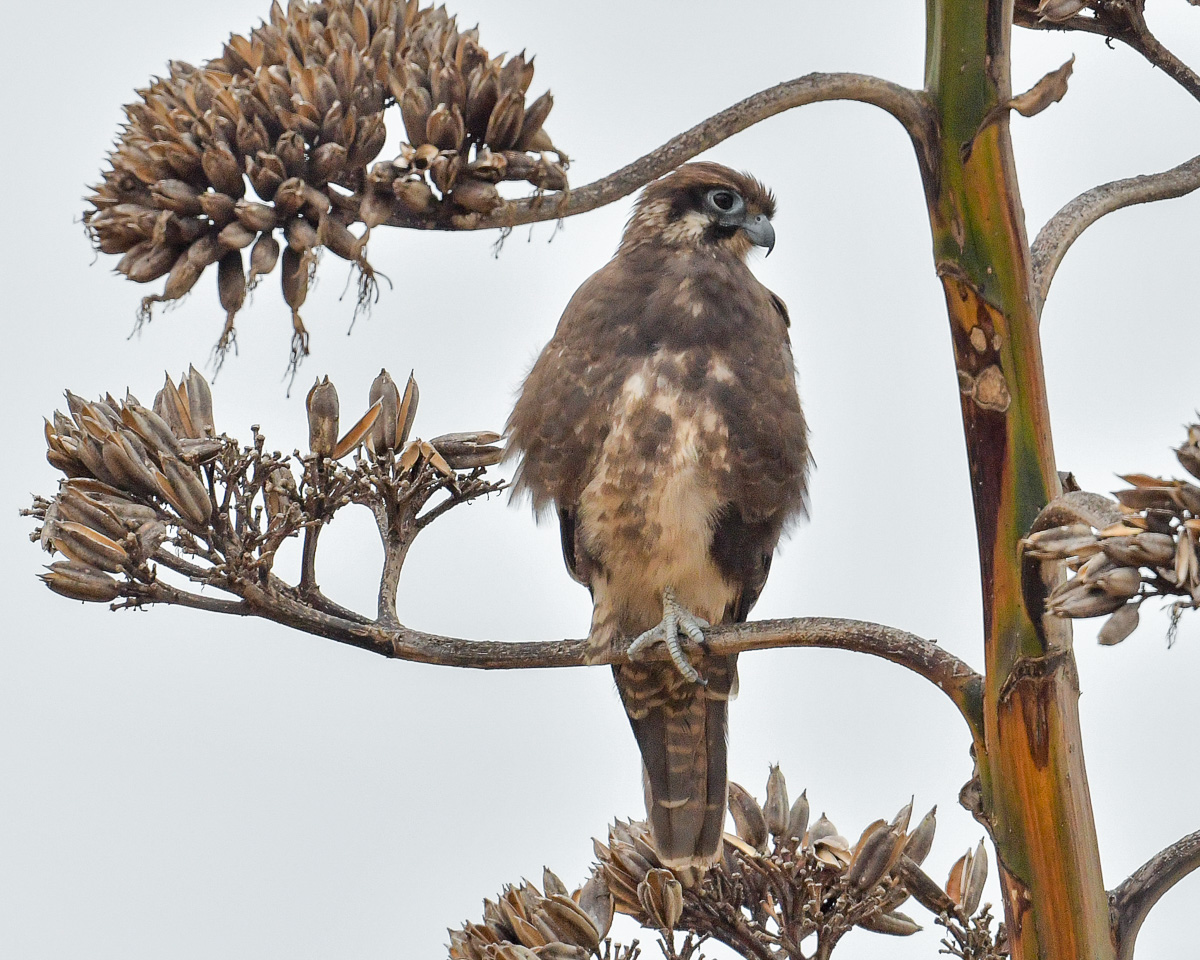
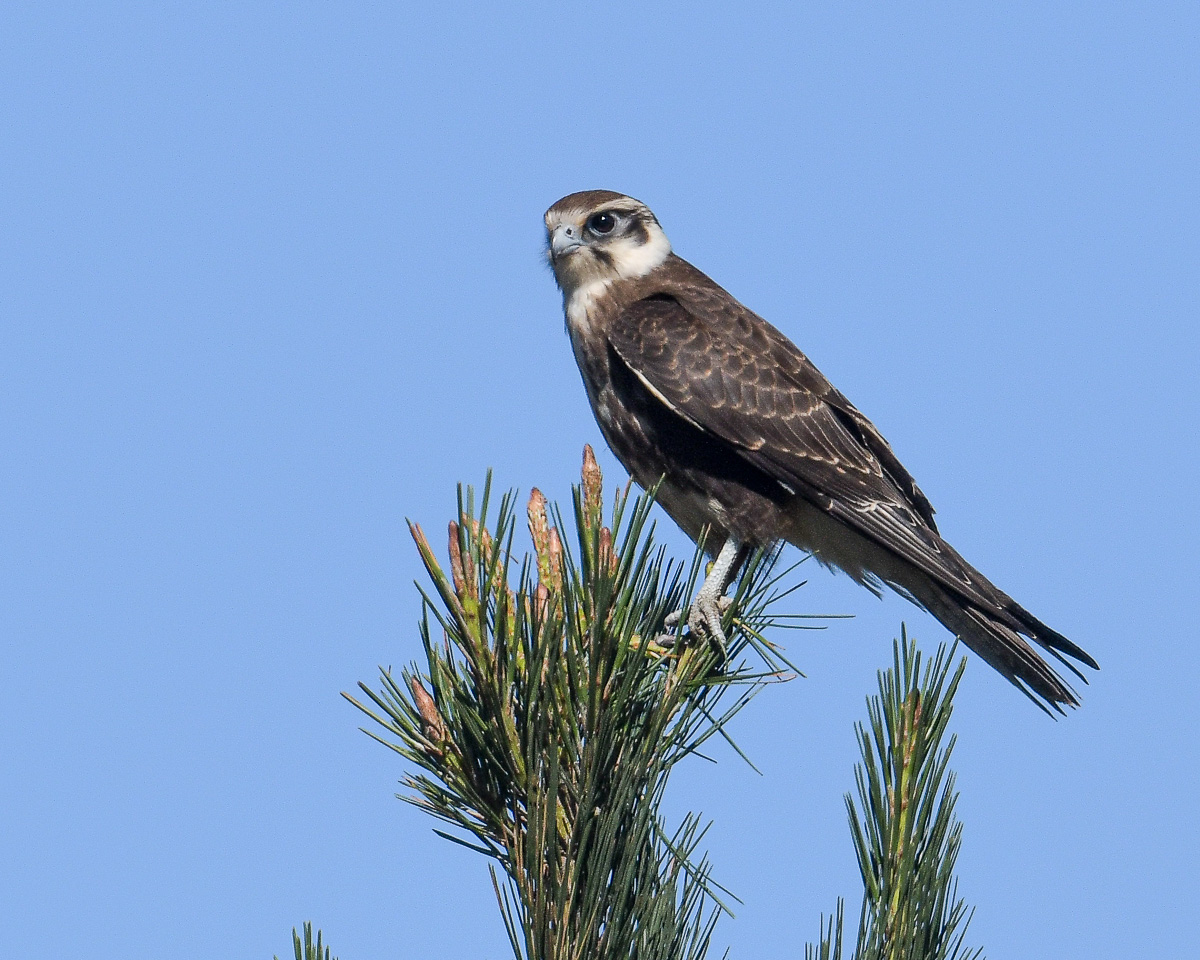
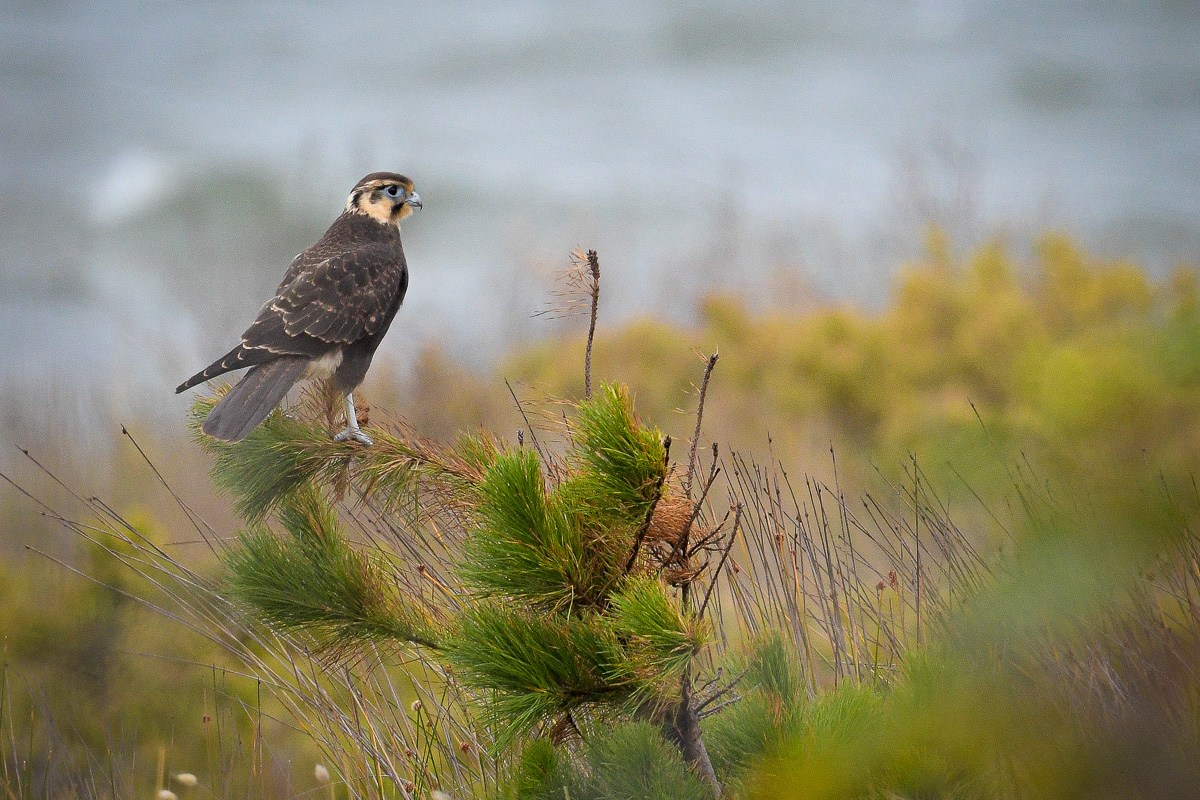
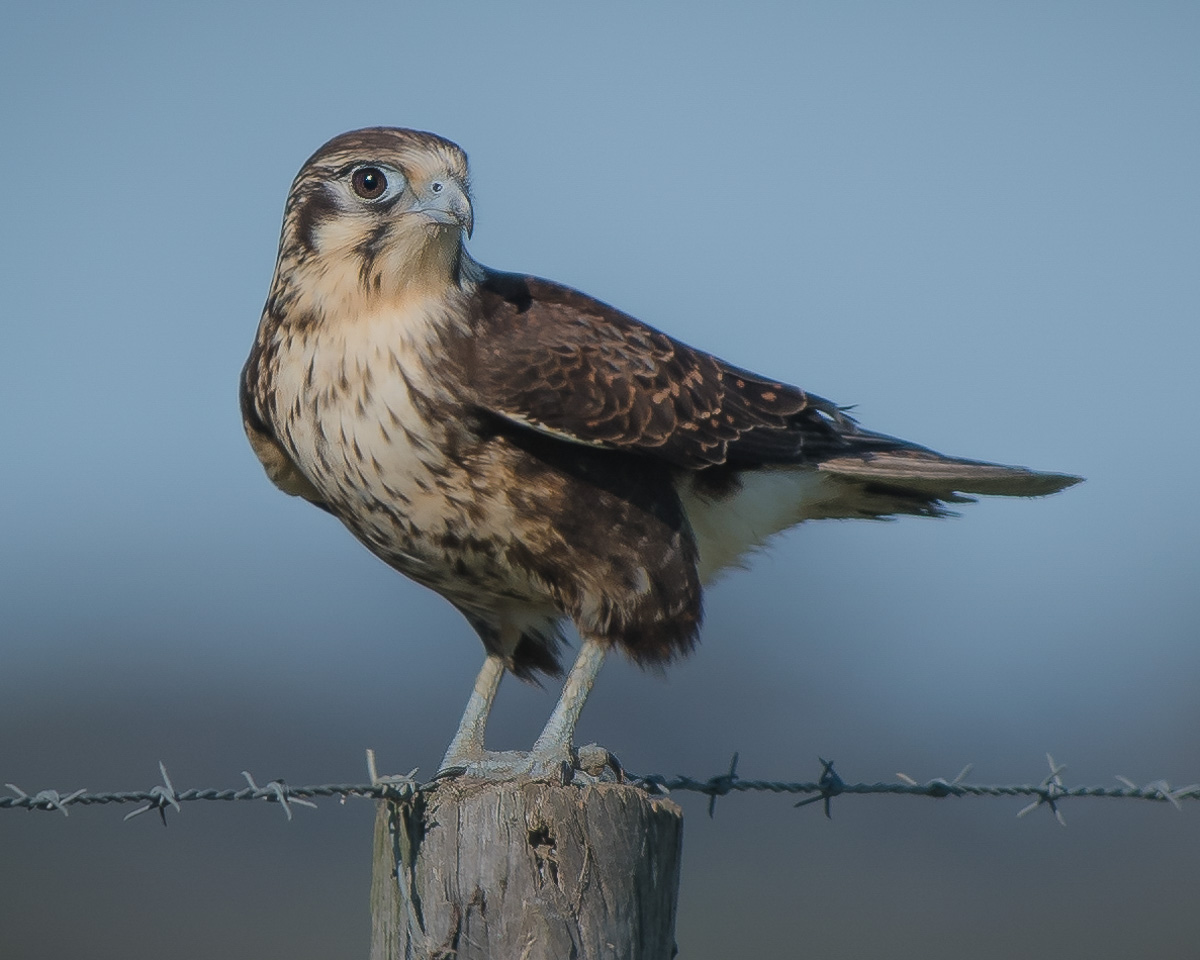
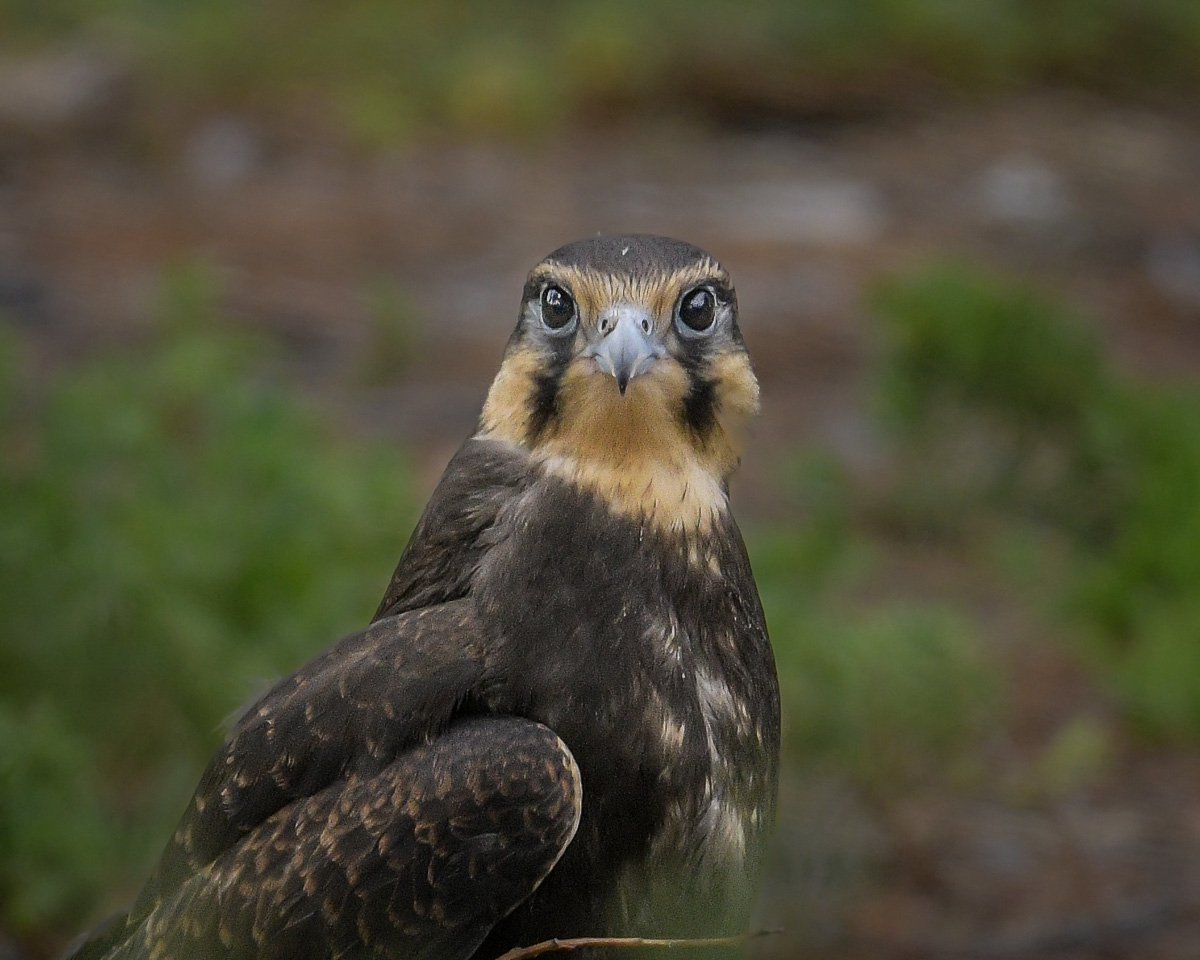
And across the paddocks the Brown Falcons are rebuilding their pair bonds or perhaps begin to ‘blossom’ new pair bonds.
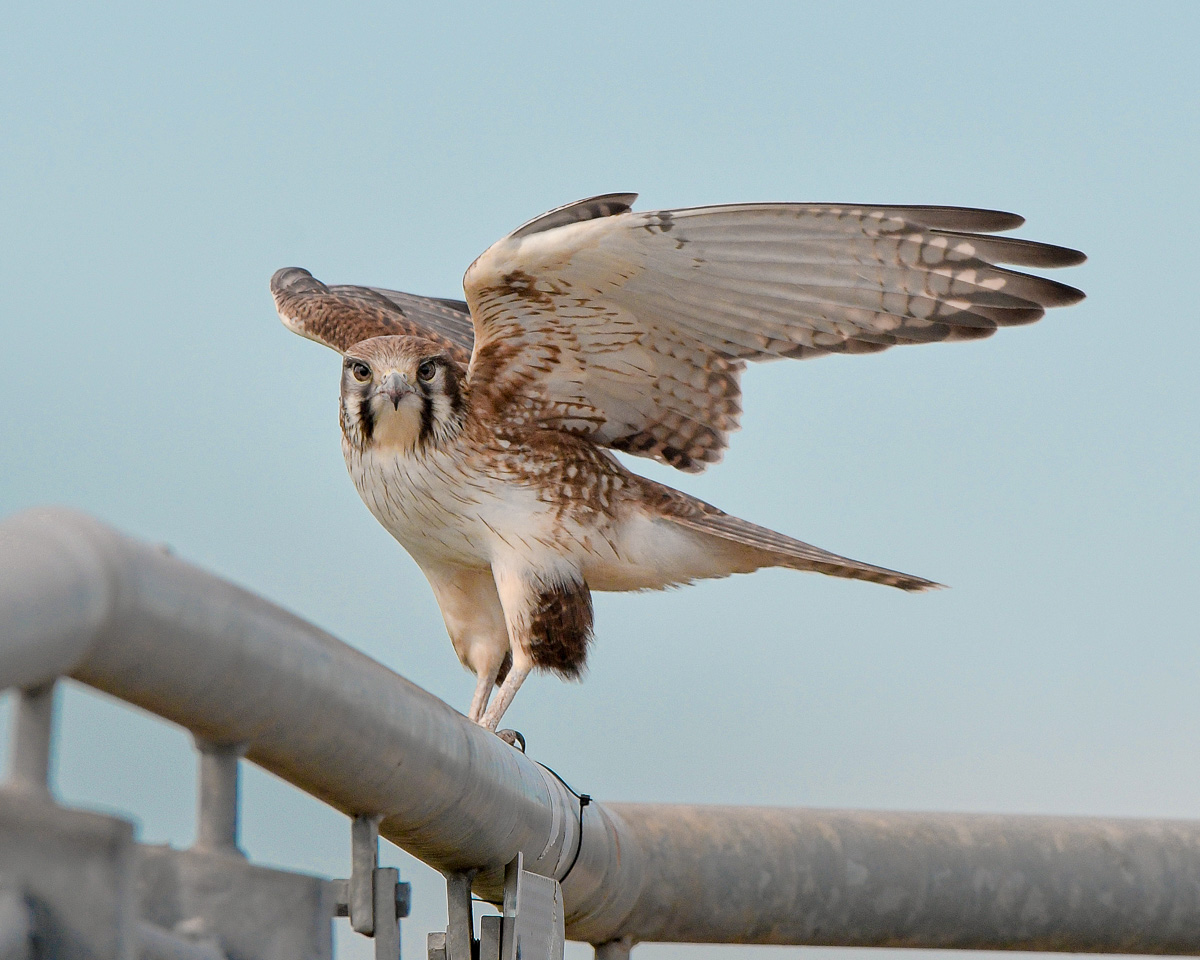
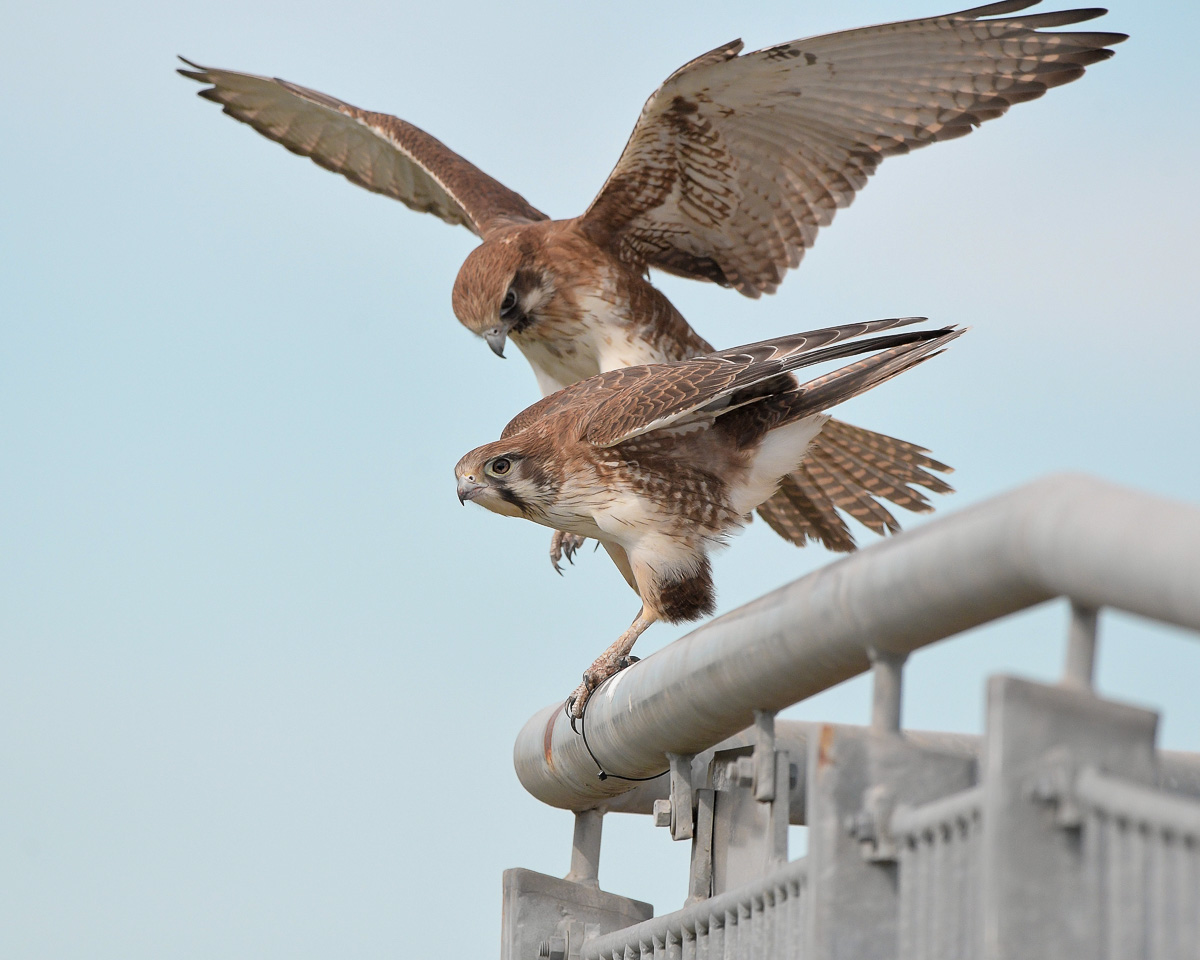
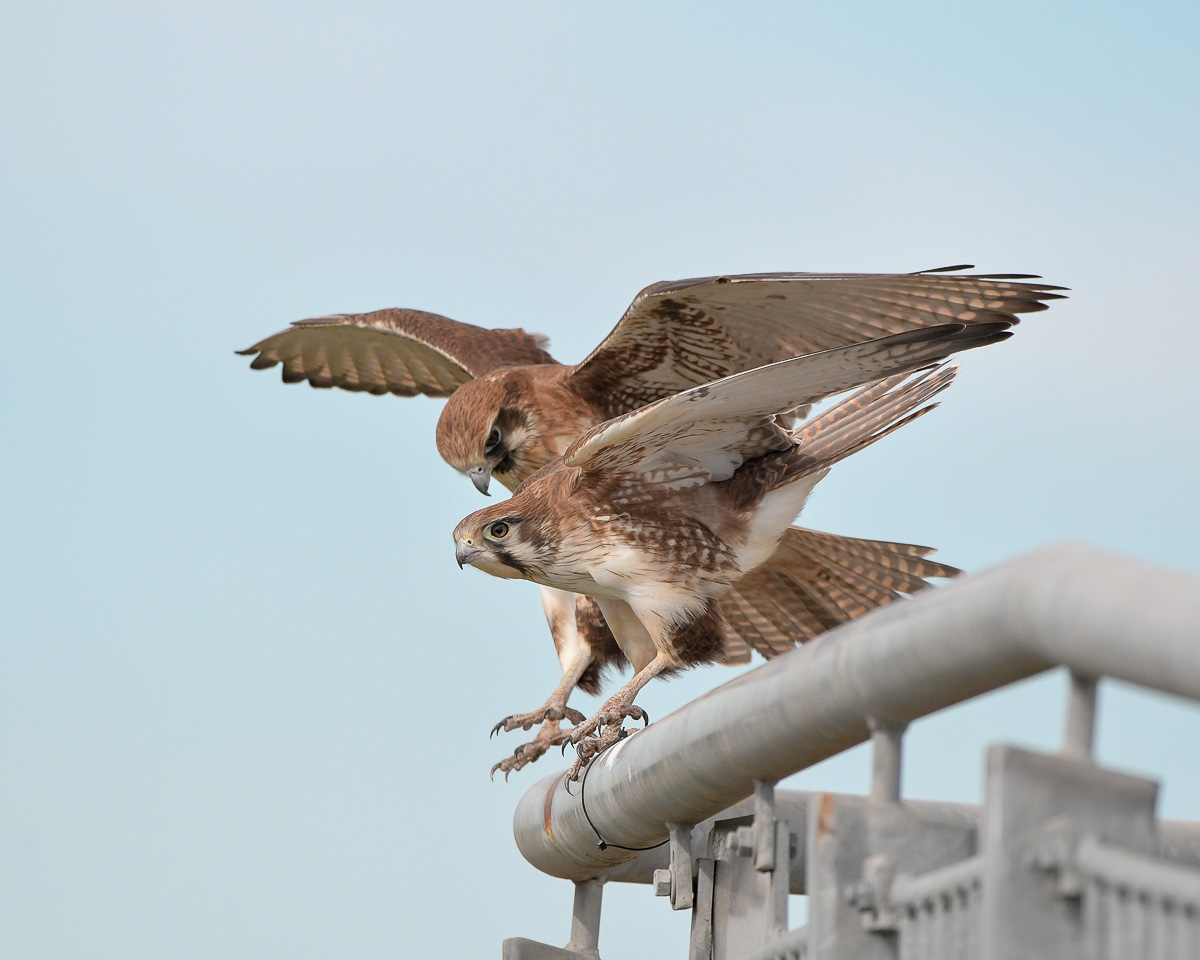
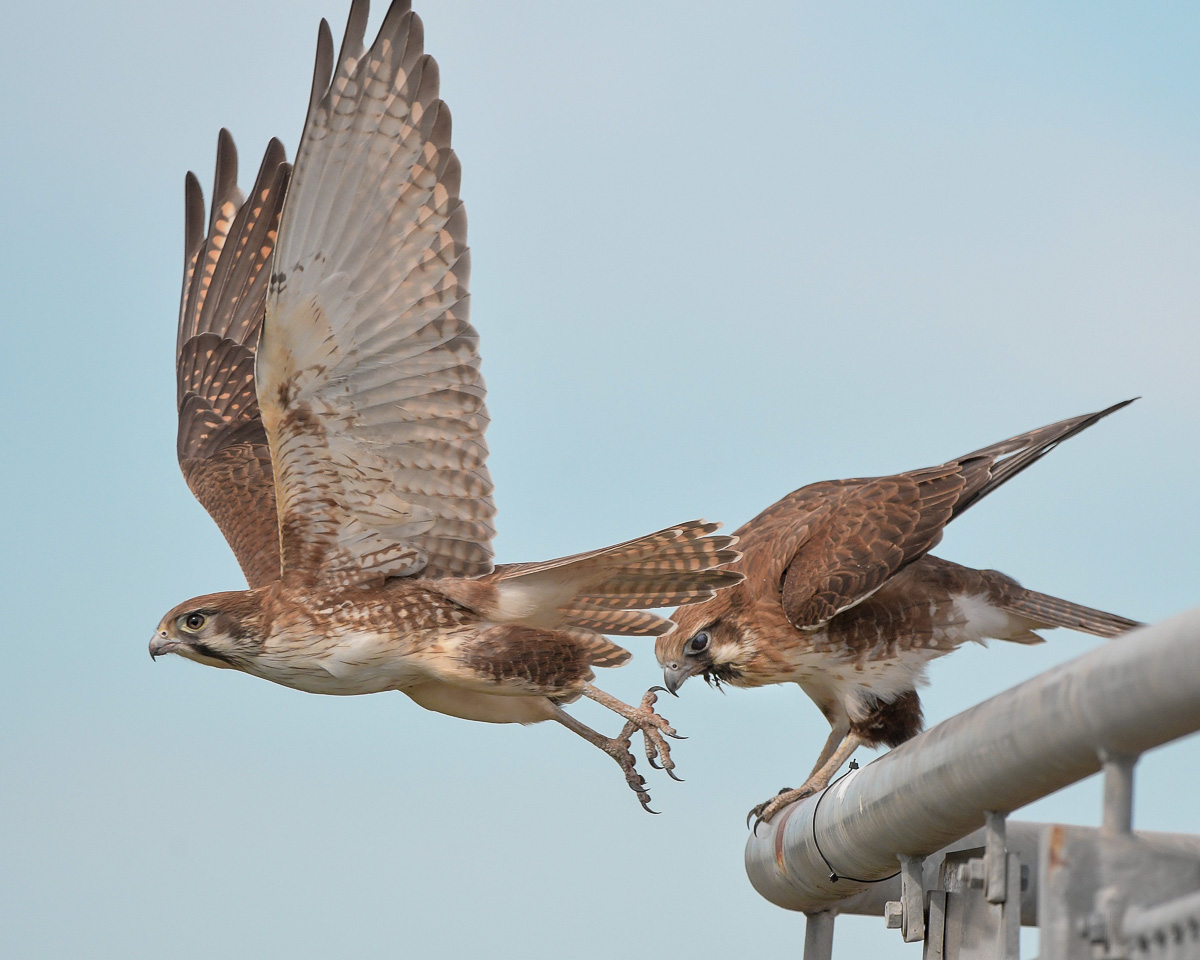
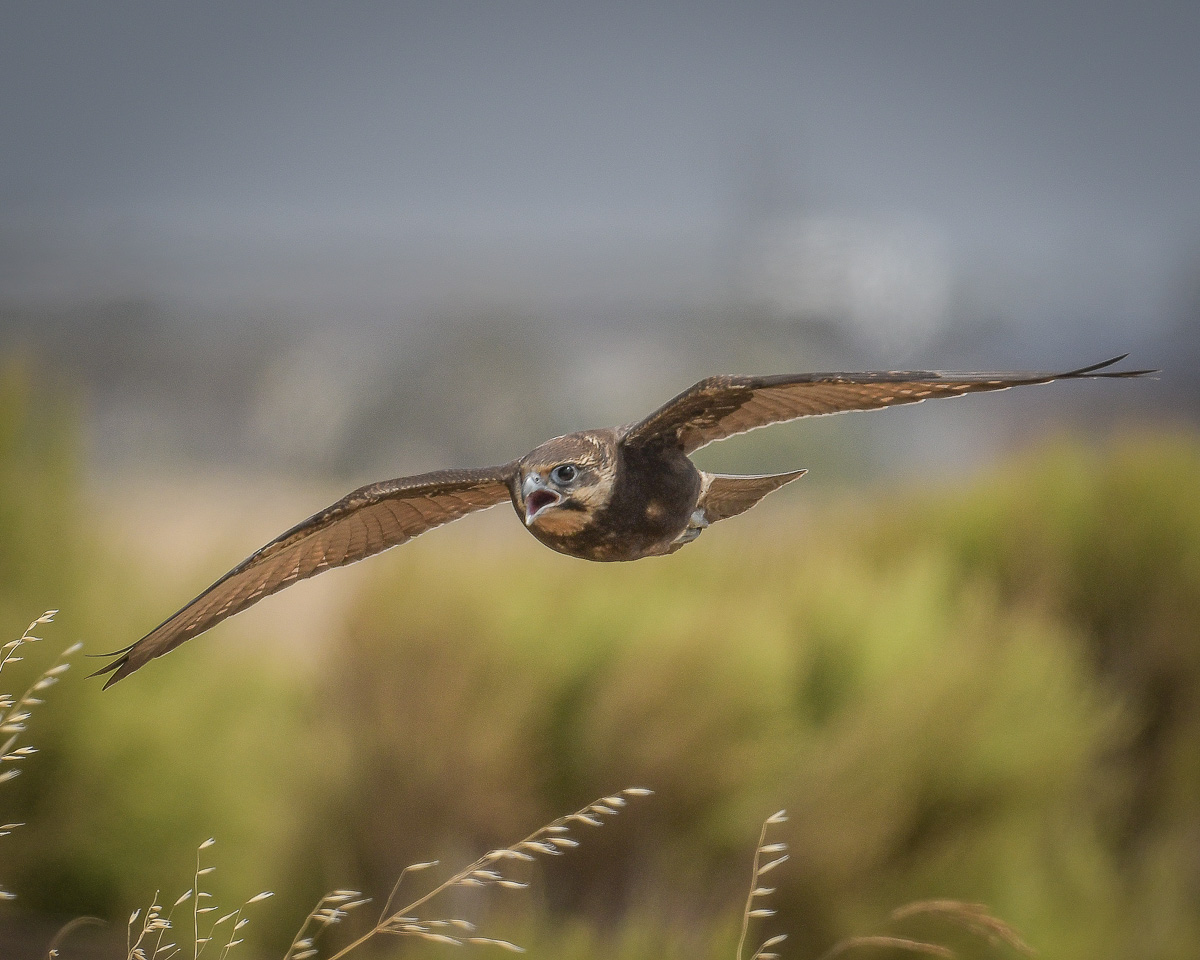
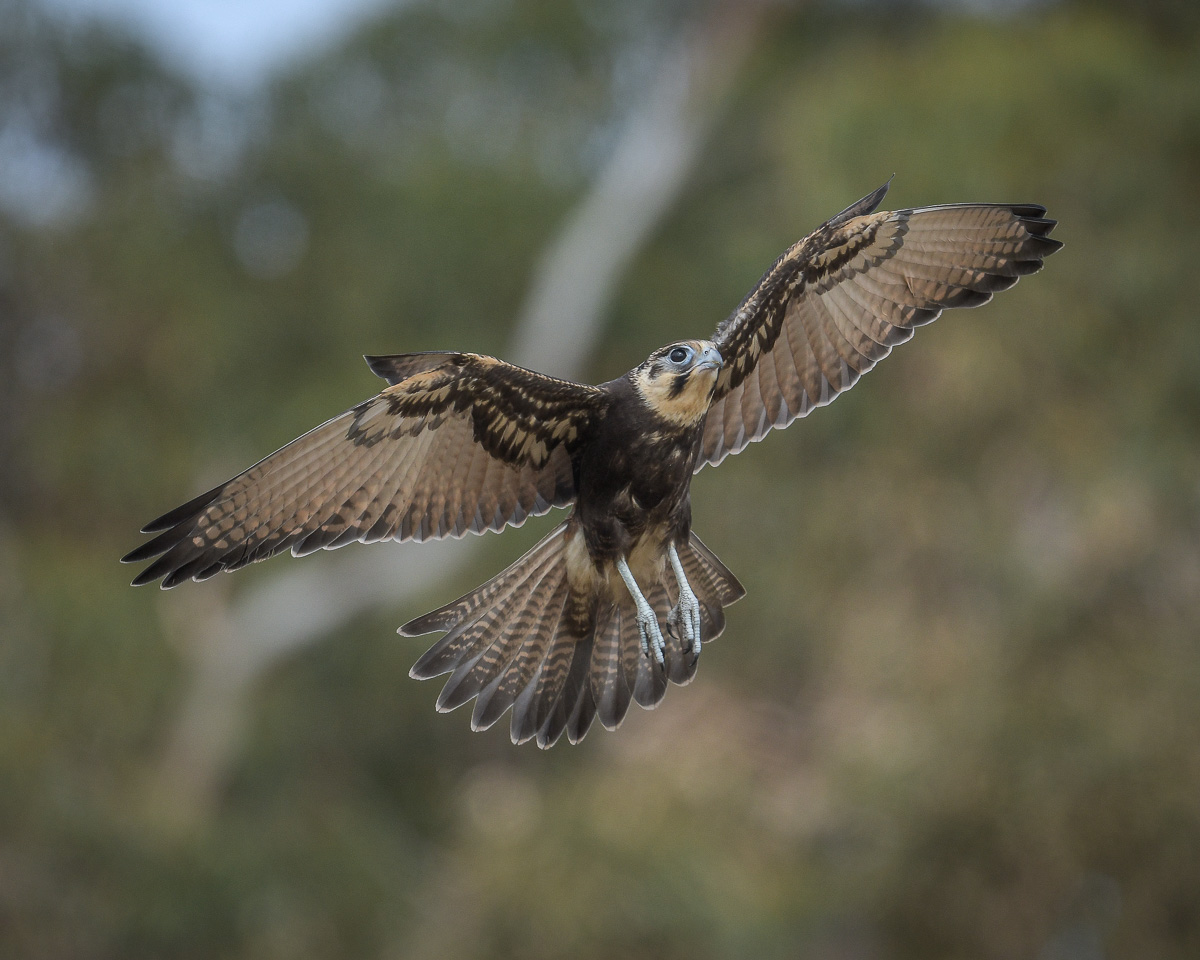
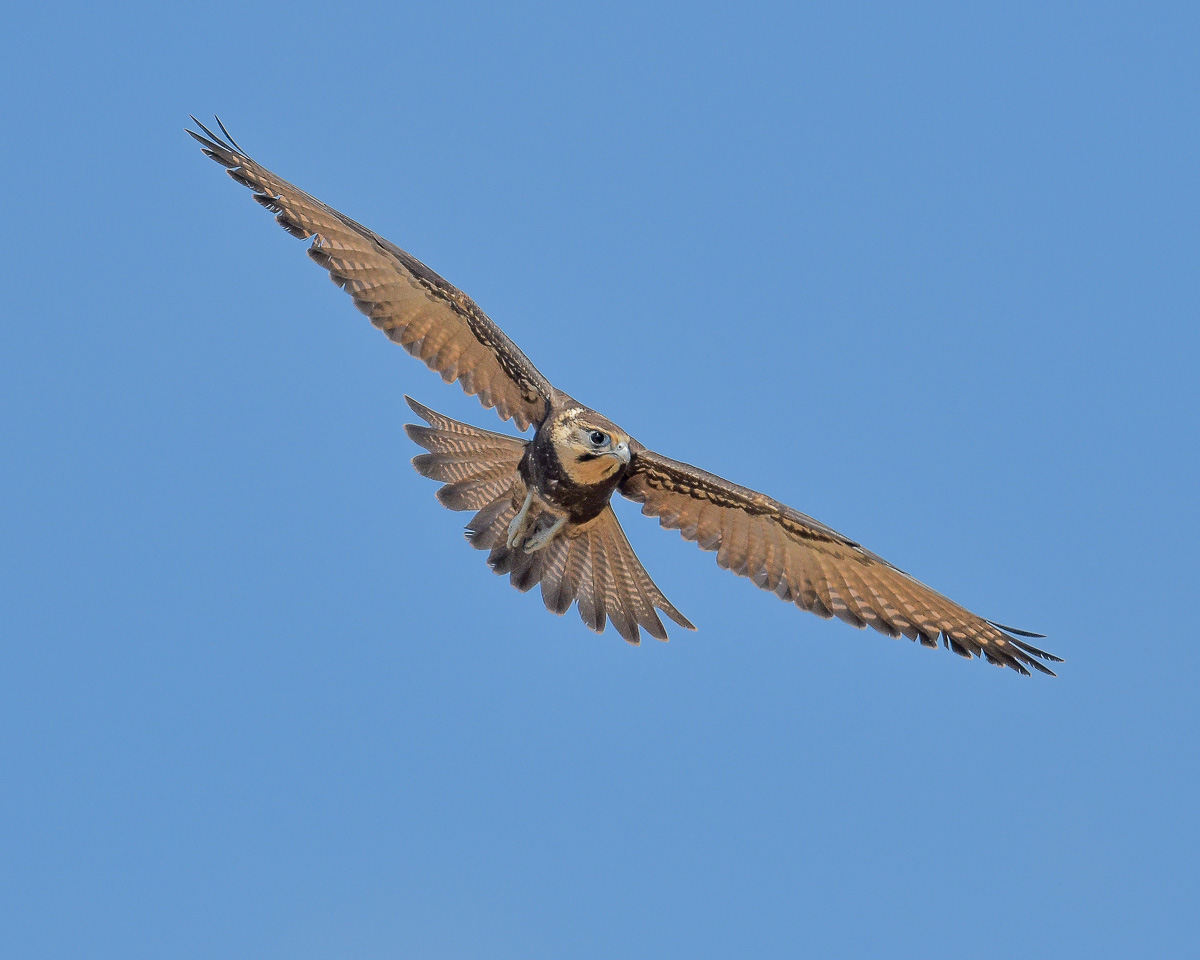
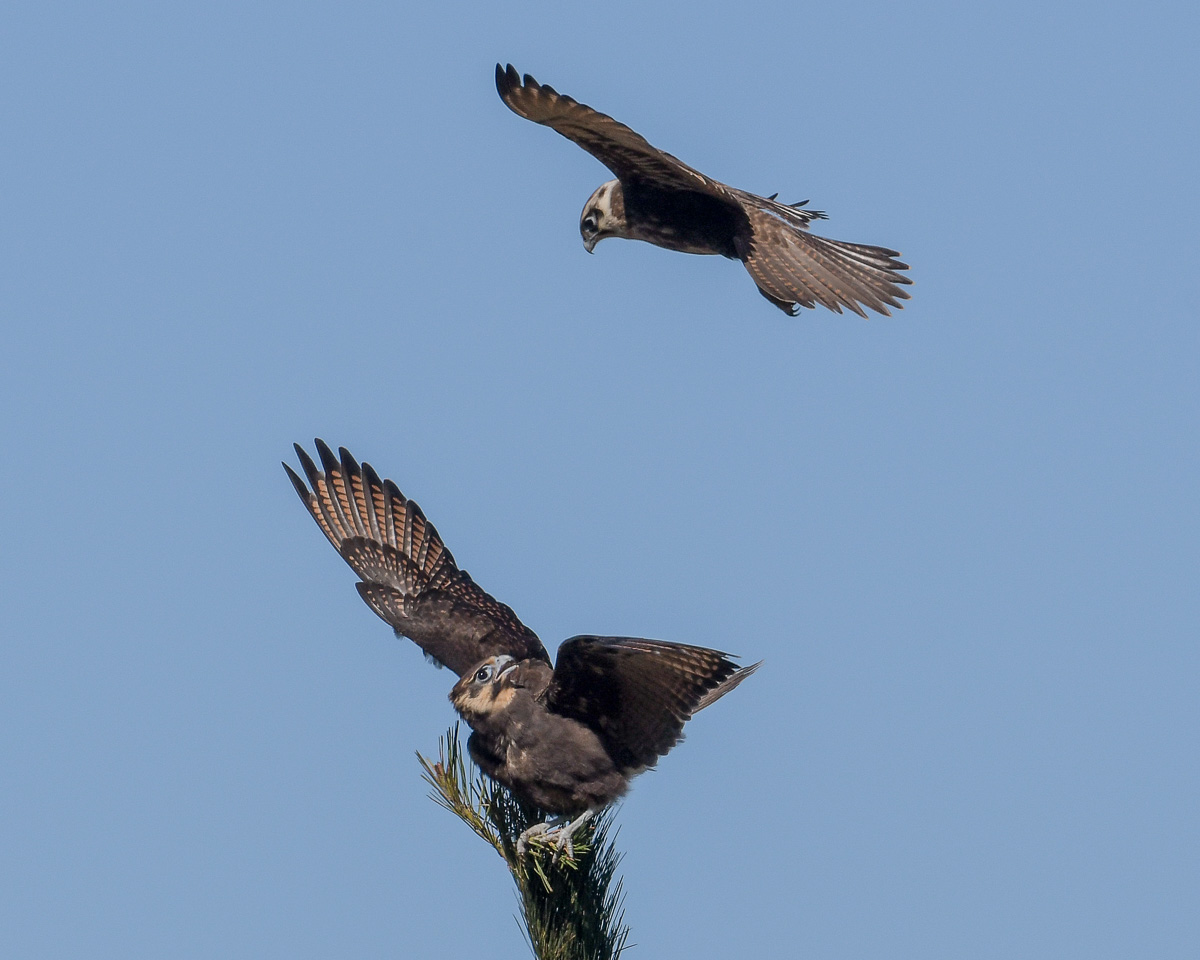
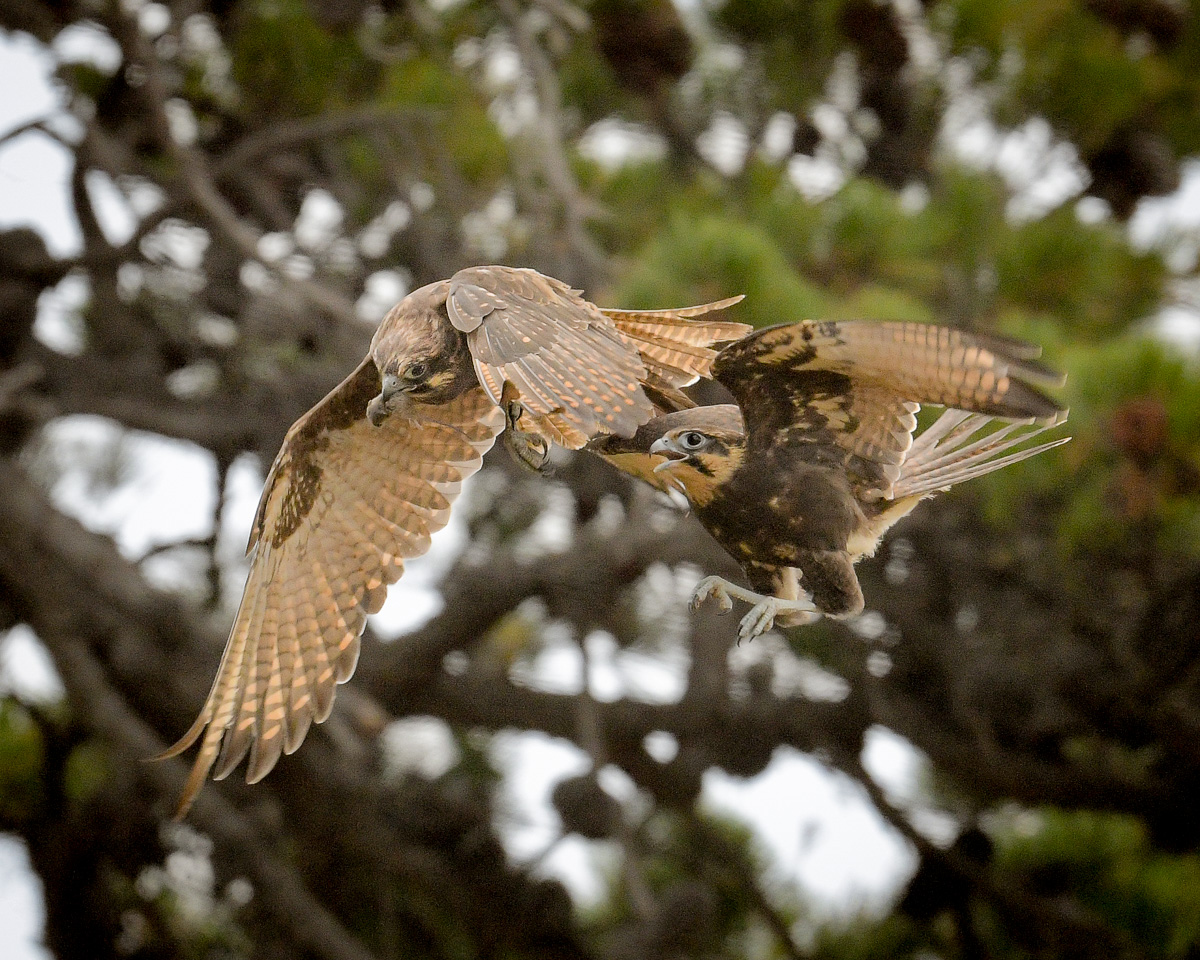
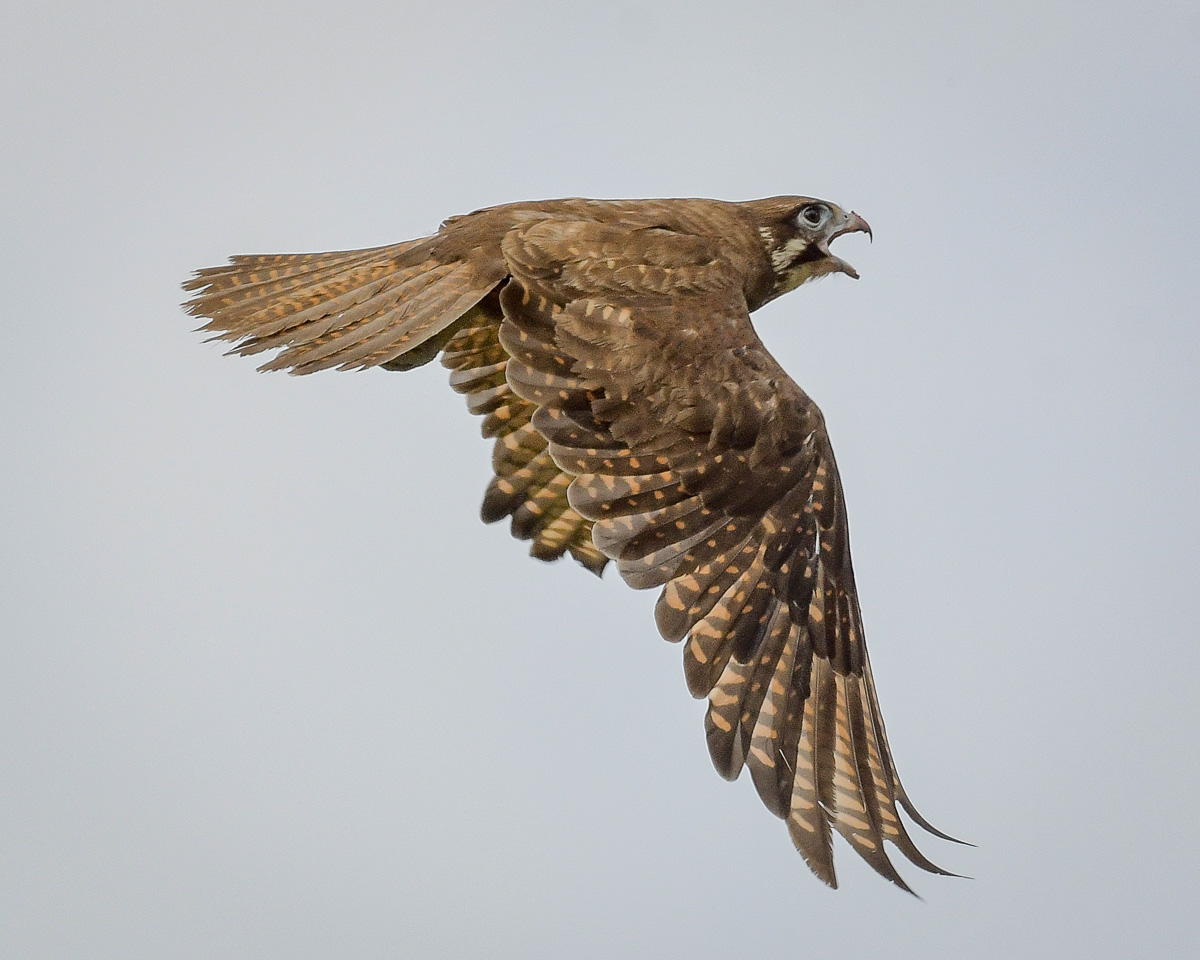
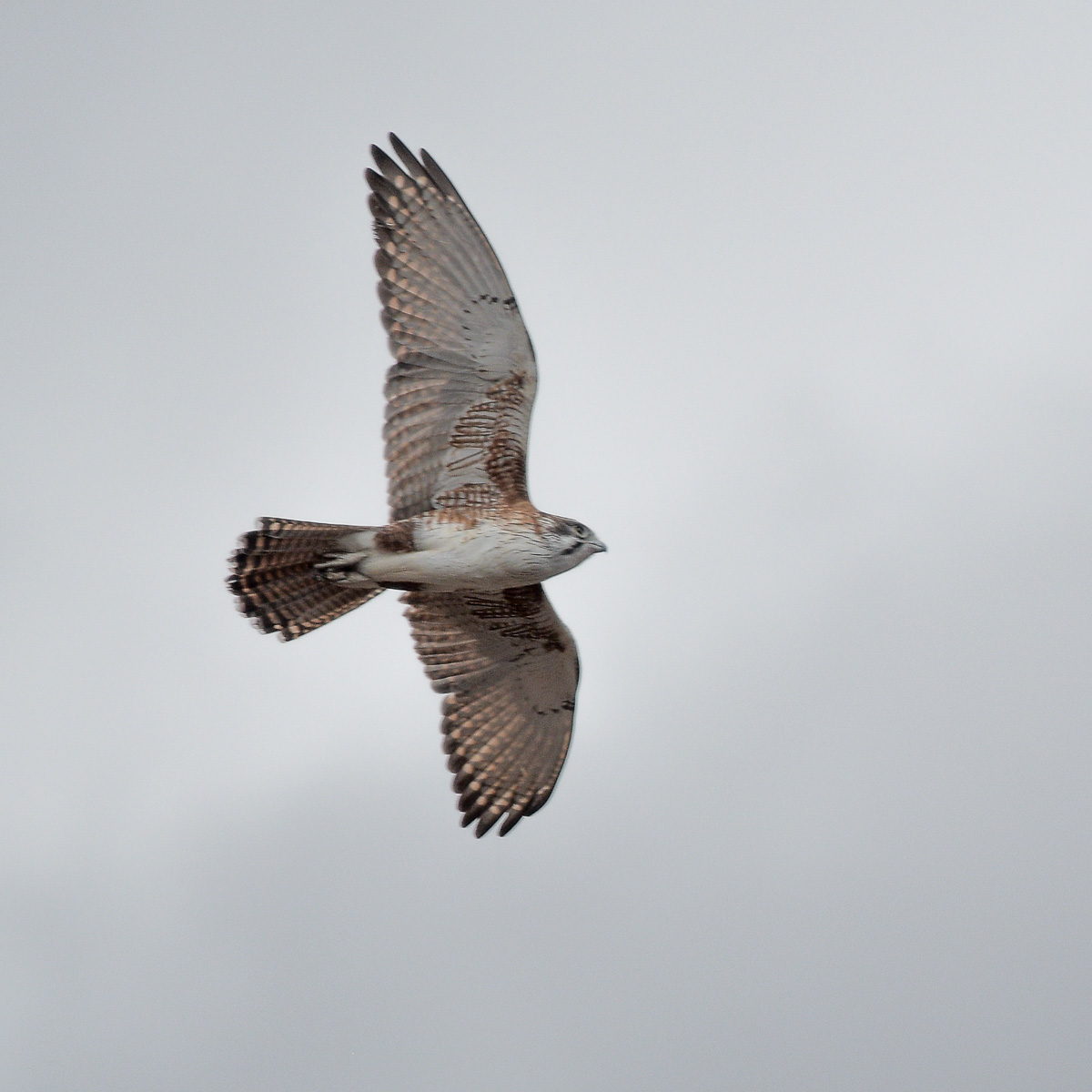
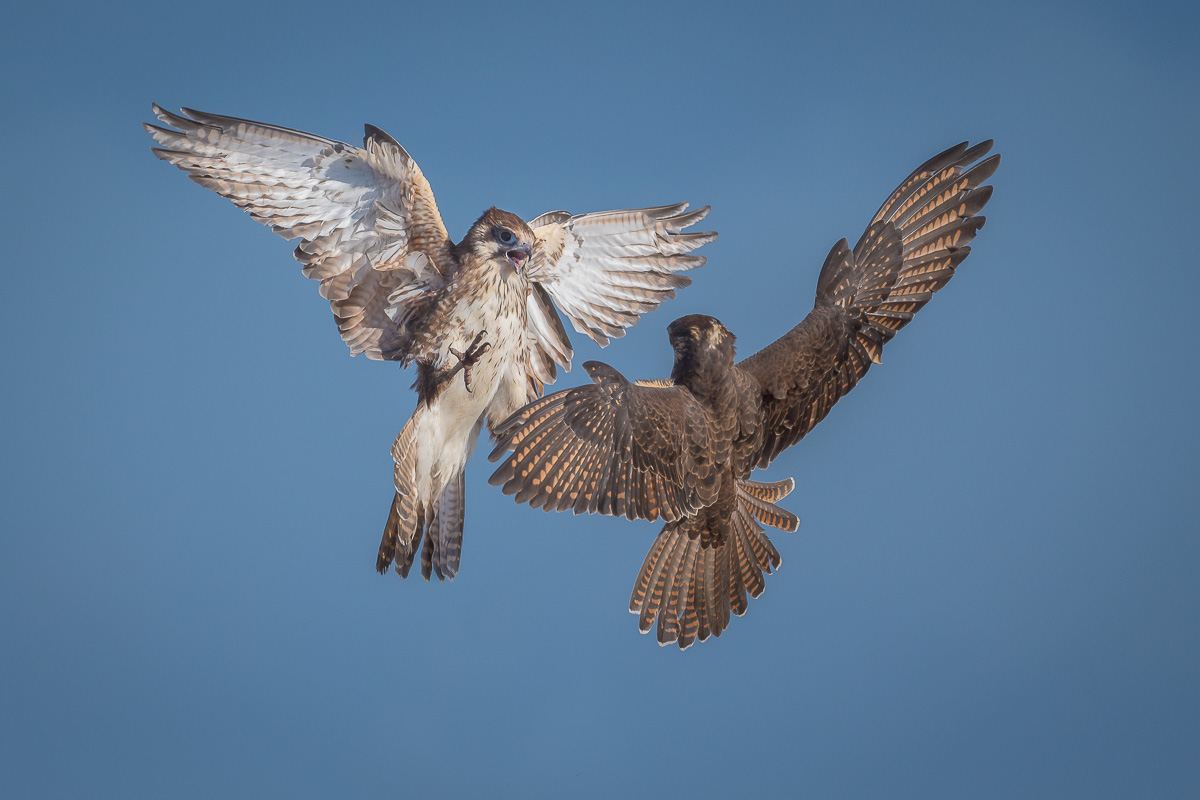
Pair bonding among Browns is quite awesome to watch. It involves flying about the territory, at great speed and with many different ‘dances’ across the sky.
It is like Spring has indeed given them a spring in their wings.

It is also accompanied by loud rolling cackling calls, which must be song, if only I knew the words.

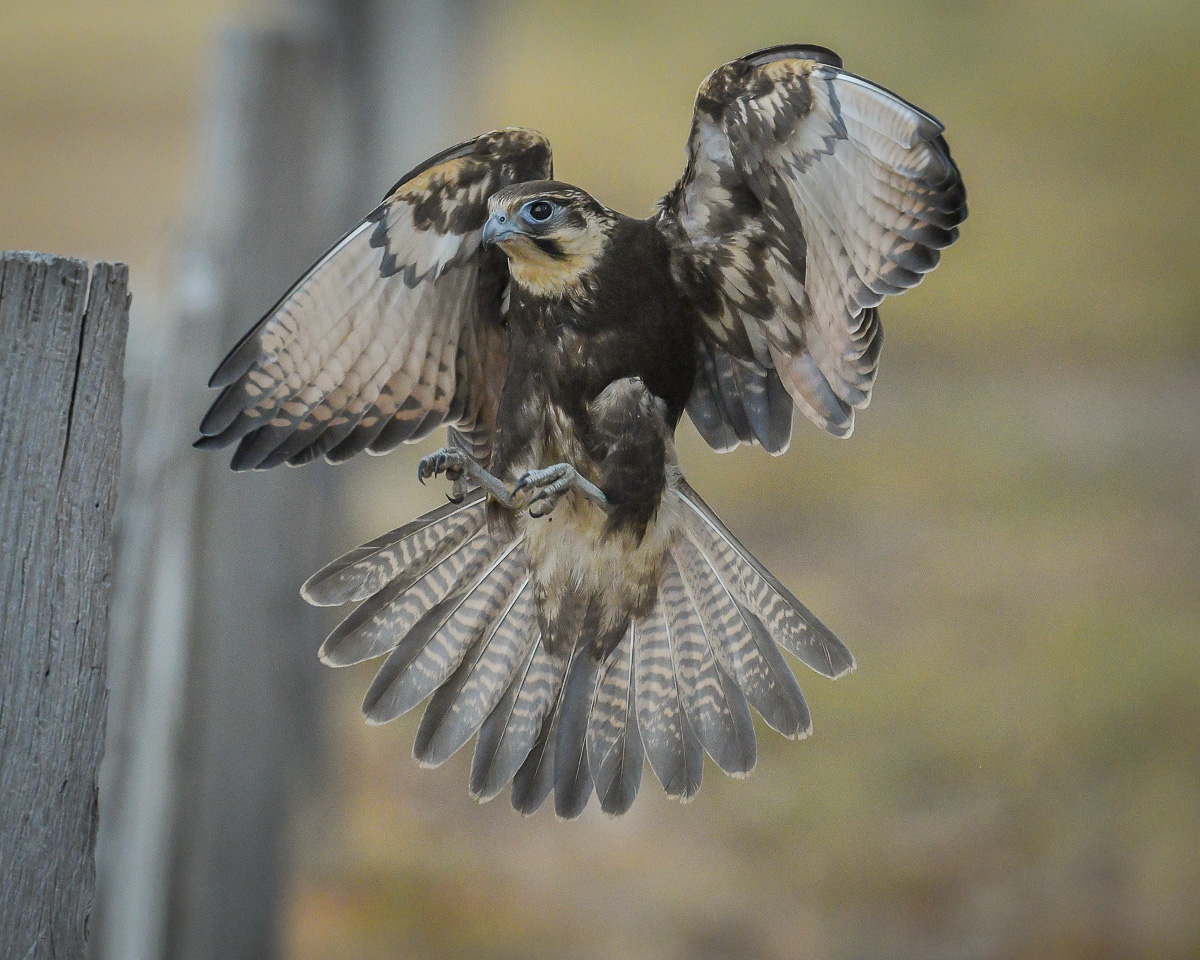
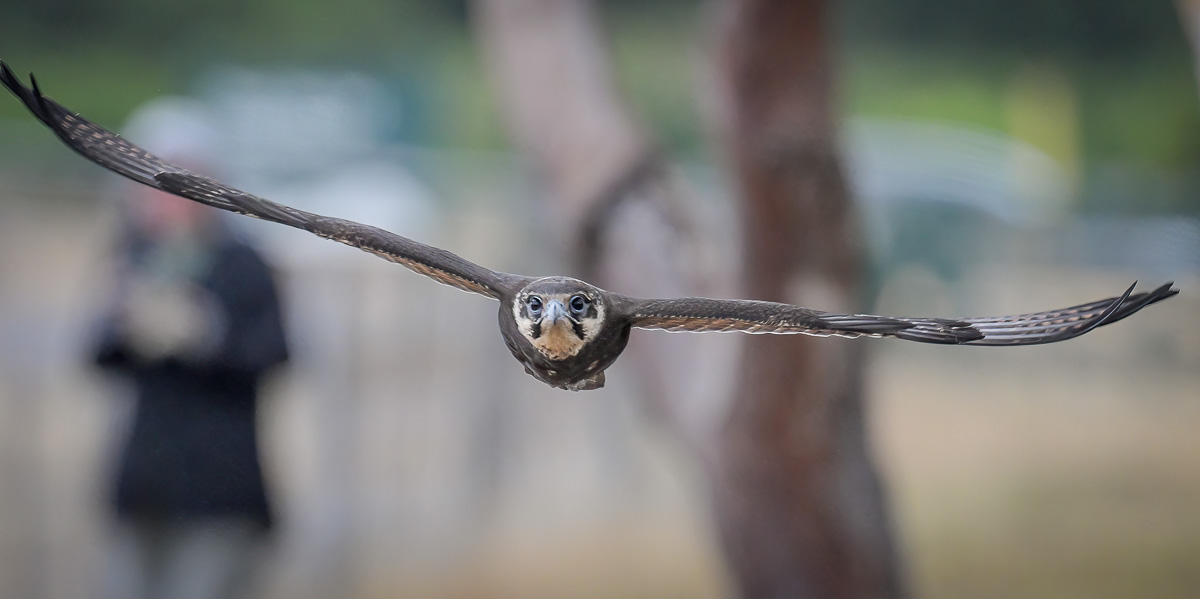
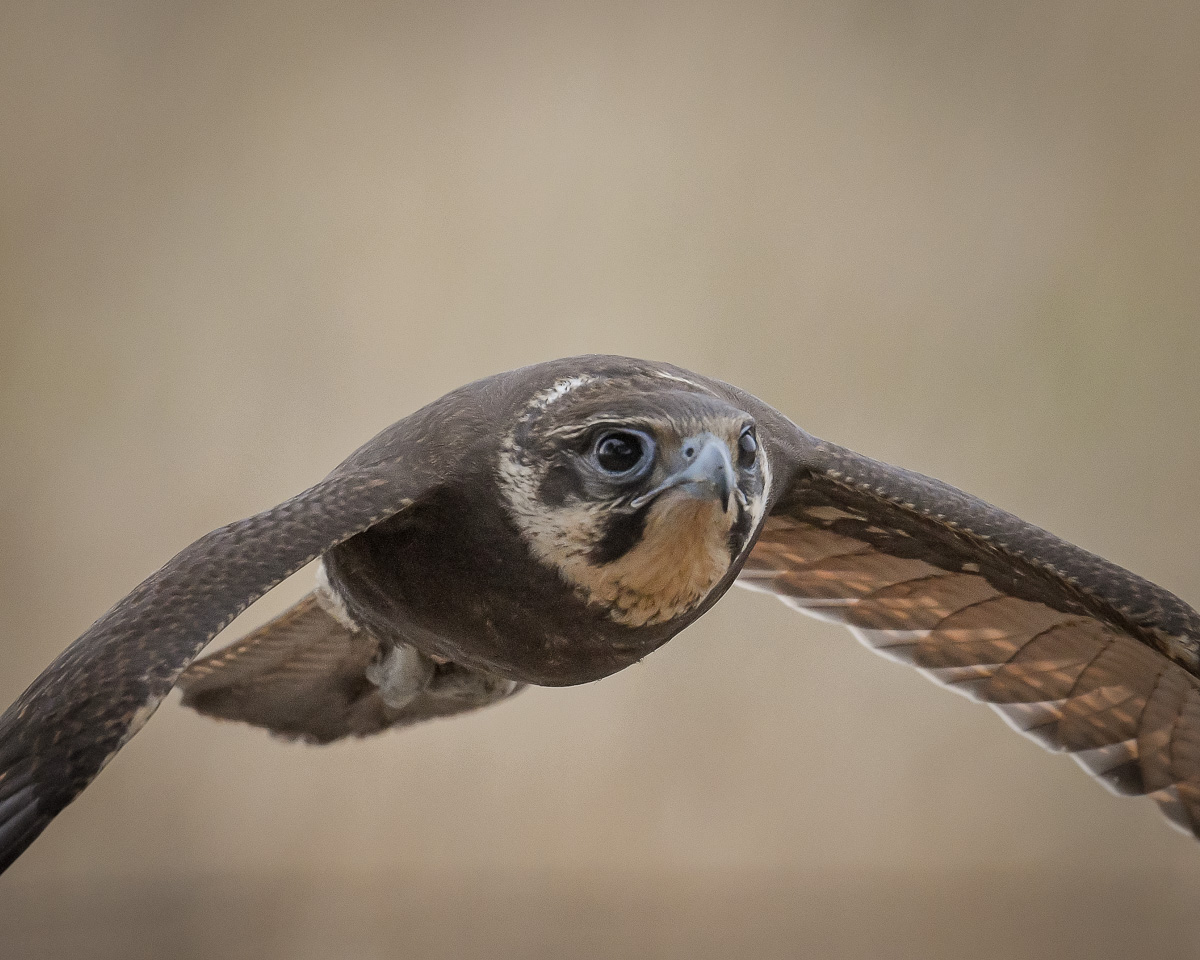
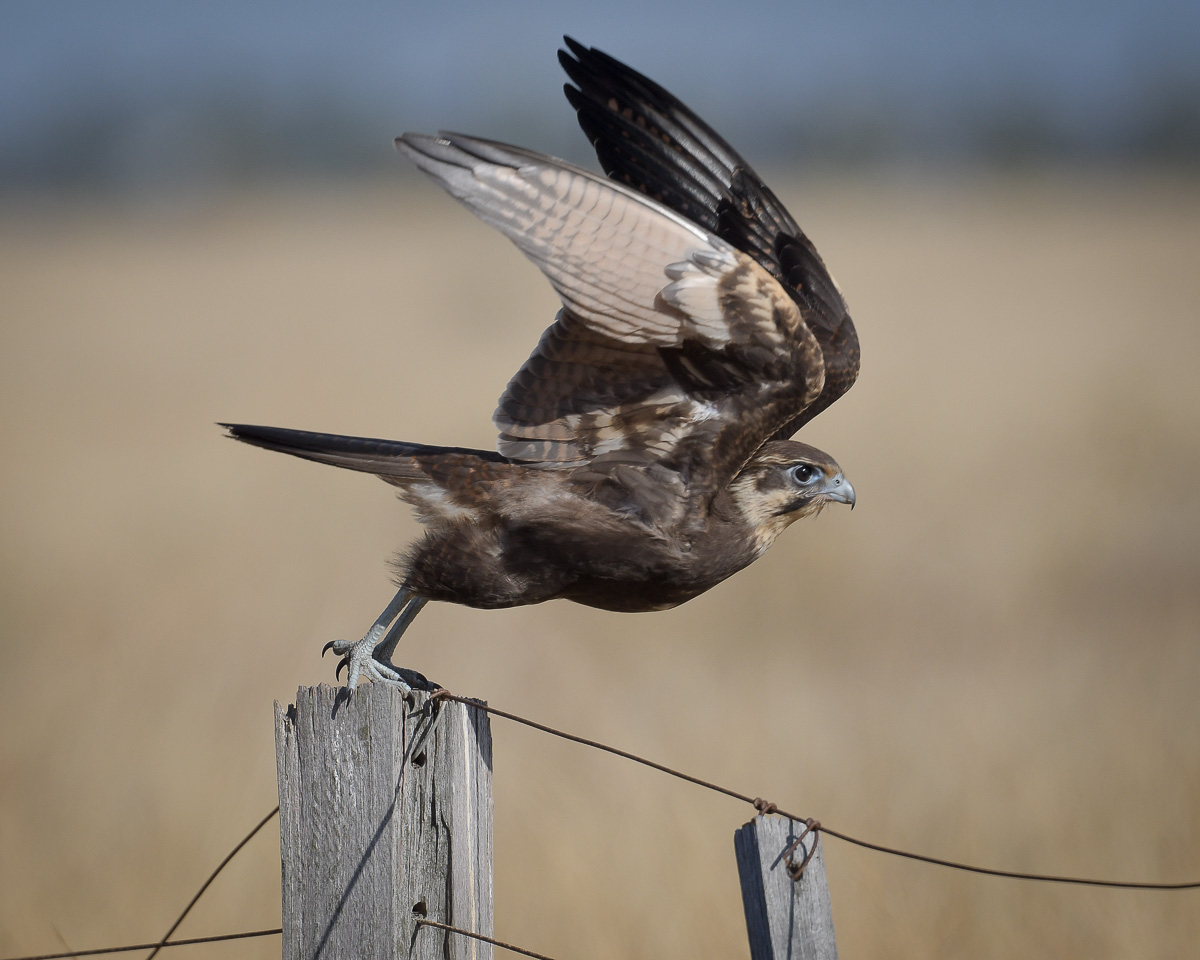
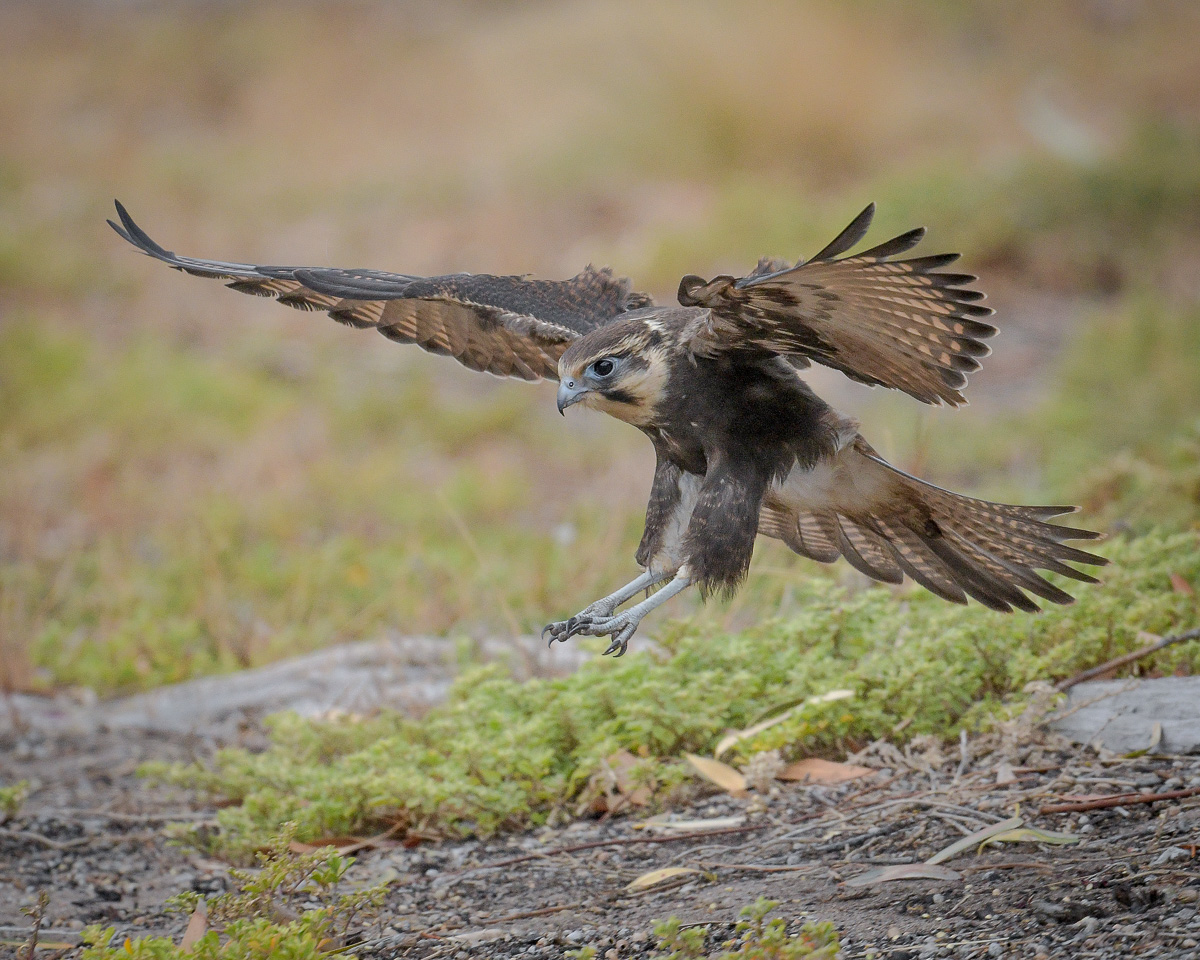
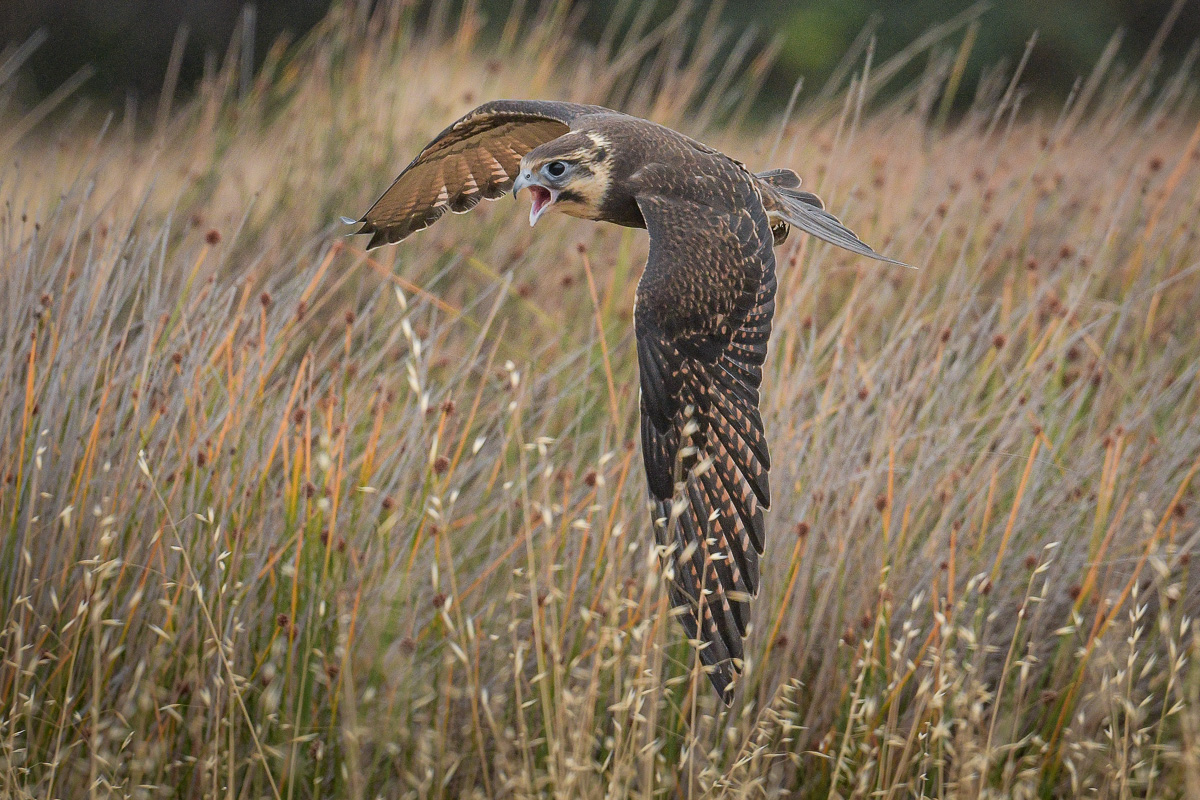
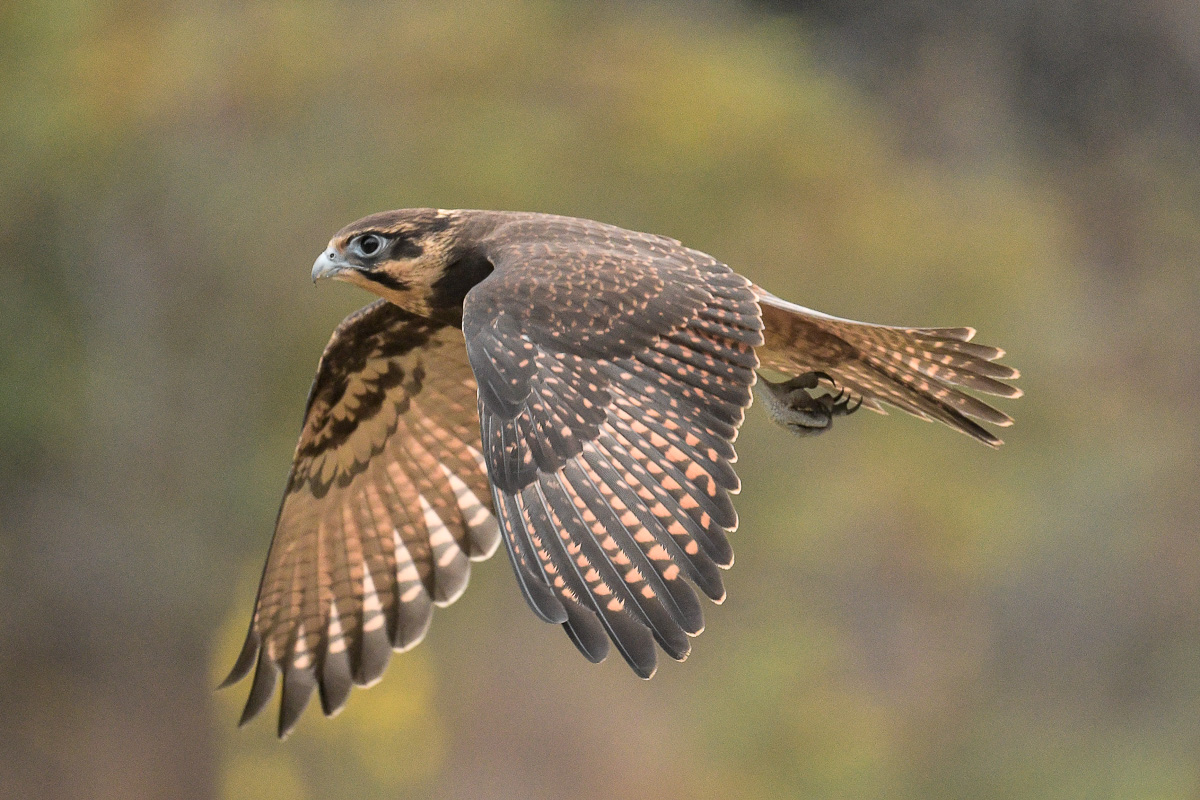
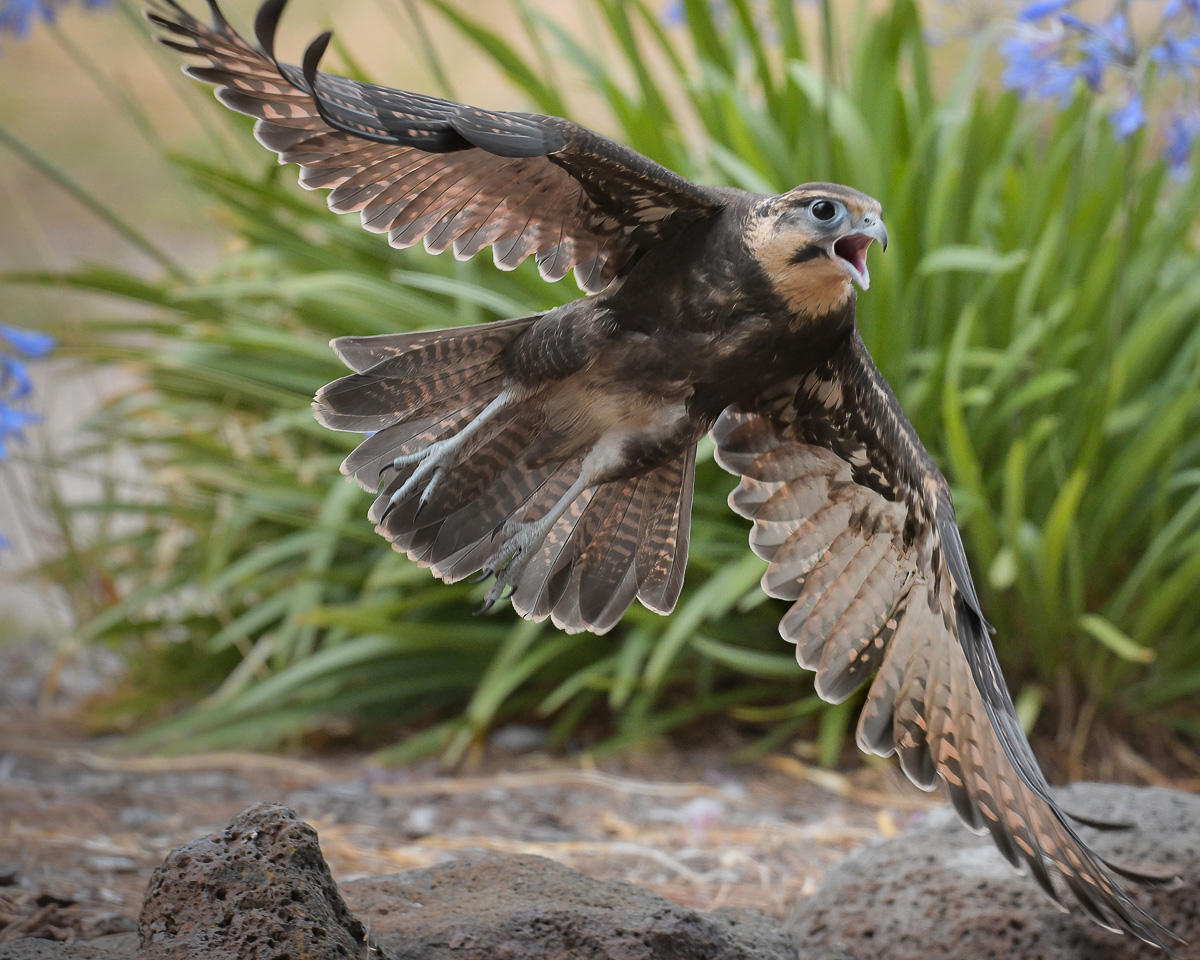
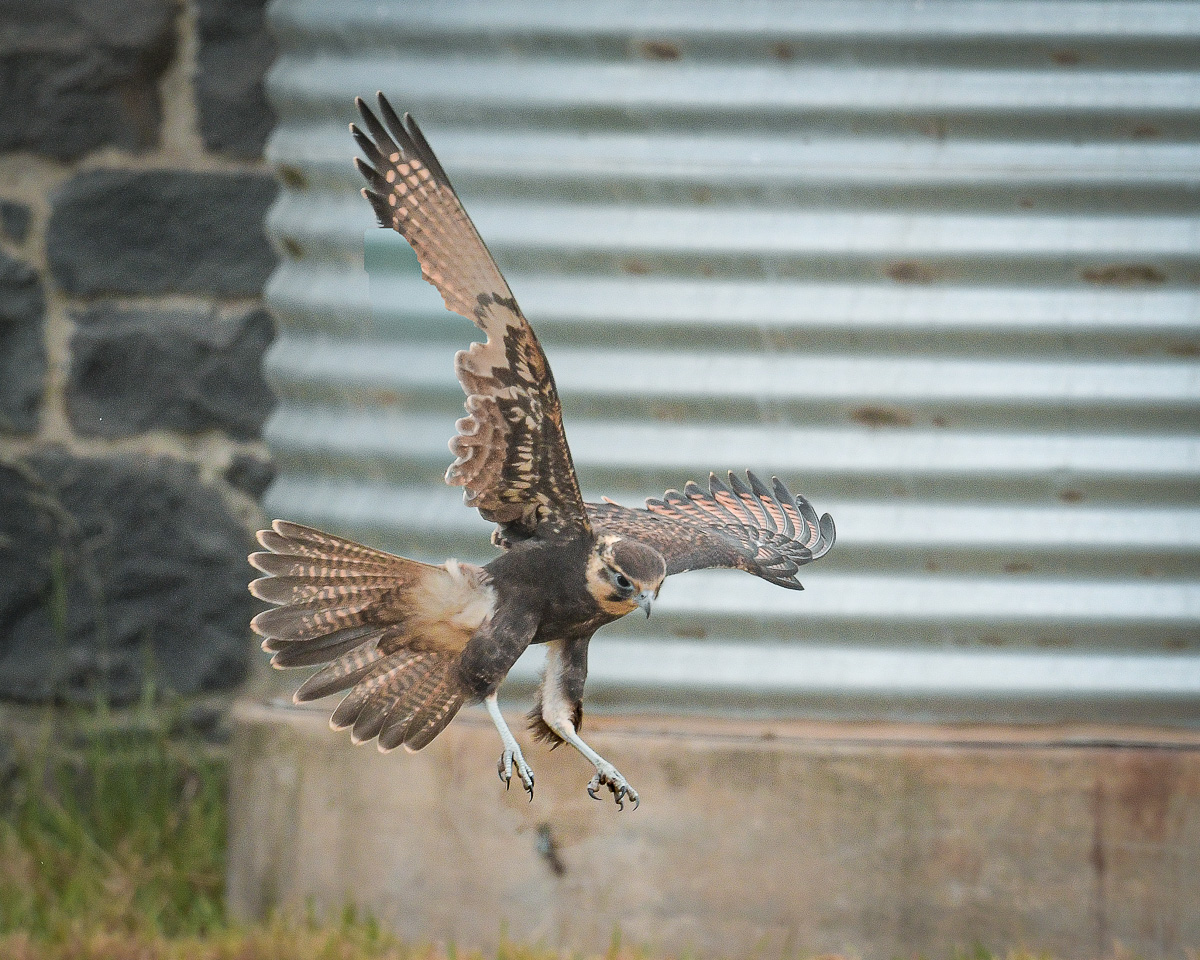
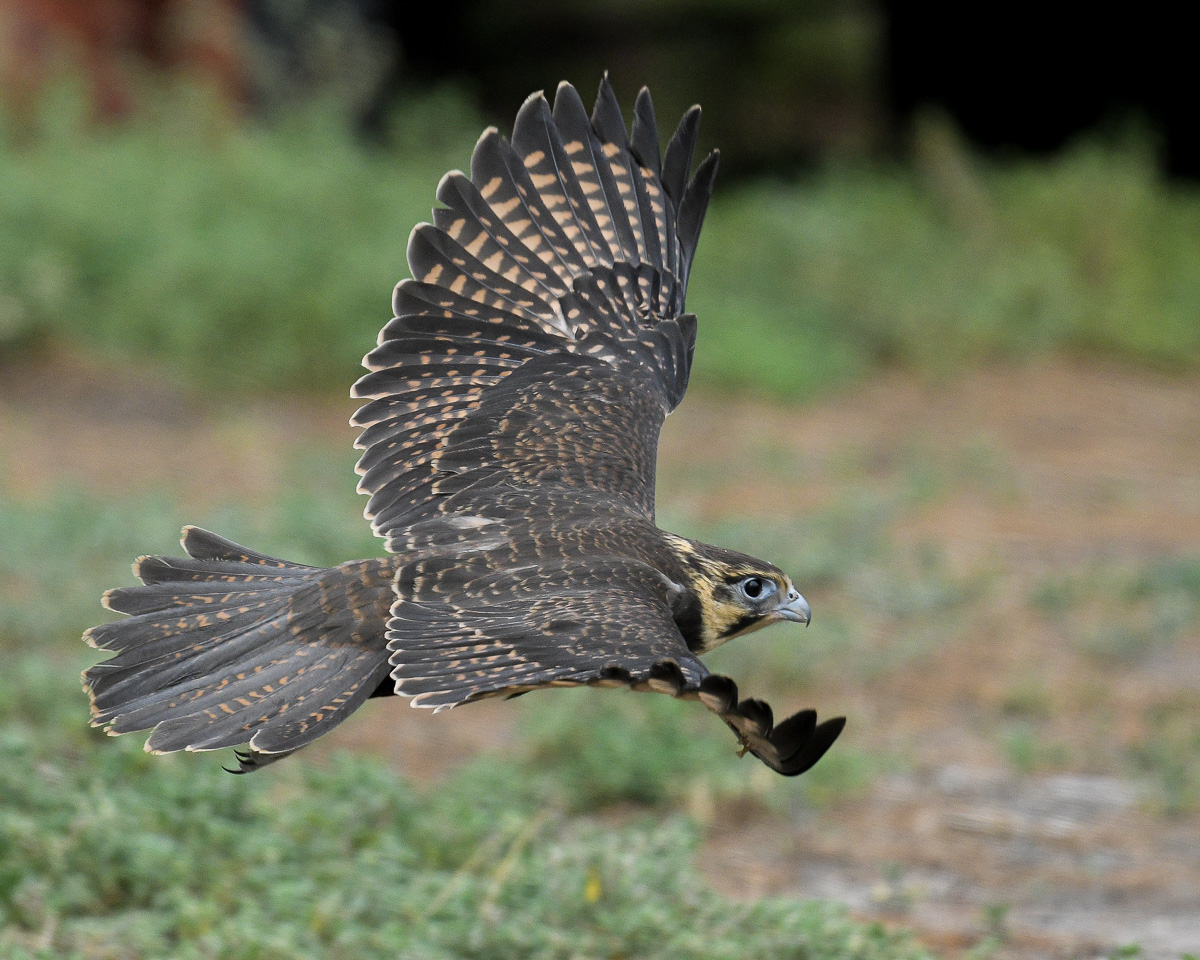
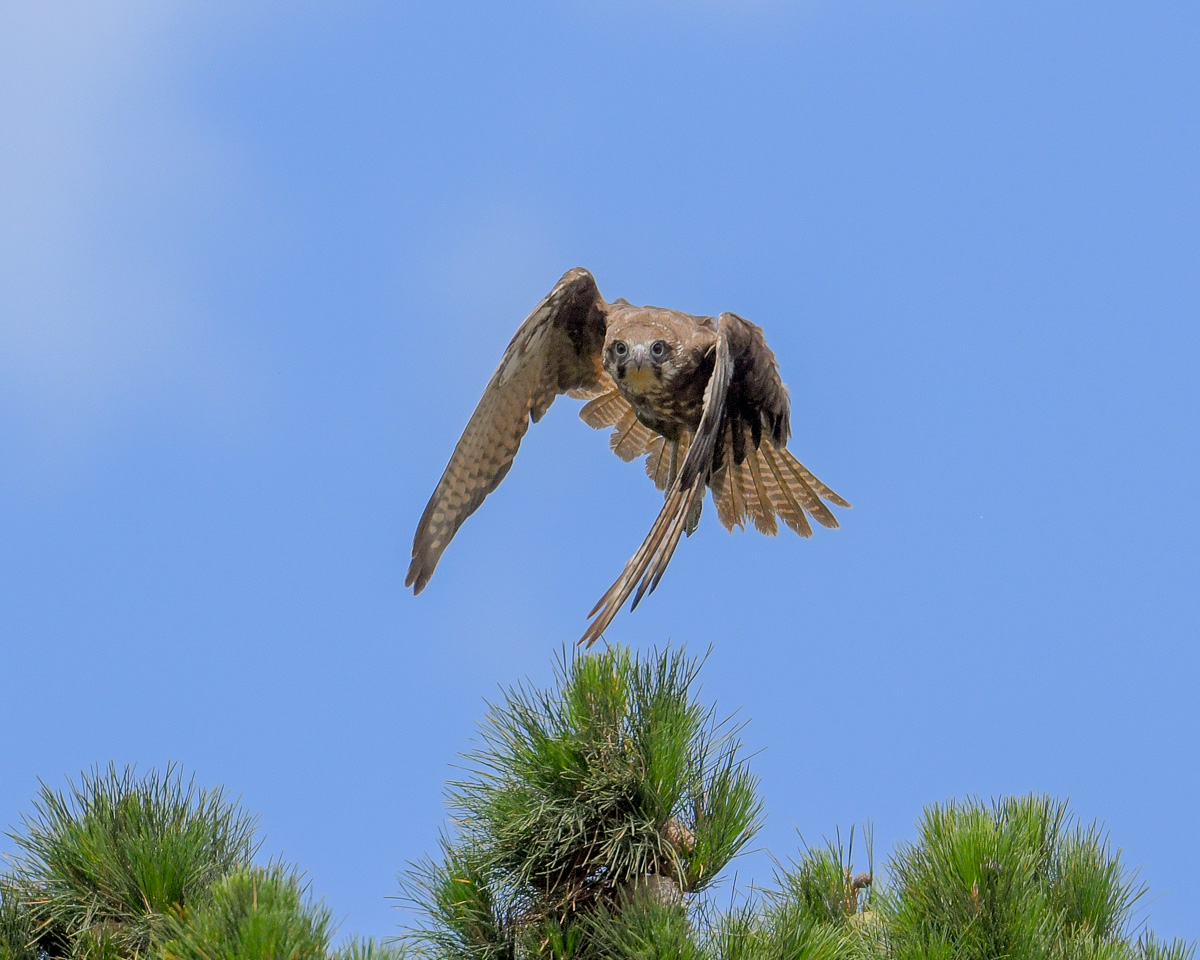
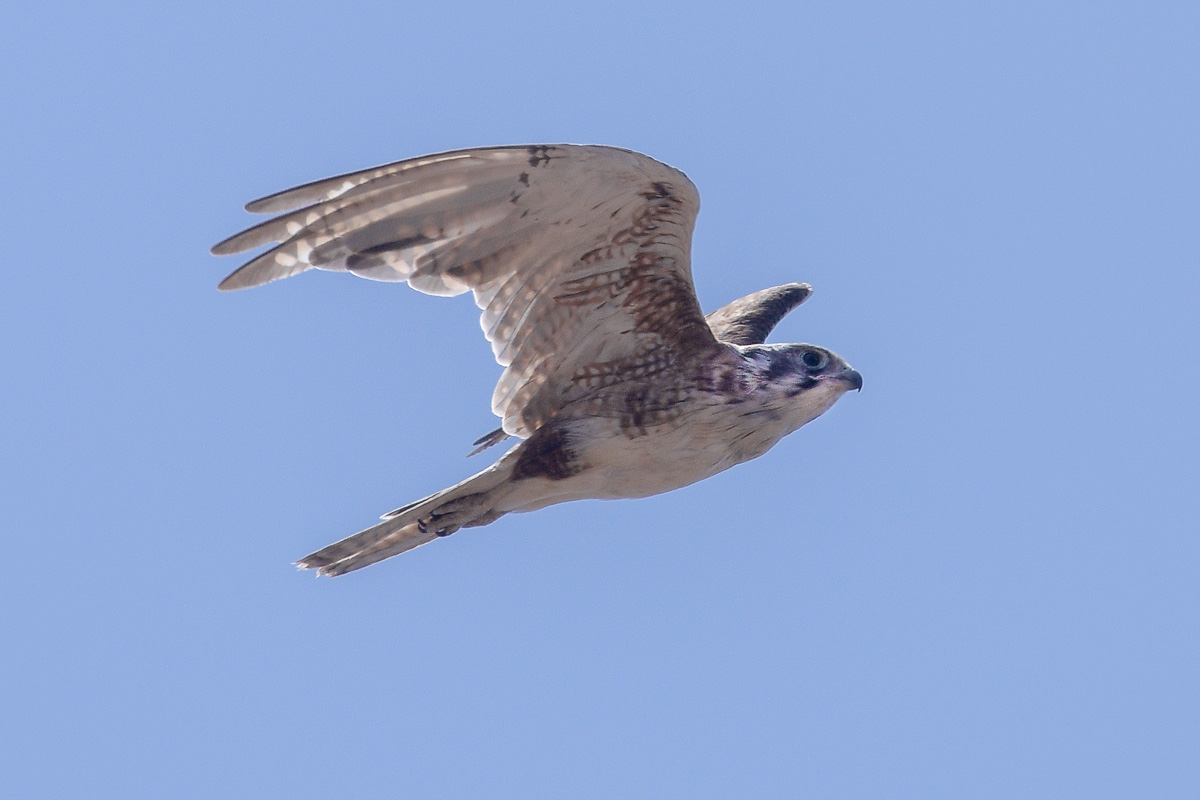
I heard them coming. Very high up and at great speed. When suddenly the male dropped down wings tucked in tight in a stoop to pull out and then zig-zagged toward where the female had disappeared behind a tree line.

Sadly I only managed a couple of his rolling flicks, but its enough to show his amazing airborne agility.

We sort of think of Browns as slow moving, direct flight birds. But when Spring is in the air and his best behaviour is on show the action turns thick and fast.

Enjoy.

Wings Away: Act #10

I started this series with a quote from Jon Young from What the Robin Knows.
Thought it was fitting to use another quote for the last of the series

Jon Young says, “There is nothing random about a bird’s awareness and behaviour. They have too much at stake…. Being tuned into the tapestry…. we are venturing into a realm of awareness, and intention and curiosity. I’ve had some magical experiences in the natural world, and some of them have involved birds.”

In a previous blog post from 2019, I wrote:

Browns, broach no interference in this serious business of nesting. Standing around (with a camera) in their work space is not taken kindly. So having worked out where she had settled and where the action was taking place, I’ve made a wide berth of the spot.   I also know, from past experience, that if all is well, and I don’t press the boundaries, respect their business and keep to my side of the line, that eventually the line will become narrower, and I’ll be able to see just a little more. Then sometimes the bird graces us with the chance to enter into its world, and while I might not have free access, at least I’m treated benignly.

What worries me about sharing this is that some will drag out the ‘Photographers Code of Practice”, or some such and berate me for my impertinence.   However if I’m not invited, I don’t go.

Someone will ask ‘How do you know?”
To which I have to respond honestly, “Why don’t you go out and sit with a bird and find out for yourself.”  Operative point of that is— ‘sit with the bird’.

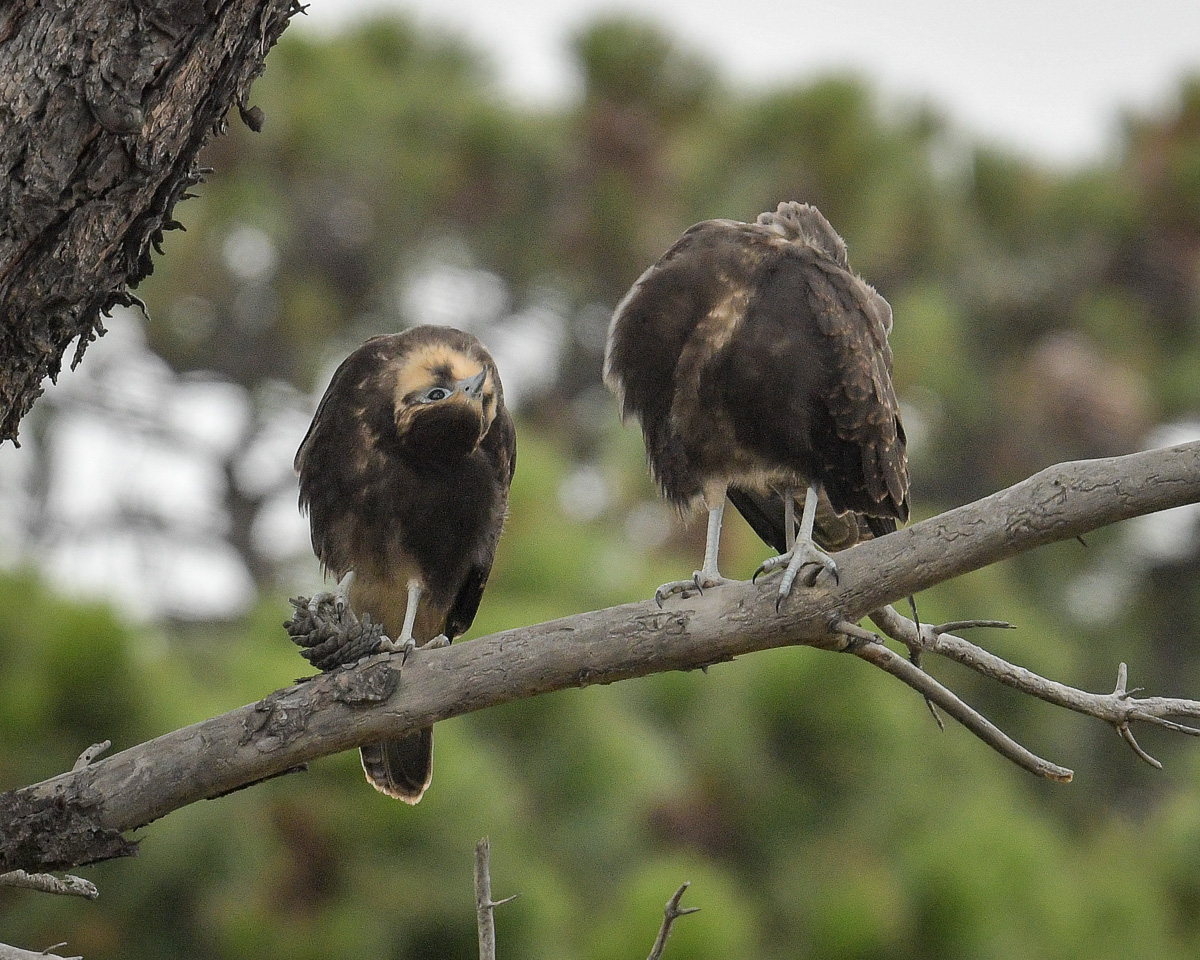
Every interaction we have had over the course of the 7-8 weeks with these two young Falcons has been on their terms.

In the last week it was obvious that they were now ready to move on from home territory.
We didn’t see any badgering by the adults to move them on. In fact the adults, for all intents had already moved off to their post-season quarters. I’m not even sure if they form monogamous bonds or simply come back with a new mate. Or find a new mate and territory.

One morning as we walked into the area, I spotted both Max and Mary sitting together in the sunshine. Suddenly he dropped, in that long gliding, slow controlled-descent that is a hallmark of Browns.
He hit the ground, and immediately began to mantle over a catch, and set up a loud long call.
And he sat.
His calls became more intense and I began to wonder if he was in trouble.
I had also invited a friend to venture in with us, and he moved off to one side for a better view.
Max was bewildered I think. Two humans he can handle. Three!!!
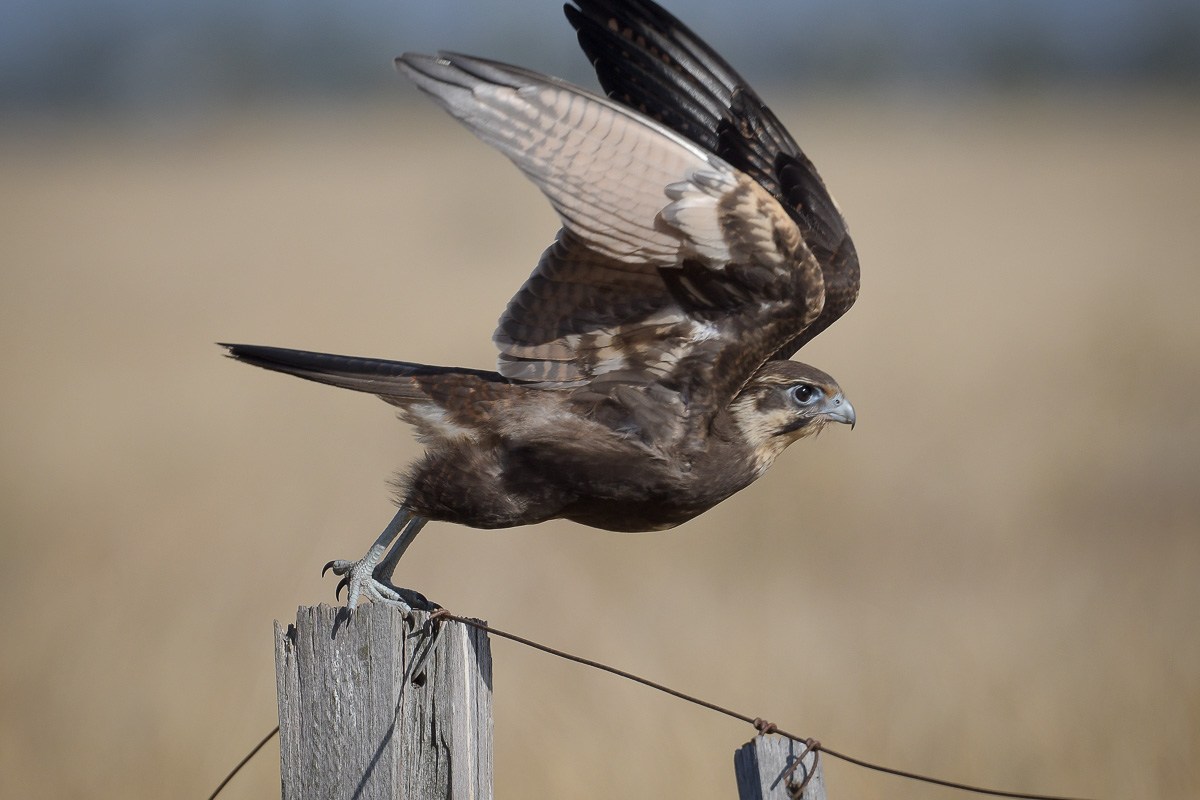
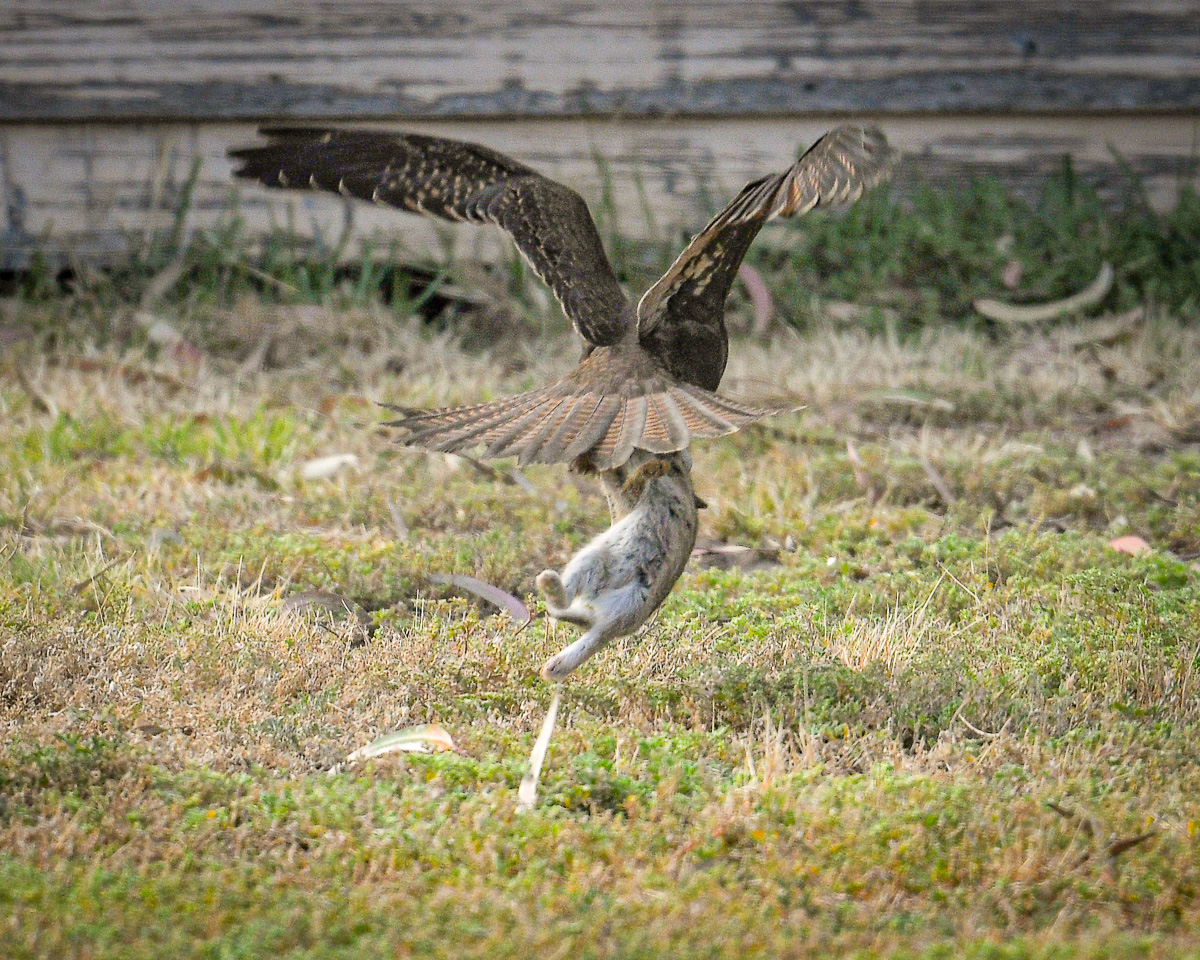
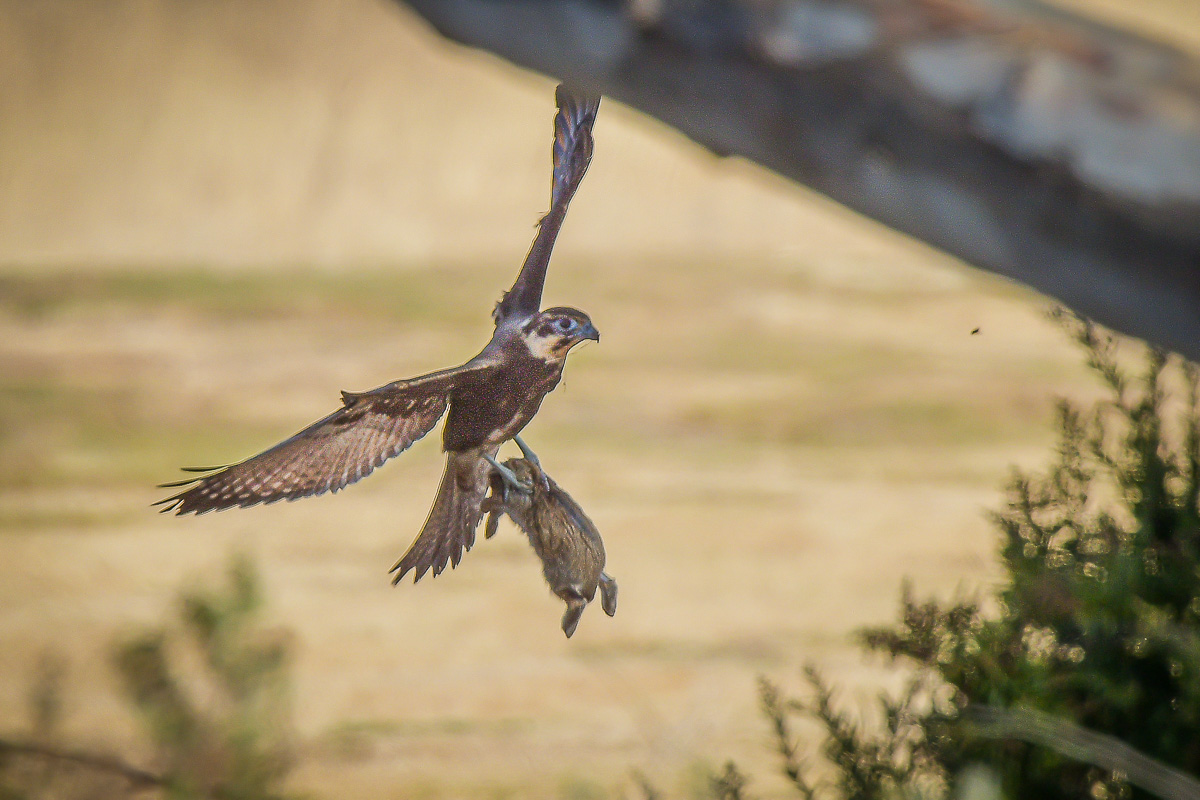
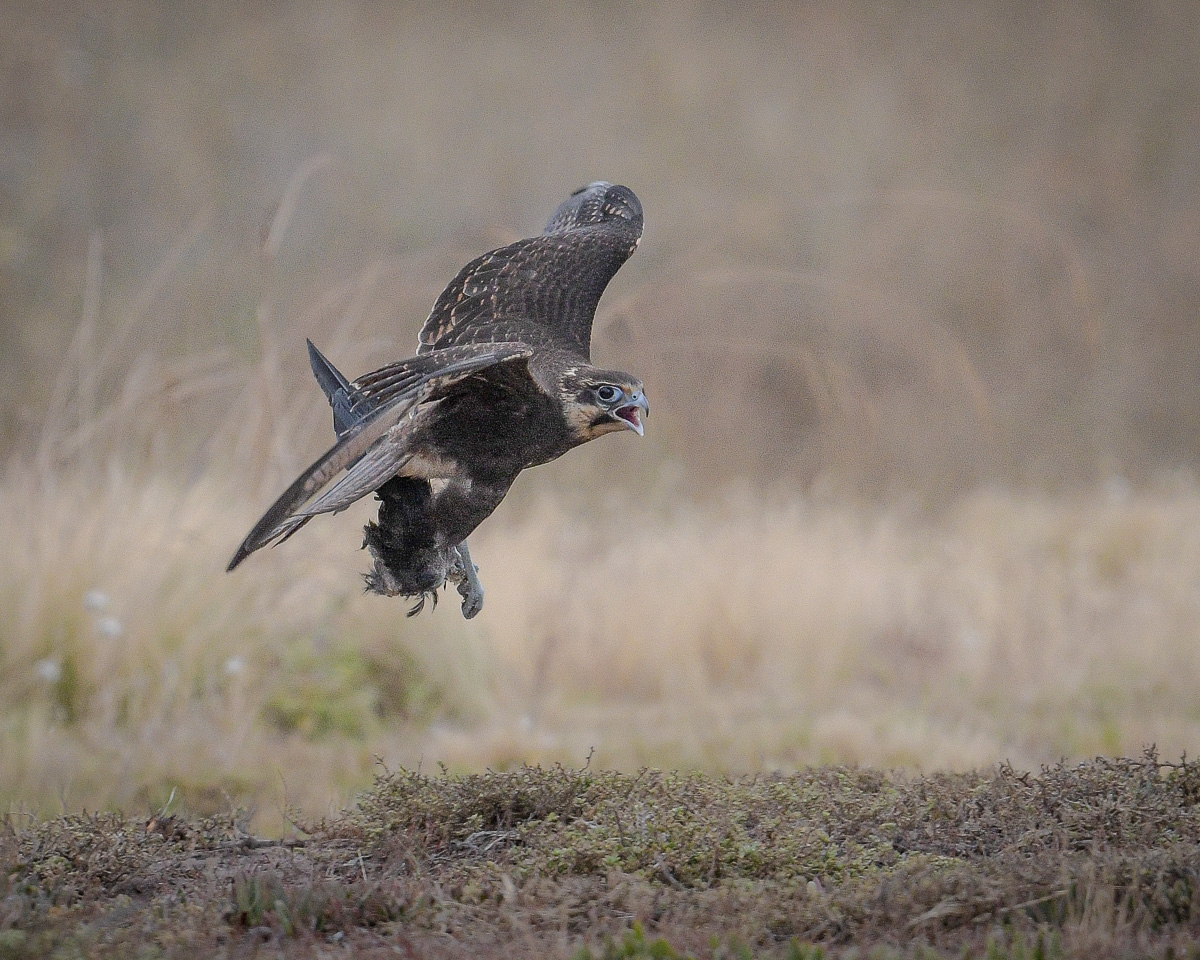
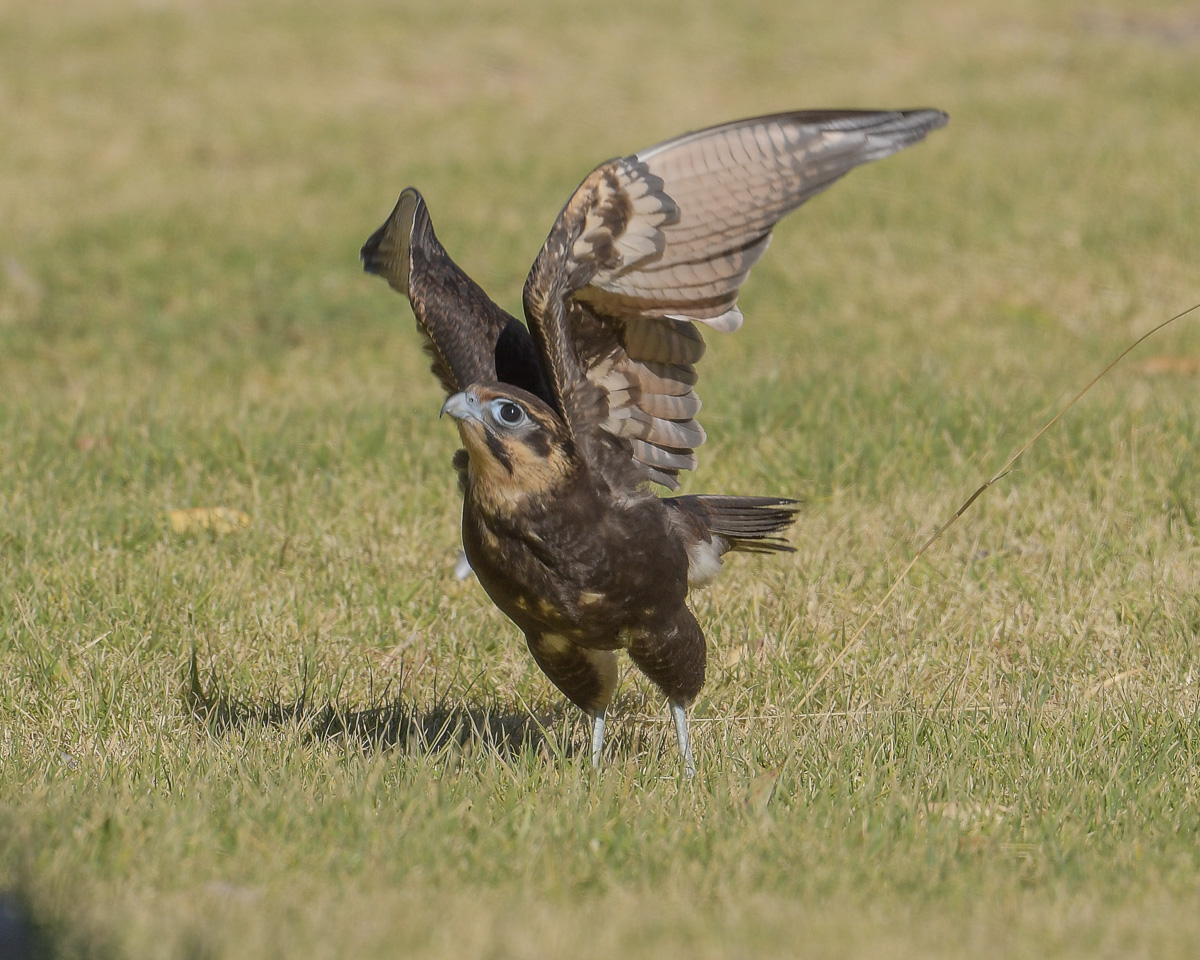
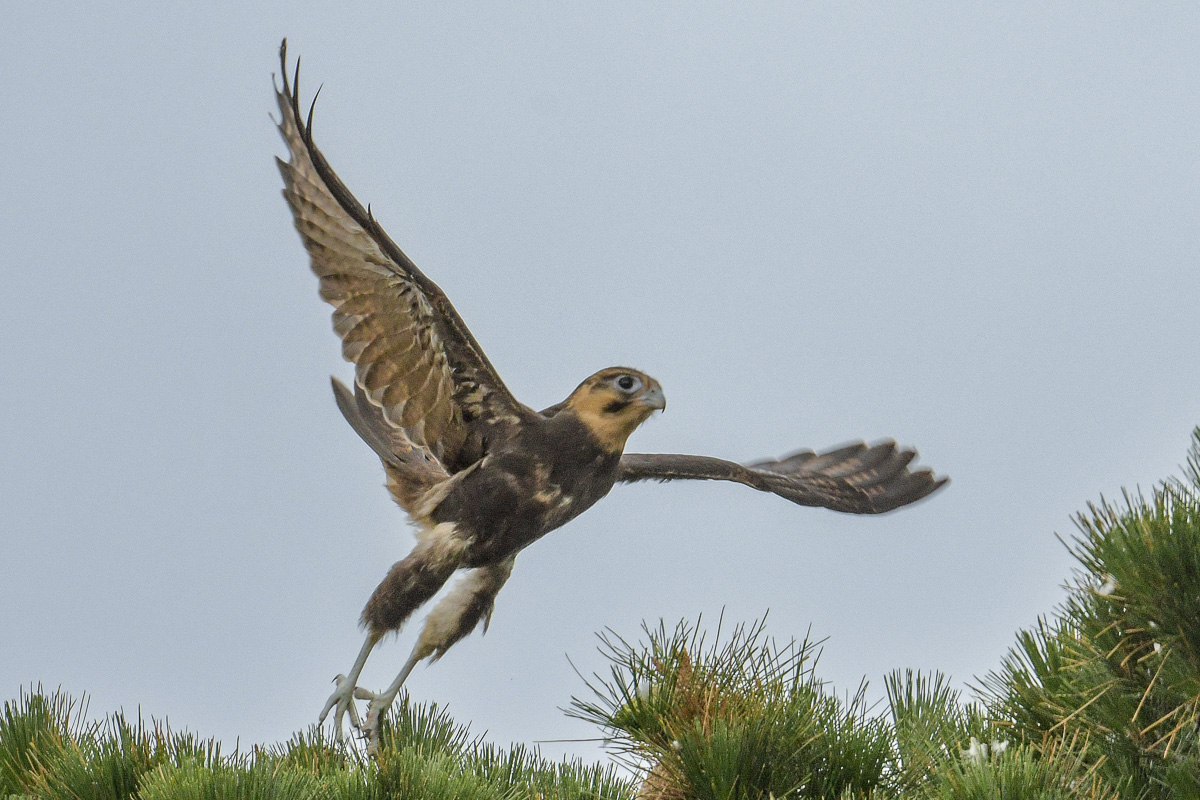
So before I could work out how to handle this new development, Max raised up. Lifted his wings and began to take-off… Carrying… A rabbit.
Now, you’d be forgiven for thinking that such a prize might be a struggle for a juvenile Brown Falcon, but. No.
Max could handle it quite capably, but he was also unsure of the added interest he’d managed to attract and he only flew about 50m and settled into the grass against a fence, mantled, and continued his loud call.
Leaving him in peace we moved away. Hard, when you have visitors, to just sit quietly.
And watch.

About 20 minutes later I got a text from EE. “He’s airborne”. Hurrying back, I found that he had stashed the rabbit in a nearby stump. And looking very pleased with himself. EE had managed to score some shots of his progress across the paddock.

The next few days saw them hunting further out of the home area. And then one morning, in-spite of our searching, not a wing flap or a feather was to be seen.

The Time Had Come.

Fly well Max and Mary and thanks for gracing our lives with your presence.

Max lifting off his prize
Making it look easy. Max transporting the Rabbit to a safe place to stash.
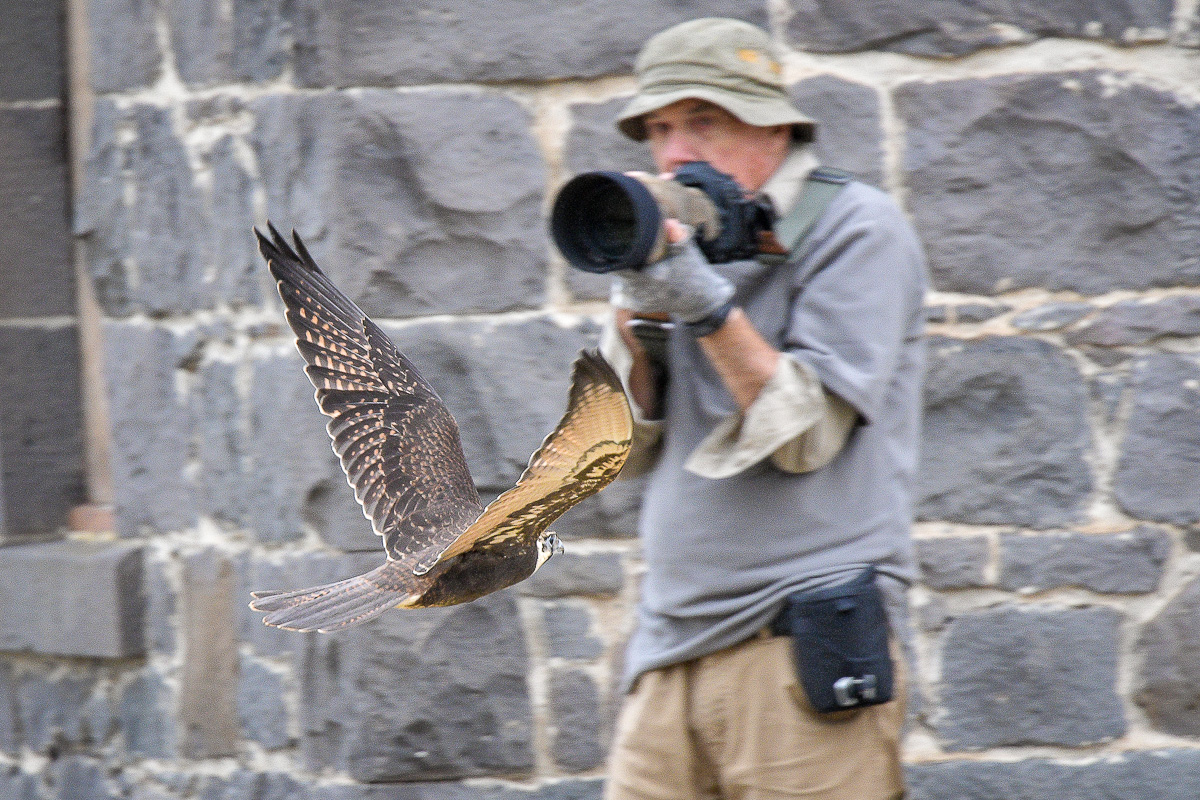
Photo courtesy friendsintheair
Mary on a long slow glide. A skill both birds had mastered
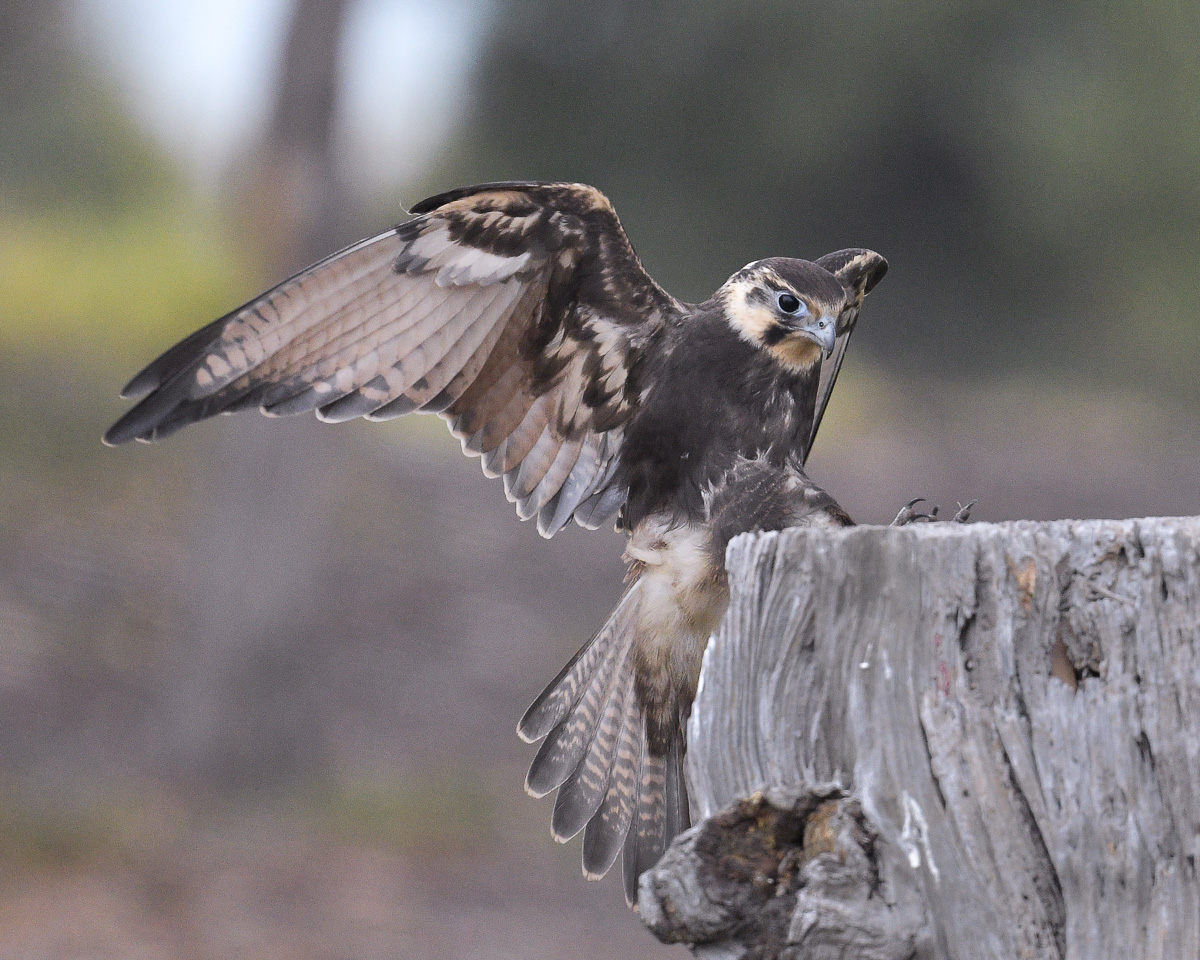
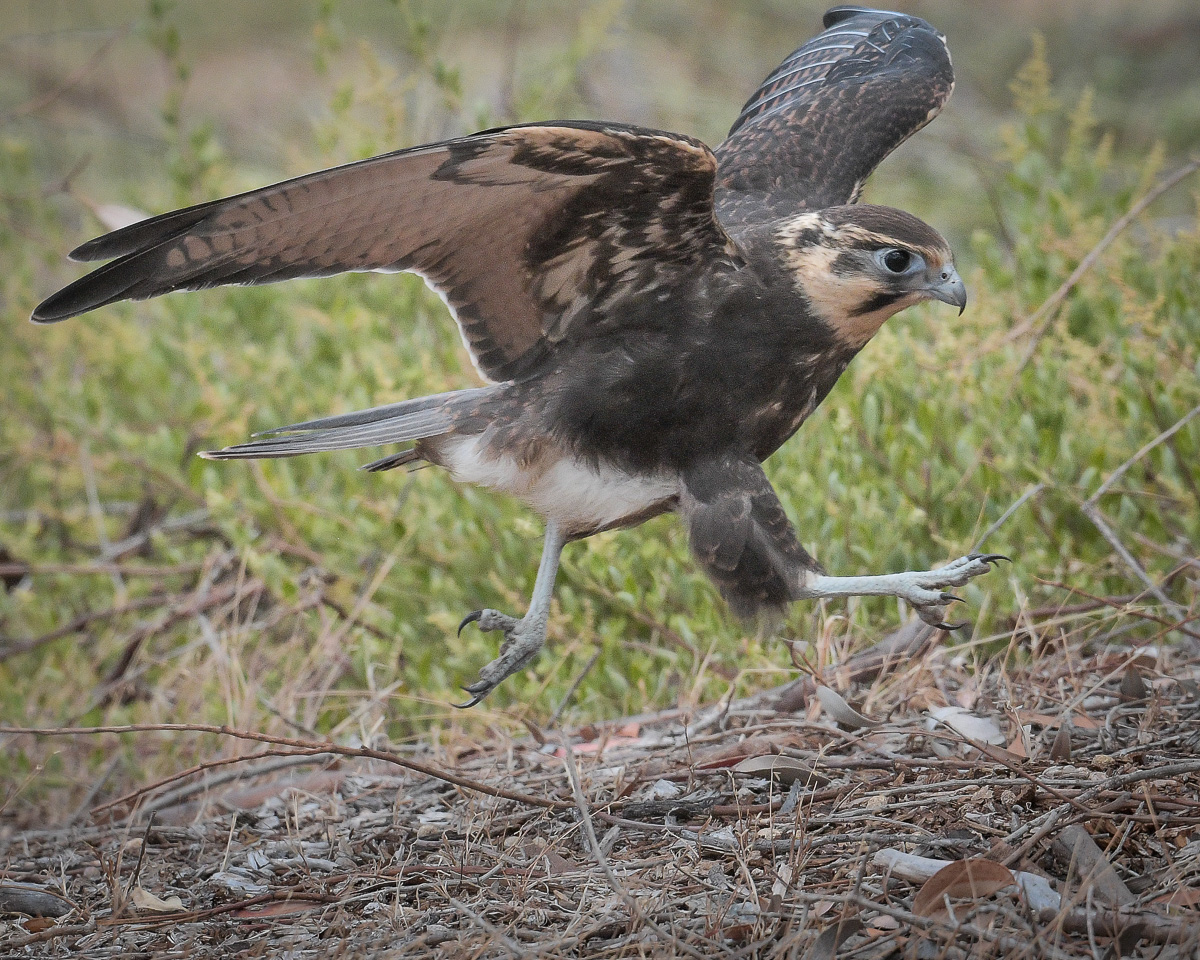
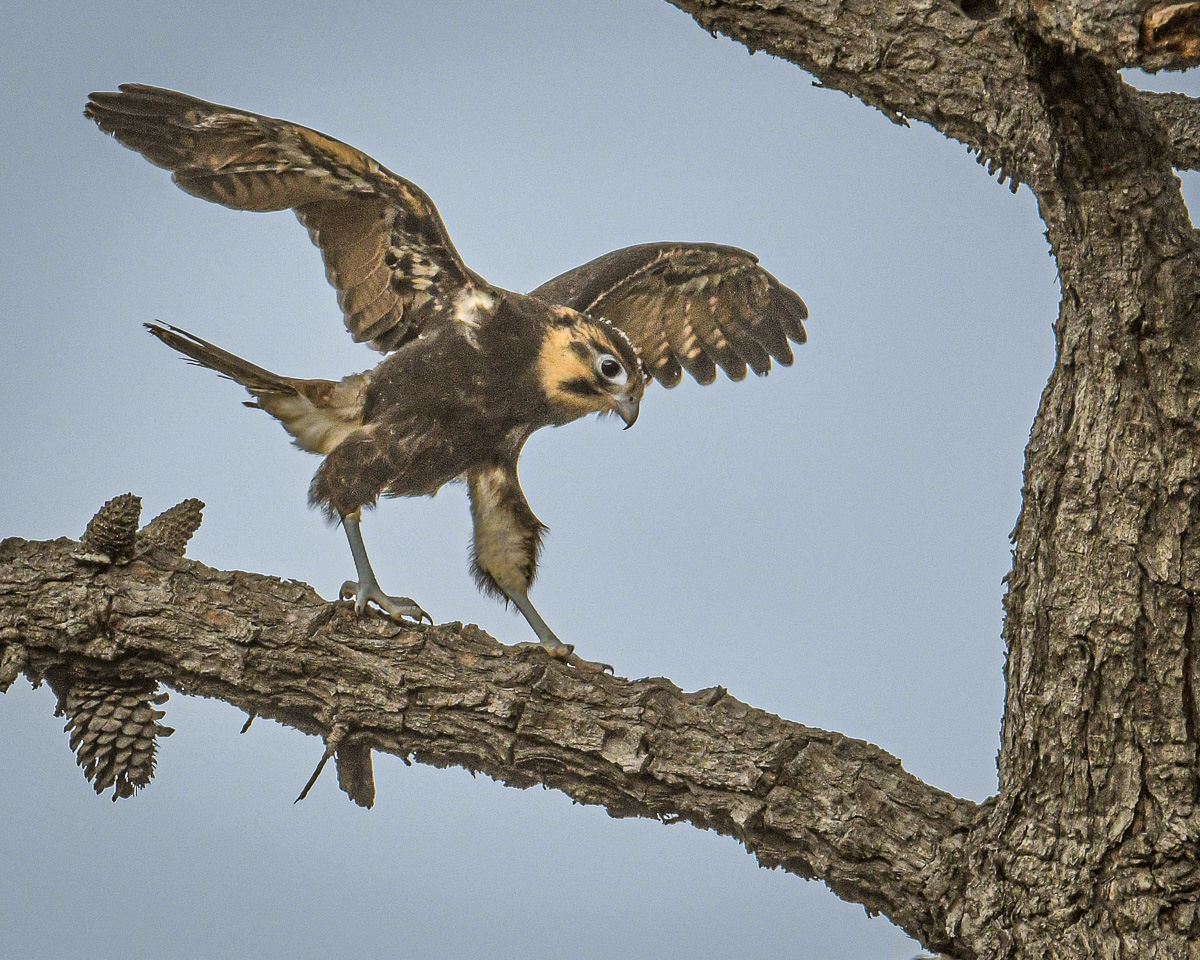
Landing with a minimum of fuss
Max within a wooded area
Mary on a close approach. She had just flown over EE’s shoulder
and lifted up in front of me to land on a branch—directly over my head.
So close I heard her claws contact the branch.
Passing by
We managed to find the female about about two kilometres from where
her young were working. No doubt she knew where they were
Mary on lift off
Max at work. He had landed in a small gully behind and I waited.
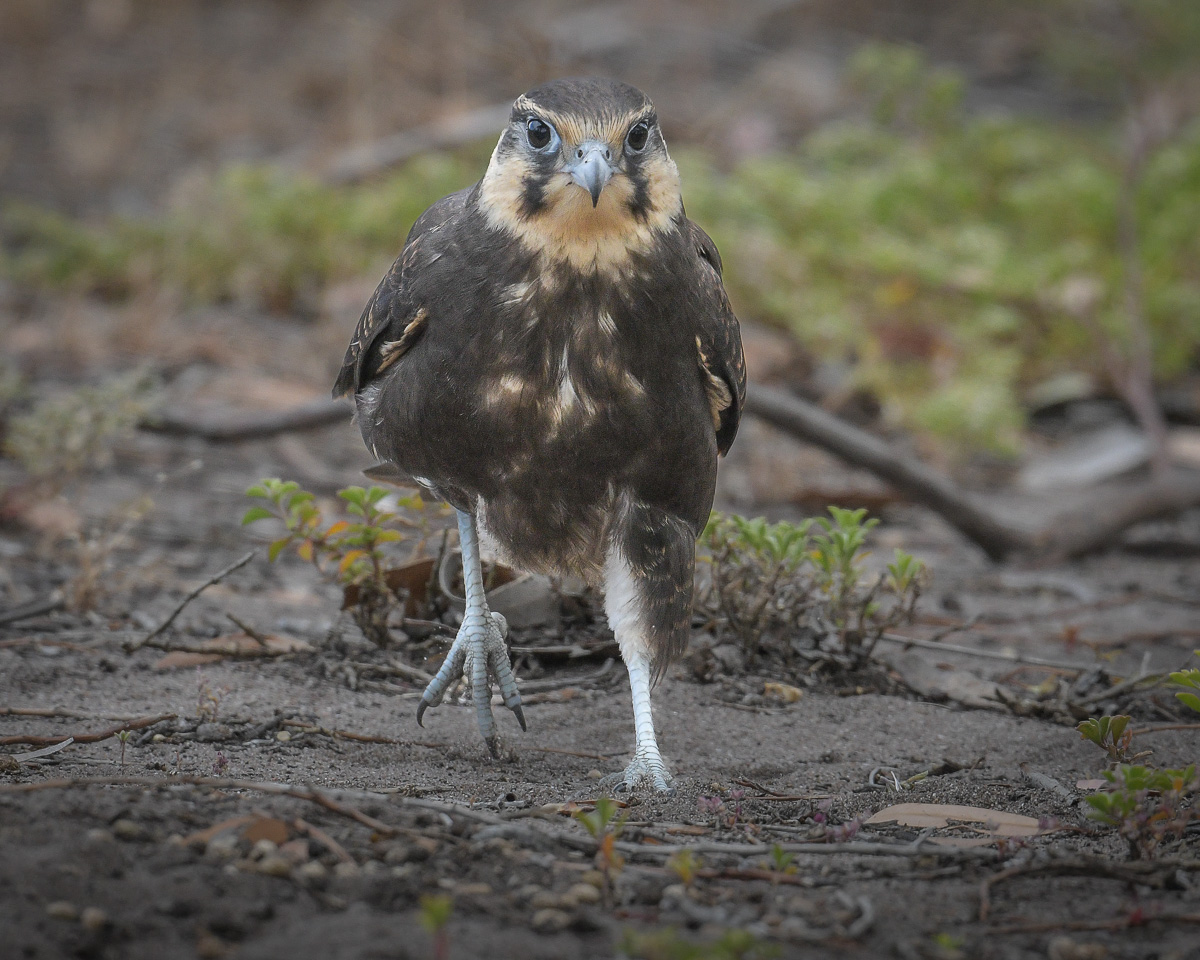
He boldy marched up the bank and paused to look around.
I have to admit to being just a teeny bit emotional.
He was ready for the world.
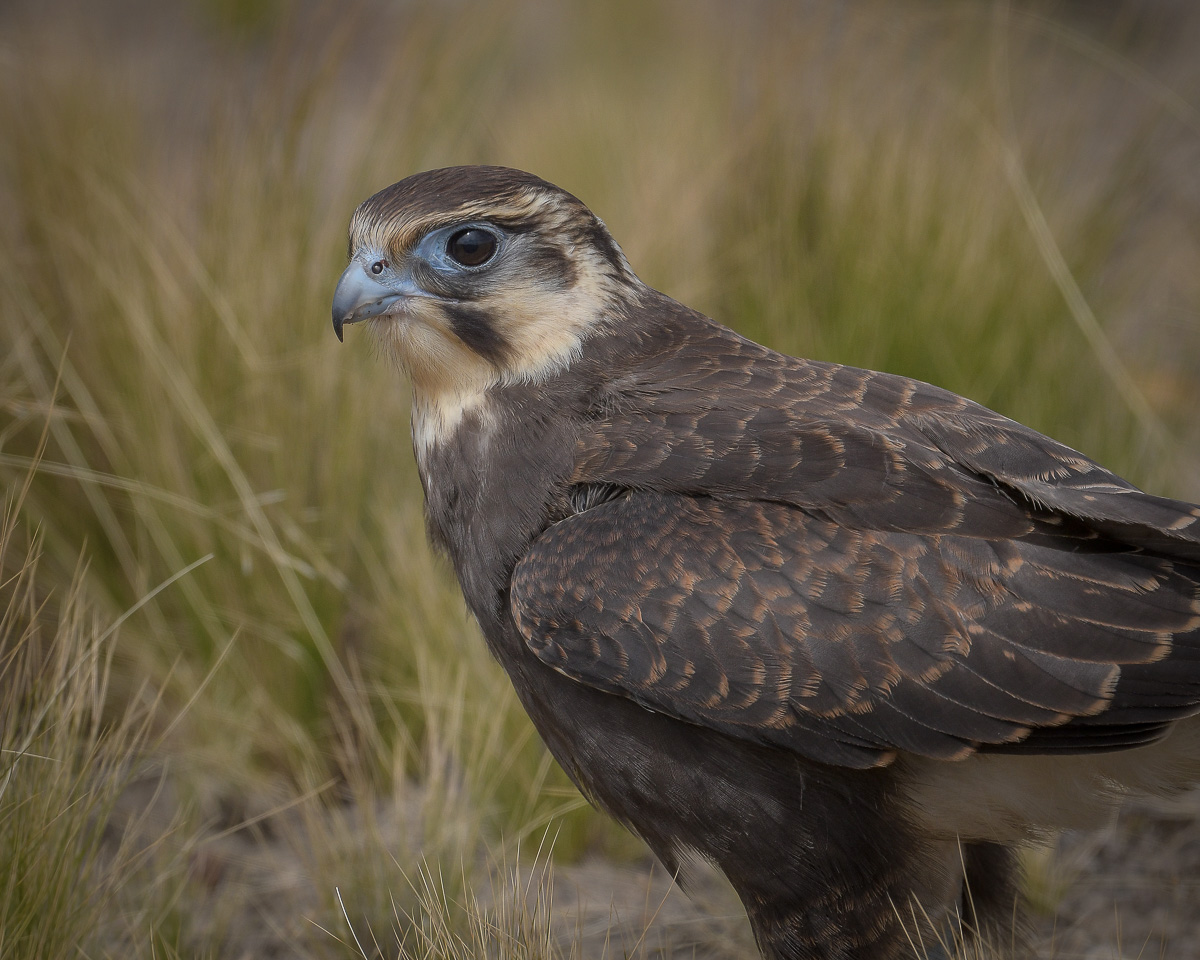
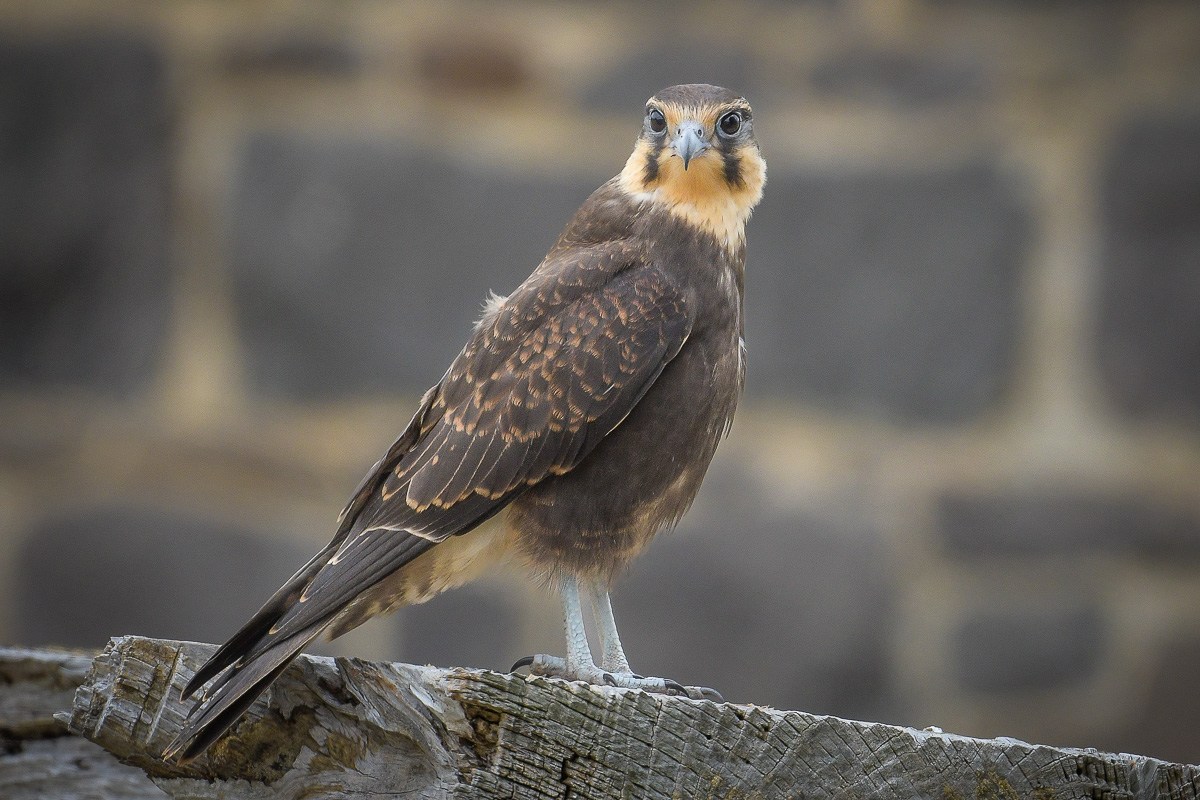
Mary. Grad Day Portrait
Max, Grad Day Portrait

Enjoy

As They Grow: Act 09

It is hard to predict, but it seems there comes a day with the young birds when their ‘baby behaviour’ is passed and they become much more aware of their growing skills, and the need to prepare to leave the home territory.

After more than a month on the wing, they were now as far as I could tell, self-sufficient. Neither adult had been supplying food for a week or so. However, even if we couldn’t spot her regularly, every so often the female would make an appearance. I am sure that she knew exactly where her two young ones were at any time.

I understand that.
In my own case, growing up in a country town, we’d come home from some adventure or other and Mum would somehow know what we’d been up to. (Good or bad) The neighbourhood grapevine was always on the alert.

The young were making forays way out of the home area, and on several visits we failed to get close, although a fly by or two would usually take place.
It was only a matter of time for them to be confident enough to move on.

So, in no particular order (as they say) Here is some of the activity

And Touch Down
From a clutch several years back, I have a wall print of one of those young
on this same gate railing.
So was pleased to find Max had chosen to work from it.
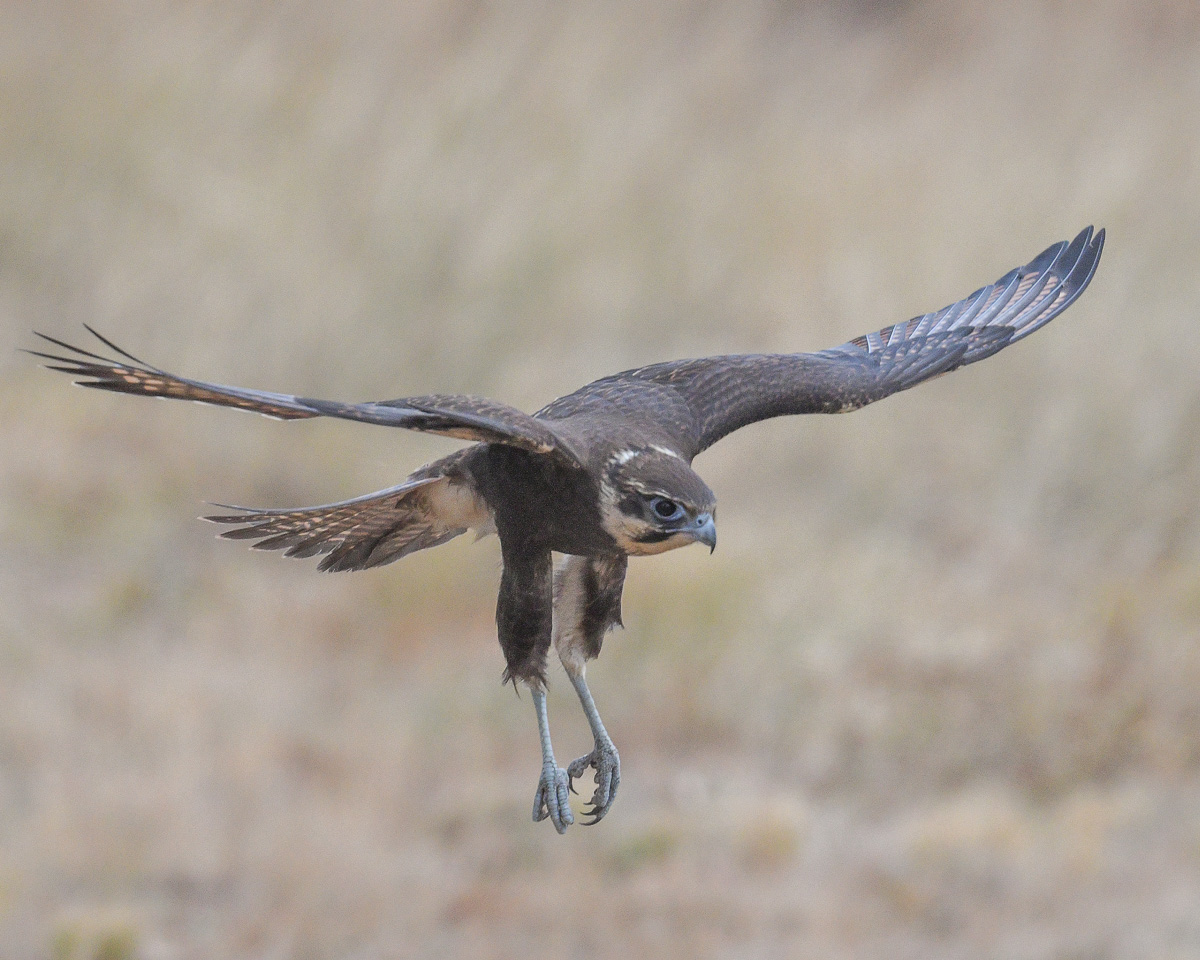
Slow precision glides became a polished activity
Always impressed to see a Falcon on a low-level run through the grasses
Photo Courtesy of FriendsintheAir (EE)
One of a number of close fly pasts.
EE nailed the focus on Mary as she slipped by my elbow.
Max, hunting through the grass where I was sitting.
A long way from the home paddock on a very hot morning.
He has his feathers pulled in tight against the body.
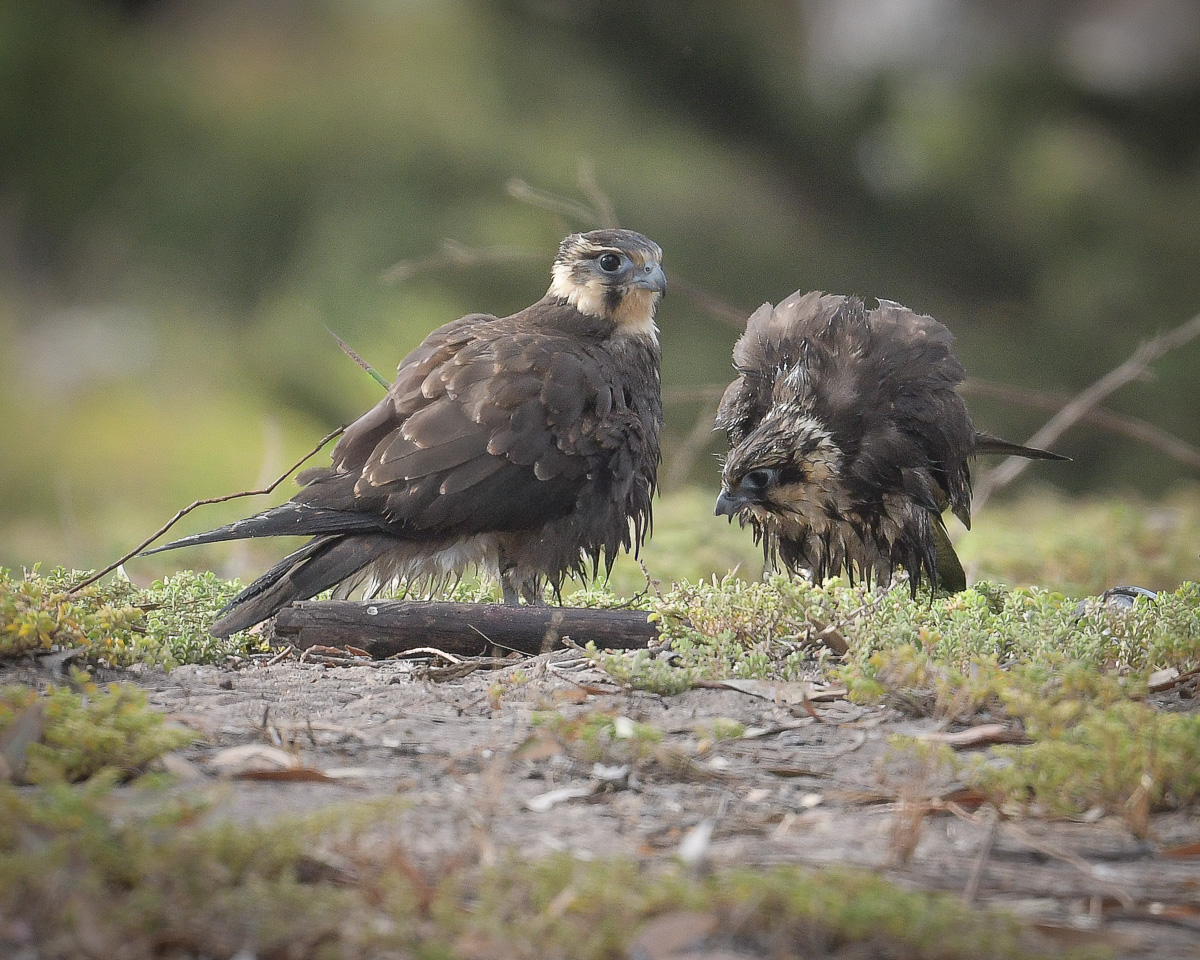
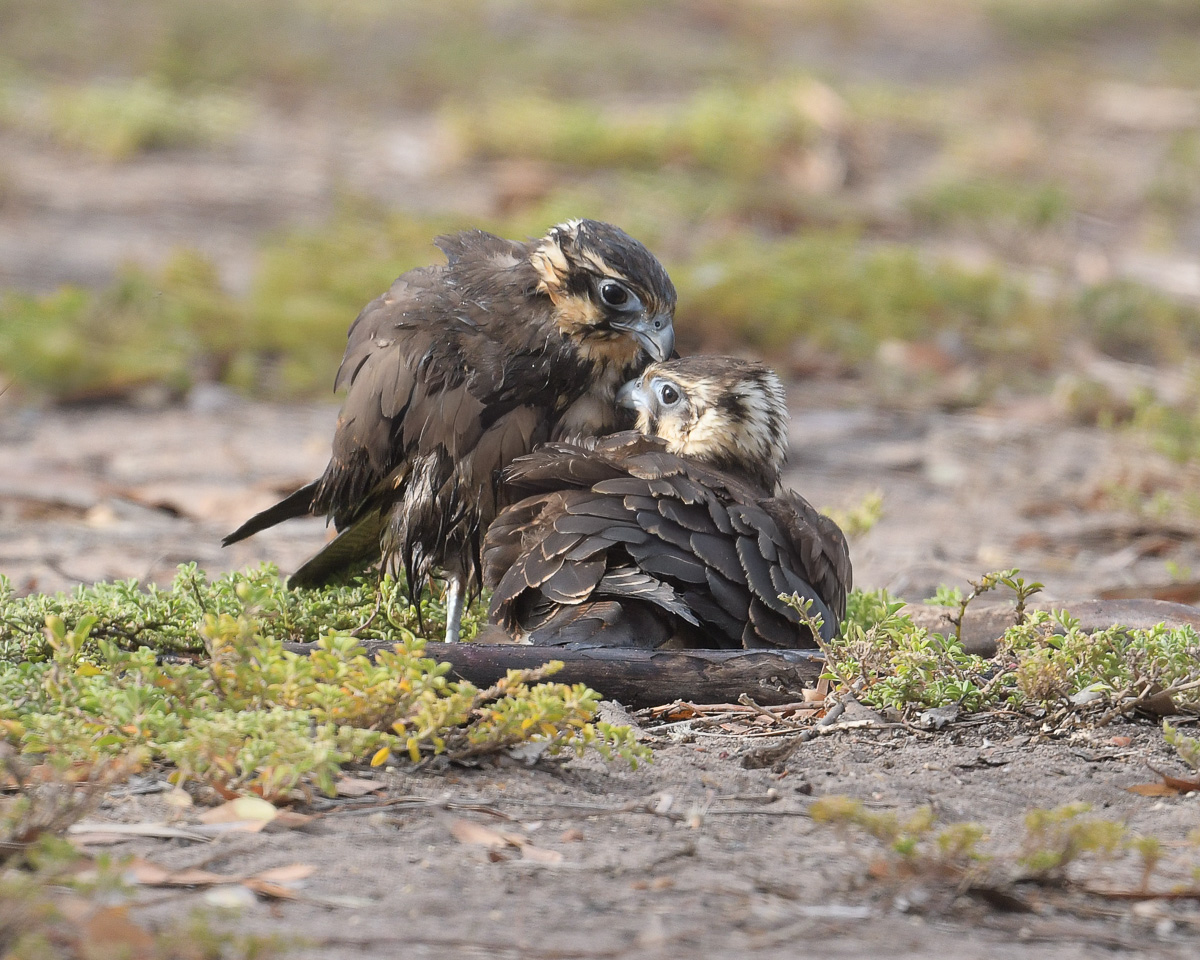
In all the years, I’ve never seen a Brown Falcon bathing, nor drinking water.
I had cleared a small water soak of leaves hoping to attract some
of the smaller bush birds.
The Falcons seemed to enjoy the chance to cool from the hot day.
The pool was hardly big enough for one of them, so they took turns.
Interestingly, although not shown in this series,
I later found the female enjoying a drink as well.
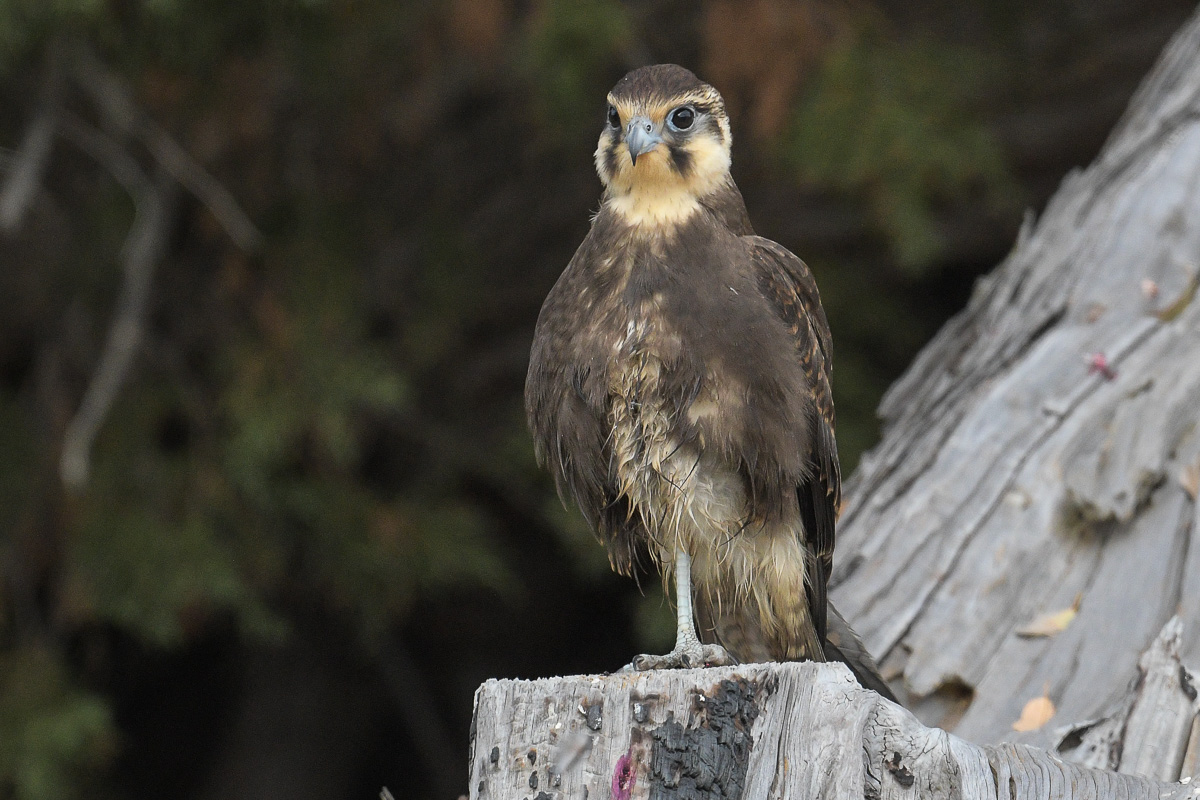
Max took to a stump to dry out.
Refreshed, they went back to work
Time for another low canter over the grasses.
The beautiful sweeping form of the wings shows well here

Hi-Jinks: Act 08

Both young Falcons were well past the ‘baby”stage and at the error of sounding anthropomorphic it was interesting to see the differences in their character, personality, and approach.
Mary was much more content to sit quietly for just the right moment. Max, with all the exuberance of a young teenage male was ready to explore, and begin to show his interest in other parts of the territory.
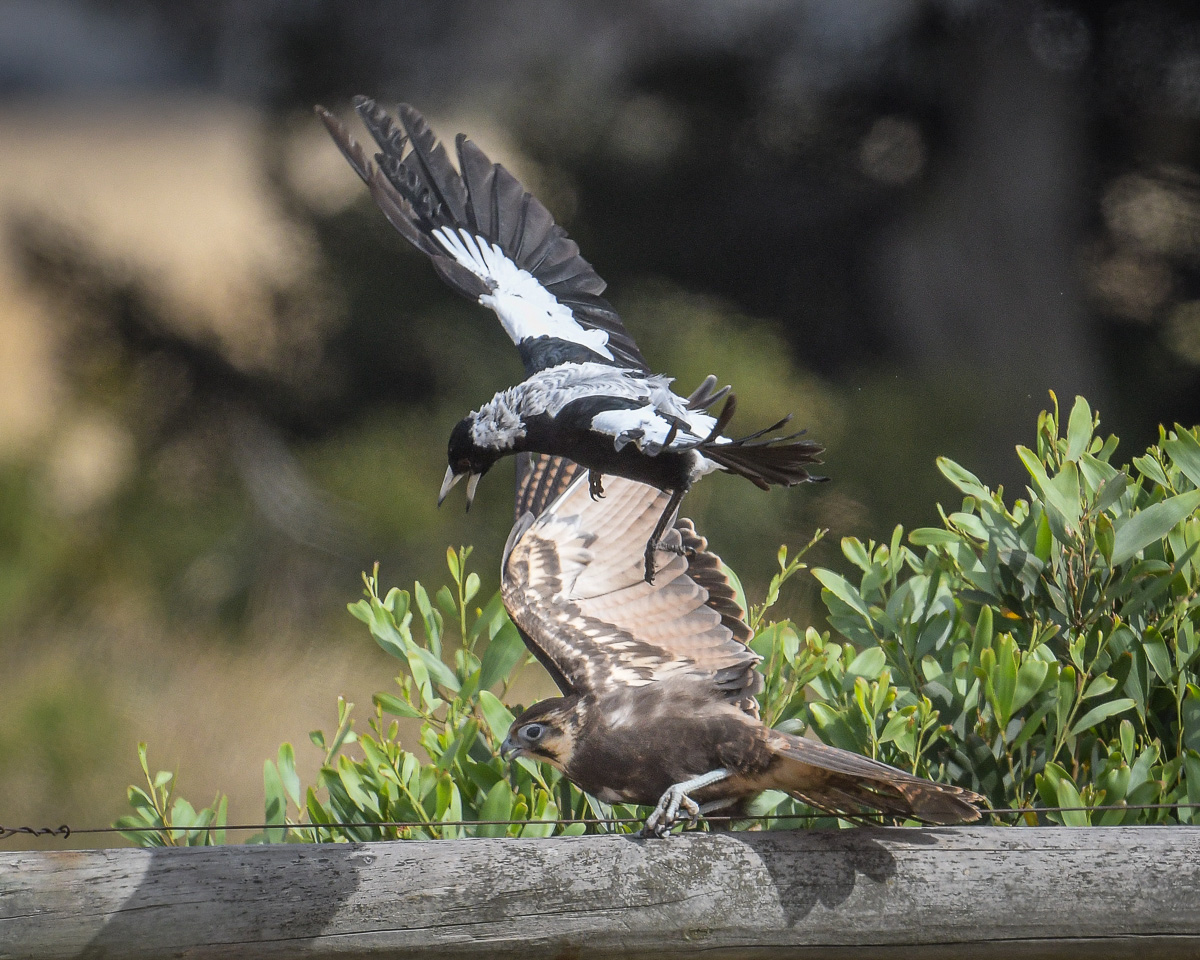
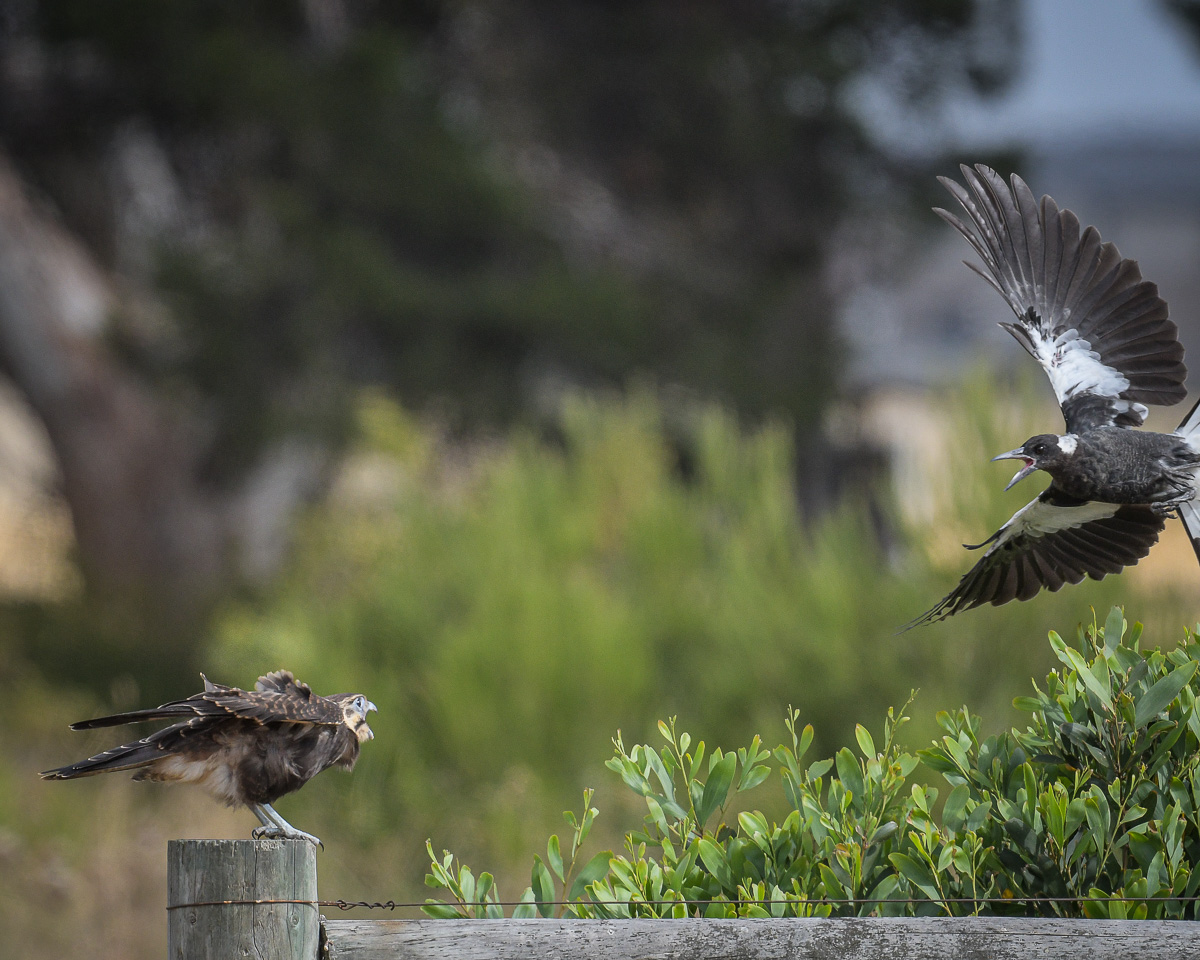
He began to find ways to harass the incumbent Magpies. And while the Maggies seemed to take it all seriously, he seemed to enjoy the interactions. EE has a photo of him eyeing off some Maggies on their favourite post, and it is pretty obvious what he had in mind. The fence and gate is a territory boundary for about 3 families of Maggies, and during nesting season they relentlessly pursue one-another for control of the fence. Off-season, it’s more of a communal meeting spot.
Max was ready to challenge them.

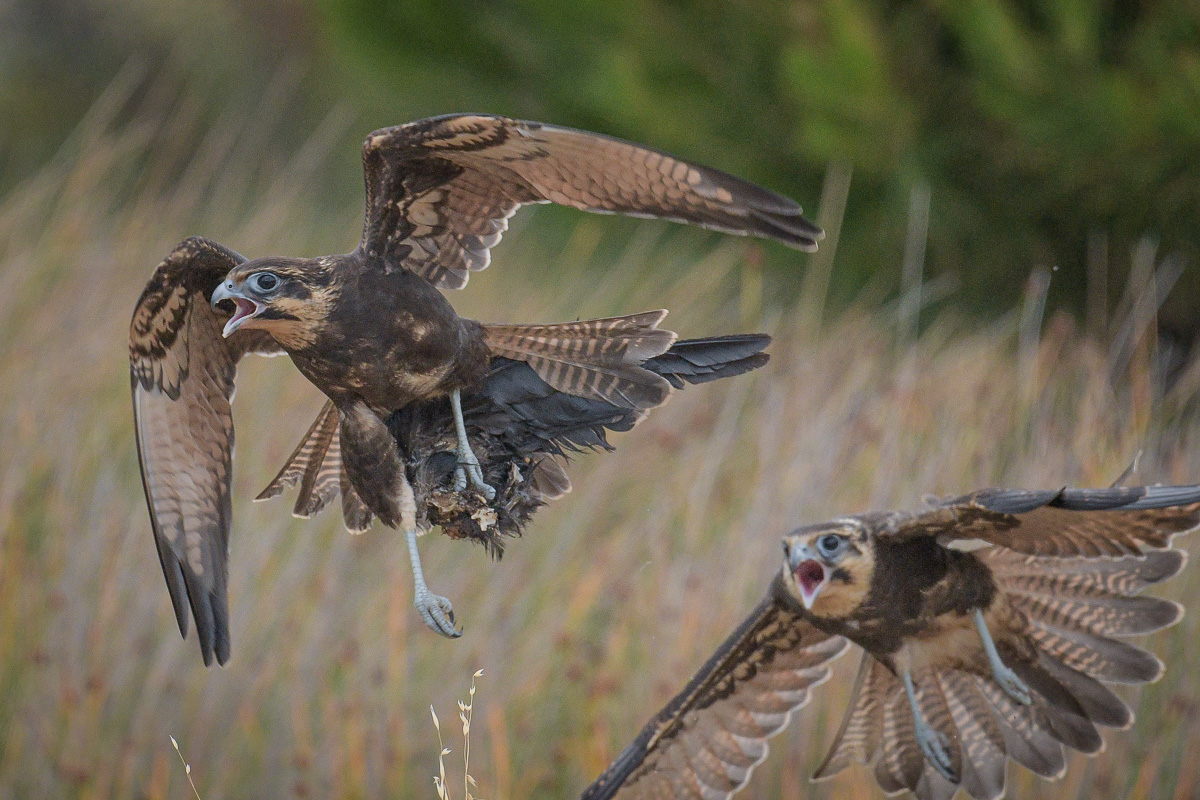
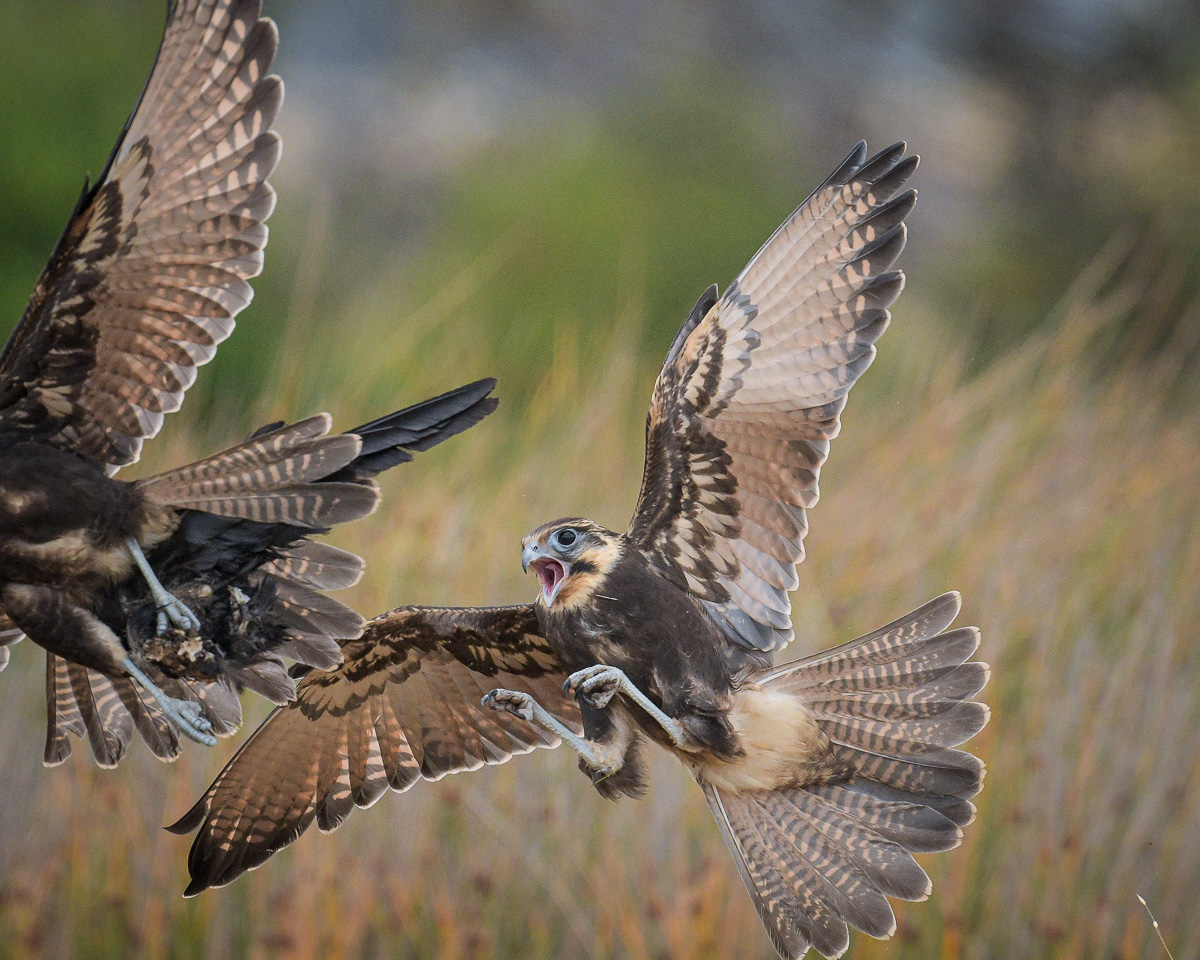
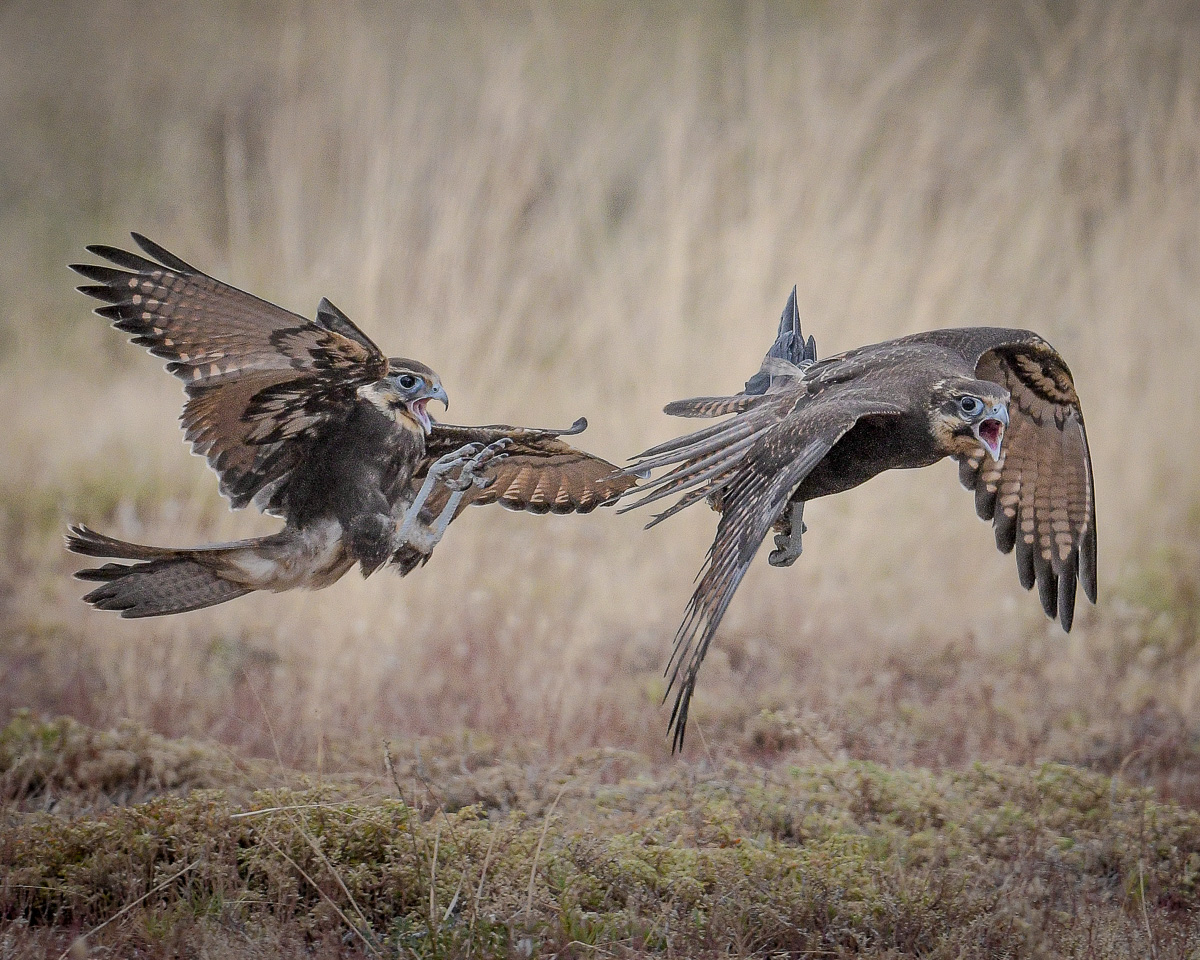
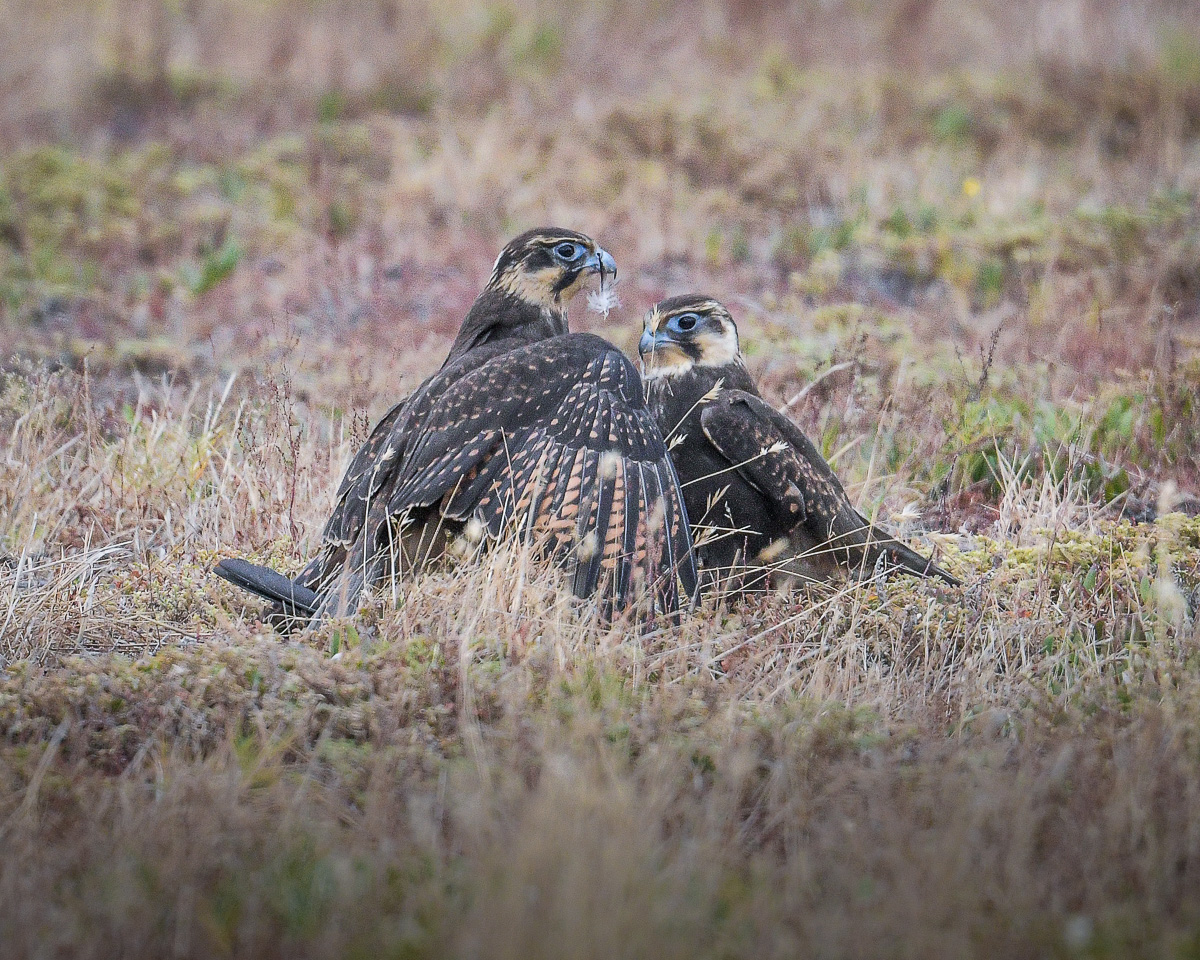
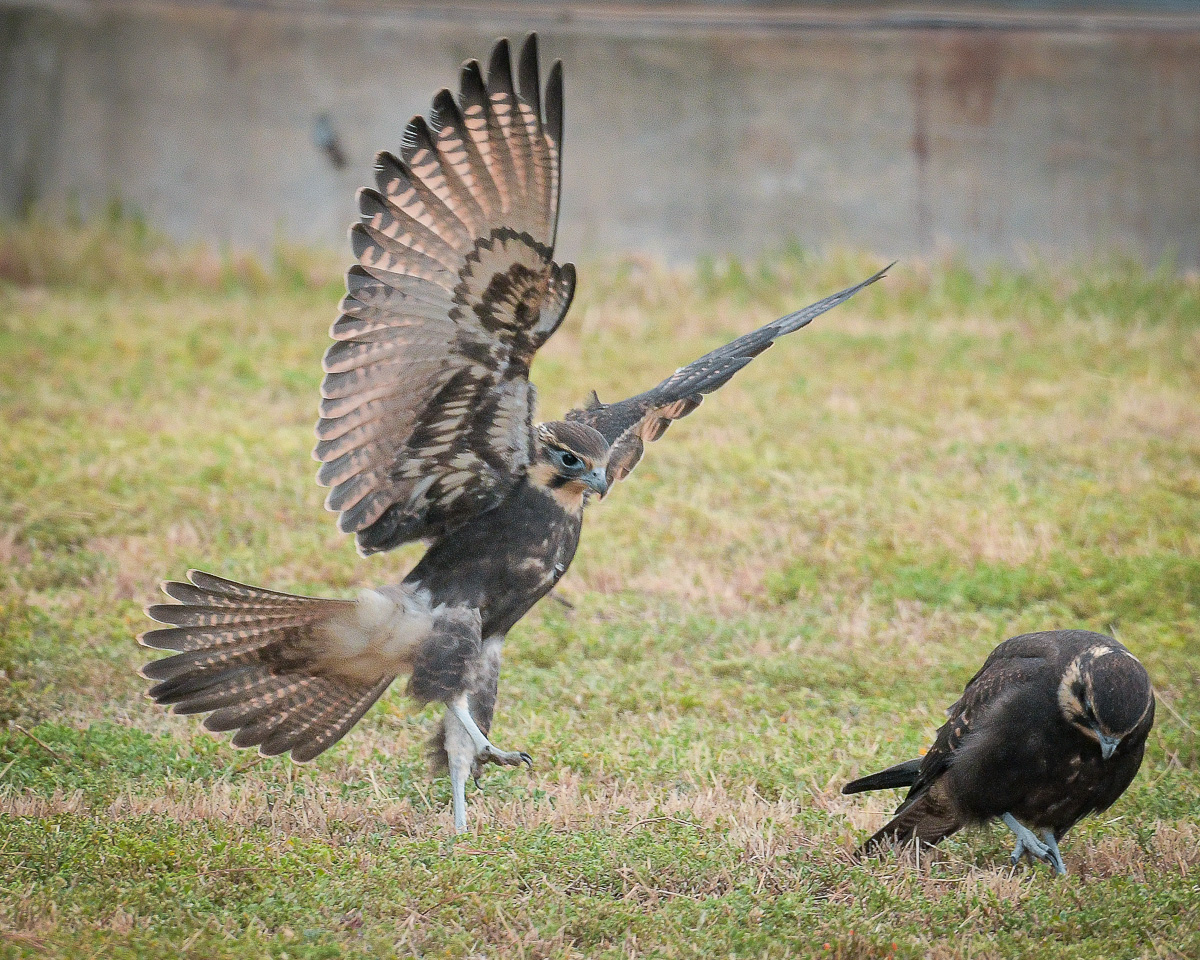
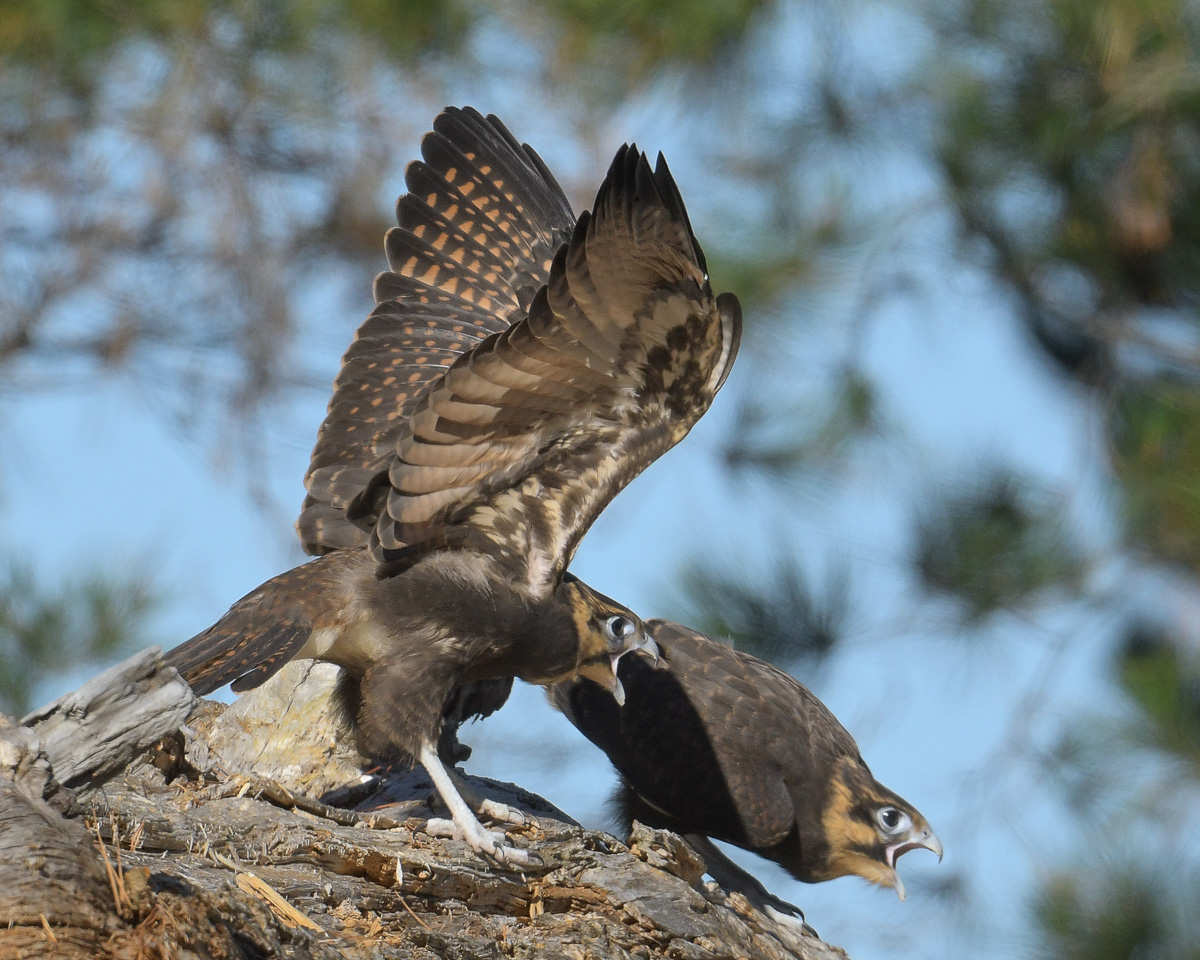
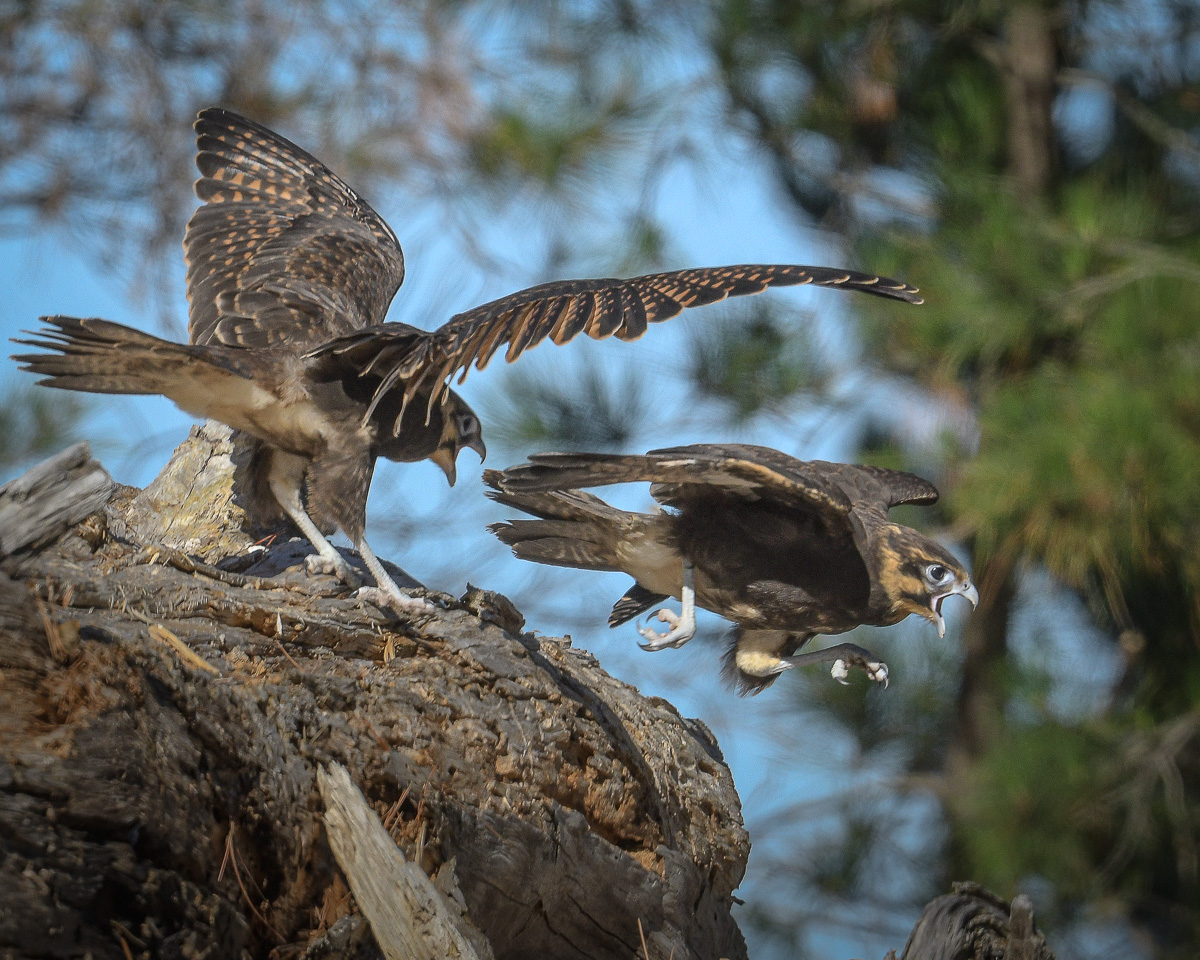
Mary had picked up an old Raven’s wing and Max decided he wanted part of the action, so he chased her round the paddock until he caught hold of part of it. With his momentum it turned Mary to the ground and they both landed holding part of the wing. Max, however conceded, and a few minutes later they were hunting together again.

I saw Max come off a branch and circle out toward where I was standing. He did several circles and I’d not seen him do this before. Then with every wing and tail feather stretched out, without a wing-flap he began to circle and rise. He’d found an updraft.
Surprisingly he quickly rose to a height where I could only just see him.

I had to wonder what the view would be like from up there. After all he didn’t have a map, or any real set landmarks. Over there was the nesting treeline, Mary sitting on a fence. The roadway out toward the beach. The housing estate in the distance.

He stopped circling, and set a long slow Falcon glide and travelled way out beyond the home paddock, and over the open fields until in the end, a kilometre or more away, I lost sight of him.
Gone.

It lead me to ponder how much lift the bird must get. When the wings are wide open, and the tail completely spread the sail area compared to the body weight must make such circling in a thermal easy. Someone could do a PHD on it.

I turned back to find Mary sitting quietly on a post, seemingly uninterested in his departure.

About 30 minutes later as we were getting ready to go. I took one more look way down the paddock, and lo, was that a small spot in the sky? And there running on really tightly tucked wings was the wander. He was on his way back. Again, I had to ponder, after going all that far out, how did he know the way back to the home paddock.

He sailed in at top speed as if nothing had happened, flared out the wings to brake his speed and dropped onto the branch alongside Mary.
So interesting to watch their different approaches to growing up.

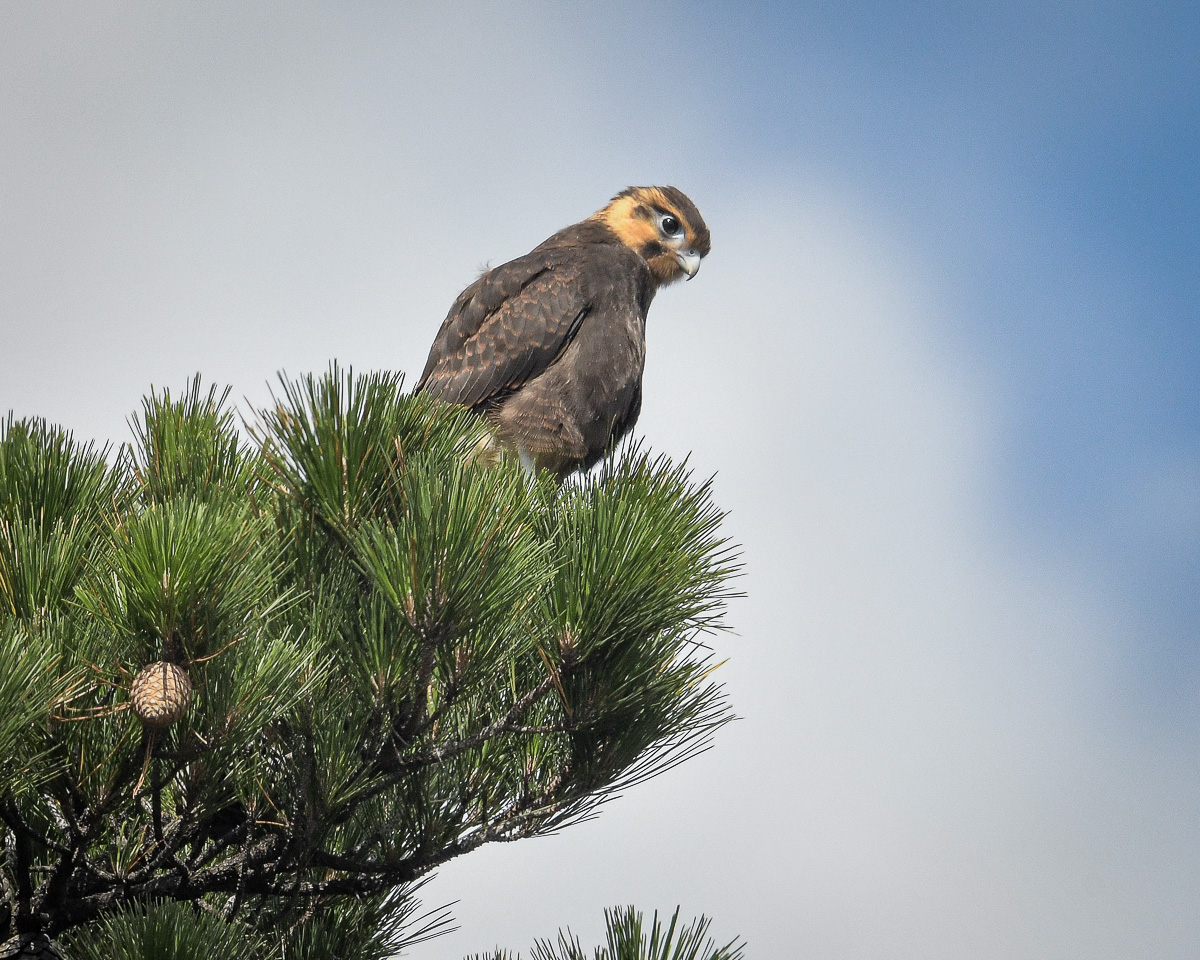
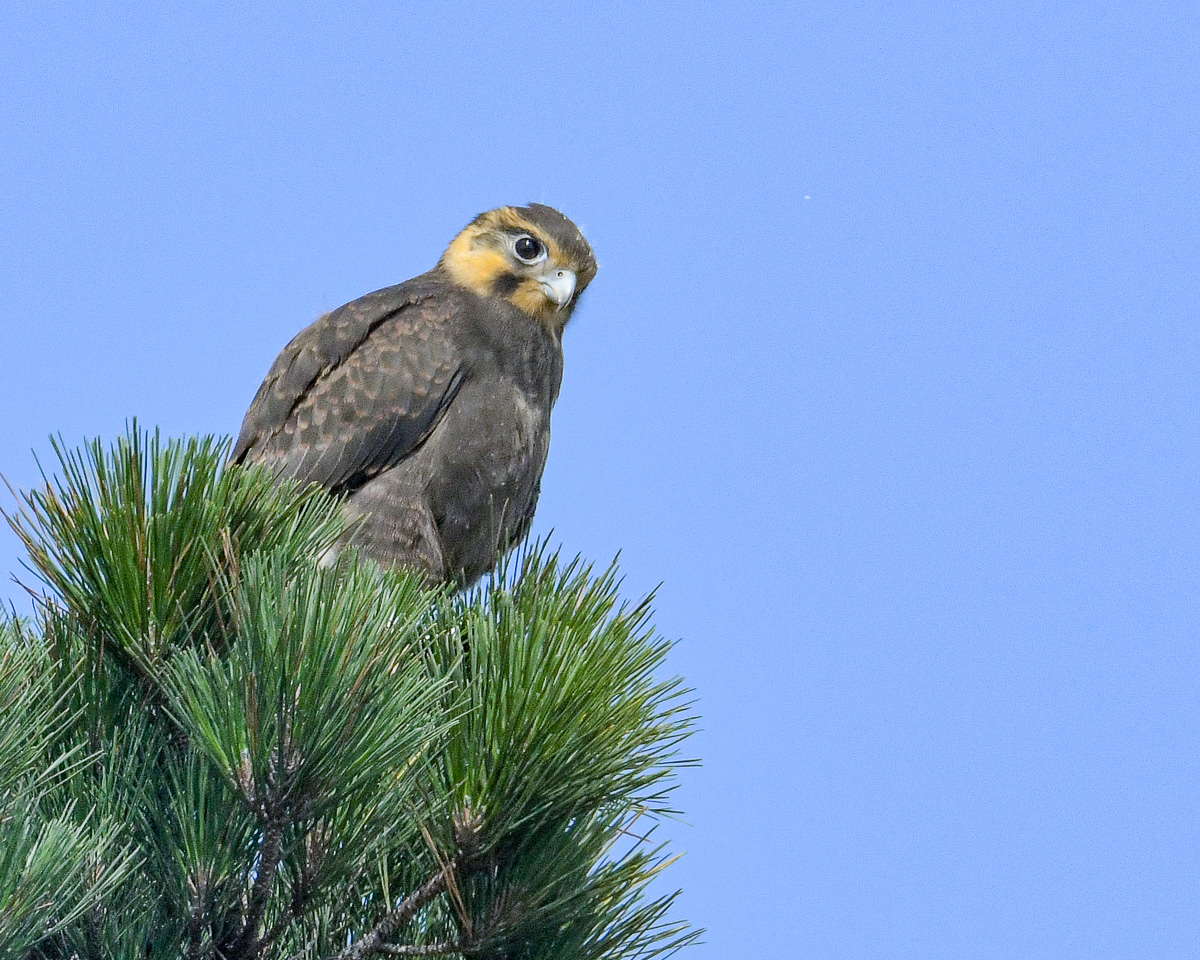
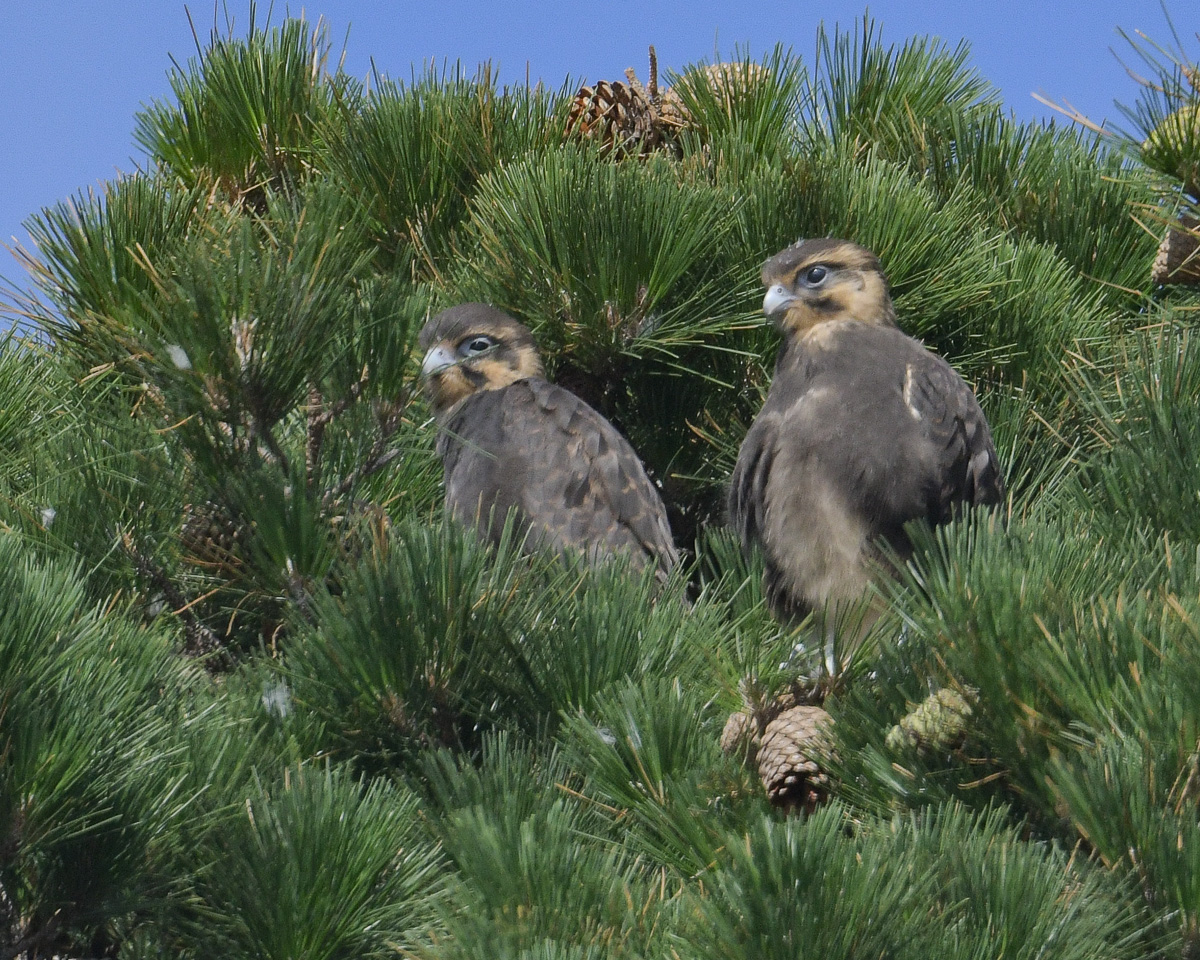
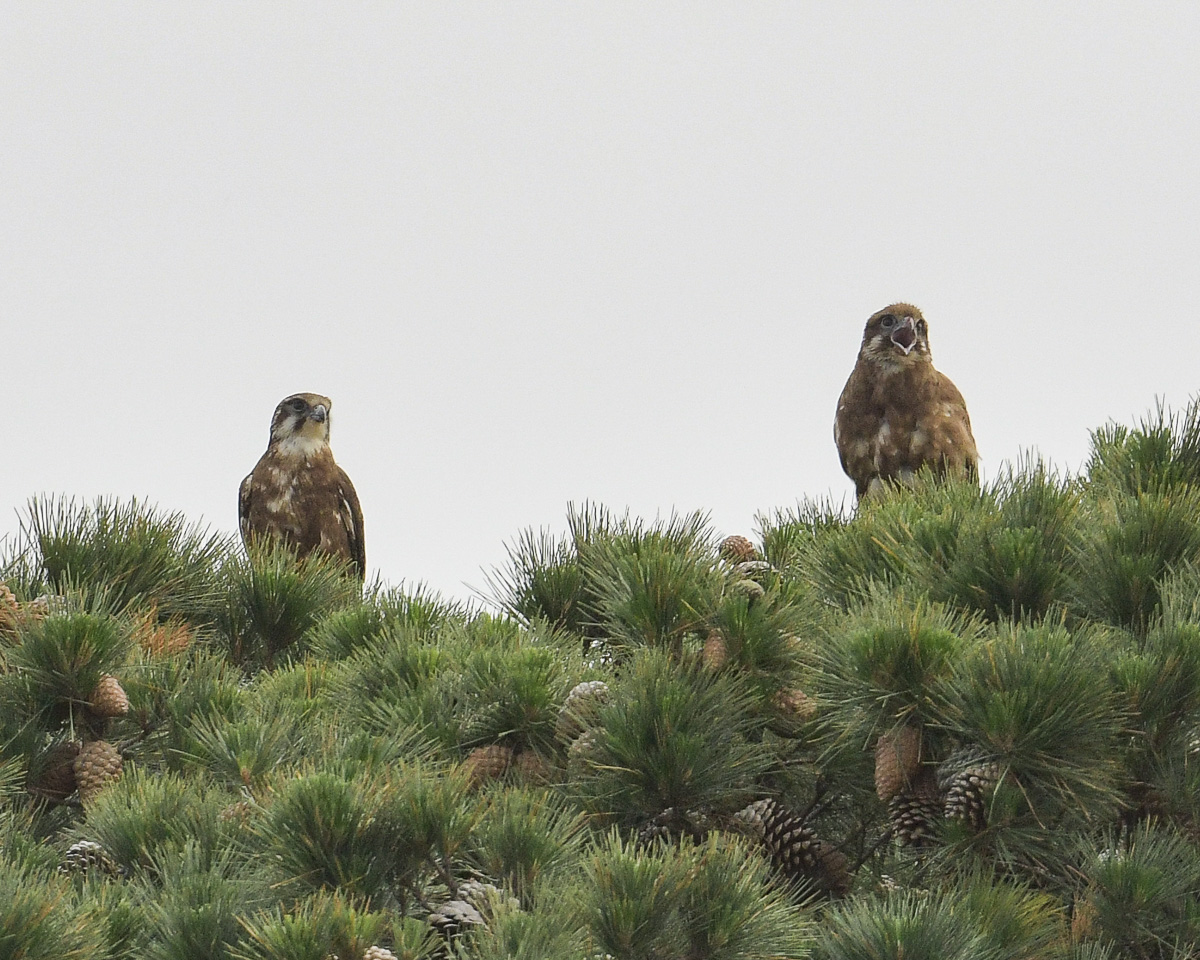
They were working from the tops of some small pines in the paddock
Brown Falcons seem to have the ability to to navigate running low
to the ground and can fly through the long grass with ease

Mary picked up an old piece of Raven wing and the chase was on
It was rare for them to argue over food, so this was more
than just about the meal
In his enthusiam he had run wide on a turn and Mary gained a little head start.
But he quickly recovered and caught up.
Once on the ground she spread her wing to mantle the old wing piece
and he retreated.
I’m pretty sure he went to the gatepost to enrage the Magpies. It worked.
He stood his ground and eventually moved along the rail and chased them off.
Circling in a thermal. If this was the first time he had made this manoeuvre
he certainly didn’t show any signs of lack of skill.
It is amazing how much sail area a Brown Falcon can deploy
This is the male. It was the only time I saw him interact wtih the young.
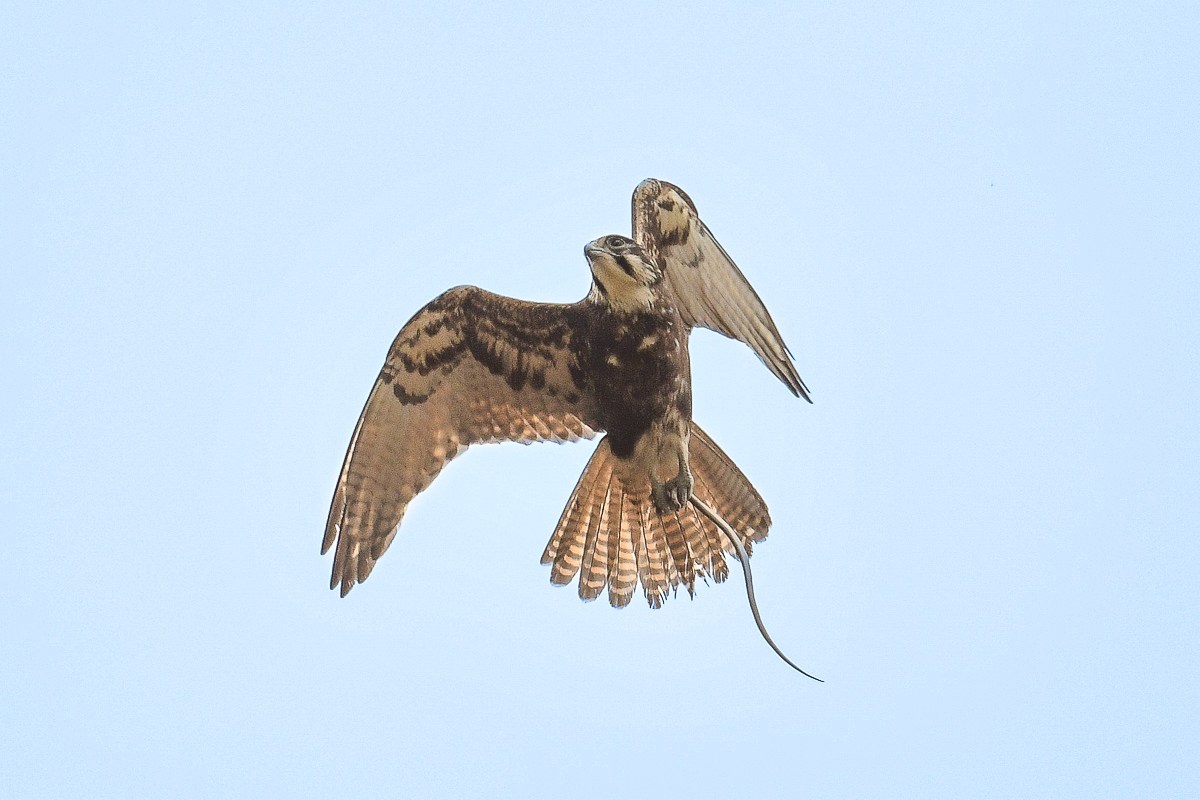
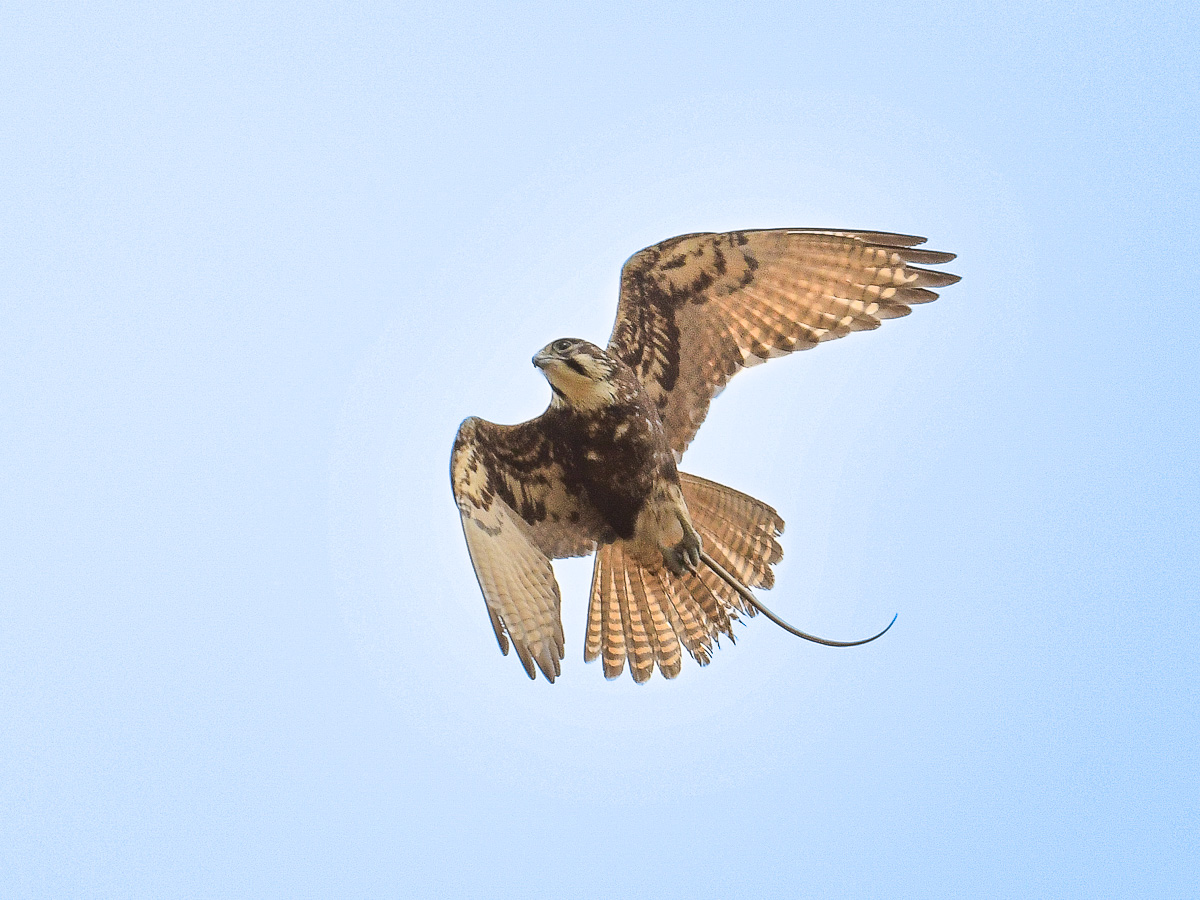
Mighty snake hunter-Ophiuchus
Ophiuchus, a close quarter fly by.

Enjoy

Snap-shots Act 07

By the end of three weeks on the wing, Mary and Max were both proficient hunters and highly skilled aeronauts.
They felt at ease to roam across the wider area outside the ‘home’ paddock that was bordered on three sides by old stands for trees and beach front on the fourth. The grasshoppers and crickets were in abundance so they could spend their days eating, and snoozing. The adults no longer were providing food, but from several encounters I am sure that the female was keeping a falcon-eyed gaze on her offspring even if we failed to spot her.

They were old enough now to be self-sufficient, and still young enough not to take it all seriously. Here’s a few from what we were graced to enjoy.

Falcons swallow prey whole, and the regurgitate any of the indigestible bits.
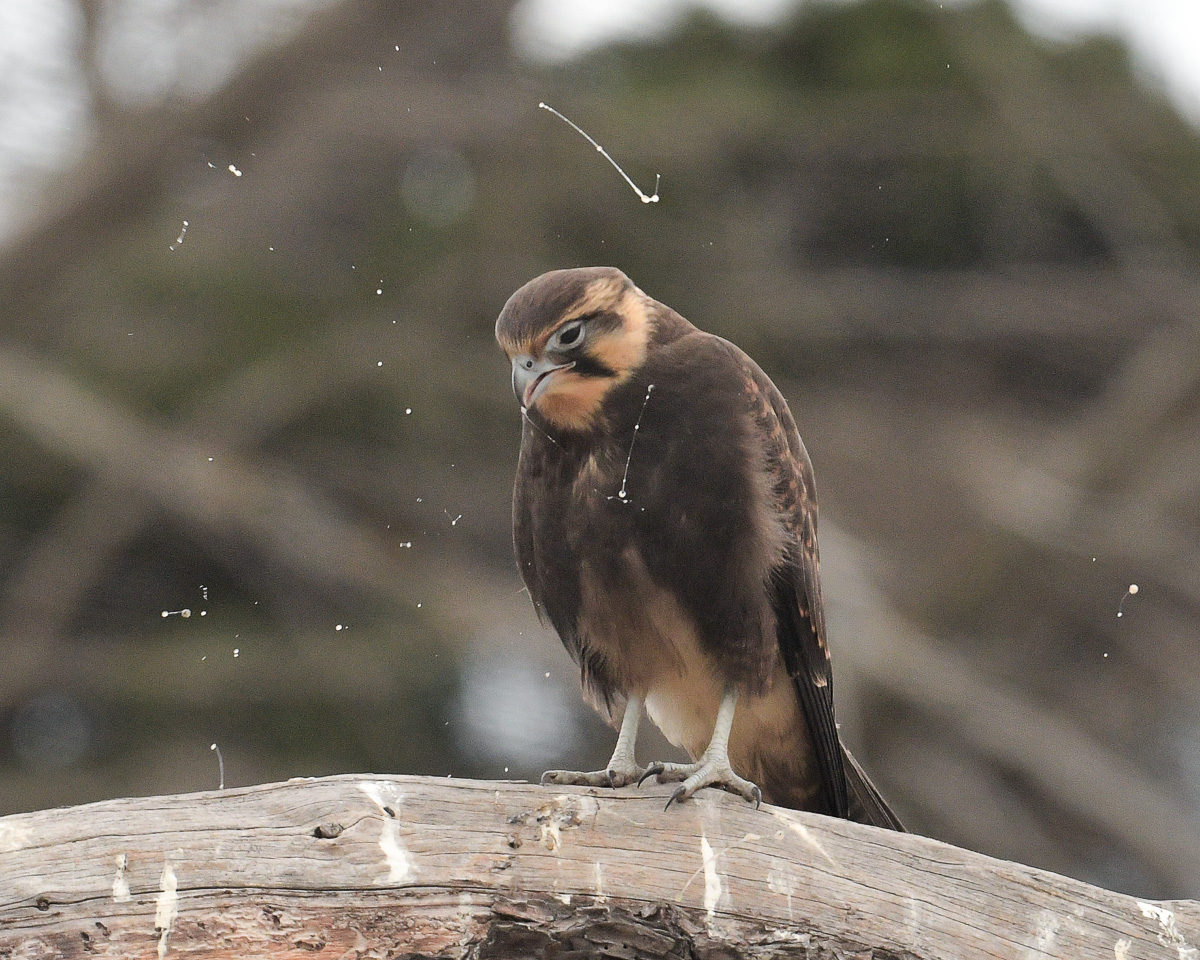
Mary had hawked up a furball and shook her head to remove the fluids.
Close order flying was quite common.
She had been working over a bracken paddock and slipped past me
on return to the home treeline
A trip to the beach. An open area ran along the saltbush
and scrub by the edge of the beach.
It gave the birds good vantage points to take it all in.
As soon as I saw this moment with Max through the viewfinder,
I knew I’d be making it into a mounted wall print.
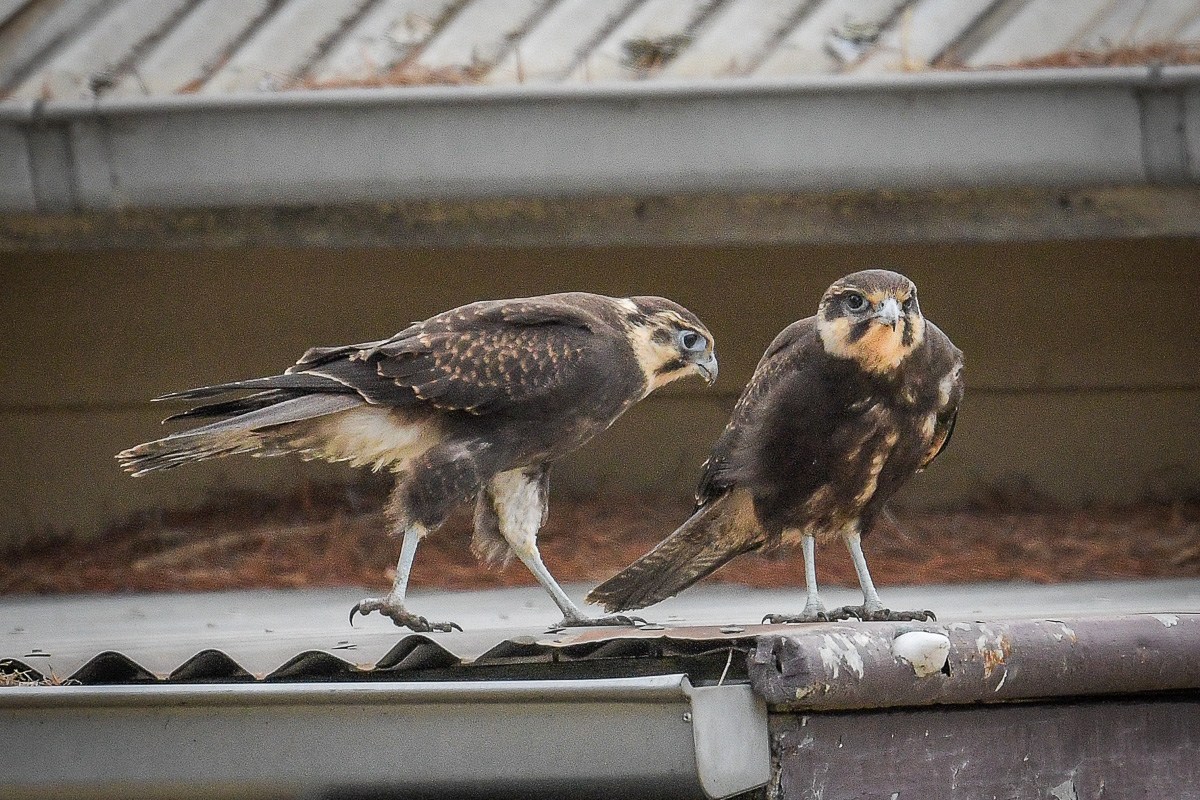
They both seemed to enjoy scampering along the roofline of
the old stable building
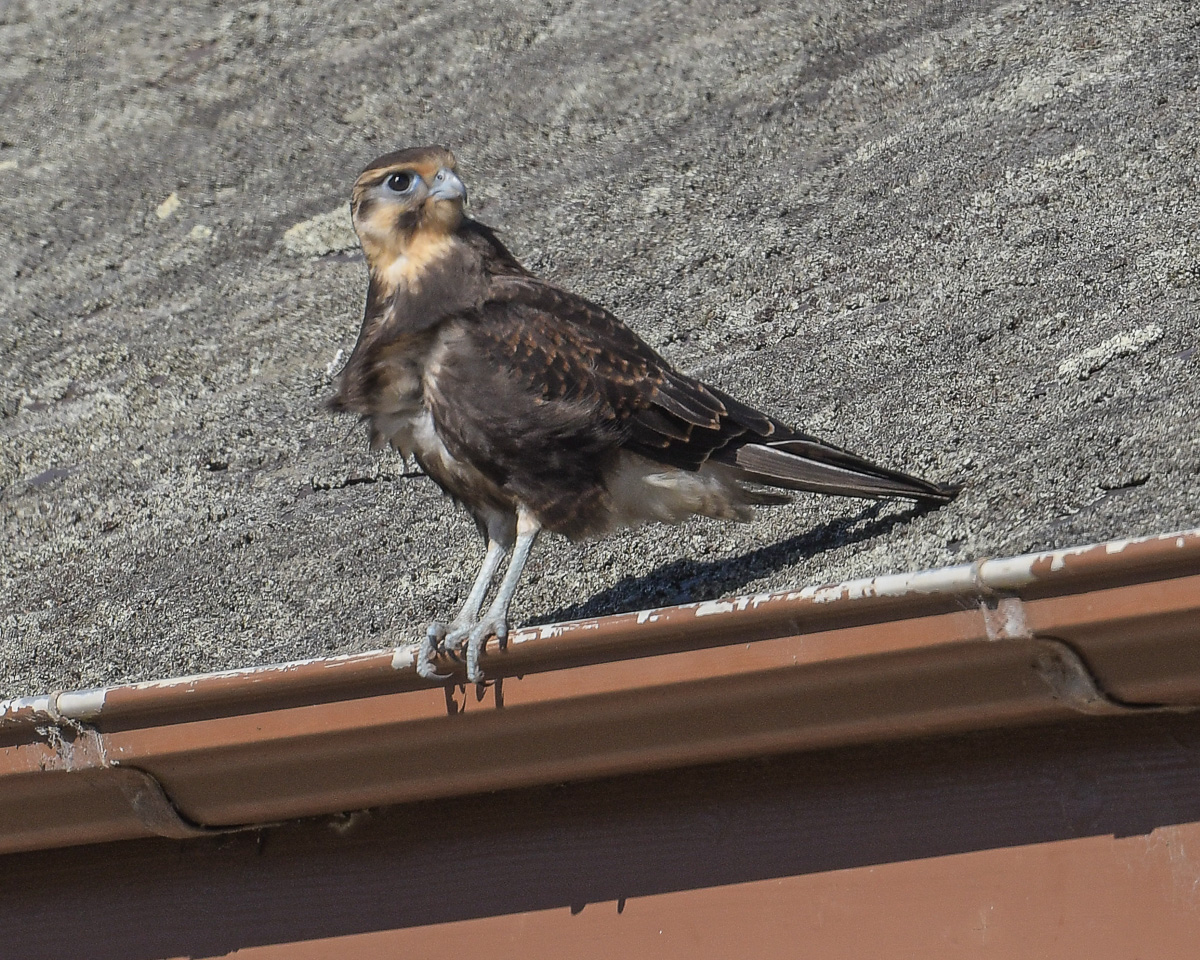
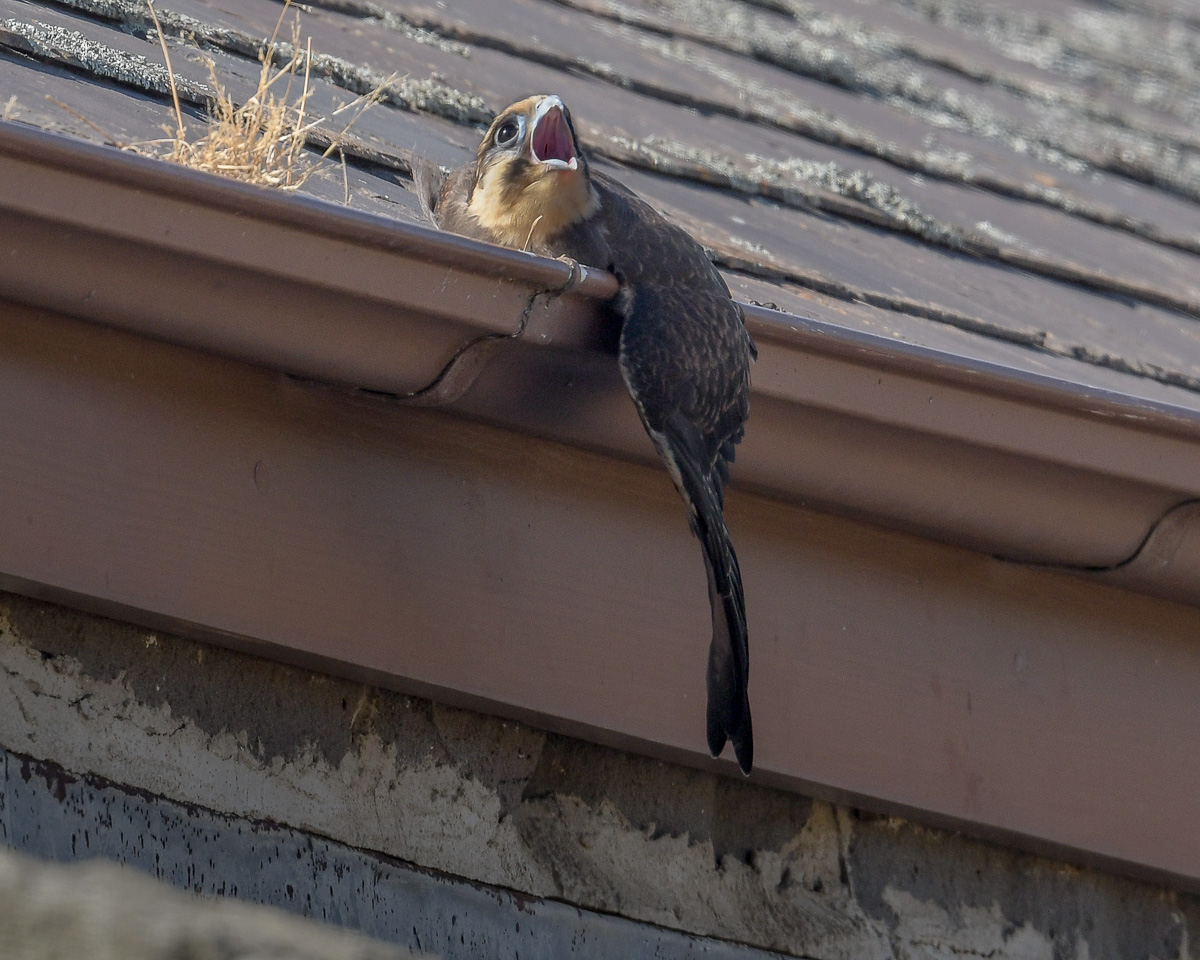
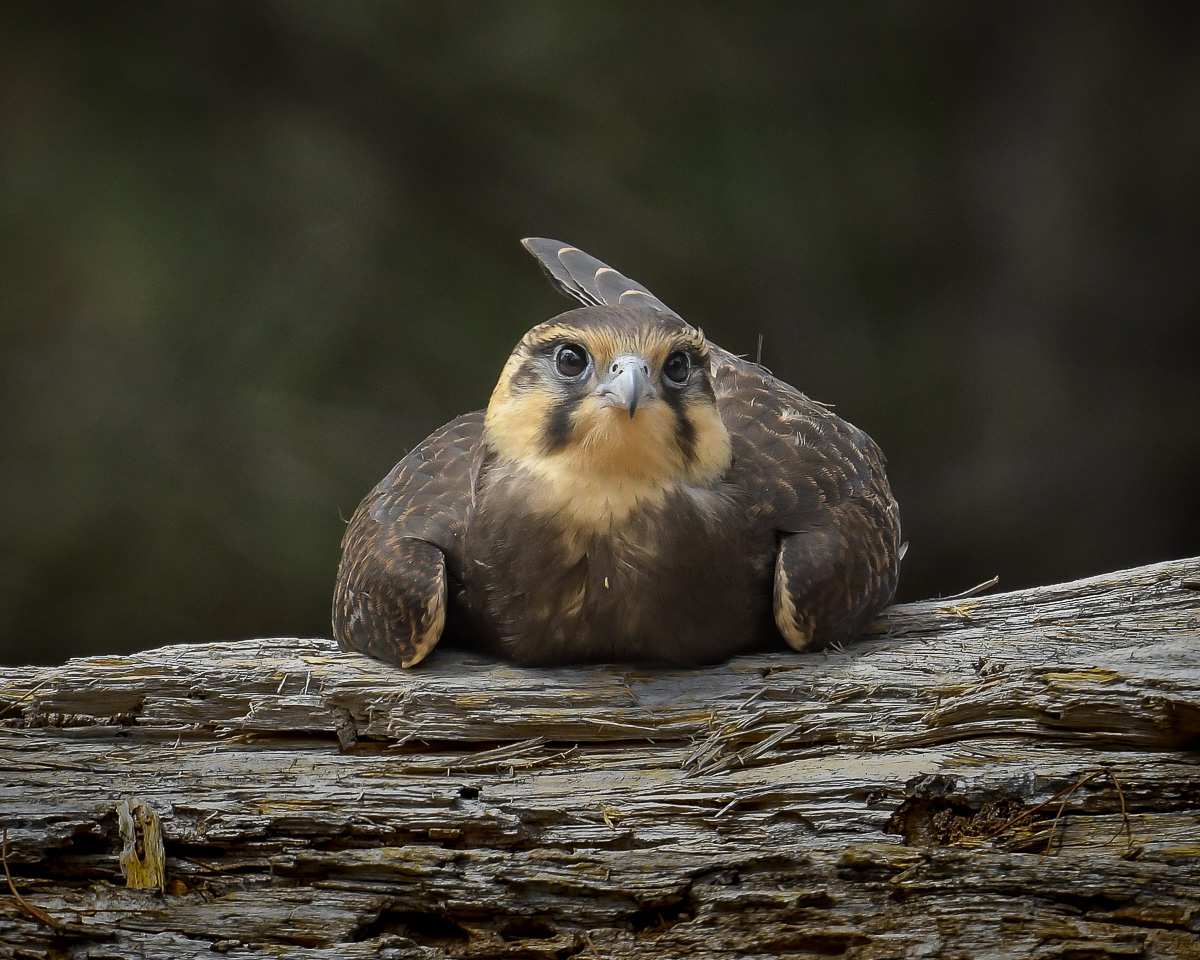
Mary decided the guttering of the stable would make a suitable spot for a snooze.
She just had trouble fitting the wing in.
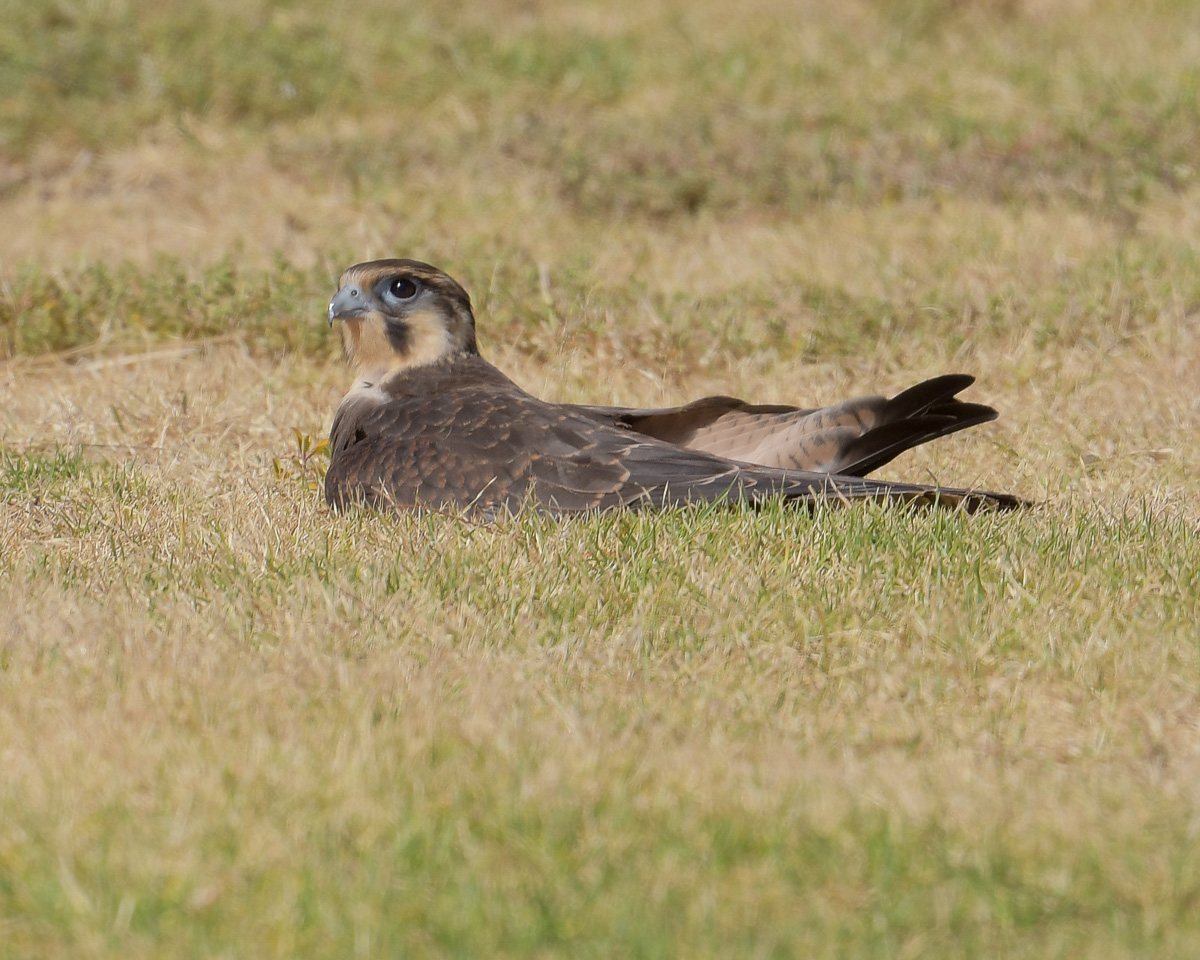
Max on the other hand chose to rest in the sunshine on the wide warm grass.
Then it was back to work
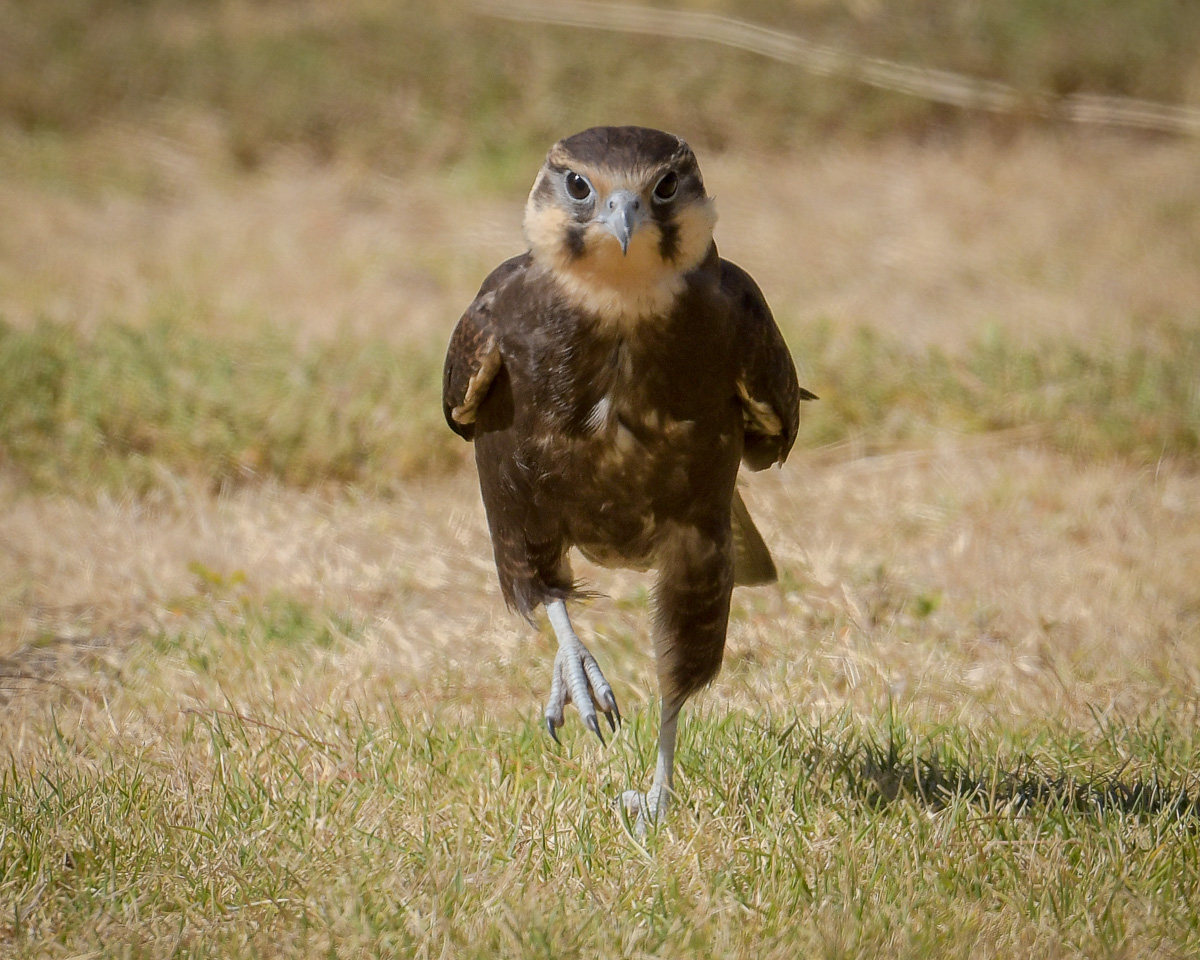
There is something unnerving about watching a Falcon running at high speed
toward you and getting larger and larger in the frame.
I’ve mentioned before about their relaxed and unhindered behaviour
when we were around.
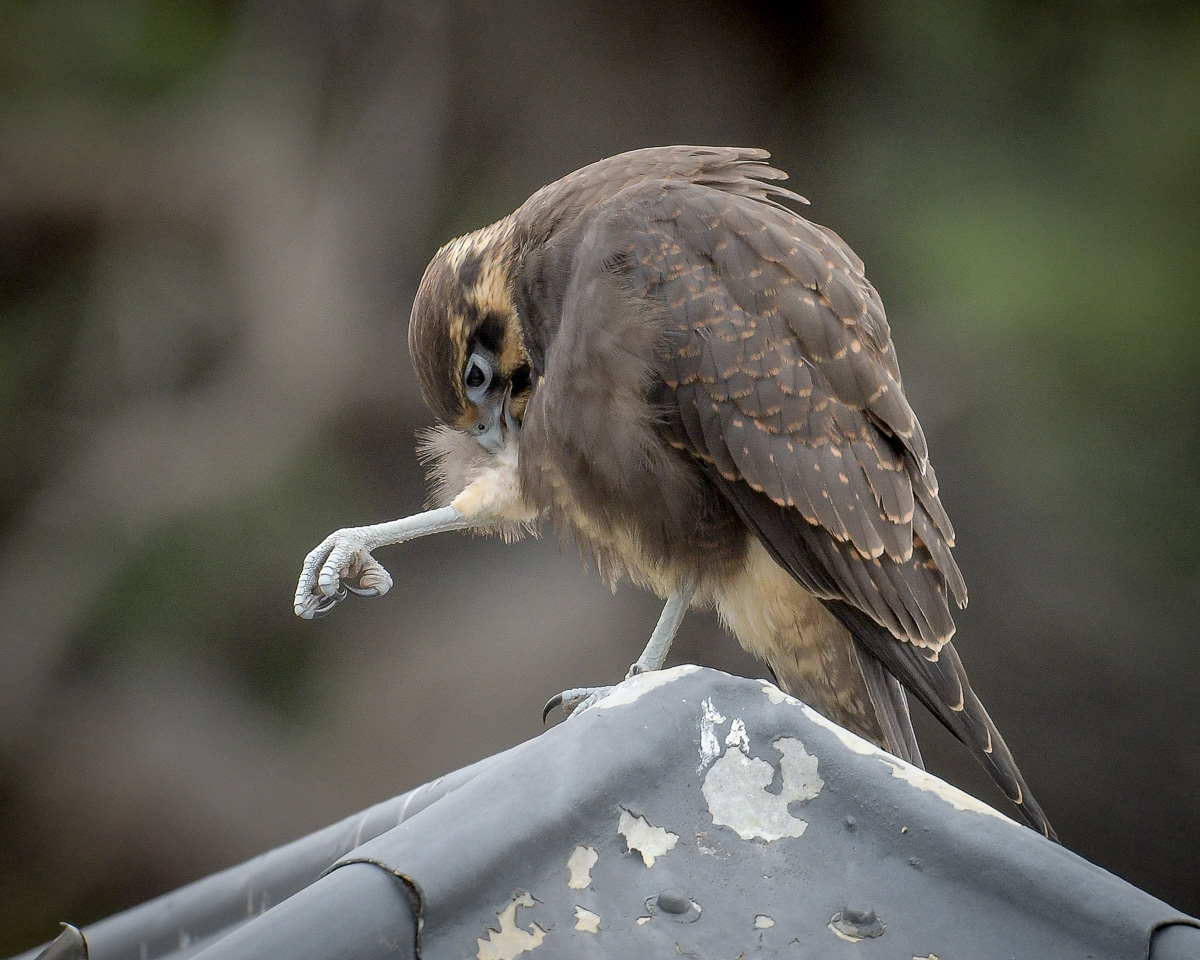
Here, Mary flew in to sit on the top of a out-building and preen.
A hunting we go!
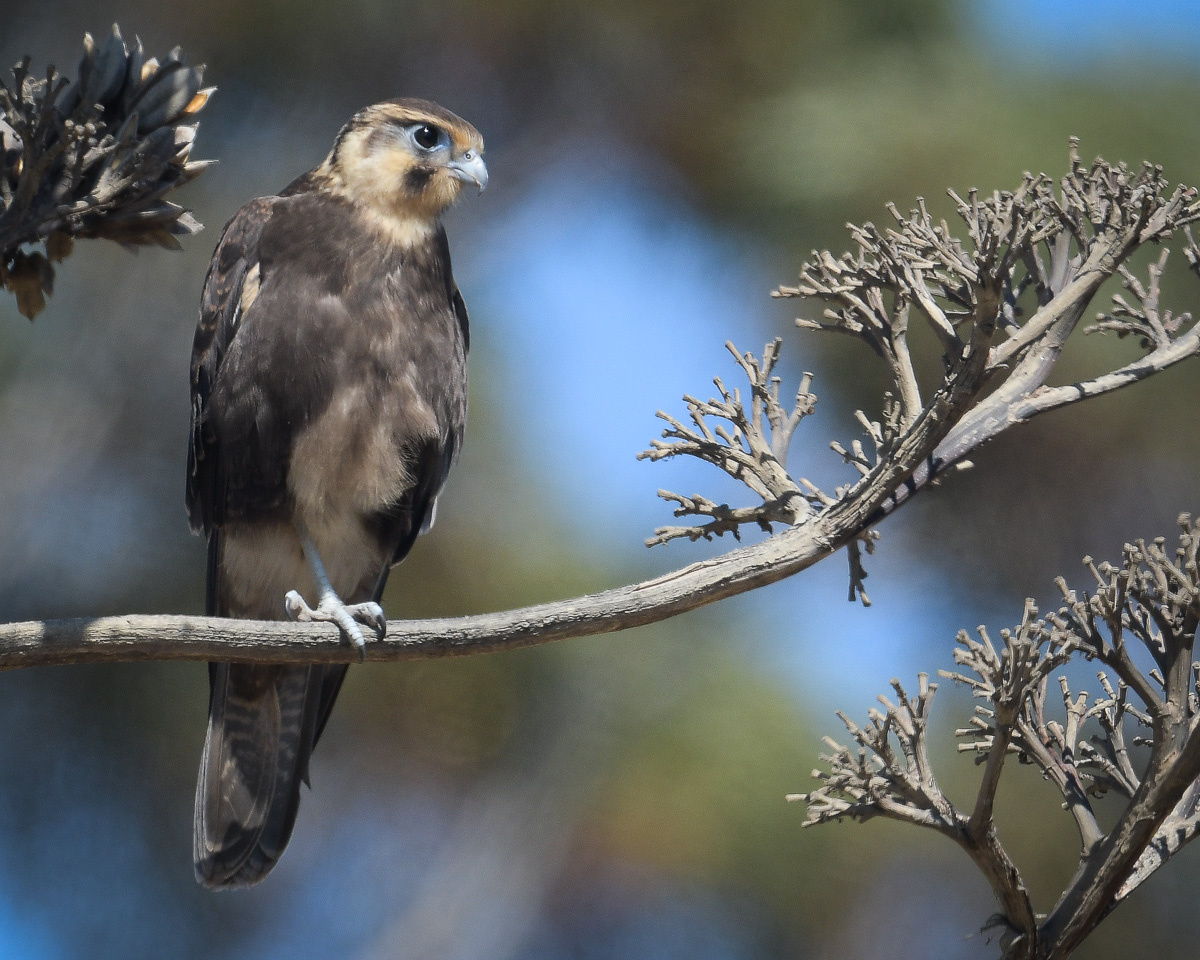
I had decided to stand near the base of one of two old agave (100 year old plant)
as Max was hunting around the second one.
But to my surprise, and pleasure, he decided to choose the one I was near.

Enjoy

Developing Skills: Act 06

Over two weeks out of the nest, both of the young Falcons were getting the hang of working on the ground.
I’m not sure if it’s planned by the female, -does she have some way of telling?- but the young crickets and grasshoppers were also emerging and giving the young birds both plenty of foraging practice and also some high quality food.
The adult food supply chain was now reduced to only occasional top-ups.

They were also beginning to explore out beyond their home zone. And each day we found them working in different parts of the paddocks.

One morning while walking in, scanning the usual resting spots, there was no sign of the birds. We stopped on the trackside and looked through the trees. Not a feather.

We were just about to move on and consider our next move, when a rolling cackle came from just behind. I turned around and there was Max sitting on a rock at the edge of the track. Hiding in plain sight. I’d been so busy looking ‘up’ that I’d missed him so close. After introductions, I moved around a tree to get off the track and give him some space. He sat.
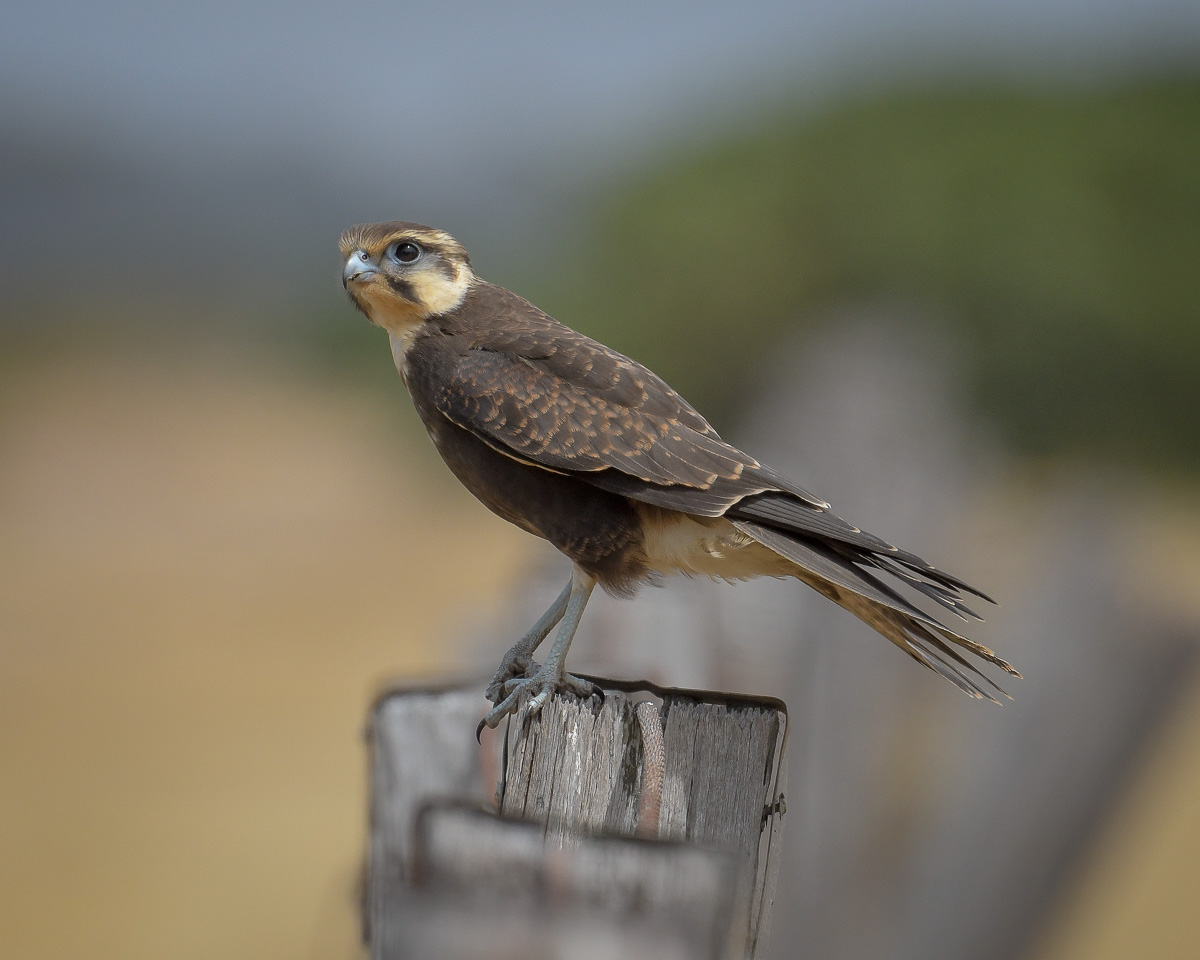
A couple of bike riders came down the track toward us. Max sat, then gazed at them, and decided it was too much of a risk and he took to wing down the track and over their heads. They didn’t seem to look up or recognise a falcon had just flown past them. I doubt they even saw him.

The grasshoppers provided quite a bit of entertainment, and the young birds quickly became adept at chasing them and pinning them to the ground. It became quite frantic on a few occasions, and suddenly, as I peered through the viewfinder a falcon would rush toward me, growing bigger and bigger in the lens.
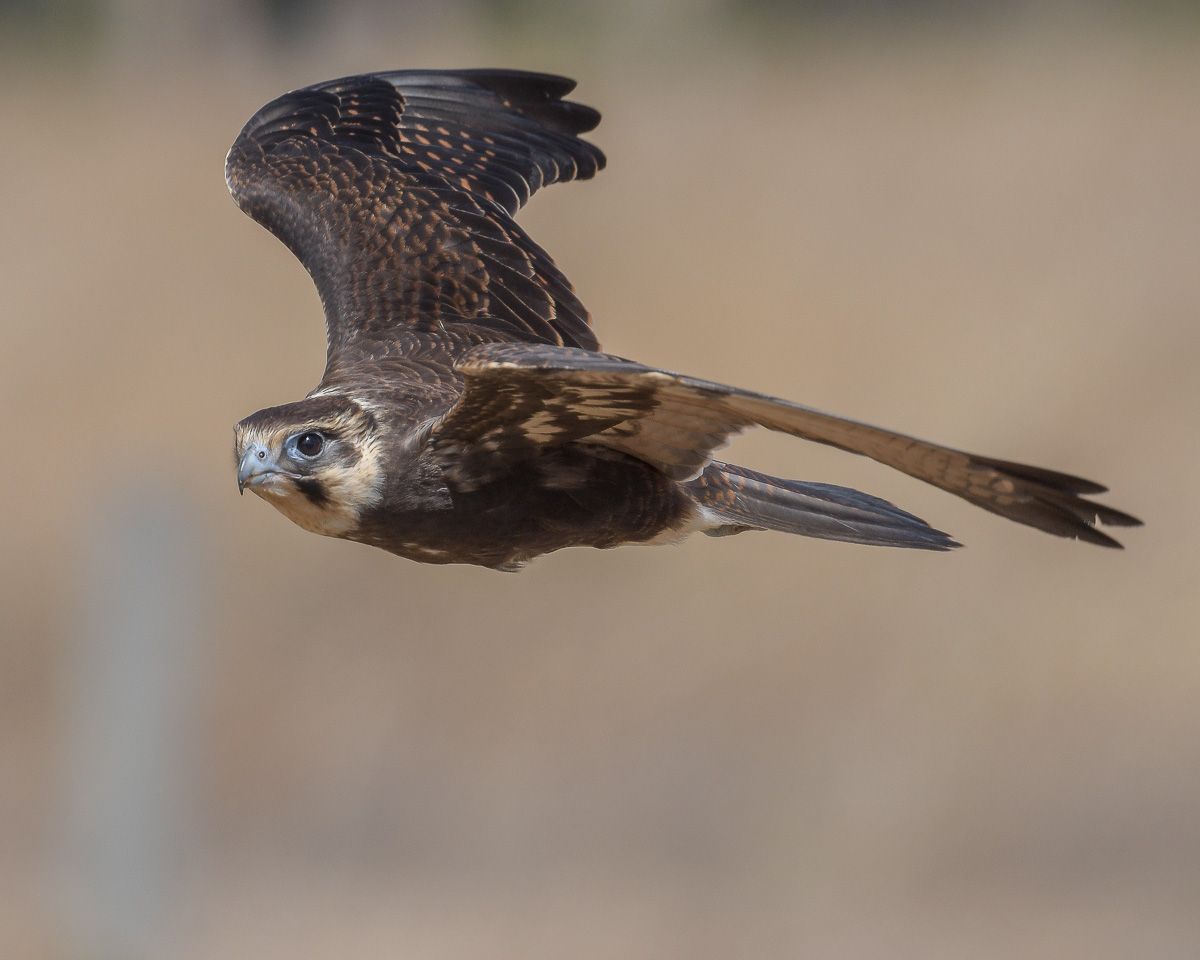
I’ve included two shots of Max dropping down from a building to see what Mary was doing. The interesting thing is the frames are about 1/10th of a second apart. But if you look carefully you’ll see that he has changed the entire shape of the wing to match the job of landing. I knew birds have control of the wing feathers, but he seems to have been able to fold them up in a special setting to whiffle from the building.

Enjoy

I heard Max’s raucous cry from behind me and turned to find him on a rock.
“Hey, I’m over here!”
He wasn’t prepared to sit on the edge of the roadway
with bike riders approaching
Of the two birds, Max seemed to be the more adventurous
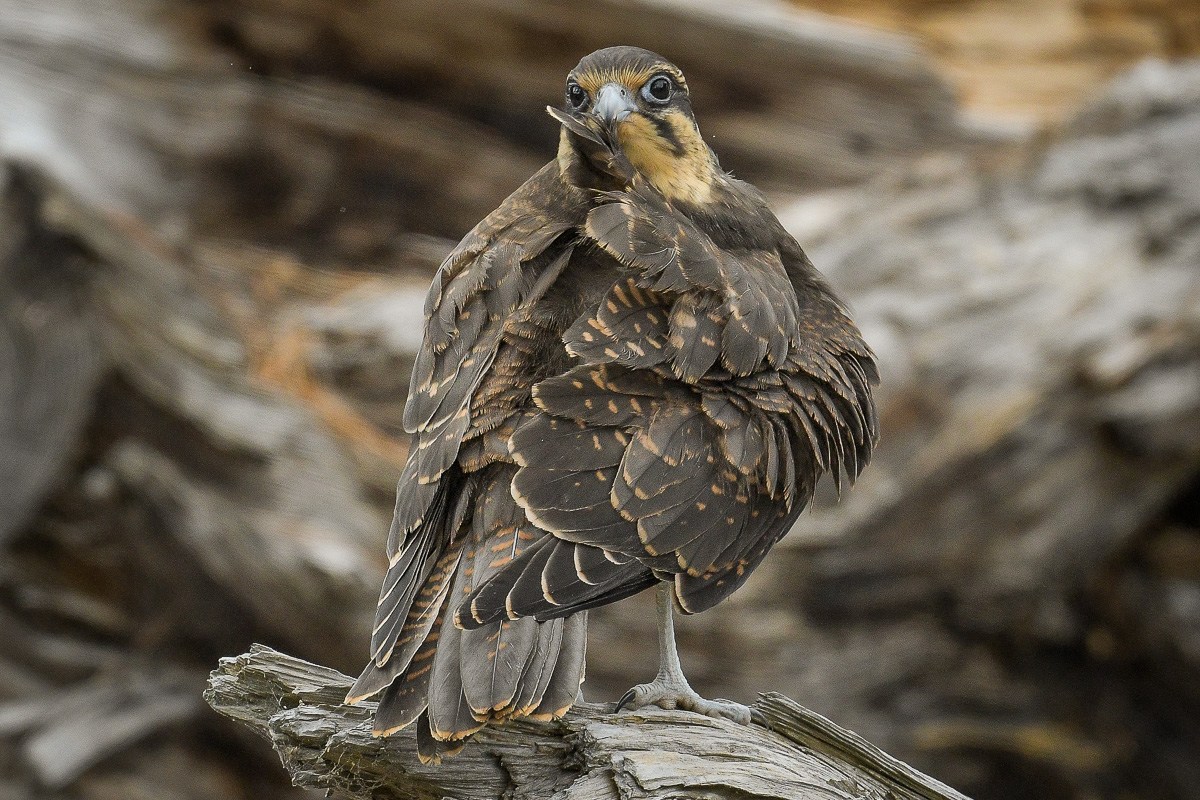
Always time for some family preening
And head turning antics
Mum arrived with a mouse. Mary does some close formation flying
to be sure she doesn’t miss out
Not everything they picked up was edible.
They also discovered that ants were a most disagreeable snack
Max whiffling down from the rooftop.
The folded up wing is quite intriguing.
And a split second later its fully extended for landing
In hot pursuit
I hope he stops in time

Packing in the Protein: Act #05

Each day’s visit gave us new opportunities to see some changes in the young Falcons.
They were still dependent on the adults for food, but the deliveries were becoming stretched out. Perhaps food was harder to find, or as I suspect the young were being encouraged to start seeking for snacks on the ground.
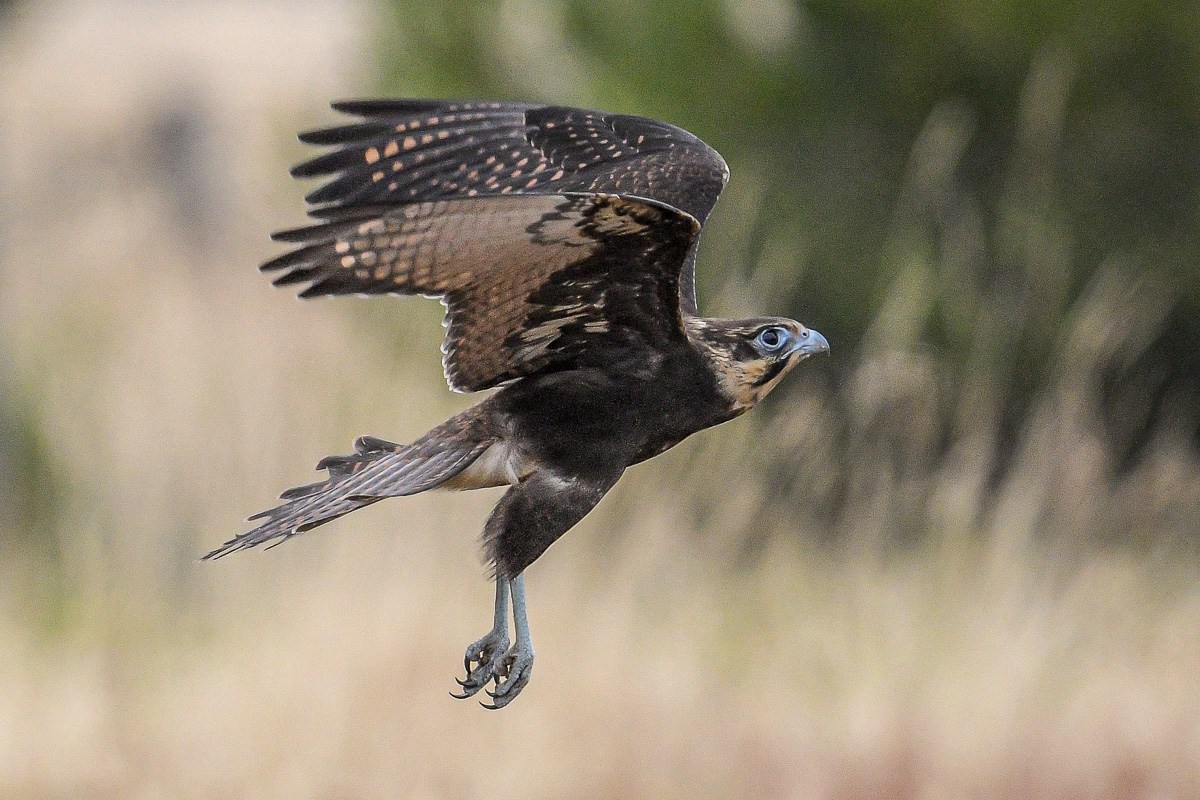
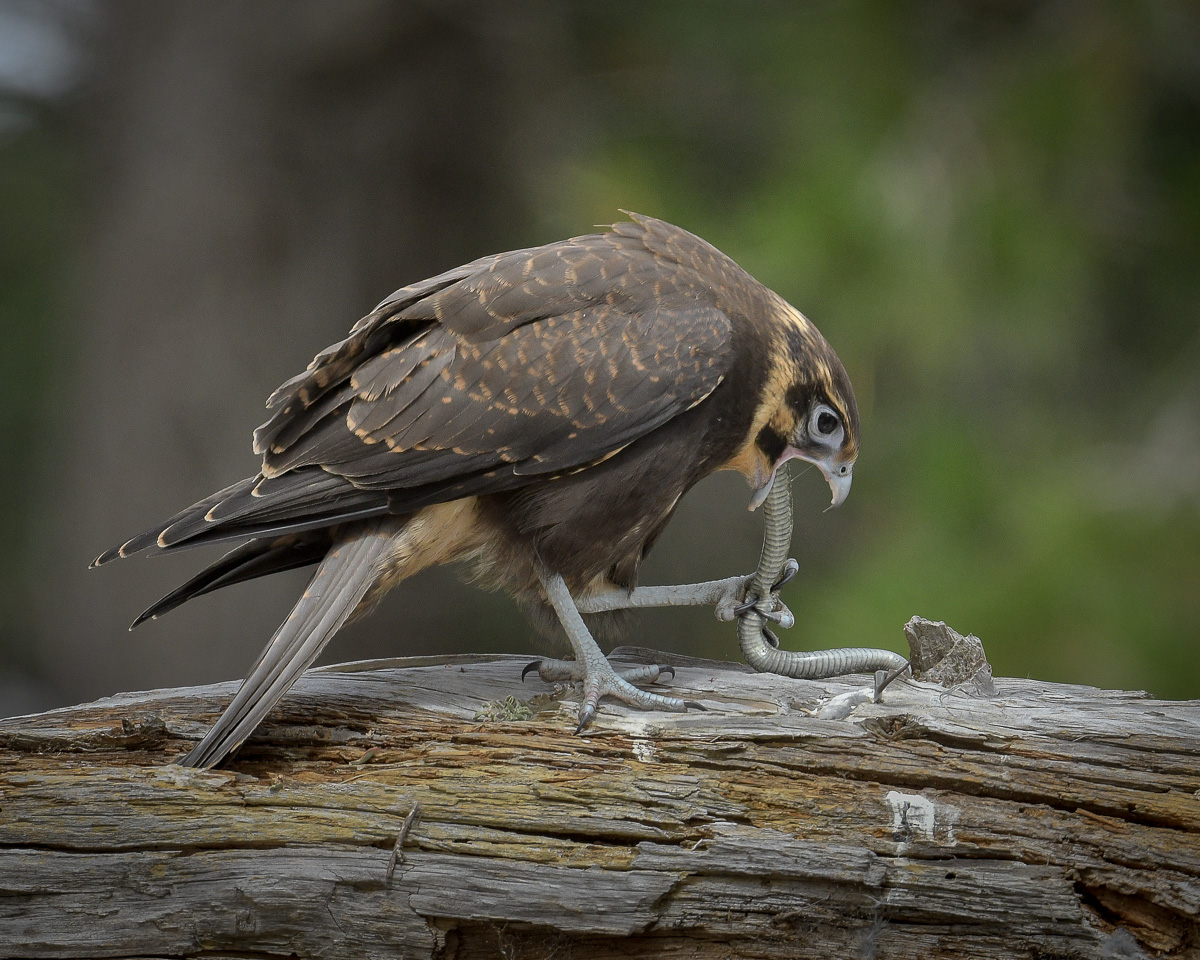
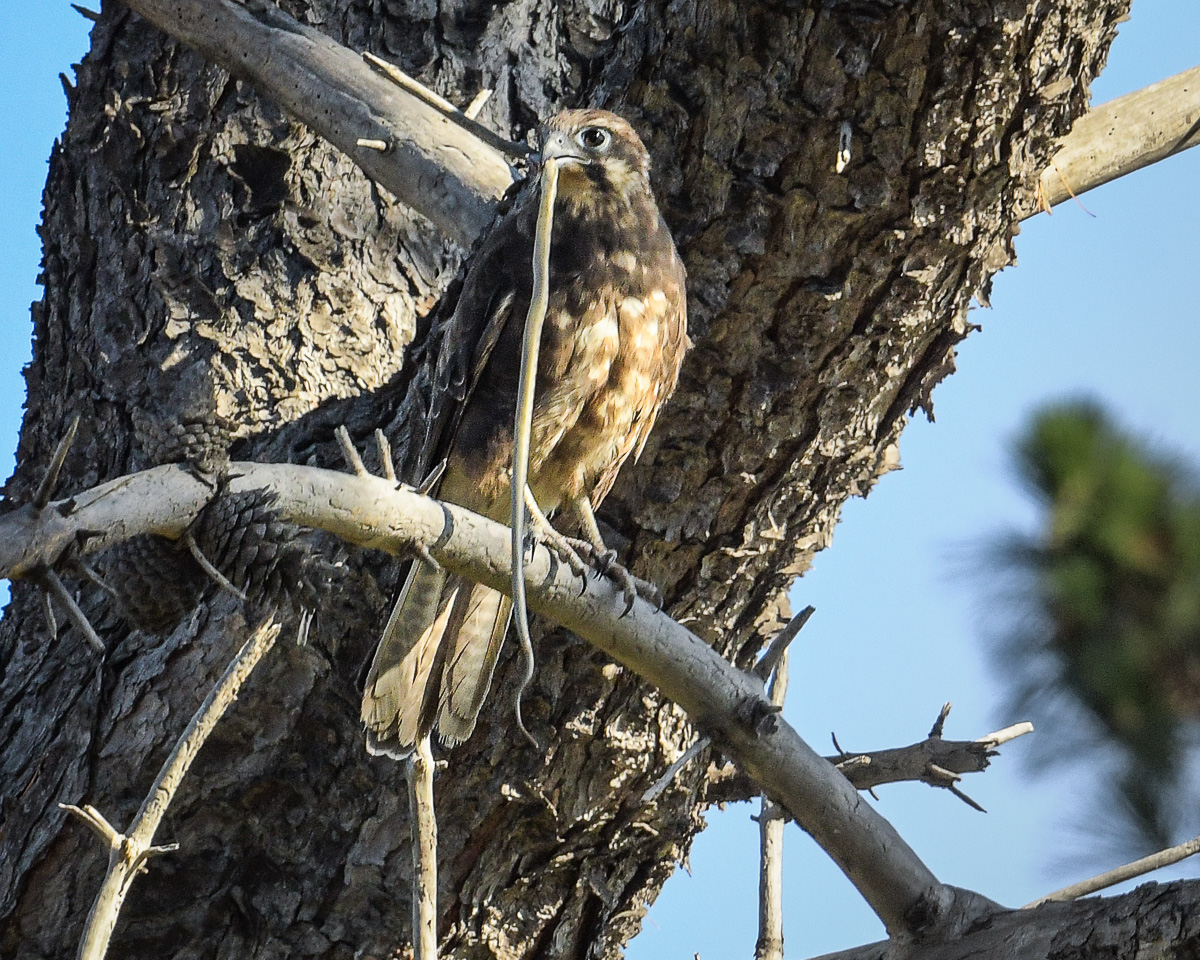
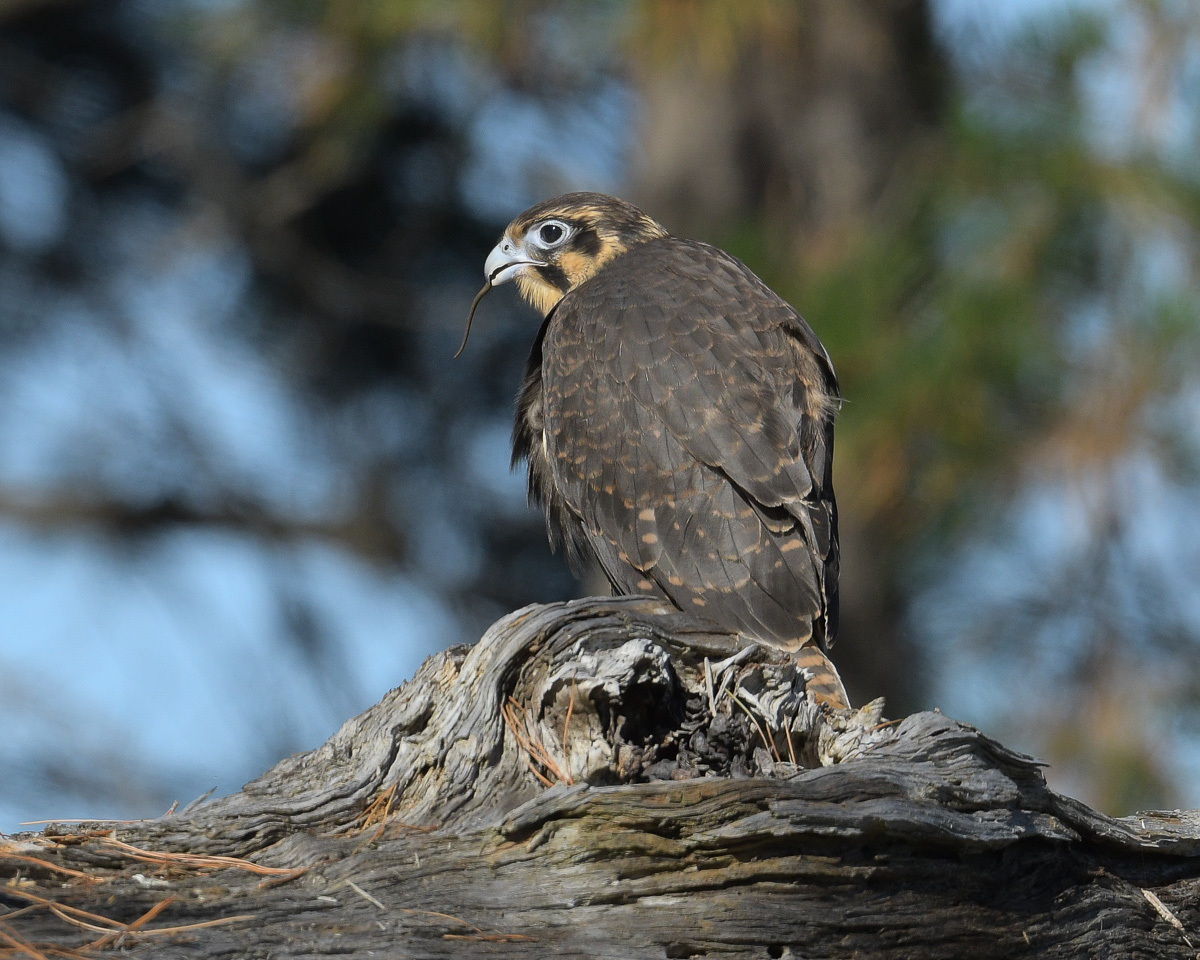
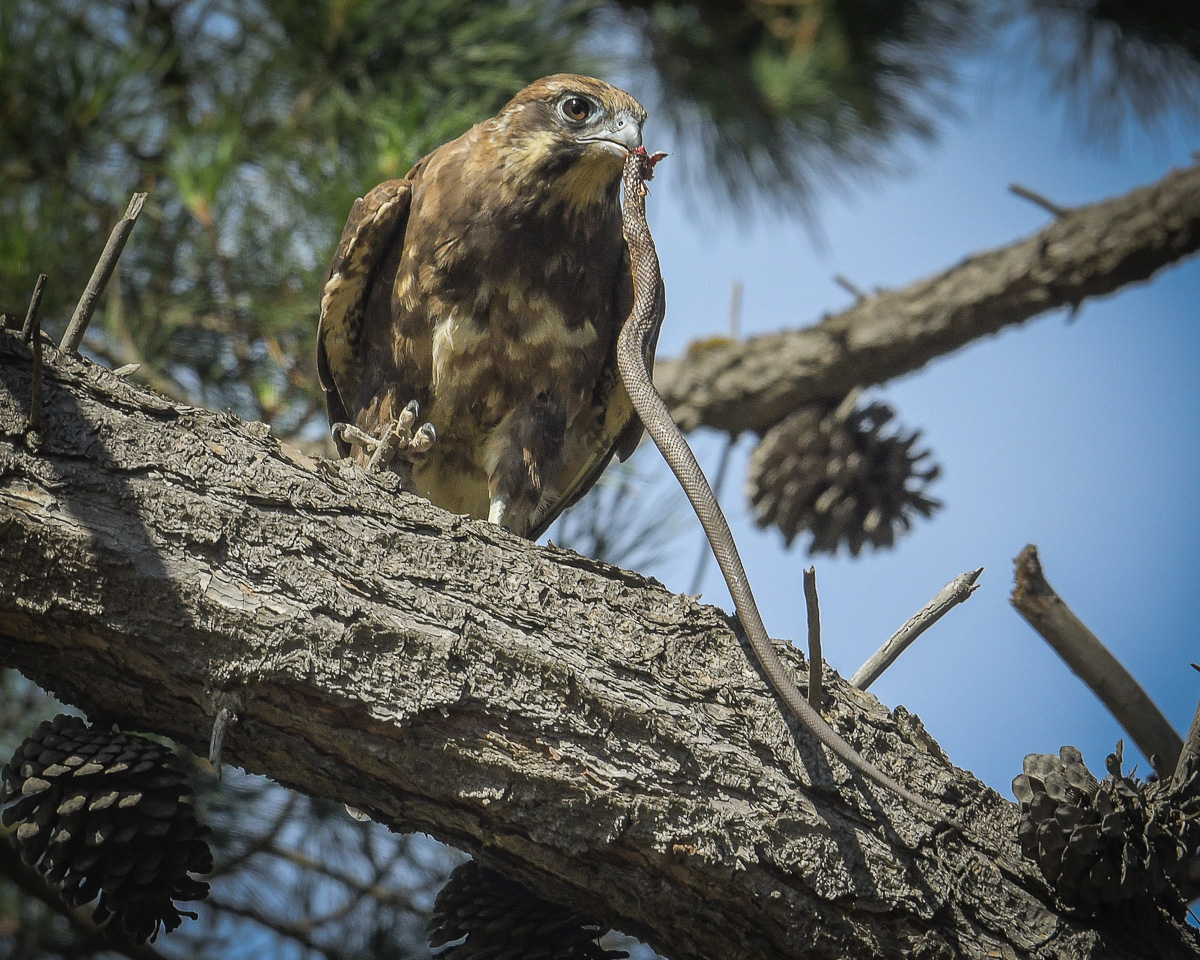
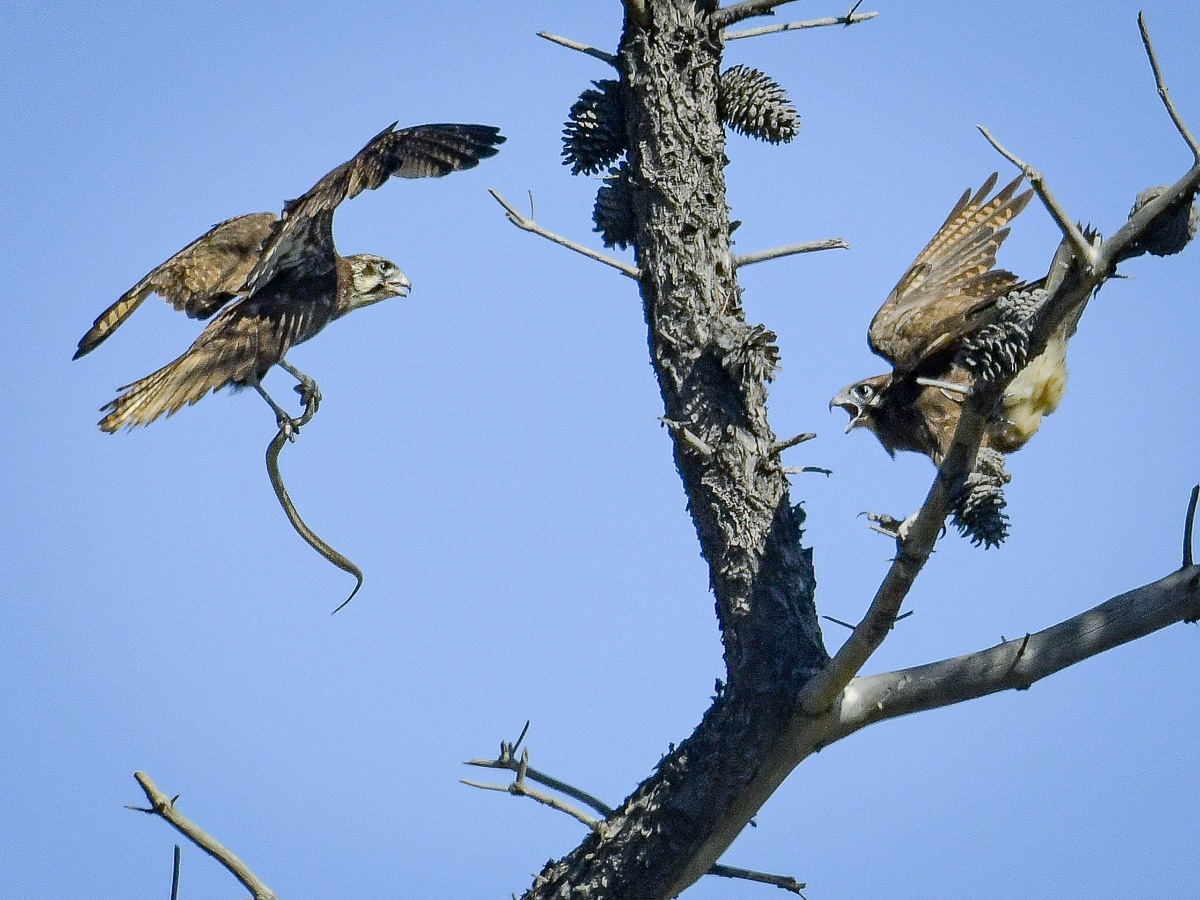
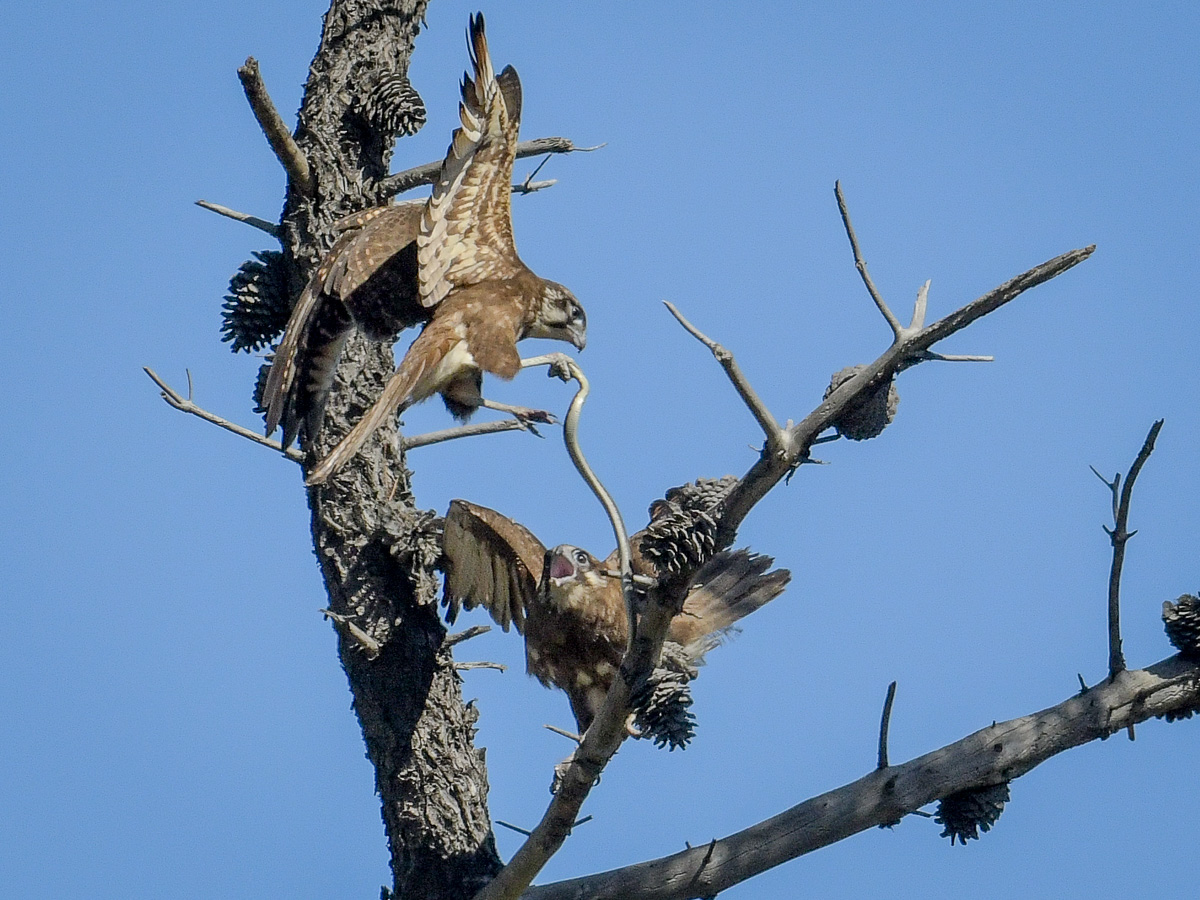
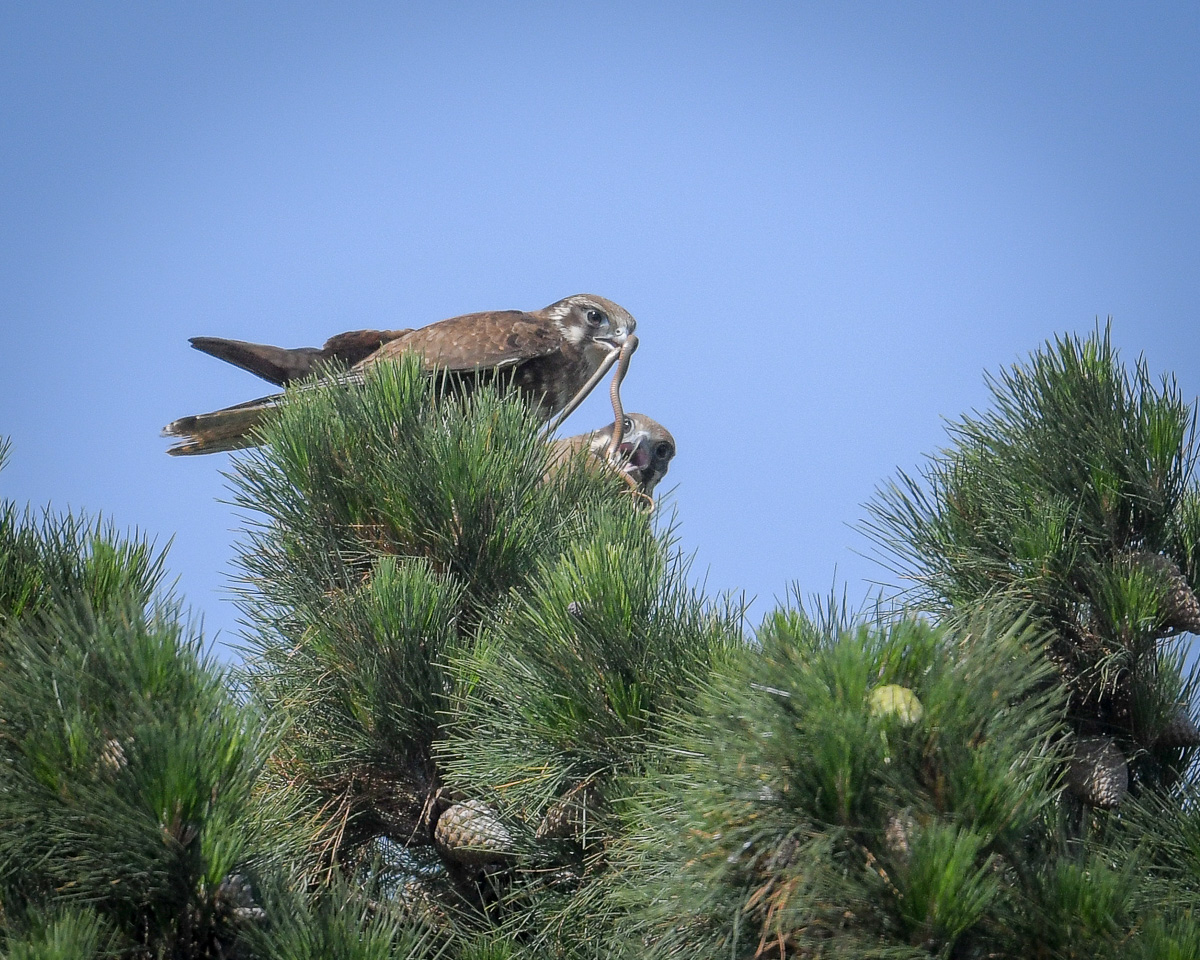
However when it did arrive, it came in big pieces. Whole Tiger Snake was obviously quite the top of the range item. The male, “Ophiuchus”, was certainly living up to his name.
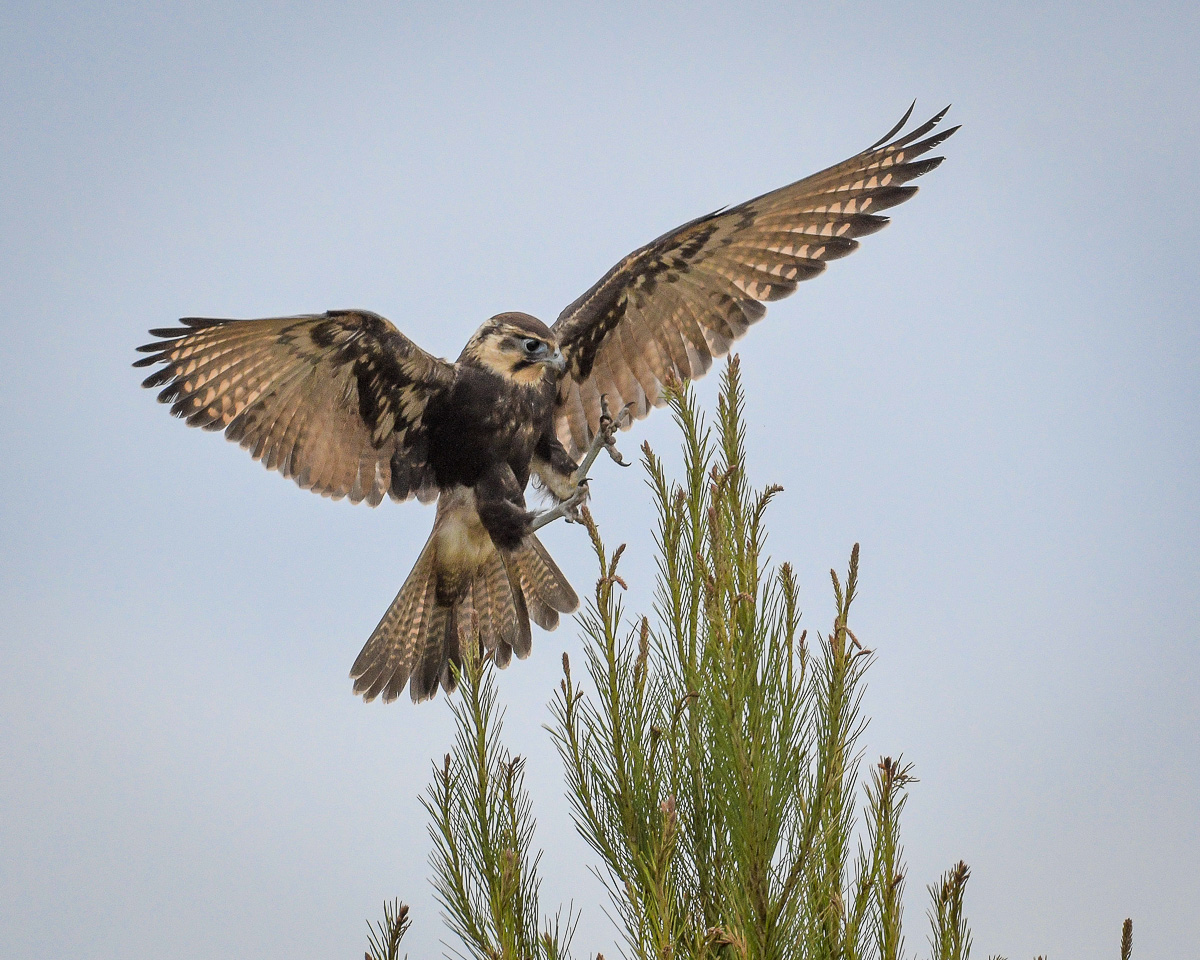
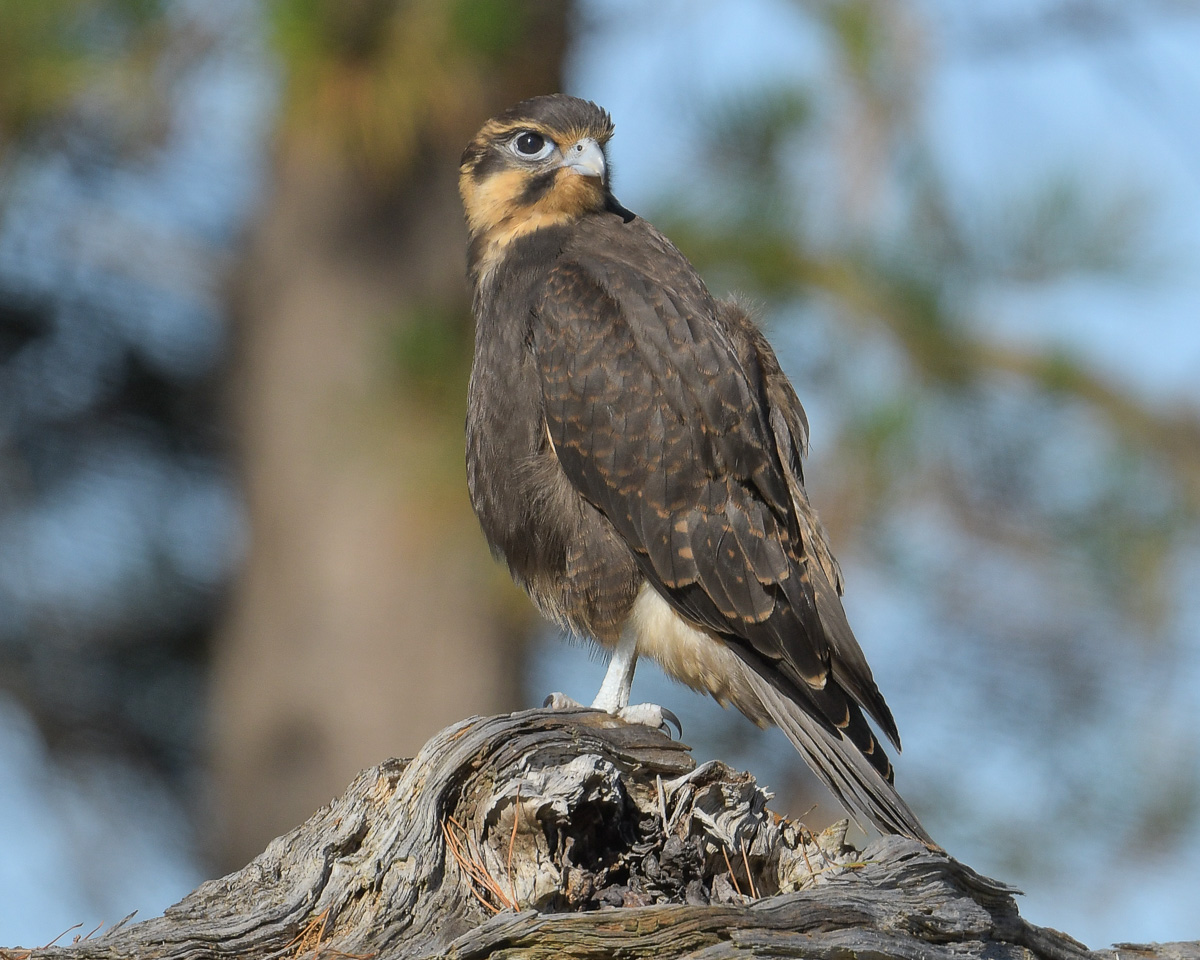
It soon became obvious that one of the birds was bigger than the other. Certainly she was a female, and was noticeable by the large dark tear marking at the back of her eye. The male, had a smaller tear marking and some bare skin around the back of the eye. So it helped in being able to identify them.

We named them “Max” and “Mary”. (No doubt someone will get it).

By now they were un-fussed by our presence, and the male, when he was exploring would make quite close approaches. It is a bit humbling to be having eye to eye contact with a raptor.
There was always the concern that the birds would become habituated to humans if we were that close. I am happy to report that while we were watching them, anybody coming along the road, or riding a bike, would be either ignored or if the bird decided that it was too close, then it would fly.
Each visit we always approached from the same direction, took a few minutes to stand or sit quietly, to give them time to adjust and then if they showed no agitation, we would begin work.
I’ve said it before, but no photo is worth losing their trust.

I did later on in the season invite a friend to join us, and the birds made themselves scarce. Yet when he and I moved on, EE had no problem working with them. Anecdotal, I know, but there it is.

Enjoy

They seemed to have an endless range of antics
The one legged stance is quickly learned.
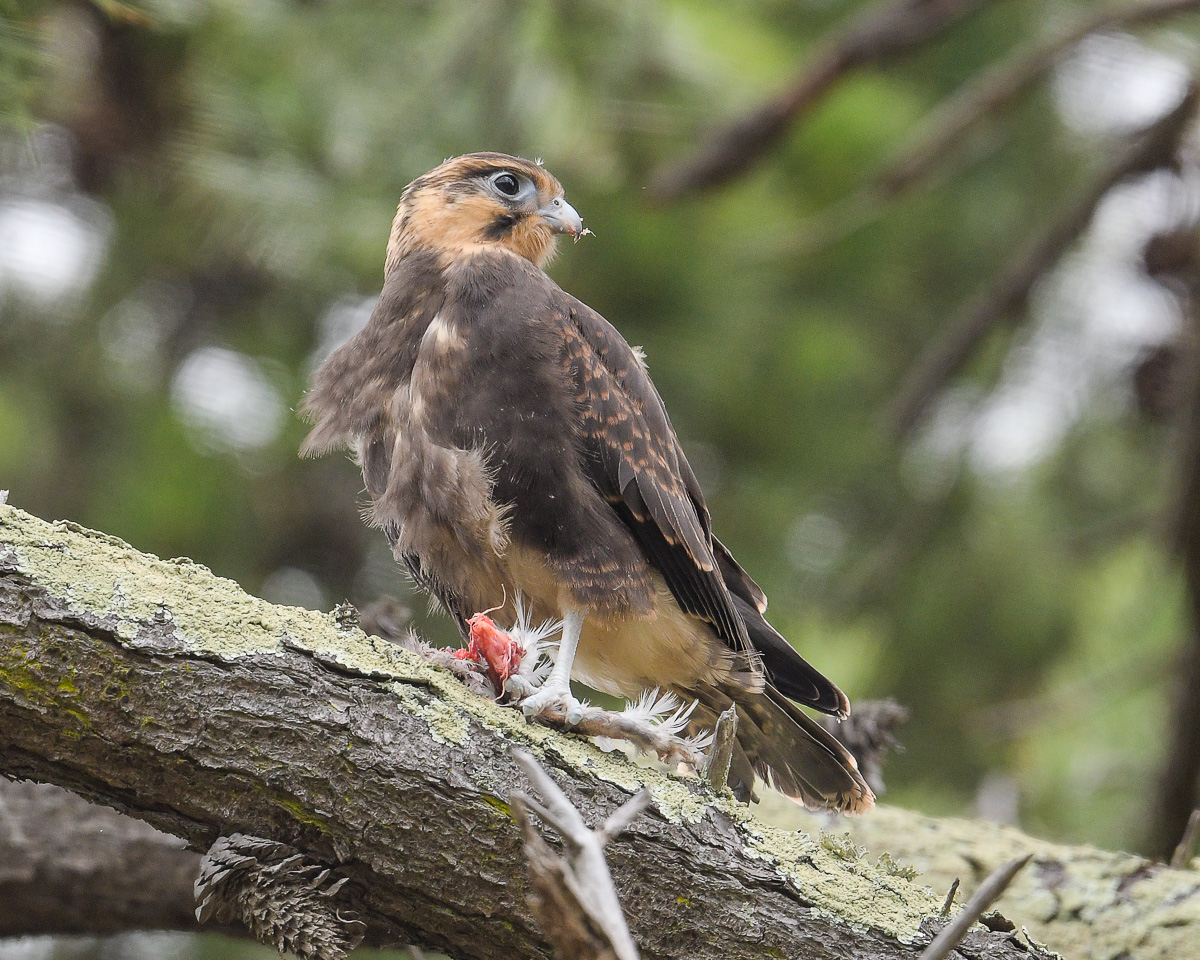
Max was quite relaxed about my presence.
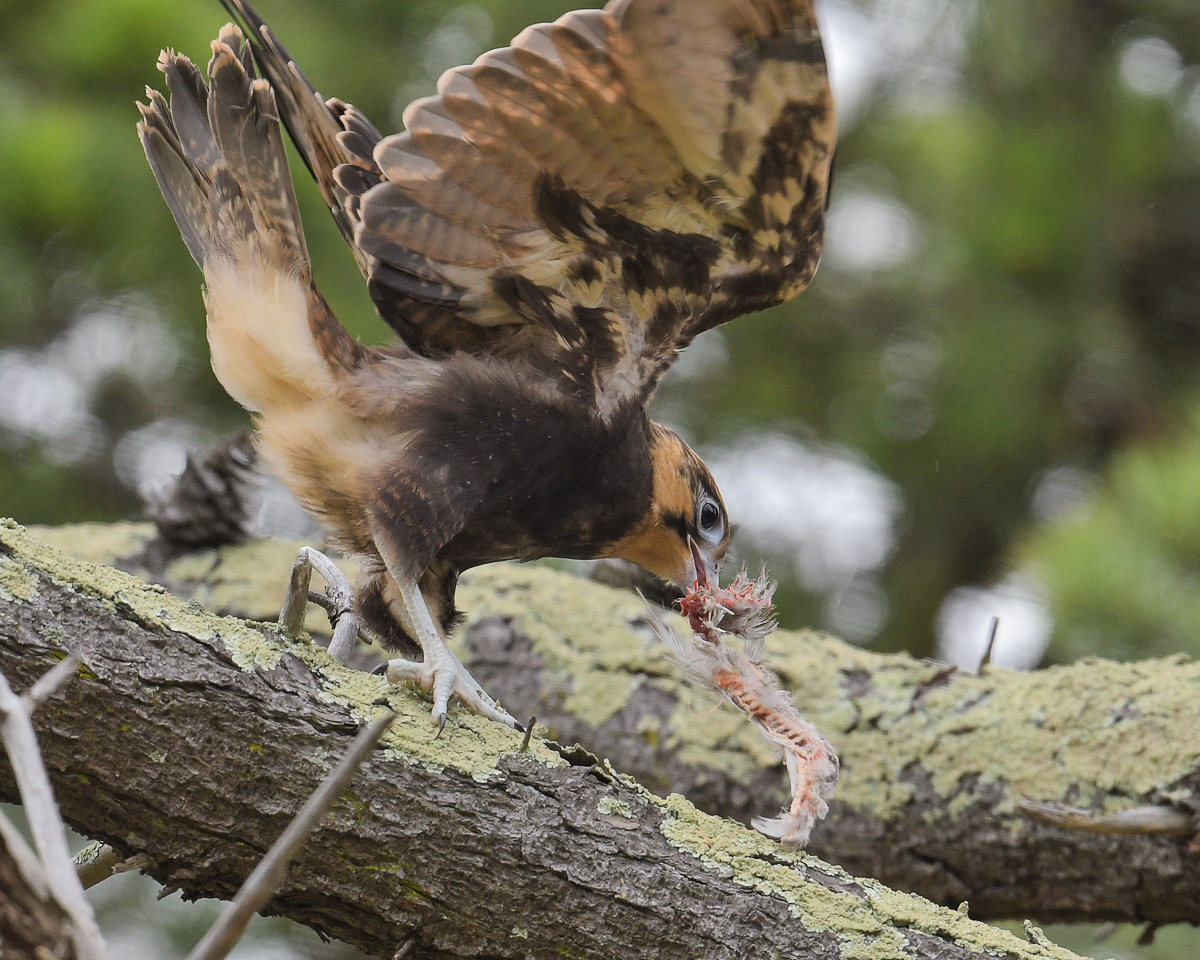
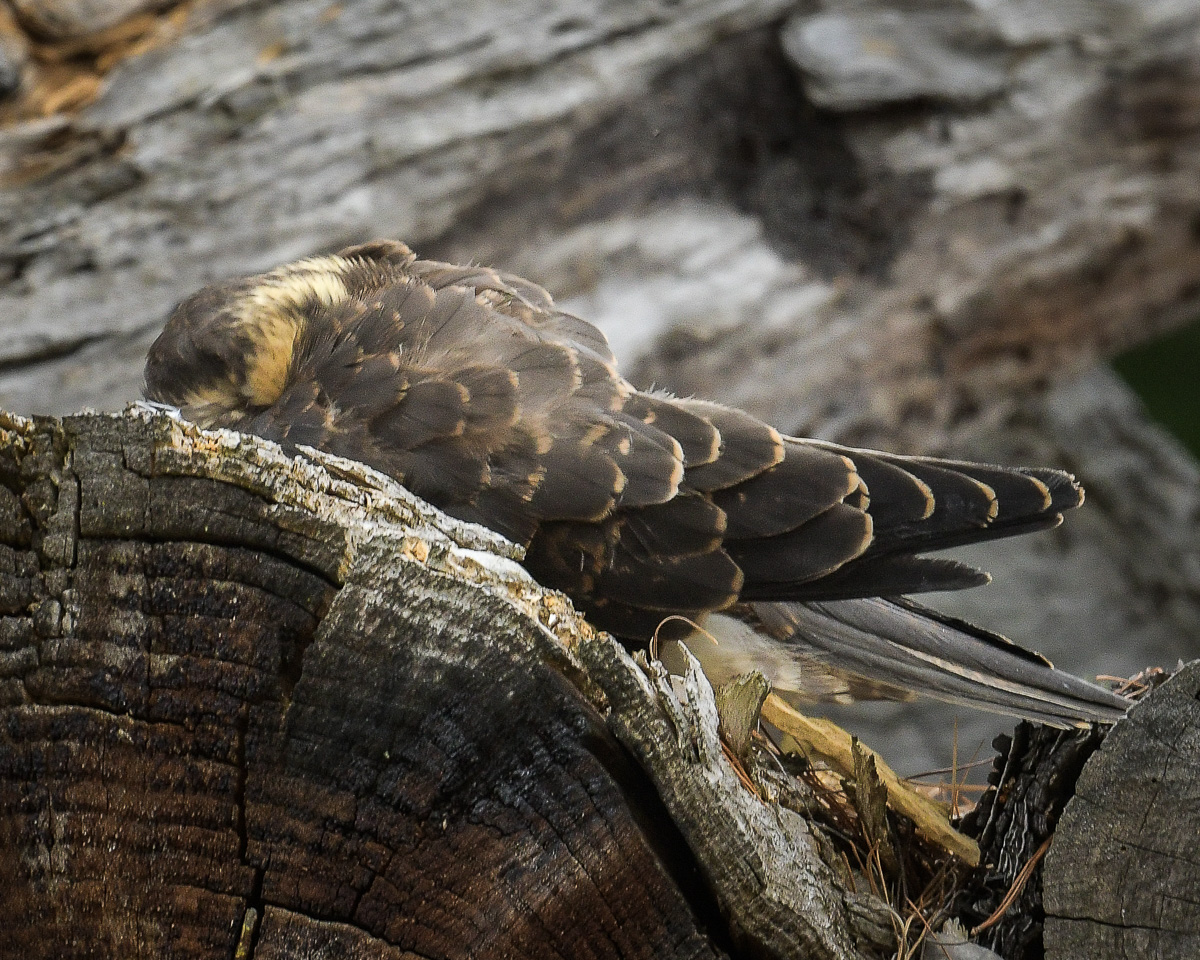
He turned his head around and tucked it under his feathers.
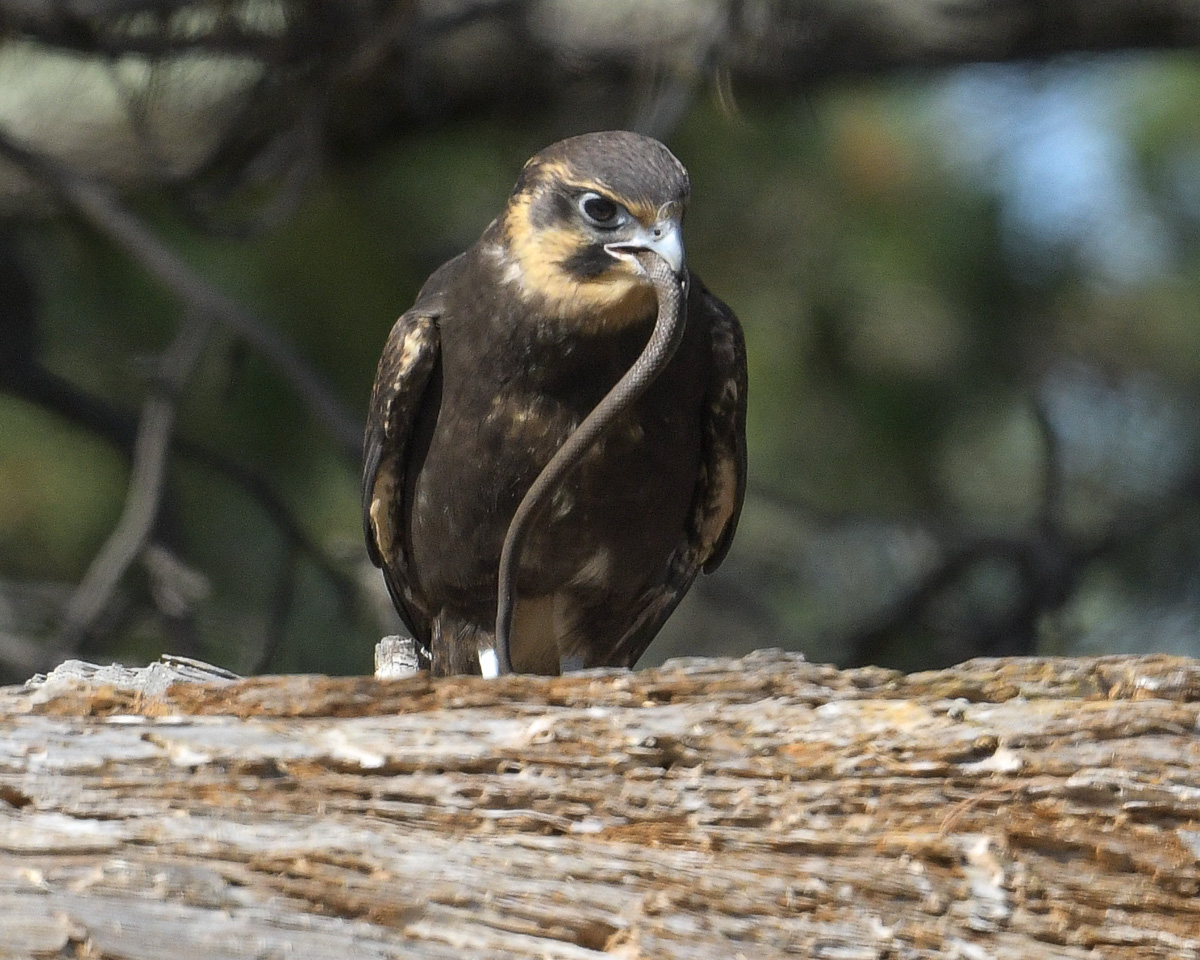
Mary had just been given a large Tiger Snake, and mantled over it
as she prepared to take it out for dinner.
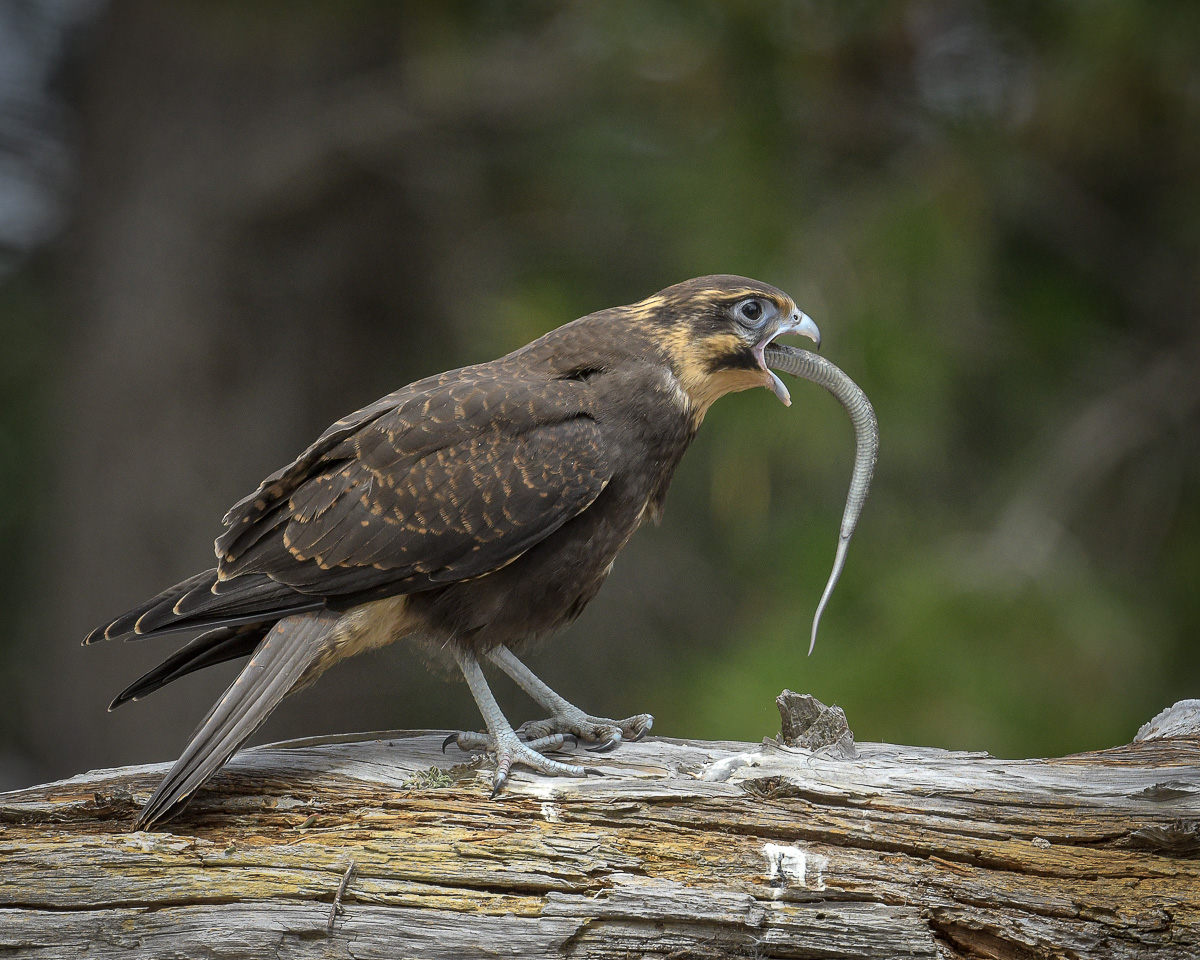
It took her a few minutes to consume the snake whole.
Lots of head and body shaking to make it all fit.
And after a little forceful rearranging it all seemed to fit.
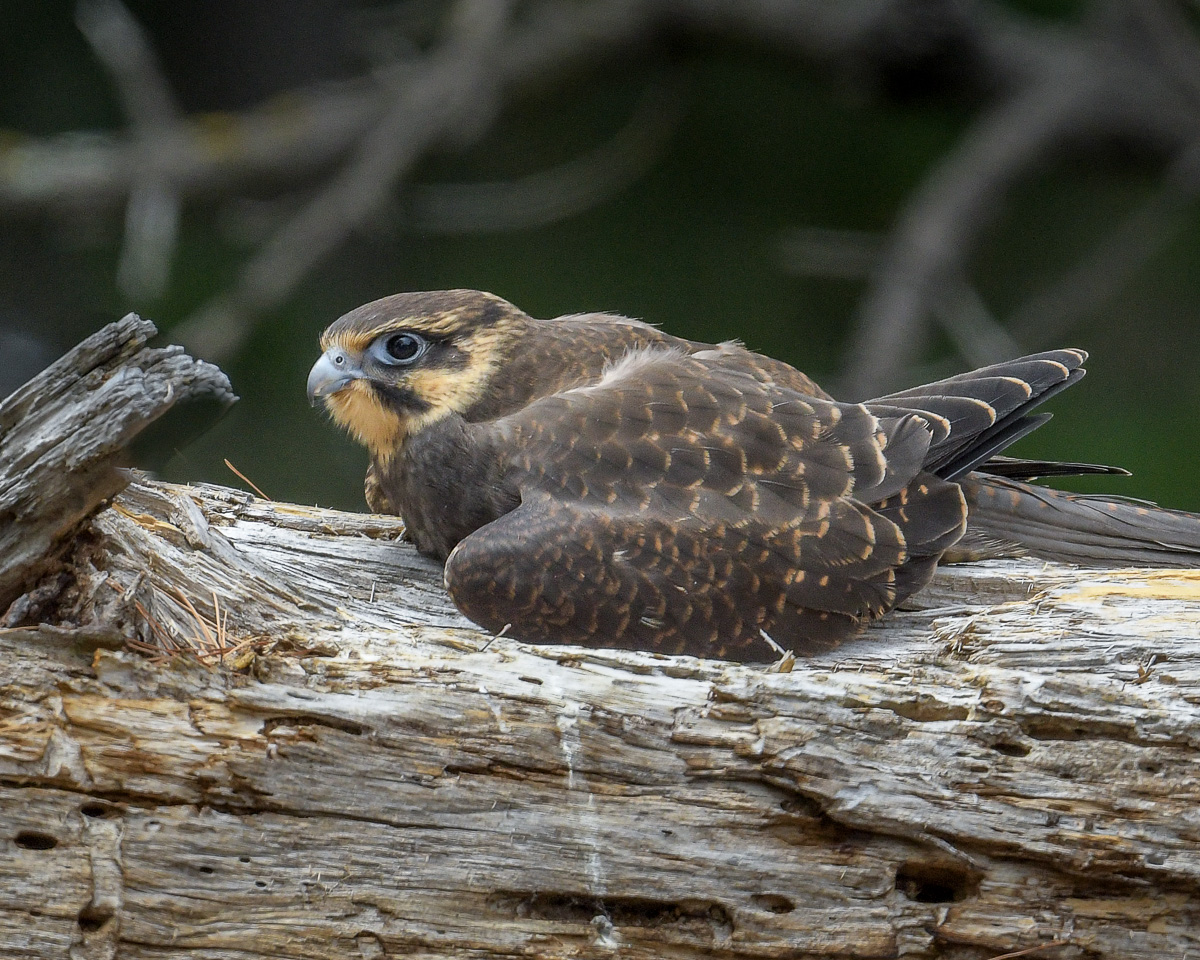
After a good meal, time for a sleep.
This is Mary, and she is noticeable by the dark tear stain at the back of her eye.

Max, the male. He has a small tear stain and some bare skin around the eye.
He also seemed the more active of the two.


Food for Growth: Act 4

I caught this morning morning’s minion, king-
dom of daylight’s dauphin, dapple-dawn-drawn Falcon, in his riding
Of the rolling level underneath him steady air, and striding
High there, how he rung upon the rein of a wimpling wing
In his ecstasy! then off, off forth on swing,
Wind Hover: Gerard Manley Hopkins

Life for recently fledged Brown Falcons is almost a laid-back affair.
Sit
Wait
Accept food
Sit.
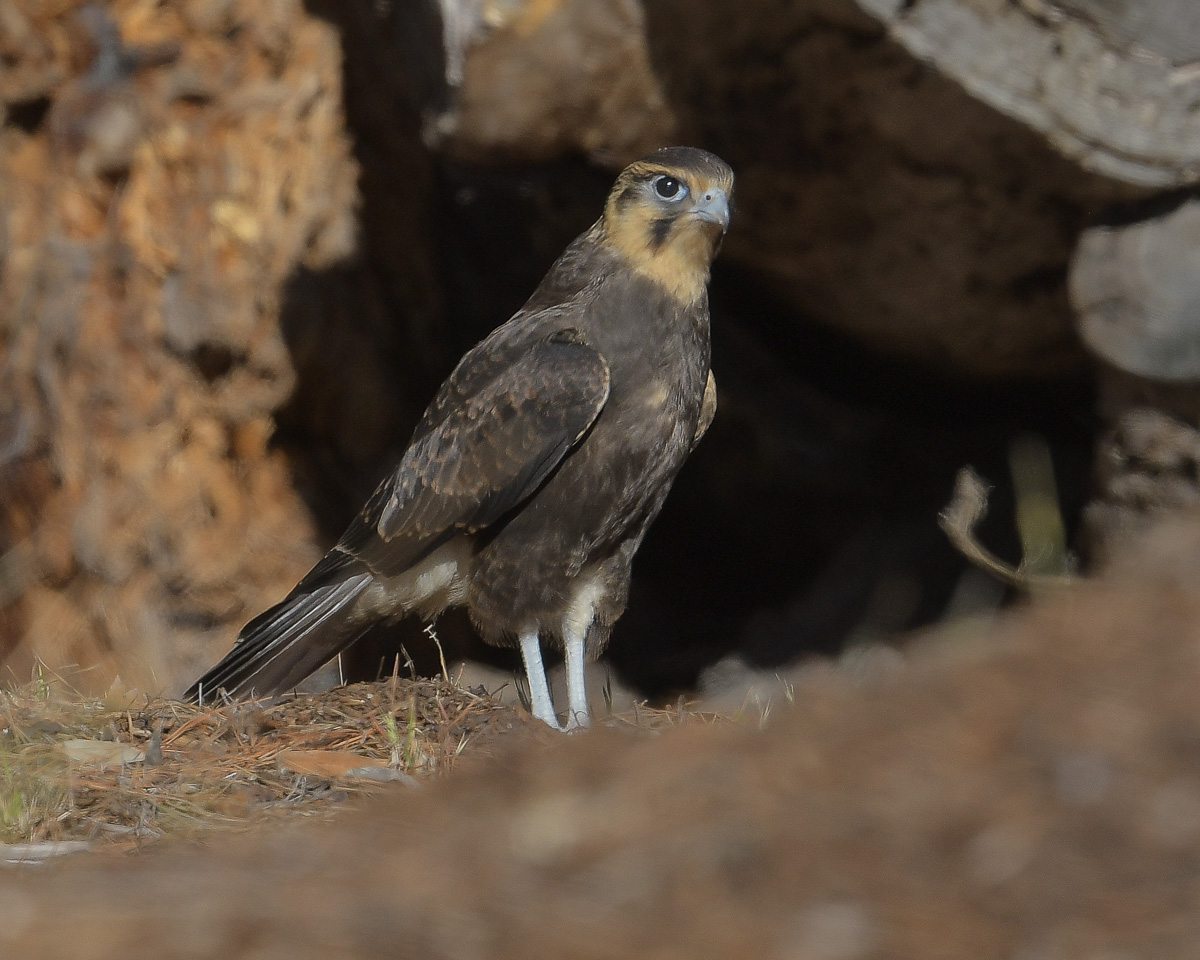
For their first few days on the wing the young ones chose to work from a stack of old logs. It provided shelter, some softer pine-needles to rest on, and the security of a sheltered position.
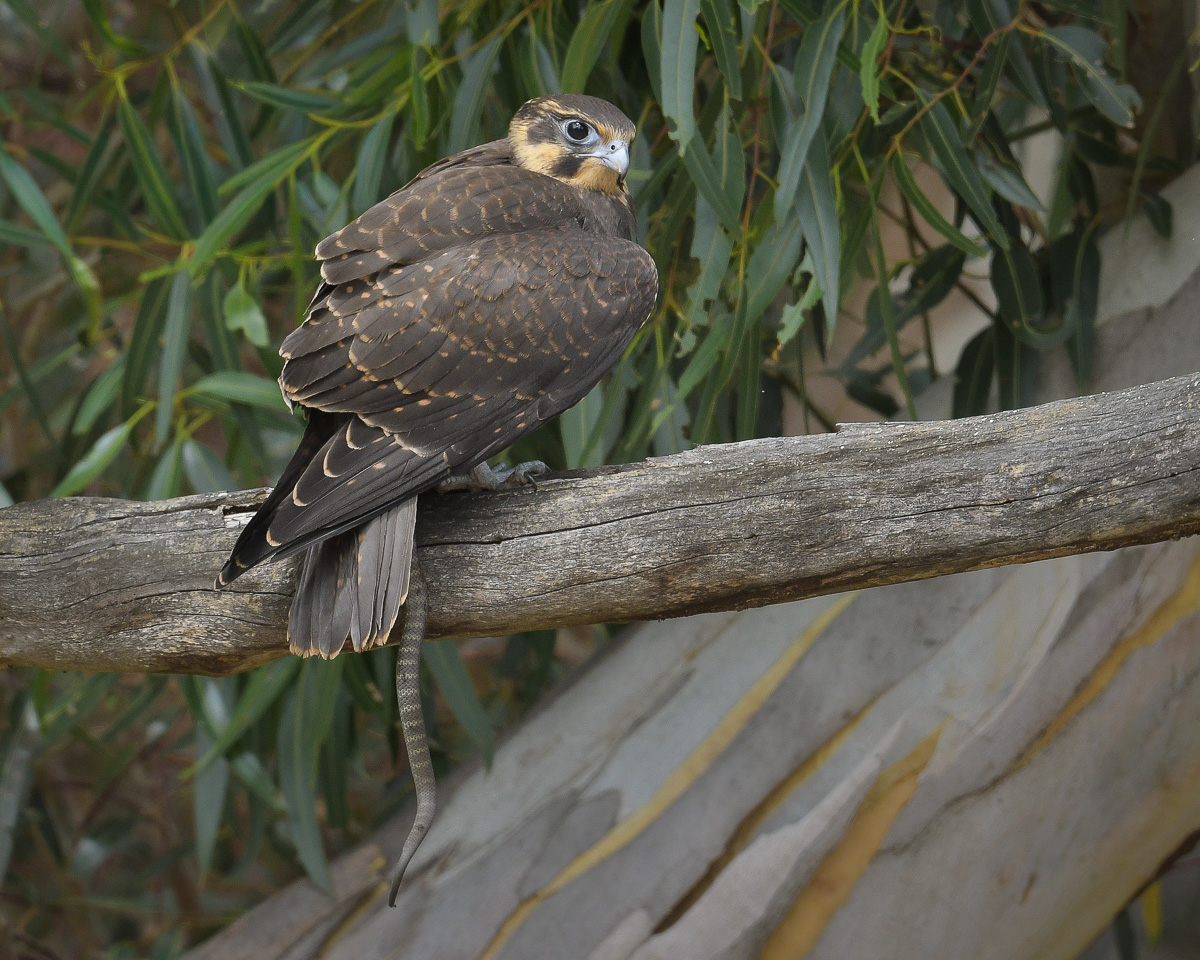
Mum, would on schedule bring in top up snacks, mostly in the form of snake. I had never realised how many snakes must be in the surrounding paddocks, but the male, (I named him Ophiuchus, after the Greek mythological “Snake Handler”), seemed to have not problems finding them, and in decent size.

Rabbits, and young ground birds, perhaps Brown Quail, and Pipits also were on the list. The female would also bring in the occasional mouse.

What was interesting to note, was as the days went on, the food supply slowly dropped off. The young would now have to learn one of their big lessons. Ground Hunting.

Enjoy.

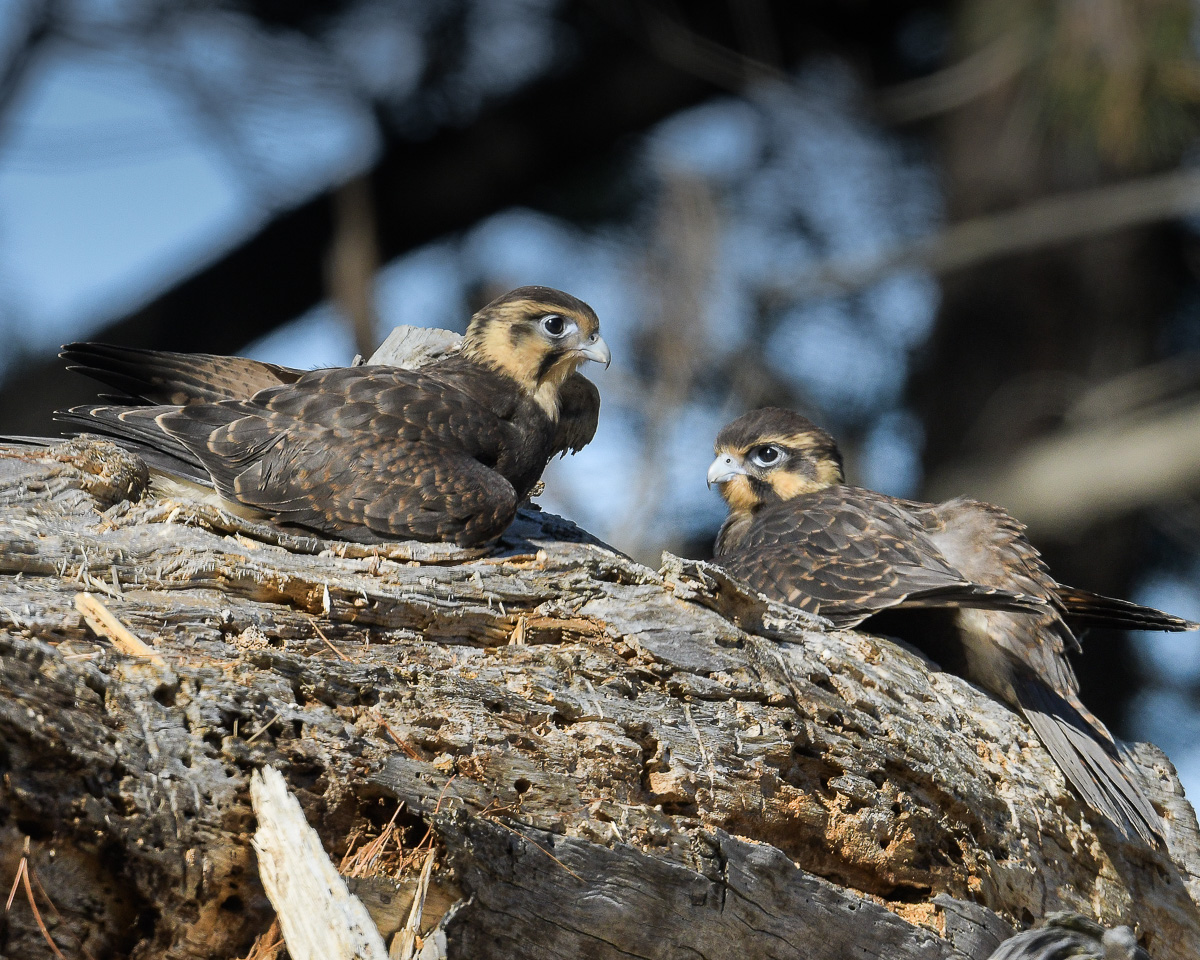
The old logs provided them some softer, secure spots to rest. It was just like being in the nest.
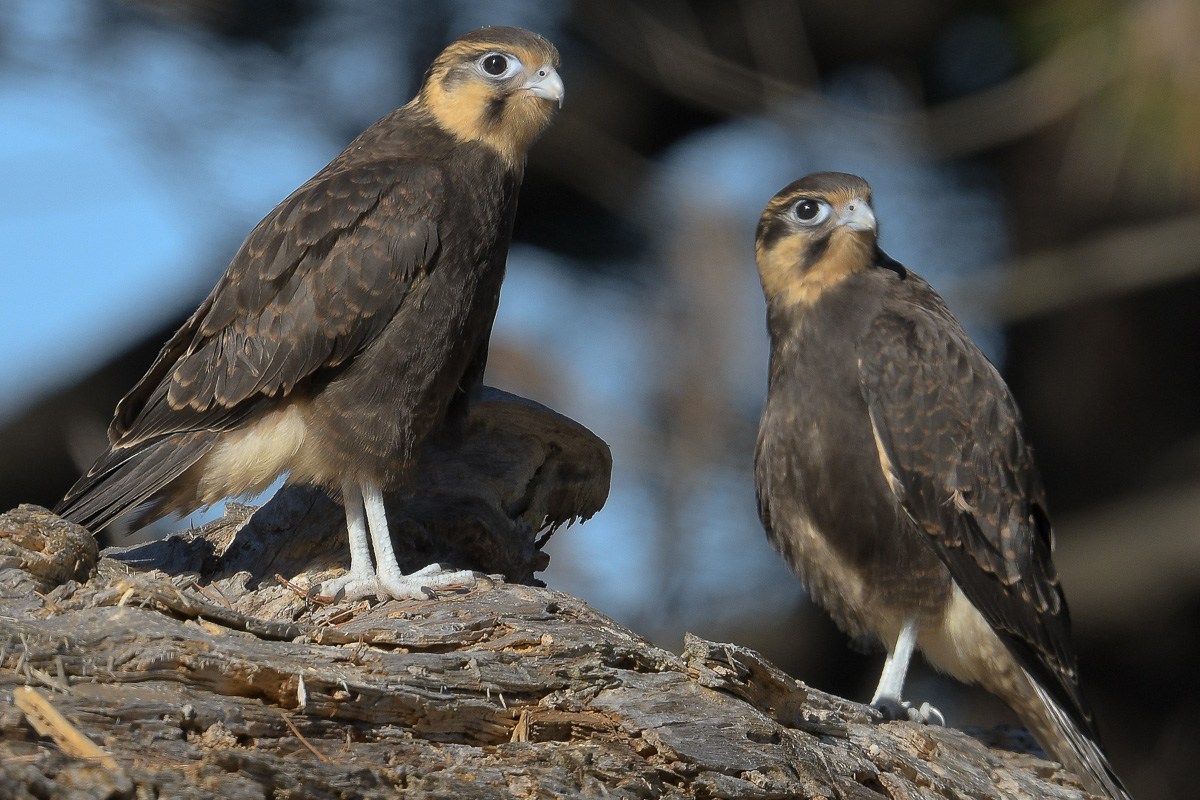
I named them “Max and Mary”. The female-on the right-is the one with the really dark ‘tear’ stain behind her eye. Max has much more bare blue skin at the rear and only a small ‘tear’ mark.
Mum arrives with the a morning meal.
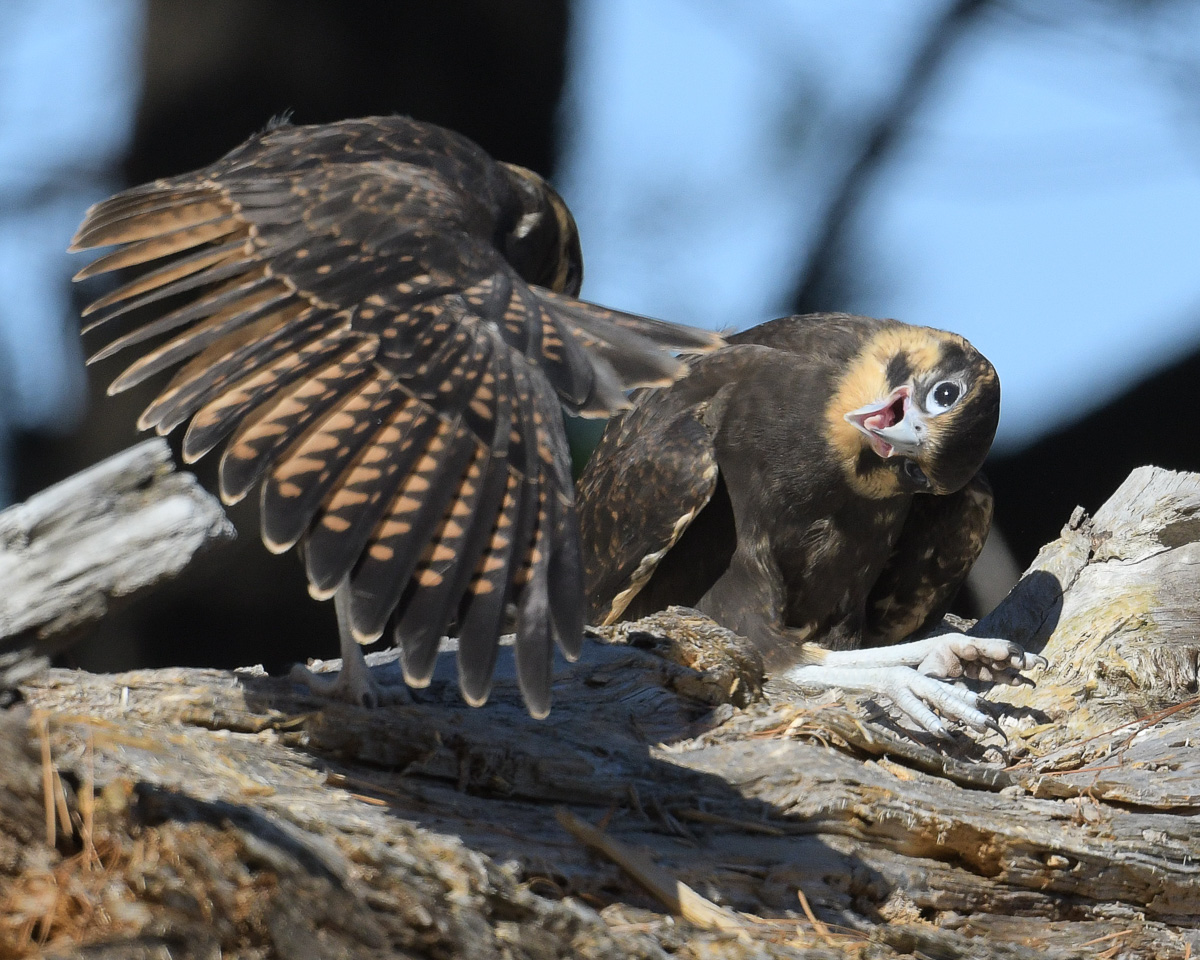
There was little competion between the young, each seemed to know whose turn it was, and the crying and wing-flapping were more to attract attention, than demanding.
“Mum’s Back”. My turn.
Mary steps out to meet the incoming delivery
They didn’t share, but each seemed to get an equal share of the incoming deliveries. We weren’t there all day, but the female did seem to get the bulk of the bigger offerings. It was easy to see she was the much bigger bird within a week.
After a meal, a fine big wing stretch
Another day, another snake
It’s hard to imagine, but she swallowed the snake whole, somehow it all fits in that little body
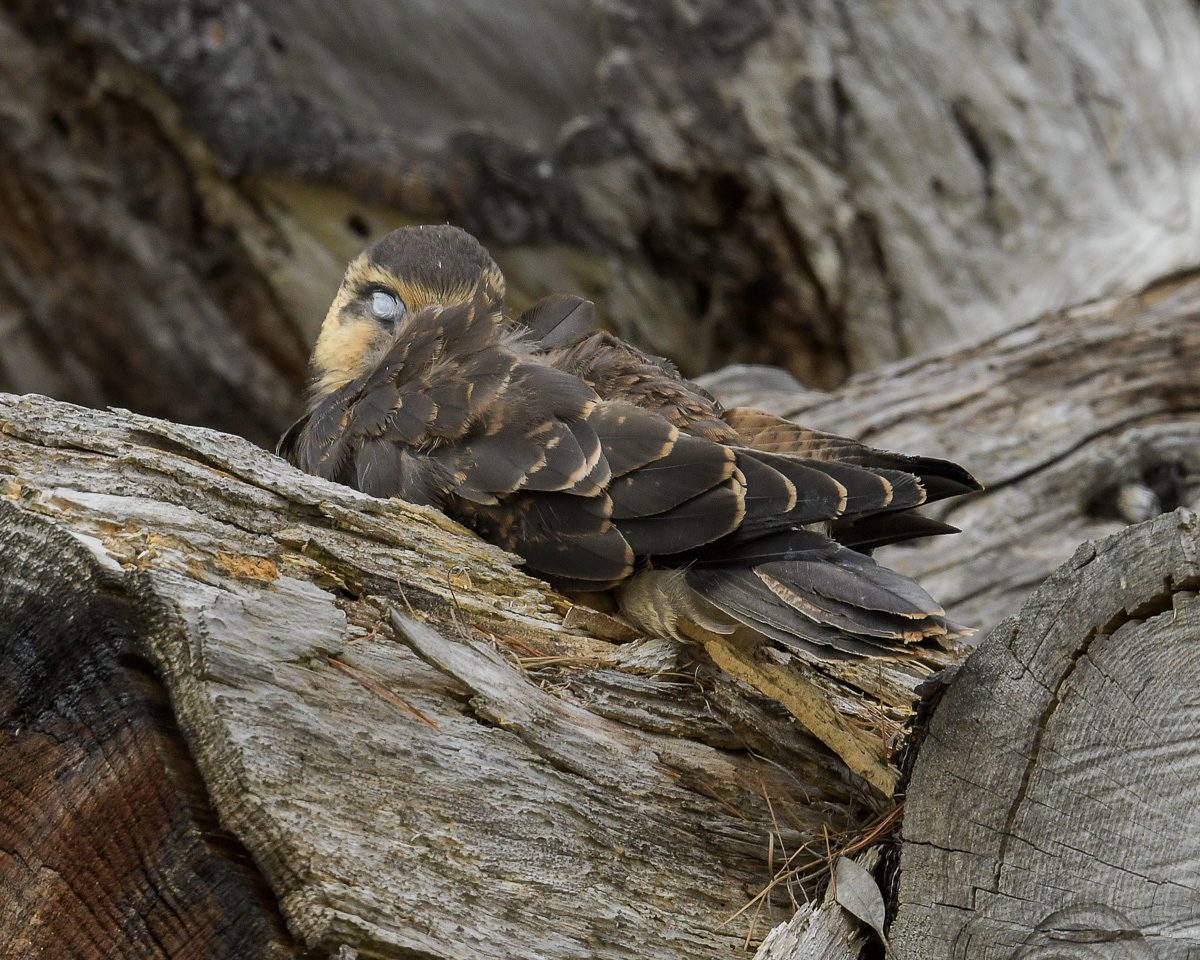
Time to tuck your head under your wing and sleep it all off.
By now they were so relaxed that they were unconcerned by our presence.
… and after a nap, off for an exercise or two in flight

For a larger view, click on the photo.

Flight: Act 3

I have seen the mornin' burnin' golden on the mountain in the skies
Achin' with the feelin' of the freedom of a falcon when she flies
Kris Kristofferson

The timing of the flight of the young Brown Falcons was always going to be a bit hard to predict, and based on previous experiences, I was unsure where the young would be shepherded off to.

As I walked into the area near the nesting tree, I spotted the female on a branch about another 300m down the track. Perhaps she was waiting for a food delivery. I came through the trees and stopped near the nesting site. It was quiet. Very quiet. No sign of the young among the pine tops or branches

After a few minutes the distinctive cry of one of the young came from a treeline off to my right. So, they had moved.
A bit of relocation through the undergrowth and I came to a likely tree, and then one of them called again, and way up on a high branch, there it sat, with what seemed to be the remains of a Silver Gull. More searching through the tree and higher up, there was the second one.
They didn’t seem to be in a hurry to move about, but at least they were now fledged.
I left them in peace.

The following morning, was one of those great photo days, the sun just appearing over the horizon as I left home, and a beautiful blue sky.

A quick look around the nesting tree and the other tree where I’d seen them the day before, and… no sign. But it wasn’t long before I heard a young cackling call from down near the area I’d seen the female the day before.
Yes, they had moved about 500m though the trees. One of them was on the ground when I came around the treeline. It seemed completely un-fussed by my presence and just kept walking over the mound of bark mulch.
I kept a respectable distance back and waited. The other bird was sitting on a large pile of old logs in the sunshine. They were in no hurry, nor I so I pulled out a morning cuppa and waited to see what might occur.
Two bike riders passed by on the track nearby and I’m sure they didn’t see the little Falcon not more than about 10m from the track. With a radar head-turn it followed them, but again didn’t seem perturbed by their passing.
Somewhat emboldened by that I moved up along the treeline to about 20m from the pair. They were relaxed and so I was able to sit with them for then next 15-20minutes and observe their activities. I guess for them everything is new. So as long as I didn’t make an attempt to get too close they were more interested in all the things around them than my sitting in the grass near a tree.

For the remainder of these postings, I need to set up a working premise.

≠=========≠
Please Note.
Under no circumstances were these birds encouraged, called in, feed, or interfered with.
We are in the open, nearby, no hides, or attempts to 'sneak up' on them.
It is their choice to fly in, Their acceptance is their choice.
I was taught by Jon Young, a native American tracker/trainer, to "build connections"with birds.
Each encounter was at the discretion of the bird.

We are beginning to build a treaty. They have said. 'yes', I am ready to move away if they stress.
No Photo is worth Stressing a Bird

I've said before on the blog, "If a bird flys, for any reason, because of my actions, then I consider the treaty has been broken, and I'll make every effort to not repeat that mistake."
i need to put this upfront, because as time progresses, and their skill level increases we were invited to share some significant moments with these two.

Then There were Two: Act Two

The average sitting time for a Brown Falcon is around four weeks. It takes about another four weeks for the young to grow sufficiently to move about.

I had no idea, other than a wild guess, as to when she first laid and began the business of incubating the eggs, so a number of visits over the the weeks didn’t reveal any activity.
I also only had, at best, a vague understanding of where the nest was, high up, in the Umbrella pine. I also had no effort to get closer, or ‘sneak up’ on her. So distance work with my binos was the order of the day(s).

In the end, I had narrowed down the area to one small ‘umbrella’ that she chose to approach by landing in the neighbouring tree, then hopping on to a close branch, then slipping to the nest tree, and disappearing among the twisted branches of the pine, and… was gone.

One morning, as I went past, finally I heard the whimpering cries of the young ones calling for attention. Not particularly loud, so they still had a way to go.
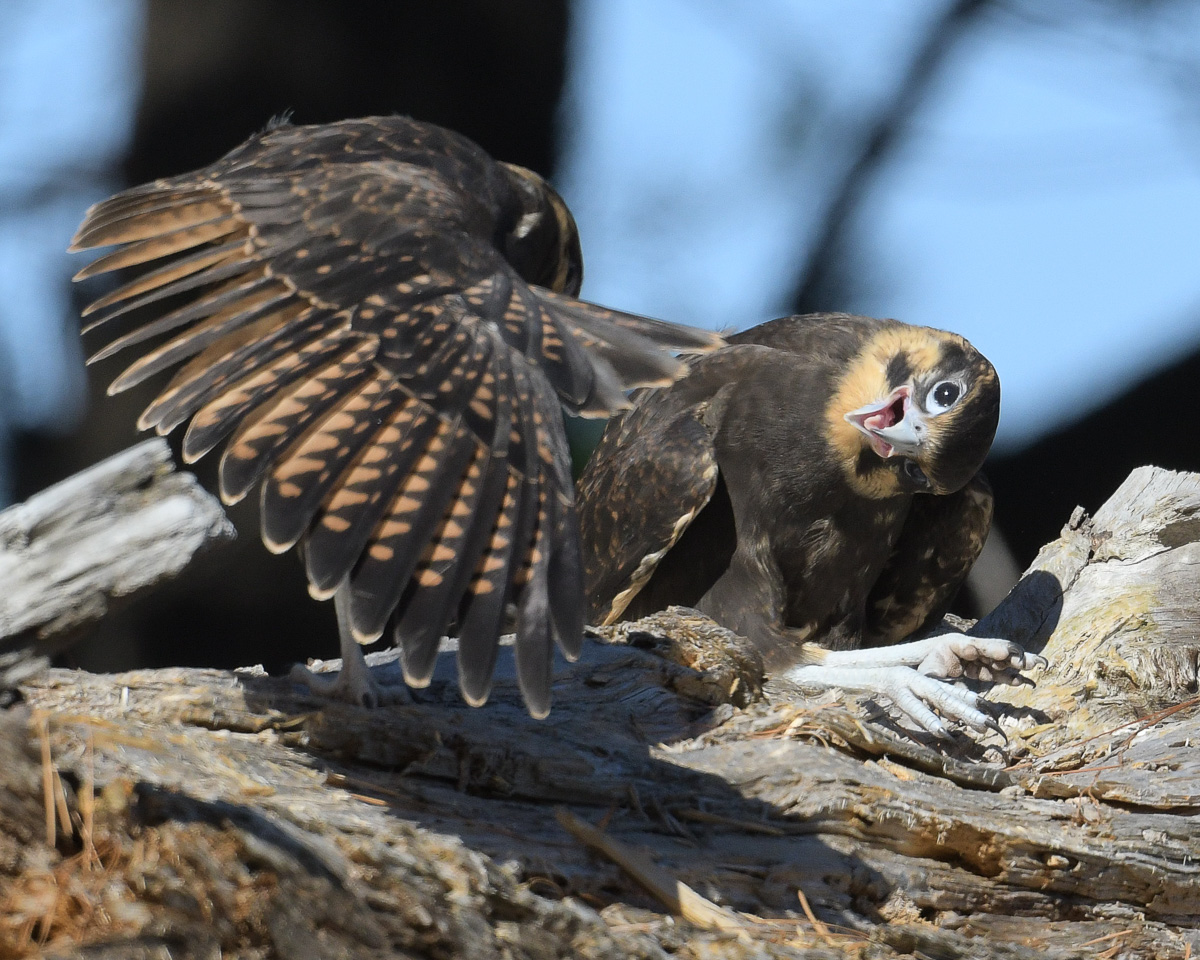
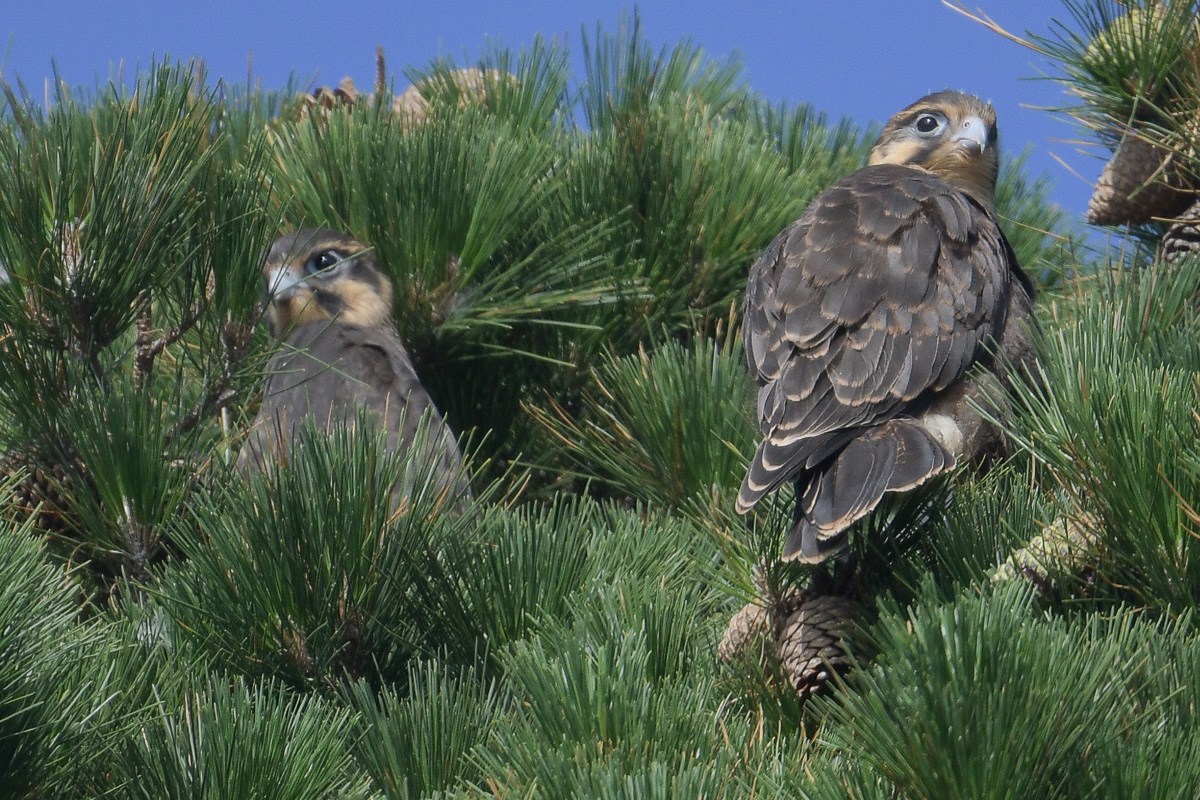
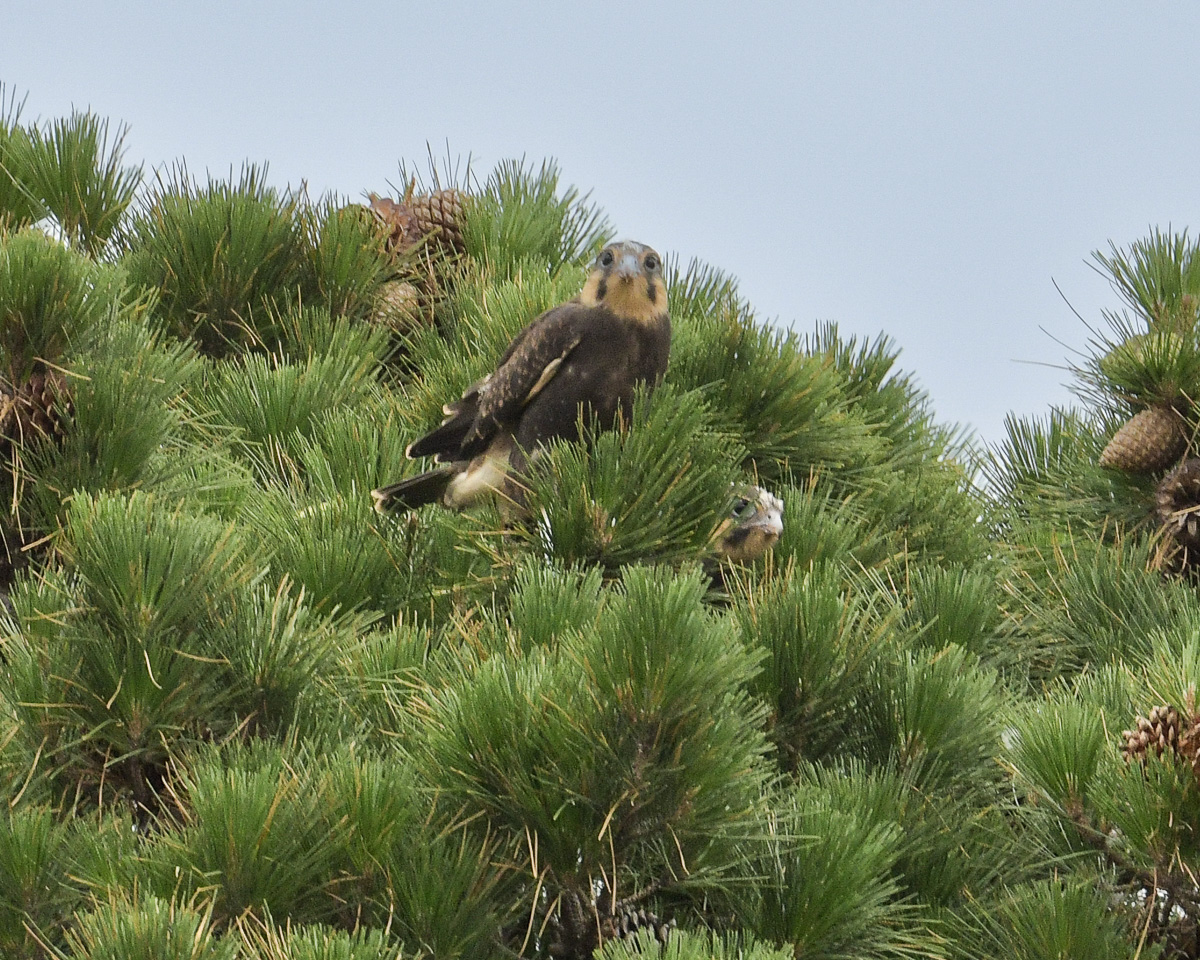
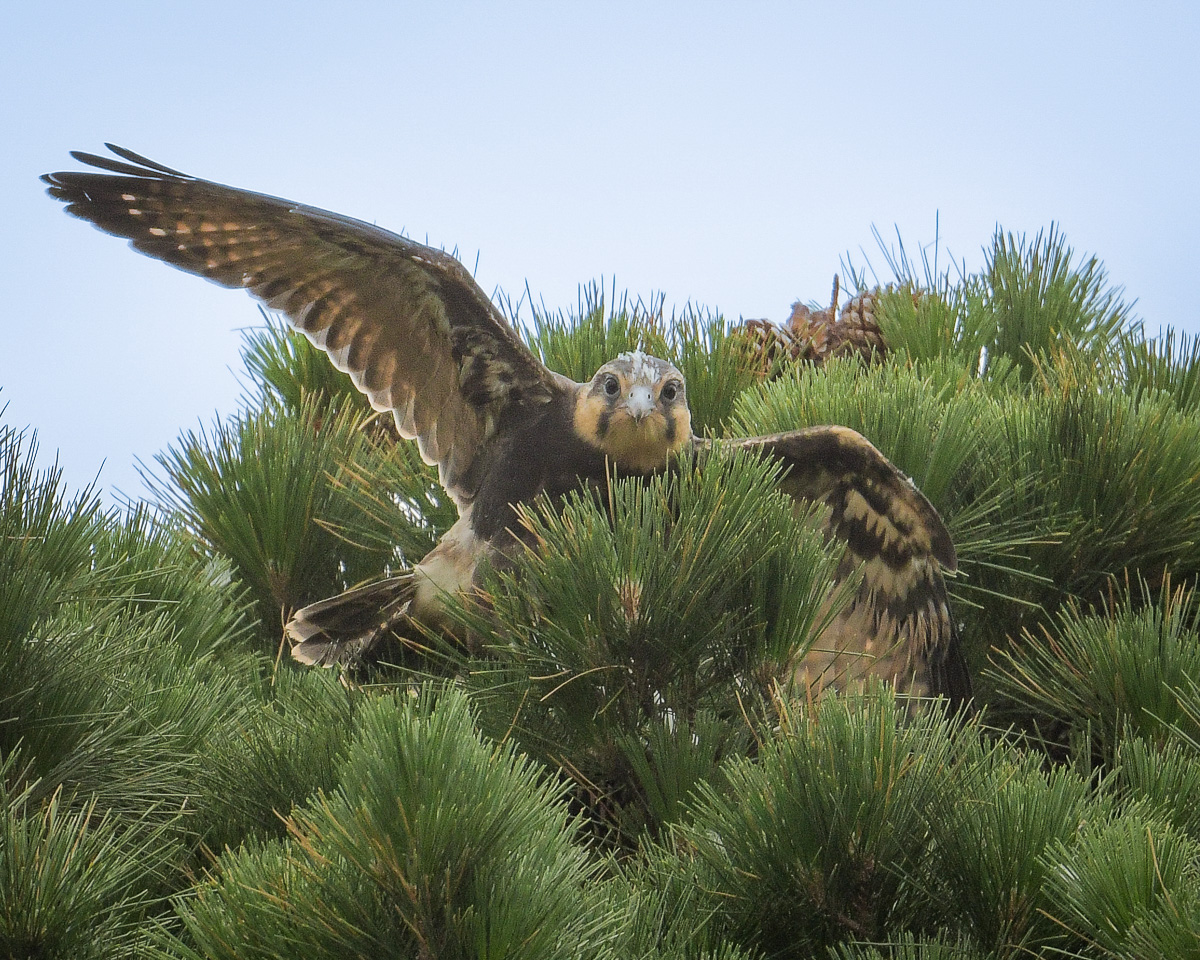
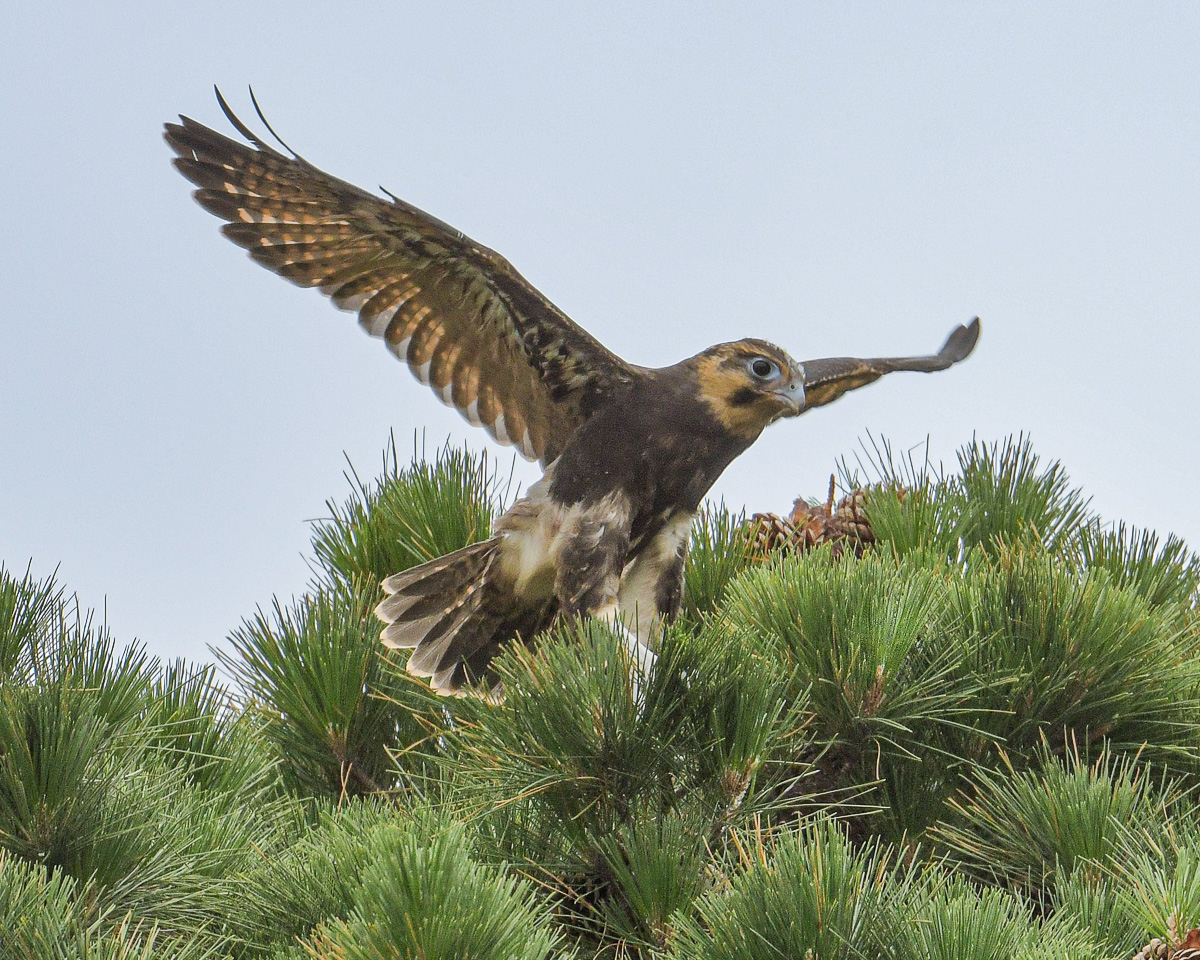
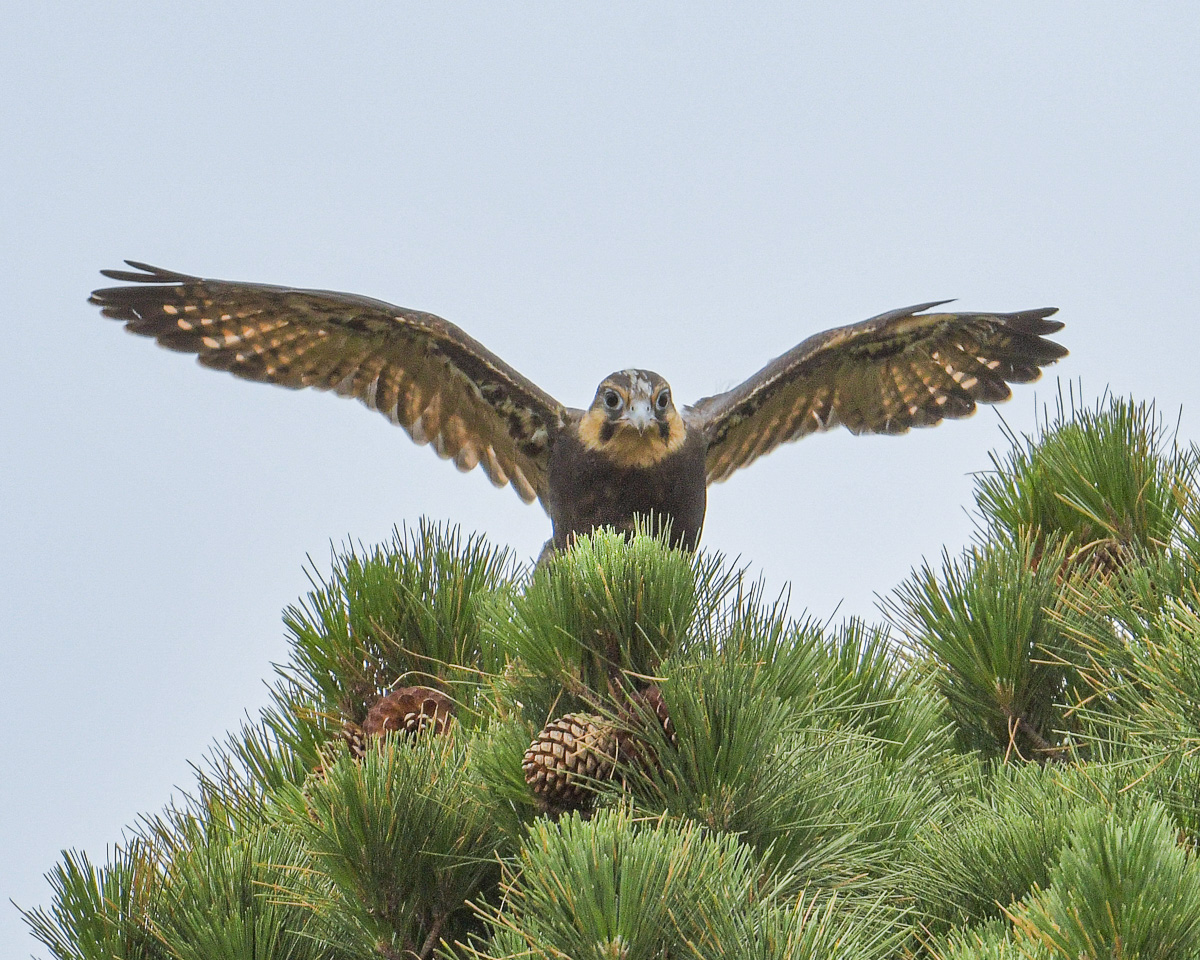
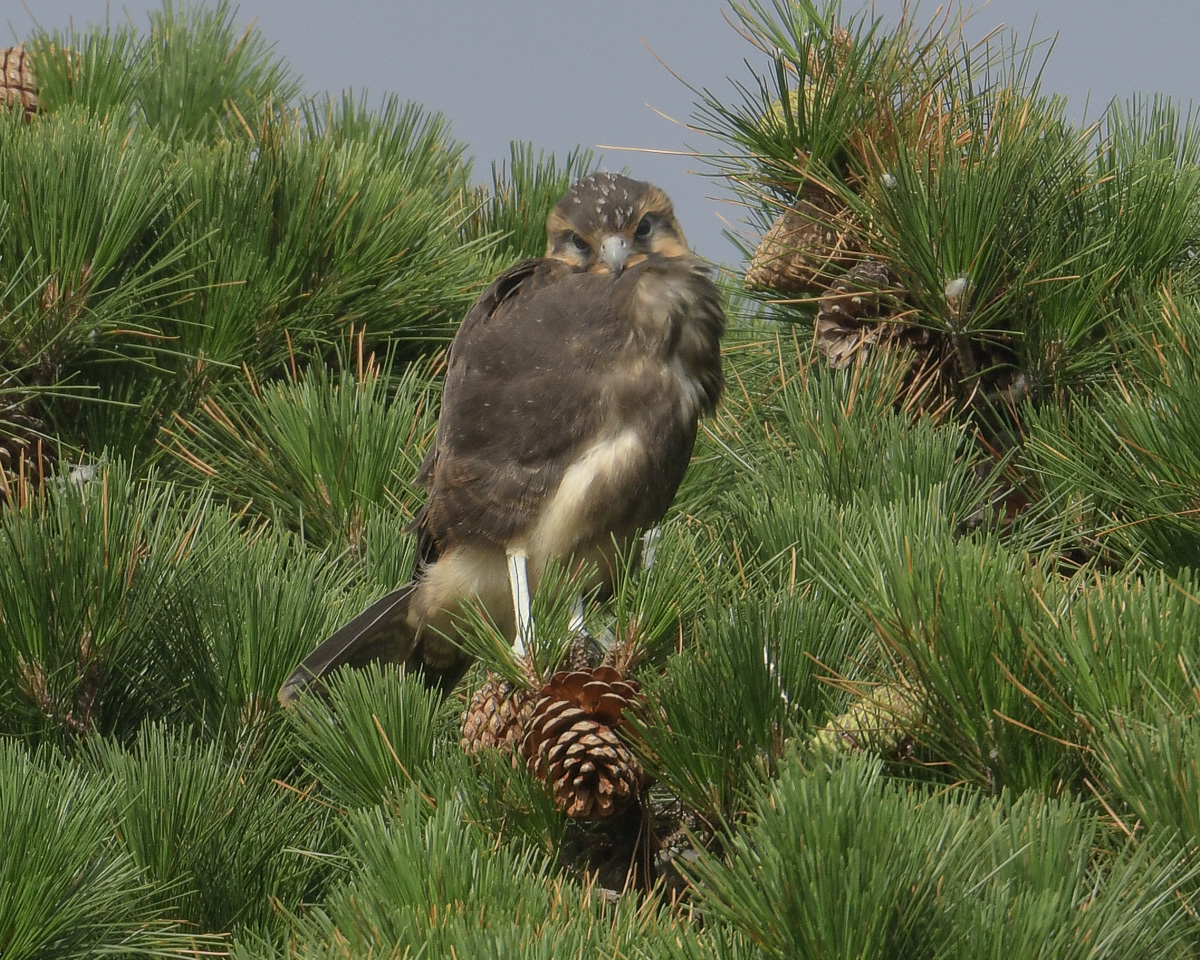
A few days passed to the next visit, and there they were. Two young Falcons. Now ‘branchers’ Moving about on the top of the pine, still covered in patches of down, and preparing their wings for the big job ahead.

On the next visit, they were both on the move about the tree. One, seemed just that bit more adventurous, and on the day I was there it had managed to scramble through nest tree and climb on to a branch from the next tree that had grown into the first tree. It skipped along the branch, still not ready to fly but certainly on the move.

It arrived at the far end of the second tree. Foiled.
There was a 15-20m gap to the next tree. It sat on the highest clump of pine and gazed down at all the activity below. The Finches and Silvereyes were busy feeding their own young from the grasses and bushes on the ground level.

Next time I visited both birds were hard at work on wing practice.
On the day, there was a stiff wind blowing and as they flapped and ‘wind surfaced’ while clinging on to the pine needles they would raise up and down like kids on a trampoline.


It wouldn’t be long before they left the home tree and made it out into the big world.

Enjoy

Two, ready to take on the world

Eager to get going. Lots of wing practice
Holding on to the pine needles that acted like a spring, the little bird rose up
and down in the breeze
It was able to spread out the wings and use the breeze
to exercise the feather control
After all that exercise, a snooze in the sunshine until lunch arrived
It looks like a flight, but its only jumping from one spot to another.
Meet the Explorer. The branch connects two trees together
and gave it some extra area to explore
At the end of the tree, there was nowhere else to go
Foiled. All it could do was look down and wonder what the little birds below were doing
Waiting for the next food delivery

Raising Brown Falcons: Act One

As those that follow my Flickr photostream will know, this series has been quite awhile getting to ‘publish’ on this Blog.

For a number of years we had the good fortune to work with a pair of Brown Falcon that were domicile in our nearby coastal park. The female in particular became quite tolerant of my presence and we managed to follow several of her clutches. Unfortunately several years back an unfortunate incident occurred and she lost the three fledglings. (Through no fault of her own I must add)
She stayed in the area for a little while, but then departed and I’ve never had the pleasure of working with her since.

Mid of 2025, just as EE was getting ready to attend clinic to fix her ‘fetlock’, I’d noted first one, and then a second Falcon patrolling the nearby paddocks. It didn’t take long to see some fancy team flying techniques, and then he began to turn up with several snake dinners, and amid all the girlish cackling, she must have said in her most polite Brown Falconese, “I Do.”

Then, they seemed to disappear and as EE was now incapacitated our trips out to see what might eventuate dwindled.

One morning I found them sitting together on top of an “umbrella pine”- or parasol pine. A little guessective work and I concluded that he had just provided a meal, And she flew, off behind some trees and out of sight. 😦
I followed along the tree line but she had vanished. But the next bit you can work out —Leaves tree, flys south. Disappears, she must be working on the south side of the tree line.
Next visit.
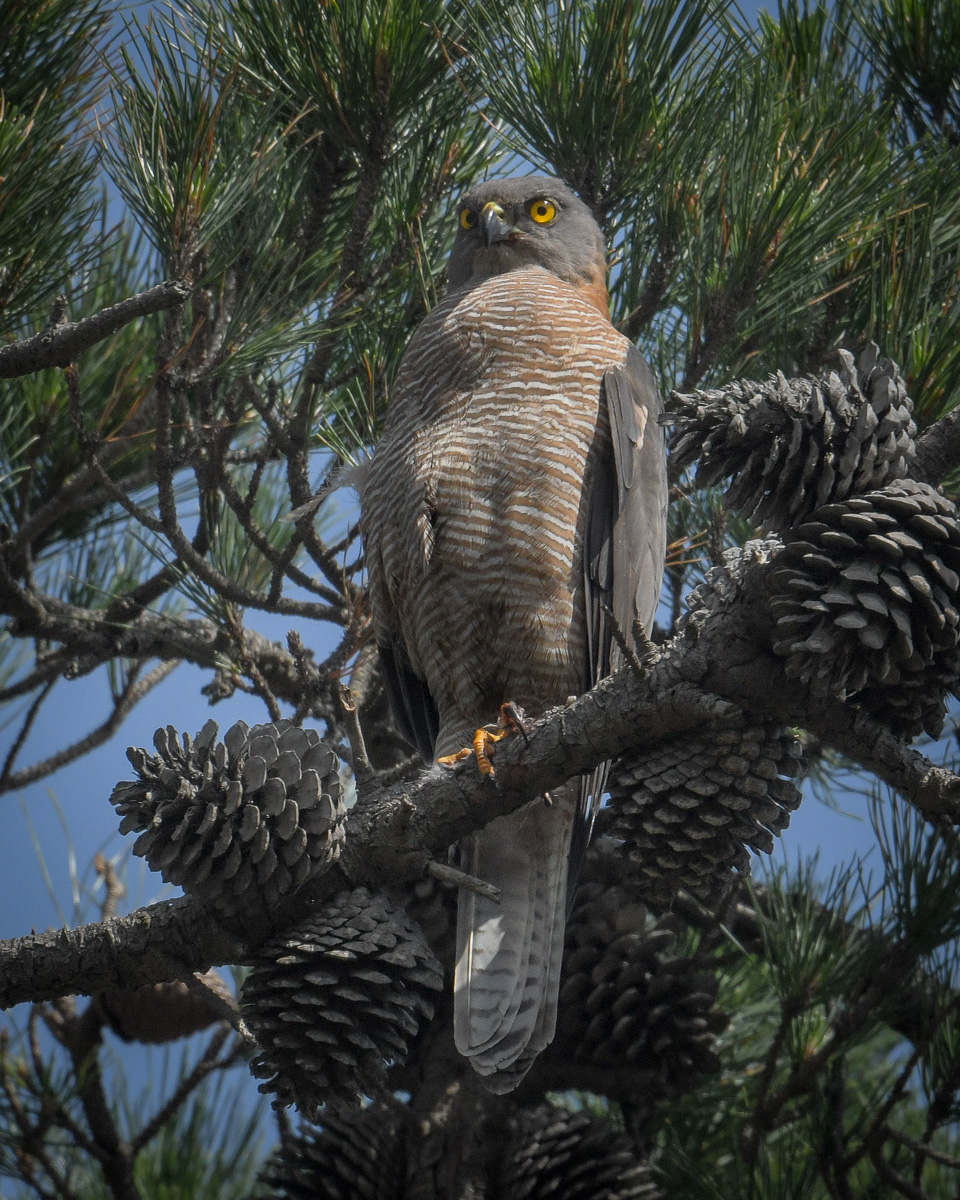
Suitably equipped with camera and thermos of Earl of Grey’s finest I sat down under a tree to wait. Got distracted badly by a local Collared Sparrowhawk that had also set up nest in the area—but that is another story. Ticky-tocky ticky tocky, time passes. Suddenly she is on top of a tree about 300m down the line. And then off in the far distance the male calling as he comes in. Another snake. She departed to a tree to feed, and again disappeared, but I was getting closer.
Next visit.
I waited on the far side of the treeline, and again, time passed, and then he appeared with yet another snake. (this bird is building an impressive record) She finished the meal and then flew directly to the top of an umbrella pine and disappeared.

Now I was certain of the tree, but… whereabouts was the nest…

Here’s some of the first couple of months.

Early in the season he set out to win her heart with an appropriate offering.
One morning I found them just after he had been in with refreshments
Snake was the meal of choice
Rather liked his casual approach
She seemed to have several perches she favoured. The dark shape behind is
the male leaving
Back to the job in hand
Another day, another meal. I knew he was coming, but somehow he slipped
in behind the tree and caught me by surprise.
By now I was certain she had a clutch on the way
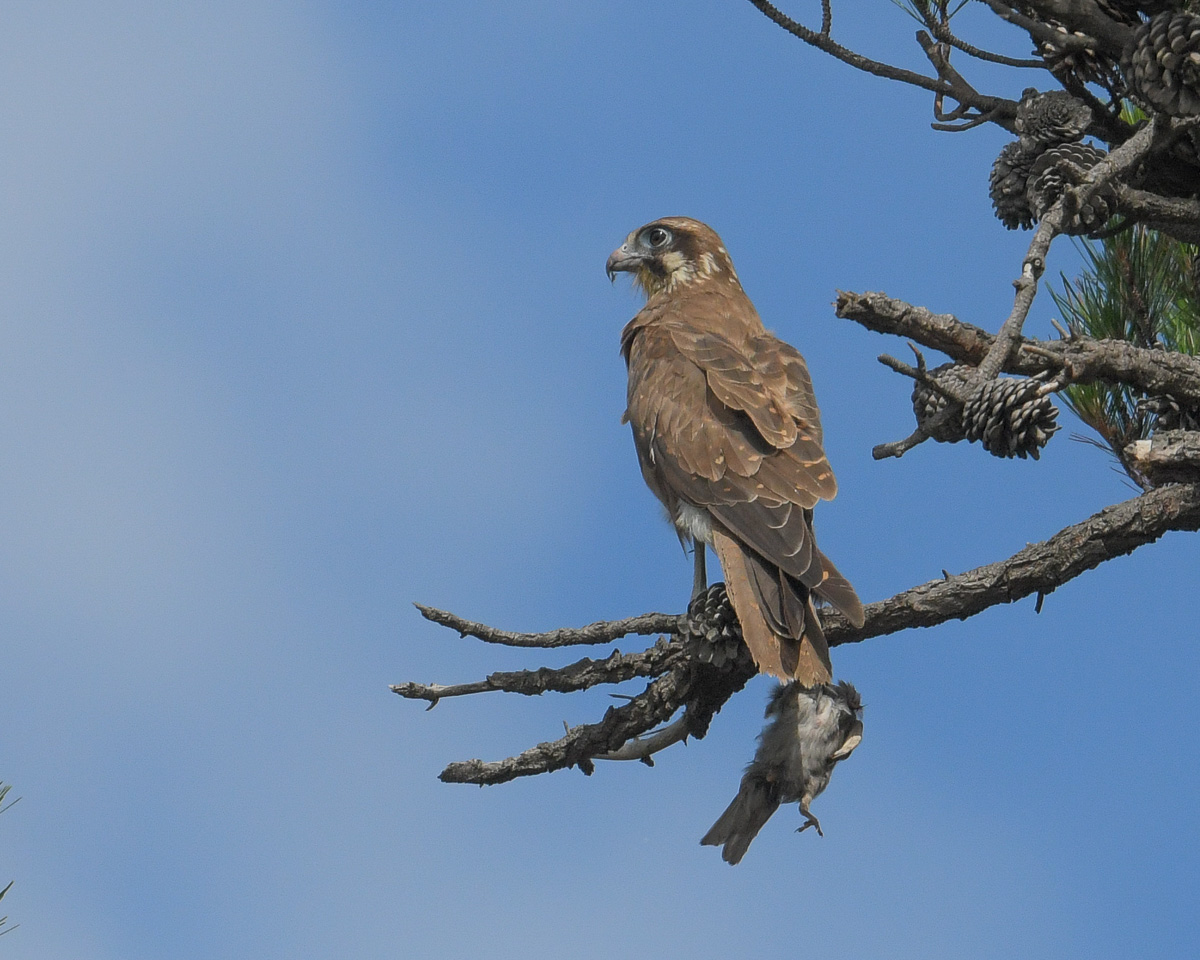
Her brood needed extra food and she had a ready supply of field birds it seems
A hunting she must go
The aggressive next door neighbour. They held regular battles over flyway territory

Enjoy
Act #2 is not far away.

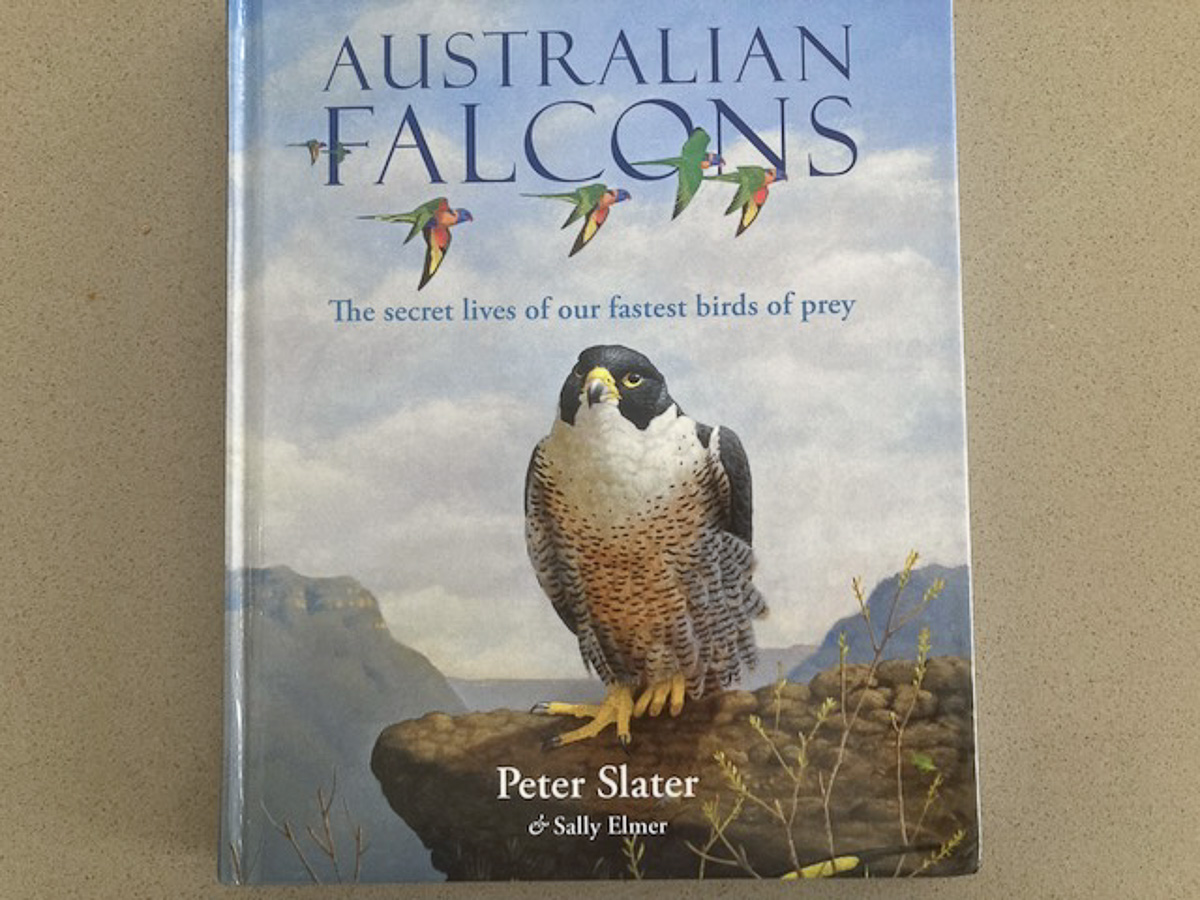
Peter Slater Falcons Book

Sometimes serendipity does it strange and unusual activities.

I’d place and order for Peter Slater, and artist Sally Elmer’s new book “Australian Falcons” a few weeks ago and had almost forgotten about it until the other day Postman Pete turned up with a fine package containing the book.

I have a warm spot for Peter’s work as my first real bird guide was his little “Slater Field Guide” It suffers a bit these days from the species and race arrangement used, and also, of course. because so many birds have been reclassified since its update in 2003.
However it’s still my ‘Go To” when trying to id a tricky bird as the quality of the illustrations and the variations are such that they look just like the bird I’m trying to id.

It also happens, serendipitously that a large part of the new book has quite an extensive range of photos, and information on Brown Falcon.
Some I guess is readily available, some I have to admit I’d wondered about, but had never read anywhere.

From Page 45.
…Vigors and Horsfield …named “Falco Berigora” The notes accompanying the description read: “The native name of this bird, which we have adopted as its specific name is Berigora. It is called by the settlers Orange-speckled Hawk.
… Considering the variability of the Brown Falcon its not surprising that it has been given a variety of names, most of which are synomous…

Birdaspoety blog has rarely engaged in equipment or book reviews, nor am I about to start.

However here are few highlights from my copy.

The book has a variety of photos and paintings.

Each bird chapter has some stories of his encounters with Australian Falcons and in the Brown Falcon pages is a fascinating story of raising a young female that has a damaged eye. While Peter has an aversion to giving birds names, I, on the other hand, find it useful in working with them. So much nicer to speak of Cassia, of Cinnamon, than that ” That falcon with the marble chest that is down along the lower fence line” or something.

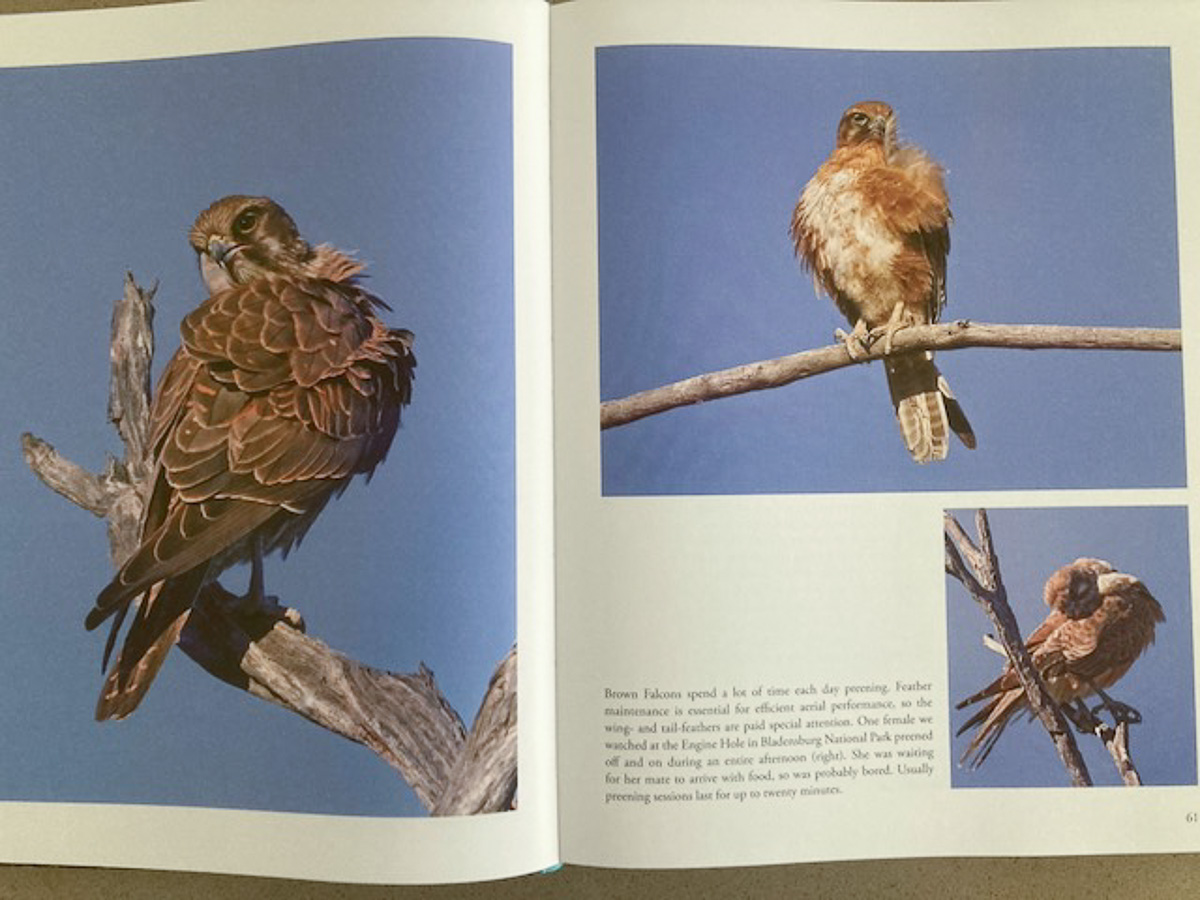
Here is a typical page from inside. Always interesting to have a Brown that is relaxed enough to preen.
I do have a theory that the preening is sort of nervous reaction. “I’ll preen and show you I’m not intimidated by your long lens.”

On page 54, he discusses hunting technique
…The hunting technique… utilises a vantage point.. There the falcon waits patiently until a mammal, reptile or insect appears, then swoops down in a long glide. One strike we measured covered more than two hundred metres, a testament to the bird’s eyesight.

I have some photos of a bird that, after sitting for about 20 minutes, stiffened up, peered across the paddock(s) and then launched. Running right over my head, in a long slow controlled glide. It disappeared from view near some bushes that would have been close to 800 metres out. I don’t know what it caught, but I have no doubt its intention would have been fulfilled.

Peter also discusses the variability of the birds and how current research suggests that the colours do change as each individual ages and depending on the sex.

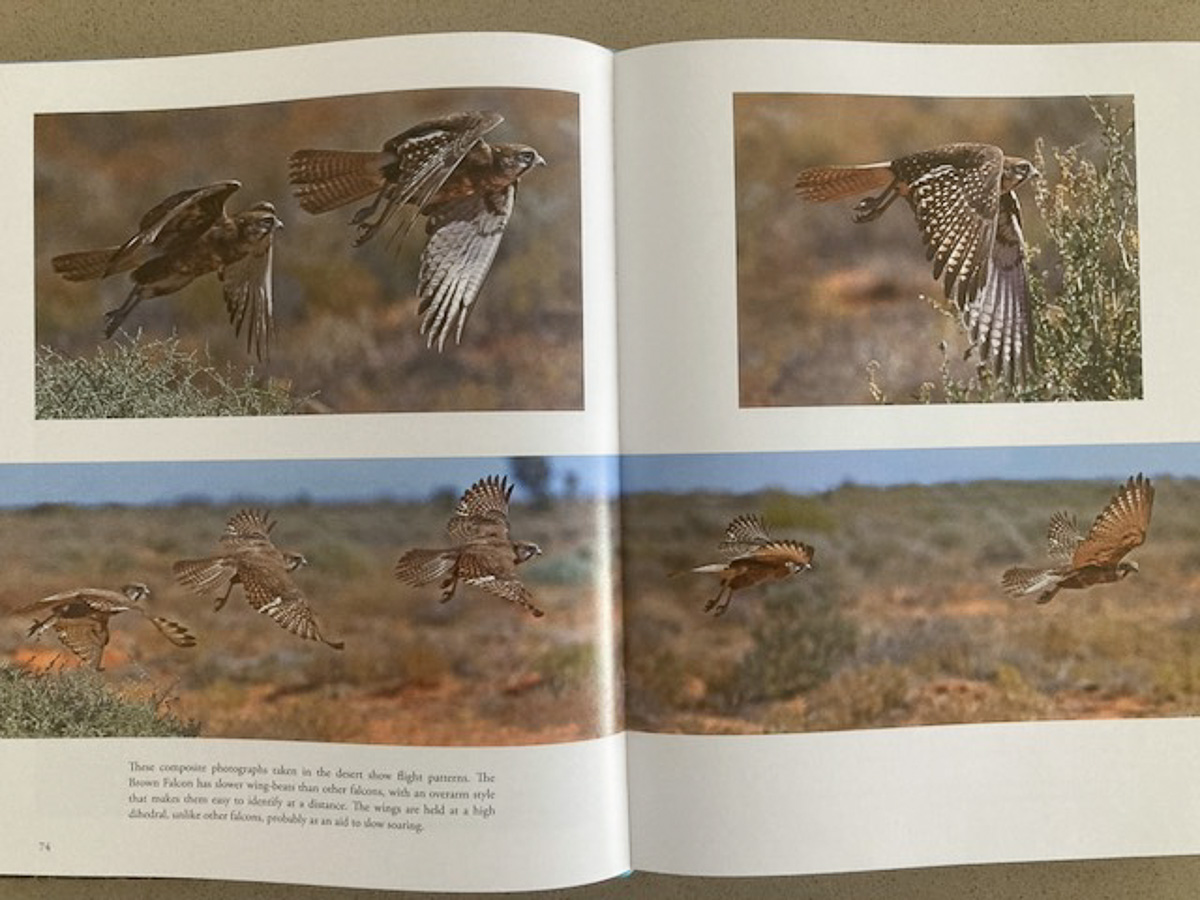
p 74-5 have some composite photos of a bird at launch and show the deliberate wing strokes that give them both speed and the ability to glide hardly using any energy I expect.

But if for nothing else, I appreciate the book for his close affection for the birds. It comes through on every page with descriptions like, “one of the most beautifully marked”, and “handsome male”, and “The equisite bird..,”
So I won’t feel bad about using such terms on the blog for some Brown Falcon shots that are bound to come up soon. (That is a hint, I think- more seredipity.

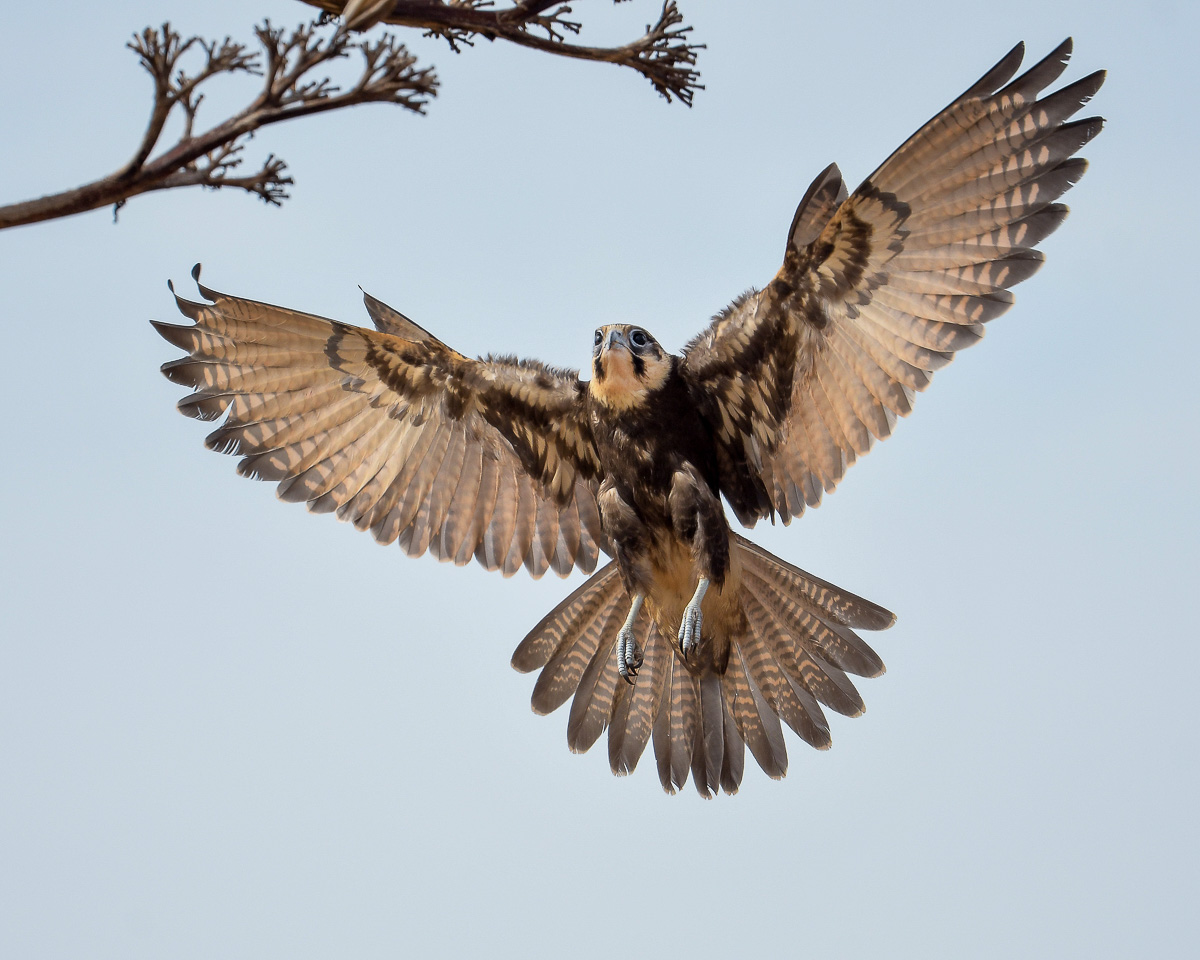
A fine wing and tail display as the bird heads for a perch on a ‘100 year old’ plant (Agave Americana)

Enjoy

Along the Track: Varying Variations

Brown Falcons

Was out with a group conducting a quarterly bird survey. The area is open woodland and grasslands Ideal Brown Falcon territory.

We had turned a corner into an open area, and a bird rose off the ground up ahead. With outstretched white wings and body, the first thought from the group was “Nankeen Kestrel”.

But the body size and wing action was of a Brown Falcon, and as it flew past, I managed a few frames, and sure enough. Brown Falcon. Which at the time I described it as “White-Brown Falcon”.
Which started the usual birdo discussions of nomenclature, bird naming, morph styles and correcting my error of naming it as “White”.

Click on photo for a larger view

The “White” Brown Falcon that started the discussion

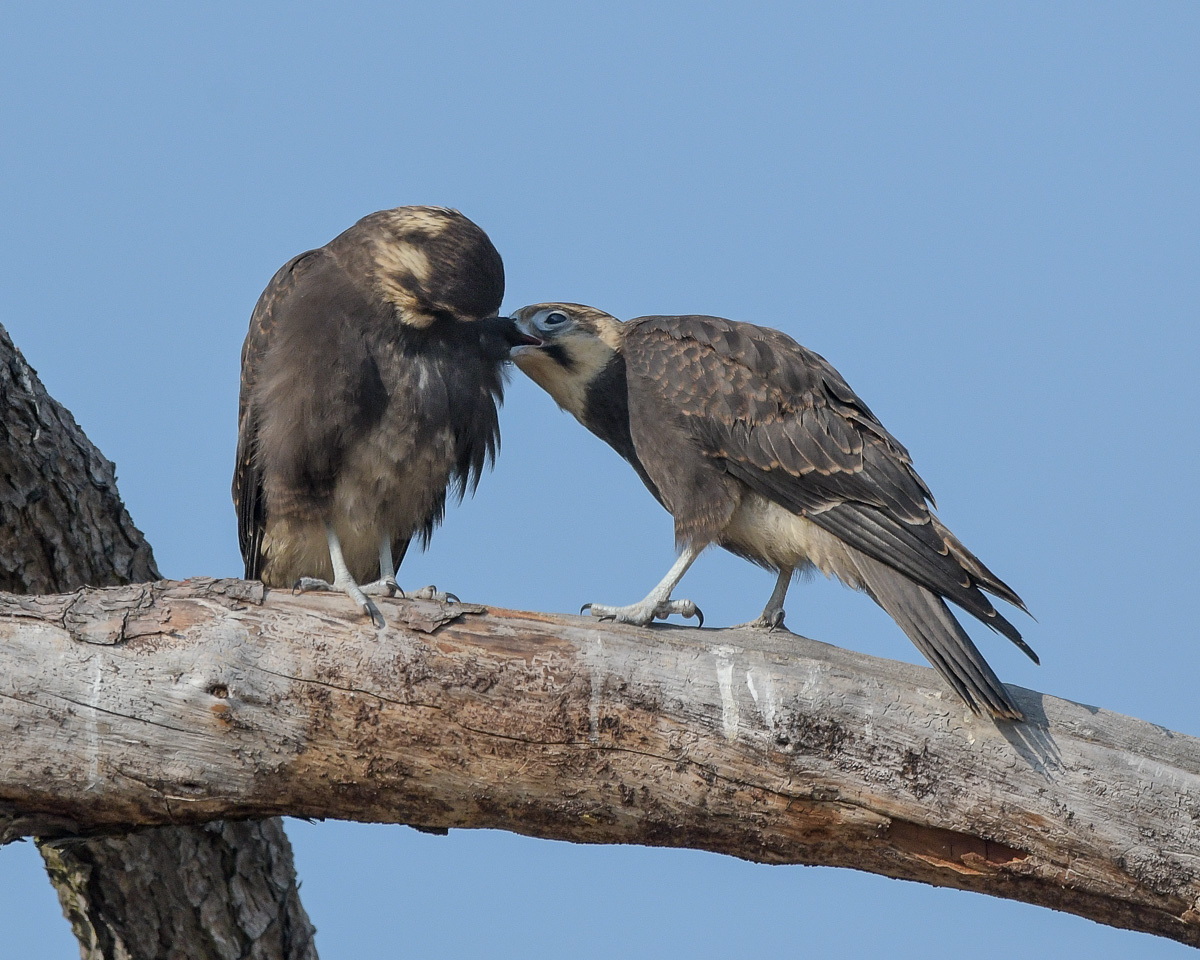
In the afternoon walk, Mr An Onymous and I left the group to follow a track along a ridge-line as it was in shade and cooler. In a few minutes we saw on Brown on a tree, then heard the raucous call of an incoming bird. A food delivery no doubt and we went to look. The “White” bird flew into a tree with a snack, and the first bird followed and after some in-depth Falcon discussion they both flew out together with two rich brown juveniles.

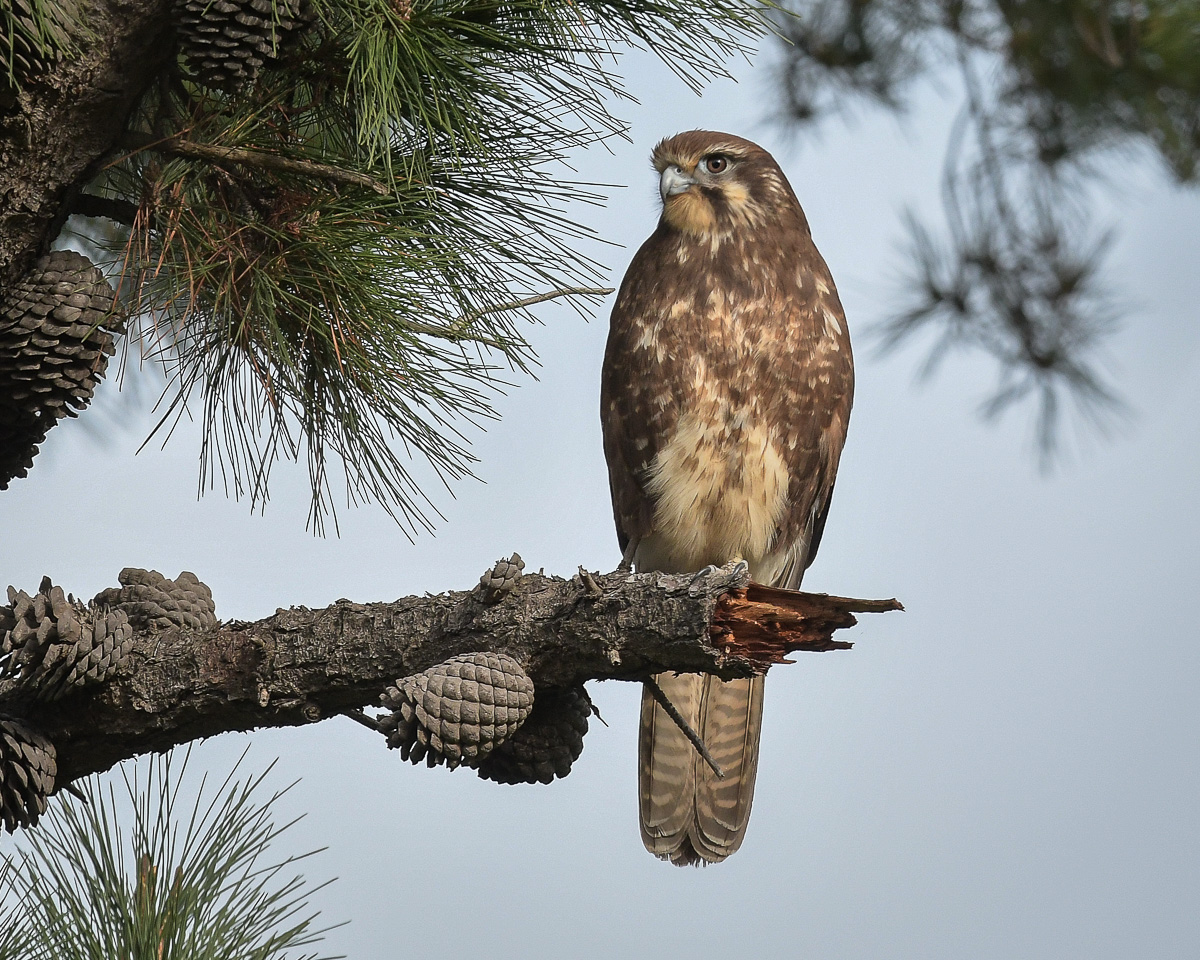
And thinking back over the experience, I began to wonder how many ‘White” Falcons I’d seen over the years. There used to be a theory that the lighter morph (there I used the term) were of the forest, while the darker variety were of the open plains. Now it seems the changes in colour might have something to do with age, and also sex. There are some magicians of the black art variety that are able to look at the variations of the dress, and cere and eye-ring and determine age and sex. It is I have to say an art that I have failed in on all occassions.

So here are a few of the local birds that I’ve encountered over the years.

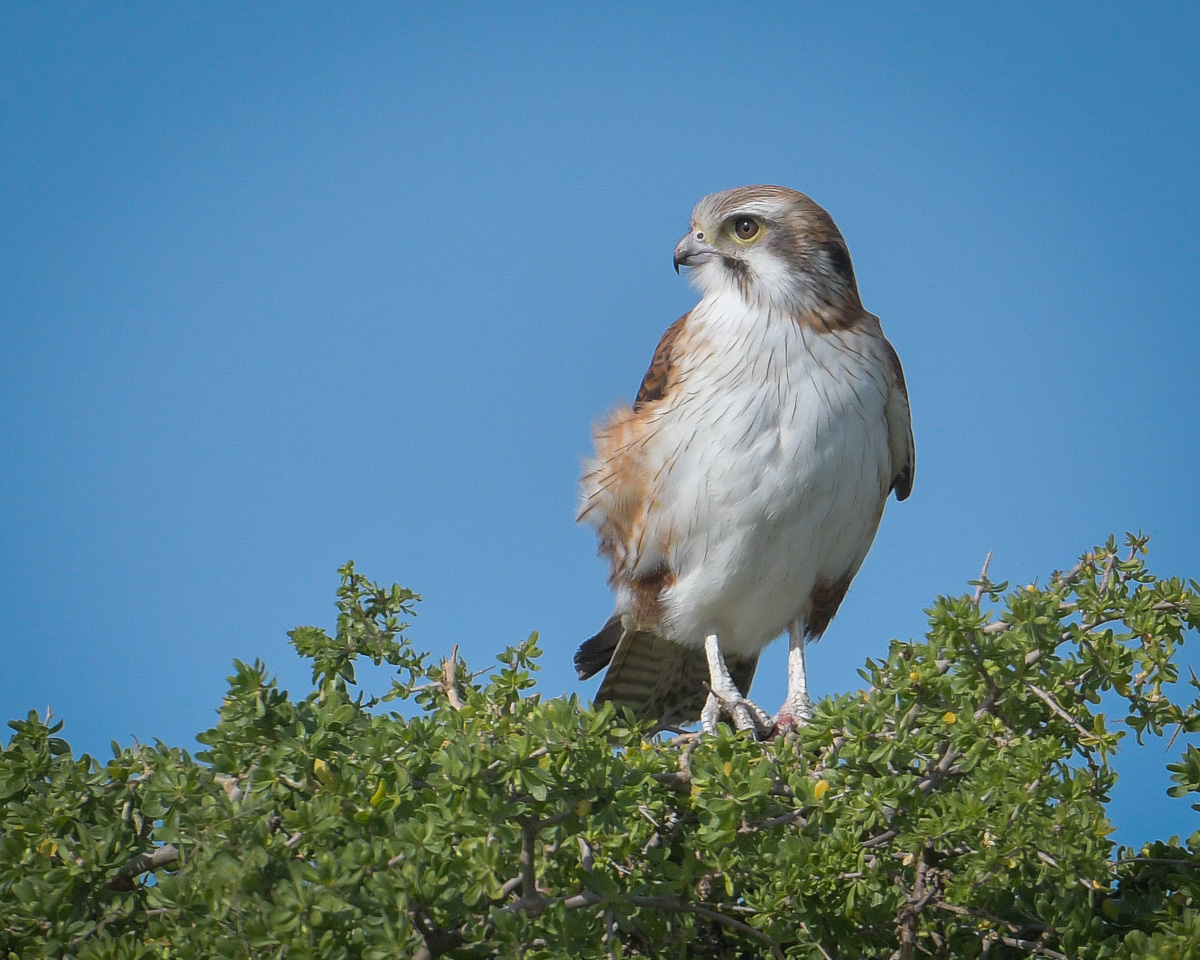
This handsome bird was one of a pair of Light coloured birds that were in our area over the winter

This is the same “White” bird that I had noted from a previous count

Long time readers may remember Cassia, of Cinnamon
She was sitting among the pines, keeping out of the wind
I nearly missed spotting her, and had to go back for a second look.
Then the sun came out.
It really burnished her recent moult into rich brown new feathers.

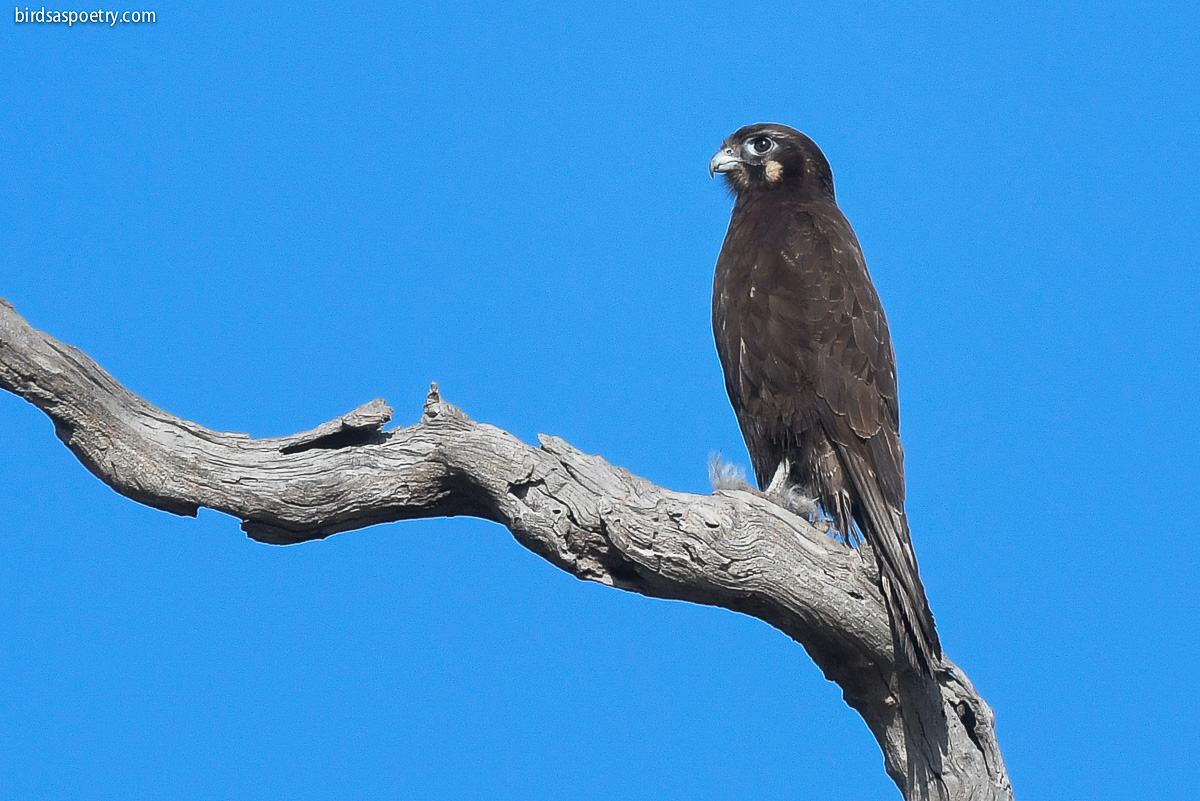
Another bird that caused consternation for those who spotted it. Such a dark chocolate colour that at a distance looked like a Black Falcon.
However on closer examination the face mask and stance were of a very dark Brown Falcon.

This one was on the side of the road and at a distance I thought it would be a Kestrel.

And interesting combo of a light marbled chest.
It’s not wary of me, but of a vehicle that is coming down the road, going fast and then slow. Vehicles at speed they can deal with, but the erratic causes them concern.

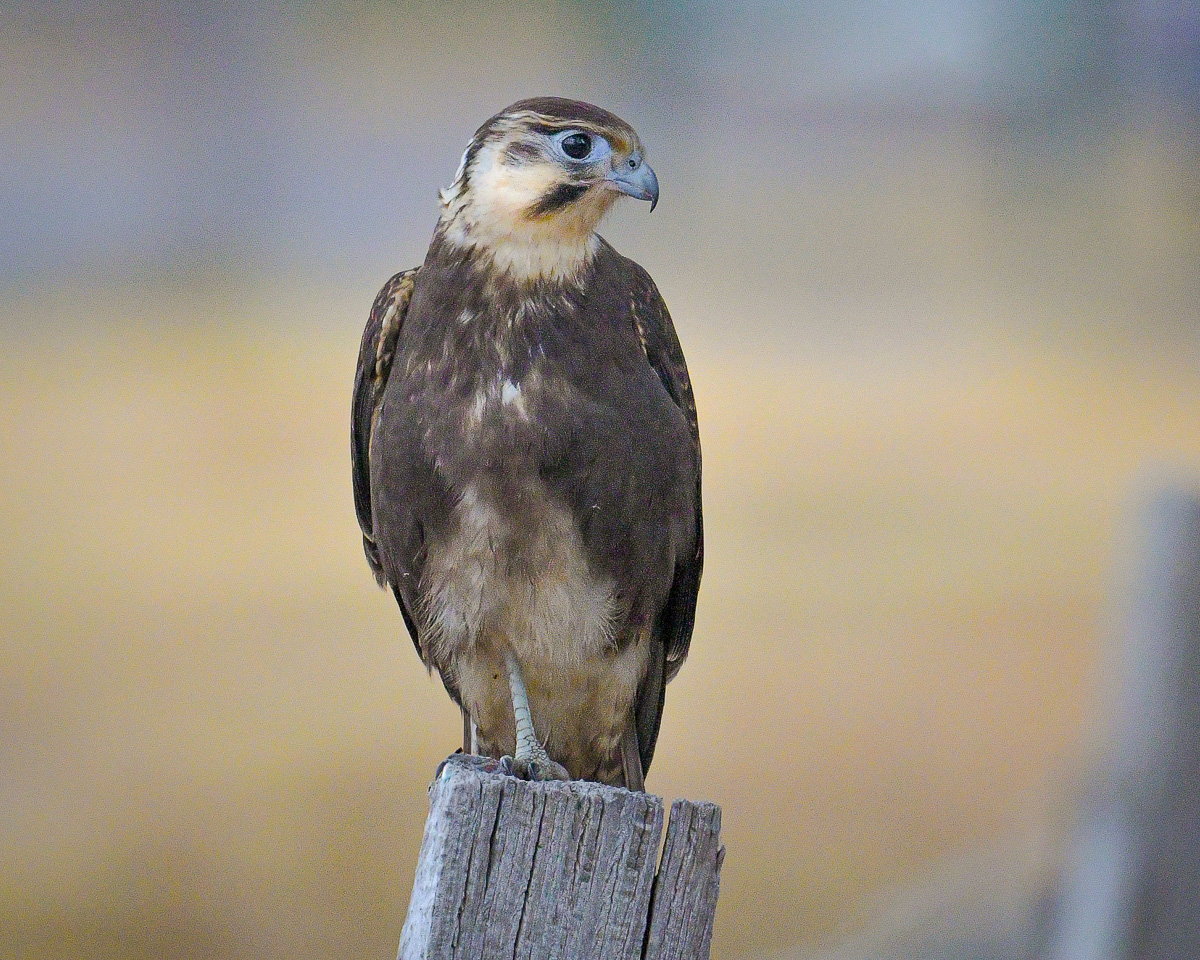
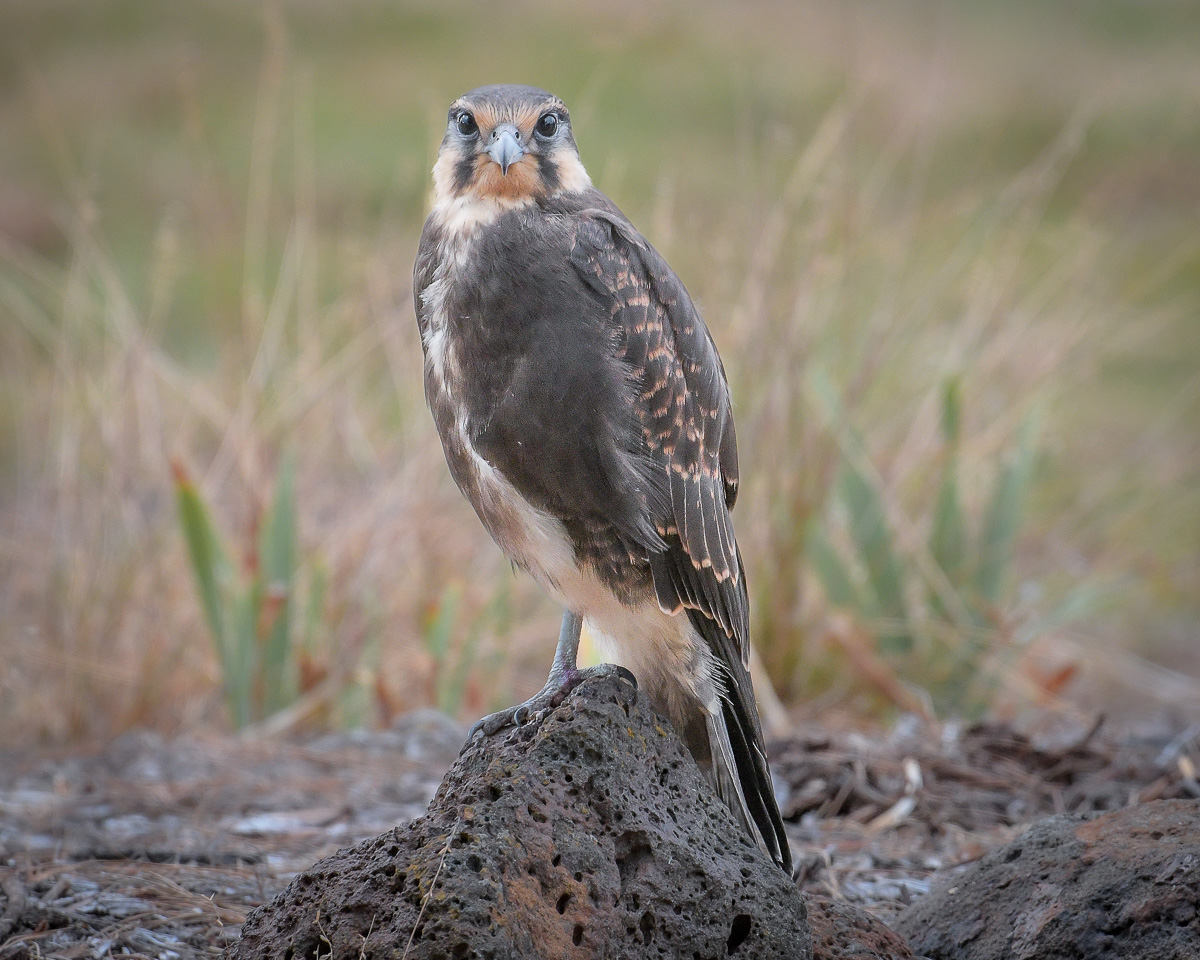
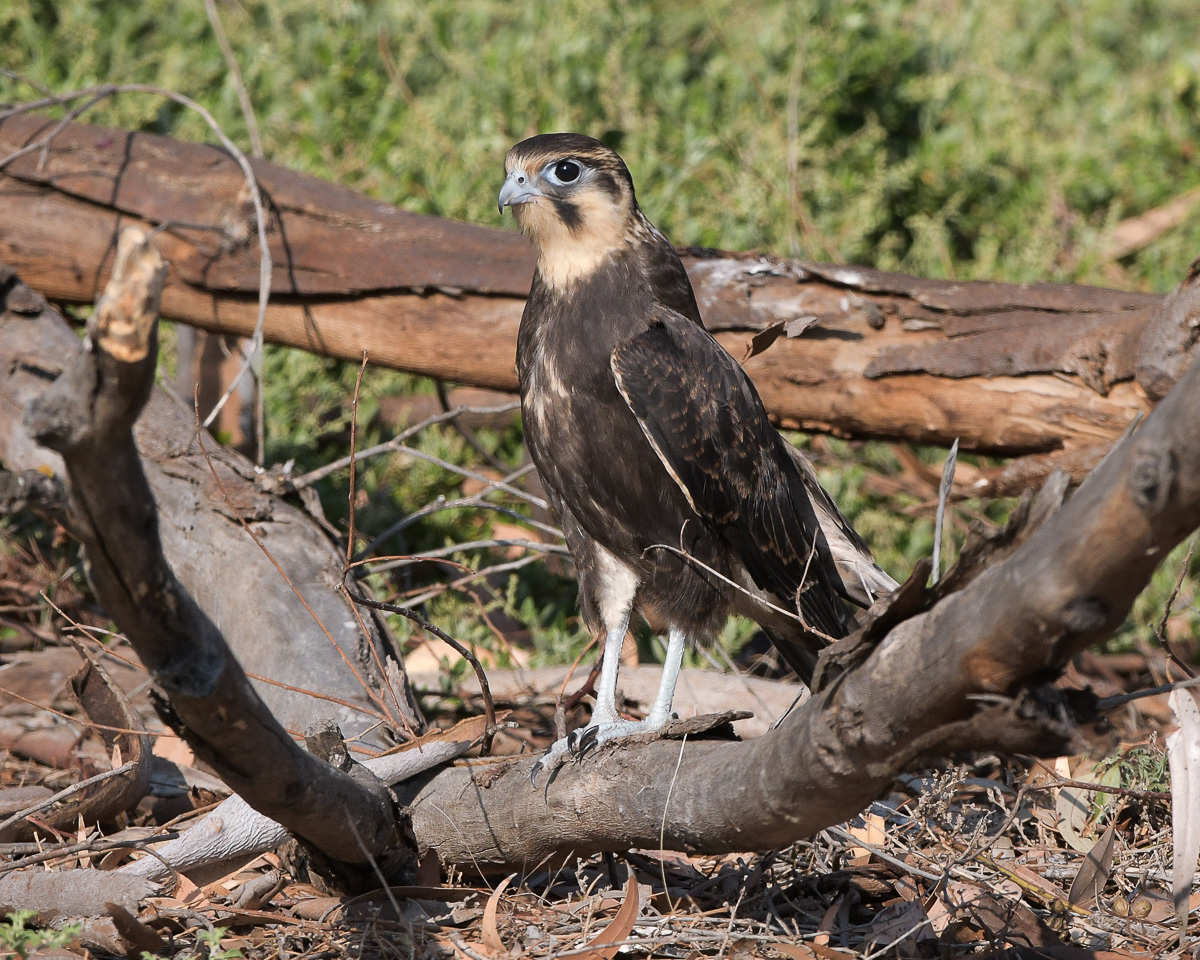
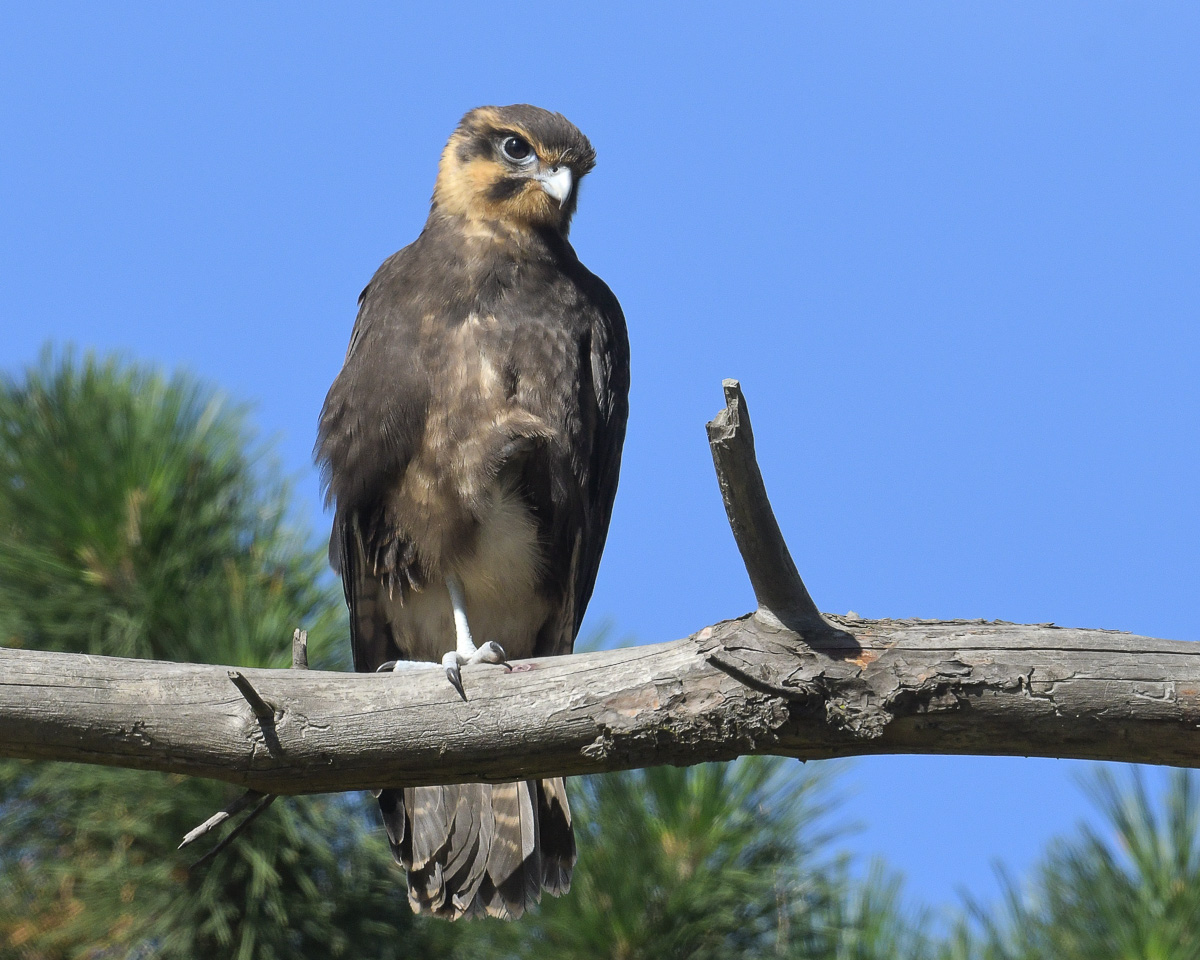
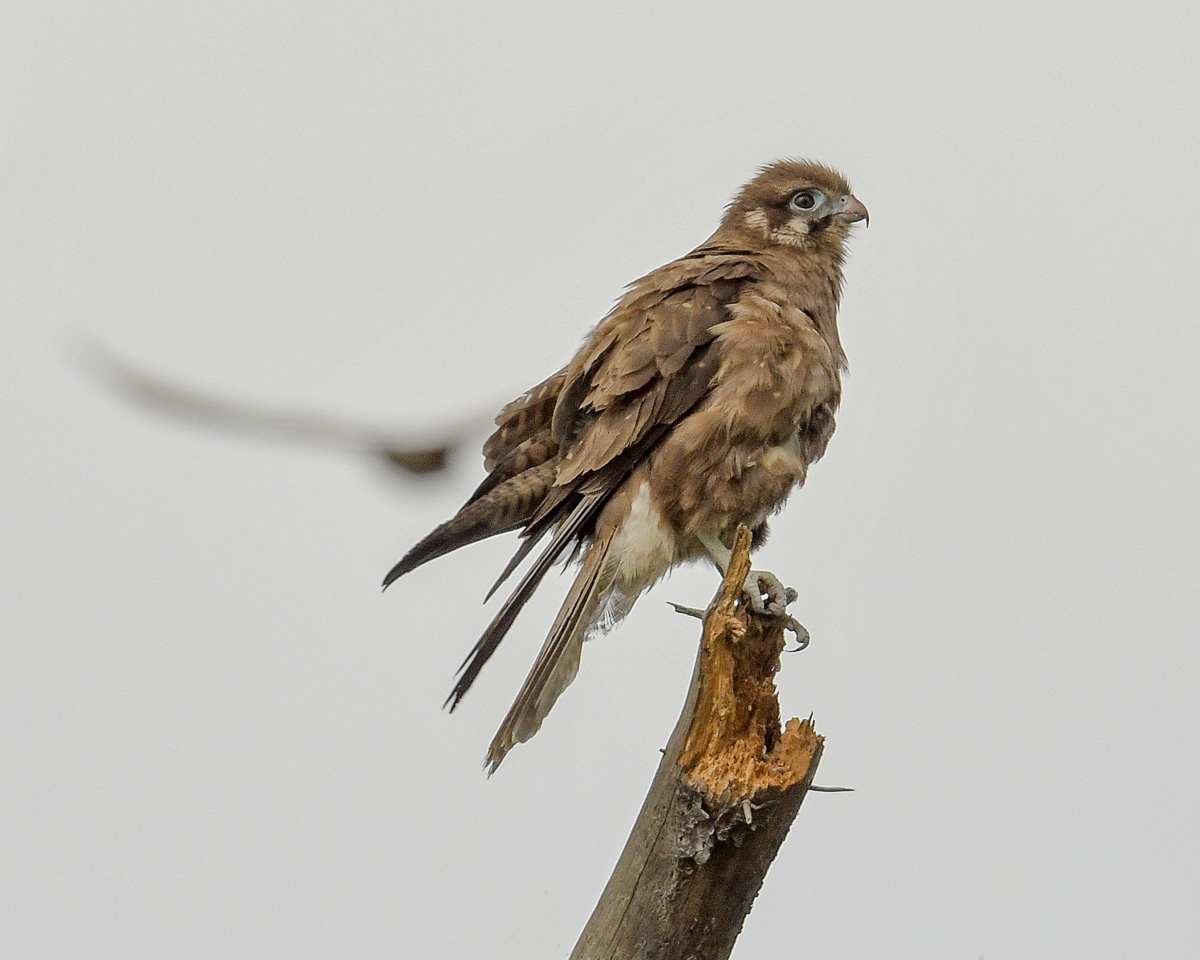
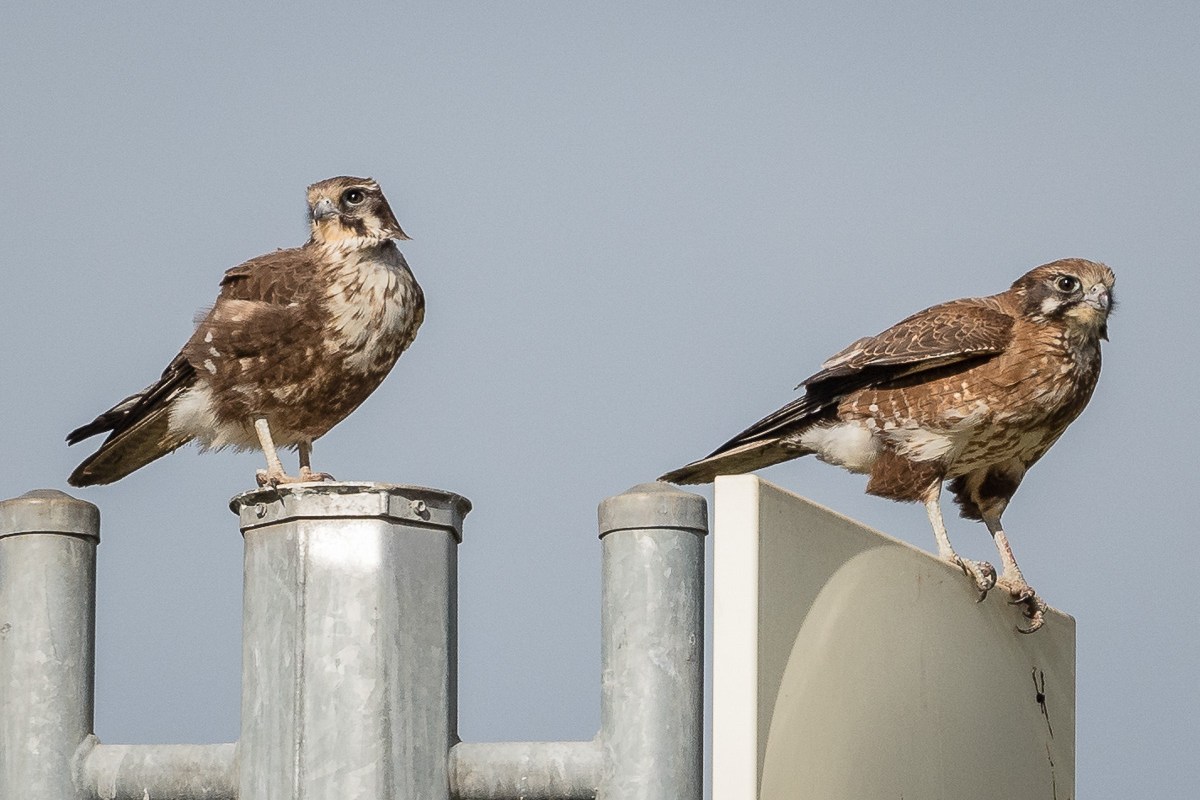
The rich honey colours of a recently fledged bird.
The dark juvenile colours will change out at the first moult. Interestingly the rich honey tones will change lighter as the bird spends time in the open sunshine.

High Action

Enjoy

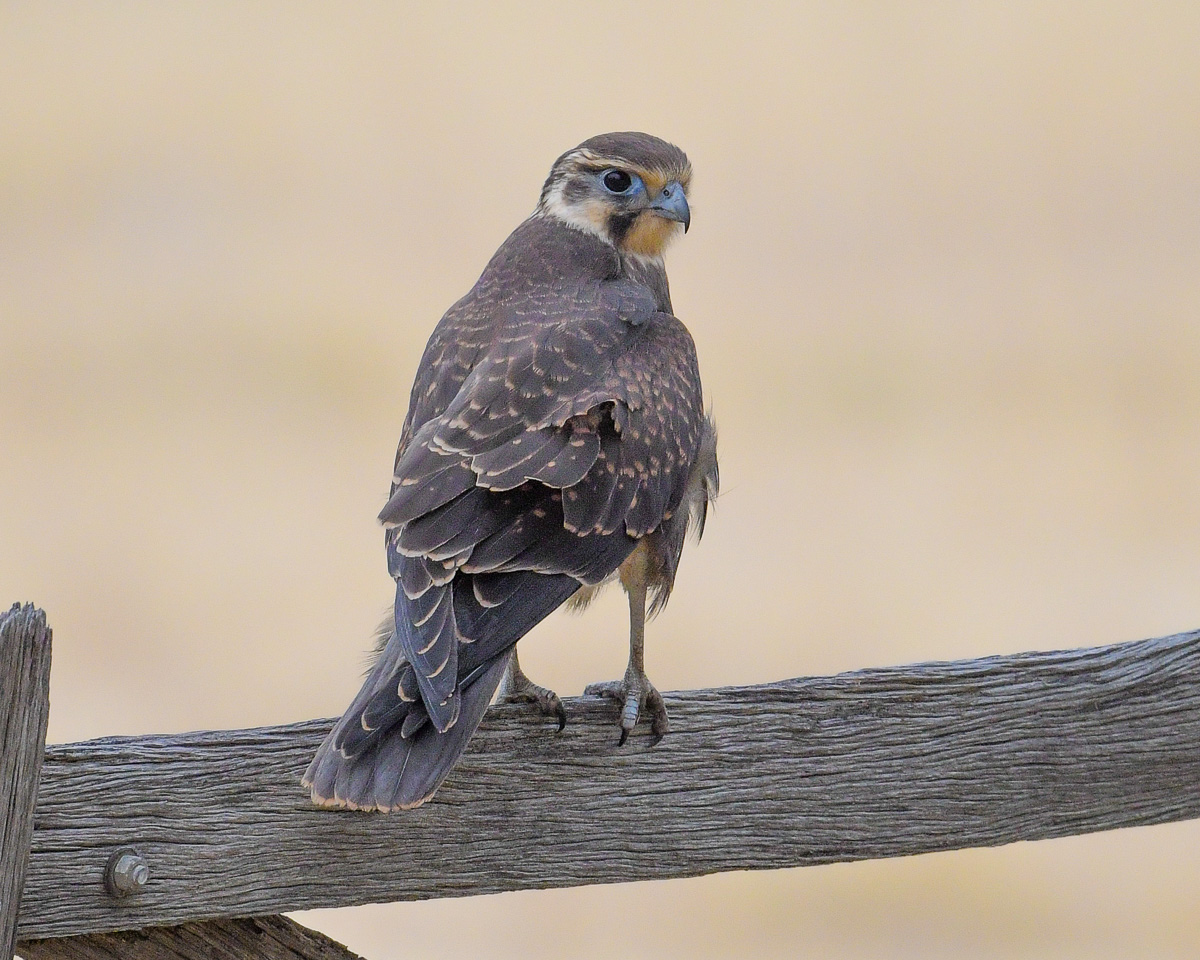
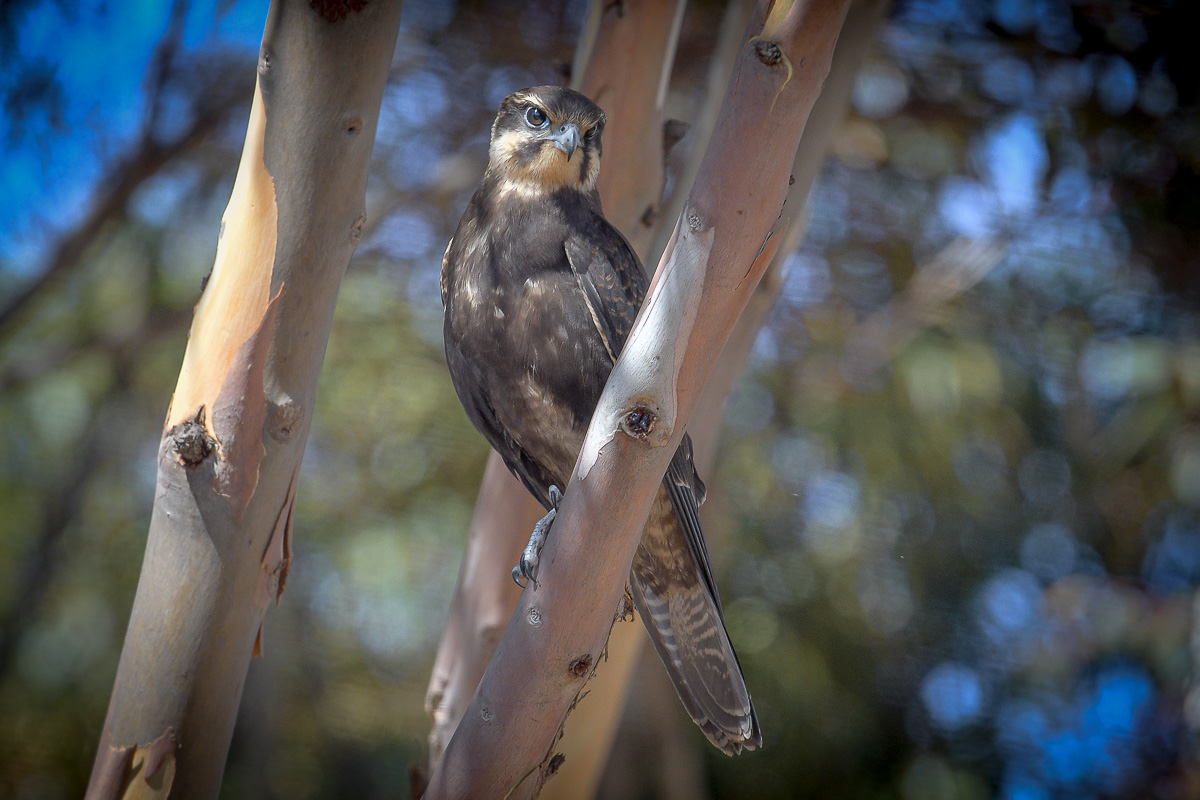
PS Betcha can pick the male from the female in the header photo

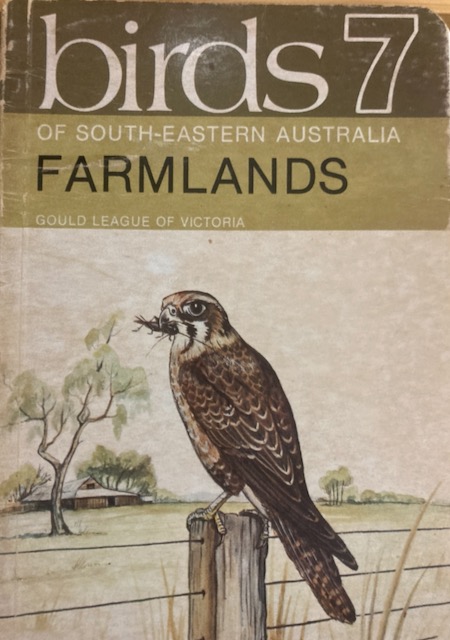
I always think of this cover painting by Susan McInnes from the Gould League “Birds of South-eastern Australia” series. This book has been much travelled in our family

From the Field Notebook: Surrounded

Over the years it’s possible to discern the differences in the calls of Australian Magpies. What the language means of course remains a mystery, but some sounds go with some actions.

The rolling call of a pair declaring their territory against all comers. The short sharp bark of a a contact call between birds feeding on the ground, just to stay in touch and know where everyone is. Alarm calls for the close immediate family, and a different one for local clans, and a different one again to warn other local clans of danger. No doubt there are plenty more.

One call, I’m certain is distinct and the other day as we walked up the hill to iAmGrey to packup and head for home, the stark-highpitched agitated call went up from at first the Maggies in the local area, and then rolling down the field to others. I’ve heard it before, and exclaimed to noone in particular, “”Brown Falcon”.
And as I turned around, not to check for Falcons, but to see where the Maggies were going, there on a lone tree propped a Brown Falcon. The family took off to harass it, and get it on the move.
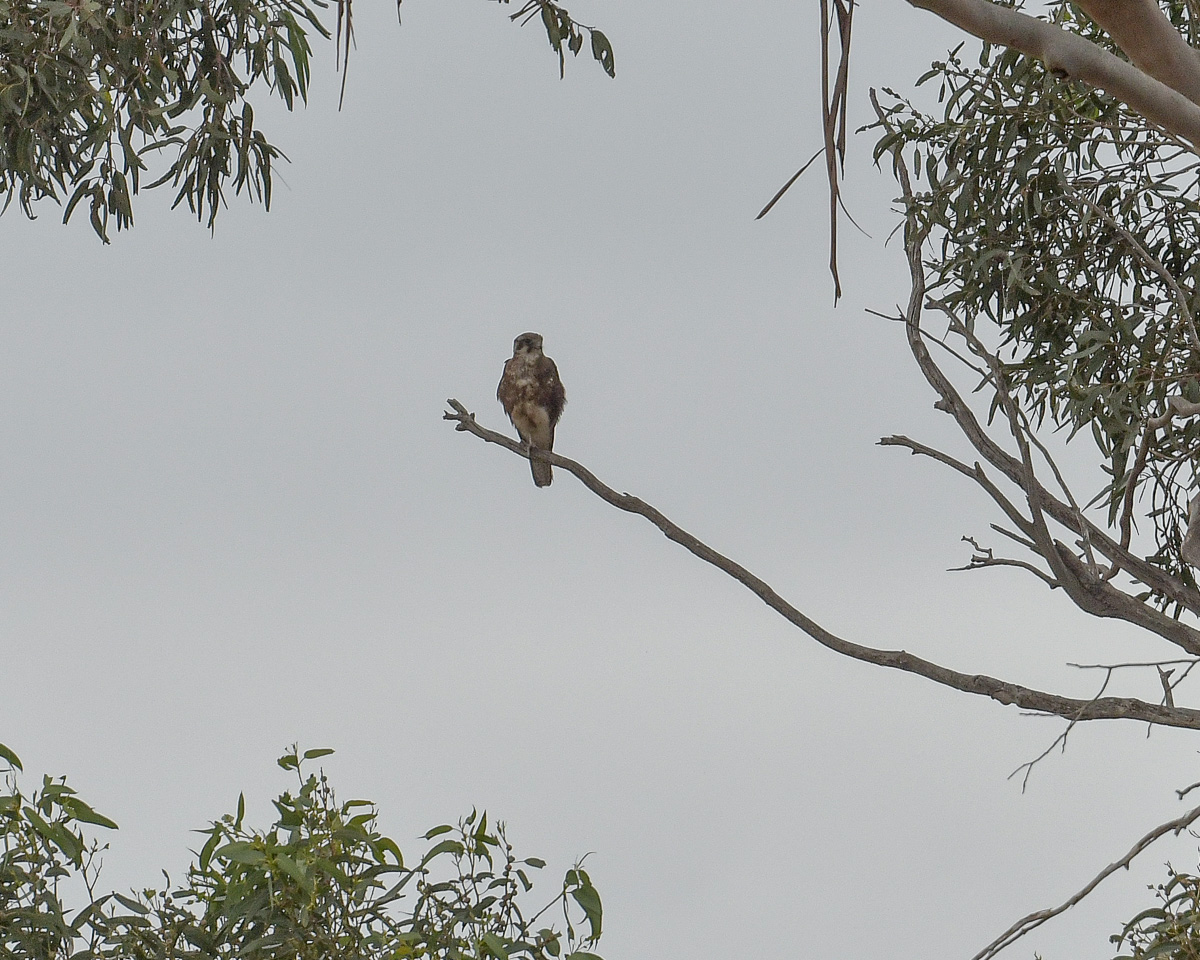
Brown Sat.
Mum, Dad and a young juvenile made lots of loud calls and swooping attemps.
Brown Sat.

The call went out to the next clan, and sure enough suddenly the hapless Falcon had five more loud, angry Magpies sitting the tree, calling and swooping. I sometimes wonder if there is not a bragging rights thing that goes on. “Oh, I got it to move”. “I put its wings up” “I was ‘this’ close” etc etc.
Brown Sat.

By now the air around the Falcon was full of loud calling angry black and white feathered shapes.
The Falon didn’t have much option. If it flew, the combined squadron would have had the advantage of speed and agility and it would have been mobbed all the way across the open paddock. Clans that were not directly involved were now spaced out along the paddock, supposedly uninterested, as they pretended to be really interested in meal gathering, but should the Falcon head in their direction, they would have been ready to rise to the challenge and add to the clamour, and so on to the next clan, and the next.
Brown Sat.

We figured at least three possibiliies.
1. Brown had just finished a meal and was in no hurry to fly anywhere until it was digested.
2. Brown had spied some tasty morsel worth waiting for, and was going to sit until the right moment to pounce
3. Brown had no other option than to sit. Flying into such a concentration of Magpie angst could have serious consquences.
Brown Sat.

Brown Falcon time is really impressive. 30-40 minutes on one location is not unusual.
In the end, the clans exhausted themselves, and left the scene.
Brown, now only had a photographer in the paddock to worry about. So it did what is pretty usual. It pretened to be unconcerned about the whole affair and began to preen.

I waited another 10 minutes.
Brown Sat.

Other activities required my attention, so we left. As we drove out, it was still on the branch.

Enjoy.