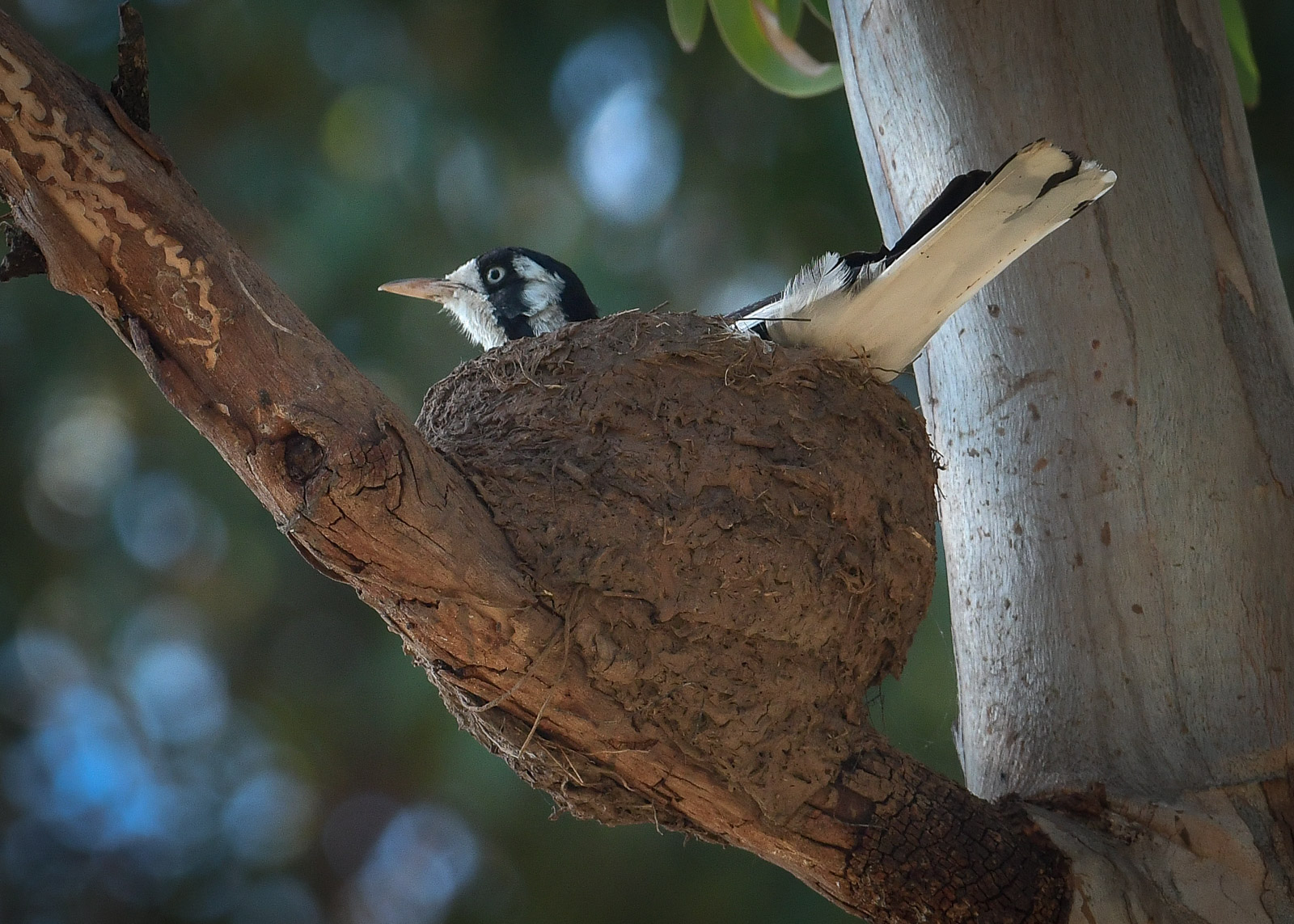
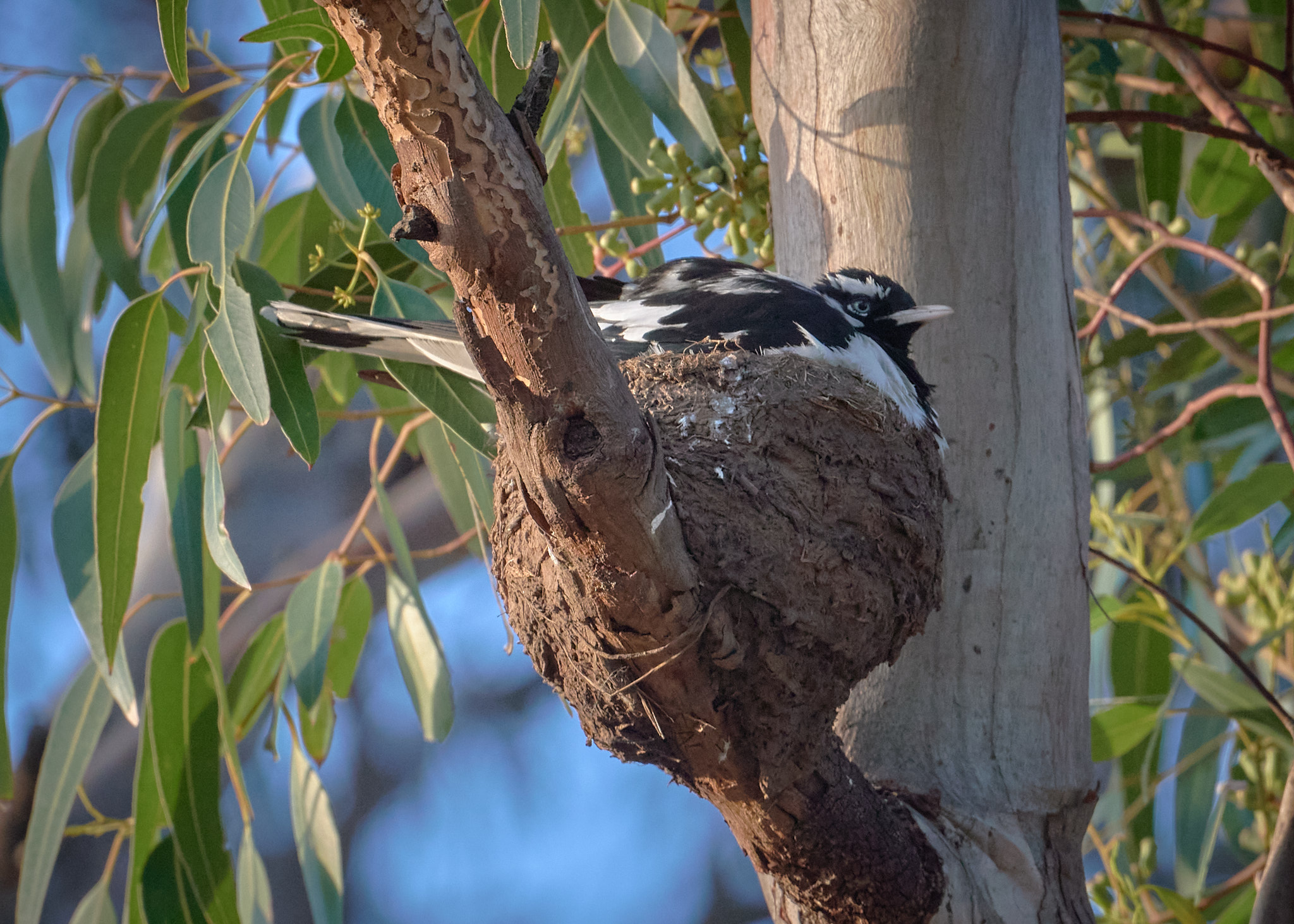
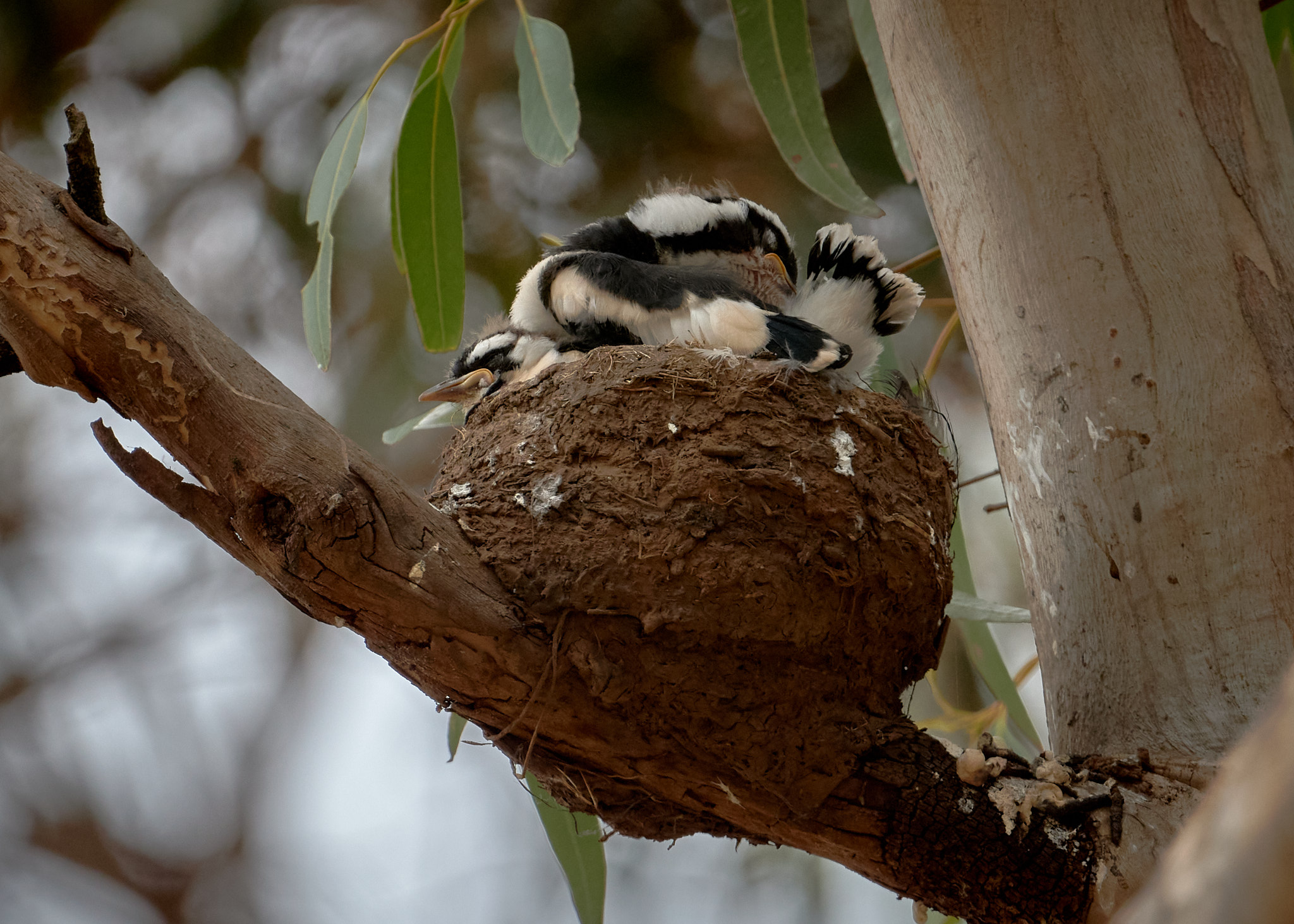
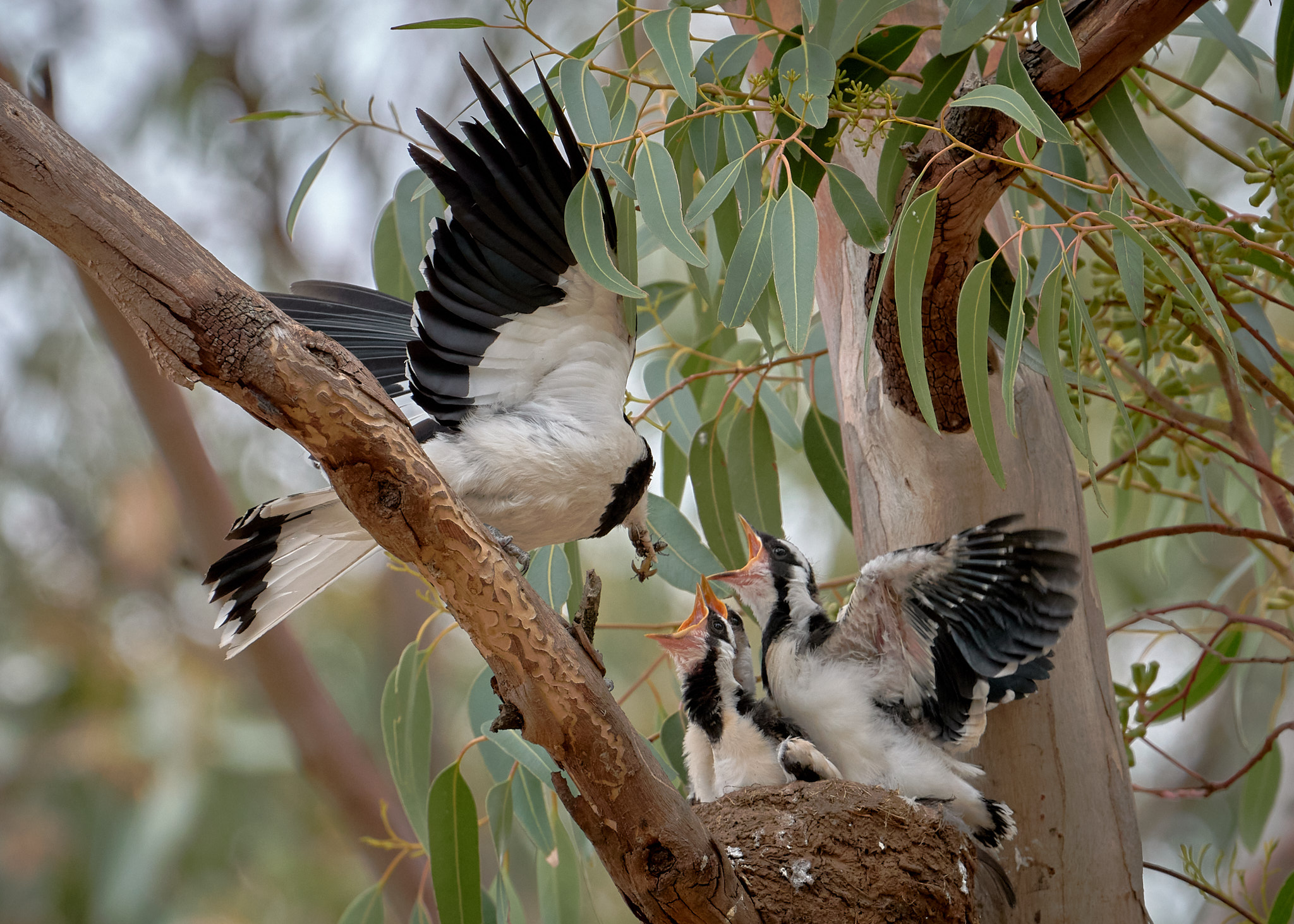
Little Visits: The Hunt

It’s been awhile since I posted, and I’ve been hesitant to upload this long set of picture.
It’s not that I can’t edit them down to say just a few, but each carries a different aspect of the story.

So it’s publish, or perish.

+D4, our Ballarat-based granddie invited us up for a weekend, promising all sorts of picture opportunities. And it has to be said—delivering.

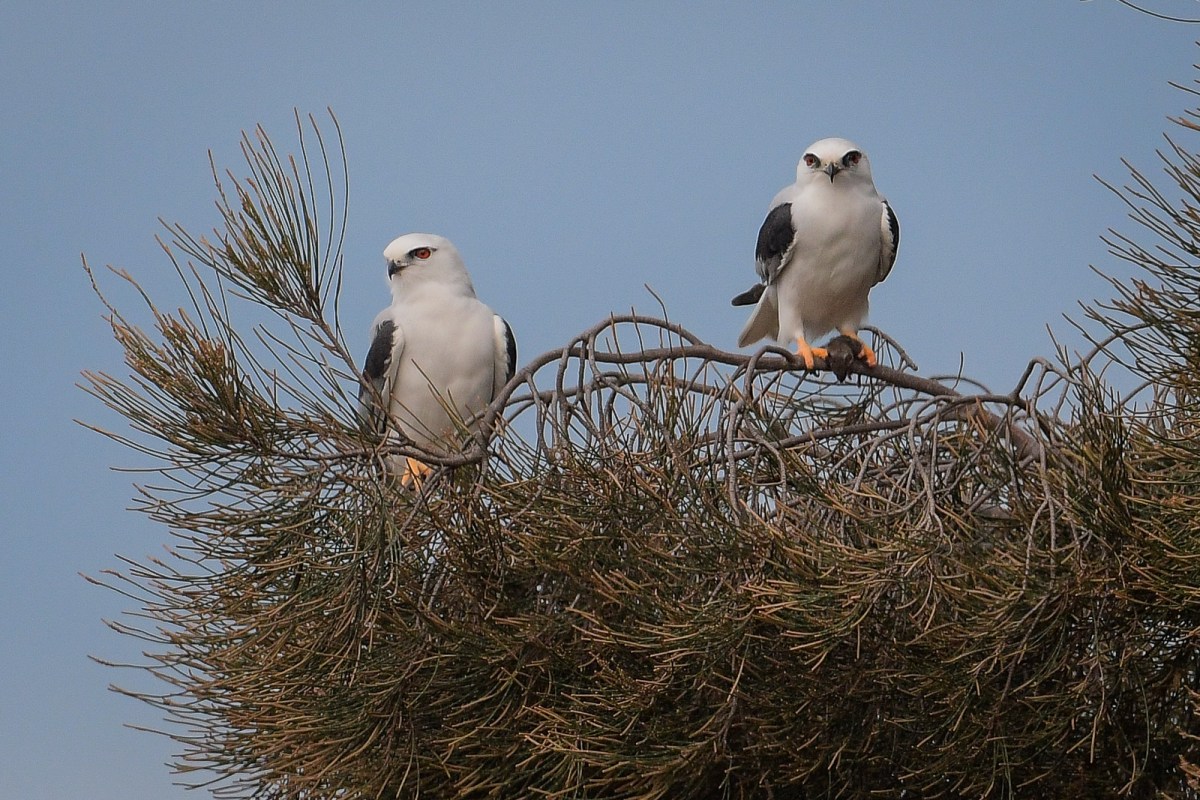
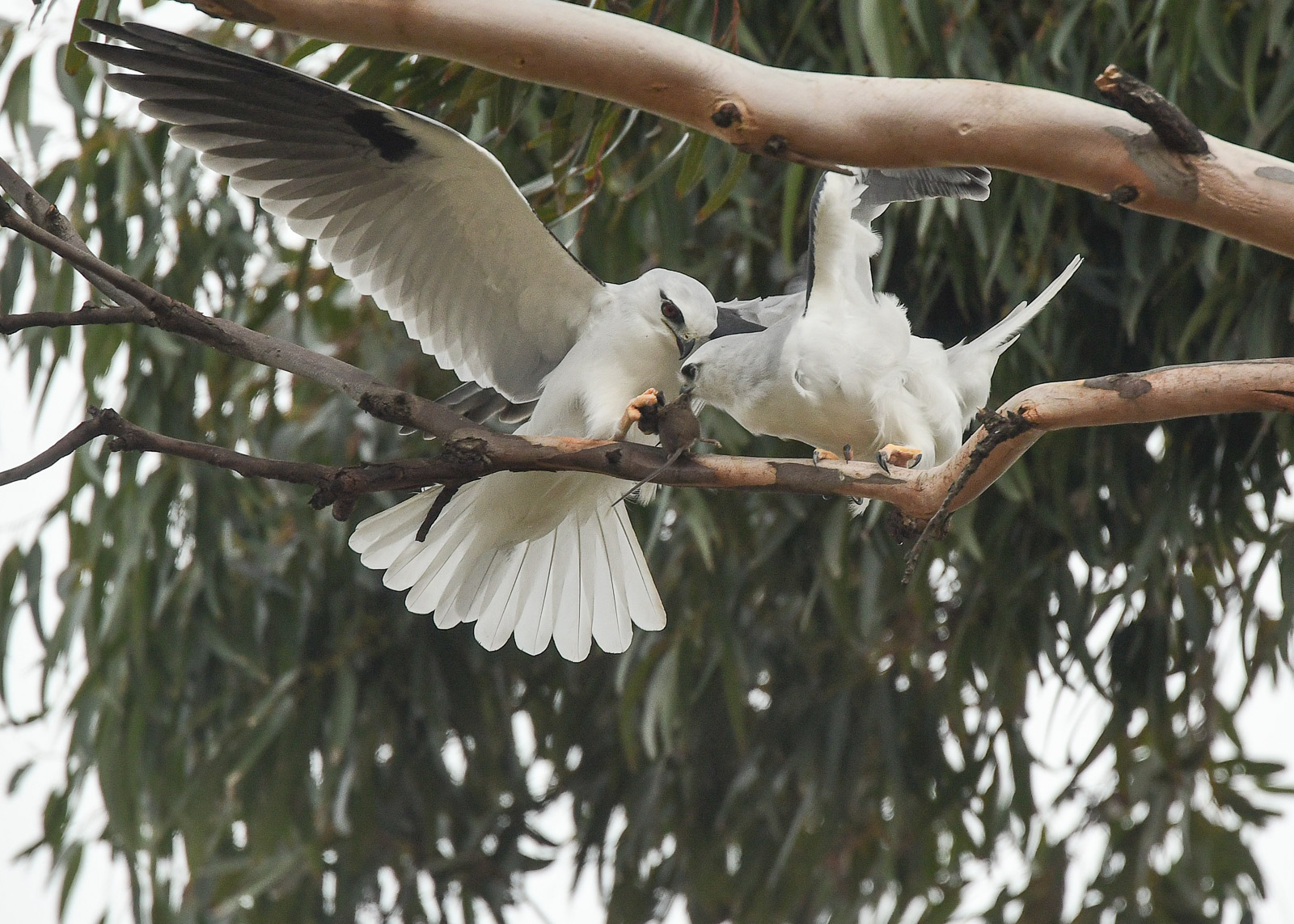
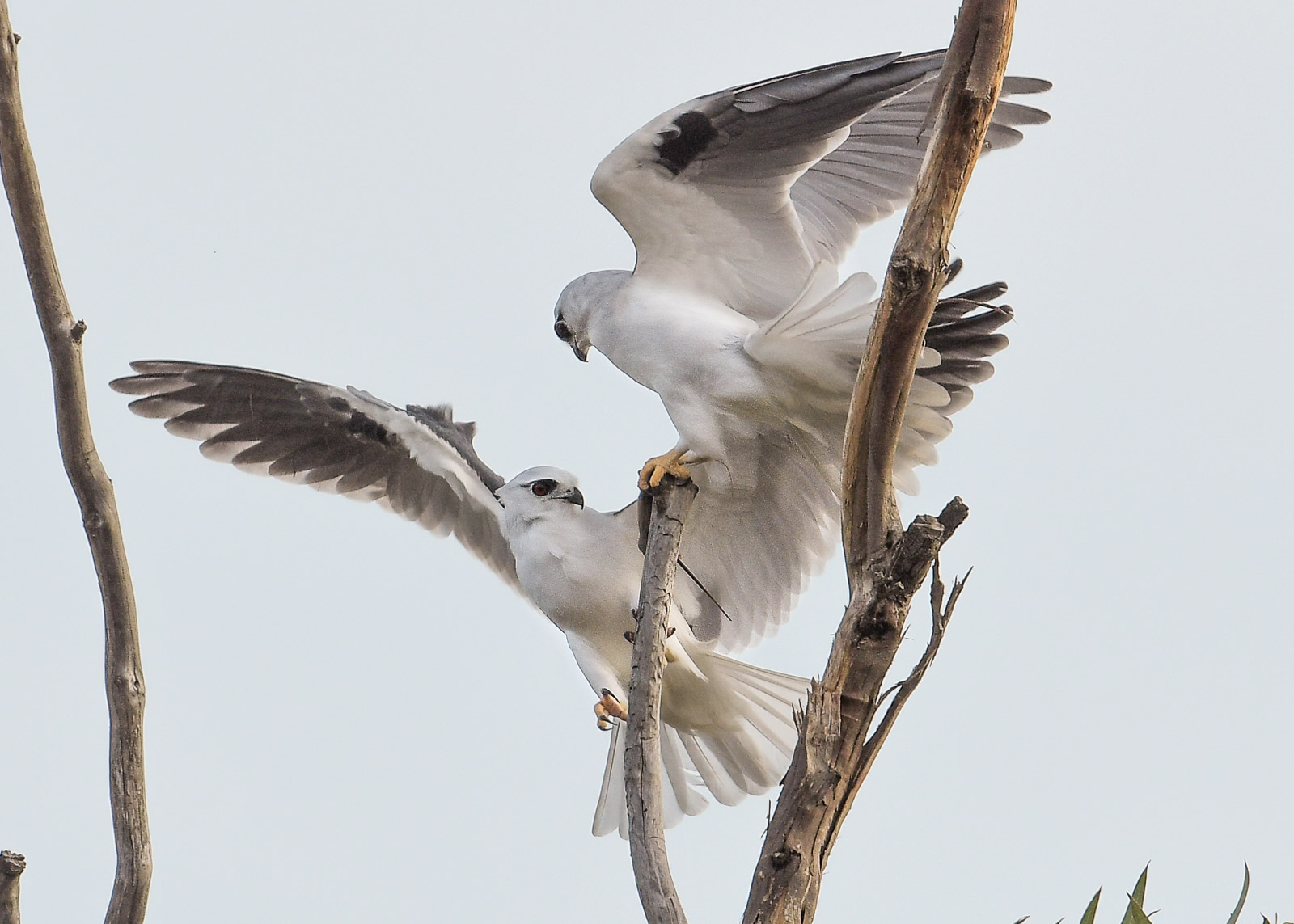
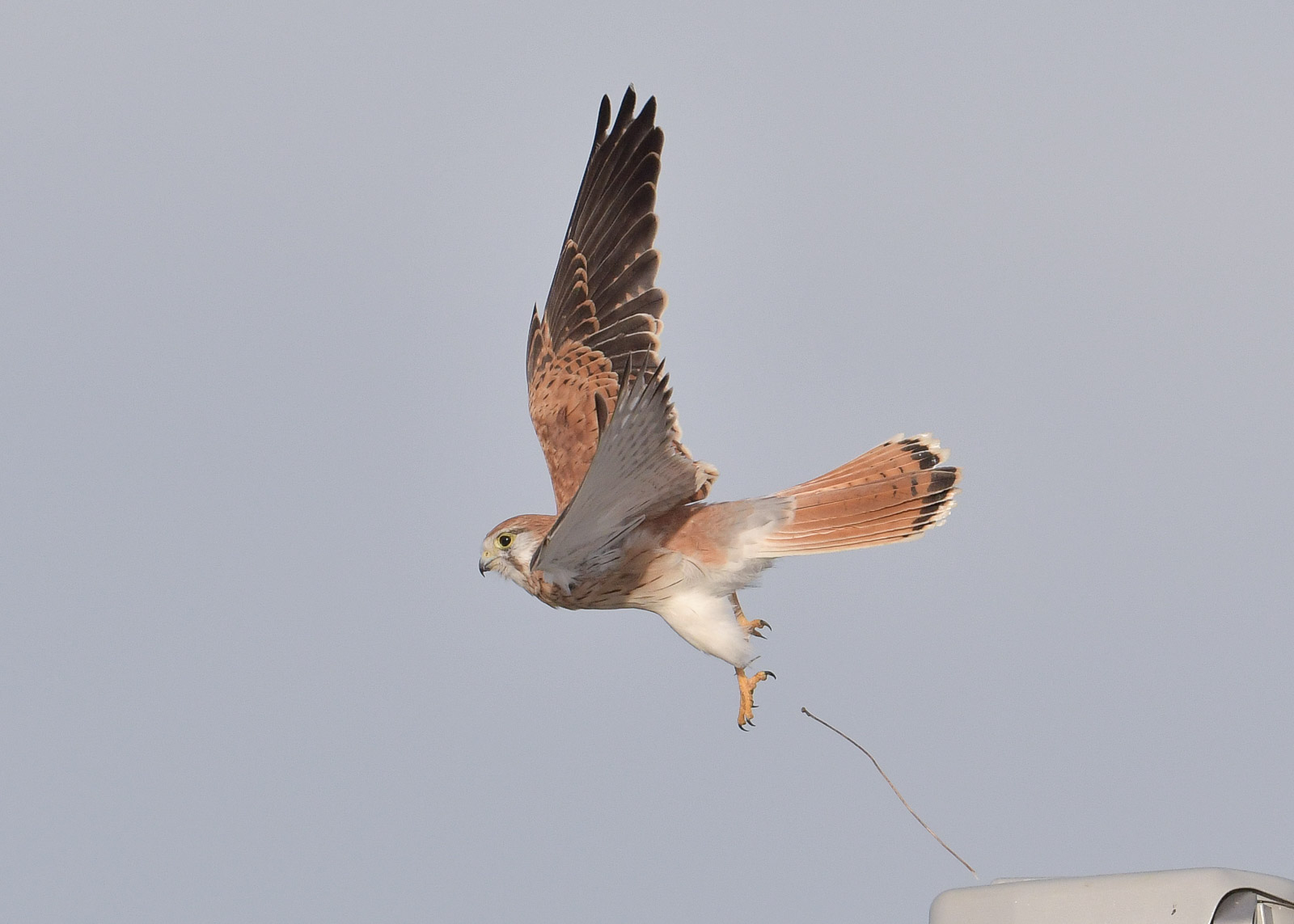
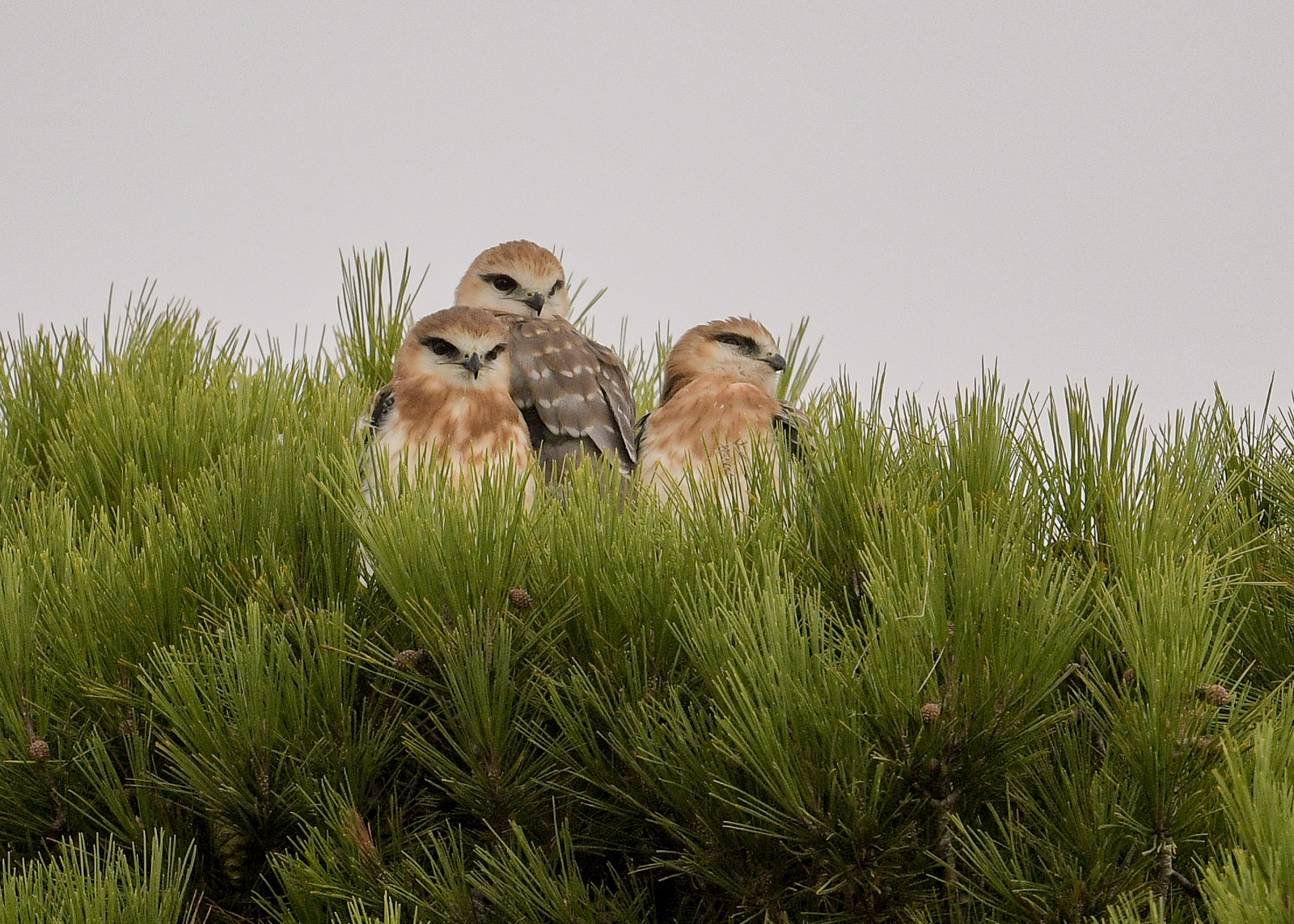
Toward the end of the day, he took us to a new housing estate area to look at a pair of nesting Black-shouldered Kites, and as we needed to be back in time for a meal were making our way through the partially built houses, when EE exclaimed, “Kestrel”. And there she was sitting on a street lamp, hunting for small insects, spiders and crickets among the grasses between the houses.

The late evening light broke through the clouds and the bird, which had been working the area while the tradies had been busy all day, was not fussed by a couple of photographers getting in the way.

Time just rolled away, as did the images on to the memory cards. I lost count of the strikes, but each one was short glide from security fence, street light, or dumper bin, into the grass.

There are a lot of shots here, and I partly apologise, but if I cut it down to just the stars of the show, then the magic of the moment would be lost.

A series of take-off 1 of 4
A series of take-off 2 of 4
A series of take-off 3 of 4
A series of take-off 4 of 4
My fav take-off sequence. Amazing to see that her head remained fixed on the landing spot. 1 of 5
My fav take-off sequence. Amazing to see that her head remained fixed on the landing spot. 2 of 5
My fav take-off sequence. Amazing to see that her head remained fixed on the landing spot. 3 of 5
My fav take-off sequence. Amazing to see that her head remained fixed on the landing spot. 4 of 5
My fav take-off sequence. Amazing to see that her head remained fixed on the landing spot. 5 of 5
She was happy to pounce quite close to where I was standing I had to move back to get minimum focus distance.

Needless to say
Dinner did not seem so exciting

Enjoy

Along the Track: A Morning at the Plant

After the last couple of ranty posts, I thought I fine day at the plant might be a good idea. 🙂

The Western Treatment Plant is about the size of Phillip Island and to travel all the tracks and explore all the possible bird sites can easily consume an entire day, and a goodly chunk out of the fuel budget for the week. 🙂

We tend to be a bit selective about the areas we travel through. Preferring to stop at one location for a time and see what is moving about. It also depends a lot upon the weather. Being a flat farmland, there is little shelter from high winds or the heat of midday.

So we tend to go either late in the afternoon when conditions are good, or early in the morning. Morning can be hard at first as the long drive in from the main road is directly into the rising sun. But once in the bird area it becomes easier.

We had decided to go on the morning as the weather looked promising, and if the wind picked up as predicted then back to the Highway Lounge and a Gerry Coffee.

Here then is a look at how the morning, and the birds progressed.

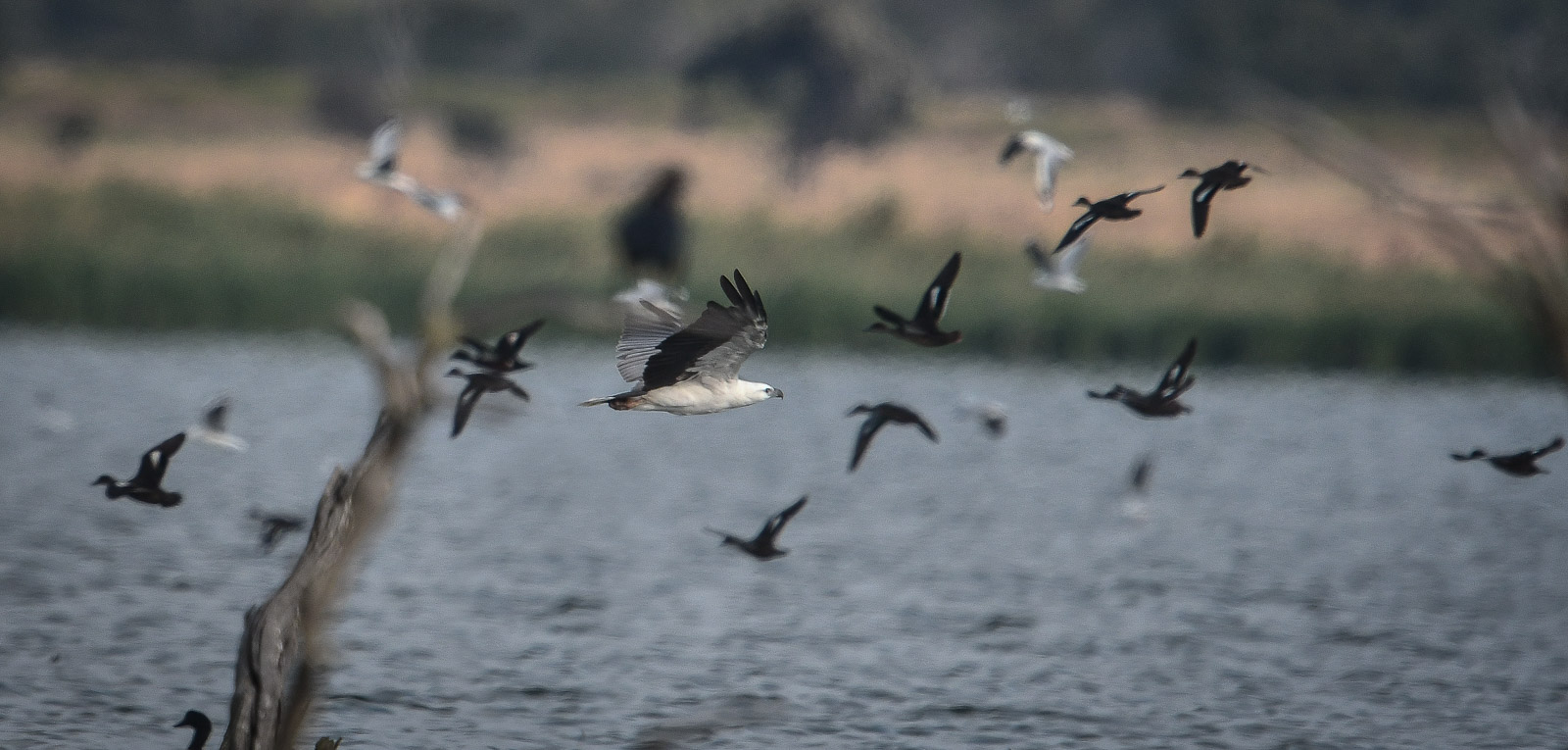
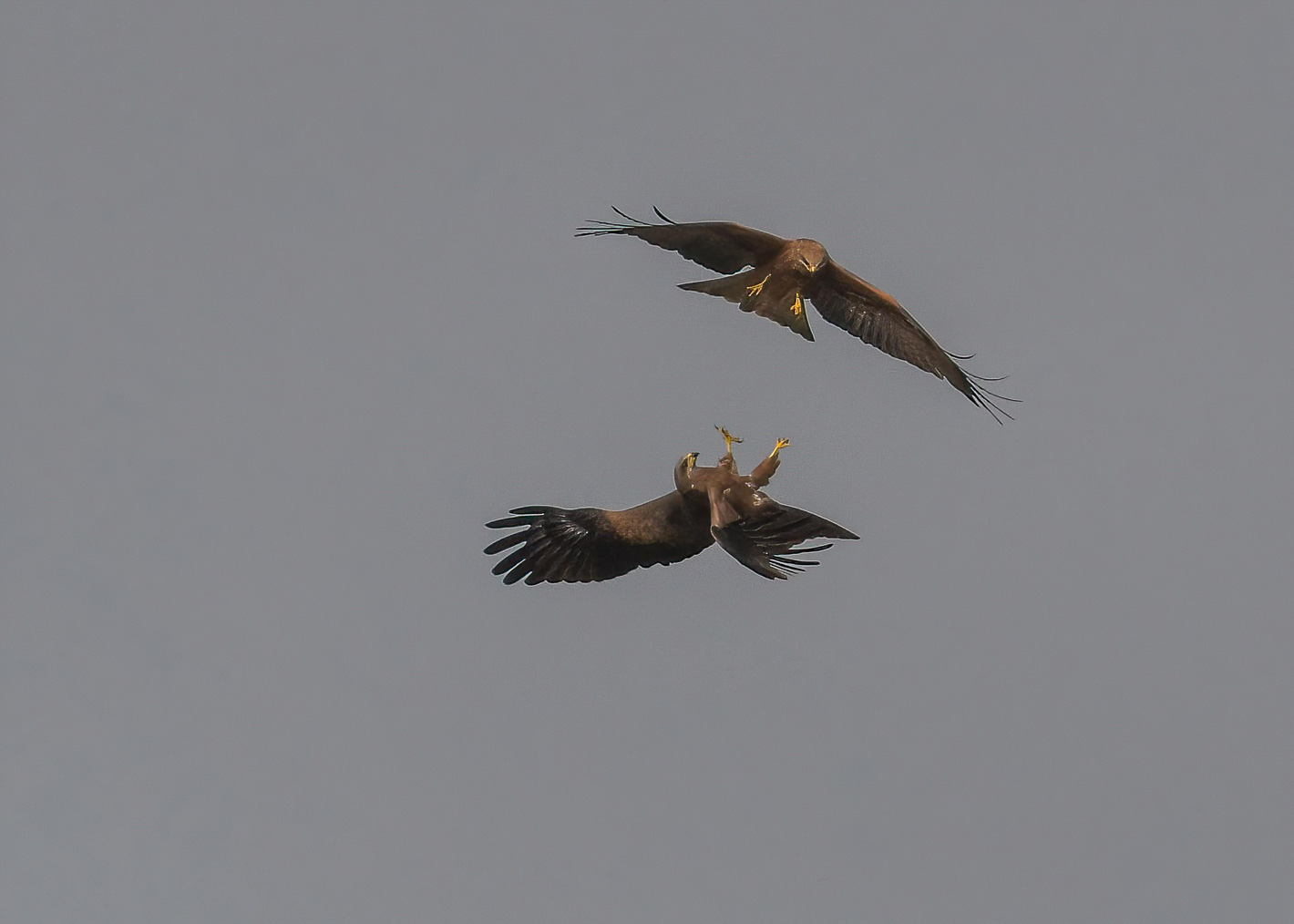
White-bellied Sea-eagle being harassed by a passing Swamp Harrier. I don’t think the apex predator was fazed.
Said Swamp Harrier, then made a close pass over the reeds on our side of the lake.
The ponds held many Hoary-headed Grebes.
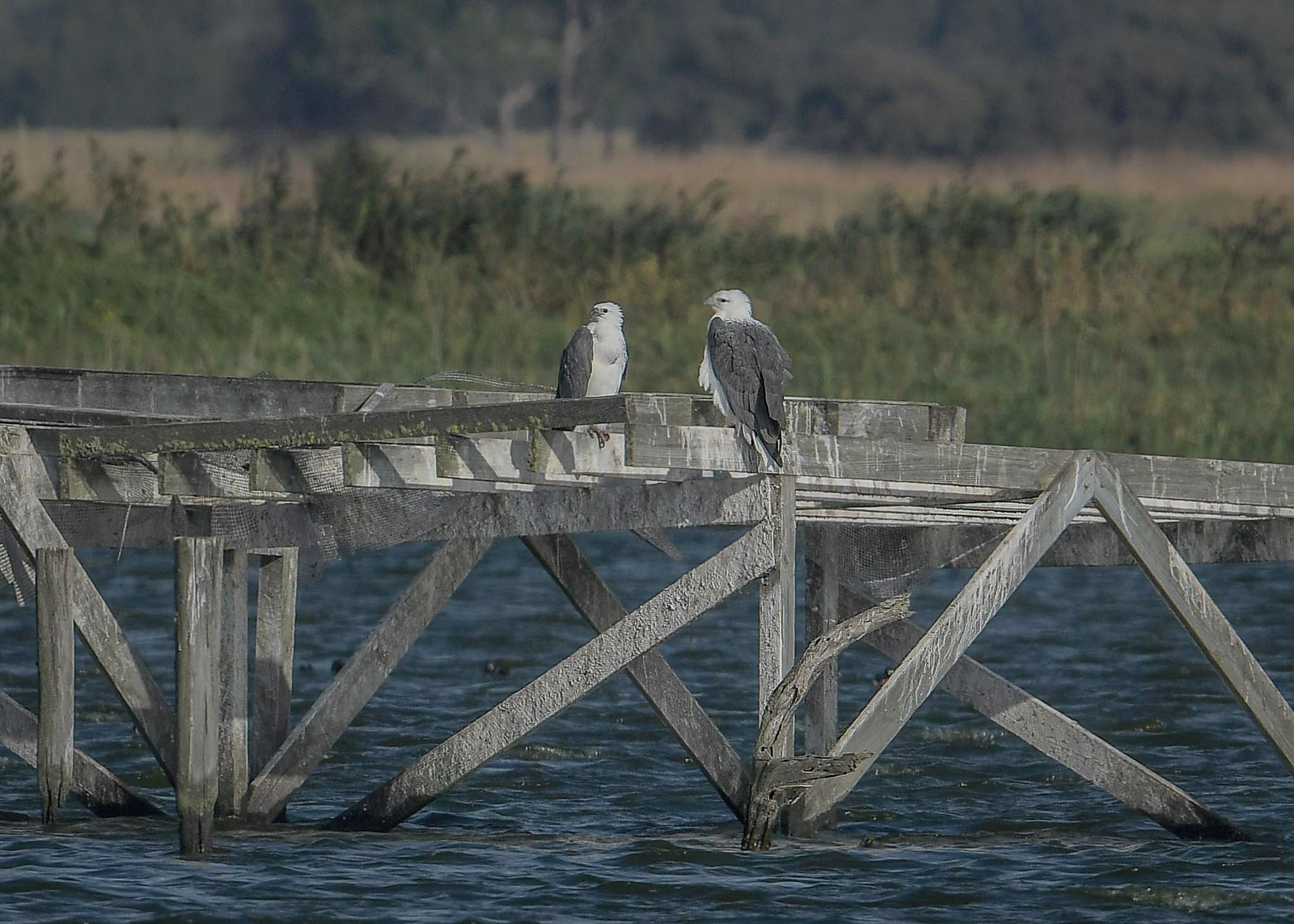
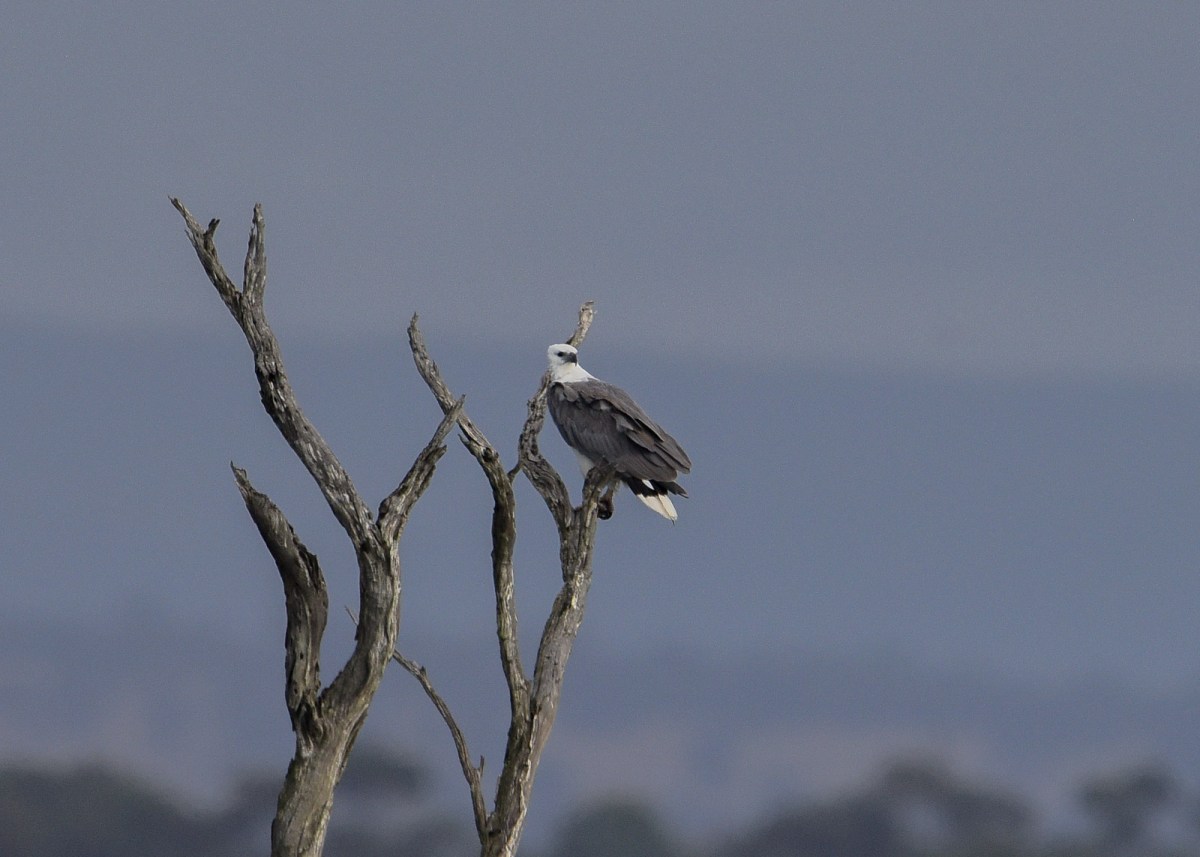
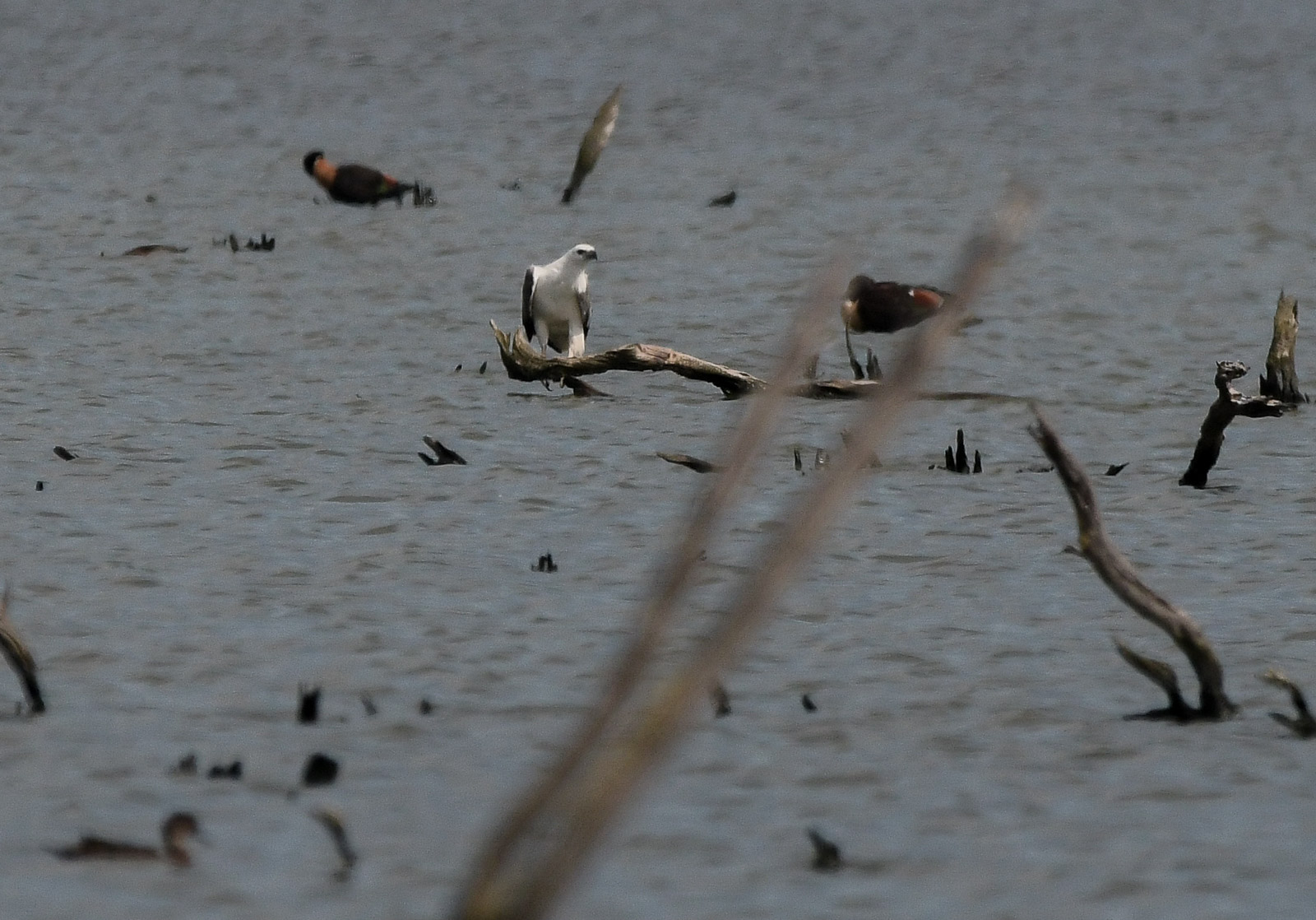
A committee meeting. These two Sea-eagles were resting a long way out in the middle of the large lake.
Meanwhile up close the Reedbirds were moving about in the sunshine
A small selection of the many hundreds of Hoary-headed Grebes.
Whatever the current title, I still refer to them as Mountain Duck. The nomenclature police seem to think they are Australasian Shelduck. I don’t think the birds care really. They now all have nice new feathers and will be journeying northward soon
Not sure if this Sea-eagle was from the earlier lake ones, or whether it came in from south along the beachline. But there could be as many as four working in the area at present.
This Collared Sparrowhawk was making the most of the increasing high winds. And showing off that extended middle toe.
Fueling up for a long trip ahead. Curlew Sandpiper
These two Sharp-tailed Sandpipers are starting to colour up. Here they are ‘hiding’ out of the strong wind behind some reeds
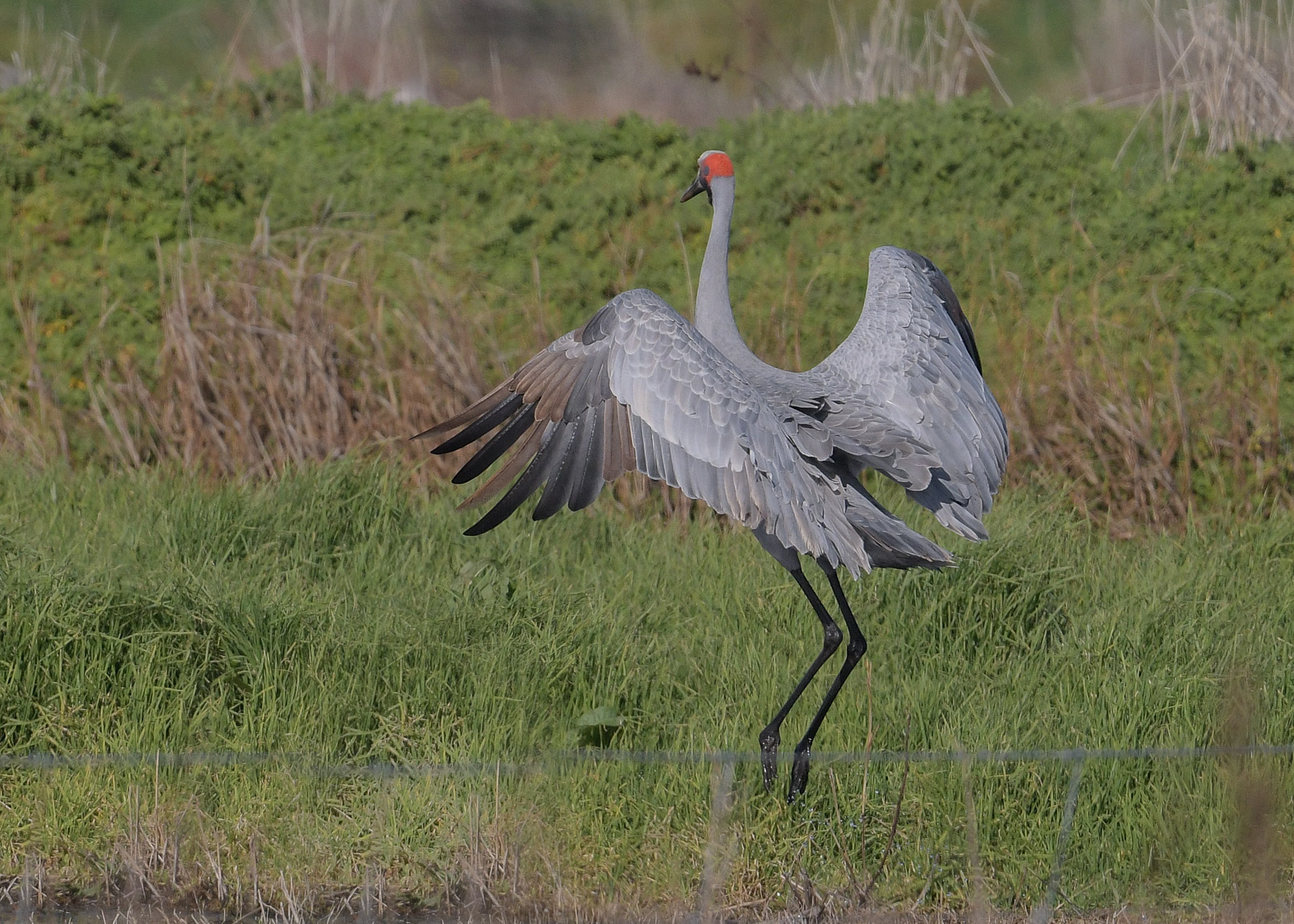
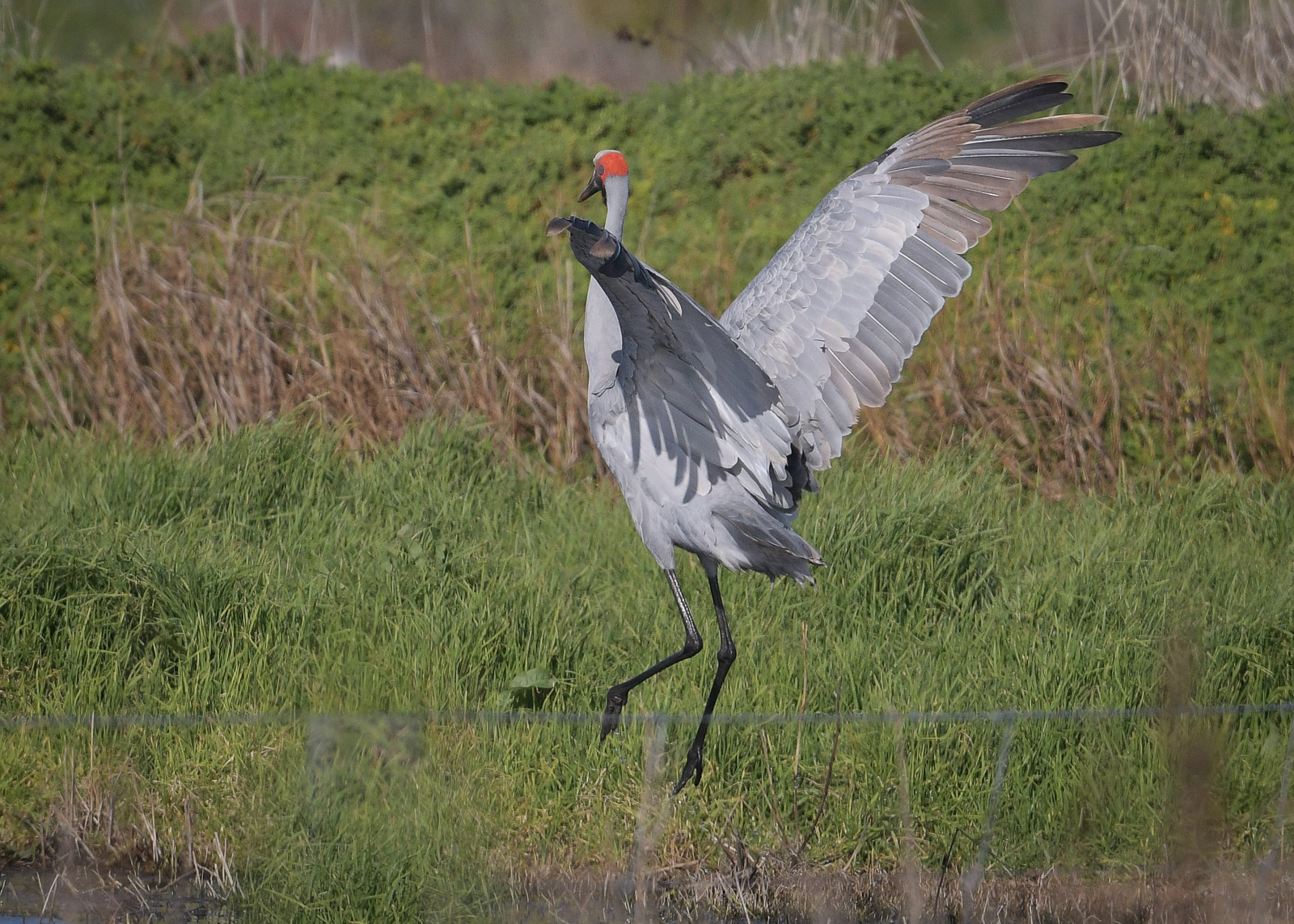
It has been an increasing good year for Brolga at the Plant. We saw one pair with two well grown young. A second pair with a young one, and this third pair on their own
One of my fav inflight birds. The Little Egret
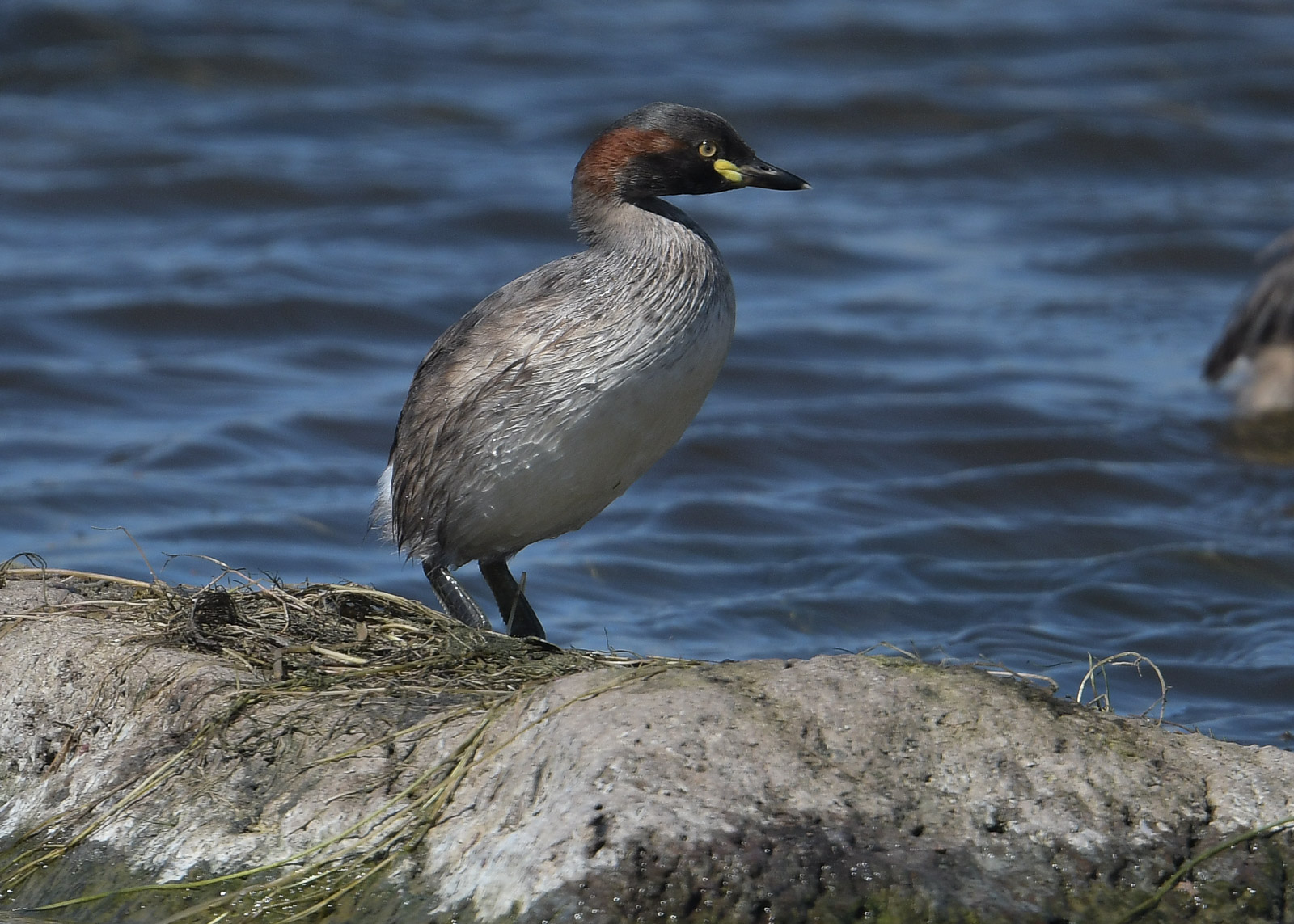
I can’t ever recall seeing an Austalasian Grebe standing up, nor on a rock. Perhaps a nest is on the way.
Also managed a great wing display just for bonus points.

Little Visits: Dressing for Autumn

Before anyone starts writing to me about the following encounter, please read the disclaimer at the bottom of the blog. Thanks.

We were deep in Cassia, of Cinnamon Country. Part of the pair’s territory includes an area known by locals as, “The Duck Pond”. A small ephemeral pond(?) created with good intentions, but unsuccessful in the sandy beach area. However there is a good stand of trees and some favourite perches for the Good Lady of the Manor and her handsome companion.

The long winter rains had filled the Duck Pond and it made a perfect nursery for a number of water birds to raise their young. We were monitoring a pair of Little Aussie Battlers, who were risking it all for a second clutch before the pond dries out.

Given the Grebes mistrust of humans, while EE made a close approach I stayed on the outside of the tree line and watched proceedings, and also kept an eye across the paddock.

I spotted a dark shape moving over the dried grasses of the paddock, and after a few seconds decided to put the camera on it for a better look. It was Cassia, of Cinnamon.
She was heading across the paddock in the general diretion of the tree line. I am convinced that Brown Falcons do not fly whilly-nilly about but each move is determined and with purpose.
She kept coming. It didn’t take me too long to figure out that she was on a direct line to where I was standing. And, I began to make a frame or two. The approach was typical Falcon. Low and fast. And, to make it more complex for the photographer, she was coming out of the sun, so it was mostly a glare in the viewfinder.
She crossed a fence line just in front of me, and swept up, and into the sun.
Blinded momentarily, I didn’t see where she went and I turned around but couldn’t see her flying through.
EE helped by pointing up.

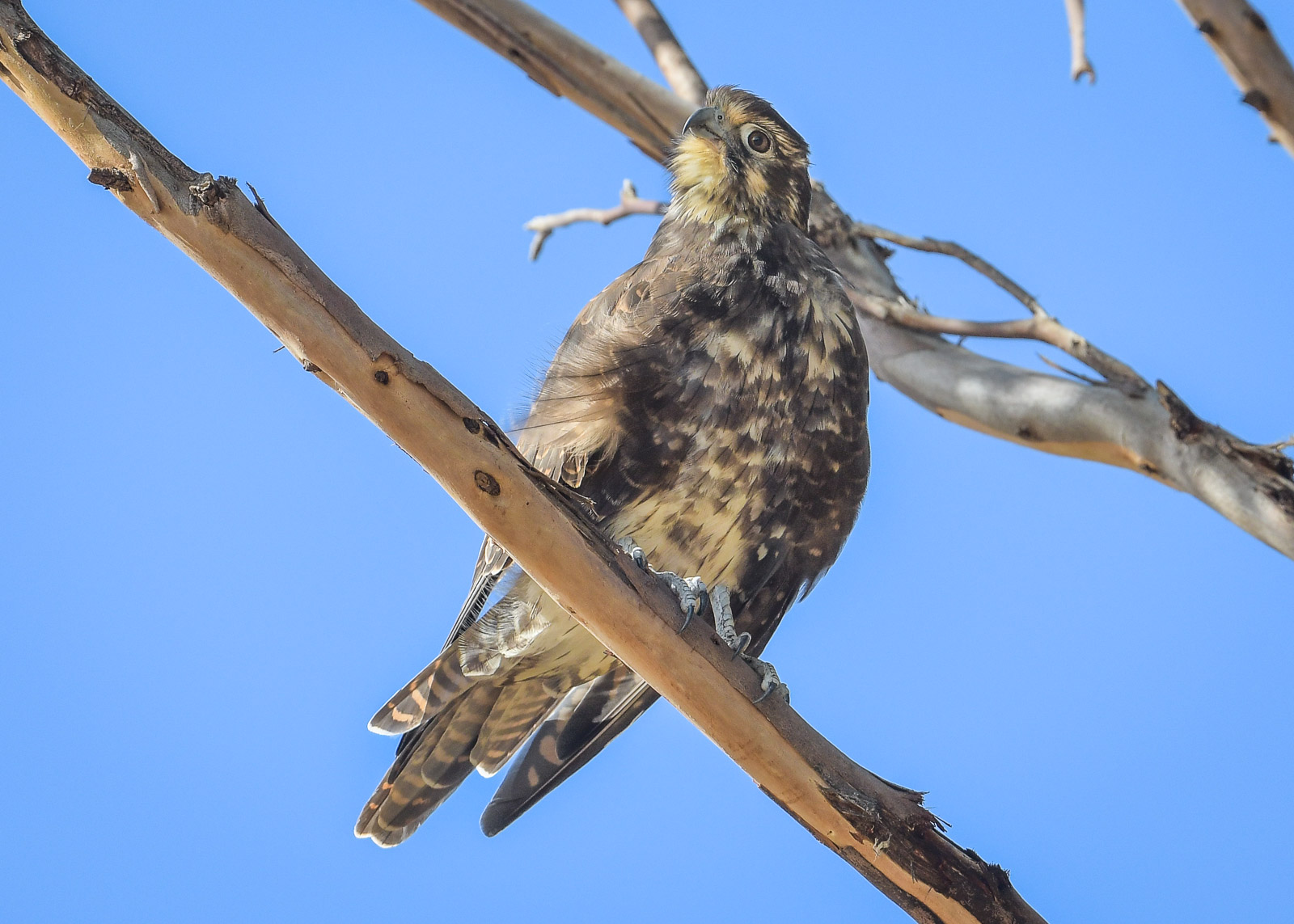
And there, just above my head sat a very calm Brown Falcon. I tippy-toed out from under the tree for a better view. Would she move?
No.

She settled in to preening. As I stepped back I noticed that her companion, he is a most handsome light coloured bird, was in a tree on the other side of the pond.
Some detective work afterward, suggested he had brought in a snack, but, had dropped it when challenged by a passing Hobby or Peregrine.
Being glued to the narrow view through the lens, I’d missed all the extra activity.

And that no doubt was why Cassia had made the journey. I found a fresh caught prey in the grass near the fence a little later on, and suspect that it was the piece contested. Also there is no doubt that Cassia knew exactely where it was and would reclaim it later.

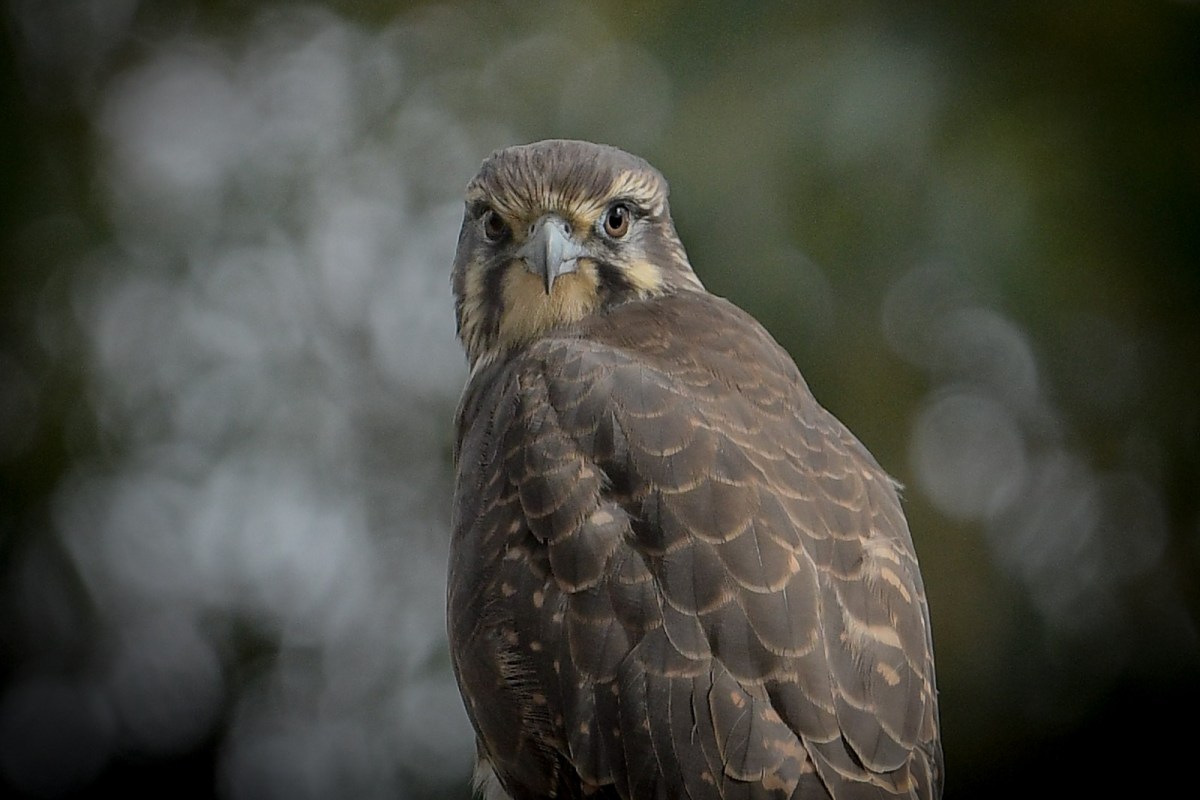
She made no effort to move from her perch while I moved about for a better angle, and when I finally walked further down the tree line, she also moved to see what I was doing (perhaps?- am I that interesting?) Which allowed me to make several different portaits.

40 minutes later (I checked the camera time data) and she still was in no hurry to move on. So we left her to do what Browns seem to do so well.
Contemplate.

It is worth checking her tail set in these frames as she is well on the way to moulting in a new set of feathers to replace the summer worn out ones. And there are a few wing feathers that need replacing too.
Some recent blog posts show her worn feathers.
No doubt in a couple of weeks, her new wardrobe will be complete.

Enjoy.

Flying low across the paddock. And just in case you should wonder. She is looking directly at me, and is well aware of my presence.
Just about to get lost in the Sun. She is sweeping up to land in the tree directly over my head
I think she might still be watching the Hobby high in the sky overhead
Also spotted her handsome companion. He is a wonderful light coloured bird. But has a zero tolerance policy for the human condition.
A view of the double tail as the new tail feathers grow into place.
Sometimes preening is a neverous reaction, other times it’s down to the serious business of looking your best for WordPress
Did I mention he is human intolerant. TIme to depart.
I like the look here, “Now where is he going?”
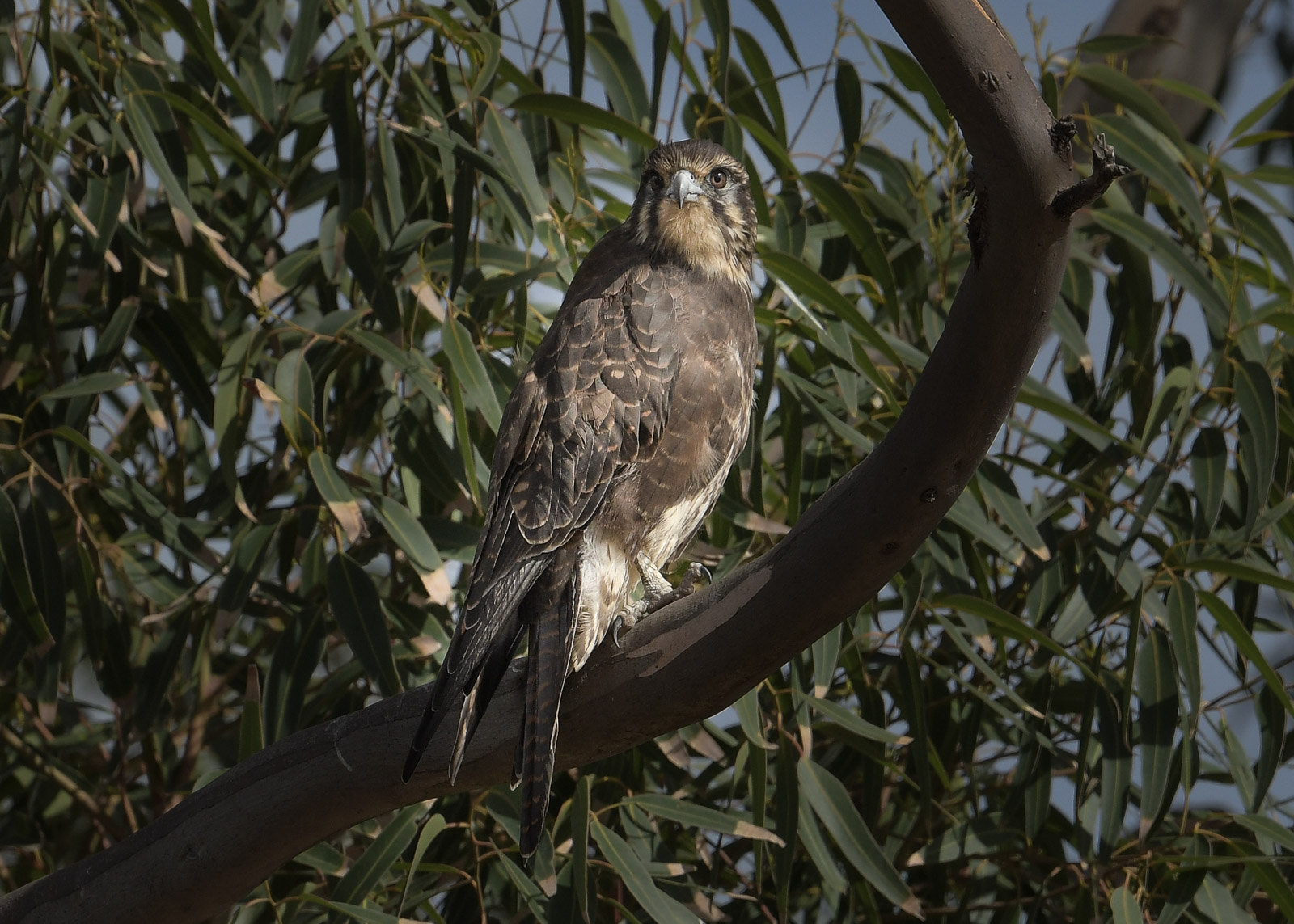
We moved back down the pond area, and she also relocated. Gave me some casual portaits
Changes of light and angle give different aspects. One legged pose suggests she is quite comfortable
I’d be confident she was working out the best appoach to pickup the dropped carcass.

As I was preparing this post, I came across some interesting and relevant info on Brad Hill’s Natural Art Images website on field techniqes
http://www.naturalart.ca/artist/techniques.html

This paragraph is about getting close.


Getting Close: Hiding in Plain Sight. 
This is my preferred method of getting close to and working with wildlife. The goal of this approach is to have the wildlife, over time, come to accept my presence and have THEM approach me (rather than chasing them across the landscape).
The biggest downside of hiding in plain sight is that can be very time consuming. While I can think of worse things than sitting out in the wilderness for hours or days on end (though it can be decidedly uncomfortable at times), it does take extreme patience and focused attention (so it’s unlikely any today’s teenagers will ever practice this technique). Interestingly, I can’t count the times where I’ve captured memorable – and totally unexpected – images (like this Lorquin’s Admiral) while hiding in plain sight.
This ability to watch ALL around me while hiding in plain sight is extremely valuable (and the inability to do so one of the main reasons I don’t like sitting in an enclosed blind).
Don’t think I’m holding back information on this “hide in plain sight” technique – it doesn’t involve any form of animal “whispering” or zen-like connection with the wildlife. There’s nothing magical, special, or even difficult about it, other than finding the discipline and time to practise it.

Disclaimer
birdsaspoetry.com policy.
This bird is completely wild.
There is no baiting, or use of calls, or other methods to encourage the bird to approach.
It’s her choice to fly aross the paddock and land where-ever she wants to.
We’ve worked with the pair for a number of seasons and are careful to treat them both with respect and care.
I take her confidence very seriously and feel we are fortunate to be graced by her presence.

We don’t get a close encounter on every trip, and should she be put to wing in my presence, I am the lesser for the carelessness.

Along The Track: Teach Fishing

So the old story goes:
Give a man a fish and you feed him for a day.
Teach him to fish
And he’ll sit in a boat all day drinking beer. (at least I think that’s how it goes)

EE was out for the day, and as the weather was fine in the afternoon, I decided to go to a special place at Point Cook park. We don’t usually go out that far, as its a long haul through some very loose slippery sand so we avoid it.

A point in the park was formed millenia ago when the great western plains lava flows occurred. The lava jutted a tongue out into what was to become Port Phillip Bay. Over the years, sand has been deposited on both sides of the rocks, and two tiny little bays have been formed with the sand keeping the water shallow.
On low tide the point can go out for about 150m or more, and on very low tide the sands are exposed and its possible to walk out most of the way.

The rocks form a lovely resting spot for the seabirds and it’s not unusual, even on high tide, to find cormorants, gulls and terns, and occassionally swans and pelicans making the most of the view.

I like it as a quiet, lonesome place. One of my preferred solo birding spots.

So I pushed on through the pine plantation, slogging over the hot slippery sand until I reached the coolness of the shoreline. Then a few minutes along the beach to the point. Luck would have it, it was late on a falling tide so there was some exposed sand I could walk out on. Because of the little bays, the water is pretty shallow and it’s easy to take off boots and socks and roll up the Levis and wade out a bit.

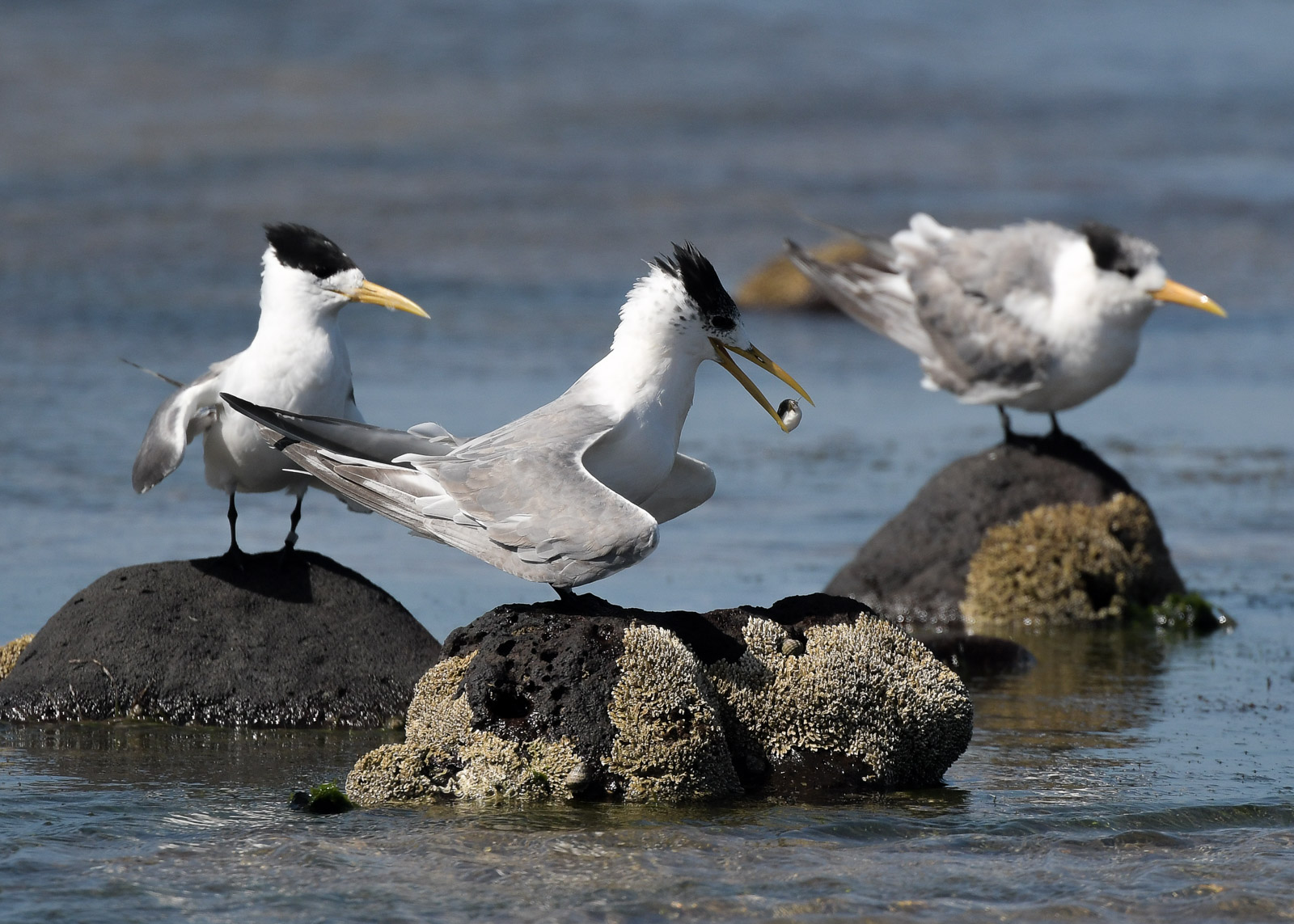
Greater Crested Terns were in abundance and fishing further out, but returning to enjoy a meal on the rocks. A scattering of Red-necked Stints were also in attendance, getting ready for their epic journey.
When I walk out in the water paralled to the rocks, the birds generally are relaxed and don’t seem to pay any attention. Except for a pair of Pied Oystercatchers, that immediately moved as far away as they could to the sand on the far side. Then they do what Oystercatchers do best. They glared at me.

A tern came in with its latest catch and seemed to want to brag to everyone about its good fortune, and flew about from rock to rock cackling and playing with the meal.

I moved back to the sanddune and sat on the grass with a brew of the Earl’s finest and soaked up the feeling of isolation.

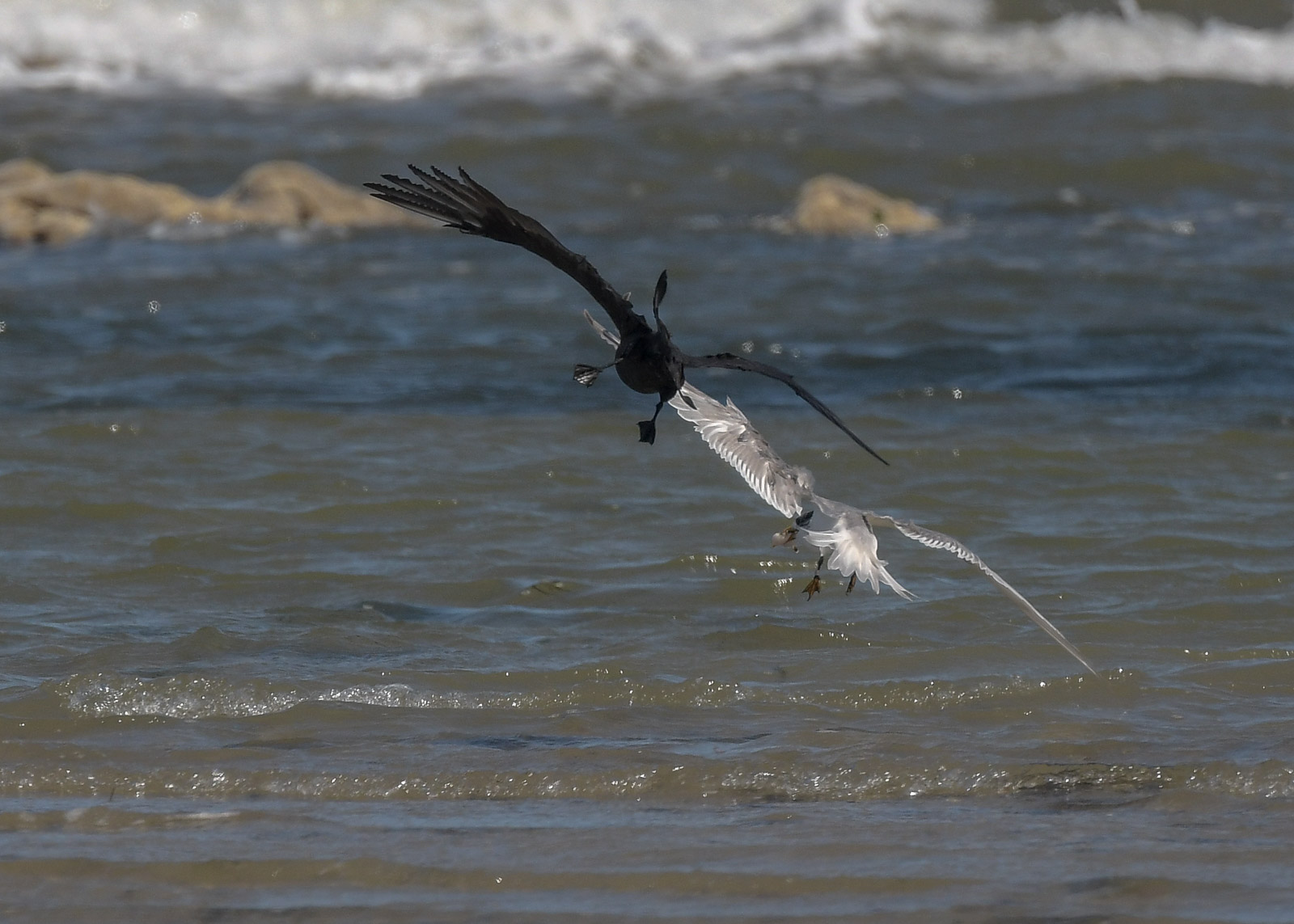
With a loud call and wing flurry the gulls all took to the air and at first I missed the action, then a dark shape flew over the rocks. Regaining composure, and the camera, I called out to no one in particular, “Arctic Jaeger”, and as there was no one else, its just as well I didn’t call to anyone in particular.

Sure enough. A Jaeger was looking for an afternoon snack, and what better way than to relieve some hapless gull of its meal.
But they were gone. It turned to head along the beachline, just as an unsuspecting Tern flew in with its latest meal. The Jaeger summed the matter up in a split second and the chase was on. Jaegers have a surprising turn of speed and incredible air contol, at one point, its head was going in one direction, its wings in another, the body in yet another direction and its feet controlling the action.

Somehow the Tern managed to lose enough height to get onto the sand, and mantle its meal with its wings. Thwarted the Jaeger moved along the beach to retrieve some other offering and in the flick of a wing was gone.

Time had run out, so it was time for me to slog back through the pines and home.

Enjoy

Greater Crested Terns
A Greater Crested Tern doing a spin dry to remove excess water
A young Greater Crested Tern picking up from the shallows
One of a handful of Red-necked Stints working the area
Showing off its prize
Don’t play with your food.
Arctic Jaegar. A summer visitor, not one I’d usually see, and certainly not in close to shore
A very surprised Tern
Jaeger applying the brakes
A serious chase and one the Tern does not want to lose
Closing in
The Tern was heading for the safety of the beach and managed to land with its food intact.
Thwarted the Jaeger collected something from the beach before flying off
And for bonus points! As I was leaving a Black-faced Cormorant flew in. They normally reside futher south in the Bay, so its been good to have a few around.

Along the Track: Territory is Everything

In realestate they say that position is everything.

We’ve been away the past week or so with the rellies on the family acres. So, not much birding to be done, let alone photography—if you bypass the usual family happy snaps.

We passed by a dam yesterday, and the eagle-eyed among us cried, “White-necked Heron”. But with the traffic and the icecream melting in the back, there was no stopping for such a rare event. Interestingly the day before that, we’d spied two White-necked Herons in a local water-retaining basin that was drying out. (But that’s another story)

Had it go back out past the dam this morning to get to the shopping centre, so loaded up the camera this time, well, you know. Just in case.

No case.

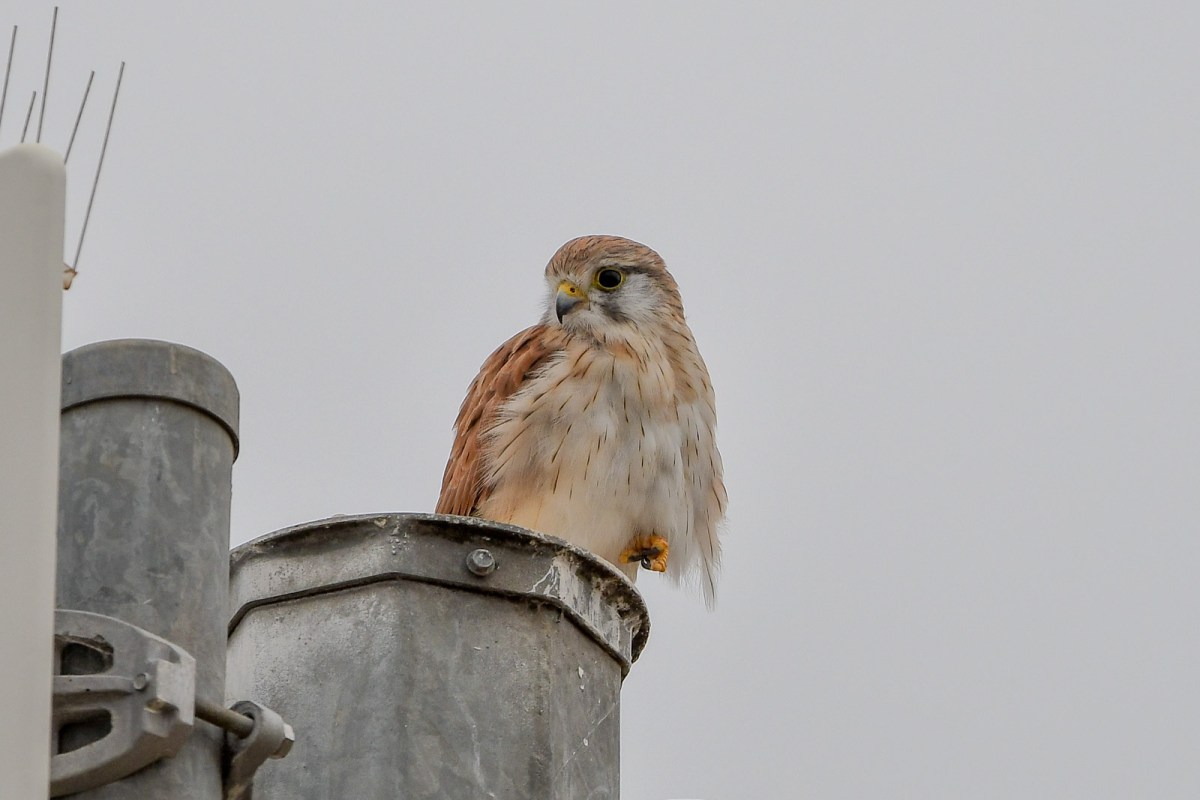
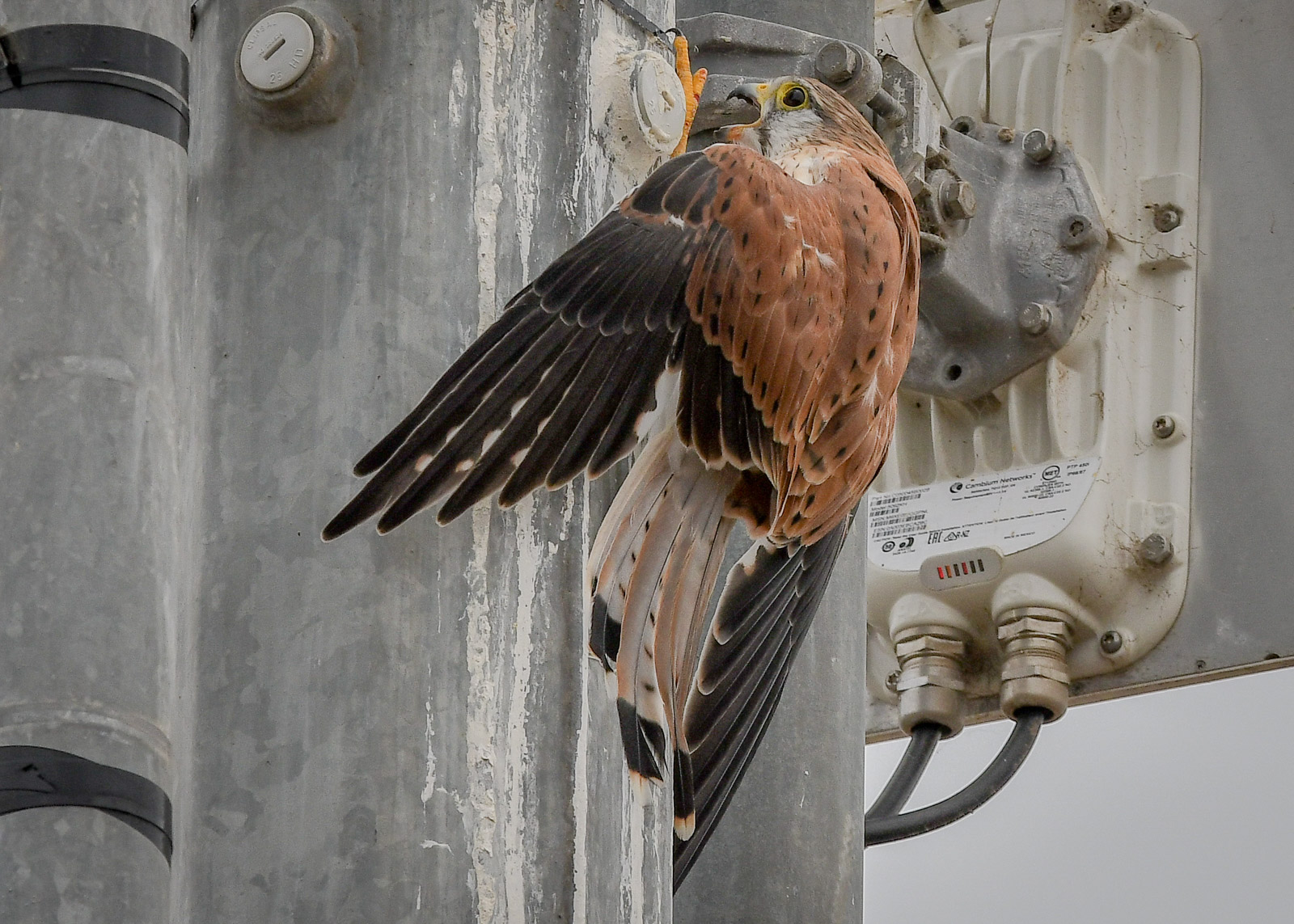
As I headed for home I noted on a comms tower at the end of the old road where we’d been photographing Black-shouldered Kites, (and we always look, just in case one might return), sitting on said tower was a Nankeen Kestrel, and with no icecream to worry about, I went for the looksee.

Looking very relaxed it was, and I moved up the little hillside for a better angle and view.
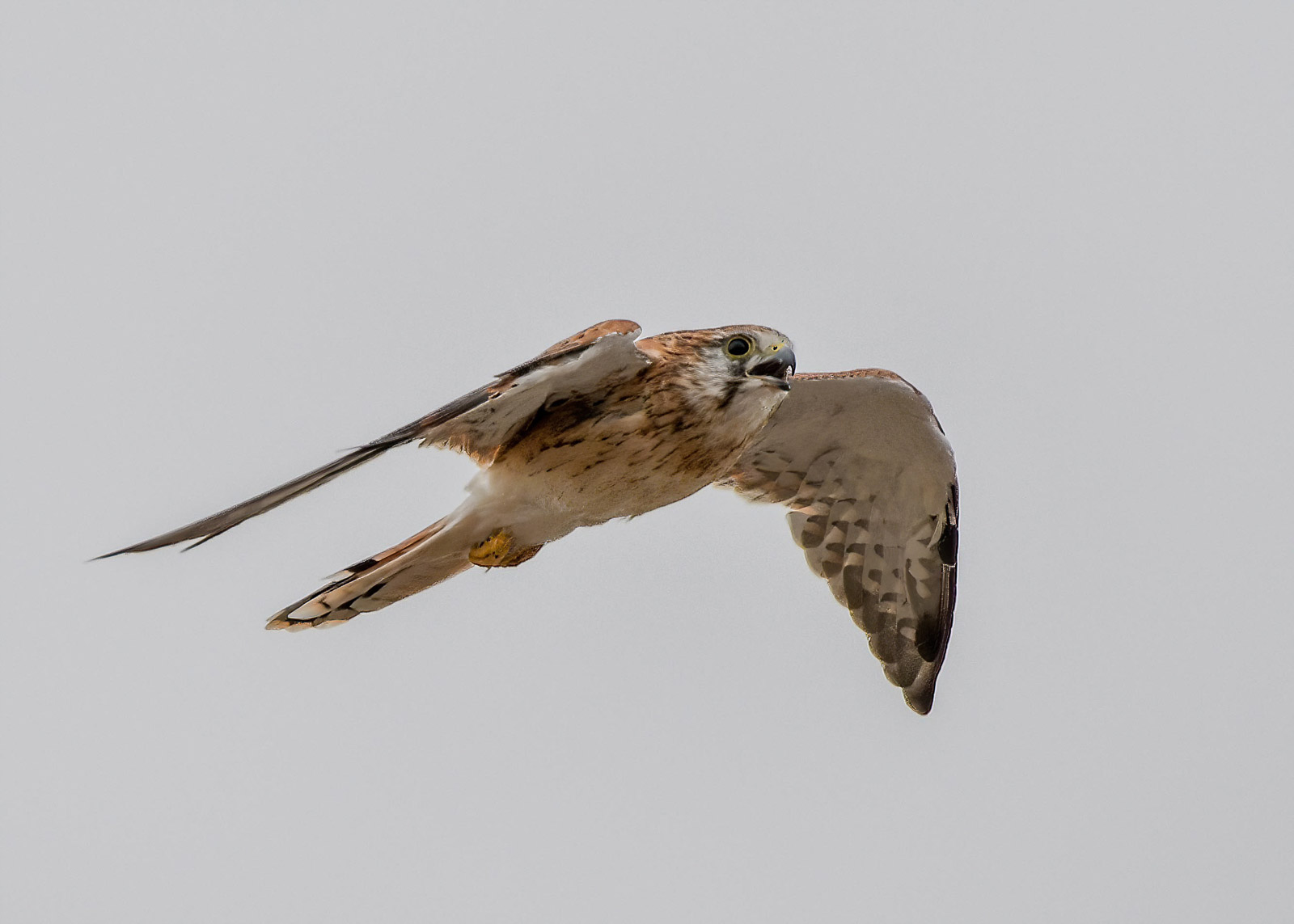
Suddenly the air was filled, (as they say in the classics), with the lovely quivering sound of Kestrel talk.
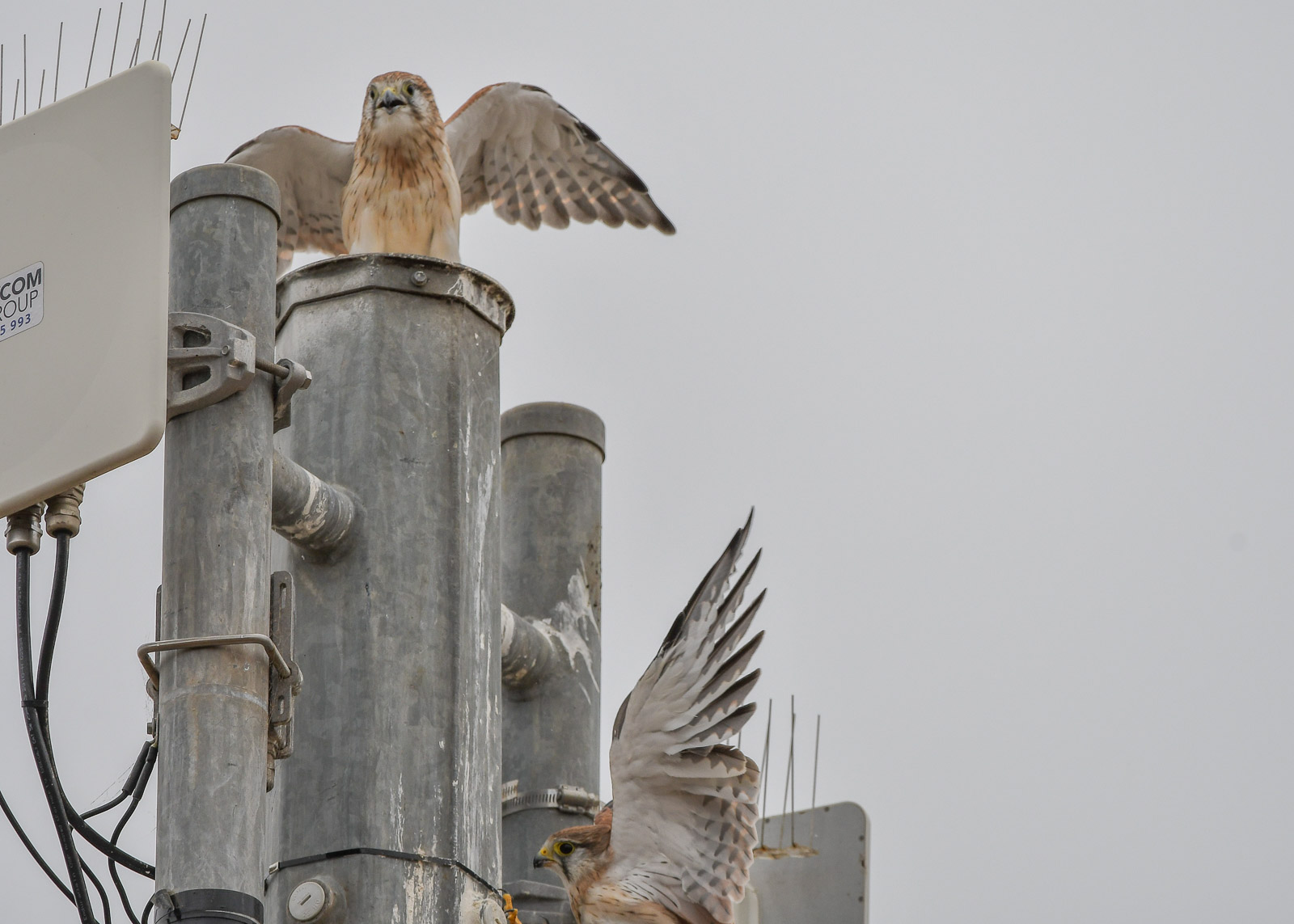
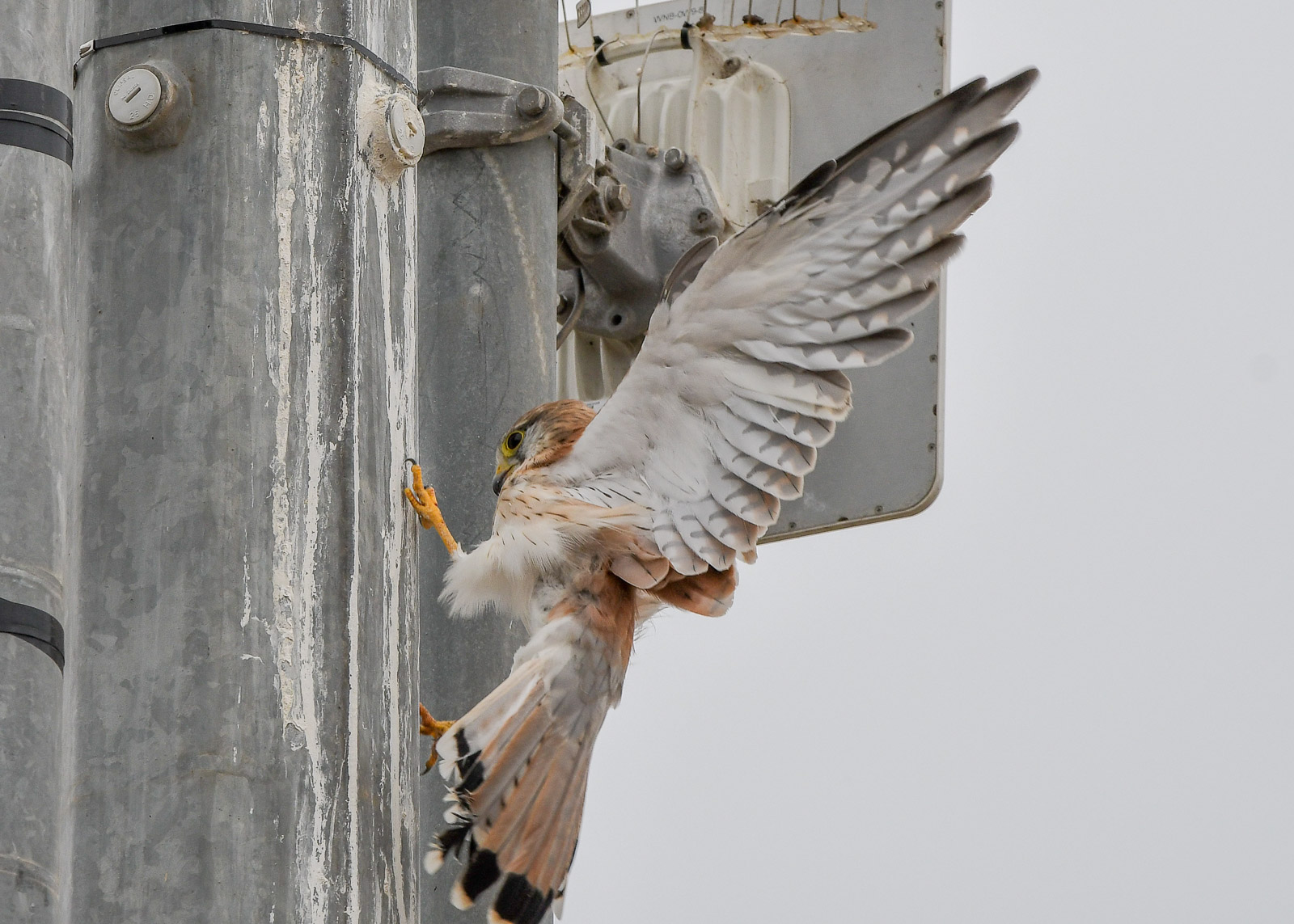
And a second one swung in, intent it seemed to unseat the present incumbent and take control of the tower.

Backstory behind us, here are the photo-moments.

A female, looking very relaxed and comfortable.
A crisp quiverous cry that is so typical of a Kestrel, she warned the approaching bird off.
Out of mischief or malice, the second one swung in, in full cry.
Had to wonder if there were two adults in the area, or whether these were siblings from a recent clutch.
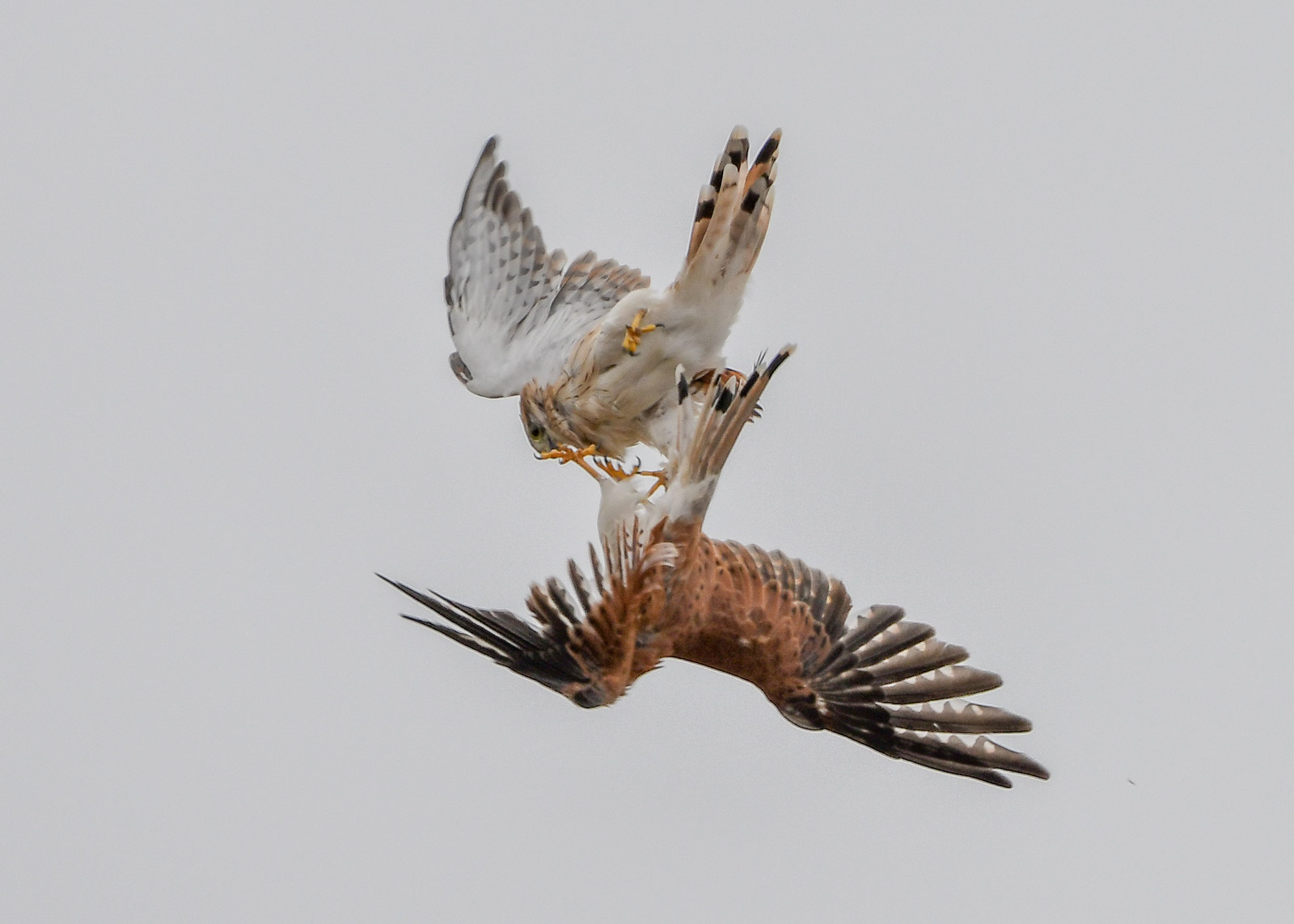
No quarter given, or taken.
A second pass dislodged the original bird and it slipped down the tower trying to hold on, both to its position and dignity
With a lot of name calling it was time to think of a new plan
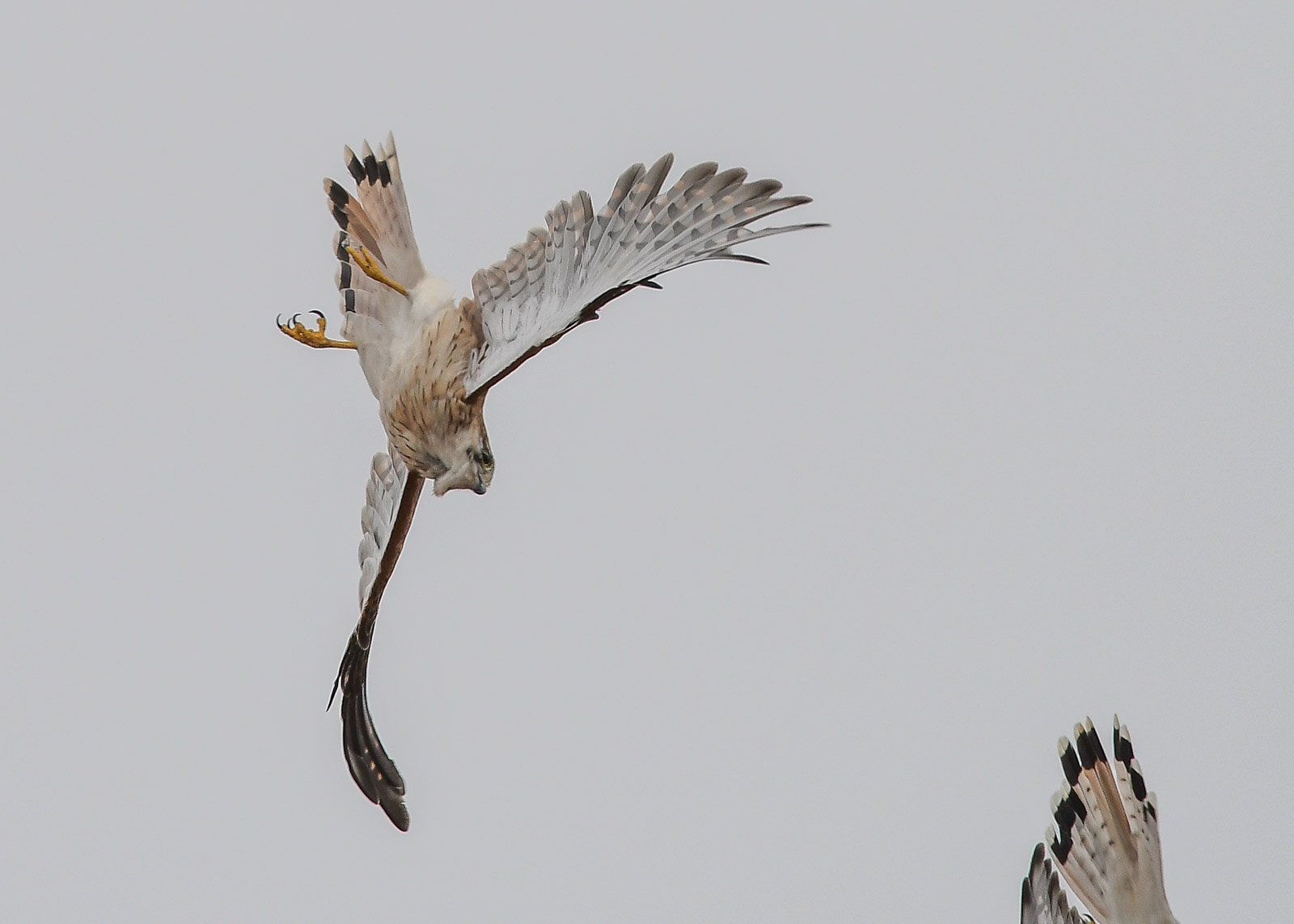
From its uncomfortable perch it dropped away to make its own attack.
Defend.
But to no avail as it was swept from the tower.
If I thought it was all in fun, then then next few moments showed how serious they both were.
Both birds capable of giving as good as they got
It was interesting to see how quickly they could recover from being attacked to being the aggressor
But like all realestate disputes, it’s hard to reach agreement.
Several more cackling calls and it was all over and one flew out across the paddock to safer ground
While the victor took up a perch on a nearby power pole and resumed normal business. It seemed to me, that this would not be the last of the encounters.

Enjoy.

Along The Track: Mudlark Magic #2

I had thought that by now the little Magpie-larks would have been on the wing.

But, No.

I’ve ventured out each morning the past few days, and as only Melbourne can do, it has been freezing cold, windy, and on one morning, a thin sleet running on the wind.

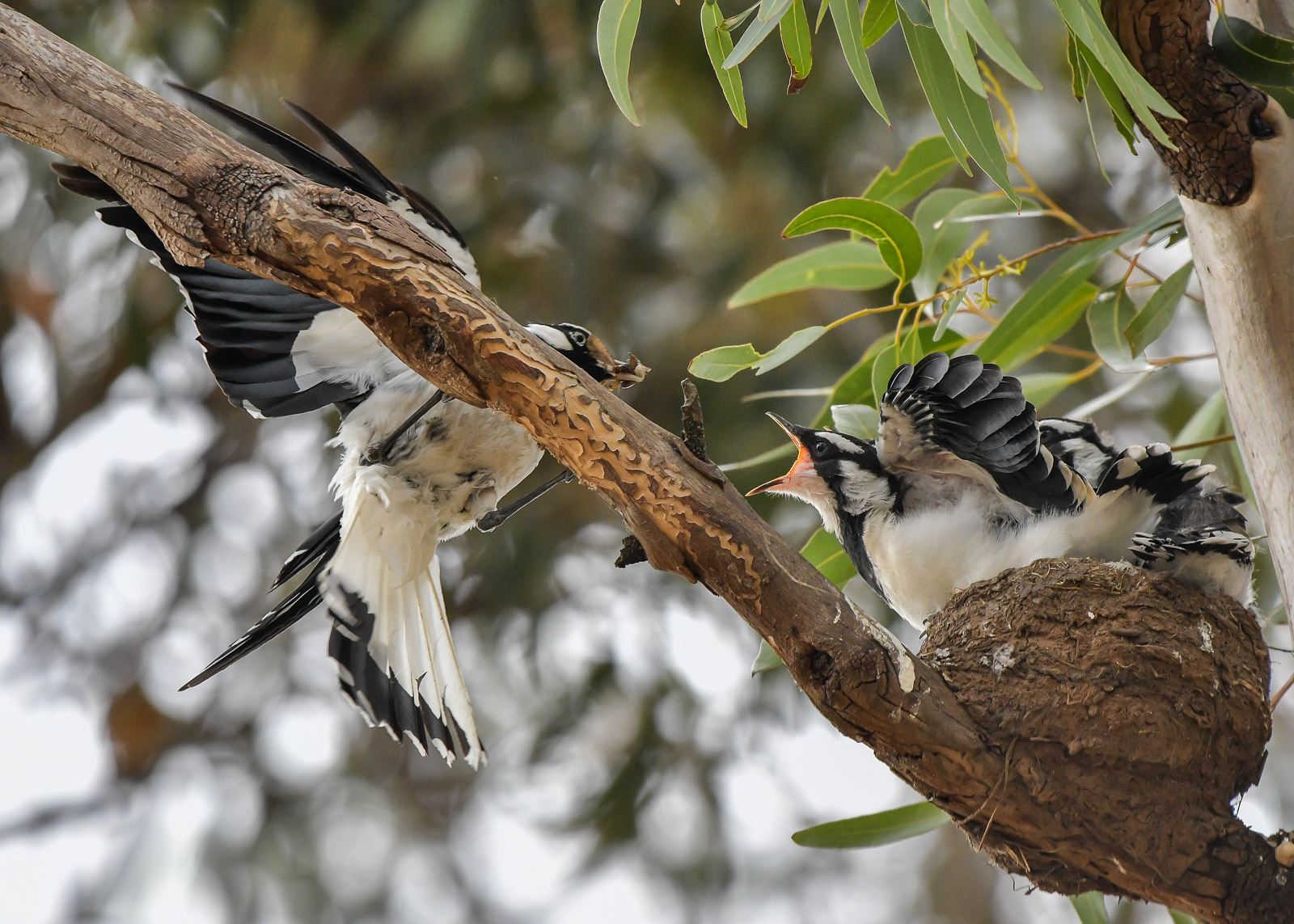
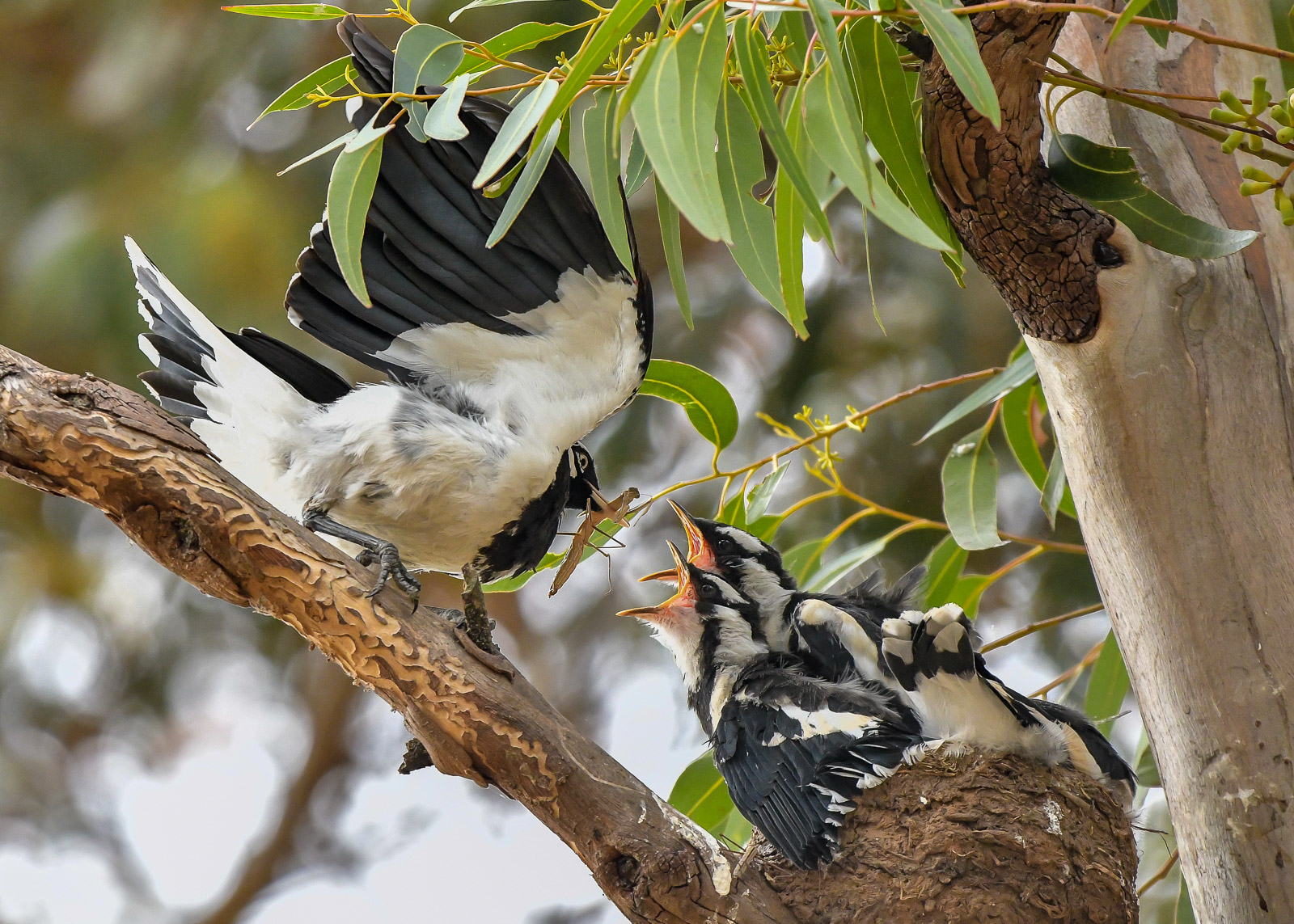
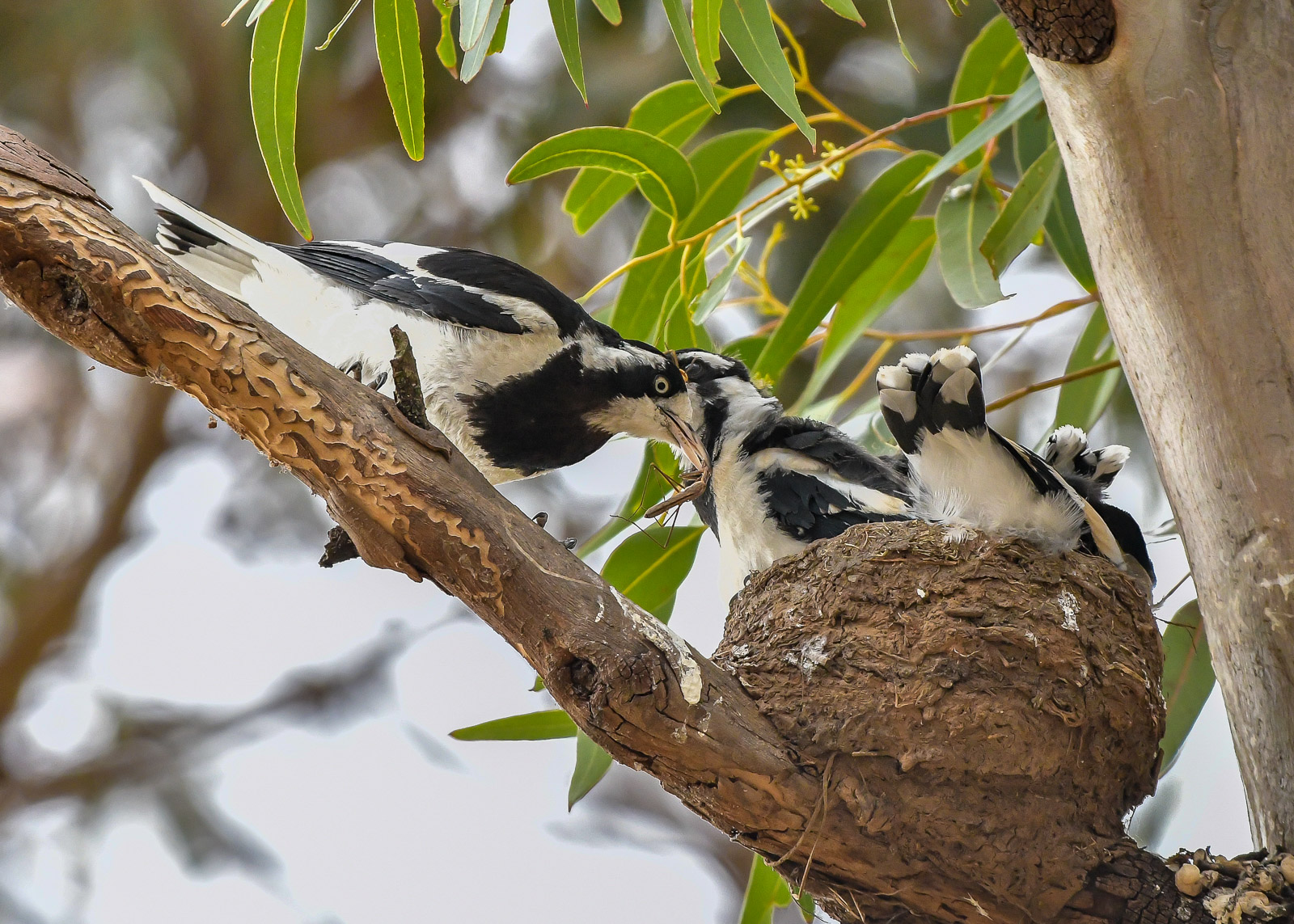
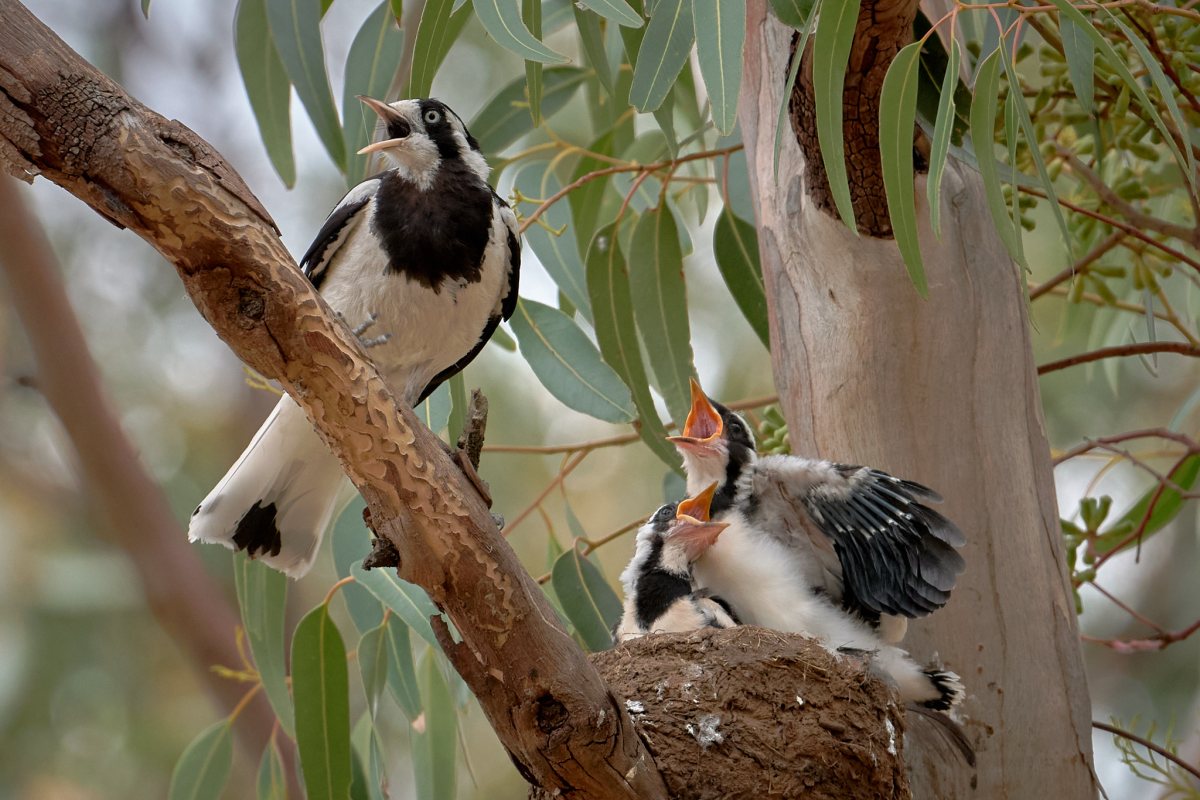
Feel a bit self-indulgent about putting up another set of these little birds on nest and feeding.
However, as is so typical, I’ve grown rather fond of the fluffly little hyperactive feather balls. They seem to be fed about every 10-15 minutes and it’s not unsual for first one, and then the other parent to arrive to keep them filled up.

Today, as the nest is now, well, well overcrowded, one of them ventured out on to the branch. Mum came by and in scolding Muddie calles shoo’d it back into the nest. In the nest they are very accommodating of the other’s needs for a wing-stretch or a preen, and it’s not unual for one to bob down into the nest so the other one has room to flex the tiny wings. Hard to describe but heartwarming to watch.
Here is a couple of days of activity.

I’ve tried it as a gallery, so click on an image for a larger view and slide show.

Enjoy

Along the Track: Mudlarks

Those that know me well, will tell you that I have a distinct appreciation for Magpie-larks.
Goes all the way back to a young kid chasing them along the irrigation channels where I grew up.
Muddies, Mudlarks, Peewees, all names that these fiesty little birds have been called.

I think we all appreciated as little kids that Muddies could play about in puddles of water, and not get told off. A sneaking respect for them so developed.

Their antics are numerous, and among them are the range of calls that they have. Ask them, “How deep is the water?” and they’ll respond with a shrill, “Knee-deep”. They also have a charming duet call, first he calls, then she answers.
They also love to fly together, land, and go through a wing-waving technique with lots of shrill calls.

They also have the into and out of the nest down to an art form. The incoming one calls to announce arrival, and as it drops in, the other one departs.
To a casual observer it would seem that a bird flew into, and then out of the tree. The amount of time for the change over, is not much more than the blink of an eye.

We have one that visits the local front garden, its a female. She has worked out, I think, that the concrete aand metal fences nearby will amplify her call, and it is really quite penetrating.

Recently I also learned that their mud-nest building is a little more complicated and explains an odd thing that I’ve seen from time to time. Occassionally I would find a nest in one tree, and another nest nearby, but the second nest was never used. Seems that Muddies get a bit confused, or excited about nest building, and after looking at several sites, they seem to select one, and start work, but also begin work on a second one as well. Eventually, both harmonise and one nest gets completed.

This clutch is at least their second for this season, and there was no confusion about the nest location. Both worked on it.

The pictures tell the rest of the story.

All complete and she settles down to laying and beginning to brood
They share the brooding process
The young are hatched in around 18 days, and a clutch is usually 3. I have seen one clutch of 4
Within a few days, they have packed on the weight, and developed feathers and are nearly ready to leave
A wing stretch that overflows the nest
Mum arrives with a top-up
Plenty of begging, but she knows which one is next
And in it goes
Still, it doesn’t hurt to ask
Maybe a wing-flap might attract attention
But, that’s it for this round.

Once they fly, there will be no holding them, so its all over so quickly.

Enjoy

Along The Track: Duck Season

Warning: This blog contains details and images that may cause distress to some readers.
I see that just about every night on the tv news, and I’m not sure what you are expected to do. Change channels, turn tv off. Close your eyes?

When I was a little kid, I remember a Loony Tunes cartoon of Elmer Fudd, the duckhunter, and Daffy Duck eluding him. The hapless Elemer never seemed to be able to take home a duck dinner.
Currently our Victorian Government seem to be in the same sort of dilemna about banning Duck Season 2023.

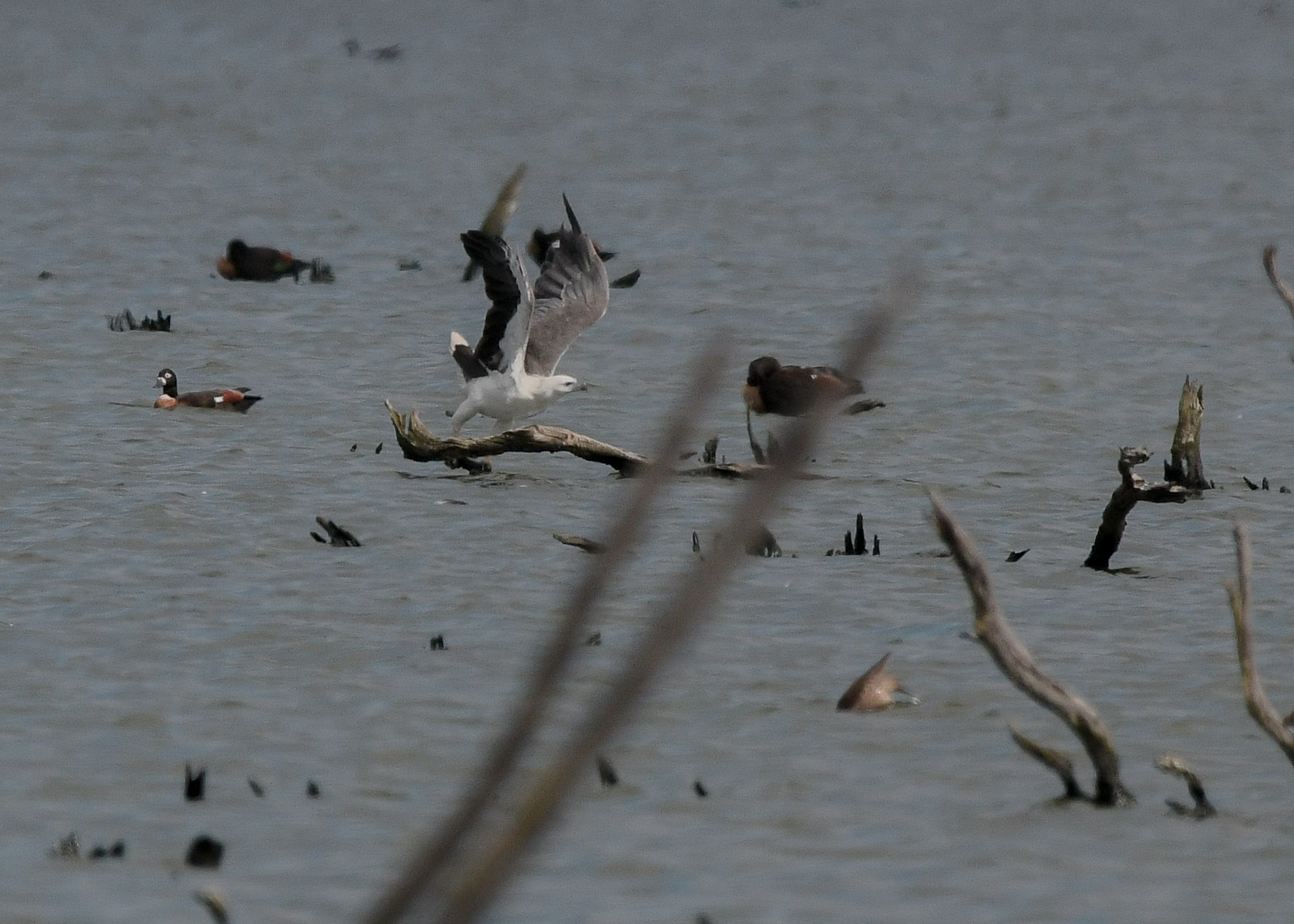
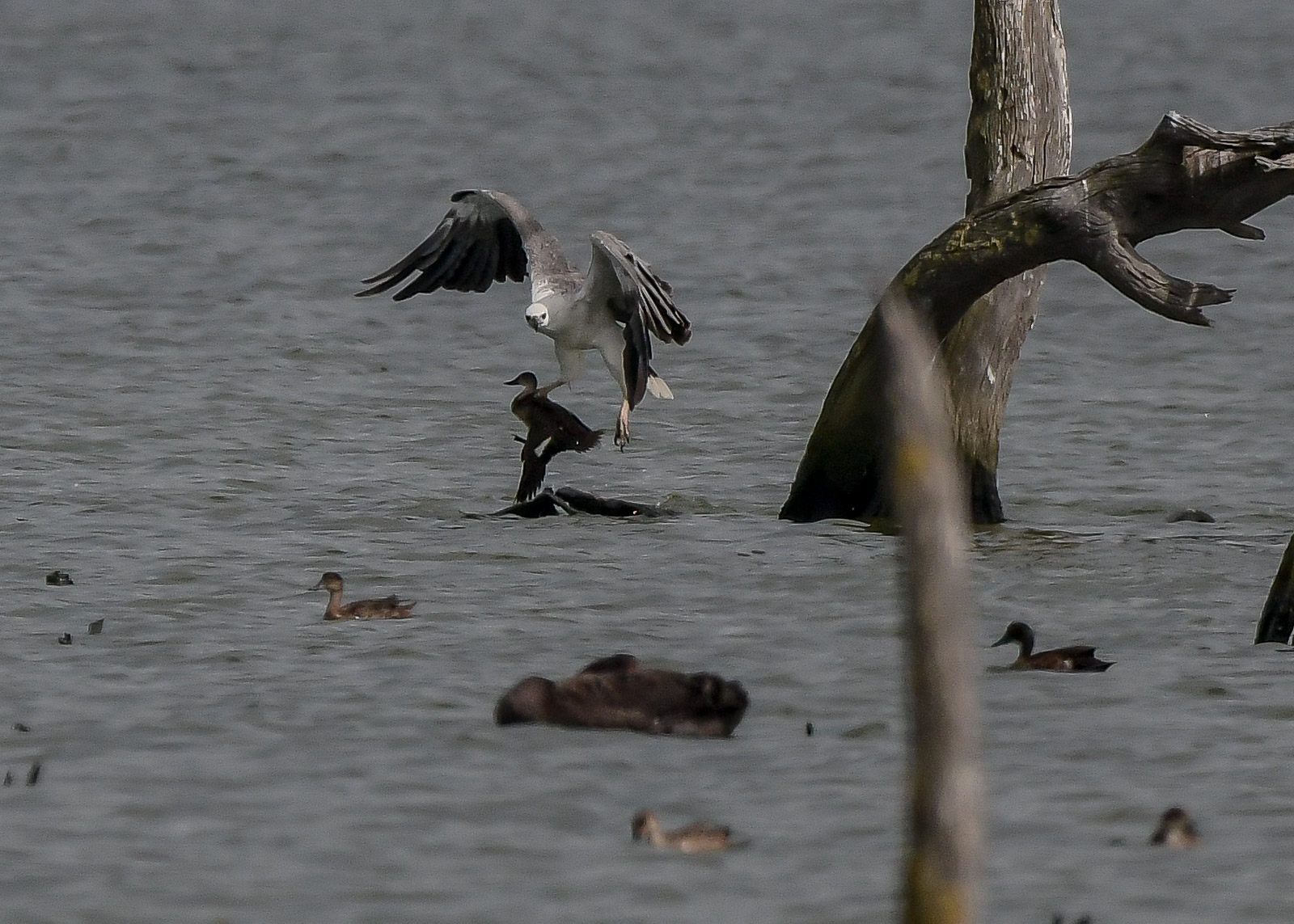
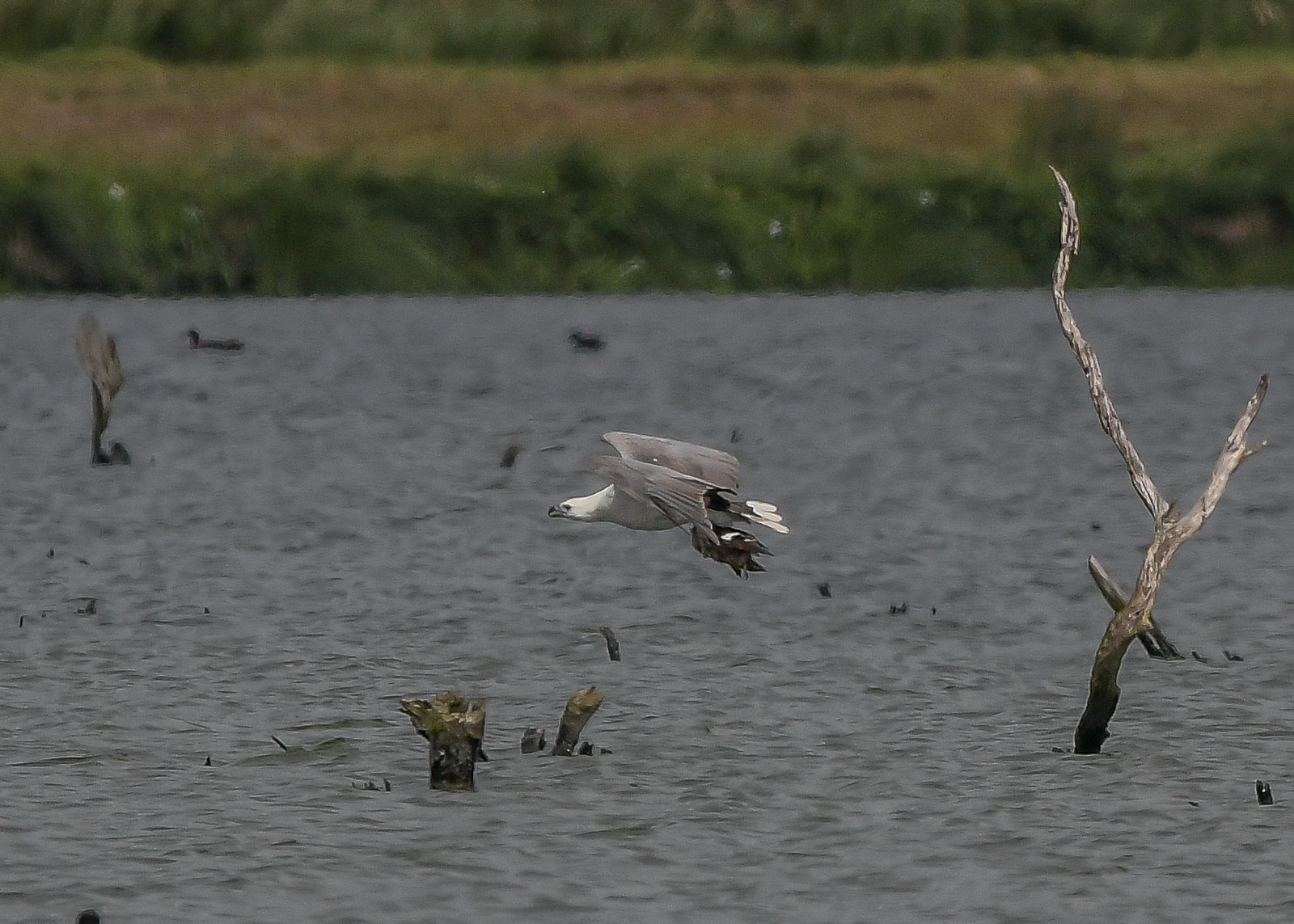
In the meantime, down at the the Western Treatment Plant, a White-bellied Sea Eagle is not the least preturbed by a possible closure of duck season.

Thanks to the headsup of its likely presence by my Flickrmate Don, and a couple of other birdos, we were planning to make a trip to WTP to see what, well, what we could see.

The family were coming for Australia Day, so we were planning to go the following day, but, best laid plans as Robbie Burns would write, and family decided that to come the day after Aussie-Day-Maaate.
How Un-Australian is that! I wonder if they disappeared as happens in the Sam Keckovic Lamb tv ad.

So rearranging our schedule we headed for the Treatment Plant. I’m not a great fan of going there on public holidays and weekends. Once the plant was visited by keen birders who took time to see and id as many birds as possible, and it was very laid back and tranquil.

These days it seems to be photographers who hurry from one end of the plant to the other to get just that one shot. Sometimes its seems to resemble a badly run motorcrosse event. And I’ve photographed a goodly number of motorcrosse events, and participated in a few historic rally runs so have a vague idea about proceedings.

So weekends are not my fav time in the plant.

Rant over, back to Sea Eagles. Well, one in particular.

The smart money seemed to suggest it would be on Lake Borrie, that’s where it was the day before. Every heard that advice. “Oh, yes, I saw it just there, yesterday.”

We parked conveniently about mid-way along the road and started to scan. Nothing in close. Of course not, did you really expect it?

Then EE made a gesture, way out in the middle of the lake. A white spec, that could have been a refigerator as far as normal eye sight would know. Through the binos, it was indeed a White-bellied Sea Eagle, perched high on a tree with great views of the menu (eer. ducks) all around.

It sat. We despaired at getting a sharp image at that distance and with the sun rising, heat-haze began to make it presence felt.
Then the bird jumped, went to the deck and moved about 300m up the lake. Just about every duck in that direction took to the air and flew the opposite way. Better to fly first and ask where later on.
Still too far out, but, just that little bit closer. Another long sit, and as soon as I turned away, it dropped down on to a log at water level.
Missed that.
Another long wait. But the bird kept turning its head to the left, and it had obviously locked on to something. More waiting.

Then, unfurling the wings it took off, quite leisurely it seemed, almost stealth mode.
And while I didn’t really see it though the viewfinder, somewhere out there a Chestnut Teal had nodded off to sleep.
Bad career move.
There was no second chance. The eagle swiftly despatched the duck, and sat on the waterline with it for a good 15 minutes, then scooping up its prize flew down the lake to a suitable dining table.

Event Log

When a Sea Eagle flys East, the wise among the ducks fly West
Swinging In to land
Locked for landing
Viewing the Menu from the best position in town
After a very long wait, it dropped down on to a waterline log for a drink
It kept looking to the left, obviously some opportunity had presented itself
Like all raptors there is no wasted energy, the time to move has to be just right.
Strike
Time to recover
Now to relocate to a more suitable dining table
A handy perch
cenare all’aria aperta

Along The Track: Spare a Thought

I was on my way in that lovely pre-dawn light to check on a pair of Mudlarks and their nest.
As R L Stevenson said, and “I found the dew on every buttercup”

On a tree some distance down the road, the familar shapes of Black-shouldered Kites. It was enough for me to try to find a place on the narrow roadway to pull over and take a walk back to see what was happening.

As it turned out.
A lot.
This is not a pair that I’ve worked with before, and probably won’t see again with any regularity.

The male was in the business of renovating or newly constructing a nest, and to my surprise, chose the tree quite near me for his timber collecting duties. It caused me to spare a thought for the effort he has to put in to select and acquire just the right piece of wood.

I don’t normally see this action close up so it was quite intguiging to watch him at work, first selecting a stick to break off, and failing, and then collecting another.

She on the other hand, sat quietly on the other side of the tree. Dreaming, no doubt of mice, or a wide screen tv.

The nest I discovered is 600-800 metres further down the paddock, and far too far away to monitor.

Dropping in to select a branch.
It is always a pleasure to watch the Kites work the air so gently and softly. Each feather working hard to control the approach
I have no idea how he knows which is the best branch, or does he just keep going until he can find one to break off.
It seems to be quite a balancing act to hold on, and at the same time tug away at a branch. One he was standing on gave way. But he quickly recovered
A bit like the big bad wolf, huffing and puffing is not getting this branch lose.
Time to re-evaluate the options
Quite amazing to see how well he can move about on the tiniest of branches
There, that is the right one.
And away we go.
And there is the nest tree. Way, way, way down there. Two fences a gate and an irrigation channel away.
Quite an enlargement, but you can see his progress.

Enjoy

Along the Track: Growing your Wag Tail

Always a great fan of Crosbie Morrison’s radio program “Wild Life” of the 1950s and 60s.
Took me many years but I eventually found a copy of his book, “Along the Track”
So thought this year I might use it as a way of honouring the influence he had on so many listeners. Always fascinating as a little kid to hear what had been sent into him, packed in cotton wool in a matchbox.

Perhaps it was part of my desire to not only see things in the bush, but to really get to know them closely.

Such, is a family of Willie Wagtails.

Now that all the Black-shouldered Kites have left the area, and the Australian Hobbys have fledged and are already making all-day forays out over the paddocks, and the young of Brown Falcon, Cassia, of Cinnamon are now self-sufficient, it’s been a lot harder to find the ‘usual suspects’

I’ve noted before that Wagtails had a very bad start to the season. Been hard to find any that weren’t washed or blown out during the foul weather a few weeks back. When the only protection is clever placement of the nest and a finely woven spiderweb cup, it doesn’t take much to bring the project undone.

One pair had two lots of bad luck. (Perhaps three, as there is some debate about the possibility of an earlier nest we didn’t see).

The first nest was built in the open, and had no protection from the elements. A quick shake of the head and no time for moping about, they got straight back into a new nest. This one was pretty well protected under the leaves, but exposed to the edge of an open paddock and when the rains and winds came, like the three little pigs, the nest was pretty much blown upside down.

Quick off the mark, they returned to the scene of the first nest and relaid the foundation and built a new one. For those that follow Monty Python, it’s a bit like Willowshade in “The Holy Grail”


When I first came here, this was all swamp.
Everyone said I was daft to build a castle on a swamp, but I built in all the same, just to show them.
It sank into the swamp.
So I built a second one. That sank into the swamp.
So I built a third. That burned down, fell over, then sank into the swamp.
But the fourth one stayed up.
And that’s what you’re going to get, Lad, the strongest castle in all this Isle.

Monty Python and the Holy Grail

So Swamps aside, here are some of the highlights from the third and successful nesting

Enjoy

This is the industrious action on the second nest site. Regretably the rain and wind tore it from the branch before the young were hatched.
Refurbished first site. Most of the nest had gone, but you can see where they reinforced the foundation and then went on.
This time the weather was much more kind. She is sitting up a bit higher in the nest this time and the young must have hatched a couple of days previously.
The nest was well sited behind the trunk of the tree to avoid prevailing winds. (Do you think they know that stuff?)
No Secret Now The young keep a very low profile and hardly move around
Defensive
Nothing to see here.
She sits on the young ones to keep them covered. As they grow, they tend to stick out from under her feathers.
Cozy, but now overgrowing the tiny cup
They get constant visits with food
I’ve always been fascinated about how they know which is the next mouth to be fed. It’s more than just the loudest or largest as each gets a fair share
We missed them flying, but this is a couple of hours out of the nest, and a bit bewildered by the big world around. But still, even with a tiny tail, able to Wag successfully
A couple of days later and this one is quite at home among the branches.
Two weeks on the wing, and with a well grown tail, ready now to take on the world. Go little Wagtail

From the Field Notes Book: Feeding your Hobby

The weather has not been conducive to keeping tabs on the local Hobby Nursery.
We have also the challenge of the location, as its quite a busy carpark, and Security offers its own challenges. Carparks are not public spaces.
The second challege to in-flight photography is the trees are all very well established Sugar Gums, with a few Umbrella Pine, and all quite tall, and of course close together. So its hard to get an open shot of in-flight activity.

But persist we shall.

Early mornings seem to be the best. Quiet carpark, security having breakfast and the like. And if the light is right then its a bonus.

Here is a few from a couple of feeding cycles the other day.

Dad arrives with a breakfast offering. Unlike Black-shouldered Kites, he doesn't seem to have the ability to hover. Rather he pulls up in a climb and then for a few seconds holds station before beginning to drop.
Dad arrives with a breakfast offering. Unlike Black-shouldered Kites, he doesn’t seem to have the ability to hover. Rather he pulls up in a climb and then for a few seconds holds station before beginning to drop.
Hold on. I'm comin'
Hold on. I’m comin’
Me too
Me too
Hard to see in these shots, but one of them is quite a bit larger than the other. So I'm tipping its a male and a female.
Hard to see in these shots, but one of them is quite a bit larger than the other. So I’m tipping it’s a male and a female.
I'm also sure everybody knows who's turn it is for the food. I don't think its a case of first in.
I’m also sure everybody knows who’s turn it is for the food. I don’t think its a case of first in.
I think this might be my Nat Geo Shot.
Dropping away,
Needing to find a suitable perch to hold the prey while it eats.
That might work.
Which leaves the other one to hone up its flying skills. They have already learned to take dragonflies in the air.
A great look at the outstretch as it takes off
Graining speed and height
Dad arrives with a new meal. This time he takes the safe approach and delivers onto a branch
All secure and away

That’s it for the year.

Enjoy your festive season and may 2023 bring some fantastic picture opportunities to your lens.


See you in 2023 Along the Track

From the Field Notes Book: Little Wag Tales

The weather here was not kind to the first clutches of Willie Wagtails. Those birds that started early ran into extreme conditions and as the nest is mostly spider-web and at best minimally attached to the branch, rain and high wind inevitabley took their toll. Some Willies brave it and have nests on open branches, while others adopt a more sheltered approach. Some will work on just a branch, while others go to the extreme of working on a branch junction and get the support of several branches, and even a vertical one which does give them extra support as it seems easier to bind the spiderweb tightly.

But little Wagtails grow fast, (about 14 days from hatching to fledging) and they soon overwhelm the tiny nest.

One pair we’ve been monitoring of late, has built their nest under the branches of a old, small, Peppercorn Tree. However it is right alongside a very busy walking track, and a few steps from a picnic/rest/viewing area. Wasn’t hard to find them. And they seemed unconcerned about the human presence. We try not to get too close or get in the way, and they just go on with the important job of first sitting, and then feeding.

I do get complaints from time to time that we are obtrusive and break the ‘rules’ of not photographing nests and it only encourages others. So, just to set the record.
No photo is worth stressing a bird.

If we aren’t invited to be there. We don’t. Willies pretty quickly establish the boundary rules.

This pair, had chosen both the place and the time rather cleverly. She had nested through the last of the storms and the three young hatched just as the weather picked up, so they have had about two weeks of no rain and winds. Interestingly, on the day that these young flew, the weather turned nasty again. But they should survive in the thicker pines nearby.

Let’s see how they progressed.

We found this pair well inside a small old Peppercorn tree. Took a while to work out as one flys in, the other flys out and it would fool many a casual observer.

Little tiny mouths to feed. Not much more than 3 days old they have very long necks to get the best food. The Peppercorn fronds kept a safe fine veil over them
Just a few days old, but already the nest space is at a premium. Everyone just sits very still
Five days later and they are well on the way to filling the nest.
Tiny wings needs stretching and its means that your siblings have to put up with your need for space. The tiny wings are still in the sheaths as they begin to unfold
One of the most amusing things is the tiny tail. While they quickly learn the Wagtail ‘wag’, the little feathers seem a bit inadequate for the job.
Flight Day. When we passed by in the morning they were still huddling together, but the adults were much more conspicious and noisy than usual.
The adults sat on branches outside the bush and offered encouraging wingflap signs to the young. When all were out they escorted them, to safety, into some thick pine trees down the river bank.
One out and two to go.
The first flights were to a branch at the far side of the tree.
This one needed a bit of encouragement before it too stepped up and was gone.
A perfect landing for a first attempt
Something special about a little Wagtail that is out of the nest and has all the world before it.

Little Visits: A Morning in the Western Treatment Plant

Due to an odd arrangement of circumstances, that would take several blog pages to cover and even more to wend the pieces together, we had decided on a trip to the Western Treatment Plant. (WTP)
What, of couse, was not in the “How to do it” manual was control of the weather.

Grandson “+D4” was staying over and t’was the only day avaible. For those interested “+D4” comes as an ‘Addition’ to the “3D’s” fabled for their “Dawdling” while on car-convoy on such trips to the WTP.

We picked up the usual Coffee-to-Go from our local and hit the highway. (Mr An Onymous, has a theory that in future times, sociologists and archeologists will conclude that ‘hit the road’ had some quasi-spiritualistic meaning and that the poor deluded ancients would go out and hit the road with their hand expecting some mystical experience—but— I digress)

The overcast, rain and high winds did not digress. Nor did they ease off. I may have mentioned before, that I can deal with the poor light and the rain at the WTP, but not the wind. It just makes getting out of IamGrey and standing in the open a truly harrowing experience and one that even the best of birds seems avoid at all costs. For those that might venture there, the track in the “Special Section” that was out along the beach area and barely passable with 2WD is now eroded to the point of being 4WD only.

So we had a fairly quiet trip about the plant. Good news is the roads are in very good condition and the closure has allowed several areas to be graded and topped and the drive experience improved no end.

We had hoped that White-winged Black Terns might have returned by now, but if so we didn’t get a sighting. The weather changes seem to have altered the plans of many returning migrants so far this season.

So as the blog is more now about the photos of the day, and less about the babble, here tis.
Enjoy
This is part of the coastal road at the Plant. Normally it is accessible by 2WD, but now 4WD and low tide are the recommendation. Erosion is quite evident. We retreated.
A small selection of Pied Oystercatchers hunkering down on a sandspit out of the wind.
This beautiful Goose has been on its own for at least 12 months, but has remained faithful to the area. I’m sure it doesn’t recognise me, but each time we go past its territory, I stop and we exchange a few head-bobs and it goes back to feeding.

I’m pretty certain it has lost its mate, the pair used to be quite the regulars in the area and nested over several seasons. For its own reasons it hasn’t ventured away to find a new mate.
Female White-fronted Chat. They seem to take extraordinary care about returning to the nest with food, and will spend many minutes checking everything out before deposting the food.
One of a pair of Brolga that were working in the T-Section
He is returning to see how things are going with his nesting mate. I’m sure that is a Swan smile
I saw the nest from the other side of the pond and we drove round for a clearer view. This clever lass was taking no chances and had built her nest in the very middle of quite a deep pond and it seems to have paid off with a lovely set of matching cygnets.
By early afternoon, the wind, the cold and the rain has gotten the best of the best of us, and we made one forlorn loop around the Western Lagoon area. Surprisingly we spotted a pair of Brolga with two quite large well developed juveniles in tow. Well worth the extra few minutes and the tired and exhausted among us were quick to respond to the opportunity. The birds seemed quite relaxed and in no hurry to go anywhere, but big long legs quickly carried them across the ponds.
Quite well developed. I’m not sure if they are fledged, but that normally takes around 3-4 months. Which just shows how silly Uncle Google can be, as I’ve seen figures of 2-3 weeks, which are impossible. They stay with the parents for nearly 12 months until the next breeding cycle.
Here is an intersting factsheet on Brolga on Farms.
For bonus points we called in to see the Hobbys on the way home. This one is now just about a ‘brancher’ and no doubt days from flight. The nest is festooned in discared down.
All tucked up secure. Three little Wagtails about a week old.

Strolling: Birding on the Move

Tis a well known fact that mostly I am allergic to photographing birds as part of a long walking exercise programme. To me, its two distinct activities and the thought of knocking up 15 kms and seeing the occassional bird, way, way over there, is enough to make me stay at home.

Tis also a well known fact, and long term readers will be well aware that an area in the Werribee River Park just a few minutes drive from home has been called, “The Office”, as in “just another day at”. Over the past 10 years we’ve spent countless hours in the area and tis fair to say that at one stage we probably had a close relationship with the majority of the birds in the area.

But, and there in is the rub. But. Recent rains have made things much more complex for us.
The Werribee River ran to flood level and huge volumes of water rushed down the narrow channel, and of course gained speed and force as they went. So much so that a footbridge over the river has suffered ‘irreparable damage’. So Parks Vic, to protect the unsuspecting public, and those that would ignore signs suggesting it was unsafe, have now for everyone’s safety closed the area “Until Further Notice”.
One of the pylons holding the bridge has been eroded and needs a complete replacement. Sadly there is no budget money for that in the ‘foreseeable future’, so the area will be out of bounds for your average Sacred Kingfisher aficionado. (You can guess EE’s disappointment.)

Couple that with the need to install on the far side of the river a new pipeline to feed the Werribee Open Range Zoo, and that access road is also now heavily chain-wired, with a similar sign that says, in its meaning, No Access to Kingfishers Here!
I just hope the birds can’t read.

With two of our preferred birding spots now off limits, we are in the market, so to speak, for a new location. So a couple of days ago we took a walk along part of the track running alongside the Werribee River as it cuts through suburbia. Well actually the River has always been there and Suburbia has encrouched up to the edges of the river.

So we didn’t expect any exotic or unusual birds, but thought the walk would give us the option of exploring some locations that might prove worthwhile. And as Ashley over on “Aussiebirder” points out Forest Therapy is about taking the time to appreciate the simple, and common around us.

What surprised us was the height that the water had come up to in the recent floods. Trees festooned with plastic bags and other disposable disposed rubbish certainly drew a line. Including a rather large log that was jammed 5-6 metres above water level.

We did find the usual suspects and a few extras which did make the day worthwhile. And we have a couple of places that might yield us some good opportunities in the future.
Sore of feet and a little exhausted, we headed for home and lunch.

Red Wattlebird. One of a number still feeding noisy young
Can’t seem to go anywhere without a clan of Rainbow Lorikeets turning up to put on a show.
This White-faced Heron was looking surprisingly hunched up.
There was much discussion between the pair of Red-rumps. But as she wasn’t interested in moving away from the nest hole, I guessed there were young inside.
EE’s Spot of the Day. “Way down there on the Tree”
Helpful when we are in a forest of trees that goes a long way way down there.
Figured out eventually from a pair of helpful Willie Wagtails that were waiting for the Collared Sparrowhawk to move on.
It did, and in a few minutes flew past taking someone home for dinner
How strong are those pincers? The Sulphur-crested Cockatoo just sliced the tough seeds apart like scones. Want to see a Cockatoo rearranging the windowboxes on flats in the Melbourne CBD? See this ABC Article.
We spotted this young Grey Shrike-thrush begging for food in someone’s garden. Had to shoot through the railing because of space limitations.
Mum arrived with a big fat worm, but was immediately harassed by a squadron of White-plumed Honeyeaters, so…
It flew to another branch and enjoyed the meal itself.
Another great find. A Wagtail family. These young are a week or more out of the nest. The harassed parents are looking after four young from the clutch, so Wagtailville is very busy and noisy.