Tennis Stars Be Prepared to Be Amazed!

My friend Nina was down at the WTP last week.
She sent me a note of her adventures, and has kindly allowed me to share them here.

In a galaxy far, far, far, far, away, in another time, Nina and I both worked for a large multi-national. Her love of the environment and my natural history photography have kind of kept us in touch.

All the photos, words and story are Nina’s.  Obviously copyright, and intellectual property rights belong to her and should be honoured.

Here is what she sent me.
I had an extraordinary experience at the WTP with friends last Friday.

Where ever we went, we kept running into Brolgas.

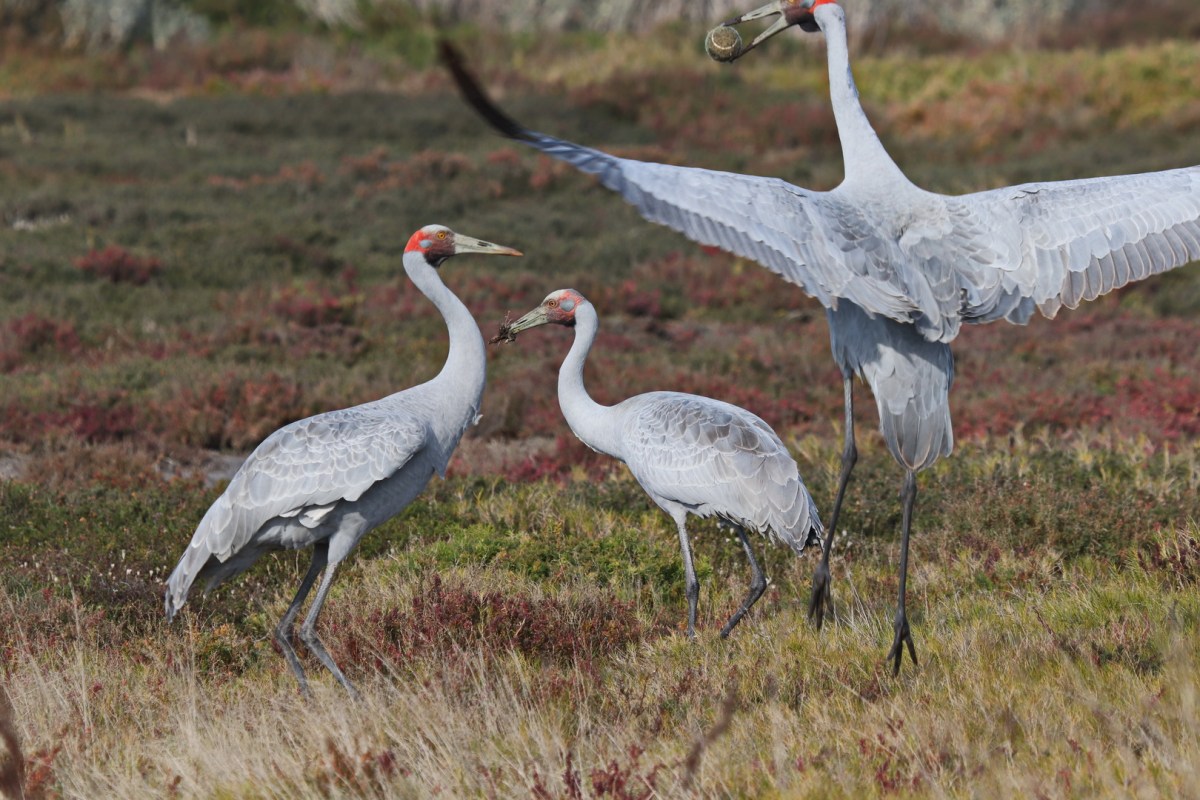
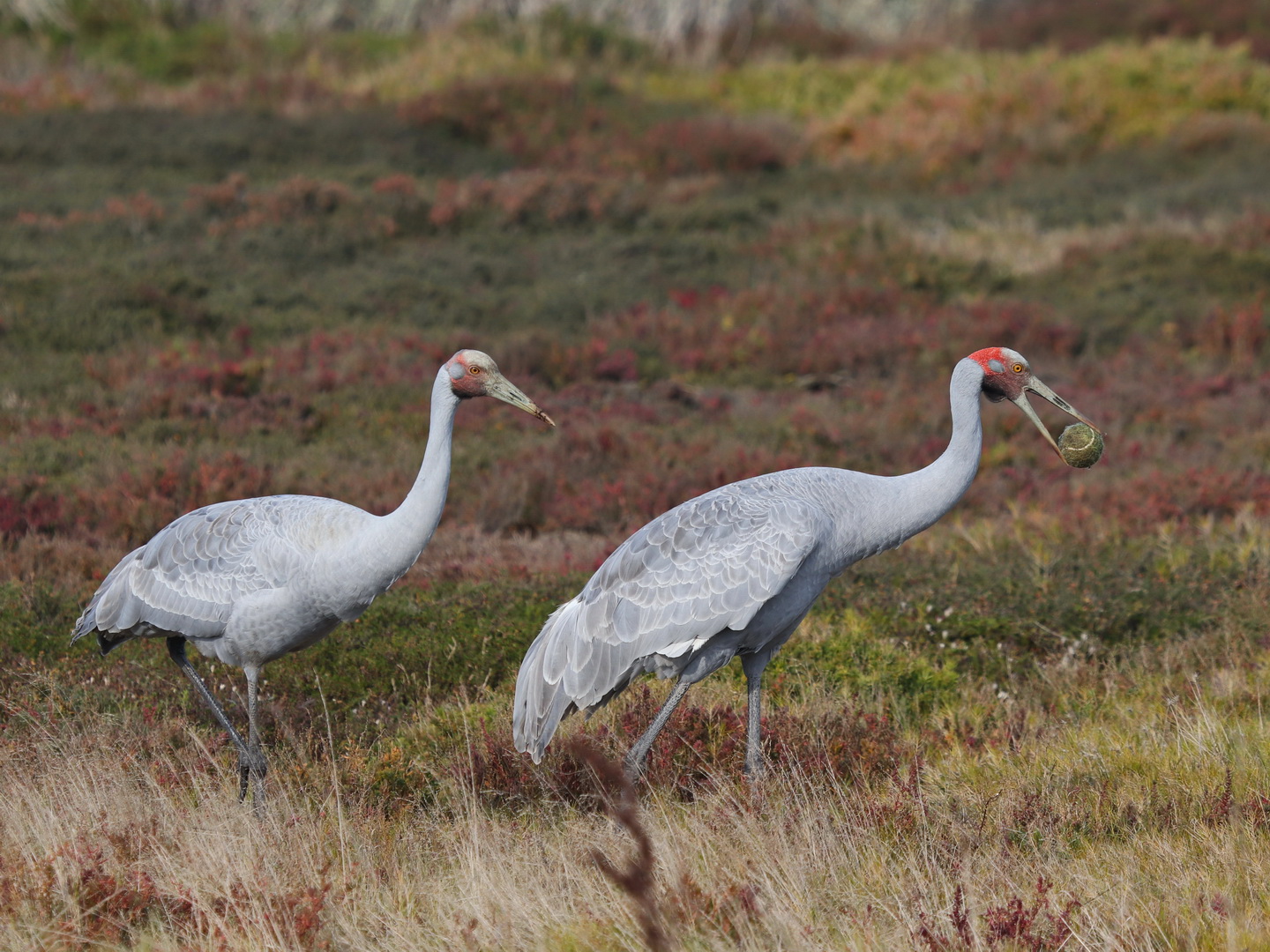
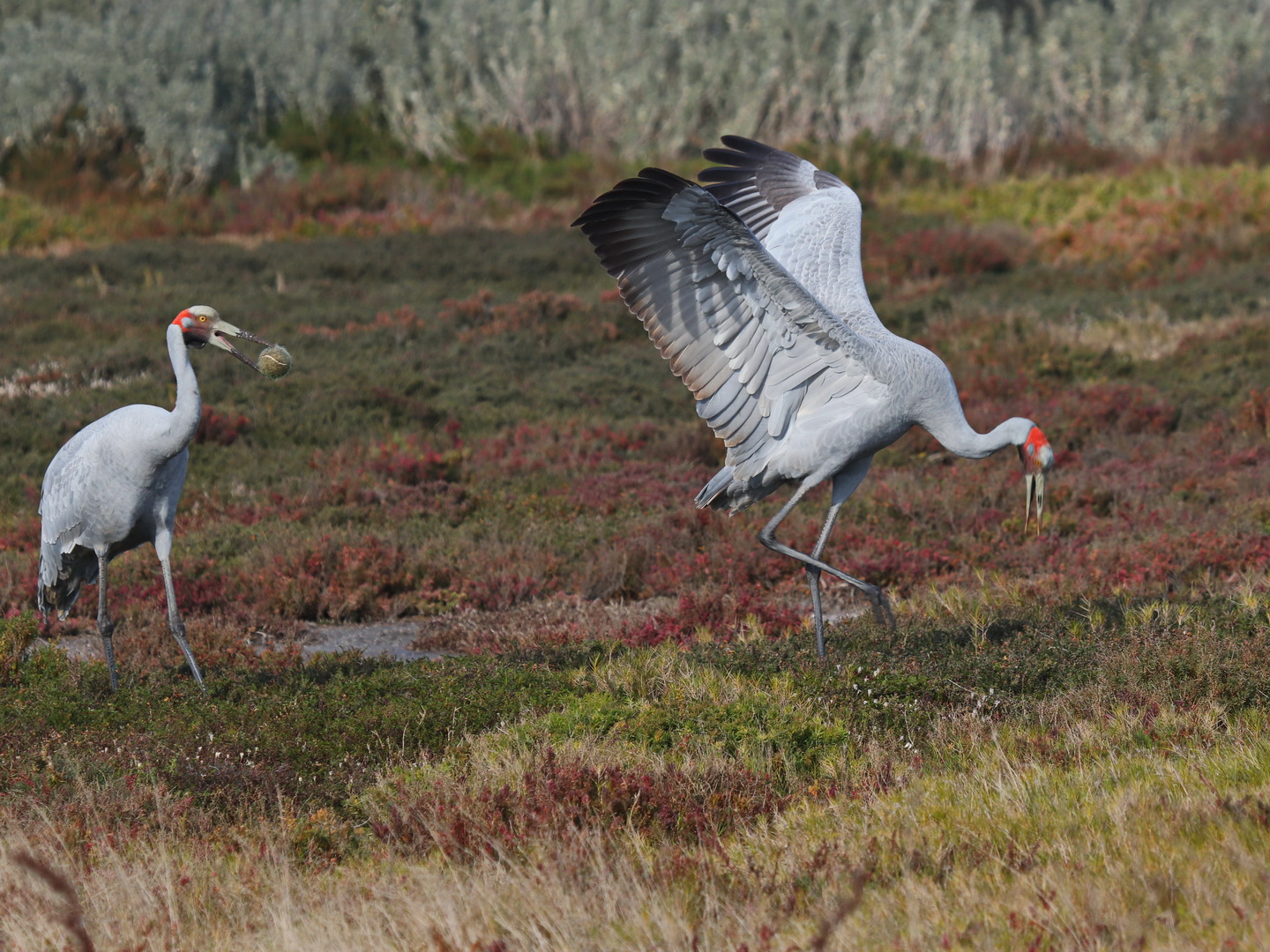
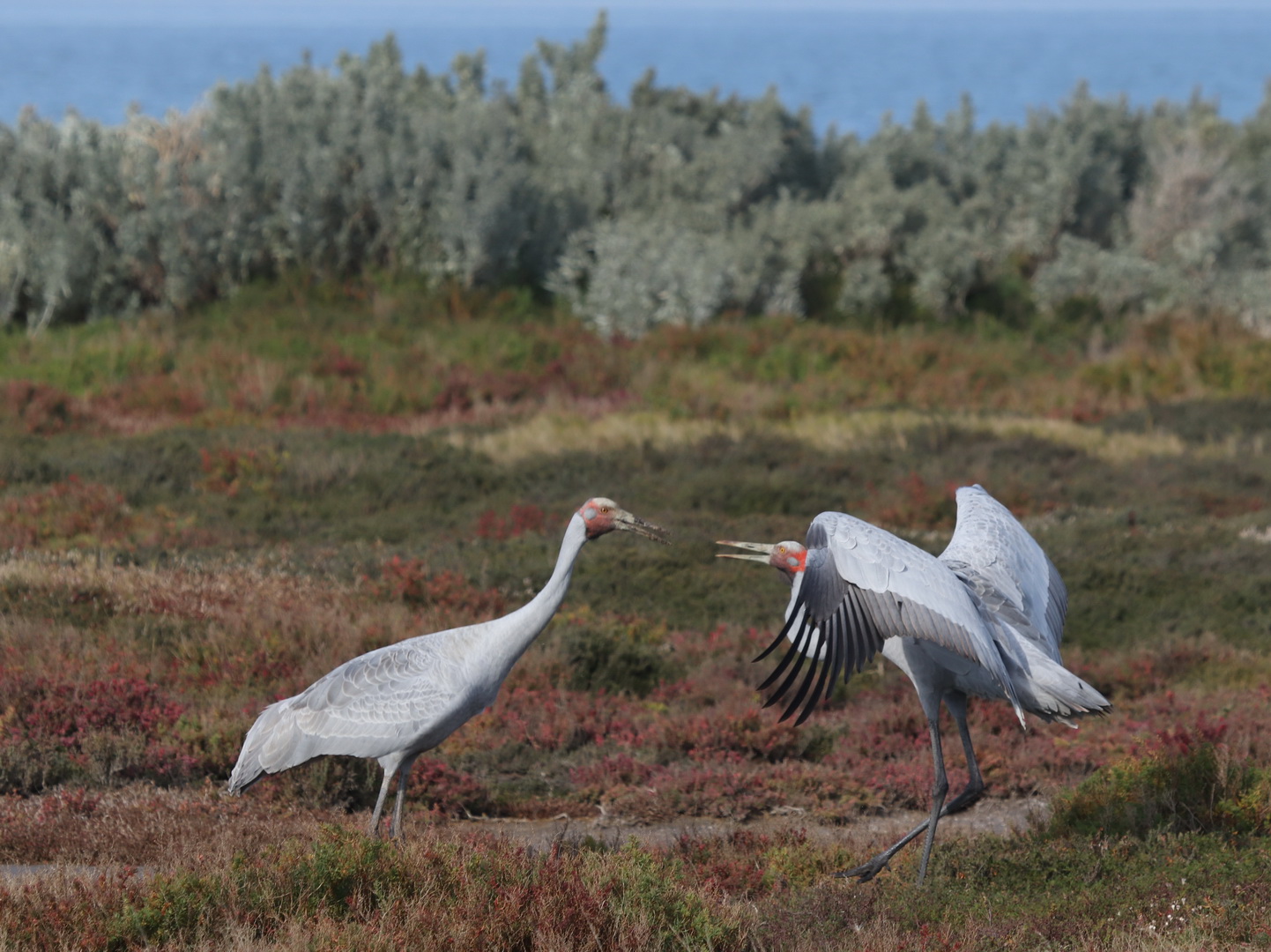
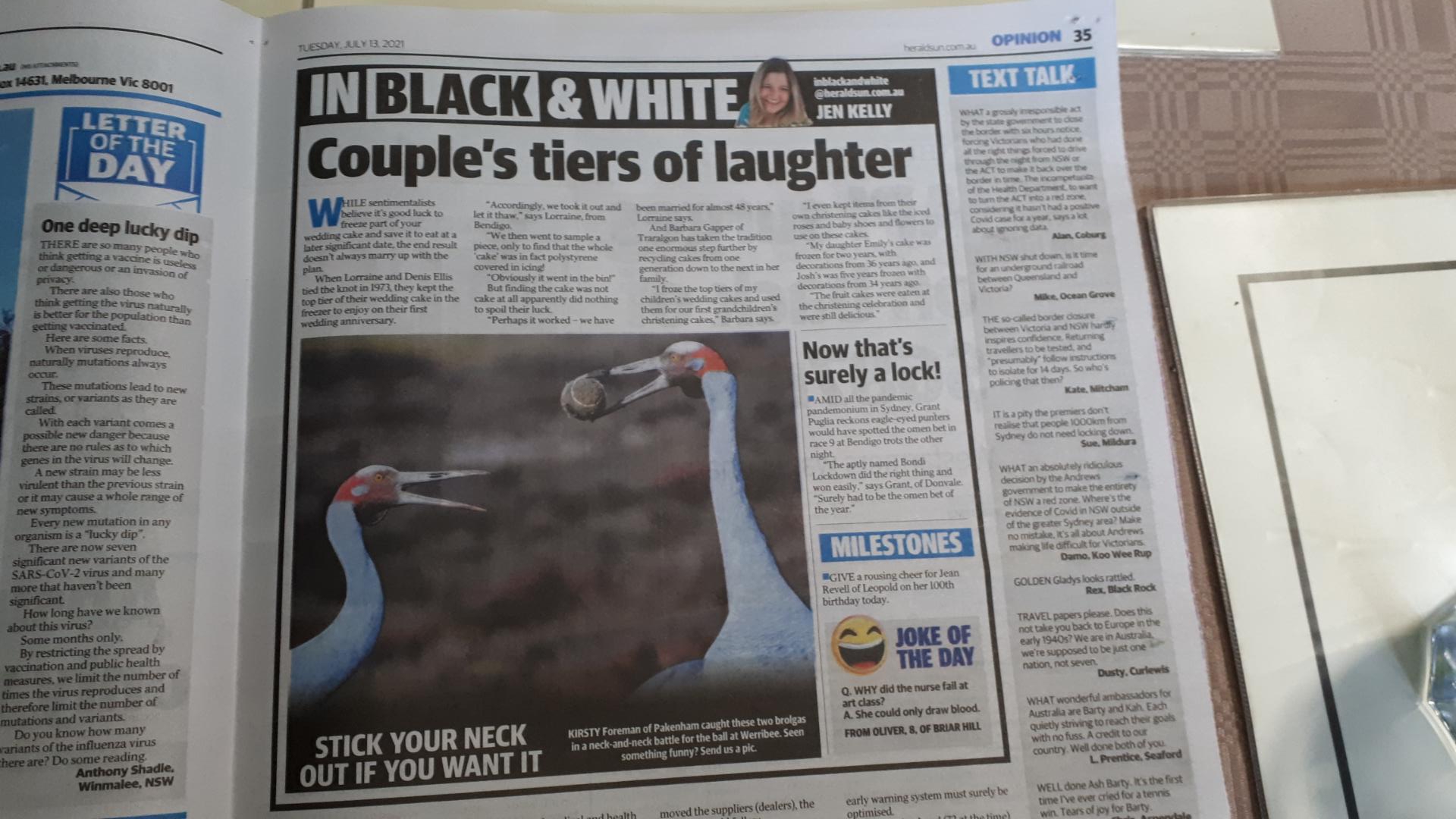
On Kirks Point track we watched some Brolgas playing with a tennis ball for more than an hour. At first I thought they were trying to eat it, but after a while I realised they were just playing. One would drop it and the next one >would pick it up. They would also pass it to each other. I have many blurry photos because I was shaking with excitement. The memories of thisclose encounter will be with me for ever.

The images are linked to a larger version so just double click to see.  Be Amazed!

Thanks Nina.

If you would like to contact Nina drop me a note and I’ll pass on the details.

Be Amazed

Saturday Evening Post #143 : On Country

I was pleasantly pleased to see the other day that Australia Post is encouraging people to add the First Nation’s Traditional Place name to their address fields in letters and parcels.  Here is a map that is a start on the journey

I had the fortune I guess as a small lad to grow up in a Murray River community and was friends with a several of the local young boys.  Now to my memory there never was much talk about being ‘on’ or ‘in’ Country, but truth be told I might have missed it anyway.

What is memorable now, with some much older and better pondered hindsight is that the lads, whether hunting, swimming or messing about in the bush weren’t all that fussed about being ‘in or on’.  It came to me later that they, ‘were’ country.  Moving with an ease and confidence that was as eternal as the trees, rocks, bushes and animals.

It is more than just an acceptance of the area, it was a spiritual connection, not so much in the mystic, but rather in embracing they were part of the environment. No doubt more wiser heads than mine can explain all the elements, but I’ve noted over the years the same kind of ‘spiritual connection’ among many cultures and religions.  Christian, Muslim, Jewish, Dao, Buddhist and many others. The clear connection between themselves and the land around abound. Not only at some higher form, but the simple integration of action with belief.

#Kneetoo’s family worked the Hay Plain and Lachlan River areas, and Bill, my Father-in-Law had developed a very respectful relationship with the Dadi Dadi and Mari Mari traditional owners of the area. The family stories of their connection and how the locals would turn up at one of Bill’s camps, says much about both.

Did any of it rub off on to me?   Well a quick story.  When I was around 17 or 18, one of our city relatives came to visit over the summer holidays.  We decided to go for a bit of an exploration along the Murray River bank near home,  a place I have to say that I did know quite well.   It didn’t take me long to pick up a kangaroo pad, or slip through the riverside scrub, but my city born and bred relative found the going quite difficult.   We also waded across the River at a point where during summer the shallow water ran over a long clay secure bottom.  I didn’t stop to look but simply crossed.  He, hesitated. Lookrd, and then gingerly took each step as if it might be his last. But by the end of the day, his grin from being in the grove with the around was as wide as the flowing river.

Full disclosure.  When I first moved to the “Big Smoke” I stayed with them for about a year and he was able to do the same thing for me among the backstreets and parkways around his home.  A learning experience.
When we walk the Eynesbury forest with the award winning Chris Lunardi, he won’t let me lead a walk.
“I’ve watched you walk off the track and then disappear before my eyes,” he’ll say.  “Then twenty minutes later, about a kilometer down the track you’ll suddenly re-appear on the side of the track.  It’s eerie!”
But then again.  I like Grey Box forest. It’s been said, kindly and not so kindly that I have Grey Box sap in my veins. 🙂

My first few seasons at Woodlands Historic Park were not years of bird photography.  I walked the paddocks and the hillsides as a Landscape Photographer.  Even had the kit. The header image while taken on a digital camera, is in fact firmly attached to a whacking great tripod that I used to use with a 4×5 inch Linhoff Super Tecknika camera.  Standard fare of my early trade.

This one was in the early mists of mid-winter.  One of my fav times for those moody landscapes.
The creekline is Moonee Ponds Creek, –Woiworung Country—and the rich red sand in the foreground was much prized by the builders in Melbourne during the building boom around 1880-1900s.  The locals would fill drays from the creek and transport them to the building sites.  So I didn’t have to do much work on the image to keep that richness intact.

I’m guessing I don’t roam as much as I used to, much preferring these days to have a Jon Young ‘Sit Spot’ and watch the interactions of the trees, birds, animals, clouds and winds on a much more macro level.  Each. To his own.

Wathaurong Country


Saturday Evening Post# 142 Design in Tone

The dark does not destroy the light; it defines it. It’s our fear of the dark that casts our joy into the shadows.
~ Brene Brown

There are two major ways of defining “Tone” in photography.

Pity is they seem to get mixed up by under or over use.

Tone 1. The scientific measurement of the range of dark to light values in a photograph. Formally known as the Characteristic Curve.
The bane of photostudents in the days of filum, as it required astounding numbers of tests, peering through densitometers and calculations from log tables. Never a topic that people qued up to be the first in the door.

Tone 2.  The pictorial use of dark through light to help establish mood and emotion.  Light areas attract the eye, darker areas hold mystery.

Ms Brown, was no photographer, but out of her writings its possible to distill some fine photo-enhancing thoughts.

One of my fav photoshoppie, tool is the Circular Grad Tool. As best I can recall it didn’t make a Photoshop appearance until Photoshop 5 in 1998.
Highlight my subject.  Lighten for emphasis, Darken for mystery.   Use two, one for the subject and one for the backdrop and the eye of the viewer is both drawn and surrounded by the environment without losing the subject.  At least that’s the theory.

Funny how, even having taught the use of the tool, there is always just one more trick up its sleeve.
I was browsing the awesome book, THE DIGITAL NEGATIVE  by the equally awesome Jeff Schewe, (my copy is dog-eared and bursting with postalnotes.) and noticed a technique of resizing each individual side of the Grad Tool when it’s been drawn.  Oh, dear, how come I didn’t know that already.  Big grins.

As a lot of my current softer feel technique is based around the use of the tool, I was somewhat taken back that I hadn’t noticed this small technique.
For the interested, draw the grad as normal, hold down the Alt key and each of the ‘handles’ is independently moveable to match the need of the subject.
Simples.

I’d chosen this image sometime ago to match the good Ms Brown’s quote, so decided that it fitted well with the tonal series.  Bring out the best of the red and orange in her dress and keep the green behind muted and job is done.

Enjoy.

Scarlet Robin, Petroica boodang
. 
She does work hard all summer long, and now the cold weather has set in, its time to throw off the old, and take a new sparkling feather set for the season.

Little Visits: The Power of Wings

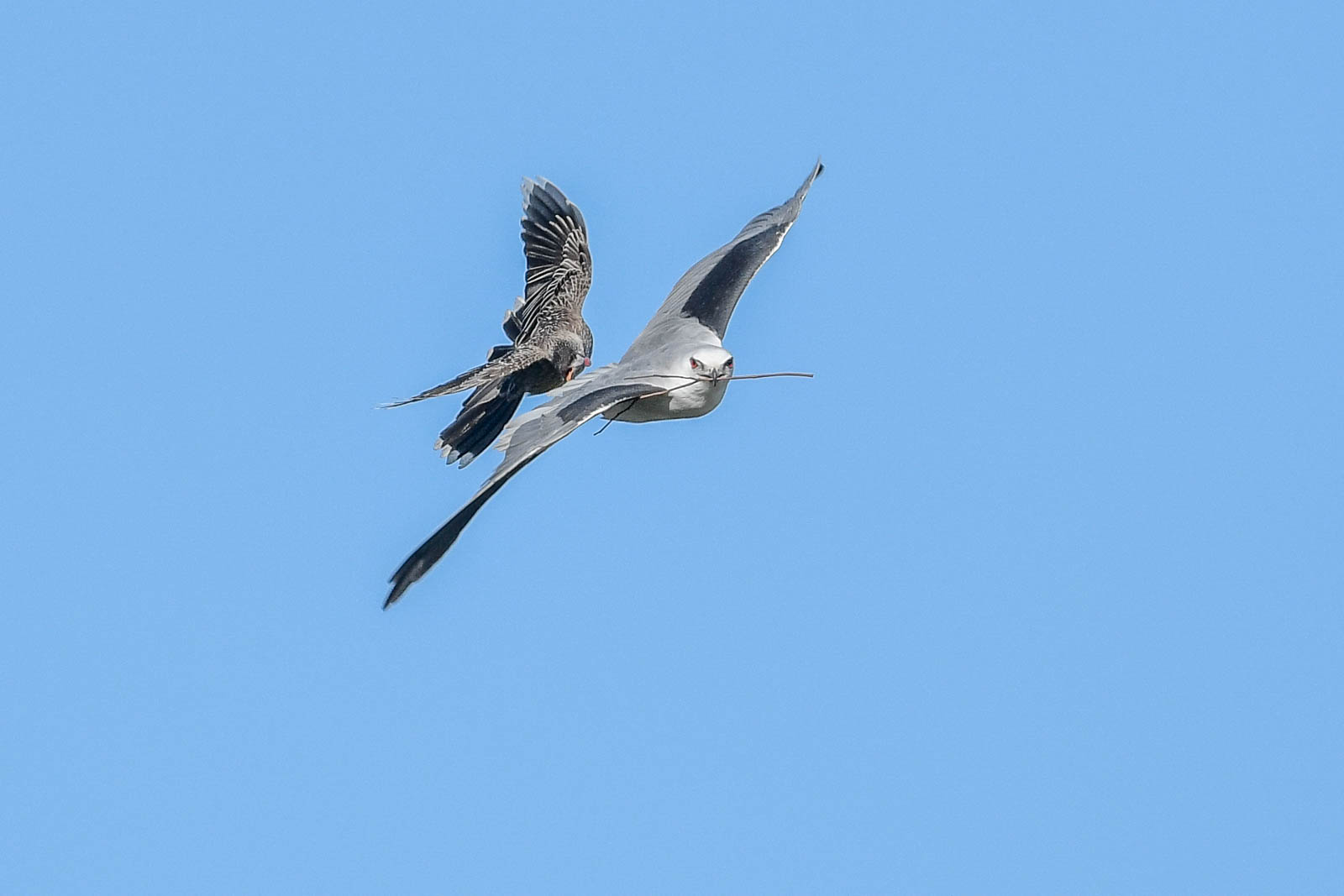
Somethings happen so fast that it defeats the human eye to follow.  Sometimes a short sequence of photos can reveal not only fine details of an event but also an understanding of the forces at work.

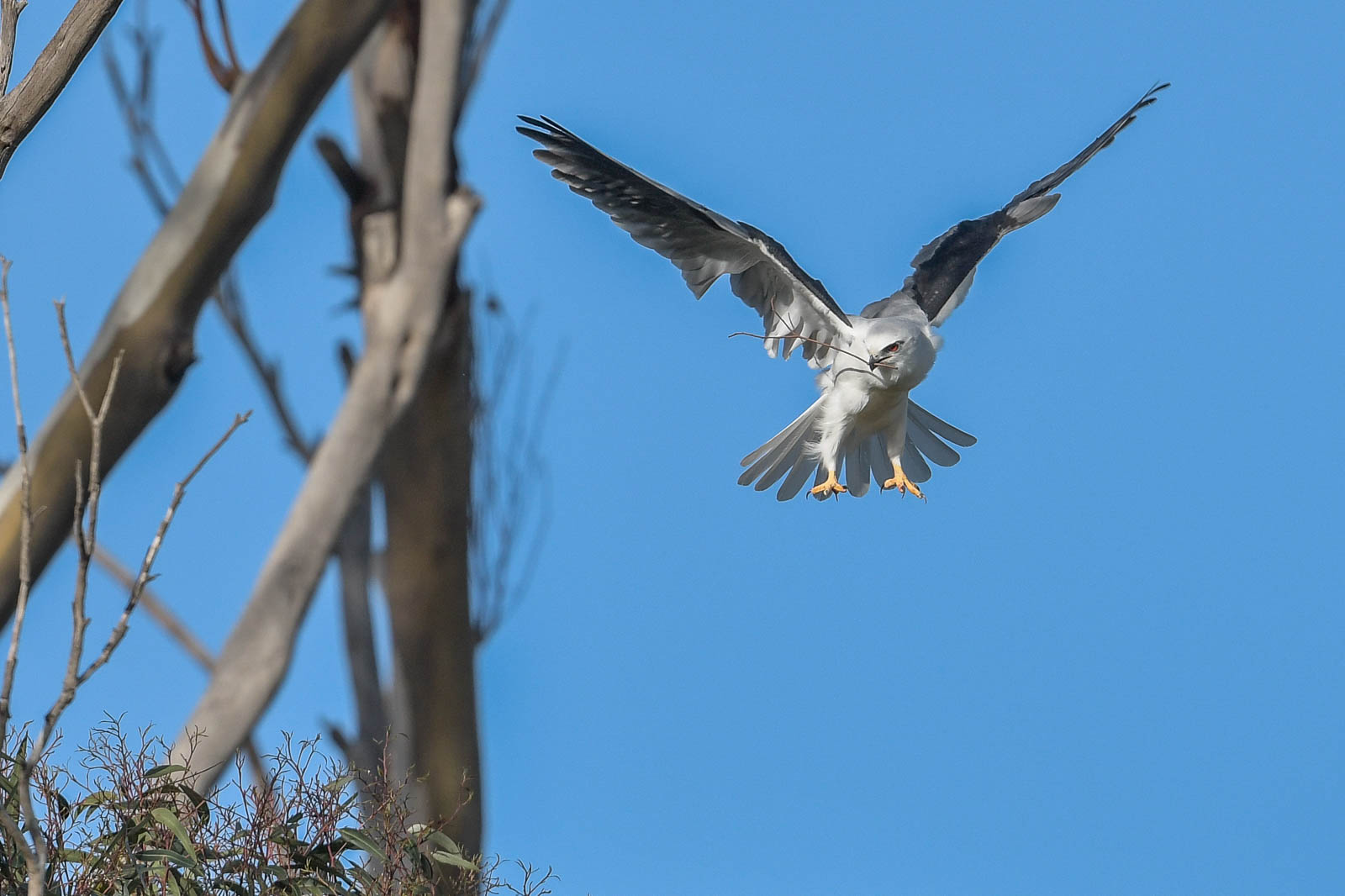
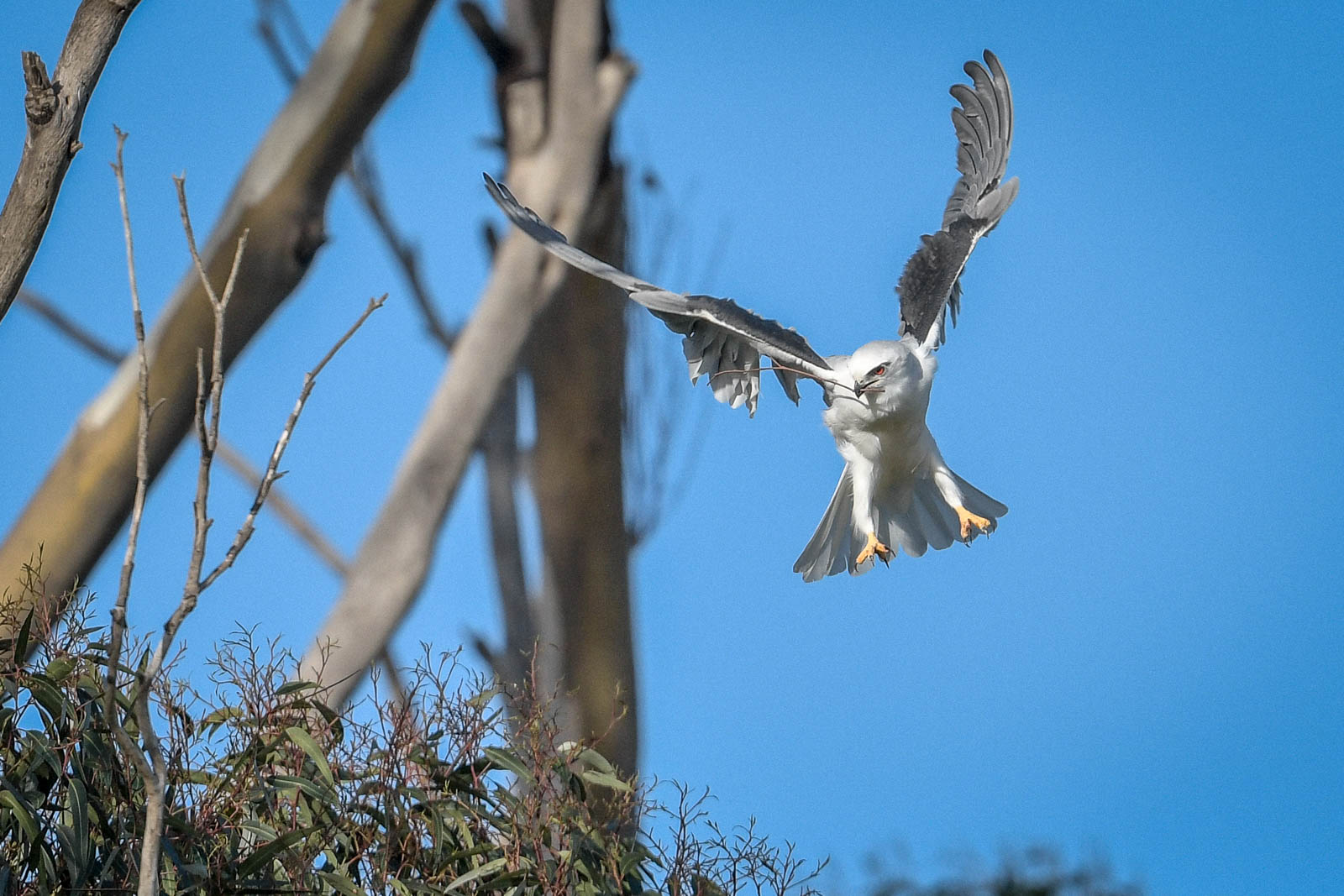
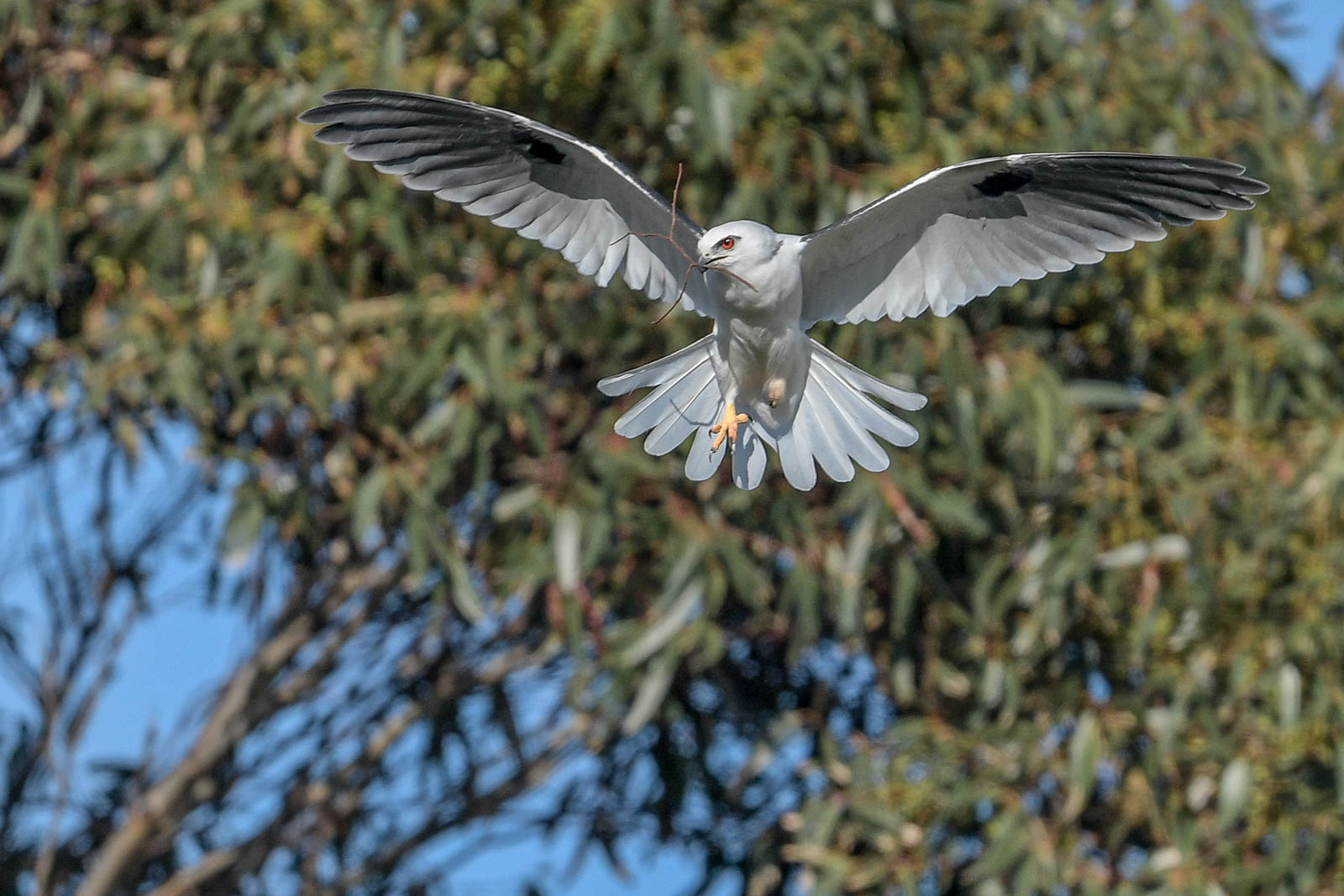
Such, is the case of a pair of Black-shouldered Kites at work on their current nesting duties.
Our blog friend David Nice gave me the headsup that the Kites were back at work on the Sneydes Road area. Time for a looksee.

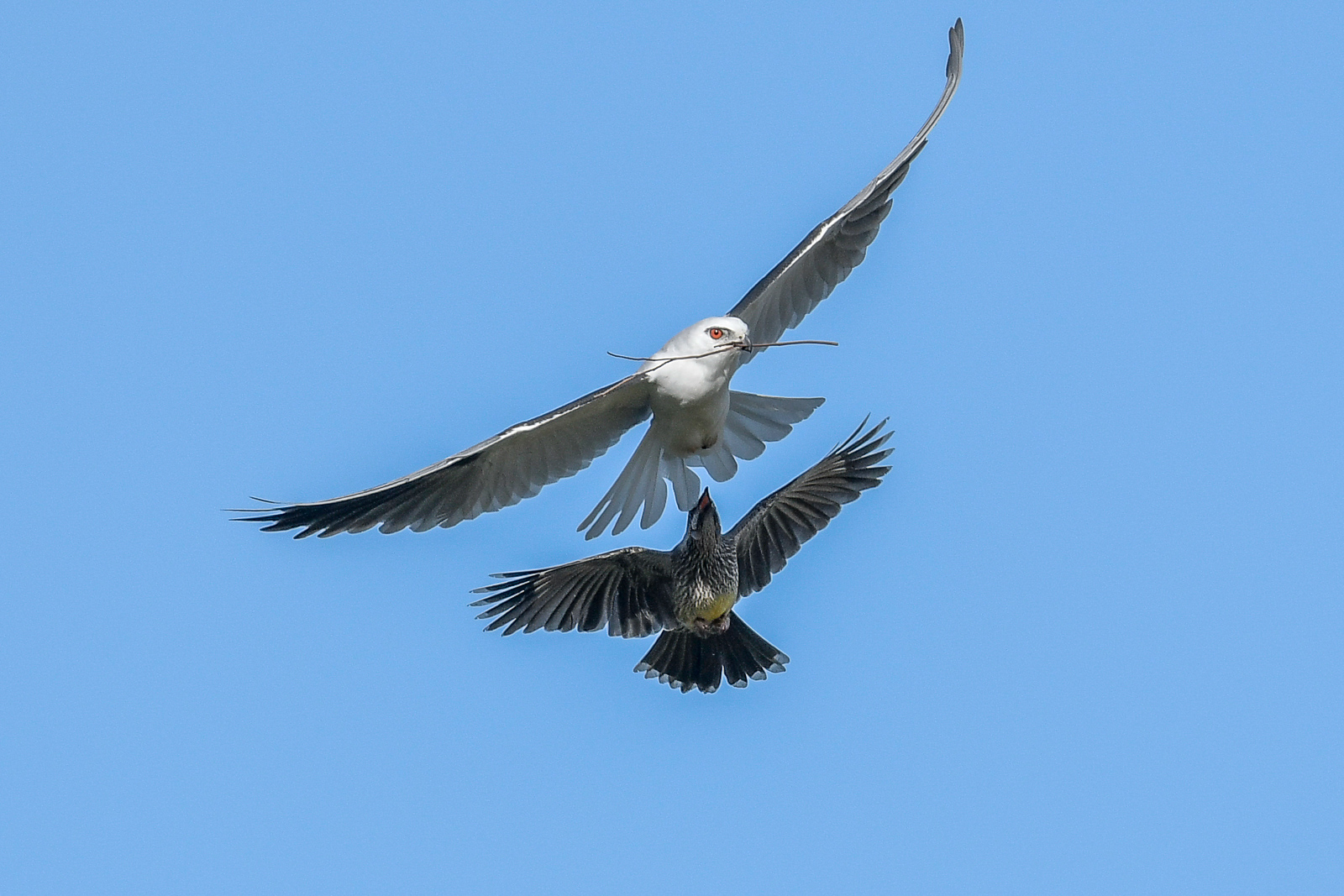
And indeed they were. The nest is quite a new site for the pair, and built in such a position that its a little hard to fly in nesting sticks directly, and the male has been ‘drifting’ them in at an angle to get the larger longer sticks in just the right position.

I normally don’t shoot multi-burst, but, well you know how it is, the first pair of kites we’ve worked with in quite awhile. So I was happy to begin to fillup the memory card.
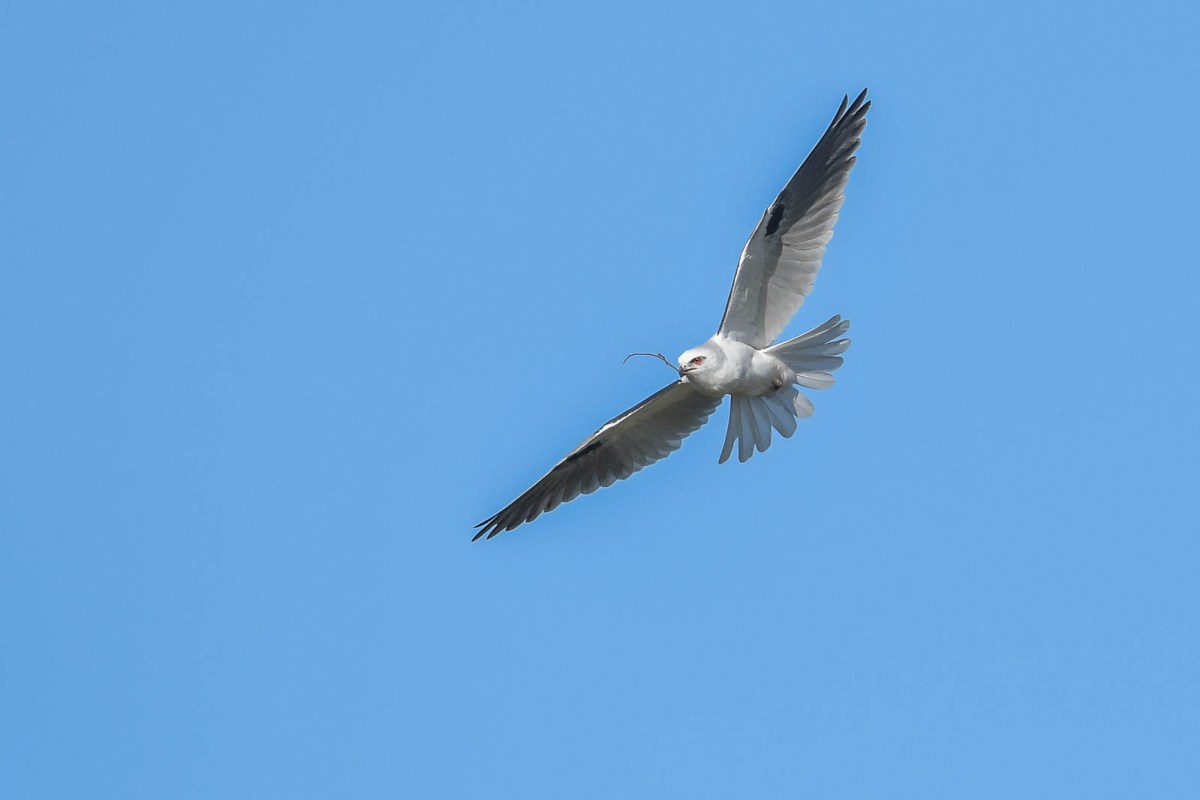
Where the magic happened however was when I began to curate the images and found the various changes in wing angle and feather application that he was using to ‘drift’ into the right position.
So the series here are simply to show how he has used wing angle and wing lift to get the right momentum, direction and control. With one wing carrying the movement while the other wing lets air cascade away to ‘fall’ in that direction.
Hope you find in interesting.


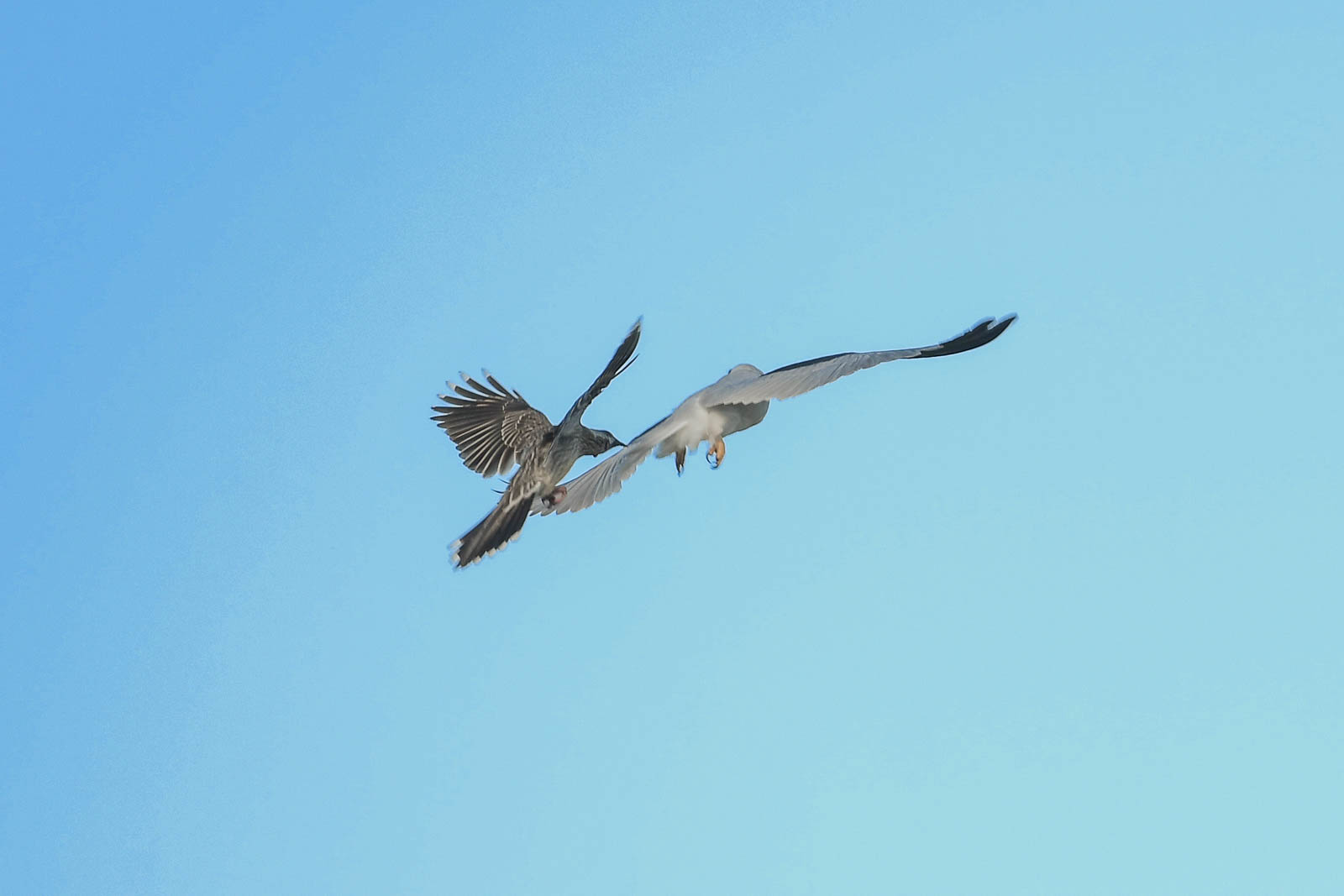
His second problem is that the locals are not too impressed to have the new home renovators at work in their area, and each trip in and out was a to run the gauntlet of ravens, Red-wattle birds and magpies.  A bit costly on feather contacts on a number of occasions.


Saturday Evening Post #141 : Comfort Zone

“How did you get into your present comfort zone?” he asked.

Do you know, I hadn’t really thought about it. I suppose I just slipped into it.

I’ve been working with a new mentor the past week or so, felt like taking on a bit of a challenge, and it hasn’t all been tough. Some has been fun, as well as highly revealing and instructive.
He’s given me plenty to think about.  Mostly around not just taking new pictures but how I go about making them sing and dance.

Now it’s true, I’ve been post processing photographs since the days of “Barneyscan”. (you gotta look that up) precursor to Photoshop.

Used to manage our library on something called “Shoebox”, an Eastman Kodak company early attempt at databasing photos. It used a cd jukebox to store photos, and had a clever algorithm to find the tagged ones. Great for demos,  type in Bird, or Macaw and up would pop a wonderful rich colour photo of a Macaw. Stunning.
You could also poll it for say, Maureen’s Wedding, or Grey Mustang at Summer Nats, or whatever you’d stored and logged, and up would pop a few seconds later….. a photo of a Macaw…   It wasn’t even beta software, more your pre-alpha 🙂
Time moved on, and so did we.  I used to use Nikon’s Capture NX2 for a long time.  Reason, it was using the clever NIk Technology “U-Point” system and made post processing a breeze, one you got used to its quirkiness. But in the end, I’ve always said, give Photoshop, Layers, Layer Masks and a Paintbrush and that would do me for pp.

So he asked, “How did you get into your present comfort zone?”  And we concluded, quite easily, it just felt comfortable.
Which is why  the next challenge was to find an image I didn’t have much investment in, and play around with it, in something like Lightroom or Capture One.
And I found there was a lot of the Develop module, that I understood, but didn’t appreciate in terms of setting the mood or emotion or feel, or even my vision of the image.

Particularly in Black and White.   I rely on Nik ‘Silver Efex Pro” for my mono conversions. Because there are lots of film effects and the old mono filters that I grew up with.  (Another question I’ve added to my memory list from last week: What is the filter factor for a Wratten Green #58?) SFX has them all listed each on it’s own slider, and makes changing sky or tree, or sand to the right tonal level for the feel I’m after, a snap.

This time through I was able to use the local Hue-Saturation-Luminosity filters to achieve the same thing.
Hey, I knew that. But, my comfort zone didn’t 🙂

My Flickr folk were the first to see the difference.  I posted a mono pic of a Collared Sparrowhawk on a fence.  As a colour shot it was pretty much unattractive. brown bird against sky, ugly fence.
“Try some tone changes,” was the suggestion.

Suddenly it was working, lighter sky, rich tones on the bird feathers and those glowing legs and eyes.  Simples. (Hah! I knew that)

Still got a way to go, as I’m tackling a series of challenges around the ‘Visual Roadmap’, not a term I leaned at Art School. More I suspect will follow.

Tonight, as Lee Lin Chin says in the ad, we could play for Ray Martin’s Gold Logi, but instead I’ve settled on a shot from the other day with Mr An Onymous.
It’s a few seconds work in Lightroom’s Black and White mode.  A trip through the HSL sliders and a few points of grain.

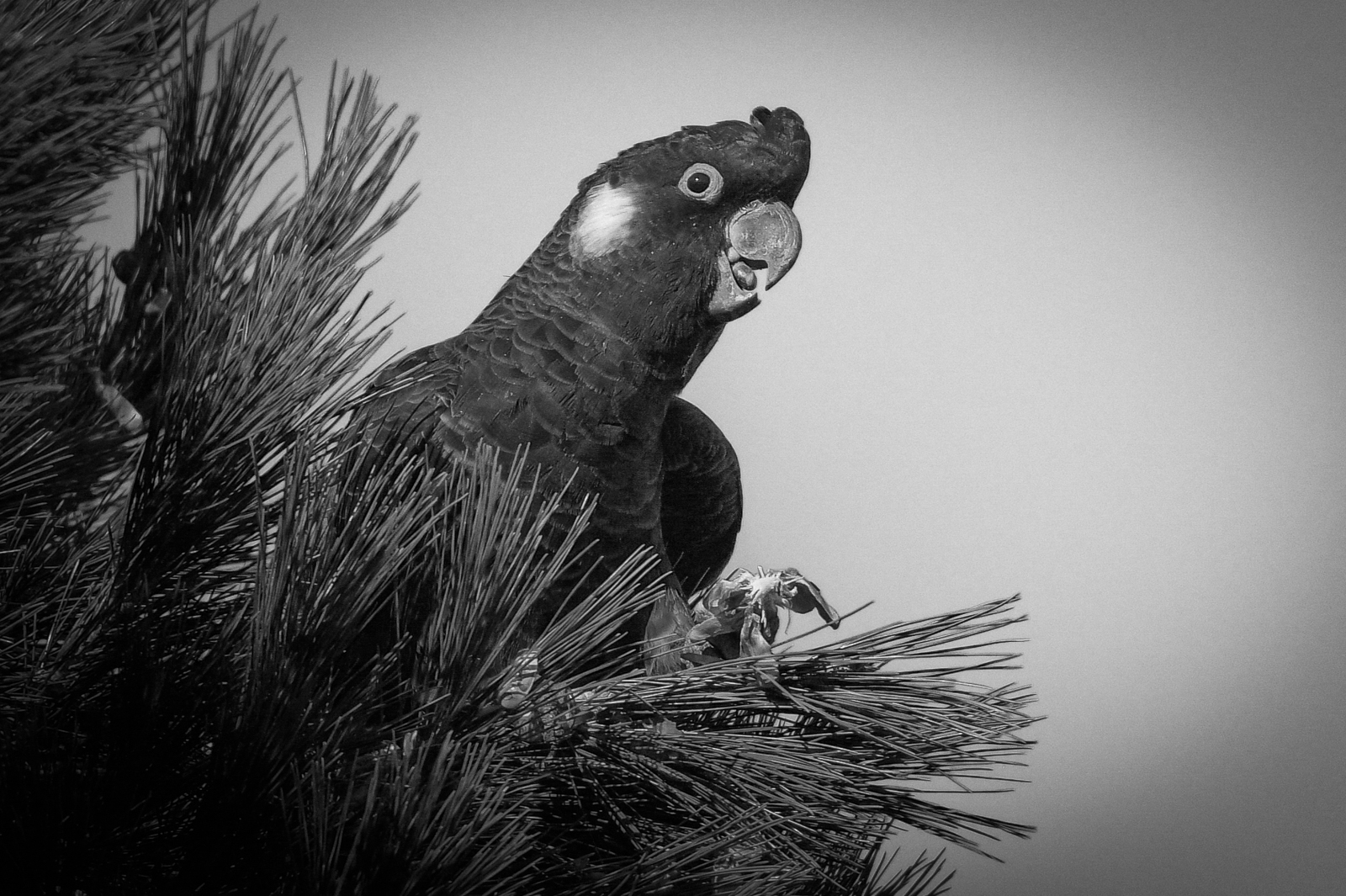
I wanted to keep the feather detail, but at the same time bring the emphasis on the seeming enjoyment that bird was having with its treat.

Ahh, back to the comfort of a real darkroom 🙂


Little Visits: Enjoying the Morning Sunshine

Funny old weather Melbourne.  Biting cold for days, then, such a tiny break of stable weather.  Frost on the ground, breathing out ‘steam’, and calm winds. Ideal.

So. I, as the Banjo wrote, “Sent him a email, which I had for want of better knowledge sent to his mail address, in case he was home.
Just on Spec, titled as follows, “A trip to Point Cook is in the offing”.
And an answer came directed in a manner I expected.  “Mr An Onymous will meet you there”.

So, as #kneetoo is on the move, but not willing to venture too far at the moment, I went.

As the weather icon ladies had predicted, the morning was crisp, still and sunny. Ideal.

After the usual “G’days” and, the like, we set off for a walk through the pines.

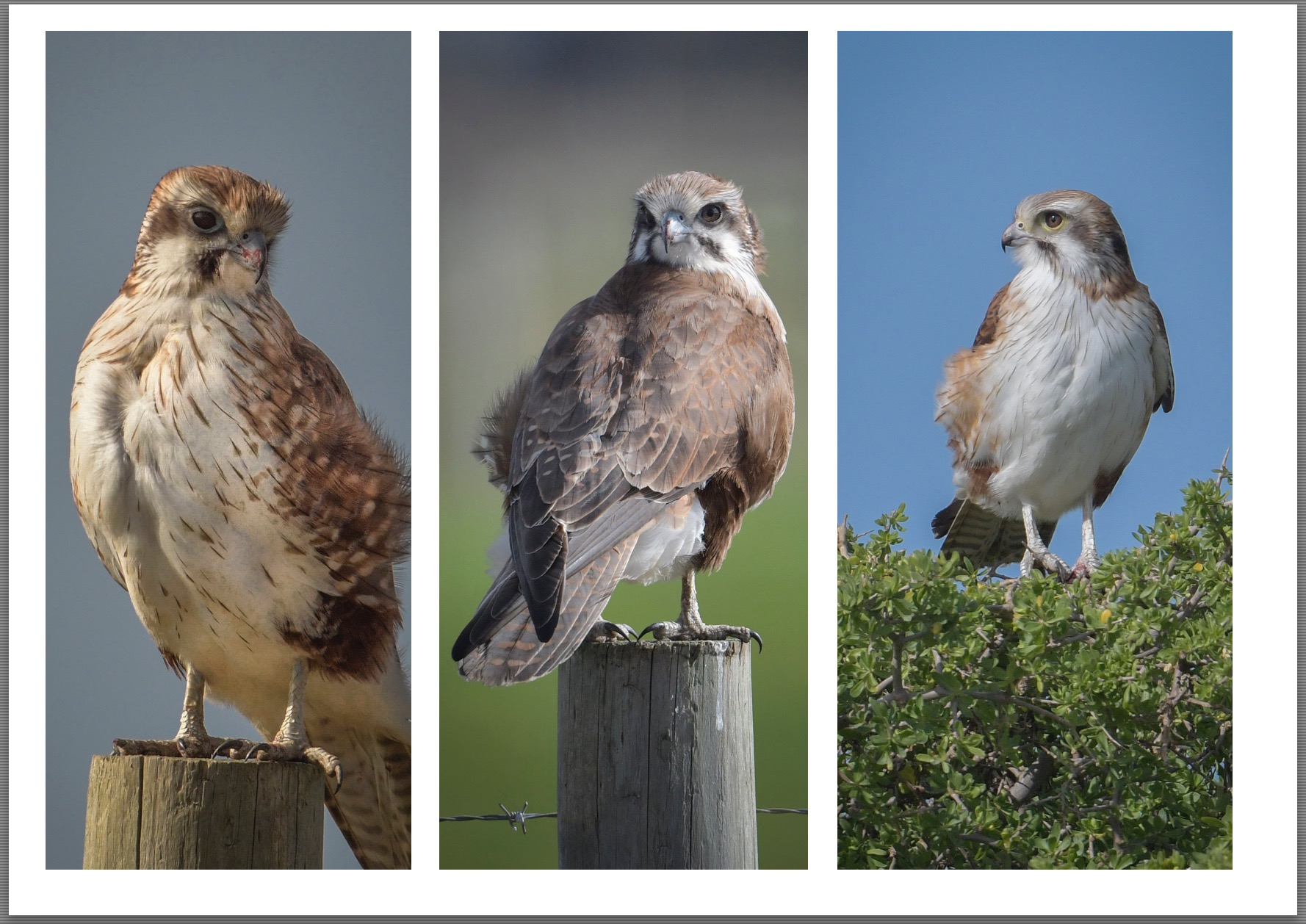
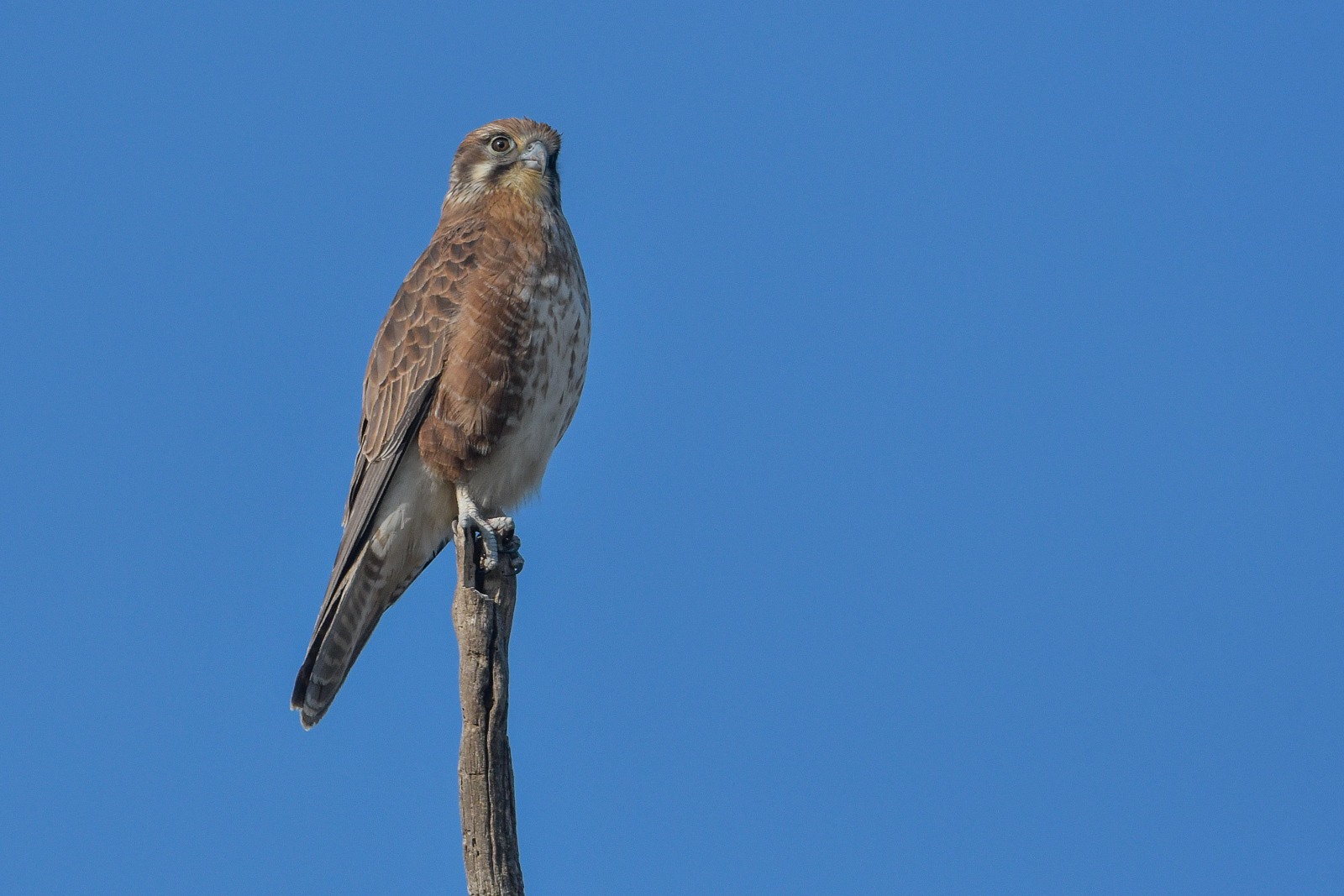
We’d not walked more than a few hundred metres when I turned to glance a Brown Falcon that had set itself up in a sheltered, warm spot in the sunshine. Had I kept going, he’d have stayed I’m guessing, but too much activity too close, and he unfurled the big brown sails and was gone.

Next the call of Yellow-tailed Black Cockatoos rang across the frosty grass, and there on the other side of the paddock we say around 6-8 descend on the large pines. To be followed in quick succession by a second group of more than 20, and then another smaller mob of about 10. By the time we’d arrived close up, they were well in to their feast of the young cones in what can only be described as an open area dining area.


Then one of the young ones, crying, caught my attention and we managed a view of it being fed.  Beak to beak.

Onward for a cuppa of the Earl’s best and a sit by the water’s edge.  The moon was pulling in a high, high tide and the still waters lapped and laughed as they kissed the sand, and retreated, having enjoyed the moment so much to quickly repeat the performance.
Sometimes, just slowing down, and watching the small things, like small child exploring the beach, not over-awed by the expanse of sand and water, but rather inspecting the grains of sand on its fingers.

A Greater Crested Tern was fishing, and I missed the head shake as it came out of the water.   Then a White-faced Heron again standing perfectly still.

Several young Pacific Gulls were paddling in the clear waters, and an adult was doing its best Otis Redding impersonation of “Watchin’ the Tide Roll Away…”

We could have stayed all day, but each of us had other things family to attend to, and we retreated to the vehicles and a local coffee shop.
Great day for birds, relaxing and a bit of a natter.

As we left the beach an Australian Pelican beat its way along the water’s edge, flying low to make the most of the lift of the water.

Saturday Evening Post #140 : Stereotype

Stereotype has among its first usages several hundred years back as: image perpetuated without change.
More recently its use is in the realms of psychology deal with, so I’m told, the thoughts of an individual being applied (rightly or wrongly) to a group of people.
Rough boyscout definition only.

Our blog friend Eleanor raised such an issue for the other day as her new camera is cranking out huge CR3 files and its meant she has taken to using JPEG format.  I made the comment that I often shoot JPEG format. And with good reasons.   Bought the usual responses, of ‘can’t be a true committed photographer if you’re not using raw (usually put as RAW-but its not an acronym). My photos are doomed to the dustbin of the furthermost photo hell, and me along with it’.
Truth be told I like working in JPEG as it frees me from sitting staring at the screen cranking first this, then that slider. Strange old stereotype that judges the quality of work by the file type.   I know pretension exists, still.

However changing thoughts, I had to go, on my doctors instructions to one of those, you know, what do ya call ’em,  ohhh.   Oh yeah, cognitive memory tests. Where you get asked if you can remember important stuff. Such as, What year is it? Who is Prime Minister of Australia? Count backwards from 100 minus 7 at a time… hmm, 93…..Oh, I give up.

All sorts of things I’m not all that interested in. I’m more interested not so much which day of the week it is, but will it be sunny, no wind, a low tide, what season, and will all that be good for photographs.

Among one of the questions was something about ‘Do I like to cook’.  So I gave an answer. But.  It didn’t match the stereotype required answer, and I came to the conclusion the inquisitor wasn’t interested in my answer, only that I’d fit the pattern of old male, unable to boil water.  I took time to explain I learned to cook from my Mum early in life, spent a summer holiday working with a hotel chef, and had been househusband for #kneetoo for some 18 years since her back injury.   I think I grasped the basic principle behind boiling water, and could, given a few moments notice, master the skill of opening a tin of baked beans.
However all to no avail, as it wasn’t in the stereotype answers required.

Why, I thought on the way home, don’t they ask me some questions I’m actually interested in.

How much sodium sulpite is there in a litre of Kodak D76 developer.
What is the processing time of Tri-X in D76 diluted 1:1 at 20C.
What is the calculations for DOF.
What are the three factors affecting Depth of Field.
Can you recall what is the significance of the Circle of Confusion.
etc
For the digital age:
Describe the Bayer Pattern
For bonus points what is the first name of Dr Bayer
For double bonus points, Have you met Bryce personally
Explain Discrete Cosine Transfer (DCT) as the basis for JPEG compression.

Ohh sneaky how I managed to get that in.

Not content I had to also see a podiatrist, just to check that my feet where still down there somewhere.
It was all going swimmingly until the question about ‘would I walk very far during the day?’
Stereotype kicks in. Old bloke, couch potato, might be able to walk to the mail box
My answer, most mornings I walk for an hour or before breakfast and on a day in the field I might make 10-12Km,  was not the right answer.
So we had to spend the next few minutes going over the details, you know just in case I was doing my Walter Mitty impersonation. When I mentioned that, I received a blank stare!!!!
How easy it is to consign people it seems.

A good, dear friend, told me once that she attended such a ‘memory’ day, and was asked, “Shirley, What day is it?”
Her answer, with a straight poker face. (She was quite the intellectual, an educator and author), ” Oh, that’s easy, it’s the day you told me to come for my appointment!”. Dumb silence.  And a little check-mark in the ‘failed’ box.

Gotta finish on a high.
Do you follow  “First Dog on the Moon” cartoons on the online The Guardian, news. ?
If not then do take a look at this one.  Why Vaccines should be like Hot Chips  The birdo answer is in the last panel.

Tonight’s Image is bought to you by JEPG.
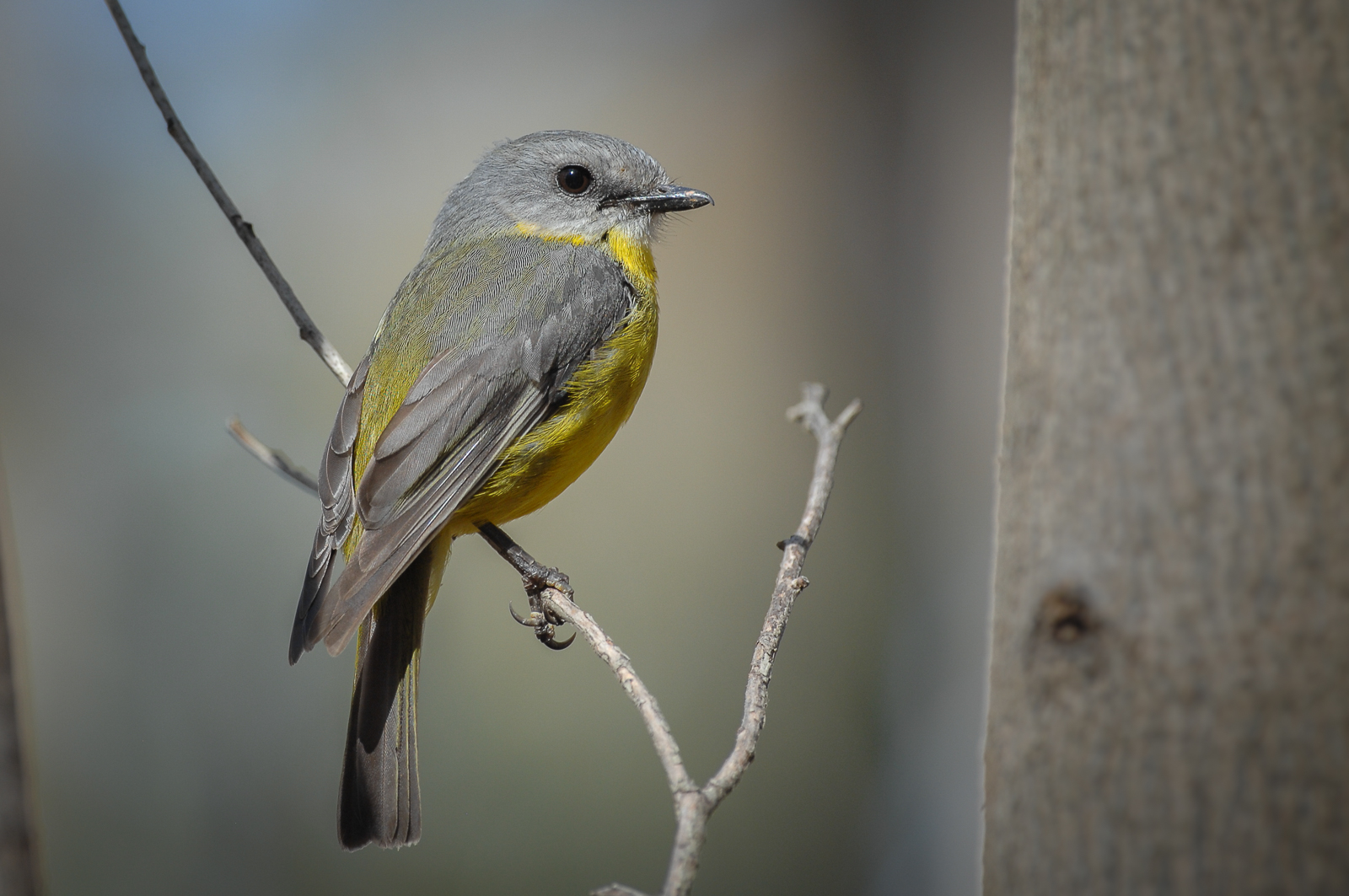
This is Jack the Eastern Yellow Robin, we worked two seasons with the pair.
Shot with a D2x camera on the Mode1 JPEG setting
The reason I like that mode is the beautiful clean greys that it produces. I still use a variation of it in the D500.

Saturday Evening Post #139.1 : On Dorothea Lange

It’s not often that I need to add something to a Saturday Evening Post.

I was directed to a Youtube site, and as I don’t usually spend much time on there, I’d have been very lucky to have found it even accidentally.

Someone has taken a sound track of Bruce Springsteen’s rendition of a song by Woodie Guthrie that he wrote in the 1930s concerning the “Dust Bowl” refugees in the US as they moved from their devastated farms, west, looking for work. They have also collected a slide show of Dorothea Lange images to go with the music.

Lange and Guthrie were contemporaneous, both approaching the refugee activity in their own way. Dorothea with photos, Woodie with poignant heart-felt words in song.

If you are not a Springsteen fan, and let’s face it sometimes the word are hard to understand, nor are you a fan of his music, at least on this its a very simple guitar accompaniment, the best thing to do is turn the sound down, ponder the words, and become involved with the visuals.

A version of the song by Woodie Guthrie is here

They are not all from her work with the refugees, some are from a series of the “White Angel Breadline” (1933).
(Lois Jordan, a wealthy widow living in San Francisco, known as the White Angel, established a soup kitchen to feed the needy and hungry. With little or no outside funding, Jordan fed more than one million hungry men over a three year period)

What struck me personally was the broad similarity to some of our most pressing social crises.

Such issues as: the Biloela Tamil family, Refugees in detention, and the Homeless on the streets of Melbourne the First Nations people recognition, Yes, even climate change, among so many others.

I wondered what Woodie Guthrie and Dorothea Lange would have done against these predicaments.
Dorothea is quoted as saying, she considered her portrait subjects collaborators and is quoted as saying,”I never steal a photograph.”

Photographically it also had me wondering, “Where are the Great Photographs of these current issues?”

Sadly, I had to conclude we live in a world of visual overload. A photo of an issue is only as fresh as the number of ‘Likes’ it has recieved. Each one has a very limited shelf-life or use-by date. Overwhelmed with the next disaster we are fed a constant steam of images, each catching our attention, but like newspapers of old, (remember newspapers?) tomorrow used to wrap up the scraps for the bin.

Does this mean, or am I inferring, that there are no great photographs nor story-telling photographers, left.
No, of course not.

But as you, hopefully, follow the Youtube link you’ll see how great and powerful a medium photo-journalism can be.

Follow this link

Bruce Springsteen ”I Ain’t Got No Home” – YouTube
Mick Wilbury

I leave you with a Dorothea quote,

“I am trying here to say something about the despised, the defeated, the alienated. About death and disaster, about the wounded, the crippled, the helpless, the rootless, the dislocated. About finality. About the last ditch.” – Dorothea Lange


Saturday Evening Post #139: The Bohemians

We’ve been locked down to a 10 and then 25 Kilometre radius for the past few weeks.  Add to that the weather that seems to have translated itself from somewhere south of Antarctica, and #kneetoo still in recovery mode, there has not been a lot of enthusiasm to venture out to check the mailbox, let along go to the field for birds.

Thanks to a recommendation from Mike over at TOPS, I decided to buy a Kindle copy of a book by Jasmin Darznik titled The Bohemians

Warning: It is a novel. An historical novel; but a novel none the less.
It takes its setting in the late 1910s and early 1920s.  Its major setting is San Fransisco.

The heroine, is none other than Dorothea Lange. A photographer I have discussed on this blog before as her stunning photos and photo-journalism had an impact on my visual growth as a very young photographer. As a wet-behind-the-ears youngster, my local librarian had noted my interest in photography—perhaps astutely as  I’d borrowed the same basic photography books umpteen times and knew them from cover to cover, and admitted me to the ‘Adult’ section. Which, had for reasons I’ve never pondered, a really fine selection of photo-folio books. Several Dorothea Lange works were there and again I could pore of them learning a little of the artistic ability of this amazing lady.

Bohemians

This is not really a book review, nor am I crusading to have you rush out and buy or download the book.
The character, “Dorrie”, tells her story in the first person, and it’s a relatively good yarn, rollicking along, as Ms. Lange meets all the historical characters that played a part in forming the real Dorothea’s life.
It is also an interesting journey into the early 1920s and of course the struggles of the time. Quite a number of photographers make appearances, along with artists and writers.

Fair kept me busy during the rather cold weather of late. Hot cup of Cacao, my new fav warm drink, in my new “Hug Mug” and there was an afternoon or two speeding by.

I’m not sure about the author’s intention, but not doubt some of the social inequities of our current time have found their way into the story, which makes for some interesting comparisons.

There are a number of historical glitches, not big ones, Ansel Adams did suffer from the Influenza outbreak of 1919, and mostly they could be overlooked or simply left out of the story.

“Dorrie” hocks her beloved Graflex camera early in the story, but pops up a little later on making portraits with a 35mm Leica camera.
Really?

The Leica wasn’t announced until 1924 and production and first sales were 1925, I’m not sure of The Bohemians time setting but its highly unlikely “Dorrie” would have had access to one.  Still in the concept of the storyline it’s pretty inconsequential what she shot with. Dorothea Lange was making fine portraits and story-telling street shots no matter what camera she used.

Medical Update #5,  #kneetoo, is on the move, managed today to walk a few hundred metres up to the community centre in our village and enjoy a chat and coffee with several friends.  Full-steam ahead.

Stay safe

Return to the Office

As the first Australian Lockdown came to an end back in March 2020, Scomo, our Prime Minister announced that it was “Time for Australia to come out from under the Doona and get back to the office”. Fine sentiment.

For readers not familiar with Scomo, it is a contraction of the Prime Minister’s name. Scott Morrison.
It came to public attention first on August 2, 2018, when during a press conference, Mr Morrison was asked about his leadership aspirations, as there was a lot of unease about Malcom Turnbull’s leadership.
He reached out and hugged Mr Turnbull and said, “This is my leader, I’m ambitious for him”

To which the (doomed) Malcom Turnbull responded, “Thanks, Scomo.”

The irony of the comment really only became obvious about 3 weeks later, when Malcom Turnbull was ousted, and Scomo became Prime Minister. (Skipping over some of the heavy duty political drama in there!)

So with the recent lifting of restrictions on the Victorian Lockdown to a 10km travel radius, I decided to take Scomo’s advice and “Return to the Office.

Mostly I wanted to see if the Flame Robins were still in the area. But as it turns out, they have become very conspicuous by their absence.
I did find a lone Black-shouldered Kite who was happy to share a photo of its hunting prowess.

Then I heard the intense call of Magpies announcing a raptor approaching. Looking far across the paddock a small dot with large wings was headed my way. To be honest, at first I thought it was a local Black Kite and was nearly going to dismiss it, but the intensity of the maggies attack made me look again.

Wedge-tailed Eagle

Trying desperately to get enough speed to gain some height and escape being harassed. However maggies are trained for this and they were making sure that the Eagle had to stay down just over the paddock.
It kept coming and then the Eagle and its attendant pesky magpies flew pretty much over where I was standing.

Thanks Scomo.
Hope I don’t get deposed 🙂

Saturday Evening Post #138 : That Old Deja Vu Feeling Again Again!

Been chatting, but you know, socially distanced, with a number of people over the current lock-down covid situation in our area. All of them had suffered through the long lock-downs of 2020.

Most said the current restrictions (with or without having had a vaccine), initially weren’t that hard to get settled into. But, and it seemed to be pretty universal, within a few days we all seemed to come to the same feeling, helplessness, that we’d not experienced the first time through. Not a depression, mind, but rather a niggley feeling of how quickly we had succumbed to the inevitable. It’s not an anti-lockdown thought/ Most of us appeared to at least except the need to contain the outbreaks.
But it all adds up, another quarantine failure, lack of speed on the vaccine programme, groups of vulnerable people that have been ignored, nursing home outbreaks, name calling—she said, he said—political infighting, and raging rampant fear news.

That we can talk about it and more importantly laugh about it seemed to be a good tonic

Medical Update #4
#kneetoo, is still dealing with a numbing pain of the replacement, and the long process. The good news is she is quite on the move and walking quite freely. Her physio was here the other day, and after a walk up and down the hallway, the physio said, “It’s a fine sunny day, would you like to take a few steps outside?” And so she did.
The physio opened the door and #kneetoo stepped outside.

Every bird for kilometres around felt a shiver up its spine 🙂

While all this was going on, I was sitting on a small bank of sand overlooking the beach and a number of Greater Crested Terns were taking turns (pun intended) fishing along the water’s edge.

This one had returned empty-billed, much to the chagrin of it’s hungry juvenile

Saturday Evening Post #137 : Travel

“All journeys have a secret destination of which the traveller is unaware, ” so wrote philosopher, Martin Buber.

Mr Buber, certainly lived and wrote in a world out beyond the ken of your average blog scribe. But at the risk of doing him a bit of a mis-service, his basic go-to was about the relationship between ourselves and others. It get’s complicated after that, but extends to between ourselves and the around. And that has for me, connections with the Dao, that these days, of pop psychology gets, labelled, “Mindfulness”.

Medical Update. #kneetoo is moving about at home and getting mindful about her new knee. Hasten slowly is certainly the order of the day, and now we are all back in Covid Lockdown again—at least, hopefully temporarily—we don’t have anywhere to go anyway.

A blog I follow, is by Robin Whalley, The Lightweight Photographer and he has been discussing his choice of gear for his outdoor landscape rambles. And it struck me, at least I thought obviously, that while it’s nice to have a range of equipment to choose from, you know:
This camera,that lens, this ISO, that Filter, Use Flash, work with Early, or Late Light, and the myriad of other decisions we might encounter,
Sometimes, for us wildlife photographers, the secret destination, or subject, presents itself and we might not have that ‘special’ piece of hardware with us.

And I find myself having, excitedly—not limited by—to work with something that hasn’t been there before. To See Anew.
It happens in the backyard, out in the field, by the water, among the wonderful forests and of course involved with the surprising life of birds. And it takes on such an amazing range.

Here is the master, Lao Tze at this best,
Watchful, like men crossing a winter stream,
Alert like men aware of danger,
Simple as uncarved wood
Hollow like caves
Yeilding. like ice about to melt
Amorphous like muddy water

The early Hebrew poets said it this way.
Be still, and know that I am God (Psalm 46:10)

Each trip small or large out behind the camera small or large, has the unlimited potential of a secret destination, I enjoy being able to flow with the world around and be shaped by eternal forces

It is a wonderful journey.

Jacky Winter says all that, but uses a lot less words.

From the FieldNotes Book: Little Troubles

We were, Mr An Onymous and I, out looking for some elusive Flame Robins around the 100 Steps to Federation park at Altona. The park was previously a rubbish dump, and as Mr A is oft to quote, “Some of my rubbish is under that hill!”

They were here the last time I looked. But, not today. We did find and get close to one lone female, and were consoling our selves that a trip back to The Esplanade and a coffee from The Norfolk Cafe and a sit on the beach area and watch people instead of birds for a while would be a fine thing to do in the warm sunshine.

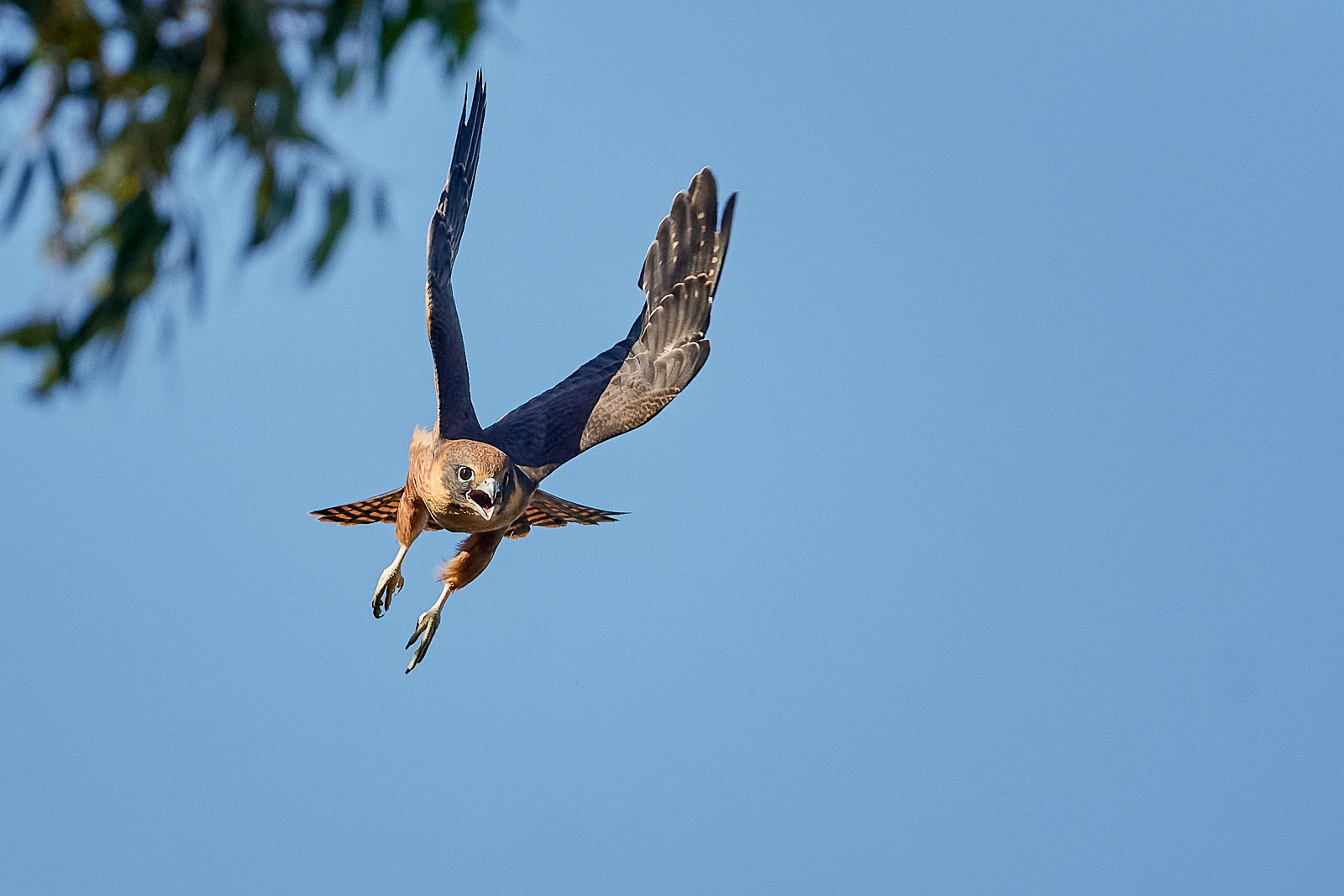
In the meantime the antics of a pair of Nankeen Kestrels kept us amused as they swept in and out of a tree-line. Just too far away for photos, but I volunteered, “Let’s go check it out anyway on the way back to the vehicles.”

When on a sudden a dark shape quite close swept over my head, —big bird I thought.
By the time I’d looked up and around it had gone to ground about 20m from where I stood. The best I could determine was a big brownish wing being folded down behind the saltbush.

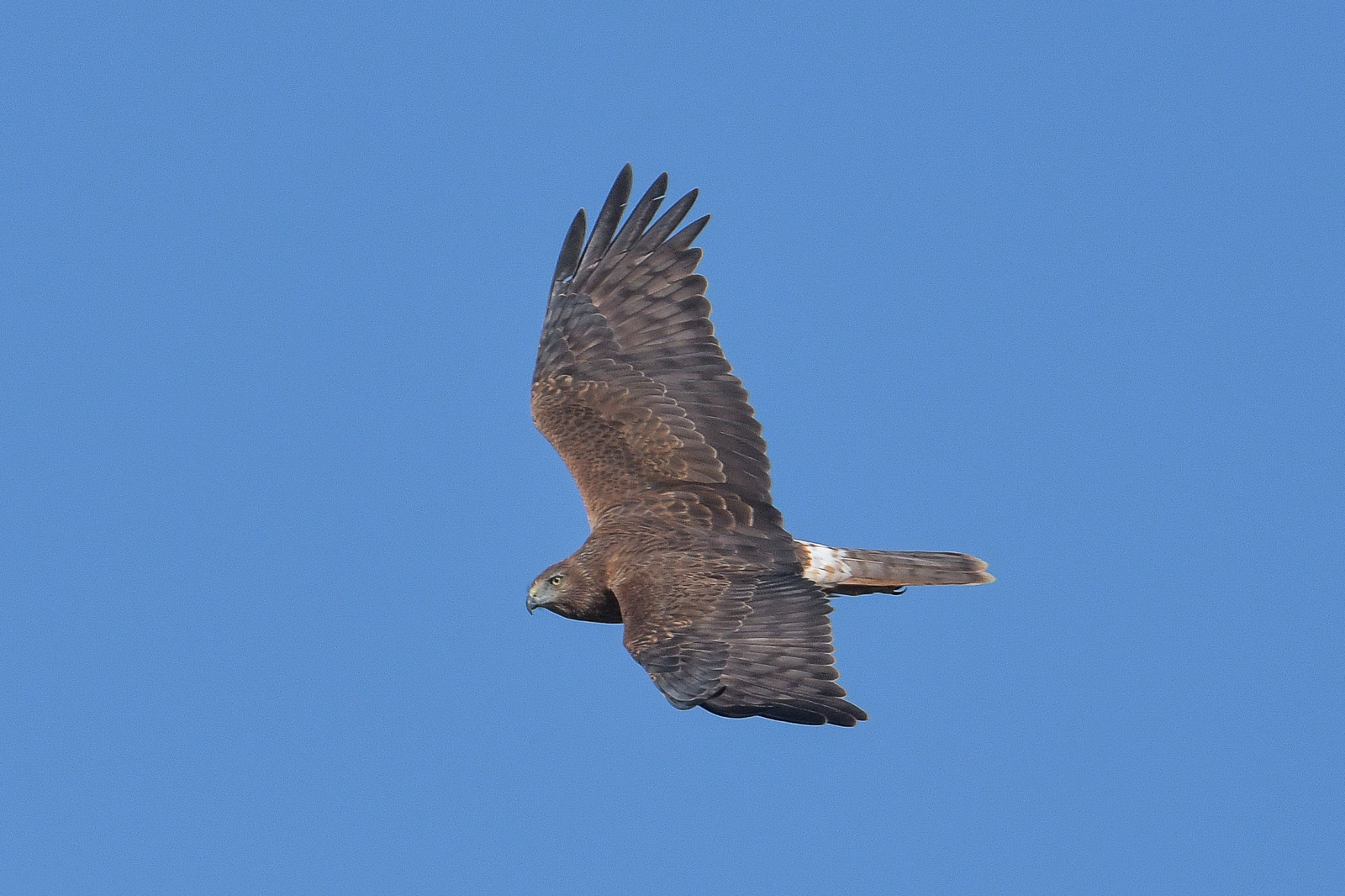
Options were Whistling Kite or perhaps Swamp Harrier, or maybe, well I can dream, a Spotted Harrier.
We could sit and wait, but there was a little of the ‘thrill of the chase’ in this one, so we negotiated the old barbed wire fence and worked our collective ways toward the saltbush. Not too close else if it flew, it would overfill the frame, so we only needed a few metres inside the fence.

And we waited.

The action started when a small flotilla of young Magpies turned up, and decided that what ever was behind the bush needed a good bit of hurry up, and so they set to diving on the bird on the other side of the saltbush. First one, then another, and another. Regroup then return and repeat. The numbers of young Magpies wanting to join in increased and the bush was repeatedly swooped with urgently calling Maggies.

I waited, figuring the bird would take off from behind the bush and up and away from me.
Wrong!
It must have had enough room behind the bush, out of my line of sight to get airborne and swept out from behind the bush directly to my left, low and fast.

A Little Eagle! And the flotilla of Maggies in hot pursuit. This is the type of action they love. Slow moving bird, plenty of support to control the direction and distract it from gaining speed and height.

The chase was on.

Thrilled with the opportunity to harass the Eagle the Maggies pressed home their attack. The big bird circled wide out to escape and I guessed that would be the last I’d see, but the clever Maggies drove it around, and I guess that an updraft of the edges of the 100 steps hillside would work to its advantage. So it tightly circled past me came around, found some air and began to climb. The Maggies were now having to work very hard to maintain station. They still had the speed to attack, but the Little Eagle now had the advantage of its larger wing surface in the rising air, and wasn’t using any energy. The resolute defenders of their airspace began to lose steam, and slowly began to drop away and only one or two, then only one continued the fruitless cause.

The eagle now reached a comfortable cruising speed and altitude and the Maggies were done.

While the Little Eagle drifted away in the breeze, the Magpies landed together on a nearby tree and called out to congratulate each other on a job well done, and to brag about who had come the closest to the victim.

Saturday Evening Post #135: Confiding Jacky Winter

Medical Update: #2
#kneetoo is home from hospital and beginning to move about on crutches.  No big walks yet, but is keeping balance and doing the physio exercises.  Still a fair bit of pain as the body is not yet quite ready to accept that it has an invader, and the immune system is punching out plenty of antibodies, so the area is still very swelled.  Hopefully all being well, things will improve.
Thanks to all who have passed on their best wishes and kind thoughts.


One of the last walks we did on the old knee was in the Eynesbury Grey Box forest.   Every time we do a trip out there, we spend a bit of time on a forest edge track as it can be a likely spot of Jacky Winter. I wrote about the last trip in a bit more details here. # 131 Laughter

There is something special about Jacky. It is certainly not the most colourfully marked bird in the forest, but its colour scheme harmonises with the grey box surround and makes it hard for predators to spot.
When they are hunting, they have a habit of tail spreading to reveal the white edges of the tail feathers and then landing on a branch and ‘tail wagging’ much like a Willie Wagtail.

Often out of breeding season they hunt together and having found one, a second one will be close by.
We eventually found a pair hunting along a sunlit track. Getting ahead of them, and sitting or standing still, allows them to come into the area at their own pace and relaxed and usually they are quite fearless in their approaches.

This pair seemed happy hunt from one branch to a small shrub across the road and quickly got into a stride of landing and flying between the two spots.  As they were quite close it wasn’t too long before they were brave enough to land within arms reach.  The sunlight through the trees gave plenty of opportunities to choose great backgrounds.

Jacky seemed to enjoy the attention.