I had the opportunity the other day to go to a presentation by an acquaintance, (not a close friend). It was among her first out-in-the-open, in front of people, speaking assignments.
It has been said that if asked to speak in front of people, over 70% will say, “No, not me, I’d die if I had to speak in public.” I once saw that equated to the fact that at a funeral 7 out of 10 would rather be IN the coffin than, delivering the Eulogy. 🙂
With the inevitable, pauses, loss of thought chain, mixed up notes, nervous hair rearranging and the odd apology, she kept going and the ‘ordeal’ was over.
And do you know what? She’ll get better.
In a couple of years, should she have to speak to the same group, it will be a fully polished professional presentation. Full of confidence, because apart from the learning, she believes in the topic at hand. So much that the struggles will be forgotten—not erased, just no longer daunting. The one thing we took away was her sincerity.
It has also been said, and attributed to several sources, that
“When the student is ready, the teacher will appear”,
Some sources wrongly attributing Lao Tzu in the Tao Te Ching add.
“When the student is Fully ready, the teacher will disappear.’
And so for my new-speaking friend, the struggle to hold an audience will disappear and the message will be bright, clear and unhindered. How cool is that.
As I sat listening, I was drawn to the idea that no matter the art form, and photography is one such form, we want to uncover the techniques, the knowledge, and the craft, that will best resonate with our vision.
So we search.
And our experiences strike us, (as Deng Ming Dao says, “… like a stick hitting a bell and we learn about ourselves.”), like an experiment. Education comes from the results of that experiment.
With so many creative photographic possibilities, it’s always an adventure behind the camera. Each experiment holds a chance to hear the clear ring of the bell.
Another would be a week or more with the awesome richly coloured Brahminy Kites, from a high clifftop area. I might yet make this one.
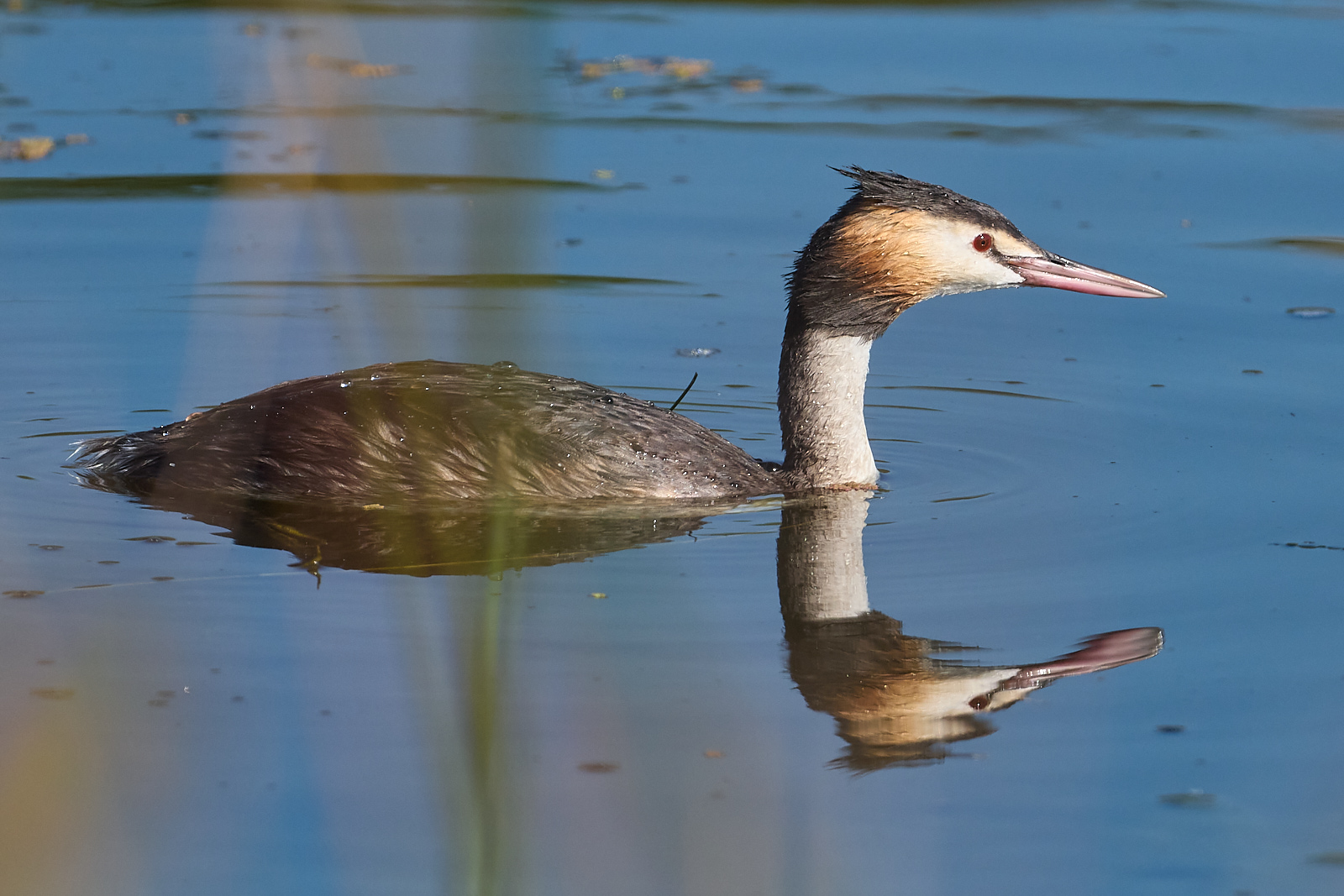
And yet another is to capture Great Crested Grebe and their ‘reed dance’. We have at the Jawbone Reserve two pairs at present, and they have had several good nestings so far this season. However the luck of the dance, is it’s just a bit too far from home for me to spend more than an occasional visit, so the chances are somewhat diminished.
Mr An Onymous and I had taken #kneetoo for a visit there one early morning as treat before she goes to visit Mr Slice-n-Dice next week.
I featured the young from their most recent hatching in the previous post, so we did have a good visit.
Time to go as #kneetoo was feeling the pain.
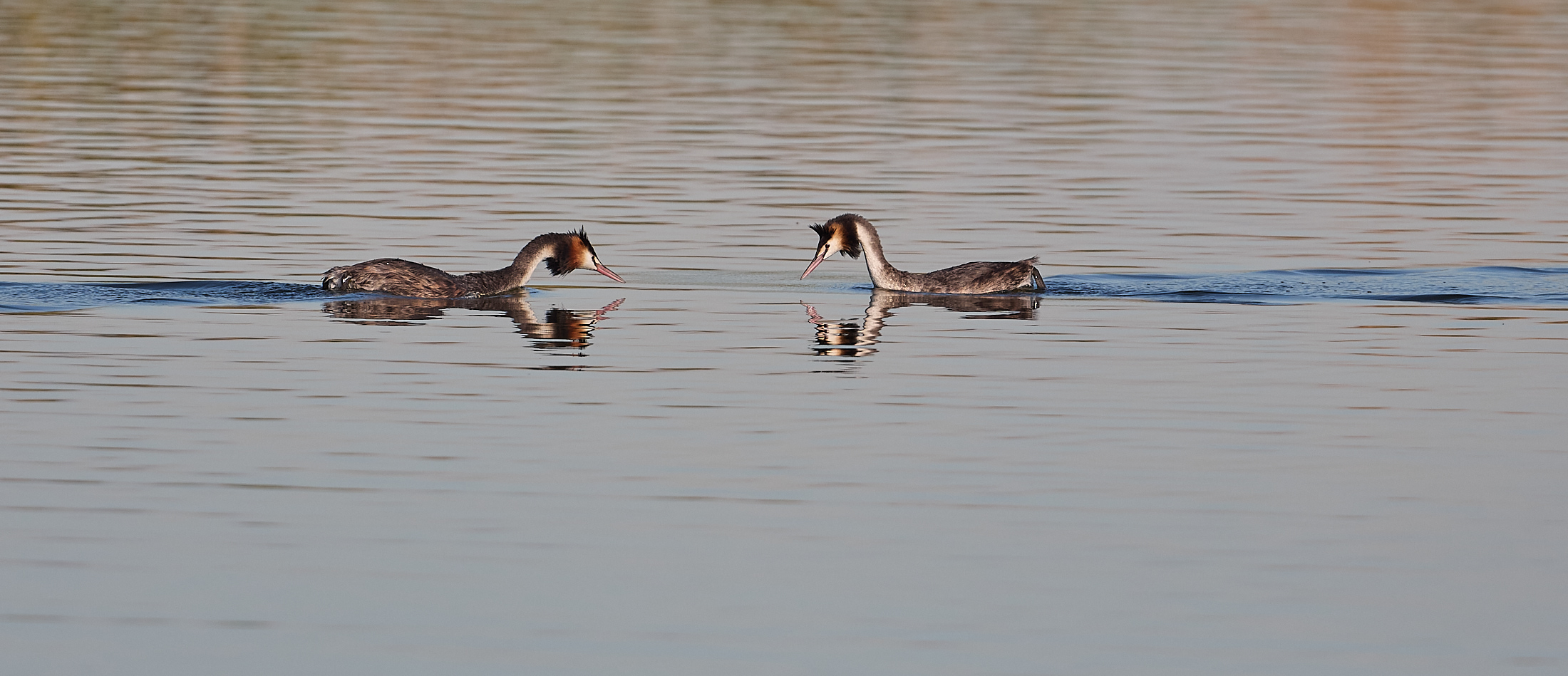
When on a sudden, from way down the lake one of the pair came swimming down to meet its mate. Both immediately dropped their heads to the water in a greeting and turned toward each other.
Then the head crest and facial mask outstretched, so it was more than a casual greeting they were a bit more than pleased to see each other.
The closer they approached the more the crest and masked displayed and finally they were alongside one another and swayed and turned in unison, like a pair of ballerinas.
I held my breath.
They may being going to dance!!
More head waving, calling and circling.
Then, to my dismay, the crests dropped, the facial mask retracted, they turned about, and slowly swam away together into the reeds.
Opportunity over. Near. But… So Far.
Perhaps next time.
If you are interested in the craft of photographing Great Crested Grebes, I normally don’t do video plugs for Youtube, but Mike Lane is an exception. (he is 89 years old for a starter), and he offers some fine techniques that can be applied to working with other water birds.
Enjoy https://www.youtube.com/watch?v=sBzBXuvnv9Q
If you can’t explain it simply, you don’t understand it well enough. Attributed to Albert Einstein
Writers rely on keeping a notebook. It gets filled with story or article ideas, and scraps of ideas. Artists keep a notebook filled with small detail sketches, ideas for design and musings. Musicians also have a book in which words for songs, riffs and other musical factoids wait to be turned into the next great composition.
Photographers that I trained with keep, “Day Books”. A detailed set of instructions of how to light a subject, names and addresses, snippets of an idea for the next shoot, calculations of various lens/aperture combos.
I used to have, (somehow lost in all the transitions) the last day book of one of my mentors, (Probably one of the best Black and White printers of his day—Well at least I thought so).
All sorts of goodies were in there, here’s one “Bellows Extension Factors” :-). How much chemical to put in a certain developing solution. Bring home 2 bananas, a loaf of bread and a jar of plum jam, etc. You get the drift.
We also take a photo, move angle, subject, lighting, come back another day, all part of the collecting of visual notes. Sifting through those ideas surely has helped to prepare for the right moment.
A photographer who published 15 years of his day books is Edward Weston. Too expensive to own, and I’ve only ever seen one volume, in a library. Here is a site that shows some of his work. Caution there are some quite explicit images among them. Edward Weston Gallery
These days as a blogger, I keep notes all over the place. Some electronic, clipped from web pages, snapped out of books, handwritten in a note app. Also still use the old standard, Moleskine A5 book, and somewhere a Spirax wire bound student book. And the odd stickit note or two.
Here’s a couple that struck me the past week or so.
Vision: As photographers we are image seekers, and taking that view, life becomes one great romance, an amazing opportunity and journey to see marvellous things all the time.
Expectation: I go out expecting to see greater things, find new opportunities for visuals and experience fortuitous moments. It should bring a freshness and zest to my times behind the camera.
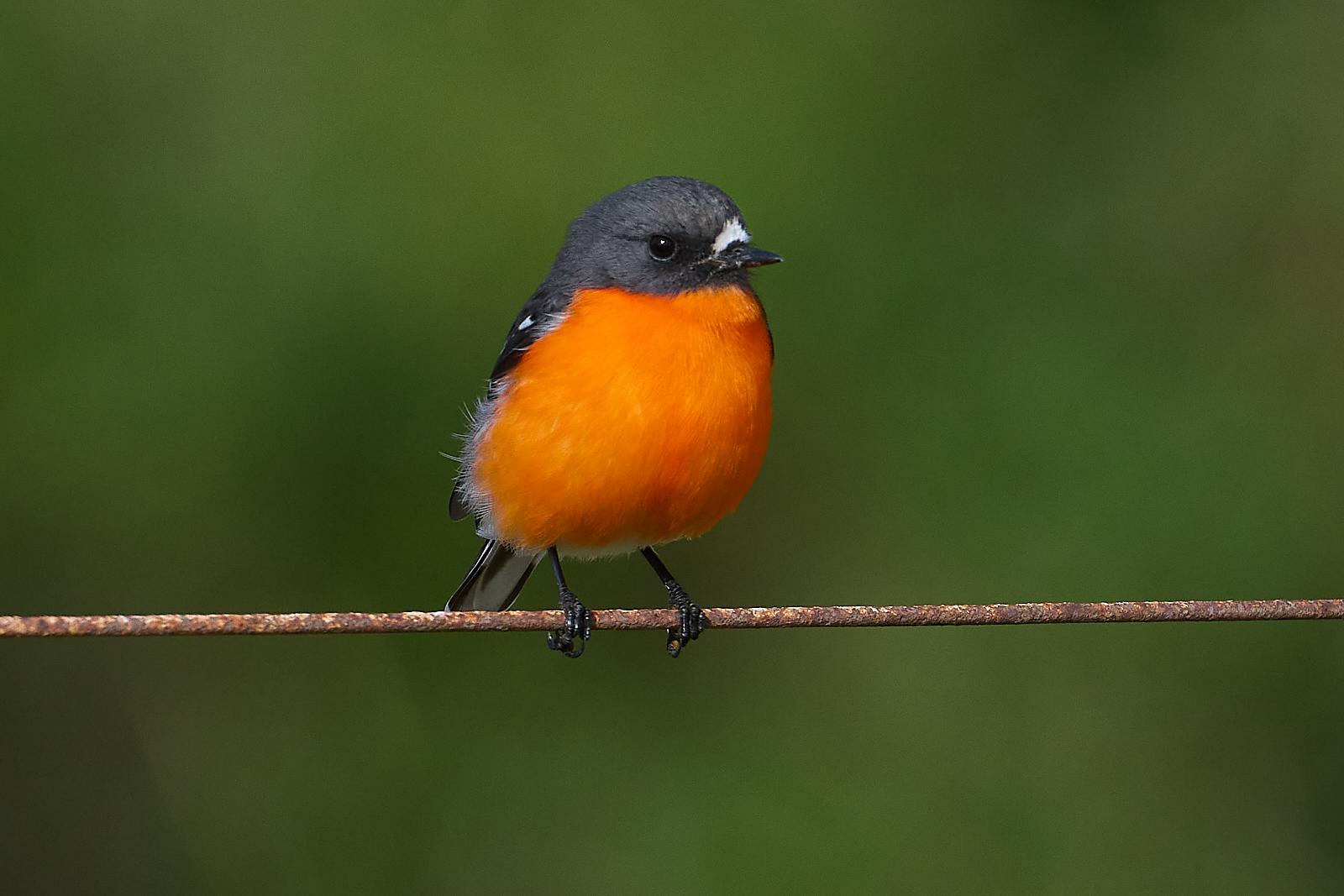
And so it was that #kneetoo and I found ourselves in the sunshine with a family of recently arrived Flame Robins at the Point Cook Coastal Park.
This busy young lady was hunting off the fence line. The birds at Point Cook, as at the Office, use the fence lines as there is little available perching space otherwise. This is open grasslands. Shrubs and bushes are non-existent. And the good people of Parks Vic have kindly mown the grassy verges around the fences providing an ideal hunting area for the robins. Not wonder they love it.
She jumped onto the post, and it struck me to move a little further along the fence and use a distant pine tree as a rich dark backdrop, and then I spotted the highlight of sky between the branches.
Looking for such visual occurrences, is indeed a great romance.
It’s hard to ignore the call of a warm sunny morning, one with little wind, and the chance of fog on the water.
Conference between, #kneetoo, Mr An Onymous, and I, and the location of choice was Jawbone Reserve and the bird of interest, Great Crested Grebe.
Not that we expected to see the parents doting on the young as they have been out for a couple of weeks, and would be able to fend for themselves.
And the usual spots were the young had been last seen revealed no grebes at all.
So it was a walk about the tracks looking in some of the other ponds, and doing our best not to be an annoyance to, and being run over by, speeding local cyclists.
Then far out on one of the larger ponds, among a gaggle (?) of ducks and assorted coots, Mr A spotted two young grebes, heads all tucked in keeping warm in the sunshine.
We waited and just as well, as not so long after they began their morning duties of cleaning, preening and looking about. One of the adults was not too far away keeping a ‘weather’ eye on them.
Around a corner paddling remarkably fast came ‘Motor’ Grebe with a big wash ahead of its chest.
It stopped closer to where we were and began to hunt, and quickly showed how adept they had become in just a few weeks.
The other two paddled over to see if they too could get in the action.
Way down the pond, the second adult made an appearance and the two adults swam toward one another, but. That is for another page in the book.
An interesting fact(oid) is the birds were nearly hunted to extinction in the 1800s as the feathers were used for hats (ladies),and the Royal Society for the Preservation of Birds was set up to protect them. Cocker, Mark; Mabey, Richard (2005). Birds Britannica. London: Chatto and Windus. pp. 6–7. ISBN978-0-7011-6907-7.
Enjoy
Much of the baby feather is going and the markings are changing. Not bad for only a month out of the egg.Adult on alert for its youngReally looking the partThe head feathers are beginning to show the development of that famous Crested headdressCatch of the DayWing stretch of the well developed wings. They usually fly at about 10 weeks from hatching.Family discussion
Sometimes I ponder the direction of the Saturday Night Posts, and worry that I start to sound like some out of context guru who can hand out unhelpful, if not misleading, platitudes.
It is like, at least to me, that I’m developing a creed of not believing in laughter. Yet we live in a world of constant change; seasons, food preferences, political landscapes, health and friends. And so many others for such a long list.
I used to write with a pencil, then a ballpoint, and a pen.(actually at school we used nibs and ink, but really those scratchings don’t qualify), now a lightweight untethered keyboard sits on my lap as my fingers fly over the keys. (mostly the backspace one for corrections, but hopefully I puck erer plikc or pick up most of them. 🙂
Part of those changes at a personal level is my own photography. Equipment, processes and styles rotate about, some lead down rabbitholes into a wonderland, sometime the rabbithole hits a large old rock or root and ends.
So I hope that it all doesn’t become to staid, and too predictable and too serious.
#kneetoo and I, had been walking in the Eynesbury forest and due to concerns of her aforementioned knee we had kept our perambulations to just a few short distances.
It was time to go home, and as we approached the park exit, we thought one quick look down a bush track might take us into Jacky Winter territory.
So, we went.
Just for a few minutes, mind.
At one of Jacky’s known haunts, we stopped and looked and listened, no familiar “Peter, peter peter” calls from the area. “Oh”, she says, “let’s go up to the next track bend.”
We went. Quiet as. Not content we moved further down the track to the next, and then the next and finally turned a corner about a kilometre from where we started.
Way up head she noted the flash of white feather on grey wing, and so we set off.
Jacky and Jacky were working on insects on the trackline. A simple process for them. Start on one main branch, fly out grab an insect and land on the a branch on the other side of the track. Makes for great photos of these beautiful little birds sitting tummy down as they usually do. Then they would reverse the process and flit to the first branch, and then back again.
I decided for the ‘inflight’ Jacky shot.
Missed the first few completely. Set up the focus to grab Jacky as it launched, and hopefully the focus would be in the right spot.
Try again. Great shot of the forest behind, but no bird. 🙂
Now it’s been said, practice makes perfect. Or as the ‘positive thinking’ gurus say, Perfect practice make perfect.
Jacky seemed content to let me try again, and eventually I managed a bird at the very edge of the frame.
I think Jacky saw my satisfaction while ‘chimping’ the result, and with a quick scolding ‘Peter’, for goodbye, the pair flew off into the forest.
#kneetoo and I made our way back to IamGrey and home.
An encounter with this most amiable little birds is never permanent, but an ephemeral moment.
As Deng Ming-Doa writes, ” As we laugh at the world, we should realise that understanding the changeable nature of life (and the universe) is the swiftest way to joy.”
Now that daylight saving has finished for the summer, my early morning pre-breakfast walks are no longer in the darkness of pre-dawn.
Lots of trees, the bends in the creek, and other shapes that I passed in the darkness, now have detail, colour, and form.
The brilliance of the sparkling stars against their velvet cushion is replaced by soft warm (in kelvin temp) light melding over the scene. Just the brightest of the stars lingers in eye-sight for the first few minutes.
The warm of the air in the summer mornings is now a crisp autumn bracing tinge but not yet the biting cold of a frosty morning.
Well, at least most days when it’s not overcast and grey all round. 😦
The interesting thing about a change of season is the renewal.
The ancients explained it best by the comings and goings of the mystical Persephone.
She was the daughter of Demeter, goddess of the harvest. Persephone was kidnapped by that (evil master of darkness) Hades.
Every autumn Persephone returned to her underworld home, taking with her life giving power of seed, and so the ground was barren over the winter months. Then, come spring, “She’s Back” and with her the richness of the spring growth.
All very good for the ancients, but it did provide a good explanation, if somewhat coloured with fantasy of the changes of the seasons.
For us as bird photographers, it often feels like Hades has been at work.
The waders are heading for Siberia, the local Snipe have gone, ready for their ocean hop to Japan, and most bushbirds have finalised their nesting and are settling into winter territories.
We wait for the arrival of the winter flocks and hope to see bright rich red sitting on the fences soon.
Mr An Onymous gave me the heads-up that Flame Robin females were at the 100 Steps park, so we will hopefully this year be able to catch a few sightings.
Winter may in its way bring cold and shorter days, but it also brings renewal as the birds, and the plants have a time to rest up, ready for Persephone to make her re-appearance.
For extra bonus points:
The Degraves Flour mill that used to occupy the Degraves Street location in the heart of Melbourne CBD still has the Degraves family statue of Demeter perched high atop the building.
Here is a clip from Google Maps Street view showing her benevolent oversight of the growth of the city.
(I used to work in that building in another time in the universe)
This is just about straight out of the “Ripley’s Believe it or Not!” archives.
It was a cold wet morning. However #kneetoo was keen to see how the little Kingfishers were progressing, and we only had a narrow space in the ‘very busy’ diary.
Knowing they had been on the wing for several days, our probability of anything other than a chance encounter were slim to say the least.
Nothing around the now abandoned nest site, nor by the old blackened stump training ground.
I managed a sighting of a small blue blur in the forest and headed over for a looksee. And sure enough a young one perched among the branches of a black wattle.
Then with no warning, an adult turned up with quite a large bundle. And at first it was difficult to make out. Not a large skink or beetle.
Are they really legs, or is it a fish tail I could see?
Then she flipped it about in the air and it was a mouse! No way!
At first the young one didn’t seem all that interested, but after a few more flips and attempts to turn it round so the small end would go down first the adult presented it to the young one.
Now on an aside, your average field-mouse is around 20gm. Your average grown Sacred Kingfisher might come in a touch over 30gm. So I’m guessing the little dude was at best, 25gm. UPDATED: HANZAB give the bird a weight of 55g which would be a more reliable weight I think. Still give the little dude 35gm and it’s going to be a 55gm tubby blue blob for awhile. 🙂
It took the mouse head first, not headfirst, even that suits. 🙂
And so began a 10-15 minute battle for the young one to eventually ingest the mouse.
On quite a number of occasions, it had to stop, and I guess catch its breath, or simply rearrange the internal spaces to make space.
A couple of times it began swaying back and forth on the branch, and I feared it was going to choke and fall off the branch. Not much in my skill set for resuscitating a downed Kingfisher.
And slowly—very slowly—the mouse began to disappear.
After it was all over, a tubby little kingfisher gave a few shakes of its body, to rearrange all the feathers and no doubt the internals, and then sat. More likely squatted.
A few minutes quietly sitting to let the digestion process begin, and a tubby blue blur sped off through the forest.
Deng Ming Tao asks an interesting question in an article entitled “Angles”.
It is worth considering, he asks, what does it take to make an angle?
You can make a table from a plank of wood, on two upright slabs. It might even look like Stonehenge. Yet, while the stones have stood the test of time, three loosely arranged planks would most likely topple.
A table manufactured by a craftsperson, is a joy to behold. Each piece in place, each piece supporting the whole, and each, a small work of art in its own right. The table is a greater because of the strength of all the small parts.
“To put things together and then hold them in proper angle is one of the miracles of skill.”
Over the years, my own photography has been that sort of journey. Each new skill learned has lead to an expression of a subject in a harmonious balanced way. And please don’t get confused that I’m talking about some compositional rule.
Each subject requires the tensions of the ‘angles’ to be suitable to best express the mood, emotion, feel and vision.
Like so many pursuits, photography has lead me on a voyage across wonderful waters. But there always comes, as a sailor says, the time when it’s no longer the right thing to hug the shoreline, but rather to unfurl the sails and head out into the wider ocean.
Not all is plain sailing, to continue the analogy, but securing the angles with knowledge, skill, experience and dogged determination, will result in photographs that carry within them a little of the photographer’s vision. Built, like a finely crafted table, on our aspirations.
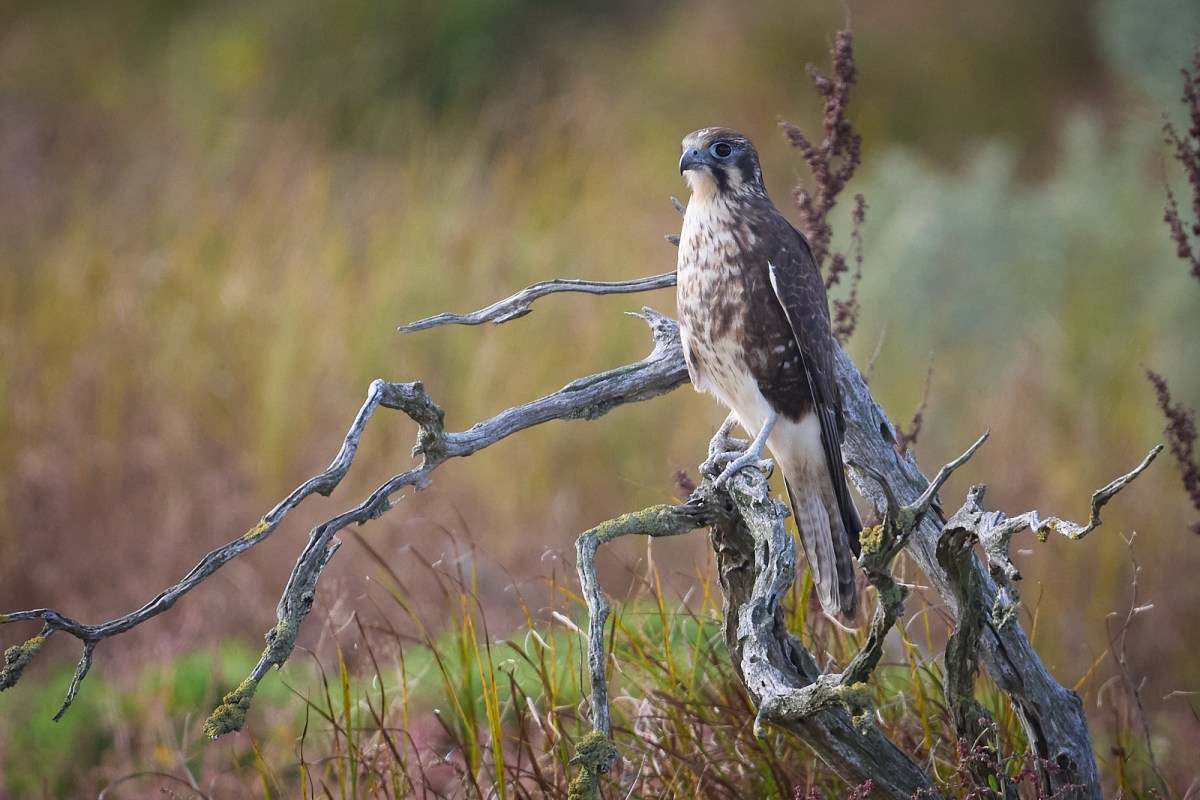
#kneetoo, and I were on the road outside the Treatment Plant. Early morning light, and as we drove along looking in each paddock, we missed the Hobby sitting on a post. Then as we drove by, I noticed it. Too late to stop.
Down the road 100 m, and turn around. Then drive leisurely back as if we still hadn’t noticed it.
The birds in the area are very familiar with passing vehicle traffic.
It passes.
They barely blink.
Passed without any problem, and then to park off the road, the bird was on #kneetoo’s window side. She was happy.
I slipped out of the door, and edged along the top of IamGrey.
The bird was still unperturbed.
A large truck came around a corner and down the road toward us. The bird waited. Took notice of the oncoming vehicle. Did some Hobby calculation about the speed of the approach, our position on the roadside, and concluded perhaps that there wasn’t going to be enough room for all three of us.
For several previous days, it was apparent that the young Kingfishers were getting ready to fly. Interestingly, they are pretty much fully developed when they fly, and while the parents still top them up with food, they appear to have some hunting ability for easy to find prey
#kneeetoo, and I arrived early one morning and waited for the usual food supply activity. After a bit of time had passed, it was obvious that something had changed. A further hunt around the nest area, and following the adults, we soon found, the first of the flown young. It’s plaintive cry for food was taken care of by both the adults, and just occasionally would one venture to the nest opening and deposit a top up snack, so, a second one was still nest bound.
The following day, it too had broken free from the nest and we found them moving about the forest with ease. A tree had caught fire a few days before and the local fire and park people had cleaned up the mess, and cut down the old red-gum tree, as the fire had eaten through the inside. So there was a lot of downed timber as well as cleared spaces, and the young Kingfishers were taken there by the adults to sharpen their hunting skills. It was a bonus for your photographers as the venerable old gum had supplied some fine landing spaces for the Kingfishers and some of the larger trunk pieces a good place to sit and watch the activity. As the morning went on, the young became engrossed in being fed, and learning to feed themselves and completely ignored out presence, often landing only an arm’s reach or so away. Sometimes too close for the lens to gain focus.
In the end, a mid-morning rain brought closure for our efforts and the young took off to find some shelter.
Ahh, there you are
Dropping in with a food topup
A Welcome Snack
Handling the skink with ease
Further down in the forest bugs were on the menu
Open wide
Sitting on an old gum stump watching the parents at work
Now it’s your turn. Adult seems to be offering advice on the skills of hunting
From our recent early morning trip to the Western Treatment Plant.
The Plant holds many great photo opportunities for such a wide range of birds, but probably the highlight for us, other than a rare species, is the White-bellied Sea-Eagle. They don’t seem to claim the area for roosting or breeding, but rather it’s an opportune smorgasbord for the picking.
It is not highly unusual to see them, but most times they are just too far away for great photography. And give up on the idea of ‘sneaking’ up on one.
So a conversation starter for the day, as we head into the plant, is, ‘I wonder if we’ll see a Sea-Eagle today?”
As we ventured further into the Plant, at Lake Borrie, one of the busiest ponds, we saw several White-winged Black Terns fly past, and I parked the IamGrey a little further along the track, with good views across the lake, and #kneetoo called, “A Sea-Eagle out on the tree.” And there was. How could anyone doubt! It might be a knee, but that doesn’t affect the eyesight it seems. 🙂
The Sea-Eagle was way too far on the other side of the lake for good images, so I decided to walk back up the roadway to where the Terns had been working. However after a few minutes it was obvious that they had moved on.
A Little Grassbird caught my attention in the reeds, when all of a sudden the high pitched call of startled Pink-eared Ducks rolled across the lake. Conclusion? The Sea-Eagle had taken to wing, and knowing its predisposition for duck-dinner, the Pinkies were not hanging around waiting for an invitation to share a meal.
But, where, I kept peering was the Sea-Eagle? With the sky covered in Pinkies, it took a few moments to pickup the slowly climbing white shape above the alarmed ducks.
I’m often a bit jealous of my seaborne photographers and their work with Sea-Eagles. At least it’s certain where they will be travelling—along the shoreline. Inland birds have all points of the compass to choose from when they fly, and it is almost always away from any photographer.
This bird had a purpose, and I pretty much held my breath as the shape grew larger and larger in the viewfinder, and I realised I was on its flight path and it would run by me on the left. Time to fill up a memory card, so I switched to multi-frame and began to shoot small 3-4 frame bursts. Still it kept coming. The early morning light—astute readers will remember form a recent post, “Front Light” —was coming over my shoulder, and all I had to do was keep the bird in the viewfinder and follow along.
Eventually, it was too close, and too large in frame, and went by me on its way to its next appointment.
Still continuing with the Kingfisher Nursery. The young had been hatched about 3 weeks, and were now quite grown. But almost impossible to see as the tree opening had a rather large lump of wood that covered part of the hole, and it was difficult to get a glimpse.
Kingfisher young fly pretty much complete, in that they are capable in a few days of fledging to be self-sufficient. Although the parent birds keep up a good food supply.
Here then is a selection from that last week feeding.
The setup is pretty much as described previously. Main flash high and to the left. Using the Auto FP setting on the Nikon D500 to override the usual problem of working with faster shutter speeds. On Auto FP, the SB910 Flash-units fire multiple times in what seems to be a continuous stream of light from the beginning to end of the exposure so all the sensitive chip receives an equal amount of light without any part ‘blacking’ out. Downside is that the poor old SB’s have to drain the charge, and I can only get two or three frames per in or out flight. Then of course the battery has to recharge the unit, so it’s a few seconds delay. I’m sure that Eric Hosking with his half ton of batteries or Steven Dalton in his studio set up didn’t have that problem 🙂
I have been musing the past week over the horrendous floods that have swept through parts of New South Wales. Having lived and worked in the area around Newcastle and Maitland in another universe, I had more than a nodding acquaintance with what ‘High Water Mark’ means.
What struck me even more were the visuals, both video and still photography, of the rescue operations, and the shattered lives that were saved from the merciless waters.
It took me back, to a photograph that had quite an impact on me as a young lad. (I’ve searched across the web, and haven’t been able to locate a copy sadly). The photograph was taken around 1961 or 1963 as best I can recall. I’m fairly certain it was taken in Newcastle, or perhaps Maitland, but I do know it was in that area. I think also, and I’m trying to recall a young lad’s impression of the image, that it was a newspaper front pager. And because of the circumstances I remember the image, it was most likely a Walkley Award winner.
The photograph showed a small child, and the mother being rescued into a boat from the surrounding waters, with a rescuer in the water with the pair. What struck me, as a young lad, was, that the child could have been me. And of course the mother, my own Mum, and rescuer any number of people I’d known to help out folk in crisis.
The impact of the image is important, because it is probably the first photograph I can recall that was more than a record of some event. It carried a personal story—an emotion of the agony of the family, the drama of the rescue and the concern of the man helping in the water.
Up to then, my interest in learning photography was limited to photos of a cat called “Blackie” in the safety and security of our backyard. Here in this one image was a world that outside of my childhood interest and I saw how powerful photography could be at storytelling. So much so that it is probably at that moment the first spark of making photography my life passion was kindled.
Now of course, as a blog scribe I have to be careful not to read a lifetime of experience back into a childhood lightbulb moment, but the point is that image is one that I can recall, and the magazine I saw it published in travelled with me for quite a few years of my youth. Sadly one too many moves, and changes of interest, and now, I am bereft of the photo, but hold still the vivid memory. As I contemplate it now, it is to my loss, that I didn’t follow through with that initial enthusiasm, and I chose to work in fields other than documentary photography. Yet I feel that every time I press the shutter, something of that lightbulb moment is present. I also came across a quote from writer T. S. Eliot this week, he of The Waste Land, in an essay from 1919. He was deploring the tendency of many critics to only be interested in novelty and difference from other’s work.
He wrote, “… not only the best, but the most individual parts of his work may be those in which the dead poets, his ancestors, assert their immortality most vigorously.’
So I muse, how much of that photographer of the moment of pathos influenced the work I’ve made over the years, and of course how much of my current, and future work. Rhetorical, I understand.
Here is an image I found while I was searching that was taken several years earlier in the same area, and while not the visual impact of ‘my’ photo, it shows what dreadful impact the floods have on people’s lives.
This is not the photo I have spoken about, but gives the idea of the work of press photographers at the time
Now back to the present. The weather has kept us home the past few days, and #kneetoo has been to a number of medical rounds as the foundation for her new addition.
I took the time to clean the camera, lens and kit, and was outside just checking the focus and things, when Tai Chi pigeon dropped by to see how my practice was going. Seeing me otherwise engaged it moved to an outside fence, and for just a moment turned toward me against the rich dark shadows of the neighbour’s tree.
Might not win a Walkley, however I enjoyed the company for just a few moments. As I pressed the shutter, I realised I’d left the exposure set for a much darker scene a few clicks earlier. Overexposed! Oh dear. A quick twirl of the dial and I was back in the groove. Which just goes to show, that like all good craft skills, photography needs a dedication to keep sharp for what may happen next.
Just in case there is any confusion, the title has little to do with the Black Kite in early morning light
EE has thrown a fetlock. Mr An Onymous wrote me a note and called for a new moniker, “#kneetoo”, seemed appropriate. We have over the past few weeks been unable to enjoy any real field-time as #kneetoo’s fetlock has been getting more and more painful.
The pain in the leg, is now, after mri, X-ray, ultrasound, poking and pushing, and oh and ahh ing, identified as a damaged fetlock. Or in layman’s terms, a dicky-knee.
So it’s off the operating theatre for our heroine and a nice sparkling knee-replacement thank you.
She will be able to walk about before we all know it, and in conversations over coffee, exclaim, “Oh, yes, me too!” Hence, if you follow the somewhat obscure logic that occasionally flows from this blog, #kneetoo
Mr Slice and Dice is going to turn on his electric drill, angle grinder and sanding machine after a short wait of about 6 weeks, so it seems.
In the meantime a round of X-rays and mri’s should keep our girl occupied over the next couple of weeks.
Now you know.
We’ve survived a long covid lockdown, so have learned to deal with being house-bound.
A sunny morning promised some good photo opportunities and as we’d only had one brief visit to the Western Treatment Plant since this time last year, it seemed a good time to reacquaint ourselves. Working “The Plant” gives #kneetoo an opportunity to photograph from IamGrey, without getting out and walking about a lot. So, as The Banjo said, ‘We went’
We timed our departure to coincide with sun rise, (about 7:20am Daylight saving time). Too early for light on the birds, but cleverly timed so that with a stop off at barista Steve’s for a morning cappuccino, #kneetoo would be ready for the day’s activities.
By the time we had opened the Point Wilson Road gate, the sun was streaming over the pines around the pumping station along Paradise Road.” As we headed past the pine trees on the road to Ryan’s Swamp, #kneetoo pointed at a Black Kite enjoying the early morning sunshine. The reason I’ve chosen this shot is it is the same tree that was in last weeks post. (#125) Now, I can’t claim it’s the same bird. So I won’t.
This time I travelled on past the bird, turned around and slowly drove back. Now the bird was on #kneetoo’s side of the vehicle and all I had to do was work the mobile camera platform (IamGrey) in position. “A little to the left, forward. Stop. No, just a bit further. Oh, the mirror is in the way, reverse a bit.” Etc ,etc, etc.
It might seem a complicated task, but as we used to photograph motorsport rallies and classic car tours using a similar technique— she photographing out the window—while I drove and navigated at the same time, together with having to watch for approaching or turning cars, made doing it at a sedate speed on an open farm road feel quite relaxed.
The gracious Kite was neither impressed or concerned.
However I thought the light on this particular one was as good example of how rich early morning light plays its own magic on the shape and form of the feathers. The golden glow of that low-Kelvin temp light also brings out the richness of the colours. Hard to believe they have the name, ‘Black’.
Looks like WordPress have put the skids under my basic blogging style.
From now on it seems I have to work with ‘upmarket’, ‘ubeaut’ ‘user friendly’ styles and blocks.
All I wanted was somewhere to put text and photos. Does not augur well for birdsaspoetry.com on this server.
Whinge over.
We soon became aware of working with the Kingfishers as they fed the young that the light was only really useful on the nesting site for about 45 minutes in the early morning, after that the sunlight slipped behind the river gums and we were going to be hampered by slow shutter speeds and high iso.
It’s been awhile since I lugged large electronic flash about on to a site for photographs, but loaded up each morning with a couple of units, a Better Beamer flash extender, and some connecting cables and I setup to get a little flash fill and also keep the shutter speeds high. No tech explanation, but the Nikon system’s use of flash was why we originally bought into the system. Oh, yeah and a bunch of manual focus lenses we were going to use, and now only have one of those left, and its been in the garage box for years! 🙂
High (about a 1 and 1/2 metre up) and to the left gave the most ‘natural’ effect, following the sunlight. But in the end I settled on high (about 1 metre) and to the right as giving me a slightly better colour rendition and better looking fill of the shadows.
As the weeks went by, the different types of food they delivered ranged from small bugs and centipedes, skinks, crustaceans, and every so often small fish.
This is a collection of about 3 weeks of images from that time. It’s just a handful of some of the opportunities we shared with the birds.
Enjoy
Sacred Kingfishers are not normally great ‘fishers’, mostly working on land based prey, but this pair seemed to make an exception from time to time
All sort of food seemed destined to be turned into young Kingfishers
The hazards of feeding growing young. You put it in one end, it comes out the other. This young one had backed up to the hole just as uber arrived.
Crickets and Grasshoppers came from the mown grasses on the local golfclub
Small eye peeking out into the world. The entrance is a bit cramped by an lump of wood.
This is pretty much a week or so before flight. They were able to access the food much more easily as they grew.