It is hard to predict, but it seems there comes a day with the young birds when their ‘baby behaviour’ is passed and they become much more aware of their growing skills, and the need to prepare to leave the home territory.
After more than a month on the wing, they were now as far as I could tell, self-sufficient. Neither adult had been supplying food for a week or so. However, even if we couldn’t spot her regularly, every so often the female would make an appearance. I am sure that she knew exactly where her two young ones were at any time.
I understand that. In my own case, growing up in a country town, we’d come home from some adventure or other and Mum would somehow know what we’d been up to. (Good or bad) The neighbourhood grapevine was always on the alert.
The young were making forays way out of the home area, and on several visits we failed to get close, although a fly by or two would usually take place. It was only a matter of time for them to be confident enough to move on.
So, in no particular order (as they say) Here is some of the activity
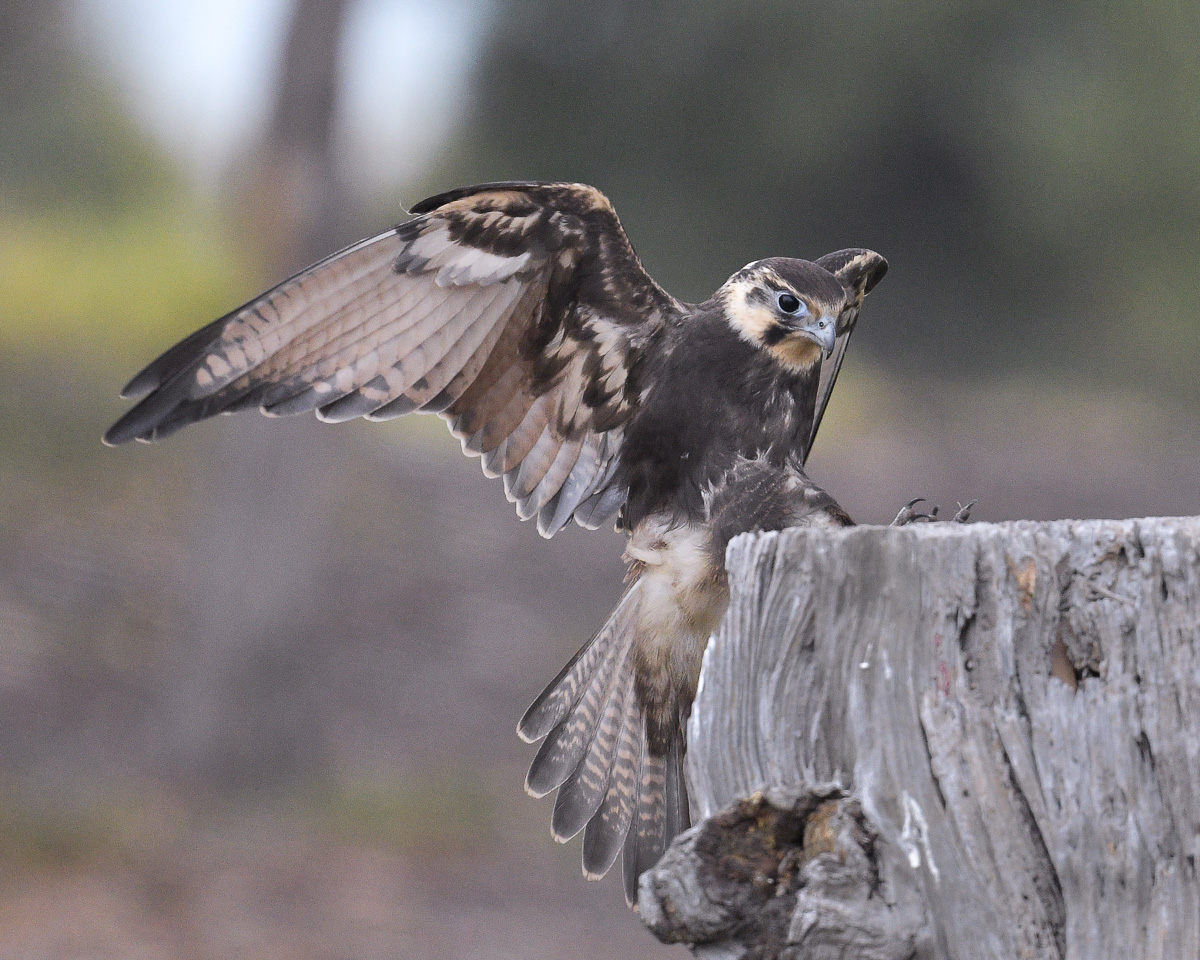
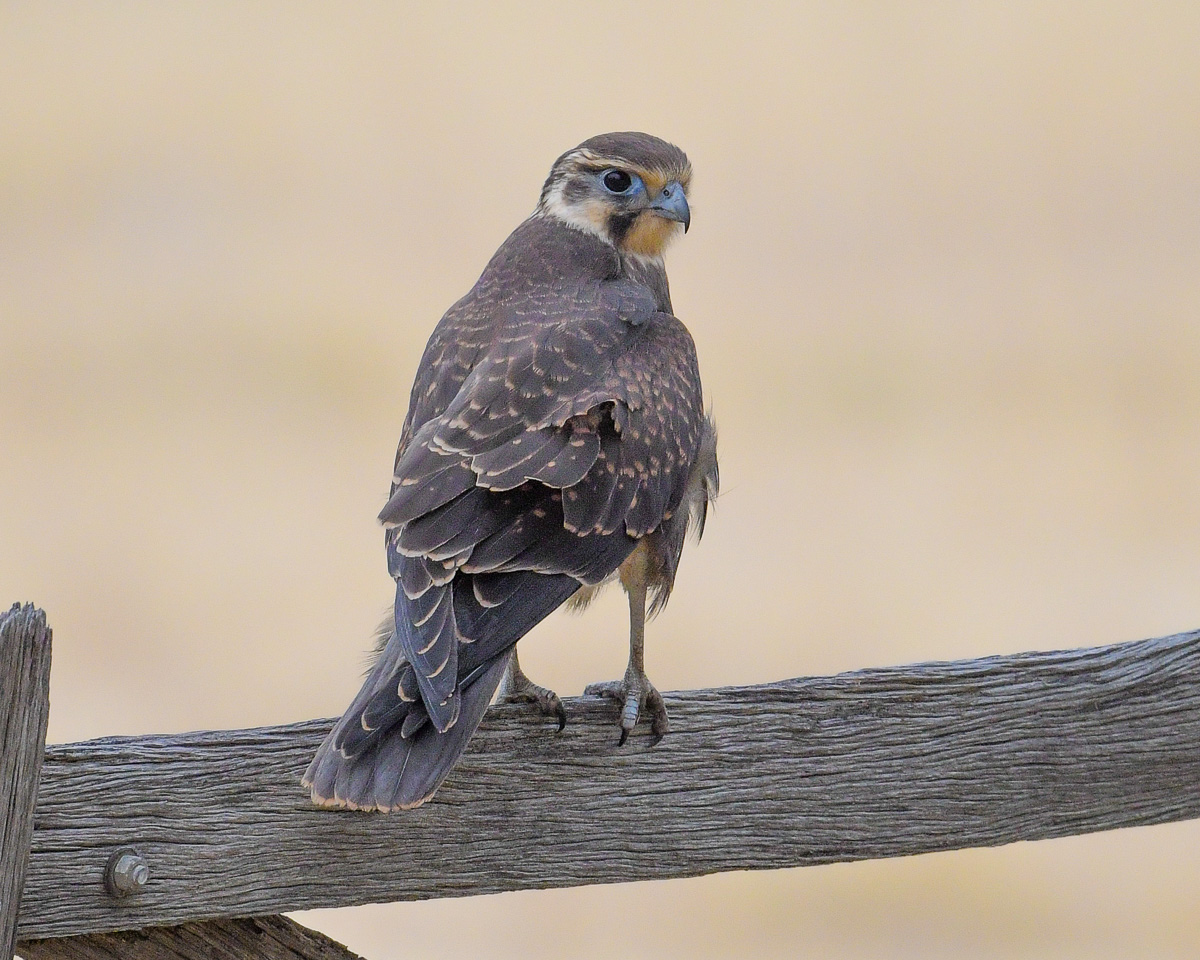
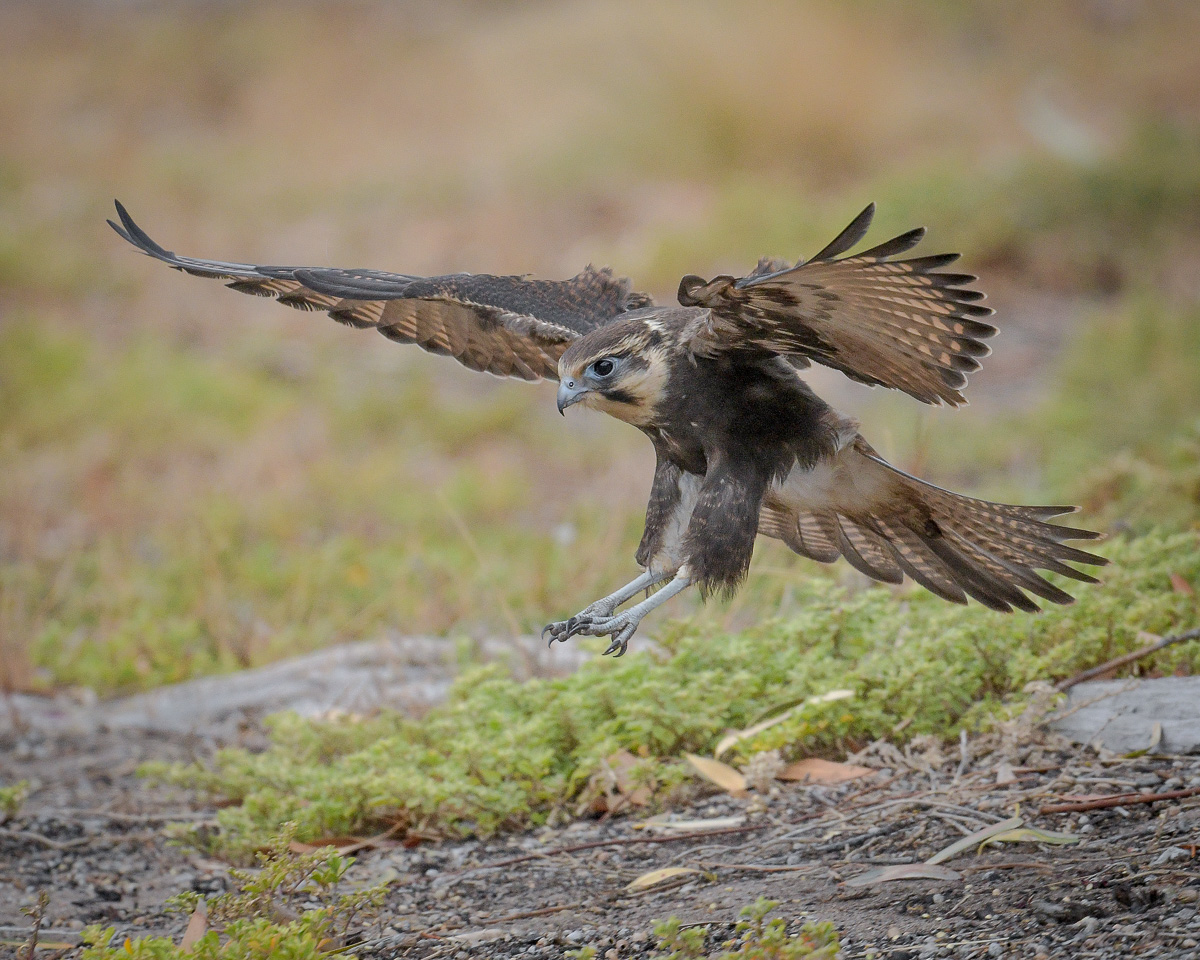
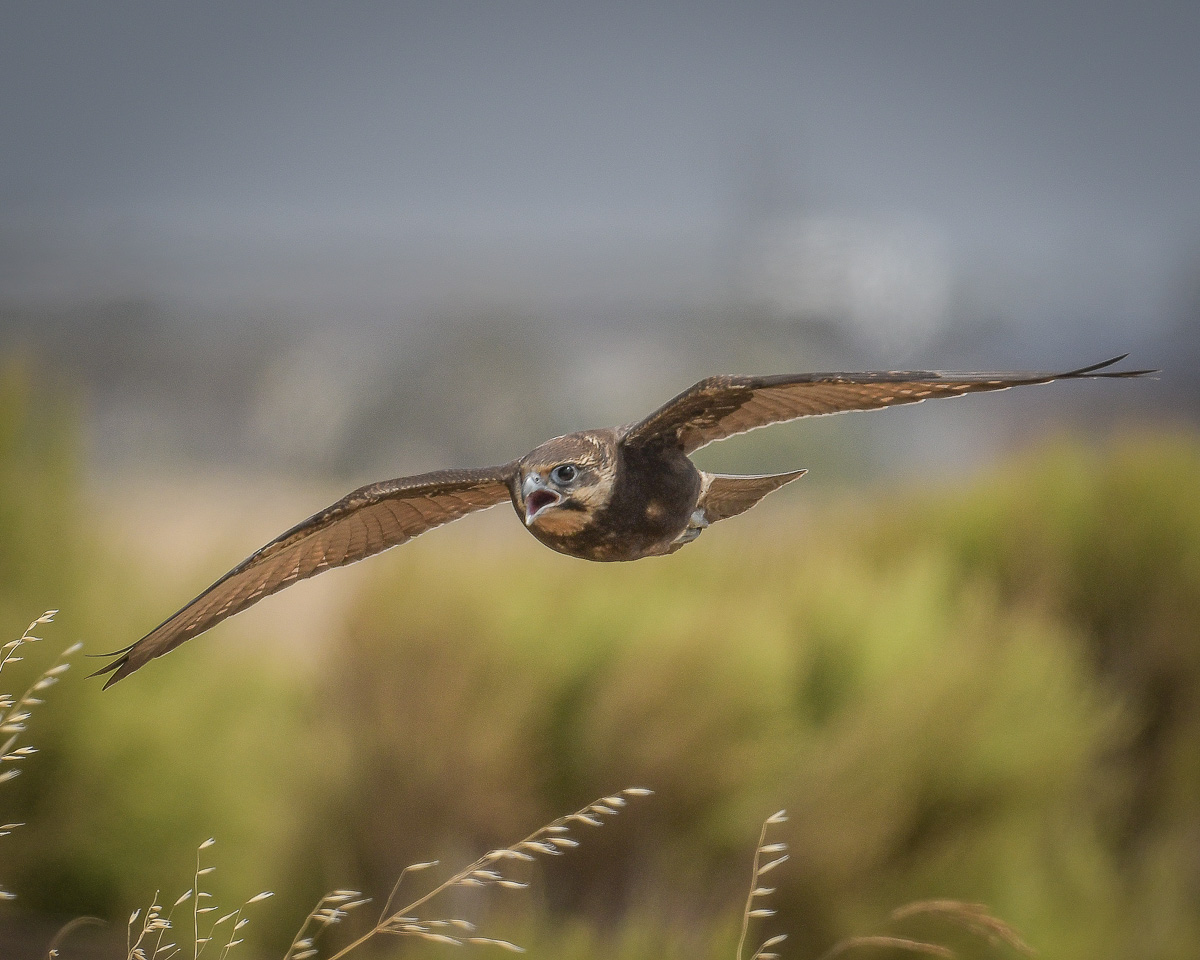
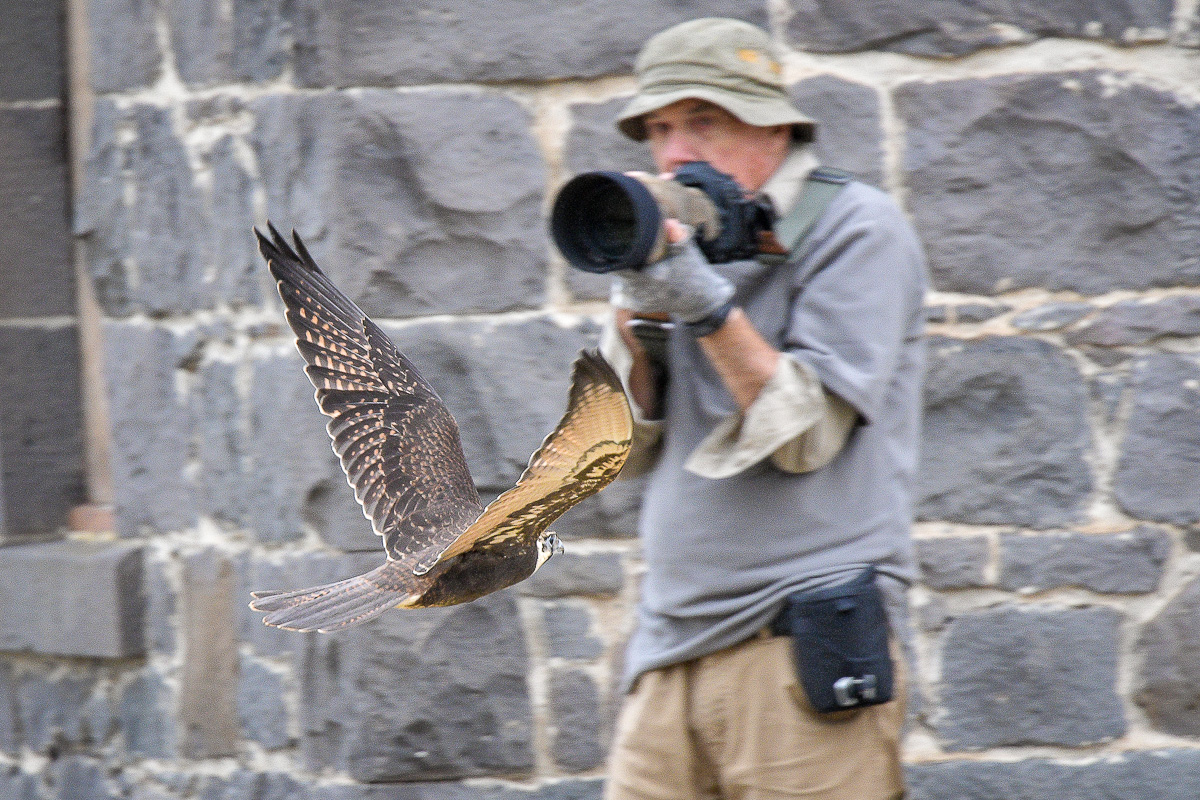
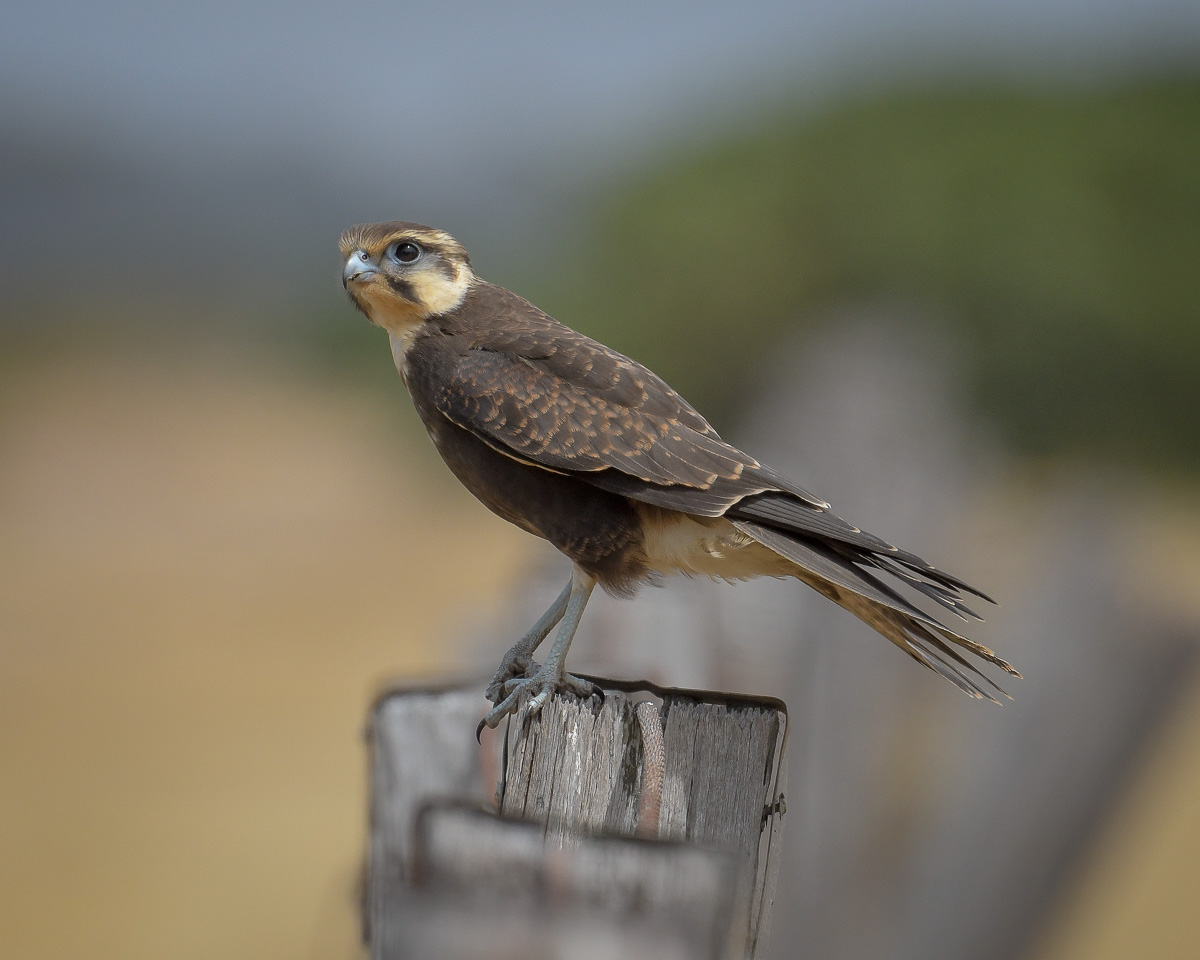
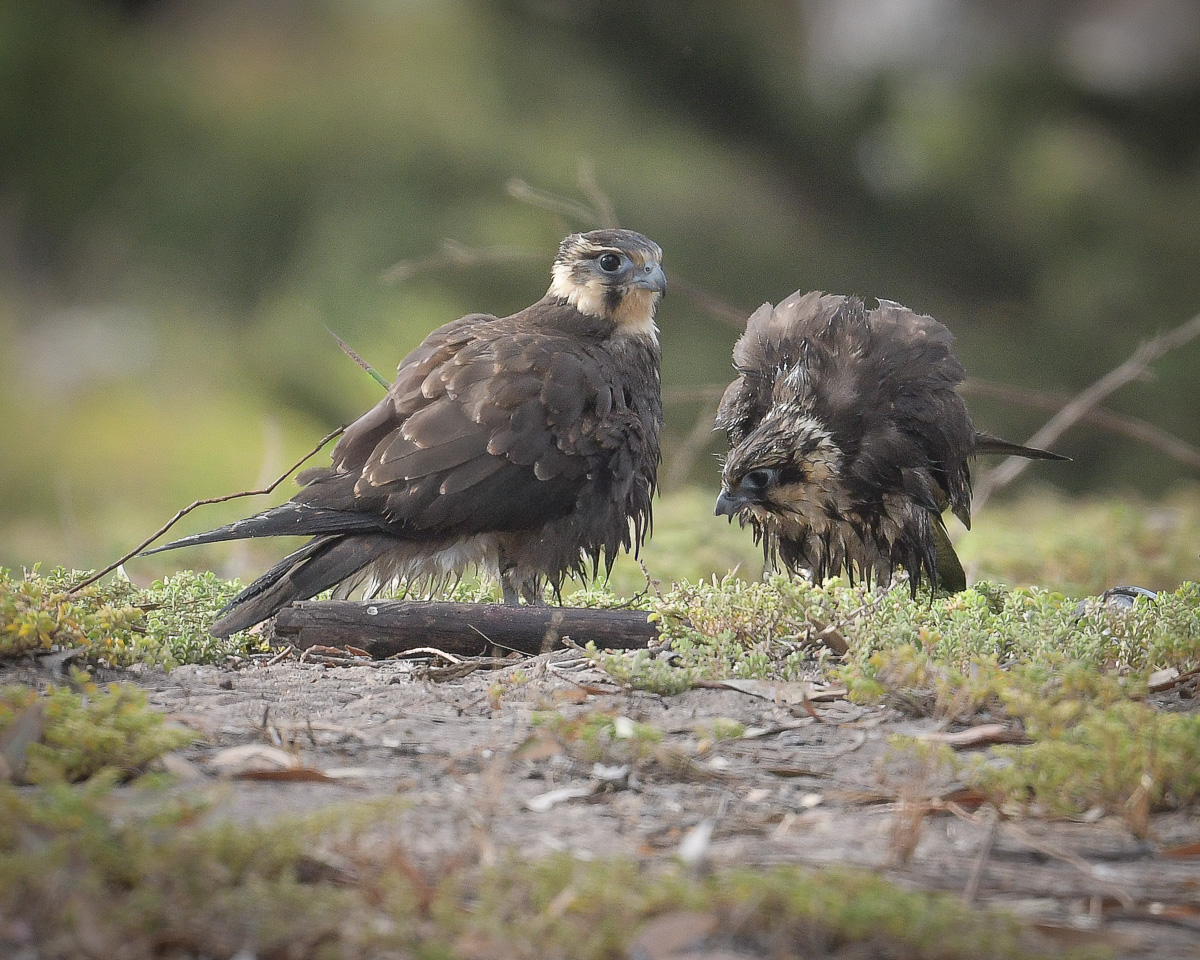
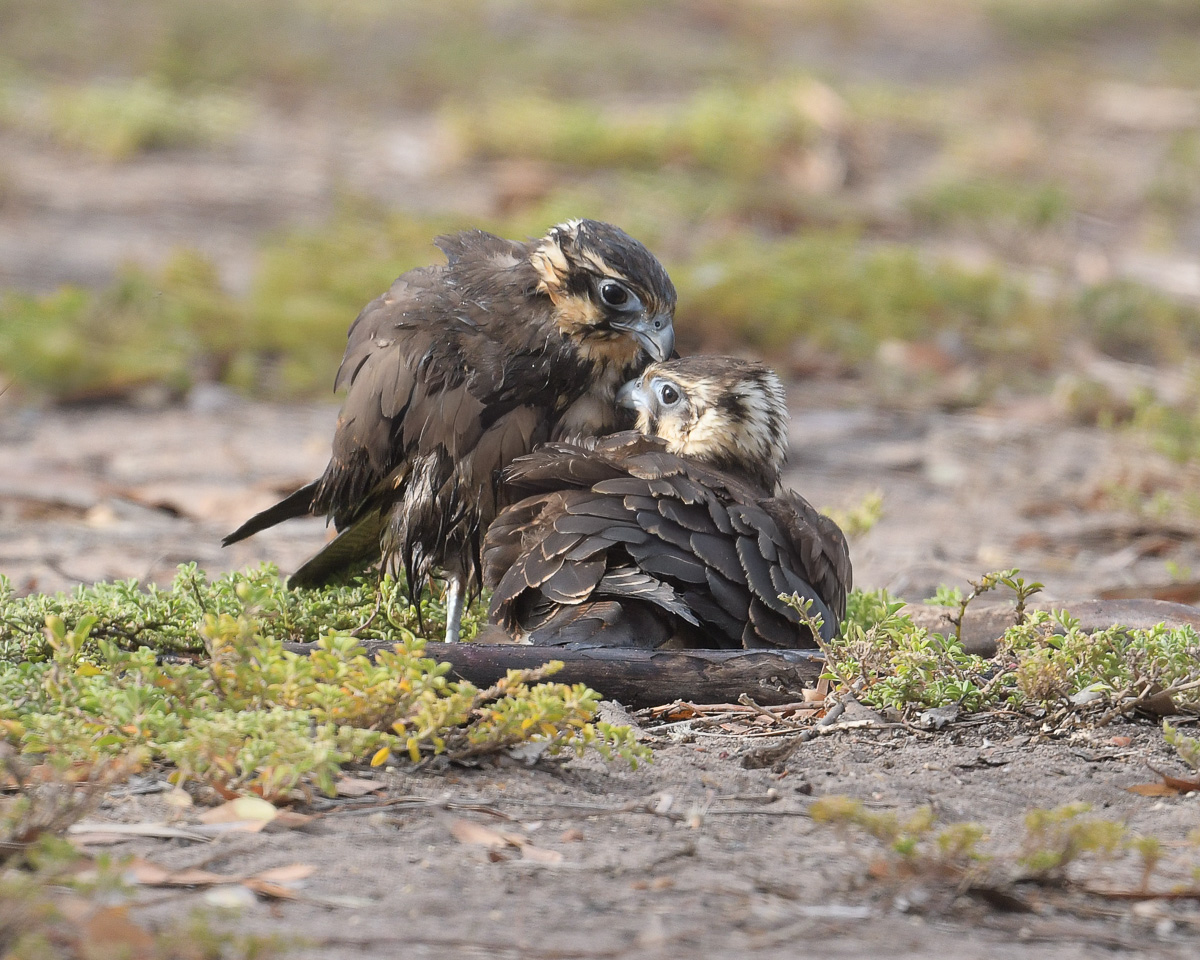
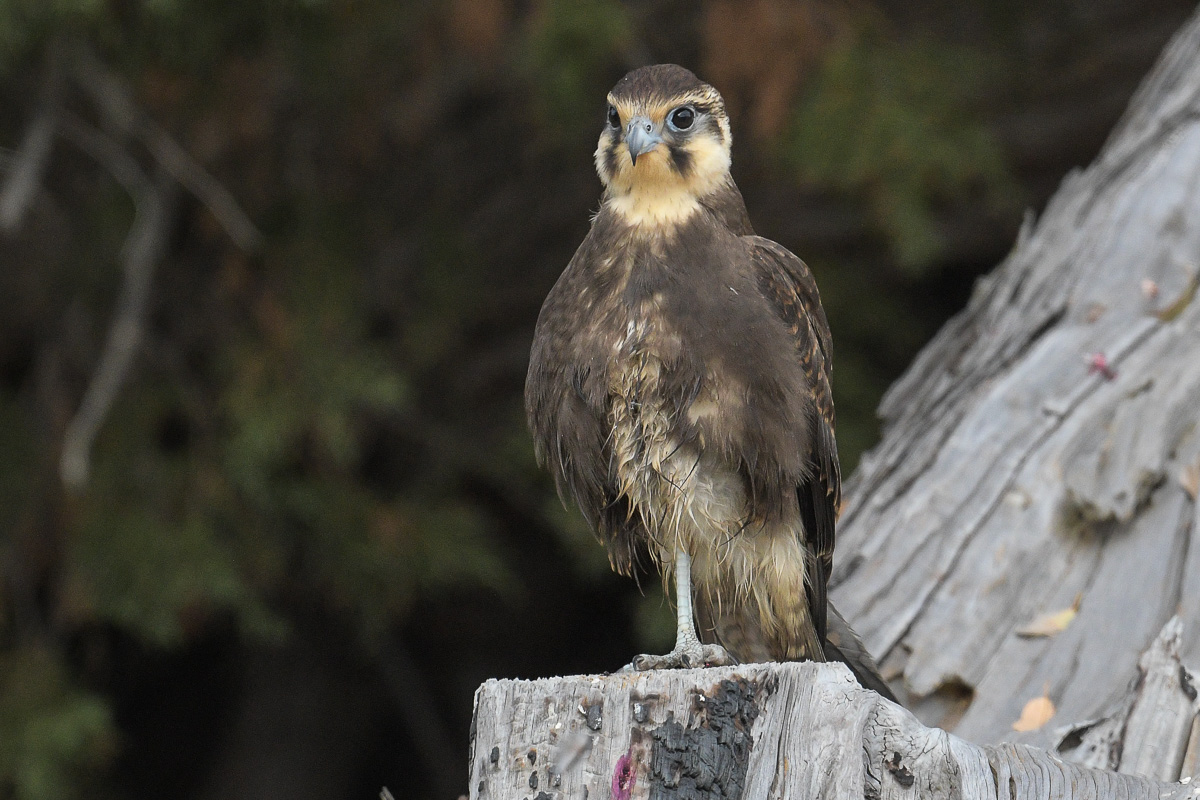
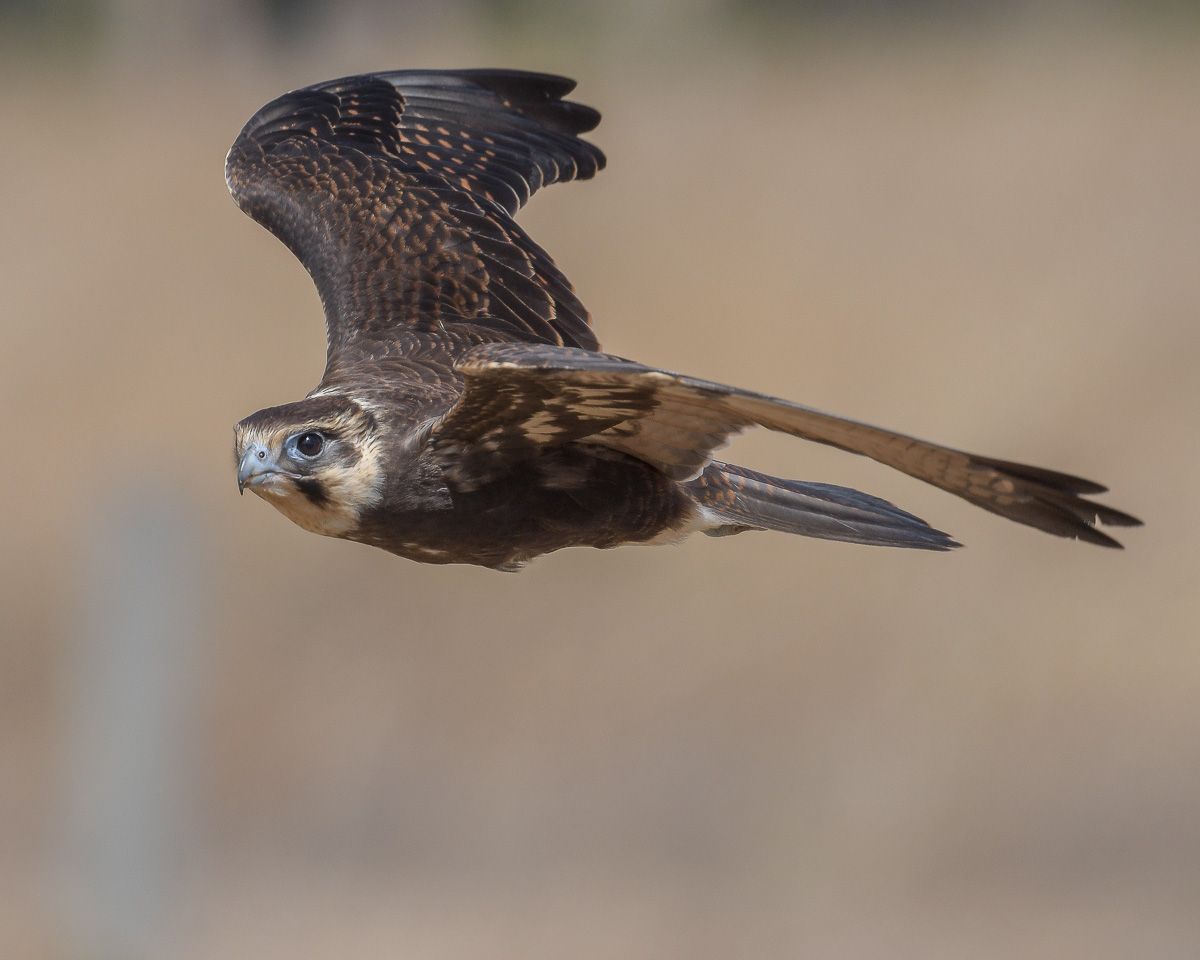
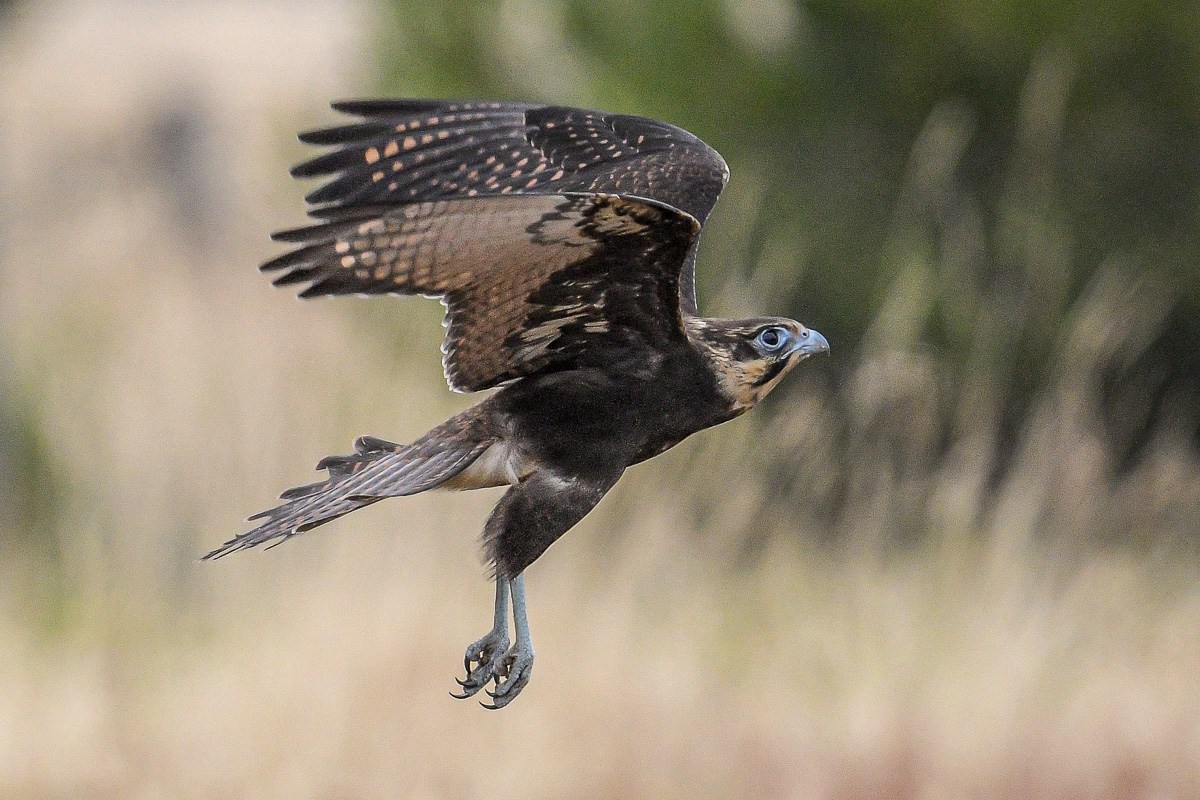
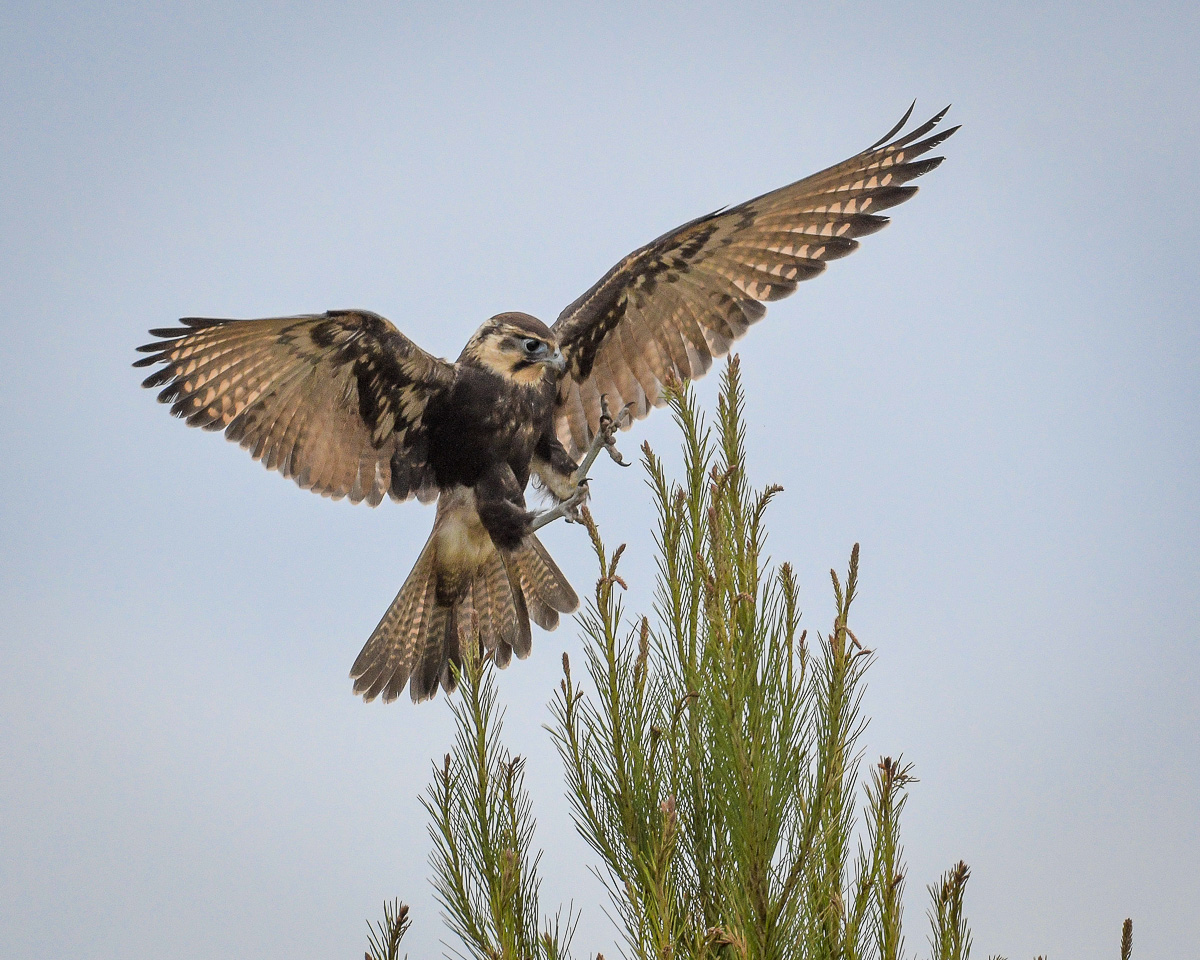
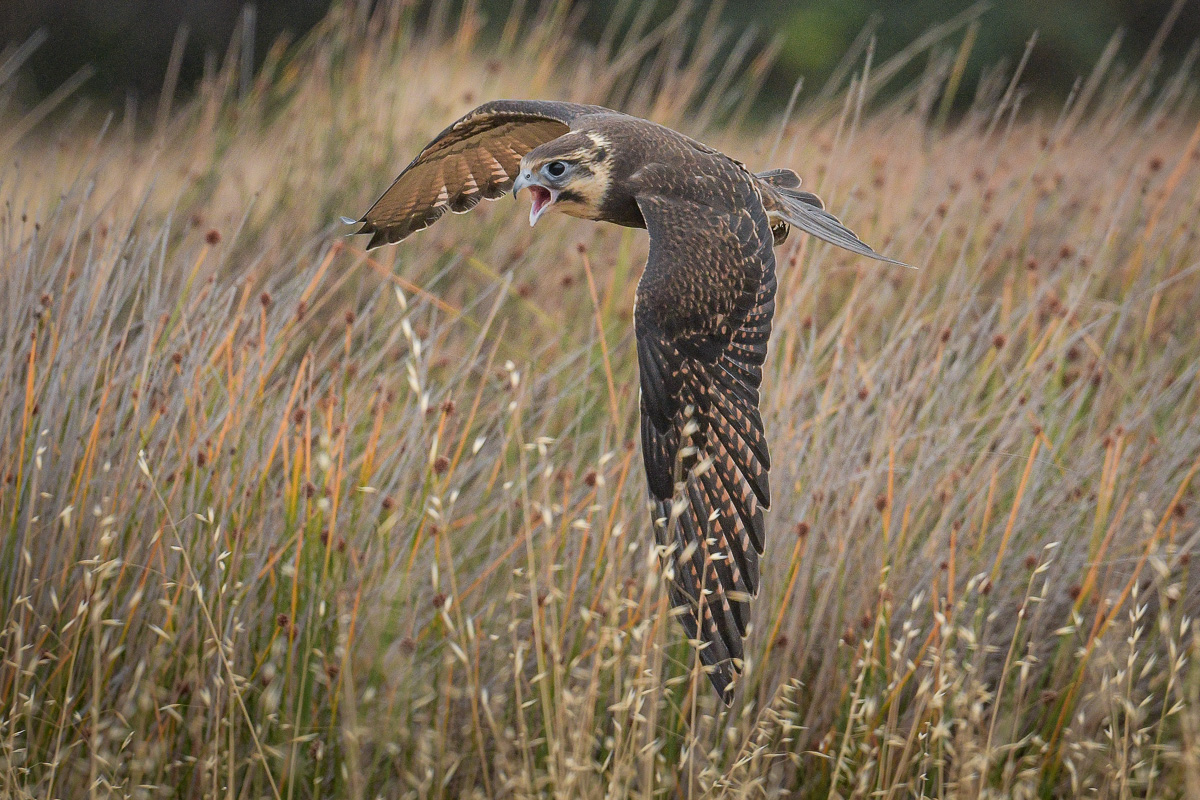
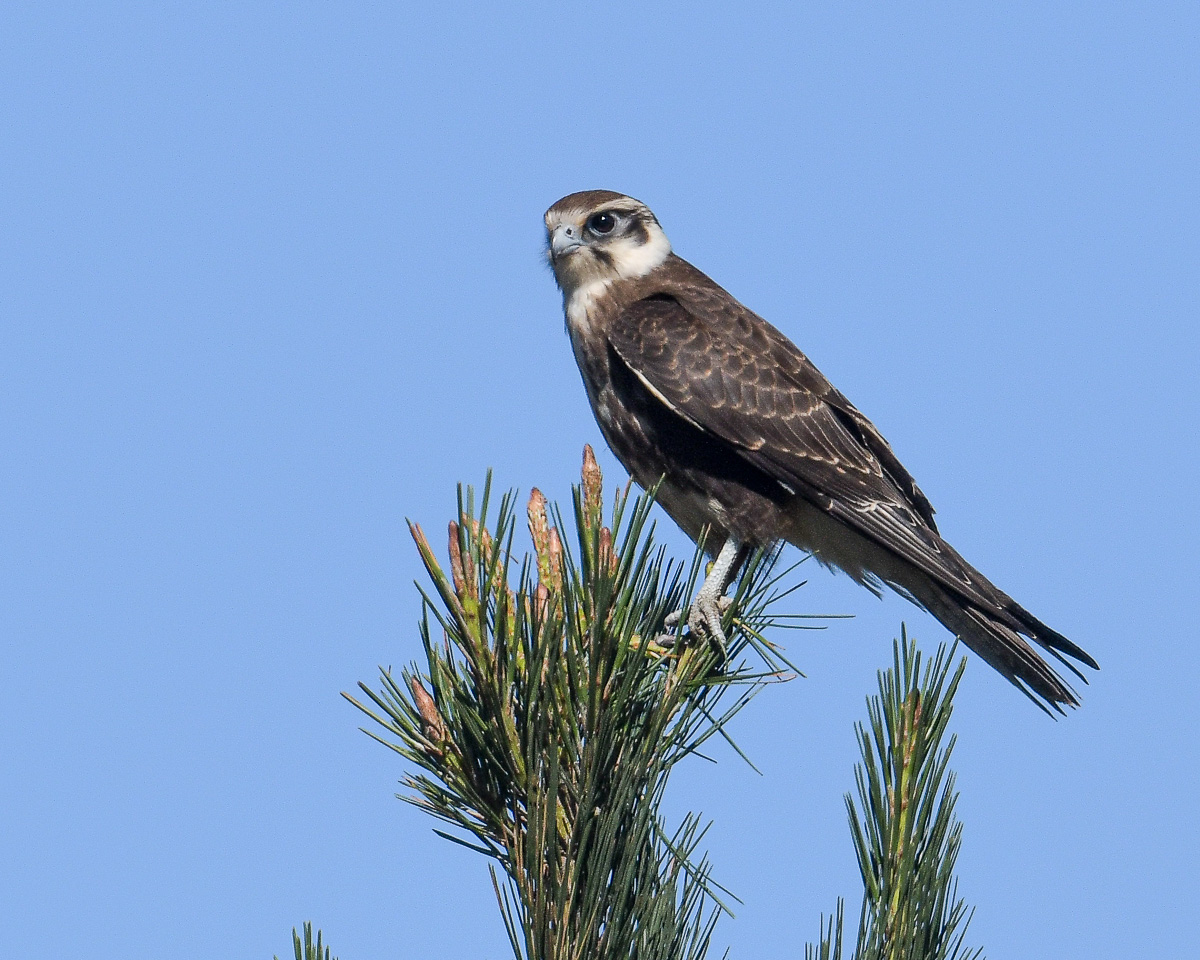
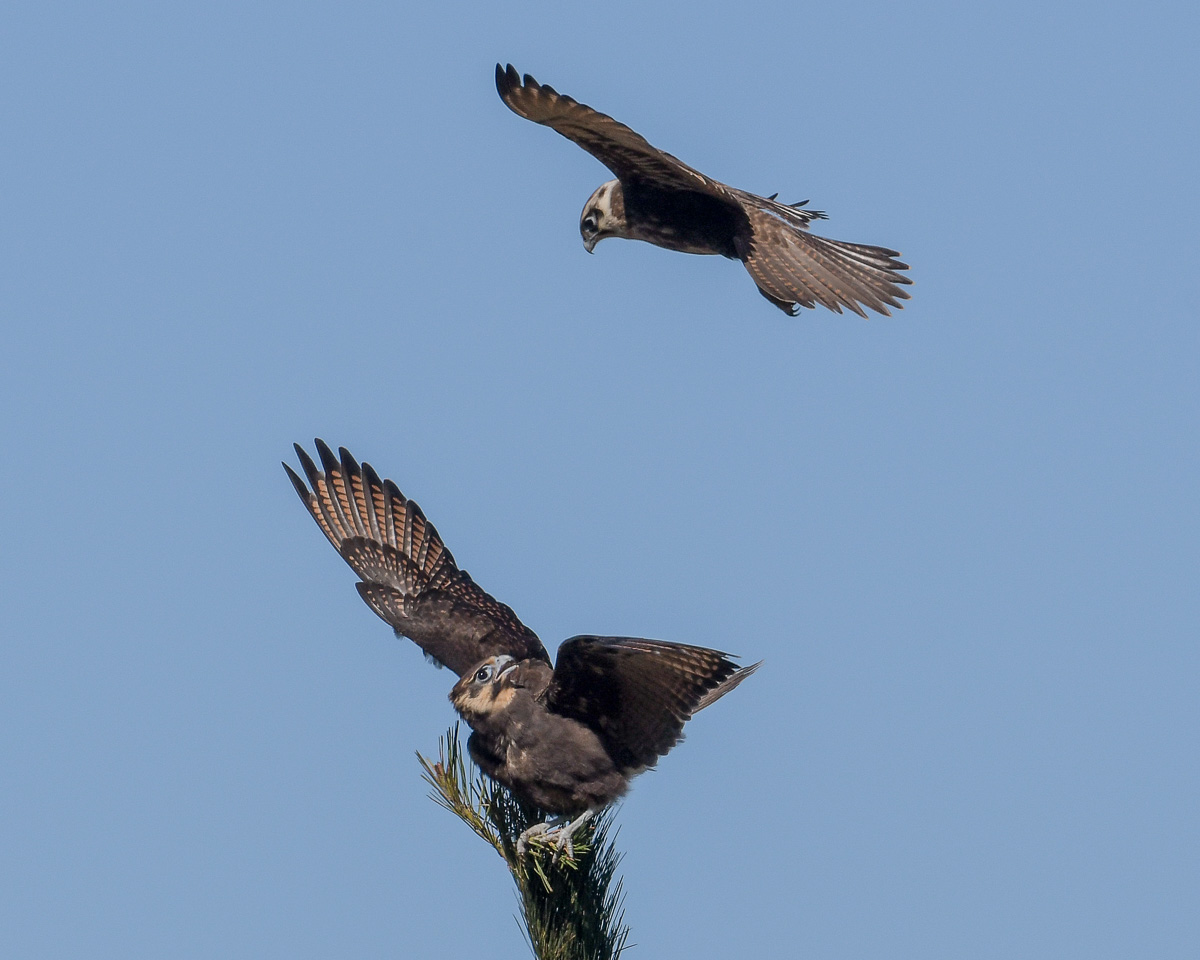
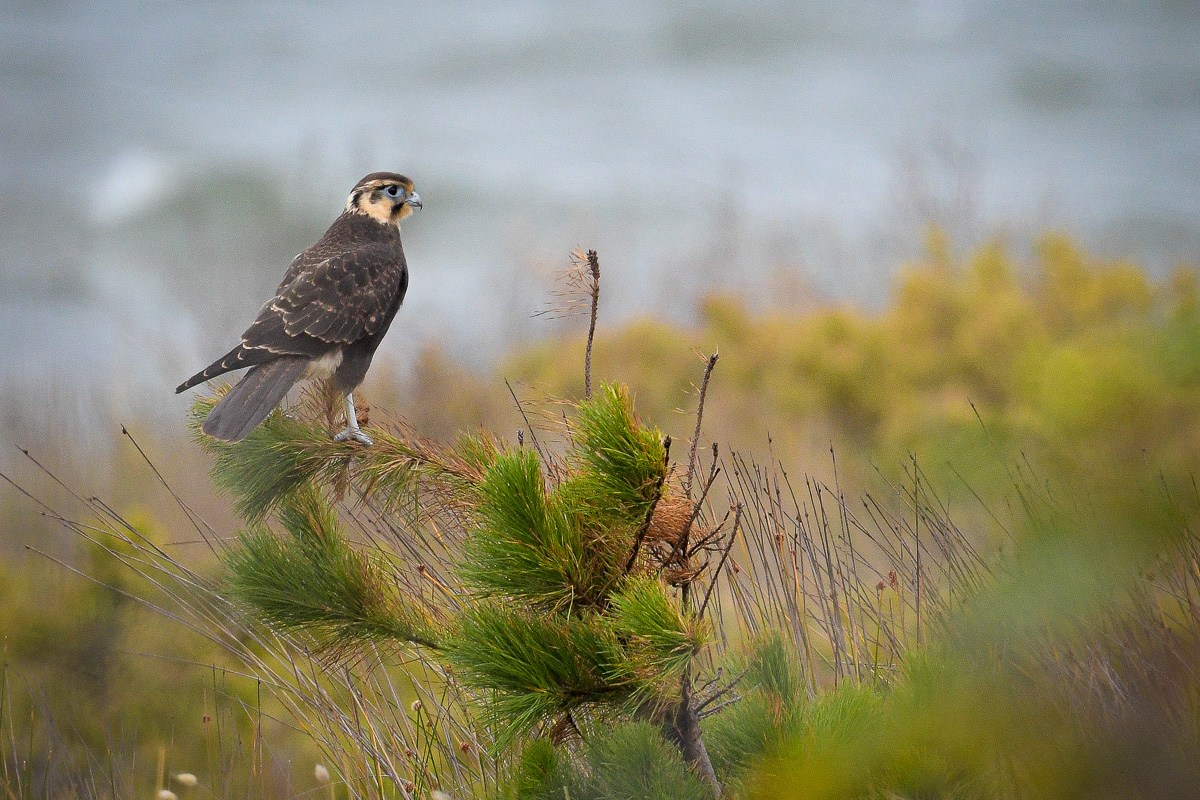
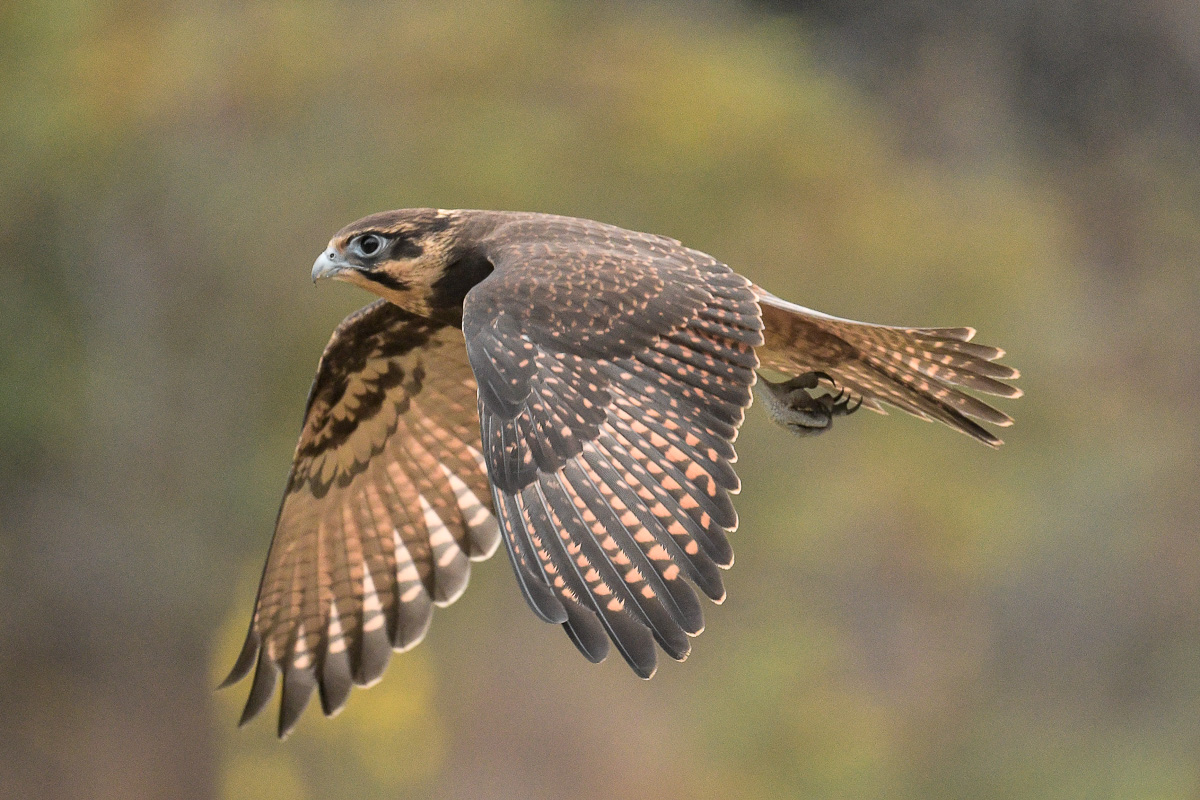
And Touch DownFrom a clutch several years back, I have a wall print of one of those young on this same gate railing. So was pleased to find Max had chosen to work from it. Slow precision glides became a polished activityAlways impressed to see a Falcon on a low-level run through the grassesPhoto Courtesy of FriendsintheAir (EE) One of a number of close fly pasts. EE nailed the focus on Mary as she slipped by my elbow.Max, hunting through the grass where I was sitting. A long way from the home paddock on a very hot morning. He has his feathers pulled in tight against the body.In all the years, I’ve never seen a Brown Falcon bathing, nor drinking water. I had cleared a small water soak of leaves hoping to attract some of the smaller bush birds. The Falcons seemed to enjoy the chance to cool from the hot day.The pool was hardly big enough for one of them, so they took turns. Interestingly, although not shown in this series, I later found the female enjoying a drink as well. Max took to a stump to dry out.Refreshed, they went back to workTime for another low canter over the grasses. The beautiful sweeping form of the wings shows well here
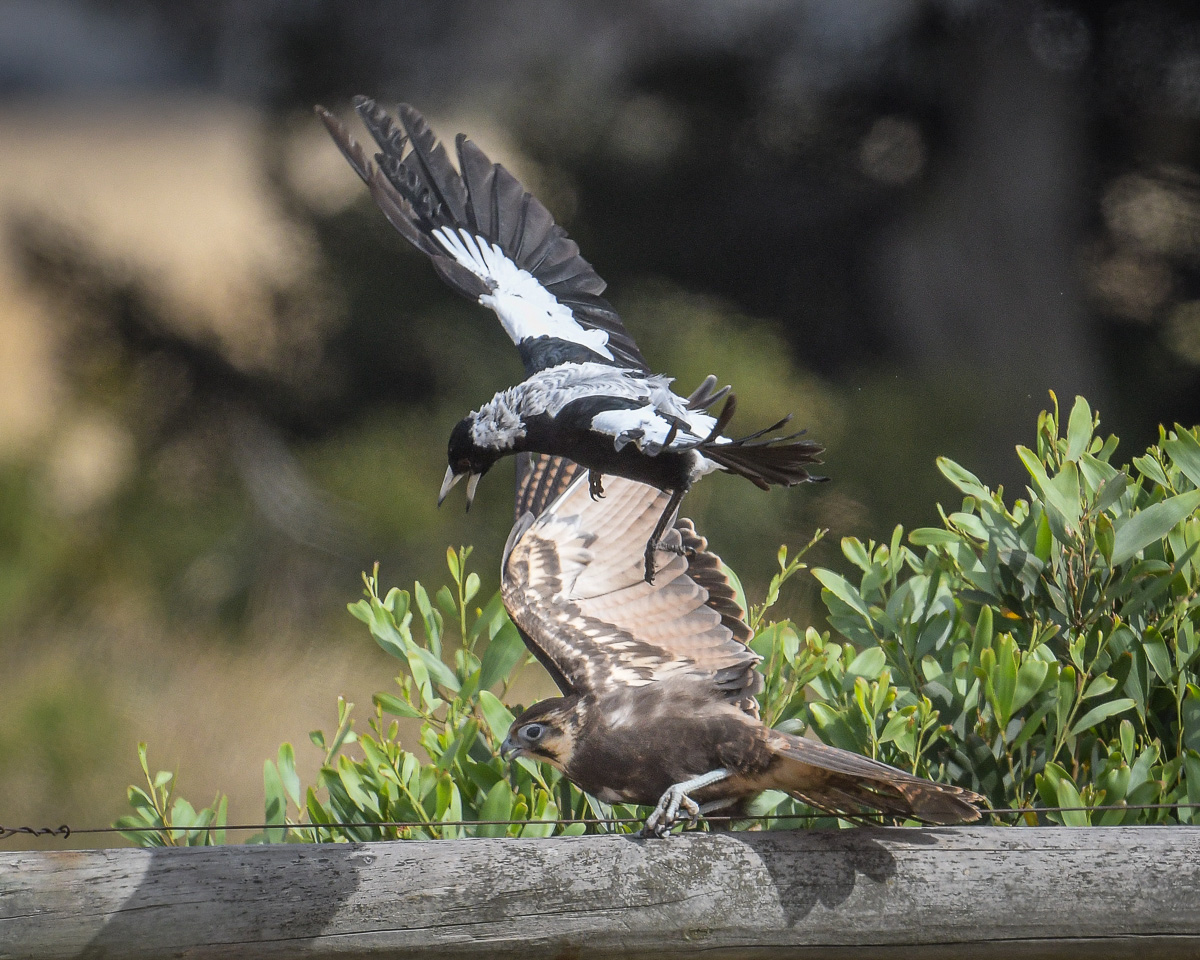
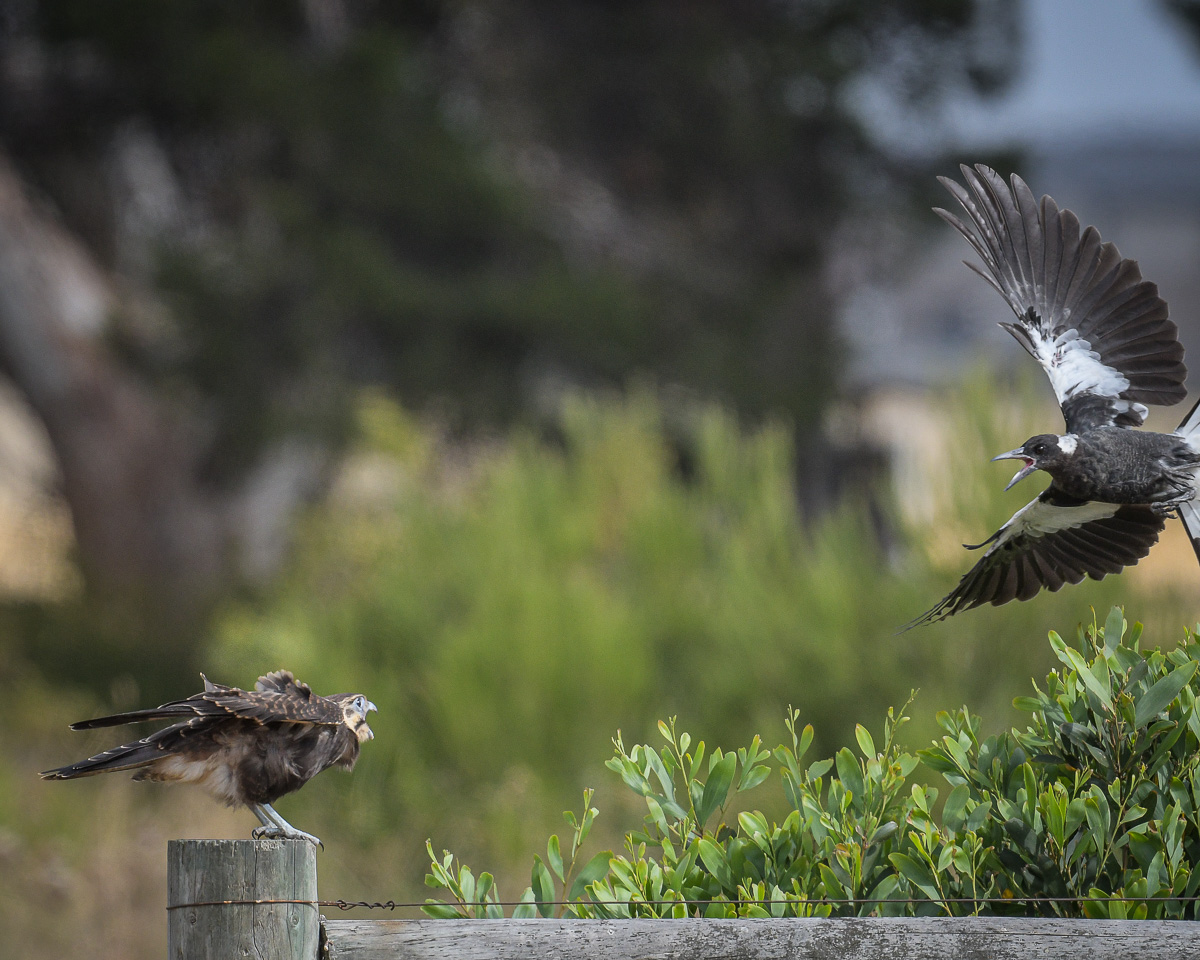
Both young Falcons were well past the ‘baby”stage and at the error of sounding anthropomorphic it was interesting to see the differences in their character, personality, and approach. Mary was much more content to sit quietly for just the right moment. Max, with all the exuberance of a young teenage male was ready to explore, and begin to show his interest in other parts of the territory. He began to find ways to harass the incumbent Magpies. And while the Maggies seemed to take it all seriously, he seemed to enjoy the interactions. EE has a photo of him eyeing off some Maggies on their favourite post, and it is pretty obvious what he had in mind. The fence and gate is a territory boundary for about 3 families of Maggies, and during nesting season they relentlessly pursue one-another for control of the fence. Off-season, it’s more of a communal meeting spot. Max was ready to challenge them.
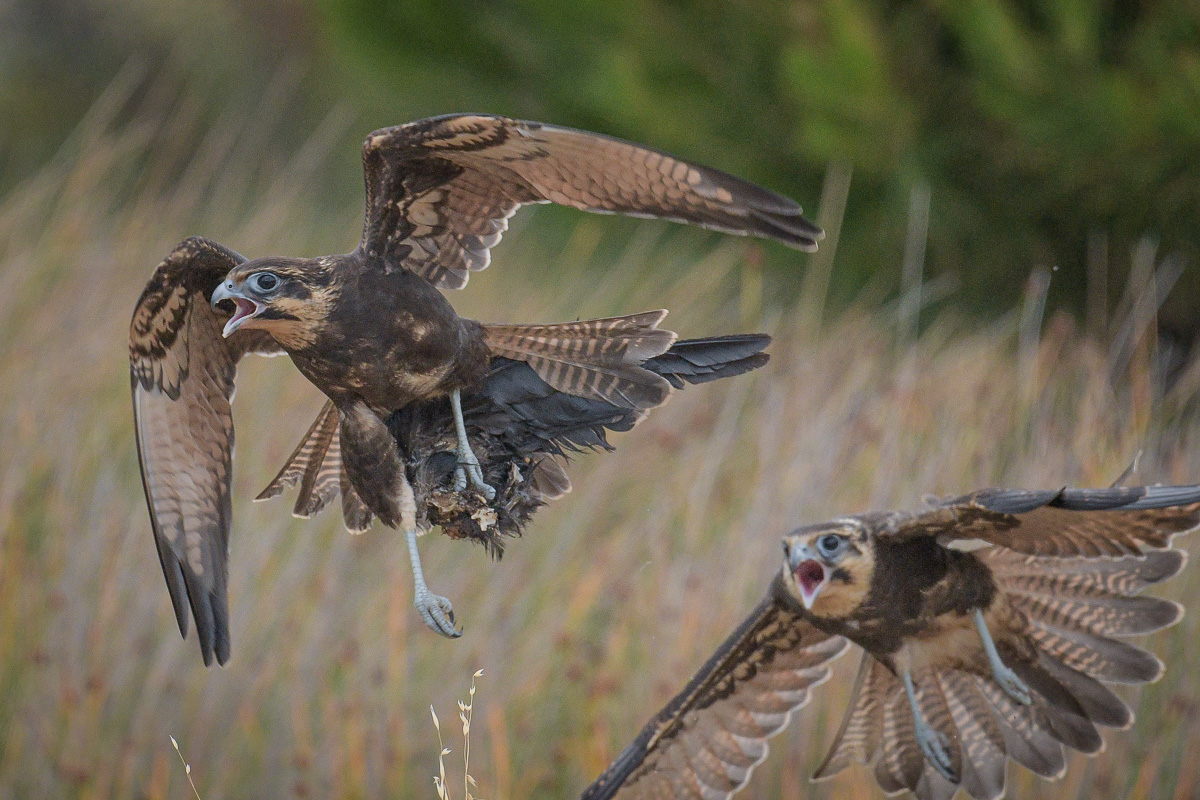
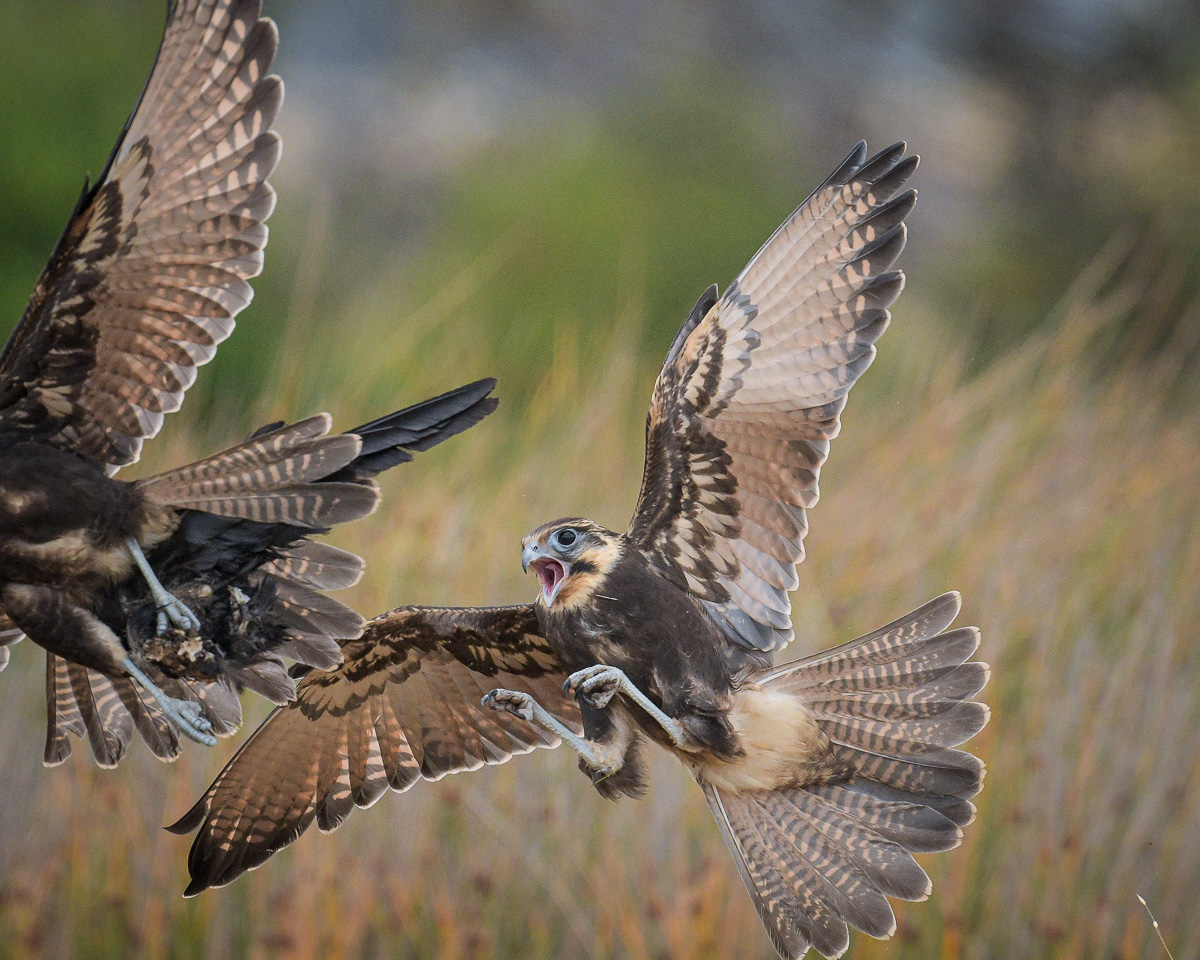
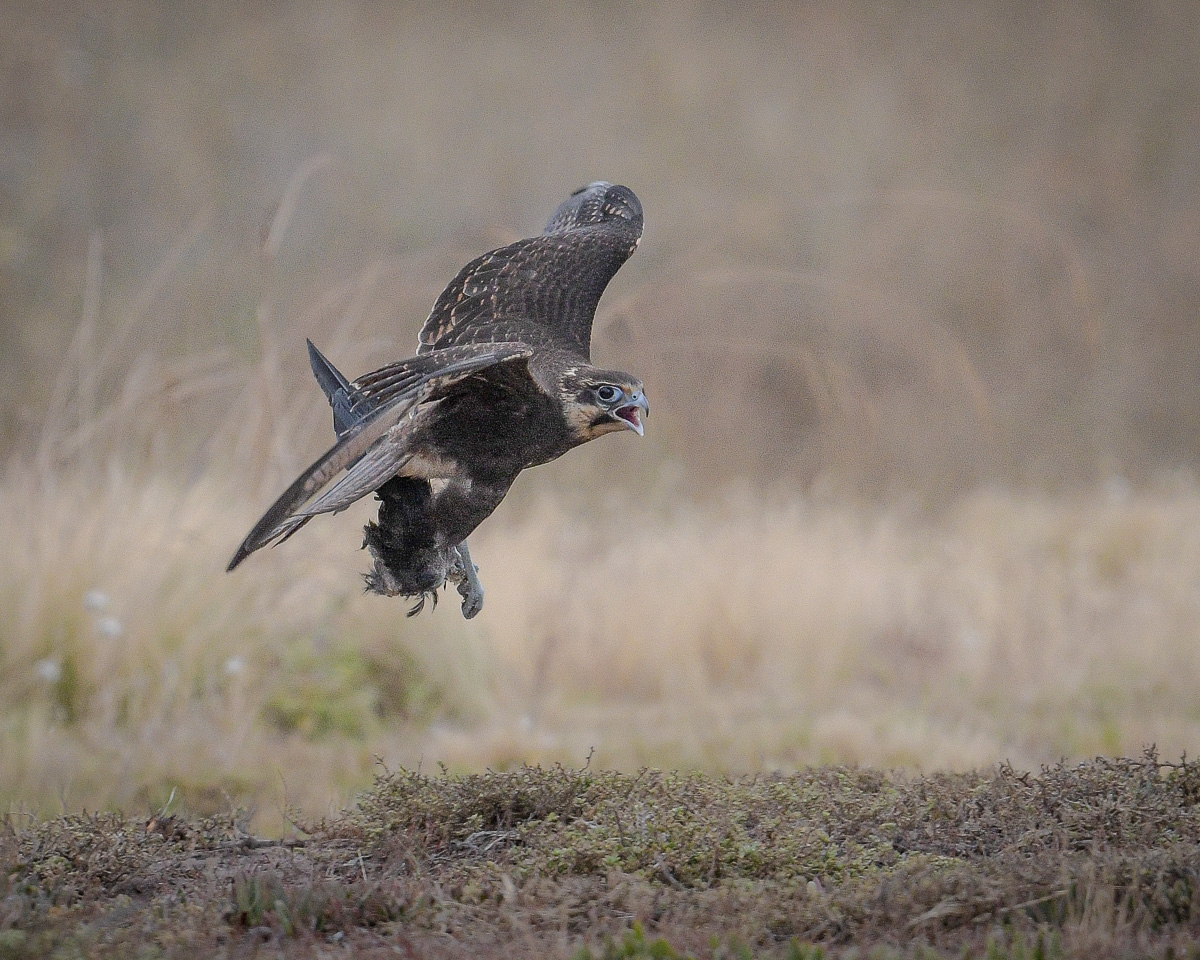
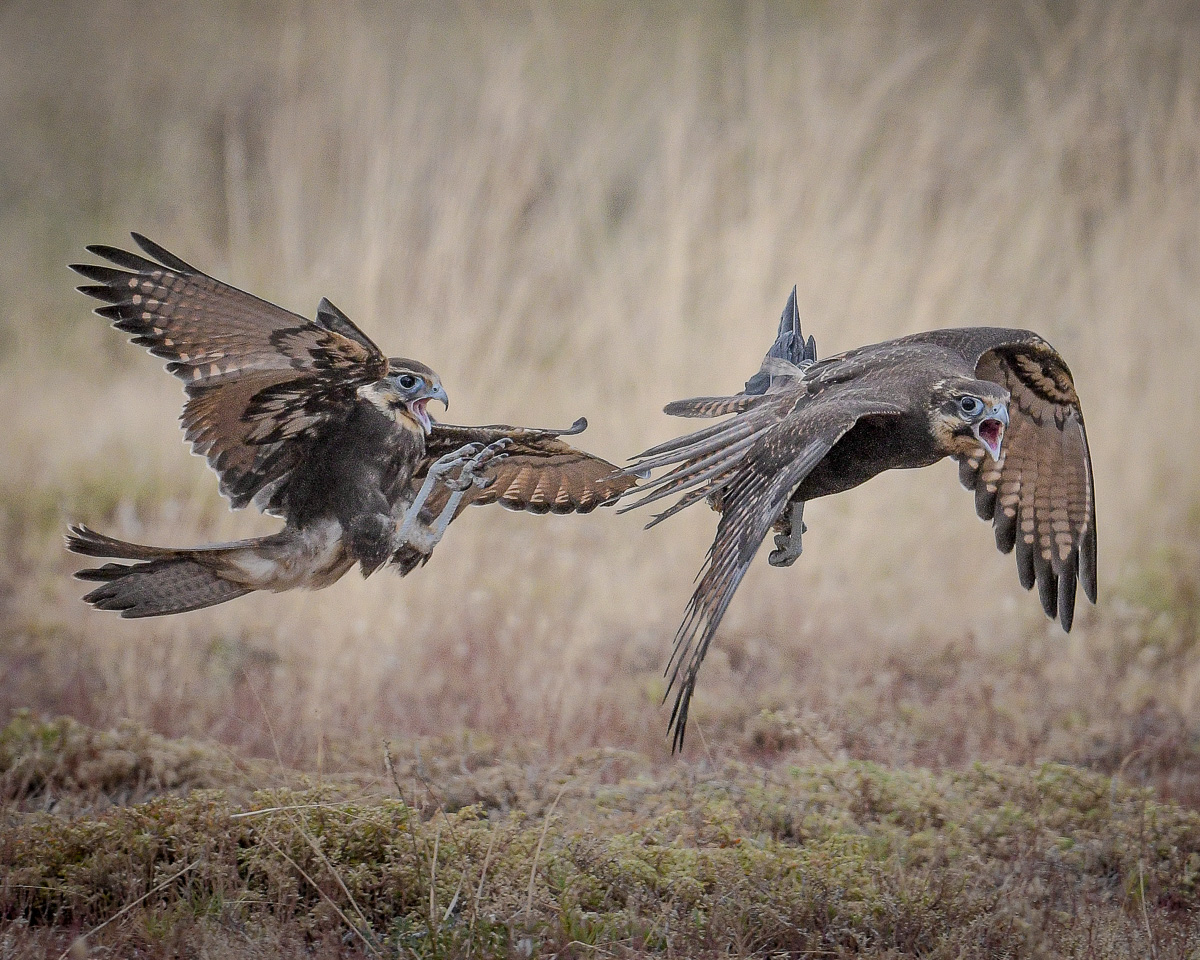
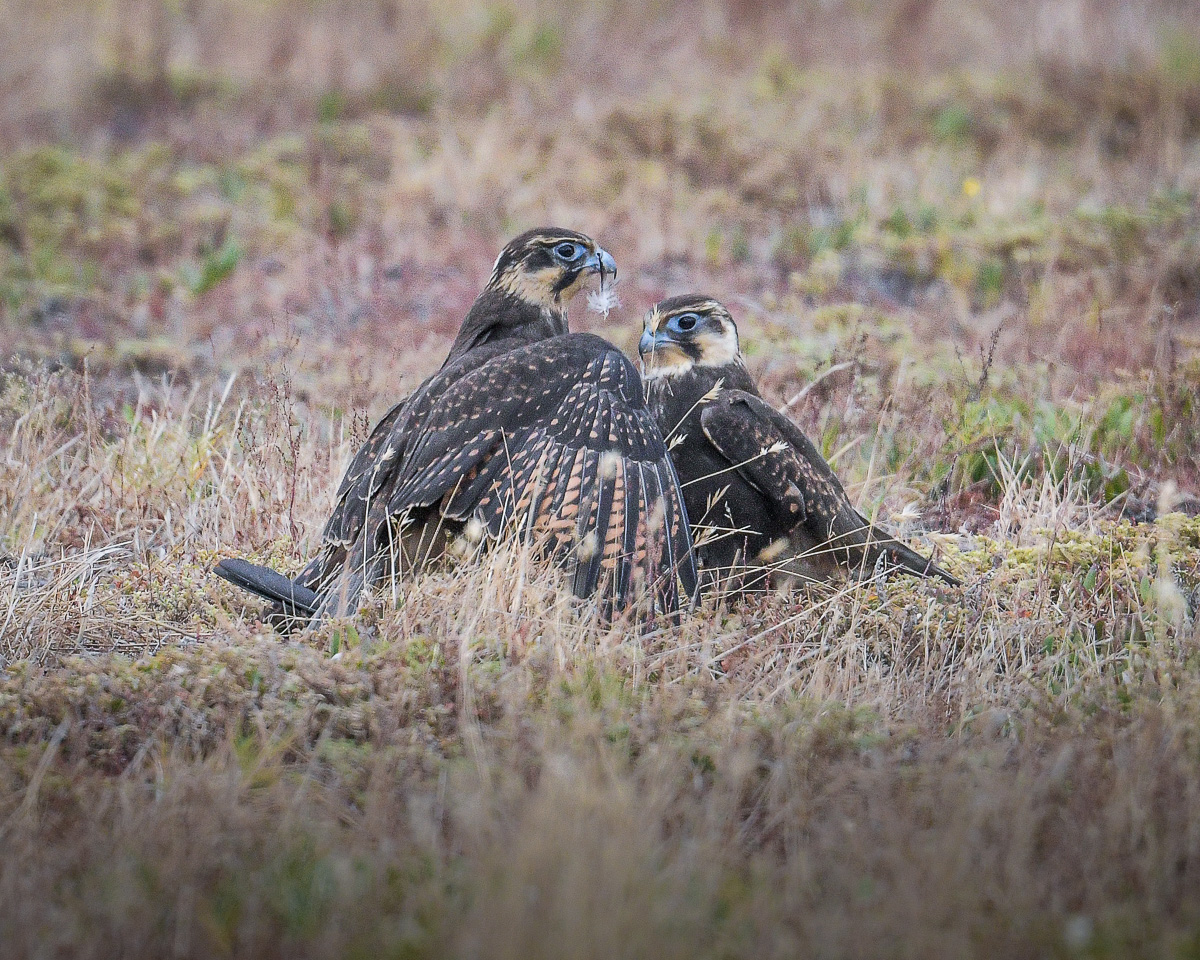
Mary had picked up an old Raven’s wing and Max decided he wanted part of the action, so he chased her round the paddock until he caught hold of part of it. With his momentum it turned Mary to the ground and they both landed holding part of the wing. Max, however conceded, and a few minutes later they were hunting together again.
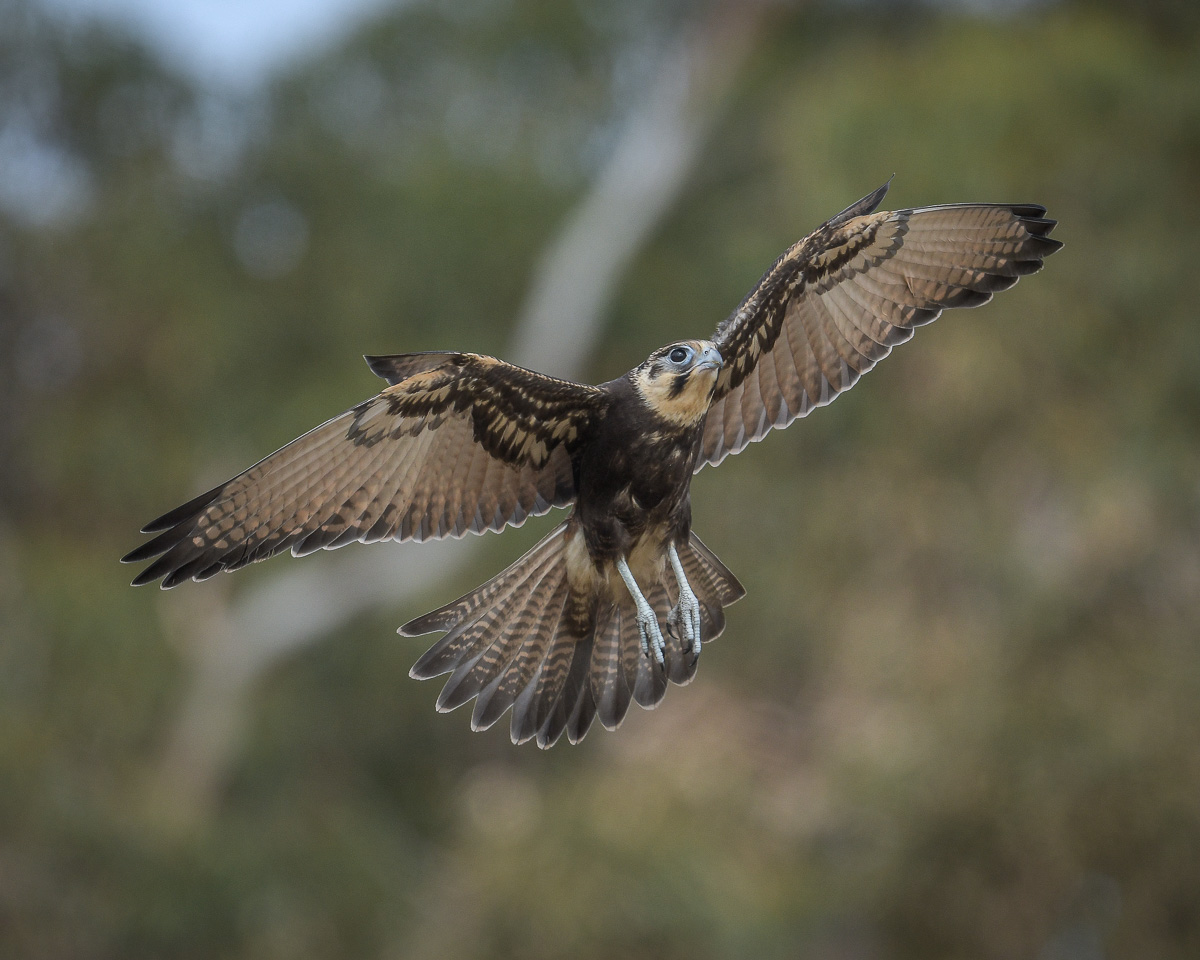
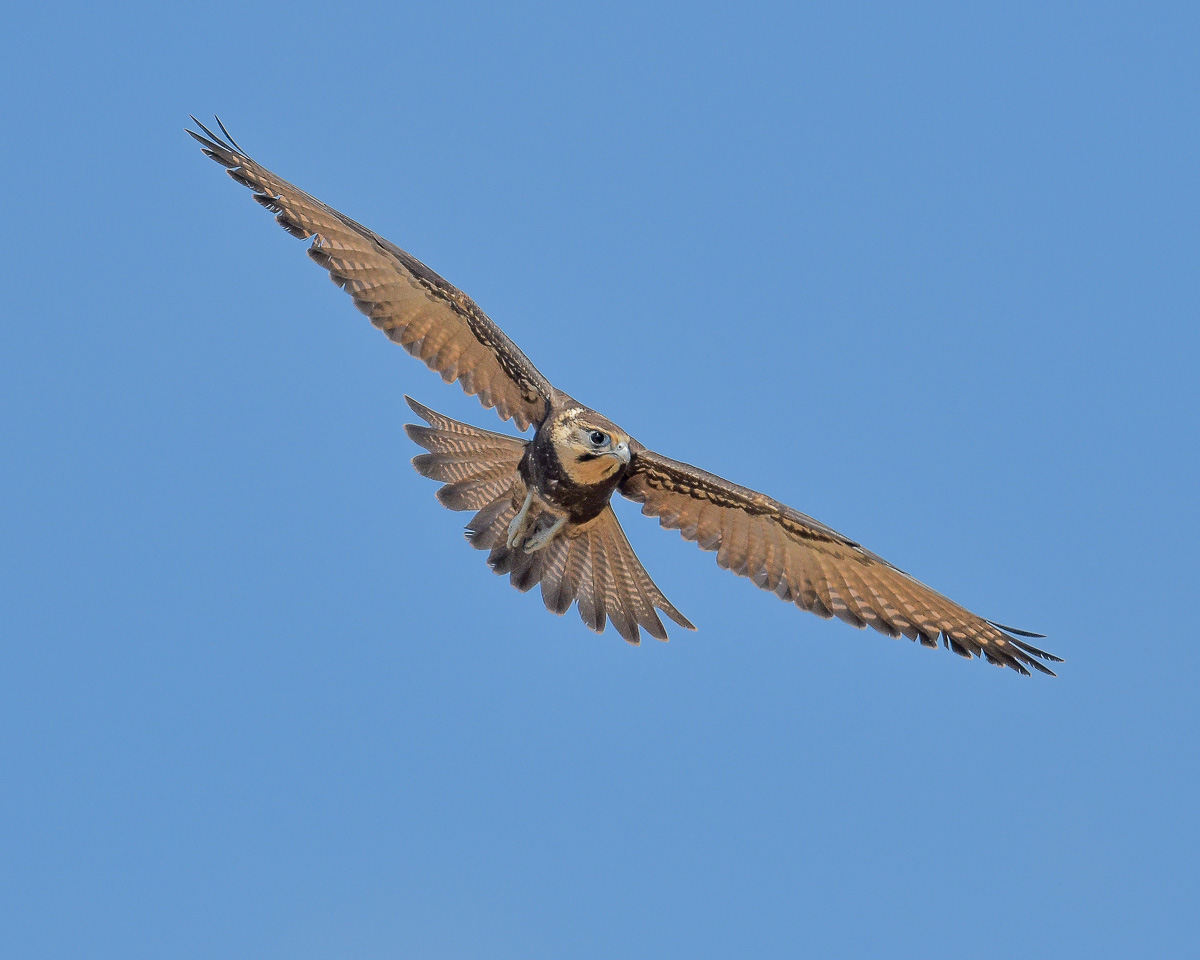
I saw Max come off a branch and circle out toward where I was standing. He did several circles and I’d not seen him do this before. Then with every wing and tail feather stretched out, without a wing-flap he began to circle and rise. He’d found an updraft. Surprisingly he quickly rose to a height where I could only just see him.
I had to wonder what the view would be like from up there. After all he didn’t have a map, or any real set landmarks. Over there was the nesting treeline, Mary sitting on a fence. The roadway out toward the beach. The housing estate in the distance.
He stopped circling, and set a long slow Falcon glide and travelled way out beyond the home paddock, and over the open fields until in the end, a kilometre or more away, I lost sight of him. Gone.
It lead me to ponder how much lift the bird must get. When the wings are wide open, and the tail completely spread the sail area compared to the body weight must make such circling in a thermal easy. Someone could do a PHD on it.
I turned back to find Mary sitting quietly on a post, seemingly uninterested in his departure.
About 30 minutes later as we were getting ready to go. I took one more look way down the paddock, and lo, was that a small spot in the sky? And there running on really tightly tucked wings was the wander. He was on his way back. Again, I had to ponder, after going all that far out, how did he know the way back to the home paddock.
He sailed in at top speed as if nothing had happened, flared out the wings to brake his speed and dropped onto the branch alongside Mary. So interesting to watch their different approaches to growing up.
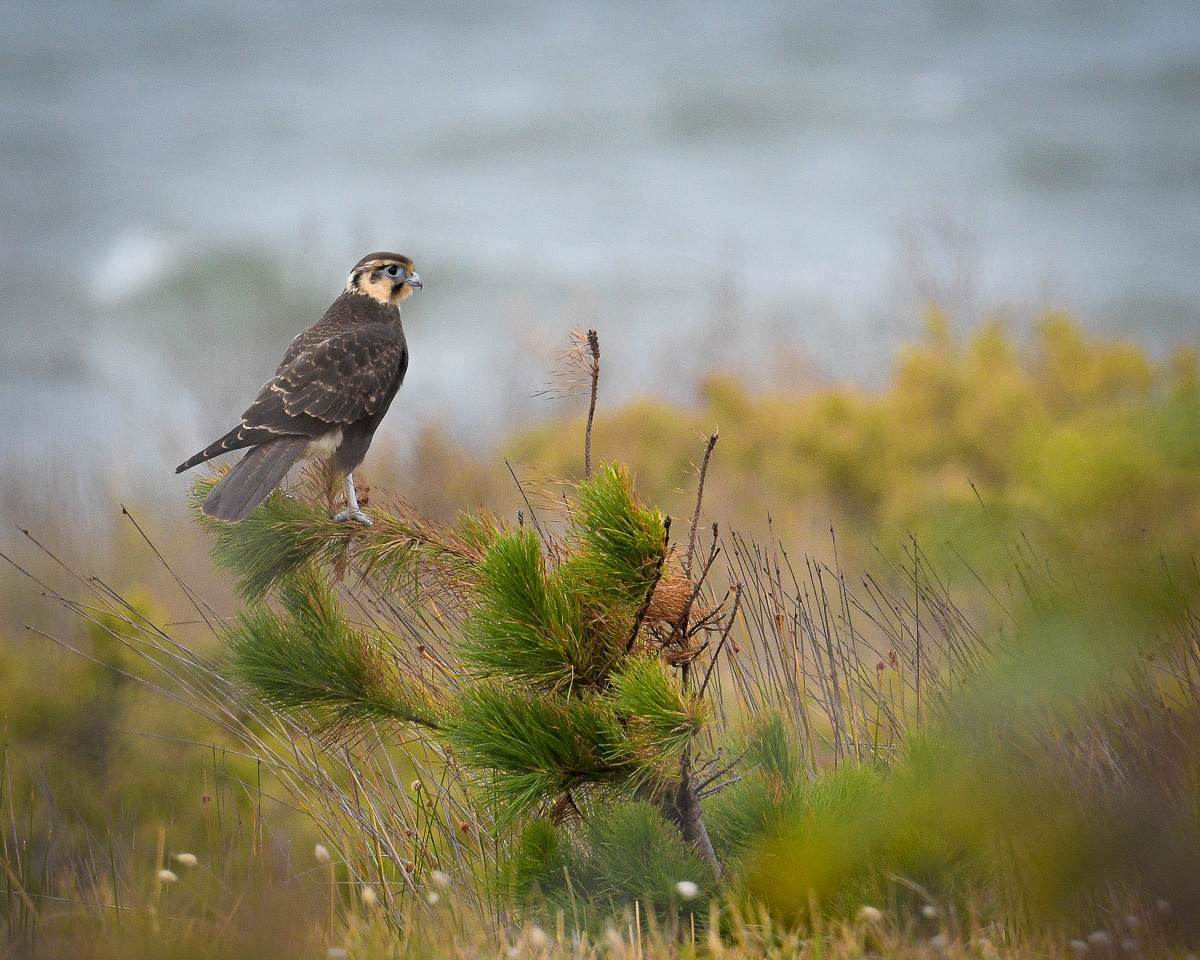
They were working from the tops of some small pines in the paddockBrown Falcons seem to have the ability to to navigate running low to the ground and can fly through the long grass with ease
Mary picked up an old piece of Raven wing and the chase was onIt was rare for them to argue over food, so this was more than just about the mealIn his enthusiam he had run wide on a turn and Mary gained a little head start.But he quickly recovered and caught up.Once on the ground she spread her wing to mantle the old wing piece and he retreated. I’m pretty sure he went to the gatepost to enrage the Magpies. It worked. He stood his ground and eventually moved along the rail and chased them off.Circling in a thermal. If this was the first time he had made this manoeuvre he certainly didn’t show any signs of lack of skill. It is amazing how much sail area a Brown Falcon can deploy This is the male. It was the only time I saw him interact wtih the young. Mighty snake hunter-Ophiuchus Ophiuchus, a close quarter fly by.
By the end of three weeks on the wing, Mary and Max were both proficient hunters and highly skilled aeronauts. They felt at ease to roam across the wider area outside the ‘home’ paddock that was bordered on three sides by old stands for trees and beach front on the fourth. The grasshoppers and crickets were in abundance so they could spend their days eating, and snoozing. The adults no longer were providing food, but from several encounters I am sure that the female was keeping a falcon-eyed gaze on her offspring even if we failed to spot her.
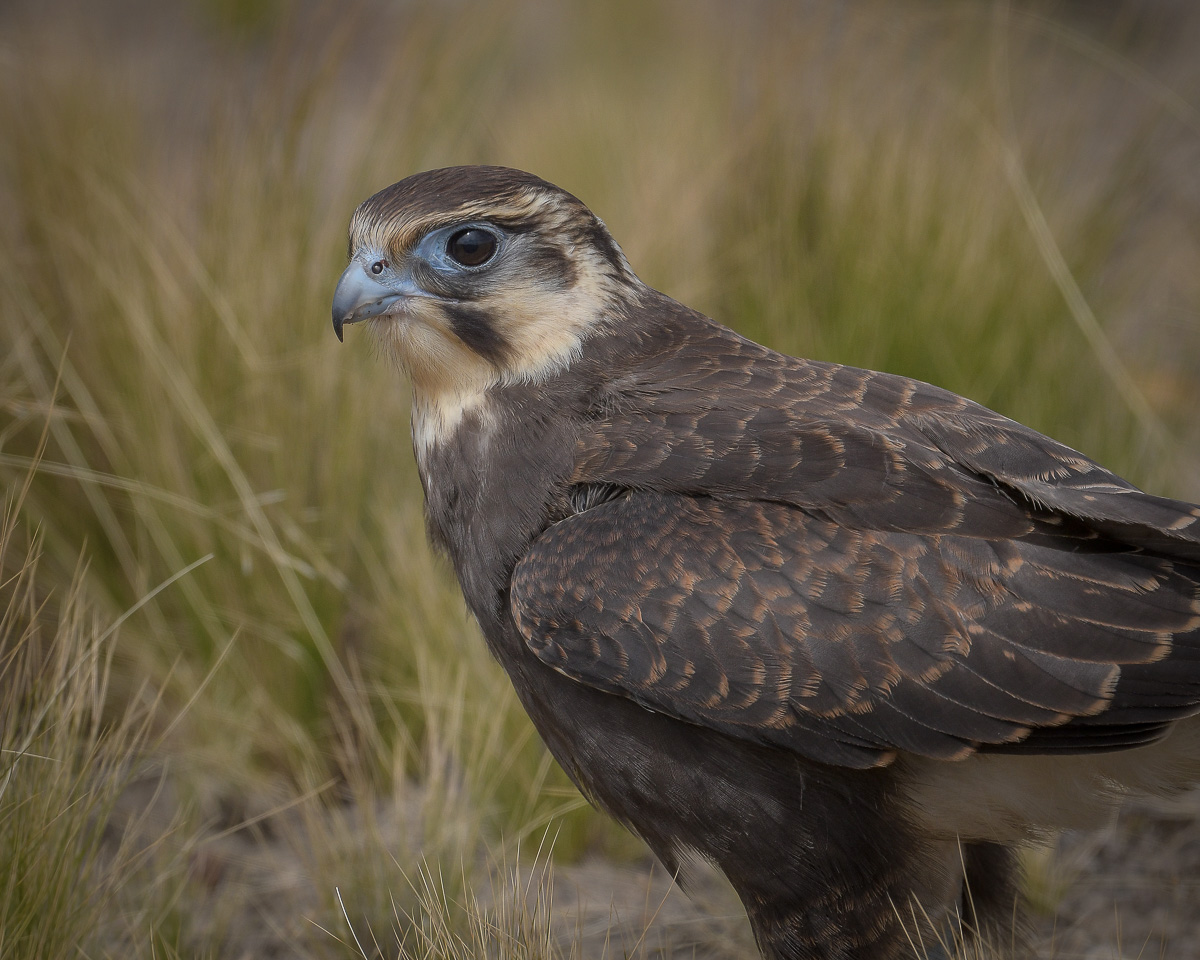
They were old enough now to be self-sufficient, and still young enough not to take it all seriously. Here’s a few from what we were graced to enjoy.
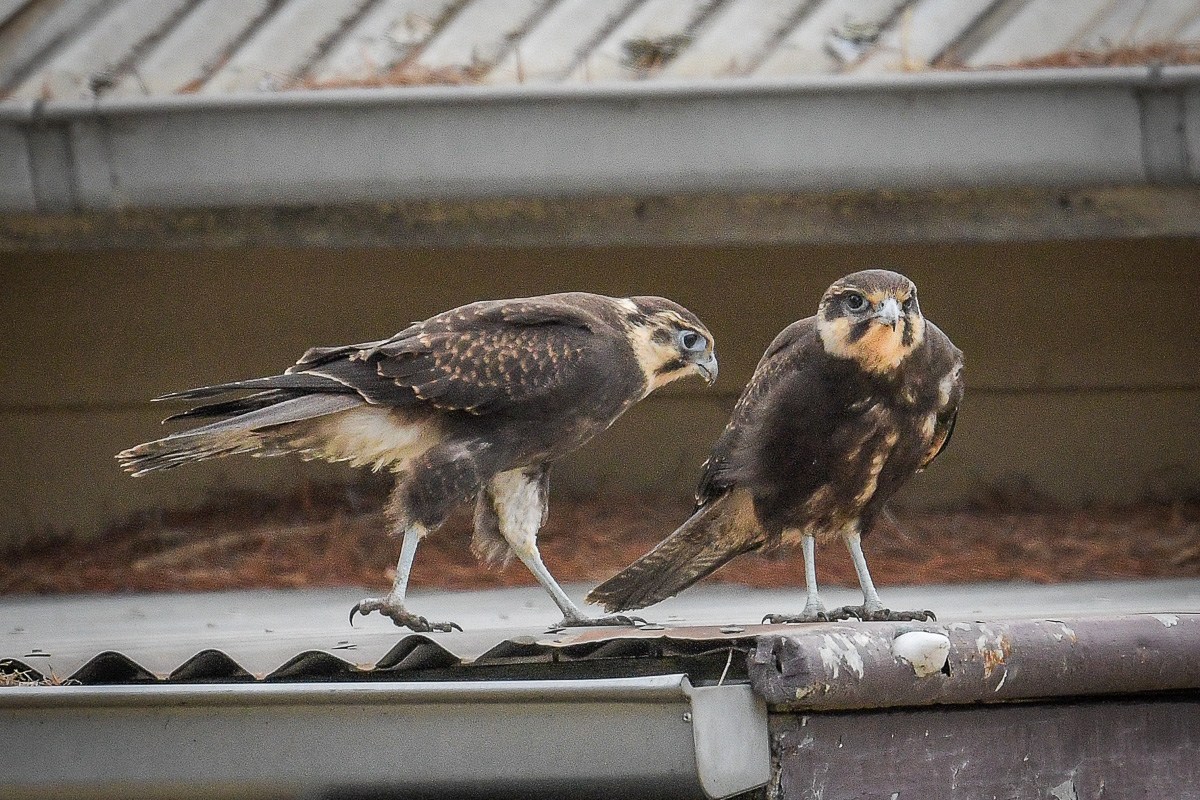
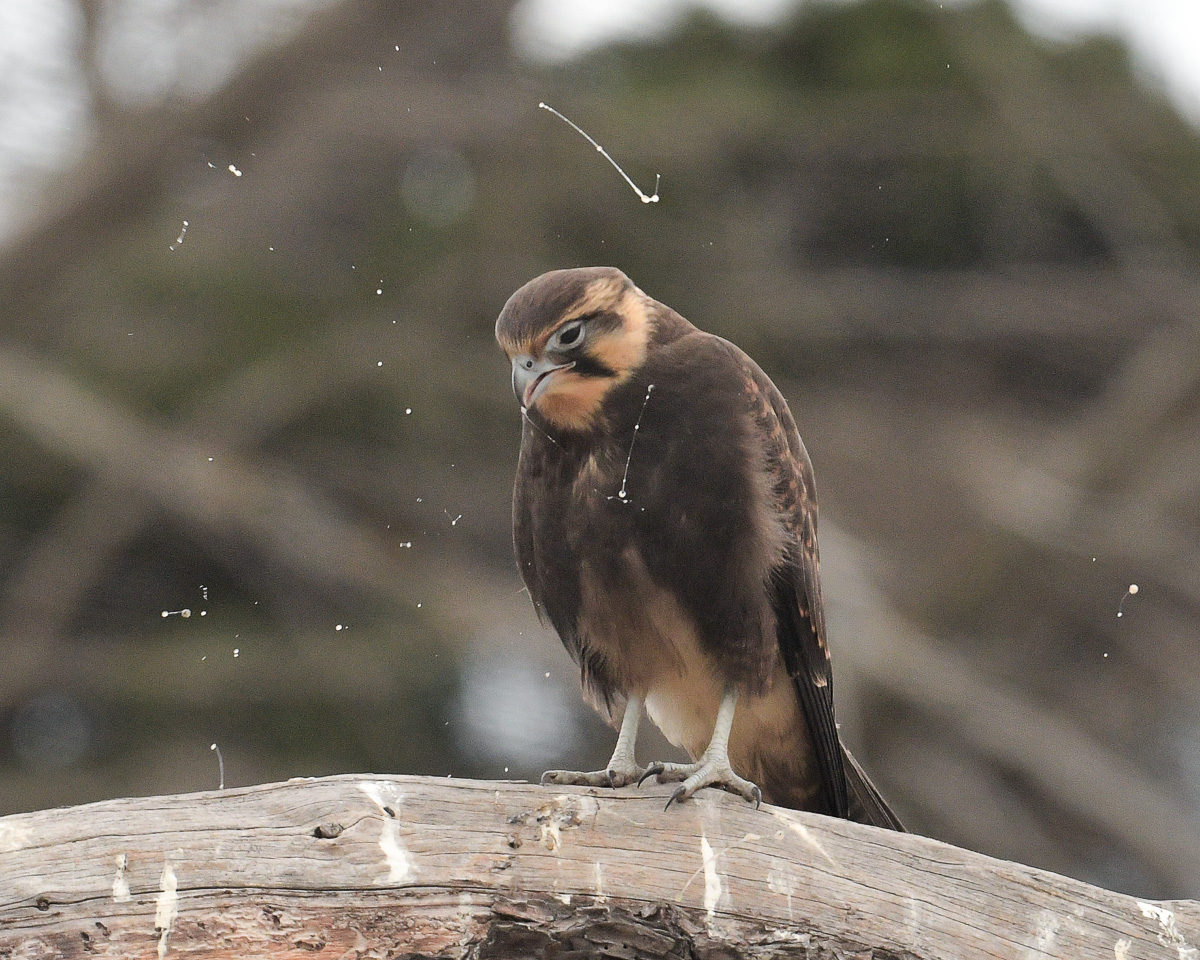
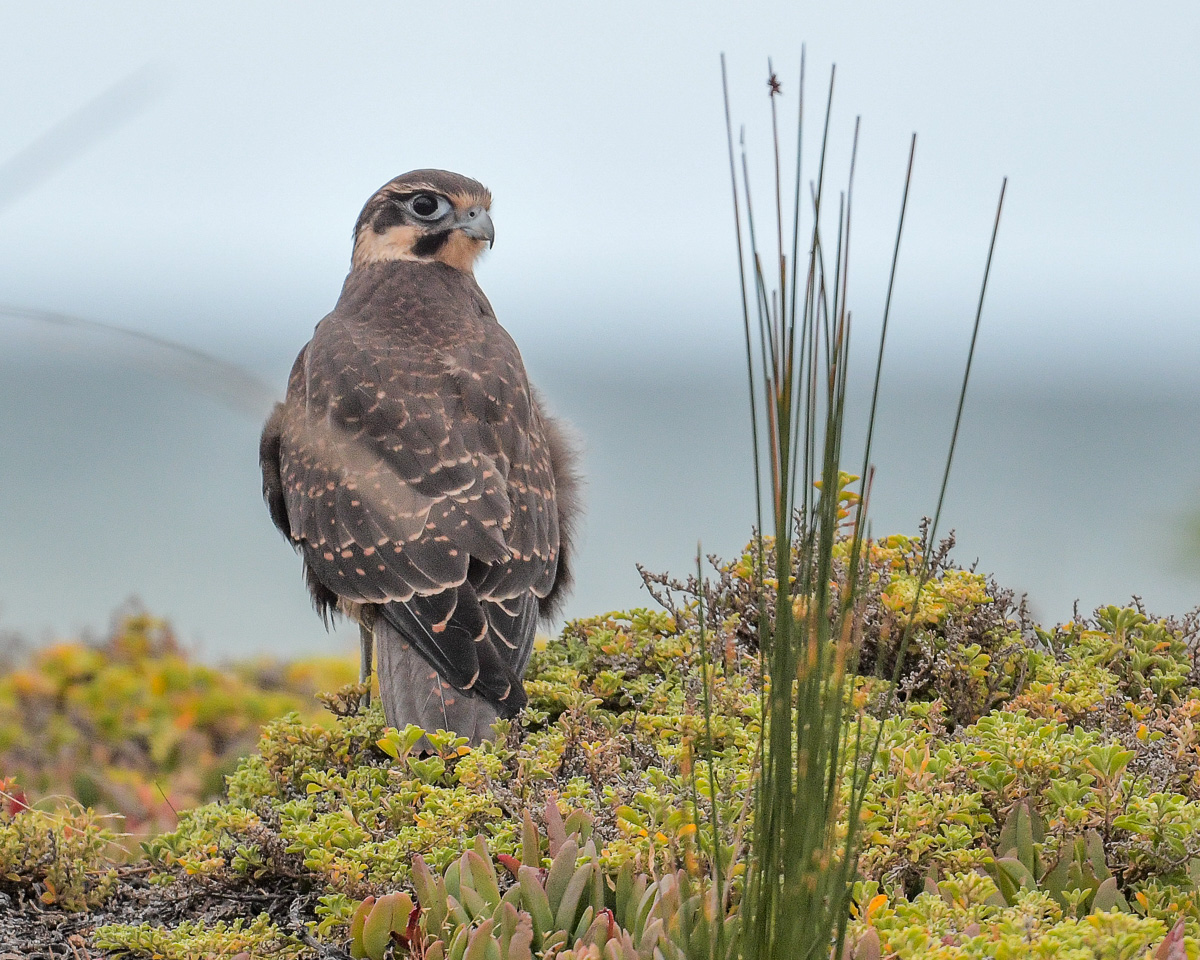
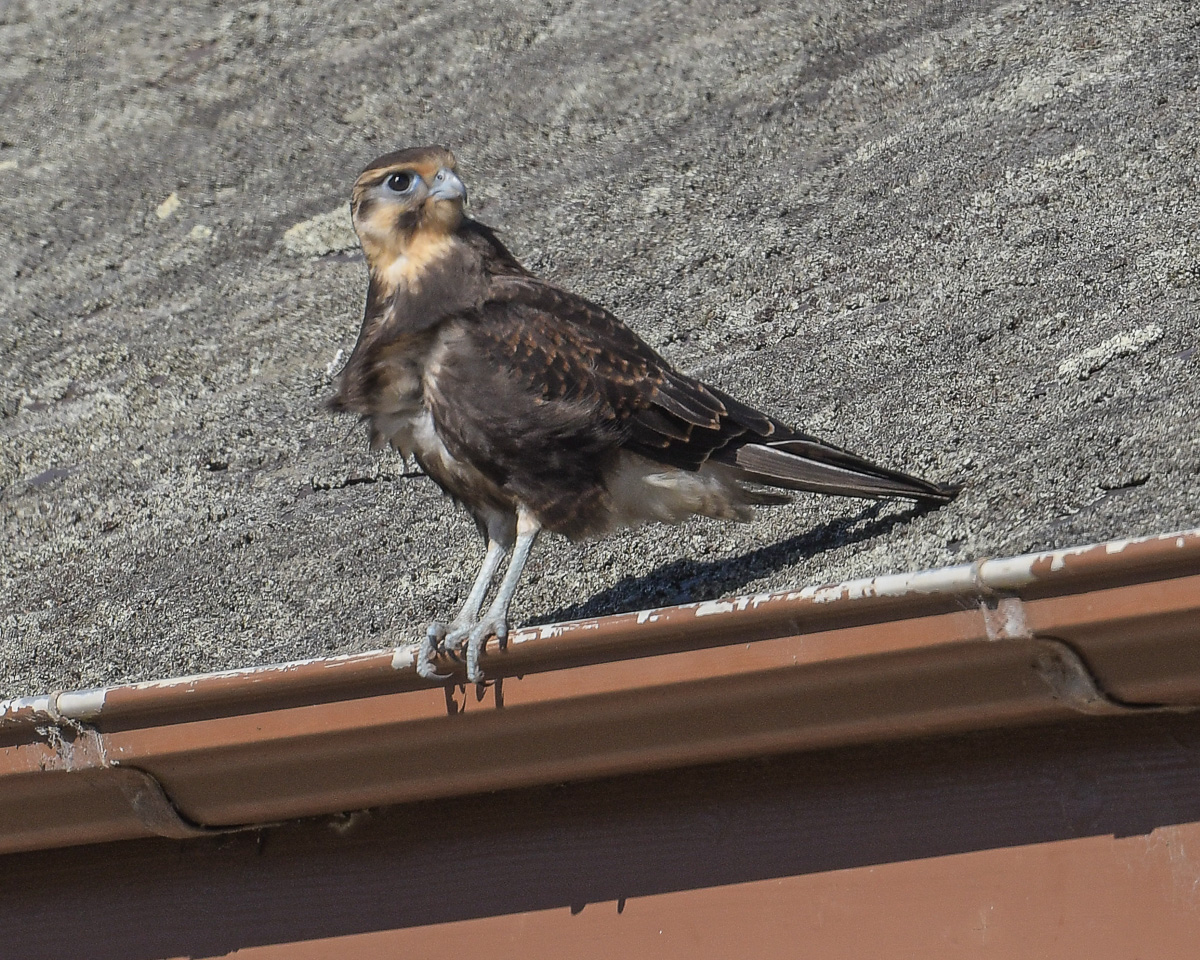
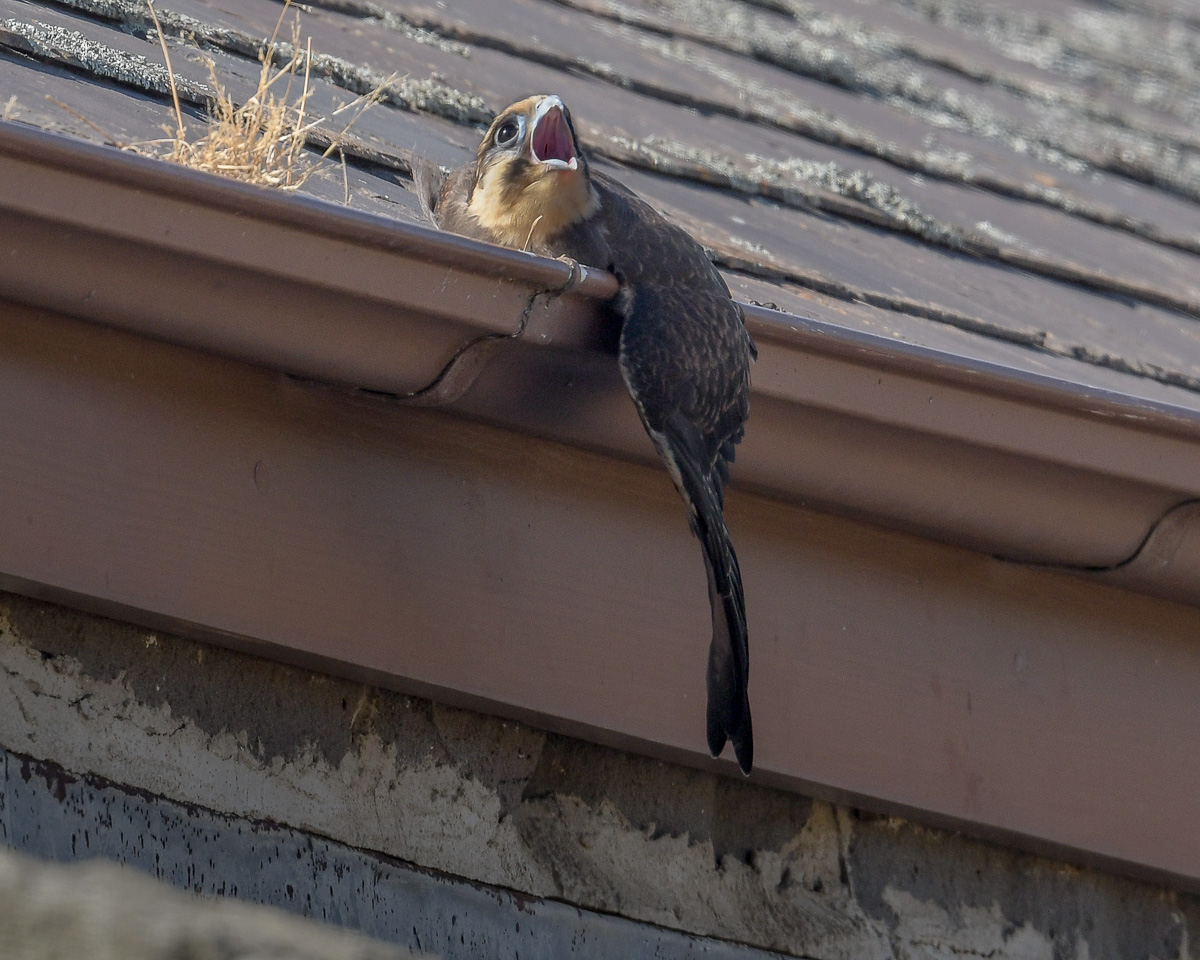
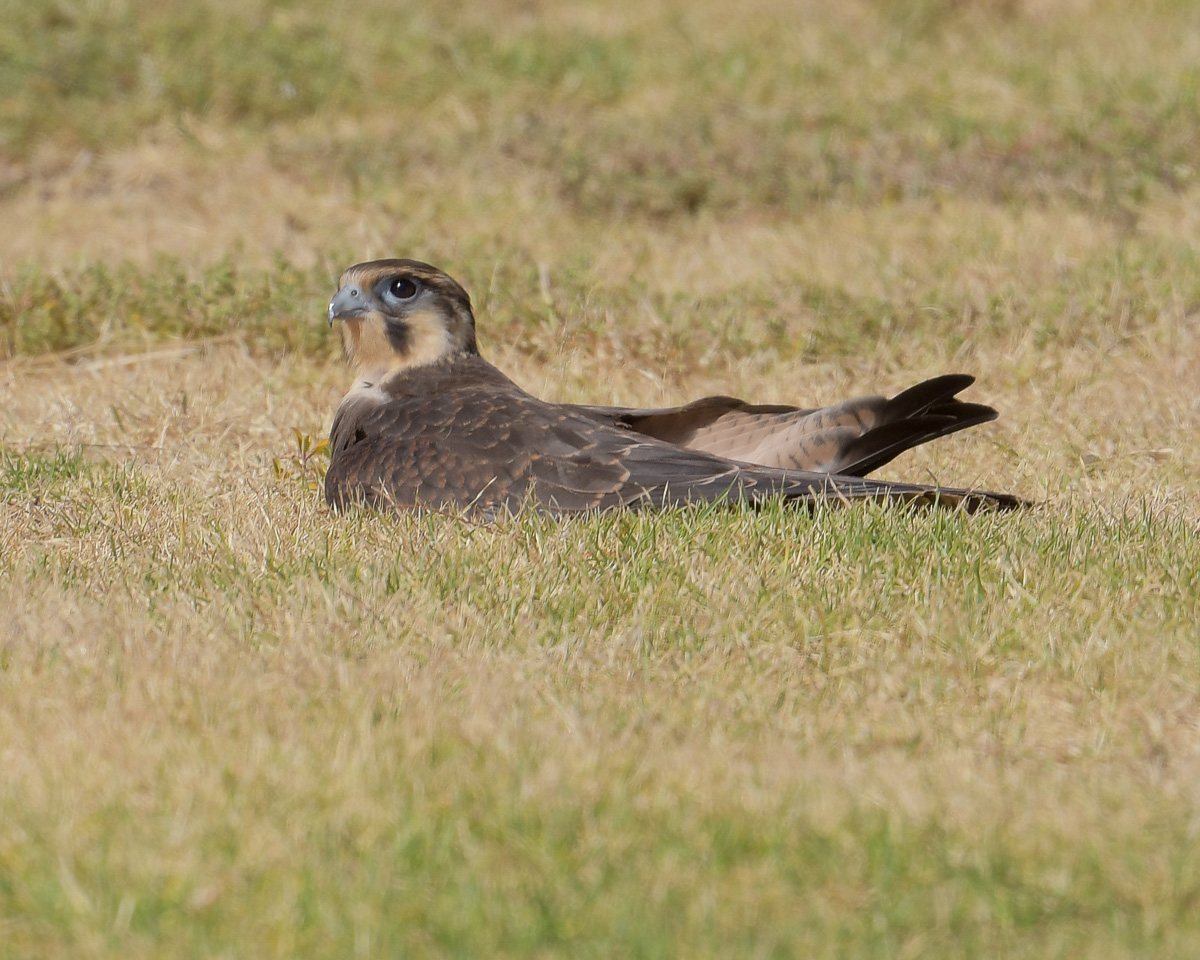
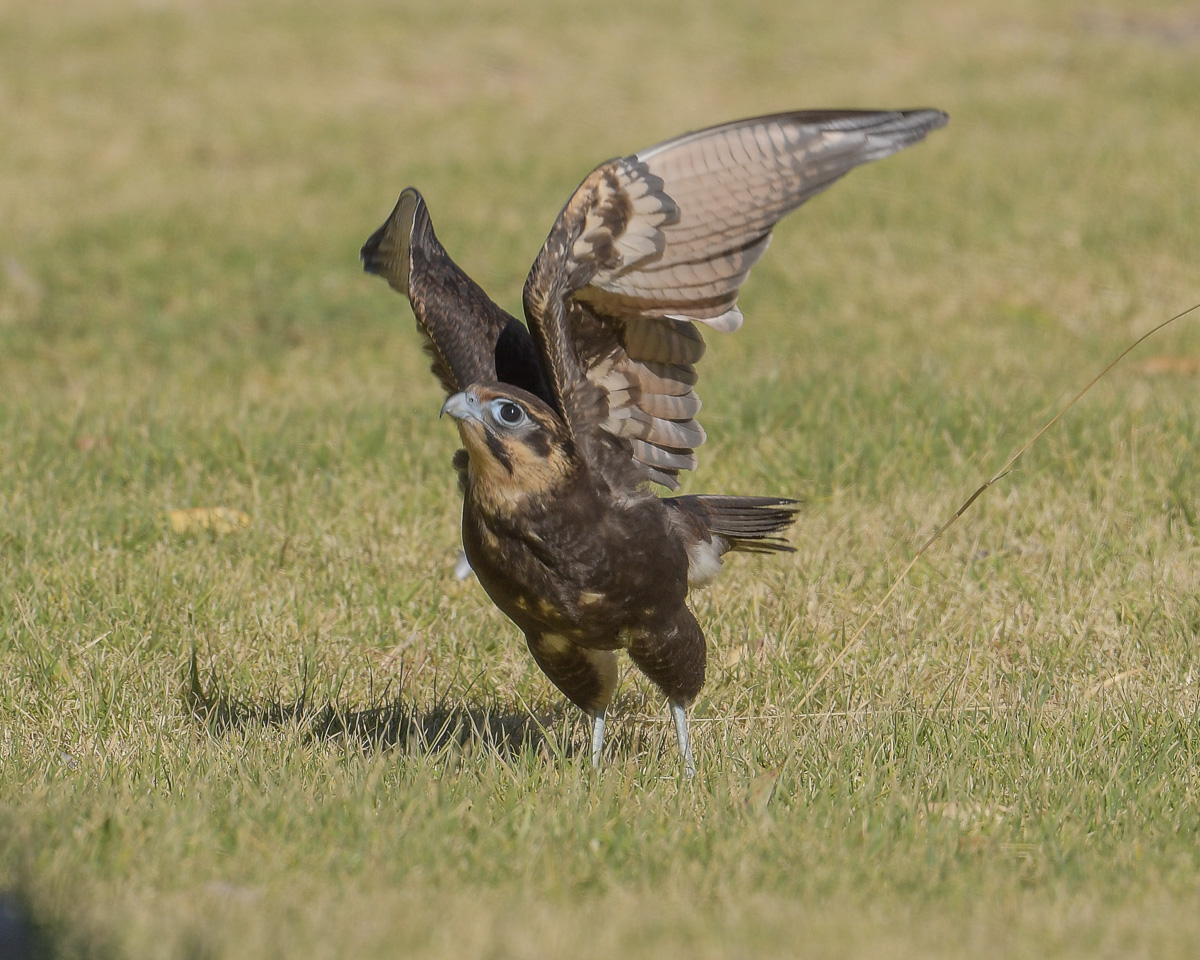
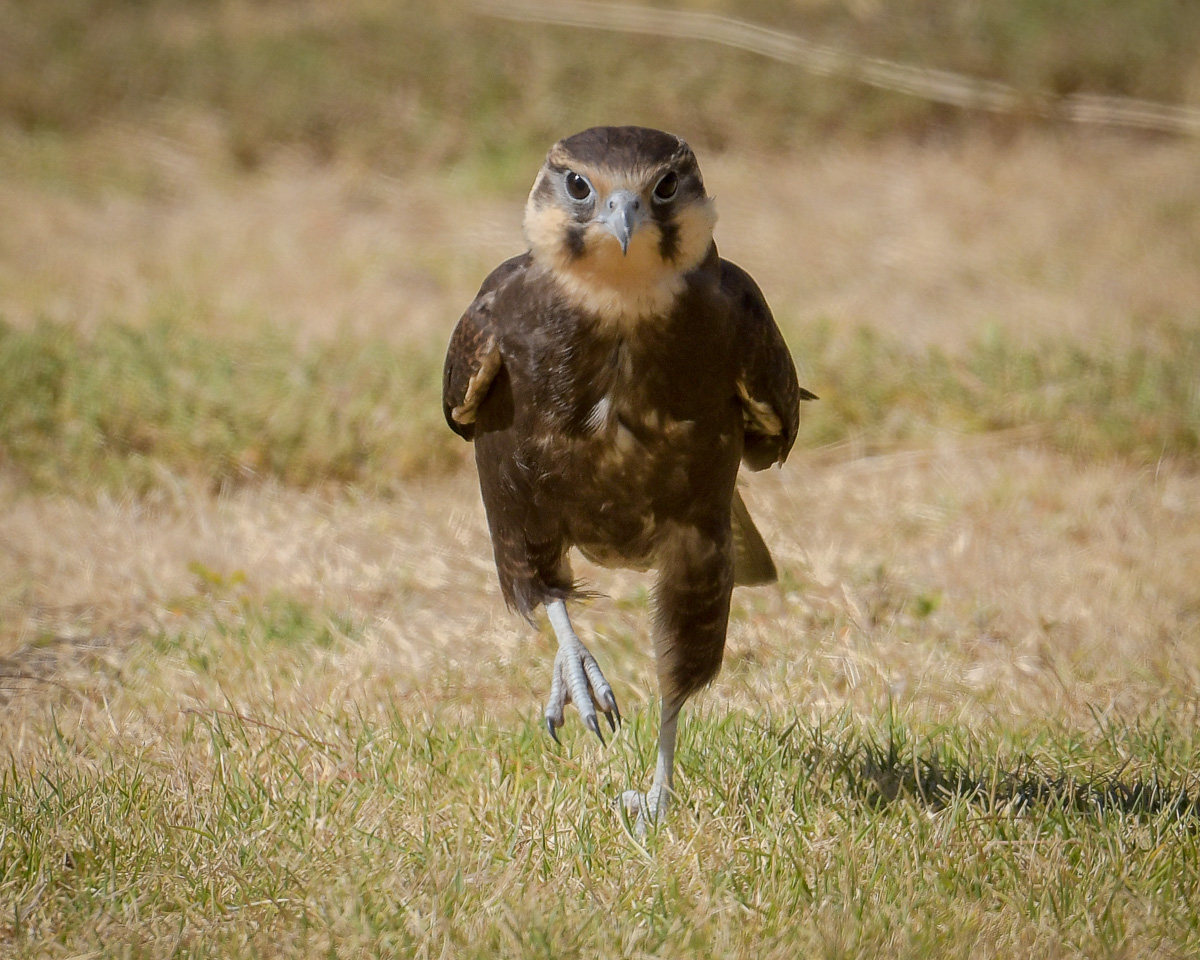
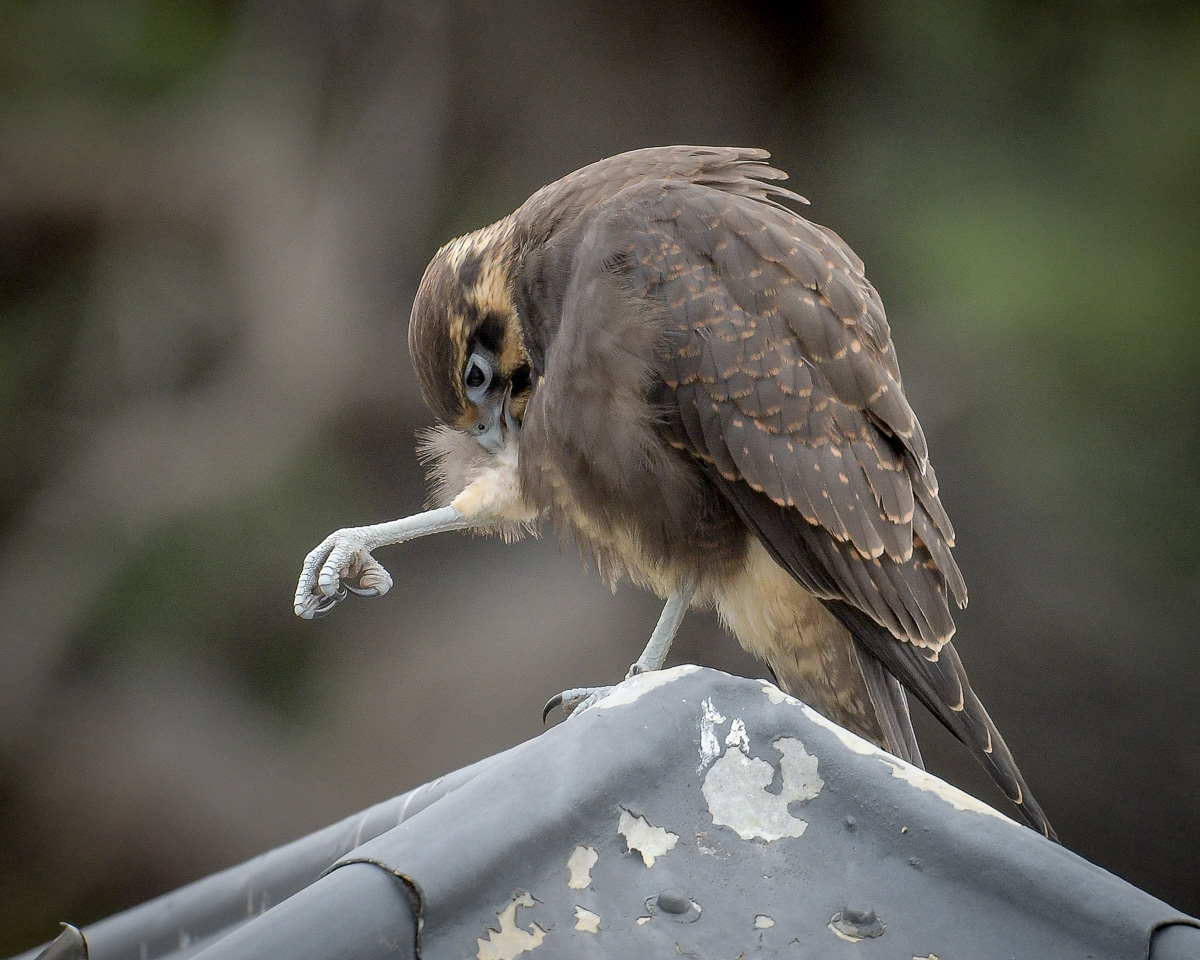
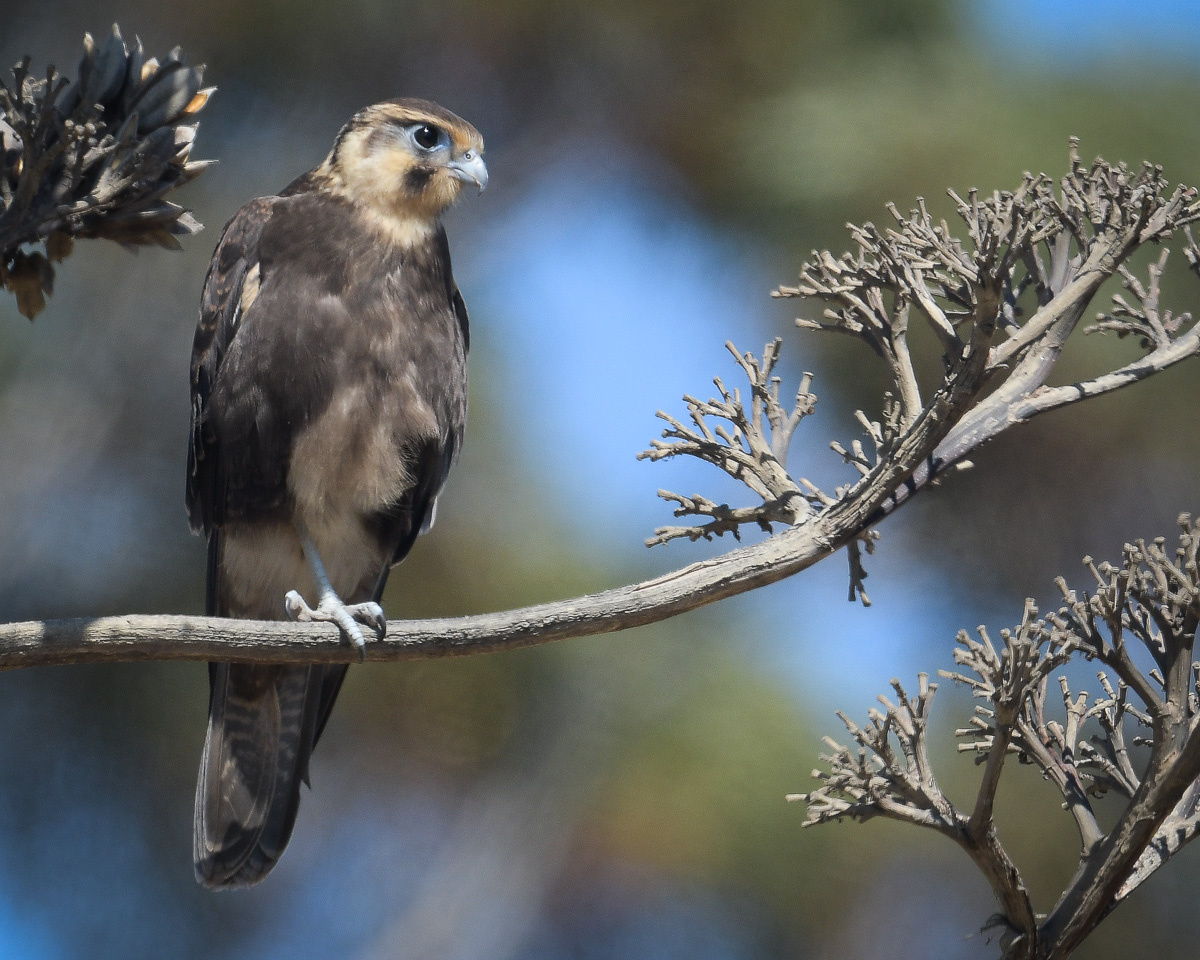
Falcons swallow prey whole, and the regurgitate any of the indigestible bits. Mary had hawked up a furball and shook her head to remove the fluids.Close order flying was quite common. She had been working over a bracken paddock and slipped past me on return to the home treelineA trip to the beach. An open area ran along the saltbush and scrub by the edge of the beach. It gave the birds good vantage points to take it all in. As soon as I saw this moment with Max through the viewfinder, I knew I’d be making it into a mounted wall print.They both seemed to enjoy scampering along the roofline of the old stable buildingMary decided the guttering of the stable would make a suitable spot for a snooze. She just had trouble fitting the wing in.Max on the other hand chose to rest in the sunshine on the wide warm grass. Then it was back to workThere is something unnerving about watching a Falcon running at high speed toward you and getting larger and larger in the frame.I’ve mentioned before about their relaxed and unhindered behaviour when we were around. Here, Mary flew in to sit on the top of a out-building and preen.A hunting we go! I had decided to stand near the base of one of two old agave (100 year old plant) as Max was hunting around the second one. But to my surprise, and pleasure, he decided to choose the one I was near.
 Birds as Poetry —— Just because I WANDER doesn't mean I'm LOST