Saturday Evening Post #147: Introducing Interludes

I’ve been working on a personal project of late. Independent of any C19 lockdowns, just happens to coincide tonight.

Astute and long term reader that you are, you might have already picked up on a few of the vibes, every so often sections get added to the blog, and somethings just fade away due to lack of interest on the part of the scribe.

birdsaspoetry.com has over the years changed, developed, and waned sometimes depending on my various activities.

Originally set up in the early 1990s it was by invitation only, to a blog that was part of the Apple Mac program, and I had a full .Mac account at the time. But, Apple, decided that running servers for people was not in their core business and it was terminated.   The blog at the time was not so much about birds, but formed part of visual poetry class I was involved with. Someone in the class challenged me about making bird images that demoed some of the visual poetry skills we were working on, and so birdsaspoetry was born. And lived again, mostly by invite on a Bigpond server.  Around the same time, the college I was teaching at introduced a programme for students to work on line with a ‘free’ service on the Edu-blog server. (Another WordPress imprint).
And I moved the blog to there and opened it up.  By then I was photographing at Woodlands Historic Park on pretty much a weekly, sometimes daily basis, and the blog was dominated by the comings and goings of the various birds out there, but, mostly as I settled in to understand the Red-capped Robin, and Scarlet Robin populations and the winter visits of the Rose and Flame and Pink Robins, and later the families of Eastern Yellow Robins that lived in the sugar gum area, the blog took on a much more intimate view into their lives.  Interludes.

But when we moved away in 2014, again all that changed and I began to report our various trips about.

However the new project is a bit of a mix of the past interludes and the challenges of our current on again off again local travels.

Interludes is in fact a personal book project I’ve been working on this year.

It is a picture book, a two page spread, much like the old photojournalism magazines.
Each double page will have as the planning proceeds 6-8 photos and little if any text, of the time we spend with a single bird, or family at a given time (interlude).
It is not a for sale book, simply a portfolio I’m assembling.  Not tonight to talk of the details of how its being assemebled, else I’ve having nothing to write about next week. 🙂

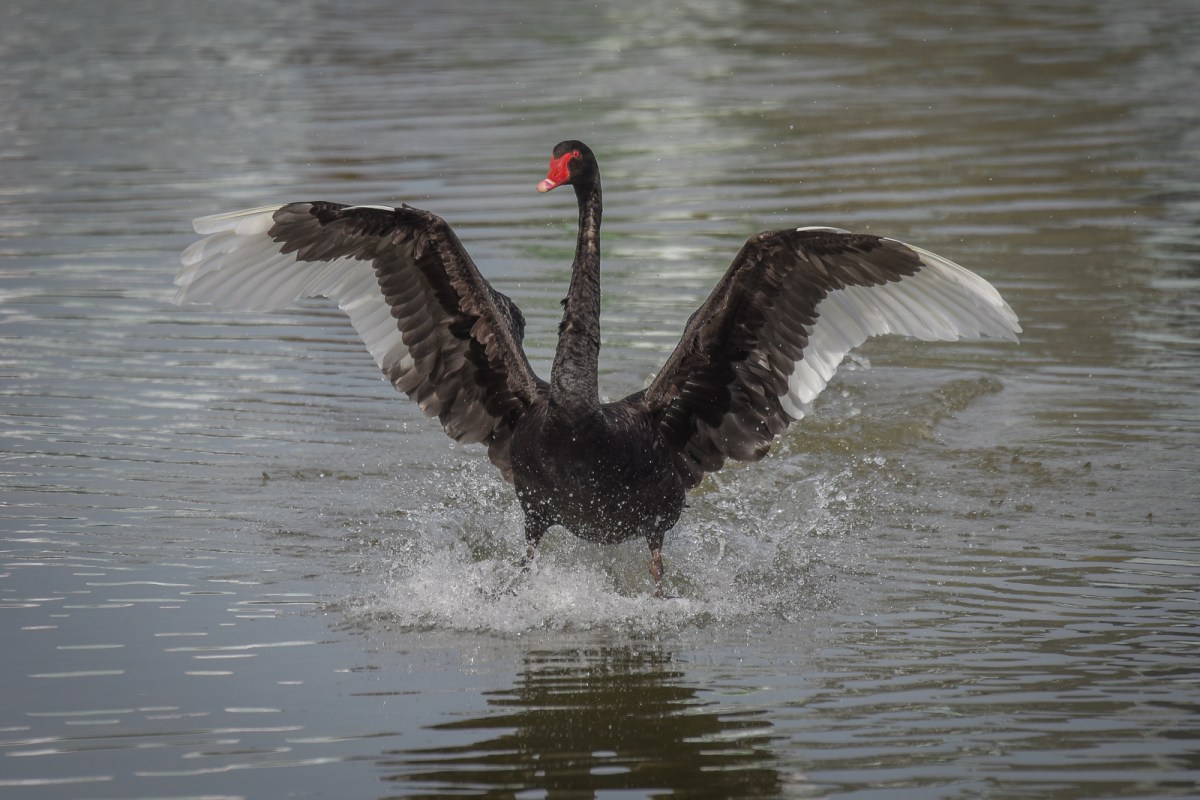
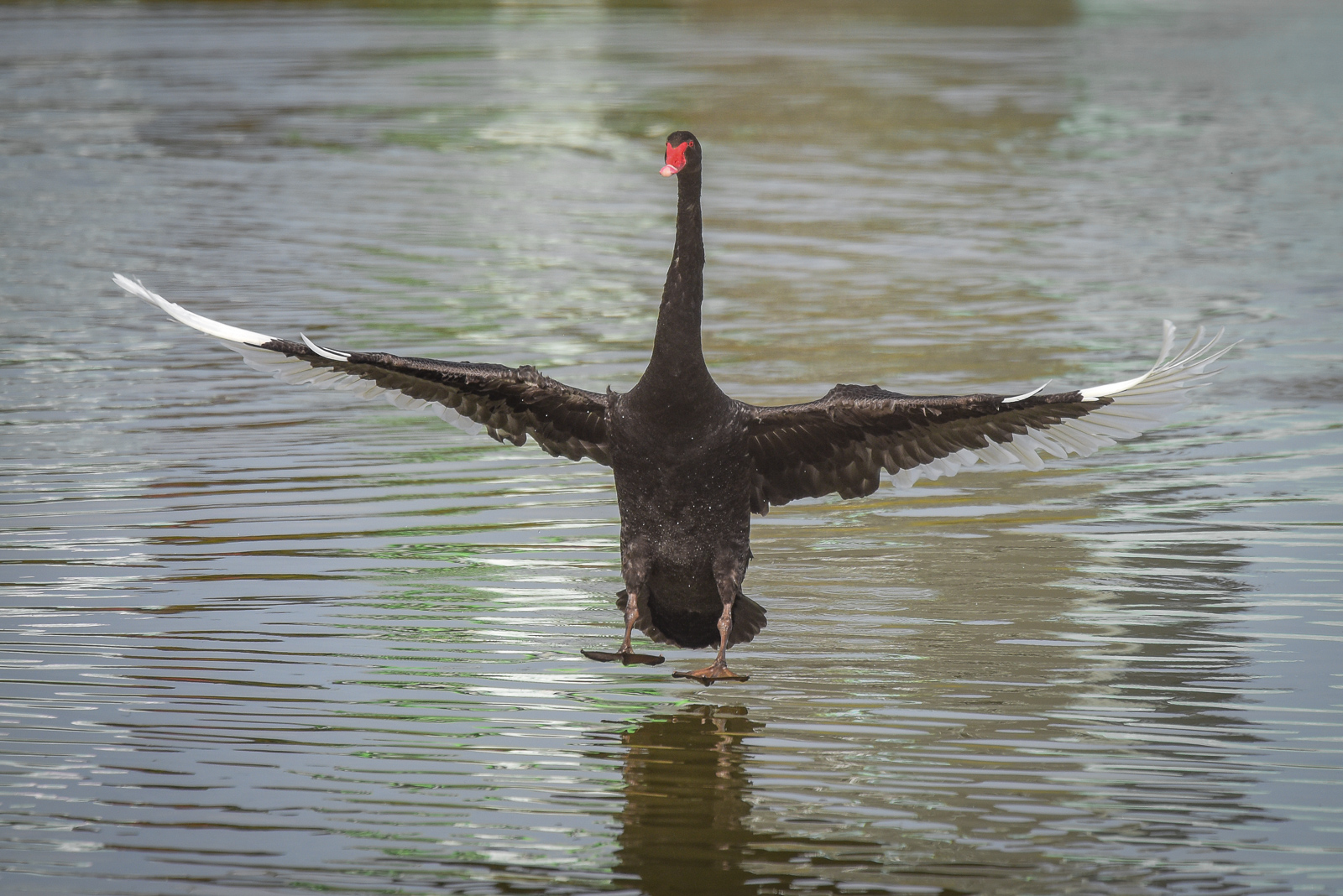
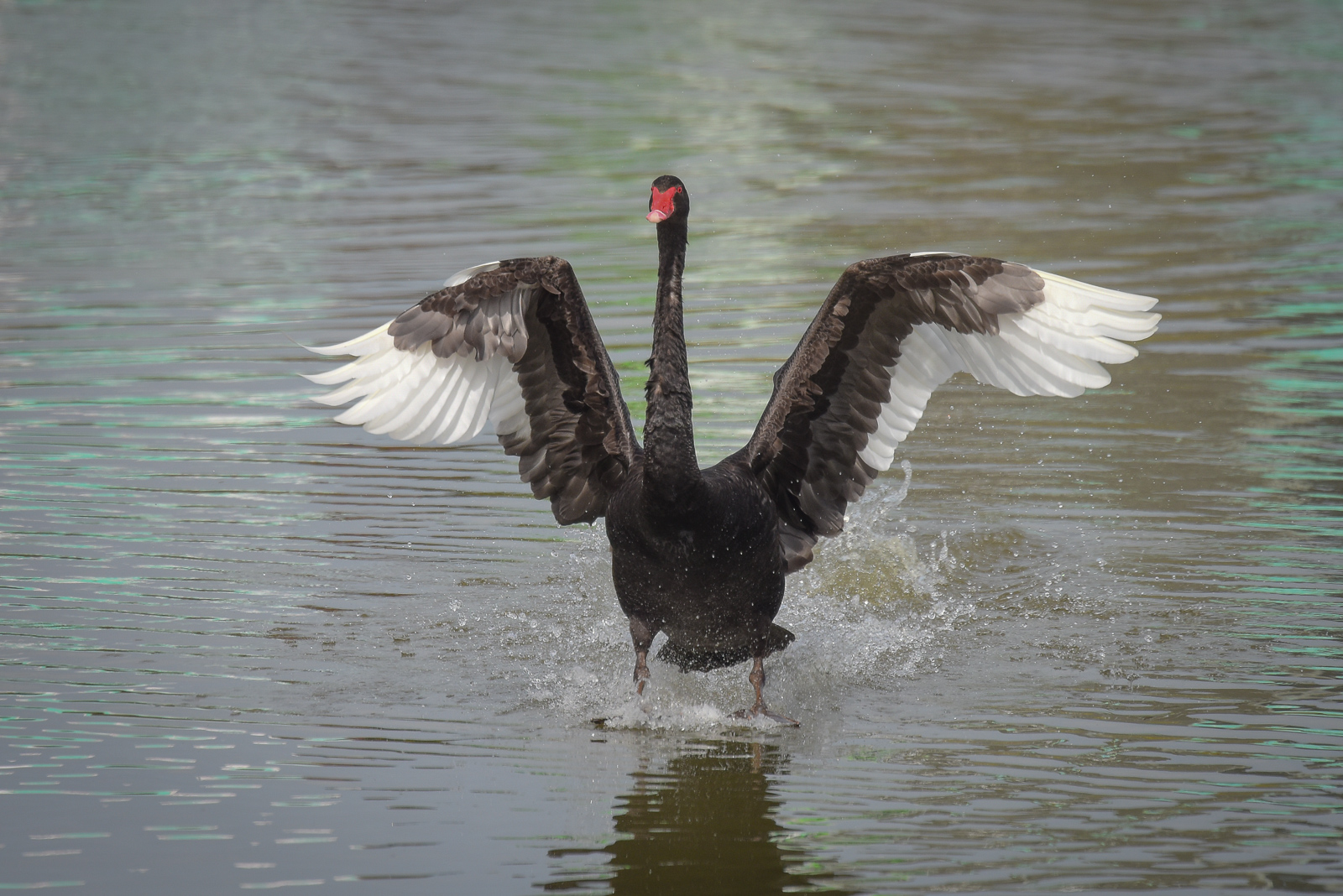
The triptych I revealed last week is a only a rough mock of the front page. Nothing is settled on the picture content.

So, where does the blog fit in.  Well, after all that waffling introduction, you probably saw the first of the connections when I put up, “On the Road Again” during the week.

I’m planning to bring each of the events over to the blog as an in-depth look at a bird, or family and the actions of that day.  Expect some closeups, some action, and a few birds on stick, or inflights.

In a way it revolves the blog back to its roots of the early Woodlands Robins series.

So expect to see short stories, with a number of related photos.
My challenge of course is to keep to the course. 🙂

In the meantime,

Lecky blanket: Check
Doona: Check
Door Locked: Check
Blinds wound down: Check
Welcome to The Fortress: The Global Headquarters of the Doona Hermit.
Remain Safe,  Stay Positive—(but Covid Negative)
A Callout from a Fantail Cuckoo to all those in 14 day isolation. Thank You. You are doing us all Proud.

Interludes: “On The Road Again…”

Well then, time to don the old spotted ‘kerchief, pull down the weather beaten widebrimmed hat, tune up the ole guitar and climb aboard the VW Microbus for another round of Willie Nelson singin’  “On the Road Again”. Now Willie may not be my fav entertainer, but I do as an aside, get a bit lumpy of throat everytime I hear his “Blue eyes Cryin’ in the Rain.”
Wipes moisture off keyboard continues typing.

Yep.  She’s back on the Road.  Well, more particularly out and about in the field with camera at the ready.

A few more weeks, and the old EE will be back to full form I’d be thinking. Goodby to #Kneetoo it seems.

How many Australian Hobbies would you normally expect to see in a morning? Most of us would be hard to agree to One, and then think it lucky
Two?  Stretching it Mate.
Three? EE

Now for bonus points, how many of those Hobbies would be carefully ensconced in a tree happily feeding away on a recent take?
One, oh, ok, I’ll give you that.
Two? Well that is why you should turn up the music louder. She’s back on the road.  🙂

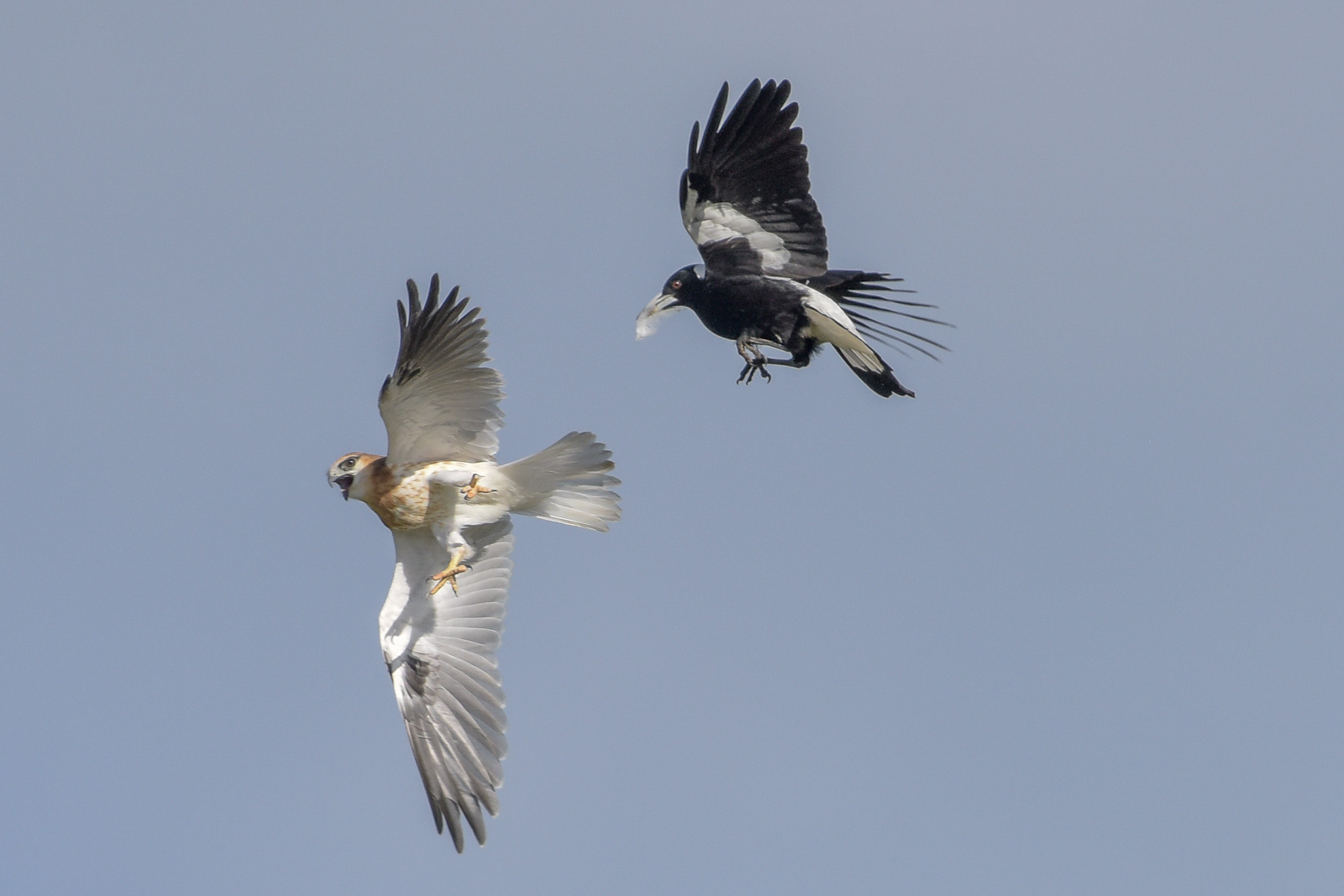
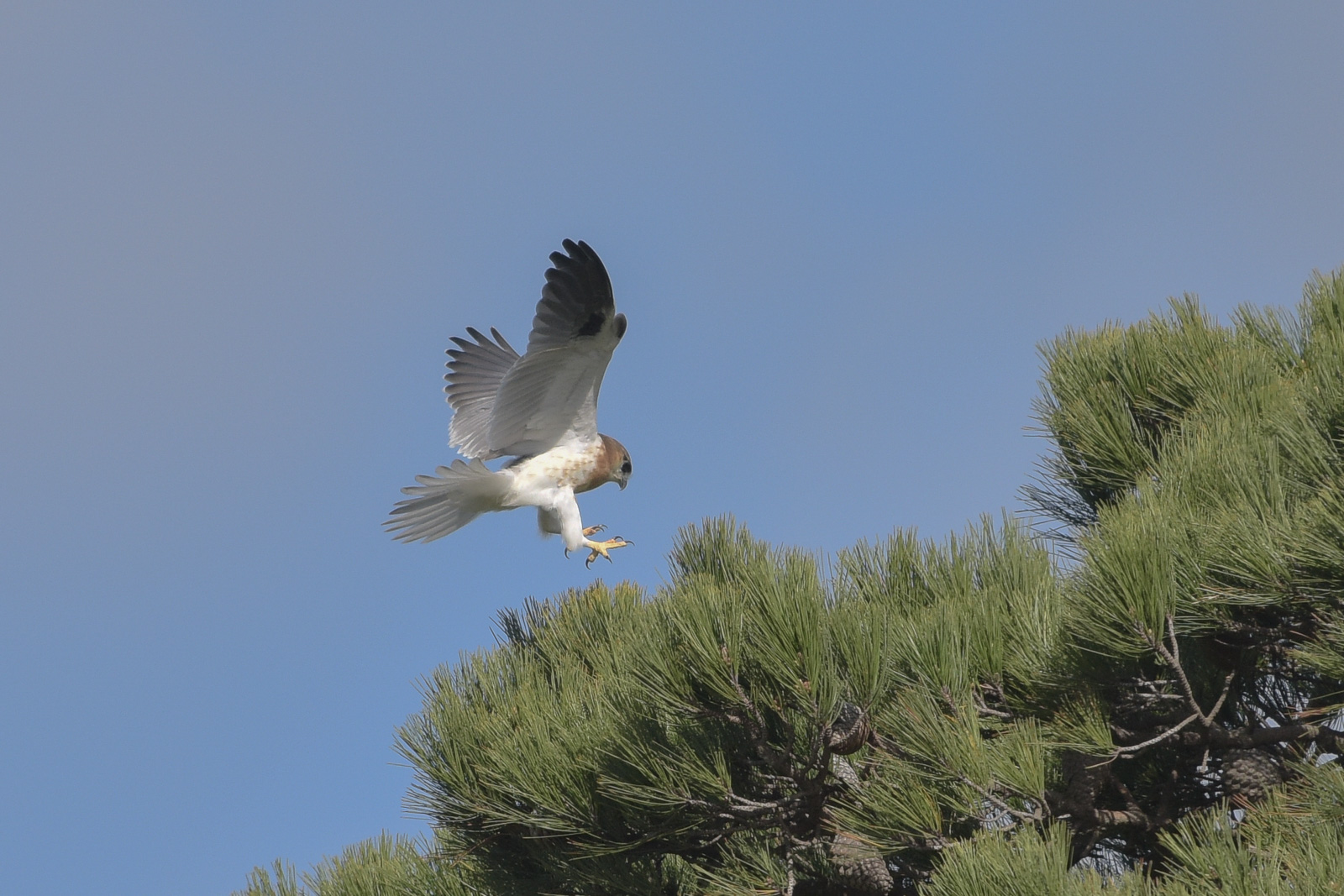
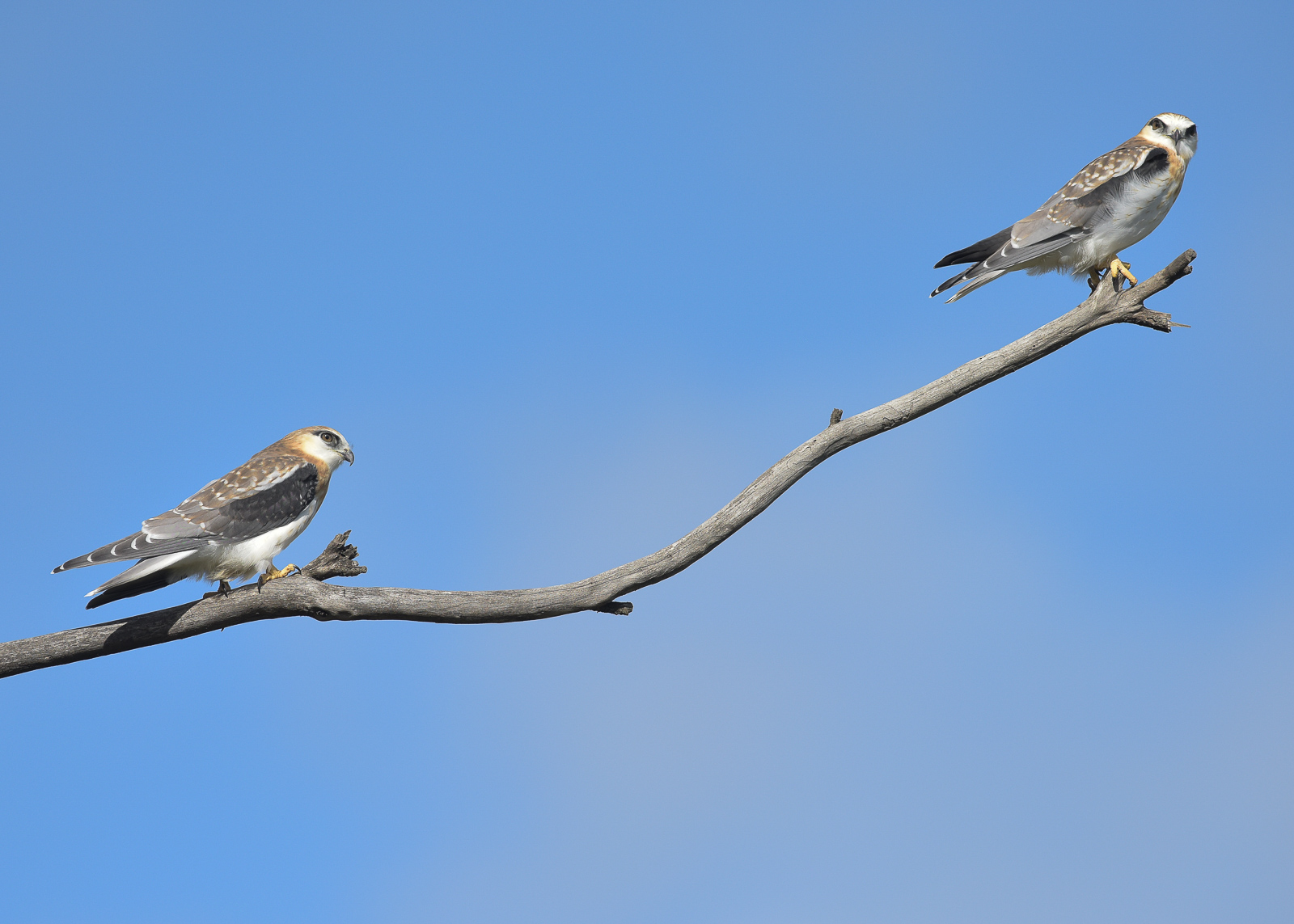
We were working on a couple of recently fledged Black-shouldered Kites, when the conversation changed to,
“I think a Hobby with a meal just landed in a tree back there.”

We look, well at least I did.  Dark in there, lots of thick branches and leaves.  Searching.
Click, click, click.  She’s spotted it.
And there was the Hobby with what was the remains of a House Sparrow.  Way up there, in among all that clutter.  Amazing.

Suitably  photographed, we left it to its devices and headed back to iAmGrey for a cuppa.

Midway through, the conversation changed.

“I think there is a second Hobby with a meal in that tree at the end of the roadway!”

Abandoning the warm Earl of Grey to its own devices, we move to the other side of the parking area.
Now this one wasn’t so hard, out in the open, on a branch, looking very uncomfortable trying to eat on a sloping branch.
Click, click.

Job done we relocated to a second pair of kites.  Another Interlude story for next time.

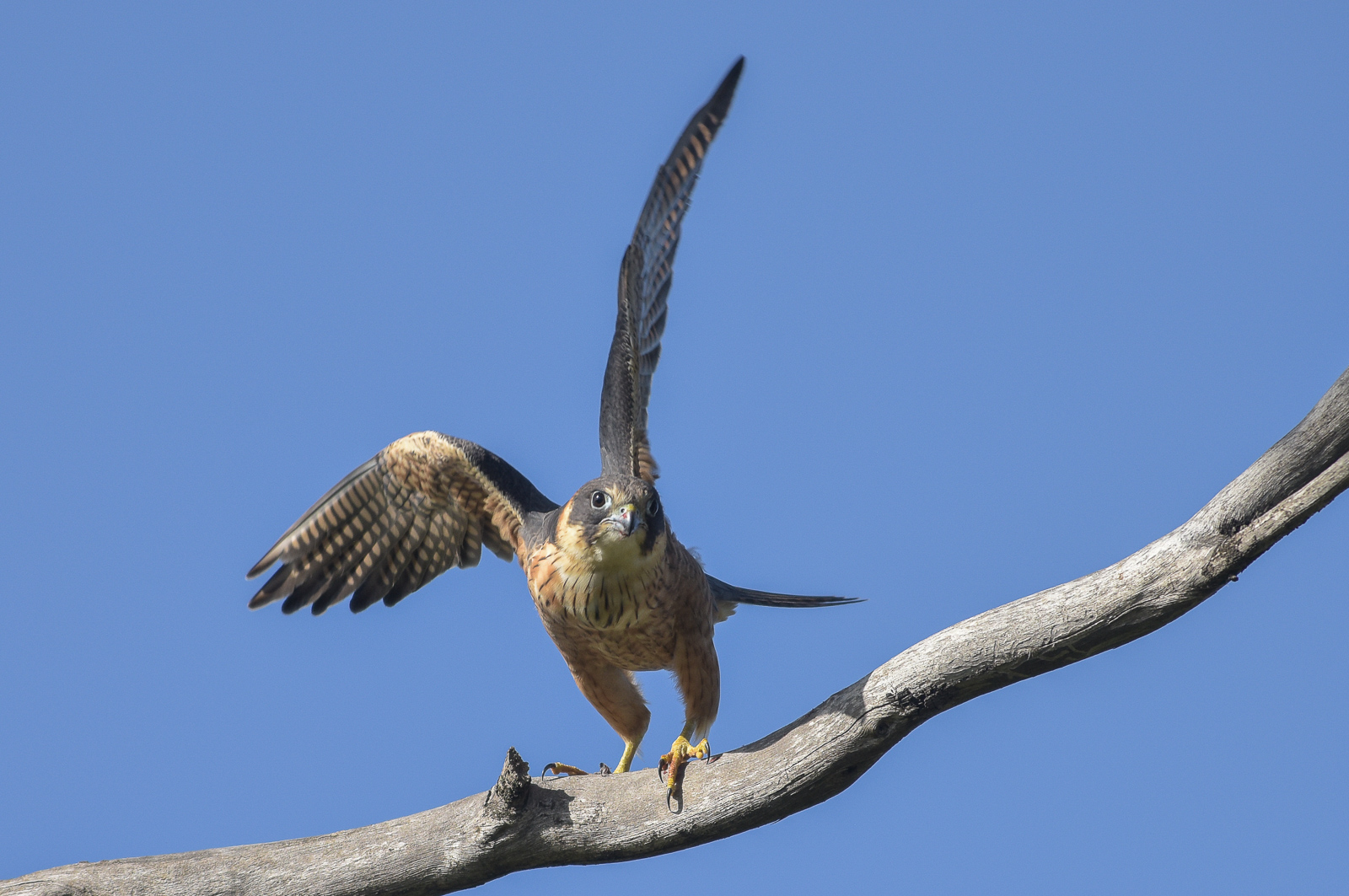
Just as EE got out of the iAmGrey, a Hobby flew pretty much head height over her. ”
Click Click. Click.

I can still hear the guitars, and,”The Life I love is making photos with my friend, I’m so glad that we’re back in the field again!!”

Young Black-shouldered Kites mock battle
Only recently fledgded, but already quite the adept aviator
Hobby Number One. Once under the tree, it was easier to see among the foliage
A fresh catch that needed cleaning up for table presentation
Hobby Number Two. A rather awkward perch to work on.
Hobby Number Two. Eventually moved to a more suitable branch in the open. 
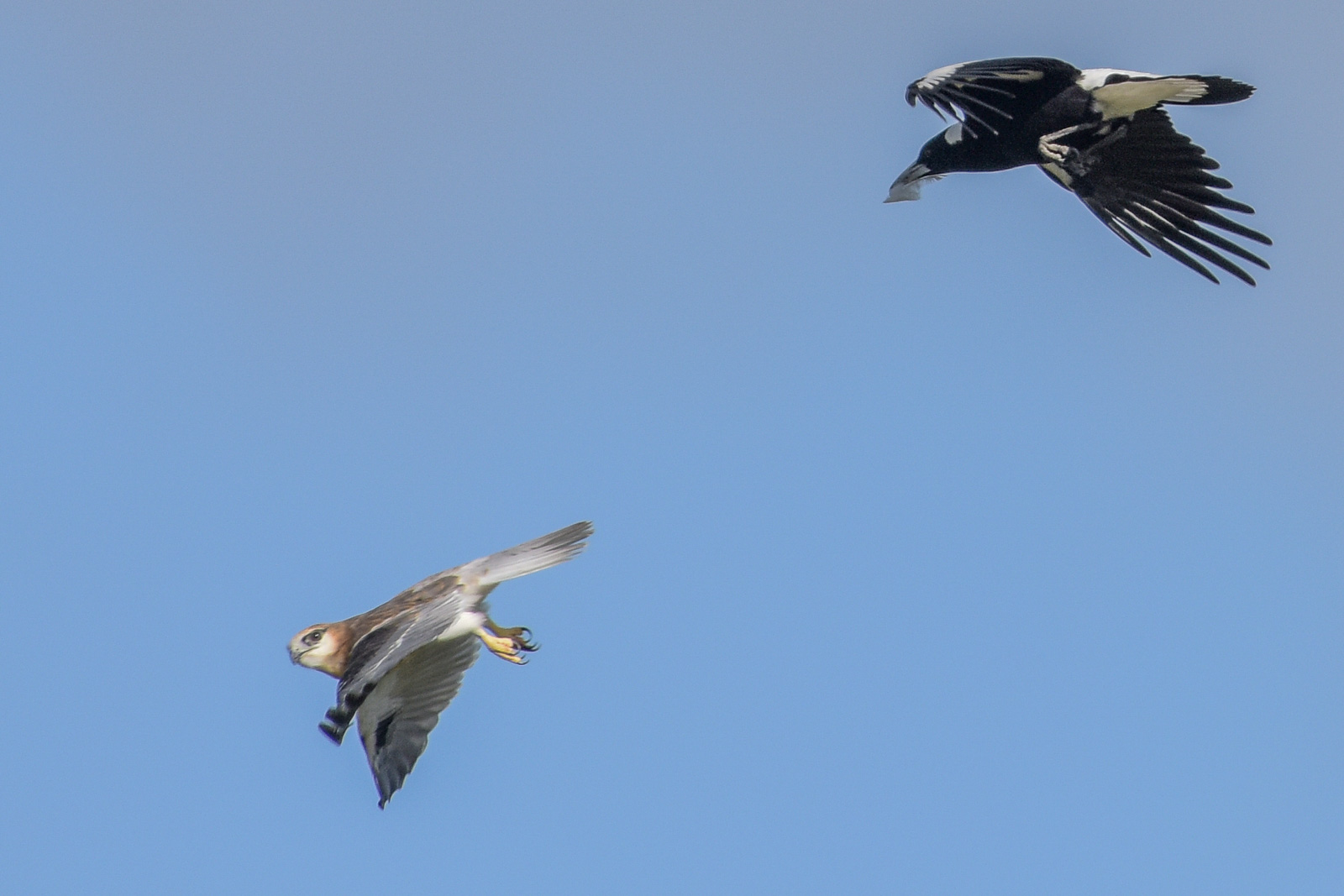
However this was the home of a pair of Willie Wagtails, and visitors were not welcome.
There is only so much harasssment it could take. FInished the meal, and time to leave.
Young Black-shouldered Kite. It seems this clutch flew two young.
They have been moved a few hundred metres from the nesting area. Perhaps the food is better on that side of the highway.

Saturday Evening Post#146: Awareness

Triptych: “A group of three photos displayed together. Usually with a common connection of feel, subject or meaning.”
—”the whole is greater than the sum of the parts”

I had a work colleague, many years ago, who specialised in in Triptytch. His field of work was, of all things, English countryside pubs.
As a young photographer, as he would tell the story, as he travelled about the ‘olde country’, he did stop at the pub for at least a quick pint. By the end of a day’s photoshoot, again, as the story was told, he was quite the merry, and the photography intent did suffer.

His little Austin van carried in the back, a selection of quite large potted plants. Usually colourful flowers and bushes, or the occasional small formal tree.
Once he had found a suitable location, the lighting was right and the best angle for the shot was selected, he would, ‘arrange the studio’ by tastefully placing, or replacing existing pots from his collection.

When he arrived in Australia, he started the same process, but, the sweeping expanse of Australia’s countryside meant it was a long dry drive between suitable pubs, and your average pub on the dusty road of the  Lachlan plain, while a useful metaphor in a Banjo poem, didn’t seem to take all that well to a few carefully arranged geraniums out the front.

He turned for awhile to making triptych of vast mountain ranges, and it was about the time I contributed several photos to his endeavors.
It is an interesting process to shuffle through a range of prints, looking for the special magic that connects them is a way the makes the whole so much greater than the strength of the individual elements.

From my previous “Little Journey’s” post you’ll know that #kneetoo and I had taken a run to the Treatment plant in the sunshine.

I’d also written the previous Saturday Evening Post #145  about mindfulness and being in the moment.
I had need earlier in the week to attend my local doctor’s clinic for a discussion with my GP.  Among the various topics discussed, he made an out of left-field suggestion that, “Perhaps you might like to try ‘mindfulness’.”
To which I was happy to respond, “Well I wrote a blog on that very subject at the weekend, and I incorporate it in my Tai Chi training and photography. What would you like to know?”
But,
As I discovered at the treatment plant working with a number of quite co-operative Brown Falcon, I’m a bit rusty on the reflexes and awareness of the subtle signals Brown sends just before it throws from the perch and is gone. Brown generally jumps down, and away.
Not great for infight, however it is possible to get a just-on-the-wing-unfurl and sometimes, the light, the angle and Cartier-Bresson, ‘decisive moment’ collude and a worthwhile result makes its way on to the memory card.

But when you’ve lectured, written, and extolled the virtues of “Awareness” for weeks without practice, the Karma is also going to be ready to bring me back to reality.
Such was the case with four Browns

They all were in no hurry to go anywhere, and we were quite happy to sit or stand with them. The joy of watching the bird at work in its environment soon sees the minutes melt away.

Then when the time to go occurs, and the camera better be more than ready. Arms ache, feet move to better balance, a step to include or exclude some background object, and waiting.
But sad to say, each bird slipped off the post without me even getting the shutter release halfway down.  Karma!

It once again reinforced to me how much of what observing these amazing birds reveals, and how much each is an individual.

More to learn.

Quick Triptych from a Lightroom printer Layout Style. All just moments before departure.


Little Journeys: A Morning at The Plant

Now that Melbourne has emerged from its fifth covid lockdown its time for the Doona Hermit to shed his old worn doona and venture out in to the real, (no definitions please) world.

#kneetoo and I had a little local journey planned, with a stop off along the way to look at a pair of Black-shouldered Kites and their young(?)

But as I pulled back said doona and checked the weather app, it looked like a beaut, clear, cold morning.
We had planned to do our quick visit and then be home by mid-morning for a relaxing morning tea, so I was not planning to load Earl of Grey into the thermos or grab a bikkie or two for the journey.
But.

On a whim, we decided that a morning driving around part of the Werribee Treatment Plant birding area would make the most of the weather, and who knows when if, ever, we’d have such a chance.  Fix snacxks, load cameras, dress warmly and we were on the way.

As it turned out much of the area where we visited was pretty bereft of birds, but what we lacked in quantity we made up for in birds we’d not had the pleasure of seeing for quite awhile

Here’s a small selection.

The dancing fisherman.
The Little Egrets make such delicate moves as they follow the fish through the water
Where did that fish go?
Napping out of the wind. PIed Oystercatcher
A Swamp Harrier on patrol
Crested Tern rolling over for a fishing plunge
Swamp Harrier on a turn
A beaut find, Blue-winged Parrots feeding in the saltbush. We probably saw 15 or more
Blue-winged Parrot. One of the most delightful little parrots we photograph
Pied Oystercacther powering past
One of a number of white chested Brown Falcons we found during the morning/
This one was in no hurry to move and in the end, a Whistling Kite approaching finally put it to air.
When I first came across this bird, it didn’t seem to be in a hurry to leave. At first I thought it was working out the moves for its next meal. Closer inspection shows it must have only recently eaten and was resting for digestion.

Saturday Evening Post#145: Where Ever You Are: Be There!

Sure, the shops are all closed by government decree around here, so I’m really talking from past experiences.

Have you been in a shop, ready to part with the hard earned, find what you want, approach the ‘sales’ staff, and find the they are busily enthralled in their own world on their ‘phone’. Some Tik-tok, spacebook, istafalm or other thing that holds attention.  Not wanting to make eye-contact under any circumstances, they’ll try to get the whole customer interruption, (used to called making  profit), out of the way.

Or perhaps, there is a ongoing discussion among several about lunch possibilities, or last night’s gym session.
Walk into a store, and my local greengrocer is such, and it’s a hive of activity, each customer is welcomed, a small banter of conversation, admittedly just above, “Oh have a nice day”, but at least an interest in the person.
Refreshing.

I had a friend once who was forever telling people, “Where ever you are: Be There!”
The same concepts come across in many religions. I’m not into deep meditation, or discovering my inner-self, or even spirit-filled ether of nebulous thought.

Nearly 18 months back, we were so I remember being told, “All in this together”.
Now its down to arguing why vaccine support can’t be redirected to Sydney to help. (And, please, I do understand there is much packed into that simple sentence, and  pumping more arms tomorrow is not going to bring the numbers down the day after.)

If any, us Melbournians might want to have a little compassion given we were putting out numbers like 600 or more infections A DAY, this time last year.

Wherever you are be: Be There!

What my friend was advocating, these days,  carries a well-worn, and oft, misunderstood and misused term.
Mindfulness.
It crops up in all the ‘best’ websites, lectures, books and corner spruikers.

Lao Tzu defined it so much more simply.  “Focus”  Ahh good photographic term, something I can get my head around.

Poking my head up against the viewfinder, and carefully working the composition, at some point, I have determined which part of the image is to be:
1. The focus, and
2 the Point of Sharp focus.
Wherever you are: Be there.

Henri Cartier-Bresson said, “To take photographs is to hold one’s breath…. It is putting one’s head, eye and one’s heart on the same axis….
There is a creative fraction of a second when you are making the picture. That is the moment the photographer is creative
     Opp!  The Moment.
Once it is gone, it is gone—Forever.”

As bird watchers, counters, seekers or photographers we are acutely  aware of the around.  The calls of the birds across the paddock, the Magpie in pursuit of a raptor, the shrill call of a White-plumed Honeyeater’s warning, a pair of Magpie Lark bonding.

I’m taking to doing much more sitting and watching, listening and soaking up the winds, sounds smells and changes of season than previously.
What is around the next turn in the track is not as alluring as years gone by. I’m happy to be a little kid on the beach, looking intently at a grain or two of sand as being overwhelmed by the broad vista before me.

Where ever you are Be There.

Besties to all those locked down, all those who are struggling with the isolation and hats off to all those dedicated Heros who are working so hard for us.  You show us the way

From the Global Headquarters of the Doona Hermit.

You don’t get more focused than a hungry juvenile Australian Hobby lining up for lunch to arrive. 🙂


Outta the Kitchen Drawer

I bet we’ve all got at least one.  If you’re a photographer, like collecting camera bags, it might be that you have more than one.
That drawer in the Kitchen that holds all the knickknacks, detritus, and otherwise never sorted collection of things that have no where else to be stored.

Oh, look, four rubber bands, an old shopping list, some faded receipts for something or other, a pair of blunt scissors, the battery from… I wonder what? And all sorts of other accumulated, but not discarded  items of dubious value.

Irish comedian Jimeoin even wrote a song about it, “The Third Draw Down”  careful about the words, but that is comedy these days.

Well, I’ve been collecting a little here and there for a blog but none of the topics are significant enough on their own to warrant a single blog.

So.

Let’s put them in the Kitchen Draw and rummage through.

#kneetoo is back in the bush.
A few days before out current Fifth Lockdown, #kneetoo made her first real venture out into the wide world with camera and patience both firmly attached.

Also a deckchair, carefully placed in the sunshine was an essential element.  Subject was a Black-shouldered Kite’s nesting.  So here is how the action unfolded.

What else is at the back of the draw.?
Talked at the weekend about the “Mapping” ability of the Brown Falcon.
A tv semi-doco over the weekend produced in England. Life in the Air: Masters of the Sky

Can’t find that much about it, but the graphics are really explanatory, and the short inflight shots really help show what each segment is about.  However there is a lack of any references to the research, and I suspect that many of the sequences have been strung together from unrelated events.

Of interest is the segment on the garden hunting of a Sparrowhawk.  The graphics show how the bird, from 50m out from a birdfeeder in a backyard is able to negotiate a convoluted track in to avoid detection from all the dozens of little eyes always on the alert.
Having established the track, the action then ‘follows’ the bird from strike launch until four seconds later when a dramatic ‘puff’ of feathers over the birdfeeder is supposed to indicate a strike.  It is interesting to see the path the bird takes, its twists and turns to keep hidden for as long as possible   There are quite a lot of slo-mo sequences of it flying under, through and skimming over a bush here, turning on a tree there and the through the railing in a gate.
A great story.

I’d have loved it to be a bit more referenced as it is a great example of what I believe about Brown Falcon.  I love to see Browns running wing height over the ground, through the bracken, and bushes, to arrive at its target. Or the considered attack on a Tiger snake. It is all mapped and planned.

Rumage, rumage rumage.

Here are a few more from the Red Wattlebird attack on Bronson as he delivers another few sticks to bolster the well hidden nest.


And not looking to happy about surveying the damage to his rump.

One more from under the receipts, and those old drink coasters, who knew we still had them.

Wanted to finish on a positive note with a big SHOUT OUT, to all the Heroes doing Heroic work on our behalves during this most stressful of times.

Had to get some blood tests the other day.  The nurse doing the work is taking a break after a 6 week shift at the Showgrounds taking Covid 19 tests.  7:30am to 11pm has been her workload for most of that time. Goodonya!

To all those who have one way or another provided support, helped with logistics, cleaned everything—I see you at my Woollies—and all the other amazing Heroic things that are being carried out, often in the background.

Our local Shik community who are working to provide meals and support for so many isolated. ‘Onya!’

Meanwhile the fearnews concentrates one more more ratbag element, when there are so many great stories, even in their simplicity being written by people who have dedicated themselves in so many ways.

And of course to all those whose one simple act of getting tested, and then isolating for the appropriate amount of time.  Thank you.  I dedicate this blog to your act of selflessness.

The list is long, and includes those who turn up at sites to provide some cheer, food, flowers, to all those front line workers, what a great way to say, “Thanks”.

May healing come rapidly on wings of peace.


Saturday Evening Post: #144 :Brown Falcon Dreaming

Hello all my felllow-lockdownees, and others.
The Doona Hermit has crawled out from under the covers here at the Global Headquarters of the Doona Hermit.

Not much to see in our street, so I’ll move on to other things.

Best wishes to all the Sydney-siders.  So many of them stood with us in solidarity last year as our lockdowns dragged on and on. We know your pain, we know how hard it is with just about everybody doing the right thing and then… what are those people doin!!!
Concentrate on the good ones.  Those who are working on the front-line, in the backrooms, calling, delivering, offering comfort, and all the other other genuine human things we are so capable of in crisis.
Goodonya

Meanwhile Victoria is again in the firing line with a nominal, “Five Day Circuit Breaker”, but I doubt if there is a single Victorian who even dares to image that come next Tuesday evening we’ll be relieved.  The smart money seems to be on an extension of some duration.

The ‘We allwannagotothefooty” mantra has meant that those few selfish (and this blog doesn’t usually call it a it is!) had their couple of hours of ‘pleasure’ and now we all suffer.
Years ago in the Sun New Pictorial newspaper, columnist  Keith Dunstan (OAM) established the Anti-Football League (AFL)
I’d be happy to be a subscribing member at the moment 🙂

Draw a line


I watched part of the David Attenborough series “LIFE IN COLOR“, can’t find much of a link anywhere, but will keep trying.  The part that is of interest here to your scribe was the segment on the Fiddler crab and its ability to use polarised light to find a mate, and to avoid predators.

As a photographer I’ve been interested in the use of polarised light and its characteristics for a long time.  Numerous polarising filters, filter sheet, and polarising materials laying around the work area will attest to the ongoing investigations.
Even helped me on several jobs, particularly when we were working for car mags, and also the excursion into interiors for home-improvement clients.

I wish I could find some details of how the production team worked with all this, how they determined it worked and how they then built the special gear to bring it to screen.  A few voice-over sentences hardly does it justice.

The interesting one for me was that if said crab turned its attentions and its special skills to the skies, what it would ‘see’ was a blank, white canvas. Any movement, say a predator gull, or large hungry seabird, would be picked up as a black shape against the white, no distractions, and as quick as you can say, disappear, it was down in its hole, safe and secure.

No doubt, and I hypothesize, (you get to do that a lot hidden under the doona), that the creature also had some shape recognition, much like the plane and boat recognition shapes that were used by spotters during WWII.
Which of course led to the next hypothesis.

If it works for your clever and well equipped Fiddler crab, might it not have some similar application in other creatures.

Long-term readers will know I have a theory. No, I didn’t borrow this one from Mr An Onymous, this is pure Doona Hermit land.

I’ve sat and watch Brown Falcon’s for many an hour.  Not your ‘Oh, there’s a Brown Falcon on the fence’ move on” sort of stuff, but sitting a respectful distance from Brown and watching it watch.

I’m convinced they have the area ‘mapped’. Somehow. Each scan of the scene reinforces the last scan, or reveals something new to be added to the ‘map’.  Such as.
That skink just came out from under the leaves.  There is a snake working through the bracken.  The crickets are gathering near the little water soak. Each can then be evaluated as to the risk-management of pursing the prey.  Once they know where the opportunities exist, they don’t have to immediately take off and chase, they can plan and take action at a time that suits them.

Flying there is usually, low and fast through the grasses and bushes not even being able to see where the quarry is, but knowing if they stick to the map, weave here, turn there, zig left, they will arrive, like a shopper in a supermarket, at the right aisle, for the prize.

Now if I combine that with the polarised light Attenborough segment, I am wondering if Brown’s have some similar ability.  Looking out they see a blank canvas, and anything that moves across that landscape is ‘red-hot’ in contrast, and easily mapped and evaluated.
Such is the theory.

In the meantime this Brown was sitting high on his territory.  It is a fav perch, right alongside a major, busy road, with wide open paddocks all around.
On this particular frosty morning, he’d taken the opportunity to warm up in the struggling sunlight and was in no hurry to move on.
The scanning process was obvious.

Tennis Stars Be Prepared to Be Amazed!

My friend Nina was down at the WTP last week.
She sent me a note of her adventures, and has kindly allowed me to share them here.

In a galaxy far, far, far, far, away, in another time, Nina and I both worked for a large multi-national. Her love of the environment and my natural history photography have kind of kept us in touch.

All the photos, words and story are Nina’s.  Obviously copyright, and intellectual property rights belong to her and should be honoured.

Here is what she sent me.
I had an extraordinary experience at the WTP with friends last Friday.

Where ever we went, we kept running into Brolgas.

On Kirks Point track we watched some Brolgas playing with a tennis ball for more than an hour. At first I thought they were trying to eat it, but after a while I realised they were just playing. One would drop it and the next one >would pick it up. They would also pass it to each other. I have many blurry photos because I was shaking with excitement. The memories of thisclose encounter will be with me for ever.

The images are linked to a larger version so just double click to see.  Be Amazed!

Thanks Nina.

If you would like to contact Nina drop me a note and I’ll pass on the details.

Be Amazed

Saturday Evening Post #143 : On Country

I was pleasantly pleased to see the other day that Australia Post is encouraging people to add the First Nation’s Traditional Place name to their address fields in letters and parcels.  Here is a map that is a start on the journey

I had the fortune I guess as a small lad to grow up in a Murray River community and was friends with a several of the local young boys.  Now to my memory there never was much talk about being ‘on’ or ‘in’ Country, but truth be told I might have missed it anyway.

What is memorable now, with some much older and better pondered hindsight is that the lads, whether hunting, swimming or messing about in the bush weren’t all that fussed about being ‘in or on’.  It came to me later that they, ‘were’ country.  Moving with an ease and confidence that was as eternal as the trees, rocks, bushes and animals.

It is more than just an acceptance of the area, it was a spiritual connection, not so much in the mystic, but rather in embracing they were part of the environment. No doubt more wiser heads than mine can explain all the elements, but I’ve noted over the years the same kind of ‘spiritual connection’ among many cultures and religions.  Christian, Muslim, Jewish, Dao, Buddhist and many others. The clear connection between themselves and the land around abound. Not only at some higher form, but the simple integration of action with belief.

#Kneetoo’s family worked the Hay Plain and Lachlan River areas, and Bill, my Father-in-Law had developed a very respectful relationship with the Dadi Dadi and Mari Mari traditional owners of the area. The family stories of their connection and how the locals would turn up at one of Bill’s camps, says much about both.

Did any of it rub off on to me?   Well a quick story.  When I was around 17 or 18, one of our city relatives came to visit over the summer holidays.  We decided to go for a bit of an exploration along the Murray River bank near home,  a place I have to say that I did know quite well.   It didn’t take me long to pick up a kangaroo pad, or slip through the riverside scrub, but my city born and bred relative found the going quite difficult.   We also waded across the River at a point where during summer the shallow water ran over a long clay secure bottom.  I didn’t stop to look but simply crossed.  He, hesitated. Lookrd, and then gingerly took each step as if it might be his last. But by the end of the day, his grin from being in the grove with the around was as wide as the flowing river.

Full disclosure.  When I first moved to the “Big Smoke” I stayed with them for about a year and he was able to do the same thing for me among the backstreets and parkways around his home.  A learning experience.

When we walk the Eynesbury forest with the award winning Chris Lunardi, he won’t let me lead a walk.
“I’ve watched you walk off the track and then disappear before my eyes,” he’ll say.  “Then twenty minutes later, about a kilometer down the track you’ll suddenly re-appear on the side of the track.  It’s eerie!”
But then again.  I like Grey Box forest. It’s been said, kindly and not so kindly that I have Grey Box sap in my veins. 🙂

My first few seasons at Woodlands Historic Park were not years of bird photography.  I walked the paddocks and the hillsides as a Landscape Photographer.  Even had the kit. The header image while taken on a digital camera, is in fact firmly attached to a whacking great tripod that I used to use with a 4×5 inch Linhoff Super Tecknika camera.  Standard fare of my early trade.

This one was in the early mists of mid-winter.  One of my fav times for those moody landscapes.
The creekline is Moonee Ponds Creek, –Woiworung Country—and the rich red sand in the foreground was much prized by the builders in Melbourne during the building boom around 1880-1900s.  The locals would fill drays from the creek and transport them to the building sites.  So I didn’t have to do much work on the image to keep that richness intact.

I’m guessing I don’t roam as much as I used to, much preferring these days to have a Jon Young ‘Sit Spot’ and watch the interactions of the trees, birds, animals, clouds and winds on a much more macro level.  Each. To his own.

Wathaurong Country


Saturday Evening Post# 142 Design in Tone

The dark does not destroy the light; it defines it. It’s our fear of the dark that casts our joy into the shadows.
~ Brene Brown

There are two major ways of defining “Tone” in photography.

Pity is they seem to get mixed up by under or over use.

Tone 1. The scientific measurement of the range of dark to light values in a photograph. Formally known as the Characteristic Curve.
The bane of photostudents in the days of filum, as it required astounding numbers of tests, peering through densitometers and calculations from log tables. Never a topic that people qued up to be the first in the door.

Tone 2.  The pictorial use of dark through light to help establish mood and emotion.  Light areas attract the eye, darker areas hold mystery.

Ms Brown, was no photographer, but out of her writings its possible to distill some fine photo-enhancing thoughts.

One of my fav photoshoppie, tool is the Circular Grad Tool. As best I can recall it didn’t make a Photoshop appearance until Photoshop 5 in 1998.
Highlight my subject.  Lighten for emphasis, Darken for mystery.   Use two, one for the subject and one for the backdrop and the eye of the viewer is both drawn and surrounded by the environment without losing the subject.  At least that’s the theory.

Funny how, even having taught the use of the tool, there is always just one more trick up its sleeve.
I was browsing the awesome book, THE DIGITAL NEGATIVE  by the equally awesome Jeff Schewe, (my copy is dog-eared and bursting with postalnotes.) and noticed a technique of resizing each individual side of the Grad Tool when it’s been drawn.  Oh, dear, how come I didn’t know that already.  Big grins.

As a lot of my current softer feel technique is based around the use of the tool, I was somewhat taken back that I hadn’t noticed this small technique.
For the interested, draw the grad as normal, hold down the Alt key and each of the ‘handles’ is independently moveable to match the need of the subject.
Simples.

I’d chosen this image sometime ago to match the good Ms Brown’s quote, so decided that it fitted well with the tonal series.  Bring out the best of the red and orange in her dress and keep the green behind muted and job is done.

Enjoy.
Scarlet Robin, Petroica boodang
. 
She does work hard all summer long, and now the cold weather has set in, its time to throw off the old, and take a new sparkling feather set for the season.

Little Visits: The Power of Wings

Somethings happen so fast that it defeats the human eye to follow.  Sometimes a short sequence of photos can reveal not only fine details of an event but also an understanding of the forces at work.

Such, is the case of a pair of Black-shouldered Kites at work on their current nesting duties.
Our blog friend David Nice gave me the headsup that the Kites were back at work on the Sneydes Road area. Time for a looksee.

And indeed they were. The nest is quite a new site for the pair, and built in such a position that its a little hard to fly in nesting sticks directly, and the male has been ‘drifting’ them in at an angle to get the larger longer sticks in just the right position.

I normally don’t shoot multi-burst, but, well you know how it is, the first pair of kites we’ve worked with in quite awhile. So I was happy to begin to fillup the memory card.

Where the magic happened however was when I began to curate the images and found the various changes in wing angle and feather application that he was using to ‘drift’ into the right position.
So the series here are simply to show how he has used wing angle and wing lift to get the right momentum, direction and control. With one wing carrying the movement while the other wing lets air cascade away to ‘fall’ in that direction.
Hope you find in interesting.


His second problem is that the locals are not too impressed to have the new home renovators at work in their area, and each trip in and out was a to run the gauntlet of ravens, Red-wattle birds and magpies.  A bit costly on feather contacts on a number of occasions.


Saturday Evening Post #141 : Comfort Zone

“How did you get into your present comfort zone?” he asked.

Do you know, I hadn’t really thought about it. I suppose I just slipped into it.

I’ve been working with a new mentor the past week or so, felt like taking on a bit of a challenge, and it hasn’t all been tough. Some has been fun, as well as highly revealing and instructive.
He’s given me plenty to think about.  Mostly around not just taking new pictures but how I go about making them sing and dance.

Now it’s true, I’ve been post processing photographs since the days of “Barneyscan”. (you gotta look that up) precursor to Photoshop.

Used to manage our library on something called “Shoebox”, an Eastman Kodak company early attempt at databasing photos. It used a cd jukebox to store photos, and had a clever algorithm to find the tagged ones. Great for demos,  type in Bird, or Macaw and up would pop a wonderful rich colour photo of a Macaw. Stunning.
You could also poll it for say, Maureen’s Wedding, or Grey Mustang at Summer Nats, or whatever you’d stored and logged, and up would pop a few seconds later….. a photo of a Macaw…   It wasn’t even beta software, more your pre-alpha 🙂
Time moved on, and so did we.  I used to use Nikon’s Capture NX2 for a long time.  Reason, it was using the clever NIk Technology “U-Point” system and made post processing a breeze, one you got used to its quirkiness. But in the end, I’ve always said, give Photoshop, Layers, Layer Masks and a Paintbrush and that would do me for pp.

So he asked, “How did you get into your present comfort zone?”  And we concluded, quite easily, it just felt comfortable.
Which is why  the next challenge was to find an image I didn’t have much investment in, and play around with it, in something like Lightroom or Capture One.
And I found there was a lot of the Develop module, that I understood, but didn’t appreciate in terms of setting the mood or emotion or feel, or even my vision of the image.

Particularly in Black and White.   I rely on Nik ‘Silver Efex Pro” for my mono conversions. Because there are lots of film effects and the old mono filters that I grew up with.  (Another question I’ve added to my memory list from last week: What is the filter factor for a Wratten Green #58?) SFX has them all listed each on it’s own slider, and makes changing sky or tree, or sand to the right tonal level for the feel I’m after, a snap.

This time through I was able to use the local Hue-Saturation-Luminosity filters to achieve the same thing.
Hey, I knew that. But, my comfort zone didn’t 🙂

My Flickr folk were the first to see the difference.  I posted a mono pic of a Collared Sparrowhawk on a fence.  As a colour shot it was pretty much unattractive. brown bird against sky, ugly fence.
“Try some tone changes,” was the suggestion.

Suddenly it was working, lighter sky, rich tones on the bird feathers and those glowing legs and eyes.  Simples. (Hah! I knew that)

Still got a way to go, as I’m tackling a series of challenges around the ‘Visual Roadmap’, not a term I leaned at Art School. More I suspect will follow.

Tonight, as Lee Lin Chin says in the ad, we could play for Ray Martin’s Gold Logi, but instead I’ve settled on a shot from the other day with Mr An Onymous.
It’s a few seconds work in Lightroom’s Black and White mode.  A trip through the HSL sliders and a few points of grain.

I wanted to keep the feather detail, but at the same time bring the emphasis on the seeming enjoyment that bird was having with its treat.

Ahh, back to the comfort of a real darkroom 🙂


Little Visits: Enjoying the Morning Sunshine

Funny old weather Melbourne.  Biting cold for days, then, such a tiny break of stable weather.  Frost on the ground, breathing out ‘steam’, and calm winds. Ideal.

So. I, as the Banjo wrote, “Sent him a email, which I had for want of better knowledge sent to his mail address, in case he was home.
Just on Spec, titled as follows, “A trip to Point Cook is in the offing”.
And an answer came directed in a manner I expected.  “Mr An Onymous will meet you there”.

So, as #kneetoo is on the move, but not willing to venture too far at the moment, I went.

As the weather icon ladies had predicted, the morning was crisp, still and sunny. Ideal.

After the usual “G’days” and, the like, we set off for a walk through the pines.

We’d not walked more than a few hundred metres when I turned to glance a Brown Falcon that had set itself up in a sheltered, warm spot in the sunshine. Had I kept going, he’d have stayed I’m guessing, but too much activity too close, and he unfurled the big brown sails and was gone.

Next the call of Yellow-tailed Black Cockatoos rang across the frosty grass, and there on the other side of the paddock we say around 6-8 descend on the large pines. To be followed in quick succession by a second group of more than 20, and then another smaller mob of about 10. By the time we’d arrived close up, they were well in to their feast of the young cones in what can only be described as an open area dining area.


Then one of the young ones, crying, caught my attention and we managed a view of it being fed.  Beak to beak.

Onward for a cuppa of the Earl’s best and a sit by the water’s edge.  The moon was pulling in a high, high tide and the still waters lapped and laughed as they kissed the sand, and retreated, having enjoyed the moment so much to quickly repeat the performance.
Sometimes, just slowing down, and watching the small things, like small child exploring the beach, not over-awed by the expanse of sand and water, but rather inspecting the grains of sand on its fingers.

A Greater Crested Tern was fishing, and I missed the head shake as it came out of the water.   Then a White-faced Heron again standing perfectly still.

Several young Pacific Gulls were paddling in the clear waters, and an adult was doing its best Otis Redding impersonation of “Watchin’ the Tide Roll Away…”

We could have stayed all day, but each of us had other things family to attend to, and we retreated to the vehicles and a local coffee shop.
Great day for birds, relaxing and a bit of a natter.

As we left the beach an Australian Pelican beat its way along the water’s edge, flying low to make the most of the lift of the water.

Saturday Evening Post #140 : Stereotype

Stereotype has among its first usages several hundred years back as: image perpetuated without change.
More recently its use is in the realms of psychology deal with, so I’m told, the thoughts of an individual being applied (rightly or wrongly) to a group of people.
Rough boyscout definition only.

Our blog friend Eleanor raised such an issue for the other day as her new camera is cranking out huge CR3 files and its meant she has taken to using JPEG format.  I made the comment that I often shoot JPEG format. And with good reasons.   Bought the usual responses, of ‘can’t be a true committed photographer if you’re not using raw (usually put as RAW-but its not an acronym). My photos are doomed to the dustbin of the furthermost photo hell, and me along with it’.
Truth be told I like working in JPEG as it frees me from sitting staring at the screen cranking first this, then that slider. Strange old stereotype that judges the quality of work by the file type.   I know pretension exists, still.

However changing thoughts, I had to go, on my doctors instructions to one of those, you know, what do ya call ’em,  ohhh.   Oh yeah, cognitive memory tests. Where you get asked if you can remember important stuff. Such as, What year is it? Who is Prime Minister of Australia? Count backwards from 100 minus 7 at a time… hmm, 93…..Oh, I give up.

All sorts of things I’m not all that interested in. I’m more interested not so much which day of the week it is, but will it be sunny, no wind, a low tide, what season, and will all that be good for photographs.

Among one of the questions was something about ‘Do I like to cook’.  So I gave an answer. But.  It didn’t match the stereotype required answer, and I came to the conclusion the inquisitor wasn’t interested in my answer, only that I’d fit the pattern of old male, unable to boil water.  I took time to explain I learned to cook from my Mum early in life, spent a summer holiday working with a hotel chef, and had been househusband for #kneetoo for some 18 years since her back injury.   I think I grasped the basic principle behind boiling water, and could, given a few moments notice, master the skill of opening a tin of baked beans.
However all to no avail, as it wasn’t in the stereotype answers required.

Why, I thought on the way home, don’t they ask me some questions I’m actually interested in.

How much sodium sulpite is there in a litre of Kodak D76 developer.
What is the processing time of Tri-X in D76 diluted 1:1 at 20C.
What is the calculations for DOF.
What are the three factors affecting Depth of Field.
Can you recall what is the significance of the Circle of Confusion.
etc
For the digital age:
Describe the Bayer Pattern
For bonus points what is the first name of Dr Bayer
For double bonus points, Have you met Bryce personally
Explain Discrete Cosine Transfer (DCT) as the basis for JPEG compression.

Ohh sneaky how I managed to get that in.

Not content I had to also see a podiatrist, just to check that my feet where still down there somewhere.
It was all going swimmingly until the question about ‘would I walk very far during the day?’
Stereotype kicks in. Old bloke, couch potato, might be able to walk to the mail box
My answer, most mornings I walk for an hour or before breakfast and on a day in the field I might make 10-12Km,  was not the right answer.
So we had to spend the next few minutes going over the details, you know just in case I was doing my Walter Mitty impersonation. When I mentioned that, I received a blank stare!!!!
How easy it is to consign people it seems.

A good, dear friend, told me once that she attended such a ‘memory’ day, and was asked, “Shirley, What day is it?”
Her answer, with a straight poker face. (She was quite the intellectual, an educator and author), ” Oh, that’s easy, it’s the day you told me to come for my appointment!”. Dumb silence.  And a little check-mark in the ‘failed’ box.

Gotta finish on a high.
Do you follow  “First Dog on the Moon” cartoons on the online The Guardian, news. ?
If not then do take a look at this one.  Why Vaccines should be like Hot Chips  The birdo answer is in the last panel.

Tonight’s Image is bought to you by JEPG.
This is Jack the Eastern Yellow Robin, we worked two seasons with the pair.
Shot with a D2x camera on the Mode1 JPEG setting
The reason I like that mode is the beautiful clean greys that it produces. I still use a variation of it in the D500.