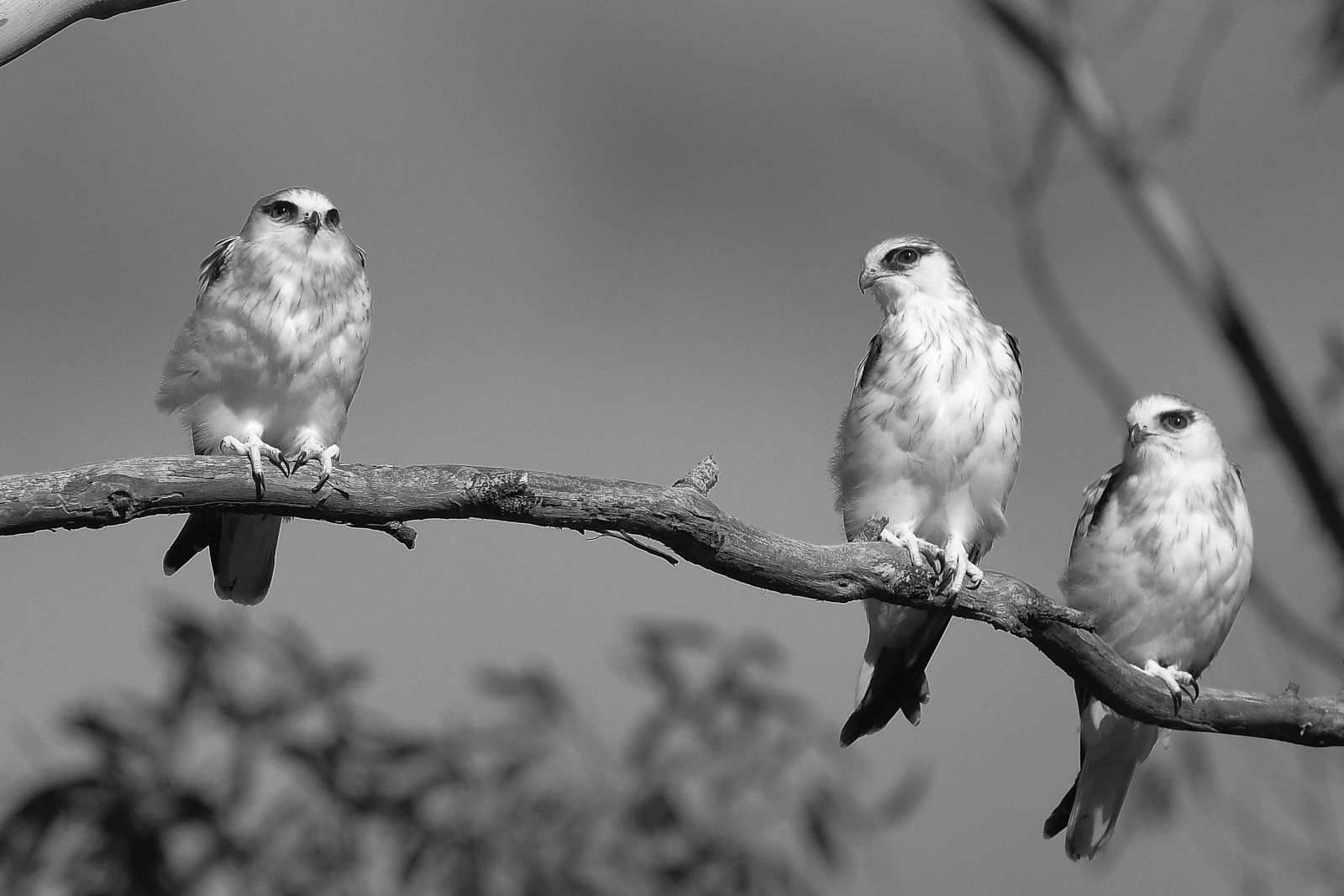
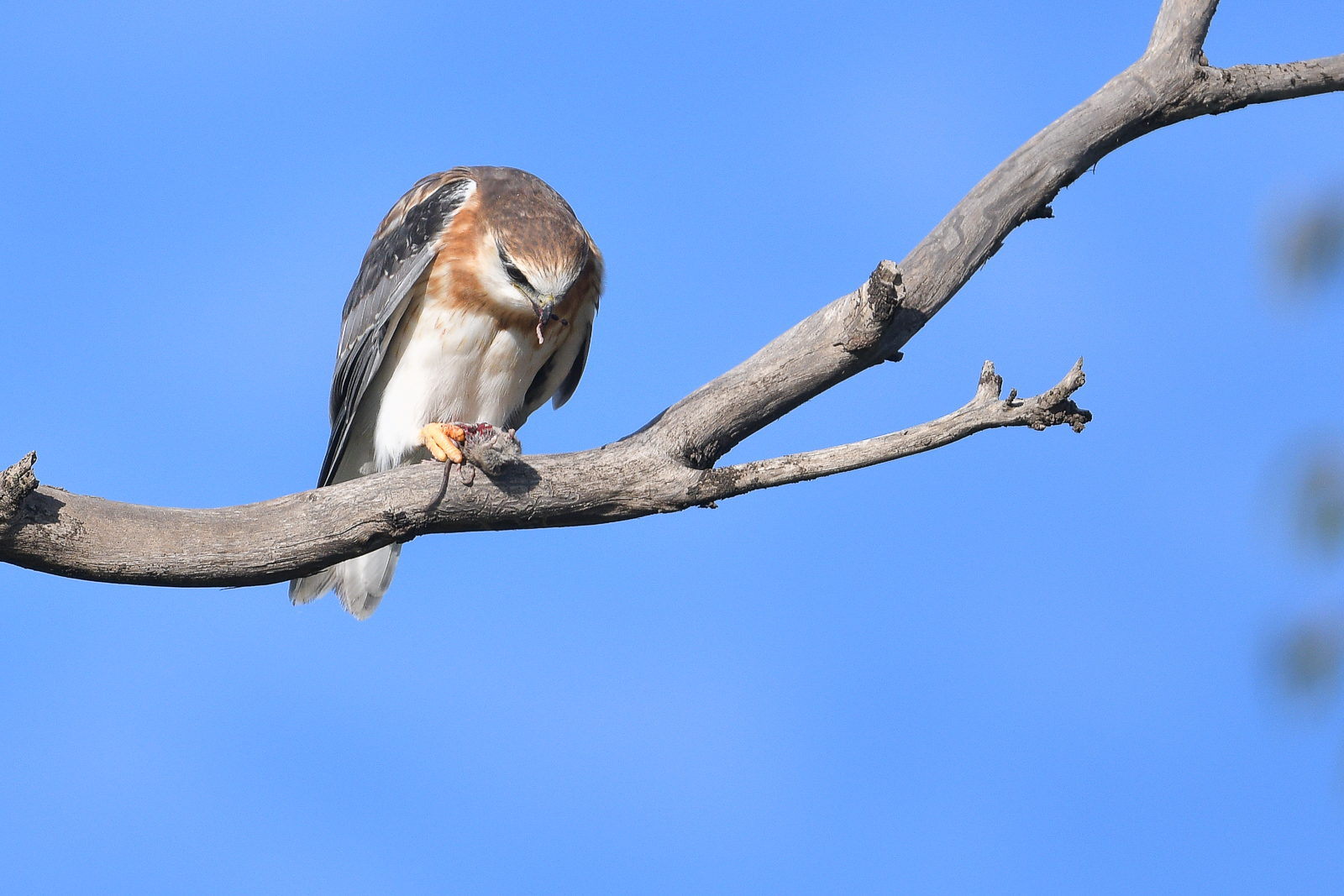
Saturday Evening Post #87 : The fine art of procastination

I was searching the web, as you do, t’other day, and Dear Old Uncle G. threw up a search find, that was just about irrelevant to my search.
However it did have a line of thought that intrigued me.

Mostly because it’s an affliction that I have been surrounded by for a few years now.

The point being, “Help, My Photos are being Held Ransom by computer software management programmes (programs).”

Like the bedraggled writer I too am overwhelmed by gigabytes of images, all sitting on a harddrive(s), on DVDs, USB Thumbdrives, and an assortment of other ‘storage’ devices that have scattered my photos landscape.

Yes, I hear people cry, but they are carefully catalogued, selected, and sorted into various albums, collections, folders and “Smart Albums”, so you’ll have no problem finding them.

True, I weakly reply.

But, none-the-less, they are not accessible all the time, I can’t recall ever getting excited about going over the 27,890 pictures in my 2015 Collection.  To be practical, I don’t even know what’s there.  They are held ransom by the very technology that is supposed to administer them. I can’t even hold them up to the light and search through them. Drives don’t work like that.

Oh, let’s create Slideshows, Photo Books, print them out, share them online,  and the like.

And that is where my other failing raises its ‘ugly’ head.
It’s easier to procrastinate,  and it’s not really an act of despair-more an act of rebellion.   I think I am beginning to Not Care, about the unseen photos in the March 2012 directory.

Because, as the writer points out, we need to spend the time to ‘Process’ them. It’s why we shot them in raw to begin with. And that is my failing. I don’t want to spend the time in front of the computer wading through those directories, just to find the “Nuggets of Gold” I’ve overlooked and will eventually get around to “Processing”. It’s enough to drive me back to shooting JPEG. 🙂
And just in case you are pondering a hopeless case, each year does indeed have an album of the Best of the Best for that year. Carefully culled from among the Dross to represent that year.

If I used Star Ratings, these would be my Number 5 Stars.
Probably also get a Colo(u)r label.
Certainly a Keyword (Best of Best) ?—which is how I do it—to be able to seperate them out.

But the rest? Hijacked. Not only held to ransom, but probably never to be thought of again.
I just won’t pay the ransom price of “Processing” them.

I have  boxes of slides that go back more than 50 years, and they too are going to suffer from never being seen again.

The reality is, that I think I’m more excited and interested in the pictures I’ve recently taken, and the ones that I’m going to take in the future.

Ramble Over.

We were out with the young kites on a cold, windless morning.  The sunlight was clear and bright.

First one, and then another of the young Black-shouldered Kites took to the air, and headed out over the open fields.
Swooping, diving, climbing, jinking left and right.
Reminded me of young lambs kicking up their heels.
I thought it must have been enjoying the freedom of flight and life as it flew across the paddock with backlight running through the mists coming from the warming grass, I couldn’t help but pause and enjoy the moment with it. Then the second one came out, and they sprinted up and down the verge on the freeway, looking like pups chasing vehicles.

The serious business of living a Black-shouldered Kite life put aside in the joy of the moment.

Here ’tis.


Photographic-Essay: Annoying Relatives

It happens just about every-time.
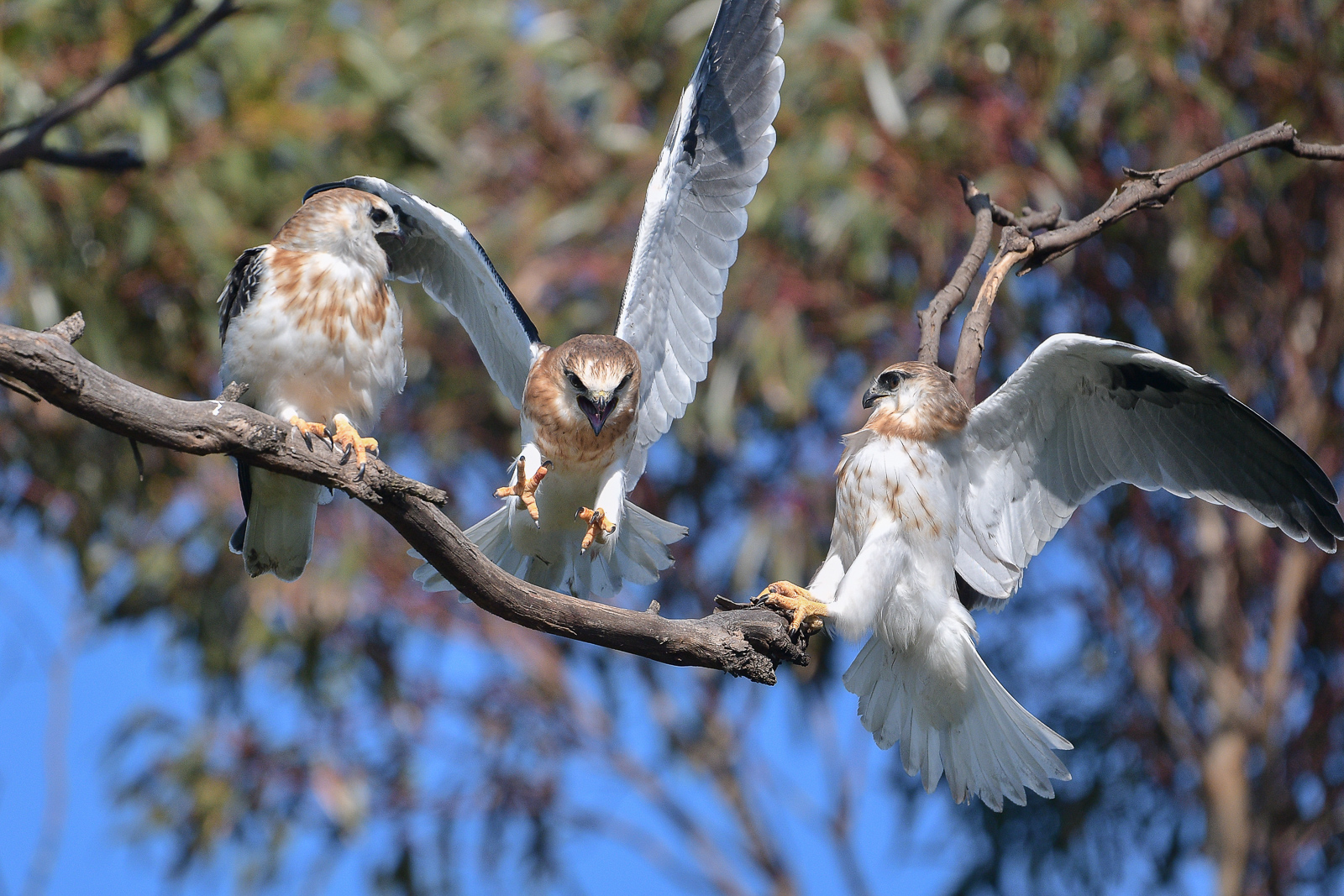
You settle in for a quiet meal-in peace, and a hungry, noisy relative drops by looking for a little bit of the action.

One young Black-shouldered Kite had just recieved a top-up from Dad.
Time to find a quiet branch.
Then, with the usual racket, one of the close relatives drops in to see if there is a handout.

This looked like a good branch to enjoy a quiet snack
Hey, hey, here I come, any for me?
I’m here, are you going to share?
Short answer is obviously No!
Checking that it didn’t leave anything behind.
Now to find a better spot
Lunch in the sun. More than picnic.

Photographic-Essay: Landing Right(s)

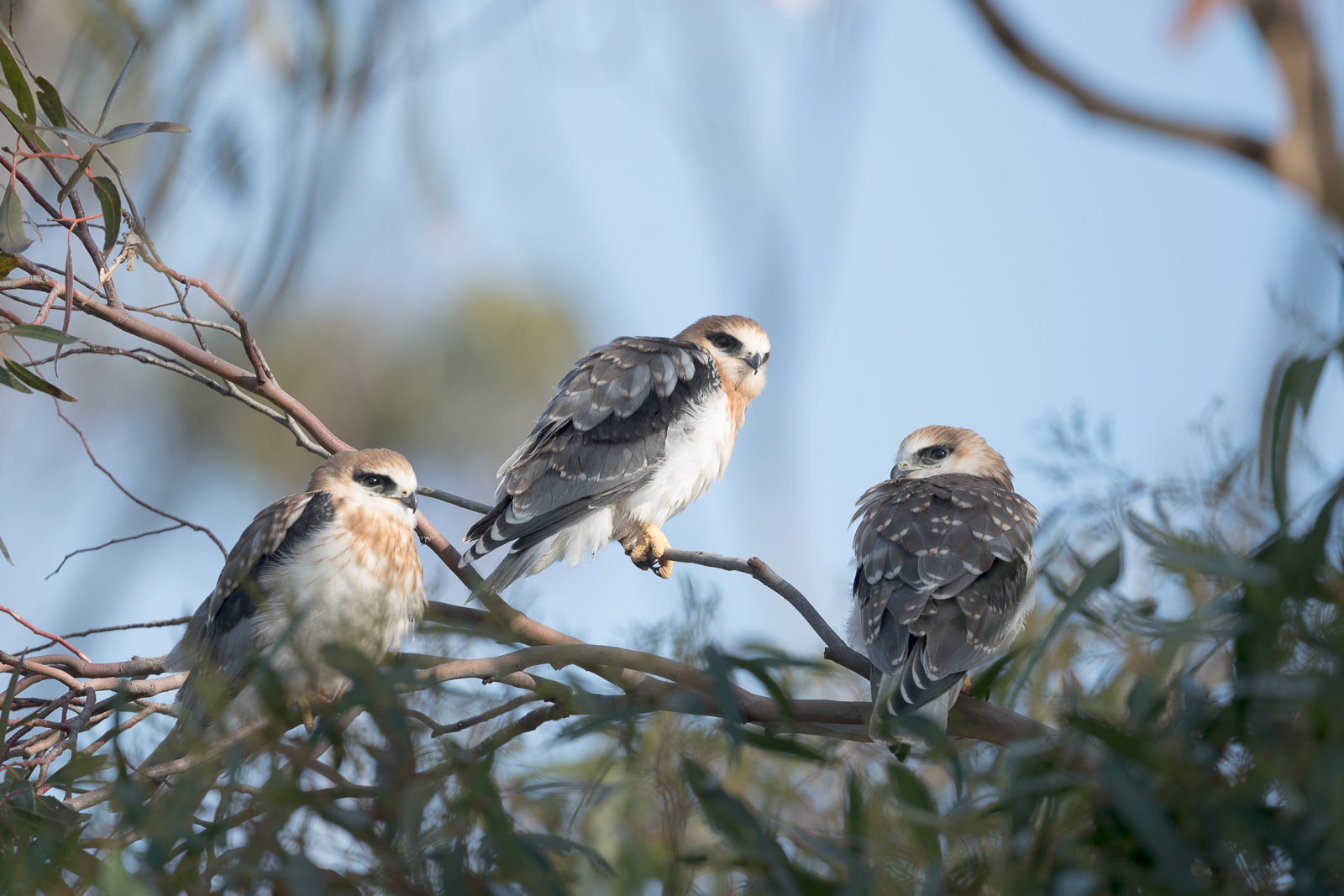
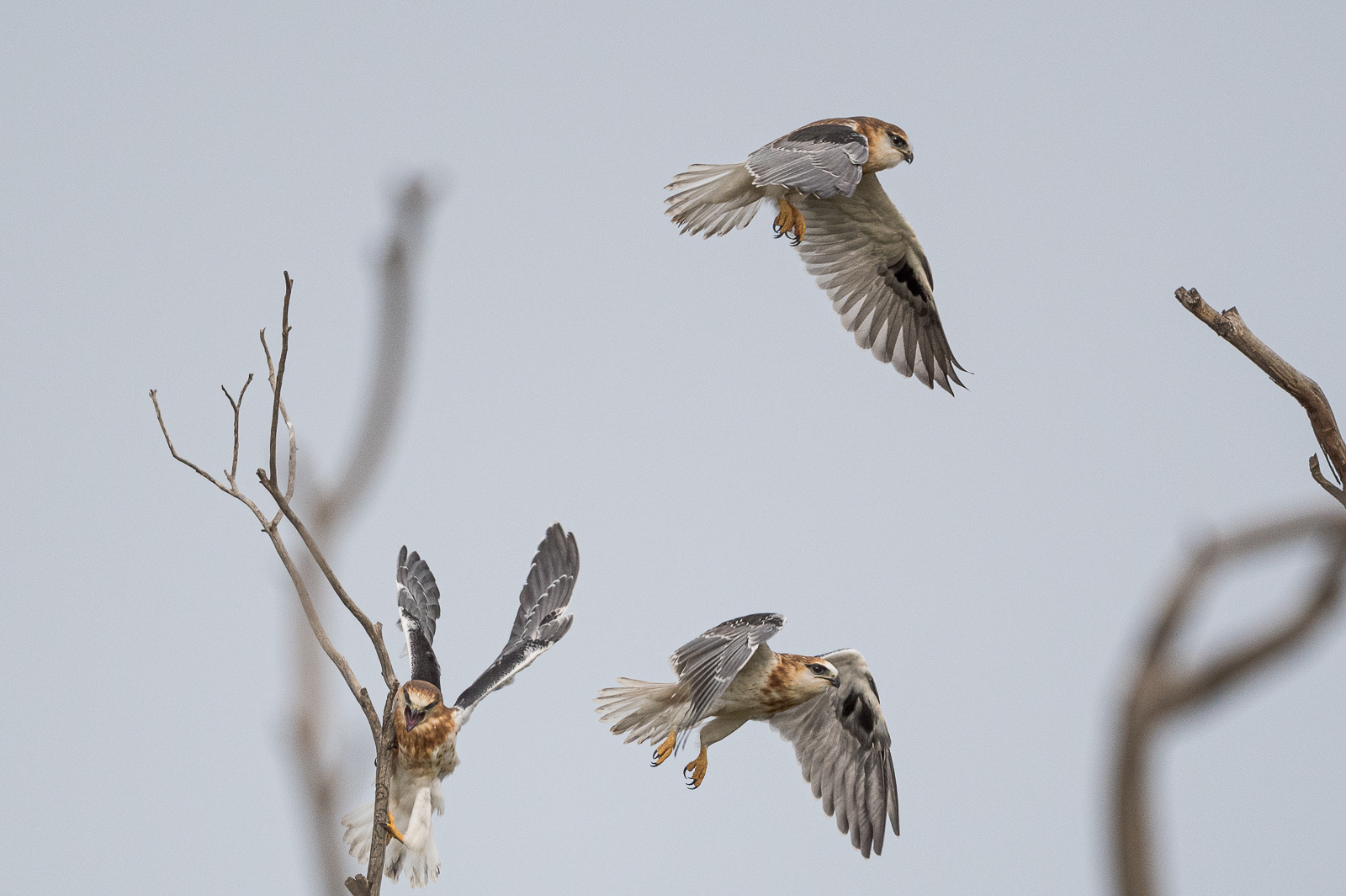
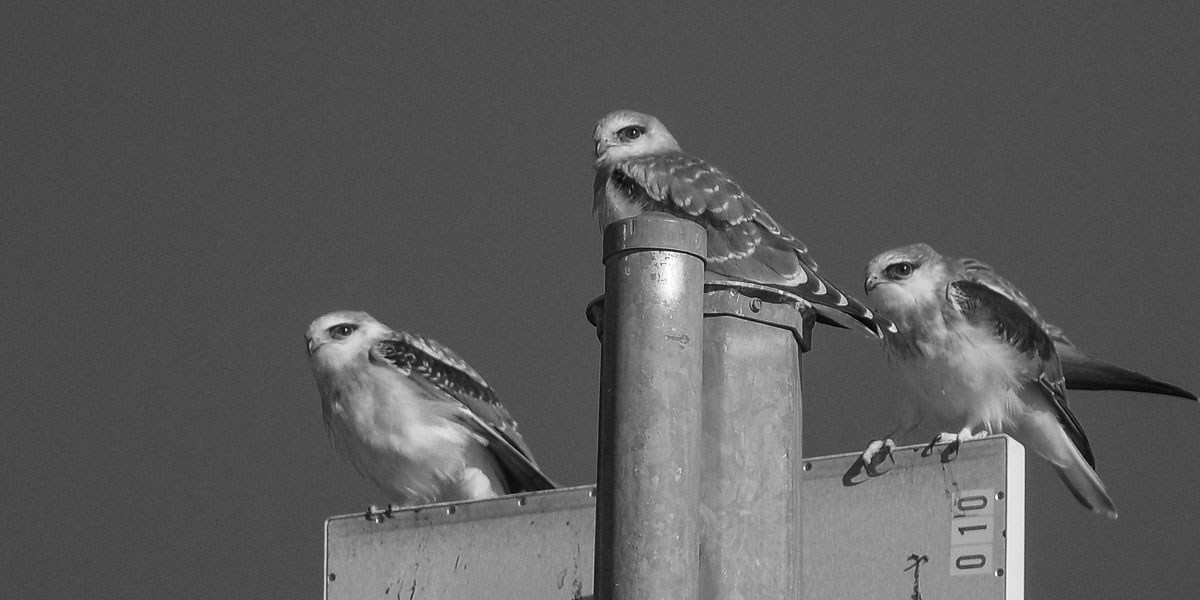
As the young local Black-shouldered Kites have continued to grow, they reached the point where all the necessary training had ended, and they needed to take a leap-of-faith and step off the trees and taste the thrill of flight.

It is interesting to watch how they tackle this major step, and I’ve often wondered if there isn’t some internal brain function that kind of switches on the ‘Let’s Go’ signal, and they finally ease their grip on branch or leaf, and suddenly find themselves free.

However.

All the training does not prepare them for the next event.

HOW DO YOU STOP THIS THING?

With no aeronautical skills to speak of, they resort to a simple, crash into the leaves at the top of the tree. Surprisingly, they are not very heavy, and the whole momentum thing doesn’t seem to harm them in anyway.  After a little they even begin to figure out how to slow things down a bit, and sort of just ‘lob’ into the leaves.

Within a couple of days, they have most of the skills for landing on branches, and soon they can practice high-speed manoeuvres and swing in on just about any branch from any angle.

So here is a week or so’s worth of flight and landing shots.  They are but a smallish collection as we’ve had a few good days with them over the past week.

I’ve also begun to make some Shared Photos Albums on Lightroom Web.

Here is the address for this current set.  https://adobe.ly/2N38chS

I’m thinking in future to put the bulk of the story pictures there, and then insert a link in the weblog. This means I can share a few more of the event without filling up  the page here on WordPress.

Hope it works for you. Feedback welcome.

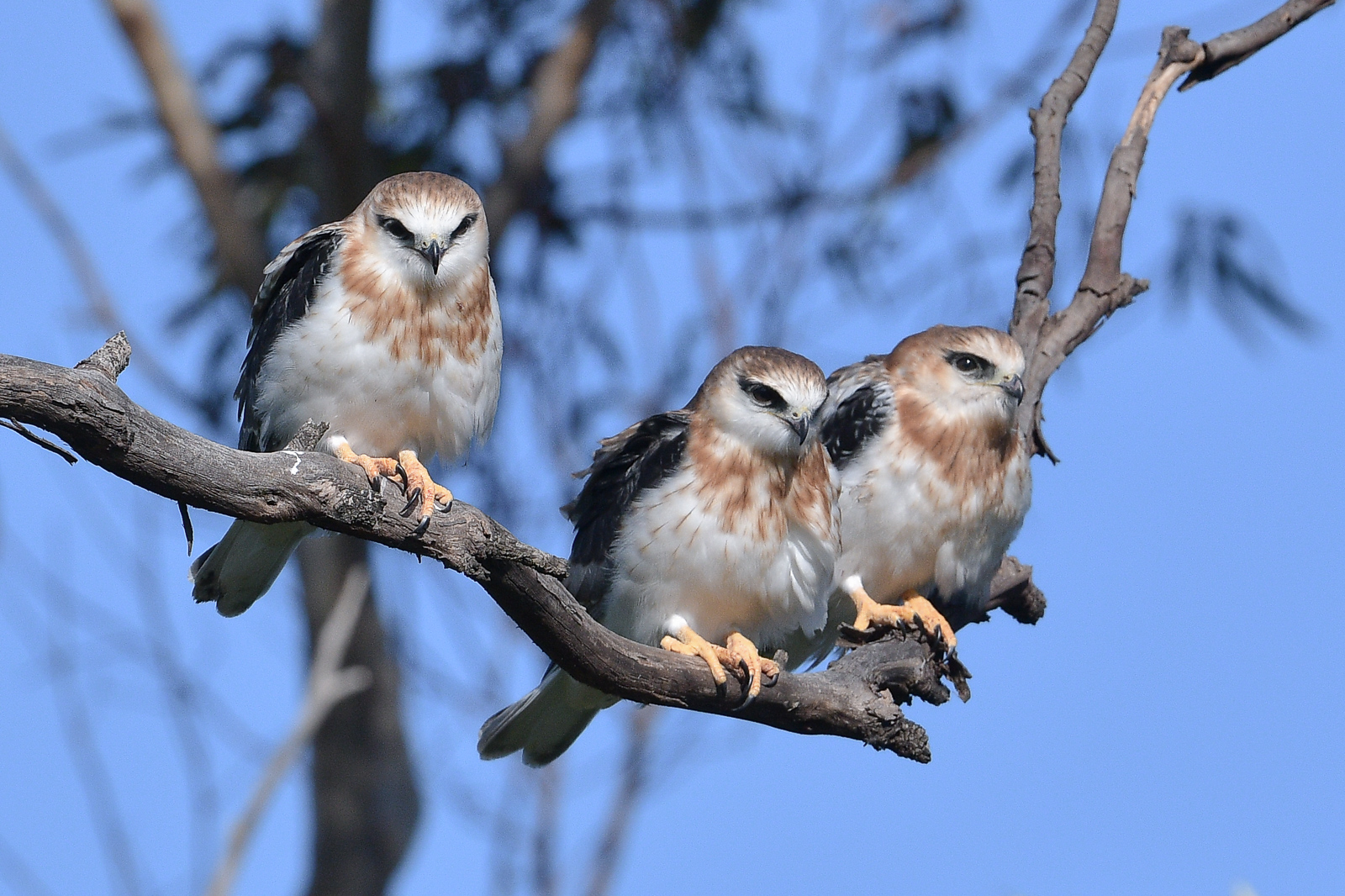
Before you can fly you must stretch the wings and build up the muscles. Not easy when you siblings won’t give you any room.
EHHHH yaaaa!
Help!!! Look out here I come
No speed control, and not much finesse.
Error of comedy. The top one had landed successfully, its sibling wants part of the action. But landing on a vertical branch offers new challenges
Ok, locked on, now to fold up the sails, trying not to knock off the other bird
Simply not enough room for both to balance, the first bird yields the space.
This one missed the branch and tumbled through the gap.
Balance, balance, balance, hold tight, balance. I think I can do it.
Full on hit the leaves, and get close to the other bird
It couldn’t get a grip and nearly knocked the other bird from its precarious perch.
Long distance shot. The little bird had wanted to get close to Dad, but knocked him from the stick, unfortunately it grabbed his foot as a landing spot. The big fella was not happy.
Rocking back and forward trying to right the body angle.
Trying to land on the top of close comms tower.
Up, Up, Up, but.
It ran out of lift before it brushed off speed and hit the tower sideways
Two weeks on the wing, and the smallest of targets are achievable.

Saturday Evening Post #86: Needing Space

It is a truism, I suppose that we all need space.  One marketing group I used to work for had a motto of, “If you’re not living on the edge, you’re taking up too much space.” Worked for them. Mind, as a group, they have now gone the way of the dodo.

We’ve been overwhelmed by the term, “Social Distancing”, and as a physician I read the other day said, “It should be called Physical Distancing, we need to keep the social interaction”  But, again, such are the ways of marketing.

And just as we have personal connections, even if it only be through “Zoom”, so in the natural world.
Everything in the natural world is connected to everything else.  Ripples on the water make wonderful poetry from the reflections of the trees. Watching a cat soak up and enjoy the warming sunshine. The final journey of an orange-red leaf, as its work over, it falls, for its next connection as it replenishes the earth.

As a nature photographer, with a commercial photography background, I can’t help but sometimes make connections not only to the creature, but also to its habitat, habits, community connections, and how it links into the wider world around. For commercial, (product) photographers, the subject needs to have a connection to its surrounds. It’s not just a laundry basket, but a basket to carry clothes, useful in its setting by the washing machine.

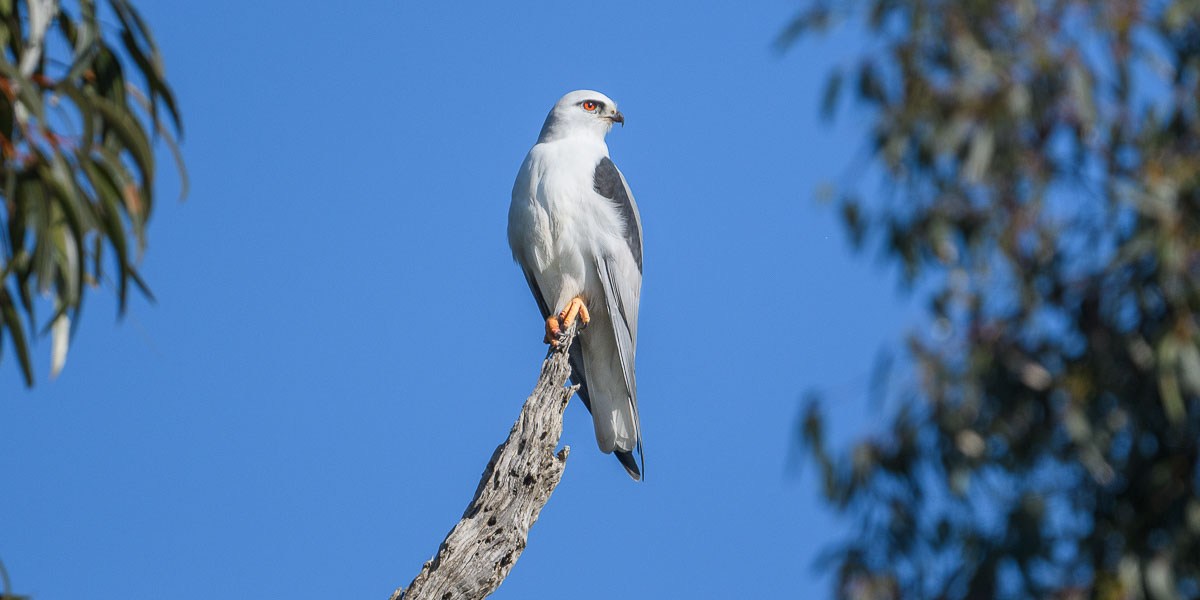
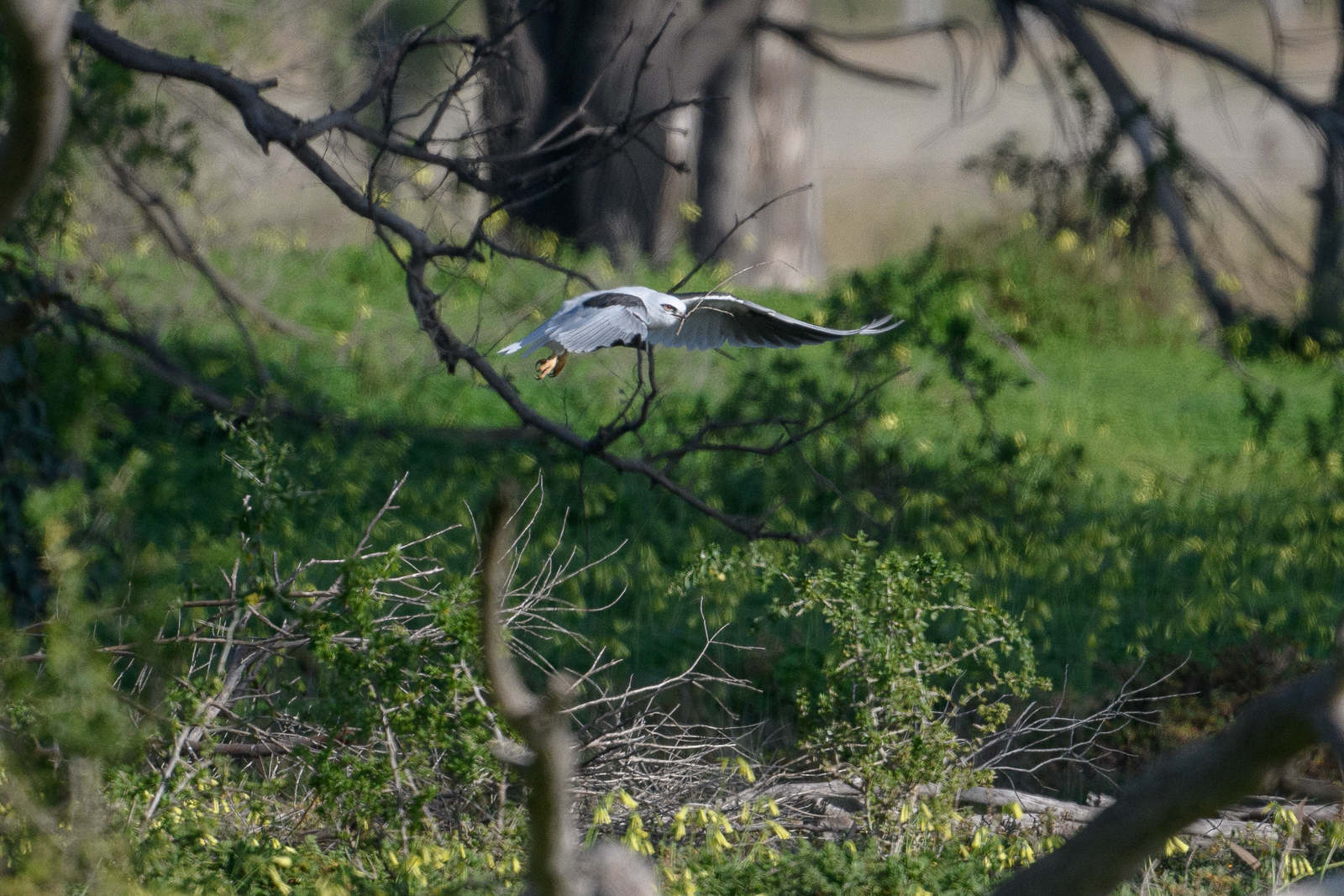
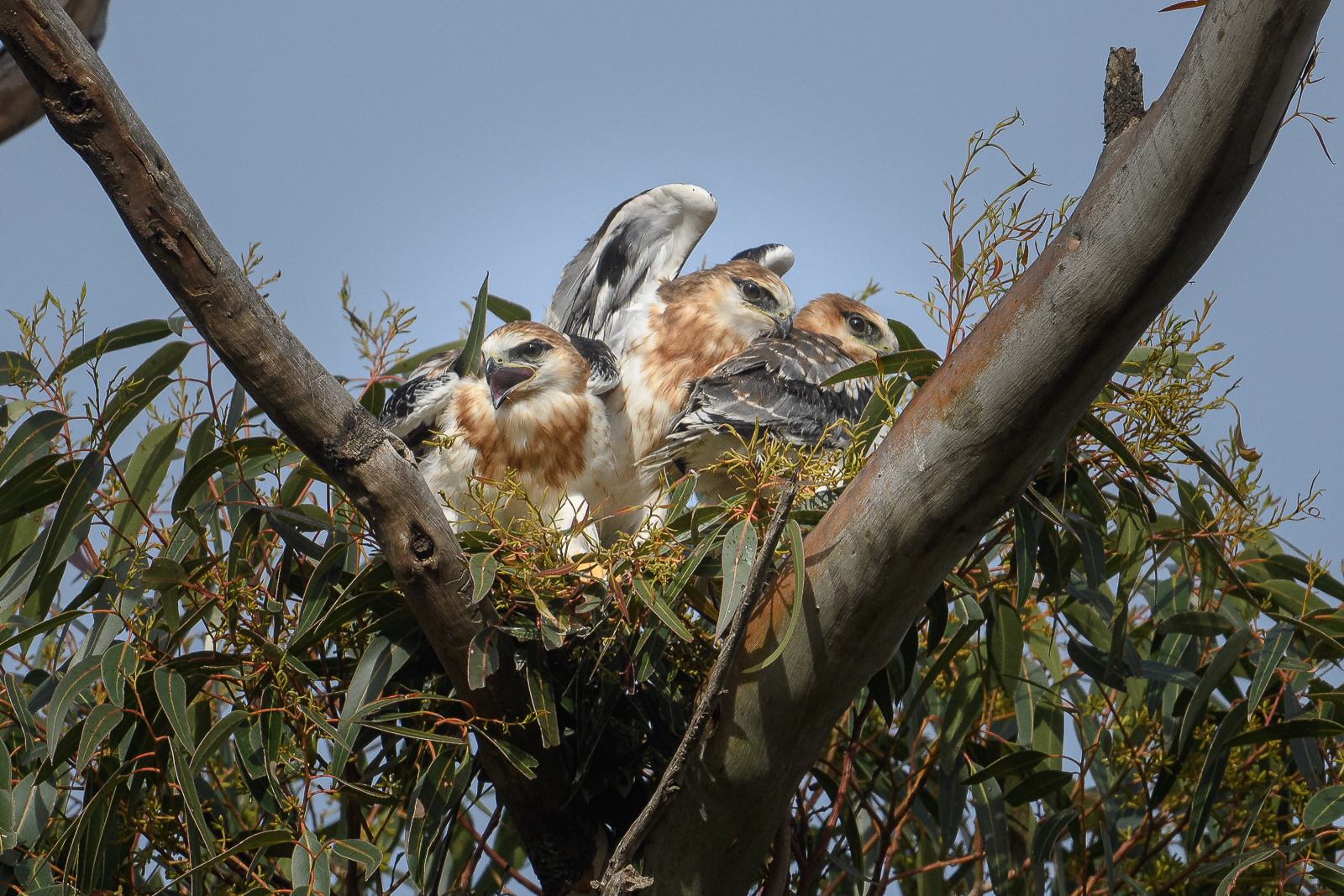
We have, EE and I, and David Nice, been following a pair of local Black-shouldered Kites in their nesting process. And it has all come to fruition in three healthy, active and overly-enthusiastic young fledglings.

Now about 10 days on the wing, their training will change to learning to hunt for themselves. Life outside the nest, is for them a matter of innumerable connections, from the weather, the availability of food, through to finding a mate and beginning their own opportunities to add to the species.

Currently Dad-he is the main provider-is beginning to encourage them to recognise potential food opportunities

And so it was.

I was sitting in the long grass on a small hillock, watching the young fly out and back waiting for Dad to turn up with a meal.

And the time dragged on.

After much waiting, calling and wing-flapping, first one, then another landed on a tree just in front of me. A bit above eyelevel.

There they sat. Crying occasionally, preening, and watching for Dad.

After a time, a real change occurred in their behaviour as they began to take more than a passing interest in the grassy area just to my left. Literally.  Head bobbing, peering and stepping left and right.  It was obvious that something had happened that made a hungry young kite aware.

One dropped.

Off the branch, into the grass and just on my left. Maybe 6-7 metres.  Now whatever had been there was well gone to safety, but our young kite was not one to give up, and proceeded to check around the grass. It completely ignored my presence and EE who was a bit further around on the other side of the tree.
I’ve said it before, but there is something deeply touching about being so close to a raptor that you can see its feathers rise and fall as it breaths.

The light was late afternoon, we, the bird and I,  were in the shade of the hillock, and that soft melded light seemed to suit the mood of a powerful raptor engaged in an experimental life moment.

Satisfied that it had missed a food opportunity, it lifted off, and flew over me, the wing noise was discernible.  A loop around the tree and it went over EE at a little over head-height, and she smiled enjoying the moment.

Connected.

Photographic-Essay: Training Your Black-shouldered Kite, an Attitude of Gratitude.

The blog has been a bit quiet of late.  And as one of my mentors David DuChemin says, “My heart has run out of words.”  Between social changes, and restrictions, to a world-wide outpouring of grief and cry for justice, it has left some with mental whiplash.

Yet as David says, “We’ve got so much, we are healthy, safe, and have gratitude for what we do have.”  For those who don’t know David’s work, he has been involved for over twenty years with several NGOs (Non Government Organisations) at work in several countries, including Africa, India and Afghanistan. And he says of the current situations, “I hope it has long been abundantly clear that I will always fall on the side of compassion, justice, the oppressed and the broken. I just don’t have words right now.”

Words just don’t seem sufficient.
So while I’ve been quiet, in-fact there have been a few things happening in the field.
All of them items for which both EE and I are grateful that we have been graced to enjoy.

  • My Flickr friend, and commenter on our blog, David Nice, was kind enough to advise of the location of a nesting pair of Black-shoulded Kites.
  • We managed a week of really great weather.
  • Shivering cold mornings and glorious sunny days.
  • Windless weather.
  • Right in the middle of the young Black-shoudlered Kites fledging and learning to hunt.

There are a lot of images here. Mind, it is but a tiny part of the bulging folio of photo-story that EE and I have been able to make over the past couple of weeks.

Let’s begin at the end, today, and see how these amazing little creatures are beginning their lives.

Dad herding one of his young back to the nesting area. It had decided to see if it could join him on a hunt. Not likely. To move it along he gave it a wing clip as he went by.
Suitably chastised it headed for the tree.
The rich colours are impressive
Dad arriving with a mouse and getting plenty of attention
This snack goes to the nest area, and the young are quick to follow.
Next food top-up he hovered out in the open, dangling the mouse. But the young one’s didn’t quite get the idea
Another delivery and this time one of them decided that it was worth the effort to get its own snack.
Locked on and speed slowing down.
Hard to imagine the calculations going on in the young head.
Looks like its locked on to use the left claw for the contact
At the last moment, instead it swings in with the right claw. Also Dad has repositioned the mouse so that it will make contact.His legs are closer together as he moved the mouse over.
Target acquired
Dad waits until its all secure before releasing
Success!
“My work here is Done”
To the victor the spoils.
Here is another transfer, this time on a branch. A dangerous move as the young one can easily knock him from the branch.
Again he waits until it is secure before letting go.
No mouse here!
Youngster mantling over its successful transfer.

Saturday Evening Post #85 : Mr. Smith, is the only good light available light?”

AudioAdam, sent me a wonderful note after last week’s SEP.

Essentially the question was, “To Flash, or NOT to Flash”, regarding using additional light to enhance the subject and the moment.

It is an interesting question and Adam is not the first to think to ask.  The irrepressible Joe McNally, then a student, asked of visiting lecturer, the famed photojournalist, W. Eugene Smith,

” Mr. Smith, is the only good light available light?”

Gene Smith responded somewhat along the lines.  “Yes,”  and to quote Joe, ‘from that moment on I vowed to only use the God-given light that fell on subjects’.  That was the touchstone.

But, Smith, took an alternate drink from first a glass of milk, and then a vodka, and continued…

“By that, I mean, any &*%%@$ light that’s available.”

The doyen of flash photography and birds was Eric Hosking.  Eric solved and developed flash solutions for working with birds nigh on 90 years ago. Some of his pictures are still the gold standard for flash photography for birds.

If you think carrying a small flash unit into the bush is a pain, then consider that Eric initially had to carry over 100 kg of gear, which included 12 V car batteries.

Let it also be said, that I am a great believer in Electronic Flash, much of the magazine work I’ve done over the years has been primarily lit by flash.  In days of yore, your scribe could be seen carrying at least two Metz 502 units to the wedding ceremony or deb ball.

We eventually bought into the Nikon system at the time, because of the clever Nikon Flash System Controllers.  (Canon did catchup.)
So when I came to bird photography I did for quite a while use flash regularly.

I shot two seasons of Kestrel nesting with mostly flash support.
Here’s a shot of one of the cameras, and the flash off to the right, subject left.  Oh, its camoed not because it fools the birds, just to stop people asking what I was doing in the middle of the paddock. I used to respond, “Well, as you can see, I’m up a ladder, cleaning out the gutters”, but I gave up trying to explain.  Off to the left in the shot is a radio release receiver, as I used to sit in the treeline about 50m back.

One of the joys of working with flash is a liability with focal plane shutters, the type on DSLR cameras.  It limits the top speed to at best 1/250th of a second.  Hardly enough for good outside shots in daylight.  What I want it to be able to balance the exposure for the best daylight rendition, and then add just enough flash to fill-in some shadow details, but not overpower the shadows and appear like its the main light source.

In the Nikon system, and no doubt the same in Canon, I can run the shutter speed higher using a clever, FP HighSpeed Sync.  Now instead of one single actuation of flash, the flash unit fires off several shorter, less powerful bursts so that the entire frame receives the flash. (Not time to explain all this, just gotta go with it)

But

In shorter bursts, they are less powerful, and don’t travel great distances, or fill large areas.  Ahh, enter the Inverse Square Law. ISL. (Nuff said.)
However it helps make great for sunlight fill in.

What about at night?  One of the main uses I guess.  And because of that pesky ISL, the subject closeup gets the right amount of light, the backdrop behind does not, and things go black.  Nuff said. Not going to explain the use of several flash-units and their placement in this blog.  Hey, it’s Saturday Night.

So to our lead Image.
This is Mr Darcy. He has just arrived back with a snack for his growing brood.  Unfortunately they had only just that morning flown, and were sitting in another tree wondering how they got there.  He looks a bit perplexed. The nest hole is directly below him—Empty!

Tech details, D200, 600mm f/5.6 manual focus Nikon, 1 SB600 unit off to the right.


And another with the same details.

This is my branch

I once sent this to one of those “Nature are Us” competitions, and it was rejected.
1. Shot in Studio. 2. Captive bird.
Go figure.

And just so you don’t go wandering off all over the web looking for inspiration, here is a final from Joe McNally

“…all the shouldas, couldas, and wouldas that befuddle our brains and creep into our dreams, always remember to make room to shoot what you love.
It’s the only way to keep your heart beating as a photographer.”

Enjoy


Studio Werkz: Melded Light

Beauty Dishes are all the rage at the portrait studios.  Not a fav light of mine as I’ve never been a photographer of young 20-30yr hopefuls who want to not only look like Kim Kardashian, but BE her. The tight parabolic driven light helps put some enriching shadows for depth and yet keeps the boldness of the well-lit facial planes.  And although I don’t use one, it’s a simple light to set up as the light doesn’t ‘go everywhere’. Sort of like a little theatre in an ‘itty-bitty space’—(Genie- Aladdin).

Yet it has to be said, my favourite beauty light is a soft-melding light that pours itself over the subjects features and just stops short of creating deep dark shadows.  Depending on the size of the light source, (think great big grey sky, or perhaps early sunrise/late sunset reflecting from clouds), a melded light will also provide sufficient modelling to keep the 3D feel for a subject. Smaller light sources, full window light, or light coming in under tree-tops also will help with the modelling of the features.

Gone are the day of bulky tungsten lighting stands and burnt fingers changing bulbs, and gone are the those impossible ‘umbrella’ stands with their coloured foil linings. Yeshh!

The very early studio portraitists worked with an amazing medium. Available light.  The studio was always on the top floor of a building and was glass-roofed, and glass-sided. With wonderful arrangements of light and dark curtaining to control and direct light.

Here tis.


Now it is true to say, that I don’t wear such a suit to photograph birds, and I’ve significantly less hair than our studio operator, but look at the way the shadows go on for ever.
Even in this simple take.

EE and I feel to a bit of luck, good luck, instead of that other unmentionable kind. We located at Woodlands, on a bright sunny day, a feeding flock of Flame Robins. Accompanying them, at least in the areas I suspect was her ‘territory’ was a single, lone, female Red-capped Robin.
We were in no hurry, and she had her whole territory to work through.  A bit like going to a relative’s house and sitting in the kitchen talking while food preparation was going on.

At one point she flew behind a nearby tree, and then pounced on a snack, and popped back onto a close branch, and at the same time the sun came out and soft melded light cascaded under the trees and neatly framed her.

Enough of the sunshine hit the grasses behind to give her a pleasing backdrop and all I had to do was press the shutter.

Photography, that it could always be that simple.

Enjoy


Saturday Evening Post #84 : Daring to Look- The Work of a Photographic Witness

“Daring to Look”, is a book of the some of the work of an American 1930s photographer named Dorothea Lange.

Many no doubt will have never heard of Dorothea, but chances are extremely high that you will have seen at least one, or two of her stunning photos. They are stunning not because of their gifted photographic skill and design, but rather of the compelling story that in encased (almost wrote enshrined) in the study.

One of them was used eventually as the image on a USP stamp.

Here is a link to see, “Migrant Mother,
Oh, you’ll say, I’ve seen that before.
And another to “White Angel Breadline

A quick Google will of course find many more, but here is a good selection.
Which also has a quick potted history of her work during the great depression and among Japanese internees during WWII.
The one thing the site doesn’t describe is her slowmoving train wreck family life, nor does it really emphasise the struggles she made to have her work recognised. But those details are well documented elesewhere.

She once said, “Every image you make, ever photograph you see, becomes in a sense a self-portrait. The portrait is made more meaningful by intimacy—an intimacy shared not only by the photographer with the subject, but by the audience.”

I’ve told the tale before, when as a little tacker with a library card I managed to get invited from the ‘junior’ section of the country library, into the mystic “adult section’. I have no idea who or why, but the photographic shelves had quite a number of portfolio size books, and I could pour over the works of the greats.
One of which was Dorothea Lange.

At the time, I had no idea of the ‘great’ depression, or the dust-bowl refugees, nor, can I say with some confidence did I register the social significance of Dorothea’s work. All I knew was that these photos said something imporant, and they had been placed in a folio selection, so, they must be good.

Better than my shots of ‘Blackie’ the cat on the verandah in the sunshine.

And somewhere in those musings on lazy weekend afternoons at the library, the concept of being able to use photography for more than just a record or a mindless selfie began to crystalise. What would emerge, a squishy blob (blog?) or a wonderful butterfly?

Later on I would learn that Dorothea also said, “It is no accident that the photographer becomes a photographer, any more, than the lion tamer becomes a lion tamer.”

She was once described as a “Photographic Witneses”. Daring to Look: Dorothea Lange’s Photographs and Reports from the Field, contains not only photographs from her work, but also previously unpublished field notes of her work for each photo.

Perhaps those folios in the library did not just get there by accident. How wonderful is the workings of the universe sometimes.


Saturday Evening Post #83 :Nothing in Art must look Accidental

Many years ago, a lifetime in cat years in-fact, I was visiting a friend who invited me to view a portfolio of photographic prints that he had been given.

“What do you think?” he asked.

When I look at someone else’s work, I like to take the time to ‘live’ with the images. To let the visuals ‘ooze’ down into me and see them with the intent of the maker.
Now these were substantial prints. The smallest would have been about 20×24″ (50x65cm).

So I began to turn them over. After three or four of them, I was struck with the singular feeling from each one.
They were all landscapes, and more ‘Land” than “Scape”.  Small details of rock, or tree, branch or pool, edge or small surface.
Let it be known, I’m a minimalist at the best of times, and such an approach to line, form, shape, tone, pattern are a preferred photo hunting ground from me.

Yet, as I continued to turn the prints over, it became clear to me, that what I was looking at were, if nothing else, simply technical exercises. No intent to involve the viewer. Just segments of something.

“So?” I was asked.

Taking a deep breath, I said, “I think there is very little of the maker to be seen in any of these shots.”  “Most are a jumble of visual elements that don’t hold in a cohesive way, allowing me as a viewer to be part of the experience.” “I can’t determine how the maker felt, did they like or dislike the scene, was it a happy time or a strain.”  “The maker certainly has put a lot of time into the making, and I’m not sure if they made the prints or had a lab produce them, so it is quite a time and monetary investment, but I’m struggling for the ‘Why”.

Freeman Patterson, once said at a seminar, “Nobody can ever hide behind the camera. Accept the fact that when you make a picture you are revealing a little about yourself. For us most subjects have a symbolic importance.”
And I guess that is what I missed in the portfolio, the symbolic importance.

I’ve worked a range of genre over the years.  Even spent a week as a horse photographer. But I moved on from that quickly when I discovered how smart horses are.

I also worked for awhile photographing classic cars for car-mags.  Having an inherent interest in the subject, I found that it was much more than a technical exercise of showing off the car, or the working parts.  Classics are put together, sometimes over many years by enthusiasts, and I enjoyed being able to find those special little touches the maker had put into the vehicle, and bringing those for others to share and delight in.

Content and style need to work together to covey feelings and ideas for the viewer to experience.

I really enjoy exploring buildings. Not so much the whole structure, but the little touches that either the builder, architect, or owner has put in to say, “This is what I enjoy”

Where-ever I’ve travelled, both in Australia, and overseas, looking for those little moments of bouncing light, or delicate colours or interesting arrangements of elements, that stimulates me to bring the camera to my eye and frame an extension of the makers original vision.

One of my fav lenses for this sort of work is a 70-200mm zoom. The narrower angle forces me to be very specific and include only the absolute essentials.  I’ve often thought that if I had to only have one lens on a desert island, then the 70-200 would be my first choice.  Second would be a wonderful old 105mm macro – a manual focus lens.

While our group was doing the tourist thing a little while back BCV (Before Corona Virus), I took off to walk the side streets and enjoy the smorgasbord of shapes, colours and styles that the owners had on show.

“Nothing in Art must look Accidental” Edgar Degas


Little Visits: Grey on Grey

After about a week of really sunny pleasant weather to celebrate our release from restrictions, we were planning a Little Visit to Eynesbury Grey Box Forest.

And

As it turned out, so the weather turned.  So I pulled on my best grey jacket, and we set out under a grey, ashen, sky hoping that the sun might break through a little.

But

When we arrived at the forest, the weather had ‘lowered’ even further, and any chance of well lit photos had disappeared.  However we wanted to look to see if the Flame Robins were in good numbers and set off like adventurers along one of the maintained tracks.

It has been said, either kindly or unkindly, that I have Grey Box sap flowing in my veins.  There is something very soothing to me about stepping off the track and merging into the forest.  The grey might seem bland to some, but there are so many tones, so many rich shapes and such beautiful trees and that I find it a visually exciting environment.

One of the masters of the forest area at Eynesbury is Jacky Winter.

I find myself enamoured with these delightful little birds that seem both so well adapted and so well suited to the Grey Box area.  They don’t come in a wide range of flashy colours, they are somewhat small and inconspicuous, but they always to make the forest dance and sing when we come across them. Perhaps its their ‘tail wag’ with the leadining white edges of the tail flashing their presence.

We were fortunate enough to locate five pairs during the morning.

Perhaps the most interesting were a pair that had located quite a large grub and it took both of them to subdue it.  Once they had eaten it they were off to a tree for a rest for the awhile.

Enjoy

Brown Treecreeper

Not a resident of Eynesbury but a regular visitor. Spiny-cheeked Honeyeater

Saturday Evening Post #82: The Encounter

It’s interesting how as photographers we keep striving to make improvements to our vision or style. Finding a better way to approach a subject, explore new lighting options, wrestle with buying that ‘new’ lens that will give us a ‘better’ pictures or that new piece of software that will ‘uncover the hidden photograph in your collection’.

Many lightyears ago, in the days of filum, I was a member of a group of working photographers that would get together on an ad-hoc basis every other month or so, and generally we’d meet in a cafe in Lygon Street Fitzroy for a late Friday lunch, well it was a lunch that went late. Sometimes we’d bring along prints or tear-sheets for discussion. The last few times I remember taking the old iPad with a few pictures of recent making.

One of the house rules was it was a discussion on all things photography, from technique, to style, to equipment, processes, other people’s work, and future opportunities. Sometimes it was a bit like a parliamentary debate, other times more like a inspirational speakers session. Just depended on how much ‘red-ned’ was consumed during the course of the afternoon.

But one question, we all had to have an answer to was “Whatchabeendoin” What new image, vision, exploration or direction we had each been travelling in.

One of the group was oft to quote a verse from St. Matthew 6  “Behold, the birds of the air…. Consider the lilies of the field, how they grow; they toil not, neither do they spin”
Gotta love that 1611 King Jimmie English.  “Behold”.  Not just make a glancing look or a peek, but drum roll, Behold!

He’d almost always bring it up when someone was lamenting the slow down of business, the ungratefulness of clients, or the problems of marketing a new product. His point was always the same, well, at least as I remember.
Bird’s don’t go to another lecture, another seminar on how to find clients for their song, they just sing. No bird has ever had to attend a month long session with a personal trainer on the benefits of correct nest building. No bird looks at its current situation and laments not having this or that opportunity to expand its business. They just do bird things.

No flower sits worrying about should it move overseas for a better market, change its colour or its style to match the ‘current trend’, nor does a flower seek out a self-help guru to improve its image.  They just continue to make the world a brighter place to live.

It is as Mike Johnson over on TOPS says, “Viewing an expressive photograph has the potential to be an occasion”
Most people see art as a static event. You go to a gallery, the sculpture is the same week in week out, the painting remains inert, the basket-weaving or quilted piece in unchanging. Ready to be reviewed, but never “Beheld”.

Yet as Mike goes on to explain, “It can also be an encounter. The potential to be an event in the viewer’s life”
We are so bombarded these days with visuals, sometimes very graphic visuals, that it all becomes a bit old hat.
Yet for someone who works behind the camera, takes the time to work through post-processing and ponders over the variations on a theme from a photoshot, the occasion of showing a finished piece is a gifting and the viewer’s response is part of that. It is an Encounter.


Moments: The Little Warrior

This series was shot a couple of years back.
EE and I had been working with a pair of Black-shouldered Kites for over a year, and they had managed two successful nestings.

The nest was at the very top of a small pine tree inside a farm paddock, the birds would often fly out over the roadway where we were parked.

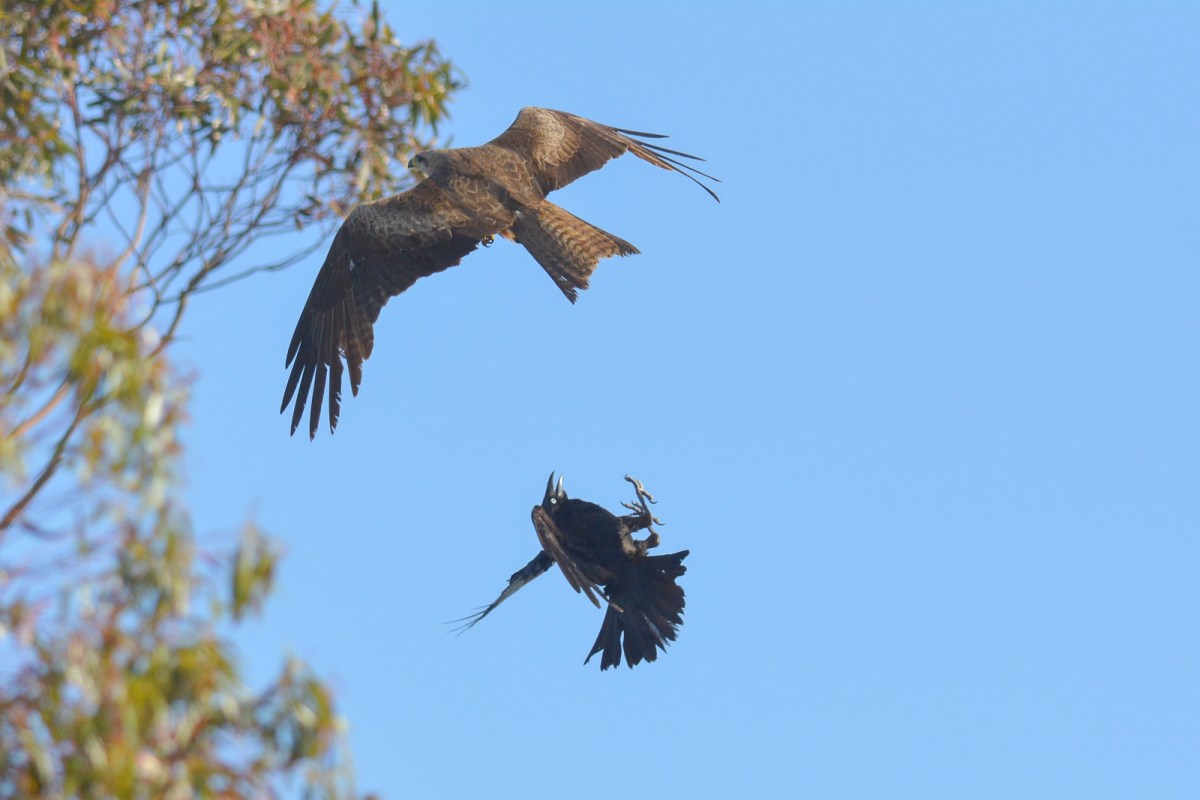
Just about fledging time a troupe of Black Kites moved into the area and took great interest in the young ones sitting high-up out in the open.  This resulted in some great aerial battles by Mum and Dad, yet the Blacks persisted in coming back and getting closer.
Of the three young in the nest, one was obviously a few days ahead of its siblings, and while not a great aeronaut yet, it could fly well enough to look after itself.

On this morning the Black Kites were even more intense on their attack, and swooped right over the remaining nestlings.

Mum and Dad flew frantic missions to see them off, but were not having much success.
It must have gotten all to much for the Little Warrior, as it burst out of the trees and joined in the foray.  Dad then had a new problem, and that was to hunt the young one away from the far more skillful Black Kites.

However the young warrior was not having a bar of that and continued to press attacks against the larger birds. What the big birds thought of it would have been interesting.  But it tired quickly, and needed to drop down on to the tree for a rest, followed very closely by one aggressive Black Kite. Fortunately nothing came of the attack, and the bigger birds became bored and like teenagers in a shopping mall, moved on to see what else they could find.

Dad flew out and caught a mouse, and quickly returned to reward his Little Warrior.

Black Kite over the nest.

Leave my family alone.

The big birds would not take NO for an answer.

Dad doing his best to keep the young one away from the bigger birds

Swinging in past Dad, and heading for an attack

Well if noise was enough to intimidate the Blacks, the young one certainly gave its best shot.

Defending upside down and Dad watches for other danger.

After a few minutes in the air, the young Warrior needed a rest, but the big birds did not stop their pursuit.

As a reward Dad arrived with a nice fresh snack to reward his Little Warrior.

Saturday Evening Post #81 : On Stranger Tides

“In the rush to return to normal,
use this time to consider
which parts of normal
are worth rushing back to.” – Dave Hollis

Greetings from, The Doona Hermit Headquarters.
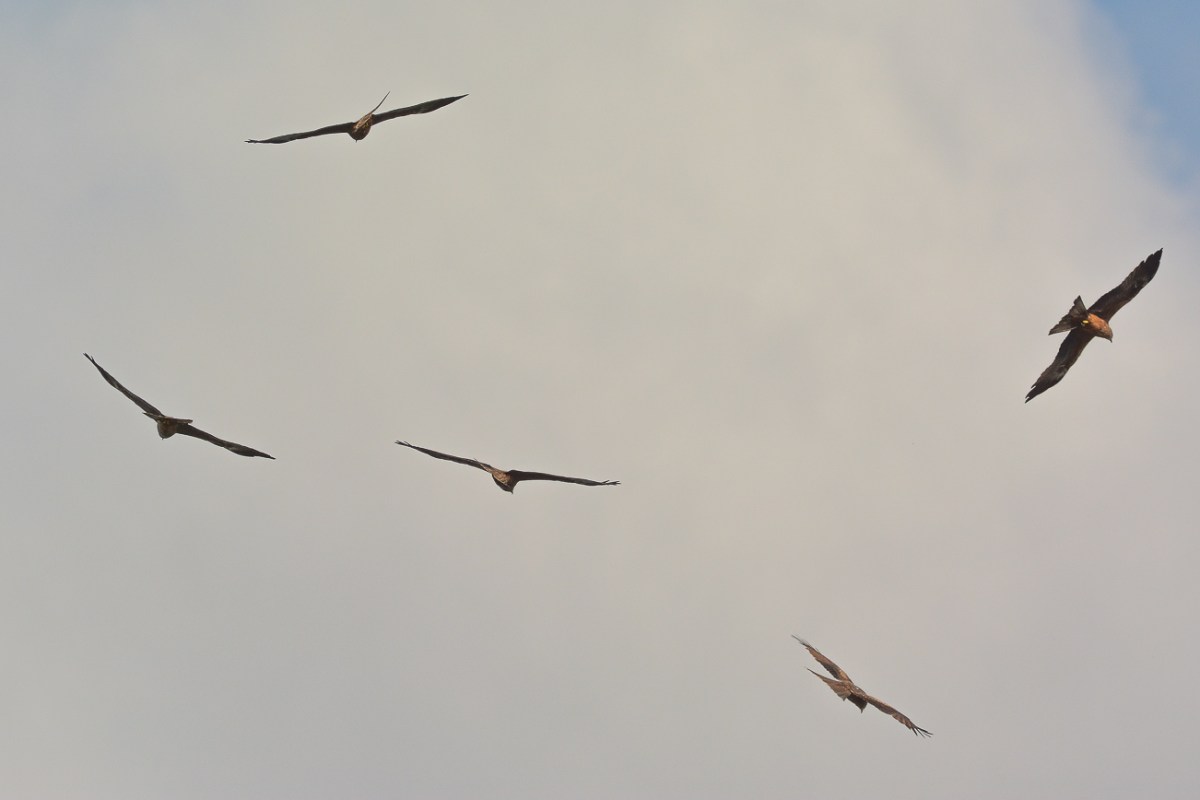
Title is a take from a “Pirates of the Caribbean” movie. (Tells you I’ve had little to do with my Lock-Down time;-) )

We all sit twiddling our self-isolated thumbs awaiting our fate. 
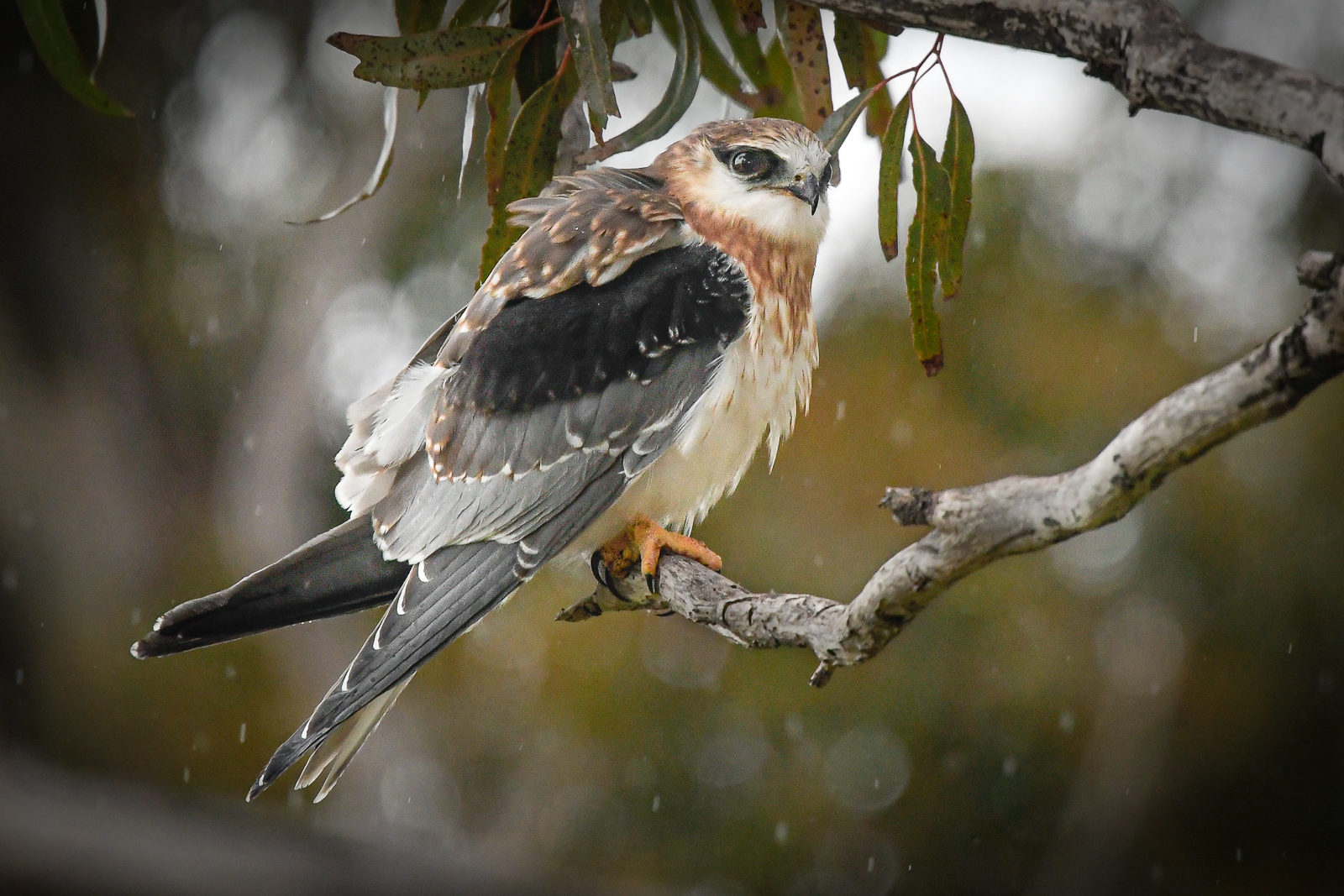
Mind, just as well today, as we literally have had about 10 seasons in the one day.  I walked early, and got wet, then the sun came out. Then it rained. And, as I write, the rain is pelting down on the patio, looks more like small hail as it scatters over the tiles. It must be bad, as Tai Chi pigeon, and friend, are sitting under the patio table to keep out of the wind and the rain.  EE and I often measure the severity of the weather by how many doves fit under the table.  “Oh, it’s a real three pigeon-under-the-table storm out there.” etc.
I have, it seems just about run out of current photos for sharing. I’m sure someone is going to say, “If I see another Black-shouldered Kite with mouse shot…”

In a bid of desperation, and to find something to do, I went on-line and purchased a new iPad Air the other week. My old, old, old, version 1 model 1 iPad hasn’t been able to keep up with the technology changes for several years, and I had sort of retired it to reading magazines, books and checking the weather.
I remember well the day, as I proudly opened the package, when it first arrived. 
I’d ordered one as soon as they were announced way back in 2010, BCV   (Before Corona Virus)
Mind, I had been sold on the idea since a keynote speech Steve Jobs had delivered nearly 10 years before, saying, :

What we want to do is we want to put an incredibly great computer in a book that you can carry around with you and learn how to use in 20 minutes … and we really want to do it with a radio link in it so you don’t have to hook up to anything and you’re in communication with all of these larger databases and other computers.” 

You’d have loved to have had the frequent flyer points my little iPad racked up.  EE used it for client presentations to magazine editors, I even wrote a few articles with it, I used it to teach at Box Hill TAFE for awhile, and it even at one stage using an app called ImageSmith, talked to the Lightroom database to access images. But, technology moved on, and without the bells and bluetooth whistles, it will now be another paperweight on an already crowded desk.
I started this blog on the new Air, and then moved back to the desktop to retrieve the Falcon shot. Haven’t had time to set it all up to sync properly yet.  More to do.

A few exciting reports have come in from people who’ve had good views of Flame and Scarlet Robins in various places, so it might be that the bush birds have indeed had a good summer breeding session and we might have some opportunities soon to get to know them.  The fine wet weather will have enriched the favoured moss beds which should be in good condition and well stocked with food I expect. Also prolific this year seems to be a small salt-bush that has rich red berries.   The insects feeding on the carotene laden fruit will no doubt provide plenty of bright red feather material for the robins.

So, we wait for what shall indeed seem “Stranger Tides”, to take us back into the field.

Here is one of the last views we had of the young Brown Falcon from Cassia-of Cinnamon’s clutch.
It had been sitting on the fence in the open, and flew up the fenceline among the surrounding bracken, to find a thermal that was rising from an open sandy area.—I don’t think it was an accidental discovery, I’m sure it knew exactly where the air was rising.

It swung round, picked up speed and gradually began to rise. 

This might look like a tight hardworking turn, but in reality its probably not using any energy at all, as the thermal is doing all the work over the wings.
I waited until it made the circle, and then turned in my direction, I wanted the sunlight running over the face and the body, and it straightened out just a little at the right moment.
It gained height very quickly and then sailed away across the paddock to disappear in the distance.

Time will tell if it is still hunting in the area.

I hope you’ve all been safe over the past few weeks. Also hope that the time has given you a chance to refuel the creative batteries and as D Hollis suggests, are ready to ‘rush back to things worthwhile.’

Remain

One of Scomo’s Donna Hermits.

For the technically ept, this was shot on the D500 with the Auto-Area autofocus selected. Canon—Automatic AF Point Selection. It’s the “point and shoot” mode really.  Mostly ignored by those of us with scorn for such things automatic.
I’d been messing with the setting a few times the past few trips, and find that it can indeed pick out an inflight bird against the sky first time, everytime.  Not so hot among the scrub and trees, but, I was working on that.


Saturday Evening Post #80: We Bounce

Greetings all my Fellow Scomo Doona Hermits!

Been cold, wet and utterly miserable weather here today, and probably has has some impact on my approach to life in general. Too cold to go out, and no where to go anyway. 🙂

“We Bounce”, is a term, that a mentor, David DuChemin coined after an accident sidelined him for 18 months or so back in 2011.
He was leading photo-tour in Italy, and was standing on a 12m high wall explaining the variations of light, form, tone, texture, viewpoint, lens selection and vision, when he misplaced a foot, and fell to the bottom of the wall. Legs, ankles and pelvis were broken, and required much surgery to repair, and even more to get right. As David tells, he was fortunate; as three or four people had fallen from the same wall the previous year, and all had died.

A year on, and he was able to walk, mostly with the aid of a cane. “The human spirit is a remarkable force,” he says.

We can’t all have perfect health, perfect bodies, perfect lives, and perfect photos… But we can chose to endure, to perservere, to take the courage to keep going, to sleep off the venom, (a reference to Honeybadgers—part of his post) to Bounce Back.

And, when bouncing isn’t enough, as David remarks, the truly blessed also have friends. And he then goes on to give thanks for all those who followed his trials that year.

So, this, is a post to say, “Thanks, Thank you to all who’ve been following along the ramblings of a Saturday evening, when we both could be wasting time watching tv, or out and about with family and friends.”
“Thank You, to all those who have tirelessly worked to bring us some stability in the dreadful condition we find ourselves embroilled, so many risking so much for so many.”

“Thank you” to our governement leaders for their forthright and determined decisions that have given us a glimmer of hope for some relief.  I only have to look at the world sats to see how fortunate we have been. Tough, yes, but we’ll Bounce Back.
It turned my head to realise that the United States now have lost more people in three months than battle casualites during the Vietnam Conflict. (58,220  1964-1975)

One good thing from being at home is that many tutors, trainers and artists have setup online access to some of their materials.
I’ve mentioned Jon Young and his “What the Robin Knows”, book before, and he has an hour or so long seminar Discover the Hidden World of the Animal Through Bird Language. In the webinar, Jon, Kristi, and Dan shared some truly fun stories and tips today that can help you tune into Nature through the voices of the birds.  It was 5:00am here, but a replay is much more convenient.
PS, its long and rambling as these sort of discussions are, so make sure you’ve a cup of the Earl’s finest, or whatever takes your fancy, if you settle to watch it. But the Nuggets fall quickly and are worth searching out.

You can view the webinar replay here.

And my  Wordpress Friend, Ashley, over at Aussiebirder.com, his blog is here
Ashley has just published a new Edition of his book What Birds Teach Us   so good luck with the publication.

For over six months, we had the opportunity to work with a single Grey Butcherbird, it has become quite confident at our presence. Now, I know that anyone who has Butcherbirds in their local patch will find that pretty ordinary, as Butcherbirds quickly assimilate.
However the last few sessions we had, Butch came out into our area on its own accord.  The featured two shots, are a result of the bird flying directly over my shoulder. Close encounter.
Had to do vertical, as I couldn’t fit it all in on horizontal. Just about full frame. Close.
Jon talks about such encounters as   Connection, Not Conflict     As awareness grows, so appreciation grows, so, empathy grows.

We bounce, but its usually a matter of choice, in life, in art, in photography.

Keep takin’ pictures, we do.


Remain


Davyyd.