Blogging 101 Week 2 Day 2

Dah dah,  An easy one today.  Add a Header Image.

So I’ve chosen a new header image, and it will be static for a few days, then I’ll add it back into the random set.

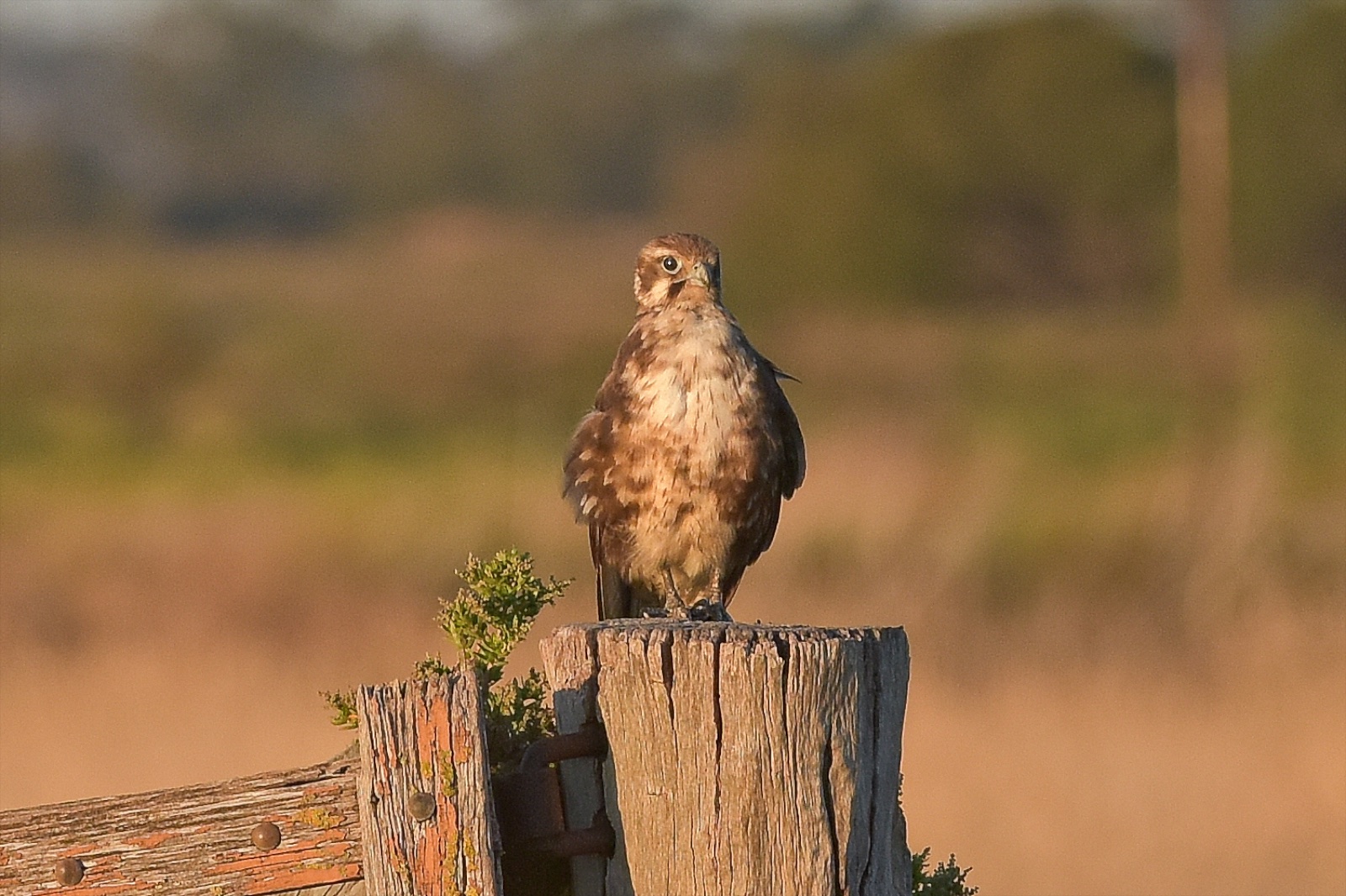
Falcon at the Harris Gate

A mentor of mine John Harris by name, well he was both a mentor, torMentor, inspirational creative, and all round great bloke, came down to the Treatment Plant with me one day.  We drove around and he was more impressed by a gateway than perhaps anything else. “Always look at the details, look at the obvious as there is always a highlight there somewhere, that others aren’t seeing.  That is the diamond.  Look for it always.”  to somewhat paraphrase a long lecture.

On the way home he discussed a Gateway he’d seen and wanted at some stage to make another trip down in late evening light to photograph it, in his inimitable manner.

But, life didn’t play him that card, and he passed on to finer scenery not long afterward.  In his honour, I’ve searched out that gate and named it the “Harris Gate”.

The other night on the way back home we passed the Harris Gate and lo and behold a Brown Falcon was enjoying both the gate, and the evening sunshine.

So John, it might not be the series that you saw in your minds eye, but old mate, here is the best I could do.

Define 2 output.
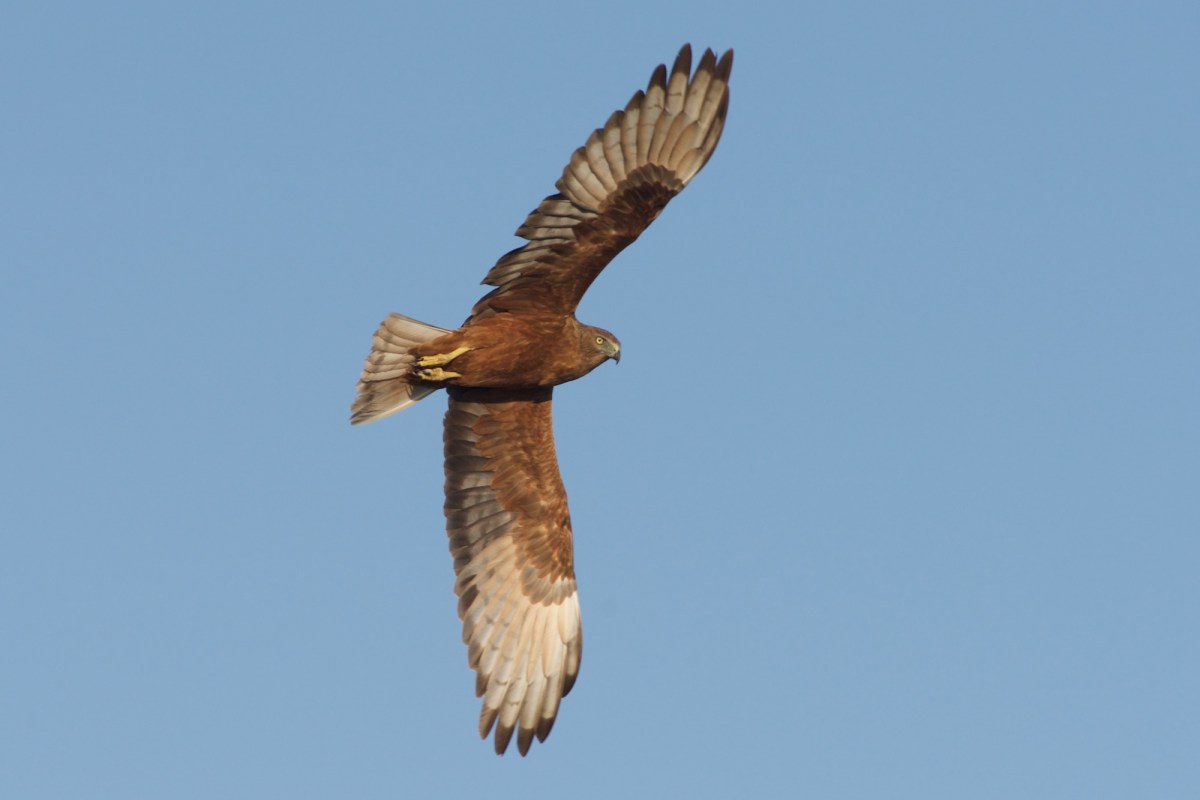
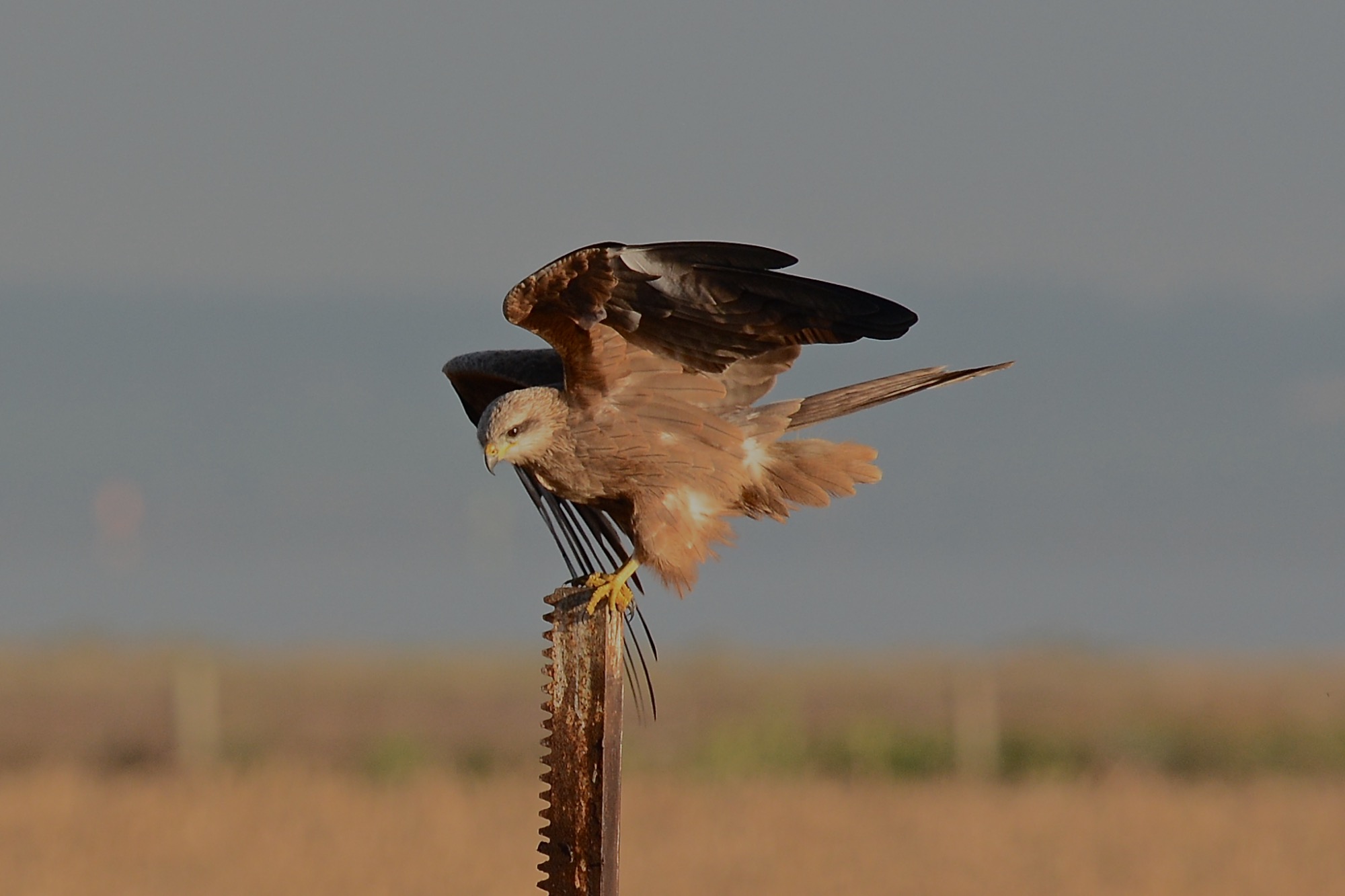
Brown Flacon Sitting Pretty on Harris Gate
DWJ_6972
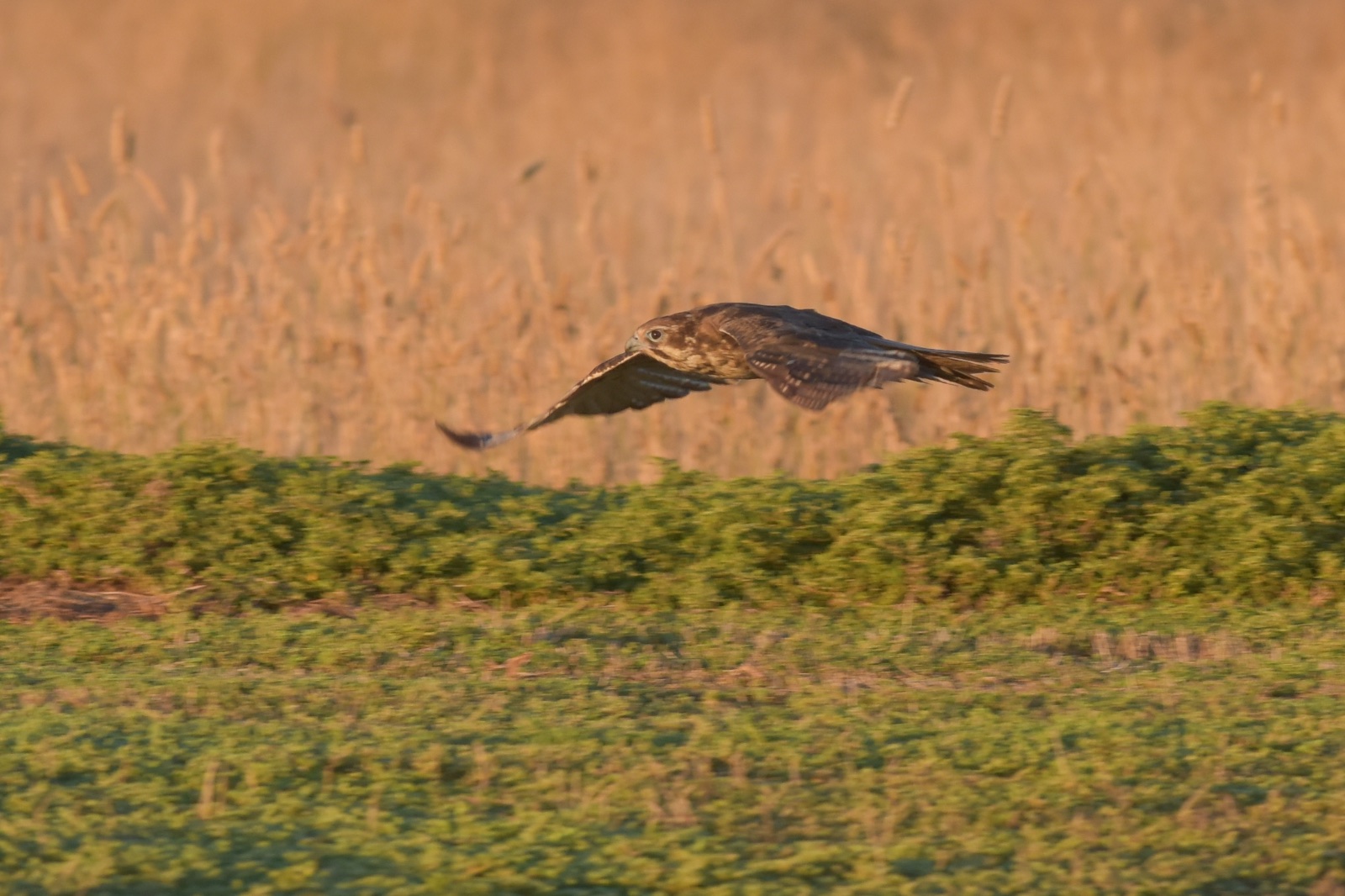
Typical Brown Falcon Exit. Low ground hugging and fast
DWJ_6974
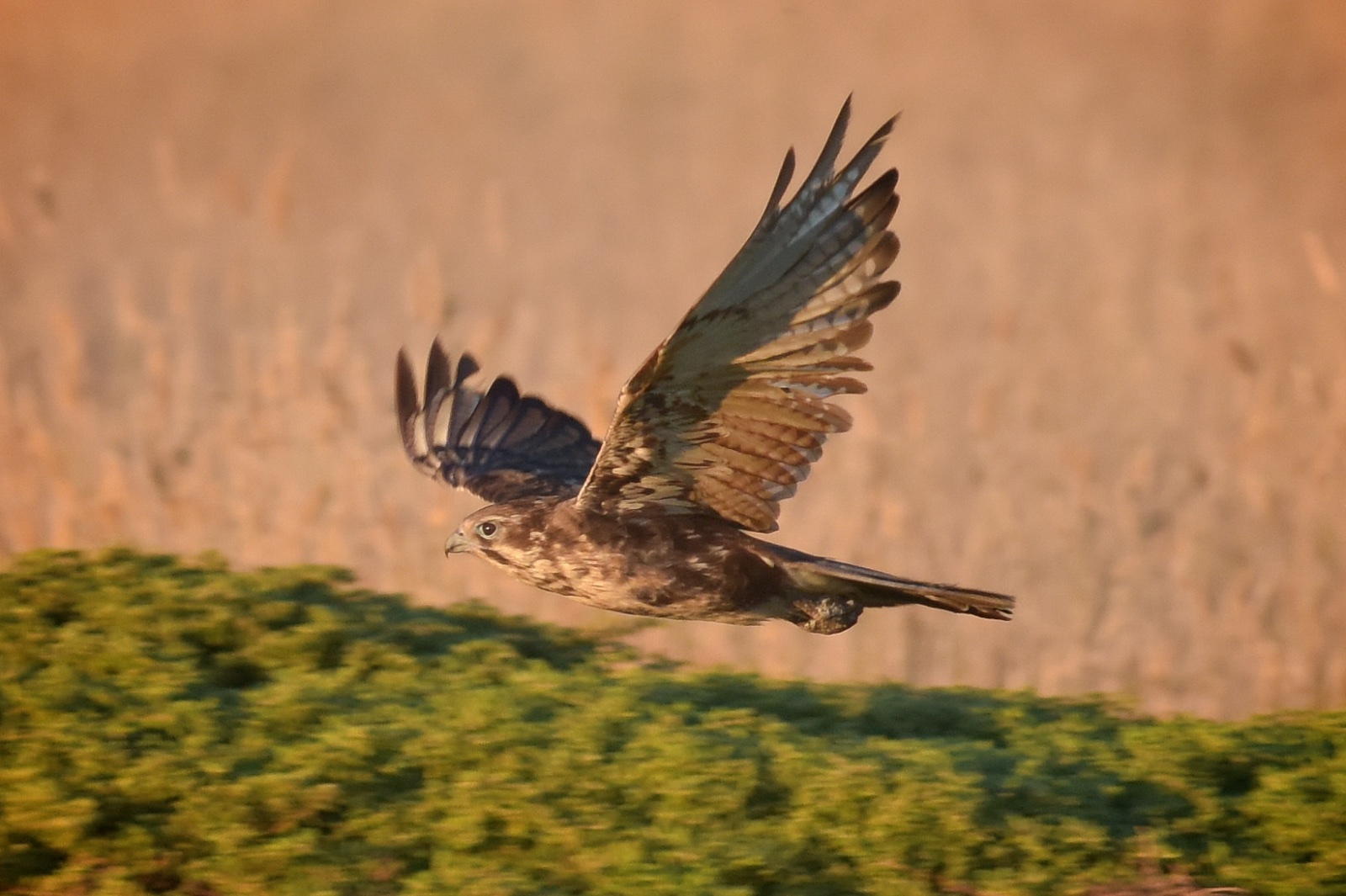
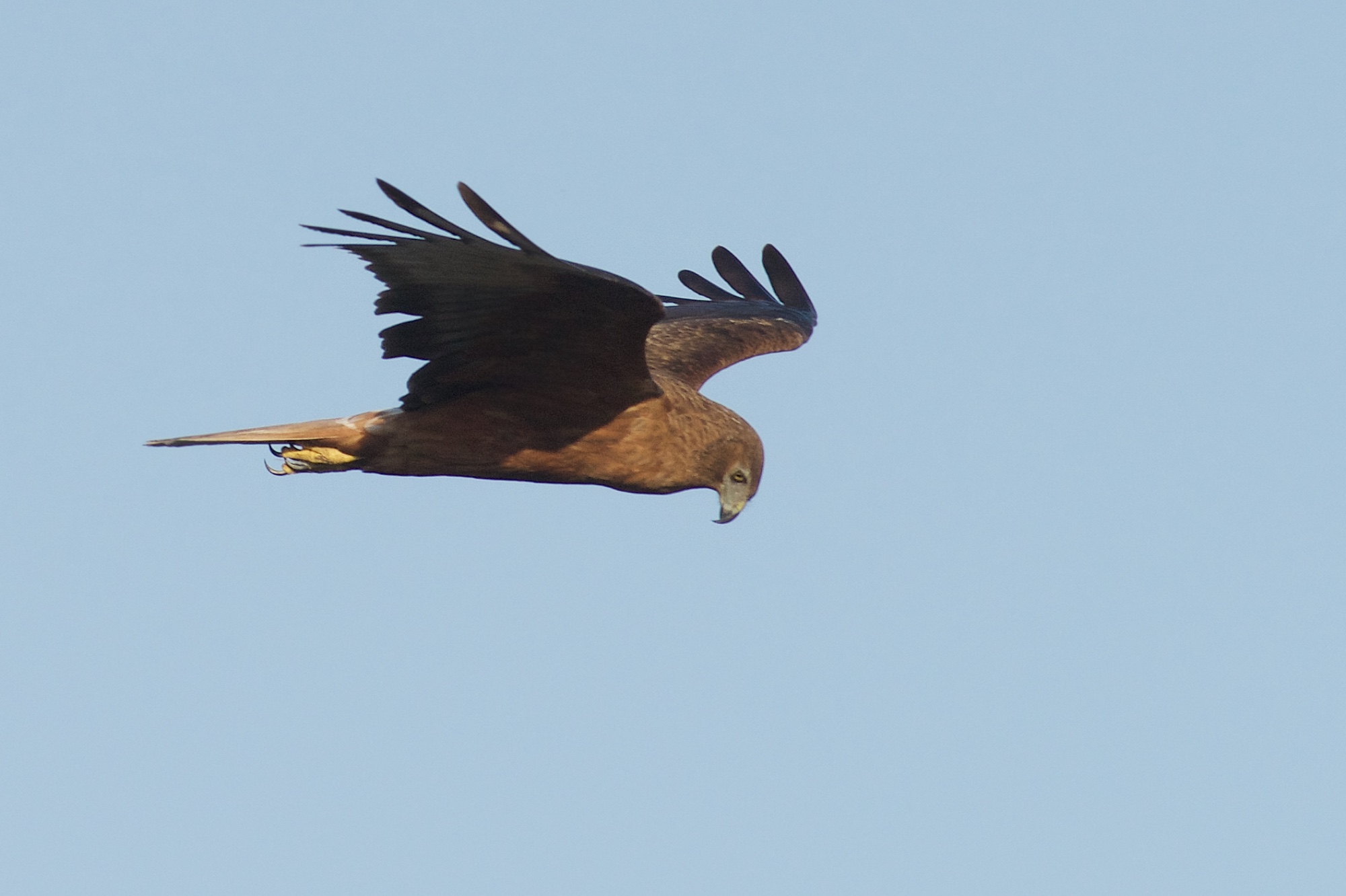
The Absolute Master of the bush top Flying

DWJ_7018

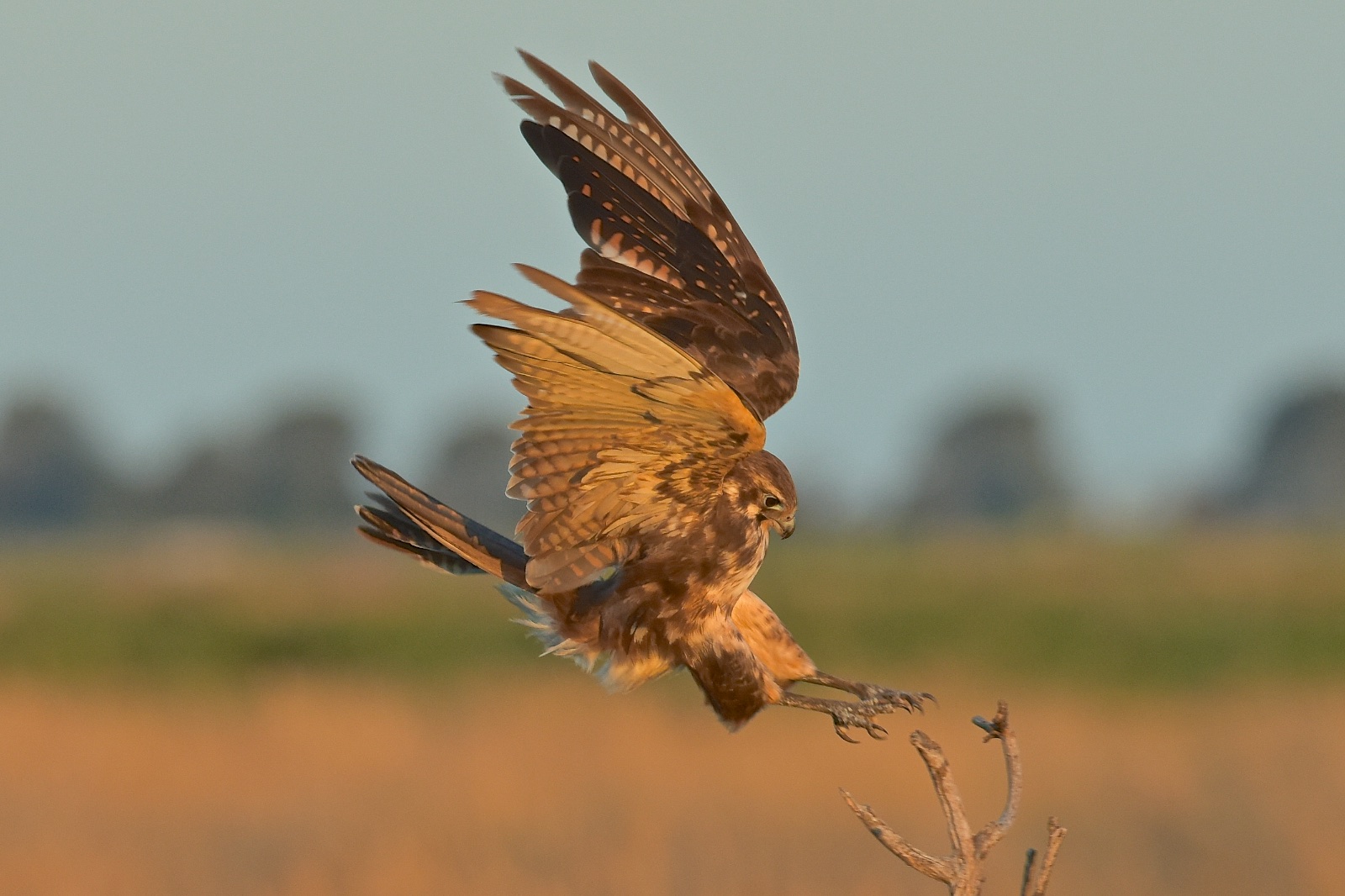
DSC_4333
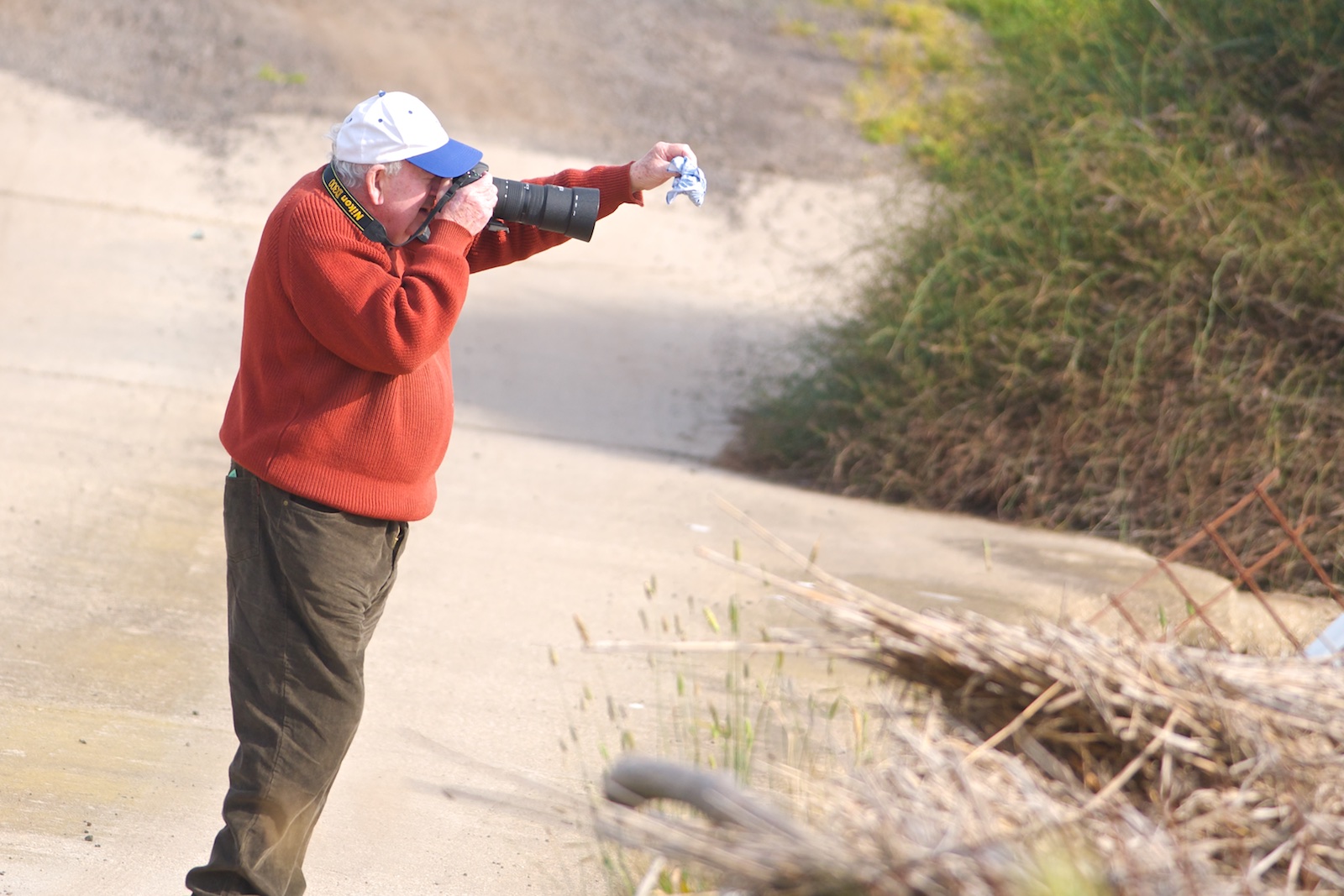
Another Master at Work. John Harris at WTP. The handkerchief is to remove nasty lens flare from backlighting. “It’s all in the details, look closer, that is where the story is. It’s all in there” OnyaJohn

Sneaking up on a Swamp Harrier: Chapter 2

Given that chapter one was a runaway success, I decided to continue in the theme of “Sneaking up on a Swamp Harrier- The Completely Gullible Edition”

First of all find your Swamp Harrier.  Seems logical enough and those big pools of water with the reedbeds seem the most obvious place to start.  And from a Russell Coight perspective  “Endless reedbeds that stretch as far as the eye can see… And with binoculars, even further”

And of course this classic on Emus, modified for Swamp Harriers

“Swamp Harriers tend to travel in pairs, or alone, or in groups and tend to eat at night or day.”

We were it turned on the look out for the elusive Sea-eagle.  So suitably stationed on what we considered to be one of its flight paths we waited. And.
Waited.
and Waited.
And had a cuppa, and waited.
In between,  the only Brown Falcon for miles sat on a boxthorn bush and waited.

Then along the shore line scrub a Swamp Harrier appeared.  Deep in concentration it was simply following its road map.  Anything that was out of the ordinary was checked out.  I am convinced, that they are not looking for things so much as comparing the current data with previously collected data. A bit like google mapping without the old out-of-date photos.  You know the ones that show the empty paddock down the road that is now a supermarket and carpark.  Or the open land by a creekline that is now 6 laned freeway.

In the same way that astronomers used to look for comets in photos by comparing night sky shots, I reckon Swampie has a visual shot of the bushes and is really looking for anything that is different on this pass.   Such as a new hatched Purple Swamphen, or a sleeping Eurasian Coot. (which according to Russell Coight, “Most Coots generally sleep with their eyes shut…….unless they’re open……or they’re awake.”)

Down the scrub it came. Head down.  No need to look up, it knew where it was going. And no other bird is going to stop in its way, and make it turn to the left or the right. It rules the skyway.

And unless this is your first post, esteemed reader, you’ll know what happens next.  The map is compared, “What are those humans doing there!!!!!”, and it turns away 180 degrees and is gone.

Head down locked on the ground below
Everthing is checked and filed away for future reference
What is the human doing there!!!!!!
In the next milli-second it has turned
Anyone who has seen or photographed these birds, knows this LOOK> It might seem to be checking me out, but in reality it's readjusting the online database and making a note to avoid that area in the future.
Anyone who has seen or photographed these birds, knows this LOOK>
It might seem to be checking me out, but in reality it’s readjusting the online database and making a note to avoid that area in the future.
This bird then cut out to sea, and glided past our position before coming back in to continue its journey along the beach scrub
Gliding in to take up station for its next run.


Russell Coight Quotes: All Aussie Adventures.  (Website address a bit dubious)

First Catch your Snake. Magpie 1 Snake 0

Fresh from watching Alfred the Brown Falcon give hunting pointers for snakes, we were out at the WTP in the wind and the cold this afternoon, and to our collective surprise, a Magpie plopped down in the grass nearby.

With in a few seconds it emerged and with much delight took to the air with a snake in its beak.  Then we were lucky enough that it landed on a roadway about 50m up and so we went to looksee.
Maggie wasn’t that impressed with spectators, and after a bit of relocating sat down to the work of despatching said snake.
The high wind made it a bit more difficult for Maggie to concentrate, and to be honest,  I think it was quite cautious about its approach and even when the head had been removed after some difficulty, any slight movement of the carcass would have Maggie on the defensive and two steps back.
But it persisted and eventually got down to enjoying the remainder of the meal.

Well done Maggie.  And just to add a word of warning to others as much as ourselves we had not more than 10 minutes before been standing in that area working with a Black-shouldered Kite.   Time methinks to reconsider where we are standing.
Enjoy.

Maggie was on the alert all the time, any movement was considered with apprehension.
When you've only a beak, sometimes you have to be clever in the pickup.
When you’ve only a beak, sometimes you have to be clever in the pickup.
Quickly consumed.
Quickly consumed.
If it moves give it a jolly good shaking.
Hold, Rip and devour.

Passing time with inflight shots

We’ve been sitting in our mobile hide (the little i20), near a tree that has a Black-shouldered Kite nest and the female in residence.
As is typical of her species, the nest is just below tree top and hidden well in among the fine uppermost branches.  Once she is under the canopy she is gone!

He off course is on hunting duty, and every so often turns up with a nice fresh mouse.   So all we have to do is point the camera, (attached, I might add to the WImberley Gimbal head), and wait either for him to arrive and/or her to emerge or reenter.
Now, if you’ve ever watched them, the first thing you’ll recall is that it can be a long long long time inbetween feeds.

Sometimes even she gets a bit anxious and sends out some pretty interesting Kite calls just to make sure he gets the message.
So we wait.

And of course in the waiting is the challenge.   So we, well at least I, keep the shorter 300mm f4 PF on a second camera and practice my flight shots on anything that spins past.

So here are a few from the other day.

Rockin’ and Rollin’ in Raptor Alley

Just a quick look at any weather forecast over the past two weeks would draw the conclusion we’ve been having a spot of weather at the moment.  And you’d be right.  The mushy cloud days, the biting cold, the wind and the rain. And mostly the lack of Sunshine.

Its not much fun for a  photographer to venture out for small birds as the forest is wet and its hard to get much light in under the canopy.  Big field birds become grey blobs against even greyer backdrops.

So it was a bit unusual last Wednesday afternoon to see the sunshine sweeping along streets.   “Grab the cameras and let’s go to Twenty Nine Road”, EE suggested.

So we did.

Two of the major roads that run through the Western Treatment Plant complex,- and don’t require a permit-, are The Beach Road, and Twenty Nine Mile Roads.   They both have huge paddock areas that these days are no longer used for the original purpose (the disposal of the waste from Melbourne), and are now farmed over for a range of farm products.  (Not for human consumption).   One of the crops is maize and it is ready for harvest. I assume they use it to feed the stock cattle.

One of the benefits of all this production is off course that the mice see the left over and dropped seed and corn as an indication of bounty, and begin to multiply.  And as they do, the raptors, not likely to forego a mouse dinner move in to match the increase. Which of course helps the mice produce more, and more raptors move in. …. fill in the blanks.

On a sunny afternoon, its nice to be able sit along the roadway near the harvested paddocks and watch the various hunting techniques.   Kestrels and Black-shouldered Kites hovering.  Whistling Kites and Black Kites hunting from the air, Goshawks swooping through prepared for anything that moves, and of course the Kites being prepared to wrestle food from the smaller hunting falcons.  Add to that the pair of Black Falcons who believe any food is rightfully theirs and are prepared to out-fly anyone to get it, and a fine afternoon’s entertainment is assured.

So, rather than ramble here is a small selection from a few hours work.

Raptor Alley. The Beach Road looking toward the bay. The sharp eyed might even note a Black-shouldered Kite high on the rhs tree
Raptor Alley. The Beach Road looking toward the bay. The sharp eyed might even note a Black-shoudlered Kite high on the rhs tree
Delightful to watch them in the air
Australian Kestrel with an afternoon snack
Taking a spell from hunting
Another mouse down
Another mouse down
First time I've ever seen a Goshawk just sitting.
First time I’ve ever seen a Goshawk just sitting.
When I grow up I want a nest just like this. Superb Fairy-wren sitting in a disused Magpie Lark's nest
When I grow up I want a nest just like this.
Superb Fairy-wren sitting in a disused Magpie Lark’s nest
Pair of Black-shouldered Kites resting together
These are the bird of my youth, Sitting on a gate post
A hard turn into the breeze
In bound for a tree rest
Australian Kestrel, tail preening in the sunshine
Black Kite landing. The post is an old sluice to control the waste.
Fresh catch
Fresh catch
How tough is this mouse
How tough is this mouth
Female Australian Kestrel
A late entry into the field Brolga at sundown

Ain’t it good to know you’ve got a friend

A White-bellied Sea-eagle with a catch is as Jane Austen once wrote, “in need of friends”,(well I paraphrased the good Jane just a  bit).

We are at Lake Borrie in the Western Treatment Plant,  early morning, far out in the middle of the Lake a young Sea-eagle has scored.  (Best guess is a Pink-eared Duck).

As it settles down to prepare its meal, out of the sky drops all the Kites and Harriers in the area.  Each one wanting to be the Sea-eagles best friend.  “Comeon mate,  share it about, I’m your best mate, maahte.”

The Sea-eagle doesn’t see that opportunity to increase its Friends list on FB and doggedly proceeded to pluck and consume the feast.
Not that the big birds didn’t try.  The Harriers tried their usual ‘spook’ tactics, the Kites a variety of out staring and then hostile aggression, the ravens a mixture of sheer cunning and brute force, but in the the end, the Sea-eagle persisted.

For the Technically Ept:  These images are shot on the D810, mostly with the TC 2.0iii on the 300mm f/2.8, Tripod mounted, with a 4kg bean bag to weigh it all down.  And the new addition in the D810, the Electronic First Shutter ,which eliminates shutter/mirror bounce on long lenses.  (Wish I’d had that with the old 600mm.).

Huge crops as the bird is so far away in the middle of the lake.


Black Falcon(s) up close and personal

It has been said by some, that, “I’ve lost my bird Karama,’ or more particularly that I’ve used it all up.  And given that I respect the insight of such greater thinkers, then it probably is true.  And no doubt the facts are on their side, most certainly in the case of hunting down the ever elusive White-bellied Sea-Eagle. My mate Lynzwee reckons it more a matter of wearing the incorrect “Bird Repellant”.  He might be right too.

But. That doesn’t stop me so much from going out and trying.  Well at least I rationalise that I can enjoy the fresh air and a well brewed Earl of Grey.

So as the weather turns we found ourselves on The Beach Road at the Treatment Plant.  Rumour had it that some Cattle Egrets were down there. (Truth be told, and don’t spread it around, we too had already seen them in the area, so didn’t go completely blind.)

The cattle have been let in to graze on the recently harvested maize stubble.  I think I talked about this in the “The Curious Tale of the Clever Kestrel”.

When we settled the car in close to the fence to get a good look at the Cattle Egrets, we also noted that said Kestrel, Black-shouldered Kites, Whistling, Black and Brown Goshawk were also working in the area.  Along with an ever increasing number of cars with birdos and photographers pulling up to share the action.

And that is what we all got.  At one stage 20 or more Kites were sitting post by post on the roadside and landing within arms reach of the bird counters in the car.  The photographers were using up lots of memory card space and batteries inbetween bouts of stories,  “Oh, I remember I was backpacking along the Birdsville Track and a Black Kite with a water bottle dropped down and gave me a drink, saved my life.” “Oh, I saw a Budgerigar attack a white morph Black Kite once”, and “Oh, look there’s a Light Morph Juvenile Brown Falcon with a mouse.”,” No, I think by the colouring on the left wing primaries that its a Dark Morph Light Brown Falcon, and what its got is a field mouse, probably one of a litter of 12 or 15.  You often see them, when…”

My eyes glaze over.

Another convoy arrive.  “Have you seen the Bittern, we’re looking for the Bittern, anythingheretosee”,  said while swinging Swavoroskis around nearly knocking me over. “There are some Cattle Egrets,” I volunteered.  “Where!”

“They’d be the big white things over there in the paddock with the cattle,” quoth I.  EE kicked me in the ankle under the car door.  “No Bittern”, Insert Sound of Departing convoy Here.

Fast!  Let me tell you.

It went over my shoulder, and I never even saw it coming.  (Most of the bird discussers never saw it going either), At that rate, and that shape, I got the camera up, grabbed several frames and called “Black Falcon, A pair”.

To which the flurry of cameras, binoculars, smart phone apps and someone still writing things on a field note book all searched the surrounding sky, grass, fence and paddock.
“Oh, look a Black Falcon,” cried one. “A Black Falcon,’ cried another. We’ll ignore the numbers of “Where?” as they outnumber significantly. Another flotilla of Land-cruisers and Subaru Foresters pulled up.  “Oh, look a Black Falcon”, cried one of the new comers.  “We must have frightened it up when we arrived”. (big sigh here).

“There is a pair”, quoth I.

“look look look, there’s a second one,”,  At last!

‘Our’ pair sailed down the Beach Road at fence height putting to flight all the dozing kites on the fence. Something about a black shape at 60kph bearing down on you to awaken your feathers and wing muscles enough to get airborne.

A foolishly lone Little Raven got a right dusting up by both birds as they barrelled across the road.  Mostly I think it was all in fun. They were just out for an afternoon’s entertainment.  A Magpie with some food also got a pretty good chase about, but no damage was done, and Magpie eventually made it off the paddock with its prize.

Then, they streaked back up the paddock, amused perhaps by the photographers, app users or maybe they wanted to admire the emerald green Subi.

No matter how I write it, it was the right place, the right light and the right distance.  All one had to do was point the camera, press the shutter and follow the action.  That is except for those who took a shot, then spent the next 10 seconds ‘Chimping’, you know, hunched up looking at the rear LCD image and going “ooh, ooh, ooh”

Now one Falcon is pretty awesome two, outstanding.   But off course everyone was following the one that had zoomed overhead and was now rattling down the paddock away from us.  As I looked about, (I’ve learned to do that), the second one came ever closer and was soon filling my viewfinder.  In the end, I called “the other one is closer now!”, to which all eyes peering down the little tunnel of the viewfinder had to readjust to the bright light and try to re-position the camera for a second series.

Bored with messing with our minds, (and let’s face it, that didn’t take long), they spun round overhead and headed off across the paddocks. Leaving us with. “Well, its probably a second year bird with a juvenile, … ” “I’ll have to get on birdline and report this.’, and “Let’s go. We are due home for dinner”.   INSERT CAR DOORS SLAMMING HERE

Sigh.

I offered EE another Earl of Grey and we waited for the Cattle Egrets to come back.

Enjoy

The Curious Tale of the Clever Kestrel

Don’t you just love a mystery!  You know where all the pieces sort of come together and  then.  There is always one more thing to learn.
Just when you think you’ve got it figured out, the birds will come up with a new story.

If like me you watch closely then its likely you’ll see something that makes you say, “Well, I’ve never seen that before!”

Such was a sunny morning on Friday.

We were on the Beach Road a the Western Treatment Plant and about halfway along between 29 Mile and the Beach Road boat ramp. Near a crossroad marked on some maps as “Chirnside Road”.

The paddocks here have been growing maize for cattle feed and have recently been harvested.  This off course means the stubble is still in the field and a good chance for the average bright minded Kite, Kestrel, Falcon, Raven, Magpie, Goshawk and others to take advantage of any mice or other tucker, (think rabbits for the big birds), that might be out in the open area.

For the part of the mice, the harvest has obviously left much corn and seed among the stubble.  So with the population being diminished by the birds and plenty of food available for the next generation, the fecundity of the females comes to the rescue and a small explosion of the population erupts.

Which brings more Kites, Kestrels, etc into the area. So to your average alert photographer. (Well at least us, so ignore the alert part.

On just about every vantage point the big birds sit, and wait, and then fight and argue over a single feed.   In the air, the Kestrels and Black-shouldered Kites are hard at work tracking the mouse spoor with their ‘UV googles” or whatever the bird equivalent is.

The Black-shouldered Kites in view of the abundance of food are already planning their own expansion of the species. And several are either well advanced in nest construction or perhaps even at work on hatching.   The Kestrels, are simply interested in stocking up on body weight for the long nesting/hatching season later in the year.
So enter, on stage right, our Kestrel.

We had been parked hard up against the fence-line, 1. To keep us clear of the sometimes busy road, and 2. to keep us clear of the sometimes very busy road.

We had to watch as the birds hunted just out of camera range. Swinging across occasionally, but for the most part the far side of the paddock obviously offered the best hunting.

We watched as a female Kestrel, with all the gliding hunting skill of her species sat motionless in the light breeze.  I remembered my early youth and watching for hours these beautiful birds as they worked their way around the edges of wheat paddocks.  In those days they were it seems to me now, in large numbers.

She caught a mouse. Swung over the paddock, not to the busy side, too dangerous to run the gauntlet of Flacons, Black, Whistling Kites and Swamp Harriers and scooted low down toward the fence line near us. Perhaps she had intended the post near the car, it certainly seemed that way from her flight path, but at the last moment, she swung right and landed about two posts down from us.  Cameras out, insert shutter noises here.

After checking out all was clear she mantled down (is down redundant there?), over the mouse and sat still for several minutes.  We waited.  Then for what seemed no good reason, she picked up the mouse, dropped from the fence and swished across the road to the far side fence post.  I had to concede she might not have liked our presence, but we’d made no move on her position so that seemed unlikely.   She sat, and then again mantled (see hedging my bets left off, down).

A few minutes later she stood, and dropped of the fence onto the grass verge and into some muddy area where the cattle had been standing, leaving hoof print holes in the mud, among the grasses.  Then she hopped about, as you would with a mouse in one claw, and then seemed to lose the mouse. At first I thought it must have still been alive and had scampered on her.  Then a few pecks in the grass, and she stood silent for a minute or more.   By now it was obvious she no longer had the mouse.  Gone!

Several more hops in the grass and she flew to the nearest fence post.  Sat, and preened a bit, then in an obvious move, took to the air and with a short look back, was gone back to hunting.

Fascinated, I had to go and have a look where she had landed.  And after a brief look about, there was the mouse. Tucked up tight in one of the deep hoof marks.   She had deliberately placed it so that the overhang of the edge of the hoof mark would cover the mouse from most prying eyes, (think kite, falcon, magpie, raven -competition).

Of course the why and the what are questions that remain unanswered.   Perhaps she was setting aside a snack for later if the hunting quietened down. She had made no attempt to maul the mouse at all.  One thing that I think is like the ‘mapping’ I’ve been talking about with the light Falcon, is she took sometime to work out where to put the mouse and then some time to reexamine the area from the fence and then again to fly over and get a good idea of the location. I know, I might be reading in my answers, but its food for thought.

I’ve seen a female before – for those who’ve been with the blog for a long long time think Elizabeth,- who would take prey that Darcy bought in and stash it in hollows around the nest tree for when he was having a hard day’s hunting. (Not that he ever did, and the young fledglings eventually took great delight in finding the stashes,  much likes kids on easter egg day.

So here is the photo version of that long winded discussion.  Curious actions indeed. But to the Kestrel, all part of a day’s activities. Clever bird

Take water, add Robins, instant enjoyment

Gazing out of the window, a little blue sky hinted among the grey.  That was enough to have the Earl Grey Tea poured, the cameras in the car and away we went.   Wanted to have a look along 29 Mile Road at the Western Treatment Plant.

This area has a number of paddocks recently ploughed and the Kites seem to favour the turned over ground. By the time we made it to the “Highway Lounge” at the Caltex Servo on Geelong Road, the little bit of blue has zipped itself up in the dense grey that was accumulating.  So we stopped for a quick Mocca, and then continued.  Only to be confronted with a misty rain.  “Turn back now, or go on?”  We went, and the rain continued, and we went and the rain continued. Exposures of a Week @ f/4 seemed to be the order of the day.

So reaching the Beach Road corner, we pondered a very early mark. Then a flash of red, and another and the paddock opposite was covered in Flame Robins.   Well, covered is such an all encompassing word, so its probably better to use dotted here and there. In the end we found four males, at least as many females and several juveniles in varying states of moult.

I propped the 300mm ff/2.8 with a TC 2.0 (Making 600mm) on a post, and wished I’d been clever enough to include a beanbag.  The rain changed to a drizzle between downpours.  The birds seemed to ignore it an hunted happily.  Feeling pretty confident in the rain, they chose to ignore us pretty much completely and we were able to move about with them without them fleeing.

In the end being sodden completely and beginning to worry about the cameras getting drowned, we called it quits.    And by then the small meagre light had been completely swallowed up in dark and ominous low cloud, which soon turned to massive downpour. Time for home.

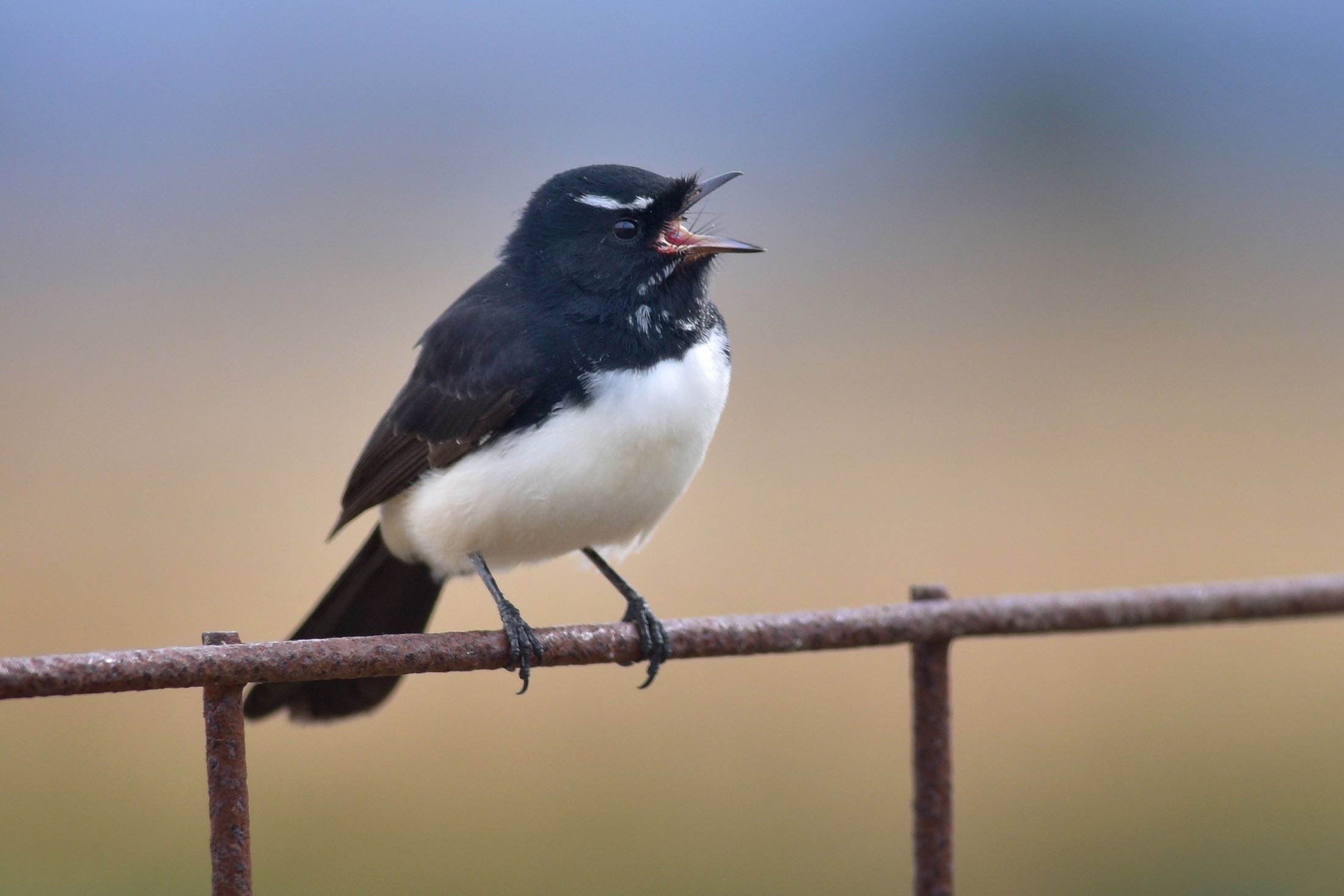
Willie Wagtail

DWJ_4921 - Version 2
Not sure if you know. But if you click on the image it will go to a larger size Click a second time and it will go to full size. Worth it to see the priceless expression here Enjoy

This is Gate Willie.

It has a territory by the main gate at Paradise Road entrance at Western Treatment Plant.
His (?) job in the world is to give lectures to all those who would dare to open the gate and enter the Paradise Road area.
and a good job he does too.

Hauling around the Western Treatment Plant

Every year my Flickr mate Lynzwee, https://www.flickr.com/photos/65347914@N07/ makes a trip down to see us and to spend a day at the Treatment Plant.
Lindsay (to his Ozzie Mates), dropped me a note on his scheduled visit and I found a day that looked suitable. Not that we had many options.

So as the Banjo said. We went.

The weather map showed no cloud at all when I checked, but when we got to the Pt Wilson Road it was pretty certain the map was wrong. So we suffered the usual grey sky pics.  And kept our eyes up for an elusive Sea-eagle.

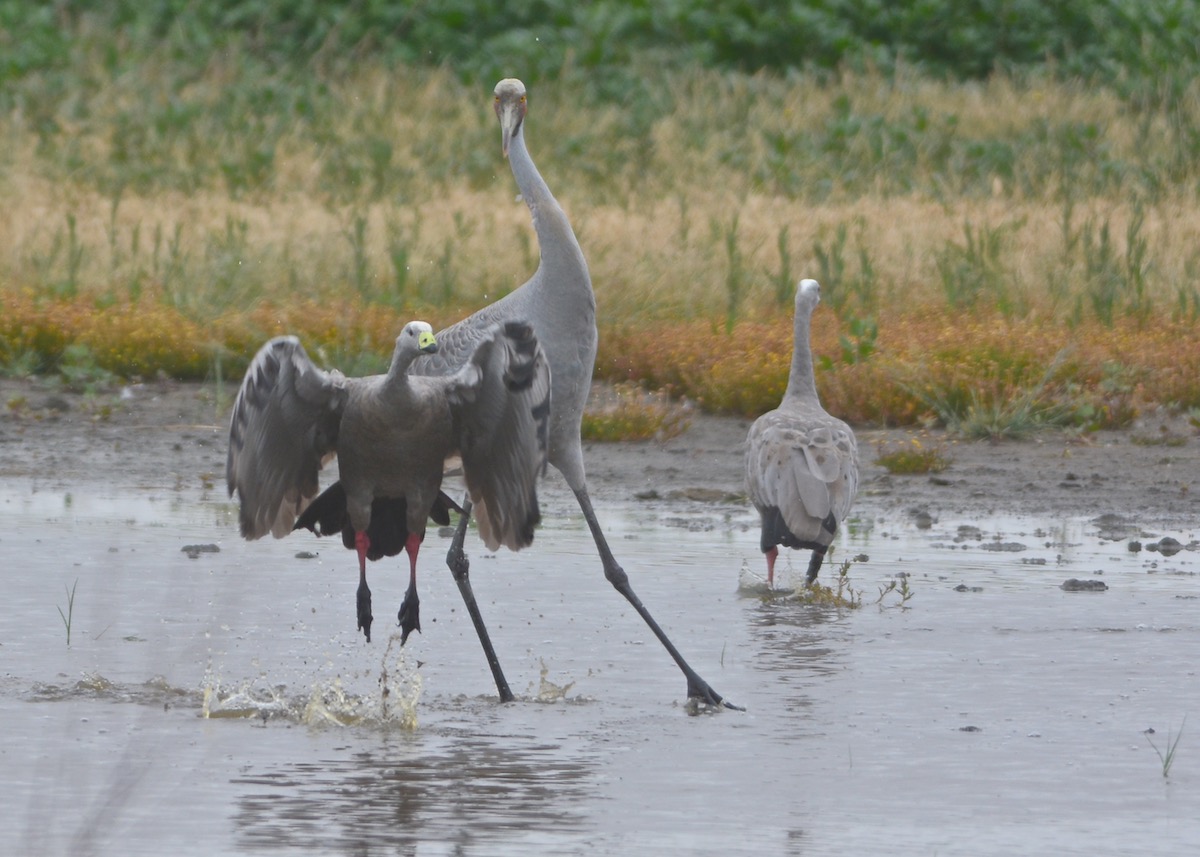
Lindsay had about 4 birds that he really wanted and we managed to add Brolga.  A pair were sitting in the grass on the far side of a pond, and at first everyone jumped to conclusions “She’s nesting!”  but change the ‘n’ to an ‘r’ and you’d be much more likely to be right.  So it was.  When we swung by on the return journey, they both had moved quite a long way down the bund.

And then we saw them have an altercation with a  handful of Cape Barren Geese, and the geese didn’t bother to stick around and argue.

At the moment the Whiskered Terns are hunting prodigiously and obviously productively. So we spent quite  a little time working at really close distances with them as they swept along the mouth of the Little River.

And to top it off in the distance a Sea-eagle took off.  Too far.

I was using the 300mm f/4 lens and was surprised to remember how fast it was at grabbing focus.  I must remember to put it back on the D2Xs and it will really sing.

The sun came out and we had a really fine afternoon and some good results.    On the way back we stopped for the ‘traditional’ coffee and Banana Cake at the Highway Lounge, and then as we were near swung into the Werribee River Park, but it was pretty quiet.  But on the way out three of the young Kestrels were hunting in the evening sunshine.  Lindsay was hanging out the window trying for that ‘best’ shot.  The bird obliged by dropping off the post on to the road, but I think the af on the D7000 might have found the roadside more attractive. At least that’s how I interpreted his response.

Here’s a days sample See Lindsay’s Page sometime soon for his version.

We dropped him at the railway station after a day of much mirth and frivolity and some great birding and excellent photo opportunities.  Seeya next time mate.

"Is she nesting?"  No, afraid not.
“Is she nesting?” No, afraid not.
You don't mess with the big guy.  For some reason the Geese were not welcome in his pond
You don’t mess with the big guy. For some reason the Geese were not welcome in his pond
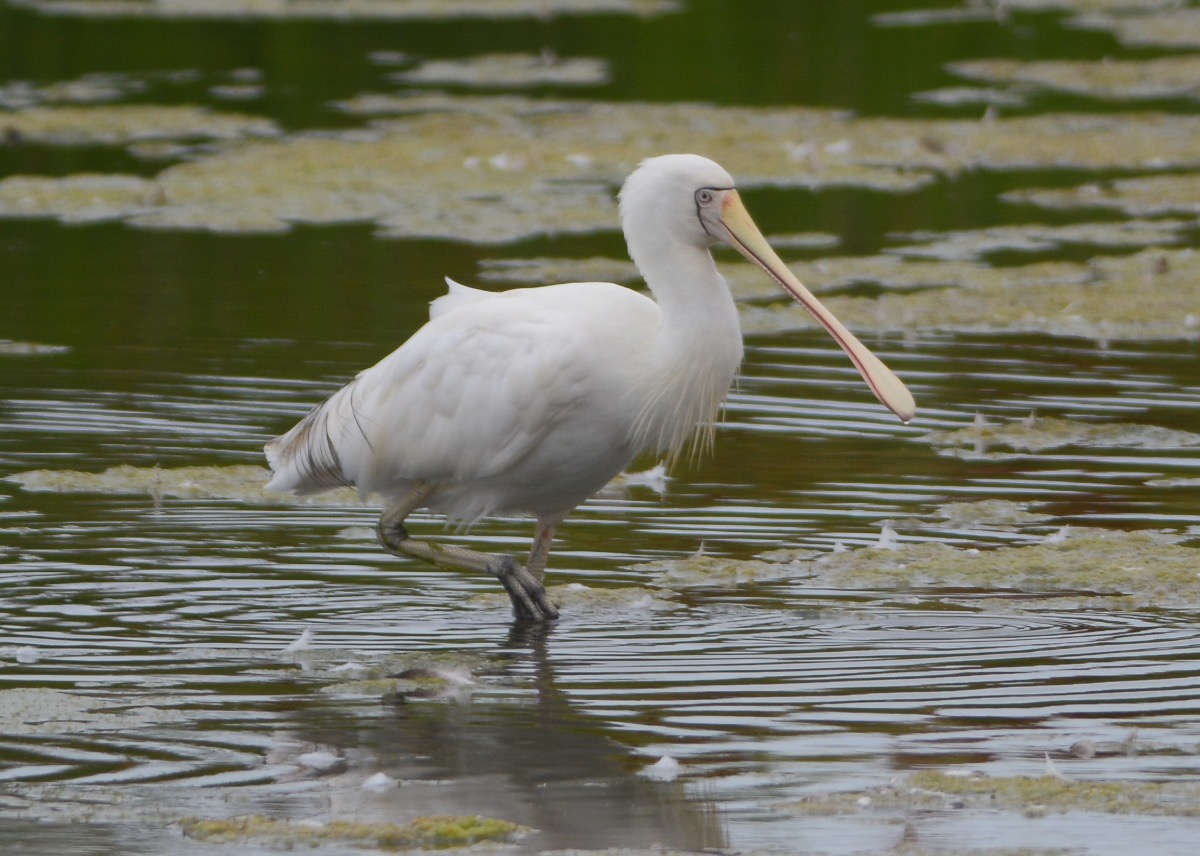
Really soft light helped the Spoonbill shots.
Whiskered Tern at touch down
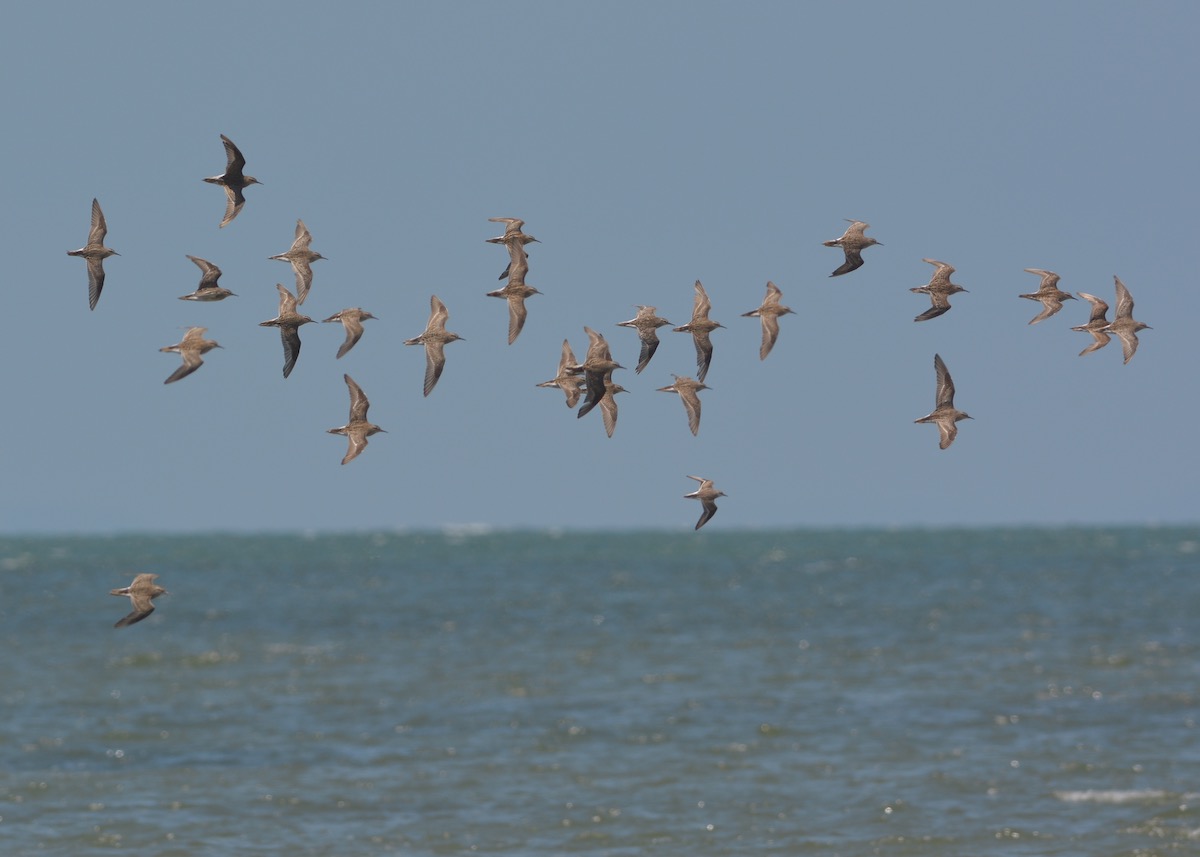
Little wings that have flown so far
The tide was a bit slow turning and these birds were anxiously waiting for the mudflats to be exposed.
A Wagtail sees of a Brown Falcon
Pied Oystercatcher on final approach
Always enjoy the flight control of the Silver Gull.
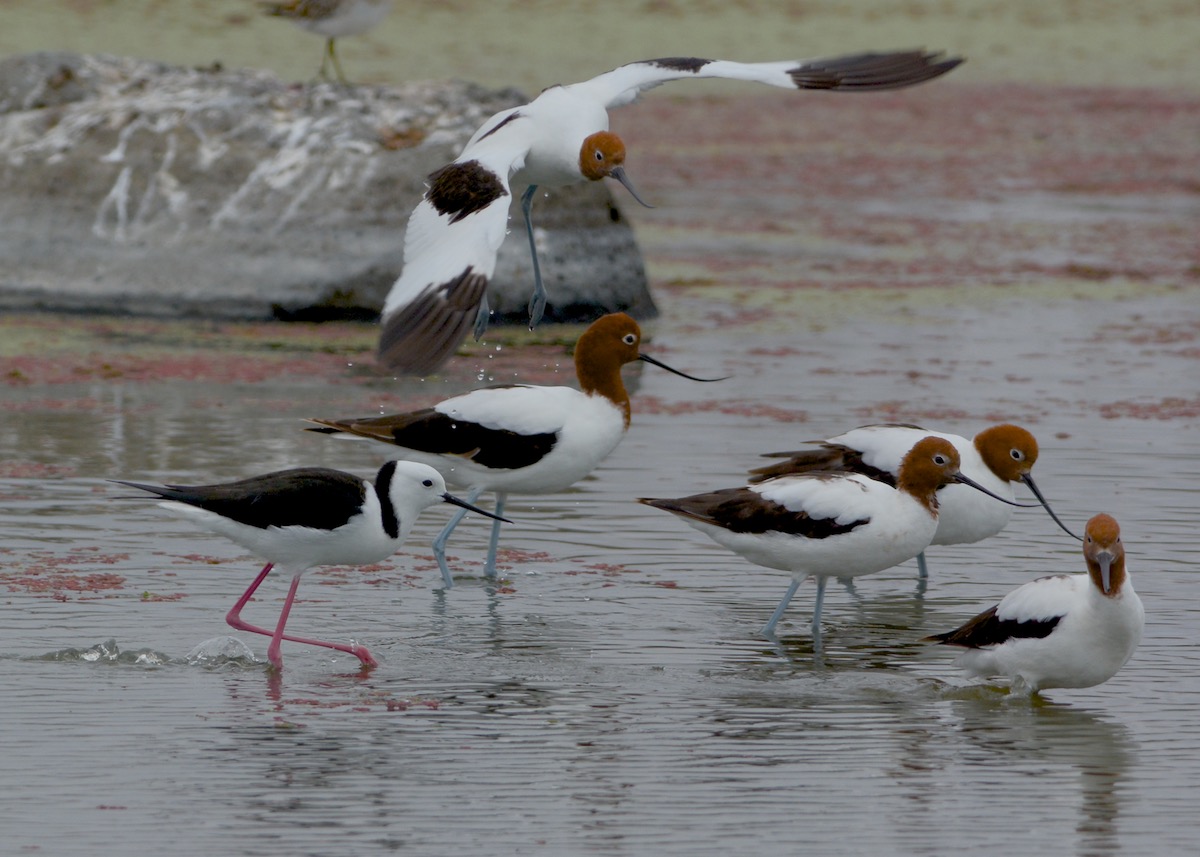
Its not obvious, but the Black winged Stilt is moving the Red-necked Avocet along. No room in this pool.
The master at work.
The master at work.

Birds as Poetry in “Wildlife Australia” magazine

Don’t often get to bragging, but in this case.

Way down in the bowels of Flickr, back about March 2011, is a photo of a Brown Falcon on a Fence.  It’s a shot that has always been in my Signature Series“.  It was made on my very first ever trip down to the Western Treatment Plant, and I found it just as I was leaving, with the late afternoon sunshine gracing the bird.  It stood its ground on me and I just waited. So did the bird.  Eventually a small breeze blew past, and the bird took to wing. It threw straight into the sunshine, and I only got the one shot.

Its been up on Flickr for quite a long time, and I received an email from one of the editors of Wildlife Magazine, a few months back looking for images for an article on Brown Falcons.   So they published it in the latest Edition of the magazine, Winter 2014, vol 51, No. 2  supporting an article by Dr Penny Olsen.  The article is titled Snake Charmer The Brown Falcon.  My mate Paul Randall of wingsonwire, (see the sidebar for the address) also had a featured shot of a Brownie with a snake for a meal.

And in the same magazine, a lovely shot of a Dingo by Andrew Alderson also a Flickr mate.  Here’s his Flickr address.

You can find info on Dr Olsen here.

https://researchers.anu.edu.au/researchers/olsen-pd

Find details of Wildlife Australia magazine here.  Website


wildlifemag


And here’s the shot.


DSC_0909 - Version 2 (1)