Friday dawned all lovely and still, with plenty of blue sky and none of the rain of the previous few days. I was getting a bit tired of pacing the floor and finding other things to do, so it was good to get back into the bush and see if the storms had diminished the robins activities. I needed not have worried, as they were soaking up the sunshine and on the hunt everywhere.
The Brown-headed Honeyeater aerial trapeze team came by for a visit and I’ve put up a page here with their antics on display.
This young lady spent a lot of the morning with serveral other females hunting on their own. They seem to have a different call, a Cheep, Chip, Chip, which must be a location thing. This one seemed to be the noisiest or most persistent caller. Perhaps it was “C’mon girls, let’s go over here.”Another one from the hunting party
After a couple of days of what can only be described as ‘typical’ Melbourne weather, the clouds eased off a bit, and the biting chill was gone from the wind. So we both ventured out to see what the rain had done in the park.
We quickly found a number of Thornbills and Pardalottes who were enjoying hunting in the sunshine.
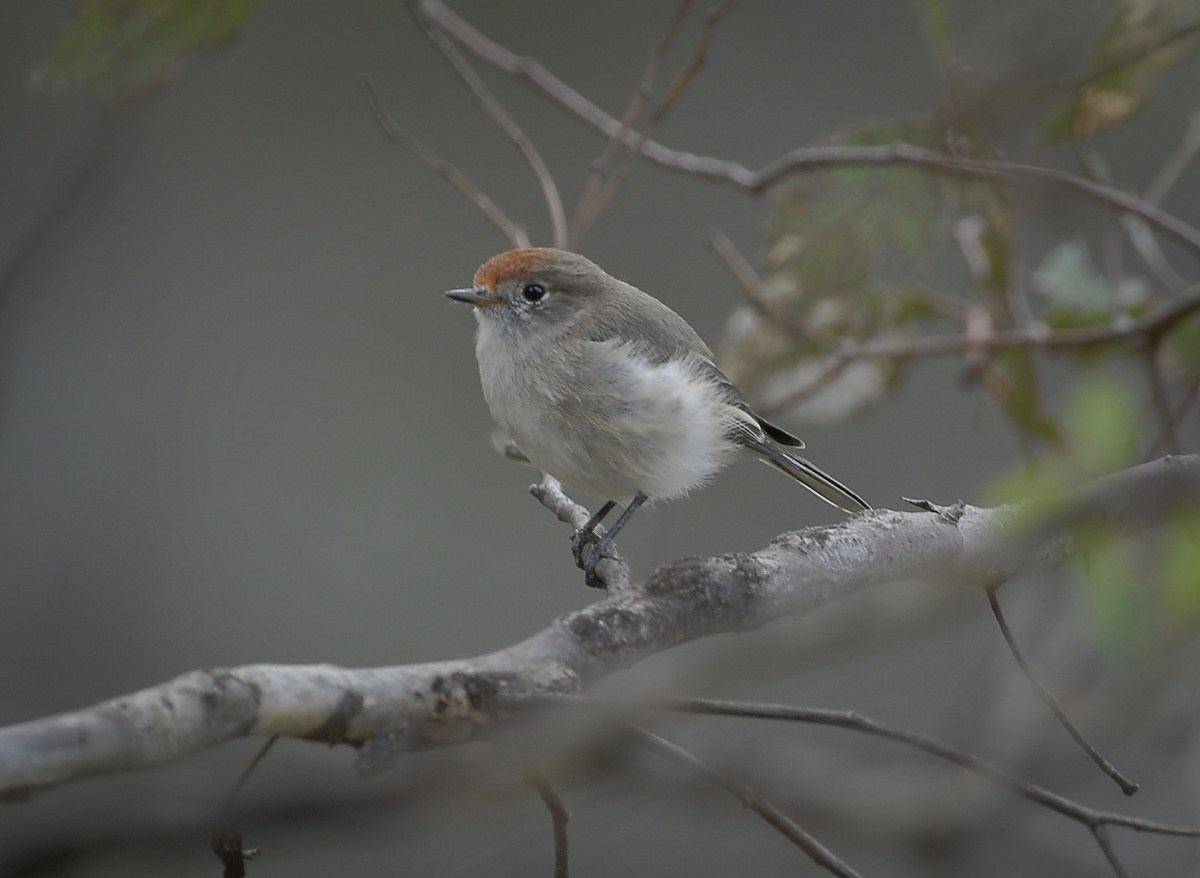
Also found a few robins Scarlet is still there and his Red-capped consort has taken on a particularly brilliant orange/rust coloured cap.
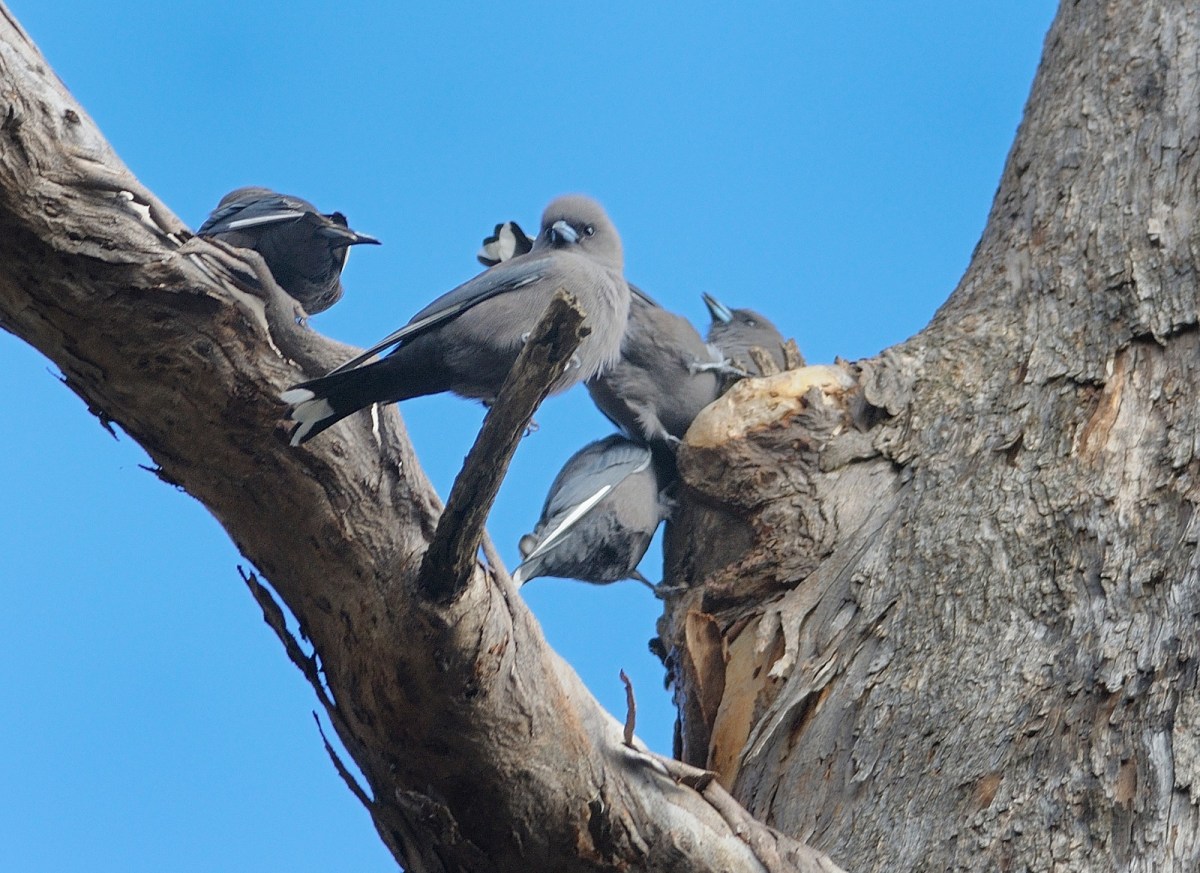
A small group of Dusky Woodswallows were enthralled with a small lump on a tree high up and spent a lot of time squabbling and mobbing one another, for what we suspect was a pool of water built up in the node on the tree.
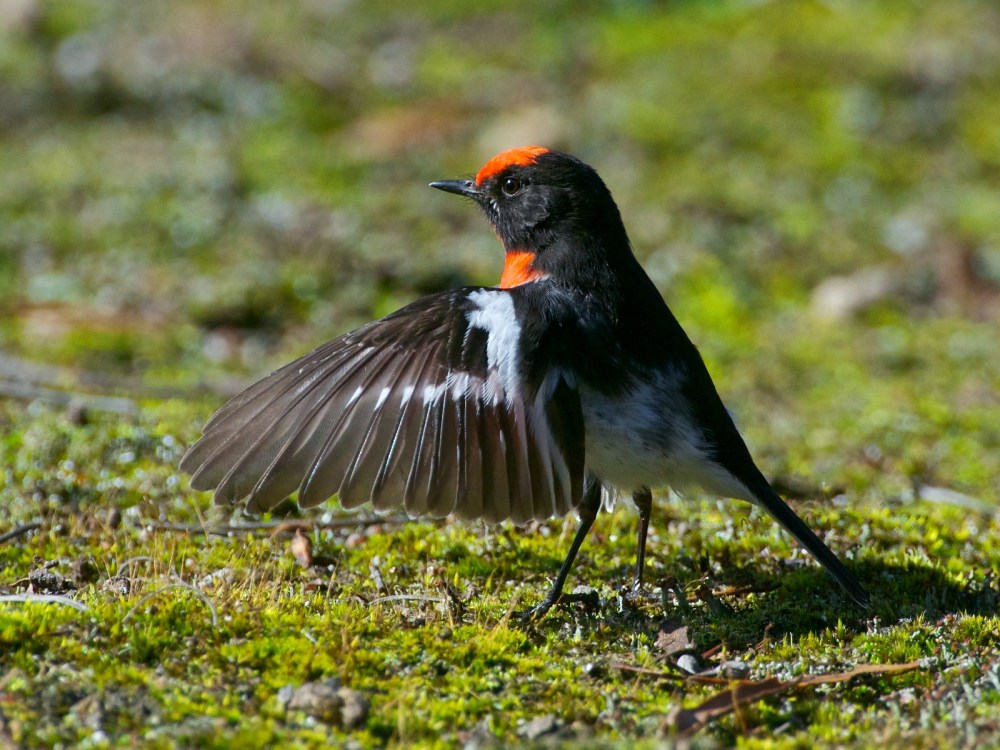
And a lovely Redcapped Robin male danced by and posed against a freshly built spider-web. Pity the light was just overcast at the time as the web would have glistened in the sunlight.
Red-capped Robin male and a spider web contrast.Dusky Woodswallow flock taking a drink from a small pool of water high up in a tree.
The weather man kept me out of the bush this morning, predictions of rain, and overcast don’t exactly excite me to take expensive photo equipment to the bush. But as the morning progressed into increasing sunshine, my decision was beginning to look like a bit hasty to say the least.
Still I had the rounds of shopping to do, and if I worked on a scheme, I could get the shopping done, have a coffee, and still make it Woodlands in the afternoon sunshine. Say no more grab the shopping list, and load a camera and head on out.
As it turns out the forest was a little quiet, and after a fruitless search I was on the way back to the car, when I spotted some movement among the trees. The early morning mist/rain, had left a small pool of water which was just the ticket for the small birds and about 10 assorted robins, and some wagtails, a bunch of very aggressive Grey Fantails, were taking it in turn to give the feathers a bit of a going over.
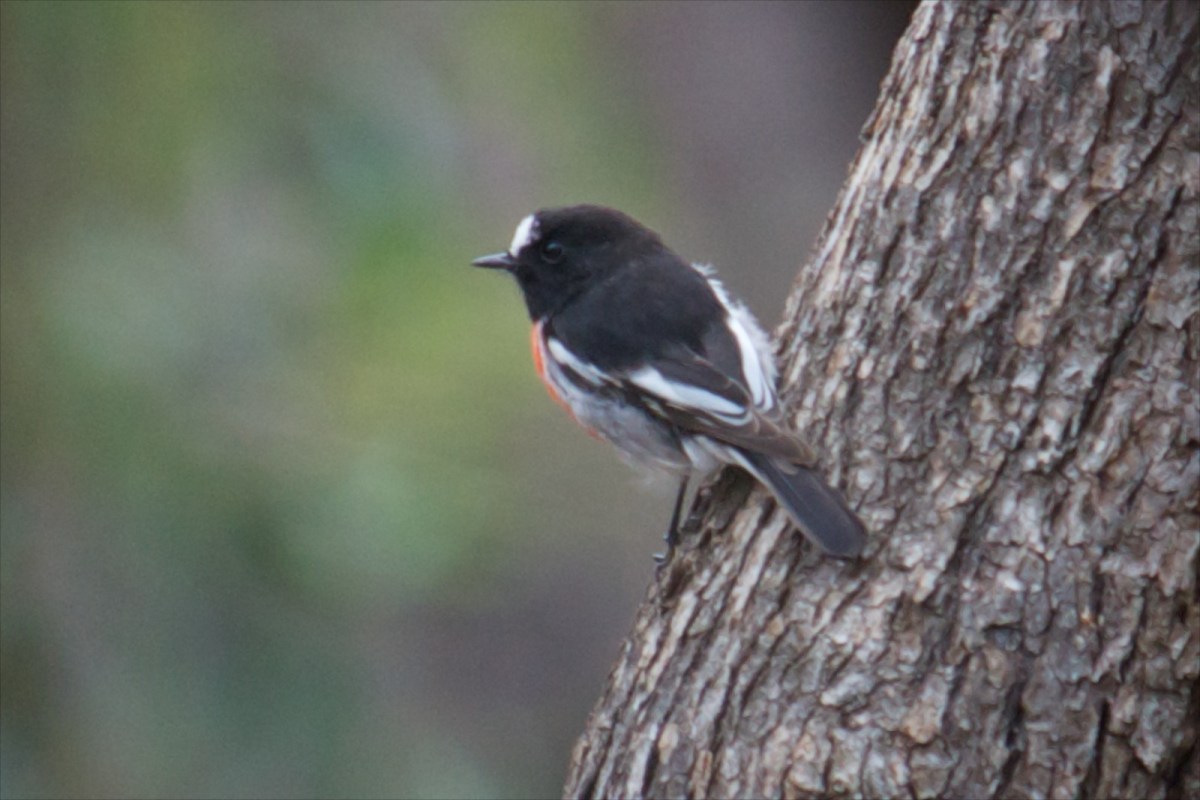
One that stood out was a Scarlet Robin female. It is the first really good sighting I’ve had so far.
So maybe the weather man did me a favour after all.
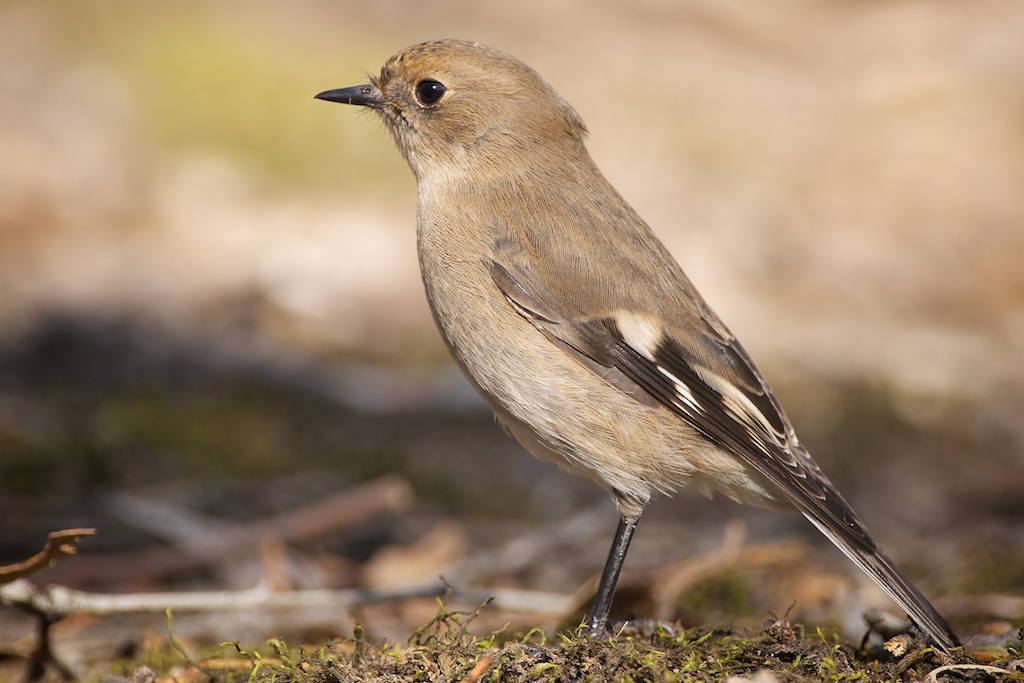
One of three female Scarlet Robins that are in the park area at the moment. Not sure yet of attachments to males, but each female seems pretty independent.
Over the past few days I have been out and about on other things than birds at Woodlands. Including a day up at Murrindindi with the Midweek Bird group. It is the first time I have been there since the horrific fires, and I was a bit hesitant about going. Tragedy is not something I am readily drawn to. It is as they say nice to see the amount of regrowth, and in some cases along the river the understory has taken on jungle proportions. Which made it hard to find birds, but none the less we managed between us about 40 species. Highlight of the day were some Scarlet Robins in the carparking areas. I think they appreciated the open area for their wait and pounce hunting. One seemed quite unconcerned and approached quite easily to with 4-5 metres. So some good shots were acquired.
This morning the sun was up bright and clear and I went for a look at Woodlands. Down at an area rapidly getting the name “Three Ways”. It is where tracks T junction. After some time waiting, eventually a number of Flame Robins appeared. There are two males and females, and a few immatures. They worked over the area for about an hour, which was a good way I reckon to spend my time. Then like always, a turn of the wing, and they were gone. Not to be seen again.
Feeding very close to my camera position.RIght at the end of my focus on the camera, I had to pull back a bit to get focus.
After a week of fairly average weather, it was nice to see the sun beaming through this morning. That was enough to put all other jobs on hold, load the car and head for Woodlands.
The forest had a lovely smell after the rain, and it was looking quite crisp.
To add to the enjoyment within about 5 minutes, we had our first Flame Robin Male, and followed it up very fast with another male, a female, and some juveniles. They didn’t seem in any particular hurry and cruised around an open area feeding as they went. Then the local Scarlet Robin popped by, and he is still with his red-capped escort, although she spent a lot of time preening while he flew about in ever broadening circles. Henny and Penny two redcaps in the area popped by for a visit, and Penny does look the part in her new winter dress and a distinct orange/red cap.
The pair from down near the three-way junction also put in an appearance, but a lot further away, too far to pursue. Time just seemed to stand still as the birds hunted and chased around the stump area we propped on. Then off course it was back to the real world, so we went by the powerline area near the dam and found another pair of co-operative Red-capped Robins. All in all over four hours had gone by, we had collected our share of vitamin D for the day, a nice collection of images and a collection of good spots to check in the future.
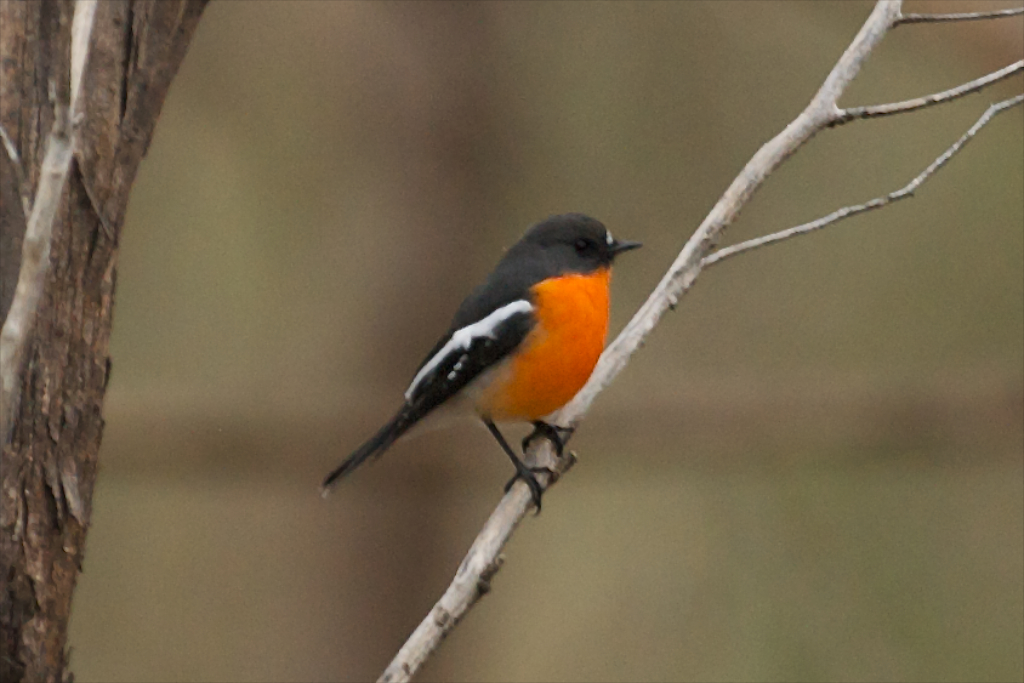
Flame Robin male. He has an interesting red feather just under his chin that breaks the sharp black line on his mask.
The local male. He was as busy and as vocal as usual. His consort spent most of the hour or so in a nearby tree tic'ing at him and ignoring his circle flights.A juvenile (perhaps). There are several similar birds already in the park.
This Grey Shrike-thrush came to find a space to pulverise its insect prey and to enjoy the meal.
After our profitable morning in the park on Friday, it was necessary of course to go back and see what was happening and to take out the real camera/lens.
Andrew was happy to come along and because of things Monday was the planned day. Start early was also the order of the day. The weatherman, kindly or unkindly warned us of rain, but hey, what would he know! By the time I peeked out the window in the early morning pre sunup, it was clear sky. Of course it would be.
So Andrew and I went on down the range and soon located a pair of Red-caps. That was predictable. A female Flame Robin, that was hoped for and expected, and a lone male Flame Robin, which was a delight and completely unexpected. So the day looked good. A highlight of the day was a young redcap that was feeding about 5 metres from where Andrew had the camera. It took off and headed straight for where he was standing and was obviously going to land on the small stick at his feet. At what must be the very last moment it dug in a wing and turned in the other direction. Landing about 5-6 metres from us. Had it continued on its path and landed on the stick, it would have been the closest I have been to the robins. Both Andrew and I were grinning and laughing at how close the encounter came.
We also found some Scarlet Robins and the family of Choughs. But then it started to rain. Did I mention rain. In the end, nothing for it but to slog out back to the cars. Still raining.
But we have at least one male Flame, two male Scarlets and a number of female Scarlets. There is also a number of juvenile Flame Robins and one very fine looking female. More will come of all this.
Flame Robin JuvenileFlame Robin Male. First occurrence for us in the park this season. Nice to have him back
Sonja was going up to check on a area for the Melbourne Birdlife Photogroup outing in May and offered for us to tag along. Two phone calls later to cancel important events and a quick scan through an empty diary soon lead to saying “Yes, Please”. So we went.
We picked up Damien in Heathcote and after a pleasant coffee at the Bakehouse we went to Costerfield and a small dam behind the main street hall. It was it must be said, pretty quiet, but among other things I heard a Scarlet Robin, so it was hopefully going to be a good day.
Several stops later on the way to Dargyle Picnic Ground and we had located a number of honeyeaters and several pairs of Scarlet Robins.
At Dargyle as we unloaded the car for lunch, Sonja located a pair of birds that we eventually named as Noisy Friar-birds. Bit to far away for a piccy, but nice to have seen. Several Brown Goshawks flew over, two of them in a bit of territorial/mating routine.
More Scarlet calls and lots and lots of Eastern Spinebills and about 4 juveniles so the list was growing.
We then drove to the Balieston Quarry area, this is a well dug over area with lots of low regrowth, and some very impressive Ironbarks, and the list began to grow even more, with 6 Yellow-tufted Honey-eaters providing most of the action.
A couple of stops around the back of the water courses near Nagambie, and then it was on the way home. What a nice way to spend a day.
Andrew and I had planned a morning out to scout about a bit. See Andrew’s Blog here.
The weather stayed kind, but for the first half hour or so, not a wingfeather was seen. We walked down along the ridge in the Backpaddock and again it was all very quiet, until we found a Red-capped Robin and then his lady, and probably a couple of juveniles. He has moulted out, and seemed quite pleased with himself and took the time to hum his little “deritt” song.
The girls had stopped down by the three road crossway, and were having their own great morning with a pair of redcaps, a Flame Robin female, and a couple of Flame Robin juveniles. Isn’t that always the way.
Andrew and I got back to find all the activity happening right where we had turned off the track.
The female Flame Robin looked in great shape. Very plump and sleek. So she hadn’t travelled far to get there. No pictures as I was driving the binoculars at the time and the camera wasn’t in reach. Don’t you just get that.
We walked, quite pleased with our collective selves, to the dam, and on the way a familiar red flash dashed across the track. Scarlet Robin. But then another wing flash, and it was not the Scarlet Robin’s Red-capped consort, but a real live female Scarlet Robin. Then a second one. Most interesting and rewarding. All were quiet, as they usually are. So I am not sure if they are all new arrivals, or two females only. The male and one female played lots of high speed pursuits about the trees.
On to the dam and a number of Grey-shrike Thrushes were bathing and then they too joined in tree chase games. And to make a great morning even better, Dorothy spotted a yellow flash in the tree, all excited we were, but it wasn’t a Robin, but one of two Eastern Shrike-tits, doing what they do best; eating grubs.
While we were congratulating ourselves on our good fortune, Rodger, he of the red-spot camera site fame turned up, and added to our morning’s wander.
The next few days should prove to be very interesting.
We all got back to the car in time for lunch, so a good end to what started out quietly.
Female Scarlet Robin. The first female Scarlet I’ve clocked for 2012.Eastern Shrike-tit hard at work on a lovely lunch time snack.
Just on a week since we both have been in the park. The rain has made the ground lovely and soft, and there is a real feeling of freshness about the bush. The rain is really welcome.
We met Andrew, a blog follower and photographer out and about looking for redcaps. As it turned out we didn’t initially have much success, so Dorothy and I moved into the Back Paddock area.
We we soon greeted by the Scarlet Robin, not so vocal or active today, spent most of the morning close to the red-cap consort and feeding down low. Which should have made photography a bit easier, but the weather was closing in and there was not much sunlight. When the sun was good there were no birds, and when the birds were about it was overcast. Still we had plenty to see as both he and his companion twittered, tic’ed and flew about. I have never heard her give the d’reet, d’reet identity call, but he does respond to her tic’s.
She lovely creature has finally abandoned her juvenile dress and taken on a very light orange, apricot wash of feathers and a neat little copper cap. She wouldn’t fly with him, but he would fly when she did. It was a bit amusing to watch. He is full of energy and covers great distances, she leisurely moves from tree to tree.
Also found a Tawny Frogmouth in the usual place near the car park. Here is a link to its page. Or from the menu at the top of the blog.
Scarlet Robin male. He spent the morning hunting around just one small area. His wonderful black coat is beautiful and his white splash and grand red chest make him a rather handsome bird. His cheery chirrup chirrrrrup is noticeable around the scrub.
The female consort for the Scarlet Robin. They hunted together for most of the morning and played the chasing game around various trees. She tic's at him, and he responds, and will fly when she flies. She is now all beautifully attired in her new orange/apricot wash, and a small copper cap. A much more elegant looking bird than from a few weeks back, (See earlier posts)
The degree of change in this bird from just a few weeks ago when I thought it was a female in moult is amazing. Now he is a dapper chappie with a lustrous Deep Black Head, a shining stand out White Splash and a lovely rich Red chest.
His degree of activity is astounding, he travels across the open areas and through the forest at a great rate of knots and will easily cover 300-400 metres in a single flight. His territory seems to be greater than a kilometre square.
He is quite vocal and always on the move. His consort the female Red-capped Robin is still in attendance, but she takes a much more laidback approach, flies a little bit, rests a lot. Hunts closely and doesn’t seem to concerned with his travelling habits. Occasionally he returns and they ‘tic’ at one another, he will fly all around her, and then take off to other parts of the forest.
The ‘pair’ have been around now for over 5 weeks. See first report here, when I had the thought he was a she.
This young male is now a regular resident in Woodlands Historic Park
Had a pleasant morning in the forest today, plenty of sunshine and not too hot.
The Scarlet and his friend the Redcapped Robin are still in the forest. He is very active and covers such a lot of territory. She doesn’t have the same power, and is quite content to rest on a tree, preen and hunt. He comes back and flies circles around her, and occassionaly she will fly off with him. This morning he made a sweep across the paddock and called from about 500 metres away, but she chose not to follow, after about 5 minutes, he came back directly across the field and landed on a branch above her and there was a few “tick” calls, and he tried again. She looked like she was counting feathers. 6345 to clean and counting. He returned and they hunted on the ground for awhile.
I am not sure what will happen when they discover they are different types of birds.
Scarlet Robin at Woodlands, moulting into a dapper bird.
First time back at Woodlands since the long Goschen trip.
Within a few minutes I had heard a familiar chirrup of the Scarlet Robin and went to investigate. I saw it in the distance, and it continued to come closer landing in a tree across the track from where I was. It is a male for sure. Has a lovely black head, really strong red colour, and that wonderful white spot above its beak.
It has grown quite bold as the week has gone by, and now patrols quite an extensive territory inside the Back Paddock fenced of area.
It does not seem to have a mate, but it is still in attendance with a female Recapped Robin. It is also moulting through and looks a bit of a sight at the moment. They sit together, hunt together and move about together, although it has to be said that the poor little redcaps wings whir quite bit trying to keep up with the speedy Scarlet. But they ‘tick’ call at one another.
Also saw today; three black swamp wallabies, so they have managed to get inside the fence in the new area. They seemed very relaxed. So that is good.
I have been spending some time in the morning looking for the Scarlet Robin. I am pretty convinced that the calls are from at least two birds. But. I haven’t been able to find both birds to confirm.
This bird seemed not to fussed this morning, and with a bit of sunlight to help things along I managed a few reasonable shots. But look at those black feathers, I am going to suggest it is a Male moulting through. A few more days and we will have a very dapper looking fellow I think. Now all I need to do is confirm that the female is there and it will be an interesting summer.
Scarlet Robin in moult. The really dark black feathers are making it most possible this is a male bird.
Went back to check on the Scarlet Robin, and was pleasantly surprised to hear her early morning call in the forest. Despite a lot of looking, I was not able to locate her, as she was moving about in among the denser grey box undergrowth.
I continued on to an area I have reported on ealier, where a Redcapped Robin male went to a lot of trouble to convince me there were not nests up in that area. See here
After locating a small flock of Yellow-rumped Thornbills, I was settling to to photograph them when off to my left a Redcapped Robin male, turned up. And in a few moments a very young juvenile. All lovely striated waiting to be fed.
It didn’t take the male to long to fulfil that request, and then the young bird was left in a dead, fallen wattle, and the male disappeared. The young one amused itself taking food off the ground and generally exploring the branches. After about 10 minutes the male returned and offered up a nice looking orange coloured bug. Then they both flew over my head, and away. I scouted round for a few minutes and then found a second juvenile, this one seemed to be a bit more advanced. The male turned up, shared some food, and then gave a call and the two juveniles followed him across a clearing. And so did I. There was another old wattle there and again he left them and disappeared, coming back occasionally with food.
He seemed to have a scheme on feeding as the first young on the scene did not get the goodies, but he seemed quite particular about which one should be fed.
Then with another call they followed him to the next tree, and a third young one joined them! So they have had a very successful time. Now he was as busy as a one-armed paper-hanger as he tried to keep them together, find food and move them about the clearing. No sign of the female. Perhaps she was off shopping? Or perhaps she has taken the challenge of another clutch. Time will tell.











 Birds as Poetry —— Just because I WANDER doesn't mean I'm LOST