The last burst of sunshine for a week or so according to the weather prognosticators, the icon ladies, and the general look out the door.
So with just a little light left we decided to go looksee along 29 Mile Road.
No Kites. Orion has hunted the area dry it seems. (Perhaps those Olympian gods can now justifiably enjoy their umbrage.)
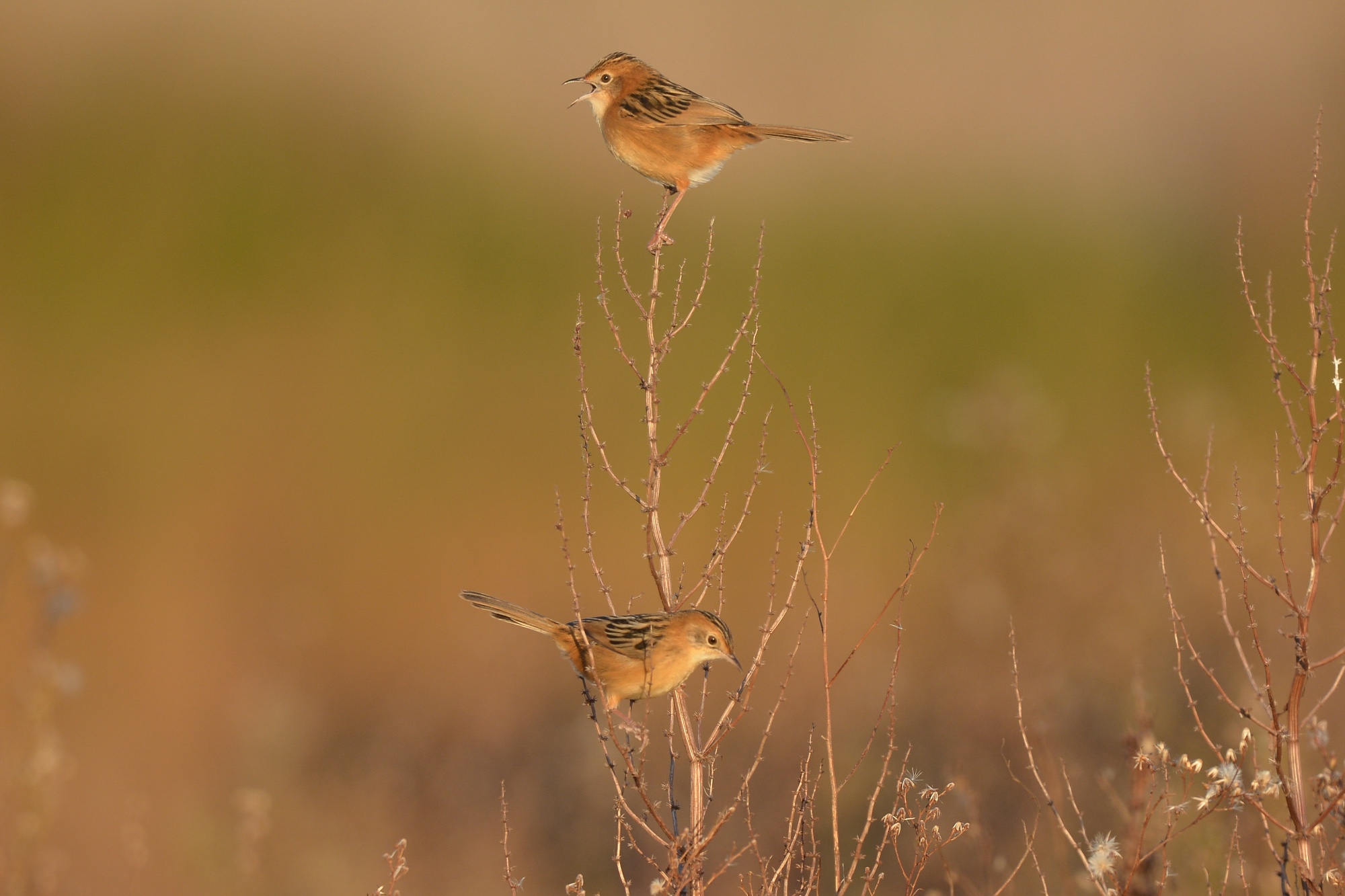
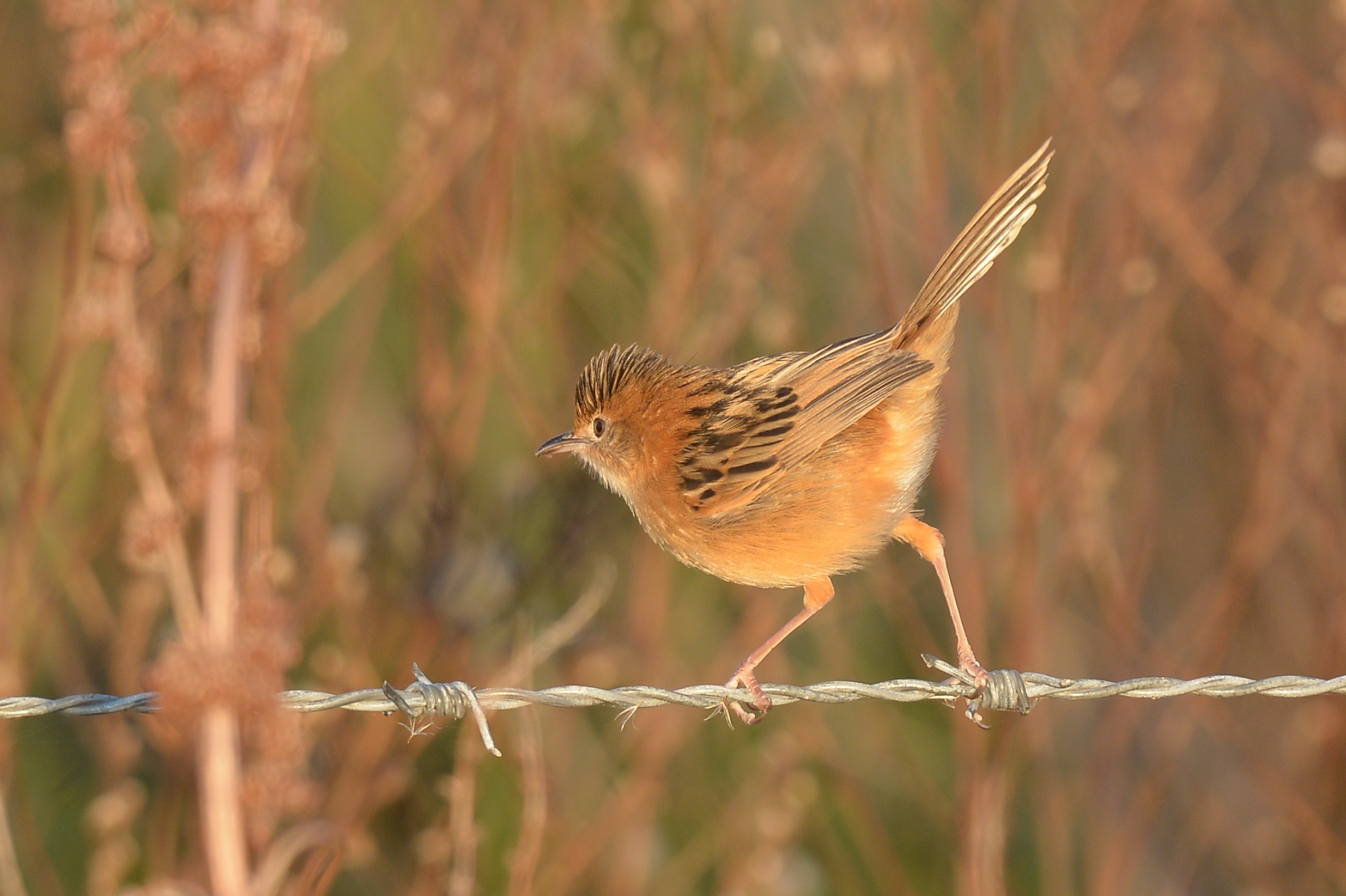
Lot of noise on the fence line just off the road. A small family of Golden-headed Cisticolas were intent on something.
And putting it all together after the event, I do believe I might have stumbled on a Cisticola version of “The Gunfight at OK Corral”
Seems that two males were going at it with a will, and all the family came out to see the event.
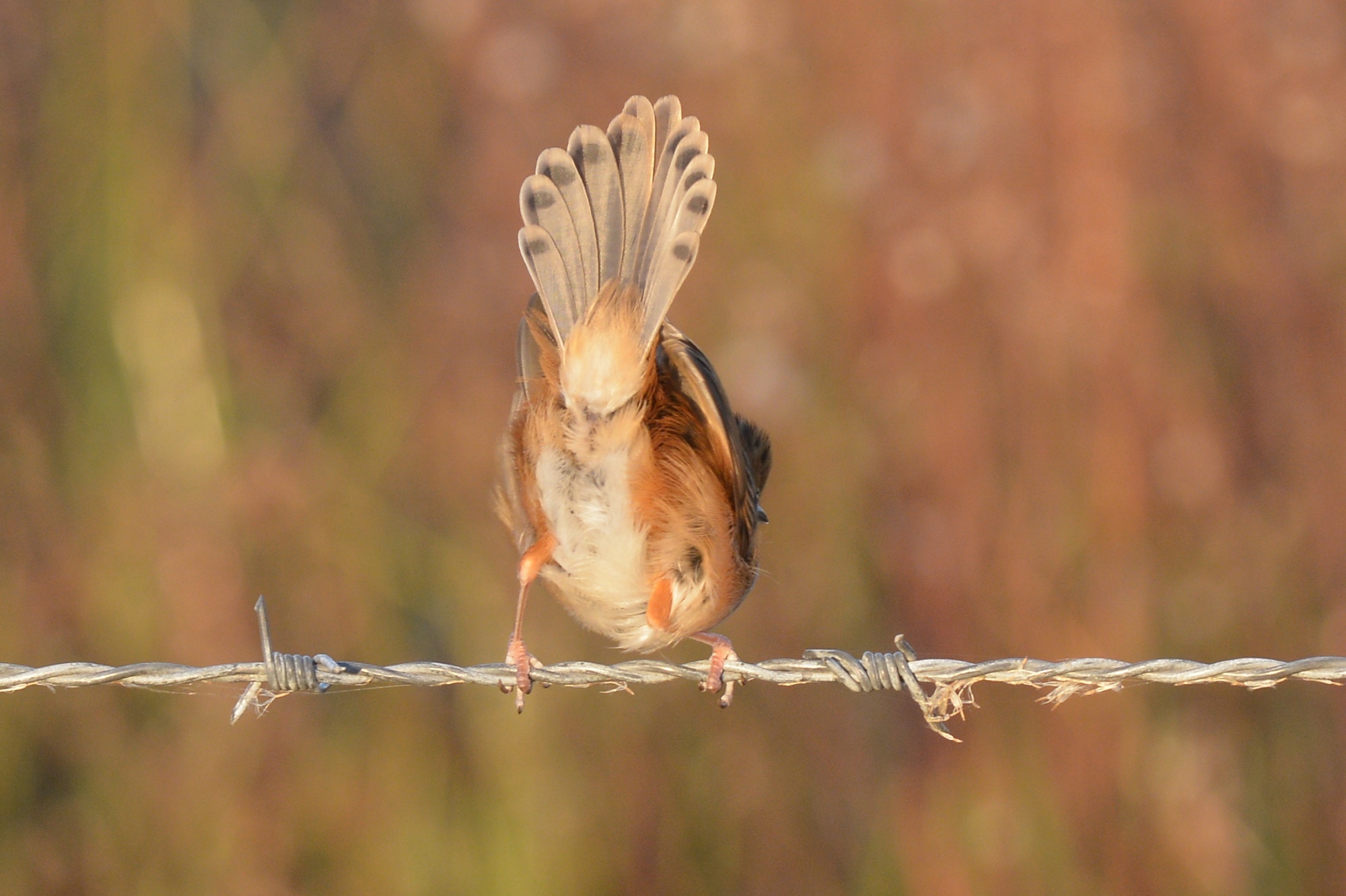
One of the major tactics it turns out is a lot of Ztttt Zttt yelling, and wing waving and turning and flicking of tail. This last technique is done with back to the opponent so they get to see just how serious you are.
Hard to work out in this little melodrama who was Wyatt Earp, and who was the various Clantons, but none the less the seriousness of it all can not be overlooked.
After about 10 minutes of dancing along the fence, turning and twisting that little tail and much Zrrrtt Zrrrt calls, one flew off leaving the other one the undisputed King of the Post. Well at least that is the way I’m writing it.
Enjoy
This town ain’t big enough for the two of us.Don’t let fear hold you back, I’ll meet you on the fence, pardner.How’s this for a view?I’ve often thought that birds have individual control over the feathers and now I’m sure.Good but, what about this.Round twoAnd the winner is?The king and undisputed Stump Champion.
My mate Chris L, he of Mt Rothwell, and formerly Western Treatment Plant, fame has established a monthly bird walk around the Eynesbury Grey Box Forest.
It is a pretty informal arrangement, no signing of paper and turning up is about the only requirement.
“Are you interested in coming on Sunday?”, he said. Hmm. Didn’t really have to consult the diary. “Be there at 10 of the clock,” says he.
And so EE and I hit the road to Eynesbury in some brilliant sunshine. When Chris organises a day, well, he organises the weather too.
By start time, about half a dozen locals, and Geraldine from Werribee Wagtails – Now BirdLife Werribee, turned up. Chris really wants to make it an opportunity for the local residents to enjoy the forest around their village.
Eynesbury is built around a golf course (well not really, but on the other hand, really). Another golfing friend, took a trip out there one day, saw the greens, and the area, and was back the following day to sign up for a villa. Nothing like a game of golf that starts from your front step.
Surrounding the man-made, is the indomitable Grey Box. This is one of the largest stand of Grey Box left in Victoria. Something the locals are particularly proud of, and with every right.
We set off along the track that leads around the ornamental lake. Lake being a somewhat strange term at the moment as the dry weather has reduced it to a series of water holes. And a home now for a number of Black-fronted Dotterels, among the usual ducks and other waders. The cormorant families have had to move on.
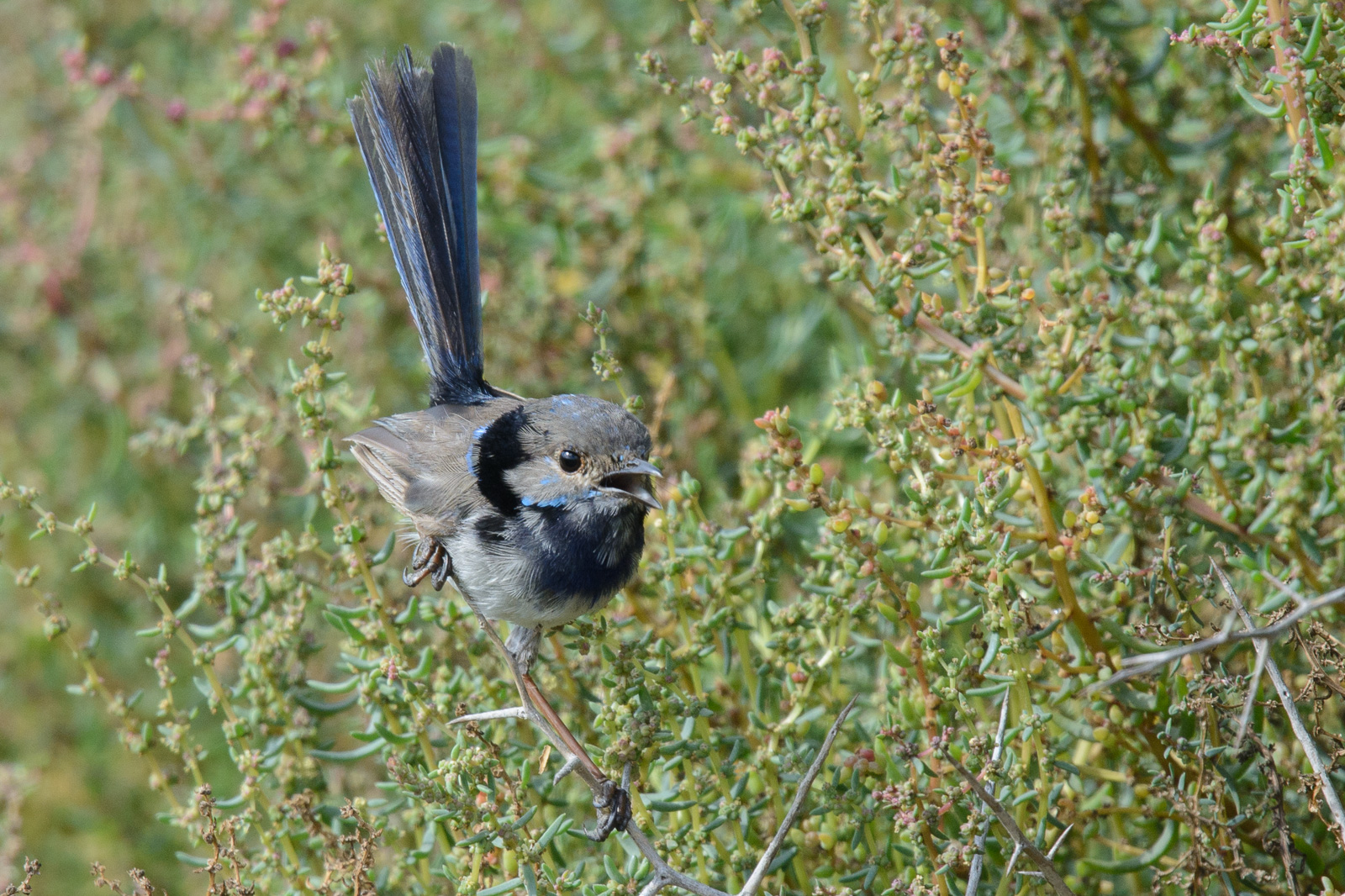
A trip around the lake led us off into the wilds of suburbia as we walked along a track between the forest and the residences. Many little bush birds, particularly Superb Fairy-wrens along here. It seemed that there was about one Fairy-wren clan to every front yard.
Across a dry creek and into the forest proper and the call of Brown Treecreepers announced our presence. Then a Jacky Winter couple, and the familiar call of Diamond Firetails, but search as we might we didn’t spot them today.
A bit of ramble through the thickets between the Grey Box and we were nearing the end of our morning. When a call of an Crested Shrike-tit echoed across the open area. After quite a bit of searching, I’d concluded we’d missed it, and a cuppa beckoned.
Not so Christo. With stoic patience he continued, and a “Here it is!” was really a grand statement of his birding skills. The group hurried to see. And not only one, but two and working very close to the track and unperturbed by our presence.
The photographers were in for a treat and we were shown the skills needed to both track down and extract grubs from the most unlikely places among the bark.
And all too soon we were back in the carpark, and farewelling the lovely area.
Thanks Chris, we enjoyed the day.
Our first Jacky Winter for the day. It gave the photographers a chance for a close approachJacky Winter. Always a fine poseIntent of extracting a mealCrested Shrike-tit on a twisted piece of bark. A great find for our Guide.Crested Shrike-titJacky WInter on blueWhen I was a little bloke, these were called “Grass Parrots”. Not so here.Tree Martin on the wingNo room on the branchVaried StittellaA Brown Treecreeper wishing us good bye
One of the highlights of Woodlands Historic Park is a stand of Grey Box Forest that is on a ridge running from Gellibrand Hill. Probably, once in older times the Grey Box was a predominate stand in the area. The Grey Box on the ridge line has survived, again, probably because the area would be difficult to cultivate.
Running along the ridge is pipeline for the nearby airport so I’ve named the ridge. Pipeline Ridge. Over the years, the open forest has provided a grand home, and a fine stop over point for Red-capped, Scarlet and Flame Robins. One season I came into a clearing on Ridge and there among the great Grey Box was at least 70 robins at work on the moss-beds in the clearing.
I love Grey Box Forest. I’ve said it before, but I think I have Grey Box sap in my veins.
These wonderful trees are survivors. No heavy rainfall areas for them. A low rain fall, and a gritty stony shallow earth, and they are at home. And so one of the great things I love about Grey Box is their perseverance and their steadfastness and their survival against the odds.
The average Grey Box is quite slow-growing, it earns it durable title over many long years.
It makes a tall upright and generally “Y” shaped spread. In fact up on Pipeline is an old downed warrior that I’ve used as a sit spot, and I first called it the “Y Tree” before I realised that was the general shape of Grey Box.
The bark is a grey (funny about that), fine and flaky. Thinner branches are smooth.
As it grows it develops, as do many eucalypts holes that become home or nesting locations for a variety of birds. The forest area also developes a finer understory, that can be very open, as it is on Pipeline or quite dense as in a few locations in the Eynesbury Grey Box forest.
The cool understory make fine homes for both Black Swamp Wallabies, and Eastern Grey Kangaroos. When I was a little bloke the Kangaroos were called Forrester. Which I figured was a typographical mistake and what was meant was Forest. And so for a long time in my youth the were “Forest Kangaroos”. Ahhh!!!
When the bandicoot program was established at Woodlands a few years back the Predator-free fence was put in place and cut the territory of the only Black Swamp wallabies in half. I’ve often wondered how the ones that ended up on the outside of the fence fared against the foxes and feral dogs in the area. I’ve no idea either how many were cut off on the inside, and try as I might I’ve only been able to locate two that I can recognise. There might well be more, as one pair of eyes can only see so much.
Understory in our wonderful Grey Box includes a lot of layover space for the Eastern Greys, and they do a fine job of keeping some areas quite scrub free, and at the same time contribute a fair amount of droppings.
I have a theory, and no budget to prove it, that the composting of the droppings and leave litter promotes the growth of a small saltbush type plant that has a bright red tiny berry. I theorise that the tiny berry is food for some insects that the Robins consume and thus collect carotene.
The red of the Robins comes from a class of pigments called carotenoids. Carotenoids are produced by plants, and are acquired by eating plants or by eating something that has eaten a plant.
For several years at the beginning of the bandicoot project in the Back Paddock at Woodlands, the Kangaroos were removed. (They eat grass, that is the home of the endangered bandicoots. No grass, no home, no bandicoots).
But the number of layover areas, and the resultant saltbush deteriorated over the next few years, and the Robin numbers that we saw decreased. And at the moment, I believe, (well I’m allowed a theory or two), that as the plant and the carotene insects diminished, so did the resident Red-capped Robins. And the Flame and Scarlet Robins moved on to other areas for winter — some not too far as there a seriously large mobs of the Forresters down along the Moonee Ponds Creek outside the predator-fence.
But the average Eastern Grey Kangaroo female is a pretty persistent little producer, and her male companions are also very capable at their jobs and between them there has been a growing population of Kangaroos in the Feral-free area. Which means perhaps the old layover areas may get a rebirth too.
Endurance is a work that springs to mind when you stand under a majestic and venerable Grey Box. Its branches wide-spread and supporting a varied habitat around it.
My Tai Chi master says” Endurance, glasshooper, is not in context of a temporarily demanding activity. Another facet of endurance is that of persevering over an extended period of time. Patiently persisting as long as it takes to reach the goal.
Patiently enduring the Grey Box forest welcomes our admiration.
I love Grey Box. It has so much to share, and it has so much to teach.
Thought I’d share some of the wonder of the forest over the years. All images made on or near Pipeline Ridge
Enjoy.
Grey on grey in the welcome rainGery Box provides a suitable nesting site. Here a pair of Red-rumoed Parrots are one of three pairs in this old tree.Magic moments of early morning mist in the Grey BoxThe Pipeline Ridge after a good rain.Hard life on a high hill side.
Somethings we do as photographers, and bird photographers in particular, seems to rival climbing Mt Everest.
One of those challenges for me is the Rufous Fantail.
Now those who have these amazing birds in their backyard are going to find the next bit of ramble, well somewhat indifferent, if not bordering on the laughable.
But. The Rufous Fantail is not a regular, nor a resident bird in my area. In fact over 8 or more years at Woodlands Historic Park, I’ve only seen them on three separate seasons. And then only for a few days, as they either fly South, for their summer location or then North for their Winter escape. And off course I have to be in the forest when they are there, and as there is no prior warning, and no set pattern of location, climbing Everest seems to be a fair comparison.
“It’s a lovely sunny day. Let’s go visit Ambrose,” said she. So EE and I headed up the freeway, parked and then walked in to the area where this amiable bird has been the past few seasons.
Long term reader(s) may recall that last season the area had been cleaned up by the local LandCare(?) group and I was a bit unsure if Ambrose would bother. And after about an hour or so of fruitless searching I was well on the way to convinced. Then, way off on a corner area of the paddock, a familiar little harmonica call echoed, and I went to look.
And there he was.
Waved a wing at me— in Hello— and was gone. More waiting and a fine cuppa of Earl of Grey, and he made one more quick appearance, but didn’t seem to be photographically inclined today. But at least we’d made contact.
“How about lunch at Greenvale, and then we can go on to Woodlands Park in the afternoon,” says She. EE is pretty good on those ideas. So we went.
Woodlands, as the long long term reader will (or at least might) recall is the birthplace of my bird photography. I am convinced that Grey Box sap runs in my veins and in a few minutes of walking down the the old “Dog Track”, I was feeling a weight lifting.
I like Grey Box Forest.:
No TV commercials with people who have to “YELL” to get my attention.
No loud music with people who have to “YELL” to sing a song.
No Dodgey commercials that “YELL” at me to buy some piece of useless rubbish or other.
No Lines at the Supermarket
No pushing and shoving to get a coffee
No futile endless running about chasing something of no particular value.
I like Grey Box Forest.
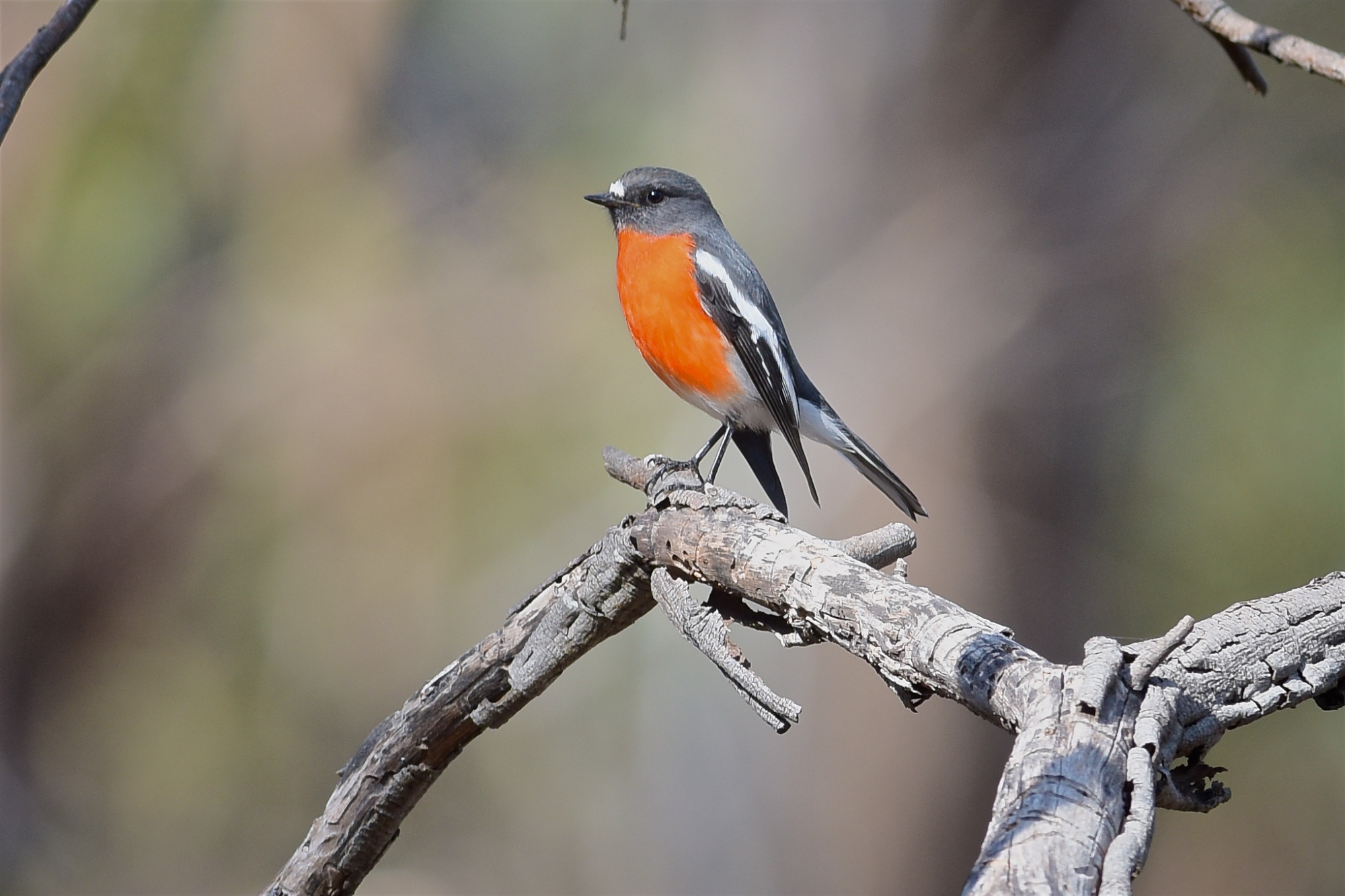
We found some Flame Robins down by the old dam area, and to our mutual surprise a Pink Robin female.
I was photographing some ‘log-dancing’ between two territorial Red-capped Robin males, when a ginger/gold/rufous/orange flash quite literally sped by my ear.
A Rufous Fantial. First one I’d seen in years. Move over Sir Edmund Hilary, and Chris Bonington. This is serious business.
The Rufous, as pointed out at the beginning is a very infrequent visitor. It also has the most beautiful orange tail. A photo of that is like planting a flag on Mt Everest. One of the most gorgeous examples of it was taken may years ago by an expert bushman. (he has also featured here before)
Alan (Curley) Hartup made a wonderful shot with a beaten up Mamyia C22 and a roll of filum. Yes, filum. It was exhibited and won Curley many well deserved awards and accolades. Look back and you’ll find a the shot featured on the Hartup Exhibtion flyer and for more on Curley see here.
One thing I learned about photographing this bird. It is fast. So fast in fact that it makes the average Grey Fantail seem glacial. And your average Grey Fantail is no slacker in either the speed or irrational flying behaviour departments.
“Perhaps, I should practice more on Grey Fantails,’ says EE. “N0,” says I kindly, and wisely. “The Grey Fantail isn’t in the same speed league.
So we followed the bird, and eventually managed a few close shots.
I struggled to get to the peak. Just couldn’t get the flag in.
Enjoy
A “Hello” wing wave from Ambrose. But he didn’t stay to chat.Female Golden Whister with snackNo Grey Box forest would be complete without a Grey Shrike-thrush or two. They look as good as they sound.One of part of a squadron of Varied Sittella at work among the Grey BoxNot my friend Pinky from Pt Cook, but a lovely bird to meet anyway.One of several male Flame Robins that arrived this past weekEven though they have travelled a great distance, they still manage to look in top shape.A peach of a bird. The wonderful winter dress of a female Flame Robin.A male Red-capped Robin. Intent on discussion with a neighbor over territory rights.The one that got away. EnjoyRufous Fantail. At a stand. Managed a couple of shots, but no tail-spread here. Not much room on top of Mt Everest.
Jon Young says, “There is nothing random about bird’s awareness and behaviour. They have too much at stake…. Being tuned into the tapestry…. we are venturing into a realm of awareness, and intention and curiosity. I’ve had some magical experiences in the natural world, and some of them have involved birds.”
He quotes a San Bushman, “One day I see a small bird and recognise it. A thin thread will form between me and the bird. I will go again tomorrow and recognise it and the thread will thicken. Eveytime I see and recognise the bird, the thread strengthens. It will eventually grow to become a rope. That is what it means to be a Bushman. We make ropes to all aspects of the creation this way.”
Appreciation of the bird’s perspective.
Which puts us in the vehicle, heading along the 29 Mile Road at Avalon, in the early morning sunshine. EE, Mr An Onymous and I. And as we draw nearer to the end of the road, a thought from us all, was, “Will Orion still be here?”
We need not have worried.
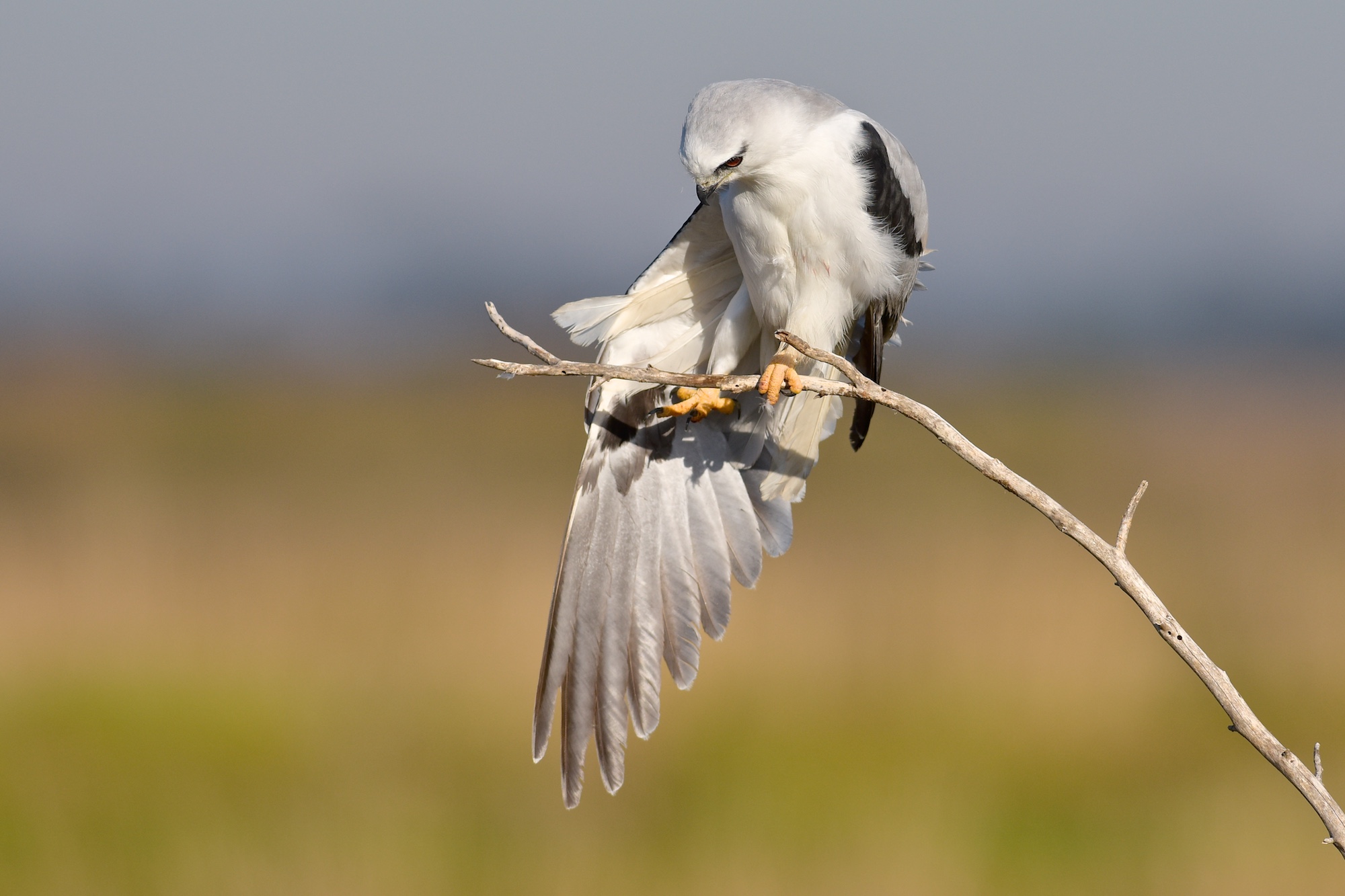
Sitting on a small tree, about 10m off the side of the road. And by the look, having just eaten. Feathers still wet with the dew from the grass of his last capture.
At first we stop the car on the far side of the road, and they photograph through the open window.
Orion turns his head, takes note, and then develops, ‘Soft eyes’. Jon talks to this a lot, and I’ve mentioned it here before, but its the type of eyes that look right past you, with complete confidence. I stepped from the car, I’m on the far side remember, and approached from the sunside, and moved across the road. ‘Soft eyes’ followed me. Because of the line of the branch, his stance, and the way the light is running in the early morning, I want to be about 10m further out in the open. And of course the chance is he will spook and fly.
I make the first few shots. Orion sinks down onto the branch, and I take that as an invitation. Purposefully, rather than creeping up slowly, (that only spooks birds the worst), I move to the open area. Now, the backdrop is not right, so I need another 4 or 5 metres. He throws his head back and begins to hawk-up the fur ball from the last meal. I move. Soft eyes follow.
Because of the lay of the land, it’s going to be hard to isolate him against the backdrop without a horizon line running somewhere. I could go lower, but then it would be blue sky. Nice, but not encompassing. Besides crouching down human with long lens is going to turn those soft eyes to ones of determined study. So I opt for another step or two to put his head against the far distant tree line. That will have to do.
Orion settles to preen.
EE and Mr A take all this as a sign of relaxation and they also move off the roadway for the better angle and the light. Orion soft eyes. We’re cool.
In the end, we’ve enough for a game of cards, the three of us and Orion.
Preening, wingstretches, repositioning on the branch. And all the time he seems completely settled.
After an hour of standing in the fine sunshine, carrying a long lens, and working with a bird that seems to have no fear of us, a great deal of understanding, awareness and connection emerges.
The others move back to the car. I bid this able bird ‘good morning’ and follow them back. Soft eyes follow me.
All is well.
Enjoy.
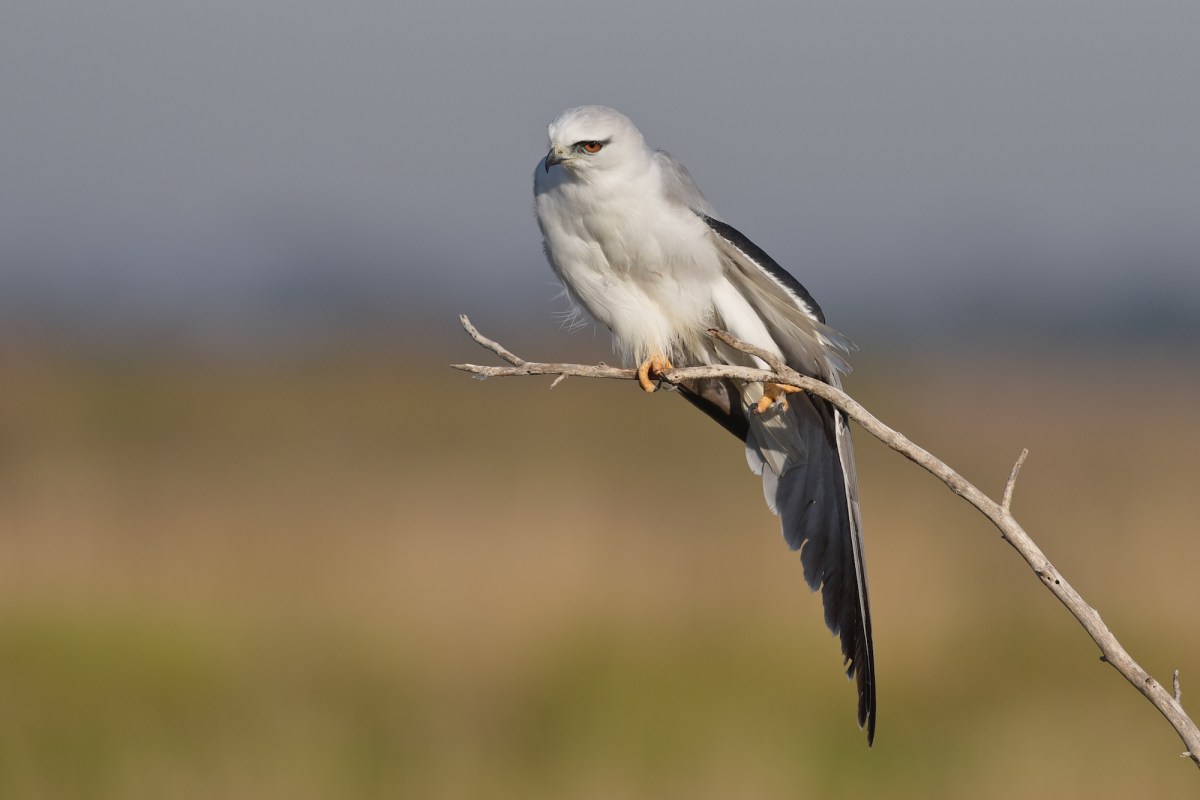
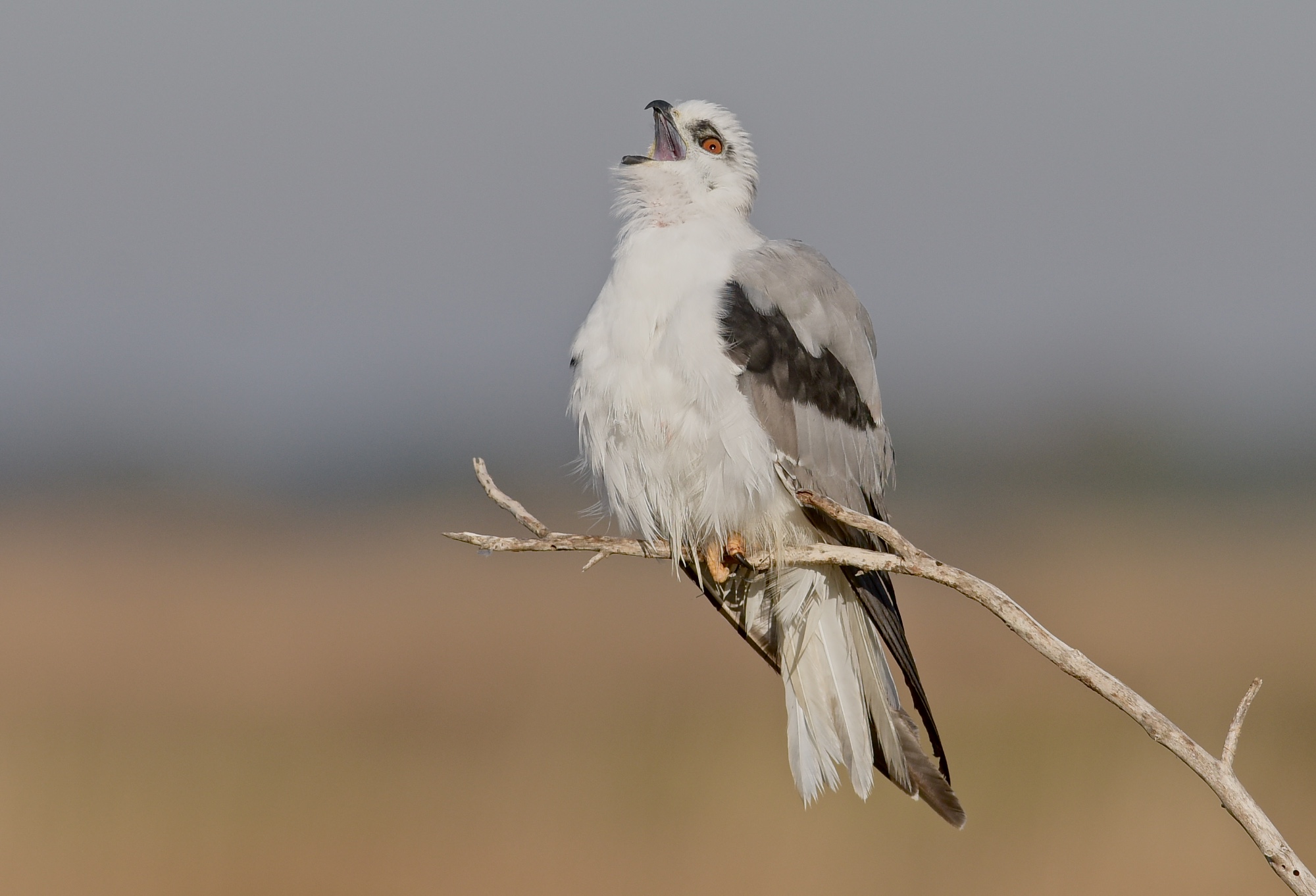
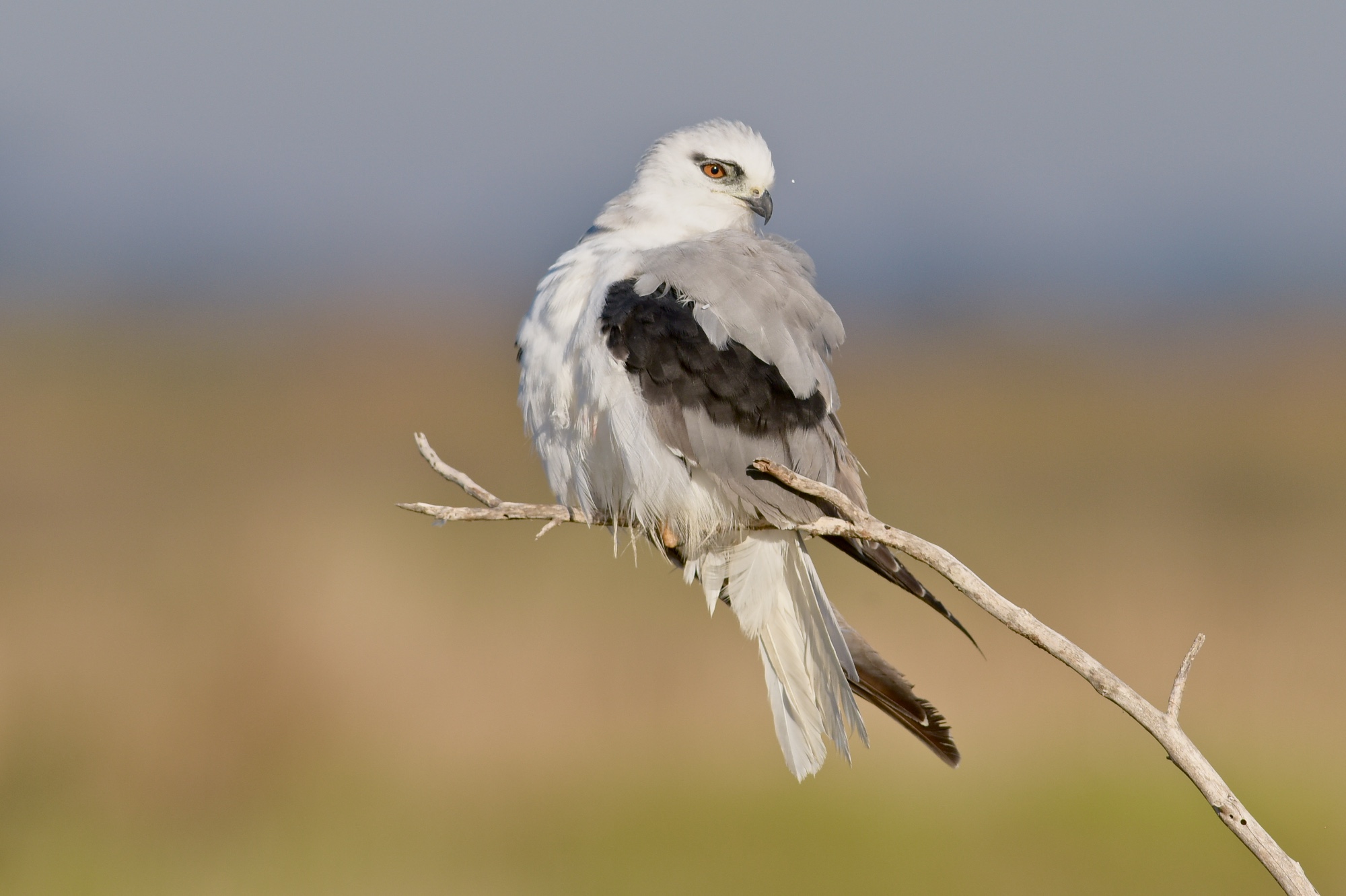
Well, good morning. Hunting’s been good.Rolling up the Fur-ball from the meal.Took awhile to get the material up.A bird that is this relaxed is interested in preeningA wing stretch to the right. Lean into it, that feels good.Lean into the Left. Big body angle here.Wings to help balance on turning on the perch.How to fold up big wingsAll of us remark on the softness of the grey on the cap. Its like soft cat’s fur. Never noticed it until we are this close.I don’t mind you coming but did you have to bring the wagtail with you. Willie just can’t help but get into the act.
And just before you think I’ve run out of stuff to write about and am uploading a few older images.
These are from a visit this afternoon. I’ve been laid up at home in bed with the flu for most of the week. And EE decided that it was such a nice sunny afternoon, that I’d be allowed out for a bit of ‘fresh air’.
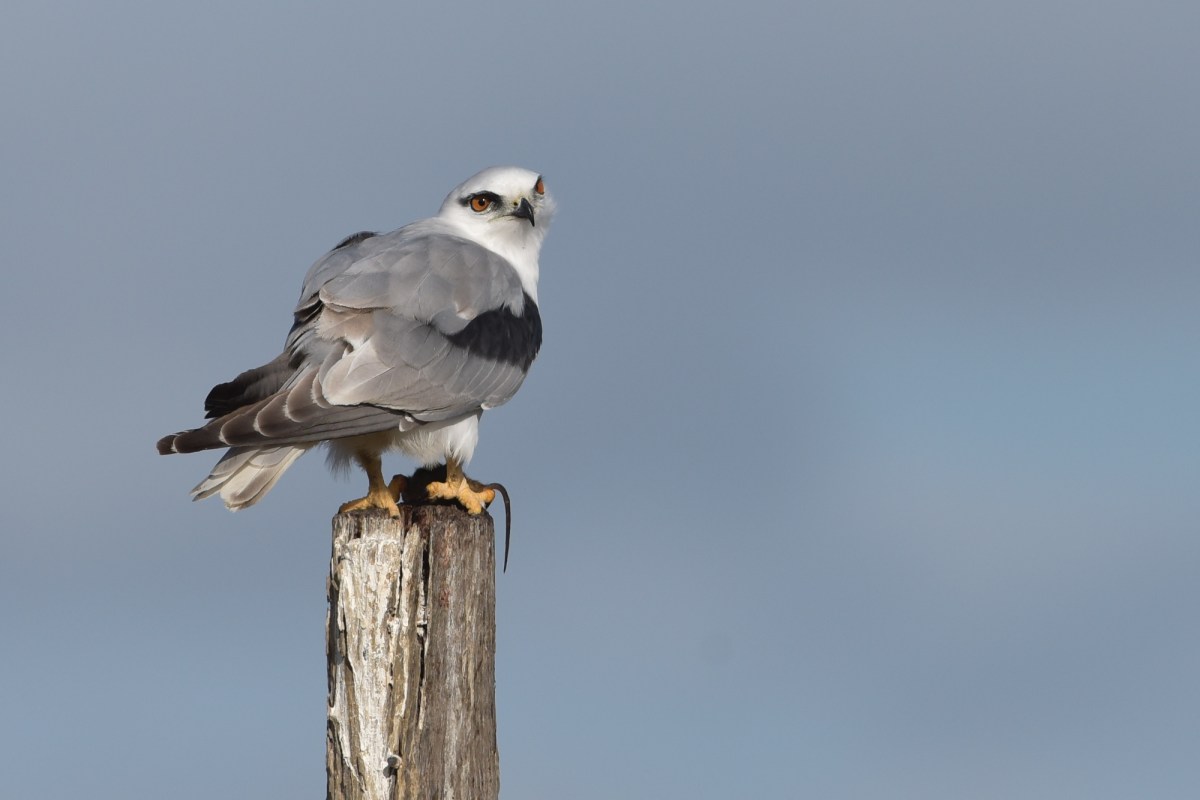
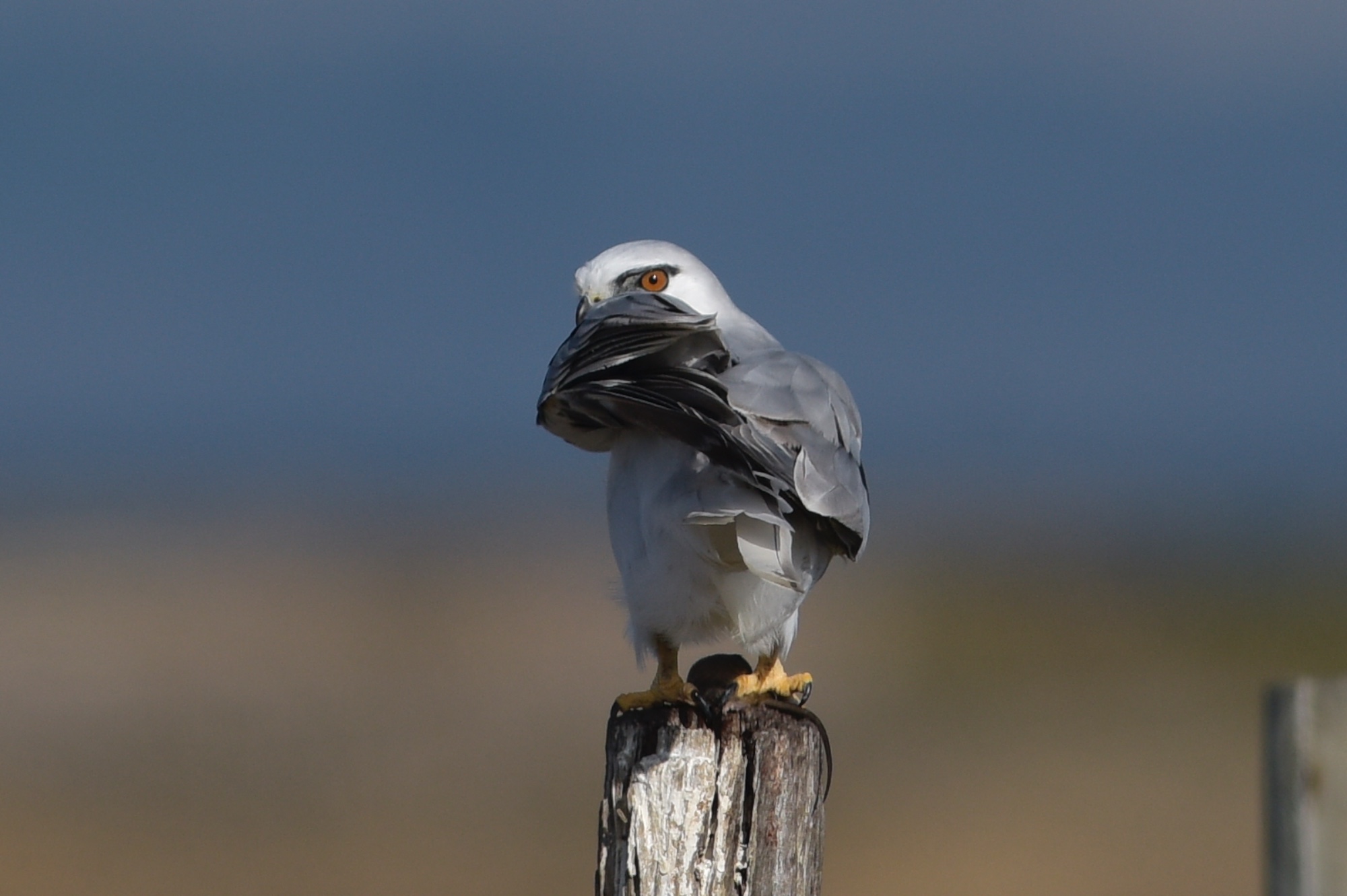
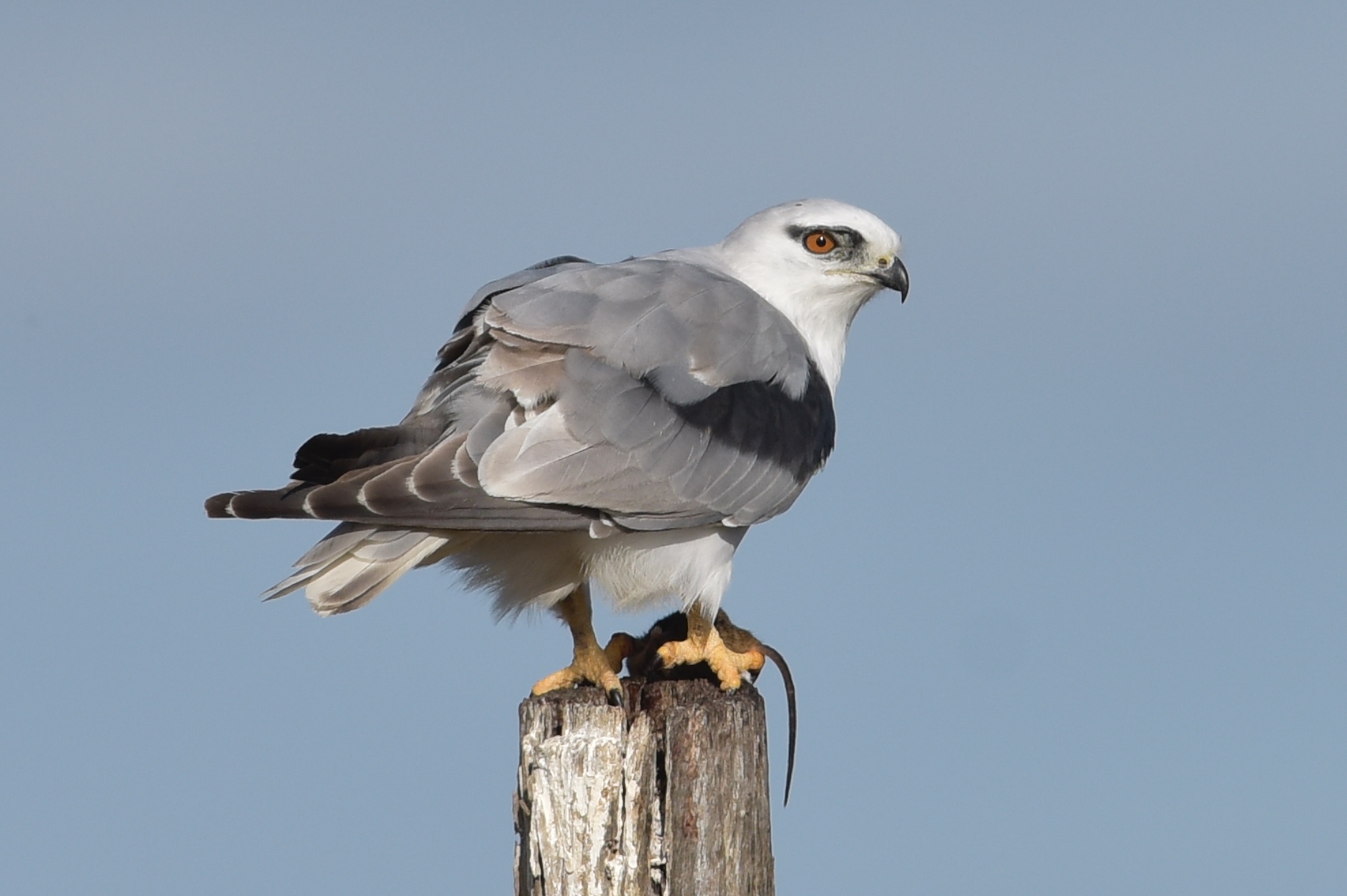
So down to 29 Mile we went. And there was mr casual, Orion, sitting on the usual post eating a usual mouse. Well obviously not the same mouse as before, but you get the idea.
Interestingly enough there was quite a track made through the long grass and marsh weed, by photographers tracking in and out over the weekend. EE says, if she’d have known it might have been a good place to sell hot scones and tea!
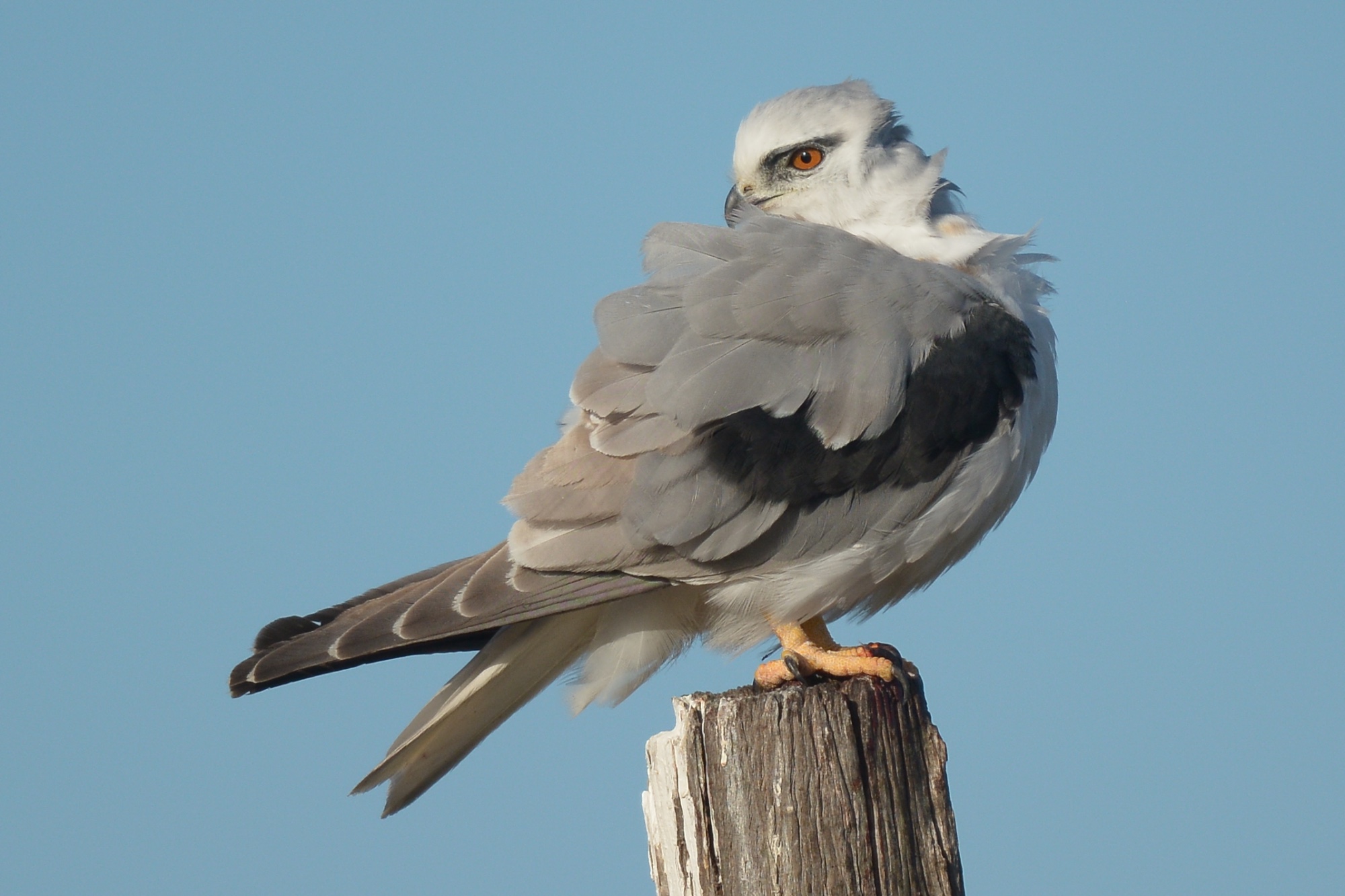
Orion seemed all the more oblivious to it all, and went through an entire preening and resting program with two photographers at arms length —so to speak. Well not quite, but in its relaxed way we enjoyed vicariously its company.
Here is a small sample of the afternoon. And yes, I do feel better from the fresh air.
Enjoy.
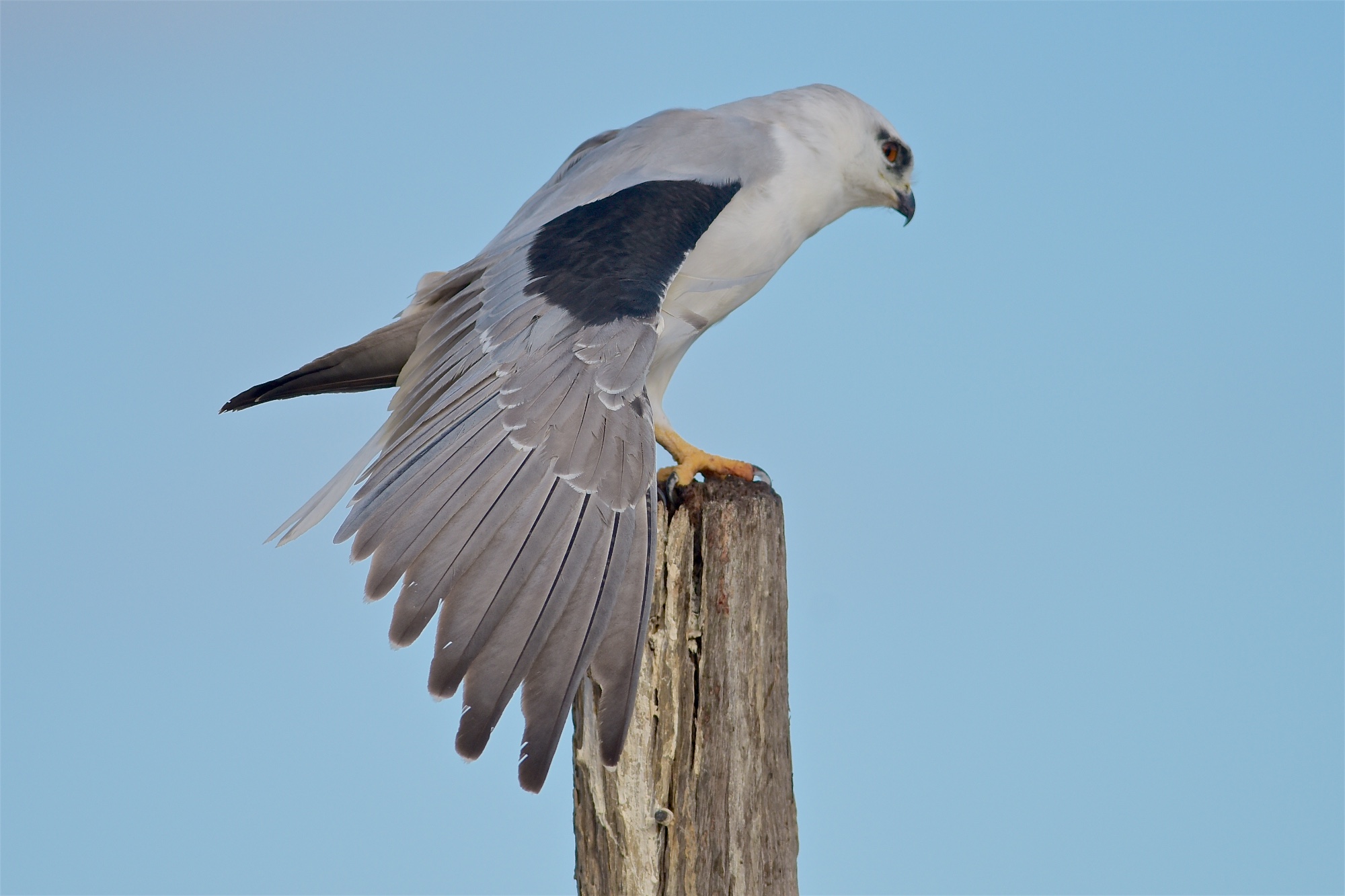
Bird of mysteryIs that a mouse I see? Yep.A quick extraction and discard of the bits that don’t taste too nice.Mouse trapDid you ever wonder what was under those wings?The delicate rezipping of the tail feathers is always a delight to see from a raptorA wing stretch and its time to go a hunting.
Not sure how you’re Greek mythology is, but Orion was a hunter who was going to kill all the wildlife. A bit miffed with his hubris, the gods took umbrage— they seeemed to do that a lot, over the least, and perhaps even looked for opportunities to be offended, but I digress.
In the end of the myth, well he gets bitten by a clever snake, and is consigned to turn for ever in the heavens, he at one end, and the snake at the other. When one lot of star pattern is visible at night, the other is below the horizon. One sets as the other rises. All very mystical.
There is a lot of the life/death, rebirth and restitution in the entire story, but that is probably enough for most average bird photographers to take in at one sitting.
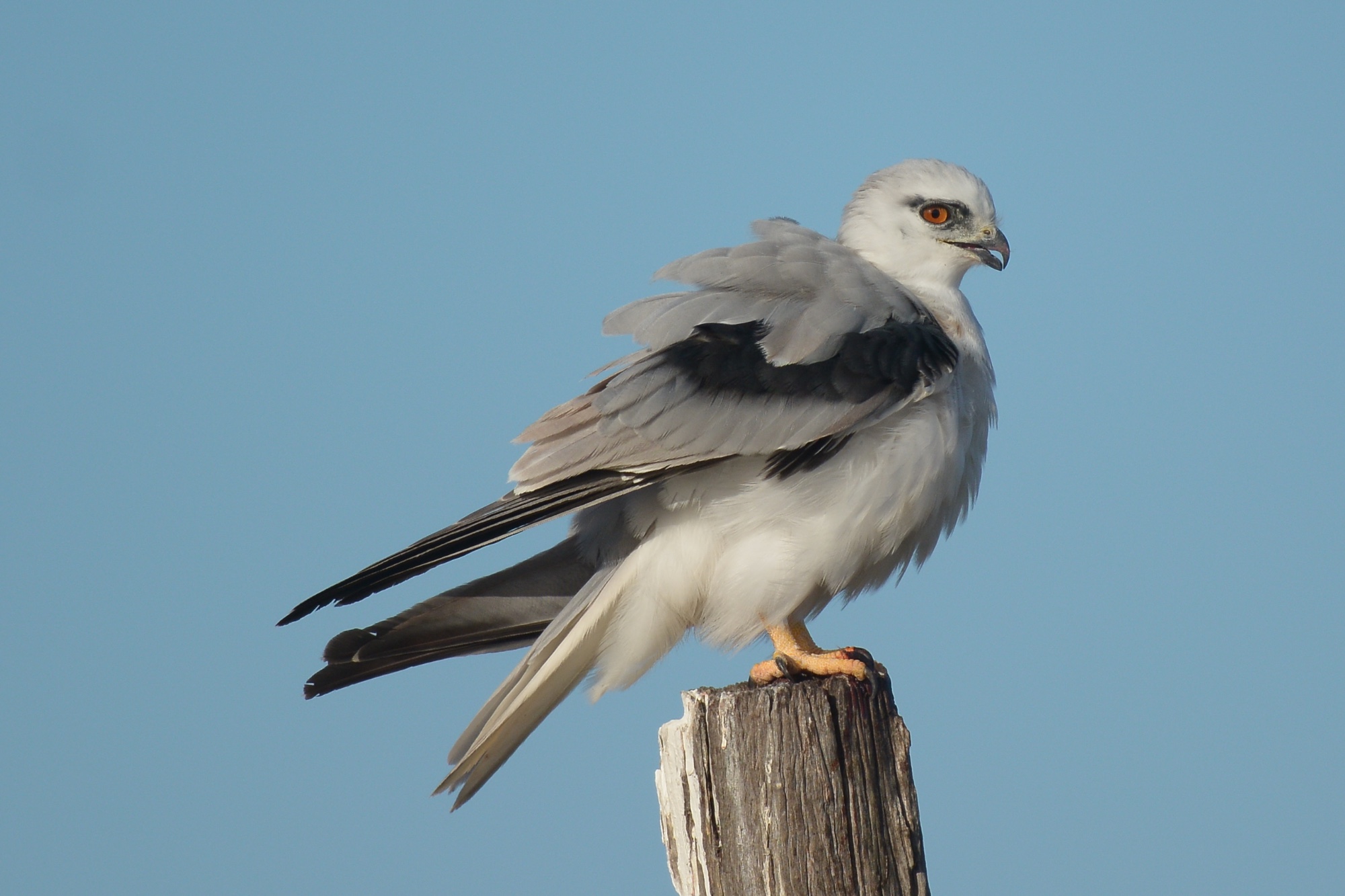
After several sessions with the Black-shouldered Kite down on the 29 Mile Road, it dawned on me that Orion, the mighty hunter, would be a good, well, unisex name for our hero(ine).
So we went down to see Orion, discuss the matter with him/her, and see what he/she thought.
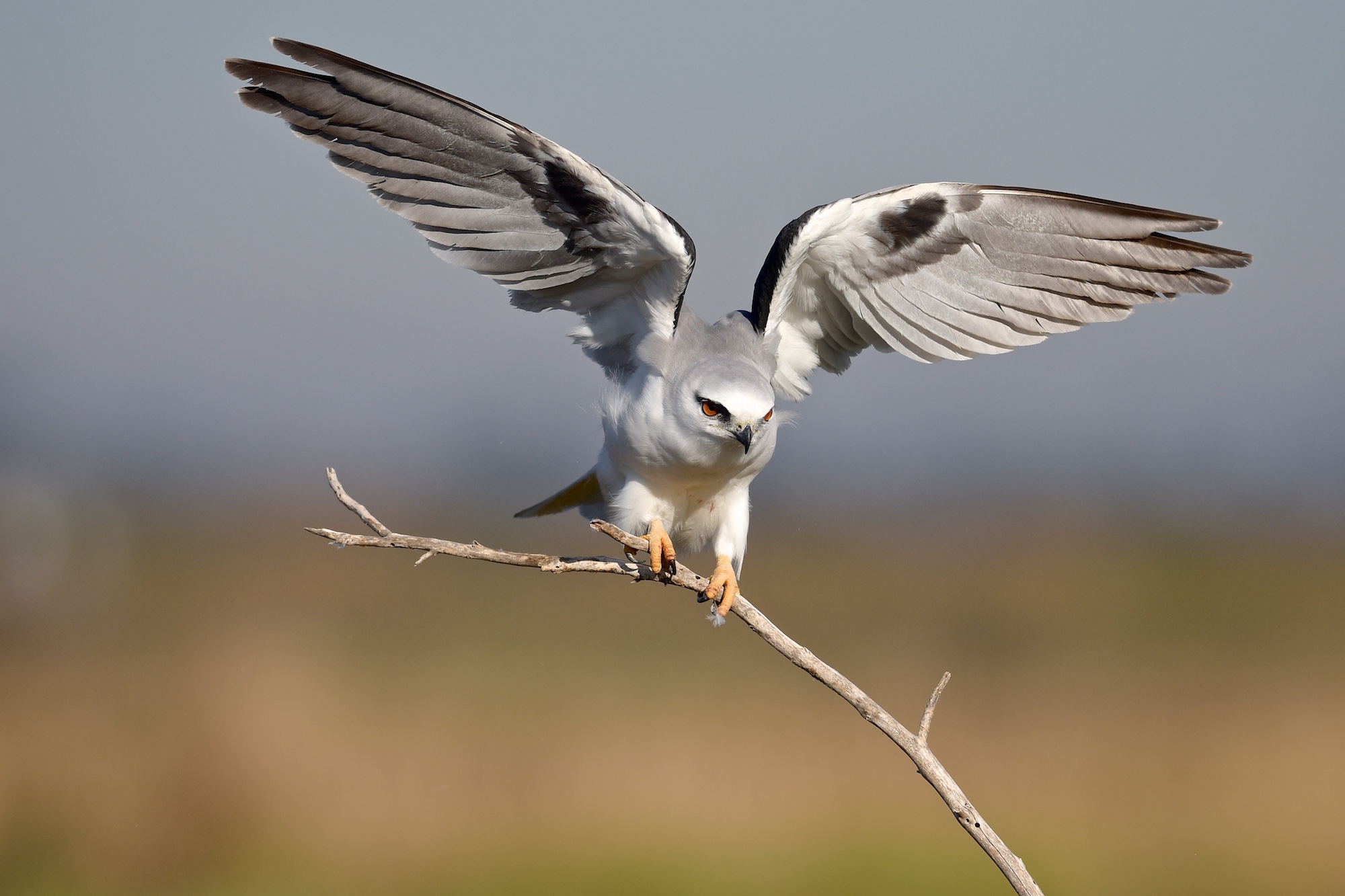
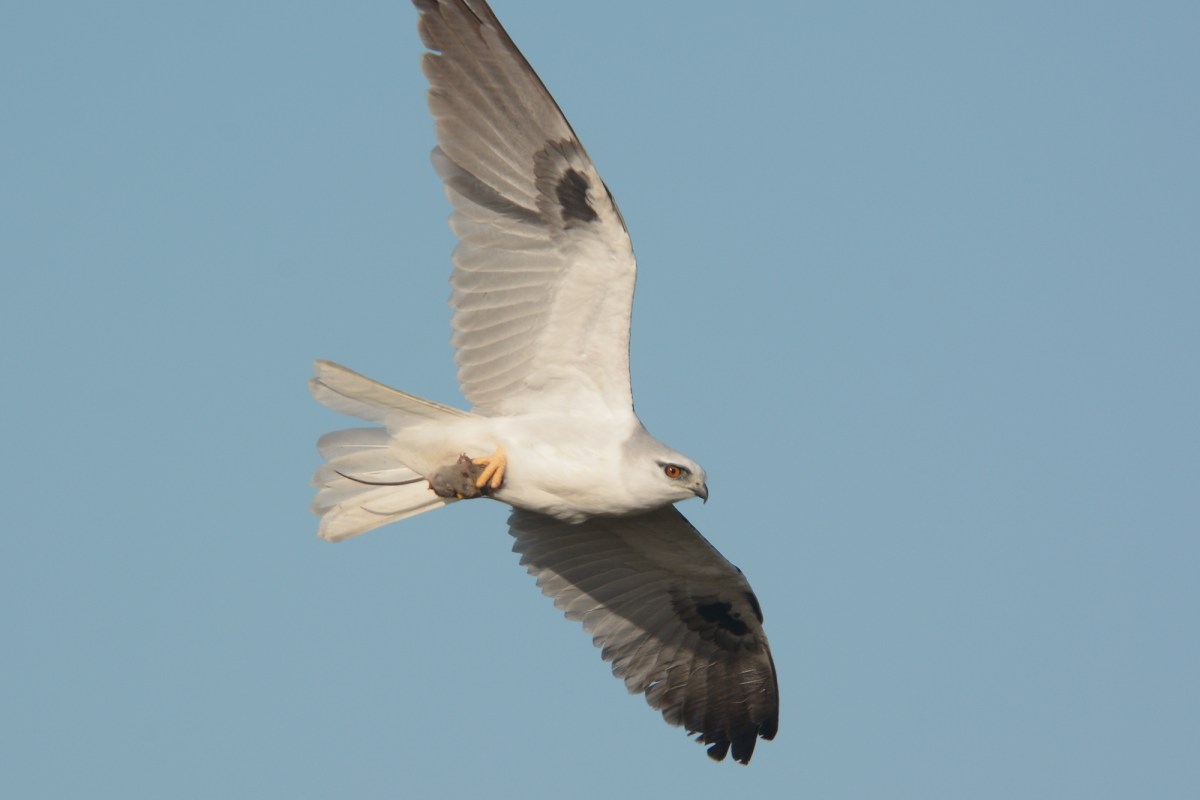
Seemed to go pretty well, and just to confirm it all the bird dropped off the post, flew a few wingflaps, hovered, dived and returned with a mouse. One can almost here Mt Olympus turning.
Enjoy
Addendum: Just to be very clear. These birds are not baited, called in, or in anyway interfered with. We are simply recording the activities of a very relaxed and completely confident bird. We strive for connection and if a bird exhibits any ‘stress’, we leave it in peace. No photo is worth stressing the bird. Now you know!
Warming up the wings for the next sortie
BIrd of mystery and mystiqueI take that gesture to be an acceptance of Orion as a good name.Hand me a camera and I’ll make a shot for the Fluker PostFine tuning under the hood
No. I haven’t fallen off the planet. But my photo database had developed a slight case of computer measels and its taken me the best part of the last couple of weeks to manage it back to life.
It all started…. but, let’s not go there.
Still been making photos but.
Here is a sequence from a morning with a Black-shouldered Kite hunting alongside the roadway. For those who can navigate around the Western Treatment Plant this one is working along 29 Mile Road.
Interesting time at the WTP, the waders are all feeding and colouring up for their journey north to Siberia. And all the nesting birds are now in winter preparation.
Which means the Black-shouldered Kites among others have come down to keep the mouse population from exploding to epic proportions. And if this bird is anything to go by, then the mice are well and truly under control.
I’ve heard it said that on average the success rate for a hunting bird is one strike in about 10-15 attempts. This bird (I haven’t named it yet), obviously never read the fine print, and in the hour or so we shared, it hunted 4 times and took 3 mice.
It also seems quite content around us mere humans and has allowed both close approaches, and has made its own close approaches. Add to that some fine sunshine, a small breeze to give it some lift and what better way to while away a few hours in the morning.
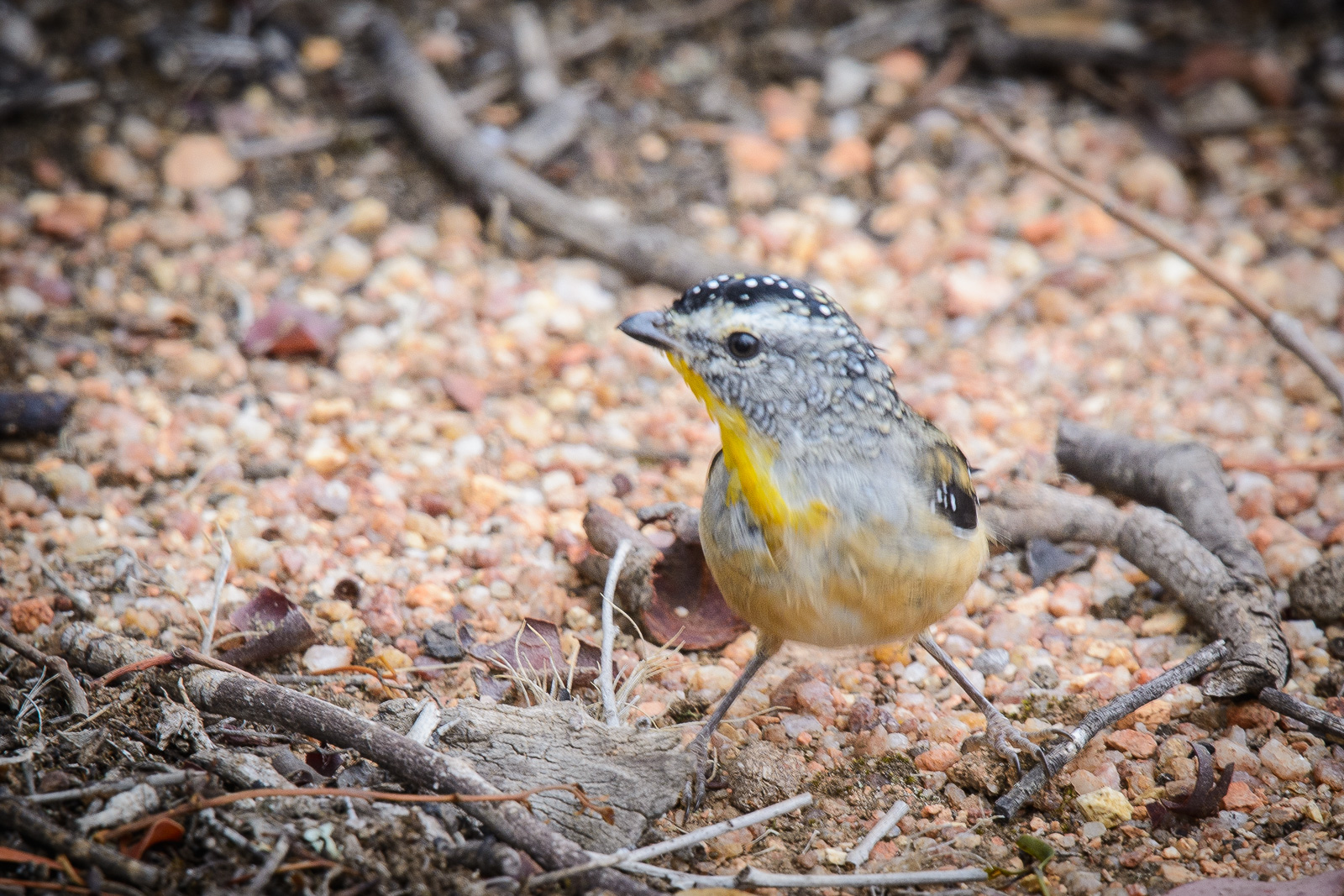
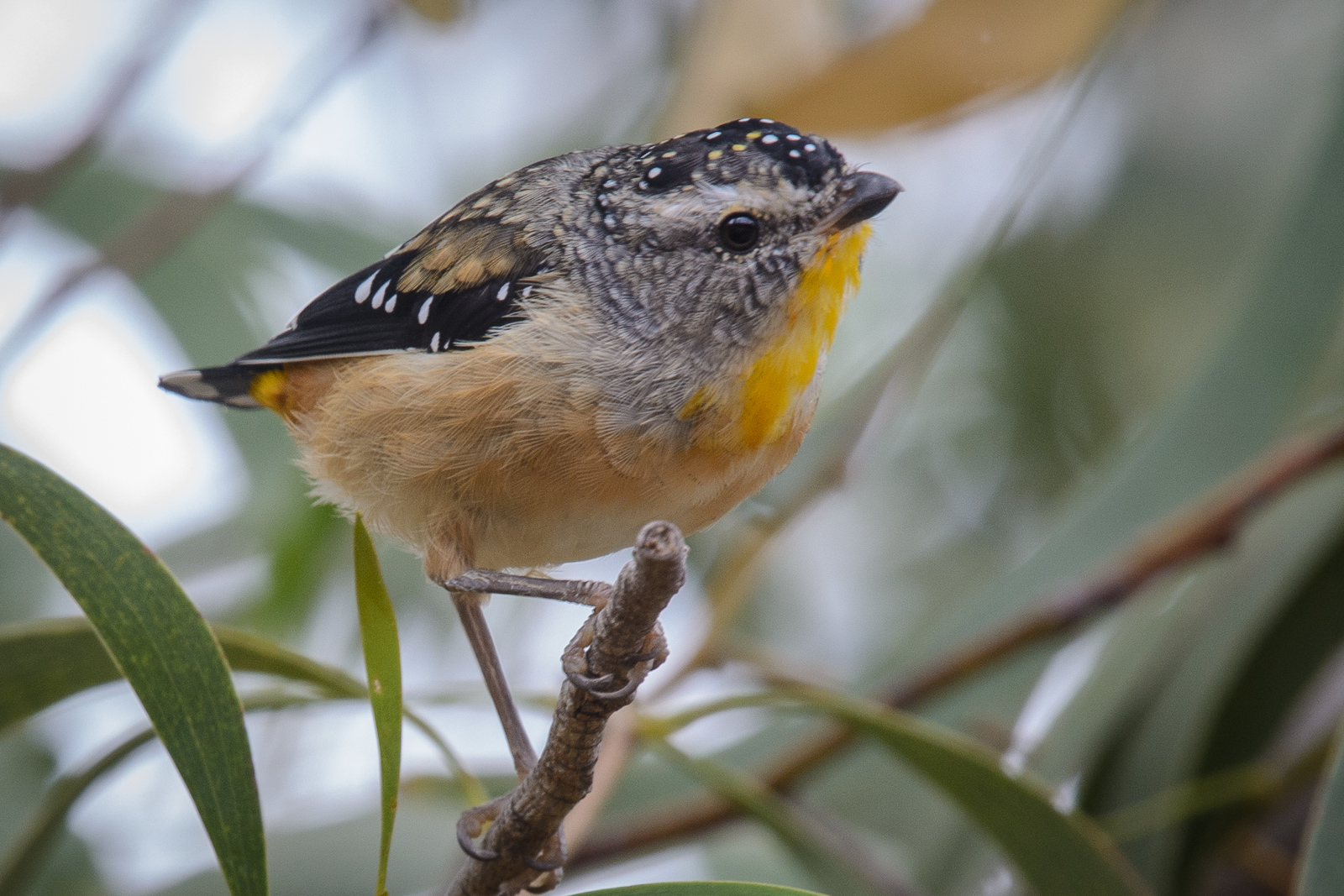
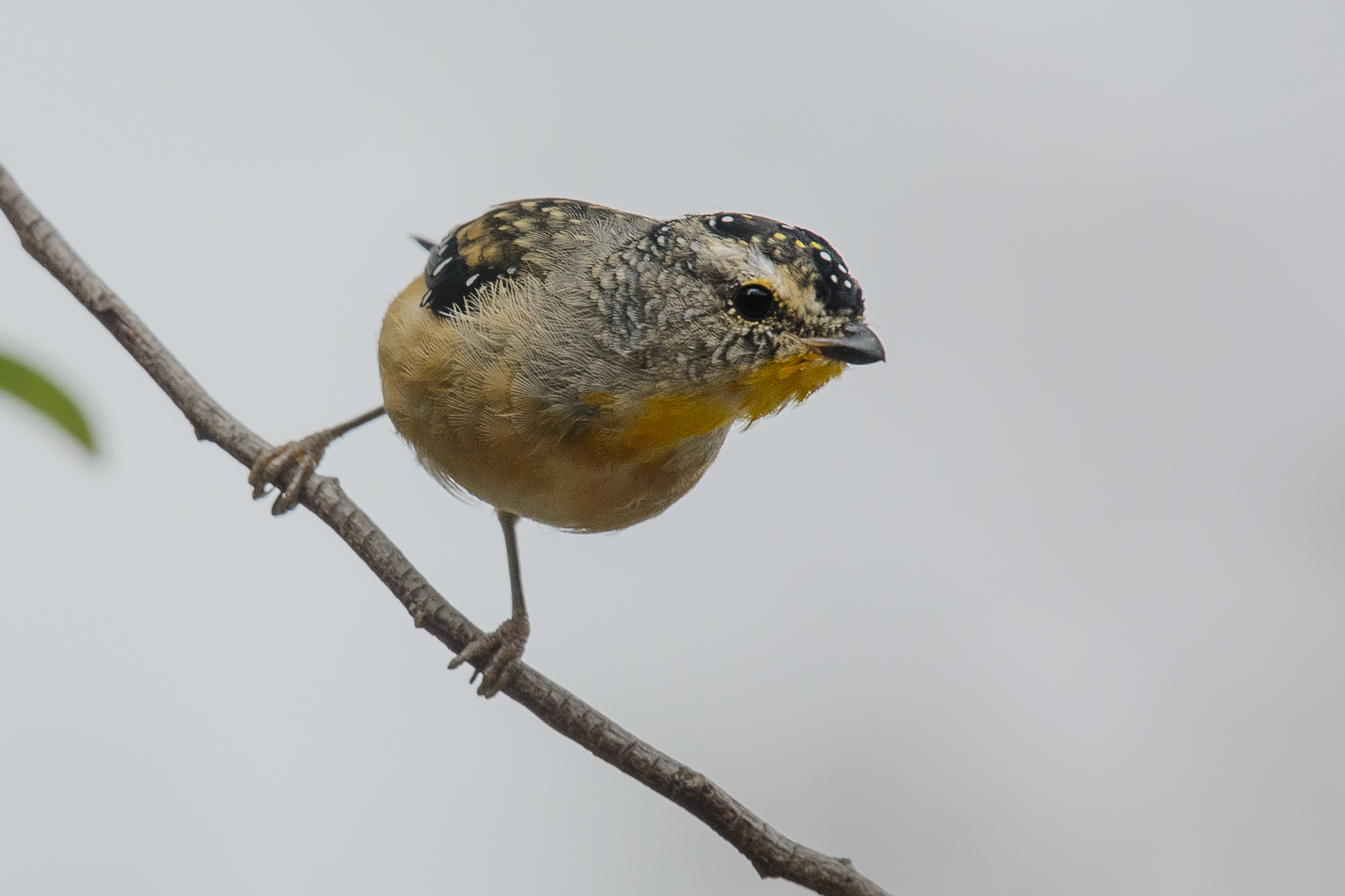
Spotted Pardalote. The bird of rumour and voice. Mostly we never see them. Hidden among the topmost leaves, their tiny call recognisable, but impossible sometimes to locate.
Yet.
To nest, they descend to the earth, dig an incredible tunnel — up to 60cm or more and setup house for the 3 weeks it takes to lay, incubate, hatch and fledge their young.
Those of us who walk the earth with them will often find evidence of their nesting activity. So I suppose do all sorts of feral predators. Yet, each year they disard their cloak of invisibility and take to the task.
Once complete, its back to the treetops and small tiny peeps that discolose their presence.
They are one of our smallest birds. I’ve handled a dead one, (hit by a bicyle — the bird didn’t even know what happened, and the rider was oblivious —. I picked it up, still warm, it fitted into the very centre of the palm of my hand, my thumb twice as large as the bird. I took it to the side of the road, opened up a small hole in the earth and laid it ever-so-gently down. The warm earth welcomed its little wonder.
They are so prefectly marked. Rich black, white, deep orange yellow. Tiny legs that seem like rubber bands as they can stretch and seem to bend to any angle.
While EE was spending time with ‘her’ Juvenile Eastern Yellow Robin — it is now growing to be quite the impressive adult, keeping only just a hint of its juvenile brown feather set now — I looked to see what else was in the area.
A small family of Spotted Pardalote were feeding among some of the smaller gums in the area, and were happy to work in the lower branches while I followed their progress.
Then.
Peek-a-boo. Not often easy to find these lovely little birds in the open.Often called “The Diamond Bird” because of the head markingsWhat ever the attraction its part of that white substance.
What ever it was eating fell to the ground and it made a quick trip to pick it up.
Quite happy to be up close and personal
Tiny burst of life and colourThose amazing little legs seem to able to adapt to any angle.
The Werribee BirdLife group had their monthly outing yesterday and visited the Western Treatment Plant.
The weather has been predicted to be sunny and hot, so it was with a touch of bemusement that we headed off down the highway in the fog!
But it did give us a lovely cool morning, so the sulking photographer in me just had to make do for awhile.
Travelling with the Wagtails (Werribee Birdlife in a former name), is a fun experience. There is a great deal of knowledge of the birds, and the area, and the social activity makes for a fun filled and well fed day.
We went down to the T Section, an area that is fast taking on hero status as a Red Phalarope has come down to visit over. Perhaps to the uninitiated a bit hard to spot, but once seen the frenetic activity of the bird makes it reasonably easy to locate. And especially if the tour leader. (D Torr esq.) lines it up in the spotting scope at the start of the activity.
Here is a quick take from some of the events.
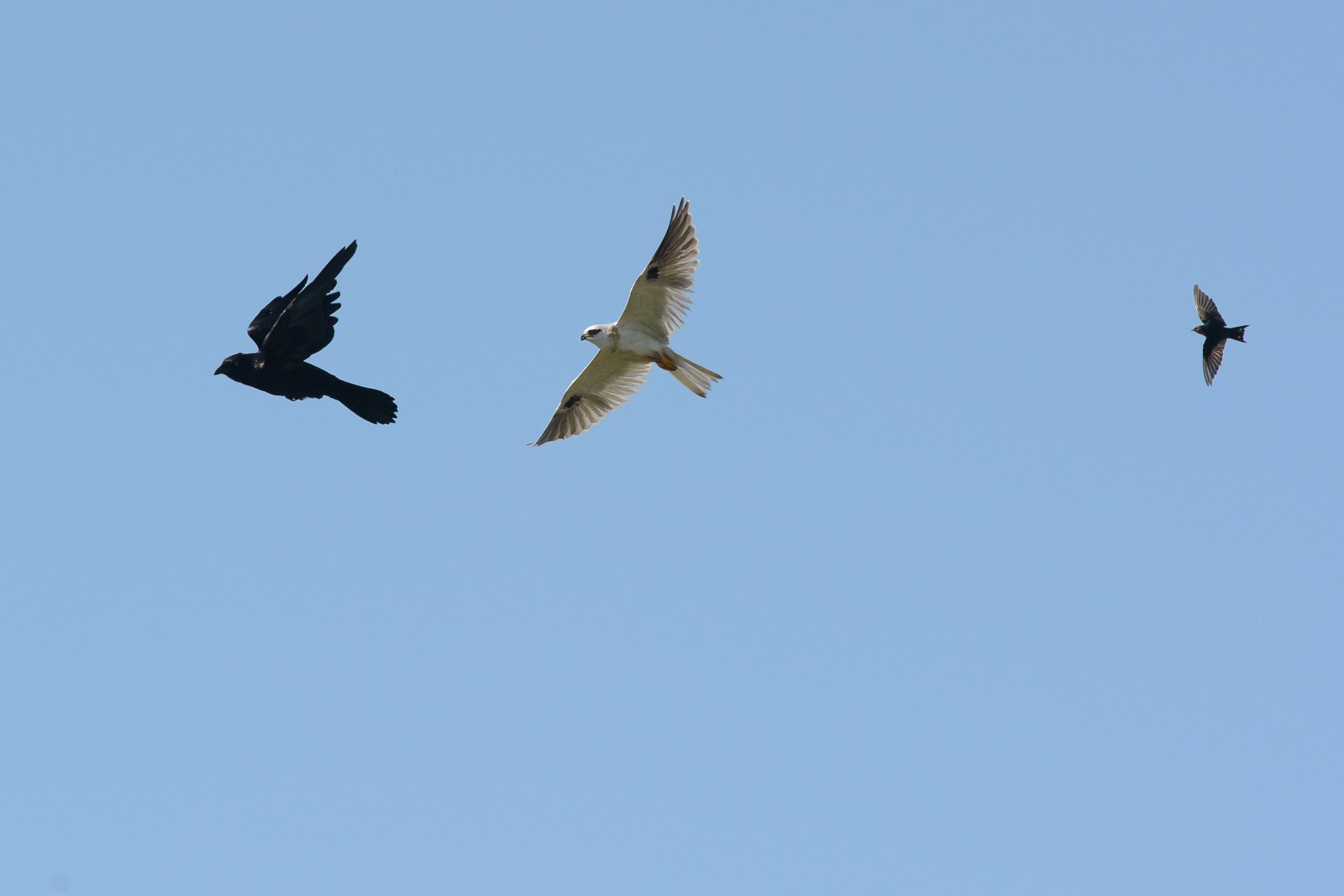
Black-shouldered Kite, in pursuit of a really annoying RavenA Welcome Swallow decided to join in the chase.Down at the beach, the Red-necked Stints are really putting on the weight now.White-fronted Chat: FemaleWhistling Kites at playWhistling Kites at PlayWhistling KiteA nice find. Banded StiltThe amazing T Section ponds. Spot the Red Phalarope for extra points!Sharp-trailed Sandpiper. Trialling the travelling equipment.
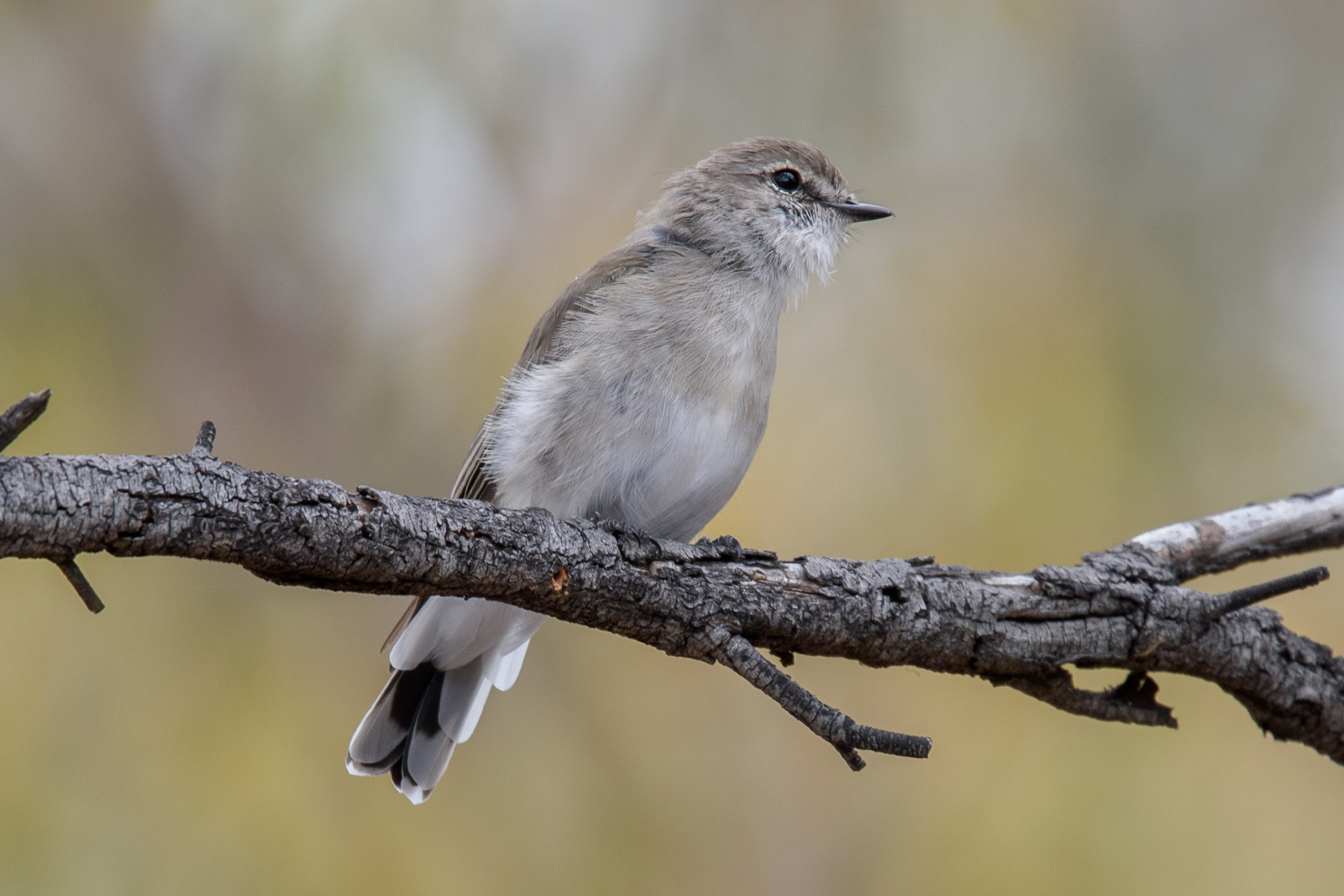
I love Jacky Winter. There. I’ve said it. Now you know.
There is something about these little birds that just resonates with me. They are not the most brilliantly dressed, they don’t seem to perform mighty deeds, and they have a fairly limited song routine.
But.
They have a charming and endearing gentleness and unhurried approach, that just fascinates me.
Jacky hunts robin like by sitting quietly then pouncing on prey on the ground.
But
Jacky also hunts like a flycatcher, hovering over the ground while surveying for movement below (Boles). At one time in history, it used to be called the “Lesser Fascinating Bird”. (Boles again) ” As used here, ‘fascinate’ meant ‘transfix and hold spellbound’. from the belief that the hovering action mesmerised the prey…
I’ve talked this over with several pairs of Jacky Winter, as to why they should be called ‘lesser’, but on each occasion, the little bird’s reaction has been to glaze over its little eyes and settle in to the perch without further concern. So I figured they don’t care what they are called.
Buried in their scientific name is ‘fascinans’, – fascinating. Microeca translating as tiny house (Cayley)
Jacky also has a somewhat predictable habit of landing on a perch and then wagging its tail back and forth, (think Willie Wagtail, Grey Fantail). They also seem to perch down on the branch resting their tummy on the branch.
Jacky’s tail edge is white, and it makes quite a show as it lands and then flicks back and forth.
It’s most melodic tone is a somewhat plain “peter, peter, peter” And it has been reported to be among the very first to herald the dawn chorus. A second chitter is much more a scolding call, and Mr An Onymous loves to remind me of the day we were working with a pair and after 20 minutes or so, Jacky had reached its limit. And I got a really severe lecture, and no further pictures for the day.
Truth be told. EE and I were on a mission. We wanted to locate a pair of Scarlet Robins. They are locals to the area and he has featured in the blog before, long suffering reader that you are, you might just remember the shots of him attacking the ‘bird in the car’ reflection at the carpark!
We’d not seen much of them this season, and at least one nest had not been successful, nor had we seen any evidence of new birds in the area.
As we searched, we came to a opening in the forest near the track, and two Jacky Winter were hard at work. At first they were if nothing, disdainful, at having intruders. But it only took a minute of so to settle and A little bit of patient sitting and both birds were happy to provide various poses.
Then one of those great ‘rites of passage’ moments, and Jacky flew by me, circled about and landed about a metre away. The gracious little bird had accepted me. And then I was able to learn of the ways of the Lesser Fascinating Bird. It hunted on the roadway near my feet, looped up to catch insects and chatted away quietly to the second bird.
I know I talk a lot here about Jon Young’s approach, and sometimes it seems fanciful about the bird’s acceptance of my presence.
As we were working on a branch about 2m from the track, a dog was being walked down the track. Instant alert from Jacky 1 and response from Jacky 2. And remember this happened with the bird on a branch about 3 m from my position.
“Hey, did you see the dog?”
Yes, are you alright?
Yep, I’m up here in the branches.
Is it coming off the track?
No, don’t think so.
It’s passing by now, are you safe?
Yep, I’ve that silly human photographer in front of me., I’ll be alright.
Oh!
Dog’s going by.
That’s a relief.
Ok?
Yep, Ok.
Jacky watched the dog go up the track about 50m or so before it dropped its head and continued on with hunting.
Fanciful. Of course. But, what ever happened, the Jacky was on high alert for the dog and completely comfortable with my presence.
Oh, and we eventually found the Scarlet pair. But. That’s another story.
Enjoy
Contemplative JackyHow to make any ordinary post look extraordinary. Put a Lesser Fascinating Bird on it.Jacky on a Wing-stretch. The sign of a very relaxed about my presence birdA model with a thousand poses.Jacky closeup. I’m sitting on the ground and it came up to my feetWhat a about a nice chat?Jacky in colourOn Dog Alert. It watched the dog come by, and kept it in sight until it was well up the track.Minimalist Jacky
We had walked down along the edge of the river to a spot where the river cuts back on itself forming a little backwater.
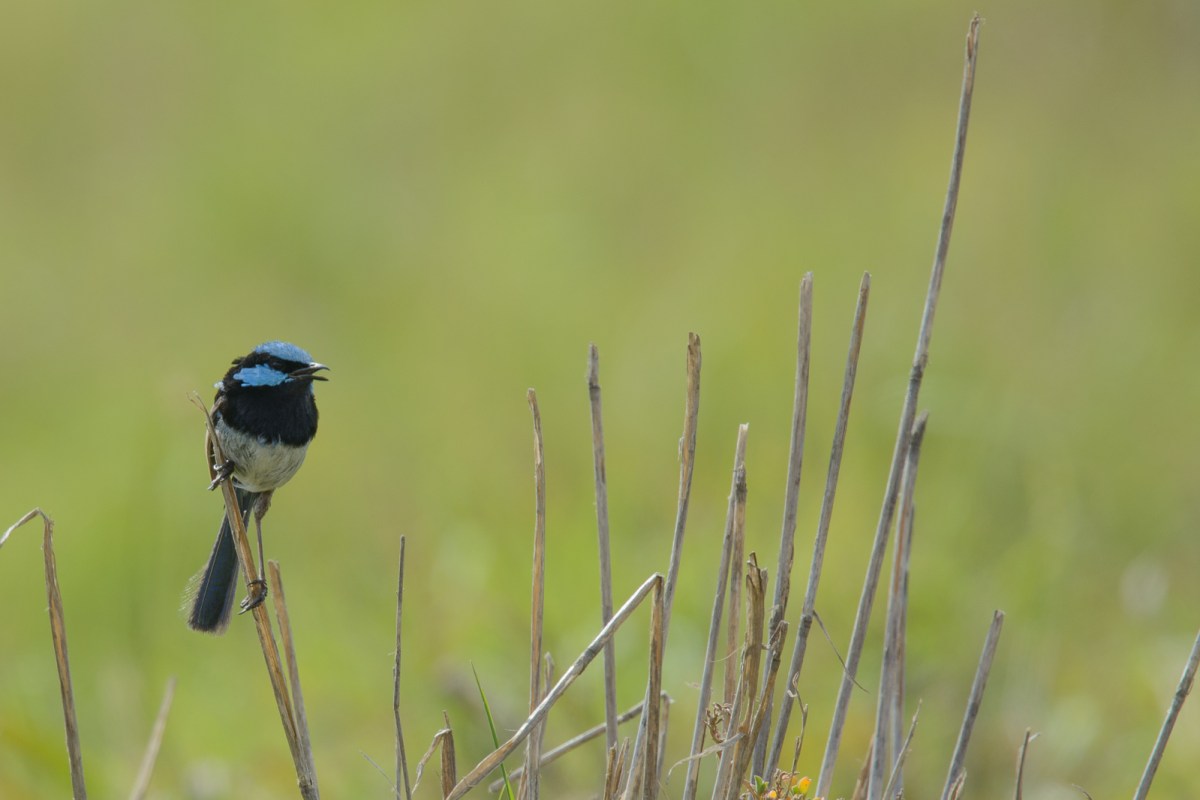
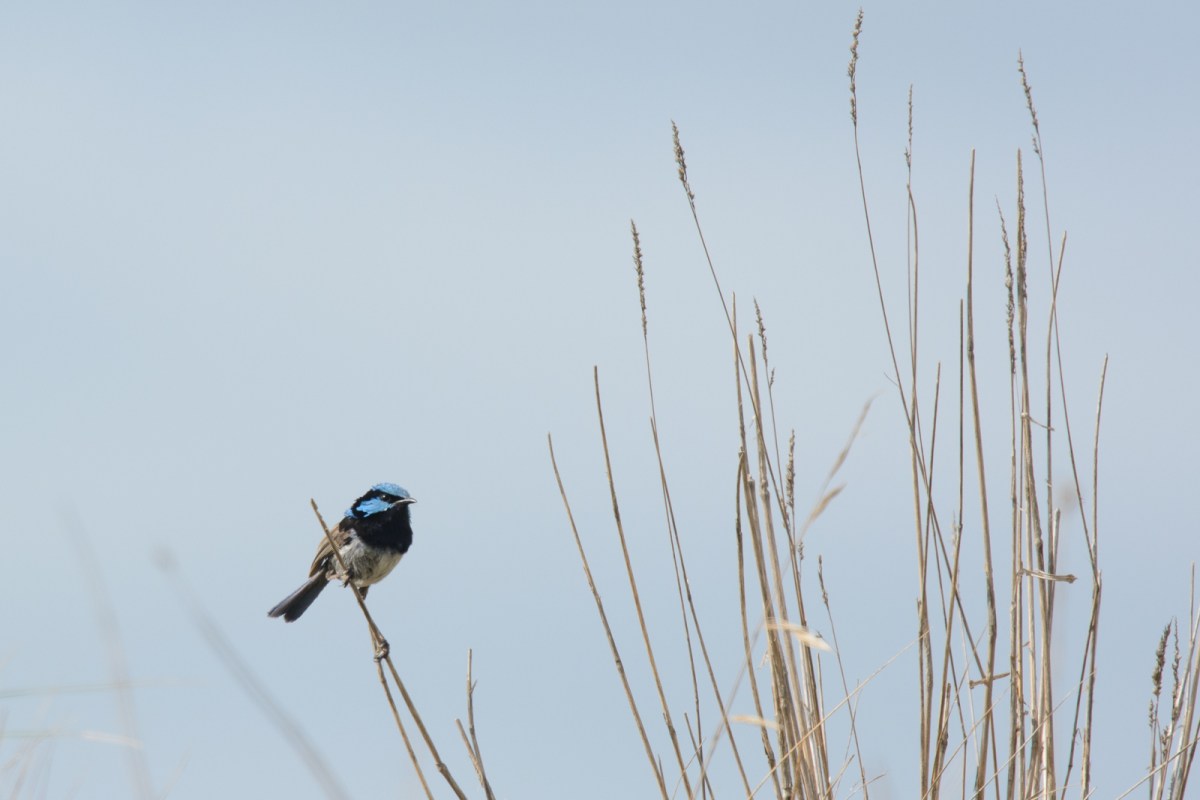
Good place to stop says, EE and well, I agreed. Settled down for a cuppa in the sunshine. It soon became apparent there was a family of Superb Fairywrens in the locality. Their constant chattering and carrying food about, lead to the conclusion, “They have a nest, or young one’s very close to where we are sitting.” The obvious spot was a large crop of grass and low shrubs they kept flying around.
So.
We moved.
With the humans out of the way it didn’t take them too long to get back to work.
I’ve been reading, co-incidently Rowley and Russel, Fairy-Wrens and Grasswrens.
Published in 1997, it details a lot of the field work of these two Australian Ornithologists over many years. Intriguingly, I’ve been delighted to see a lot of what we have observed being detailed in the work.
One thing that becomes clear about the Superb Fairywren is the unusual family arrangements.
Once called “Mormon Wrens”, as it was assumed that one bright blue male was in charge of a harem of females in various lighter brown dress.
But it’s now known that there is only one ‘active’ pair, and the remainder of young in the family group are ‘Helper’ males of the first or second year.
On average the males outnumber females by around two to one. So a female adult is in as the good Jane Austen so succinctly put it,
“It is a truth universally acknowledged, that a single man in possession of a good fortune must be in want of a wife.
However little known the feelings or views of such a man may be on his first entering a neighbourhood, this truth is so well fixed in the minds of the surrounding families, that he is considered as the rightful property of some one or other of their daughters.”
Change man to female wren, and it seems that an available female has little trouble in establishing a new family connection. One such female in Rowley’s book is reported as having attained a bond relationship in somewhat under two hours of leaving the home territory. 🙂
So what we saw were a male/female pair and two or three helper males hard at work.
What we weren’t counting on is what happened after about 20 mins of watching.
The chattering went up, the birds surrounded the bush and it was obvious something was amiss. Suddenly at least two young virtually tailless fledglings burst clumsily out of the bush and took off, mostly running as they were not yet equipped to fly.
One took refuge alongside EE’s foot for a few minutes and then ran off eventually tumbling over the river bank edge and lodging (fortunately) in the bushes about two metres down.
The family continued its agitation at the bush. Conclusion being that some predator, – rat, snake ? had managed to get into the area. Did they lose any of the young. Hard to say. After about 10 minutes one of the helpers found the young one over the river edge and went to feed it.
Here is the drama as it unfolded.
The shot of the young wren is by EE (Dorothy M Jenkins- Friendsintheair, (c) 2016)
One of the main perches near the nestBusy feeding. A helper bringing in some food.Helper maleThe male also on feeding dutyIn full cry, the female is so active.One of the young is just going out of the bush in the top right.Danger, dangerHe wa so agitated and very wary at the same timeYoung male on full alertA young one out of the nest and unsure of what to do.Over the edge. This one is about 2m down from the river bank. One of the helpers eventually came and looked after it.
Blogging 201 assignment for this week is Setting the Scene.
As it turns out, I was gearing up to reflect on a day at the Office yesterday.
The weather turned Kind. Really Kind. The kind of Kind, where the cameras practically pack themselves out of the cupboard and into the car, and sit there going, “Well…..” “Well…. are you ready to leave yet.”
We left early, and decided to take the longer walk down to the river behind the golf course. This is really old river flat, and the river makes a distinct “U” for several hundred metres and then a fine “S” movement that provides for some great old river flat dissected by the flow of the water. Water bird can abound, and there is still some good grass and tree cover to make life entertaining for the smaller bush birds.
Its a long way for EE to walk, but stoically she lead on.
The Office for the uninitiated is an area along the Werribee River a few kilometres from the mouth at Werribee South. It cuts through the rich river soil and in places the cliffs are 30-40 metres high. The big birds – think raptors- enjoy the wind currents coming up the ramparts and I do believe a good case could be made that there are certain areas where its better, and a sort of ‘flyway’ or navigational line is drawn. They seem to favour coming and going along those locations.
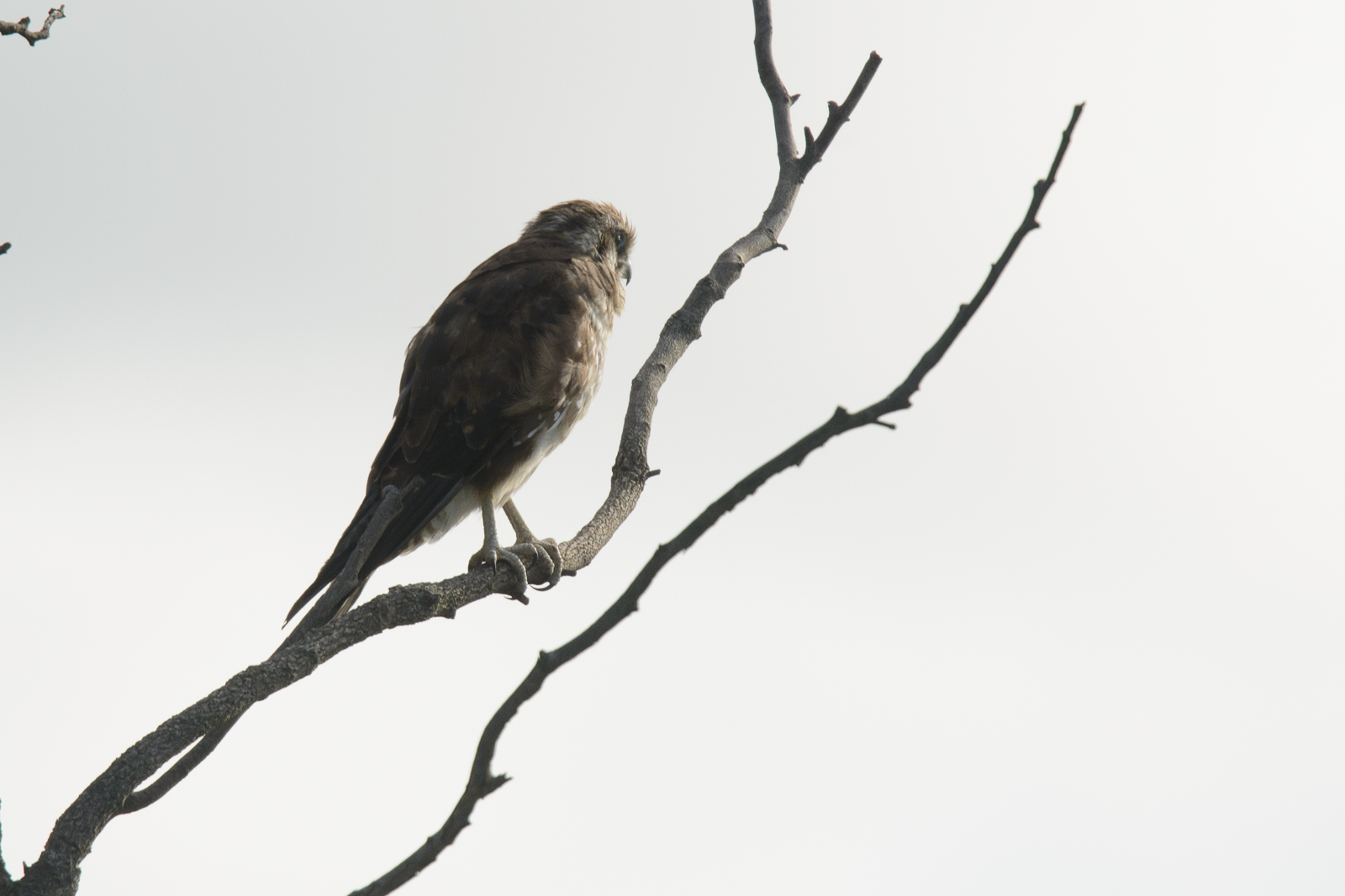
You just know its going to be a good day when as you drive in a Black-shouldered Kite is hunting close to the carpark, and just inside the walking track, Bernie the Brown Falcon is loafing in a favourite tree.
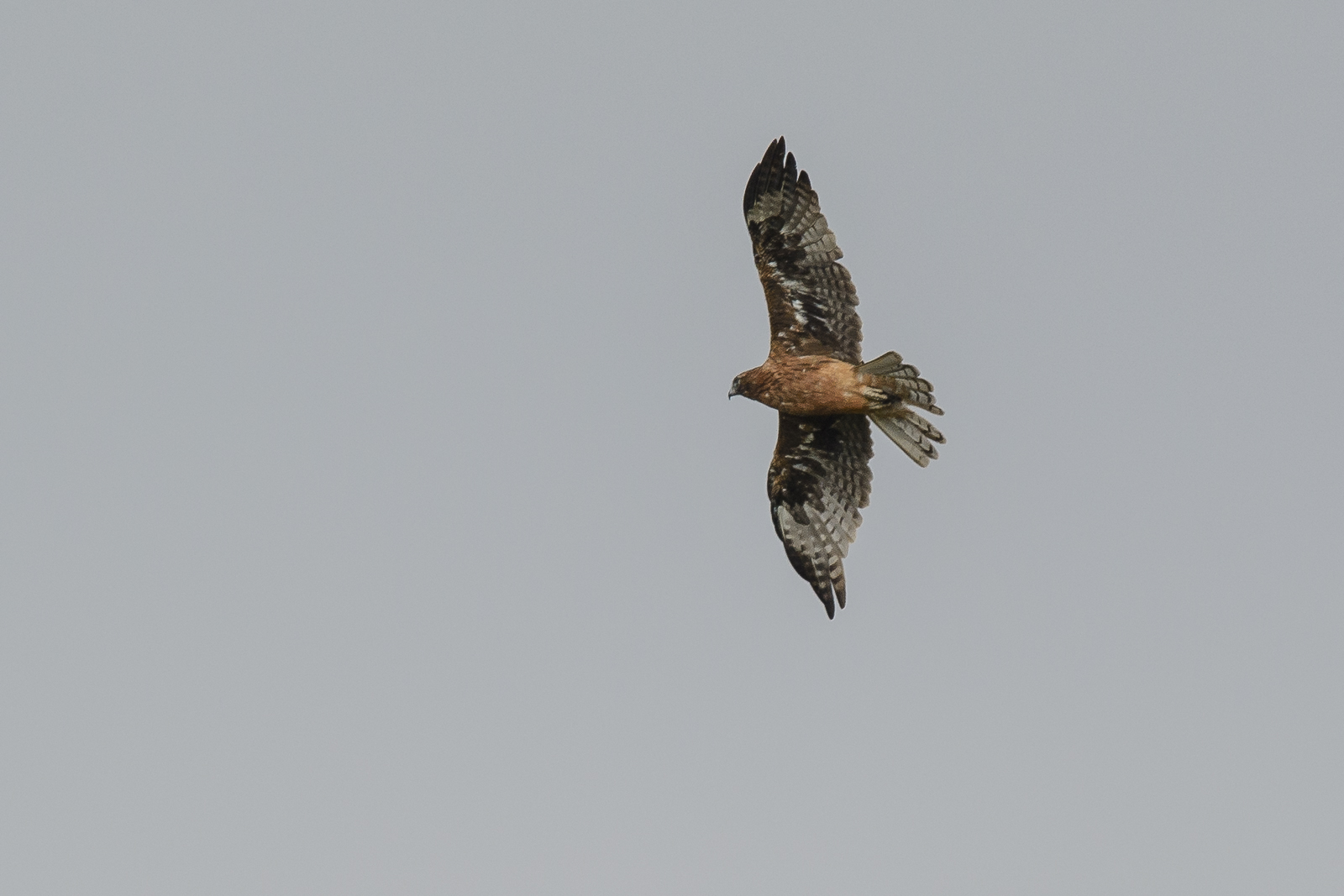
Next up a Little Eagle made several passes along one of the ‘flyway’ paths. The Ibis, both White and Straw-necked use the same paths on the way to the feeding grounds along the river.
We sat with a family of Superb Fairy-wrens, and I will tell more of that tale on another blog, and were entertained by the feeding antics of a few Crested Terns. (another blog post methinks)
It was pretty awe-inspiring to be sitting by the river, dangling my feet over the river bank and sipping Earl of Grey, and enoying the time time in the sunshine with such a group of bids. And all less than 10 minutes from home. A most amazing place.
Easy day, easy photography, easy birds, and Just Another Day at the Office really.
How’s that for setting the scene!
Enjoy.
Black-shouldered Kite.Bernie the Brown FalconA view along the sandy cliff face. The area we are heading is down toward the left hand side.Superb Fairy-wren. This is a helper bird. A male not yet left home.Great EgretLittle EagleWhite IbisCrested Tern against the cliff face.Crested Tern, juvenile, on a wing sretch, while waiting for Mum to deliver food
Mr An Onymous has remarked from time to time on his bemusement at water birds that spend all their time hunting, and standing about in the water, to spend some time bathing in the stuff.
Seems to him, that its a bit incongruous for a ‘water’ bird to then take the time to use the water to bathe, given its already dripping wet in places.
Which brings us to a fine warm morning at the Western Treatment Plant.
The waders that visit over summer are now getting the first signs of the travelling bug biting. Its time to pack on as much weight as possible, and to conserve as much energy as possible.
So as the tide comes in, and the mudflats are covered with water, they retire inland to some of the safer ponds and settle in for a long sleep, and a bit of a preen. No doubt feathers need be tip top for the long flight ahead.
There are a special set of small ponds near the Beach Road entrance the plant that almost always attract them in great numbers. Plenty of soft grass, the safety of rocks and small islands and water that is only knee deep for a dotterel.
And because they are trying to conserve energy, they are a little more approachable. I managed to quietly slip off the side of the road and working my way through the grasses come up pretty close to a large clutch of Sharp-tailed Sandpipers, loafing in the sun.
The water in the ponds has come up a few centimetres of late, and I was not able to get a really low down water level shot without actually being in the water, so I opted for wet knees and elbows and hoped the water would not rise up through the grass and saturate me all over.
The Sharpies decided that with such nice sun, it was time for a bath. One by one, they stepped off the grasses and into the water for the tentative bobbing into the water then settled down like great big sponges, and simply soaked up the water. Which was then sprayed over all in close proximity. Finally a few wing flaps and a jump for joy, and the bird moved out of the way and the next one took up the challenge.
After about 20 minutes, and my knees and elbows turning strangely bleached, I rolled over back up the grass to the roadside. They didn’t flinch a feather.
Enjoy. They did.
Stepping into the water
The soak testSpray going everywhere.
Wing flap to get the bulk of the water off.Jump for joy and the job is done.



































 Birds as Poetry —— Just because I WANDER doesn't mean I'm LOST