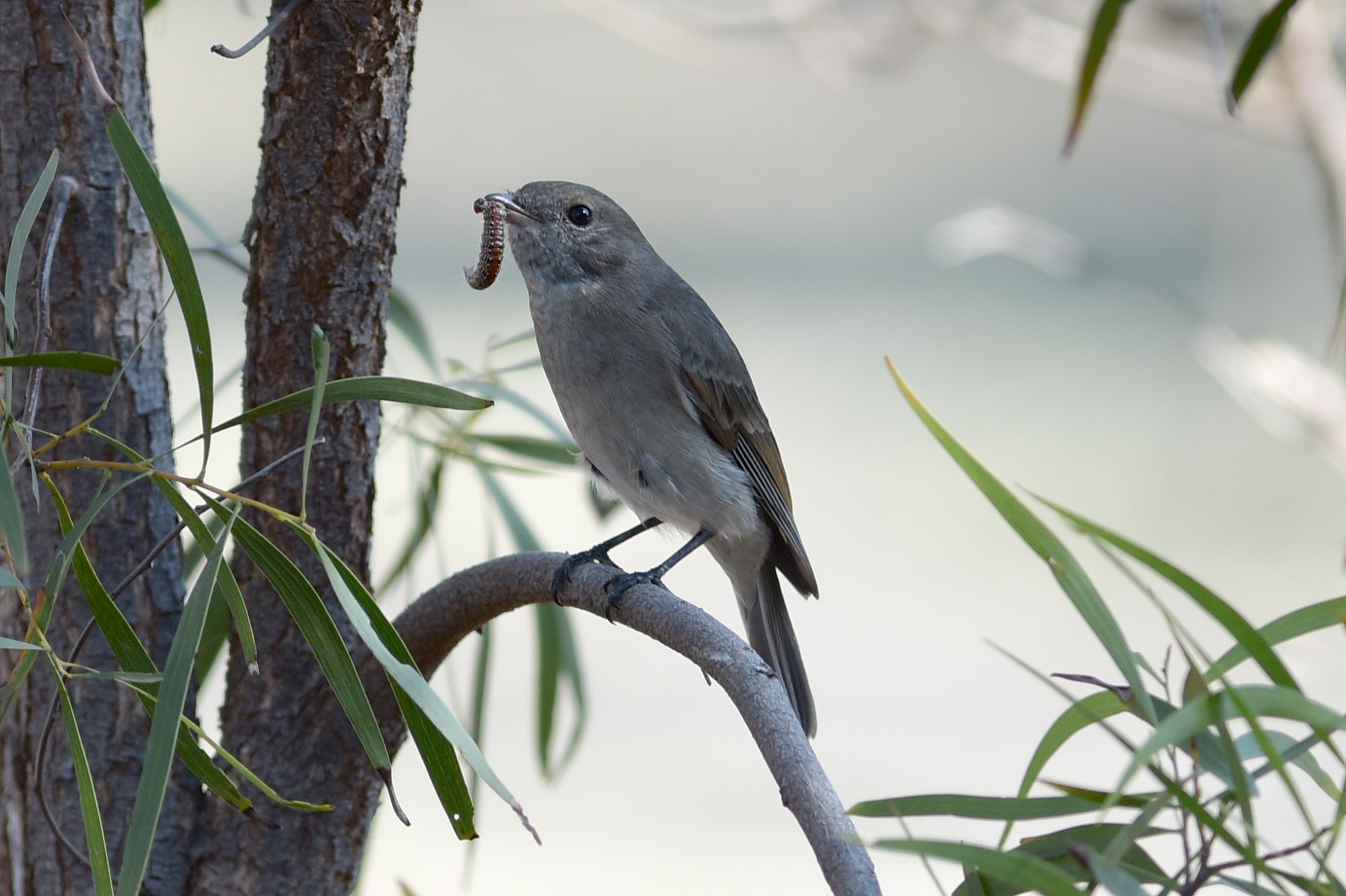
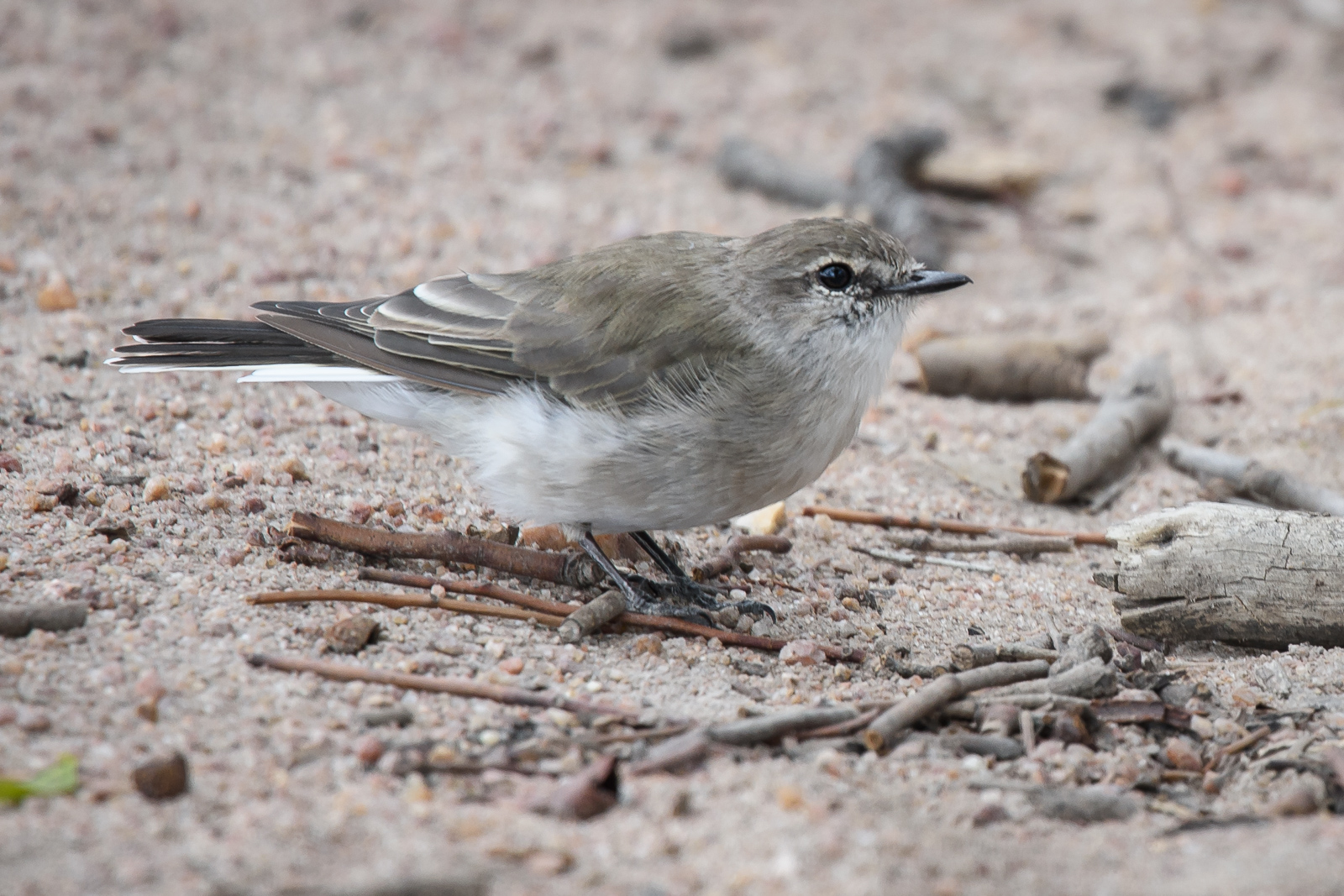
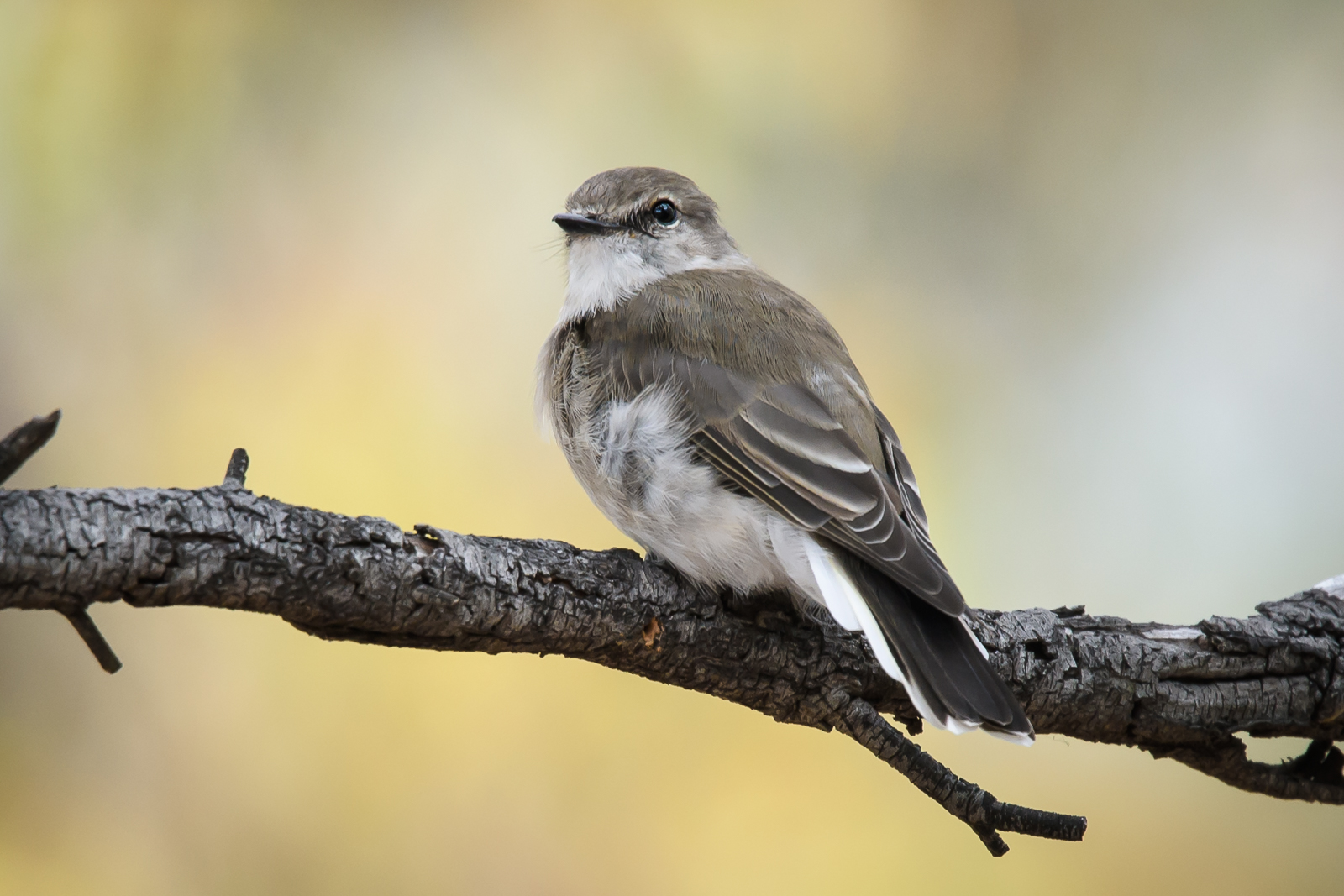
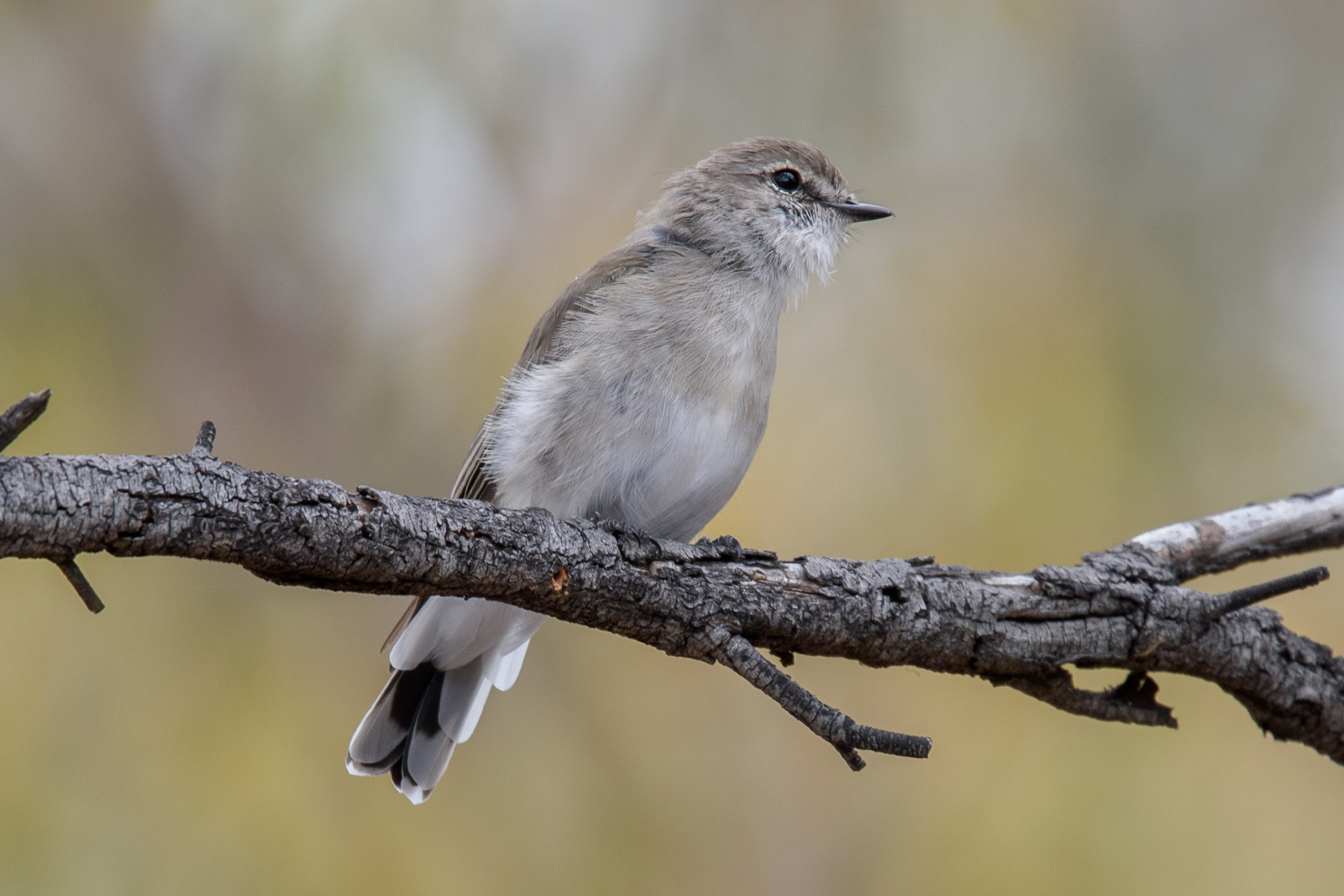
Meeting the “Lesser Fascinating Bird”: Beginning an Apprenticeship

I love Jacky Winter.  There.  I’ve said it. Now you know.

There is something about these little birds that just resonates with me.  They are not the most brilliantly dressed, they don’t seem to perform mighty deeds, and they have a fairly limited song routine.
But.
They have a charming and endearing gentleness and unhurried approach, that just fascinates me.

Jacky hunts robin like by sitting quietly then pouncing on prey on the ground.
But
Jacky also hunts like a flycatcher, hovering over the ground while surveying for movement below (Boles). At one time in history, it used to be called the “Lesser Fascinating Bird”.  (Boles again) ” As used here, ‘fascinate’ meant ‘transfix and hold spellbound’. from the belief that the hovering action mesmerised the prey…

I’ve talked this over with several pairs of Jacky Winter, as to why they should be called ‘lesser’, but on each occasion, the little bird’s reaction has been to glaze over its little eyes and settle in to the perch without further concern.  So I figured they don’t care what they are called.

Buried in their scientific name is ‘fascinans’,  – fascinating.   Microeca translating as tiny house (Cayley)

Jacky also has a somewhat predictable habit of landing on a perch and then wagging its tail back and forth, (think Willie Wagtail, Grey Fantail).  They also seem to perch down on the branch resting their tummy on the branch.

Jacky’s tail edge is white, and it makes quite a show as it lands and then flicks back and forth.

It’s most melodic tone is a somewhat plain “peter, peter, peter” And it has been reported to be among the very first to herald the dawn chorus. A second chitter is much more a scolding call, and Mr An Onymous loves to remind me of the day we were working with a pair and after 20 minutes or so, Jacky had reached its limit.  And I got a really severe lecture, and no further pictures for the day.

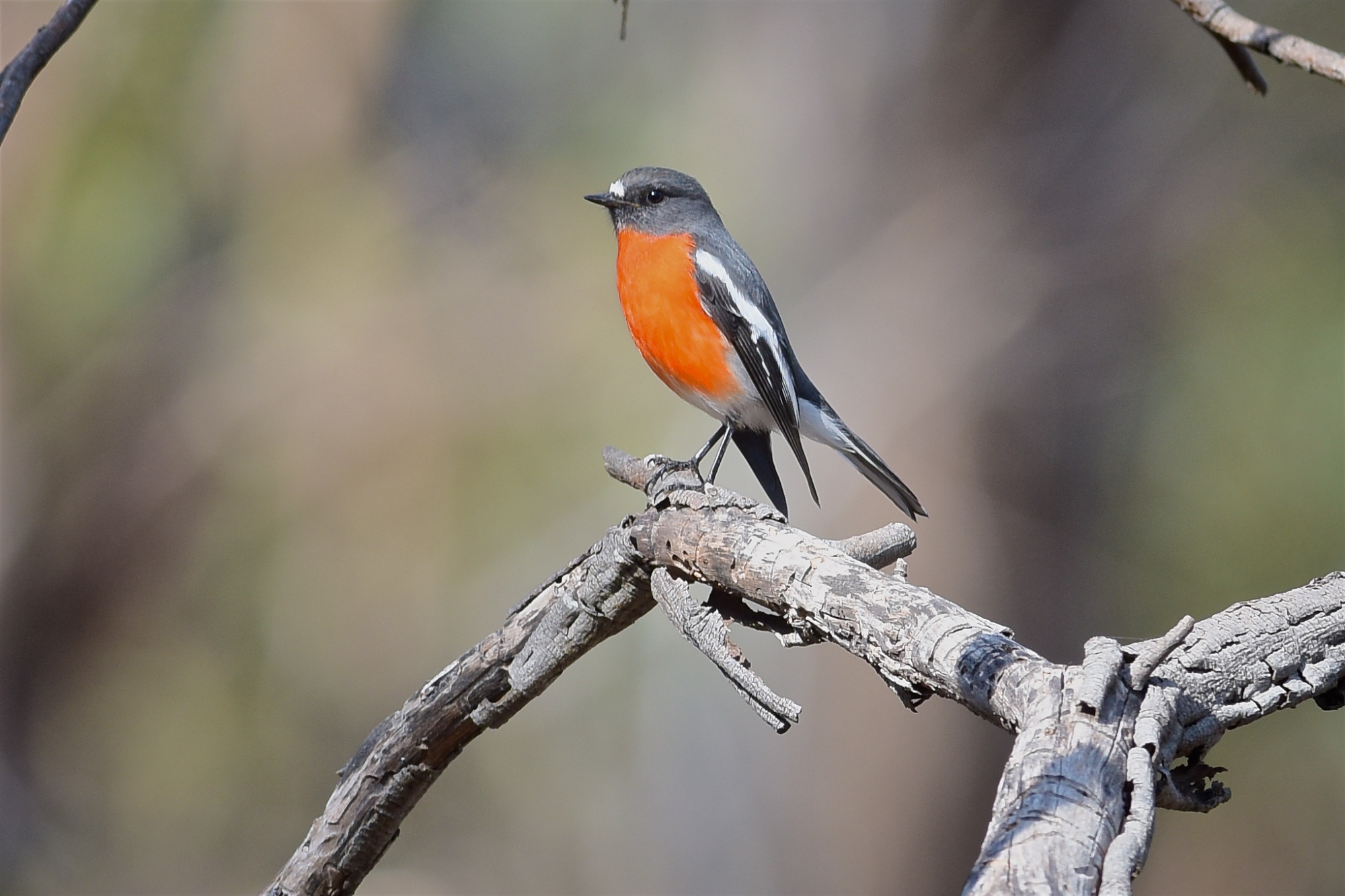
Truth be told. EE and I were on a mission.  We wanted to locate a pair of Scarlet Robins.  They are locals to the area and he has featured in the blog before, long suffering reader that you are, you might just remember the shots of him attacking the ‘bird in the car’  reflection at the carpark!
We’d not seen much of them this season, and at least one nest had not been successful, nor had we seen any evidence of new birds in the area.

As we searched, we came to a opening in the forest near the track, and two Jacky Winter were hard at work.  At first they were if nothing, disdainful, at having intruders. But it only took a minute of so to settle and A little bit of patient sitting and both birds were happy to provide various poses.

Then one of those great ‘rites of passage’ moments, and Jacky flew by me, circled about and landed about a metre away. The gracious little bird had accepted me.  And then I was able to learn of the ways of the Lesser Fascinating Bird.  It hunted on the roadway near my feet, looped up to catch insects and chatted away quietly to the second bird.

I know I talk a lot here about Jon Young’s approach, and sometimes it seems fanciful about the bird’s acceptance of my presence.

As we were working on a branch about 2m from the track, a dog was being walked down the track.  Instant alert from Jacky 1 and response from Jacky 2. And remember this happened with the bird on a branch about 3 m from my position.

“Hey, did you see the dog?”

Yes, are you alright?

Yep, I’m up here in the branches.

Is it coming off the track?
No, don’t think so.

It’s passing by now, are you safe?

Yep, I’ve that silly human photographer in front of me., I’ll be alright.

Oh!

Dog’s going by.
That’s a relief.

Ok?
Yep, Ok.

Jacky watched the dog go up the track about 50m or so before it dropped its head and continued on with hunting.

Fanciful.  Of course.  But, what ever happened, the Jacky was on high alert for the dog and completely comfortable with my presence.

Oh, and we eventually found the Scarlet pair. But.  That’s another story.

Enjoy

Contemplative Jacky
Contemplative Jacky
How to make any ordinary post look extraordinary. Put a Lesser Fascinating Bird on it.
Jacky on a Wing-stretch. The sign of a very relaxed about my presence bird
A model with a thousand poses.
Jacky closeup. I'm sitting on the ground and it came up to my feet
Jacky closeup. I’m sitting on the ground and it came up to my feet
What a about a nice chat?
Jacky in colour
Jacky in colour
On Dog Alert. It watched the dog come by, and kept it in sight until it was well up the track.
Minimalist Jacky
Minimalist Jacky


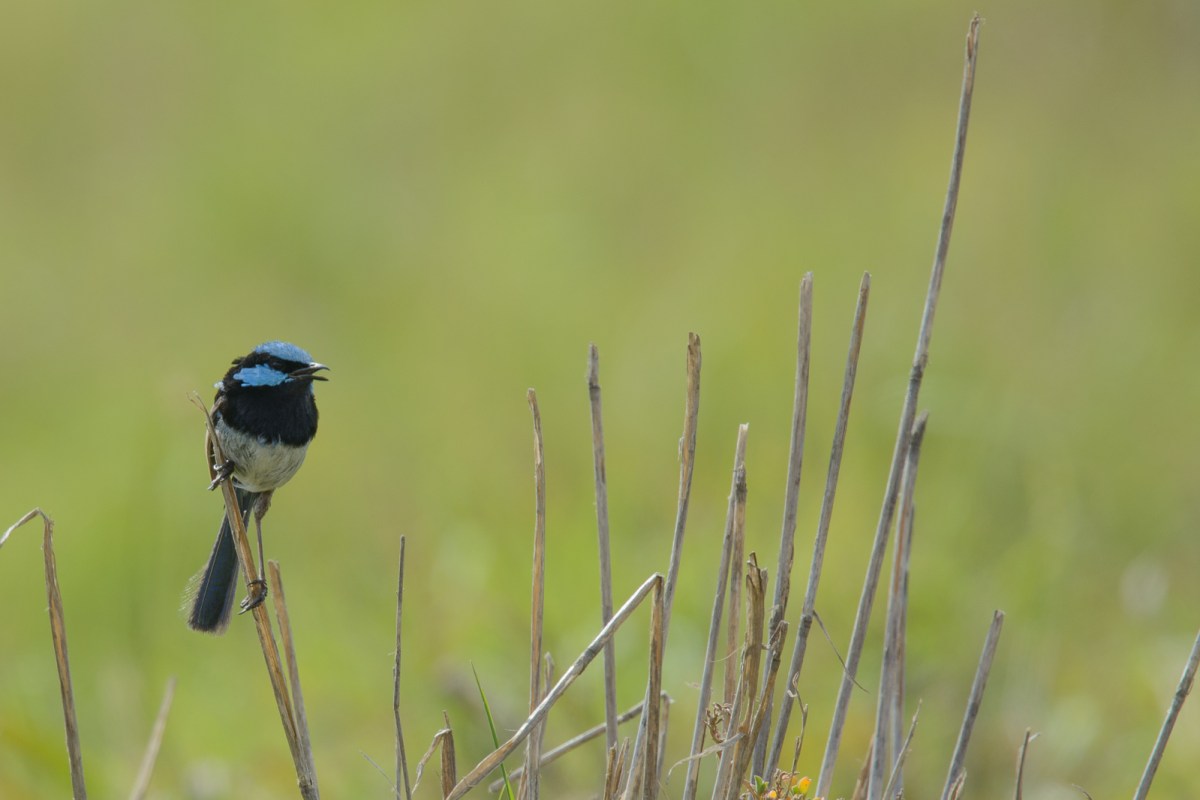
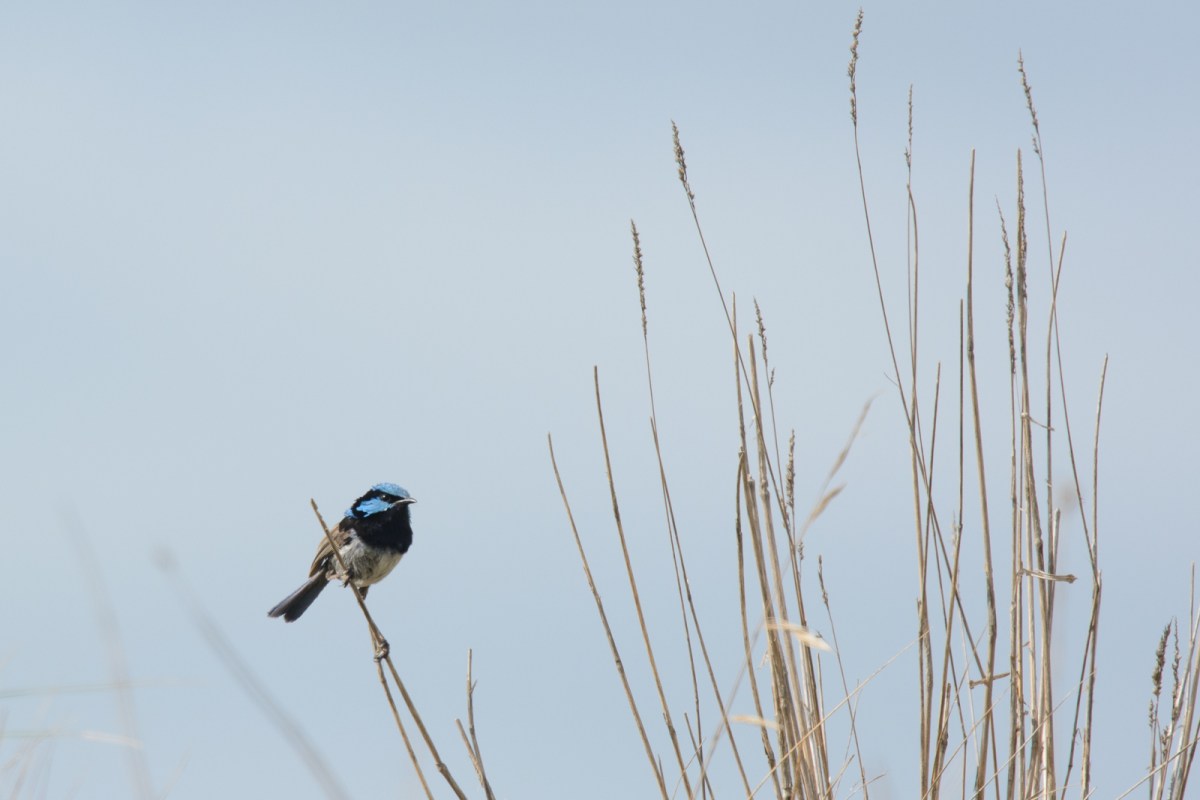
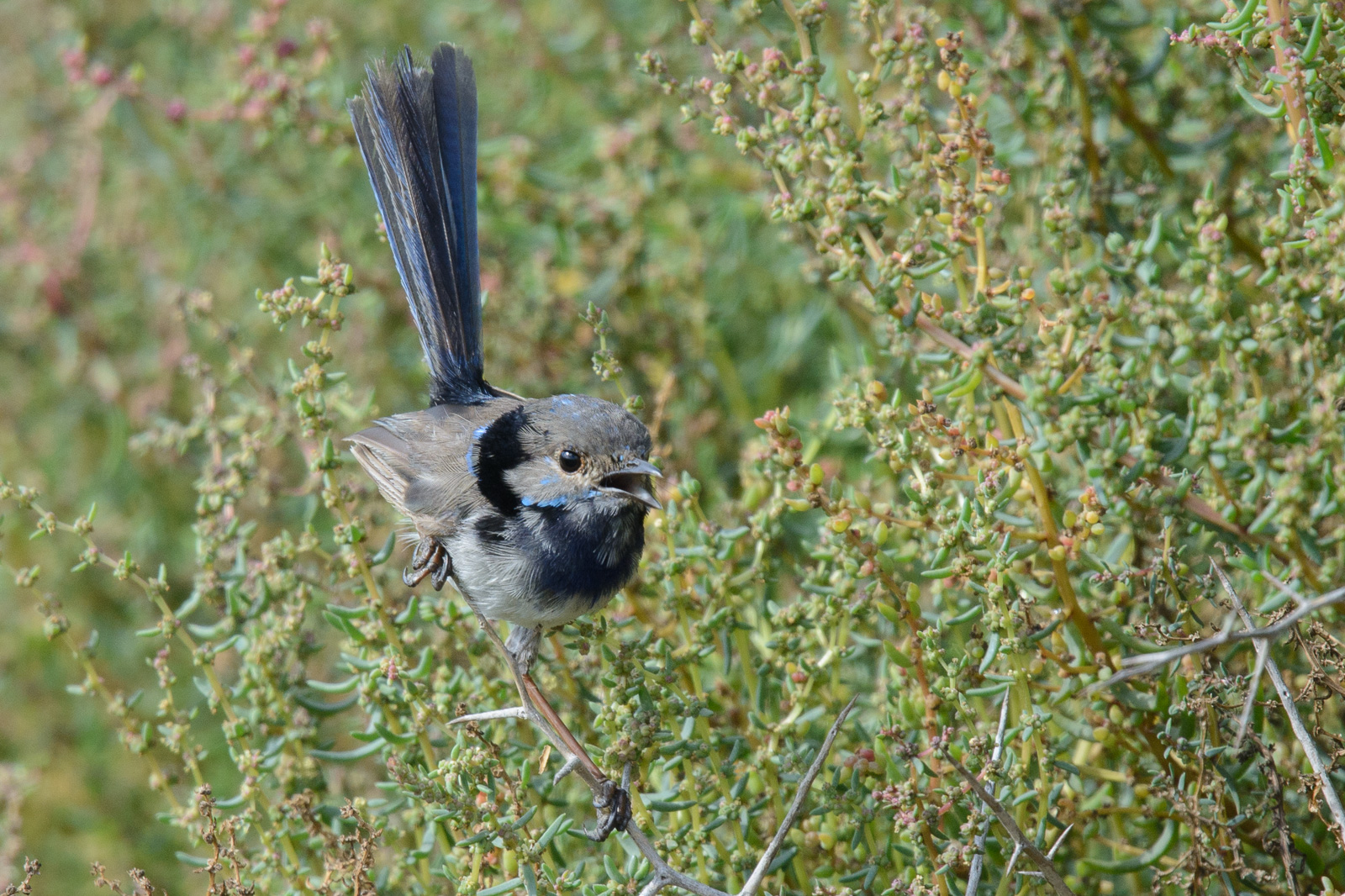
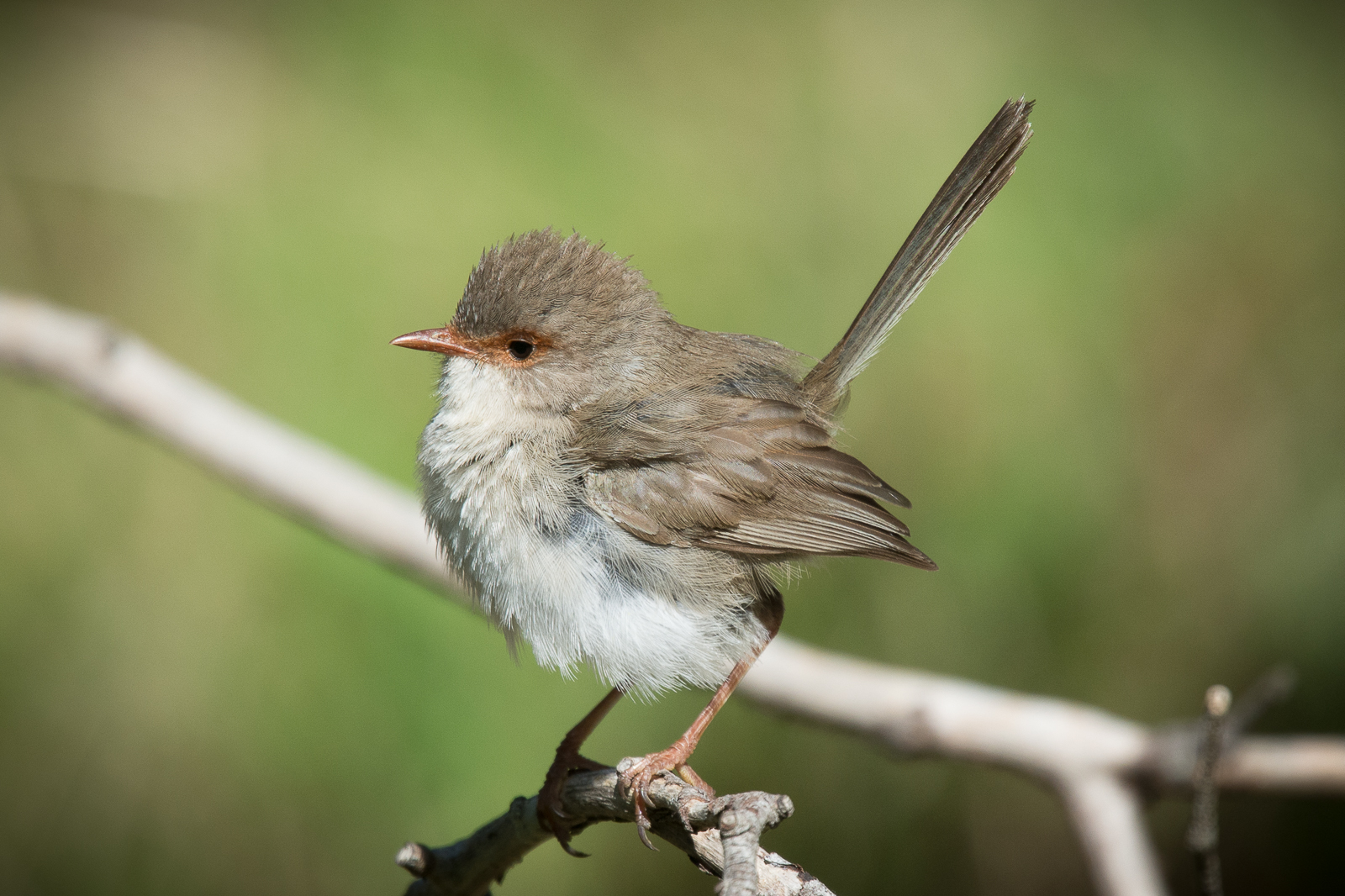
Wrens on Guard: Dangerous world for a young wren.

From our trip to the Office a week back.

We had walked down along the edge of the river to a spot where the river cuts back on itself forming a little backwater.
Good place to stop says, EE and well, I agreed.  Settled down for a cuppa in the sunshine.  It soon became apparent there was a family of Superb Fairywrens in the locality.   Their constant chattering and carrying food about, lead to the conclusion, “They have a nest, or young one’s very close to where we are sitting.”  The obvious spot was a large crop of grass and low shrubs they kept flying around.
So.
We moved.

With the humans out of the way it didn’t take them too long to get back to work.
I’ve been reading, co-incidently Rowley and Russel, Fairy-Wrens and Grasswrens. 

Published in 1997, it details a lot of the field work of these two Australian Ornithologists over many years.  Intriguingly, I’ve been delighted to see a lot of what we have observed being detailed in the work.
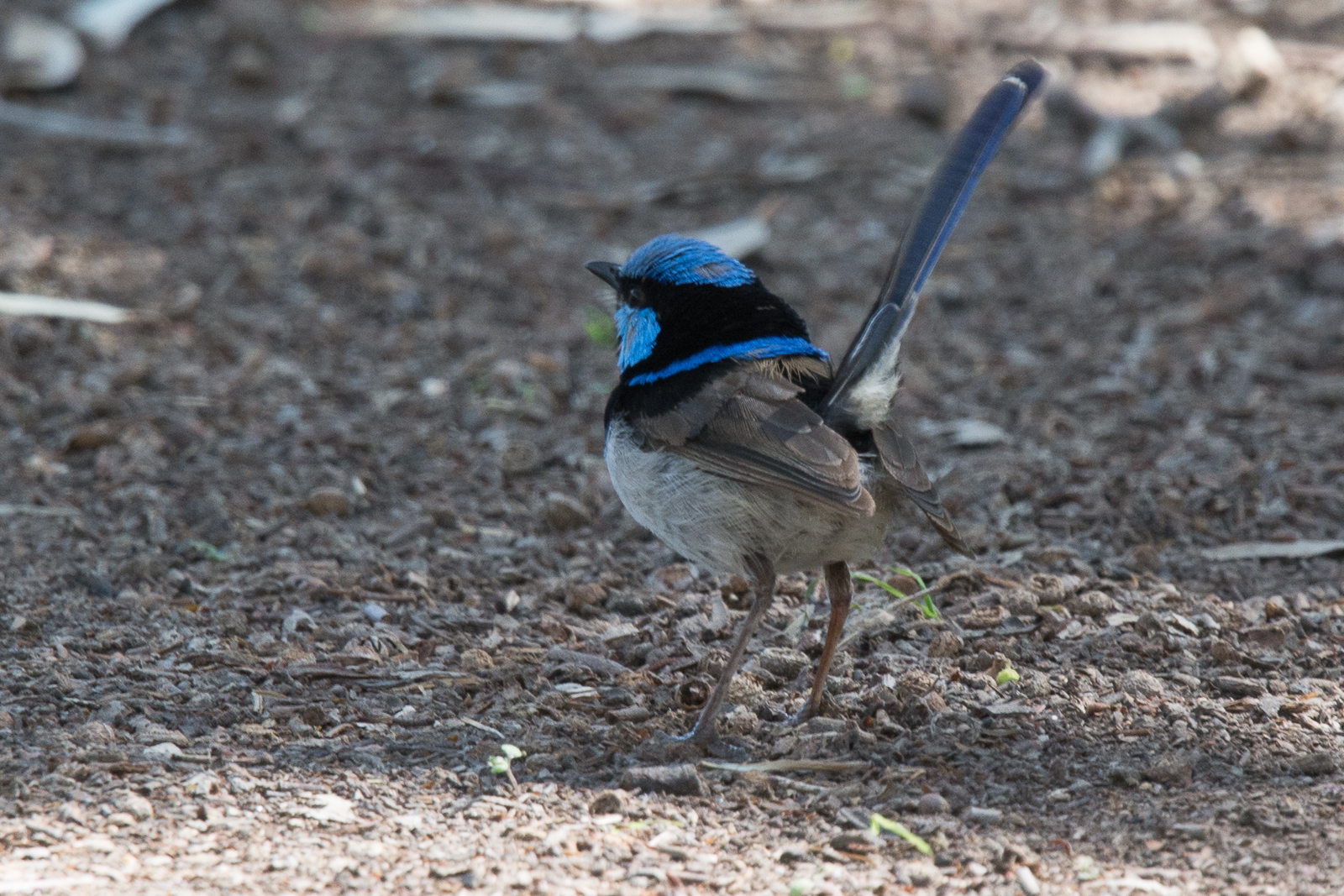
One thing that becomes clear about the Superb Fairywren is the unusual family arrangements.
Once called “Mormon Wrens”, as it was assumed that one bright blue male was in charge of a harem of females in various lighter brown dress.

But it’s now known that there is only one ‘active’ pair, and the remainder of young in the family group are ‘Helper’ males of the first or second year.

On average the males outnumber females by around two to one.  So a female adult is in as the good Jane Austen so succinctly put it,

“It is a truth universally acknowledged, that a single man in possession of a good fortune must be in want of a wife.

However little known the feelings or views of such a man may be on his first entering a neighbourhood, this truth is so well fixed in the minds of the surrounding families, that he is considered as the rightful property of some one or other of their daughters.”

Change man to female wren, and it seems that an available female has little trouble in establishing a new family connection. One such female in Rowley’s book is reported as having attained a bond relationship in somewhat under two hours of leaving the home territory. 🙂

So what we saw were a male/female pair and two or three helper males hard at work.

What we weren’t counting on is what happened after about 20 mins of watching.

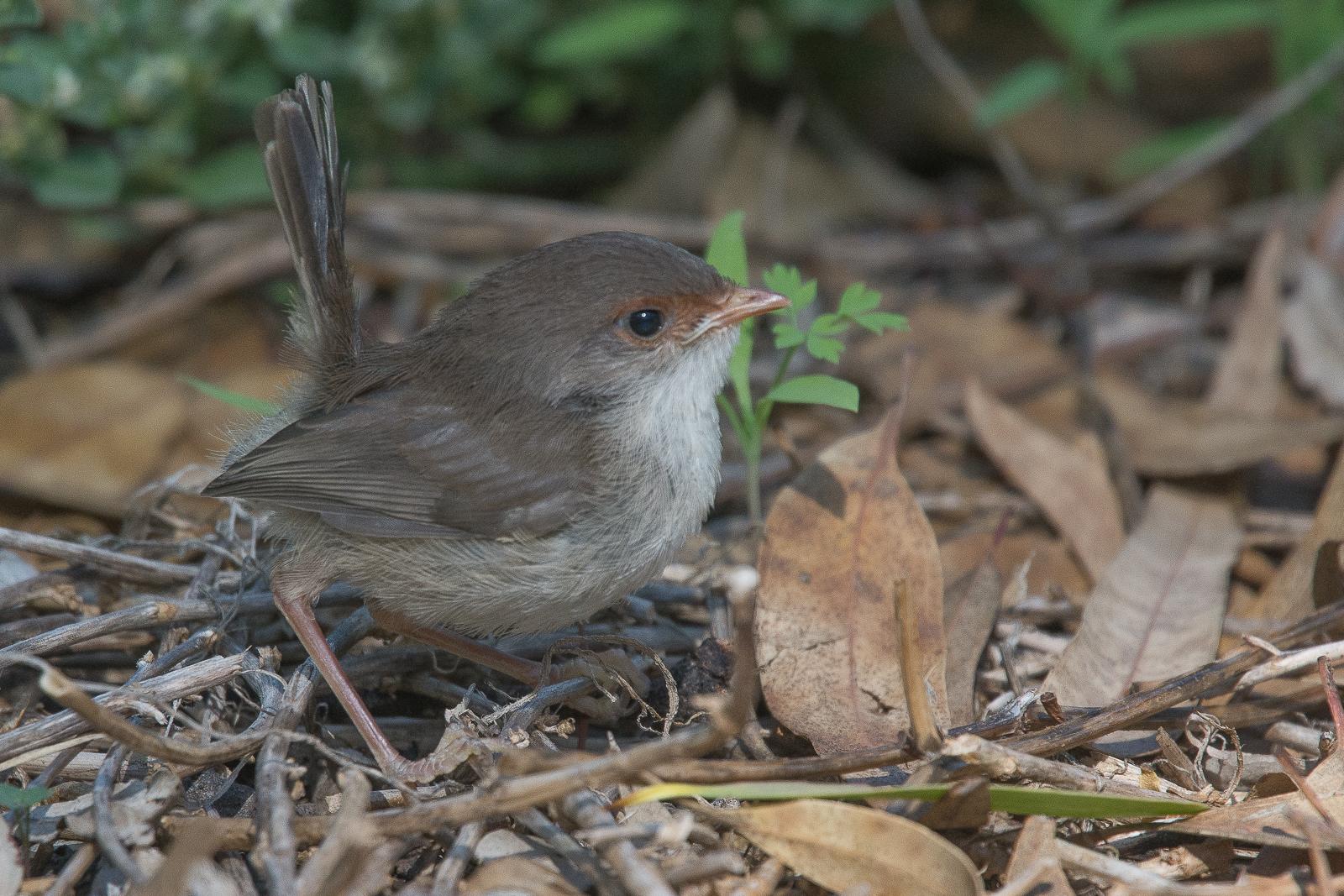
The chattering went up, the birds surrounded the bush and it was obvious something was amiss.  Suddenly at least two young virtually tailless fledglings burst clumsily out of the bush and took off, mostly running as they were not yet equipped to fly.
One took refuge alongside EE’s foot for a few minutes and then ran off eventually tumbling over the river bank edge and lodging (fortunately) in the bushes about two metres down.

The family continued its agitation at the bush. Conclusion being that some predator, – rat, snake ? had managed to get into the area.  Did they lose any of the young.  Hard to say. After about 10 minutes one of the helpers found the young one over the river edge and went to feed it.

Here is the drama as it unfolded.

The shot of the young wren is by EE (Dorothy M Jenkins- Friendsintheair, (c) 2016)

One of the main perches near the nest
Busy feeding. A helper bringing in some food.
Helper male
Helper male
The male also on feeding duty
In full cry, the female is so active.
One of the young is just going out of the bush in the top right.
Danger, danger
Danger, danger
He wa so agitated and very wary at the same time
Young male on full alert
A young one out of the nest and unsure of what to do. Copyright D M Jenkins (c) 2016 Friendsintheair
A young one out of the nest and unsure of what to do.
Over the edge. This one is about 2m down from the river bank. One of the helpers eventually came and looked after it.


Setting the Scene: A Day at the Office

Blogging 201 assignment for this week is Setting the Scene.
As it turns out, I was gearing up to reflect on a day at the Office yesterday.
The weather turned Kind.  Really Kind.  The kind of Kind, where the cameras practically pack themselves out of the cupboard and into the car, and sit there going, “Well…..” “Well…. are you ready to leave yet.”

We left early, and decided to take the longer walk down to the river behind the golf course. This is really old river flat, and the river makes a distinct “U” for several hundred metres and then a fine “S” movement that provides for some great old river flat dissected by the flow of the water. Water bird can abound, and there is still some good grass and tree cover to make life entertaining for the smaller bush birds.

Its a long way for EE to walk, but stoically she lead on.

The Office for the uninitiated is an area along the Werribee River a few kilometres from the mouth at Werribee South. It cuts through the rich river soil and in places the cliffs are 30-40 metres high.   The big birds – think raptors- enjoy the wind currents coming up the ramparts and I do believe a good case could be made that there are certain areas where its better, and a sort of ‘flyway’ or navigational line is drawn.  They seem to favour coming and going along those locations.

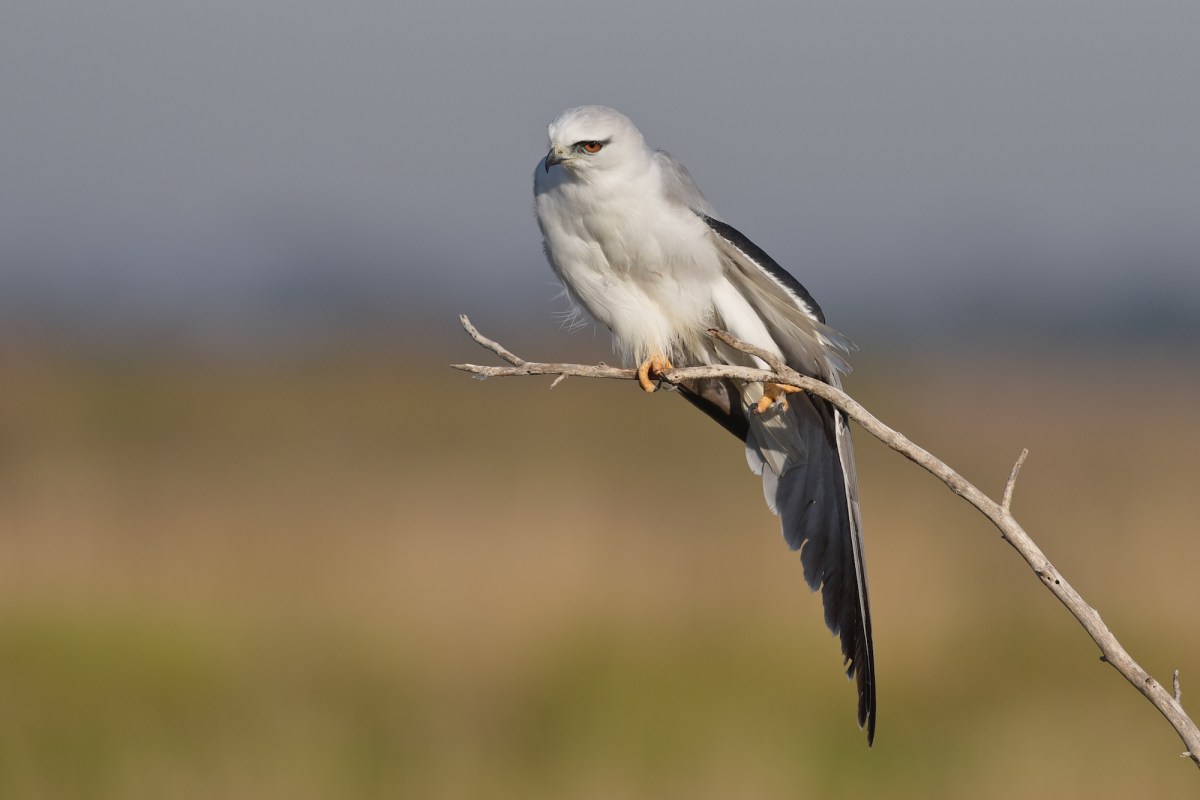
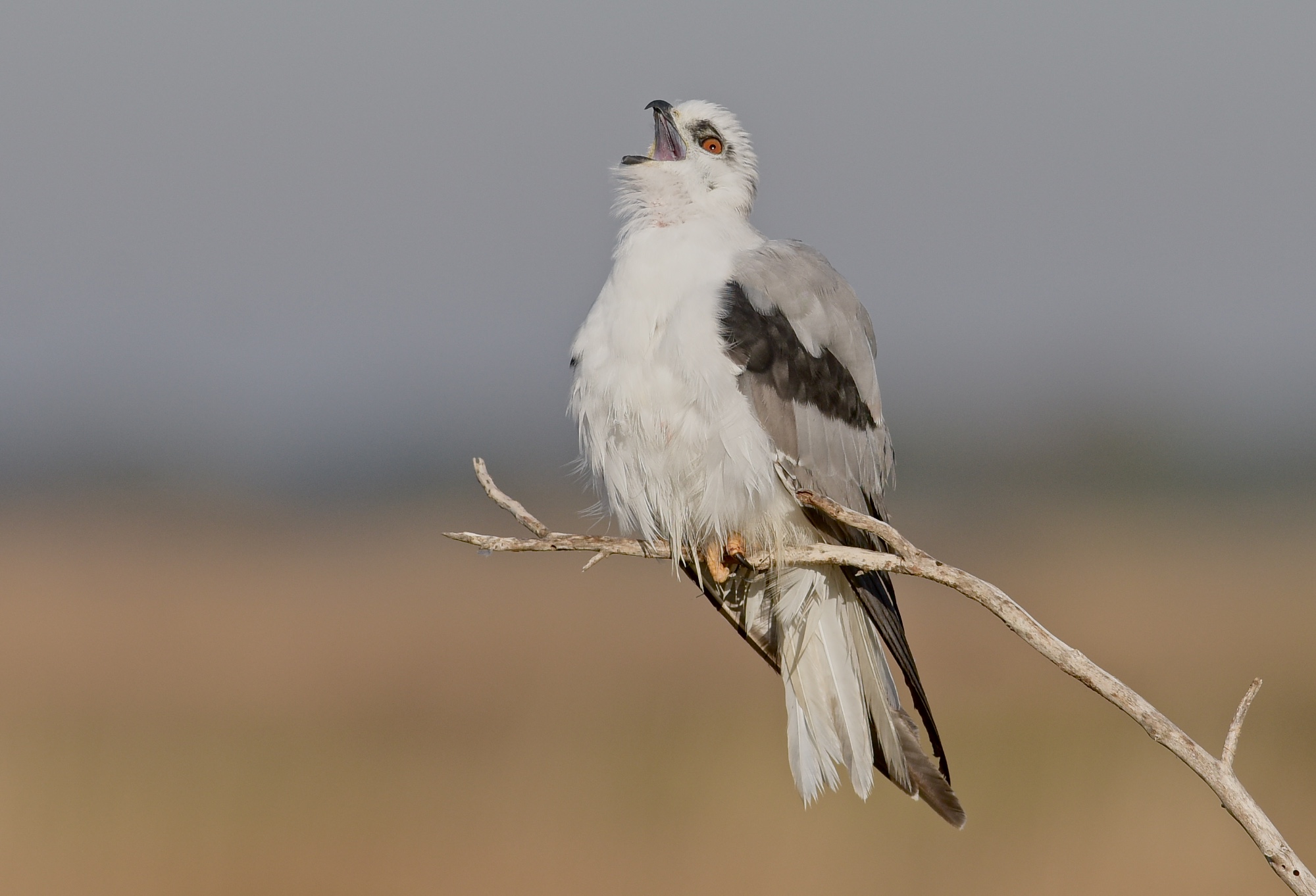
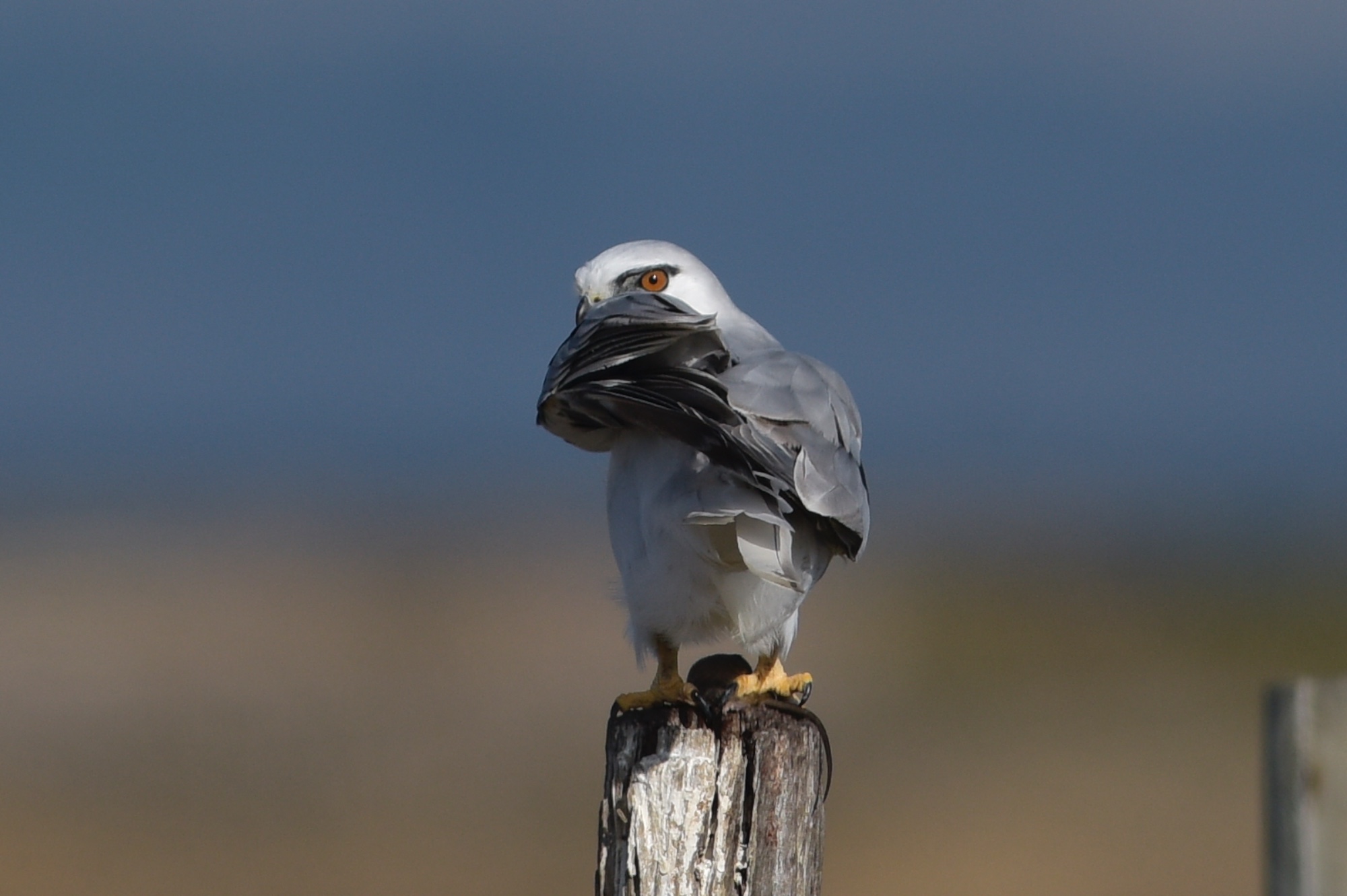
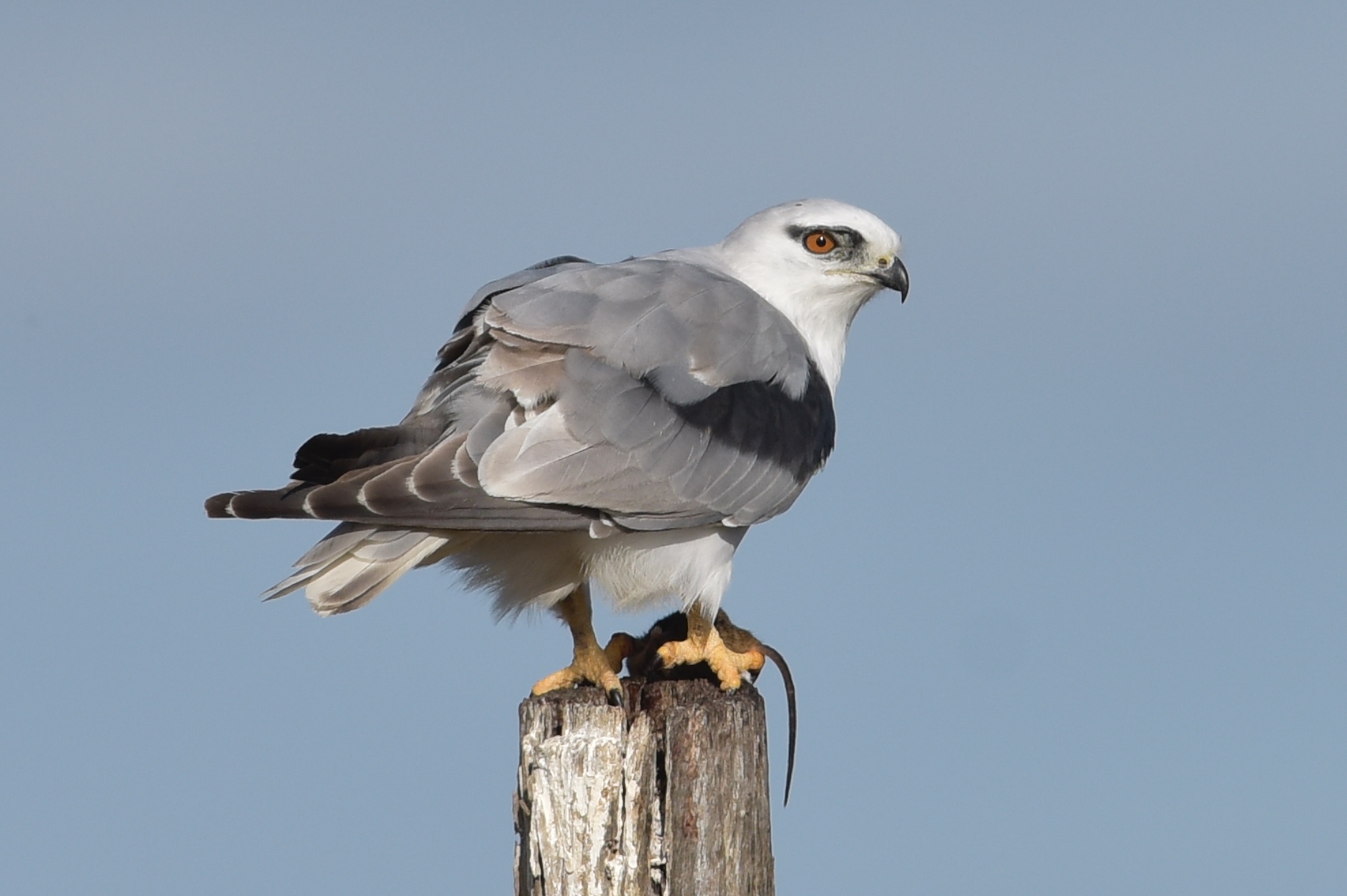
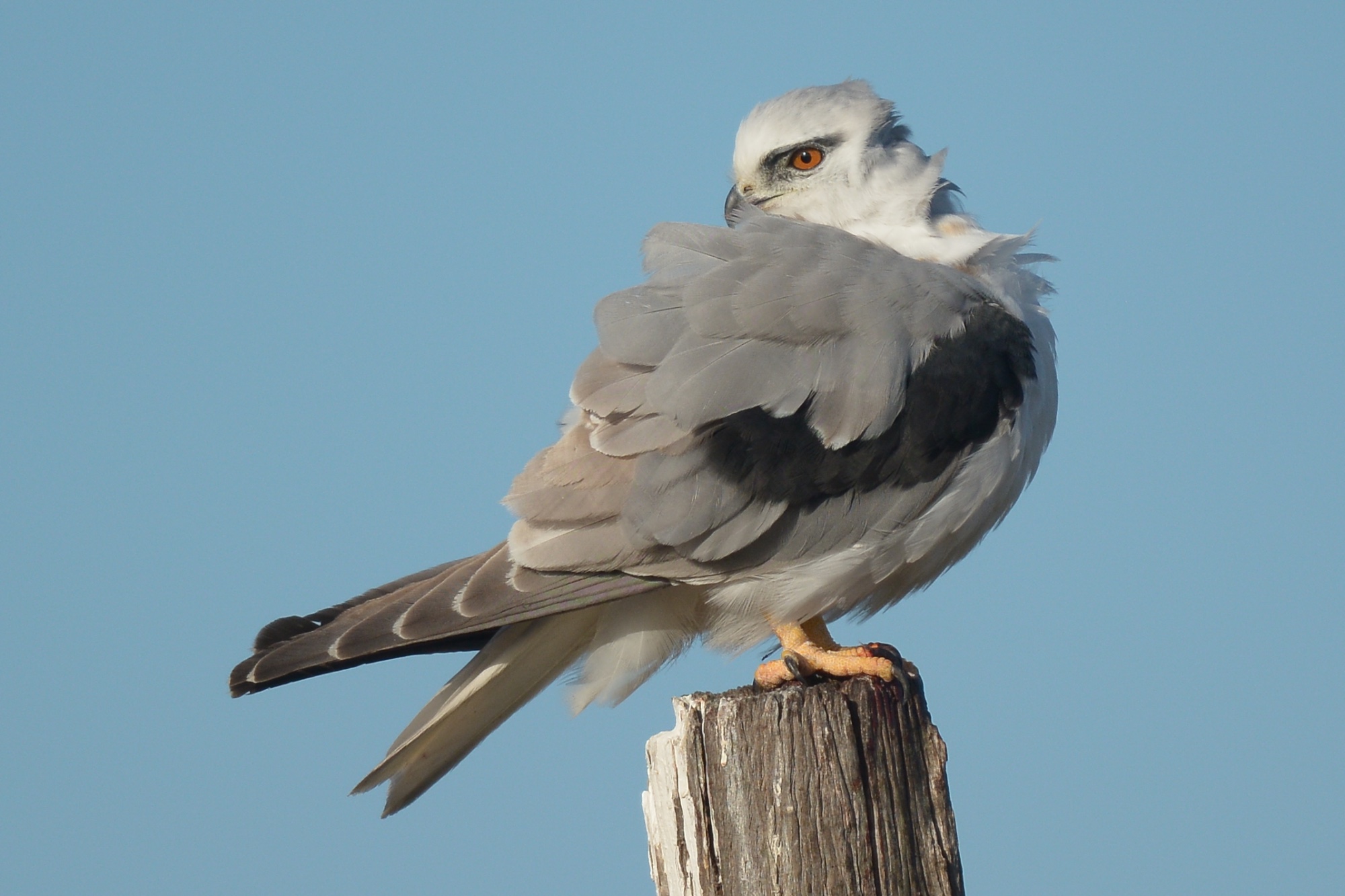
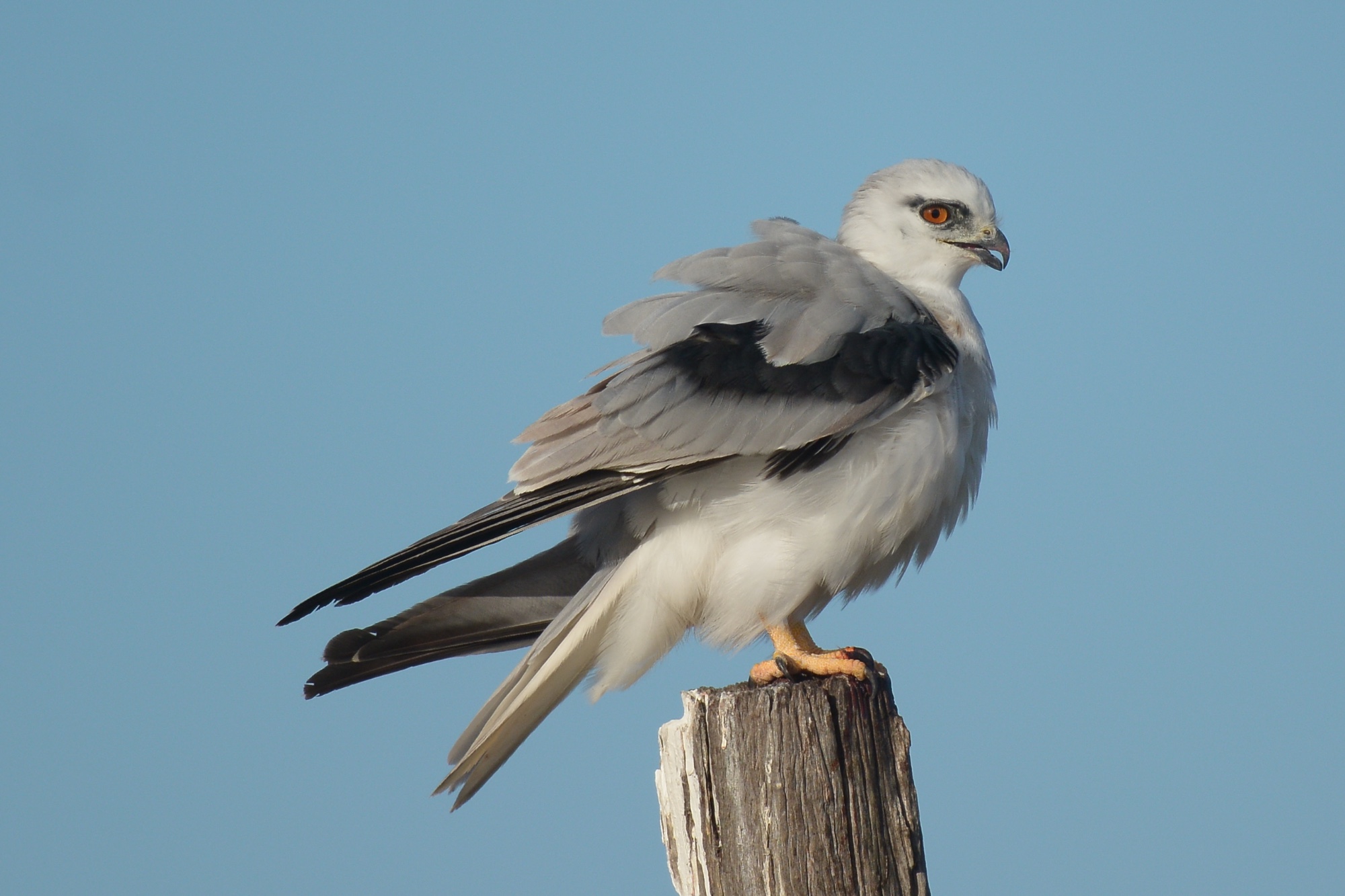
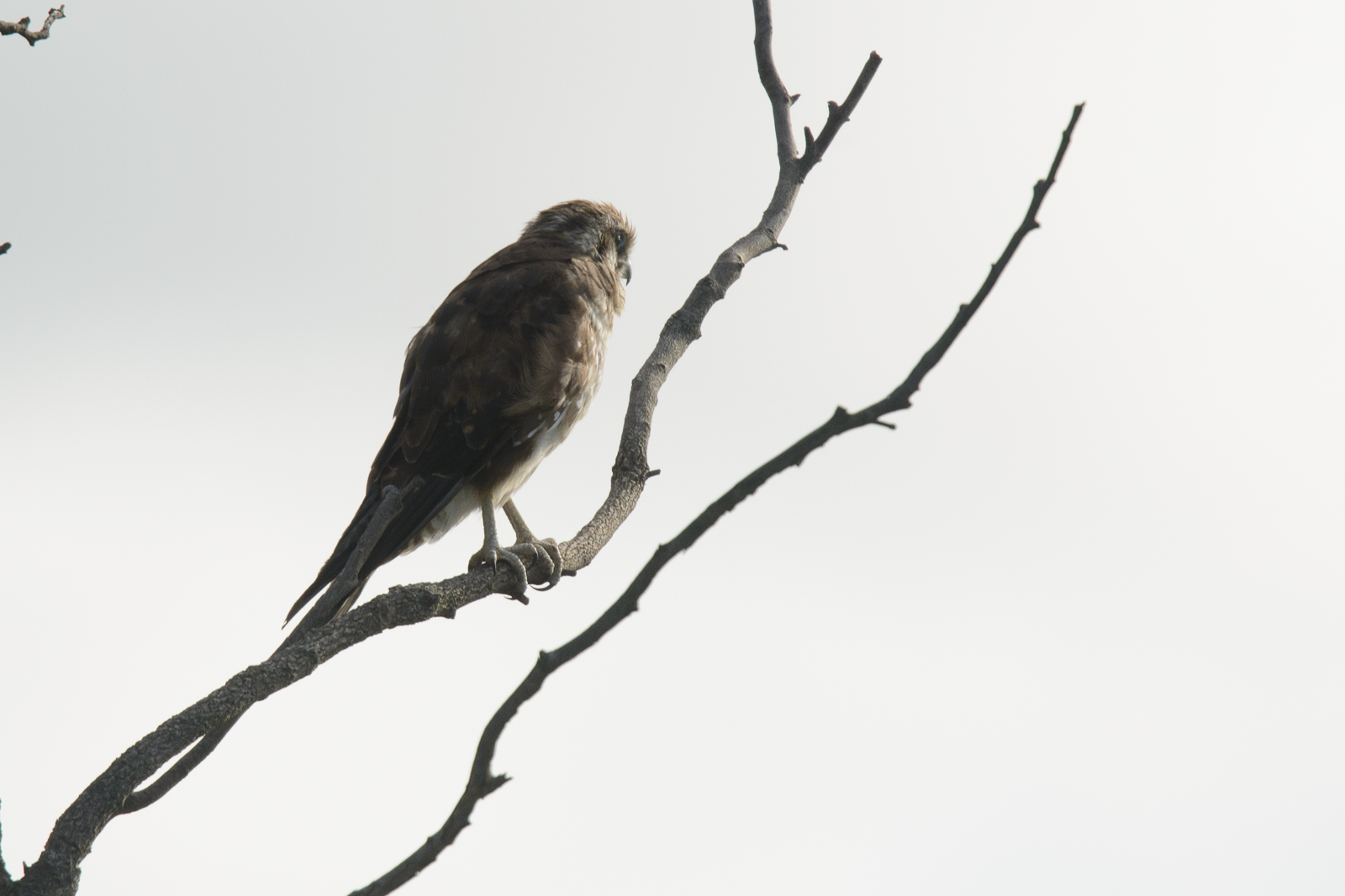
You just know its going to be a good day when as you drive in a Black-shouldered Kite is hunting close to the carpark, and just inside the walking track, Bernie the Brown Falcon is loafing in a favourite tree.

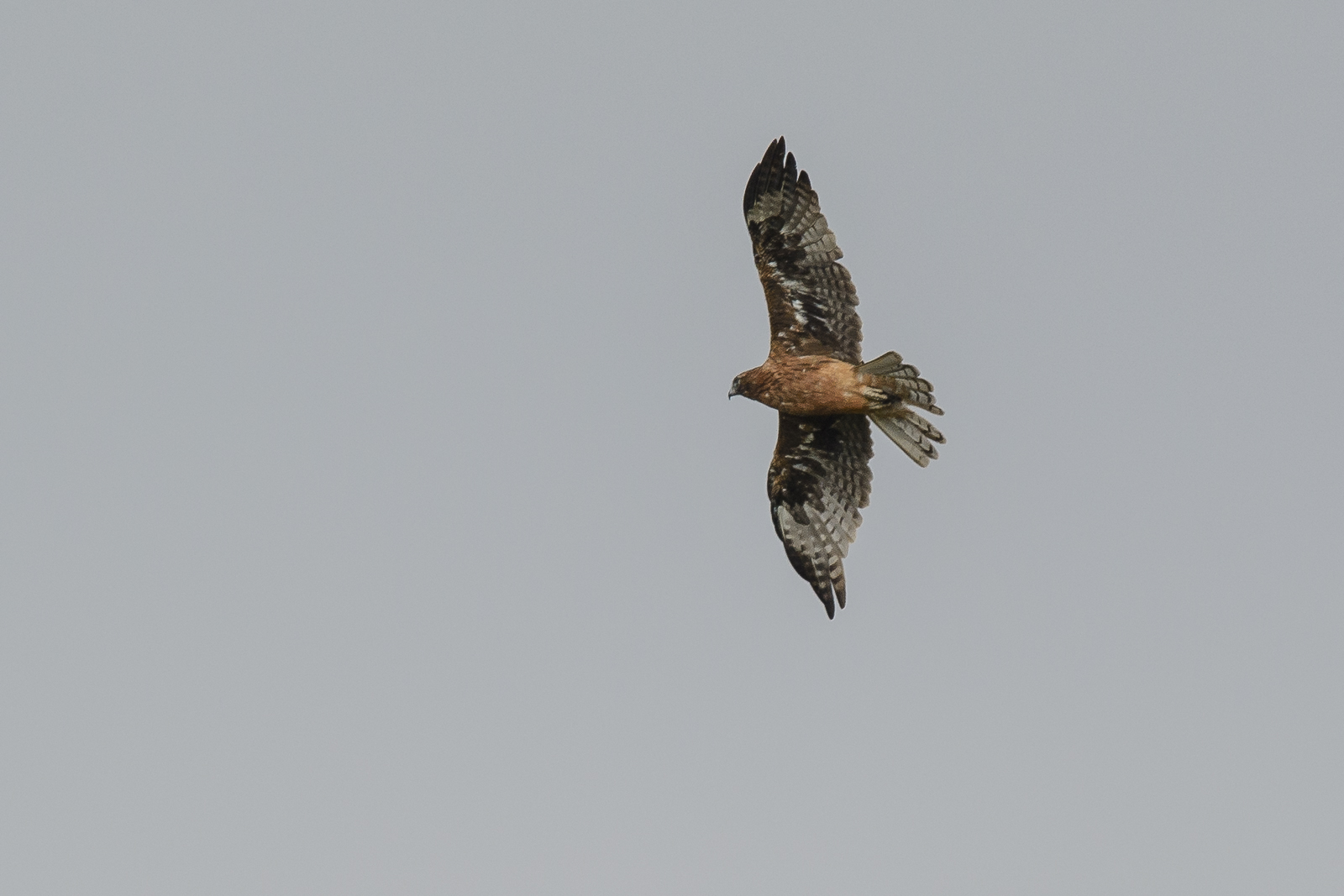
Next up a Little Eagle made several passes along one of the ‘flyway’ paths.  The Ibis, both White and Straw-necked use the same paths on the way to the feeding grounds along the river.

We sat with a family of Superb Fairy-wrens, and I will tell more of that tale on another blog, and were entertained by the feeding antics of a few Crested Terns. (another blog post methinks)

It was pretty awe-inspiring to be sitting by the river, dangling my feet over the river bank and sipping Earl of Grey, and enoying the time time in the sunshine with such a group of bids. And all less than 10 minutes from home.  A most amazing place.

Easy day, easy photography, easy birds, and Just Another Day at the Office really.

How’s that for setting the scene!

Enjoy.

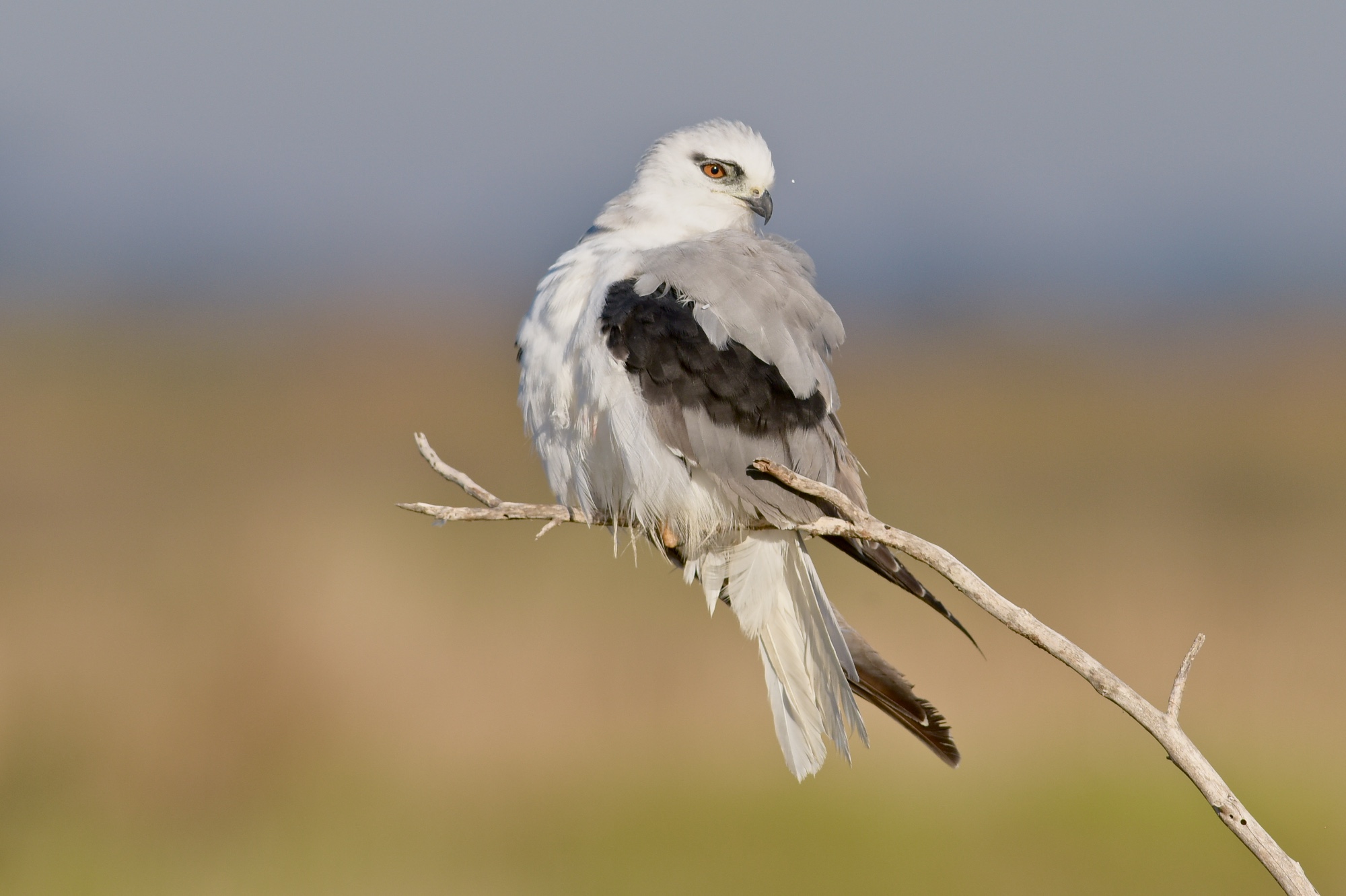
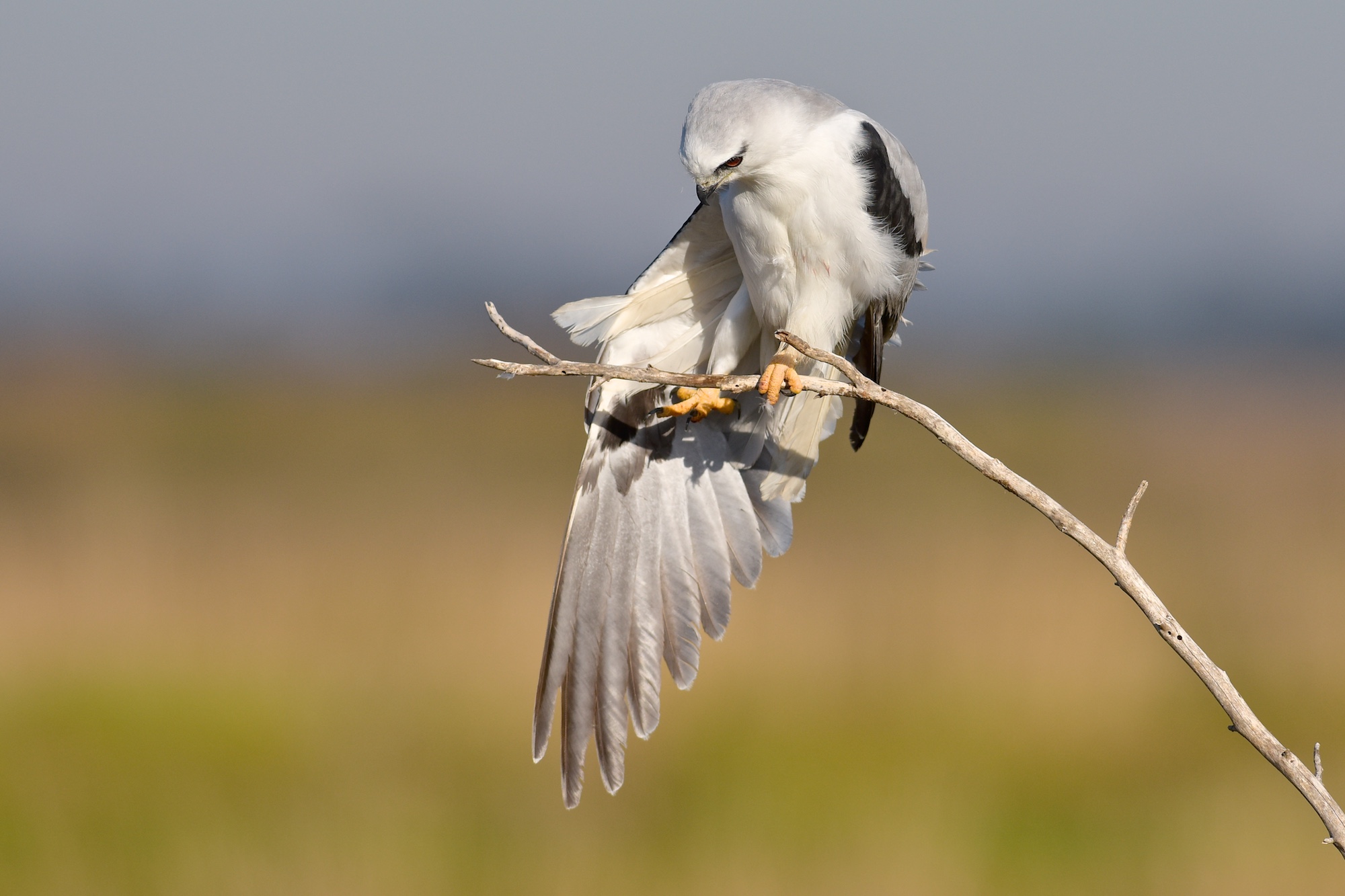
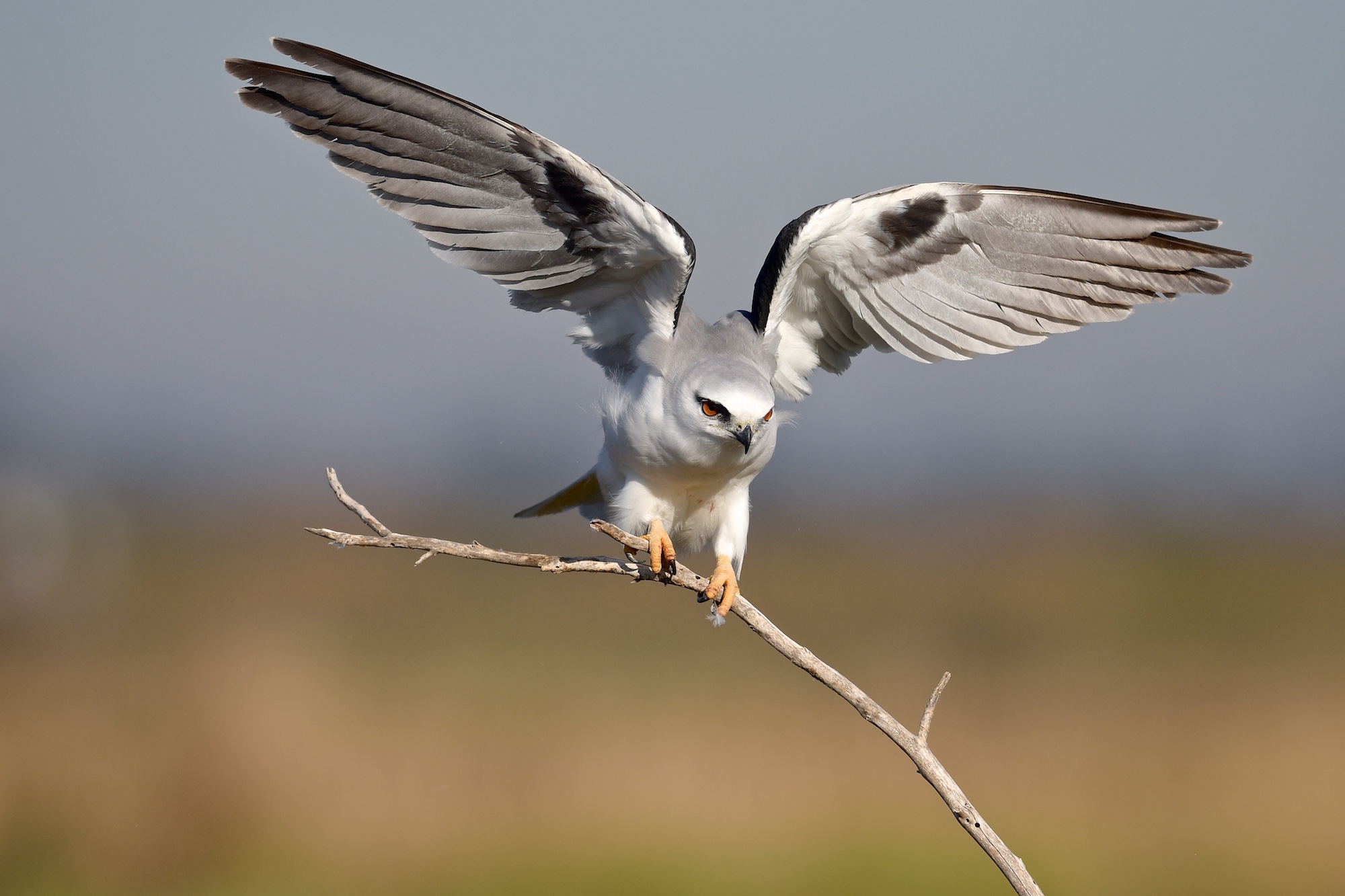
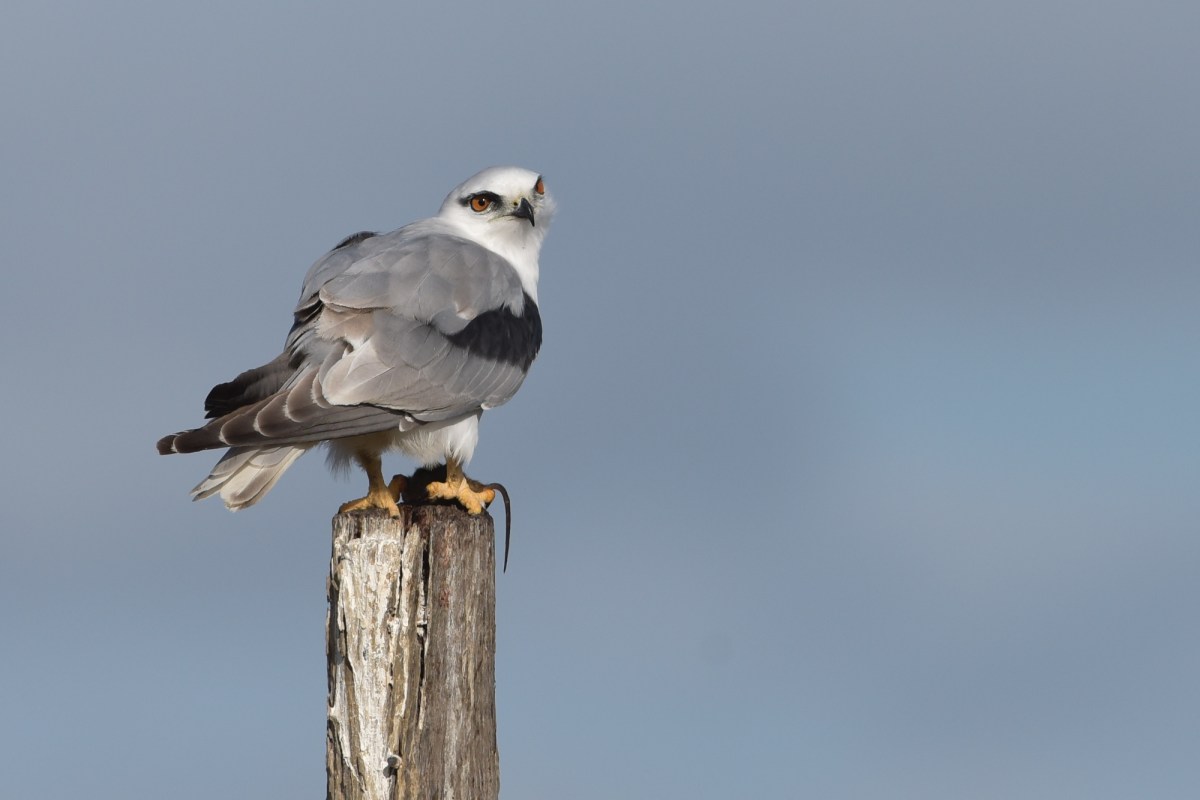
Black-shouldered Kite.
Berne the Brown Falcon
Bernie the Brown Falcon
A view along the sandy cliff face. The area we are heading is down toward the right hand side.
A view along the sandy cliff face. The area we are heading is down toward the left hand side.
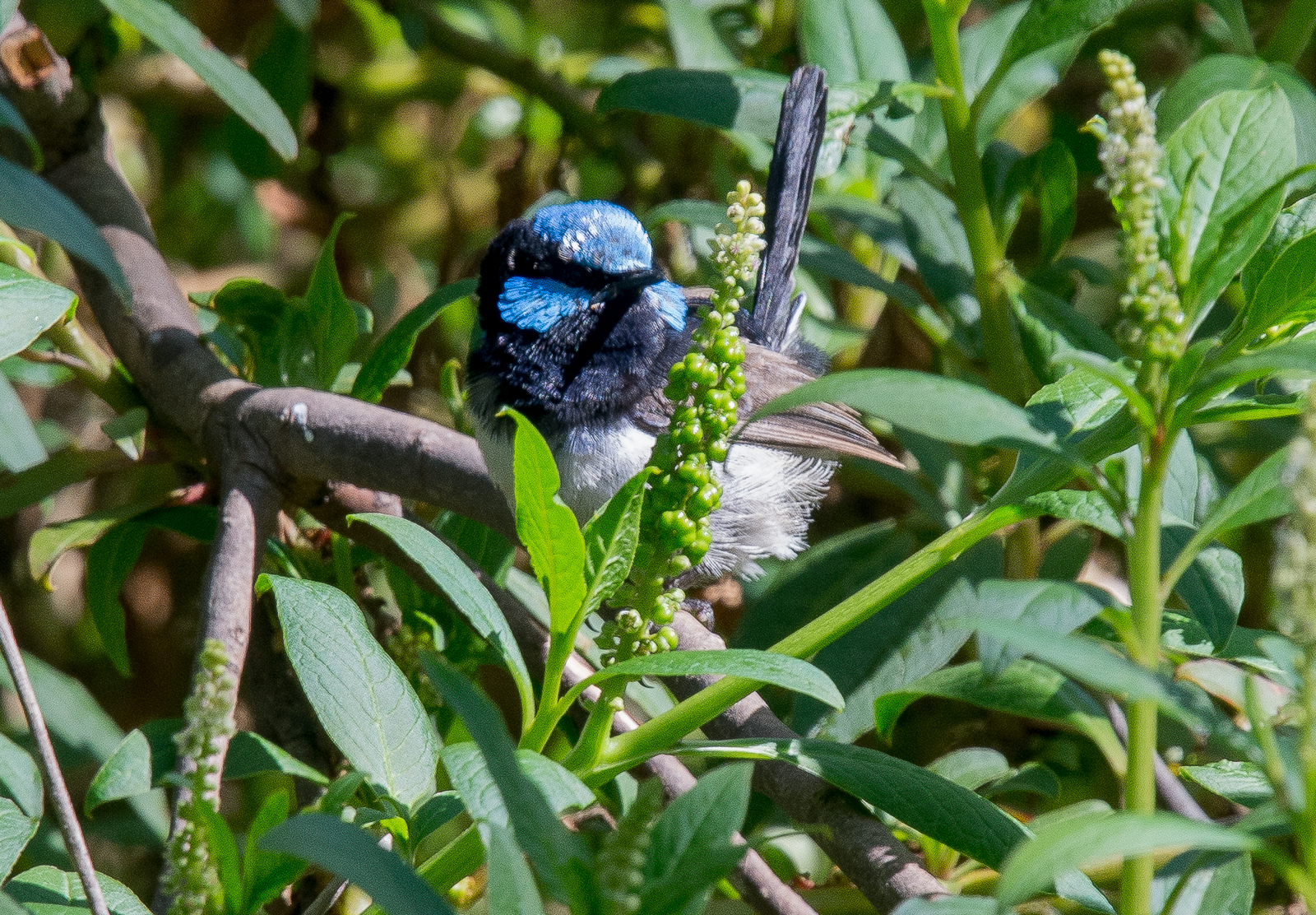
Superb Fairywren. This is a helper bird. A male not yet left home.
Superb Fairy-wren. This is a helper bird. A male not yet left home.
Great Egret
Great Egret
Little Eagle
Little Eagle
White Ibis
White Ibis
Crested Tern against the cliff face.
Crested Tern, juvenile, on a wing sretch, while waiting for Mum to deliver food

Birds, water, enjoyment

Mr An Onymous has remarked from time to time on his bemusement at water birds that spend all their time hunting, and standing about in the water, to spend some time bathing in the stuff.
Seems to him, that its a bit incongruous for a ‘water’ bird to then take the time to use the water to bathe, given its already dripping wet in places.

Which brings us to a fine warm morning at the Western Treatment Plant.
The waders that visit over summer are now getting the first signs of the travelling bug biting.   Its time to pack on as much weight as possible, and to conserve as much energy as possible.
So as the tide comes in, and the mudflats are covered with water, they retire inland to some of the safer ponds and settle in for a long sleep, and a bit of a preen. No doubt feathers need be tip top for the long flight ahead.

There are a special set of small ponds near the Beach Road entrance the plant that almost always attract them in great numbers.  Plenty of soft grass, the safety of rocks and small islands and water that is only knee deep for a dotterel.

And because they are trying to conserve energy, they are a little more approachable.   I managed to quietly slip off the side of the road and working my way through the grasses come up pretty close to a large clutch of Sharp-tailed Sandpipers, loafing in the sun.

The water in the ponds has come up a few centimetres of late, and I was not able to get a really low down water level shot without actually being in the water, so I opted for wet knees and elbows and hoped the water would not rise up through the grass and saturate me all over.

The Sharpies decided that with such nice sun, it was time for a bath. One by one, they stepped off the grasses and into the water for the tentative bobbing into the water then settled down like great big sponges, and simply soaked up the water.   Which was then sprayed over all in close proximity.  Finally a few wing flaps and a jump for joy, and the bird moved out of the way and the next one took up the challenge.

After about 20 minutes, and my knees and elbows turning strangely bleached,  I rolled over back up the grass to the roadside.  They didn’t flinch a feather.

Enjoy. They did.

Stepping into the water

DWJ_0931

The soak test
The soak test
Spray going everywhere.

DWJ_0980

Wing flap to get the bulk of the water off.
Jump for joy and the job is done.


Blogging 201: Or, The Tantalising Tale of Timmy the Super; Superb Blue-wren

Continuing with Blogging 201 by WordPress Uni.

The current lesson is the all important first line.  The opener that reaches out and grabs the readers attention and drives questions that must be answered, so read on read on.

Had to write for assignment 5 different openings for this blog.

Cruel fate deals a heavy blow in the life of a young wren.
– always good to have some catchy disaster theme, we want to know it won’t happen to us.

Super success for the springy young Wren who overcame hardship and rose to the heights of his profession.
– Always good to have a success story and link it in someway to a fabled lifetime goal.  We all want to think I need to find out how he did it, I’ll be able to do the same thing.

It was a Dark and Stormy Night; the rain fell in sheets except for the occasional intervals when it was checked by a violent gust of wind which swept up the streets….
Hmm, I think that one has been done by someone before.
http://www.bulwer-lytton.com

The forest rang with the shrill clear sound of a high pitched voice, crying out challenge and authority to all who could hear.
– The old power game story, we want to know who, where, why and what effect this bold challenge will bring to the forest.

Take your time, the wind encouraged. Walk quietly and all with be revealed.  Look not for the answers that appear quickly, but rather look, feel, listen, and taste. There is much to know, much is hidden and much will be revealed for those who tread quietly.
– Well when you’re desperate for a fifth opening line, a page from my new novella will do nicely.

And so dear reader, assuming you are still there, hello? hello? we can adopt the opening line I always like best for this blog.
Tell you what we’ve been upto and let your judgement decide to read on or to quickly click away to something much more relevant in your life.

So dah dah!!!!

We went to visit Timmy today.
-I like the direct attention grabbing simplicity.
I’m betting you came over here to see what the birds are doing and that is just what is not going to change.

We went to visit Timmy today. Just to refresh the memories, we had visited this plucky young hero a few weeks before the holidays and found he had lost his tail. Completely!
Then over the next couple of weeks, Timmy not only began to regrow, but also take on his responsibilities as territorial defender for his female companions and their soon to be growing offspring.  -There is every good chance that the young that come from his territory are not his offspring, but rather the work of his next door neighbours.  But, don’t be sad,  Timmy’s genes live on with the females of the surrounding territories.  Its the way it works in Wrenland.

We had, because of trips to the family acres, depressing weather, hot weather, other places to go and just plain old laziness, not been back to see Timmy or indeed the entire Office area for over six weeks.  But, today, nice light, an early mark on the house duty(s), and we decided and afternoon trip would work.

I soon heard Timmy’s cry as we approached the corner on the track that he called home.  And.  There he was.  And with a nice rich full tail. Well done Timmy.
Local boy makes good!

Among his new duties were looking after about 4 or more young.  And they all looked just like “Dad”.  Short-tails.  Must only have been recently fledged.

So between feeding and rounding up the little ones, being harassed by the females, and being sure to take time to keep his nemesis, Tommy the Bigtail, in his own territory, Timmy has his work cut out.

And that is the way I overcome writing complex mind entrancing opening lines.
Simply show the pictures.
Enjoy Timmy.

Looking good in the look out bush. And what a tale!
Where did you get that tail?
When you have an itch you just gotta scratch it.
Standing in the middle of the road and discussing territorial arrangements with his rival.
Just like "Dad".  A tiny tailless terror.
Just like “Dad”. A tiny tailless terror.
One of the family.  Giving him encouragement to feed the kids?
One of the family. Giving him encouragement to feed the kids?

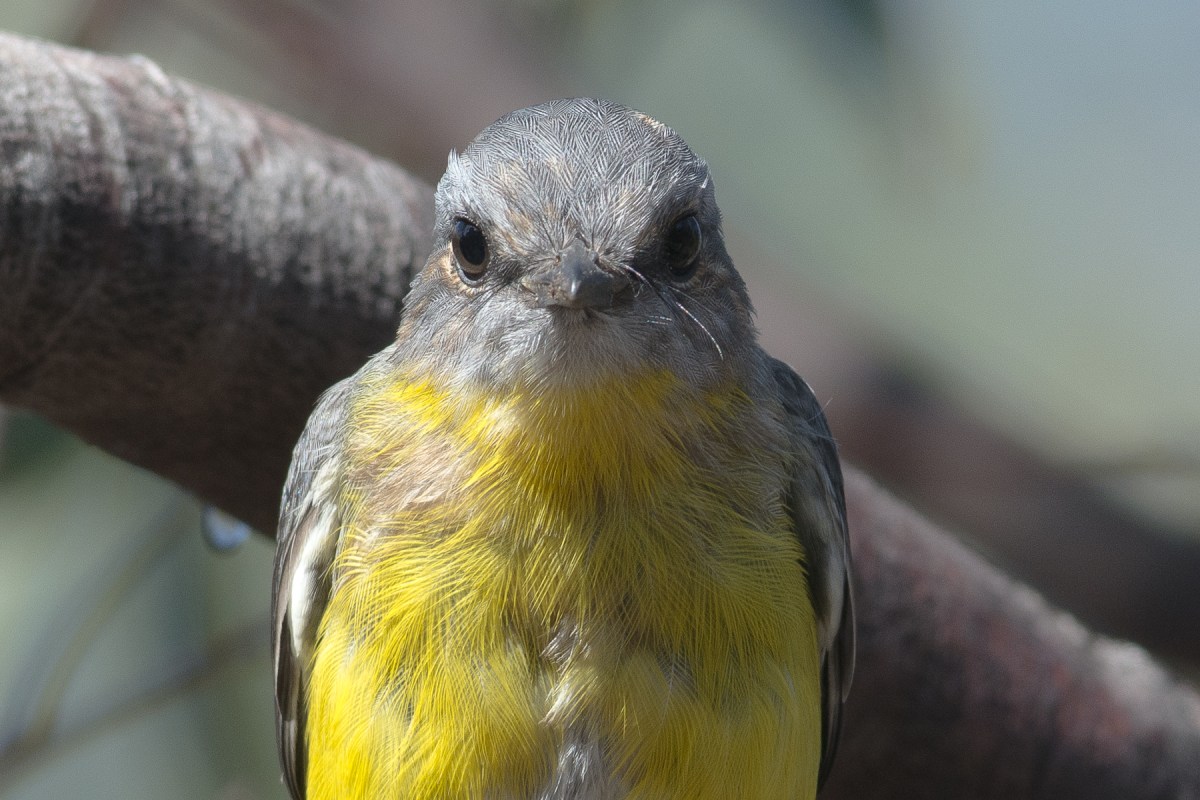
Another Little Journey: Meeting an Eastern Yellow Robin

We have,  EE and I been following a pair of nesting Eastern Yellow Robins at the You Yangs since she began about late October to settle in to nesting.
Because EE has been working with them pretty closely, I’ve really tried not to get in the way, as the raising of an Eastern Yellow Robin is fraught with complications and doesn’t need people trampling all over the nursery.

For the uninitiated, Mum sits on the nest, Dad feeds, and after about 3 weeks the egg(s) hatch.   Then a feeding frenzy gets the little one(s) to a point of being able to move but not quite fly.  They then flutter down from the nest. Once into the leaf litter or small shrubs, they stay pretty much stationery unless really disturbed, and then the best they can do is to hop or jump away. Flight of any real significance doesn’t happen for 3-4 weeks.

They have two survival strategies.

One: remain absolutely still. No matter what.  And I’ve seen them for up to 15 minutes or more, sitting in the leaf litter and not a move is made. It can be barely possible to see them breathing.

Two: A brilliantly designed brown and creamy chevron dress makes them almost impossible to see amongst the litter.  Just ask someone who has located one, and then tries to explain to someone else.  “There, by the small  stick, under that overhanging branch, with the dark green leaves. Oh, better yet, look from just here, bend down, see, just there behind that pale grey leaf.”  Oh.  Forget it. About the only way is when an adult flies in with a food parcel.  Then,  “Oh, over there, you didn’t tell me that!”  See first paragraph about not getting in the way for more details.

Mum and Dad, (This is one of the few pairs we’ve never struck names for, as we really can’t distinguish one from the other), have been working so well with EE, and occasionally I’ve been allowed a glimpse of the young one – they only seem to have succeeded in bringing one up.

But now that the young one is nearly moulted out of the brown and chevron, and is a fully developed flyer, and is able to fend for itself, things have changed a bit.  And today, I got a few minutes where it came to visit me and see what I might be doing.

During that time, it also put itself into a secluded area behind some leaves and I think it practised its singing calls.  It has the Robin contact call and what appears to be the warning call down pretty well, but the sharp distinct “PhTew’ call of the adults is still a ways off. So it sat among the leaves and seemed to run through the process of calling.  A bit garbled, so more praccy needed I suspect.

Here are a few from the morning’s portraits.
Enjoy.

Most all of the brown is gone and the distinctive grey yellow is showing through.
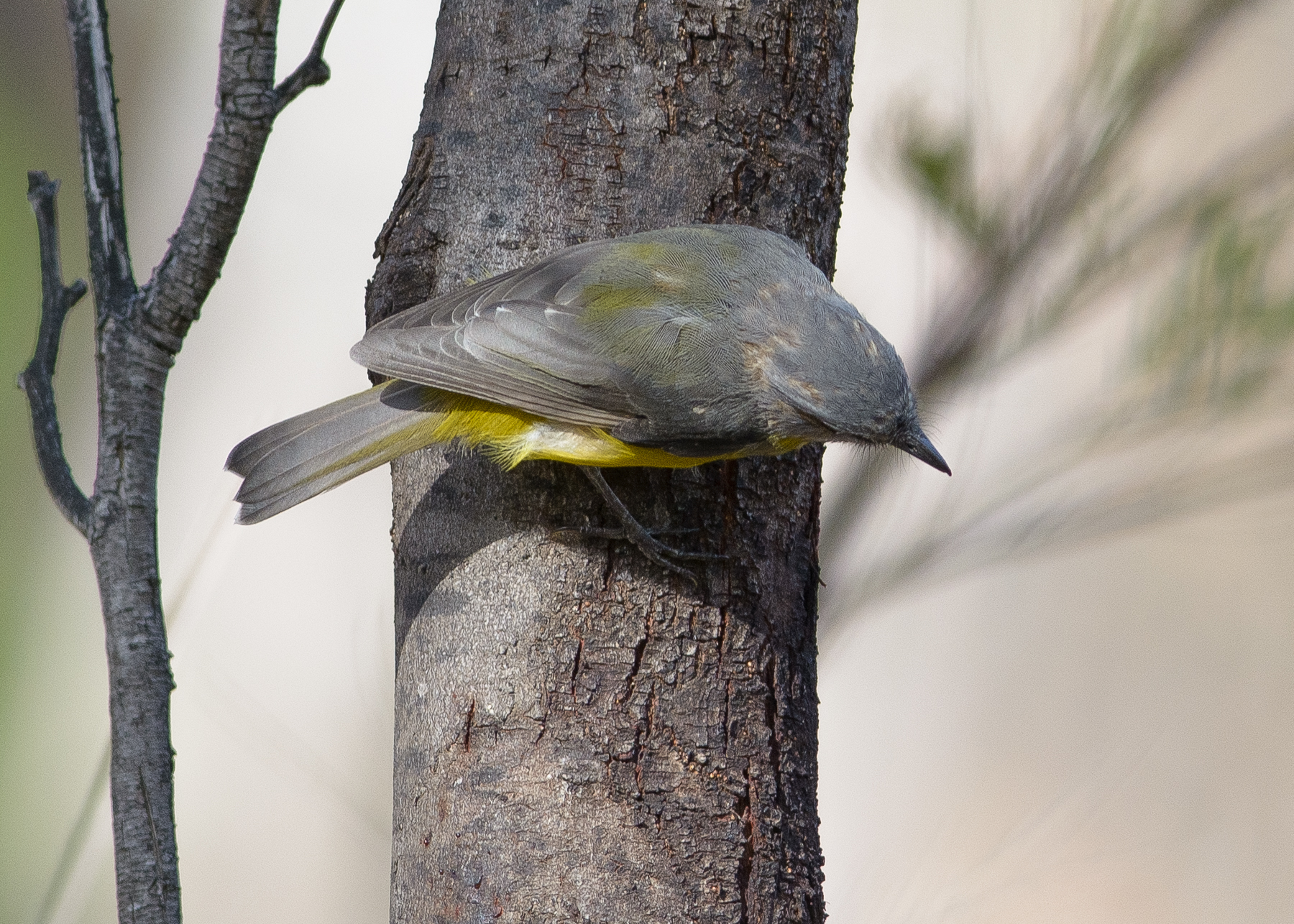
Typical Tree side pose

DWJ_6172

Looking good in the sunshine
One of the adults checking up on the young one
Time for some vocal exercises
It's not hard to see how well they fit in with the surrounds
It’s not hard to see how well they fit in with the surrounds


Gallery

WTP Jan 2016

Check out Mark’s view of a day at WTP

mdsmedia9's avatarmdsmedia9

Western Treatment Plant. Werribee.

Nestled on the coast, off the town of Werribee lies a birds paradise. The Water treatment plant of Victoria is a haven for many a wildlife species and has become a listed wetlands of significant international importance. I recently had the opportunity to visit and take photos(see me flickr). From a photographic point of view the light on the day was not great, a little overcast and bland with a touch of smoke wafting across the strait from the fires in Tasmania.

“For birders this place is the ducks guts”

Ducks in formation Ducks in formation

Been standing in the corner
Studying the lights
The dreaming of escape
Will keep you up at night

Away with me
We don’t need words
Close your eyes and see
We’ll be birds
Flying free
Holding on in the mystery

~  Birds by Coldplay

 Life abounds.

The ecology here…

View original post 391 more words

Little Journeys

When I was  a mere broth of a lad, we had in our ‘vast’ library of books a volume entitled  “Little Journeys to the Homes of the Great”, by some dude named Elbert Hubbard. It was filled with wide-eyed stories of visits to great historical people. Some with really funny names to a young lad.  Aristotle, Copernicus, Jane Austen, Eras-someoneorother ….

I acquired much later in life a copy of his “Day Book”, which was a collection of his ‘thoughts’ on various subjects. Nowadays a google search will find lots of them in disconnected ways.

He perished in 1915 with the sinking of the “Lusitania” which bought the United States in the First World War.
Intriguing really as one of his quotes was.

As long as governments set the example of killing their enemies, private individuals will occasionally kill theirs.

But back to Little Journeys.
A friendship that goes back a long way and includes all sorts of family connection is with Mark from over on Flickr at mdsmedai9.  So when he suggested he would swing by for a visit in the Winnebago, we decided a “Little Journey” to the Western Treatment Plant was in order.
Bet you were, dear reader beginning to think I’d never find a link for the title.  Sad.

Of course on such short notice, the weather was in no mood at all to be co-operative. And it wasn’t.

Still we had a grand old chat, drank some earl of grey, and found at least a few birds for him to photograph.

At about the same time,  my friend, (Whoa!! how many have I got??) Nina, (Nina and I used to work together a long time ago,  in what can only be described as “another life”) had also been down for a “Little Journey” to the other end of the WTP, to visit the amazing Red-necked Phalarope and found some great looking young Black-shouldered Kites for her time.   One of which she is graciously letting me publish in this blog.

Enjoy, we did.

Hobby on a Chat
Hobby on a Chat
Black Kites waiting for the tractor to make the next pass.
Black-tailed Native Hen, going about its "Chooky business".
Black-tailed Native Hen, going about its “Chooky business”.
White-fronted Chat.
White-fronted Chat.
Mr Inquisitive. White-faced Heron watching the goings on below as several Willie Wagtails try to move a Little Raven out of their territory
Australian Shelducks have moutled out and now have nice new flight feathers to put to good use.


Nina's lovely shot of a Juvenile Black-shouldered Kite. And Sunshine. So jealous. Thanks Nina for sharing
Nina’s lovely shot of a Juvenile Black-shouldered Kite. And Sunshine. So jealous. Thanks Nina for sharing


The balance of life: Western Treatment Plant

I wrote of the Banjo’s Romance, last blog.
Then we were out to the Treatment Plant, EE, Mr An Onymous and I.

To see that poem played out.

On a day that started with a lighting strike about 100m away and “CRACK” of thunder that would indeed wake the dead, the overcast and wet weather offered us little reprise in our quest for Sea-eagle.

So we turned the way for home.

And just as the light was fading, a sparkling wingflash streaked across the river just to our left.  A falcon.  No, not any flacon.  A Peregrine Falcon. My first for the Treatment Plant.

It had downed a duck.

The Pink-eared Ducks spend most of the day lolling about in Lake Borrie, but then on evening, make the several hundred metre flight over the Little River and into one of the Walsh Lagoons just over the river.  A few minutes flight for a nimble duck.

For the Falcon, it was pretty easy pickings if you think about it.  Ducks- several hundred- in  a straight line, – tricky little dudes, fly over the reeds on the far side take a detour either left or right for a few hundred metres along the rivers edge, then pop over the far bank and plop in to the Lagoon.  The slow moving Whistling Kites and Swamp Harriers can’t match that speed.

But.

Dropping from above at speed over 100kph, the Peregrine probably doesn’t even raise a sweat.

But

The duck is a heavy creature and the Falcon can’t get it airborne and must work it on the ground.  Now, ordinarily, good luck would have put the prey down in a secluded spot. However in this case it was on the middle of the track we were travelling out along.

So the Falcon took to the air. And circled.  So much so that in the end, I decided to reverse the car back down the road, and see what would happen.  Too far back for photos, but what would the bird do?

And sure enough, after several scattered flights back and forth, and cleaning up an inquisitive Swamp Harrier along the way, the Falcon landed about 50m from the duck and decided what to do.  After several minutes, it flew down landed a few metres away, re-evaluated our presence, the chance of a meal, and hopped up to the duck and began to take off the feathers.

We left it in peace to finish its well earned meal.  On the far side of the river we spotted another set of sharp wings. A second Peregrine!   And the light was gone.

Enjoy.  Huge crops, but I wasn’t going to disturb the bird any more than I had already.
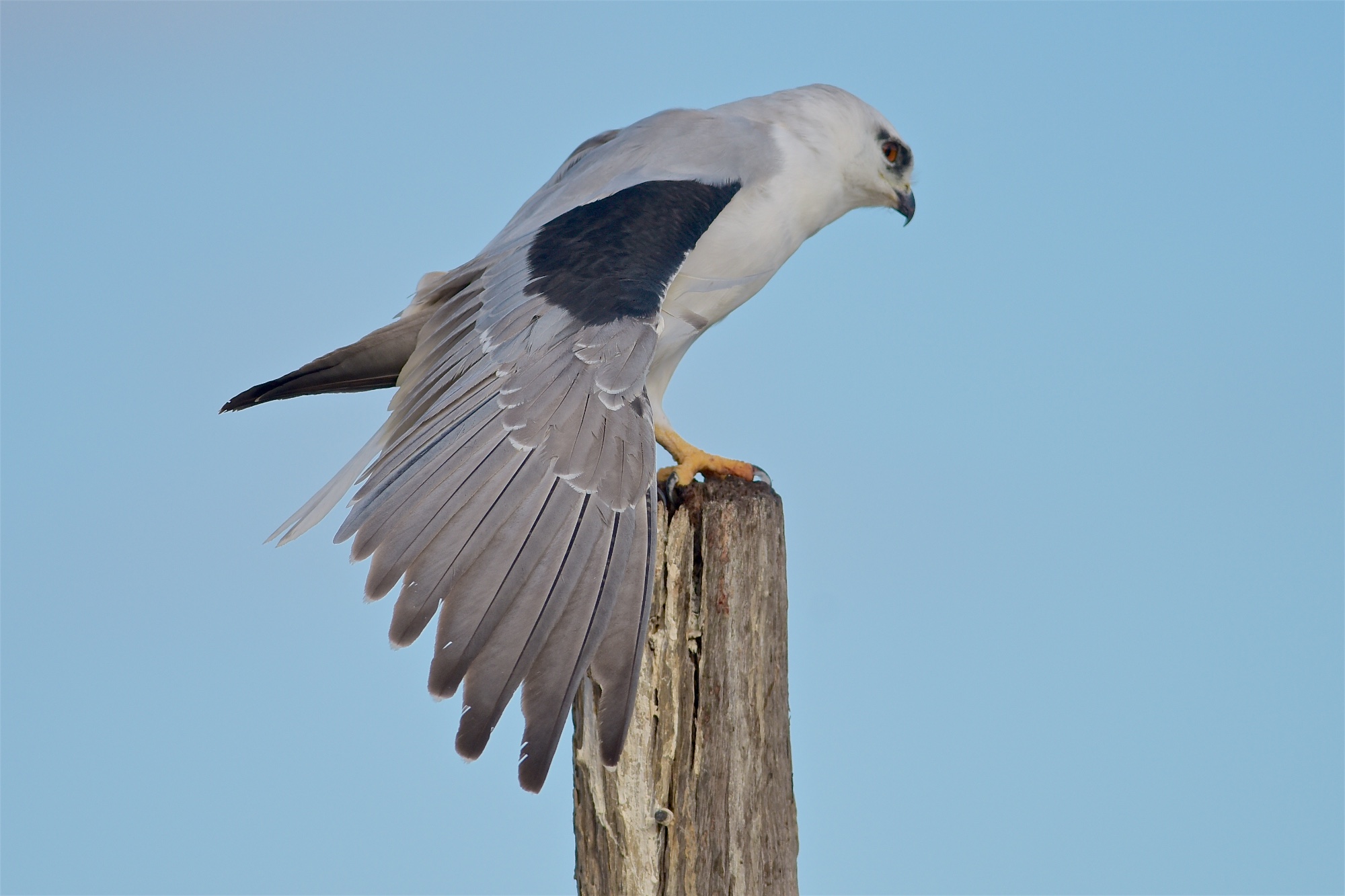
Swinging in to claim its kill.  The unfortunate Pink-eared Duck is in the foreground.
Swinging in to claim its kill. The unfortunate Pink-eared Duck is in the foreground.
Time to sit and contemplate the next move
Time to sit and contemplate the next move. A Swamp Harrier along the river in the top left.
Closer now and everything looks safe
Move onto the prey
Move onto the prey
Hopping the last few metres
It's mine!  And feathers begin to fly
It’s mine!
And feathers begin to fly
Feather removal.
Feather removal.

Ruthless, Red, Romance

A B Paterson created a series of poems titled, “The Animals Noah Forgot”.

The prologue pieces are quite interesting.  Well worth a read.

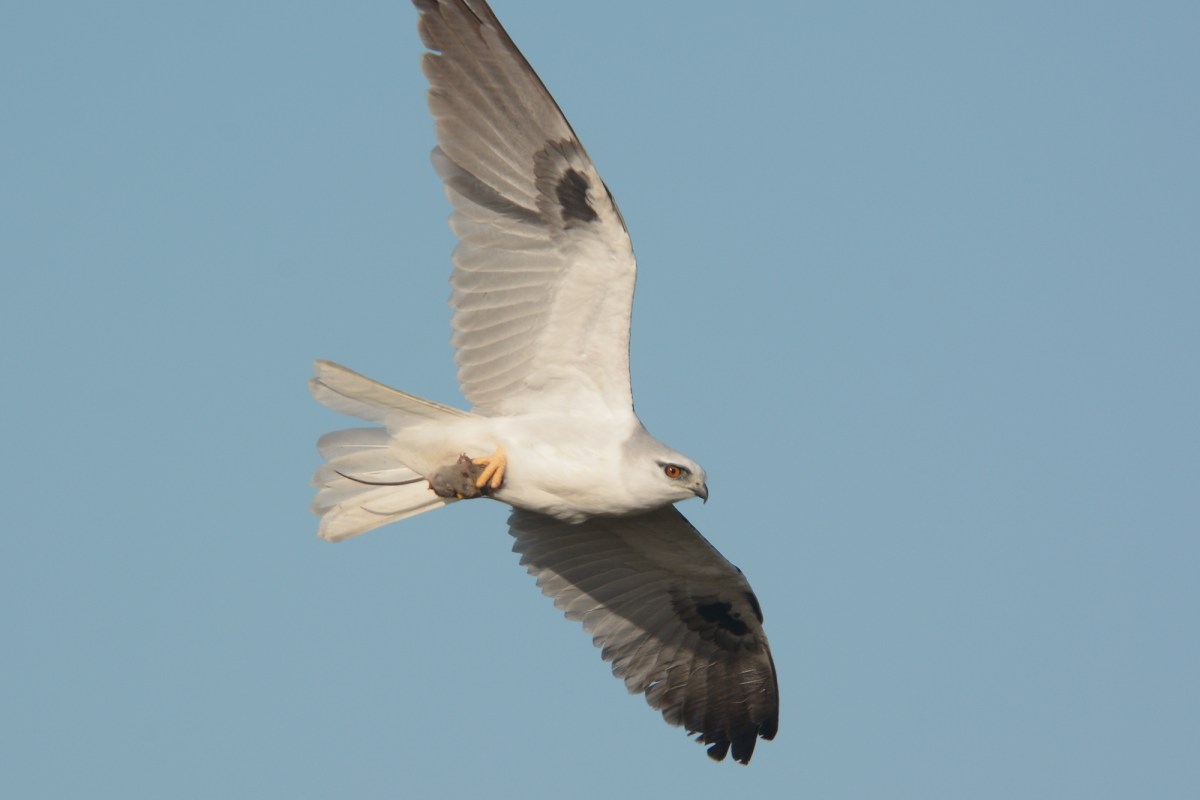
We were returning from a foray at the Office when in the late evening sunshine we came upon a pair of Black-shouldered Kites hunting to feed their recently fledged young.

Sitting quietly by the vehicle they soon resumed their sweeps over the grasses around the trackside.

All the while being encouraged by their hungry young calling from the fenceline.

Enjoy

Such a graceful bird at hover.
Locked on and adjusting angle.
Milliseconds from impact
Mouse delivery
Mouse delivery
Anybody with a mouse is a friend of mine. Young zeros in on adult.

Blogging 101 The beginning from the end.

Three weeks of Blogging 101 and it time to bid farewell to learning and launch out the barque of blogging on my own.

Have learned a thing or three about the blogging universe, but not sure a lot of it transposes into the page here.

We did “S-tra-ya” day, Mahhte  (Australia Day to the uninitiated), yesterday.  Instead of the usual burnt snags and fatty chops we had a spit-roast sitdown meal at the Villiage centre.  And among other things were entertained by Susie and Mel.  These bush poets and songsters took us on a tour-de-force (french on Aussie day mahhhte? )
They have a wonderful way of combining the old of the Banjo, Henry Lawson, The Breaker and other with modern music.  Imagine, (if you will), The Man from Snowy River, sung to Morning Town Ride,  or Waltzing Matilda, to Ghost Riders in the Sky, And then to top it all off an audience participation number of The Man from Ironbark, with several of the village doing the miming parts of said Man and Barber.

Hilarious.  Rolling on the floor funny, and brought the house down, – as they say.

See their website here for a bit of a looksee  at how Aussie, s tra ya really is.
Got me thinking of The Bards of the bush.

Somehow in this modern rush of life, their way of life and the stories they told are at best no longer relevant.  Hard to talk of stock and dry paddocks, and horses and whip cracking to someone glued to their mobile fone, trying to get GPS directions or upload their latest ‘selfie’, or what is the latest You-tube viral nothingness.   But, of course I digress.

Another thing that came to me about all this is that they didn’t deal with the deep emotional stuff.  There is no connection here like T.S. Elliot’s The Waste Land. Nor the cutting insight of Dylan Thomas, nor… and the list goes on. Nor the fine interaction of the universe, sunlight and shadow of the classic Taoist poets. And the old Hebrew rhymers who gave birth to such inspirational works that whole religions grew from them.

Yet.  The Bards of the Bush give us an insight into the life and times of a generation or two who lay the foundation of S-tra-ya as it is in its multi-cultural kaleidoscope.  And,  well, I could go on, but its a photo blog isn’t it.

The Banjo it seems wrote little of the birds of Australia.  Much of the human condition as he found it.  So I’m going to take a bit of poetic licence with his and other works over the next few weeks.   Never know where it will go.

Now when it comes to Bush. Nothing quite says it like Brown Falcon.

These amazing birds so bronzed and upright.  Here’s one of the young from the Office.  That rich colour of deep brown and brilliant tan are always a winning combination.

DWJ_7202 DWJ_7208 DWJ_7209

Blogging 101 the Third Week in Review; “Family Matters”

Family Matters

Been away for the bulk of this past week. Up at the Family Acres.  We stayed at the Murray Downs Resort in Swan Hill.  Really nice and quiet, and just a few km out of town.
Like all good resorts, probably enough to do without having to make the tourist mecca trip. And a lovely golfcourse built in.
But, of course not being the sporty type, golf doesn’t mean, clubs, balls and keeping score.  It means wide open green areas, water, trees, bushes and … birds.

So each morning we managed to be up at Sparrows call, and walk around the course, before the golfers began their pilgrimages.
In return we got to see among other things, White-winged Choughs, Rainbow Bee-eaters, Pied Butcherbirds and a host of the usual suspects.
With the Goschen Roadside Reserve about 20 minutes away, it should have been a great birding week.

But.

Family Matters.

So photography was banned.  Well at least frowned on. So I snuck into the deep pockets of my Breakaway jacket, a D810, sans its L Bracket, and in the other pocket, the 300mm f/4 PF with a 1.4 TC attached.    Not much help for general photography but at least it covered some of the birds at the golf course.

The White-winged Choughs have adapted quite well, thank you, to the rolling sand hills, saltbush and thin mallee scrub, nestled between the sweeping grassy greens of the golf course.   Able to enjoy both the richness of their old habitat and the pleasures of the new.

I managed to spend two sessions, a mid morning, and a late evening with a couple of the families.  They are so used to people zooming past in carts, or walking by with bags and clubs that a dude walking quietly with a camera seemed quite  harmless. So within a few minutes I was accepted into the family, and they worked around me nonchalantly. Even the ever present “Lookout” bird relaxed enough for closeups.

Blogging 101 was also concentrating on the family of bloggers.

But a lot of it was about branding, id, making themes that people will follow, or seek out and developing a feature to enrich readership, as my eyes glaze over….

So I came to the conclusion “Family Matters”. Those who graciously have clicked the Follow button or come over from another link are welcome here as family, and the time shared is as much important to me as the enjoyment of the birds.

So there is not going to be a ‘sustainable purely personal blog of random musings benefitting from a hint of structure.. ” here anytime in the foreseeable future.

Just me sharing our best time with the birds and hoping you enjoy it as much.

Here is how the Chough Family took their day.

Enjoy.
Sentry on Guard. If it can get the sentry to accept my presence then the family will settle down.
Sentry on Guard. If I can get the sentry to accept my presence then the family will settle down.
Always a delight to see the wing spread. They are not the world's most agile flyers
Always a delight to see the wing spread. They are not the world’s most agile flyers
The benefits of settling in a golf course. Plenty of water in pools on the road
A somewhat deformed beak.
Taking a stroll under the cooling shower of a lawn sprinkler.
The family that preens together.
Plenty of food among the damp understory litter.

Blogging 101 Week 3 Day 1 Now you see me now you don’t

Now You See Me

New week, and I’m away from home for the week. Travelled up to the family acres. This is an exercise  of sitting in a fast moving car and waiting while the miles, (kilometres) roll by.   Long straight roads with not much else to see but the road, and the horizon, and the blue sky.  Didn’t we already pass that 105 km post?

And today’s Blogging exercise is to find a prompt (Bloggsville provides them), and so we come to Now you see me, now you Don’t. Thought it was appropriate for being on the road again.

Stopped as is our want at The Eaglehawk Bakery to enjoy a “Mulga Bill’s” Pie for lunch.  One thing I guess that has changed a bit over .the past twelve months or so it that I’ve had to reduce my diet from pies, and all those lovely carbs, and concentrate on ‘healthy’ food.  But, hey its a long road to the family acres and a pie is just the right thing.  Also picked up a Banana milkshake.  This is starting to sound like a Facebook foodaholic journal.

The days before we left, we were watching a pair of White-plumed Honeyeaters.  This clever pair had built a nest among the leaves over the river.

It’s funny as I’ve written to this before, just recently, about now you see me now you don’t. While EE was busy working with a  Wagtail pair, (and I stay away as it doesn’t need two humans in their space), I was watching a White-plumed Honeyeaters.  Something about the extra intensity of their actions said, “They have a nest somewhere.”  And while I looked here, and there and over there too, no sign did I see of their location.  The following day had us at the same spot, and this time I moved about 50m down the river.  Again time passed.  The Honeyeaters passed and the mystery deepened, Finally I got a glimpse of them moving back and forth from a branch stretching over the river and it was even more obvious that is where they were working.  And down at the end of some leaves over the water, tightly fitted in among the reeds was their deliciously wound, spider web and grass globe.  But so far out over the water as to be very safe from most prying eyes.  And being in the leaves, it was really impossible to get a good view.

So, I waited.  And as the pair moved back and forth with food, I was able to get at least a look at the opening and occasionally as it all swung back and forth in the breeze a glimpse of little heads inside.

Then the mystery deepened, or more accurately my observations became more detailed.   She had sited the nest opening in such a way that a leaf was being used as a ‘trapdoor’ to conceal the opening.

Here was a bird with a super sense of security.  The older leaf lay perfectly over the nest opening and made it almost impossible to see that there was a nest down there.

Then she would fly in, push the leaf to one side, feed the young, and then on leaving she would pick the leaf up and place it back over the hole! If both birds arrived at about the same time, the last one leaving would cover over the nest.

Now you see me.  Now you don’t.  How appropriate.

Several days later the first of the brood had clambered out of the nest and was clinging tightly to the top of the nest.  And while we were watching a second one also made its first tentative ventures out of the nest.

By the time we get back, they will be well on the wing.


Cleverly Hidden in the overhanging leaves
Ahh there it is.
Ahh there it is.
Little heads
Little heads
Picking up the leaf and setting it in place
Putting the leaf back in place
Ready to leave and the leaf is back in position
In the sunshine first day out

Blogging 101 Week 2 Day 5

Bit of Technical fluff and nonsense for today.

The assignement is to add links to blogs I follow.  To be blunt, I never thought of that before!  So, it opens up who I have been following and what blogs  I enjoy.  So now instead of reducing the stuff on the Sidebar, it has Gotten BIGGER!!!

I’ve been able to add a section that has links to some blogs that I follow. You might find a gem or two in there.

A few will know I’ve been working on “Children of the Wind“.  An idea born out of some Jon Young directions, but mostly an exploration of how as photographers we seek, find and enjoy new subjects, or new takes on old ones, or revisiting themes and styles from previous years, or looking at learning from, leaning on the masters of the past and how they in the ‘minds-eye’ expressed their feel to a subject.
You can see why its not going to be something I’m going to expand on too far or fast.  Still.

I’ve always been fascinated by the way light melds across a subject. I’ve been know to drive 100’s kms to catch an early morning sun-rise or to sit for hours waiting for the evening light to throw across the stage and enhance the main subject with its golden goodness.

So just for this time, here is a change from birds.

Enjoy