She had come out to meet her mate for a food exchange. Where this is actually taking place, and where she is dining is a bit of a mystery to me, as the surrounding thick pine trees block any view once they come down to the tree-line.
But once she has fed, she seems to favour a perch near the nest, I guess to keep an eye on what’s happening, and also to preen.
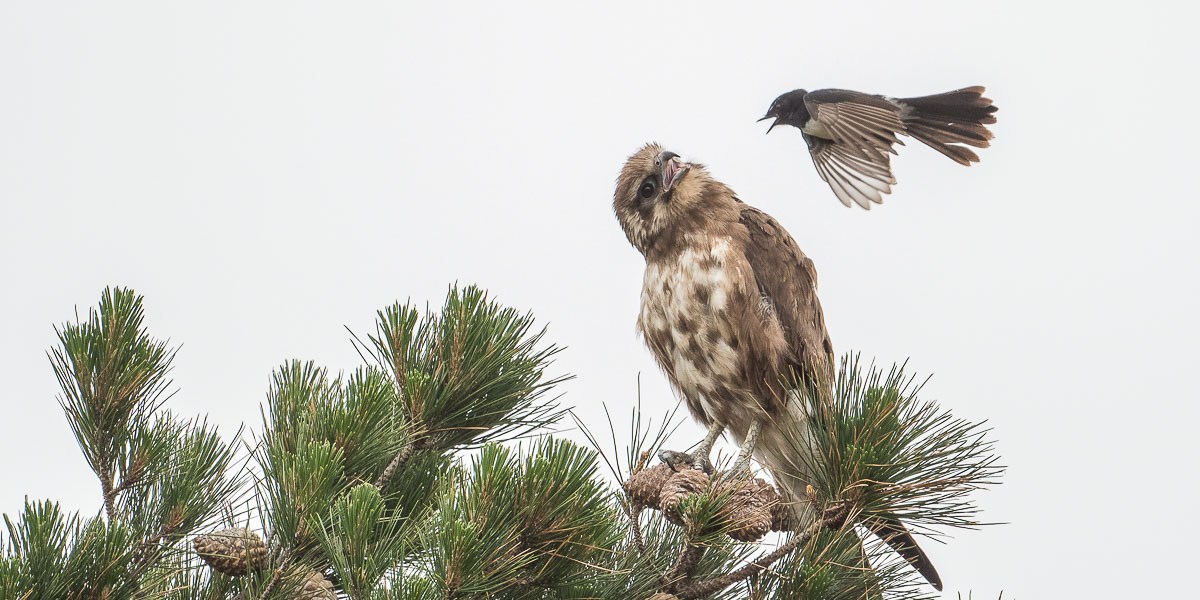
However, the same tree also is close to a Willie Wagtail nursery. And both Willies came out in force to make the point she is not welcome. Gotta give Willies “A” for pluck.
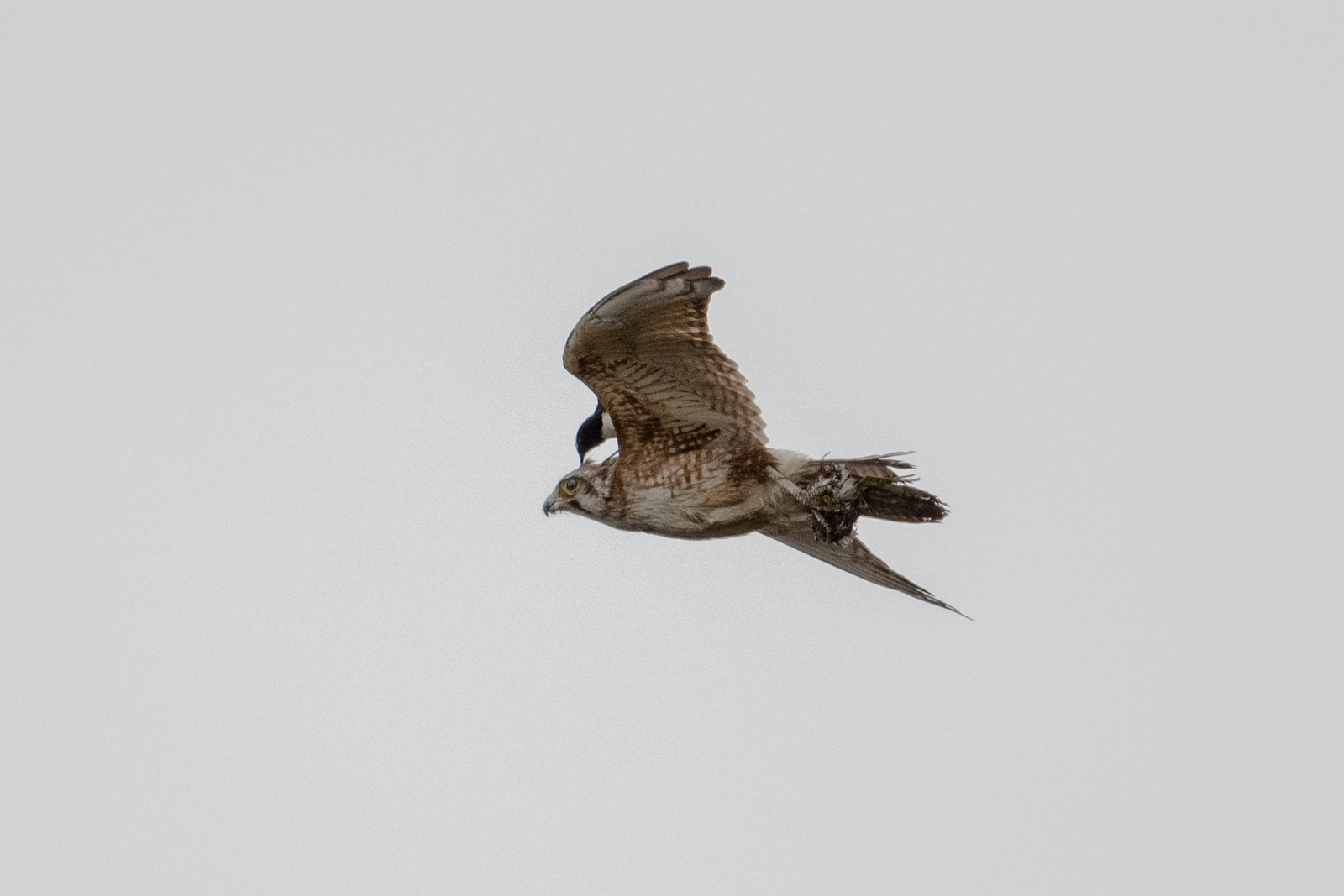
If after the usual flyby chatter doesn’t work, then its time for hands on aggression, as the male found out as he was returning with the food.
Willie attached to his back and proceeded to peck his head as both flew past.
Then when she returned they began in earnest to move her along.
The stakes are high for both birds, so it’s the immovable object verses the irresistible force. And in the end, the Falcon will give ground.
High drama for both birds, the wagtails with their young charges to protect, and the Falcon with her commitment to the yet to be hatched egg.
Here is the moment by moment action.
Willie desperate to attach to the back of the male coming in with a small bird for food.Once attached, the little bird pecks away incessantly at the male’s head. What is important to note is he is carrying a small bird, probably a pipit, so it’s a super bold move by WillieJust when you settle down for a rest, the noisy neighbours start up.
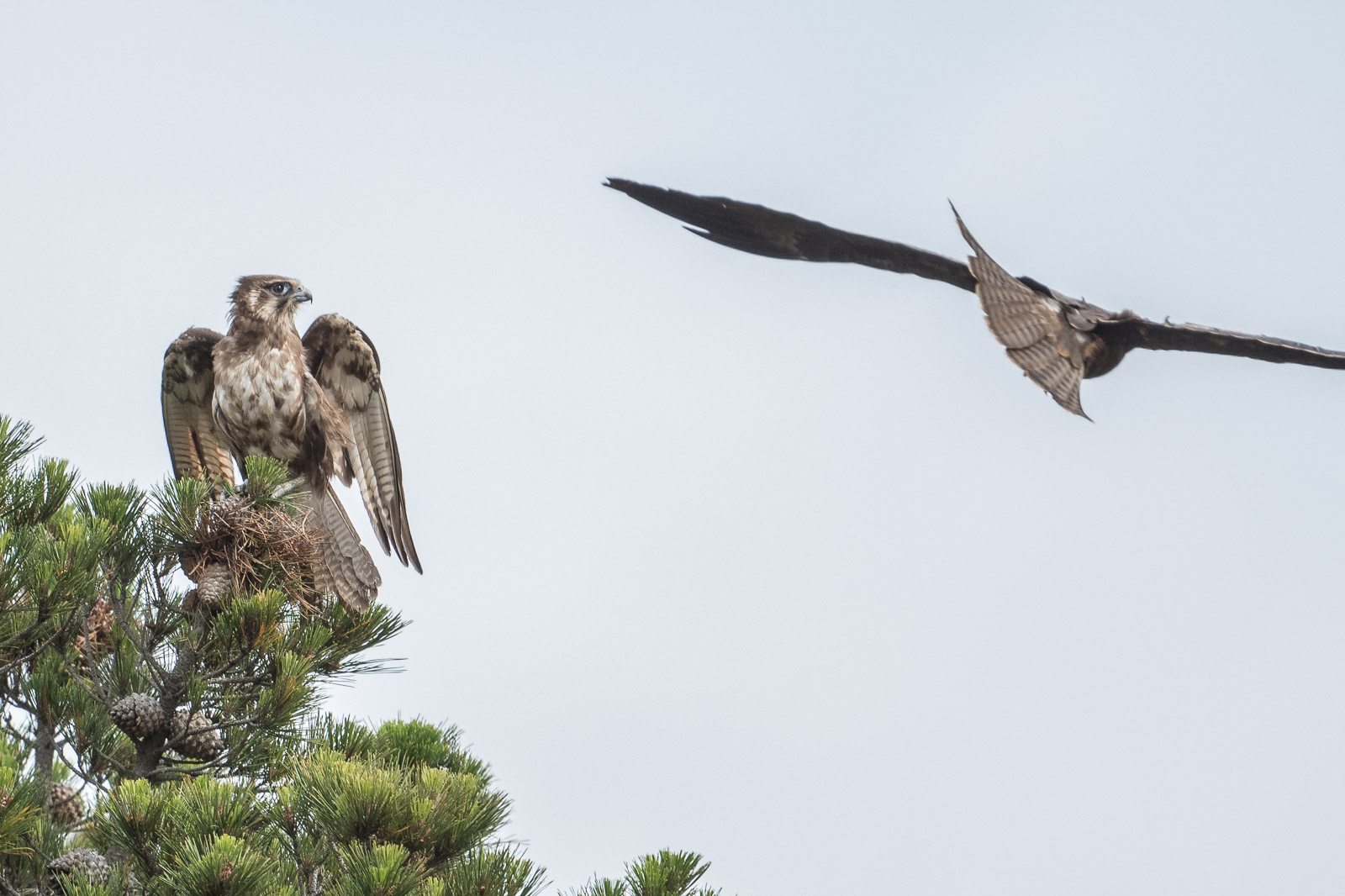
Eventually both of the pair moved in to keep the Falcon unsettled.And just when she might have thought things were settling down, the local Black Kites joined in the forayDefence pose on the Kites. They are likely to rob him of any food he is delivering if they can get a decent run, which maybe why they are secretive in the exchange
Many of my early readers and followers of this blog will recall I am a follower of Jon Young, author of “What the Robin Knows”.
His book is not so much about robins per se as about making connections with birds in their world.
Jon is among other things a skilled tracker and an outdoors trainer. He was taught by some of the best trackers and hunters from his tribe with the Native Americans. His work, and humanitarian activities have taken him around the world and he often tells the story of a Sans Bushman from Africa who said,
“I see a small bird and recognise it, a thin thread is formed between me and the bird. If I just see it no thread is made. If I go again, and again, and recognise the bird, the thread will thicken. Each time I recognise the bird the thread will grow to become a string, a cord and then a rope. We make ropes to all aspects of creation in this way.”
He also tells of the time he was at a meeting in a glass-walled office suite and said to the folk in the room, “You have a cat in your courtyard”. No, no, they replied, there are no animals allowed in the gardens. A minute or so later, a cat strolled nonchalantly across the manicured lawns. How did he know that, they asked. “The birds in the garden were acting in a manner that suggested a cat was nearby,” Jon replied.
Over the years I’ve managed, and its not bragging, just the way I work, of building some fine rope connections with some birds. Perhaps because of their personality, or sheer inquisitiveness, but like Jon, there a several such stories I could tell, a few of them have been subjects of this blog in the past.
EE and I have located a Brown Falcon at nest. Dangerous really, as Browns broach no interference in this serious business, and someone, even with good intentions, sticking a camera in their work space is not taken kindly. So having worked out where the activity was taking place, I’ve made a wide berth of the spot. I also know, from past experience, that if all is well, and I don’t press the boundaries, respect their business and keep to my side of the line, that eventually the line will become narrower, and I’ll be able to see just a little more. Then sometimes the bird graces us with the chance to enter into its world, and while I might not have free access, at least I’m treated benignly.
What worries me about sharing this is that some will drag out the ‘Photographers Code of Practice”, or some such and berate me for my impertinence. However if I’m not invited, I don’t go.
Someone will ask ‘How do you know?”
To which I have to respond honestly, “Why don’t you go out and sit with a bird and find out for yourself.” Operative point of that is— ‘sit with the bird’.
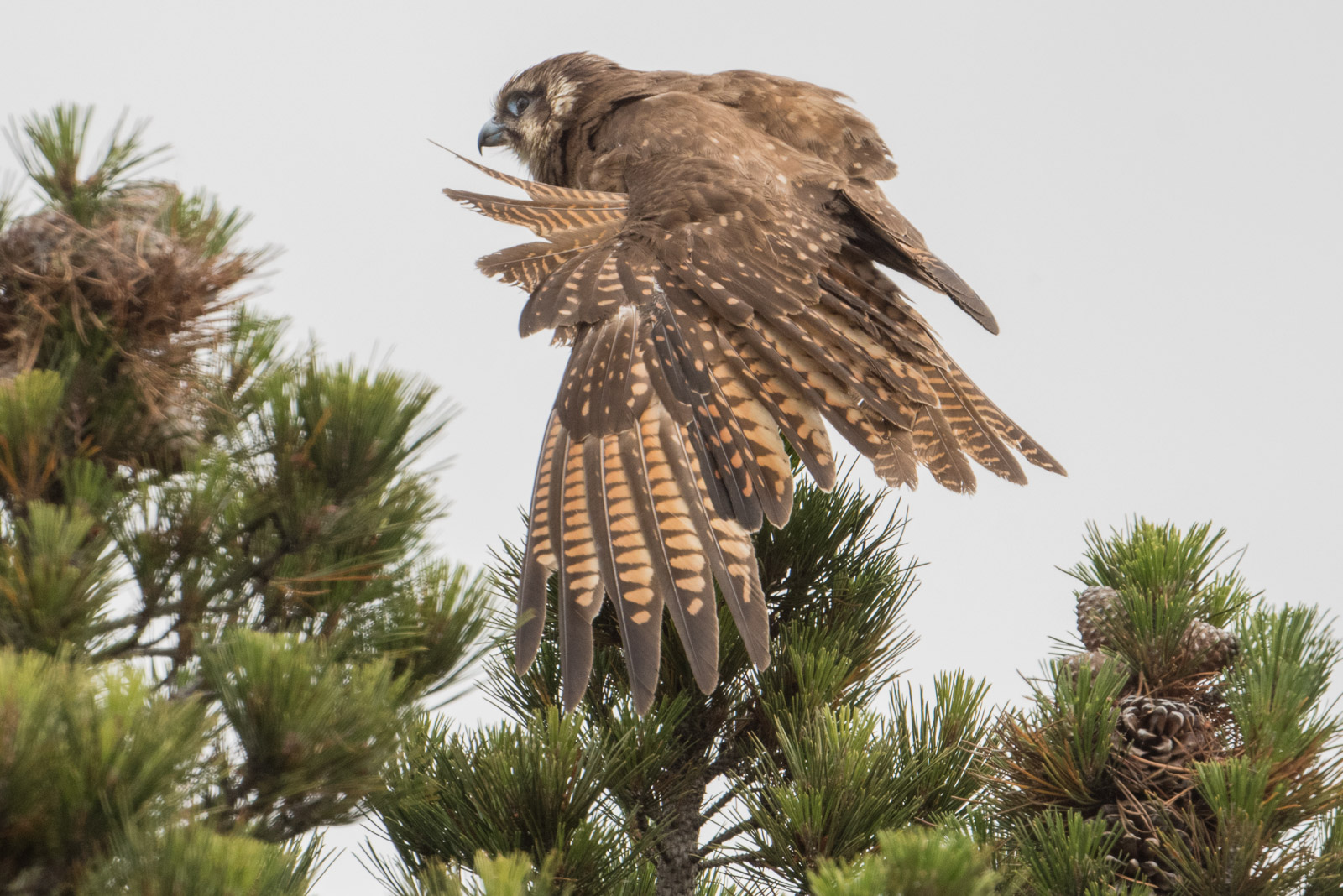
Here’s the scoop. She sits the nest. He hunts. A large gleeful cackle brings an instant response from her and she is off the nest and in the air to accept his delivery. She will feed, preen, stretch and then return to the nest. If I’m not wanted, then I don’t see any of that.
Where it gets really exciting is this Brown, feed, then landed on a branch quite close to where we were standing, and sat.
We waited.
She realised no movement from us, and after about 20 minutes, she began the process of putting all her nest crumpled feathers back in place. Then she waited, flew past a few metres out, landed on another tree, and repeated the process. The shots here were taken over about an hour, and neither EE or I moved much more than a metre or so.
Again she preened, rearranged, and then stepped out, and circled to land in the nest.
Now I should also add that I’ve worked with the bird a few seasons before, so we are not complete strangers. In fact over the time she has taught me quite a bit about the world of Brown Falcon. Still so much more to learn.
Enjoy.
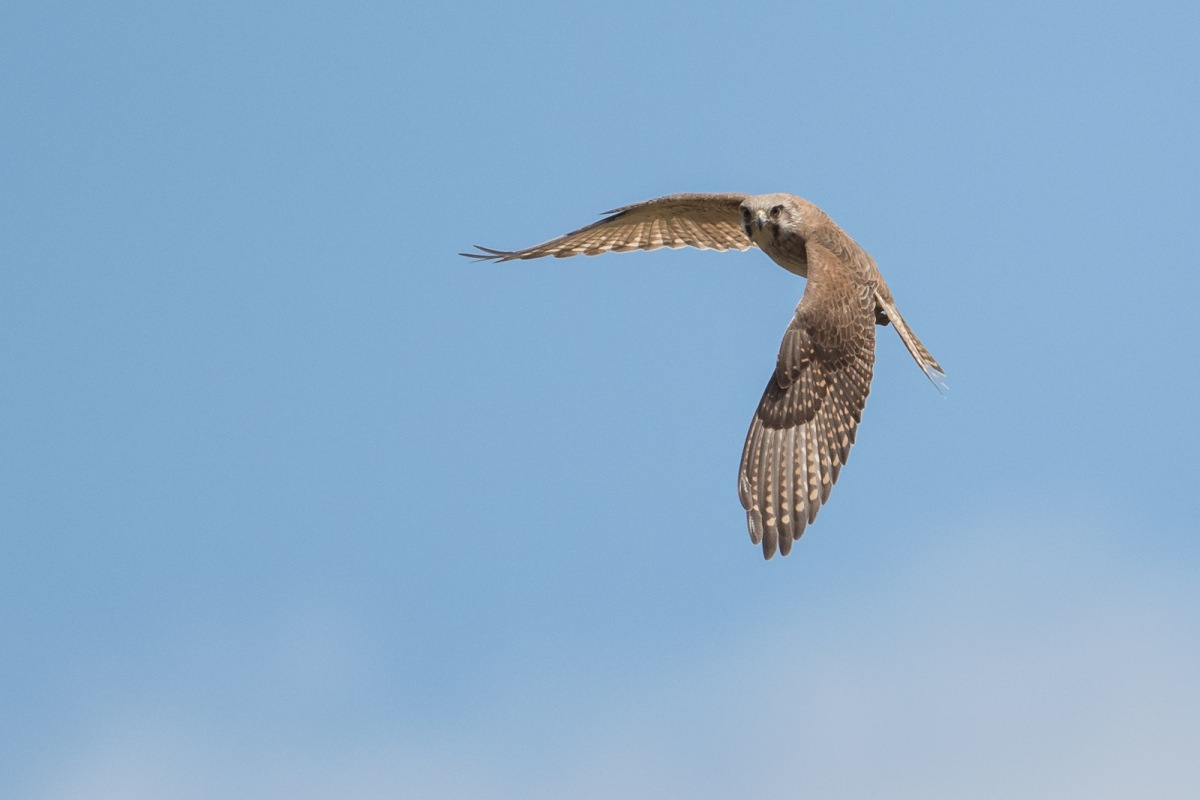
Flying out to meet her cackling mate coming in with lunchThis is the male. He has, unusually, a yellow cere and eye ring. I’d guess its a pipit he’s deliveringOff to the ‘secret’ hand over spotThe male on the way out again. Sometimes he’ll return and sit near the nest, just to check things out. Most times, its back out to the paddock for another food run.Well fed she can attend to the business of brightening up her wardrobe. I love to see them zip up all the flight feathers.Sometimes, the one-legged stance is a challenge, but here she is getting ready to line up the feathers.Wing and tail relief all at once. The wing markings are a treat.Time to go. Nesting duty calls. I’m pretty certain the egg is near to hatched or just recently hatched as she did spend a lot of time away.All sails up.Passing by with not even a glance. Every time that happens, the thread is strengthened.
Firstly a pause for to comprehend the massive destruction, “Cataclysmic, Apocalyptic, Total, Tragic, Devestating, Violent, and Undescribable” are words that have been used to describe the bushfires sweeping along the New South Wales and Queensland countryside as I write.
My heart goes out to all those who have suffered and lost and are bewildered if not overwhelmed by the speed and severity of the fires. Heartfelt gratidue to all those brave volunteers who’ve put their lives on hold and on the line in so many ways to help and defend where possible. The task truly does seem overwhelming.
As a little, little tacker growing up on an orchard in a fire prone area, I remember my Dad being away for over a week or more a couple of times each summer to fight local blazes. In those days the major weapon was a small metal knapsack that held probably 20 litres of water. Mum had several of them around the outside of the house and while they were very attractive and interesting to a small growing boy, they were not to be touched under any circumstance.
I hope that a weather change brings some relief to the drama.
But nature also gives; even at a very small level.
I’ve featured a nest branch of a pair of Little Lorikeet both here and on Flickr, and the other day, while we were looking for returning Sacred Kingfisher I took a little while to drop by the nest area, and at first it was quiet and I assumed they had flown the young. Back to the Kingfishers, and not long afterward I heard the distinct calls of the Loris and went back for a second look.
To my suprise both adults were on the top of the branch, and a little head kept popping up out of the hole. However in the time I was there it did not venture out, and eventually mumn and dad flew off to feed, and it tucked itself back into the nest.
I have written many times before about what I consider to be the preplanned actions of some birds.
It’s easy to see a bird fly round, or past, go to a tree, roam over the grass, or maybe sit quietly in the water and conclude that they just react from one situation to another without much planning or forethought.
Now I have no scientific measure for any of this, nor have I assembled loads of peer-assessed data, so at best it becomes anecdotal, at worse, biased opinion.
We were sitting on a bench near one of the small ponds at the Balyang Sanctuary on the Barwon River. We had, truth be told, gone there looking for nesting Australasian Darters. These birds have nested along the river near the road bridge for quite a number of years and have had very successful colonies. But when we arrived there was only a single bird sitting in the sunshine. The nesting trees were empty. And by the look of it, hadn’t been used in the past season. Perhaps the trees no longer were suitable, or maybe the birds have moved up or down the river. Maybe.
So we sat in the sunshine, watched some Little Pied Cormorants at nest, and a White-faced Heron feeding its bold, noisy young’uns.
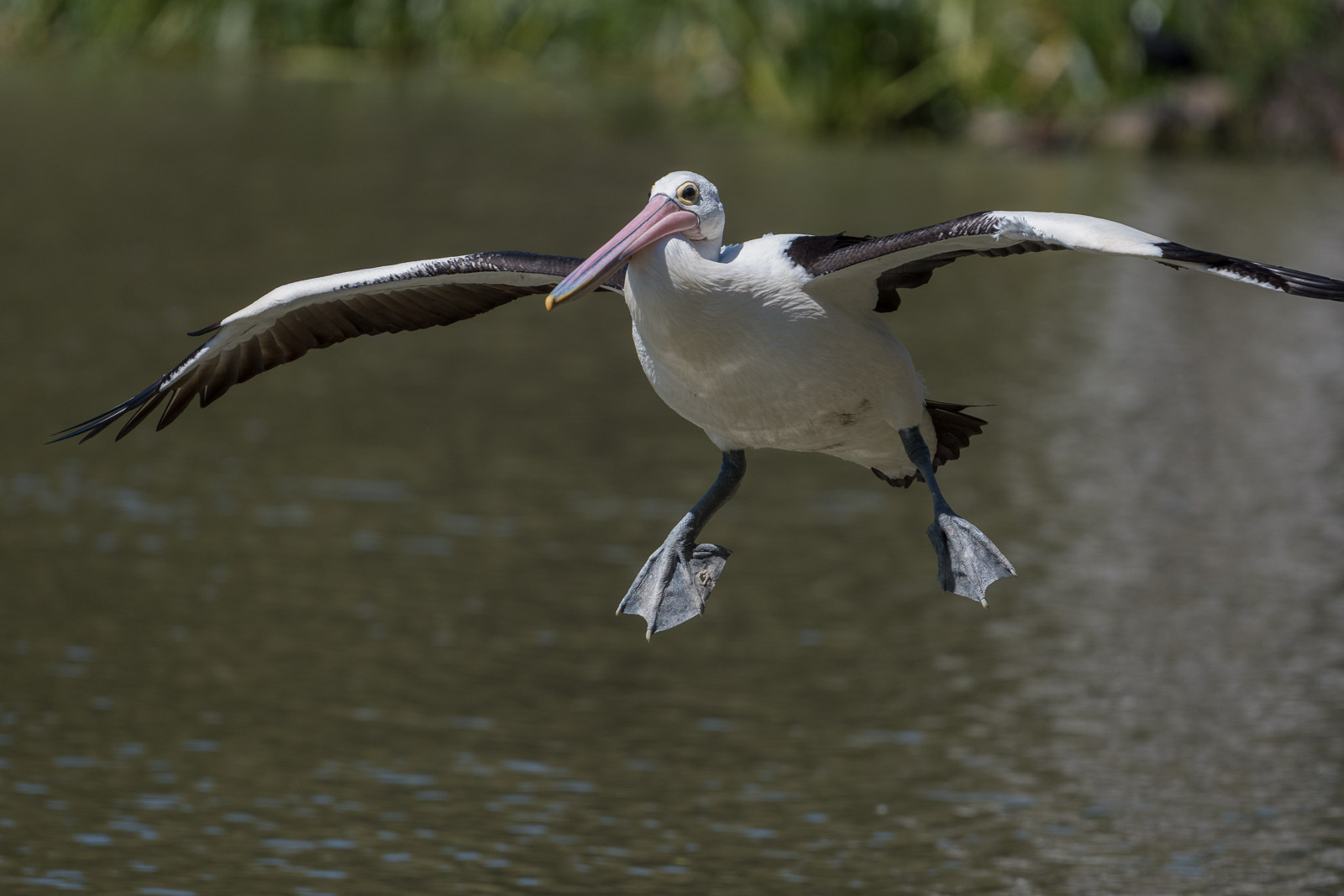
When out of the blue, literally, a huge white shape circled the pond and came into land quite near to where we were sitting.
An Australian Pelican.
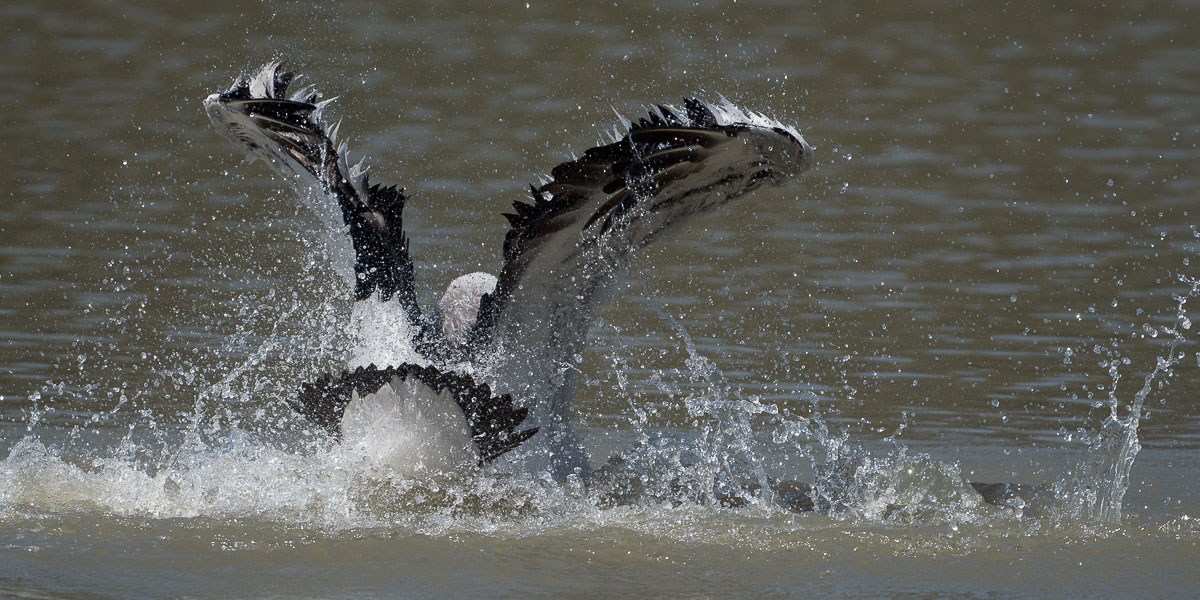
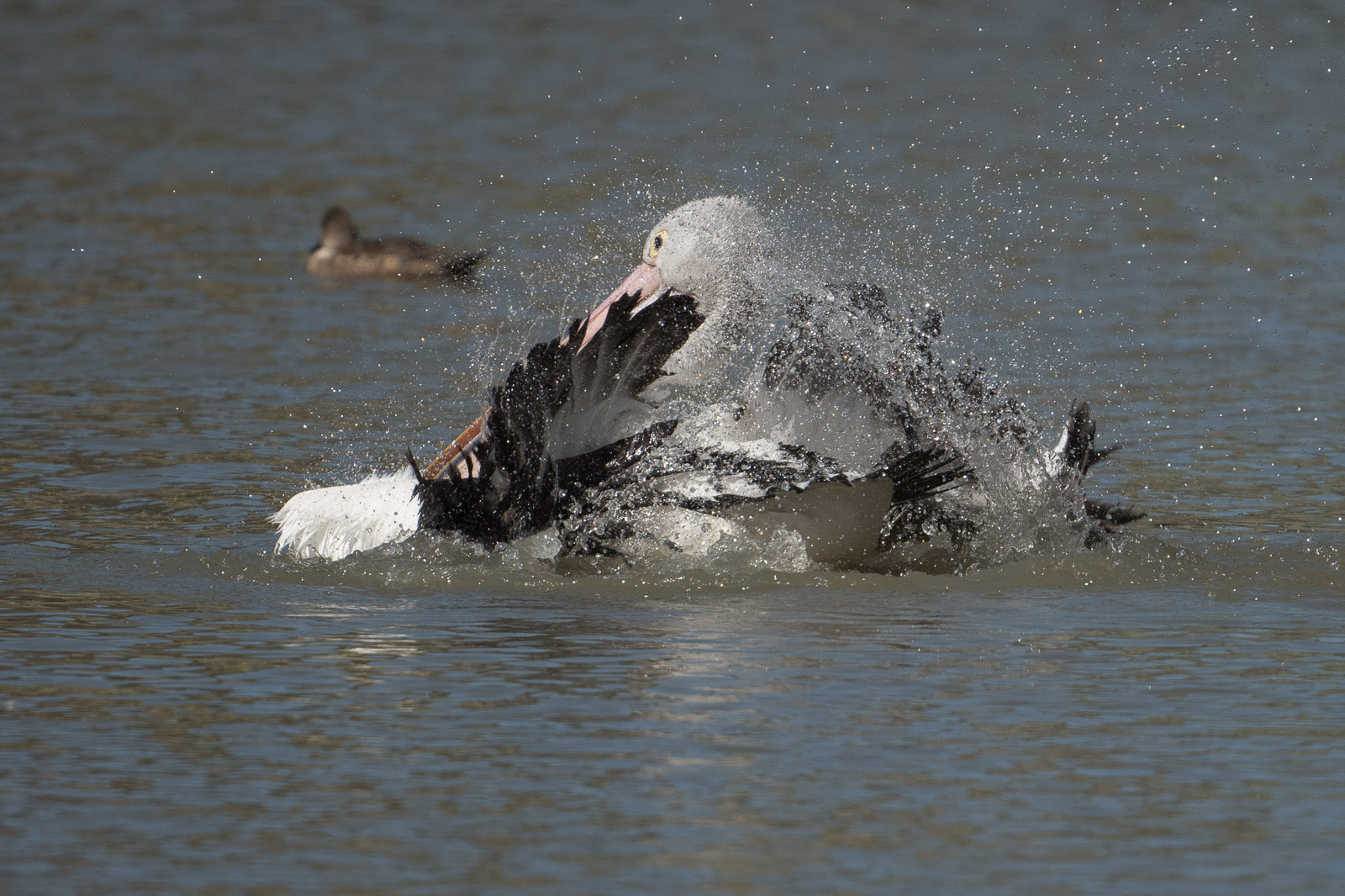
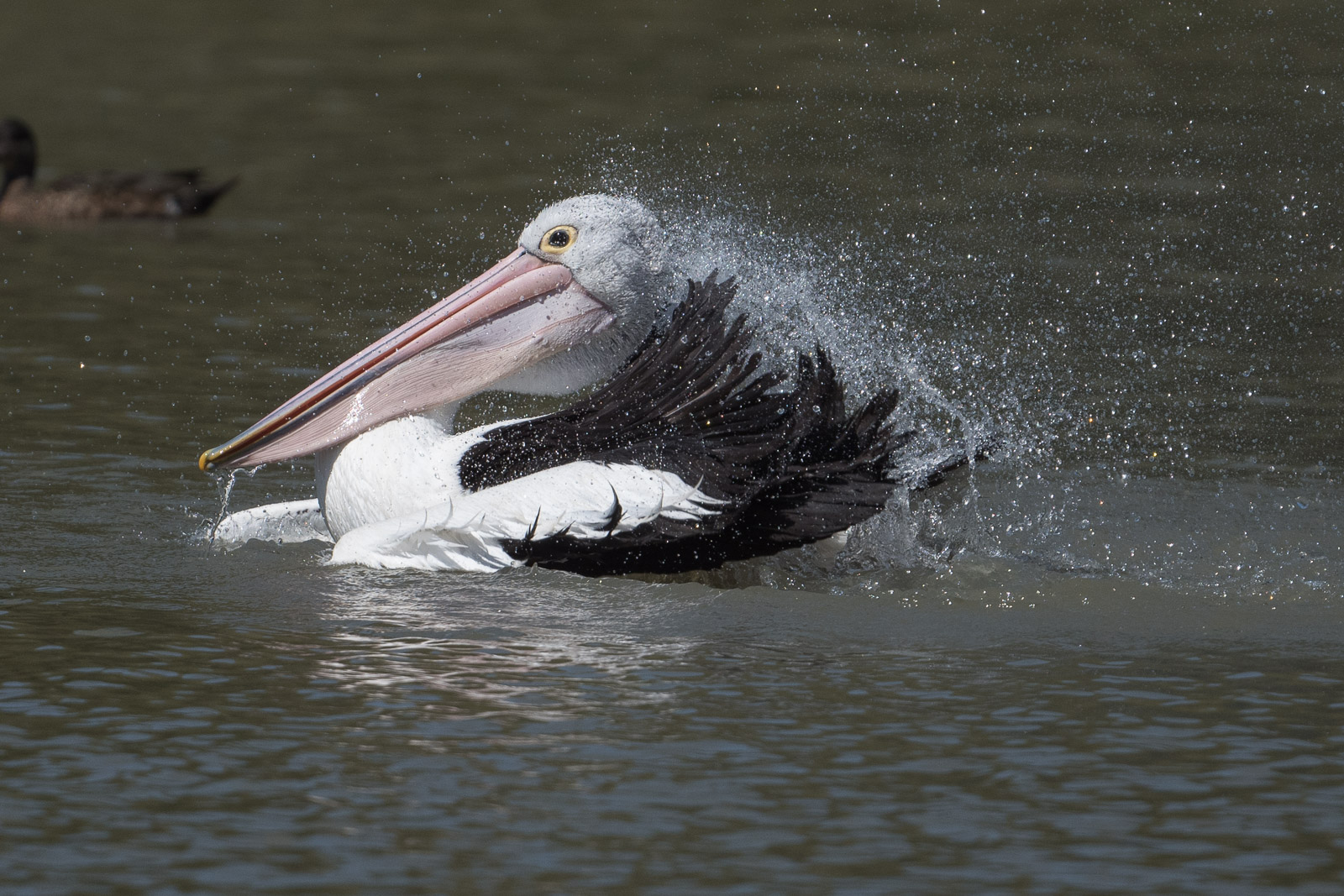
It quickly turned about and moved to the middle of the pond and began its bathing routine. A pelican can throw up a lot of water.
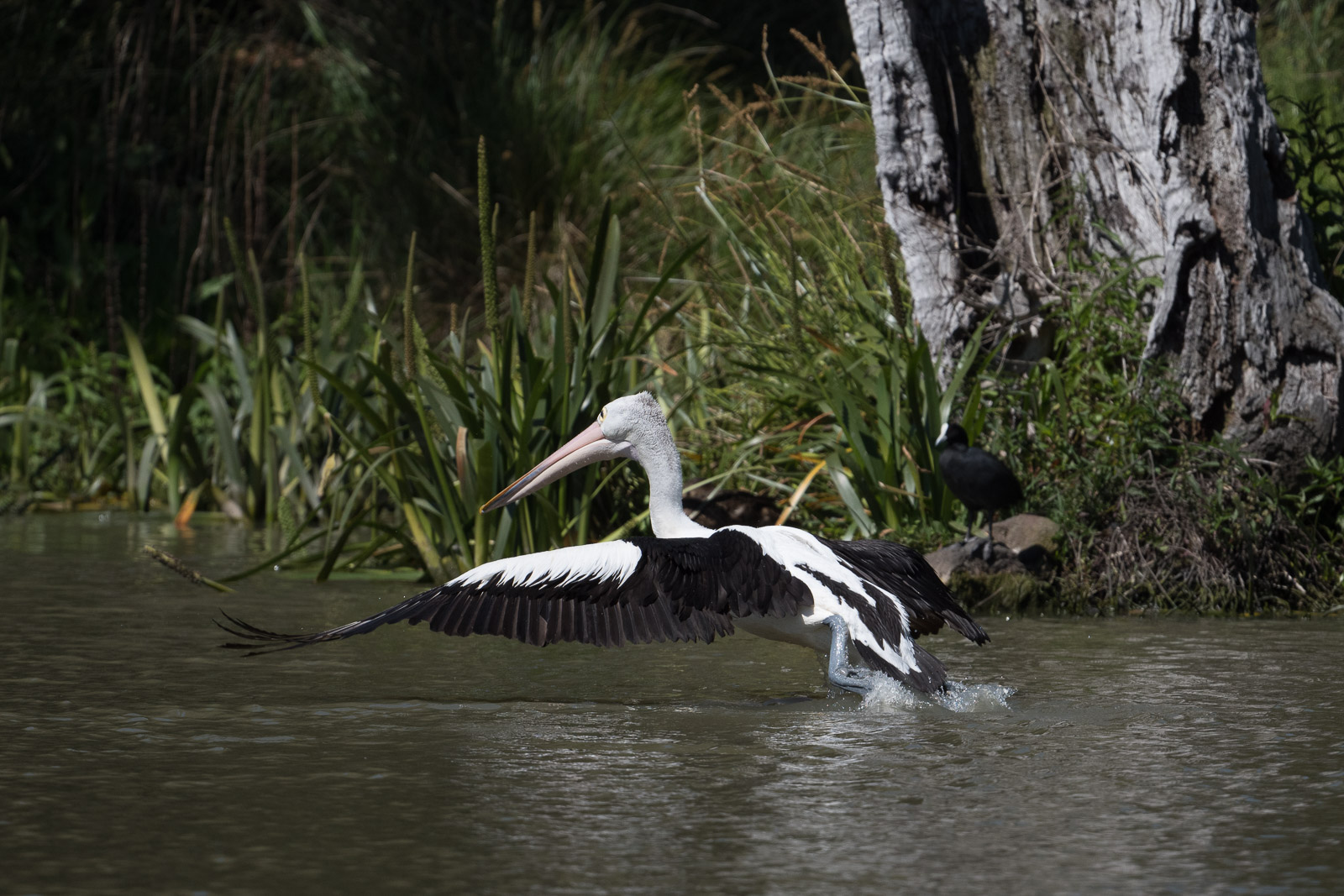
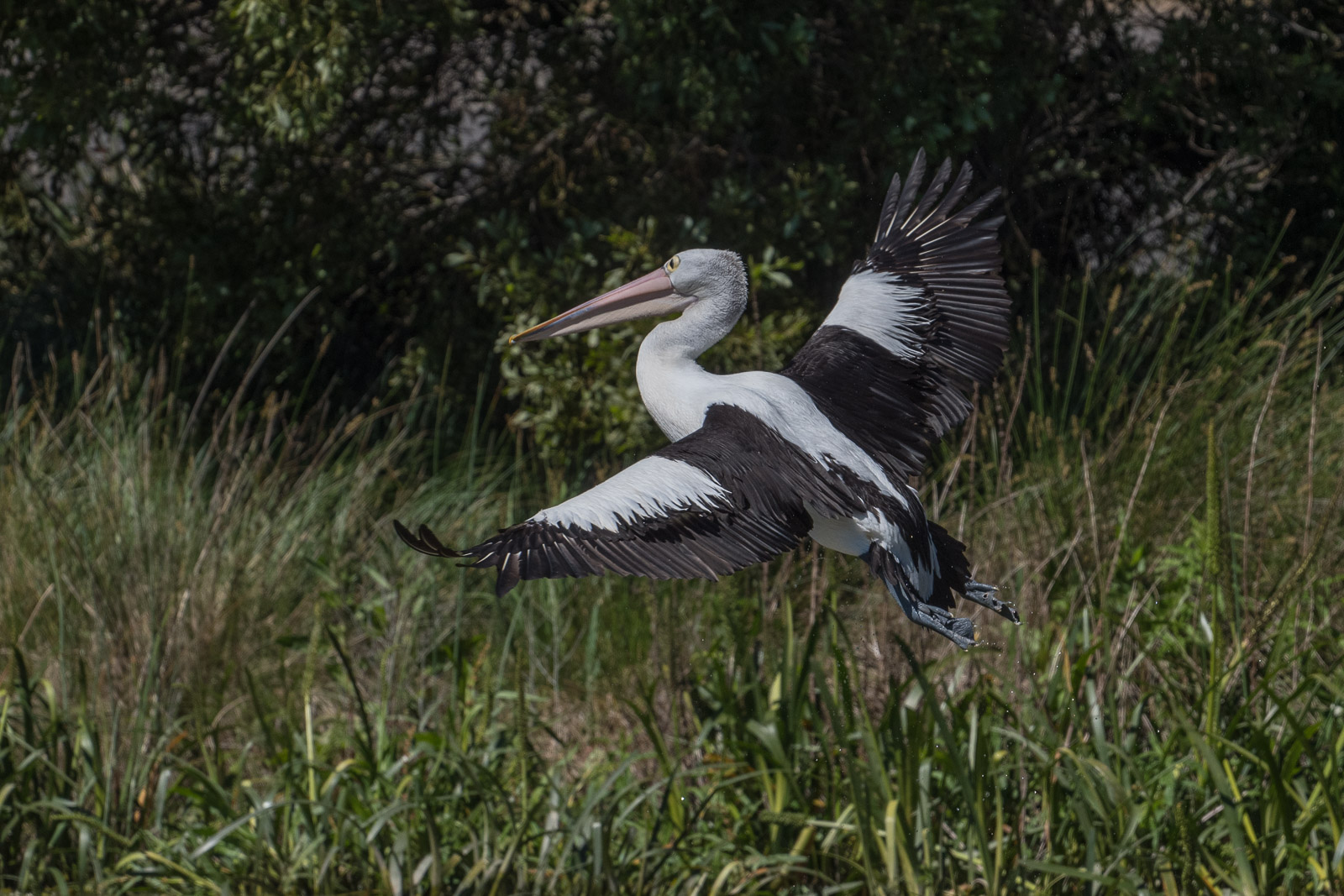
Then slowly it paddled and washed its way to the far side of the lake. The light was starting to go backlight and the water drops were sparkling. I was hugging the lens close keeping the bird in frame, when on a sudden, it reared up, took a couple of jumps and a wing flap or two that carried it the top of a nesting box, so it could preen in the sunshine.
You clever bird, I said as it landed. It had the nesting box in mind all the time I think, just needed to clean up and move that way. Then a quick hop-step and flap and it had achieved its plan.
Now perhaps I read to much into it, and it would have flown to a tree, pole or fence post, but the positioning of the final wash and turn, put it into a perfect position for an effortless leap to rest.
When I was a much much younger photographer, and life was quite simpler in so many ways, I used to enjoy wandering the streets of a small country town with a camera, roll of film and the only lens I owned. Well it was a fixed focus, fixed lens so a brace of interchangeable lenses was not even on my ‘must have’ horizon.
And try as I might, I just couldn’t match the power, quality and story of photos that I saw in books by Henri Cartier Bresson or W Eugene Smith, that I could look at in my local library. But I was much too young to be introspective, so just kept click’n away recording the goings on in a town.
No one really took much notice of a ‘kid with a camera’, so most times my meager lens was sufficient. It certainly matched my limited vision. But I guess I did learn a thing or seven about making dark moody prints that epitomized the moment.
As I grew older and moved to the ‘big smoke’, I was able to rub shoulders so to speak with a number of photographer who excelled in making the most of street, and to hone to a fine tune, the art of ‘the decisive moment’. One Michael J. Hill springs to mind, I guess I mention Michael, as I have a half baked blog that he features in, but still have to add the polishing touches.
I love following on Flickr a range of Street Photographers, and still mentor under David DuChemin from time to time.
EE and I were travelling the Bellarine Peninsula and had arrived at Drysdale. It is one of those charming towns the writers always say, “nestled in the…” As if all charming villages nestle. The same writers have ‘bubbling streams’, and ‘astonishing vistas’, along with ‘constant changing panoramas’, and the like.
Drysdale at present is in the middle of a huge roadworks project that will be a bypass road for traffic along the Bellarine. But, at present the town is somewhat ‘engulfed’ (I had to put that one in) by large heavy duty road making equipment, on the way into town. Which means that lots of little red witches hats and dangling plastic safety marking tape are all over the area.
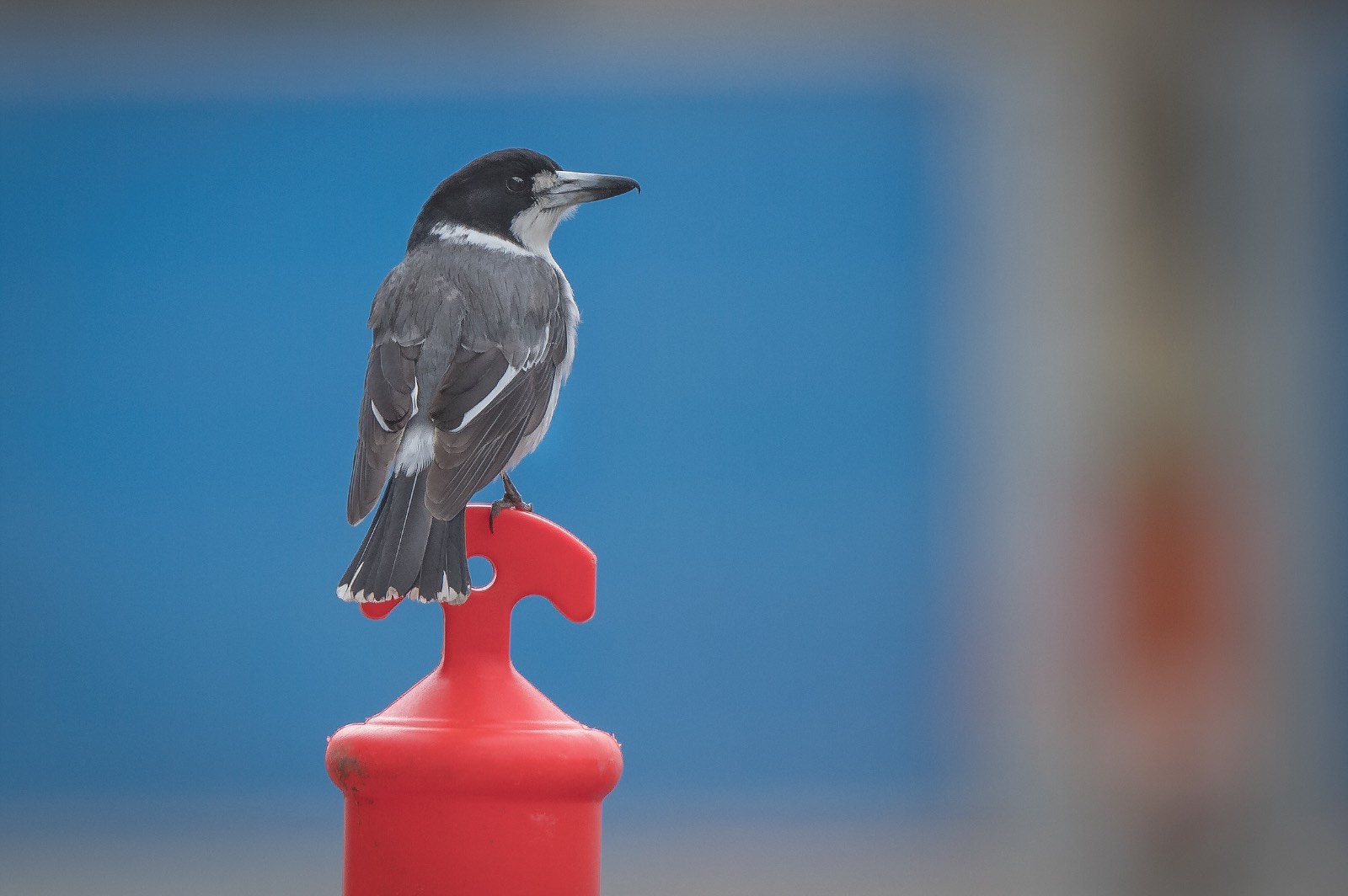
Just past the guy holding the ‘STOP/SLOW’ sign, I noted a Grey Butcherbird by the side of the road. Totally unconcerned about the changes happening to its landscapes, there it sat making the most use of the strange perches and the opportunities for the food that was being stirred up from time to time.
I pulled off the road, and we watched as Butchy hopped from fence to witches hat to tape and then onto the ground with the big hardware rolling all around.
Cameras out, and I was a kid again. But this time with a much better defined vision, and an interchangeable lens. 🙂
Eventually got the shot I wanted, and on looking at it, thoughts of all those old prints came back, and I thought that a mono approach would bring out the ‘street’ feel.
A quick trip through one of my fav programmes, Silver EFex Pro gave me the desired result. I also added a small selenium tone just to match the bird’s mood.
Due to a turn of circumstances, and a change in the weather, with intense cold together with strong winds, meant I was housebound the other morning.
I kept walking to the window, and pressing my nose up against the pane, but to no effect as the weather just seemed to laugh at my difficulty.
Then, on what can only have been a serendipitous moment, a small brown bird arrived on the fence. Followed by a second, and then a third.
A closely followed by the local backyard Blackbird. Looking as always dapper in his rich dress.
We’ve known for the past few days, that they had an active nest in one of the bushes in the garden next door, and we had seen occasionally the past few days a young one in flight. But now it was obvious that the pair had hatched out a fine looking crop of three young ones.
And I should add “Hungry” ones. They sat on the fence, the garden pots and bushes, calling, calling, calling. Feed me. I’m here, feed me.
I opened the sliding door to patio and sat down inside on a small stool, with the D500 and the 300mm PF lens. As there was little light available in our small garden area, I was running into trouble getting sufficient shutter speed, so took a decision, and after all, they only ‘common’ blackbirds, to run the ISO up beyond 3200 and see how good the D500 might be. I also wanted to try out the latest offing from Topaz Labs with their AI DeNoise, although for the present image I didn’t use it.
The small garden area must have been full of good tummy filling food as they stayed for at least an hour or so. Which gave me a great time to learn of some of the habits of the little birds, and to experience their simple zest for life. Each mouthful was accepted and then the cry went up for more. I began to feel both sorry and develop a respect for the hardworking male. The female must have been off having a rest, (or gone shopping?)
The small birds cheery chatter among themselves and their calls for more food was a warm feel on a cold day.
Each carrying a new life, each eager to get a great start and each filled with a desire to learn the way of being a blackbird.
Much of the time I just sat and watched, as they skipped back and forth from pot to fence, to the edge of the patio, and eventually running across in front of me.
Not often I can have that much fun looking out my own door. 🙂
No doubt this will not be the only crop the pair will have this year, and soon instead of being their protector and uber food deliverer, Blackie, will chase them out of his territory and they will begin a new chapter of their lives. Not doubt they will take the same enthusiasm with them.
In a recent article in “Nikon Users” magazine, an article on landscape photography had the following quote.
... the one thing we, as photographers, professional or enthusiast, must not lose sight of that we do this for a reason.

We enjoy it.

It's creative, and it's fun.

It's not easy, no one ever said it would be, but the buzz you get when you produce 'the' image is amazing.
Jeremy Walker. See here
Normally I like to keep a Saturday Evening Post to just one image that has impacted me during the week.
However, just for once I’m going to break with tradition, mostly because I think the images are related, tell a story, and also give an insight as to why I’ll be away this coming week.
We had, EE and I, made a trip to Point Cook Coastal Park to look for the return of Sacred Kingfisher.
It was one of those days where the weather was not playing to our advantage. A strong northerly wind was ripping through the trees, and out over the beach, sand whipping up with each step.
We had as they say had a bit of luck with the Kingfisher—All Bad! Not a feather to be found, not wing flicks and not a single distinctive call.
Why don’t we go to the beach, saith she. Ok, saith I.
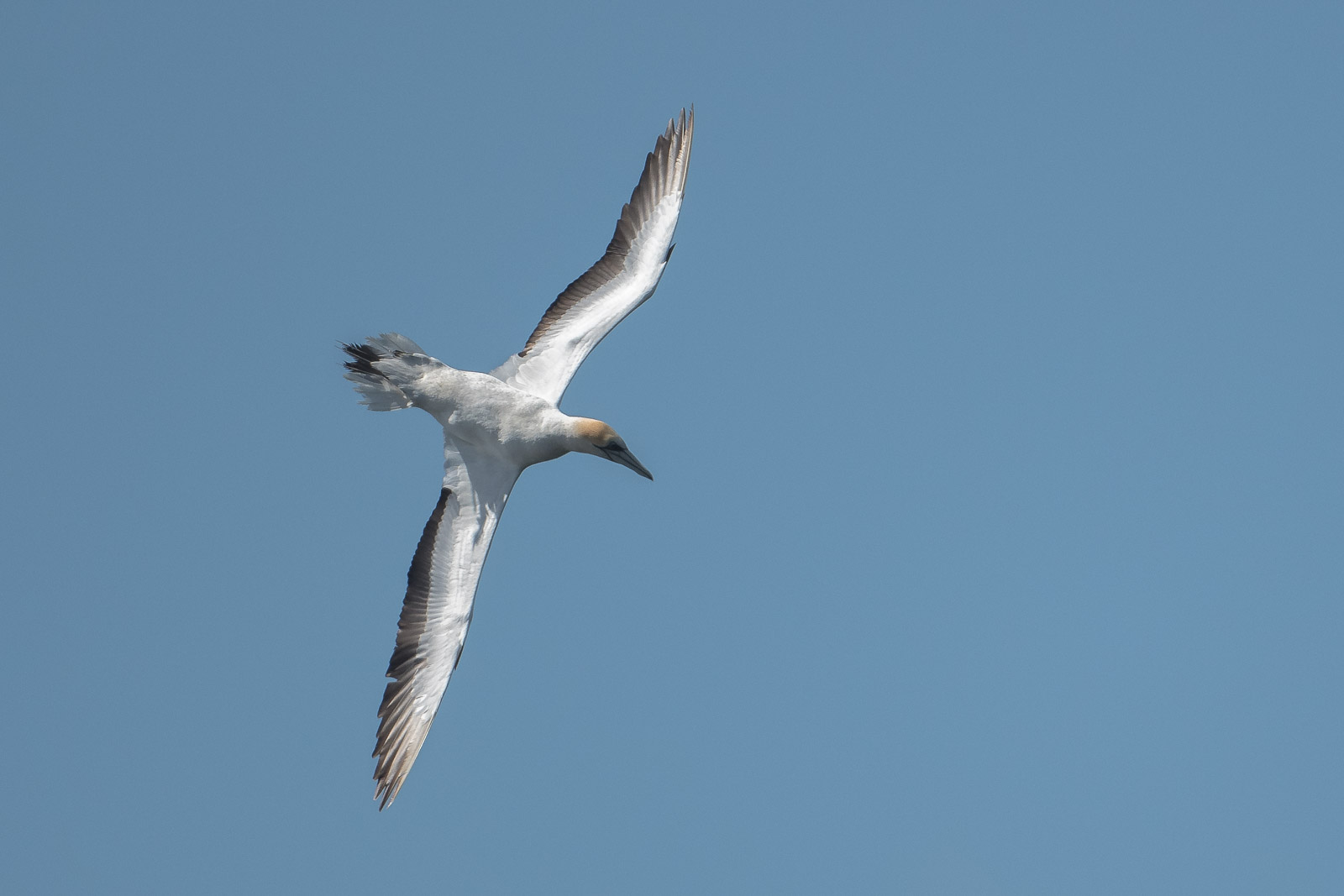
And just as we arrived at the beach a small squadron of Australasian Gannets appeared, fishing in the water in front of us. I’ve noted before that a lowish tide, and an offshore breeze seems to bring the gannets in closer, and not doubt because the fish shoals are working in closer.
This was exceptionally interesting as the tide was quite low, and the edge of the sandbank was visible in places, and the rocky ledge was also exposed. So the birds were diving into the water not more than 30-50m from where we were standing.
Its the closest I’ve ever been to such awesome birds in action.
There is something intriguing, boarding on infatuation about watching big fishing birds explode into the water. One only needs to look over the majority of bird books/site etc. to see the numbers of eagle, herons, cormorant and osprey photos to know that photographers find them irresistible subjects
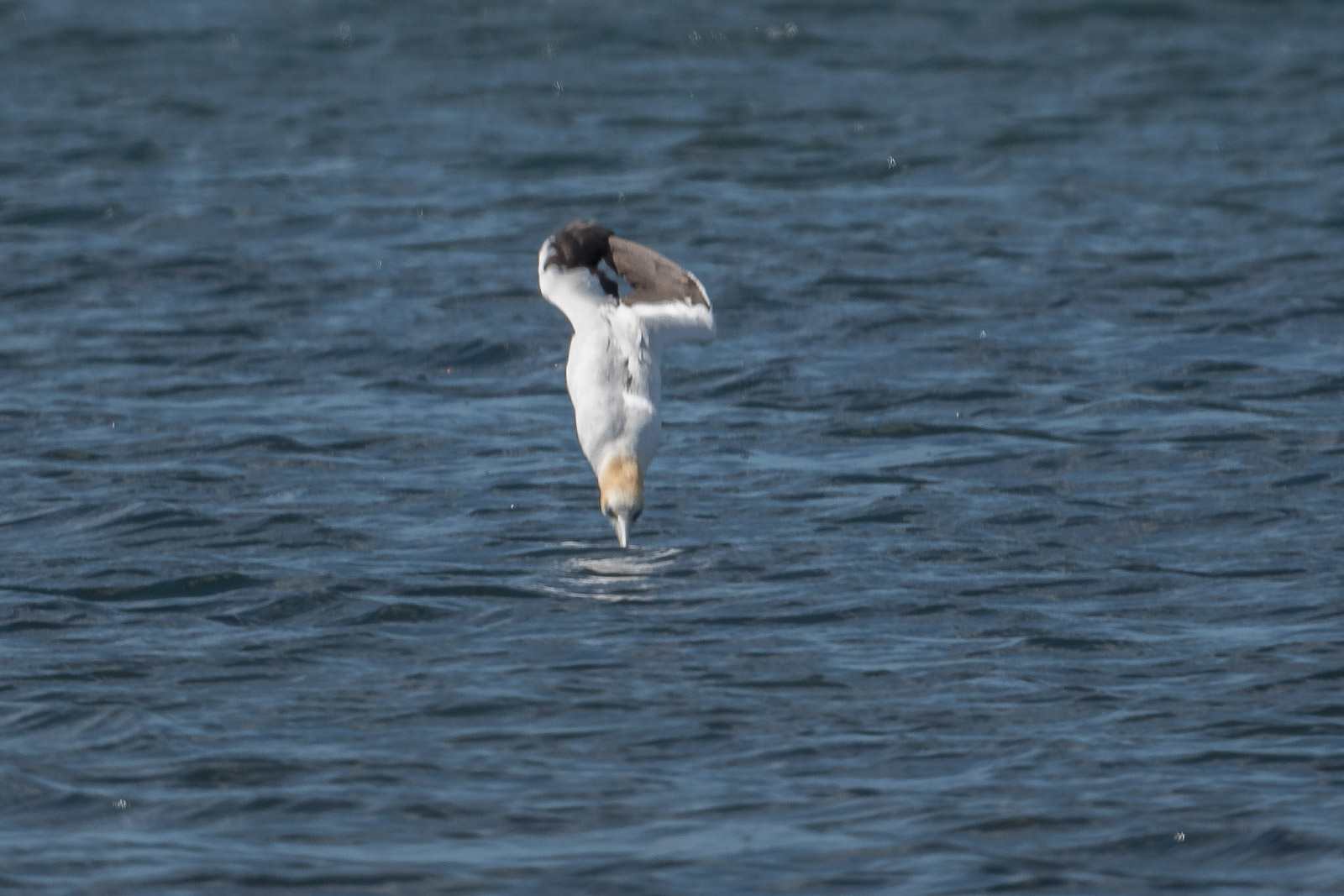
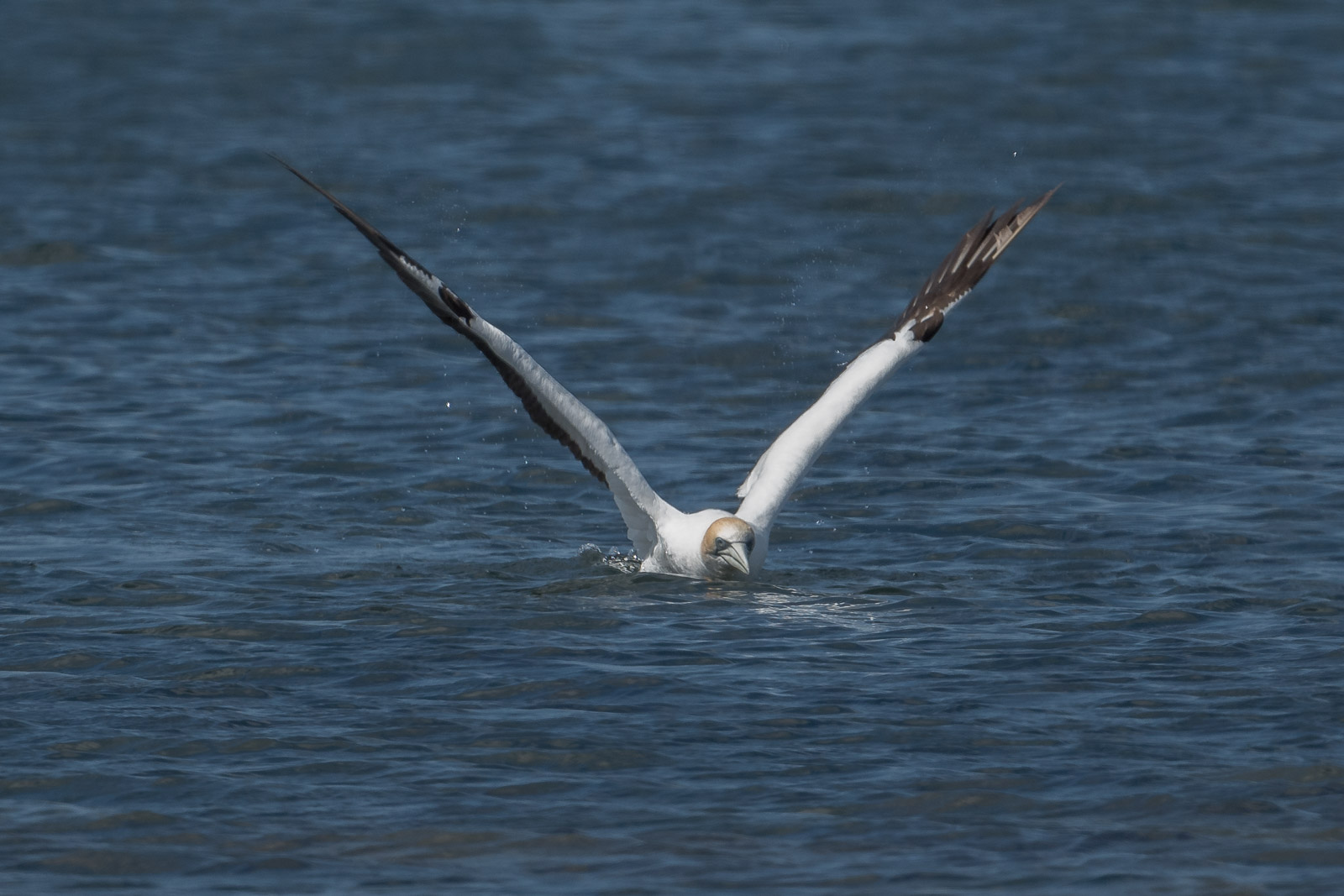
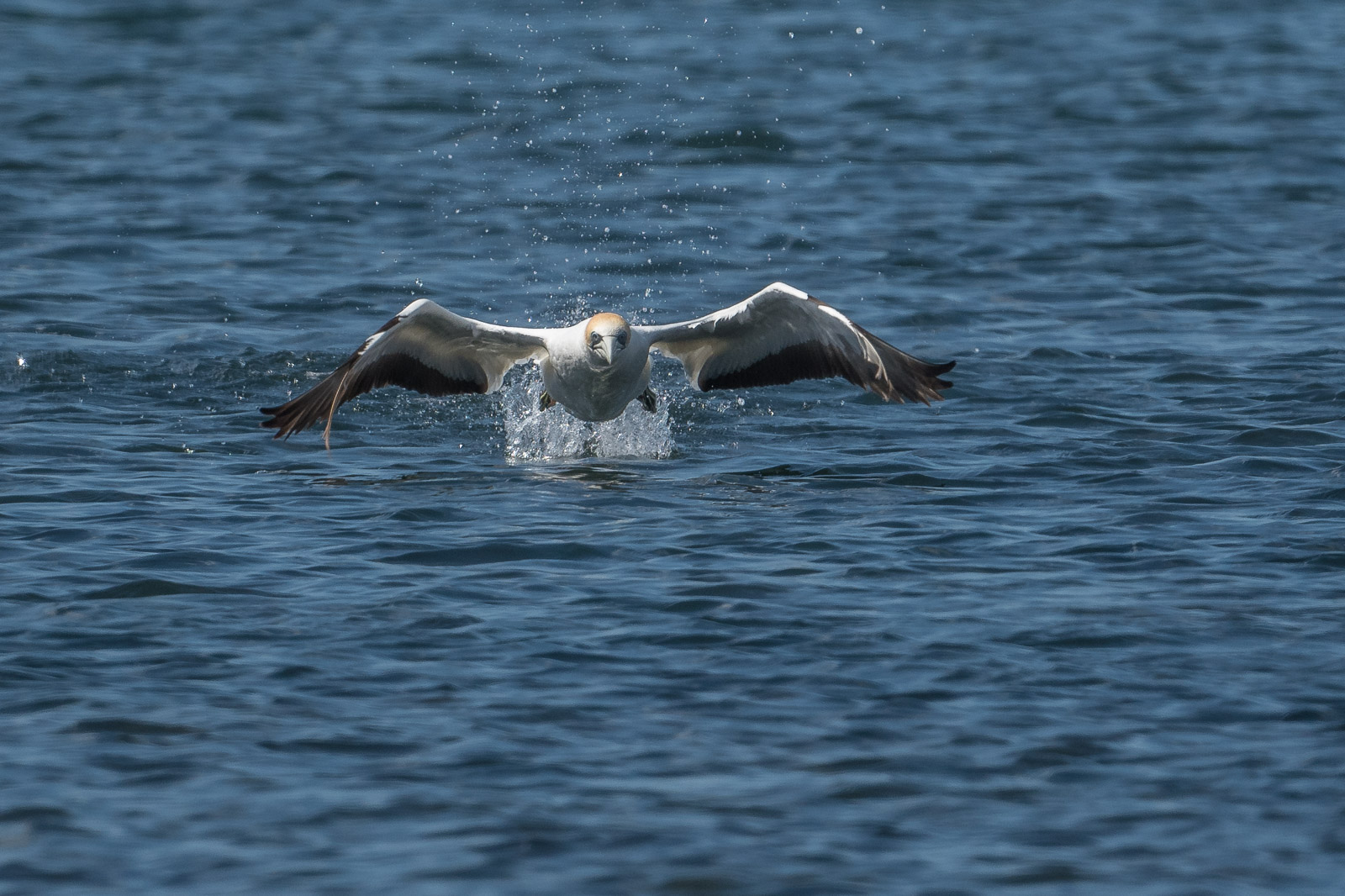
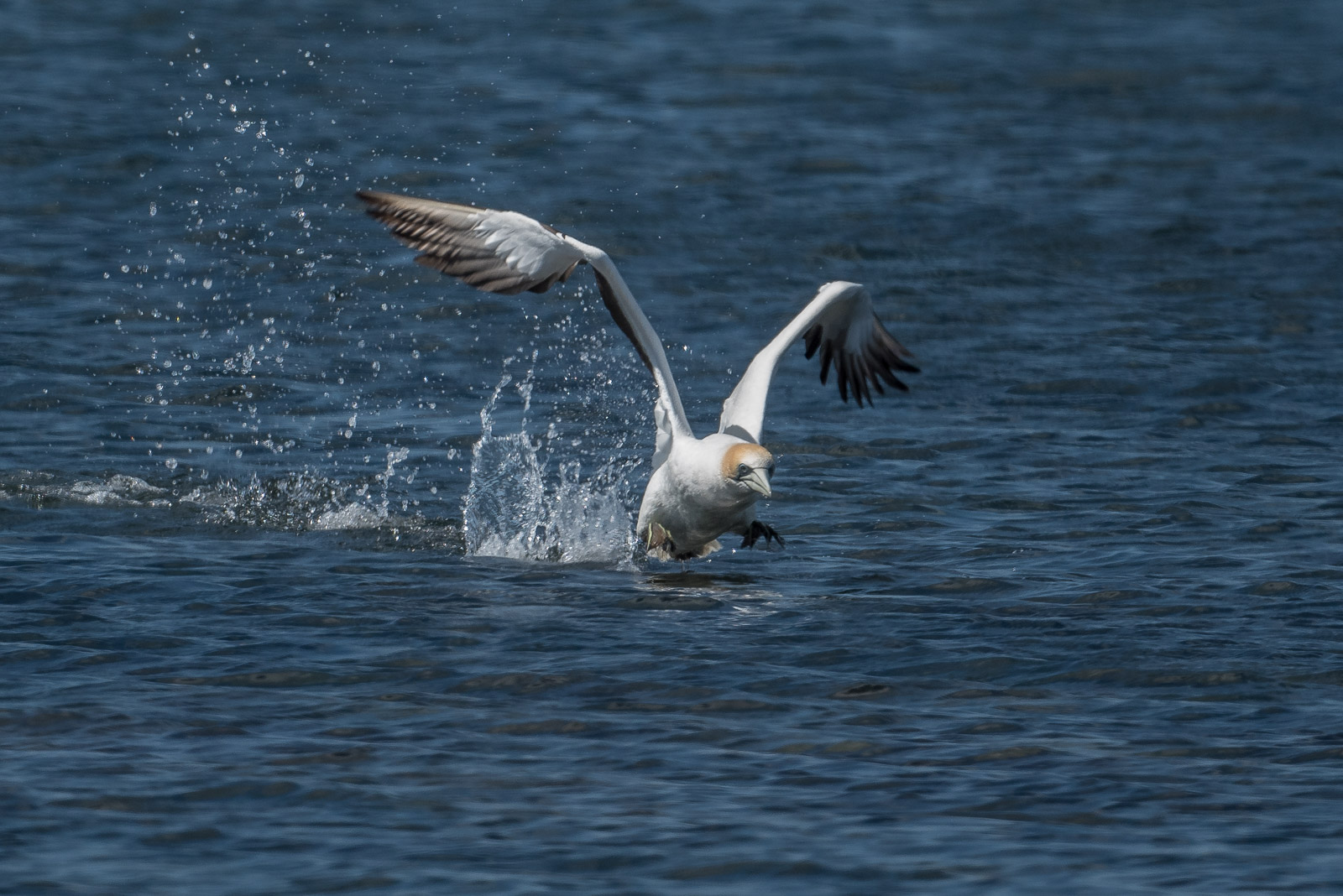
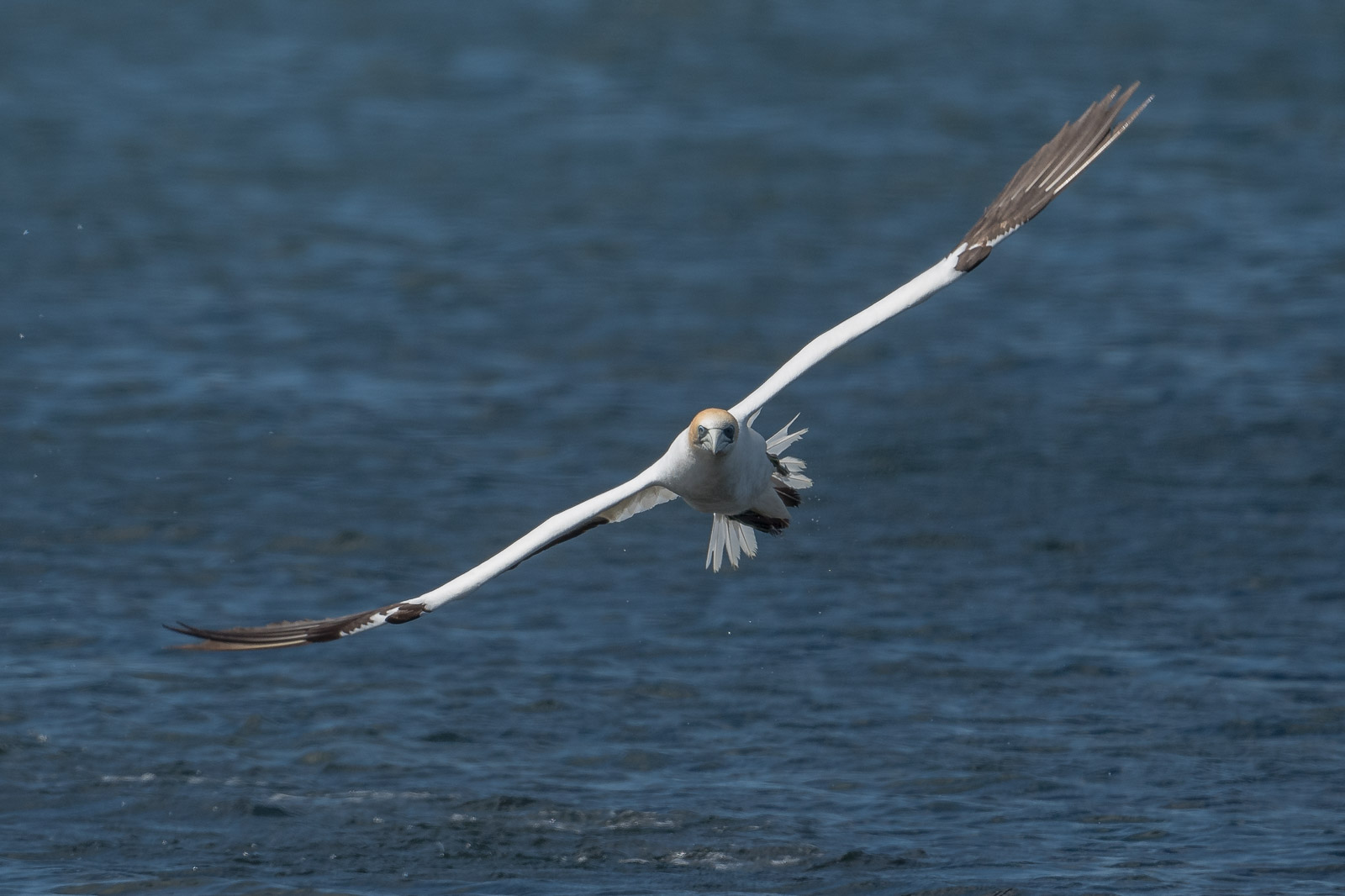
I’ve had several sessions with gannets out beyond the reef along the Point Cook coast and also down at Point Danger, near Portland. But these were frame filling birds, and because of the wind, they adopted quite a different approach to the attack. Normally we see them rollover and drop directly. But they seemed to drop the wings, hang out the legs, reduce speed and the torpedo-like slide into the water. Then after 10-15 seconds they must swim back up, as they fair bobbed out of the water, then settled back down to eat and prepare to takeoff. Fascinating.
“So”, she reminded me, “Why did we spend $40 to book a trip to see Gannets in the water next week?” Ya gotta laugh.
See how we go ah? Just don’t lose sight of the reason to be out and about.
This is one of the few that I saw rollover preparing to diveWings tucked, legs out, tail flared. Speed reduction technique
ImpactThe rocks show how close to the edge of the reef the birds were workingFolded back wings preparing for entryComing upHow much power to get the big bird out of the wateOne jump two jumps, airborne.Head shake to get rid of excess water.Simplicity
One of my current mentors referred me to this quote from Sinclair Lewis an American novelist (among other things)
He who has seen one cathedral ten times has seen something; he who has seen ten cathedrals once has seen but little; and he who has spent half an hour in each of a hundred cathedrals has seen nothing at all.
And here we are One Year into Saturday Evening Posts, the humble scrawling and image sharing attempts by Birds as Poetry to add to the web chatter/clatter. 🙂
53 weekly editions that has been a bit of a diversion from the usual birds only, and has looked at a lot of my philosophy for photography and birds in general.
So perhaps there should be streamers and bubbly and party favours all round, but I guess I’m just happy to have achieved the goal I set out with back in October last year.
I was going to do a year in review sort of thing, but decided you as my loyal reader had probably endured enough.
It is interesting to me that the more EE and I go to one location and follow the lives of the birds there, the more we come away with new insights into the activities of the birds in that area. Sinclair may well have been right.
Heathdale Glen Orden Wetlands is about 10 minutes from home, but its an area that I only visit but rarely. It is surrounded on almost all sides by housing development and the small wetlands is really a water retaining basin for the runoff water. But it has one great advantage. Once the ponds become full, the water flows out over the surrounding flat land and creates, at least for a short time, a wonderful rich, muddy, food source for many wading birds and ducks.
And
A visiting clan of Latham’s Snipe.
Each time I visit I learn a little something.
My goal is to find the birds either feeding or sitting, but given their proclivity to explode out of the grasses, I think I have a lot to learn.
None the less, I managed the other day to get a few that were coming into land in the grasses. Unhelpfully they were landing against the light, but as that is one of my favourite lighting sets for “Drama and Excitement”, I wasn’t all that disappointed.
Thanks for your support the past 12 months, or 53 editions. Hopefully I can make it happen for the next year.
After our aborted visit late last week, and with the prospect of finding Glossy Ibis in the sunshine, we eagerly waited for a break in the weather, and of course time out of our hectic social calendars (Well EE’s anyway).
Such an opportunity does not come up that often it seems so Iam Grey sat languishing in the garage as both the calendar and weather phenomena swept over our heads.
EE agreed to cancel a day with the girls, and so it was deemed that we’d make a run early on Tuesday morning. Of course the weather prognosticators and their cleverly arranged little tv charts said, “Oh no, not another disastrous weather pattern, watch out for a bloke with a big boat and lots of gathering animals”, but none the less, given that was the time slot.
We went.
Didn’t see the animals two by two, but have to confess the rain made up for any loss there.
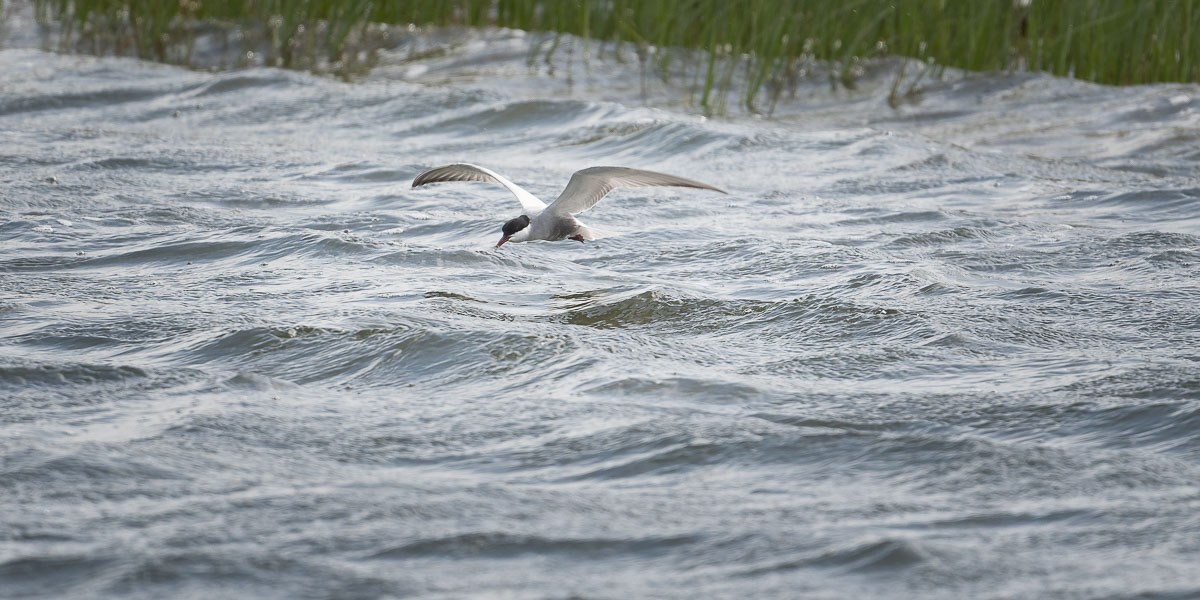
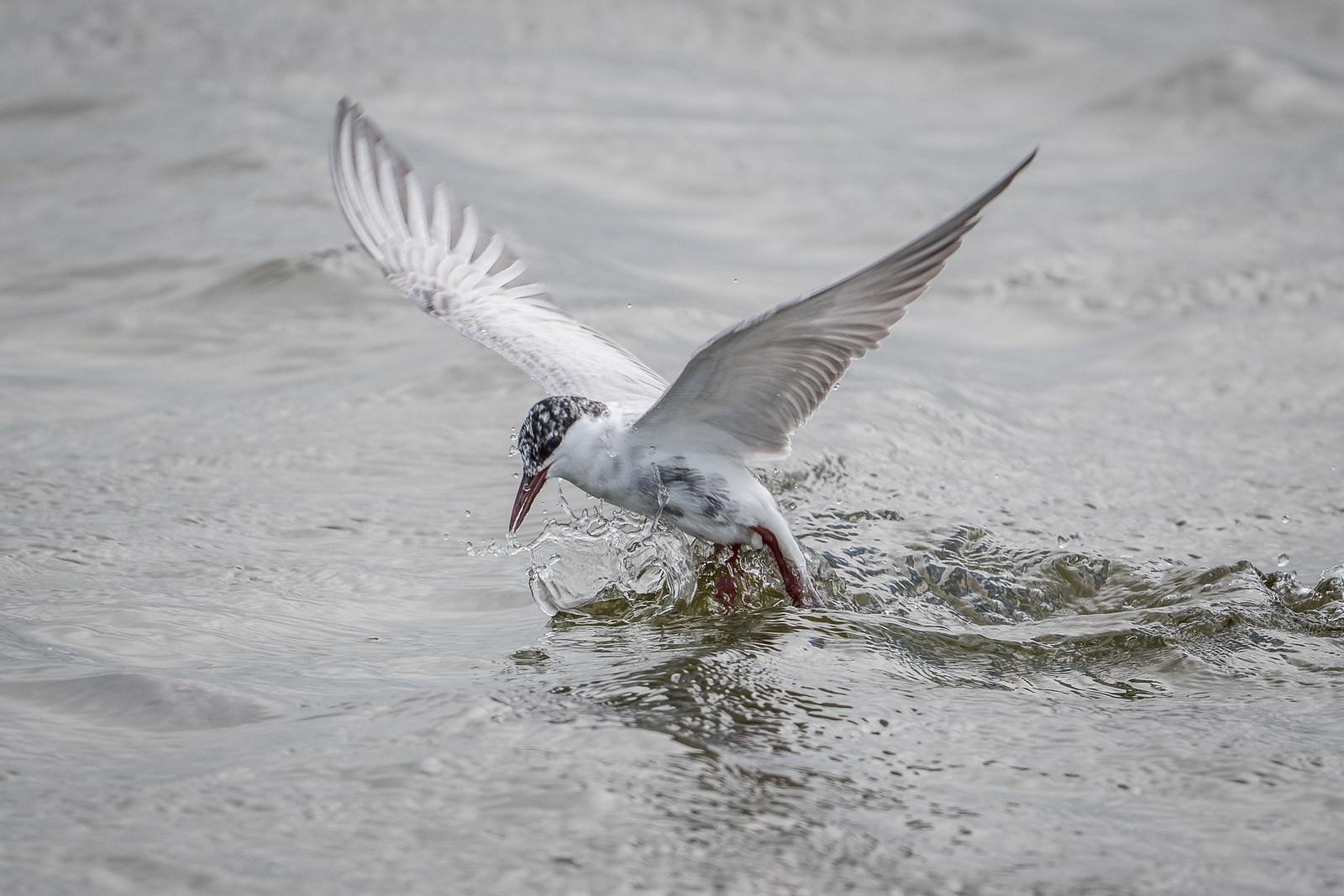
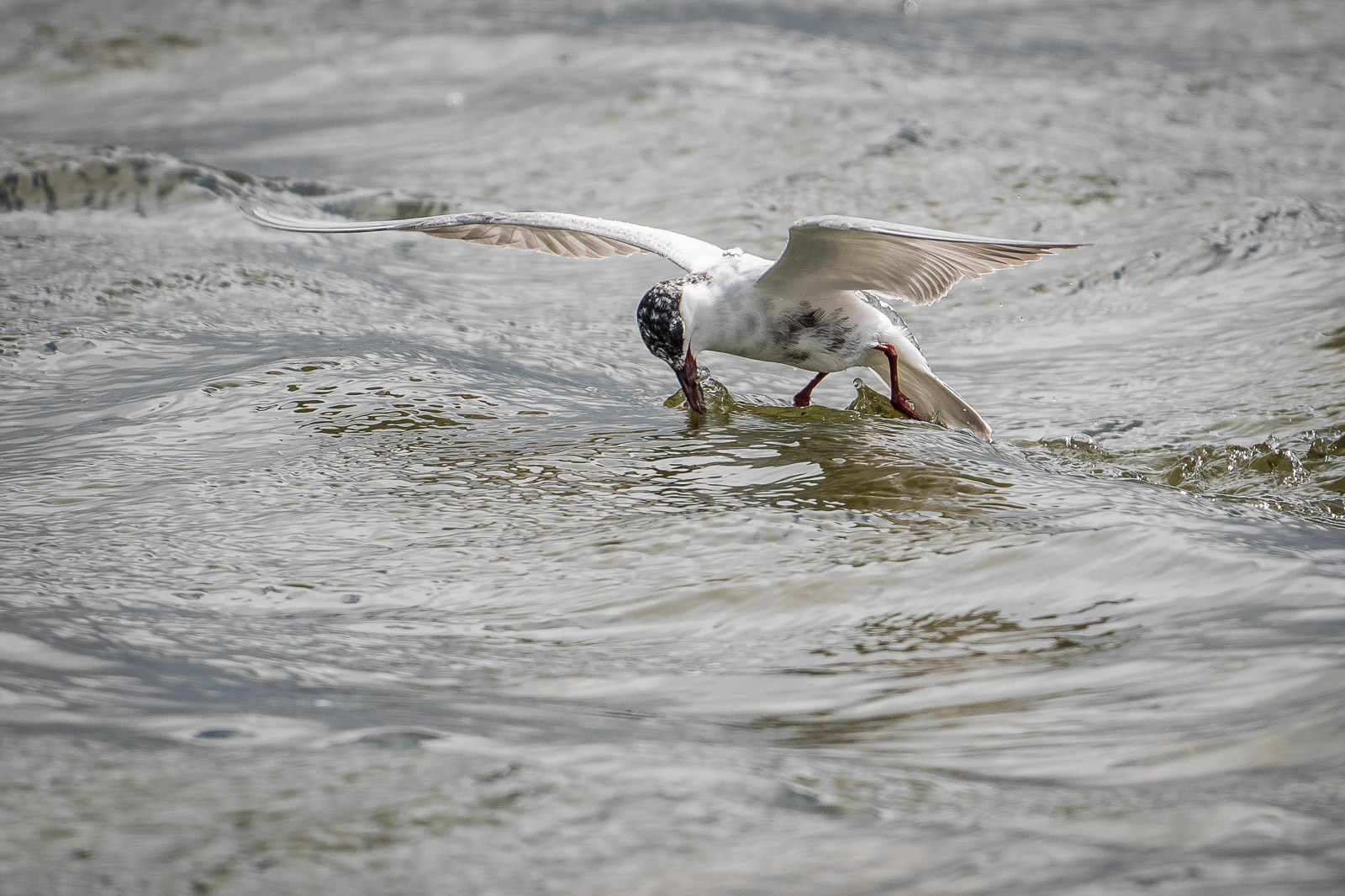
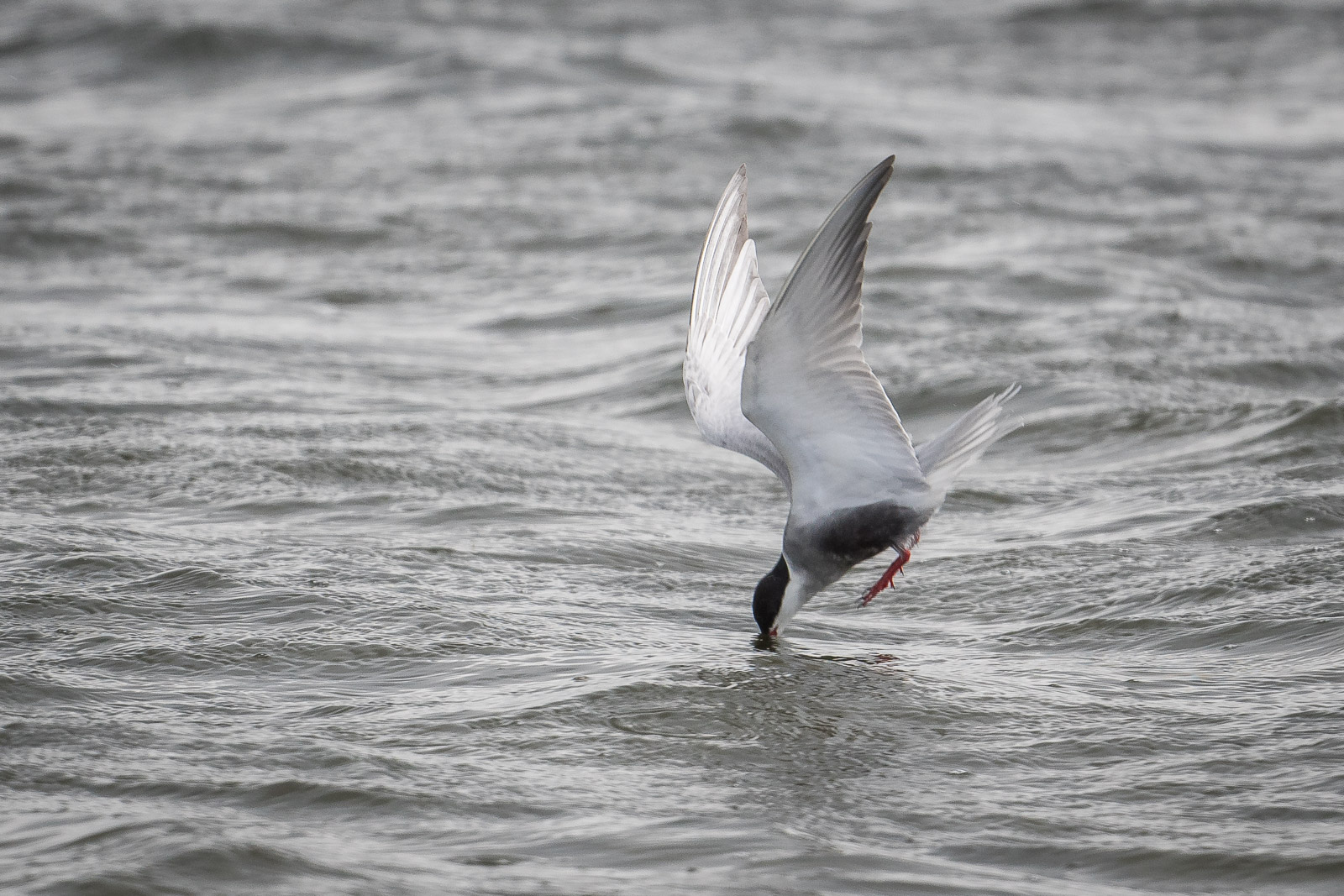
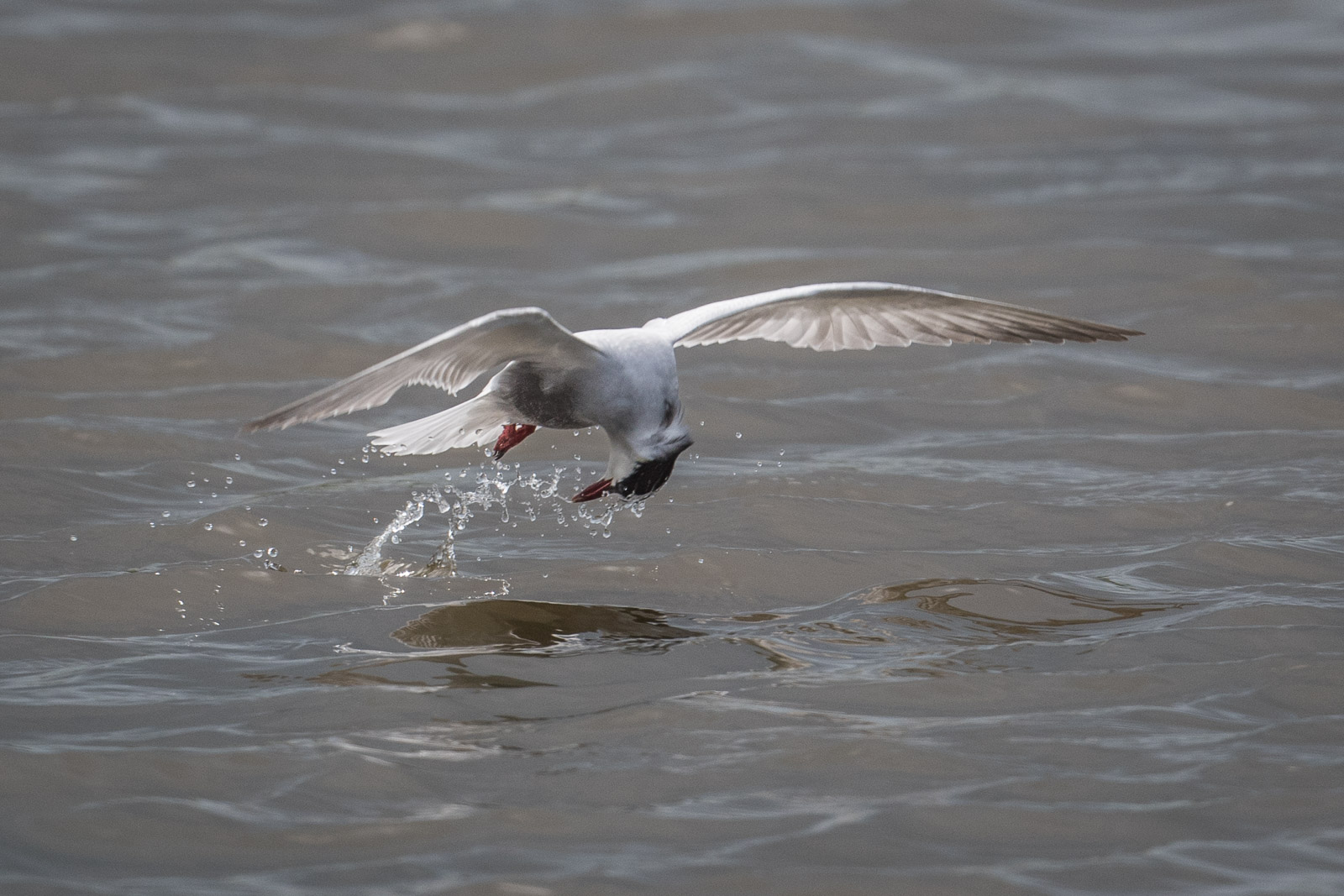
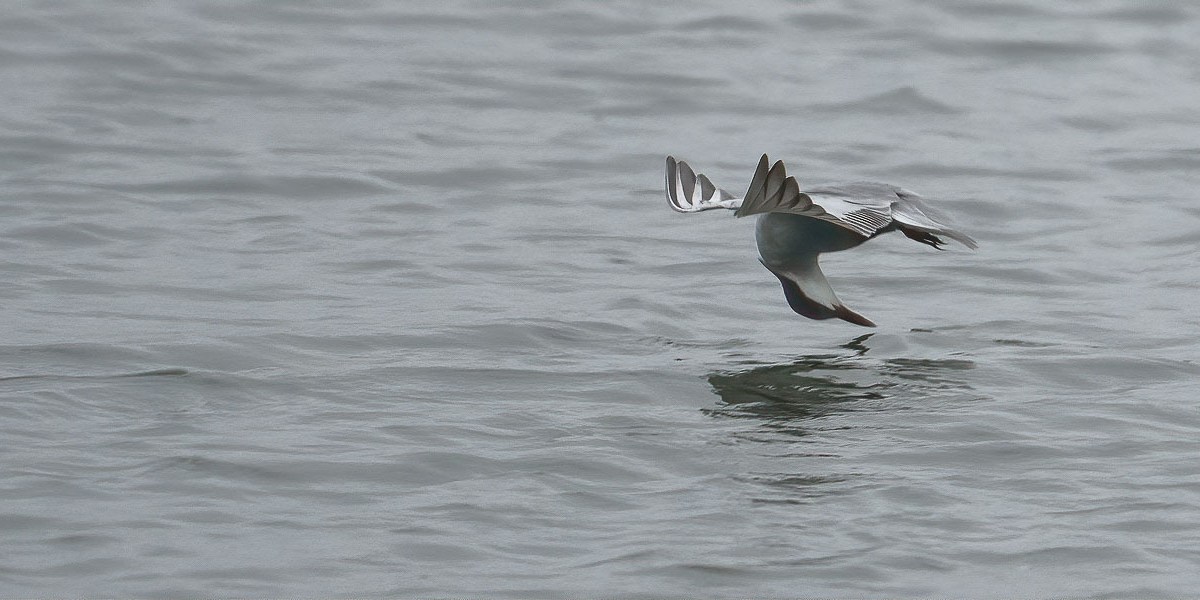
In the end I sat in the car, window down, rain falling down and watched Whiskered Terns hunting along the edge of the bunds among the grasses and the escapee canola. (ahhh yes the product that was promised not to get out of control)
The waves in the photo are not tidal, these are former sewerage ponds and the wind has stirred up the water into large running waves.
We should go to the Treatment Plant on Friday afternoon, said EE.
Looking at the weather maps, well it seemed reasonable 5 days out.
So we planned.
And come Friday afternoon, not only was it a fuzzy idea, but in reality, the weather was fuzzy to say the least.
Still not be deterred a second plan arose. “Let’s go out to the Highway Lounge for an afternoon coffee and if it’s still raining when we come out, well, take it as a sign, and we’ll come home.
If its not raining, take it as a sign, and go on down to WTP”.
Can’t argue with that logic, and the coffee would at least be hot.
By the time we had indulged in one of Garry’s finest, the rain had indeed ceased, and lo, but truth be told the wind had dropped off and while overcast, it was at least pleasant.
Mind, I did check for bright lights in the sky and the sounds of heavenly voices when she said. “It’s a sign. Let’s go.”
But, and you knew that was coming right?
But,
As we turned on to Point Wilson Road, strange little wet drops appeared almost by magic on the windscreen. I was sure it was a sign. However as we were already down in the plant, we kept going.
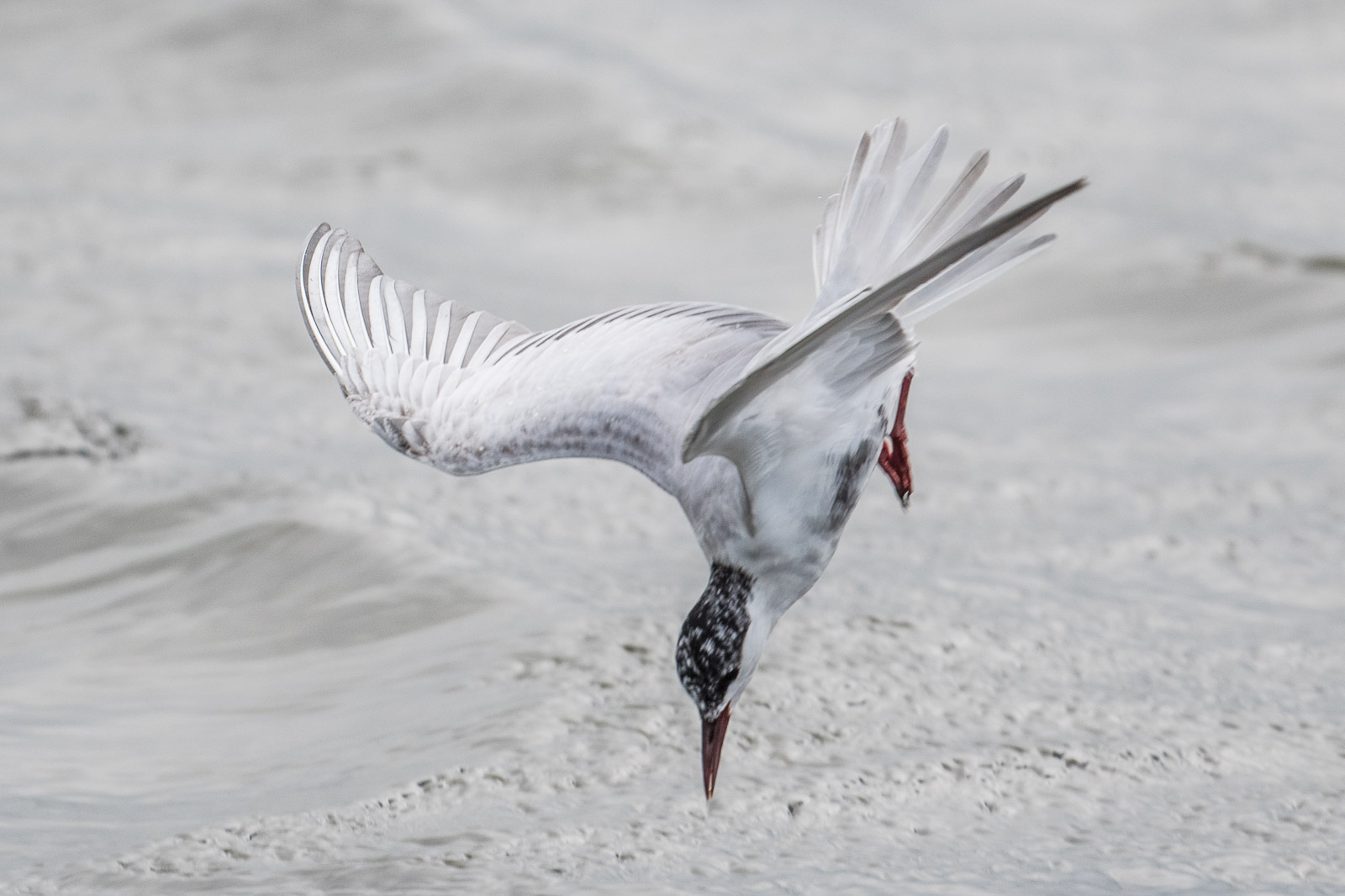
The T Section had quite a number of Whiskered Terns, (formerly Marsh Terns), hunting over the ponds, and had the weather been kinder, the photography would have been easier.
Bump up the ISO to 1600, and hope that I’d get enough shutter speed. There is no stopping these highly energetic birds, and if you thought swallows and martins were a challenge, crank it up to a new level for terns. Especially grey birds on grey water. The auto focus, even the best of them, and the D500 ranks pretty highly, has a problem. And the rain only added that extra hint of difficulty.
So we persevered.
At one stage they started hunting over the grass areas on the bunds, and some contrast between bird and background. Good fun.
I’ve hummed and hahhed about posting this. This blog does not do product reports or endorsements. I figure there are enough and more of those already.
So what follows is simply where I am in my journey of post processing software investigations.
Also if your a “Bokeh” fanatic, believing that the world does not begin until f/1.8, then click away now, as there is nothing here for you.
For the record, I have a fairly large investment in software by NIk. I purchased stand alones of their Noise and Sharpening products years ago. And I’ve updated them regularly. They are my main go to until recently.
I’ve also been a fan of a number of the Topaz add ons (plugins) for Photoshop. I’m not too much of a preset sort of person, so my Topaz products have been mostly image enhancement.
Recently got a ‘free’ upgrade to the latest Topaz Studio product.(more of that some other time over a glass of chaddy I think). And because of that, looked at their AI Sharpen. (AI in that name meaning ‘Artificial Intellegence’, but that would be marketing hype.
Anyway to cut to the chase, I am quite impressed by the results.
But, and I stress but. This is not a recommendation to rush out and buy, to download, or to use. Its simply what I’ve found works for me.
Just in case someone asks, here is their site. Topaz Labs
Which leads me to the point of the post late mid-week.
Many years ago.
In 1976, a magazine, Photo Techniques was launched, and it co-incided with what was to be a major change in career direction for me. Mike Johnson was the editor, and one of the main writers was a character named Ctein. (Let’s get it right: pronounced, ku-tine as in fine)
He wrote all sorts of articles on getting the best possible quality from photochemical prints. He knowlege was legendary, his practical hands-on experience was at the time without peer. If Ctein said it, it was right.
As the digital age took off all around us and ‘Giclee’ prints became the selling point, Ctein lead us all to “Yellow Brick Road” leading to print perfection. And without a loyal dog Toto to be seen.
Eventually- many years later, the magazine folded, but Mike Johnson now runs a web page called The Online Photographer TOP See page here.
Or direct to the blog here
His biting humour and keen eye now graces an almost daily dose of Mike. Ctein continued to publish on Mikes TOP
I’d been busy of late and hadn’t checked, but when I looked today I found an article by Ctein, published back in September, 23 to be precise.
Subject.
Topaz AI Sharpen.
Here tis.
Even if you don’t have/want/use/dislike/hate with a passion/or are ambivilant if you want a reasonably argued case for the way digital image processing is going to progress in the future, its a good starting point.
Also interesting to see the tangents and other discussion about ‘sharpness’ that have kicked off on TOP because of the article. You’ve still got it Ctein. 🙂
And just for completion, here is a comparison pair
On the left is the original NEF image. On the right the result of running it through Topaz AI Sharpen. Showing at 200% in Lightroom
For the technically ept. Nikon D500, 500mm f/5.6 PF and a TC 1.4 Converter. NEF processed by Adobe Camera Raw
Nuff Said.
Long time readers will no doubt recall that I often claim to have Grey Box sap running in my veins.
These amazing old trees are the superstructure for the type of forest and forest birds that I really enjoy working with. And as Woodlands Historic Park has such an untouched stand of Grey Box, its not hard to see why I love it as I practically learned my forest birds craft out there.
Another find stand of Grey Box is at Eynesbury near Melton.
Every second month the local Eynesbury Environmental Group, here’s their facebook page, conducts a morning walk in the forest for interested locals and visitors.
Chris Lunardi does a super job of getting us out in to the forest to look at some of the lesser visited areas and to find interesting birds.
Chris also seems to have an amazing ability to chose days where the weather is kind. And this past Sunday was no exception.
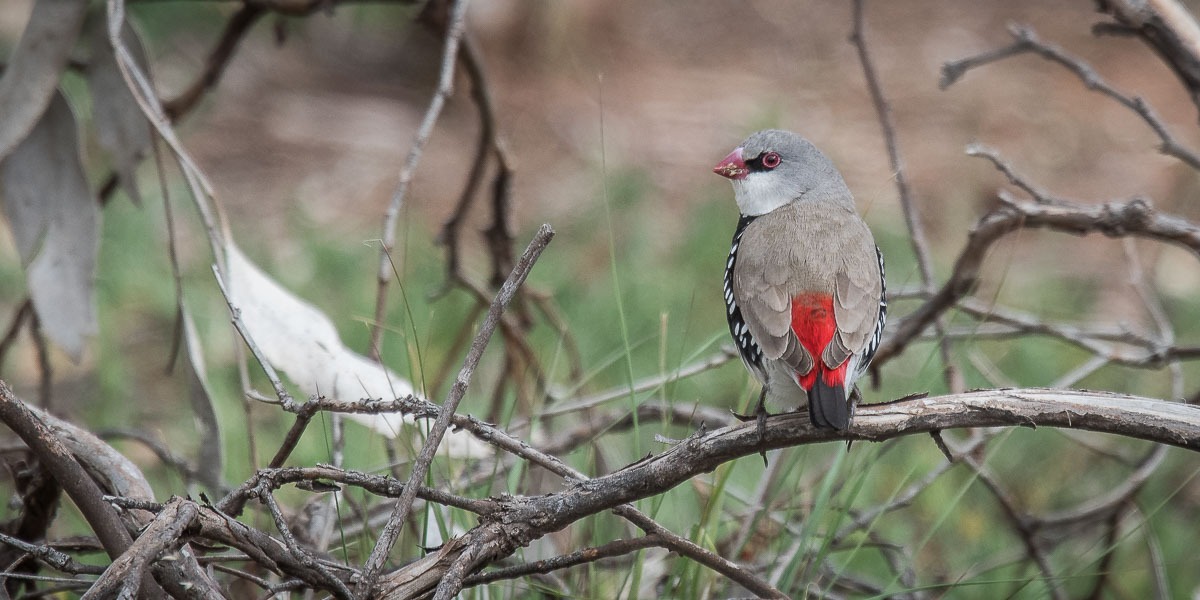
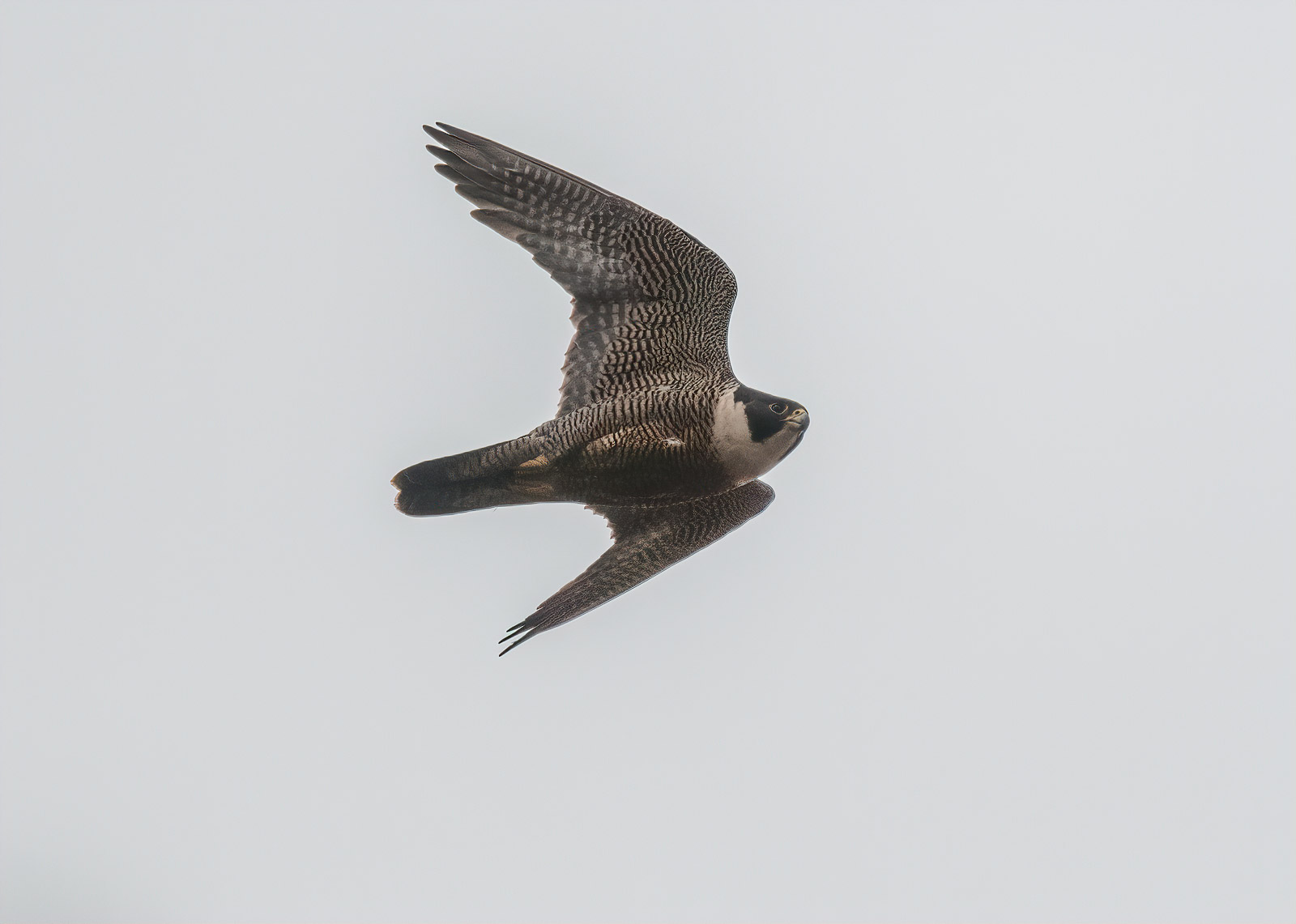
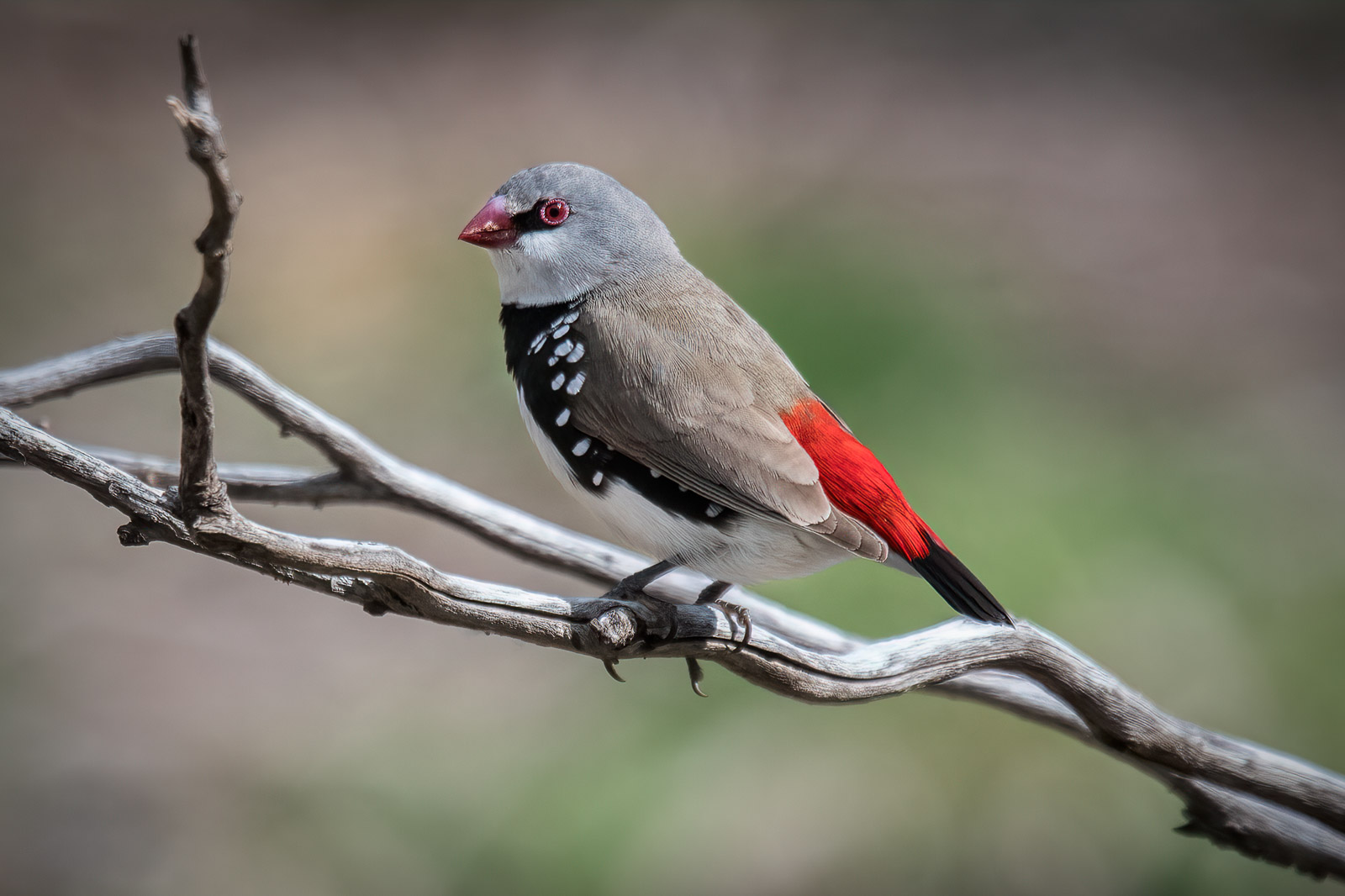
Probably the highlights of the day were a pair of very vocal Peregrine Falcon, and several sightings of Diamond Firetails.
Diamond Firetails often are found around the lawns and golf greens in good numbers, and occasionally a few birds through the bush. We managed to find them in 4 locations throughout the day.
Here’s a visual summary.
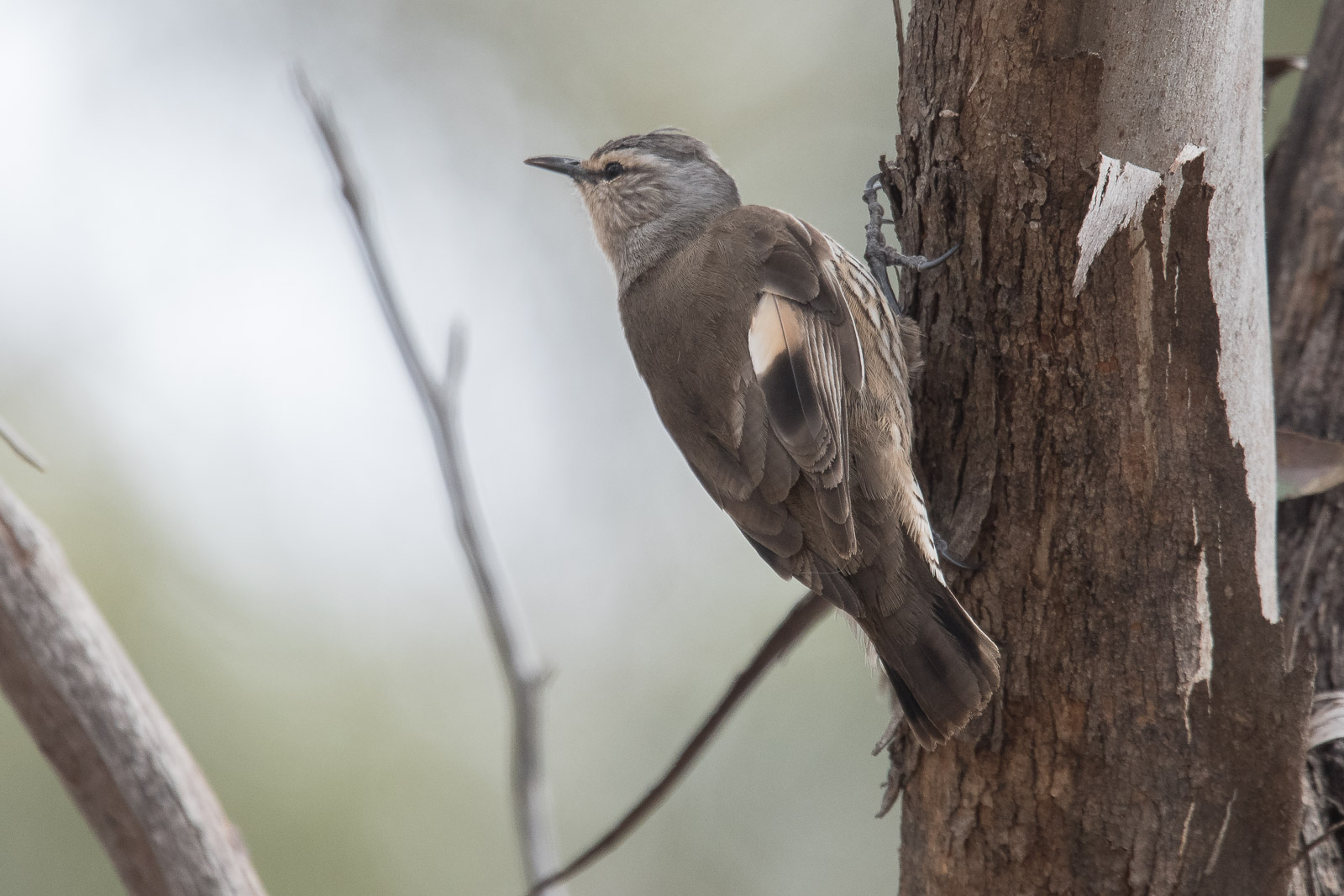
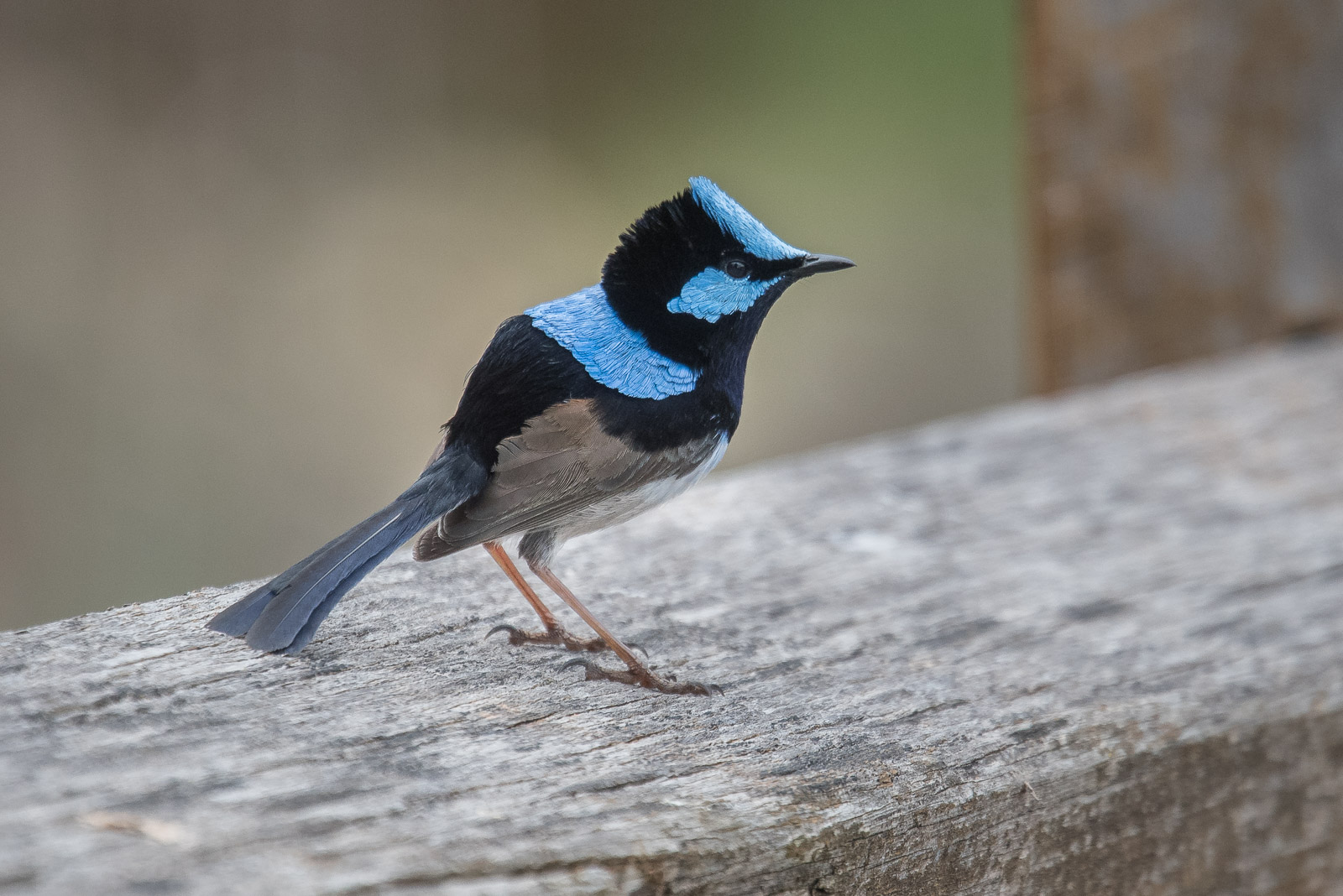
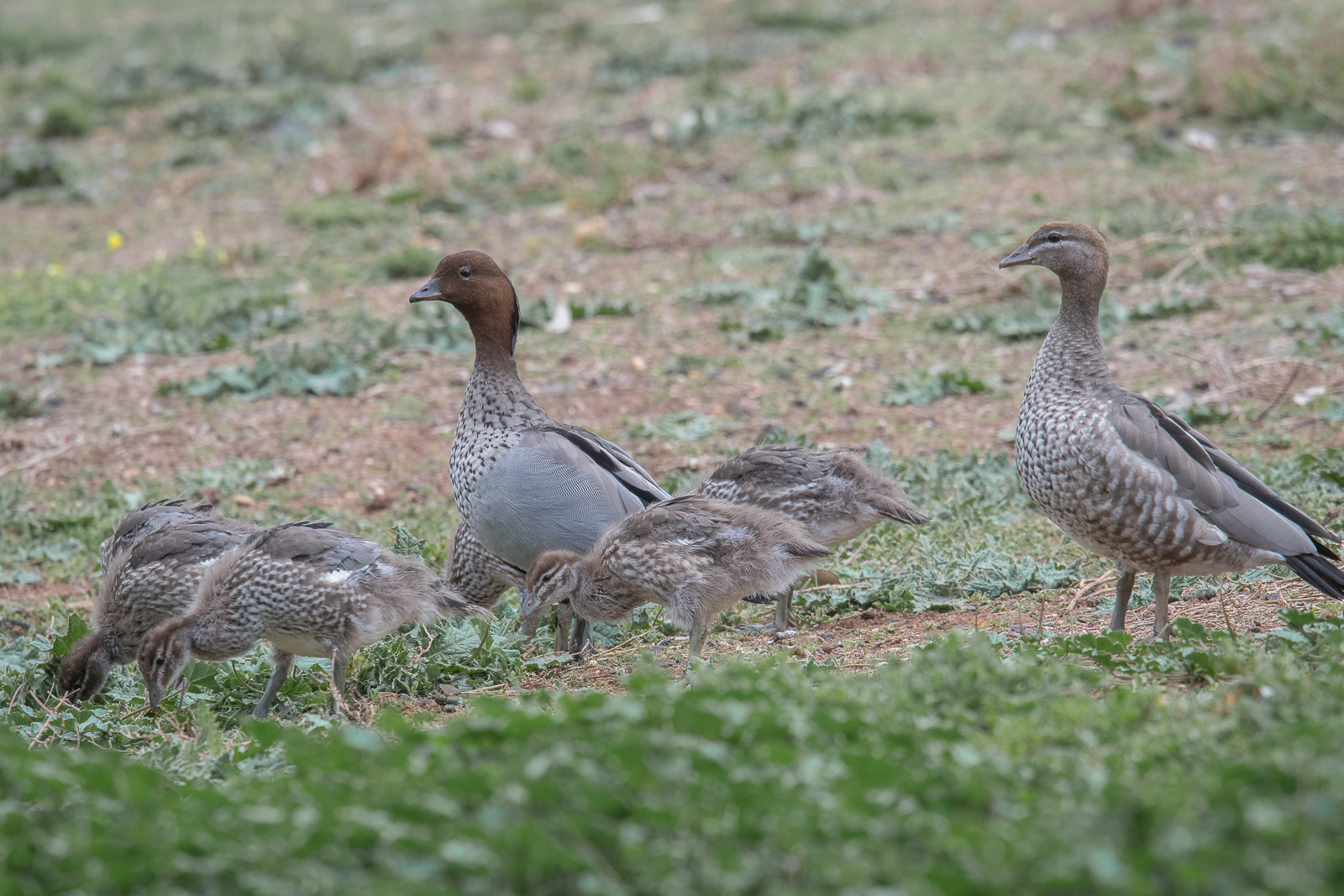
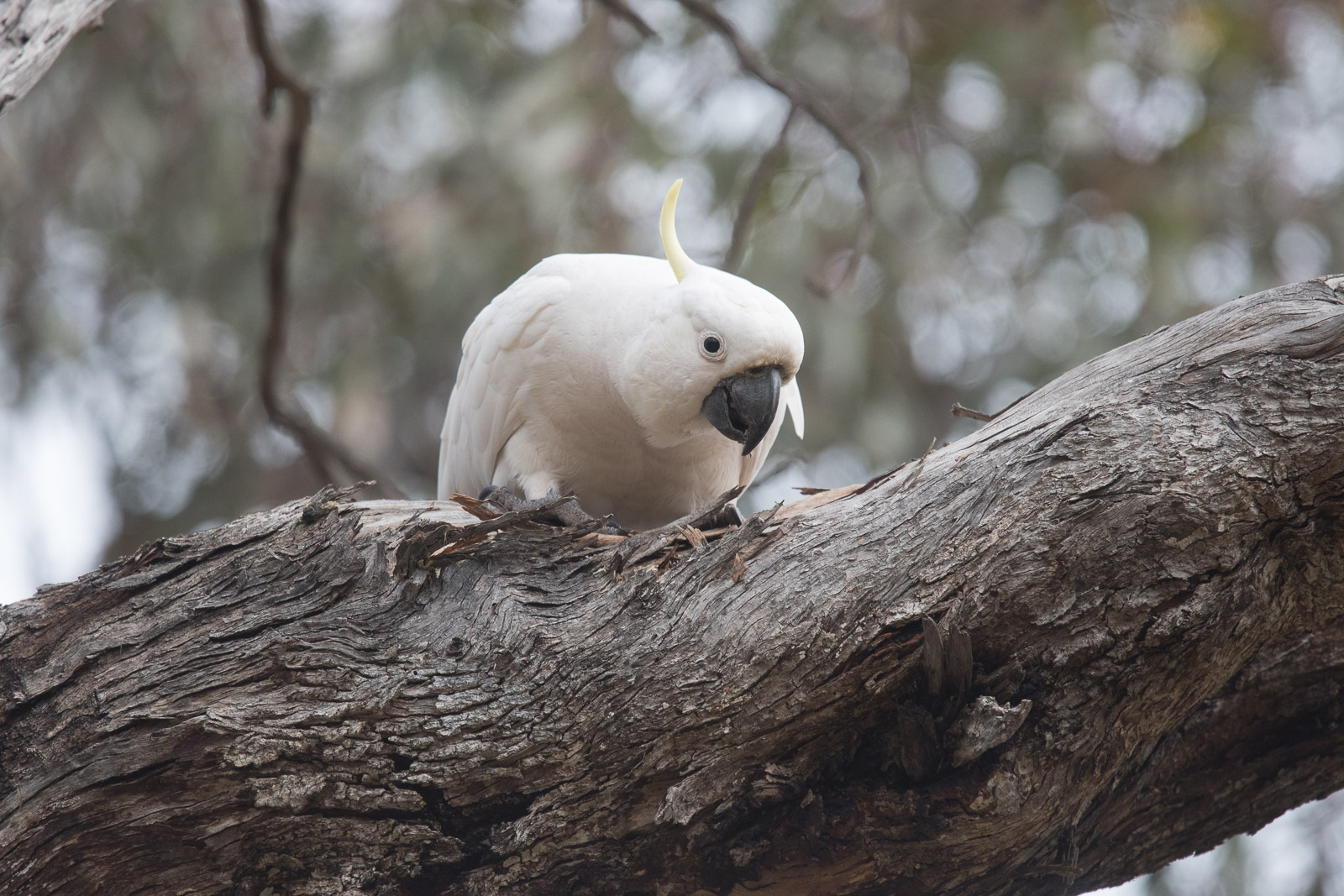
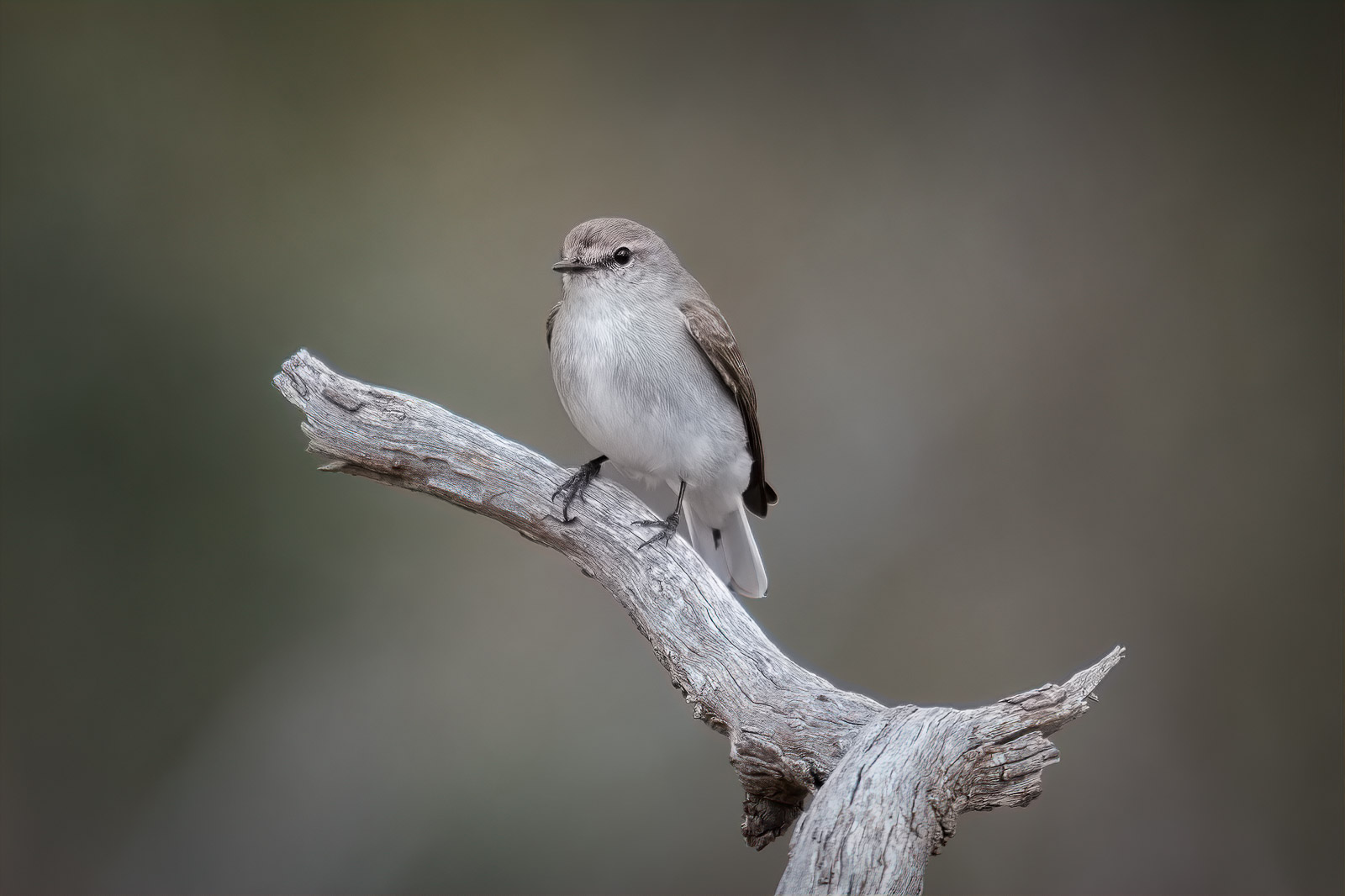
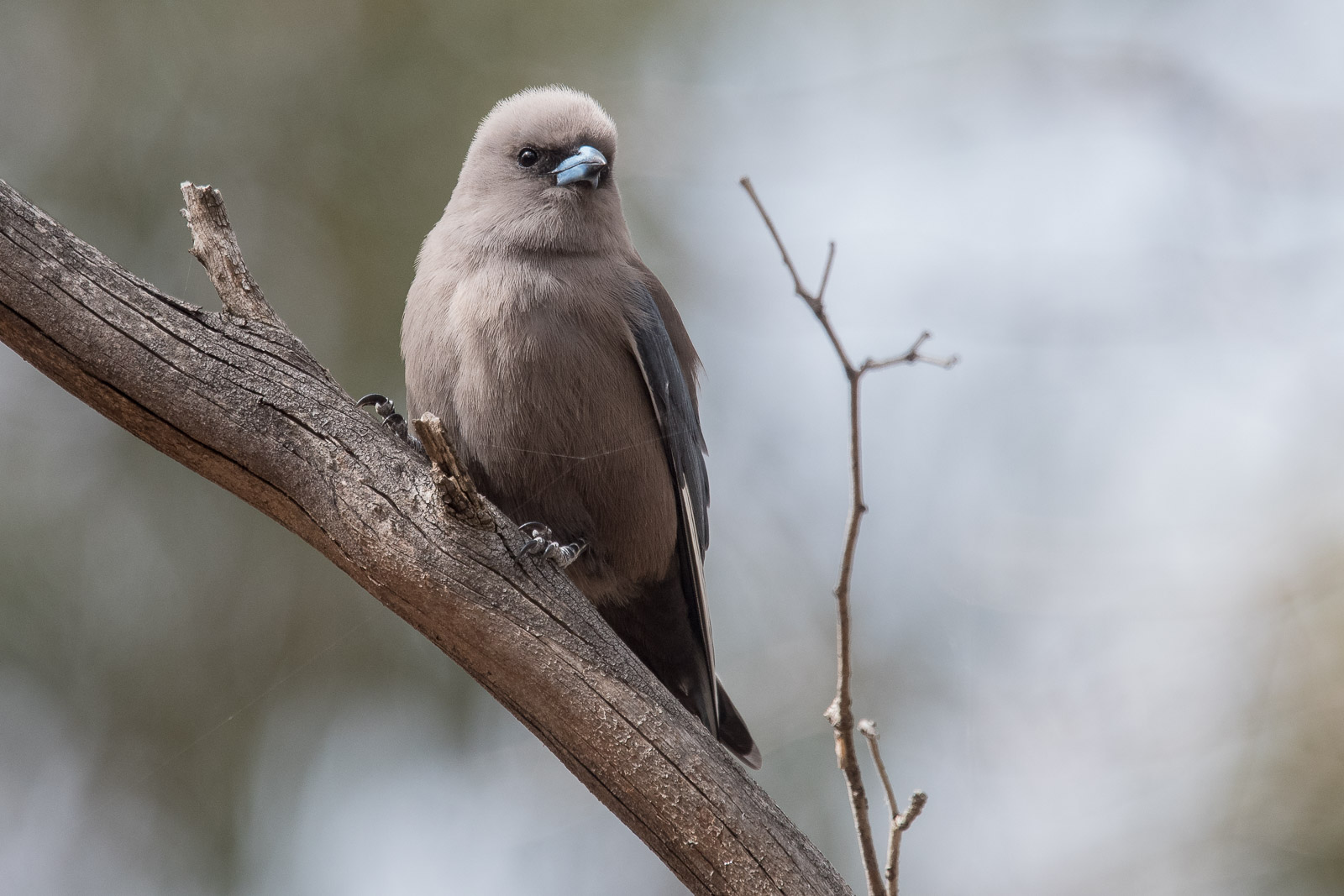
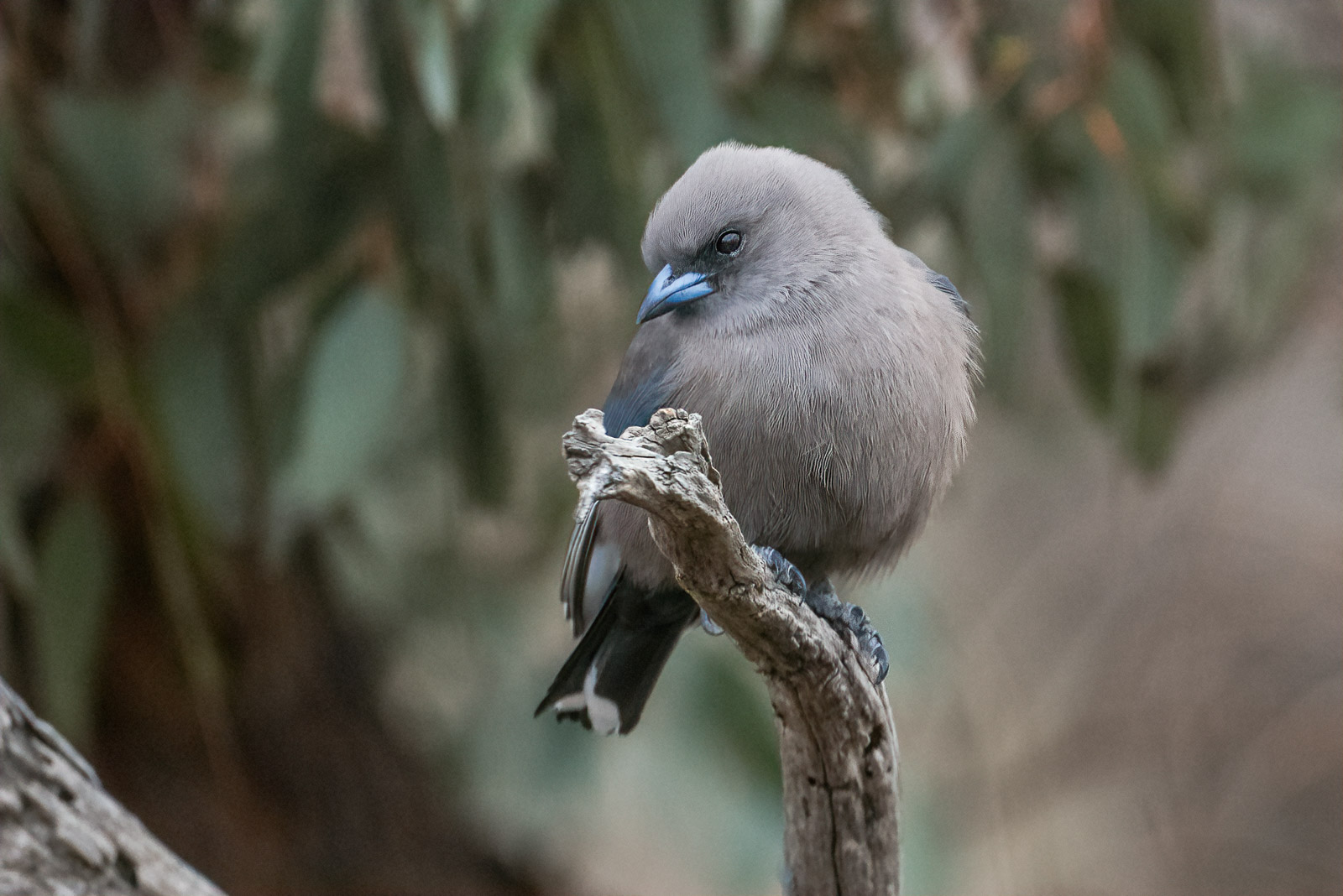
Brown TreecreeperTree Martin hard at work collecting mudSuperb Fairywren defending his terrritoryPeregrine FalconA Good News story. Maned Duck family out for a stroll.Sulpher-crested Cockatoo.Always a favourite at Eynesbury. Jacky WInter.Summer visitors are strarting to arrive. Dusky WoodswallowSignature Bird: Diamond Firetail.
Form and Shape are among the basic elements of art.
Often to find form I find its necessary to look beyond the the subject and the structural elements of the composition.
And being able to reduce the elements to simple black and white often makes the form more visible.
Currently on the tv is an ad for TAB Corp. (Yep, I don’t bet, don’t encourage it, and generally rail against it).
However this one, I hope you get a chance to see it, is about the work of all those behind the scenes in the industry. Those that get up very very early, the food staff, the trainers, the jockeys, the handlers, saddlers, blacksmiths, transport, and the like.
What makes it a very exiting visual is that is is all shot, or at least reduced to black and white. The lighting, contrast, the edgyness really has a great feel to it all.
I can’t seem to find a link to it else I’d share it.
Which leads me to Little Ravens hard at work on a nest.
Don’t you hate a poorly developed segue 🙂
This is one of a pair that were gathering nesting materials. If you look closely you’ll see some binding twine that the bird had collected. Taken it to the nest, discovered it didn’t fit, and has landed on the post and pushed it into the crack on the fence post. Perhaps it would be needed later.
Then it looked at me. And I could feel it was taking in every little detail. Even knew the serial number on the lens. 🙂
And the thing that got me working on the moment was the light seperating out the shape from the background and the draping moulding light playing over the form of the feathers.
“If I use this,” I thought, “I’ll make it monochrome.”
What is so great about monochrome is that enables the viewer to savor those shapes, forms and textures, that transcends the ordinary to an ethereal world.
For over twenty years a dedicated group of volunteers have been patiently working at developing a Botanic Gardens in Melton.
Today, their wonderful efforts have transformed the area into a little oasis in the housing and industrial area.
Along one of the creeks, every year, Latham’s Snipe visit from Japan to summer over.
The Friends Group participates in the Latham’s Snipe Survey, and EE and I went out on Sunday to help with the survey.
As it turns out we were only able to locate two Latham’s Snipe. But given that the water levels in the creek and the lake areas was well up, there probably wasn’t much opportunity for the birds to easily feed and hide during the day. All part of the interesting life and times of Latham’s Snipe.
What we did find however was lots of Springtime activity here is a small sample.
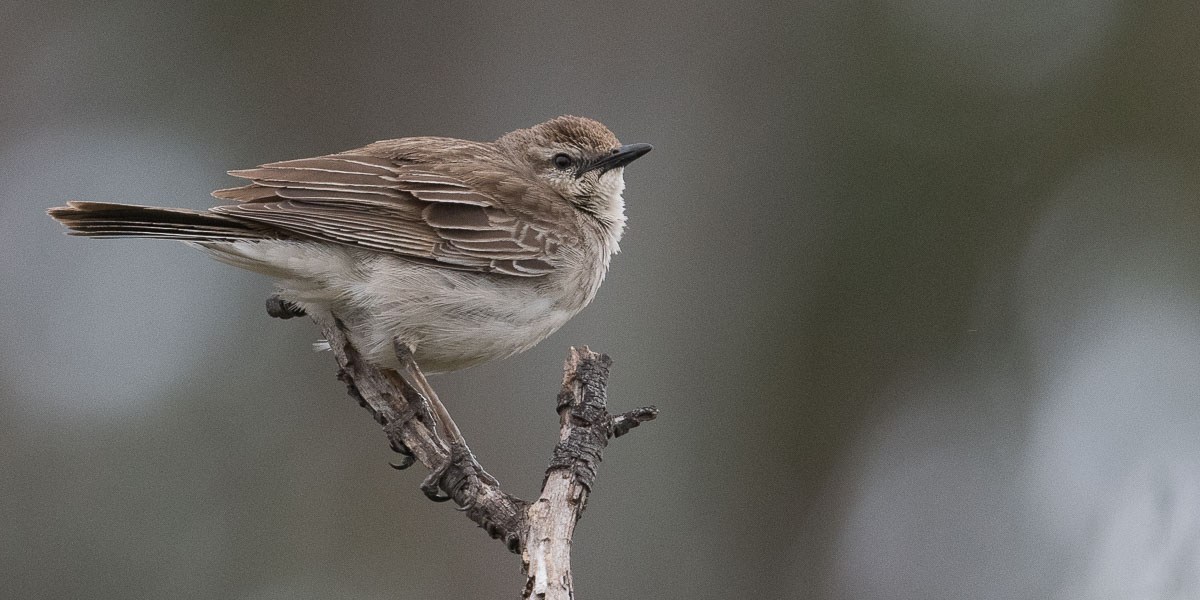
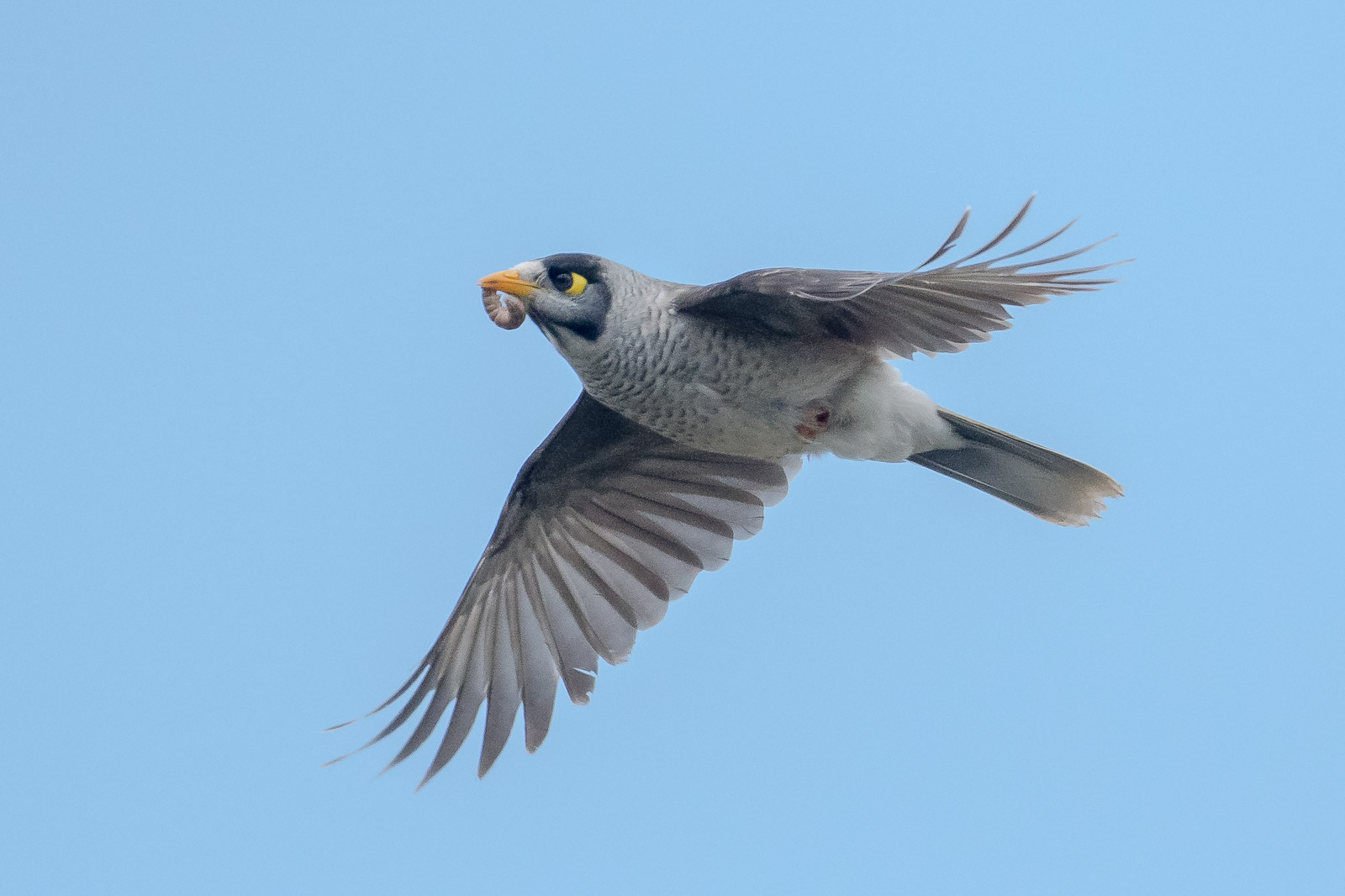
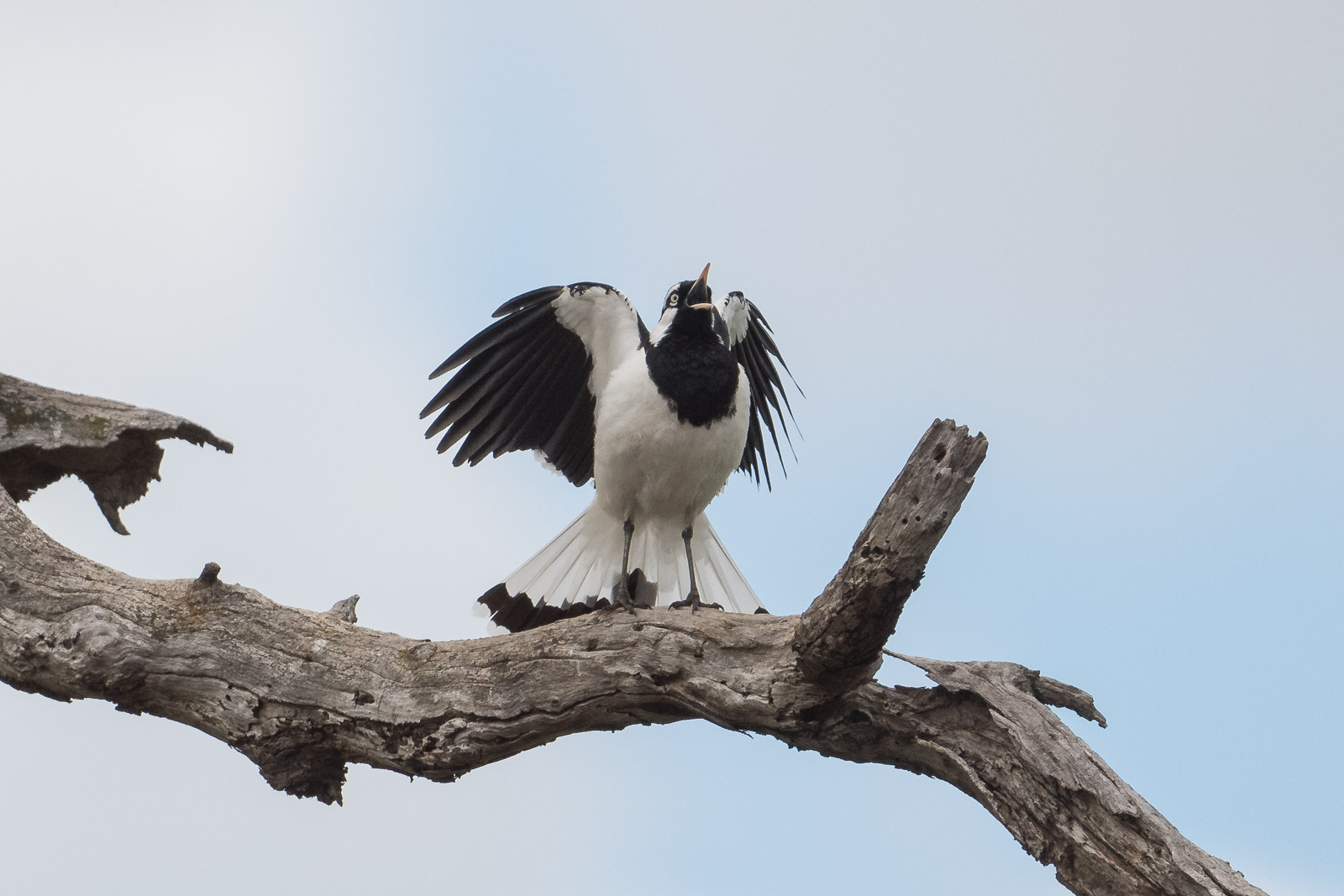
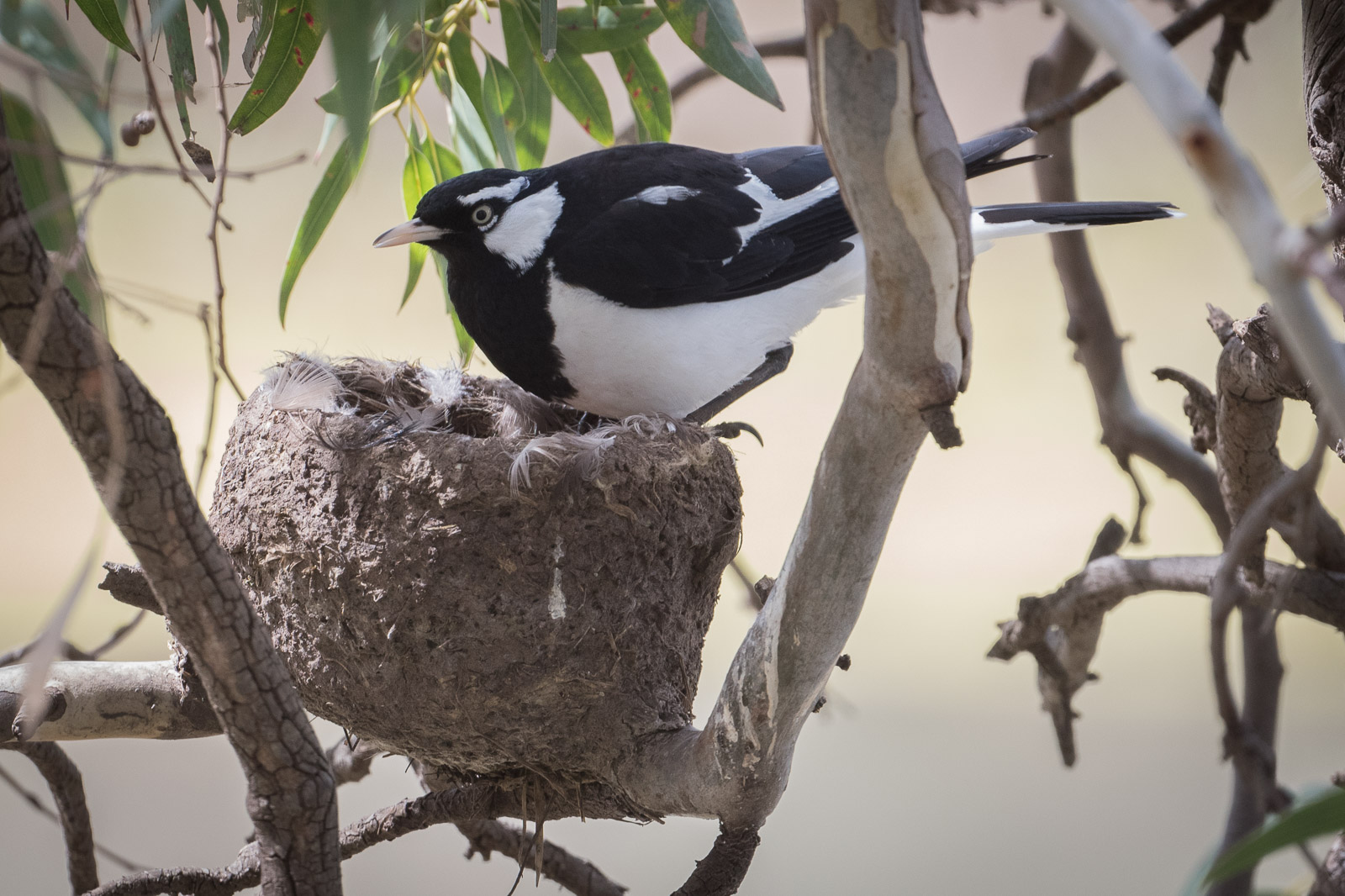
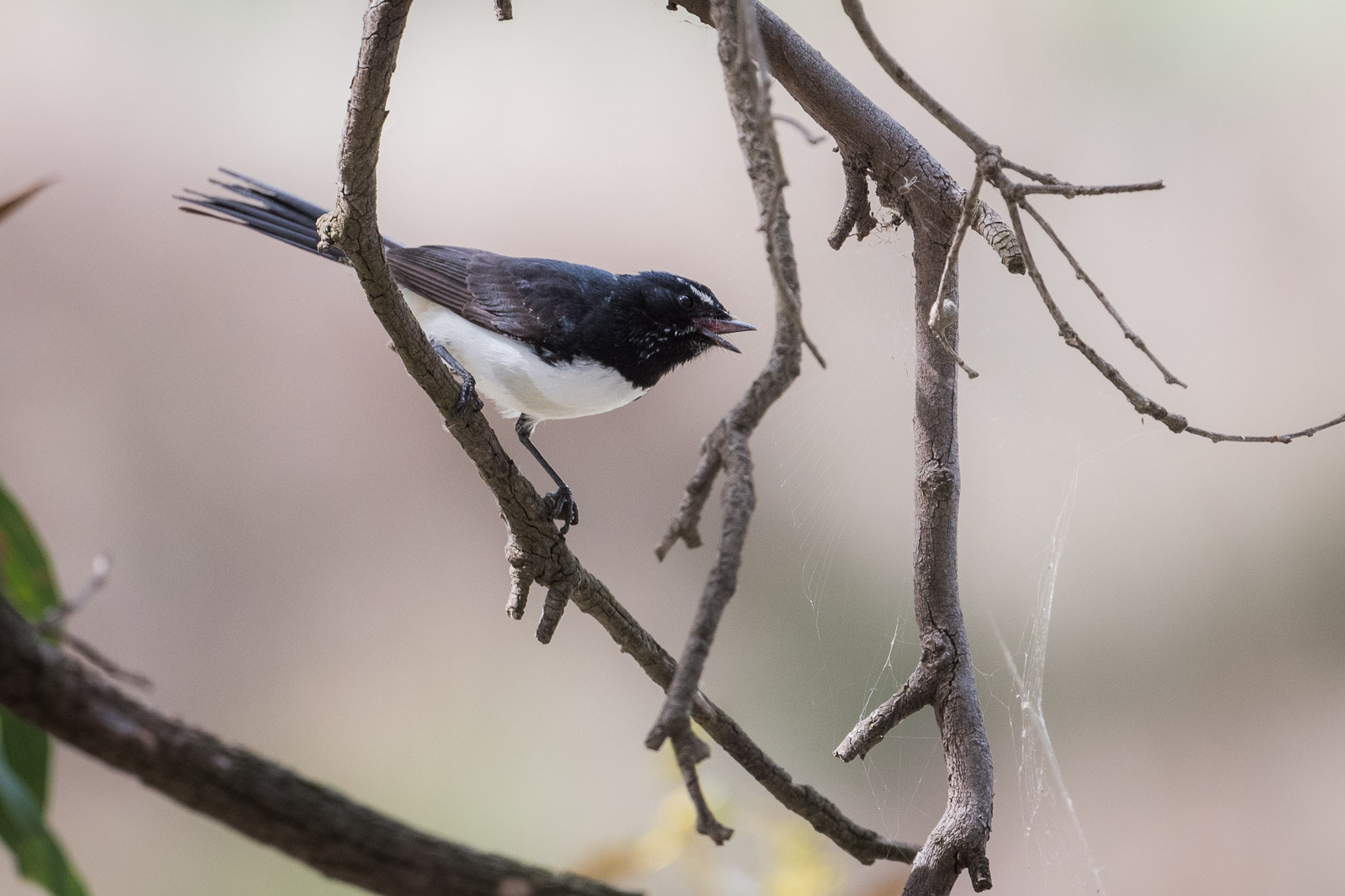
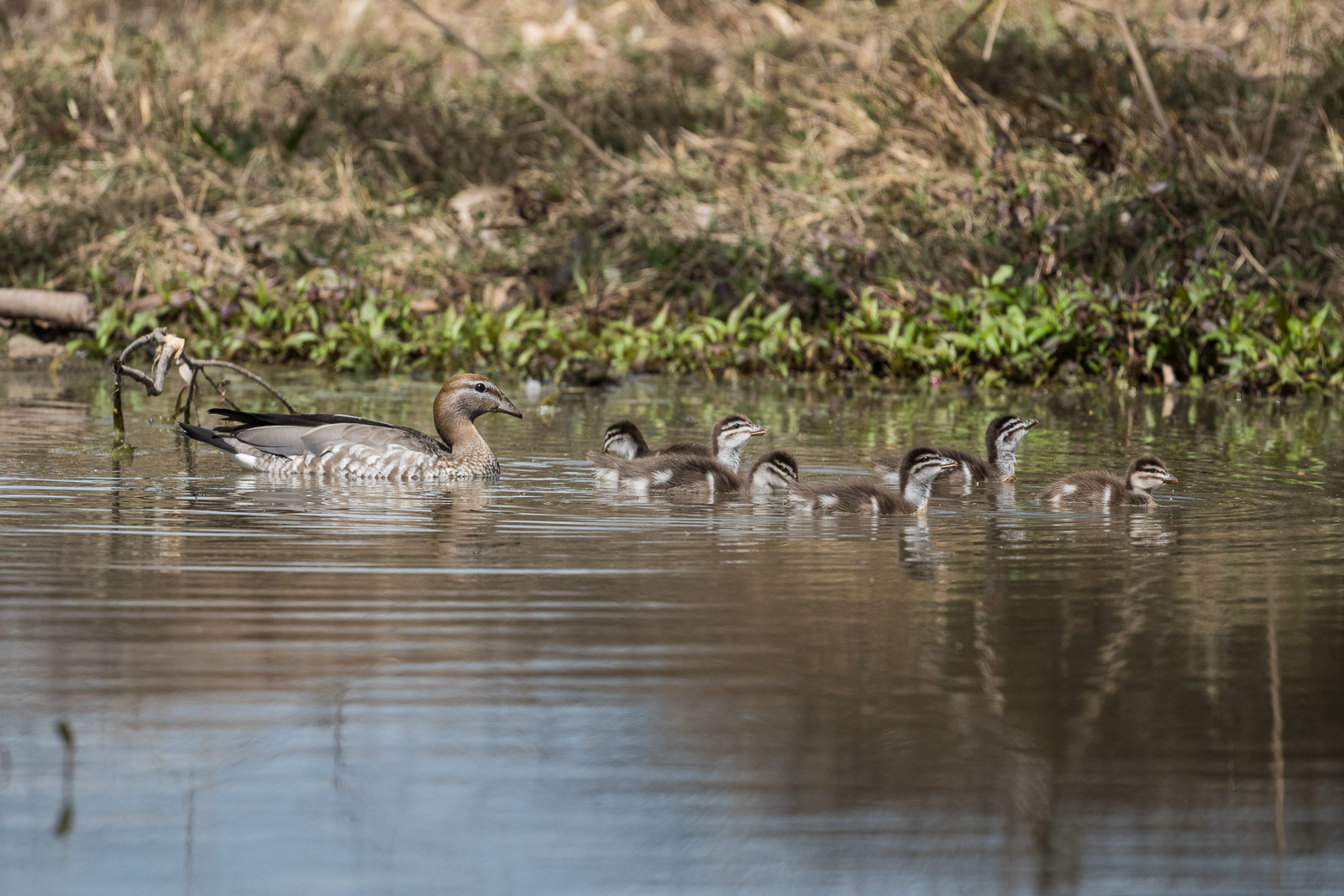
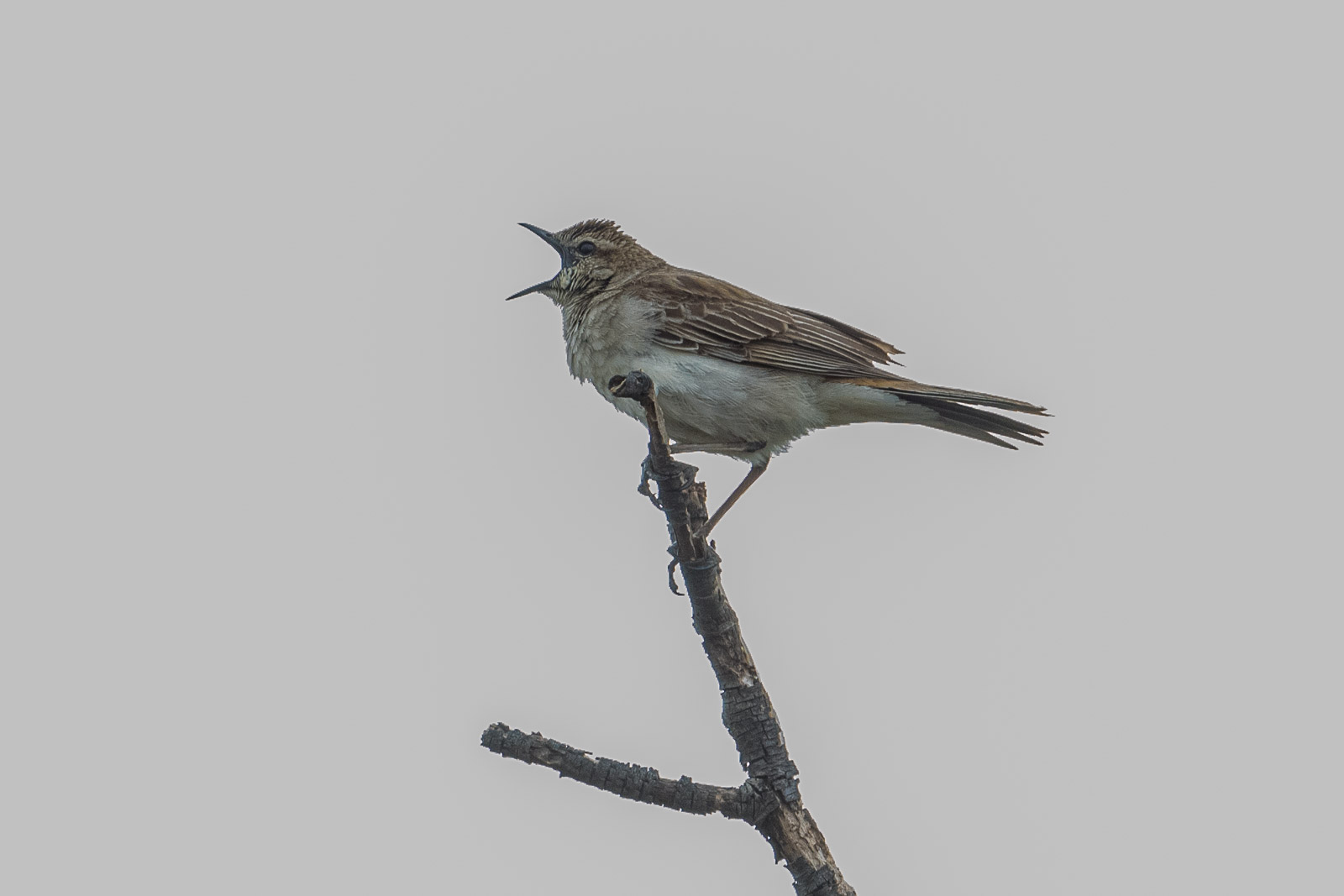
A Noisy Miner delivering foodMagpie-lark in characteristic mate calling displayOne of about 8 Magpie-lark nests in progress.Willie Wagtail gathering Spider WebWhistle while you work. A happy Wagtail adding more Spider Web to its new nestThe care and feeding of young Red Wattlebirds is a noisy business and there were lots of young to be fedHere’s a clever one for you to find. Hidden among the leaves is a tiny, beautifully made spiderweb basket of a White-plumed Honeyeater.Just hatched. The Maned Duck chicks still have the little egg beak to break out of the shellDusky Woodswallows have arrived and no doubt will soon be nestingRufous Songlark. These loud calling birds were establishing territories. This one in particular had taken over the earth moving equipment site just outside the Gardens.





























 Birds as Poetry —— Just because I WANDER doesn't mean I'm LOST