Happy Birthday Photoshop

It seems that the 19th of February was the anniversary of the release of Adobe Photoshop 1.0.

Now a full 30 years old. And still going strong, unlike so many software programmes that hit the wall.
Now you may, or may not be a Photoshop fan.  You may be quite the Photoshop luddite, or you may even despise the very name, and would never inflict your harddrive with the hint of an installation.

But none the less, it is one of two programmes I’ve got an intimate working knowledge of, that turned both the photographic and graphic arts industries on their collective head.  Formally two entirely different streams, both bought together by several pieces of software that alterered for ever both streams.

If you really want to get some background on Photoshop, and John and Thomas Knoll and their industry contribution, may I suggest clicking over to Jeff Shewe’s blog. https://photopxl.com/happy-birthday-ditital-imaging/ 

If you ask, “Who is Jeff Shewe?”, then its a fair bet that you’re a relatively new digital worker. Check out the link for the full story.
And for extra bonus, get to see Jeff do a quick video demo of

DAH DAH!!!

The first Adobe version of Photoshop the original, unvarnished, never to be repeated  Version 1.
And imagine how far we’ve come.

And here is a link to Photoshop’s very own John Knoll demoing version 1.07, Now you’ll know about Jennifer.
https://www.theverge.com/2020/2/19/21128404/adobe-photoshop-30-years-version-1

My own relationship goes back beyond Adobe’s ownership and involves a product called Barneyscanner.  For its time, (1989) this was a revolutionary 24 bit film scanner. (mostly transperancy). At first they didn’t have a real software solution, just large unmangable, (read unviewable) files.  John and Thomas struck a deal with their little Mac programme that not only could read the files, but actually make some modest adjustments.
By the time Tennis Australia’s Victoria Open was run in Jan 1991, scanning of film was still the major go to working pro tennis photographers.  Generally time frames were impossibly long, with processing and drum scanning and slow transmission, but with Barneyscan and the new Adobe version, time could be reduced significantly for shot to press time.
Co-incidentally that was also the first year that digital photofiles were transmitted directly to the newsdesk. All from a wonderous 1.3megapixel chip. Gasp!, Shock!, Horror! Amazement!

One of the biggest things about demos of Barneyscan and its software was, nobody was interested in the scanner, like, man, what is the programme you’re using and where can I get it???!!!!

Enjoy Jeff’s demo with Jennifer, its a not to be repeated moment.

Enjoy


s

Saturday Evening Post #70 : Exposure by Cat’s Eye.

If you are like me, and let’s hope that is not in too many ways, 🙂 then no doubt you’ll have pondered from the day you first picked up a camera,
“What is Correct Exposure?”

And… haven’t there been any number of ‘friends, family, websites, blogs, books, faceblot pages, and courses to set you on the right road.

Luckily this is not going to add to the incessant chatter.

I think, “What is correct exposure?” is about as useful as asking, ‘What colour should I wear?’ Because of so many variables.

T’would be easy to offer advice, such as, “Oh for my bird shots I use the fastest shutter speed, blah, blah.”

The great New York newspaper, Wegee,  is reputed to have said, “f/8 and be there!”

So let’s go at this another way.  How to you-royal plural-determine correct exposure?

Well in this modern day and age, you point the camera, press the shutter and all is well. (most of the time, with the exceptions of the critical moments, when its wrong!)
No doubt modern camera design is at pains to get it as close for most general picture making as possible.  Else people wouldn’t buy the cameras. So hats of to the manufacturers for their great work.

All sorts of hand-held exposure meters have been used in the past, and each had their adherents. And if you think camera blog discussions get heated and verbose, you’ve never heard the disciples of one sort of meter lampooning the other less informed individuals of lesser choice meters. 🙂
When I started, the choice was pretty simple, English company Sangamo Weston had a Weston Master meter. I confess to owning several during my lifetime, and have just purchased one from ebay, as much for sentimental as much as practical reasons.

As time went on and studio requirements changes, so did my choice and Sekonic meters came (and went)

Note I’m not into, here, whether fast shutter, or large or small aperture are the creative issue.
And don’t start me on the poorly defined “Exposure Triangle”.

Just a lighthearted stroll through the thorny subject of how we determine from the light available, and our photographic intention, what settings might best bring out our intent and feel for the subject.
Simply, how to measure the amount of light off the subject. (Or just for completeness for the Incident Method die-hards, how much is going to strike the subject)

What is the average reflectance of a scene has also bought in its wake, a host of disagreements.

For the record, Kodak scientists in the early 1900s arrived that in bright sunlight about 13.4% And then based their recommended exposure settings for their filums upon that basis.
Not good enough cried Fred Picker and St. Ansel, and they  cajouled Kodak into making their measurements at 18%.
Dah Dah, enter the great Kodak 18%-90% reflectance Card. Kodak Publication No. R-27.  Cat 152 7795.  Which, distinctly says on the outside of the package.
Designed for use with and exposure meter in artificial light. For use with Kodak Ektacolor and Vericolour Films.

Makes me smile when I see the card recommended for use in daylight by some controversial exposure determining system. And also in camera reviews that say—Oh, the manufacturer has set the basic exposure wrongly as it overexposes by 1/3 stop. Sure does. It’s easy to speculate when you don’t grasp the theory.

Then there’s the Sunny Sixteen Rule. Used to be on the leaflet inside each roll of filum.
Set the shutter speed to 1/ISO and aperture to f/16 and in bright daylight you’ll get correct exposure.
And if you’ve never done this, then next time your out in bright sunshine, set the camera to Manual. Dial in 100ISO, set the shutter to 1/125 (closest to 100) dial in an aperture of f/16, and sun over-your-shoulder. Bet is so close  to acceptable as to be scary. 🙂 But who wants to shoot at f/16. Not me.

You could try the Nicéphore Niépce method:  8 hours out the back window of the house. Yep, first recorded exposure ever! And no shadows in the scene. Give you HDR folk something to ponder. 😉 Actually there is more recent research that suggests it might have been several days exposure!   Think about that the next time you choose 1/4000th.

Which brings us to Exposure by a Cat Eye.

Enter: Oscar Gustav Rejlander, the year is 1857, and he is embarking on a rather risque work called, “Two ways of Life”. Here’s a link

To quote from Rodger Cicala over at LensRentals.com,

“Rejlander’s photographic career was remarkable. It wasn’t possible to practice “street photography” in those days, so Rejlander would use models to recreate scenes he observed of the poor in Britain at that time, producing haunting photographs that are collected in museums around the world today.
 He was also the first to use a light meter— sort of, anyway. He would bring his cat into the studio: if the cat’s eye’s were like slits he used a short exposure, if more open a long exposure, and if the cat’s pupils were wide open he knew there wasn’t enough light to photograph!”

So there you are.  The next time you struggle with “Should I add or subtract EV for this shot?” Just remember there is a long history of incorrect exposures littering the photographic biosphere.
And take heart, I’m responsible for a good many of them 🙂

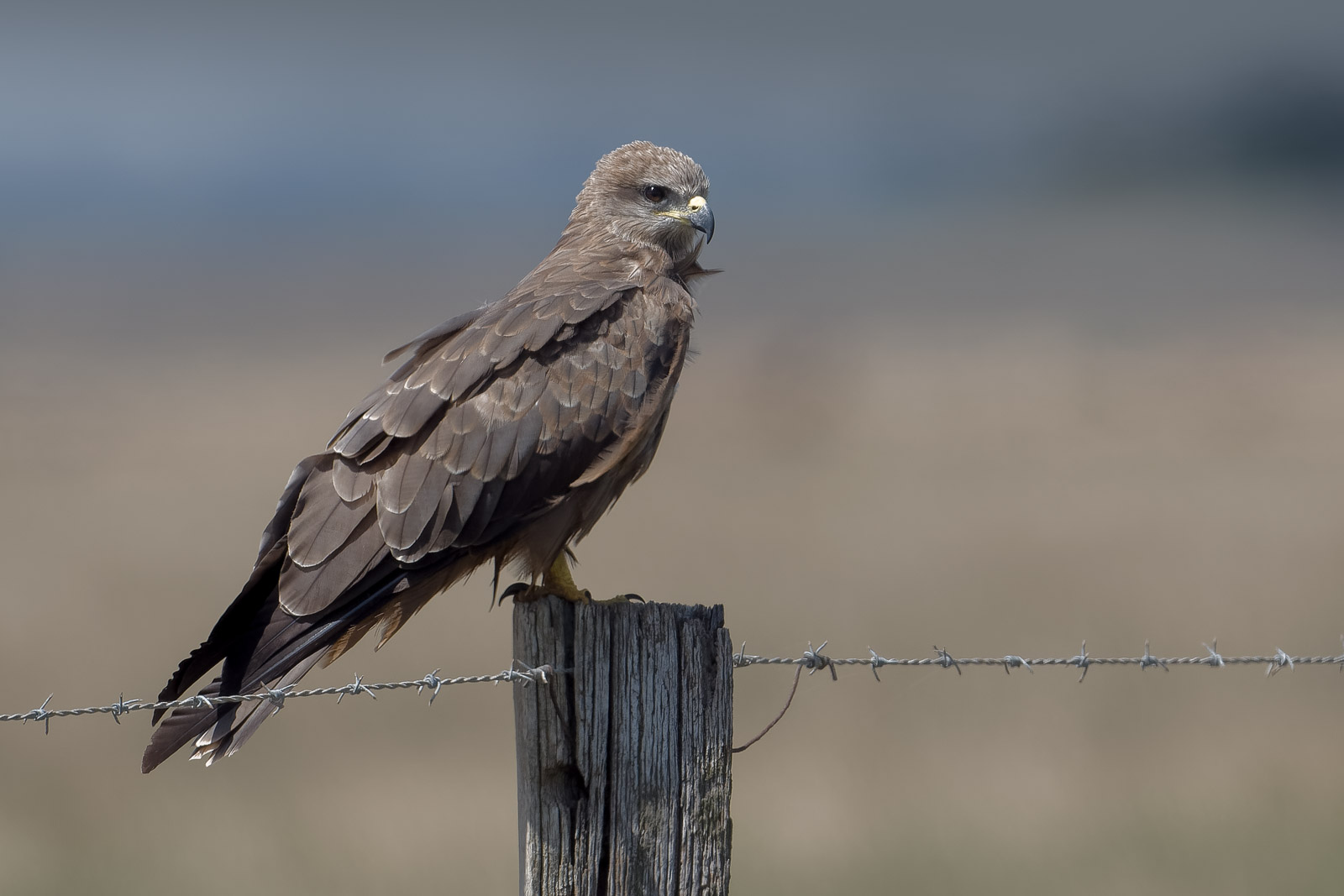
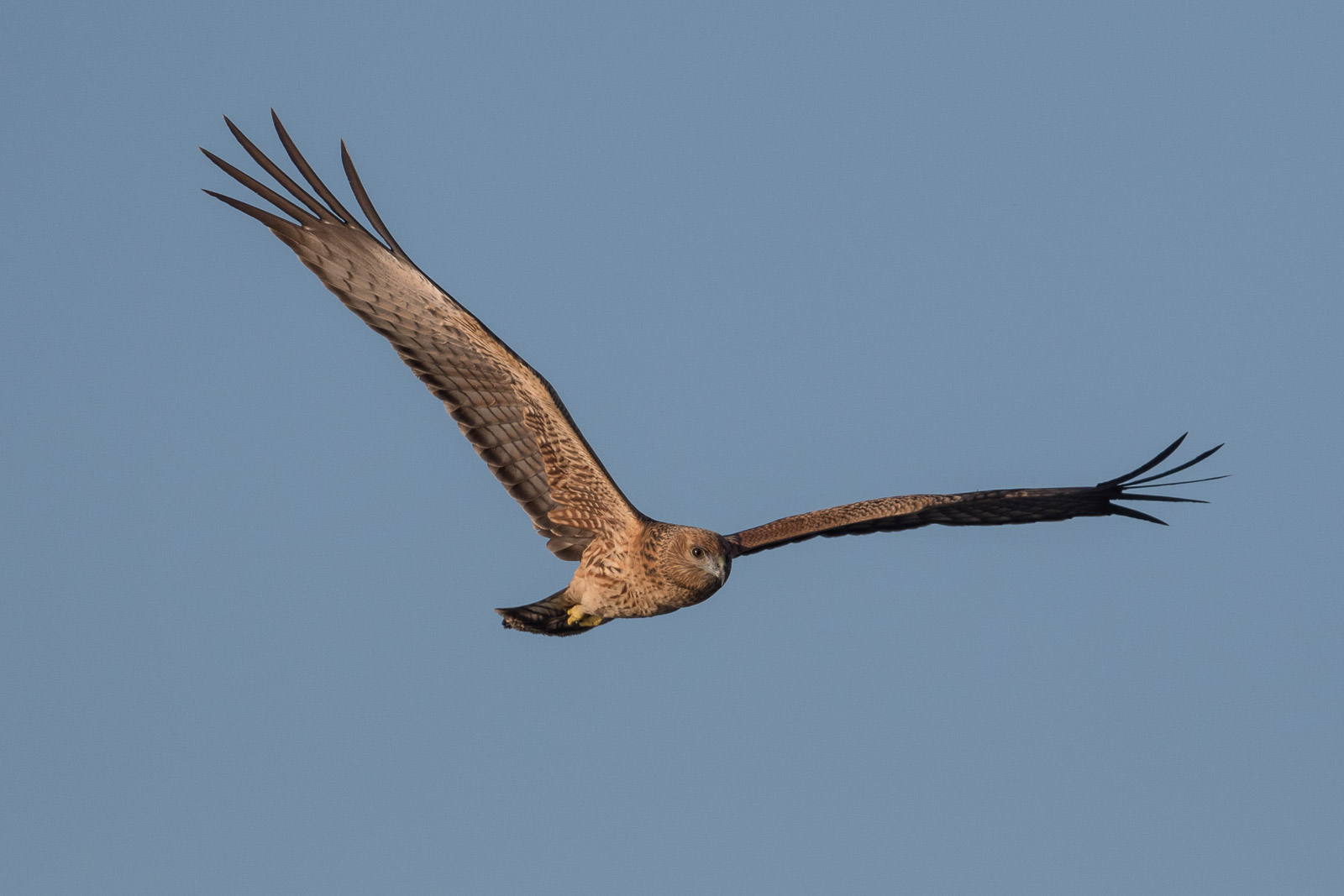
Here’s a visiting Black Kite, just back to re-establish its breeding territory I think.
Guess which exposure method I used?  Oh, and to help, I don’t own or have access to a cat;-)
Enjoy


Little Journeys : A Rainbow on a Gloomy Day

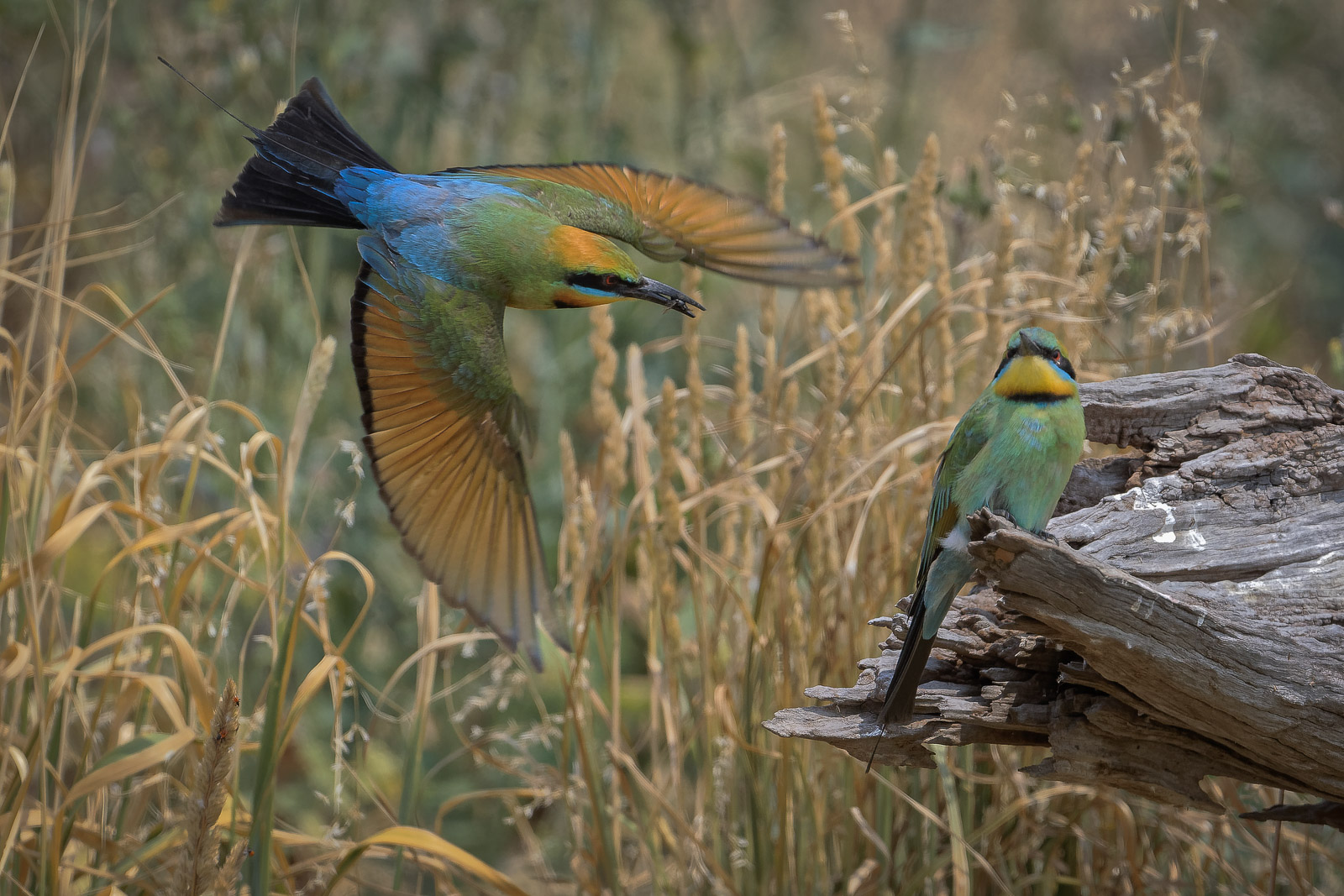
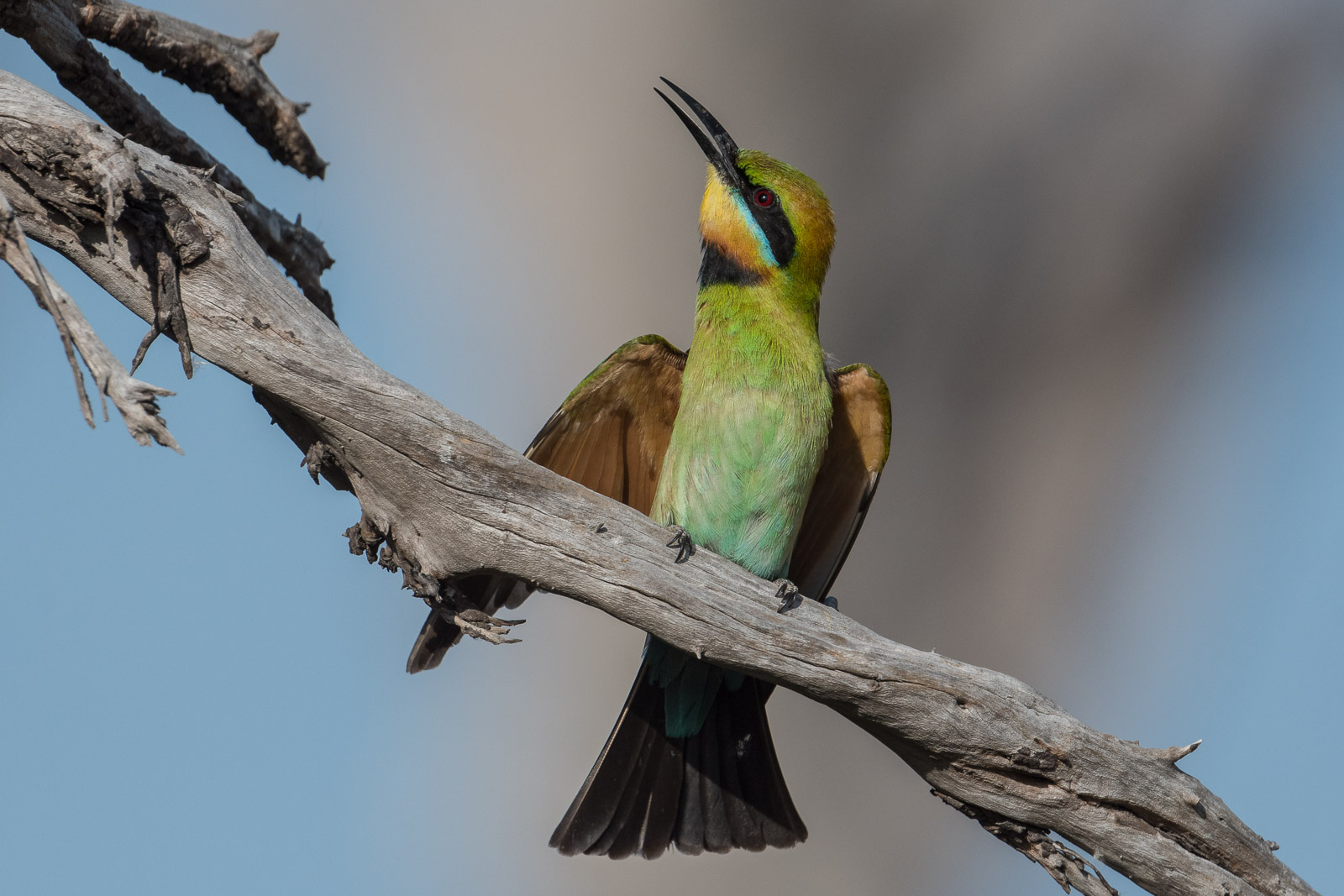
The season for the Rainbow Bee-eaters visit to the southern end of the country is drawing to a close.  Time for them to journey back to more tropical locations.
Each year we have been fortunate enough to enjoy their company, and cheery calls, in a number of locations.
They come to breed, and steepish creeklines are among their favourite spots.  This season however, partly because of the dry winter, and partly because of unyielding high temperatures, which no doubt affected their food supply, we did not see the same numbers in the normal places.

One area in particular out near Bacchus Marsh, normally would support perhaps 15-20 pairs, this year it was a much lower number.

Surprisingly at first they arrived in quite good numbers, and we saw at least 50 or more birds in one day at Mt Rothwell, but they soon dispersed further afield. Also the River Red Gums cooperated and for the first time in awhile had excellent blossom cover, and attracted not only bees, but a wide variety of nectar seeking insects.  So it looked like the season could be good.

However we soon noted that the birds were having a very hard time finding a suitably soft  riverbank clay to open up their nests.  The ground was bleached bone dry, and little beaks and tiny feet can only do so much.  As the hole has to be around a metre or more inside the bank, it appears the work was just too hard and many pairs abandoned the site.

We did find an enterprising pair, that had persevered and in the end they got down to the business at hand.  Later on in late January we walked several kilometres along the creek and did locate several more pairs that had been able to establish in a more favourable location.

And given that at the same time we were working with the Brown Falcon,  Cassia-of Cinnamon, and her young on the other side of town, we didn’t spend much of the season with the Rainbows.  However in the end, they seemed to have gotten on quite well without our overseeing. 🙂

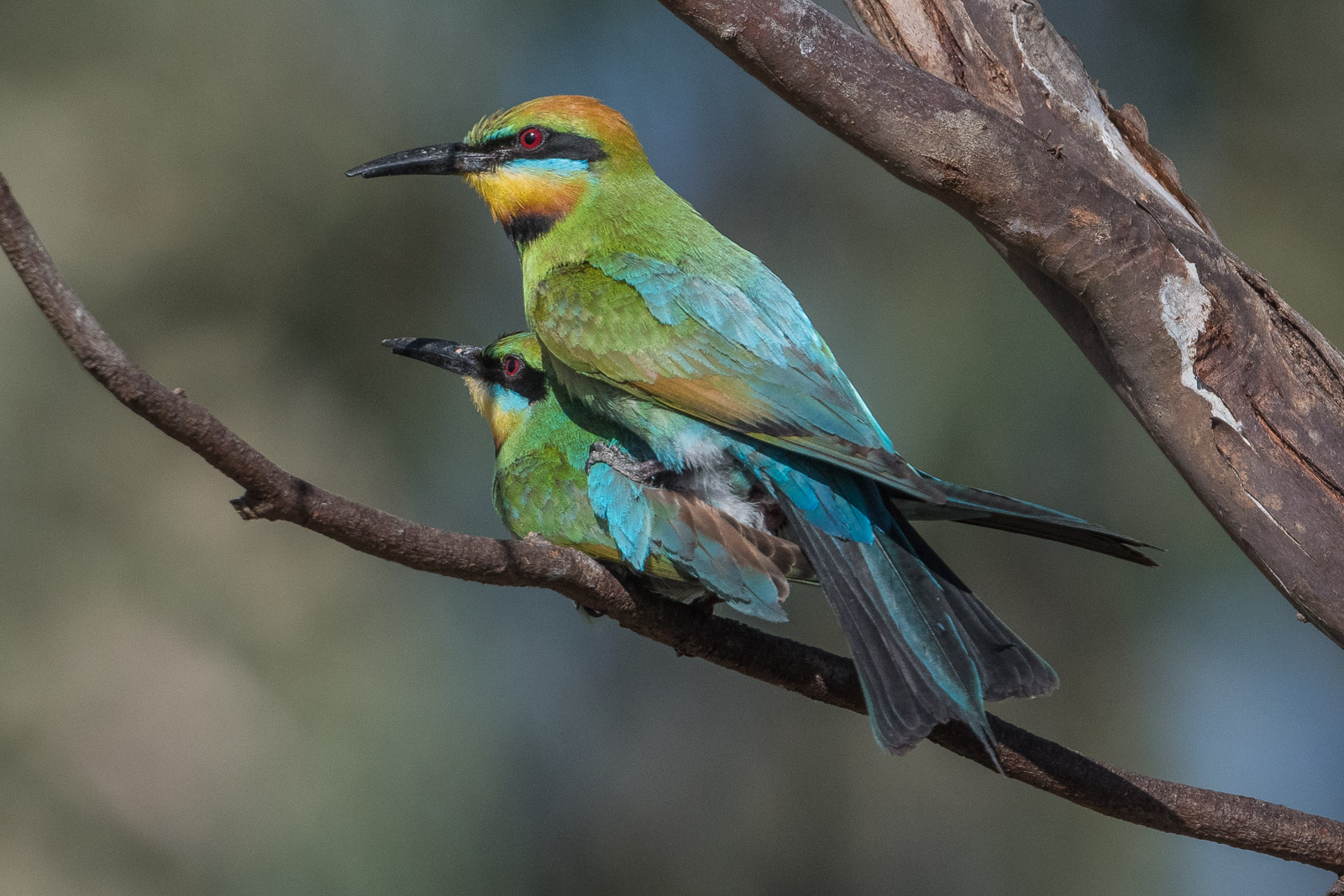
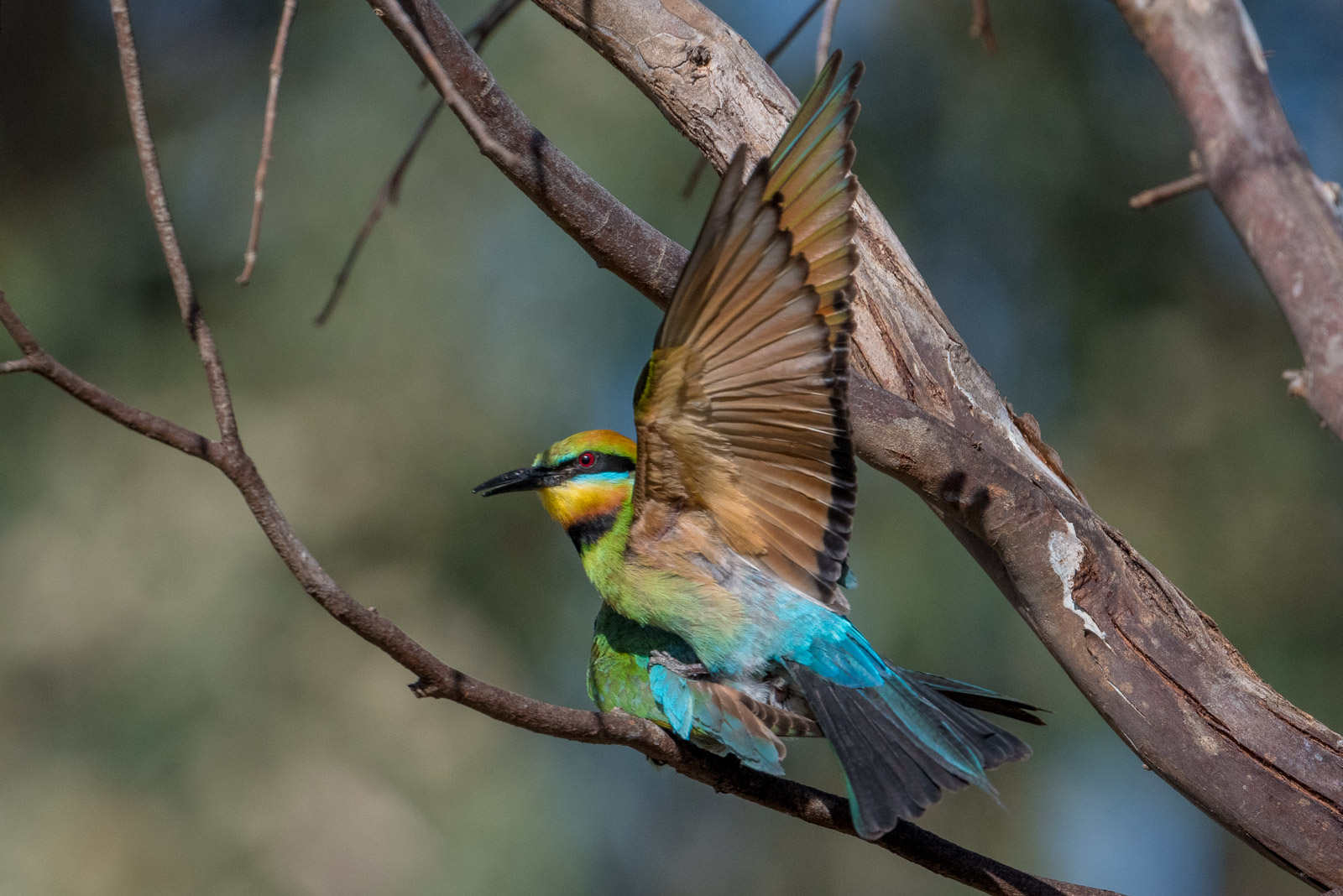
Mating is quite a sustained event. And begins when he comes in with a food offering.
The question is what to do with tails.
Success!
With a large butterfly or moth.
I’ve always been fascinated by the way they are able to flip the bee and catch it the right way round to go down easily


Saturday Evening Post #69 : Awareness

Last week I started the essay about “Distraction”, and in one of the unique turns of events, was immediately distracted.

As Deng Ming-Dao writes,

“Today is the ideal moment between yesterday and tomorrow”

The observation seems so trite, yet if we could observe the simple, how much would we see.

more from Deng,

“Cat sits in the sun,
Dog sits on the grass,
Turtle sits on the rock,
Frog sits on the lily pad.”
Why aren’t people so smart? ”

He comments: When you next see a cat or a dog sitting still, and admire the naturalness of their actions think then of your own life. Don’t meditate because it’s part of your schedule, or a demand of some particular philosophy.  Rather Meditate because it is so Natural.

I finished last week’s blog bemoaning missed opportunities.  Indulge me if you will, but Brown Falcons don’t bemoan missed opportunities.

EE and I were making our way back toward the vehicle, and came to an opening in the forest, and there, just along a bit, in the open Brown was sitting. Again it took a while to get round past the bird and be able to position it against a leafy backdrop, rather than a porridge sky.

I positioned myself, you better believe it so I also had good views of the around.  I’m left-eyed dominant, and most DSLR designs are for right-eye dominant folk. That way you lucky people can look through the viewfinder and also use your left eye to check the surrounds.  My unused eye is buried behind the dials, knobs and buttons on the back of the camera, and I don’t have the luxury of staying intouch with the around.  It’s why I’d never make it as a army sniper, have to lean over the weapon to aim. Recoil plays havoc on the cheekbones. 🙂

I even spent years trying to train myself to use my right-eye, but all that did was induce vertigo. 🙂

Brown was obviously well fed, and not in a hurry to go anywhere, and didn’t perceive us as a threat.  Twenty minutes went by and neither of us moved. Deng’s thoughts were playing out. Meditation is not to be separated from life.

As it preended out the feathers, it eventually arrived at the tail, and it was possible to see its three new tail feathers and the two outside growing in.
It must have been pretty pleased with its new wardrobe, as it was a very slow, precise and gentle interlocking of the feather edges.


Saturday Evening Post #68 : Sight and Vision

A lot these days in photo circles is talked about Vision. What they are wrestling with is; why I photograph birds, someone else photographs cars, while another does street, and yet another is ‘creative’ and someone else is  ‘general purpose’. No matter, the issue is the same.  Is the way I photograph the subject an expression of ‘me’.  And to a lesser extent, “Oh, and what I think if the subject”.  And if it gets me more “likes’ on spaceblock, then I know I’ve arrived.

And the discussions go off the rails as defining ‘me’ is not so much about photographic topics, but rather about becoming a ‘fulfilled’ person.

The thing that seems ‘obvious’ to me in going down that maze, is we begin to lose the benefit of the right language to find ways to extend the photographic vision.

People, say, “Oh, I’m not a creative person.” ” I don’t have much imagination”. But its not so much I think being ‘creative’ as having insight into the subject.  What do you want to say, how should it look, what is the right approach.

Sight is such a precious gift, so is in-sight. If I close my eyes and think of something, I’ll say, “Oh, I see.”  When I’m out and about with fellow photographers, I’m often conscious that they are too involved in their immediate ‘around’, and are at the mercy of impulses.  Point something out, and the response is, almost always, “Oh, I didn’t see that!”.

Others are hungry, and point things out that I miss
Part of that I think is the lack of language to identify ‘the photographic possibilities’ in front of us.
Form, Tone, Texture, Shape, Pattern, and all the rest are the building blocks of our creativity.

Had Jane Austen written “Pride and Prejudice” without a knowledge of word flow, sentence structure, grammar and description, we might have ended up with:-

Want acknowledged  is a man truth  , that a possession single good in  wife of a  universally fortune    ,  must be in of a it.  —Sorry Jane  I apologise profusely.

A client steps into the the studio to have their new whizz-bangery product photographed for a brochure.  A full brief is provided, Simple Set, Highlight the Product, bring out the best features. Make it appealing.
The photographer makes the shot, then says, “Oh, that is not creative enough, it doesn’t say anything about me, and my skill and my vision”
Next step, into Photoshop, download some Preset, turn the subject into HDR, blur out the company logo, make a drop shadow around the product name, give an ‘artistic’ wash to the final result.
Client says, “That is not what I asked for”
Photographer says, “No, but look how creative I’ve been”.
Client says, “I’ll look for another photographer.

or.

Client comes in with new  whizz-bangery product.
“I need a photograph for our new brochure.”
Photographer, “Sure, what is it about the product you want to emphasise. What kind of feel do you want to give it. How should the final look”
Client, “Oh, I don’t know. But. I’ll know it when I see it.”
Photographer, “Sorry, Look for another photographer!  If you can’t see it, I can’t photograph it.”

EE and I were searching for the young Brown Falcons. They are near full grown, so it was not going to be easy, and so we strolled along a track looking for a table for morning tea.  When there on the tree in front, sat, Brown. The weather was foggy, 100% humidity, and smokey still from the bushfires. The light was impossible. First shot is black shape on a black shape tree. Hardly inspiring. So I moved into the scrub a bit, and eventually managed the bird against a distant pine tree, but with so many light patches coming through the branches, it was not that much better.
Re-assess. I told EE I was going to backtrack about 50m, head across the road and hook around in a “U” to be opposite the bird on the other side of the road, at least it would be against a supportive background.
Brown, was in no particular hurry. Patience is their watchword. After a few minutes I was in position, and while not perfect at least I could see the bird.
And we entered Brown Falcon Time. Twenty minutes or so of preening, watching, changing leg positions, preening, watching.  Perhaps the fog and smoke gave it little option.
I’m nailed to the viewfinder.  After a suitable look around, the bird became active, stretched, preened out the wing feathers and was probably getting ready to leave.  Should be a good inflight I’m convinced.

But.

What I didn’t realise, from my position just off the track,  was that two people were walking down toward us. Then ‘crack’—a broken stick, and I made the absolute beginner’s mistake, I looked away. Milliseconds at most. Brown had dropped and was away. One wing flap-just about got it in viewfinder, second wing flap-on target, but out of focus, third wing flap-focus locked,— here’s a Flickr Link,  fourth wing flap-angle of bird is now away from me, and tail feathers aren’t that exciting.
“Expletive deleted”.
“Oh’, said the passersby, “Nature Photographers.  Sorry, hope we didn’t spoil your shot.”
“I’ve had better days,” I snap.
Both went on mumbling about rude nature photographers…

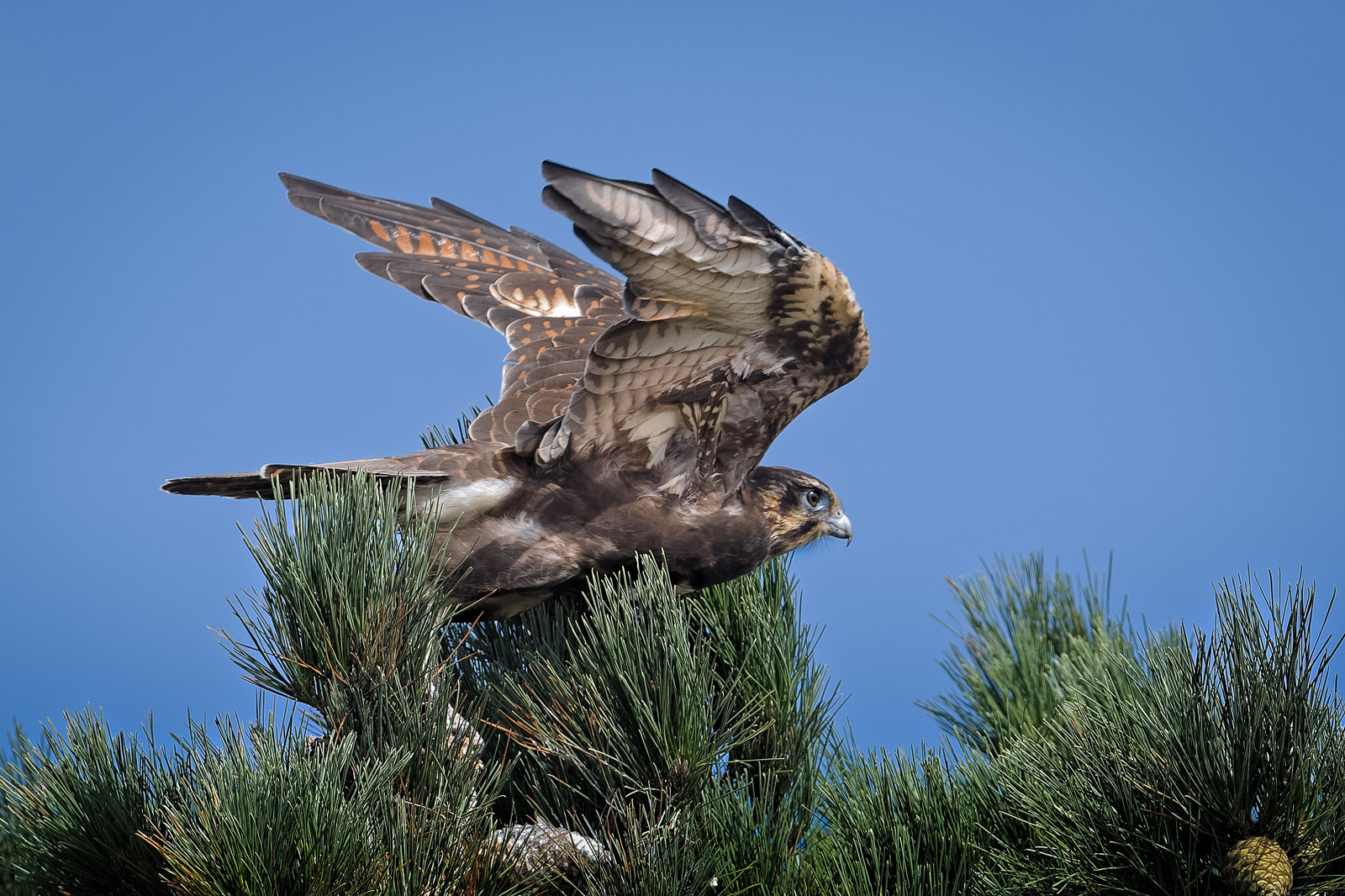
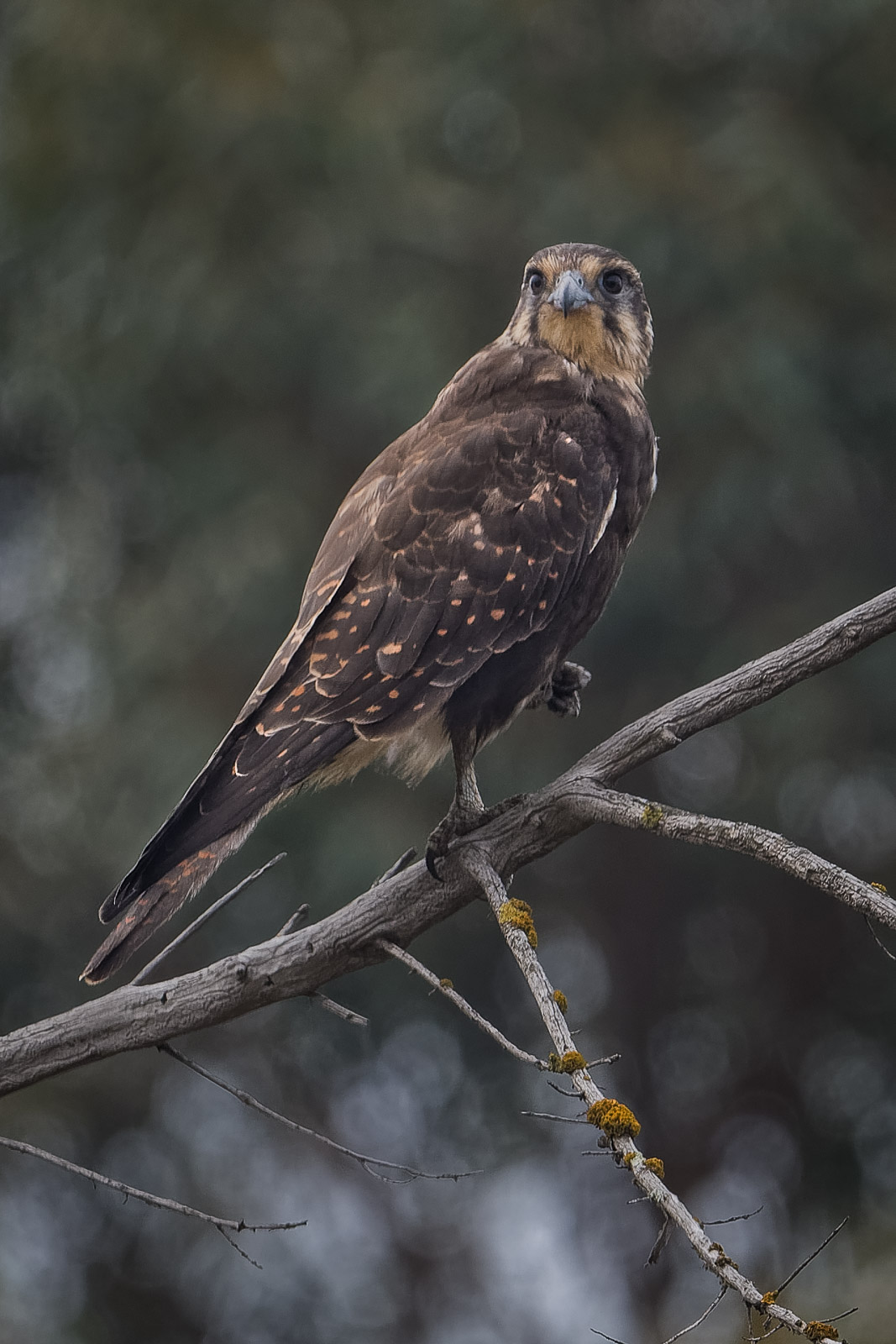
Here is the perched shot.
Again I’m going to show it vertical as that is how I envisioned it.

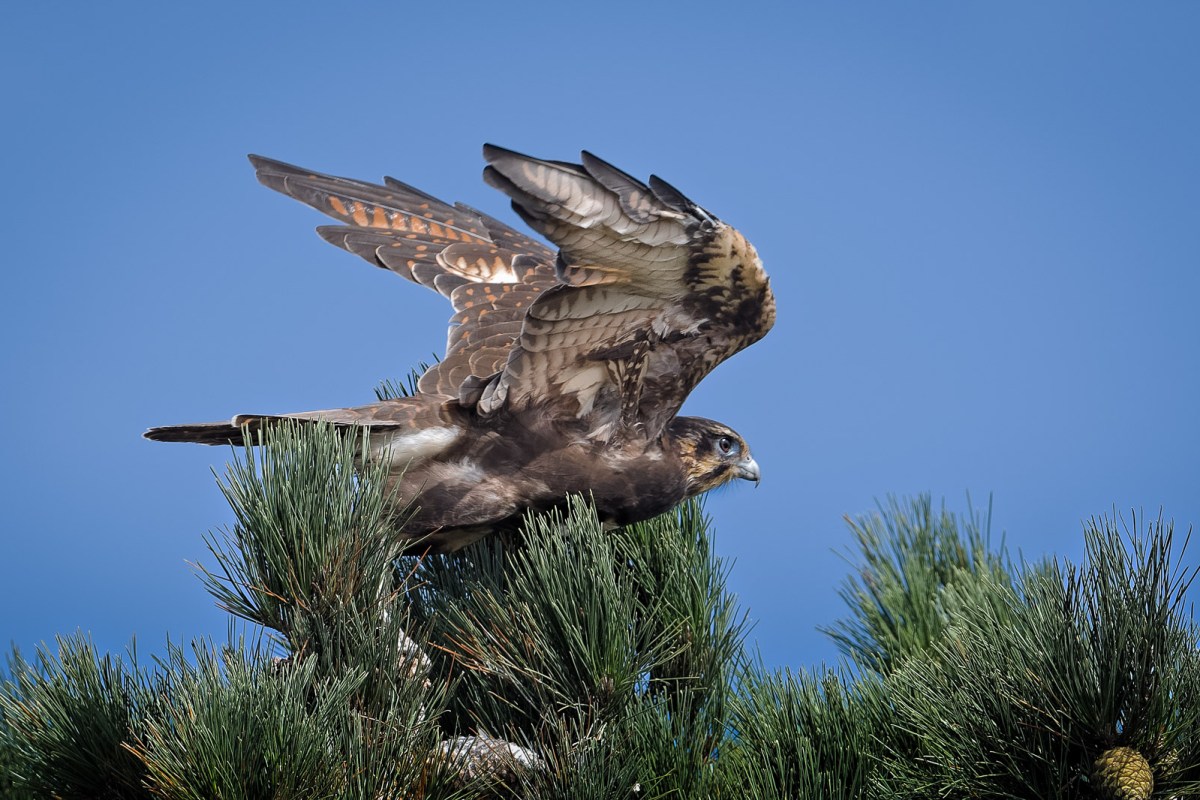
This young Brown is beginning to moult out of of juvenile colours, the rich orange is now being replaced by the more normal creamy colours. The tail has three long new feathers and on each edge of the tail, short growing new feathers, they grow fast so it should be good  in a week or so.


Werribee Wagtails: A Monthly Walk


Screen Shot 2020-02-06 at 11.08.02 am

Werribee Wagtails existed as an active bird watching group in the western suburbs for 25 years or so. With the formation of BirdLife Australia, Wagtails merged to become BirdLife Werribee, and essentially continued to run business as usual.

Change is, as they say, inevitable, and many of the core of the group, found themselves at the Jawbone Reserve yesterday, co-incidentally, 😉 , looking for birds.

Surprise, Surprise!

So too, of course, were  members of the old group 😉
Perhaps it was a ‘re-birthing’ of Werribee Wagtails? Stranger things have happened.

So after the usual good natured greeting and discussion we all set off with the same intent, looking for birds.  And Jawbone didn’t disappoint.
Another surprise, or co-incidence, we all ended up at Newport Lakes for morning tea. And some of Cathy Buckby’s wonderful cake creation, thanks to Mark for just happening to be there with cake on supply. 😉

We walked the lake, finding the birds very quiet and furtive, so it was soon time for lunch. The merry chatter of (former?) Wagtails enjoying the day out resounded from under the picnic shelter.
Then on to the mouth of Kororoit Creek and Paisley Drain outflow among the fishermen’s huts. Should that be fisherperson’s ??
Not a bad way to spend an afternoon.

Mr An Onymous, EE and I went on to Altona to have a coffee in the sunshine and watch the activities on the beach.

We might meet up again 😉

Catch you Along the Track.

Enjoy

Great Crested Grebe
Hoary-headed Grebe
Little Black Cormorant
Great Egret drops in with looking for a space
Pied Stilt Juvenile
Hardhead, Male
Black Swan Cygnet
Several of the Common Greenshanks near the creek causeway

Saturday Evening Post #67 : From Studio Werkz

Studio Werkz was a proposed name for a photo studio/business in another universe. Mooted by an eclectic group of photographers, we had the idea of being able to offer a wide range of photo services, but in the morning, after the coffee kicked in, we managed to drift in our own directions.

Still I’ve often retained it for some bird portraits that have a ‘studio quality’ about them.

This is usually a clever mix of bird character, the right location and an interesting lighting set.

As my earliest mentor was oft to say when assembling a lighting order for a product or portrait, “We don’t keep adding light, we work to remove the shadows until the subject expresses itself.” Which means in commercial product photography that no two lighting problems are alike, and the difference of a few millimetres up or down, left or right of lights, reflectors, camera angle, lens choice could result in an entirely different rendition.

Which, still holds true in this day an age of bulk-flat light, the environmental feel, or the harshness of poorly balanced lighting and an over abundance of post-processing.

So Studio Werkz images try to emulate those great lighting arrays, without the benefit of controlled studio.
The other morning I looked out the front door to see what all the noise in the garden was about. New Holland Honeyeaters at corroboree. Each sitting on a branch and crying out at all its relatives.
And then one landed on the agapanthus plant in the garden.
The early morning light stuck hard lines across the bird, separated it from the background, incidentally my neighbour over the road’s garage door in shade.

“Right”.

Scramble to get the camera, grabbed the one with the 500mm lens, and opened the door.

Gone.

But the noise carried on and they flicked back and forward of the agapanthus, and I waited.

The trick of course is to get the best light on the bird, and to keep shadow detail, so there were only ever going to be some angles that would work.
Until Mr Clever turned up.

“Would you like me to pose upside down?” it seemed to say.

Adjust the exposure to hold the highlights, and the job was done.  In a studio of course, it would have been easier to add a light or two to open up the shadows, or at least put up a reflector to push some light into the shadows.  These days, we just slide up the ‘fill-light’ in software and job is done.

We each have our own way of making that work, and my favourite for many years was a Nikon Software, Capture NX(2). Its major claim to fame was some clever Nik Software, (different company) “Control Points” They measured the lightness and colour values of an area (think L*A*B* Color space), and then applied it to all similar values in a given area. Making it easy to open up shadows or make subtle changes to colour and tone. Sort of like Photoshop Layer Masks and a Brush.
Nik eventually marketed its own versions, and Google bought them out, and the series languished until DxO Labs purchased the technology and have incorporated it into their very clever Optics Pro software, now called DxO PhotoLab.

Pop the Adjustment Tool into the shadow areas on the bird’s chest, slide up the ‘shadows’ controller. Simples.
Dean Collins couldn’t have done any better with “Available Light”. — For new readers, there is a photographic joke in there—you’d need to read back on my Dean Collins series.

I have to say, I really wanted to show this as a vertical, so I’ve done a header image horizontal, as that is what WordPress demands, but here is the way I saw it.


Around the Plant

We’ve been busy on a number of projects of late—think EE’s Brown Falcon Nursery, wedding at the family acres among others. Also the weather has ranged from downright dreadful to terrifying. So, its not surprising that we haven’t been for a run down to the Western Treatment Plant since early November last year. Prior to that we’d managed three trips that had ended in washouts, and photos of terns dancing in the rain.

Yesterday, after lunch, EE, looked out the window, and said, “The sun’s shining, why not grab a picnic dinner and head to to the WTP for the evening.”

Which suited me, as I have been looking for an excuse to go visit the visiting White-winged Terns. (they used to be called White-winged Black Terns, but let’s not follow that winding track)

We went through the Paradise Road gate, and there in the tree to welcome us was “Elmer-be vewy vewy quiet, I’m hunting rabbit-Fudd”, the Brown Falcon.  He even gave us his signature welcoming gesture, the One-legged Stance.

A little further along and we found a couple of Black Kites.  They obviously had little to do, or simply no where to go and it looked for awhile that they were prepared to stare down our presence. We waited.  Hoping of course, that they would throw off the fence in our direction. But in the end, they slipped off the fence and away. Tail feathers sharp, but little other detail.

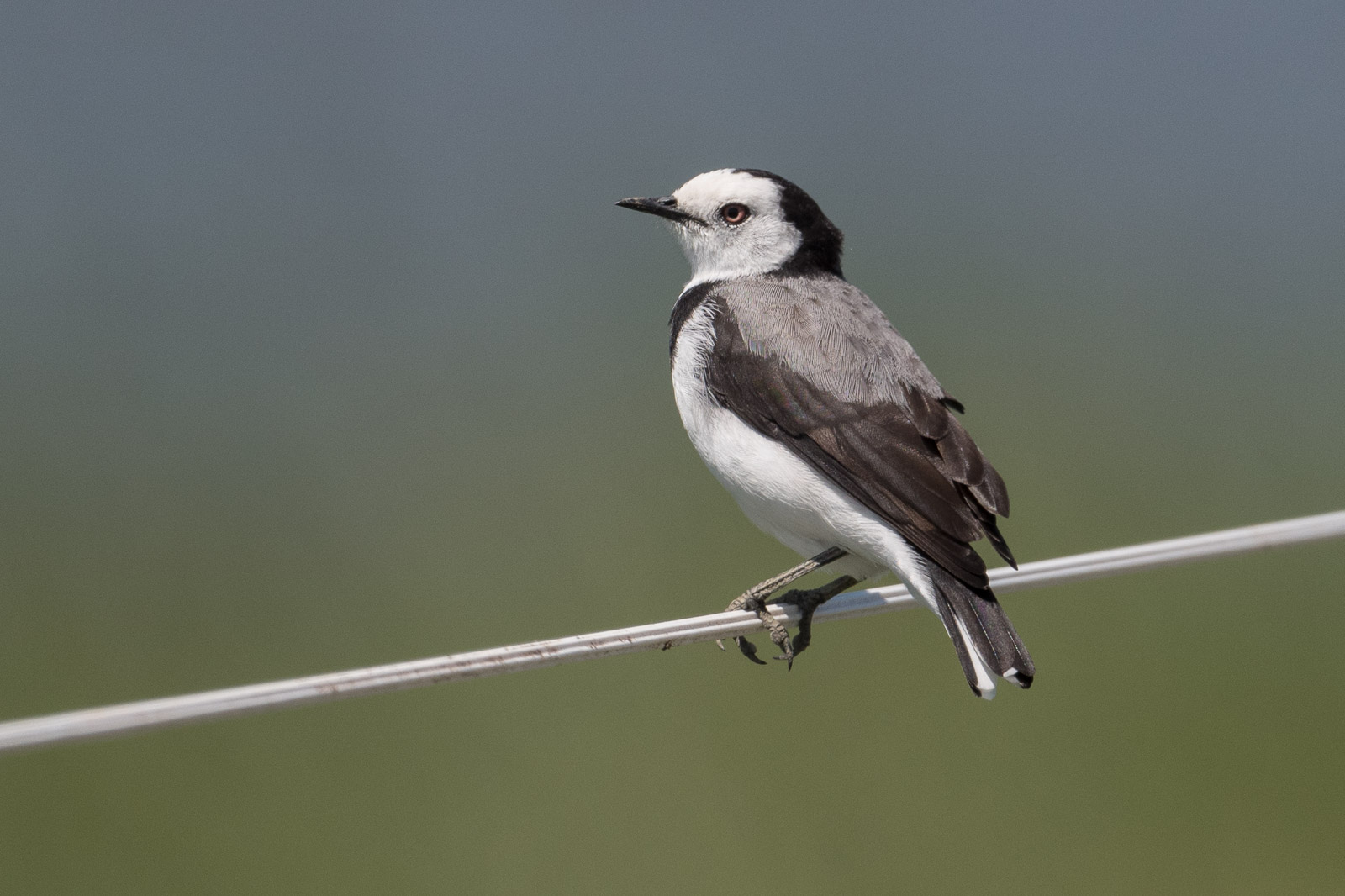
The roadway down to Lake Borrie had large numbers of White-fronted Chats and Golden-headed Cisticolas along the fences and the roadside greenery. Plenty of young and as EE remarked, “That is probably why we’ve not seen to many of them lately as they’ve been busy.”

We arrived at the area where the White-winged Terns normally hunt, but were disappointed that the ponds were quiet. Really quiet. Not even the usual Musk Duck flotillas or even Swamphens.  We’d have to look elsewhere.

We had anticipated sitting by the beach at one of the overflow outlets, but as the tide was on the way in, there would be little to see among the waders, and we took the hint, and headed down to the T Section area.

On the way, EE remarked that we could try the Austin Road area and see if the Brolga were in residence, but when we got there, again it was very quiet. And we moved on.
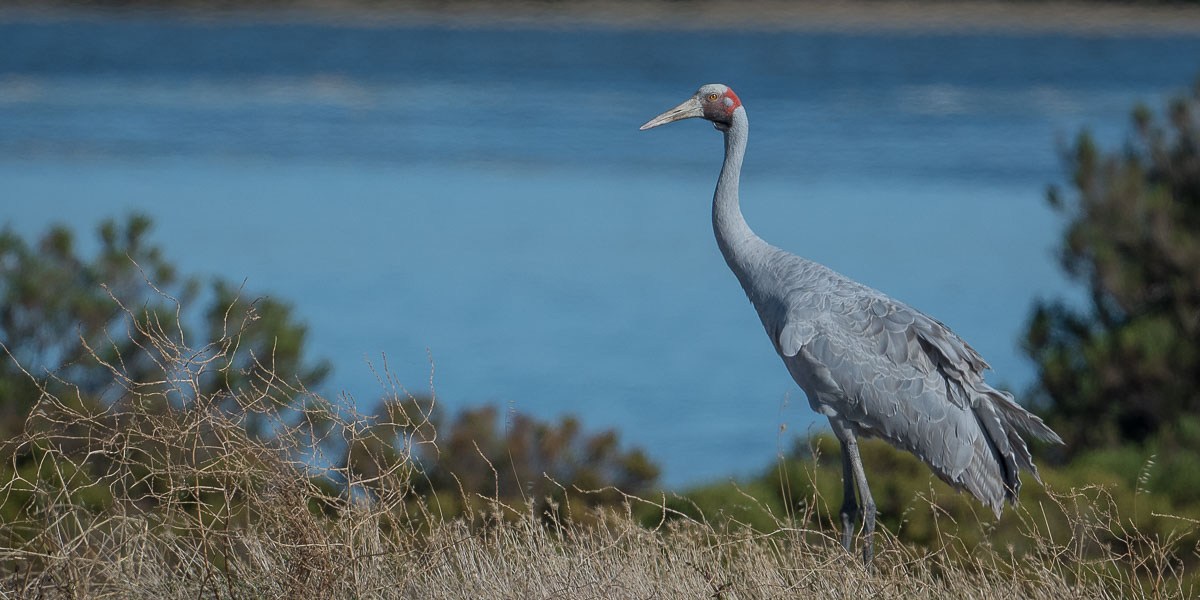
Just as we neared the T Section gate, “There,” she cried. And there indeed, as a pair of Brolga flew across the road in front of us. But the time I’d stopped IamGrey, and EE was out of the car, they were well gone. Never-the-less we backtracked and spotted them further inside the plant, so we drove down as close as was possible. Again we hoped they might fly, but rather they strolled over a hillock and were gone.

Back to the T Section.

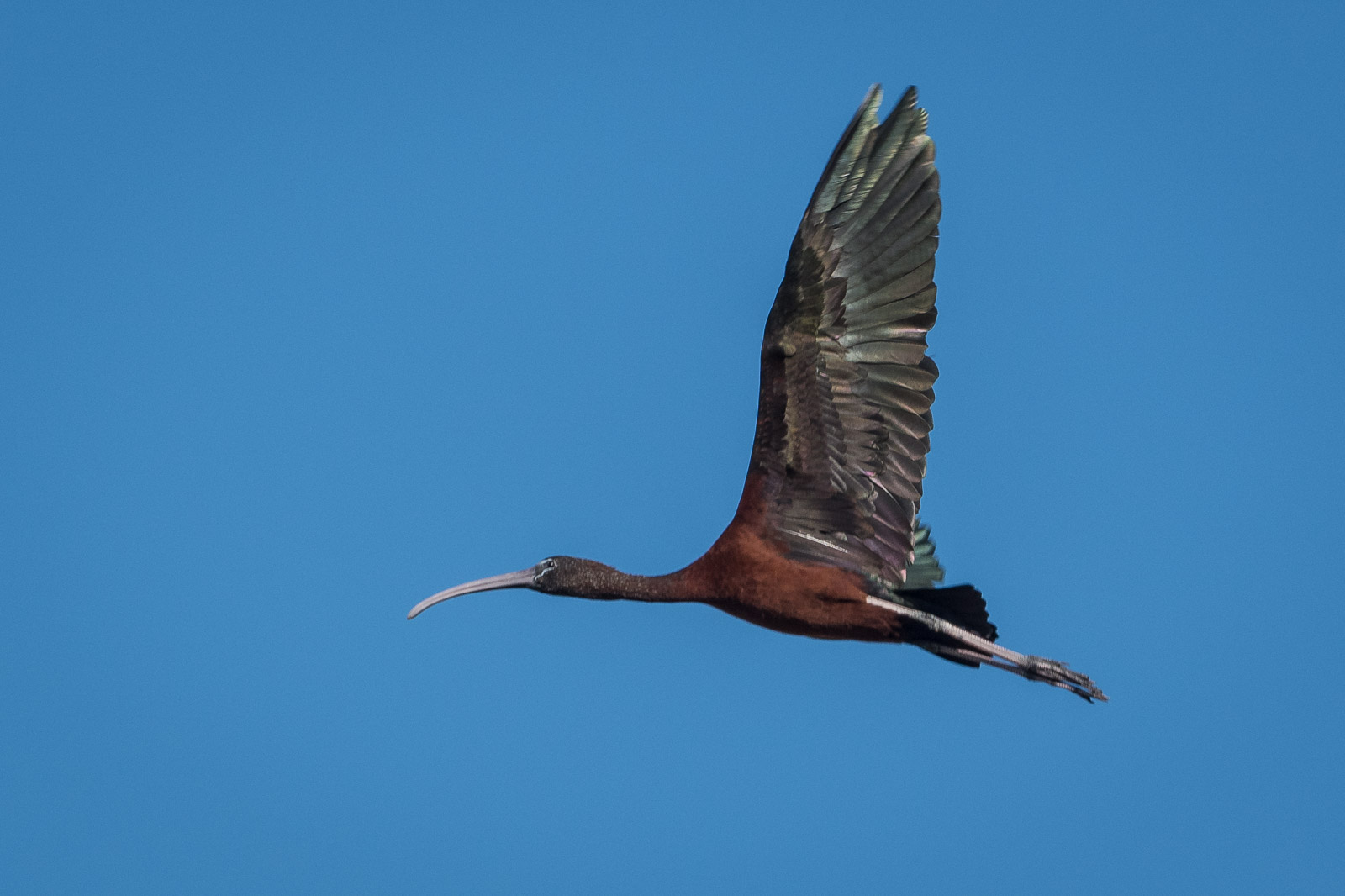
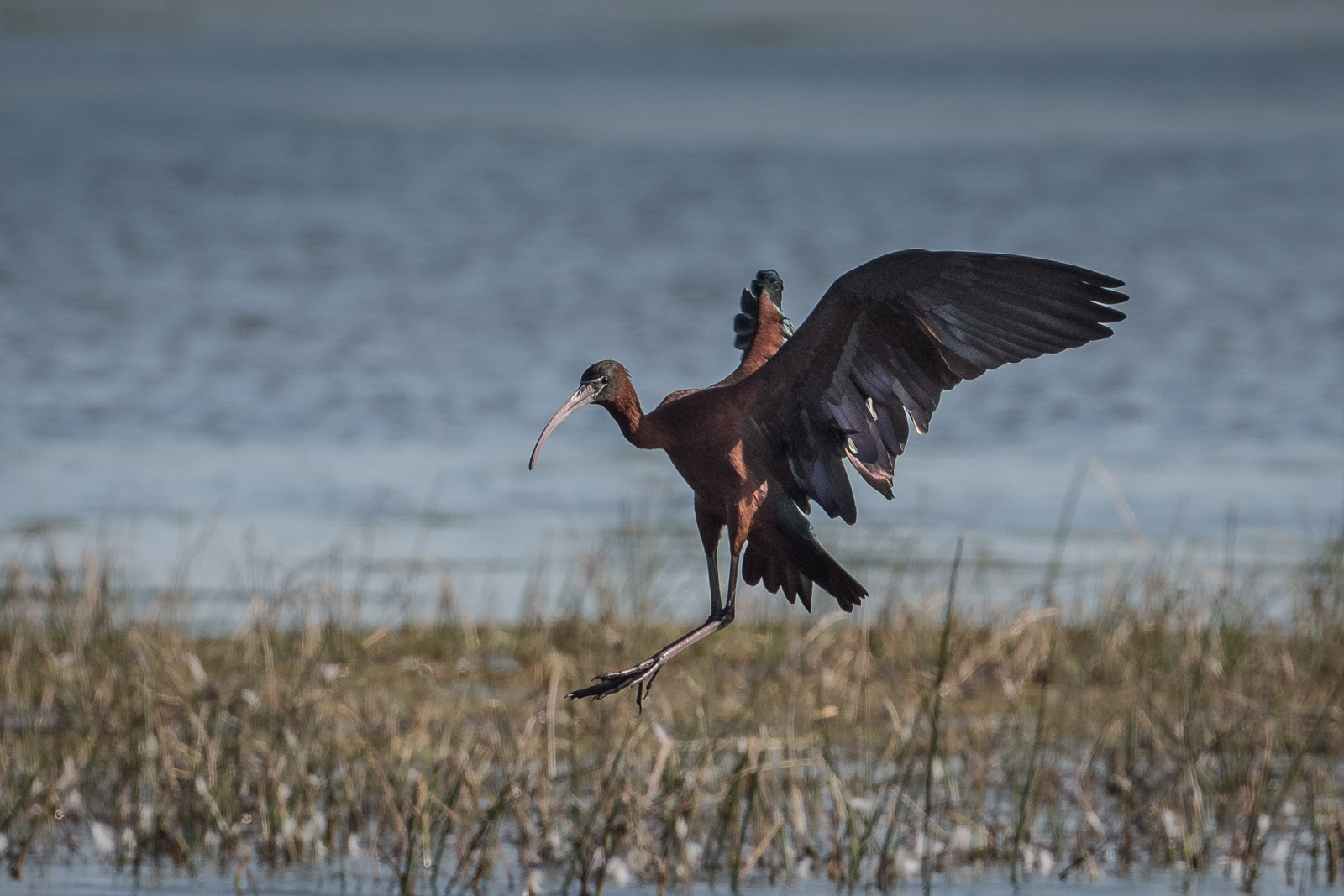
As soon as we got inside the gate, the world changed and about 15 Glossy Ibis descended almost in front of us.  And I learned a valuable lesson about Autofocus on the D500.

I’d changed the Auto Limiter on the 500mm from limiting focus range to ‘full range’ for the previous Chat shots, and hadn’t changed it back. Meant the lens had a much longer focus travel, and combined with the TC 1.4 Converter I’d just been using for the Brolga, the lens refused to focus.  Add to that I’d dropped the ISO for tripod shots of the Brolga and hadn’t changed that back, I was working with impossible slow shutter speeds for inflight.
There go the Ibis. Sadly there goes the focus. 🙂

Quick to recover I am, so off comes the TC, ISO back to 400, shutter speed to 1/3200 and where are the ibis? They had landed reasonably close by, and it might have been possible to get them feeding, when they put a resting Swamp Harrier into the air, and they too took off in fright. Did a big circle around us, and the light, shutterspeed and focus are now working for me.  See who said bird photography was hard.

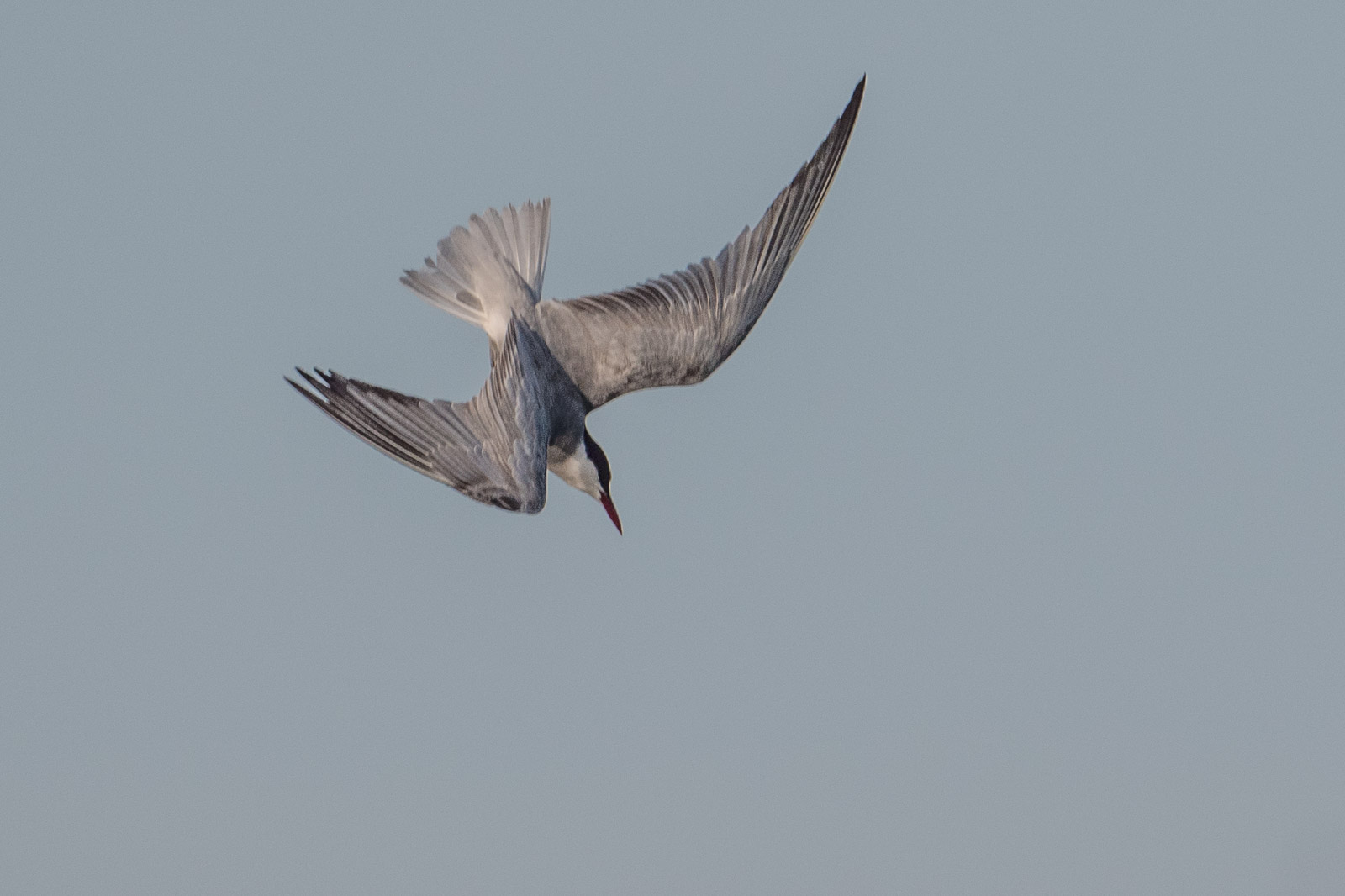
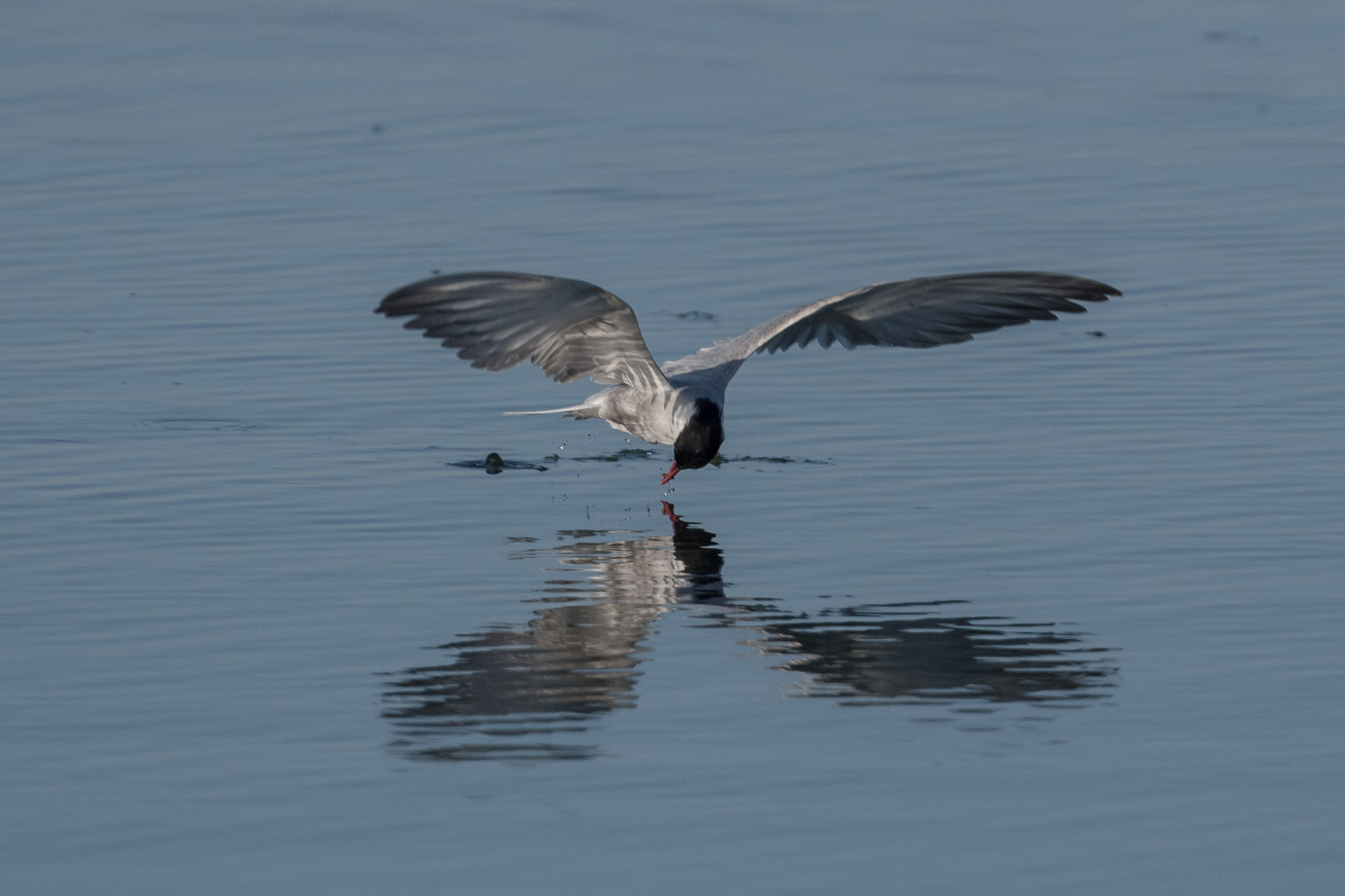
Our next challenge was flocks of hunting Whiskered Terns. Another misnamed, if ever there was one, bird. Used to be Marsh Tern, and I knew what they were. Why change to “Whiskered” as its no help to a beginner in id-ing the bird.  You’d expect to find a bird with some whiskery protuberances, right? Wrong!
They only show a white fine line on their face during a short period of breeding. Another winding track.:-)

Beaut light, beaut action, rolled out the deckchairs, pulled out the picnic basket, and a warm Earl of Grey, and we enjoyed a sumptuous repast in the the lovely evening sunshine and delighted at the unfolding entertainment of the Terns at work.

Nearly dropped me sandwich!
It was a White-winged Tern! They have a much faster wingbeat, not unlike a Black-shouldered Kite, so it was easy to pick among the languid hunting flaps of the Whiskered.  Managed a few frames, but the other terns didn’t take kindly to its presence and outnumbered it chose to move on.

And as I finished the last of the Earl’s good drop, across the bund, and over the water in front of us, a hunting Swamp Harrier came toward us. My fav side-light, rich evening glow, and the bird came past us, not deviating.  A fine way to end the evening.


Saturday Evening Post #66: Down the Rabbit Hole

“When did you go down the Rabbit Hole,” he asked.

I was chatting with a mentor, and the question of how we got into photography came up.

Long term reader(s), (Thank you), will recall I’ve discussed my early photographic exploits.  So I’ll not bore you further with daring exploits of a 13 and 14 year old boy armed with a Magic Carpet, “Super Balda 120 Folding Camera”.

But it got me to thinking about how Alice, in her adventures met all sorts of different situations. Together with some fascinating characters, and some great, thanks to Lewis Carrol’s unfettered imagination, and his superb way with words, that bring tears of joy and delight, along with a helping of drama, and the delicate balance of—will things turn out alright.

And no two rabbit holes are the same. For some it’s a technical exercise, for others a range of creative pursuits. For others the need to document the good, or the bad about the world around. Causes, events, happenings, occasions, quiet moments, even introspection are all part and parcel of the photo pursuit. These days an added facet is the unending webbased discussions that seem to fill each moment of the day with an ever increasing complexity. This camera, that lens, have you tried the best software, my vision, my pov, my set of rules or even my blindness to other’s view of their world.  All the while it seems it stops us from making those great images.

(I was nearly going to write, and where for all these waffling experts are their stunning photos to prove their position,. But not wishing to offend anyone, I won’t 🙂 )

I think a better question, is ‘Now that I’m down the Rabbit Hole what direction do I take?”  To mess with the Cheshire Cat? To follow the time poor Bunny, or to trade swords with the Queen of Hearts?  Or to try to escape from the White Rabbit’s house?

There is, as William Neale, points out, a delicate balance between working more with the same subject for better angles, better light, more mood, or simply moving on for another subject.
These days, I’m committed to Bird Photography, so add the additional “Wonderland’ moment of how the subject interacts in its world.

Sometimes I stay for hours, hoping for a new look at the old subject, sometimes coming back many days in a row, looking for that telling moment. Sometimes I find such exciting subjects and I just need to slow down and have the patience and the concentration  to wait for the right moment. The one that captures the right nuance of the subject.

Raucous, loud and bullying are all words that tell of “Sulphur-crested Cockatoos.” Amazing aeronauts, masters of the air and skilled artisans of the wind, also are part of their character.
We were in a paddock waiting for for the appearance of some small bush birds.  All around the Cockys were putting on Royal Command Performances.
It might have been a distraction.  But once down the Rabbit Hole, all sorts of worlds open up if you have the Key, the Potion, and the Cake. 🙂


Little Visits: Charming Sittellas

Mentioned a trip a few weeks ago to the You Yangs.
One of the highlights of the morning was an encounter with a family group of Varied Sittella.

These charming little birds are not always so easy to find, and because of their hyper-active approach to feeding, are always on the move.  It might be I guess that they have to search through all the bits of loose bark on a branch looking for a tid-bit, and with so many birds all at work at the same time, its really the quickest down the branches.  Sittellas have an unique approach to feeding, starting at the top of the tree and then working their way down.  Treecreepers on the other hand, usually start lower down and work upwards.

What was interesting is that this family had several young, recently fledged with the party.  The young ones preferred to sit together and preen, while the adults did all the work.
They moved so quickly that we lost them for a short time, and while we went right, they apparently had gone left.
Big Rock is just what it says, a very big rock.  There is a track around the base, and its about 20 minute stroll.   The birds were working primarily in Black wattle that grows up along the base of rock. When the rains come, good water flows from the rock, but at other times, the area is particularly dry  so much of the wattle never grows to maturity.  Which suits the insects that the Sittellas feed. So it works all round.

Enjoy.

Typical pose, going down the branches
Every nook and cranny gets a good going over
No doubt a favourite game. Looping a branch
Some of the young ones that were happy to sit together and preen
Its always impressive to see the underwing colours on these birds

Gottcha!
Hard to see the rich colours on the wings while they are folded, but impressive in flight

Saturday Evening Post #65 : The Gift of our Very Personal Now.

Simple one tonight.
Mostly because I couldn’t have said it better.

Here is a quote from “The Online Photographer”, A Postcard from Peter

“The gift of seeing, feeling, and the joy of response!

“We live in a world full of immense challenges—often personal and maybe more often, generalized challenges to the spirit presented by the major forces at play all around us—politics, economics, ideology, attitudes, and environmental realities. In the midst of all of this—among the daily blessings and joys that offer so much amazing life in the present moment—is the opportunity to go out, and use one’s eyes, heart, movement, and presence to not only see, but to feel, and respond by registering with a camera, our very personal now. For many of us, it is not only photography, but more importantly, this opportunity to exist and live in the present among all that life can offer daily, that is an essential nourishment for the soul. And, it all starts by simply being out, present, and alive, by seeing and feeling. This opportunity is such a blessing for us all.”

—Peter Turnley

Original contents copyright 2020 by Peter Turnley. All Rights Reserved.

Mike at Online Photographer also features a photo by Peter. But courtesy means I won’t republish it here, without permission.

Peter Turnley is a photojournalist and has had many magazine covers over his career.

I have often pondered in quieter moments, that if I’d have not taken a turn to commercial photography, that PJ would have been my pursuit.
So to that end, much of my current bird photography is not about exotic, or more species, but simply to record the goings on of the lives on birds that I come in contact with.

Its my own gift of the Very Personal Now.

Enjoy.


Moments: Hiring a “Tradie”

EE spent much of November and December working with a Black-shouldered Kite pair that were raising two new, fine looking, young.

By the end of the year, the pair had given the young ones their marching orders and apart from a week or so of occasional visits the young now seem to have taken the hint and moved away.  Interesting to see, mostly the male, fly round them and keep them away from the resting female. Try as they might to slip past him, his diligence and vigilance, and fly skills meant it was all a bit in vain.

So, we thought. That will mean the adults will move on soon, as this area hasn’t traditionally had a ‘resident’ (not that Black-shouldered Kites are resident), pair.

So we thought.

On the way through the forest in the morning, and we were surprised to hear the pair contact calls.  She with a harsh “SCRaaaCH”, and he with a plaintive ‘Pee, pee”.

And there they were both sitting together on the edge of a clearing.   Ok. Time to get some pictures before they leave.

So we thought.

Surprisingly, after just a short break—less than a month—  they are back in business with a new nest site.
So while she sat and occasionally gave encouragements, he took on the role of a ‘tradie’. Lifting and bumping branches, twigs and long sticks. Then rearranging them into the chosen treetop.

While all this anecdotal, and is for this pair only, its been interesting to watch the progress.

Each stick is very carefully selected, and cut, or broken from a surrounding tree. He spends many minutes in the selected tree, and then either nips off the short small twigs or flys at them and pulls them off, or failing that flys at them full tilt and carries off the main branch by force.  Doesn’t always work, as occasionally a stick just doesn’t want to break away. 🙂

Then back to nest, much ‘pee, pee’ing as he approaches, and parachutes down into the treetop.  Then there is quite a bit of activity as he carefully threads it into the right place and satisfied, he usually spends a few minutes (say about 10!), sitting in the nest, and working out perhaps, what is needed next.

Then its off to “Bunnings” for the next load of building supplies.

In the hour or so he made about 6 visits, and she remained on her branch a long way back from the activity, and occasionally added her thoughts to the procedure.

What is interesting of course is that they have settled in for a second nesting. Perhaps the food in the area is likely to improve.

Time will tell as to their success.
In the meantime, here’s the Tradie.

She was quite happy to preen and watch proceedings from afar.

Stepping out of the nest to continue the work.

Off to Bunnings for another visit. Perhaps he likes the sausage sizzle on Tuesdays.

The early morning smokey light has given him a richer colour, and at first I thought it must have been one of the young birds in their ginger dress.


Little Visits: You Yangs on Sunday

One of the first times EE and I have been out just looking about.
We had been hoping to find some Eastern Yellow Robins, and or some evidences of the Scarlet Robins at the You Yangs, and EE also wanted to visit her water feature near the Big Rock carpark.

In the end, the big surprise was a family of Sittella,  and their young recently fledged clan. I’m going to do a separate blog on that encounter.

In the meantime in spite of all the disaster that is around, and the challenges of the rest of summer ahead of us, it was good to see the birds had new life on the way.

Silvereye at the Water Feature
Young Australian Magpie engaged in some serious preening, while reminding the parents of its presence.
One of several juvenile Grey Shrike Thrush working in the area
A Yellow-faced Honeyeater waits, nervously and politely for its turn at the water.
Varied Sittella, circling the branch
Two young Varied Sittella preening and resting while the family feed nearby
A young Scarlet Robin, one of the first we’ve seen in many months. Presumably its a male beginning to moult in.
Spotty the Pardalote. This is the male that I showed feeding his young on my Flickr steam.
Well not every shot is a winner, but I rather liked the colour set of the Sittella wings

Saturday Evening Post #64: A Special Conjunction

Art is the demonstration that the Ordinary is Extra-ordinary—A. Ozenfant

Been away for the past week(end) up at the family acres.  EE’s sister’s Wedding to be precise. Right on the edge of the fire zone in the north of the state.  How close, well, the reception was held in the local Fire Refuge Shelter-the hall was booked before the current crisis. At other times, it’s the local football club building. Go Tigers!

Had the chance to relive some of my early history, as I was called on to ‘do the wedding photos’.  Talk about dragging an old warhorse out for another canter round the circuit.

So armed with the trusty D810, and  brace of SB-600 flashunits, I did, indeed, set off. Add a good short zoom, 24-70 would have been the choice, and I’ve got inside groups and closeup intimate portraits covered.

And as it all came flooding back, like learning to ride a bike, I recalled why I really like to use strobe flash.  A touch here, a shadow fill there, a rosco gel on that one, change up the white-balance, bounce it, fill it, wind down the power for a rich backdrop, and so on, and on.
I also recalled why we went down the Nikon path back when we went digital full time:—Their superior (at the time) flash control. Joy to use and control the power and balance, without lots of cables, and light control gizmos.

Reminded me of a quote from Tom Ang, is his photography book.  “The joy and delight photographers take in their experience of light. It may, then, be a sharing of the experience of life itself. It is our good fortune as photographers to have a particular awareness of light’s harmony with life. For the special conjunction of a certain quality of light with the stream of life creates a ‘significance of meaning‘ that we turn into a photograph. Light always leads the way.
The wise photographer learns to be taken up by light—not to contemplate it too deeply.”

Working on the Magnificent Magpie project, I was suddenly aware that while I was walking around Maggie checking out the angle, the light the backdrop, the point of view, Maggie was evaluating me too. What a great two way communication.

I ended up sitting on the grass while Maggie hunted across a large lawn lit by streams of light against dark shadows.

And then Maggie stepped out of the shade, into the light, and the conjunction happened.

Just like working with strobes and getting harmony and balance through the electronic flash, Maggie worked with the available moment, and all I had to do was play my part.
Press the shutter button.

Tom Ang again, “The Tao of effective lighting is to let the subject and the light work it out for themselves. Letting be: that is how to be effective without working.”