Doing bird counts as part of citizen science has been a feature of the Werribee Wagtails group for many years. No longer formally affiliated the members still, however, get together for a monthly outing and also for bird counts every quarter at two locations.
Pinkerton and Mulla Mulla Grasslands (aka Bush’s Paddock) and Eynesbury Grey Box forest were the sites for our recent count.
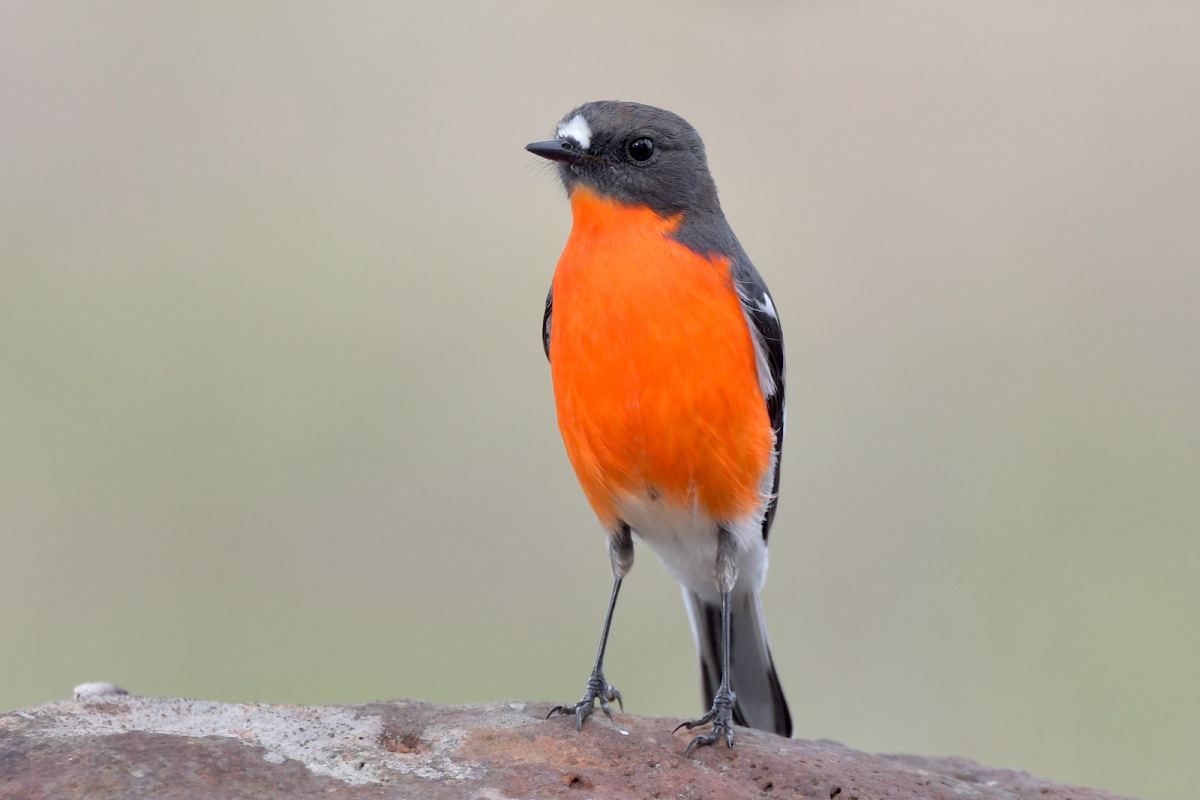
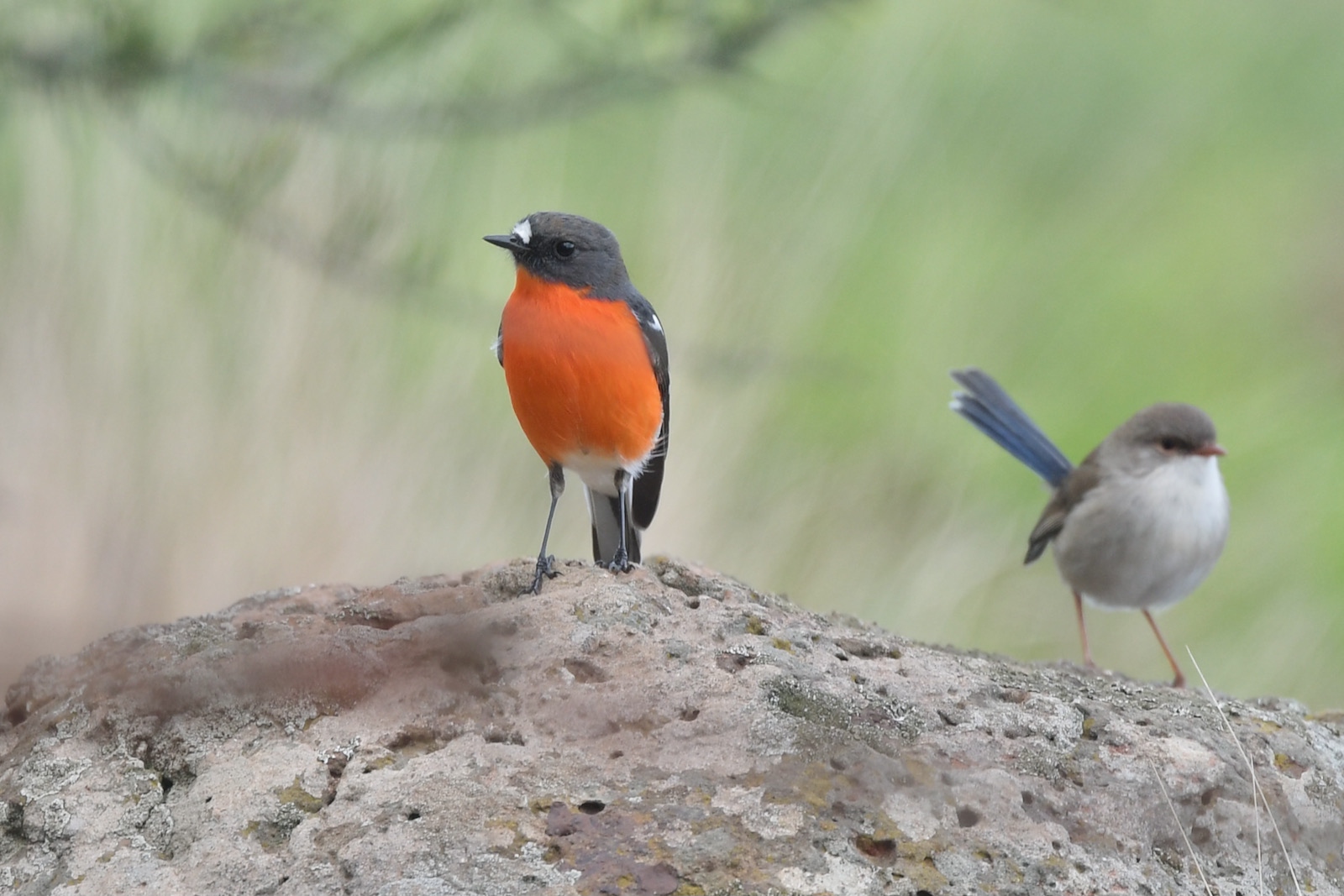
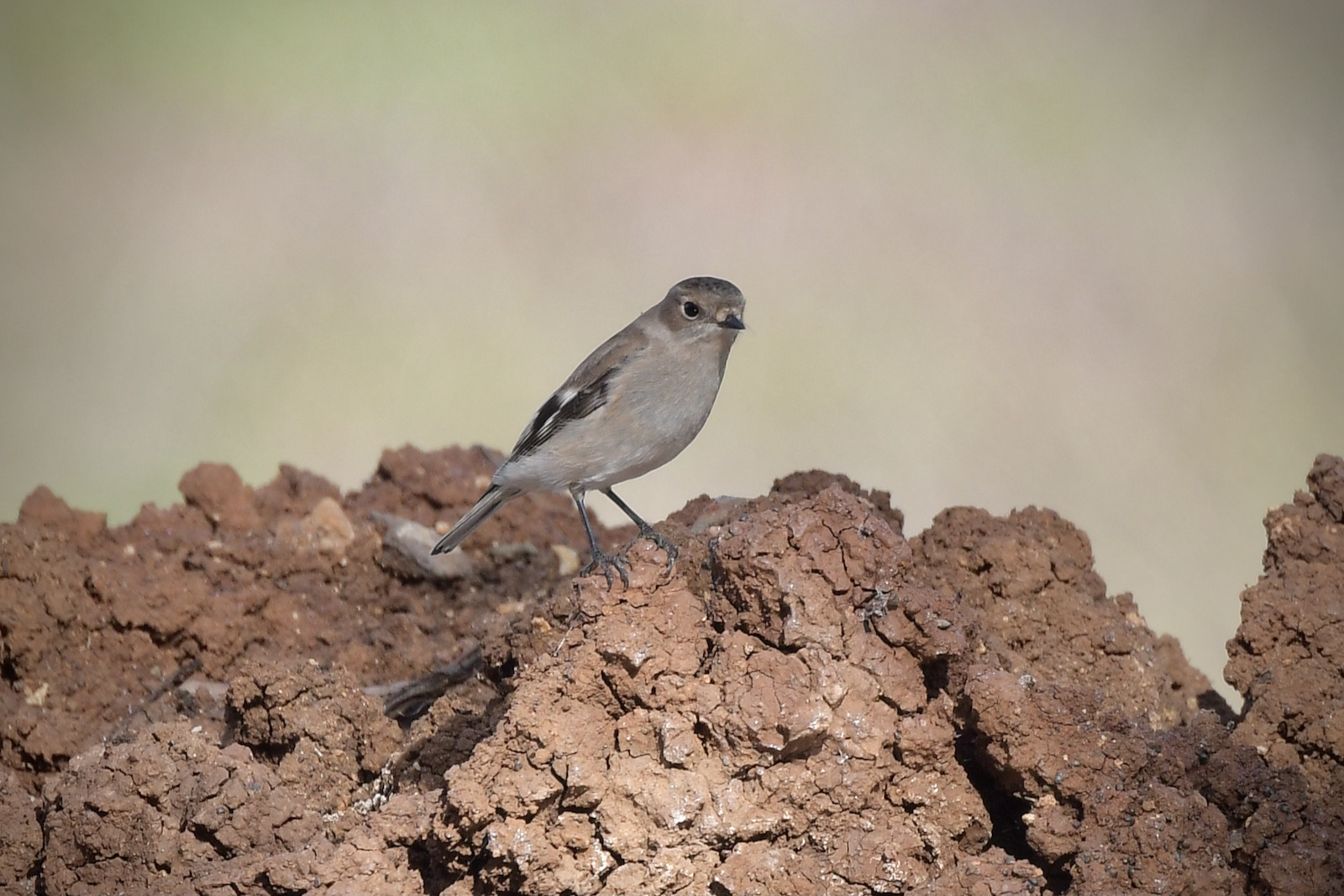
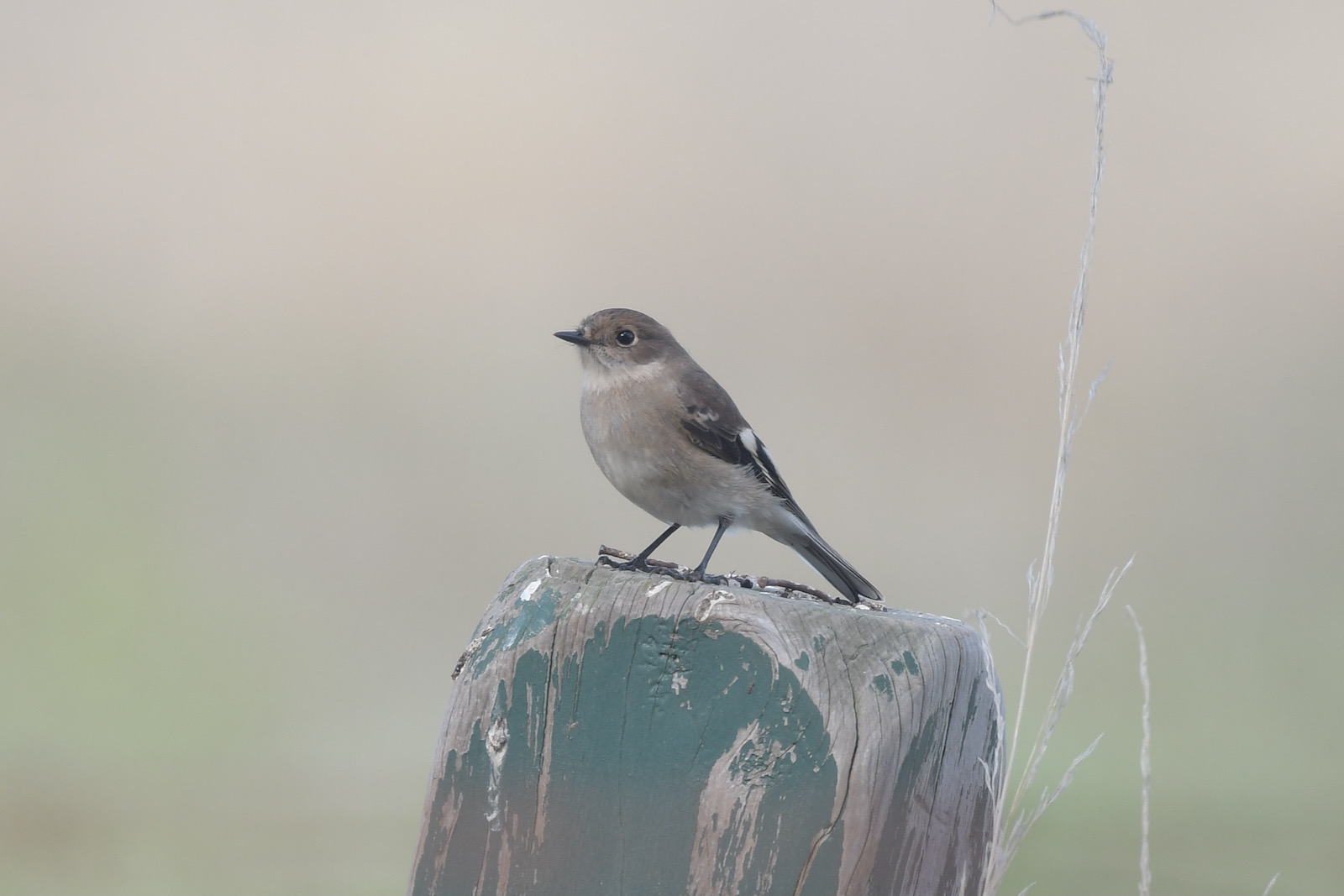
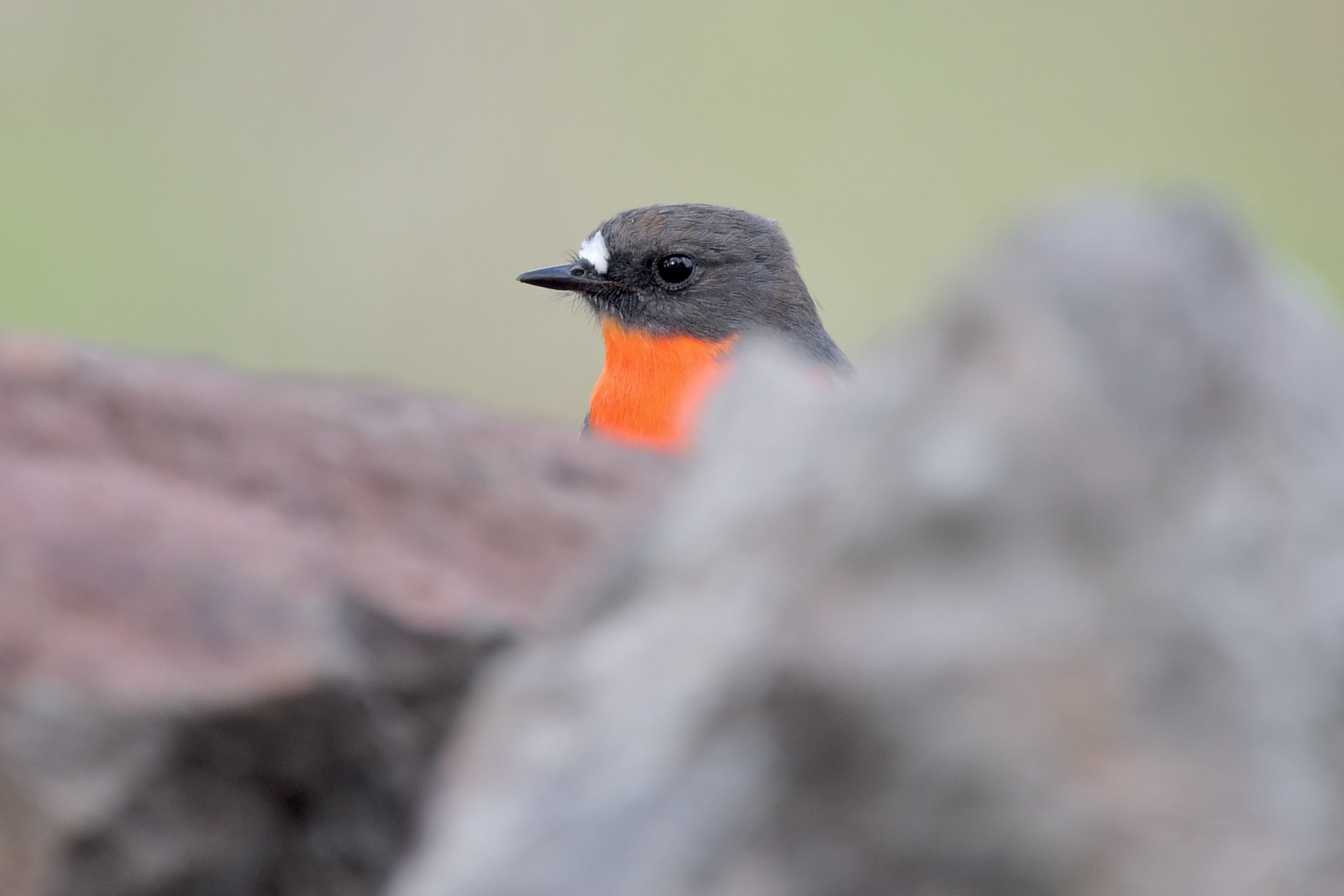
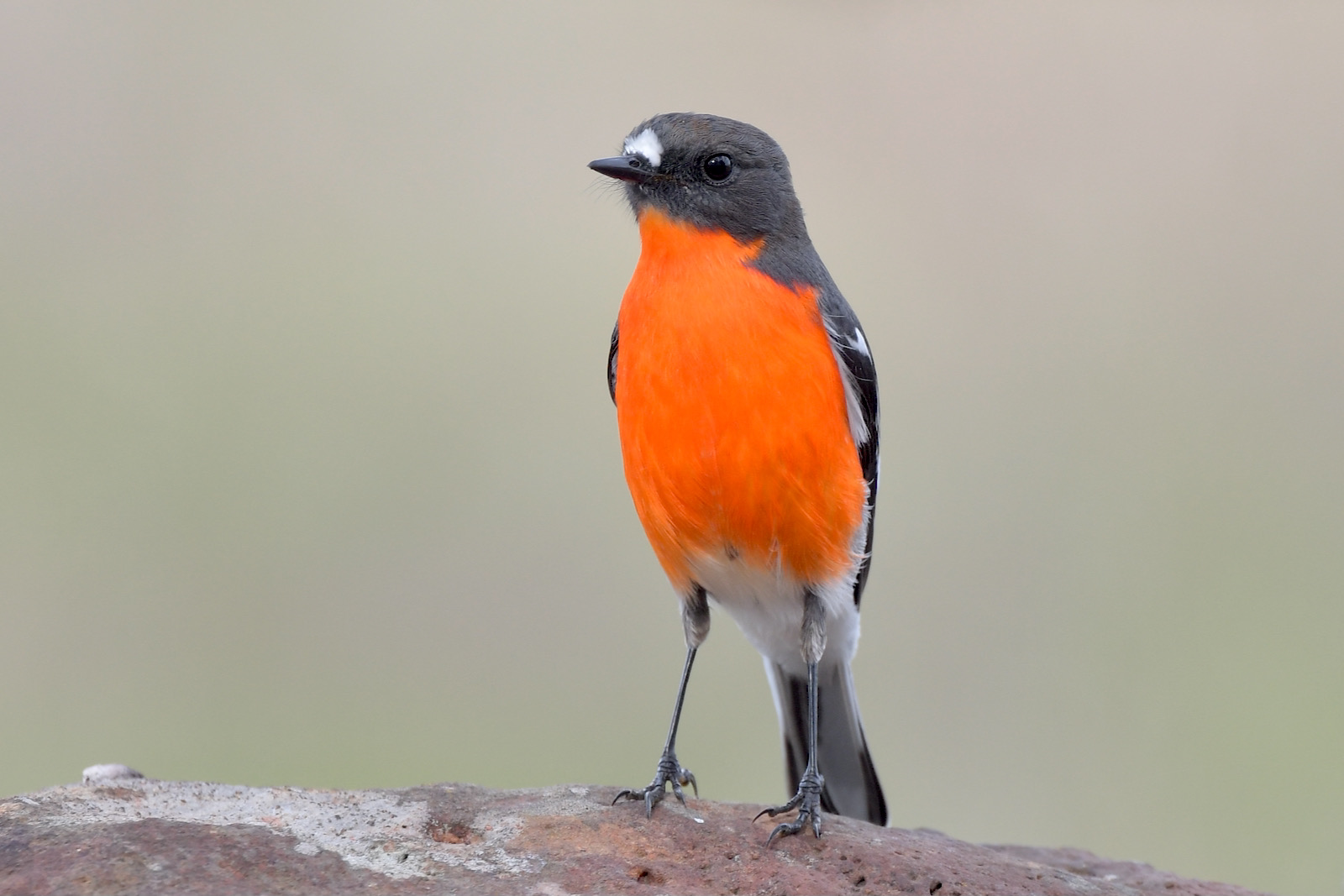
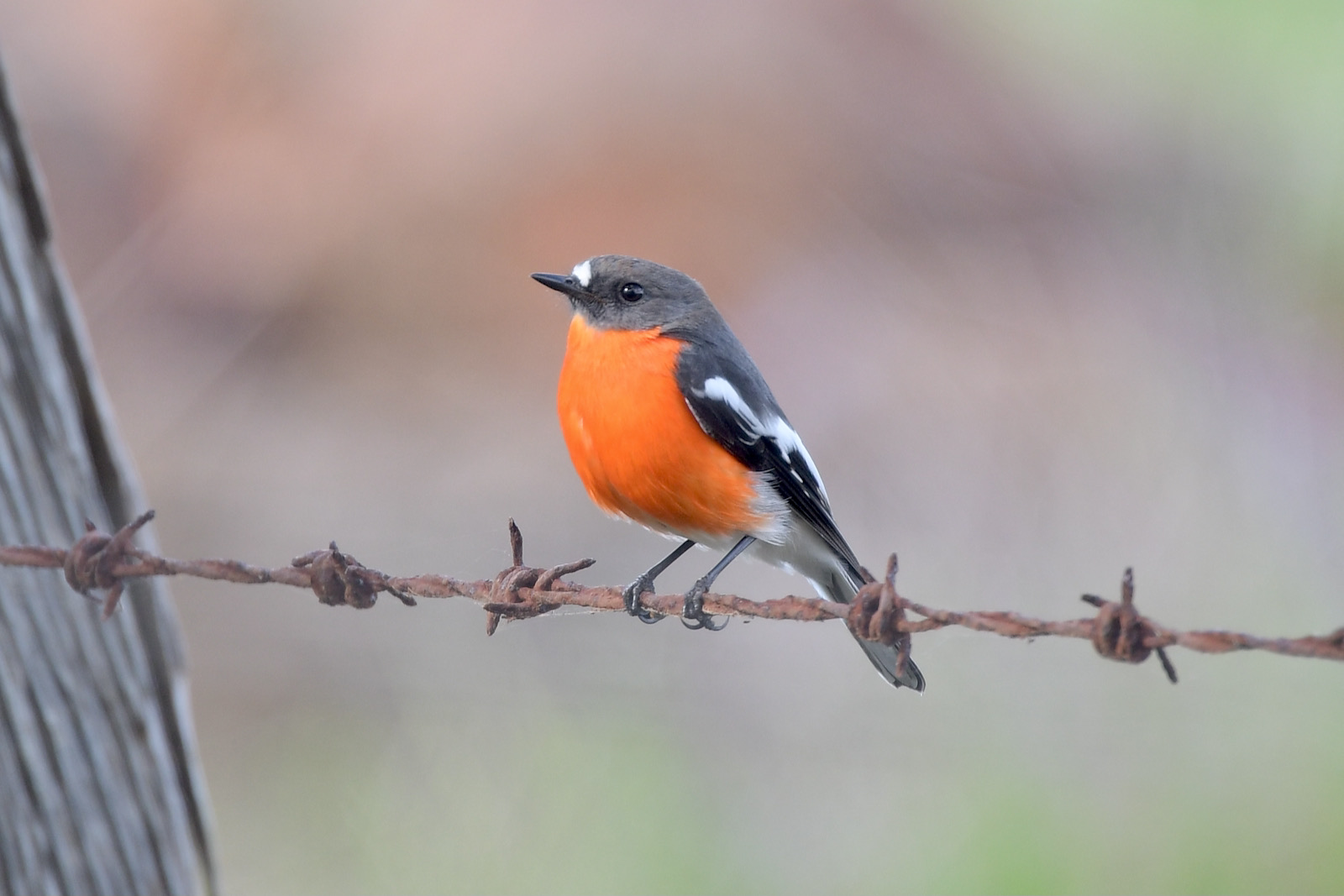
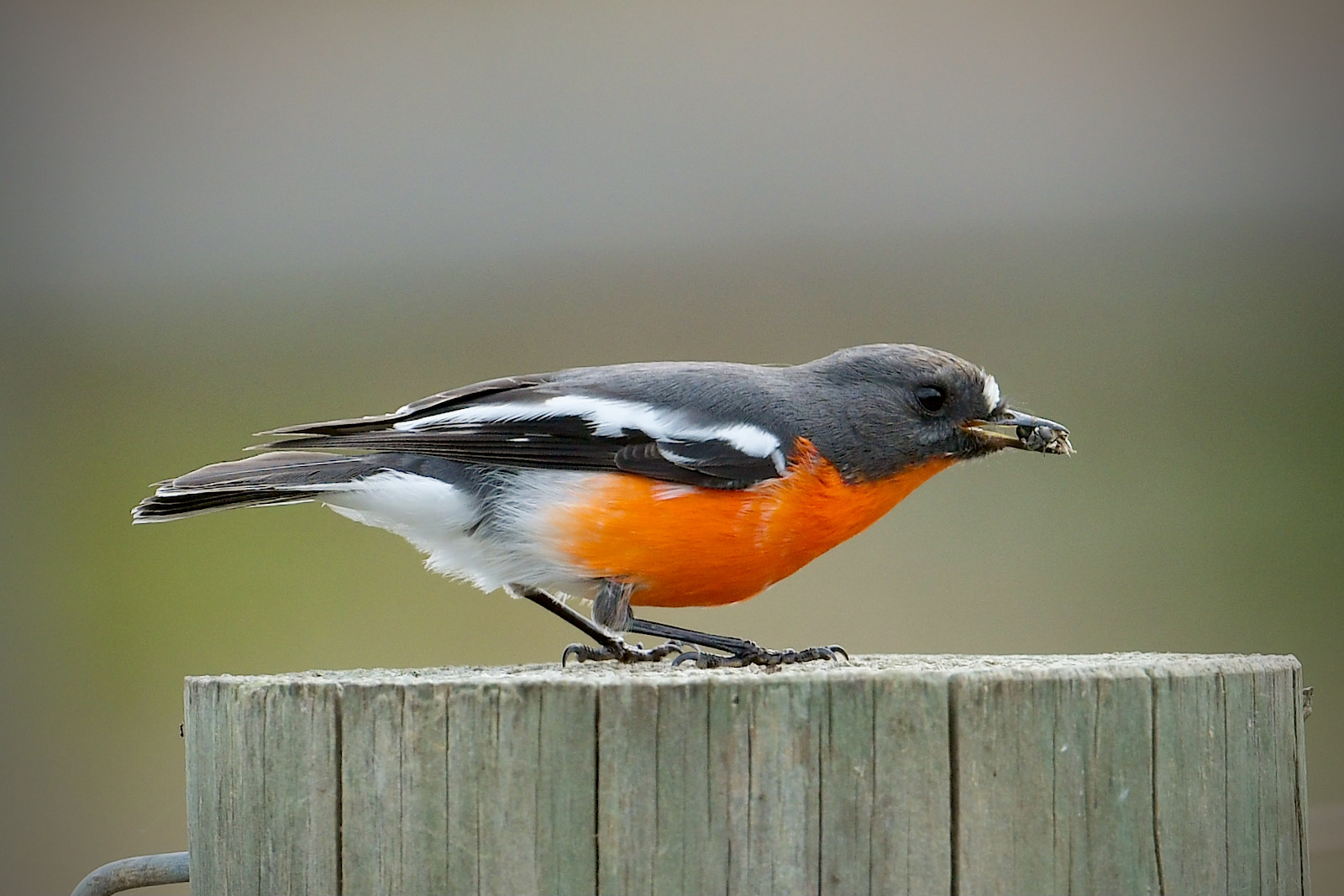
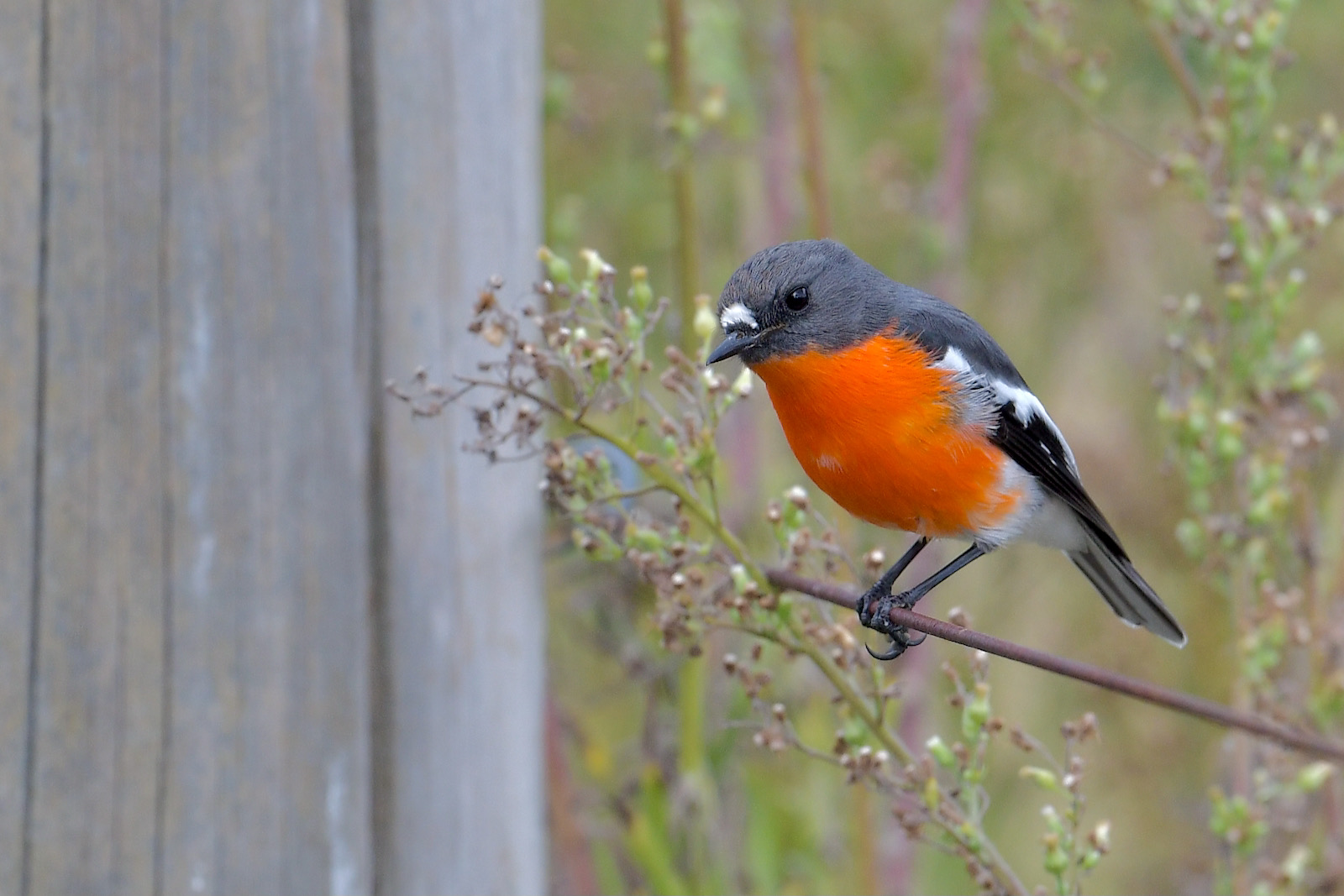
It is interesting to go back over an area over the seasons and see the changes in habitat as well as the variety of bird life. The early winter walk is always interesting at Mulla Mulla Grasslands as the Flame Robins return there each year. Sometimes the numbers are quite small, this season they are certainly looking very healthy and in good numbers. They feed in the open paddocks of the farmland adjacent to the forest area and use the forest fenceline as a secure base to rest.
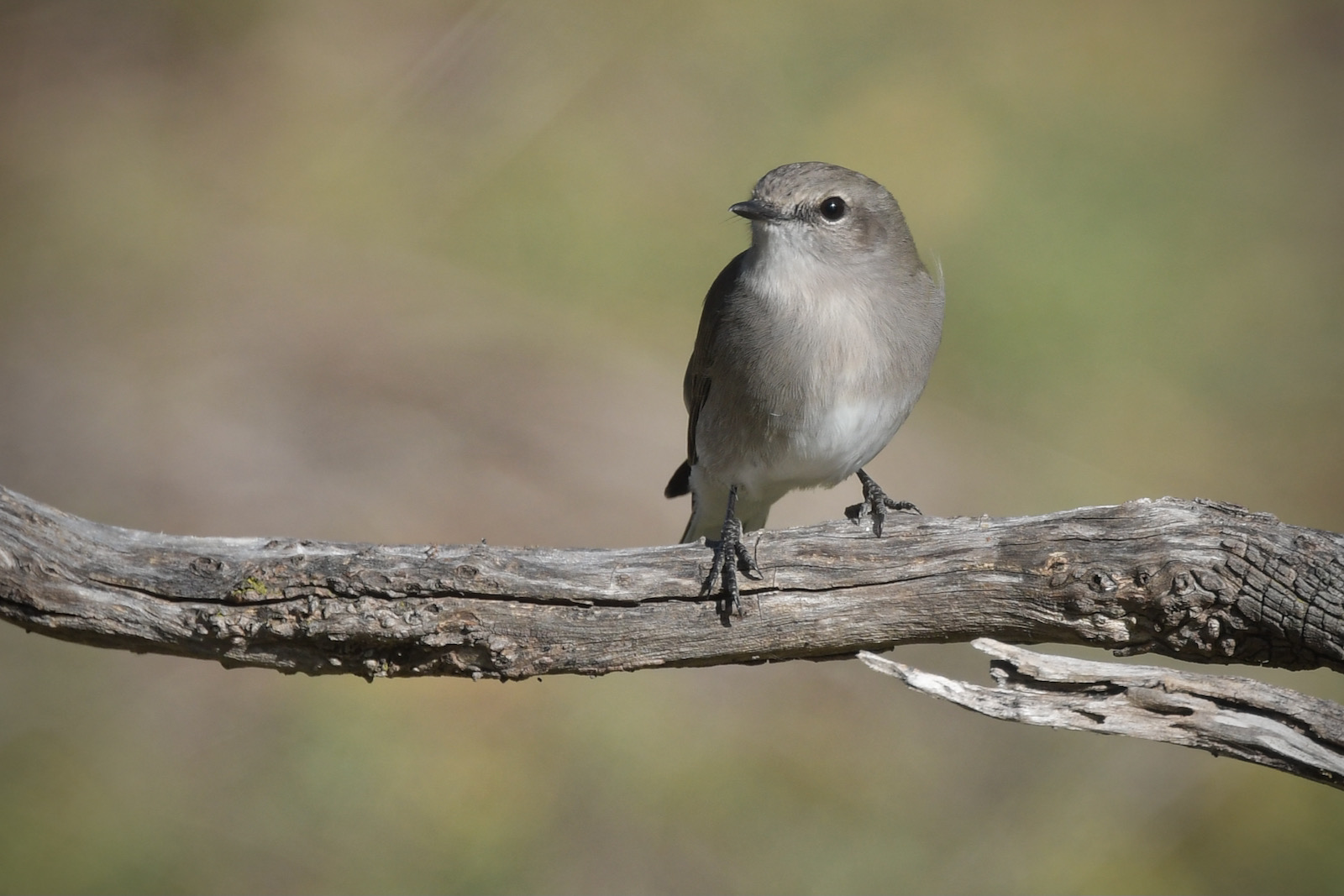
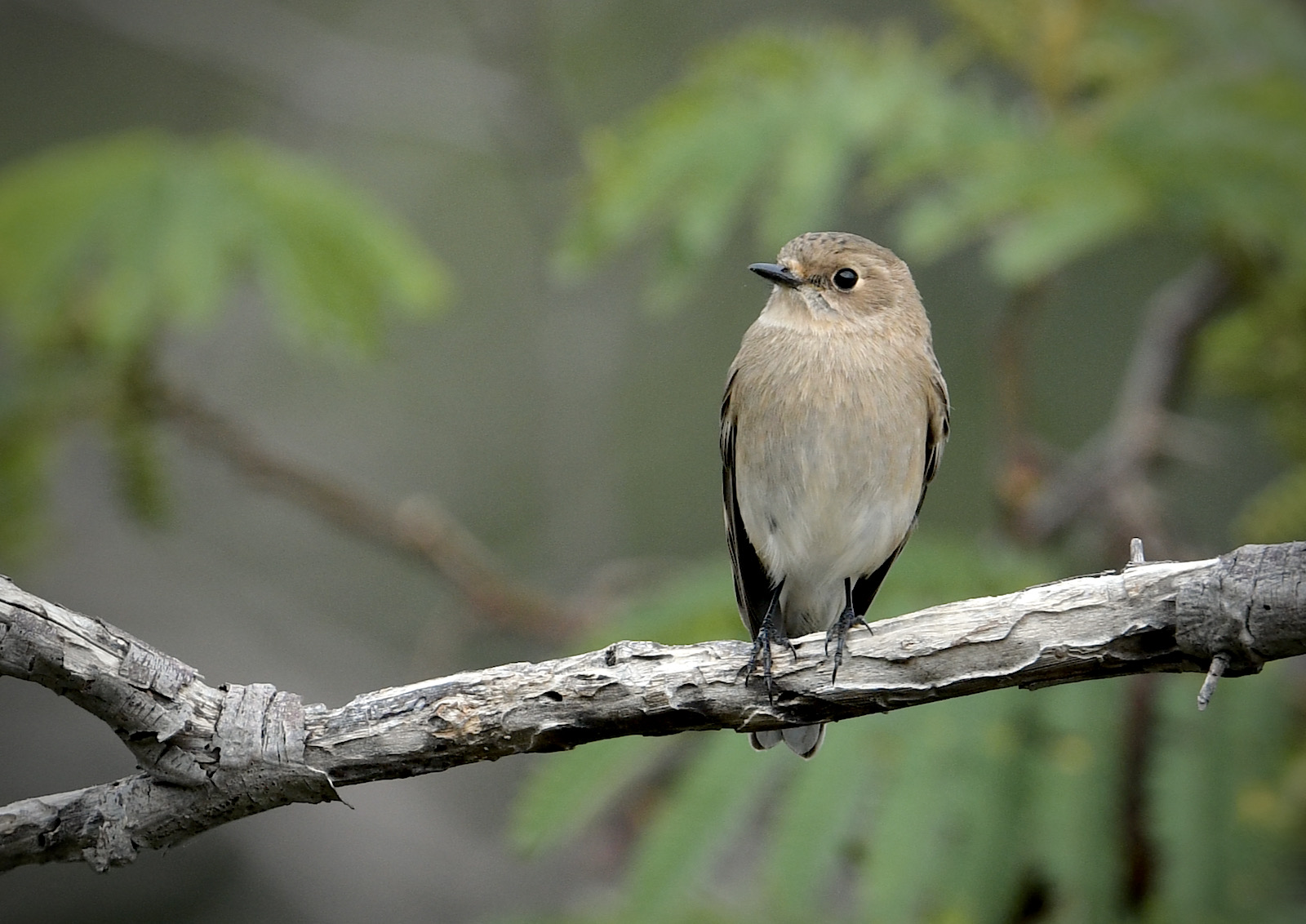
In the afternoon, we also count at Eynesbury Grey Box. This trip we found 2 pairs of Jacky Winter. Jacky is quite the citizen of Grey Box, both male and female are midtone greys and subtle brown variations. They can also be quite accomodating, and while everyone else moved along the track I sat for a few minutes with one that was feeding and in the end it came in quite close. I might have stayed all afternoon, but duty pressed us on.
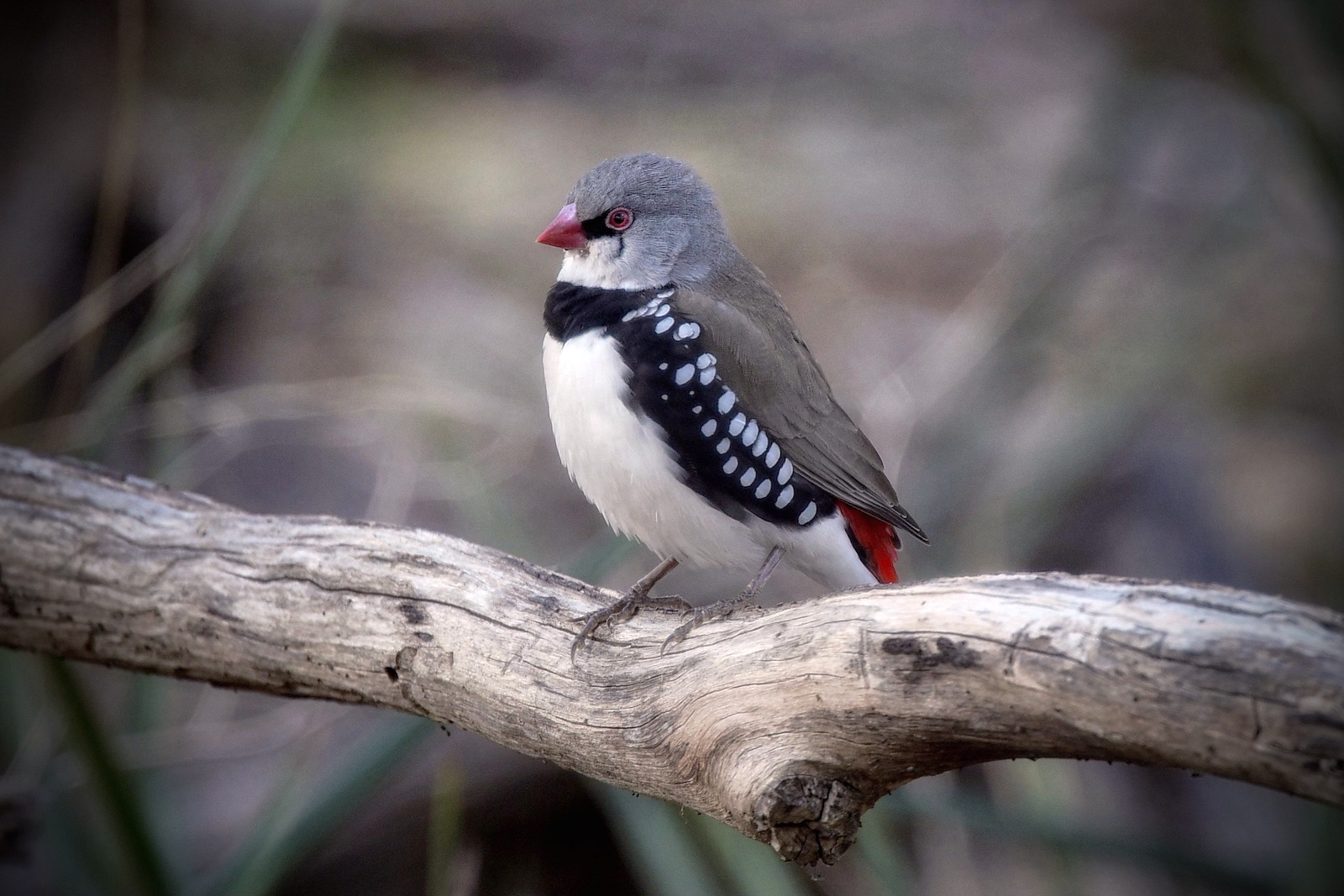
And just as well as we also spotted the jewel in the crown of Eynesbury Grey Box. The Diamond Firetail. The Diamond Firetail is also the signature bird for the area, so always good to locate them.
Time for some shots from the day. The gallery is best viewed by double clicking on an image to go to the larger size.
Enjoy
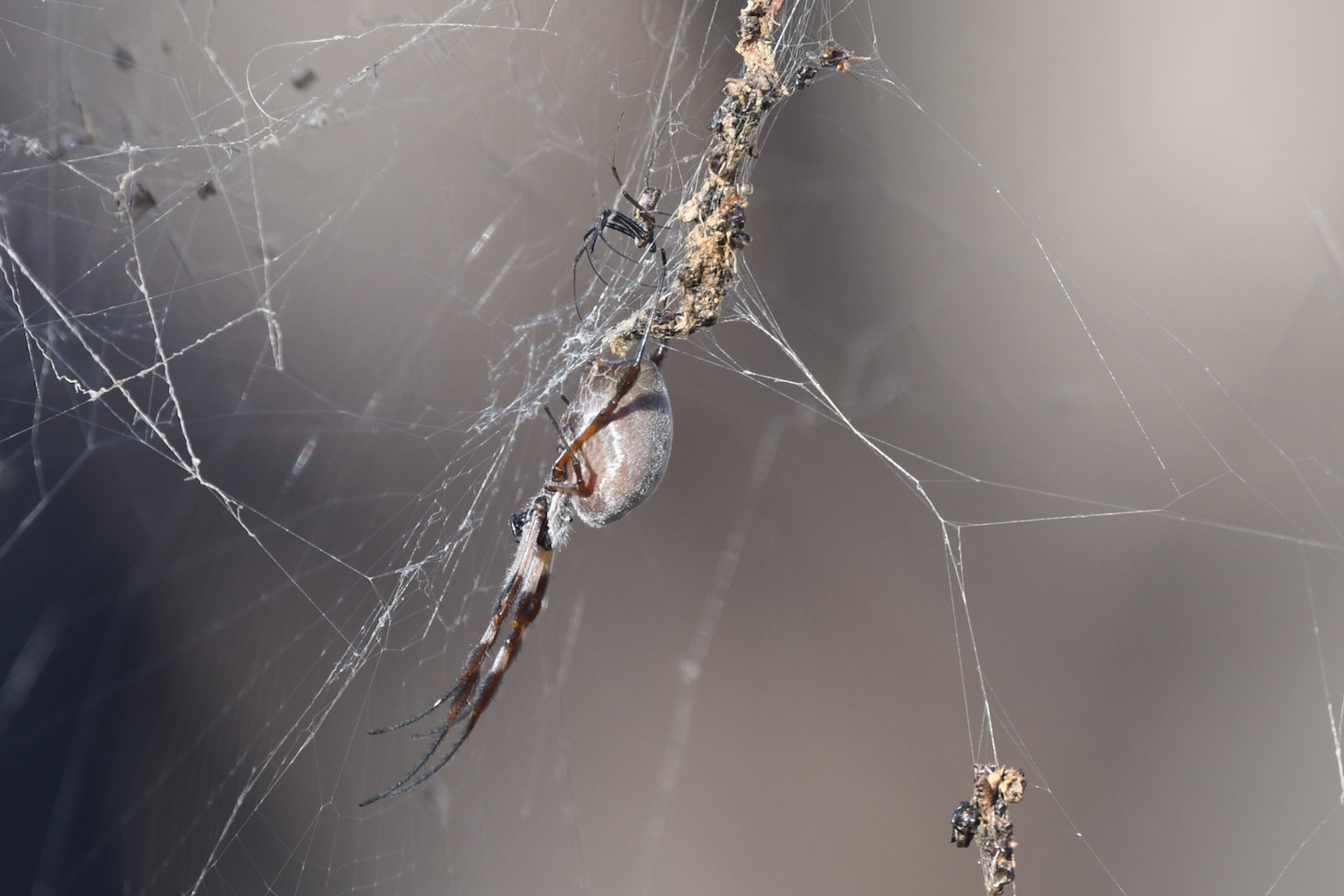
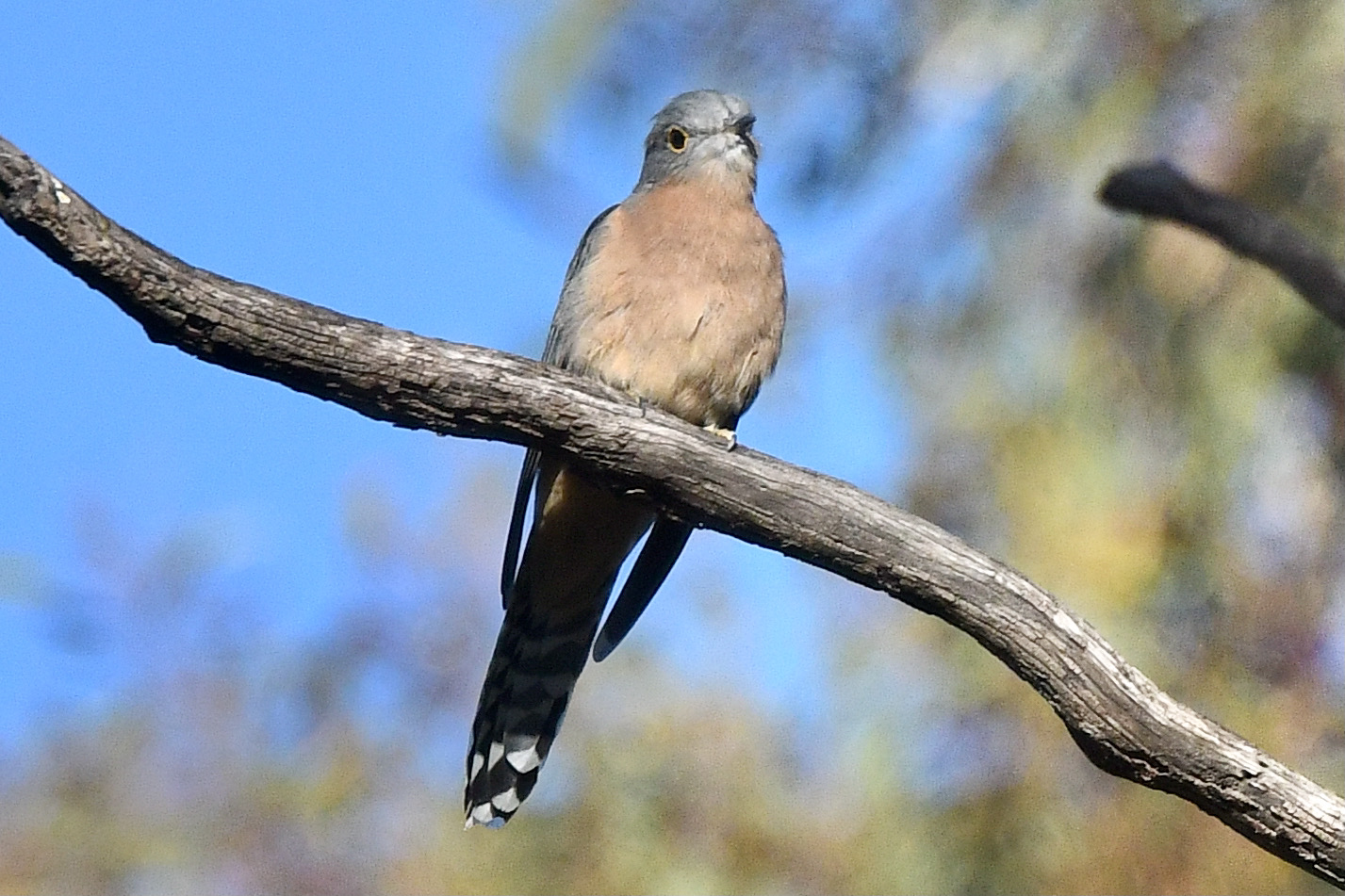
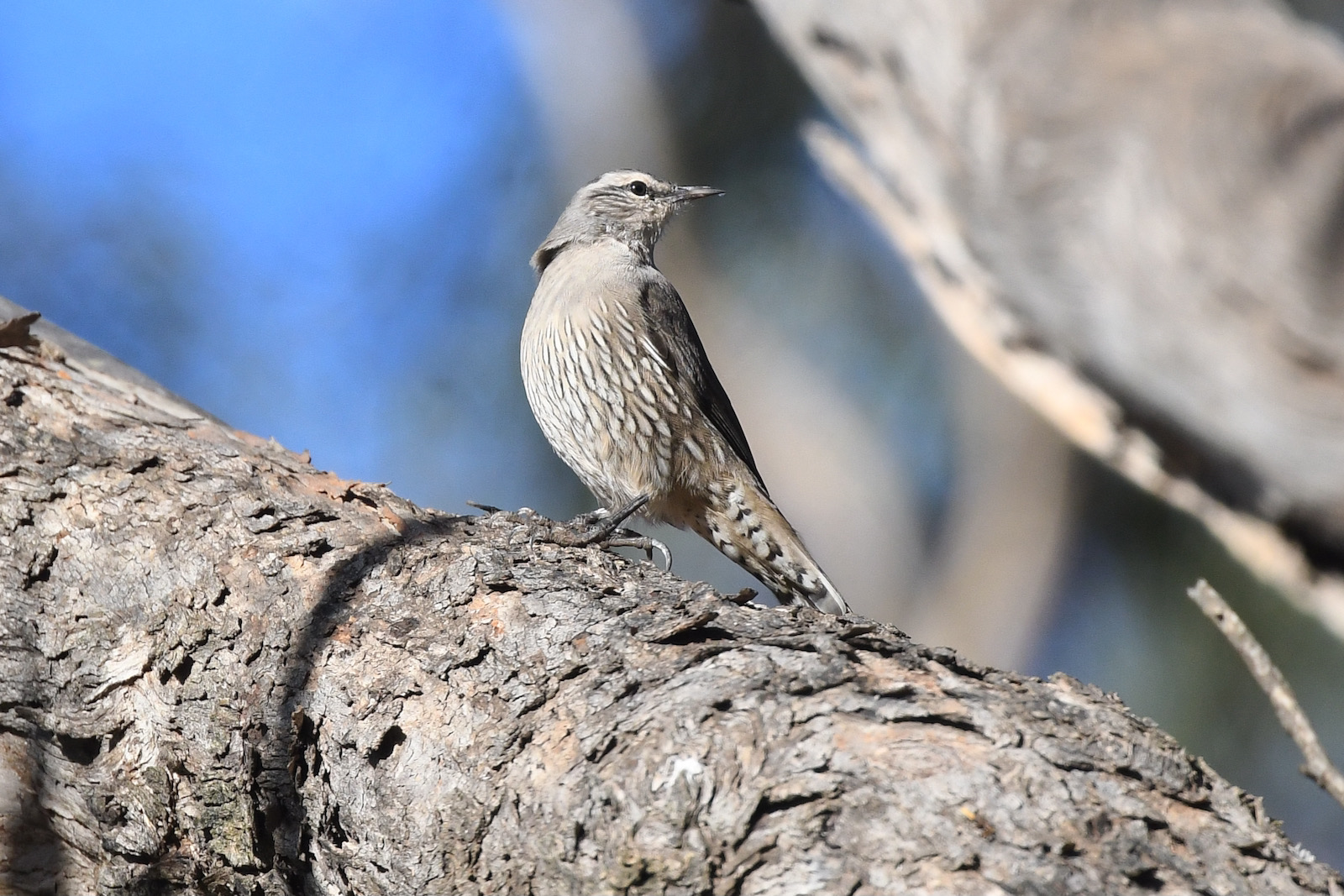
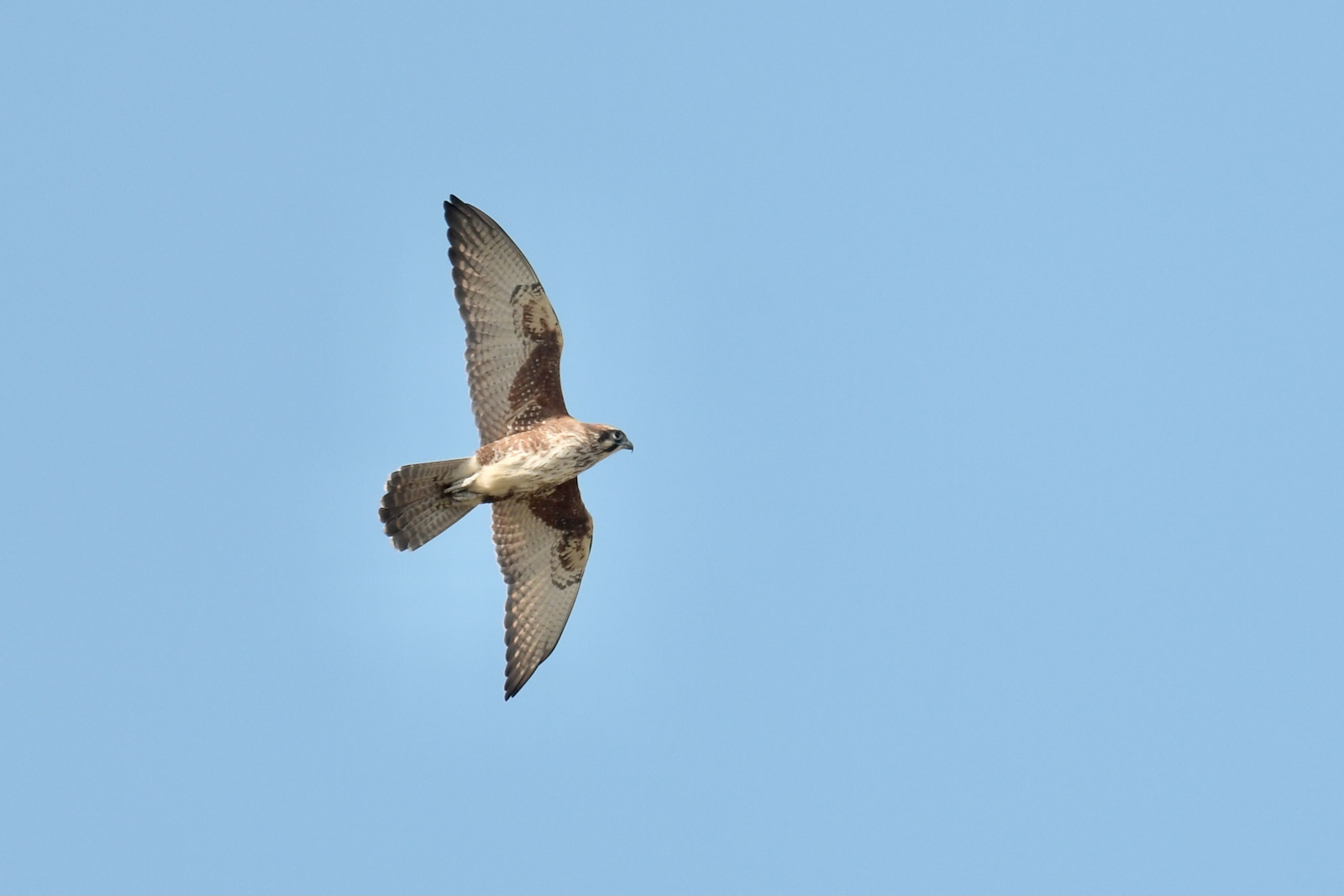
Golden Orb Spider (f) The tiny spider above her is the very hesitant male. Fan-tailed CuckooBrown Treecreeper. Once the Grey Box used to ring with the cry of these birds, but the numbers seem to be falling.Brown Falcon on a turnA Superb Fairywren was not impressed with the arrival of its new neigboursI’m sure, as he hunted on the far side of the rocks he knew I was there. And I guessed that he would eventually have a glance over the rocks in my direction. So I simply waited.
Satisfied I wasn’t a threat he came up for a better look.
Jacky WinterDiamond Firetail
There is, a thought where, to paraphrase Kahil Gibran, “You and the Subject are One: The Difference is in Heartbeats.”
There can be no doubt that photographing birds can be a somewhat hit and miss affair. Not every bird is ready for its space to be invaded by a stumbling human with a long lens attached to a camera, no matter what the good intentions. Some birds never allow close approaches. Yet on rare occasions for their own reasons will swing in close and the heartbeats somehow synchronise for a few brief moments.
A couple of Hobbys (Not sure if they are a pair or perhaps siblings from a recent nesting) were working over the treelines. It was easy to follow their progress as the agitated calls of White-plumed and New Holland Honeyeaters announced their travel through the treelines.
One of the pair stopped long enough perhaps to appraise the situation and take stock of the next opportunity. This bird swung in over the top and the first bird abandoned the perch.
This moment shows the second bird balancing its landing and slowly folding up the wings in preparation for also taking its own survey. Did it know I was there? Of course. But for just a few moments our heartbeats aligned. A quick look around, and satisfied there was little to eat in the area, it was off across the paddock at full tilt. Gone was the heartbeat moment.
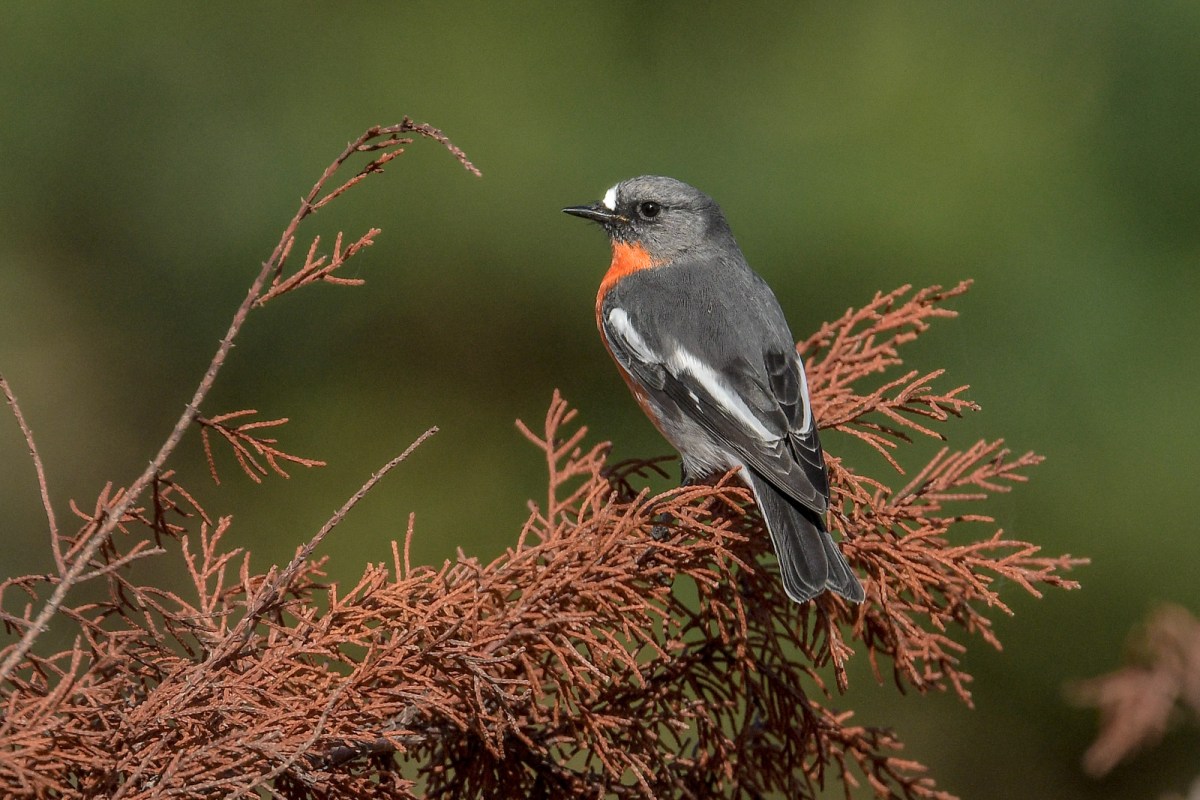
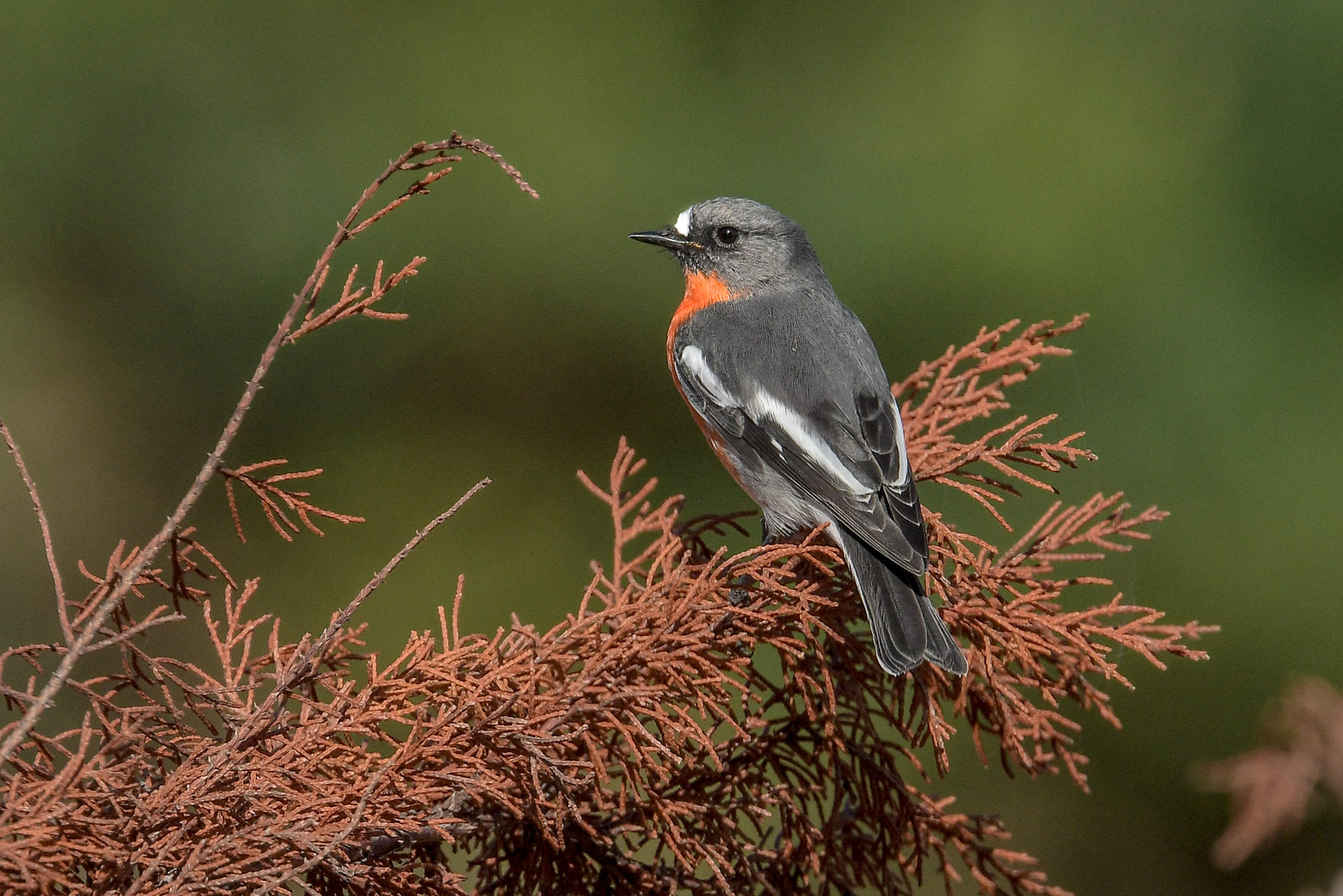
It has been a little over a month since the first of the Flame Robins began appearing at Point Cook. As usual they come down in a largish travelling party and then slowly disperse into smaller family groups about the park
Often the older females will stay together and the males will move to other parts of the park. We have been working with one smaller group that has 5-6 females, 2 males and several juveniles. The one that appears to be the Matriarch is still trying to persuade the males to move on a bit further down the field.
Now that they have settled in, it makes finding them, and photography a little easier. The Parks people have inadvertently helped by cutting a 10m or so firebreak around the fence lines so the birds are able to successfully hunt in the shorter grasses.
Sadly for photography there is not a lot of suitable perches and the fencelines offer them the best views of the area, if not the best poses for photography. But its been good to catchup with them and we now have more photos of the Robins from this season than for the entire previous two seasons that were constantly cut short by limiting lockdowns
So in no particular order here are some from the last couple of visits.
I had some comments last post about the “Valley of the Shadow of Death”, by Fenton. The whole truth in media becomes quite apparent when the historian looks at the two images and has to decide which is the accurate and which is the staged version.
Perhaps Rodger Fenton was the first of a long line of photo-journalists that have sought to tell the power of the story with the help of the image being a representation of the event rather than a simple photo reproduction from the moment.
Frank Hurley, the Australian photographer who accompanied E.Shackleton on the ill-fated “Endurance” expedition to the Antarctic also ‘dabbled’ with the moment. It is still hard to explain how he achieved the seemingly night time shot of the Endurance in the Ice. His diary indicates the use of many flashes and the difficulty of making the exposure.
Later Hurley would become a war photographer and many of his images, again, drive historians crazy. He made no bones about making double images, multiple printing techniques and montages. His famous shot of the rescue boat departing for help, is most likely the rescue party returning.
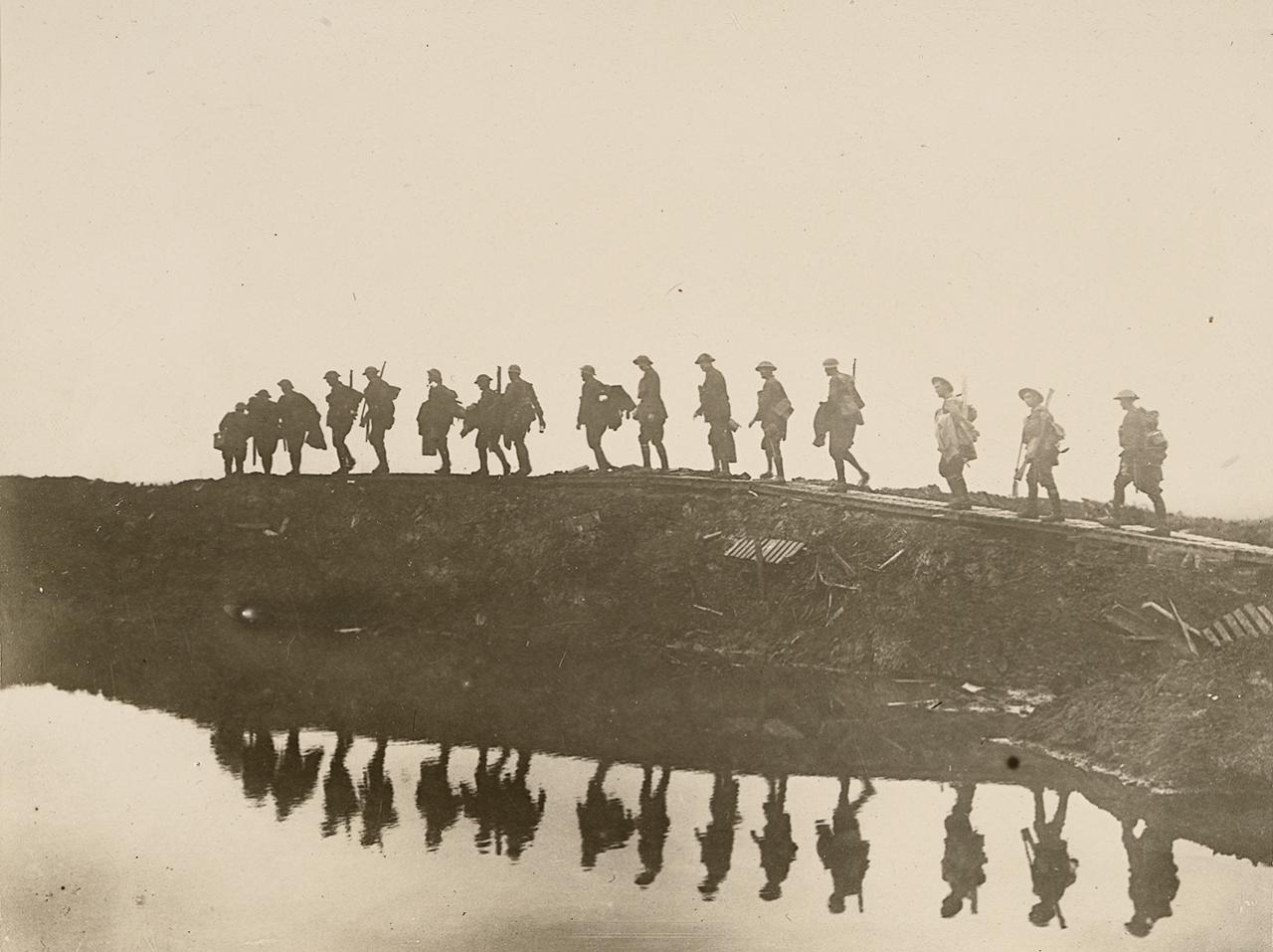
The images of soldiers on the way to the front is thought to be a reversed negative print.
And the one that really gets discussion going is the amazing moment of trench warfare with aircraft, shells exploding and troops advancing seemingly under fire.
Hurley openly stated it to be a multiple printed montage. In the end he found, “Oct. 1, 1917. Our Authorities here will not permit me to pose any pictures or indulge in any original means to secure them. They will not allow composite printing of any description, even though such be accurately titled nor will they permit clouds to be inserted in a picture.
As this absolutely takes all possibilities of producing pictures from me, I have decided to tender my resignation at once. I conscientiously consider it but right to illustrate to the public the things our fellows do and how war is conducted. These can only be got by printing a result from a number of negatives or reenactment“ A good selection of images is here.
Fast forward to Steve McCurry, he of the Afghan girl portrait on the cover of National Geographic. Steve’s later work was found to have ‘Photoshopped” in or out details of some stories and the furore of the net knew no bounds. So much so that he changed his style of photography to account for such story telling rather than image straight from camera. See one of many articles here
Many years back a well known soup manufacturer got into a boil over about marketing shots of its ‘famous’ Farmstyle Vegetable Soup that was ‘packed’ with vegetables. The photograph did in fact show a lovely warm inviting bowl of soup with the veggies all piled high out of the liquid.
However when it was prepared straight from the can, as per the instructions, the hapless cook was greeted with a bowl of liquid with a scant number of veggies sinking to the bottom of the bowl. The clever photographer had filled the studio bowl with glass marbles, and then scooped the veggies over the top and then slowly added just enough liquid to hide the marbles.
And let’s not forget any of the fast-food chains. The chances of getting a burger that resembles the bright crisp item in the photo display is minimal. Again the net is awash with dissatisfied consumers.
So it must be asked if I make some changes to an image, how much is legitimate. Now I’m not talking about Photoshopping Uncle Fred’s face into a daffodil, I’m hoping we are over that.
I’ve been working on some shots the past few weeks making Black and White portraits from a range of photos. I do it because I like the end result. If I share one, it is noticeable as after-all the creature has colour.
I’m not asking the viewer to suspend their credibility or influencing the understanding of the subject. Rather inviting them to explore the nuances of tone, shape, texture and from in a new way.
Perhaps the old adage from the Furphy Watertanker:
Good, better, best Never let it rest, Until your good is better, And your better is best.
Some interesting comments came up last week from the way I curate my library of photos. It’s hard on a single page to cover all the ins and outs and to not sound like setting some rules. I guess I was taken by the number of recent blogs and newsletters that have now made a change from ‘save everything’ etc.
There is of course the another side to why we take, and what we share photographically. As Mr. An Onymous is oft to say, “Just being out there in the field is enough. Birds are a bonus”.
Photography is so good at providing a visual memory of a holiday, party, event or field trip. Looking back through my library can provide a feeling of the time we spent in a location, the birds, the weather, the company and the enjoyment.
I found this quote from Sarah Leen who was (is?) Director of Photography at National Geographic.
“It (Photography) has been the way that I have experienced much of the world. In a deeply personal way I feel an image is a poem about time, about “staying the moment.” Photography can defeat time. Images can keep the memory of a loved one alive, hold a moment in history for future generations, be a witness to tragedy or joy. They can also change behavior, stimulate understanding and create a sense of urgency that will move people to action. Photography is the universal language that speaks to the heart.”
To me photography has always been about storytelling. The eye of the photo-journalist at finding both the story and being able to bring it to the page.
Storytelling goes back to the earliest days of photography. One of the very first ‘war photographers’ was an Englishman named Roger Fenton. He was appointed the first official photographer for the British Museum and in 1855 spent time in the Crimea photographing the war. One of his most (in)famous photos shows the also infamous “Valley of the Shadow of Death” (Yet we need to be careful, as this is not the site of the equally infamous charge of the Light Brigage) It has a most interesting history in that there seems to be two versions. One with cannon balls on the roadway, and one without. The question arises did he have them placed for dramatic effect or cleared away for pictorial feel? This is a good review Either way it is part of his storytelling and adds to the story in a graphic detailed way.
So yes, my library does have lots of shots that will never be acclaimed, but as I review them from time to time, the magic of being in the presence of the bird is a heartwarming experience.
More or less. 🙂 Much of the advice regarding storing digital ‘assets’ almost since the beginning of digital photography has been something like, Well its cheap to make digital photos as you don’t have to buy film so take as many as possible. The corollary to that advice was keep them all, disk space is cheap, and you never know when you might need one of them. Or, like high quality wine, they will improve with age on the disk.
So, I guess we have to admit. We did.
Recent weeks I seem to have been ‘enlightened’ on blogs and newsletters, by those same experts with a new mantra. (Perhaps they forgot their old advice or needed to trot out something new)
It follows roughly similar calls, to “learn to curate you photos- delete the ones you won’t use. Choose the best ones and work with those.”
While the “shoot lots and keep all”, was a good idea when digital files were small—the first ones I made were 750kb each! (Think how many I could get on a 1 megabyte card) today’s high res, high pixel count files in raw can be as much as 65mb or each. It quickly begins to build up terabytes of files, most of which will never see the light of day.
I have to say, (mostly) I tend to edit hard after a shoot. Comes from the old days of filum I guess. Out of a roll of 36 exposures, I didn’t want to sit in the darkroom and print every one to figure which were the keepers. Make a quick Contact Print. Mark with Chinagraph pencil. Print the best. Reject the rest.
I could also argue that most of the social media sites promote poor to average photography as being ‘normal’, but not tonight.
If I do about 250 shots in a day’s outing, by the time I get home I’ll edit them down to about 20 or so useable. Then I need about 8-10 for Flickr, 1 for this blog and several for a book project and perhaps a photo-story here on the blog. For completeness I usually know in advance which shots I want for a story anyway as I’ll have tried to assemble much of that in the field. Now if I do 3 field trips a week, that is about 60 or so images.
If I stuck with the old mantra, that would be around 700 images I’d need to store a week. A month, it’s 3000 (boy scout math), by the end of the year—36,000 images. (Not bad for a years work). Ten years? Oh, no wonder I need a new 8tb drive this year.
Ansel Adams is reported to have said, “Twelve good images a year is an excellent crop”.
So the new advice seems to be—edit.
The other hidden advice in all that is of course the ability now to run off, for fun, as many as 20 or more shots in a second. Then spend anguished hours on the computer trying to find the best one. The software doesn’t help either as it allows the shots to be ‘Stacked’ so that you only get to see the best one, and 19 languish in the ether, never to be seen again. Or, and I put tongue-firmly-in-cheek, just post them all and let the viewer decide!! One ‘guru’ recently claimed to have returned from a workshop trip with over 30,000 shots. And aren’t I glad I’m not getting an invite around for that slide show!
For those of us who do lots of inflight shots, and I have to admit to leaning more and more that way in my own work, the chance of a multi-burst gives us a range of wing, head, body, lighting and expression to chose from. And just sayin’ for my own work, if its not ‘That’ shot. Then the remainder get deleted. I’m looking for “… an excellent crop”
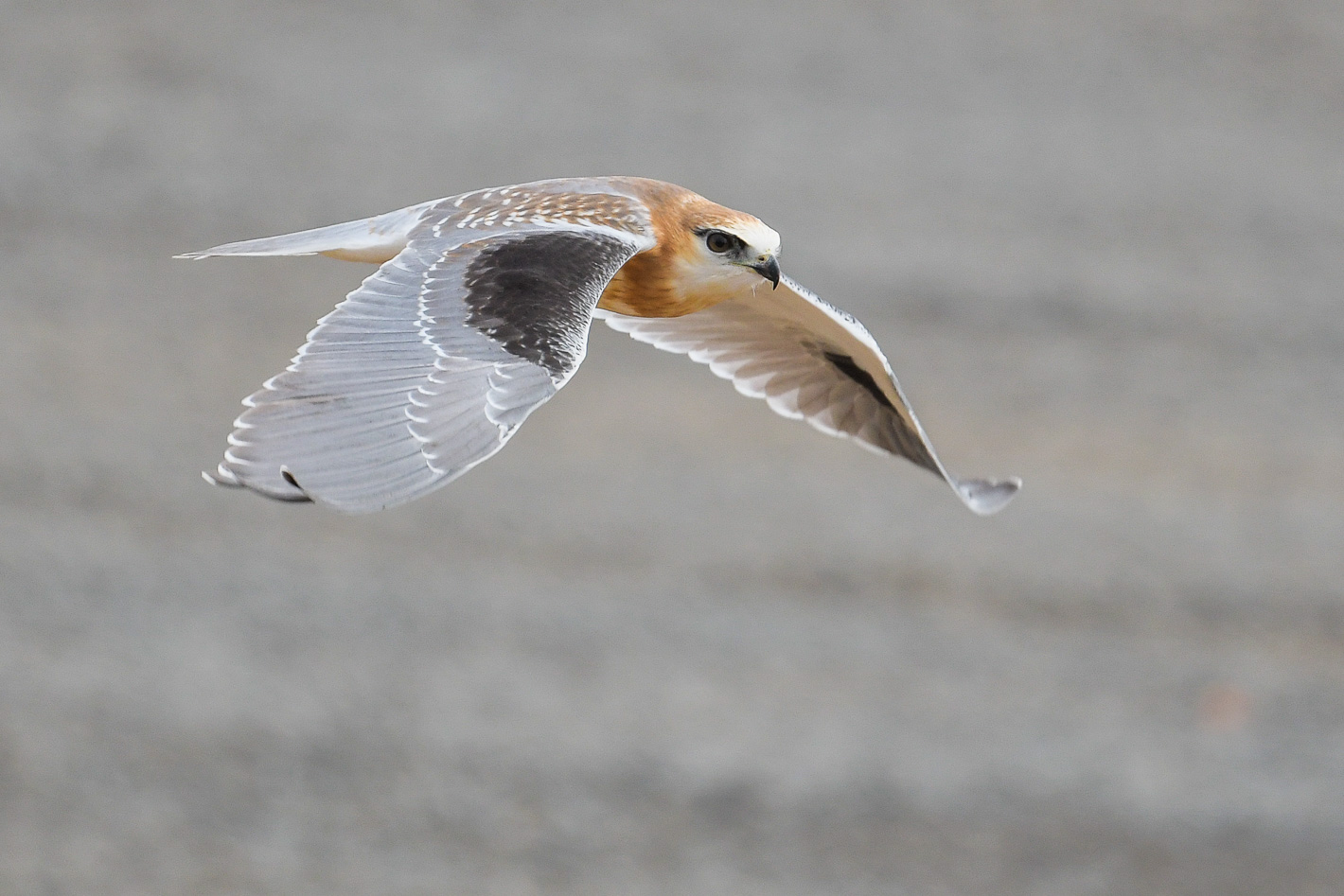
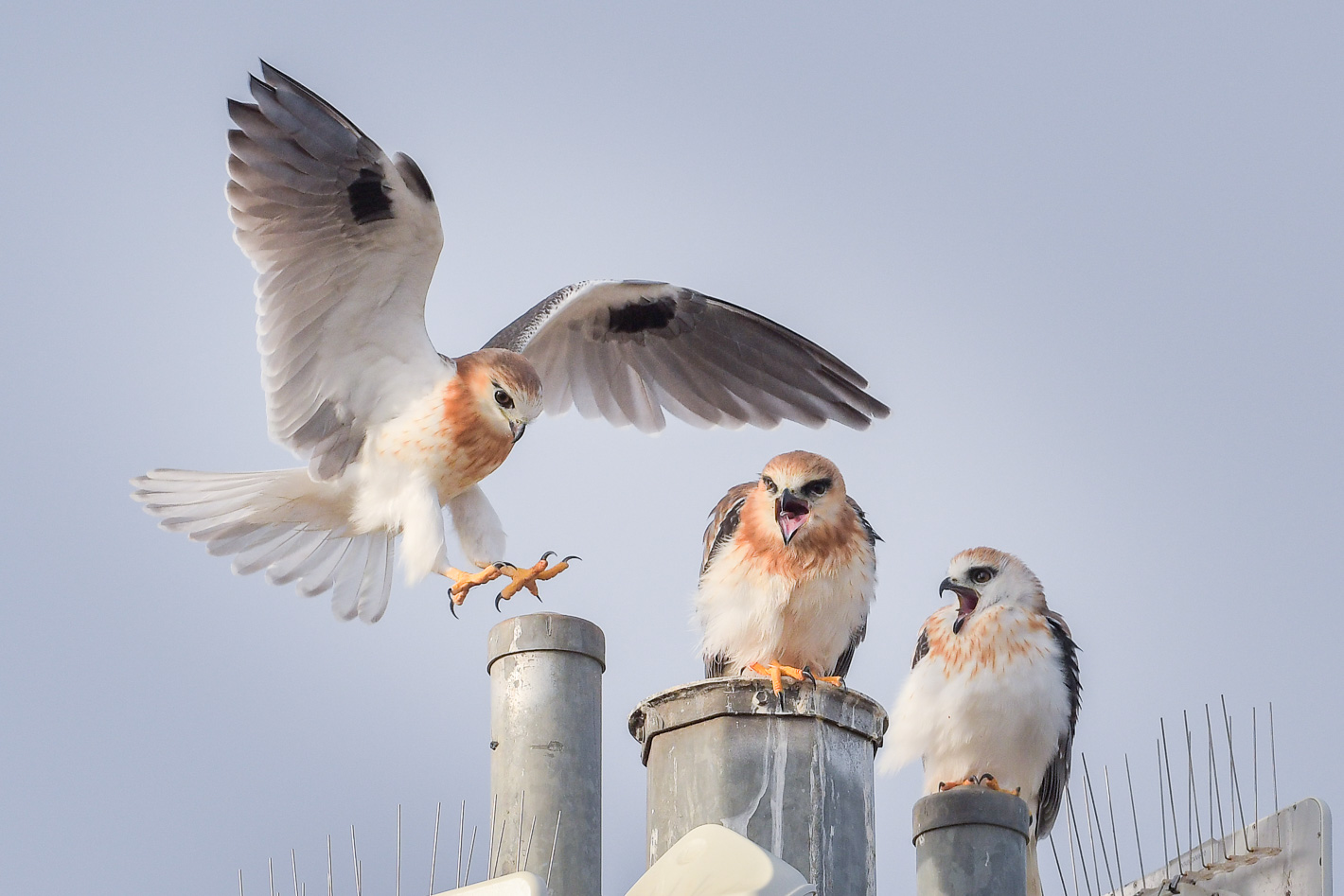
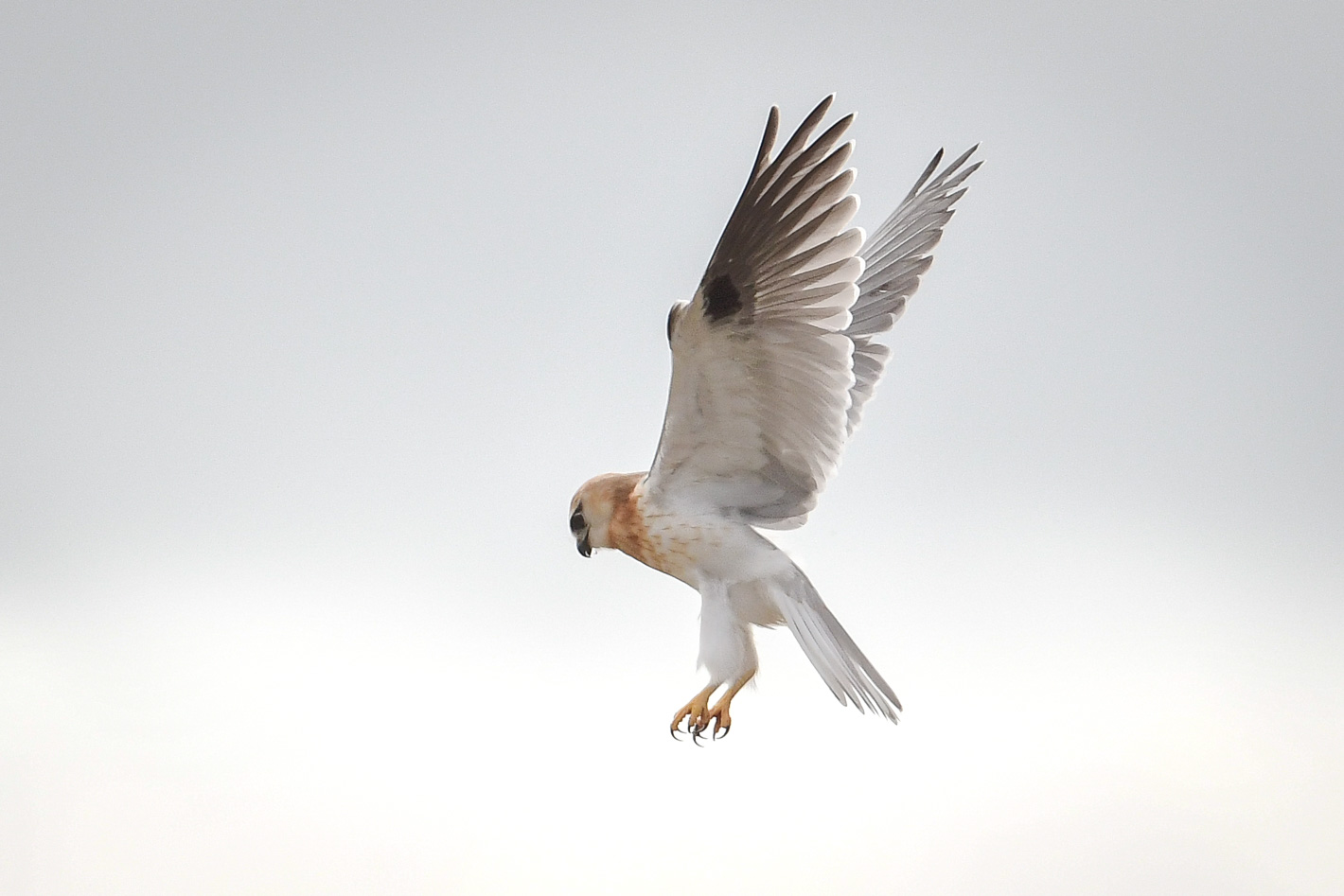
Knowing how the bird is going to react is also a huge part of the inflight learning process. This young Kite was ready to go and join its siblings hunting over the grasses in the late afternoon light.
It turned on the branch, I held my breath, and then it simply launched into space. It was heading straight down the barrel of the lens. 🙂
I paused, and as its face came into the light, pressed the shutter. Less- is more.
How quickly time moves on for these young kites. A few weeks ago they were peeking out of the nest, then launched into flight on some of the most windy days we’ve had this year. And when we arrived on this particular morning they were now fully-fledged (pun intended) hunters.
Bronson, the male was no longer providing handouts. It was literally every bird for itself. They had chosen to sit together for what was probably the very last time in the early morning sun and scan the surrounding paddock for a likely meal. Most of their hunting as we watched was for skinks and small prey, but no doubt in the next day or two they would have skilled up enough for the real thing. Mice
Bronson flew past at one stage, perhaps checking they were still in the area, but they knew not to pester him for food and it was a silent flyover. They went back to the job in hand.
A couple of days later on our next visit, they were nowhere to be seen, all the usual roosting spots were empty. We caught a glimpse far across the freeway of one sitting, then hunting and flying off with its prize.
Their time had come to explore the world as fully developed young birds.
It is both a sad and also an exciting time to share their graduation and to farewell them.
Not much is going to escape 3 sets of hungry eyesThe direct approachLegs up to gather speedLifting off after a strikeEvery one likes a bit of encouragementA quick breakfastNot intending to shareFast food while lining up the next offeringSometimes hunger takes overLooking for the next opportunityHovering SkillsControlled DescentMoments to touchdown. The feathers over the wings have to control both stall and upiift
Perhaps first used by an adversting man in the United States as early as 1911. Arthur Brisbane is reported to have said, “Use a picture it’s worth a thouand words.” However even that might not be the orgin, earlier Leonardo Da Vinci has expressed the thought that an artist could depict in an instant—what a writer would wrestle with overnight.
I don’t have a lot of wall space to hang photos, so any image I make that deserves to be printed and considered for a space on the wall comes from a file that is titled “The Signature Series.”
My first Signature print goes back nearly half a century. So this one is in good company
We had gone to Ballarat with high hopes of being able to find the resident Great Crested Grebes and be able to photograph them up close.
Such was the the plan
Day One: Not a feather of a grebe to be seen.
Day Two: Helpful local pointed out that since they had raised the young they were now residing further out in the outer most reeds.
So we patiently looked, from a distance, at the various reed beds. Not much happening really.
Day Three. An early morning search did in fact reveal a grebe or two, way, way out there, in those reeds well beyond reach of the best long lenses.
Day Three: Evening stroll. Now this was more like it, they had moved to perhaps the second set of reed beds, closer in. But, clever birds they are, were all tucked up asleep and had no intention of coming closer.
Day Four: Departure day. Early morning. Well, they were still out on the second reed beds and a single adult and two juveniles were in the open, adult was hunting ,young were still hoping for handouts. Didn’t look like we were going to get the shots.
Then EE said, “Oh, look one of the young is coming in this way.” Sure enough.
And then a few minutes later the adult swam in the same direction but further around the lake so we quickly walked, as it swung in quite near the edge and then with some deft strokes to get away from the complaining young one by its side, it was back out among the furtherest reeds.
Still, we had bagged some shots, and while not memorable, we had at least been able to check off the grebes from the list for the weekend.
Sounds like stating the obvious really. The sky is blue, the sun has set. Grass grows. He goes on to say, that as you come to the end of one cycle, a new one will begin. Fulfilling a cycle means completion. Yet new horizons are always there, with each turn of the wheel you go further. With each turn of the wheel comes continuation. Celebrate every turning, And perservere with joy.
As an aside there is a Qigong sequence called, “Turning the Big Wheel”, first to the left then to the right. Some things can be instructive beyond their normal course.
Just as the three young Black-shouldered Kites have reached the end of their training and are moving on to make their own lives, we watched them go, a bit like parents whose children have left home for the first time. And with a feeling of completion of that chapter. My photo library says that over the past three months we’ve made some 26 trips to work with them.
We had spent the morning searching the tree-line and the open paddocks for a glimpe, but they are now independant of the male feeding them, and he has not been around with handouts for nearly a week. He might still flyover but they knew that he was no longer on Uber service.
Finally we spotted one far away across the highway and perched. Then watched as it hunted and successfully carried its prize back to a tree. It was time for us to move on too.
I blogged about this time last year of the arrival of the Flame Robins at Point Cook Park, and we decided to continue on down there and as we hadn’t been in the area for many weeks, wondering what might have changed.
It was very quiet. Last season was a disaster, just like the one before, as covid restrictions for most of the time kept us house-bound for the season(s)
We waked down to see Cassia, of Cinnamon, but she wasn’t too keen on visitors and took off across the paddock avoiding a squadron of agile magpies.
Then, a Red Flash. And Another!
They were indeed back. A quite large family of Flame Robins. Eventually we spotted three males and several females and at least two juvenile males. So they have had a good season. The year before they arrived looking a bit exhausted after their summer season. But this time each of them seemed resplendant in their winter dress and highly active. It is interesting to see them working in the forest, but out in the open fields like Point Cook, they behave a little differently. Having flown over 100km to get here, 500m down the paddock is nothing really, and they are constantly on the move. However like in the forest settings they seem to follow a set pattern, and while it takes a few sessions to learn the cycle, getting ahead of them and waiting is still our preferred method. It is a case of, if we sit they should come.
So as our season with the Kites ends, it looks like a rich season with the Robins might be opening up.
John Cleese and the Monty Python’s Flying Circus, has a wonderful skit titled: “The Ministry of Silly Walks”, and like most things Python, the humour is in the close representation of real life activities. As an aside, in our house as I grew up, Monty Python’s Flying Circus, was baned from viewing. My Dad took a dislike to the little fillers between skits by Terry Gilliam’s animations. Perhaps it was the use of things Royal, or the Flag, or just the suggestive innuendos. A surprise really as things relating to British aristocracy were never given much creedeance. A year or so later I moved out anyway, such is life.
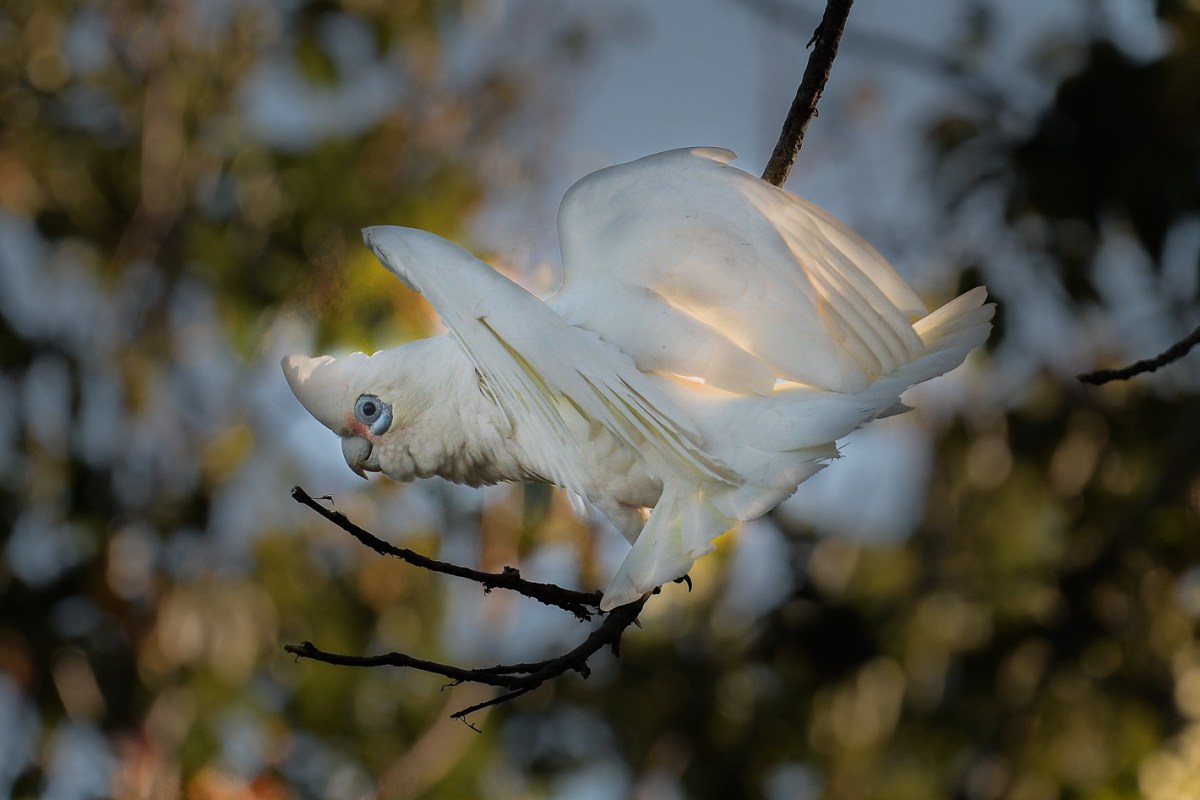
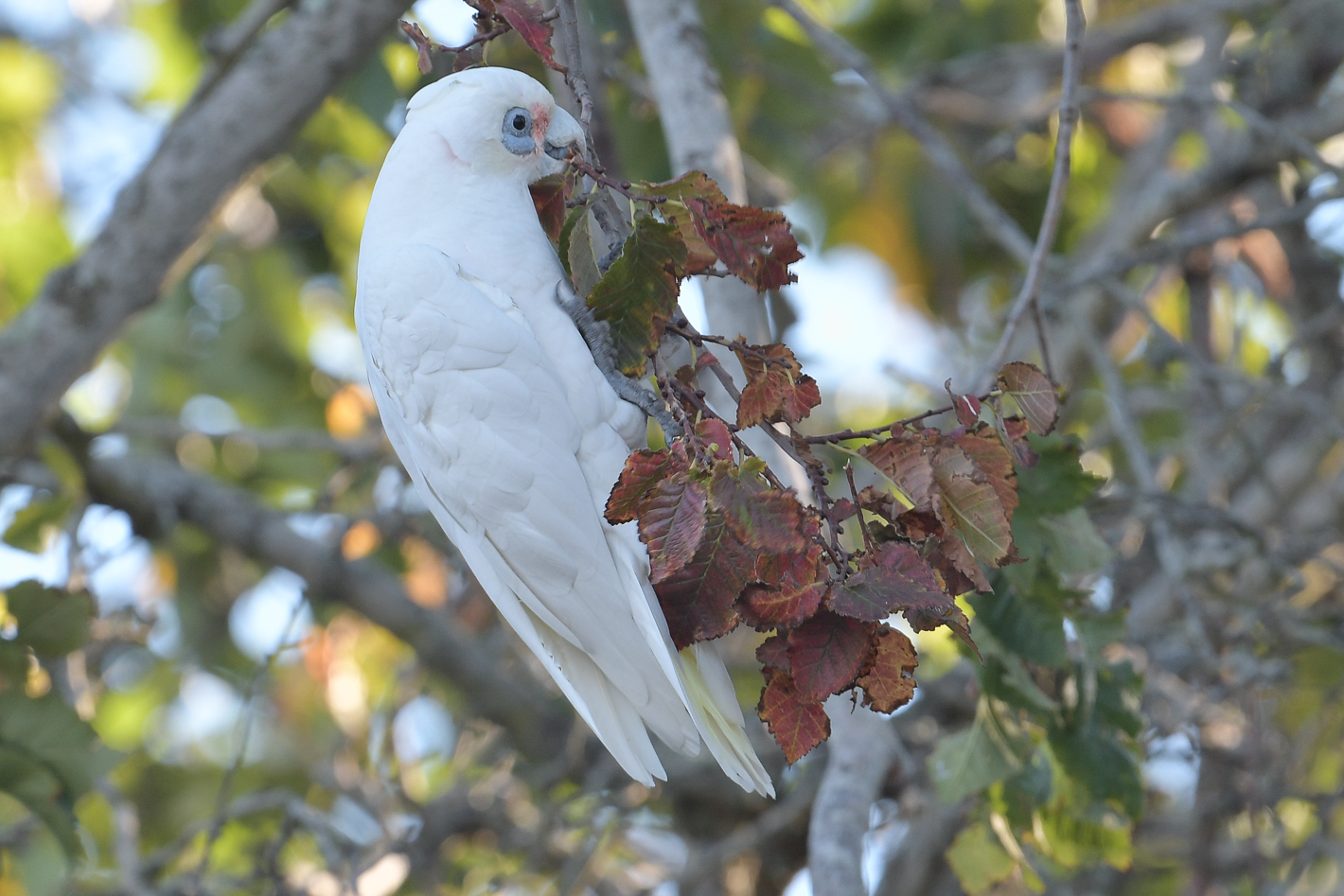
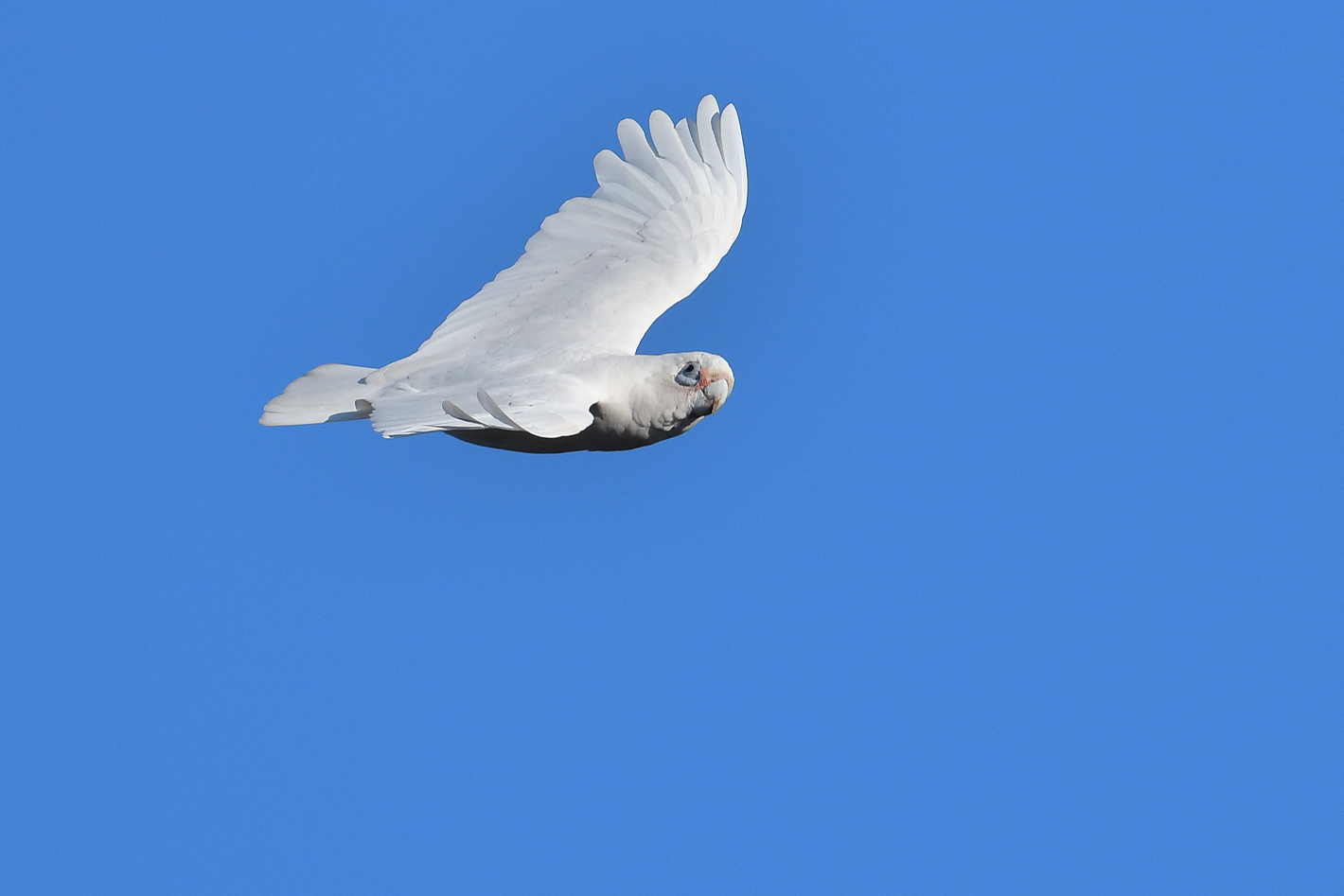
We were walking the Lake at Ballarat in the rich glow of the evening light and the Little Corellas were putting on their usual evening entertainment show. The antics of the birds upside down, side-ways and all bent out of shape in the trees reminded me of The Ministry of Silly Walks.
I saw reference to an article the other day that some research has been done, and was continuing into the “Emotion” of creatures. A controversial subject it seems. At one stage it was postulated that human babies did not experience pain in the same way as adults and some surgery was performed without aesthetics. (Here is a link to an ABC artricle
My only understanding is based on purely anecdotal evidence, (good enough for Darwin apparently), but between various dogs, cats and birds that we’ve shared lives with over the years, I would be on the side of the postitives. Sometimes I feel it would be good for the professional resercher to get out of the pristine tiled-wall laboratory and mingle in the dust with the real world.
So as I watched these reckless birds at work or play, or ?? I did draw the distinct conclusion, that not only were they enjoying themselves in their frentic activities, but there was a genuine feeling of delight in the antics. “Ha, think that is good. Here look at this! ”
Either way it was like having a ticket to the circus. Barnum would have been proud.
Crest up Waiting for the ActionTime to PlayAnything you can doDancing in the evening lightI can’t let goReally is this bird is laughingWait for me
We all did it. Every budding beginner photographer gets excited about a subject, then, struggles with the technicalites of making the image.
In dayhs of yore, we’d take the camera out of the box, and pour over the instruction book, looking for that gem that would help make a correct exposure. These days the first thing to do is Google for a vid by an outspoken ‘expert’ opinion (OEO) on the right way to set the camera up, how to rotate all the dials and what settings are best. And don’t we all want to use Manual Exposure and have beautiful bokeh. The thing I find with the outspokenexpert is that rarely do we get to see any of their work, not the stuff they shoot for some test or other, but real work—but that is an aside.
Then we ponder what is the best way to determine the exposure. Spot? Centre-weight? Overall? Matrix? Does it make a difference? Now it’s my outspoken-expert-opinion (OEO) that the camera manufacturer wants you to be able to get good exposures. Not too dark, not too light, the Goldilocks effect. After all it’s to their advantage for you to tell everybody, “Oh my LTZ7132ii is getting great exposures every time”, in the hope others too will rush out to buy the LTZ7133iii update.
Then, we wrestle with light. At first we just thought, oh, well, there is light. Enough, or not enough. But tricky stuff that it is, and so essential to our craft, it comes from in front, above, behind, to the left or right, below or even subdued and filtered through, and sometimes it hides behind grey porridge clouds. Tai Chi it is said has 13 movements. Lighting near matches that.
Then there is the lens and all that silly aperture stuff: f/2.8, 4, 5.6 Why not 1, 2 3, or small medium and large?
So what is the right exposure? And so we resort to more vids and OEO, all the time wondering why our photos, are not…just so.
Like all training: football, tennis, piano or Tai Chi, the magic slowly begins to show through. Exposure: Not correct, not under or over.
We had ventured to Ballart for a family shindig. Normally such events would see us travelling to the family acres, but this was a special time and the shorter trip was appreciated. Being in Ballarat meant we were both keen to see if we could find the Great Crested Grebes on the lake. Sort of a busman’s holiday.
On the first evening we were to meet with some of the family for an informal dinner and I decided that a quick trip to the lake area before leaving for the main event would be useful in gaining an understanding of the the light around the lake. On pain of death, I left the cameras behind as being late to the aforementioned dinner would release the Wrath of Khan.
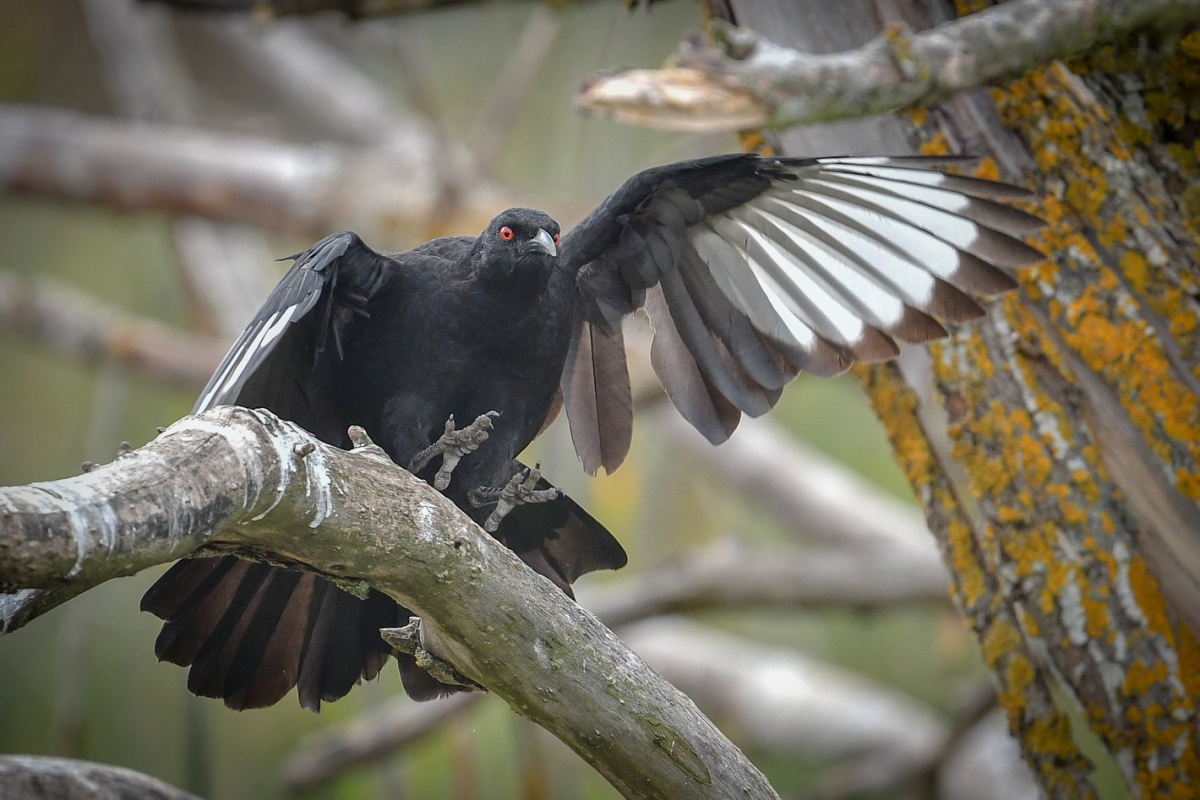
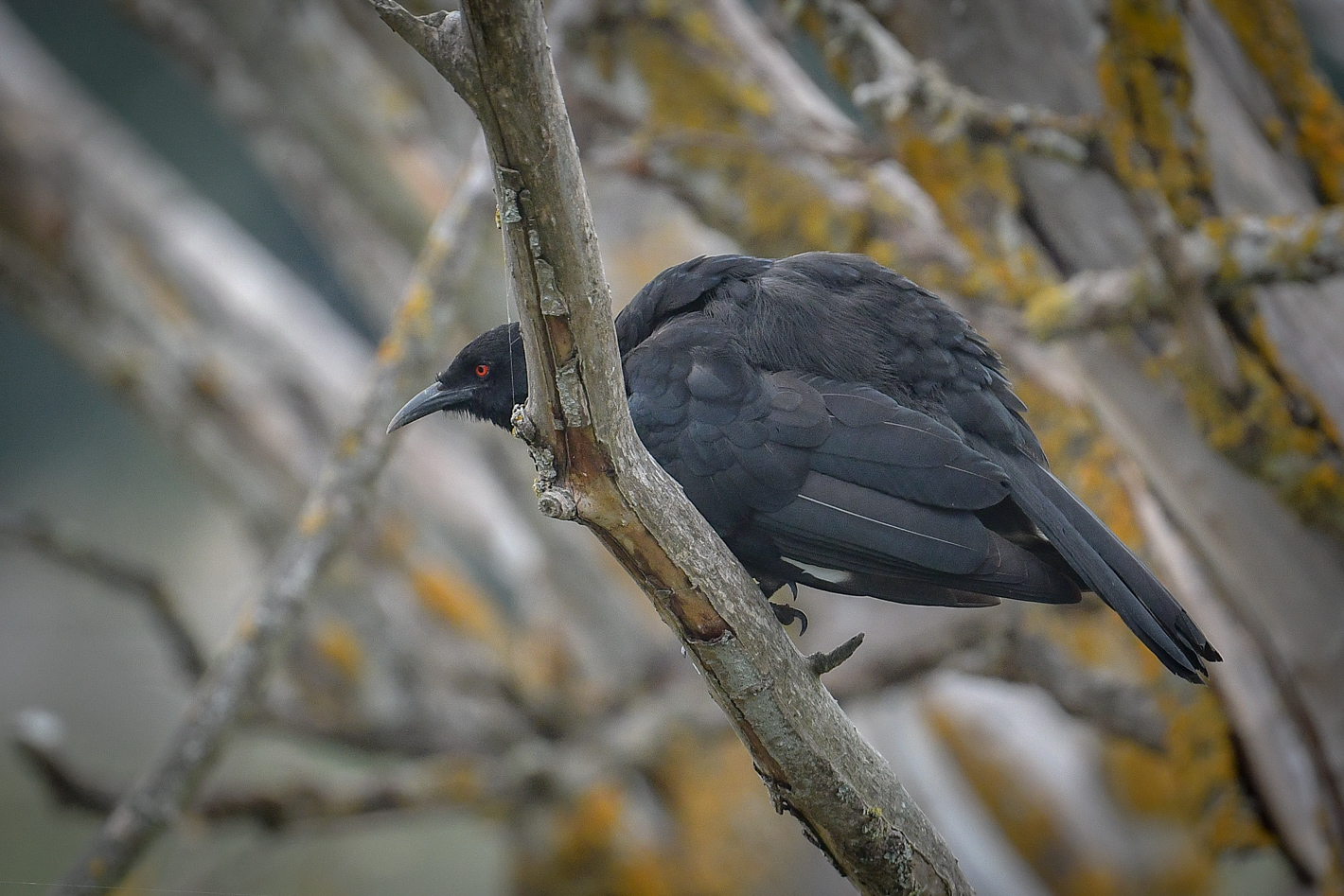
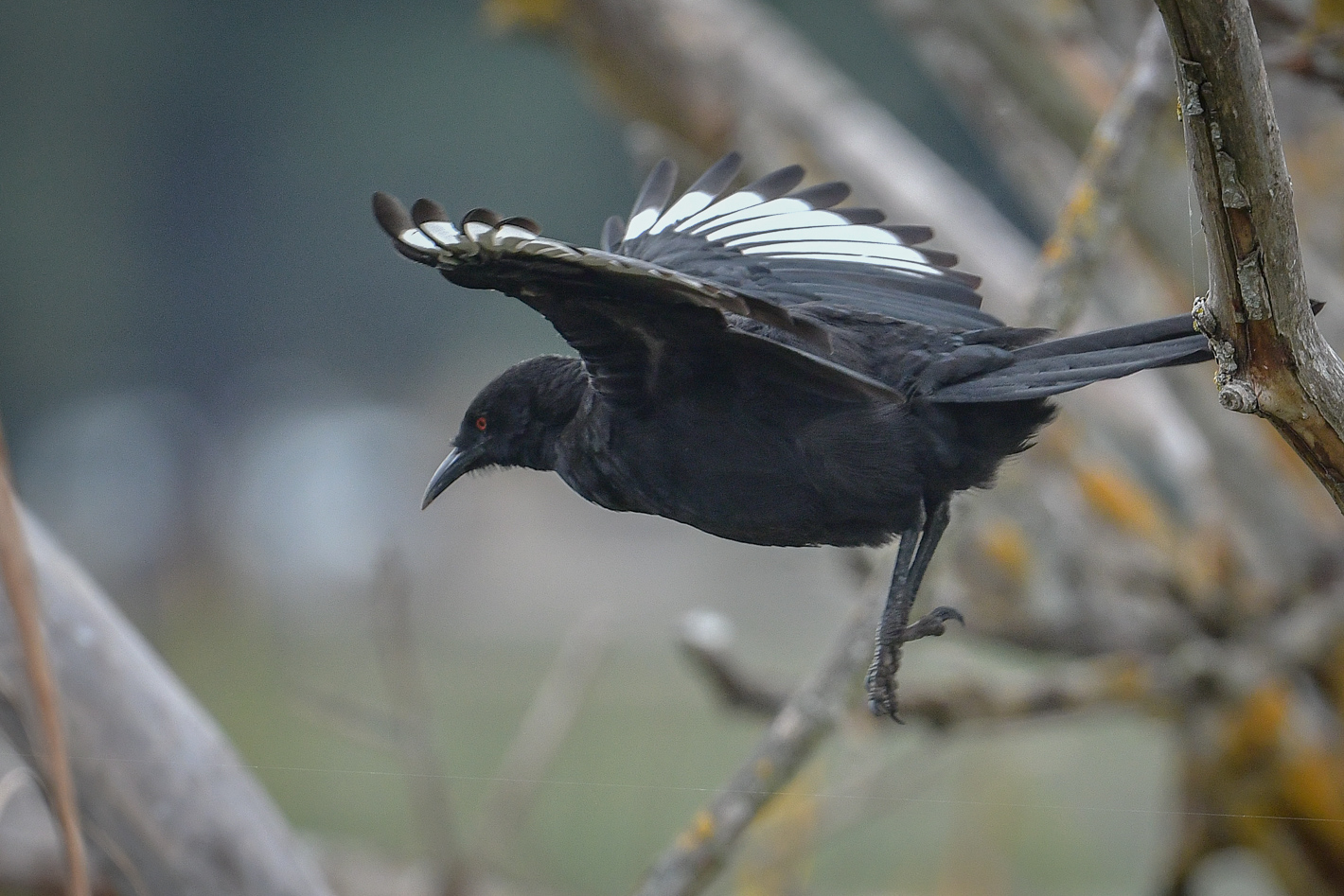
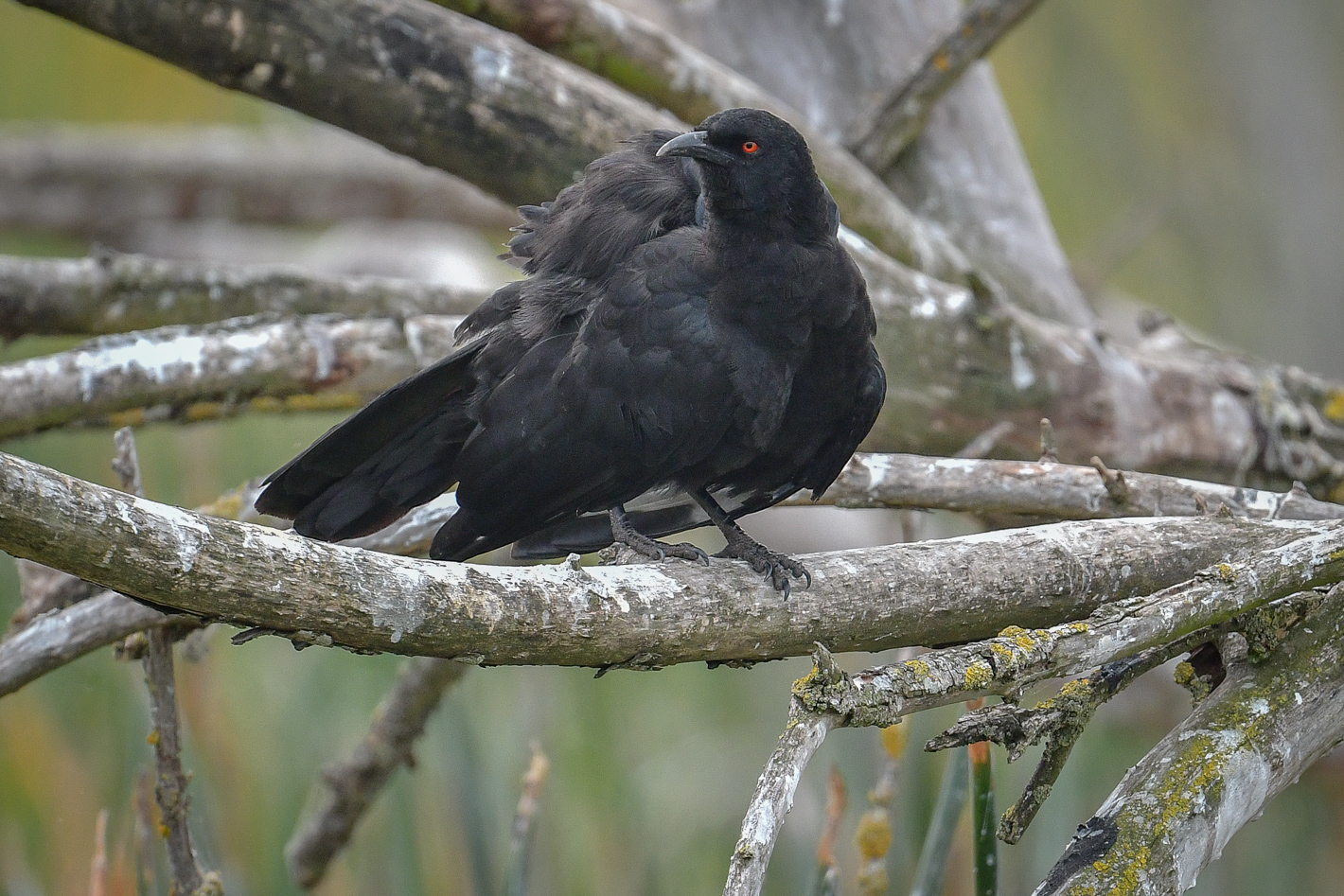
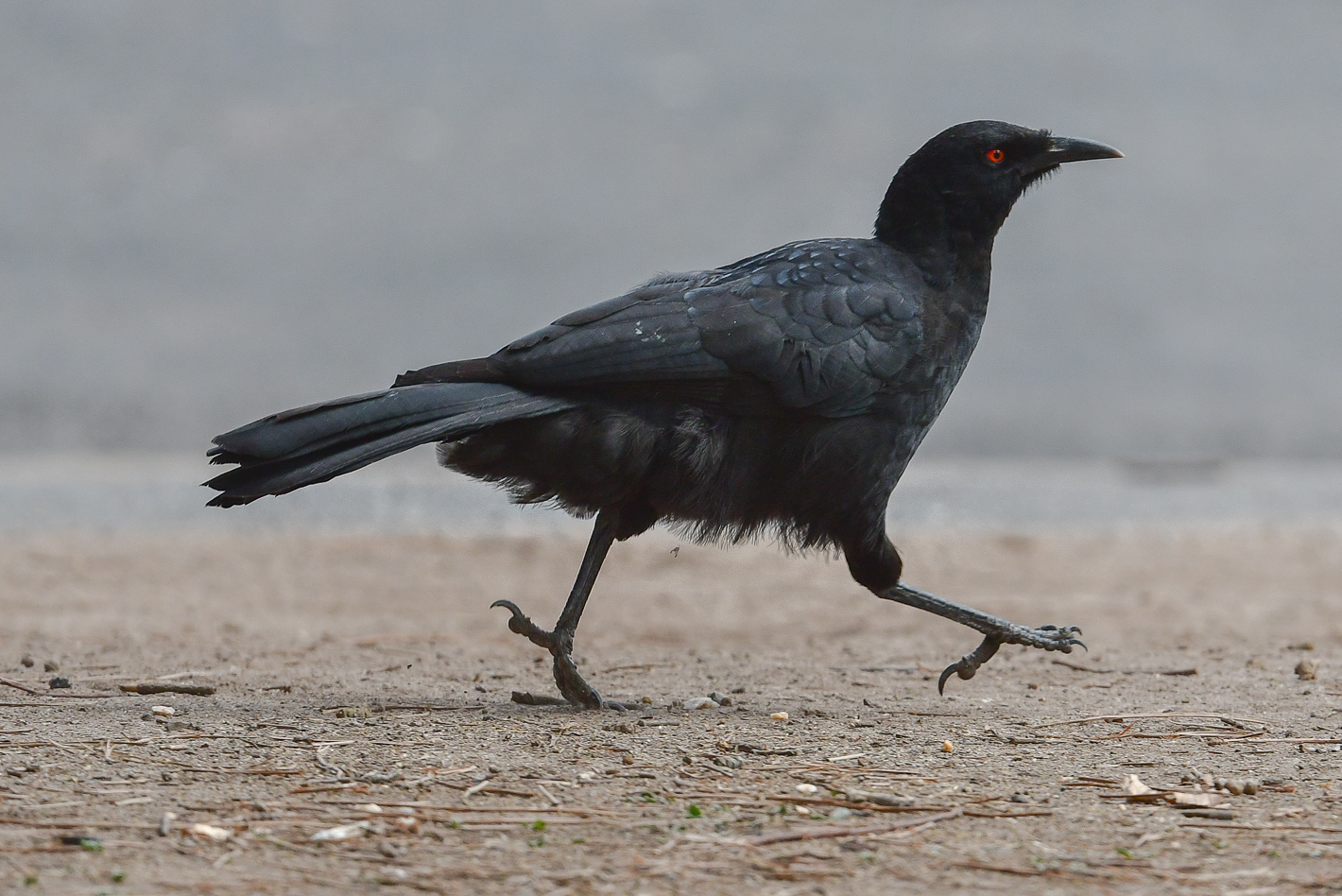
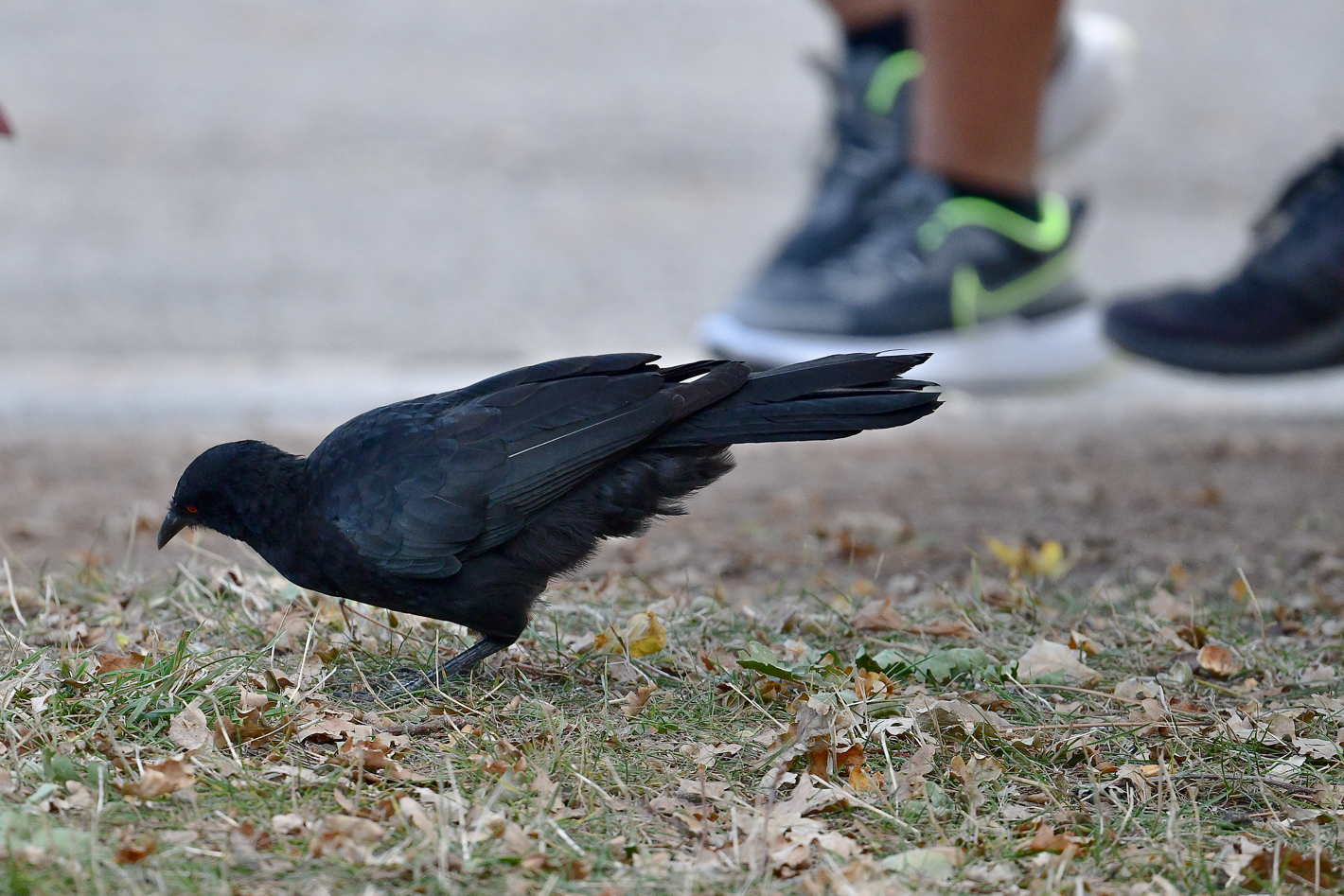
So I quicky drove past and gained a lay of the land (or light in the case) as I passed by the area known locally as “Fairyland”, I saw what appeared to be an unusual Raven running across the grass. On second glance I exclaimed, “Chough”. That was enough for me to park iAmGrey and go and have a looksee. Sure enough it was a White-winged Chough. Now Chough are very much communal birds, a flock is at least 7-8 birds and often more. They need that many birds to make a succesful nesting season. They are also known to abduct birds from other flocks to increase their numbers. They build a communal nest, each one bringing its supply of mud for the process. Once the eggs are laid, they also take it in turns at sitting. If there is an order of who gets to sit I’ve never figured it out, nor I suspect have they. I’ve seen three or four of them hold long meetings around the nest discussing whose turn it is to sit. The same with food. They will all bring back about the same time and like a conveyor belt each move up the branch to provide the young with their tasty morsel. Again arguements seem to be the order of the day, as they try to convince the young that theirs is the prettiest and therefore the most succulent of offerings.
So I expected to find a family of Choughs around the lake. But.
After a few minutes my score was—One Chough.
The following morning saw us both arrived armed with cameras and keen to look for Grebes. We had the good fortune to bump into a local who seemed to know a bit about the birds in the area and was happy to share with us. After a bit of information about the Kookaburra that couldn’t Kooka call, and that the Grebes had moved out to the reeds further in the lake, I asked about the Chough.
It seems that “Charlie the White-winged Chough” (Charlie as it could be either male or female) had turned up about two years ago and had stayed. The conjecture was that Charlie had a damaged wing and couldn’t fly and that the flock had moved on leaving Charlie to its own devices and fate. Young Choughs are gormless and it might have been separated from the family group and somehow they moved away, or perhaps it was frightened by some event and was unable to locate the family. I’ve seen them caught up in downed branch leaves and need an adult to help free them. Also, Charlie didn’t call out at all while we were there so that adds another level of complexity to the tale. Charlie might have sulked in the corner for a little bit, but was soon seen moving about in the parklands sharing the space with the Swamphens and Coots and humans and their dogs and small children.
We didn’t see Charlie again that morning but as we had dipped out on the Grebes as well, we were back in the gorgeous evening light to have another attempt. This time, Charlie was in residence and we watched and photographed as it moved about over the picnic areas helping itself to various insects buried among the garden mulch. It must also be noted that while Charlie did not fly it very quickly scampered from one location to another and seemed to take a particular dislike to Swamphens. With much raising of wings and aggressive stance. The swamphens invariably gave it space.
We were domile in a unit across from the lake so the following morning were back again for a brief period. The beauty of the early morning still air was a highlight of the day. Our grandson was going to take us on a tour of several of his favourite birding spots and we took the opportunity to again look for the Grebes. This time we did spot several. Way, way out there among the far flung reeds and so not much photo possibility. “Look,” cried EE, “the Chough just flew into the tree in the lake.” And
Sure enough there was Charlie, out in a tree in the water, where the Fairyland area enters the lake proper. So, it seems that flying is a skill that Charlie has. Now, is Charlie good at it? Well… Choughs are not exactley the greatest aeronauts so it would be hard to say if Charlie has diminished skills, but the tree is a fair way out in the water, and as its swimming skills are negligible, flying seems to work.
A couple of visiting lasses were discussing the id of some Little Pied Cormorants, and I offered some ideas, and also showed them the White-winged Chough. A quick check on Uncle Google and they were happy to confirm I was right—It was a White-winged Chough, but where was the white on the wings? Good question. And I explained that white is only shown in flight, and right on cue, Charlie took off flew down the Fairyland waterway and landed about 400m down in the garden area. White-wings and all.
Choughness is so very complicated , and hard to explain, and I’ve long ago abandoned trying to understand these birds, but as long time readers will know, I have a real affinity for these amazing birds and was thrilled to have a new chapter to add to my limited store of knowledge. Thanks Charlie.
Charlie looks like it is ‘carrying’ a wing, but I think it might just be a Chough thingThe lefthand side wing seems quite normal. What are you doing out there on a tree in the Lake?Hopping from one branch to another seems easy enoughThere is always time for a spot of feather cleaningA few missing feathers but that shouldn’t be a bother. It might just be moulting in for a winter season wardrobeTime to GoAnd across the lake and down to the picnic area for a morning snackSeeming out of character, but confident among the carpark and traffic.Scampering along the running track with the early morning jogging crowds, Charlie is quite comfortableWhile others hurry by, Charlie can stop for a quick refreshment break.Arriving late at the picnic table. Swamphens beware. Charlie means business
Hopefully by the time you read this, we will be in Ballarat for the weekend. Big family shindig.
Deng Ming-Doa has a seveal lines of poetry about location.
Just by choosing where you stand You alter your destiny.
Now, I suppose, from a western thought process it can be a bit too literal. As in where you live, where you stand polictally, how you see the world about you.
Yet, it has been my experience that if you change where you live, life doesn’t radically change.
Yet at another level, each choice we make does alter and affect how we live. Same for photography.
Which camera? If I make a change of brand, will my work improve, 10%? 25%? perhaps 50%? Or will I just have more fun playing with the new toys?
As Deng goes on to write, “there are no double-blind studies on my life”. Each choice I make be it lens, or camera, location, subject, lighting, or time of day brings with it its own magic. Each study of we take is of course a choice of so many options.
The delight is being there and seeing it all unfold, and having the vision to bring it to share.
I had been waiting for this female Australian Shelduck,(Formerly Moutain Duck), to follow her mate as he took off to the other side of the pond. I suppose I expected the usual, head out, wings up.
But my location on ground gave me a new view of this lovely duck in action





















 Birds as Poetry —— Just because I WANDER doesn't mean I'm LOST