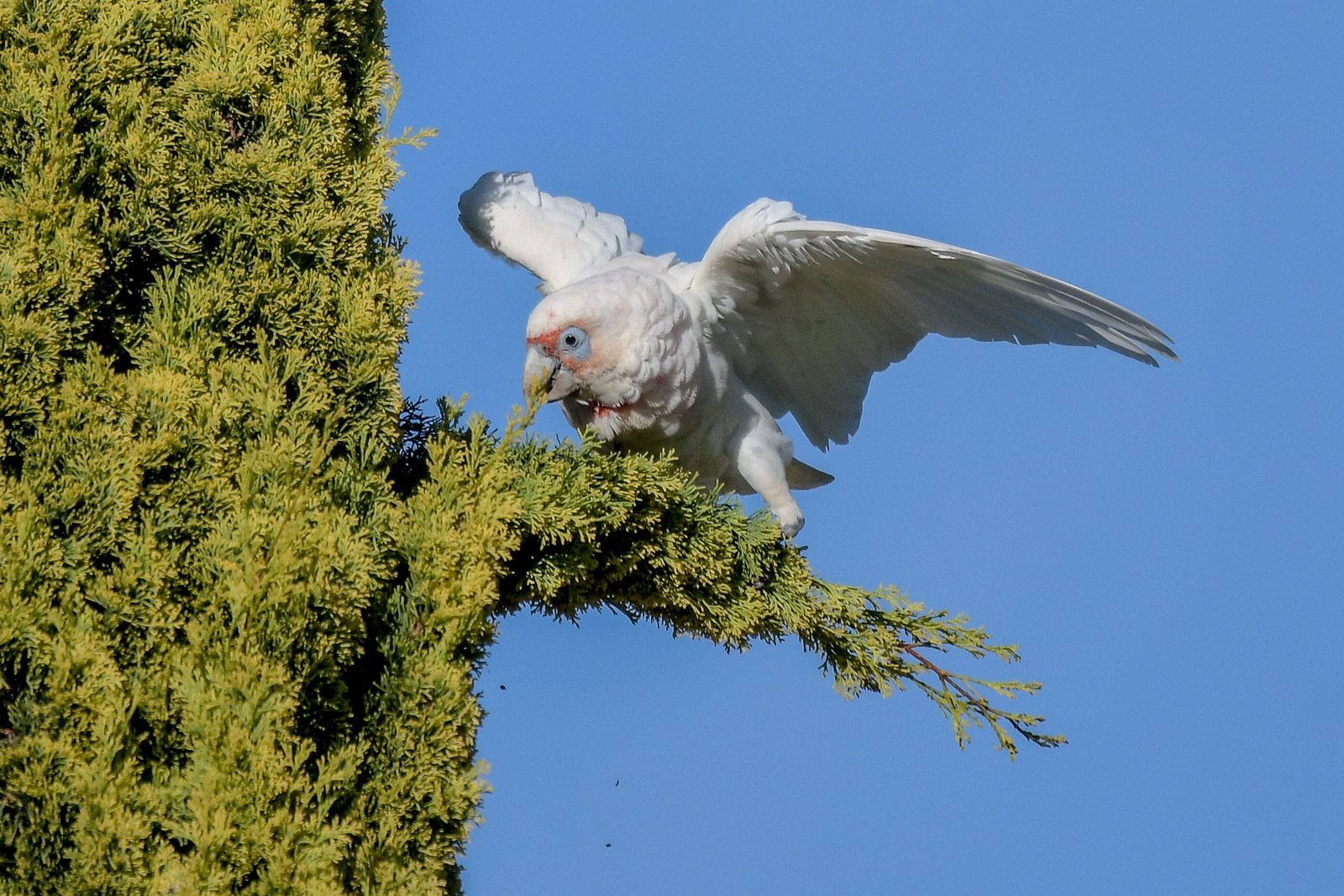
Interludes: Bold and Beautiful

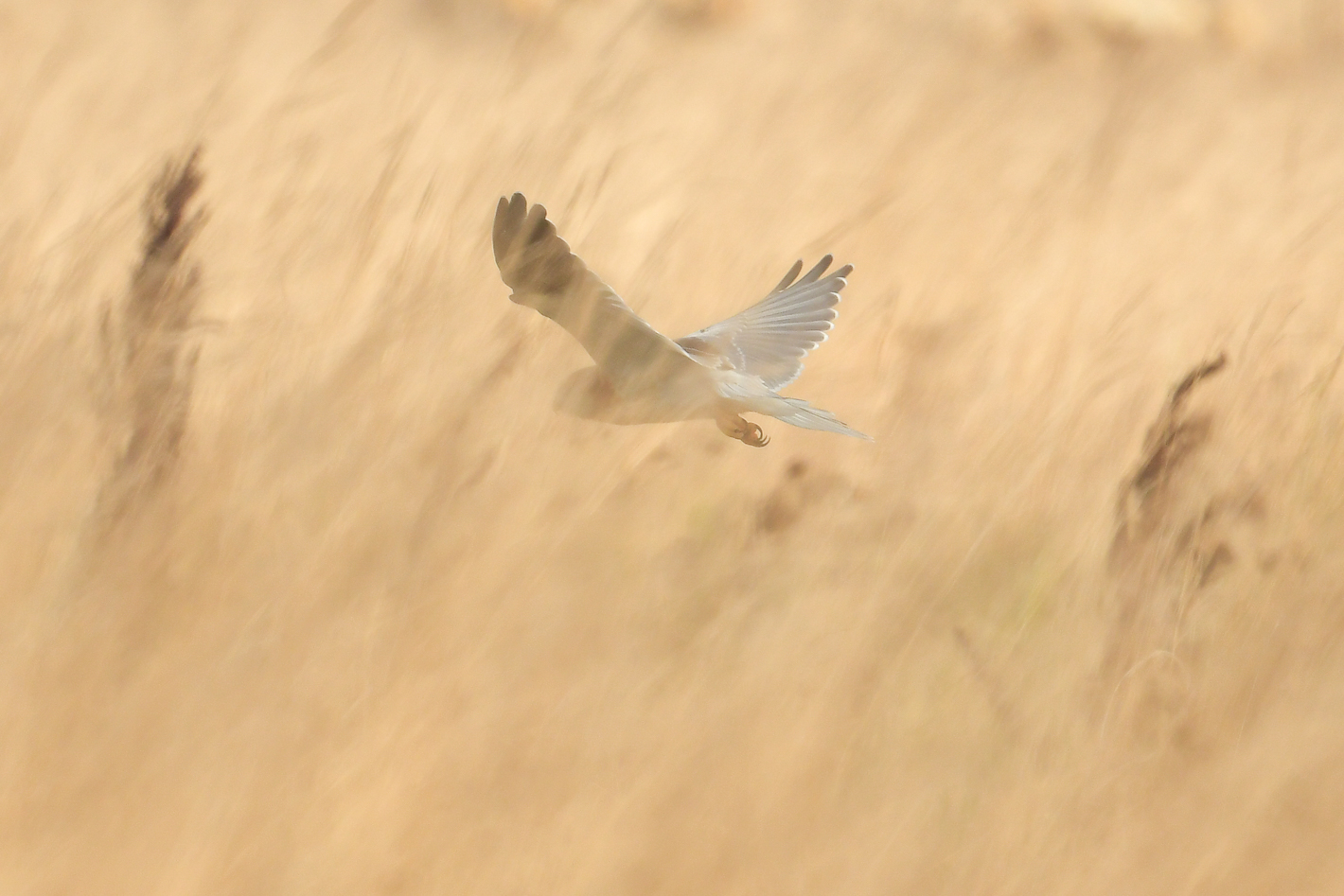
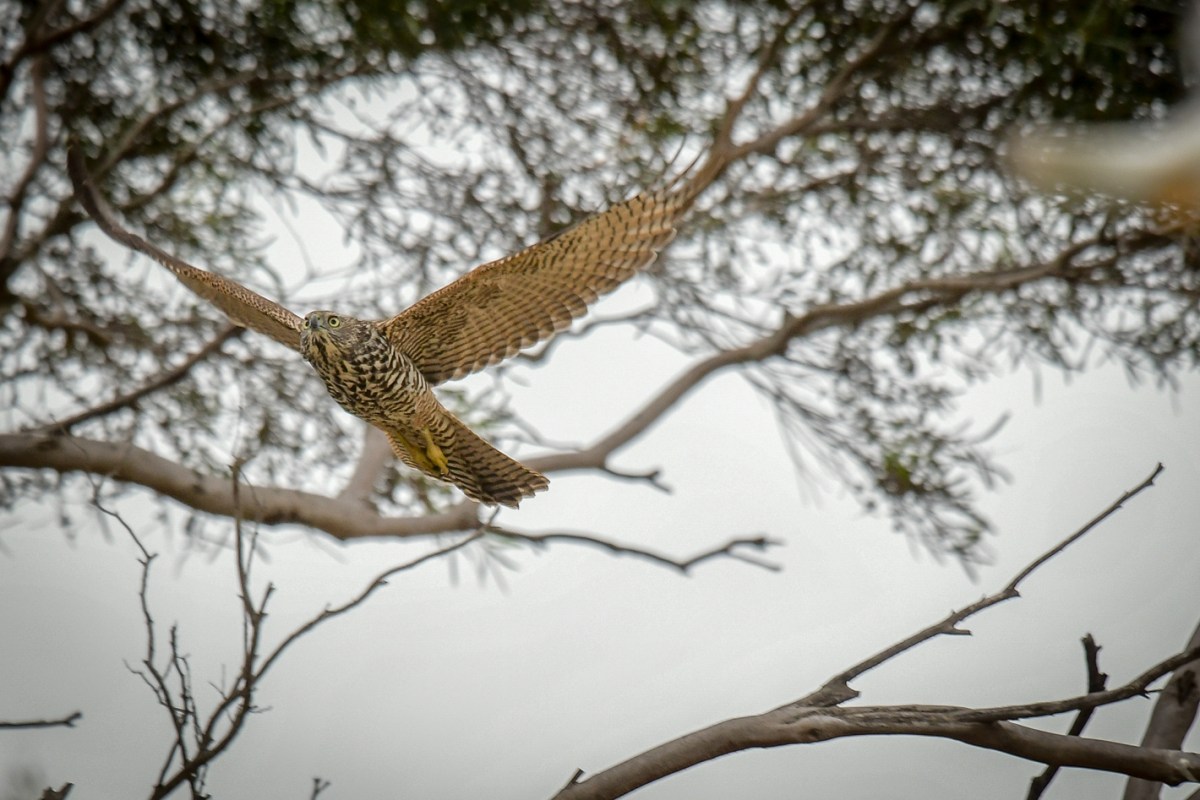
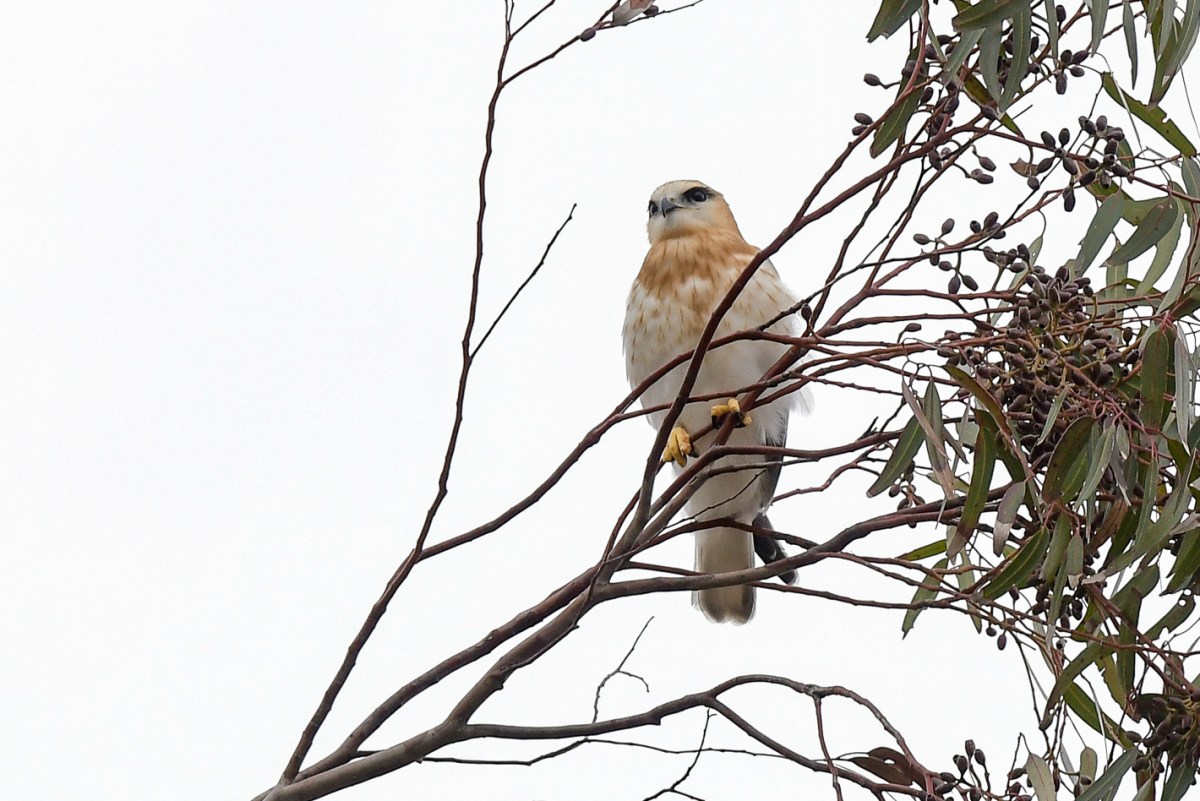
While many of us have been indulging in a self-imposed “Shadow Lockdown”, mother Collared Sparrowhawk has been busy increasing the Sparrowhawk population.

A few weeks back when we were at the height of working with Cassia, of Cinnamon’s three young Brown Falcons, we regularly  caught sight of a Sparrowhawk running food deliveries to its young.   Now about four weeks later, three young Sparrowhawks are out and about.

Mr An Onymous had given me a heads-up that they were out, as he visited the area a few days back.   We had other plans for the day, but it was such perfect beach weather that we abandoned them and headed out to see what we could find.  We left early morning to arrive in the cool of the day, and also figured that would be the most obvious feeding time.

The young were very much mobile and quite vocal.  So they are not yet much of a threat to the local birds. Although we did see them catching dragonflies from time to time.

Long term blog followers will know that I’ve been guilty of taking— as someone said, “great liberties with raptors”. (In my defence it is always when I’m invited by the bird), however to set the record straight,  Sparrowhawks and Goshawks are a different matter.  They are the birds that I am most wary of.  Several reasons.  1. They are quite bad-tempered.  2. They have quite short tolerance times. 3. They hunt by stealth and are silent in their approach. 4. They are stealth hunters and slip between trees and branches with an ease that can be a bit disconcerting to watch. 5.  They have long thin dangly bits hanging off the bottom which can be used with surgical precision to snatch at prey and anything they have taken a dislike to.

I’ve been harassed by a number of raptors over the years, mostly my fault, but these dudes turn it into a sustained attack.  Now mostly that has been because foolishly I’ve stumbled close into a nesting area, and so I don’t blame them, but I can take the warning, should it ever be given.  It’s not!

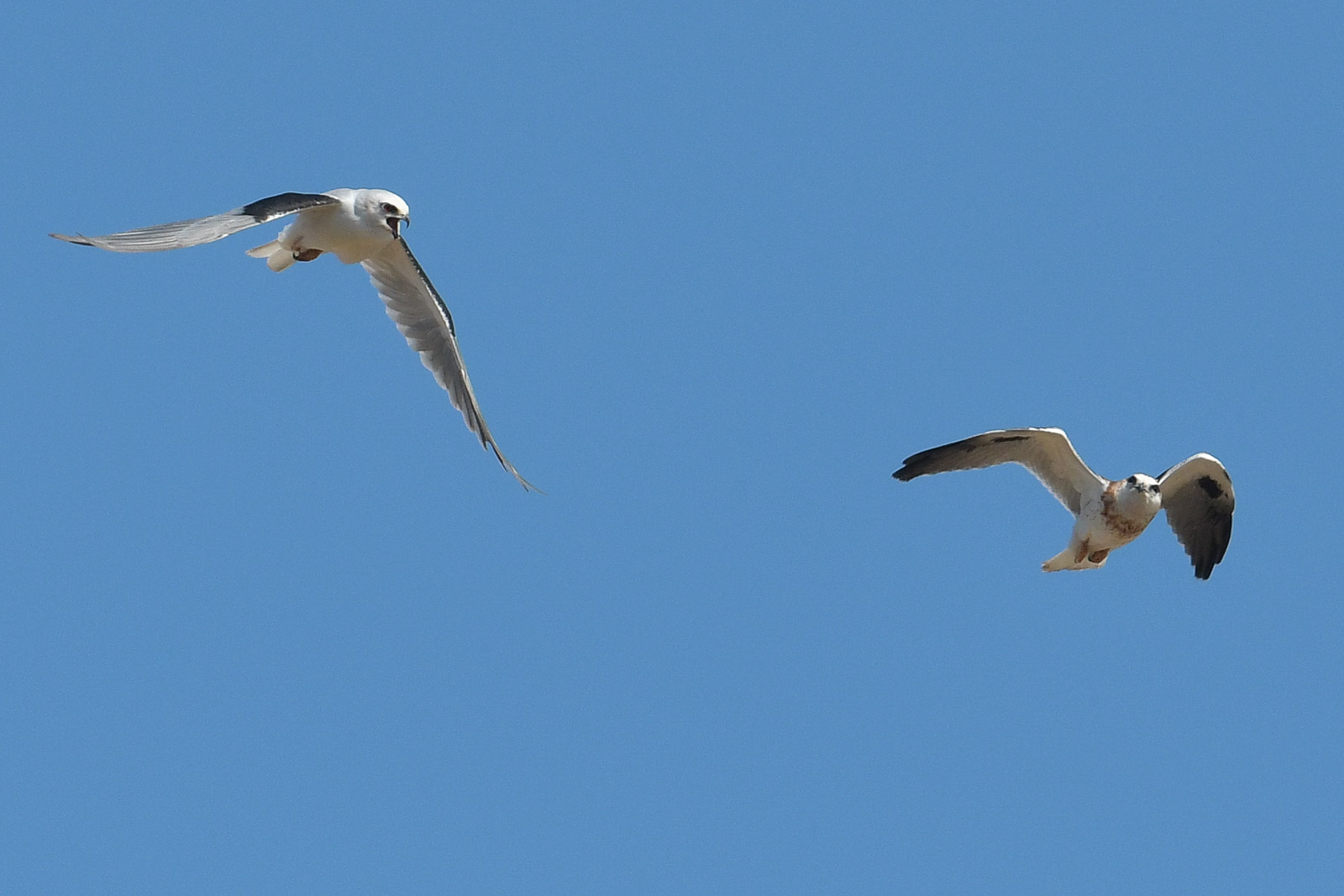
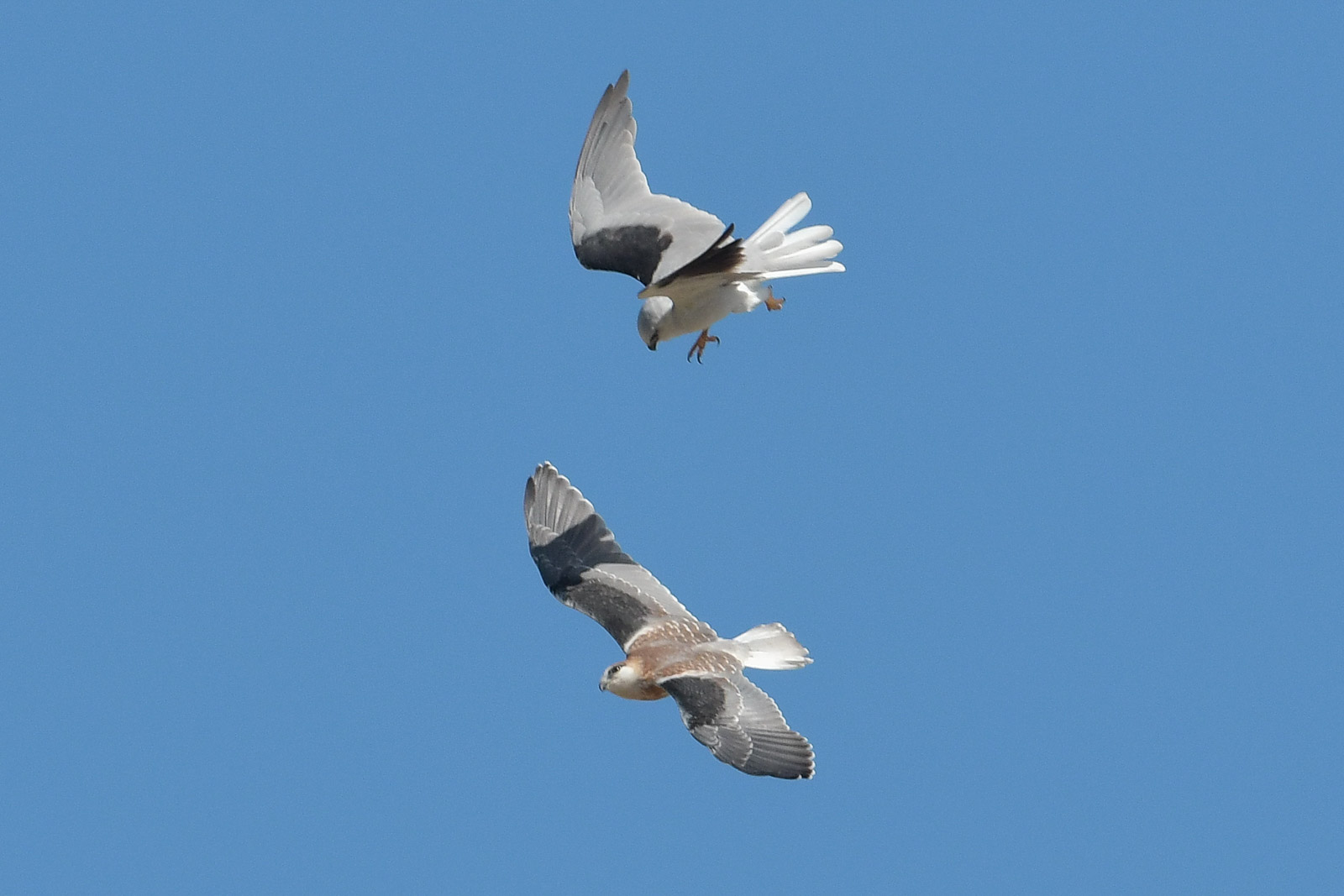
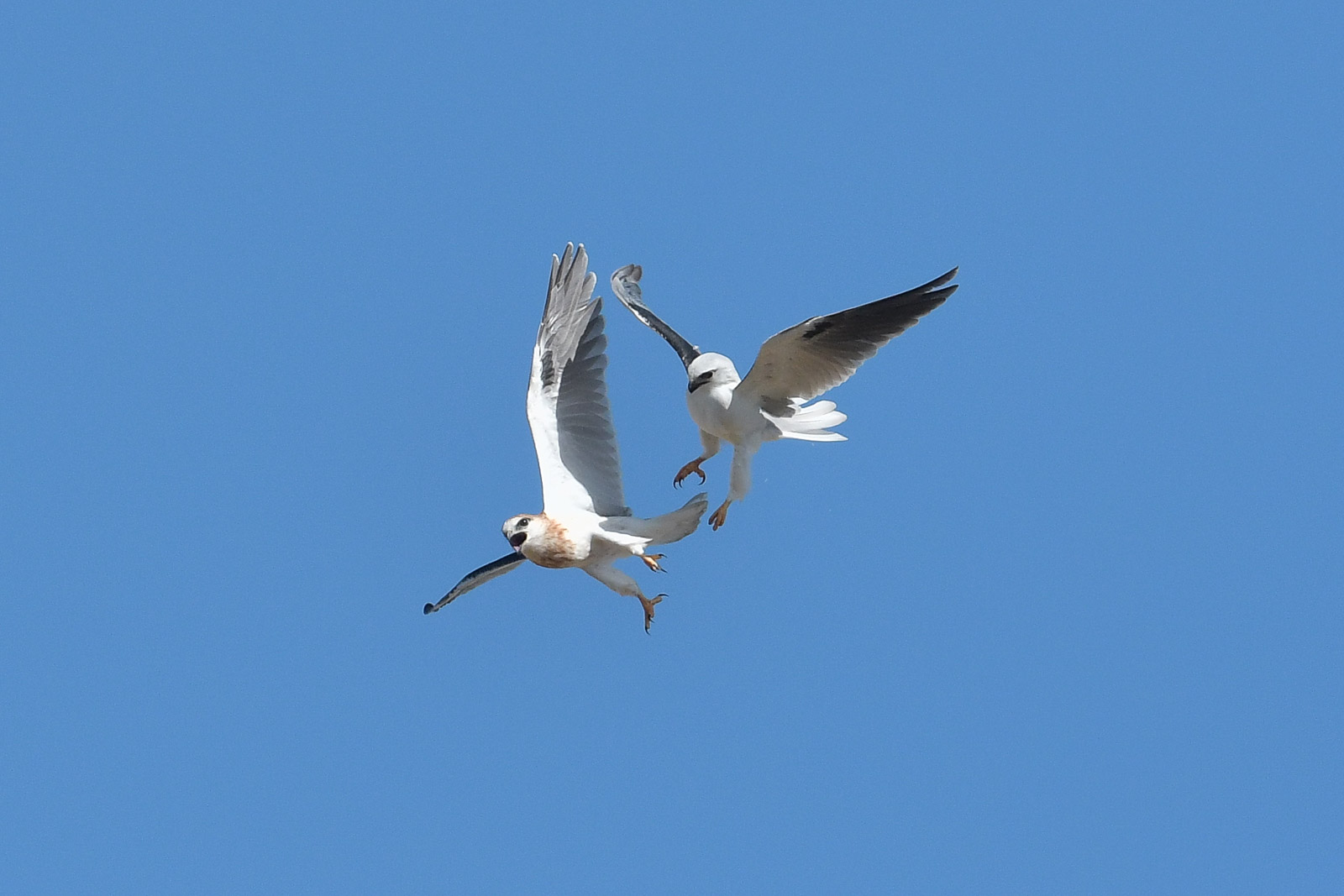
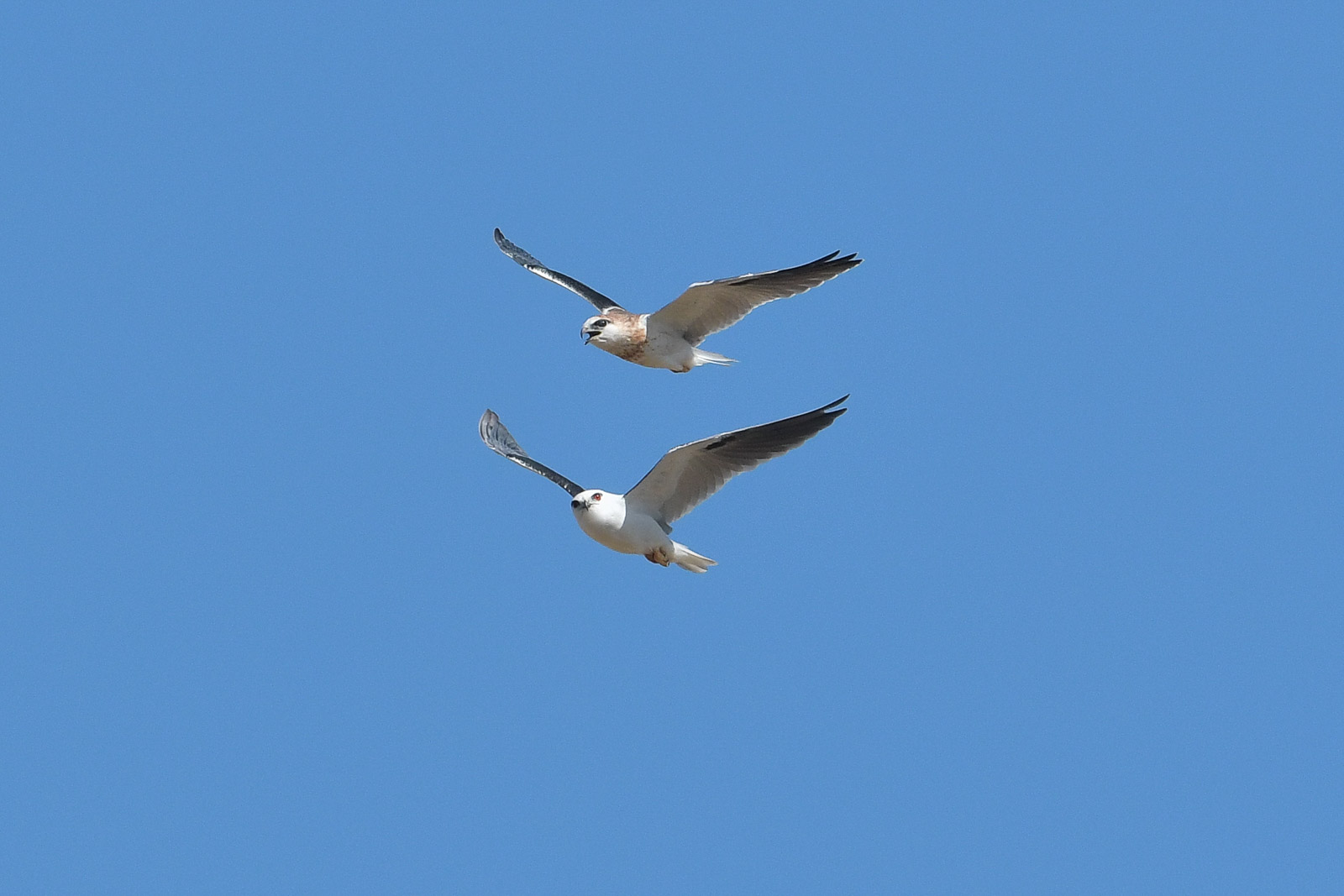
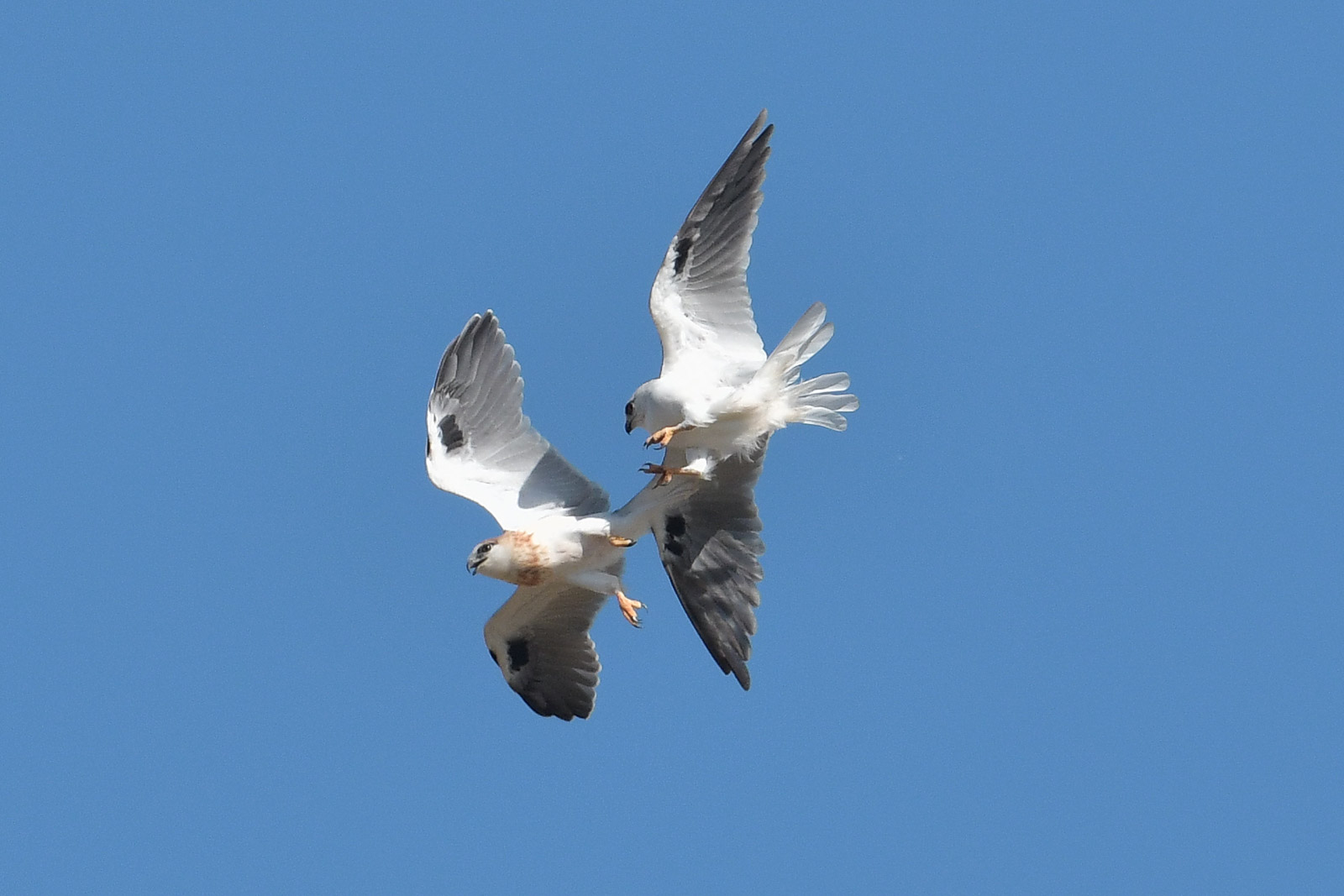
These young birds are different.  They are out for fun and games.  Serious no doubt, but they seem to enjoy it none-the-less.  They spent the morning chasing Wattlebirds, pigeons and Magpies, had altercations with Black-shouldered Kites and with no respect for elders even bailed up Cassia.

We also saw an adult come into feed.  Regrettably I followed the wrong bird in the viewfinder and missed the pass, but ever-reliable EE nailed it.  So we’ve included a shot from her friendsoftheair account.    When you have a choice of 4 birds all filling the sky, which one would you follow?? Oh well!

Enjoy

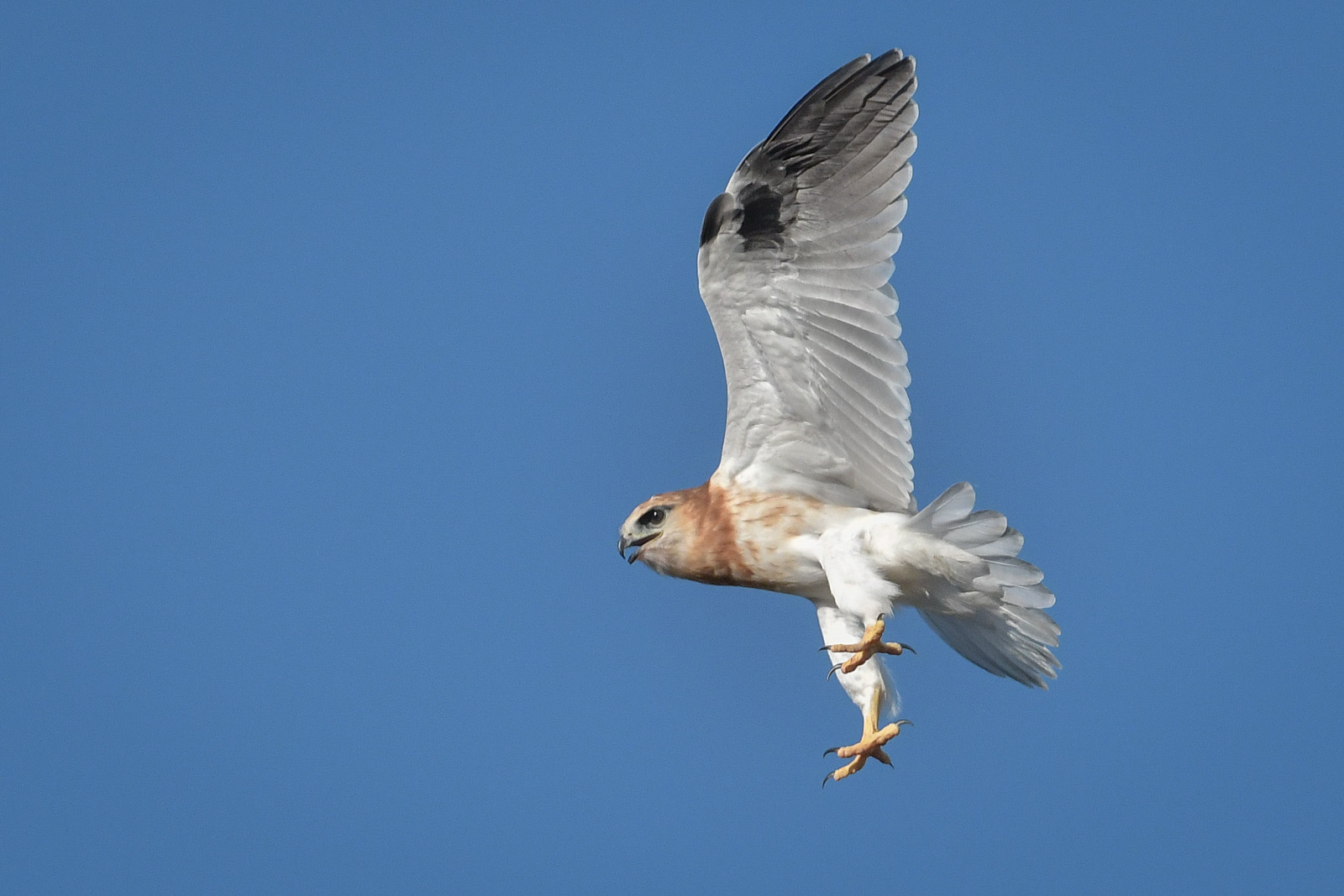
One leg lifted and feathers flared out has always been a warning sign for me.

Why are Sparrowhawks marked that way? So they can hide in plain sight in the trees. 🙂
Sliding past the “Southern Cross” windmill direction vane.
No respect. They bailed up poor Cassia, of Cinnamon as she went about her field work
Thanks to friendsintheair for supplying this shot of the adult dropping the prey for the young to snatch away. Too easy.
Saturday Evening Post #170 :Bedazzled

Been a bit quiet over at birdsaspoetry land this week.
Weather has been less than ideal: hot/cold/wet/windy.

Enough to make the average Doona Hermit snuggle up.

So I did a little internet browsing.  Had a chance to catch up with Thom Hogan’s site and his discussion on New Year’s resolutions, about planning Not To Switch Camera Brands.

Not that I’m brand switching, but sometimes it’s easy to fall into the “If I just had that one piece my photos would be so much better”.  I do admit to guilt on changing processing software however.  I’ve harddrives full of them.  Funnily enough, my photo work hasn’t improved using one or the other. Nor has my library ever become better organised or searchable.

Speaking of useful pieces of software, have you ever wanted—for a specific reason—to extract the JPEG from your raw camera files.
Yeah, I know just output a JPEG from the processing software. However Iliah Borg, he of the best raw viewer ever made, “FastRawViewer” has produced a little utility to extract the JPEG preview,  the one that you see on the back of the camera when you review.
Can’t say its a ‘must have’ piece.  However from time to time for a quickie result….  The size of the file will be dependant on camera settings but even with raw only set in camera the JPEG will be full size and with a moderate compression.

Have a look here. RawPreviewExtractor  In Beta and it’s Free.


There is something spine-tingling to stand up close to a raptor.

Many will have had the experience at a zoo, or a wildlife refugee or sanctuary.  A few lucky foks may have been able to have the bird perch on their forearm. To gaze into those eyes and ponder the amazing  intellect behind them is truly bedazzling.

But in the wild, it’s quite different.  The birds are, by nature, true social distancers.
I’ve mentioned on the blog about several times when I’ve had a very close contact with a raptor.  Not an aggressive flypast (I’ve had a few of those too!), but a bird that comes into my territory. One year I photographed a Kestrel (search for Jane Austin’s character Elizabeth here to see some of those times). She would land in the grass where I was laying and hunt around my feet.  Amazing to see the feathers move as she breathed.
One of her daughters, the following year, would come and sit on the fence post next to me while other people moved about.   Now next to me is not over there a bit, but we shared the same fencepost. Kinda like a dog at heel.
She would sweep out to hunt, and if a walker, or vehicle or bike rider came down the path, she’d swing around and land within touching distance till they had moved on.  Hard not to talk to such a bird, and the occasional head-cock might have meant something. Or not. 🙂

We’ve also had quite a number of close connections with Black-shouldered Kites, but hardly ever with Hobbys.
Until.

You might know that most mornings, I leave home very early around sunup and walk my local river park.  I have a small pondage with a flat area, that I make part of my morning Tai Chi routine.

This morning as I settled in, I heard, in the distance, the cries of hunting Hobbys. Sharp, short and piercing.  Looking about, I finally spotted two small fast moving shapes about 500-600m along the creek.  They both took off toward the local football oval, and I lost sight, so continued with my routine.
Then, as they say, out of now-where, one came wing flicking along the riverline. Looking no doubt for dragonflies, or perhaps something a bit more substantial.  After making a lap or two, it turned, and dropped right down on the reeds and headed in my direction.  I had by this stage paused and was enthralled at watching this awesome aviator.
Then it turned even tighter and made its way toward the end of my ‘special place pool’—which is not much bigger than a couple of car spaces.

It suddenly dawned on me as I stood frozen to the spot, that the bird would come over the reeds about knee-height and directly toward me.  Amazingly, and I suspect it was planned, it flicked ever-so lightly just a metre or so in front of me, and passed by my right knee with little more than a handbreadth between the bird and I.
It was easy to look down and see all the feathers raked-in as it ran fast by me. It even turned its head at the last moment to acknowledge I was there. The other thing worth noting was it was silent in the air. No “Whoosh” as it powered by.

I stood bedazzled watching it climb out of the reeds behind me and continue along the upper creekline.  Then. a few definite wing flicks and it was gone.

Of course the camera was home safely in the cupboard. (The weather gurus had predicted rain).
Still I hunted through the photobase, to see what I had the would help bring the moment to life for you dear reader.

Enjoy


Saturday Evening Post #169: Anthropomorphism?

Been watching a Doco series on SBS about Walt Disney.
It is quite indepth and covers a lot of history I only had a nodding feel for.  Was he a hero or a despot, well, let’s not go there now.
What it did show was that he needed to make some movies that could bring in some dollars to pay the wages. And of course furnish his lavish lifesstyle, but let’s not go there either.
It seems he hit on an idea while on holiday in Alaska and shot lots of 16mm footage of seals on “Seal Island”.  Once back in the studio they plotted out a cartoon style drama.
Need a hero, or two, a dark-moody antagonist or two, a desperate situation that would require said hero to confront said enemy, and stress and strain of the battle.
So they hunted though the material.  Located sequences of ‘Our Baby Seal’, its “mother” the nasty shark or gull, and then worked the shots into a sequence and of course wrote the voice-over to match.  “Oh, look here our helpless baby is trying to climb over a rock”.  “Here  is another one climbing down from a similar rock.”  Hero does good as the two disparate sequences were spliced together and eventually they had the story of “Will the Mother seal make it back in time with the food or will the baby become an orphan and be abandoned by the colony”. Cut to shots of abandoned baby seals.
And so it went.  Insert David Attenbro voice here.
For sequences they didn’t have, they sent out a crew to reshoot.
Once back in the studio, it was all cut together to match the written story line of Hero Triumphs over Odds. (You have to read Joseph Campbell to see how these stories play out in so many cultures:-  “The Hero of A Thousand Faces” is a good start).
Now of course the cynic in me has always been suspect of the said Attenbro ’stories’, but it seems he didn’t invent the genre: another success for Disney. 🙂 Or maybe someone earlier?

The Disney Studios made half a dozen of these ‘docos’ and made enough to cover the wages so all was good. So next time you hear the Bro expounding some heart-rending formula, about Elephants, Zebras, Polar Bears or Sea Lions, you’ll know where it came from. 🙂

One part of the doco also recounted the making of “Bambi” and how a whole generation of small kids were scarred by the tension and drama of that movie.
As one of those from the scarred (and scared) generation, I can recall being in a picture theatre somewhere as a very small kid, trying to hide under the portable wooden chairs in the hall.  So it came as no surprise to me many years later when I took my own young girls and their little friends to see “ET” that we left the theatre with a bunch of tear-stricken children.

Such is the power of the Theatre of the Mind.

I often tell stories here on the blog of various encounters we have.  Hopefully—as the Channel 9 news so ambitiously claims, “News does not have an Agenda!”—the stories here tend to portray what happens and doesn’t embellish the reality just for the sake of, as Campbell writes, “A multitude of preliminary victories, unretainable ecstasies, and momentary glimpses of the wonderful land”.  (Hero of a Thousand Faces. p109 Fontana Press 1993)

This year we missed the Sacred Kingfishers nesting.  Such clever birds didn’t want to share with us a second year,  so here is one I prepared earlier.

Interludes: Main Course

There comes the day in every young Australian Hobby’s life that it must learn about serious hunting on the wing.
Grasshoppers and dragonflies are great food, but real protein is needed for them to grow.
Dad is not going to be there as a free Uber-delivery for ever.

And so we ventured out on a day when he was getting serious about the training program.
First step was to get them good and hungry.  So his regular callbys with quick top-ups, seized-up faster than tripod legs immersed in seawater.

When he did come by they had two new lessons to literally ‘grasp’.

The first was taking the prey from him as he did his best to remain stationary in the sky, holding the latest Fairy Martin.
Then after a few attempts at that he would let the Martin drop, and watch as the young bird followed it down and quickly managed to secure the meal.  He also invariably rolled over in a small stoop to pace the tumbling meal, just in case anything should go awry.  Needless to say on the attempts we saw, it was 100% score all round.

By the end of the morning, the young were now quite capable of chasing, if not catching the dwindling Fairy Martin fraternity.

At least one came back after a rocketship foray, and if there was a food exchange I missed it, but the young bird came in high and fast so I concluded that it was a successful strike.  (If not, no doubt by day’s end their score would have been gaining an impressive run total, just like the Australian Cricket team.)

I suspect this will be the last close quarter encounters with the young. No doubt they will be fed far less and make their own field trips and return with food.  All that will happen well beyond the tree line where we currently are working and then… Before we know it, the paddock will be bereft of the young.  The parents will move on to other territory and we’ll not see them regularly until next year.
Not sure who has learned the most, but we have certainly gained some interesting anecdotal insight into their growth and development.

Ready to for the next foray
Fast chasing games, would help them learn the necessary turns and forward thinking of a mobile prey.

Holding Pattern
Successful exchange, no crashing, or overshooting any more.
All secure and away
Lining up for a food drop.

Following the prey down just to be sure that all is ok. He outstrips the dropping carcass and can casually watch from below.
Coming in on fast wings from a great height with a meal.
I’m not sure, but I think this is self-caught. Those wings are raked back for speed.
My guess is this not only only fresh caught, but also self-caught.


Saturday Evening Post #168: Another Turn Around the Sun

Spilling over the horizon first thing in the morning, the sun makes its presence felt in the way that it send shadows scurrying, highlighting details and bringing tone and form to the previous dark shapes.

It also creates a variety of moods and colours as it marches its inevitable track to the other horizon, to then slip silently, but forcefully over the horizon and leave behind a soft mellow afterglow that drapes and melds over the landscape and our subjects.

Mid-morning to mid-afternoon provide sunlight that brings  qualities of contrast, detail, and colour.  On a cloudy day, the harsh shadows are suppressed bringing another mood into play.

Working with terns is one of those times where getting the light right is as much a challenge as filling the viewfinder with the bird.

When I first started bird-photography, the people I travelled with called id on what appeared to be two seperate species. “Whiskered Terns” and “Marsh Terns.” For many months, I ticked off both on my list thinking I was seeing two distinct species and not seeing, ‘whiskers’ on any of them, I wondered what I was missing.
One particular evening I spoke to my mentor at the time and asked how to tell the difference.  “Oh,” she replied,  “they are the same bird they just have had a name change and some of us oldies still refer to them as Marsh.
Defeated by nomenclature!

When it comes to working with these birds, my dear old Mum’s “Keep the Sun over your Left Shoulder, Dear” when using the family box-camera still holds good.  Thanks Mum.

Early morn, or late afternoon works well for me, as it gives angular light under the wings.  The only challenge to all that is the bird will have its wing in the wrong place and I’ll have the face in shadow. And as they change direction so quickly, it’s not always apparent until I get to view the shot as to how successful it was.

They also smack the water so fast that as I follow them down its hard to keep up with the sudden stop of the bird and keep panning down into just open water.
Missing the impact completely.

Like all thing photographic, some practice is the order of the day.
Meanwhile a pocketful of luck doesn’t hurt either.

As we begin our next trip around the sun, I hope that 2022 brings you some relief from the trauma of the past year and some excellent opportunities for fine images of our birds.

Interludes: Dragonfly-ing

Following on yesterday’s Interlude as the young Hobbys continue to develop their inflight hunting skills.

Presently the air is filled with big juicy plump dragonflies.  Among them thousands of Tau emerald.  They seem to enjoy working high in the air over the orchard near the Hobby’s domain.  Perfect for developing inflight skills.

At present it seem that the female, Seraphima, has taken a holiday, and the male, Bronte, is left to bring the young one’s hunting skills to the fore. What better way than to take them into the swarms of dragonflies.

I wish I could explain how it all works, but it usually is so high up, and so far out that I’m really watching tiny shapes streak across the sky, change direction in an instant, climb up, dive down and do it all at speeds that bend my mind, let along ponder what g-forces they somehow overcome.
Fascinating.

Here are few rather than try and explain it all so inadequately.

What came next was practice on the main course

Pre-flight discussions.
Let’s hit the air.
A few minutes of warm-up chasing each other across the sky exercises. Bronte joined in this as well, but so much further out and up. He was able to fly in between and appear to distract them.

Serious tight turns must put a lot of strain on the wings and joints.
Into the fray. The dragonfly was no match for the speed and agility they have developed.

Small enough meal to learn to eat on the run

Interludes: Learning Curves

It has to be said that the learning curve for young Australian Hobbys would best be described with an exponential curve rather than a lazy sine curve wandering about aimlessly.

For a start, the speeds that all the activities take place is super-sonic.
Ask anyone who has tried to keep them in the viewfinder as they speed past.
“Oh, glad you asked!  It is next to impossible to keep them in the viewfinder as they speed past.”

Most of the shots below were taken at quite some distance out.  These little dudes have discovered that they can dig into the air and be a kilometre out of sight before you can say, “Now where are they going?”

It’s more likely, “There they went.”

Over the past few days they have been learning to hunt dragonflies. Interesting as the adult, no doubt its Bronte, the male, lets them run hard and fast and then seems to manoeuvre through their actions, helping, or at least guiding. A few times catching and then dropping the prey for the young bird to snatch away.

Early on, he was arriving with a fresh kill, and then allowing the youngster to snatch it away from the perch.  A day or so later and he developed a new strategy.
He would come in, and then ‘hover’ for a few seconds with the prey while the young came up and took it.  Now there are several actions going on here that I could determine.
First:  He has to swoop up, and stall, before falling backdown.  In those few seconds, (like a diver from a springboard) there is a delay between the going up, and the coming down.

Second: The young at first were a tad clumsy. Tad being a euphemism for very clumsy.  But a few attempts of crashing into Bronte really honed the skill and they both soon learned to get the timing right.

Third: He would roll over and follow them down to be sure that nothing untoward, such as dropping the prey occurred. If it did, he simply closed wings and sped past them to retrieve it and repeat the food pass.

I only saw one food drop.

And as they say: Therein endeth the lesson.
Moving on to dragonflies and other flying creatures tomorrow.

Enjoy

Wings folding up for supersonic speed
Waiting for the youngster
Got it. Worth looking at Bronte’s eyes as he watches to make sure it’s all secure
Folded up at Super-sonic. They learned to stoop from great heights. Perhaps to avoid any disasters.
Coming in for a meal
He’ll hold position for a few moments, but really can’t hover like a Kite
An overshoot, but somehow its persistence nailed the prey.
Dropping away successully
A bit like Goldilocks, nothing left for the late comer.
Closeup. Is that glee on the young one’s face?
Rolling into a stoop, Bronte follows the young one down

Saturday Evening Post #167: Togetherness

“You can do all sorts of things that are fiendishly clever, then fall in love with them because they’re fiendishly clever, while overlooking the fact that they take a great deal more work to obtain results that stupid people get in half the time. As someone who has created a lot of fiendishly clever but ultimately useless techniques in his day, I’d say this sounds like an example.”

Bruce Fraser

I published a similar photo on Flickr the other day, and of the same pair.

What is interesting is that they resting between remaking a nest and laying eggs.

Unless my calculations are off, this will be her ninth nesting in the past two years.  I think she changed mate, about 6 nests back. Perhaps they fell out, or perhaps he met with an accident.  The next male was probably a younger bird as he was much smaller than she, but over the past 18 months or so, he has bulked up and is now much better proportioned.
I think she is the largest across-the-chest Black-shouldered Kite we’ve worked with. When she stretches for take off it’s quite noticeable.

They are an interesting pair in that they have remained faithful to the little area that was once a main road, but now lies abandoned as the traffic rushes by on the new road about 500 metres away.  Yet the paddocks are essentially untouched and provide a ready source of food for these excellent hunters.

As Bruce Fraser pointed out, the basics just work.
Many will know of Bruce as the genius behind some very clever digital photography Sharpening techniques.  Adobe hired Bruce to work on the multi-pass sharpening techniques used in Adobe Camera Raw (ACR). Unfortunately we lost Bruce long before he had a chance to complete  his work.
Those new to digital photography may not have heard of him, but each time they open Photoshop and work the Sharpening Slider, they are benefiting from Bruce’s dedication.

And his point remains valid.
A quick search of most hard drives will reveal megabytes of downloaded Photoshop actions or Presets to make this or that change. Sunset glows, or Mountain mists or Ancient-Bygone-Era feels.  Dark Moody Street, or the Glow of a New Bride.
We’ve downloaded them, paid for some of them, and after a few clicks, …. well it didn’t turn the proverbial sow’s ear into the prize winner we’d hoped for.

As the year draws to a close, I’ve been looking back at the few “Five Star” images in my library for this year, and wondering was the fiendishly clever technique worth all the effort.
Also beginning to spend a bit of time on some of the all time classic images from the world’s great photographers.   No no, not the one’s currently gleaning ‘Likes’ on Instagram.  But the truly great ones.

How about Frank Hurley’s famous “Endurance Trapped In Ice.”

or Imogene Cunningham  Portrait

Dorothea Lange, The Photographer of People

Eric Hosking, Heraldic barn owl

Or Dr. Julian Smith You Called Me Dog   and Micawber

But,  I’m sure you’ll have your own list.   What to put in, what to leave out.

I wonder what fiendishly clever technique I’ll fall in love with in 2022?

All the best for the season, hope that 2022 brings some cheer


Saturday Evening Post #166 :Immersed in Light

Last week I explored the magic of light.
In my early years, the local photographer handled everything from weddings, debs, insurance claims, business portraits and some commercial products.
They were all shot in studio.  With a few props that seemed to be included in the photo as mandatory.  A young lass could have the mirror, and sideboard in both her deb shots and then again in her wedding shots.  As the work was hand-coloured the wall was toned to match the necessary colour scheme needed for the client’s satisfaction.

I’ve written before of the new wedding photographer who stated up, not using studio, but rather outdoor environmental portrait setting.  It was a change that suited the era.  It set the bench mark and the old studio would eventually fade away.

Needless to say as a young photographer, the magic of working in the outdoors and following overseas styles I quickly accepted the use of light and outdoor settings and was constantly on the lookout for the right place to work.  Now I have to say that all this was before massive council restrictions, safety requirements and exorbitant insurance policies.

But light knows nothing of such things and still wraps me in its enchanting grasp.

So it’s not surprising as we were working with the young Hobbys the other day that the light through the watering of the gardens in the park should catch my attention.
Add to that the mystery of the shapes of the old ‘art in the park’ pieces and I was suddenly transported back so many years, and wishing I had at my disposal  a much shorter focal length lens.  The long lens just wouldn’t give me the angle of view that I might have explored.
Still.
The magic showed and I was drawn to press the shutter.

Light does that to me.

Saturday Evening Post #165: The Magic of Light

Light and Lighting has always fascinated me.

There is something primitive or primordial about sitting on the beach quietly watching the sun rise over the horizon. Some mornings it’s cold and misty, others warm and dusty. Sunsets have always posed a photo challenge that I’ve been ready to accept.
I once nearly fell of a bridge on to a railway line (as the train passed underneath, to add bonus points), just to get the right viewpoint of the sun setting behind a greater bridge—fortunately I had the sense of balance to save the long lens that I’d borrowed and instead of going over the railing, I managed to fall back on to the road behind.  No damage to the lens fortunately, and only a small dent in my pride.
Needess to say I didn’t make the image and contented myself with the safer option of photographing both bridge and sun separately and them combining the in a multi-slide montage. (This was way before the concept of digital photography was even dreamed of)

Over the centuries our theories of light have changed dramatically. Often shrouded in myth and legend, guess work and hypotheses, what light was and how it emanated.  Ibn al-Haytham in Arabia, around 950AD, to described the model of how light reflects from objects and it is recieved by the human eye.  At about the same time the Arab scientists invented the ‘pin-hole camera’.

Yet despite our basic understandings we tend to take light for granted.
However as photographers we need to do more than take it for granted. We have to perceive the many nuances of light.  More than just the rising and setting of the sun, the quality, the colour and the mood all play an important element of our work as photographers.

In all its incredible, complex and subtle variations.

Not only does it control shape, tone, texture, contrast and depth, it does, by its very gracing of our subject, add its own special Quality.

A quality that transcends the subject alone and has its own impact on the story-telling ability of the photograph.

Hard to describe in words, yet wonderful to behold when in a moment of sheer magic it happens.

That, I guess is what continues to fascinate me.
Studio controlled light has  its own special feel, as my early tutor said, “We keep on adding light until we’ve taken away all the shadow we need to.  Then we stop.”
Working outdoors, the universe sneaks up on me providing its own spectacular light-show. So much so that sometimes I’m so overawed that I forget to press the shutter.
A condition for which I’m confident there is no cure.  Each time brings its own magic


Little Visits: The Tale of Wagtails

Some things, as the credit card ad points out, Just can’t be purchased.

On our Kingfisher quest, we’ve crossed the paths of several Willie Wagtail pairs at nest.  Not all of them are successful.  But the agile and relentless little birds only try the harder. Most will, within a few days of loss, be hard at work on the next nest.

We found a pair that have survived with three happy little young—without any catastrophe.  I don’t normally publish nesting photos of Wagtails until I am sure that they have been successful. No point in raising hopes and then seeing the nest disappear.  The Wagtails take it as part of the cost of doing business, we humans seem to take the devastation personally.

A recent fledging of three out of four young Peregrine Falcons at 367 Collins Street is a case in point.  The fb page had thousands of words of anguish at the loss of one of the young that succumbed before flying.  Angry, “Why didn’t ‘they’ Do Something” posts seemed to miss the point that the parents had managed a magnificent feat in fledging three fat healthy young.  It was as if people had lost their favourite teddybear when young and now had a reason to express their own personal loss.
But.
I digress.

It takes the Wagtails about a week to build the nest, about 14 days to hatch and about 14 days to bring them to wing.

This pair had a nest quite low down on a tree trunk that had only recently fallen in a previous storm. Some Wagtails seem to nest in quite secretive behind-the-leaves locations, and others take what seems to be the risk of exposing their work to the world. Such was this pair.

Several days back we’d seen the first of the young ‘branching’, so no doubt they would be on quite mobile when we checked again today.  To add to our difficulty a light rain persisted in falling.  However, the little tackers were quite dry and feisty safely under the leaves of a tree.

Well done, all round.

Sitting Pretty.
Just a couple of days old.
Not ready to fly, but the wings are starting to come away from the sheaths.
High Protein Rocket Fuel going in.
Filling them up keeps the adults busy all day
Testing the well developed wings. Not long to go now
Small nest. Growing birds. Time to take to the surrounding branches for a little extra space.
No doubt they all flew this day.
Out of the rain in the dry under a tree
Ready to explore the world.

Developing that Wagtail stare is a must
A neat little package. Ready for anything.

Saturday Evening Post #164 :Hide and Seek

We have, for the past few weeks been engaged in a game of Hide and Seek, with a pair of Sacred Kingfisher.

They come down along the Werribee River every year for the nesting season. It is not too hard to find a bird.  Their calls through the forest highlight the general direction.
They also tend to use the same branches as hunting perches.  So if we are prepared to sit in one location for a while, (translated into real time, anywhere between one or two hours), they are more than likely to turn up.

Being able to find where they might, will, or possibly could nest remains a bit of a game.  They make all the rules and it’s somewhat difficult to determine their intent.

So it’s not unusual to have seem them peeking into a hole in a tree here, being ejected from another by rather vocal, and aggressive Red-rumped Parrots who ‘own’ the nest. Harassed by Rainbow Lorikeets at another prospective hole, and chased by Willie Wagtails, just because they can.  And of course the WIllies have their own broods to protect.

However EE is not one to give up easily and at last, she is pretty sure she has found their location.  Of course nowhere near the areas we had been searching.
We found them working on a dead River Redgum.  A damaged section must be hollow on the inside and they had set about ‘drilling’ into the decayed branch.
It took several days before they had made sufficient headway as to have access to the inside of the trunk.

The two pictures are three days apart and the hard almost unyielding wood can be seen in the lefthand shot. However, they seem to have persisted and now have made an entrance into the chamber.  There are two holes they have been working on, and I’ve no idea which will be the chosen entrance.

TIme.  Will tell.

Saturday Evening Post #163 : Stoic by Nature

Spent an afternoon in a Grey Box forest recently.  Not often we get to spend time in a forest.  Yet, once upon a time, in a universe somewhere around the corner, this blog started keeping track of my visits to Woodlands Grey Box forest.
And most of the subjects of the time were bush birds.

However just on 8 years, (my, doesn’t time fly), we moved home to an area that is pretty much bereft of any sort of forest stand and is primarily open Basalt Plains Grasslands.

Gone are the small forest birds like Robins and in their place are numbers of small, but difficult to locate grass dwellers.
At the top of the food chain are the raptors—Kites and Falcons.

Most are nomadic at best, but usually Brown Falcon is local. Working a territory and not travelling too far to follow the food.  Being pretty catholic in diet, they have plenty to choose from in the grasslands.

That’s the thing about Browns.  Hot or Cold.  They are there.
The scorching 40 degree days of summer.  The high windy gale-force days.  The days of incessant, if not persistent rain. No matter what.
Brown sits and waits. It is their nature.

In some respects if we were to anthropomorphise, I’d be inclined to call them Stoic.
But as we don’t anthropomorphise, I won’t. 🙂

One of the tenets of Stoicism was (is?)”in accordance with nature.” Because of this:
the Stoics thought the best indication of an individual’s philosophy was not what a person said but how a person behaved. To live a good life, one had to understand the rules of the natural order since they thought everything was rooted in nature.
https://en.wikipedia.org/wiki/Stoicism

I am convinced that Browns really do understand the nature order around them.  To watch one slip off a branch, and head along the paddock as just a few cms over the ground, dodging branches, bushes and the like is to watch a bird that has ‘plotted’ the area.
The other day, as we were watching with Cassia, of Cinnamon, she suddenly picked up her skirts and moved to a tree about 50m away, but more out in the open. I said to Mr An and EE, but more likely I just said it out loud as commentary, “Brown Falcons, don’t just move from one tree to another for no purpose.  She has moved for her reason and no doubt it we wait a little bit it will become apparent.”  Don’t want to sound like a Falcon prophet or some-such,  but we waited.  Within 5 minutes the Male turned up with lunch.  The more open tree was the perfect place for a quick food exchange.
No doubt she had seen or heard him when he was a long way out and prepared herself to receive the delivery.

During nesting season, it is a little hard not to have sympathy with their main food source of the young.  Cassia, of Cinnamon and her mate, have a likeness for Pipits and Skylarks.  Both of which nest in the grasses on the ground, and must be, for a hovering Falcon, an easy mark. Or for a Falcon with an intimate knowledge fo the area as it scans from a post, or tree—although there are not too many trees on your average grasslands.

Brown’s are not noted for their amazing hovering ability, but given a good breeze, they can make a pretty fair fist of it. And so at present, he is bringing in for the three young fledglings, a pipit or skylark most deliveries.

For their part the hapless grass birds have two advantages.  One they outnumber the falcons.  And they are capable of several nestings a season, so once the urgency of the falcons passes the little birds should be fairly successful.

The falcons presumably will go back to hunting grasshoppers, crickets and the occasional snake.
The young will move off to find their own territories and the exhausted local pair will go back to sitting quietly, watching for the next convenient meal.

And the Pipits can resume sitting on the fence posts without fear.

=

Interludes: Growing Up

We made a trip to Point Cook with Mr An Onymous to have a look at the growing Brown Flacon clutch.

Managed a sunny day, and the young have been out of the nest for a few days and quite adept as flyers.  Also very quickly adopting the Brown Falcon sit and contemplate the world stance as well.

Here are a few from the outing

About to release
Plenty of control as it slides away from the perch
Landing is still a little tricky, but each time the skills improve
The three amigos. How hard it can be to get them together, and all looking in the same direction at the same time.
Cassia, of Cinnamon arrives with a mid-morning snack. Now who is going to get it.
When its your turn, its ok to step on your sibling’s head to get to the front of the queue.
Manners are forgotten and its ok to push their head into the branch.
Mum will still sort out whose turn it is
Thanks Mum
Miffed at missing out this one departed to watch from afar
Food arrives and while the male holds still, Cassia swoops in to collect it.
His job done, he departs for a rest.