John Cleese and the Monty Python’s Flying Circus, has a wonderful skit titled: “The Ministry of Silly Walks”, and like most things Python, the humour is in the close representation of real life activities. As an aside, in our house as I grew up, Monty Python’s Flying Circus, was baned from viewing. My Dad took a dislike to the little fillers between skits by Terry Gilliam’s animations. Perhaps it was the use of things Royal, or the Flag, or just the suggestive innuendos. A surprise really as things relating to British aristocracy were never given much creedeance. A year or so later I moved out anyway, such is life.
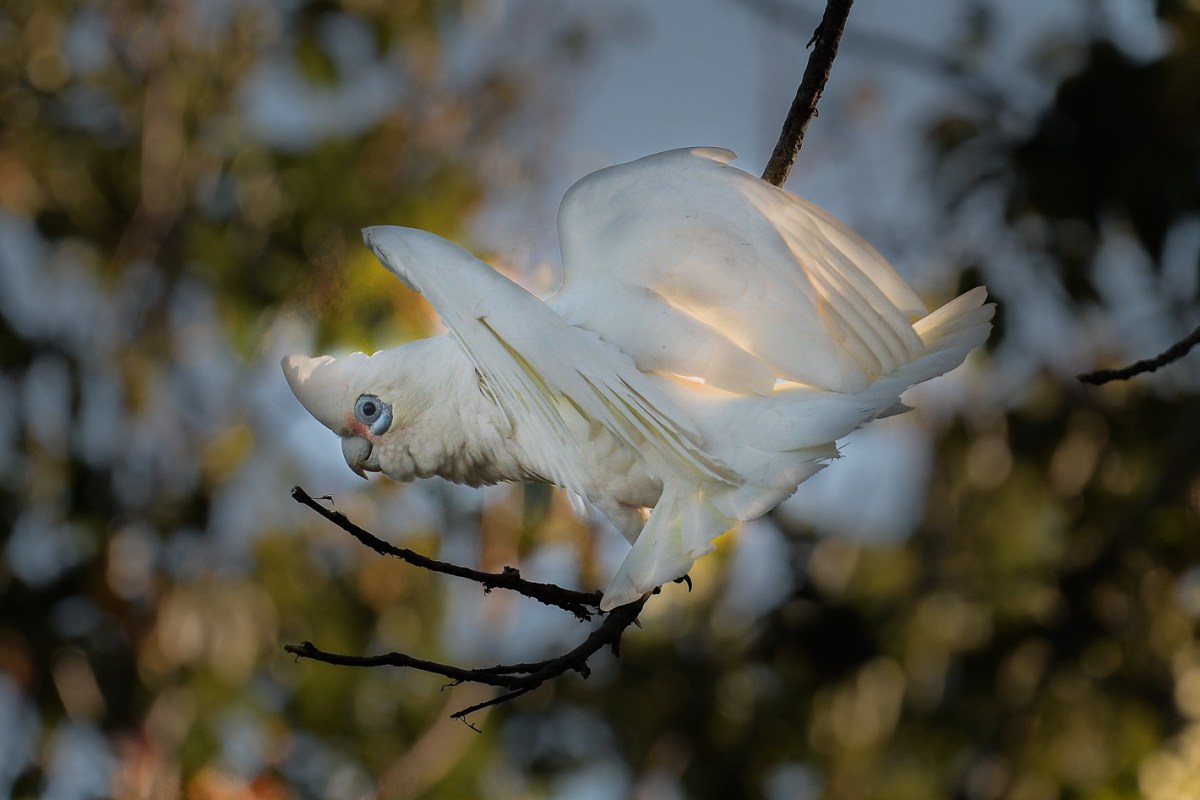
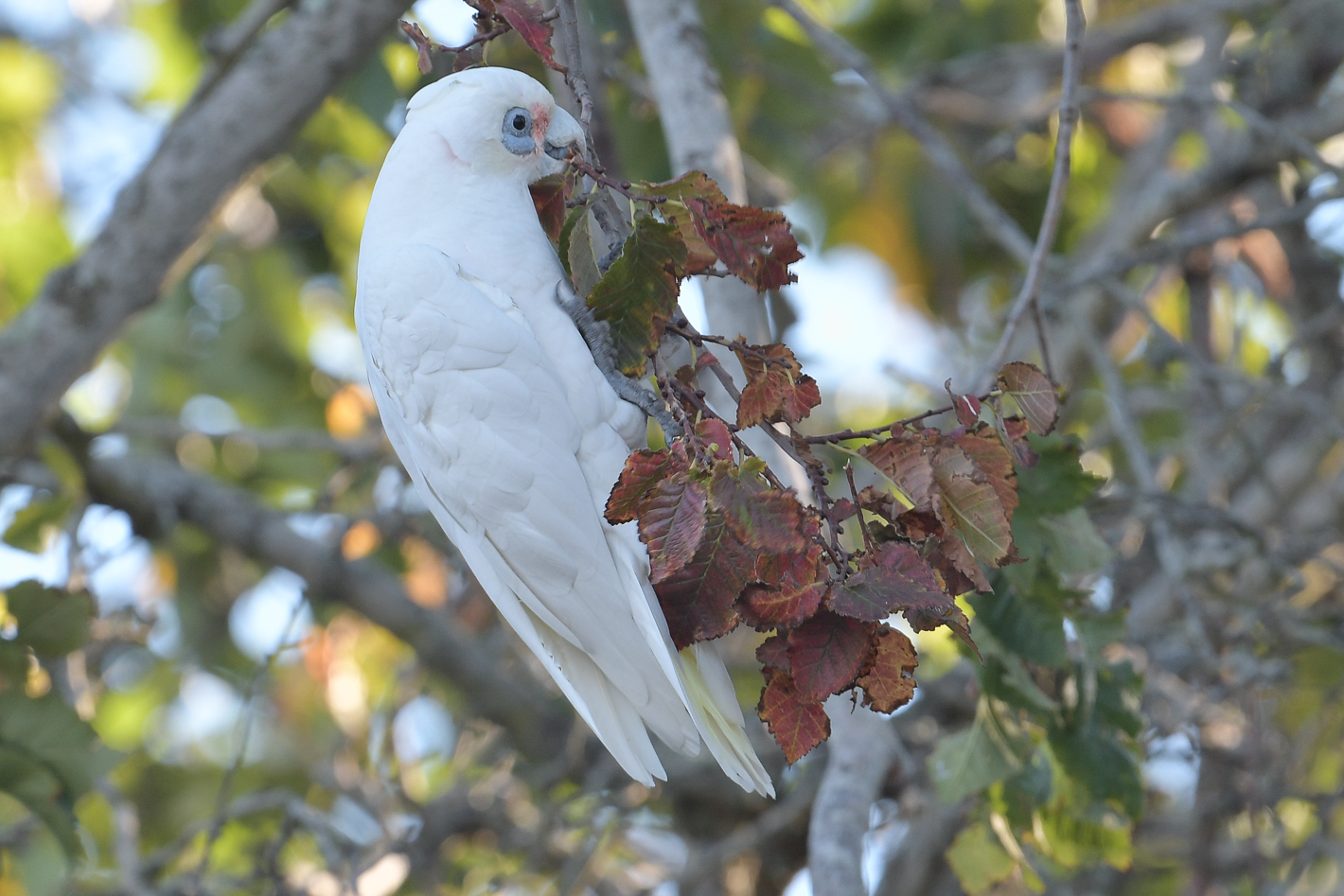
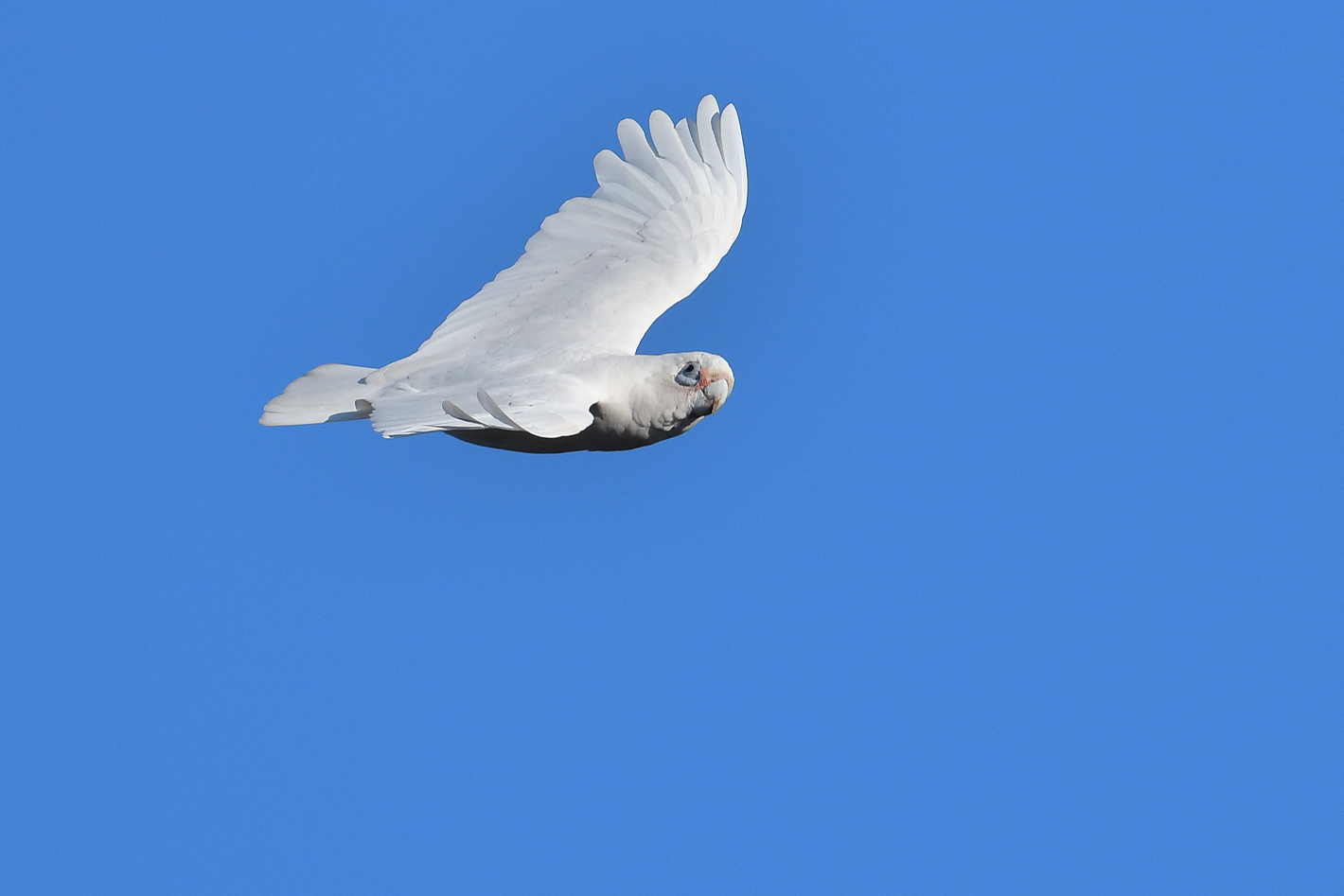
We were walking the Lake at Ballarat in the rich glow of the evening light and the Little Corellas were putting on their usual evening entertainment show. The antics of the birds upside down, side-ways and all bent out of shape in the trees reminded me of The Ministry of Silly Walks.
I saw reference to an article the other day that some research has been done, and was continuing into the “Emotion” of creatures. A controversial subject it seems. At one stage it was postulated that human babies did not experience pain in the same way as adults and some surgery was performed without aesthetics. (Here is a link to an ABC artricle
My only understanding is based on purely anecdotal evidence, (good enough for Darwin apparently), but between various dogs, cats and birds that we’ve shared lives with over the years, I would be on the side of the postitives. Sometimes I feel it would be good for the professional resercher to get out of the pristine tiled-wall laboratory and mingle in the dust with the real world.
So as I watched these reckless birds at work or play, or ?? I did draw the distinct conclusion, that not only were they enjoying themselves in their frentic activities, but there was a genuine feeling of delight in the antics. “Ha, think that is good. Here look at this! ”
Either way it was like having a ticket to the circus. Barnum would have been proud.
Crest up Waiting for the ActionTime to PlayAnything you can doDancing in the evening lightI can’t let goReally is this bird is laughingWait for me
We all did it. Every budding beginner photographer gets excited about a subject, then, struggles with the technicalites of making the image.
In dayhs of yore, we’d take the camera out of the box, and pour over the instruction book, looking for that gem that would help make a correct exposure. These days the first thing to do is Google for a vid by an outspoken ‘expert’ opinion (OEO) on the right way to set the camera up, how to rotate all the dials and what settings are best. And don’t we all want to use Manual Exposure and have beautiful bokeh. The thing I find with the outspokenexpert is that rarely do we get to see any of their work, not the stuff they shoot for some test or other, but real work—but that is an aside.
Then we ponder what is the best way to determine the exposure. Spot? Centre-weight? Overall? Matrix? Does it make a difference? Now it’s my outspoken-expert-opinion (OEO) that the camera manufacturer wants you to be able to get good exposures. Not too dark, not too light, the Goldilocks effect. After all it’s to their advantage for you to tell everybody, “Oh my LTZ7132ii is getting great exposures every time”, in the hope others too will rush out to buy the LTZ7133iii update.
Then, we wrestle with light. At first we just thought, oh, well, there is light. Enough, or not enough. But tricky stuff that it is, and so essential to our craft, it comes from in front, above, behind, to the left or right, below or even subdued and filtered through, and sometimes it hides behind grey porridge clouds. Tai Chi it is said has 13 movements. Lighting near matches that.
Then there is the lens and all that silly aperture stuff: f/2.8, 4, 5.6 Why not 1, 2 3, or small medium and large?
So what is the right exposure? And so we resort to more vids and OEO, all the time wondering why our photos, are not…just so.
Like all training: football, tennis, piano or Tai Chi, the magic slowly begins to show through. Exposure: Not correct, not under or over.
We had ventured to Ballart for a family shindig. Normally such events would see us travelling to the family acres, but this was a special time and the shorter trip was appreciated. Being in Ballarat meant we were both keen to see if we could find the Great Crested Grebes on the lake. Sort of a busman’s holiday.
On the first evening we were to meet with some of the family for an informal dinner and I decided that a quick trip to the lake area before leaving for the main event would be useful in gaining an understanding of the the light around the lake. On pain of death, I left the cameras behind as being late to the aforementioned dinner would release the Wrath of Khan.
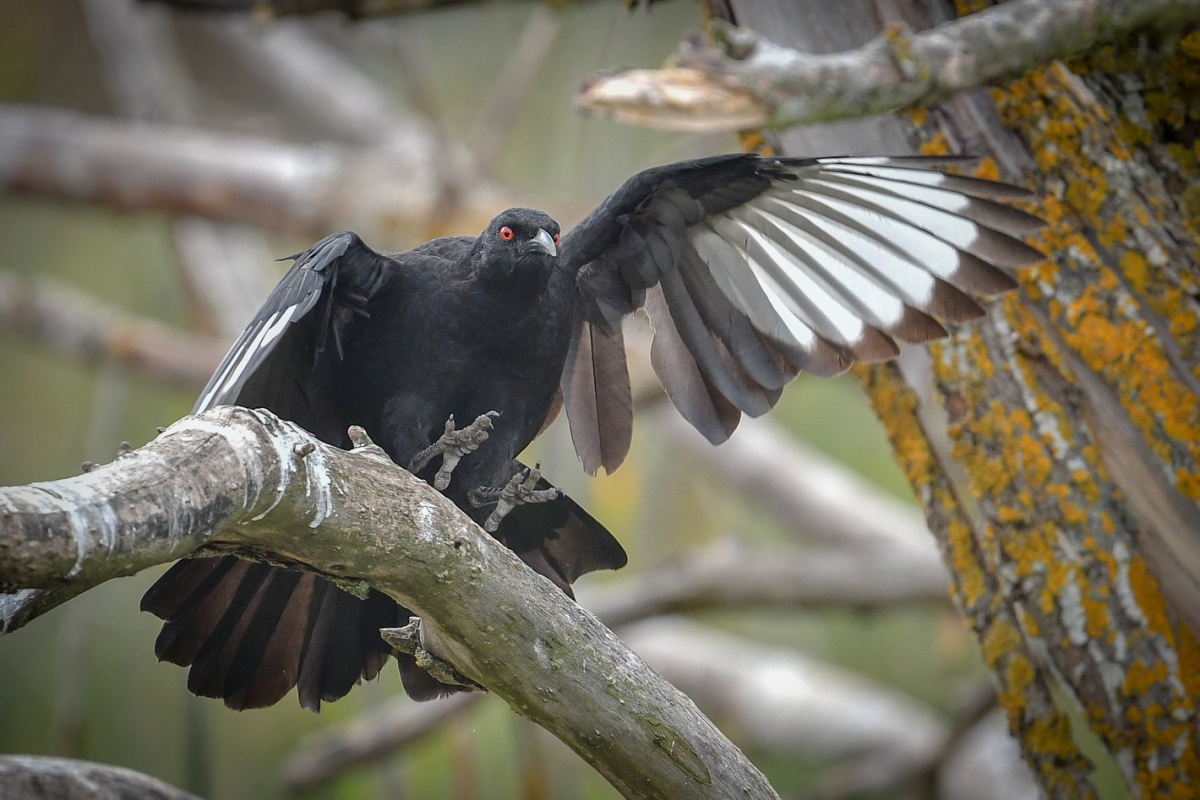
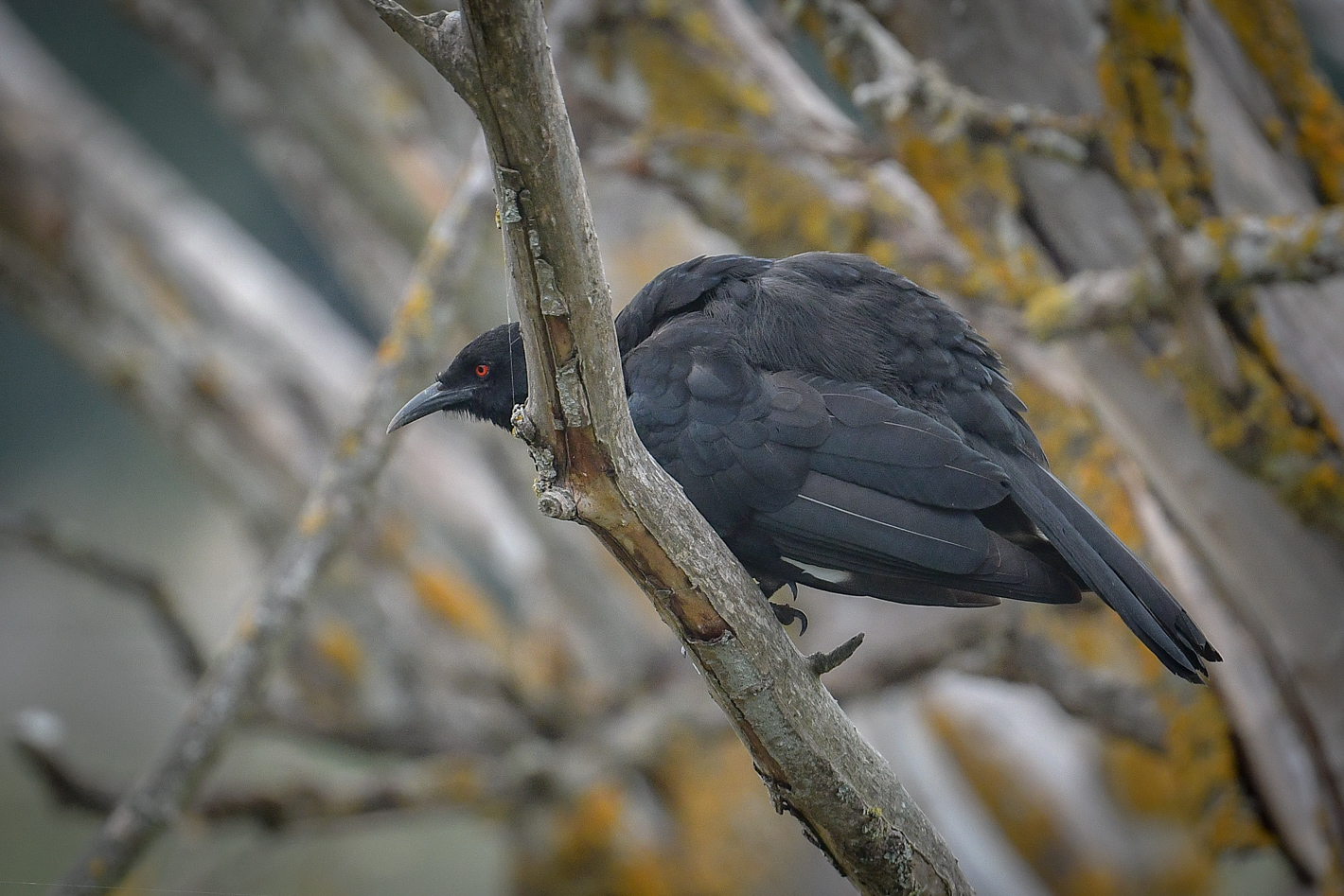
So I quicky drove past and gained a lay of the land (or light in the case) as I passed by the area known locally as “Fairyland”, I saw what appeared to be an unusual Raven running across the grass. On second glance I exclaimed, “Chough”. That was enough for me to park iAmGrey and go and have a looksee. Sure enough it was a White-winged Chough. Now Chough are very much communal birds, a flock is at least 7-8 birds and often more. They need that many birds to make a succesful nesting season. They are also known to abduct birds from other flocks to increase their numbers. They build a communal nest, each one bringing its supply of mud for the process. Once the eggs are laid, they also take it in turns at sitting. If there is an order of who gets to sit I’ve never figured it out, nor I suspect have they. I’ve seen three or four of them hold long meetings around the nest discussing whose turn it is to sit. The same with food. They will all bring back about the same time and like a conveyor belt each move up the branch to provide the young with their tasty morsel. Again arguements seem to be the order of the day, as they try to convince the young that theirs is the prettiest and therefore the most succulent of offerings.
So I expected to find a family of Choughs around the lake. But.
After a few minutes my score was—One Chough.
The following morning saw us both arrived armed with cameras and keen to look for Grebes. We had the good fortune to bump into a local who seemed to know a bit about the birds in the area and was happy to share with us. After a bit of information about the Kookaburra that couldn’t Kooka call, and that the Grebes had moved out to the reeds further in the lake, I asked about the Chough.
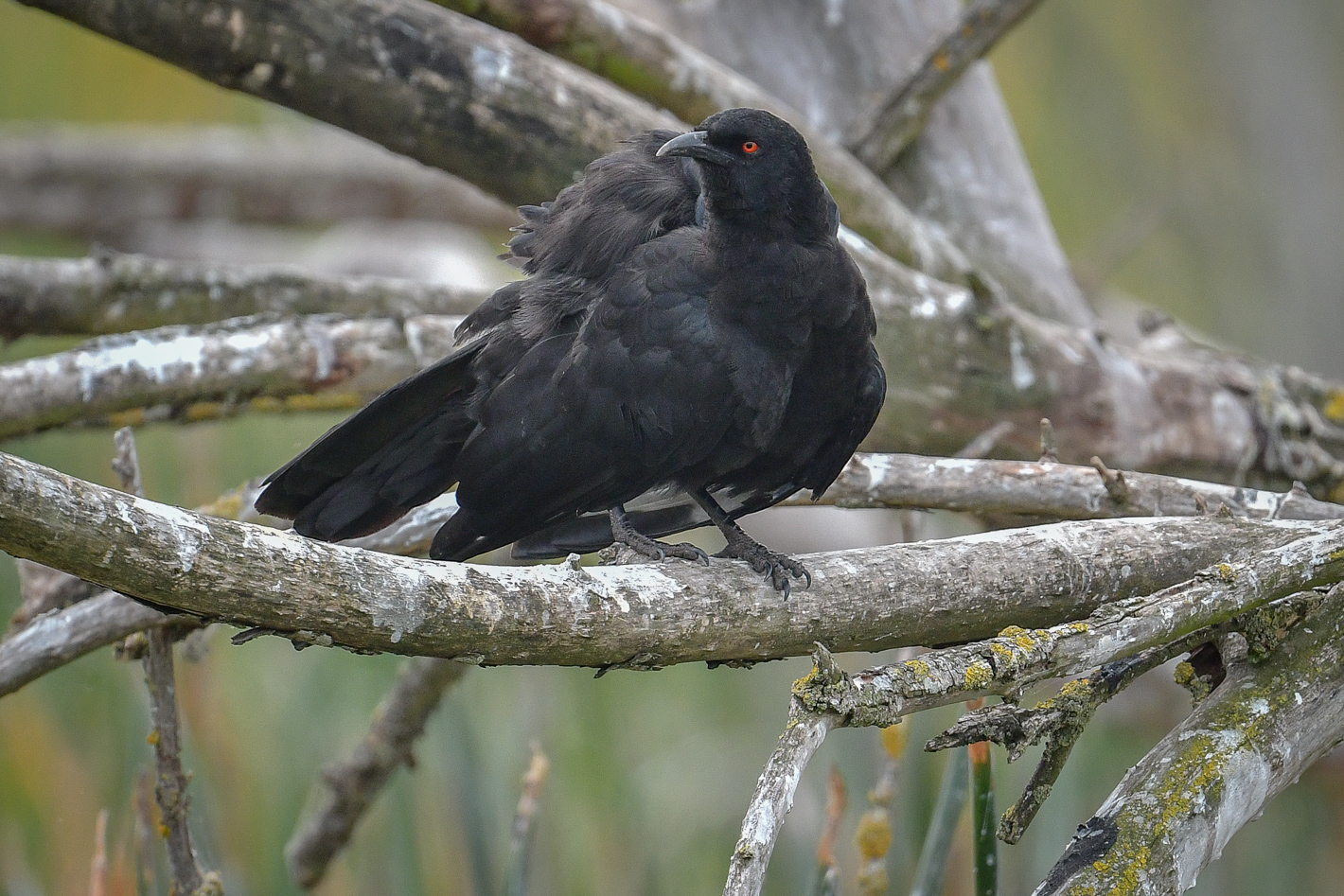
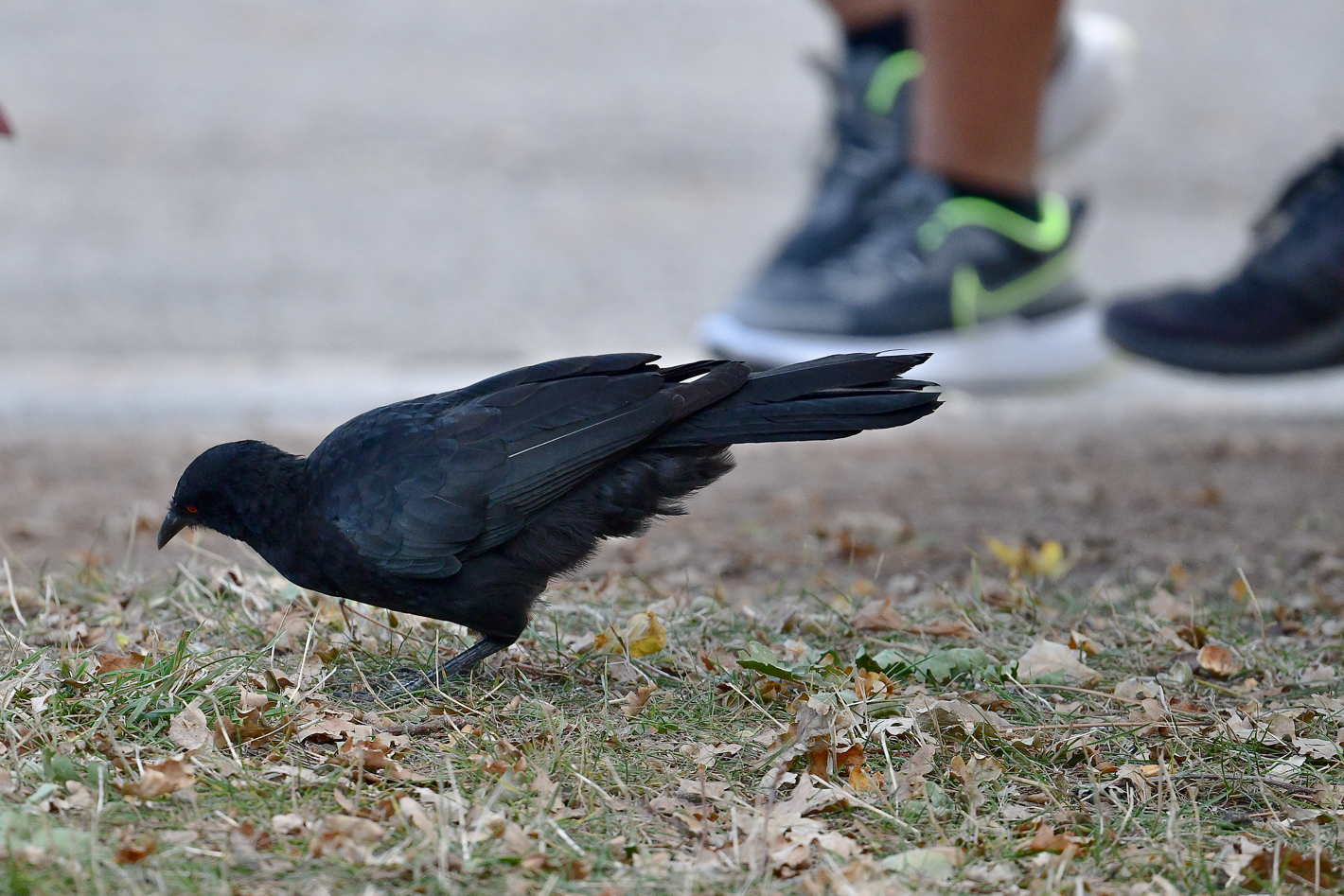
It seems that “Charlie the White-winged Chough” (Charlie as it could be either male or female) had turned up about two years ago and had stayed. The conjecture was that Charlie had a damaged wing and couldn’t fly and that the flock had moved on leaving Charlie to its own devices and fate. Young Choughs are gormless and it might have been separated from the family group and somehow they moved away, or perhaps it was frightened by some event and was unable to locate the family. I’ve seen them caught up in downed branch leaves and need an adult to help free them. Also, Charlie didn’t call out at all while we were there so that adds another level of complexity to the tale. Charlie might have sulked in the corner for a little bit, but was soon seen moving about in the parklands sharing the space with the Swamphens and Coots and humans and their dogs and small children.
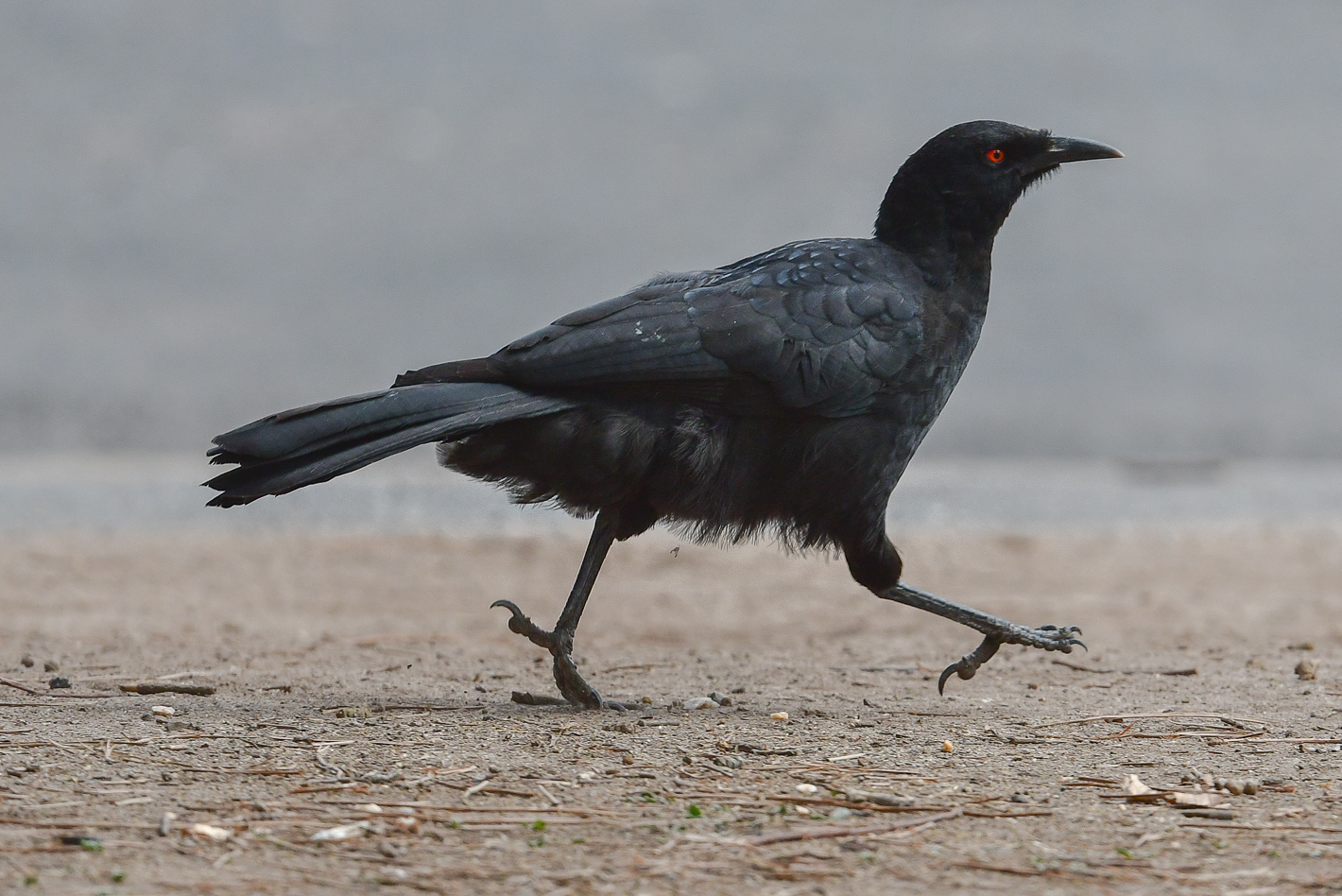
We didn’t see Charlie again that morning but as we had dipped out on the Grebes as well, we were back in the gorgeous evening light to have another attempt. This time, Charlie was in residence and we watched and photographed as it moved about over the picnic areas helping itself to various insects buried among the garden mulch. It must also be noted that while Charlie did not fly it very quickly scampered from one location to another and seemed to take a particular dislike to Swamphens. With much raising of wings and aggressive stance. The swamphens invariably gave it space.
We were domile in a unit across from the lake so the following morning were back again for a brief period. The beauty of the early morning still air was a highlight of the day. Our grandson was going to take us on a tour of several of his favourite birding spots and we took the opportunity to again look for the Grebes. This time we did spot several. Way, way out there among the far flung reeds and so not much photo possibility. “Look,” cried EE, “the Chough just flew into the tree in the lake.” And
Sure enough there was Charlie, out in a tree in the water, where the Fairyland area enters the lake proper. So, it seems that flying is a skill that Charlie has. Now, is Charlie good at it? Well… Choughs are not exactley the greatest aeronauts so it would be hard to say if Charlie has diminished skills, but the tree is a fair way out in the water, and as its swimming skills are negligible, flying seems to work.
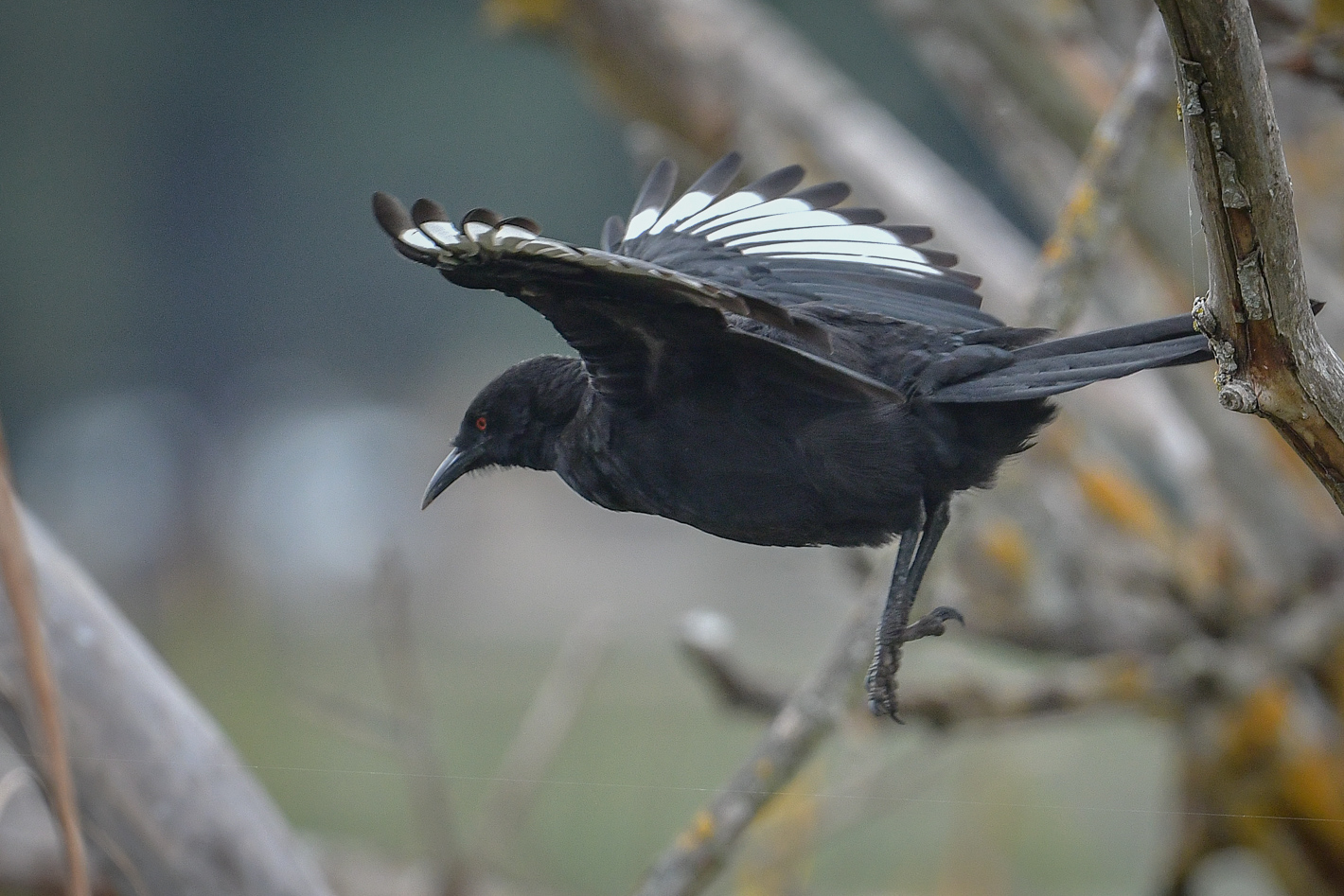
A couple of visiting lasses were discussing the id of some Little Pied Cormorants, and I offered some ideas, and also showed them the White-winged Chough. A quick check on Uncle Google and they were happy to confirm I was right—It was a White-winged Chough, but where was the white on the wings? Good question. And I explained that white is only shown in flight, and right on cue, Charlie took off flew down the Fairyland waterway and landed about 400m down in the garden area. White-wings and all.
Choughness is so very complicated , and hard to explain, and I’ve long ago abandoned trying to understand these birds, but as long time readers will know, I have a real affinity for these amazing birds and was thrilled to have a new chapter to add to my limited store of knowledge. Thanks Charlie.
Charlie looks like it is ‘carrying’ a wing, but I think it might just be a Chough thingThe lefthand side wing seems quite normal. What are you doing out there on a tree in the Lake?Hopping from one branch to another seems easy enoughThere is always time for a spot of feather cleaningA few missing feathers but that shouldn’t be a bother. It might just be moulting in for a winter season wardrobeTime to GoAnd across the lake and down to the picnic area for a morning snackSeeming out of character, but confident among the carpark and traffic.Scampering along the running track with the early morning jogging crowds, Charlie is quite comfortableWhile others hurry by, Charlie can stop for a quick refreshment break.Arriving late at the picnic table. Swamphens beware. Charlie means business
Hopefully by the time you read this, we will be in Ballarat for the weekend. Big family shindig.
Deng Ming-Doa has a seveal lines of poetry about location.
Just by choosing where you stand You alter your destiny.
Now, I suppose, from a western thought process it can be a bit too literal. As in where you live, where you stand polictally, how you see the world about you.
Yet, it has been my experience that if you change where you live, life doesn’t radically change.
Yet at another level, each choice we make does alter and affect how we live. Same for photography.
Which camera? If I make a change of brand, will my work improve, 10%? 25%? perhaps 50%? Or will I just have more fun playing with the new toys?
As Deng goes on to write, “there are no double-blind studies on my life”. Each choice I make be it lens, or camera, location, subject, lighting, or time of day brings with it its own magic. Each study of we take is of course a choice of so many options.
The delight is being there and seeing it all unfold, and having the vision to bring it to share.
I had been waiting for this female Australian Shelduck,(Formerly Moutain Duck), to follow her mate as he took off to the other side of the pond. I suppose I expected the usual, head out, wings up.
But my location on ground gave me a new view of this lovely duck in action
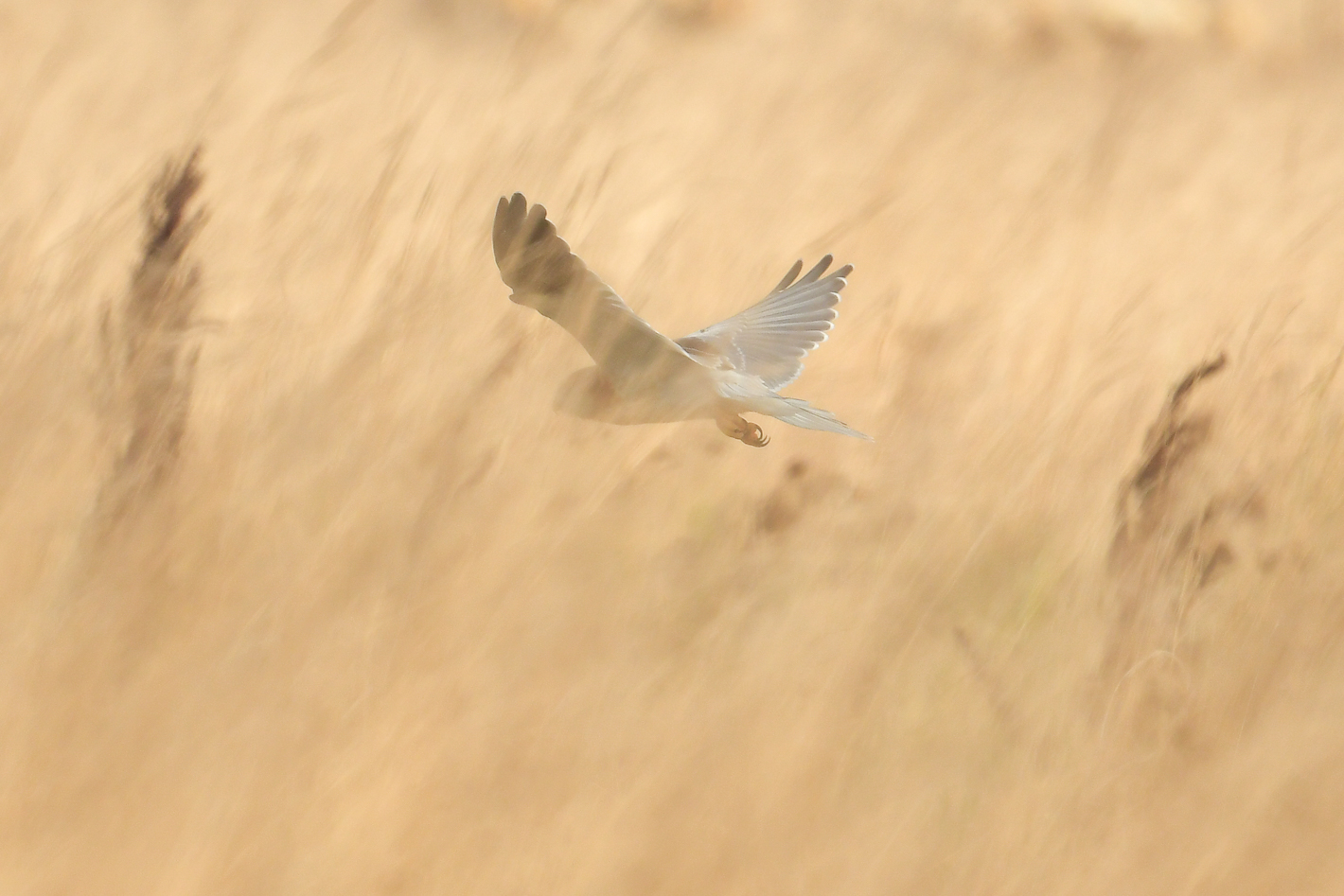
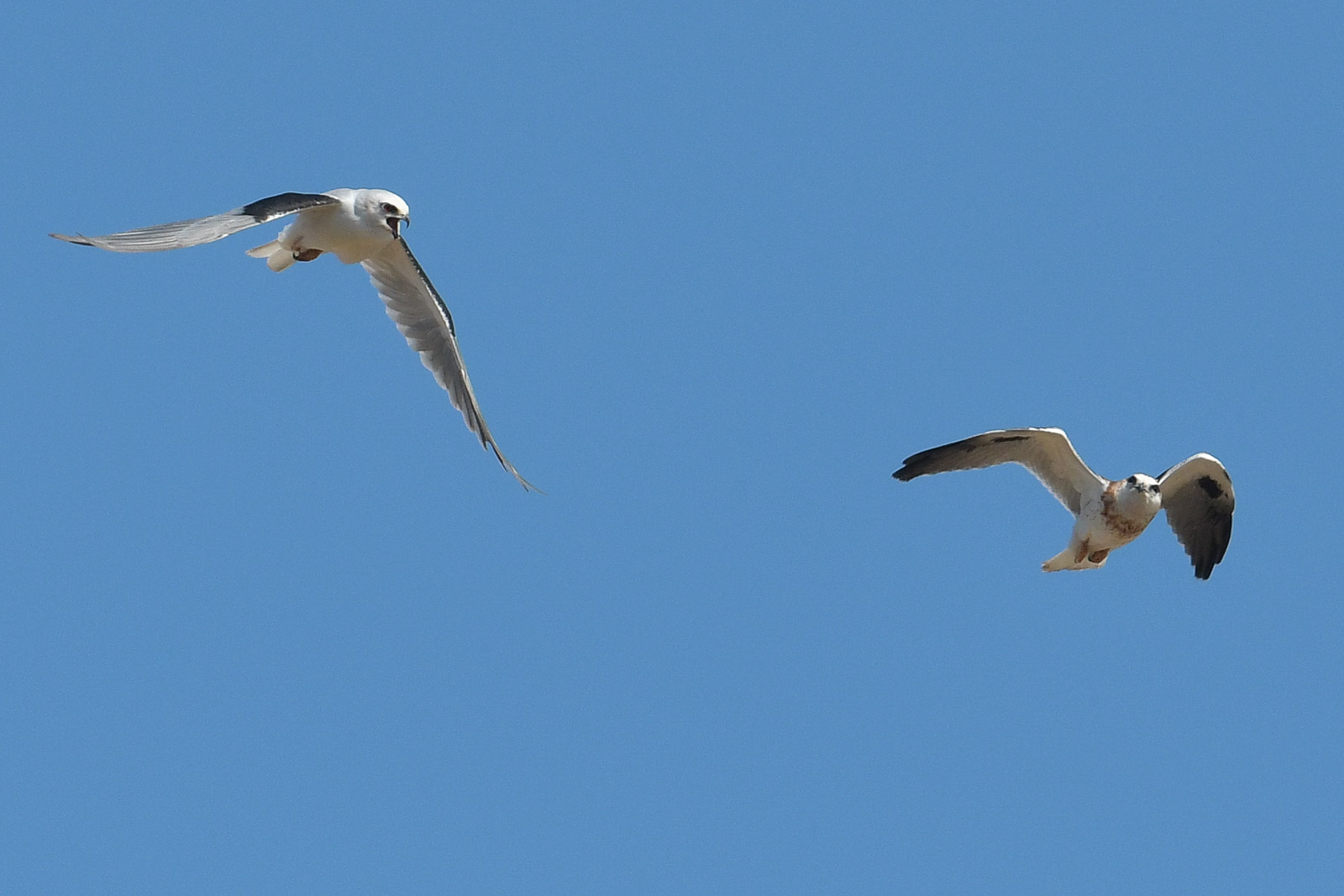
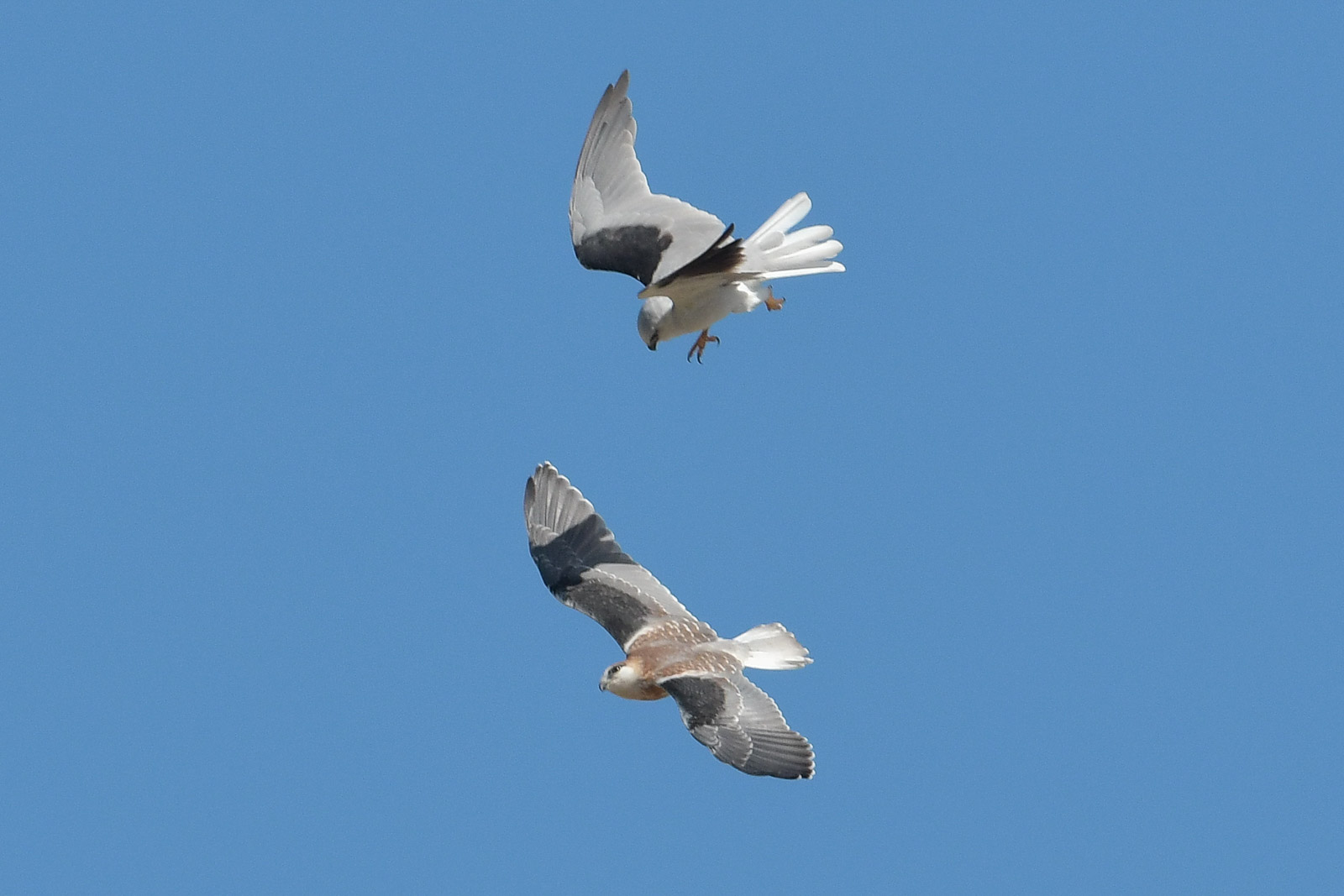
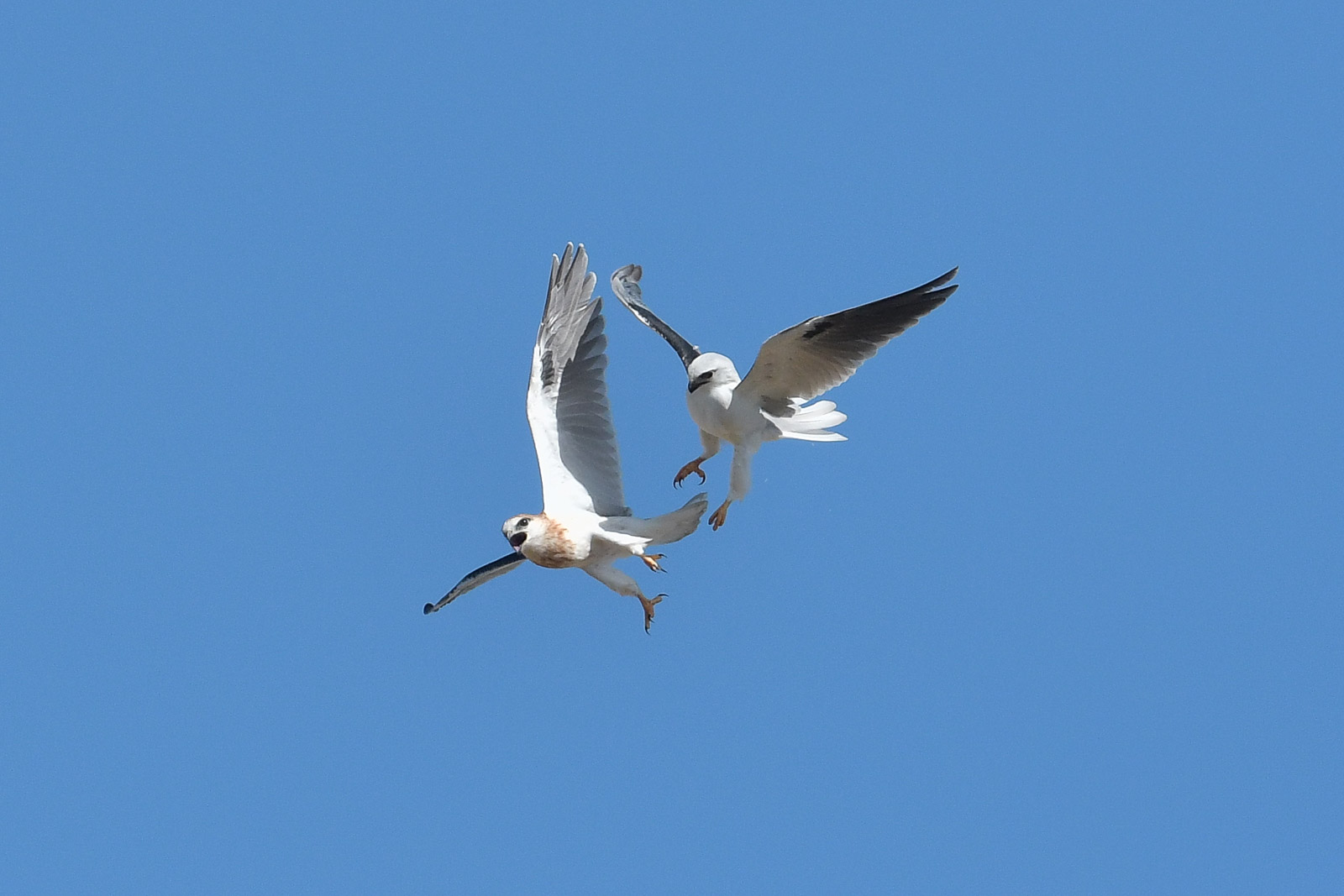
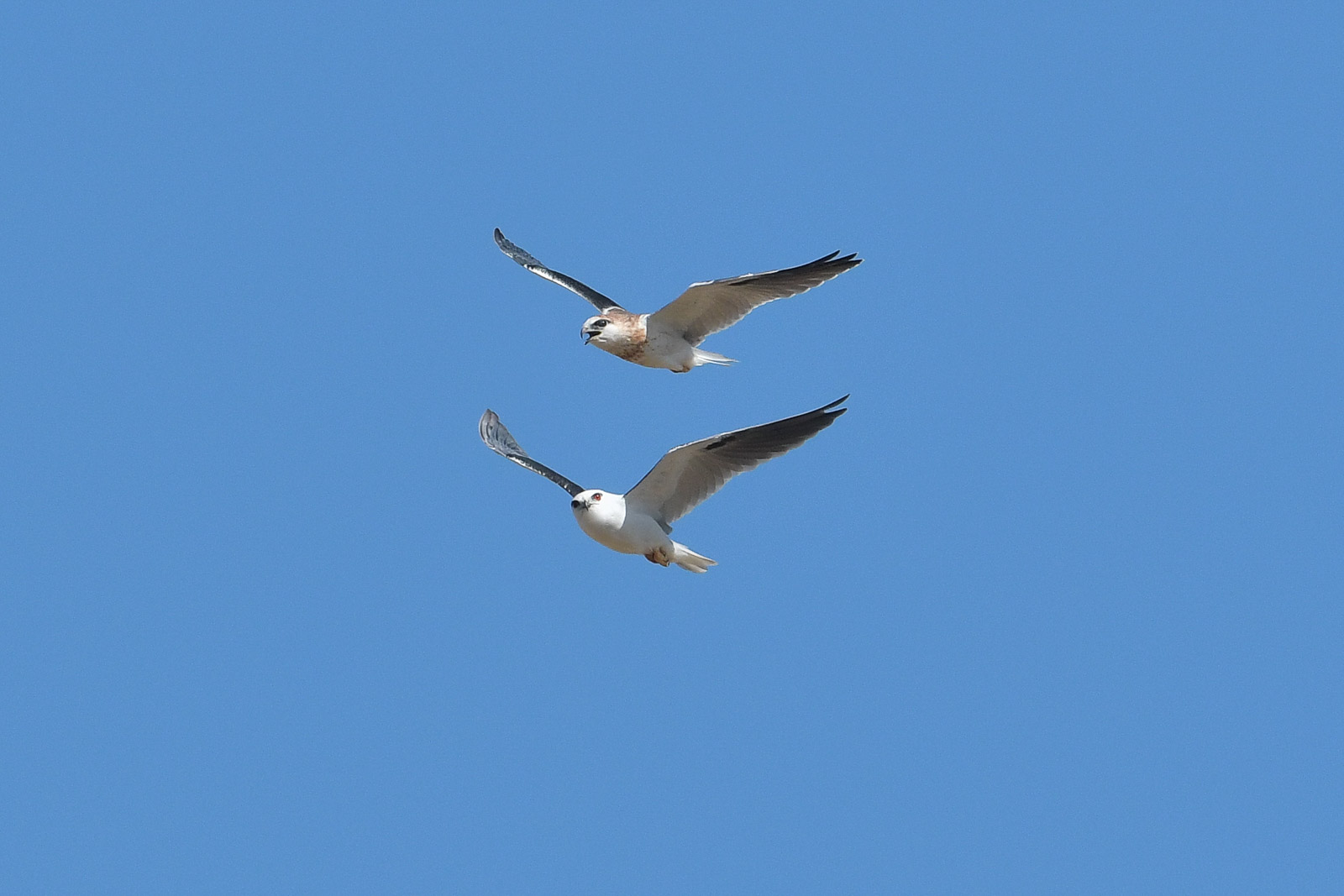
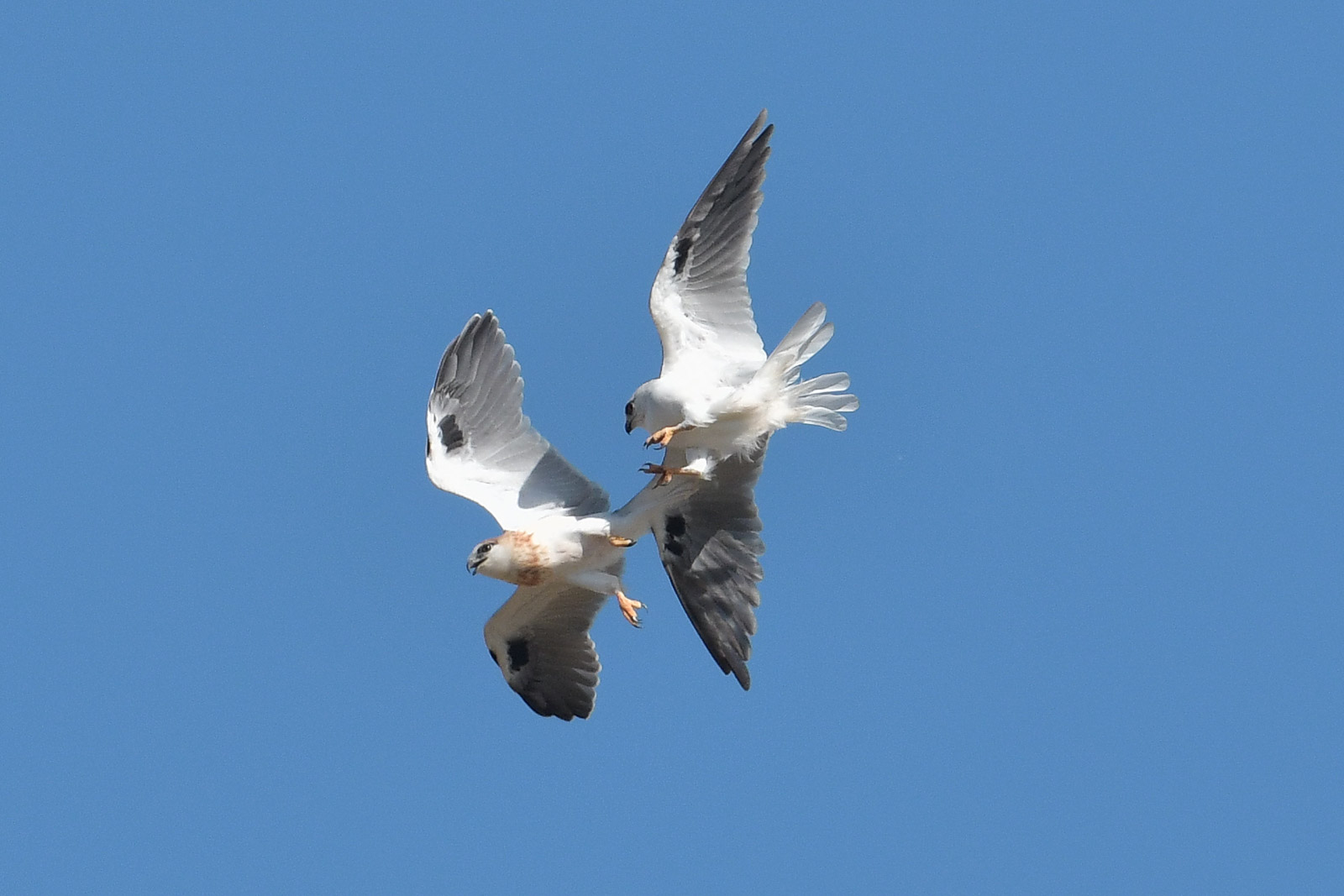
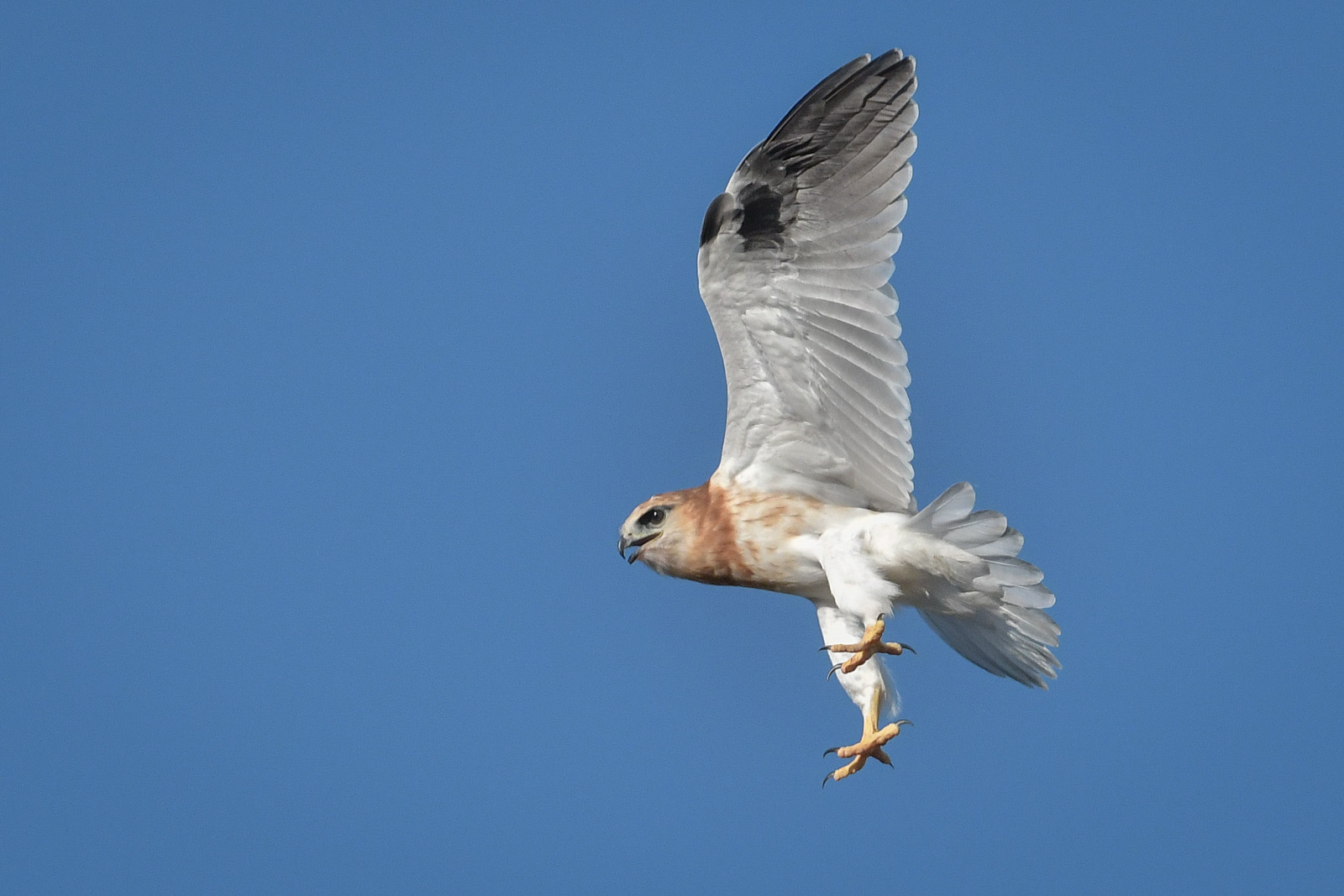
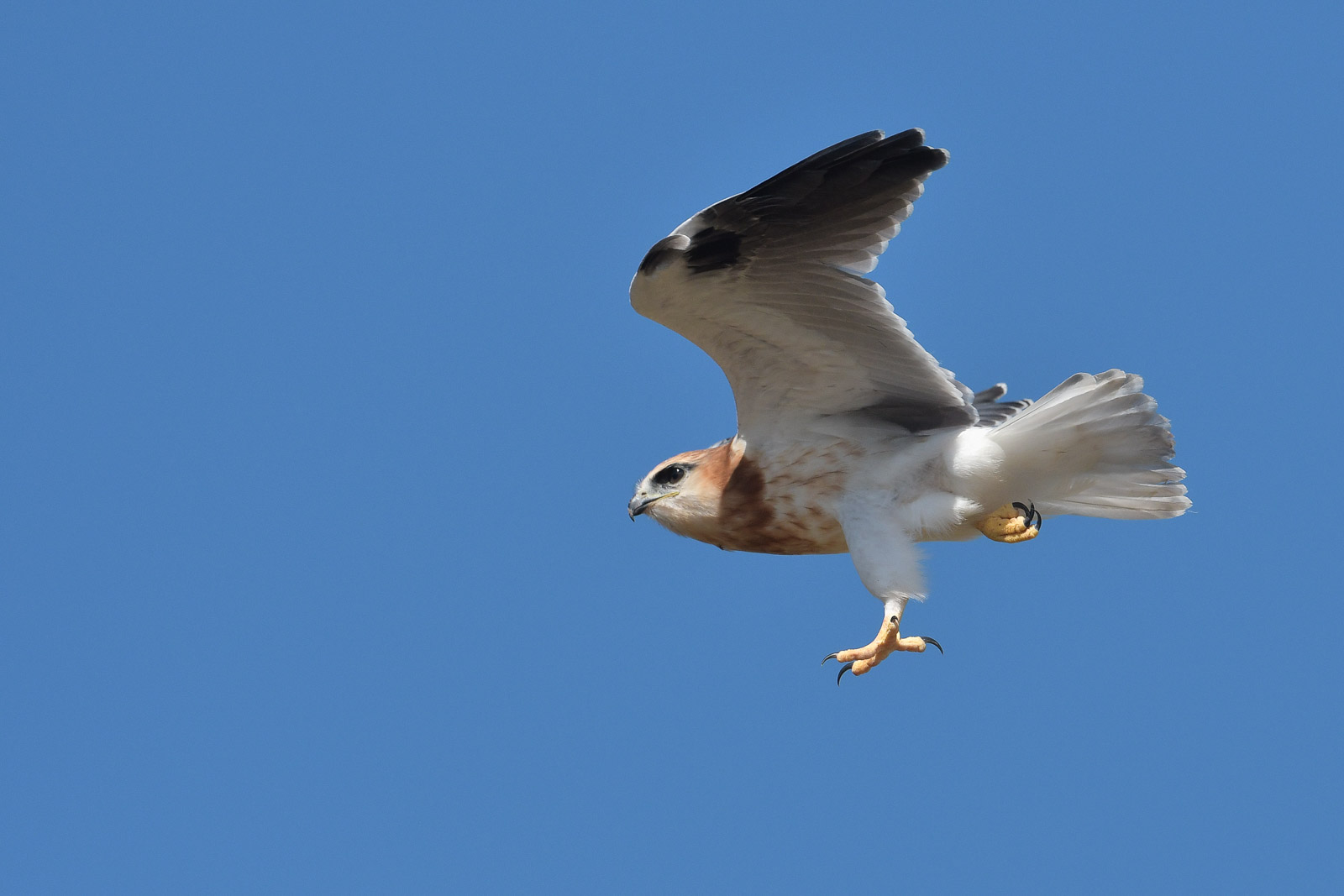
After a pretty windy start the young Black-shouldered Kites have quickly advanced to developing both their hunting skill and their ground tactics. It might just me wanting to explain their process, but I think that the first few days on the wing in the very strong gale force winds gave them an advantage in learning the flying techniques. It is not unusual to see them leave the home tree and in a few wing flicks they are nearly a kilometre away down the paddock. So we miss all of the action happening from where we stand.
But, the other morning on what can only be described as “picture perfect”, they were working closer in and going through the paces of hovering and dropping out of the sky into the grass. Now, any mice there were pretty safe as they don’t quite have the skills to finalise the ‘catch’. However it won’t be long I suspect before they make the necesary connections and then they’ll be on the way to independance.
So here are a few highlights from the action.
Dropping from a hovering position. The wings folded up and the legs beginning to tuck up.No Score. But at this stage they just pull out above the grass.Getting serious now with the legs coming downLook out Mice. Here I Come.A much more serious attempt with the wings folded up and dropping verticallyComplete ConcentrationOnce again pulling out just above the grassReally getting into the grass
Well it could be the blink of an eye, but perhaps a better descriptor would be the instant between the Nikon D500 mirror going up. And then… Coming down.
I was having a little portrait session with two of the young Black-shouldered Kites. They had been spending the morning gaining skills at working on the ground and in the long grass. Not yet able to ‘hunt’ but at least getting familiar with the process. I had been moving about a little around the tree they were encamped in, looking to get the best from the backdrop.
So here is a bit bit of a departure from Saturday Evenning Post style of one photo, and a bit of rambling about the virtues of great photography and more a doco on the few milli-seconds between one event and the next.
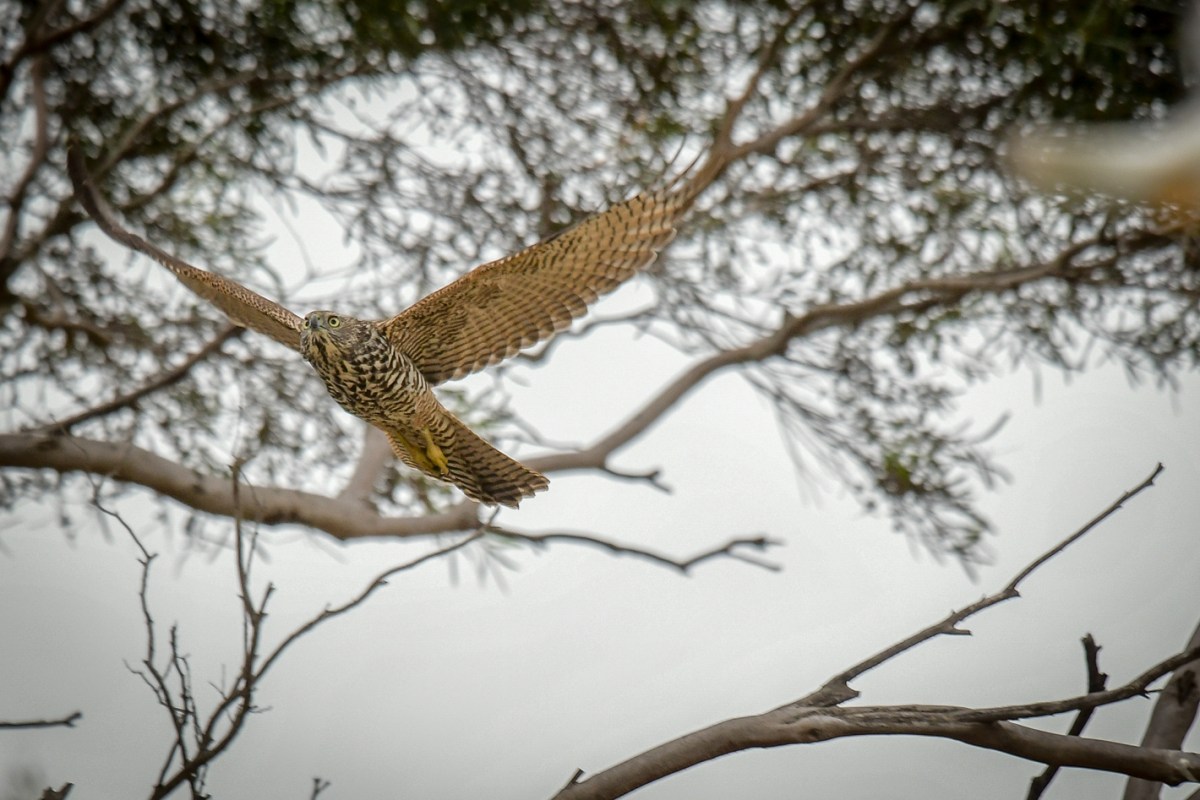
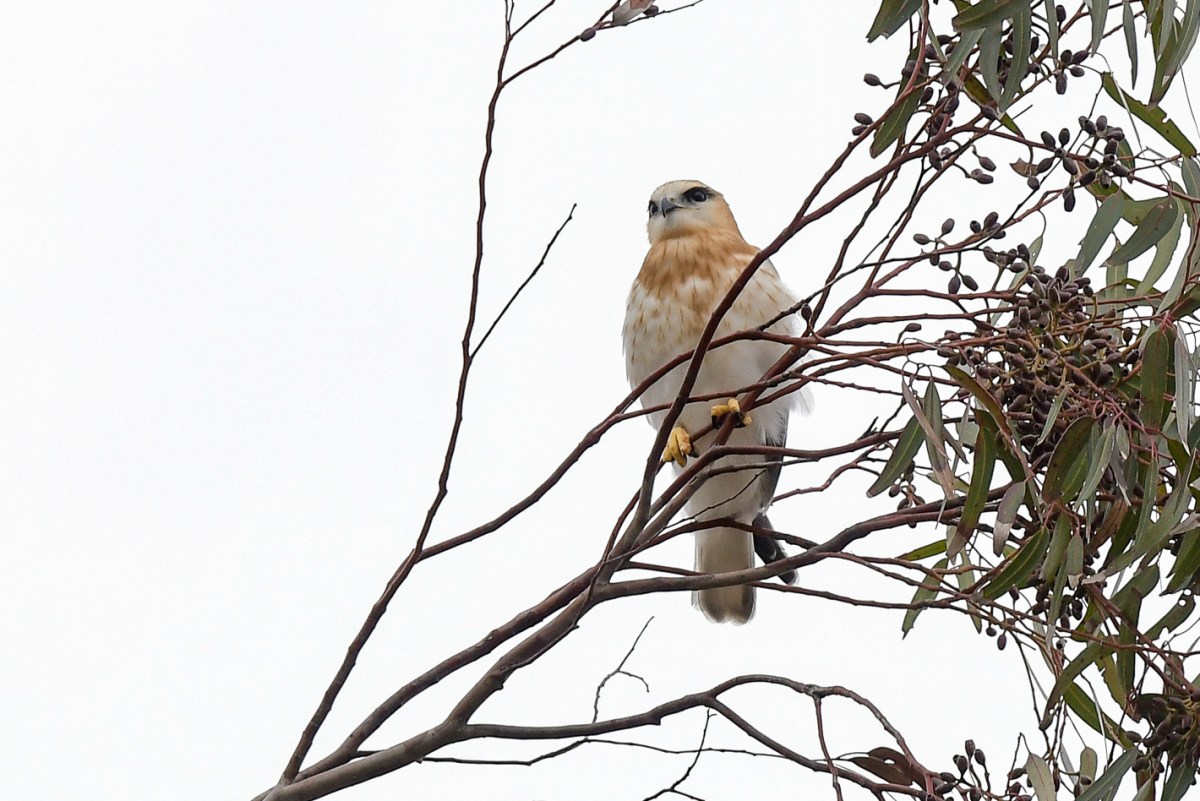
Let’s settle down for a small portrait session.What was that noise! One of the young birds is on the alert that something is happeningSuddenly, out of nowhere, and this shot is just after the shot above, the Collared Sparrowhawk barrelled through the treeline and put the young birds to wing. You can just see a tail disappearing at the top. The speed and stealth of the Sparrowhawk was so typical, and so impressive. That the Sparrowhawk is in focus is only because it now occupied where there kites had been sitting. Your erstwhile scribe was as surprised as could be when I reviewed the results and found one sharp frame.Looking a bit perplexed as to what just happened, each of the young seemed unsure how to respondDad turned up to try and protect the young, and one of them followed him around very closely. To add to the drama a Black Kite and its two Magpie Attendants, also flew through the area. The male is checking to see if they pose any threat to his charges. This one decided that if you were going to rest, then do so in the top of the tree among the leaves so a sneak attack would be less likely.
Some long time readers will remember the story of the ill-fated Studio Werkz project. The brainchild of several photographers as we wrestled early in our ‘careers’ to establish a multi-facted studio operation. Like many ‘great’ ideas the cold hard light of day came crashing in with reality and of course we all went on to follow our different paths.
But I’ve always liked the name, and often when the light is right, the subject working and the muse is bubbling along Studio Werkz comes to mind.
Such was the case the other morning working with the recently fledged Black-shouldered Kites. I was working with a polarising filter attached to the 500mm lens and the birds were pretty much on the very important angle of polarising light and it kept the sky rich and bought out the details of the feathers.
Front light is one of my fav lights for working with bird, and infact any colourful subject. What I lose in drama I make up for in rich detail and intense colour and the polar screen only enhances that.
I also came across the other day on the Topaz Labs Software site a link to one of their blog posts on “5 Tips for Amazing Wildlife Photos” by Bill Maynard. We all know this stuff (I hope), but Bill’s points are quite succinct and his reasons for each is well shown. I hope provides some good thinking about the photos we make as we wrestle to bring out the best of the character of our feathered subject(s)
(Be careful as its on the Topaz site, so the Topaz software will be featured-but I’m not in the business of recommending it, so just read over that if necessary)
After what has been a bit of a difficult start with heatwave days and torrential rain the local Black-shouldered Kites have fledged three new chicks.
Like everything for this little family nothing goes easily and the young have fledged in the middle of a week of high winds. Yet they seem to have taken to the job with a wonderful zest.
But the high winds quickly throws them off course and Dad has had to go an hunt them back into his territory.
Here are some photos from his attempt to bring one of his wayward young back into the home area. Not easy when little wings are struggling in high breezes.
First of all he had to get their attentionI wonder what Kite words are being exchangedThe attack from above is one of his most used techniquesNow you’ve got the ideaDon’t stray off lineHeaded for home and getting ready to land
Roll up, roll up for tonight’s photo challenge question: How do you get a Cow into a Kitchen to photograph it?
The Cow in the Kitchen photograph link. I don’t have access to the photo, as you’d expect. So you’ll need to click on the link to get an idea of what the challenges are, and the result.
Given the size of the average kitchen and the size of your average milk cow the challenge seems a bit difficult to complete. Enter Joe McNally, legendary Joe, if you will. He reveals the answer on a page on his blog, but you’ll have to scroll down a bit to find the photo and the story. Here is the Capture One Interview blog address
Briefly as part of his new book, The Real Deal: Field Notes from the Life of a Working Photographer Joe explains that while working in Romania he noticed that at the end of the day, the cows feeding out in the pasture, all turned for home and each went to their respective owners land. Creatively, Joe thought, wouldn’t it make a great image to have the cow in the kitchen and so he gained permission from a home owner to have their cow with its head in the kitchen. Then. Average kitchen, v Average cow. And how do you get said beast into the kitchen. Not being a farmer, Joe didn’t quite know, but being farmers, the locals provided the answer. Job done!
One of the things I really like about the image is the very even lighting on the highly polished tiled floor. Makes it sing and dance. And of course the matching choice of tablecloth. It’s the little things sometimes.
As you scroll down you’ll also see the portrait Joe made of the young Vietnamese napalm girl, Kim Phuc, who went on to have a child of her own. A harsh reality within a tender moment.
Oh, and by the way the header image for the blog is mine. But as it’s the only bovine pic I could find in my collection, the cattle aware people will know this not your milking variety 🙂
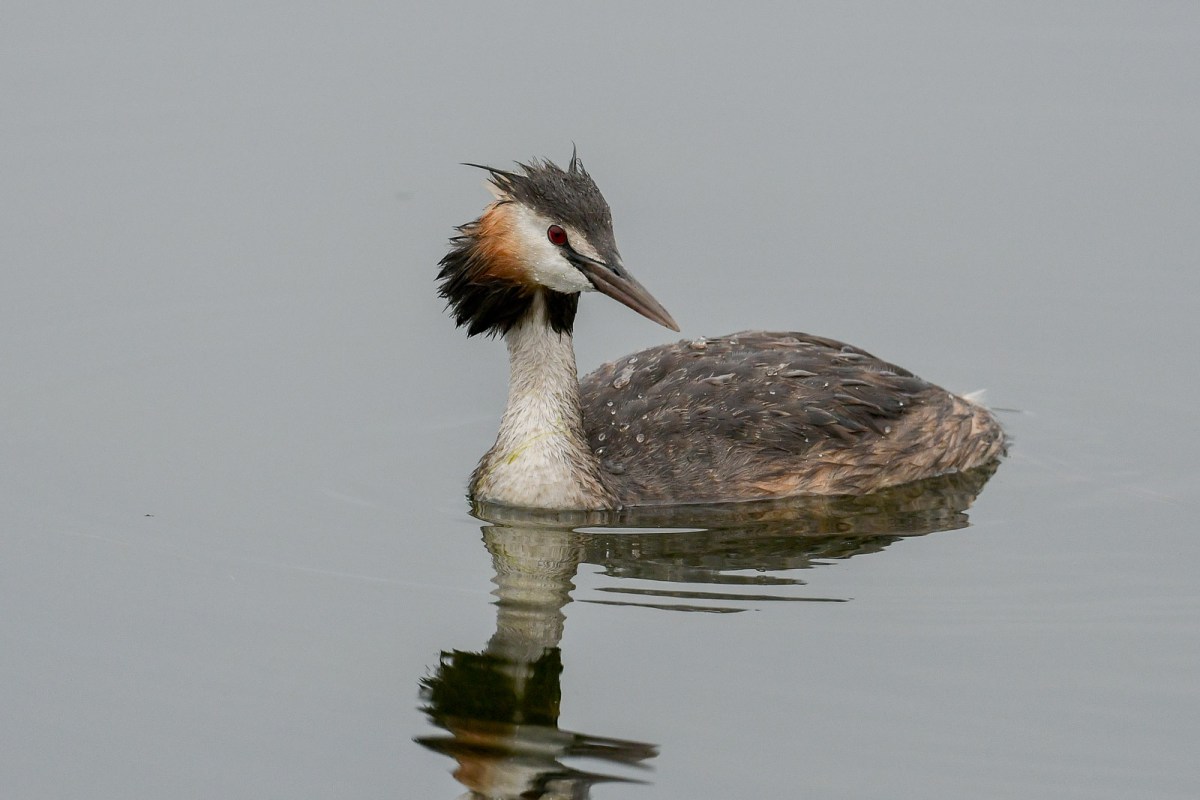
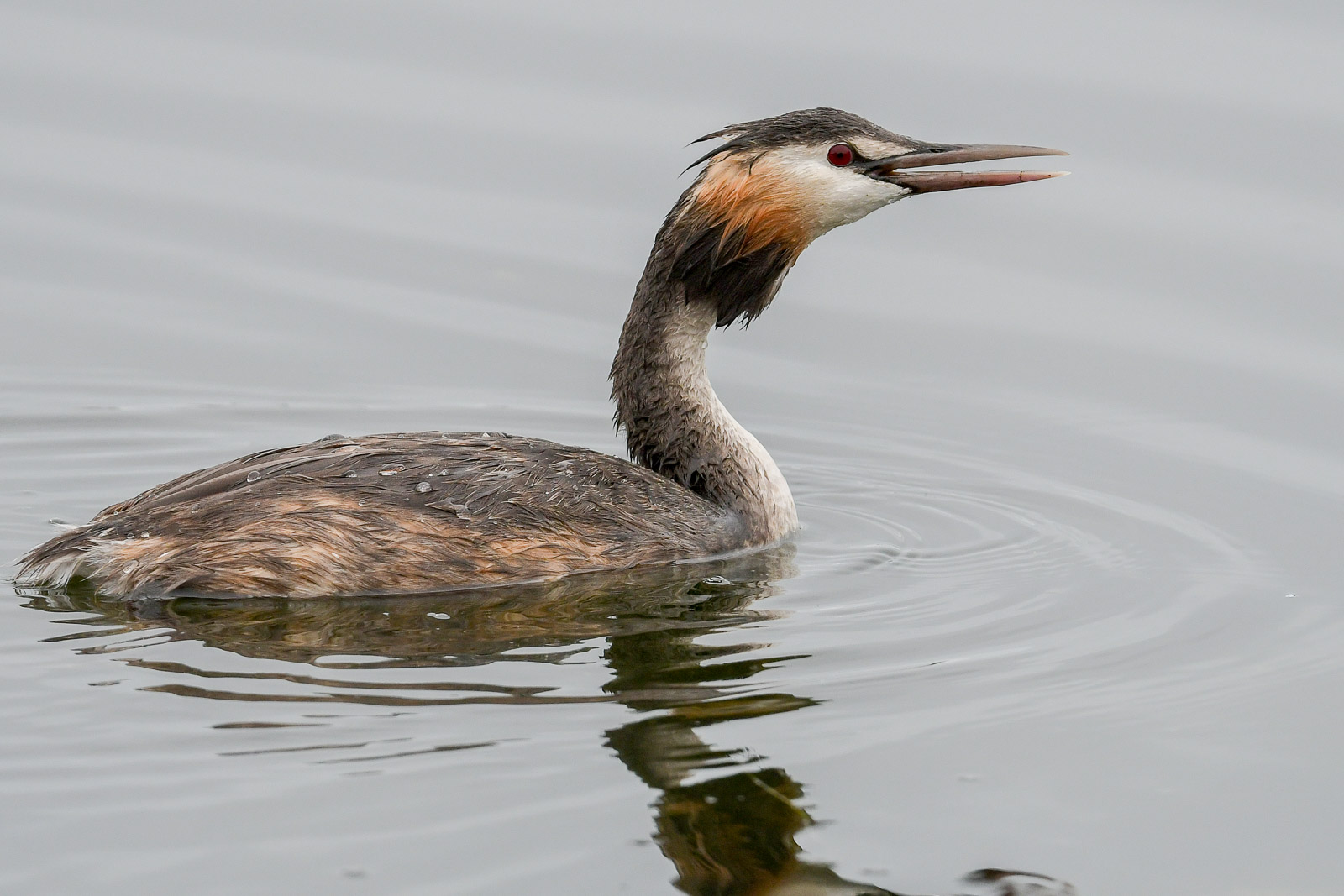
We had, on the opportunity of lunch with friends, taken a trip to the Jawbone Coastal Park. There are two pairs of Great Crested Grebe in residence and they have just completed a nesting cycle so the chance to see them with the young was too good to pass up.
However the Grebes had other ideas and they had the young on the far side of a pond, and just that little too far, without some serious bushcraft, swimming or canoeing.
However one of the pair, I assume the male made a foray to “our” side of the pond and put up a pretty good show of fishing techniques
He spent a lot of time trolling with only his beak underwater. It must be incredibly sensitive.Gottcha!Now to turn it round so the sharp bits don’t tickleA good whack or two should do it.Now to flip it aroundJob done and down it goesA last quick gulpTime to look for more.
And here it is as a gallery.
He spent a lot of time trolling with only his beak underwater. It must be incredibly sensitive.A good whack or two should do it.Gottcha!Now to turn it round so the sharp bits don’t tickleNow to flip it aroundJob done and down it goesTime to look for more.
John Donne’s famous line, is quoted in Australian Magpie by Gisela Kaplan. It’s in a chapter about,”Social Rules and Daily Life”
I shared a link on Flickr to a post regarding Magpie behaviour. Here it is. Magpies and Tracking Devices, Seems our erstwhile scientists in need of a research project for the old PhD decided that Australian Magpies needed some help to deal with climate change. Had they taken a few moments to read a few pages from Gisela’s book —subtitled, “Biology and Behaviour of an Unusual Songbird”, they might have saved themselves a wasted theory. Gisela tells many interesting stories of personal interactions with Maggies and each one helps gain a little understanding of the ‘smarts’ these bird inherently possess.
Perhaps one of the more interesting lines of thought is in the opening story of the First Nations Legend of the Magpie. I’ve shared the story before, so briefly, Once in the Dreamtime the sky was very close to the earth and everything was dark and gloomy. The Magpies got together and with small sticks propped up the sky until some light got through. Encouraged by their success, they worked together to get larger sticks and open it up more… and so on, until the Sun-mother was able to shine through on the first real Sunrise. Excited by their success the Magpies still sing in the sunrise each day to celebrate, I guess, both the warmth, and their cleverness. So attaching ‘radio’ trackers to a Maggie seemed to me to be doomed for failure, from the getgo.
In the final chapter, Gisela, says, ” There is no doubt that the Australian magpie is a very successful bird at many levels. … The magpie’s impressive range of social activities, its willingness to interact with people, and its propensity to invent even leisure-time activities have made the magpie almost accessible company.” …”They have shown a remarkable ability to adapt to different climate zones. (Across the Country).
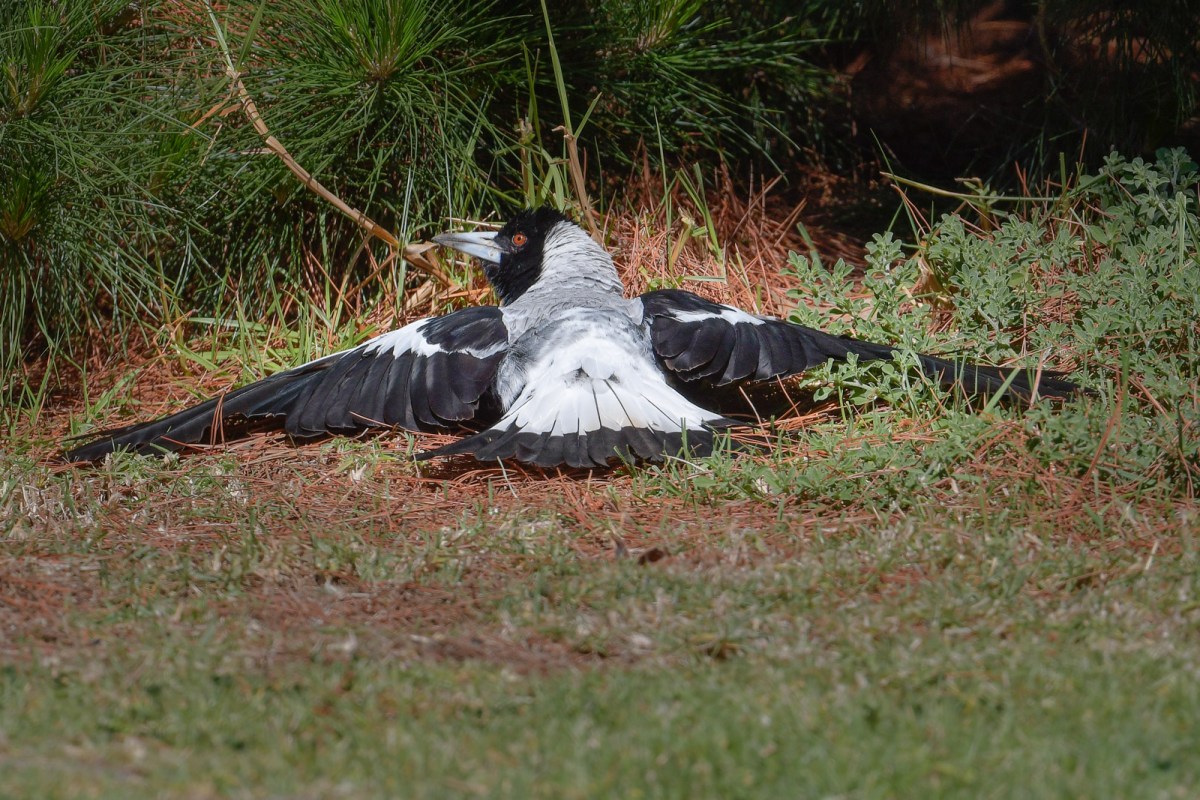
Magpies love to Sunhaze. To stretch out in the warm sunshine and allow the rich warmth to penetrate their bodies. Passersby may think that the bird is ill, but rather, it seems to be in a trance. I am sure they always do it when there is a partner or family member that can warn of any danger.
Because it was such a fine sunny morning we thought we’d meander over to Heathdale Glen Orden and have a ‘trail run’ for a bird survey we are going to do in a week.
Some kind folk turned up, David Nice and Andrew T from the Altona area and it was good to see friendly faces. I’d concocted a plan that would hopefully give the photographers a good view should the birds break out that way, and also to give a maximum of coverage of the ponds without zig-zagging about.
We managed a good tally of birds and it augers well for the real count next week
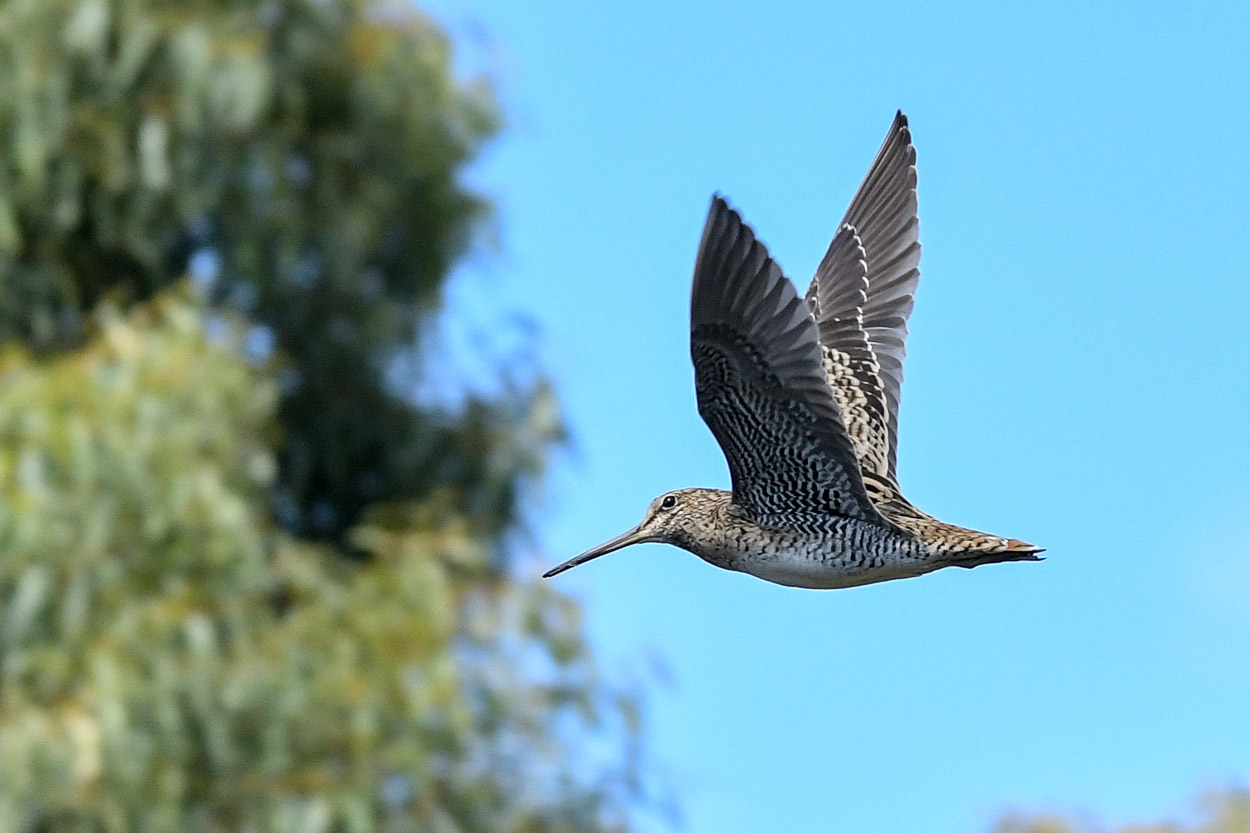
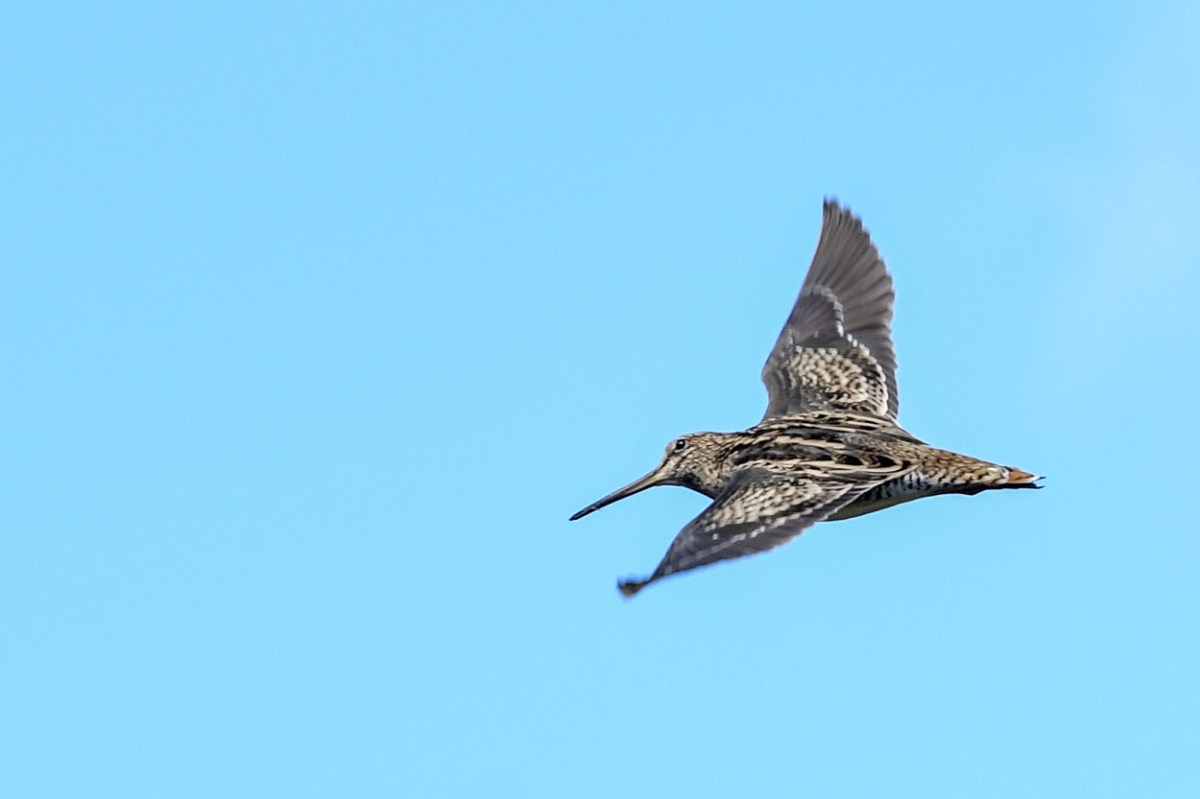
When I looked at the shots, I found I’d managed to get a short burst of a bird moderately close and it shows the amazing wing action, so thought I’d share it for interest.
If I can get WordPress to do a Slideshow, I’ll put that at the end so you can get an idea of the changes in action
I think this is my fav of the morning, shows the birds least concerned by local foot traffic
Sleek sky of cobalt blue;
Water like nectar satisfies deeply;
Air sweeter than the best perfume;
Sunlight warms a grateful cat
He then goes on to point out that we should take happiness when it comes.
The world comes into us via our tv news or doom scrolling on the internet. The conversation at the coffee shop quickly deteriorates to this or that trivial woe.
My Ballarat connexion daughter once pulled that sort of talk up by exclaiming, “It’s not that important to people in Africa suffering from Covid!”
No matter how much we’d prefer it another way, we get the weather that is coming to us. Standing outside in sunshorts, suncream and a beach umbrella will not stop the momentous storm coming on the horizon. Similarly putting on a Drizabone and waiting for rain won’t bring it any faster.
Sometimes a trip to a birding area is like that. We turn up with all the ‘right’ equipment and the birds are no where to be seen. Or we take a minimum of gear and wish for that ‘magic’ piece that is at home in the camera cupboard.
EE and I were sitting quietly on a picnic table at Point Cook just recently, the tide was in, the birds were gone, and all we had was the music of the wavelets on the sand, the gentle sigh of a breeze in the pines and the warmth of the sunshine.
Sometimes it’s good to be a grateful cat.
The Welcome Swallows were feeding among the tall grasses on the roadside. Everyso often it was time for a rest. Some perches were more preferred than others.
There is a little wetlands not far from home. It is also very close to a major shopping plaza, and surrounded by both houses and walking tracks.
Yet.
It has large flat areas that are regularly inundated with water, the overflow of drains during heavy rains.
At present it is drying out, and has wonderful rich muddy areas.
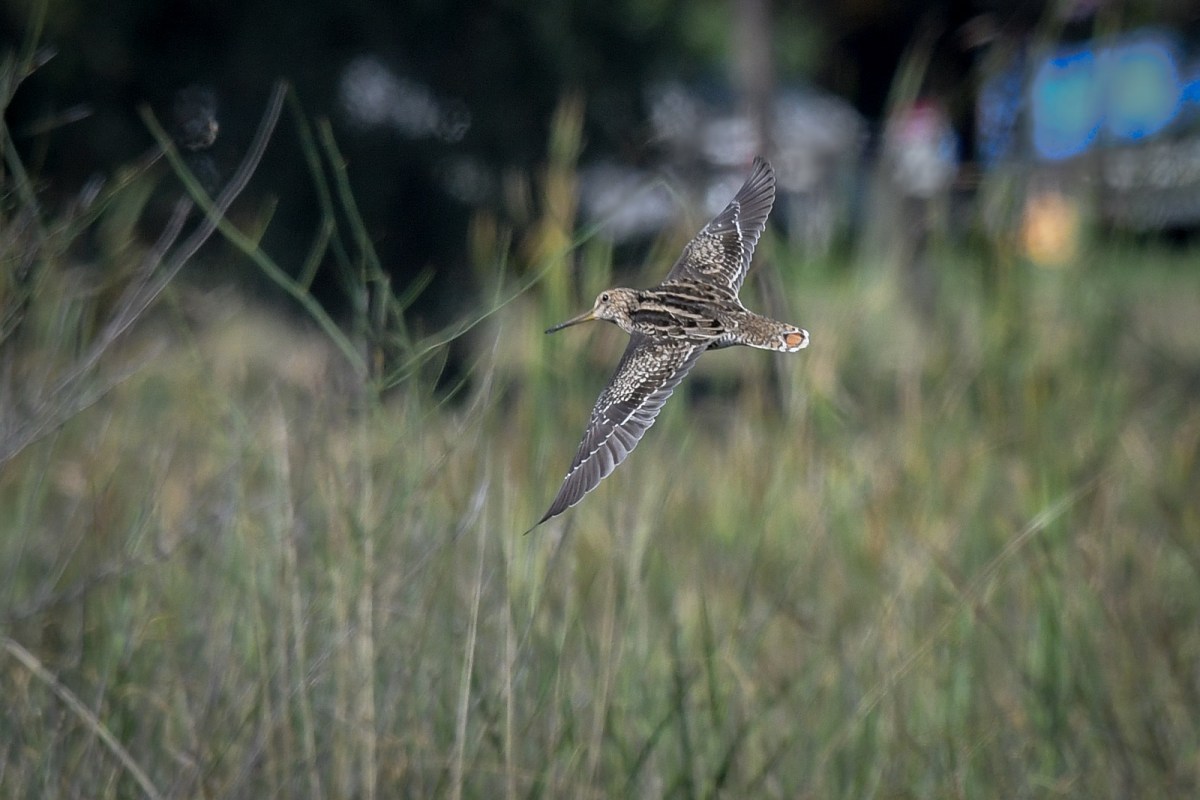
Each year a group of Latham’s Snipe, migrate down from Japan and I suspect because of the predictability of the mudflats and the safety and security of the fenced-off areas, they settle in for our summer before the long-haul back to Japan to breed. Latham’s used to be called Japanese Snipe at one time.
There might be as many as 40+ in residence at the moment. Hard to count as the area is criss-crossed with trees and lignum stands. So it is easy for them to slip away should danger, or a photographer approach.
Challenging photography, and a lot of wasted frames getting focus. My weapon of choice is the 300mm PF f/4 lens. I set it to continuous focus, and vibration reduction turned off. I also have my focus set for the Shutter release, (Not Back-button) and on the D500 I set it single frame rather than multi-burst. That way it will reengage the focus for each press of the shutter (The old ‘focus-bumping’ technique so beloved of early Canon cameras}.
Then it’s just a case of waiting till they break cover. The old dude is getting slower at picking them up early I confess, so perhaps I might turn to other photo pursuits where the subjex are much more sedate. 🙂
Enjoy



























 Birds as Poetry —— Just because I WANDER doesn't mean I'm LOST