A long walk, in the Long Backpaddock

Dorothy was away for the Mother’s Day weekend with one of our girls, so I was left to fend for myself down in the back paddock.

I decided to take a walk over the ridge with the pipeline attached, (because of security reasons that exact location of the pipeline is only know to those in the know, but the signs every 30 metres announcing that a pipeline is underneath,—  and those reading the signs are not meant to meddle with the pipe., Which is fine because it anticipates that anyone wanting to meddle with the pipe, can’t read?–  I’ve always thought was a dead giveaway about where the pipe might be.  But, think about it the signs may only be part of the clever ploy to confuse those who can’t read? )

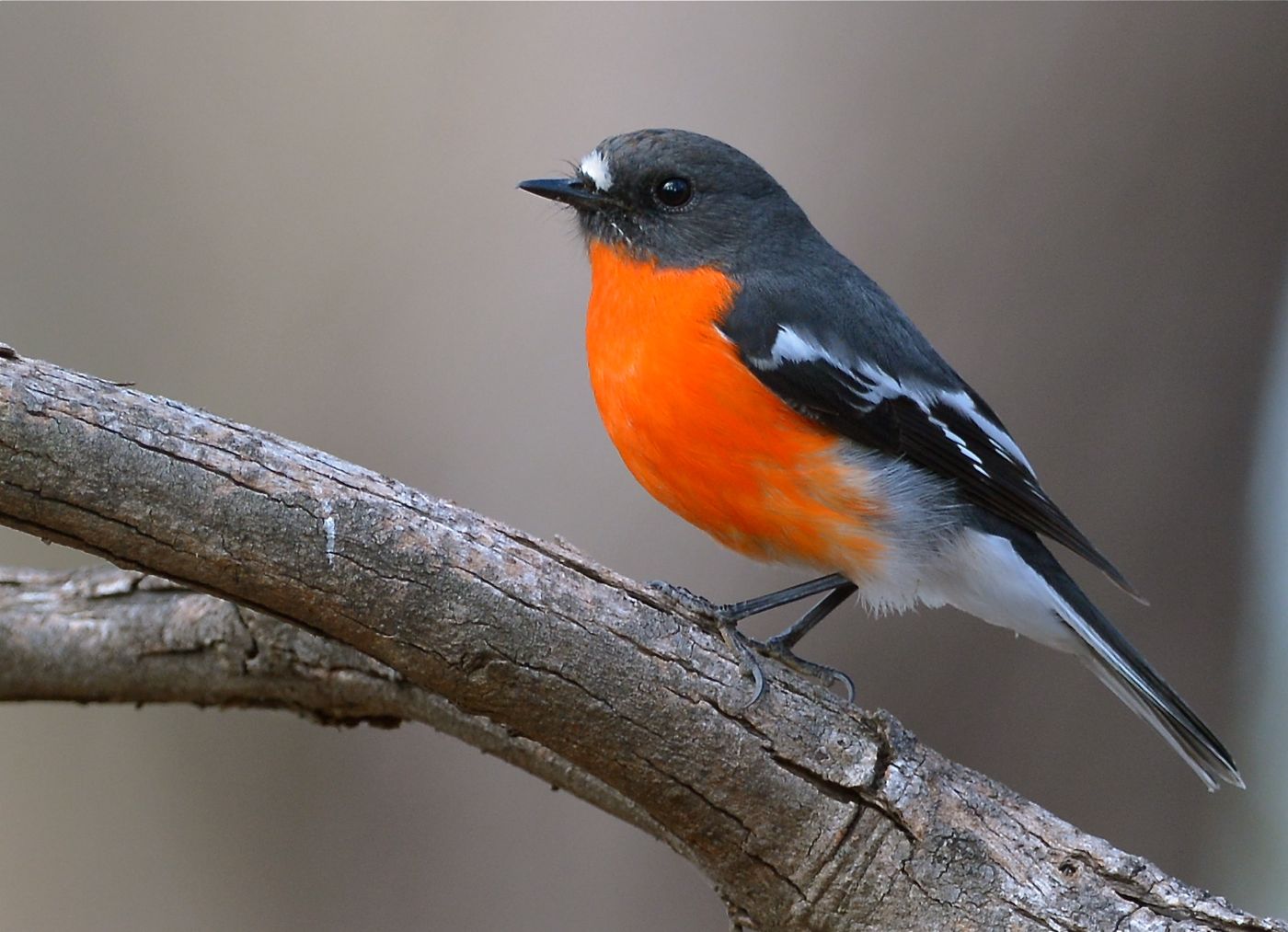
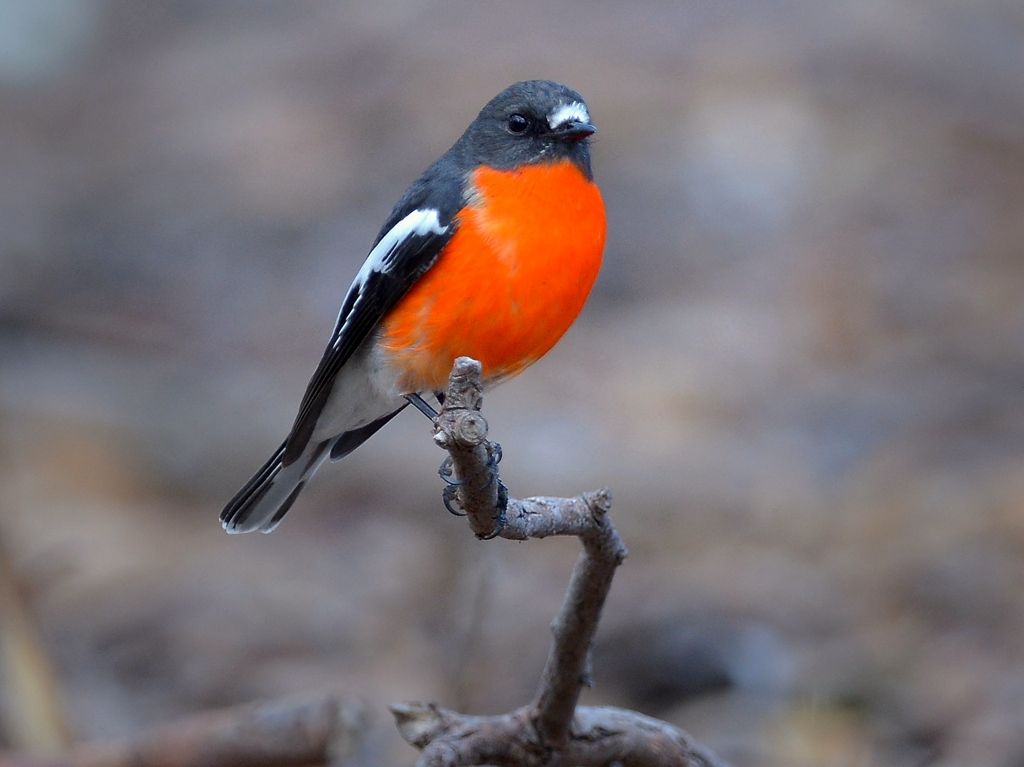
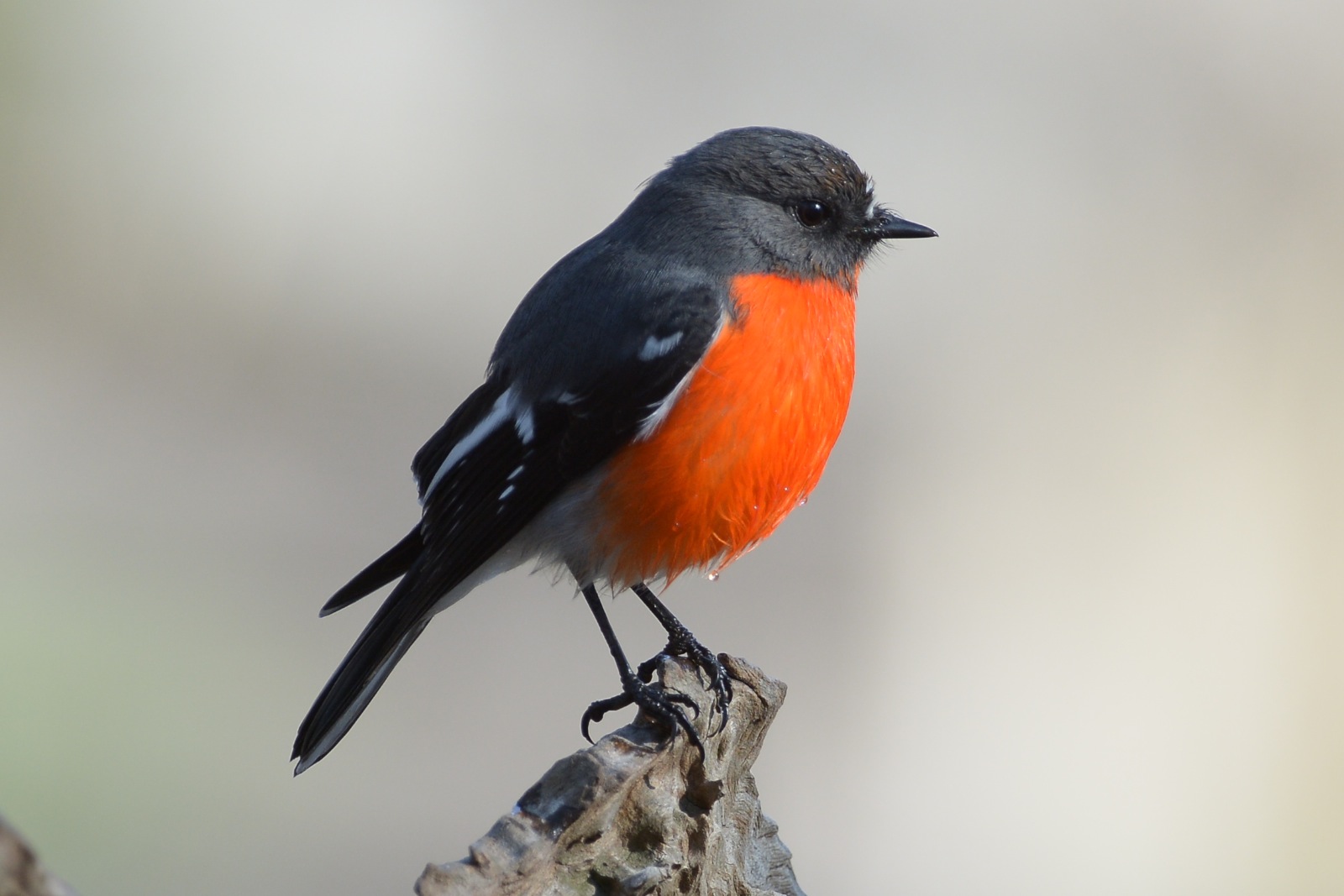
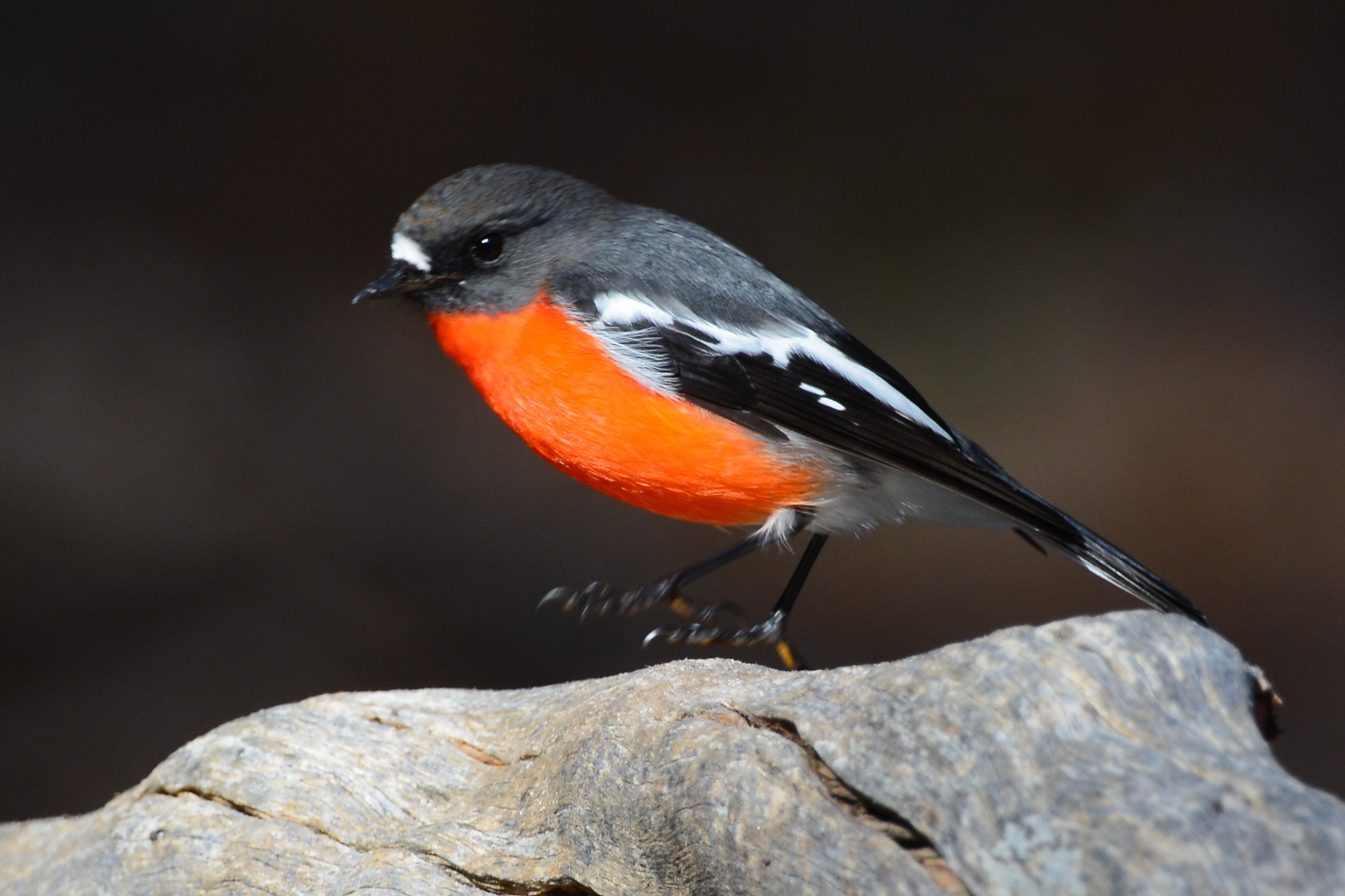
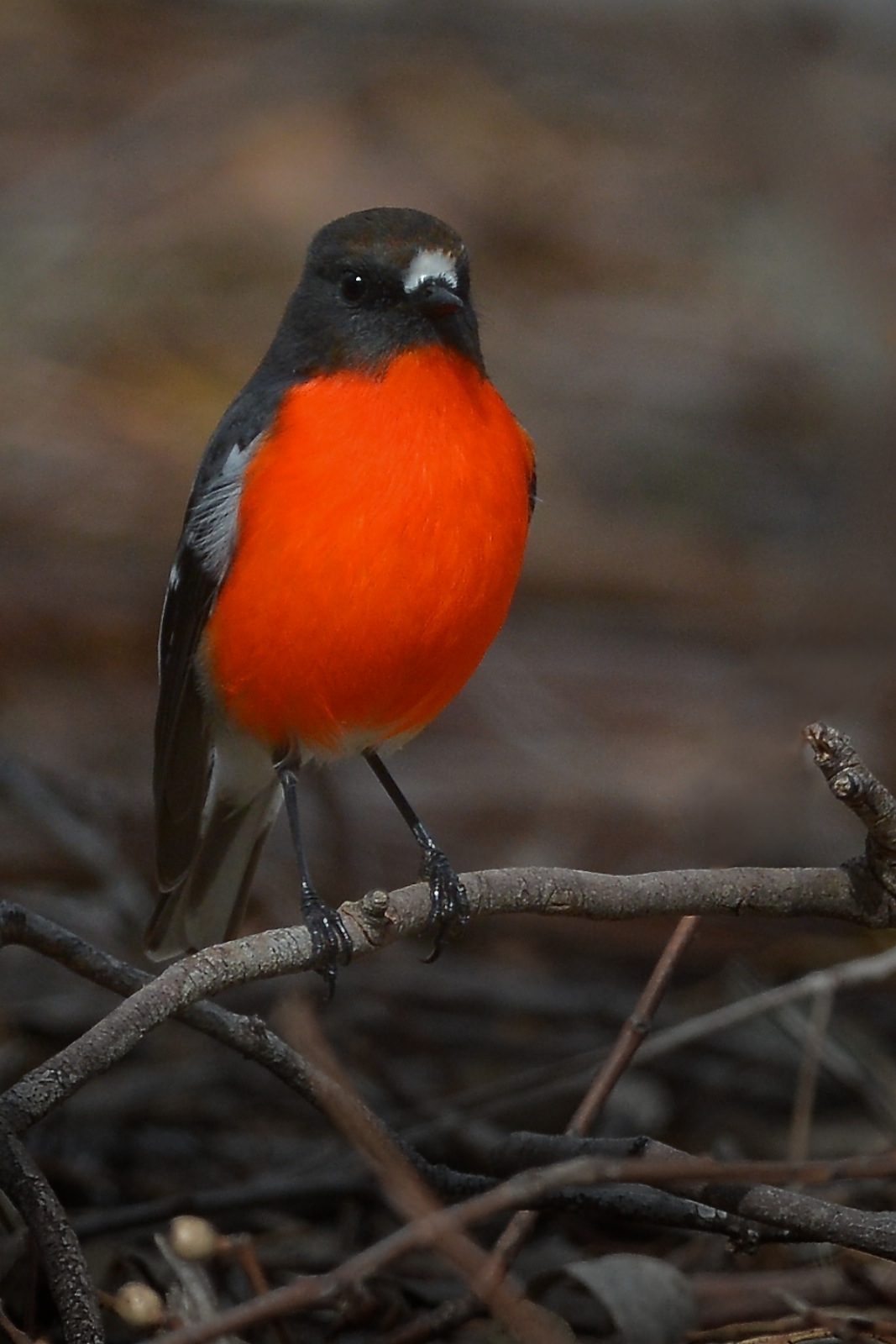
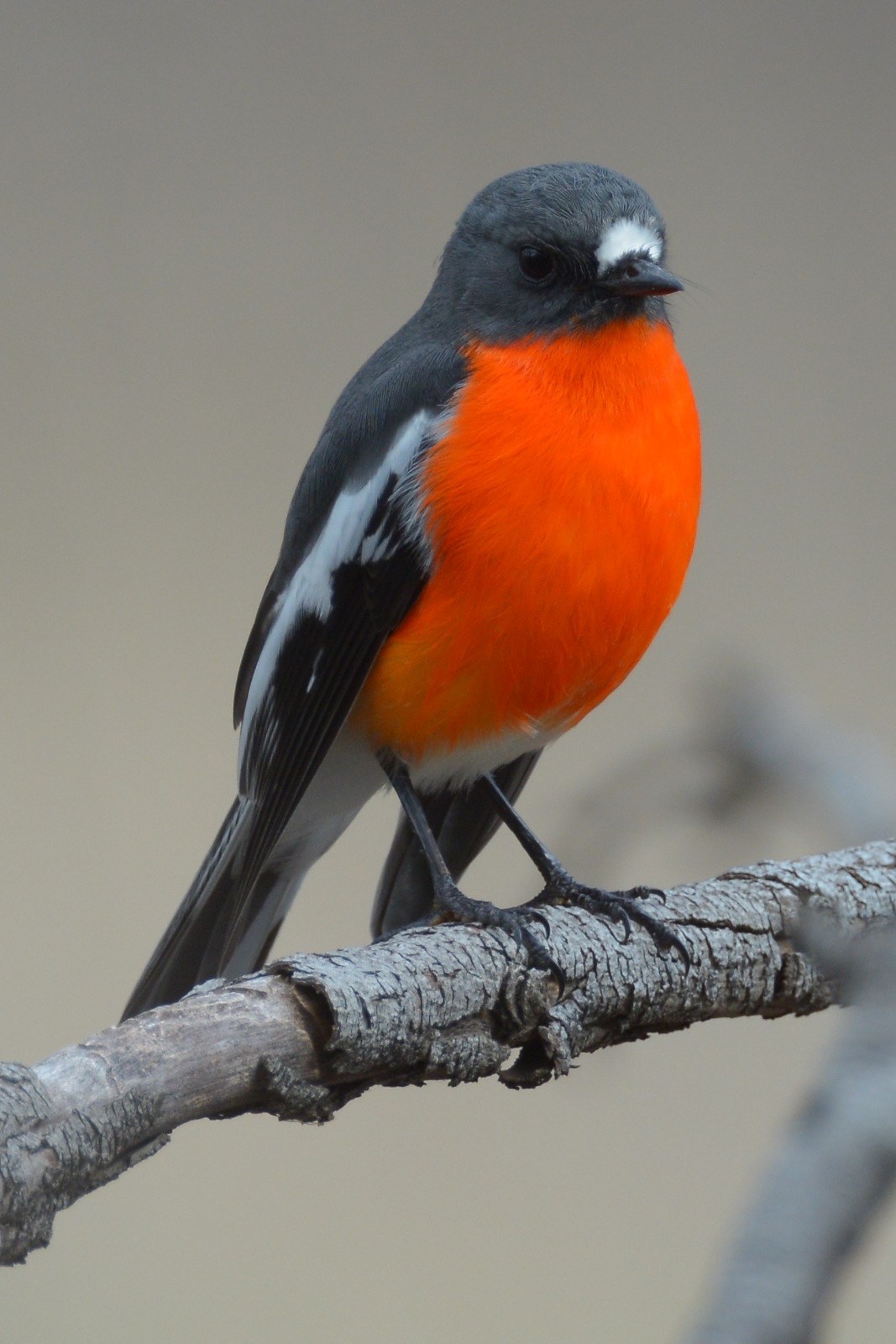
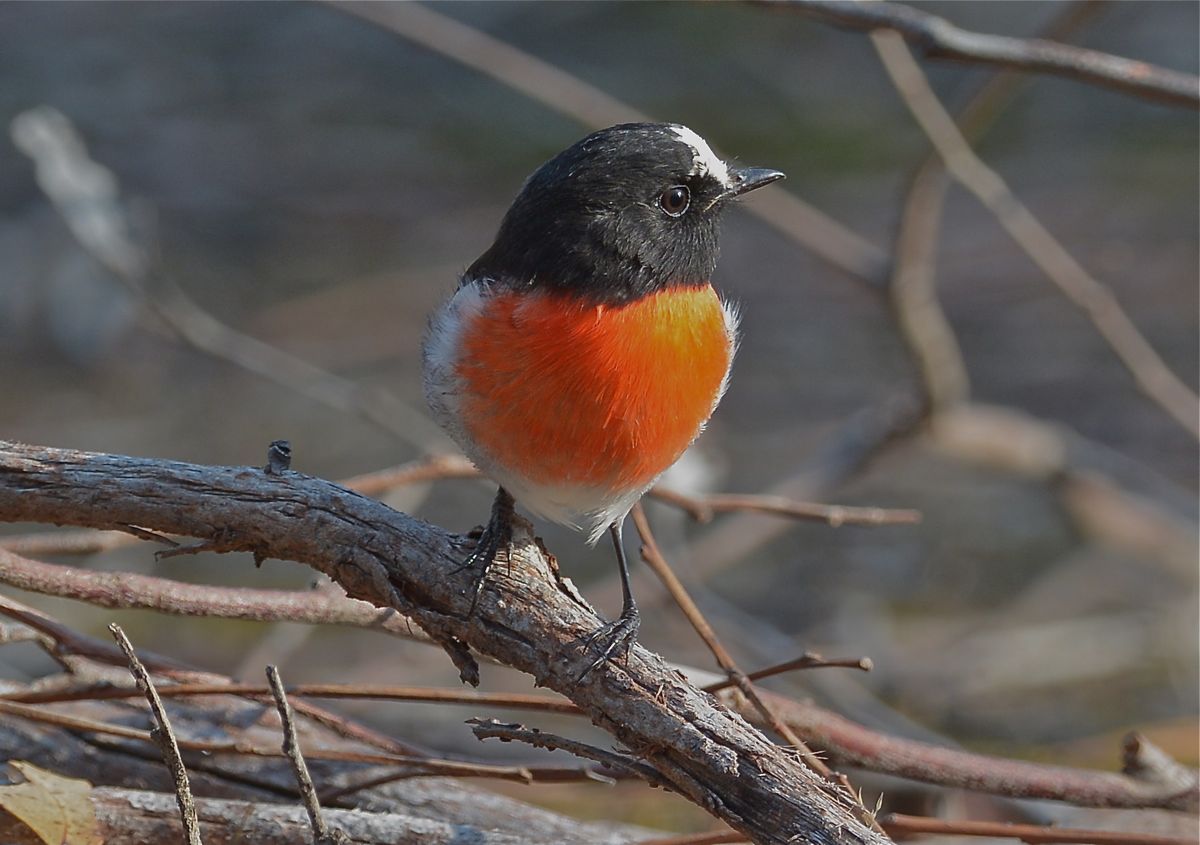
But I’d barely got on to the ‘roo track up the ridge, when I ran into my first hunting party of Flame Robins.  A family of about 5 birds. They’ve been in the area near the 3 Way junction for most of the week. After a few polite photos, I moved on to the top of the ridge. The weather was indicating rain, and the wind was very strong, so I figured perhaps the Kites and Eagles might be playing in the up-draughts off the hill, but. No.

There is a dry creek bed between the hill with the pipe signs and the rather conspicuous radar town on Gellibrand Hill.  But it does keep a little more moisture than the surrounding rises, so there is a good chance of a bit of bird activity in there. The first thing I spot is a lone little rock wallaby. Now I’ve remonstrated before on the plight of said wallaby, and the fence that runs through its territory.  I just wonder now, if its the only wallaby on this side of the fence. And that worries me, as a single wallaby in an environmental park is pretty much redundant before it starts.

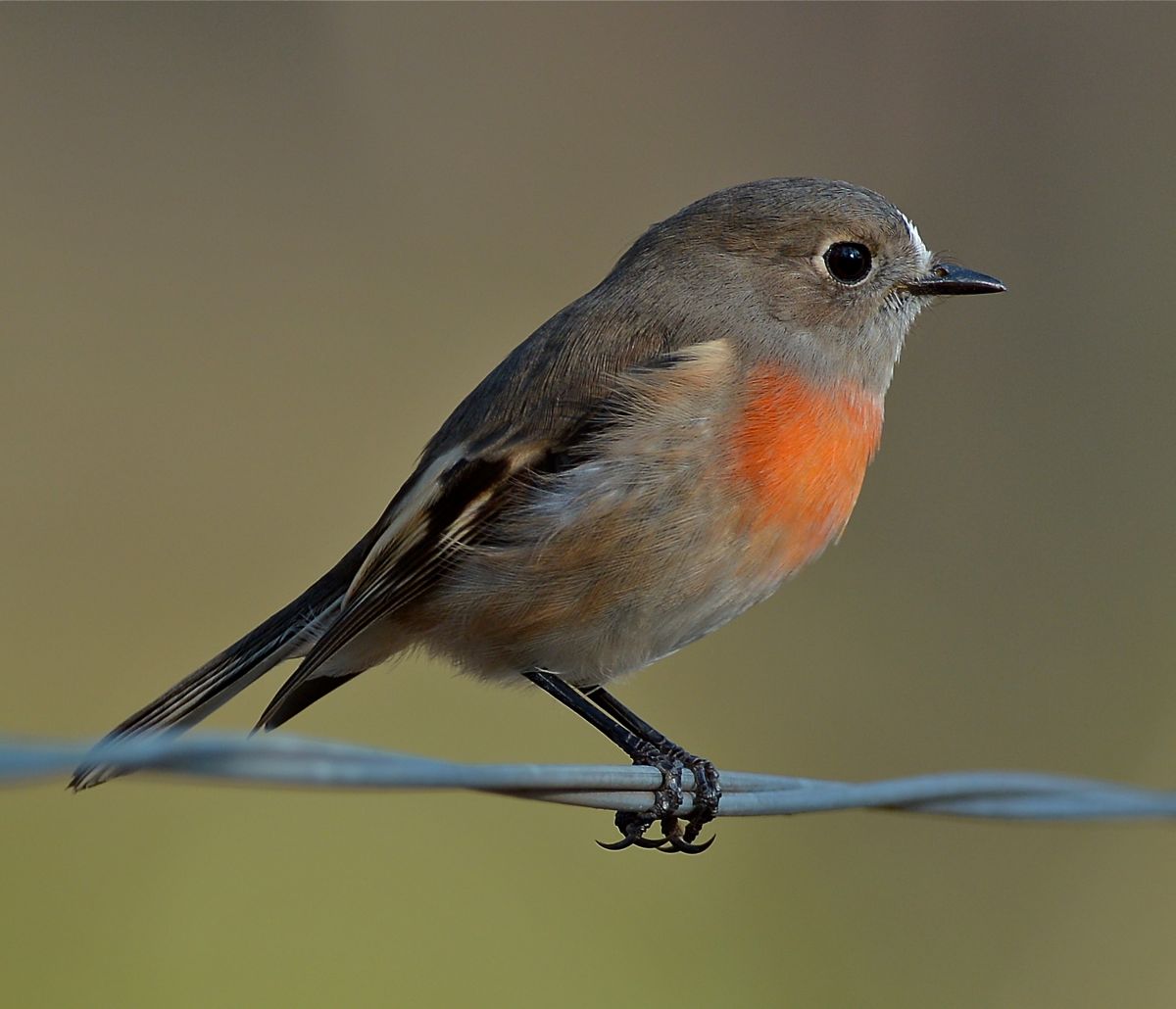
Not to far on I came across a hunting party of Flame Robins,  (total for the day 9 birds),  They were a new group for me, and included a pair of Scarlet Robins, (total now 11).

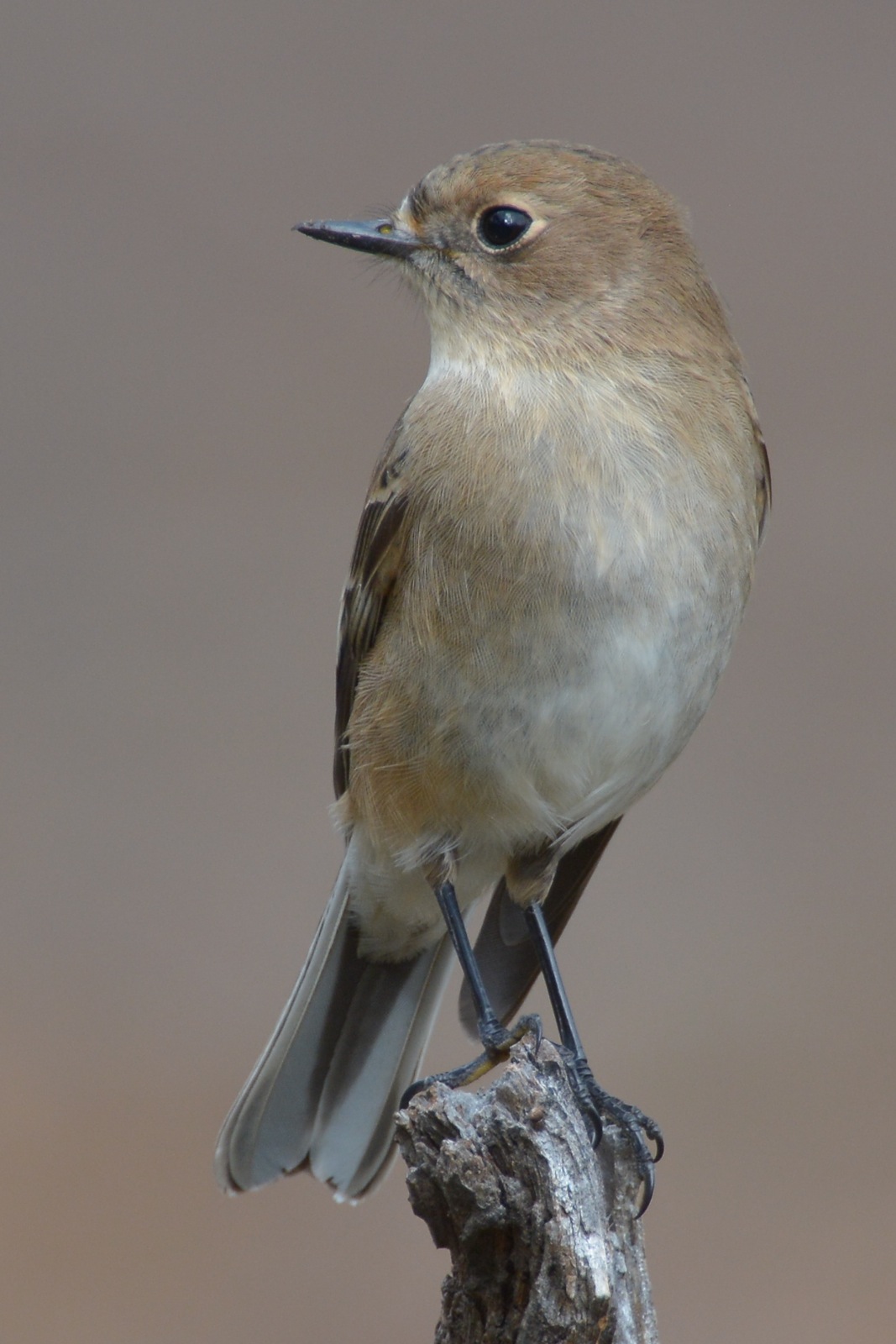
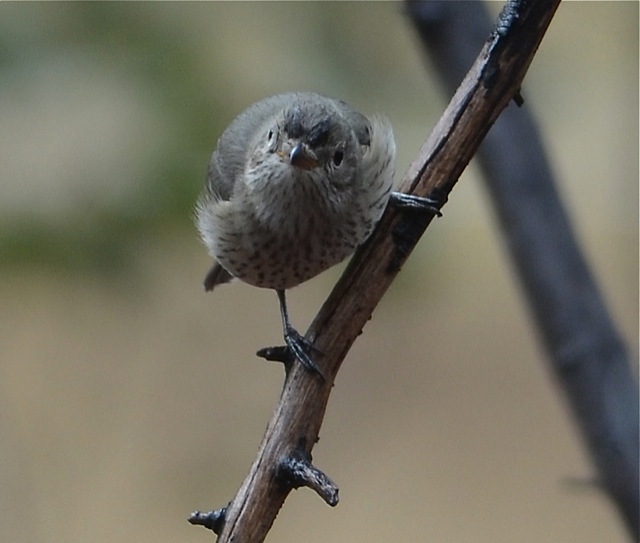
Onwards down the creek line and my attention was drawn to a lot of noise, and activity among a stand of lovely grey box.  There were two pairs of Red-caps hard at work, more willie wagtails than I can count, and a large flock of Yellow-rumped Thornbills, and some rather noisy Grey Fantails, and a third hunting party of Flames,  4 males, about as many females, and a handful of juveniles,  Flame total now 18+.  Again these were all new birds for me, and one of them was especially well marked with a yellow sash on each side of its chest.

Across the road near the police paddocks, and down by the dam, and another small Flame party in high speed mode.  Total now, 23+

Right down at the south end of the backpaddock is a stand of sheoaks, and a wide open area of grassland. Ideal for bandicoots, and also a major lair for foxes. (Of which of course now due to the many eradication attempts now don’t exist. Except don’t tell the fox(es))

But near the grassland is a nice run of Grey box and black wattle, and here I ran into another small hunting party of Flames and a second pair of Scarlet Robins,  Total now 27+ and 4 Scarlets.

The area down there is good greybox, and the few kangaroos use parts of it as a lay over, there is also because of that a lot of small ground cover saltbush, and it has a particular tiny red berry.  Again I’ve postulated my theory on the use of the red berries by the Robins, but it seemed strange today that all the hunting parties were in areas where the saltbush is in fruit.

I followed the grass lands back toward the north, and just as I crossed the east west track, another family of Flame Robins appeared.  The distinctive markings on one of the males, identifies them as some that were in the park in the early part of April, so total now 33+ Robins.

Henny and Penny came by to see what all the fuss was about, and Henny gave the males a piece of his mind, which when your only 12 gms can’t be very much.

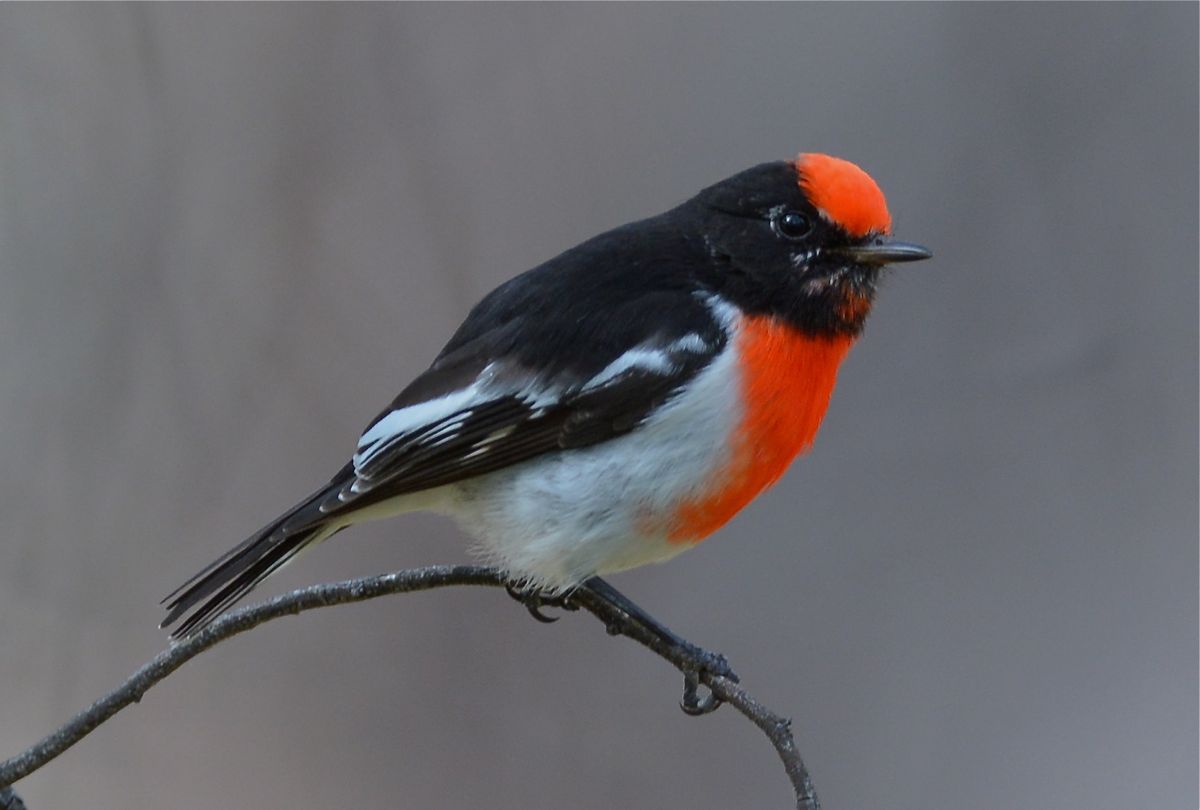
As I walked back along the track near the powerlines down to the dam, a familiar tic tic greeted me, and not more than about 3 meters away was a male redcap, he tic’ed, I tic’ed, and I am half of a mind to conclude its the missing Locky.  He has a cute little white mark on near his beak.  More to tell I suspect.
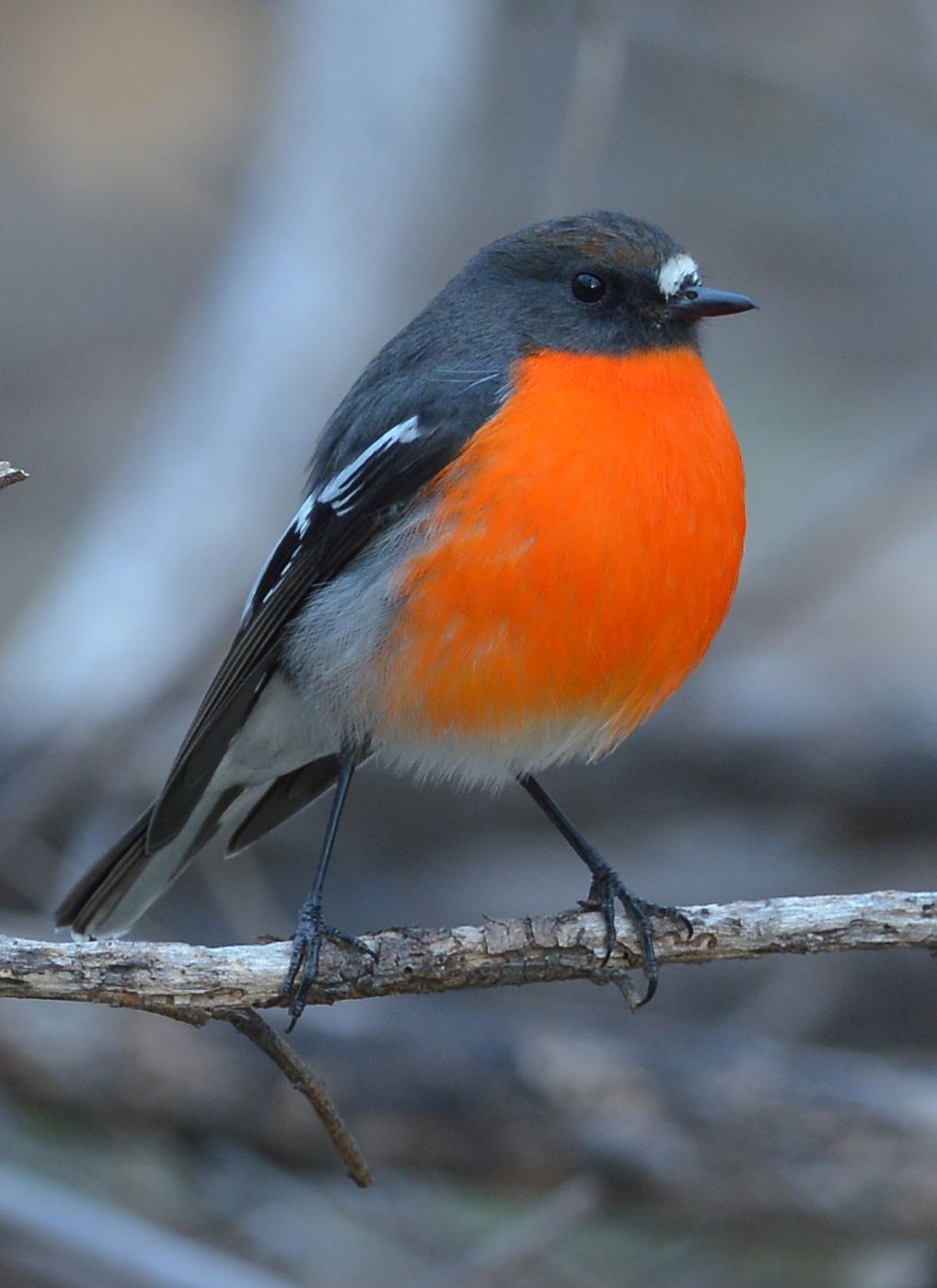
Tubby little male waiting for the morning sun to get over the trees to warm him up.


First of two Scarlet Robins. Its not Will.I.Am, as the red apron is different.


A very busy little female down along the creek line, she and her male companion were working with a large family of Flame Robins and Thornbills.


Brilliant male one of four that were working near the police paddocks.


Rather interesting bird with a distinctive yellow slash on his chest.


Yellow bugs make the best tucker, just ask this lass.


Another intriguingly marked Red-cap Male. he has tow distinct white feather sets on his face, and his red bib is also showing under his chin. Not seen him ever before.
Another intriguingly marked Red-cap Male.
he has tow distinct white feather sets on his face, and his red bib is also showing under his chin. Not seen him ever before.


This lovely guy might well be the missing Lockey, the little white moustache is a giveaway.


I followed the grassslands back north, and saw little else, but the
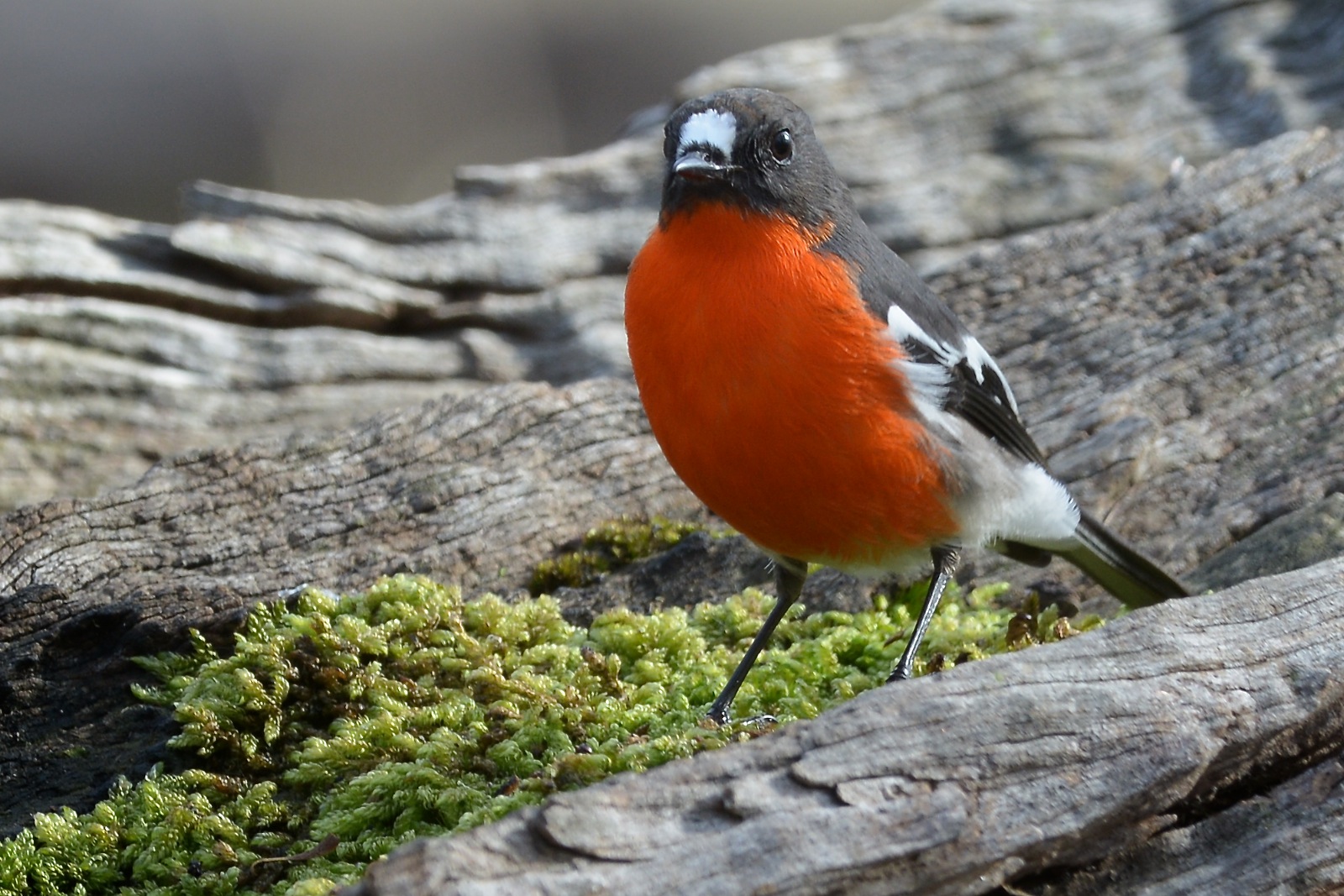


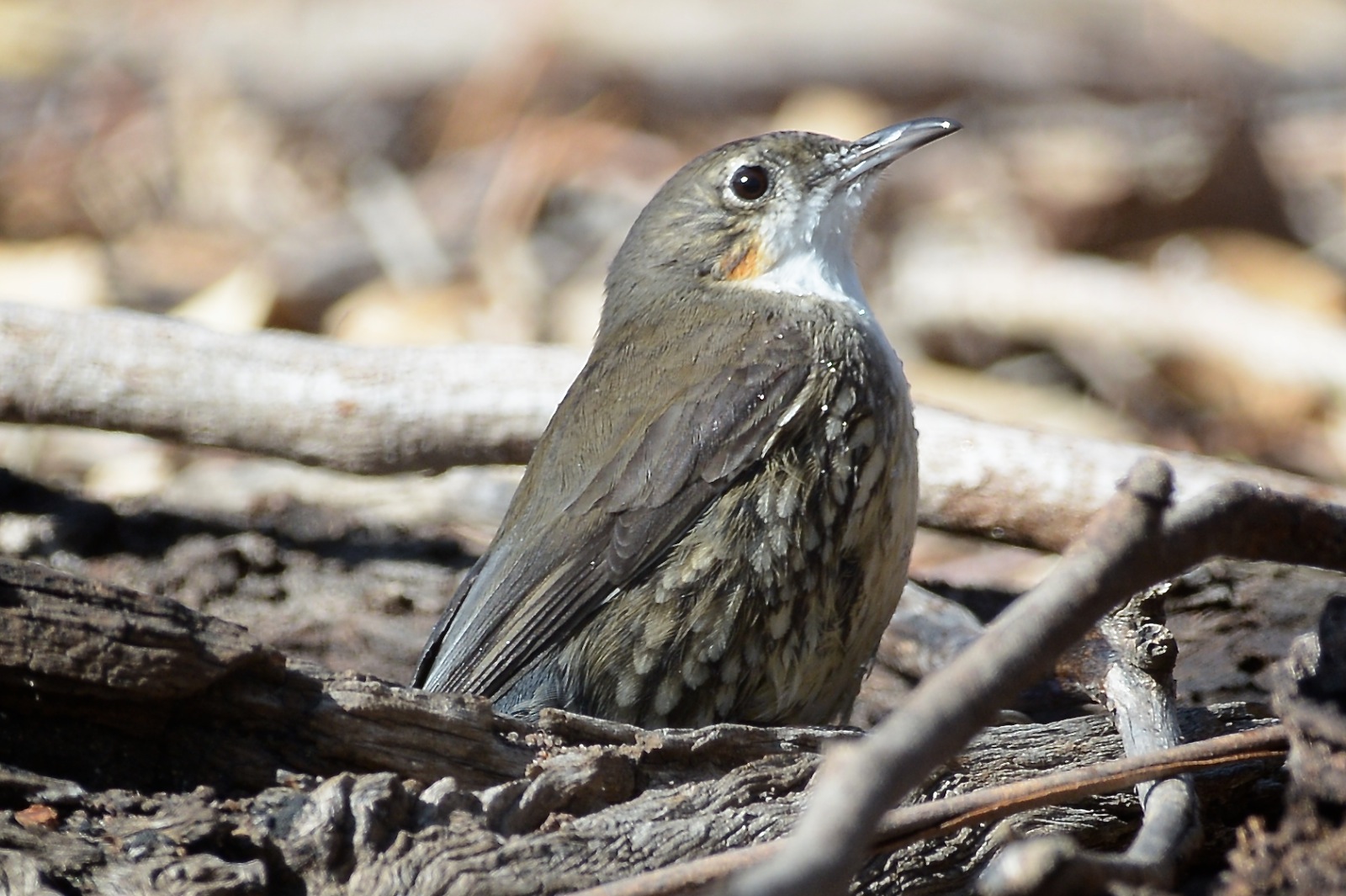
A Sunny morning in the Backpaddock with the White-throated Treecreeper.

We had a bit of time on Monday to take the morning to look around the Backpaddock. Haven’t spent too much time out there really as we are just waiting for the Bandicoot Hilton to be declared off limits again, so mostly have been working elsewhere. But. the birds are quite plentiful out there at the moment and we took our chances.

Found a couple of family flocks of Flame Robins, and at one spot some water that gave them some bathing opportunities.   So after a bit of a wait, several species turned up.The highlight of the morning was the female White-throated Treecreeper, she came in bathed and then sat on a tree trunk and preened. Just sat on the wrong side for pictures.

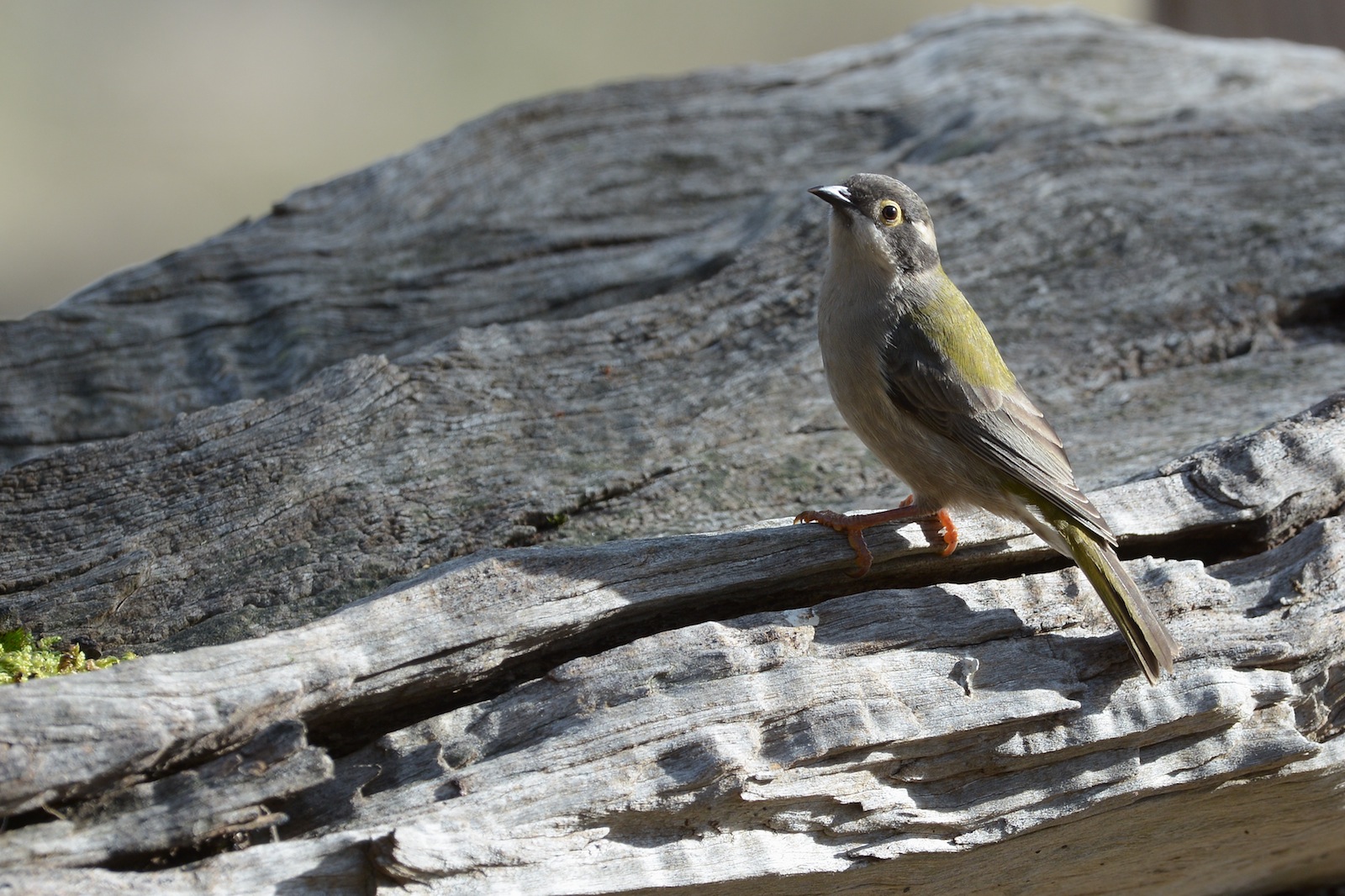
Some Brown-headed Honeyeaters also came by and they entertained us with their antics and frenetic energy in the water for quite a few minutes.

All would have been prefect except my old D7000 shutter packed it in again. Third Time Mr Nikon!!!   I’ve never had a lemon  before but this one takes the cake.   I was going to keep the D2x, and got suckered in to keep the D7000 for its video capabilities, not much point if it doesn’t work.  So, off to the camera hospital for you my lad.

As you probably know the manufacturers play a numbers game on the shutter count, and the ‘Average number before failure”,  the D7000 is rated at 100,000+  As it it a law of averages thing, If’n I’m only getting 5 to 10 thousand then some lucky dude out there is going to get something like 2 million.  Good on ya.

Rant over. Show some pictures.

Flame Robin, male, at a pool of water.
This male seem to be on his own. No females or juveniles and he's not hunting with other males.  He's just had a quick splash to dampen his feathers.
This male seem to be on his own. No females or juveniles and he’s not hunting with other males. He’s just had a quick splash to dampen his feathers.
This gorgeous young lass is new in the park and is well inside the Backpaddock fence. Her male has her full attention.
At last. I finally managed a worthwhile shot of this very elusive female.
A Brown-headed Honeyeater watching its relatives bathe.

Western Treatment Plant morning adventure

Mr An Onymous and I had been talking about a morning visit.  We have the same general thought, that the lighting is much better for photography early in the morning down there, because of the position of the sun along the east west roads.

The idea being to drive the the east end of the plant early, and then make our way back slowly stopping as necessary and with the light behind us, the colour and detail should, all other things being considered, better.  Of course, the birds don’t know about this seemingly brilliant scheme, and continue to be, well, birds.

The big sticking point in the idea is ‘Getting up early in the morning”.  To work successfully we’d like to be down there as close to sunup as possible.  (there are some limitations by Melb Water on what time we can get in, but as Daylight saving is behind us as they say, its not such a big deal). Getting on to the Western Ringroad and going with the traffic flow, however is another thing and we need to leave home ‘early’ which does put undue strain on the old body. Trust me.

The second sticking point is that as we swing in off Point Wilson road and begin the journey along Paradise Road, that we are driving into the sun. Hard on the driver.  Then.

Someone says,  Oh, look over there, its a ….. and of course we need to stop to look, and take photos and the idea of getting to the other end of the plant is rapidly deteriorating into shreds of it former self.

At the moment, there are quite a number of Raptors in the area.  Whistling Kites in large numbers, plenty of Swamp Harriers and Brown Falcons. Not to mention the Black-shouldered Kite, and more.

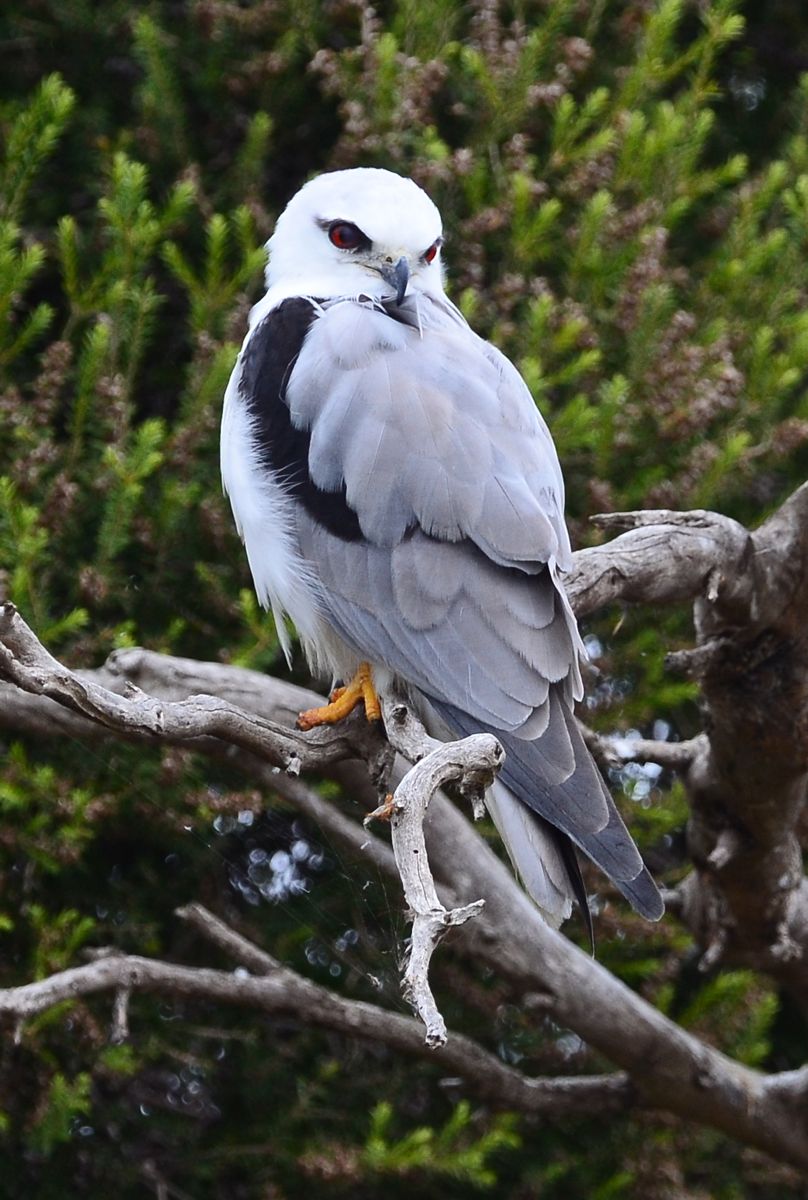
We found a Black-shouldered Kite on a post, consuming a recent kill. It probably was  Pipit, the few brown feathers and the longer toes pointed that way. But it devoured the whole thing in 1 min and 21 sec, (I checked the times on the camera frames).  I was a bit taken aback, as I was under the impression they were very much a mouse eater, and very little else. This one obviously had not read the field guide!

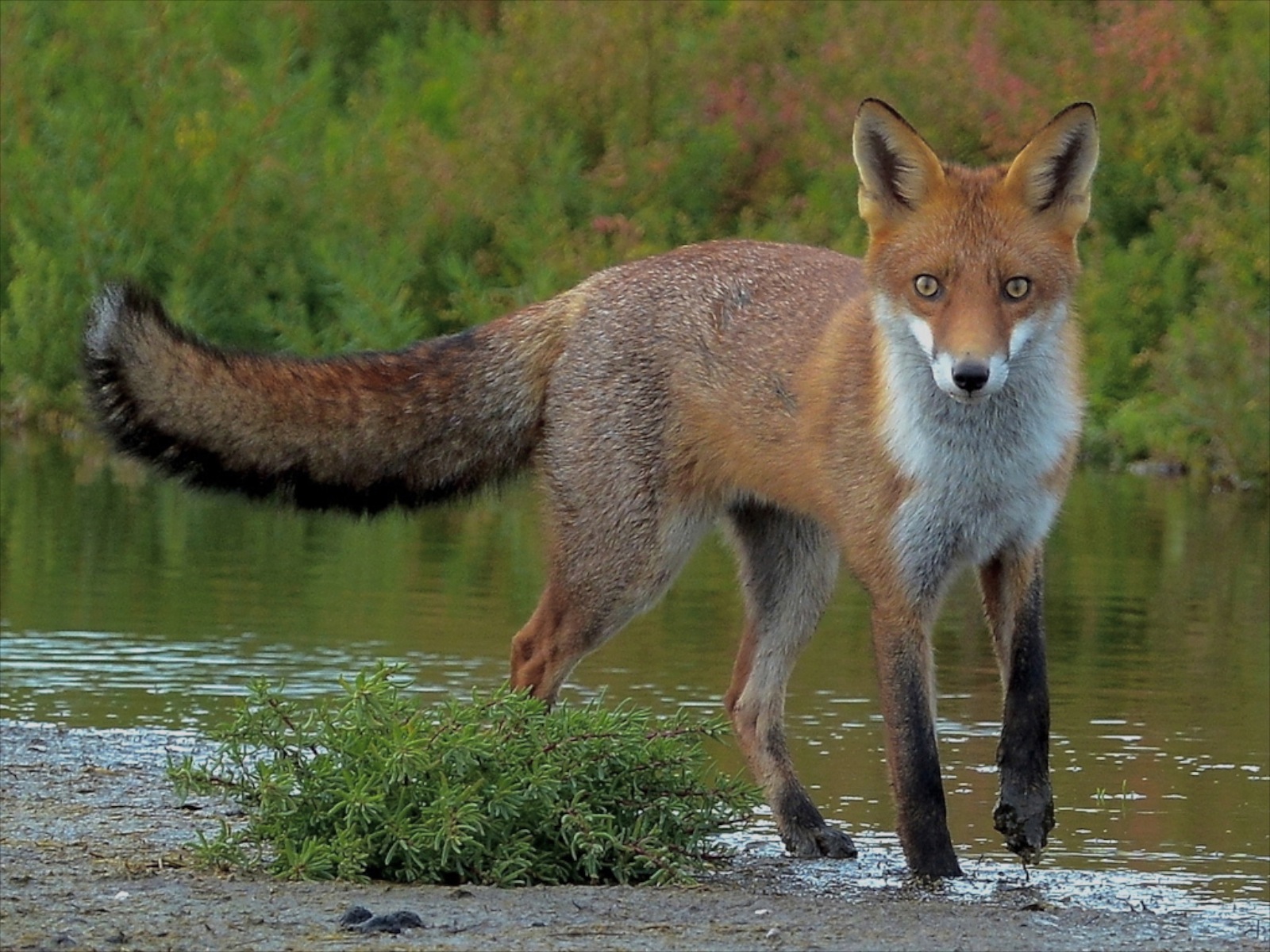
On a small mudflat among the bushes near the beach, I was sitting on some grass photographing Red-kneed Dotterels, I was just about to make another move closer to the water’s edge, when down the mud flat tripped Foxy Locksy. This was a most handsome and healthy looking animal.  I know. They are feral. I know they create a huge amount of damage. I also know from the activities in the Woodland Historic Park Bandicoot programme, that simply outlawing them doesn’t stop them, and using all the high tech equipment in the world, and working with the best of professionals doesn’t eradicate them. What I didn’t expect was the barrage of comments when I posted the image on Flickr. So thought I’d put it up here too. Just because I can.

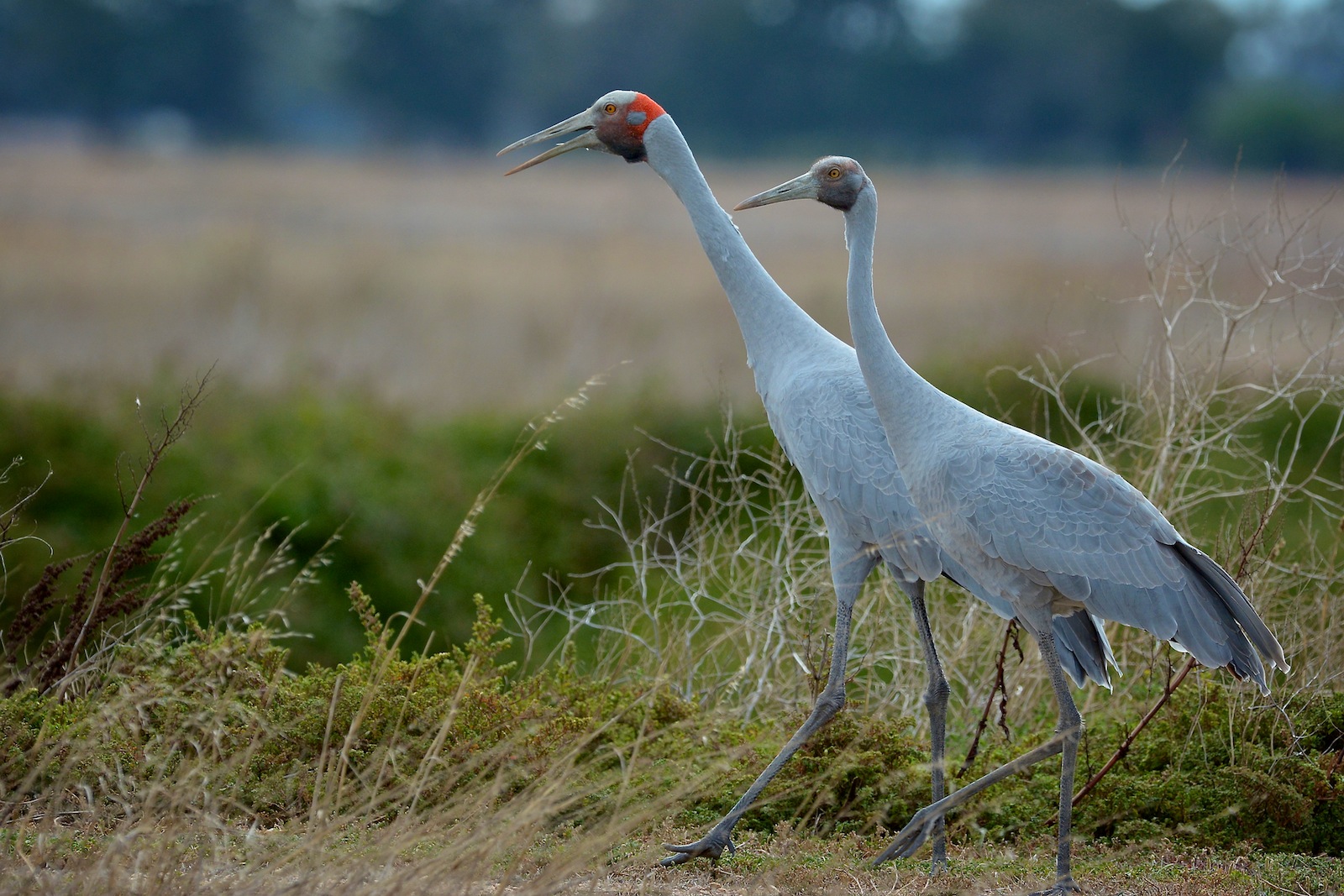
We eventually headed down to the Murtcaim outflow, otherwise know as the Spit, or the Western Lagoons, and to our amazement, we found the Four Brolgas that have been reported a number of times down there.  Now, this was a first, for me, to see, and to photograph.  We soon discovered they had no intention of making it easy, and would loft into the air at the first possible moment if we looked like we might approach. None the less with them on their bund and we on our side, we did manage a few worthwhile shots, and Mr O even got some very suitable inflight images.  My in-flight  with the 500mm can only be described as ‘dismal’.  It’s just too heavy.  However, I am pondering a Gimbal type head and that will give me a bit better edge on working with the long lens.  Time will tell.

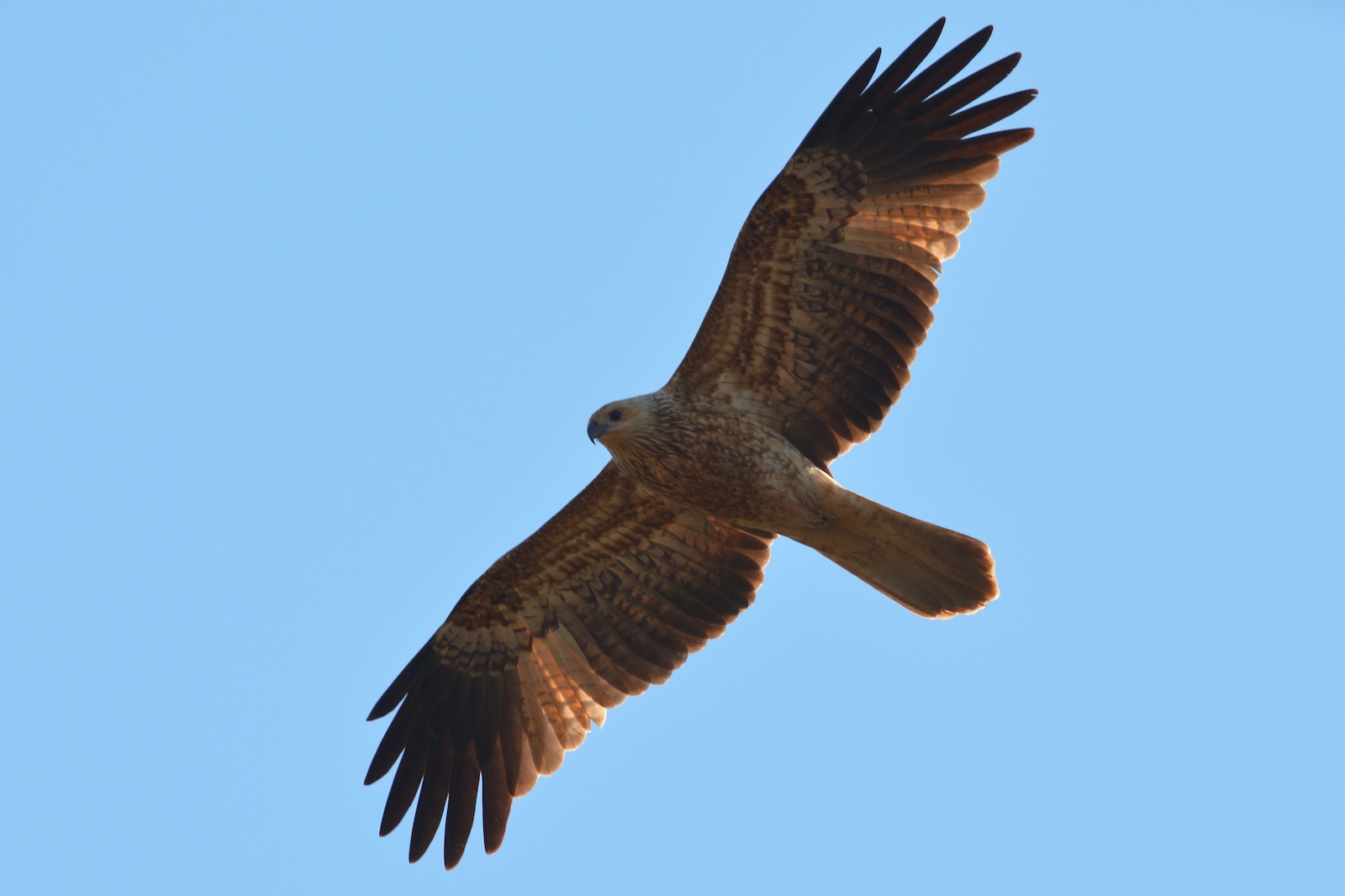
Whistling Kite enjoying the early morning air. The off shore wind gave them a chance to waft along the edges of the water with little effort
Black-shouldered Kite at work in the paddock. It was not having to work too hard as the wind was in its favour. Ours too as the light fell on to the bird.
Said Kite with results from hunt.  It appeared to be a Pipit, as the feathers were the first go.  I just couldn't get high enough to have the bird completely against the saltbush backdrop.
Said Kite with results from hunt. It appeared to be a Pipit, as the feathers were the first go. I just couldn’t get high enough to have the bird completely against the saltbush backdrop.
Pelican on a tight turn into the wind. It gave such a nice wing spread.
The Ultimate Survivor.  Foxy Locksy came tripping down the mud flat while I was sitting in the grass photographing Red-kneed Dotterels.
The Ultimate Survivor. Foxy Locksy came tripping down the mud flat while I was sitting in the grass photographing Red-kneed Dotterels.


An adult and juvenile Brolga. The first I've even seen or photographed. Worth the time down, just for this. The elegance of the birds movements are something that really has to be seen to be fully appreciated.
An adult and juvenile Brolga. The first I’ve even seen or photographed. Worth the time down, just for this. The elegance of the birds movements are something that really has to be seen to be fully appreciated.


So much to do, so little time to blog

It’s been over a month since I managed to get to the keyboard.  As you’re no doubt aware, I’ve moved much of my photography of birds over to Flickr as http://www.flickr.com/photos/birdsaspoetry/

But nice as it is over there, its a bit hard to have a ramble on about what has been happening with the birds and our imaging.

With the Flame Robin flocks now well back in the Woodlands Historic Park, its been a bit busy for us out there.  Not only that, we’ve been conscious that paddock is going to be locked over again as the “Bandicoot” programme gets underway, so we’ve been busy working in a couple of other locations away from the park (more to follow).

Over the past few weeks, about 4 families of Flame Robins have been in and about the backpaddock and the dam area.  Unlike previous years, the ground is quite dry, and so they are looking further afield for food me thinks.  The Three “Brothers” have made a couple of appearances, and a rather nice family of a male, female and three juveniles have been conspicuous as well as a male, single unattached.   We’ve also spotted a pair of Scarlet Robins who have come into enjoy the park over winter.  Will.I.Am. O’Scalet has had a bit of a run in with them, but it seems to have been settled.

A lovely flock of Sitellas are patrolling the trees, and we’ve seen but not photographed, (to my chagrin), a pair of Golden Whistlers.

Here’s a few from the past couple of weeks.

Primrose seems to have come back into the park, and is currently working with a juvenile bird.  Her mate, Lockey, I am beginning to fear has passed on.
Primrose seems to have come back into the park, and is currently working with a juvenile bird. Her mate, Lockey, I am beginning to fear has passed on.


Plenty of activity in small number of Flame Robins across the area, mostly males  and a few juveniles so far.
Plenty of activity in small number of Flame Robins across the area, mostly males and a few juveniles so far.


Mr Coppertop, one of the brothers makes his appearance.


One early morning this lass invited us into the park.  She is one of only a few females we've located so far.
One early morning this lass invited us into the park. She is one of only a few females we’ve located so far.


Another of the males that has turned up to brighten up the forest for winter


A large number of Whistling Kites are working in the area. I counted 12 birds up near the radar tower area.  Something must be drawing them in.
A large number of Whistling Kites are working in the area. I counted 12 birds up near the radar tower area. Something must be drawing them in.


Into the Treatment Plant in the rain

We’d been planning a trip down to the Western Treatment Plant for about two weeks.  And to get a break in our schedule was going to be a bit of a challenge. We’d planned for today, 11th of April, as it fitted in and the weather man had been a bit hopeful of a good day.  Wednesday really was a gorgeous Melbourne day and we sort of hoped against hope that it would follow through for today. No such luck. Even as we hit the Ring Road, it was apparent that the sky was, well, grey.

And hidden in all that greyness, rain. Which soon made itself apparent as we got near to the Point Wilson Road turnoff.  By the time we’d made it up to Lake Borrie, the weather was, well, raining!

Not to be disheartened we realised that any great photographic endeavours would be far from us this day. Then to compound the battery on the FZ200 died, and the replacement soon followed.   Hmmm.

Some Whistling Kites entertained us several times with their aerial antics as they chased one-another and played a game of ‘catch if you can’ with some long water weed heads. One would take it up quite high, and then let it go, the others would then catch, and then drop it as another followed the same process.  Lots of claws and much whistling from the others on the tree line.

We found another one on a branch in the rain. At first is seemed just to be getting wet. But in reality it was letting the rain run through its feathers for a bathe.  I’ve another image over on Flickr that shows it with the wings spread out.  Seemed to enjoy the water trickling over the feathers.

We were, by late midmorning,  contemplating a hot coffee at the Highway Lounge and the weather wasn’t making any likely promises of a change any time soon.  The swans were sitting in the rain preening and then we discovered two Black-shouldederd Kites sheltering in the lee of a tree, and I think that just about confirmed our next move. We drove back along the road that runs by the beach, and first one, and then another landcruiser came past, but it was too wet to stop and chat.  I pulled over to let them past.  Within about 30 seconds of the second vehicle passing us, just down the road I saw a movement and then Dorothy exclaimed, “Buff-banded Rail” and sure enough bold as Ned Kelly it pops out on the roadway and starts to feed.  It must have waited for the other two 4bees to go by.    Now its hard not to breath and set up a camera inside the car at the same time, but somehow I managed it, and the rain stopped, and  Ned Kelly marched along the road, feeding happily, then sprinted away.  Only to turn and come back.  Worth going out in the rain just for that.

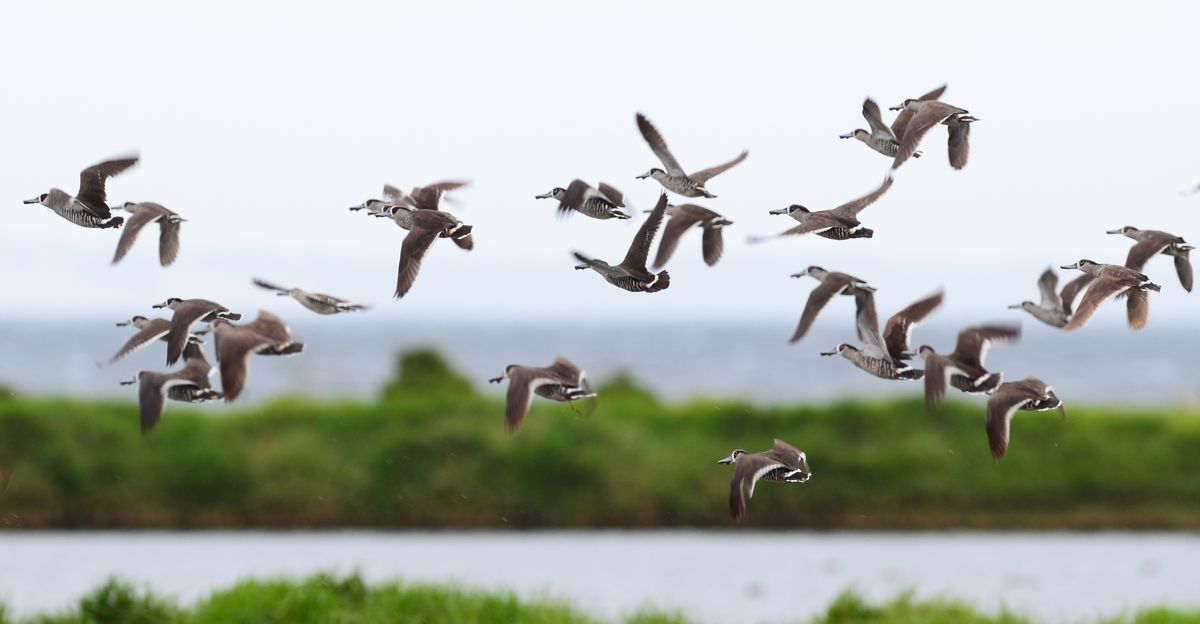
Pink-eared Ducks take to the air at the approach of a Swamp Harrier.
Whistling Kite enjoying a bathe in the rain. It has just fluffed out its mantle and back feathers to get damp.
DWJ__DSC_1923
Black-shouldered Kite sitting out a rainstorm
Mr An Onymous often says its worthwhile just being out there, and if you get a decent bird shot  that's an added bonus. This is the bonus for us for the day.
Buff-banded Rail.
Mr An Onymous often says its worthwhile just being out there, and if you get a decent bird shot that’s an added bonus. This is the bonus for us for the day.

A little afternoon walk and sit

We’ve been a bit out of bird circulation of late. Haven’t been out to Woodlands for sometime, and really haven’t had much contact out there with the birds.  Seems most of them are off elsewhere.   But we had a bit of a break in the family doings today and took the chance to followup on some sightings that Andrew H and Neil A had given some details on.  So armed with the newest toy. The Nikon D7100, and the old toy, 500mm we sallied forth.

The D7100 is really not broken in yet, still having a bit of fun working out the best settings, but the one thing I can vouch for is the accuracy of the autofocus. And its speed.  Attack Dog speed.

And while we’re on the dog metaphor, Jack Russell action, and Fox Terrier grip on the subject.  This is the first Nikon I’ve used since the D2x that actually finds the subject that I want attractive and doesn’t go off hunting for its own version.  Shot some kid portraits the other day indoor/window lighting. Even with the old 70-200 VR the tripod wasn’t needed and the kids eyes are SHARP. (Hope the Nikon D7000 af team read that, although me thinks they wouldn’t understand, as the D7000 would go, Oh, nice eyes, but look at those cute little ears.”  ) For birds it meant the difference between sharp eyes and a rather attractive neck and back feathers. Never did seem to get the hang of that.  Ok of the soapbox, cause no one cares.  But.

The D7100 does sharp.

We were in luck by the the old hospital dam.  We found Will.I.Am and Will.am.mena and set about working with them. As it turns out they had company.  Wills have been staying over all summer, and we hope had nested, although haven’t personally seen any chicks.   But now they have company.  A pair of Scarlets have migrated in for the winter.   But Will.I.Am, is not to happy to give up his hard fought territory. So we watched fascinated as the two males went at it to determine top dog status.  Name calling, tree circling, dancing, and a new one for me,  Advancing on the territory with the tail cocked high in the air.  Not sure if that was to intimidate Will or attract Will.am.mena.  It certainly had the desired effect on her, as she issued both challenges to the males and encouragement to them as they battled it out. If we couldn’t find them for a few minutes then her calls quickly located them.  The other female sort of ignored it all and fed happily in the open.

In the end it resulted in a lot of  high tree flying and we lost them in the distance.  Which says a lot about the size of the territory the male is defending. Must be 700-800 metres minimum around.


Will.am.mena in the sunshine


Young Redcap Male.
Young Redcap Male.


Will.am.mena watching the male birds flexing their muscle.


Will. I. AM.  He is winning in the branch dancing competiion
Will. I. AM. He is winning in the branch dancing competiion


Will.am.mena.  She is offering advice on the finer points of tree circling or is just bewildered by the attention of another male, or two wacky photographers.
Will.am.mena. She is offering advice on the finer points of tree circling or is just bewildered by the attention of another male, or two wacky photographers.


Just another day at the office for the big local hero
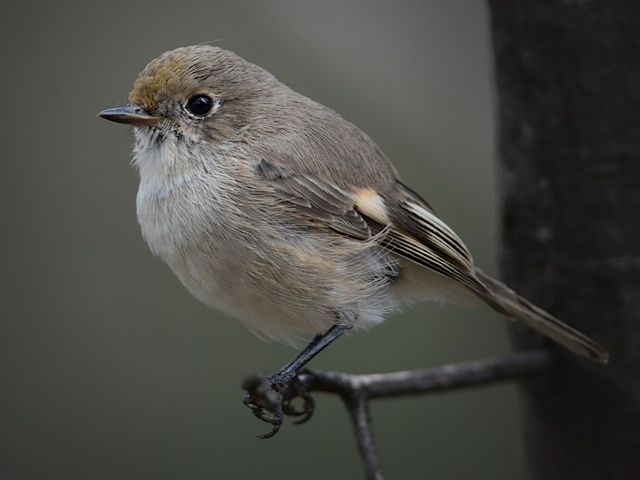


I don’t do book reviews

Well it’s true, I don’t do book reviews.

And I know that ‘books’ are so so so ‘yesterday’ in the words of Paris Hilton.
But photographers I think have an inherint grasp of the concept of images on a page.

Managed to come across a book called ”

The New Art of Photographing Nature”

By an american named Art Wolfe (you can probably see the pun intended.)

Anyway, he has co-authored with a lady Martha Hill.  Now Martha has been a picture editor for a few prestigious magazines, and has seen the odd image or two that were worthy of publishing.

What I really like about the whole concept of the book is that Art’s photos get a going over by the editor and he gets to defend his intent.  And its really a lot more than that.  If you like looking at images and working out the reasons why they work or not, then I reckon this not a bad $25.00 spend. I got mine from Fishpond.com.au,  and it comes “Free postage” what ever that means.

As a bonus my old mate Tim Grey,  he of ” Tim Grey does Photoshop training better than any one else on the planet”, has a few sidebars and pages on things to think about when you’re at the keyboard and mouse in your favourite (that is an euphemism) post processing procedure,   and its a bit of an offhanded up date on digital technique. Never be the all in one photoshop book, but Tim is such a complete and competent master of the medium that even if he just exhales, its probably worth noting.

Think art, think useful think a jolly good read and ponder on a rainy day that keeps you out of the bush, and think hmmm, I just might learn some thing about photographs.  Oh.  Don’t expect a lecture on how to set ISO, DOF choose focus points or that sort of stuff. That is expected technique.

Hello, Will.Am.Mena

If you’ve followed this blog for a bit, then you’ll know we often find a very startlingly handsome Scarlet Robin, we’ve named Will. I. Am.  He came into the park in late December 2011 and has stayed over which is a delight,  of those of us who actively work out there, its been debatable  about him having a lady.  We’ve each seen fleetingly what we think is a female, or was it a juvenile, or another red-capped robin?

But the nesting season has drawn to a close, and now it can be revealed.  Yes. There was a lady out there.  And a couple of recent sightings began to confirm it.

Having a couple of hours between appointments today, I thought a quick scout about might help. So, out I went, and very soon had heard him in full cry and not much later spotted a red flash through the trees.  I was really hoping it might be a couple more Rufous Fantails. But no.  However it was better.  A lovely female Scarlet Robin, and she took long enough to pause for a photo opportunity, before like her mate, she sped through the trees and was gone.

Andrew H had reported seeing the male with a juvenile, and no doubt they have had a successful season.

Will. Am .Mena.  After all this time its official on this site. A female Scarlet at Woodlands
Will. Am .Mena. After all this time its official on this site. A female Scarlet at Woodlands

I also found the young male red-cap hard at work prefecting his call and hunting.  He was working over a large open area, and I had great hopes of him coming more in my direction. When to both of our dismays a walker with two four-legged dog scarers came by.  He fluffed himself up into his best ‘Dogs begone’ pose, but in the end he took flight, and was gone.

Litte guy ready to repulse bird scarers

Very quiet days in the bush

Been awhile since I’ve posted a missive here, mostly because its been a bit quiet around my local area, and because I’ve been busy on a couple of other projects. So though I’d put a a week or so of images and talk about the state of play.
I’ve been working on a project to do a rambling review of the use of my 300mm f/4 lens for bird photography. Everybody it seems has preferences, or more importantly challenges to enjoy the birds and to keep the budget afloat at the same time.
One of the lenses I really like is the 300 f/4 Nikon or Canon it pretty much of a muchness. So I should have a couple of pages here on the site of a ‘field review’ of the lens. More to come
We were out about a week back and found several Rufous Fantails. These most beautiful birds are such stunning colours, I only found them during the rain, but would have loved to have taken some pictures in the sunshine. They are not locals, but are travelling through on their way north as in to Queensland. We’ve tried again, but to no avail. Just have to luck out.Also managed three Eastern Shrike TIts as they hunted among the leaves. Put an image of Flickr of one with a grub extraction.

Went out as the weather man predicted ‘clearing showers’, which interpreted meant. Incessant downpour, so much so that I packed it in and went for coffee. But managed a family of Rufous Whistlers happily hunting in the rain.

Found after much searching the Eastern yellow robins, but again the rain was my downfall. Better than the heat I say.

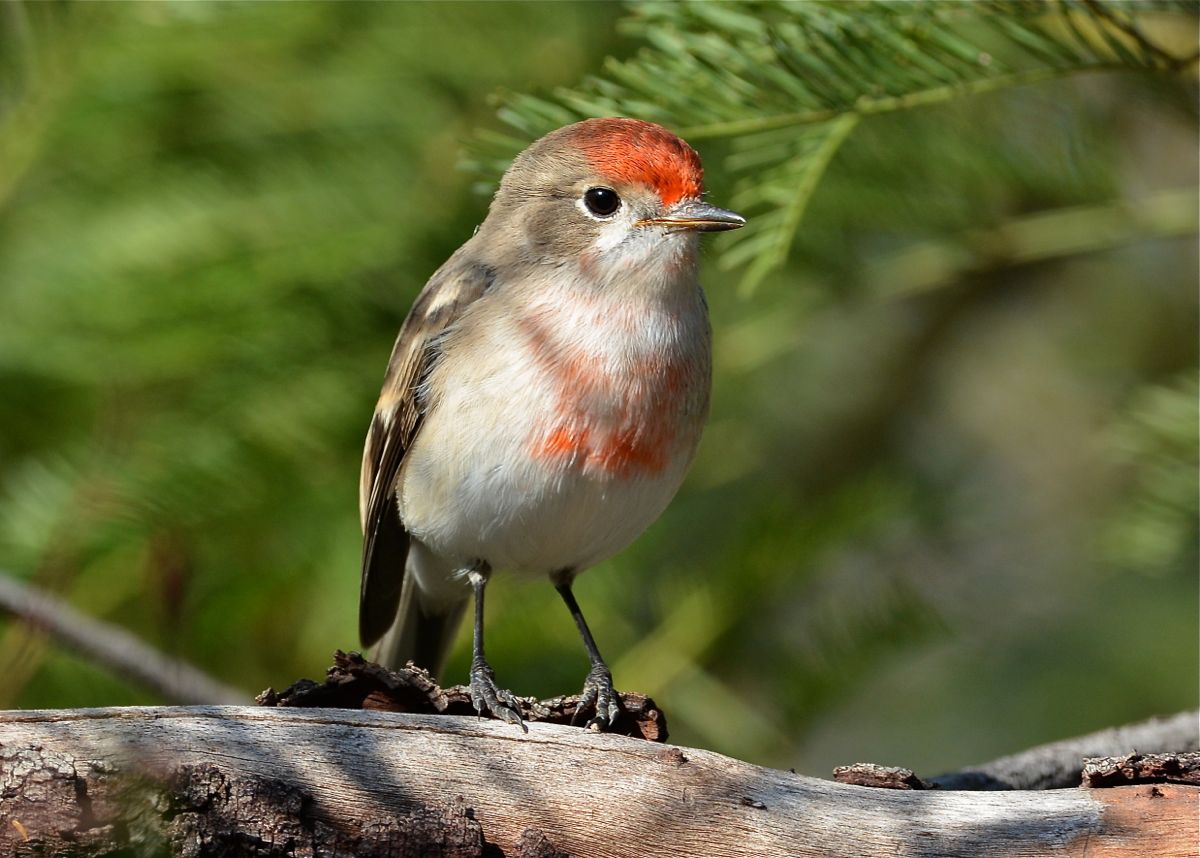
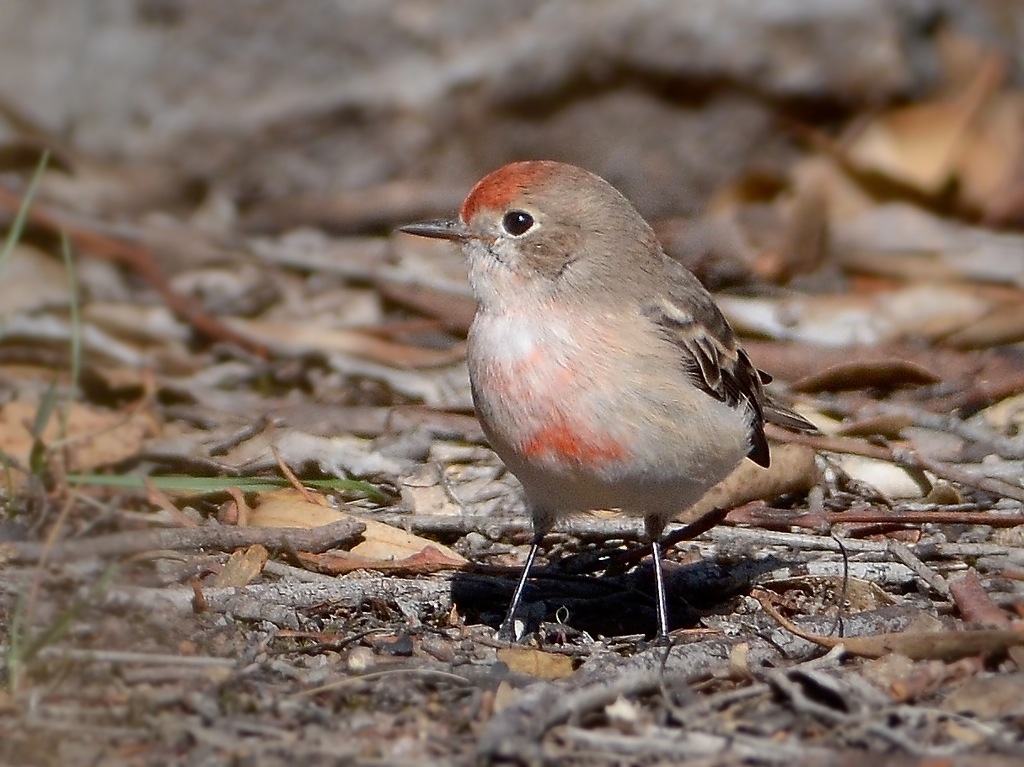
And in our new location, I found a lone red-capped robin. A young bird probably in search of a territory or somewhere to settle down. The main flocks will be on us in about 3-4 weeks, so it might end up as travelling with them.
Haven’t been down by the bandicoot hilton of late. Tired of peering though the wire. I’m hoping that the Flame Robin flocks will be a little more out in the open areas this year, and we still are looking at the Craigieburn Grasslands as our major area for the season.

Find of the week, a Rufous Fantail. Lovely colours and I wish it had been sunny.


Eastern Shrike Tit at work


Its wet! What are you doing here. Female Rufous Whistler checking me out.


A very wet Eastern Yellow Robin waits while a very wet photographer takes her picture


Eastern Yellow Robin hunting in a small break of sunshine.


Juvenile Red-capped Robin


Down to Westgate Park

I’ve been working on a field report for the 300 f/4 lens, and I wanted a few shots of what it would be like to just walk around with the lens. We had to go across town, and on the way back, stopped at Westgate Park so I could well, walk around.
Westgate Park is somewhat of a gem hidden away. It is on the Yarra River, and right under the Westgate Bridge on the city side. Its history includes being the local rubbish dump for many years. A group of volunteers took in on board many years ago and have worked as is said, ‘relentlessly’ to bring it up to what now can only be described as ‘pristine’ condition. It is the home of many water birds, a great variety of perching birds and a stop over point for many migrating birds or birds on the move.So we walked about. The sunshine was lovely, the weather was superb and it seemed as we watched the birds, (and the cars, trucks and bikes heading along the bridge,) a lovely way to spend an afternoon.
Nothing special, just one Shoveler. But the lens seemed to do its best to take nice pics, so that part of the test worked.
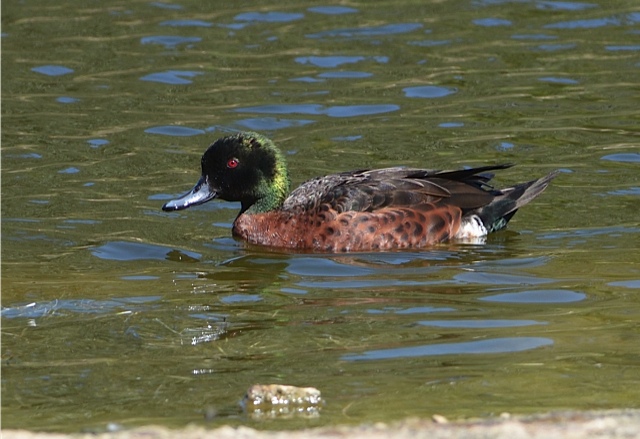
Male Chestnut Teal
New Holland Honeyeater
Intermediate Egret.
“And stay out”, territorial differences allowed me to play with the action speeds on the lens test.

Pardalotes and Shrike Tits

With the Bandicoot Big Brother house closed for almost permanent ‘restorations’, we’ve been out and about trying to find a new ‘home’ for our birding activities.
We want to find a place close to home, as in not much travel, and where we’ve a chance to work with some Red-capped Robins and the winter flocks of Flame and Scarlets.
One place does offer most of that, the Craigieburn Grasslands area. So we’ve put in a few excursions to see how it will work. The biggest issue is lack of any real sustained Grey Box forest.
The Grey Box seems to be a favourite for the Red-caps and the flocks. And I think I know why.
Up in the old Grey Box stands in the eastern side of the “Bandicoot Hilton”, is an interesting small ground cover salt bush. It seems to me that it favours the layover areas of the Eastern Grey Kangaroos, perhaps its the manure, or just as likely the softer sandy soil, that the ‘roos create as they lay around contemplating the universe.
I’m no research scientist, and I don’t have a government grant, but over seven years, I’ve seen the robins favour the areas where the saltbush grows.
Reason: It produces a lot of deep rich red berries. The berries contain “Carotene”, the red stuff that the robins can’t make in the feather mix, and the carotene provides the necessary ‘red’ for the chest, and head coats.
I’ve pics of the young birds eating the berries, and I suspect that the flocks come down to eat the insects that eat the berries. That way they can bulk up on the red producing products to help the production of nice red feathers for the mating season. (A paper on the net by Dowling goes into it in much better detail and has all the data etc. Worth the find and the read).

Part of the park renovations has been to remove the ‘roos. And at the moment with no good productive layovers, the birds seem to have left the park to its own devices. As the roos are a direct competitor for food with the Bandicoots, it is likely that the roos will be removed completely.
So we’ve taken all that on board and have begun our search else where.

Found a small family of Spotted Pardalote the other day, such tiny little birds and so spectacularly marked.
Here are a few from the day’s work. Also a visit by a couple of Eastern Shrike Tits as well. Worth being out, even in the heat.

Male Spotted Pardalote

A young Spotted Pardolote

Such a dapper little bird

Working high in the trees these Shrike Tits are really hard to get a clear shot.

Early Morning with Cape Barren Geese.

We’ve been a bit quiet lately, partly because of the heat, and partly because our favourite area is in ‘Park Management’ mode.Our friends Helmut and Dawn from down Lara way suggested we go down and have a look at the ‘famous’ Cape Barren Geese that are plentiful in Lara.
Not to miss an opportunity to see some lovely birds we agreed.

We arrived just about on sunup, and Helmut and Dawn took us about to a couple of places.

At one park, which is part of a water basin in the middle of town, the sunlight was just coming over the ridge behind and the light on the birds was first rate.

Now, these birds aren’t tame. But they aren’t stupid either, and they have worked out a human strategy.  This close and no further or we just walk on.  I managed to establish that about 10 metres is the turning point so began to work to their rules.
Jon Young is his book (see side bar), calls it “Honouring”, and the more birds I work with the more I find it works.

We crossed the creekline, full of interesting waders, and I headed by a long round-about circuit to a pair in the middle of a mown area, that were head down and feeding.  As I approached, they began to get nervous, so I stopped, did  bit of head bowing of my own, and waited. They settled down, and I carefully, (but not stealthily), moved forward a bit. Heads up. More head bobbing from me, and they went back to feeding.

At about 10 metres they were on agitated alert, and I stopped, knelt down, head bobbed, and they paused.  So, I lay on the grass, and waited.  To my surprise, they didn’t move off, but immediately began to do a circular dance, which culminated in a session of allopreening, which still dancing.  The D2X kicked into highspeed, and i managed to get some super images of the process.

I moved forward a bit, and with a little bit of luck got one against the hillside grass for a final shot.  I head bobbed again and turned away.  They just settled in to standing the the morning sun.

Had we not been on a schedule, I’d have stayed all day.  The birds were extremely relaxed, and were satisfied with my poor attempts at honouring them.

Must get down again.

Gently does it as the dance goes round
One step, two step, preen to the right.
Oh, you have a sexy bum
All done, the world is in order, just like the feathers.
Handsome dude.

Just a word about Flickr sites

Well more than just one. From the running reel on the side of the blog, you’ll get to see the latest things going on Flickr. 

Have to say its easier to deal with photo uploads over there so the majority of the images I’m making is going to be there rather then here.

This is better for the text stuff, so don’t despair I’ll still try and keep it trim taut and terrific, just won’t carry as many photos. 
The other thing about Flickr is the wider community and links of my photos over there will open up a whole range of wonderful images from other excellent workers.

Enjoy


Image

A day around the outside of the Bandicoot Big Brother House.

Mr An Onymous and I had worked out a few days back to take a walk around the Backpaddock area and have a look for not only redcap nests, but to see if we could find some of the juvenile birds that have gone off to fend for themselves.  But, as they say in the song, we we got to the scene of the crime.unquote, the Backpaddock was locked. A big chain across the gate, and a note saying, “Closed for thanksgiving, unquote. (oh, sorry more words from the song. (Alice’s Restaurant for all the young ‘un who have never heard of Arlo Guthrie) ) Closed indeed young Skywalker, as “park renovations’ were in progress, and no telling how long said renos were likely to take place.

So we gazed, forlornly through the wire, and wondered what new renovations were being carried out in the Bandicoot Big Brother House.

So we needed as they  say, (have you often wondered as I, exactly who “They” are. Well I guess not ‘us’.) We decided to walk down the fence line on the outside and checkup on the arch enemies of all fencing. – Echidnas. These little dudes, know nothing of bandicoots, wire fences, this side, that side, inside or outside. Look there is an ant nest. Wire in the way. Just dig under. And dig they do. Just ask Travis of the Echidna patrol.(also Bandicoot Hilton concierge in his other life). It didn’t take us long to find the latest attempts at reaching the ants on the outside, or the inside, one is never sure with Echidnas.  Travis has laid down a lot of concrete to slow them down, and the emphasis in that sentence is ‘slow’.

Echidna’s definition of slow. Two more scoops of earth should do it.

As we walked down hill in the sunshine, it of course occurred to us that we’d have to walk back up hill in the heat.  Then we saw through the wire, a young redcapped robin hard at work feeding and just far enough behind the wire to guarantee average pics. But we took’em anyway.

The dam at the bottom of the range, was a bit busy, but nothing spectacular, so we wandered back up the track with some helpful Wagtails to amuse us and give us something to point the hardware at.

So with park renos in full swing, and the nesting season rapidly drawing to a close no idea is known of how many young robins came into the world this summer.  My guess is a pretty low count.

On the upside, its about 6 weeks or so till the first of the winter over birds arrive. But again the park renos will slow down our ability to get a handle on the numbers of birds and to get some shots.

In the meantime we’ve other plans for other places. The likelihood of access over a reasonable period in Bandicoot Big Brother House is not a high score on our card.   No point in pressing our collective noses’ up against the wire.

Here’s the day in a quick format.