Werribee Wagtails: A Monthly Walk


Screen Shot 2020-02-06 at 11.08.02 am

Werribee Wagtails existed as an active bird watching group in the western suburbs for 25 years or so. With the formation of BirdLife Australia, Wagtails merged to become BirdLife Werribee, and essentially continued to run business as usual.

Change is, as they say, inevitable, and many of the core of the group, found themselves at the Jawbone Reserve yesterday, co-incidentally, 😉 , looking for birds.

Surprise, Surprise!

So too, of course, were  members of the old group 😉
Perhaps it was a ‘re-birthing’ of Werribee Wagtails? Stranger things have happened.

So after the usual good natured greeting and discussion we all set off with the same intent, looking for birds.  And Jawbone didn’t disappoint.
Another surprise, or co-incidence, we all ended up at Newport Lakes for morning tea. And some of Cathy Buckby’s wonderful cake creation, thanks to Mark for just happening to be there with cake on supply. 😉

We walked the lake, finding the birds very quiet and furtive, so it was soon time for lunch. The merry chatter of (former?) Wagtails enjoying the day out resounded from under the picnic shelter.
Then on to the mouth of Kororoit Creek and Paisley Drain outflow among the fishermen’s huts. Should that be fisherperson’s ??
Not a bad way to spend an afternoon.

Mr An Onymous, EE and I went on to Altona to have a coffee in the sunshine and watch the activities on the beach.

We might meet up again 😉

Catch you Along the Track.

Enjoy

Great Crested Grebe
Hoary-headed Grebe
Little Black Cormorant
Great Egret drops in with looking for a space
Pied Stilt Juvenile
Hardhead, Male
Black Swan Cygnet
Several of the Common Greenshanks near the creek causeway

Saturday Evening Post #67 : From Studio Werkz

Studio Werkz was a proposed name for a photo studio/business in another universe. Mooted by an eclectic group of photographers, we had the idea of being able to offer a wide range of photo services, but in the morning, after the coffee kicked in, we managed to drift in our own directions.

Still I’ve often retained it for some bird portraits that have a ‘studio quality’ about them.

This is usually a clever mix of bird character, the right location and an interesting lighting set.

As my earliest mentor was oft to say when assembling a lighting order for a product or portrait, “We don’t keep adding light, we work to remove the shadows until the subject expresses itself.” Which means in commercial product photography that no two lighting problems are alike, and the difference of a few millimetres up or down, left or right of lights, reflectors, camera angle, lens choice could result in an entirely different rendition.

Which, still holds true in this day an age of bulk-flat light, the environmental feel, or the harshness of poorly balanced lighting and an over abundance of post-processing.

So Studio Werkz images try to emulate those great lighting arrays, without the benefit of controlled studio.

The other morning I looked out the front door to see what all the noise in the garden was about. New Holland Honeyeaters at corroboree. Each sitting on a branch and crying out at all its relatives.

And then one landed on the agapanthus plant in the garden.
The early morning light stuck hard lines across the bird, separated it from the background, incidentally my neighbour over the road’s garage door in shade.

“Right”.

Scramble to get the camera, grabbed the one with the 500mm lens, and opened the door.

Gone.

But the noise carried on and they flicked back and forward of the agapanthus, and I waited.

The trick of course is to get the best light on the bird, and to keep shadow detail, so there were only ever going to be some angles that would work.
Until Mr Clever turned up.

“Would you like me to pose upside down?” it seemed to say.

Adjust the exposure to hold the highlights, and the job was done.  In a studio of course, it would have been easier to add a light or two to open up the shadows, or at least put up a reflector to push some light into the shadows.  These days, we just slide up the ‘fill-light’ in software and job is done.

We each have our own way of making that work, and my favourite for many years was a Nikon Software, Capture NX(2). Its major claim to fame was some clever Nik Software, (different company) “Control Points” They measured the lightness and colour values of an area (think L*A*B* Color space), and then applied it to all similar values in a given area. Making it easy to open up shadows or make subtle changes to colour and tone. Sort of like Photoshop Layer Masks and a Brush.
Nik eventually marketed its own versions, and Google bought them out, and the series languished until DxO Labs purchased the technology and have incorporated it into their very clever Optics Pro software, now called DxO PhotoLab.

Pop the Adjustment Tool into the shadow areas on the bird’s chest, slide up the ‘shadows’ controller. Simples.
Dean Collins couldn’t have done any better with “Available Light”. — For new readers, there is a photographic joke in there—you’d need to read back on my Dean Collins series.

I have to say, I really wanted to show this as a vertical, so I’ve done a header image horizontal, as that is what WordPress demands, but here is the way I saw it.


Around the Plant

We’ve been busy on a number of projects of late—think EE’s Brown Falcon Nursery, wedding at the family acres among others. Also the weather has ranged from downright dreadful to terrifying. So, its not surprising that we haven’t been for a run down to the Western Treatment Plant since early November last year. Prior to that we’d managed three trips that had ended in washouts, and photos of terns dancing in the rain.

Yesterday, after lunch, EE, looked out the window, and said, “The sun’s shining, why not grab a picnic dinner and head to to the WTP for the evening.”

Which suited me, as I have been looking for an excuse to go visit the visiting White-winged Terns. (they used to be called White-winged Black Terns, but let’s not follow that winding track)

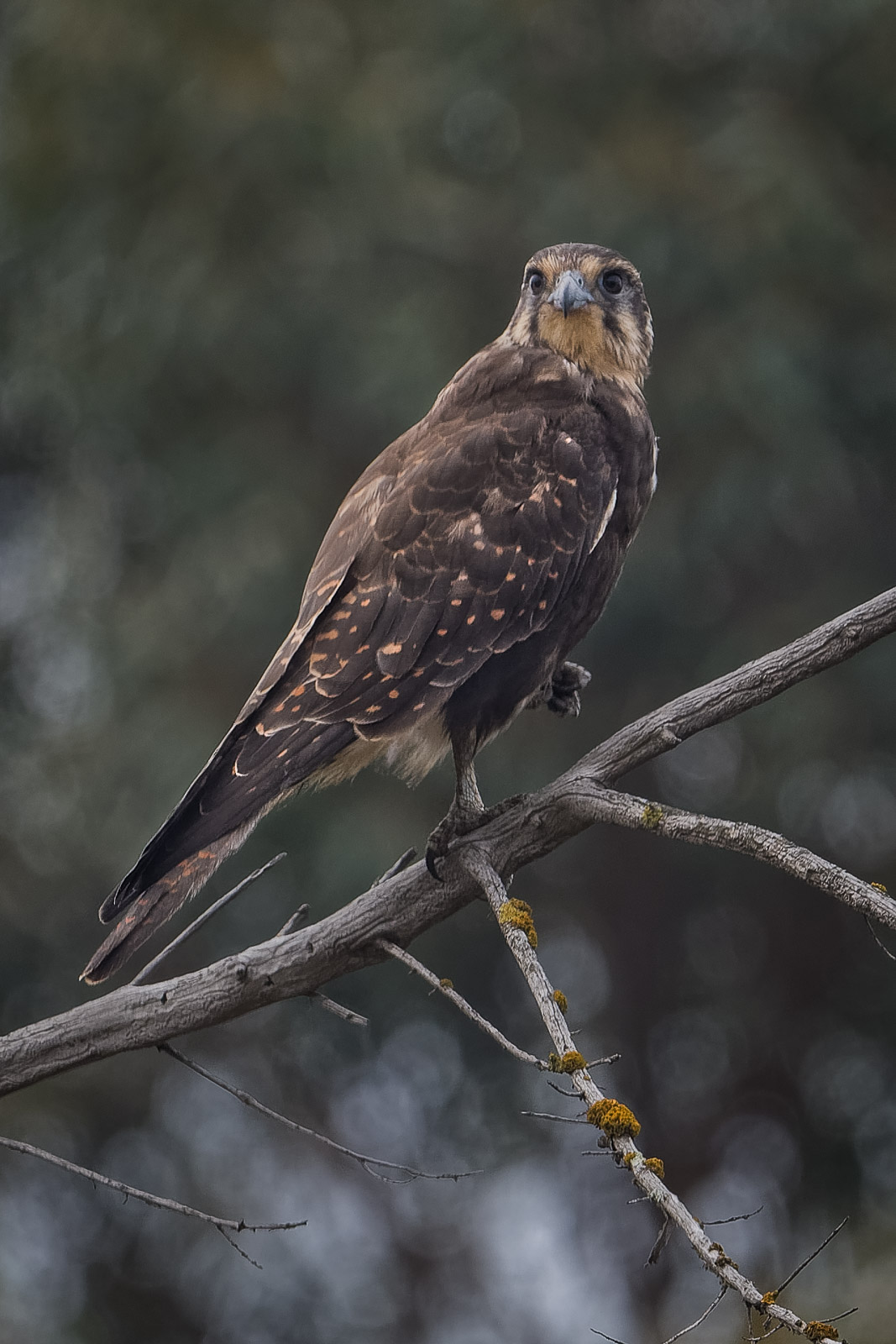
We went through the Paradise Road gate, and there in the tree to welcome us was “Elmer-be vewy vewy quiet, I’m hunting rabbit-Fudd”, the Brown Falcon.  He even gave us his signature welcoming gesture, the One-legged Stance.

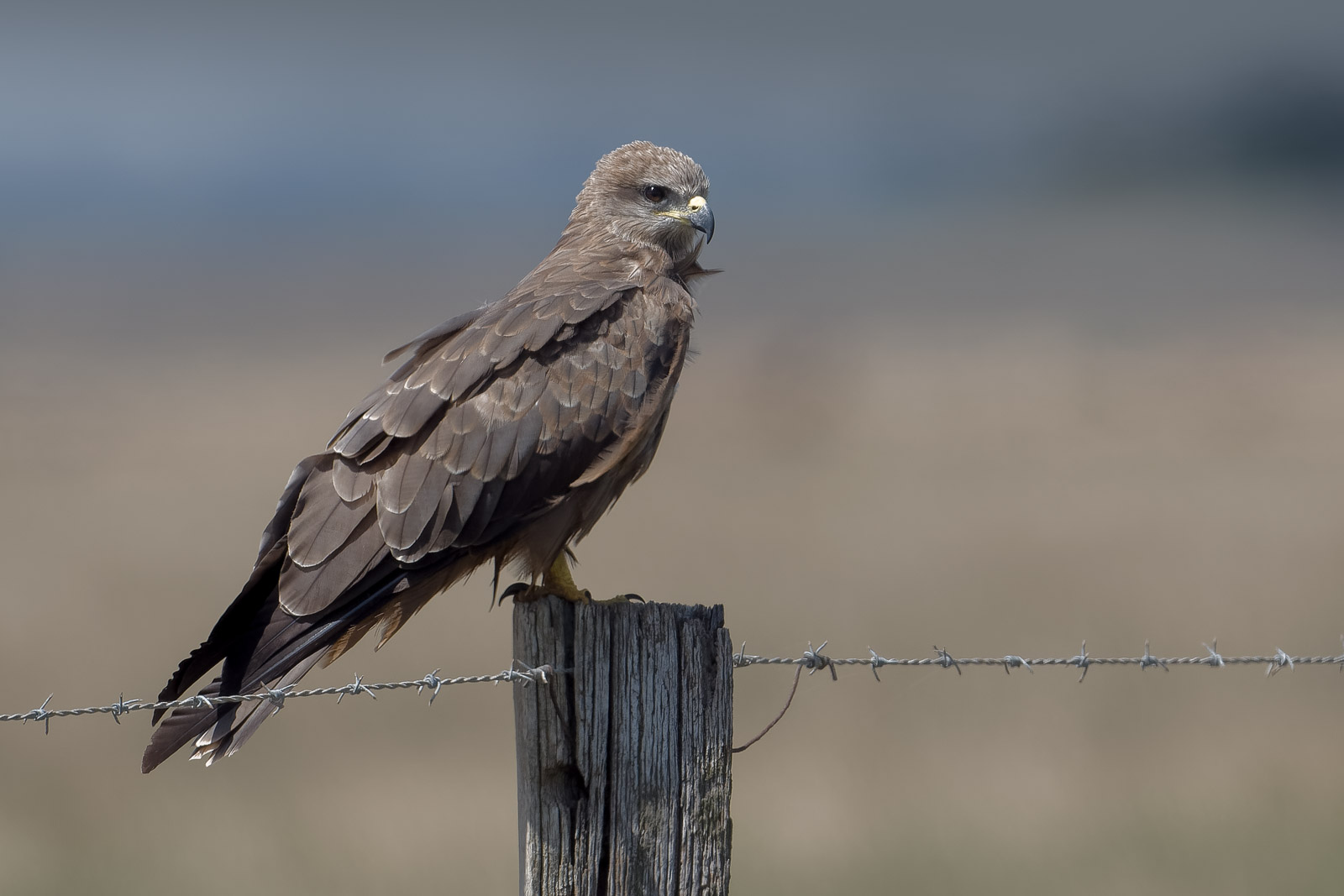
A little further along and we found a couple of Black Kites.  They obviously had little to do, or simply no where to go and it looked for awhile that they were prepared to stare down our presence. We waited.  Hoping of course, that they would throw off the fence in our direction. But in the end, they slipped off the fence and away. Tail feathers sharp, but little other detail.

The roadway down to Lake Borrie had large numbers of White-fronted Chats and Golden-headed Cisticolas along the fences and the roadside greenery. Plenty of young and as EE remarked, “That is probably why we’ve not seen to many of them lately as they’ve been busy.”

We arrived at the area where the White-winged Terns normally hunt, but were disappointed that the ponds were quiet. Really quiet. Not even the usual Musk Duck flotillas or even Swamphens.  We’d have to look elsewhere.

We had anticipated sitting by the beach at one of the overflow outlets, but as the tide was on the way in, there would be little to see among the waders, and we took the hint, and headed down to the T Section area.

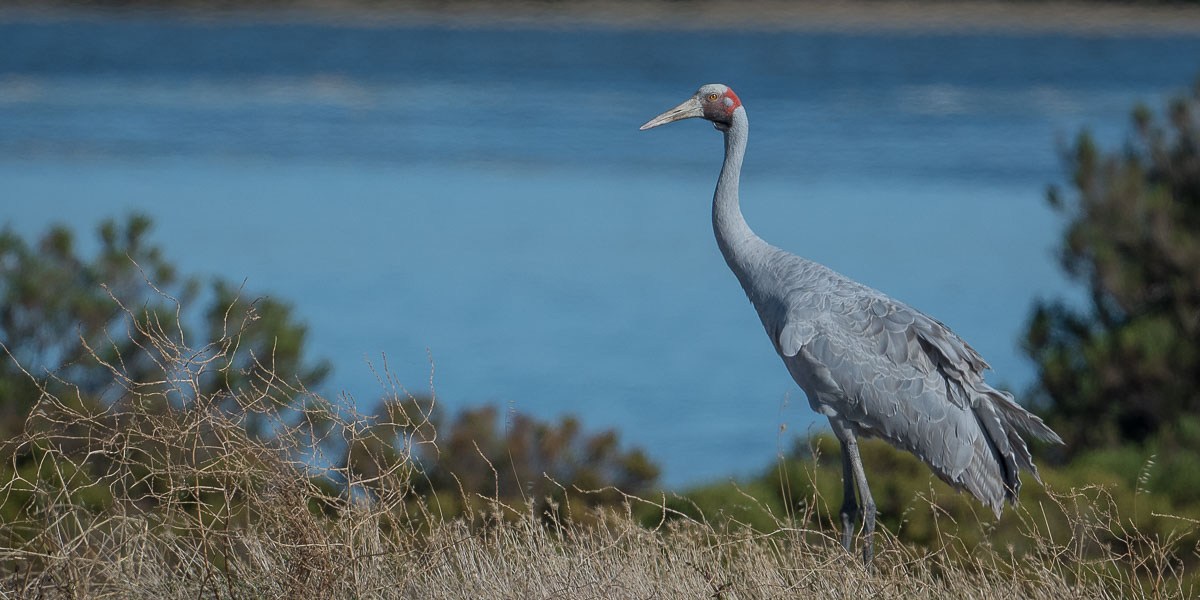
On the way, EE remarked that we could try the Austin Road area and see if the Brolga were in residence, but when we got there, again it was very quiet. And we moved on.
Just as we neared the T Section gate, “There,” she cried. And there indeed, as a pair of Brolga flew across the road in front of us. But the time I’d stopped IamGrey, and EE was out of the car, they were well gone. Never-the-less we backtracked and spotted them further inside the plant, so we drove down as close as was possible. Again we hoped they might fly, but rather they strolled over a hillock and were gone.

Back to the T Section.

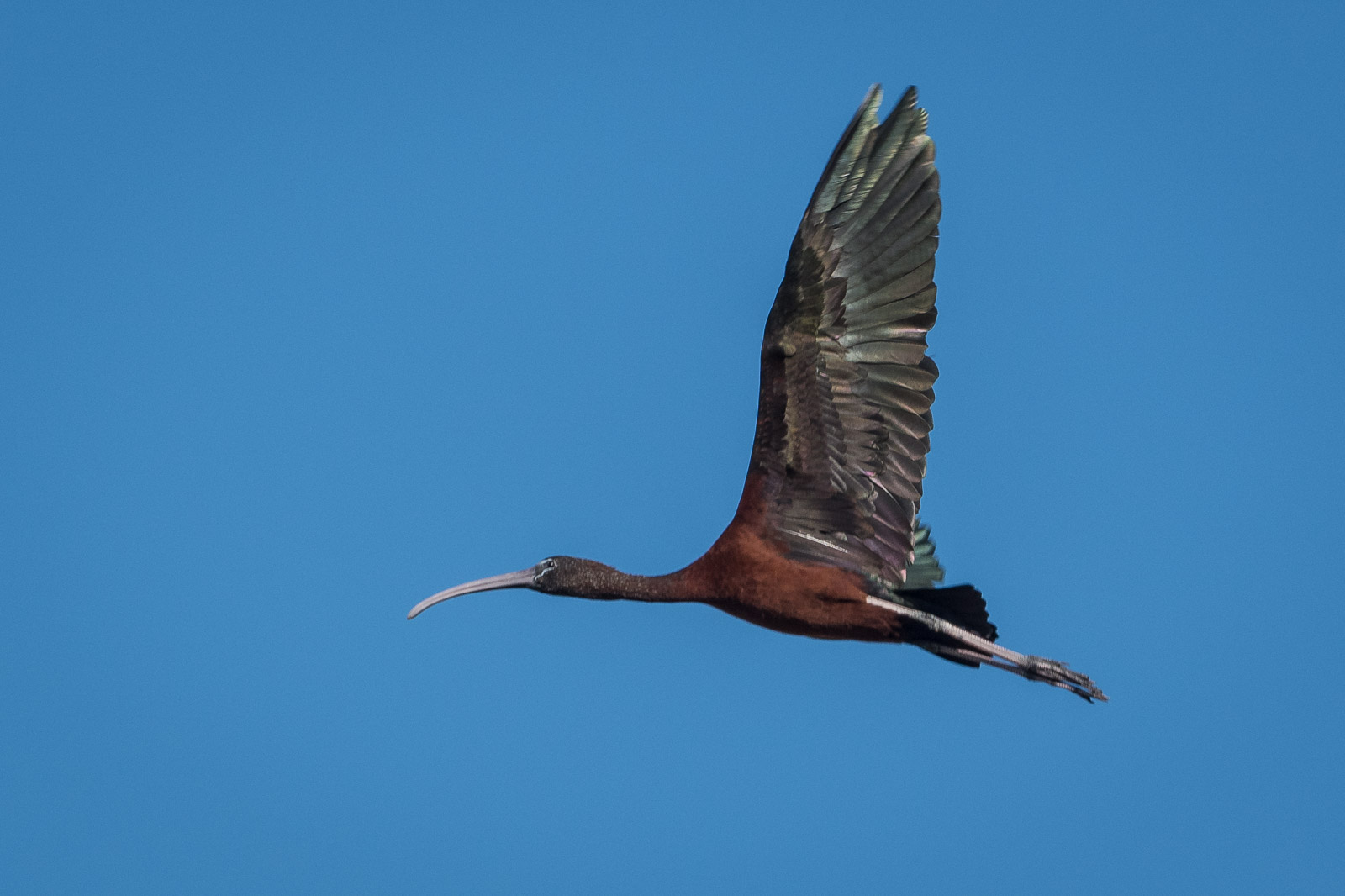
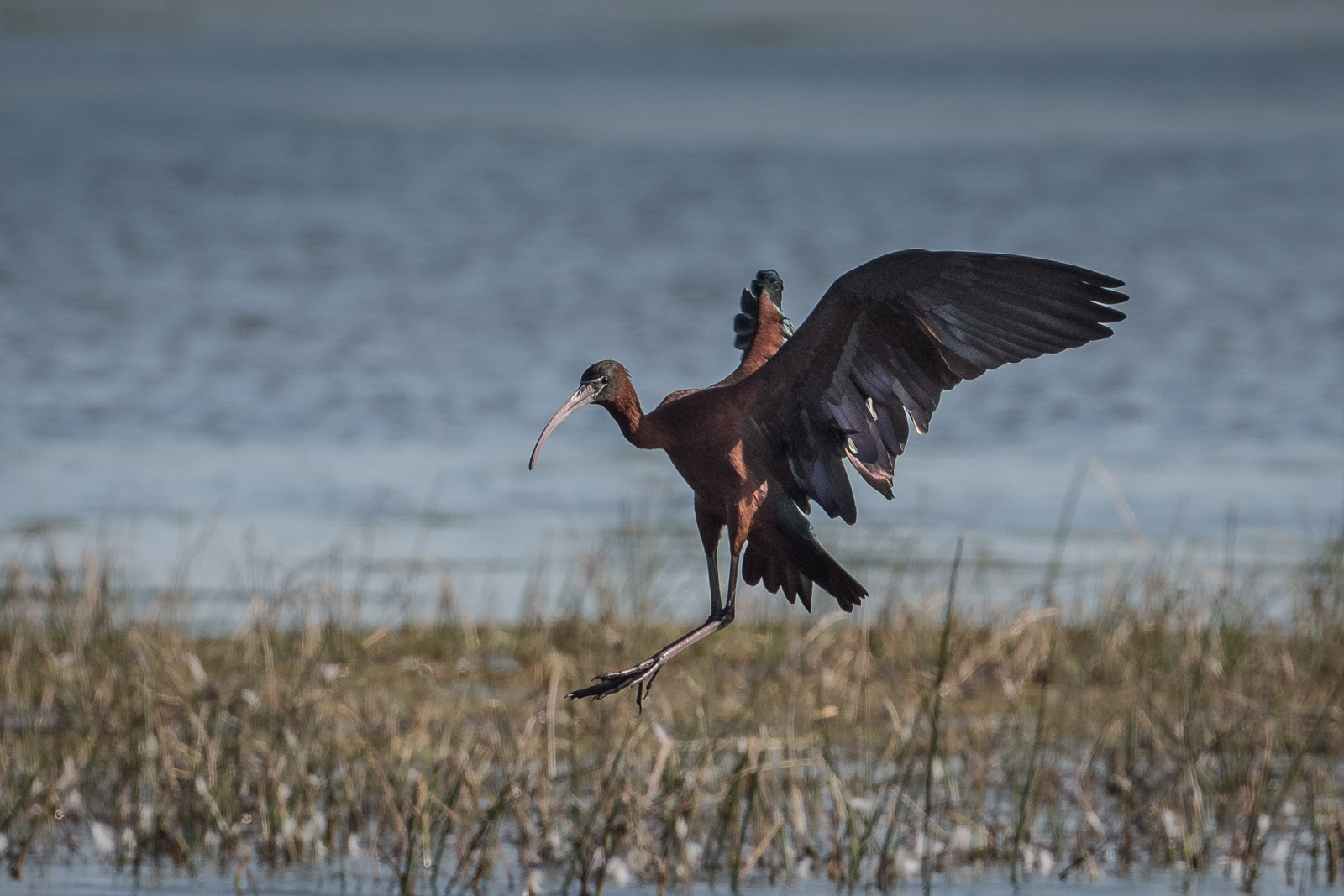
As soon as we got inside the gate, the world changed and about 15 Glossy Ibis descended almost in front of us.  And I learned a valuable lesson about Autofocus on the D500.

I’d changed the Auto Limiter on the 500mm from limiting focus range to ‘full range’ for the previous Chat shots, and hadn’t changed it back. Meant the lens had a much longer focus travel, and combined with the TC 1.4 Converter I’d just been using for the Brolga, the lens refused to focus.  Add to that I’d dropped the ISO for tripod shots of the Brolga and hadn’t changed that back, I was working with impossible slow shutter speeds for inflight.
There go the Ibis. Sadly there goes the focus. 🙂

Quick to recover I am, so off comes the TC, ISO back to 400, shutter speed to 1/3200 and where are the ibis? They had landed reasonably close by, and it might have been possible to get them feeding, when they put a resting Swamp Harrier into the air, and they too took off in fright. Did a big circle around us, and the light, shutterspeed and focus are now working for me.  See who said bird photography was hard.

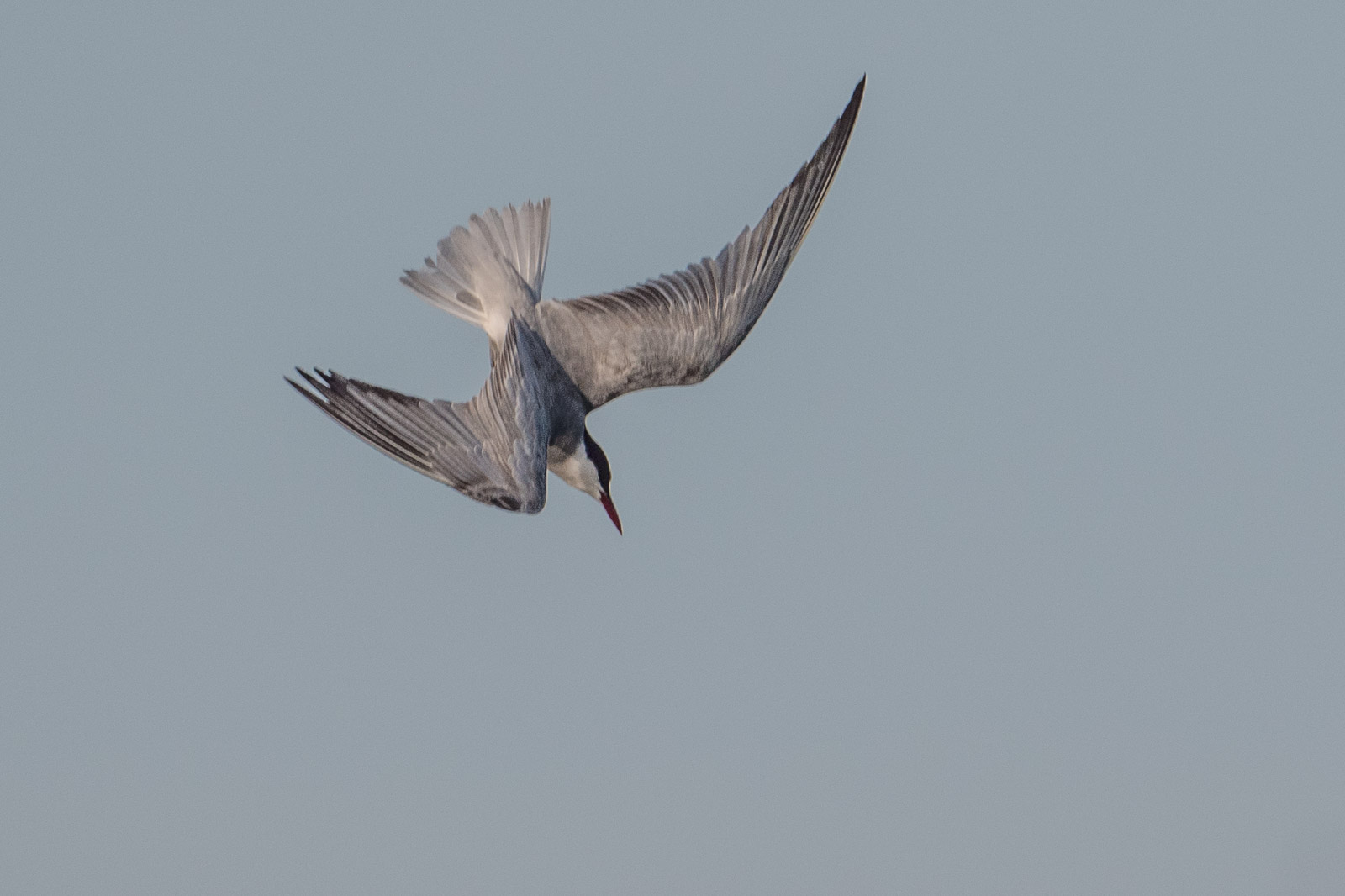
Our next challenge was flocks of hunting Whiskered Terns. Another misnamed, if ever there was one, bird. Used to be Marsh Tern, and I knew what they were. Why change to “Whiskered” as its no help to a beginner in id-ing the bird.  You’d expect to find a bird with some whiskery protuberances, right? Wrong!
They only show a white fine line on their face during a short period of breeding. Another winding track.:-)

Beaut light, beaut action, rolled out the deckchairs, pulled out the picnic basket, and a warm Earl of Grey, and we enjoyed a sumptuous repast in the the lovely evening sunshine and delighted at the unfolding entertainment of the Terns at work.

Nearly dropped me sandwich!
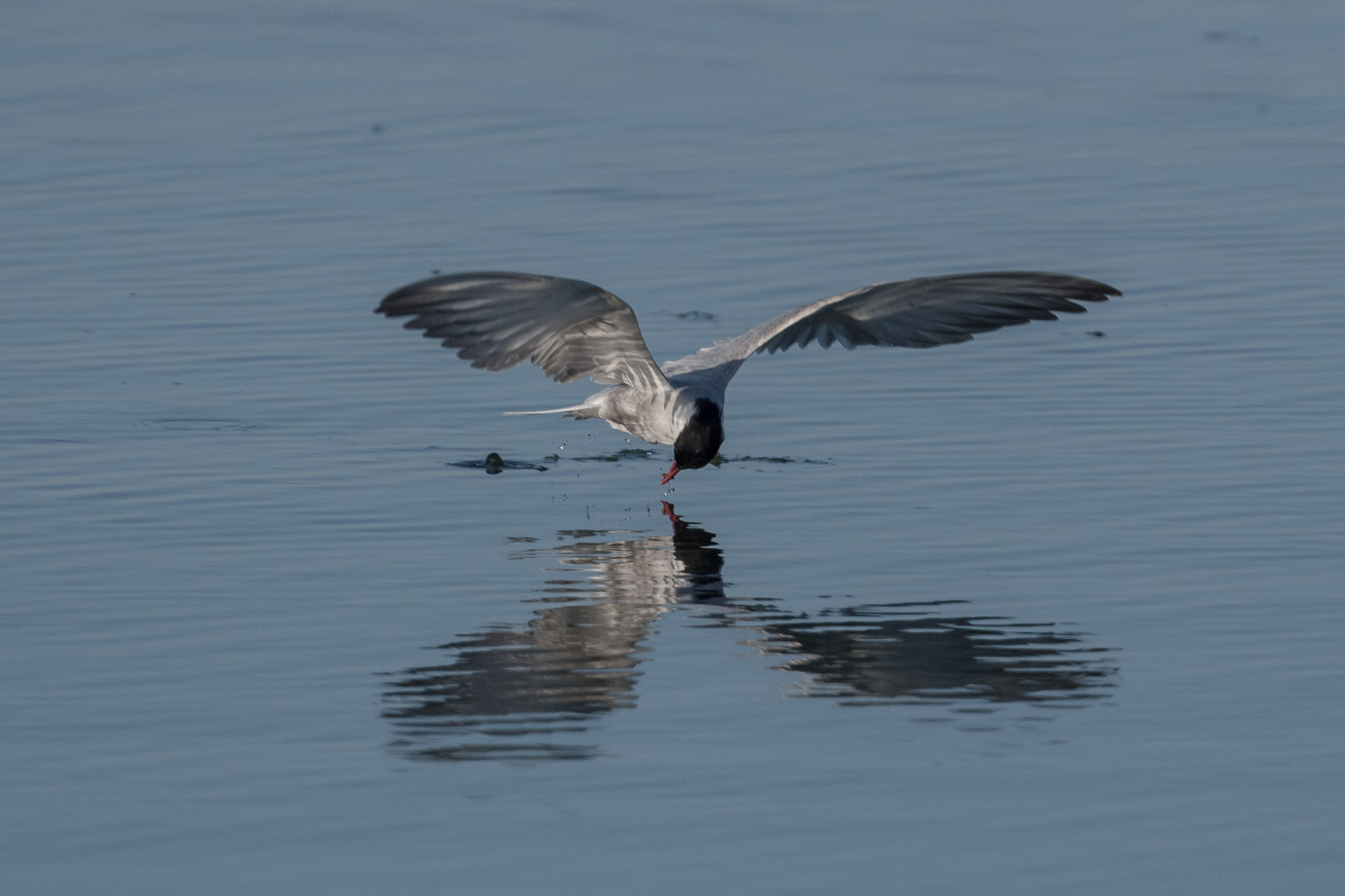
It was a White-winged Tern! They have a much faster wingbeat, not unlike a Black-shouldered Kite, so it was easy to pick among the languid hunting flaps of the Whiskered.  Managed a few frames, but the other terns didn’t take kindly to its presence and outnumbered it chose to move on.

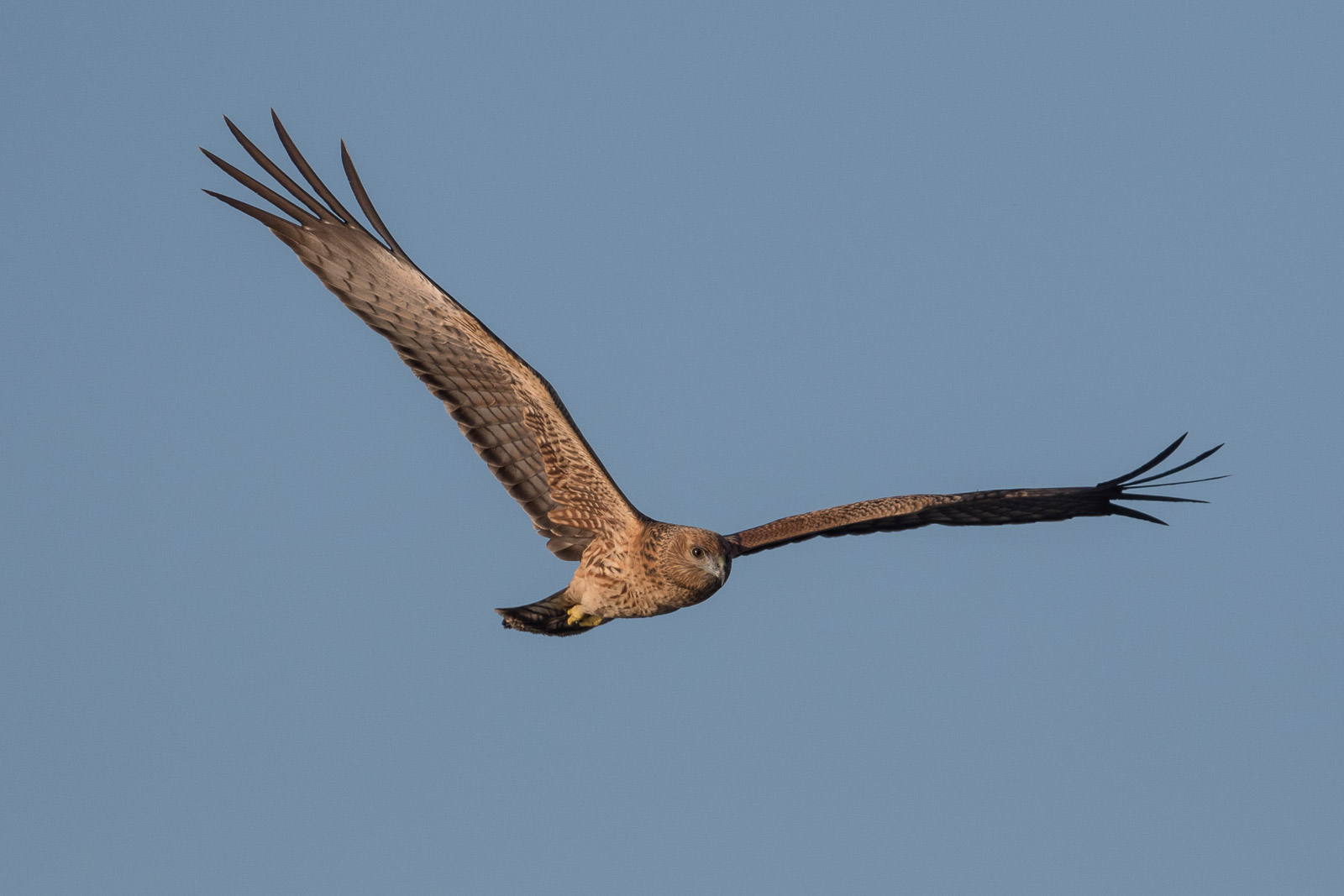
And as I finished the last of the Earl’s good drop, across the bund, and over the water in front of us, a hunting Swamp Harrier came toward us. My fav side-light, rich evening glow, and the bird came past us, not deviating.  A fine way to end the evening.


Saturday Evening Post #66: Down the Rabbit Hole

“When did you go down the Rabbit Hole,” he asked.

I was chatting with a mentor, and the question of how we got into photography came up.

Long term reader(s), (Thank you), will recall I’ve discussed my early photographic exploits.  So I’ll not bore you further with daring exploits of a 13 and 14 year old boy armed with a Magic Carpet, “Super Balda 120 Folding Camera”.

But it got me to thinking about how Alice, in her adventures met all sorts of different situations. Together with some fascinating characters, and some great, thanks to Lewis Carrol’s unfettered imagination, and his superb way with words, that bring tears of joy and delight, along with a helping of drama, and the delicate balance of—will things turn out alright.

And no two rabbit holes are the same. For some it’s a technical exercise, for others a range of creative pursuits. For others the need to document the good, or the bad about the world around. Causes, events, happenings, occasions, quiet moments, even introspection are all part and parcel of the photo pursuit. These days an added facet is the unending webbased discussions that seem to fill each moment of the day with an ever increasing complexity. This camera, that lens, have you tried the best software, my vision, my pov, my set of rules or even my blindness to other’s view of their world.  All the while it seems it stops us from making those great images.

(I was nearly going to write, and where for all these waffling experts are their stunning photos to prove their position,. But not wishing to offend anyone, I won’t 🙂 )

I think a better question, is ‘Now that I’m down the Rabbit Hole what direction do I take?”  To mess with the Cheshire Cat? To follow the time poor Bunny, or to trade swords with the Queen of Hearts?  Or to try to escape from the White Rabbit’s house?

There is, as William Neale, points out, a delicate balance between working more with the same subject for better angles, better light, more mood, or simply moving on for another subject.
These days, I’m committed to Bird Photography, so add the additional “Wonderland’ moment of how the subject interacts in its world.

Sometimes I stay for hours, hoping for a new look at the old subject, sometimes coming back many days in a row, looking for that telling moment. Sometimes I find such exciting subjects and I just need to slow down and have the patience and the concentration  to wait for the right moment. The one that captures the right nuance of the subject.

Raucous, loud and bullying are all words that tell of “Sulphur-crested Cockatoos.” Amazing aeronauts, masters of the air and skilled artisans of the wind, also are part of their character.
We were in a paddock waiting for for the appearance of some small bush birds.  All around the Cockys were putting on Royal Command Performances.
It might have been a distraction.  But once down the Rabbit Hole, all sorts of worlds open up if you have the Key, the Potion, and the Cake. 🙂


Little Visits: Charming Sittellas

Mentioned a trip a few weeks ago to the You Yangs.
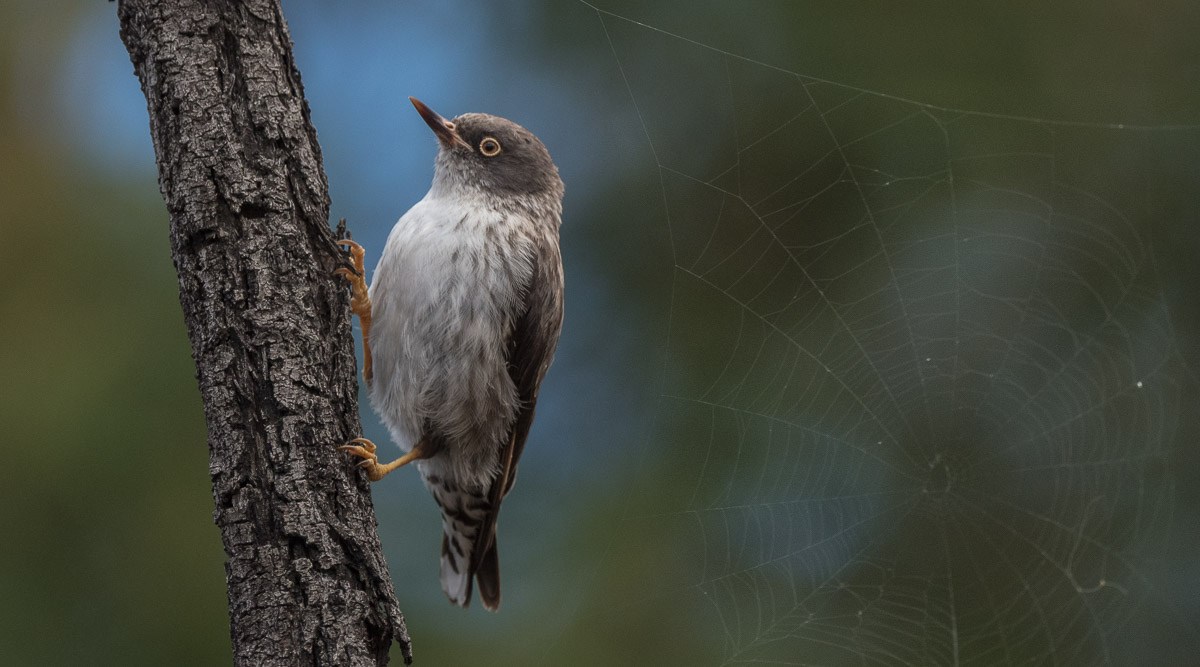
One of the highlights of the morning was an encounter with a family group of Varied Sittella.

These charming little birds are not always so easy to find, and because of their hyper-active approach to feeding, are always on the move.  It might be I guess that they have to search through all the bits of loose bark on a branch looking for a tid-bit, and with so many birds all at work at the same time, its really the quickest down the branches.  Sittellas have an unique approach to feeding, starting at the top of the tree and then working their way down.  Treecreepers on the other hand, usually start lower down and work upwards.

What was interesting is that this family had several young, recently fledged with the party.  The young ones preferred to sit together and preen, while the adults did all the work.
They moved so quickly that we lost them for a short time, and while we went right, they apparently had gone left.
Big Rock is just what it says, a very big rock.  There is a track around the base, and its about 20 minute stroll.   The birds were working primarily in Black wattle that grows up along the base of rock. When the rains come, good water flows from the rock, but at other times, the area is particularly dry  so much of the wattle never grows to maturity.  Which suits the insects that the Sittellas feed. So it works all round.

Enjoy.

Typical pose, going down the branches
Every nook and cranny gets a good going over
No doubt a favourite game. Looping a branch
Some of the young ones that were happy to sit together and preen
Its always impressive to see the underwing colours on these birds

Gottcha!
Hard to see the rich colours on the wings while they are folded, but impressive in flight

Saturday Evening Post #65 : The Gift of our Very Personal Now.

Simple one tonight.
Mostly because I couldn’t have said it better.

Here is a quote from “The Online Photographer”, A Postcard from Peter

“The gift of seeing, feeling, and the joy of response!

“We live in a world full of immense challenges—often personal and maybe more often, generalized challenges to the spirit presented by the major forces at play all around us—politics, economics, ideology, attitudes, and environmental realities. In the midst of all of this—among the daily blessings and joys that offer so much amazing life in the present moment—is the opportunity to go out, and use one’s eyes, heart, movement, and presence to not only see, but to feel, and respond by registering with a camera, our very personal now. For many of us, it is not only photography, but more importantly, this opportunity to exist and live in the present among all that life can offer daily, that is an essential nourishment for the soul. And, it all starts by simply being out, present, and alive, by seeing and feeling. This opportunity is such a blessing for us all.”

—Peter Turnley

Original contents copyright 2020 by Peter Turnley. All Rights Reserved.

Mike at Online Photographer also features a photo by Peter. But courtesy means I won’t republish it here, without permission.

Peter Turnley is a photojournalist and has had many magazine covers over his career.

I have often pondered in quieter moments, that if I’d have not taken a turn to commercial photography, that PJ would have been my pursuit.
So to that end, much of my current bird photography is not about exotic, or more species, but simply to record the goings on of the lives on birds that I come in contact with.

Its my own gift of the Very Personal Now.

Enjoy.


Moments: Hiring a “Tradie”

EE spent much of November and December working with a Black-shouldered Kite pair that were raising two new, fine looking, young.

By the end of the year, the pair had given the young ones their marching orders and apart from a week or so of occasional visits the young now seem to have taken the hint and moved away.  Interesting to see, mostly the male, fly round them and keep them away from the resting female. Try as they might to slip past him, his diligence and vigilance, and fly skills meant it was all a bit in vain.

So, we thought. That will mean the adults will move on soon, as this area hasn’t traditionally had a ‘resident’ (not that Black-shouldered Kites are resident), pair.

So we thought.

On the way through the forest in the morning, and we were surprised to hear the pair contact calls.  She with a harsh “SCRaaaCH”, and he with a plaintive ‘Pee, pee”.

And there they were both sitting together on the edge of a clearing.   Ok. Time to get some pictures before they leave.

So we thought.

Surprisingly, after just a short break—less than a month—  they are back in business with a new nest site.
So while she sat and occasionally gave encouragements, he took on the role of a ‘tradie’. Lifting and bumping branches, twigs and long sticks. Then rearranging them into the chosen treetop.

While all this anecdotal, and is for this pair only, its been interesting to watch the progress.

Each stick is very carefully selected, and cut, or broken from a surrounding tree. He spends many minutes in the selected tree, and then either nips off the short small twigs or flys at them and pulls them off, or failing that flys at them full tilt and carries off the main branch by force.  Doesn’t always work, as occasionally a stick just doesn’t want to break away. 🙂

Then back to nest, much ‘pee, pee’ing as he approaches, and parachutes down into the treetop.  Then there is quite a bit of activity as he carefully threads it into the right place and satisfied, he usually spends a few minutes (say about 10!), sitting in the nest, and working out perhaps, what is needed next.

Then its off to “Bunnings” for the next load of building supplies.

In the hour or so he made about 6 visits, and she remained on her branch a long way back from the activity, and occasionally added her thoughts to the procedure.

What is interesting of course is that they have settled in for a second nesting. Perhaps the food in the area is likely to improve.

Time will tell as to their success.
In the meantime, here’s the Tradie.

She was quite happy to preen and watch proceedings from afar.

Stepping out of the nest to continue the work.

Off to Bunnings for another visit. Perhaps he likes the sausage sizzle on Tuesdays.

The early morning smokey light has given him a richer colour, and at first I thought it must have been one of the young birds in their ginger dress.


Little Visits: You Yangs on Sunday

One of the first times EE and I have been out just looking about.
We had been hoping to find some Eastern Yellow Robins, and or some evidences of the Scarlet Robins at the You Yangs, and EE also wanted to visit her water feature near the Big Rock carpark.

In the end, the big surprise was a family of Sittella,  and their young recently fledged clan. I’m going to do a separate blog on that encounter.

In the meantime in spite of all the disaster that is around, and the challenges of the rest of summer ahead of us, it was good to see the birds had new life on the way.

Silvereye at the Water Feature
Young Australian Magpie engaged in some serious preening, while reminding the parents of its presence.
One of several juvenile Grey Shrike Thrush working in the area
A Yellow-faced Honeyeater waits, nervously and politely for its turn at the water.
Varied Sittella, circling the branch
Two young Varied Sittella preening and resting while the family feed nearby
A young Scarlet Robin, one of the first we’ve seen in many months. Presumably its a male beginning to moult in.
Spotty the Pardalote. This is the male that I showed feeding his young on my Flickr steam.
Well not every shot is a winner, but I rather liked the colour set of the Sittella wings

Saturday Evening Post #64: A Special Conjunction

Art is the demonstration that the Ordinary is Extra-ordinary—A. Ozenfant

Been away for the past week(end) up at the family acres.  EE’s sister’s Wedding to be precise. Right on the edge of the fire zone in the north of the state.  How close, well, the reception was held in the local Fire Refuge Shelter-the hall was booked before the current crisis. At other times, it’s the local football club building. Go Tigers!

Had the chance to relive some of my early history, as I was called on to ‘do the wedding photos’.  Talk about dragging an old warhorse out for another canter round the circuit.

So armed with the trusty D810, and  brace of SB-600 flashunits, I did, indeed, set off. Add a good short zoom, 24-70 would have been the choice, and I’ve got inside groups and closeup intimate portraits covered.

And as it all came flooding back, like learning to ride a bike, I recalled why I really like to use strobe flash.  A touch here, a shadow fill there, a rosco gel on that one, change up the white-balance, bounce it, fill it, wind down the power for a rich backdrop, and so on, and on.
I also recalled why we went down the Nikon path back when we went digital full time:—Their superior (at the time) flash control. Joy to use and control the power and balance, without lots of cables, and light control gizmos.

Reminded me of a quote from Tom Ang, is his photography book.  “The joy and delight photographers take in their experience of light. It may, then, be a sharing of the experience of life itself. It is our good fortune as photographers to have a particular awareness of light’s harmony with life. For the special conjunction of a certain quality of light with the stream of life creates a ‘significance of meaning‘ that we turn into a photograph. Light always leads the way.
The wise photographer learns to be taken up by light—not to contemplate it too deeply.”

Working on the Magnificent Magpie project, I was suddenly aware that while I was walking around Maggie checking out the angle, the light the backdrop, the point of view, Maggie was evaluating me too. What a great two way communication.

I ended up sitting on the grass while Maggie hunted across a large lawn lit by streams of light against dark shadows.

And then Maggie stepped out of the shade, into the light, and the conjunction happened.

Just like working with strobes and getting harmony and balance through the electronic flash, Maggie worked with the available moment, and all I had to do was play my part.
Press the shutter button.

Tom Ang again, “The Tao of effective lighting is to let the subject and the light work it out for themselves. Letting be: that is how to be effective without working.”

Saturday Evening Post #63 : Big Annoucement—The Magnificent Magpie project 2020

I’ve spent part of the holiday time reading, or studying, a book called “Australian Magpie”, by Gisela Kapplan (see here)

One of the things that struck me was from her detailed observations, how often I’ve seen the same or similar behaviour, yet how little of it I have actually photographed.  And I put it down to, “Oh, they are just Magpies”, while I was looking for that ‘elusive’ new species I needed to locate. 🙂
I think I wrote about that last week.

I’ve just finished a project with another group and wondered what I might contribute in 2020.
Which is why I’ve decided to spend the year collecting as many Magpie Pictures as I can.

So welcome to the announcement of the beginning of “The Magnificent Magpie project 2020”.  Magnificent being the Magpie not the project, just so we’re all clear on that.

Rather than fill pages and pages of WordPress blog, I’m going to make it mostly a visual journey.
To do that, the photos will appear on a SMUGMUG folio.

Yes, I know all the flickr folk shudder at Smugmug, but they do make it very easy to create photo galleries and link the work in various threads.
And yes, I did spend a buck or two for the page, (50% off for Flickr pro members—no, its not a paid sales incentive remark, just explaining).

And I figured if I put some funds up front, I’d be more likely to consider it of value and the project might have continuity for the year.

Here is a link. https://birdsaspoetry.smugmug.com

My plan is to take photos of habitat, behaviour, activities, interaction, and other character qualities making each a gallery that is added to on a somewhat ad hoc basis as I come across Magpies in their day to day lives.
One good thing, is they are hardly rare, so I’m probably not going to get stuck for subjects.

Those that follow will see the galleries expand as move along with the project.

There are places to comment, and there are at the moment several other galleries in place with other images, as I began to figure out how it all worked. Hope you enjoy the way SmugMug shows of the images.  There is a full page quad arrow for a bigger size.

I might also expand it for Local Birds, in my neighbourhood, and then birds from various locations that we visit. Like “the office”

Feeling good about a project that is not only interesting, but achievable.

Hope to see you over at SmugMug some time.  I’ll put the occasional update page here just to keep it linked.
Yes, Birdsaspoety.com will continue, this is just a parallel work.

I can hear magpies calling as I write. 🙂

Saturday Evening Post #62 : Thanks for a Great Year

When you drink Water
You remember its Source
Deng Ming-Dao

He goes on to say; ” Every ordinary moment, every little detail should be a celebration of your personal understanding. Your smallest act should be treated with reverence. And you acknowledge the precious quality of everyday things. And you maintain a gratitude for both the good and the bad things in your life.”

A family friend received a ‘Write it yourself personal history’ book. We were talking about it today over coffee, and she explained it has lots of insightful questions to act as thought starters. Now I’m not going to do the details here, but it dawned on me that one of the deep insightful ponderings that didn’t seem to be included was “The celebration of the great events” that had occurred. So we spent quite a bit of time discussing, several monumental bad things in her journeys, until I pulled it up and asked about the good things.
I follow a blog by Dewitt Jones, (a former Nat Geo photographer among other things called, ‘Let’s Celebrate what’s right”. https://celebratewhatsright.com/dewitts-images
Always simple images, always the everyday things, the things that sometimes in our rush, we overlook. I once wrote on this blog about the photographer who rushed past because he was looking for ‘his moment’, and had missed the important visuals happening where we stood. 🙂

So here we are at the end of an era, about to meet a new decade.
Normally the blog discusses some of the musing of where my photography has been, and where it should, or might be going.
But this year, lucky reader that you are!  Not so.
Rather as Ming-Dao points out, tis time to remember the Source.

The sheer ability of the pleasure of being able to go, find some birds and enjoy parts of their complex, hard to understand, and almost impossible to photograph fully, lives.
We’ve shared some time with Wrens, Woodswallows, Waterbirds, and a mix of raptors. Some we’ve seen from conception to flight, some have amused us as Lorikeets, and some have worked their ways into our hearts, like my Tai Chi Pigeon. (A Spotted Dove actually), and currently she is sitting in a tree in the frontyard on her precious little nest of twigs, with one lovely big egg for her to look after.

So a big “Thank You” to all who have taken the time to follow the blog. I hope you’ve enjoyed the journey as much as I have in each stage that has been documented.
I appreciate all those who’ve not only read, but taken the time to drop a comment or two.   Just a few words makes returning to the keyboard regularly like taking a wonderful rich drink of water. And I need to remember the Source.  Thanks again.

To those that follow on Flickr, well done. Appreciate the time, the comments, the views, and of course your own wonderful photography, that inspires, and enthralls me every time I log on.

Big shout out to all who’ve been in the bush with us this year, or who have dropped a note say, “have you seen…”. It’s great to see friendly faces along the track

And to Mr An Onymous for putting up with my bad jokes, and lack of appreciation of how bold his insight into the world really is.
And Thanks to EE. She, who, not only shares time in the bush, but shares her special skills at recognition and has the patience to put up with my wanderings.

Now to follow the Source into 2020

And a big “THANK YOU” to Cassia- of Cinnamon, for allowing us to share a very important couple of months of her life.

Saturday Evening Post #61: Like a Wraith

Still working my way though Deng Ming-Doa’s 365 Meditations

“All things in this life depend on direction. In our world all is oriented toward the sun. The planets revolve around it, the seasons depend on it, and our very concept of day and night is tied to the the sun’s rising and setting. The sun is the dominant element in our lives.”

And on the evening before the Summer Solstice (in Southern Hemisphere), I thought, the sun is also the dominant element in my photography.

I talked recently about the “Sun over your left shoulder, Dear”.

Front light: Pure, direct, making our subjects brim with colour. Little shadow depth, a strong, harsh, rich light.
Side Light:  The angular light the gives us rich detail, with texture and form. The light of inspection, depth and tone. Running from brilliant highlights, to melding soothing form and tone, through to rich deep shadows.
Back Light: The light of Drama.  Subjects in rim light, highlights displaying the complexity of the shape. Long running shadows that have a mood and rich mystery. Lacking in colour, detail and texture, but making up for it in deep mystery and mysticism.

Light is the center of our camera settings.  I choose a fast or slow shutter speed depending on the light, and the intent of time perception. Light, I choose a large aperture for subject isolation with narrow depth of field, or a smaller aperture for greater depth of field and sharp detail across the frame depending on the light. Too much light and I drop the ISO, or I raise it for low light subjects.  I shoot with Neutral density or polarising filters to control my vision of the moment.  I add flash for fill-in or main light effects. Reflectors and gobos in the studio. And I try to find such effects when I’m in the field.

Light: The dominant element in my photo graphos, life. (photos-Light, graphos,-of writing) Who’d have thought.

I was waiting next to a melaleuca bush. In front of me was the large pine that Cassia’s nest is situated.  I can just see the two young bobbing back and forth occasionally.
To my immediate left, (and why I’m standing where I am) is a tallish young pine that the pair have been using for food exchange.  30m further away a larger tree with a huge pinecone cluster on top. Ideal for preparing food. And 50m further on, and opposite the nest, one of her fav perches, and a launching spot toward the nest.
In the distance in the paddock 2 isolated pines, both with excellent views over the paddocks and again favoured for inspections of the territory.

But. No Cassia.

Behind me and the bush, about 100m away is a line of very old pines, probably date to the 1870s when the homestead in the area was established.  About a week before she had been sitting among the pines and had made a direct run across the paddock, over the melaleuca bush and past my head at a couple of metres.  Not a defensive move. I reckon, she did it to keep me awake.  EE is still laughing.

The distinctive magpie call. “Falcon in flight. Let’s go”, alerted me this time.  I peeked around the bush, and like a wraith out of the darkness of the trees, sweeping over at fern top height I saw her running directly toward my position.
Light, just right. Soft, overcast, kept the backdrop moody, yet enough to separate her shape and form, and show her intention.
I think I spoiled her game this time:-)

As in the last few yards, she slewed to the left, and went by without looking.  You can’t hide from a Brown Falcon.


Little Visits: Cassia’s Secrets are Out!

For the best part of three months, Cassia—of Cinnamon, and her mate have been working on their annual nesting project.

Best I can determine, she took just over a month for incubation, and then another 30-35 days for the young to start to move about the nest and branches and then a few more days to fly.  We checked on Friday, and they were clambering about, then on Monday, the secrets are out.

How confident is this bird. She was relaxed enough to do close flybys without aggression.
Still in baby down, but wanting to see the wide world
Starting to get a few real feathers
Just starting to see the Apricot wash coming on
That famous Brown Falcon stare starts early
And then there were two.
I’ve no way of knowing, but based on previous experiences, I would predict the older, larger is a female.
Out and about. Probably second day on the wing
Now let’s see if I remember. Tail up, head down, wings out and…
Tail up, head down, wings out, …
Oh, yes, Tail down, head up, wings up, Let Go.!
Yah!


OK you go me our here, how do I stop this thing.
Landing skills need a bit more practice
Study in concentration as it goes through the landing routine.

Moments: Hunting Sea Eagles

“Tis a Sea-eagle,” EE cried.

Her response to the question “Where?” was, “Down there along the beach”.

Now truth be told, I reckoned the beach to be at near enough to  one kilometre to the south of us.

Don’t ask how EE can see that far, its inherit in her name.

About 1/10th of a second later, a brown shadow rushed past us just overhead.  Cassia, who’d been sitting on a branch behind us, too, had spotted said Sea-eagle.
Now you know.  EE is faster on the eyeball than a Brown Falcon. By at least 1/10th of a second. Explains it all really.

Cassia hauled across the paddock not gaining height, just rocketing along toward the beach.  Her mate was on a diagonal line from further down the paddock bent on the same target.   I don’t know how this works in Falcon speak, but there was no cackling, just pure energy converted to motion.

The line they were on would get them both to the same tall tree on the beach line at roughly the same time.  Without any foto-finish cameras and the like, I be putting my money on Cassia arriving just a wing flap ahead of the male.

Brown Falcon surveillance time. Both sat watching.

The Sea Eagle had slipped behind a line of trees on the beach, and had no doubt gone to invite some duck or gull home for lunch.  A plethora of ducks, coots, gulls, cormorants and several white-faced herons darkened the sky as they rose in one squawking mass.

“We need to be down there”, she said.  Fleet of foot we’re not, so it was going to a few minutes before we appeared on the scene.

In the meantime both falcons had made a noisy run down along the beach and back.

Then as we approached, they both made another swing along the beach, but the trees blocked our view.

We made it to the scrub along the beach and now had to work out, was the action to the left or right.  The bird groups on our left seem quite settled so the guess would be “To the Right”.  Good guess.

But look along the beach, and our view (and coincidentally of course for anything further along the beach—think big white-bellied…. ) the beach curved around and our view was blocked by the saltbush and other scrub.

Not to worry, Cassia and the male had made another screeching run down to the beach, and in response, all the ducks, swans, coots, gulls and two white-faced herons, took to the air.
“That was impressive for two falcons,” I thought.
Then with long slow deliberate wing flaps, the juvenile White-bellied Sea-eagle pulled up over the scrub, followed by two very vocal Brown Falcons.

I’d not be able to get any pictures of the falcon/sea eagle confrontation, because there really wasn’t one.The falcons kept a safe distance, and the eagle just stuck to its job of getting some height and then sailed away up the beach.

The male falcon went back to hunting, Cassia went to check on the kids.

And here is what all the fuss is about.
Number One child, all fledged and learning of Brown Falcon ways.

Enjoy


Out to meet the challenge. Cassia gains speed on a downward run
If its too big to scare off at least give it a lecture
She did not risk a close pass but rather turned over the quickly rising Sea Eagle
The interloper
Given the bulk of the Sea Eagle, there was little the small falcons could do for a direct confrontation.
Number One Child.
Fledged since Friday.