Meeting Up with Friends Take #2

Graham Harkom, as self-confessed birder and mad photographer, also among his other accomplishments runs an online bird photography group,   Melbourne Bird Photographers, under the Meetup banner.

See Here

So most months there is an event to turn up to.  It’s such an intriguing way to organise an event, and great kudos for Graham and his organising group for keeping up the great places to visit. Always good for birds, photography and chatting, and of course food!

So, when I discovered the next one was to be at the Western Treatment Plant, it wasn’t too hard to tick the Yes we will attend box.

So, as the Banjo was wont to say, we went.

Also my long term mate and fellow conspirator and Flickr mate Mark S came over to make an excellent day of it.   Graham, herein named, “He who always has brilliant sunshine for his events”, met us at the Caltex Servo at Werribee and had turned on the sunshine as requested.

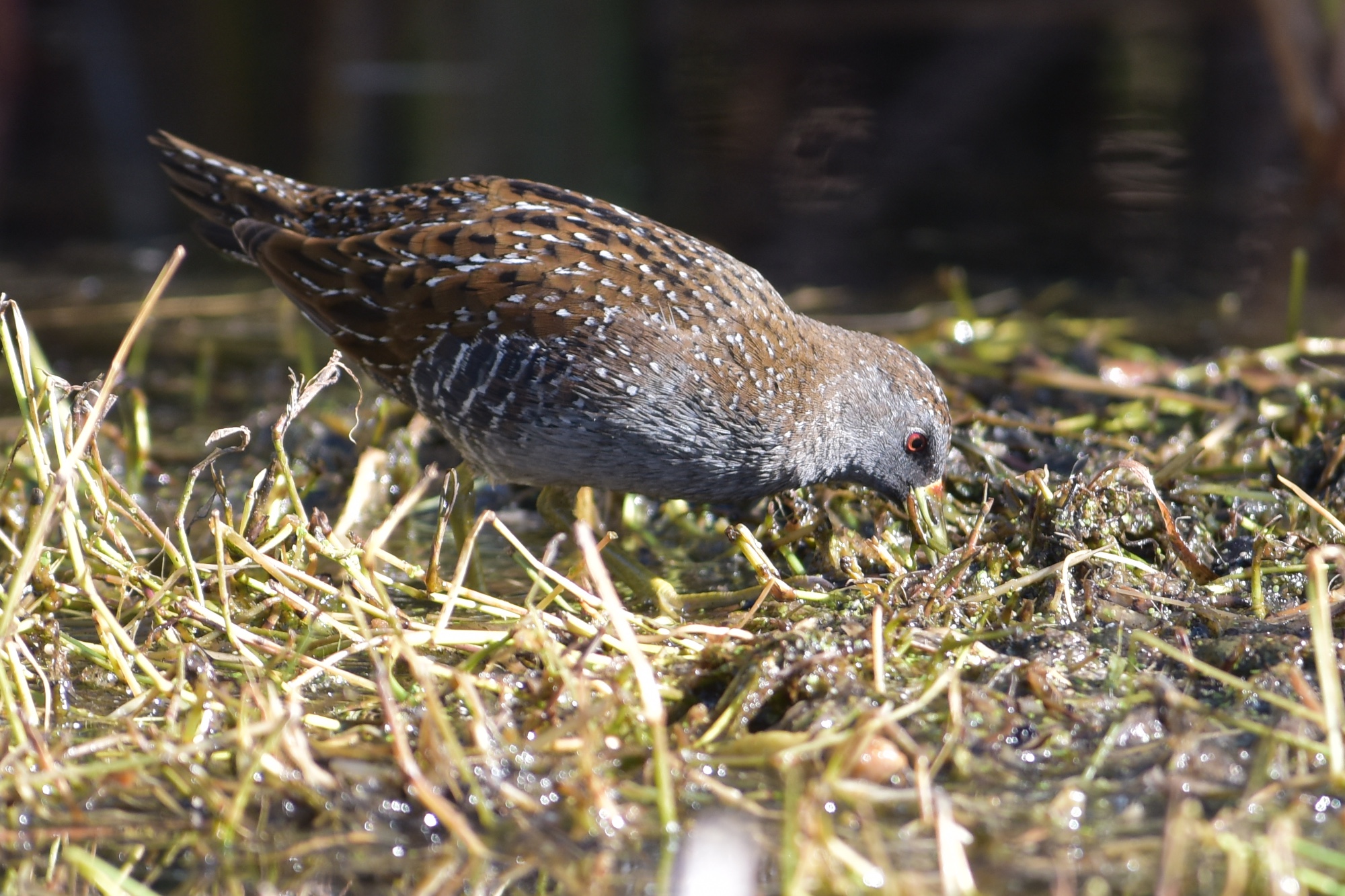
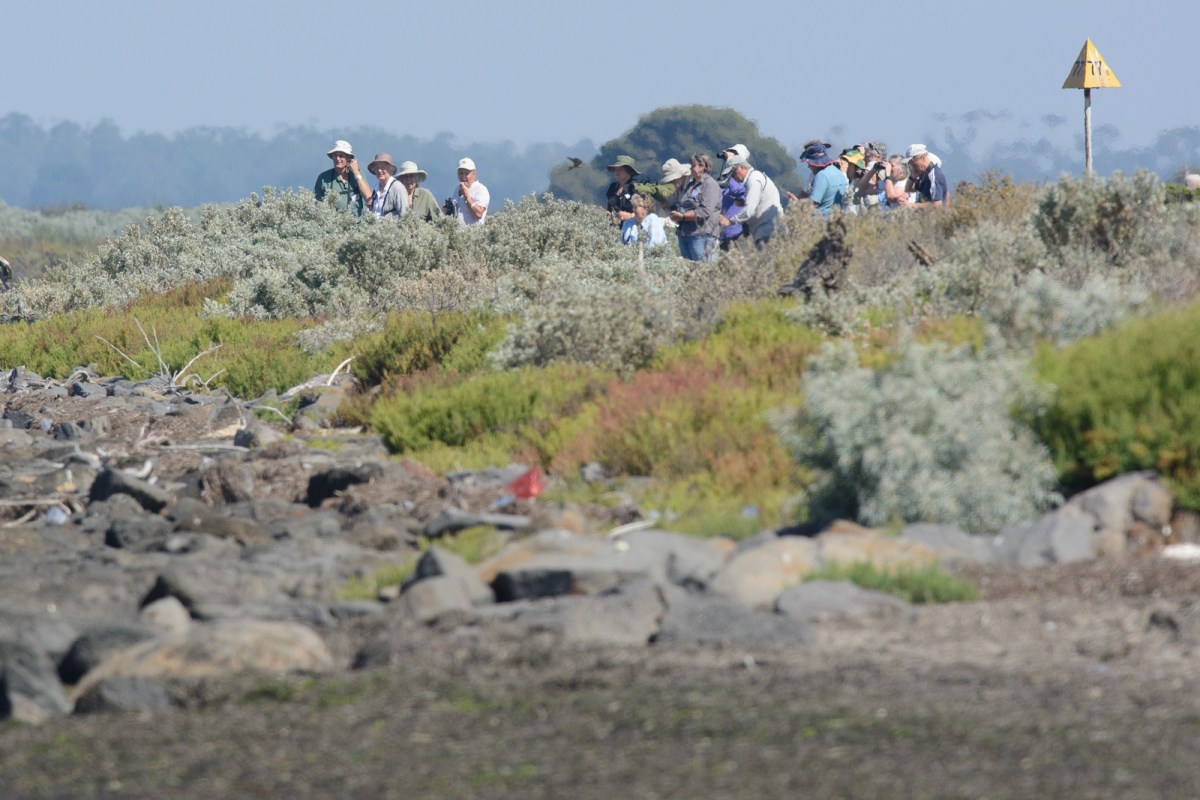
28 keen folk sipped Gerry’s best coffee, ate raisin toast, and talked about the day’s opportunities.  We took off toward Avalon, stopping long enough to get some good views, if only average photos of some Banded Plovers, then it was on to the T Section, and the inevitable wait by the Crake Pool, and out came the Australian Crake, right on time.  No Brolga here, so off to the Paradise Road ponds for our little convoy.

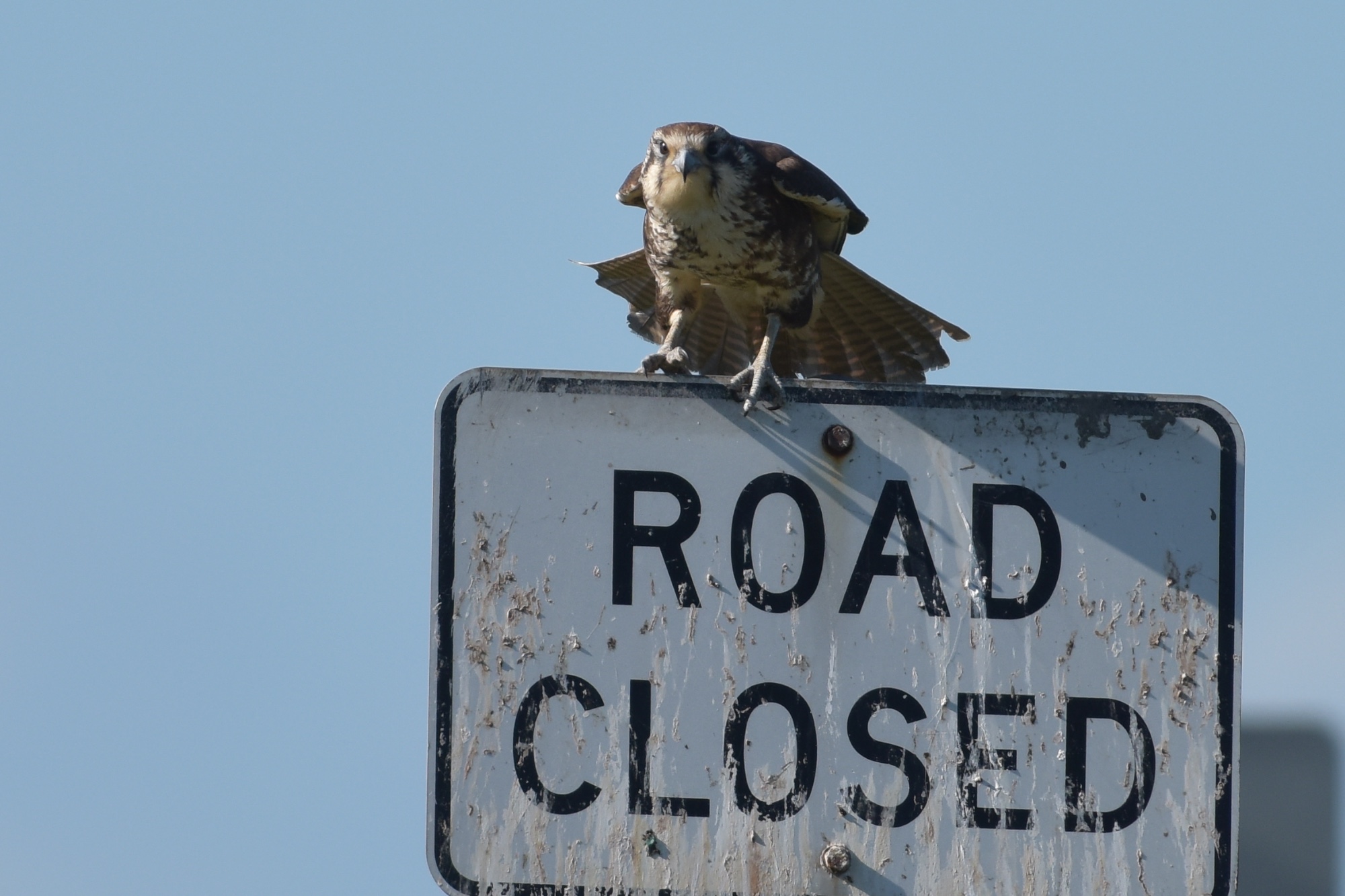
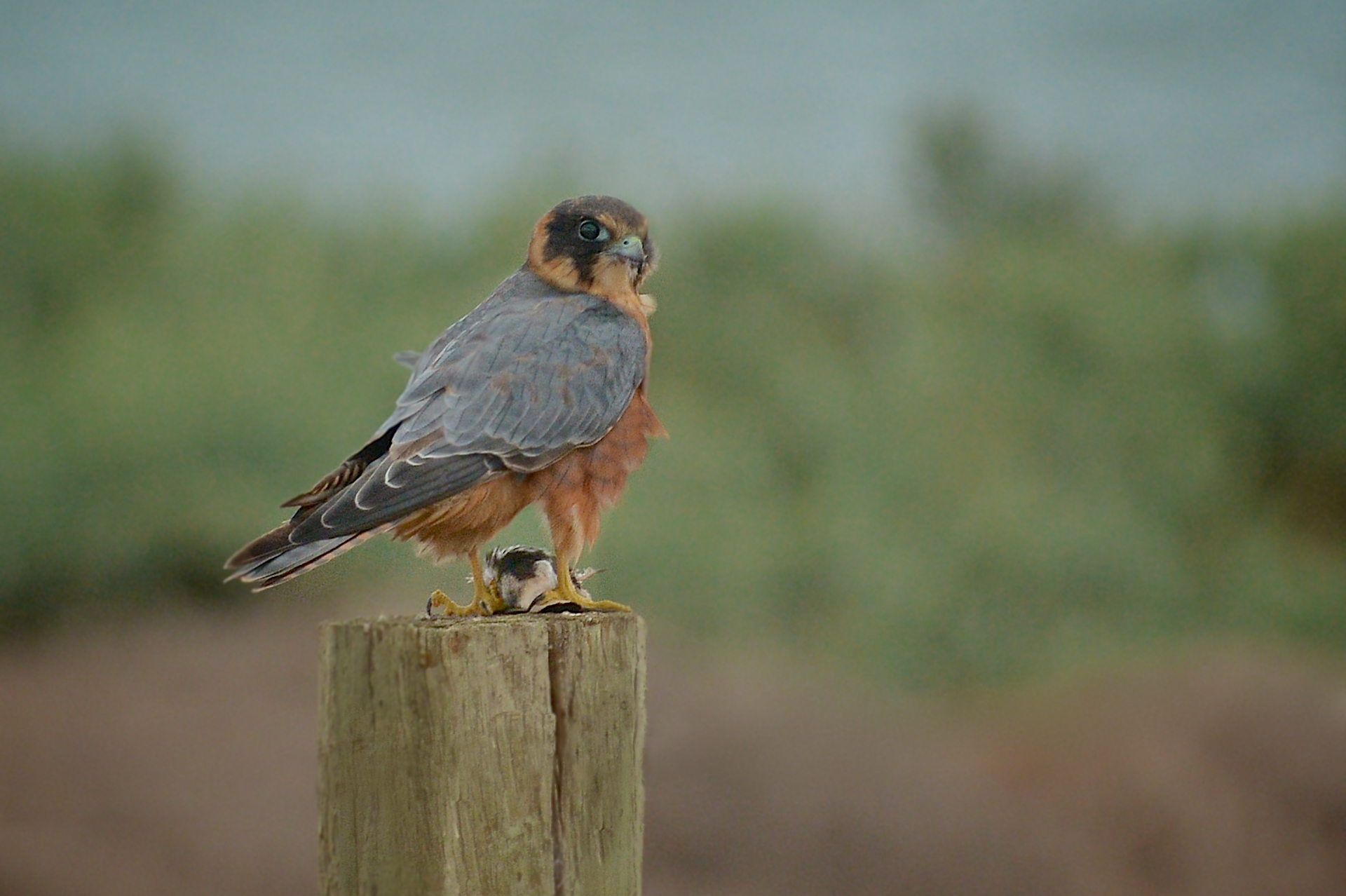
Met a carful of helpful folk who said, “Down there somewhere we saw Brolga”, which unscrambled meant. On to the 145W outflow. A very co-operative Brown Falcon stopping us in our quest, and gave some great poses, and a fine fly off shot for those of us not too busy checking the camera settings. —Will I never never learn!!!!  😦

Then, we spotted the Brolga, (Singular in this case), and the usual dilemma,  stay where we are for distant, safe views , or drive on a small distance and see if we can get closer.  We drove.  And the kind bird tolerated us, for a while, then gave a super fly by quite close.  Too much fun.

We had a quiet photography time at 145W, and lunch, then it was on to Lake Borrie. My mates Neil and David turned up in the Prado,they were both out playing with new toys, A Canon 1D X and a Nikon D4. Ah, the joys of learning new equipment.

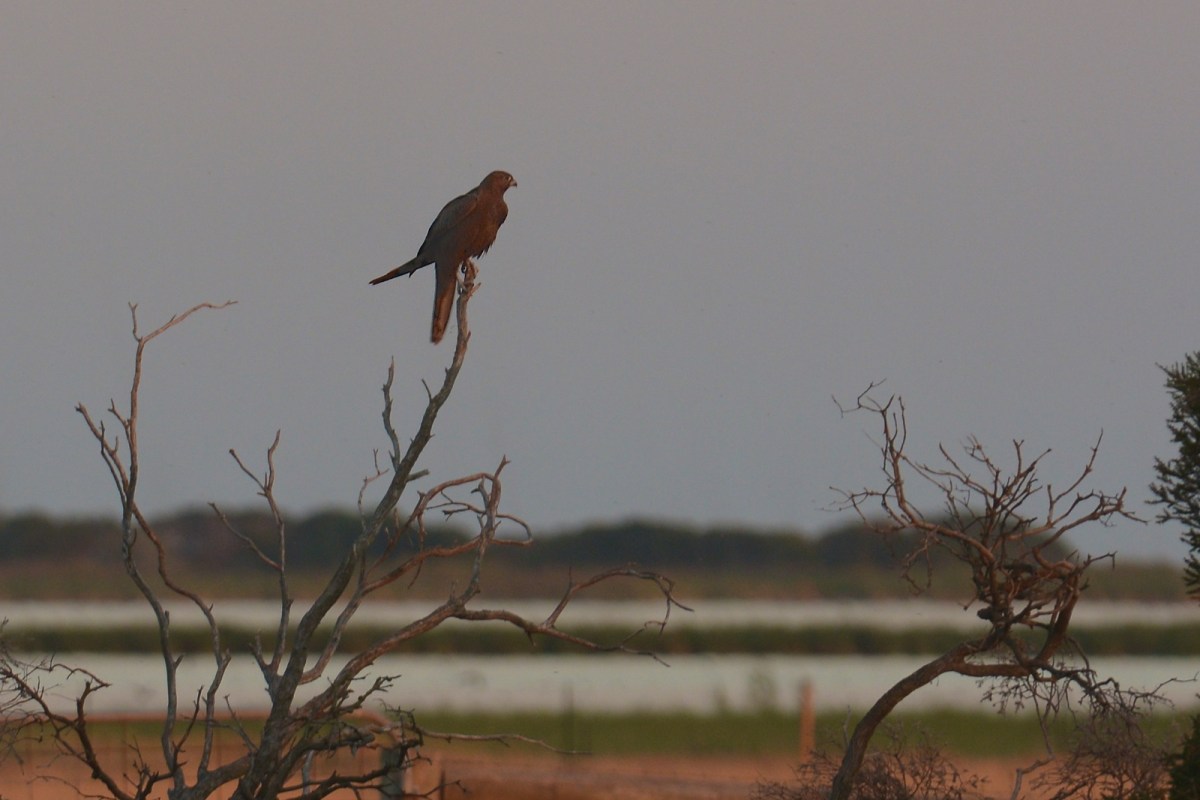
As we drove back the Brown Falcon had perched on the ‘Specimen Tree’ in Little River and we managed several great shots in the sunshine.

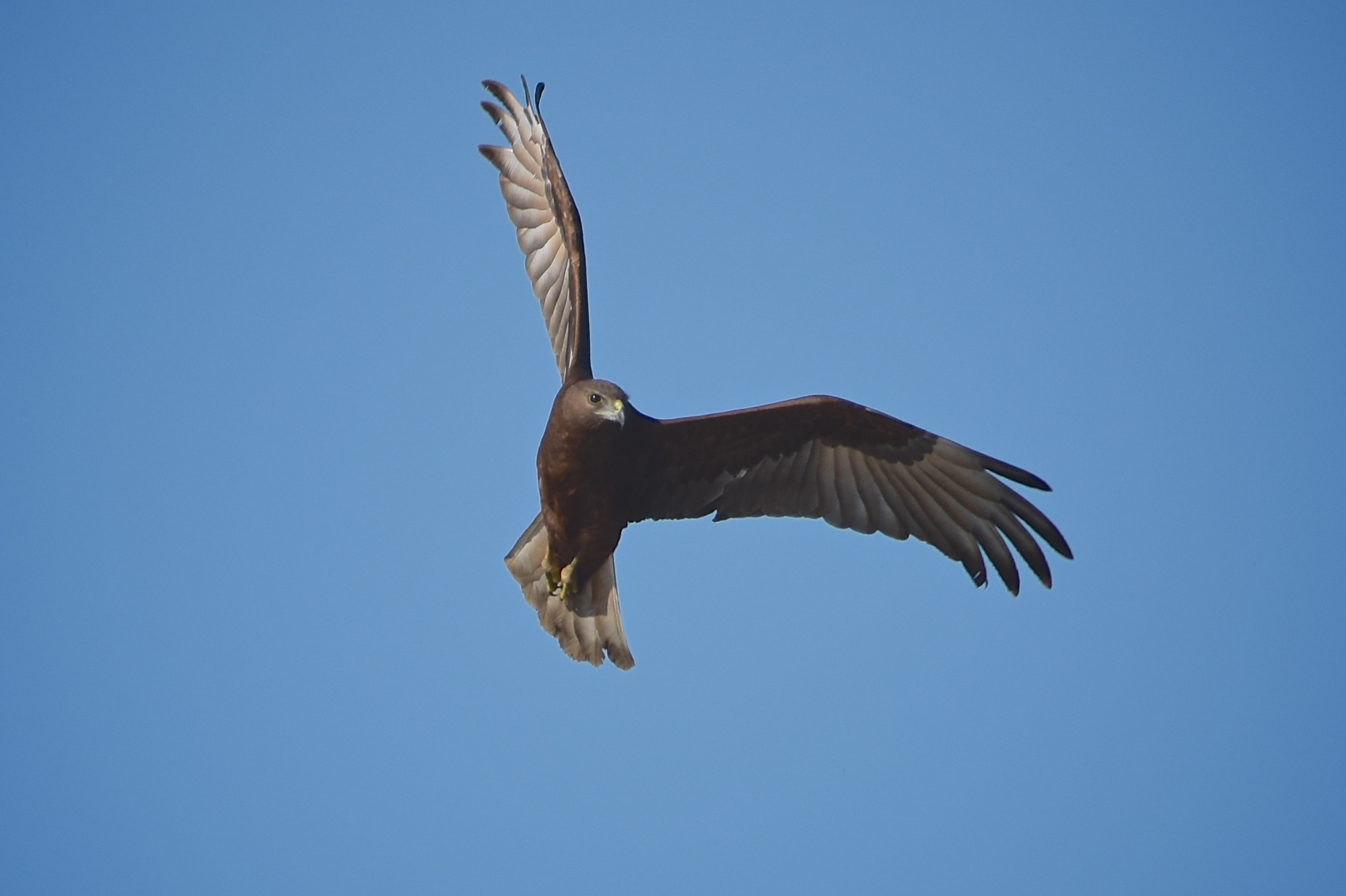
On toward the Bird-hide for some good views of Musk Duck, Great Crested Grebe and an obliging Swamp Harrier made the journey well worthwhile.

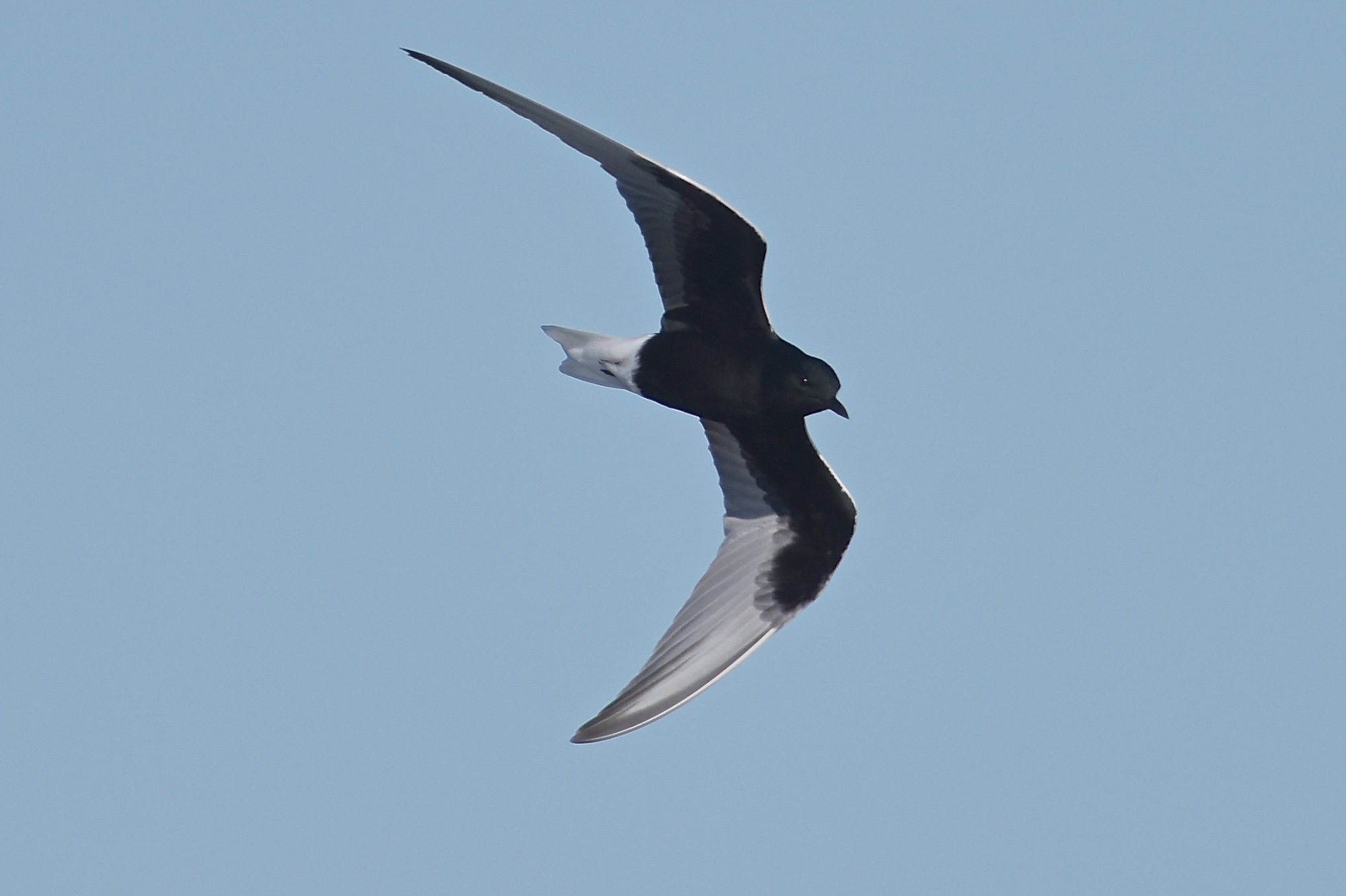
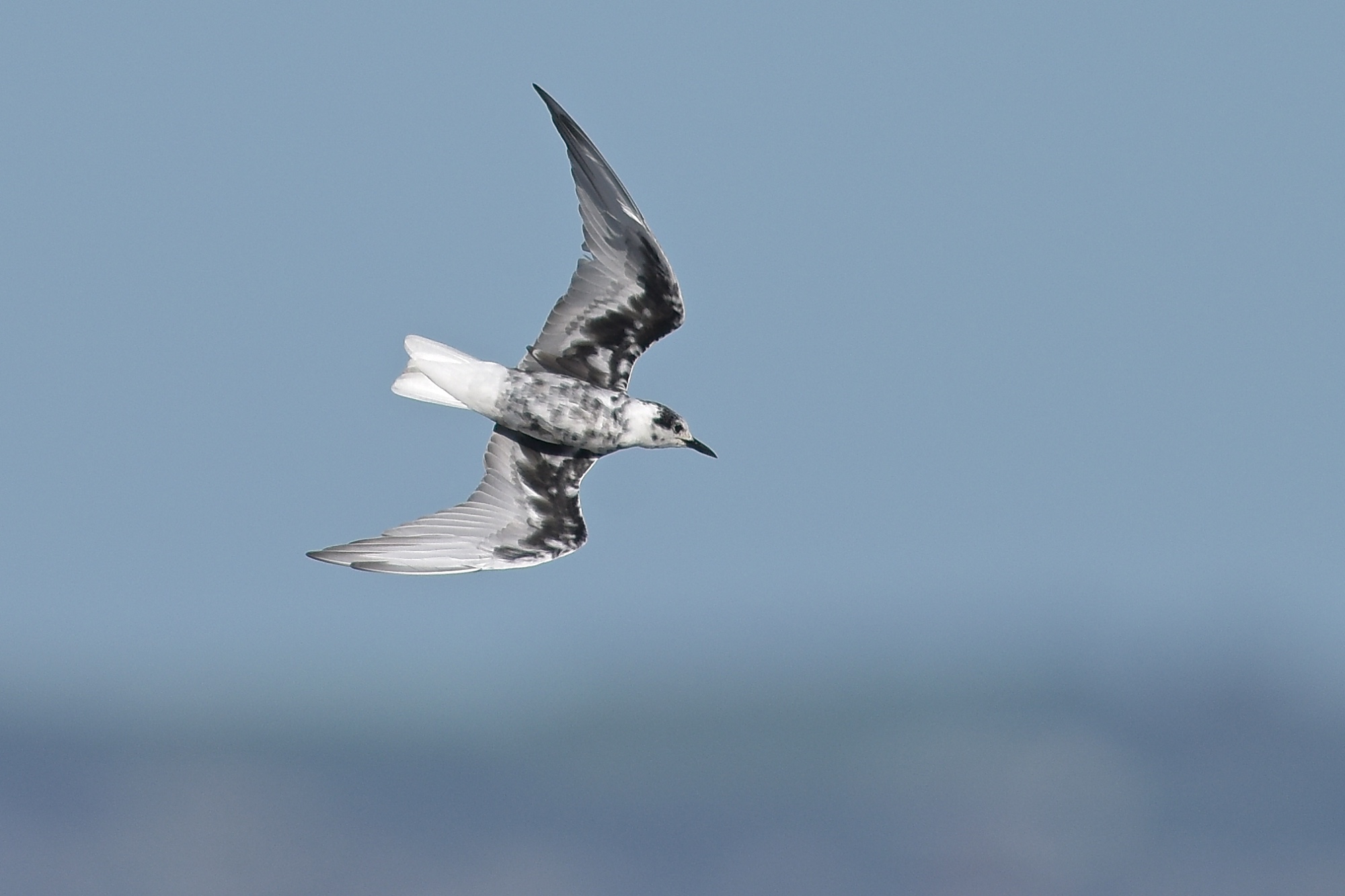
Then we took a quick detour toward the top end of Lake Borrie, and to my surprise and great delight—Picture if you will, a small child in a sweet-shop—I spotted some White-winged Terns hunting in the next pond.  (They used to be called White-winged Black Terns, but like many things name changes are important.)
Not that I cared as a most remarkable all Black flanked bird tacked into view.  It was in full breeding plumage, and has to be seen flashing over the water to be genuinely appreciated.   By now the memory cards were filling up. And they were just Mine!!!!!

These birds are only at WTP a few weeks during the year, and mostly never in breeding black plumage. Also every other time I’ve seen them it’s been raining.  See some other blogs on here.

A really top find, and a great way to end the day. A quick run up the highway. A refreshing cup of coffee and some good discussion on the finds of the day,- including a top shot of a Spiny-cheeked Honeyeater (Missed that one! ), and everybody back in their transportation and  time for home.

Thanks again to Graham “He who always has brilliant sunshine for his events”, and the pleasure of his visitor from Thailand, for such a good relaxing day, and so much to see, and to all those intrepid Meetup-erers who ventured down, and enjoyed the day with us.  Hope to see you all again down the track.

Enjoy.

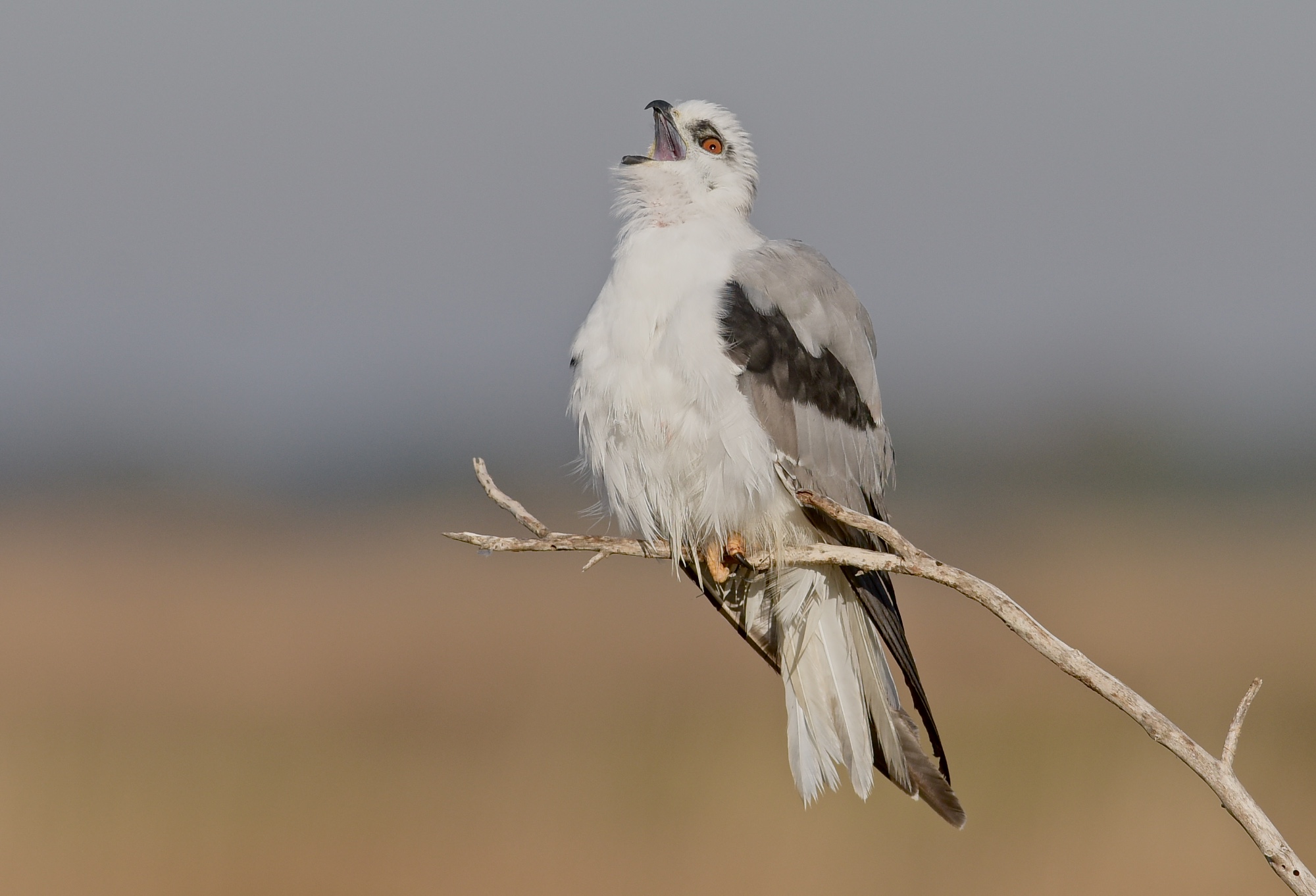
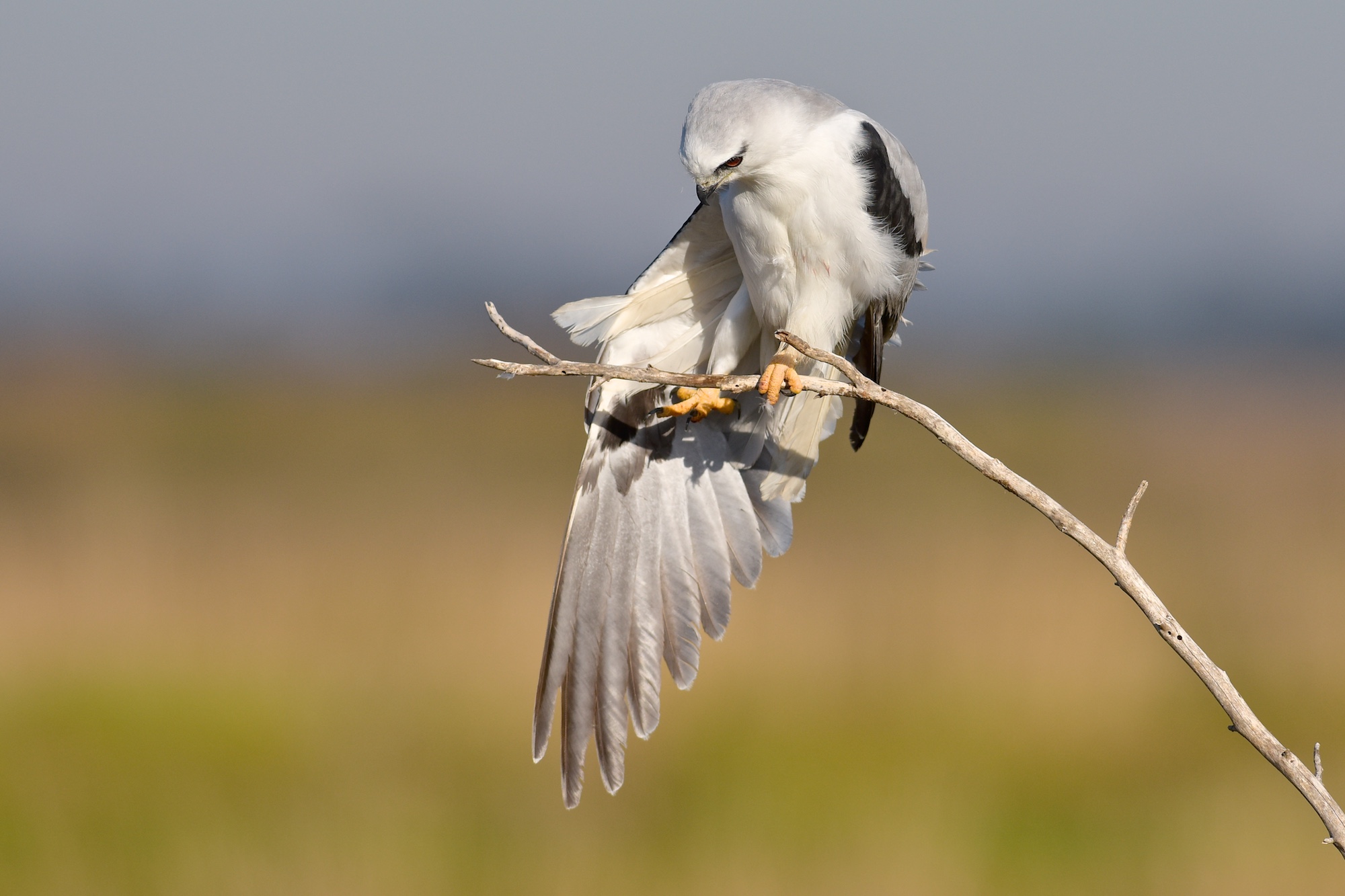
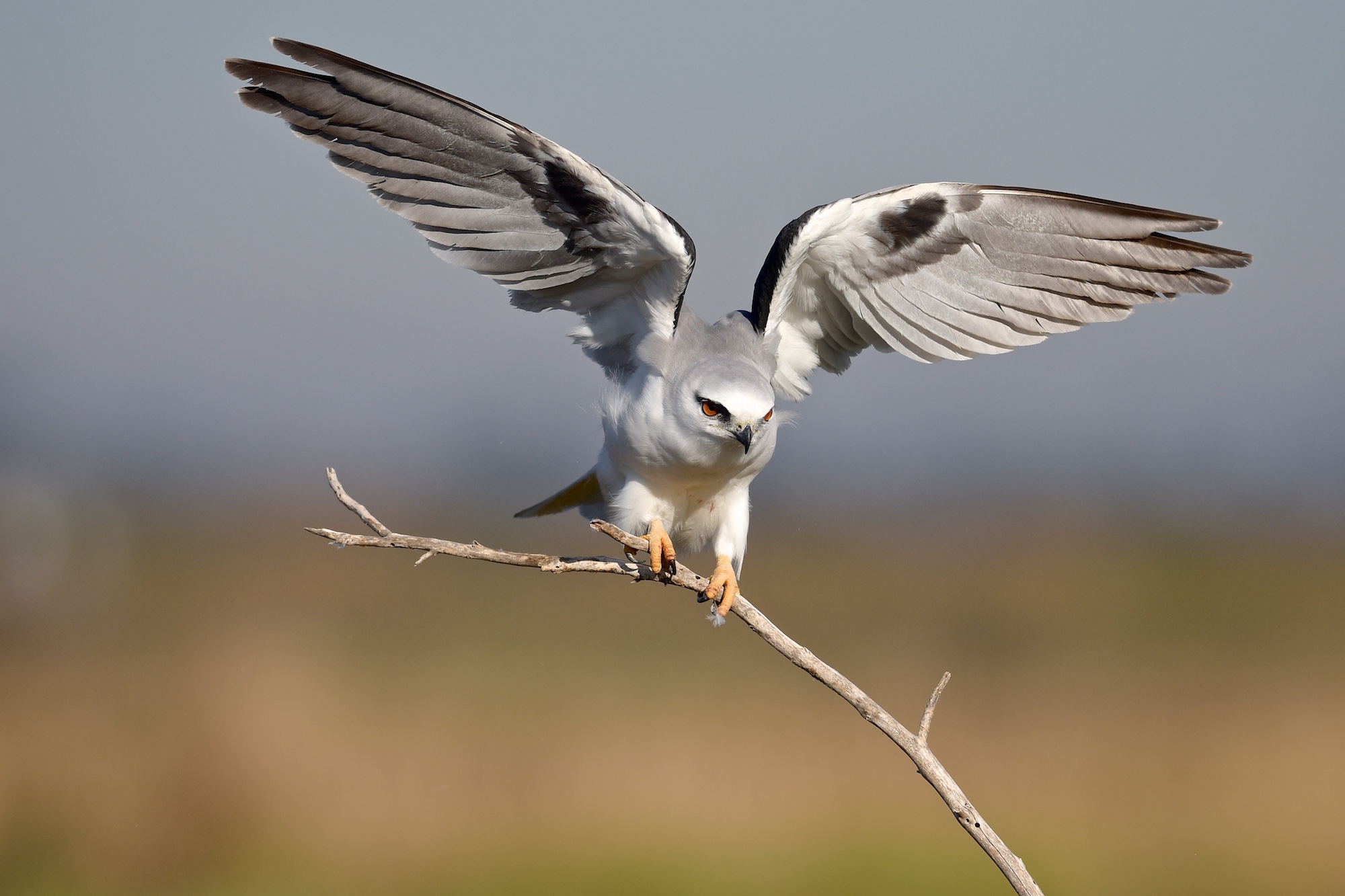
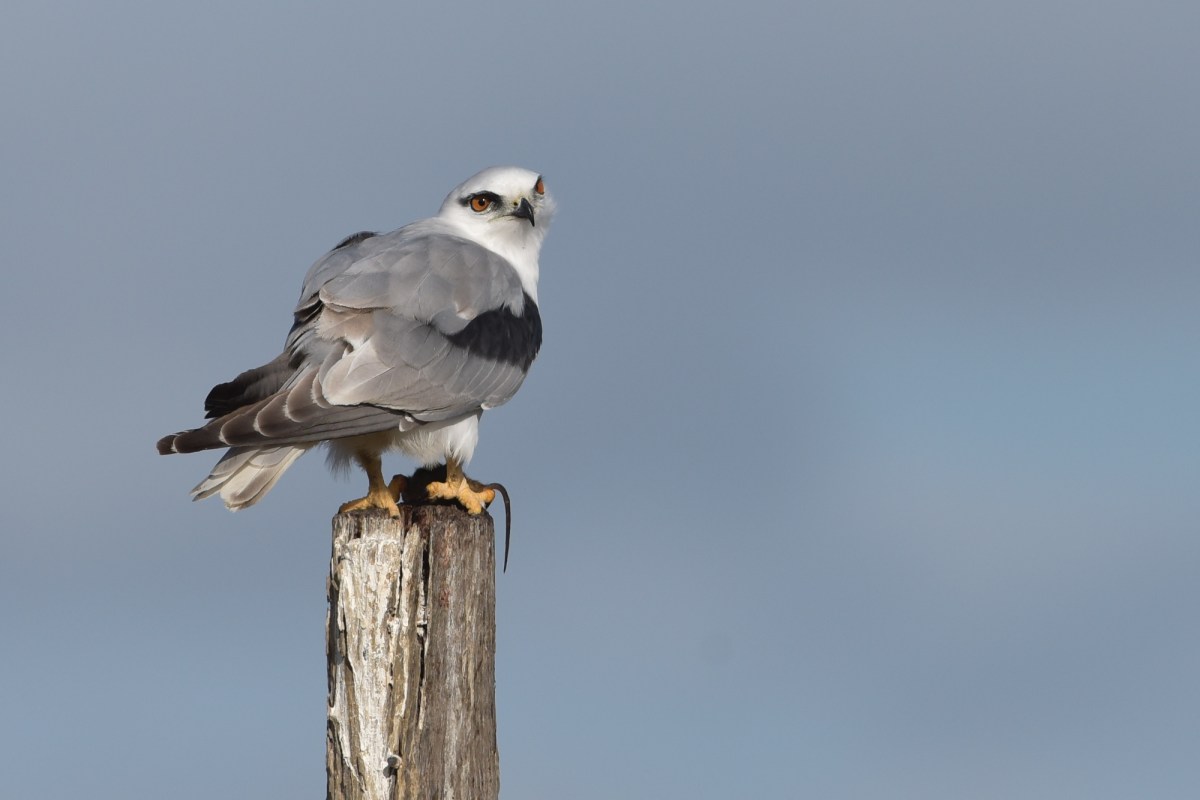
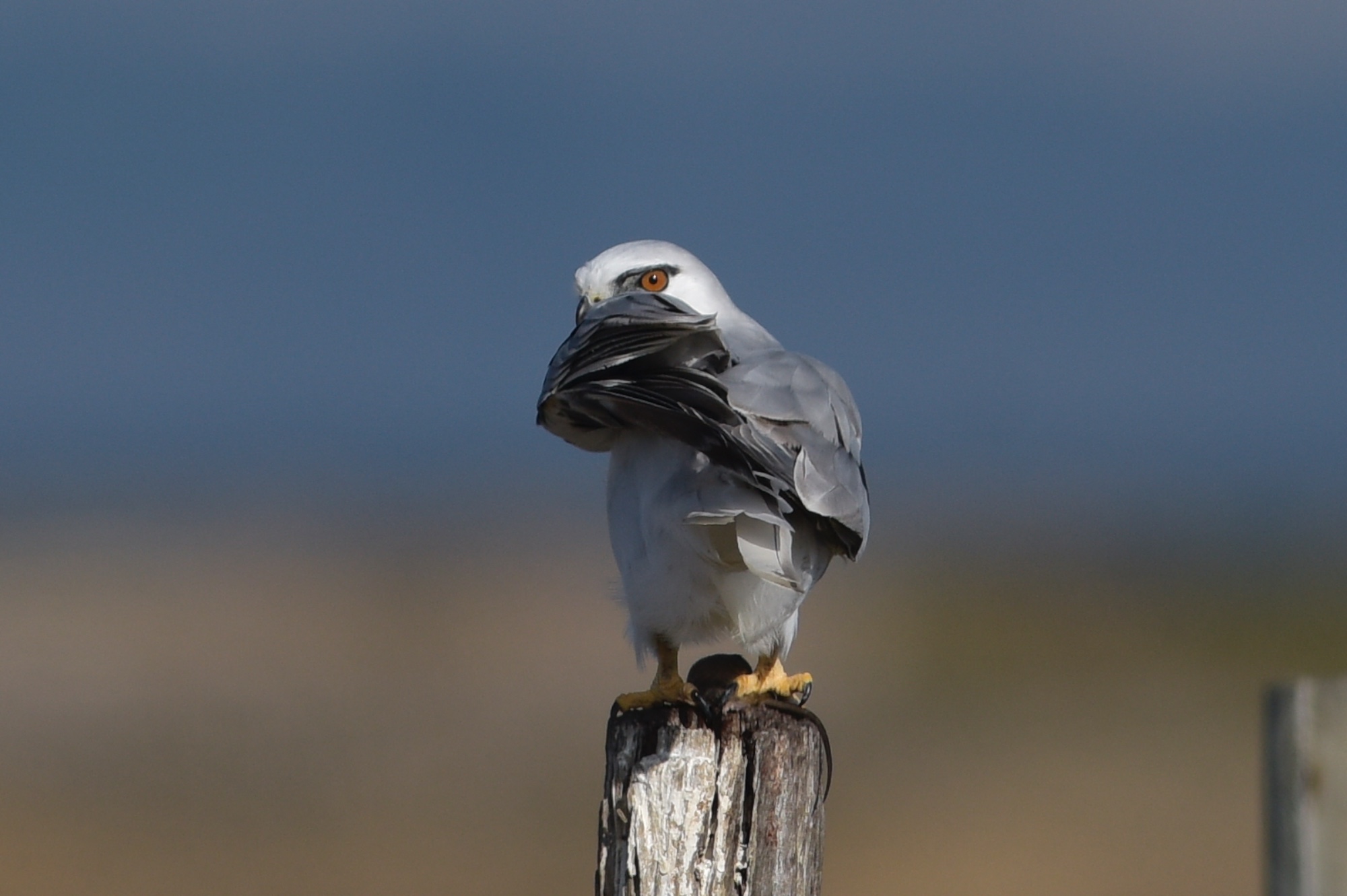
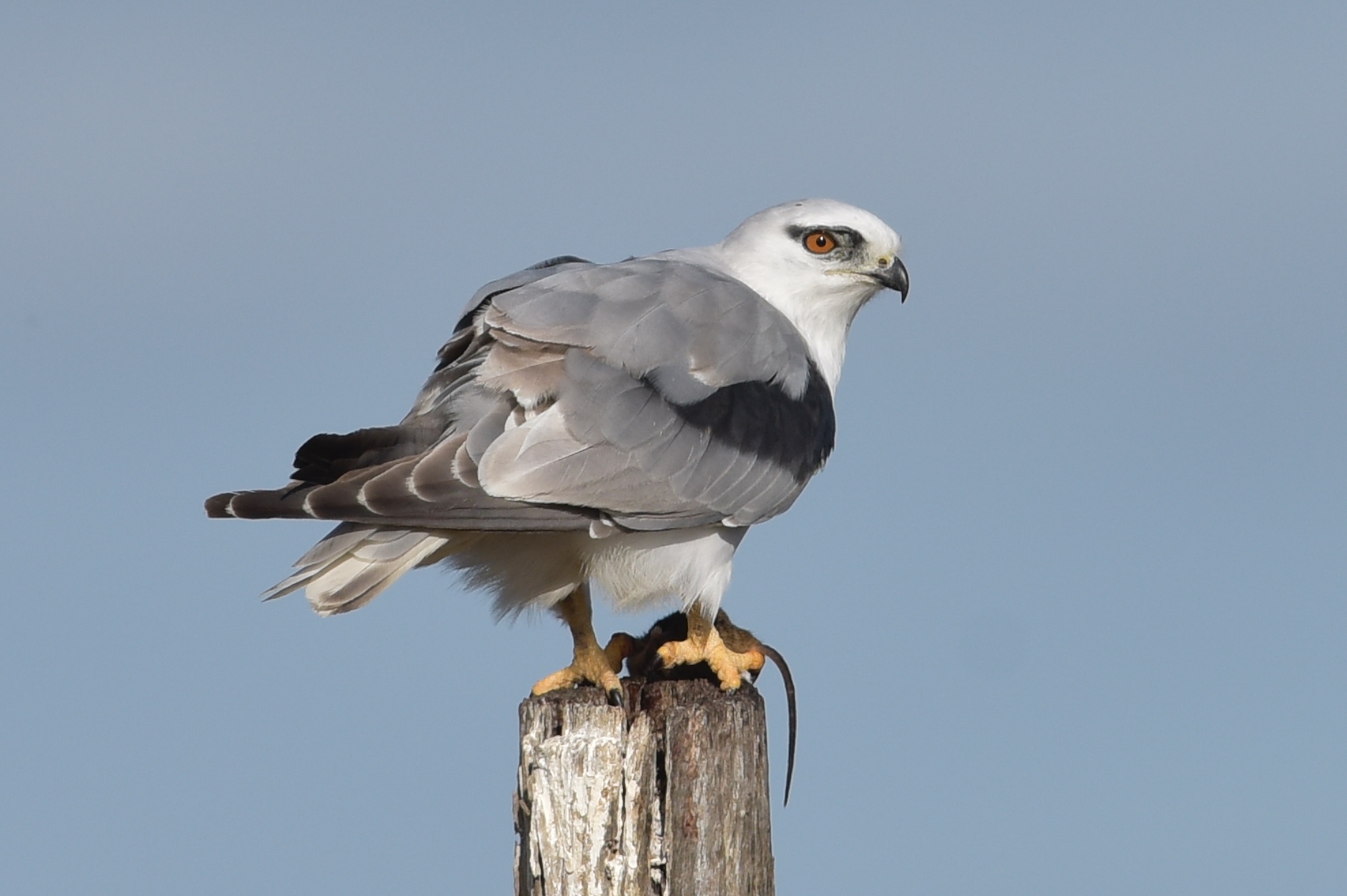
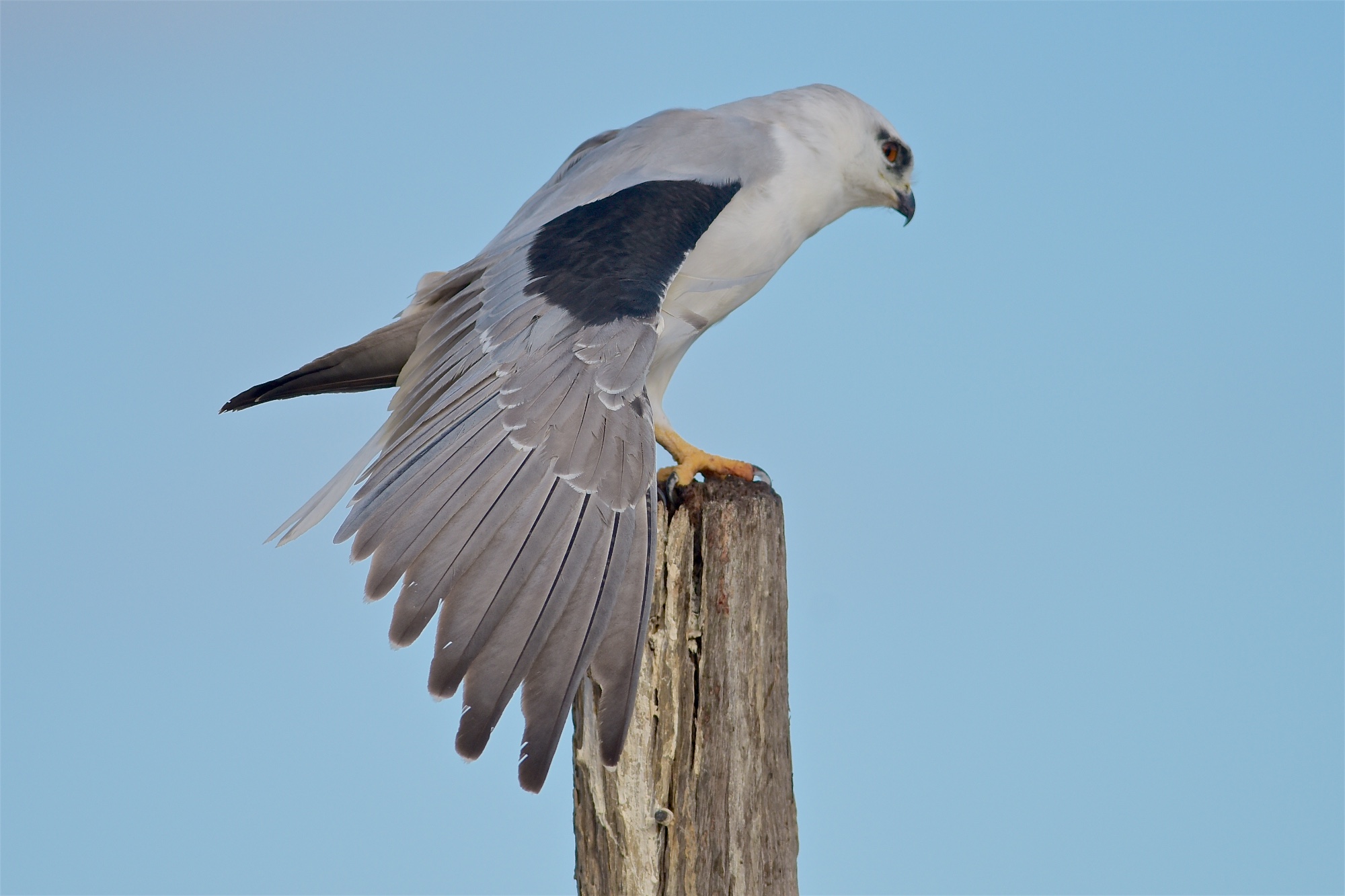
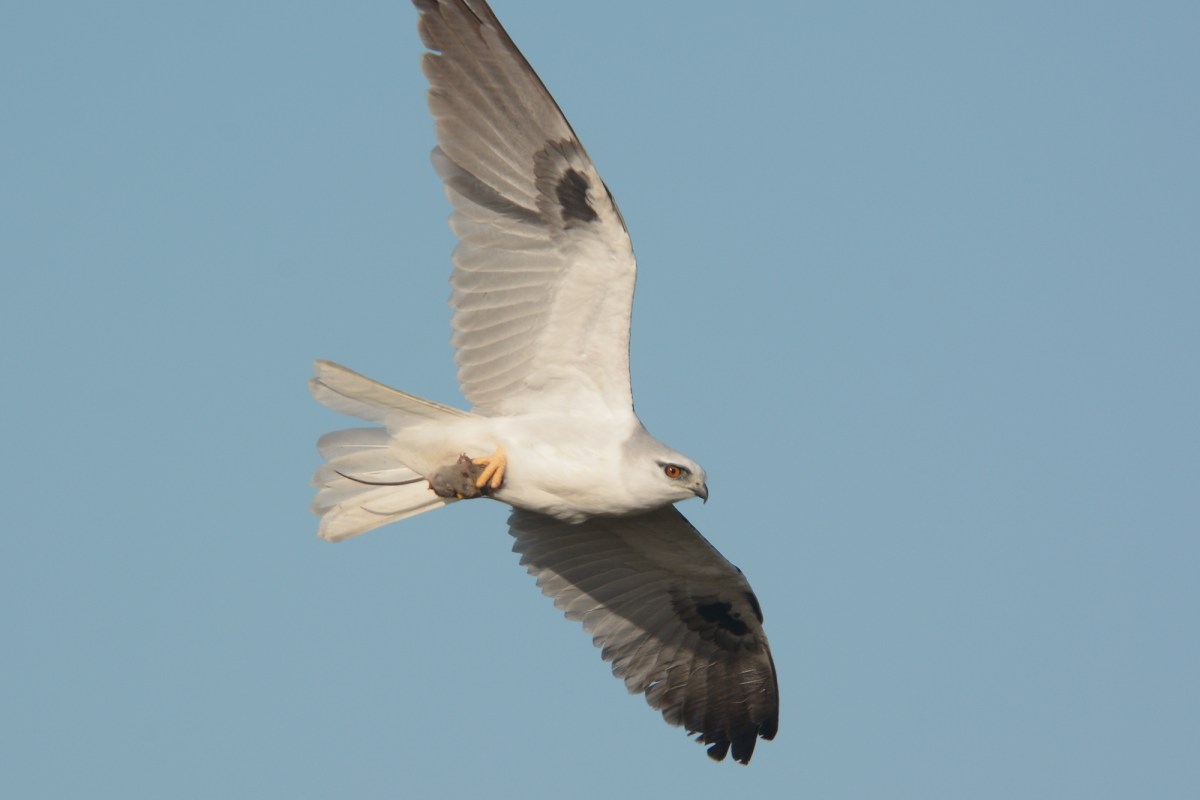
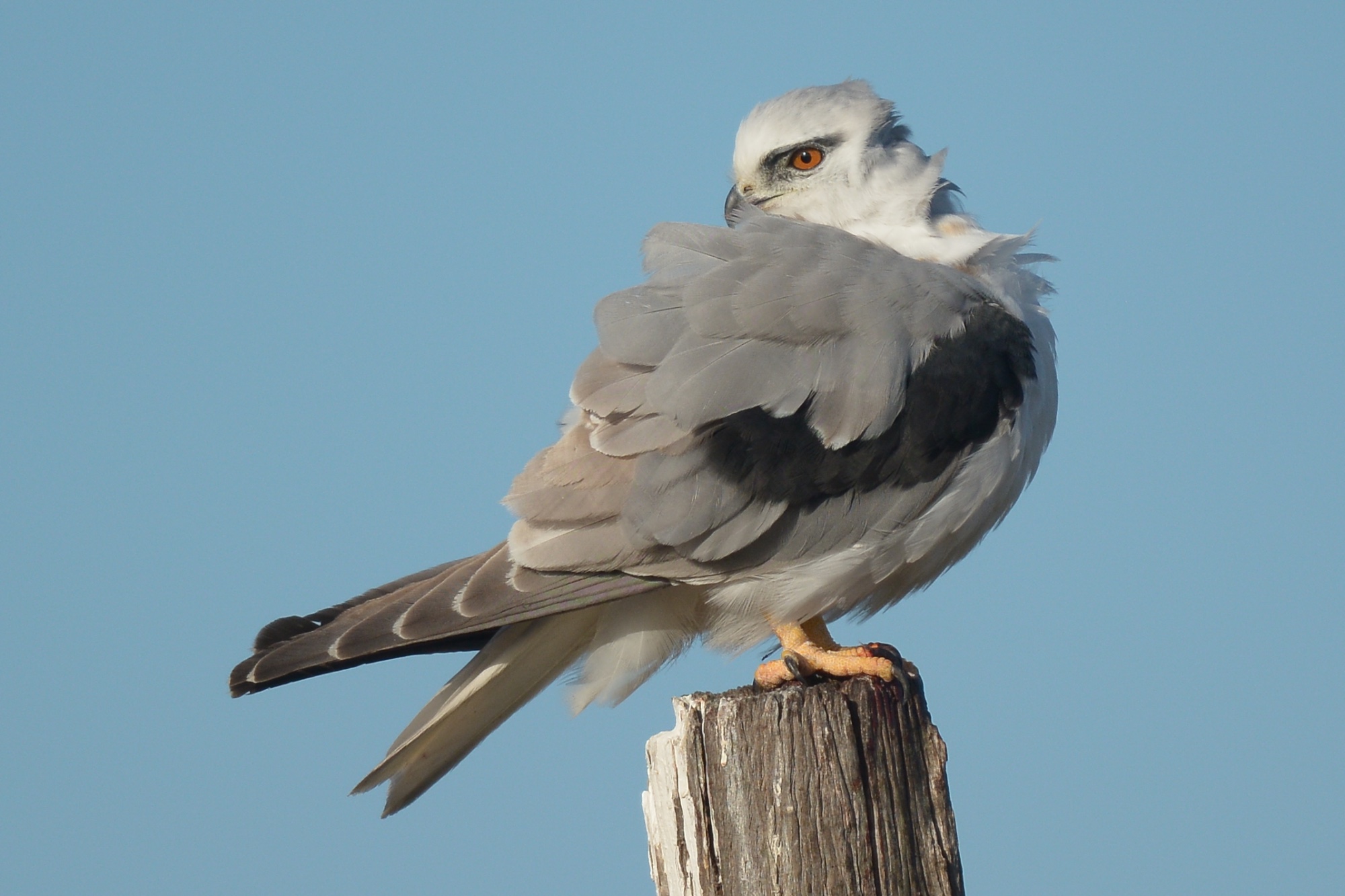
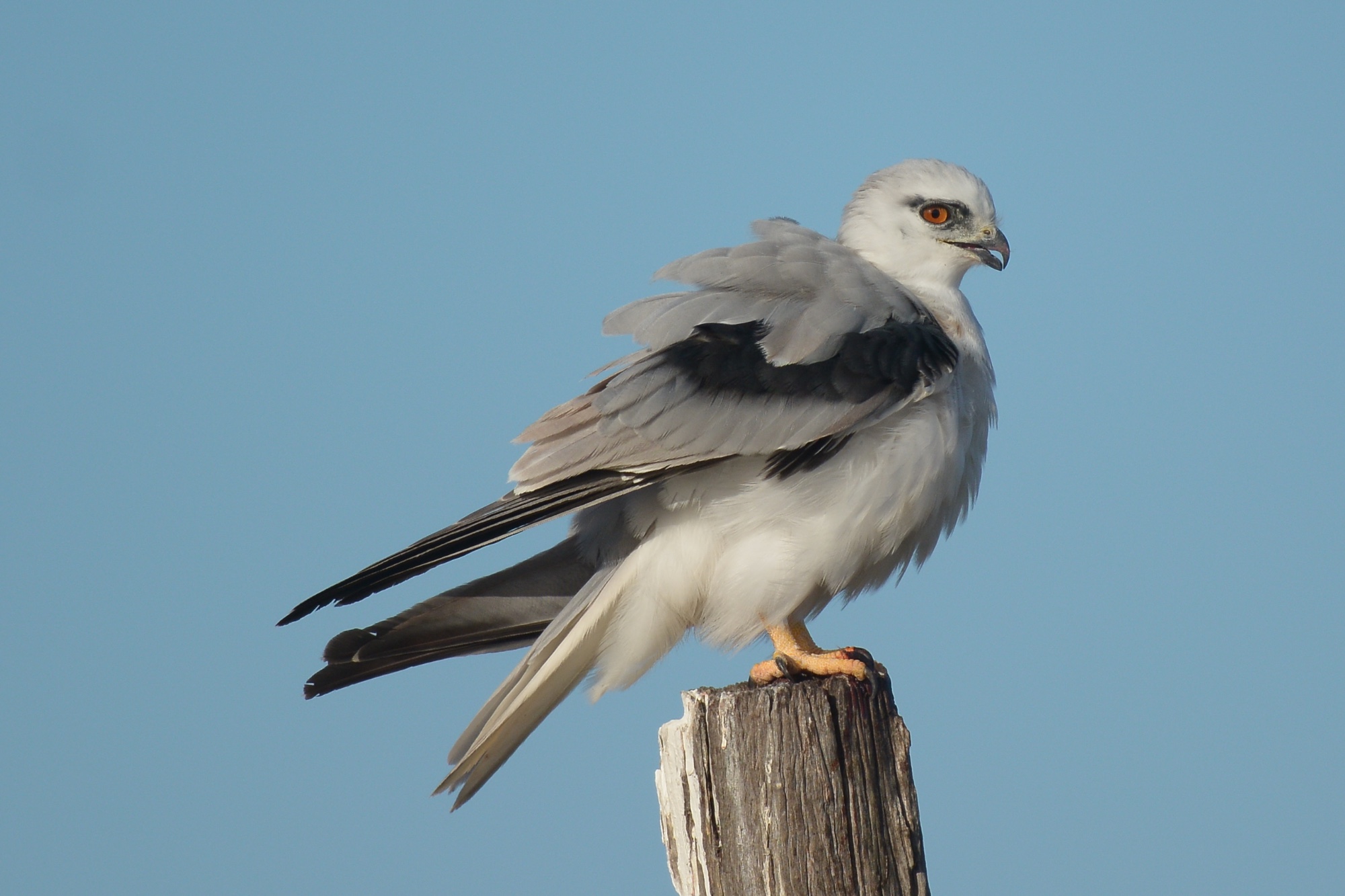
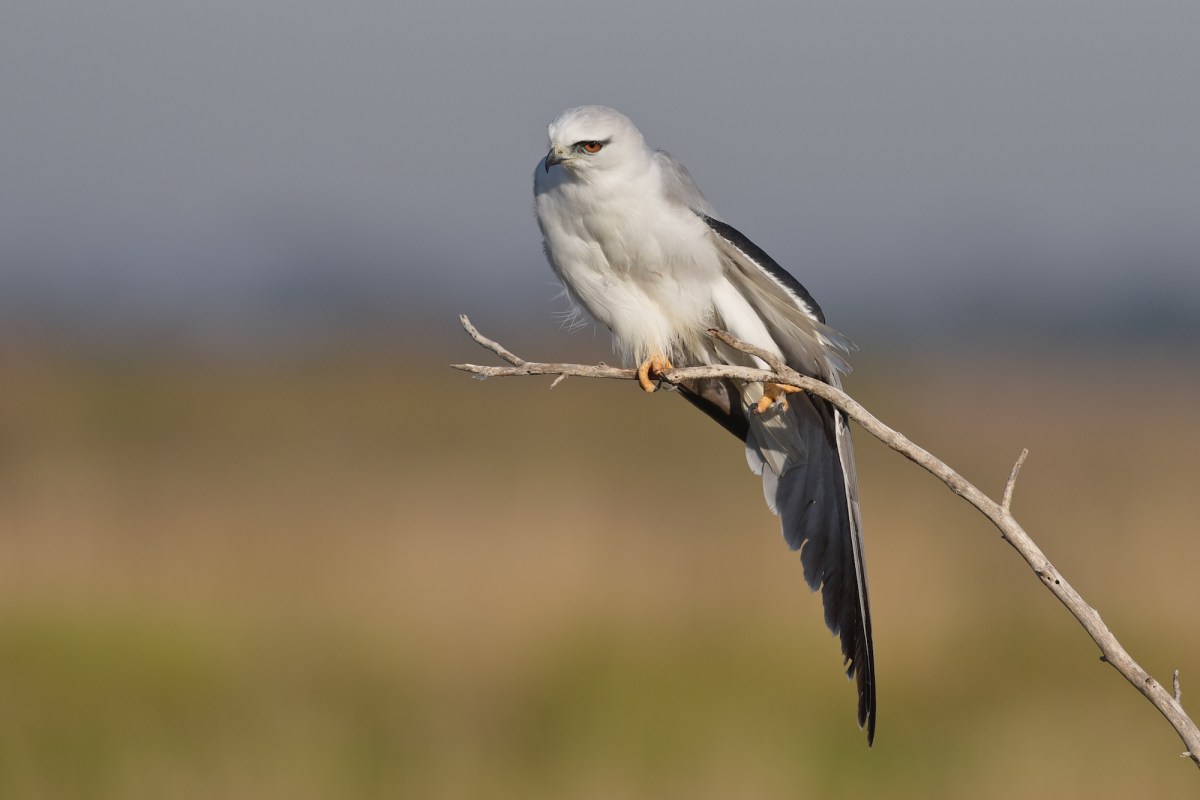
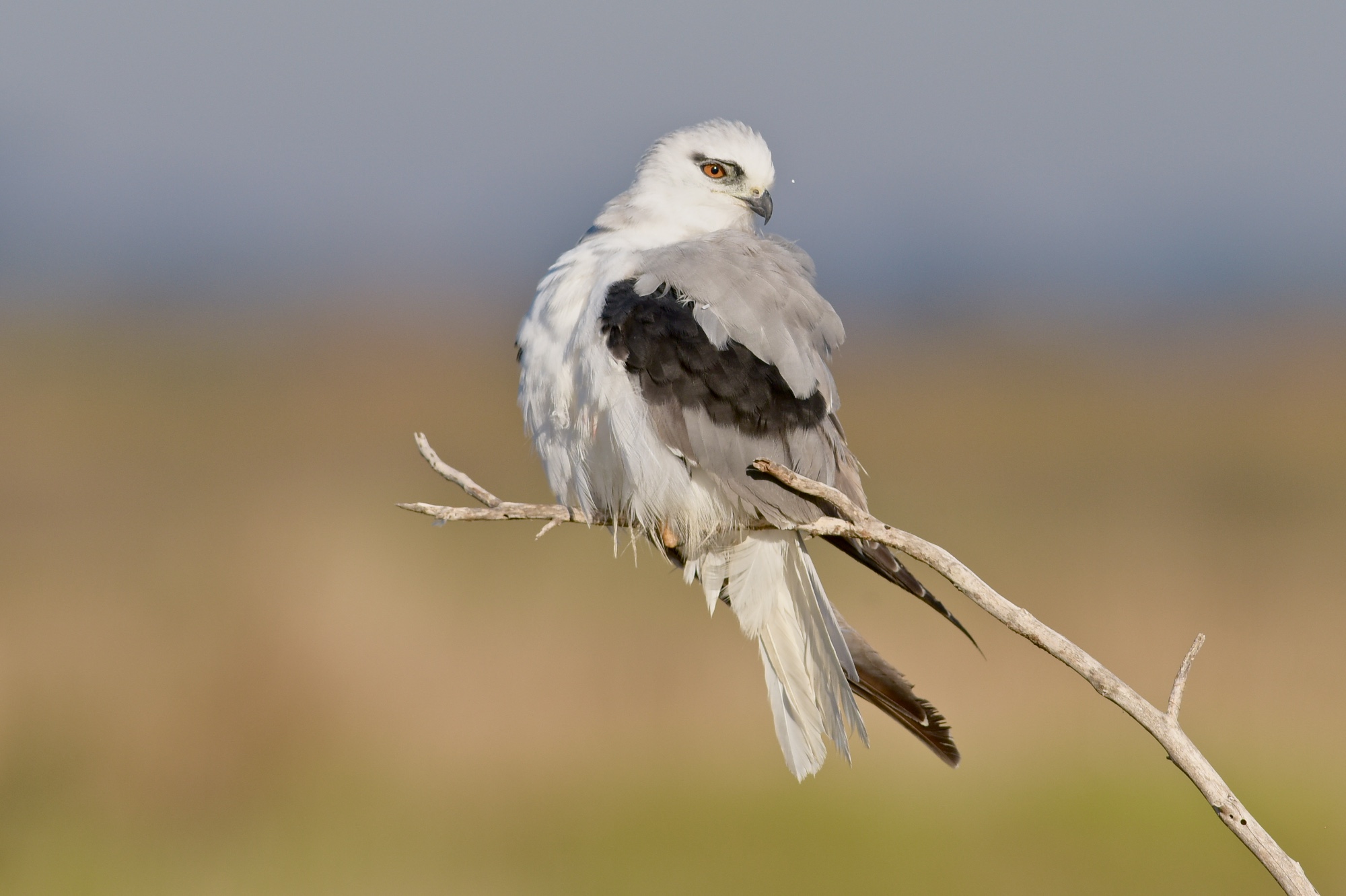
A fine start to the day with a Black-shouldered Kite warming in the morning sunshine
At Crake HQ, an Australian Crake on good display.
A hunting we wiil go Whistling Kite over paddock
A hunting we will go. Whistling Kite over paddock
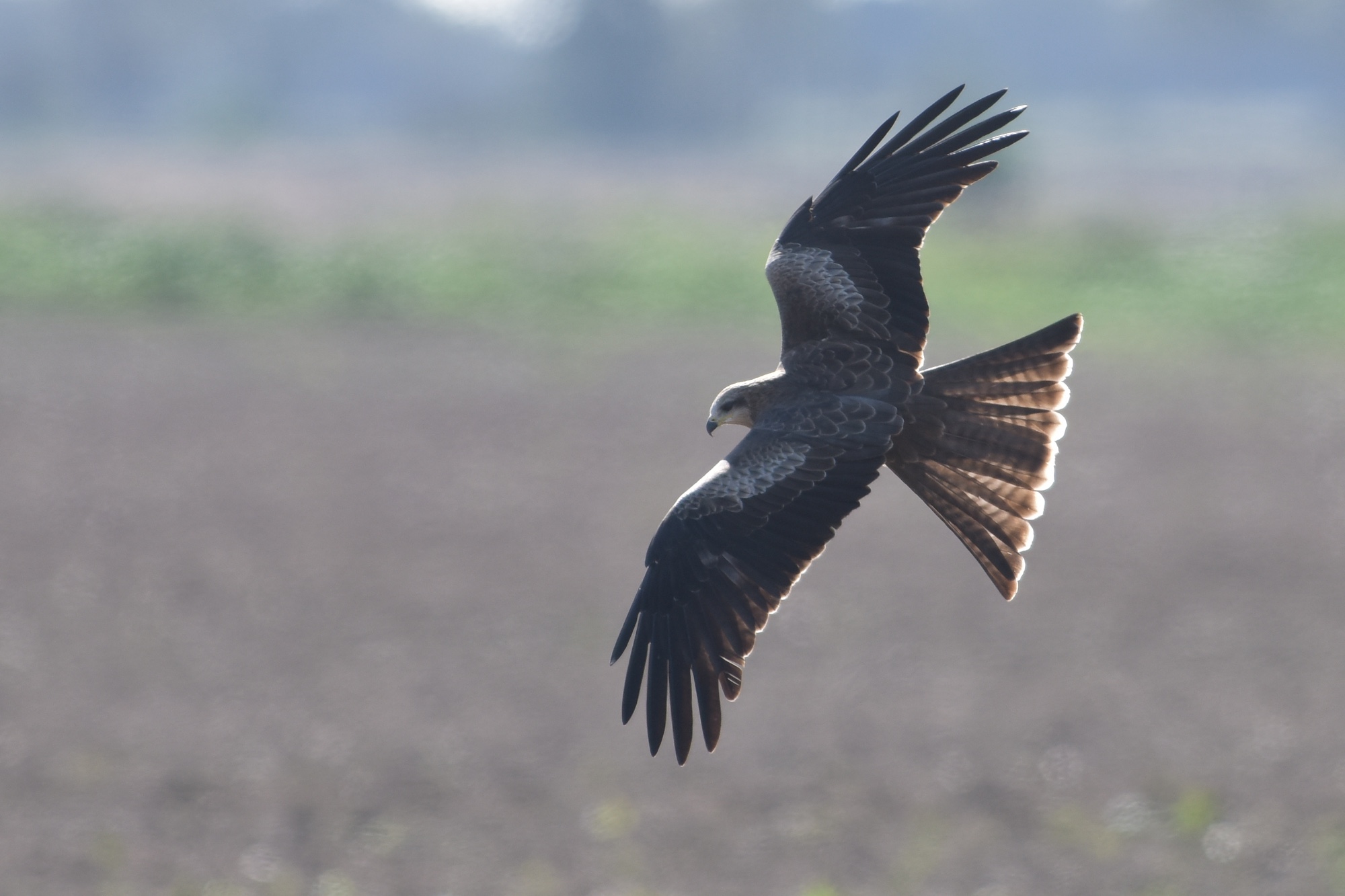
A Black Kite on a tight turn hunting small insects.
No one gets past here!
One of the finds of the day. Brolga in flight
Brown Falcon on Specimen Tree
A Swamp Harrier on a tight turn. Another one for my "How to Sneak up on a Swamp Harier", book. :-)
A Swamp Harrier on a tight turn. Another one for my “How to Sneak up on a Swamp Harrier”, book. 🙂
White-winged Tern. What a great find, and this one in full breeding plumage.
So Good. Here is another.
White-winged Tern (formerly White-winged Black Tern for obvious reasons), this one is moulting in.


A Band of Banded Brothers

Came upon a small band of Banded Stilts and Red-necked Avocets the other morning.

We had been looking for some locations for subjects for my book on “How to Sneak Up on a Swamp Harrier”. Needless to say the next chapter or two will for the short term be blank pages.

On one pond we happened in the best of traditions on a flock of Banded Stilts, and some companions.

So we settle down for about an hour or so.   While we were enjoying the birds, the sunshine and a cuppa, we were joined for a short while by a hunting party of Black Kite and a Black Falcon. We counted around 25 Black Kites and there were plenty spiralling down from a great height that we didn’t count any more.
Sort of added that sparkle to the day.

Enjoy

Ineffable Moment: Evening Light and Black-tailed Godwits

Came across the word Ineffable, the other day.  Here in The Online Photographer —Just shows the company I keep.

And in keeping with that, we had an evening down on the T Section Ponds in the wonderful gold evening light.

Large Band of Brothers, (Banded Stilts) were there, and I’ve already shared those moments.
But as I was settling in with the Stilts, some more arrivals winged their way in.
Black-tailed Godwits. Continue reading “Ineffable Moment: Evening Light and Black-tailed Godwits”

As Ansel Adams says. “Sometimes the moments arrive, you just need to be there” : Or Living on Falcon Time.

I still can’t believe it happened.

And that I didn’t get a bright sunny day to go with it, is not nearly so important as being at the right spot.

EE and I had left home amid some bright afternoon sunshine and stopped for a coffee at the Highway Lounge at the Caltex Servo on the road out of Werribee.  By the time we’d sipped one of Gerry’s best brews, and stepped back outside the cloud was thickening up to biblical proportions. Mind I’m not sure what separates biblical proportions from ordinary thick grey cloud, but..

Continue reading “As Ansel Adams says. “Sometimes the moments arrive, you just need to be there” : Or Living on Falcon Time.”

Them’s fighting words to a Cisticola

The last burst of sunshine for a week or so according to the weather prognosticators, the icon ladies, and the general look out the door.

So with just a little light left we decided to go looksee along 29 Mile Road.
No Kites. Orion has hunted the area dry it seems. (Perhaps those Olympian gods can now justifiably enjoy their umbrage.)

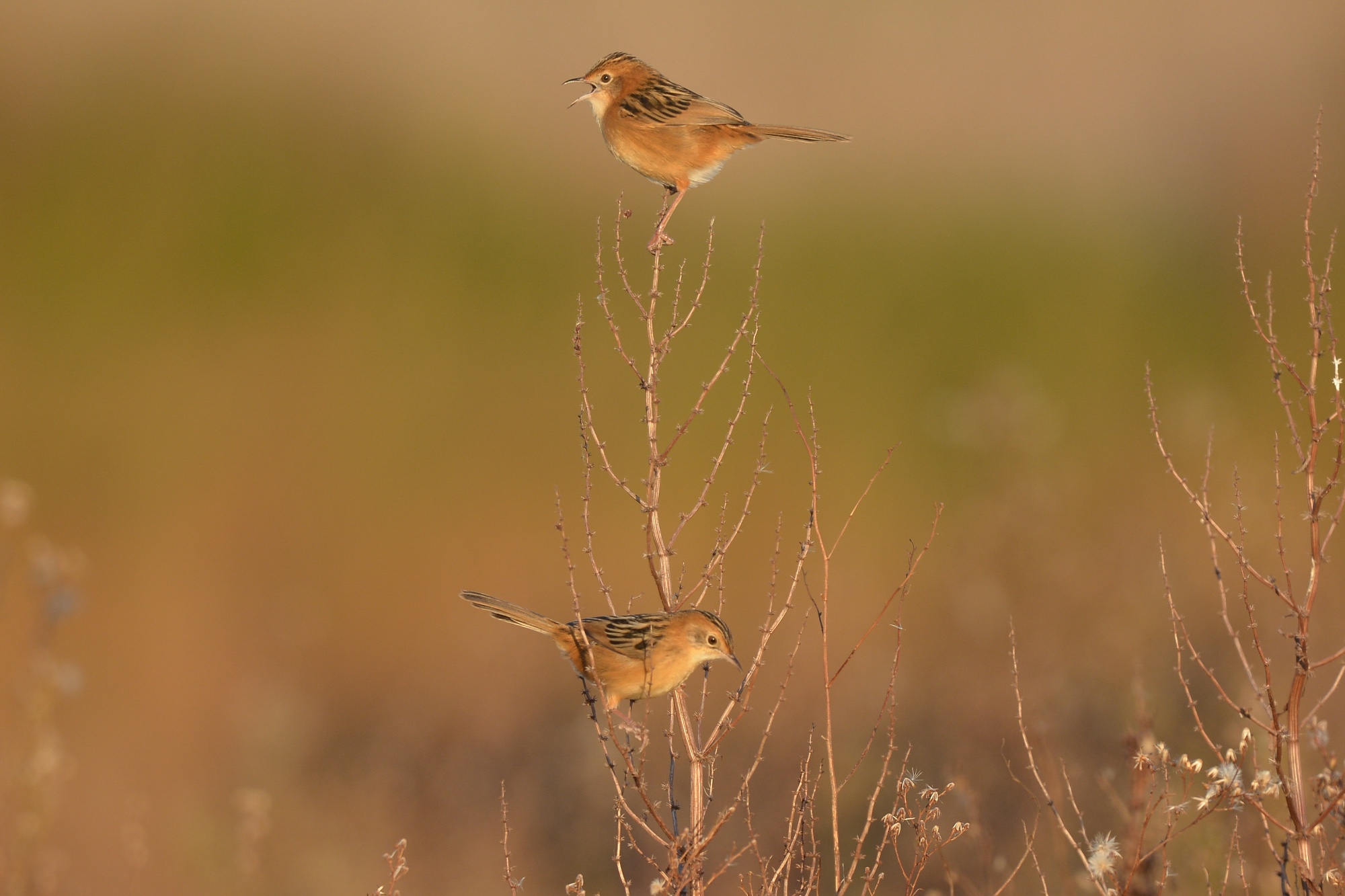
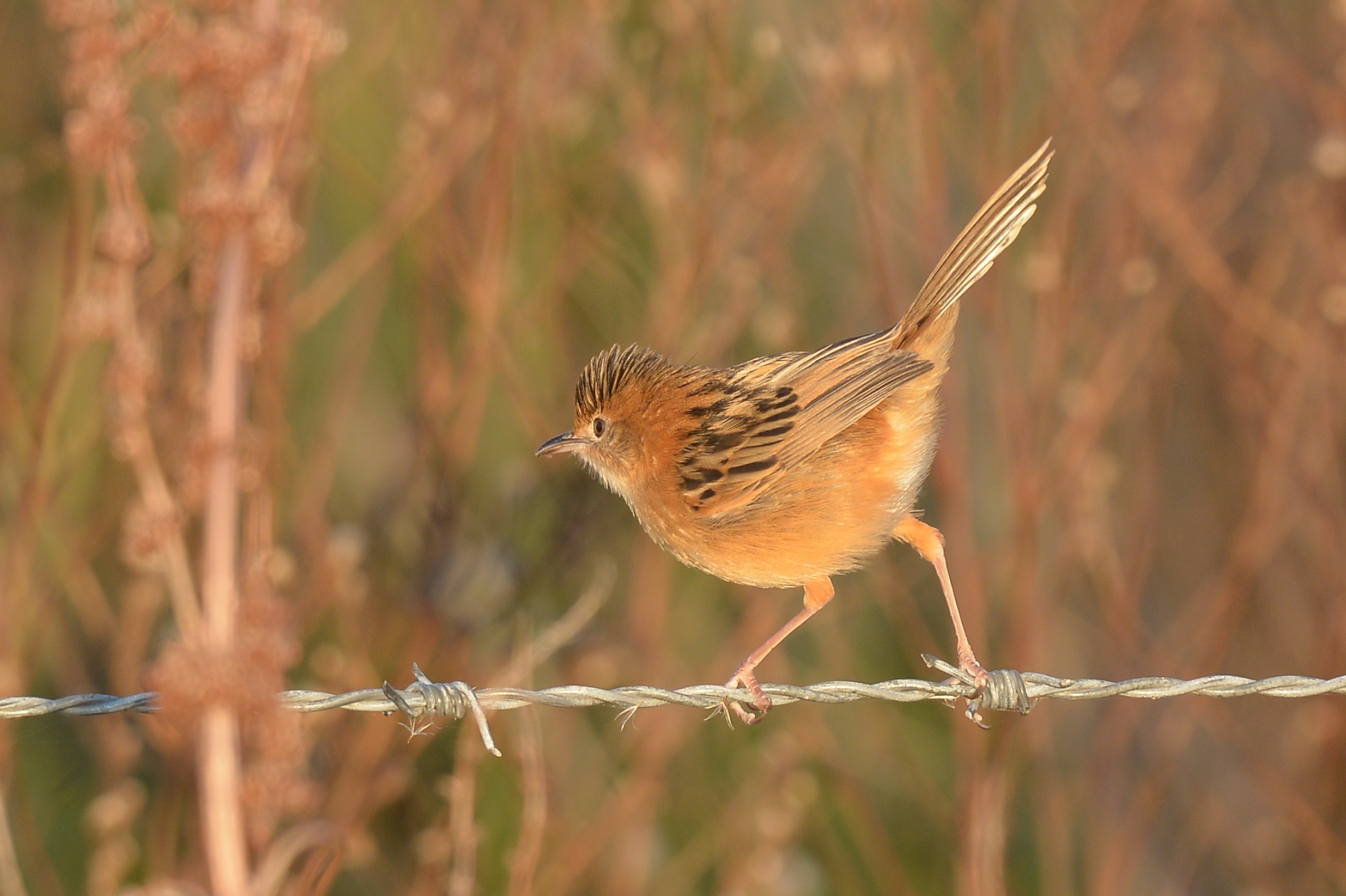
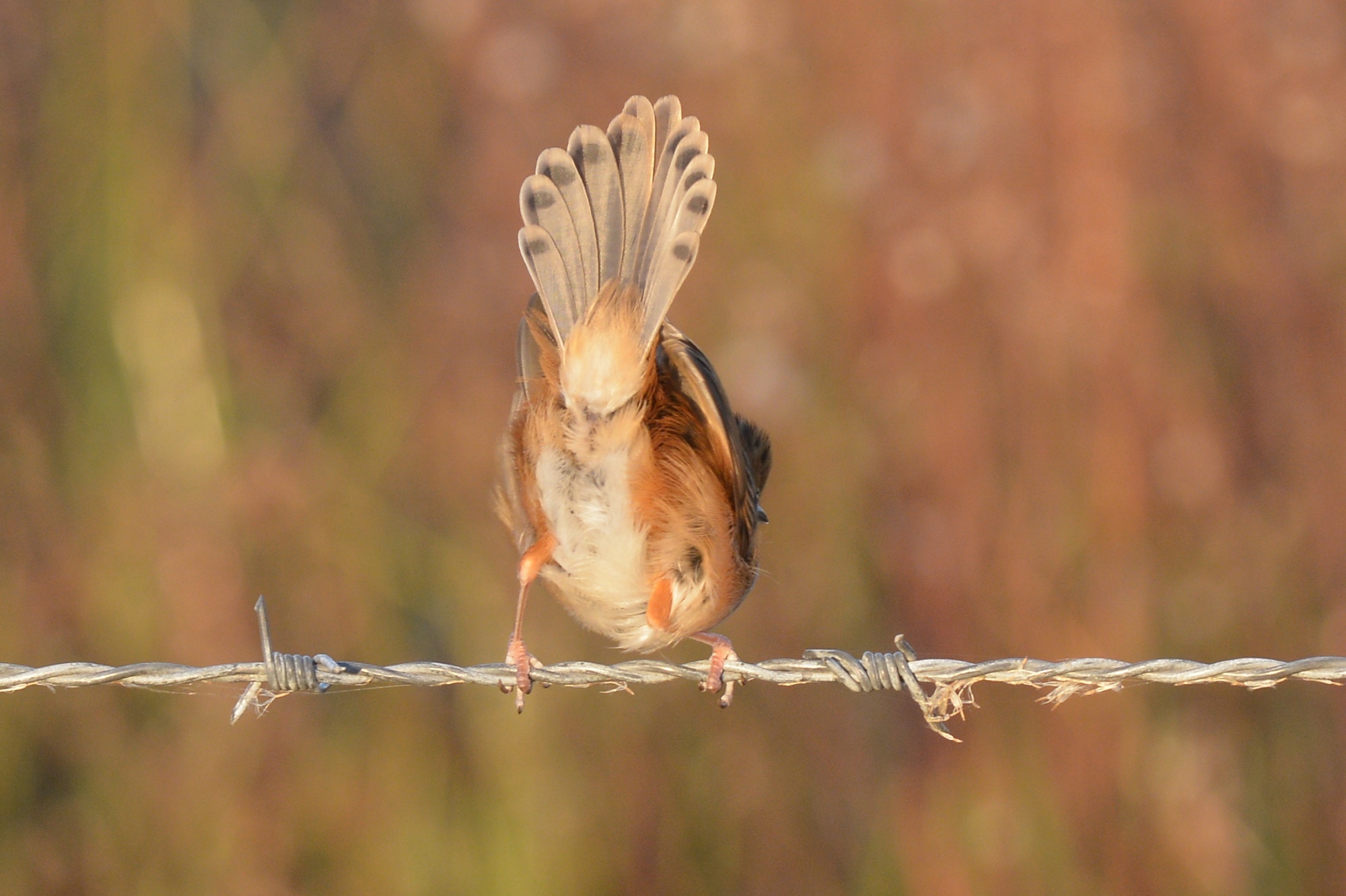
Lot of noise on the fence line just off the road.  A small family of Golden-headed Cisticolas were intent on something.

And putting it all together after the event, I do believe I might have stumbled on a Cisticola version of “The Gunfight at OK Corral

Seems that two males were going at it with a will, and all the family came out to see the event.

One of the major tactics it turns out is a lot of Ztttt Zttt yelling, and wing waving and turning and flicking of tail.  This last technique is done with back to the opponent so they get to see  just how serious you are.

Hard to work out in this little melodrama who was Wyatt Earp, and who was the various Clantons, but none the less the seriousness of it all can not be overlooked.

After about 10 minutes of dancing along the fence, turning and twisting that little tail and much Zrrrtt Zrrrt calls, one flew off leaving the other one the undisputed King of the Post.  Well at least that is the way I’m writing it.

Enjoy

This town ain't big enough for the two of us.
This town ain’t big enough for the two of us.
Don't let fear hold you back, I'll meet you on the fence, pardner.
Don’t let fear hold you back, I’ll meet you on the fence, pardner.
How's this for a view?
How’s this for a view?
I've often thought that birds have individual control over the feathers and now I'm sure.
I’ve often thought that birds have individual control over the feathers and now I’m sure.
Good but, what about this.
Round two
Round two
And the winner is?
And the winner is?
The king and undisputed Stump Champion.


Orion. Soaking up Kite awareness

Jon Young says, “There is nothing random about bird’s awareness and behaviour. They have too much at stake…. Being tuned into the tapestry…. we are venturing into a realm of awareness, and intention and curiosity.  I’ve had some magical experiences in the natural world, and some of them have involved birds.”

He quotes a San Bushman, “One day I see a small bird and recognise it. A thin thread will form between me and the bird. I will go again tomorrow and recognise it and the thread will thicken. Eveytime I see and recognise the bird, the thread strengthens. It will eventually grow to become a rope.  That is what it means to be a Bushman.  We make ropes to all aspects of the creation this way.”

Appreciation of the bird’s perspective.

Which puts us in the vehicle, heading along the 29 Mile Road at Avalon, in the early morning sunshine.  EE, Mr An Onymous and I. And as we draw nearer to the end of the road, a thought from us all, was, “Will Orion still be here?”
We need not have worried.

Sitting on a small tree, about 10m off the side of the road.  And by the look, having just eaten.  Feathers still wet with the dew from the grass of his last capture.

At first we stop the car on the far side of the road, and they photograph through the open window.
Orion turns his head, takes note, and then develops, ‘Soft eyes’.  Jon talks to this a lot, and I’ve mentioned it here before, but its the type of eyes that look right past you, with complete confidence.  I stepped from the car, I’m on the far side remember, and approached from the sunside, and moved across the road. ‘Soft eyes’ followed me.   Because of the line of the branch, his stance, and the way the light is running in the early morning, I want to be about 10m further out in the open. And of course the chance is he will spook and fly.

I make the first few shots. Orion sinks down onto the branch, and I take that as an invitation. Purposefully, rather than creeping up slowly, (that only spooks birds the worst), I move to the open area.  Now, the backdrop is not right, so I need another 4 or 5 metres. He throws his head back and begins to hawk-up the fur ball from the last meal.  I move.  Soft eyes follow.

Because of the lay of the land, it’s going to be hard to isolate him against the backdrop without a horizon line running somewhere.  I could go lower, but then it would be blue sky.  Nice, but not encompassing.  Besides crouching down human with long lens is going to turn those soft eyes to ones of determined study.  So I opt for another step or two to put his head against the far distant tree line.  That will have to do.

Orion settles to preen.

EE and Mr A take all this as a sign of relaxation and they also move off the roadway for the better angle and the light.   Orion soft eyes. We’re cool.

In the end, we’ve enough for a game of cards, the three of us and Orion.

Preening, wingstretches, repositioning on the branch.  And all the time he seems completely settled.

After an hour of standing in the fine sunshine, carrying a long lens, and working with a bird that seems to have no fear of us, a great deal of understanding, awareness and connection emerges.

The others move back to the car.   I bid this able bird ‘good morning’ and follow them back. Soft eyes follow me.

All is well.

Enjoy.

Well, good morning. Hunting's been good.
Well, good morning. Hunting’s been good.
Rolling up the Fur-ball from the meal.
Took awhile to get the material up.
A bird that is this relaxed is interested in preening
A wing stretch to the right. Lean into it, that feels good.
Lean into the Left. Big body angle here.
Wings to help balance on turning on the perch.
How to fold up big wings
_DWJ5638
All of us remark on the softness of the grey on the cap. Its like soft cat’s fur. Never noticed it until we are this close.
I don't mind you coming but did you have to bring the wagtail with you. Willie just can't help but get into the act.
I don’t mind you coming but did you have to bring the wagtail with you.
Willie just can’t help but get into the act.


Orion: The Kite of many poses

And just before you think I’ve run out of stuff to write about and am uploading a few older images.
These are from a visit this afternoon.  I’ve been laid up at home in bed with the flu for most of the week. And EE decided that it was such a nice sunny afternoon, that I’d be allowed out for a bit of ‘fresh air’.

So down to 29 Mile we went. And there was mr casual, Orion, sitting on the usual post eating a usual mouse. Well obviously not the same mouse as before, but you get the idea.
Interestingly enough there was quite a track made through the long grass and marsh weed, by photographers tracking in and out over the weekend.  EE says, if she’d have known it might have been a good place to sell hot scones and tea!

Orion seemed all the more oblivious to it all, and went through an entire preening and resting program with two photographers at arms length —so to speak. Well not quite, but in its relaxed way we enjoyed vicariously its company.

Here is a small sample of the afternoon.  And yes, I do feel better from the fresh air.

Enjoy.
Bird of mystery
Bird of mystery
Is that a mouse I see? Yep.
A quick extraction and discard of the bits that don't taste too nice.
A quick extraction and discard of the bits that don’t taste too nice.
Mouse trap
Mouse trap
Did you ever wonder what was under those wings?
The delicate rezipping of the tail feathers is always a delight to see from a raptor
A wing stretch and its time to go a hunting.

With Orion, the mighty hunter

Not sure how you’re Greek mythology is, but Orion was a hunter who was going to kill all the wildlife.   A bit miffed with his hubris, the gods took umbrage— they seeemed to do that a lot, over the least, and perhaps even looked for opportunities to be offended, but I digress.

In the end of the myth, well he gets bitten by a clever snake, and is consigned to turn for ever in the heavens, he at one end, and the snake at the other.  When one lot of star pattern is visible at night, the other is below the horizon.  One sets as the other rises. All very mystical.

There is a lot of the life/death, rebirth and restitution in the entire story, but that is probably enough for most average bird photographers to take in at one sitting.

After several sessions with the Black-shouldered Kite down on the 29 Mile Road, it dawned on me that Orion, the mighty hunter, would be a good, well, unisex name for our hero(ine).

So we went down to see Orion, discuss the matter with him/her, and see what he/she thought.

Seemed to go pretty well, and just to confirm it all the bird dropped off the  post, flew a few wingflaps, hovered, dived and returned with a mouse. One can almost here Mt Olympus turning.

Enjoy

Addendum: Just to be very clear.  These birds are not baited, called in, or in anyway interfered with.   We are simply recording the activities of a very relaxed and completely confident bird.  We strive for connection and if a bird exhibits any ‘stress’, we leave it in peace.  No photo is worth stressing the bird.
Now you know!

DWJ_0740
Warming up the wings for the next sortie

DWJ_0779 DWJ_0822

BIrd of mystery and mystique
I take that gesture to be an acceptance of Orion as a good name.
Hand me a camera and I’ll make a shot for the Fluker Post
DWJ_0918
Fine tuning under the hood

DWJ_0897

Orion: Portrait
Orion: Portrait

A Morning Flying a Kite (Black-shouldered) or Learning the Fine Points of Mousestalking

No.  I haven’t fallen off the planet.  But my photo database had developed a slight case of computer measels and its taken me the best part of the last couple of weeks to manage it back to life.
It all started…. but, let’s not go there.

Still been making photos but.
Here is a sequence from a morning with a Black-shouldered Kite hunting alongside the roadway.  For those who can navigate around the Western Treatment Plant this one is working along 29 Mile Road.

Interesting time at the WTP, the waders are all feeding and colouring up for their journey north to Siberia.  And all the nesting birds are now in winter preparation.
Which means the Black-shouldered Kites among others have come down to keep the mouse population from exploding to epic proportions.  And if this bird is anything to go by, then the mice are well and truly under control.

I’ve heard it said that on average the success rate for a hunting bird is one strike in about 10-15 attempts.  This bird (I haven’t named it yet), obviously never read the fine print, and in the hour or so we shared, it hunted 4 times and took 3 mice.

It also seems quite content around us mere humans and has allowed both close approaches, and has made its own close approaches.  Add to that some fine sunshine, a small breeze to give it some lift and what better way to while away a few hours in the morning.

Enjoy

DWJ_16-04-01_654_ - Version 2 DWJ_16-04-01_702_ - Version 2 DWJ_16-04-01_719_ - Version 2 DWJ_16-04-01_734_ - Version 2 DWJ_16-04-01_758_ - Version 2 DWJ_16-04-01_769_ DWJ_16-04-01_605_ - Version 2 DWJ_16-04-01_850_ - Version 2 DWJ_16-04-01_467_ - Version 2 DWJ_16-04-01_791_ - Version 2 DWJ_16-04-01_528_ - Version 2

Wagtails visit Western Treatment Plant

Ahhh,   a tour update and trip report.

The Werribee BirdLife group had their monthly outing yesterday and visited the Western Treatment Plant.
The weather has been predicted to be sunny and hot, so it was with a touch of bemusement that we headed off down the highway in the fog!

But it did give us a lovely cool morning, so the sulking photographer in me just had to make do for awhile.

Travelling with the Wagtails (Werribee Birdlife in a former name), is a fun experience.  There is a great deal of knowledge of the birds, and the area, and the social activity makes for a fun filled and well fed day.

We went down to the T Section, an area that is fast taking on hero status as a Red Phalarope has come down to visit over.  Perhaps to the uninitiated a bit hard to spot, but once seen the frenetic activity of the bird makes it reasonably easy to locate. And especially if the tour leader. (D Torr esq.) lines it up in the spotting scope at the start of the activity.

Here is a quick take from some of the events.

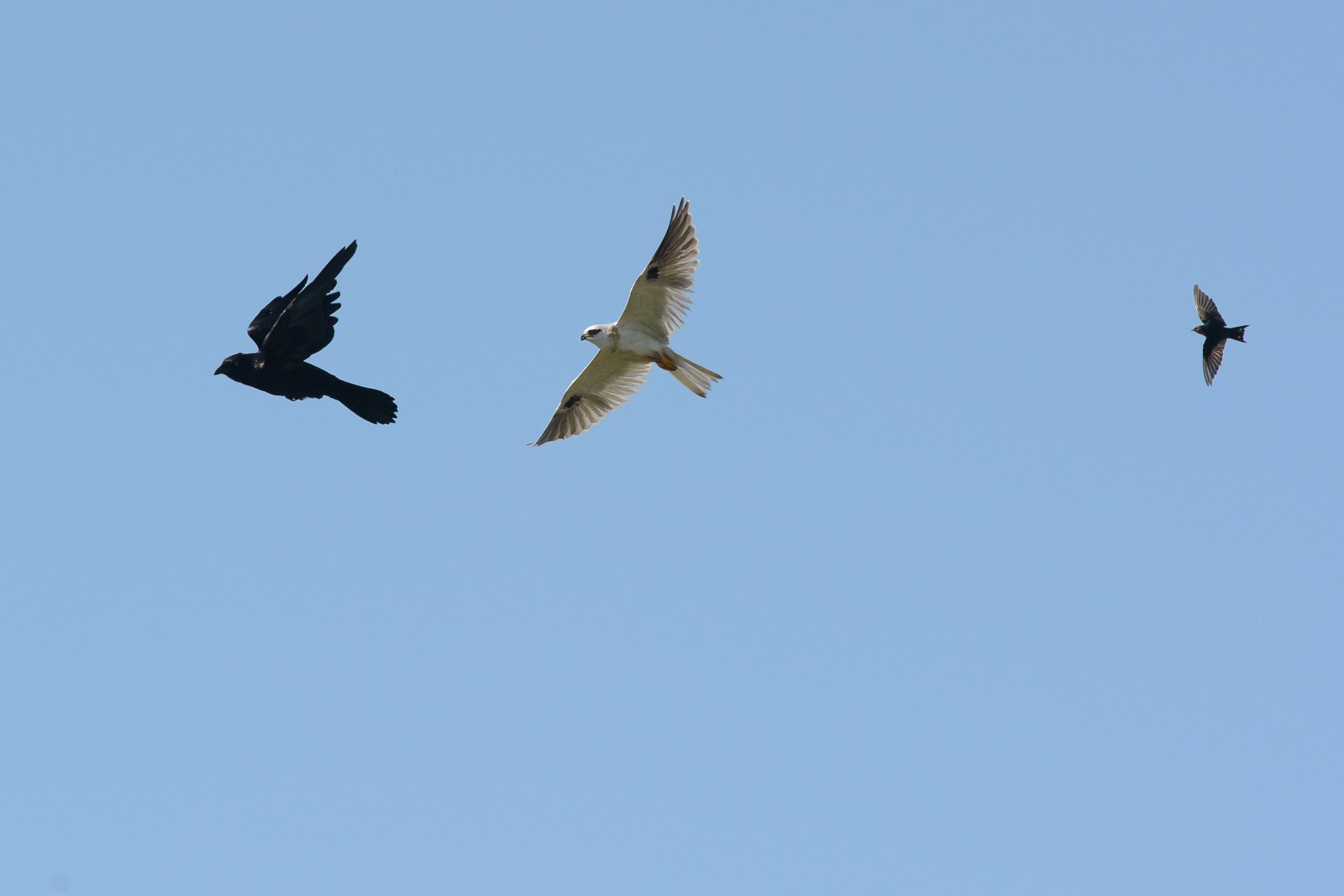
Black-shouldered Kite, in pursuit of a really annoying Raven
A Welcome Swallow decided to join in the chase.
Down at the beach, the Red-necked Stints are really putting on the weight now.
White-fronted Chat: Female
Whistling Kites at play
Whistling Kites at Play
Whistling Kite
Whistling Kite
A nice find. Banded Stilt
The amazing T Section ponds. Spot the Red Phalarope for extra points!
Sharp-trailed Sandpiper. Trialling the travelling equipment.

Birds, water, enjoyment

Mr An Onymous has remarked from time to time on his bemusement at water birds that spend all their time hunting, and standing about in the water, to spend some time bathing in the stuff.
Seems to him, that its a bit incongruous for a ‘water’ bird to then take the time to use the water to bathe, given its already dripping wet in places.

Which brings us to a fine warm morning at the Western Treatment Plant.
The waders that visit over summer are now getting the first signs of the travelling bug biting.   Its time to pack on as much weight as possible, and to conserve as much energy as possible.
So as the tide comes in, and the mudflats are covered with water, they retire inland to some of the safer ponds and settle in for a long sleep, and a bit of a preen. No doubt feathers need be tip top for the long flight ahead.

There are a special set of small ponds near the Beach Road entrance the plant that almost always attract them in great numbers.  Plenty of soft grass, the safety of rocks and small islands and water that is only knee deep for a dotterel.

And because they are trying to conserve energy, they are a little more approachable.   I managed to quietly slip off the side of the road and working my way through the grasses come up pretty close to a large clutch of Sharp-tailed Sandpipers, loafing in the sun.

The water in the ponds has come up a few centimetres of late, and I was not able to get a really low down water level shot without actually being in the water, so I opted for wet knees and elbows and hoped the water would not rise up through the grass and saturate me all over.

The Sharpies decided that with such nice sun, it was time for a bath. One by one, they stepped off the grasses and into the water for the tentative bobbing into the water then settled down like great big sponges, and simply soaked up the water.   Which was then sprayed over all in close proximity.  Finally a few wing flaps and a jump for joy, and the bird moved out of the way and the next one took up the challenge.

After about 20 minutes, and my knees and elbows turning strangely bleached,  I rolled over back up the grass to the roadside.  They didn’t flinch a feather.

Enjoy. They did.

Stepping into the water

DWJ_0931

The soak test
The soak test
Spray going everywhere.

DWJ_0980

Wing flap to get the bulk of the water off.
Jump for joy and the job is done.


Little Journeys

When I was  a mere broth of a lad, we had in our ‘vast’ library of books a volume entitled  “Little Journeys to the Homes of the Great”, by some dude named Elbert Hubbard. It was filled with wide-eyed stories of visits to great historical people. Some with really funny names to a young lad.  Aristotle, Copernicus, Jane Austen, Eras-someoneorother ….

I acquired much later in life a copy of his “Day Book”, which was a collection of his ‘thoughts’ on various subjects. Nowadays a google search will find lots of them in disconnected ways.

He perished in 1915 with the sinking of the “Lusitania” which bought the United States in the First World War.
Intriguing really as one of his quotes was.

As long as governments set the example of killing their enemies, private individuals will occasionally kill theirs.

But back to Little Journeys.
A friendship that goes back a long way and includes all sorts of family connection is with Mark from over on Flickr at mdsmedai9.  So when he suggested he would swing by for a visit in the Winnebago, we decided a “Little Journey” to the Western Treatment Plant was in order.
Bet you were, dear reader beginning to think I’d never find a link for the title.  Sad.

Of course on such short notice, the weather was in no mood at all to be co-operative. And it wasn’t.

Still we had a grand old chat, drank some earl of grey, and found at least a few birds for him to photograph.

At about the same time,  my friend, (Whoa!! how many have I got??) Nina, (Nina and I used to work together a long time ago,  in what can only be described as “another life”) had also been down for a “Little Journey” to the other end of the WTP, to visit the amazing Red-necked Phalarope and found some great looking young Black-shouldered Kites for her time.   One of which she is graciously letting me publish in this blog.

Enjoy, we did.

Hobby on a Chat
Hobby on a Chat
Black Kites waiting for the tractor to make the next pass.
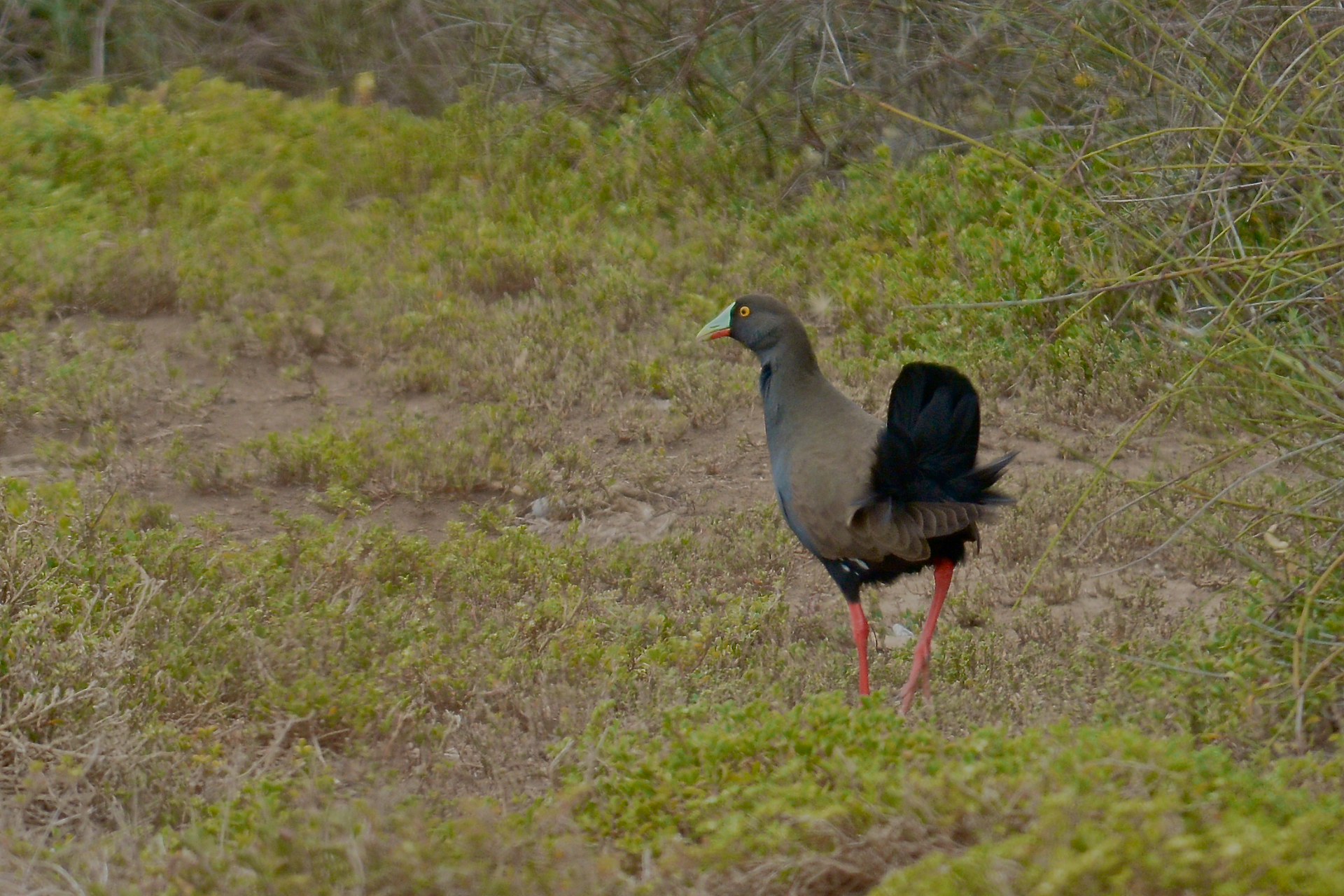
Black-tailed Native Hen, going about its "Chooky business".
Black-tailed Native Hen, going about its “Chooky business”.
White-fronted Chat.
White-fronted Chat.
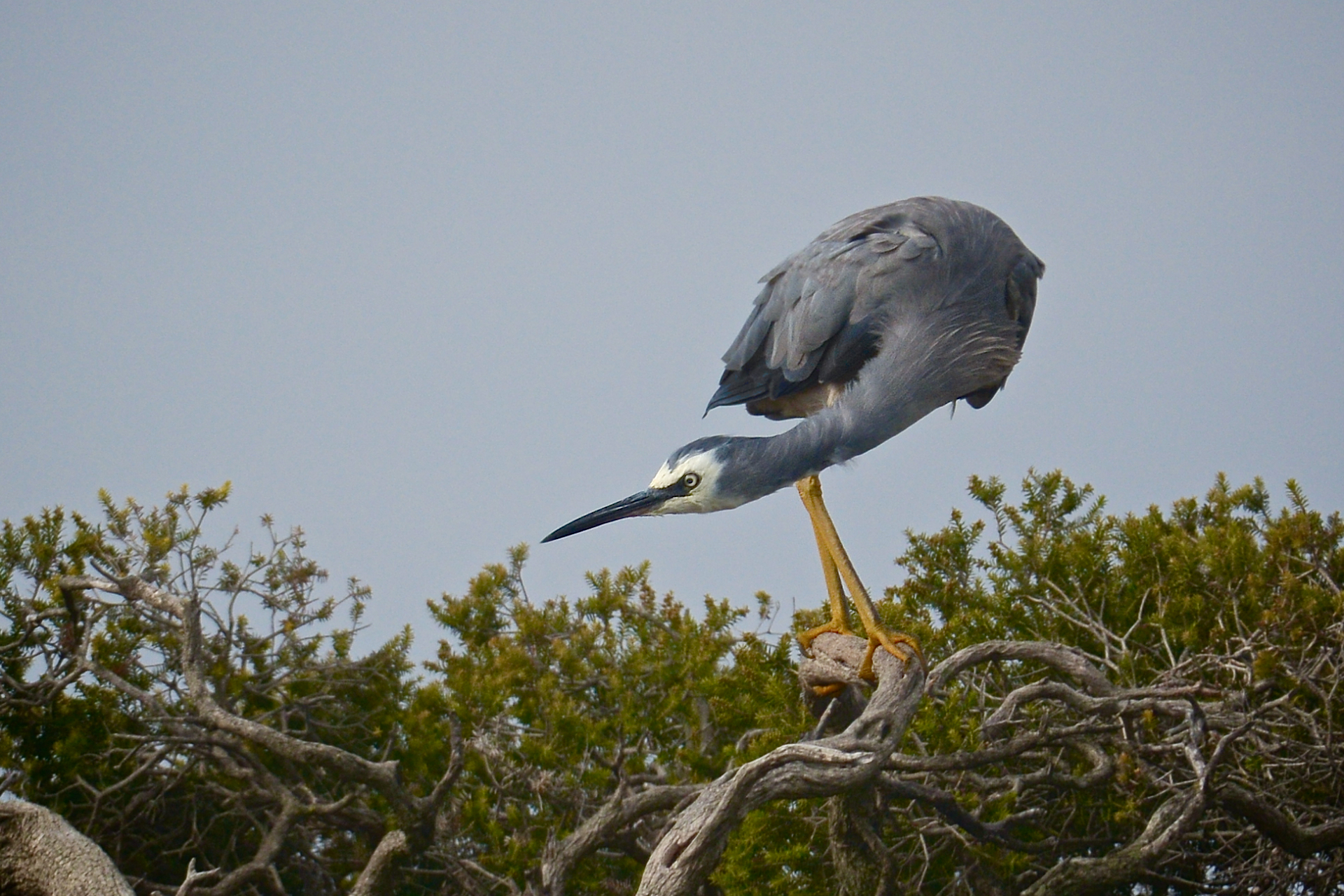
Mr Inquisitive. White-faced Heron watching the goings on below as several Willie Wagtails try to move a Little Raven out of their territory
Australian Shelducks have moutled out and now have nice new flight feathers to put to good use.


Nina's lovely shot of a Juvenile Black-shouldered Kite. And Sunshine. So jealous. Thanks Nina for sharing
Nina’s lovely shot of a Juvenile Black-shouldered Kite. And Sunshine. So jealous. Thanks Nina for sharing


The balance of life: Western Treatment Plant

I wrote of the Banjo’s Romance, last blog.
Then we were out to the Treatment Plant, EE, Mr An Onymous and I.

To see that poem played out.

On a day that started with a lighting strike about 100m away and “CRACK” of thunder that would indeed wake the dead, the overcast and wet weather offered us little reprise in our quest for Sea-eagle.

So we turned the way for home.

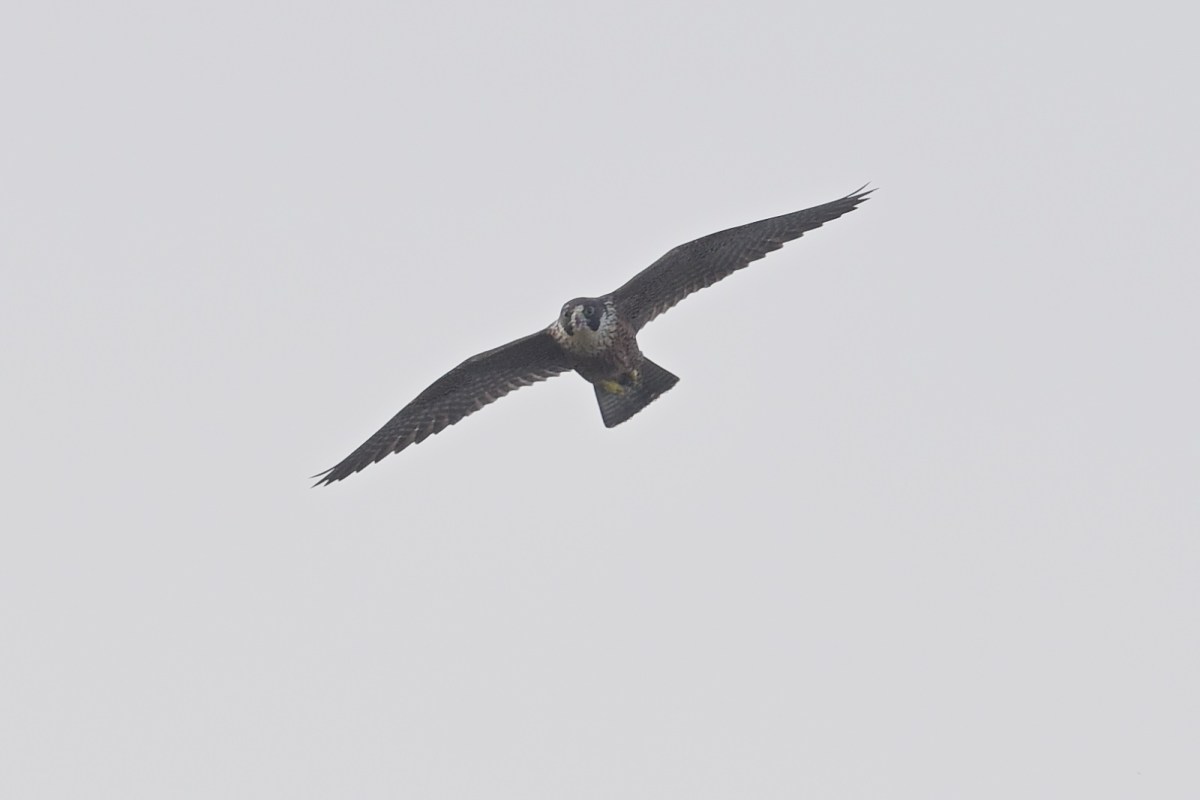
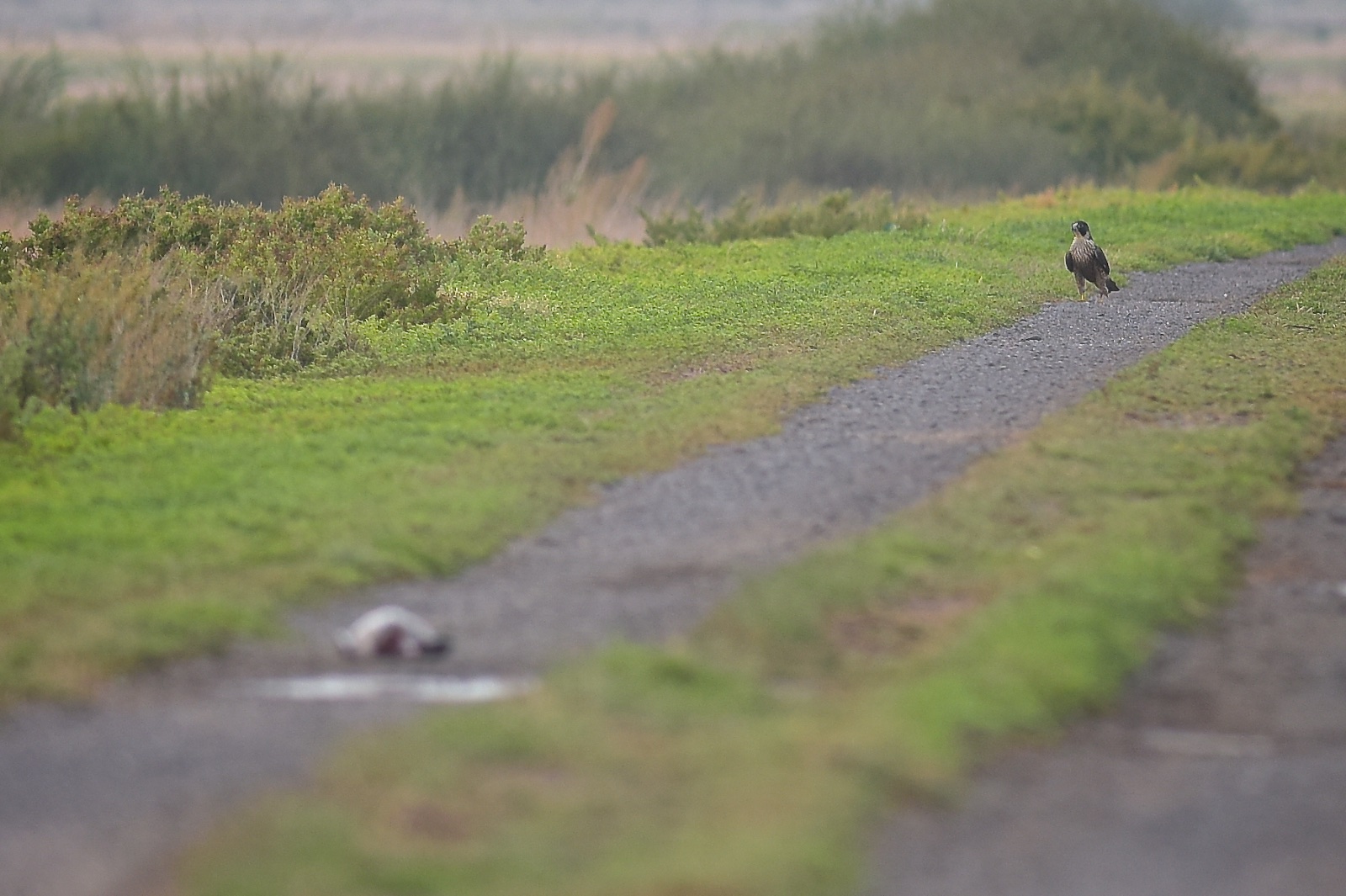
And just as the light was fading, a sparkling wingflash streaked across the river just to our left.  A falcon.  No, not any flacon.  A Peregrine Falcon. My first for the Treatment Plant.

It had downed a duck.

The Pink-eared Ducks spend most of the day lolling about in Lake Borrie, but then on evening, make the several hundred metre flight over the Little River and into one of the Walsh Lagoons just over the river.  A few minutes flight for a nimble duck.

For the Falcon, it was pretty easy pickings if you think about it.  Ducks- several hundred- in  a straight line, – tricky little dudes, fly over the reeds on the far side take a detour either left or right for a few hundred metres along the rivers edge, then pop over the far bank and plop in to the Lagoon.  The slow moving Whistling Kites and Swamp Harriers can’t match that speed.

But.

Dropping from above at speed over 100kph, the Peregrine probably doesn’t even raise a sweat.

But

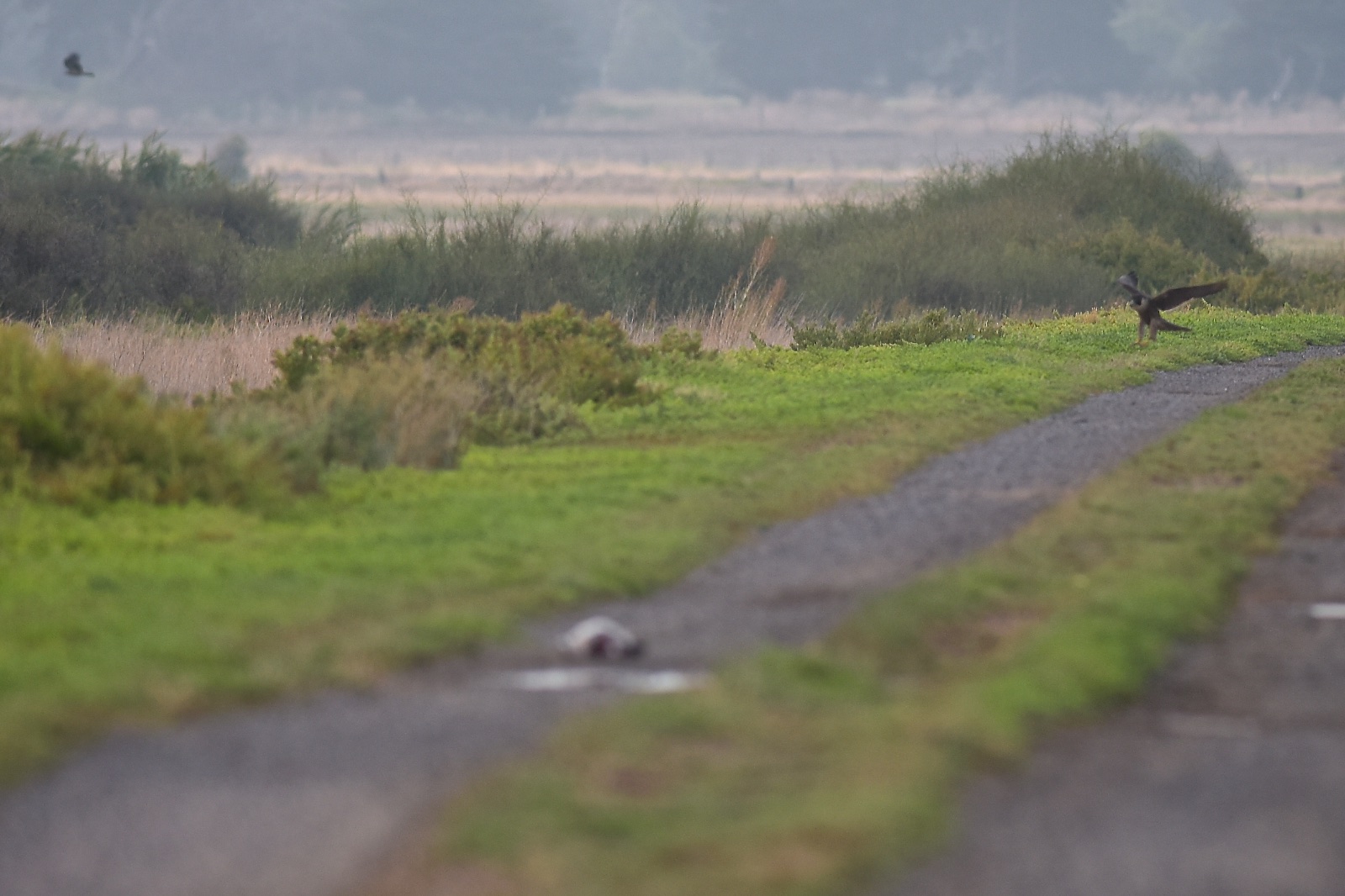
The duck is a heavy creature and the Falcon can’t get it airborne and must work it on the ground.  Now, ordinarily, good luck would have put the prey down in a secluded spot. However in this case it was on the middle of the track we were travelling out along.

So the Falcon took to the air. And circled.  So much so that in the end, I decided to reverse the car back down the road, and see what would happen.  Too far back for photos, but what would the bird do?

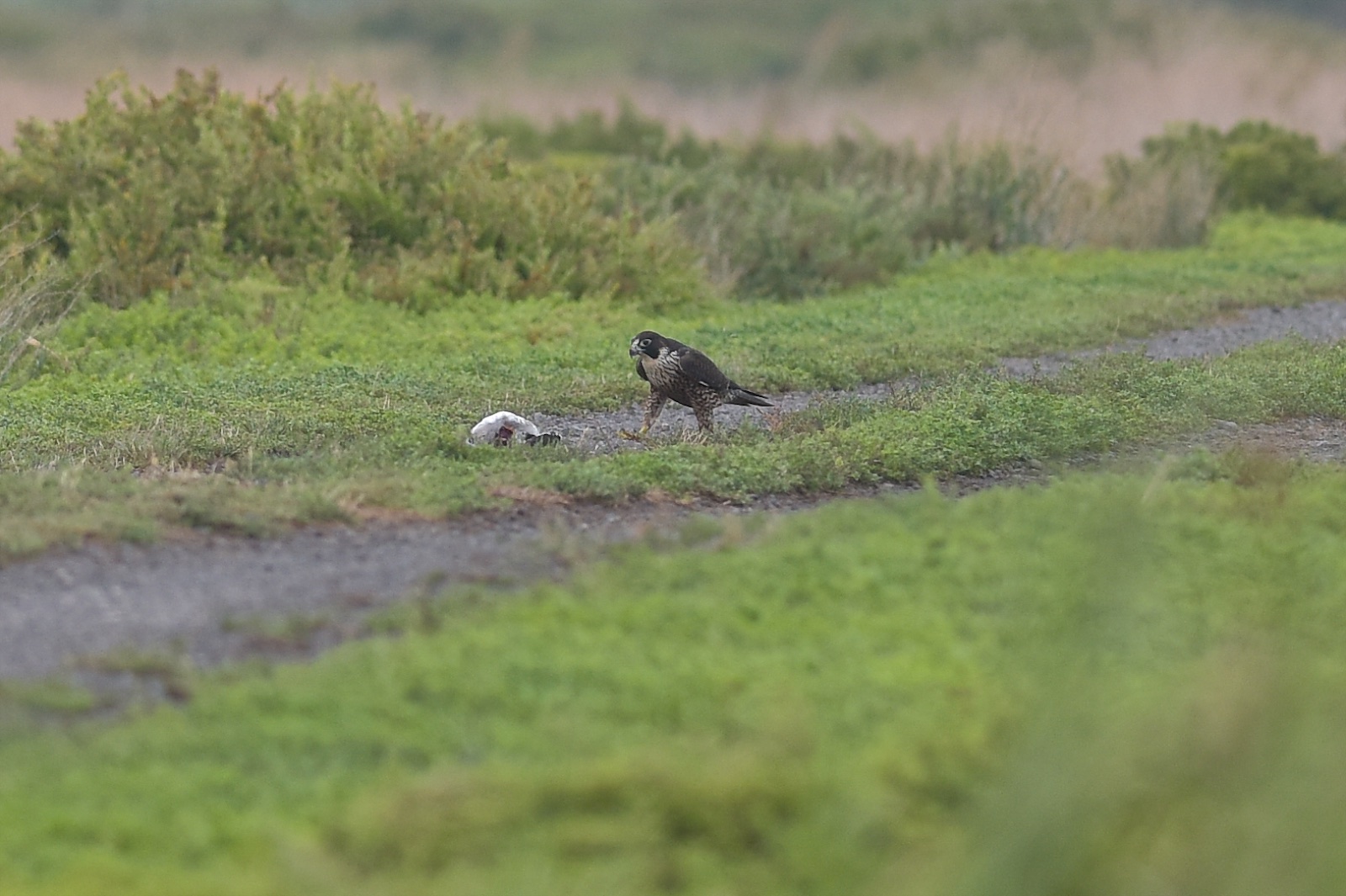
And sure enough, after several scattered flights back and forth, and cleaning up an inquisitive Swamp Harrier along the way, the Falcon landed about 50m from the duck and decided what to do.  After several minutes, it flew down landed a few metres away, re-evaluated our presence, the chance of a meal, and hopped up to the duck and began to take off the feathers.

We left it in peace to finish its well earned meal.  On the far side of the river we spotted another set of sharp wings. A second Peregrine!   And the light was gone.

Enjoy.  Huge crops, but I wasn’t going to disturb the bird any more than I had already.
Swinging in to claim its kill.  The unfortunate Pink-eared Duck is in the foreground.
Swinging in to claim its kill. The unfortunate Pink-eared Duck is in the foreground.
Time to sit and contemplate the next move
Time to sit and contemplate the next move. A Swamp Harrier along the river in the top left.
Closer now and everything looks safe
Move onto the prey
Move onto the prey
Hopping the last few metres
It's mine!  And feathers begin to fly
It’s mine!
And feathers begin to fly
Feather removal.
Feather removal.

Blogging 101 Week 2 Day 4

Impressionist, Pictorialist, opportunistic or just too late.

Yesterday after a spin around the block, I came upon the site Hoof Beats and Foot Prints and today Emily has posted a few shots and a bit of musing on “Impressionistic” results. When sometimes the wrong settings are the right settings.  See Here  A Friends Filters

Which is as it turns out fortuitous as today’s Blogging 101 assignment was to write a post on thoughts that linked from yesterday’s visits. As coindicene goes, I’d put this picture of a Black Falcon in flight up on Flickr.

Impression: Black Falcon at speed

And one of the comments from Peter pointed out that sometimes we do indeed become over emphatic about getting the clinical result.  I follow Ming Thein, and he too from time to time explores out beyond the formal result.

My thoughts on gaining an impressionistic feel or a “pictorial” atmosphere is that its just as difficult to get a great artistic alternative, as it is to make the clinical shot.
Sometimes even more difficult as we have balance, subject movement, shutter speed selection, composition, lighting and exposure.  It’s why it’s easier to stick it into ‘photoshop’ and mess with the controls there.  Or look through the blurry shots destined for the waste bin and rescue one, tart-it up and try and pass it off as really a Strong storytelling impression  of the movement and mood.

Or plan for it!

One of the elements I always think make it work is it approximates what we would have seen had we been standing there.  The motion. That fleeting glimpse of the bird as it passes.

Further pondering lead to really thinking of two possible opportunities.  One is panning with the bird.  At least part of the bird should be sharp, and depending on the shutter speed, the backdrop should be  streaky to milk smooth.

The other is the bird movement.  And again the street smarts would say that part of the subject area should be sharp to highlight for the eye the impression of movement.

Well my Black Falcon doesn’t fall into much of any of that. The ugly truth is that we were simply too late, too late too late.

Had we entered the WTP in our usual way from Paradise Road, we’d have encountered the birds, the harvesting, and the right evening light.  I’d have had a bit of a chance to work out the bird’s movements, where they turn with the tractor, where they perch between flights, and would have set up to get the best from that.   But, we were too late.

The sun was setting as we drove by.  Birds were all over the sky,  Black Kites, Whistling Kites and one lone solitary aerial speedster.
“A Black Kite” she called.  “Yes,” said I, slamming on the brakes and opening the door and grabbing the camera and trying to find the streaking black dot in the gloom.

Oh, 1/50th at ISO 400.  Who am I kidding?

It sped past, dropped onto a branch nearby, and glared at some Black Kites.  Slowly I advanced, knowing it was futile. But. I wanted at least one record shot to show that Black Falcon is in WTP over the summer.

So did it make the waste bin?  It is just a dolled up average shot.  Or does it give an impression of the beauty of this bird of speed.

Over to you.

Another photographer who has struggled and succeeded with the impressionist approach is William Neill  check out his work here.

William Neill

And I’ve included a couple of shots from other days.  Welcome Swallow at high speed wingflap.

Brown Falcon a few weeks back, in about the same sort of light “We might have had!!!!”. And about 2 km from where the harvesting was taking place and about an hour earlier so the light was ‘golden’.

Such powerful direct flight.

Such powerful direct flight.

Might have missed the light, but the old dude can still manage to pan successfully!
Approach for landing in a resting perch.
Now imagine what the light might have been like.
Really, my favourite of the unfortunate series. The wonderful milky smooth backdrop is delicious.
They are flying in and picking insects of the flowers. As the light deteriorated as the sun set, I watched the shutter speed disappear.
They are flying in and picking insects of the flowers.
As the light deteriorated as the sun set, I watched the shutter speed disappear.
What might have been. Brown Falcon in that light about a week earlier.


No matter what, the fun of experimenting is one of the great challenges and true joys of our medium.