In early July 2021, my friend Nina had been at the WTP and found a family of Brolga playing with a tennis ball. Nina kindly let me put the story and the pictures on this blog and here is a link Tennis Stars Be Prepared to be Amazed It was just at the start of the Wimbledon Tennis.
+D4 turned up yesterday, and EE and I decided a trip to the WTP would be as good a location as we’d not been down for awile.
As we moved through the Western Lagoon area, we spotted a small number of Brogla opposite a pond on some lower ground.
And.
They were playing with a Tennis Ball Coincidence. And Wimbledon started this week. Coincidence?
The universe is far too complicated for me to understand. The question is, “Is it the same tennis ball from 2021?” Or do the Brolga have Amazon ship in fresh ones each year?
And here’s how the game progressed. In the end, as two of them seemed to argue, a third one came in and picked up the ball. “It’s my ball, and I’m taking it home.”
Enjoy
You need a good playing surface for tennisAre you sure you dropped it hereIt’s not your turn, it’s mineA great shotPerhaps the coach was offering adviceOh, great forehandNow you’re getting good distanceA free throwThings get heated in close games.That was definitely Out!And while the two argued another came, picked up the ball and took it home
I was first introduced to the Western Treatment Plant by a birder who had been visiting the area for many years. He delighted in showing people the best of the area, and his enthusiasm was infectious.
On one trip, we were sitting on the rocks in the grass overlooking Ryan’s Swamp. It was at the time carrying a good depth of water. As we sat eating lunch, we chatted about the history of people bird watching in the area. One character, Fred Smith, had been visiting the plant for many years and in those early years, he would catch a train to Werribee Railway Station and then ride his bike down to the plant. In those early years, access to the bird-watching area was through the town of Cocoroc.
He then said two profound things that have stuck with over the years. As we sat in the early autumn sunshine, with Kites and Falcons keeping us entertained with their aerial skills, he said, “This is a Magic Place.” A little later he continued, “It is a great privilege to be able to have access here.”
Times have changed, transportation has become easier and now the ‘Farm’ is running the risk of over-familiarisation. Where once it was possible to see maybe 5 visitors in a day, now, the numbers approach 50 or more when a ”special” bird is in residence.
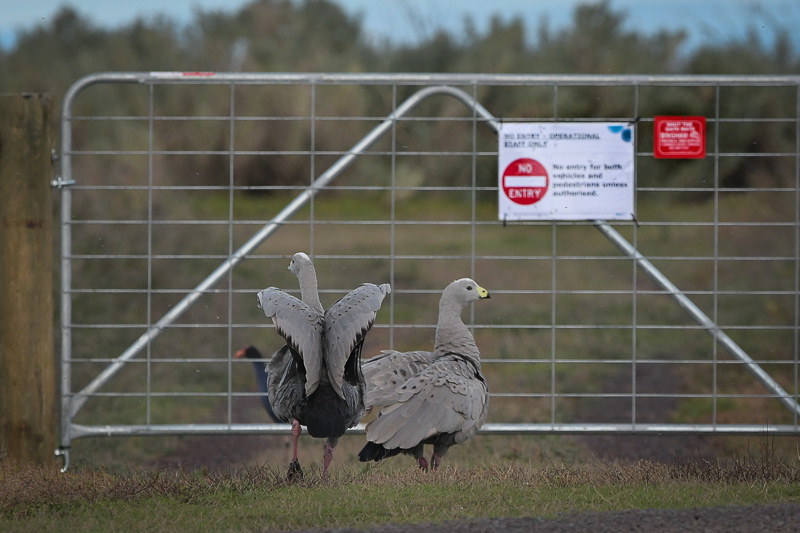
At present an international wanderer is causing excitement on social media, and the area where it is currently over-staying is in danger of becoming a traffic jam. And the environmental pressure around the pond had resulted in Melbourne Water closing a lot of small side roads with gates and signs and to issue, a fairly strong worded edict to birdwatchers, photographers and general visitors. Here is part of that document.
Incidents include:
walking off tracks and roads and entering vegetated areas and margins of ponds for photograph opportunities
inappropriate driving on site including riding in the back of a ute tray whilst in motion
entering restricted areas on foot and by vehicle that are off limits to permit holders
riding bicycles on the birdwatching route.
To protect yourself and the health and safety of these species, please:
stay near your vehicle at all times – you are not permitted to walk more than 30 metres from your vehicle
abide by the prescribed speed limit of 30kmh or as designated by signage
follow instructions on all signage
DO NOT ENTER areas are strictly no-go zones – you are not permitted to enter
ROAD CLOSED sign means the area is closed both to foot traffic as well as vehicles
No bicycles are allowed on site – cars only
It seems that we no longer adhere to ‘a privilege’ to be there. The view of the bird, and the ultimate photograph are more important. And overcrowding to get that social media ‘hit’ is not limited to birding. Places like Venice are charging tourists to enter. In Japan they have erected a large barrier to prevent people stopping in the middle of the road for that ‘perfect’ picture of Mt Fuji. And there are many others.
It reminds me of International Photography Exhibitions during the 1970-80s. There was a division for “Nature Photography” and -the hand of man- was not to be seen in the photo. As competition for these events was high, much ingenuity was used to obtain the prize winning picture. For quite a few years photos, (and this is in the days of filum) were made of nesting birds by finding a nest, setting up the camera rig, and flash units, close to the nest, and then chopping off any branches that might obscure the ‘perfect shot’. One I know of used a motorised camera with a 250 shot back, and a motion release. He’d set it up, retire to the local motel for the day, and then on the following morning go and collect his gear and prize winner. Leaving the bird nest now totally exposed to predators and the weather. Another series that did the rounds for awhile was pictures of Sacred Kingfishers in nest. This was achieved by digging a trench next to the nest and then scraping away the earth to reveal the young in the nest being fed. Again, driving away leaving the nest exposed. Spotted Pardalotes nest in holes in the ground, the entrance very well camouflaged. But it was nothing to clear it all way to get a shot of the bird emerging or entering the nest space.. And walking away leaving the nest unprotected. Fortunately in the end we were able to have such practices banned. However the pictures still did the rounds. Bowels, Robins and Flycatchers of Australia, has a number of photo plates where the pruning around the nest is quite obvious.
BIrdLife Australia has a code of practice for photographers. I hope for the sake of both the privilege to visit the area and the Magic of the Place, that notice is taken. It would be sad to loose access to such a special place.
That’s all very well. But. How are we going to get in?
We were at the Western Treatment Plant and the weather had clouded over. Best to head for home was the vote from both EE and Mr An Onymous. As we were at the southern end of the plant we decided (well I had the steering wheel) to take the longer, not so well used, track around the Austin Road extention.
This track circuits the far eastern side of the plant and has a long treeline running next to the fence, and can be on occassions worthwhile. Most times however its just a drive between the treeline and the open paddocks. Which is why many don’t make that trip and the track is mostly used by the farm folk and whatever livestock is in the area.
I missed the Black-shouldered Kite sitting on the old gate rail, but decided to stop just in case it was in the area.
We’d only just got out of said IamGrey and were looking about when an ominous black shape headed toward us across the field, pursued by an equally intent Black-shouldered Kite. Camera up, frames released, and then it was obvious we had found a Black Falcon with a Kite in hot pursuit. This is pretty unusual as normally the Falcon would have no qualms about relieving the little Kite of any prey it might have caught. Perhaps the pair had a nest in one of the nearby trees and they were in no mood for the Falcon to give them grief.
Black Falcons are not resident at the WTP, they tend to come in over the summer and we might only have one or two sightings each season. The Falcon is much faster than the Kite and more like its Peregrine and Hobby cousins than to the Browns.
It swept across the paddock with the Kite stooping on it several times, no contact, but enough to move the bigger bird on. It turned behind the treeline and was gone. The Kite returned to rest on the old gate post.
I had written him a quick text, which I had for want of better sent it to his mobile as always, suggesting as the weather looked to improving a trip might be exciting, So I sent it to him just “On Spec” marked as follows: “Mr An Onymous, fancy a trip to WTP tomorrow early” And an answer came directed, just as I expected. Sent from his smartphone, “I’ll be there by sun up”
Apologies to the Good Banjo
“So,” as Banjo also wrote, “We went”
A quick stop for coffee from Gerry at the Highway Lounge and off to the Treatment Plant we journeyed. Hardly a “Vision Splendid” of bird life extended, but better than sitting in a “dingy little office”.
The weather was performing as expected and we dropped EE of at the first pond to pursue some Cape Barrren Geese, the first we’d seen in the T -Section area for quite awhile.
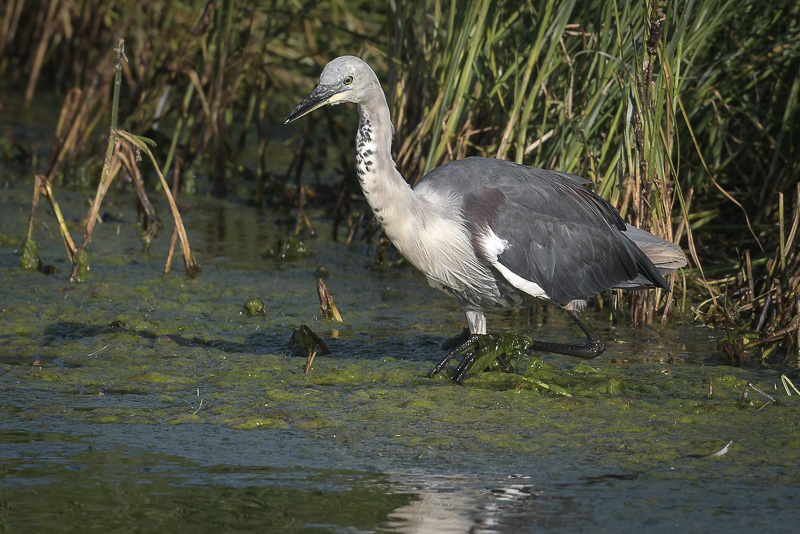
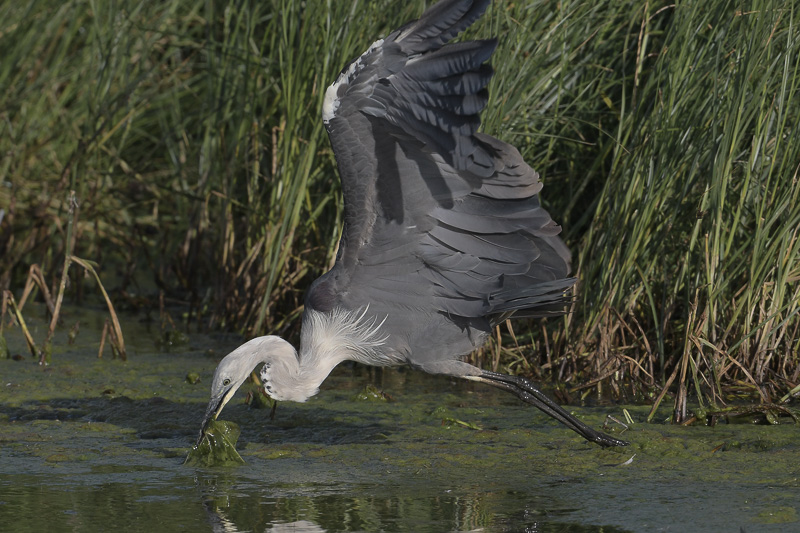
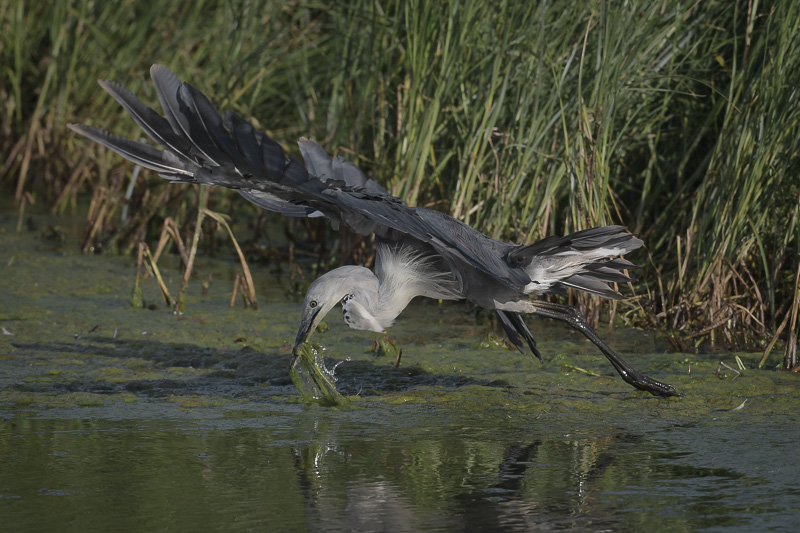
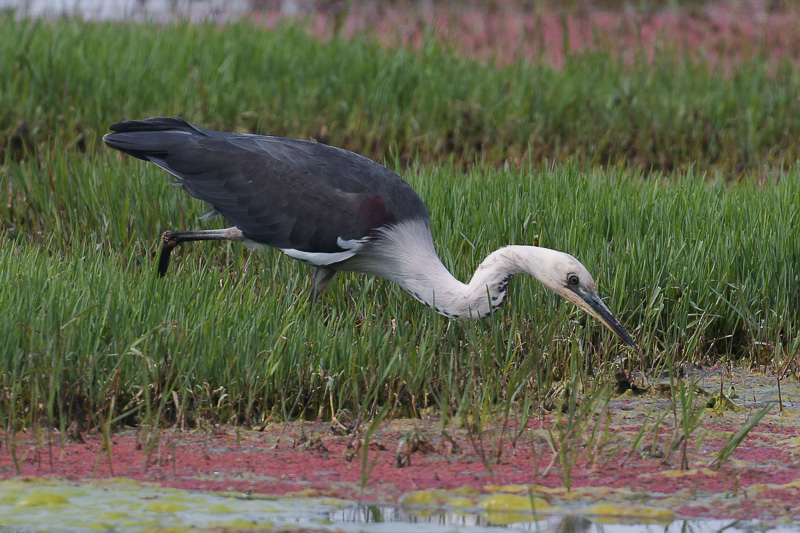
Mr An Onymous and I went up to the next pond and as we were trying to figure out our first move, a White-necked Heron stepped out of the pond-side reed bed and began to hunt.
And as the Banjo continued, “For a Photographer’s life has pleasures that the townsfolk seldom know,” We stood as patiently as the Heron and watched it watching the water. And it didn’t take too long for the glacial moves of the Heron to suddenly become full of life and action as it pursed its prey.
Then it leaned forward and needing just a little extra reach extended its wings and jumped. Another of Prof. Will’s Growling Grass Frogs had met its end.
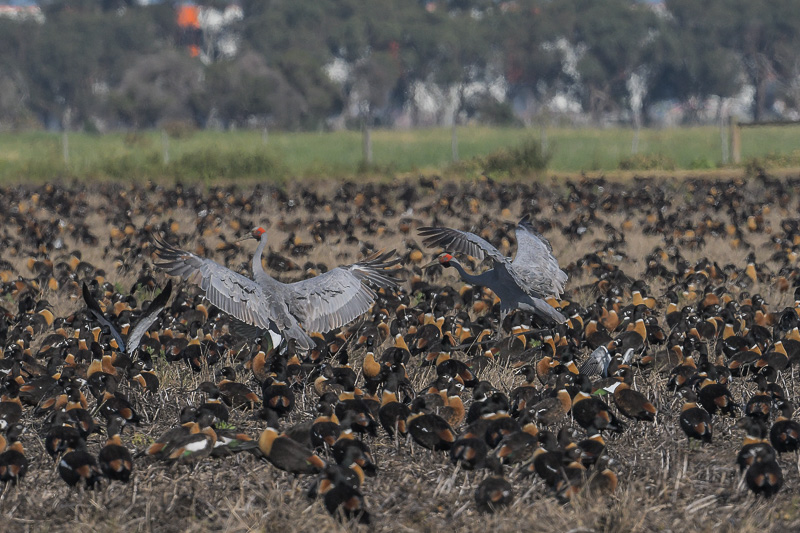
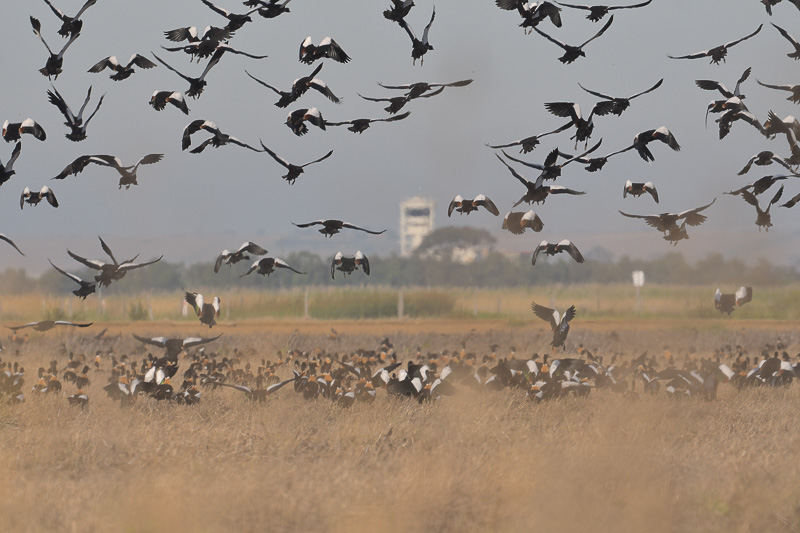
Every year thousands of Austalian Shelduck fly into the Western Treatment Plant during November. When I grew up, on the river country, they were called “Mountain Ducks”, so as a littleun, I just assumed they must be, as the horse in the The Man from Snowy River, “mountain bred” But it’s highly like that among the thousands, not one has ever been seen in mountain territory.
They congregate to moult out all their flight feathers and for a few weeks are flightless. And pretty helpless. The foxes can ravage the flocks and its not unusal to see a dozen or more carcasses by the roadside on a trip through the plant.
Once they have gained a new set of flight feathers they then begin to fuel up for the next part of their journey.
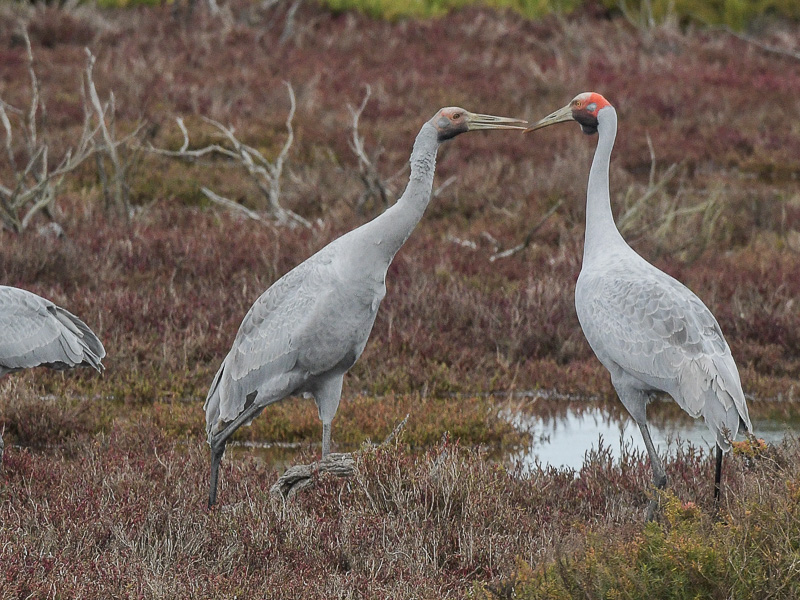
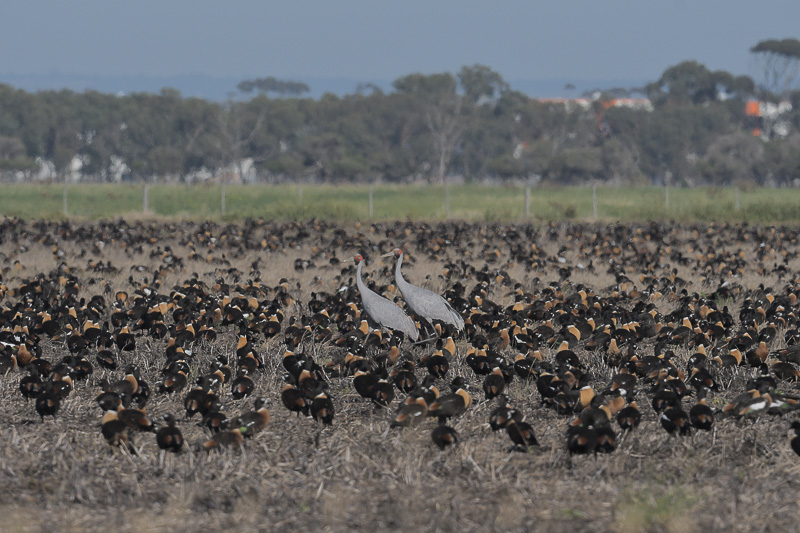
We stopped on Twentynine Mile Road to have a look at a great number of them feeding. And for bonus points a pair of Brolga landed and walked through the flocks. With a few wing flaps and some head shaking they seemed to clear a path between the ducks, until in the end, perhaps tired of that game, they took to wing and headed further down the Plant. The ducks just continued sitting, enjoying the sunshine.
We have had good numbers of Hoary-headed Grebes at a number of locations over the past few months. Not that we don’t see them regularly, just the large numbers are quite unusual. Some ponds at the Treatment Plant have had 30-40 birds on occassions.
We were at the T-Section area, and in the pond near where we’d parked IamGrey, it was hard not to notice the 15-20 or so Hoary-headed Grebes all swimming about together.
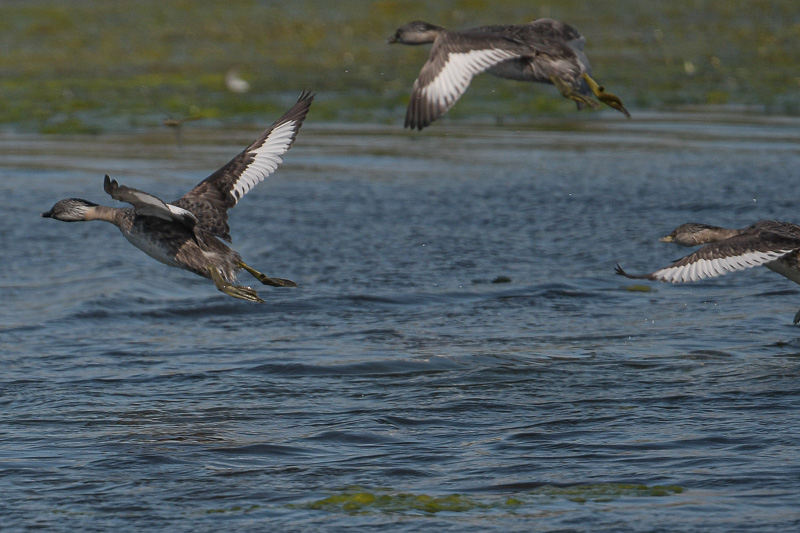
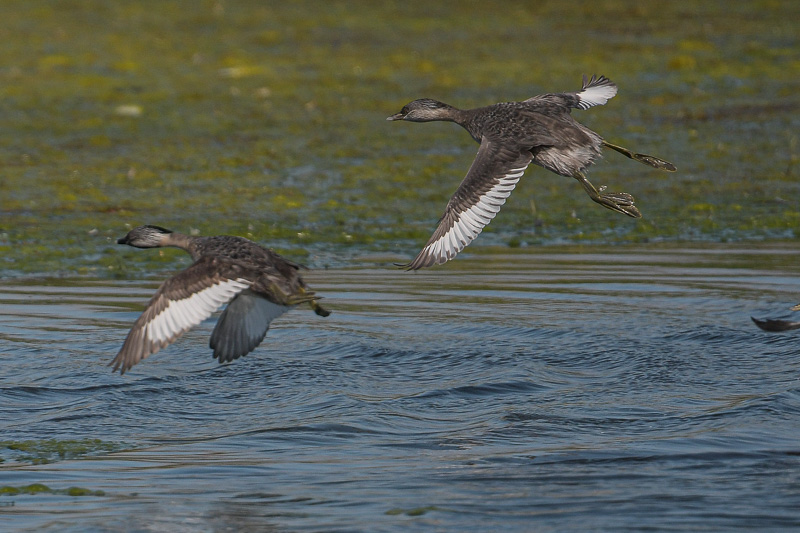
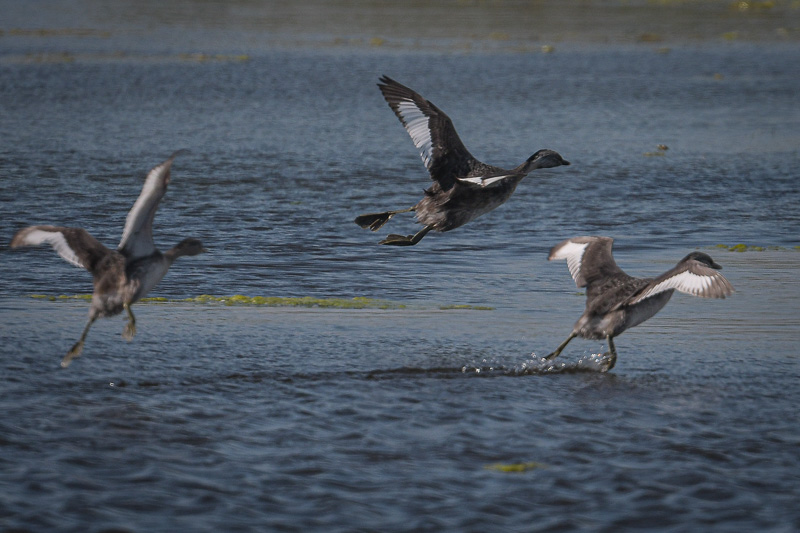
What turned out to be unusual was they all drifted down to the far end of the pond on a strong breeze, and then with a hop, skip and a jump, they launched themselves into the air and flew the 150m or so to the other end of the pond, drifted back and flew again.
It is most unusal to see any grebe airborne, so this was particularly intruiging. The books tend to say that “they fly at night”, but I suspect that is because no one sees them in daylight, and the conclusion is obvious, “I haven’t seen grebes flying in daylight, so…. They must fly at night”
These ones, obviously hadn’t read that book. And they continued to repeat the performance I’ve also been told, on reasonable authority, that Grebes tend to lose the ability to fly the longer they are in a permanent pond. Some Little Aussie battlers can have several seasons in the same pond, and if the theory is correct, then the wing muscles etc, must atrophy and they are for all intents, flightless.
And the Hoary-headed continued to drift up the pond and then fly back. Presumably they were using the rather strong wind blowing down the pond to help get lift. We began to wonder if they were perhaps getting some training in to re-develop the flight muscles
We stayed in the area for a couple of hours and to our surprise when we checked, just as we were leaving, there were only a couple of Grebes still in the pond. The rest had flown!
And of course we missed that. Often see them sitting in the ponds and doing a wing-stretch and conclude that those wings aren’t all that big for such a small bird. But, stretched out in flight they obviously get enough lift. With those little stuck-on legs dangling out behind. Enjoy
In my new Downwardly Mobile role, we stayed around the Crake Pond area at WTP for the rest of the morning. Not only were the Crakes out and about but also quite a number of other usual suspects.
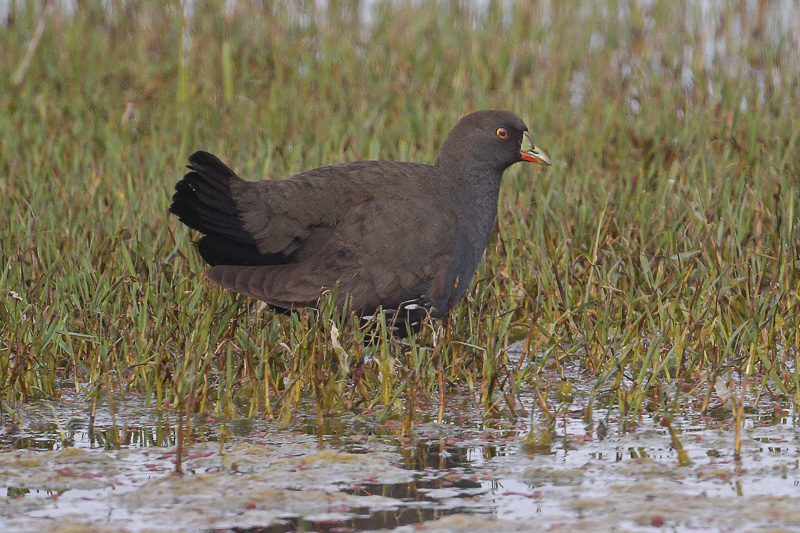
Highlight was some Black-tailed Native-hens. Another bird that I rarely see and the first time ever a this location.
I also spent some time with several large flocks of Whiskered Terns, hoping, perhaps a bit too much that there might be some White-winged Blacks among them. But not this day. Means another trip should be on the cards.
Here is a few of the morning’s finds.
Enjoy
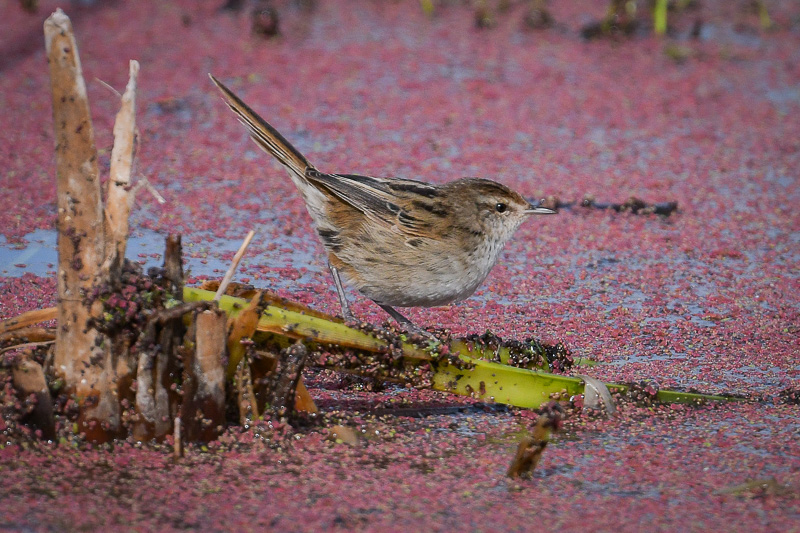
Whiskered TernBlack-tailed Native-hen and a small part of the Crake Pool areaBlack-tailed Native-henDusky Moorhen in ColourLittle Grassbird. An enigmatic and very seldom seen in the open little birdGreat Egret. I love to watch how slowly they can move. Sometimes its imperceptibleAn Austrlaian Reed Warbler came out to challenge my clossup picture skillsWhite-necked Heron. We’ve seen this one in the same location for seveal weeks now so the fishing much be goodBlack Kite. Up close and personal. I’ve opened up the shadow area, and I think its taken the whole nest of a Pipit or Skylark. It turned to land on a post quite near and then stipped out all the grasses
I was writing to Mr An Onymous t’other day about the weather, or lack of it in fine proportions, and lamenting being unable to get out in the wind and the rain.
I mentioned that I’d concluded that I’m no longer a member of the Upwardly Mobile and was rapidly sliding into the Downwardly Mobile. Just seems too hard to get out and about regularly.
Still, there is a lot to be said for quietly sitting. EE has made a science of it and half her magic comes from such experiences, I percieve.
So I thought I must take advantage of such a change in direction and rejig the blog at least one more time. Rather than look for the ‘big’ stories of bird-world/land I might just cover a few pics from one connected set of birds. Which if I recall correctly, (and that you might want to check against para 2 above), was roughly what my journalism instructor(ess) had to say. Write the little stories with insight. The big stories can wait. (In my case they still are!) Well I might have missed her quote a bit, but the intent was the same.
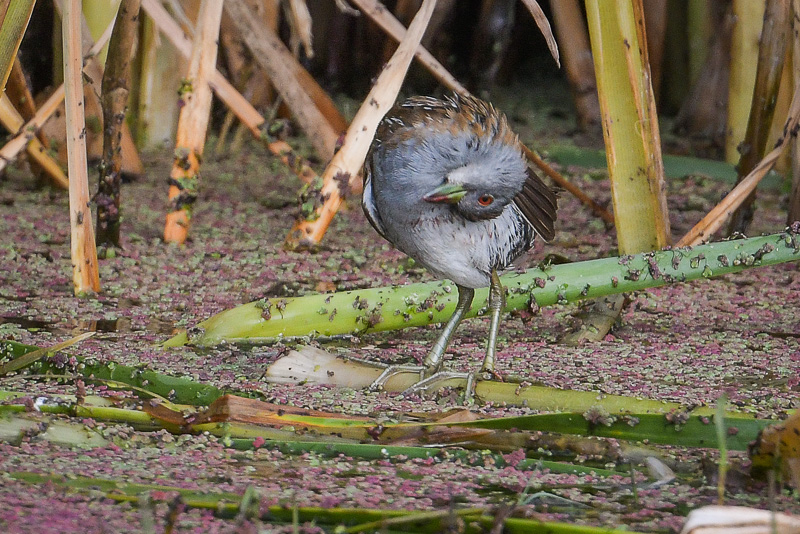
After a week or more of rain, we took an opportunity between all the unimportant life missions we are on, to leave home early and head to just one location. The T-Section at the Western Treatment Plant. And to spend the morning at the “Crake Pool/Pond” For the initiated, it’s easy to find. For those who’ve never been there, its not a pool or a pond, its part of a reed bed that is on the edge of a typical, large, former waste-treatment pond. Yet for some reason, water density, coverage, food, shelter and a host of Crakie sort of things the Baillon’s, Spotted and Spotless seem to favour. Most times they skulk (love that word) about in between the reeds and are hardly seen. At present, all bets are off and they are mostly feeding in the open.
Birders and Photographers have devised some pretty sneaky plans of their own to be able to see the birds without scaring them off. But. In the interests of brevity I’m going to ignore all that at this time.
We parked the car at a junction, walked the 150m or so down to the pool, and there they were. Happy in their litte Crake world and the only thing that seemed to scare them back into the reeds were a few aggressive Australasian Swamphens that kept maurauding across the open areas in pursuit of one another. They’d scare me too.
So here here we are. It’s Rained Crakes.
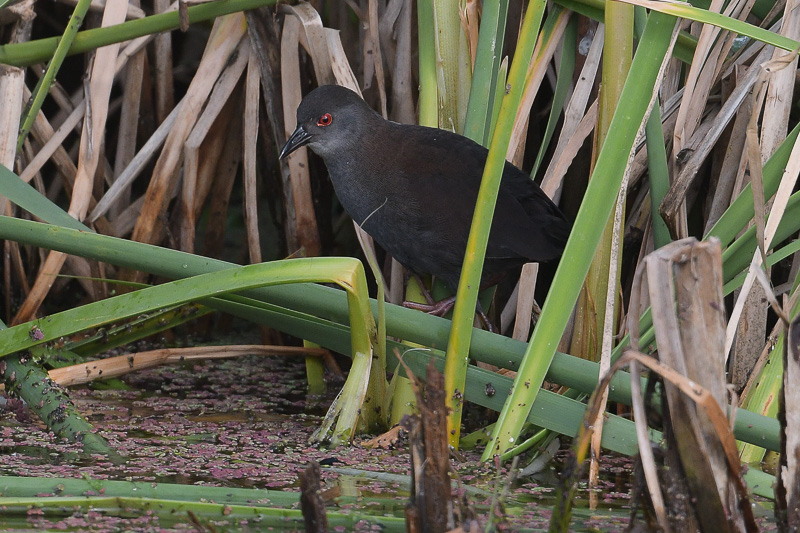
Australian Spotted CrakeAustralian Spotted CrakeBaillon’s CrakeBaillon’s CrakeBaillion’s Crake: Wiping down the feathersSpotless Crake: Rarely see these anywhere about so this was a high day Spotless Crake: Like a Line from Dire Straits-Romeo and Juliet. Finds the Sunlight, steps out of the ShadeSpotless Crake: It’s not always a winner. Missed the fly in on this one.
Wrestling, I have to admit has never been “my” sport. Too much huffing, puffing and sweaty armpits for me.
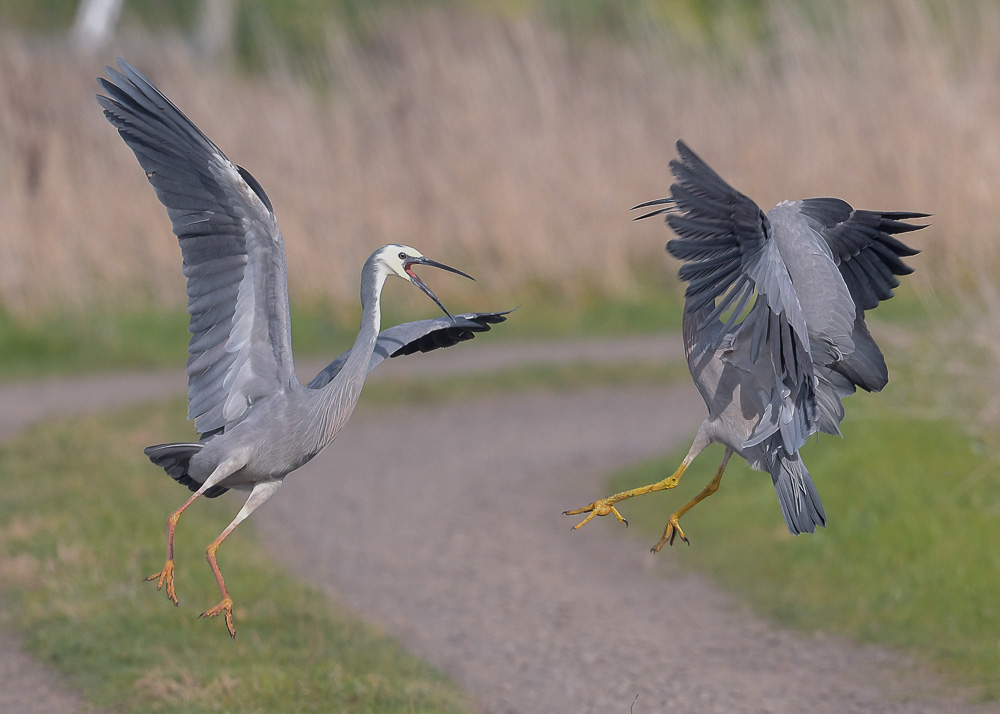
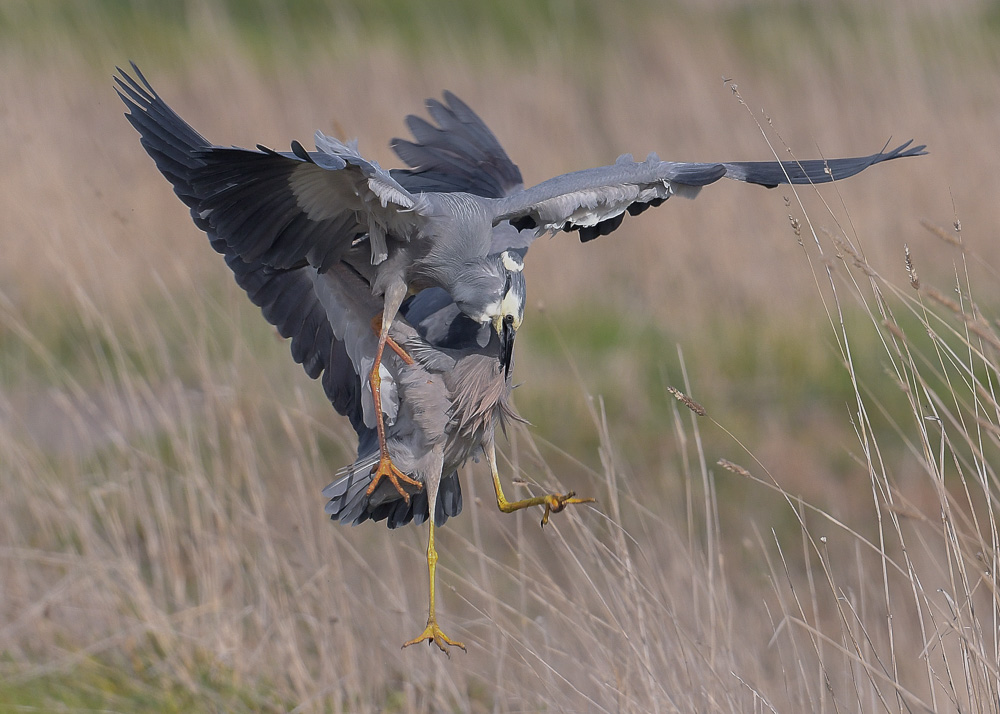
So you can imagine my surprise when I came across two White-faced Herons in the middle of a ding-dong battle.
A lot of name calling began, as they sized one-another up on the roadside. The bird, that I think, throught it owned the territory arrived with neck outstretched and loud calls to intimidate the pretender.
From there it escalated quite rapidly.
Let Battle Begin
Gracefuness is not an essential sparring technique
It might seem like chest bumping, but its designed to get the advantage
No quarter is given
It’s bar-room brawl scruff of the neck time
In the end, the challenger made one move too many with enthusiasm and less skill
And the old hand was ready to press home the advantage
That beak is good for more than just catching fish
Released, the pretender admitted defeat and flew off. Seemingly none the worse for wear, but perhaps a little wiser.
The local champion flew up and down the pond with neck outstrectched and very vocal. Now everyone knows whose pond it is.
We started out heading to monitor several Black-shouldered Kites nestings, but as the early morning sunhine beckoned when we made it to the freeway we decided a coffee at Gerry’s at the Highway Lounge and then on the WTP for a looksee for robins.
Coffee despatched, we didn’t have any success with the Robins however.
For those that have visited the WTP we headed on up toward Ryan’s Swamp.
A good move it turned out to be as there were a number of raptors working along the roadway.
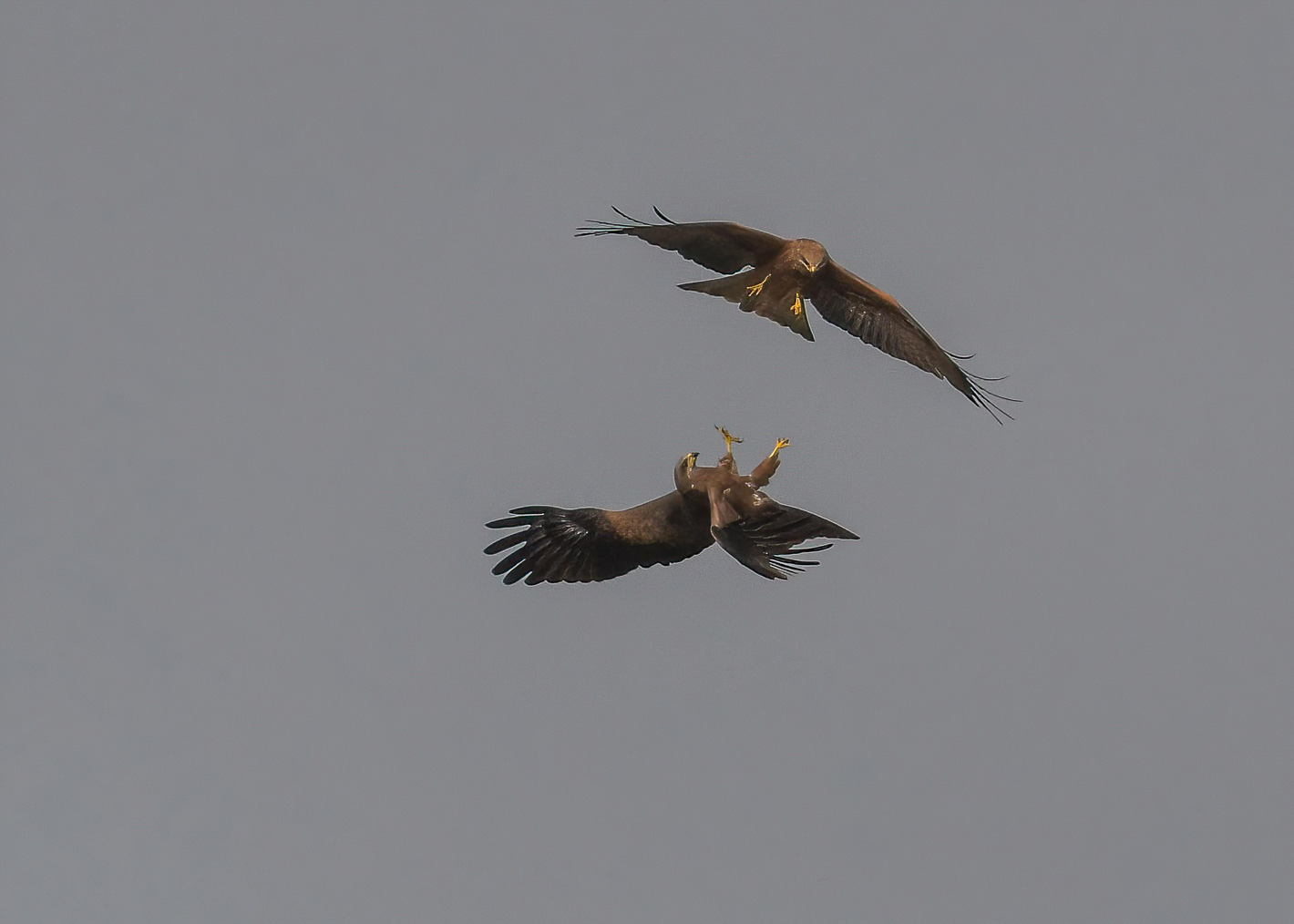
Our first sighting for the day, a Black Kite among the old treesA female Nankeen Kestrel was ‘hawking’ up the remains of breakfast. A little furball lump of undigestible rubbish. We spotted this Brown Falcon ‘walking’ along the road, no doubt it had scored a meal, as it flew to the tree and the next 45 minutes or so we stood with it, as it slowly digested the meal. There is something special about being able to observe this bird, unstressed, and watch its various character traits.Handsome in the early morning light with dark storm clouds building behindA number of Black Kites were also in the same area. It looks like full on dogfight, but these big birds seem to love to play about togetherAnother Black from the same area, and it appears to have nesting in mind.Meanwhile the others continued the gamesYet another Falcon swept in to see what was going on.It didn’t take us too long to find a pair of Black-shouldered Kites at work on nesting. Unlike most Black-shouldered these were nesting in the top of a dead tree in the open.
Here the male has just arrived to relieve the female for awhile.Nesting hasn’t blunted her hunting skillsDon’t mess with Mamma. She is unhappy about the Black Kite attention on the treelineMore Kestrel hunting. I missed the catch of this one. A pair of Brown Falcons, they are not ready to mate, but are doing their best to keep the pair-bond alive and bright.
He has just swept in from a few aerial stunts to impress her.
She is crouched ready to accept his advances.
We again spent 15 minutes or more watching their various antics, and after a lot of calls and cackles, they both flew to different perch area to repeat the performanceHey, I think you look pretty special.
Well I can’t speak Brown Falconese, so who knows what he said.
After the last couple of ranty posts, I thought I fine day at the plant might be a good idea. 🙂
The Western Treatment Plant is about the size of Phillip Island and to travel all the tracks and explore all the possible bird sites can easily consume an entire day, and a goodly chunk out of the fuel budget for the week. 🙂
We tend to be a bit selective about the areas we travel through. Preferring to stop at one location for a time and see what is moving about. It also depends a lot upon the weather. Being a flat farmland, there is little shelter from high winds or the heat of midday.
So we tend to go either late in the afternoon when conditions are good, or early in the morning. Morning can be hard at first as the long drive in from the main road is directly into the rising sun. But once in the bird area it becomes easier.
We had decided to go on the morning as the weather looked promising, and if the wind picked up as predicted then back to the Highway Lounge and a Gerry Coffee.
Here then is a look at how the morning, and the birds progressed.
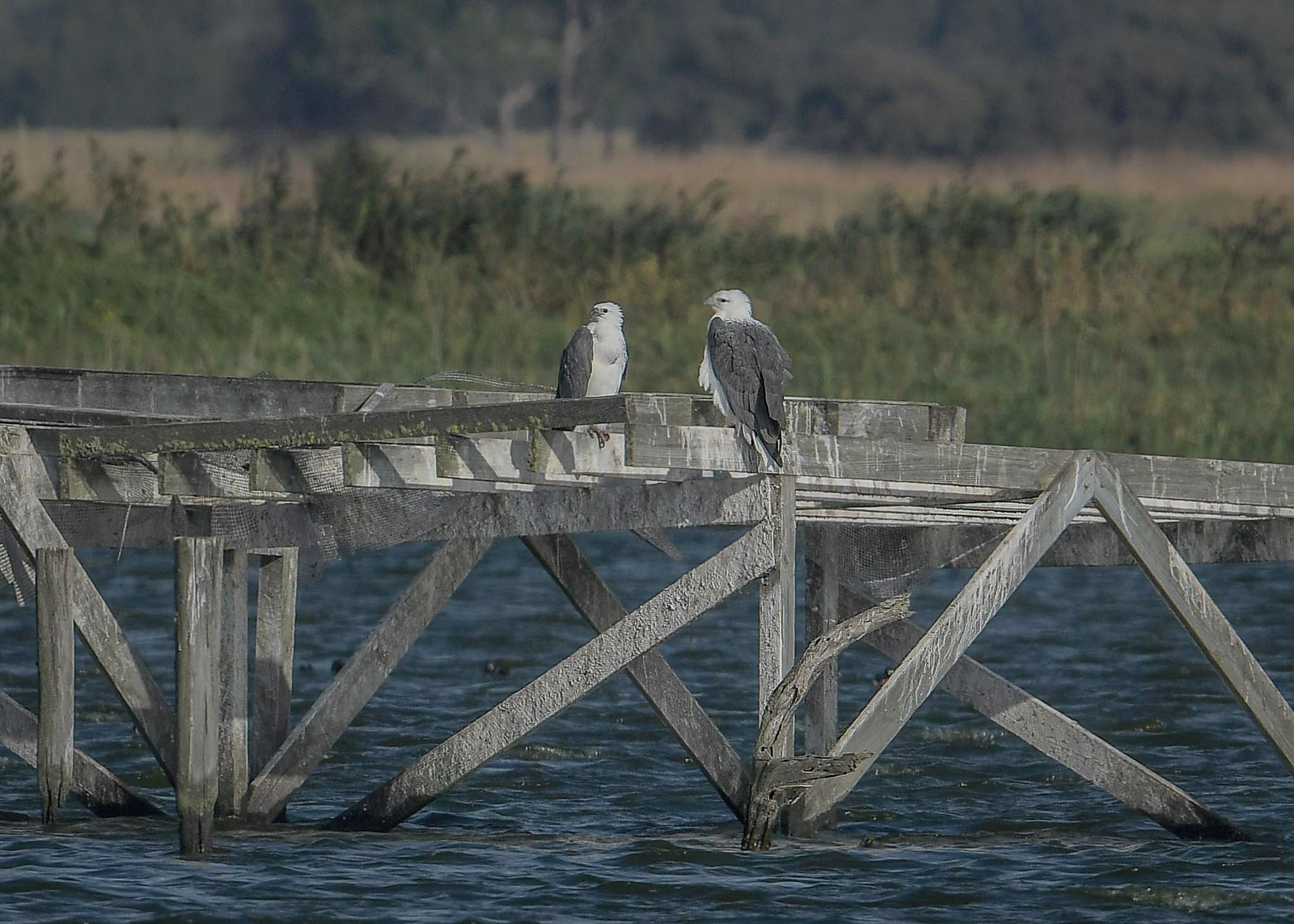
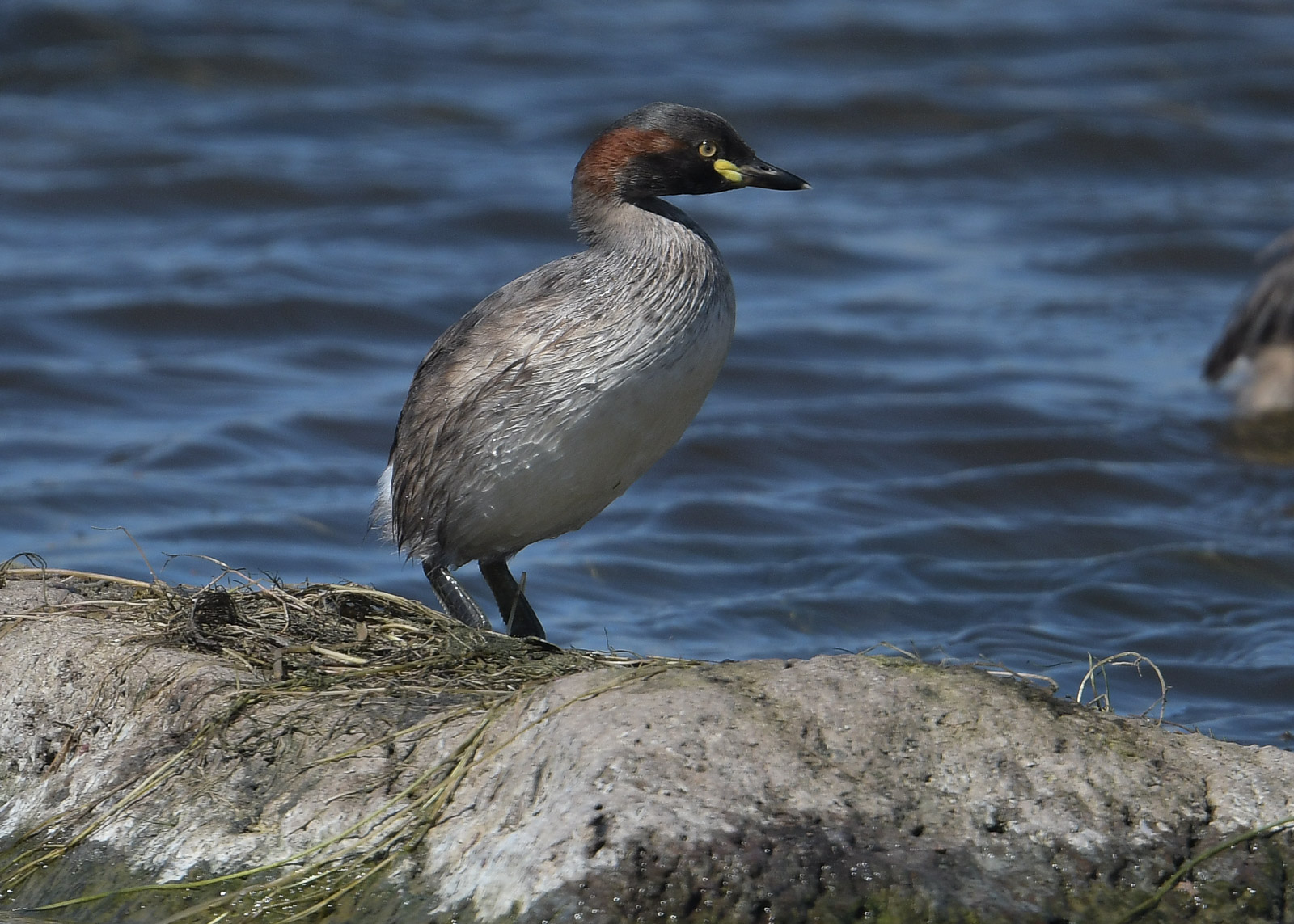
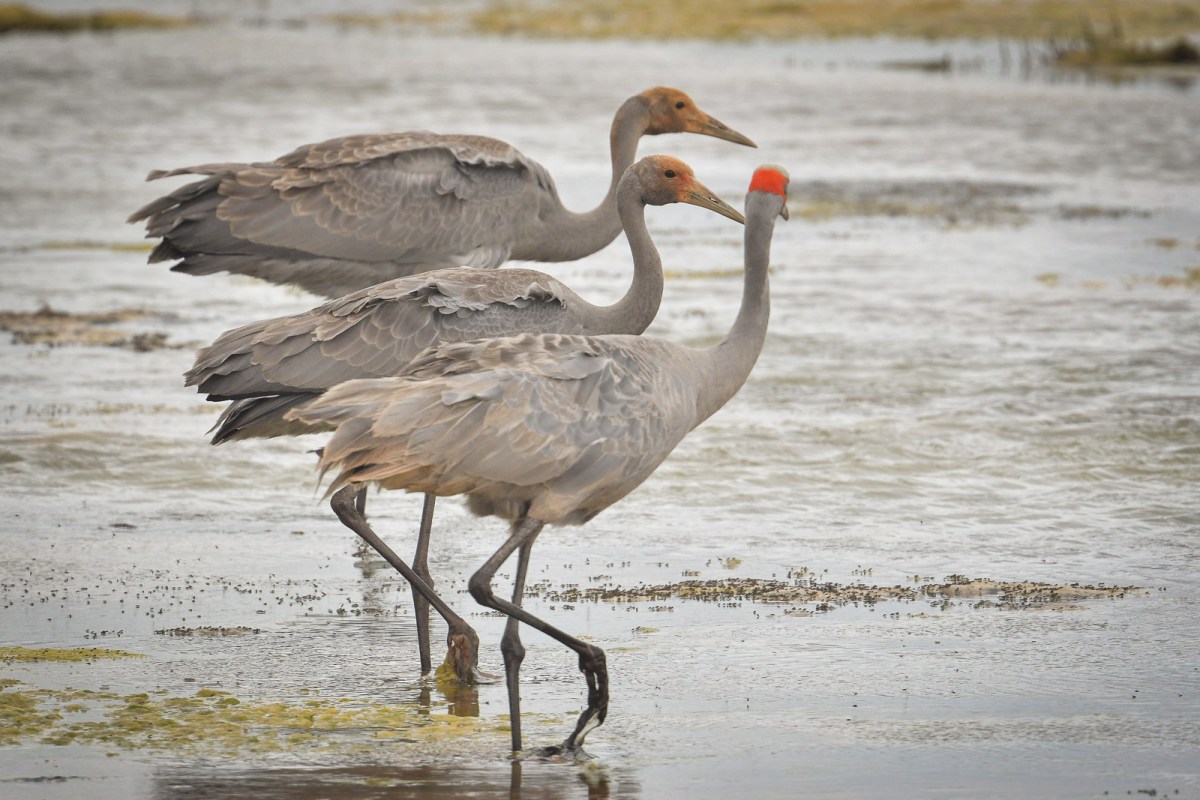
White-bellied Sea-eagle being harassed by a passing Swamp Harrier. I don’t think the apex predator was fazed.Said Swamp Harrier, then made a close pass over the reeds on our side of the lake. The ponds held many Hoary-headed Grebes.A committee meeting. These two Sea-eagles were resting a long way out in the middle of the large lake. Meanwhile up close the Reedbirds were moving about in the sunshineA small selection of the many hundreds of Hoary-headed Grebes.Whatever the current title, I still refer to them as Mountain Duck. The nomenclature police seem to think they are Australasian Shelduck. I don’t think the birds care really. They now all have nice new feathers and will be journeying northward soonNot sure if this Sea-eagle was from the earlier lake ones, or whether it came in from south along the beachline. But there could be as many as four working in the area at present.This Collared Sparrowhawk was making the most of the increasing high winds. And showing off that extended middle toe.Fueling up for a long trip ahead. Curlew SandpiperThese two Sharp-tailed Sandpipers are starting to colour up. Here they are ‘hiding’ out of the strong wind behind some reedsIt has been an increasing good year for Brolga at the Plant. We saw one pair with two well grown young. A second pair with a young one, and this third pair on their ownOne of my fav inflight birds. The Little EgretI can’t ever recall seeing an Austalasian Grebe standing up, nor on a rock. Perhaps a nest is on the way. Also managed a great wing display just for bonus points.
Due to an odd arrangement of circumstances, that would take several blog pages to cover and even more to wend the pieces together, we had decided on a trip to the Western Treatment Plant. (WTP) What, of couse, was not in the “How to do it” manual was control of the weather.
Grandson “+D4” was staying over and t’was the only day avaible. For those interested “+D4” comes as an ‘Addition’ to the “3D’s” fabled for their “Dawdling” while on car-convoy on such trips to the WTP.
We picked up the usual Coffee-to-Go from our local and hit the highway. (Mr An Onymous, has a theory that in future times, sociologists and archeologists will conclude that ‘hit the road’ had some quasi-spiritualistic meaning and that the poor deluded ancients would go out and hit the road with their hand expecting some mystical experience—but— I digress)
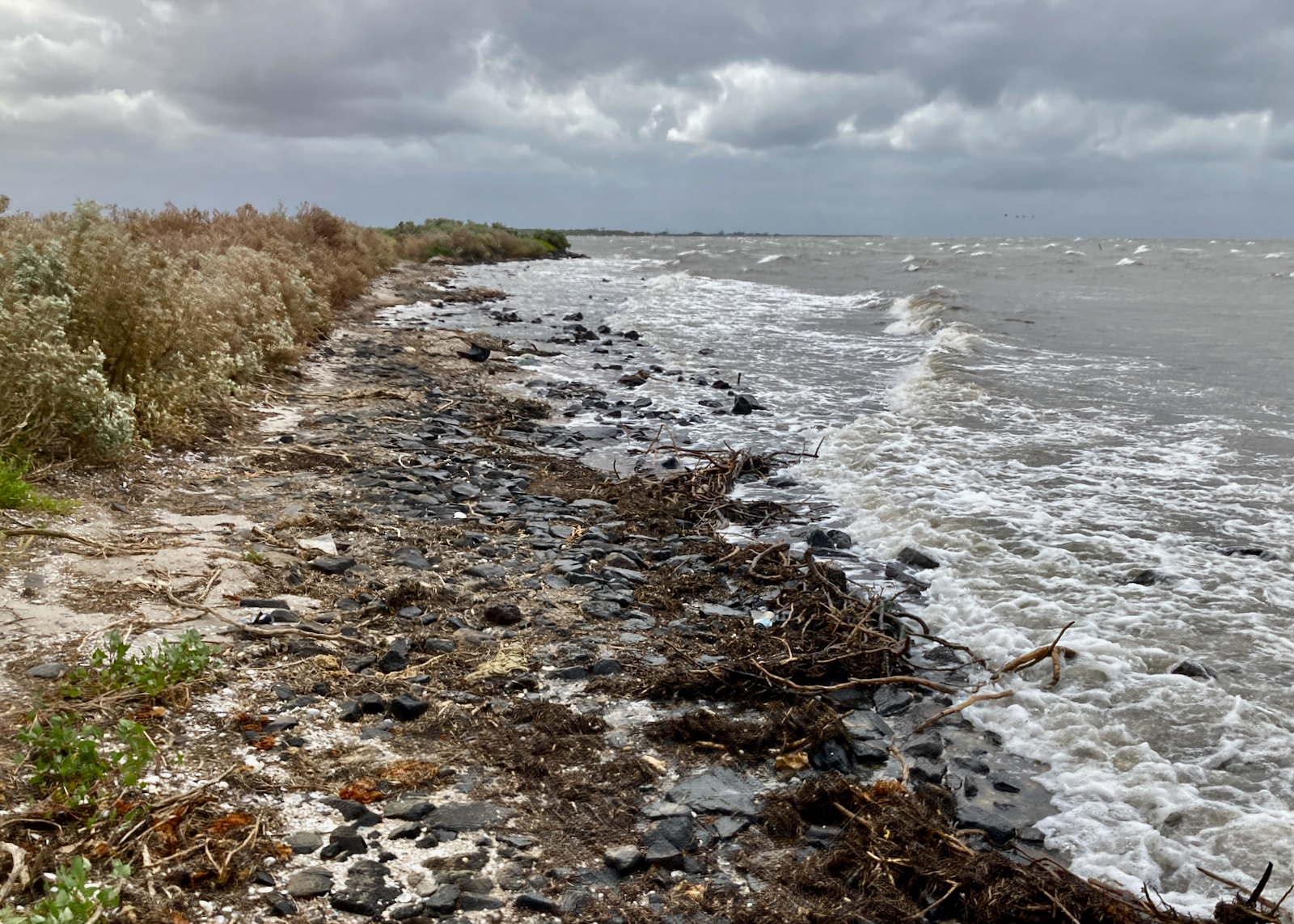
The overcast, rain and high winds did not digress. Nor did they ease off. I may have mentioned before, that I can deal with the poor light and the rain at the WTP, but not the wind. It just makes getting out of IamGrey and standing in the open a truly harrowing experience and one that even the best of birds seems avoid at all costs. For those that might venture there, the track in the “Special Section” that was out along the beach area and barely passable with 2WD is now eroded to the point of being 4WD only.
So we had a fairly quiet trip about the plant. Good news is the roads are in very good condition and the closure has allowed several areas to be graded and topped and the drive experience improved no end.
We had hoped that White-winged Black Terns might have returned by now, but if so we didn’t get a sighting. The weather changes seem to have altered the plans of many returning migrants so far this season.
So as the blog is more now about the photos of the day, and less about the babble, here tis. Enjoy
This is part of the coastal road at the Plant. Normally it is accessible by 2WD, but now 4WD and low tide are the recommendation.
Erosion is quite evident. We retreated.
A small selection of Pied Oystercatchers hunkering down on a sandspit out of the wind.This beautiful Goose has been on its own for at least 12 months, but has remained faithful to the area.
I’m sure it doesn’t recognise me, but each time we go past its territory, I stop and we exchange a few head-bobs and it goes back to feeding.I’m pretty certain it has lost its mate, the pair used to be quite the regulars in the area and nested over several seasons.
For its own reasons it hasn’t ventured away to find a new mate. Female White-fronted Chat. They seem to take extraordinary care about returning to the nest with food, and will spend many minutes checking everything out before deposting the food. One of a pair of Brolga that were working in the T-SectionHe is returning to see how things are going with his nesting mate. I’m sure that is a Swan smileI saw the nest from the other side of the pond and we drove round for a clearer view.
This clever lass was taking no chances and had built her nest in the very middle of quite a deep pond and it seems to have paid off with a lovely set of matching cygnets.By early afternoon, the wind, the cold and the rain has gotten the best of the best of us, and we made one forlorn loop around the Western Lagoon area.
Surprisingly we spotted a pair of Brolga with two quite large well developed juveniles in tow.
Well worth the extra few minutes and the tired and exhausted among us were quick to respond to the opportunity. The birds seemed quite relaxed and in no hurry to go anywhere, but big long legs quickly carried them across the ponds. Quite well developed. I’m not sure if they are fledged, but that normally takes around 3-4 months. Which just shows how silly Uncle Google can be, as I’ve seen figures of 2-3 weeks, which are impossible. They stay with the parents for nearly 12 months until the next breeding cycle. Here is an intersting factsheet on Brolga on Farms.For bonus points we called in to see the Hobbys on the way home. This one is now just about a ‘brancher’ and no doubt days from flight. The nest is festooned in discared down. All tucked up secure. Three little Wagtails about a week old.
We had a few minutes to spare on the return home past the Western Treatment Plant and decided to look in on the “T Section” area. Not many birds in there at present, except for colonies of nesting swans.
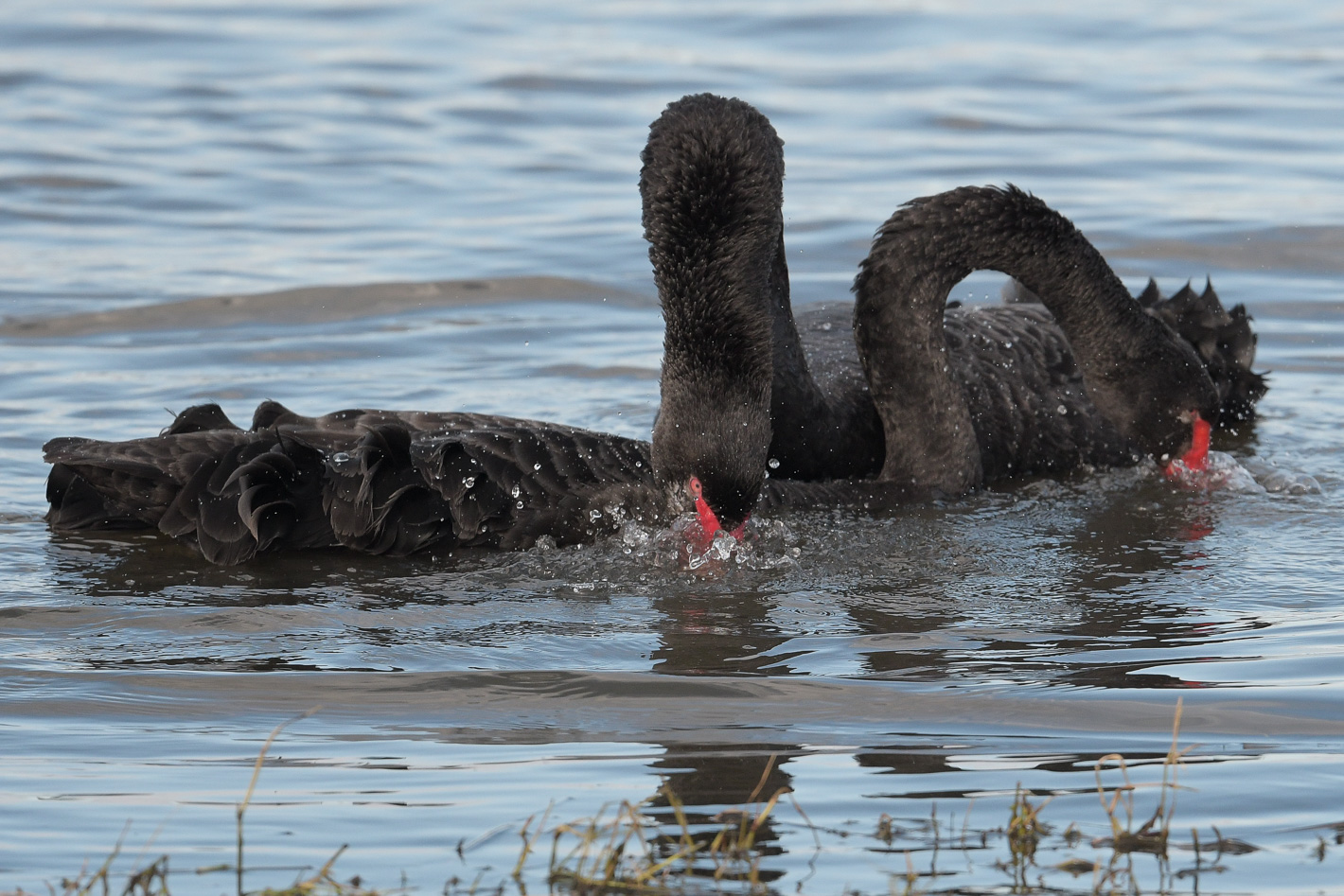
We found this pair in the business of Busy-ness
First step in the process is house building
The male is ready to contribute
Time for a little romance
This involves much swimiming in a circle and heads and necks over bodies
It seems that blowing bubbles was the start of something big.
The main event
She reared up so fast and I was unable to get back further so clipped the top of her beak
Now that Melbourne has emerged from its fifth covid lockdown its time for the Doona Hermit to shed his old worn doona and venture out in to the real, (no definitions please) world.
#kneetoo and I had a little local journey planned, with a stop off along the way to look at a pair of Black-shouldered Kites and their young(?)
But as I pulled back said doona and checked the weather app, it looked like a beaut, clear, cold morning.
We had planned to do our quick visit and then be home by mid-morning for a relaxing morning tea, so I was not planning to load Earl of Grey into the thermos or grab a bikkie or two for the journey.
But.
On a whim, we decided that a morning driving around part of the Werribee Treatment Plant birding area would make the most of the weather, and who knows when if, ever, we’d have such a chance. Fix snacxks, load cameras, dress warmly and we were on the way.
As it turned out much of the area where we visited was pretty bereft of birds, but what we lacked in quantity we made up for in birds we’d not had the pleasure of seeing for quite awhile
Here’s a small selection.
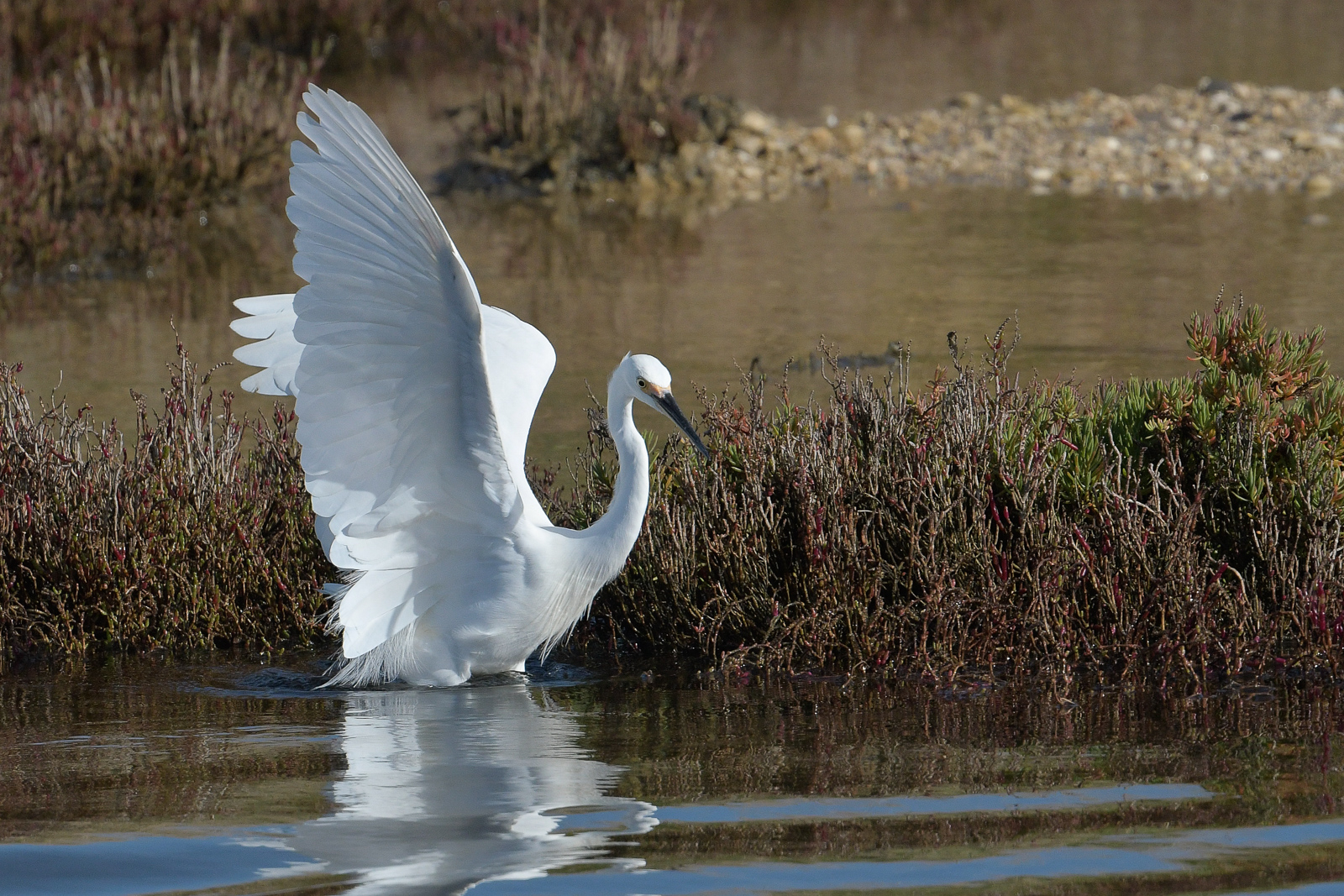
The dancing fisherman. The Little Egrets make such delicate moves as they follow the fish through the water
Where did that fish go?
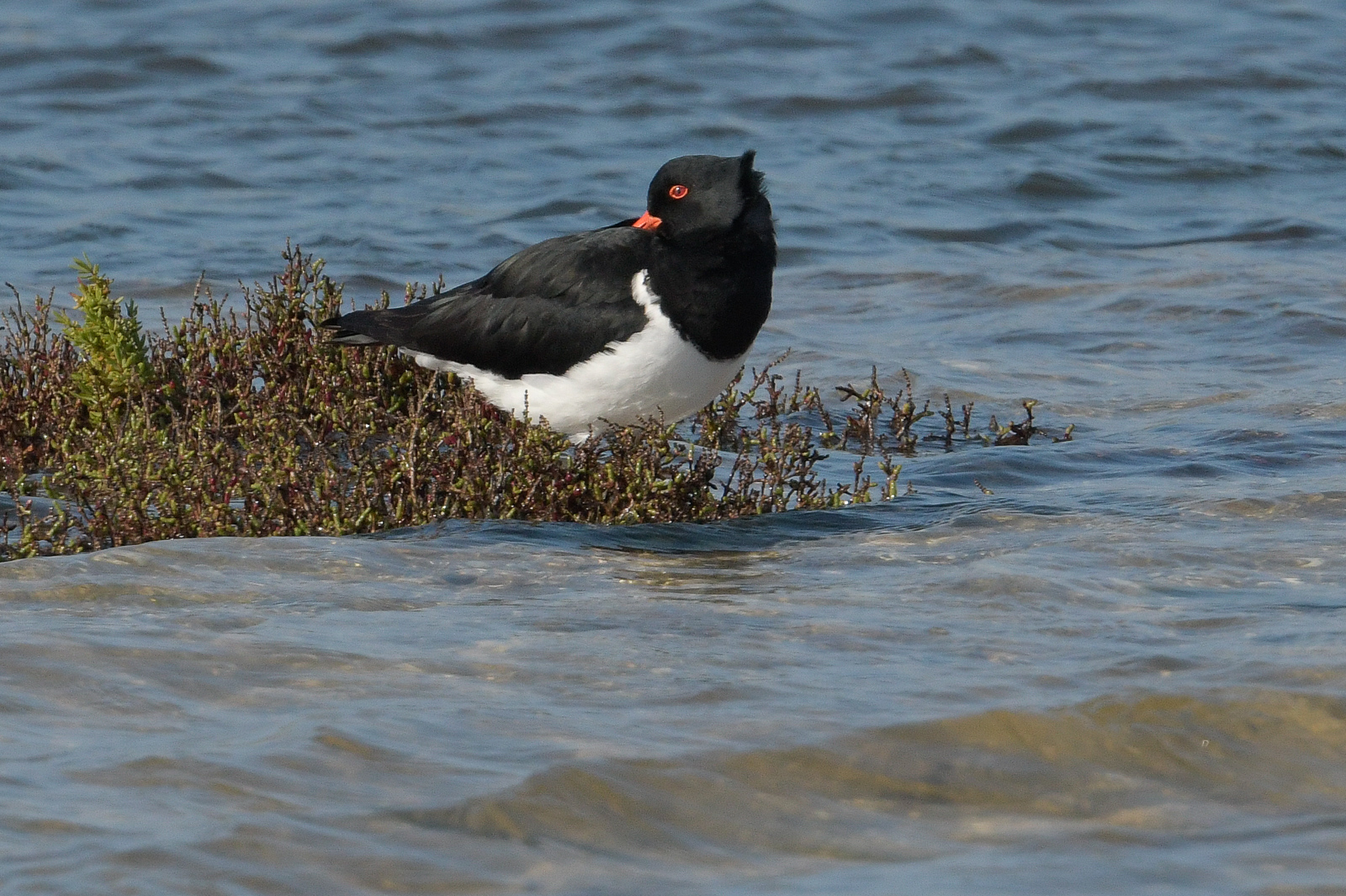
Napping out of the wind. PIed Oystercatcher
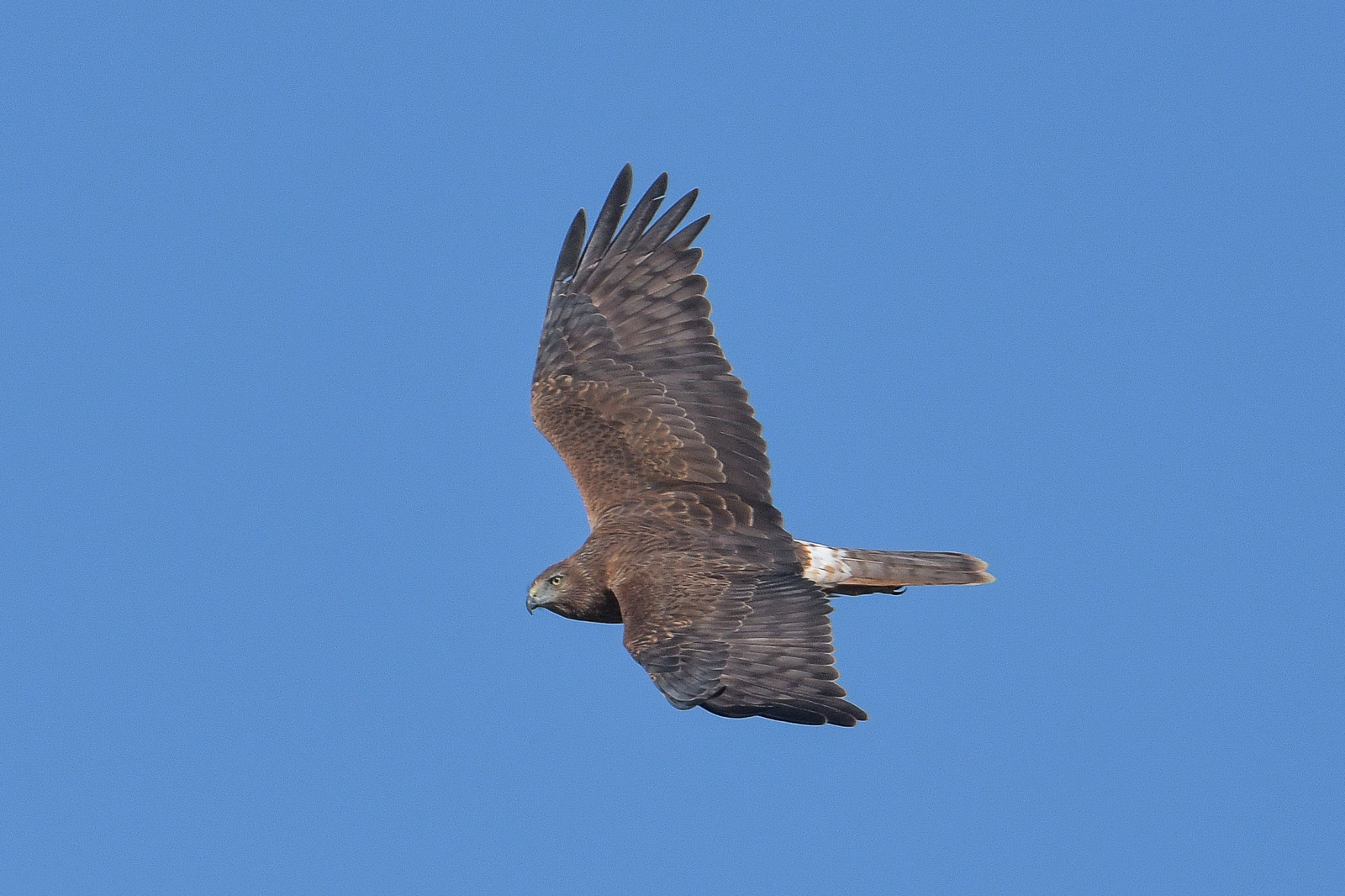
A Swamp Harrier on patrol
Crested Tern rolling over for a fishing plunge
Swamp Harrier on a turn
A beaut find, Blue-winged Parrots feeding in the saltbush. We probably saw 15 or more
Blue-winged Parrot. One of the most delightful little parrots we photograph
Pied Oystercacther powering past
One of a number of white chested Brown Falcons we found during the morning/ This one was in no hurry to move and in the end, a Whistling Kite approaching finally put it to air.
When I first came across this bird, it didn’t seem to be in a hurry to leave. At first I thought it was working out the moves for its next meal. Closer inspection shows it must have only recently eaten and was resting for digestion.







































 Birds as Poetry —— Just because I WANDER doesn't mean I'm LOST