So many places to go, so much to do, so little time.
When I first started looking at birds at Woodlands, I ran into a birdo, Ray, who shared with me a lot of his knowledge of the area. One bird he pointed out was the White-throated Treecreeper and its distinctive call. It is alway such a pleasure to hear them, and find them among the trees. The one Ray and I would find was a female, and for several seasons she didn’t seem to have a mate, then last season she turned up with a mate and eventually produced two young. But since then I have only be only to find the female.
I heard her calling in the long creekline off Gellibrand Hill, and after a few minutes was able to find her hard at work. After following her about for about 15 minutes, I didn’t find any mate or young, so she might be back on her own. But nice to see her again.
Also ran into a family of White-winged Choughs. Or more accurately they found me and sped off with great alarm calls. But then they settled down to feed and I was able to get within lens distance. Lighting wasn’t so good, and I was hoping to get some pics of them with the lovely wings spread out. But no such luck. They are such a a dumpy looking bird, yet they seem to glide about as if on gossamer. They have an elegance about the way they touch down for landing.
First day of April and the weather just keeps getting better. Dorothy and I had taken the morning to visit Westgate Park, right near the huge bridge over the Yarra. It used to be a city dump, and has been reclaimed, and with lots of volunteer work it is being turned into a little wilderness Oasis just a short trip from the CBD. More power to those who thought it a good idea and all those who worked to bring it back to such great shape.
In the afternoon I needed some retail therapy and on the way back stopped at the Providence Road carpark and met Peter Tompson who is a great contributor to the Victoria Birdline. We have a good chat about the Black Falcons at WTP, and another birdo friend, Richard turned up, and even more discussion ensued. Richard has a very extensive and annotated bird list going back about 20 years for the area, it even includes sightings from one of the park rangers at the time.
We walked down to the Backpaddock, and found our taxes had been at work, and the old gate had been repaired and now actually closes. Good work team.
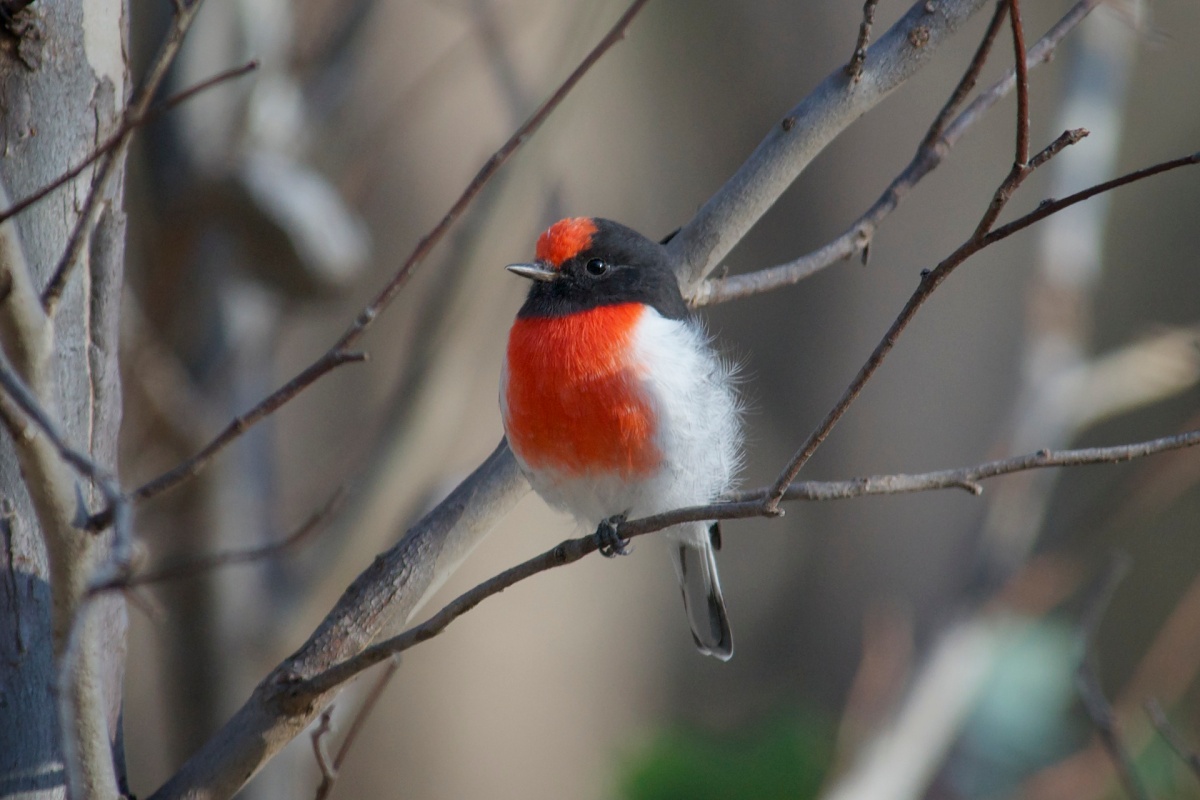
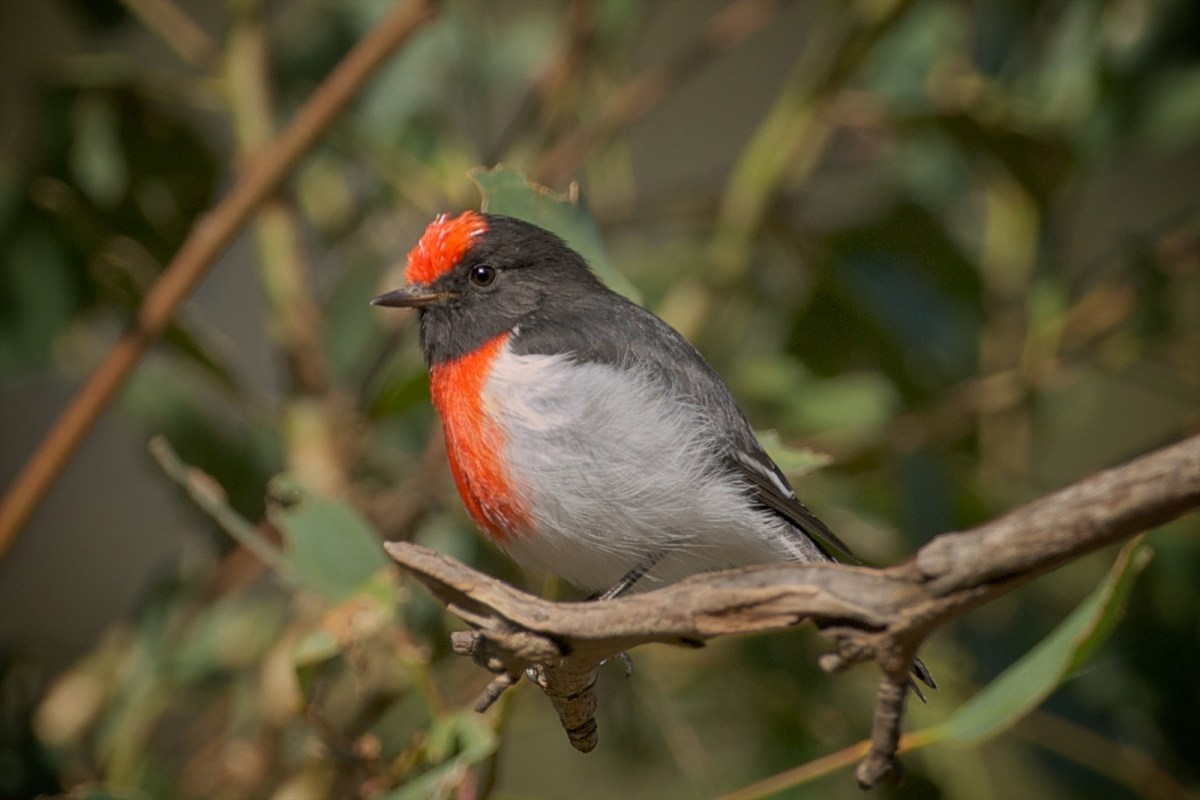
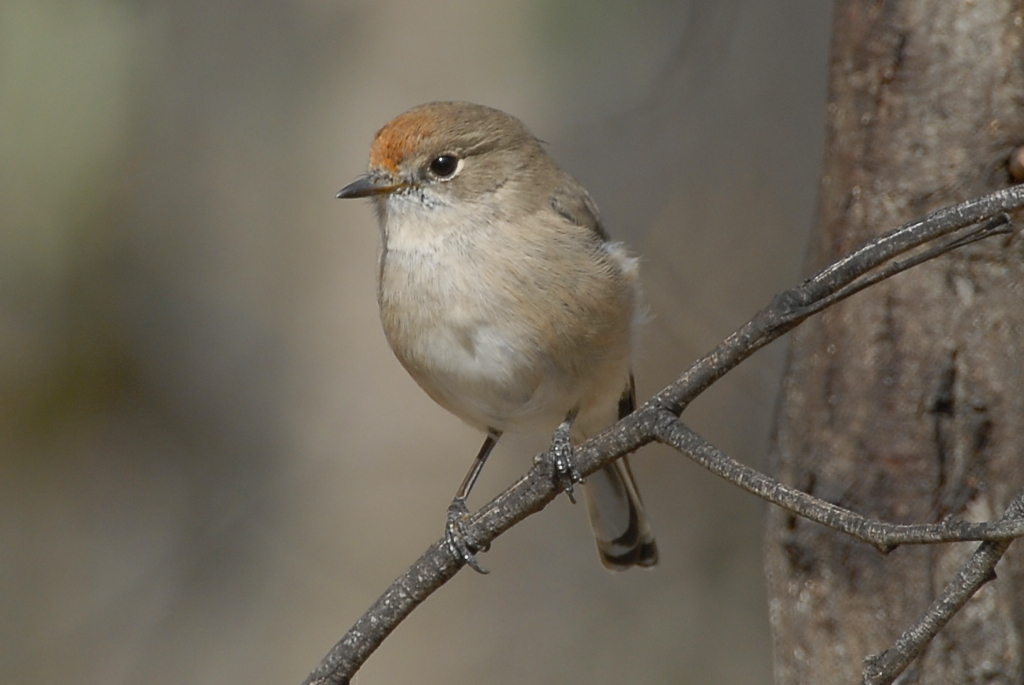
Richard went off further down the range, and I did a quick scout about and found a pair of Red-capped Robins in the sunshine. This pair are starting to reclaim their territory. At the moment I haven’t been able to find most of the other pairs. Hopefully they are still about, just hiding. No sign of Flame Robins yet, but with the amount of food available everywhere, perhaps they will only pass through this year.
Red-capped Robin Male in his new winter attire. Pretty much full moulted and beginning to become vocal again.
This little male has just about completed the moult. He is showing the last of the white-sheathed new feathers. He keeps hiding in bushes and behind branches. It seems like he doesn’t want to display until the moult is over. This male’s lady has already taken on her winter outfit, and he is just starting to ‘tic tic’ at her. But there are no territorial shows now.
Red-capped Male, showing moulting in of new red cap.
It comes as no surprise that Birdos go out for various reasons. For some it might be to see a new area and see what birds are about, for others a trip to a location to add one more bird to the great bird list. Others enjoy the chance to see birds in their habitat doing bird things. For others it might just be the keeping track of the birds and any environmental changes. Others go because the birds are there. Some even go to take cameras and record something of what they have seen.
For others, like us, it is even more intangible. We just love to see them, to watch their antics and to enjoy a day out in the wide open spaces. “A bad day in the bush is better than a good day in the office” or so the bumper sticker goes.
Which leads us to driving down the Beach Road to the Werribee Treatment Plant.
There have been plenty of reports of Black Falcons in the area, but in-spite of trying hard, we hadn’t had any success, and figured while it would be nice, probably not this season.
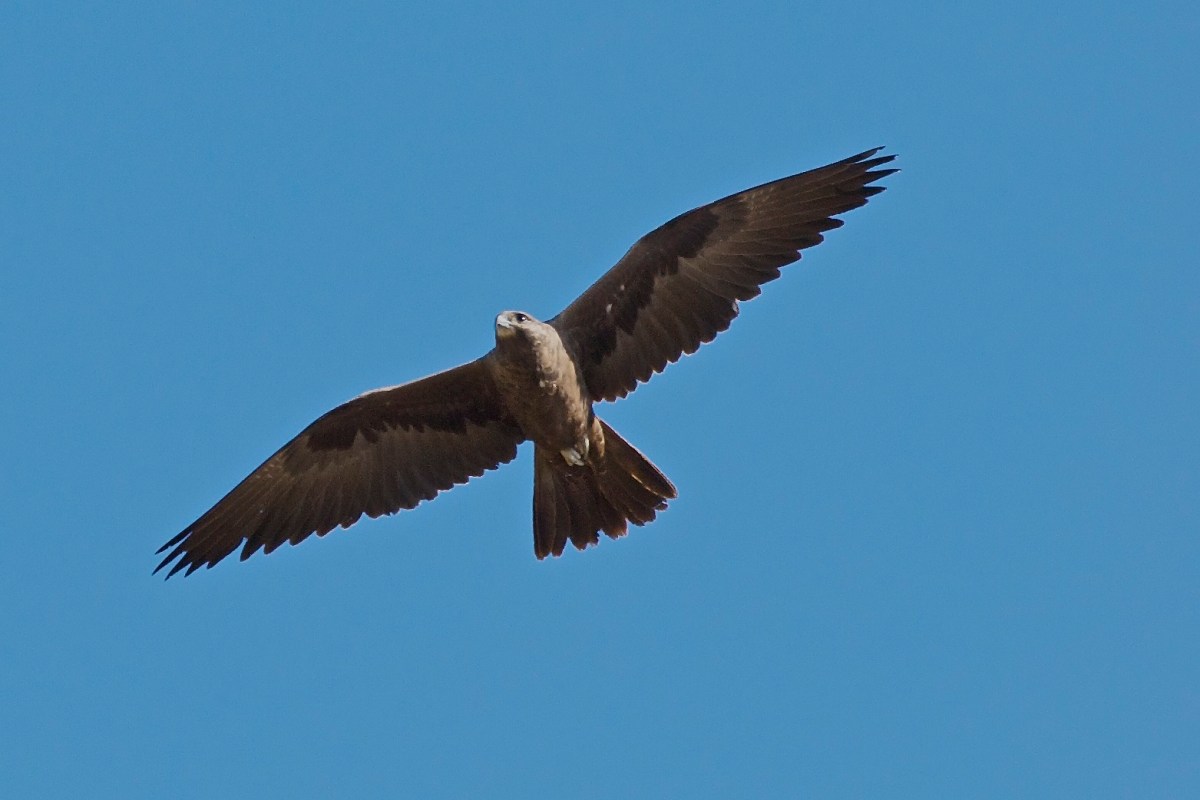
Till we got to the Beach Road/29 Mile Road junction on Monday, and in the trees in front of us there were two black shapes. Probably didn’t get the car parked right, and we ended up a bit too far away, and I didn’t want to tramp down the road and send them into the air, but I needn’t have worried. They spent about 10 minutes or so in personal grooming, and then both took to the air, to work their way up and around in an air current off the road. Then they spent about 5 minutes overhead and around us, playing in the breeze. With a bit of exercise behind them, they both pursued every Raven, Magpie, Pigeon, and any other birds flying by. The intention didn’t seem to be direct attack, but rather close passes just because they could.
Tiring of this game they hunted on down the tree line becoming the usual black blobs in the distance, then both turned and gained height before plunging down the roadway and racing past at incredible speeds, just where we were standing.
The speed was phenomenal. It would make a Peregrine look up and take notice, and then with a dash of wing tip, they would turn on nothing and repeat the performance up the road again. This is our first encounter with these birds, and it goes with out saying, we were simply awestruck at the speed and agility. Satisfied with themselves, they proceeded down the 29 Mile Road and we lost sight of them.
Black Falcon in the early evening breeze. It is gaining height for a sweep down the roadway.
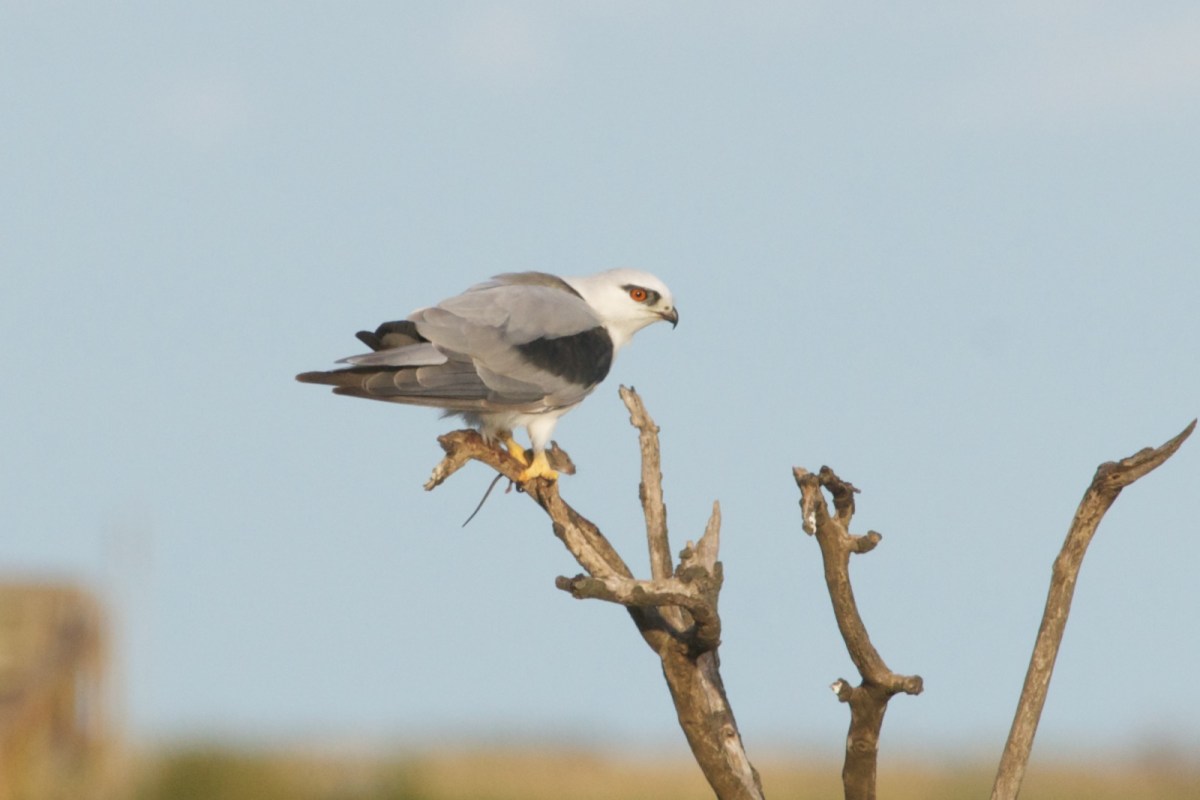
Our next encounter in the evening light was a Black-shouldered Kite that had just taken a mouse. Again I missed with parking the car, and ended up about 10 metres too far back. So the shot is a bit from the back of the bird. But it polished off the mouse in record time and went to look for another.
Black-Shouldered Kite and fresh mouse take-away. Just a snack before sunset.
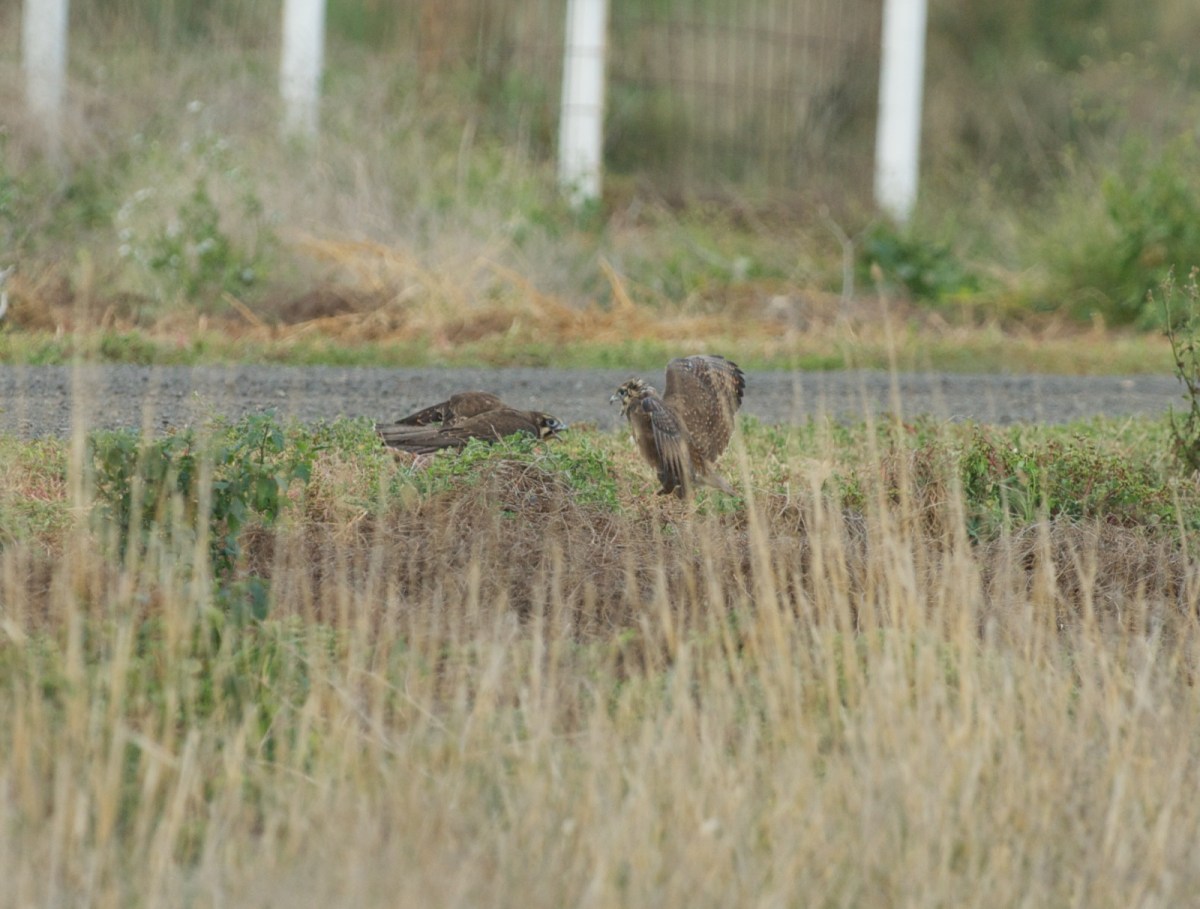
Our next major find was to engross us both for the best part of half an hour. We had just turned off the main track past the Little River Ford, when we noticed two Brown Falcons about 60 metres further down on the roadway. What ensued next was worthy of David Attenborough.
They began to play chasing games, which led to aerial dogfights and then a game of hide-and-seek among the shrubs and bushes, one would disappear and the other would trundle (how else do you describe the way they walk about) along until both would leap into the air in mock attack. This lead to another game which has to be called “king of the castle’. One took up a position on a high clump of weeds, and then the other would move around trying to gain attack advantage. When it was in position it would crouch down in the same was as a cat or dog might and then leap up and onto the stack, hoping to push the other one off.
It became clear to us that the ‘king’ had the advantage and didn’t get dethroned. So after about 10 minutes, the attacker trundled down the road to its own grass heap, and the other bird came down to attack. It then turned into a game of sneak aerial attack, as it swooped over the head of the ‘king’ causing it to duck and weave.
When we next looked at the time, over 3o minutes had gone by and the light was rapidly fading. Both seemed to have tired of the games and went to hunt.
I will put up a number of images from the sequence on another page in the next day or so. Such an interesting pair.
Took a walk out to Cumberland homestead ruins and paddocks out in the middle of the Backpaddock. I’ve been avoiding it of late as the grass is simply too long and too dense to make safe walking across the paddocks. What a change from the dry years when there wasn’t a blade of grass to be seen.
The Parks people have been playing with their little green tractor and other toys and have slashed quite a few of the open areas, and put in a few tracks across the larger paddocks. At least it is possible to walk about.
I heard the “mhip mhip” cry of a Black-shouldered Kite and looked everywhere, sky, trees, treeline, fenceline, and didn’t at first see it. It was on the ground among the mown grass intent on feeding. To give me bonus points a second bird turned up, and its job was to harass the many Little Ravens in the old trees. Normally it is the ravens who have the task of harassing, but this kite not only put them off the trees, but was actively involved in attacking them in flight. For once the ravens were outgunned. Not only can the kite turn on nothing, but its speed and agility allowed it to easily move the ravens on. For once they didn’t even argue.
It returned to the first one and sat on the grass behind it, not that interested in the feast. Patiently waiting and occasionally taking to the air to move another flock of ravens on. Eventually the well fed bird took to the trees, taking a piece of the feast with it. The second bird then turned up with a stick in its beak. Last time I saw this sort of behaviour was in Spring at the treatment plant and a nest followed soon after. Interesting.
When they moved on, I walked down the track and searched in the grass and found the remains of a rabbit. This is the first time I have ever seen Black-shouldered Kites on carrion. No doubt something bigger had made the kill and the leftovers made a feast for the pair.
Also found the male of a pair of Red-caps and an early post had a picture of the female of the pair. So I think that I can now identify three territories, with probably a fourth one further down the creek-line.
Two Black-shoudered Kites on the remains of a rabbit. I have never seen them take carrion before, but this must have been quite a feast for them.
As pictorial photographers we keep a pretty close eye on the weather cycle, always hoping for one of those days that will provide the “Golden Hour”, brilliant light, cloudless day and little wind. It can be in the morning, and then it is more a “Cool Hour” as the light takes on a lovely clear and mellow feel, sometimes attenuated by a whispy morning mist, or the gorgeous golds and oranges of late even light. Always a treat and they don’t come that often.
The weather man had hinted on it being a good morning and we took the opportunity to set the alarm-clock a bit earlier and ventured out to the park. The weather was to say the least Crisp. My birding mate, Ray’s car was in the carpark, so he must have been up even earlier. Now the light was coming through the trees and it looked like a good session on the cards.
Along side the Access Road to the Backpaddock Fenced area there is a small clump of trees and open areas that the Redcaps have liked in the past, we found a male fairly quickly and his female, and their two juveniles and then the Scarlet Robin made an appearance in the tree tops announcing his arrival. Also a Fan-tailed Cuckoo sauntered through. It obviously didn’t get its passport stamped or its a bit behind the rest of the migration.
We went down to an area that is open and provide good viewing across what has in the past been several redcap territories. But all to no avail. While we sat in the warming sunshine and pondered what to do, a red flash darted past and landed in a nearby tree. It was a male Red-capped Robin in his new winter suit. (Well almost new, you can still see the remaining white feathers in his red cap. Looks like a Sydney Swans supporter.
At first he was very nervous and spent a lot of time in the upper branches and some prickly wattle shrubbery, but later he seemed to relax, and out in the open on an old blackened Black Wattle he feasted- preened and sunned himself. Ray popped by and we had a good discussion while Dorothy kept an eye on the Robin.
I moved down to the area and he took off, and I followed up when he was happily ensconced in a small gum. He is looking great, and I suspect that he has a female in the area as well, but we didn’t have a chance of spotting her.
The cold weather seems to have set in and perhaps the next week will see the first of the Flame Robin females and juveniles arriving for the winter.
The brilliant sunshine bought this male out of hiding and he was conspicuous all around the area in his lovely new red apron. He is still carrying a few old white feathers in his red cap. He is not territorial, and we didn't near him call all morning.
The forecast looked good. There should be open sky through to sundown. I like the evening light on the Treatment Plant as it’s interesting direcitonal light across the ponds. On a good night with plenty of birds it gives that lovely crispness that we struggle for.
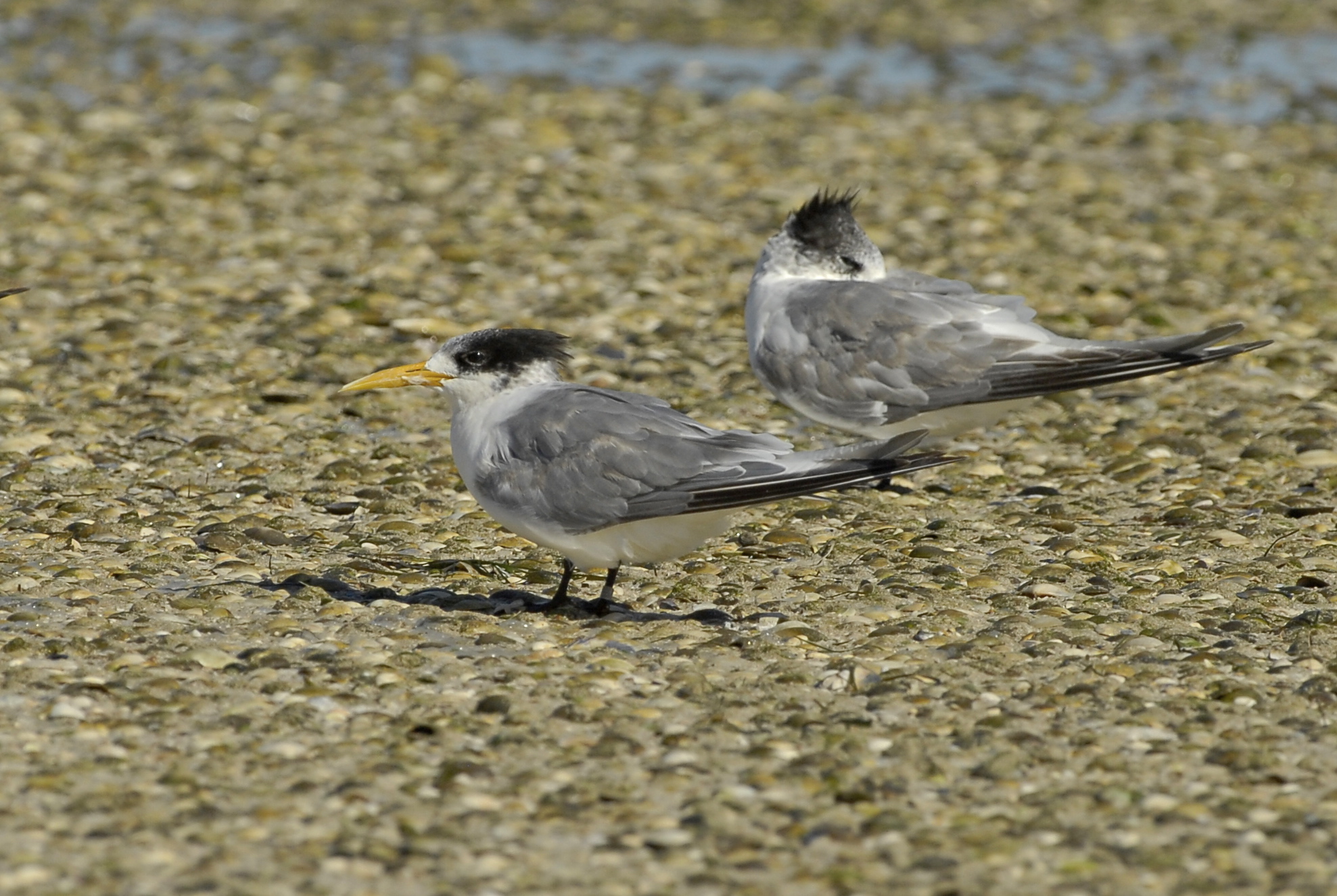
Along The Spit area, the terns were resting on the outgoing tidal flats and in some places, it is possible to get reasonably close.
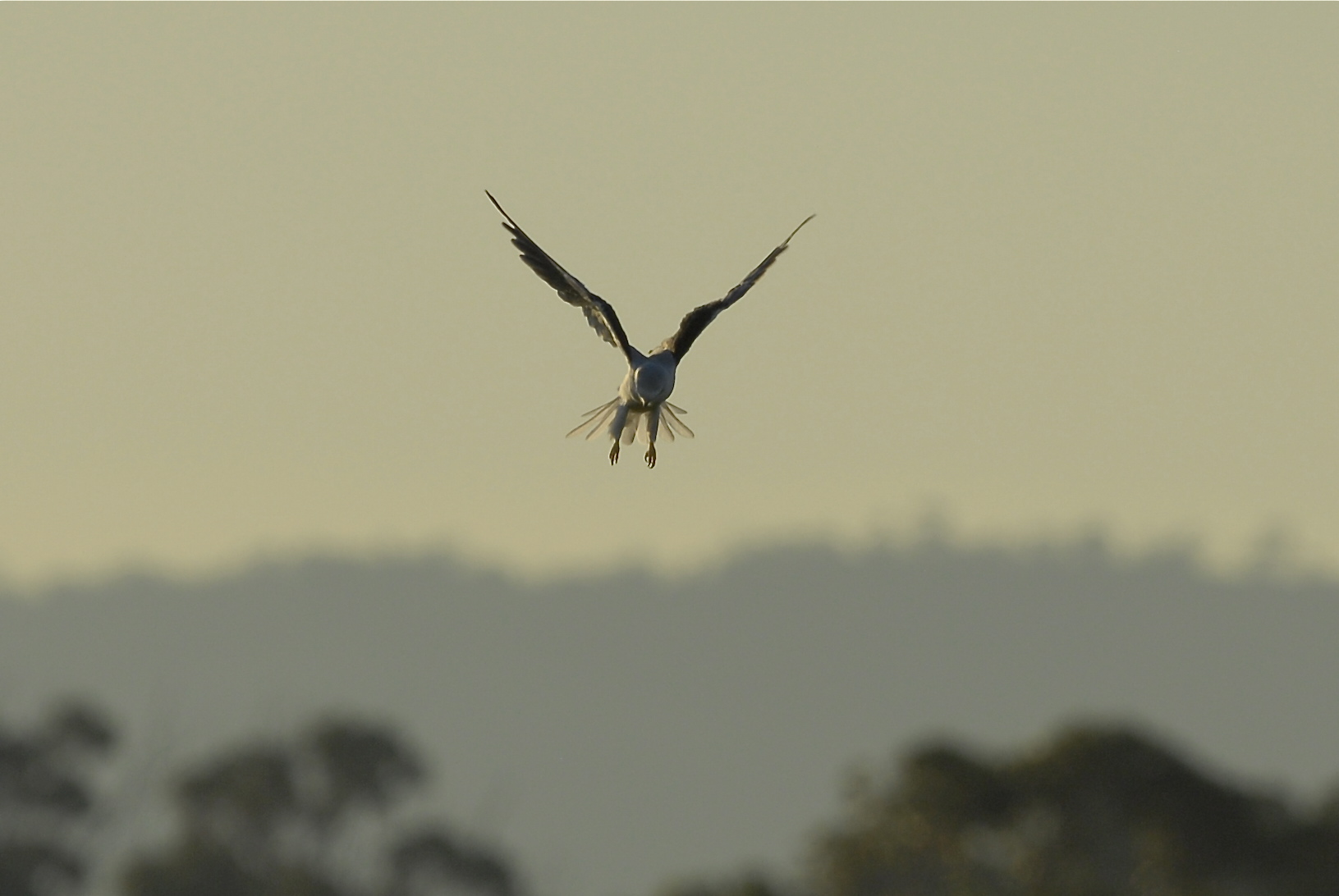
There is always a Black-shouldered Kite or two to be found and this evening was no exception. This is one of those images, that has only been cropped. No clever manipulation, as shot. Love the deep red glowing eye.
As the sun dropped toward the horizon, it left a soft haze that draped itself over the You Yangs and made a lovely light grey and then an orange curtain against which the birds, although backlit, became intriguing silhouettes.
It has taken me a while to get to like WordPress. At first I wanted to do the whole css html thing and have ‘complete control’. But, I’d rather spend time in the bush, so WP got the job.
However, the longwinded URL address thing has bugged me from the beginning.
So now its its own home. I’ve registered birdsaspoetry and you can get here from
Just on a week since we both have been in the park. The rain has made the ground lovely and soft, and there is a real feeling of freshness about the bush. The rain is really welcome.
We met Andrew, a blog follower and photographer out and about looking for redcaps. As it turned out we didn’t initially have much success, so Dorothy and I moved into the Back Paddock area.
We we soon greeted by the Scarlet Robin, not so vocal or active today, spent most of the morning close to the red-cap consort and feeding down low. Which should have made photography a bit easier, but the weather was closing in and there was not much sunlight. When the sun was good there were no birds, and when the birds were about it was overcast. Still we had plenty to see as both he and his companion twittered, tic’ed and flew about. I have never heard her give the d’reet, d’reet identity call, but he does respond to her tic’s.
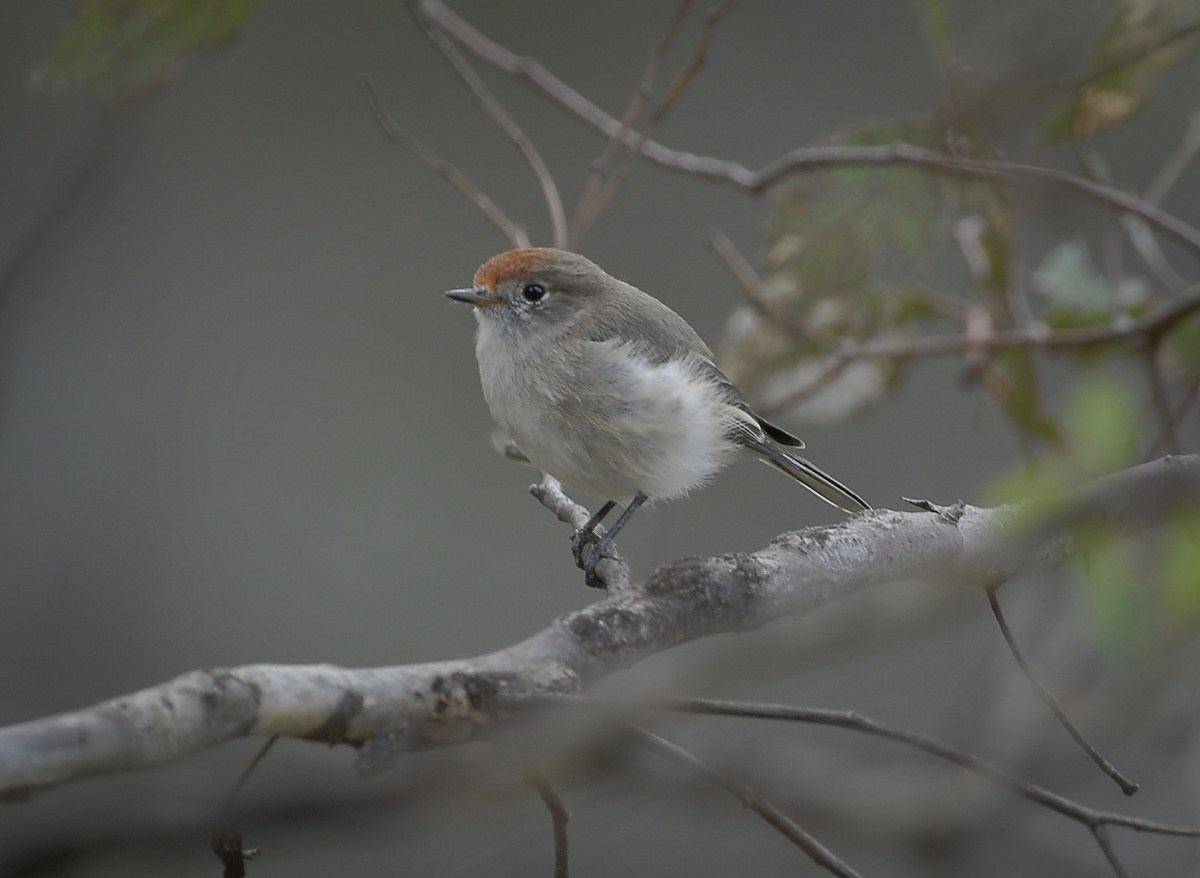
She lovely creature has finally abandoned her juvenile dress and taken on a very light orange, apricot wash of feathers and a neat little copper cap. She wouldn’t fly with him, but he would fly when she did. It was a bit amusing to watch. He is full of energy and covers great distances, she leisurely moves from tree to tree.
Also found a Tawny Frogmouth in the usual place near the car park. Here is a link to its page. Or from the menu at the top of the blog.
Scarlet Robin male. He spent the morning hunting around just one small area. His wonderful black coat is beautiful and his white splash and grand red chest make him a rather handsome bird. His cheery chirrup chirrrrrup is noticeable around the scrub.
The female consort for the Scarlet Robin. They hunted together for most of the morning and played the chasing game around various trees. She tic's at him, and he responds, and will fly when she flies. She is now all beautifully attired in her new orange/apricot wash, and a small copper cap. A much more elegant looking bird than from a few weeks back, (See earlier posts)
Melbourne turned on one of those great days for the long-weekend holiday.
Not too hot, plenty of sunshine, mild breeze. Load up the car and go for a picnic. Well, put in the cameras and to look for Red-capped Robins.
There is never a guarantee about what we might find, but within about 10 minutes we had found both of the young redcaps we had been folowing, and their doting father. Although I think he is now pretty much in advisory category rather than working hard to feed his young family. They seem both quite grown up, and taking on much more of the female’s red bonnet and buff chest. What was a surprise was that the female turned up. She is quite the well dressed young thing. So its likely she has moulted into winter dress. And what a stunning combination she is showing, not a feather out of place, and with a lovely apricot wash on her chest.
He, on the other hand, is still much in the process of preparing for winter and has a few streaky feathers in his cap, and a collection of used feathers elsewhere.
The young are scruffy, but very active. One of them plopped down on a branch less than a metre from my camera and sat there for nearly a minute. It is always interesting to see them closeup, as it’s easy to forget how small they really are. We look at the pictures on the big screen and forget the scale of the bird. This little tiny breathing wisp, is all a red-cap really is.
Juvenile Red-capped Robin. This youngster has just swallowed a large moth, you can still see the moth down on its beak. It needed to rest for a few minutes to digest the huge meal.Male Red-capped Robin, he is now in caretaker mode, not very vocal, and just starting to moult through for winter.For us, the shot of the day: Female Red-capped Robin, sporting her new winter dress of apricot wash. She has been conspicuous by her absence the past few times we have been out. So nice to have her back on the block.
We have been doing some walks with the Green Walks in the Park group of late. It is a joint venture with Parks Vic, Bushwalking Australia, the Heart Foundation and the local council.
This week the walk was around the Point Cook Costal Park. Lots of people turned up and as usual we strolled rather than walked. Took our time and saw some great birds. Lots of Black-shouldered Kites, some Brown Falcons, and a goodly number of waders and water birds. The walk was out to the monument to migration on the edge of the Cheetham Wetlands, and then along the beach.
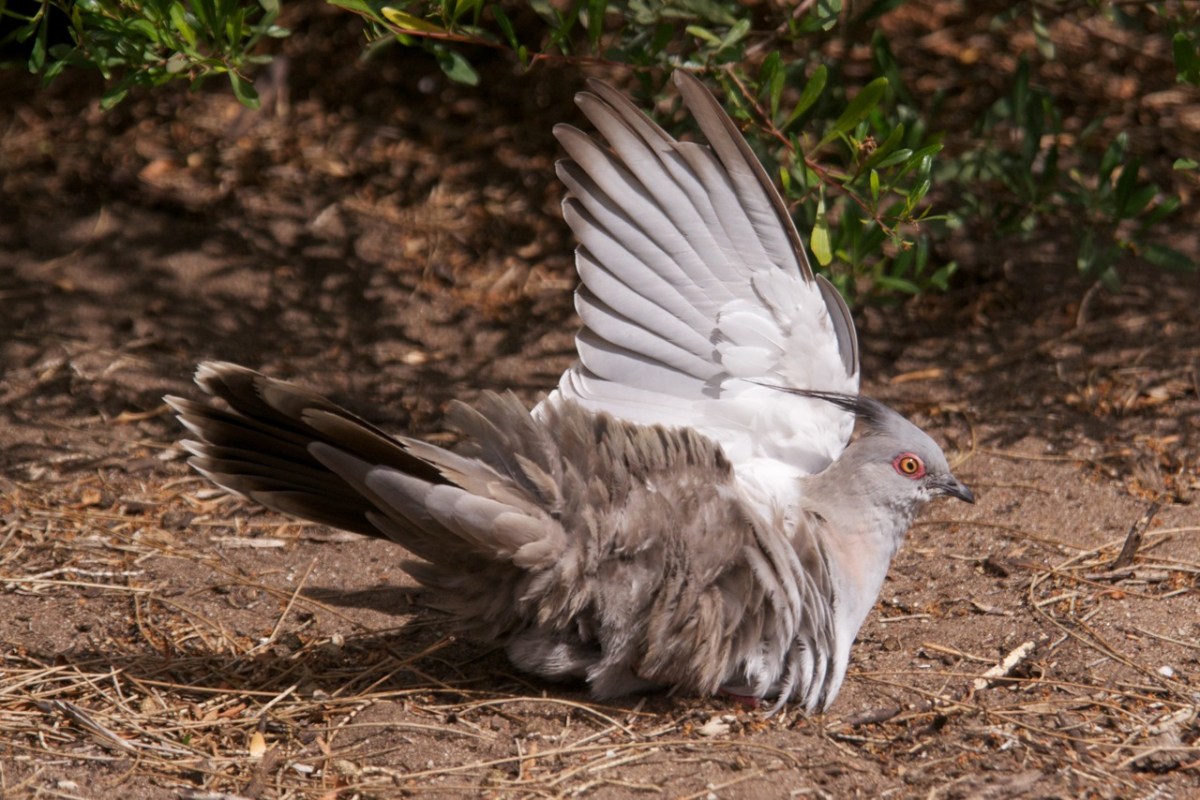
On the way back to the car, I came across a Crested Pigeon that was sunning itself with its feathers all fluffed up and its wing outstretched.
It was a pleasure to get out of the house and into the bush without the rain. Took a trip into the backpaddock at Woodlands.
Didn’t take too long to spot a red-capped male. Then we looked in an area where we hadn’t been and lo and behold another male, and two, possibly three, of his offspring. The variation on the number is that two people can never agree.
So even at at the lower count it would seem we have seen at least 24 or possible 25 new juveniles in the forest this season.
The male was a very doting father, and fed, and offered advice, but his offspring have grown into quite independent birds now. This one is probably from an earlier brood, as it is starting to take on some nice orange brown wash on its chest. Very reminiscent of the female.
The Scarlet Robin is still in place, vocal, and swift. Covering much of the area we walked in today. Didn’t sight him, but as soon as we headed in one direction, he called from another.
Plenty of Yellow-rumped Thornbills, starting to gather, so a largish winter mixed flock might be in order. Time will tell.
It would be a treat if the young robins stayed about with the flock over winter. We were also thinking how successful the Flame Robins might have been, and how many birds will pass through over the winter months.
It is no surprise that for the best part of a week Victoria has experienced some very heavy rains. The weather forecast continued on that theme as we prepared to go to Werribee to meet with the BirdLife Australia Melbourne Photographic Group.
We were having a field trip to WTP led by John Barkla to learn the finer points of migratory wader identification.
After meeting at the Paradise Road Gate, and organising a bit of car pooling, doing a radio check and other general chit-chat, we were ready to Go.
John took us down to the small ponds near the boat ramp, and within a few minutes there were more than enough birds to keep the identification going and the cameras clicking.
Probably the bird of the day was the Broad-billed Sandpiper, I even know how to spell it now.
The degree of change in this bird from just a few weeks ago when I thought it was a female in moult is amazing. Now he is a dapper chappie with a lustrous Deep Black Head, a shining stand out White Splash and a lovely rich Red chest.
His degree of activity is astounding, he travels across the open areas and through the forest at a great rate of knots and will easily cover 300-400 metres in a single flight. His territory seems to be greater than a kilometre square.
He is quite vocal and always on the move. His consort the female Red-capped Robin is still in attendance, but she takes a much more laidback approach, flies a little bit, rests a lot. Hunts closely and doesn’t seem to concerned with his travelling habits. Occasionally he returns and they ‘tic’ at one another, he will fly all around her, and then take off to other parts of the forest.
The ‘pair’ have been around now for over 5 weeks. See first report here, when I had the thought he was a she.
This young male is now a regular resident in Woodlands Historic Park











 Birds as Poetry —— Just because I WANDER doesn't mean I'm LOST