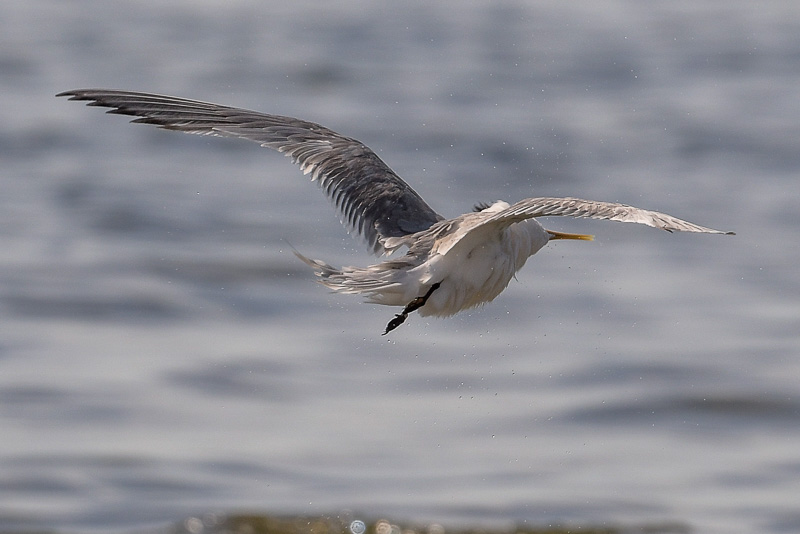
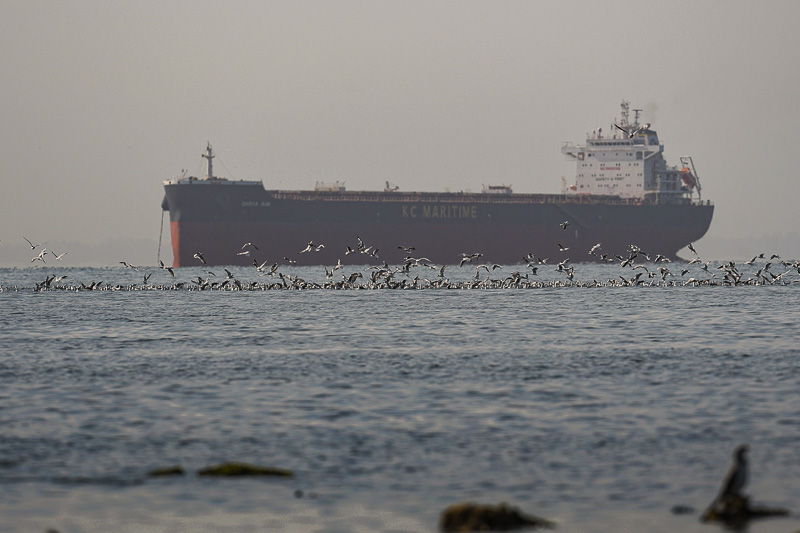
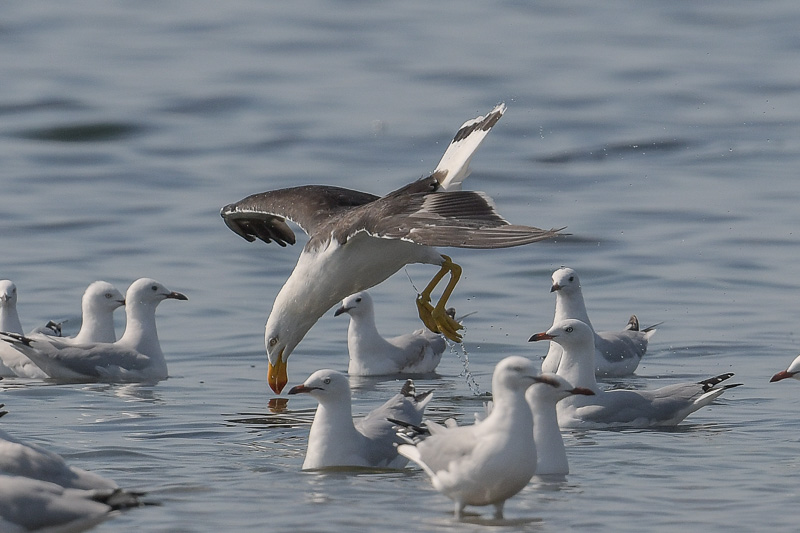
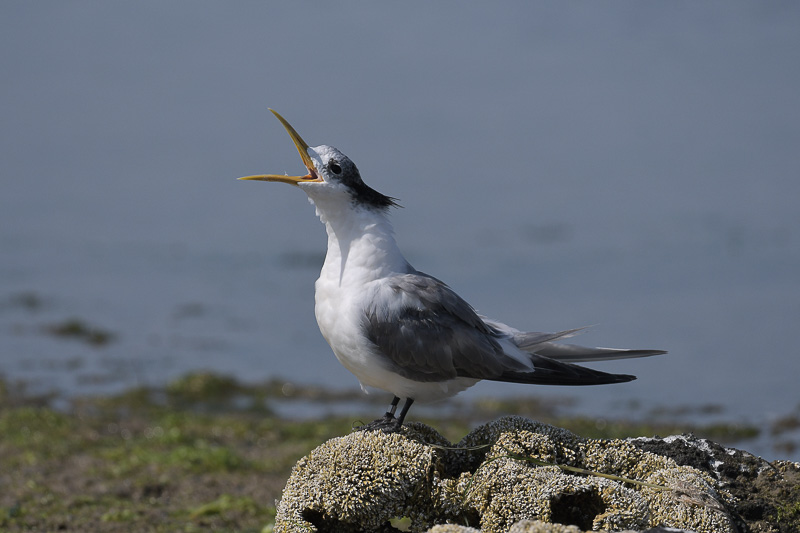
Saturday Evening Post: Wings

One of the most fascinating of bird events happens, like clockwork, every year around Australia’s beaches and inlets.
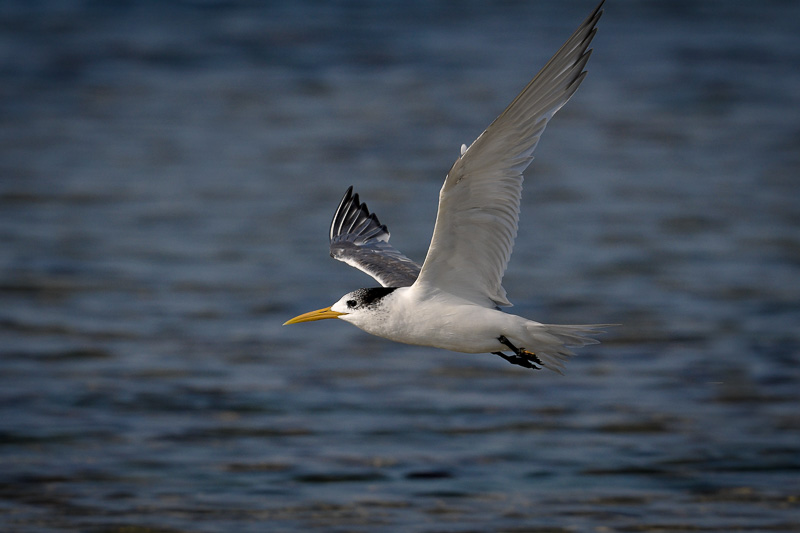
The migration of waders or shore-birds.
Port Philip Bay becomes a haven for them over our summer as they fatten up for the long haul to Siberia. 9,000-10,000 kilometres. One way!

The western side of Port Philip Bay is also home to the Western Treatment Plant, and for over a 100 years the plant has been discharging nutriment rich water into the bay. The long shallow mudflats and sandbars make it easy for feeding as the water in some places at a Spring tide may recede over 200metres. It is not usual to see the entire mudflats shimmering with little grey feathers soaking up as much as they can eat.

Sharptailed Sandpipers are the largest group, also Red-necked Stints and Curlew Sandpipers. The Curlews are in decline as the flyway feeding grounds have been claimed for other uses by humans and the birds find it hard to locate sufficient food sources.

It was once said among the birding population I knew, “If there is a wader on the shore and you call, Sharp-tailed Sandpiper, you have a 78% chance of being right as about 78% of the waders are Sharpies.

A tiny Red-necked Stint arrives in October/November after its flight in from Siberia, it may weigh as much as 20gm—a small handful of jelly beans. By end of season and ready to return they may be around—40gm Still not a big handful of jelly beans.

Their flight north is well known and a majority leave from the Broome area, zip over to the Philipines, a major stop over at the Paranaguá Estuary Complex, then to China, over the mountains and on to Siberia.

They mate, raise young and the adults leave around 2 weeks before the young for the return journey.

The young follow on, with no GPS, no Map, No Google Map, no Whereis or any of the other “must have app” applications. They simply follow the parents journey.

I came across some time back a great descripition of the migration of Swallows by a noted 1880s preacher. Sprugeon. There is something quite lyrical and lucid about his explanation. I hope you enjoy it.

But these birds know when to come or go; they tell, by some mysterious means, exactly when to start on their long flight. They were never known to go too soon: they are never known to stay too late. The bulk of them depart at one period, and the rest a few days later. If we are living in the suburbs, we bear a twittering congregation gathering around the gables of the houses; and, in the evening, we miss the swift-winged hawkers who had, during the summer, found their evening meal among the dancing insects. Their shrill, joyous twitterings are hushed, for they have perceived that the heavy dews of autumn, and the long nights of winter, are coming to strew the earth with fading flowers and bailing leaves; and, by-and-by, with frost and snow; and, therefore, they have flown off to fairer lands where other summers await them. They will come back again in due time, true as the calendar. Whether we look for them, or not, they will be punctual to nature’s appointment. As sure as the summer’s sun will be their return. They know, without any special instruction, when to come, and when to go.

Charles Spurgeon

We were at the WTP and the Sandpipers were putting on quite the show of murmuration. Big bold patches of black swept across the sky, constantly changing shape and pattern and each bird familiar with its flight path.

After some minutes the game was over and they flew in and landed in the pondage in front of us. 
This frame is about 1/10th of the number of birds. How they can fly in such tight formation is beyond thought. You might spot some Red-necked or Curlews in there as well.

Little birds, that with great determination and trust, set out on long journeys into the unkown, guided by instincts we can only guess at. 
Truly Amazing

Along the Track: Duck Inn

Every year thousands of Austalian Shelduck fly into the Western Treatment Plant during November. 
When I grew up, on the river country, they were called “Mountain Ducks”, so as a littleun, I just assumed they must be, as the horse in the The Man from Snowy River, “mountain bred” But it’s highly like that among the thousands, not one has ever been seen in mountain territory.

They congregate to moult out all their flight feathers and for a few weeks are flightless. And pretty helpless. The foxes can ravage the flocks and its not unusal to see a dozen or more carcasses by the roadside on a trip through the plant.

Once they have gained a new set of flight feathers they then begin to fuel up for the next part of their journey.

We stopped on Twentynine Mile Road to have a look at a great number of them feeding.
 And for bonus points a pair of Brolga landed and walked through the flocks. 
With a few wing flaps and some head shaking they seemed to clear a path between the ducks, until in the end, perhaps tired of that game, they took to wing and headed further down the Plant.
The ducks just continued sitting, enjoying the sunshine.

Saturday Evening Post: Exploring the World

Photography, if you’ll pardon the pun, has been the lens through which I’ve explored the world around me.

From the very first photo attempts with Mum’s Box-camera, “Keep the sun over your left shoulder, Dear!”, through a Kodak Star camera as a present, to graduating to a the Magic Carpet of a Super-Balda 120 roll film adjustable camera, the visual journey has always inspired the enthusiasm, imagination and dedication of making remarkable images of everyday things and events.

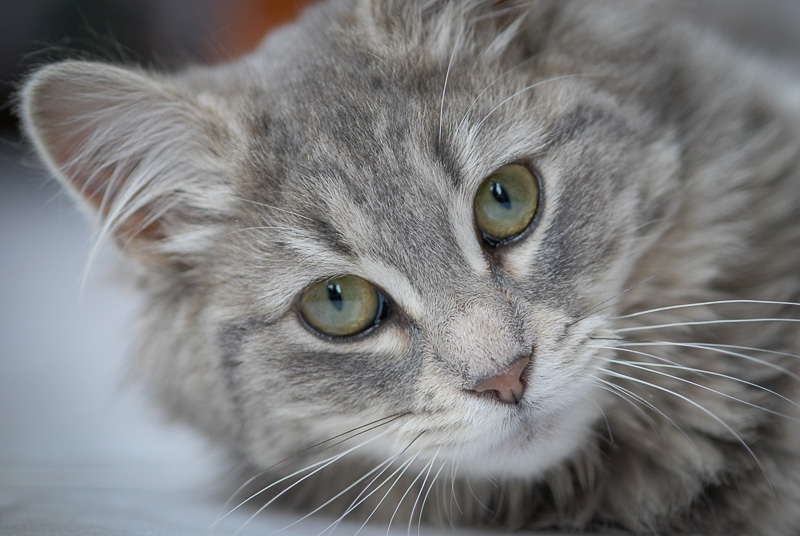
Those first ‘photos’ of Blackie the cat, asleep, in the sunshine, on the porch, to the blurry shots of a “Red Rattler (train) passing under the footbridge at Hampton railway station, may not have passed on down through the tunnel of time, but each press of the shutter today, still carries the memories of those early moments.

Photos have always been part of my life. The National Geographic Magazine, stacked year by year ready to fill in a rainy day on the couch, later, Life Magazine at the local library on the way home from school, and I’ve mentioned before the special librarian who must have had a fascination in Photo-folio books that let me explore how others saw the world around them.

And on reflection, (another photo pun!) each press of the shutter, like a tiny drop of water shimmering on a leaf, opens up new vistas of exploration. David Malouf said it this way.

… in dreams that blow in from out there bearing the fragrance of islands we have not yet sighted in our waking hours, as in voyaging sometimes the first blossoming branches of our next landfall come bumping against the keel, even in the dark, whole days before the real land rises to meet us.
– David Malouf, An Imaginary Life


We don’t get Sooty Oystercatcher on our beach zones as regular visitors. Their Pied cousins while not regular are among some of the usual visitors.
So its always pretty exciting to spot a Sooty along the beach. Unfortunatey they are quite human adverse and will fly further down the beach or wade out on low tide to the safety of rocks far to far away for photography.
This one chose a halfway point, and I tentatively tippy-toed around the small shallow pools in the low tide sand to get the chance to isolate the bird against the water. Fortunately it stayed.

There is dear reader no connection. that I’m aware of, between the black of the Sooty’s feathers, and Blackie the cat.

Along the Track: Up, Wings, UP!

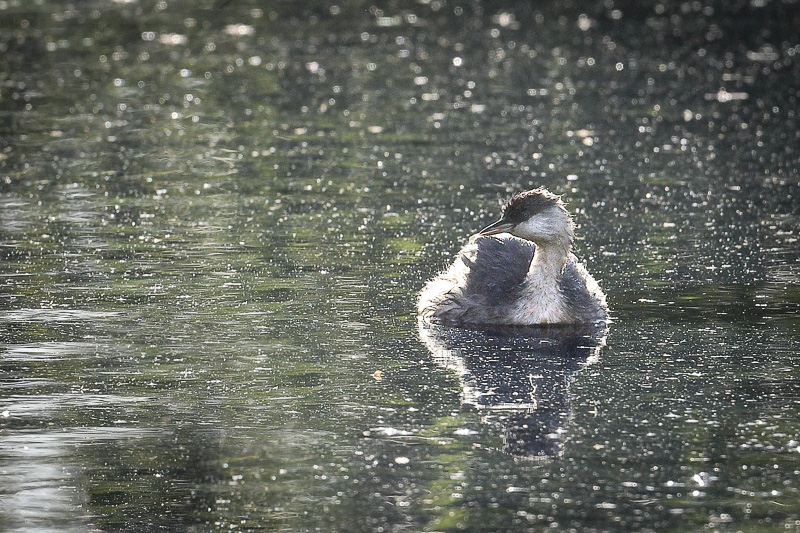
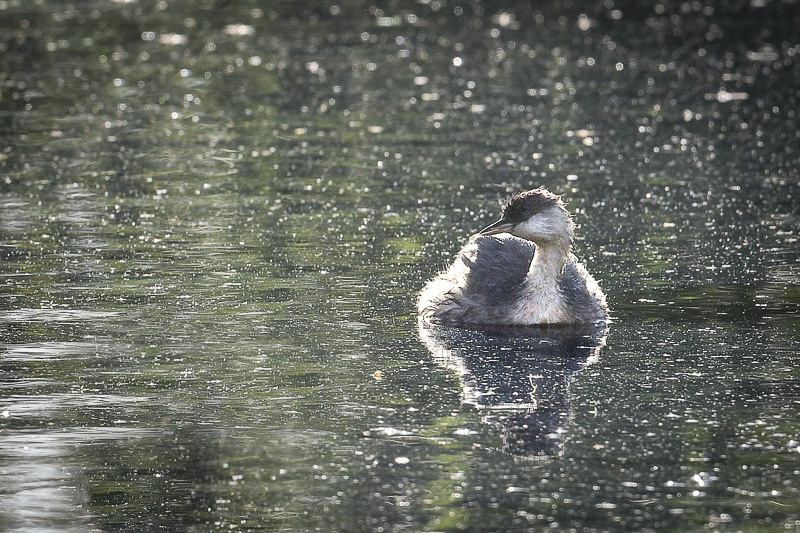
We have had good numbers of Hoary-headed Grebes at a number of locations over the past few months.
Not that we don’t see them regularly, just the large numbers are quite unusual. Some ponds at the Treatment Plant have had 30-40 birds on occassions.

We were at the T-Section area, and in the pond near where we’d parked IamGrey, it was hard not to notice the 15-20 or so Hoary-headed Grebes all swimming about together. 

What turned out to be unusual was they all drifted down to the far end of the pond on a strong breeze, and then with a hop, skip and a jump, they launched themselves into the air and flew the 150m or so to the other end of the pond, drifted back and flew again.

It is most unusal to see any grebe airborne, so this was particularly intruiging. The books tend to say that “they fly at night”, but I suspect that is because no one sees them in daylight, and the conclusion is obvious, “I haven’t seen grebes flying in daylight, so…. They must fly at night” 

These ones, obviously hadn’t read that book. And they continued to repeat the performance
I’ve also been told, on reasonable authority, that Grebes tend to lose the ability to fly the longer they are in a permanent pond. Some Little Aussie battlers can have several seasons in the same pond, and if the theory is correct, then the wing muscles etc, must atrophy and they are for all intents, flightless.

And the Hoary-headed continued to drift up the pond and then fly back. Presumably they were using the rather strong wind blowing down the pond to help get lift. We began to wonder if they were perhaps getting some training in to re-develop the flight muscles

We stayed in the area for a couple of hours and to our surprise when we checked, just as we were leaving, there were only a couple of Grebes still in the pond. The rest had flown!

And of course we missed that.
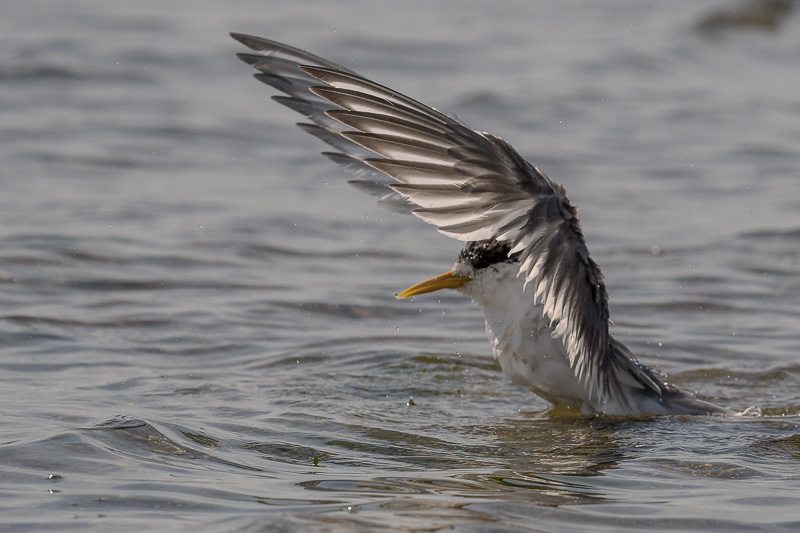
Often see them sitting in the ponds and doing a wing-stretch and conclude that those wings aren’t all that big for such a small bird. But, stretched out in flight they obviously get enough lift. 
With those little stuck-on legs dangling out behind.
Enjoy

Saturday Evening Post, Vol II, #01: The Return

Long time readers will no doubt be having “Dejavu Feelings” or as Yogi Beera once said, “”It’s like déjà vu all over again.”

As 2024 rolls around, I’ve taken on a new writing mentor. One of their first challenges was: To write something new everday. Or photograph something new every day. As a long time collector of little snippets of quotes and snippets from a range of souces, i guess I felt the time was right to settle to a schedule of both journalling, to see where that might take me, and to have a goal of a new page here on the blog.
One of the things Saturday Evening Post was helpful to me over the covid years was an outlet for the difficulty of being locked out of travelling to our normal birding sites. Perhaps it was a bit cathartic, and I do apologise toward the end of the series as all the ‘stream of conciousness’ stuff started to dominate.

So my intention this time round is to stay to the job in hand. An image that has been recently shot, and perhaps a little about the moment.
I was asked, the other day, by a health care professional, about a response I’d made to a question, “How did you get involved in photography?” 
What concerned me in my response, was that the question seemed to seperate a number of related things. My life’s work, my current body of work, my desire to be out in the field, to document and journal the lives of various birds we encounter, the reason I’d rather take a photograph than make watercolours. And a myriad of other things. Seemed that the question was about pigeon-holing the photography, when to be honest it is the raison d’etre.

My next comment was to have them go to the web, enter Birdaspoetry, and when they saw what a body of work contained, then the reason for the question faded away. All my creative life is about words and pictures. (We used to publish a series of articles for a number of magazines under that by-line in another galaxy far, far away.)
More discussion is only commentary.

EE and I made a run to the Western Treatment Plant on Friday evening. It was going to be cloudless and the tide was a low, low tide. (Is there a technical term for that? … edit> Called Spring Tides, from the concept of the tide “springing forth.” ain’t Google wonderful!)

The mudflats would extend out in some places 200-300m and we might get some shorebird activity. But of course the real reason was—that late in the evening, golden, raking, light spilling over the subjects, for great colour and impressive shadows to build a feeling of depth.

This is not driving about putting money into the coffers of the OPEC nations. It’s sitting, contemplating and as Ming Thien has said:
“If you are waiting for something to happen to get a shot, you must be hyper vigilant at all times until you can no longer stand it or have your concentration broken for you: because the minute you turn away, …what you’ve been waiting for will happen”

Then. 
The Little Egret wafted across the sand bar and landed in the shallow tidal pool in front of us.
YAHADDABETHERE!

The big question is whether you are going to be able
to say a hearty yes to your adventure.  
– Joseph Campbell

Along The Track: See-Eagle

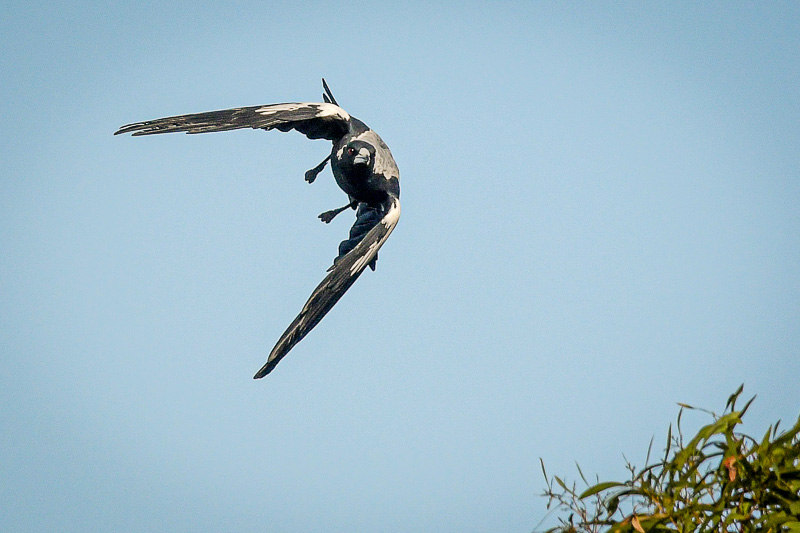
There is something quite distinctive about a Magpie’s call to warn of raptors in the area. It would be a fascinating study to plot the soundscape and work out some of the subtle variations.
For instance, the main call is short and agitated. Yet depending on the level of danger, there are differences in delivery.
A Kite circling somewhere over Argentina, is called by a Maggie out on the paddock here, more as an ‘headsup’ for it family and near neighbours. A Swamp Harrier working its way along the lower fence line a kilometre away might get a variation of the call, indicating a more serious warning. 
A Falcon working through a close treeline, will be given even more attention, more regularly and a much sharper and shrill call. And so it goes.
A raptor resting in a tree, while the family is still fleldging young, is really at risk of evoke the ire of the family, and the entire clan. And many short sharp calls will eventually move the raptor into the open.
So when I hear those calls going out, it is often wise to stop and consider where the raptor(s) might be.
As my Tai Chi instructor rightly pointed out, ““If you can practice even when distracted, you are well trained.”

It’s not so unusual for birdwatchers, and bird photographers to be a little closely tuned to the changes of bird calls. Those that have followed this blog for a long while will know I regularly quote Jon Young. Jon, is a US native tracker and trainer. His book, “What the Robin Knows” has lead me on a number of discoveries of bird language.

Yet, in spite of all that, sometimes even the obvious escapes.
I was alone on the beach area at Point Cook, EE had checked the beach, declared there was no sign of the young Falcons we were looking for and headed back up the paddock toward the new growth pines.

As I turned back off the beach, I heard the familiar “pip, pip pip” piping of Oystercatchers in the air. I looked along the beach in the direction of the call, but could not discern any shapes that matched. Darn Cartaracts! I’ve got to go get them looked at!
Then I spotted a largish flock of 20 or more heading my way, and all bunched up, and quite close to the water. A little unusal, but I made some frames as they sped past.
Suddenly they were followed by several skenes of assorted Cormorants, all equally in a hurry to be somewhere. Perhaps the fish were in on the low tide?
And just as quickly a couple of largish flocks of teal and black duck. These birds were not on a seaside excursion looking at the scenery. They needed to be somewhere else, and looked for all the world like they should have already been there.

“Something has put them up,” I exclaimed to no one in particular, and as there was no one else on the beach near me, it was just as well.

Next a motley collection of Silver Gulls also went by in a straight line. “Something has put them up,” I concluded.
The little bay where all this happened is quite shallow at low tide, it’s possible to walk out 150-250 metres and never get your knees wet. There had been, I’d noted earlier some people around the point wading in the water, and thought, perhaps they ventured just that little too far out and the birds objected.

Looking along the beach line, the swimmers and waders had left the area. So I wondered, out loud, to no one in particular, “Perhaps a Kite has put them up or maybe a Falcon?”

And on a start, there was a shape just above the waterline. Heading down the beach toward me. I didn’t worry any more about the cataracts. ”It’s a Sea-eagle”. ”No wonder everybody is on the move!”

It was a juvenile bird and swept down the beachline in no particular hurry. It’s luncheon options had already disappeared way behind me. Came over my head, swung inland made a subtle U turn and landed on the tallest tree on the shore line. It could probably see to Argentina from up there.

Excitedly, I dialed EE to tell her of the good news and the option to come see.

Now, here is another strange thing in this digital age of mass and urgent communication.
Any text message, from family, friends, lunch meetings, coffee gatherings, junk mail, spam, sales offers from Rivers or Rockmans, and of course the occassional scam text, are answered and replied to ‘instantly”

An important message, “Hey, I’ve got a Sea-eagle on a tree on the beach, come see” is ignored. 
Go Figure.

So the Sea-eagle and I settled to our roles. Eagle, to look majestic and stay perched. Me, try and get the best angle. 
The pictures tell the rest of the story.

(PS) and EE did eventually get the message and turn up, just before the bored Sea-eagle decided that the fishing was better further along the beach.

Enjoy

Along the Track: Territory Management Raptor Style

The trees and gardens around the nearby beach park date to the time of the first settlers in the area. They had obtained rights to farm huge areas of the Port Philip Bay area and began to build a life-style to rival their English heritage.

Part of that incluced the planting of a range of pine trees, some must be over 100 years or more. The close spacing of the pines as wind-breaks has resulted in some fine nesting locations for a range of raptors. 
Over the years we’ve had: Black-shouldered, Whistling and Black Kites in the area. For several seasons a pair of Spotted Harrier were in residence and they used the surrounding open paddocks that are covered in thick bracken as resting spots out of sight of the world.
Australian Hobbys have also chosen a few spots. And at present a pair of Collared Sparrowhawk have recently completed their clutch.

The Queen of the Area is a Brown Falcon, Cassia of Cinnamon, and her handsome light morph beau, Alistair.

But all this brings heavy pressure on the birds as each wants the best opportunities for their young to be fed.  So it’s not unusual to see swooping, name calling and direct attacks occuring from time to time. And its not all one-sided. Depending on the development of each clutch depends on who is the aggressor.

However the other day an added complexity to the mix. The Sparrowhawks have successfully fledged two young birds. They are a month or more ahead of the Falcons, and so have reign of the treeline at present. And being young birds with highly developed flying skills and a little bit of juvenile team work, they decided that the lone perched Cassia, of Cinnamon would be a bit of a game.

She has claimed the tallest of the Umbrella Pines as her lookout, over the paddocks for food, out further for the returning Alistair and a direct line of site to the precious nest location.

The two young Sparrowhawks took umbrage she should be in their area and settled into a name of game calling out in the open, from a nearby old tree. Then in a series of planned attacks they launched at her. Nothing she couldn’t handle, but the action did get pretty hot.

Enjoy

Very Little Visit: Still Raining Rails

Well if nothing else, the ground is getting a fair old drenching. Keeping your Downwardly Mobile scribe inside too.

But the wet weather has certainly played its magic across the Crake and Rail communities.

We have been over the past few weeks monitoring a pair of Willie Wagtails that have set up a nest in a tree in the foyer area of a local Uni gym.

Sunday morning on the way home, we picked up a sandwich and some coffee and headed for said gym carpark. The weather was overcast, but not threatening, so we were going to use one of the picnic tables on the gym lawn for lunch.

Normally, I’d stop, EE would walk across the lawn and I’d park IamGrey and head back. But the lawn was little minature lakes, so it seemed best to stop at the ‘drier’ carpark. 

Oh, she said, look a Coot has it two little young ones out in the grass. And sure enough, and who dear reader would argue with that observation. Click, click, click from that side of the vehicle.

I looked out and saw, just in front of the bonnet, another Coot, and thought, Oh, its a bit seperate from the family, until it cocked its head, and lo, it was a Buff-banded Rail.

Now its nigh on impossible to get a photographer to change from photographing one subject to taking interest in something more interesting. And with fear that I’d frighten the Rail, I backed the car ever slowly about 10m. Then, of course EE spied it and the door of the IamGrey slowly began to open. My camera was securely in the back, so I slipped along the edge to retrieve it, knowing full well that the bird will have taken the hint and fled.
But this one was a calm as they come. Sunday morning at the gym, no other people around, it felt pretty comfortable.

It foraged quite near us, then scampered back into the reeds, to emege again down near the table where we’d adjourned to have lunch and contemplate our fortunate state at seeing it so well.

It strolled about the path, then into the grass and about 10 minutes later slipped away, to come out again and let us ‘creep’ quietly up on it. Cool as.

In the end, time ran out, but the Rail was still going.

Was hoping to post these on Flickr, but for some reason, my Flickr account has been hijacked to another user id. So all I get to see is their pictures and contacts. So until I feel comfortable with Flickr again, most of the next couple of weeks shall be here on the blog. Hopefully won’t bore you with too many stories and same pics. Couple of interesting developments in the field at present.

I’ve had several email me and say that the Flickr photos are getting up, but I can’t see or comment on any at all.  They tell me my Flickr Stream needs a complete rebuild and may take “Some hours depending on the size of the photos, and links.” I’ll get over it. 🙂

Little Visits: Around the Pond

In my new Downwardly Mobile role, we stayed around the Crake Pond area at WTP for the rest of the morning.
Not only were the Crakes out and about but also quite a number of other usual suspects.

Highlight was some Black-tailed Native-hens. Another bird that I rarely see and the first time ever a this location.

I also spent some time with several large flocks of Whiskered Terns, hoping, perhaps a bit too much that there might be some White-winged Blacks among them. But not this day. Means another trip should be on the cards.

Here is a few of the morning’s finds.

Enjoy

Little Visits: It’s Rained Crakes

I was writing to Mr An Onymous t’other day about the weather, or lack of it in fine proportions, and lamenting being unable to get out in the wind and the rain.

I mentioned that I’d concluded that I’m no longer a member of the Upwardly Mobile and was rapidly sliding into the Downwardly Mobile. Just seems too hard to get out and about regularly.

Still, there is a lot to be said for quietly sitting. EE has made a science of it and half her magic comes from such experiences, I percieve.

So I thought I must take advantage of such a change in direction and rejig the blog at least one more time. Rather than look for the ‘big’ stories of bird-world/land I might just cover a few pics from one connected set of birds.
Which if I recall correctly, (and that you might want to check against para 2 above), was roughly what my journalism instructor(ess) had to say. Write the little stories with insight. The big stories can wait. (In my case they still are!) Well I might have missed her quote a bit, but the intent was the same.

After a week or more of rain, we took an opportunity between all the unimportant life missions we are on, to leave home early and head to just one location. The T-Section at the Western Treatment Plant. And to spend the morning at the “Crake Pool/Pond” For the initiated, it’s easy to find. For those who’ve never been there, its not a pool or a pond, its part of a reed bed that is on the edge of a typical, large, former waste-treatment pond.
Yet for some reason, water density, coverage, food, shelter and a host of Crakie sort of things the Baillon’s, Spotted and Spotless seem to favour. Most times they skulk (love that word) about in between the reeds and are hardly seen. At present, all bets are off and they are mostly feeding in the open.

Birders and Photographers have devised some pretty sneaky plans of their own to be able to see the birds without scaring them off.
But.
In the interests of brevity I’m going to ignore all that at this time.

We parked the car at a junction, walked the 150m or so down to the pool, and there they were. Happy in their litte Crake world and the only thing that seemed to scare them back into the reeds were a few aggressive Australasian Swamphens that kept maurauding across the open areas in pursuit of one another. They’d scare me too.

So here here we are. It’s Rained Crakes.

As it Happened: The Family that bathes together…

So many cliches that could be used as a title for this little series.

We’ve had well over a week of soaking rain. Fortunately not driving heavy rain so many of the nesting birds have been able to deal with it. But, of course some in early stages of hatching with downless young have succumbed.

After a week of sitting in wet trees, eating of the wet ground and flying through the downpours, you’d think your average magpie would be sick of water. But. No!

We ventured out to monitor a few of the nests locally, and managed a bit of a break in the weather with a spot of sunshine coming through. We found this small Magpie family making the most of the bathing facitilies offered in the puddles along the tracks.

Their young one didn’t seem all that keen, but Mum and Dad got right into the business and soaked it all up. I wonder if they were using the gravel to help clean out the underfeathers. They certainly stepped out of the puddle soaking wet. Both made several excursions into the water and then flew to a nearby tree for the shaking out and preening.

Junior had overcome its fears by then and stepped in to the water as well.

And it just goes to show the folk with birdbaths at home, that you should keep them clean no telling what might turn up if there is any muck in the water.

Enjoy.

Along the Track: The Flight of the Heron

Mr An Onymous has been laid up a bit of late with some eye-surgery. He recieved the all clear from Dr Slice’n’Dice the other day, so we decided on a trip to the Western Treatment Plant to try out his new “eyes”

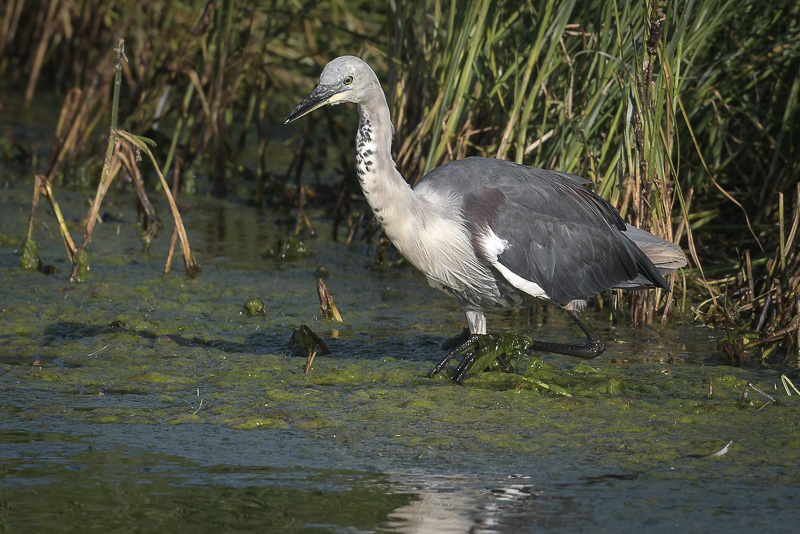
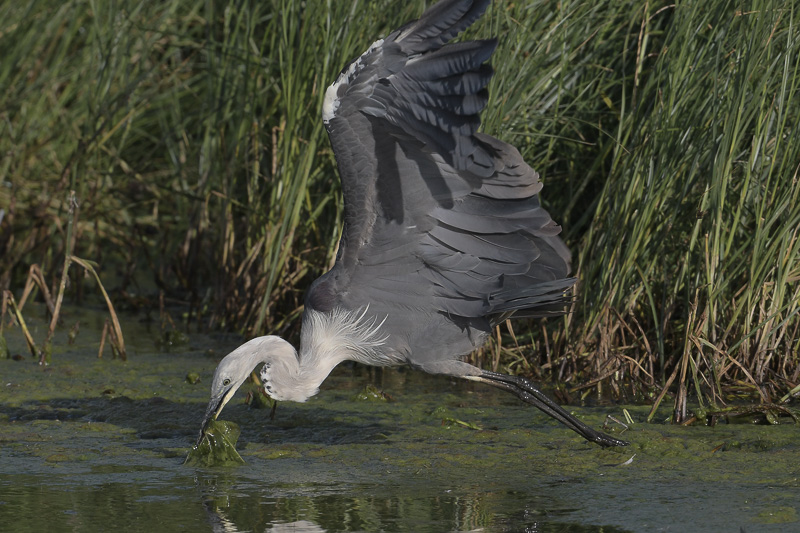
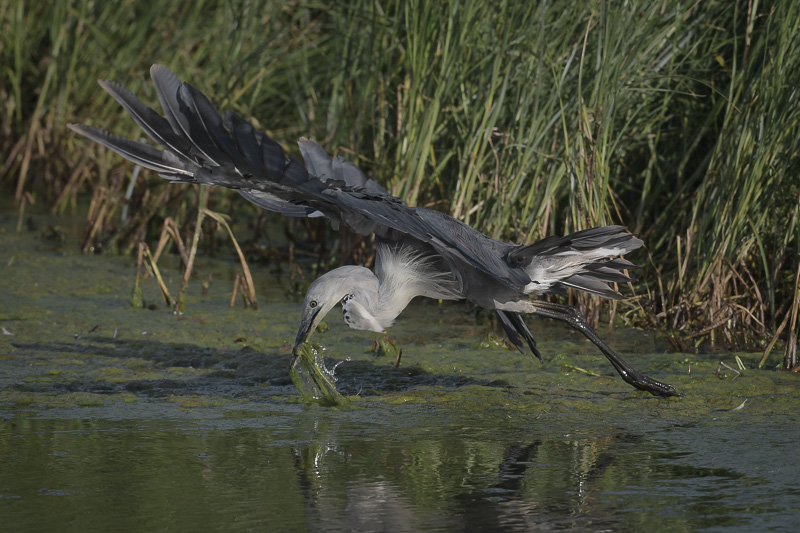
We had been watching a White-necked Heron feeding in the open grass in one of the ponds, when on a moment, a number of Australasian Swamphens decided to take battle, and the Heron was caught up in the middle of it, and took off. It flew across the pond to a safer and quieter spot.

Enjoy

Along The Track: Night Heron Mania

One bird we seldom see out and about is the Nankeen Night Heron.
For a number of years, a small colony roosted in a large pine tree on an access track into the Werribee River Park.
Then for some reason, they disappeared for about four years.

Recently we’ve been noticing those lovely rich apricot-tan coloured feathers sprinkled along the track, so it’s always worthwhile checking. Almost all the time, they are high up, and surrounded by as many branches as possible and good looks, let along good photos are pretty difficult.

The last couple of visits we’ve seen around five or six in the tree and several of them are juveniles.

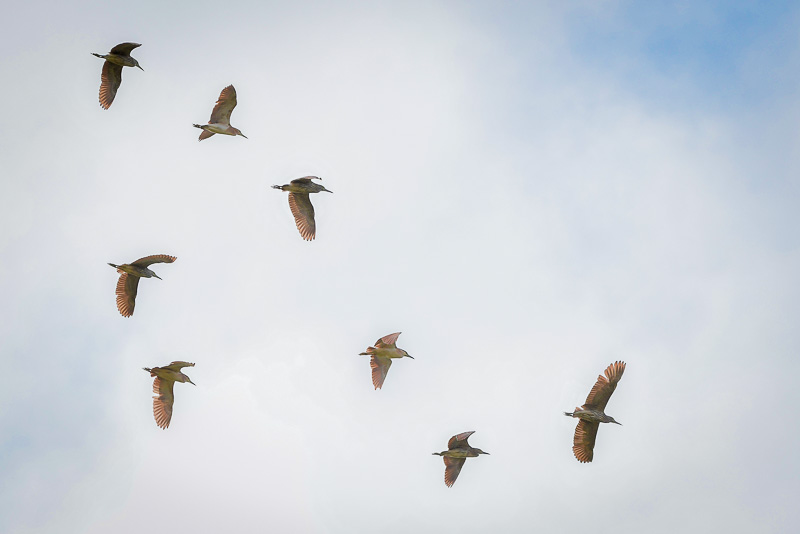
The other morning as we passed by, they seemed very nervous and with a ‘grunt’ took to wing. This suited the Sulphur-crested Cockatoos as it gave them something to chase and complain about.
What we didn’t expect was that just about every other tree nearby, also ‘grunted’ and in the end we had as many as 25 Nankeen Night Herons in the air looking for a quiet place away from the Cockatoos.

We continued down along the river edge and found eight to ten had moved down to the river to sit on some of the old trees overlooking the water. Just couldn’t get close, but at least we could say they are in good numbers.

Enjoy

As it Happened: Possession Is…

Our most recent outings have all been in the one location at Point Cook Coastal Park.
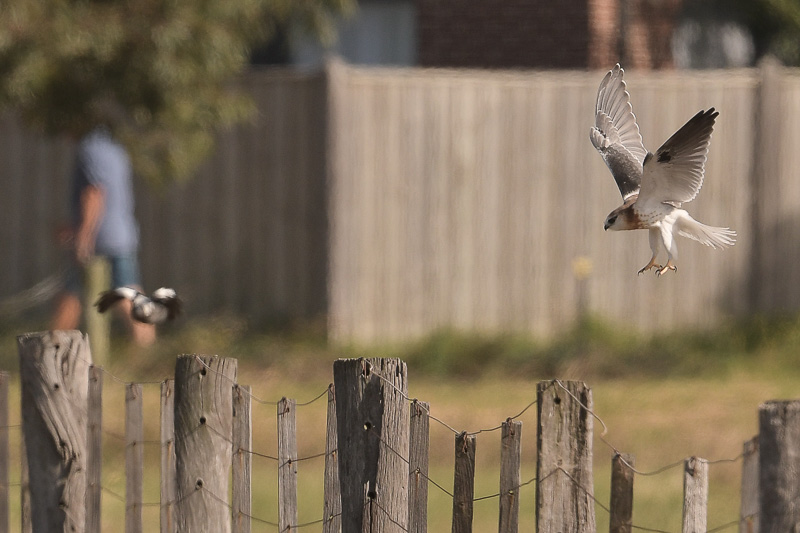
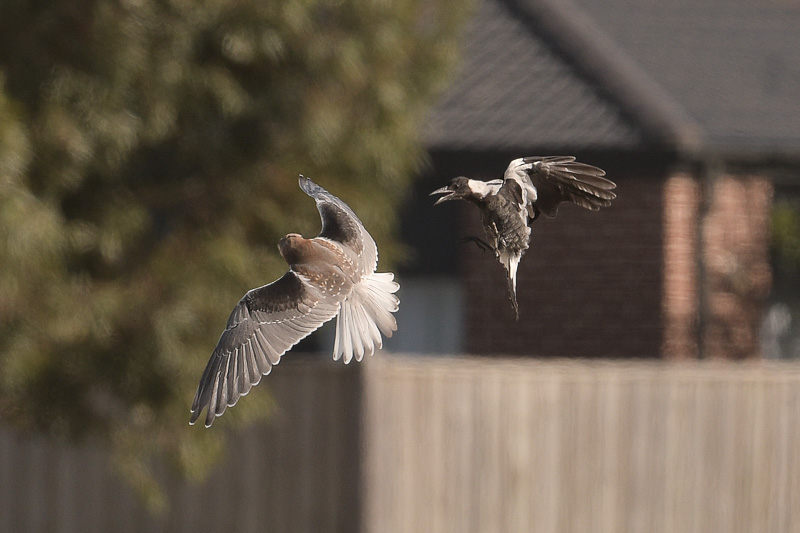
At least three families of young Black-shoudered Kites have been working in the area.
As best we’ve been able to count there have been nine young Kites, with at least two of their supervising male adults, one semi-resident male, who has a second clutch on the go and is busy feeding Madeline, and perhaps two or three late juveniles that have started to lose their apricot colouring and take on the rich red eye colour.

Intruiging to walk down a roadway with up to eight or more of them sitting on fence posts all calling and tail-wagging in territorial poses. While in the air around them several others are applying their skills for a feed.

But with finite amounts of mice, and so many kites a few squabbles were inevitable. And Mike was not happy about having so many extra mouths to feed when he has the new clutch growing.

As I said to someone the other day, it’s the stuff to fill memory cards on.
And I’ve wondered how many feeding Kite pictures does a blog need. Still I don’t know.
So here are the dramas from a few days.

Enjoy!

This one seemed to me to be an adult the way it was hunting, and I was suprised to see when I looked closely it was a juvenile. They pull out of the headlong dive just before the ground and the feet are swung in to land on the prey-mouse. I’ve been near them from time to time and they hit the ground with quite a distinct, “THUD”
If you can’t catch a mouse, then it’s fair game to stop the next bird in their hunting efforts, which always results in a few circles of the paddock as they sort out the differences.
Now this I’ve never seen before.
This bird is eating the mouse on the wing. It’s a bit to dangerous to land on a post to have a leisurely meal as one or other other the others will make a pass and try to relieve you of your catch.
They fly quite high to do this action, and then hover-fall as they reach down and take pieces, until it can be swallowed whole.
This is one of the older two or three that have lately come to the paddock. It has easily secured a meal and is keeping it quite hidden from everybody else
Old enough to defend itself, it was lining up for a fence post landing
A large tail-flick is a warning to all that is prepared to claim territory. It has also dropped the wings to ‘mantle’ over the mouse.
And here the tail is covering any sign of its possession.
Meanwhile Mike is running off any birds that try to hunt in his area.
I’m not sure where the boundary was, but the young were continually hunted over the far side of the roadway.
The young were quite capable of squabbling amonst themselves for the best positions. I came to the conclusion from the way they each returned to a specific area, that the mice were in that location.
Another successful strike. And now to find a place to enjoy the meal.
Ths is the same bird and its easy to see that it has the mouse very tightly tucked up to keep safe from the others. It spiralled up to gain height to eat it on the wing
Here, it is enjoying the fruits of its labour. As it lazily difted down in a slow descent.

No doubt by this week, the fields will be pretty bare as the young will begin to move further down the coast or inland to find their own hunting grounds.