My astute reader, whoever you are, should have noted by now a few minor changes to the layout. I’m going to take a great risk visually soon and take out all the side bar material. Probably not to many of us take much notice of that stuff anymore, me thinks. Also you’ll have noted that the background has become a cork board. That is a bit of a hark back to the old website, and perhaps I’ll just bring back the coloured backdrop. But most likely the design will change somewhat.
One of the major environmental activities that Werribee Wagtails group gets involved in is the surveying of several areas every quarter to record bird numbers. The areas are pretty much fixed and each circuit reveals changing bird numbers.
Mt Rothwell is a northern outcrop of the You Yangs, and offers one of the Grey Box and original scrub areas near the You Yangs. It is also a private environmental research centre. You can read about it here
I’ve written about our previous visits and some of the activities of the centre.
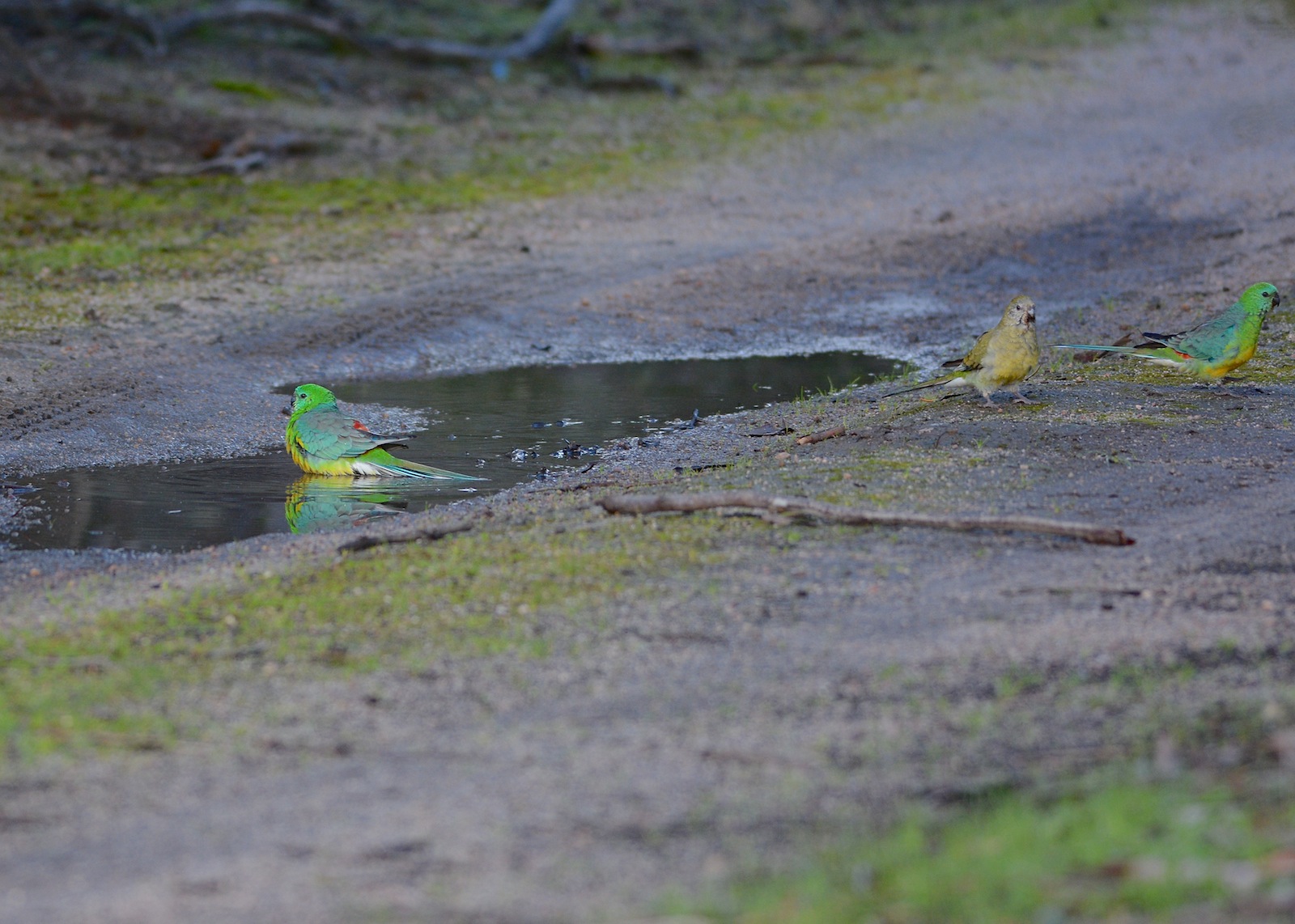
Today, however it was pretty much business as usual, and we managed to locate 42 species, and some with quite good numbers, over 60+ Red-rumped Parrots, and quite a number of raptors, Brown Falcons, Black Kites, Whistling Kites and several Harriers. But the raptor numbers were a bit down. Perhaps the hunting is better elsewhere.
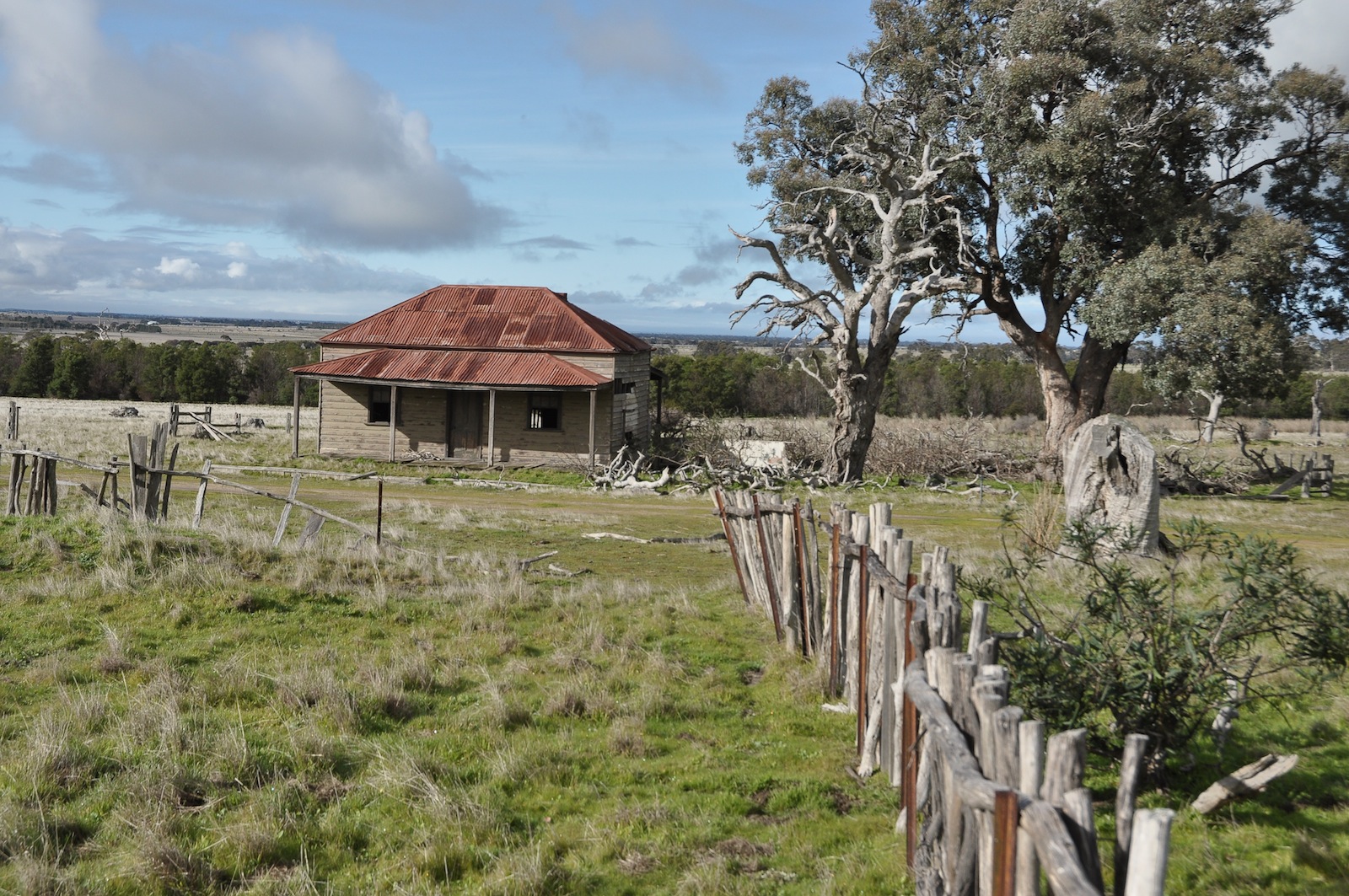
On the site is the remains of an old movie set. I’ve reported this as the set for the Ned Kelly Movie with Mick Jagger, but better informed it apparently is the set from the Heath Ledger version in 2003. Still, its quite in ruin, and even more dilapidated than when I saw it last time.
One of the highlights of the visit is the climb to Mt Rothwell, not a hard climb, but the view is simply stunning as its open from the East, North and West. It show off some lovely big rock faces and some isolated tors. A landscape photographers delight, if the light is right.
My astute reader, (whoever you are) will recall that I got myself a bit misplaced on a previous visit because I’d been silly enough to stop to take a photograph (actually several photographs), and was banned from carrying a camera if I came again. The next time I followed the rules, and borrowed EE’s Panasonic FZ200 for a number of shots. But, I stayed with the group.
This time hidden under my plastic bag of sandwiches and soup, I had a (shhhh, don’t tell) a camera with my favourite 18-70 zoom lens. So any rock or tree or building that appealed, I would surrupitiously ease out the camera, slip to the side of the group, and “click” hoping no one would either notice my missing presence, or hear the offending noise. And … well it seemed to work, and I survived the day. Not too many bird pics, is true to be told, but hey, who needs another bird on a stick?
Early morning drizzle mutes the coloursRed-rumped Parrots at bath
Many birds on many sticks
Sitting in the morning sunshine warming upSunlight rocks.“Glenrowan” Set“Glenrowan Hotel” SetFence line at “Glenrowan” note the metal star pickets to hold it up.Bird watching should always be this much fun.Last little spray of sunshine before the weather changed
Had some really interesting and forthright emails and comments on the last long blog on ‘why we press the shutter’. Funny how sometimes things just mesh in harmony and we all have a chance to stop and at least make a quick ponder on our special place in the photographic endeavour.
But it must be in the air at the moment, as I received an email update from Jon Young, he of “What the Robin Knows” and founder of 8 Shields Institute. For those that haven’t grasped his work, have a look at the website. He is primarily a mentor for developing the, ‘nearly lost art of understanding bird and animal language’. Sites are here Jon Young and here Bird Language. Ok, its a place to buy stuff, but look among the ideas. They also have a Free 8 week course, which is really a condensation of the book “What the Robin Knows”.
Anyway marketing pitch off, I got an email from one of his colleagues Josh Lane, and you can find the whole page here, Seeing with New Eyes
He puts it best this way, and I’m lifting out a couple of paragraphs, so hope the thought police are not on the job too much. Check out Josh’s full quote above.
“On one level, this ability to perceive and behave unconsciously helps us in daily life, as we can learn to do many things at once without having to think about them. On the other hand, we can too easily go into “autopilot” and miss out on a lot of the world around us.
The next time you walk out of your front door, or go to your sit spot, set the intention first to approach that place with beginner’s mind, as if you have never been there before.
Open your senses up. Pretend to be a tourist admiring the architecture of the building, or a birder who is on a distant safari watching and listening keenly for exotic new birds. Let nothing escape your attention.
Develop this practice for a week. Perhaps that same tree you have walked by 100 times before will catch your attention in a new way; maybe the afternoon light will hit the branches in a way you have never noticed before. Or, a flower growing in the cracks of the sidewalk will call to your senses and remind you of the beauty of the earth. Let your awareness be open and expansive, as you see familiar places with new eyes!”
Think this is what I’m wrestling with in my own work. As I replied to Steve Hayward He of Devophoto here on Flickr;
” I’ve been struggling of late between the need for technical shots of details and the need to develop a sense of place for the bird.”
And I think now that Josh has sussed it out. Being so conscious of the right exposure, and the right location, and the right angle and the difficulty of filling the frame, I’ve been forgetting to look, to be open and expansive and to see the familiar with new eyes.
We’ll see. (pun intended).
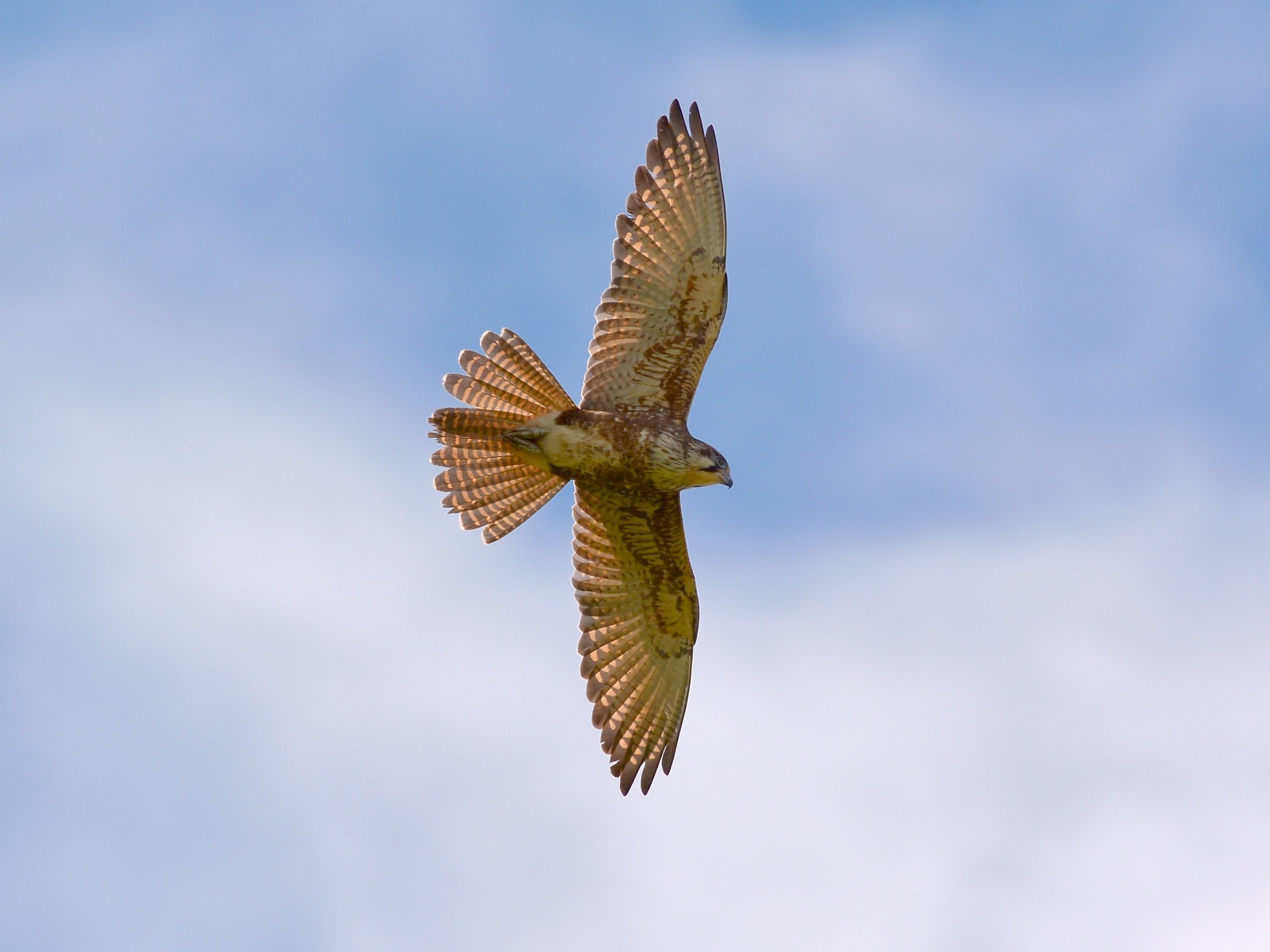
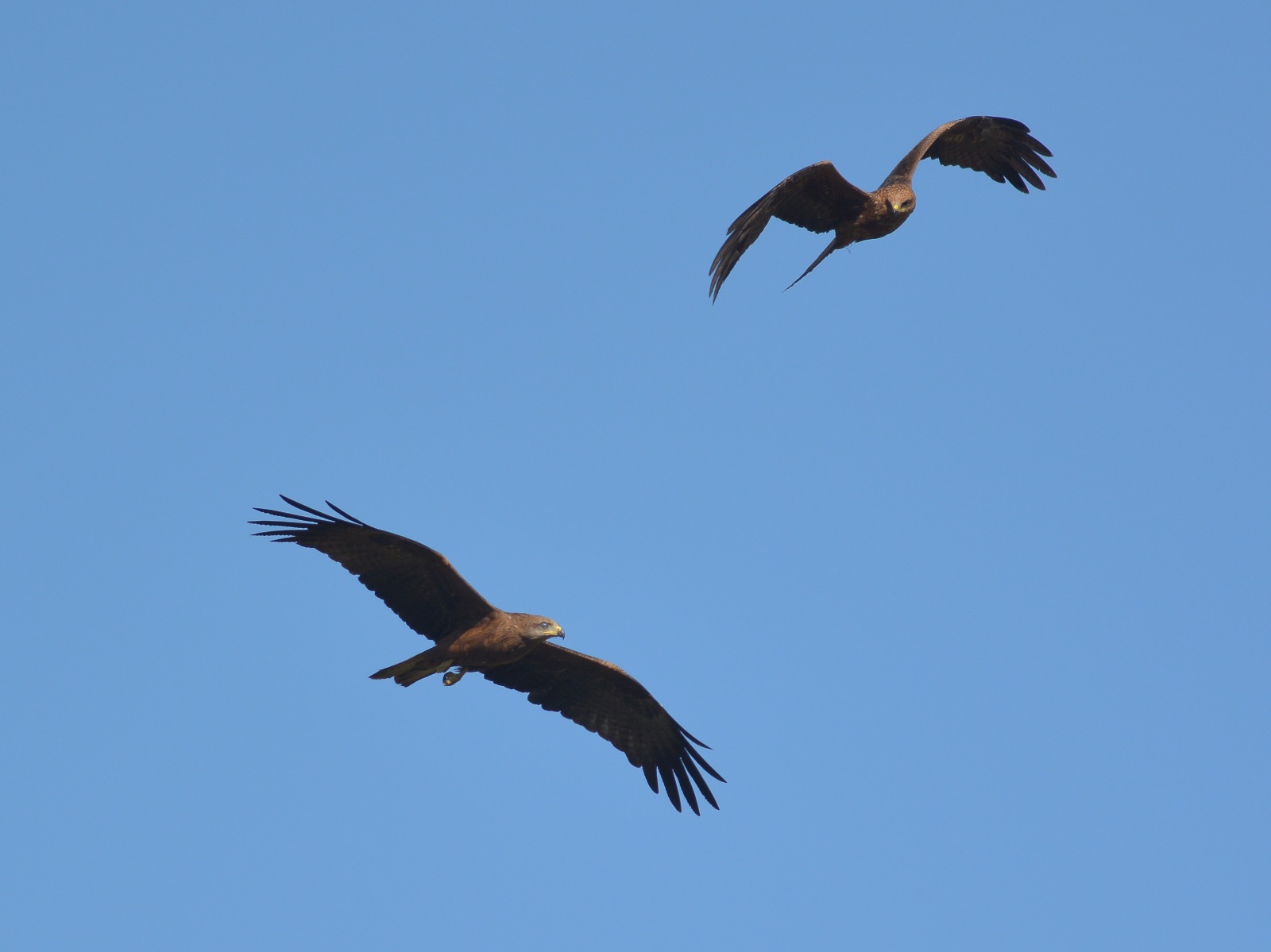
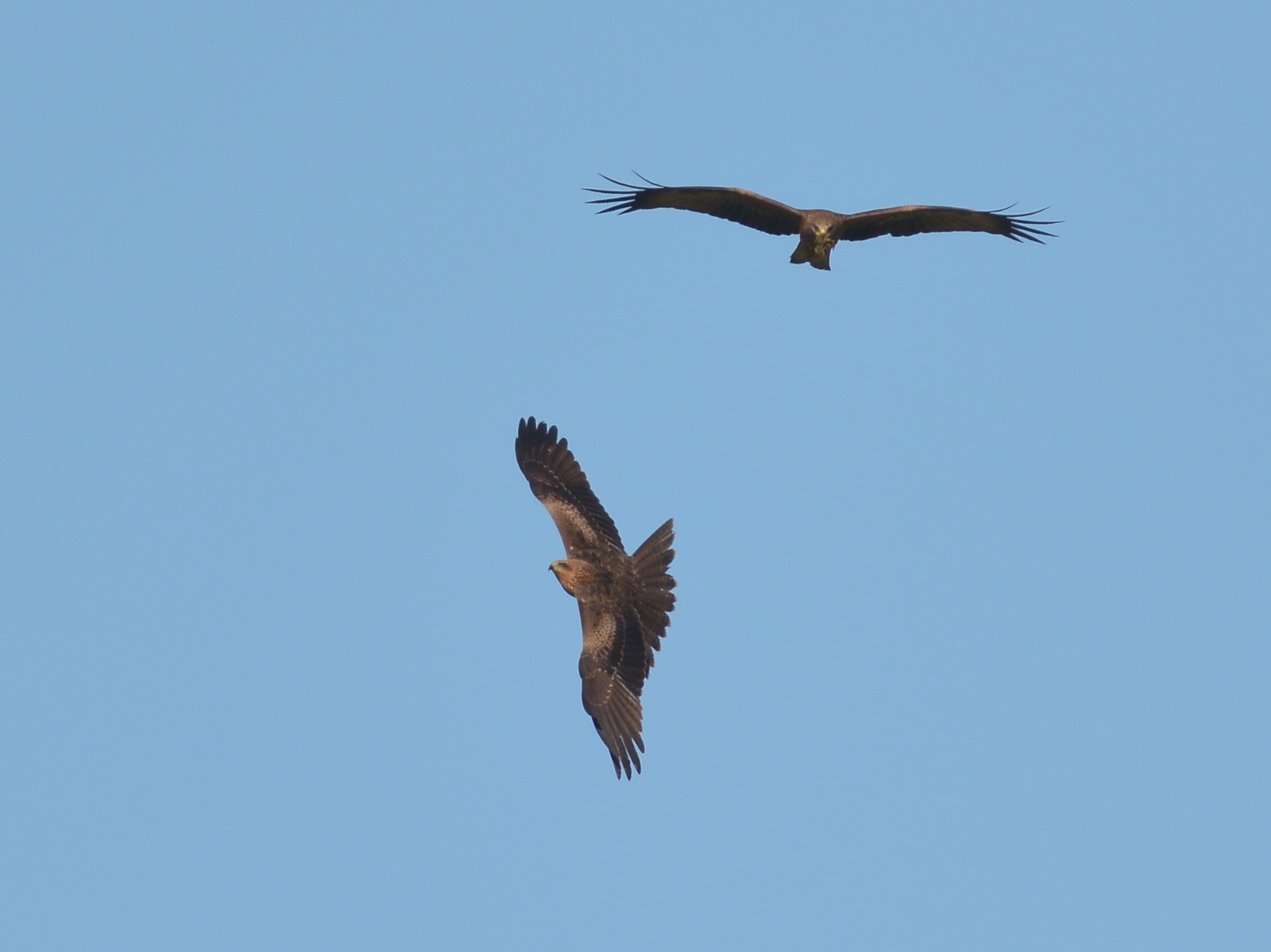
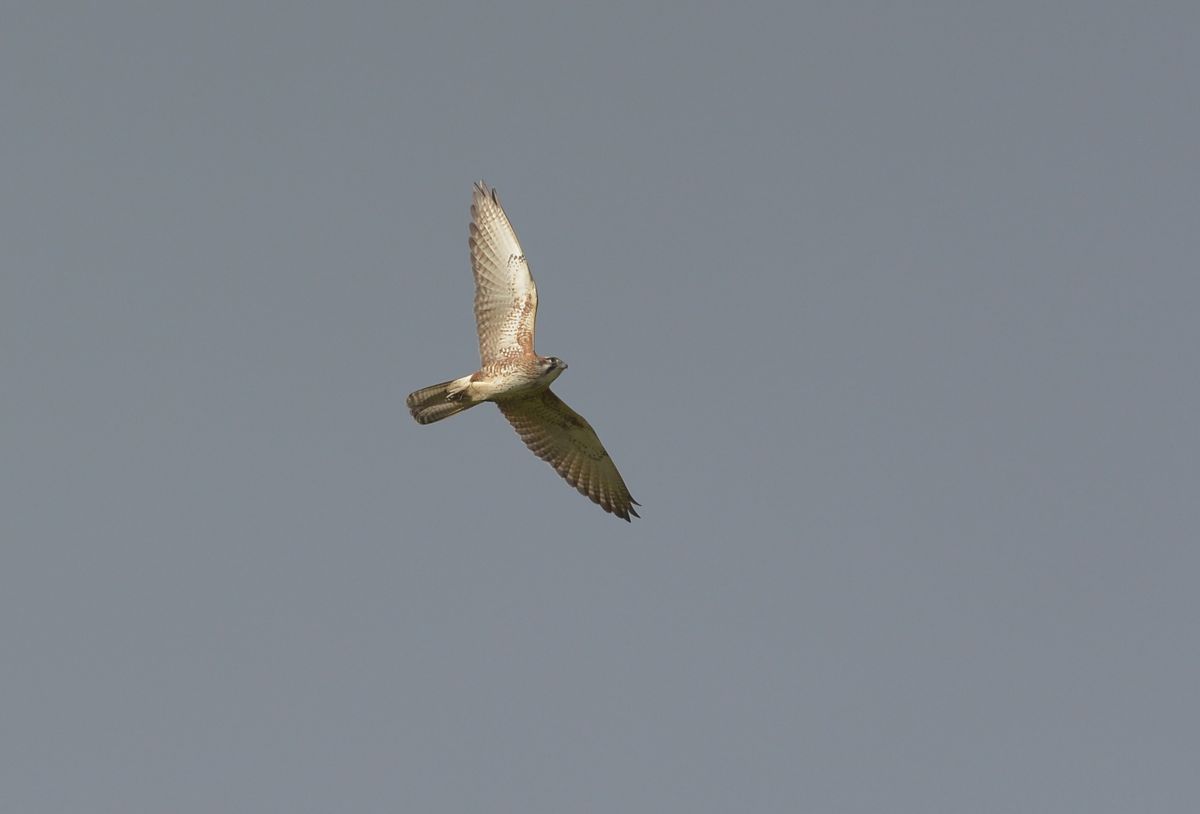
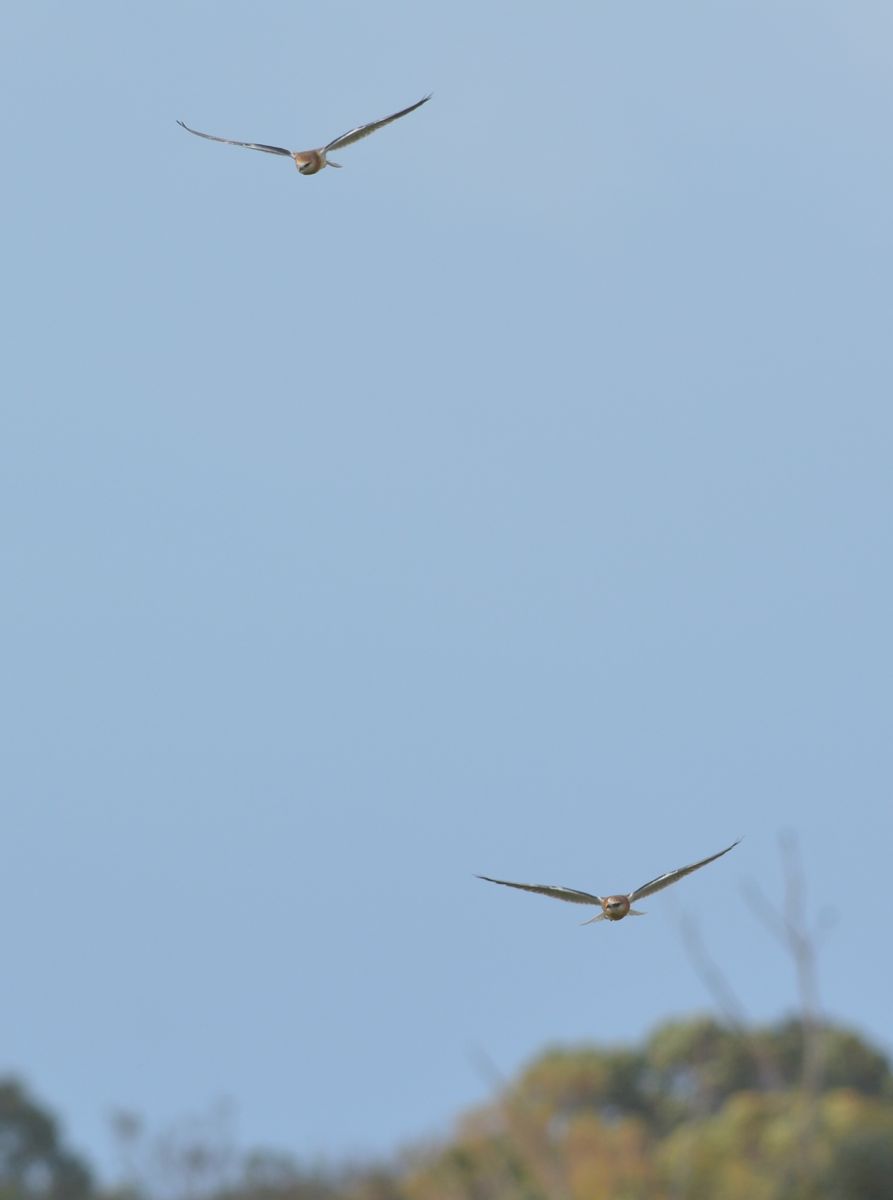
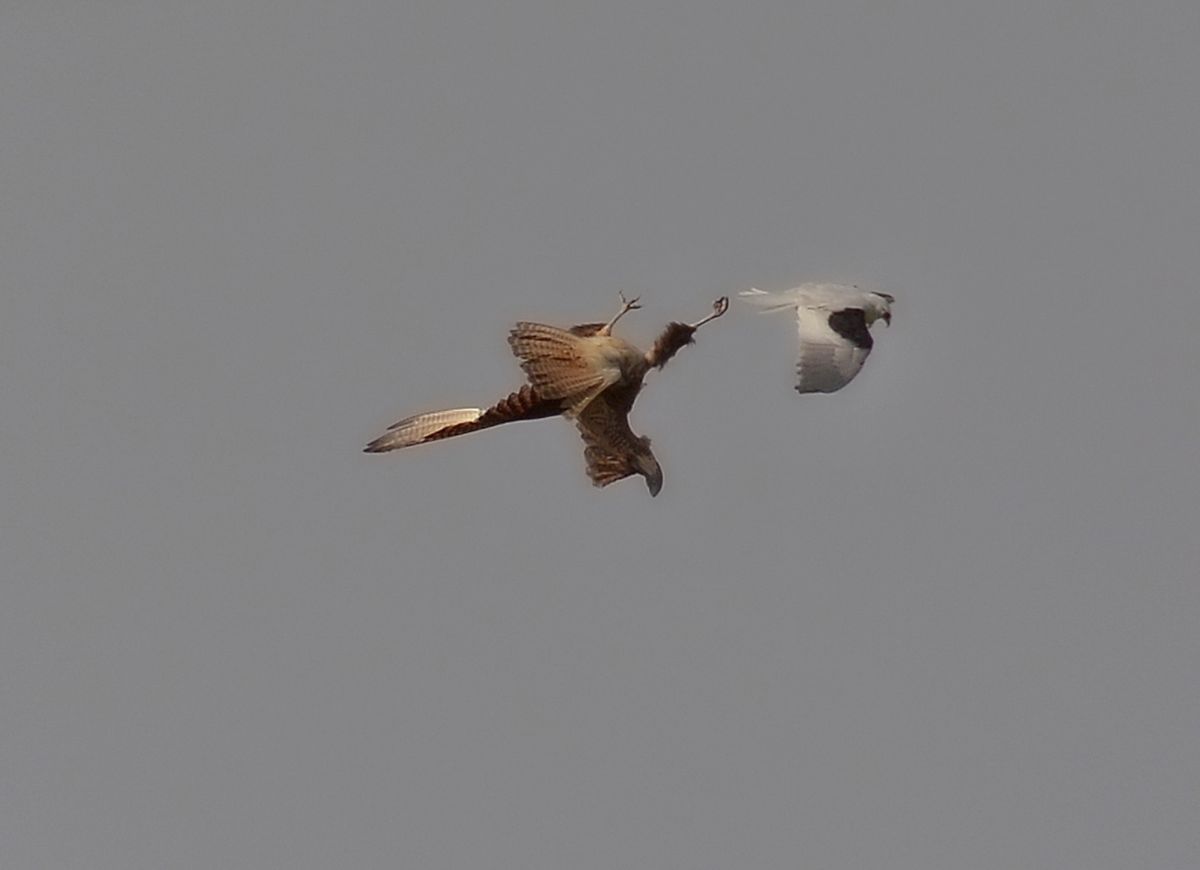
Brown Falcon on a turn. She has a nesting site in mind, I’m sure. She, because it is the larger of the pair.Black Kites dancing together in the late afternoon sunshine
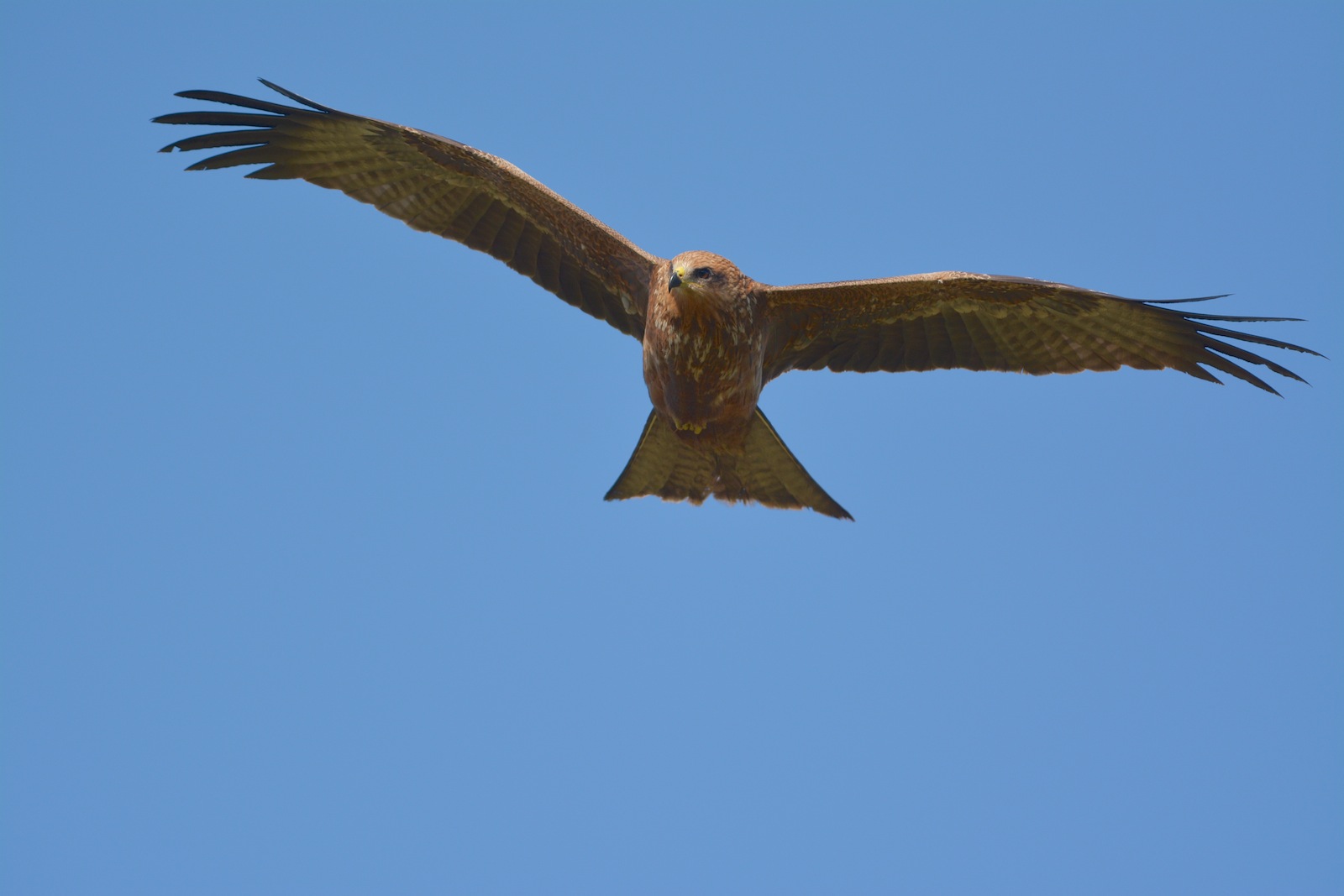
This one is carrying what looks to be a large tuft of grass. He(?) scooped it off the top of the river sand cliffs.
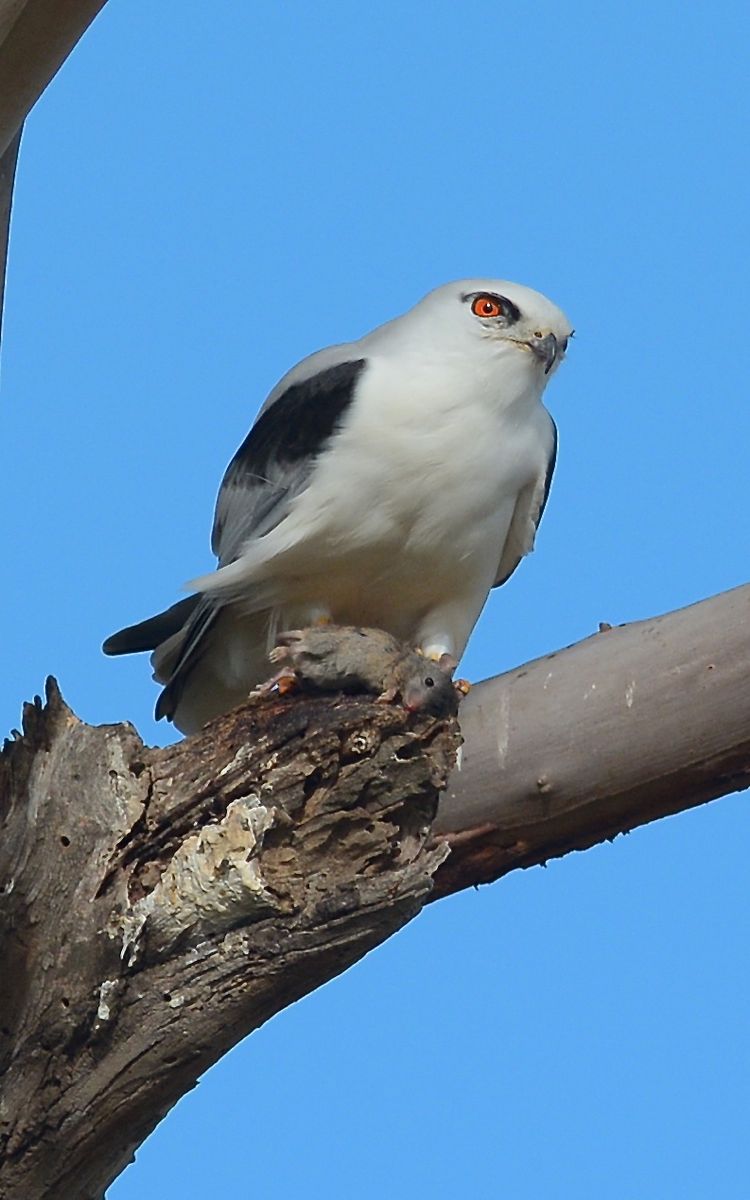
With all the mice they are consuming, the high octane fuel is filling them up.
Most here would know that I am a Flickr addict. I love to log on, post a picture of two from my latest time out in the field and have developed a good range of Flickr friends who also share their work. But one of the limitations that Flickr has for me as a story teller is the inability to keep a story line intact. No point in posting 15 images there, as after the first couple, most will move on to the next posting. (I speak as much as from personal experience as anything else). There is only so many times you can post, “Oh, great photo of a Little Button Quail”.
Birds as Poetry blog I’ve always wanted to be a visual diary of the birds that we come across. We, being in the first instance, my muse, best friend, partner for life and finest critic, Dorothy she of the EE moniker. We, sometimes includes those who might take the risk and travel about with me. Mr An Onymous, Neil A, Ray, and Richard A (he of the Woodlands List fame) being all well known to the long term reader (whoever you are!)
One of the challenges I guess a bird photographer faces, is that sometimes the light, the bird and the area just don’t come together in a cohesive way, and over on Flickr I created the “Not Terribly Good Club” (apologies to Stephen Pile who created the “Not Terribly Good Club of Great Britain” which eventually had over 30,000 members, and thus failed its own test!) that listing at least gave me a chance to put up work that I’d always hoped would encourage people that sometimes in spite of our efforts the photography process, like any good art reaches into the soul of the artist, but not always does the result achieve the intended result.
Today, I received an email from Earthbound Light by Bob Johnson. Now I’ve never met Bob, but often his writing vibrates with my own thoughts and I think, “I wish I’d said that”.
Been pondering the past few days about how many more, as EE succinctly states, “How many more pictures of a bird on a stick does the world need?” Which has always got me to pondering why take another photo? (not Why take another photo, but rather why Take another photo. ) And I think Bob sums it up beautifully in his blog today. I don’t have permission to quote him directly. (Very conscious of Intellectual Property Rights, and copyright issues), so please feel free to pop over to the page and take a gander.
He talks to the photo moment as: absorbed in my own process and perception. With the resulting image being a sum of what went into the making, the subject, the lighting, the angle of view and the photographer. And I might add the enthrallement of those who view the images as it reaches out to their perception.
What struck me was the concept of the utter simplicity of the present moment, as the shutter is pressed. Only you, and I, will see the bird, the mountain, the party, the moment, in that one single unique way. So does the world need more birds on a stick. Probably not, but the process is to me such an extension of the moment that I observed and absorbed, that at another level, there just cannot be too many birds on sticks or bird in the air images.
Now, if, by some quirk of fate, you’ve read all the way down here, you probably think, “hmm, forgot to take his tablets today,” or more charitably, “I wonder where this is going. ”
I’m hoping it will mean more posting of the story of the birding day in this blog.
Not much rambling of words, but a look into the insight of what ‘we’ saw during the time out. Flickr still gets my attention, but I won’t have the pressure of tying to create a coherent poem out of unrelated photos. Will the quality be better here or there. In other words, do I really hang out to put the best images I can make on Flickr, or include them here to a much smaller audience. (Hmm, yet to tell how I’ll deal with that). But it will mean more shots of what ever Button Quail or its equivalent ‘we’ run across and draws us into their lives for even a brief instant in the universe.
So, here is a few from an hour or so among the birds on the Werribee River Park.
In the words of Bob Johnson, “Next time your out photographing, (Or birding), stop, and pay attention. Thanks Bob.
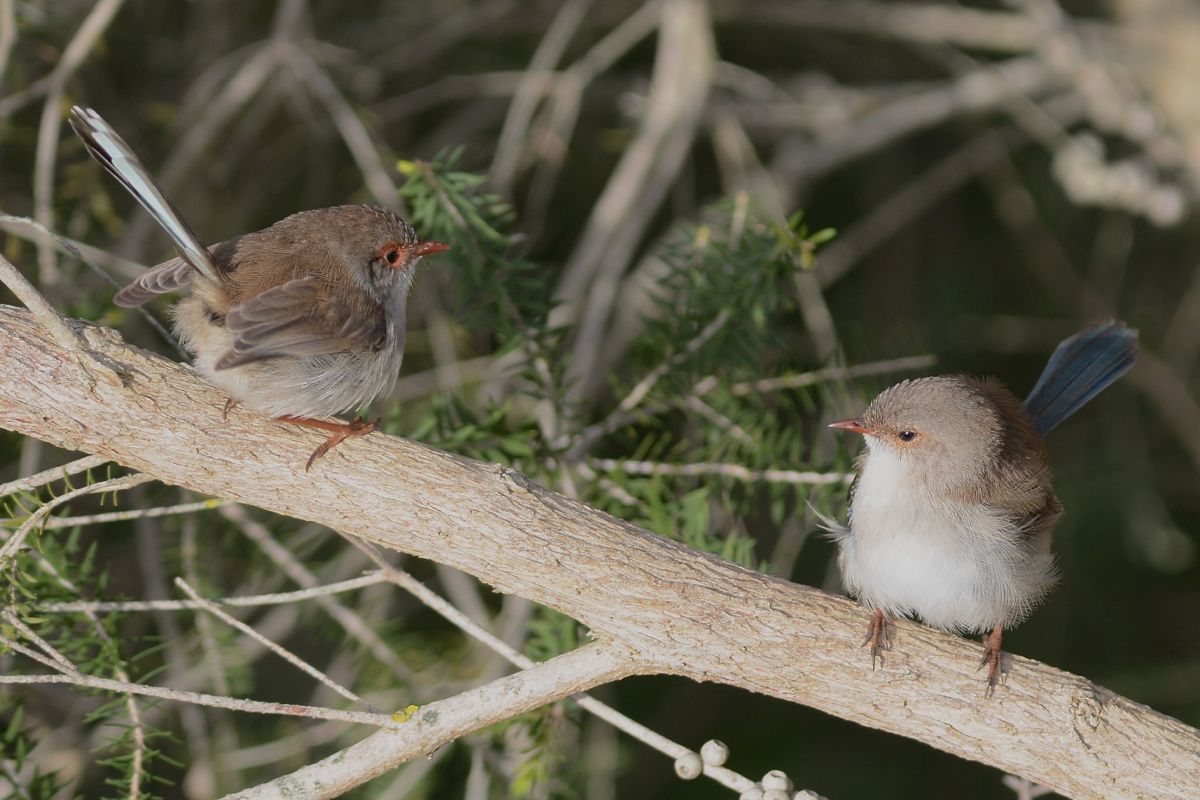
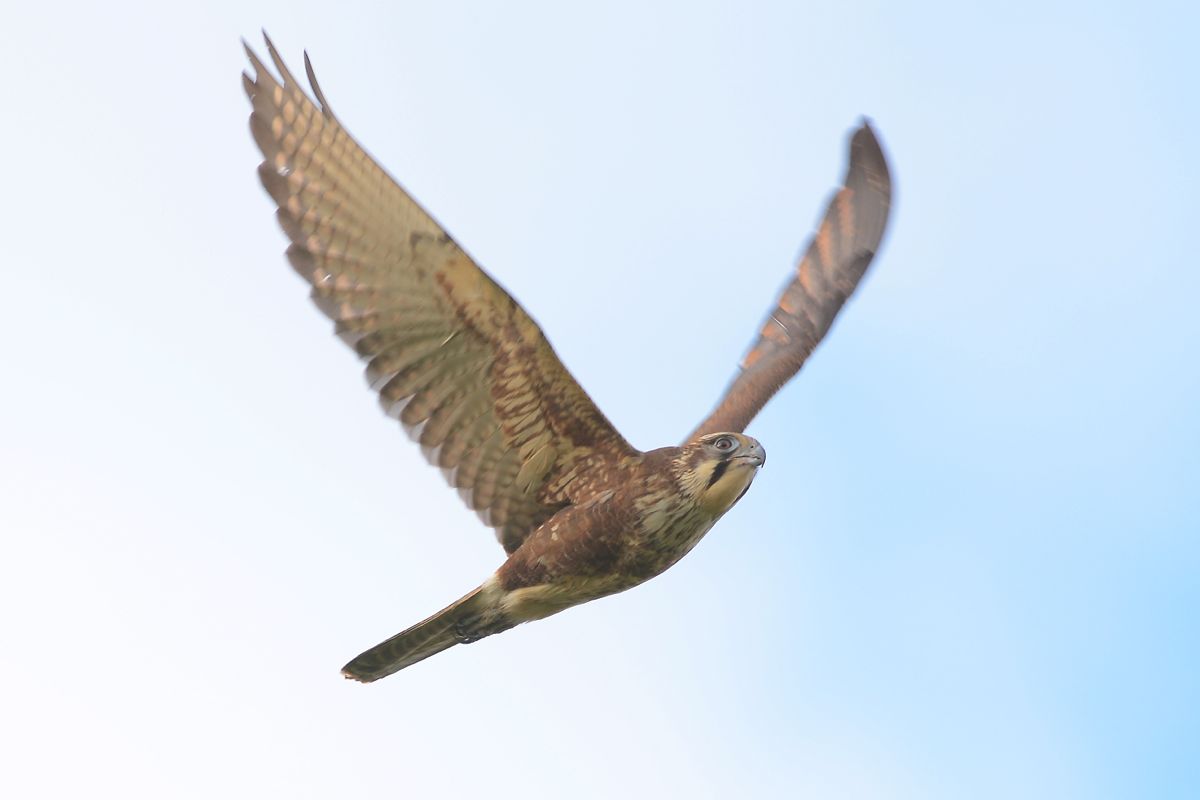
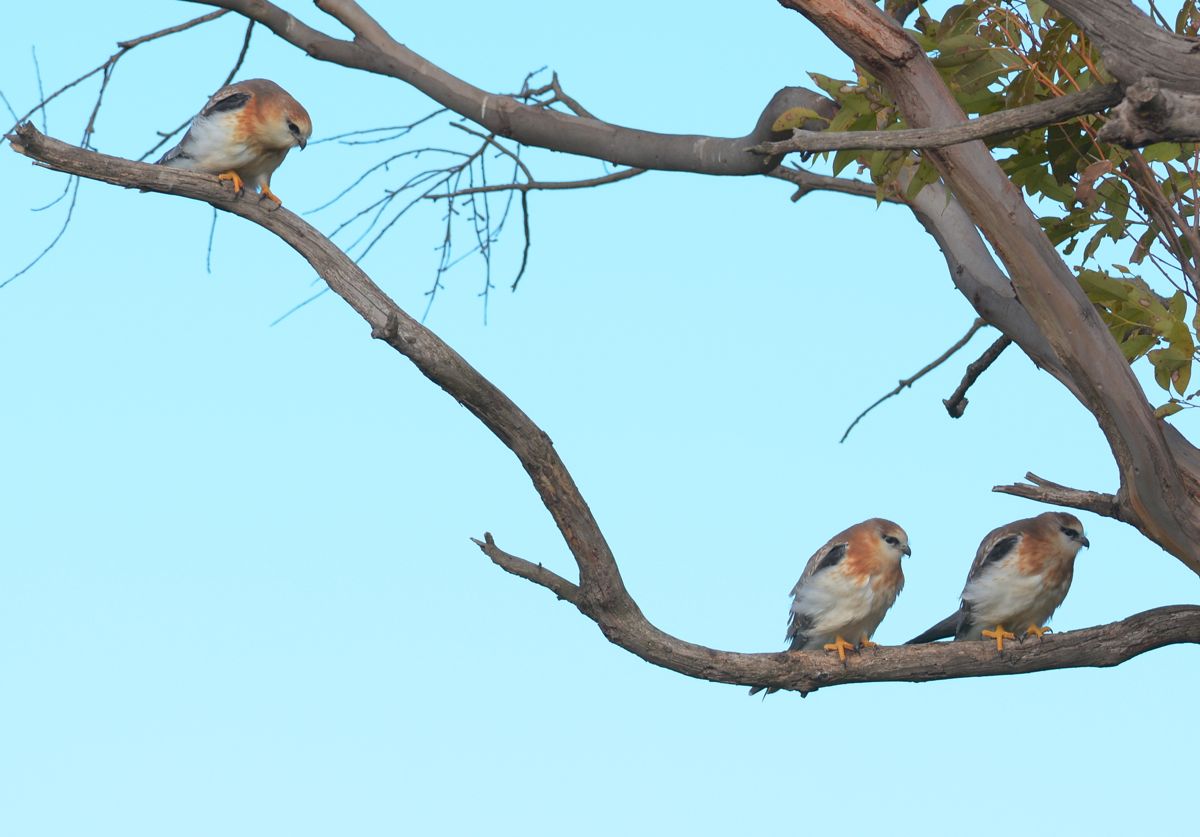
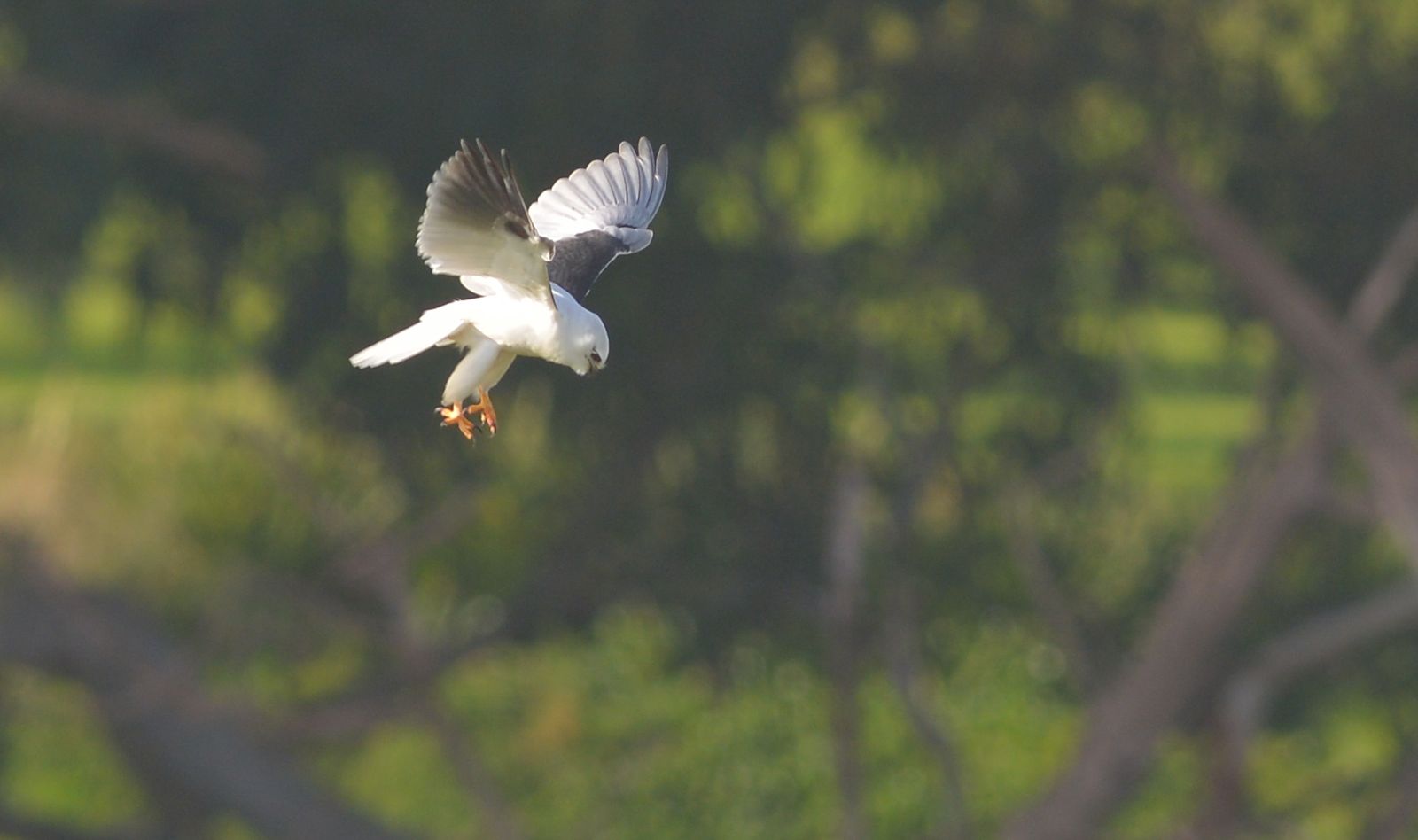
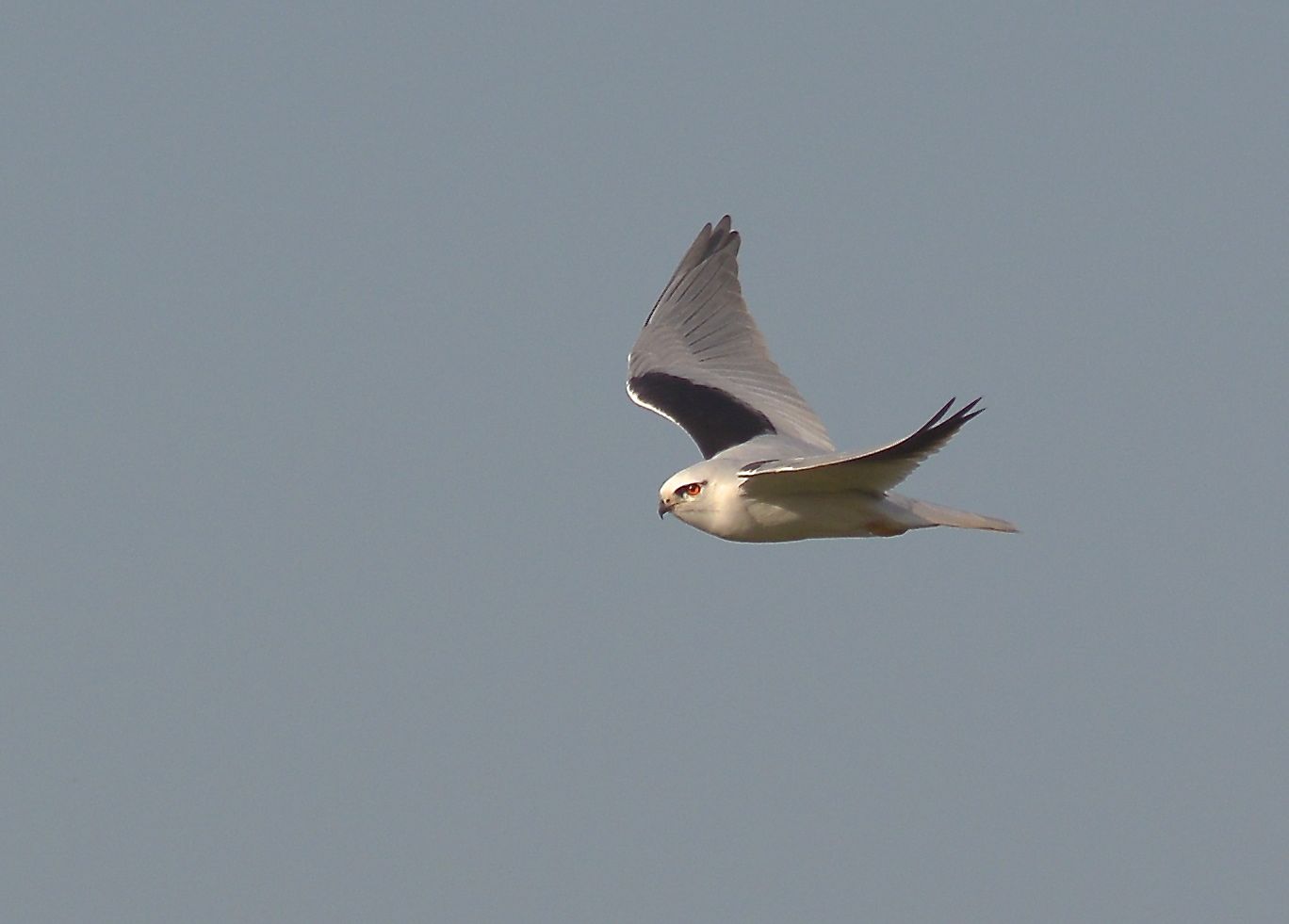
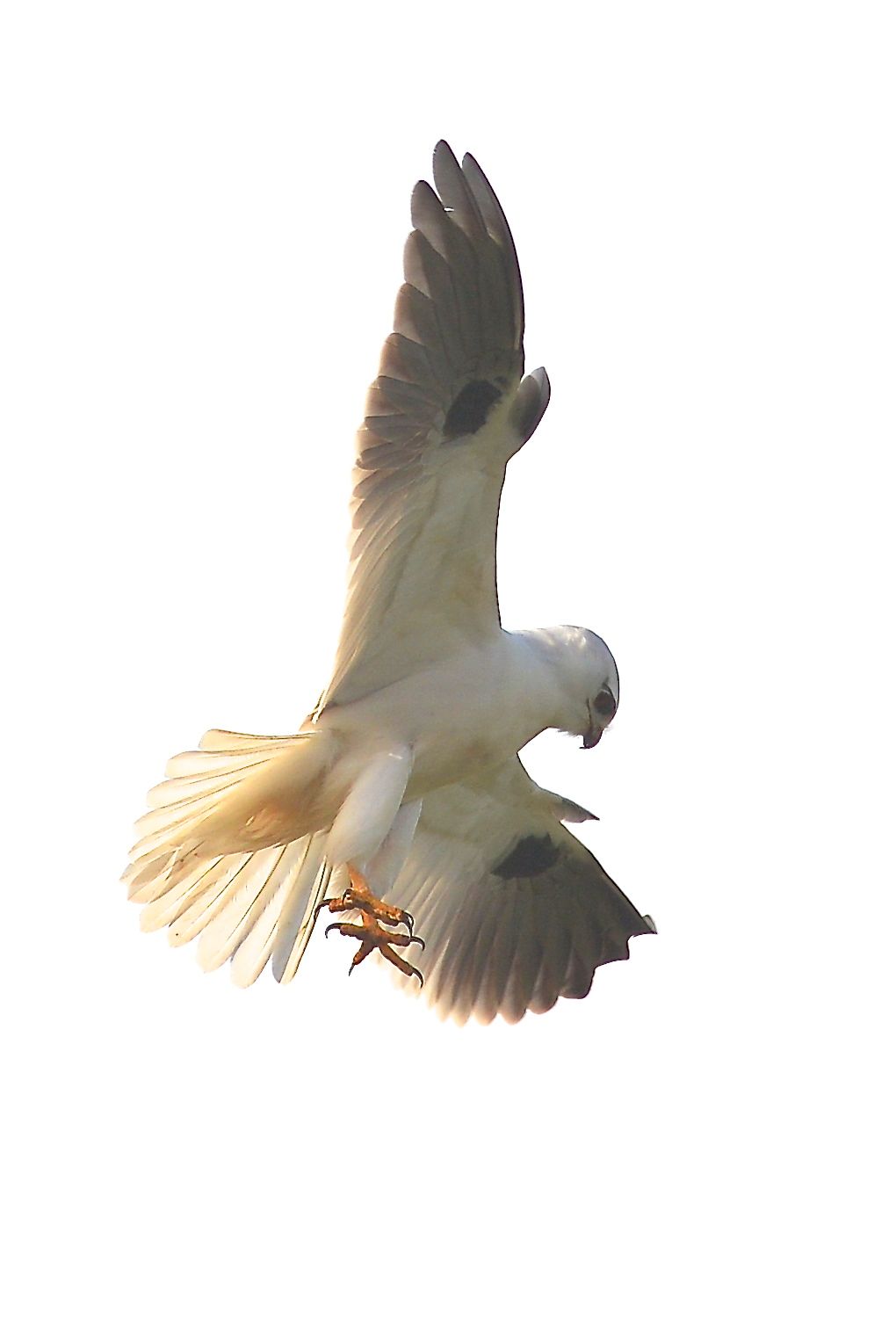
Snugglepot and Cuddlepie. Two really friendly Supeb Blue-wrens who entertained us with the antics.Just lookin’ for a home. A Brown Falcon that has taken over part of the park as a territory, and wishes everyone to know about it.Late sun glistens on the wings of the vocal Brown FalconSparrows, fleeing from a bathing moment. The approach of the Falcon was enough to set off a Magpie Lark, and its first high-pitched call had the sparrows on the move as one.Two recently fledged Black-shouldered Kites waiting for Dad to move that raucous Brown Falcon on.Precision flying team. Not yet, but they are beginning to learn to hover in light breezes. Part of those games include close passes with one another.
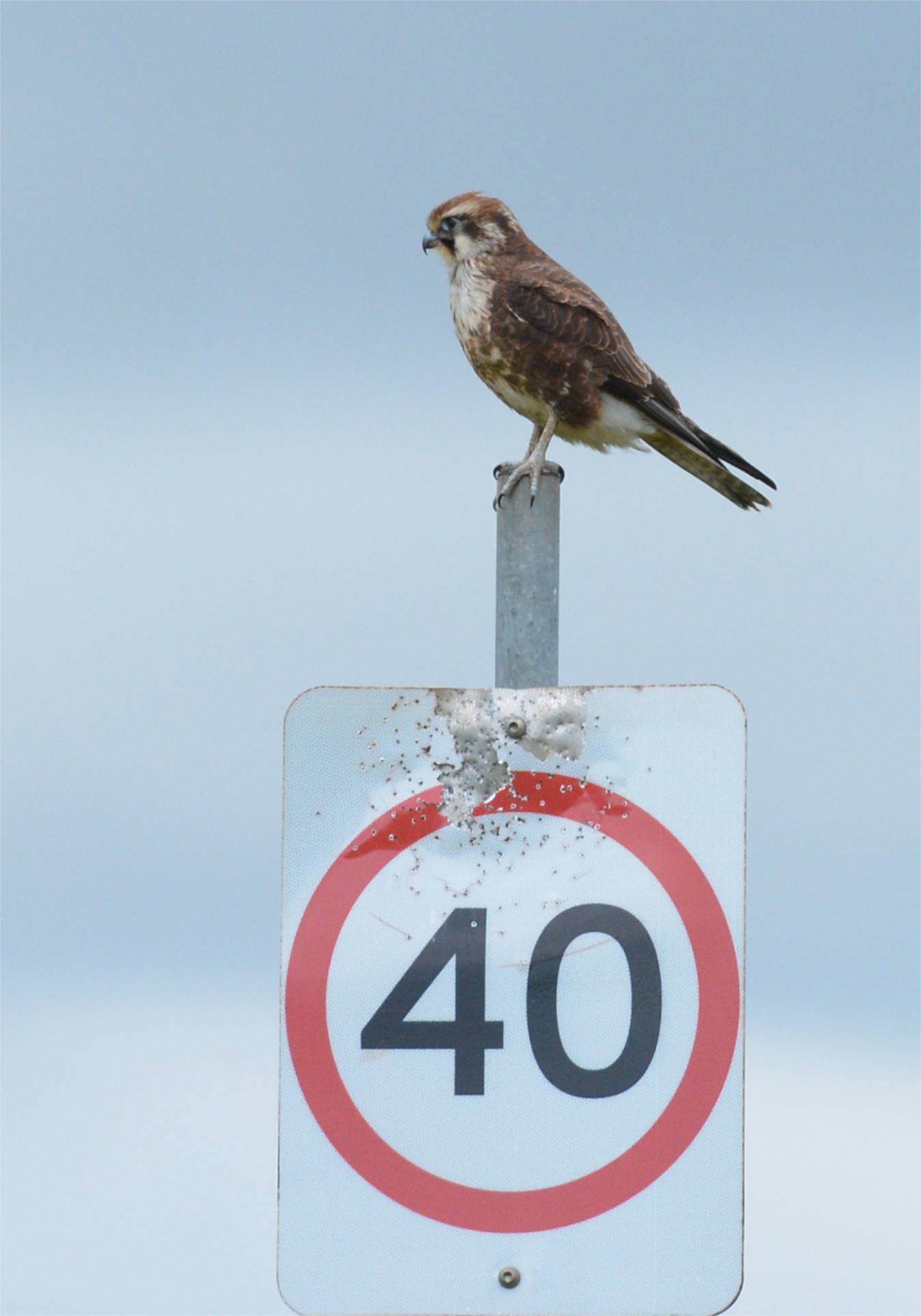
Way down in the bowels of Flickr, back about March 2011, is a photo of a Brown Falcon on a Fence. It’s a shot that has always been in my “Signature Series“. It was made on my very first ever trip down to the Western Treatment Plant, and I found it just as I was leaving, with the late afternoon sunshine gracing the bird. It stood its ground on me and I just waited. So did the bird. Eventually a small breeze blew past, and the bird took to wing. It threw straight into the sunshine, and I only got the one shot.
Its been up on Flickr for quite a long time, and I received an email from one of the editors of Wildlife Magazine, a few months back looking for images for an article on Brown Falcons. So they published it in the latest Edition of the magazine, Winter 2014, vol 51, No. 2 supporting an article by Dr Penny Olsen. The article is titled Snake Charmer The Brown Falcon. My mate Paul Randall of wingsonwire, (see the sidebar for the address) also had a featured shot of a Brownie with a snake for a meal.
And in the same magazine, a lovely shot of a Dingo by Andrew Alderson also a Flickr mate. Here’s his Flickr address.
Been awhile since I’ve posted, but its been lack of good weather more than anything.
The area close to home, on the Werribee River Park, that I’ve taken to euphemistically calling ‘The Office”, has an amazing number of raptors, and I thought I’d introduce them and what they are up to.
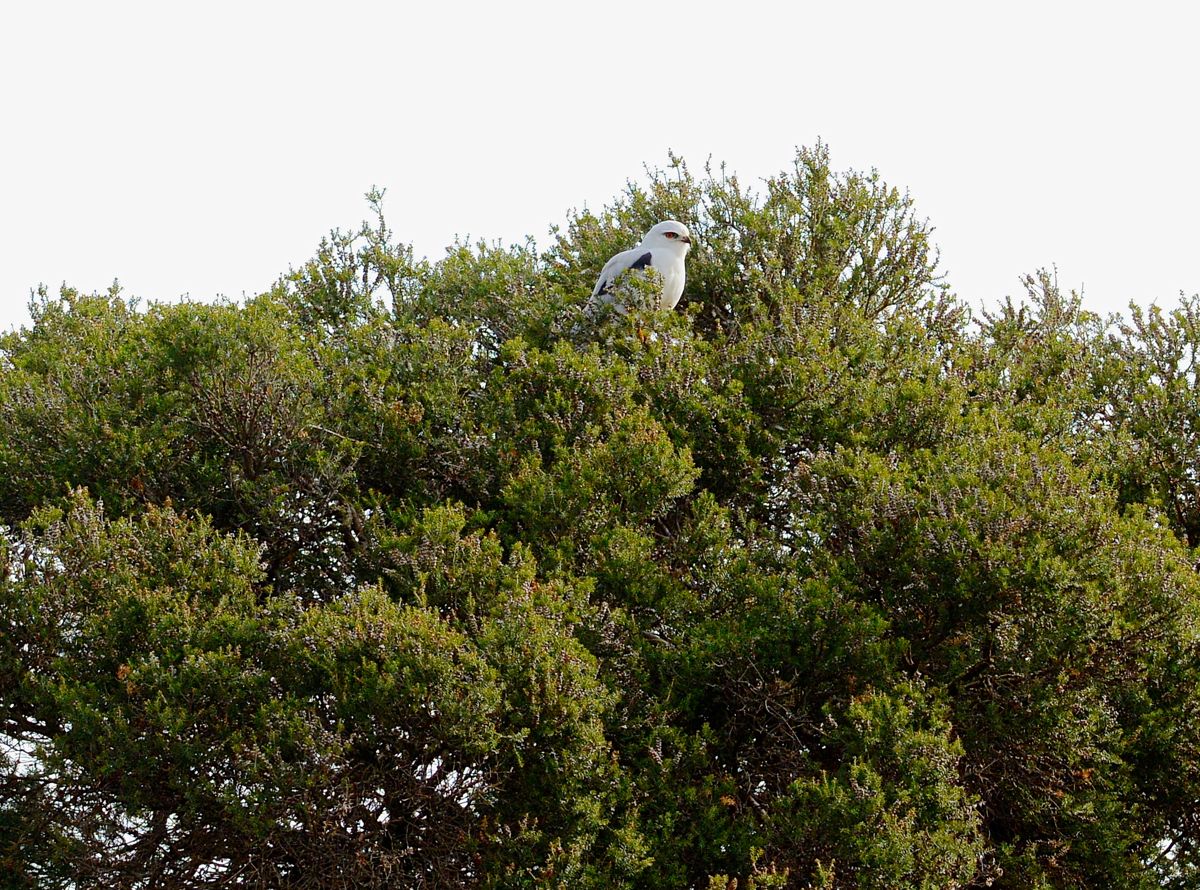
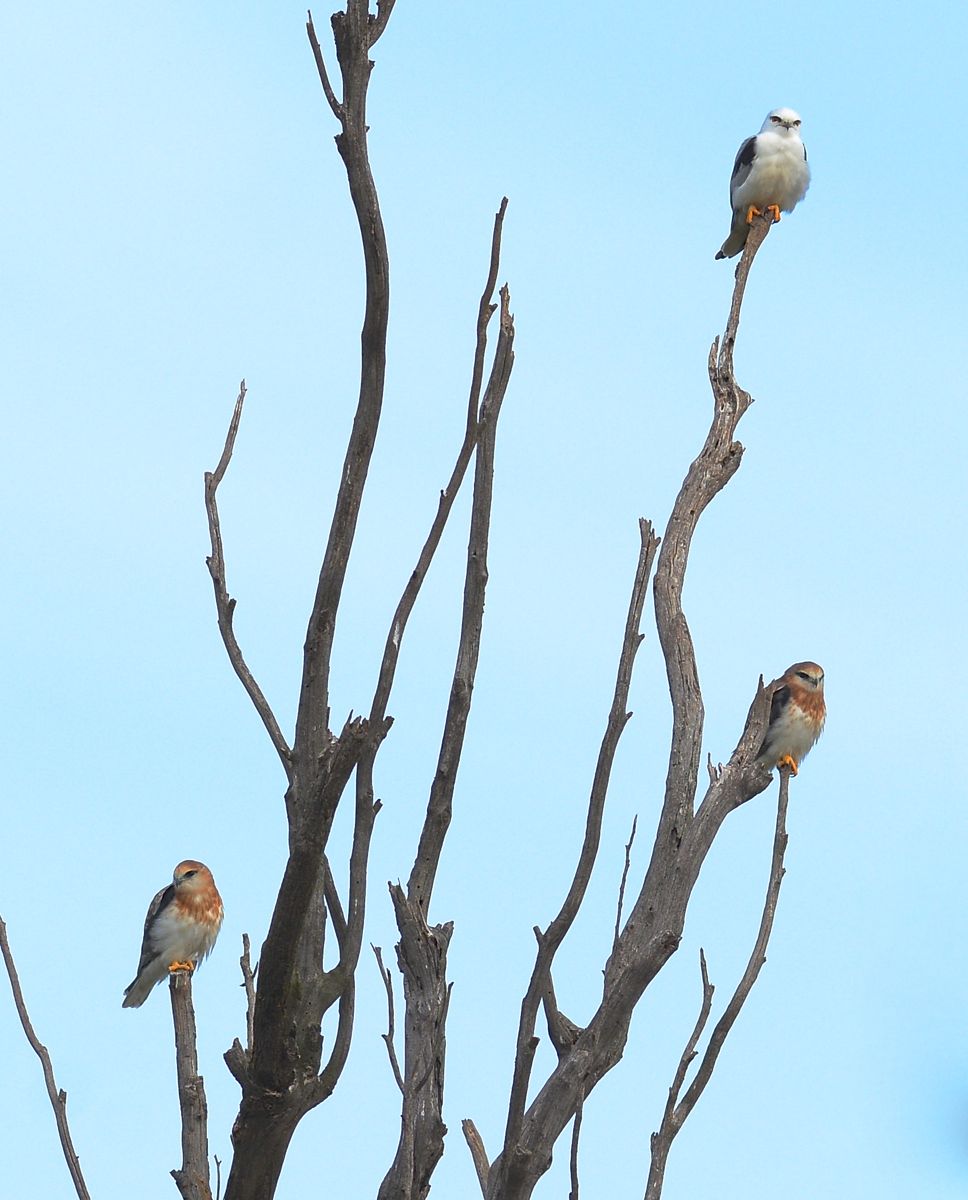
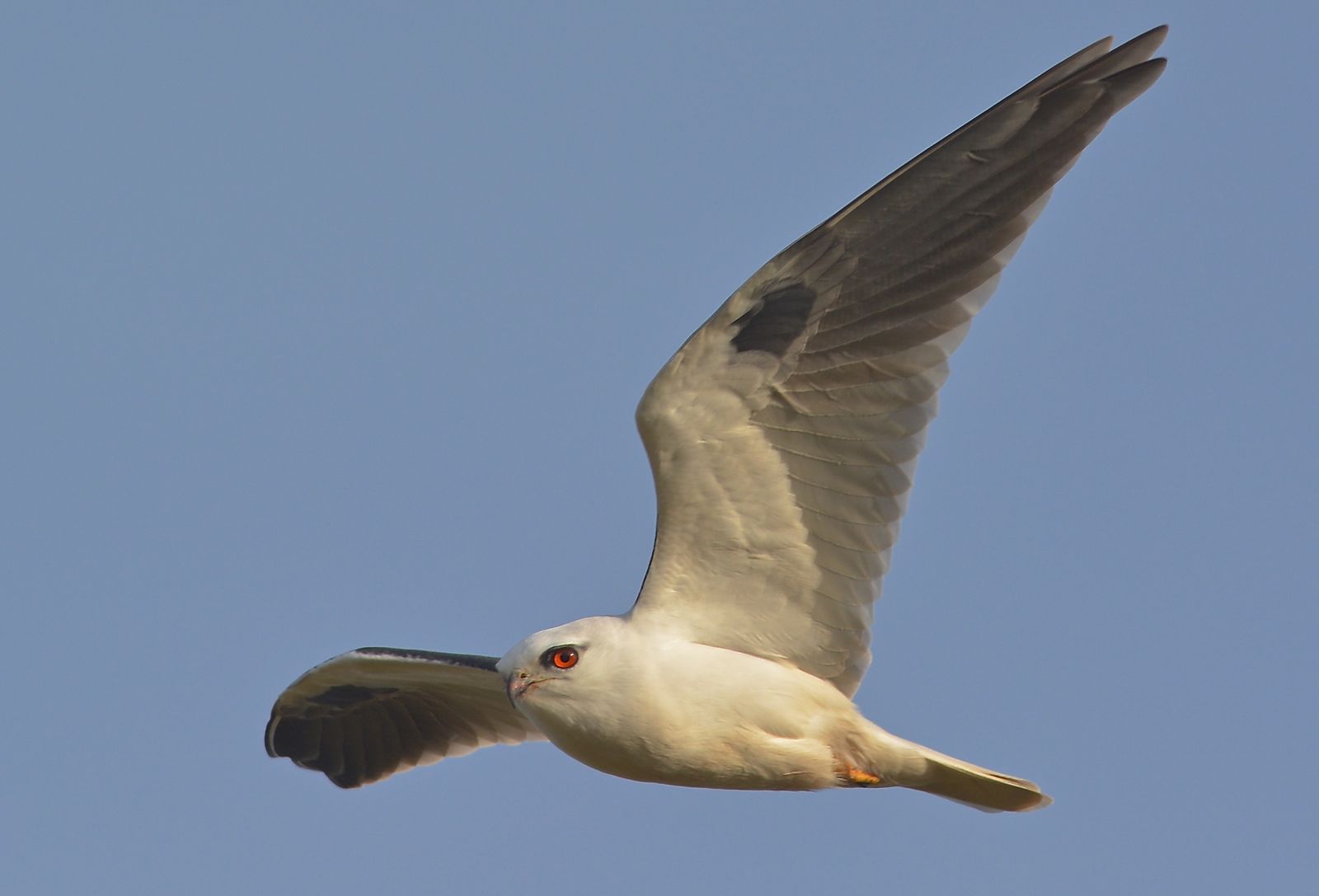
On the roadway in, just over the Geelong Freeway, there is a fence line and a few old pines. Here a pair of Black-shouldered Kites have just flown their two orange and cinnamon young. In the same tree line a pair of Black Kites appear to be setting up house, if not already at work on brooding. Next tree or three down, is a pair of Brown Falcons. Not nesting yet, but certainly staking out their claim to the territory. Much to the anger of the Black-shouldered Kites.
Down the road a little just before the carpark off in the paddocks a second pair of Brown Falcons are at work on territorial rights. Also regularly in the area a pair of Wedge-tailed Eagles, although the moment, it probably is just a convenient perching location.
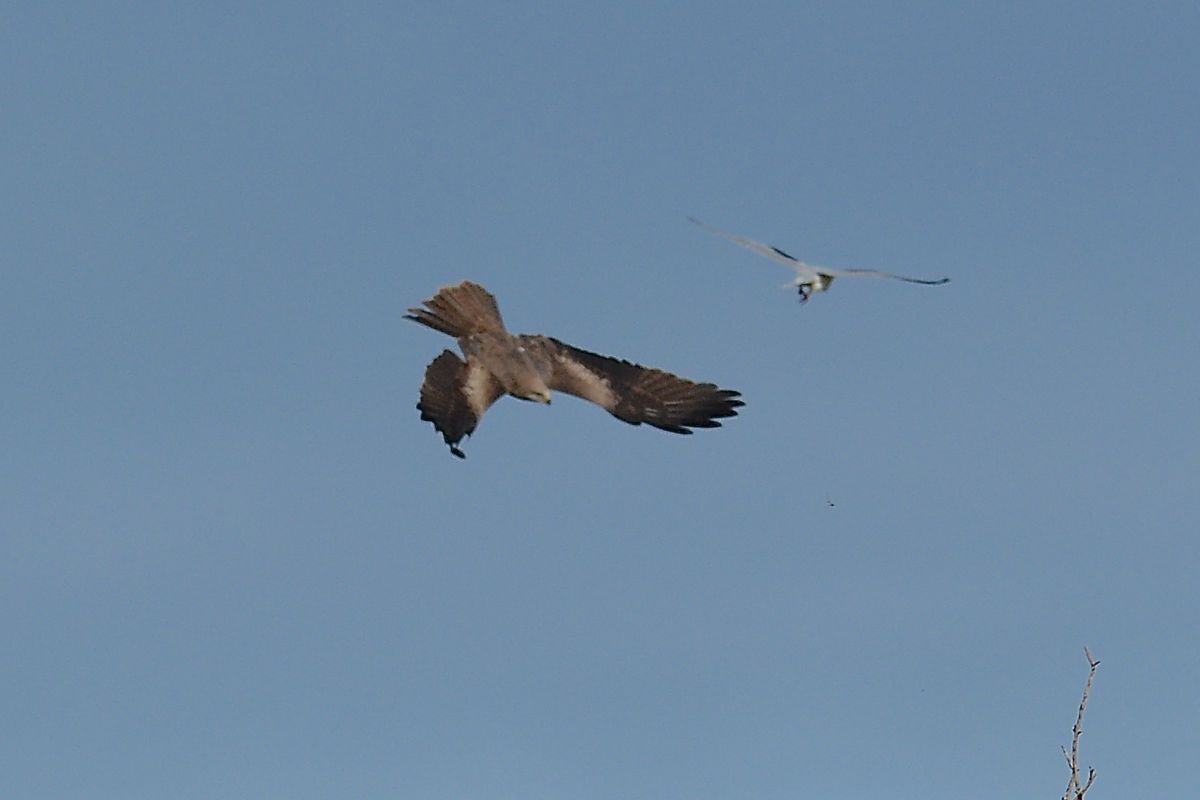
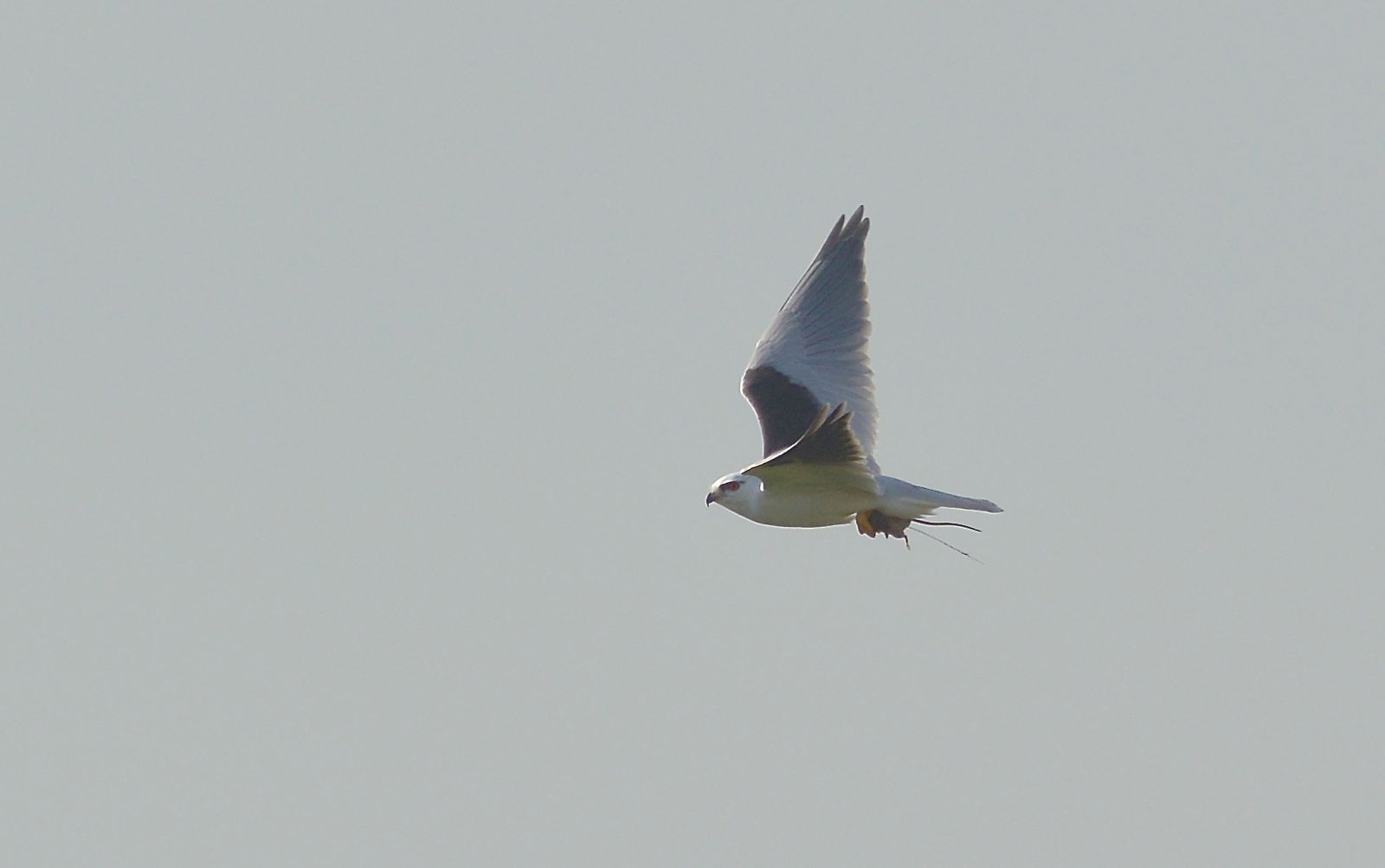
At the carpark proper, a pair of Black-shouldered Kites and their recently fledged three teenagers. Not more than a dozen trees down from them is a pair of Black Kites and a nest that is work in progress. I’ve not checked up close, but there is either brooding or feeding going on. The male seems quite adept at pursing a laden Black-shouldered Kite and getting it to release its mouse capture.
A pair of Brown Falcons are constantly in the trees just off the river cliffs line, and I’d be tempted to say its a likely spot for a nest.
Further out in the field and well away from my prying lens is a pair of Australian Kestrels, and again they are too early for nesting, but are certainly building good pair bonding.
Combine that with the regular visits by any number of Whistling Kites and the area is certainly busy. A few days back an arrow shaped bird sped through the trees and caused quite a stir among the smaller birds and the one really good look suggested Peregrine Falcon, and I’ve seen one briefly on the fence line on the way in.
So here are a few of the birds at work. The food in the area must be exceptional to support such a range of nesting and preparing birds.
Recently fledged pair. In training.One of two Brown Falcons that are using these trees in the river flats.Wedge-tailed Eagle, fences make good perches.The wind was much to strong for this trio to practice their hunting skills.The trio in the wind.Dad with a mouse, but he’s waiting for a chance to deliver without losing it to the Black KiteA Black Kite circling, hoping to take a mouse from a Black-shouldered Kites.Brown Falcon, near a favourite perch.Territory is everything. This is a pass on a Brown Falcon to get it to move away from the fledglings.Posts make ideal perches when there are so few tall trees.That fence again.
A long time ago, in years, I was a simply a Landscape Photographer. I happened to live quite near the Woodlands Historic Park, just opposite Melbourne Airport. The Moonee Ponds Creek has its head waters in the area, and the Creek at this end is not permanent water, but draws from the surrounding hills and channels the water down toward the Yarra.
The watercourse was, and still is a prefect habitat for the majestic River Red Gum, and there are many fine examples of these trees in the park. Some of them no doubt older than European Settlement. It is pretty awesome to stand under these wonderful trees and ponder all the things that they have seen come and go.
Now, as I mentioned, in days of yore, I would roam these paddocks and valleys in search of the right light, the perfect moment, the touch of mist or the brilliance of the light upon the massive trunks to make great landscapes. I also in those days had a huge tripod, which I seemed quite capable of lugging for miles. Some of you won’t have heard of Filum, but it’s not a four letter word alone, it was the medium of preference for photographers all those years ago. Big filum. Large sizes. No megapixels, and remarkably heavy and slow lenses to use on equally heavy and awkward cameras.
But times change.
I moved to digital very early in the development. (Easy to say, worked for a company that had both a foot embedded in the filum market, and dabbling in the development of digital technologies.)
But my love of light, shapes, tones and textures that make those landscapes work still drove me.
Until.
One morning, about 10 years back, I was returning to the carpark, and stopped to take a break at a park picnic table. A Willie Wagtail flew past. Not the first one I’ve ever seen, but it flew back again. After a few minutes I became aware of a lot of Wagtail chatter going on about 20 m, away and decided to see what it was all about. To my delight, surprise, awe and enchantment, the two Wagtails were hard at work building a nest, and explaining in Wagtailese to one another the finer points of nest building. Nor did they seem at all concerned by my presence. So, wandering back to said tripod, (I was still using for the digital cameras.) I picked my longest lens (a 200mm f/2.8 ) and moved it all close enough to take some shots of this activity.
Willie Wagtails are a remarkable combination of Black and White. The two most difficult tones to reproduce well. As any formal wedding photographer, or rock band enthusiast, or vehicle photographer, or just about anyone who photographs high contrast subject will tell you. Still on the point. I was thrilled to see the nest develop, and came back the following day, sat with the birds and watched them at work. The following day, she had laid an egg, and then next couple of days began the process of hatching the young. In the end, flying 4 big fat juveniles. More to photograph.
Now this monologue better go somewhere. From that moment on, I was hooked on photographing birds. So every word and image you see here, and ever pic thats on Flickr and is in mags, calendars and cards is the result of two squabbling little birds.
The only thing I’ve leaned about bird photography is its obsessive. I no longer even attempt to explain. “Oh, I’m obsessed”, is my standard answer.
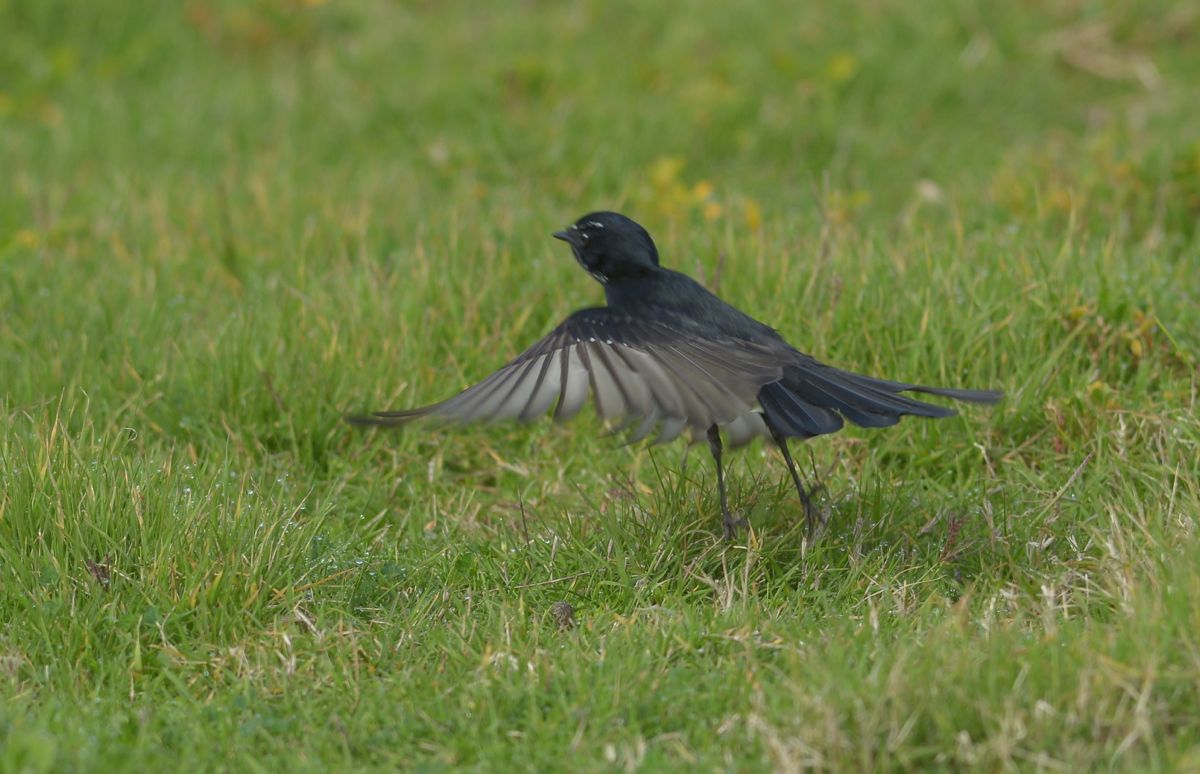
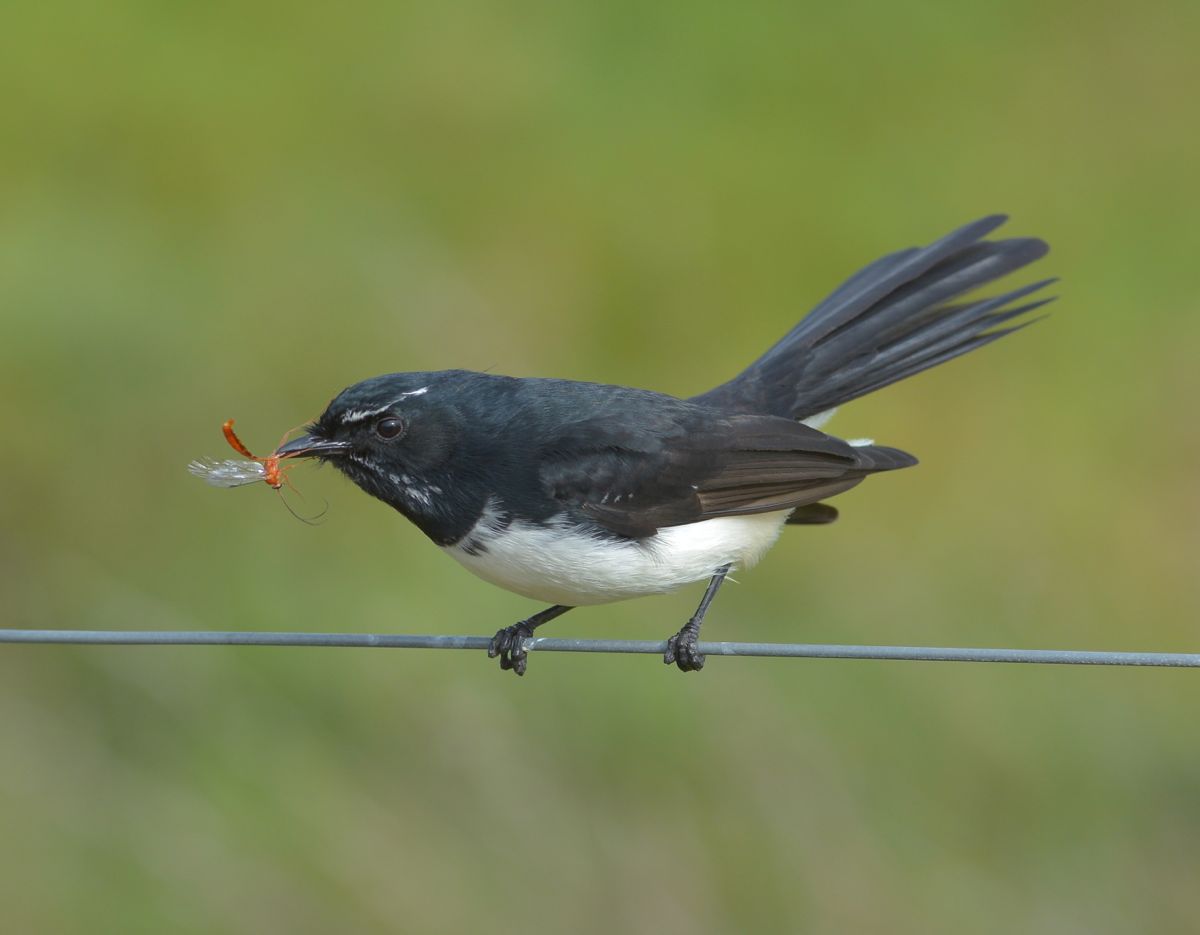
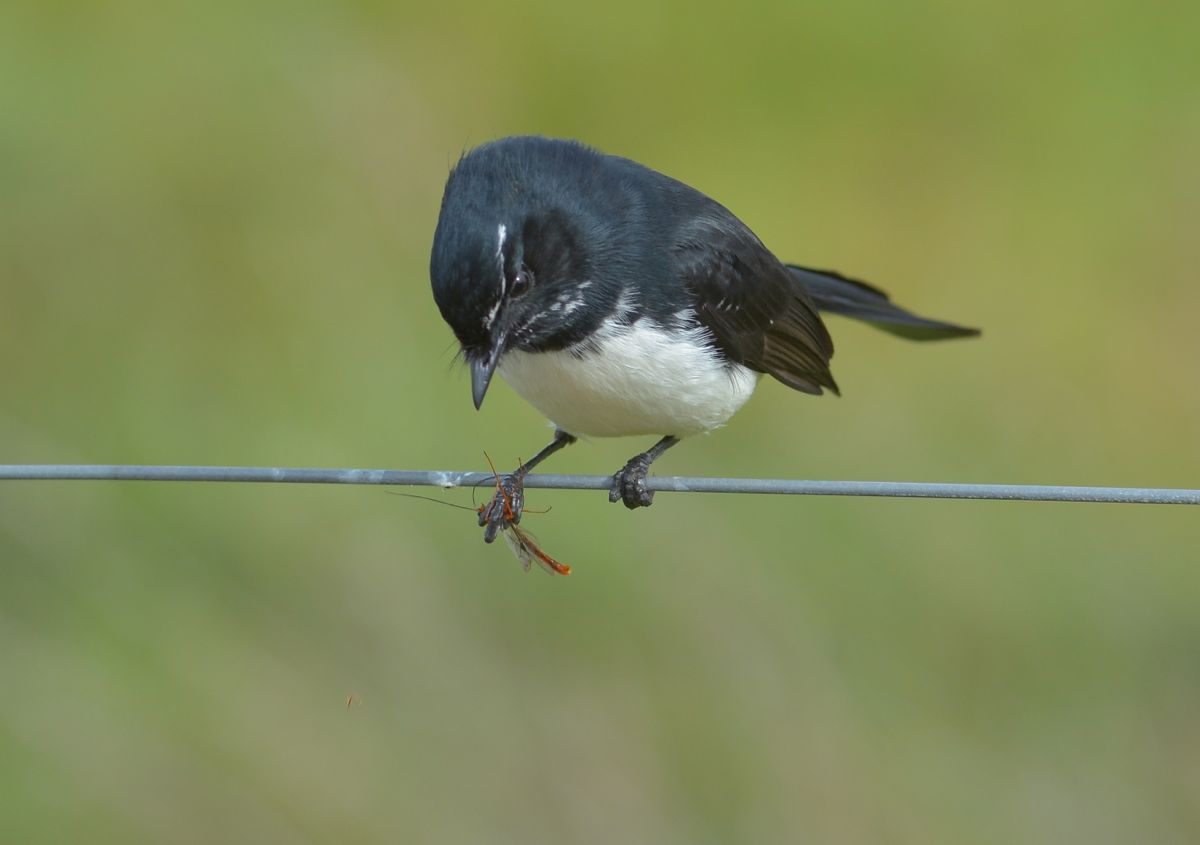
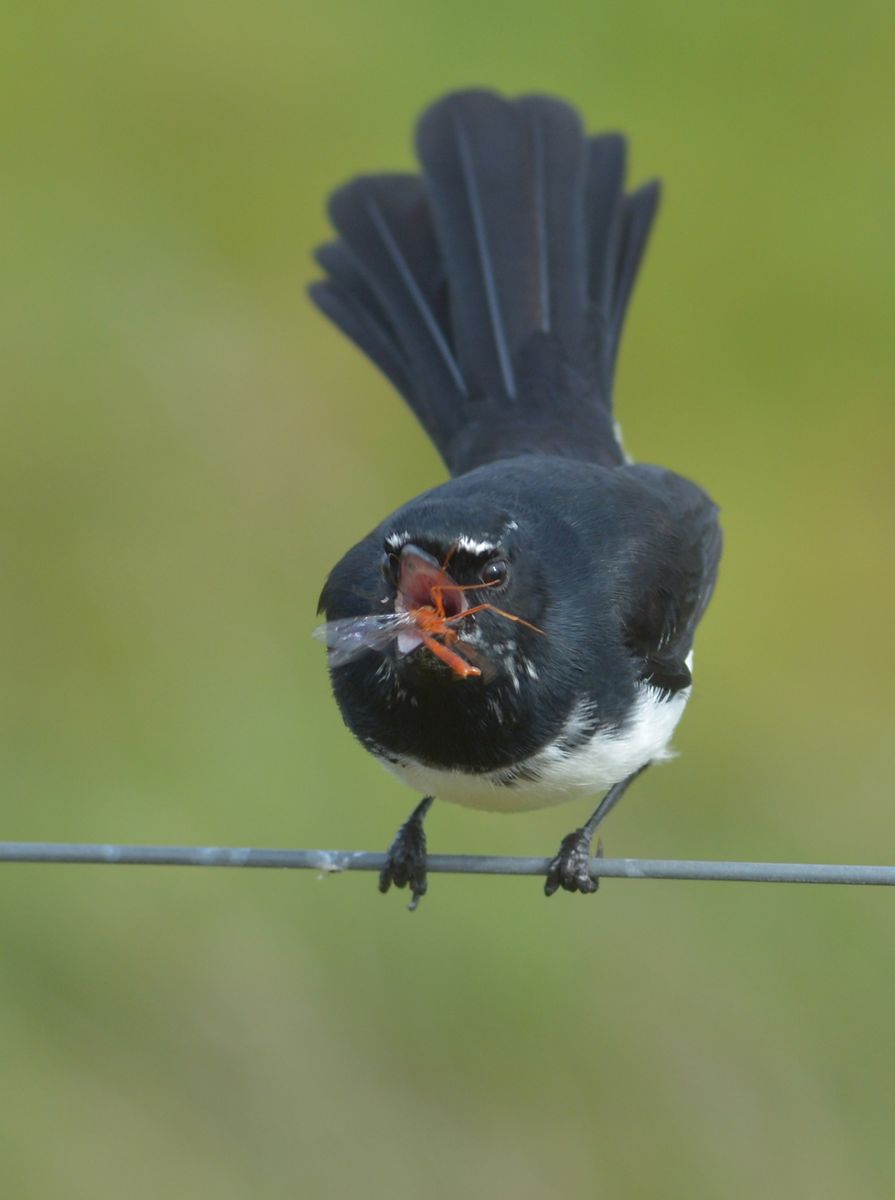
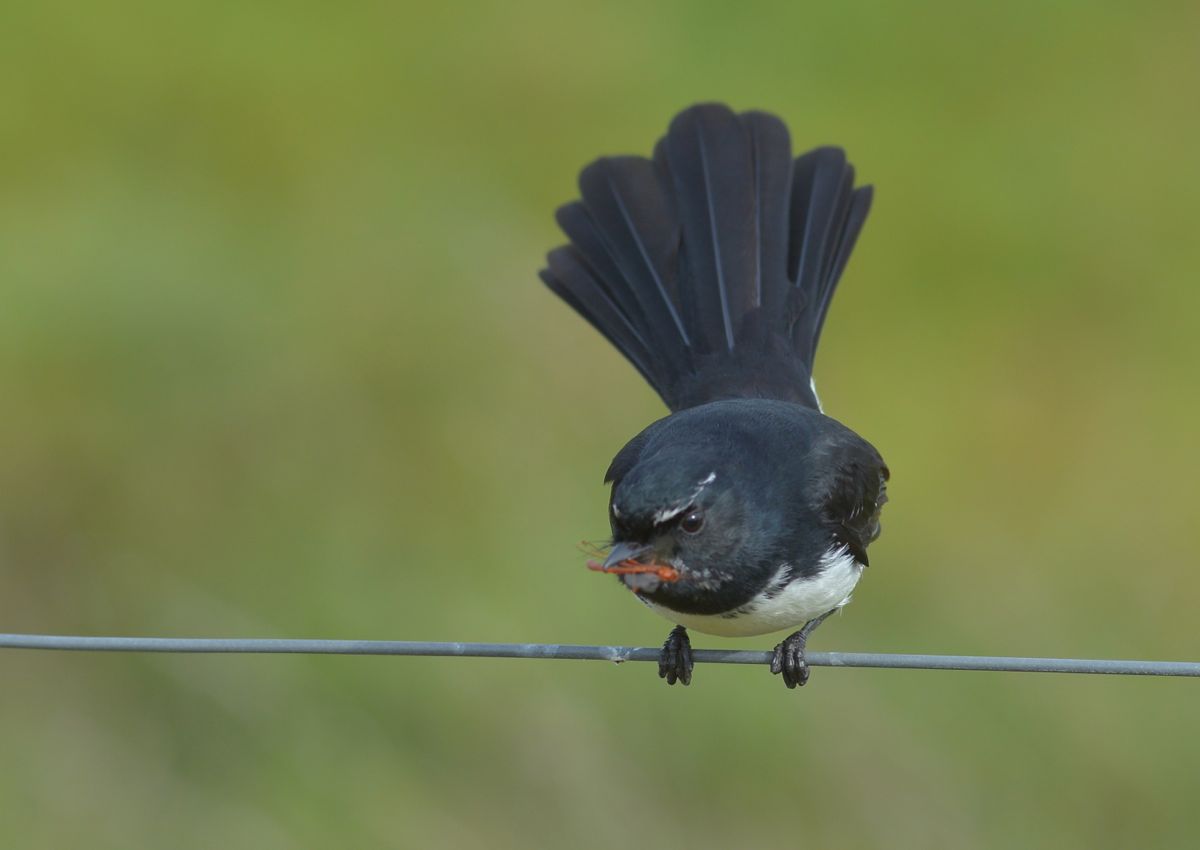
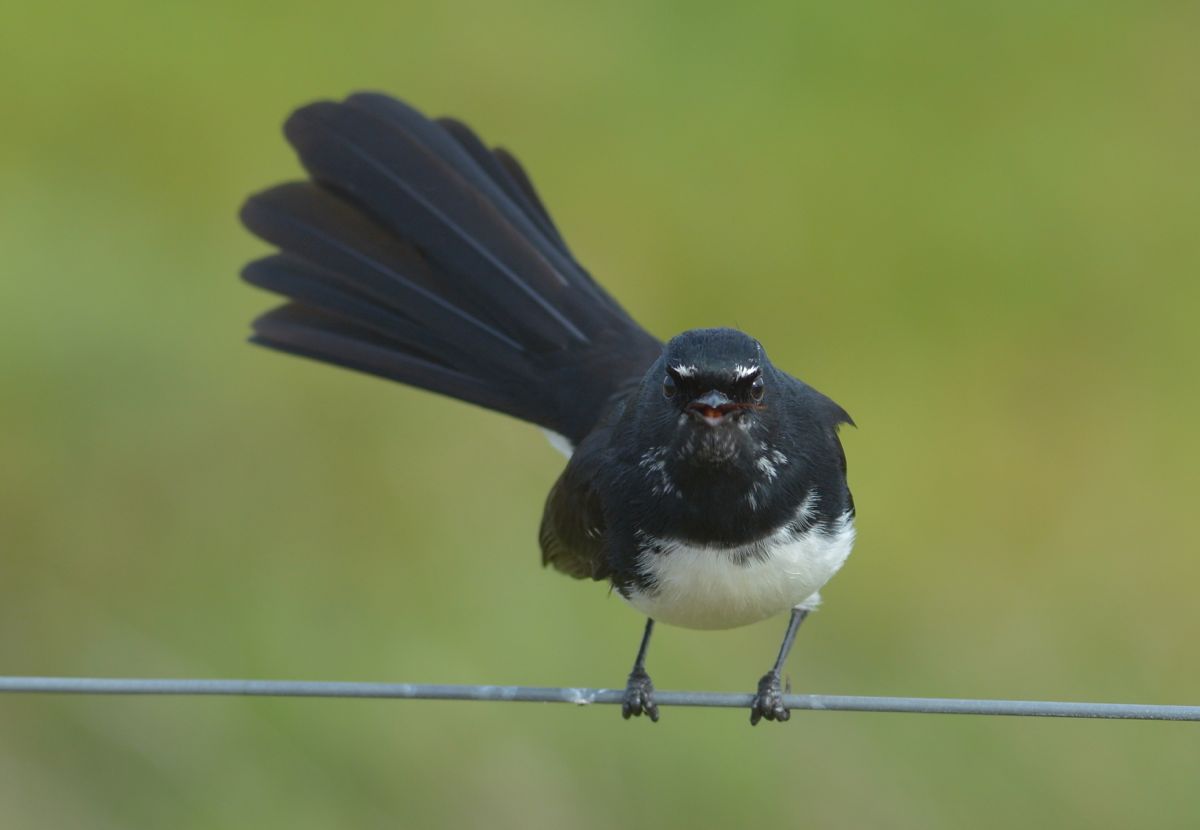
Which bring us to a trip along the track at The Office, and a Willie Wagtail that came across the paddock to first harass me, then to settle, and then to follow me down the fence line taking insects as it went. Most every birdo will have come across a bird on a fence. It’s about 3 posts away. Too far for a good shot. You move in. The bird moves 2 more posts. You move in, it moves 2 more posts. etc etc, until 10 posts seperates.
And this Wagtail was no exception. But, by not hurrying, I managed to get the gap down to about 2 posts. Then things changed. The game became: How close can I let this dude get, before I show my disdain and move on. And still I kept advancing on its position, until we were 1 fence post apart. Then for its own reasons, it began to feed in the road and grass verge near me. Still I advanced and in the end, this amazing bird for no reason other than its own, landed by my foot, hunted, and then kind of flew around me, landed and repeated the process. Now it would land on the fence wire and I could move in to fill the frame. “Do you think this side, or that side suits me best?” Should I wag my tail? And so my love for these delightful little birds was rekindled.
Now its true I could fill Flickr with heaps of shots of wagtails, but rather than do that here is a short selection from a delightful 3o mins or so with a very elegant and relaxed bird.
Too close, too close, fly away.Never too sure about you humans. You all look the same to me.At moment of launch.Wow, look at what I caught. Thanks for stirring it up.To deal with these little beasties, one must change the sharp end around. Claws work.Gotta be careful of the sharp bits. Snip, snap.Now you see it now you don’tWell, stir up some more.Is this my best side?
EE and I had a few spare hours on Sunday morning, but as we went to bed, the outside temps, and the icons on the news weather maps didn’t look all that good, so we decided on a long breakfast.
But looking out the window in the morning with blue sky, golden sunshine, the only thing was to bolt breakfast and head out. We decided “The Office” deserved a quick look, and its only a few minutes away, and before you can say, “Let’s go”, we did.
The Werribee River Park, (The Office) is just across a bridge over the Geelong Freeway, and once off the tarmac, its pretty much paddock. Some very old Pines must have been part of a homestead in the area, I suppose, and last week I’d spotted two Black-shouldered Kites sitting together on the tops of the pinecones. So I figured, that they might have been considering a nesting. How wrong was that!
Not only had they considered, but had just fledged in the past couple of days, two really healthy and vocal youngsters. The young sat on old stump of the tree and were fed in the sunshine. Well done Mum.
We’d also noted a pair of Black Kites in the same tree line, and they were still in attendance, no doubt there is a nest in the offing.
After a few minutes with a lone Brown Falcon a bit further on we stopped at the Park carpark. And immediately the harsh screech of a female Black-shouldered kite was joined by the higher pitched screeches of young ones. And then slowly it dawned on me.
I’d been watching and reporting on this pair for the best part of 3 weeks now, and was pretty convinced with all the activity that they were “planning” a nesting. But no. Wrong again!!!
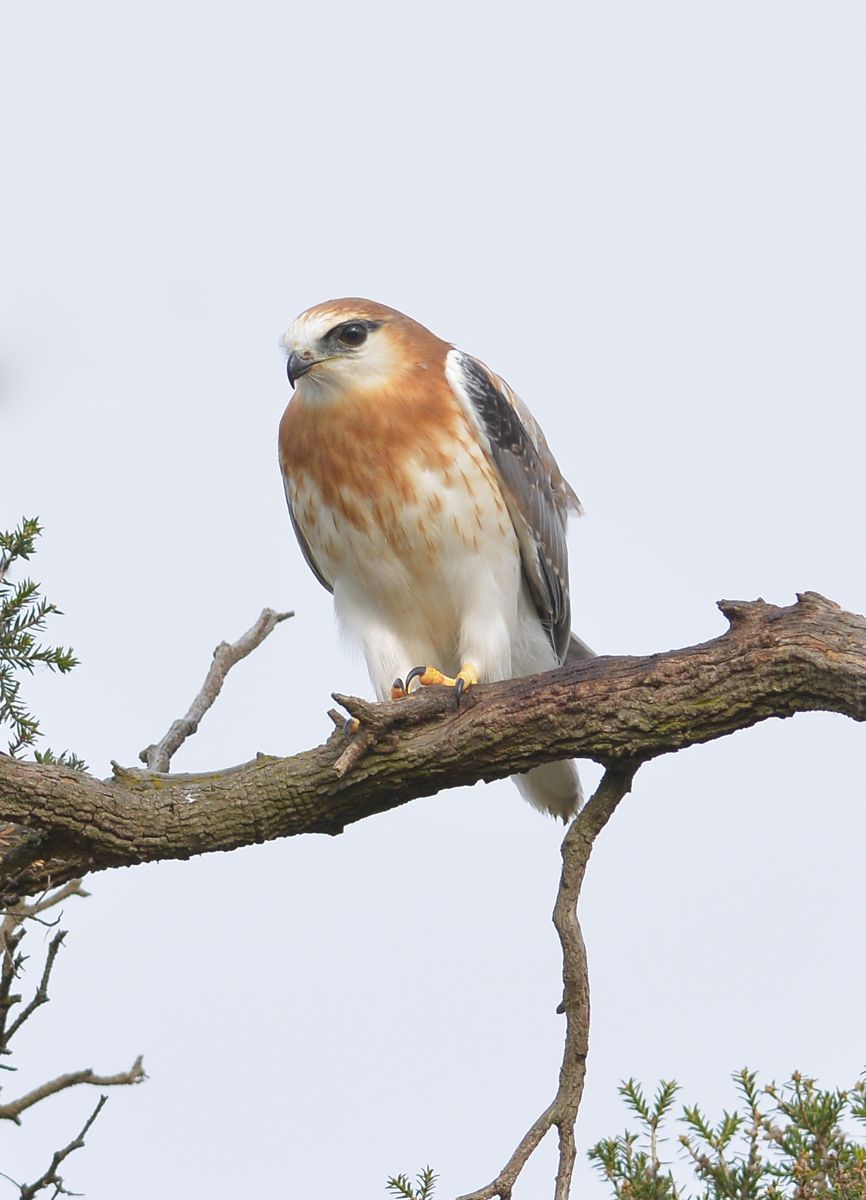
She has just fledged, not one, not two, but three, beautifully marked birds. No wonder the male was so busy catching mice the past couple of weeks. Put mouse in one end, and out pops a beautifully fledged cinnamon and ginger Black-shouldered Kite.
Now all this activity does not go unnoticed by those who make their living by preying on others. A Black Kite swept up from the River flats and hung around the young. At first I thought it might be going to threaten the young, but its true intent was even more devious. Dad flew in with a mouse and the Black Kite began harassing the much smaller bird, for his catch. In the end, better speed, and skilful harrowing, caused the Black-shouldered Kite to drop the mouse. And the Black moved straight on to it as it fell. But now Mum and Dad were free to harass the Kite and in the end it moved away. It tried again later, but both birds were not to be caught off guard again, and Mum took the prize to the nest tree and the young followed her down into the top of the tree where the nest must be concealed. (It’s too far in behind chain fence for me to get a good looksee.)
Then of course, the weather changed, time ran out, and we decided to retreat for the day.
But with 5 young birds in such a small area we’ll no doubt be back. Oh, and we saw the family of Flame Robins, as well, but didn’t get that close.
“OK, you got me out here, how about something to eat”. One young with harassed adult.Just a quick, ‘hitch up” of the mouse for better travelling.The beautiful markings of this fledgling are shown as it tucks into some nice mouse.Yum, the tail is always the best bitThat rich ginger and cinnamon deserve a bit of sunlight to see at their best.Female calling to her young as the Black Kite sweeps by.Dropped it, or Got it, depending on which kite. Not pinsharp, but the mouse is visible in free fallThe probable nest site. She took a mouse under the canopy and two of the young followed.Family portrait.
This past Sunday was one of those great days for photography. Beaut sun, a little cloud, some good breeze for the big birds. I wrote previously about the pair of Australian Kestrels at play, but while all that was going on a small clan of Flame Robins was feeding in the area.
I was sitting on the ground with my feet hanging over the cliffs, like a schoolboy at the pier, watching the work of a Black Kite over the nearby treeline when I heard the familiar “chip chip” contact call of a Flame Robin. There on the roadway behind me were two males, feeding, with several juveniles on the fence line behind.
I moved to a spot next to a melaleuca shrub, and settled in to see if they would approach. And down the road they marched. It gave me the chance to get enough shots to be able to differentiate between them. One became Mr Yellow Feather because his bright yellow chest feather, and the other Mr Red, as he is a brilliant Scarlet red. While they didn’t get very close, it was a start.
I worked out that the turn around time in the feeding is just about 30 minutes, and there was a definite pattern to the moving around, with the exception that bike riders and people with dogs would turn them to fly way down the paddock and be inaccessible So I sat and waited and within the 30 mins they were back. In this clan there are 4 or 5 juveniles, perhaps 3 females, and the two males. One of the females is the Matriarch, and she is the one which controls the clan movement. One chirp from her and they are gone.
Because of the lack of trees in the area, its much harder photographic work than the birds in a Grey Box forest with plenty of perching locations. But they manage. The fence lines are the obvious, and the big patches of grass also work well.
My closest encounter for the day was the Matriarch. She landed in the back of the melaleuca bush behind me and I could hear her distinctly calling to the group, and I may be wrong, but it seemed the conversation went like this.
“See this big dopey photographer, stay away.” “I don’t like the look of that big eye he keeps pointing at us.”. “I’m going to get closer for a better look”. Then an alarm chirrup, and she flew right by my ear, less than a handspan away. Heard the little wings coming, but I’ve learned that its best not to react, as the bird already has the flight path worked out. What I noted was the whirring of the wings was normal flight sound, not the fast pulsing sound of a panic mode.
She landed directly opposite me on the fence and another Chrrriip, which I took to be “He’s probably benign, you can ignore him”, then she hunted on the grass on the far side of the fence. “Benign” is a term that Jon Young uses in his book, ‘What the Robin Knows’ and refers to local birds concluding that the human presence is of no threat, and they will work in settled, not panic mode. A young cheeky juvenile landed near by, and I concluded that the lesson for me was over for the day.
The office. Looking along the wide river cliffs over the river plain below. In the flood of 2011 water was part way up the cliffs.Bold male holding his station as I approached.Mr Yellow Feather on fence.Probably a female or juvenile female.Matriarch in the field.The Matriarch. What she says goes. She has just done a fly-by to determine my danger to her brood.
The Matriarch, satisfied I was no threat she dropped off the fence to hunt. Not big panic wing flap here.Mr Red. Brilliant rich red chest.Mr Yellow Feather, with a hint of his yellow chest feather.Young male, juvenile. Showing his developing feathers.Matriarch, ready to leave and take the clan with her.Mr Red, with a score. He came down the fence line toward me to prepare the bug. I took that as an acceptance. (Of course I could be wrong and it was just a handy perch.)Bug preparation 101. First belt it a few times on something solid. Bits of bug dust going in all directions.
Nice to be working in the new “Office”. I’ve had a few trips now to the Werribee River Park and although its fairly open area with few trees, it does have a bit of activity across its open paddocks.
The river has cut through the old sand hills and river flats and is about 300m or more wide in some places. Its an easy stroll along the cliff edge, and the birds use the updraft to advantage. Sitting, watching, drinking Earl of Grey, and the toughest part is carrying in the tripod with the Wimberley head.
Today the weather was a photographers delight, light fluffy clouds and plenty of blue sky for brilliant sunshine, simply add birds.
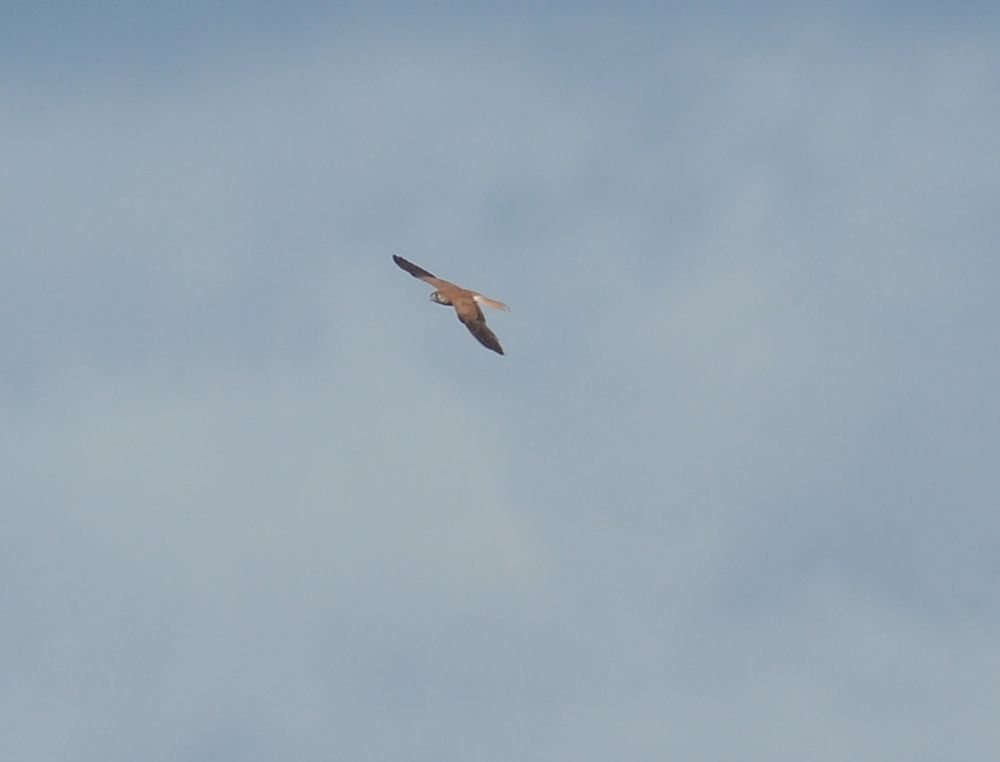
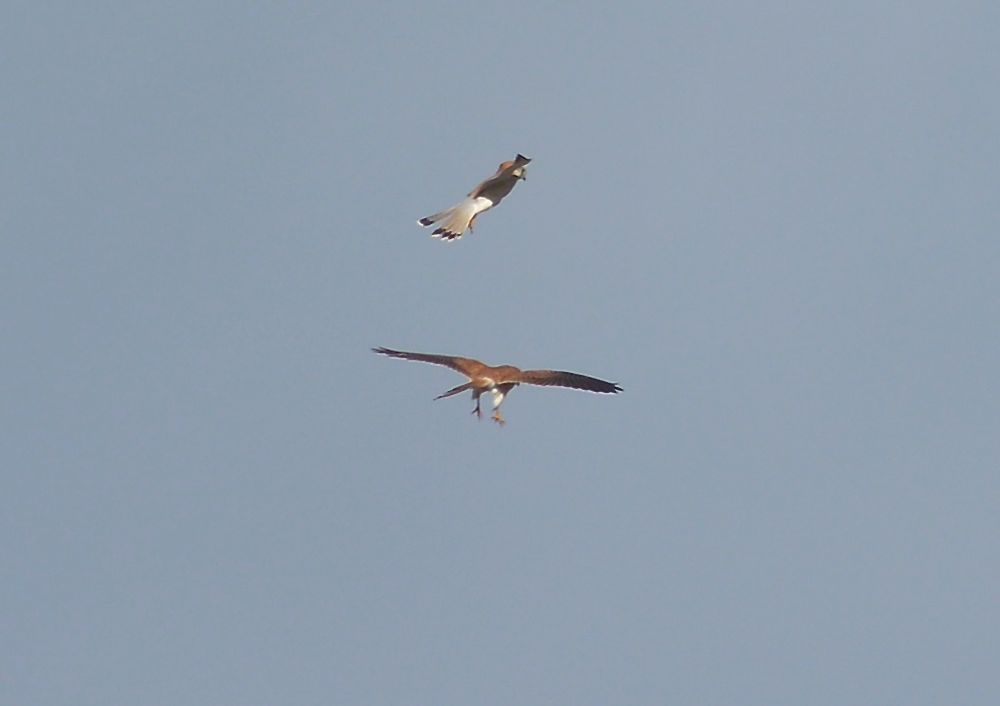
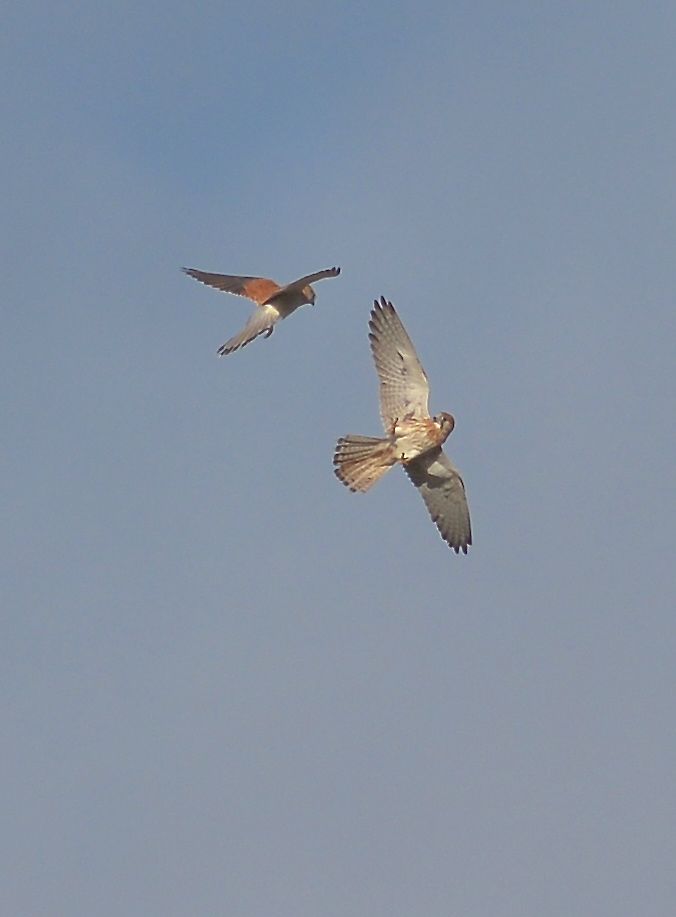
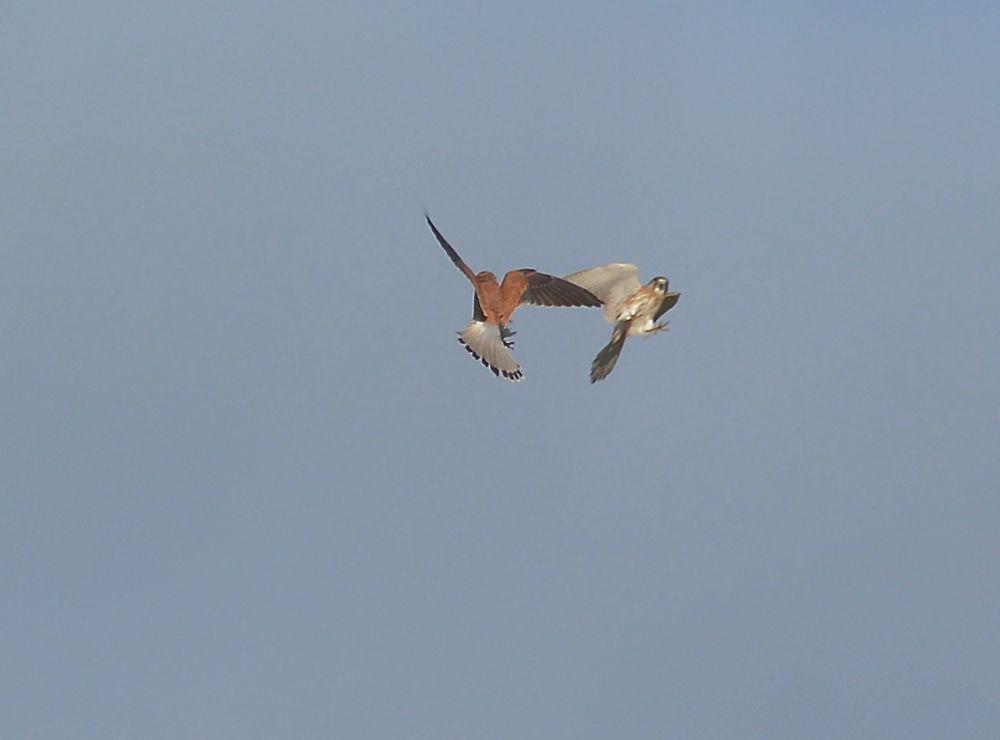
Apart from a range of Kites, Whistling, Black and Black-shouldered, along with a particularly vocal Brown Falcon, there is at the moment a pair of Australian Kestrels working in the fields, but a long way from the road way. But, the raucous shriek of the female, and the piping hunting call of the male, alerted me that something was going on. I eventually located them and they were preforming mock battles, he mostly coming in from above, she turning to repel him with her outstretched talons. The duet was both vocal and aerial, and I kept hoping it would drift towards my location, but, typical of Kestrels, they kept control of their position in the sky and stayed well down field.
None the less, I thought you might like to see a little of the ballet.
The images are pretty large crops, and I apologise for that. No Mr Darcy and Elizabeth here.
For those who can peer closely enough, the Male is the smaller, and has a single bar on a grey tail. She is dressed in her best brown, cinnamon, and has the swept back tail with the multiple bars.
I’ve discovered a new park area (new for me), closer to home. It cuts along the ridge of the Werribee River plain near the Werribee Mansion. Its called the Werribee River Park, and is run by Parks Vic. It butts up to the very eastern edge of the Western Treatment Plant. I’ve looked at the area on a map a number of times and pondered how to get there as it seems to have bike track that connects to the Federation Bike Track that runs all the way back to Altona and beyond. Not wanting to lug all the gear in over 3 kilometres or more I’ve been thwarted by no road access.
But, it seems, wrong I was. A road access to a small carpark at the top of the ridge is indeed available, and as it runs on the WTP boundary, has lots to offer the raptor photographer. And. I may not have mentioned this elsewhere, but it also has a population of Flame Robins in residence for the winter. So what’s not to like.
Access is via New Farm Road, past the Melbourne Water Discovery Centre and over the Geelong Freeway, and just before a very well locked and secure gate a small dirt road marked with an explanatory sign “Werribee River” leads onto the road to the carpark about another kilometre in. Out of the car, and the first thing I discover is a pair of Black-shouldered Kites who are obviously thinking seriously about a nesting run.
I suspect that the run of very warm weather has helped the mouse population and Mrs Mouse has seen it as her bound duty to extend the population as much as possible. To of course the great delight of the Kites.
Had an hour or so to myself and decided to see what the afternoon sunshine would bring. No great load up here, simply put in the lens and camera, drive for 15 mins and sit in the carpark. About as hard as bird photography can get.
Said pair are quite along in the relationship, the female has probably completed the nest. I would hazard a guess at its location from her perching positions. He on the other hand now has to prove his ability to provide food. So while she sits high on the tallest dead limb, offering him her screeching cry for both encouragement and direction, he sets out to provide the snacks.
The river has cut through the old sand here and at this point is several hundred yards wide, and the cliffs are 20 m or so high. The grassland is an obvious place for Mrs Mouse and her tribe and so the Male is readily able to fly along the old river flat and hunt. When he is over the plain he is probably not much more than 30m or so over the ground, which for a photographer on the top of the bank is such an advantage as he is directly in front or below my camera line.
All I have to do is wait. And not for long. I reckoned he was getting a mouse about every 10 minutes. His hunting time was down to a minute or less. And out of about 8 strikes I saw he was successful on 6 of them.
So he hunted and I watched. Swinging the 300mm around became a bit of a chore, so next time, the tripod and Wimberley head will be part of the deal.
Enjoy.
Evening sunshine gives nice shadows for him to work in.I noticed he always works with the light over his shoulder. My Mum’s best advice to budding photographers.The legs down are part of the balance and positioning.Closing in.That little dude is down there somewhere.All concentrationTurning into the light to come round for another run.Another one bites the dust.All feathers and legs at work gaining the balance for the stationary head.No, I’m not on the tucker list.So great to be able to almost reach out and touch him.
Had to motor to the northern subs today for a doc appointment. Well I got that out of the way, and EE and I decided to make use of the time and take a trip down to Woodlands Historic Park and see if the Flame Robins had learned how to fly over the off limits to humans, Backpaddock.
The paddock is a secure area of about that is part of the Eastern Bandicoot Re-establishment programme. Currently locked because a fox has managed to get into the area and threaten the bandicoots. One bandicoot making not much more than a take-away snack for a hungry fox. Fox,by the way, was let into the area, by some banana-boat who propped the secure gates open. The team from the Conservation Volunteers and Park staff have been working since the incursion in early April 2014 to nail the little critter. Apparently at this stage without success.
Grew up in the country, (The Mallee), we had a Fox-terrier Blue-heeler Cross. She was able to smell a fox spore from out the back of a ute. Took about half an hour to find said fox. And little more than a few seconds to despatch it. Quick, clean, neat, and cost effective. Now, “Dog” (that was her official name. Said so on the council paper) is of course no longer with us. But given her efficiency, many a scalp hung on the fence line. Dog would explode off the back of the ute and be on the job in about a millisecond. So I’m personally a bit non-plussed that in this day and age, its taken from April to now (early June) to find, locate, and despatch a fox that is within a fenced off area.
I can’t imagine someone is standing in the middle of the park calling ‘Foxy, Foxy” or expecting said criminal to come out with its paws up. No doubt the foxes of the 21st century have GPS and close contact radar warning and other technical stuff to improve their efficiency.
But, I digress.
Public Disclaimer: The team working on the Bandicoot programme have done some fantastic work, in spite of some complex issues and I sincerely wish them all the best of success. My poor bird photography doesn’t come anywhere in the scheme of things. Good on ya Travis.
We went instead to visit Jack of Eastern Yellow Robin fame. And about as fast as “Dog”, Jack came bounding out to see us. It was more like him visiting us, than the other way around. Took great delight in sharing a bath in some water EE had tracked in, and then spent time preening before speeding off. And so did we. Not much else happening in that area, Except, funnily enough, as we were walked back to the car, just down toward the rangers work area, we spotted two Foxes.
Pretty easy to pick. Brown looking things, with long tails and sharp teeth. We watched them go about their respective businesses and smiled that poor old “Dog” would not have been allowed in the park to deal with them.
Back at the car we travelled further out and were able to find our new friend “Ambrose” and he looked resplendent in his lovely rose red dress. Then to our surprise he had a friend, A female Pink Robin. She was a little less enthusiastic for the camera, but it was a good find. Think we also have Ambrose’s lady, “Rosy” in there somewhere too, but couldn’t make the connection. On to the further east toward Sunbury and we found several Flame Robins, and the figured it was lunch time, so moved on again.
After lunch it was time for home, and EE suggested why not go back past Woodlands, call into Providence Road and have a look for the Red-caps we’d seen on a previous trip. Suits me. On the way down to the dam area, we came across a family of White-winged Choughs. Very intent about their business, and we were soon surrounded by about 30 birds. Lots of choughness going on. And even mutual preening.
And then, “Peter” the male Red-capped Robin turned up, and his lovely little lady. She is without doubt the smallest Red-capped Robin I’ve ever seen. Minute, not petite. To top if off a pair of Scarlet Robins came down the roadway, and we’d the chance to write up 6 different Robins for the day. Not a bad effort considering.
Dog would have been pleased with our hunting experience.
Jack, the Eastern Yellow Robin, The cocked tail is not for my benefit, he’s connecting with Jill a little further in the scrub.Ambrose.Pink Robin. Female. Nice to see.Contemplative Flame Robin. Perhaps he’s wondering why we aren’t working with his family in the back paddock.Female Flame Robin.Two Flame Robin blokes, have a bit of a discussion about photography. Not often to see them in the same tree, but they were chatting away.Scarlet Robin, male, not the best I’ve done, but nice to see him.Hiding, but I found her. Scarlet female.All Choughed up and no where to go. A sentry took time out for a bit of choughcleaning.Peter, the Red-capped Robin. Almost working with me now.Such a tiny female Red-capped Robin.
One of my Flickr mates has put up a blog of his recent experience with a beautiful Wedge-tailed Eagle, and rather than me ramble on, here is the address.
Been awhile since I posted, but what with this and that and a few days birding, here and there, well, it just all got by me.
After the last week or so of near perfect weather in Melbourne, with light winds and plenty of warm sunshine in the 20s C, its been more than a body can do to keep up with the places to find birds. But, all good things they same come to an end.
Today was scheduled to be rain in the morning, rain at lunchtime, rain in the evening, rain. So no one seemed particularly excited when I suggested a trip to Eynesbury to look for Flame Robins. (would have gone to Woodlands Historic Park, but the Backpaddock has been locked out to mere mortals, as the great Fox hunt proceeds, at glacial speed. 40 hectares, one fox, it a bit of a needle in a haystack, and I suppose quite a setback to the Eastern Barred Bandicoot Programme. Not that the Flame Robins know, and so their winter visit to the park goes on, and the best we mere photographers can do is press our nose up against the cold chain fence, and ‘wonder where they are!” Oh.
So Eynesbury is an option. EE suggested she had her sock drawer to sort out, and Mr An Onymous, suggested I watch the weather, but in the end he too was inclined to make the journey. Cool.
Can’t say I was too impressed when early in the morning, I was awakened by the patter of rain on the roof. Oh, it’ll pass quickly, doona back over head, and when I next awoke, I heard the patter of rain on the roof, Oh, it will be the last of the showers, back under the doona. When I next awoke, the rain was, well, pretty consistent. Hmmm, then the ‘Rooster” call from the iPad and it was time to prepare for the imminent arrival of the Blackmobile with its cargo. So I put the Dryazabone as the first to go in. Never know do you! Then the cameras and some dry gear for them.
Right on cue, Mr A arrived, and we set off, nice and early. and the rain, well, it had stopped, and some claimed to be able to see ‘blue’ sky on the horizon. Like, yeah!
To round out the story we found some robins, drank some tea, didn’t get wet, and by lunchtime as we were wending our way back to the car, the blue sky took over and the sun streamed through the forest. Lovely. So we turned aside, for just one more look see, and to our delight found some Diamond Firetails. First for Mr A, so that was good.
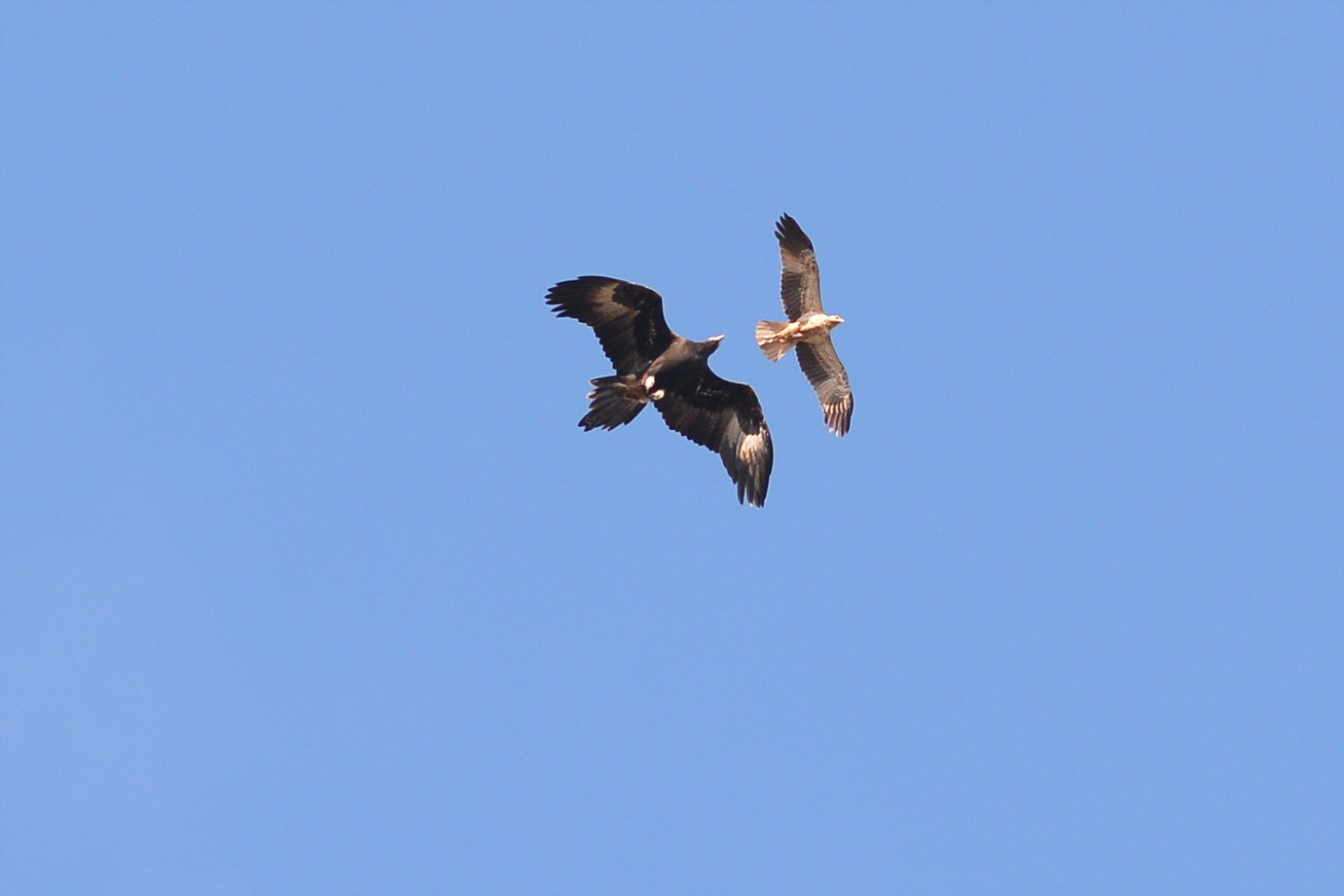
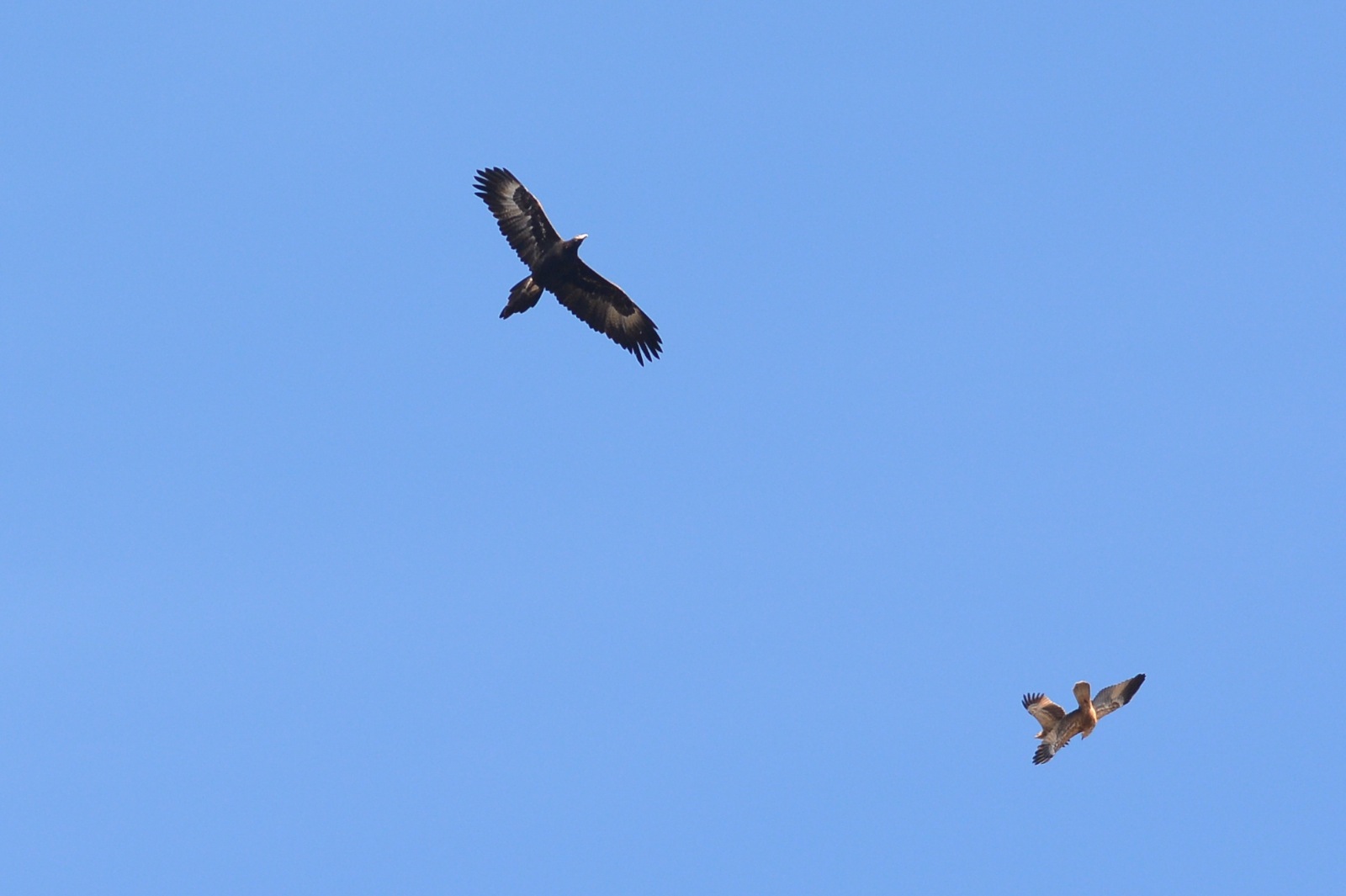
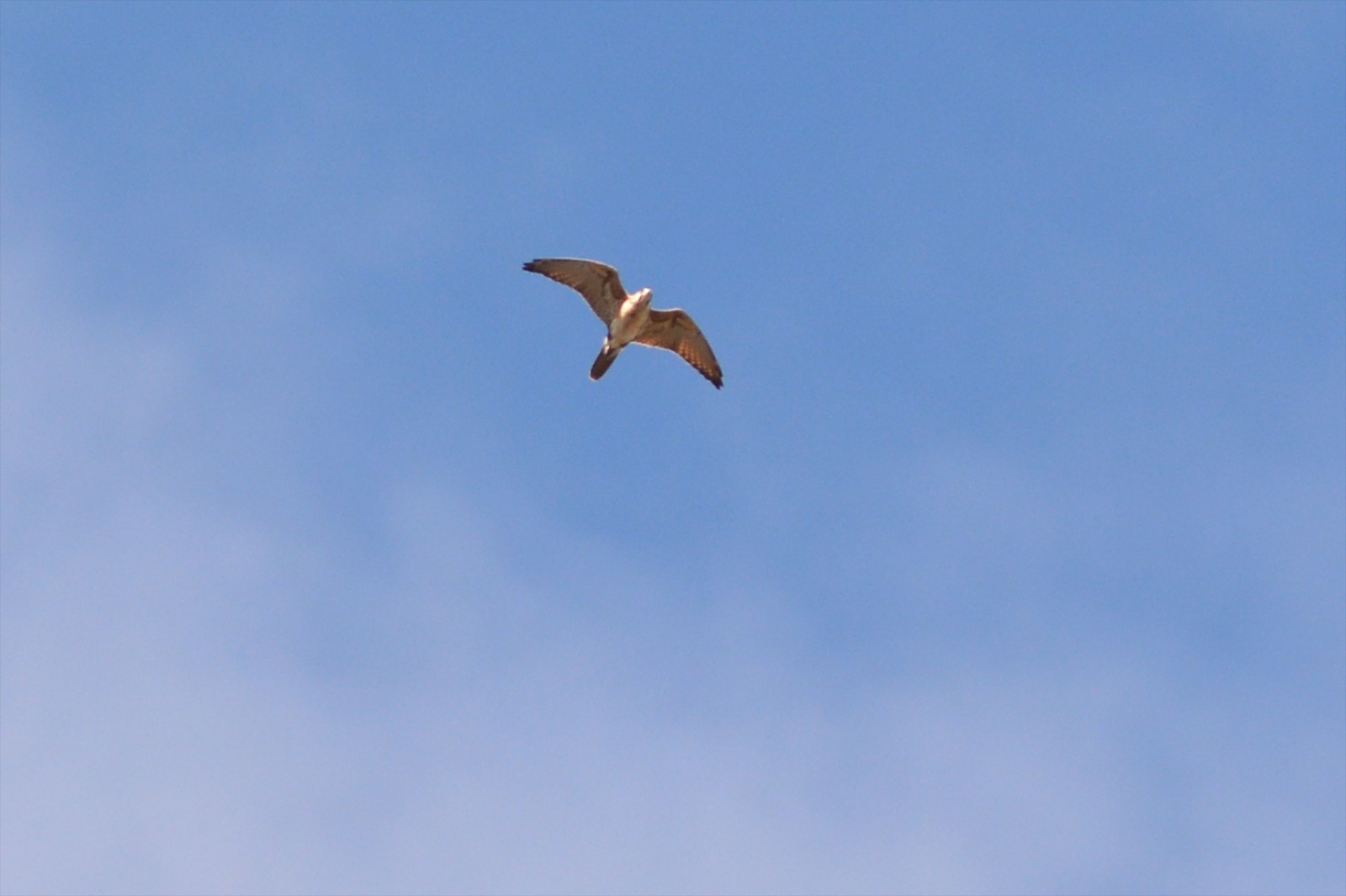
Then it all happened. Standing in the sunshine, we were assailed by the frantic Skwarks, and Chatter of a Brown Falcon, looking up we saw her belting across the sky, and in pursuit of a band (about 4) Whistling Kites. Then it was obvious the Kites were after a Wedgetailed Eagle. That was pretty evident when the sky directly above us went dark as the huge bird juggled for position in a thermal to rid itself of the pursers. But Kites are pretty much a match for a low level Eagle and managed a few good strikes among them. So much so that at one stage, they kind of got tangled up in the exit from the dive and had to avoid one another.
Every body wants to get into the act, (Jimmy Durante), and the Brown Falcon, full of the chase, was in as well. However the Eagle, simply found the thermal, and no Falcon can gain the uplift power of those huge wings and soon she was completely outclassed and had to drift back exhausted. The Kites on the other hand, not only masters of the thermal, but full of energy to gain extra height by hard work got well above the Eagle and then took turns at attacking it from behind and above.
The Eagle drifted higher and the Kites soon had to work harder to keep up with it. What amazed us the most was the size of the Eagle compared to the size of the Kites. Tend to see the Whistlers as big raptors, but really they are pint sized alongside the Master of the air.
With the sunny day well established it was time for a late lunch and a pie shop I know on the way home.
Enjoy.
Early in proceedings, the noisy Brown Falcon mixed it with the Eagle and with the Kites.The size of the kites against the eagle is well seenGaining height was relatively easy for the KitesEach kite played its own game in the pursuit.Hard strike on the EagleSometimes in their enthusiasm they got a bit tangled up with one another.Late in the proceedings and an exhausted and very quiet Falcon breaks off the pursuitIf they could get the Eagle to change direction they had a chance to slow it down.























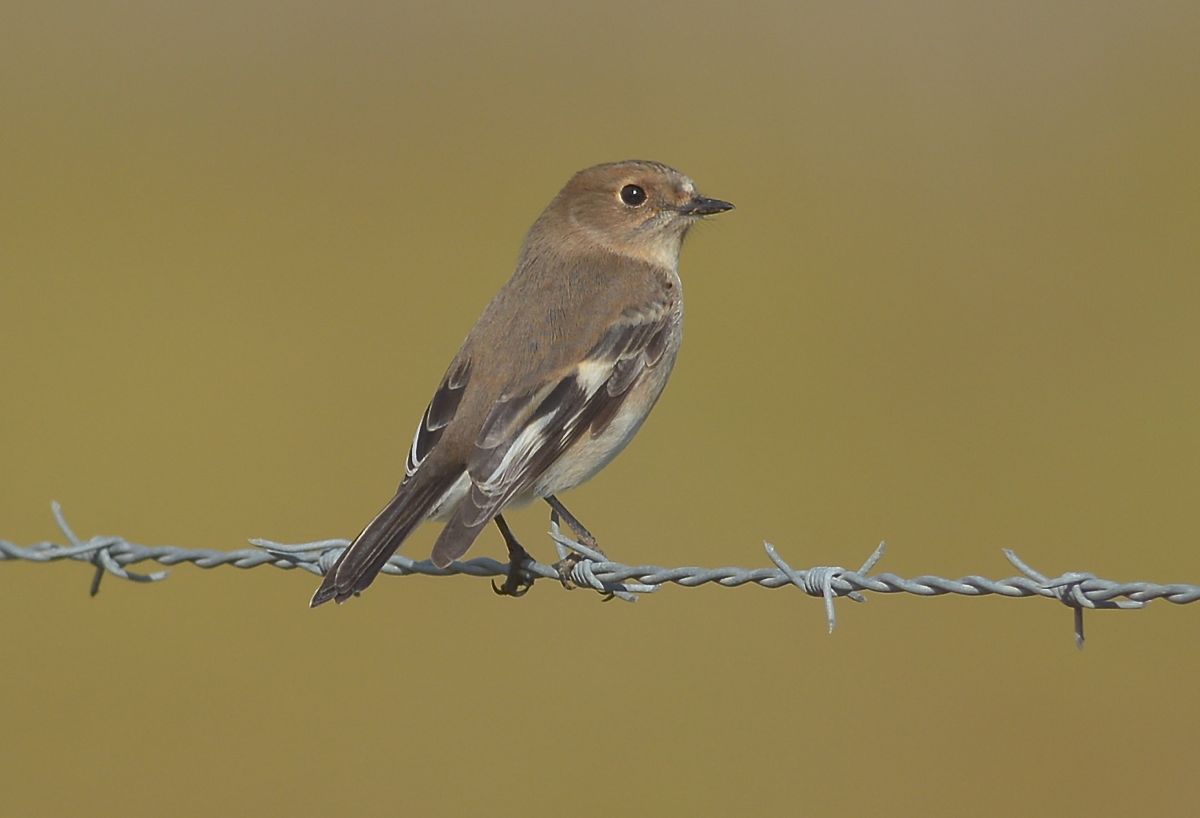
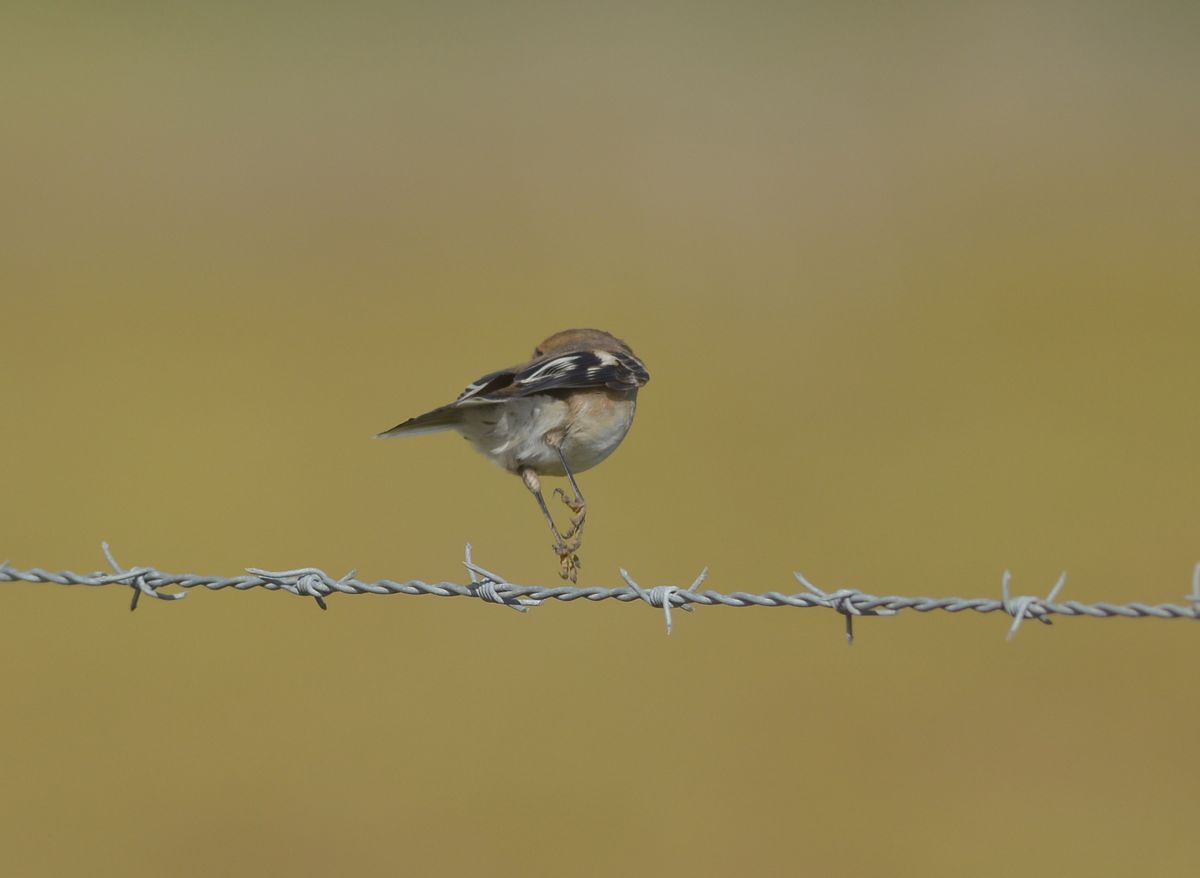


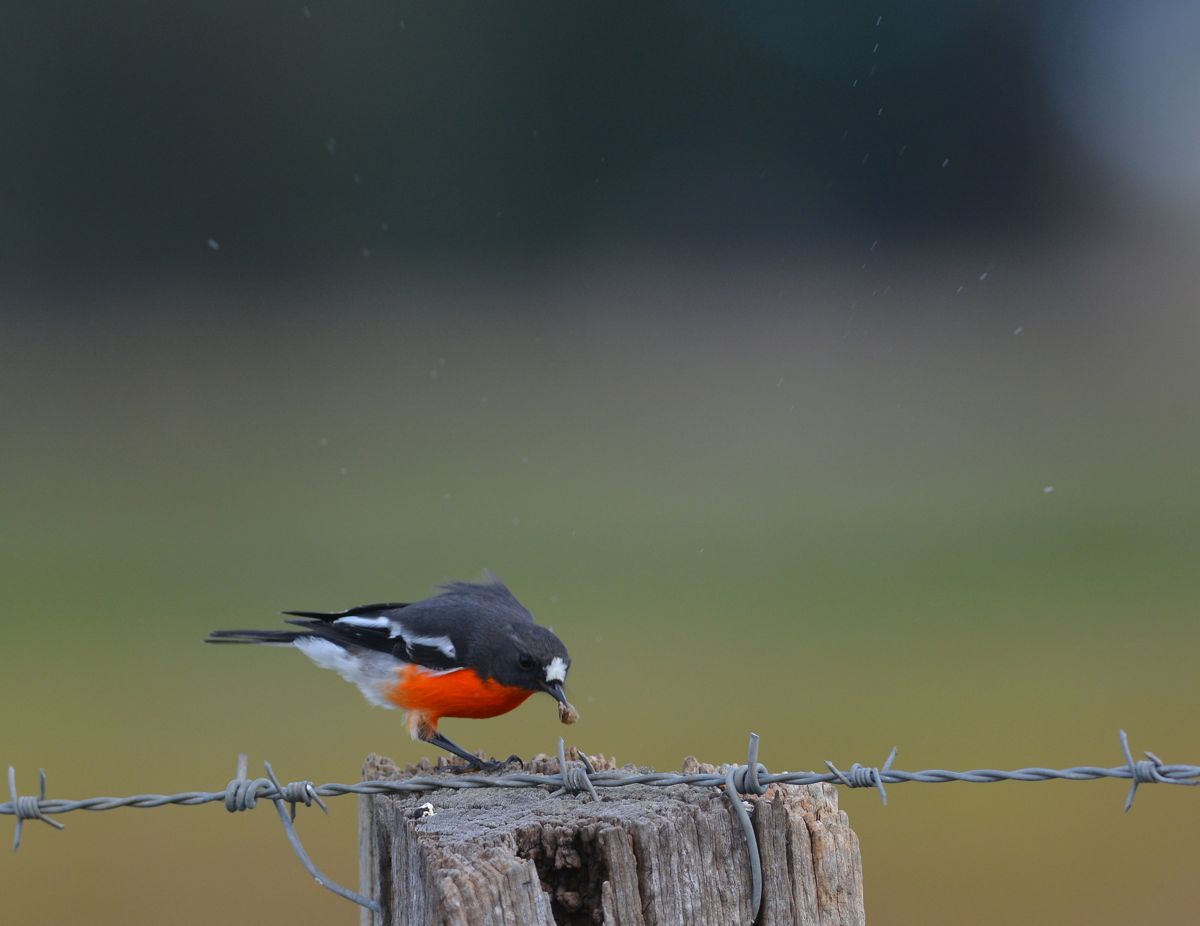
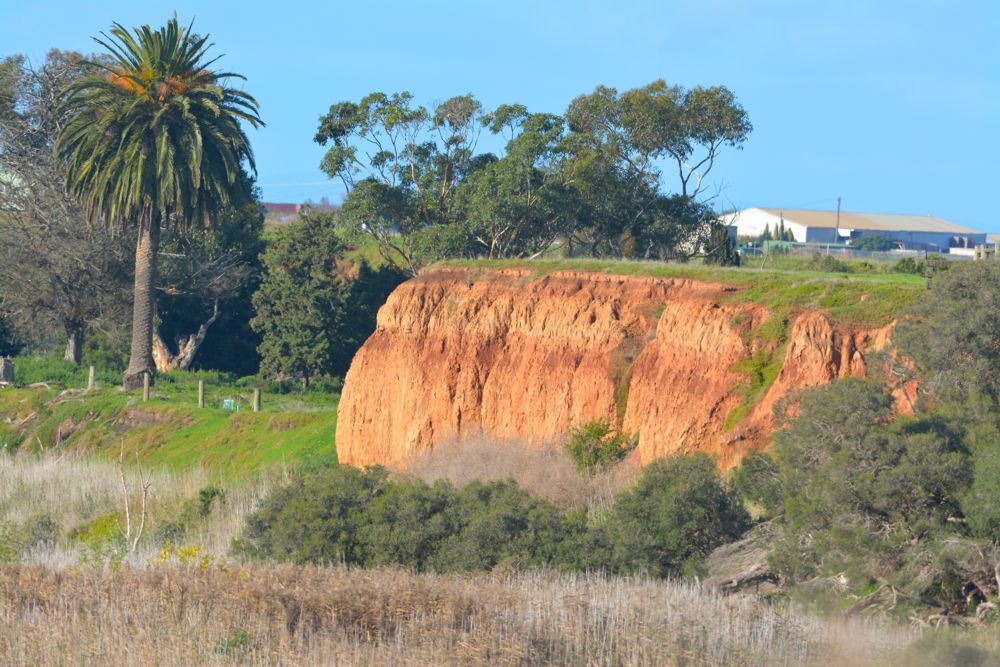









 Birds as Poetry —— Just because I WANDER doesn't mean I'm LOST