Saturday Evening Post #114: Understated Elegance

Perhaps one of the greatest skills for a ‘portrait’ photographer is to ‘connect’ with the subject.

Some people I’ve met seem to have a natural aptitude for bringing out unique character traits of their subject.  A smile, nod, hand movement, a word or two, and suddenly there waiting for the press of the shutter is the ‘essence’ of the person’s personality.

There are so many reasons why people often (always!) say, “Oh, I don’t take a very good picture!”  Too true.
We want to have a candid photo approach, but we don’t want a candid result.

Yousuf Karsh, a Canadian portraitist from the 1930s to when he retired in 1992, was a refugee from Armenia. He apprenticed to first his uncle and then a prominent American celebrity photographer.

His photographs of the great and near great of his time include, what is regarded as the quintessential portrait of Sir Winston Churchill. The story of the making of the portrait is as great as the moment recorded.
Churchill, it is told, turned up at the photo session with his signature cigar.  Just as Karsh was about to make the exposure he walked up toChurchill and removed the cigar from his hand.
The result shows a ‘miffed’ Churchill, yet one that brings out the essence of the subject.

Different time, different subject, different circumstances.
Martin Luther King,
King’s life can only be described as frenetic. Always on the move, always surrounded by helpers, people congratulating him, or commiserating.  The famous portrait was made a quiet corner of a church. The simple setting enabled Karsh to bring out the qualities of leadership, visionary and engaging personality.

Another that is quite confrontational, and given the subject, so it should be is Fidel Castro.  Frame filling, piecing eyes and wisps of shadow glancing over the facial planes make a compelling image.

See more his portrait work here.
If you do visit this site, be sure to click on the Sittings page, and type in the name of one of the studies. Then  click on image and it will open up to a little of the background to the portrait. Fascinating.

Here are a few Karsh quotes.

Within every man and woman a secret is hidden, and as a photographer it is my task to reveal it if I can. The revelation, if it comes at all, will come in a small fraction of a second with an unconscious gesture, a gleam of the eye, a brief lifting of the mask that all humans wear to conceal their innermost selves from the world. In that fleeting interval of opportunity the photographer must act or lose his prize.

I try to photograph people’s spirits and thoughts. As to the soul-taking by the photographer, I don’t feel I take away, but rather that the sitter and I give to each other. It becomes an act of mutual participation.

Light thinks it travels faster than anything but it is wrong. No matter how fast light travels, it finds the darkness has always got there first, and is waiting for it.

And just because we’ll allow him a sense of humour,
The trouble with photographing beautiful women is that you never get into the dark room until after they’ve gone.


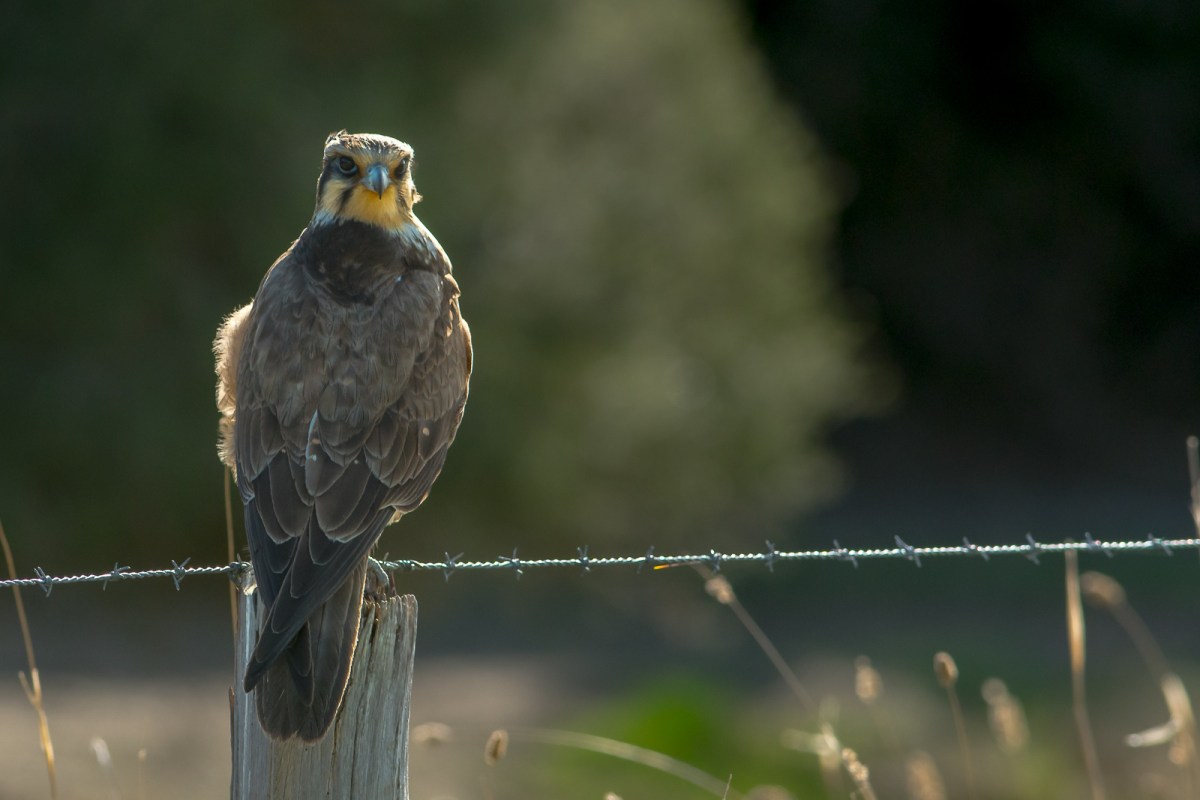
I’m often quoted—or misquoted—for wanting to bring out the character of the birds that we meet.
Some birds can be cooperative and its possible to spend sometime making sure things like, lighting, background, pose and the like are helpful. Others, are fleeting and gone.

If nothing else Karsh’s work hints at the need for outdoor photographers to adapt the camera to the subject. We don’t have the luxury of the formal studio portrait.

Yet that mobility enables us to be flexible and capture natural moments.

Bronson is a hard working Dad. We have had the good fortune to work with him through three clutches, and our presence is no longer seen as a threat.

I do therefore, take some liberties with his patience. But always out of respect.

No  photo is worth agitating a bird.

I am, I guess I need to add, quite a critic of my own close approaches, and like to think I have over the years become attuned to a wing flip, leg move, head shake or downright glare that indicates I’ve crossed a line.  Apologetic I retreat.

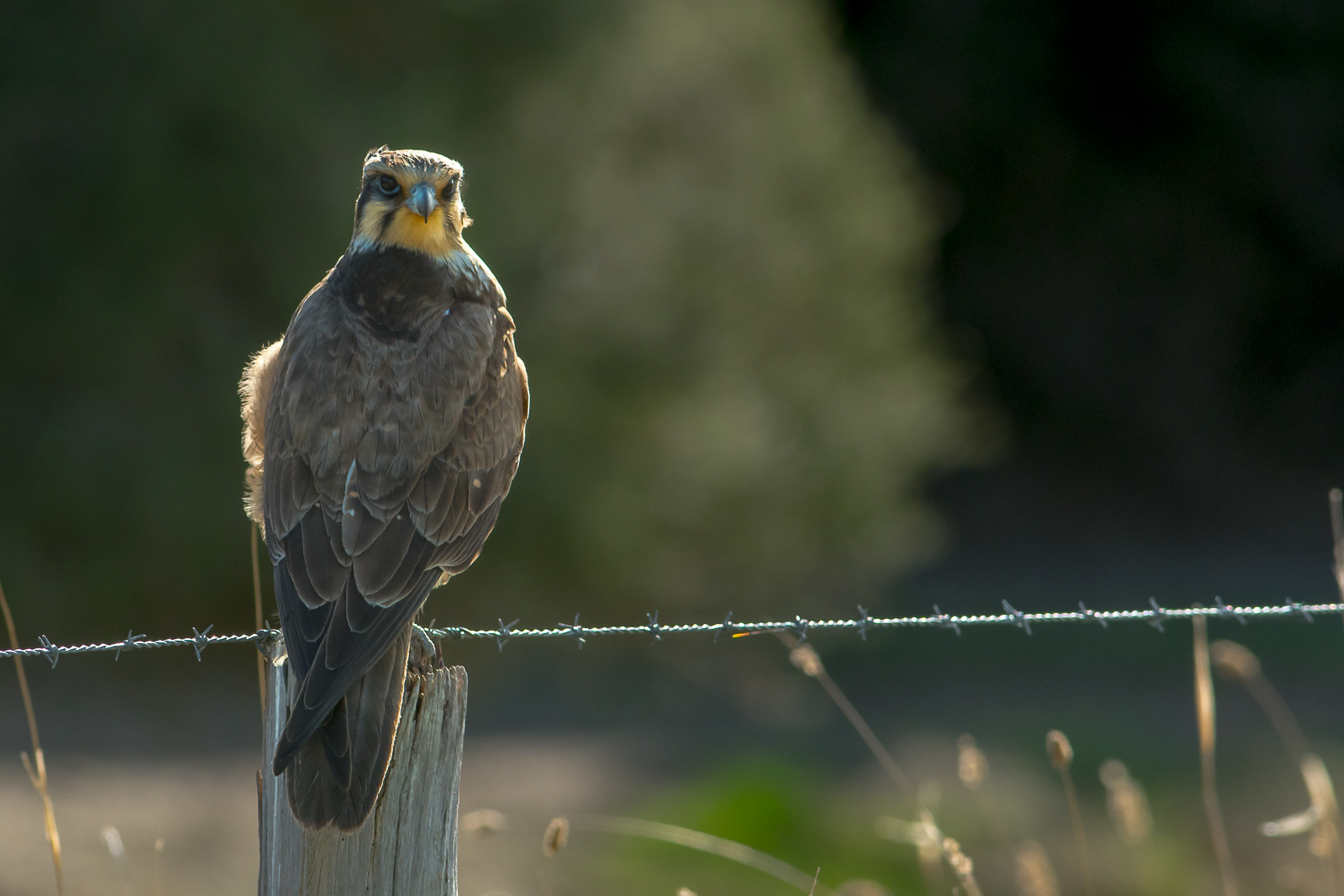
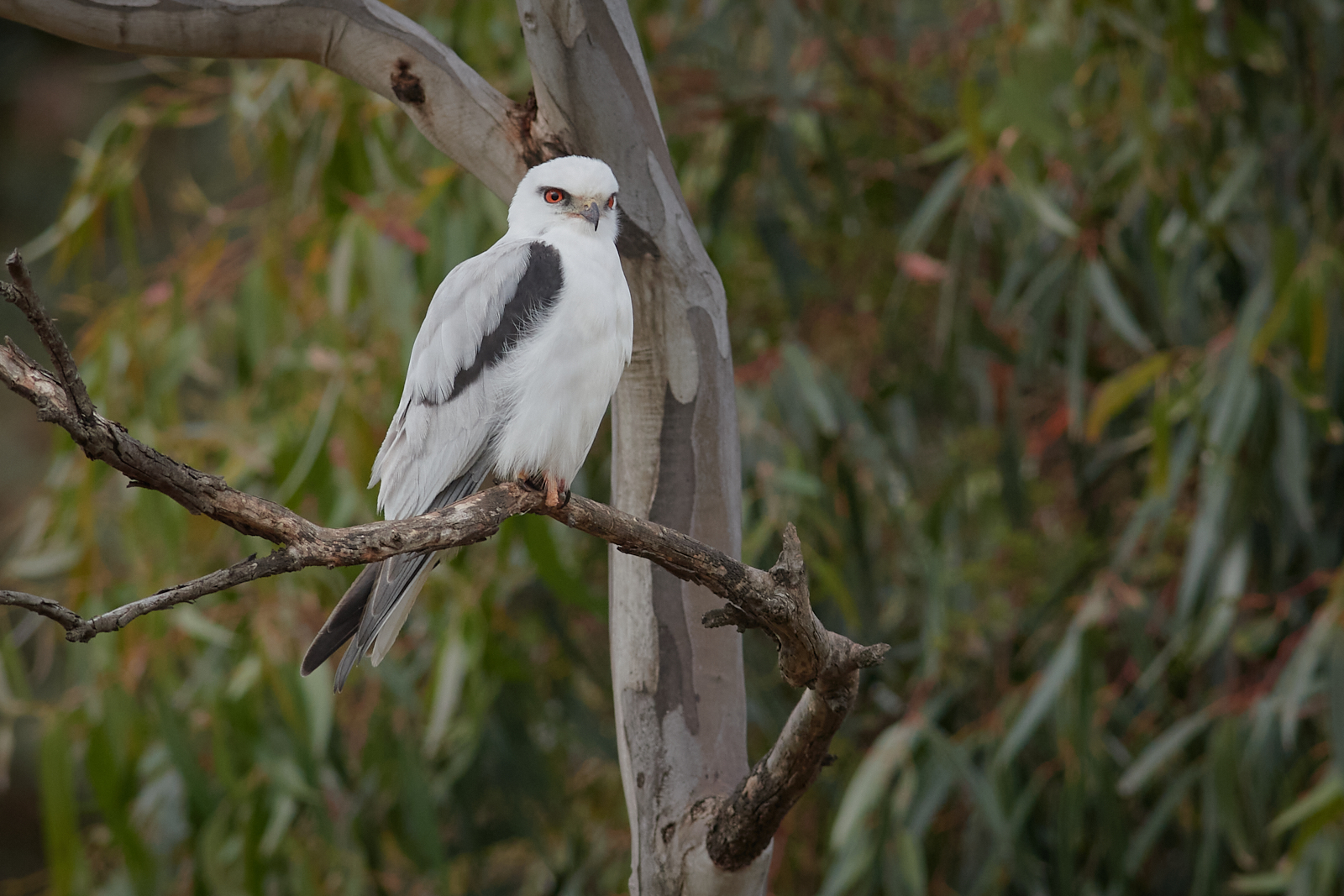
He sat in the soft early light, and the thought of “Elegance” struck me.  I then worked about to find a suitable background.  The small tree behind gave me an isolation for the head, and the branch gave him a feeling of place.
Waiting is something a Black-shouldered Kite is gifted with. I too needed to wait for the head turn, the piercing eyes surveying the field and the relaxed body.
Click

Any relationship between this shot and Karsh’s “Grey Owl“, is purely coincidental, and no comparison is intended or suggested.

Enjoy

Saturday Evening Post #113: With Gratitude

Simple Post—With Gratitude.
When I was very much a young bloke, I was a member of a speaking club.  Mostly a social thing as I recall, and of course, a few business contacts never went astray.

One of the points that I recall from all that is the reviewer saying over and over.
“Make sure that you state the purpose of your message up front, early and clearly. So no one has to ponder what or where you are going. No one wants to listen for twenty minutes and then finally discover what the topic, and your point of view actually is”.  He probably didn’t end with a verb, but hey…

Magazine editors make the same demand of feature writers. If the lead is buried 5 paragraphs down, its either rewritten, or returned.

And So I find myself as we approach the end of the year, scarcely able to grasp where we have come this year, not only  physically and emotionally, but photographically.

And it lead me so far to be Grateful that I’m even here to write about it.

I’m also grateful to everyone who has kindly ‘Liked’ the blog, and to those special people who’ve taken a few moments to add their thoughts on the subject.
Me writing a blog does not make me the expert, and really it only exists if people take the time to read, and view the photos. Thanks to your all.

My gratitude to all those on the front line who have stressed and strained under the most dreadful conditions to keep us safe. What else can we say. Thank you.

To the coffee dudes in the local coffee shops who’ve struggled to keep their businesses afloat, to provide food and also a social meeting point that has helped to relieve some stresses.  Thanks.  And thanks to my plastic card that has tapped and gone so many times on cups of coffee to go.

Thanks also to the lockdown, yes I mean that.  As its given me the chance to sort out my runaway photo library. Now a svelte shadow of its former bulging self, I think I am confident the dross has been discarded.

And to the software manufacturers who have plied me with ways to “Bring out the Picture within my Photo.” with their special sauces and blends of technology. At least this year I’ve been able to play with them, and actually laid out money for one.

Thanks to EE, Mr An Onymous, Dave T David N, Len T, Chris L and so many others whom I have had the pleasure of sharing the bush, and the birds and their special patches.  It’s been a thrill each time.

And thanks to the birds. Without them ….asPoetry wouldn’t be as exciting to work on.

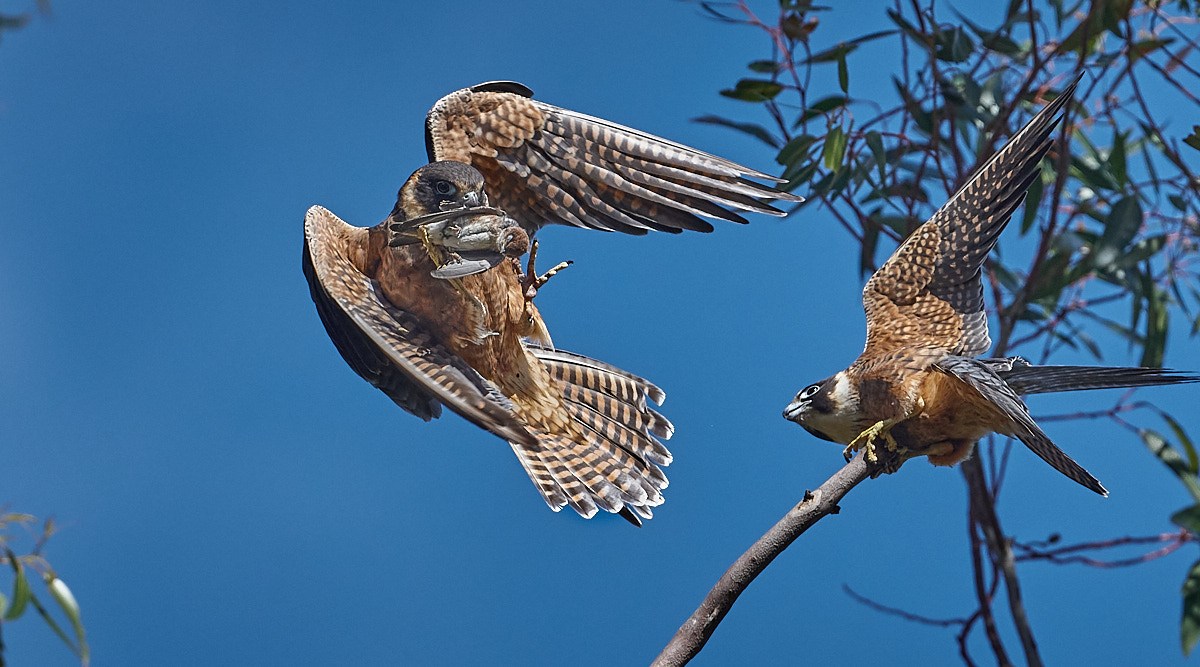
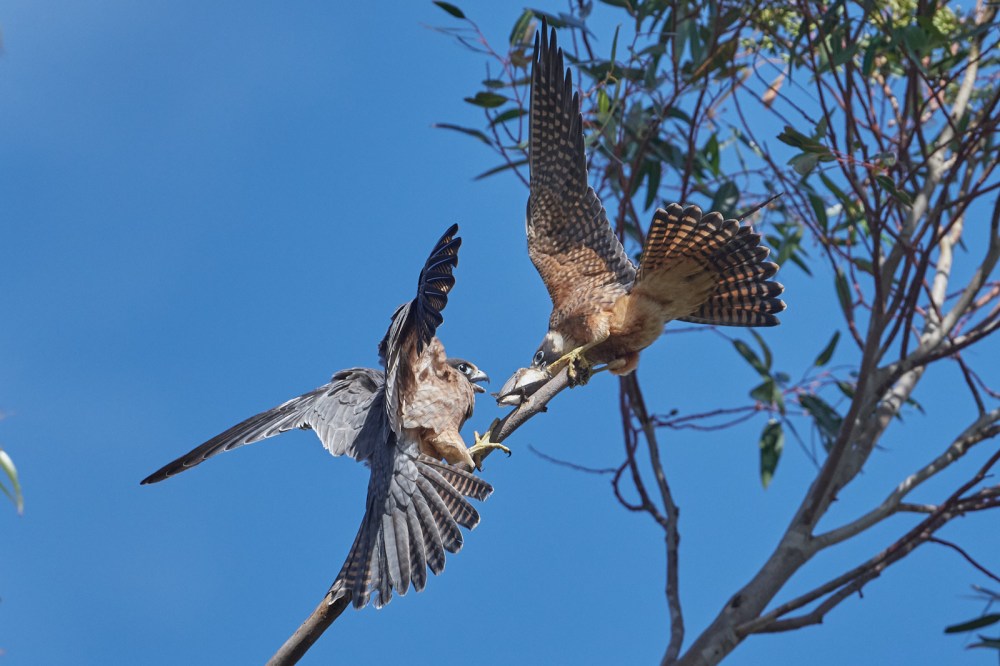
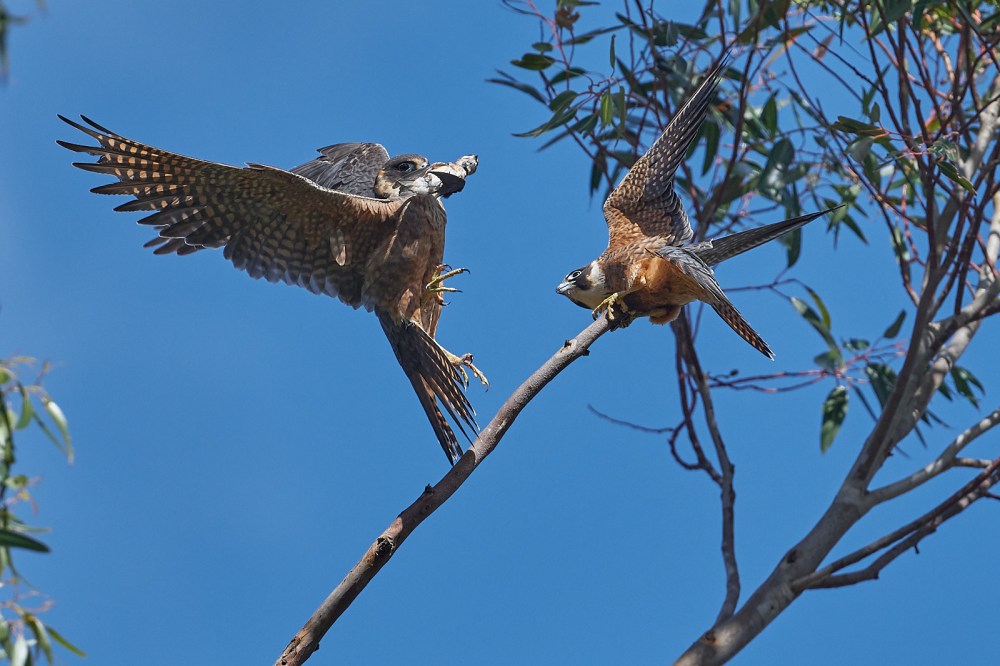
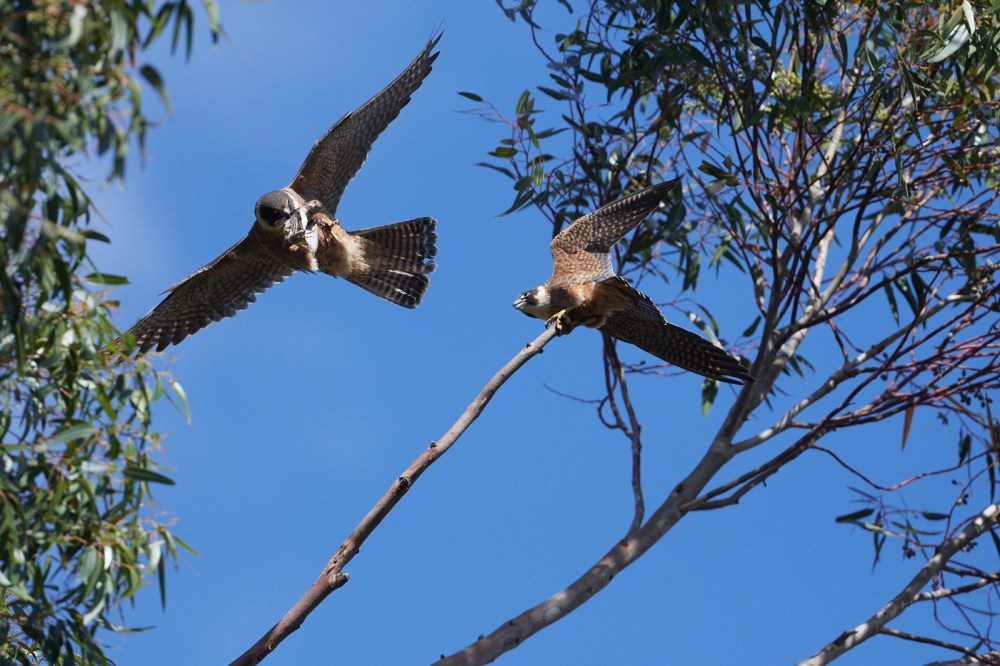
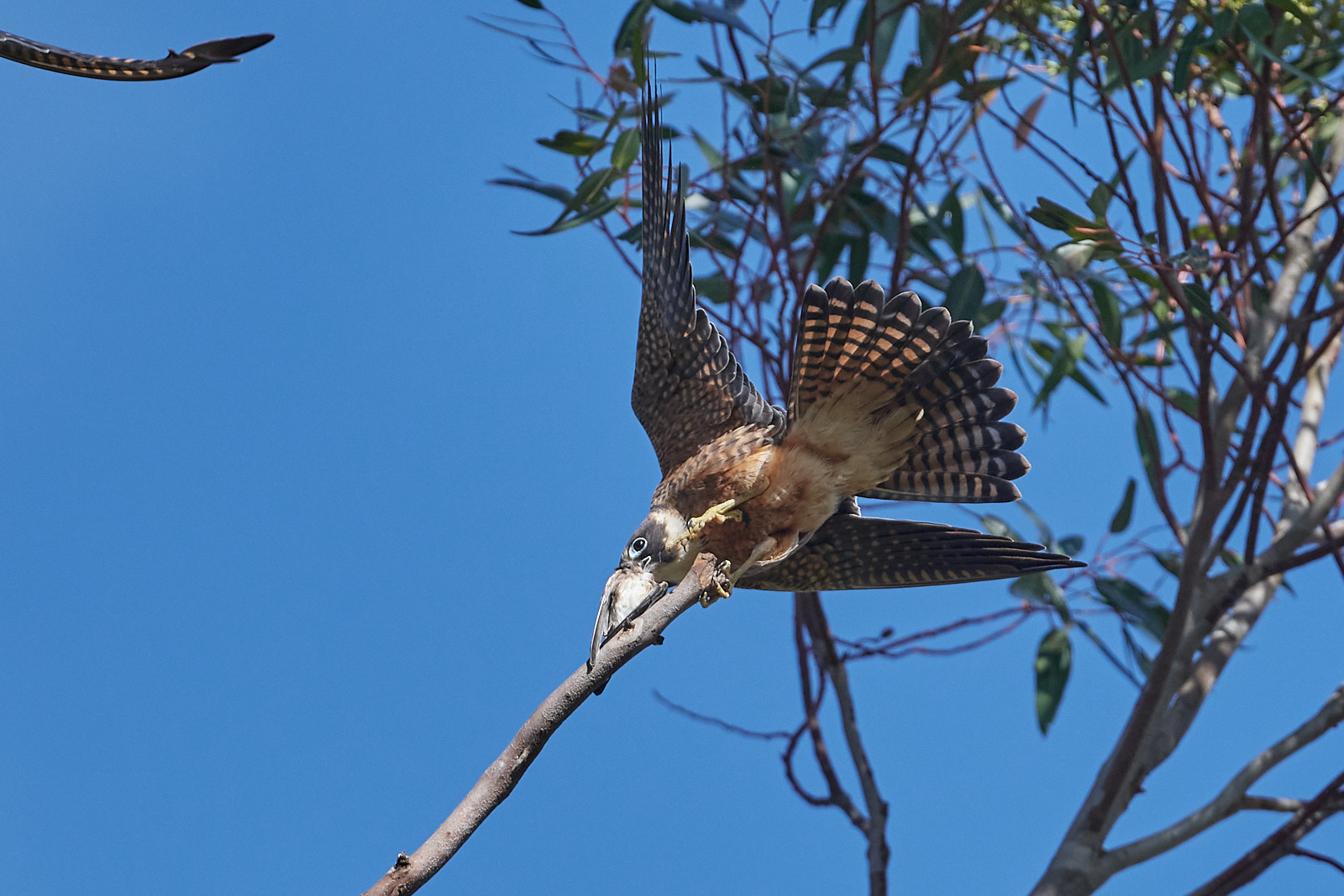
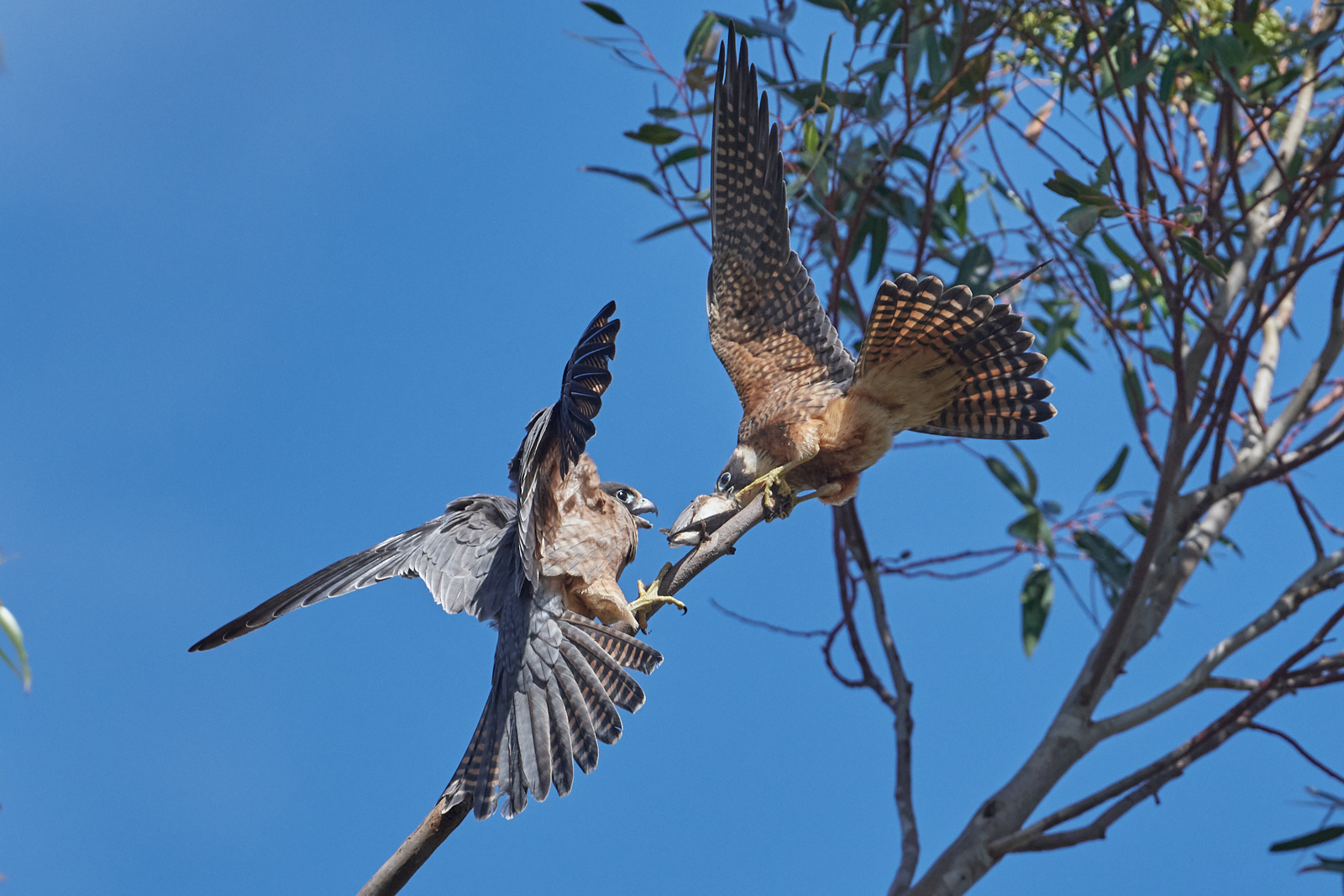
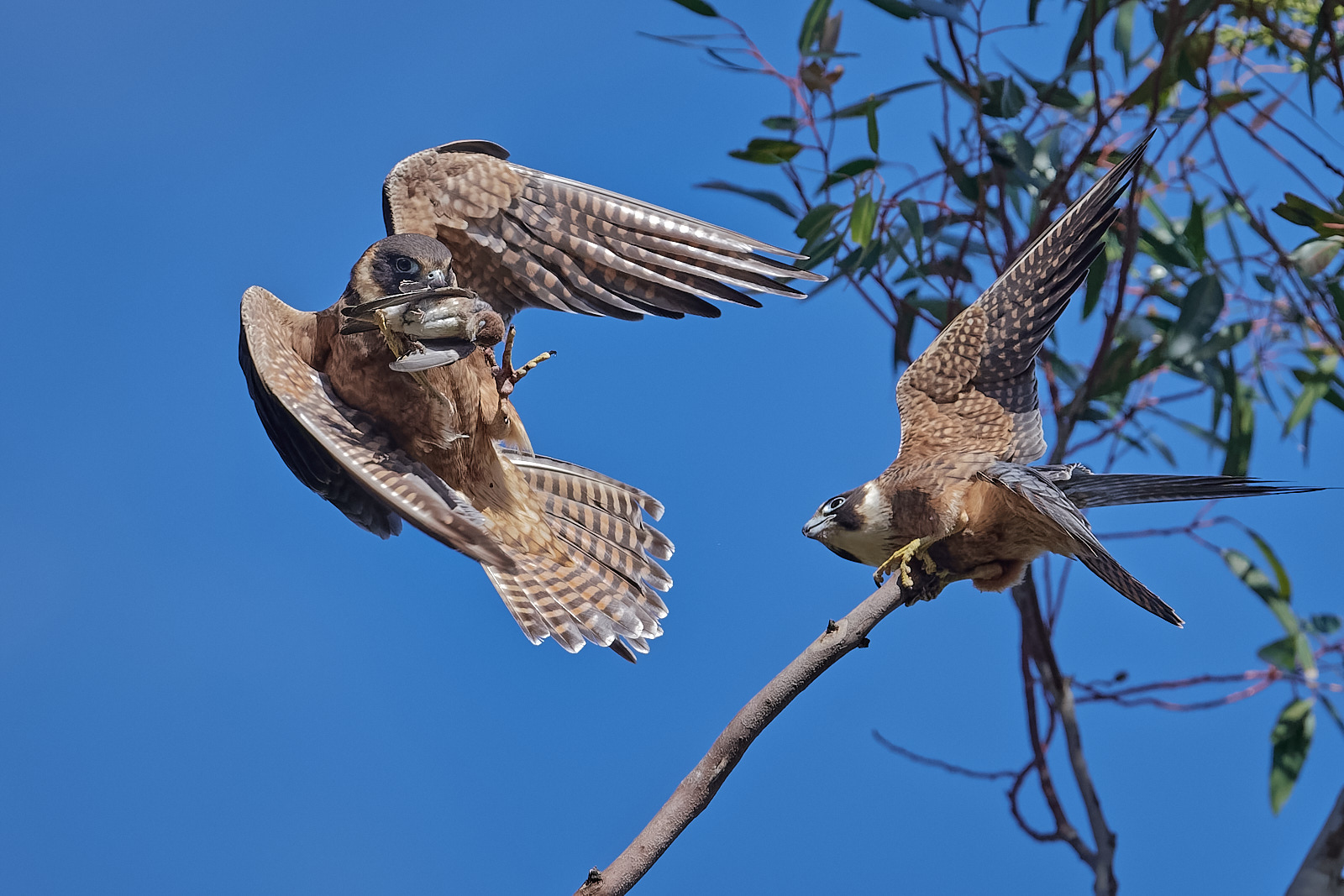
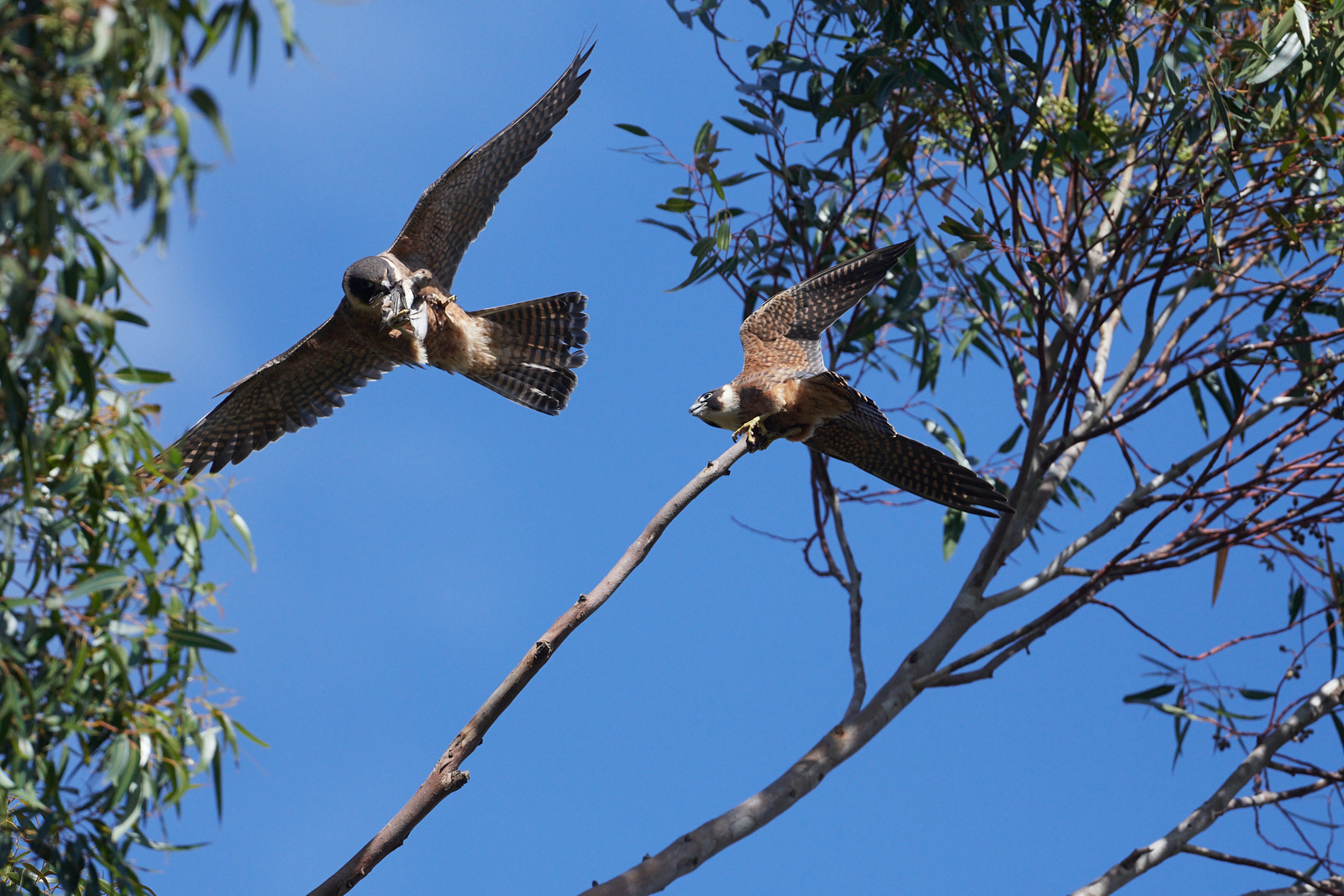
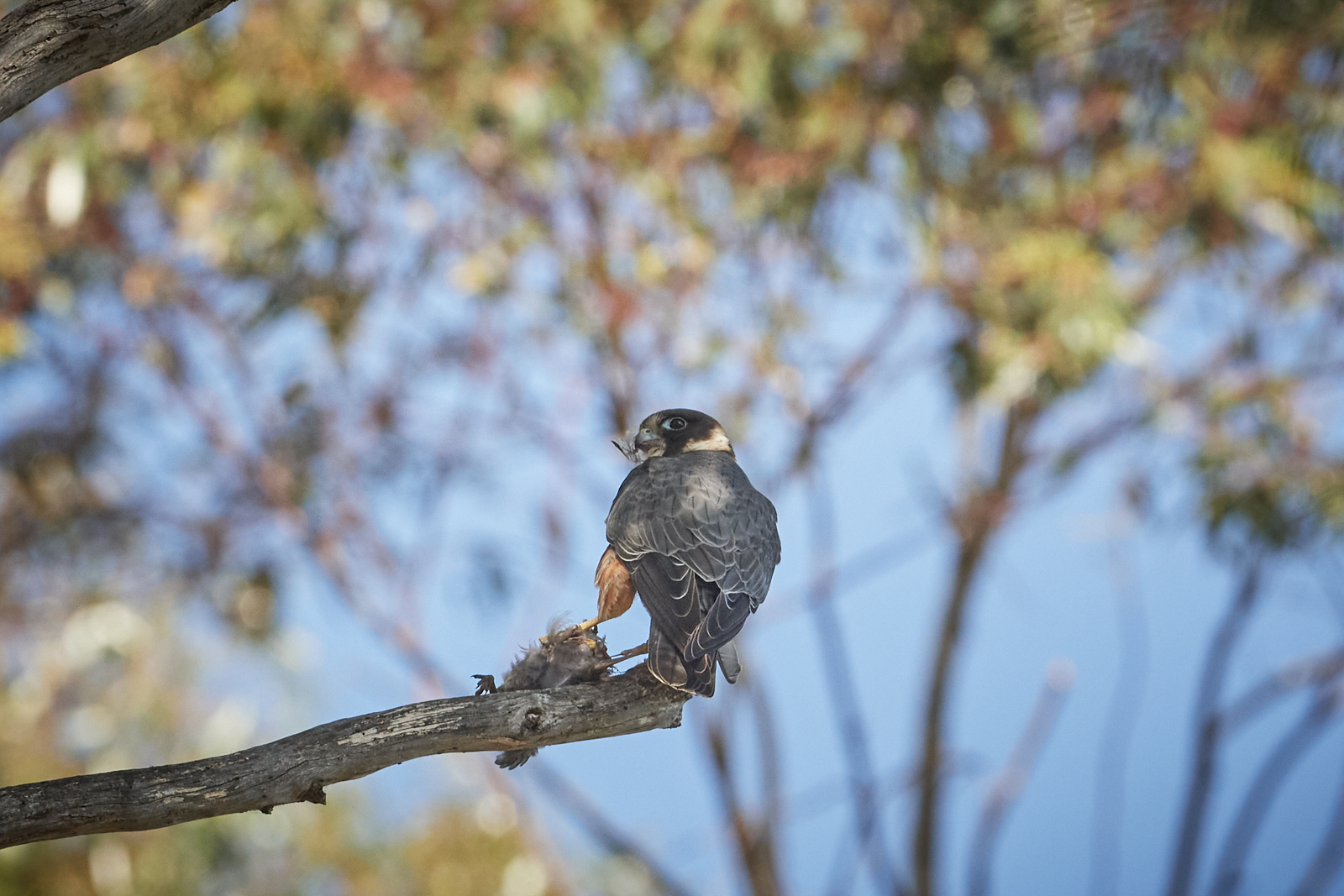
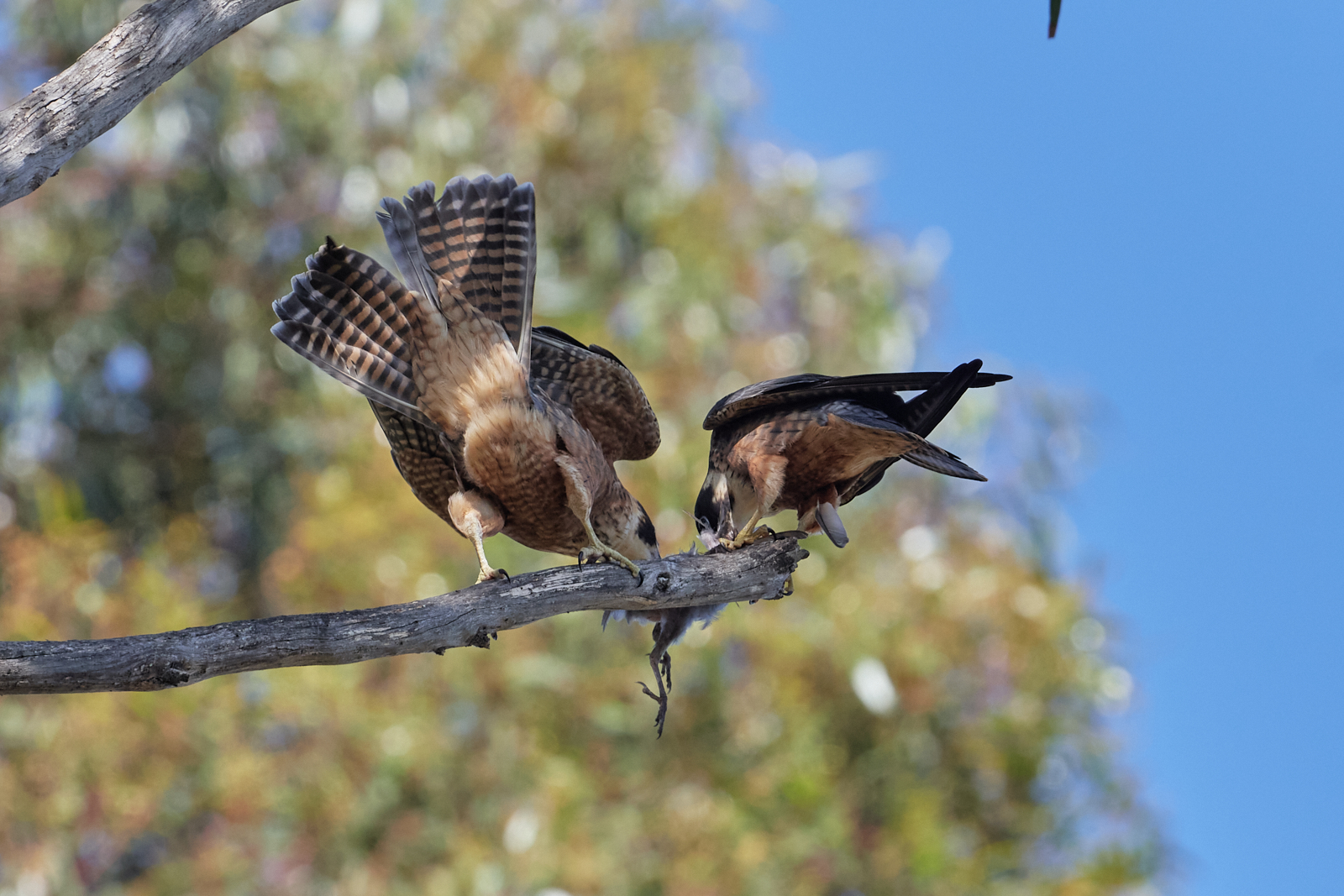
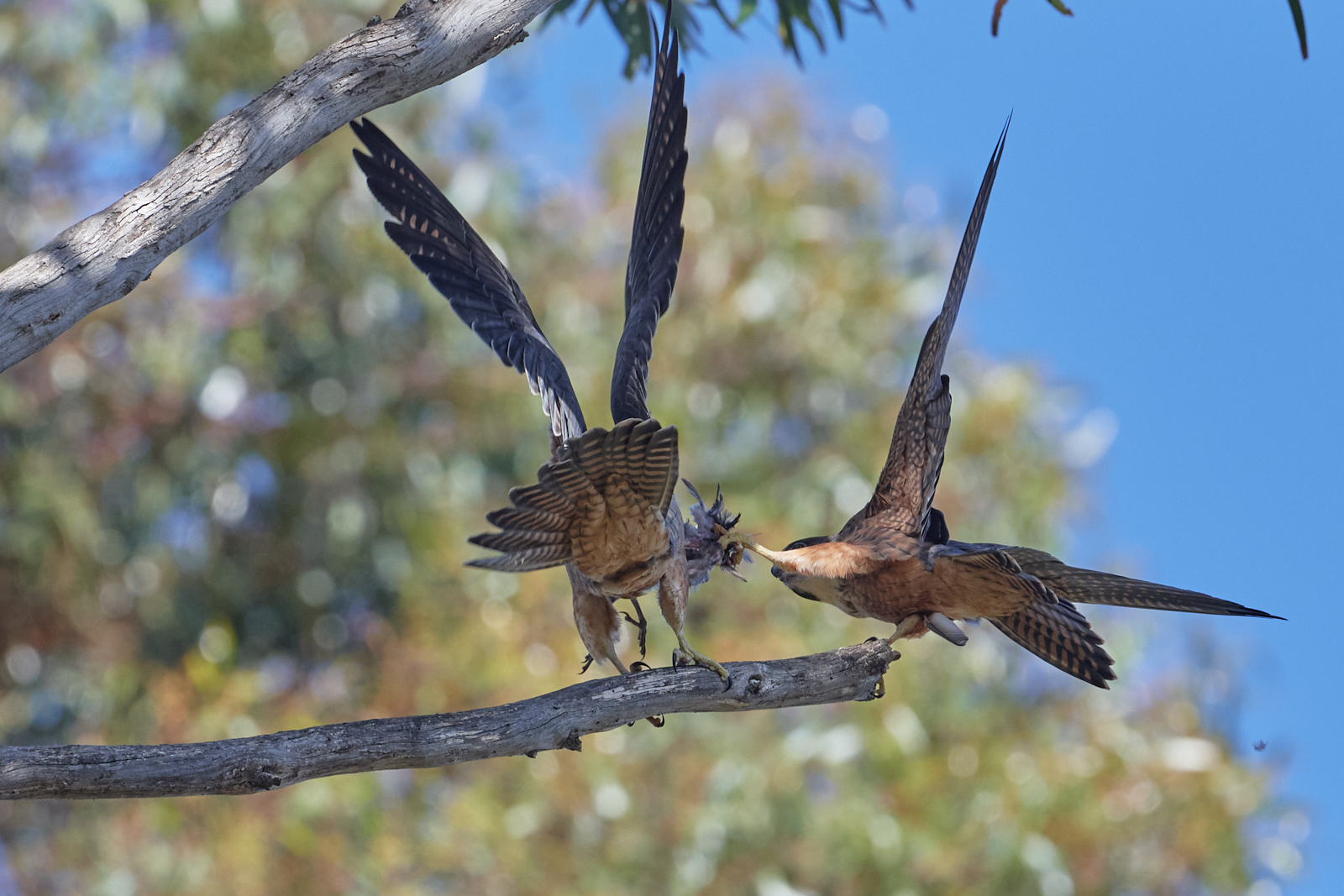
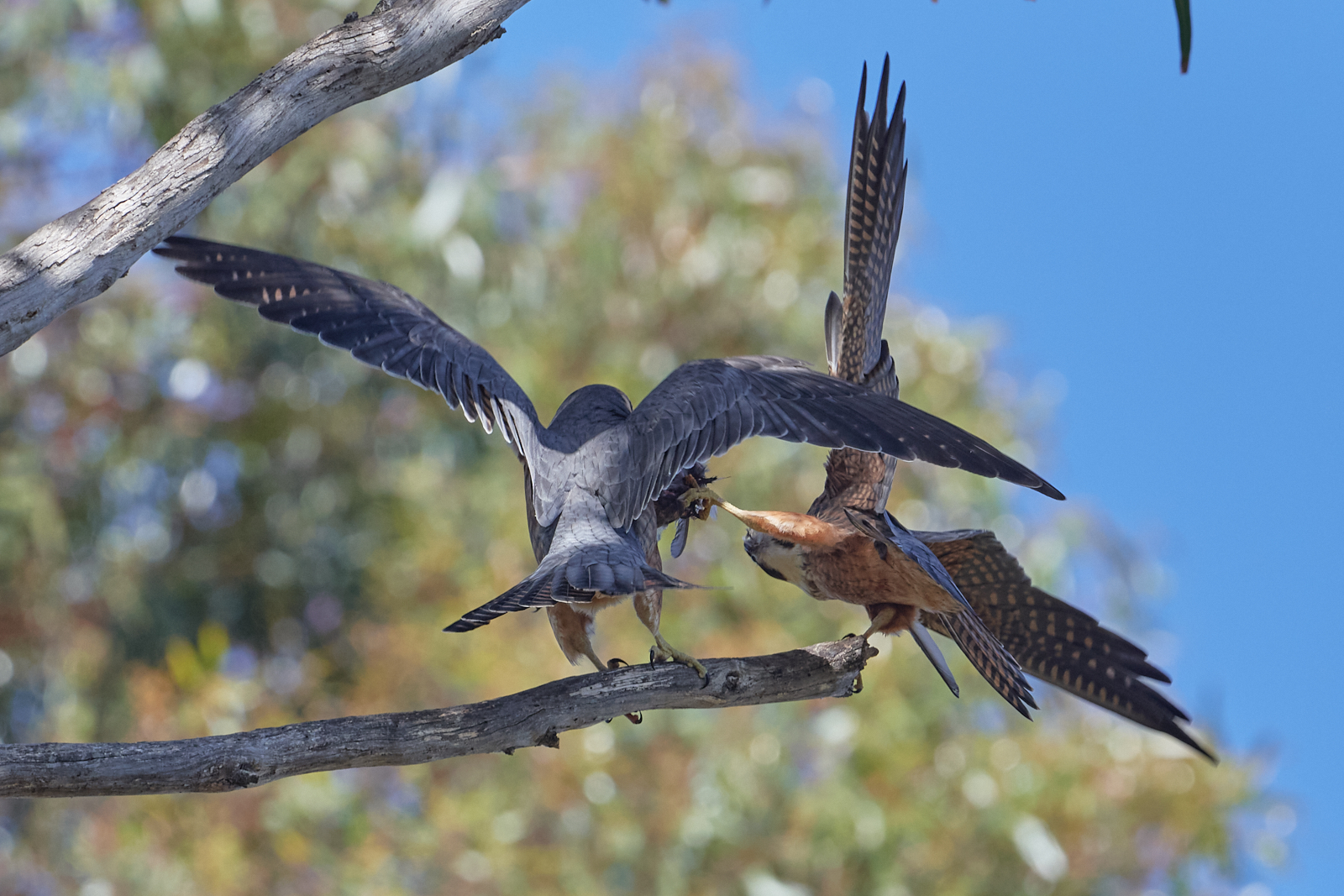
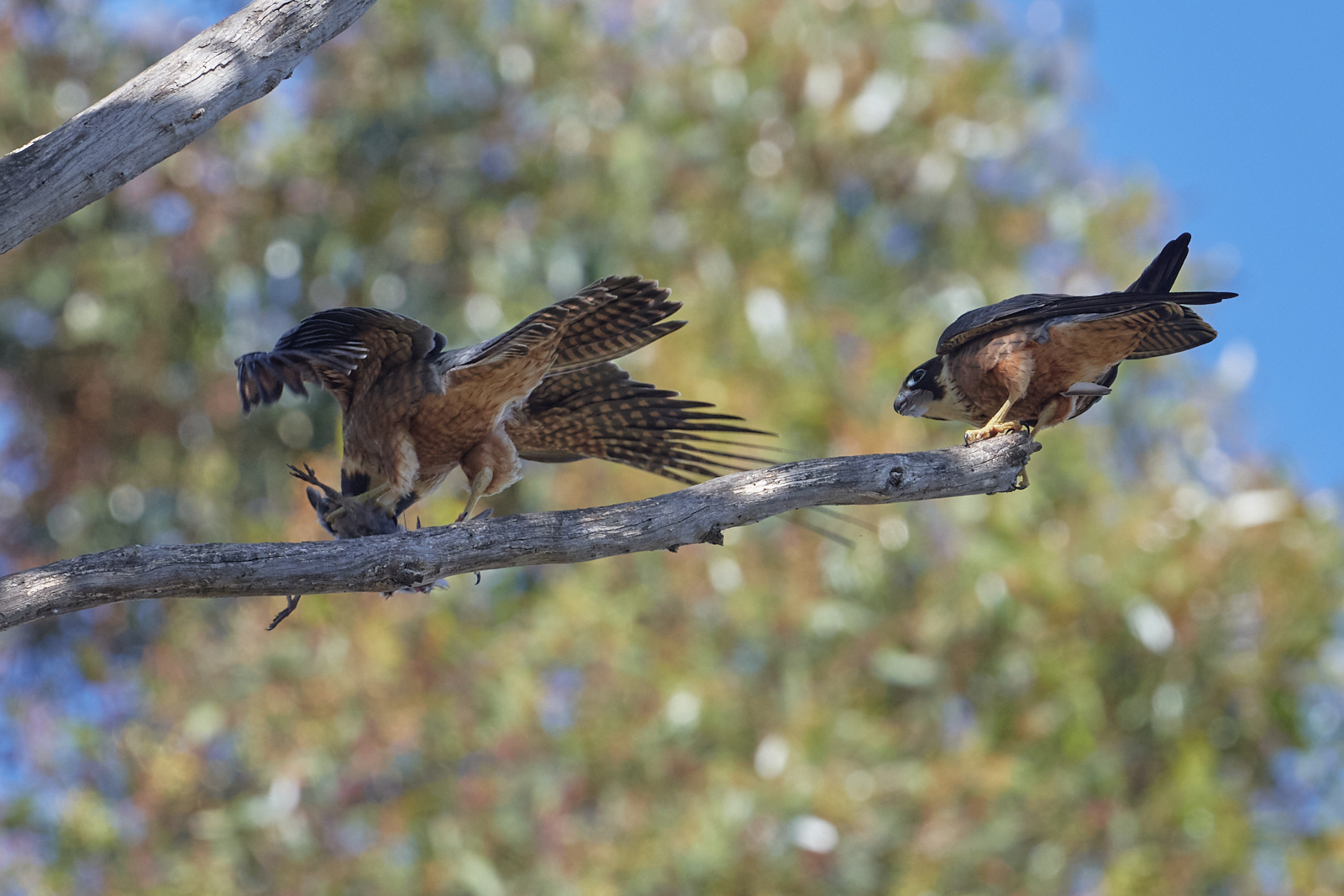
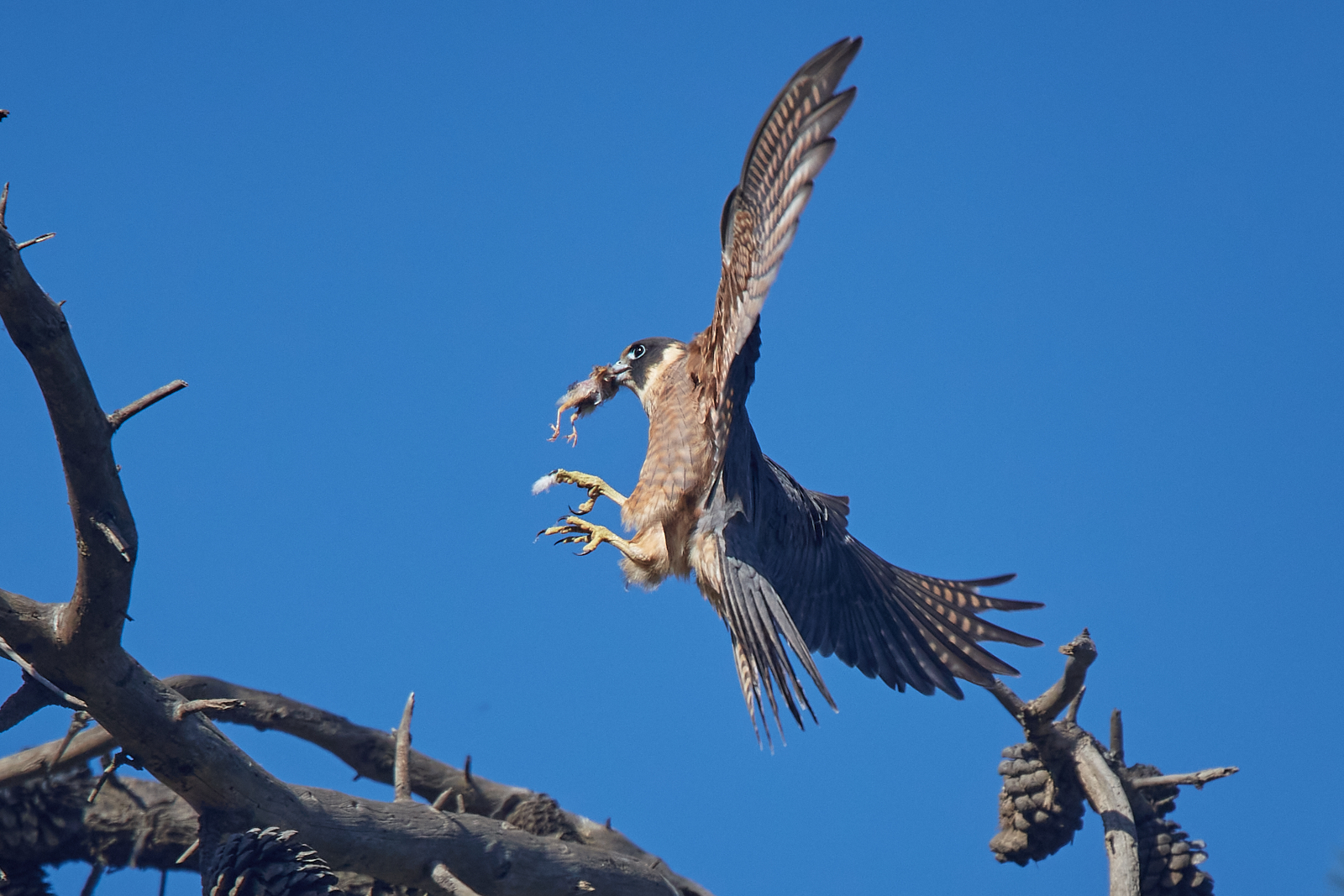
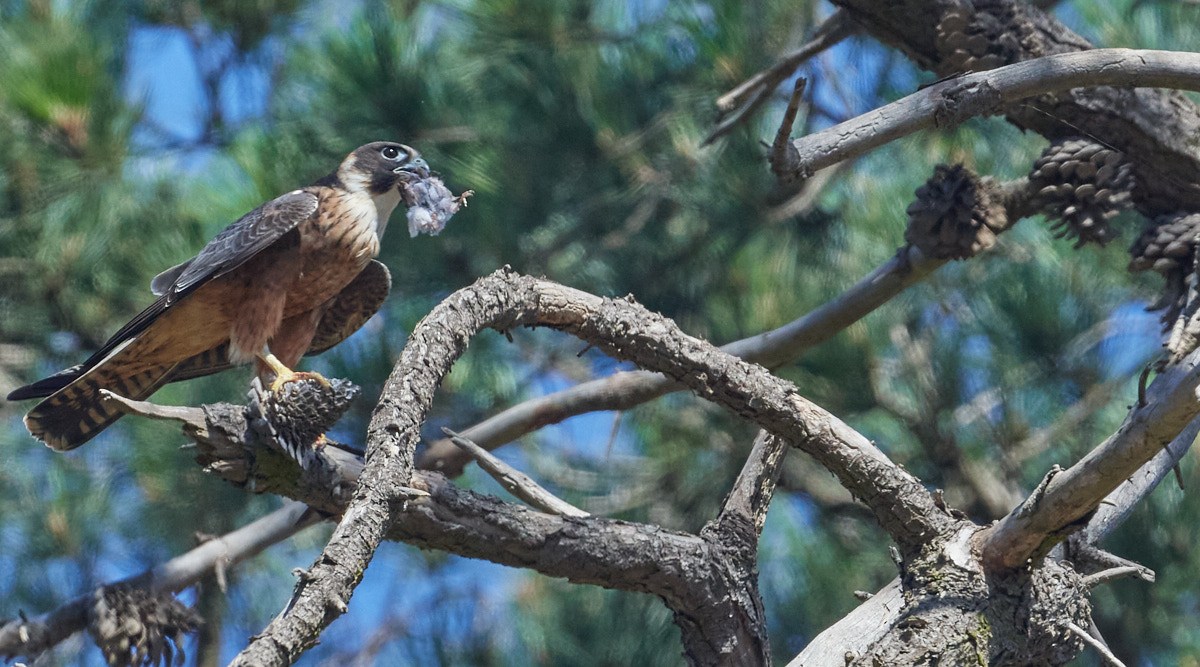
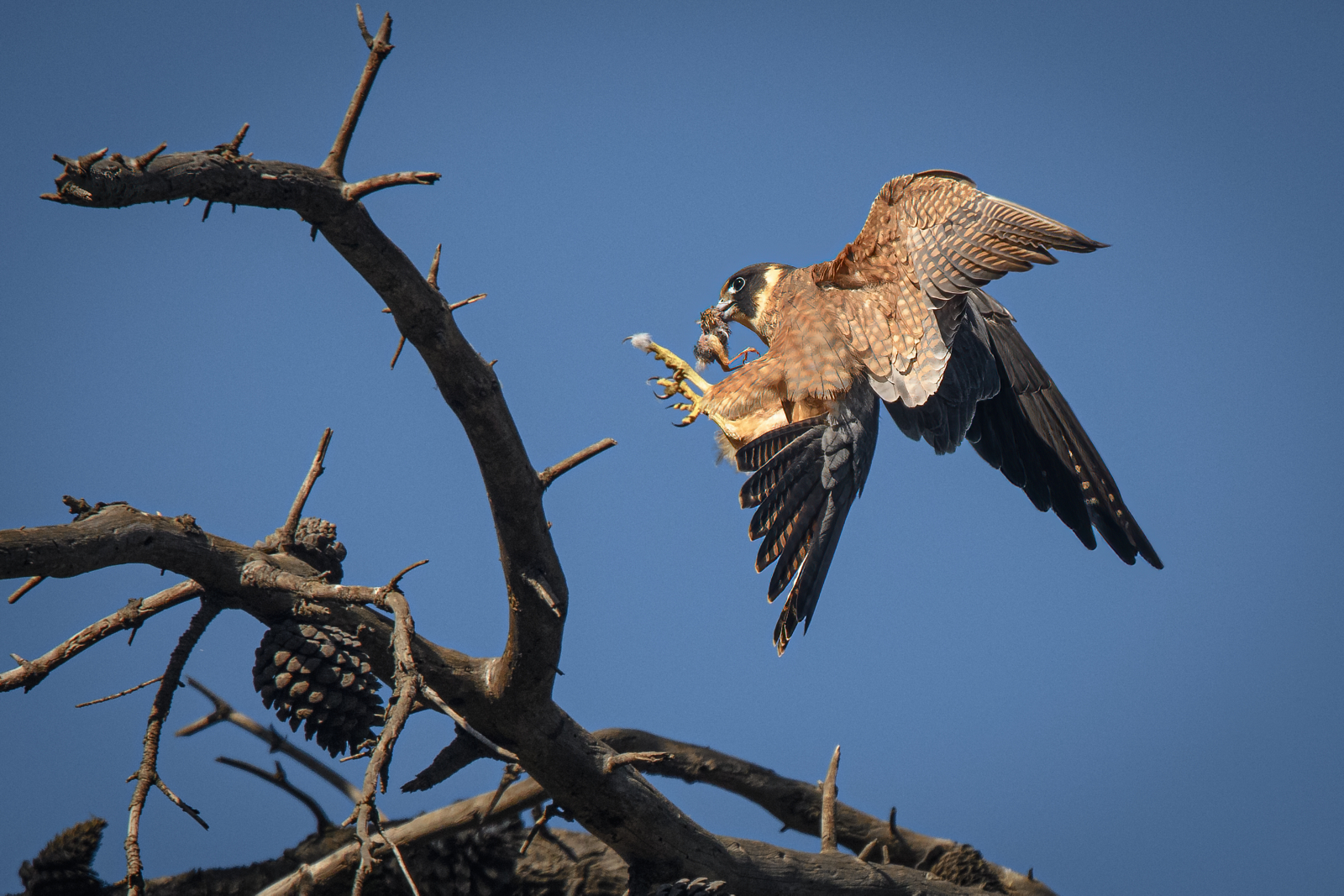
The Australian Hobby here is the female of a nesting pair.  She has just been delivered a meal for her young. Time to prepare it and feed her growing brood.

The eternal struggle to maintain the species goes on. Ohh ending on a preposition.(Be grateful I ended)

Saturday Evening Post #112: Staying Fresh

Been a bit of a review time this past week.

Among other things I came across a few blog posts that resonated with me at different levels.

One is from a local blogger. George Handel,  No not THAT one. 🙂 George and his family have been recording their walks, bike rides and explorations of places in our local area. (mostly).
I think one of the things the Corona lockdown did was to give us an opportunity to explore local parks and places that we probably would normally overlook. George takes us on a fine little visual journey through some of their family favourite locations.
The other thing the lockdown has given us is an appreciation for things local, and the chance to explore them.
It often concerns me that as birders, or photographers we travel for many hours to get to a spot, and on the way blindly pass by many other worthwhile locations that would no doubt yield many great sightings and photographs.
And finally George times many of their visits around Pie Shops.  No point in being out and about if you can’t find a decent pie, I always think.

Another came to me via a newsletter.  William Beem, talked about the sequels, using many movies as examples.
Star Wars, Lethal Weapon, Pirates of the Caribbean and Terminator, just to mention a few.
His point being if you strike an emotion with an audience visually, they want to you to keep doing it over and over again.

Which leads to the point, that sooner or later, there is no growth, and each shot is made to achieve the same emotional appeal, and your vision becomes stale and stunted.  Writers I think, call it “Writer’s Block”.

Does it happen to bird photographers. Absolutely, your current scribe stand as evidence for the prosecution.

But, we also have the seasons on our side as birds, and their behaviour changes across the seasons. Which I think makes it exciting to be out and about at any time. Hopefully that keeps us fresh.

Another interesting analogy came from Ken Rockwell,(Yep, the blog everyone loves to hate), where he was talking of complaints on the internet about camera colour rendition, and of colour perception.
He likened it to everyone’s ability to talk forever about how pianos are made, but for ordinary players the subtle variations of a concert piano are eclipsed by their own limitations of playing. To a Master the subtle variations are everything.

Reminded me of a scene from the movie “The Blues Brothers”. The band goes to Ray’s Music Store to pick up some instruments.
The keyboard player complains about the feel of a keyboard, trying to beat the price down.
Ray, the owner, steps out from behind the counter and proceeds to the keyboard, (Ray, is in fact Ray Charles, for those who haven’t watched the movie 99 times))

Ray sits down and belts out one of his famous numbers. Concluding that there is nothing wrong with the keyboard, and it might well be the lack of talent of the keyboarder.

As Ken finishes off, “Art its not the duplication of reality: art is the expression of imagination.”

Photographic Essay: I Thought Everyone Loved Me!

This is a story from earlier in the year.

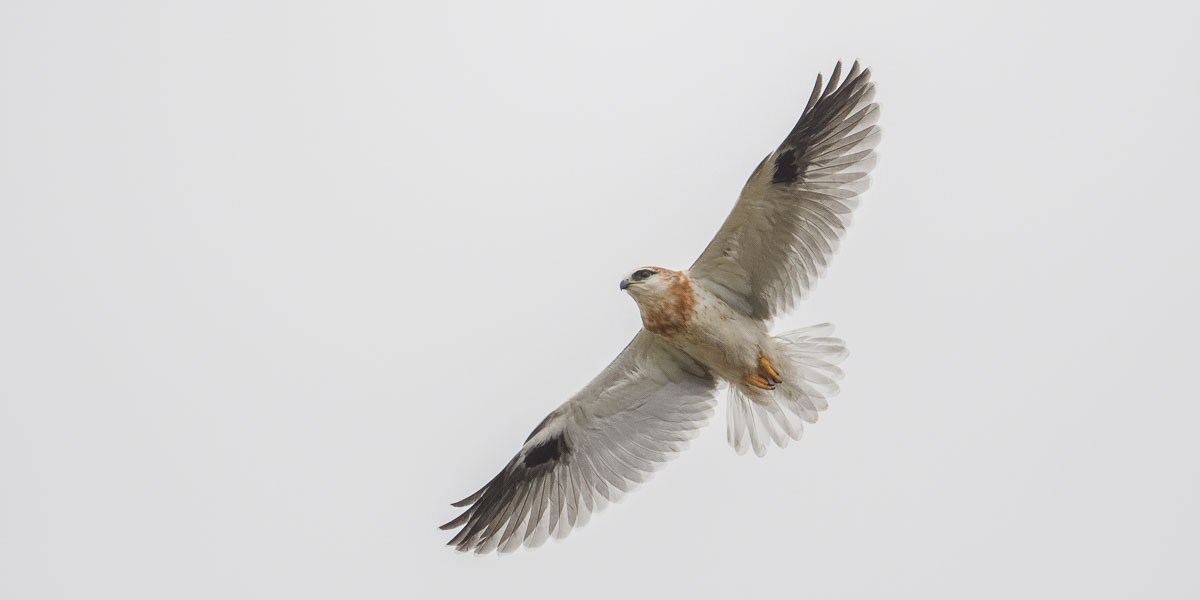
The young Black-shouldered Kites had only recently fledged and were still in the process of learning how to use the muscle control of the wings, how the wind varies. and that it might be possible eventually to fly in something more than a straight line, and land by simply crashing into things.

As it turned out this youngster got to the air, but with a strong wind blowing it managed to drift away from the shelter of the nesting area and about 200metres out eventually land in the leaves of a tall gum tree.

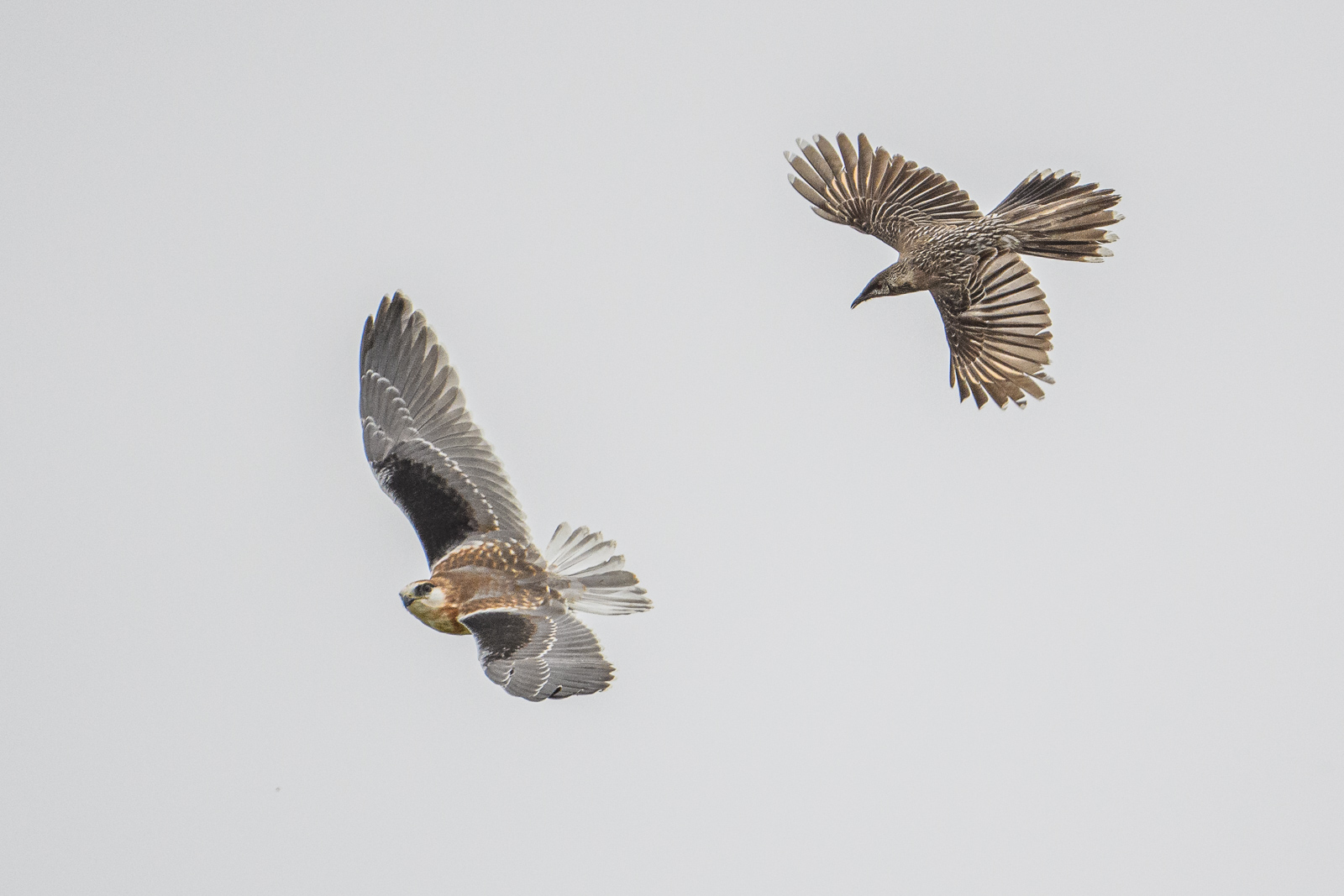
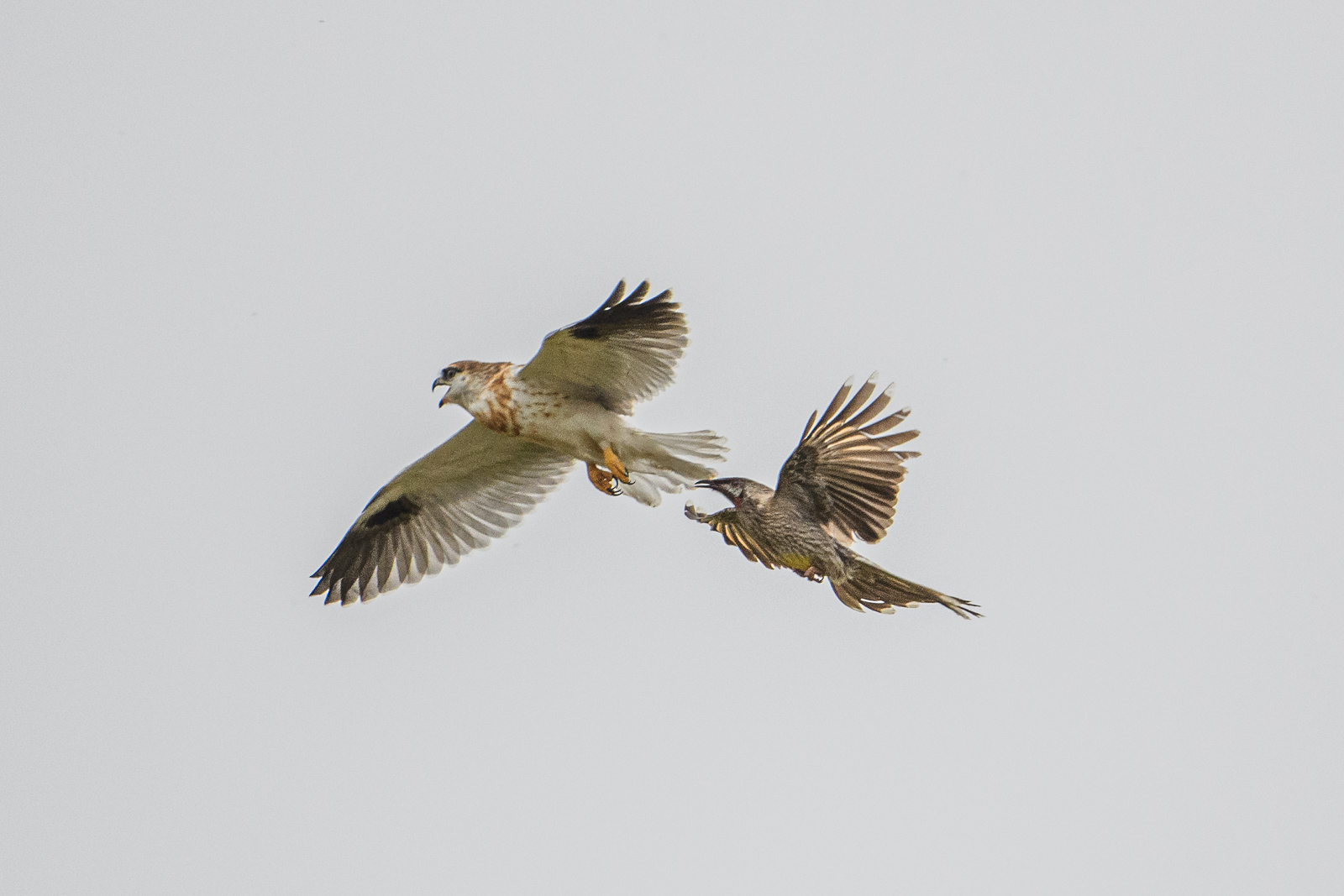
What it didn’t know, and was soon to find out, was that a pair of Red Wattlebirds also had a nest in the tree and some fine youngsters coming on. And at that stage they had a zero tolerance policy for any bird, stray or otherwise from resting near their young.

After several swoops the little Kite realised an important lesson in life. Not everybody loves a cute little ginger and white Kite.

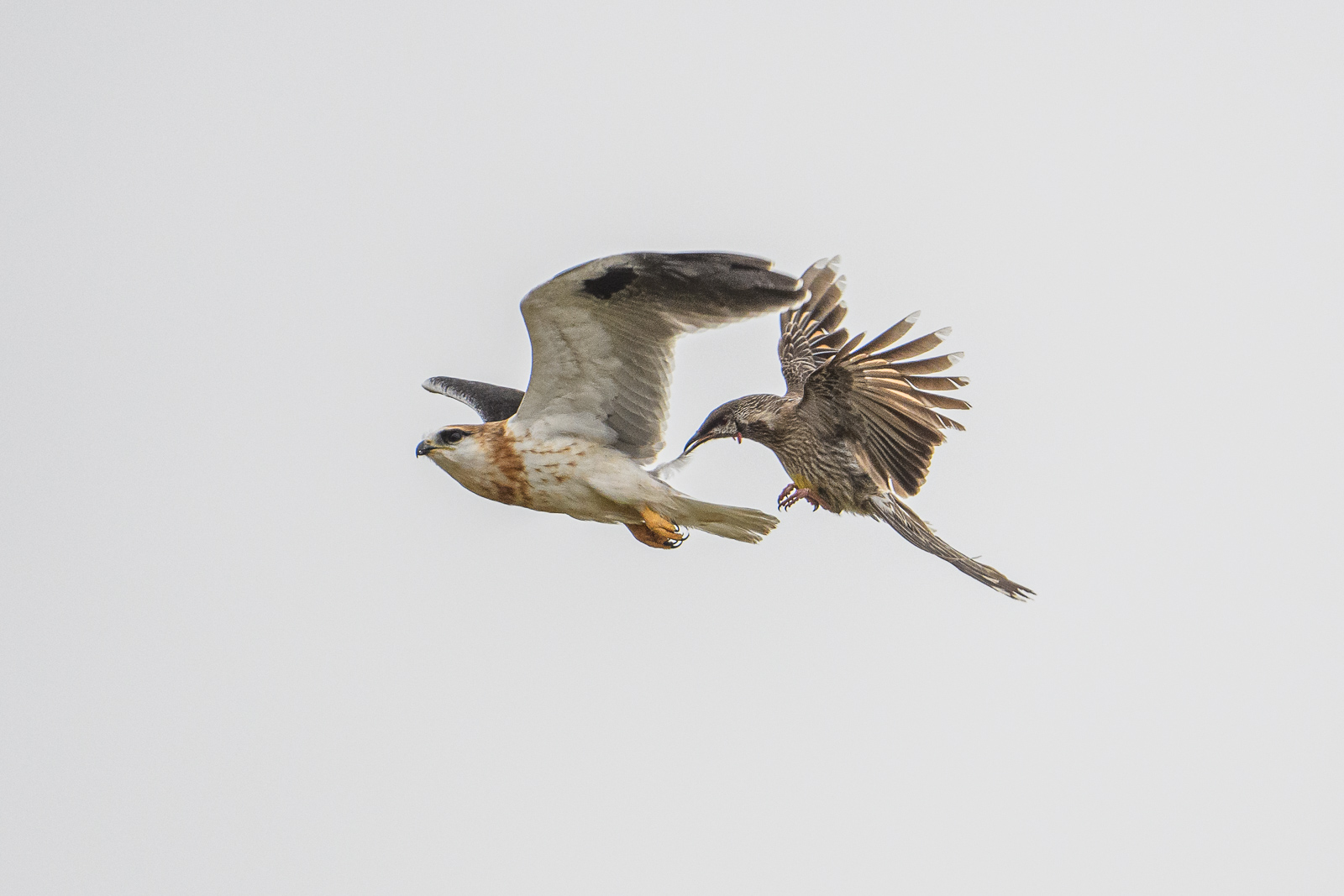
Under attack it took to the air, but it didn’t have the aerial skills of the Honeyeaters that mercilessly chased it from the area.  Taking out a beakful or two of back feathers in the process.

A week later it would have been a different encounter, but the Honeyeaters pressed their attack with avengeance.

Here tis.

Saturday Evening Post #111: The Almost Portfolio-Revisted

Or perhaps the subtitle, “The Ones that Never Quite Made It”.

Was revisiting a blog by Spencer Cox who wrote earlier in the year about the photos that didn’t quite make it into the portfolio.
The ones taken at the same time, same location, same subject. The one you share and are happy to show around.

And

The ones that never have a life beyond the hard-drive.

Now Spencer, to be told, shoots mainly landscape, architectural and portraits.  So on location, he is likely to make a few variations of the same subject.

For those of us who are working mostly with wildlife, and here on the blog with birds in particular, it’s not very often that we get out-takes that are so similar that we mull for hours over the choice of which one to use.
We either have it, or it’s a missed opportunity.

Sure, I can shoot a ‘bird on a stick’, and blast off 20 frames. But really, there will be so little variation that any one of the 20 will be fine. Or, we meet a moment, the action happens, and 20 more frames won’t hold that magic. It’s gone.

I’ve never been much for multi-burst. (old fashioned I guess), I never worry about the camera spec that tells how many frames I can get in the buffer before the camera stops taking shots.
Except: I do use it for some inflight shots. Mainly because I’ve got the bird in the viewfinder. If I try for single shots, I wander off the bird action very quickly.

It might be interesting to think of some of the great photographs that have been made over the years, and ponder what the ‘out-takes’ might have been like.
Steve McCurry’s Afghan Girl, Henri Cartier-Bresson’s Behind the Gare Saint-Lazare, Paris–of the man jumping a puddle,  Galen Rowel’s Rainbow over the Potala Palace, Winter Home of His Holiness the Dalai Lama, Lhasa, 1981.

No doubt there were several frames one side or the other that were nearly as good.

Sometimes there was only one frame. Think Frank Hurley and The Endurance trapped in the ice

or Ansel Adams, Moonrise, Hernandez, New Mexico

Because of the time, the place, the equipment and the moment, there are no ‘out-takes’.

I once knew a photographer, who travelled the world making shots for magazine and books to demonstrate various photographic techniques.  He also shot using a specially built camera panoramic shots on huge pieces of film.
On one occasion he was visiting Australia and a trip along the obligatory Great Ocean Road was in order. Unfortunately the day he went, the weather was atrocious overcast, rain and hail.
He did setup and use the pano camera to make a shot near Loch Ard Gorge and captured all the power of the surf whipped up by the strong winds. It was really a misty interpretation.
It did however get made into a large wall-mounted print that graced the hallway of a certain multi-national company. From memory the width of the print was close to 3 metres.
Interestingly he also shot quite a large number of 35mm transparencies. And after they were returned from processing, he set up a small light box and proceeded to edit them.  Out of 36 shots to the roll, he probably kept 2 or 3. Now the cardboard rubbish box he had contained some images that I would have loved to have made.
But out they went.

Spencer talks about why one of his images made the folio, and the other(s) didn’t. It can be a matter of lighting, placement, point of view, camera settings, changes in lens or simply movement of people.  In the end. One picture has to carry the story.

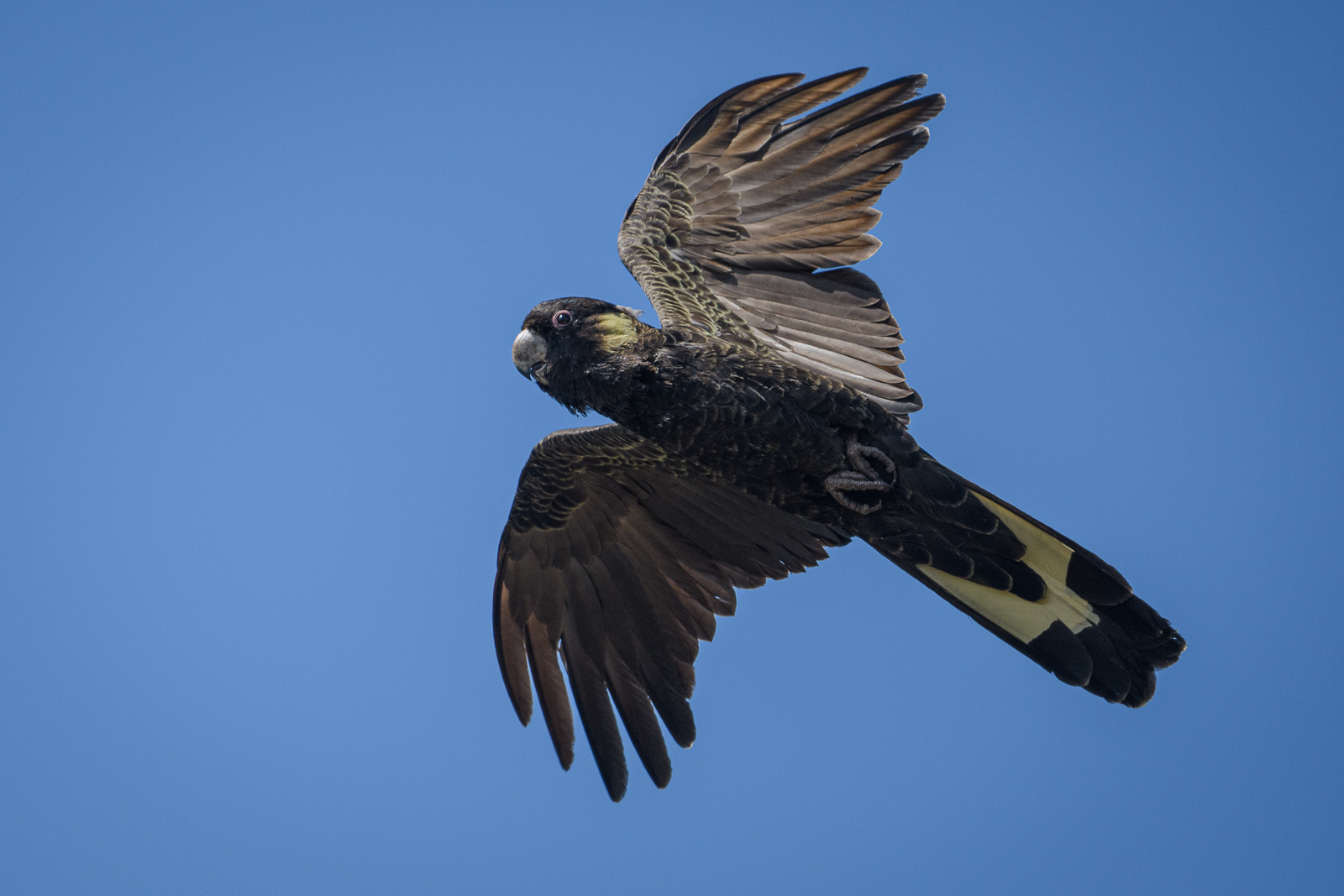
There are a lot of ‘almost portfolio’ shots from our morning with the Yellow-tailed Black Cockatoos.
But in the end, I chose this one.
Why?
Because of the angle. Because of the wing action and because the light was over the face.  The few shots either side miss out on one or more of those elements.

And above all, for me, it is a little quirky, like the bird.

Photographic Essay: Mother Duck Said…

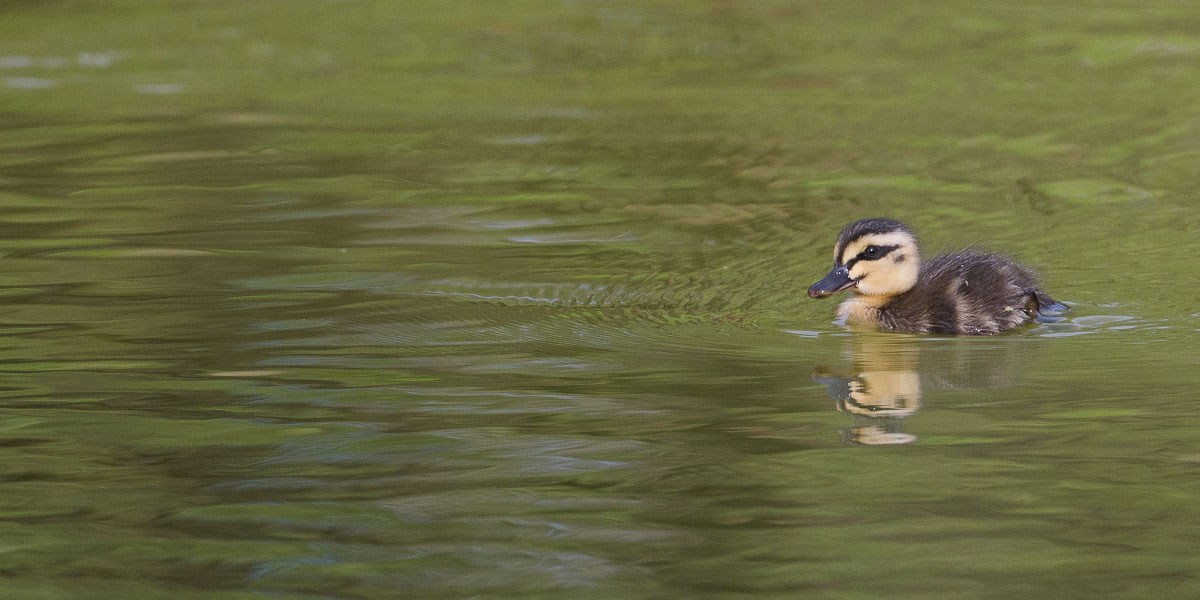
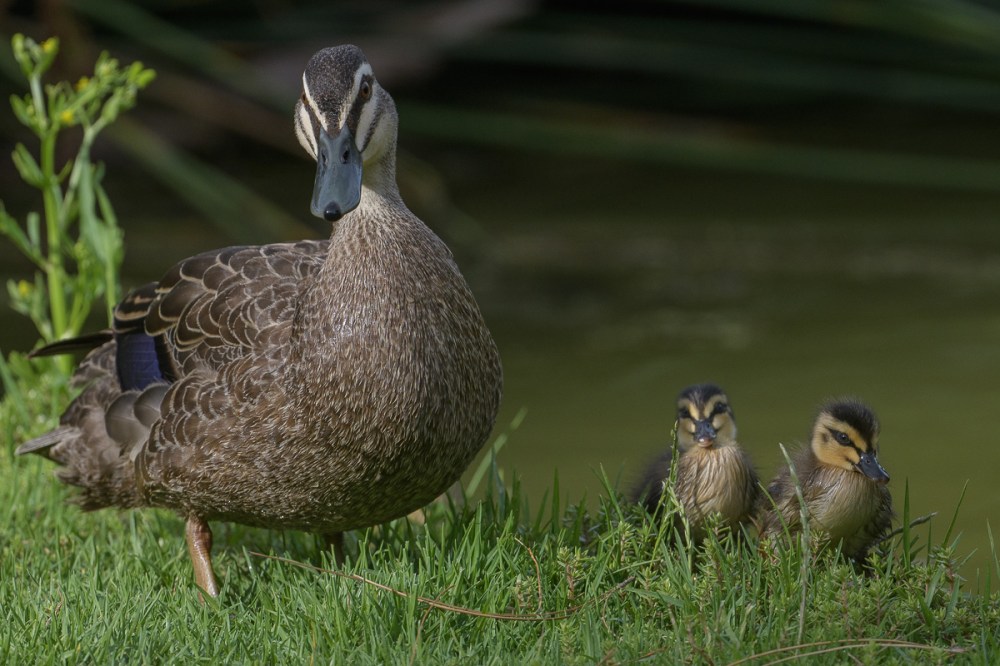
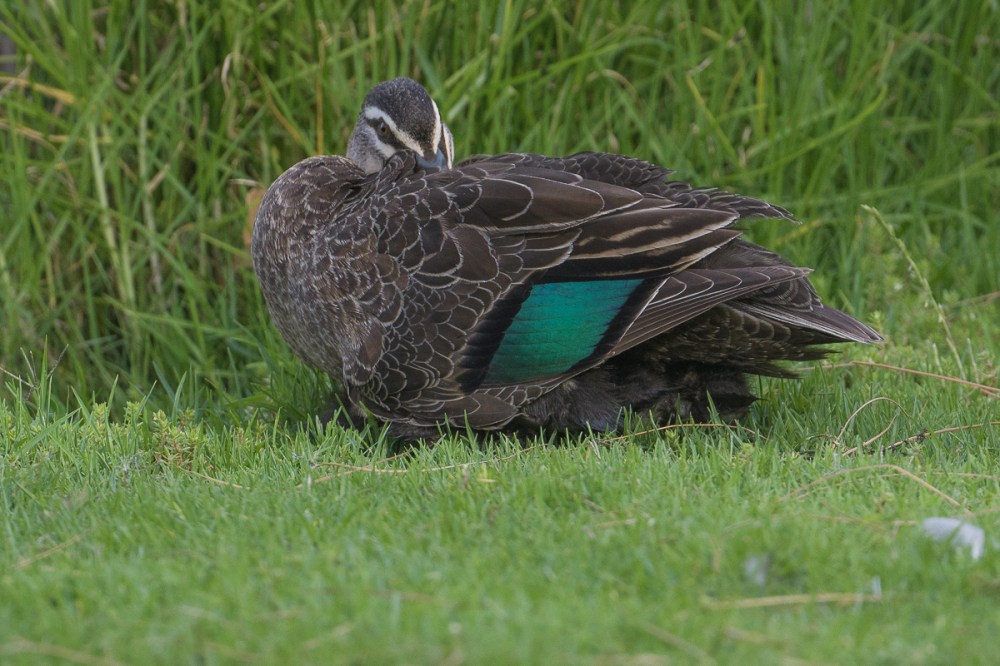
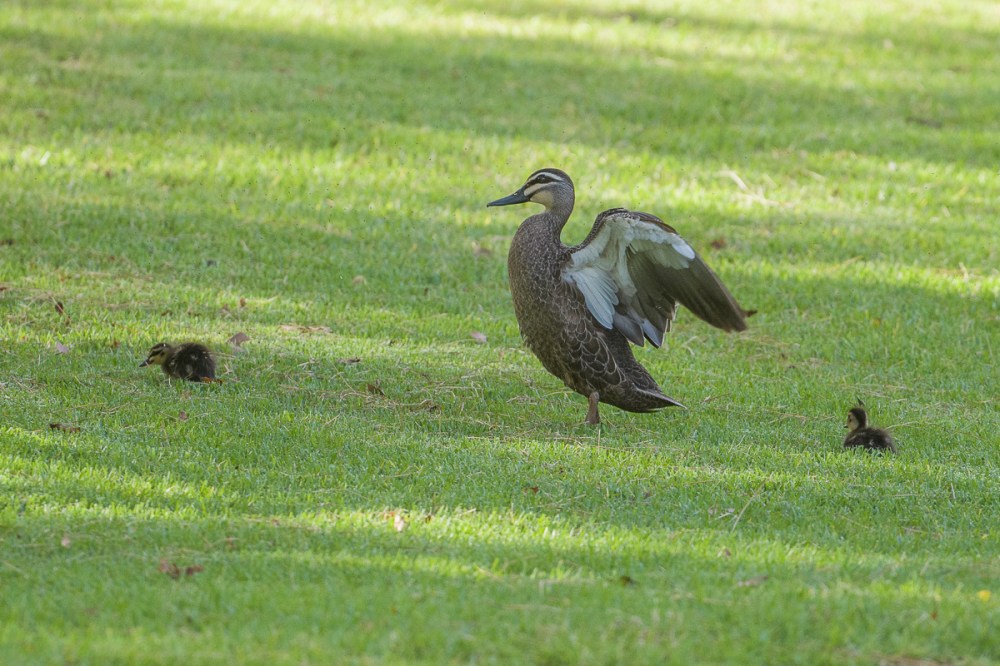
There is cute and then there is really cute, and then.  There is Pacific Black Ducklings.

EE and I had spent an evening in the formal gardens at Werribee Mansion in the warm afternoon sunshine.

The gardens support an ornamental lake, that on occasions has quite an eclectic mix of waterbirds.  But not so much at the moment.  I think the water is a little too ‘fresh’ because of all the rain run off, and the high water level doesn’t have much opportunity for wading birds.

Not so of course for your enterprising Pacific Black Duck.  These birds are quite the masters of adaption to the around.  While everyone else has been in lockdown or away from the area, we found a mother duck and her precious little bundles enjoying the lake practically to themselves.

At first we watched three or four scoot around on top of the water. Then another one among the reeds, then another further down the pool, and then another…

Mum decided all this water activity was good, but it was time for a sit in the dry on the grassy side of the pond.
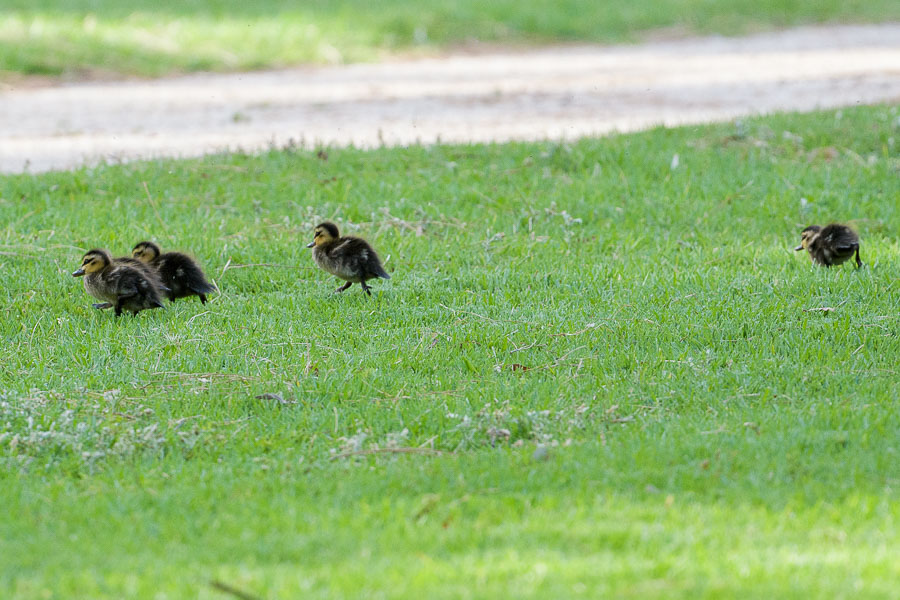
So out she jumped and the little yellow bundles all followed behind. 1, 2, skip a few—10.

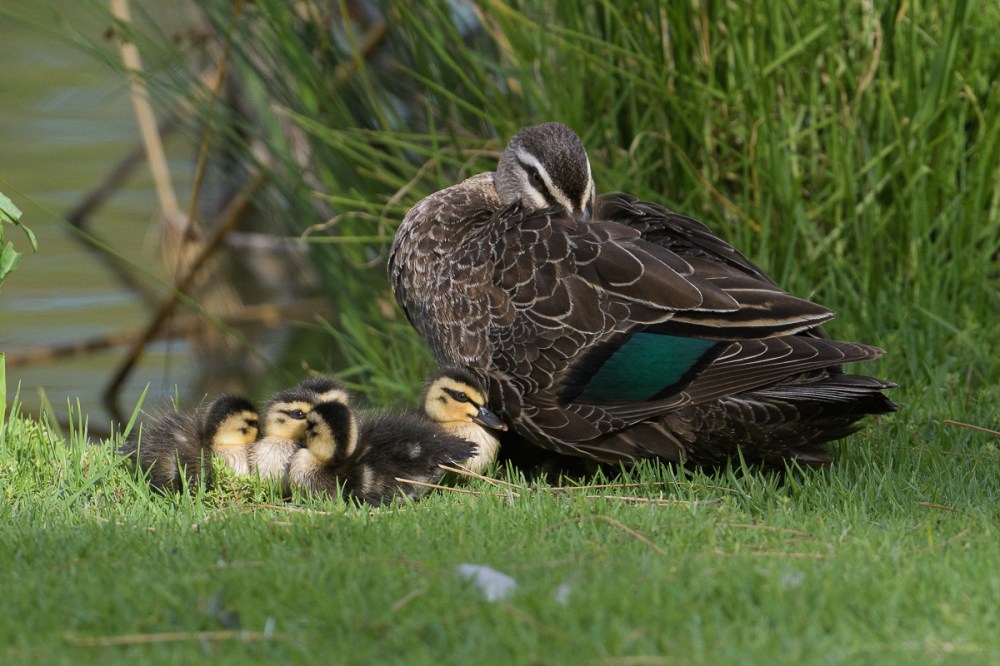
A little bit of preening, mini wing stretches and Mum decided a nap was on the list.  So she settled down, and they began to position themselves under her bulging wings.

We moved to the other side of the lake, and about 20 minutes later on the way out, found that it was time for the fluff balls to take a walk over the freshly mown lawns.  Funny to see them tumble about across the grass.


Click on a galllery pic for a larger view

Saturday Evening Post #110: Living the Dream

Often in response to ‘How’s things?” my coffee dude friend Steve replies, “Oh, I’m livin’ the dream!” Steve is Irish and it takes a bit to unravel his meaning as it depends on who has asked the question.

Sometime the emphasis is on, “Oh”, other times “livin'” and more often than not, “dream”.  Makes a huge difference in the message the enquirer takes away.

Sometimes, when we are out and about, waving long lenses and tripods and things, a passerby will ask, usually innocently, “Ah, are you out to take photographs,” to which my good natured response will be something along the lines of, “Yes, its such a lovely day to be out.”
Other times, as the question really is loaded, in that it infers, “What are you doing here taking photographs?” my response can be a little more obtuse.
Usually, “No, I’m actually cleaning out the guttering!, or, I’m really here cleaning the windows so you’ll be able to see out that little bit better!”

When the enquiry turns to a demand about, “Why are you taking photographs here?”, in a more aggressive manner, I have a legally prepared statement that I will respond with. It always ends with an abrupt, “I’m minding my own business.”

Just occasionally when we are out and about and a birdo or bird photographer drops by for the usual chat, which almost always begins with “Have you seen much, or what are you photographing”, I have a pretty standard reply,
“Oh, I’m photographing Striated Fieldwrens.”  It they are interested in fieldwrens the conversation goes further, but usually it swings to, “Have you seen my …. (target bird)”. and that sort of ends the encounter.

To those that ask, “Oh, how many fieldwrens have you seen”, I usually can answer truthfully, “None, it’s been very quiet today.”

However just occasionally, the Striated Fieldwrens are on the move, vocal and out and about.  Sometimes it’s just a matter of luck, because these little dude spend a lot of time in the bushes and grasses and with their superb markings disappear from view.

This one was out and about early in March this year, the last day we had an adventure at the Western Treatment Plant.
At least I could answer unequivocally about the fieldwrens, “Living the Dream!”

Little Journeys: Strollin’

One thing our lockdown for the CovidCrisis has highlighted for us, is the chance to enjoy a walk around some of our local areas. Normally we’d be out and about in regular birding locations.

And of course, being local, there is not likely to be much in the way of highly sought out birds in the area.

Or
So we thought.

Not much more than a stroll from home is a new housing estate. It has been built on what, of course, was old farming land. And in our area, that would have been vegetable farming. A small, seasonal creek runs through the area, and because it is of environmental significance because of among other things, the habitat of  Growling Grass Frogs (Litoria raniformis) a fairly wide verge has been created, and partly sculptured with a well formed footpath and open grass.

The rest of the creek proper, thanks to the developers, the local council and Melbourne Water, has been turned into runoff water retarding basins. As the creek was originally a set of water holes rather than a flowing creek, they have used the natural lay of the land to develop the area.

The past few days we’ve had a good amount of rain. In our gauge alone  showed over an inch and a half  (about 39mm).   The new development with its sealed roads, footpaths, lawns and of course house roofs has indeed provided plenty of run off.  As we walked today there was plenty of evidence of at least a metre or more water having recently been through the reed beds. But thanks to clever Melb Water development, the water level has subsided quite quickly.

About half an hour walk from home is an aptly named coffee shop, The Little Growling, and it makes a good spot to turn around and return.  With a freshly brewed coffee to go, thanks very much.

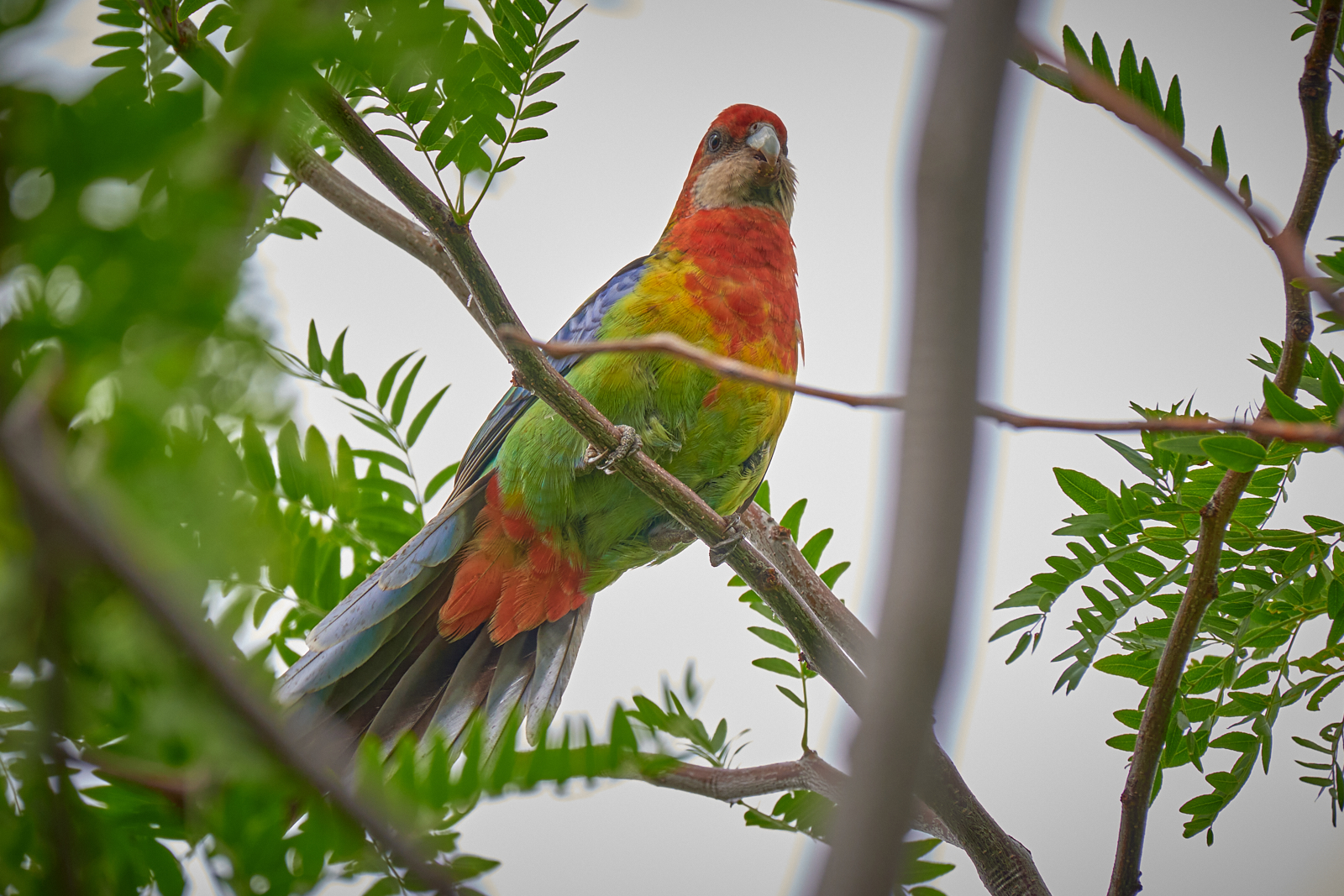
As we walked out of our village at the start of our stroll, I heard the call of a Rosella, I’ve been hearing it occasionally over the past few weeks, and had even spotted it on a fence-line a couple of times. This time it was in one of the street trees, and to my surprise, a Crimson juvenile was with it, so there was much calling.  (Whether they nested locally or not is still open to supposition). I am beginning to have my doubts about the Eastern id, perhaps it is a hybrid?

Not a bird we’d normally see locally, so it was not only a pleasant surprise, but quite enchanting.

Enjoy.

Eastern Rosella, or a hybrid with buff cheeks.
Juvenile Crimson Rosella.
The last of our local Black Swans. The rest of the family seems to have moved on. Perhaps this one is reluctant to leave a good feeding location
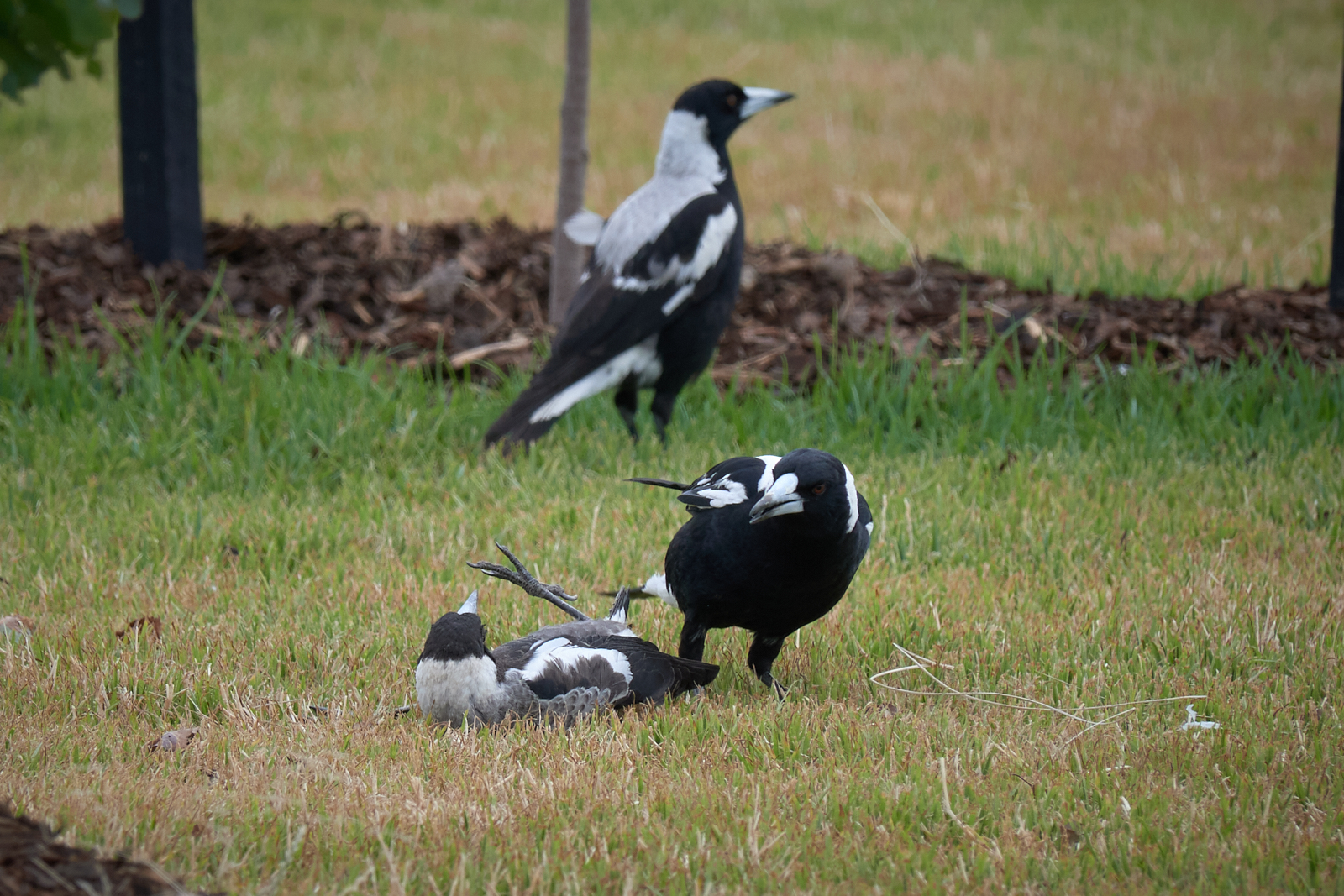
Magpie Drama. For reasons I’ve never been sure of the adults seem to single out one of the young and peck away at it. No one seems to be hurt and the young one will pickup and move on as if nothing happened.
Enjoying breakfast together.
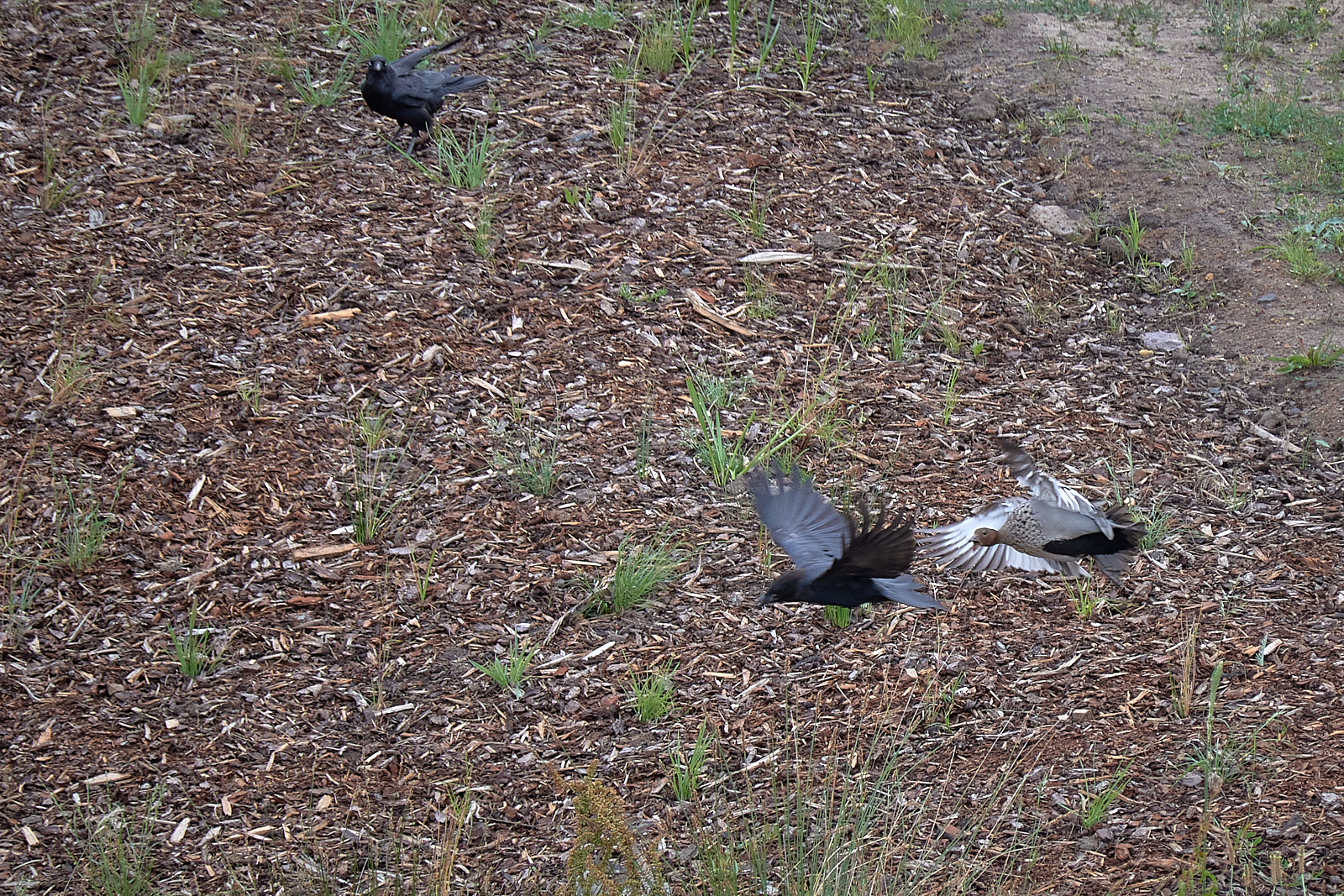
Maned Duck Drama. This male has a family of 5 trying to move across open ground. About 20 ravens thought there might be a quick snack or two for an enterprising attempt.
In the end, EE and I moved down the paddock and put the ravens to wing. Not that it would last for long, but sufficient to get the little ones safely to water.
The little family made it safely to the water, and were able to paddle away.
Australian Reed Warblers are either feeding young or building new nests.
Food delivery
Now that is something you don’t see in the average housing estate. Fortunately it was in no hurry to stop and chat
Like all housing estates, there are plenty of opportunists.
And this is why they call her EE.
“Buff-banded Rail,” she cried. True to form, it was. A most unusual find in a housing estate. We have been known to drive around the Treatment Plant for hours and never see one.

Saturday Evening Post #109: On the Edge

Rim Lighting: The technique gets its name from the fact that lighting a subject in this way produces a thin line or ‘rim’ of light which appears to cling to the subjects outline. Using rim light lifts the subject from the background in images rendered predominantly in shadow.

Another from the old “Lighting” notebook.

Rim lighting at its very simplest, isolates the subject from the background. It has the wonderful ability to bring out and emphasise the shape of the subject.

A light source is always behind the subject, a fine line of light following the subject’s shape.
It can be a mood of drama, mystery, strength and isolation.

An instructor I worked with early in my photo journey used to say of studio work, “First we put in a rim light, then keep adding lights to bring out the quality of the subject.  When that balance is correct, we stop and make the exposure.”

For outdoor portraiture, or product photography, that light is almost always the sun. It’s one of the reasons we work early in the morning with hard raking light to give long shadows, or in the late afternoon as the light dances through the dust and atmospherics at the end of the day.

Then, exposure is always something to contemplate.  Not always easy to add light to a bird in shade, or in deep shadow of full sun. Enter fill-in flash, or even a reflector of some sort, and by the time it’s all setup, the bird has either flown, or died of old age. 🙂

Willie Wagtail was out and about in the early morning sunshine.  To my delight it chose to stop on a nearby limb with the light streaming toward me.  Against the shady darker backdrop, the ideal setup for rim lighting made me stop and take notice.

I love this light enough to share a second image for Saturday Night.

Different lighting indeed.  Early morning, but overcast. My little hero, of the broken nest, was encouraging the girls in their rebuilding of a new nest.

He was under some overhanging branches and the light was pretty close to non-existent. So it meant  slower shutter, larger apertures and greater ISO. But in one of those lovely quirks of nature, as he turned on the old branch,  enough light came from the open areas behind him to trickle just a little light through his translucent fluffed-out feathers. Who said photography is difficult.

Photograpahic Essay: I’ve got a Hobby

Well actually we (EE and I) are monitoring a pair of Hobbys. (Haven’t concluded if it should be Hobbies, or more realistically in this case, Hobbys—but you can see where I’m going with this)

A close cousin to their much more impressive and better documented relative, the Peregrine Falcon, it is easy to spot the similarities once they get into the air.

Speed and manoeuvrability being high on the comparison list.  I’ve had the chance to watch them a couple of days in some high winds, think 70-80kph. They fold back the primaries and run on very closely tucked wings, at speeds that are almost impossible to follow in the viewfinder.  A side-different to working with say, Black-shouldered Kites, that are by comparison, quite sedate.

They have a nest. And it’s high up in one of the tallest gums in the area. Cleverly placed in the multiple “Y” that gums sometimes make with 8-10 thin branches reaching out crownlike, and she has placed her nest securely in the little fortress.

Hard to gather how far advanced they are, but the past couple of days we’ve found her sitting less on the nest, so I’d be guessing her young are beginning to take on their first feathers.

Feeding appears to have its own rules.  He comes in laden with a catch. Sits on a particular branch and calls quietly to her.  After a suitable pause in events he moves to another tree, sits and waits.

Then the express train bursts out of the nest, or from the high-up perch where she has been surveying the scene, snatches the catch and sits on a branch just near him to consume her well earned meal. So far I think the count is mostly Red Wattlebirds, but today it was a Welcome Swallow.

She is head and shoulders bigger than he. Pretty typical among raptors, but really noticeable when they sit close-by.

After helping herself, she then flies directly to the nest and seems to be feeding small pieces from her beak, so another clue the young are not that advanced.

Lastly the thing that has impressed me is the super efficiency of them both. There are no wasted wingflaps, they glide from one tree to another, hardly using any energy.  But, when needed, the wings dig in and they are gone.

Warning: Photos contain some graphic feeding moments.

The female approaching the waiting male
She has several perches that she uses while she waits. Here the flying gear is getting a work out
Arriving for her meal

The food transfer is super efficient and fast
Even though he is sitting a bit forward the size comparison is obvious.
Off to the nest to feed the young
Softly calling with the latest kill
This looks like Welcome Swallow on the menu. She is taking it straight to the nest.
The Werribee River runs behind the nest area and he explodes of the tree, disappears over the edge of the cliff and with about 3 more wing flaps is back on the tree.

Saturday Evening Post# 108: In the Glow

Translucence  noun
The quality of being translucent.-permitting light to pass through, but diffusing it so that persons or objects on the other opposite side are not clearly visible.  The latin roots of translucence are trans- through and lucere-to shine.

One more from the old “Lighting” notebook 

The wonderful thing about translucent light is the way it makes colours glow as the light passes through the material

Some examples include, flowers, feathers, water, steam, fog, even flags and fabric.

The results can begin to create an almost surreal quality to the material. 

When only using backlighting, the subject itself will be in shadow and careful careful with the exposure is the first step to ensure the right mood is created.

I once, as a junior member of photographic studio, was involved in setting up a shoot for an advertising brochure for a new winery.  New winery had commenced operations in what I believe was an old dried fruit packing storehouse.  A huge barn-like building covered in corrugated iron. (Very typical of a country store house)  Inside it was pristine in the wine-making areas with all the stainless steel vats, pipes and tubs.
However the foyer area and office was still in pretty much the old walk-in style, and a magic dust hung in the air to catch any rays of sunlight.

One shot, in particular, was going to be the  obligatory shot of the good drop in a glass.
Once we (think me) had carried in all the tripods, lighting and camera gear, the photographer scouted around for the best location

Now the old shed and more importantly the galvanised corrugated iron sheets had been repurposed from another location and small nail holes were scattered through the sheets.
The late afternoon sunlight was streaming in like tiny pencil points through the holes and illuminating the dust in the air.

“Bring me a glass of your finest red,” said the photographer.  Fine time for a drink I thought, we have work to do. 

He placed the glass, with the corporate logo, on a barrel in the foyer and moved it about until the sunlight through one of the nail holes stuck the contents of the glass.
”Here is where we want the camera,” he pointed. And I moved the tripod, camera set up to that spot.  He took a few seconds to get focus, work out exposure, you know all the boring photo stuff no one does these days, and then had me move the wineglass back and forward until…
The light struck the centre of the red wine and like some magic laser-beam, the glass glowed red and the colours swirled across the top of the barrel. 

“Click”. 

If you’ve ever seen buildings bathed in colours and changing patterns at night, you’ll be able to visualise the result.

Late one sunny afternoon this week we were coming back from  looking for a Brown Falcon at nest.

As I was unpacking IamGrey, I noted the evening light running through the roses in my next-door neighbours garden.
Magic.
The beauty of the petal colours and the amazing form and shape of the petals glowed in the light and
“Click”.

And although I have a one image per Saturday Evening Post policy,  here is the falcon as she turned toward the sunlight and the colours cascaded from the feathers.

Little Journeys: On the Road Again

Life I love is taking pictures with my friend.

Here we are a week or so out of a nearly 4 month lockdown. Depends of course where you start counting, but we were in one of the ‘naughty’ suburbs, so our privileges were removed a bit earlier than the rest of the city.

For EE and I, a run down to “The Office” was always going to be high on the must do first list.

So given a halfway decent burst of sunshine and we were off.

The one thing that we noted first was the amount of grass that covered normally bare areas.  A distinct lack of large kites, Black and Whistling, and how well some of the smaller scrub birds had done getting an early nesting in.

So in no particular order.

Purple-crowned Lorikeet
Purple-crowned Lorikeet pair.
Sad to report that the old branch has since parted from the tree trunk, exposing the nest, and they have moved on somewhere else. They have been loyal to this spot for at least the past four seasons.
Purple-crowned Lorikeet. Protecting its nest from marauders
Little Lorikeet. This one led me a merry chase through the leaves. I could hear it, but it just wasn’t easy to see.
Happiness is… A White-browed Scrubwren with tucker for its young.
Looks like the Dusky Woodswallows has swept in while we were in lockdown and already had a clutch of young on the wing
Most interesting find of the day. Juvenile Fantail Cuckoo waiting to be fed.
Fantail; Cuckoo and its hosts, White-browed Scrubwrens.
The adult Cuckoo must have been very clever as I always find these little birds among the most wary.
Higher up the track on the cliff line, a pair of Australian Hobby are re-nesting in a familiar spot. More to come on their progress I think.
The age old battle of David and Goliath. The immovable object v the irresistible force.
Both have much at stake with young to be fed.


Saturday Evening Post #107: Matching the Mood

Hotdiggity.  We’re gunna commit photography.

After last week’s Saturday Evening Post #106, I felt like continuing with the voice behind the light photo skills exploration.

There are many studio lighting ‘sets’. One of the more challenging is sometimes referred to as the light of “Comic Book Villains”.

Split Lighting.

A variation of side lighting. A main light source is used at 90 degrees to the subject-camera plane. It provides light to one side of the subject, and shadow to the other side.

It is not the most flattering light for portraits.
But.
It does add its own feel of dark mood to the subject—hence the ‘villain’ nickname.

Split lighting has quite a number of moods to offer.  One of the most useful is a feeling of conviction-assurance-confindence and sureness. It was used to great effect during the 1930s and 40s for movie starlets. A hint of mystery and  intrigue.

More recently I’ve noticed its been used in movie posters for ‘action’ style stories.
Lord of the Rings, Casino Royale, Lethal Weapon 4, Parker just to mention a few.  No, don’t watch them, I’m not doing movie reviews, just poster examples.
I once worked with a company that licensed the use of the Lethal Weapon 4 poster as an overlay for an entertainment centre experience. But. That is definitely another story.

It is also a very useful product in studio light, and has worked a treat for quite a number of car brochures.  Both Apple and Samsung have used a variation recently for their offerings.

The one thing about it is that the subject is always facing square on to the camera. The other day we were out with some Black-shouldered Kites.  The lighting was, well, overcast.
Porridge.

The grey sky was typical Rochester New York, 18% Grey. Now for those who don’t recall.  Rochester NY was (is) the home of the Eastman Kodak Company, some may have heard of them, they used to manufacture stuff called filum.
They also produced a device to help determine correct exposure. The R-27 Kodak Neutral Test Card. One side was 90% reflectance, White.  The other 18% Gray (note American spelling). It has been said that the 18% was chosen as it matched the grey skies of Rochester NY. It is not true that the sun never shines in Rochester, nor is it true that 18% reflectance is the average scene reflectance, but, tonight I won’t pursue that. Nor will I tell tales of the 8ft snow dump on the streets one winter.

The male has been named Bronson by my flickr mate, David Nice.
Bronson is a white and grey bird on a grey porridge sky. Think merge.

Then by one of those quirks of nature the clouds cleared momentarily and the early morning light brushed over Bronson’s side and he looked directly at me, and I had a Split Light subject and shot.

Gives him that awesome presence he deserves.

One frame was all I needed, and then porridge oozed back over and the moment was gone.

Little Jouneys: Home Catastrophe

Ok, I know they are simply ‘House Sparrows’. Somewhere there is a text that says, “…  And not one of them is forgotten?”

We had, EE, David Nice, and I been sitting waiting for some young Black-shouldered Kites to do something Black-shouldered Kitey.  Now raptor time is quite different to human grasp of the sun moving across the sky, the earth turning on its axis, its rotation around the sun, and the turn of the solar system in the spiral galaxy… etc.

While we were waiting we noticed that a family of House Sparrows had become interested in a dead trunk of a eucalyptus  in the area. The old sun-bleached and rotting wood had a number of openings and spaces that would apparently suit the sparrows in their nesting quest.

So over the next couple of hours a procession of birds carrying varying pieces of nesting material flew back and forth.

The male seemed more interested in offering advice than in carrying much, although to be fair he did lay in some pieces of grass.

A few days later we came back to monitor the kites and found that the old rotten trunk had suffered a major event, and a good metre of so of the wood had parted company from the main trunk and lay on the ground.  But what it did reveal was all the work of the past few days. The nest was exposed. Needless to say the male was none too happy about the turn of events, and if despair and disappointment are part of their makeup, then he certainly was upset.

We wondered if someone might have pulled the wood loose, but given the location it was most unlikely.  I am guessing that as they kept pressing the grasses into the small space that the pressure became so great that the old rotten areas simply couldn’t support it and down it came.

There was much discussion among them about using the lower part of the stump to restart a new nest, and they even bought in some twigs and grasses to get started.
Will have to wait till the next visit to see if they go on with it.

Bringing in the supplies. It’s possible to see how rotten the area was.
The supervisor at work
Oh, no. What has happened.
The front face of the trunk has fallen away leaving the nest completely exposed.
Time for the engineer to inspect the damage.
Hard to be sure, but it might be that the pressure of so much building material was just too much for the old wood.
I’m not sure, but I don’t think adding another piece of carefully chosen grass is going to solve the problem
A new start? Perhaps there is still room underneath for another attempt.