Saturday Evening Post #120.1: Followup: The Love Heart Grebe.

Did a bit of research since I wrote last night.

Guess what?

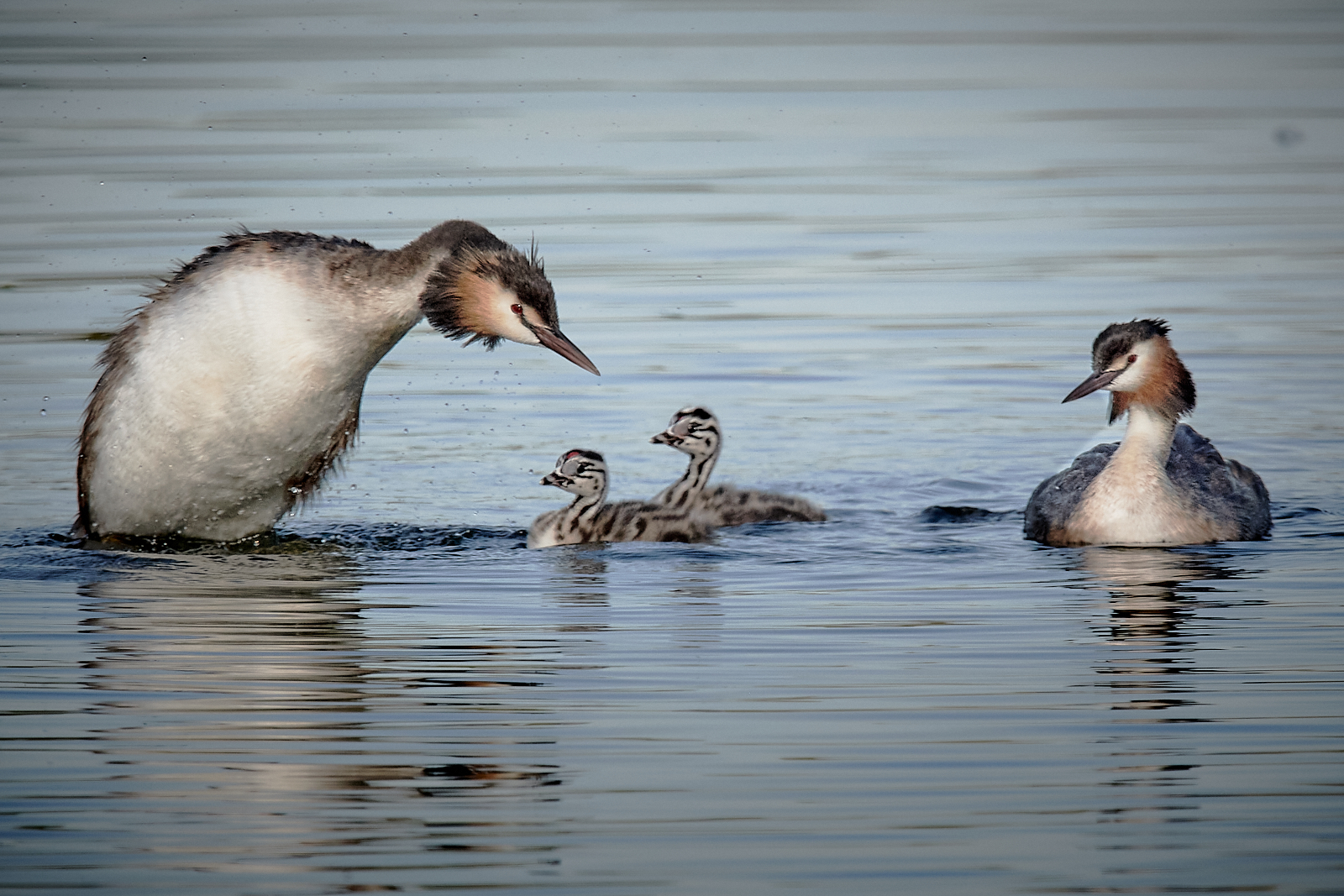
The mark is a visual clue to the adults that the little tacker is hungry.

Thanks to Ashley over at https://aussiebirder.com for giving me a hint about what it all might mean.  See his comment on the post last night.
https://birdsaspoetry.com/2021/02/06/saturday-evening-post-120-that-little-touch-of-love/

Here is a link to a good site explaining it

https://wildnatureblog.wordpress.com/2014/06/16/great-crested-grebes-and-the-red-spot/comment-page-1/#comment-3978

And a little clip of the info, thanks to David Craven.

>>So, what is this? A deformity? Some parasite? A magical third eye? A literature search was required. Wading through various papers there were lots of theories. The patch was natural, and present in nearly all grebe chicks. Some thought it helped control the chicks temperature while tucked on the parent’s back. Some thought it deterred predators. Others thought it was used in signalling parents.

It took a 1985 paper by Gary Nuechterlein to settle it. Hand-rearing some Western Grebe chicks, he used a series of experiments to determine that it was allied to begging for food. The more the bird begged, the brighter red the crown patch. Once fed, it faded to a lighter pink.

There we have it. Next time you spot grebe chicks, keep an eye out for the red patch!<<

Thanks David.

Saturday Evening Post #120 :That Little touch of Love

It’s been a pretty quiet week at BirdsasPoetry Worldwide HQ.
We’ve not made any financial Take-over Offers, nor it seems have we been the subject of a Reddit share raid.

The weather has also been suitably unkind to those of us who ‘commit photography’, so it’s been home under the doona a couple more days.  Given our experience during the long lockdown because of the ‘c’ word, it hasn’t been too onerous.

It also seems that the majority of the birds we have been working with, have finalised their nesting cycles and are also settling into preparing the winter stretch.  Our local backyard Blackbird is already showing the signs of shedding her worn feathers and her mate has a strange bald patch above his beak and across his head, which I take to mean he too is getting ready to dress to impress as the cooler days come by.

One of the exceptions to this trend are the local White-plumed Honeyeaters, and we did discover quite a number of them during the week collecting cobweb for a fine new house among the leaves.

I called Mr An Onymous, and he informed me the Jawbone Great Crested Grebes had hatched, and so with his medical appointments and mine coinciding with a small blank space in both diaries, we locked into go looksee.

The two adults, one sitting on the nest, with still one egg to hatch, and the second one in the water feeding the infants with tiny fish and other assorted tiny water creatures, all looked good like very relaxed and adapted caring parents.

When I had a good look at the photos afterward, you know, ‘blowed up big on the screen to pixel-peep (I jest— insert smile and laughs here), I noted a small bald patch on the young as they peeked out from under the adults wing-feathers,

Closer inspection showed how much it looks like a “Love Heart”.  I presume its because the upper feathers fold down over the spot sufficiently to create the shape.

Interestingly Andew T. (follower of present blog) also sent around a note to the interested noting the same markings.

For the fanciful among us, perhaps it’s a special “Love” bond  between the parents and their tiny offspring.

Field-Notes Book: Sharing a Meal

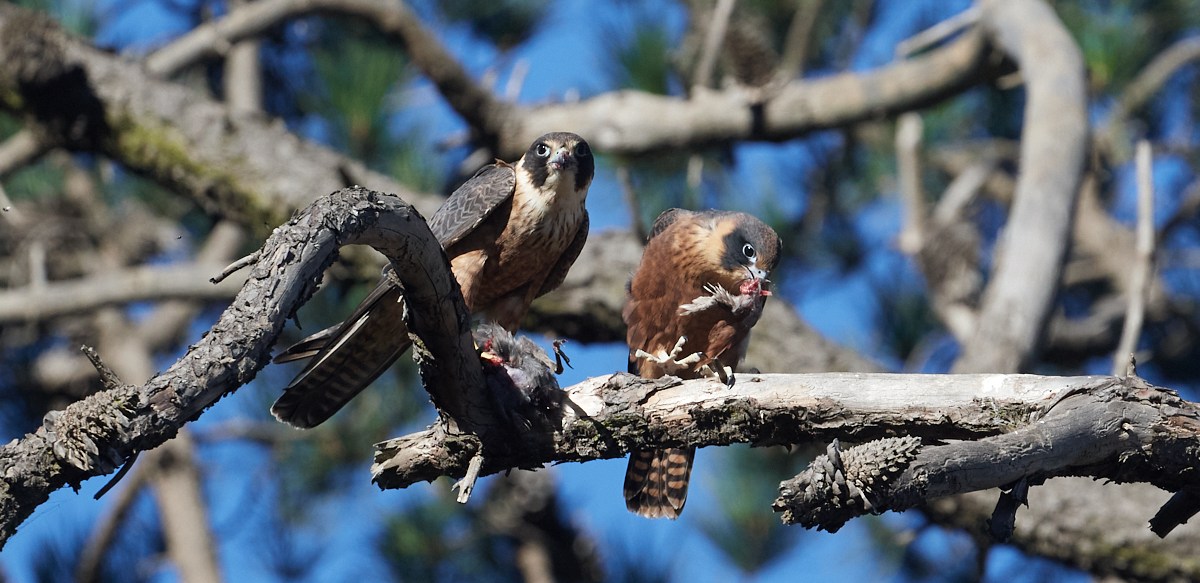
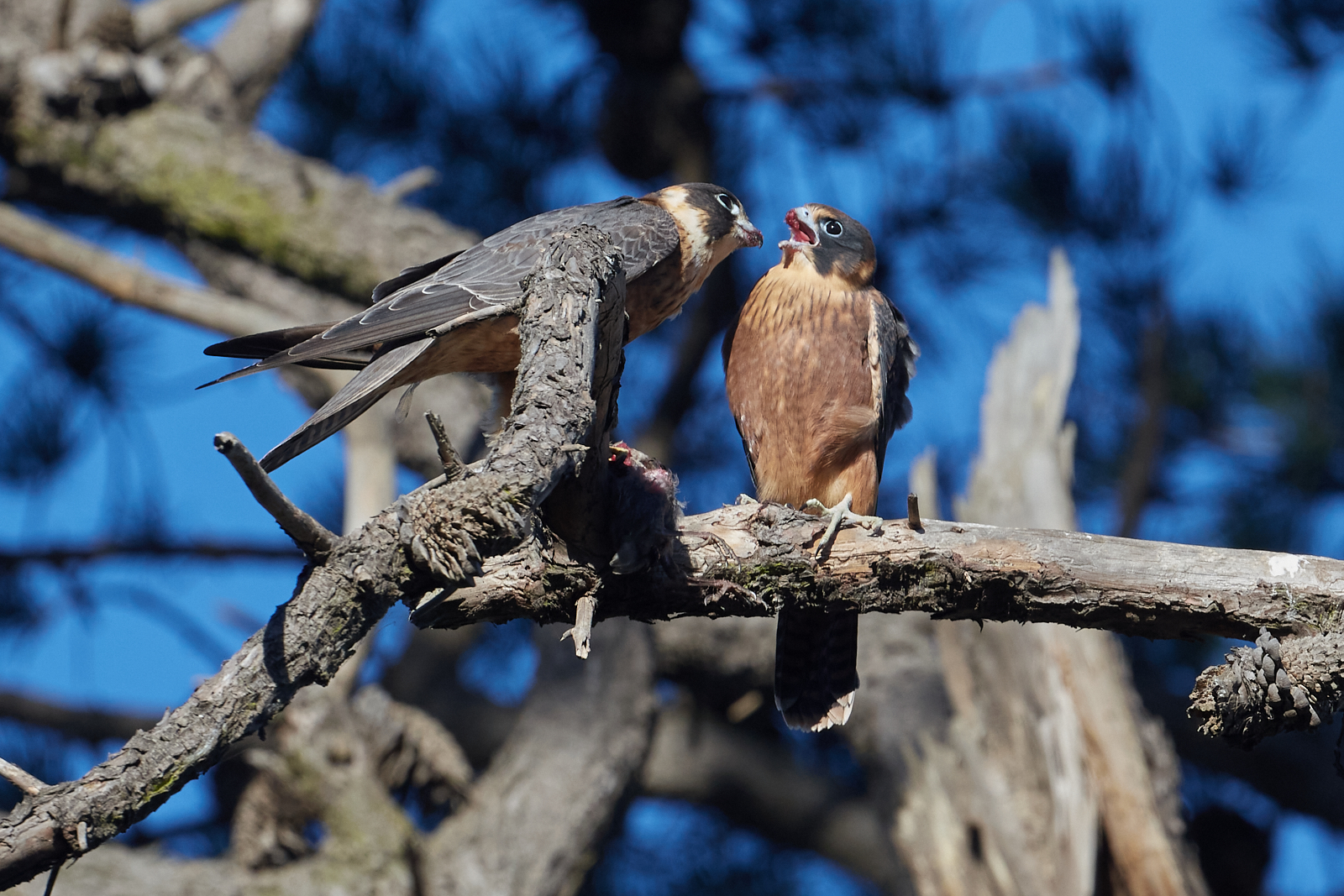
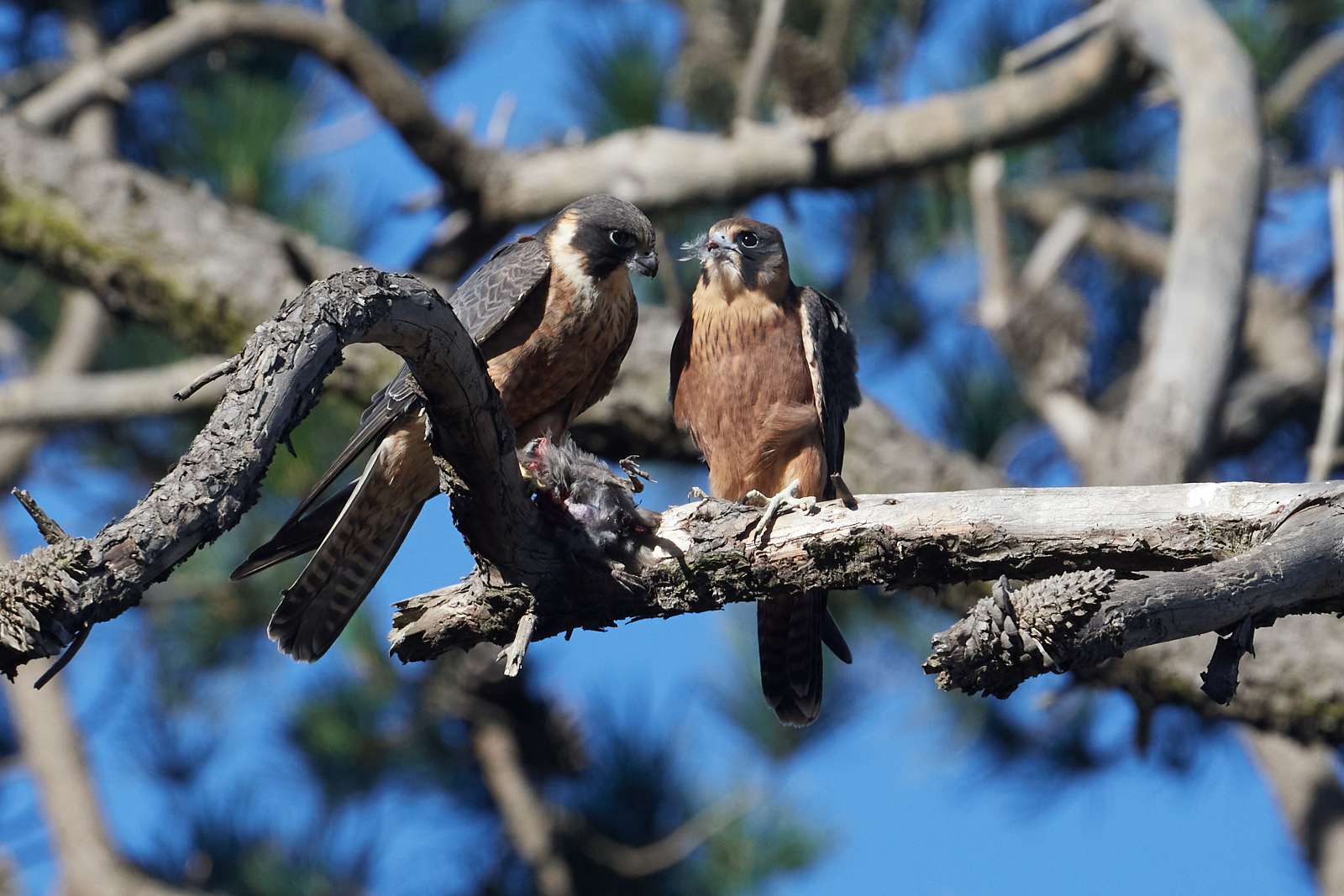
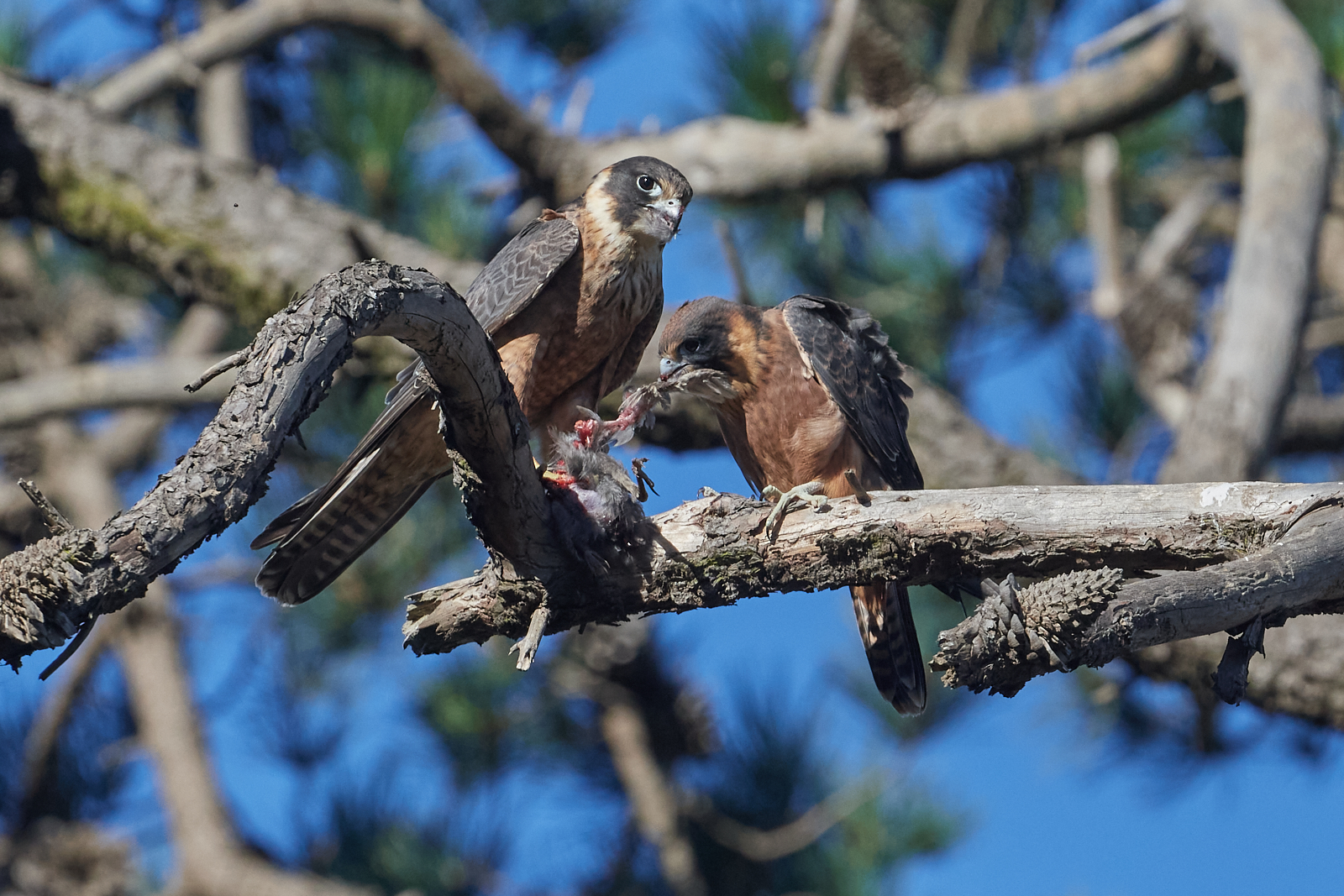
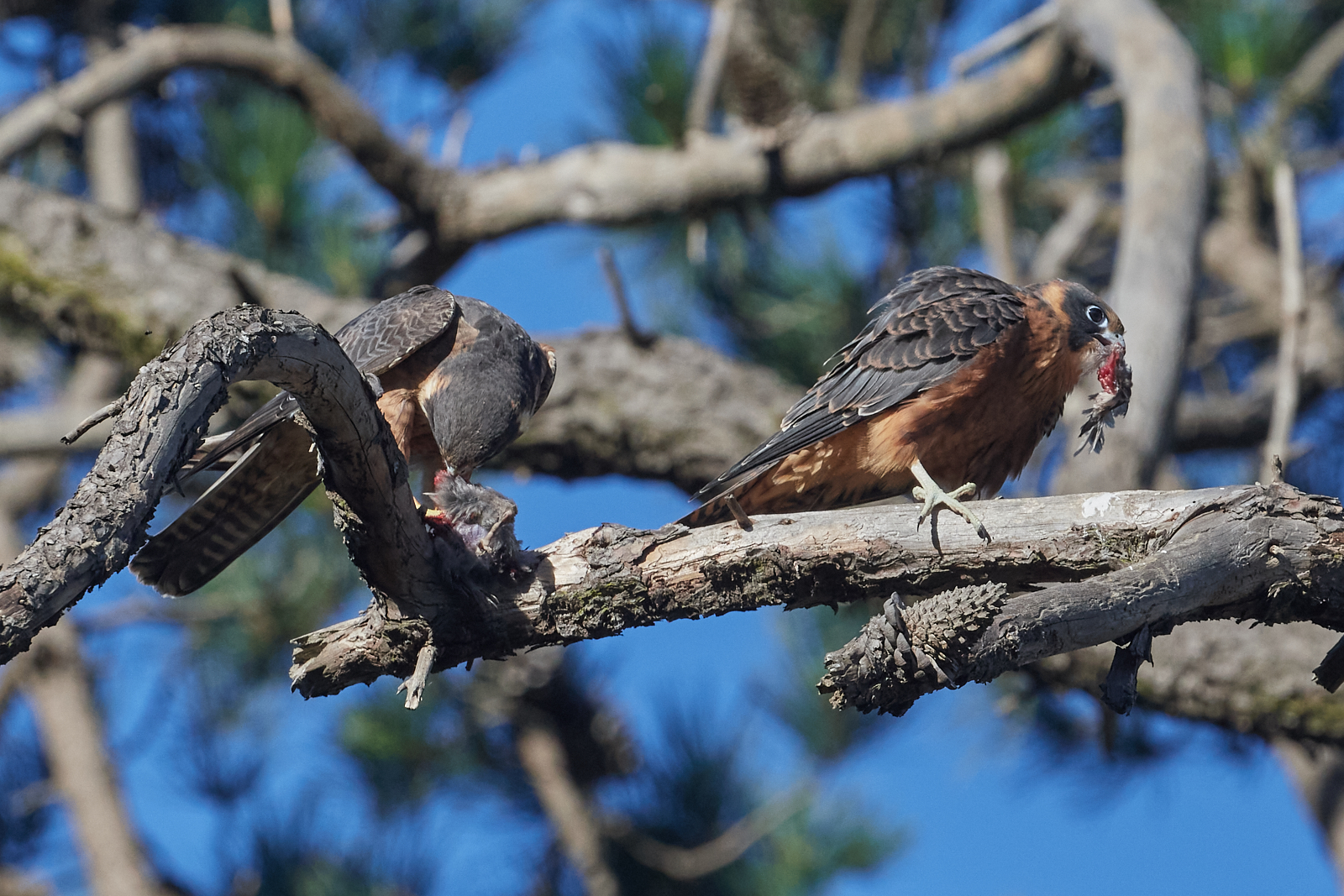
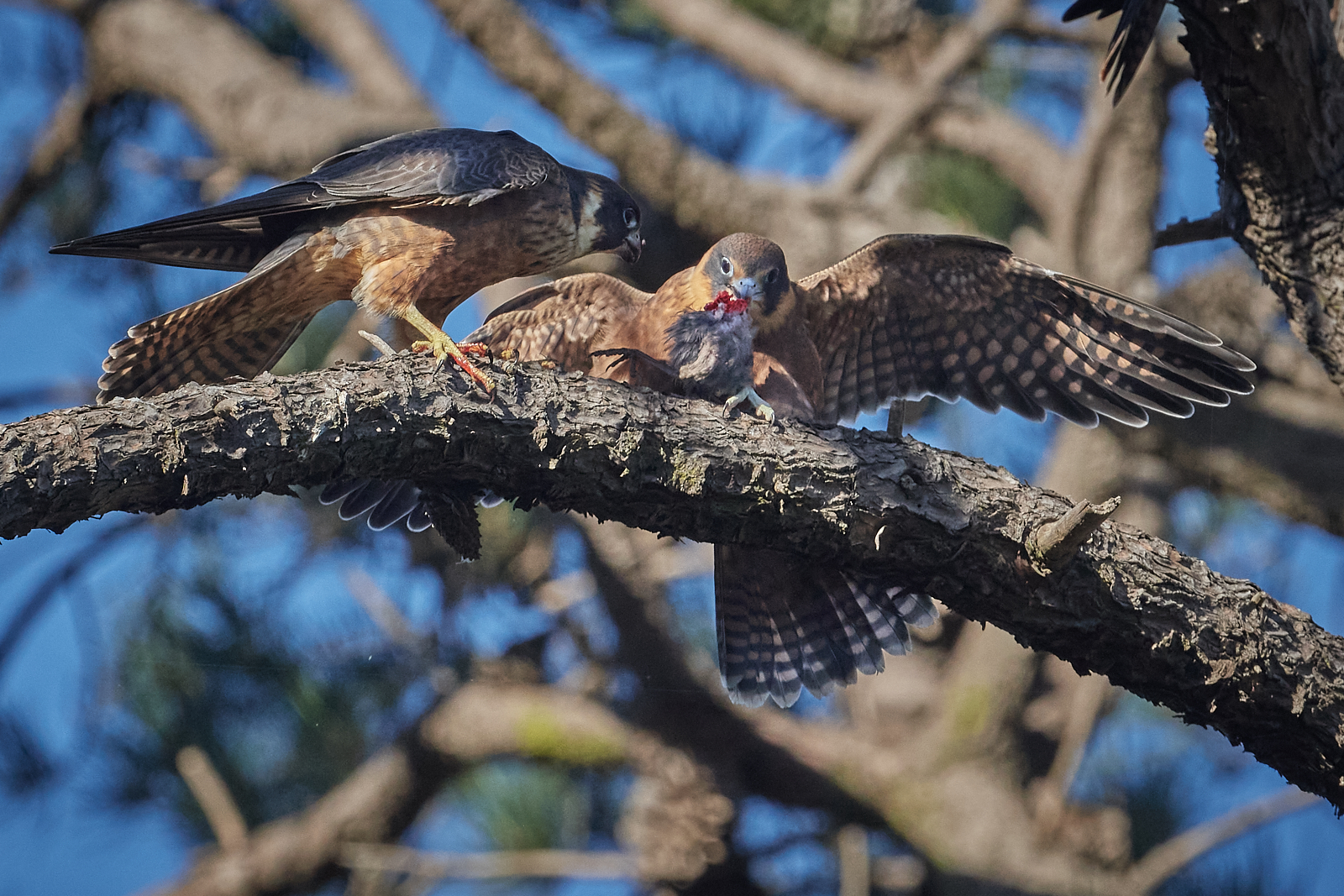
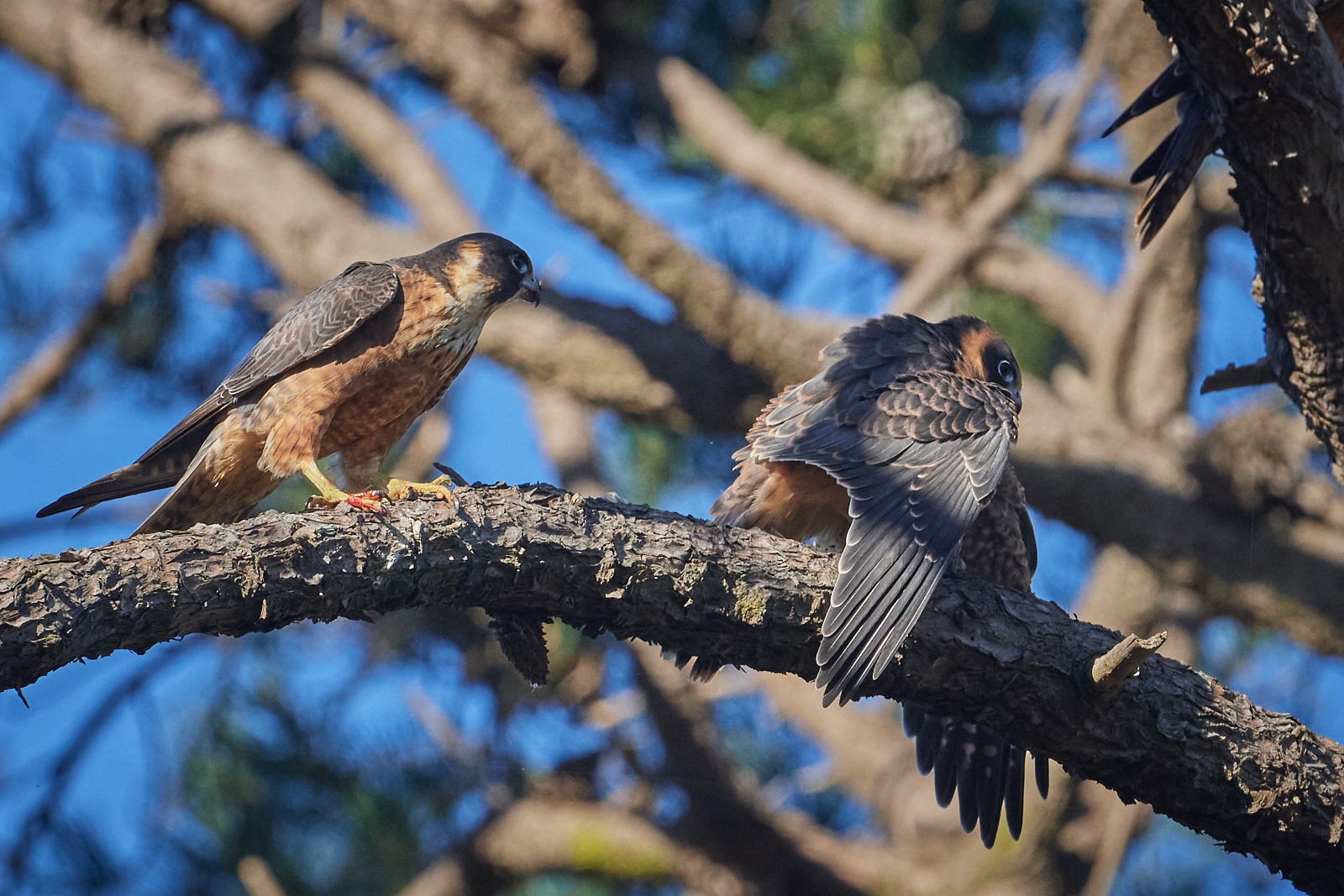
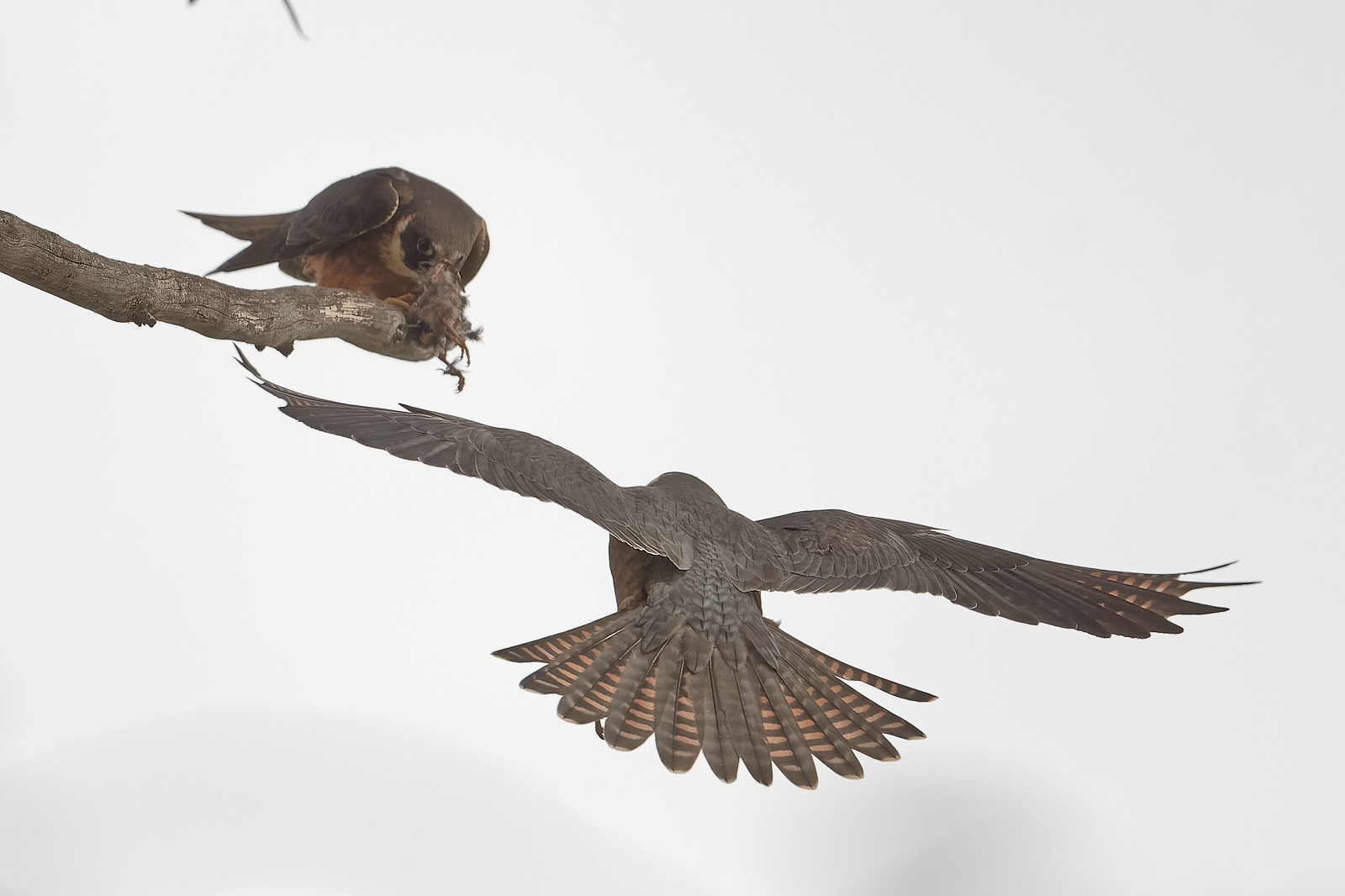
The young Hobbies were well established but still needed to be feed by the female.
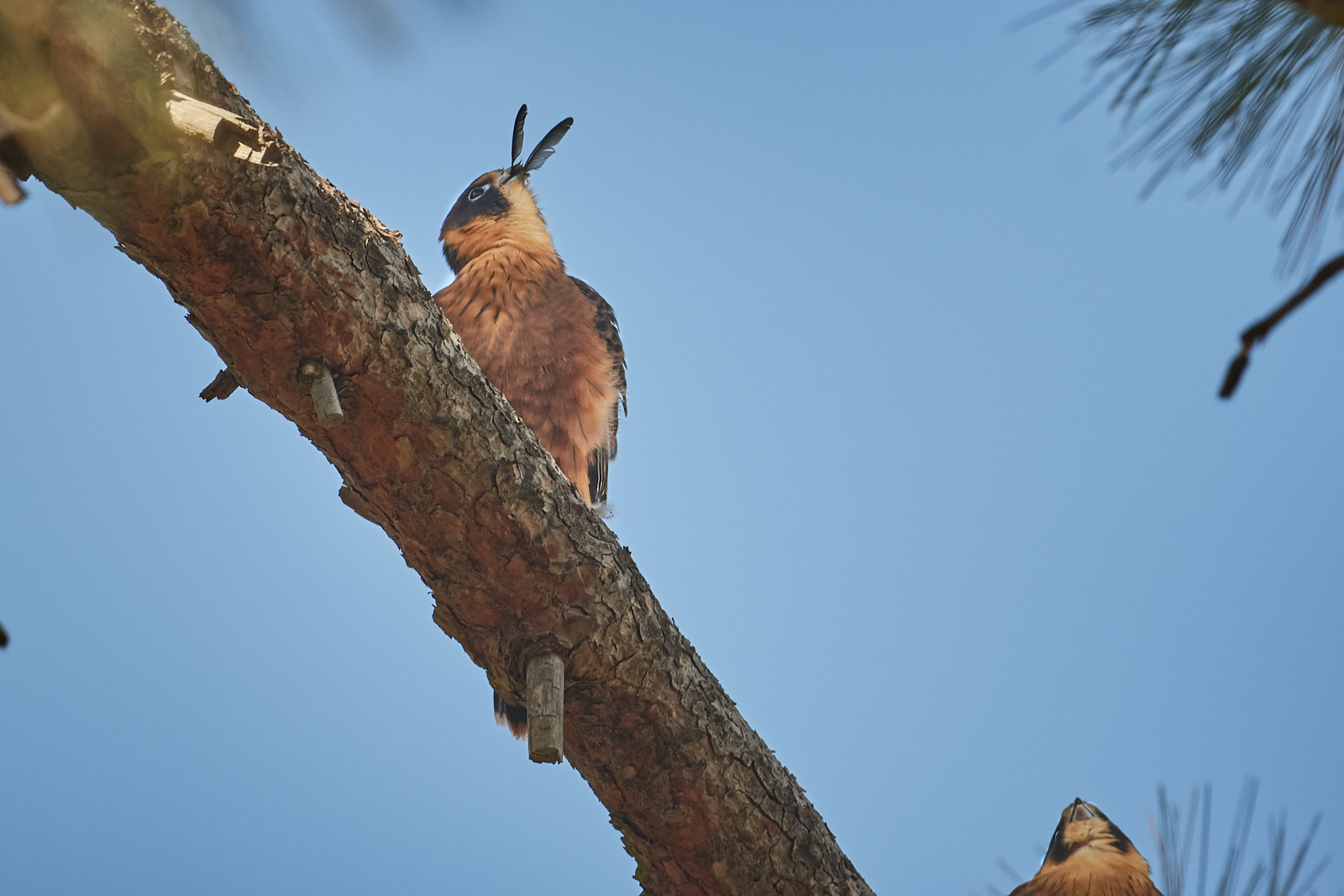
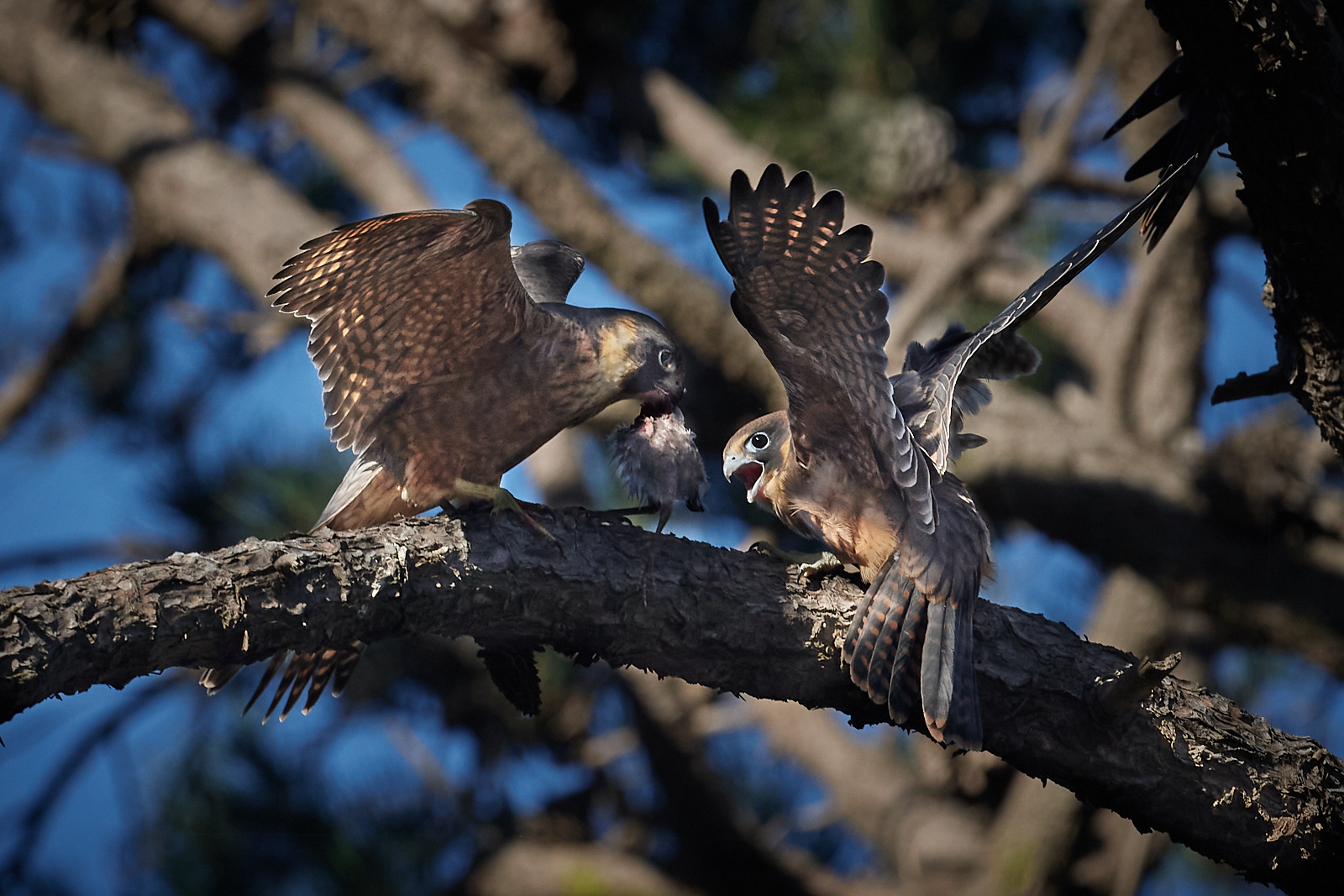
In this sequence she divides up the catch among two of the young. The other would not miss out, as another meal was certainly on the way.

Mum is still carefully tearing off small pieces for the young,
Only a few days out of the nest, it is happy to patiently wait for each morsel
A big moment. “Can I choose a piece?”
It hurries off to a quiet spot on the brach to settle into both enjoying and learning
Number two arrives with much wing flap and calling to ensure that some of the goodies are still available
After a bit of juggling for position, it takes charge of the offering
So typical of a raptor, mantling over the prey with spread wings.
And it too takes off to begin its own feeding routine.

Satuday Evening Post #119: Feeling the Magic (Part #3)

I was rummaging through a box of books in the garage, you know, hoping I’d not thrown out the very book I now wanted, when I turned over a copy of “The Joy of Photography”, from Eastman Kodak Company. For those that have never heard of them, they used to make a product called, ‘filum’, back just at the beginning of the Jurassic Period. 🙂

I know that a number of the dear readers of this sometimes monotonous blog, were probably not ever born when the book first rolled from the presses. Kodak, among many of its tentacles, had a publishing arm, that specialised in ‘how-to’ books to help budding photographers learn some of the skills of the craft.  This of course was way back in the days before social media platforms spewed out erroneous, badly researched and often downright inaccurate information from keyboard experts who never actually ventured beyond their monitors to take, well, real, photos.
But,
I digress.

A quote in the introduction from noted photographer, Ernst Haas,“Art is Aristocratic—photography is its democratic voice.”, sets the scene or tenure of the book. (Please don’t tear off to ebay and buy a copy, much of it has to do with that aforementioned, ‘filum’ and the hardware and techniques to craft a photo back in the olden days.)

Based on the recent drift of my Saturday evening discourses, the opening page had a quote I thought worth repeating here. Hoping of course that the copyright of the text is beyond the statute of limitations or what ever controls text reuse these days.
Under the heading of “The Vision: The joy of photography is learning to see” the authors say:

“The world of photography is a personal one. We take pictures to express our feelings about people, nature, and the world around us. And as in any other art of communication, be it writing, music or art, we experience great pleasure when the results of our efforts communicate what we set out to say.”

There— couldn’t have said it better meself.
Sneaky little quote because the book is then divided into techniques for photographing:
People,
Nature,
The world around us.  🙂

It rambles on from there about ‘visually  articulate’, but if I have to look up words in a dictionary, I usually skip over them 🙂

We had the good fortune, and a little help from a few friends, to come upon pair of Great Crested Grebe at the Jawbone Reserve, in the middle of a nesting.
They had just exchanged sitting duties, and this one really needed to stretch out, bathe and relax. Once suitably damped, it needed to dry out the feathers.


En-Joy

Field Notes Book: On the Wing

Had this ready to go and then got side-tracked last night and overlooked the Publish button.

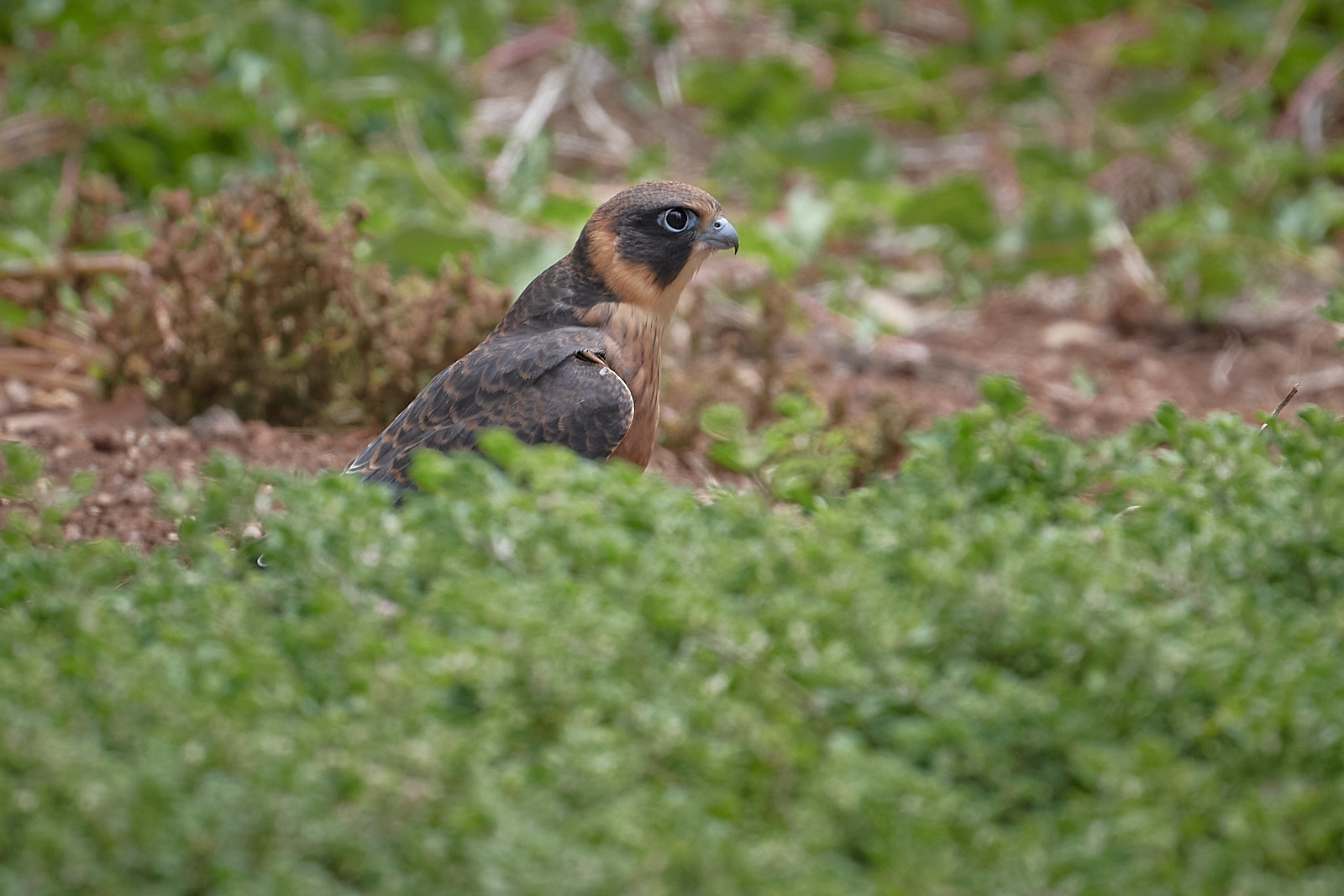
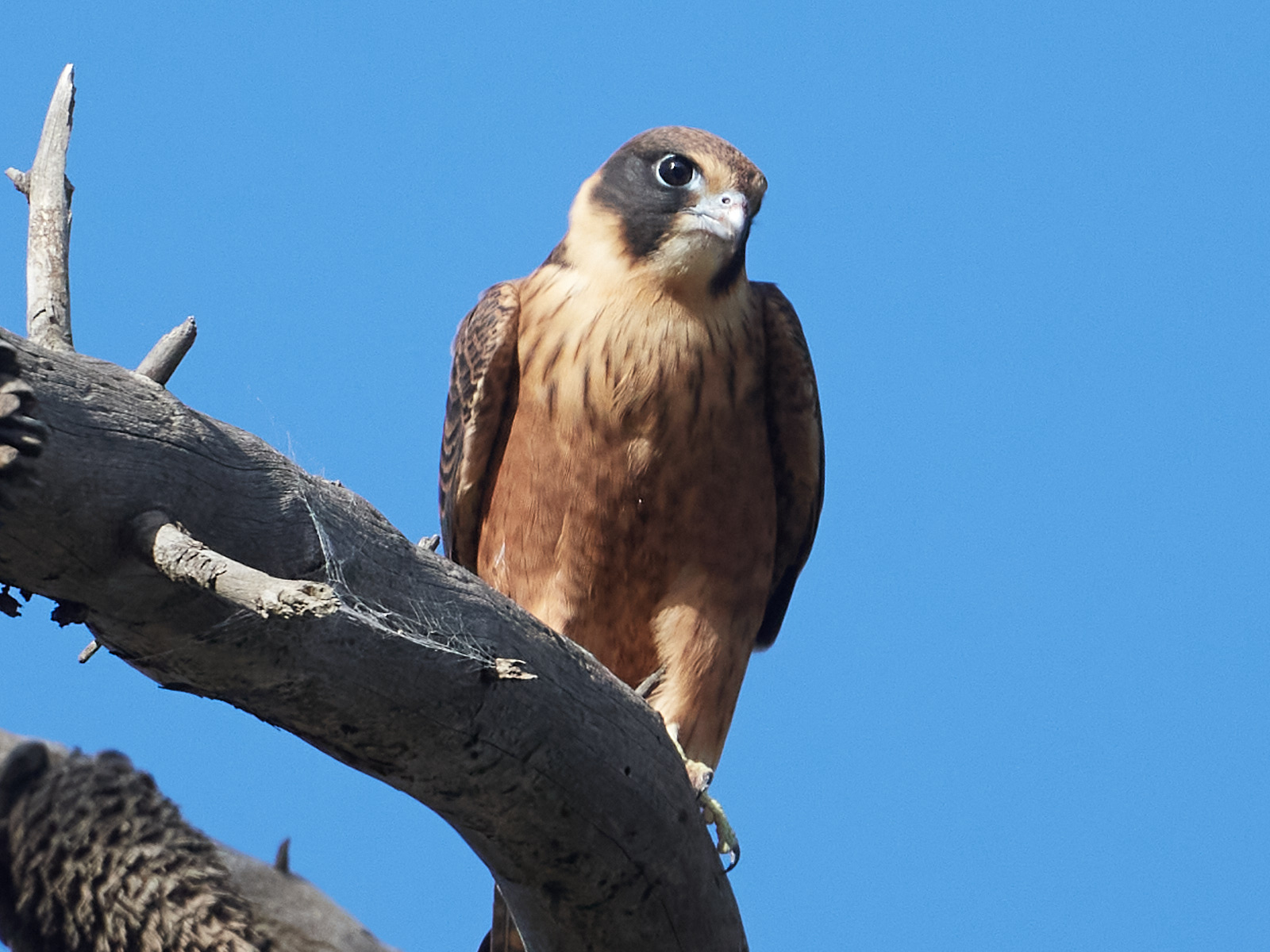
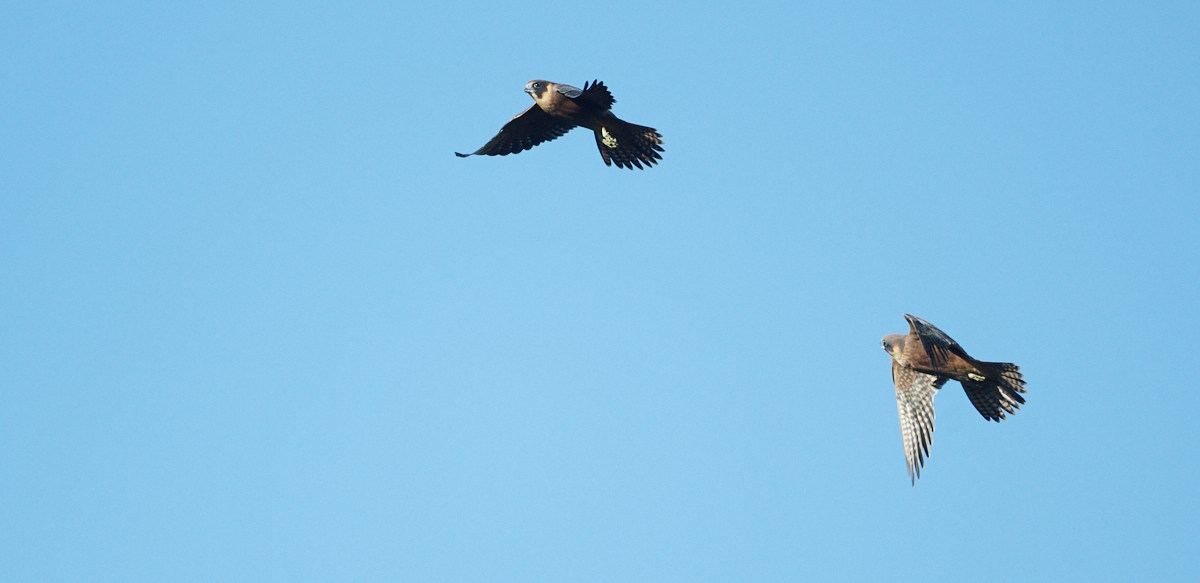
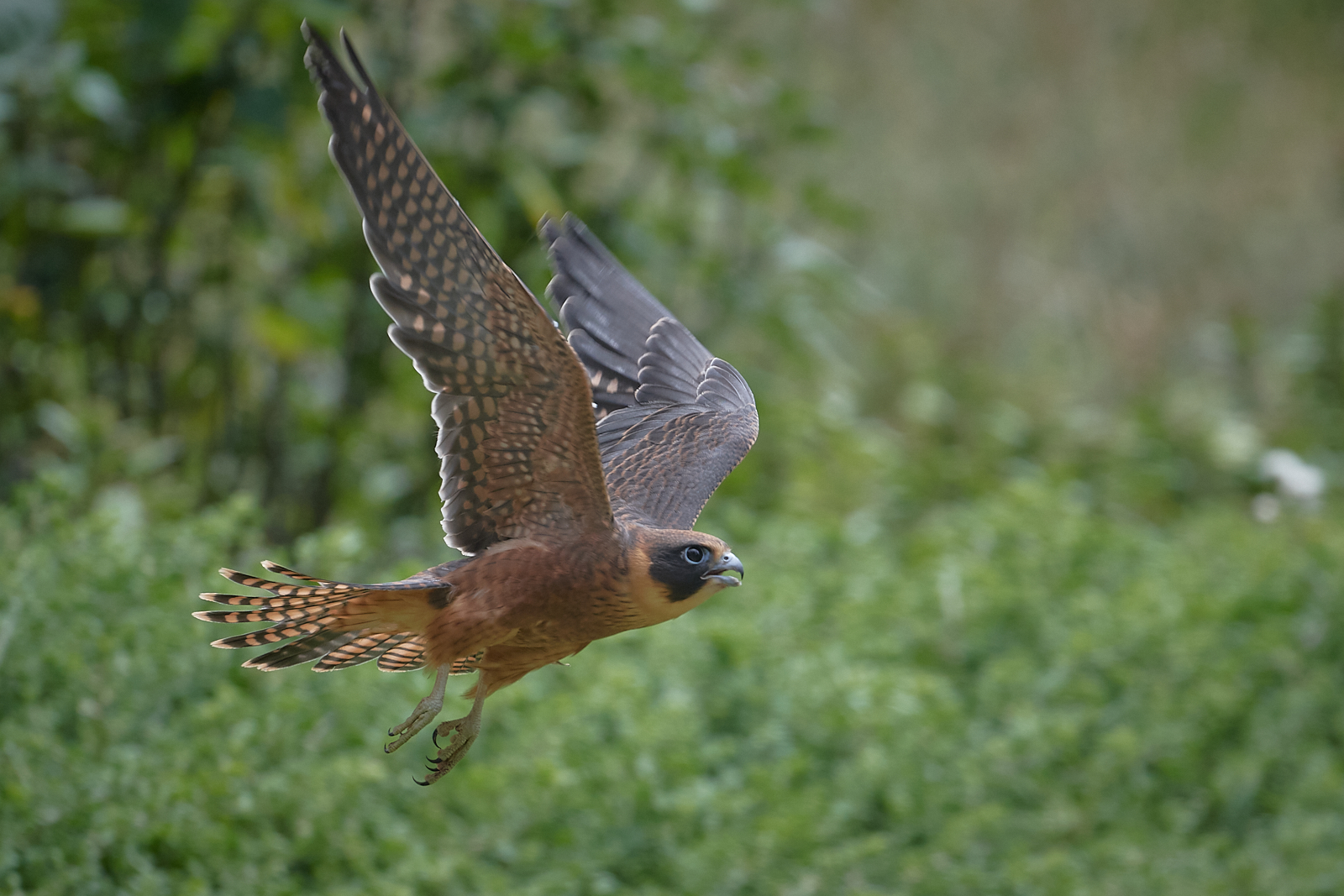
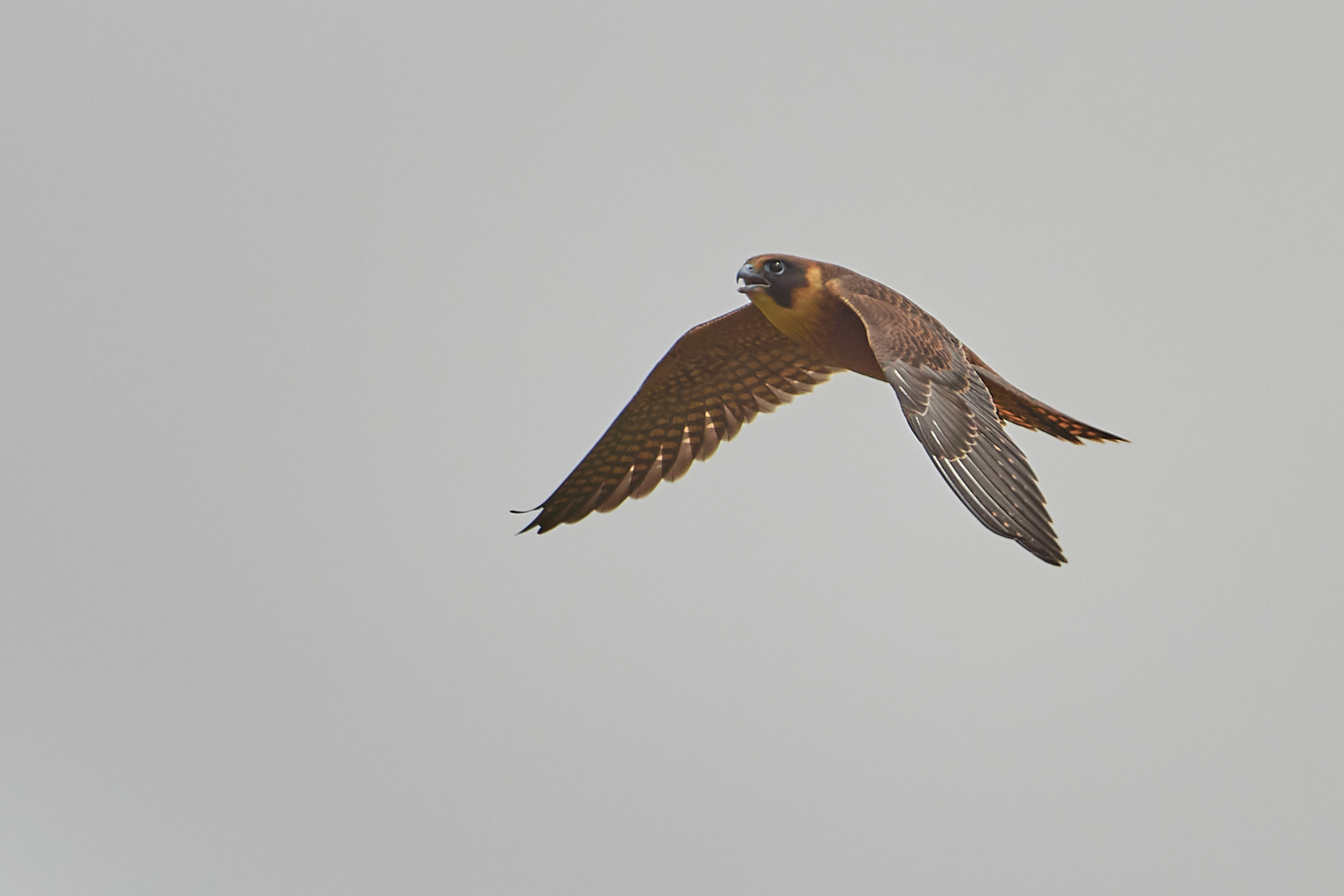
The young Hobbies had flown. Three hungry mouths on the wing.
It is interesting to observe them in the nest. Too big to just settle down, too young to actually be out and about.
After lots of wing practice, hanging on to the nest, and exploring the close branches, they seem to have full knowledge of what is required, but the connection between flapping and letting go is not made.
Then, it’s seems, almost on a whim, they turn, flap, and are aerial.  Not that it’s great flying, mind you,  straight lines mostly, and of course the challenge of slowing down enough to grab onto a branch for security.

Presumably they were airborne the day before we arrived, as they seemed to have settled to the jobs at hand.  Dad was still bringing in food, Mum organising it and distibuting in an even manner.
Three perfect little carbon copies.

Two sitting in the open in the early morning sunshine
Although now free of the nest, they still have a close bond and peck and preen each other
Looks like food is on the way, and it might be first in best fed.
Working hard at getting the wings digging in to the air and righting the balance
Food attached, time to seek a quiet spot to enoy it.
Pfffh feathers. Now they have to prepare their own repast.
With all the skills ahead yet to learn, they still are able to turn on an impressive speed when required.

Saturday Evening Post #118: Feeling the Magic (Part 2)

Tom Brown (Tracker) “Too often we walk in ignorance.”

“Empathy,” writes Jon Young, “is a dangerous word in science, because it taken to mean a less rigorous critical objectivity. “However I’ve noted over the years that those who succeed are those who adopt and empathetic point of view of their study of the birds.”

I rambled a bit last weekend about the importance of ‘the image’ and its affect on the viewers.

To balance that out, I think there is also an affect that happens to the maker. Sadly, not every photo we take is a “Gold Medal Winner.”  Some simply go straight to the big pixel bin in the ether.

But sometimes the photos express not only the feel of the maker, but also the importance of the moment that it was taken.

It’s not all about excellence in technique, the quality of the equipment, nor the visual impact.
Sometimes it’s simply that “I was there, and this is what I saw.”

We, EE and I have been monitoring a nesting pair of Sacred Kingfisher.

As the dear Mrs Beeton says of cooking a Hare, “First Catch your Hare.” Research would show that she wasn’t the first to use that statement in publication, that probably goes to Hannah Glasse, in how to cook a fish. But

I digress.

We had seen the presence of a Kingfisher along the river track, and EE was keen to see where they might be nesting.  We had been photographing Hobbies, with our friend, Neil A, when EE decided to move down the river and seek out the Kingfisher.

Half an hour later, a fateful text arrived. “I’ve found it.”.  Even the great Sherlock Holmes could figure out what ‘it’ was. So I farewelled Neil, and the Hobbies and went for a looksee.
“There”, she pointed. Quite economic of words when the occasion calls, is EE.

So over the next 3 weeks or so we’ve been watching the feeding of the young, and hoping for a quick glimpse to see how big, and how many.

They flew just over a week ago. Two perfect little birds.

Now on the wing, they would be even harder to locate.
By one of those happy co-incidences, there had been a fire in an old hollow tree.  The old skeleton was not only grey, but blackened.  Once the fire had been extinguished, it was necessary to cut down the tree to quench the embers within.
All this meant was a small area was flattened scrub with all the necessary Fire Response people at work.

It opened up the ground and the parent Kingfishers took their young down there to learn the finer points of hunting on the ground.

Eminently suitable for photography, and we sat on some of the burnt logs and watched the young explore the area, catch their first bugs, and rest on the downed limbs of the tree quite close to where we were sitting. They were so enthralled by the outside world that they took no notice of  us and gave us the wonderful opportunity to watch them at work, and to photograph them in a relaxed way for both bird and image maker.
Empathy.

Jon Young, “There has to be a moment from heart, spirit, soul and body.”
“Its about taking the time to tune-in, not just show up, but really tune-in—and learn a thing or two about what the birds already know.

Feeling and sharing “The Magic”

Field Notes Book: Attack is the Best Stragergy

Open fields and paddocks are of course a mecca for various raptors. Around the Werribee River Park (aka The Office), Black and Whistling Kites, Swamp Harriers and Brown Falcons usually make frequent appearances.
Presently however because of better conditions further north perhaps, there is only a handful of  raptors in the area.

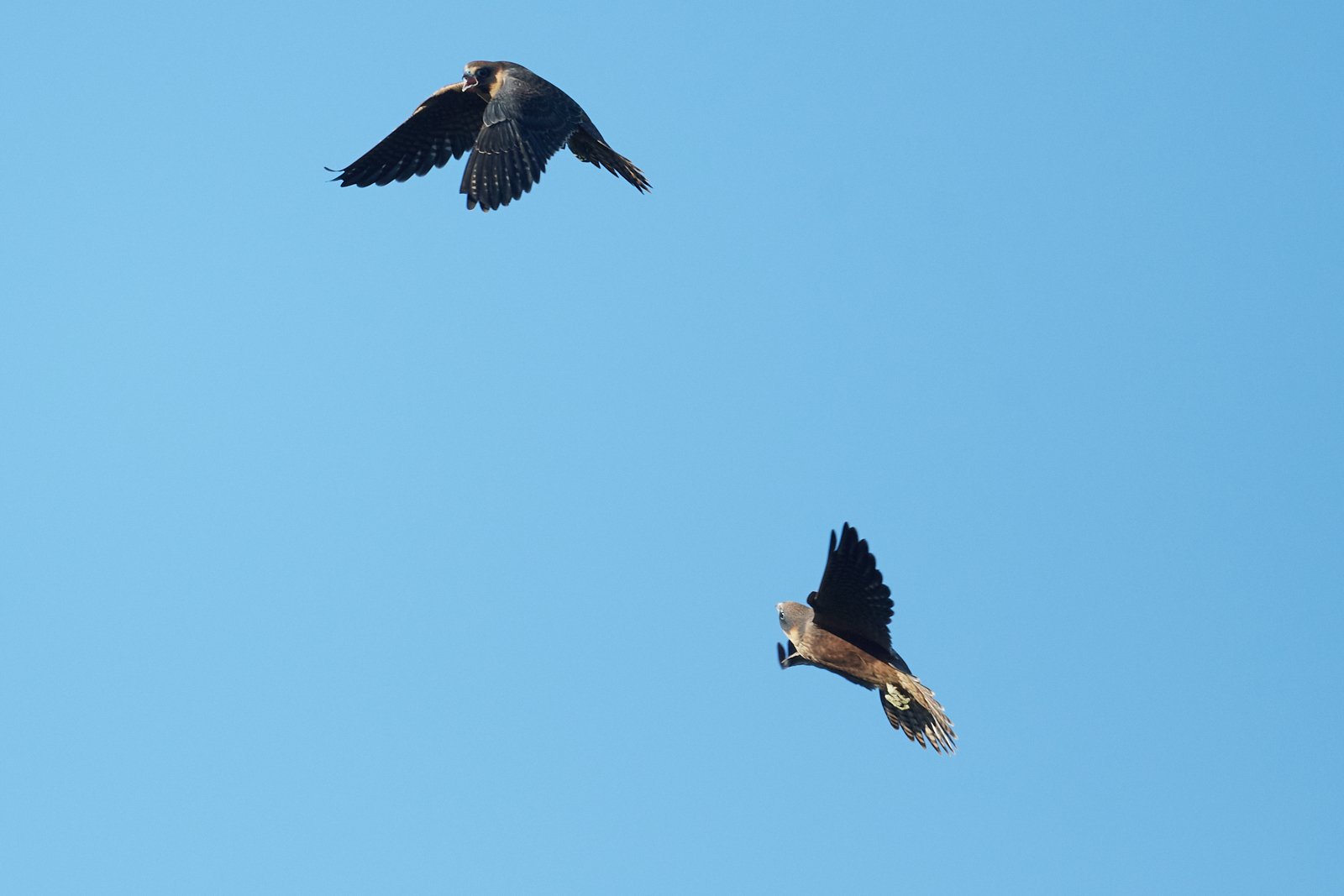
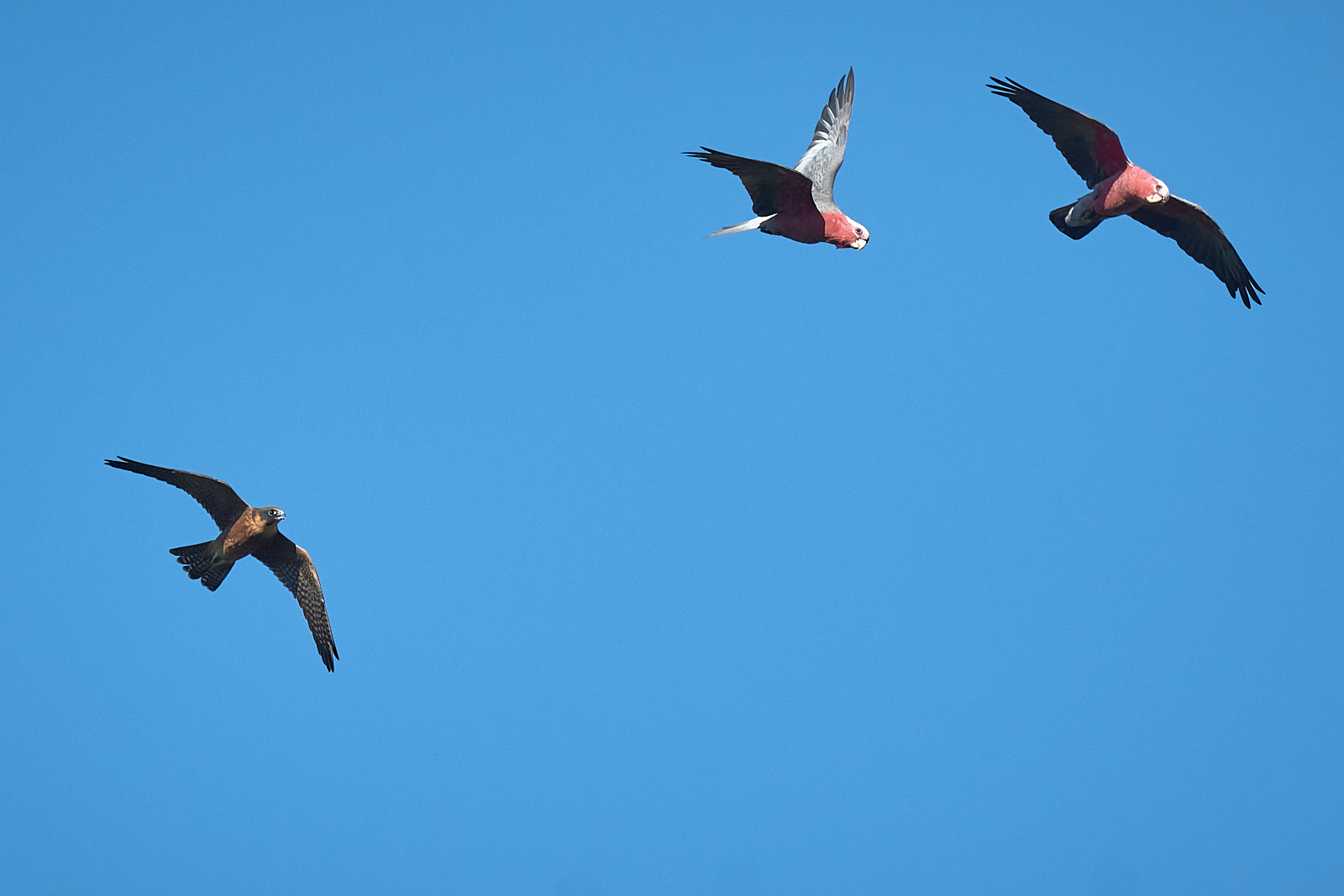
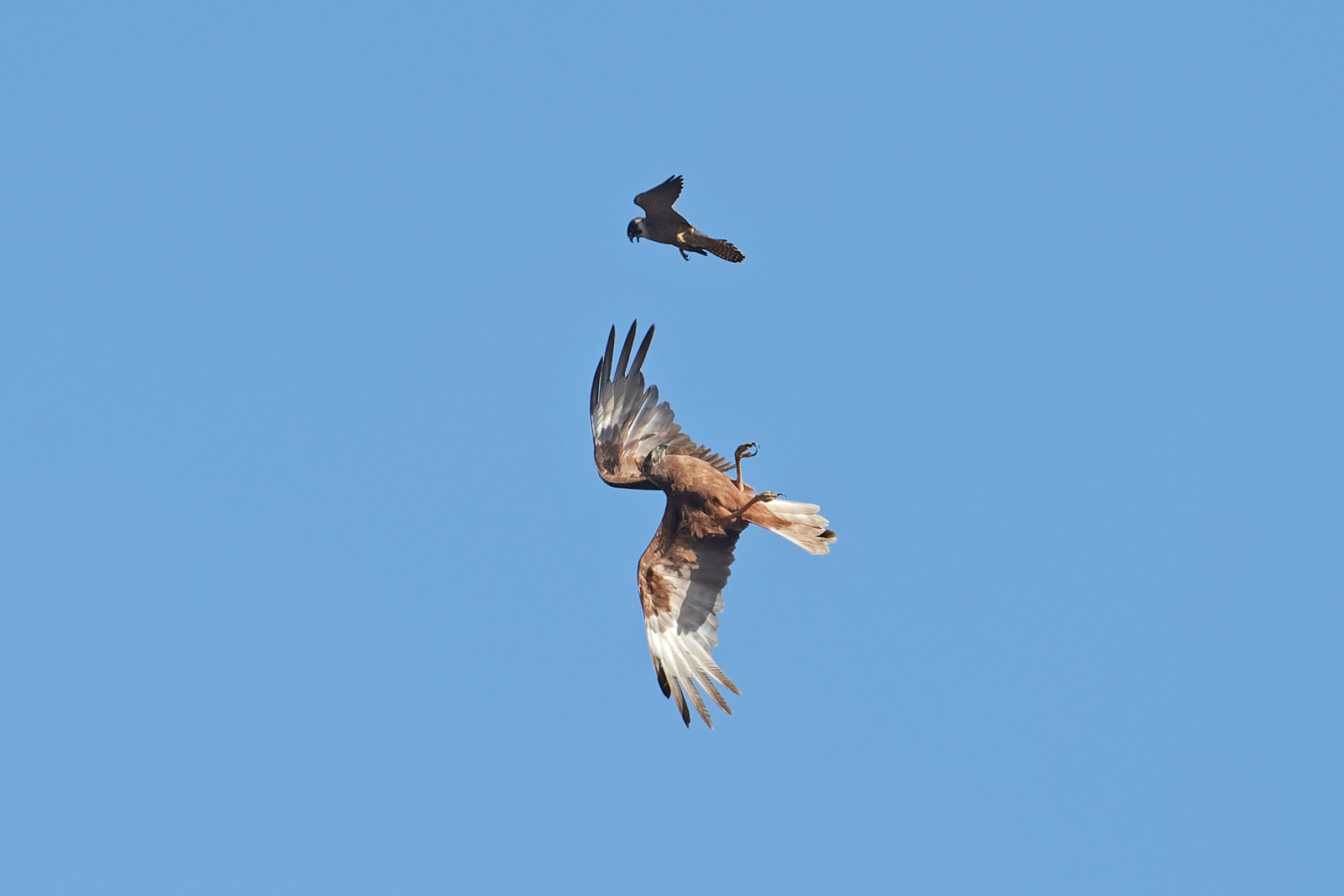
As the Australian Hobby clutch hatched and the young grew, the parents became much more pro-active, and protective of the growing young.  One morning they had several encounters with Swamp Harriers and Whistling Kites.

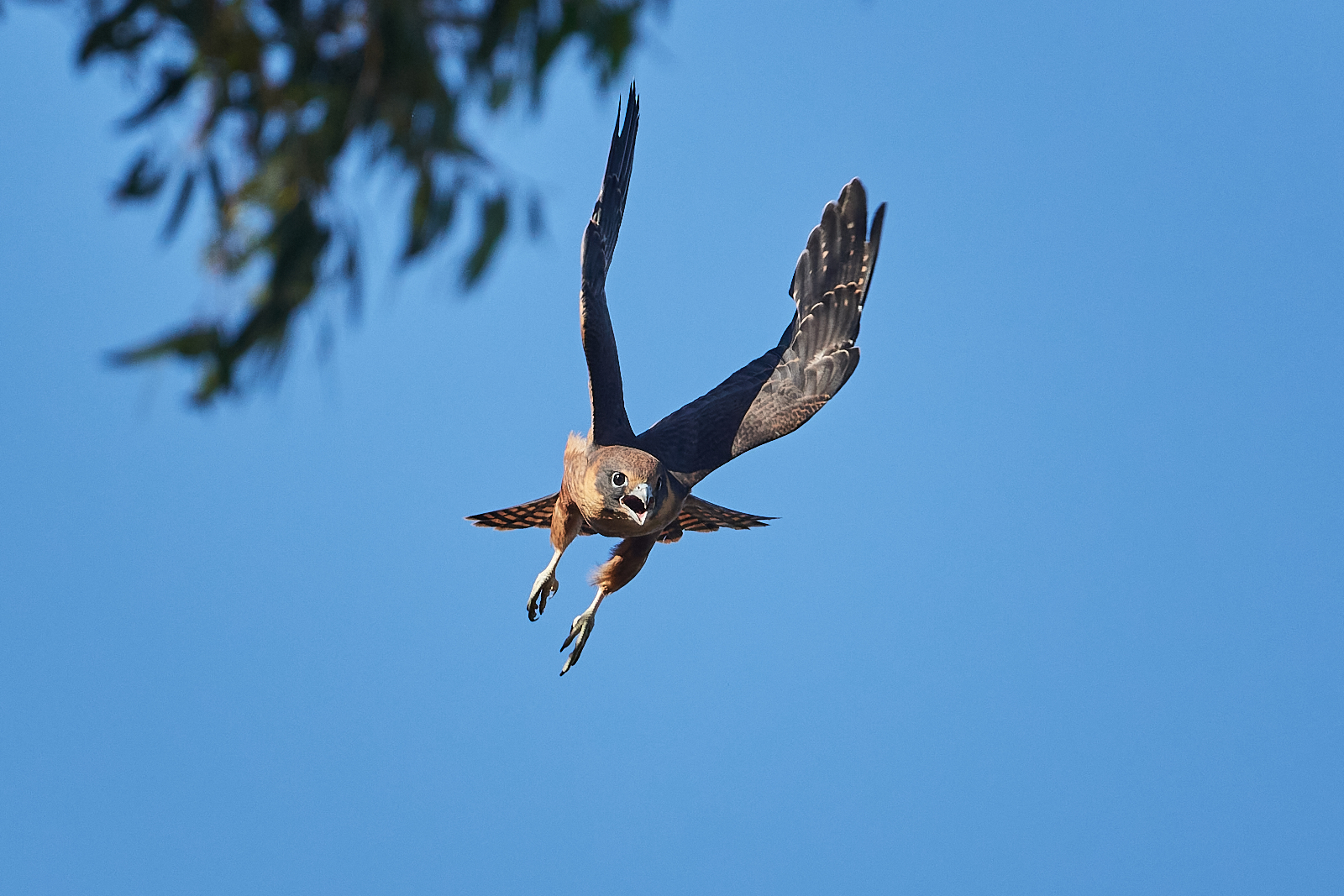
The female was now sitting out of the nest, high up on well sighted perch. Any raptor that approached recieved a serious warning call, and if that didn’t work, a much louder, more rapid call, that also drove her from the perch in hot pursuit.  The male would arrive, usually from on high, several moments later.

Unlike Peregrines, Hobbies seem to make much more shallow stoops, presumably they cannot really physically attack the much larger Kites, so a game of bobbing across the sky, with quick shallow dives on the intruder is probably to put it off the job in hand, and eventually drive it from the area.

Welcome to the action.

  • Seriously you want to wander into my territory. Go ahead make my day.

  • A Swamp Harrier defending against a stoop

  • Here we go again. She is  rocketing out from among the trees. Warp Speed.

  • A Whistling Kite trying to deal with two attacking Hobbies.

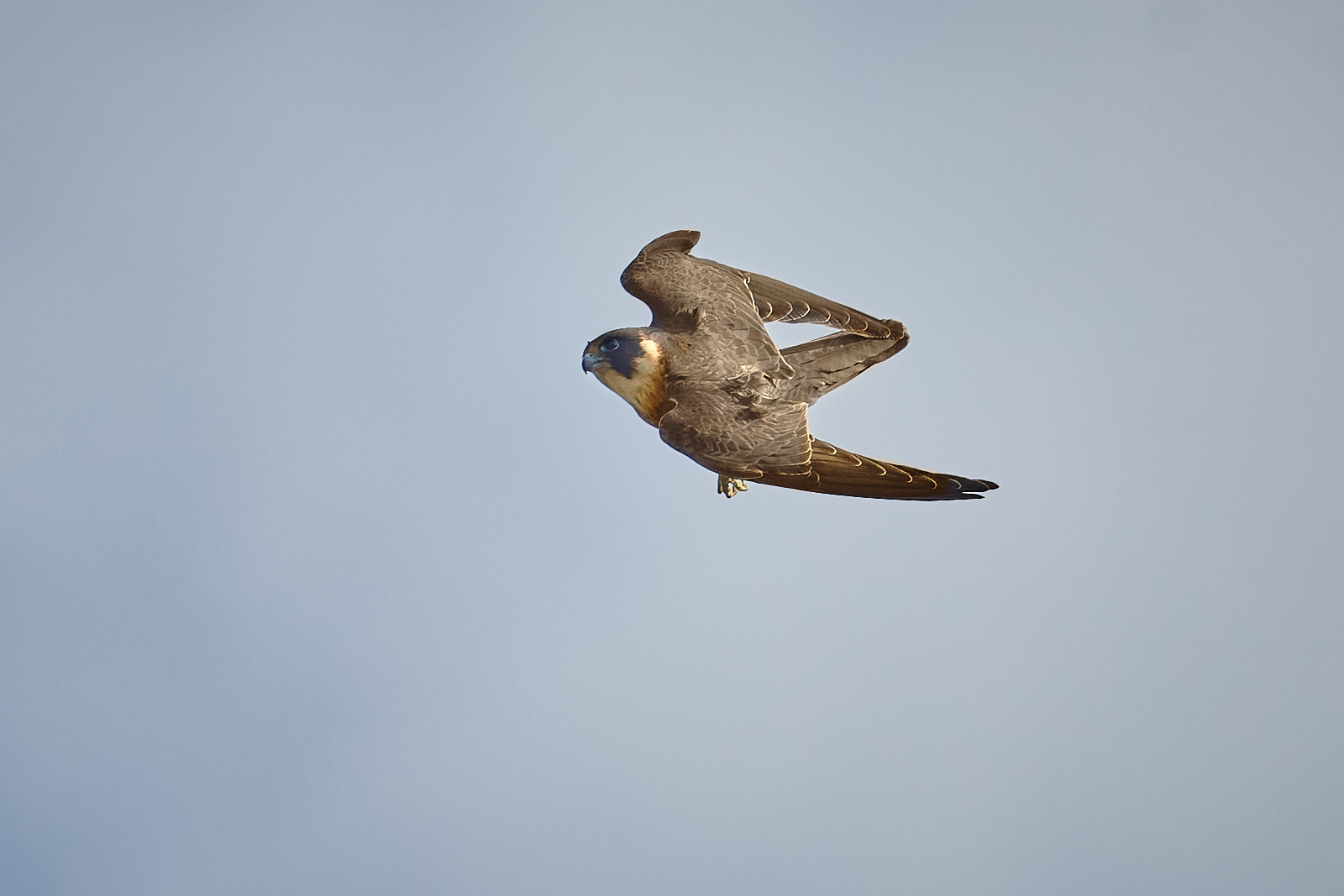
  • Coming out of a stoop must really initiate a powerful ‘g’ force on the body.  From flat out to cruising in the blink of an eye.  You can see the angle of the wings changing and the air breaking over the back as the airflow changes.

  • After all the action has quietened down, the male quickly returned with a  top-up meal.

  • Hopefully see the young next week.

Werribee Wagtails: Bird Count at Mt Rothwell

Werribee Wagtails Header
Werribee Wagtails have been in much of a hiatus due to that ‘c’ word.

One of the activities of that we have always enjoyed are the quarterly bird counts at several local sites.

It is good to be able to see the effects of changing seasons at each of the locations.  And of course to see the variation in the bird activity through the year.

We started 2021 with a day out at Mt Rothwell Biodiversity Interpretation Centre

The weather was kind, coolish and a tad of sunshine to keep things pleasant.
Good bird action in some areas, and of course a few areas that were a bit barren for birds.
All in all a good start for Wagtails for 2021

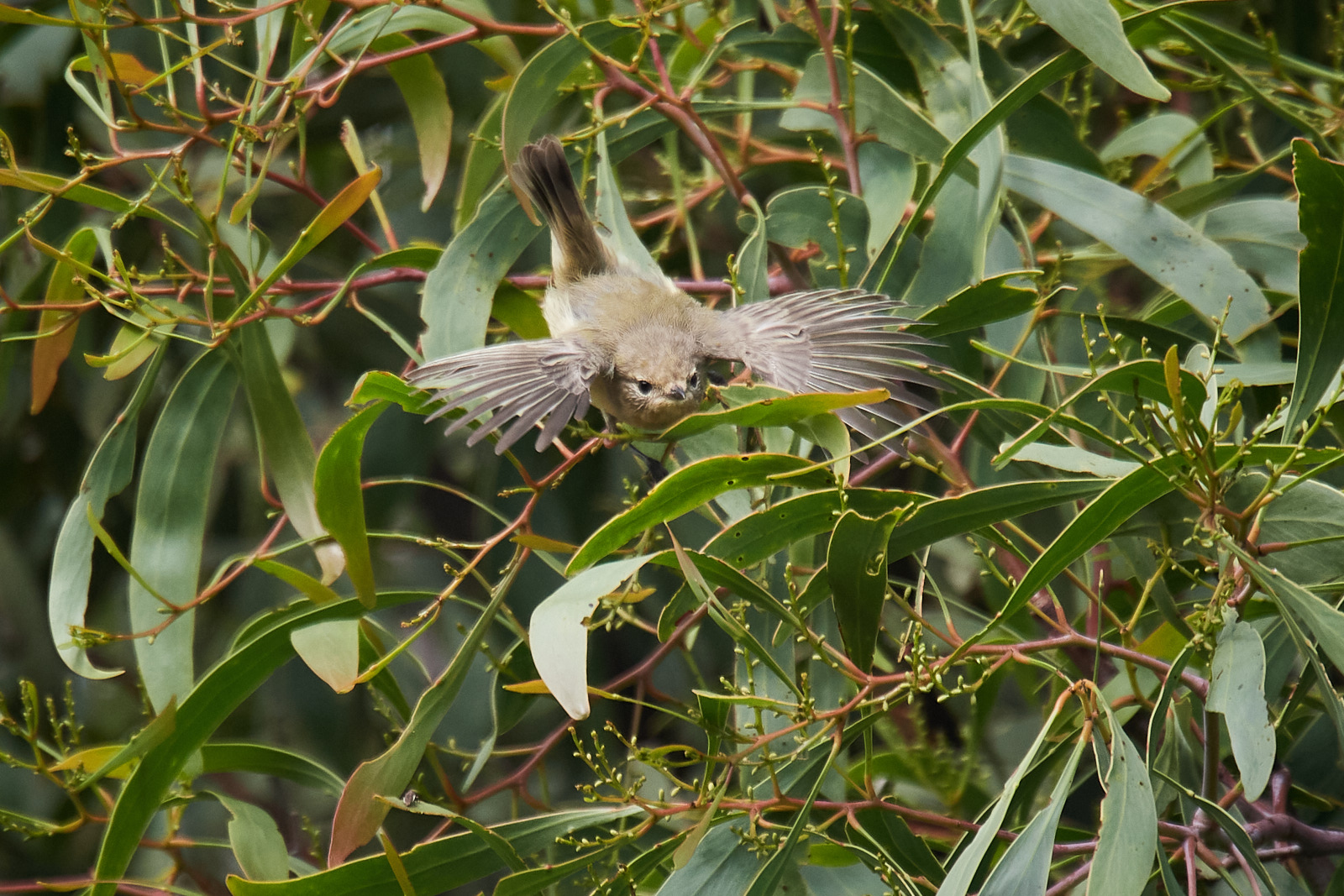
Weebill
Scarlet Robin female Photo Courtesy of EE
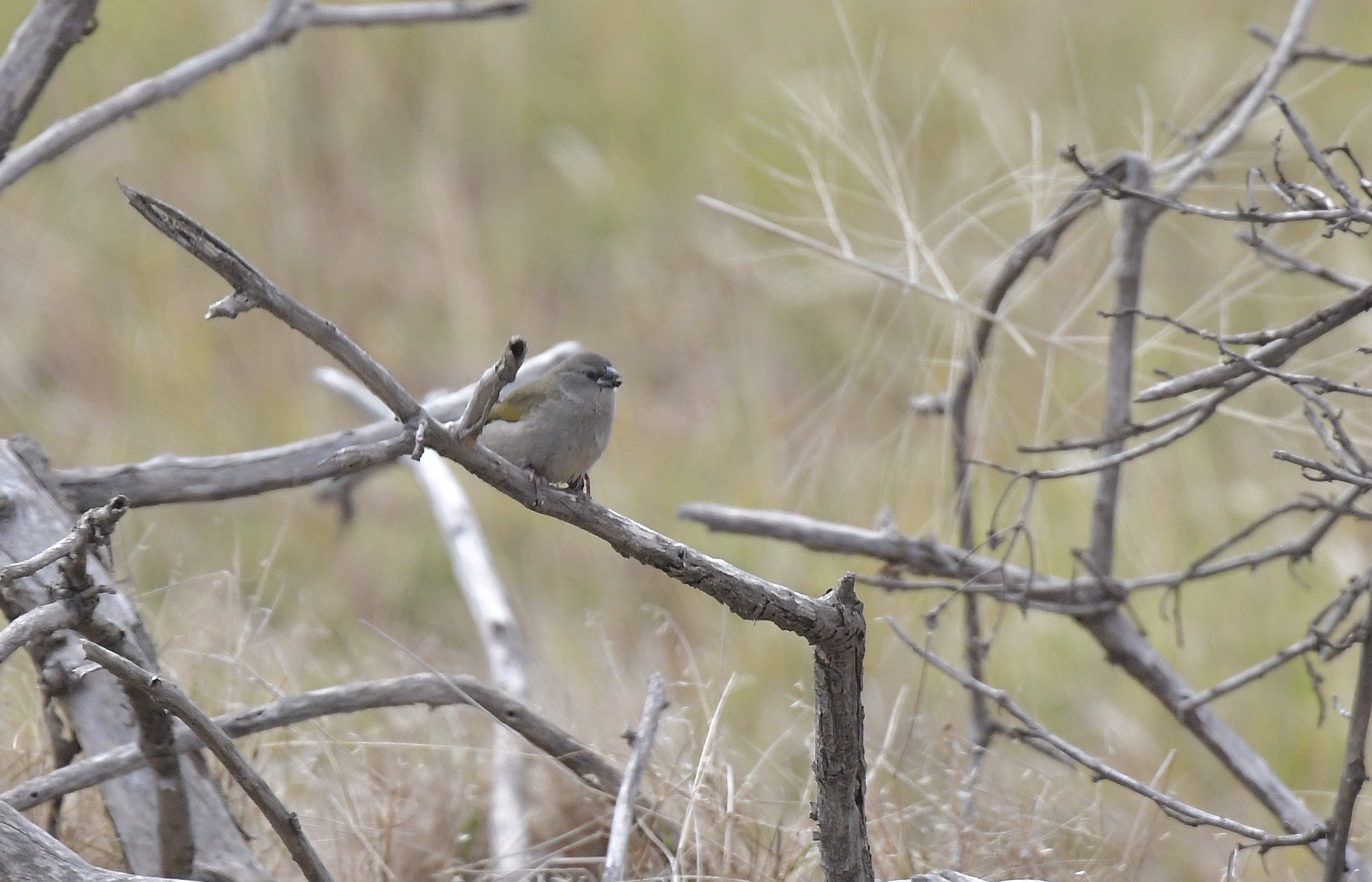
Red-browed Finch Juvenile Photo Courtesy EE
Varied Sittella Photo Courtesy EE
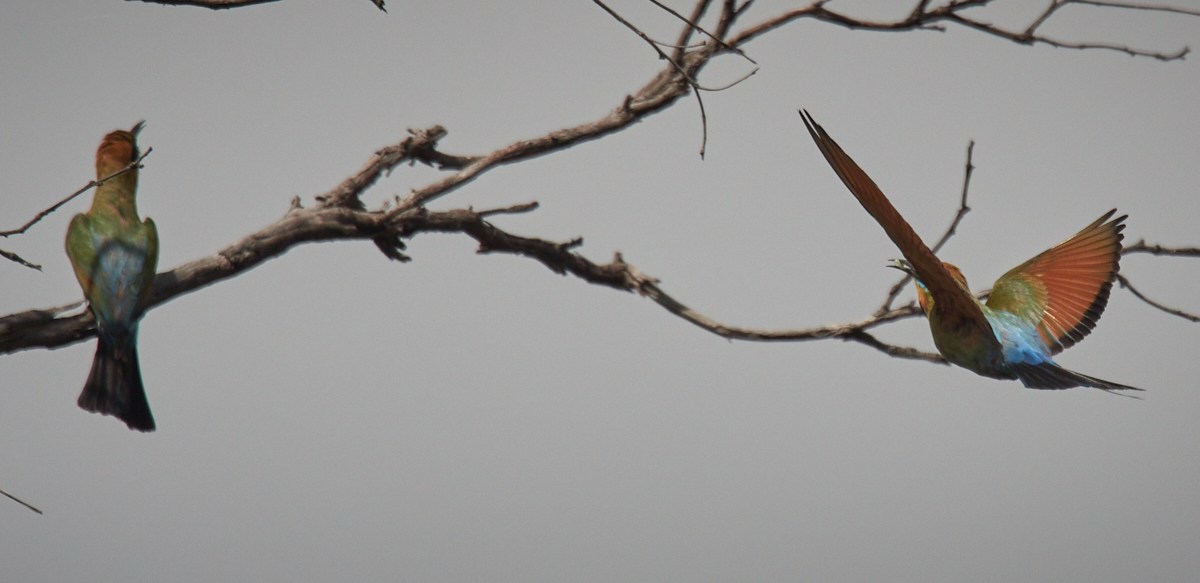
Rainbow Bee-eater
Rufous Whistler female. Carrying a snack. Try as we might we didn’t discover the secret
Whistling Kite, coming by to see the fuss
Whistling Kite, enjoying the view in the sunshine
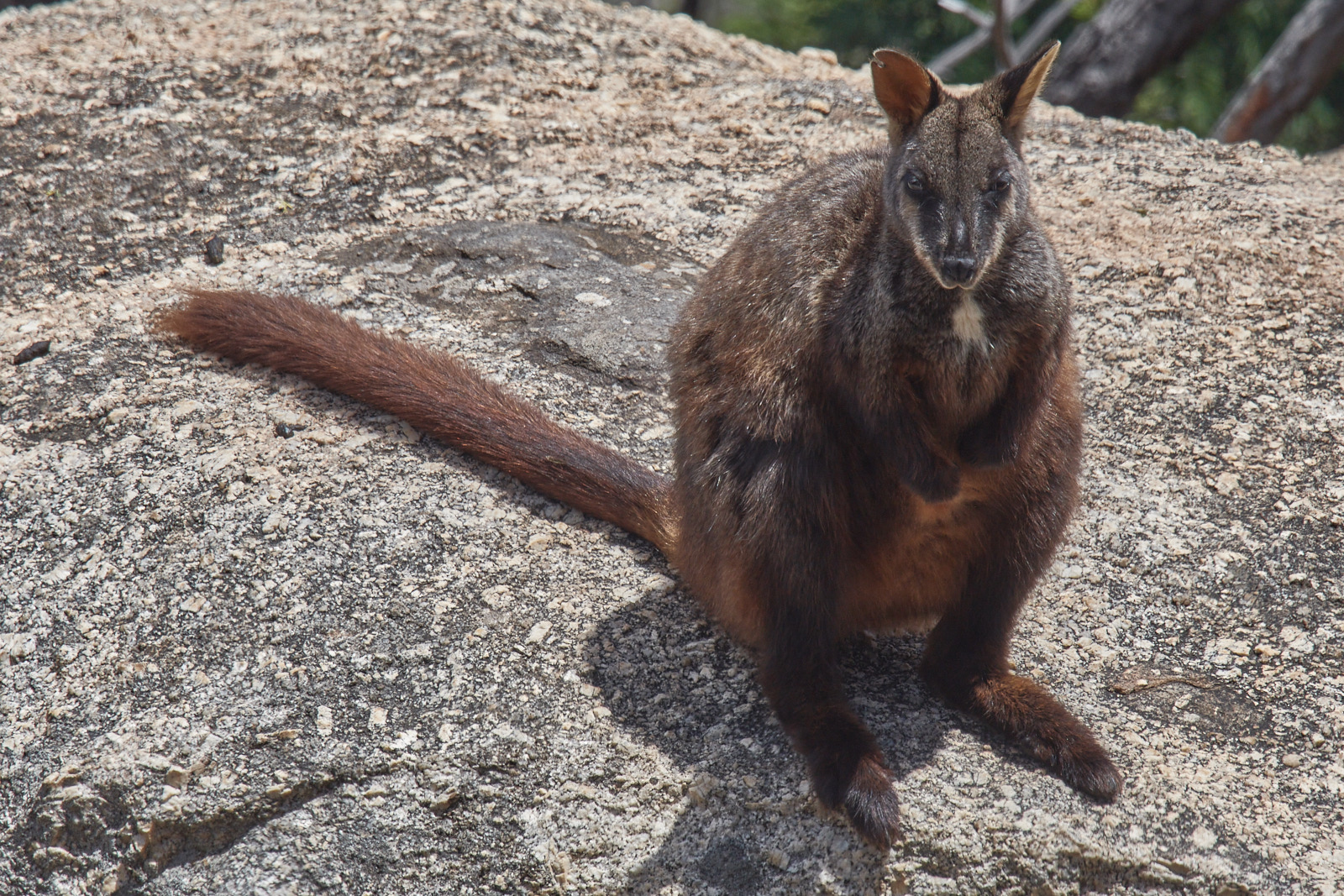
Brush-tailed Rock Wallaby. Showing off its its best asset
Dusky Woodswallow

Saturday Evening Post #117 : Feeling the Magic (part 1)

Got a note from David DeChemin the other day.

He asks the best questions.
“Do you remember the first time you looked at a photograph and you saw how powerful they can be?”
“The thrill when you felt something and maybe couldn’t explain it.”

Well, I can’t recall the first photo I ever saw that had that stopping experience. I can, and I’ve mentioned it here before, recall the the moment I walked into a newsagents and there on the front counter display was Steve McCurry’s green-eyed “Afghan Girl”  on the cover of National Geographic. An image that has probably moved many people.

Likewise, Gene Smith’s “Tomoko in her bath”. I chose Paul Neil’s website version as he too talks about the impact of the photo on his photography. He also explains how the image has been withdrawn at the family’s request.

My list is a bit longer but the one image set that I think drove home to me how powerful photography can be as a story telling medium, occurred quite early in my ‘career’.

A noteworthy event happened in the country town I grew up in.  Many no doubt will have visited the Swan Hill Pioneer Settlement. (It was I think one of the very first of its genre in Victoria.)

The feature of the Settlement was to be the Paddle Steamer Gem.
Best ref I can find is a Pintrest series by the Pioneer Settlement. (No, sadly my pics are not there. 😦   )

As a very young photographer, I followed it for most of the day on its last journey as it was towed by the PS Oscar W.

Home I went, processed the film (It was a 120 roll shot with a Super Baldax camera), made some prints and my Dad helped to paste them on a board, which he took to work the following day.  Because of the interest of the moment, comments of course flowed.  And while memory is fading, I think I made a few prints to give to his work colleagues.
But what impressed me is, as David D says, “Photographs can touch us deeply. They can create experiences in our emotions and imaginations that we never forget.”

There is much said today about the best, “new camera, new lens, new software, new plugin”, and I fear that it is always going to be that way ,  while the art and craft of photography’s magic is put to the side while pursing the greatest, current, soon to be swept aside fashion- the next quick fix.

I’ve enjoyed the magic over so many years, and it still gives me goosebumps when an image  reveals, not just what I saw, but the way I saw it.

The Black-shouldered Kite was sitting quietly in the early morning light.  I could see the richness of the mist behind, the pearly mellowness that brings the subject’s character into a new view.  Took me awhile to manage to get the Lr sliders and effects working for me, but it was worth it to say, “this is the way I saw it.”
Magic.

From the Field Notes Book: The Serious Business of Feeding a Hobby

We had, about a month back, one of those beautiful days that make photography not only a pleasure, but also a chance to nail some great detail.

The Hobby pair were still feeding the young, and the male was providing a steady assortment of snacks.

Here is one delivery from the series

  • The male flies in and sets on a well used exchange branch. He then calls, softly, and she has been sitting high of the nest on another tree.  Without hesitation she glides to meet him. You can just see her wing in the top of the frame.
  • With a minimum of fuss she quickly acquires the prize

    • In barely the  blink of an eye and she is on her way. As usual he is intent of watching, I assume to be ready to quickly pickup if she slips (not likely)
    • Securely tucked up, she is on her way

    • And a quick look at one of the young, now only a few days from flying.

Saturday Evening Post #116: Constancy

Clear sunlight on falling snow: fire and ice.
Bareboned trees stark to the horizon
Cold marshes, haven to ducks and geese.
A Falcon sits motionless on the post.
Deng Ming-Dao

He then writes that wherever we are, the constant change of life and the cycle of the seasons in upon us. We notice the ongoing rhythms of life.

Trees that spring to life after rain, or a change of season, ducks that know the time to breed.
All tings change, while all things move constantly.

The world he says is like one gigantic turning wheel.

I was nearly going to title this “Ready for another year’s journey around the Sun”.

But, then a friend sent me the following, I hope you find humours, gif

and given the harrowing journey we have taken with the virus and the attempts to control it, the sad growth of staggering numbers in other countries plus the local lockdowns to limit it in our various states and now add to that the tumultuous events of insurrection in the Washington DC, the 7 day trial has not been all that inspiring.

As it happens, EE has a T-shirt with the words, “Please Unsubscribe Me from Your Issues”  She wore it a time of uncertainty and upheaval, where group ‘membership’ defined people. And that time passed.

Chronicles of a Blogaholic has a most passionate post on the attempt to start the Second Civil War in the US, it’s a wide ranging thought provoking piece.  Coup d’état

When I was a mere broth of a photographer one of my mentors was ‘hot’ on Chiaroscuro— or light and dark.
Not just for the effect, but also as the method of carrying the story.
 
Cycle through more years than I care to write about, and the challenge of working in this fine light with this wonderful bird against that backdrop gave me some great memories.

One of the benefits of such light, apart from the challenge of exposure is the beautiful way the subject stands from the chaos behind.

Stand boldly young Falcon

From the Field Notes Book: Care and Feeding of a Hobby

Some more moments from feeding habits of Hobbys.

This is a single event.

  • The Male flies in with his latest acquisition.  He calls quietly to announce his presence and then just sits and waits.

  • With barely a wing-flap she sweeps out of the nest, circles and lands beside him.

  • He is always wary about letting go of the prey until he is certain that she has complete control.

    • Every time there is a food transfer, he is always so intent on watching that it has transferred correctly. He always seems ready to slip of the branch should she lose grasp.  I’d guess that it would only fall a metre or so before he was on it.  Still, I have never seen her miss.

  • Away to prepare it for the young.

  • This is not from the same sequence, but fits into the story line here well.

More to come.


Saturday Evening Post #115 Going Out, Not Knowing

Came across a Quote for the Day, today that used a Christian Holy Bible verse.

“…he went out, not knowing whither he went…”, The Letter to the Hebrews (Gotta love that King Jim English)-see ps below.
Tells the story of a dude in Mesopotamia that went out one morning and, well, just kept going.

Intrigued me, as I use a highly stylised version of Tolkien’s Aragorn poem,
“Not all those who wander are lost;” as a blog byline.

Seems to me  that no matter how well I can plan a day out with the birds, in the end so many times I don’t know what I am going to find.
Tolkien, “A light from the shadows shall spring”

Truth be told, there is a bit of the thrill of the chase. An acceptance that I am being invited into the lives of fascinating creatures.  The only thing I can be sure of is that the birds will have their lives to live and my small investigative muse- Lyric Poetry?- will have to welcome what is on offer.

Occasionally on the track armed with camera and gear a passerby will ask, (usually innocently)  “What are you doing?’ or more pointedly, “So, what are you photographing?” I’ve mentioned some of my usual responses before, but, really the answer is, “I’m waiting to see what the birds are doing!”
How else do you explain a sense of wonder?

So I bustle through the morning necessaries, getting ready to ‘Go out, not knowing wither I go!”, expectantly looking forward to a new opportunity  that is bigger than my vision of the world, and so much more exciting.

I trust that 2021 brings the most exciting visual opportunities to your lens.

PS: The original story in the Hebrew text says in the rather lyrical, “Lech Lecha”—can be roughly translated as “Go out to Yourself” as in an “internal odessey”

Now you know the extent of my  ancient text knowledge 😉

A Fascinating Hobby

All the usual warnings of images that contain material that may ‘offend’ some viewers, and the plea to be sure to contact the appropriate helpline.

Ahh, political correctness.


I have, it must be told not ever thought about Falconry as a pasttime.
Not the sport of the rich and regal, but rather the Falconer, and their intimate relationship with these amazing birds of prey.

That such a bird could in fact be domesticated in itself seems hard to grasp.

It is also true that I’ve never spent any more than a few glancing seconds with any of the falcon family (exception being Brown Falcons, but let’s face it, they don’t have the same mystic of the Peregrine or Hobby.)

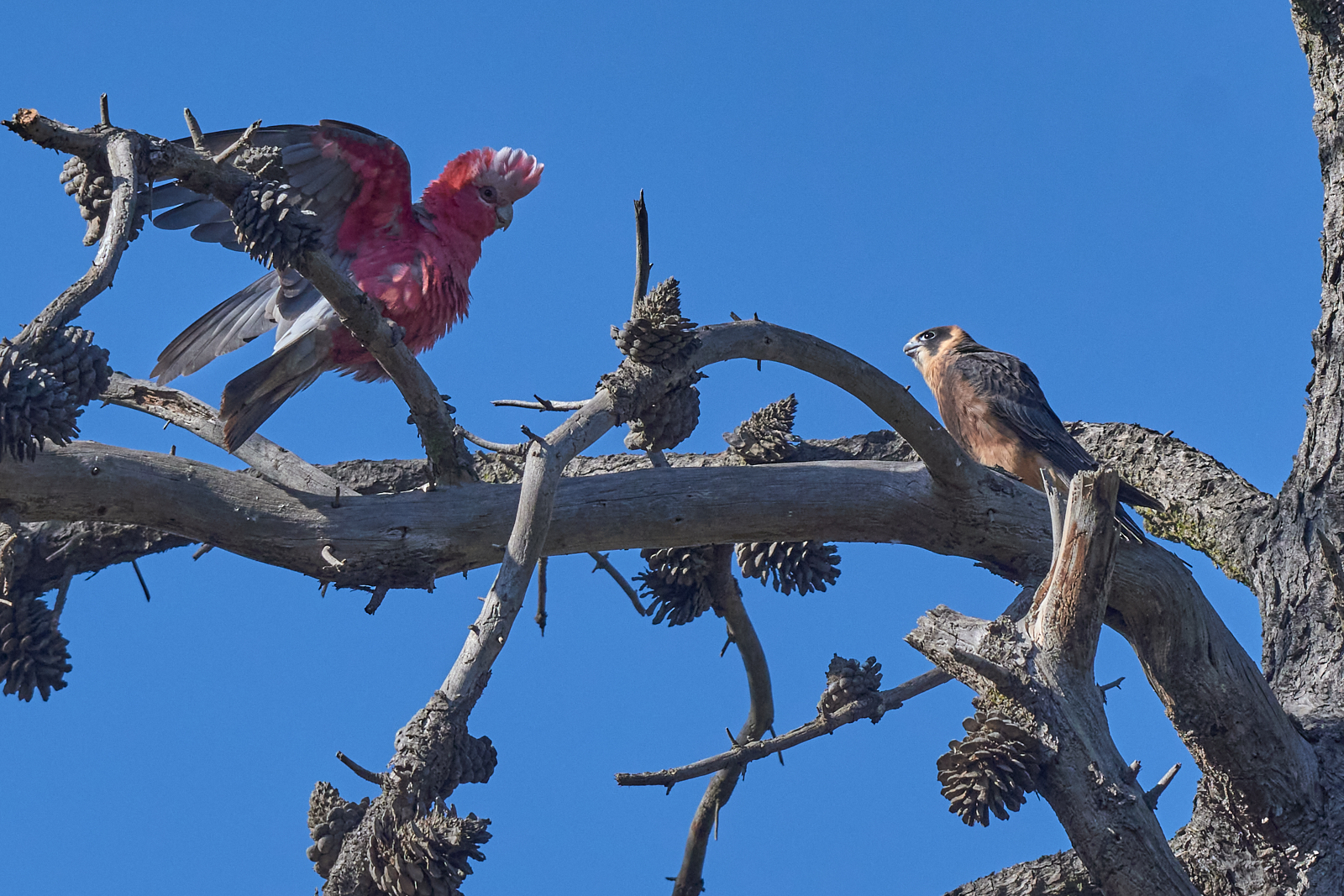
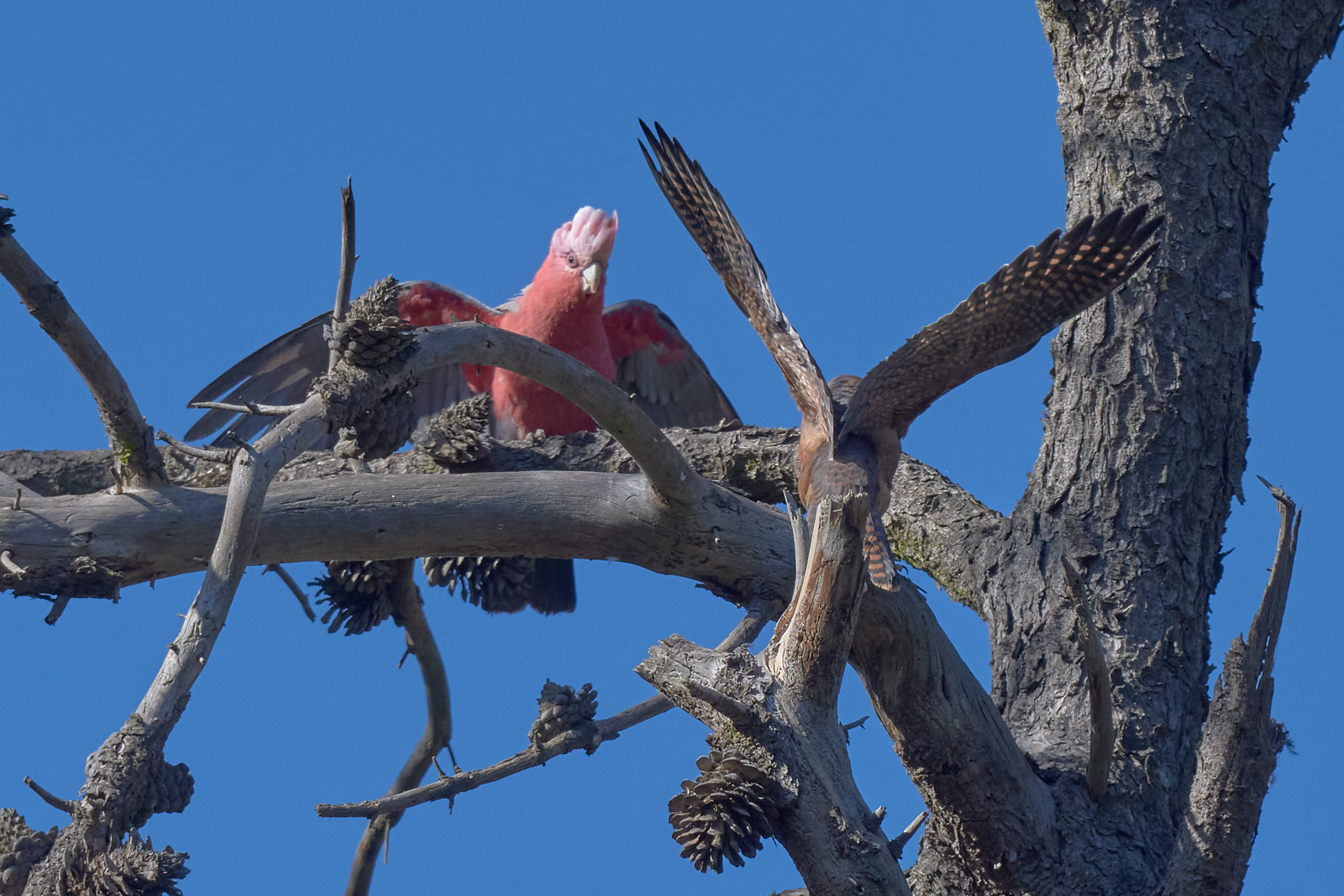
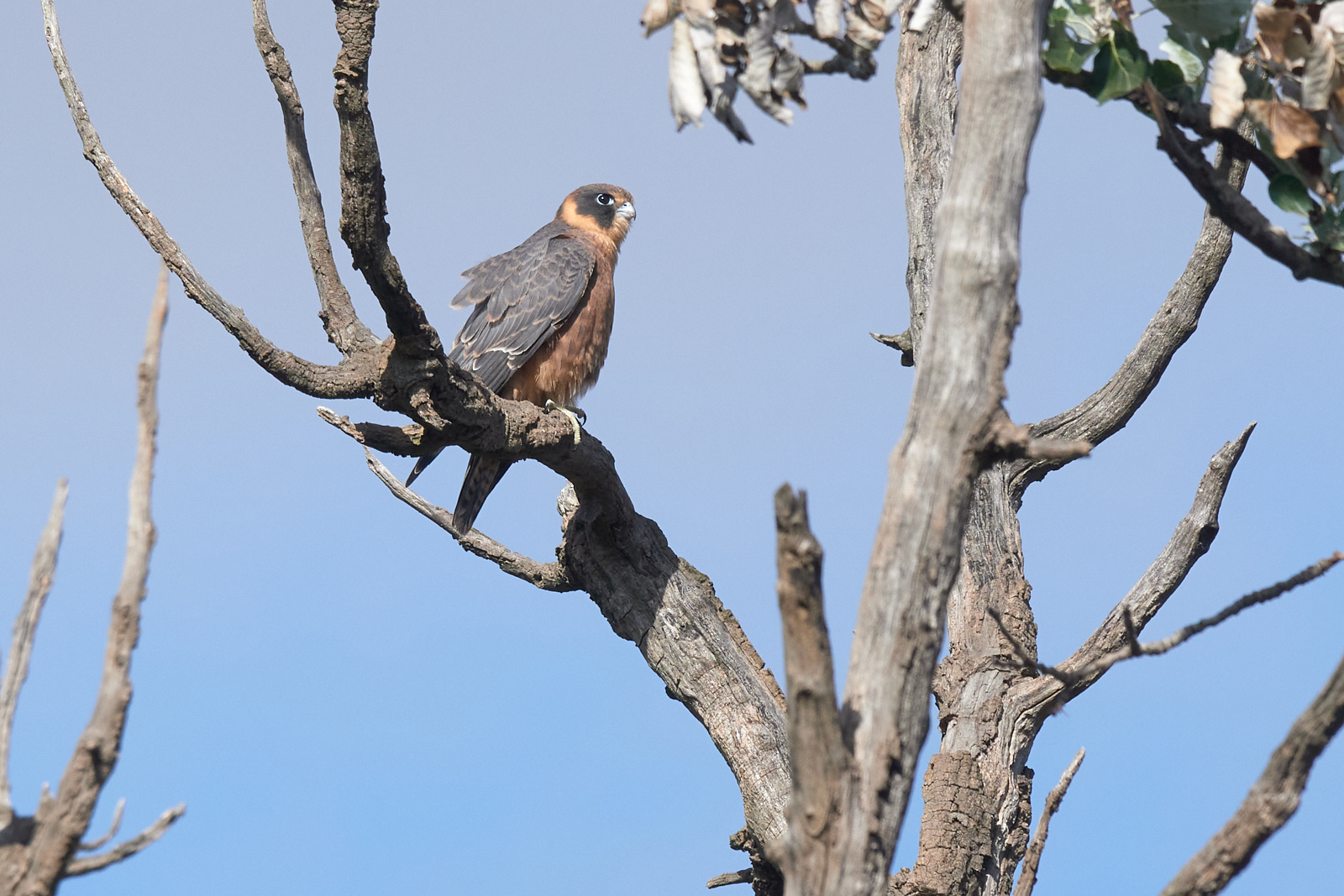
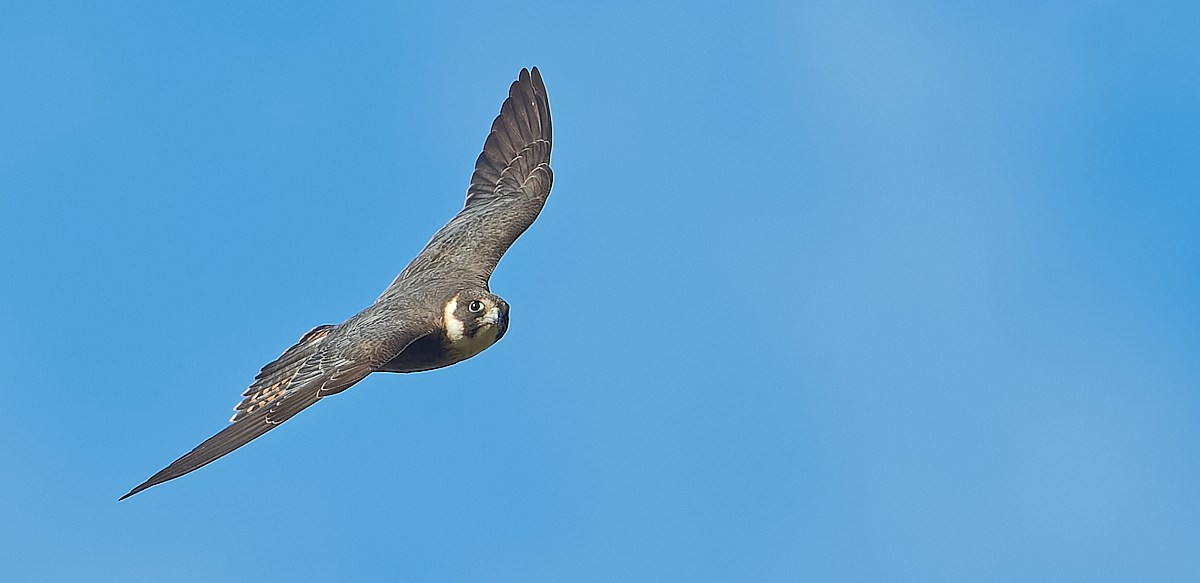
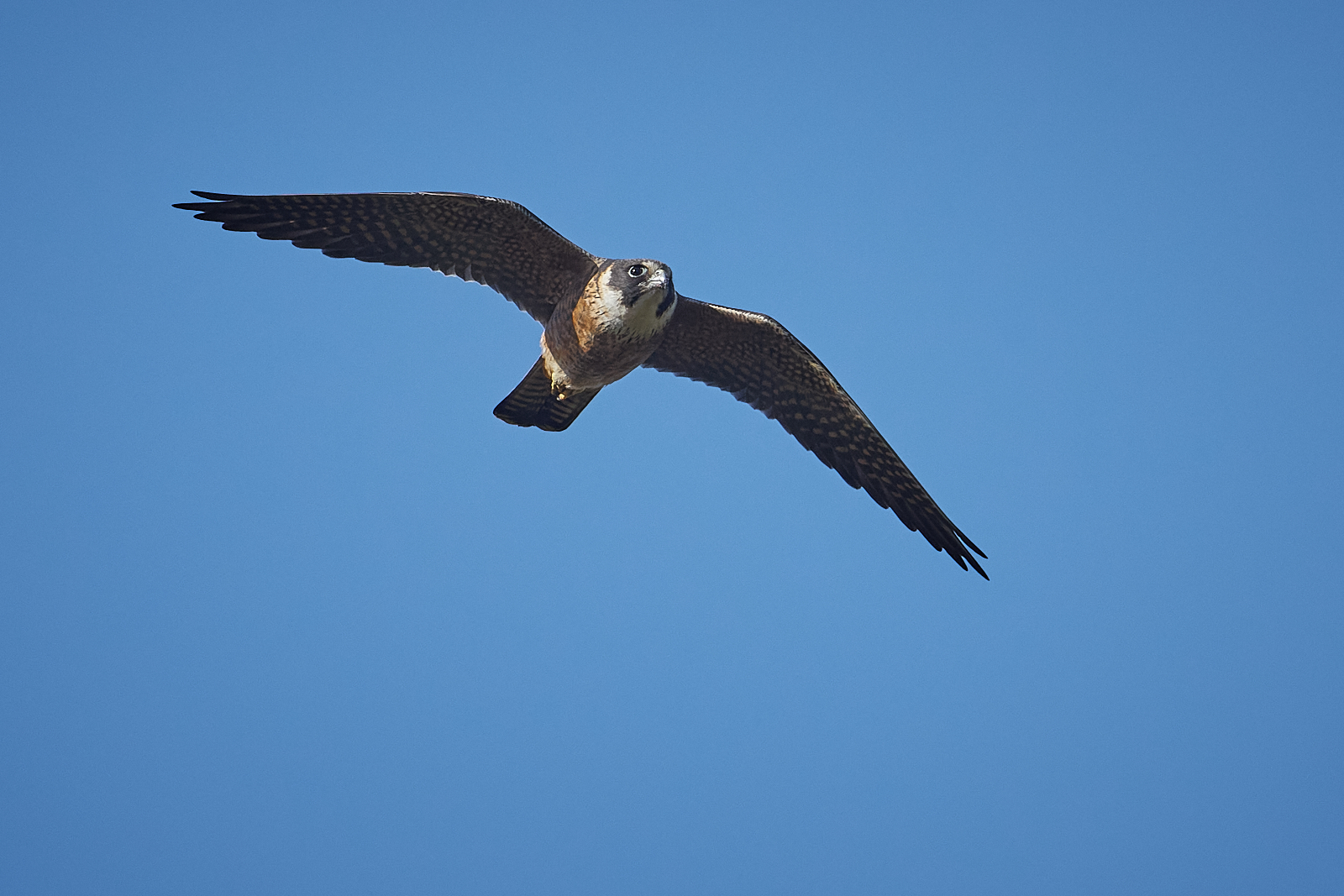
So, to have a close encounter with a pair of Australian Hobbys (sic—my spelling of the plural) and their resulting young has been quite a thought provoking experience.  Over the past few weeks EE and I, Mr An Onymous, and Neil  A. have clocked up quite a few hours learning a little about their habits, character and approach to life.

In no particular order some bullet points from my field-notes.  I must stress this is not scientific research, and is quite anecdotal-bordering on the anthropomorphic. (Again the usual warnings also apply)

  • Hobbys seem to like to sit on the highest branches available. If there is a higher one, they will move to it.
  • Hobbys seem to favour nesting in the tallest tree in the area.  And they don’t build new nests, but rather inhabit existing, mostly magpie, nests.
  • They have a wariness of humans, but at the same time seem to have developed an awareness of human habitation and used it for their benefit.  We regularly see a pair hunting through a supermarket carpark. Hard not to be impressed with a bird at over 70kph skimming over the parked vehicles.
  • This pair have used the same area, and I think the same nest for at least the past three seasons.
  •  The female sits the nest. The male brings in food.  Unlike other raptors she does not complain until he arrives. She is usually quiet.
  • He too is quiet on arrival.  A couple of short croaky calls, and he then sits on an conspicuous branch and she quietly comes and removes the catch.
  • They are both masters of efficiency.  A glide will do instead of a wing-flap. The change over is precise and almost instant.
  • He always carefully watches after she takes the food, I have concluded that if she were to slip and it fell away, he would be on it before it had dropped more than a metre.
  • This pair have feasted on Wattlebirds, Starlings, occasional Welcome Swallows and quite a parade of young Fairy Martins.  Also other larger birds that were unidentifiable as he had pre-plucked before arrival.
  • Any passing raptor, or raven is chastised from afar, and if it still persists then one, or usually both, will take close quarter action. It consists of gaining height and rolling over into awesomely fast stoops on the interloper(s).
  • I can’t find a reliable reference, but it seems they can clip along around 85-90 kph in a straight flight.  In a stoop, the speed might be as much as 150kph  or more. They are only short bursts, not the long running dive of the Peregrine.
  • In Falconry, the male is called a “Tiercel”and Old English word meaning Third. Perhaps because he is as much as one third smaller than the female. Or is it she is one third larger?

From a bird I have had only the briefest of encounters with, it has given me quite an insight into why they could be trained and how much skill a falconer must have accumulated.

Here is an a couple of days activity before the young were flown.

Click on the Gallery for larger view and slide show.