So I’ve chosen a new header image, and it will be static for a few days, then I’ll add it back into the random set.
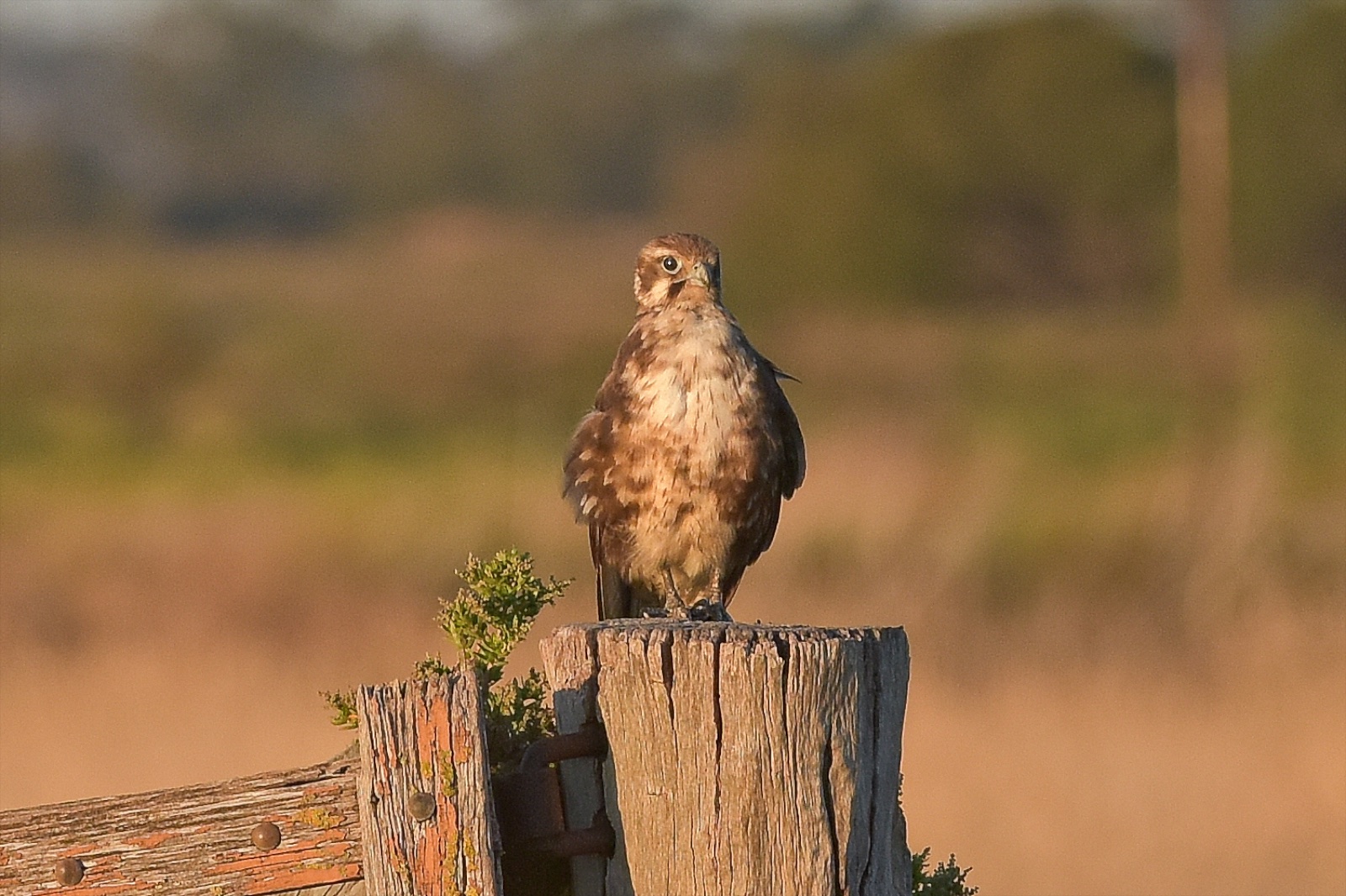
Falcon at the Harris Gate
A mentor of mine John Harris by name, well he was both a mentor, torMentor, inspirational creative, and all round great bloke, came down to the Treatment Plant with me one day. We drove around and he was more impressed by a gateway than perhaps anything else. “Always look at the details, look at the obvious as there is always a highlight there somewhere, that others aren’t seeing. That is the diamond. Look for it always.” to somewhat paraphrase a long lecture.
On the way home he discussed a Gateway he’d seen and wanted at some stage to make another trip down in late evening light to photograph it, in his inimitable manner.
But, life didn’t play him that card, and he passed on to finer scenery not long afterward. In his honour, I’ve searched out that gate and named it the “Harris Gate”.
The other night on the way back home we passed the Harris Gate and lo and behold a Brown Falcon was enjoying both the gate, and the evening sunshine.
So John, it might not be the series that you saw in your minds eye, but old mate, here is the best I could do.
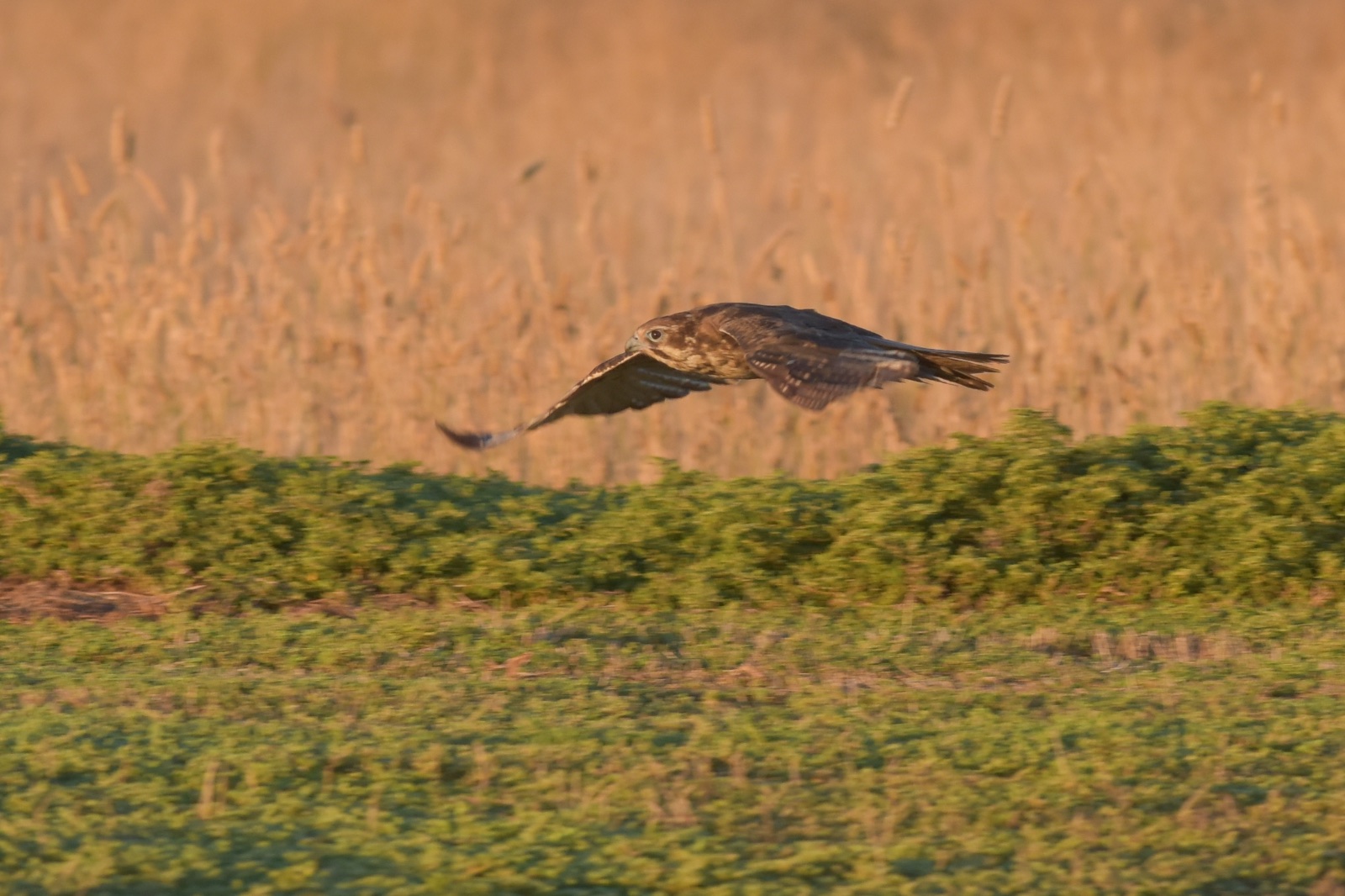
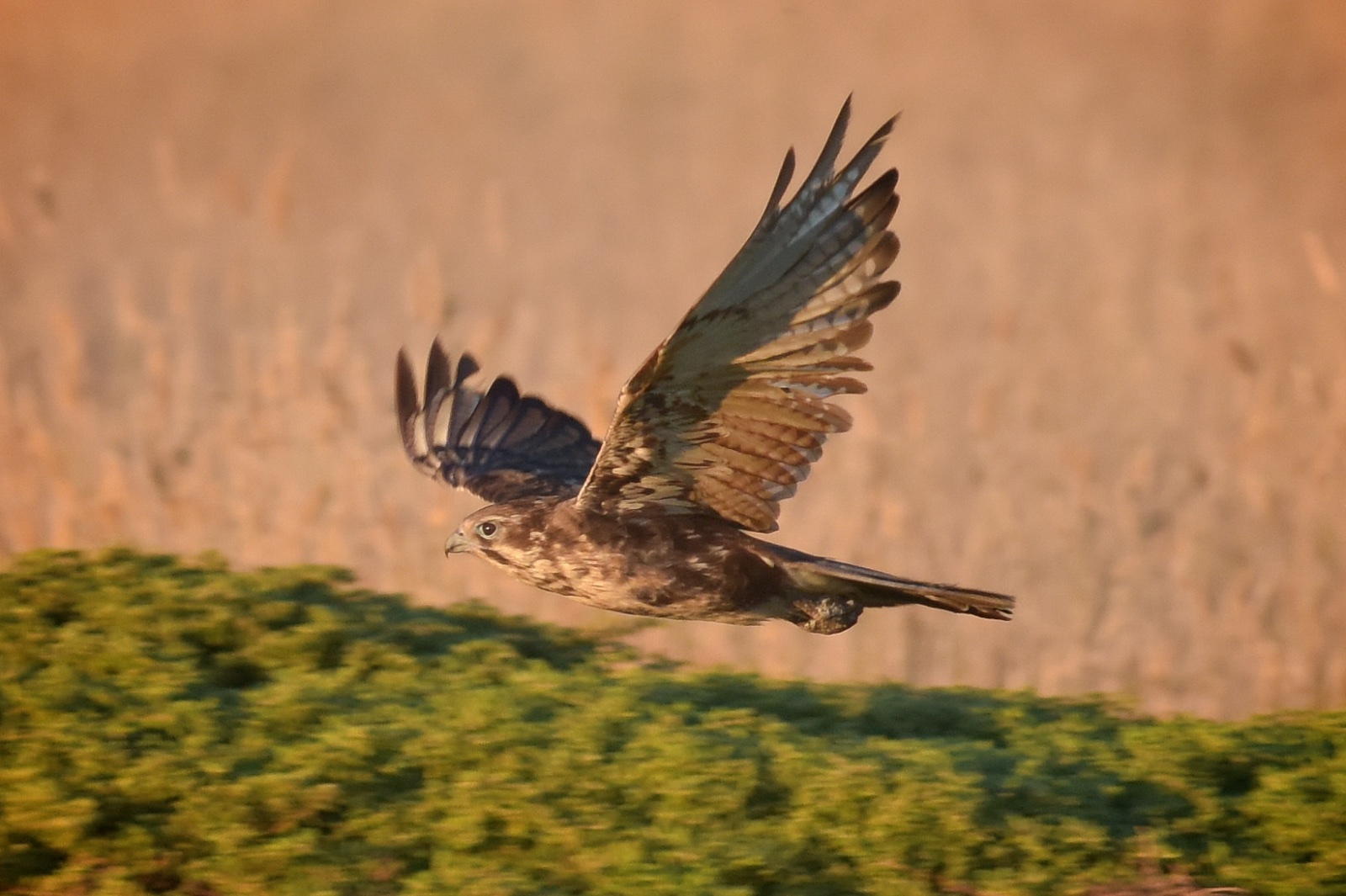
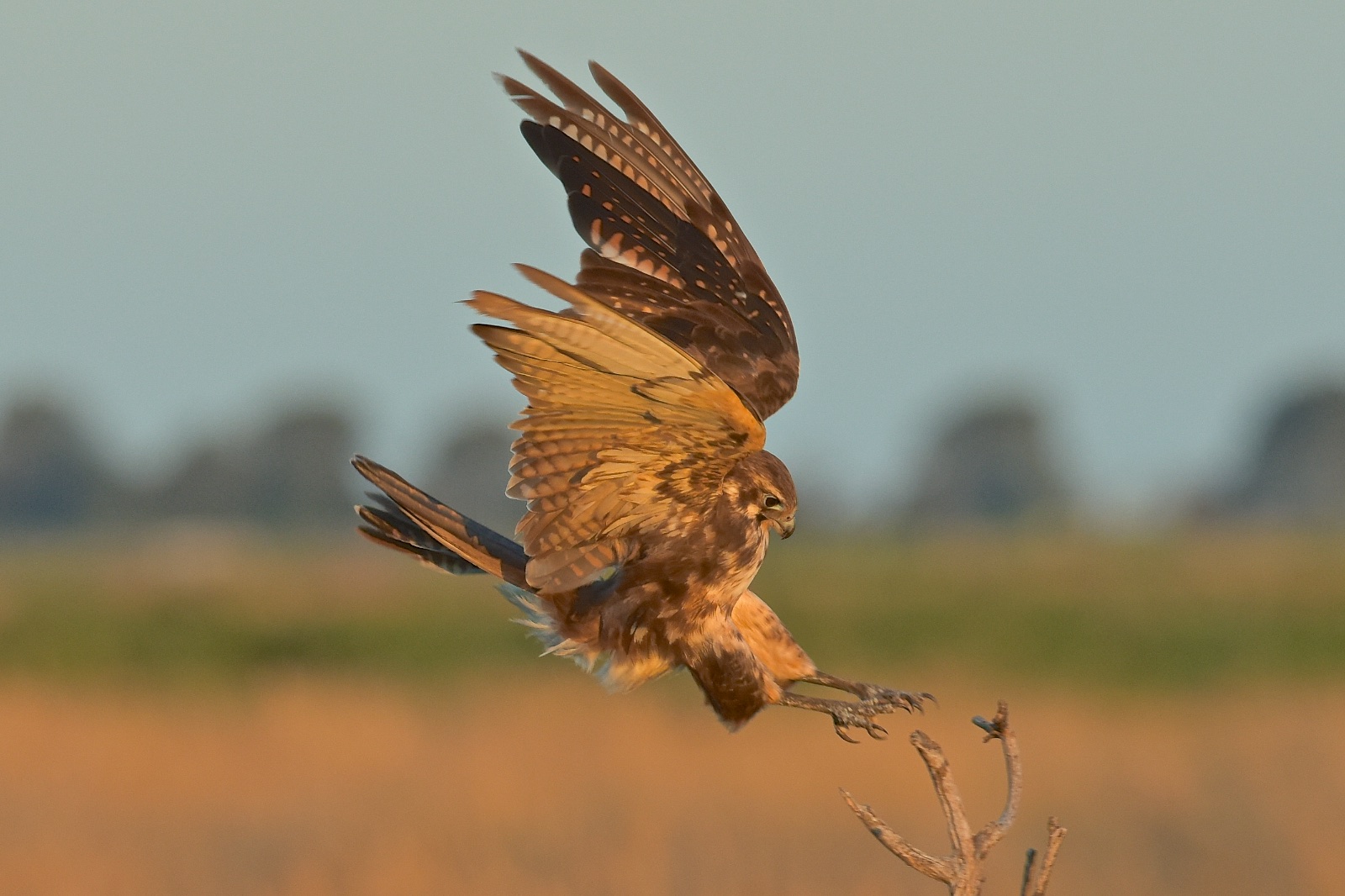
Brown Flacon Sitting Pretty on Harris GateTypical Brown Falcon Exit. Low ground hugging and fastThe Absolute Master of the bush top Flying
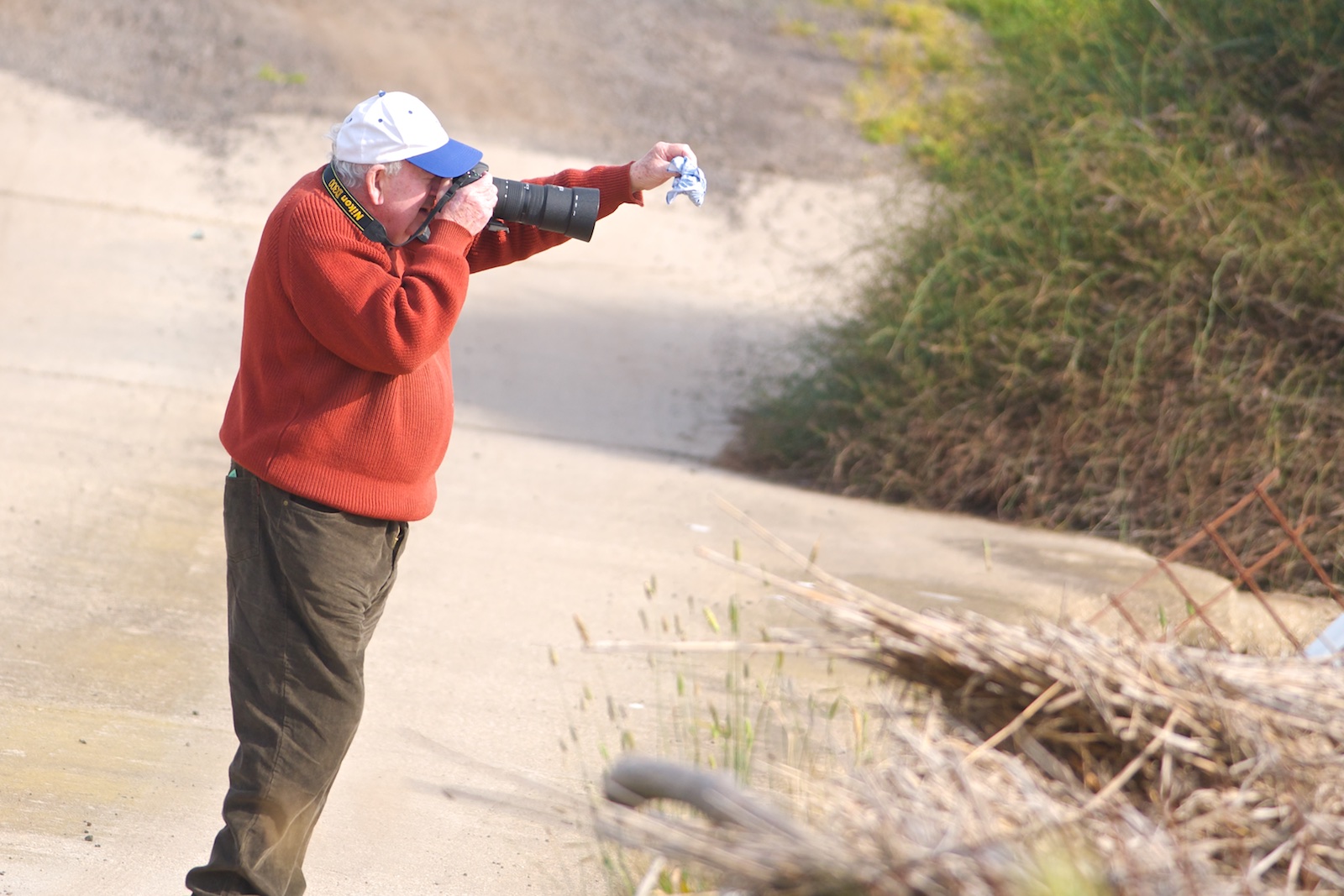
Another Master at Work. John Harris at WTP. The handkerchief is to remove nasty lens flare from backlighting. “It’s all in the details, look closer, that is where the story is. It’s all in there” OnyaJohn
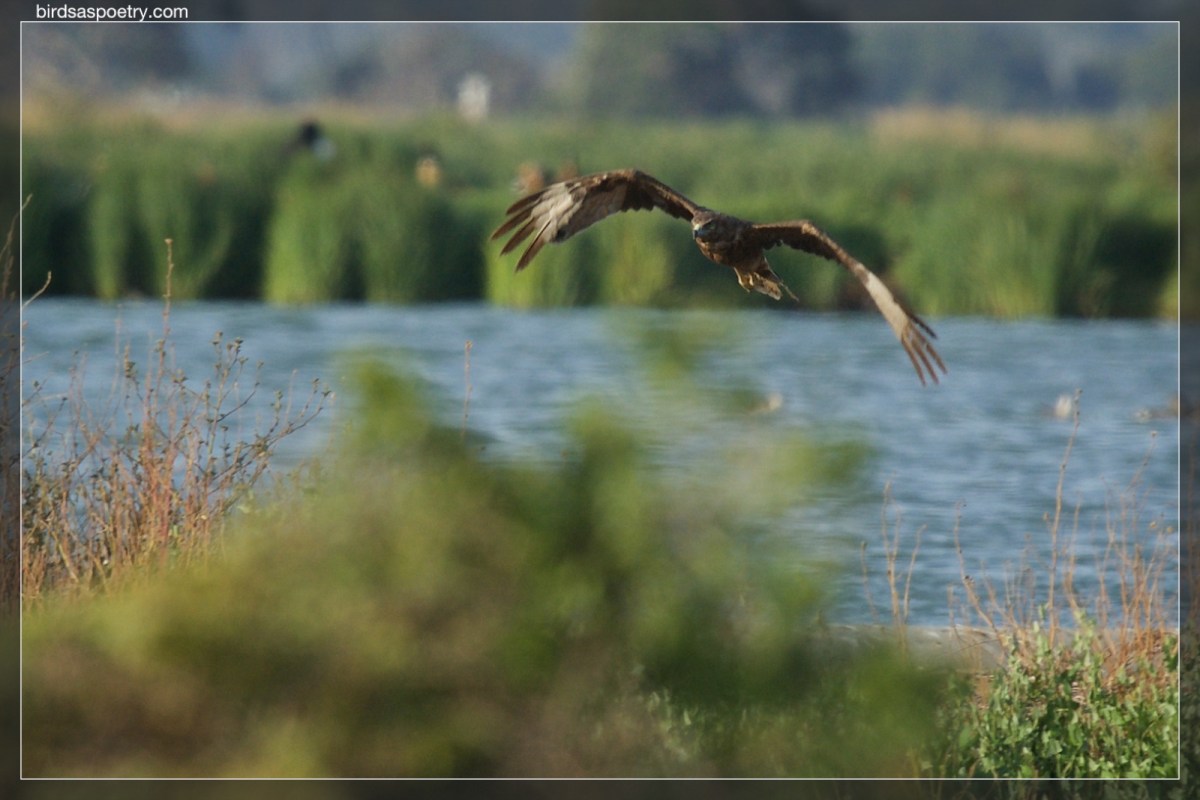
Time to add another chapter to the Complete Guide for “Sneaking” up on a Swamp Harrier.
By now we have established some golden rules to ‘sneaking’ up on a Swamp Harrier.
For those who skim read, here they are.
Rule 1. You Don’t Sneak up on a Swamp Harrier.
Rule 2. None known in the universe.
We adopted a new technique the other evening. Find a spot to park, setup chairs, open picnic basket, ignore Swamp Harriers. Actually the real reason of course for the visit was the ever elusive White-bellied Sea-eagle.
The tide, Mr An Onymous had revealed to me in a private conversation was a low-low tide around sunset.
Armed with this vital piece of data, EE and I decided a picnic evening meal watching the sun set over other bay would be as good as any reason to travel down to the WTP, so as the Banjo has often been quoted. We went.
To Picnic Point. Well its actually 175W Outflow and there is a big blue sign there warning of E coli and all sorts of other nasties, (but not about Swamp Harriers), but for the sake of the exercise we’ll call it Picnic Point from here on.
The technical term, low-low tide means this is one of those tides that makes those funny tidal graphs drop really low on the page. And it means in practice that the water level drops dramatically and reveals the mud/sand flats out several hundred metres. With such exposed areas, the small shore birds, (waders), come in their tens of thousands to gobble up as much rich food as they can.
And because of that low-low tide, the Sea-eagle can patrol looking for an easy snack, either to take alive, or to find carrion. Its an either/or for said Sea-eagle, and if all goes well, from our Picnic Point, it will patrol along the mudflats in great light, in close and will do some really clever Sea-eagle activity and we’ll get some good images.
Which of course as you can see leads us to sneaking up on Swamp Harriers.
Not to be out done the Clever Brown Bird has also worked out the low-low tide might just bring it the snack it so deserves.
We are hull down among the bushes. The Swamp Harriers patrol through the scrub.
From previous chapters, its pretty obvious to me that the Swampie has the area well and truly mapped. Nothing is a surprise to the average head-down hunting bird. There is no “Oh look a fox killed duck, I might just swoop down and pick it up”. No, it knows the carcass is there, because it wasn’t there the time before. And humans, well they either drive around in circles or are large blobs standing against the horizon and easily spotted and avoided.
And for those fortunate souls picnicking at Picnic Point, well they stand out among the bushes as much as anything and from a distance can also be avoided. Needless to say, based on these facts. We didn’t get a close encounter with a Harrier all evening. But. We did see a Sea-eagle.
Still the weather was kind.
Enjoy
Head down, comparing the present information with the stored dataNothing escapes that radar gazeOh, look, humans, they weren’t there before. Turn awayHumans. Turn awayTurning away in the evening light. Our presence didn’t come as a surprise to this bird, it simply continued its business along another track.The elusive, White-bellied Sea-eagle made several runs along the low-low tidal flat. For some reason it was carrying grass from a previous swoop.
Oxymoron: (def). is a figure of speech that juxtaposes elements that appear to be contradictory.
Hence “Sneaking up on a Swamp Harrier”.
And just to be sure that I am clearly not misunderstood; there is no Book.
Just my bemused attempt of dealing with a bird that seems to be lightyears ahead of my feeble attempts to get a good shot. If there was such a book it would be very short on in pages. A real theoretical experience. And the first chapter would be the last. Sneaking and Swamp Harrier are not compatible.
They are the masters of the bunds along the Treatment Plant. Wafting in the breeze, dropping on unsuspecting prey, harriering the water birds until exhausted they fall easy pickings. And, I believe, they have the area ‘mapped’, so that anything out of place is either open to inspection or senses danger and the bird shys away. Do I then have some respect for these birds. Absolutely.
wouldn't you know it that was the moment the autofocus in the camera decided to recalculate and settle on the reed beds
So take your average evening light, hope its sunny, sit among the reeds and wait. Trying to chase them down only results in a flurry of white tail feathers disappearing over the next bund, and they don’t return.
The spot we’d chosen was on a short bund, with plenty of reed cover. The car was about 150m back buried in some more reeds. We set up the cameras and waited. There are some rules about this- not mine, just the birds. First: Don’t move. Second: Don’t Move Third Don’t MOVE.
Riders to said rule. Don’t get all excited and exclaim to no one in particular. “Look, its coming toward us”.
And don’t make that the moment that you move the tripod/camera for a better shot, or swing said camera toward the bird.
A head down searching Swamp Harrier is a committed bird. It knows what was down there last pass, and knows if anything looks out of place. And will react accordingly.
After about 15 minutes, (no fidgeting please), along the far bank a lone Swamp Harrier began its run. And about the same time, the sun slipped for the last time behind some cloud and the light went to porridge. Enough to make me prepare to go home.
However, back to said bird on said bund. By now it had worked its way along about half of the 300m or so of reedbed. I’d begun to take the occasional shot. Too far away for much detail, and not enough light now for much interest.
Mark Knofler (Dire Straights) wrote lines for such occasions. “Too far away from me. ” and “It’s just that the light was wrong, Juliet” (apologies for word change)
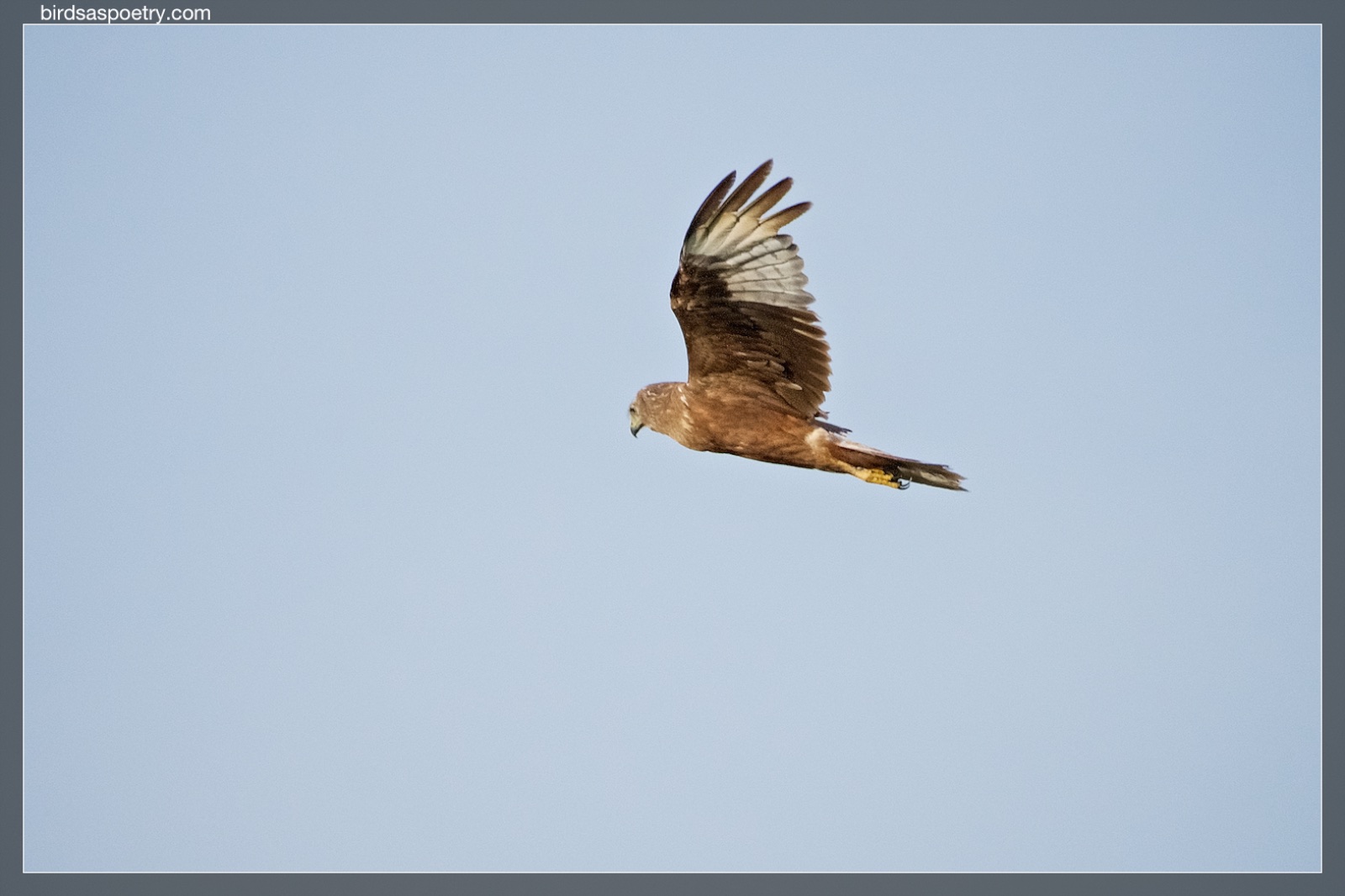
Because of the moderate breeze blowing, the most amazing thing was in the over 300m of its flight path, it didn’t flap a wing once. Just turned its body on an angle and simply sailed along like a kite in the breeze, or canoe crossing a fast running water.
Not sure what I was most impressed by, but the almost energy-less movement was certainly something to behold. With unconscious awareness it came on.
When it reached the end of the bund line, it changed direction, and wing tactics and began to pull up the reed bed in our direction. Lower now, because of the need for wing flapping, and also because the reeds were blowing over.
We waited. (see above)
And sure enough on it came. Head down, completely absorbed; in eloquent silence.
Then, the moment I had anticipated. It pulled up, saw a change that was unexpected. And turned in an instant. And wouldn’t you know it that was the moment the autofocus in the camera decided to recalculate and settle on the reed beds 250m away. I dream of the days of manual focus.
A bitter sweet result.
Yet I still have the memory of its almost effortless track across the bund. We shall go again.
Enjoy.
High in the evening breeze. Simply drifting along the reed bedsReaching the end of the first run.A change of direction along the bund toward us.Working harder in the head windStill engrossed in its mission.The moment of awareness. I checked the EXIF the is about 1/10th of a second between this and the next shot.On the Turn, those big surgical legs swinging out like a pendulum.
A White-bellied Sea-eagle with a catch is as Jane Austen once wrote, “in need of friends”,(well I paraphrased the good Jane just a bit).
We are at Lake Borrie in the Western Treatment Plant, early morning, far out in the middle of the Lake a young Sea-eagle has scored. (Best guess is a Pink-eared Duck).
As it settles down to prepare its meal, out of the sky drops all the Kites and Harriers in the area. Each one wanting to be the Sea-eagles best friend. “Comeon mate, share it about, I’m your best mate, maahte.”
The Sea-eagle doesn’t see that opportunity to increase its Friends list on FB and doggedly proceeded to pluck and consume the feast.
Not that the big birds didn’t try. The Harriers tried their usual ‘spook’ tactics, the Kites a variety of out staring and then hostile aggression, the ravens a mixture of sheer cunning and brute force, but in the the end, the Sea-eagle persisted.
For the Technically Ept: These images are shot on the D810, mostly with the TC 2.0iii on the 300mm f/2.8, Tripod mounted, with a 4kg bean bag to weigh it all down. And the new addition in the D810, the Electronic First Shutter ,which eliminates shutter/mirror bounce on long lenses. (Wish I’d had that with the old 600mm.).
Huge crops as the bird is so far away in the middle of the lake.
Just about to settle down for a fine breakfast and…
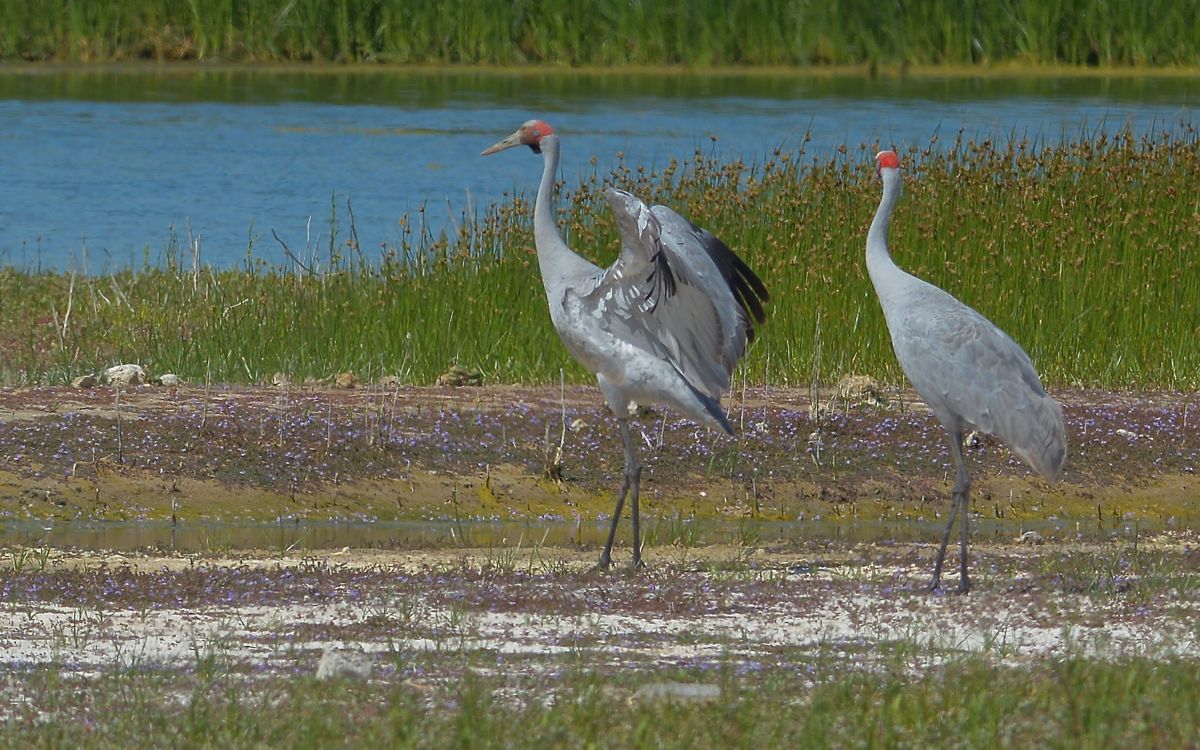
Over the past couple of weeks, the Brolgas that are down in the WTP have been a bit more open and readily noticeable. Either because of their walking along the roads along the bunds, or by flying in from seemingly nowhere.
At first I took to them as photo challenge. Big bird, easy to spot, fairly photogenic.
However after a couple of weeks of working with them, I am enamoured. These wonderful creatures with personalities all their own have walked, sung, and danced their way deep into my heart.
Not that its a two sided partnership. They are very people averse and make their feelings on the subject well know, both vocally and by voting with their feet, or wings.
We had decided EE, Mr An Onymous and I to take advantage of the cool of the morning as being the best way to get the best light and to make a concerted effort to locate the Brogla. Now like all birds, they don’t leave signs, or calling cards, so we left an hour or so after sunup and began our quest.
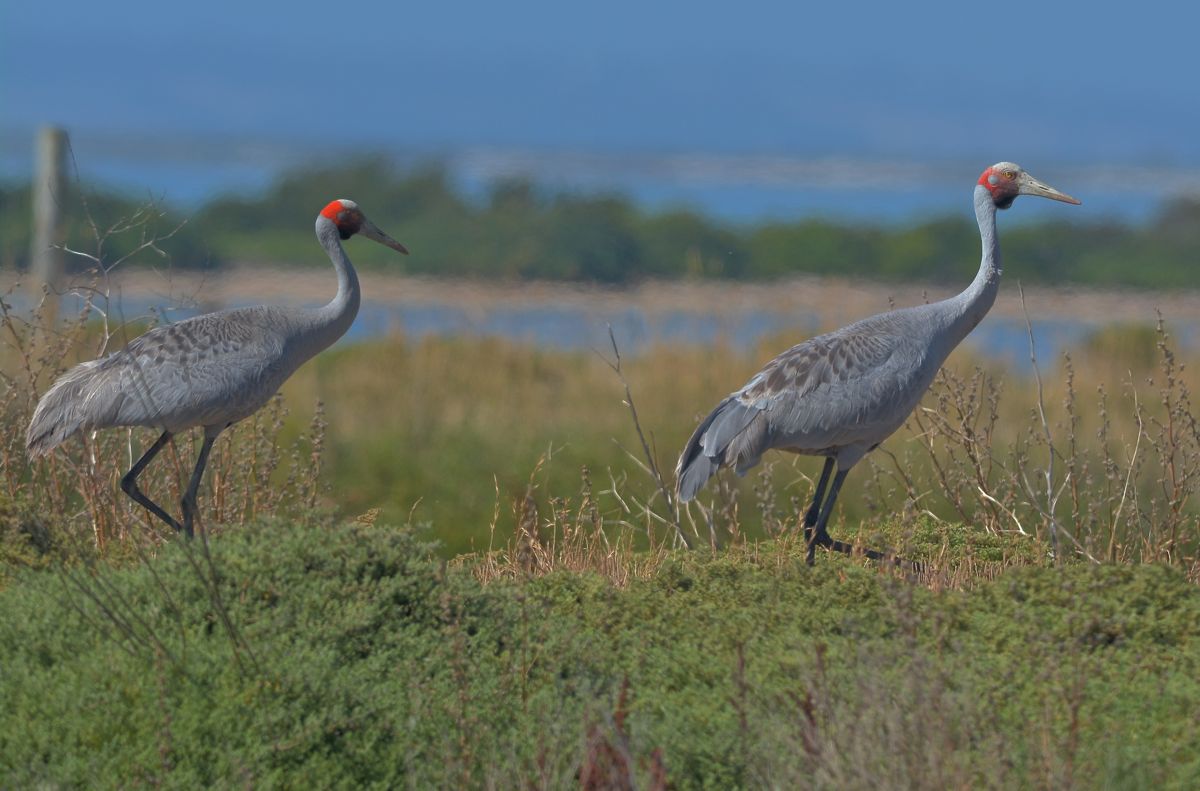
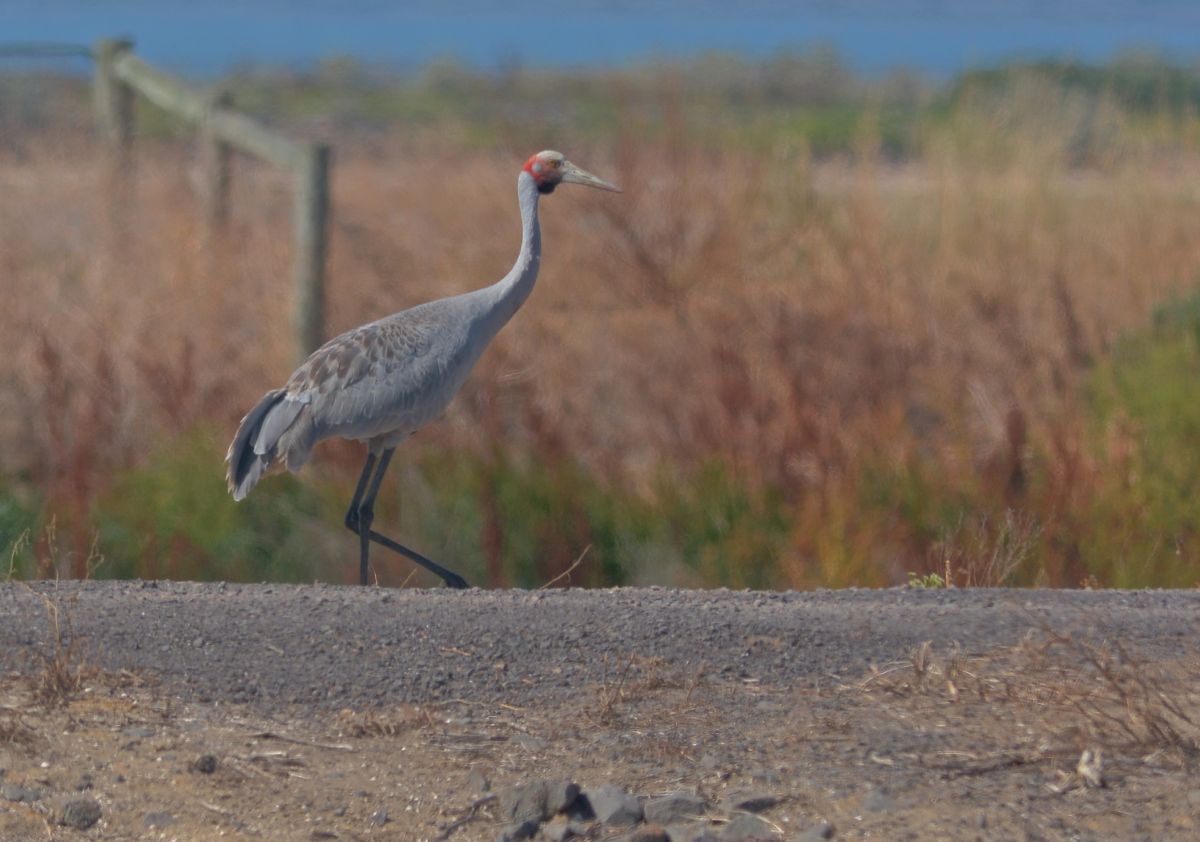
By mid-morning the score was photographers 0 Brolga 3. Then as we were going along the bund to Murtcaim(n) outflow, we saw the Helmutmobile on the other side of the pond, and on the road in front of him. A pair of Brolga. Apparently on a shopping expedition, or perhaps a philosophical stroll in the morning. As Mr An has rightly pointed out, they walk fast on those big legs. And it was as much as I could do to follow along on the opposite bank, as they headed on down to the other end of the pond.
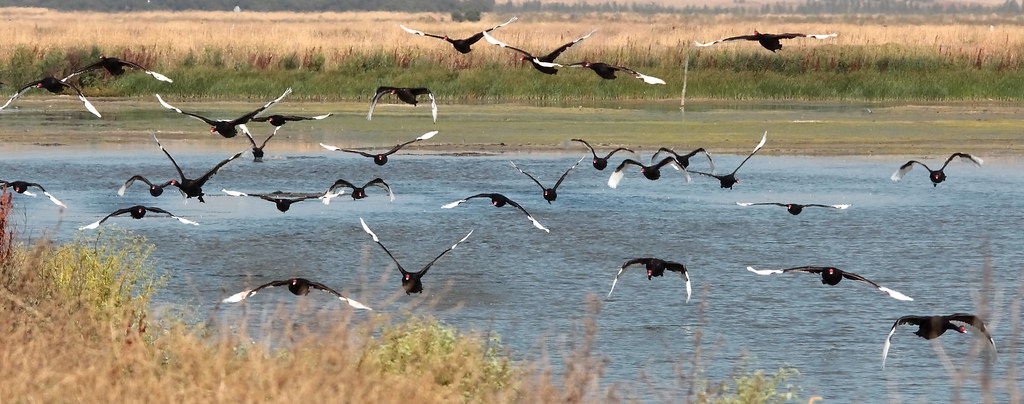
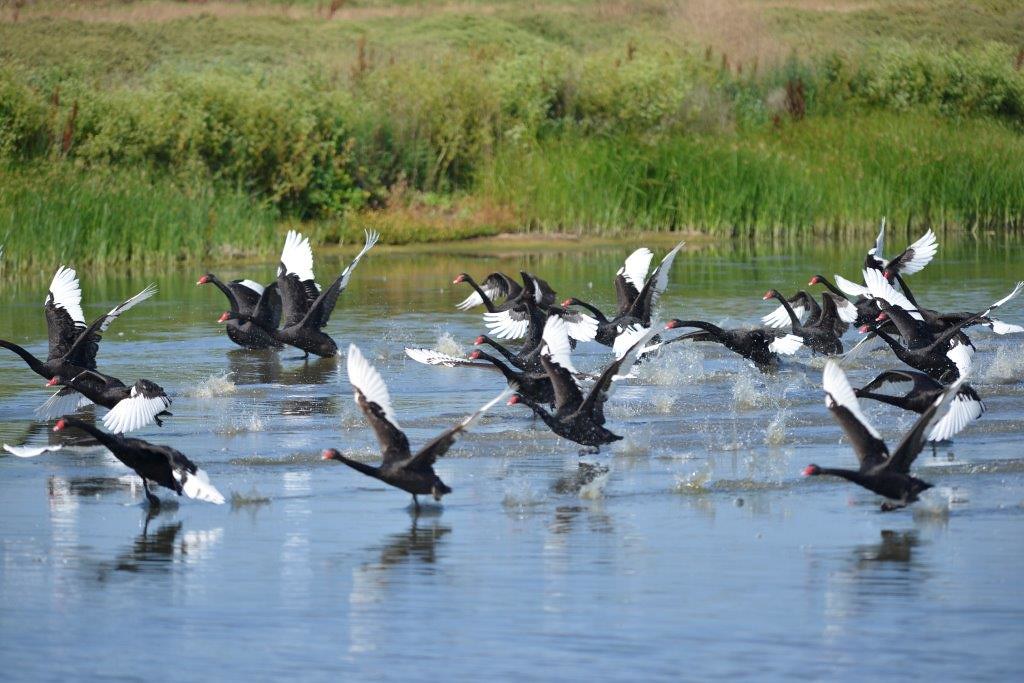
At one point we (both) came upon a mob of Black Swans in the pond, and they were startled either by me, or more likely on reflection, the Brolga. Much wing clattering, foot splashing and eventually they got airborne.
The Brogla stopped, turned their heads, and I thought “Oh, No, they’ll fly too!” But instead they set up a constant calling and looking in the direction of the Swans, and I think I learned some Brolga speak. “Well, Look at those silly swans, we sure scared them. ”
See Helmut’s shot of the Swans in complete disarray on the wing.
Satisfied that honour had been done, they turned and walked nonchalantly off down the road.
I moved to the end of the road, and the pool. There is a road running along there and I figured, they will either turn left and be gone down the road or they might just as well turn right and walk pretty much right past me. However, like all good stories, there was a third possibility that I hadn’t counted on. They walked over the roadway, down the bank on the other side and disappeared into the grass. Brolga 4.
We stopped at the Murtcain(m) outflow, but the tide was in and the best we could do was a nice cuppa and a chat.
When silently as stealth bombers, 3 grey shapes came over the paddock, dropped into the lagoon and immediately started walking. They were much to far out for anything really decent, Brolga 5.
However not to be outdone, I walked down to the end of the roadway and slipped along the roadside trying to get as close, and hoping they would feed across toward my position. Photographer 1.
What happened next was the highlight of my day, probably my month, and might even be my year. (I don’t aim high!).
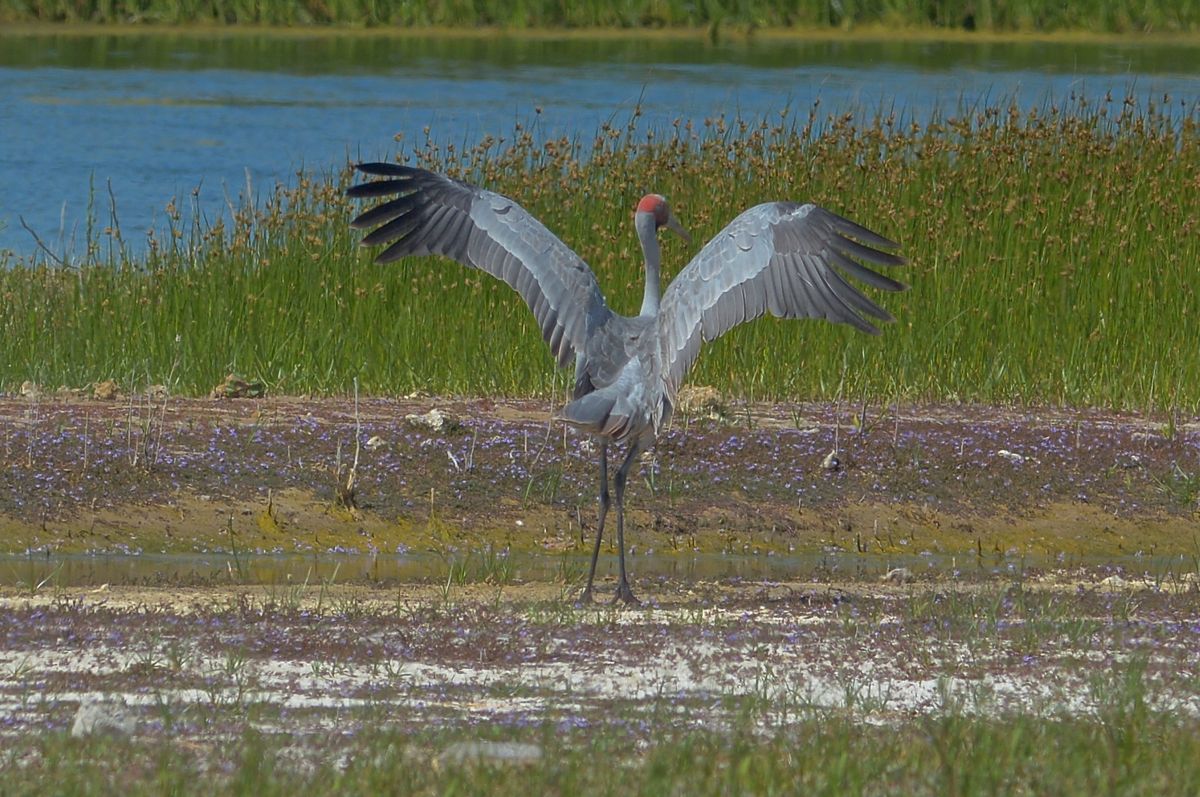
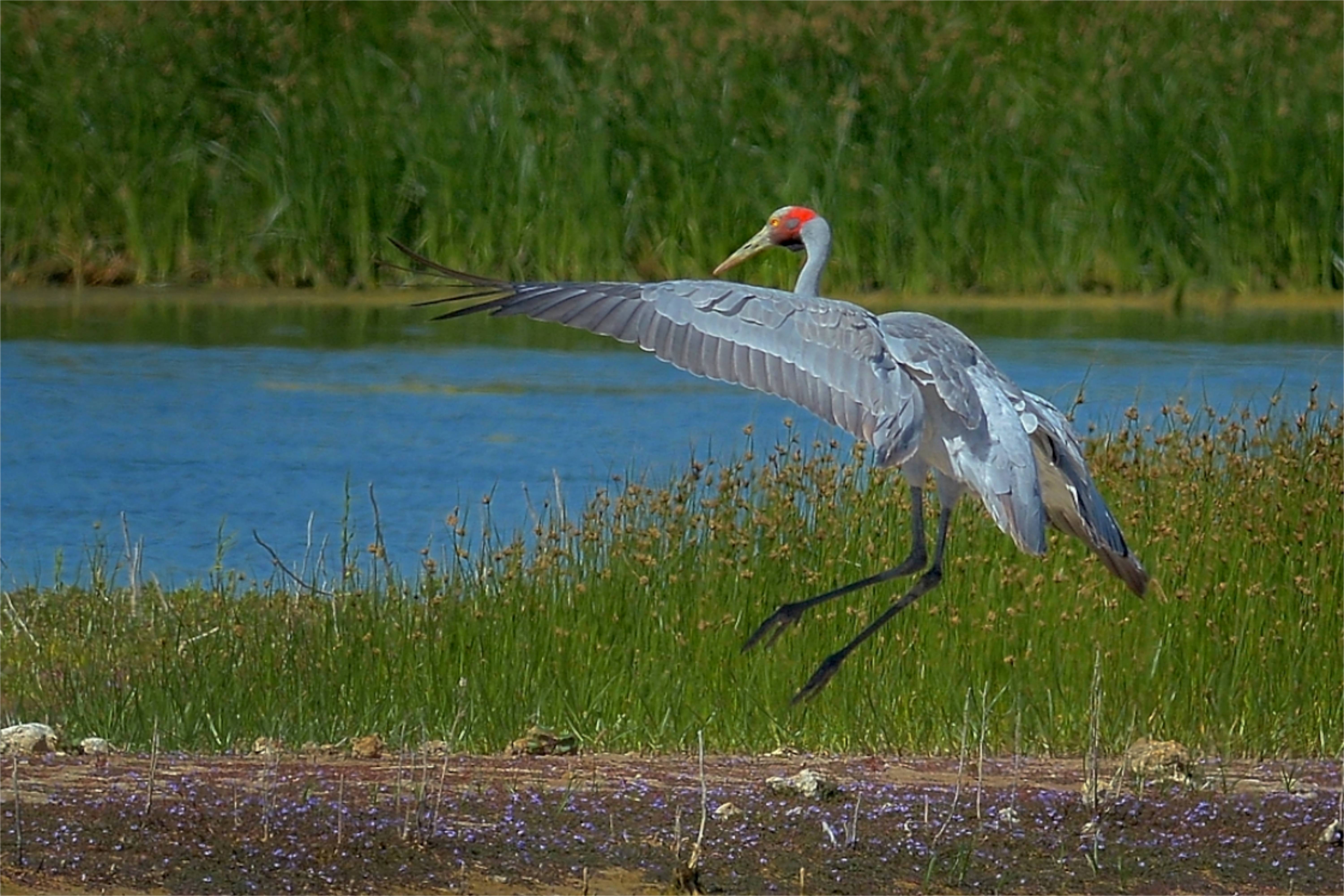
One of the three, the smallest, stopped walking. Turned about and danced. Now most have heard of the prowess of these birds as exceptional dancers. Don’t believe it. They are much much more than exceptional. To see a video is one thing. To see the elegance, lightness, the subtly of turn, and the wing movements is nothing else other than breathtaking. Its ability to step, and twist and turn and jump in a co-ordinated manner can’t be explained and a few still shots, don’t even begin to touch the scope of the repertoire. Photographer 2.
And it was doing it for itself. The other two took no part and took no notice.
I’ve concluded they do it because its fun. They enjoy it, and it’s an expression of being alive. I know anthropomorphism is frowned upon. I don’t care, I think they have emotions and this one wanted to enjoy the moment.
The heat haze over the water affected most of the shots, but none the less, its only encouraged me to continue working with these birds and hopefully they will grace me with another performance.
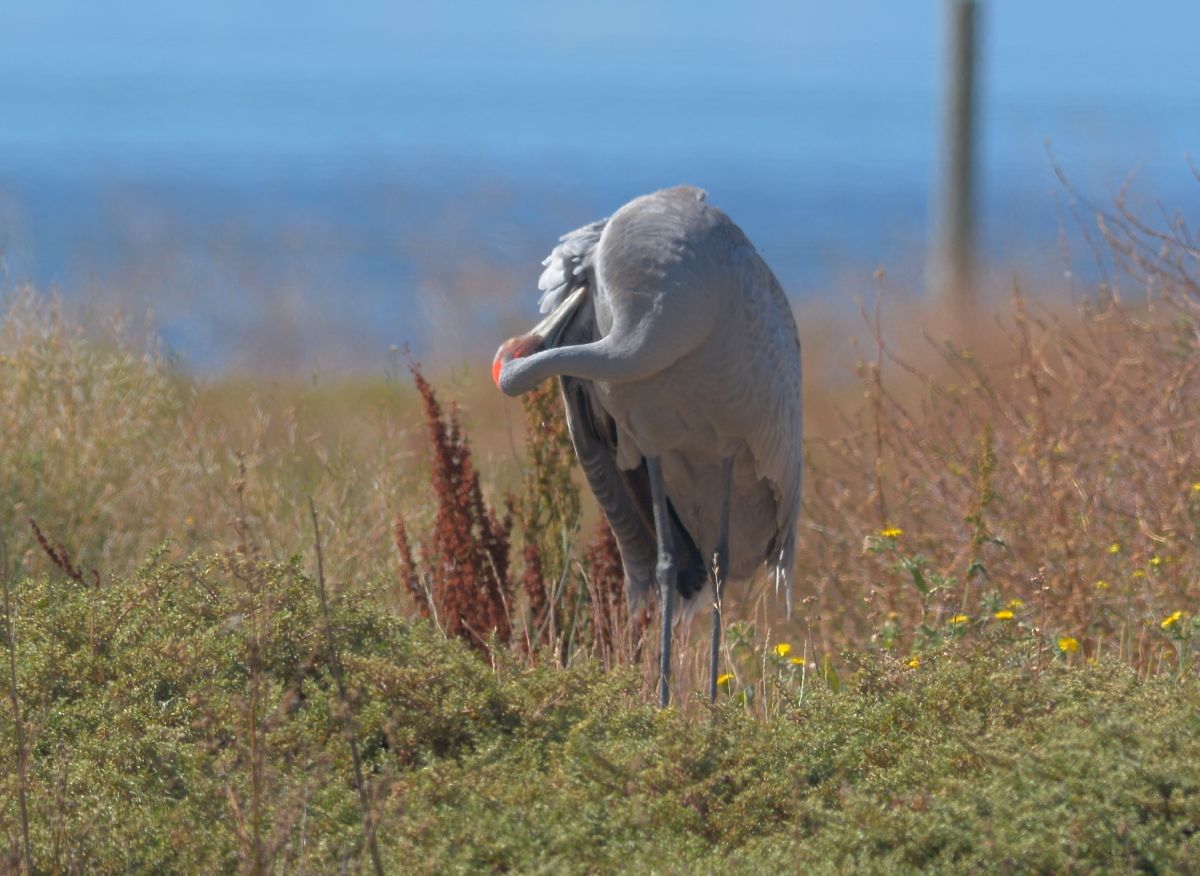
Nothing like a morning constitutional stroll.Oh, look I missed a feather, just there.“Silly Swans”When you’re casual walking there is always a time for a quick preen.Reaching the end of the road, would they turn and walk toward me?A threesome, perhaps two adults and a juvenile, flew quietly in for a walk along the pond.For no reason, only that it could, this bird decided to dance in the sunshine.Wings widespread help to control the dreaming drifting down sequences.At the height of the dance. Float like a butterfly.Performance over time to rejoin the walking group.
We’re in the WTP. So is a resting Black-shouldered Kite. It however has made the tactical error of landing in a Willie Wagtails favourite tree. Or perhaps it was just on patrol, and it’s “Time to move along”
Either way, the immovable object verses the unstoppable energy is on display.
The wagtail made numerous passes at the Kite, its only reaction was to once raise its wings, but I suspect that was just a balance thing more than anything else.
In the end the kite gave ground, and the wagtail, chattering as it went, moved on to the next tree to see if the Magpie was also moveable. Such is the life of a little black and white location police person.
This was shot from the car with a 500m mounted on “David’s Folly”, a beautiful engineered window car mount that I purchased from Outdoorphotogear.com.
It is made in Germany and really is the best thing. Probably stronger than the car door. The folly like all follies is that it will do the impossible. But when it comes to holding the camera, keeping it ready, securely attached to the car, and rock steady in mounting, it really is a great piece of kit. Just people keep stopping to ask, “Looks like you’re ready for anything'”, or “What is that”. My answer, David’s Folly.
Think I will put up a page to show it in action, then it will be simpler to explain.
Its all about position position position. Just being the larger bird in a dispute does not necessarily give you landing rights.
The forecast looked good. There should be open sky through to sundown. I like the evening light on the Treatment Plant as it’s interesting direcitonal light across the ponds. On a good night with plenty of birds it gives that lovely crispness that we struggle for.
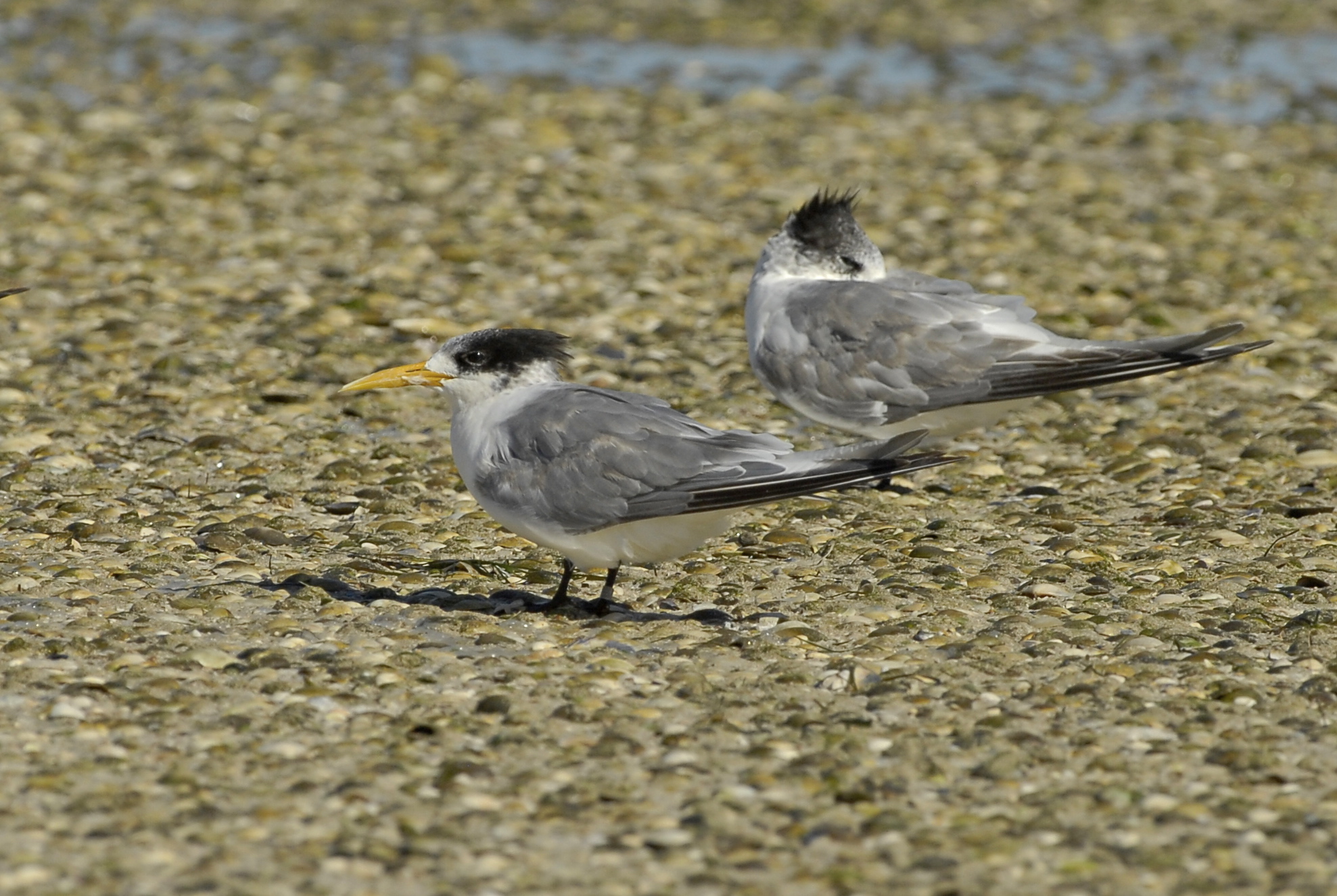
Along The Spit area, the terns were resting on the outgoing tidal flats and in some places, it is possible to get reasonably close.
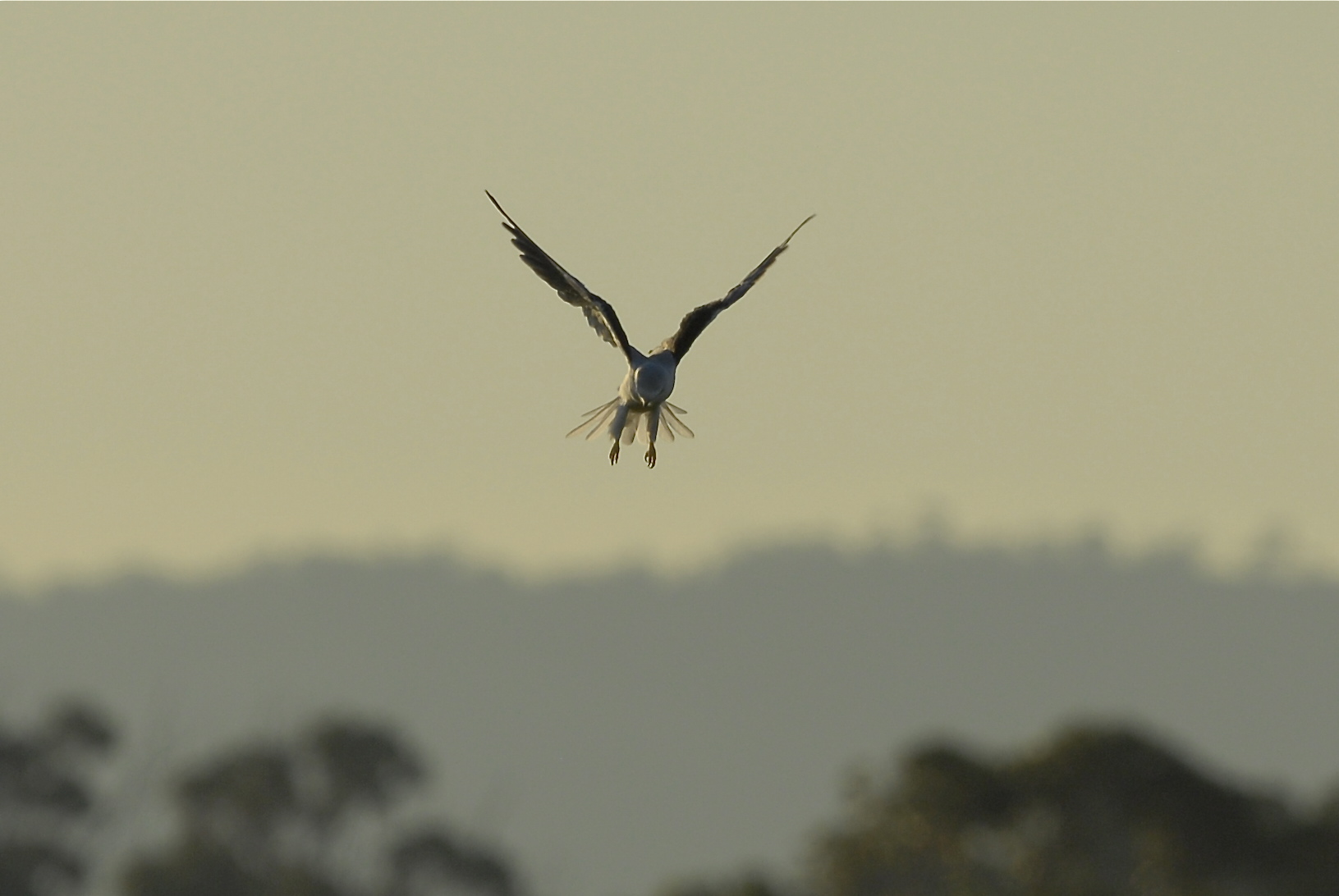
There is always a Black-shouldered Kite or two to be found and this evening was no exception. This is one of those images, that has only been cropped. No clever manipulation, as shot. Love the deep red glowing eye.
As the sun dropped toward the horizon, it left a soft haze that draped itself over the You Yangs and made a lovely light grey and then an orange curtain against which the birds, although backlit, became intriguing silhouettes.
Most of the time these birds are not only hard to find, but hard to see. This bird and its mate had brought the young down on to the exposed low-water mud flats and they spent a lot of time feeding, and foraging among the grass overhangs.
A Whistling Kite patrolled down the waterline and she took the young back under the grass overhangs, and here they are just coming out again.
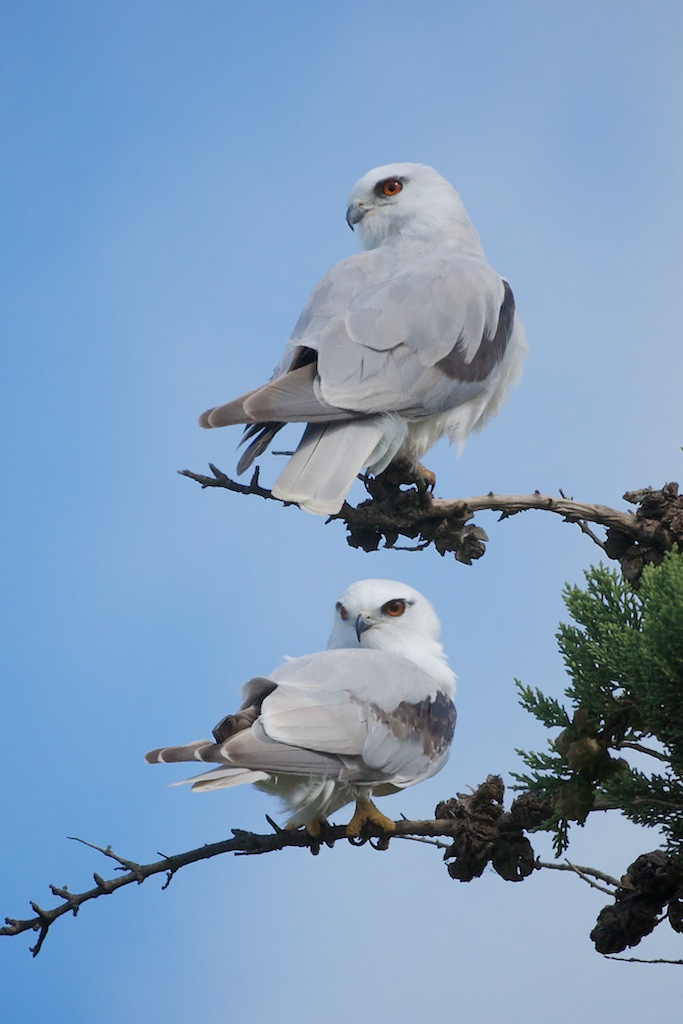
This pair of kites are roosting on a tree near one of the main roads around the WTP, we were hoping that they might be going to nest, but over the past few weeks we have not seen any indication of intent. Perhaps she is resting after a brood earlier in the season.
A pair of Blackshouldered kites in the afternoon sun.
We have been watching a Brown Falcon for about 6 weeks, she is usually agitated and quite agressive swooping over the car and calling aggressively. We (Dorothy and I) supposed she must have nested close by.
On Thursday 1 Dec 2011, we found the reason why. She has a newly fledged young bird
This is a shot of them together, she will shepherd it about often flying interference against ravens and magpies.
This is our first glimpse of Mother and Child. The young brown falcon is a really rich chocolate and ginger colour
During the cooler months, we had taken going to the WTP in the early morning.Light is much more intense and there has usually been a soft haze or even mist or fog on some morning.
We were coming around a corner near the Little River, and found these three enjoying the early morning sun.
The young bird still has the ginger/cinnamon feathers. I crept down the roadway close to the fenceline to get as close as I could. At about 38metres, it was just starting to concern the bird behind the young one. I managed a few shots but the best was when they all turned inward.
300mm lens. Hand-held ISO400 f/5.6 1/1000 sec.
Black shouldered kite family in the early morning sun at WTP













 Birds as Poetry —— Just because I WANDER doesn't mean I'm LOST