Spotted Harriers, have enormous territories. I’m told to 10,000sqkm. But I don’t have a way of measuring. I do know that they are very much nomadic in our area. Might see one or two for some months, and years can go by before the next sighting.
We’ve seen several pairs come, nest and then go, and always have high hopes for a sighting.
One has been working around the coastal park and out into the wider volcanic grasslands.
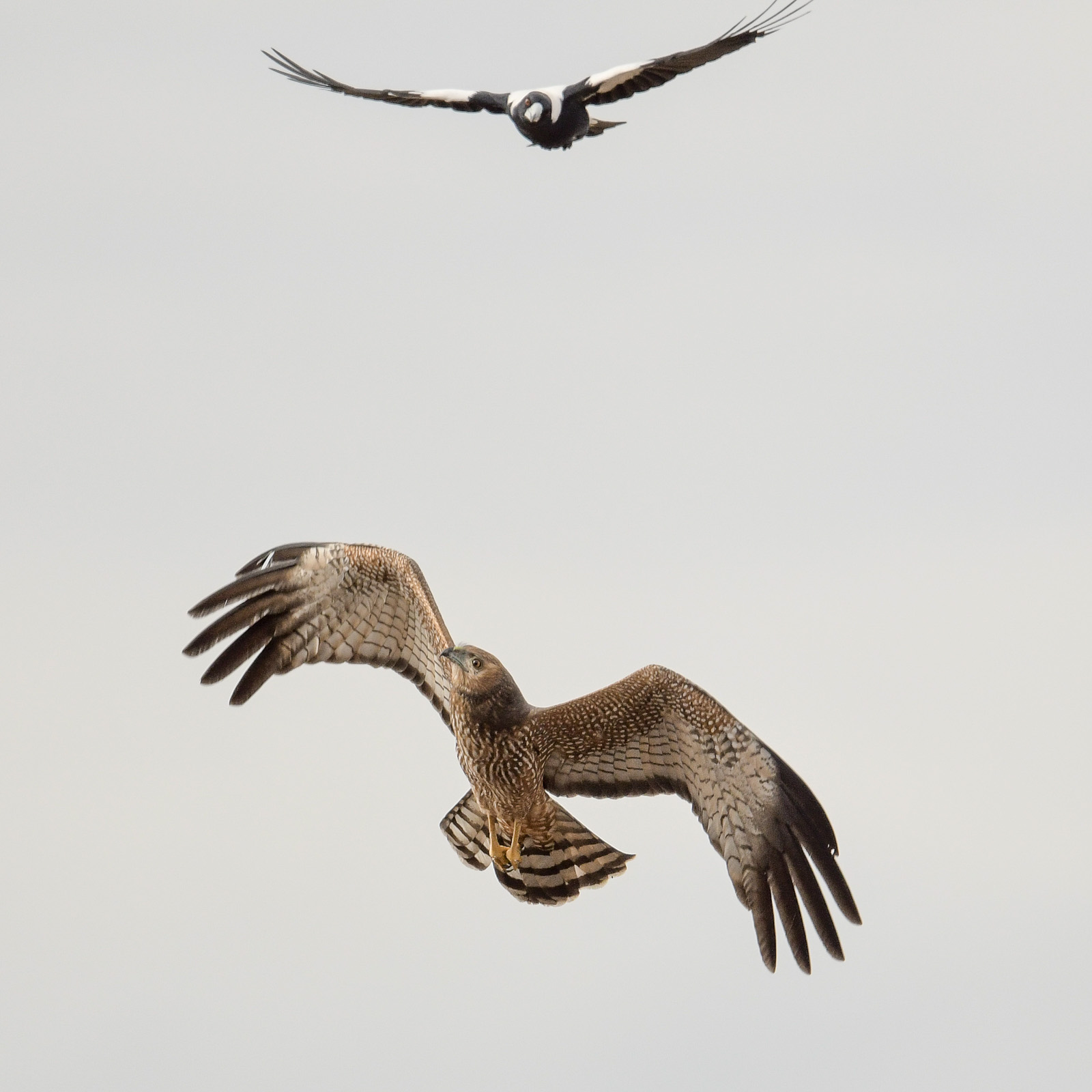
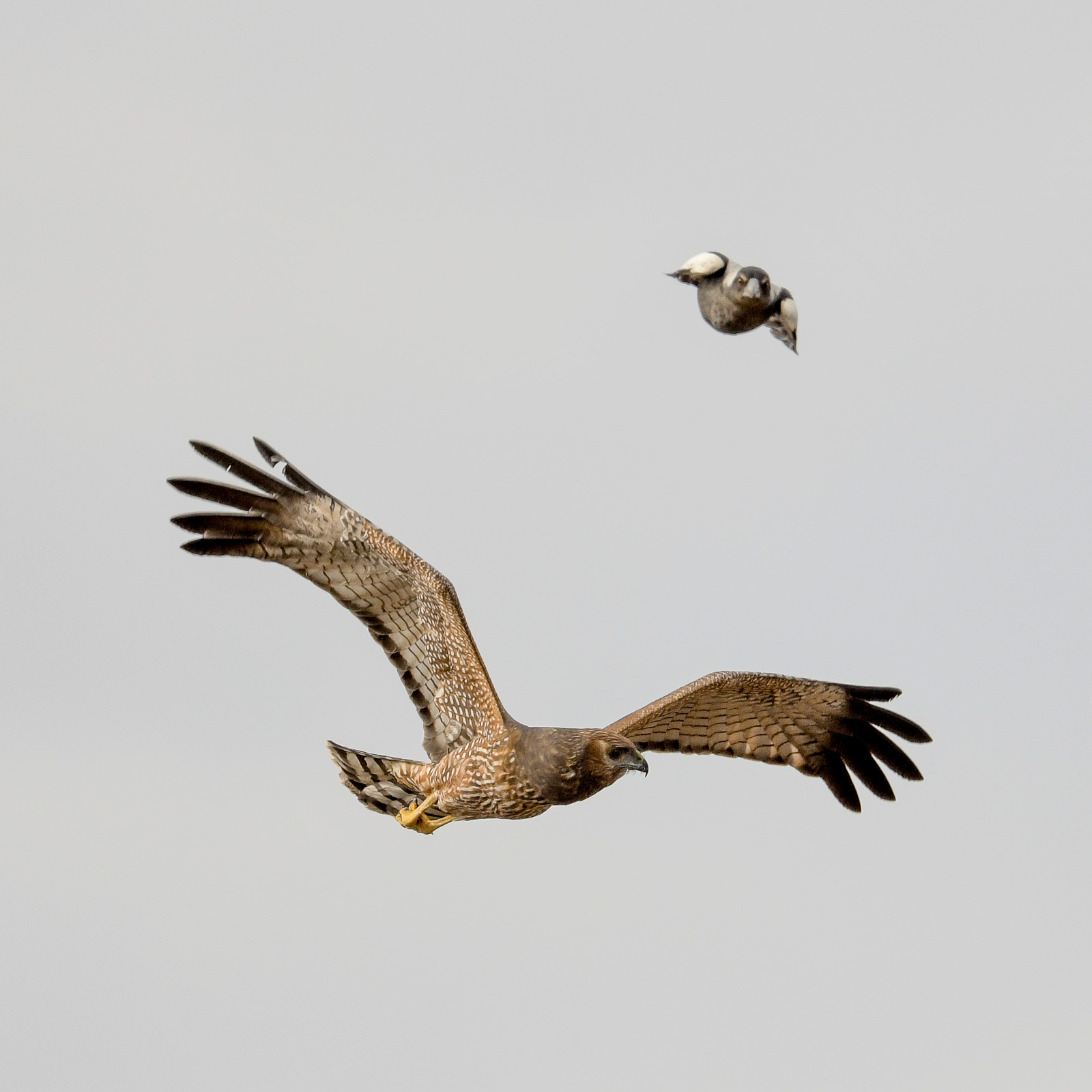
The other morning, a fuss by the local Magpie clans was enough to sweep about to see. And there coming down a fenceline, in the typical languid flight, was a Spotted Harrier.
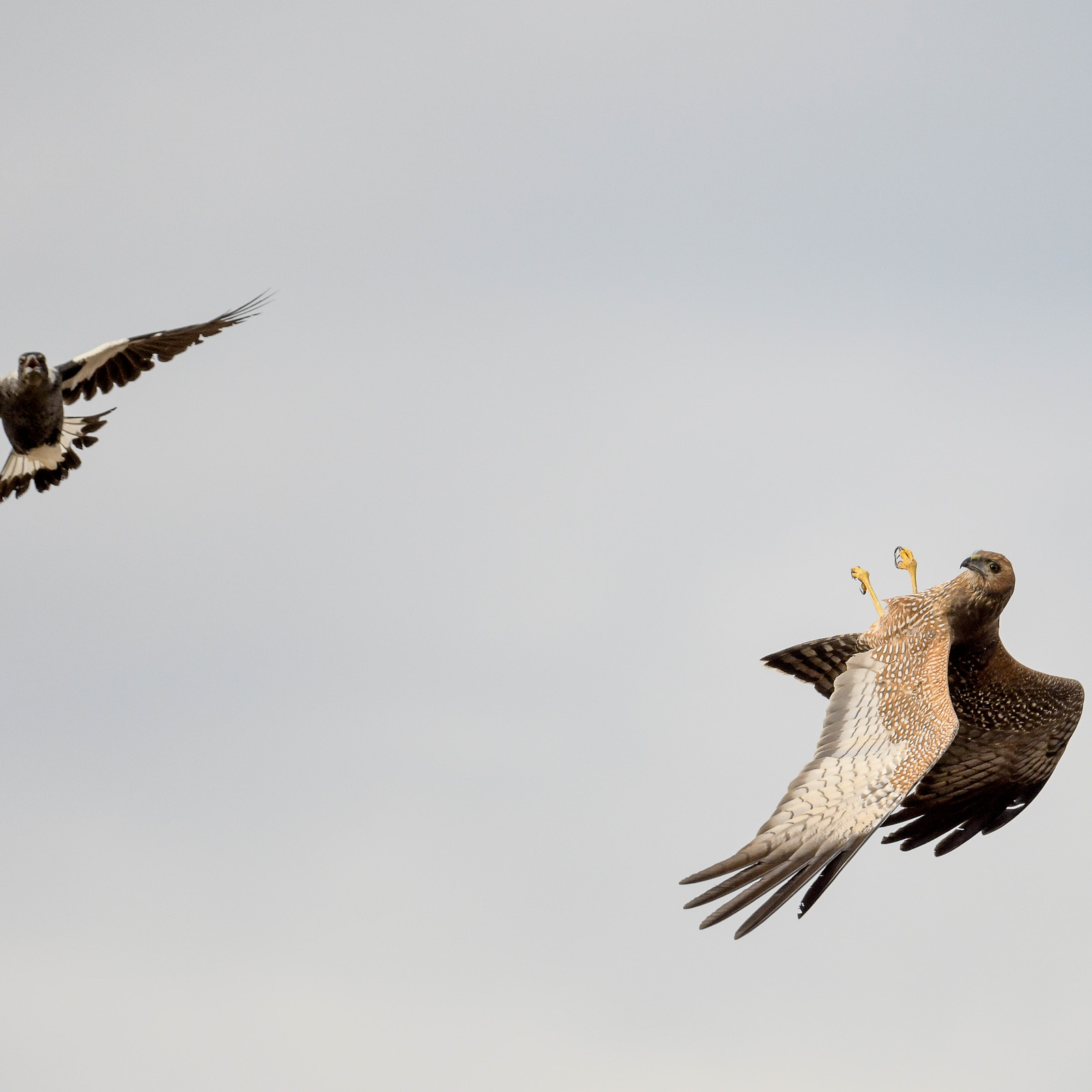
Followed by a flotilla of Magpies.
Magpies can really only call, and make mock attacts, because despite its apparent slow, lazy flight, your average Spottie can turn a knot or two of speed if necessary and it has those long dangling bits hanging out the bottom which is can indeed use with surgical precision. I once saw one attach to a clawful of Brown Falcon feathers, and the Brown was lucky it was body feathers, as if its had been a wing it would have no doubt suffered severe and serious damage. If they can pick up a rabbit and not even hesitate in flight, grabbing a close approach Magpie would happen in the blink of an eye.
After a minute or two the Magpies felt they had achieved their warning and Spottie continued along the fence line and flew past me.
Sometimes photographing birds is a bit of a hit or miss opportunity.
Methinks I’ve written on that subject a few times before. We have over the past few weeks, on occasions, spotted a Spotted Harrier. It is most likely one that was in our area about 3 years ago. It has a distinctive ‘notch’ out of one wing. Spotted Harriers master huge territories. So it’s not unusual to go for sometime without sighting them. Several years ago, a pair was in residence behind the Avalon Airport and were among a number of birds, Falcons, Black-shouldered Kites and Kestrels that worked the surrounding paddocks. Dr Hollands in his revised book on Australian Raptors has both good information and photos from the time.
Currently this bird seems to be working over many of the paddocks that stretch along the western side of Port Phillip. We’ve been able to find it in places as much as 20km apart (It’s distinctive wing notch is helpful in id)
The other morning as we were settling in to look at a new pair of Kites that also have recently turned up. Off in the distance, an large shape flicked and dived across the field. It was a very windy morning, and we’d already had qualms about being out in a forested area in case one of the trees should tumble or shed a large branch. We thought at first by the colouring it was a Brown Falcon, but then as it worked along a fence line, the unmistakeable shape, led to EE calling, “Spotted Harrier” Too far for photos, but simply amazing to watch the huge wings carry the bird at speed against the prevailing wind.
We then ventured along a track through the trees away from IamGrey, and way across the paddock through the gaps in the treeline, we saw it heading in our general direction. Too many trees, too much undergrowth, it was going to be hard to get it cutting across the field. And now with the wind behind, the speed had ramped up too. Suddenly it was through the first line of the trees, out across the paddock around some bushes, that lifting, falling, sliding flight giving it full view of anything on the ground. Then it turned back toward our area, and like a magician with a rabbit in a hat, it disappeared.
“It had to have gone down into the grass”, was the cry.
How do you sneak up on a Spotted Harrier? Not a lot of books, or websites or social media posts overflowing with good answers to that question. (I wonder why?)
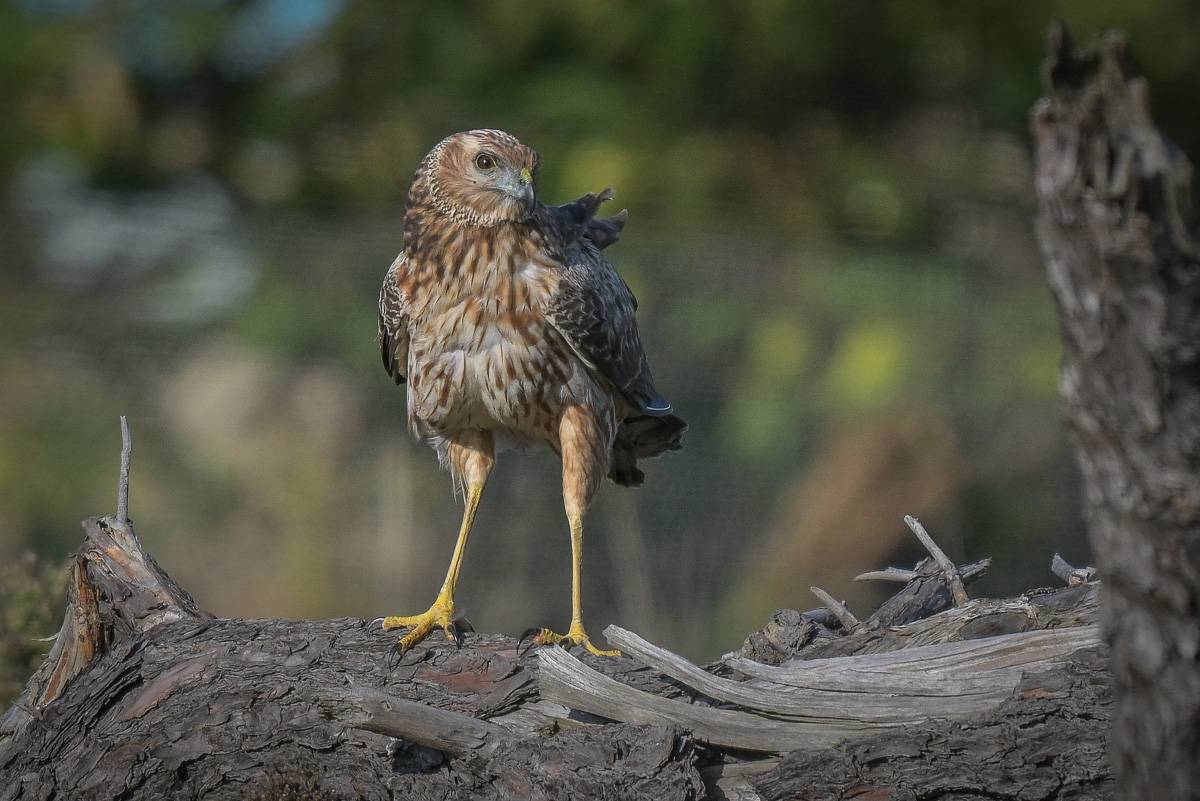
Abandoning our somewhat inactive Kites, we ‘crept’ through the treeline, realising as soon as we saw the bird, it would be gone. But, as they say. We spotted it, on a old downed tree. A murder of rather annoyed and raucous Ravens, must have caused it to stop for safety sake. We edged past another downed tree, and had a clearer view. No point in trying to ‘get closer’ as a fence was in the way. Still, the bird, to its credit, stood its ground. The sunlight cascaded across the scene and behind the old tree, it was safe from Ravens, humans and the strong wind.
It sat for around 5 minutes or so. To the hardly breathing photographers, it seemed more like 5 hours. Then those big wings, lifted, and as I’d put the camera down because my arms were aching, I could only watch as it sailed back into the breeze, across the paddock and was gone.
It has to be said. They are indeed magnificent creatures.
Totally efficient at what they do, and with an sense of total air control.
We had the good fortune to find one out on near the RAAF Base at Point Cook just recently.
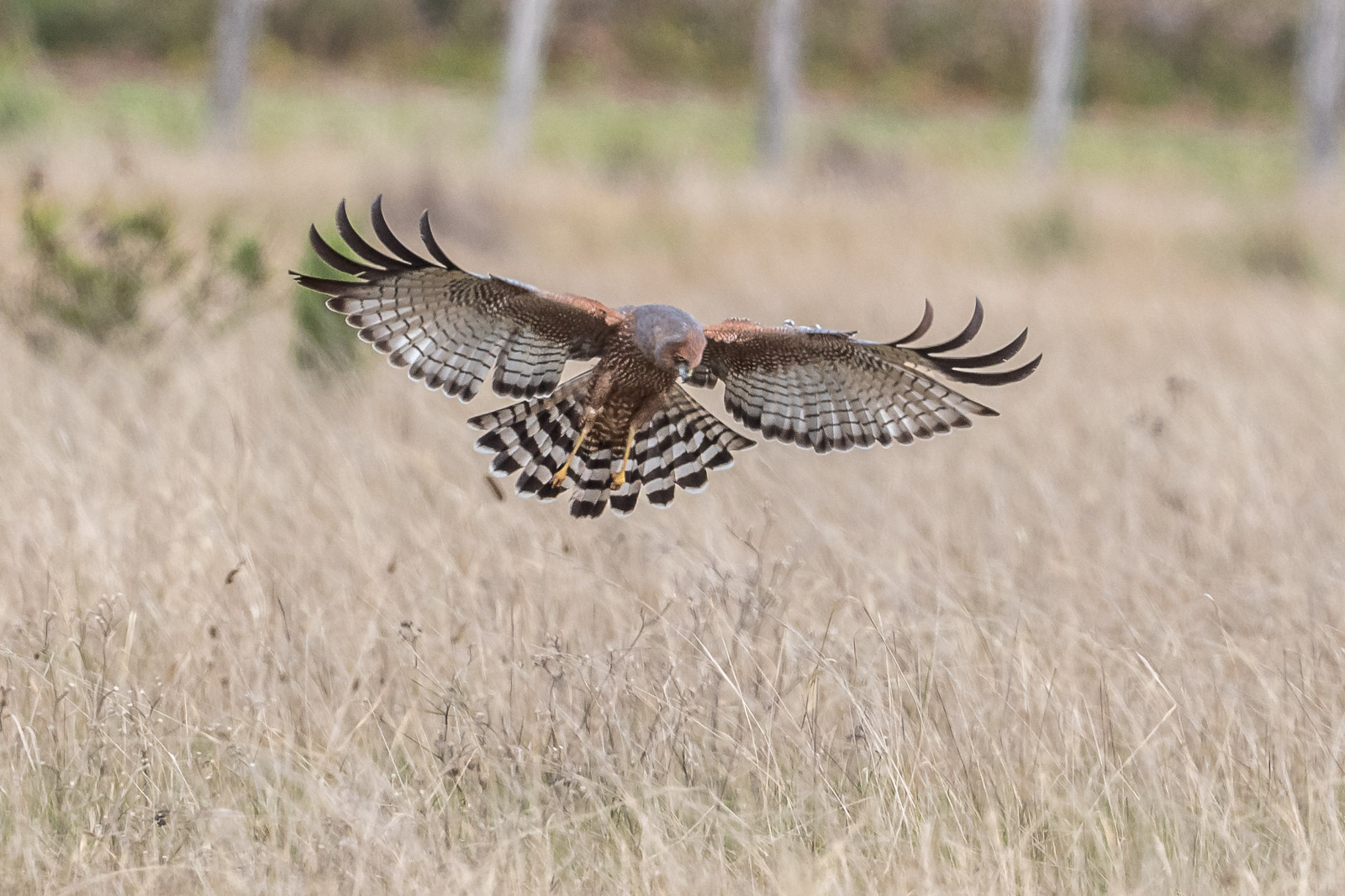
“There,” she cried. And across the paddock in the distance, the familiar wafting flight of a Spotted Harrier rose and fell as it diligently seached the paddock. Anything of interest was re-examined by a turn of the great tail and a flap or two of the wide wings to bring the bird into the best position.
We waited.
Can’t do much more than that with these birds. One of the field guides describes their action as “Languid”. And it’s safe to bet they are not in a hurry to carry out their meticulous work.
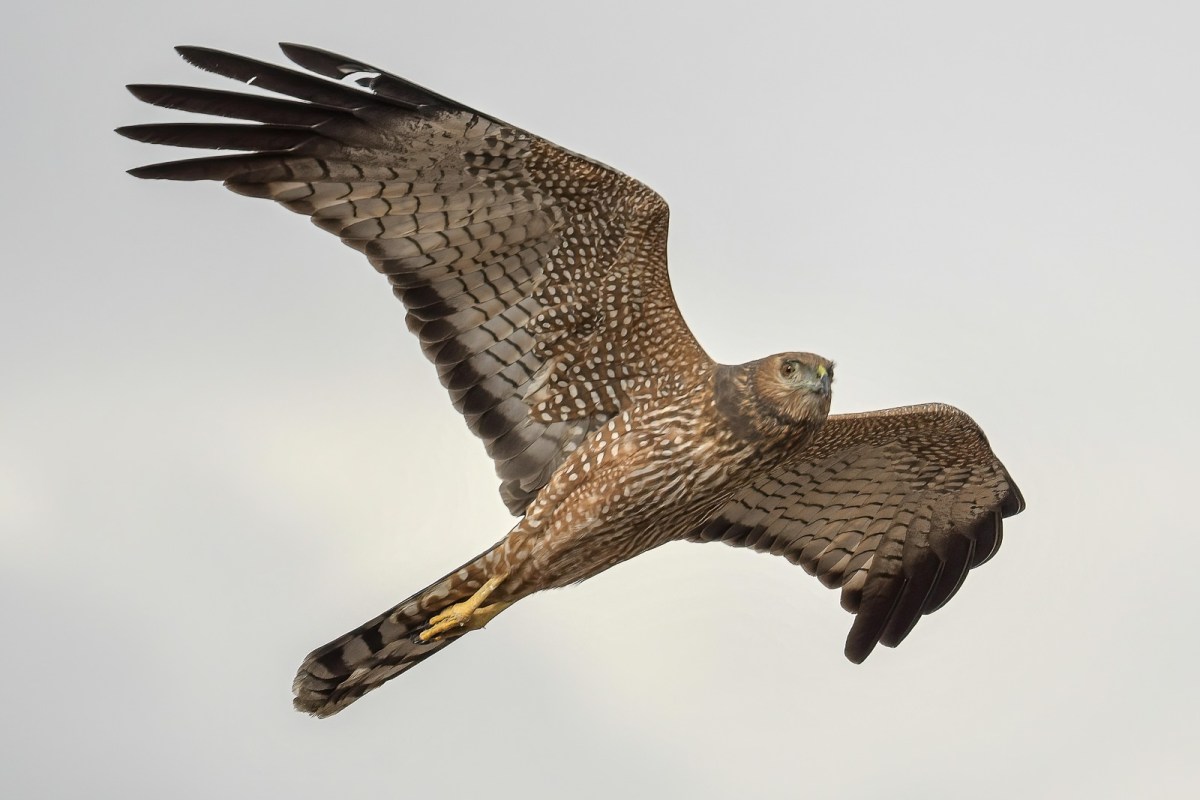
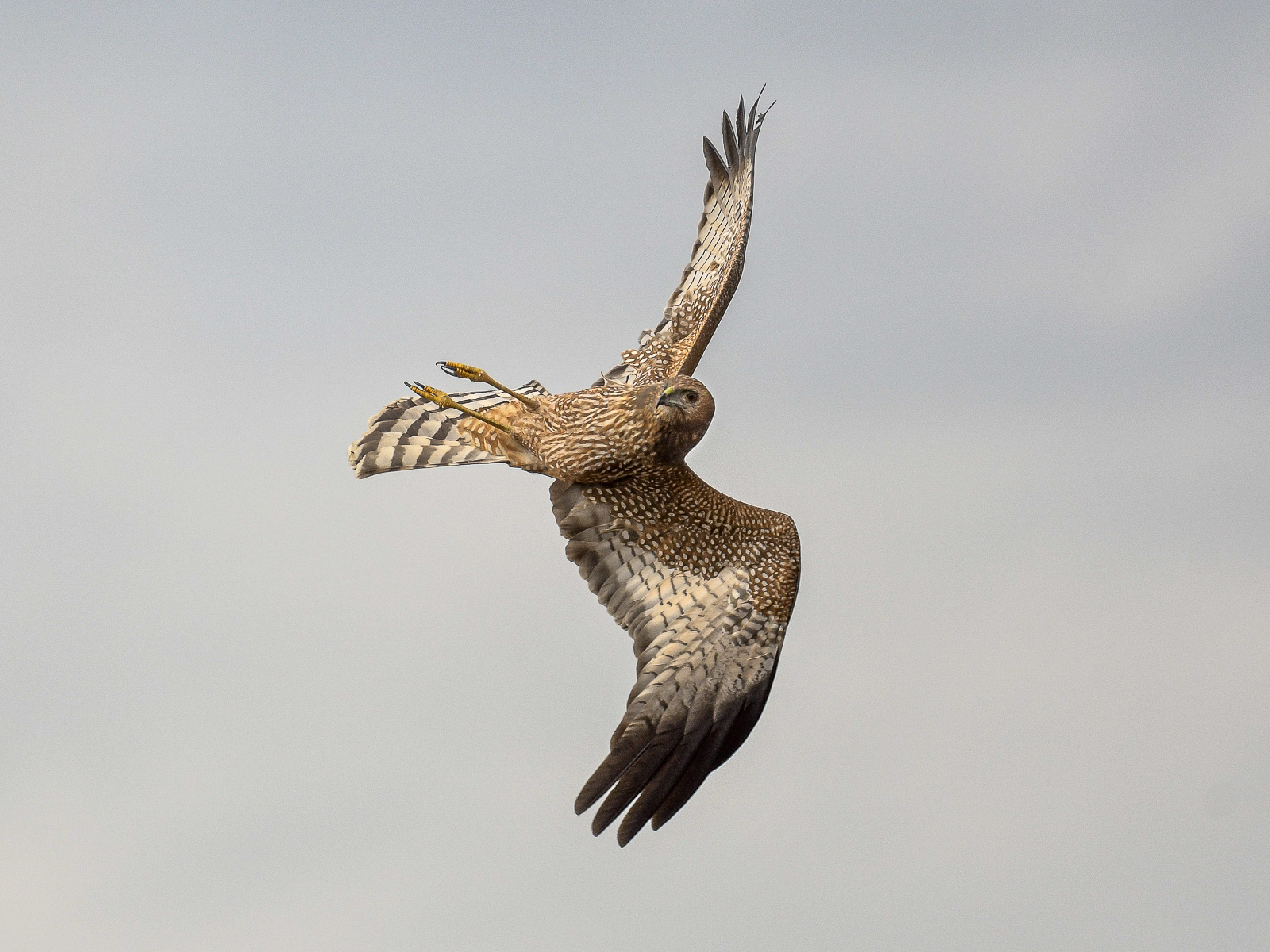
I’m not sure what fascinates me most about them. The wonderful body patterning, or the wing patterns that look like spiderweb, or the stern, but interesting facial mask, or perhaps it’s simply the ease at which they maintain station over the field. We don’t see them often, but the few times we do are alway memorable.
Slowly Spot made its way across the paddock. Would it come close enough, or shy away. They are another bird that I think has the area mapped in great detail. Anything out of the ordinary is either possibly food, or it to be avoided. Dudes waving cameras about fit in the the latter catergory.
So we stood, nailed to the spot, and waited for Spot.
Must have been a slow food day, but eventually those awesome wings carried the bird in our direction. It sailed along the fenceline on the other side of the road, and… was gone.
I want to sing like the birds sing.
Not worrying about who hears,
or what they think
Rumi
For those who’ve seen a Black-shouldered Kite food exchange, you’ll agree that the process is highpowered, high speed and high risk.
The male, with mouse, hangs in mid-air while his mate, barrels up to snatch the mouse, usually knocking him about as she passes.
One one occasion, I saw her lock claws over his, and he couldn’t let go of the mouse, and she was not going to release her lunch.
After a bit of struggling it resulted in them tumbling wing over wing, body rotating around body, as they completely out of control plummeted to ground. And she would not let go.
Finally she, being the bigger of the two, gained enough wing control to halt their descent, which left him hanging or rather swaying upside down. Perhaps she relented her release for a milli-second and he was free to drop away and fly off.
I worked with another pair, the male only had one working foot, and he never did food exchange in the air, and I often wondered if he lost the use of his limb in such an incident.
But, I’ve never seen a Spotted Harrier exchange close up. Always they happen far out over the paddocks, two birds fly toward each other, exchange and then they fly apart. The mechanics had eluded me. Until the other day.
A pair of Spotted Harrier are preparing a nest, and in between collecting sticks and grasses, there is time for top up of food.
For a good part of the morning they had been calling back and forth, a bit like the Three Little Pigs building their house.
Then the call changed, much more warble than the shrill call of a bird of prey. “That is strange,”, saith I to EE who was on the other side of the vehicle, “There is a change or something is happening.”
And sure enough she sprang out of the nest tree and headed across the paddock. About then, I caught sight of the male, who stopped and Harrier-like hung in mid air about 50-60 metres from where we were standing.
She then wafted in as a good Harrier would, and they danced about one another in the air for a moment or two, then she raised the wings and ever so gently slipped in under his, and took the mouse in a total surgical move. Simple, almost ballet like. He watched to be sure all was well, and then just slid away. She returned to the treeline to enjoy her snack
Amazing to see the completely different approach to food handling.
At last the weather gave a bit of relief, and with an onshore breeze, a resonably low tide at around mid-day, it looked like a good time to re-visit the WTP.
So we loaded up the car, picked up Dieter early in the morning and progressed to see what was happening.
We found a Brown Falcon that has mastered the art of hovering. Mostly Brown Falcons hover like a house-brick, but this one has been able to figure out the technique. We’ve seen it down around the Kirk Point area before exhibiting its skills. A Swamp Harrier had made a kill and had been pursued by a number of Ravens, and had dropped the victim. This Brown Falcon had been somewhat in the middle of it all and was pretty certain that a free feed was waiting somewhere in the grass. It was completely oblivious to our presence and hunted quite close going over Dieter’s head at only a few metres. It was a great few minutes to watch.
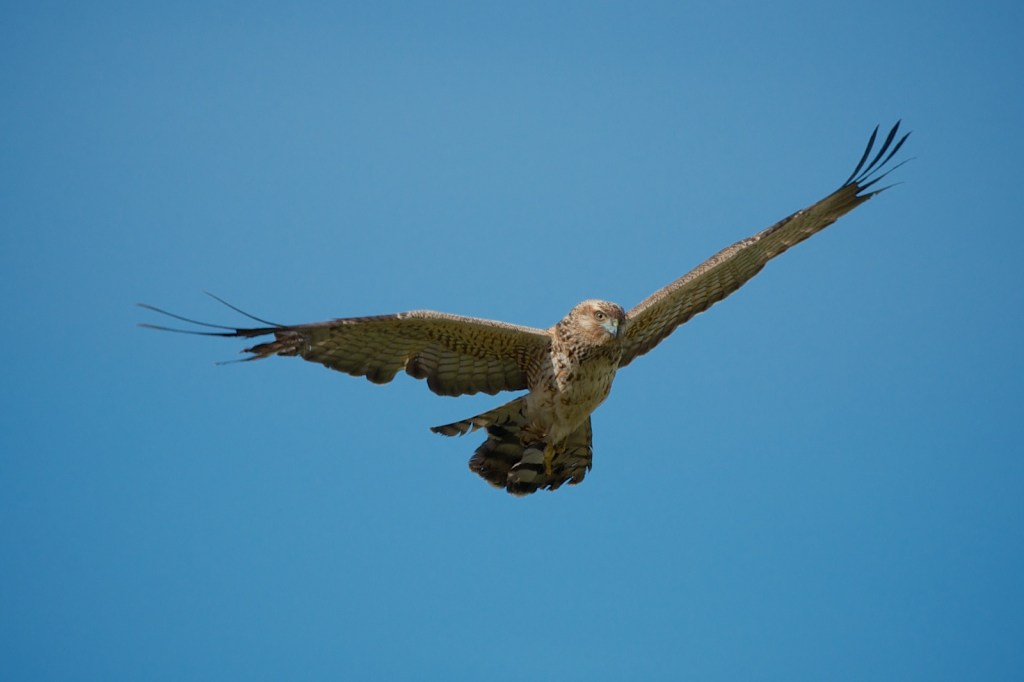
Further along we came across a Spotted Harrier, ‘Languidly- that’s how its described in all the books’ making its way along one of the small channels. It passed quite close to the car and seemed un-preturbed by us. It has a primary feather that is loose, perhaps its moulting.
A second Spot turned up with what looks like a Eurasian Coot as its lunch. The coot can weigh upwards of 1 kilo, so it must have been quite an effort to get airborne, and maintain a steady course.
All in all a good day out with the birds and with plenty of Black-shouldered Kites and Nankeen Kestrels on the wing there was always something to be photographing.
Dipped on the Oriental Pratincole, which is always too far away to get great shots anyway.
Hovering Brown Falcon. It skimmed over the waters edge looking for the prey dropped by a Swamp Harrier. It didn’t have any success in the few minutes we watched. Perhaps the mouse or rat escaped for another day.
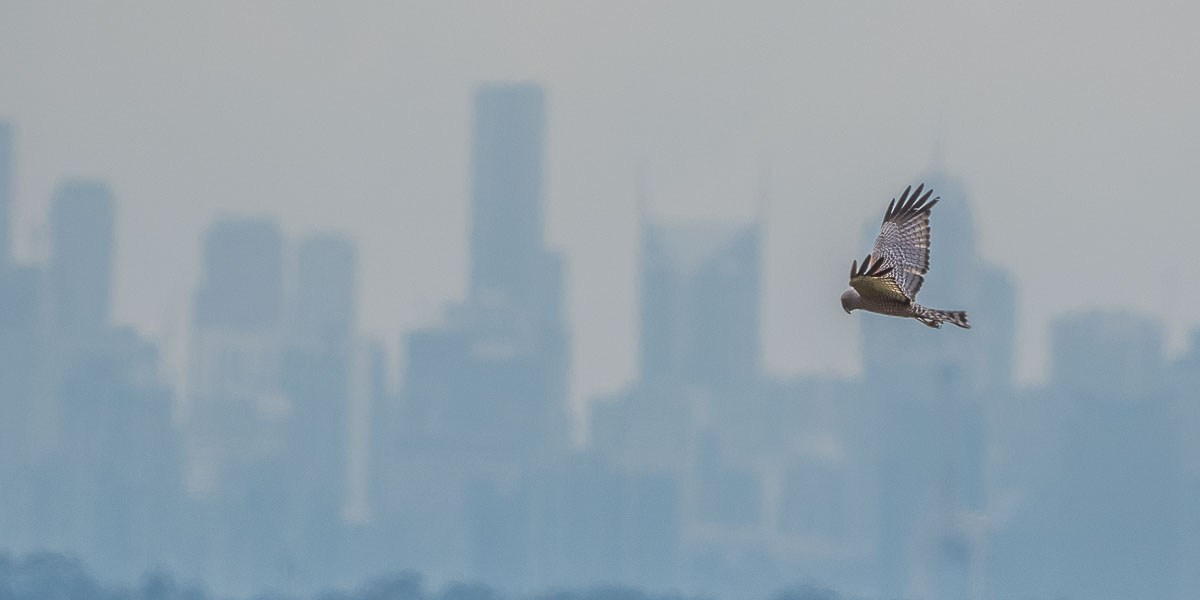
Spotted Harrier casually making its way along a water channel at WTP
Another Spotted Harrier, this time with takeaway lunch.
I am really beginning to like the light at the Treatment plant in the late afternoon. Sun sets way round to the south west and it gives a great cross light along many of the access roads. Particularly where there is a line of trees.
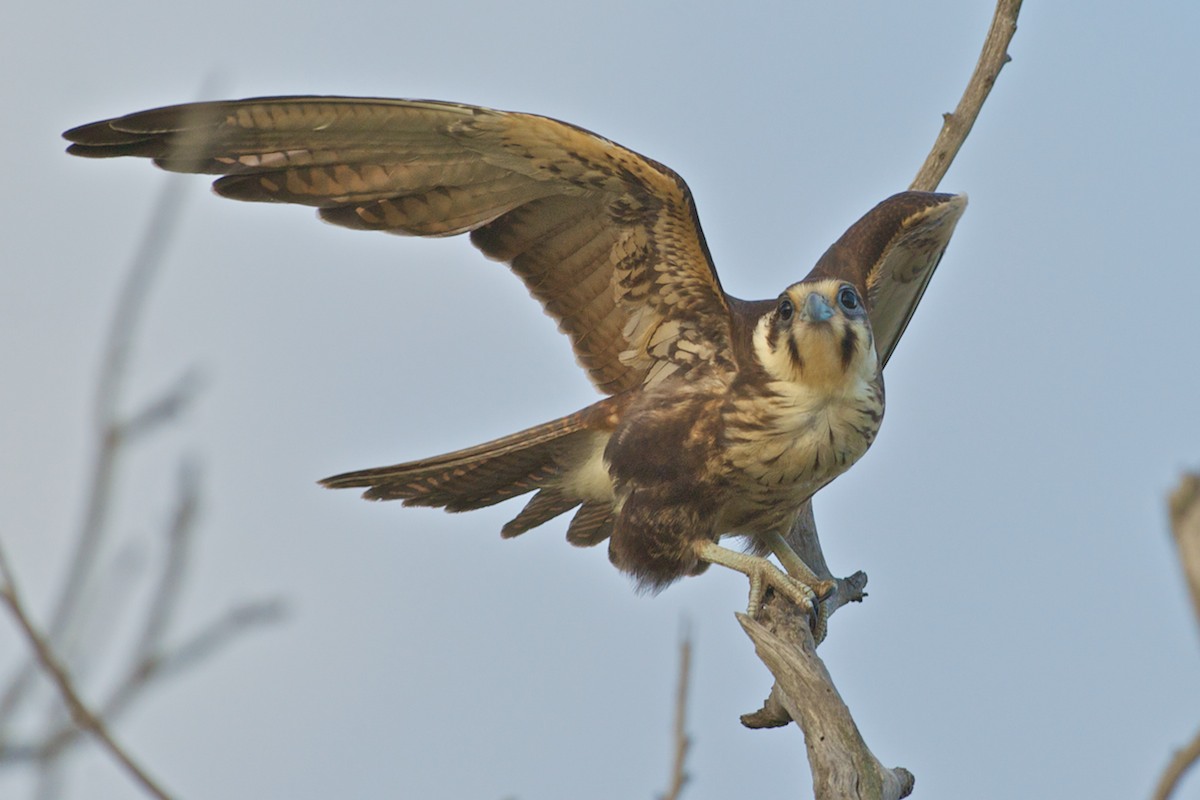
For some reason this evening, the raptors seemed to be at every turn and on just about every tree, post, or fence. Here is a youngish brown falcon, but click the link, for some Spotted Harrier, Brown Falcon, Swamp Harrier and Whistling Kite shots as well.
Many of the young falcons seem to be hanging around together, and we found 5 in just one corner on Paradise road.
We both are pretty certain that a Black Falcon was in a clearing down along 29 Mile Road past the access gate 1. But by the time we had: 1. Noticed it, 2. Stopped the car, 3. got over the oohs and aahs, and then 4. Got serious, it was but a mere black spec in the sky speeding toward Avalon.
We found a Spotted Harrier at the Treatment plant yesterday pm.
It was hunting along a fence line and in the light breeze seemed even more casual. My bird reference book calls it flight “languid” and I think that is stretching it.
It seems to have the ability to turn on a blink of an eye and to be able to fold up the wings and then sway its legs down all in one movement which is hard to describe, but seems so effective in putting it on the spot it’s looking for.
The local vigilante committee of Willie Wagtails made it easy to locate the bird everytime it went to ground. Relentless little pursers that they are.
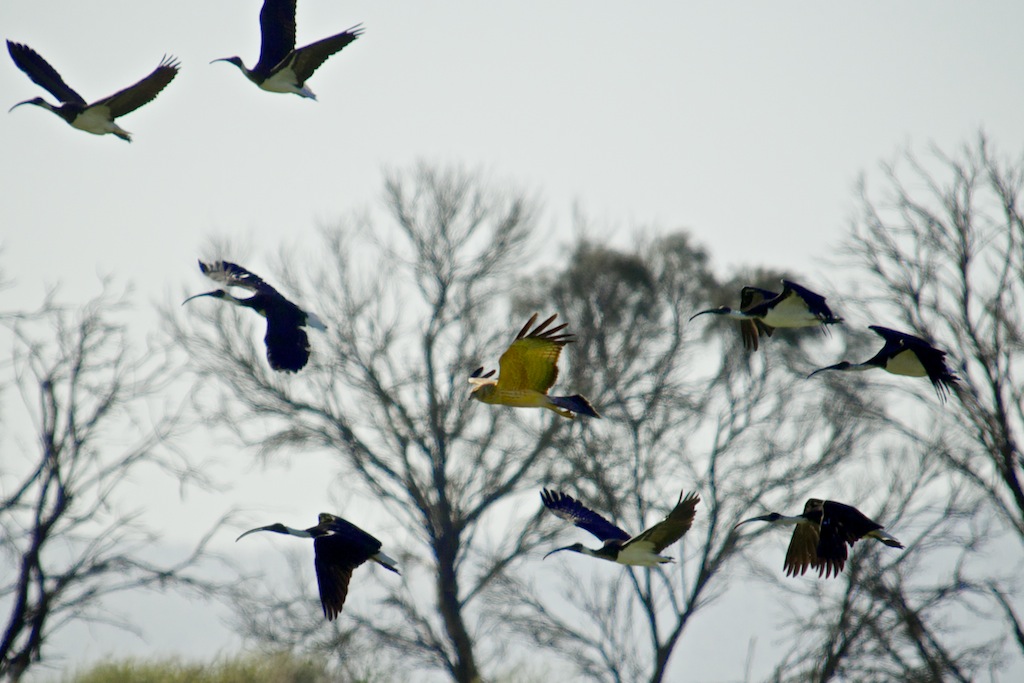
Spotted Harrier and friends.
Also found a couple Spotted Crakes in one of the water channels down near gate #2. Would have been able to improve the shots as they didn’t seem to be fussed by us sitting but the arrival of a 4WD and slamming of doors sent them both packing back into the grass on the edge.










 Birds as Poetry —— Just because I WANDER doesn't mean I'm LOST