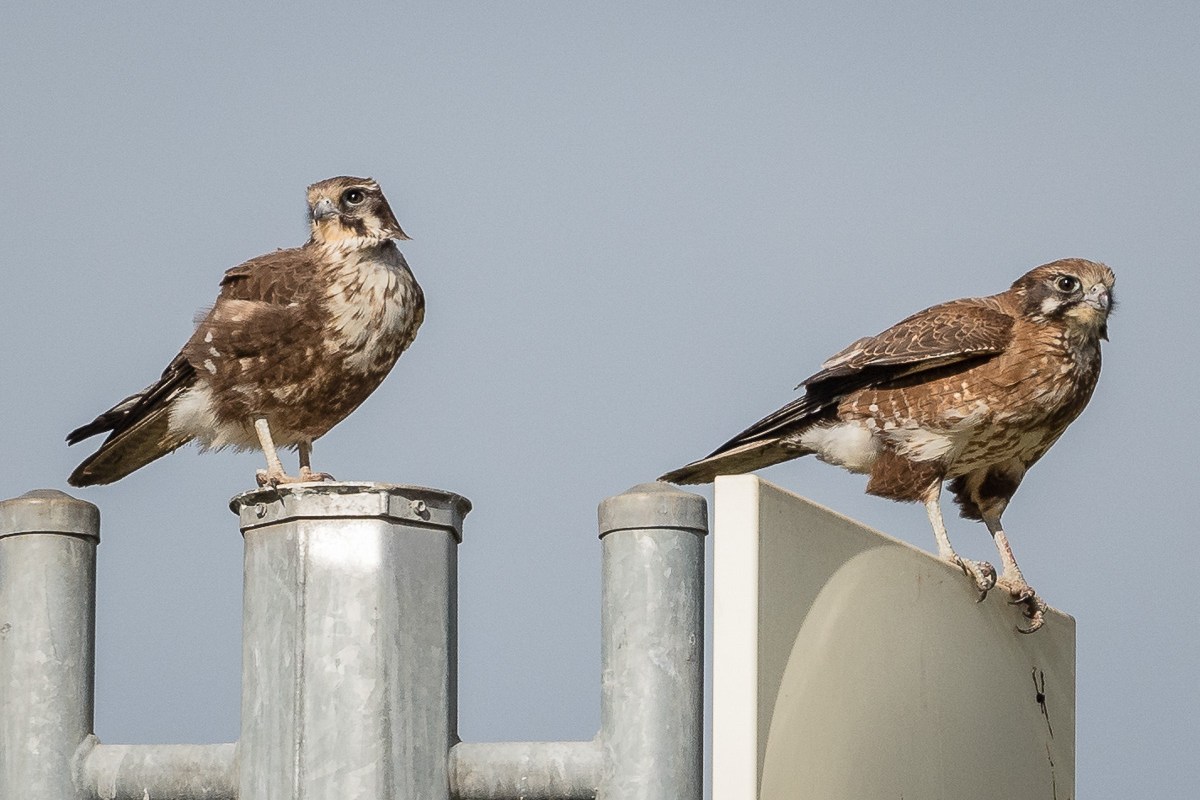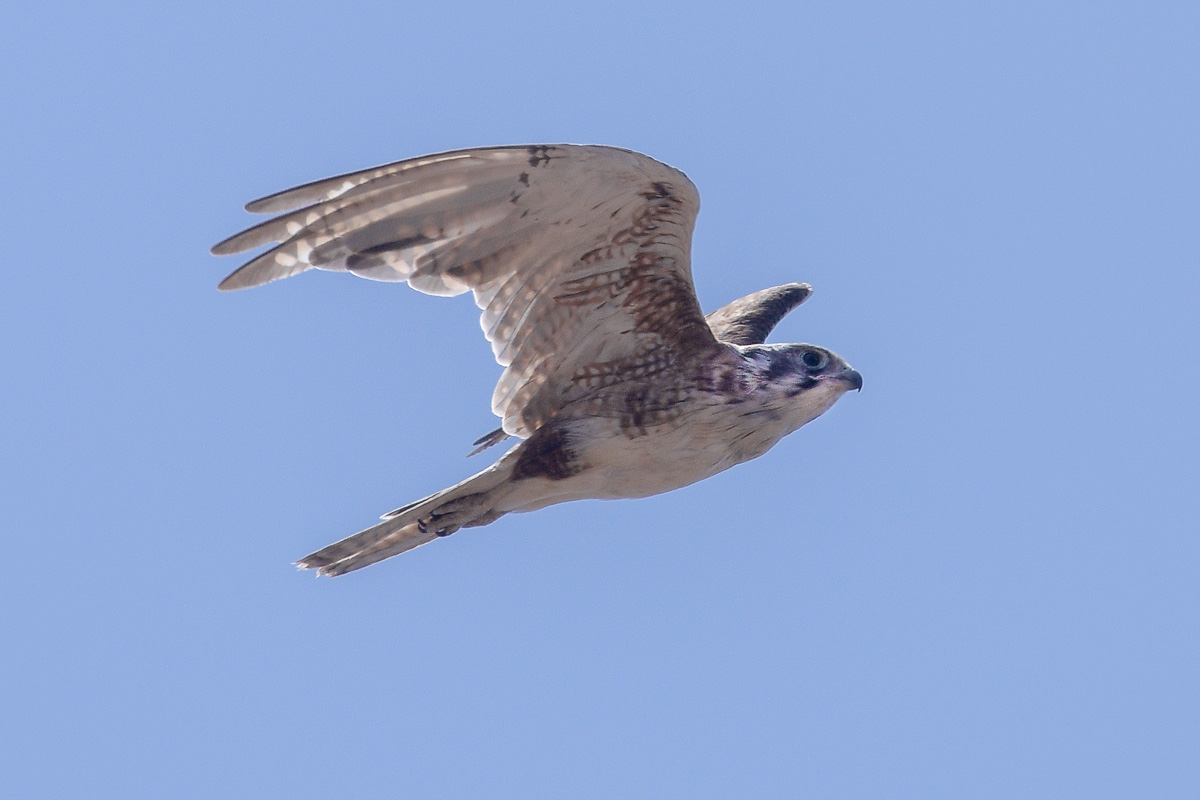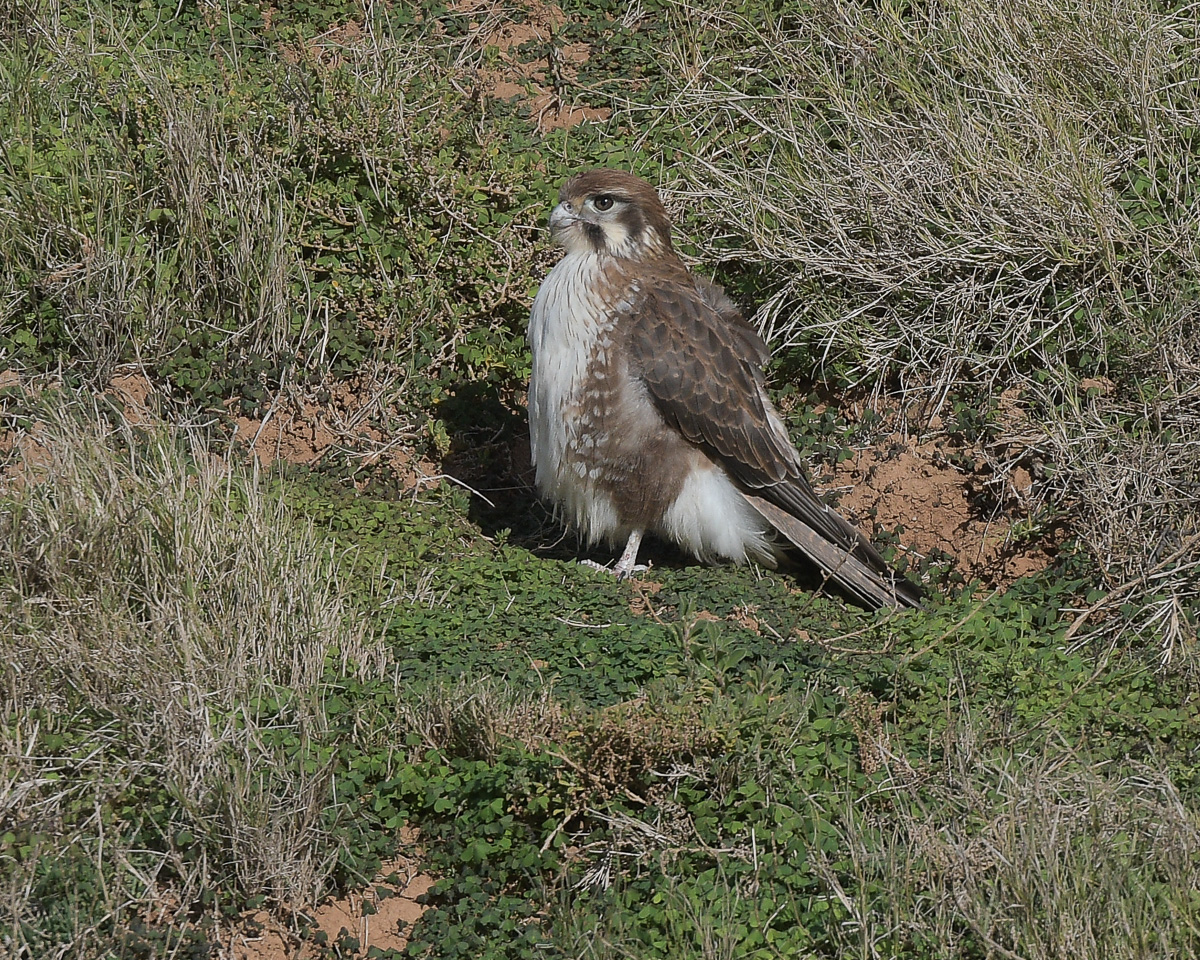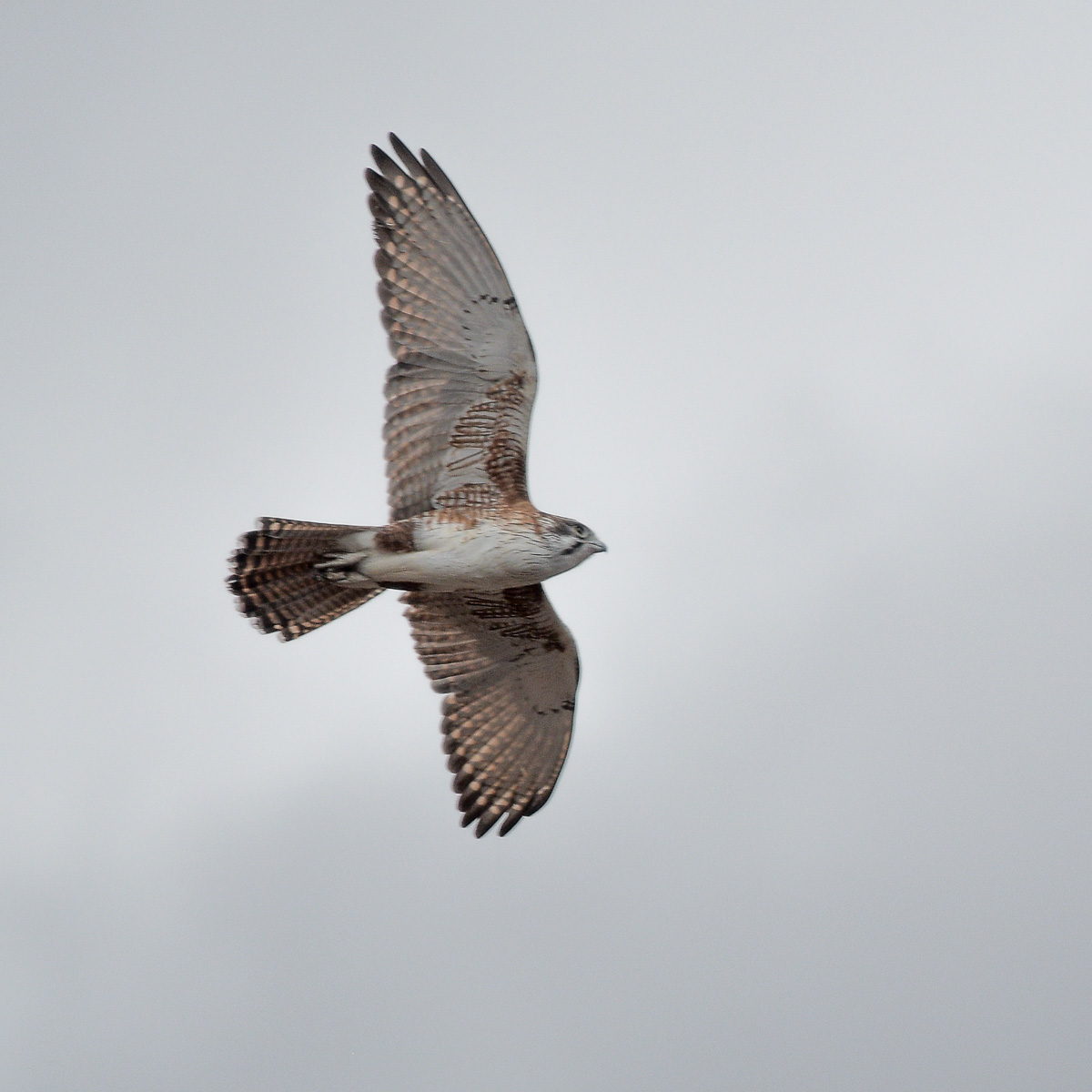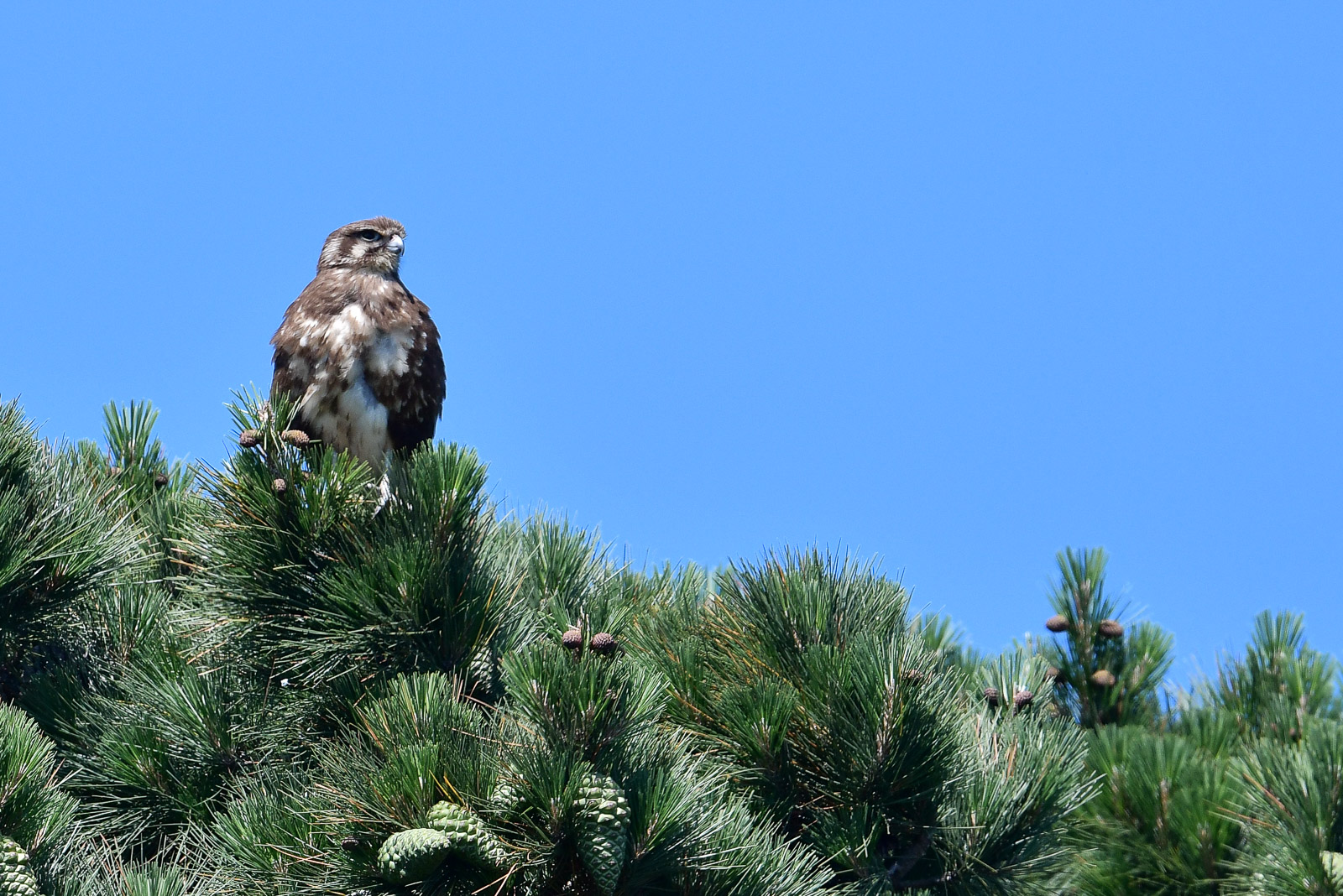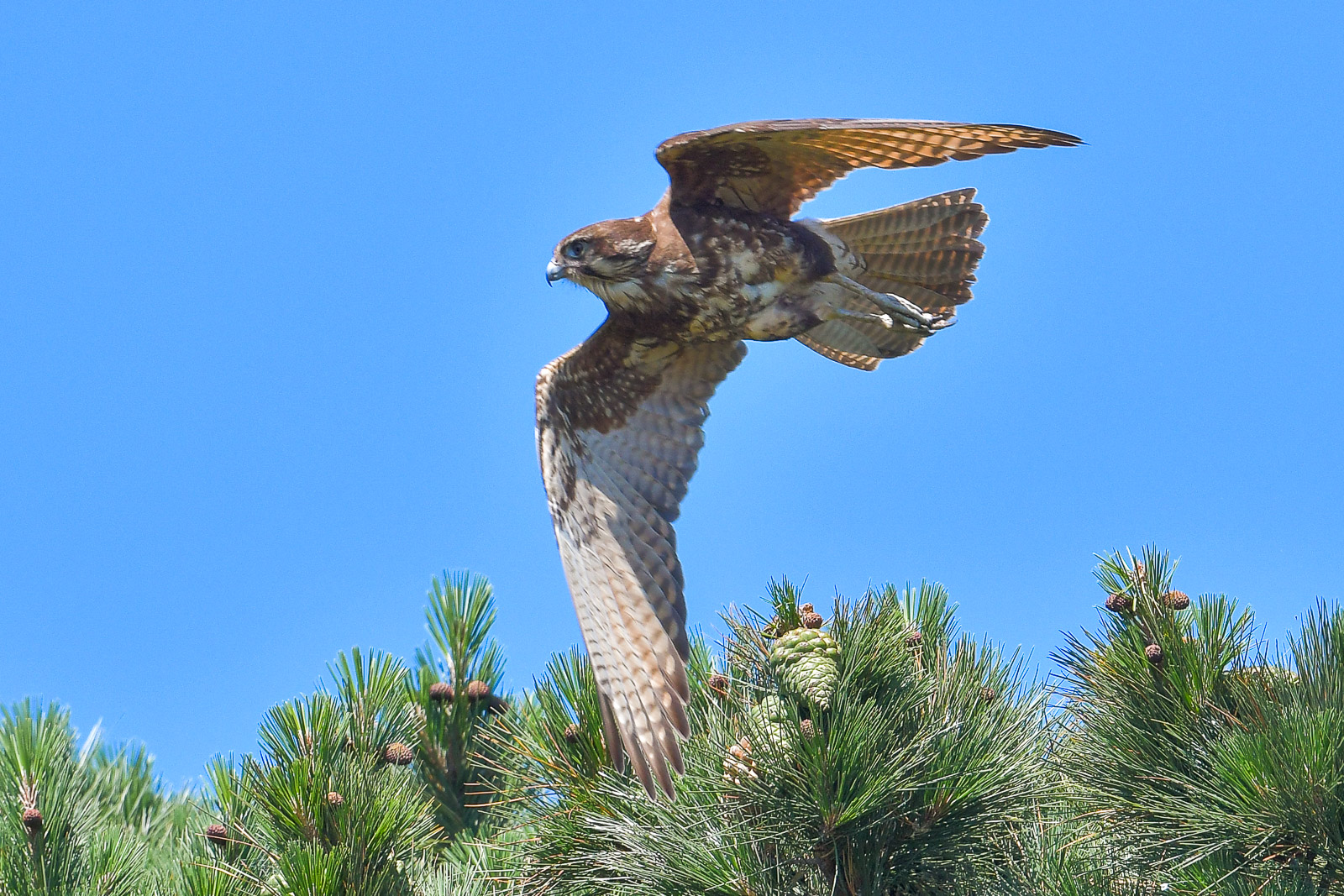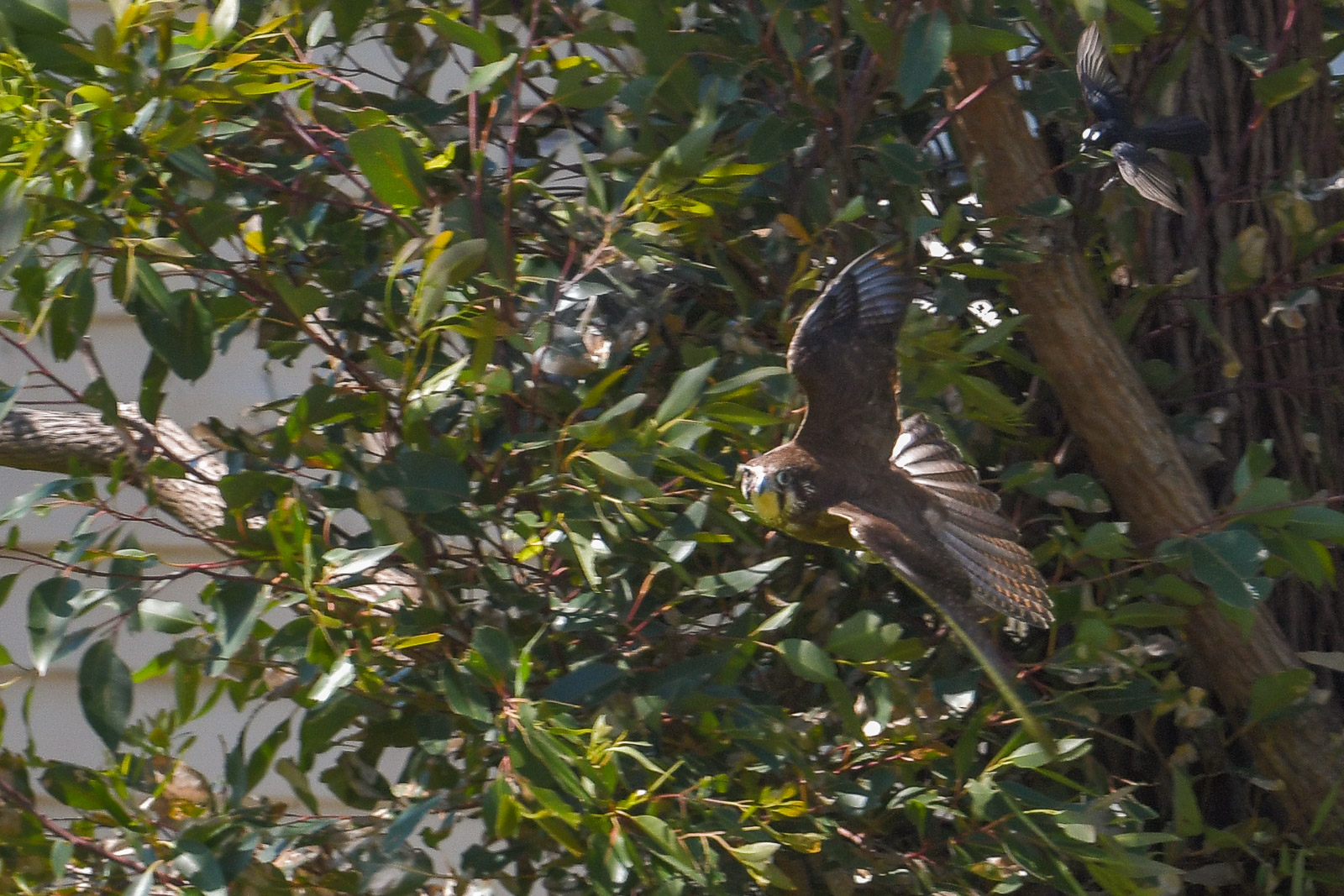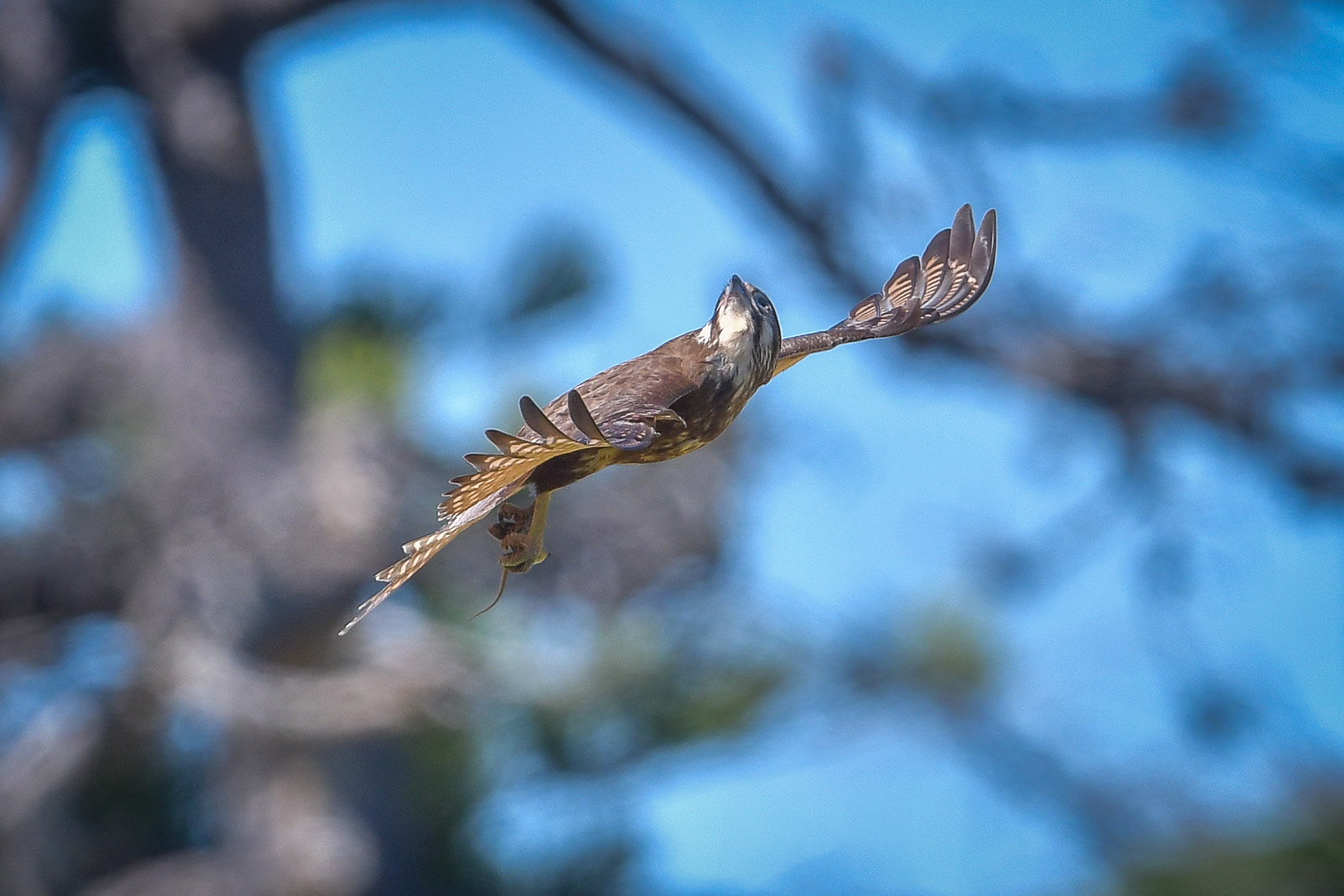
Saturday Evening Post: Sky Dancing

Was doing a google search t’other day and as usual managed to get lots of info, most of it—irrelevant to my original enquiry. That I should have been surprised.

It was a simple question about how far can you see to the horizon. I live on the Western Victorian Lava Plains. The plains extend 350 km east-west. So I was wondering as I stand in the open paddock on flat ground, how far can I see in all directions. Seems the general consensus is around 5km. Mind my ophthalmologist will tell you at that distance most of what I see would be pretty blurry.

Why, no doubt you are wondering, and what bought this inquisitiveness on?

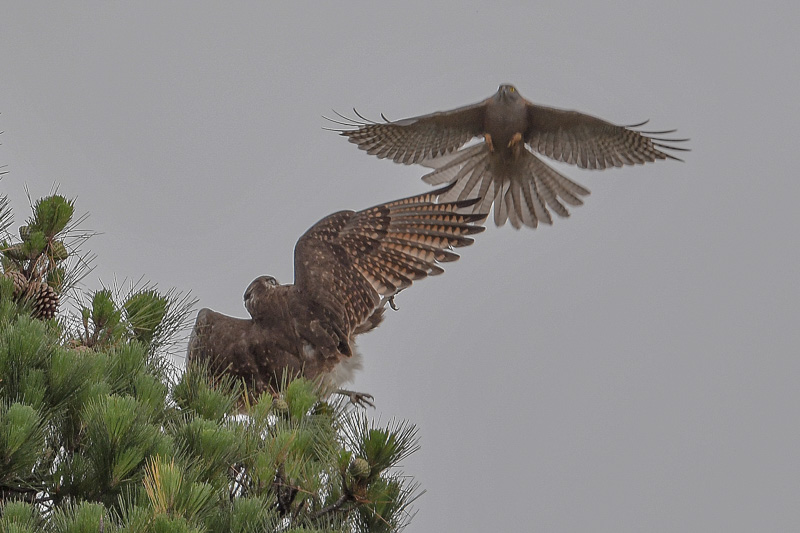
Sky Dancing

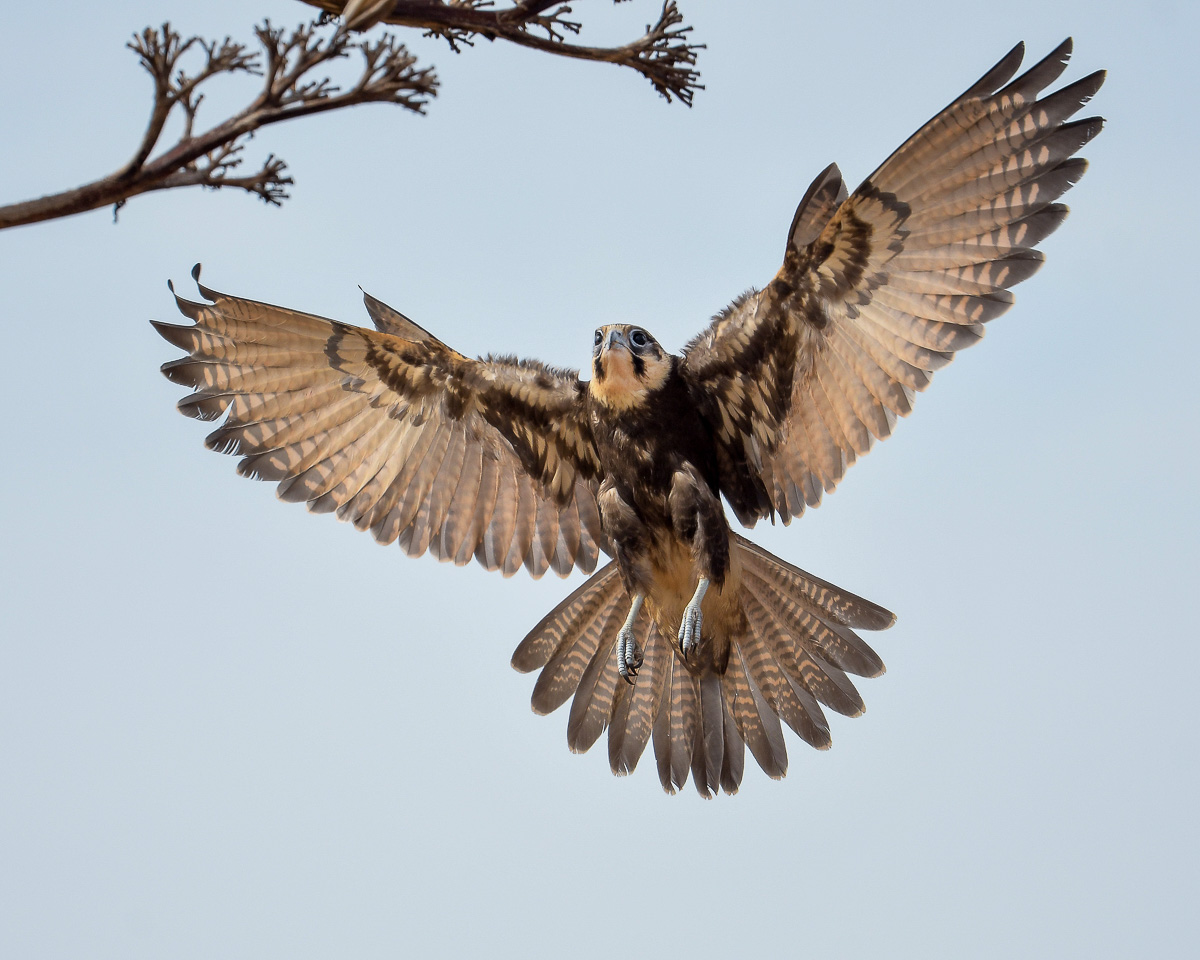
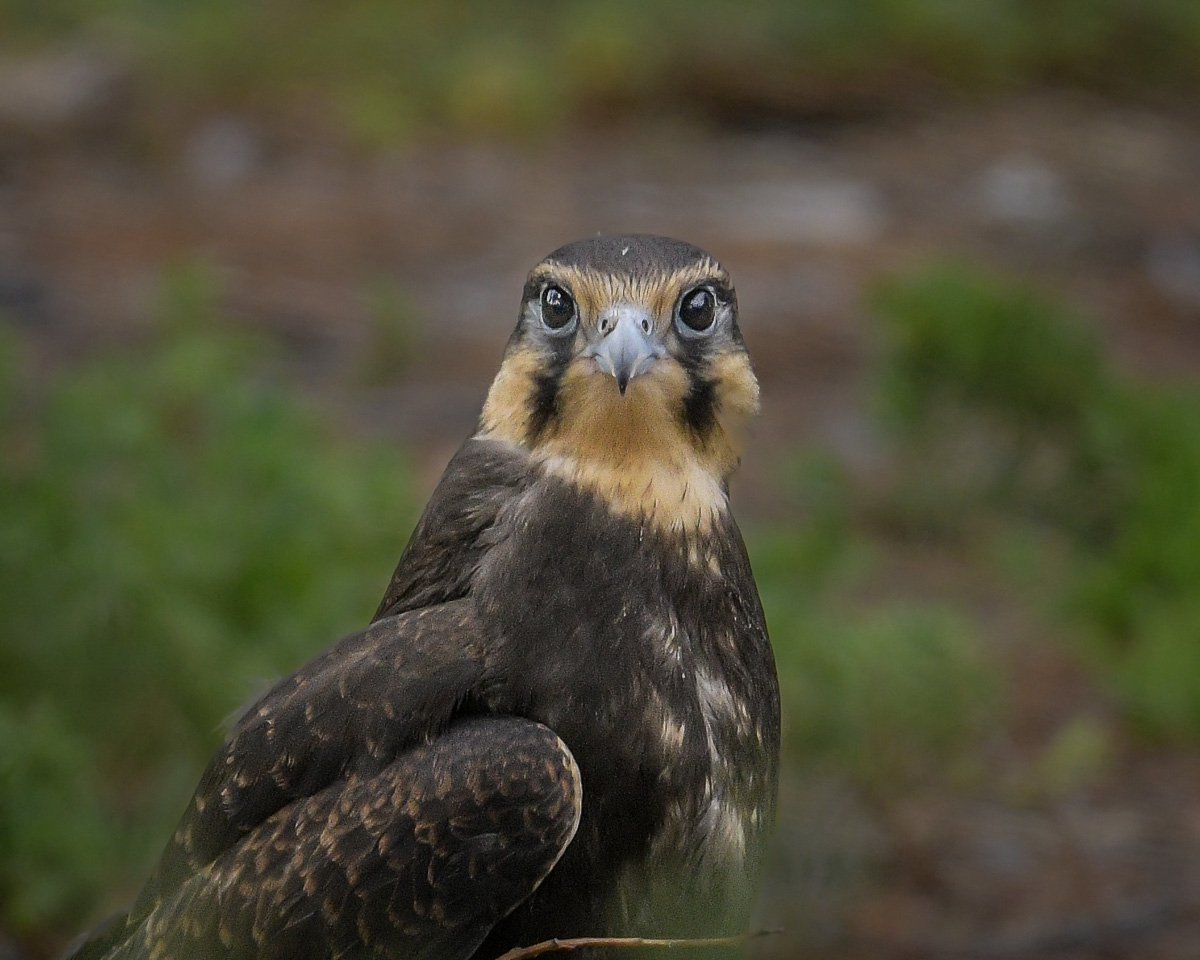
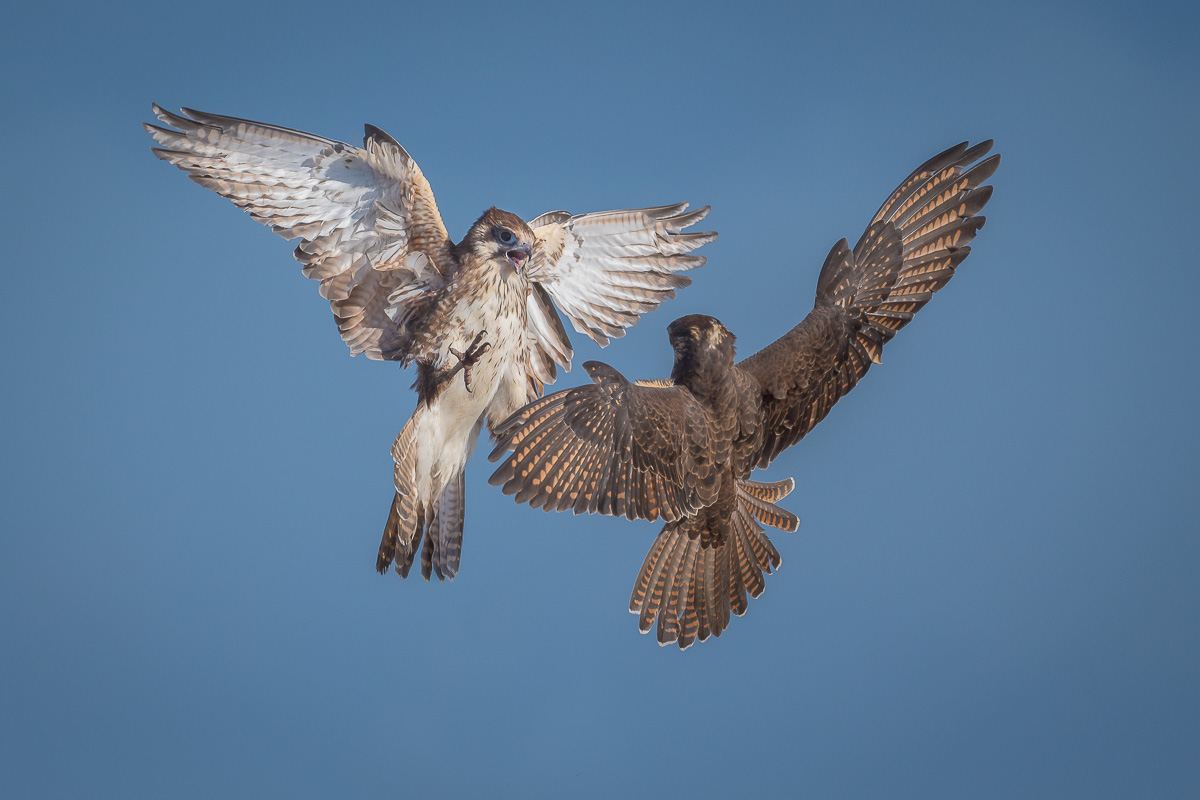
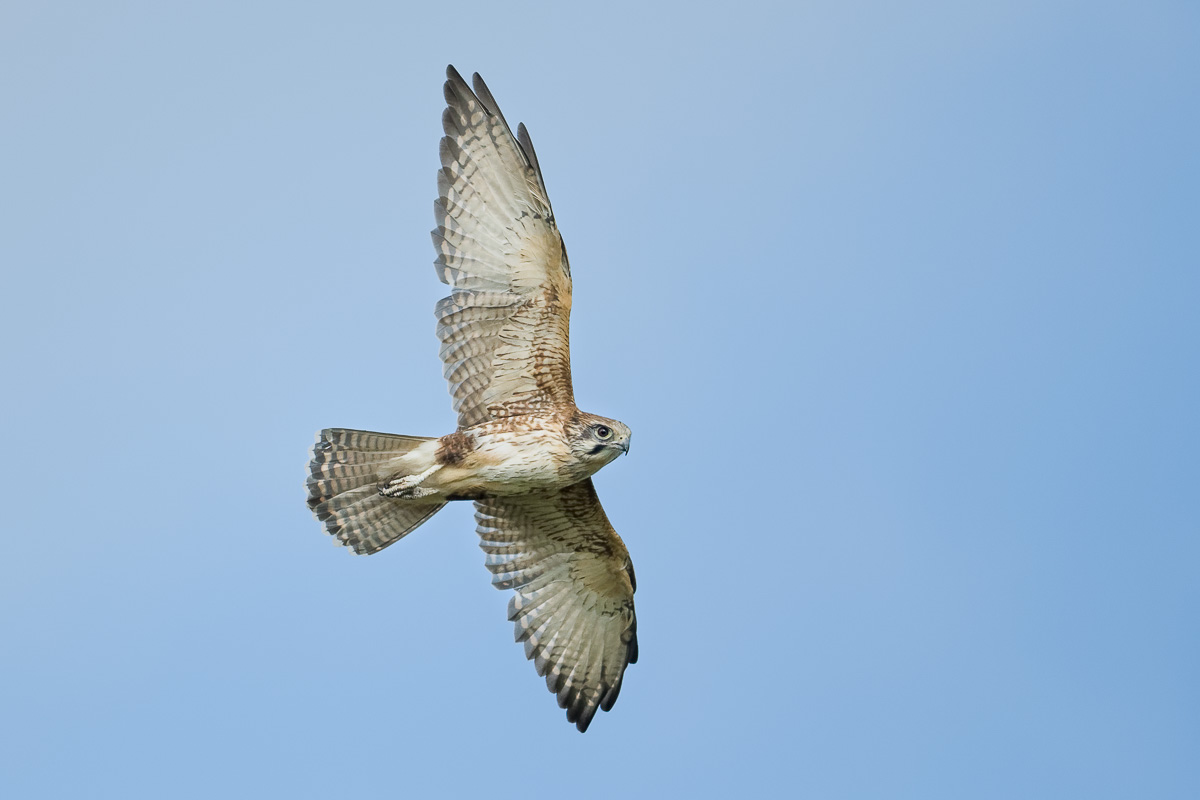
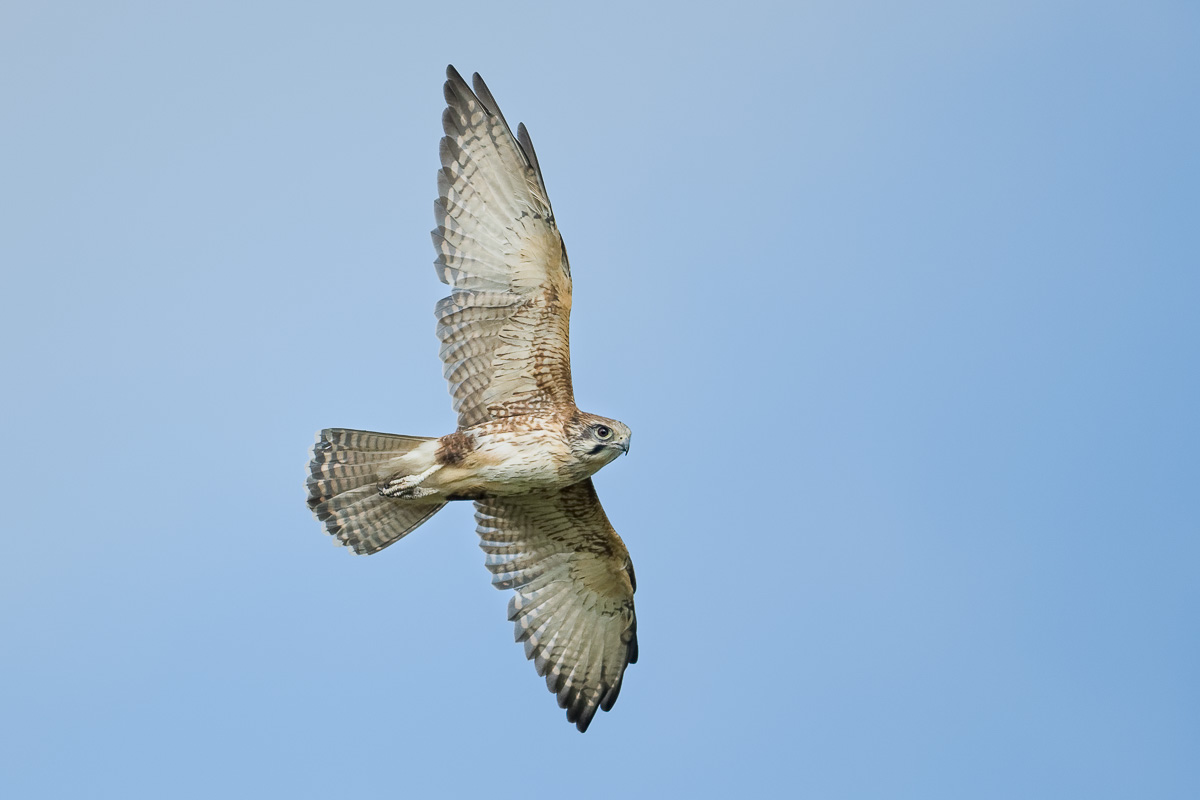
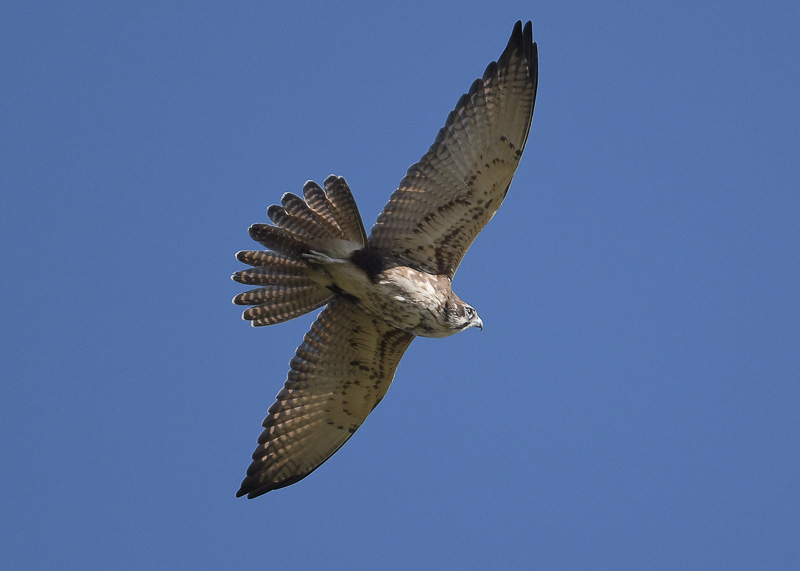
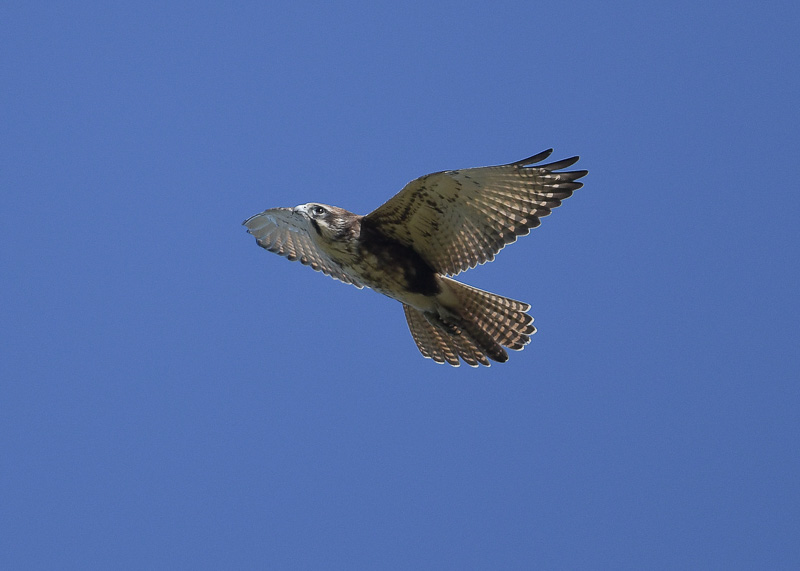
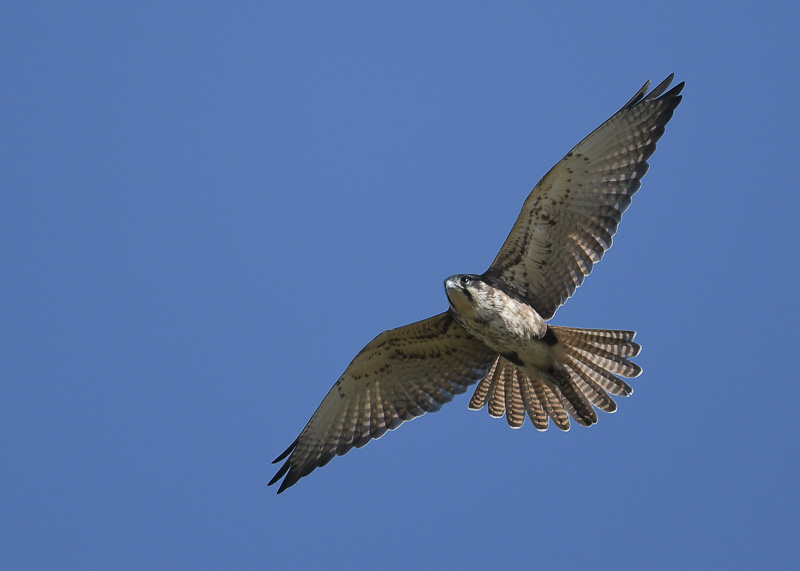
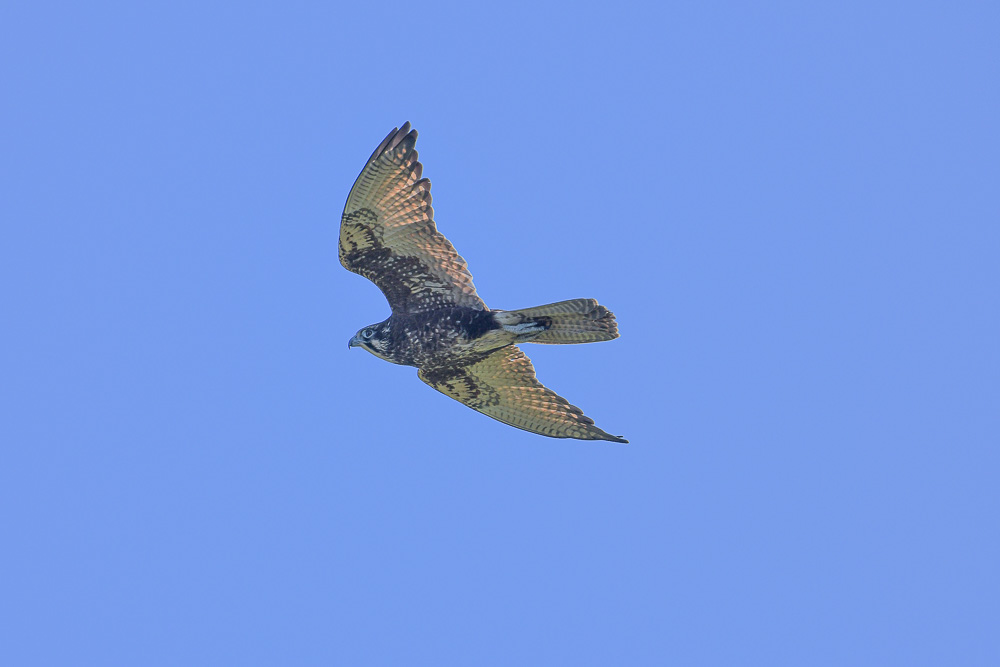
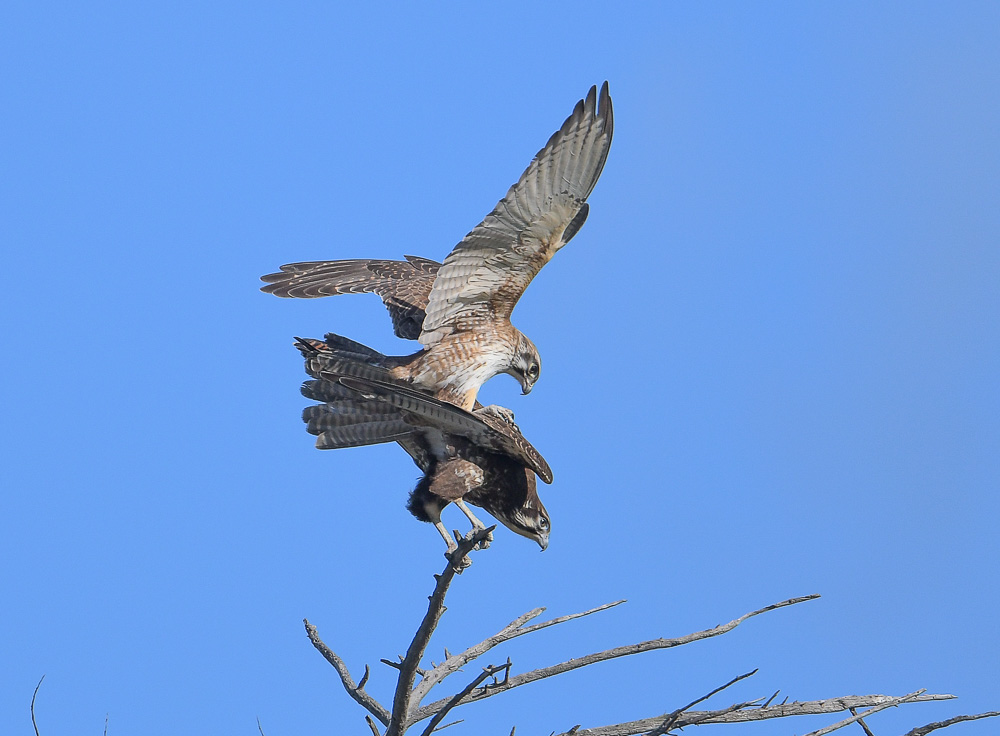
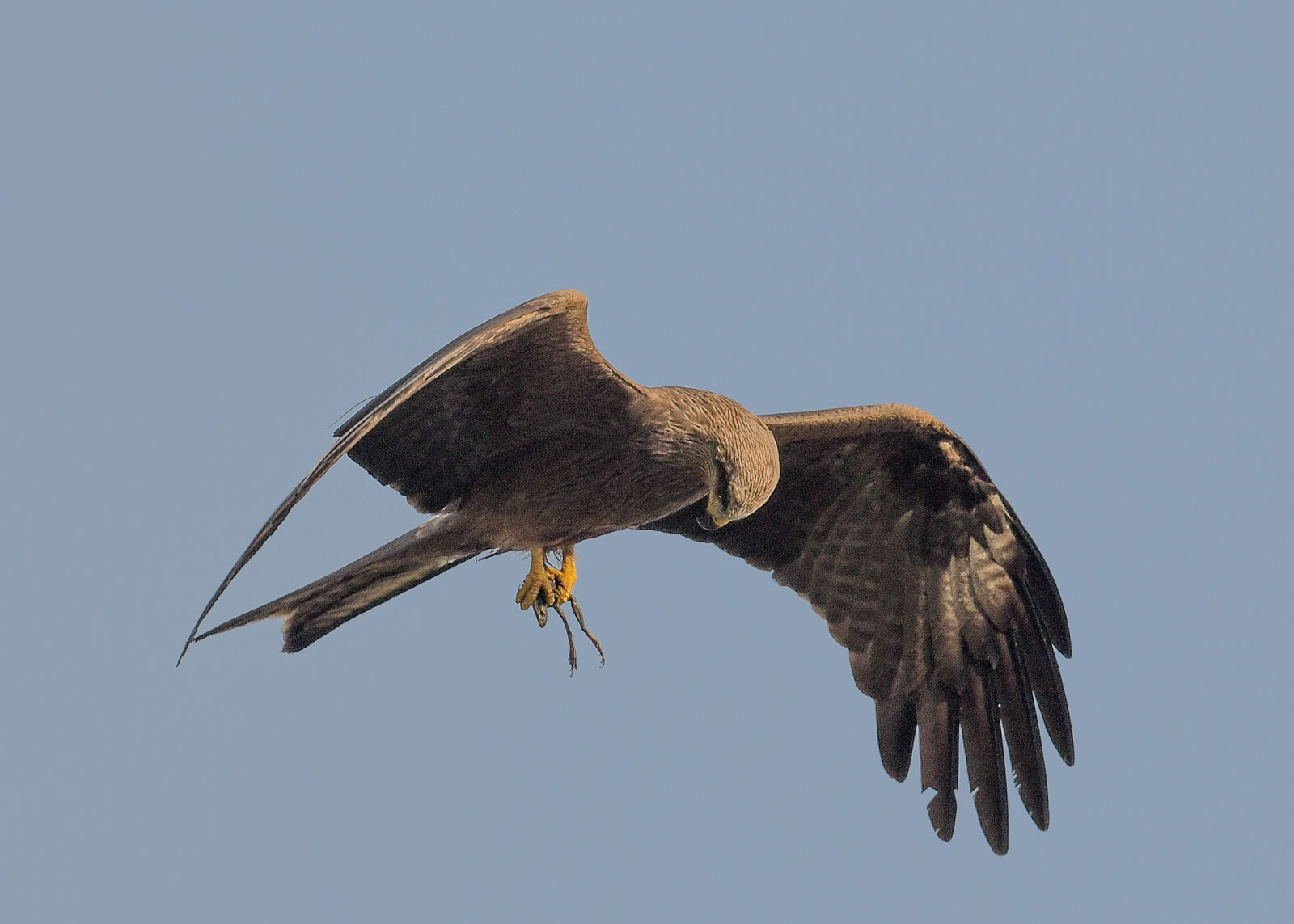
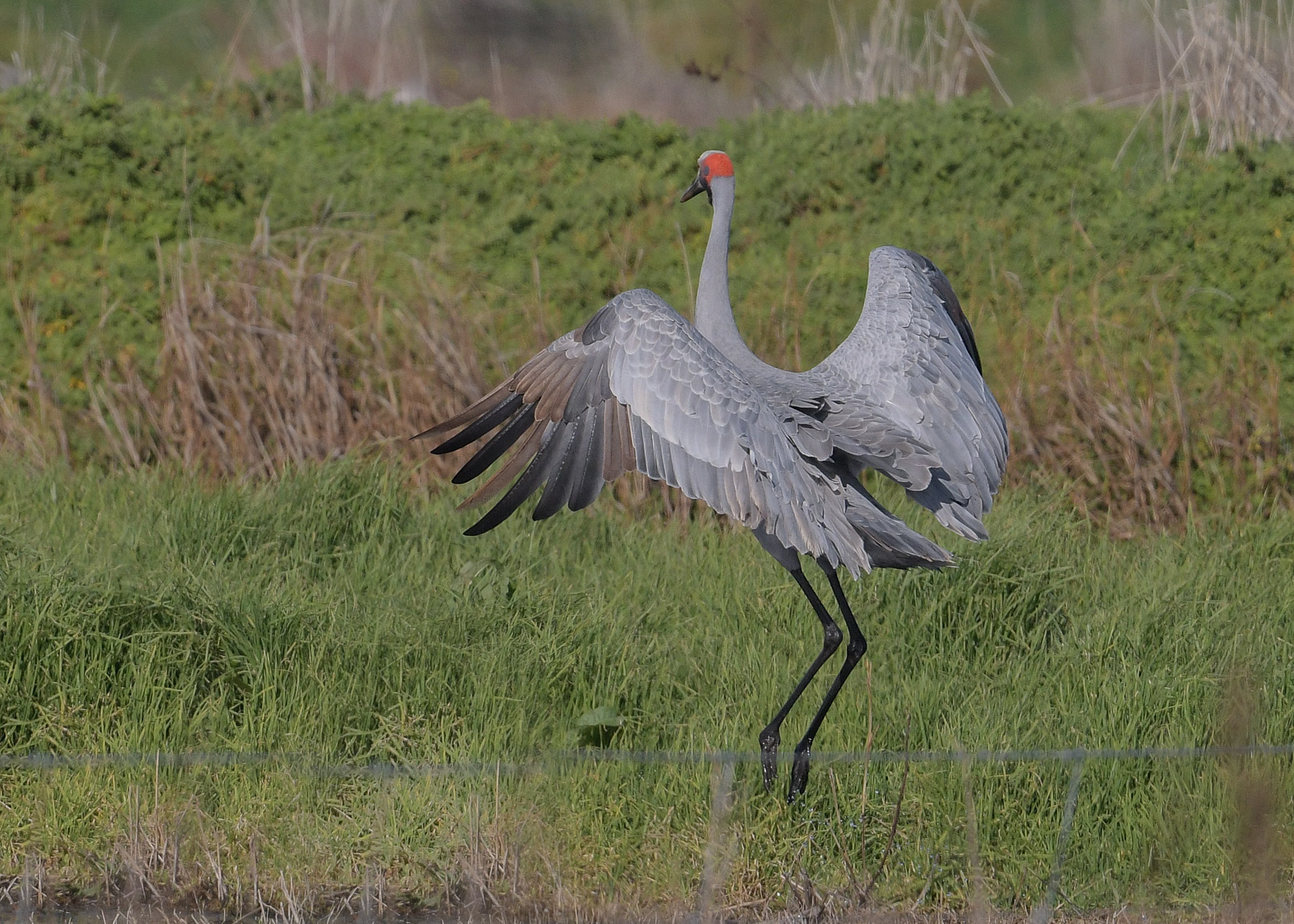
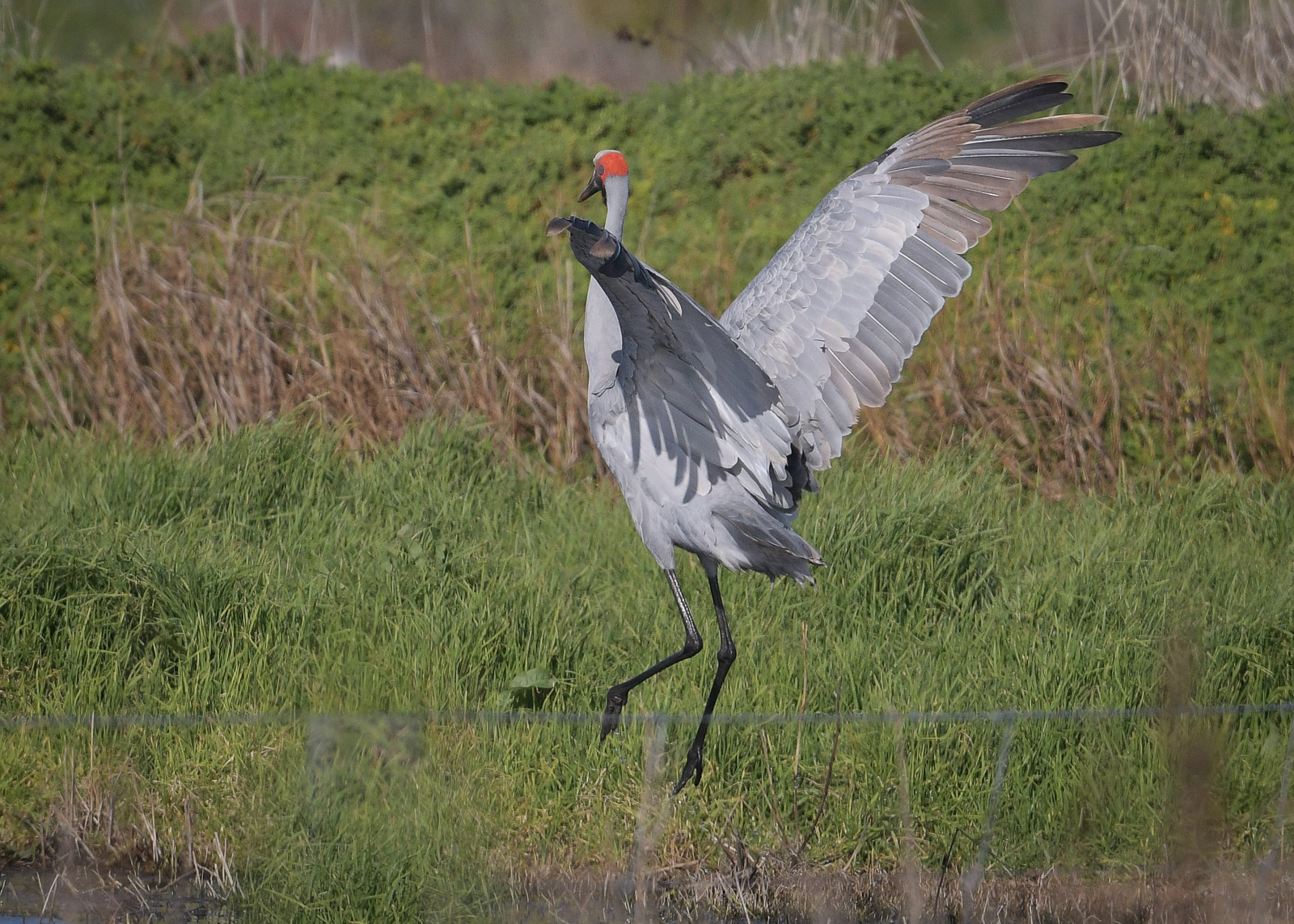
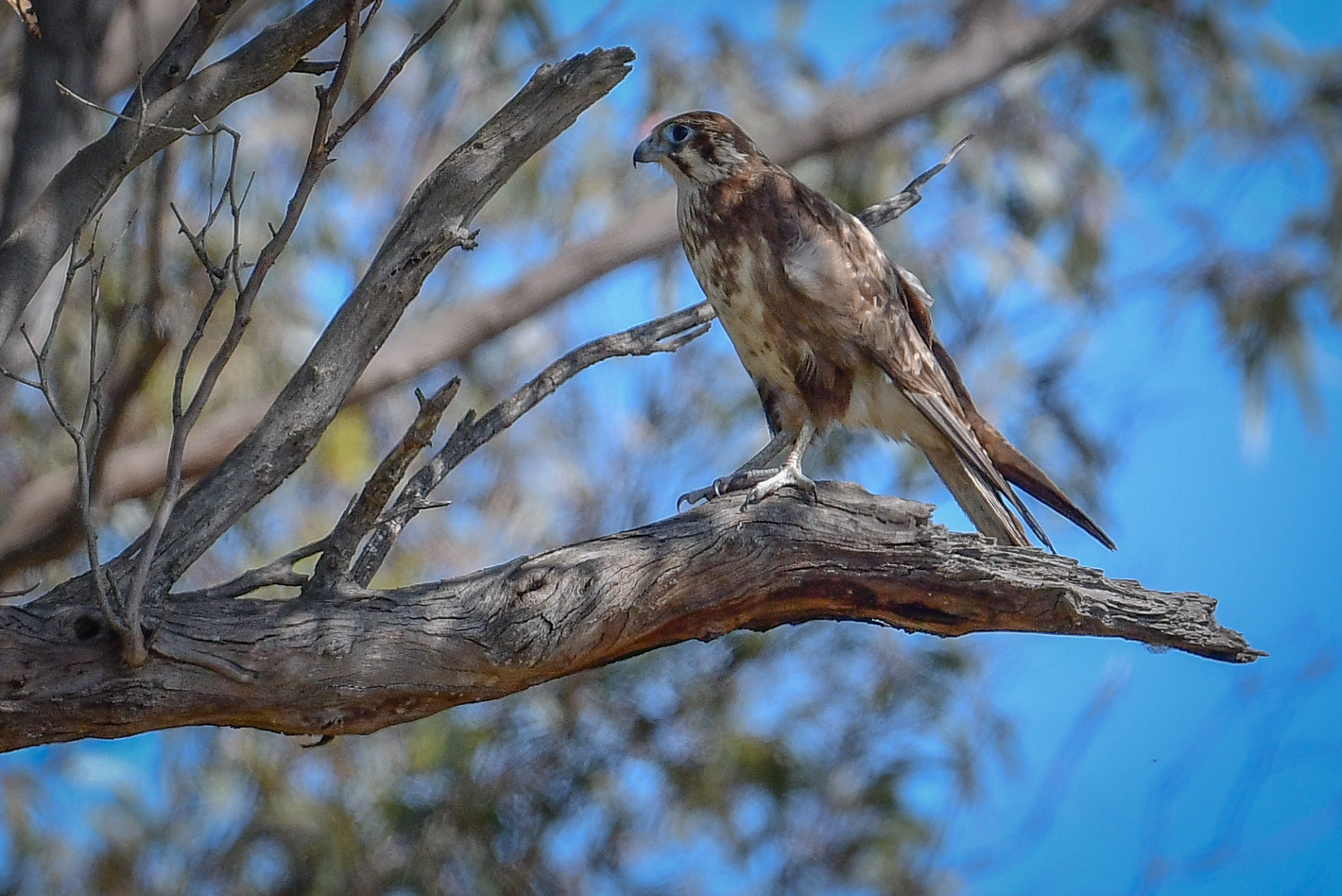
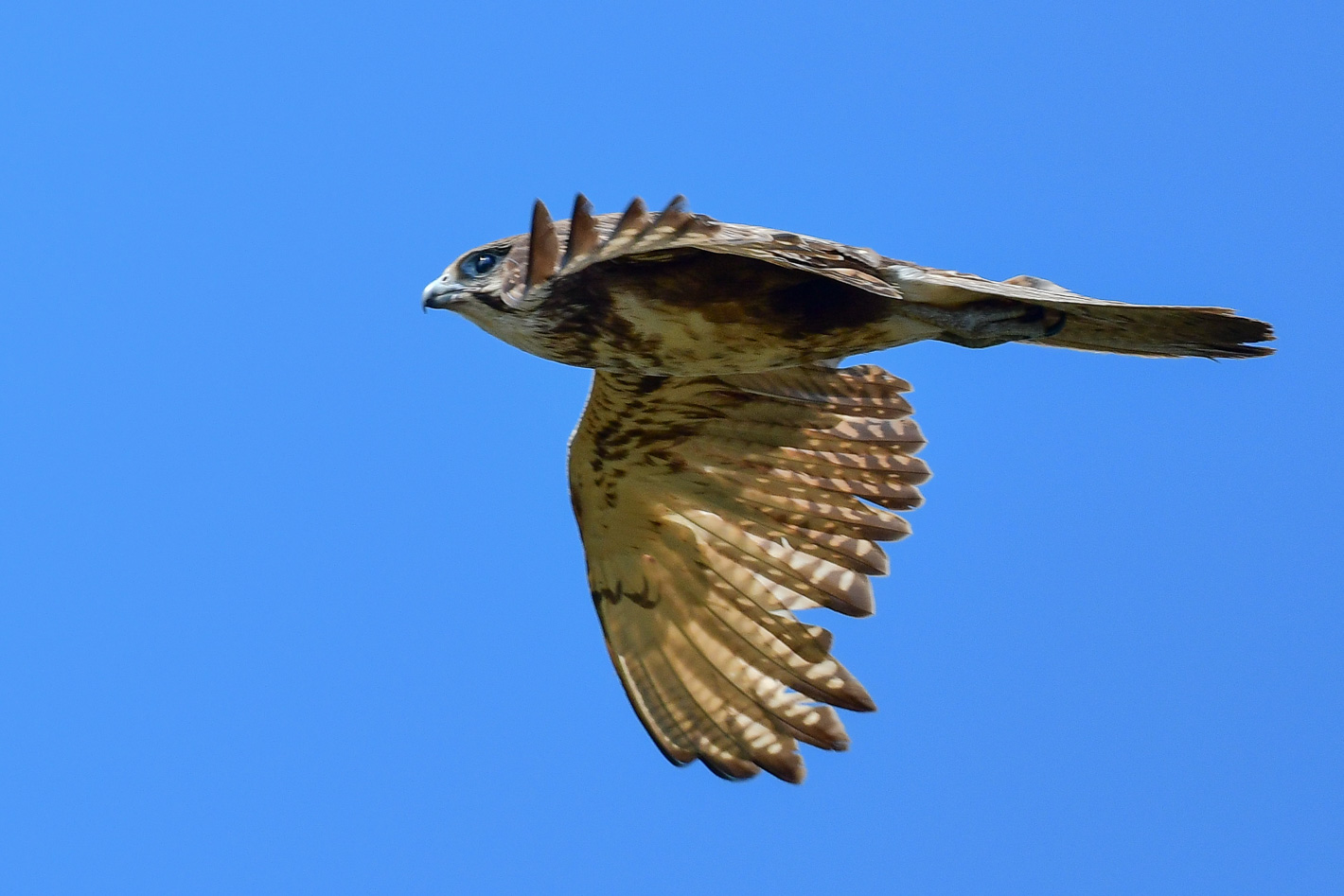
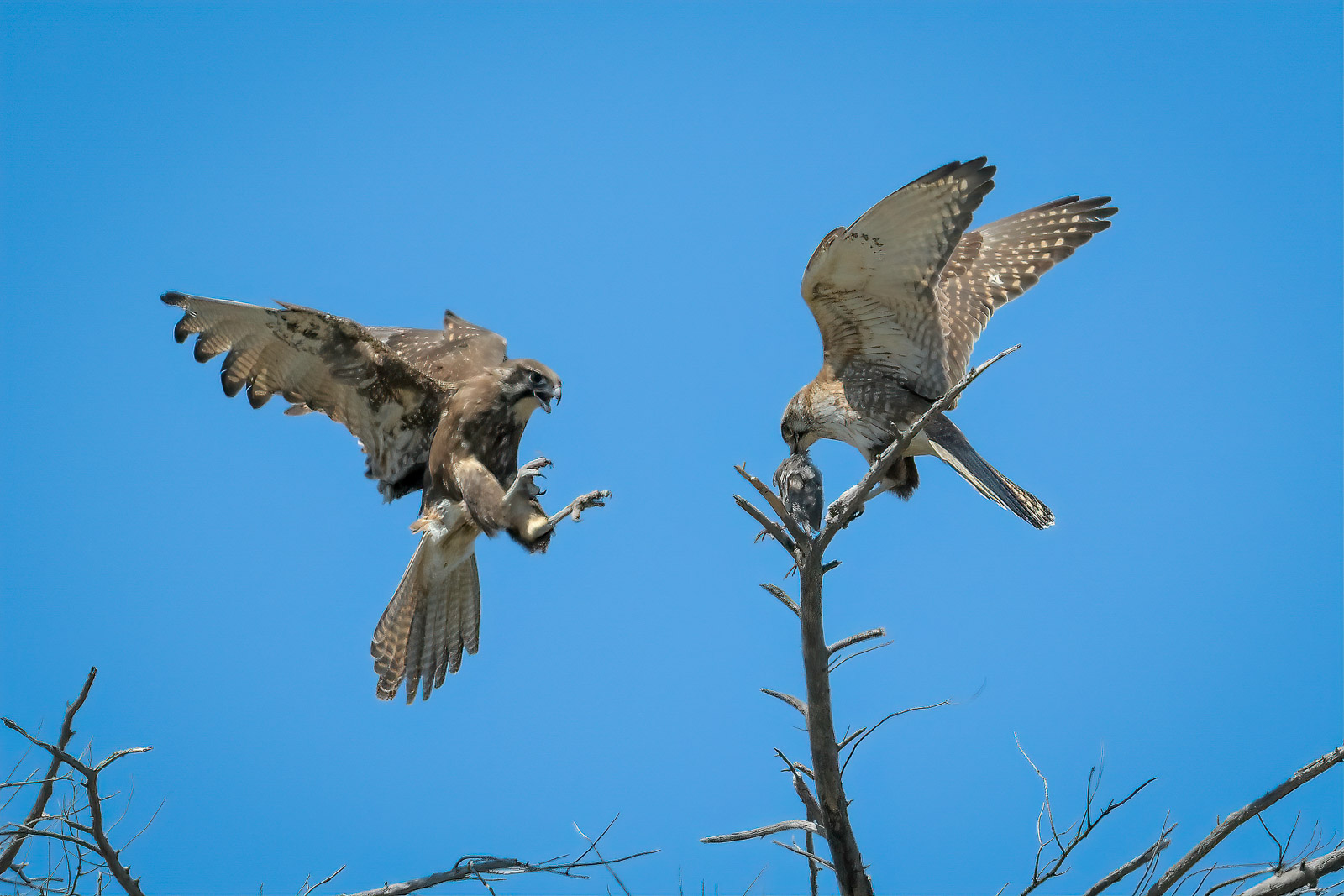
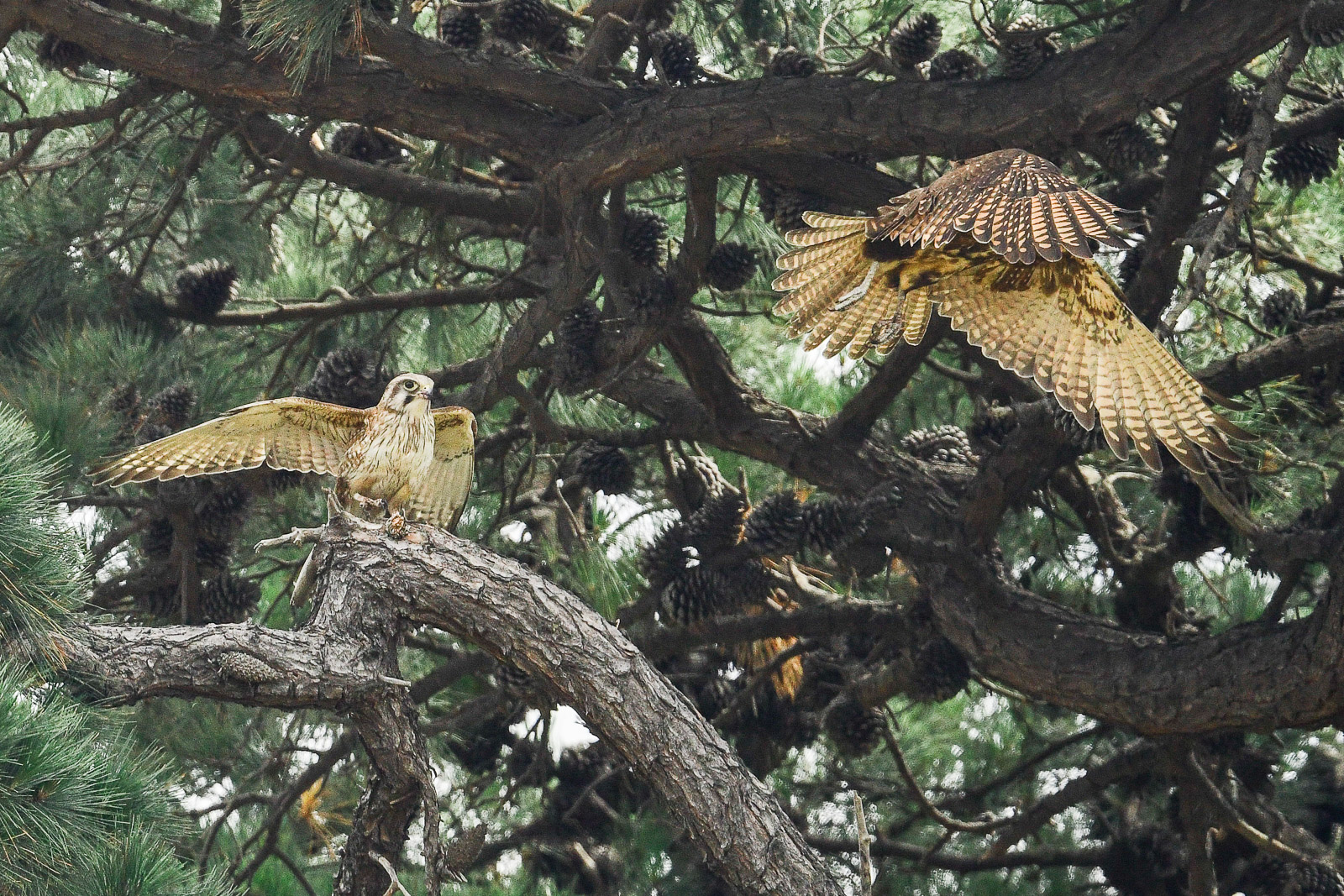
The area in which I was standing is part of the territory of a pair of Brown Falcon. As she prepares for a nesting season, they tend to spend a lot of time sky dancing. Pursing one another across the sky with much calling and aerial displays.

This pair are mostly human intolerant (Me too!) so getting close is no easy matter.

The winds have been high for the past couple of weeks, and on this day there were gusts of 50kph or more. The strong winds seems to give the birds an extra enthusiasm. Standing in the open paddock it was easy to see them scoot across the sky, from horizon to horizon.
If you’ve never seen or heard a pair of Brown Falcons pair-bonding, I’d hope one day you can. It is accomplished with lots of aerial antics and much raucous calling.

From where we stood we are able to see them sweep across the entire sky. So quickly and so far that sometimes they disappeared from sight. It was humbling to see these birds flash back and forth covering several kilometres either side of where I stood in mere seconds. It would take me 15 minutes to walk back to IamGrey in the carpark.

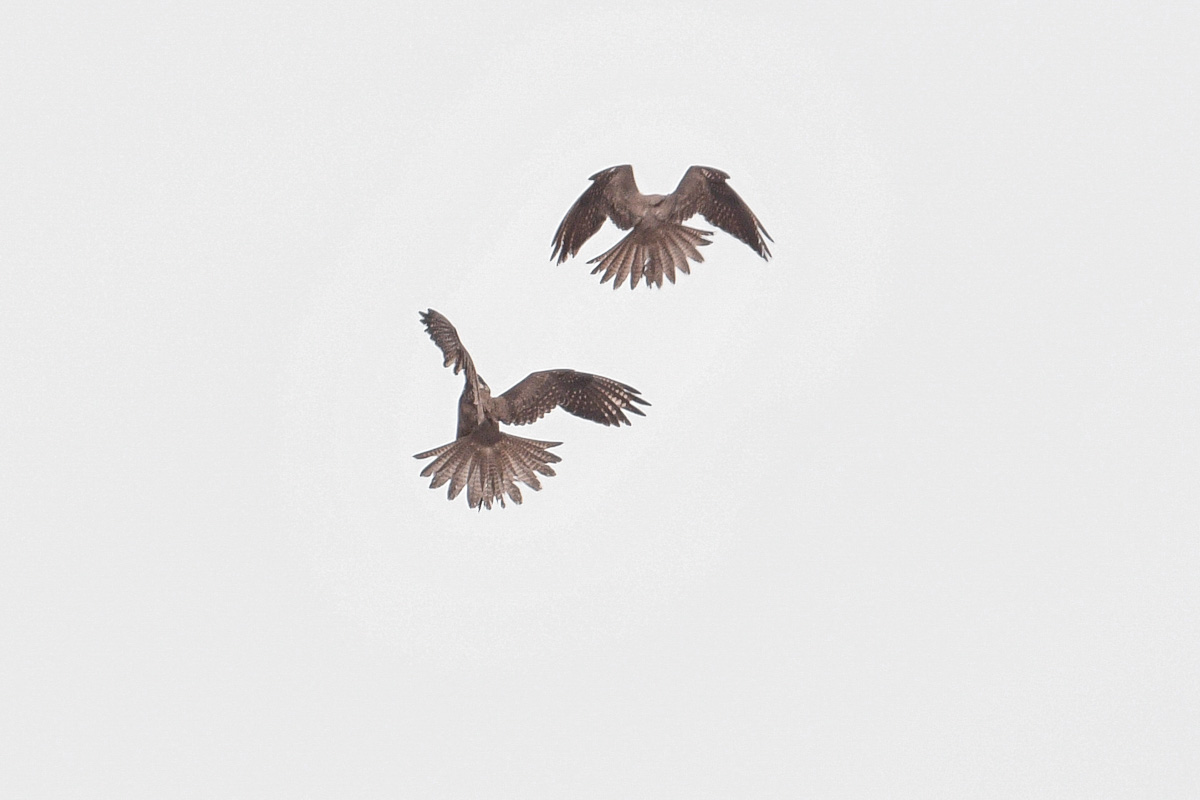
They also were working quite high up, so any photos I made really are at a distance. These may not be the most useful pics I’ve made, but worth sharing.

Lots of flying close together, quite a few times one or the other was flipped upside down or even one on top of the other with only metres seperation. They were so fast on the wind, and so high that the normal harassment by Magpies and others just couldn’t get started. Even if a Maggie had made her best vertical ascent, the Falcons would have been a kilometre or more away by the time she got anywhere near to the height.

In the end they disappeared to a tree-line way down the range, and perhaps that is where this year’s clutch will take place. Time, will tell


Saturday Evening Post: The Variations of Colour

If you assemble a group of half a dozen birders together and ask a question about bird id, you’ll likely get about 10 or more different answers.

Birds don’t make it easy. Some have unusual juvenile plumage and are easy to spot. Some don’t. Some differ between breeding and non-breeding plumage (Consider the Red-necked Stint, it’s most unusual in Australia to see them fully coloured up rich red).

Discussions begin about the intricacies of variation in moult patterns, in feeding styles, of nesting and a whole range of features and characteristics.
Discussion also turns to cover all sorts of anecdotal material, and some wise birders seem to be able to determine not only the sex of every bird, but on which side of the tree the nest was on.
It’s enough for the beginner to shake their head and wander away thinking, “I only wanted to know if it was a Sparrow or an Emu!”

Most birds don’t have a wide variation of plumage so its pretty easy to settle on what a Little Pied Cormorant looks like, and why it’s not to be id’d as a Australian Pied Cormorant. Or, some are distinctive enough, think Laughing Kookaburra, as to not be easily confused.

But when it comes to Brown Falcons

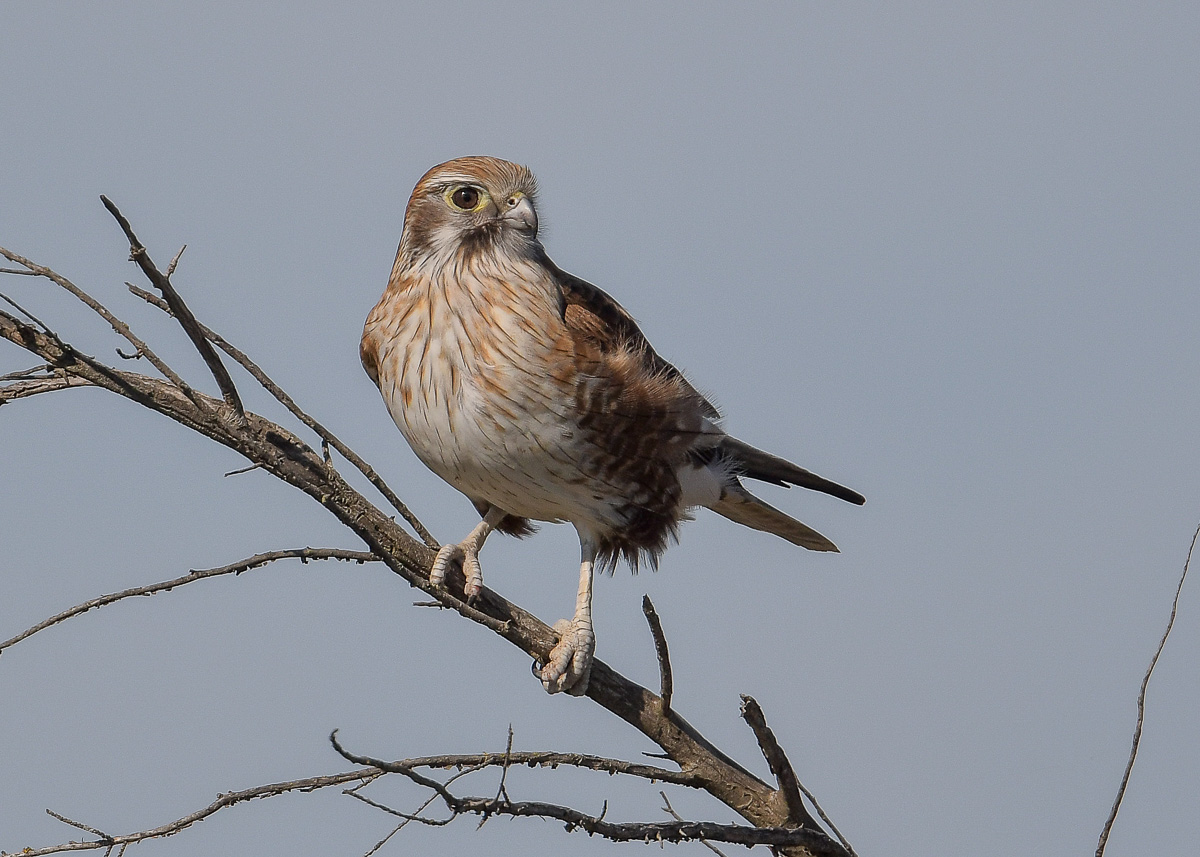
This past week my Flickr and WP friend Eleanor, had made a trip to the Western Treatment Plant, and photographed a bird which, at first blush looked like a Nankeen Kestrel. It certainly started some conversation around my group of birders.

Browns are birds of the open plains and open forests.
As the text books say, “Brown bird with a variable plumage.” Which is where the problems of id begin to surface.
And variable is what seems to make id complicated sometimes.

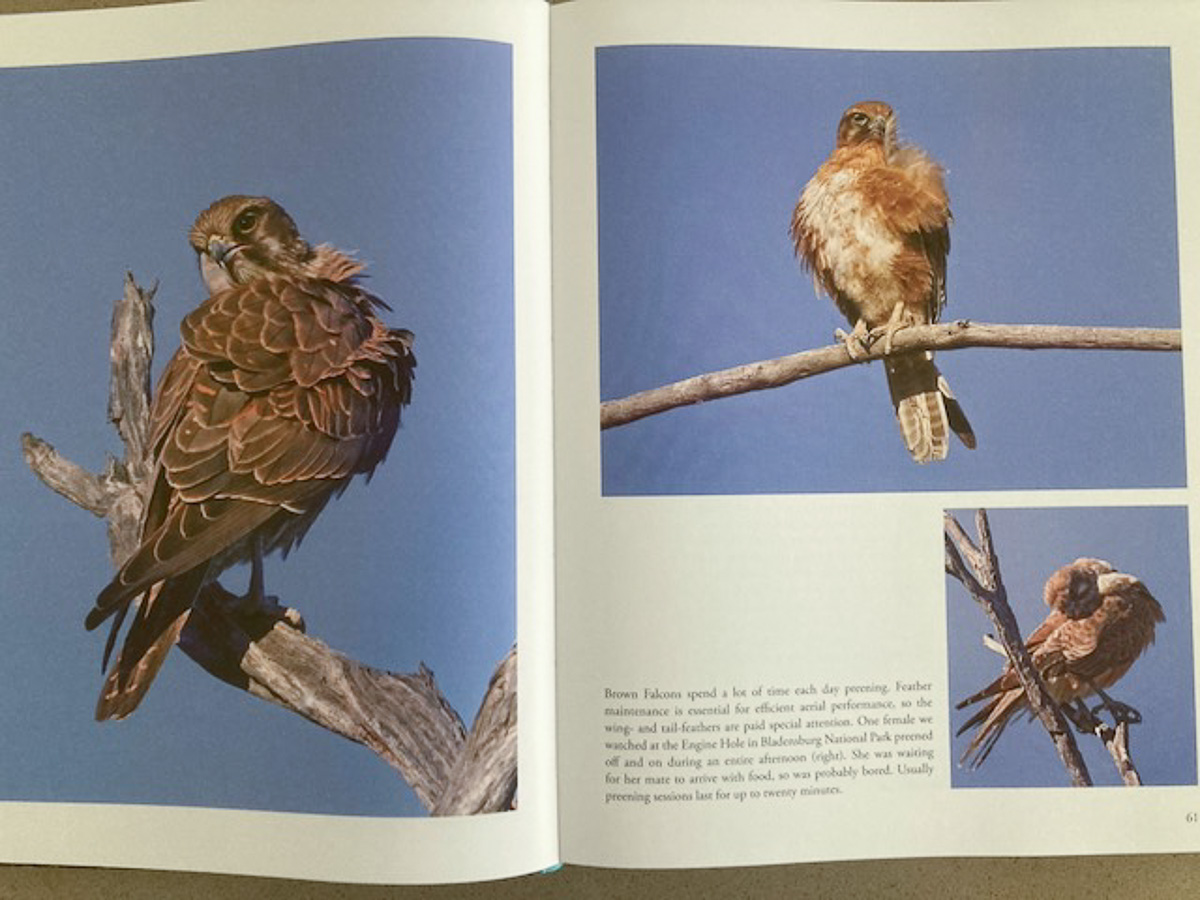
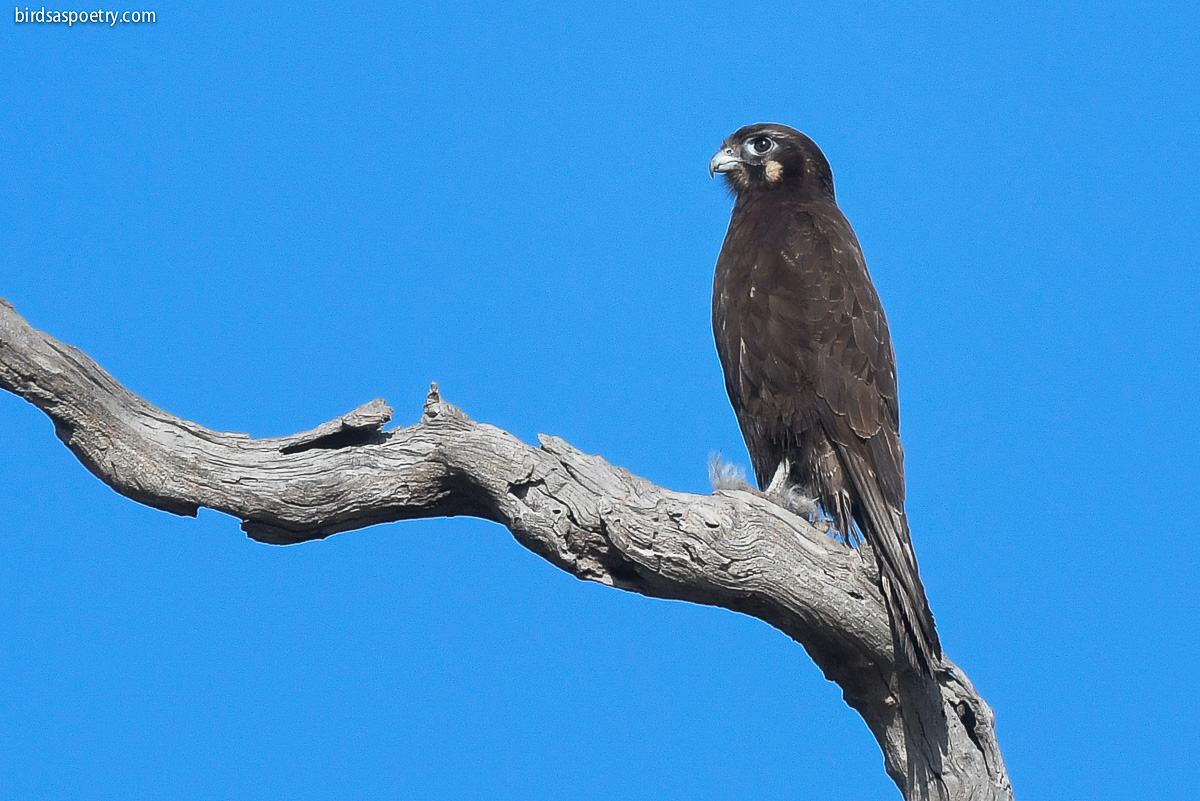
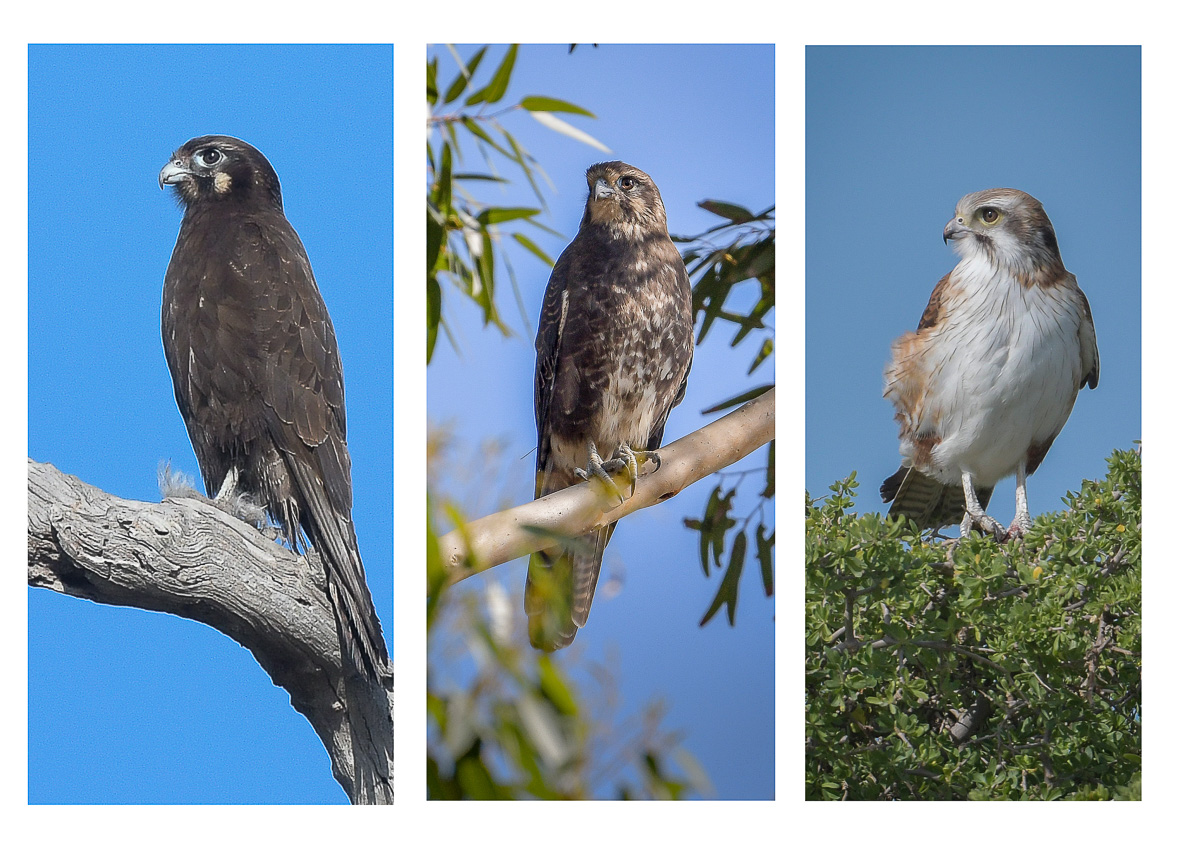
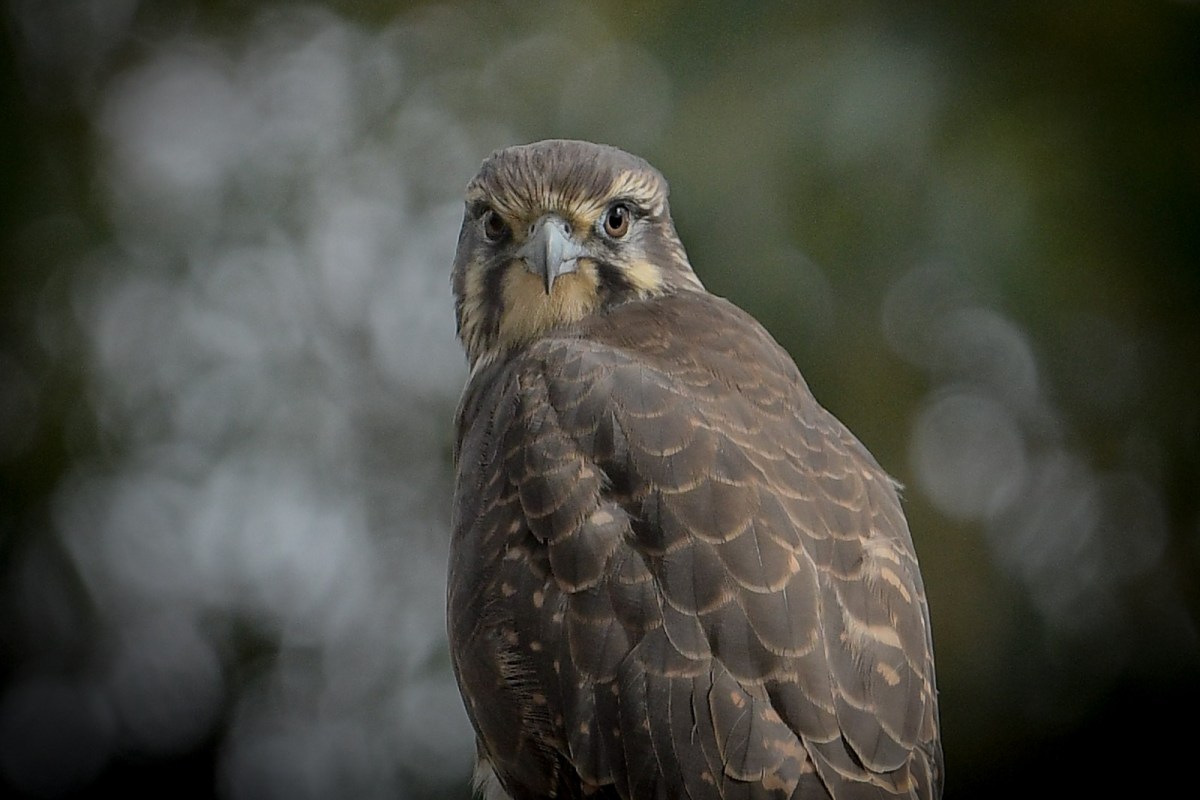
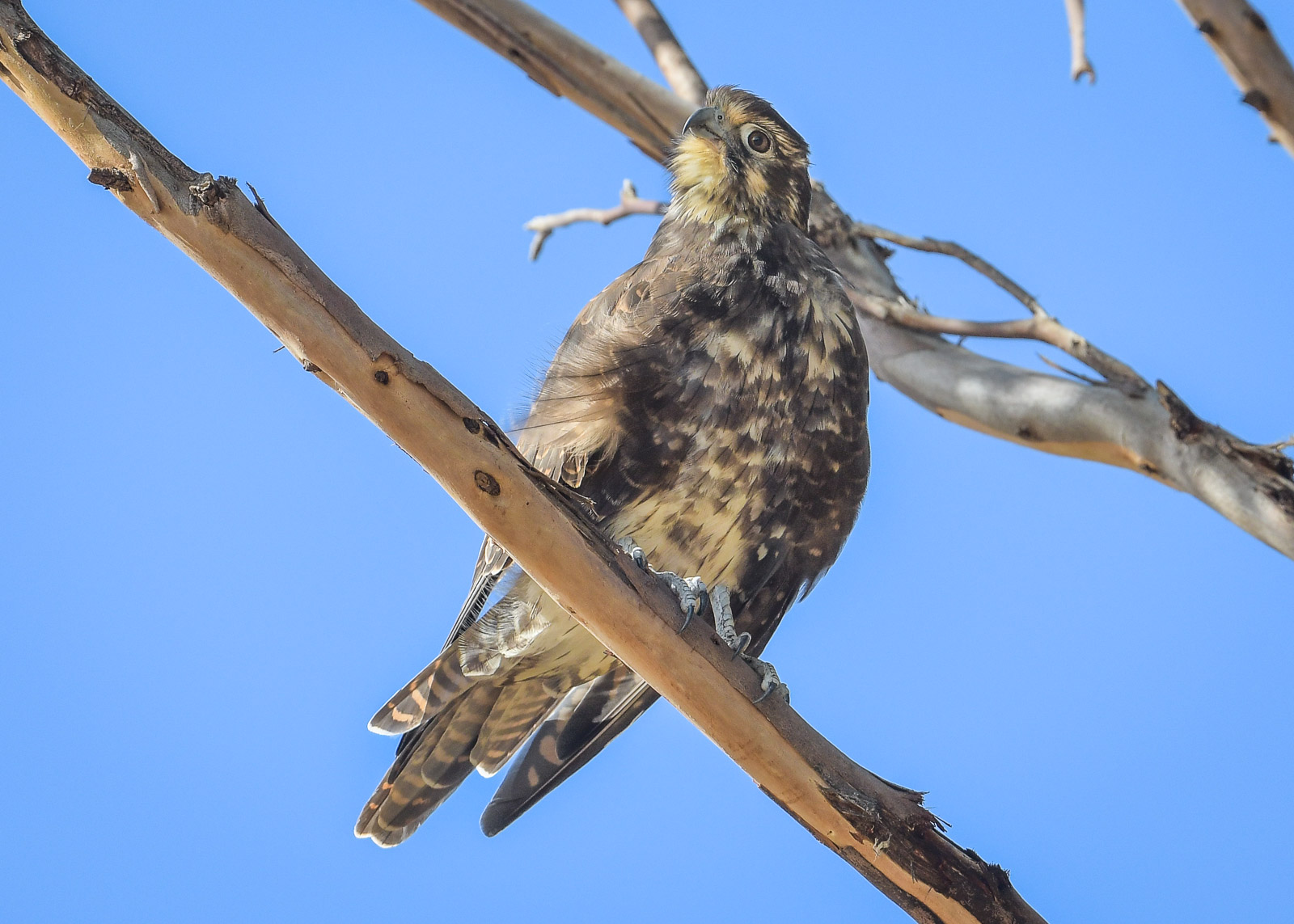
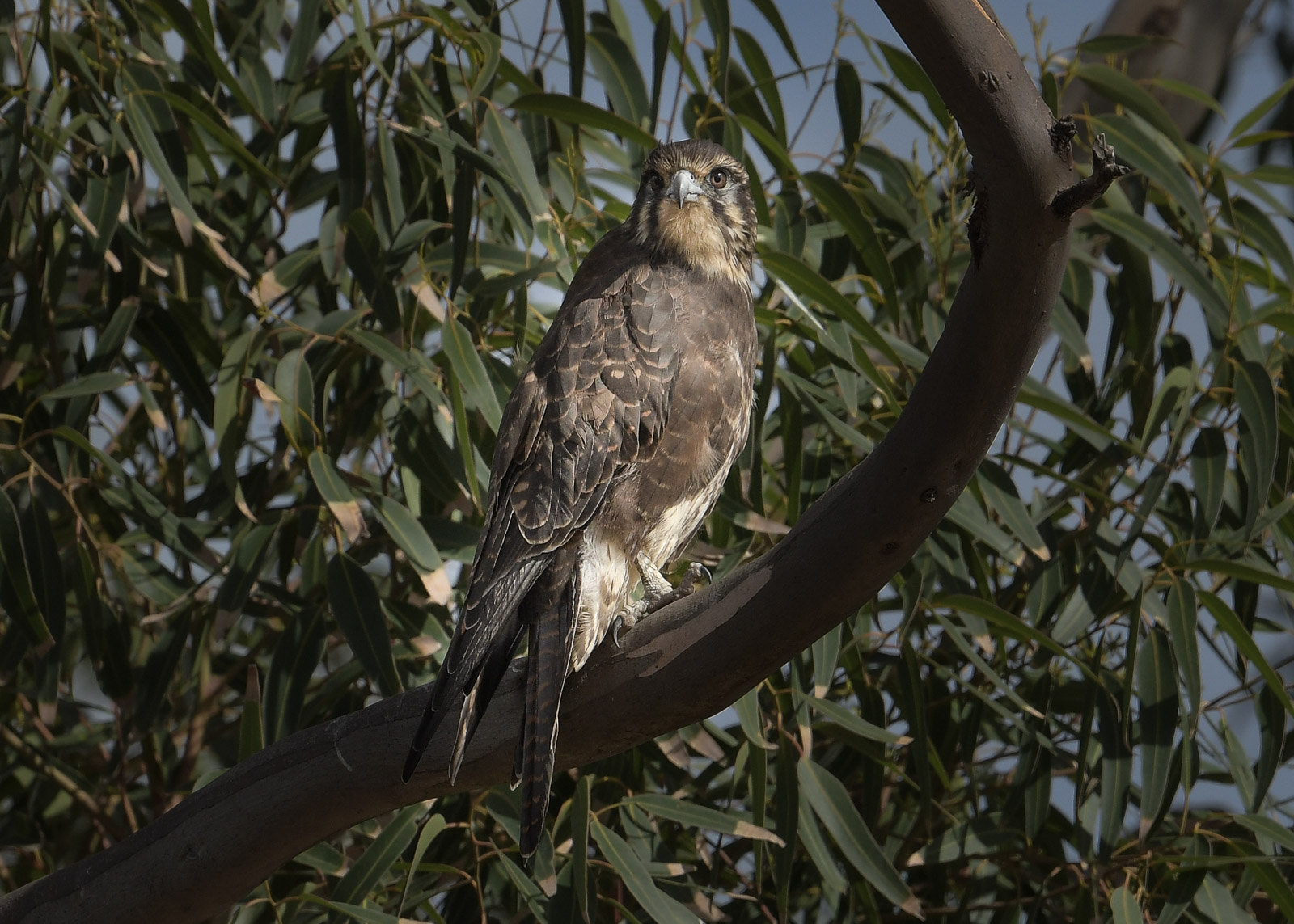
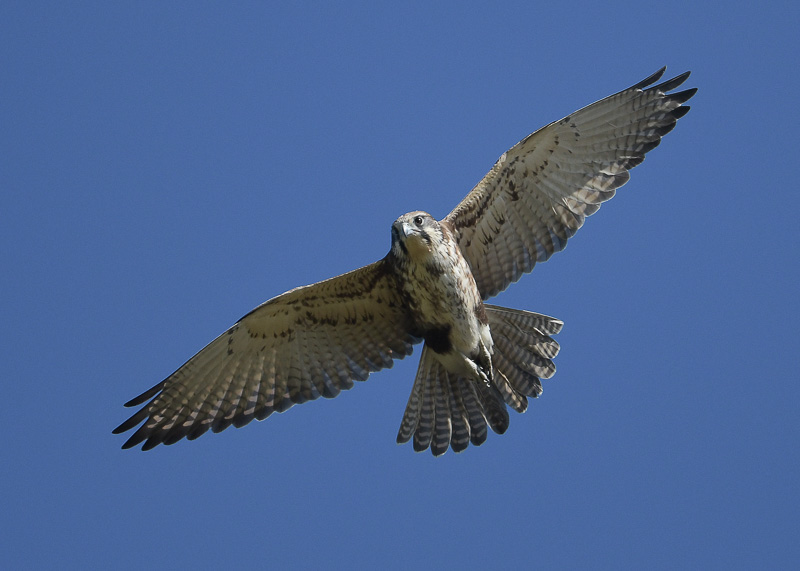
Browns can vary from dark chocolate brown, through a marbling light brown on white, to white chests and underwings.
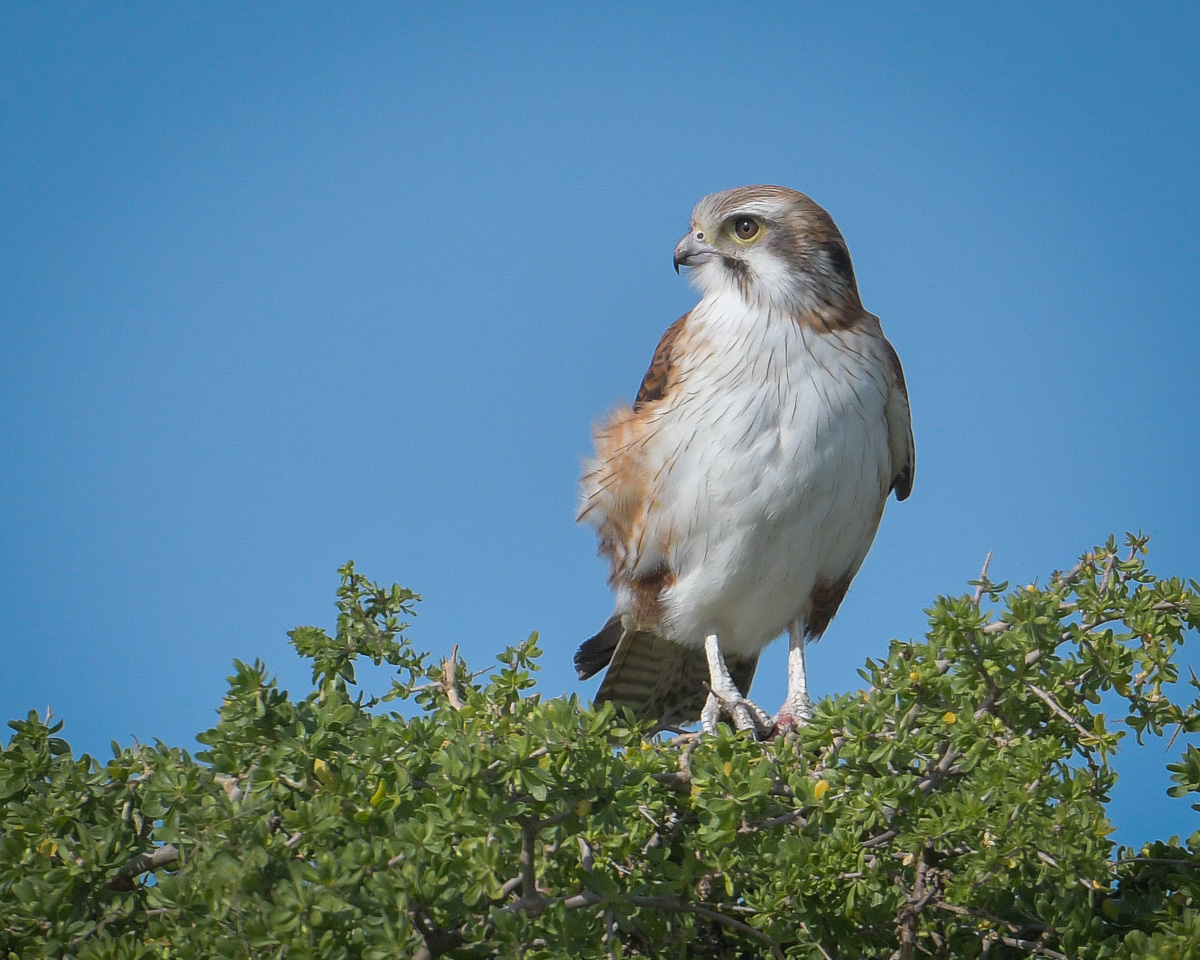
At a distance, a light morph Brown is easily mistaken for a Nankeen Kestrel

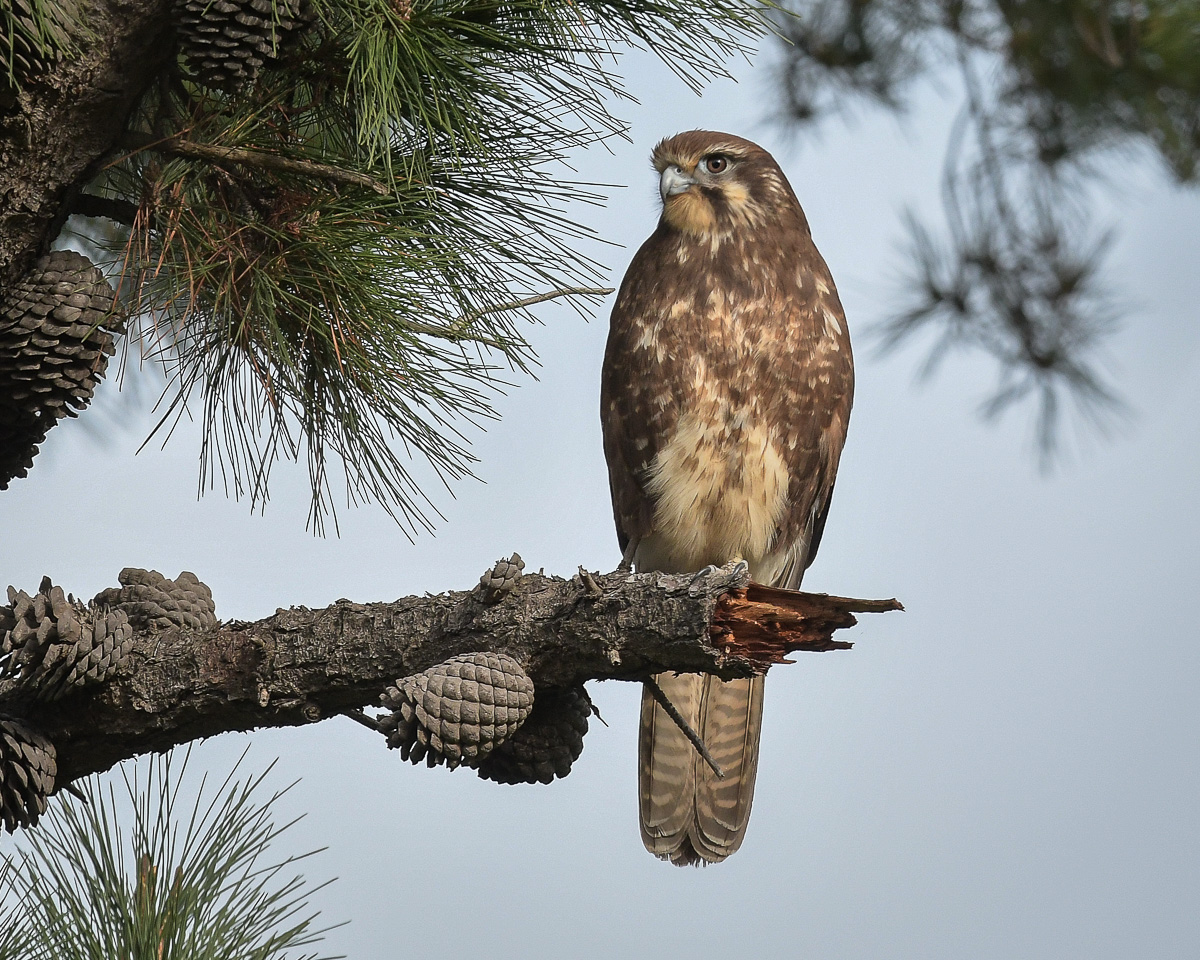
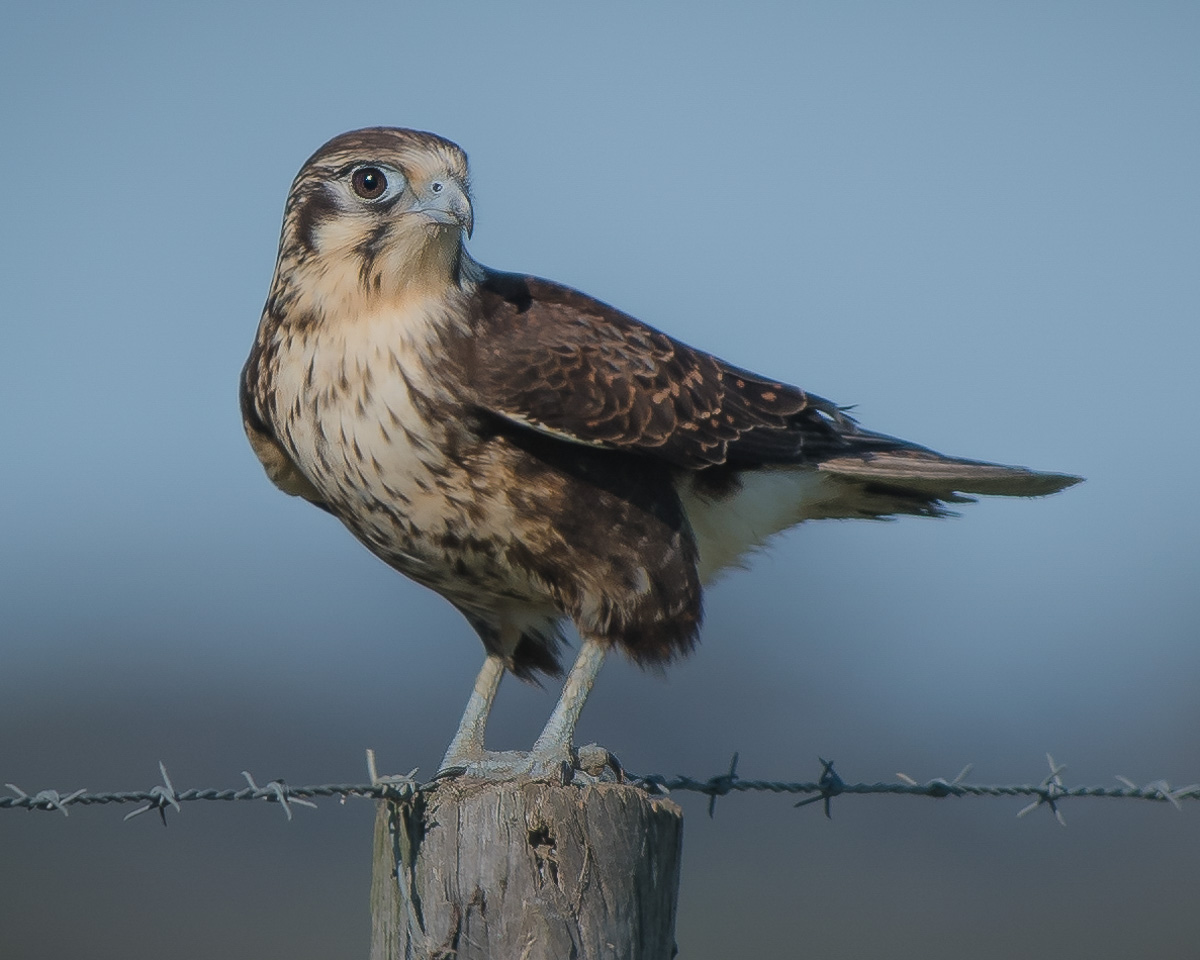
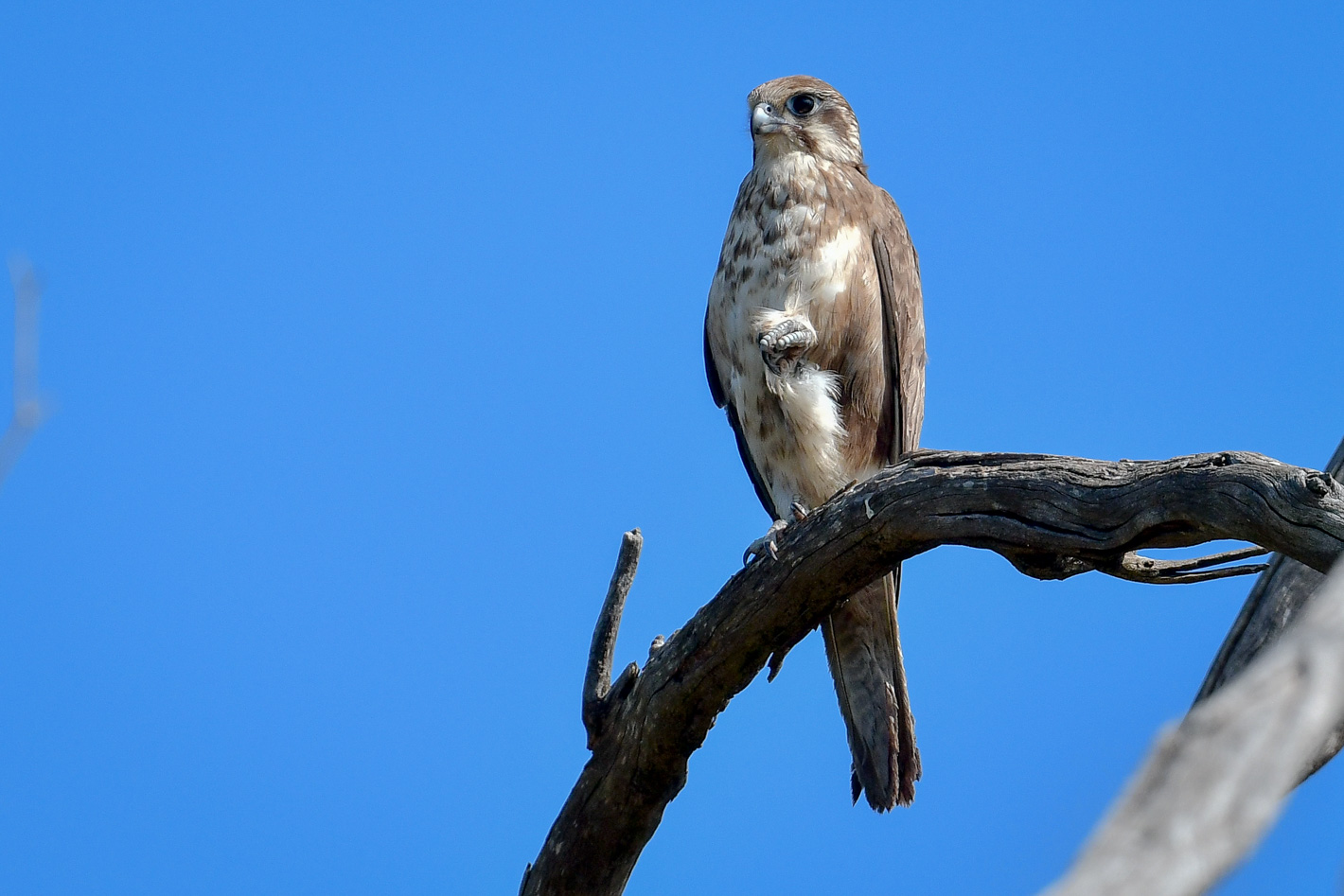
Here are three that show some of the variations. All of these are local birds that I’ve come across in the past couple of years.

See. “With variations”
Here is one that is similar, (if not the same bird, but I’m only guessing) that Eleanor found

For a greater discussion there is an interesting PDF file from the publication, The Emu 2003.
Much of the research was made at the Western Treatment Plant.

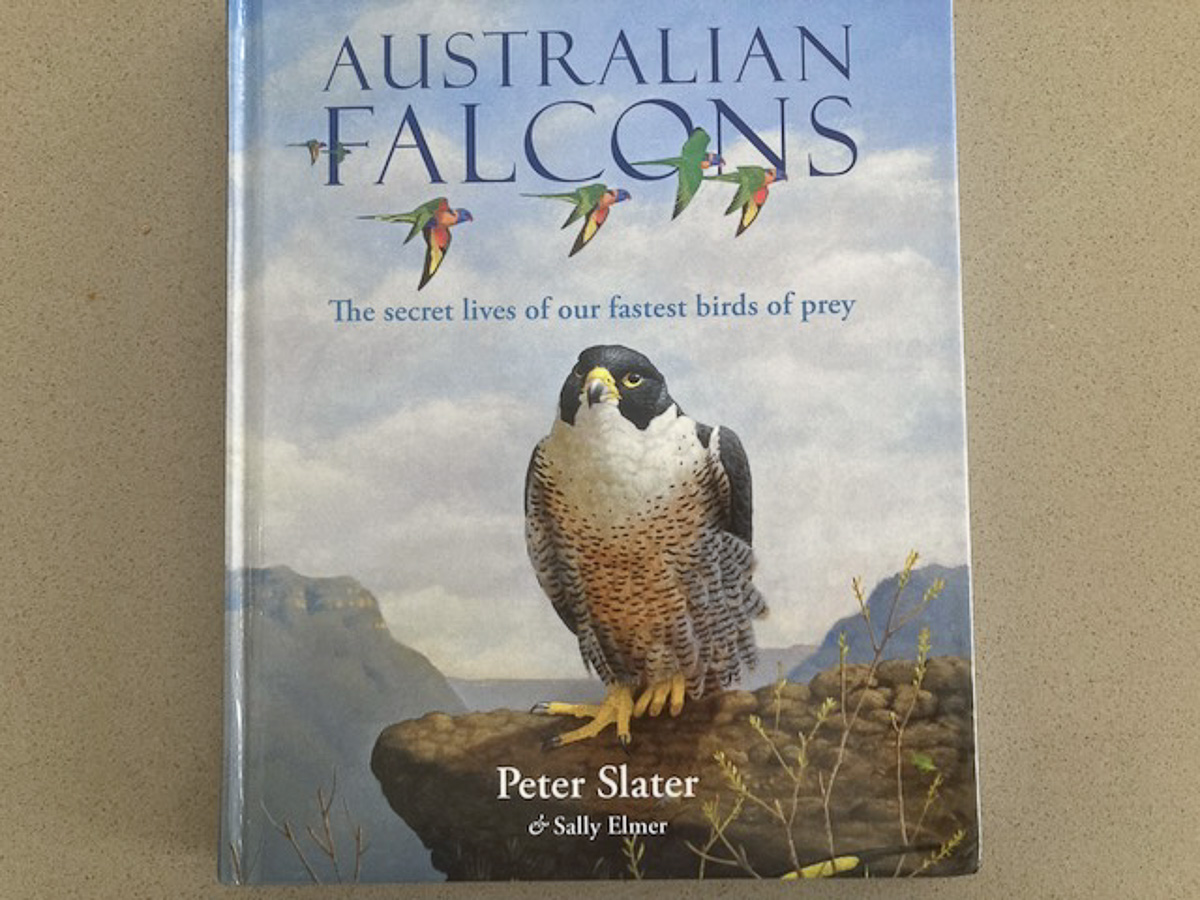
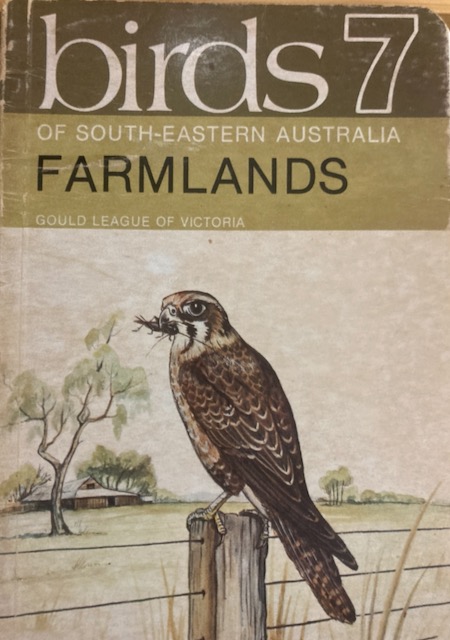
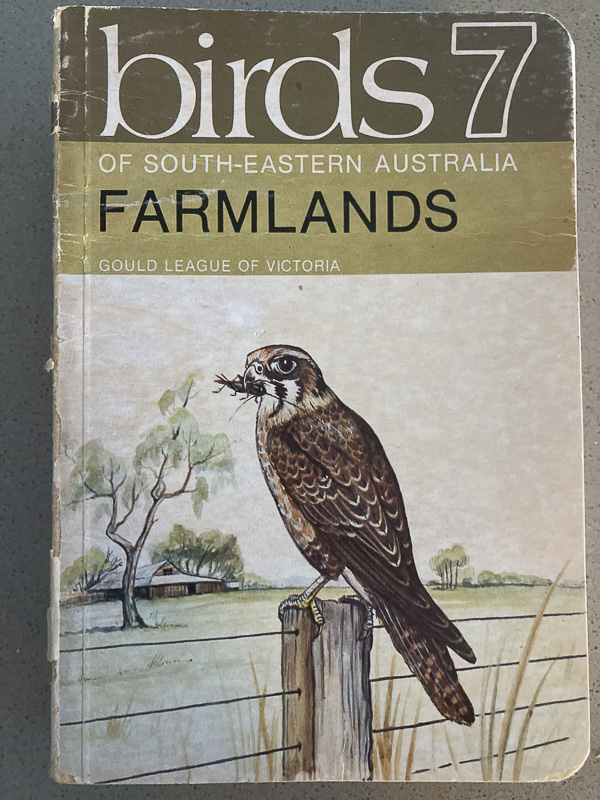
And here is a lovely cover of an old Gould League of Victoria publication with paintings by Susan McInnes. As can be seen, this particular book has had a long journey in our family.

It used to be said, that light coloured birds were from the wide open plains and darker birds from forested areas. But, like all anecdotal stories, they may only be true under certain circumstances. As a young tacker growing up in the wide ranging open fields of the Mallee in Victoria, it was not unusual to see light through dark birds.

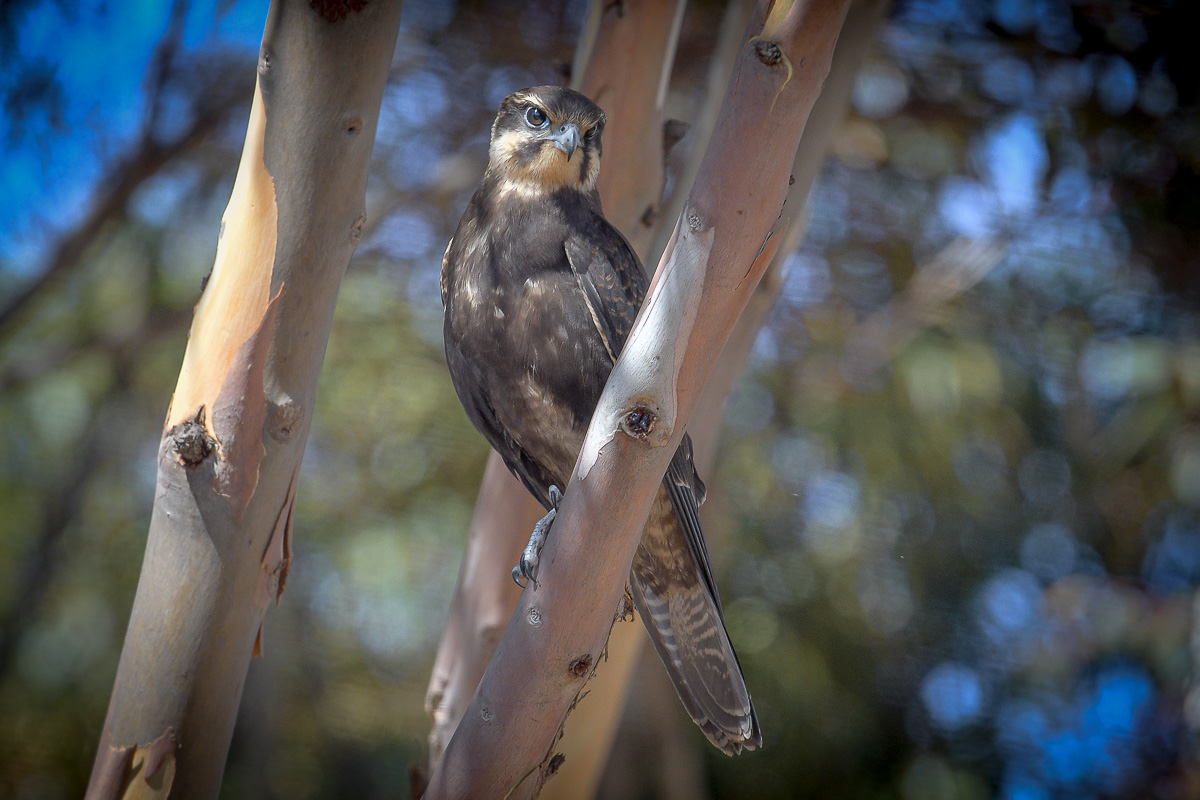
Long term readers know we regularly have contact with a pair of Browns. She is of the mid-tone marbled chest, but her handsome male, that I call “Alistair” is a very light morph bird. Here he is on a turn.

To add to the complexities, some like Alistair have yellow cere and eye marks, while others are a grey-blue.

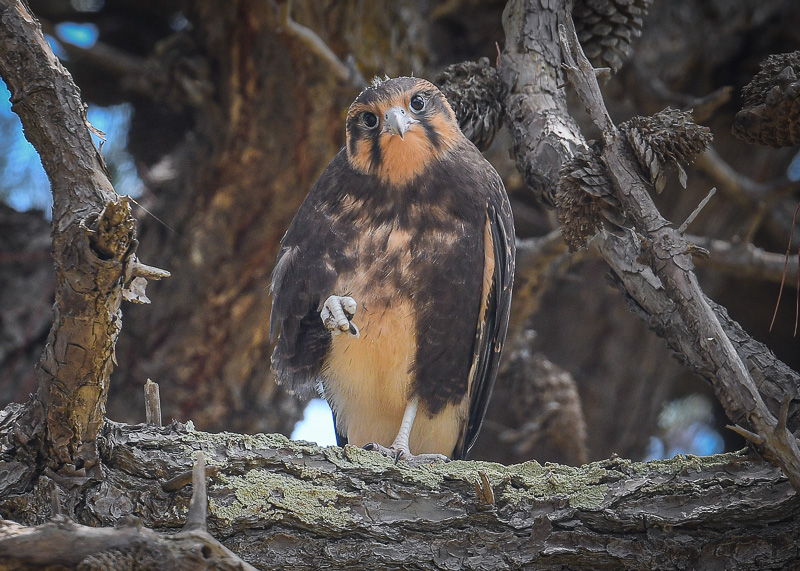
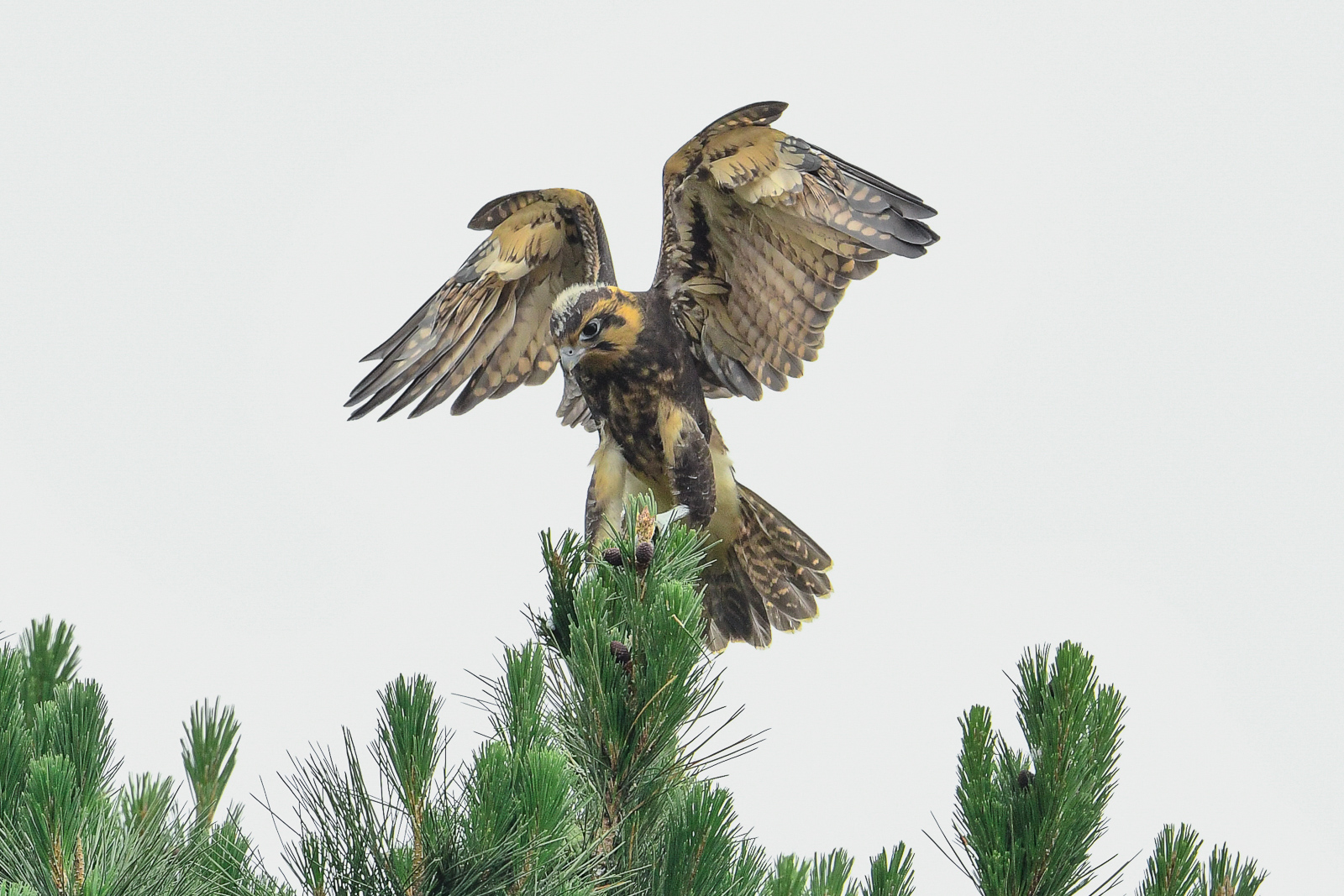
And for completeness, here is a young bird that had only been fledged a couple of days, the baby down is still showing on its head, as is the rich apricot colours.

Good Luck with id.

Enjoy.


Along the Track: Territory Management Raptor Style

The trees and gardens around the nearby beach park date to the time of the first settlers in the area. They had obtained rights to farm huge areas of the Port Philip Bay area and began to build a life-style to rival their English heritage.

Part of that incluced the planting of a range of pine trees, some must be over 100 years or more. The close spacing of the pines as wind-breaks has resulted in some fine nesting locations for a range of raptors. 
Over the years we’ve had: Black-shouldered, Whistling and Black Kites in the area. For several seasons a pair of Spotted Harrier were in residence and they used the surrounding open paddocks that are covered in thick bracken as resting spots out of sight of the world.
Australian Hobbys have also chosen a few spots. And at present a pair of Collared Sparrowhawk have recently completed their clutch.

The Queen of the Area is a Brown Falcon, Cassia of Cinnamon, and her handsome light morph beau, Alistair.

But all this brings heavy pressure on the birds as each wants the best opportunities for their young to be fed.  So it’s not unusual to see swooping, name calling and direct attacks occuring from time to time. And its not all one-sided. Depending on the development of each clutch depends on who is the aggressor.

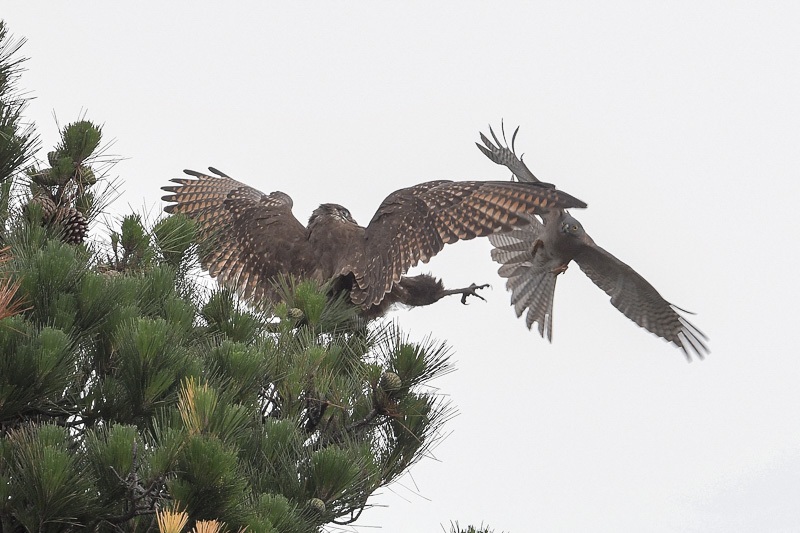
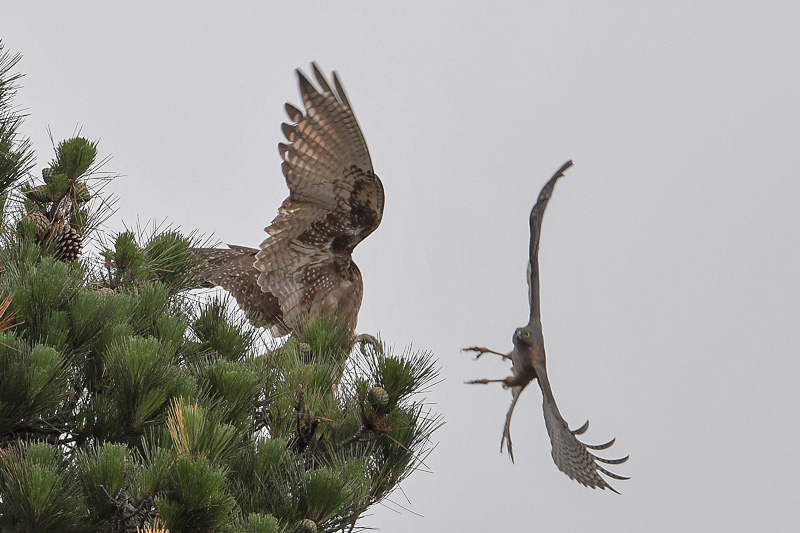
However the other day an added complexity to the mix. The Sparrowhawks have successfully fledged two young birds. They are a month or more ahead of the Falcons, and so have reign of the treeline at present. And being young birds with highly developed flying skills and a little bit of juvenile team work, they decided that the lone perched Cassia, of Cinnamon would be a bit of a game.

She has claimed the tallest of the Umbrella Pines as her lookout, over the paddocks for food, out further for the returning Alistair and a direct line of site to the precious nest location.

The two young Sparrowhawks took umbrage she should be in their area and settled into a name of game calling out in the open, from a nearby old tree. Then in a series of planned attacks they launched at her. Nothing she couldn’t handle, but the action did get pretty hot.

Enjoy

Along the Track: On Falcon Wings

We have of late been following the courtship and mating activities of a pair of Brown Falcons.
You are probably familiar with Cassia, of Cinnamon, and her pale morph mate, Alistair.

If she has a nesting location chosen, it’s still very much a secret, and she certainly is not showing any signs of incubating. However they are both favouring two trees and no doubt we’ll know soon enough

Cassia, of Cinnamon is relatively comfortable with our presence and has been known to fly onto branches near where I’m standing or sitting. Alistair on the other hand has a zero tolerance program and will take to wing well before a close approach.

The other morning, for reasons, Brown Falcon, he decided to fly out around the treelines in the two close paddocks and made several circuits that gave us some lovely views of his wing and tail details and of his masterful airmanship.
I don’t think there was any aggresion, and he seemed more to be performing for her, before flying off to hunt for a morsel or two to bring in as she waited on the very top of an Umbrella pine. (Pinus pinea)

Not much to comment on, so enjoy the circuits.

As It Happened: The Next Generation

His strident one note call resounded across the paddock, to be answered by her equally raucuous cackle.
Alistair was bringing in an offering snack for Cassia, of Cinnamon.
They met in a treeline about 800m from where I was and I missed the noisy food exchange, but did see Alistair fly out and land in the open on an old tree.

After a suitable meal time, Cassia, swung out to land in the same tree.
Interesting.

As she prepares for her nesting period, he needs to make sure she is quite well topped up to last the nearly 8 weeks of confinement when she won’t hunt for herself and relies on his constant attention.

It’s a little early for any eggs to be laid, based on previous seasons, I’d expect that to happen toward the end of September, (but who knows with Falcons).

Browns don’t build nests, they are quite the environmenally aware creatures and chose to repurpose a Magpies nest from a previous season. Maggies, don’t tend to use the same nest, preferring to purpose build. So it’s not as though the Falcons have to eject any unwanted sqautters.

With other things to do in the morning, mostly because of a strong offshore breeze bringing some Gannets in close enough for a reasonable photo, we didn’t pursue the happy couple.

On the way back from the beach, we detoured through the pine-tree-line, in case they were sitting.
Foolishly I rounded a tree and without looking stumbled on to Cassia perched down low. She bolted. I castigated myself for being so clumsy.

She quickly regained composure and sat in a tree about 50m away. And watched. And I watched.

Alistair came in quickly on the wind, turned and landed on the branch just above her, and watched. She watched. I watched.

A quick wing flap and Cassia landed near him, but on the highest open branch. And watched.
Then after a typical Falcon TIme Wait, she crouched over, and called him, encouraging him to mate.
Alistair, it has to be said, did not need much time to consider the offer.
Turning into the wind, he lightly took off, ever so gently landed on top of her bent over back, and the process of pro-creation began.

He then lifted wings and again ever so gently lifted off and away.

She relocated to another tree deeper in the pine tree line and we left them to carry on.

Enjoy

A long way down range. Great to see them together.
The strong northerly wind gave him a chance to show of his flying skills.
My fault. Apologies. Please forgive. I stumbled on her perched and startled her. She quickly recovered and landed about 50m away to wait for him.
Alistair landed on her back, ever so delicately I don’t think I saw her move under the weight
Sometimes mating is a raucous event, but this time both birds were silent. She needs to be able to push her tail up out of the way for them to be able to make contact.
In less than 4 seconds and its job done.
Wings out in the strong breeze, he lifts of as delicately as he arrived
And a few seconds later Cassia also launches
The jury is out as to where the nest might be, but the smart money is on it being in this general location.

Along the Track: Morning Rounds

It’s possible on a day at the Western Treatment Plant to clock up over 100 kilometres of driving. The entire plant is over 10,000 hectares — a little smaller than Philip Island.

Some recent changes to the access areas means that those who formely had limited access may now, from the 31st of July 2023, enter what was previously the “Special Access” area and required a different key. Now, One Key, (as they say in Tolkien) rules them all.

I think it’s fair to say that these days there are three sorts of people who visit the plant.

1. The true birdo. Dedicated to seeing as many species as possible in the shortest time, and of course to find that elusive ‘visitor’ to add to the total. These folk have been the mainstay if not the major visitors for many years. Travelling every road and side road is part and parcel of the visit.

2. Now it seems that photographers are becoming the dominant “species”. Again, desiring to see and photograph as many birds in the day and be able to have them all posted to Instadump or Spacebook before anyone else. Speed of travel is their essential hallmark, and sometimes it seems to me, to resemble a Rally-cross event (I used to photograph such events a long time ago so understand the techniques)

3. The art photographer. Not yet a huge group, but growing I feel. They have a need to find a bird and provide the ‘best possible’ image of said bird that shows not only the best of the bird, but their ’empathy’ for the species. Also prepared to stand around and pontificate about the latest mirrrorless kit and lens that is a ‘game changer’.
Clambering over grass, through salt-bush, crawling along the beach and the mudflats, is de rigueur for that expressive moment. Often I’ve noted of late, dressed in camo and ghillie-suits, looking more like an SAS Sniper. Willing to stop in the middle of a bund road to walk, crawl, or sneak to a spot to get that shot. Meanwhile the roadway is blocked to all other passersby.
( I know, I think I used to do this!- sans the ghillie)

A fourth visitor group, just to show I can count beyond three: is more the traveller about the plant, seeing birds and generally enjoying an outing.
These days, I have to admit to fitting somewhere between 3 and 4.

We no longer do the ‘full tour’ We have a few ponds and areas that we’ll go to, sit for awhile, and then move on. Most days, it’s an early morning start, and by lunch time, it’s time to go on up the road to The Highway Lounge, and one of Gerry’s well made hot brews.

With the sun streaming in through the window at breakfast time, the other morning, it didn’t take long to abandon other projects for the day, and head on down to the WTP.

Here are a few from the day. Click on an image to move to a Gallery experience

Enjoy
Little Visits: Dressing for Autumn

Before anyone starts writing to me about the following encounter, please read the disclaimer at the bottom of the blog. Thanks.

We were deep in Cassia, of Cinnamon Country. Part of the pair’s territory includes an area known by locals as, “The Duck Pond”. A small ephemeral pond(?) created with good intentions, but unsuccessful in the sandy beach area. However there is a good stand of trees and some favourite perches for the Good Lady of the Manor and her handsome companion.

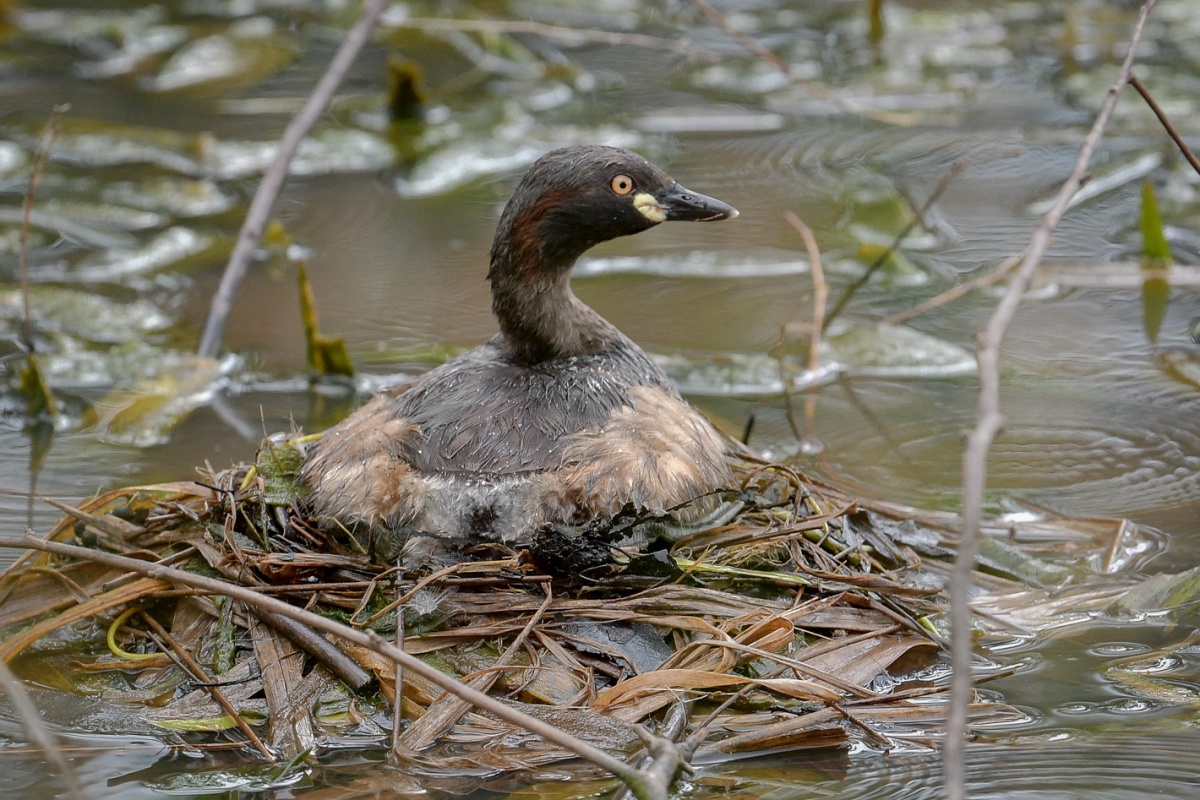
The long winter rains had filled the Duck Pond and it made a perfect nursery for a number of water birds to raise their young. We were monitoring a pair of Little Aussie Battlers, who were risking it all for a second clutch before the pond dries out.

Given the Grebes mistrust of humans, while EE made a close approach I stayed on the outside of the tree line and watched proceedings, and also kept an eye across the paddock.

I spotted a dark shape moving over the dried grasses of the paddock, and after a few seconds decided to put the camera on it for a better look. It was Cassia, of Cinnamon.
She was heading across the paddock in the general diretion of the tree line. I am convinced that Brown Falcons do not fly whilly-nilly about but each move is determined and with purpose.
She kept coming. It didn’t take me too long to figure out that she was on a direct line to where I was standing. And, I began to make a frame or two. The approach was typical Falcon. Low and fast. And, to make it more complex for the photographer, she was coming out of the sun, so it was mostly a glare in the viewfinder.
She crossed a fence line just in front of me, and swept up, and into the sun.
Blinded momentarily, I didn’t see where she went and I turned around but couldn’t see her flying through.
EE helped by pointing up.

And there, just above my head sat a very calm Brown Falcon. I tippy-toed out from under the tree for a better view. Would she move?
No.

She settled in to preening. As I stepped back I noticed that her companion, he is a most handsome light coloured bird, was in a tree on the other side of the pond.
Some detective work afterward, suggested he had brought in a snack, but, had dropped it when challenged by a passing Hobby or Peregrine.
Being glued to the narrow view through the lens, I’d missed all the extra activity.

And that no doubt was why Cassia had made the journey. I found a fresh caught prey in the grass near the fence a little later on, and suspect that it was the piece contested. Also there is no doubt that Cassia knew exactely where it was and would reclaim it later.

She made no effort to move from her perch while I moved about for a better angle, and when I finally walked further down the tree line, she also moved to see what I was doing (perhaps?- am I that interesting?) Which allowed me to make several different portaits.

40 minutes later (I checked the camera time data) and she still was in no hurry to move on. So we left her to do what Browns seem to do so well.
Contemplate.

It is worth checking her tail set in these frames as she is well on the way to moulting in a new set of feathers to replace the summer worn out ones. And there are a few wing feathers that need replacing too.
Some recent blog posts show her worn feathers.
No doubt in a couple of weeks, her new wardrobe will be complete.

Enjoy.

Flying low across the paddock. And just in case you should wonder. She is looking directly at me, and is well aware of my presence.
Just about to get lost in the Sun. She is sweeping up to land in the tree directly over my head
I think she might still be watching the Hobby high in the sky overhead
Also spotted her handsome companion. He is a wonderful light coloured bird. But has a zero tolerance policy for the human condition.
A view of the double tail as the new tail feathers grow into place.
Sometimes preening is a neverous reaction, other times it’s down to the serious business of looking your best for WordPress
Did I mention he is human intolerant. TIme to depart.
I like the look here, “Now where is he going?”
We moved back down the pond area, and she also relocated. Gave me some casual portaits
Changes of light and angle give different aspects. One legged pose suggests she is quite comfortable
I’d be confident she was working out the best appoach to pickup the dropped carcass.

As I was preparing this post, I came across some interesting and relevant info on Brad Hill’s Natural Art Images website on field techniqes
http://www.naturalart.ca/artist/techniques.html

This paragraph is about getting close.


Getting Close: Hiding in Plain Sight. 
This is my preferred method of getting close to and working with wildlife. The goal of this approach is to have the wildlife, over time, come to accept my presence and have THEM approach me (rather than chasing them across the landscape).
The biggest downside of hiding in plain sight is that can be very time consuming. While I can think of worse things than sitting out in the wilderness for hours or days on end (though it can be decidedly uncomfortable at times), it does take extreme patience and focused attention (so it’s unlikely any today’s teenagers will ever practice this technique). Interestingly, I can’t count the times where I’ve captured memorable – and totally unexpected – images (like this Lorquin’s Admiral) while hiding in plain sight.
This ability to watch ALL around me while hiding in plain sight is extremely valuable (and the inability to do so one of the main reasons I don’t like sitting in an enclosed blind).
Don’t think I’m holding back information on this “hide in plain sight” technique – it doesn’t involve any form of animal “whispering” or zen-like connection with the wildlife. There’s nothing magical, special, or even difficult about it, other than finding the discipline and time to practise it.

Disclaimer
birdsaspoetry.com policy.
This bird is completely wild.
There is no baiting, or use of calls, or other methods to encourage the bird to approach.
It’s her choice to fly aross the paddock and land where-ever she wants to.
We’ve worked with the pair for a number of seasons and are careful to treat them both with respect and care.
I take her confidence very seriously and feel we are fortunate to be graced by her presence.

We don’t get a close encounter on every trip, and should she be put to wing in my presence, I am the lesser for the carelessness.

The Greatest Show

A movie that I never tire of watching reruns is the Hugh Jackman in, “The Greatest Showman”. I enjoy the fun and the intesity of the music and the dancers. Storyline is well… but the visuals really excite me. There is also some fine songs including the amazing, Keala Settle as the Bearded Lady and her song, “This is Me!”
(PS if you want a great version of this song see Keala Settle – This Is Me | Abu Dhabi 2019 Special Olympics Closing Ceremony It is throat-choaking stuff and she looks like she is thoroughly enjoying herself)

Well, the other day, we were invited to enjoy Cassia, of Cinnamon’s version of the “Greatest Show on Earth!”

Her young are now well hatched and beginning to show some juvenile feathers under the white down, and so she is able to spend most of her day off the nest waiting for Alistair to being in food, and also to keep watch over the young from a high vantage point in the tallest Umbrella Pine in the park.

Cassia, of Cinnamon. The young are now well on the way to getting their first real feathers and she is spending more time off the nest.
A favourite spot on an Umbrella Pine or Italian Stone Pine. She has a commanding view over the paddocks around and can easily spot the return of her mate, Alistair, wth food
Wait, what was that. From her high vantage point she had spotted a likely meal on the ground
Too easy not to try.
When Cassia flew, I had no idea what was about to unfold, but it was obvious something had her attention.
In a typical Brown Falcon move she headed straight down to ground level. We often think of Browns as being somewhat lumbering because of the over-arm rowing wing action. Nowhere near as sleek as their other falcon cousins. However this was a super fast run. I was so enthralled by her appoach on the ground that I didn’t make a single frame. She sped along the roadway just a few centimters above, and then dropped one leg, scooped up a lizard and immediately sped-up to make a climbing turn. No matter how fast you just read that sentence, she was faster.
Of couse her arrival and departure didn’t escape the local neighbourhood watch
Tight turn, falcon wings tucked in.
Lined up now for a direct ascent to the treeline.
The infuriated Magpies were quick to respond as well, but with a turn of speed not normally seen by a Brown, she powered away to drop the meal in the nest for her growing young.
Lining up to get a clean run into the nest.
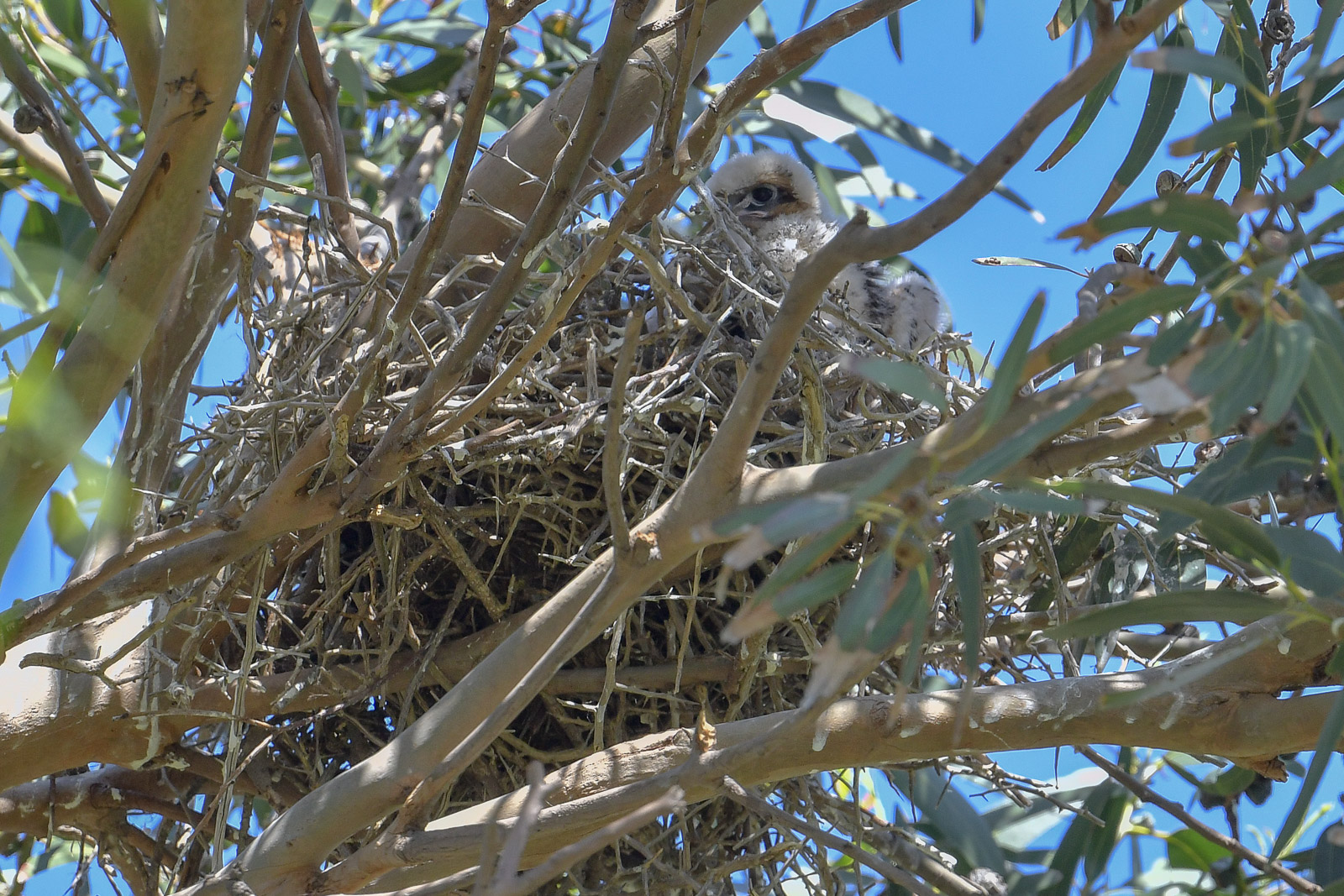
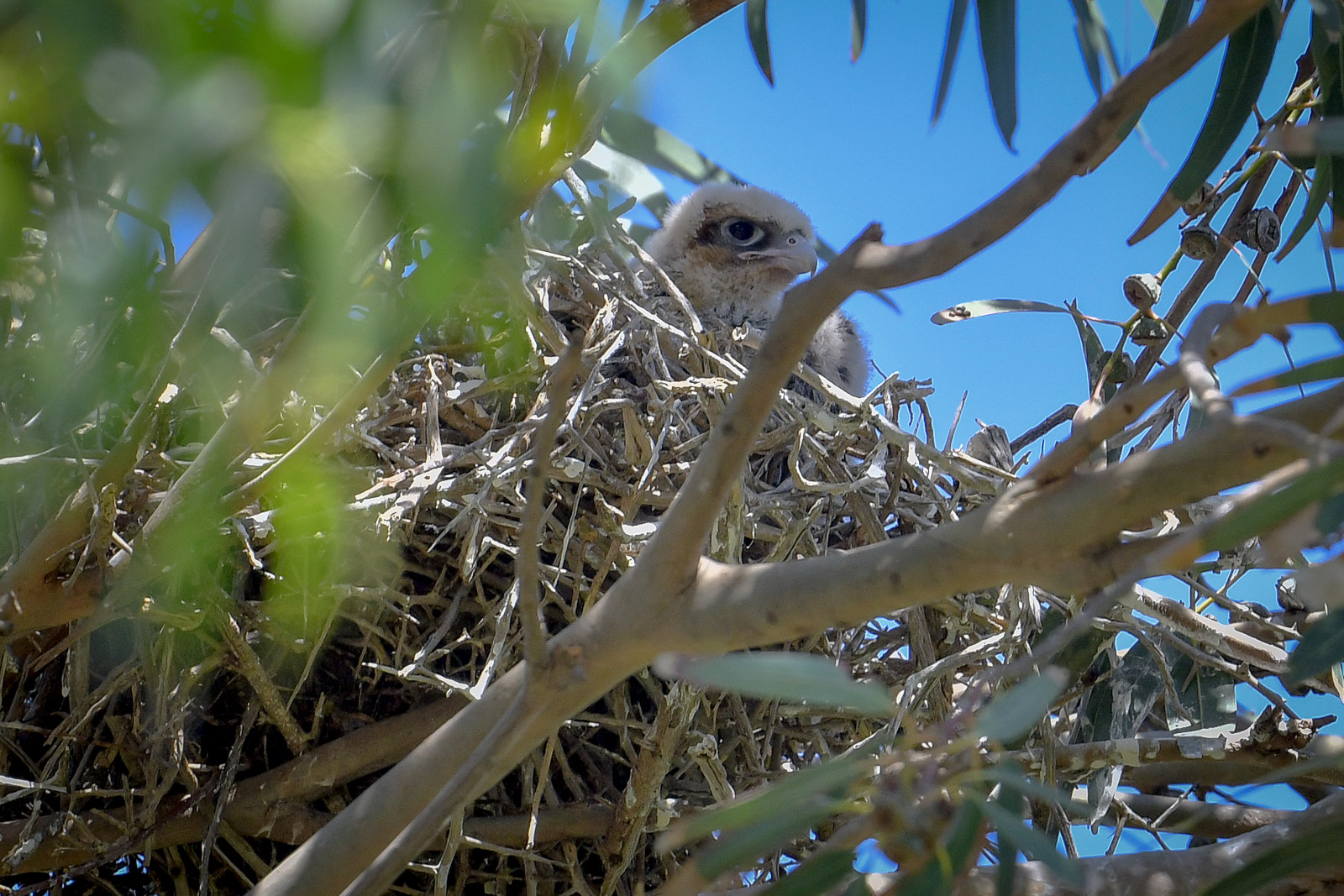
And here is one of the three young mouths that need feeding. This one has just opened for a wing stretch to show the very small wings sheaths still to develop.
A tiny hint of the rich ginger colour of juvenile moult beginning to show.

Enjoy

A Trip in the Grey Box at Eynesbury
Been a long time between posts, I know.  Hope you remember me!

But the excuse—I’m going to use—is that we just haven’t been doing much that is reportable.

Long term readers may remember that the blog was originally set up to record the bird activity at Grey Box forest at Woodlands Historic Park.  Quite a few things have changed, in the park, and in my birding life, and in my life since those humble beginnings.
It has been said more than once, sometimes kindly, others not, that I have Grey Box sap running in my veins. Put me in a stand of Grey Box and my heartrate, breathing and all other out of contol faculties calm down.
So when EE said, casually, ‘Why don’t we go to Eynesbury”, on a sunny morning, before you can say, “We’re off” we were!

After all the rain, Eynesbury Grey Box looks a treat.  Plenty of green and still good water laying about in the usual dry water courses that cross the forest.

We had hoped to see Speckled Warbler, Diamond Firetail, Sacred Kingfisher and Jacky Winter.  In descending order of importance.
We also had hoped to hear the forest ringing with the sounds of Dusky Woodswallows that regularly return to nest in the area.
However Grey Box is not always forthcoming and in the end we had to admit, that today was not going to be our day.

But here’s a small selection of the action.

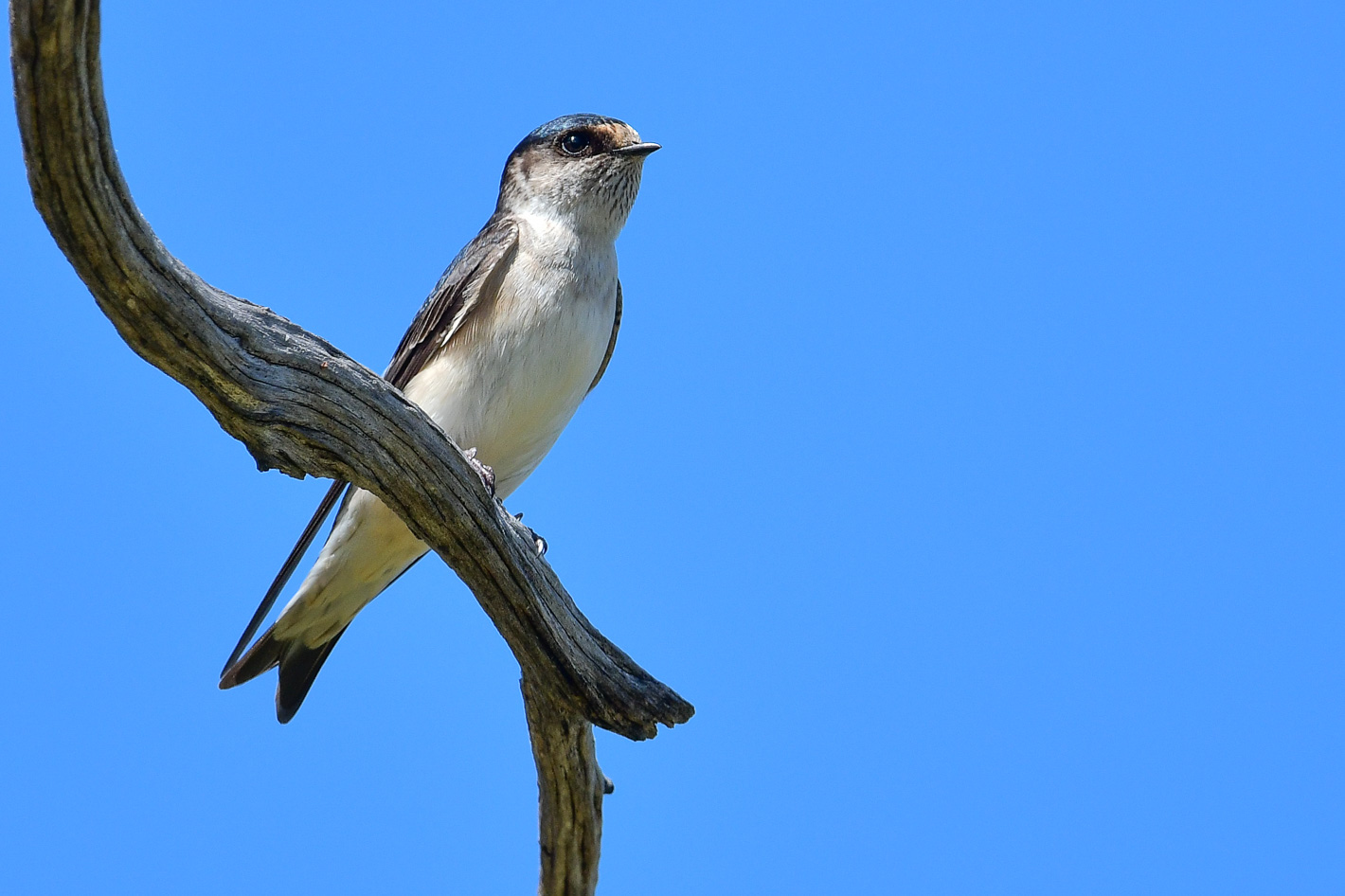
Plenty of Tree Martins. Just about every available hole had its families.


A new Brown Falcon for me. A dark morph male used to work in this area, but time has allowed a new encumbant. The same technque however was being used.
It would glide from one perch spot to another and pick off a recently fledged starling or martin along the way.


Satisifed, it had plenty of time to digest its meal before making another foray


That looks like a suitable meal.
We often think of Browns as being a bit lumbering or labouring in flight. But, given the right conditions they can put on a turn of speed and manoeuvrability that rivals their more agile cousins


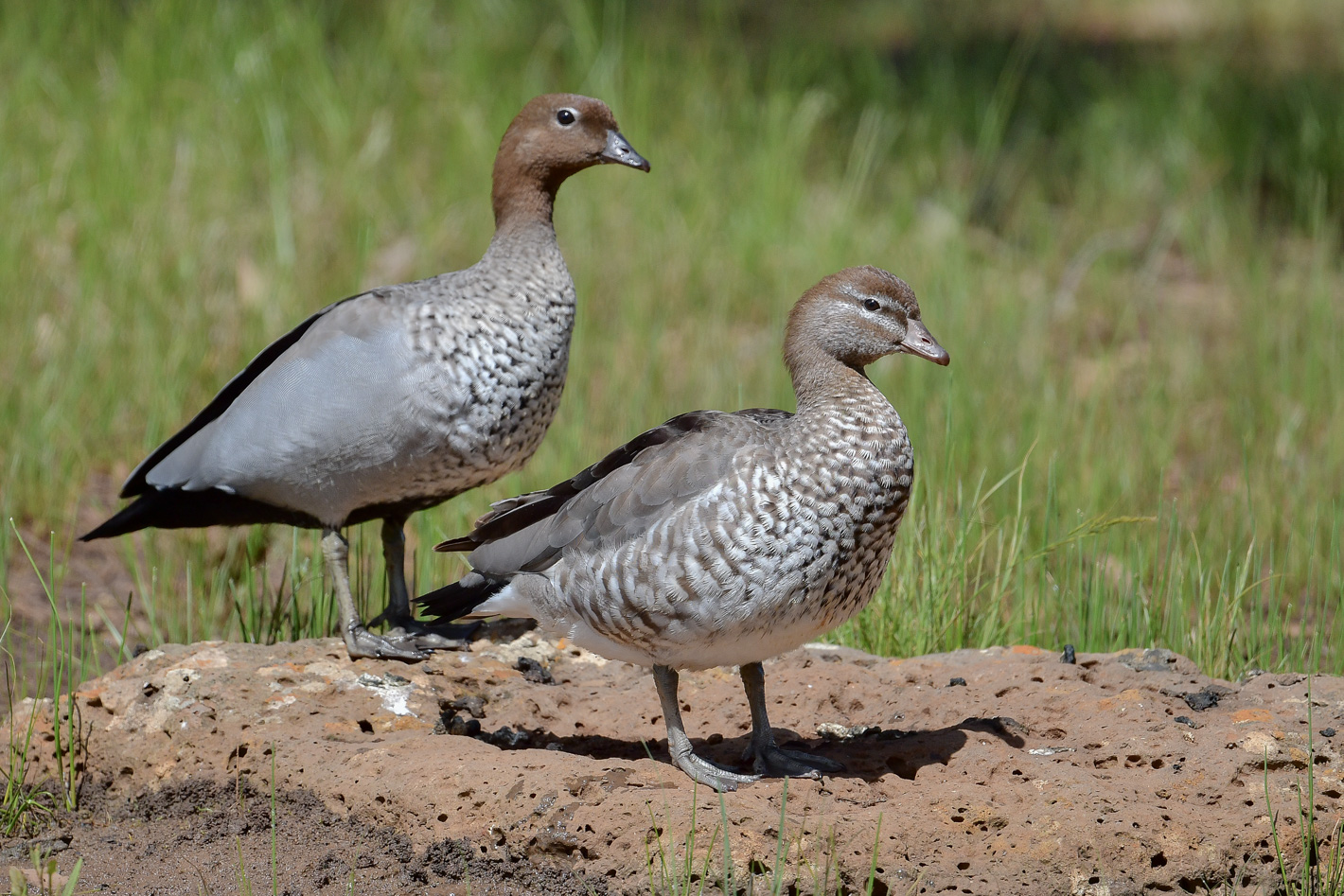
Just what ever small pond needs. Maned Duck. I still think Wood Duck is so much better.
I also suspect she was out for a bit of stretch from nesting as he was sole guardian of the pond as we returned


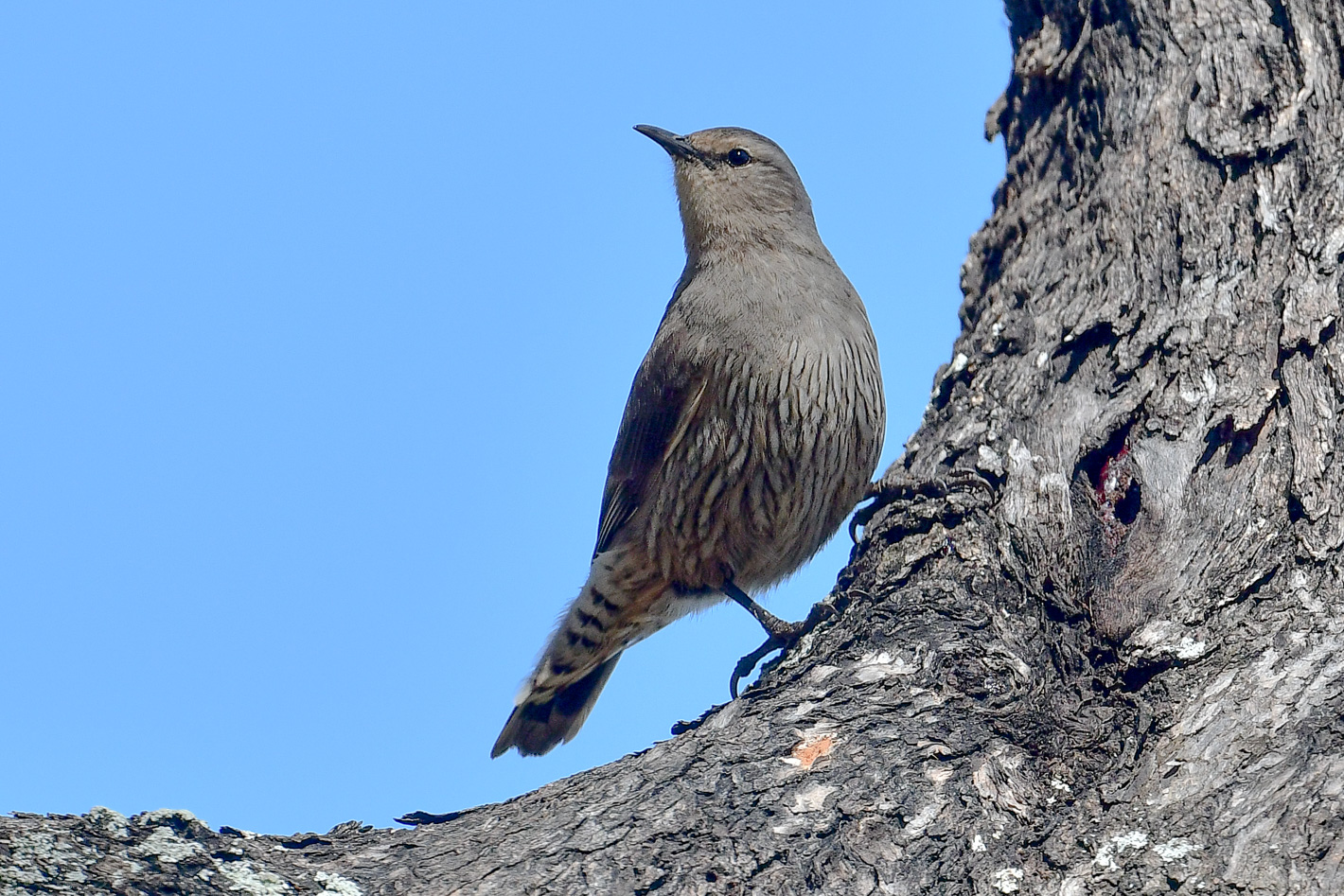
The Brown Treecreepers are feeding the first of their young, and look to be having a good season.


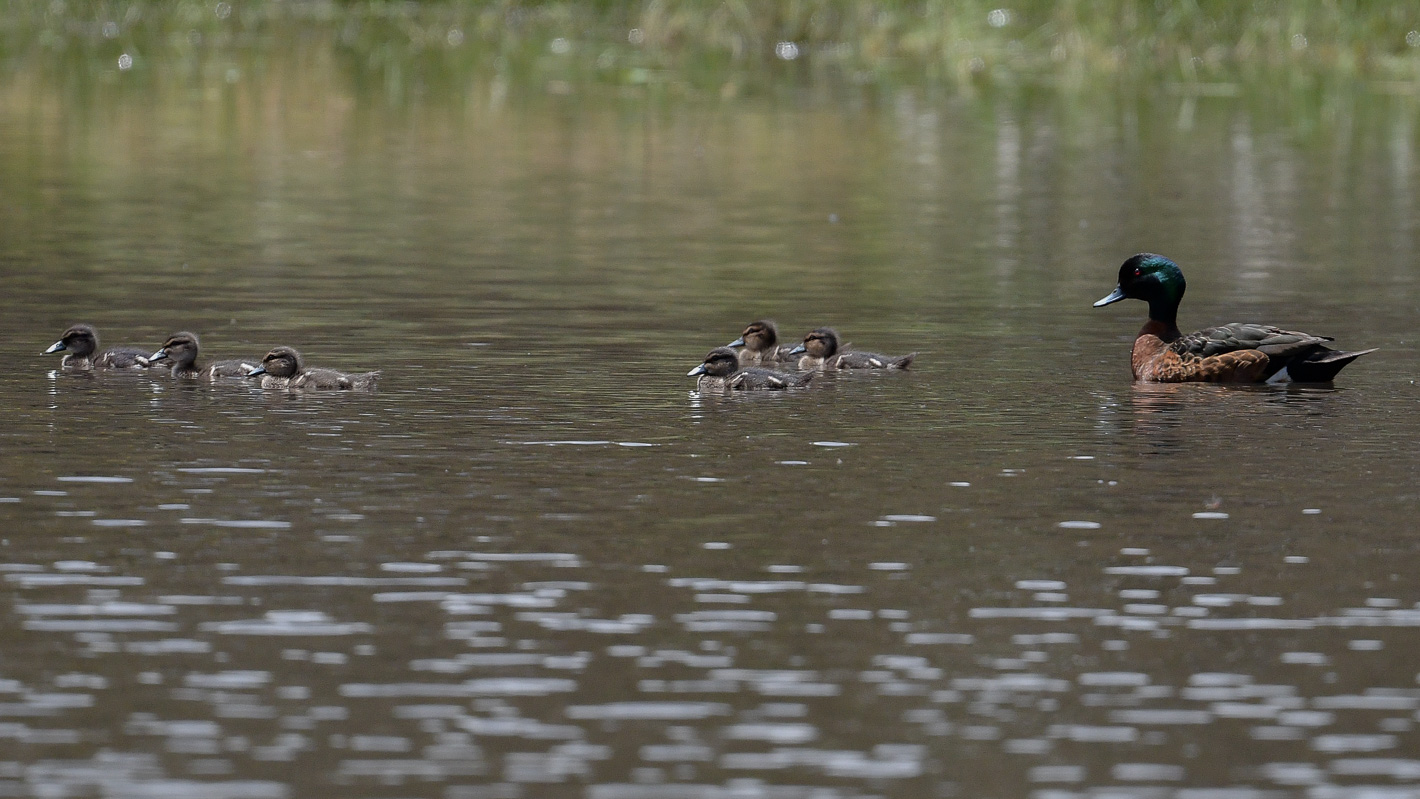
Getting all your duck(lings) in a straight line.
At first we thought they must have been orphaned, but the male Chestnut Teal quickly came out and gathered them all up.
This is another ephemeral pond, and the first time I’ve seen water in it in over 10 years


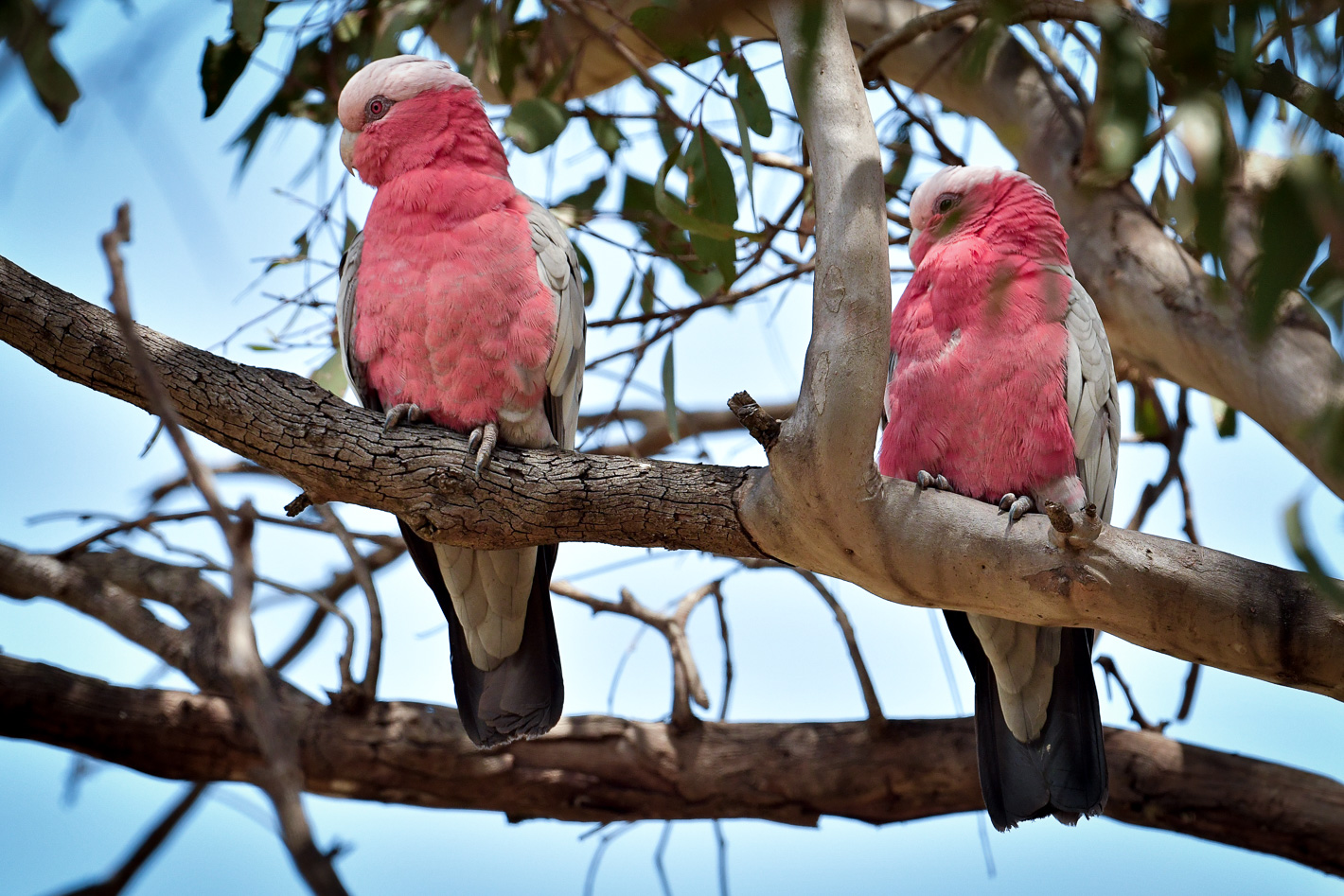
Galahs are also fledging their recent young.


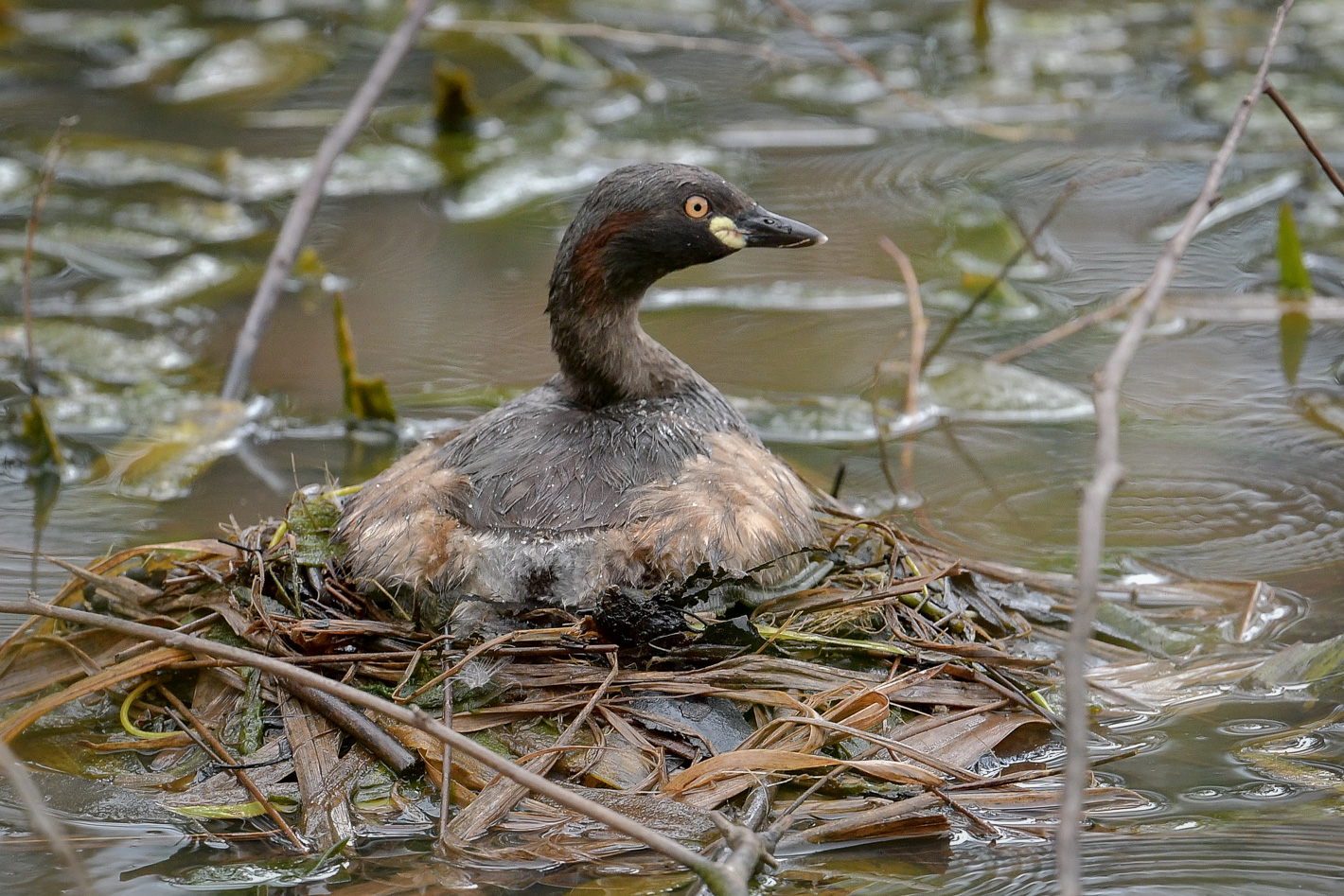
This was the find of the day. The little Aussie Battler has set up a nest in a tiny, narrow arm of the main lake at Eynesbury. It’s right by a walking track, and she didn’t seem at all concerend at our presence.


A bit of a show-off.
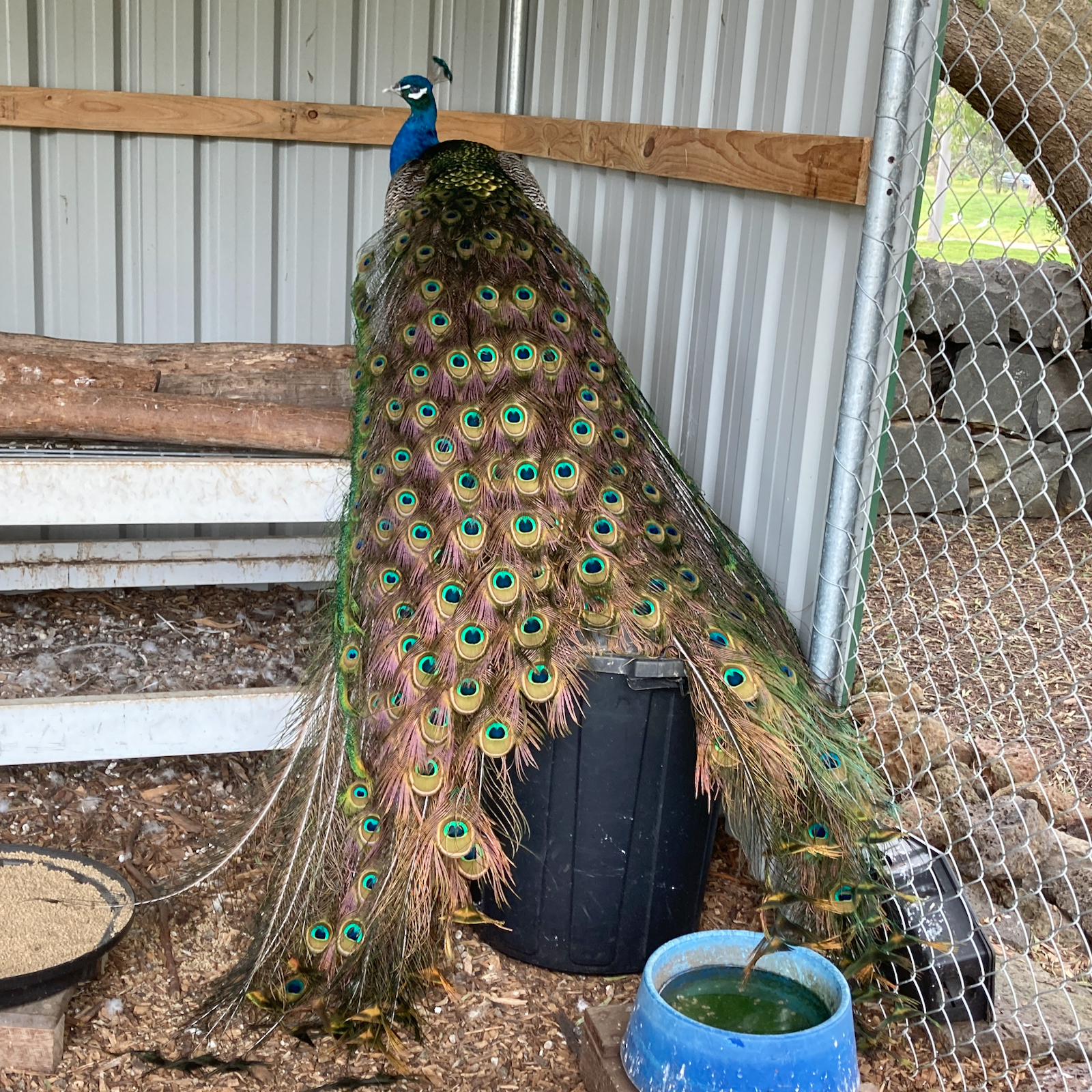
There are several captive peafowl at the Old Homestead. Hard not to resist a look at those amazing tail markings. Excuse the rubbish bin.

Saturday Evening Post #163 : Stoic by Nature

Spent an afternoon in a Grey Box forest recently.  Not often we get to spend time in a forest.  Yet, once upon a time, in a universe somewhere around the corner, this blog started keeping track of my visits to Woodlands Grey Box forest.
And most of the subjects of the time were bush birds.

However just on 8 years, (my, doesn’t time fly), we moved home to an area that is pretty much bereft of any sort of forest stand and is primarily open Basalt Plains Grasslands.

Gone are the small forest birds like Robins and in their place are numbers of small, but difficult to locate grass dwellers.
At the top of the food chain are the raptors—Kites and Falcons.

Most are nomadic at best, but usually Brown Falcon is local. Working a territory and not travelling too far to follow the food.  Being pretty catholic in diet, they have plenty to choose from in the grasslands.

That’s the thing about Browns.  Hot or Cold.  They are there.
The scorching 40 degree days of summer.  The high windy gale-force days.  The days of incessant, if not persistent rain. No matter what.
Brown sits and waits. It is their nature.

In some respects if we were to anthropomorphise, I’d be inclined to call them Stoic.
But as we don’t anthropomorphise, I won’t. 🙂

One of the tenets of Stoicism was (is?)”in accordance with nature.” Because of this:
the Stoics thought the best indication of an individual’s philosophy was not what a person said but how a person behaved. To live a good life, one had to understand the rules of the natural order since they thought everything was rooted in nature.
https://en.wikipedia.org/wiki/Stoicism

I am convinced that Browns really do understand the nature order around them.  To watch one slip off a branch, and head along the paddock as just a few cms over the ground, dodging branches, bushes and the like is to watch a bird that has ‘plotted’ the area.
The other day, as we were watching with Cassia, of Cinnamon, she suddenly picked up her skirts and moved to a tree about 50m away, but more out in the open. I said to Mr An and EE, but more likely I just said it out loud as commentary, “Brown Falcons, don’t just move from one tree to another for no purpose.  She has moved for her reason and no doubt it we wait a little bit it will become apparent.”  Don’t want to sound like a Falcon prophet or some-such,  but we waited.  Within 5 minutes the Male turned up with lunch.  The more open tree was the perfect place for a quick food exchange.
No doubt she had seen or heard him when he was a long way out and prepared herself to receive the delivery.

During nesting season, it is a little hard not to have sympathy with their main food source of the young.  Cassia, of Cinnamon and her mate, have a likeness for Pipits and Skylarks.  Both of which nest in the grasses on the ground, and must be, for a hovering Falcon, an easy mark. Or for a Falcon with an intimate knowledge fo the area as it scans from a post, or tree—although there are not too many trees on your average grasslands.

Brown’s are not noted for their amazing hovering ability, but given a good breeze, they can make a pretty fair fist of it. And so at present, he is bringing in for the three young fledglings, a pipit or skylark most deliveries.

For their part the hapless grass birds have two advantages.  One they outnumber the falcons.  And they are capable of several nestings a season, so once the urgency of the falcons passes the little birds should be fairly successful.

The falcons presumably will go back to hunting grasshoppers, crickets and the occasional snake.
The young will move off to find their own territories and the exhausted local pair will go back to sitting quietly, watching for the next convenient meal.

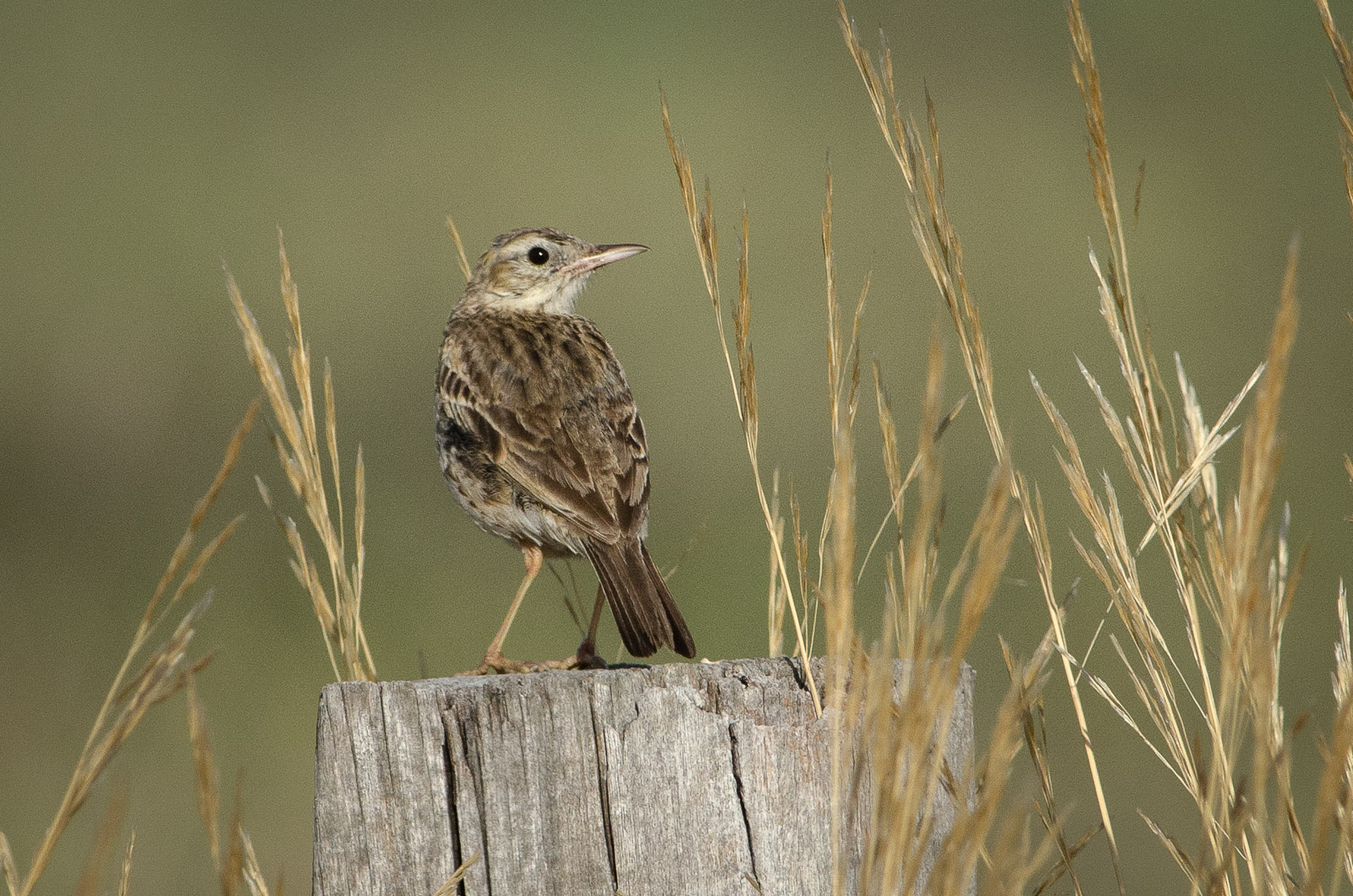
And the Pipits can resume sitting on the fence posts without fear.

=

Interludes: Growing Up

We made a trip to Point Cook with Mr An Onymous to have a look at the growing Brown Flacon clutch.

Managed a sunny day, and the young have been out of the nest for a few days and quite adept as flyers.  Also very quickly adopting the Brown Falcon sit and contemplate the world stance as well.

Here are a few from the outing

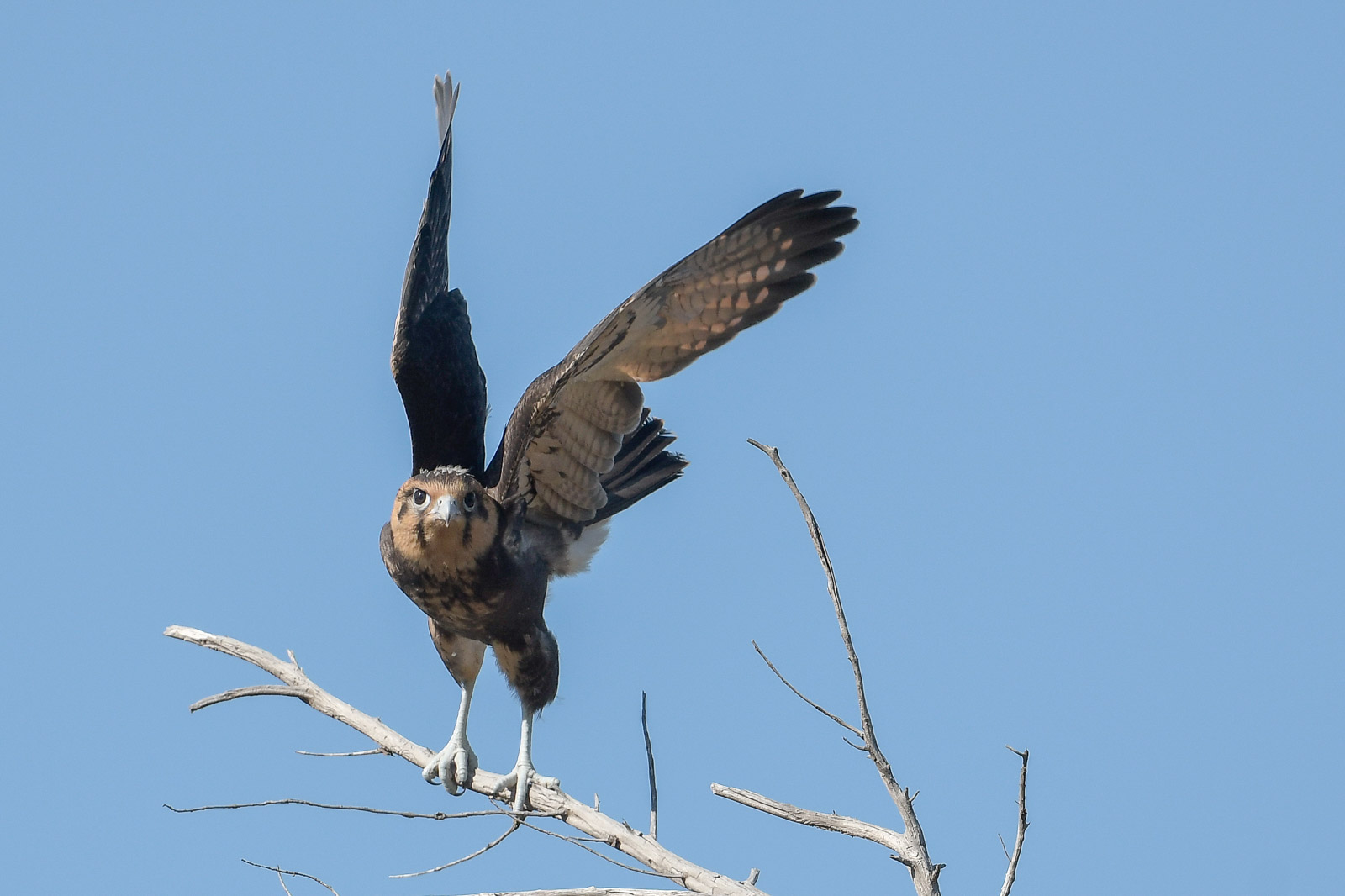
About to release

Plenty of control as it slides away from the perch

Landing is still a little tricky, but each time the skills improve

The three amigos. How hard it can be to get them together, and all looking in the same direction at the same time.

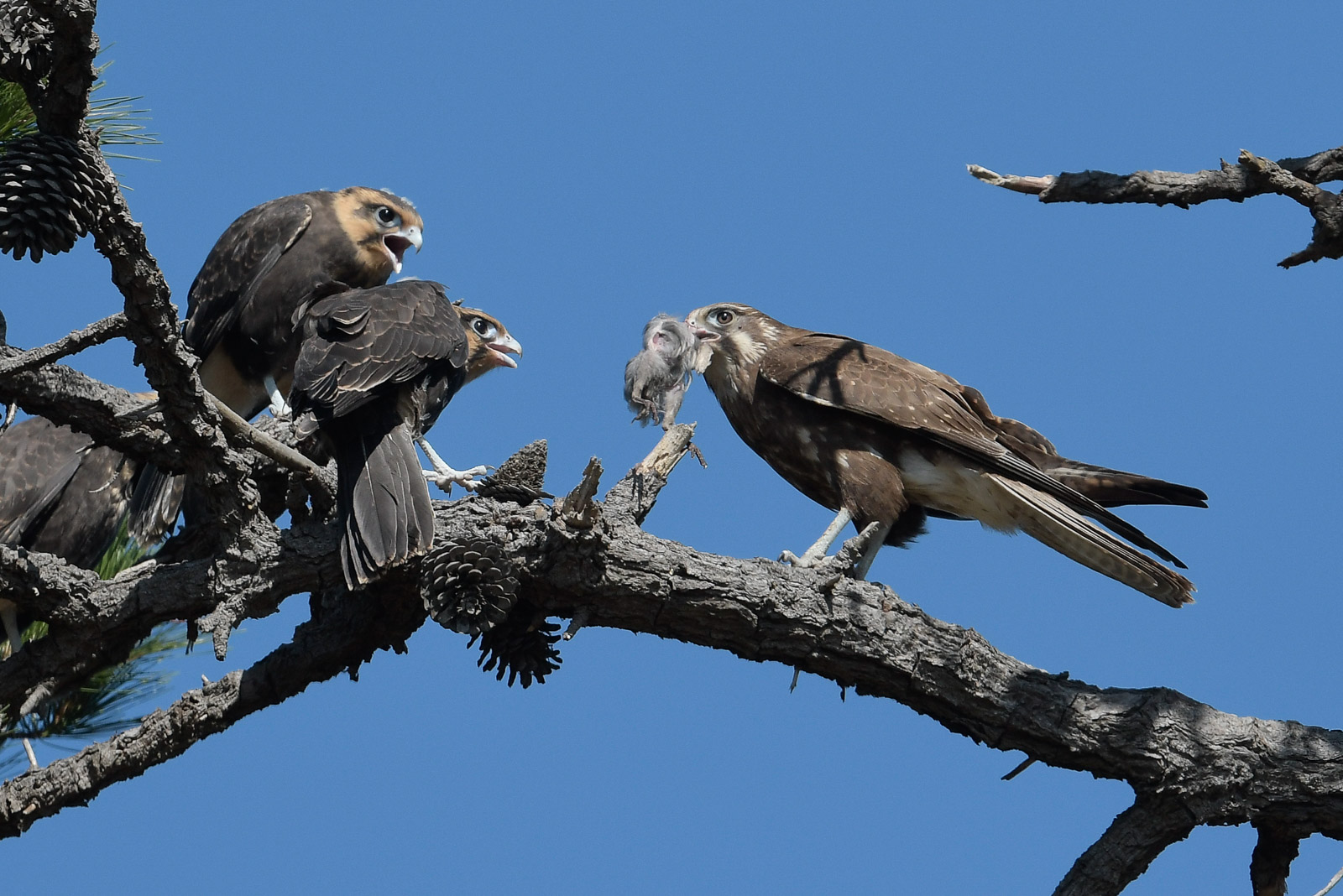
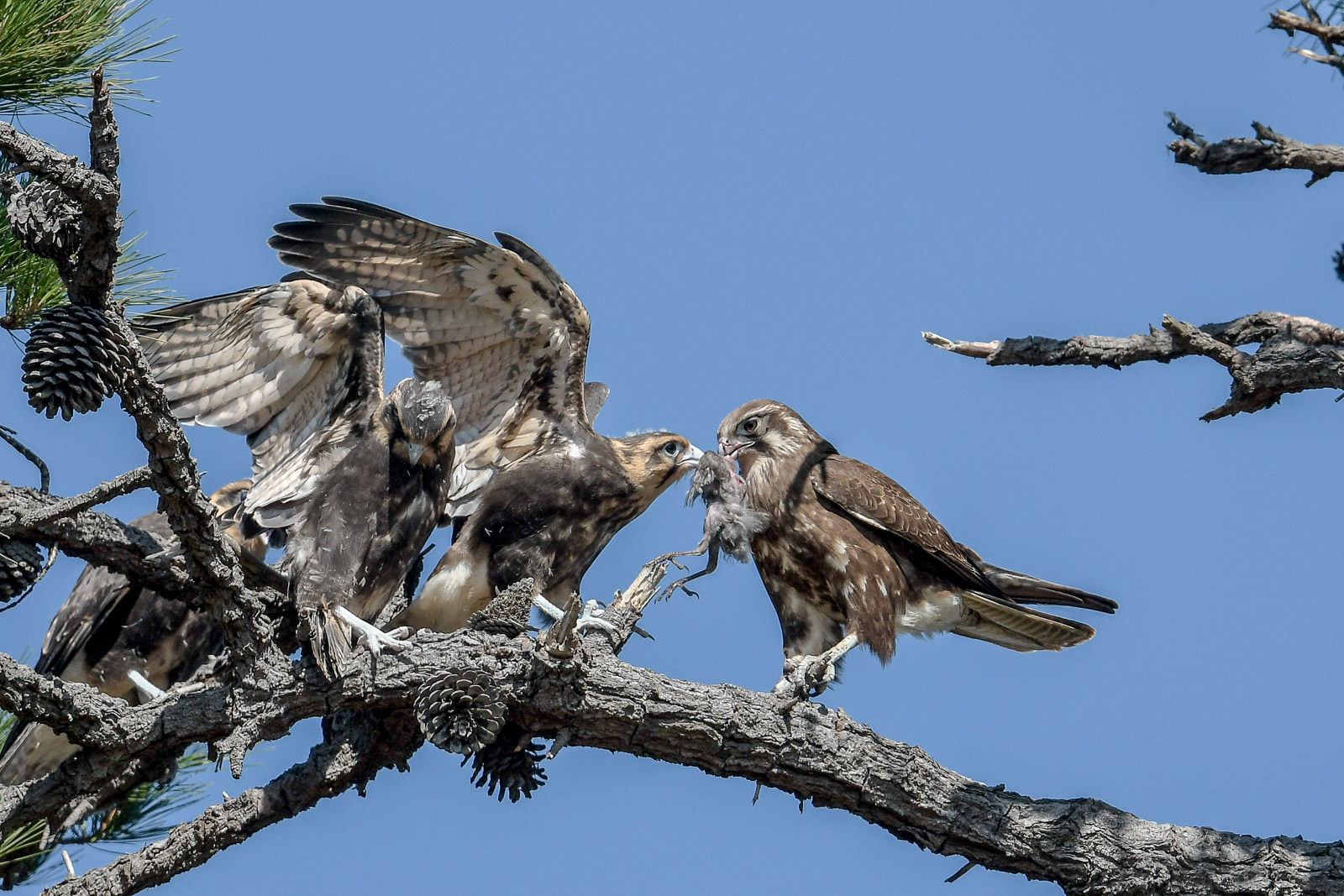
Cassia, of Cinnamon arrives with a mid-morning snack. Now who is going to get it.

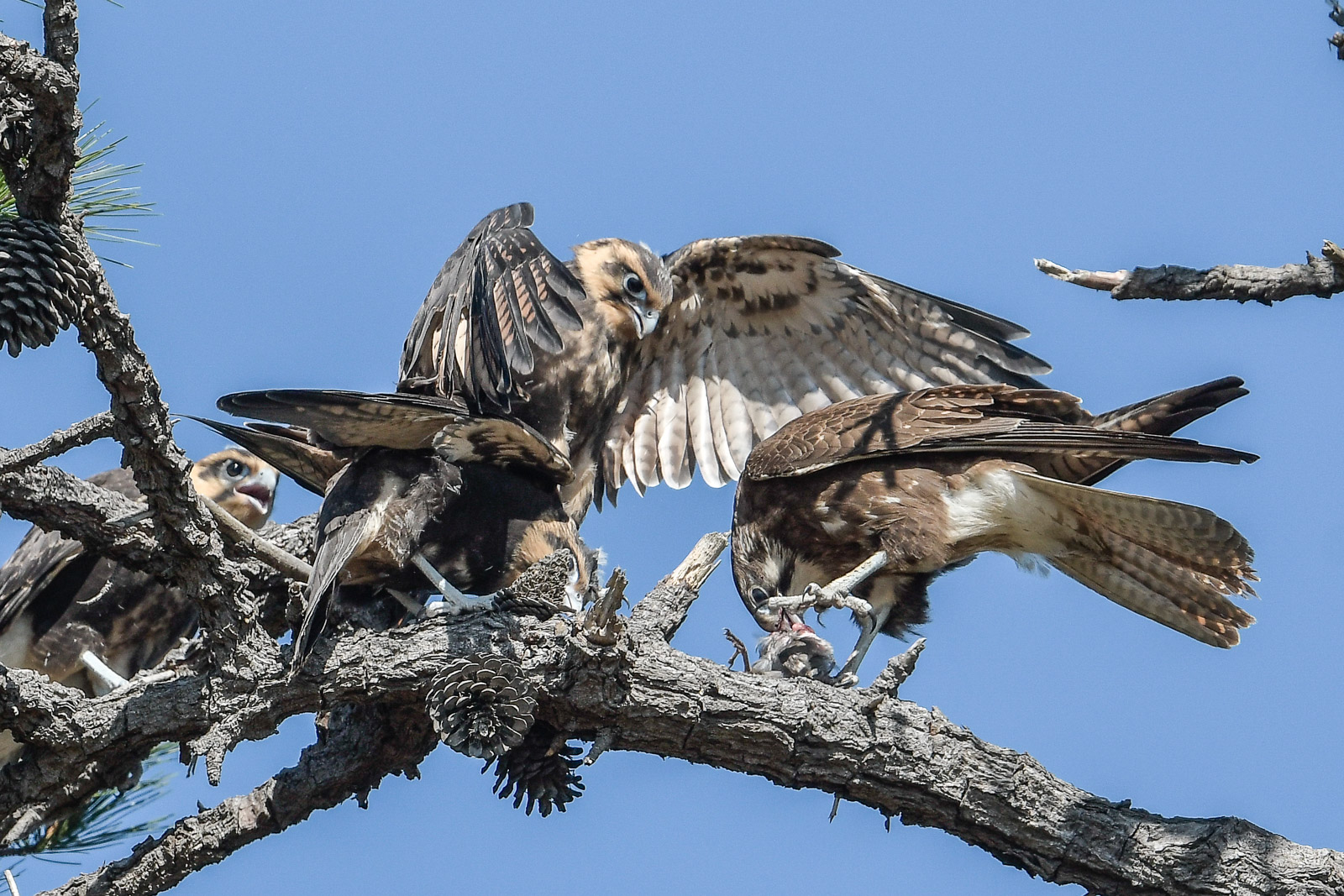
When its your turn, its ok to step on your sibling’s head to get to the front of the queue.

Manners are forgotten and its ok to push their head into the branch.

Mum will still sort out whose turn it is

Thanks Mum

Miffed at missing out this one departed to watch from afar

Food arrives and while the male holds still, Cassia swoops in to collect it.

His job done, he departs for a rest.

Little Journeys: Three to Go

The weather has to coin a phrase, has been less than kind of late.  Cold, windy, rain, overcast and just plain miserable and stay-at-home-able.

It is nearly Summer, but here we are with the heaters turned on and thick clothes, shivering in the cold.

We had decided to go to the River and have another look for the elusive Sacred Kingfishers.   It has become a task that rivals the search for Tutankhamen’s Tomb.

As we travelled to make yet another morning attempt, we decided at the last moment to abandon the project for the day, and instead travel on to see how Cassia, of Cinnamon’s young were doing.

At first sight of the nest we could only see one little rich ginger brown head bobbing about.  Then, looking further over the tree, right at the very top stood the other two young.  Looking very confident, and balancing precariously on the top most fronds of the pine tree.  No mean feat for a well developed bird I would have thought.

While we were there we managed to see two food exchanges and a number of wing-flap trails by the young birds.  No doubt they will be on the wing in the next few days.

Here is a small selection from the morning


A food exchange as Cassia slips aside to prepare the meal

The male moves on for a quick rest before heading out again

All prepared and now to deliver to hungry mouths.

Is there any for me!

Rested and ready to hunt again, the male heads out. He is a much lighter marked bird.

Just a little too cheeky.
Cassia had found the nest of either a Wattlebird or perhaps even a Magpie. But she was hunted off very quickly by the local Neighbourhood Watch.

While they wait for the next round of food, there is plenty of time for some wing exercises.
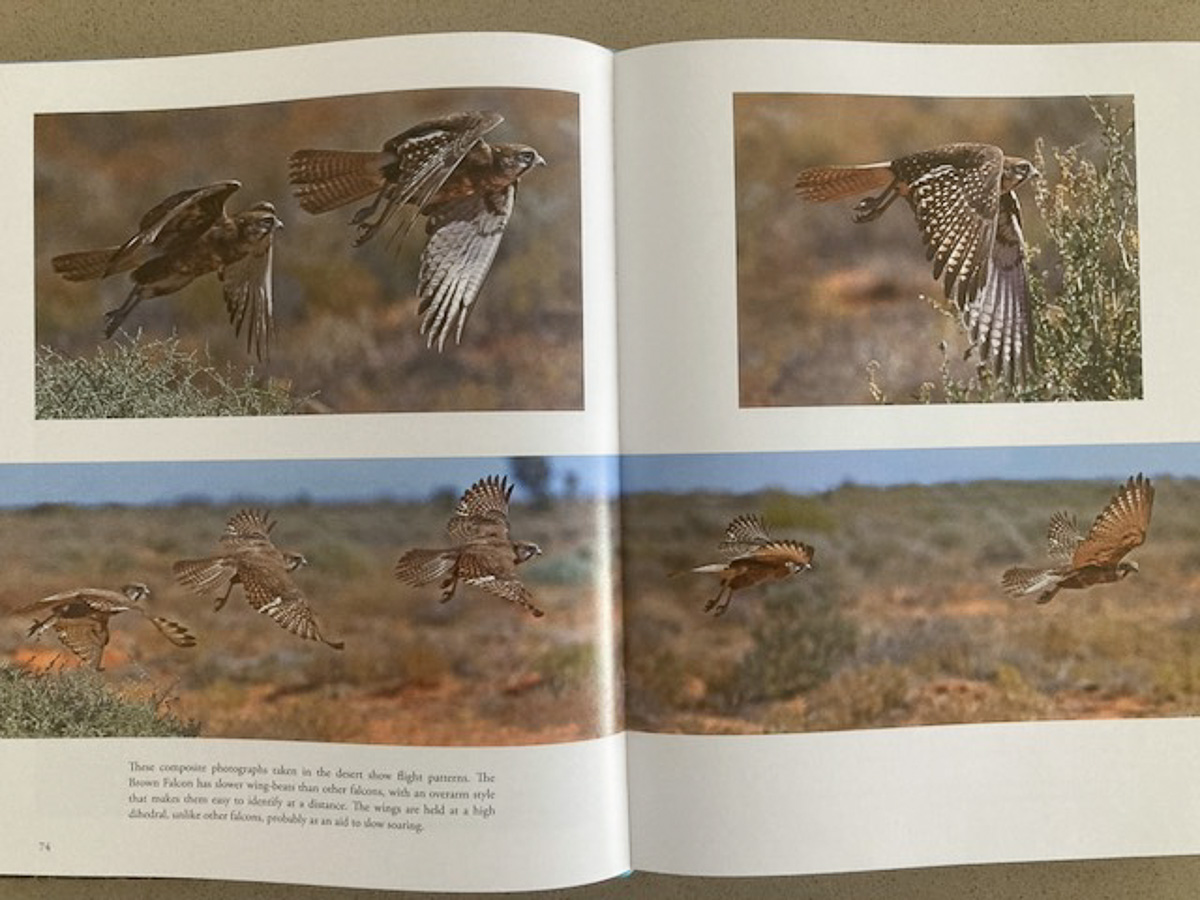
I found this series interesting as it shows the ‘rowing’ action that is typical of Brown Falcon flight. No doubt by our next visit they will be on the move.


Saturday Evening Post #159:

I’ve spent the past couple of days mentoring a young, beginner bird photographer.

It’s funny, I think, if you ask someone what they do, you might get I am (was) a Chemist, or perhaps and Accountant, or Motor Mechanic, Banker, or School Teacher.
But
Say “I’m a Photographer’, and its well, kind of ho-hum, yeah, but what do (did) you do for a living.
Anyone  with a mobile fone can be ‘a photographer’.

I usually answer these days, “By (pause), Training and Background, (pause), I’m a Photographer.
Not Iphoneography in there to confuse.
Still, it does lead to some interesting side discussions.

Bruce Barnbaum in his book The Essence of Photography, tells the story of two art teachers.
The first looks at the stick figure drawings of a child and asks, “Oh is that your Mum, or Sister or is it You?”  A question bound to enhance the creative expression of the budding artist.
The other will ask, much more bluntly, “Is your family really green?” And there goes creativity.

I personally can speak loudly to that, as an art teacher, in my year 8, dismissed my attempt, at a subject, as it did not fit the template or paradigm she had set.  But, I still think it was creative.  However that was, as they say, the end of my budding art career. 🙂

One of my Tai Chi masters says of learning the various forms, “Art is always changing and growing. If not, its dead”  He is quite ‘hot’ on not just completing the form the same way, each time, but allowing room for personal expression.

I’ve said here before, get a bunch of photographers together and very soon the discussion will turn to “Whatchabeendoinlately?”

And it’s not just about what work/client or style.
It usually enters into the area of what new ideas have you been exploring.

In his book, The Art Spirit Robert Heri says, A tree growing out of the ground is as wonderful today as it ever was. It does not need to adopt new and startling methods”

Flowers it has been said, don’t get all bent out of shape, and go off to seek their personal freedom.  They don’t plan to move to another location for better opportunities or bewail the climate where they are growing. They simply get on with the task.

Which leads, me hopefully to the point of the moment with Cassia, of Cinnamon.
One of the challenges I often face is getting correct exposure for a light bird on a dark backdrop or a dark bird on a light background.   Or an inflight, where the bird moves from light to shadow and the poor old camera meter just can’t keep up.
One of the reasons I shoot such work with the camera in “M”anual. There are of course a number of ways to hold that exposure, but I’ve adopted the “M” method.

Yet working with my young friend, and not wishing to ask are his birds really green (or over or under exposed), we have been discussing and practicing ways to keep exposures under control.  You may laugh, but I’ve had him shooting Aperture priority, JPEG for the past few days. It offers less room for error, keeps him behind the camera and doesn’t wander into the fantasy of the ‘digital darkroom’.

Too much light. Make corrections.
Too little light.  Make corrections.

The next few weeks will find him reaching further into the crayon box and finding he can select a colour other than green. !

Cassia was waiting for the next food delivery.  Impatiently, if Falcons do such an emotion.  She flew from one perch in the open, to another in the shade. From front lighting to backlighting and all the way through.

As Bruce  says, “Its not about technical ideas and methods… nor about making images simply because you can with the tools and apps at your disposal… It’s about, because you love photography,  putting in the time and effort necessary. ”
(In Tai Chi we call that Kung-it refers to any study, learning, or practice that requires patience, energy, and time to complete)


Interludes: Let’s Be Careful Out There

The title is a quote from a tv show of the 1980s.

The Duty Sergeant would remind his team as they left the daily briefing, ‘Let’s be Careful Out There.”

In these days of rampant pandemic it still seems like good advice.

However being careful out there applies to some birds as much as it did to the police in “Hill Street Blues

Longer term readers may recall that two years ago we spent quite a bit of time with a Brown Falcon pair as they nested.  Cassia, of Cinnamon, provided us with some excellent insight into the nesting and feeding habits of their lives.
Unfortunately we were unable to follow up with them last season due to travel restrictions.

However with a change in limitations we have now been able to revisit the park, and after a couple of futile attempts,  EE pulled the proverbial Brown Falcon Nest out of a Hat.
He had been hunting close into the nest in the open paddocks and seemed to be having some success, however we missed the food exchanges and were unable to determine a possible nest site.
It was not only us that were taking an interest in the falcon’s presence.  Australian Magpies took them as ‘easy’ targets and each time one of the birds flew, a flotilla of maggies were in hot pursuit.
Mostly the magpies are fast enough, and the falcons don’t put in that much effort to get away, but today it was quite obvious that the falcons were not going to broach harassment, and each time the magpies drew in close, the falcons put effort into the wing strokes and powered away. Not something I usually see.

Cassia does indeed, Need to be Careful Out There.

Here is a small selection of the morning’s activity.

This is the male, he is lighter in colour. He is doing his best to hover over the grasses

Action TIme. A quick drop on to some prey below

Mouse delivery. Unlike Black-shouldered Kites, he carries the prey in his beak.

The male: Time for a scratch on the wing.

Sitting waiting for an opportunity to pounce. His yellow cere and eye ring are noticeable id markings. HANZAB notes that yellow cere may be a sign of age and is more prevalent in males. This bird might be at least 15 years old as we’ve seen him over a number of seasons.

Heading out for another catch

This is Cassia, of Cinnamon and her nest with at least two young. They are only recently hatched, perhaps in the past few days.

The magpies decided that Cassia was not going to sit quietly anywhere in their territory.

Maggie closing in.

She is well aware of the challenge, and is about to power away.

This is the first time I’ve seen a falcon put in the effort to evade the charging magpies. I think she has the better of them in a vertical climb

Stretching out. The magpies might have the advantage on a downhill run or across a level field, but in this case she just lifted up faster than the magpie could manage.

The male avoiding two enraged Little Ravens