Along the Track: Up, Wings, UP!

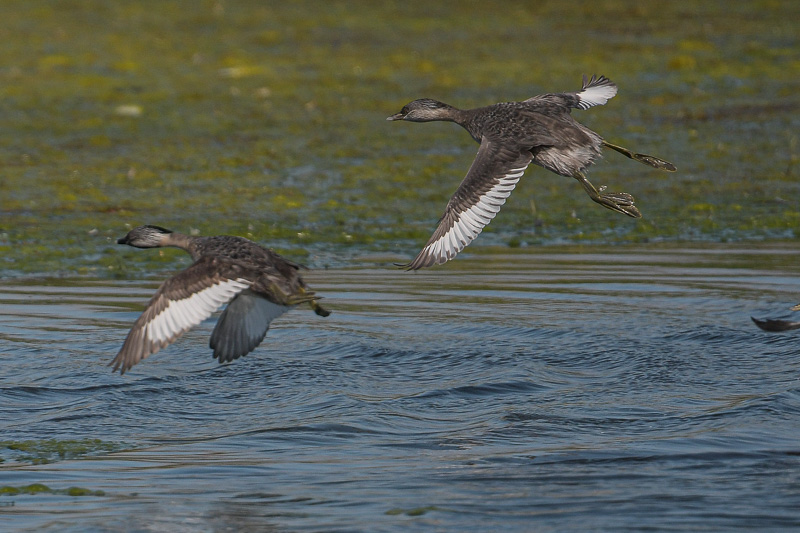
We have had good numbers of Hoary-headed Grebes at a number of locations over the past few months.
Not that we don’t see them regularly, just the large numbers are quite unusual. Some ponds at the Treatment Plant have had 30-40 birds on occassions.

We were at the T-Section area, and in the pond near where we’d parked IamGrey, it was hard not to notice the 15-20 or so Hoary-headed Grebes all swimming about together. 

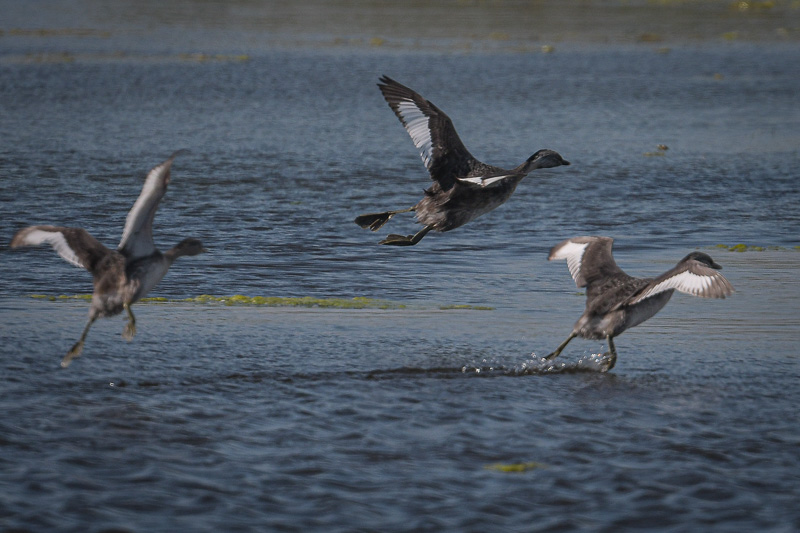
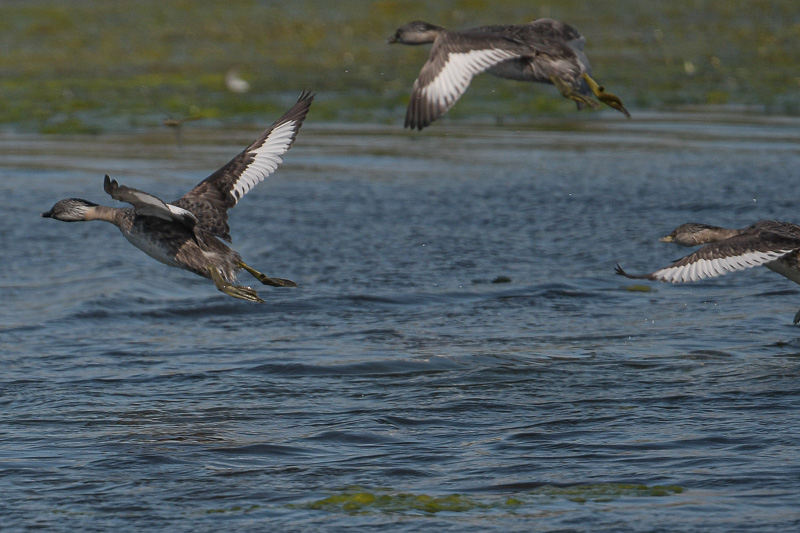
What turned out to be unusual was they all drifted down to the far end of the pond on a strong breeze, and then with a hop, skip and a jump, they launched themselves into the air and flew the 150m or so to the other end of the pond, drifted back and flew again.

It is most unusal to see any grebe airborne, so this was particularly intruiging. The books tend to say that “they fly at night”, but I suspect that is because no one sees them in daylight, and the conclusion is obvious, “I haven’t seen grebes flying in daylight, so…. They must fly at night” 

These ones, obviously hadn’t read that book. And they continued to repeat the performance
I’ve also been told, on reasonable authority, that Grebes tend to lose the ability to fly the longer they are in a permanent pond. Some Little Aussie battlers can have several seasons in the same pond, and if the theory is correct, then the wing muscles etc, must atrophy and they are for all intents, flightless.

And the Hoary-headed continued to drift up the pond and then fly back. Presumably they were using the rather strong wind blowing down the pond to help get lift. We began to wonder if they were perhaps getting some training in to re-develop the flight muscles

We stayed in the area for a couple of hours and to our surprise when we checked, just as we were leaving, there were only a couple of Grebes still in the pond. The rest had flown!

And of course we missed that.
Often see them sitting in the ponds and doing a wing-stretch and conclude that those wings aren’t all that big for such a small bird. But, stretched out in flight they obviously get enough lift. 
With those little stuck-on legs dangling out behind.
Enjoy
Little Visits: It’s Rained Crakes

I was writing to Mr An Onymous t’other day about the weather, or lack of it in fine proportions, and lamenting being unable to get out in the wind and the rain.

I mentioned that I’d concluded that I’m no longer a member of the Upwardly Mobile and was rapidly sliding into the Downwardly Mobile. Just seems too hard to get out and about regularly.

Still, there is a lot to be said for quietly sitting. EE has made a science of it and half her magic comes from such experiences, I percieve.

So I thought I must take advantage of such a change in direction and rejig the blog at least one more time. Rather than look for the ‘big’ stories of bird-world/land I might just cover a few pics from one connected set of birds.
Which if I recall correctly, (and that you might want to check against para 2 above), was roughly what my journalism instructor(ess) had to say. Write the little stories with insight. The big stories can wait. (In my case they still are!) Well I might have missed her quote a bit, but the intent was the same.

After a week or more of rain, we took an opportunity between all the unimportant life missions we are on, to leave home early and head to just one location. The T-Section at the Western Treatment Plant. And to spend the morning at the “Crake Pool/Pond” For the initiated, it’s easy to find. For those who’ve never been there, its not a pool or a pond, its part of a reed bed that is on the edge of a typical, large, former waste-treatment pond.
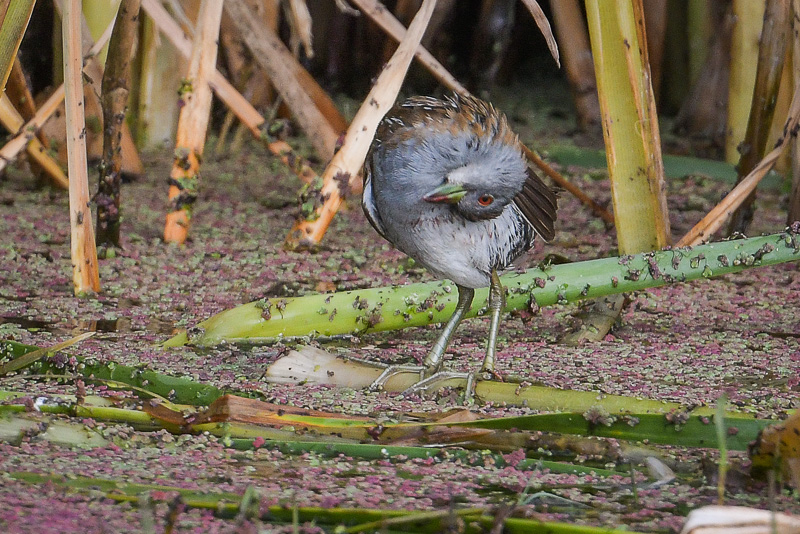
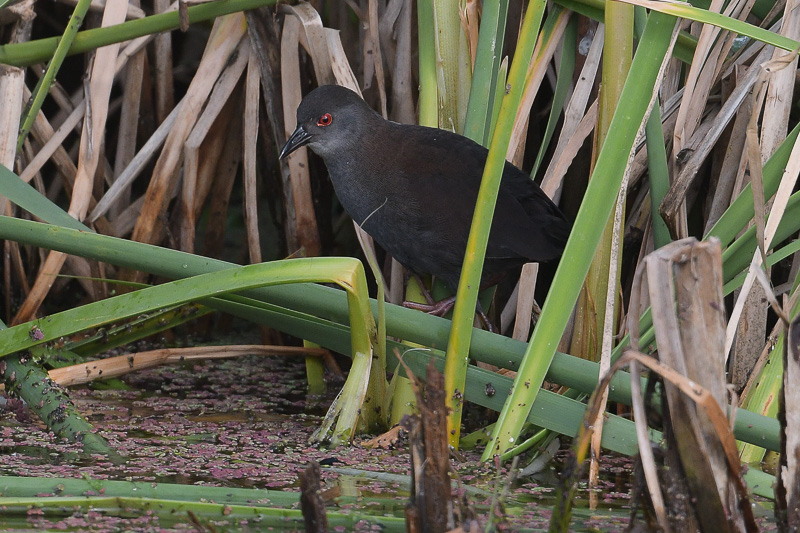
Yet for some reason, water density, coverage, food, shelter and a host of Crakie sort of things the Baillon’s, Spotted and Spotless seem to favour. Most times they skulk (love that word) about in between the reeds and are hardly seen. At present, all bets are off and they are mostly feeding in the open.

Birders and Photographers have devised some pretty sneaky plans of their own to be able to see the birds without scaring them off.
But.
In the interests of brevity I’m going to ignore all that at this time.

We parked the car at a junction, walked the 150m or so down to the pool, and there they were. Happy in their litte Crake world and the only thing that seemed to scare them back into the reeds were a few aggressive Australasian Swamphens that kept maurauding across the open areas in pursuit of one another. They’d scare me too.

So here here we are. It’s Rained Crakes.

As it Happened: In the Early Morning Light

+D4 had turned up for a couple of days, and we decided a trip to the Western Treatment Plant would be possible given the weather looked like it was going to be pleasant for most of the day.

Despite the need to get up early in the cold, we took an early morning run down the freeway and arrived not too long after sunup.

Breaking from usual tradition we started at the “Western Lagoons”. The clever plan was to look for, see, and photograph Black Falcon. Great idea, but not very well implemented as the Falcon didn’t seem to get out of bed early.

There is a spot about halfway along the Lagoons where the ponds are much higher than the abutting farm fields, and a water channel seperates the road on the bund of the ponds with the lower paddocks.

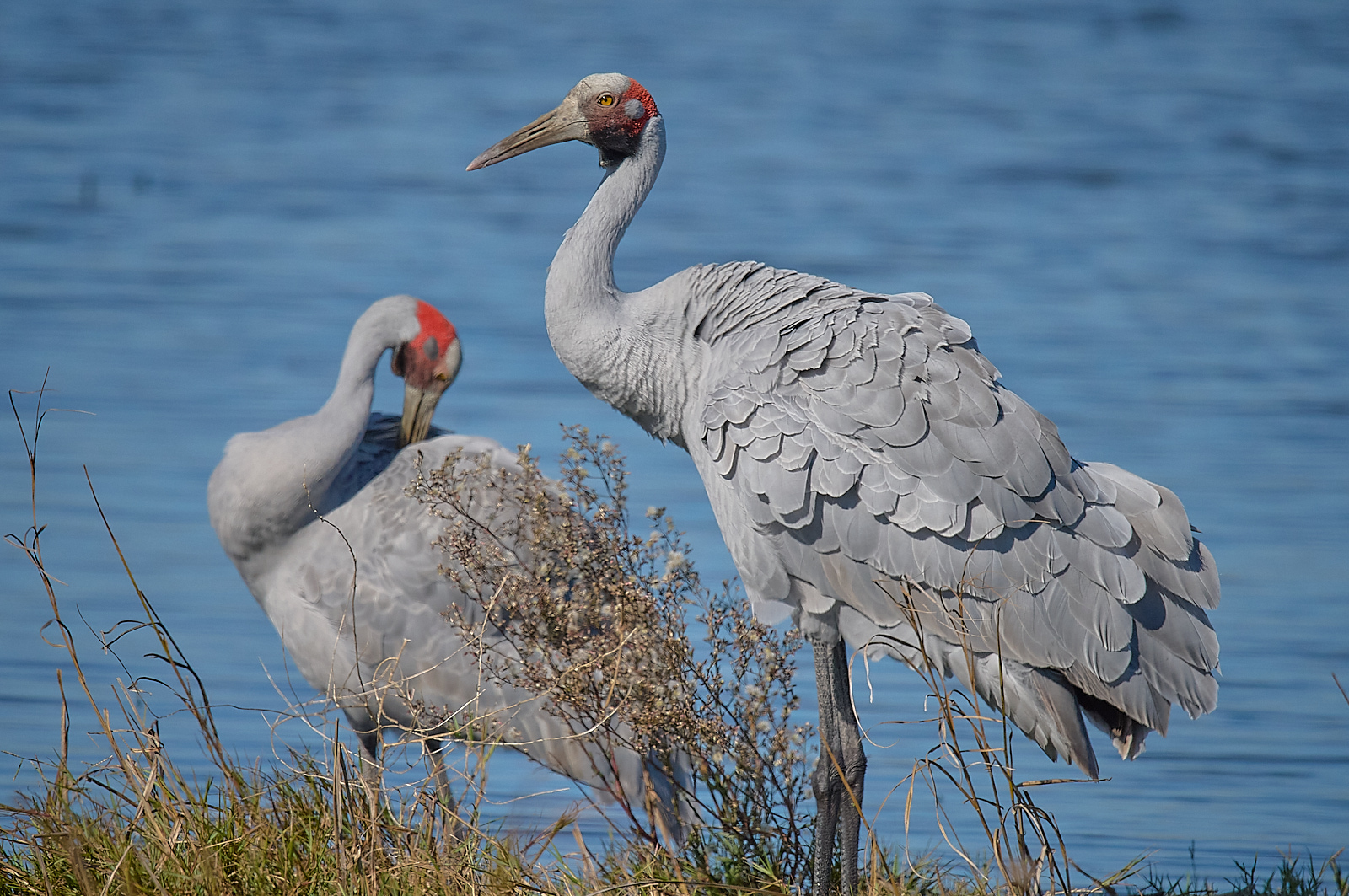
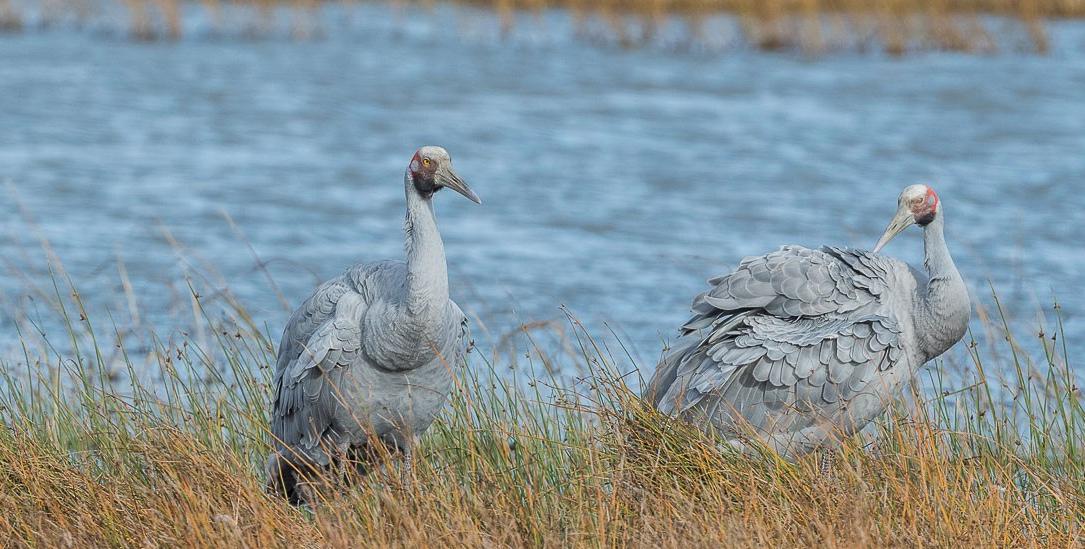
As we travelled along the pond road, EE took great delight in pointing out there were Brolga ahead, and sure enough, of course, you dear reader would not have doubted, she was right.

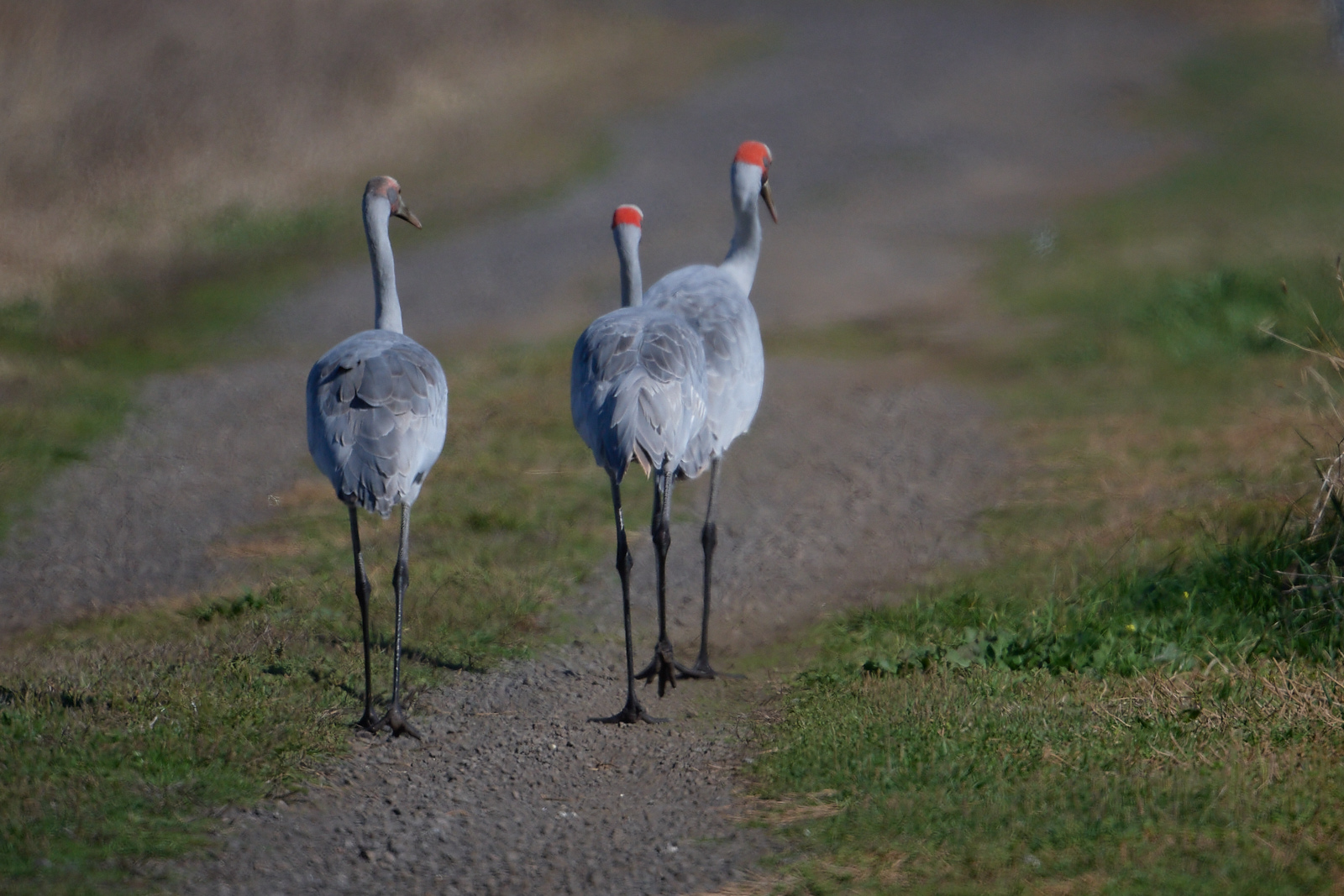
They were gathering together in the lower paddock, and eventually we saw eight of them. We sat on the upper road for around an hour or so, as it was easy to look down toward them, they were comfortable with the distance we were away, and the channel also gave them protection from close approaches.
So unpreterbed, they walked back and forth, preened, feed and did a few dances and introductions.

The one thing I noted, as I sat there was because of the richness of the early morning light, was how their feathers have a most attractive sheen.

So in no particular order here are a few from the morning’s visit. ro

Assembly.
Every so often one would stop and give a call. In the still early morning air, the calls were quite powerful
The grasses and shallow water seemed to suit their feeding habits
From where I sat on the high grasses, everyso often my long lens was just too long.
Several were fascinated by clumps of grasses and merryment enused as they tossed it about and jumped around
It seemed to be a game that only one played at a time
Perhaps they were practicing for a grass throwing event at the Olympics.
It wasn’t always immediately obvious which of them were a couple, but some times two would seperate away for a quiet stroll together
The calling seemed to make the rest of the group away that they wanted a few private moments
Getting to know you
There is the overall scene. I had to borrow +D4’s zoom for the shot

Little Visits: A Raptor Moment… or Two

We started out heading to monitor several Black-shouldered Kites nestings, but as the early morning sunhine beckoned when we made it to the freeway we decided a coffee at Gerry’s at the Highway Lounge and then on the WTP for a looksee for robins.

Coffee despatched, we didn’t have any success with the Robins however.

For those that have visited the WTP we headed on up toward Ryan’s Swamp.

A good move it turned out to be as there were a number of raptors working along the roadway.

Our first sighting for the day, a Black Kite among the old trees
A female Nankeen Kestrel was ‘hawking’ up the remains of breakfast. A little furball lump of undigestible rubbish.
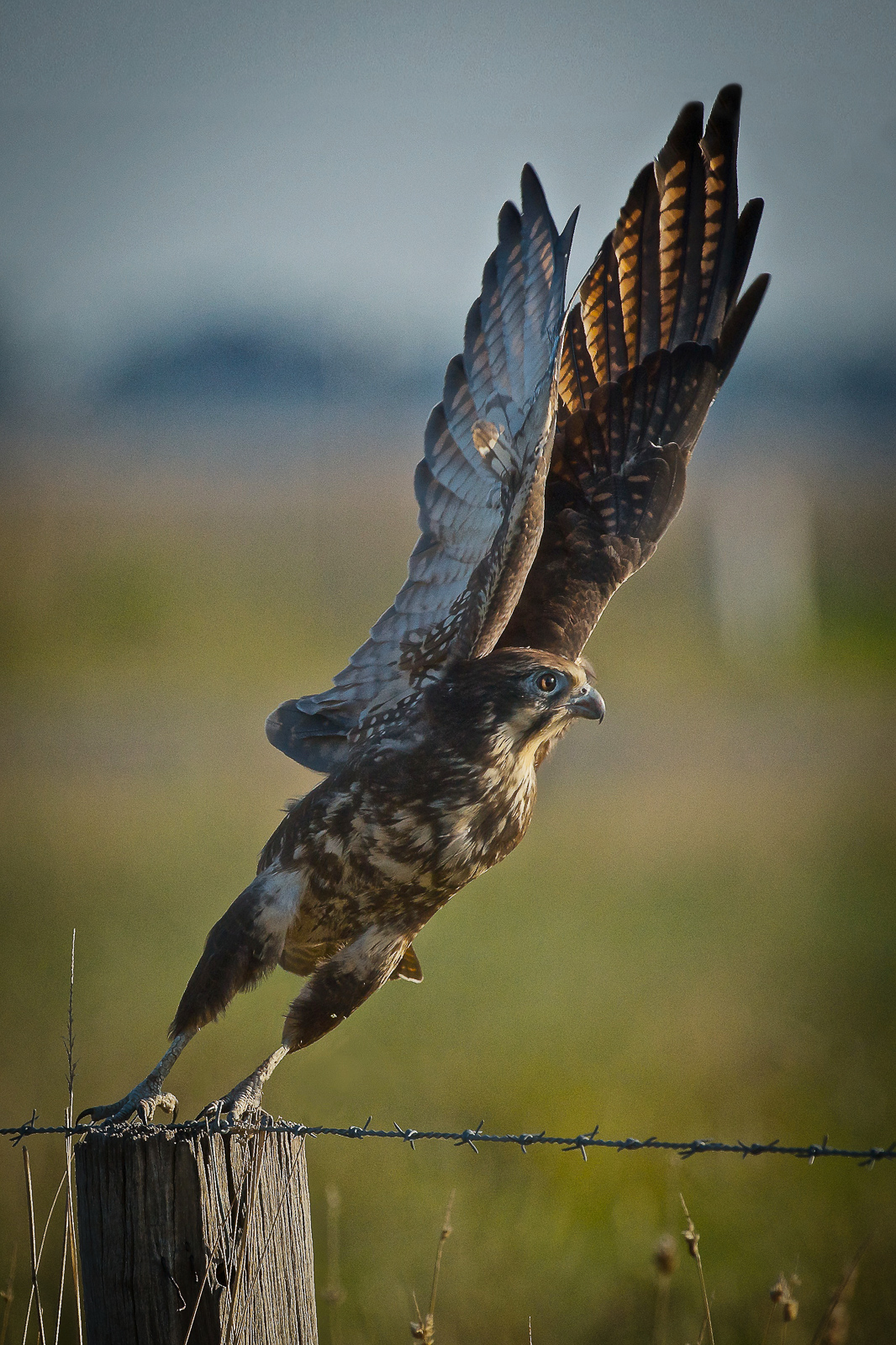
We spotted this Brown Falcon ‘walking’ along the road, no doubt it had scored a meal, as it flew to the tree and the next 45 minutes or so we stood with it, as it slowly digested the meal. There is something special about being able to observe this bird, unstressed, and watch its various character traits.
Handsome in the early morning light with dark storm clouds building behind
A number of Black Kites were also in the same area. It looks like full on dogfight, but these big birds seem to love to play about together
Another Black from the same area, and it appears to have nesting in mind.
Yet another Falcon swept in to see what was going on.
It didn’t take us too long to find a pair of Black-shouldered Kites at work on nesting. Unlike most Black-shouldered these were nesting in the top of a dead tree in the open. Here the male has just arrived to relieve the female for awhile.
Nesting hasn’t blunted her hunting skills
Don’t mess with Mamma. She is unhappy about the Black Kite attention on the treeline
More Kestrel hunting. I missed the catch of this one.
A pair of Brown Falcons, they are not ready to mate, but are doing their best to keep the pair-bond alive and bright. He has just swept in from a few aerial stunts to impress her. She is crouched ready to accept his advances. We again spent 15 minutes or more watching their various antics, and after a lot of calls and cackles, they both flew to different perch area to repeat the performance
Hey, I think you look pretty special. Well I can’t speak Brown Falconese, so who knows what he said.

Enjoy

Along The Track: Duck Season

Warning: This blog contains details and images that may cause distress to some readers.
I see that just about every night on the tv news, and I’m not sure what you are expected to do. Change channels, turn tv off. Close your eyes?

When I was a little kid, I remember a Loony Tunes cartoon of Elmer Fudd, the duckhunter, and Daffy Duck eluding him. The hapless Elemer never seemed to be able to take home a duck dinner.
Currently our Victorian Government seem to be in the same sort of dilemna about banning Duck Season 2023.

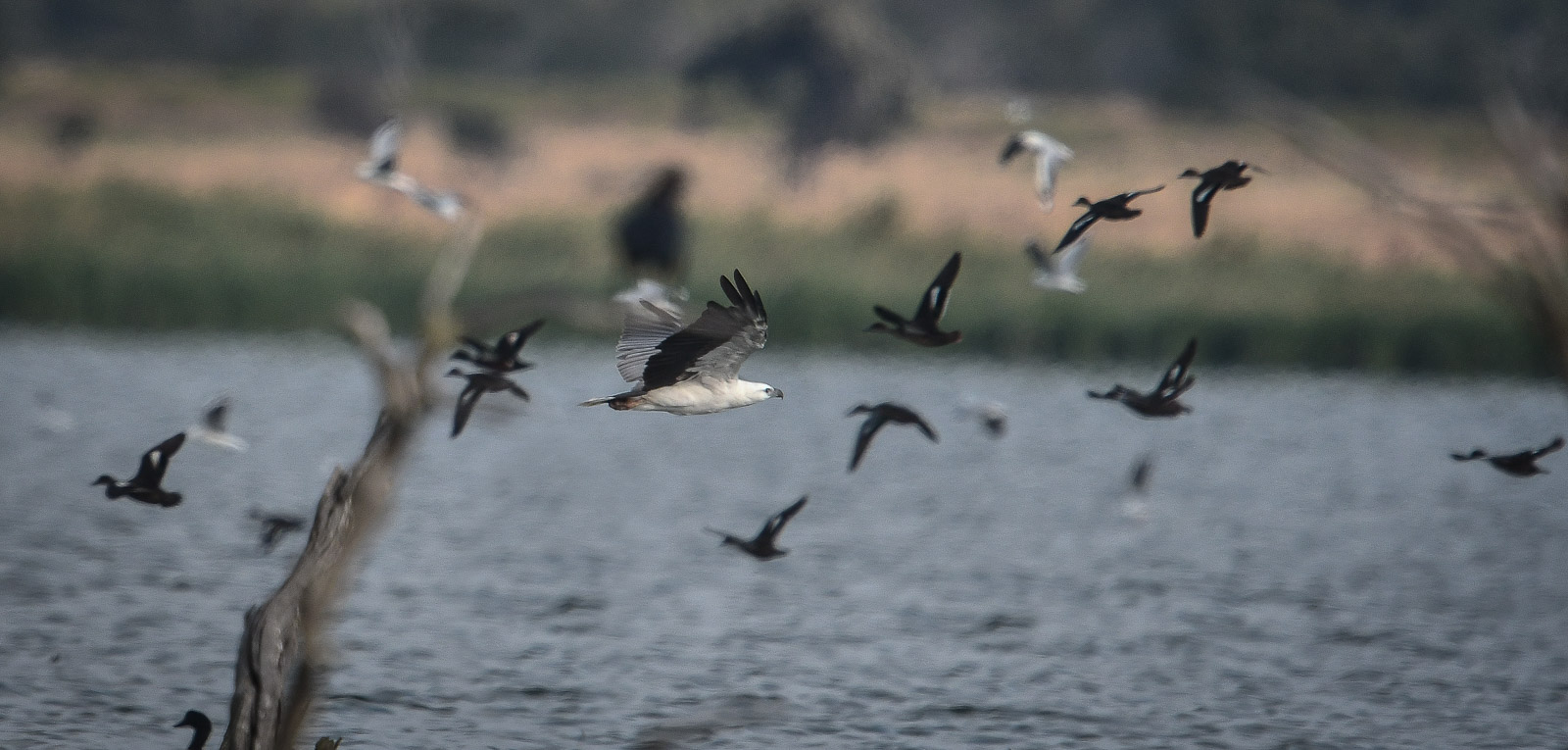
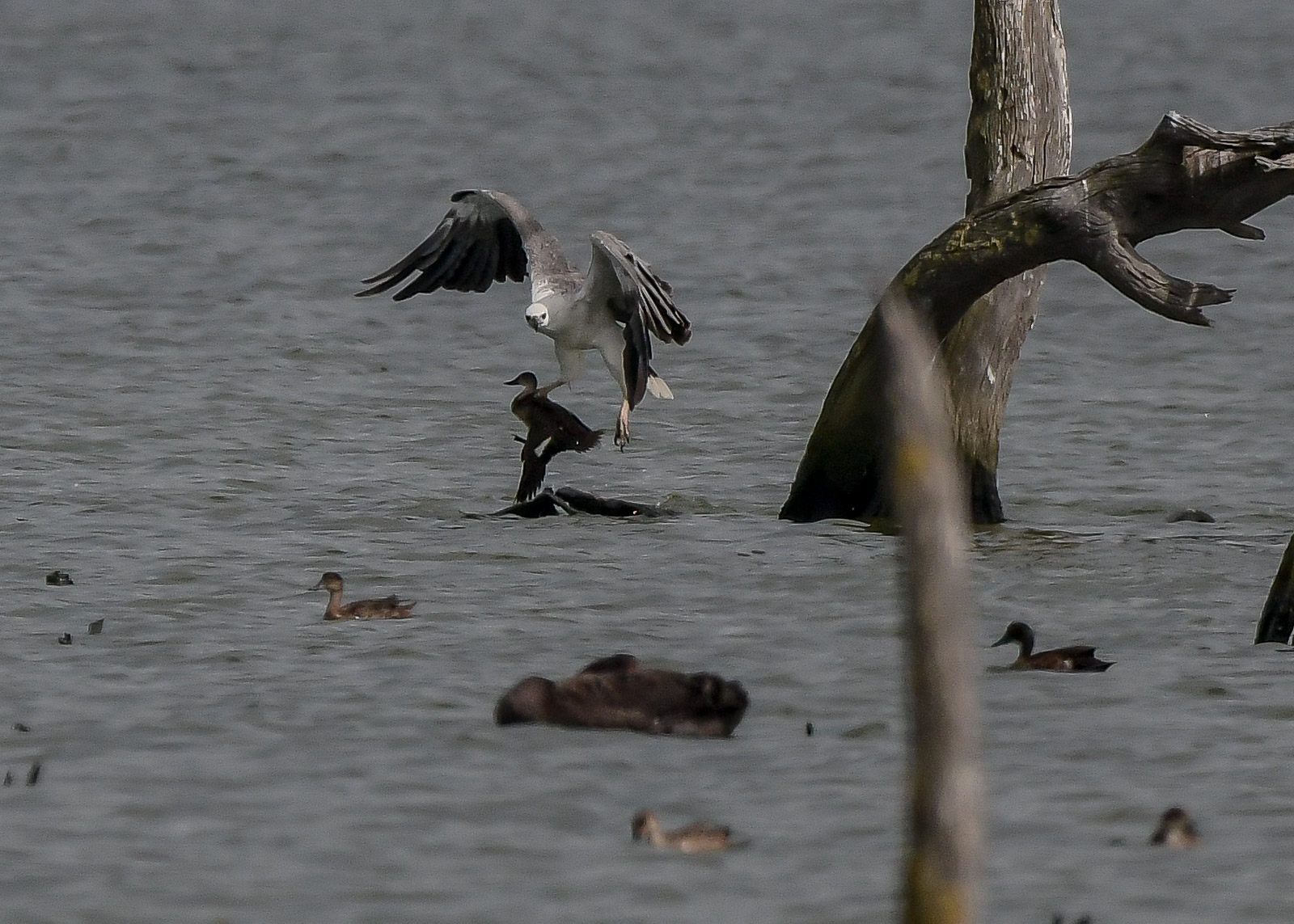
In the meantime, down at the the Western Treatment Plant, a White-bellied Sea Eagle is not the least preturbed by a possible closure of duck season.

Thanks to the headsup of its likely presence by my Flickrmate Don, and a couple of other birdos, we were planning to make a trip to WTP to see what, well, what we could see.

The family were coming for Australia Day, so we were planning to go the following day, but, best laid plans as Robbie Burns would write, and family decided that to come the day after Aussie-Day-Maaate.
How Un-Australian is that! I wonder if they disappeared as happens in the Sam Keckovic Lamb tv ad.

So rearranging our schedule we headed for the Treatment Plant. I’m not a great fan of going there on public holidays and weekends. Once the plant was visited by keen birders who took time to see and id as many birds as possible, and it was very laid back and tranquil.

These days it seems to be photographers who hurry from one end of the plant to the other to get just that one shot. Sometimes its seems to resemble a badly run motorcrosse event. And I’ve photographed a goodly number of motorcrosse events, and participated in a few historic rally runs so have a vague idea about proceedings.

So weekends are not my fav time in the plant.

Rant over, back to Sea Eagles. Well, one in particular.

The smart money seemed to suggest it would be on Lake Borrie, that’s where it was the day before. Every heard that advice. “Oh, yes, I saw it just there, yesterday.”

We parked conveniently about mid-way along the road and started to scan. Nothing in close. Of course not, did you really expect it?

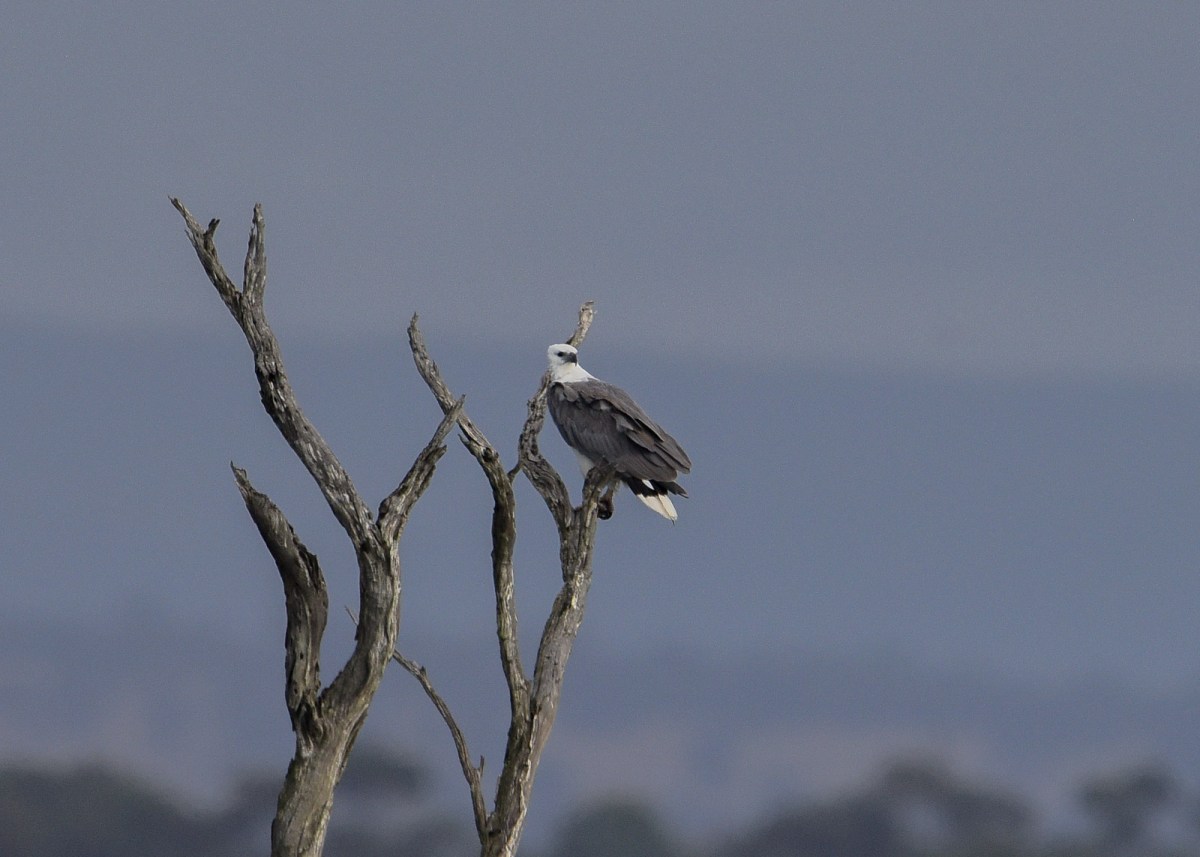
Then EE made a gesture, way out in the middle of the lake. A white spec, that could have been a refigerator as far as normal eye sight would know. Through the binos, it was indeed a White-bellied Sea Eagle, perched high on a tree with great views of the menu (eer. ducks) all around.

It sat. We despaired at getting a sharp image at that distance and with the sun rising, heat-haze began to make it presence felt.
Then the bird jumped, went to the deck and moved about 300m up the lake. Just about every duck in that direction took to the air and flew the opposite way. Better to fly first and ask where later on.
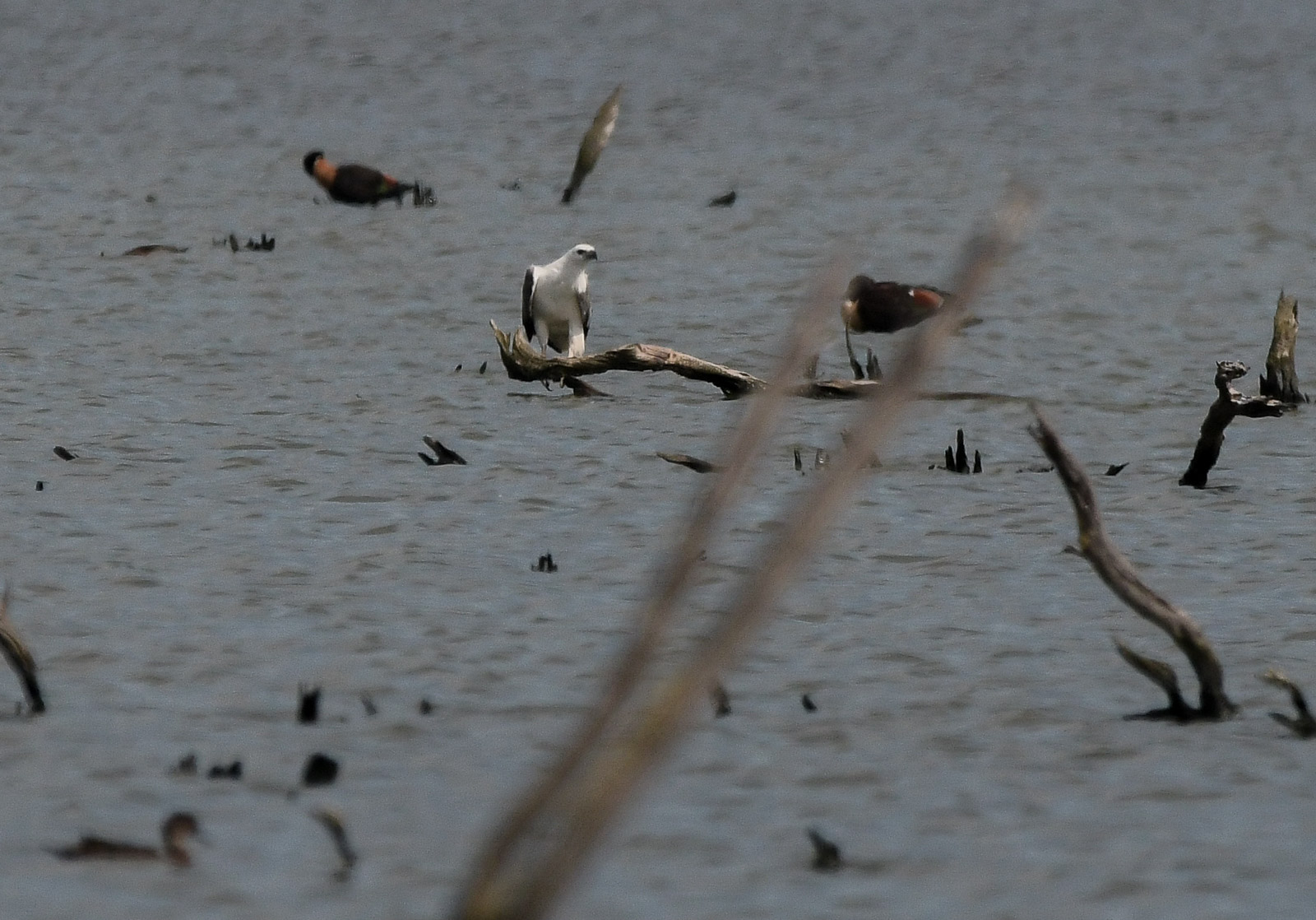
Still too far out, but, just that little bit closer. Another long sit, and as soon as I turned away, it dropped down on to a log at water level.
Missed that.
Another long wait. But the bird kept turning its head to the left, and it had obviously locked on to something. More waiting.

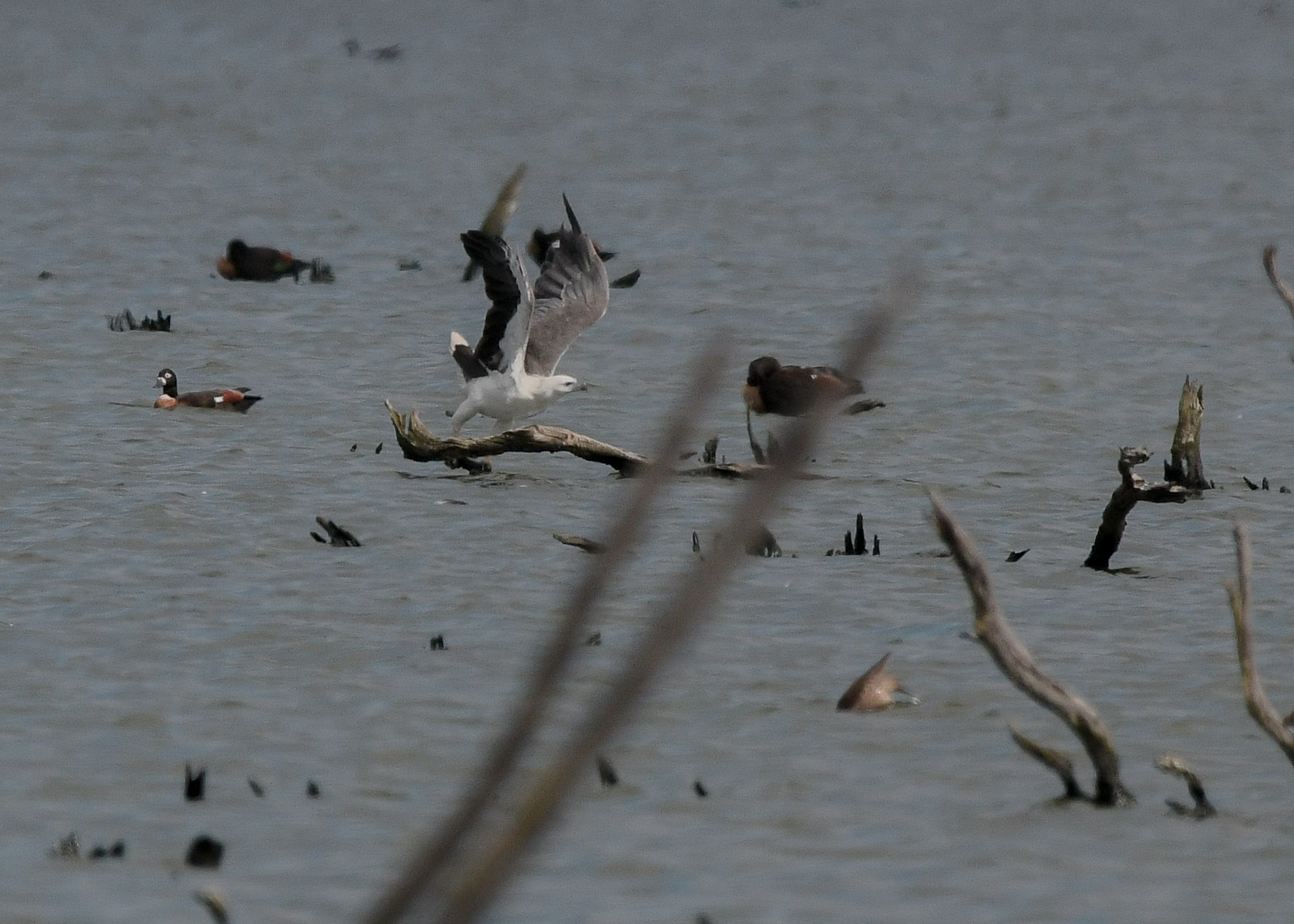
Then, unfurling the wings it took off, quite leisurely it seemed, almost stealth mode.
And while I didn’t really see it though the viewfinder, somewhere out there a Chestnut Teal had nodded off to sleep.
Bad career move.
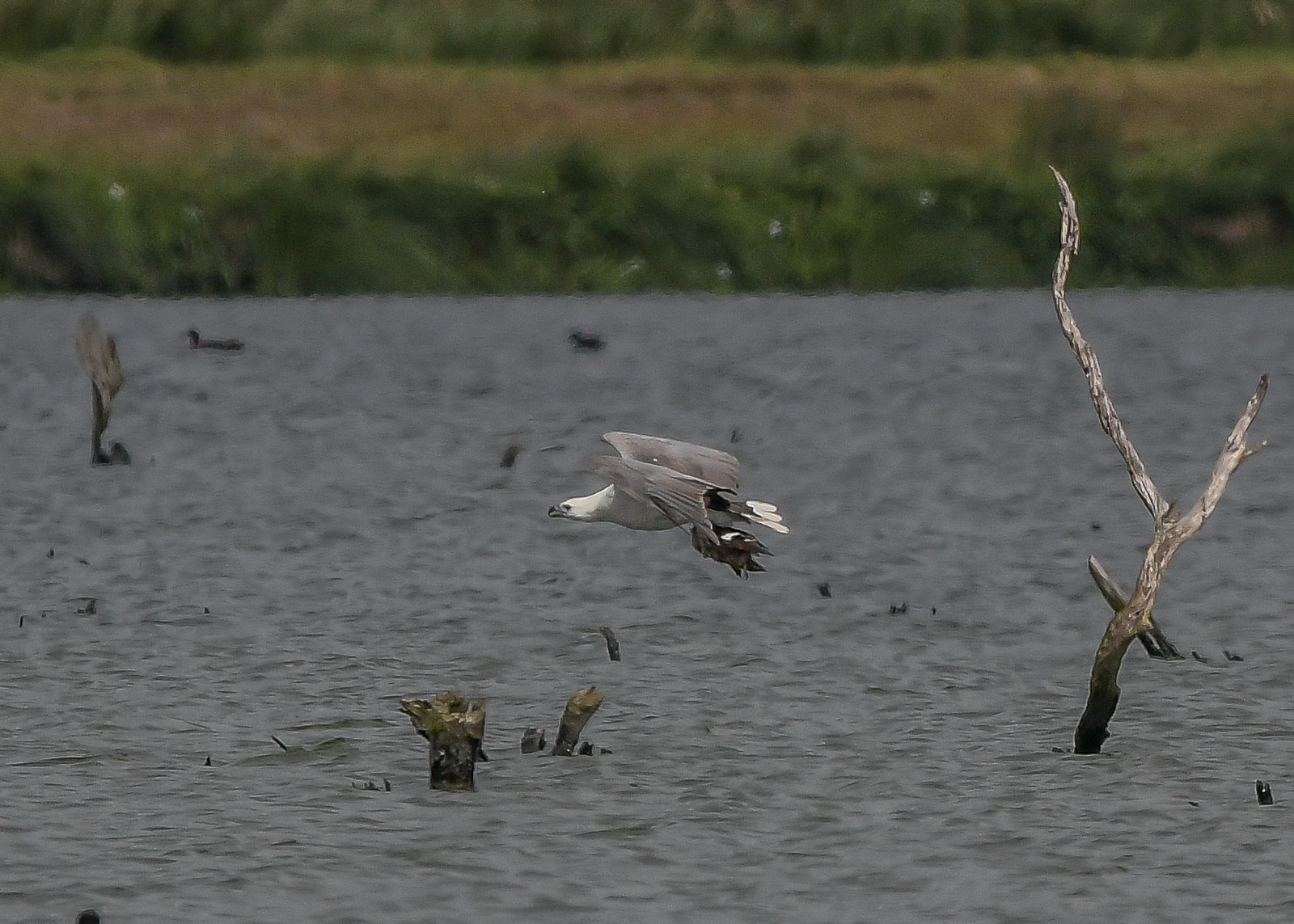
There was no second chance. The eagle swiftly despatched the duck, and sat on the waterline with it for a good 15 minutes, then scooping up its prize flew down the lake to a suitable dining table.

Event Log

When a Sea Eagle flys East, the wise among the ducks fly West
Swinging In to land
Locked for landing
Viewing the Menu from the best position in town
After a very long wait, it dropped down on to a waterline log for a drink
It kept looking to the left, obviously some opportunity had presented itself
Like all raptors there is no wasted energy, the time to move has to be just right.
Strike
Time to recover
Now to relocate to a more suitable dining table
A handy perch
cenare all’aria aperta

Little Visits: Busi-ness

We had a few minutes to spare on the return home past the Western Treatment Plant and decided to look in on the “T Section” area. Not many birds in there at present, except for colonies of nesting swans.

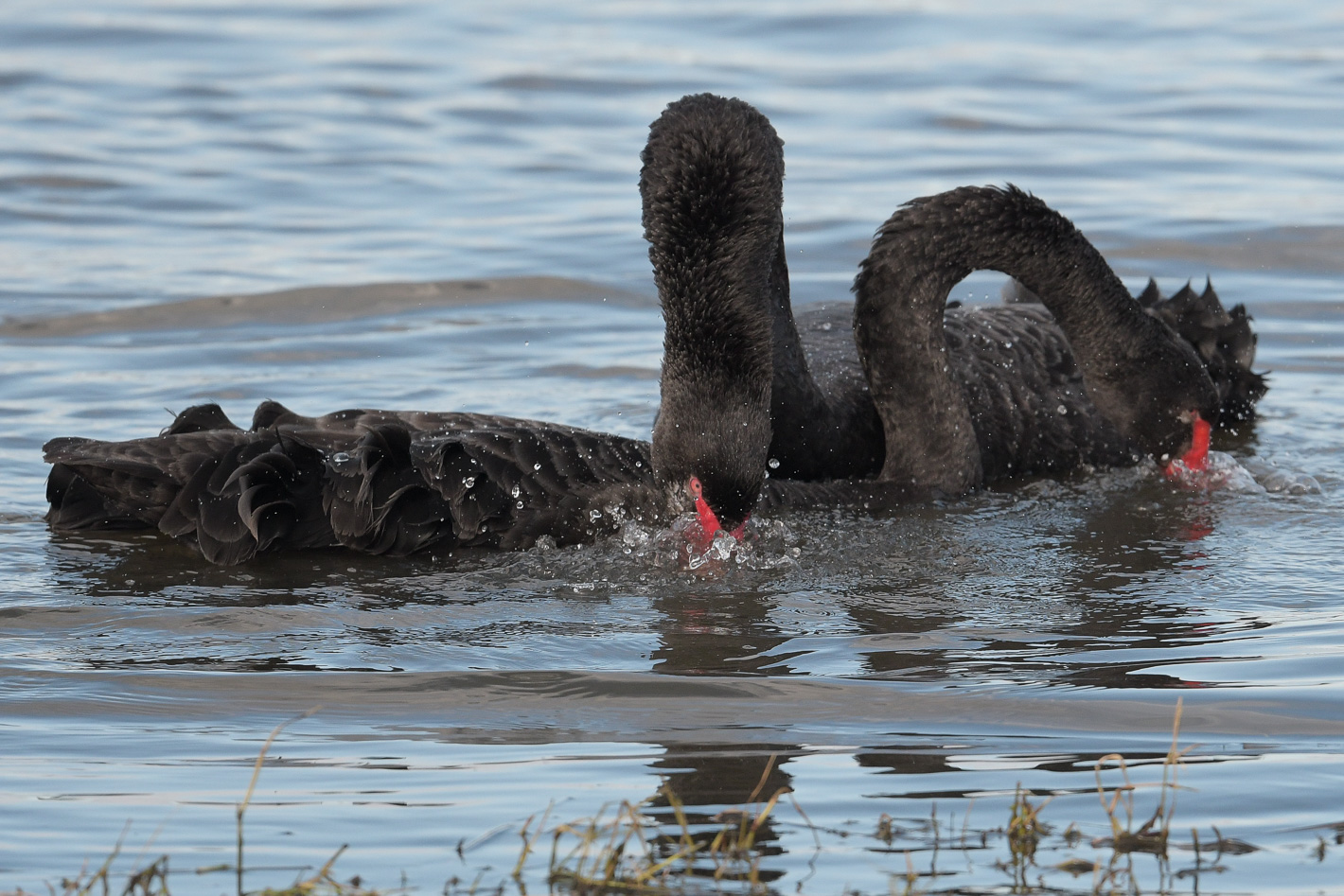
We found this pair in the business of Busy-ness

First step in the process is house building

The male is ready to contribute

Time for a little romance

This involves much swimiming in a circle and heads and necks over bodies

It seems that blowing bubbles was the start of something big.

The main event

She reared up so fast and I was unable to get back further so clipped the top of her beak

Job Done. Back to building. Repeat.

Little Visits: The Flight of the Brolga

I was going solo at the Western Treatment Plant.  #kneetoo was tucked up in her wide view bird-hide at the hospital, and as the sun was shining in a clear blue sky, I thought a quick trip to check to see if any Flame Robins could be making the most of the weather and the paddocks at the Plant.

However after a bit of fruitless searching it was obviously not going to be my day for robins.

A final quick trip around the “T Section” area just in case a Brown Falcon or two might be present and then home was my plan.

As I unlocked the entry gate to the area, I heard the long rasping call away off in the distance of Brolga. A scan around the horizon and it was not likely I’d spot any as the calls had been a long way off, and had now stopped.

I prepared to shut the gate and another birdo was approaching to go out, so I held the gate open and said I’d lock it as they left.  Then, just as I swung the gate across the road, that rasping cry filled the air, and this time I’d id’d the location. Sure enough in the air were three Brolga. Then as the shapes grew more distinct, it was likely that they were not only coming in my direction, but would perhaps make a pretty close pass by.

Locking the gate, I grabbed the camera and hoped that the pass would be on the sunny side of iAmGrey.

The more I watched, the more I became aware they would be using the roadway behind me as sort of navigation aid, and would pass right over the top of me.

And they did.

They disappeared behind one of the bunds, and I wondered where they had ended up.

Satisfied with  the fly by, I went on to look along the roadways. Time for a cuppa, so I pulled up at one of the cross tracks and pulled out the doings.

Then the croaking call rattled over the ponds and I looked a bit further along the track and the pair were in head stretch calling mode, and engaging in a little pair bonding.  Cuppa forgotten, I moved along the track for a better looksee.

They settled down to some preening and feeding and the juvenile with them was feeding in one of the shallow ponds.

I went back for my Cuppa and sat and watched until they moved off the pondage and up on to the track, and moved further along to continue their morning routine.

Satisfied, I packed up and headed off for a visit with the patient.

Enjoy


Studio Werkz: A Step back in Time

For those new readers, Studio Werkz, was the proposed name of a ‘Studio Alliance”, by a group of photographers ever-so-long ago. I’ve blogged here about the formation and dissolution, (all in 24hours), so won’t belabour here.

However everytime I get the chance to make a portrait of a bird, I find myself pondering why studio offers so many opportunities to bring out the character of the subject.

It is about lighting, it is about backdrop and it is about the magic moment when the subject no longer is “having a portrait taken”, but allows an insight into their life. A sparkle in the eye, a wry grin, leaning forward, turning the body everso slightly, and there is the magic moment.

It’s like as one of my early mentors would say, “Like eavesdropping on a special moment. Developing a real sensitivity for a feeling that says so much. The lens, the camera, the lighting all are forgotten, it is the reaction that speaks visually.”

On my very first ever trip to the Western Treatment Plant many years back, I’d been travelling about the Plant with a very experienced birdo who graciously gave me a wonderful introduction to the area—so much so that I registered for access the following morning.

However, I hadn’t managed to achieve any significant pictures during our day, as we had little time to work with the birds.

After I picked up my car and was driving along 29 Mile Road on the way home, I spied this Brown Falcon sitting on the post in the late evening sunshine. Hesitantly I parked, and eased out of the vehicle, 500mm lens and beanbag.
Would Brown stay?

Now the falcons in the area are pretty used to vehicles speeding past, or even stopping, and have at least a passing tolerance for the human condition. Although what they really think of us is debatable.  Three things they they do give credit for, are lovely well spaced perching spaces, mice and rabbits.

Brown held.

And so I began to move about to get the best light, angle, and backdrop.  And for a brief moment it took me all in.
That was the going home shot.

Not more than a minute later, a vehicle approached and Brown felt the pressure and sniffing a light breeze turned and was gone.

Enjoy

Remain

Davyyd.

One of my most published bird photos

Little Visits: The Earmuff Tern

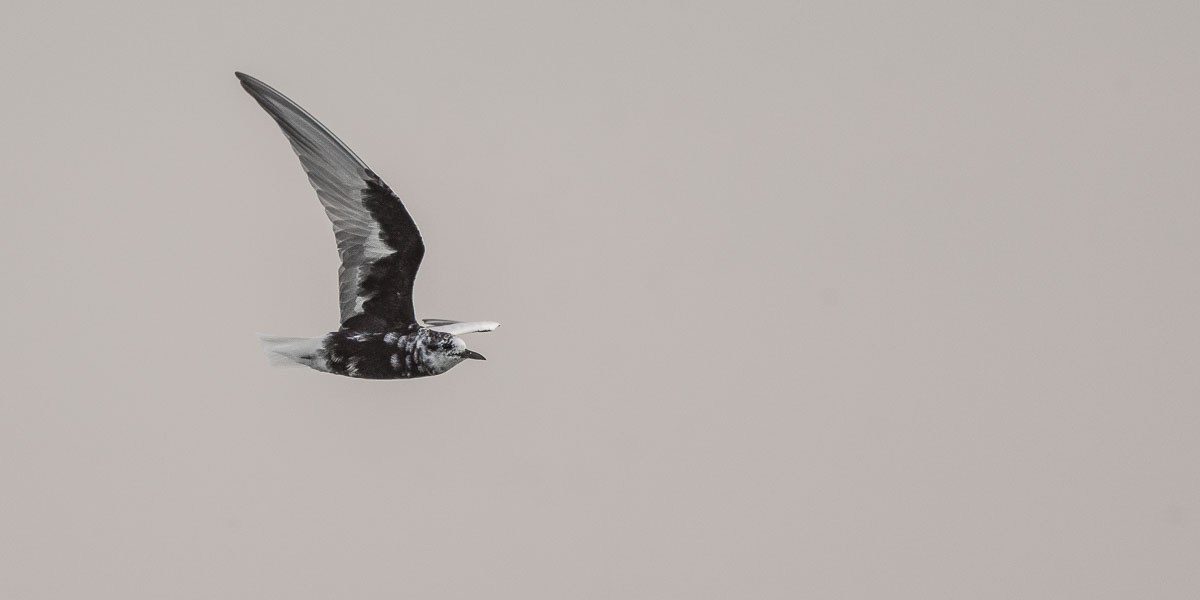
Around November-December, a flock of Terns visits the Western Treatment Plant and stays over a few months, begin to colour up for breeding, before heading northwards for their territories somewhere in Eurasia.

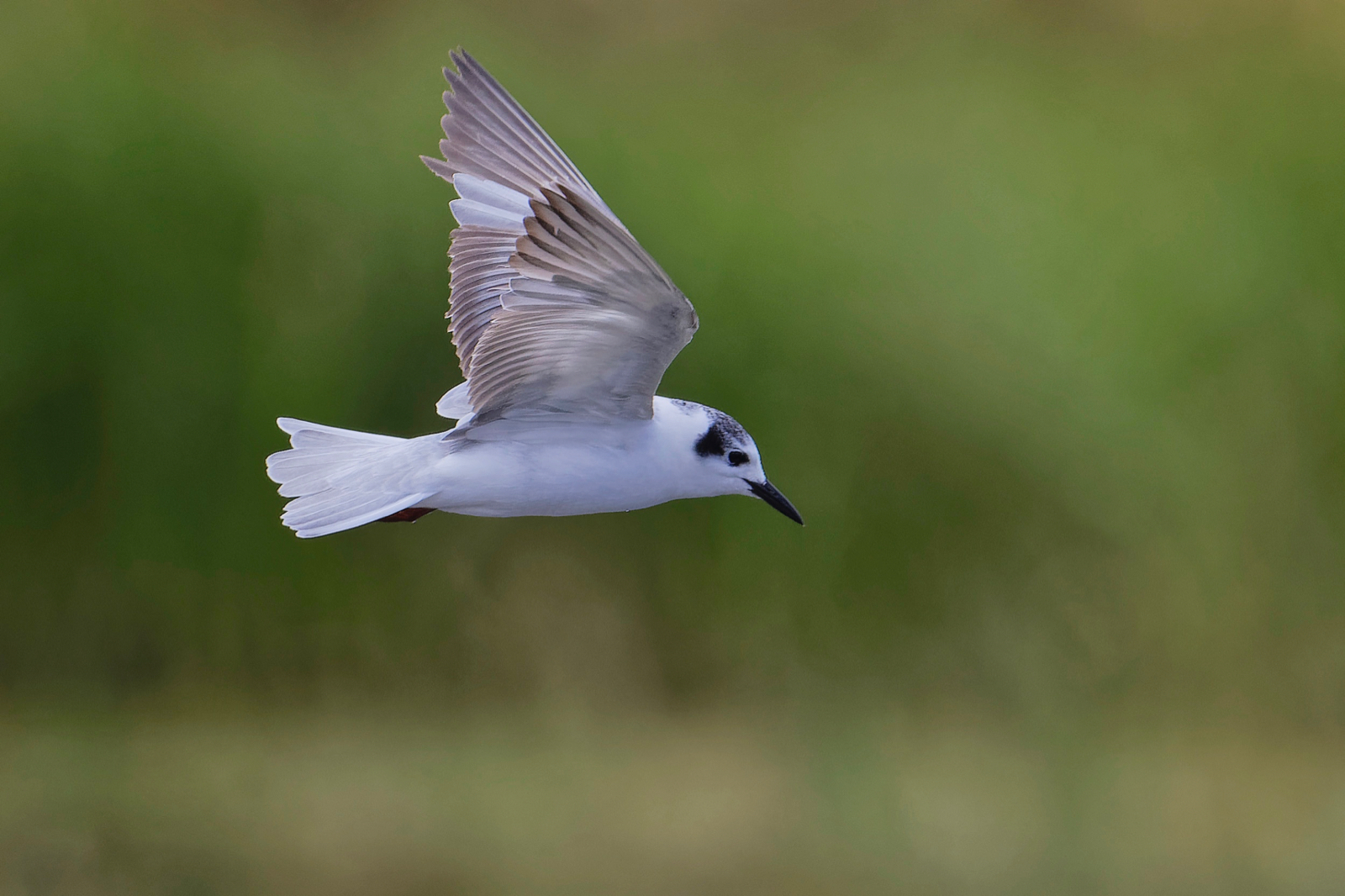
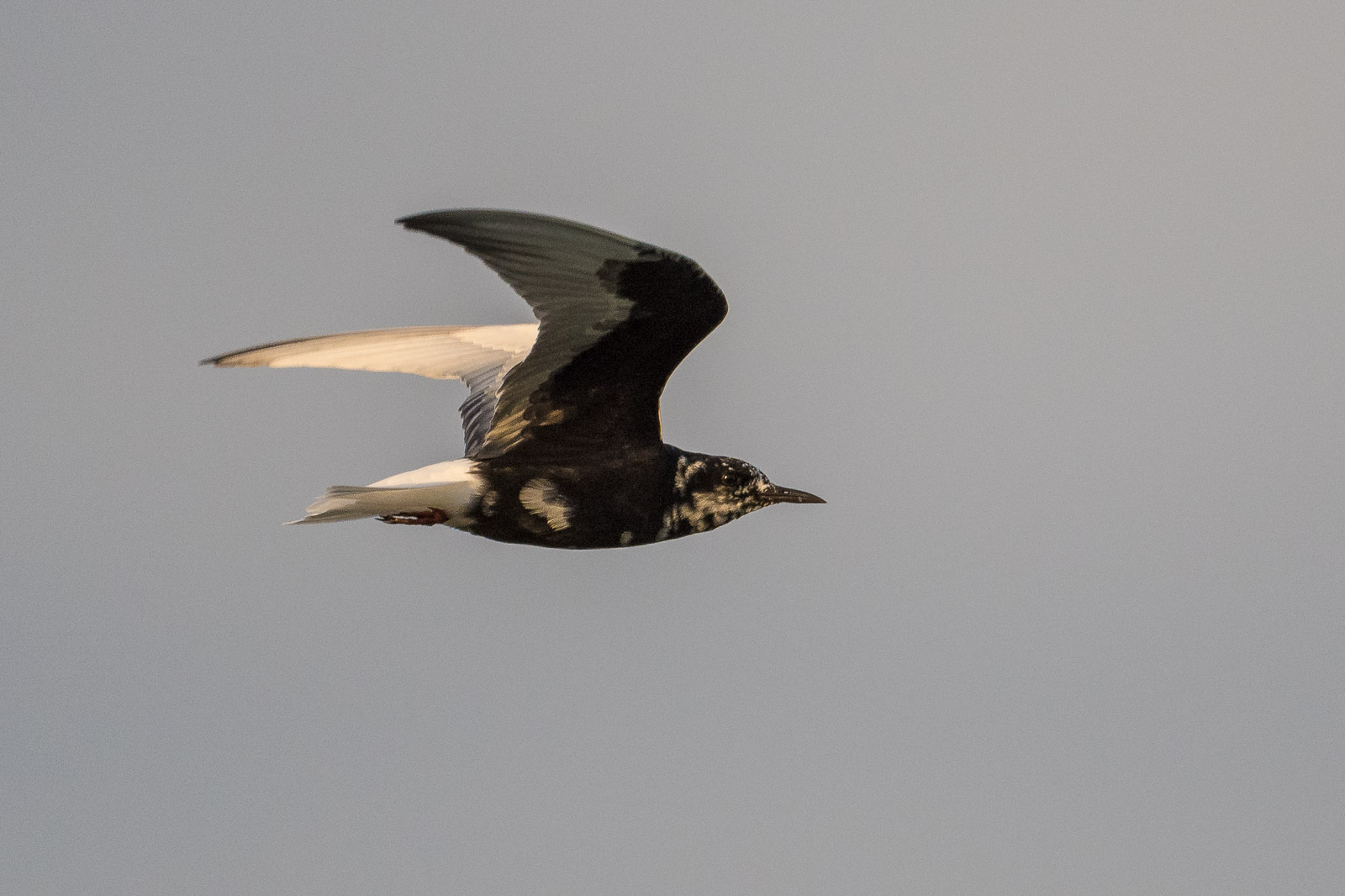
One of their most endearing markings is a bar of black feathers across the back of the neck, that looks like Earmuffs.

They used to be called “White-winged Black Terns”. Useful name, as when coloured up for breeding they have jet black bodies and white wings.  Simples.
Not so for the namers of names, now they are called, much more usefully, you’d agree, “White-winged Tern”.

The numbers have been consistent over the few years I’ve been following them, and 30-40 birds are not unusual. They are a little smaller than Whiskered Terns, and they do seem to flock with their similarly usefully-named cousins. The WTP is some 10,000 hectares, so trying to locate 30 or so birds can be the needle-in-the-haystack kind of proposition, but as they mostly favour the ponds nearer the beach areas, the challenge is reduced at least a bit.

This year for some reason, the numbers were down, and it was obvious that we weren’t going to see the range of colouring occuring as in past years.  Then to make the job, “Roll down the Shutters, and turn off the Lights”, the WTP was closed for visitors when the ‘Until Further Notice” notice was added to the gates and the locks changed.  Got the message.

We did manage a couple of days with good light, a day or two with not so good light, and an evening that progressively became unworkable, so I’ve not been able to add substantially to the world’s collection of photos of the “Earmuff Tern”.

Enjoy
Remain

Davyyd.

A Day at the Farm

Tis true to say that EE and I haven’t been down to the Western Treatment Plant for quite a number of weeks.  The weather, health things, family events and perhaps a touch of sloth just seems to have gotten in the way.

My photo mate Neil, sent me a note about his last weekend trip, and we decided if the weather opened up a bit, we’d at least drive down 29 Mile Road for a looksee.

So this morning after a couple of Tai Chi class sessions,  we loaded up with lunch, a cuppa or two of Earl of Grey and of course the essential cameras and headed out in the warm sunshine, (and to tell all the story, the rather crisp wind as well).

Before we reached Beach Road junction, we spied some Flame Robins, but they wanted to work far out in a paddock, and we could only get glimpses.

Further on down, and a trio of Black-shouldered Kites were keeping the mice on their toes.

And as we sat with lunch at the first corner on the 29 Mile Road, a Spotted Harrier wafted by making some very nervous Swamphens.  As we entered the T Section area, we were looking for Brolga as Neil had sighted them here at the weekend, but we lucked out.

Next we found a single Flame Robin female that was working around a puddle of water on the roadway.

Looking up, I heard the familiar call of a Black-shouldered Kite with a mouse, and as we looked a Black Falcon swept in from no where and after a little evasion from the Kite, the Falcon secured the prize and took off with the erstwhile and very angry kite in hot pursuit, but to no avail.  The Black is just that good in the air.

As we drove back out, lo, the very Brolga had turned up in the first pond and were busy preening, we shared the last of the Earl of Grey and enjoyed their unconcerned wardrobe adjustments.

So for a first day back at the farm, it was a most enjoyable and profitable time.

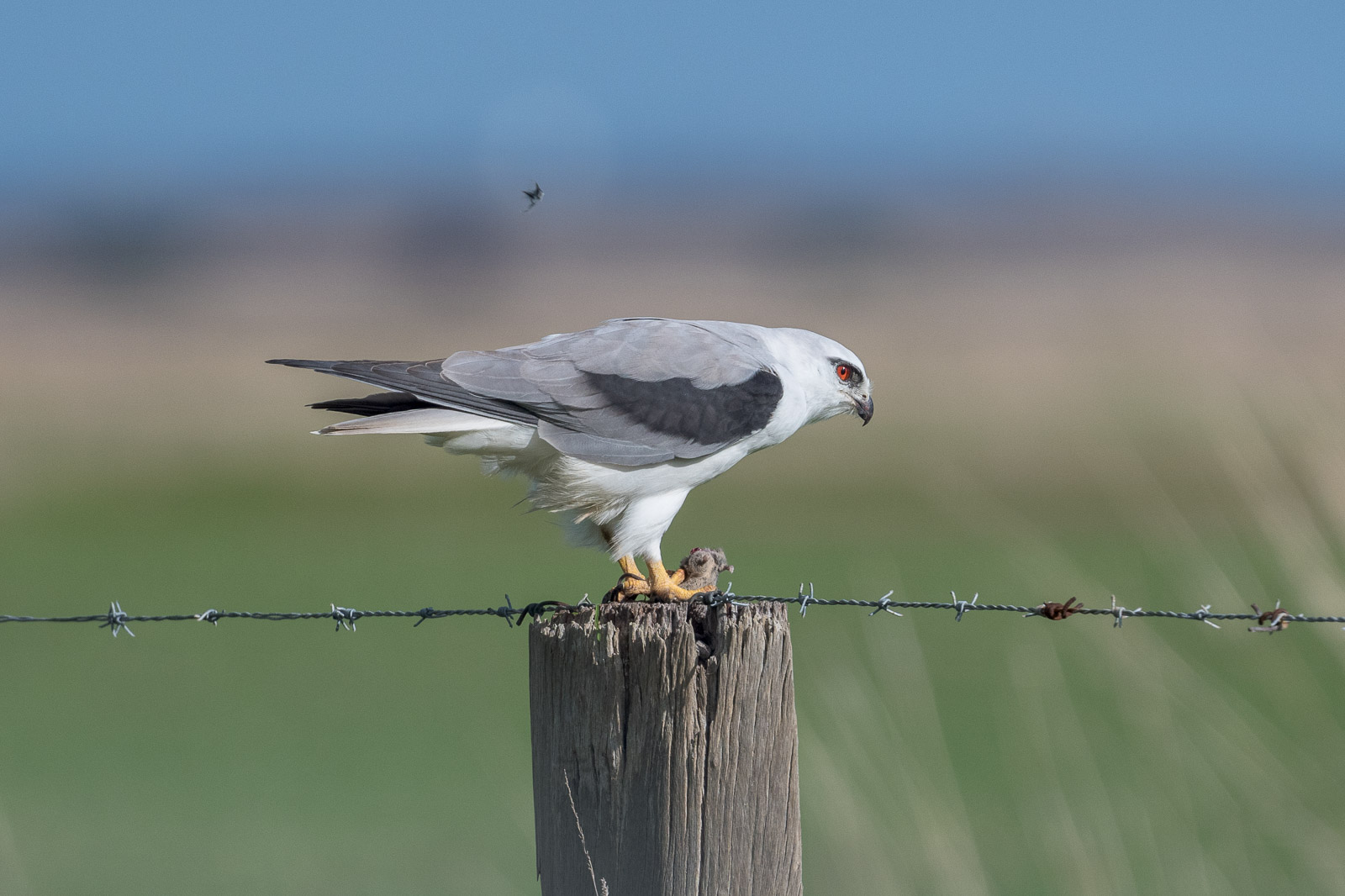
The fur flies as the Kite prepares lunch

Fast food

Spotted Harrier at work over Swamphen pool

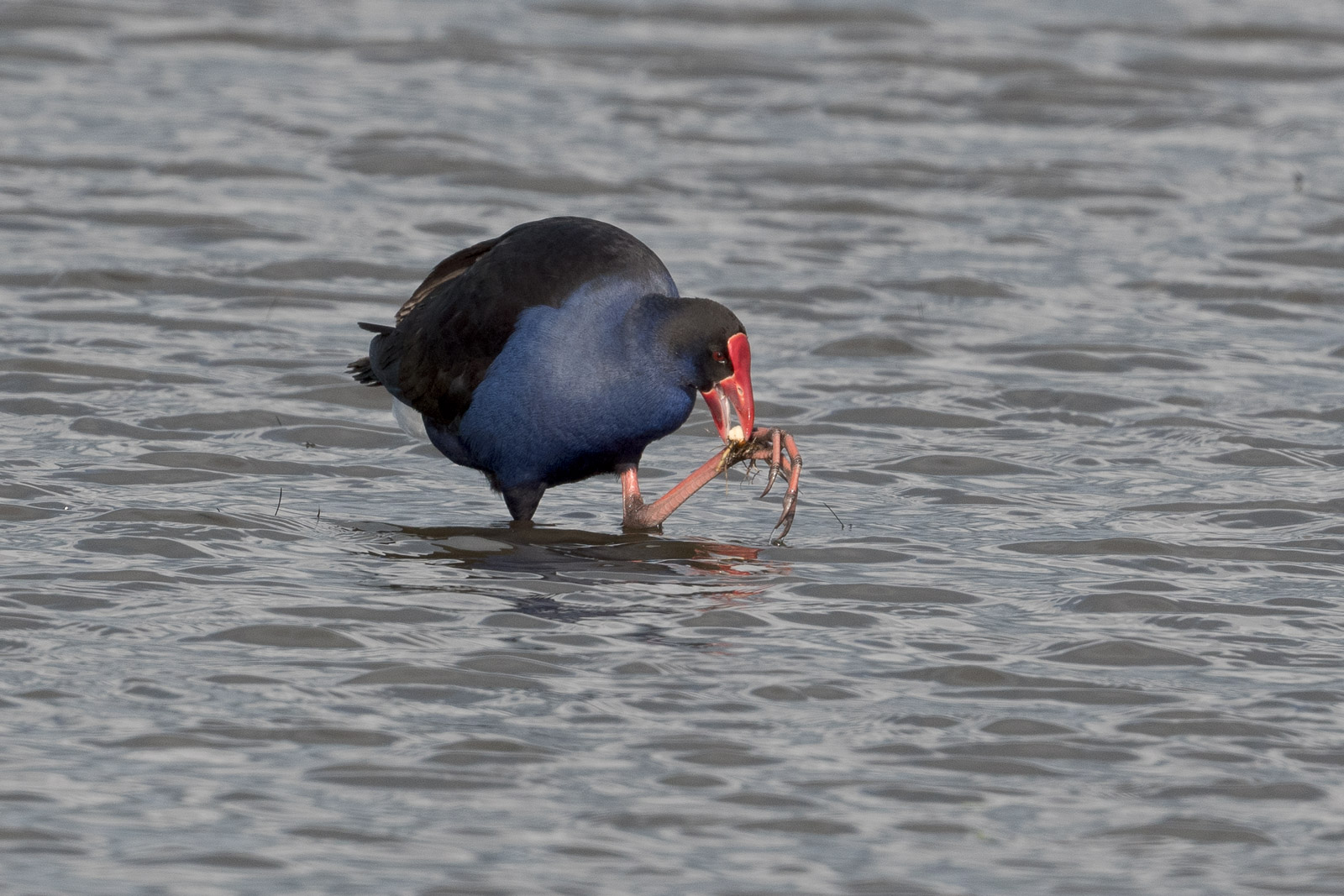
Australasian Swamphen with impeccable table manners

Golden-headed Cisticola

Female Flame Robin

Black Falcon speeds in on a free lunch

Easy to see why the Kite has no hope of winning this battle

Having lost its mouse, it did at least give the Falcon a parting swoop.

Preening Brolga

White-winged Terns: Welcome Visitors

I have, it must be said, been hanging off making this post. I was hoping, somewhat against hope, the I’d get another day down at the WTP with these delightful birds, but sad to say, the season has changed, the birds are on the move, and the fickle weather has finally arrived with some decent rain for the hard stressed environment.

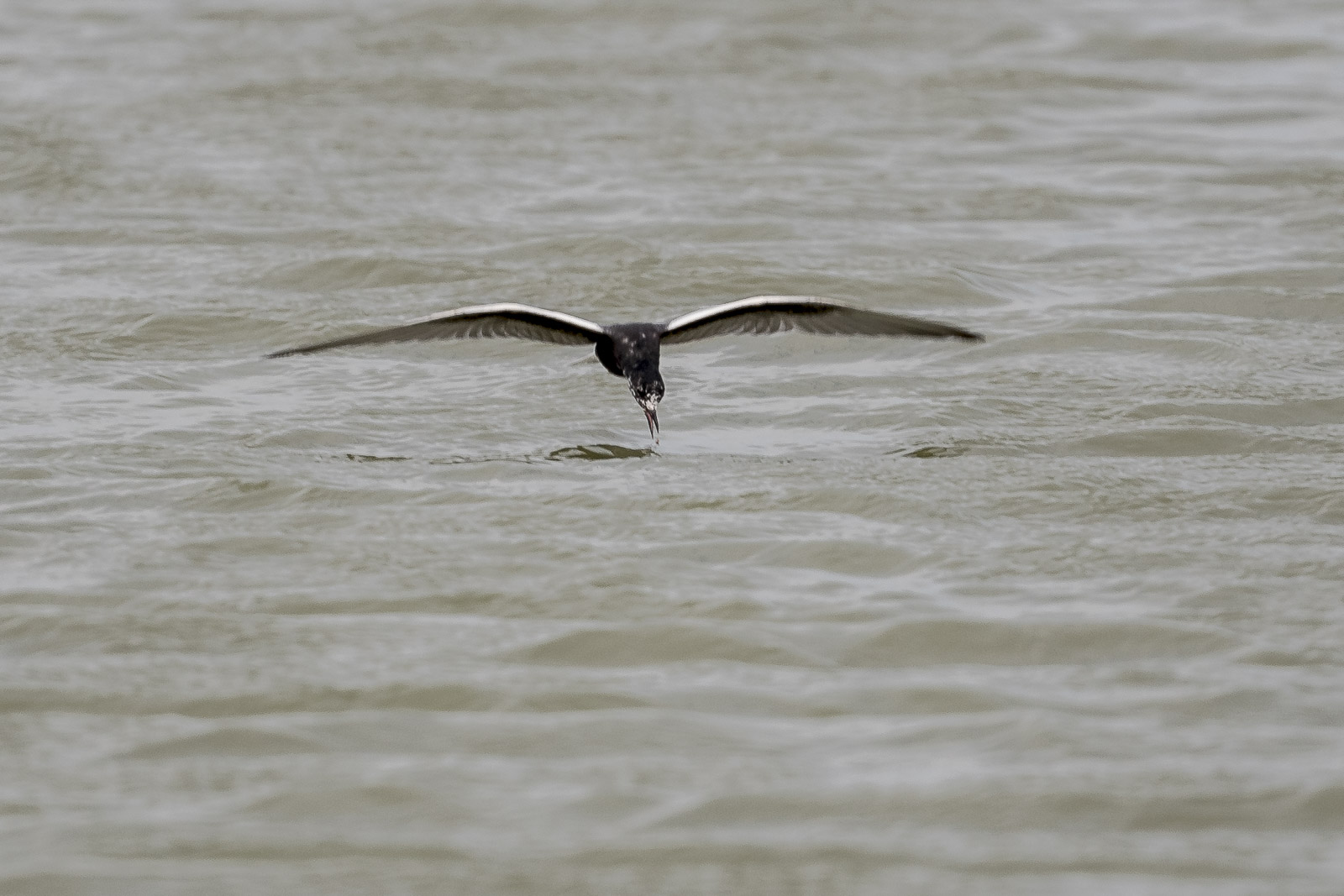
White-winged Terns, (used to be called White-winged Black Tern for obvious reasons), pay a visit to the south over the mid-of-summer through most of autumn. They feed  up on the rich supply of insects along the bunds and over the waters at the treatment plant. I suspect we see somewhere between 50-100 of them over the period.

The breeding birds also begin to colour up readying for their trip north.  They are not huge migrants, like say Red-necked Stints, but still their journey north will take them into South-East Asia, and as far as China and India. Hard to find definitive data. There is also a branch of the family that breeds as far up as northern Europe. I think they spend the summer around the Mediterranean.

We all, I suppose, have birds that intrigue us to one extent or another, and White-winged Terns are one of those birds for me.  I think mostly because of their consistent habit, and their lovely changeable plumage. Most seasons they seem to work in just a few ponds at the WTP, it changes a bit with the food source, but most times if they are locatable, and not on far-off ponds that have no access, they present a wonderful show of hunting close into the edges of the ponds and over the grass verges.  Making it easy to get closeups, if and I did say, if, I can keep them in the viewfinder.  Like all terns the flight path is not erratic, but certainly not predictable.

We have had several sessions with the birds, and rather than try and explain it all, the following shots should speak volumes for the beauty and delicate nature of these birds.
Hopefully it might also show just a little bit of my interest and enjoyment of their visit and how much I appreciate such a challenging subject.

Enjoy.

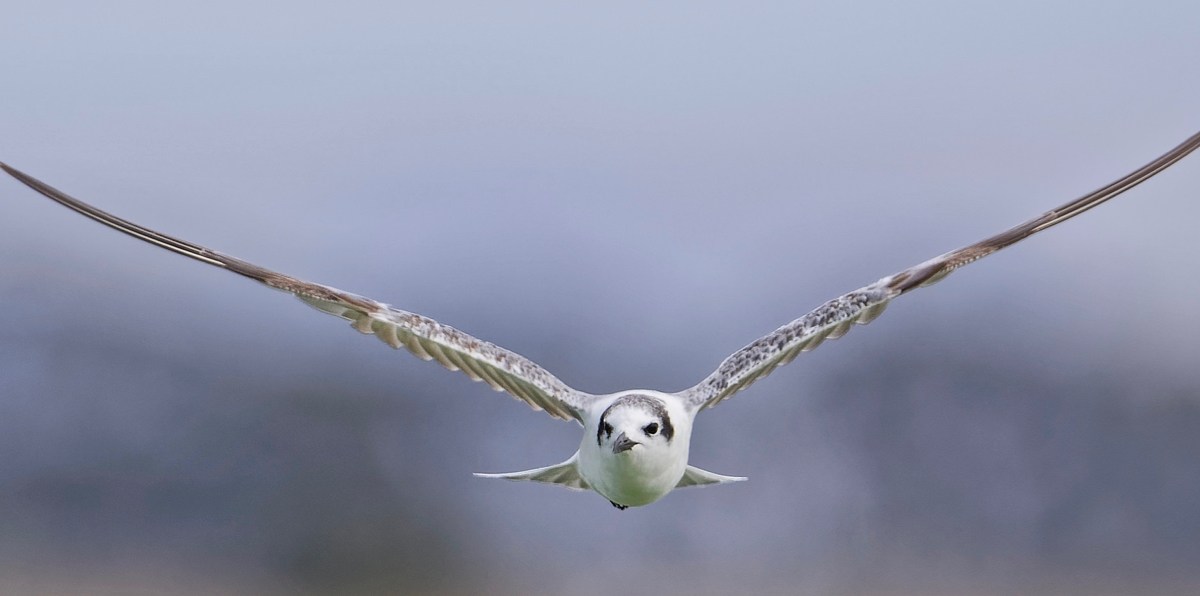
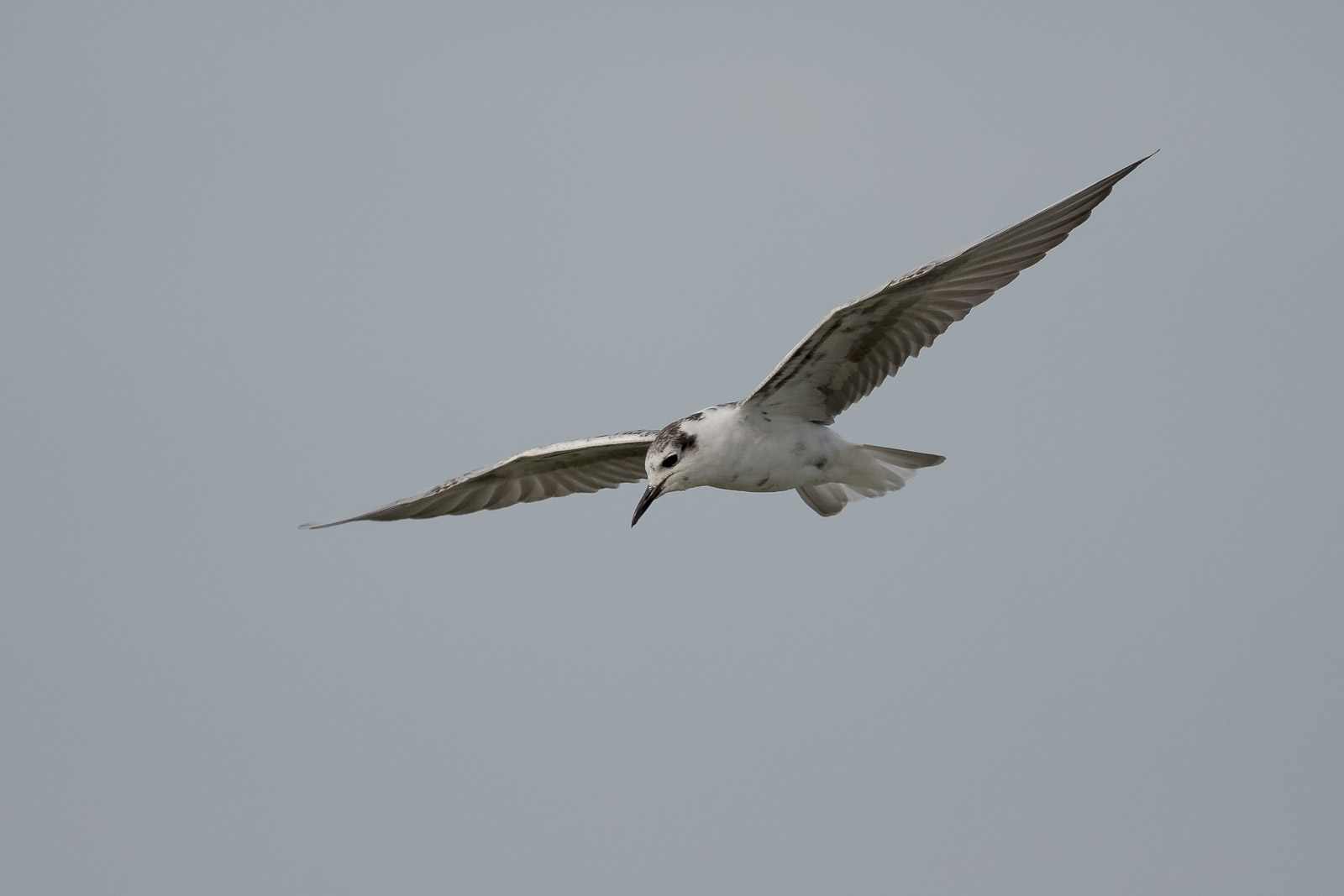
Part of a larger flock on the move. It shows the various moultings from almost white juveniles to near black-bodied adults.

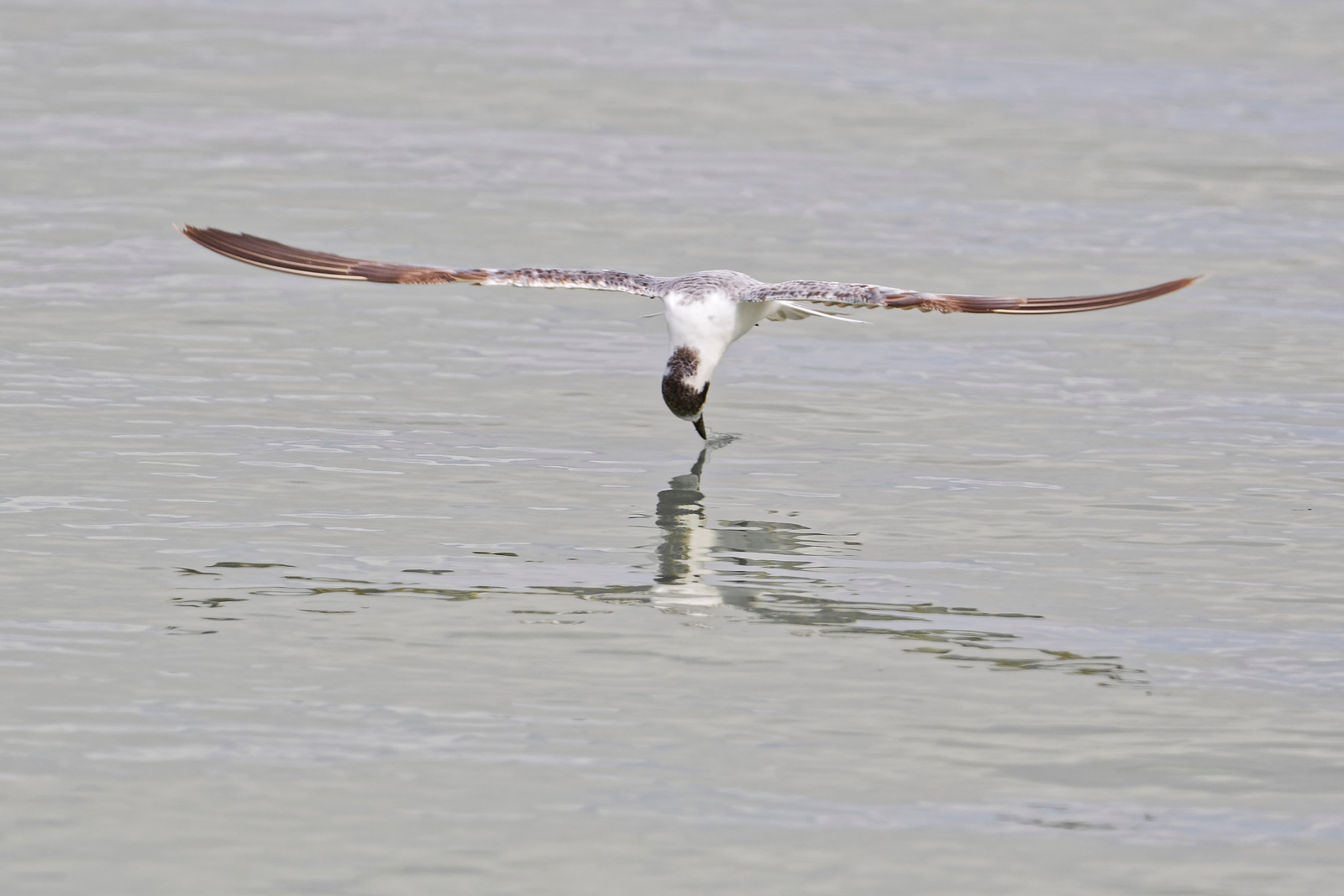
Food off the water, or…

… In the air

They also are called, “Ear muff terns” by some folk because of the little black markings behind the eye

Easy to image how impressive they will be in full breeding moult

Till next year, travel well little birds, your visit was most appreciated.

Snapshots: A Raptor Day at the Treatment Plant

A search on the Bureau of Meteorology website, has quite a bit of info on the lack of rain in mid of Australia.  See here http://www.bom.gov.au/climate/drought/
At the bottom of the page is a couple of graphs that begin to put it all in perspective.

And as it dries out, it seems, that quite a number of birds are moving south.  Or toward the eastern coast.
And we’ve seen quite a change in the numbers of smaller falcons and kites in our area.  In the space of a 10 minute drive the other day we saw 14 Nankeen Kestrel.

So we took a trip to the Western Treatment Plant on a sunny morning.

Continue reading “Snapshots: A Raptor Day at the Treatment Plant”

Enjoying the Freedom of   Flight

Black-shouldered Kites Growing up. October 10, 2017

Waiting is not Patience. Patience is about the moment,
 an intersection of the strongest story with the right light,
 the best timing and an awareness of the around.
 Waiting makes us pay attention. David Duchemin

You’re Welcome Here.

We’ve been tracking a clutch of Black-shouldered Kites down on the 29 Mile Road at the Western Treatment Plant.  The young have been on the wing now for over two months, and are now the expert hunters.  They are just moulting out the last of their juvenile ginger and grey feathers and the eye is taking on the rich ruby colour of adult-hood.

The best perches in the area are along the roadside, the few trees and fenceposts and man-made solar panels and the like.  And because of their consummate skill in the air, and the vast quantity of mice in the area, the young kites seem quite oblivious to human presence.

So sometimes it’s possible to get right into the world of the hunting birds—not as a long distance observer—in a hurry—but to take the time the learn about the birds, their preferences for hunting areas and their choice of spots to enjoy their successes.

I’ve been reading and following photographer David DuChemin and his approach to teaching a photographic vision.  He has a series called Vision is Better.  He talks about patience, waiting, the involvement in the around and being able to identify with the subject to really tell their story.  On one such video he travels to  British Columbia’s Great Bear Rainforest to photograph the Spirit Bears – a white variation of the black bear.  His video is shot from a short kayak trip, and I think its possible to really get both his excitement of the area, and his immersion in the moment, (if you will allow the pun).

Here’s the link if you’ve got 10 minutes.  https://craftandvision.com/blogs/all/vision-is-better-ep-20


Continue reading “Enjoying the Freedom of   Flight”

Funny old thing is Serendipity

“the occurrence and development of events by chance in a happy or beneficial way”

The weather map showed a large high stalled over us for most of the day.  “Let’s do an evening at the Western Treatment Plant”, saith, I. “We could take down the picnic, and have a fine old evening watching the sunset over the bay, and maybe photograph a few birds, and well, just enjoy the evening sea breeze.  What thinkest thou?”.

A call to Mr An Onymous, and the famed, and legendary “Blackmobile” was on the highway loaded with his fine repast. EE and I decided on a Peri-Peri Chicken Salad, and a round of Earl of Grey.

Pied Oystercatcher
Pied Oystercatcher


Continue reading “Funny old thing is Serendipity”