Colour and movement

Wishing I could take the time to go looksee at Geoff’s Bee-eaters. Otherwise enjoy the master at work.

Geoff Park's avatarNatural Newstead

Gotcha!!

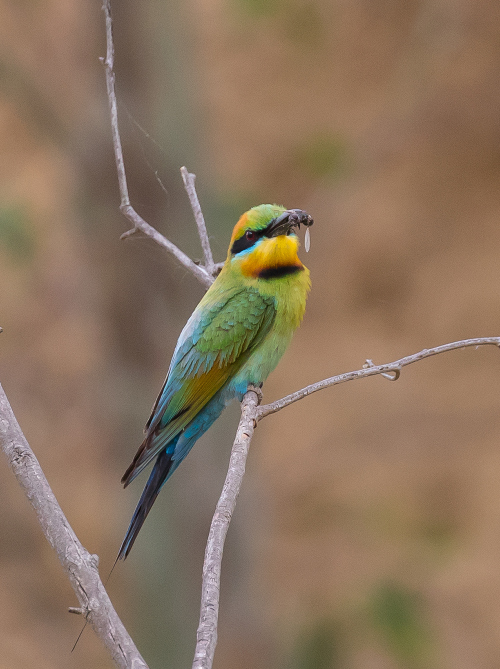
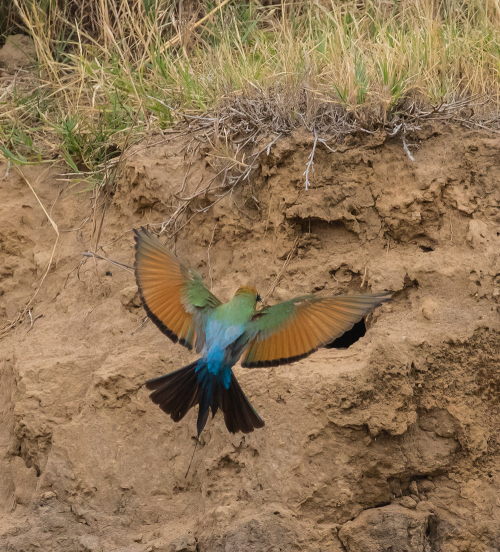
I’ve been somewhat frustrated over recent weeks chasing Rainbow Bee-eaters. The usual suspects at the Newstead Cemetery have been elusive and time has prevented visits to other local haunts. Luckily there are a few pairs nesting along the Loddon River at the moment and it was pleasing to get some images of adults arriving with food for the next generation.

Beeeater1 Rainbow Bee-eater, Loddon River @ Newstead, 21st December 2015.

Beeeater2 II

Beeeater4 III

Beeeater3 IV

Beeeater7 V

Beeeater6 VI

Beeeater5 VII

View original post

Werribee Wag Tales Newsletter for December 2015

Hey, yep, know I’ve been a bit remiss on keeping these publishing gems up to date, but I suspect that by the time I’ve finished them I’m finished.

So enjoy our end of year round up.

WER WAG TALES December 2015

More from Eynesbury

Brown Treecreeper Just 'cause I was feeling 'arty' in the late evening sunshine
Brown Treecreeper
Just ’cause I was feeling ‘arty’ in the late evening sunshine


_DWJ5193
Jacky Winter “Sun-hazing”. They sit in the sun and seem to go off to sleep, as in a trance. All the feathers get fluffed out, to soak up the sunshine.

A Day in Grey

Astute reader that you are, you’ll have recalled that the last posting here was a trip to Eynesbury for a visit to some Woodswallows at Nursery.

Decided on a whim today, to take another trip to the same spot not that we expected to find the Woodswallows still on nest,  but y’know, perhaps we might be lucky.

Well time, tide and Woodswallow fledglings wait for no photographer, and they had indeed taken to wing. Now of course it was a new challenge.

But there is something relaxing indeed about a pot of tea, (Earl Grey- see the connection?)  in a Grey Box forest.  So we sat.  And slowly the forest began to reveal those hidden secrets.

Over there, Tree Martins, still feeding young.  On the other side a pair of Rufous Whistlers who entertained with their calls.  More Brown Treecreepers than you can count, and most of them either at nest, or ferrying food for demanding young.

And my favourite find. Jacky Winter. The pair near out sit spot had two young and were keeping them up in the tops of the trees, but we still had enjoyable encounters.

Off to look for Matilda the Pacific-black Duck who has taken over a hollow, and to my surprise, she was still domicile, but only her carefully crafted wing tip feathers were showing her presence.  Must be close for her now.  I’ve no idea where she is going to lead them to water, but the nearest must be about 2km away through the scrub.

In the same area, lo and behold a second pair of Jacky Winter, with two well advanced young. I’d be betting these were the same birds we photographed in the area last year.    One of the adults adjusted to my presence in a few minutes and continued to feed and preen quite closely. Then it (she?) sat down on the ground a few metres away and “sun-hazed” and quite went into a trance.    Satisfied I was no danger, it allowed some fine portraits to be made.

And the I heard the wheezy call of a Diamond Firetail watching the portrait session.

As we started for home we came across the White-browed Woodswallows feeding some young, and then a family of  Brown Treecreepers looking after their growing juveniles.

Of course no trip to Eynesbury would be complete without a sighting of the elusive Speckled Warbler, and to both our delights one flew by as we walked back to the car, and then began to feed on the small slope nearby.  No close approaches with this bird, so my score of great photos of  this little dude is still intact. Zero.

Enjoy

_DWJ5206
Jacky WInter
_DWJ5088
Jacky WInter Juvenile
_DWJ5101
Thanks for the food Mum!
_DWJ5154
Tree Martin
_DWJ5226
Jacky WInter,Juvenile
_DWJ5252
White-browed Woodswallow, fledgling
Diamond Firetail
Diamond Firetail
_DWJ5287
Brown Treecreeper
_DWJ5273
Speckled Warbler


Standing in the Footsteps of the Great

I posted a couple of weeks back about the Alan (Curly) Hartup Exhibition at Newstead.

We took the time to drive up for the day, (well actually we stayed up for about a week, but that will become clear as more posts are placed).

Alan Hartup was, for those who are interested, a remarkable local identity at Newstead. He ran the local service station and so came into contact on a daily basis with most of the locals.  His other passions included photography and wildlife.

I had the good fortune, almost serendipitous luck, to have worked with him at several photographic conventions and national and international judging panels over the years. But always that infectious smile and the humble ability to take the time to listen to questions and help the person find the answer around them would lead to marvellous personal discoveries.  In the bush he was the consummate bushman. I’ve travelled the scrub over the years with many fine bushmen(and women), but none I think rivalled his ability to find, to read, to take note of, to ponder, to investigate and to tread carefully across a landscape as Curly.

He worked in a time of slow ISO (ASA in those days), black and white film, and colour film that had impossible slow speeds. Think 50ISO agfapan.

No mulitburst, nor long focal length lenses for Curly.  His work was patient, persistent and thorough.   A nest might take days to set up a hide, to wait for the light, to brave the elements and to wrestle with cameras, tripods, flash units and cables that were built by little elves with a weird sense of humour. And 12 exposures on the beat-up Mamyia C33 was your lot mate!   Still.

In the end it was never the photo to Curly it was the story of the bird.
Seeing his work harmonising together on the wall the other day as a body of work, (not of course his complete story), it was quite astonishing to come to the realisation that in  a visual way Curly exemplified much of  what Jon Young calls ‘building the thread’  It’s based on the story of the Kalahari bushman who says that each time he sees a bird a small thread is established which grows to be a large rope connecting both man and bird.

Curly’s pictures are a visible expression of that thread.  The amazing story of the Wedge-tailed Eagle with the damaged wing.  The intimate portrait of the Rufous Fantail at nest.   The exquisite shots of the Possum taken from his living room while watching tv!!  The stunning find of the White-browed Babbler on a nest.  A bird for most who now walk the Newstead forest areas have yet to see in the area.

Complete involvement.  Can’t be taught has to be experienced.

We had, that morning, early before the sun was up, enjoyed the company of a  pair of White-faced Herons and their three delightful young on the nest. We’d moved locations to be entertained by White-browed Scrubwrens several of which were happy to feed not only at my feet but alongside my elbow resting on a log for support. To stare into those little bright eyes and ponder the intelligences going on in there. And then just before we went to the exhibition opening; to be enamoured by a pair of White-throated Treecreepers (See EE on Flickr for those – see here), as they worked hard on a tiny opening in a tree to provide their soon coming family with a safe secure home.  Building threads. Surely the reason we’d travel that distance.

So what a thrill it was to take the time to enjoy again the work of such a man, and to enjoy the stories that he wanted to tell.
More power to Geoff Park (he of Natural Newstead blogsite – see here), and the Hartup family for bringing together such a body of work for a new generation of photographers to enjoy, and more importantly to experience.

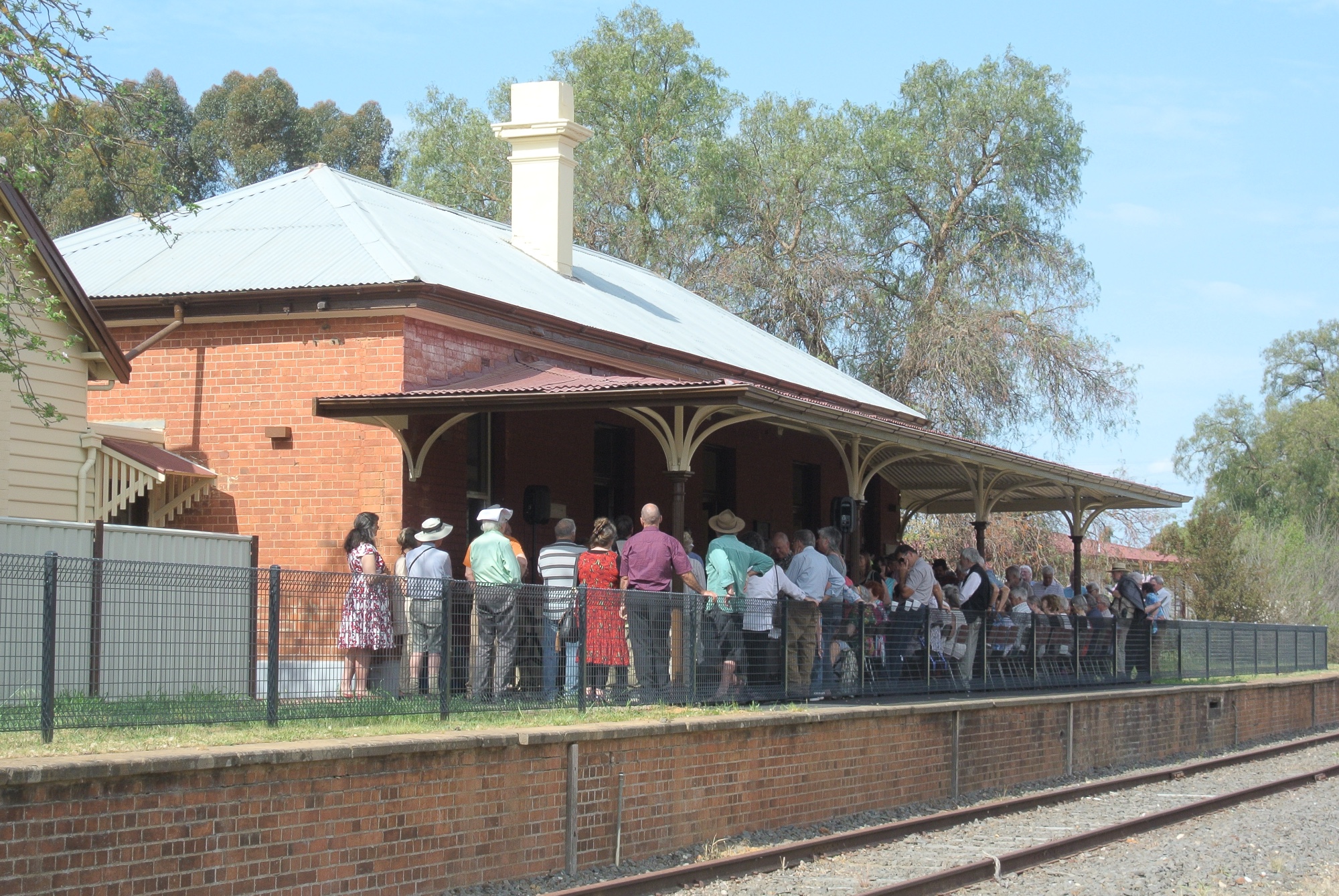
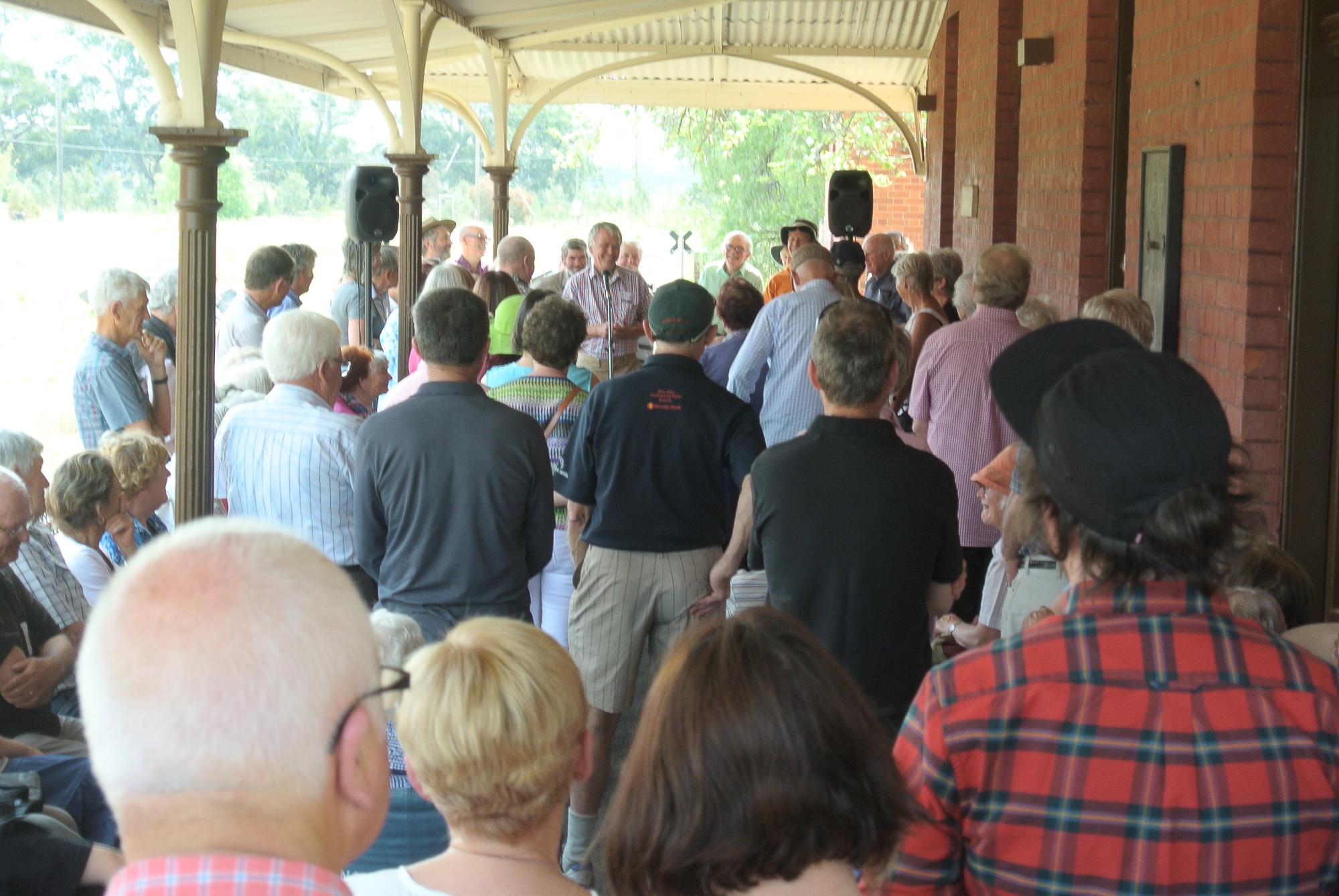
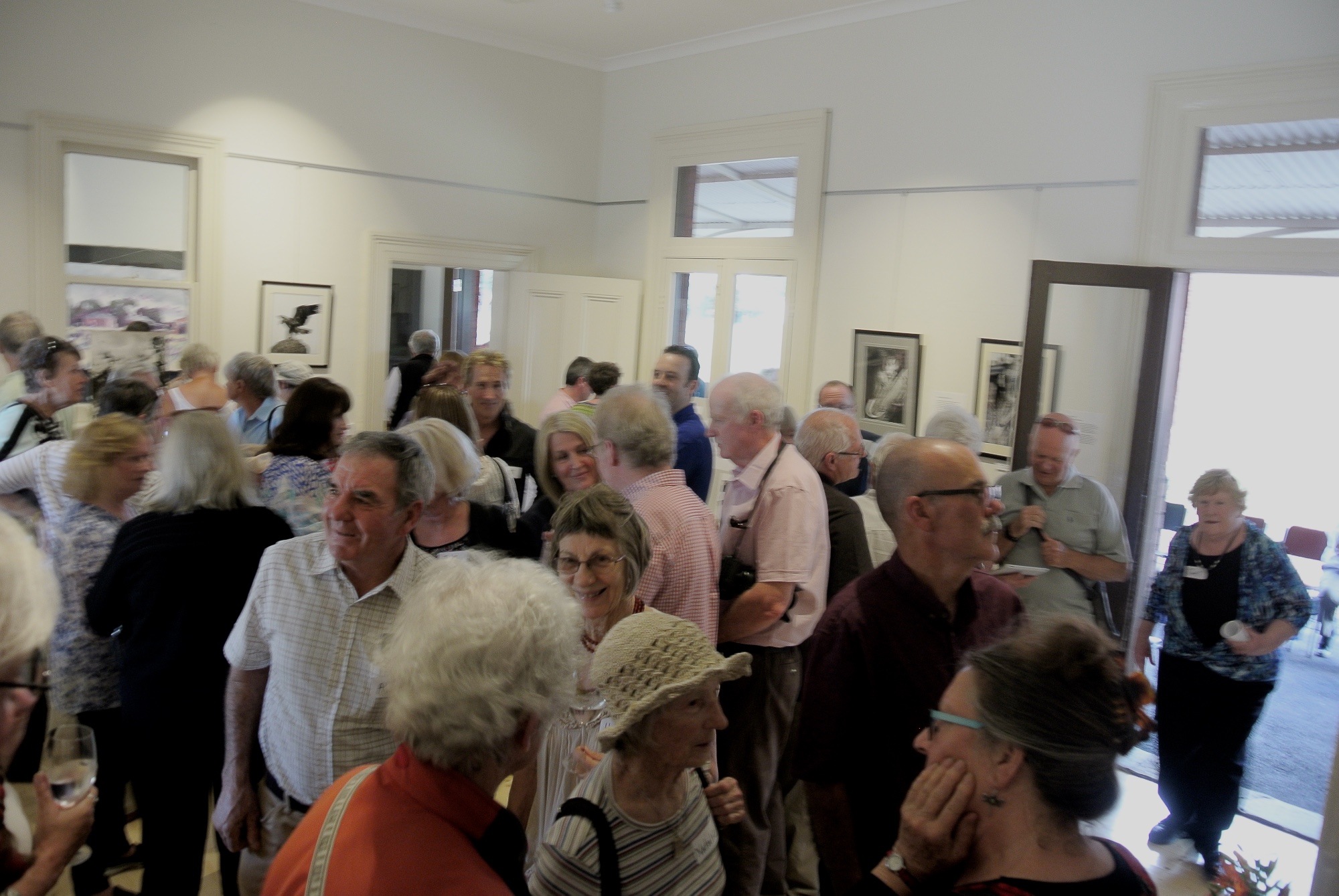
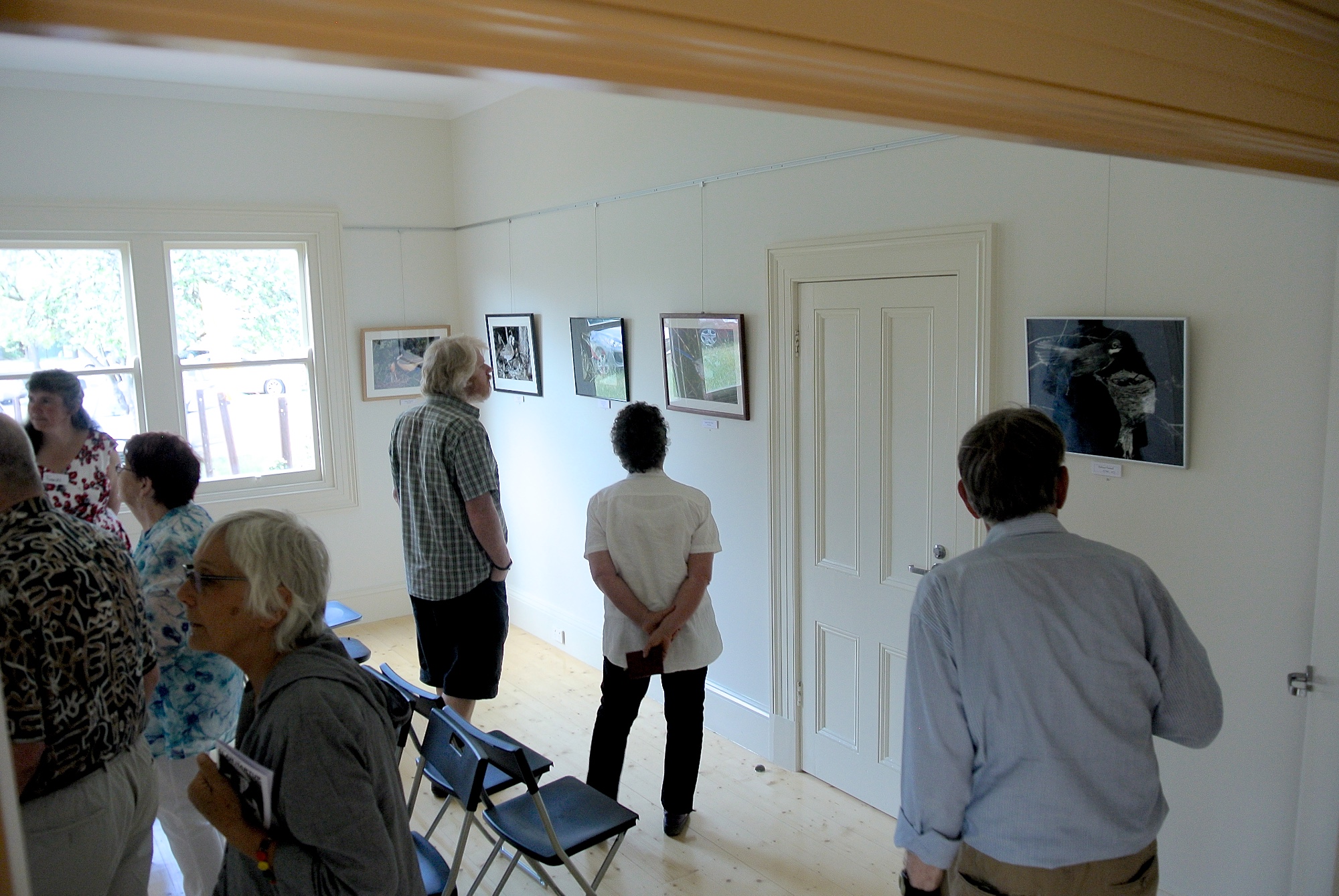
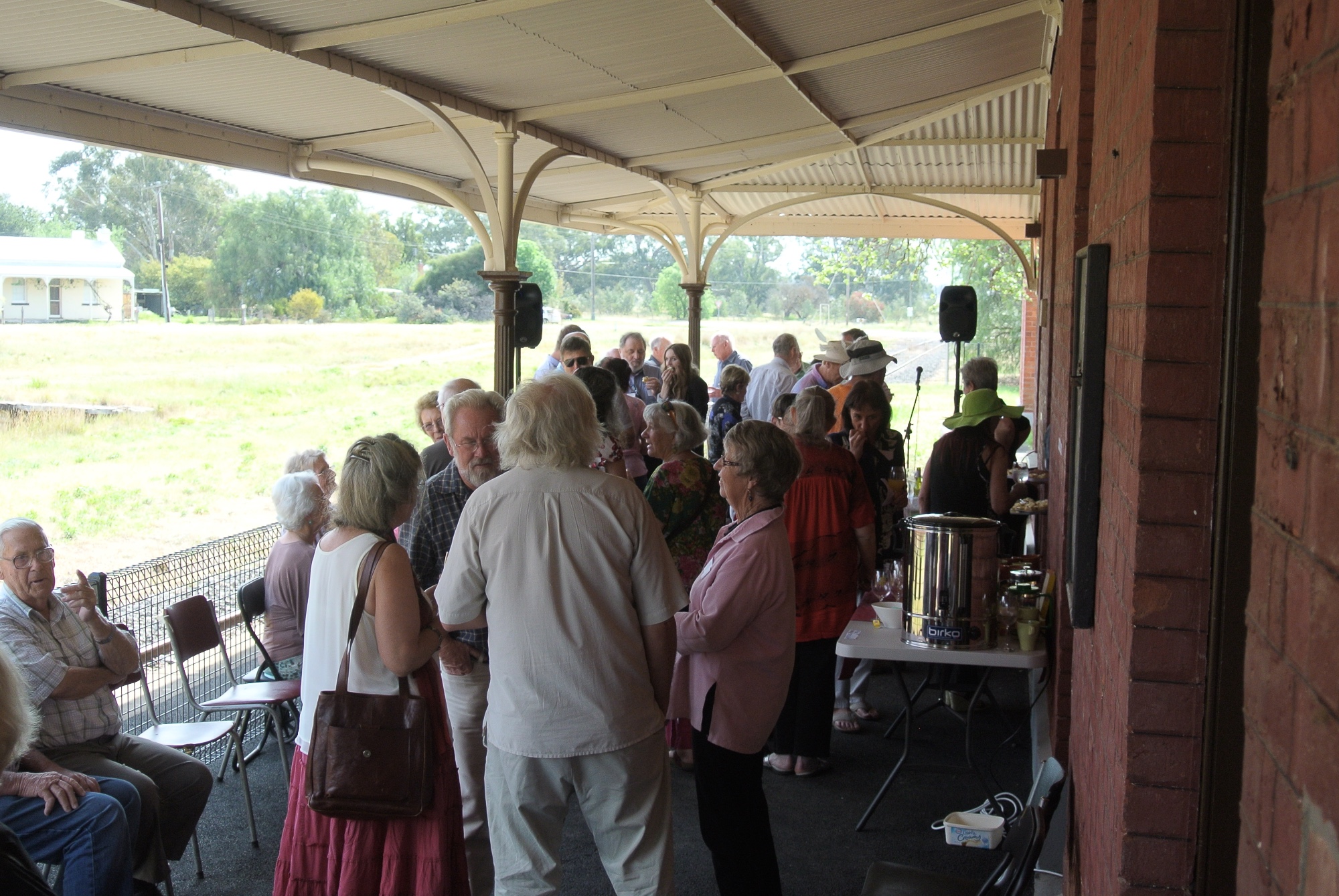
Here few shots of the day under the old Railway Station at Newstead. What a great way to use the building and what a pleasure to have been part of a bustling crowd that filled the platform and gave a small feel of what it might have been like as new and old stories were played out.
And there over it all, the portraits that said so much about Alan Hartup and his care for the lives of the creatures.

Curly show

Newstead Railway Station, now the Newstead Railway Arts Hub.
Waitin' for a train. Nope. Packing the station for the opening address.
Waitin’ for a train.
Nope.
Packing the station for the opening address.
What a grand location for an exhibition
Can't fit another body anywhere.
Can’t fit another body anywhere.
Geoff Park unfolds the story of the exhibition
Good food, great conversation, amazing photos.
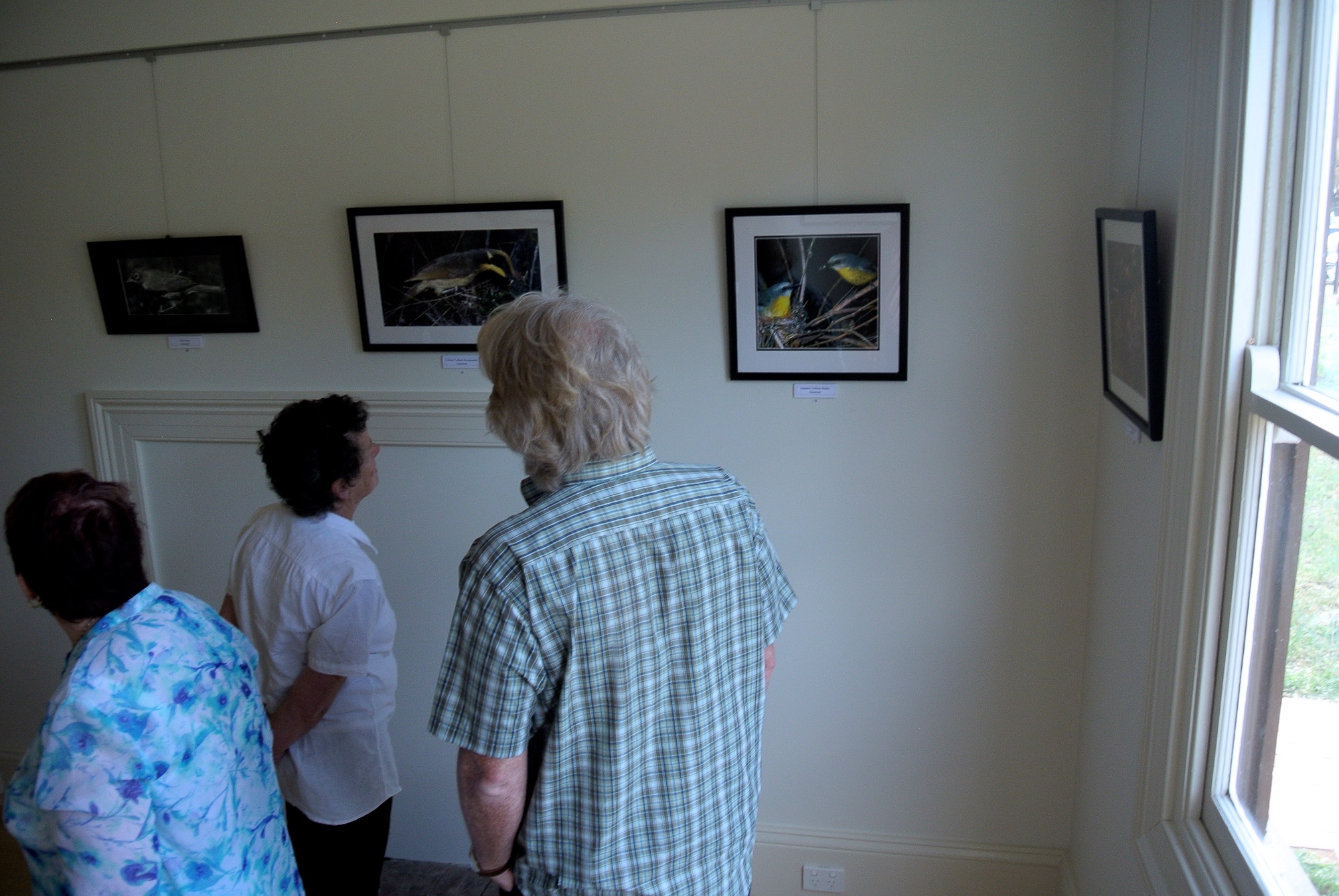
Each room, formerly the Stationmasters residence, made a lovely setting for the photos.
Tried really hard to get the Eastern Yellow Robin shot in.
And outside more food and more talk and more friendship.  What a great day.
And outside more food. What a great day.

Right time, right place, or Time and Chance happen

Weegee was a great New York newpaper photographer.  See Here,

His specialty was recording the darker side of New York life.  His images depict for a large part the inhumanity of man to man.  Death and destruction were his staple image set.   He was called “Weegee” because of his almost uncanny ability to arrive at a crime scene sometimes before the law enforcement.  He had a  special police radio built into his car and constantly monitored the radio calls.  He patrolled the streets armed with THE press camera of the day, a venerable Speed Graphic camera and a pocketful of Double Darkslides, that held 2 sheets of 4×5 inch film. No Spray and Pray multi burst for Weegee.

Among many of his apocryphal quotes is this one. When asked “Oh, Weegee,  On the camera, what settings do you use?”  His response, ” f/8 and be there!!!!

And its seems to me that bird photography sometimes is just like that.  You need to be there. And there of course is where-ever the birds happen to be engaged in some amazing activity.

EE, Mr An Onymous, and I had taken the morning down to the Treatment Plant.   Our main plan of intent was to find the furtive Sea Eagle.   The weather person on the tv, y’know, the one with all the icons of what the weather will be in your backyard in the next hour or so, and mostly it will be anything from floods, to thunder and lighting, if not snow, had apparently used up all those icons yesterday, and the only ones left were a few sunny, foggy, misty and clearing.  So she intoned. “Tomorrow will be a little foggy in the morning, changing to a light mist and then sunny for the remainder of the day … Insert plastic smile here!!”

Not known as one that is enamoured by the use of cute little icons to tell me really important things about what the weather may do, I did what any self respecting weather smart person would do, I went outside to see if it was raining. (Winnie the Pooh joke in there somewhere).  Noting the cold, it was pretty certain that the morning offered some promise of clear weather and so rounding up the troops, we set forth.

But… the icons were far from right, and the fog turned out to be about treacle in density and porridge in movement. And it hung around, the Sea Eagle came and went somewhere in the mist, and by late morning, it was pretty obvious that we were out of luck. As we drove toward home we took a bit of a detour south along the 29 Mile Road.  This piece of Realestate separates part of the Treatment Plant farm from some of the last of the wetlands.

Today, Farmer Brown, was out in his big green tractor using up all sorts of farmer stuff that he had in the shed, and sitting high in his air-conditioned palace he was turning the soil into arable land.

Now, a farmer with a tractor in a paddock is a pretty big magnet for an inquisitive Black Kite, and this was no exception.  The kites sat in the ploughed furrows and watched for small creatures to try to escape the oncoming tractor. Those wanting first crack at the startled prey were circling over the tractor as it passed on by.  To watch a Black Kite over a tractor is a pretty awesome experience.  They have mastered the ability to perfectly link up with the speed of the tractor and some hold station at the front of the travel, some to the sides. All just about at tractor height. Anything that moves is pounced upon.

We stopped by the side of the road to watch them at work, farmer and kites.   At first I counted about 15 in the air.  Then noted about another 15 sitting in the furrows waiting for the tractor to pass, and then another 15-30 sitting at a distance on the fence line. Waiting.

As it happened, one of the kites did infact land some prey.  On hindsight, I would venture that it was a Brown Quail.  Big enough, open enough country and we’d seen some earlier in the day back along the track.

Catching it of course is one thing. Keeping it to yourself quite another, and at least four of the brothers flew in to help claim the prize and to wrest it from the successful bird.  In the ensuing battle the quail was dropped and it fluttered to the ground, followed by 6 or so of the circling kites. However, as luck turns, they missed it in the turned over soil.   That done all that was left was recriminations, so they took battle with one another, as presumably a good scrap is as good as a good feed.   So now about 6 or so of them were circling in ever challenging circles.

Meanwhile, I’d noted off in the distance an small black spot that was getting larger.  Then it grew large enough to identify as it swept in over the paddock, past the kites and rocketed skywards.  The unmistakable shape and speed of a Black Falcon.

The Black Falcon gets reported by very excited birding people on Birdline, every so often as an amazing find on 29Mile Road. Black Falcon, or really exciting “Black Falcon Pair”.  To those of us who regularly work along the road, it’s a frequent visitor and a little patience on most days will locate either the pair or at least one of them.  Still it must be amazing to see if you’ve come a long way to the Treatment Plant.

Oh, I digress. We left said Black rocketing skywards.
Then it did the Falcon thing, turned on a wing and ‘stooped’.  Now it was a missile on a mission earthwards. The Black has a particular turn of speed, and is not like its lumbering cousin the Brown, but it may not have the speed of its other cousins, the Peregrine or Hobby.  None the less, a black streak plummeting out of the sky is a heart stopping thing. One of its more favourite foods is the agile Budgerigar so it must be pretty swift and agile to make a meal of them.

All of this of course, I tell in hindsight. I only saw this black thing dropping like a projectile.   It came in with wings drawn back, legs out, and rocked backward, grabbed, attached, and then rocked forward and began to gain height.

At about the time I exclaimed, “it got the prey” five or six of the Black Kites had reached the same conclusion, and were in hot pursuit, not willing that the prey should escape them.

And of course this is where the Falcon has the speed advantage. For every wing beat put it further in front of the pursing Kites.  And eventually they had to admit defeat and watch it, and their lunch, disappear across 29 Mile Road and into the Falcon’s roost tree.  (15th tree down from the corner if anyone wants to check!)

With nothing better to do, the kites settled back in the furrows and waited for the next pass of the tractor.

A couple of the images lack a bit of sharpness because of focus fault, but I’ve added them anyway as I think they fill in the details.
Enjoy

Wandering around Serendip

Serendip Sanctuary is located about an hour from Melbourne.  See here

Went down with some of the former Werribee Wagtails, now Birdlife Werribee, for a beginners day.

Now a sanctuary is not the greatest place for those who are counting bird lists, as the somewhat enclosed status of the birds means they don’t count on lists. But, for us beginners its a great way of seeing birds that normally would be difficult to find.  And not all the birds are enclosed. Some like the Magpie Geese and Cape Barren Geese and others are free to come and go, but with a ready supply of food on hand, there doesn’t seem much incentive to wander out of the area.   Add to that the raptors that waft over from the surrounding farmlands and plains and it can be a great place to actually see birds.

So, loading in the cameras we went.  And spent most of the morning in a couple of the enclosures having close encounters with such new friends as Buff-banded Rails, Freckled Ducks, Tawny Frogmouth and Blue-faced Honeyeaters, and watching the Bush Stone-curlews do their amazing ‘freeze’ stance.

All in all a good day for photography.  All the shots here are from the sanctuary and the birds are quite human tolerant.  So the usual disclaimer on our photo endeavours don’t apply.
Enjoy


Five of the most exciting moments of my life!

Well not really, but pretty heart stopping anyway.

Found three White-bellied Sea-eagles on the coast engaged in a bit of aerial one-up-manship.

I said it the other day on Flickr, but its easy to just accept that the big raptors, just lazily take their time, and sail along on the breeze.  But, they can if needed, turn on speed, zig-zag across the sky and reverse direction, just as easily as smaller birds do.

These ones spent quite a few minutes within good viewing before lazily heading back down the coast in a tight formation.

I don’t shot multi-burst, but if I did, I’d have filled the memory card.
Awesome

DWJ-1504-29-_DWJ6104

Lake Louise

Here is a site from my mate Rob Parker.
Worth checking out.

Rob Parker's avatarMy Random Photo Site

Several years ago, we did our first cruise from Alaska to Vancouver, followed by a Rocky Mountaineer trip to Jasper, then on to Calgary.  On the way we spent a day at Lake Louise – one of the most relaxing places I’ve ever been to.

Lake Louise

I’m puzzled by the size of this image on this page.  It’s an 1800×1200 image, and I put it into this post in the same way as I’ve done with other images; I don’t (yet) understand why it’s displaying so small on this page.

View original post

Site Disclaimer

I’ve really been away from the day to day running of WordPress sites.  Just assumed everything stayed the same.

But,

Its come to my attention that WordPress now ‘occasionally‘ (euphemism I suspect for consistently and annoyingly) insert Advertisements into my website when you are viewing it.

So the inference is either:

1.  I am making some financial gain from ads on the site. 

or

2. I’m a cheapskate and I won’t pay WordPress for the ‘Pro’ account that doesn’t use Ads.

So the facts.

I don’t make any financial gain from this site. Never. Didn’t start it with that intention and don’t intend to start. The site is not about me, or my photography, but rather about the birds and they receive no financial gain from the site at all.

I pay WordPress to host my http://www.birdsaspoetry.com site name.  They link it using all sorts of clever computer skills, (probably devised by some 11 year old kid in his bedroom at 3:00am in the morning), and I pay them a small fee per year for that privilege.  But, it is apparently not enough to prevent the ads.

As they want about $90. a year for the no ads site, I guess in the end I’ll have to put up the cash, but at the moment, if you are assailed by ads, then just click past them.  Sorry.

I am mortified that WordPress has taken this approach.  Still, nothing for nothing in this world. Just ask the Curlew Sandpipers trying to migrate through farmlands and housing estates in China where once they could stop over for a food topup in the mangroves.  Sad.

Hope you’re not put off by the ads.

Thanks for looking