Recently, on occasions, I’ve risen early in the morning while it’s still dark, and gone for a walk. Street lights abound in the area that I walk, but nothing is quite like the slow, steady, change from darkness to daylight as the sun begins to make its presence felt on the eastern horizon.
Lines and shapes slowly become clearer, colours that were muted begin to take on their own richness. The natural wonders of the world around me begin to stretch and open toward the light.
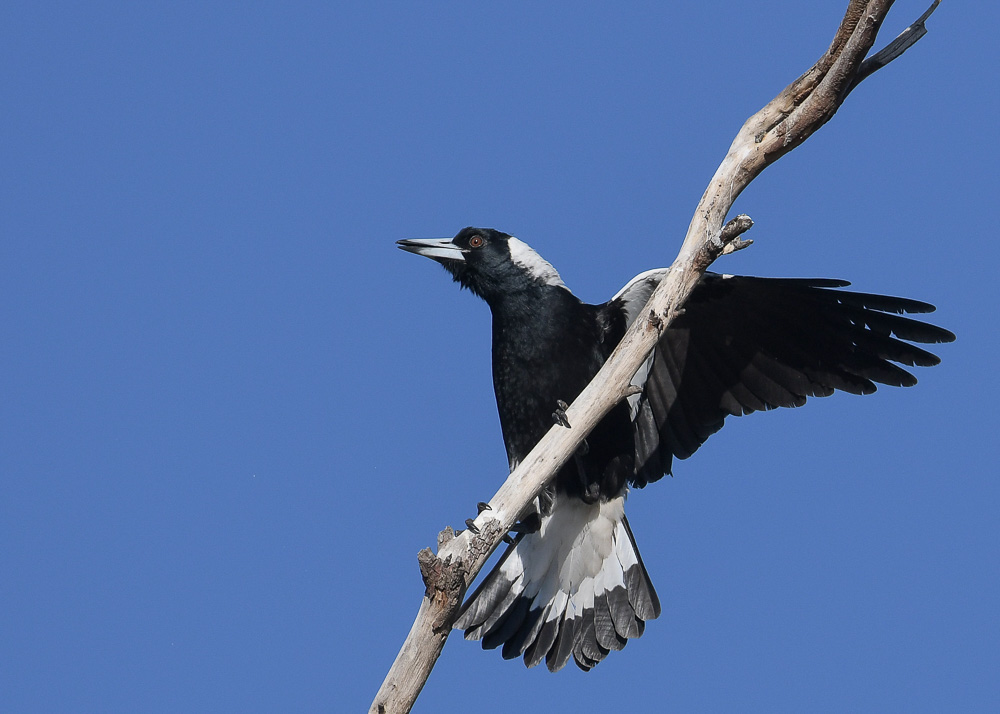
I meet a pair of Magpies on the corner, near a football oval. I greet them, and they always respond with a long carolling season. Just t’other day, I didn’t see them on a fence post as I walked by—it was dark— and they were quick and loud in the call, to perhaps cajole me for passing by without acknowledgement.
Yet is spite of all these little visual miracles, the vast population around me drive past in trucks, cars, buses and bikes. All blinded to the wonders that are right there. Peering through their windscreens.
Not that I’m totally aware of all that happens. Something will grab my attention, but in between, I am also struck by a disease of visual decline. Marcel Proust said, “The real voyage of discovery is not in seeing new landscapes, but in having new eyes.”
A wonderment with the world.
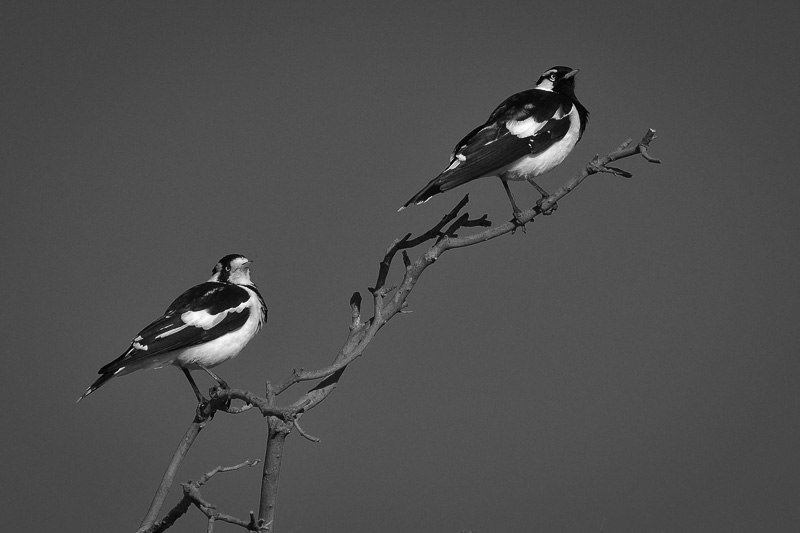
It is one of my great photo goals to make an image of a pair of Magpie-larks landing on a perch and doing their wing and call display. I saw this pair approaching a tree and hurried to have a clear view, but. By the time they landed, there was a leafy branch between me and the pair, and I missed the moment. Looking at them, I turned the camera setting to monochrome, and dialled in some extra red filtration to darken the sky. The result really shows the difference in the facial markings of the female in white, and the male in black.
As they now say in the best journalistic truth telling. “Digitally Modifed at the Source.”
One of my favourite places at the Point Cook(e) Coastal Park is a walk to a little piece of land jutting out into the bay. It’s more a sandy promentary as its sands have, over the years, been blown up to cover the underlying finger of basalt that juts into the bay. On the Park Vics map it is called “Point Cooke”. The name just confuse the matter even more.
The landmark was so named by Captain Hobson, (he of Hobson’s Bay), commander of the good ship, “H M Rattlesnake”. Hey I’m not making this up!! The ship’s mate was one John M Cooke and as there were no bays left to be named perhaps, Johnno got the Point.
On a low, low tide, called a Spring Tide—so I’m told, the little finger of basalt is exposed for about 100m or so into the bay. Not only the rocks, but the whole sand shelf is exposed and it’s possible to walk out to the edge of the shelf. On a good day, the birds accumulate here to rest on the rocks, paddle in the pools or just loaf on the warm sand.
Photographically speaking, afternoon light is best as it’s possible to walk, or wade out in the water and have fine front light over the birds as they sit about. Early morning is good, but it’s not possible to get too far out with the birds as the water is deeper on the northen side. But the early light adds its own charm.
So here is a small collection from the morning’s work.
Enjoy
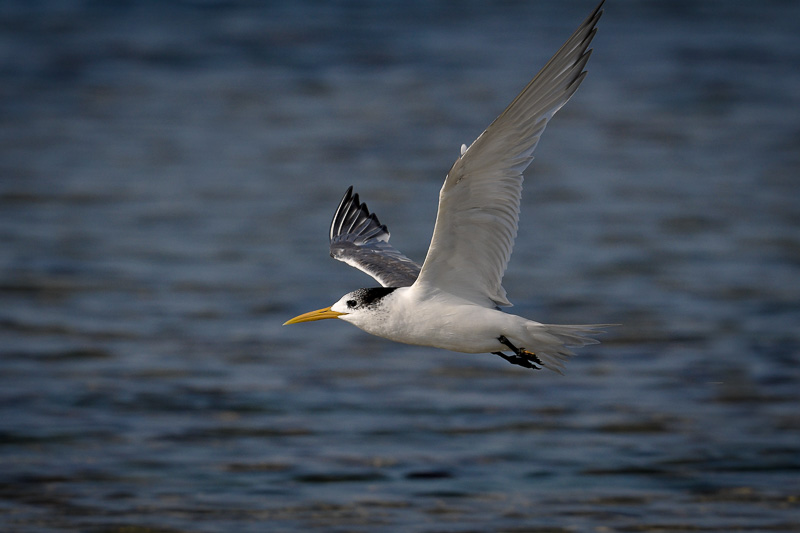
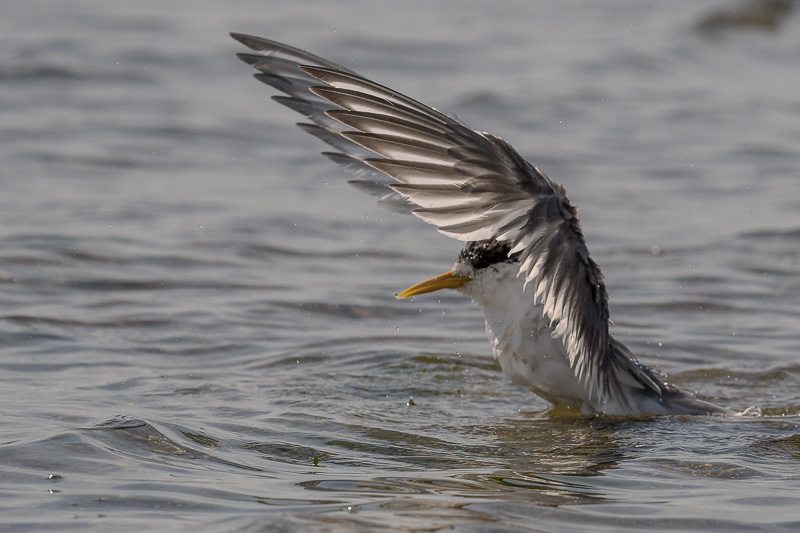
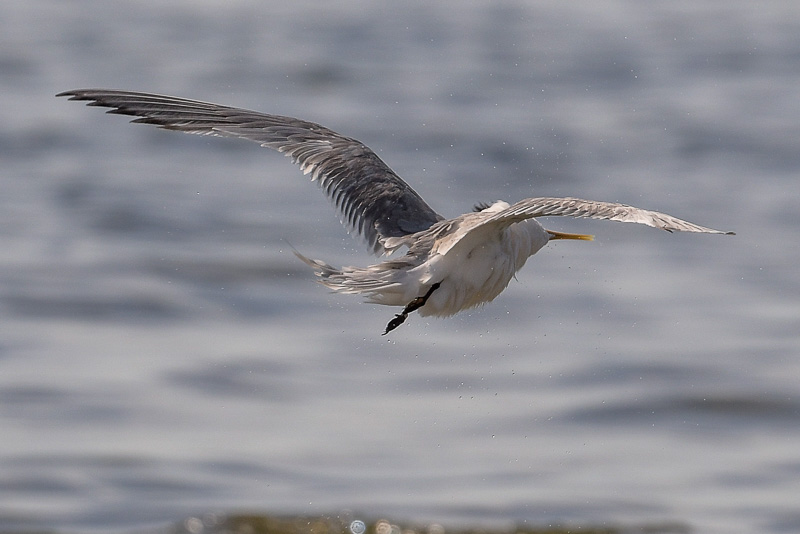
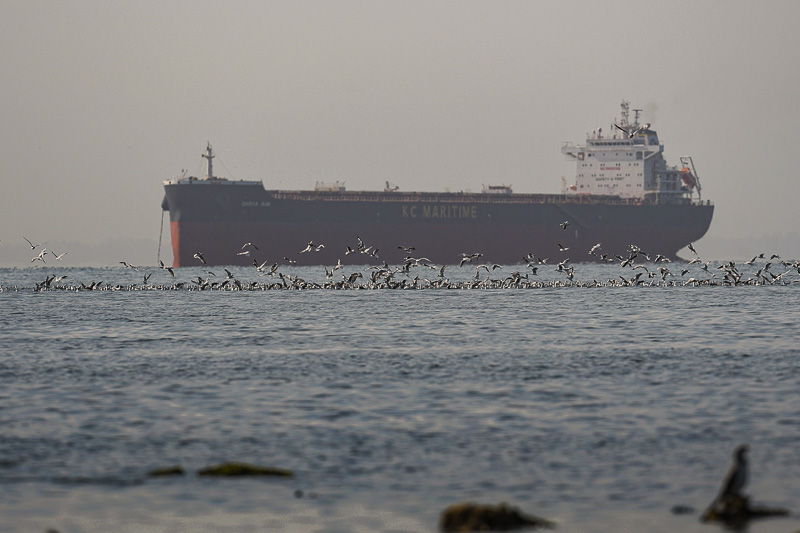
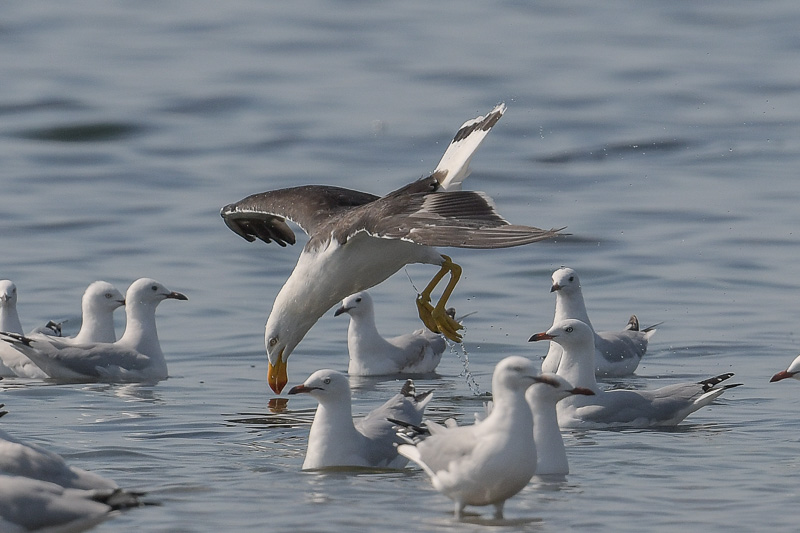
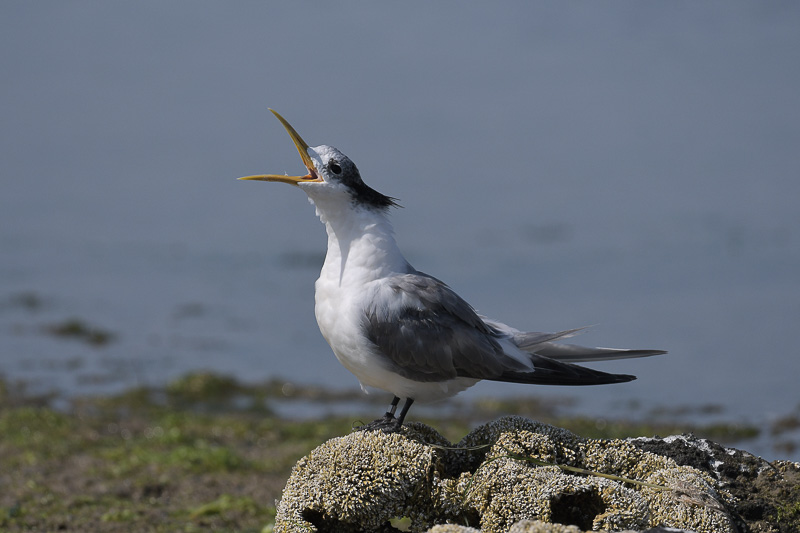
White-faced Heron on final appraochLots of Greater Crested Terns stopping by to rest on the rocks or sandWhiie I was busy with the terns, this Pelican wafted in silently and I turned around to realise how close it had landed.Greater Crested Terns really make the most of the shallow water for a bathAnd spin dry to remove the water.Shoals of fish further out kept the Silver Gulls and Cormorants busyThe Pacific Gull joined the Silver Gulls and showed off its own special technique of grabbing the small preyCoughing up a fish ballPied Oystercatchers usually announce their progress along the beach in flight. This couple arrived silently.
Sometimes I think I should leave the “Training Wheels” on and wear a big digital “L Plate”
Aplogies for somehow posting this early. It was only in production and I must have missed the Save button and hit the Post button. Slap on wrist. Before I could figure what I’d done, the digital world had gone into overdrive and posted to everybody. I figured most would go, “Oh, its not’s Saturday Night’ and ignore it, but the few mail and notes I got suggested some really do click on and read the blog. A grateful thanks both to those who ignored it, and those who thought I’d been on the “silly beans”—again. Tis true, I’ve been trying to solve the ongoing issue of Anonymous comments and down the page here, you’ll find WordPress’s solution to the problem. Hope it helps.
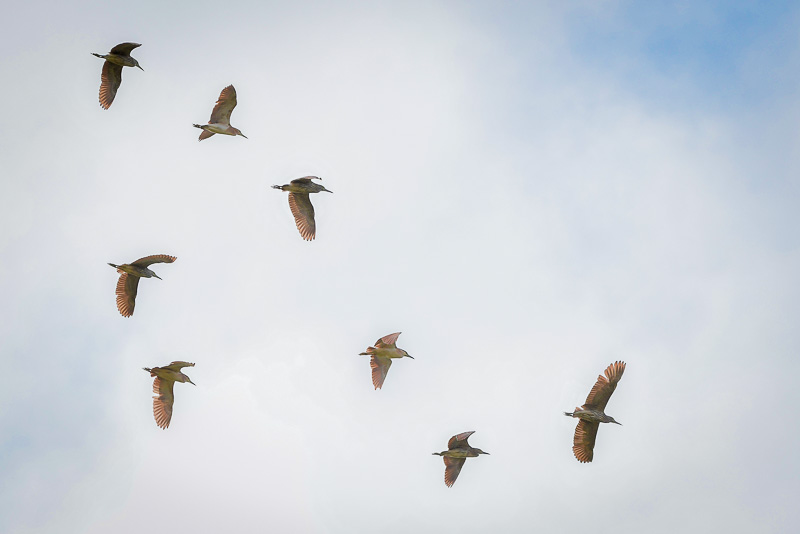
Sometimes, just seeing one Nankeen Night Heron is a bonus. But to have a flock winging overhead does bring a new style of goosebumps.
At one of the entrance roads into the Werribee Mansion precint, there are a number of large Cyprus Pines. These would have no doubt been planted way back when the Chirnside family was estabishing the mansion area and its gardens. The big pines are wonderously deep and shady, and over the years, (about 9 that I know of) Nankeen Night Herons have roosted in the pines, and more specifically one pine during daylight. It’s always a bit of fun to walk in past the tree and see how many unusual ‘bumps’ are lurking among the branches. And knowing that you’ll never spot as many as EE. Often, its possible to see rather large white splashes on the ground or to spot a few rich orange/tan feathers laying about.
As we walked past, a number of the birds had moved into some nearby trees, and for some reason, decided to all take to the air. I think we counted 15 but I could only get some in the frame.
About as exciting as it gets
For those who’ve been commenting Anonymously
The past few weeks, it seems that WordPress has been making commenting and logging on with a valid name even tougher than usual.
So after a few commenters had written either on the blog or emailed me, I decided to take it up with WP staff. Long story, very short. We are going to change the log in requirments for comment. It won’t hurt, and some are already doing it that way anyway.
So. When you comment you’ll now get a dropdown box with three options to log in. For the truly dedicated WordPress there is an icon and you can click that to log in. Or you could, if you have a Facebook account click and use your FB log in. I don’t recommend that, as I’m not a fan of Facebook, and who knows what happens to your data and how they track you— Insert Paranoia Music here. Or you could take the third option, personal preferred method. Click on the little Envelope icon and you’ll be asked for a name you want to use and a valid email. (I think the email is used by their clever Askimet spam rejecting software, so if you cheat, like I do sometimes and enter and obscure but not valid address, it might reject. Just sayin’ Here’s what it should look like.
So just to be sure. You need to log in, use an email, to be able to post a comment. Anonymous, is not available. Mr Anonymous will be happy.
One of the most fascinating of bird events happens, like clockwork, every year around Australia’s beaches and inlets. The migration of waders or shore-birds. Port Philip Bay becomes a haven for them over our summer as they fatten up for the long haul to Siberia. 9,000-10,000 kilometres. One way!
The western side of Port Philip Bay is also home to the Western Treatment Plant, and for over a 100 years the plant has been discharging nutriment rich water into the bay. The long shallow mudflats and sandbars make it easy for feeding as the water in some places at a Spring tide may recede over 200metres. It is not usual to see the entire mudflats shimmering with little grey feathers soaking up as much as they can eat.
Sharptailed Sandpipers are the largest group, also Red-necked Stints and Curlew Sandpipers. The Curlews are in decline as the flyway feeding grounds have been claimed for other uses by humans and the birds find it hard to locate sufficient food sources.
It was once said among the birding population I knew, “If there is a wader on the shore and you call, Sharp-tailed Sandpiper, you have a 78% chance of being right as about 78% of the waders are Sharpies.
A tiny Red-necked Stint arrives in October/November after its flight in from Siberia, it may weigh as much as 20gm—a small handful of jelly beans. By end of season and ready to return they may be around—40gm Still not a big handful of jelly beans.
Their flight north is well known and a majority leave from the Broome area, zip over to the Philipines, a major stop over at the Paranaguá Estuary Complex, then to China, over the mountains and on to Siberia.
They mate, raise young and the adults leave around 2 weeks before the young for the return journey.
The young follow on, with no GPS, no Map, No Google Map, no Whereis or any of the other “must have app” applications. They simply follow the parents journey.
I came across some time back a great descripition of the migration of Swallows by a noted 1880s preacher. Sprugeon. There is something quite lyrical and lucid about his explanation. I hope you enjoy it.
But these birds know when to come or go; they tell, by some mysterious means, exactly when to start on their long flight. They were never known to go too soon: they are never known to stay too late. The bulk of them depart at one period, and the rest a few days later. If we are living in the suburbs, we bear a twittering congregation gathering around the gables of the houses; and, in the evening, we miss the swift-winged hawkers who had, during the summer, found their evening meal among the dancing insects. Their shrill, joyous twitterings are hushed, for they have perceived that the heavy dews of autumn, and the long nights of winter, are coming to strew the earth with fading flowers and bailing leaves; and, by-and-by, with frost and snow; and, therefore, they have flown off to fairer lands where other summers await them. They will come back again in due time, true as the calendar. Whether we look for them, or not, they will be punctual to nature’s appointment. As sure as the summer’s sun will be their return. They know, without any special instruction, when to come, and when to go.
Charles Spurgeon
We were at the WTP and the Sandpipers were putting on quite the show of murmuration. Big bold patches of black swept across the sky, constantly changing shape and pattern and each bird familiar with its flight path.
After some minutes the game was over and they flew in and landed in the pondage in front of us. This frame is about 1/10th of the number of birds. How they can fly in such tight formation is beyond thought. You might spot some Red-necked or Curlews in there as well.
Little birds, that with great determination and trust, set out on long journeys into the unkown, guided by instincts we can only guess at. Truly Amazing
Mr An Onymous has been laid up a bit of late with some eye-surgery. He recieved the all clear from Dr Slice’n’Dice the other day, so we decided on a trip to the Western Treatment Plant to try out his new “eyes”
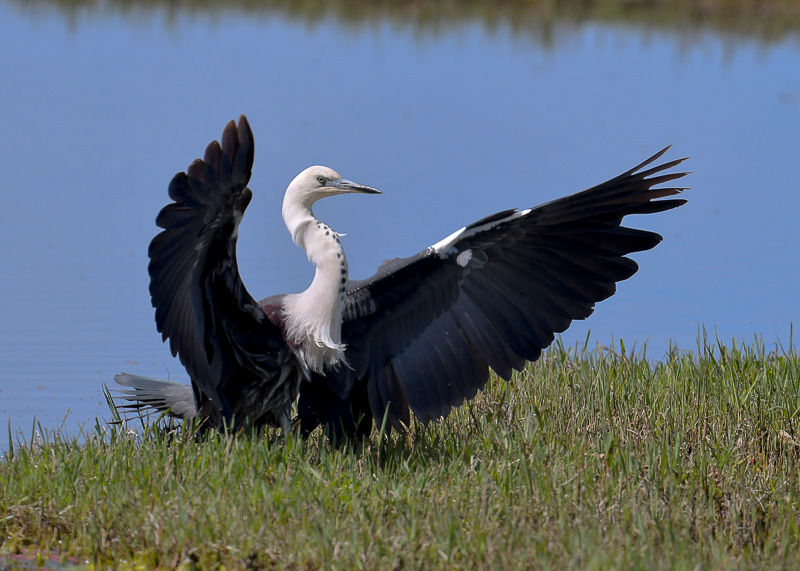
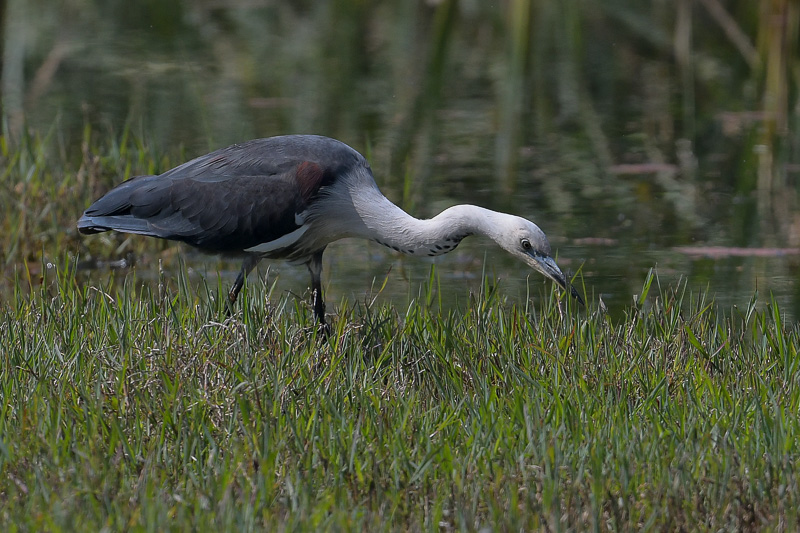
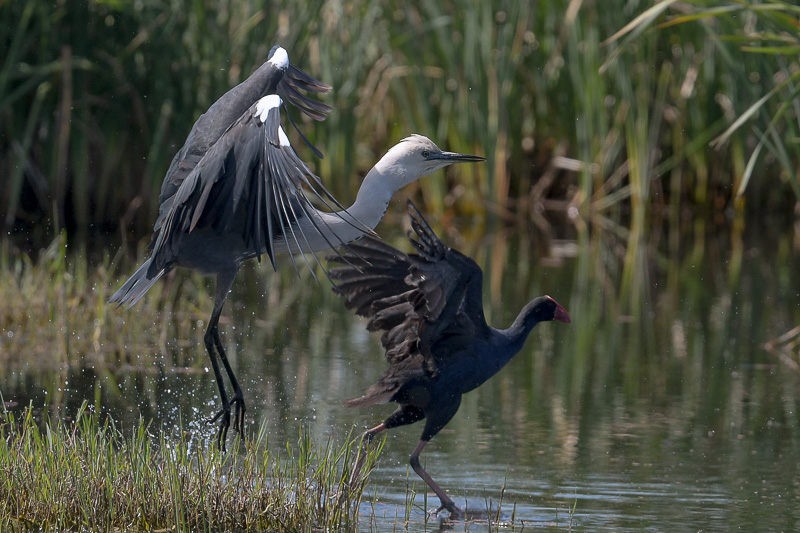
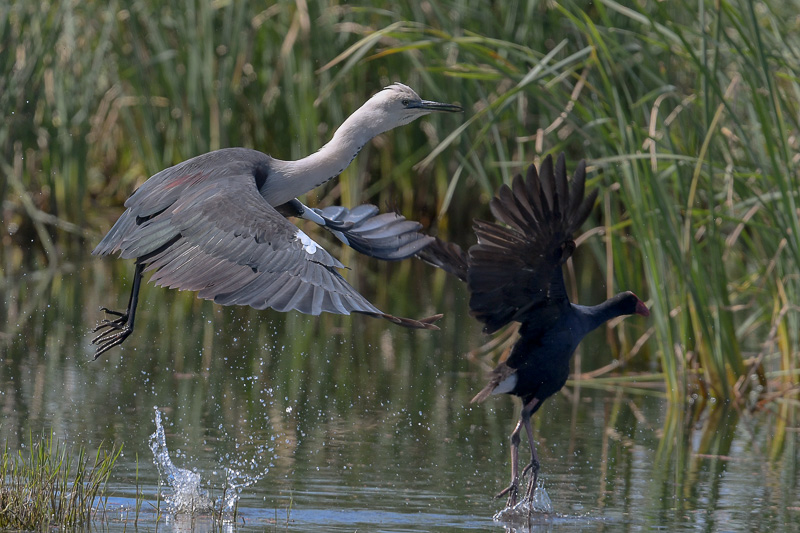
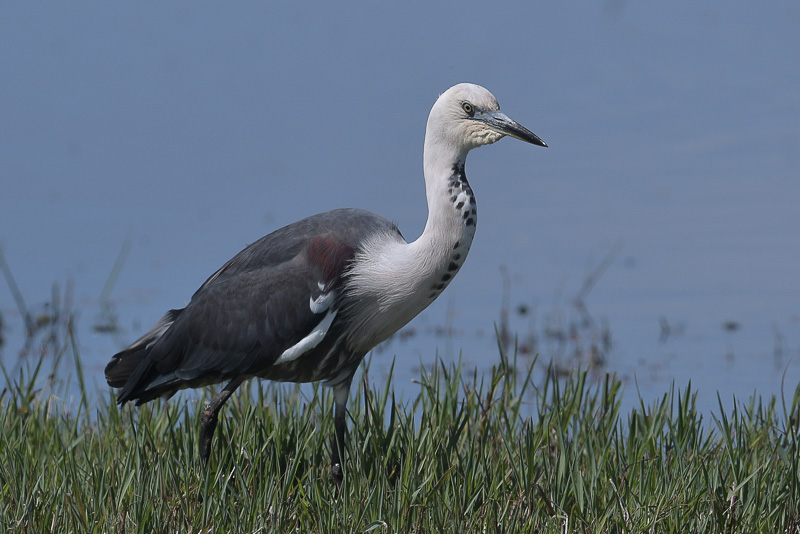
We had been watching a White-necked Heron feeding in the open grass in one of the ponds, when on a moment, a number of Australasian Swamphens decided to take battle, and the Heron was caught up in the middle of it, and took off. It flew across the pond to a safer and quieter spot.
His strident one note call resounded across the paddock, to be answered by her equally raucuous cackle. Alistair was bringing in an offering snack for Cassia, of Cinnamon. They met in a treeline about 800m from where I was and I missed the noisy food exchange, but did see Alistair fly out and land in the open on an old tree.
After a suitable meal time, Cassia, swung out to land in the same tree. Interesting.
As she prepares for her nesting period, he needs to make sure she is quite well topped up to last the nearly 8 weeks of confinement when she won’t hunt for herself and relies on his constant attention.
It’s a little early for any eggs to be laid, based on previous seasons, I’d expect that to happen toward the end of September, (but who knows with Falcons).
Browns don’t build nests, they are quite the environmenally aware creatures and chose to repurpose a Magpies nest from a previous season. Maggies, don’t tend to use the same nest, preferring to purpose build. So it’s not as though the Falcons have to eject any unwanted sqautters.
With other things to do in the morning, mostly because of a strong offshore breeze bringing some Gannets in close enough for a reasonable photo, we didn’t pursue the happy couple.
On the way back from the beach, we detoured through the pine-tree-line, in case they were sitting. Foolishly I rounded a tree and without looking stumbled on to Cassia perched down low. She bolted. I castigated myself for being so clumsy.
She quickly regained composure and sat in a tree about 50m away. And watched. And I watched.
Alistair came in quickly on the wind, turned and landed on the branch just above her, and watched. She watched. I watched.
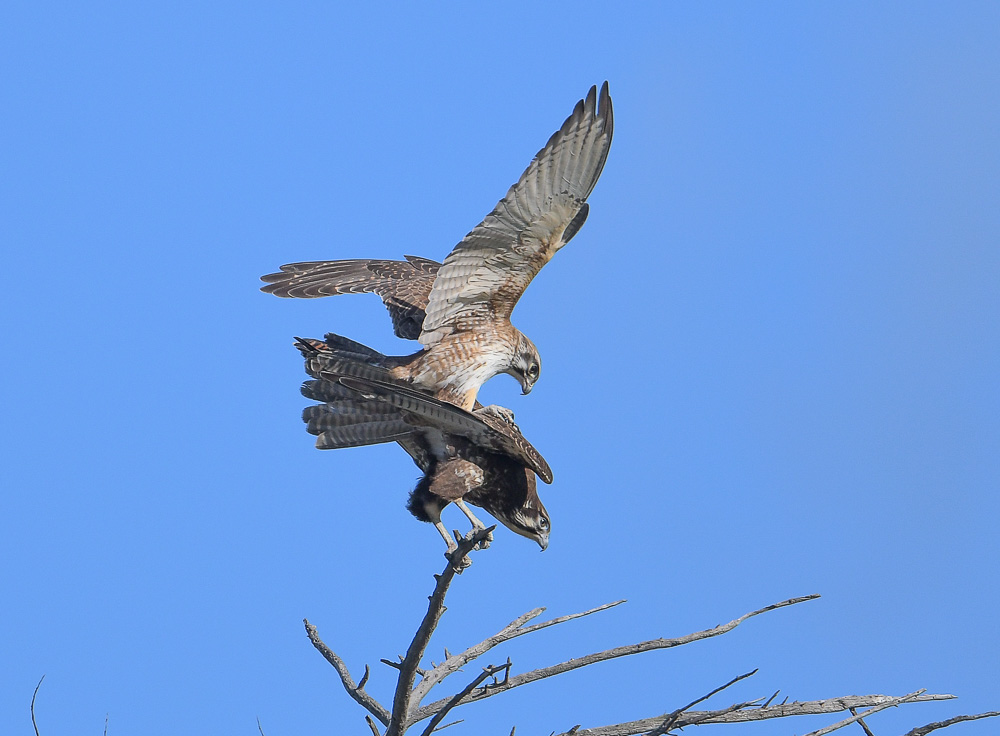
A quick wing flap and Cassia landed near him, but on the highest open branch. And watched. Then after a typical Falcon TIme Wait, she crouched over, and called him, encouraging him to mate. Alistair, it has to be said, did not need much time to consider the offer. Turning into the wind, he lightly took off, ever so gently landed on top of her bent over back, and the process of pro-creation began.
He then lifted wings and again ever so gently lifted off and away.
She relocated to another tree deeper in the pine tree line and we left them to carry on.
Enjoy
A long way down range. Great to see them together.
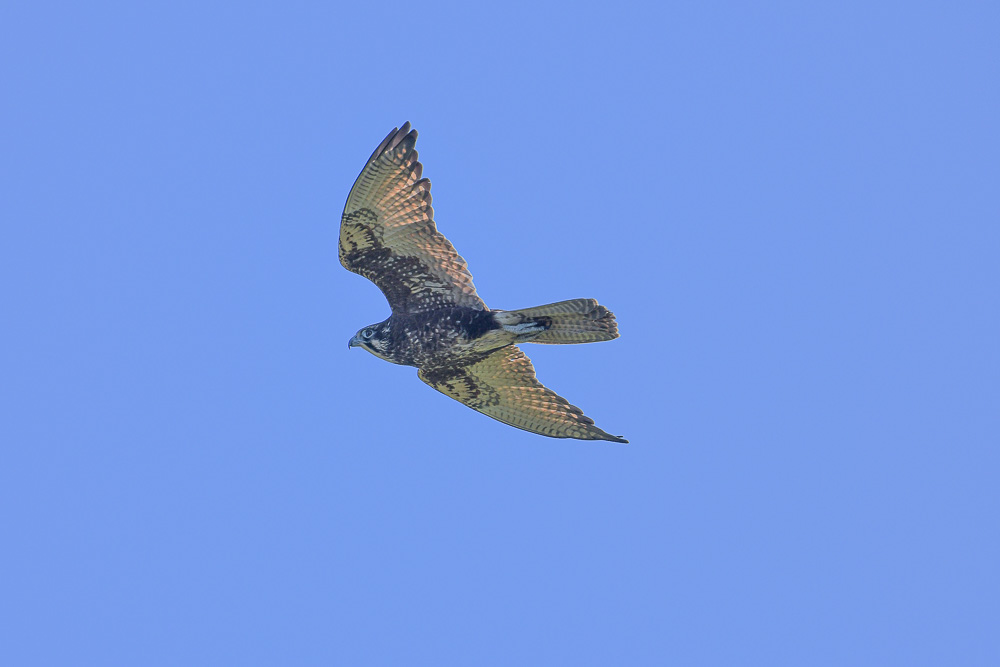
The strong northerly wind gave him a chance to show of his flying skills.
My fault. Apologies. Please forgive. I stumbled on her perched and startled her. She quickly recovered and landed about 50m away to wait for him.
Alistair landed on her back, ever so delicately I don’t think I saw her move under the weight
Sometimes mating is a raucous event, but this time both birds were silent.
She needs to be able to push her tail up out of the way for them to be able to make contact.
In less than 4 seconds and its job done.
Wings out in the strong breeze, he lifts of as delicately as he arrived
And a few seconds later Cassia also launches
The jury is out as to where the nest might be, but the smart money is on it being in this general location.
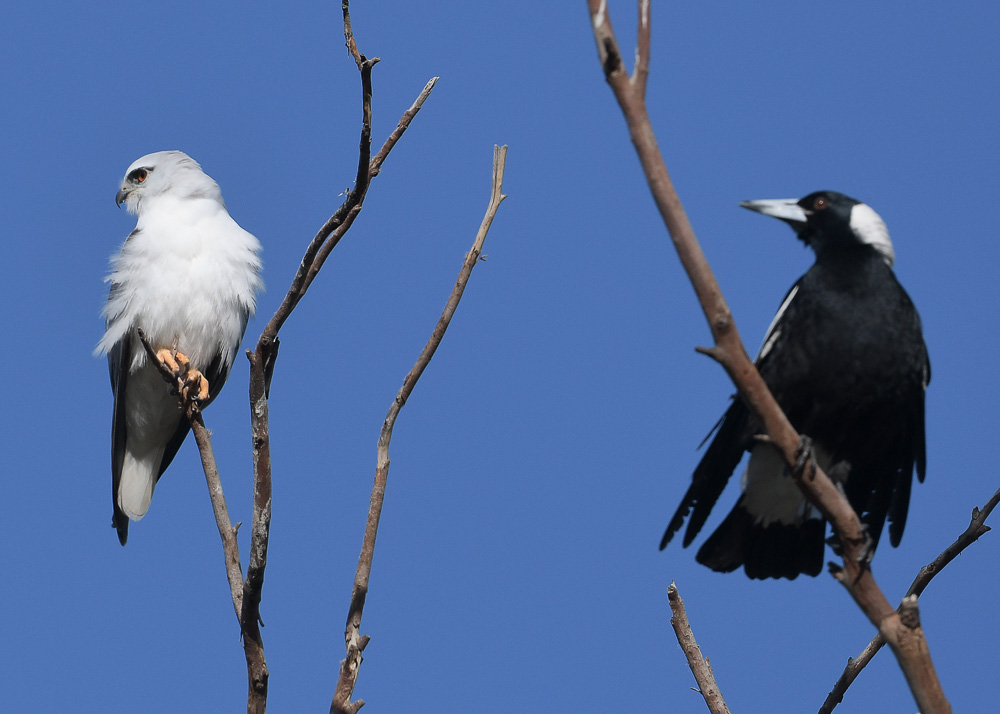
We had on a chance stopped by to see if infact Madeline the Black-shouldered Kite had any prospects of a full nest. Whatever is going on is worth defending as she cleared out a murder of Ravens, a lone Black-faced Cuckooshrike, the two Falcons, Cassia, of Cinnamon and Alistair, and confronted the home team neighborhood watch Magpies.
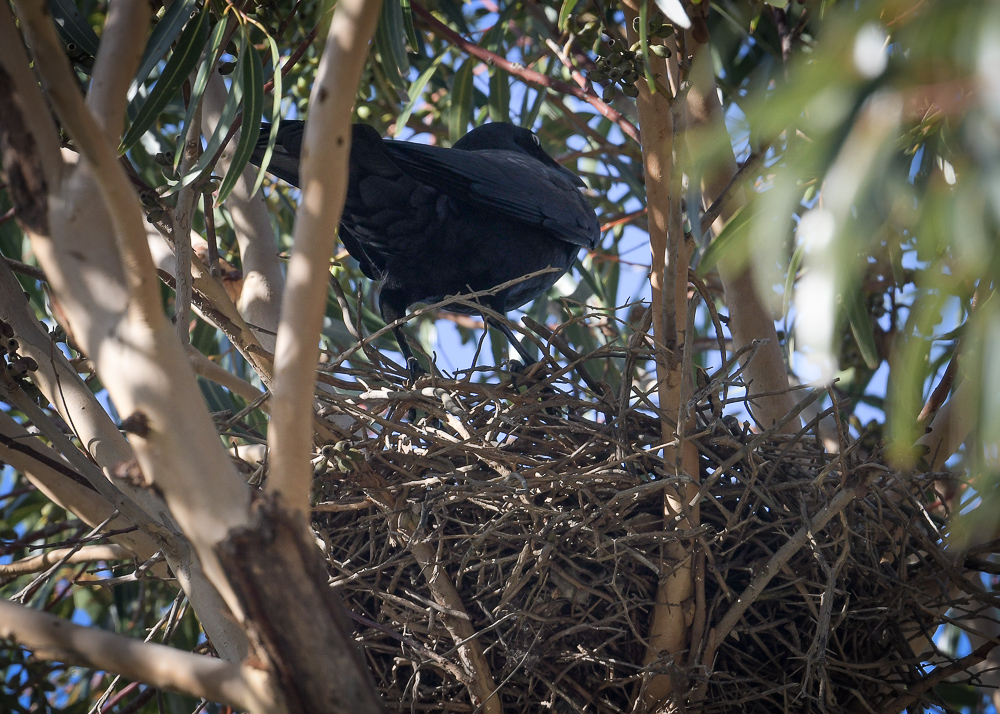
The Ravens have a nest about 3 trees down from her nest, and it’s going to be an ongoing battle. In the end, she pursed the Falcons to about a radius of 600-700 metres. It was a very busy morning for a very aggressive and angry bird.
As it Happened.
The Raven was hoping it was going to be safe under the tree to work on the nest.
Maddie had other ideas, and it was time for it to move on.
The alpha female Magpie came, perhaps to negotiate, but that wasn’t going to happen
Look out. Here I come
Wisely the Maggie left the branch.
But returned and tried to look as intimidating as possible.
A more frontal attack was launched
In the end, they both landed and decided on their next tactic.
The victor, after 6 rounds. (at least). Maggie moved on. Madeline was already eyeing off the passing Falcons.
It has been said by those who know, that, ” The call of the sea is heard only by those who have the nature of the sea in them”. And as I have an irrational fear of boats, I guess I missed hearing the sea bellowing at me.
But then there are so many other things that call us, and some we reject and others we accept and it becomes a passion, (Which I guess is what the original quote was poetically referring to.)
I have been a photographer nearly all my life, (excluding the first 8 years of said life). Did I hear some faint shutter sound, imperceptible to those around me. Or was it the slosh of developer in a processing tank? Or the biting smell of acetic acid in the stop bath? When asked the inevitable question at a function or such, “What do you do? Or these days, “What Did you do?” I always respond the same way. “I am a photographer, by backgound, training and profession”
Because I discoverd early on, answering “Photographer”, always opens up for scorn and derision. Like, how could that be a real occupation! But the supposed call of photography has rather been more an ear-trumpet to other pursuits. Currently it’s birds. And as I’m getting older, birds in flight, and raptors in particular it seems.
I’ve chased down many alleys in pursuit of images. Two areas I’ve stayed away from are Food photography and Medical photography—can’t stand the sight of blood. 🙂 Each field has usually led me to unusual characters, amazing people, and lots of learning. Sure, I know, I could have done it someother way, but filling it with photos has been the icing on the cake.
Gail Mooney, (you can find her here on WordPress) said, (and she has at least 30 years experience as an illustrative photographer), ” If I was just starting out, or in my 40’s, or 50’s, … I would not be complacent!”
And I look at all the excuses I’ve used in the past. Oh its too cold, I’ll stay home I need a new Lens The light is not right I’m not getting enough ‘likes on facebook” —Trust me. That one is made up 🙂 I just can’t find anything to photograph today Perhaps the client won’t like that shot The Bride’s Mother kept getting in the way
It’s a long list.
If the call of sea drives sailors to make amazing journeys then I’m so glad that the same sort of call by that ever-so-silent shutter, so long ago has kept me from becoming complacent about making the best pictures I can, as often as I can and enjoying the companship of other like minds.
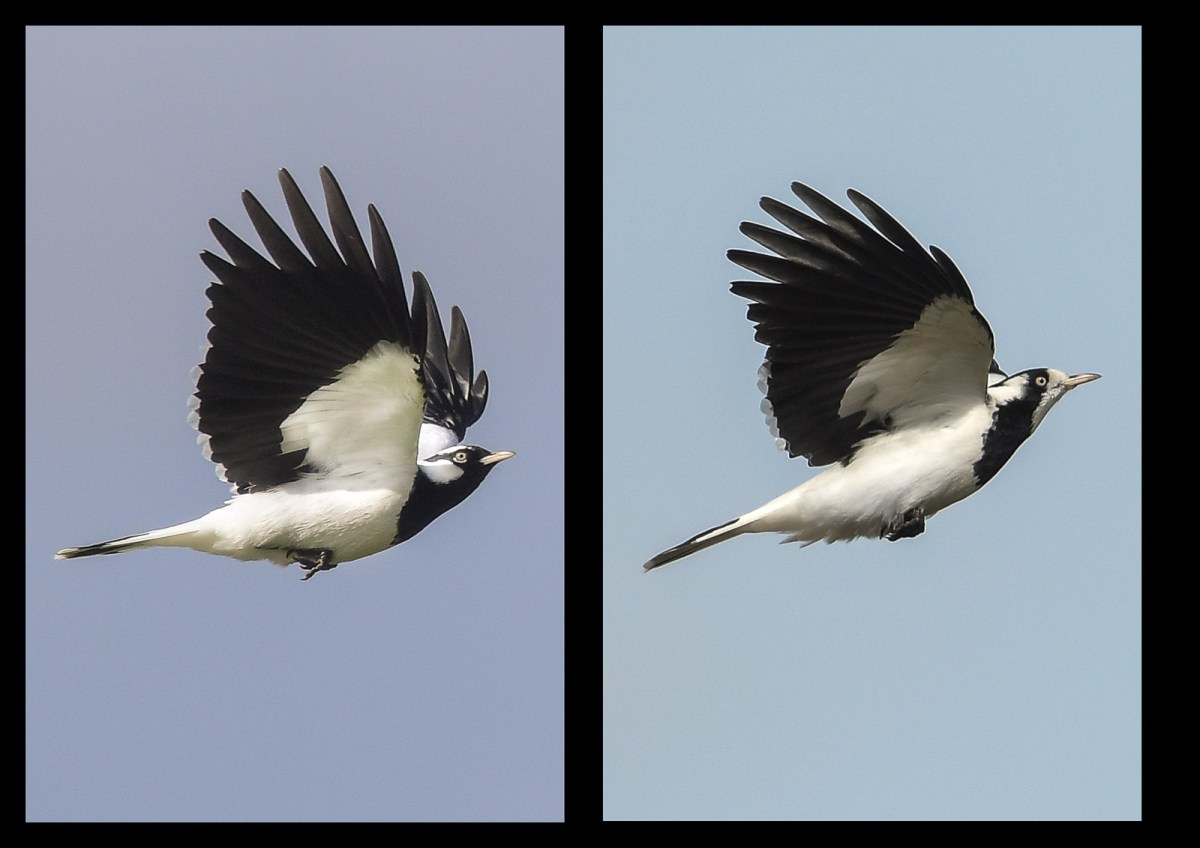
Nailed Mr and Mrs Muddie in flight—albiet on different days. Just happened to notice them while I was shuffling some pictures around. Thought a diptych was the answer.
How quickly Belle and Bronson’s young kites have grown.
Yesterday, in the sunshine I might add, we arrived and expected to see them in the adjacent area. But hunt as we might, there was no sign. Then EE spied them way down the paddock, a long way from the nest. And for reasons that shall be come obvious, the parents seem to have given them their marching orders.
They have been on the wing just about four weeks. Normally they would be ready to leave, if not gone by about week six, so these young are hopefully well enough advanced to look after themselves.
More searching for the third one, and eventually it turned up a little later in the morning to sit with this pair. One had flown up to the home nesting area, but a very speedy adult flew in a direct, straight line to intercept it, and with some outstretched claws and calling, the young quickly got the message and returned to their end of the paddock.
I read somewhere that the attrition rate for young kites is very high, can’t relocate the details, but it was over 50% that would succumb to an accident, or predator, or starvation within the first year. (Please don’t quote me on this, and if I find the reference, I will update here) Once Bronson stops feeding them, there is no further interaction with the parents and they just move on to find food and establish their own territory.
And the reason for their banishment?
It soon became obvious that Belle had a new nest on the go. Normally she would disappear for a few weeks, or month before making a new attempt, but the pair are well on the way to finalising the project and the young kites are unwanted as competition for food.
During the coming week I’ll put up a blog page with some of the actitity from this hatching.
Now some of their findings suggest that Belle and Bronson have either not bothered to read the paper, or the Black-shouldered Kite Instruction book as some of their behaviour differs from the paper’s birds. Still its a fascinating piece of reseach and more power to Stephen Debus and his team for the hours spent in the field and then in collating the findings.
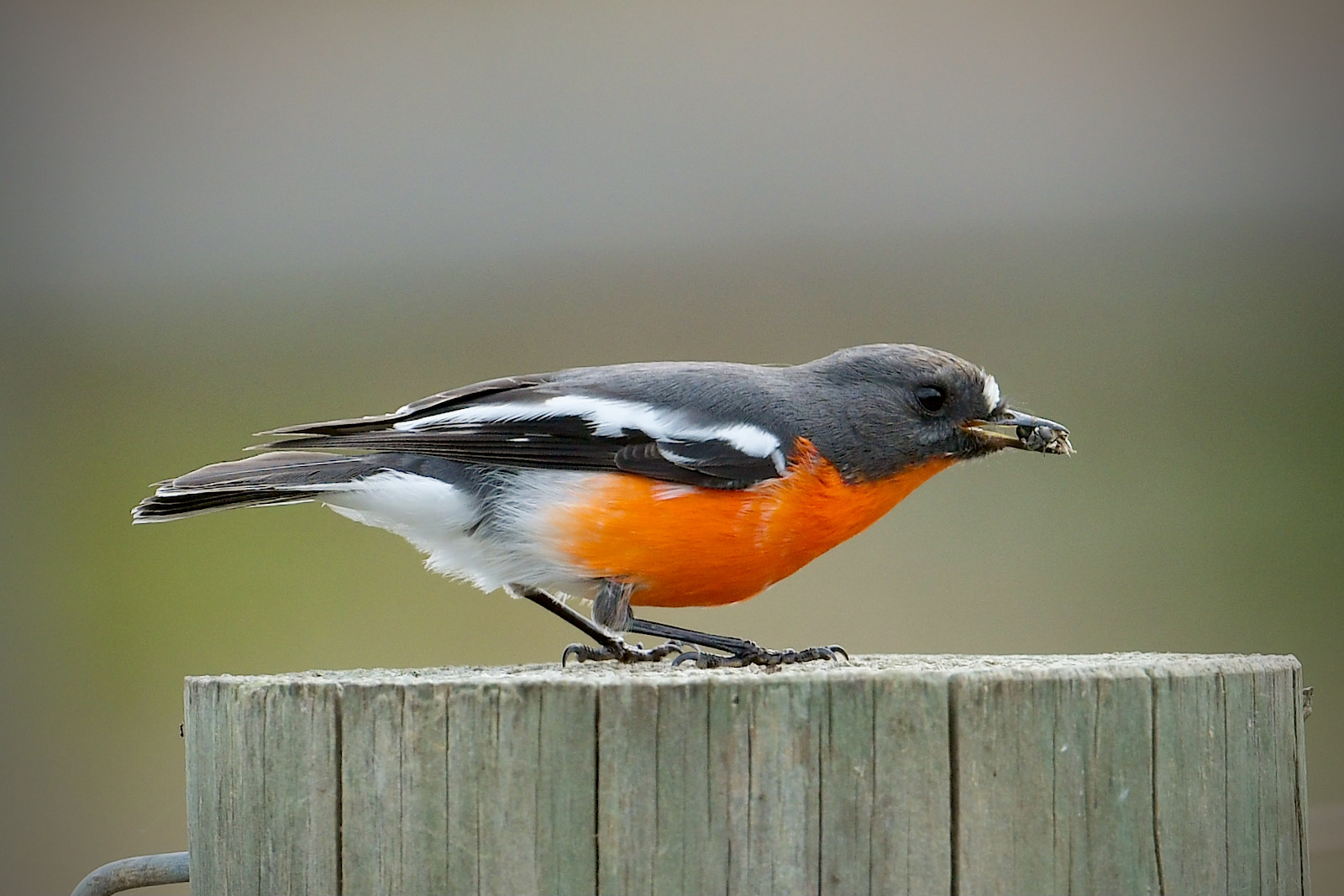
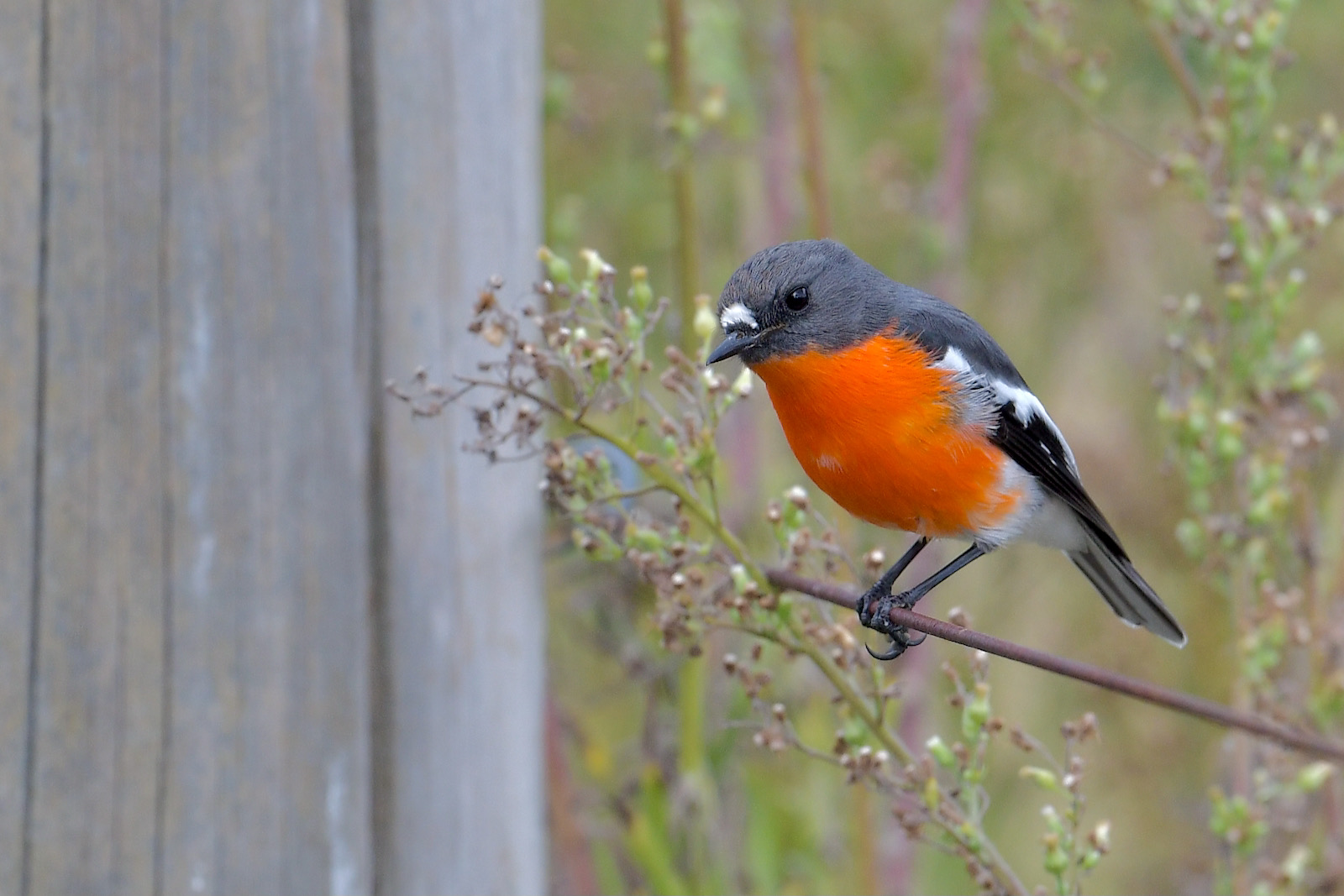
It has been a little over a month since the first of the Flame Robins began appearing at Point Cook. As usual they come down in a largish travelling party and then slowly disperse into smaller family groups about the park
Often the older females will stay together and the males will move to other parts of the park. We have been working with one smaller group that has 5-6 females, 2 males and several juveniles. The one that appears to be the Matriarch is still trying to persuade the males to move on a bit further down the field.
Now that they have settled in, it makes finding them, and photography a little easier. The Parks people have inadvertently helped by cutting a 10m or so firebreak around the fence lines so the birds are able to successfully hunt in the shorter grasses.
Sadly for photography there is not a lot of suitable perches and the fencelines offer them the best views of the area, if not the best poses for photography. But its been good to catchup with them and we now have more photos of the Robins from this season than for the entire previous two seasons that were constantly cut short by limiting lockdowns
So in no particular order here are some from the last couple of visits.
I had some comments last post about the “Valley of the Shadow of Death”, by Fenton. The whole truth in media becomes quite apparent when the historian looks at the two images and has to decide which is the accurate and which is the staged version.
Perhaps Rodger Fenton was the first of a long line of photo-journalists that have sought to tell the power of the story with the help of the image being a representation of the event rather than a simple photo reproduction from the moment.
Frank Hurley, the Australian photographer who accompanied E.Shackleton on the ill-fated “Endurance” expedition to the Antarctic also ‘dabbled’ with the moment. It is still hard to explain how he achieved the seemingly night time shot of the Endurance in the Ice. His diary indicates the use of many flashes and the difficulty of making the exposure.
Later Hurley would become a war photographer and many of his images, again, drive historians crazy. He made no bones about making double images, multiple printing techniques and montages. His famous shot of the rescue boat departing for help, is most likely the rescue party returning.
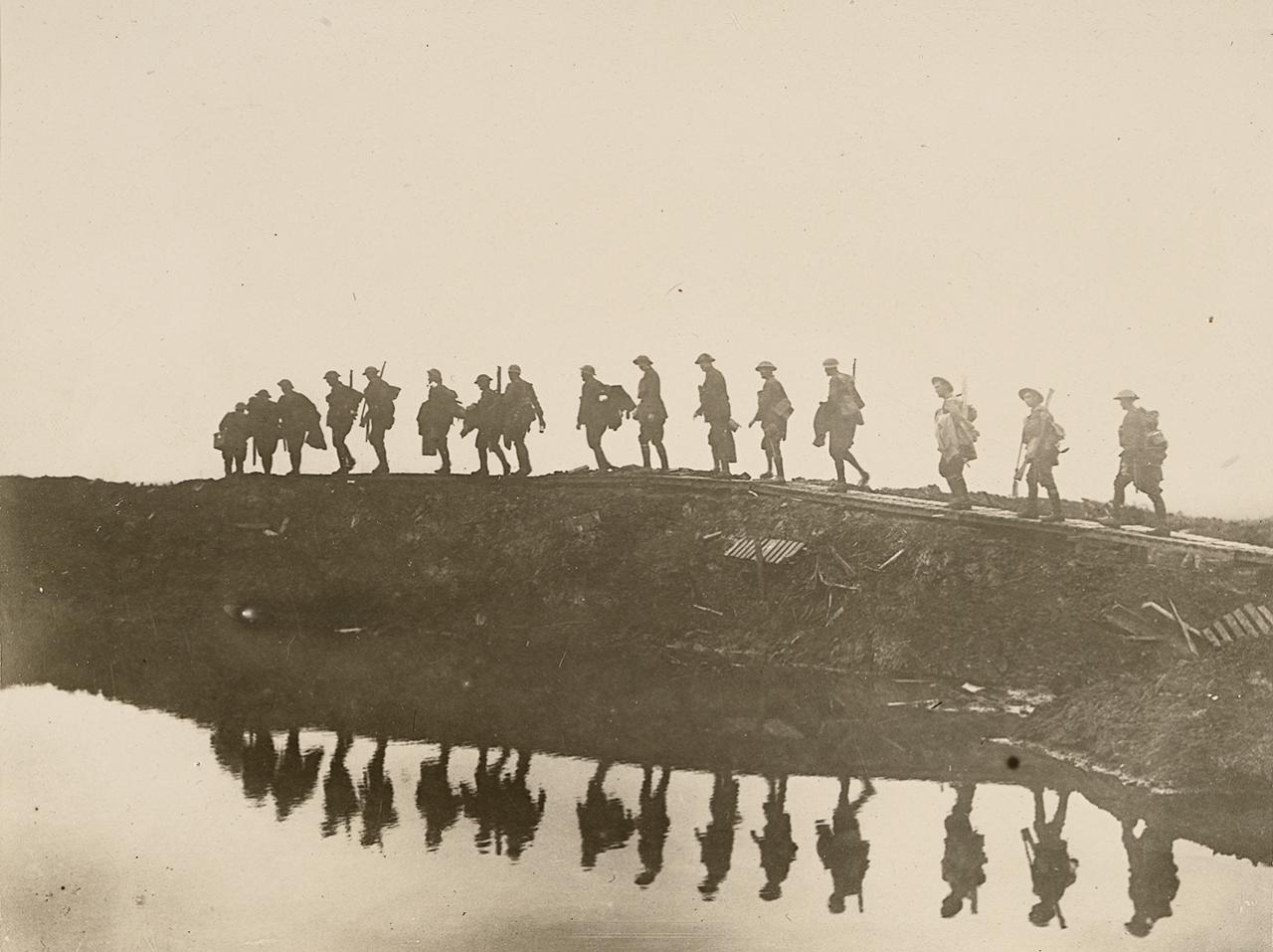
The images of soldiers on the way to the front is thought to be a reversed negative print.
And the one that really gets discussion going is the amazing moment of trench warfare with aircraft, shells exploding and troops advancing seemingly under fire.
Hurley openly stated it to be a multiple printed montage. In the end he found, “Oct. 1, 1917. Our Authorities here will not permit me to pose any pictures or indulge in any original means to secure them. They will not allow composite printing of any description, even though such be accurately titled nor will they permit clouds to be inserted in a picture.
As this absolutely takes all possibilities of producing pictures from me, I have decided to tender my resignation at once. I conscientiously consider it but right to illustrate to the public the things our fellows do and how war is conducted. These can only be got by printing a result from a number of negatives or reenactment“ A good selection of images is here.
Fast forward to Steve McCurry, he of the Afghan girl portrait on the cover of National Geographic. Steve’s later work was found to have ‘Photoshopped” in or out details of some stories and the furore of the net knew no bounds. So much so that he changed his style of photography to account for such story telling rather than image straight from camera. See one of many articles here
Many years back a well known soup manufacturer got into a boil over about marketing shots of its ‘famous’ Farmstyle Vegetable Soup that was ‘packed’ with vegetables. The photograph did in fact show a lovely warm inviting bowl of soup with the veggies all piled high out of the liquid.
However when it was prepared straight from the can, as per the instructions, the hapless cook was greeted with a bowl of liquid with a scant number of veggies sinking to the bottom of the bowl. The clever photographer had filled the studio bowl with glass marbles, and then scooped the veggies over the top and then slowly added just enough liquid to hide the marbles.
And let’s not forget any of the fast-food chains. The chances of getting a burger that resembles the bright crisp item in the photo display is minimal. Again the net is awash with dissatisfied consumers.
So it must be asked if I make some changes to an image, how much is legitimate. Now I’m not talking about Photoshopping Uncle Fred’s face into a daffodil, I’m hoping we are over that.
I’ve been working on some shots the past few weeks making Black and White portraits from a range of photos. I do it because I like the end result. If I share one, it is noticeable as after-all the creature has colour.
I’m not asking the viewer to suspend their credibility or influencing the understanding of the subject. Rather inviting them to explore the nuances of tone, shape, texture and from in a new way.
Perhaps the old adage from the Furphy Watertanker:
Good, better, best Never let it rest, Until your good is better, And your better is best.
Some interesting comments came up last week from the way I curate my library of photos. It’s hard on a single page to cover all the ins and outs and to not sound like setting some rules. I guess I was taken by the number of recent blogs and newsletters that have now made a change from ‘save everything’ etc.
There is of course the another side to why we take, and what we share photographically. As Mr. An Onymous is oft to say, “Just being out there in the field is enough. Birds are a bonus”.
Photography is so good at providing a visual memory of a holiday, party, event or field trip. Looking back through my library can provide a feeling of the time we spent in a location, the birds, the weather, the company and the enjoyment.
I found this quote from Sarah Leen who was (is?) Director of Photography at National Geographic.
“It (Photography) has been the way that I have experienced much of the world. In a deeply personal way I feel an image is a poem about time, about “staying the moment.” Photography can defeat time. Images can keep the memory of a loved one alive, hold a moment in history for future generations, be a witness to tragedy or joy. They can also change behavior, stimulate understanding and create a sense of urgency that will move people to action. Photography is the universal language that speaks to the heart.”
To me photography has always been about storytelling. The eye of the photo-journalist at finding both the story and being able to bring it to the page.
Storytelling goes back to the earliest days of photography. One of the very first ‘war photographers’ was an Englishman named Roger Fenton. He was appointed the first official photographer for the British Museum and in 1855 spent time in the Crimea photographing the war. One of his most (in)famous photos shows the also infamous “Valley of the Shadow of Death” (Yet we need to be careful, as this is not the site of the equally infamous charge of the Light Brigage) It has a most interesting history in that there seems to be two versions. One with cannon balls on the roadway, and one without. The question arises did he have them placed for dramatic effect or cleared away for pictorial feel? This is a good review Either way it is part of his storytelling and adds to the story in a graphic detailed way.
So yes, my library does have lots of shots that will never be acclaimed, but as I review them from time to time, the magic of being in the presence of the bird is a heartwarming experience.
It is reported that J. R. R. Tolkein, once said, “It is a dangerous business… going out your door. You step onto the road, and if you don’t keep your feet, there is no knowing where you might be swept to.”
I wonder, like dog owners, am I taking the camera for a walk, or is the camera taking me?
Some dog owners seem so detached from their dog as they walk about, I am convinced that the dog is indeed walking them.
Dogs seem to be easily distracted. A smell here, a sight there, a movement over there. All needs to be carefully examined and if time permits to be explored.
No matter how long or short a lead, a dog will always run at the limit. (Locked down bird photographers are no different)
The problem, if it is indeed a problem, of walking with a camera is that I lose track not of where I am, so much, as to time and place. A few minutes planned stroll becomes an hour or more in one location.
All sorts of shapes, and tones and picture possibilities hijack me and I am, as Chris Orwig says, “Swept away by it all” (Visual Poetry, p 208)
You can, as Elliott Erwitt once remarked, “You can find pictures anywhere. It’s simply a matter of noticing things and organising them visually.”
Working with birds the ‘organising them visually’ is quite the challenge. Small birds flee, others chose to simper in the deepest of bushes, knowing that any attempt at a photograph is useless. Larger birds sulk and turn away. It’s easy to develop the ‘Oh, if only I was…” attitude.
We have after nearly 18 months been given the freedom to move about again. For some it’s a trip to the shopping mall, a coffee in a piazza, new shoes, a haircut, or a visit to an art gallery. For most of us it’s time with family and friends who’ve been similarly isolated.
So as we begin to take our first tentative steps back out into the field, so many opportunities seem to present themselves.
To quote Elliott again, “It has little to do with the things you see, and everything to do with the way you see them.”
Time to step out and enjoy the sunshine, the rain, the wind and the wonderful things that will grace our lenses.
When the night has been too lonely
And the road has been too long
And you think that love is only
For the lucky and the strong
Just remember in the winter
Far beneath the bitter snow
Lies the seed that with the sun’s love
In the spring becomes the Rose
Amanda McBroom From the movie “The Rose”, sung by Bette Midler.

























 Birds as Poetry —— Just because I WANDER doesn't mean I'm LOST