Point Cook sunny day with Meetup Bird Photographic Group

What a difference to mood a bit of sunshine makes.
We were looking for a day out at the Point Cook Coastal Park with Graham Harkom and the Meetup Bird Photography Group, and as usual Graham managed to put on a picture perfect day.

We arrived in good time to find the park gates still locked, and so we stood around discussing the day’s activities and soon enough the gate was open. Just as well we were a little late starting as a few late-comers thought they’d arrived on time.

Within a  few moments of getting out of the car, EE had discovered “Brown” the resident Brown Falcon, and he seemed quite happy to sit in the sunshine. Then, for reasons falcon, he took to the air and patrolled along the treeline by the carpark. Much of course to the chagrin of every magpie in the area.  So we started with some good views of Brown in being harassed by first one, then another magpie.
Through the gate and along the track out to the Monument, we also managed some Flame Robins, White-fronted Chats and a particularly good view of several Striated Fieldwrens.

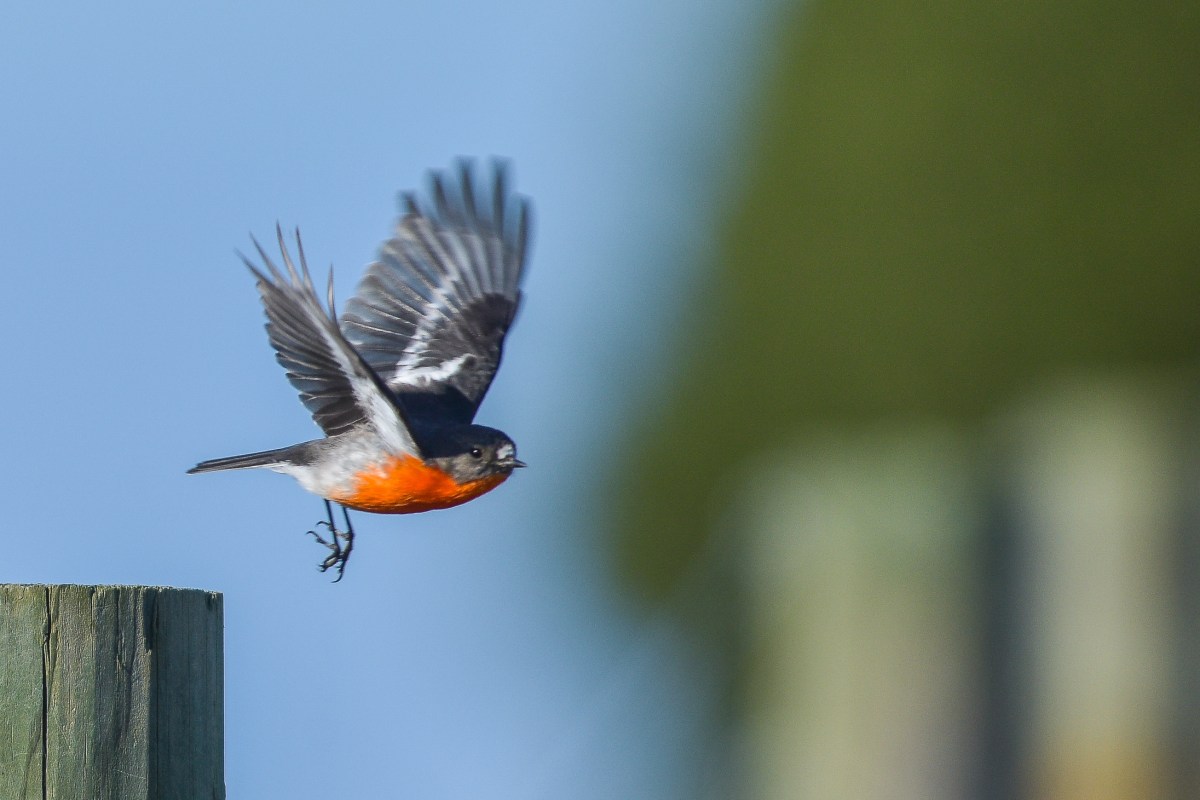
From there we wended out way back along the beach-line and found a small flock of Blue-winged Parrots sunning themselves on the fence-line. And we managed to get some pretty good shots for the photographers.  Then one of our more alert spotted a flash of red, and a Flame Robin males spent the next ten minutes entertaining us flying from fence to track to feed.  He seemed the least concerned by our presence and again it was a photo opportunity.

Add a couple of Whistling Kites, and several Black Kites that seemed quite taken by our presence and made low passes to get a good look at us. Perhaps they were doing a “People Count” or a “Camera Type Count”. Whichever it was nice to see the sunshine glinting on those rich  deep brown wings.

By the time we’d made it to the Homestead area, the tide was well in, several Australasian Gannets were working in the waters further out, EE managed some White-faced Herons, and Pacific Gulls while she had waited for us to turn up.

A large flock, (300+) Little Black and Pied Cormorants were working on a fish shoal out beyond the reef, and every-time the shoal moved a large black mass ascended to the air to catch up with. Very impressive.

A walk back to the car through the farmland revealed some more Flame Robins, several White-browed Scrubwrens and a loud-voiced Singing Honeyeater.

After lunch a few of the group continued round to the RAAF Lake Lookout and spent some time at a pond with circling Welcome Swallows.  Where are you Rodger Scott!!

Graham then spotted first one, then a second Little Eagle at work over the Lake, and we were discussing the presence (or lack of) Goshawks, when over the treeline a bullet shape with longish tail appeared and at first I’d picked it for a Goshawk, and we were both amused we’d been discussing the same.  Then as the bird drew closer, it pulled up its wings in a most ungoshawk manner and revealed itself as a Peregrine Falcon, and it was most intent on making the Little Eagle’s life just a bit miserable.  Several close stoops had the Eagle moving on thank you.

Thanks to Graham for organising the day, and to all the grand folk who turned up to add such a delightful companionship to a glorious sunny day.   Really, after the past week or so, the weather just seemed to make the air sing.

Enjoy.


Brown Falcon, being seen off by an Australian Magpie

Brown Falcon, being seen off by an Australian Magpie

Female Flame Robin
Female Flame Robin
Striated Fieldwren
Striated Fieldwren
Yellow-rumped Thornbill
Meetup at work
Meetup at work
Blue-winged Parrot
Blue-winged Parrot
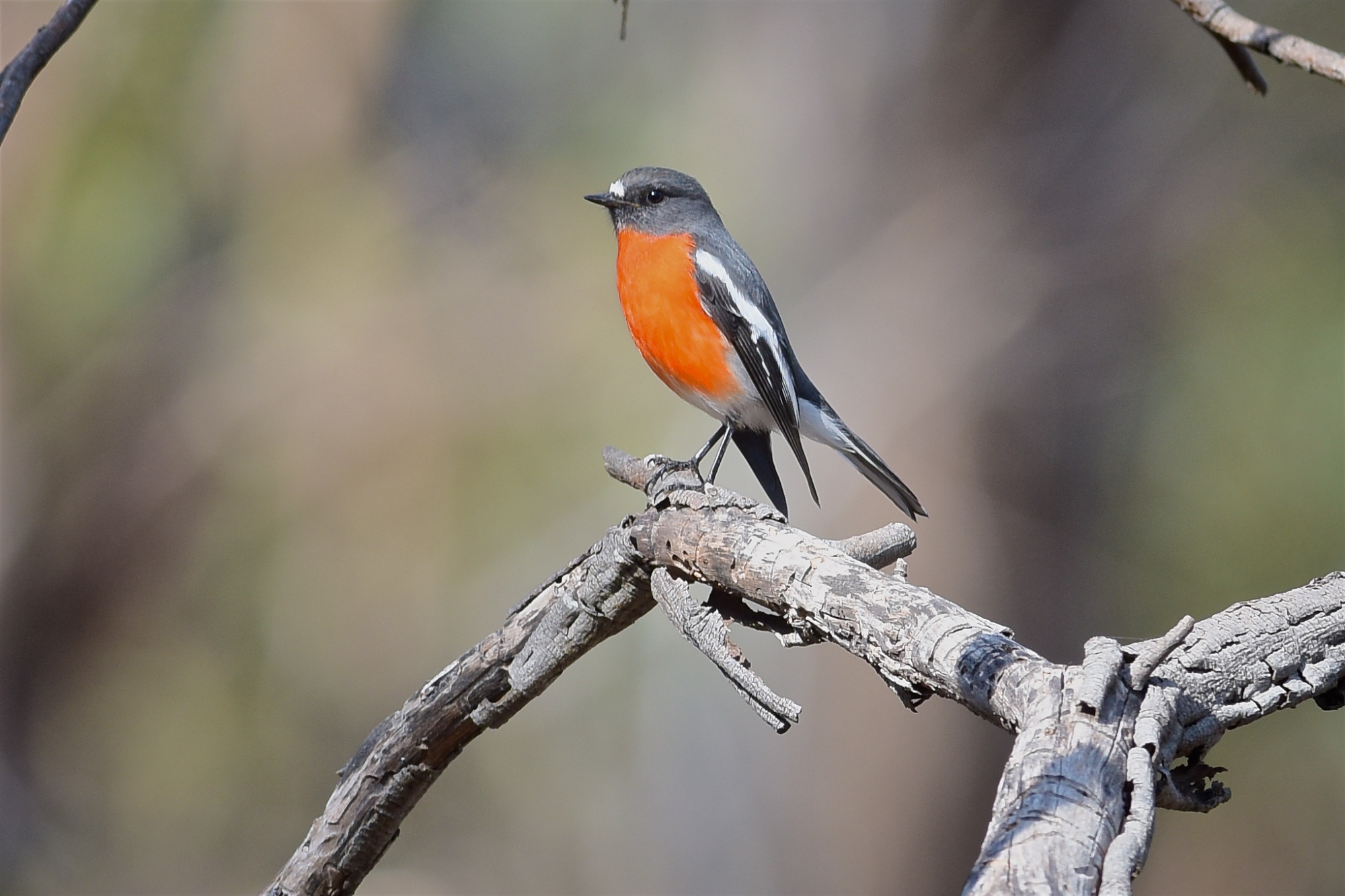
Male Flame Robin
Male Flame Robin
Whistling Kite
Whistling Kite
Australian Pelican
Australian Pelican


Gallery

A Beginners day at Woodlands Historic Park

BirdLife runs a number of Beginners days throughout the year, and Hazel and Alan do a super job of finding the right places to explore and go out of their way to make sure that beginners get the best looks at the various birds found on each day out.

So when the Woodlands Historic Park Beginners day came along we were very happy to go along and catch up with friends and to share just a little of our experiences in the park. It’s also a wonderful opportunity to see the park through a different set of eyes. And some 40 pairs of eyes is always going to see so much more than just my poor old eyesight straining through the bushes.

As the weather has been anything but predictable of late, we were also pleased to see some open blue sky  as we drove out toward the park, and as the day went on, the warmth came on well.  Our flickr friend, Eleanor turned up and that made the day a little bit special.
The first part of the day featured a walk around the upper ends of the Moonee Ponds Creek, which was actually carrying a flow of water following the recent rains.  The creek here suffers from losing input water because of the large reservoir at Greenvale, but none the less it still drains from a long way up toward the north.   It also is an especially steep fall from the north side of the park to the more southern areas, so the creek dries out through the park very quickly.
A number of small weirs and dams have been used across the creek over the years, and the Chaffey Brothers, built a substantial weir and bridge near the homestead at one stage. But, on a heavy flood year, the foundations gave way and the weir was never repaired.

At first our outward journey seemed a little slow for birds, but eventually things began to pickup, with a Crested Shriktite being a major find, some thornbills, and Galahs and a pair of Eastern Rosellas which let the photographers gain some excellent portraits.  A Brown Falcon took to the air on our approach into the open farmland areas, and the usual Sulphur-crested Cockatoos continued to screech at our presence.

We walked around the homestead and then headed back on a middle track above the river, and some spotted a Scarlet Robin.  And after much investigation we were able to get quite close to the female and she gave lovely views for those who might not often have the acquaintance of such a fine looking lady.
Lunch time, and bird count and we had 37 species to our list.
On to the BackPaddock area.  Mostly to look for Robins.
A trip around the dam area didn’t do much for the enthusiasm, and I managed to add some Brown-headed Honeyeaters, and more Shriketits. A Whistling Kite and a Wedgetailed Eagle made up for small numbers else where.  Despite EE and I looking in some of the places that have been quite profitable of late, the robins were not in a cooperative mood.

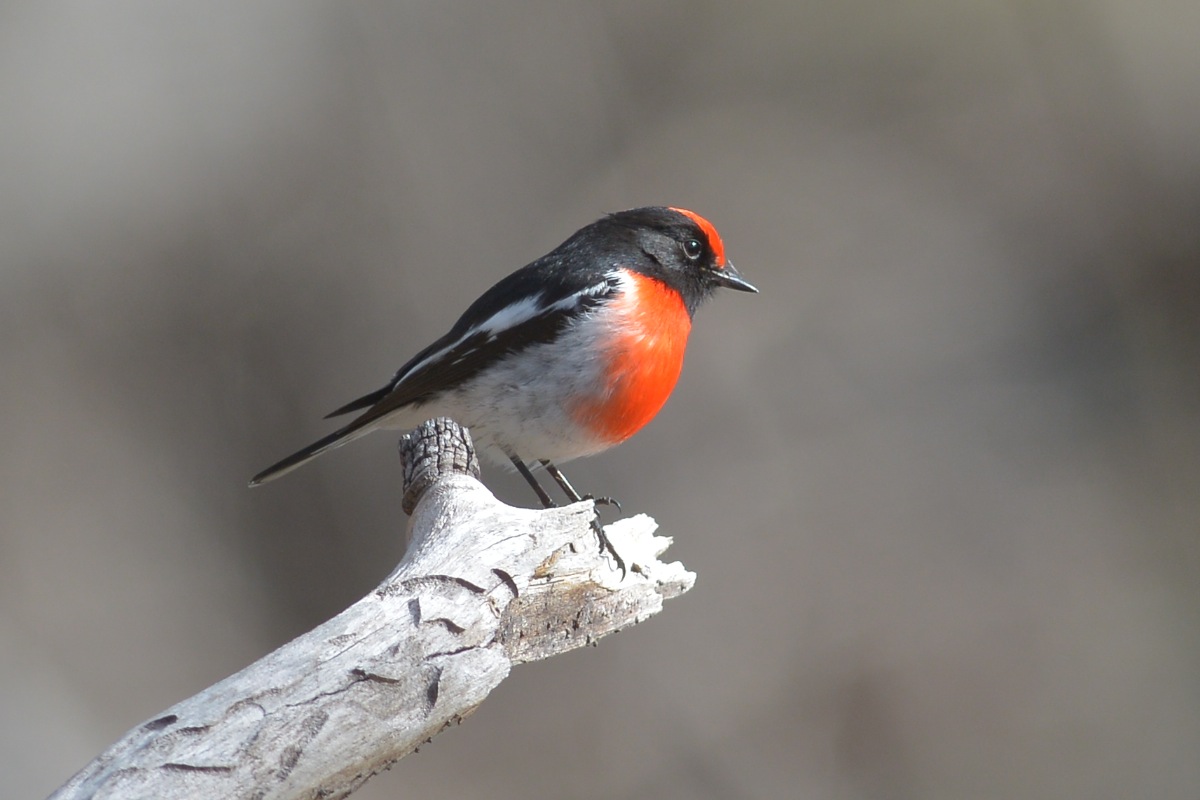
The group moved toward the BackPaddock, and I spotted a male Red-capped Robin on the inside of the fence, and the group moved to have a look.  Eventually we found him, and his lady, and also a few Flame Robins.  The male Red-capped Robin performed so wonderfully close to many of the group and hunted quite close to us on the ground. Nice way to end the day.

Thanks to Alan and Hazel and their helpers for such a good day out, and lovely warm weather to add to the warmth of the company.


Eastern Rosella at Launch
Crested Shriketit
Crested Shriketit
DWJ_3430
Brown-headed Honeyeater
Eastern Grey Kangaroo: Male. Not to be meddled with.
Red-capped Robin
Red-capped Robin
Up close and personal.
Red-capped Robin
Red-capped Robin
he was happy to hunt on the ground around our group

What about a day at the Office?

With the sun-shining,  oh, yes, it did!  We decided on a trip to The Office.  This area of the Werribee River Park looks over the floodplain between the old sandridges and gives a pretty spectacular view if nothing else.  On a good day its possible to see the raptors at work.
Unfortunately today was not to be one of those days. And with no sign of the usual Flame Robin family we decided to walk up to the Werribee Mansion and have lunch there.
Usually the area along the golfclub is also a haven for small birds, but the gums must be slower to flower this year and only a handful of resident Red-rumped Parrots were located.
Still the sun was shining and we had a fine chicken panini and coffee. So to look at the Ornamental Pool, and our first real chance to find some birds.   Top of the list was a pair of Australasian Grebes and what appears to be their sole surviving chick. They had three earlier in the season.  They were pretty protective and this one seems to be doing well a good sign.

Continue reading “What about a day at the Office?”

A Grey May Day in a Grey Box Forest, at Eynesbury

All we needed were some grey birds and it would have been complete.

We turned up at the monthly Eynesbury Residents Birdwalk.  Did one back in April see details of the area in that post. Details Here
This time the lake was in fact a, lake!.  Water had been added and the ducks were happy and in residence again.  And there was a “Farmers Market” in full swing. Make note to self, leave earlier, bring wallet, and enjoy some shopping therapy before the walk in June!

Chris had a walk to the north eastern area of the forest planned for us, and the six or so hardy stalwarts set off for a looksee.  And a quiet day it happened to be.  We did get a good view of the ubiquitous  Superb Fairywren, and again noted how many Brown Treecreepers have made this their home.

Chris pulled out the best spotting by giving us a grand view of a male Flame Robin, rich in colour and brightening up the day.  Just as we were enjoying it all, he took off not to be seen again.
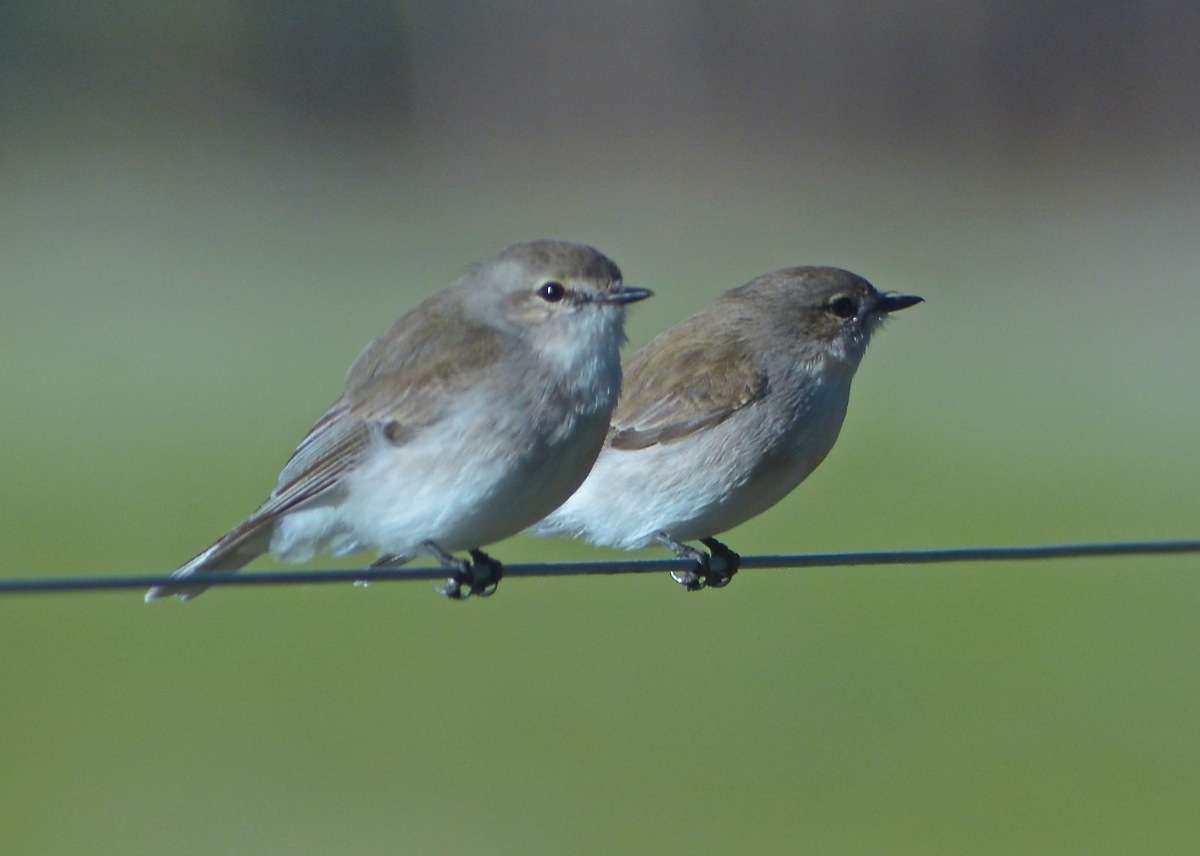
A couple of Striated Pardalotes come down out of the top branches and all got a good view of  these delightful little birds.  Not to be out done a Jacky Winter helped add to the charm of the area, as only Jacky can, and performed some feeding twists and turns in an open area.  But, in the end, we had to say it was a quiet day.

Perhaps the recent rain had made the food scarce.   We turned back and meandered through the open forest.  You can do that in Grey Box, its a lovely forest to walk through. Tracks become optional. Chris offered all sorts of running commentary on fox and rabbit issues, to what sort of native plants were working in well in the local gardens, and one our number told how her three sickly looking Running Postman were now clambering all over the garden pots.  Super.

A Common Bronzewing, a few more Treecreepers, and the inevitable Red-rumped Parrots kept us entertained until we eventually reached the roadway, and back to the cars.

Might have been a quiet morning, and the light might have been less than ideal, but we all were pleased to have seen a little more of the Eynesbury Forest and to enjoy some great company at the same time.  Now we’re looking forward to the June walk.
Way to go Chris.

EE and I grabbed a quick bite to eat, and a cuppa,  then went round to a small open park area among the houses on the west side of the lake.  We’d been told that a pair of Tawny Frogmouth were in the park and ‘easy to spot’.  Hmmm.

You know that feeling?  You’re walking into a park for the first time, checking trees, checking trees, knowing that Tawnies are, well, not necessarily ‘easy to spot’.  In fact, I’d left the camera in the car. Now that is confidence.   EE on the other hand, well, she would wouldn’t she?  Had camera out, and at the ready.

Looking, looking.  Well I suppose I’d taken about five steps into the park. “Oh”.
If only everything was  that “Easy to Spot”.   There aren’t a lot of trees, so Tawnys didn’t have a lot of choice.  “There they are!!! ”  Trudge back to get camera, (all five steps).

We then moved down to the forest proper to look for more Flame Robins. No such luck, not as ‘easy to spot’.  A flock of Maned Ducks, (Wood Ducks) were house hunting and that kept us amused for a few minutes.  A duck in tree.

Then the sound of Spiny-cheeked Honeyeaters on the way back got us looking and eventually locating a couple.
So in the end a good day at Eynesbury, and another triumph for Grey Box

Enjoy

Visiting Friends A day along the Beach at Point Cook

Was chatting with a birder friend, and I mentioned the Point Cook Coastal Park, and he said, that he didn’t plan to go there much as most of the birds were pretty common, and only occasionally was a Plover or a Pratincole enough to take the trip down there.

When we relocated home a couple of years back, Point Cook was on the top of my list as a suitable place, and to be honest, it was second, third and a close run fourth on the list.  And of course the logic was it was but a few minutes from the Coastal Park of the same name, and it would be neat to roll out of bed, and stroll on down to the park.

In the end, much wiser heads than mine  (EE as it turns out) found us the place that ‘we’ wanted and Tarneit took on our new home address.
But every so often when the light is right, and sometimes when its wrong we venture down to the Coastal Park.  And surprisingly, many of the common birds down there have become a bit like friends.
So today we went, not to count, nor to get our lists up, nor necessarily to capture the best bird photos ever, but to visit some friends.

Our friend the Brown Falcon was in the carpark area, and we enjoyed some time with it, as it hunted quite casually from the fence line.  Also found a number of Flame Robins that have made the park their winter beach residence.

And  of course the usual Pied, Little Pied and Great Cormorants down on the old jetty.   They gave us some pretty impressive flight displays while we sipped on a fine cuppa.

Then the local White-faced Heron, and the pair of Pacific Gulls cruised by hunting on the out-going tide.  And to our amusement, a pair of Black Swans how have obviously just coupled up were making interesting subjects as they hunted together on the gentle rolling outgoing tide.

As we walked back to carpark, the air literally filled with raptors.

At one point we had all up at the same time,  Little Eagle, Black Kite, Whistling Kite, Brown Falcon, Australian Hobby and Brown Goshawk.  I was hoping that the resident Spotted Harrier would make an appearance, but we had to be satisfied with those six.

We stopped along the road to look at some Flame Robins bathing in a tiny pool in a paddock, and some ‘new friends’, came over to say ‘hello’.  So we spent a few minutes becoming acquainted with several chesnut horses.

We might not have added any ‘new’ birds to our list, but we had as the Sans Bushman said, “Recognised some birds,and built a tiny connection with them, that is growing into a thread”

Enjoy.

An ode to Grey Box Forest

One of the highlights of Woodlands Historic Park is a stand of Grey Box Forest that is on a ridge running from Gellibrand Hill.  Probably, once in older times the Grey Box was a predominate stand in the area.   The Grey Box on the ridge line has survived, again, probably because the area would be difficult to cultivate.

Running along the ridge is  pipeline for the nearby airport so I’ve named the ridge. Pipeline Ridge.  Over the years, the open forest has provided a grand home, and a fine stop over point for Red-capped, Scarlet and Flame Robins.   One season I came into a clearing on Ridge and there among the great Grey Box was at least 70 robins at work on the moss-beds in the clearing.

I love Grey Box Forest.  I’ve said it before, but I think I have Grey Box sap in my veins.

These wonderful trees are survivors.  No heavy rainfall areas for them.  A low rain fall, and a gritty stony shallow earth, and they are at home.  And so one of the great things I love about Grey Box is their perseverance and their steadfastness and their survival against the odds.
The average Grey Box is quite slow-growing, it earns it durable title over many long years.

It makes a tall upright and generally “Y” shaped spread.   In fact up on Pipeline is an old downed warrior that I’ve used as a sit spot, and I first called it the “Y Tree” before I realised that was the general shape of Grey Box.

The bark is a grey (funny about that), fine and flaky. Thinner branches are smooth.

As it grows it develops, as do many eucalypts holes that become home or nesting locations for a variety of birds. The forest area also developes a finer understory, that can be very open, as it is on Pipeline or quite dense as in a few locations in the Eynesbury Grey Box forest.

The cool understory make fine homes for both Black Swamp Wallabies, and Eastern Grey Kangaroos.  When I was a little bloke the Kangaroos were called Forrester. Which I figured was a typographical mistake and what was meant was Forest.  And so for a long time in my youth the were “Forest Kangaroos”.  Ahhh!!!

When the bandicoot program was established at Woodlands a few years back the Predator-free fence was put in place and cut the territory of the only Black Swamp wallabies in half.  I’ve often wondered how the ones that ended up on the outside of the fence fared against the foxes and feral dogs in the area. I’ve no idea either how many were cut off on the inside, and try as I might I’ve only been able to locate two that I can recognise.   There might well be more, as one pair of eyes can only see so much.

Understory in our wonderful Grey Box includes a lot of layover space for the Eastern Greys, and they do a fine job of keeping some areas quite scrub free, and at the same time contribute a fair amount of droppings.
I have a theory, and no budget to prove it, that the composting of the droppings and leave litter promotes the growth of a small saltbush type plant that has a bright red tiny berry.   I theorise that the tiny berry is food for some insects that the Robins consume and thus collect carotene.

The red of the Robins comes from a class of pigments called carotenoids. Carotenoids are produced by plants, and are acquired by eating plants or by eating something that has eaten a plant.

For several years at the beginning of the bandicoot project in the Back Paddock at Woodlands, the Kangaroos were removed. (They eat grass, that is the home of the endangered bandicoots. No grass, no home, no bandicoots).

But the number of layover areas, and the resultant saltbush deteriorated over the next few years, and the Robin numbers that we saw decreased. And at the moment, I believe, (well I’m allowed a theory or two), that as the plant and the carotene insects diminished, so did the resident Red-capped Robins. And the Flame and Scarlet Robins moved on to other areas for winter — some not too far as there a seriously large mobs of the Forresters down along the Moonee Ponds Creek outside the predator-fence.

But the average Eastern Grey Kangaroo female is a pretty persistent little producer, and her male companions are also very capable at their jobs and between them there has been a growing population of Kangaroos in the Feral-free area.  Which means perhaps the old layover areas may get a rebirth too.

Endurance is a work that springs to mind when  you stand under a majestic and venerable Grey Box. Its branches wide-spread and supporting a varied habitat around it.
My Tai Chi master says” Endurance, glasshooper, is not in context of a temporarily demanding activity.  Another facet of endurance is that of persevering over an extended period of time. Patiently persisting as long as it takes to reach the goal.
Patiently enduring the Grey Box forest welcomes our admiration.

I love Grey Box.  It has so much to share, and it  has so much to teach.

Thought I’d share some of the wonder of the forest over the years.  All images made on or near Pipeline Ridge

Enjoy.

Grey on grey.
Grey on grey in the welcome rain
Gery Box provides a suitable nesting site. Here a pair of Red-rumoed Parrots are one of three pairs in this old tree.
Magic moments of early morning mist in the Grey Box
The Pipeline Ridge after a good rain.
Hard life on a high hill side.


Climbing Mt Everest

Somethings we do as photographers, and bird photographers in particular, seems to rival climbing Mt Everest.

One of those challenges for me is the Rufous Fantail.

Now those who have these amazing birds in their backyard are going to find the next bit of ramble, well somewhat indifferent, if not bordering on the laughable.

But. The Rufous Fantail is not a regular, nor a resident bird in my area.  In fact over 8 or more years at Woodlands Historic Park, I’ve only seen them on three separate seasons.   And then only for a few days, as they either fly South, for their summer location or then North for their Winter escape.  And off course I have to be in the forest when they are there, and as there is no prior warning, and no set pattern of location, climbing Everest seems to be a fair comparison.

“It’s a lovely sunny day. Let’s go visit Ambrose,” said she.  So EE and I headed up the freeway, parked and then walked in to the area where this amiable bird has been the past few seasons.

Long term reader(s) may recall that last season the area had been cleaned up by the local LandCare(?) group and I was a bit unsure if Ambrose would bother.  And after about an hour or so of fruitless searching I was well on the way to convinced.  Then, way off on a corner area of the paddock, a familiar little harmonica call echoed, and I went to look.
And there he was.

Waved a wing at me— in Hello— and was gone. More waiting and a fine cuppa of Earl of Grey, and he made one more quick appearance, but didn’t seem to be photographically inclined today.  But at least we’d made contact.

“How about lunch at Greenvale, and then we can go on to Woodlands Park in the afternoon,” says She.  EE is pretty good on those ideas.  So we went.

Woodlands, as the long long term reader will (or at least might) recall is the birthplace of my bird photography.  I am convinced that Grey Box sap runs in my veins and in a few minutes of walking down the the old “Dog Track”, I was feeling a weight lifting.
I like Grey Box Forest.:

  • No TV commercials with people who have to “YELL” to get my attention.
  • No loud music with people who have to “YELL” to sing a song.
  • No Dodgey commercials that “YELL” at me to buy some piece of useless rubbish or other.
  • No Lines at the Supermarket
  • No pushing and shoving to get a coffee
  • No futile endless running about chasing something of no particular value.

I like Grey Box Forest.

We found some Flame Robins down by the old dam area, and to our mutual surprise a Pink Robin female.

I was photographing some ‘log-dancing’ between two territorial Red-capped Robin males, when a ginger/gold/rufous/orange flash quite literally sped by my ear.

A Rufous Fantial.  First one  I’d seen in years.  Move over Sir Edmund Hilary, and Chris Bonington. This is serious business.

The Rufous, as pointed out at the beginning is a very infrequent visitor. It also has the most beautiful orange tail.  A photo of that is like planting a flag on Mt Everest.  One of the most gorgeous examples of it was taken may years ago by an expert bushman. (he has also featured here before)

Alan (Curley) Hartup made a wonderful shot with a beaten up Mamyia C22 and a roll of filum.  Yes, filum.  It was exhibited and won Curley many well deserved awards and accolades.  Look back and you’ll find a the shot featured on the Hartup Exhibtion flyer  and for more on Curley see here.

One thing I learned about photographing this bird.  It is fast.  So fast in fact that it makes the average Grey Fantail seem glacial.  And your average Grey Fantail is no slacker in either the speed or irrational flying behaviour departments.
“Perhaps, I should practice more on Grey Fantails,’ says EE.  “N0,” says I kindly, and wisely.  “The Grey Fantail isn’t in the same speed league.

So we followed the bird, and eventually managed a few close shots.

I struggled to get to the peak.  Just couldn’t get the flag in.

Enjoy

A "Hello" wing wave from Ambrose. But he didn't stay to chat.
A “Hello” wing wave from Ambrose. But he didn’t stay to chat.
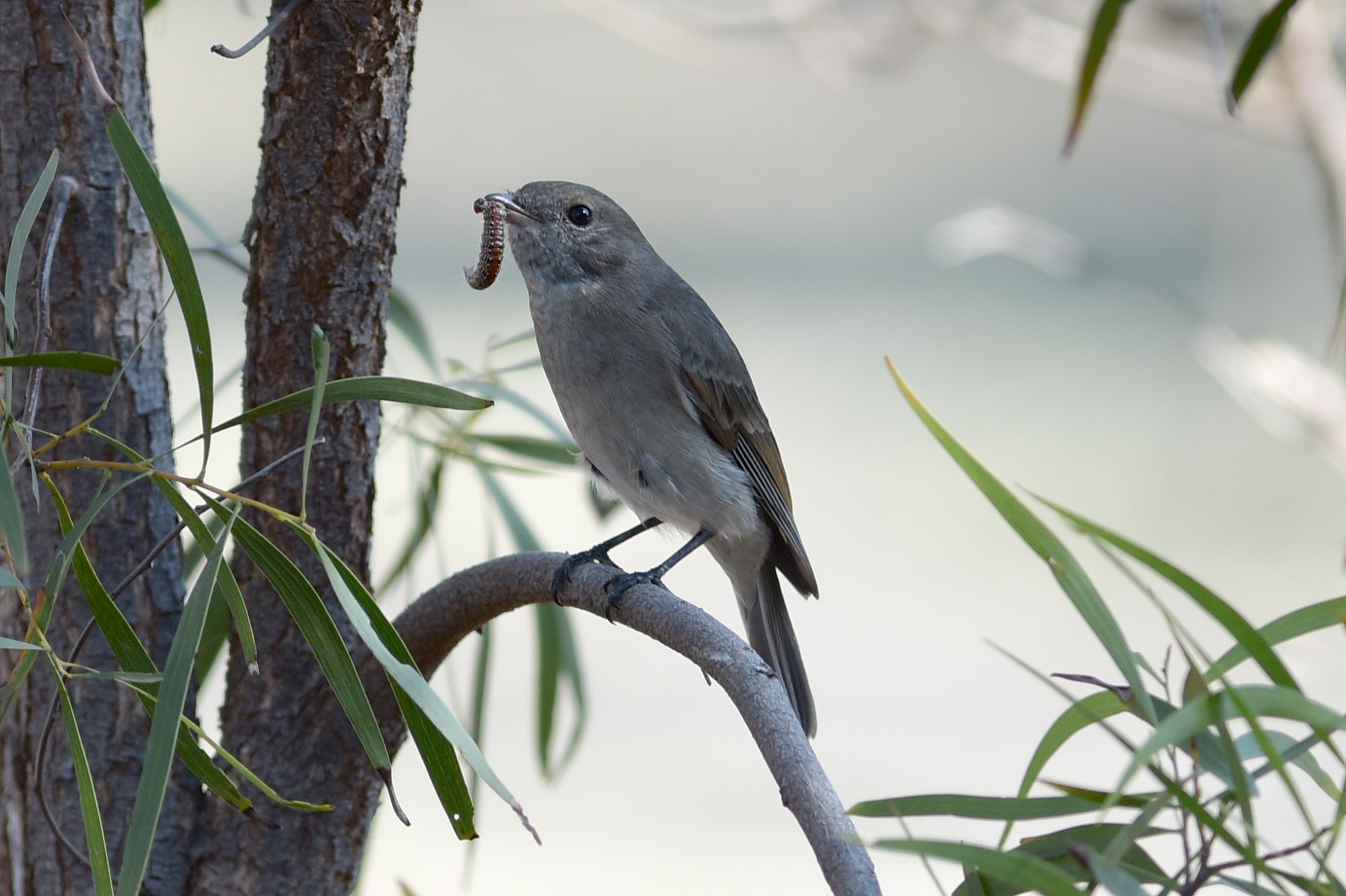
Female Golden Whister with snack
No Grey Box forest would be complete without a Grey Shrike-thrush or two. They look as good as they sound.
No Grey Box forest would be complete without a Grey Shrike-thrush or two.
They look as good as they sound.
One of part of a squadron of Varied Sittella at work among the Grey Box
Not my friend Pinky from Pt Cook, but a lovely bird to meet anyway.
One of several male Flame Robins that arrived this past week
Even though they have travelled a great distance, they still manage to look in top shape.
A peach of a bird. The wonderful winter dress of a female Flame Robin.
A male Red-capped Robin. Intent on discussion with a neighbor over territory rights.
The one that got away. Enjoy
16-04-18-556-DWJ_6520
Rufous Fantail. At a stand. Managed a couple of shots, but no tail-spread here. Not much room on top of Mt Everest.

Take water, add Robins, instant enjoyment

Gazing out of the window, a little blue sky hinted among the grey.  That was enough to have the Earl Grey Tea poured, the cameras in the car and away we went.   Wanted to have a look along 29 Mile Road at the Western Treatment Plant.

This area has a number of paddocks recently ploughed and the Kites seem to favour the turned over ground. By the time we made it to the “Highway Lounge” at the Caltex Servo on Geelong Road, the little bit of blue has zipped itself up in the dense grey that was accumulating.  So we stopped for a quick Mocca, and then continued.  Only to be confronted with a misty rain.  “Turn back now, or go on?”  We went, and the rain continued, and we went and the rain continued. Exposures of a Week @ f/4 seemed to be the order of the day.

So reaching the Beach Road corner, we pondered a very early mark. Then a flash of red, and another and the paddock opposite was covered in Flame Robins.   Well, covered is such an all encompassing word, so its probably better to use dotted here and there. In the end we found four males, at least as many females and several juveniles in varying states of moult.

I propped the 300mm ff/2.8 with a TC 2.0 (Making 600mm) on a post, and wished I’d been clever enough to include a beanbag.  The rain changed to a drizzle between downpours.  The birds seemed to ignore it an hunted happily.  Feeling pretty confident in the rain, they chose to ignore us pretty much completely and we were able to move about with them without them fleeing.

In the end being sodden completely and beginning to worry about the cameras getting drowned, we called it quits.    And by then the small meagre light had been completely swallowed up in dark and ominous low cloud, which soon turned to massive downpour. Time for home.

2015: The boys are back in town

I used that heading a couple of years back to announce the arrival in the Woodlands Backpaddock of  a family group of Flame Robins with three  males that hunted closely together.  They have been over the past 4 or 5 years very consistent in their wintering over at Woodlands.

So much so that I’ve named them collectively, “The Three Brothers”

Well, they are are back. Roll the Thin Lizzy, Boys are Back in Town, sound track. (Play it loud).

We passed through the hallowed gates today and within about 5 minutes had located a fast moving flock. Perhaps 8-10 birds, a good number of Thornbills, and a Golden Whistler pair, and the usual fantails and wagtail outriders.

Here is Mr Red-slash.   He has a particularly long red bib, goes much further up his neckline that normal.

Not the best image I’ve ever made of him, but given the degree of difficulty I’m pretty happy.  More to follow I expect.

DWJ-1505-01-_DWJ6561

Even though he's much further away, and I've had to nail a big crop, you can see his wider turn on the red chest feathers.  Besides he has a much more imposing look in this one.  I think, if it works that way, that he is the dominant male. The others always seem to take cue from him.
Even though he’s much further away, and I’ve had to nail a big crop, you can see his wider turn on the red chest feathers. Besides he has a much more imposing look in this one.
I think, if it works that way, that he is the dominant male. The others always seem to take cue from him.

A day with the Werribee Wagtails at the You Yangs

Beginning to really like the monthly foray out with the Werribee Wagtails, good company, tops spots, usually  good birds, and yesterday good weather.

We met down at the Eastern Entrance and took a walk, all 25 of us, down the fence line track.  Immediately we’d started and a pair of Scarlet Robins entertained us, and then a pair of Jacky Winters.  Not to be out done a pair of Restless Flycatchers came out to play in the morning sunshine.  It could hardly be better.

A litre further down the track and we came across a family of Flame Robins, and then… It got a lot better.  We spotted a lone male Red-capped Robin.  Big news for me, as I’ve been trying to locate such bird in the area for the past few months. We walked along the creek line that runs on the south side of the “Seed beds” and came upon another larger flock of Flame Robins, and a pair of Scarlets.
The ‘whip’ for the day rounded us up, and after a morning ‘cuppa’ at the Big Rock carpark, and a few more birds, we took to the drive around the Great Circle Road.   Stopping at one spot we walked in to see a Mistletoe Bird, but it must have gotten the dates wrong in its diary and try as we might we had to admit defeat. Prehaps next time.  A big group of Crimson Rosellas, and a beautifully vocal Grey Shrike Thrush were suitable consolation.

We stopped again at Fawcetts Gully and there was a female Golden Whistler, but try as I might, I couldn’t get a reasonable shot.  Did see the departure of an Eastern Yellow Robin, but again trying too hard, I missed it completely.

So to lunch, and a Collared Sparrowhawk that whisked through the trees, much to the chagrin of around 25-30 White-winged Choughs.
We walked down to see the resident Tawny Frogmouths, and through the bush past the dam near the rangers work area, and there found quite a number of Brown-headed, and White-naped Honeyeaters among others.

After the birdcall, the count was 45. Not a bad day’s birding. Mr An Onymous and I went back past Big Rock to have another look for some Scarlet Robins we’d been working with the previous week, and just as we were leaving we spied another Eastern Yellow Robin just off the side of the road.
Enjoy

As an aside, the Editor of Werribee Wagtails newsletter “Wag Tales”, Shirley Cameron is handing over the job, and I’ve taken on the task.   Bit daunting as 26 years of love, care and attention to the group by Shirley sets a pretty high standard for the incoming ‘new bloke’.
One thing I’m going to do is add the pdf of the magazine to this blog, and you should be able to find it from the Front menu Tab.   Will make an announcement when the first one goes ‘live’.

To add to that, I’ve created a new Flickr page that will have some of the magazine photo content for viewing, also allows us to have others add material for the pages.  We’ll hasten slowly.


Yellow-rumped Thornbill at bathing duties, preening in the early morning sunshine.
One of a number of Scarlet Robins for the day.
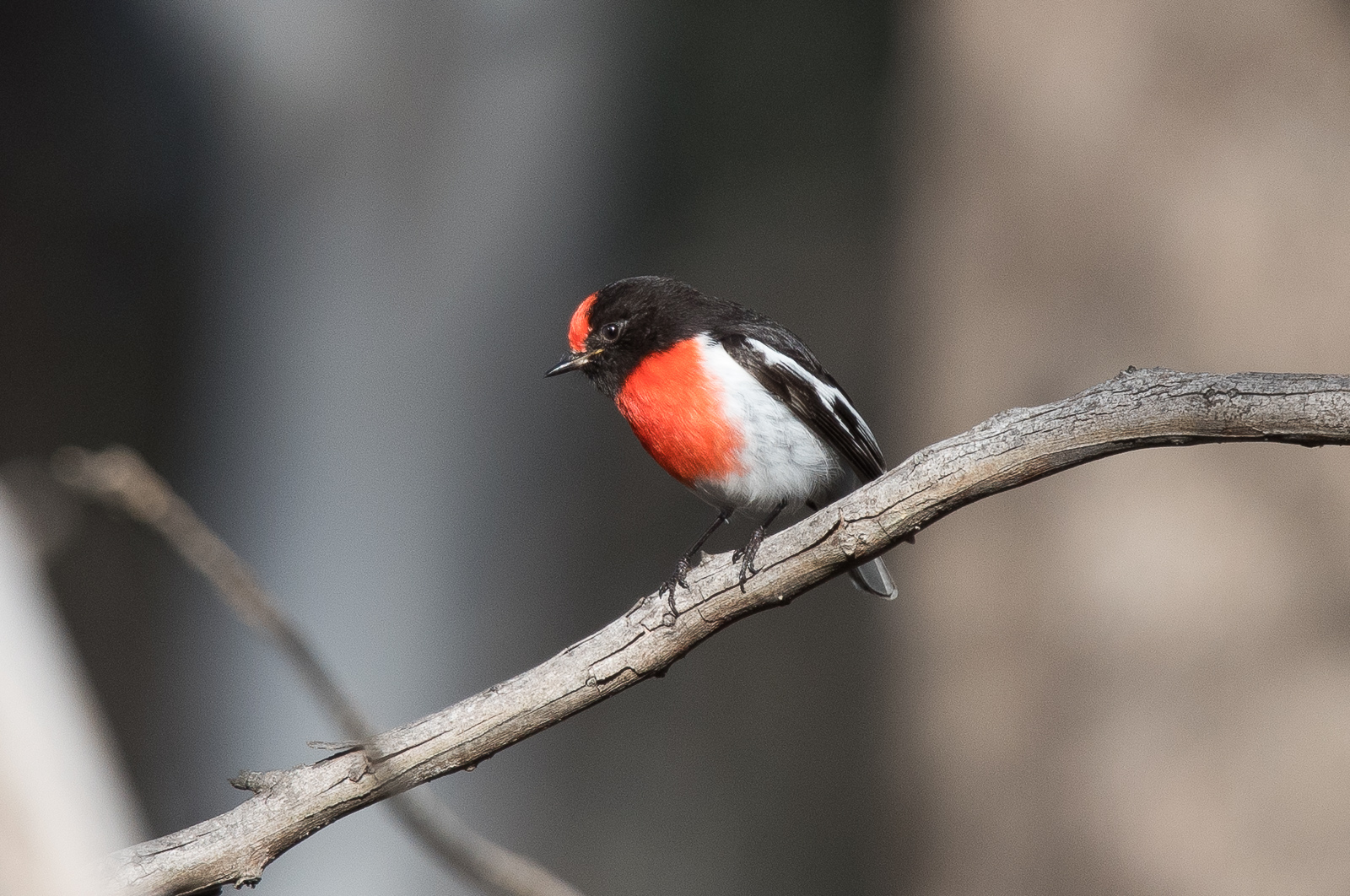
My find of the day.  One Red-capped Robin, and I can't wait to get back down to have another look
My find of the day. One Red-capped Robin, and I can’t wait to get back down to have another look
Pair of Jacky Winters.  Rare to see them sitting together.
Pair of Jacky Winters. Rare to see them sitting together.
Restless Flycatcher, quite happy to perform with 25 people watching
Jacky Winter always a favourite find for me.
Female Scarlet Robin hunting with a large flock of Flame Robins
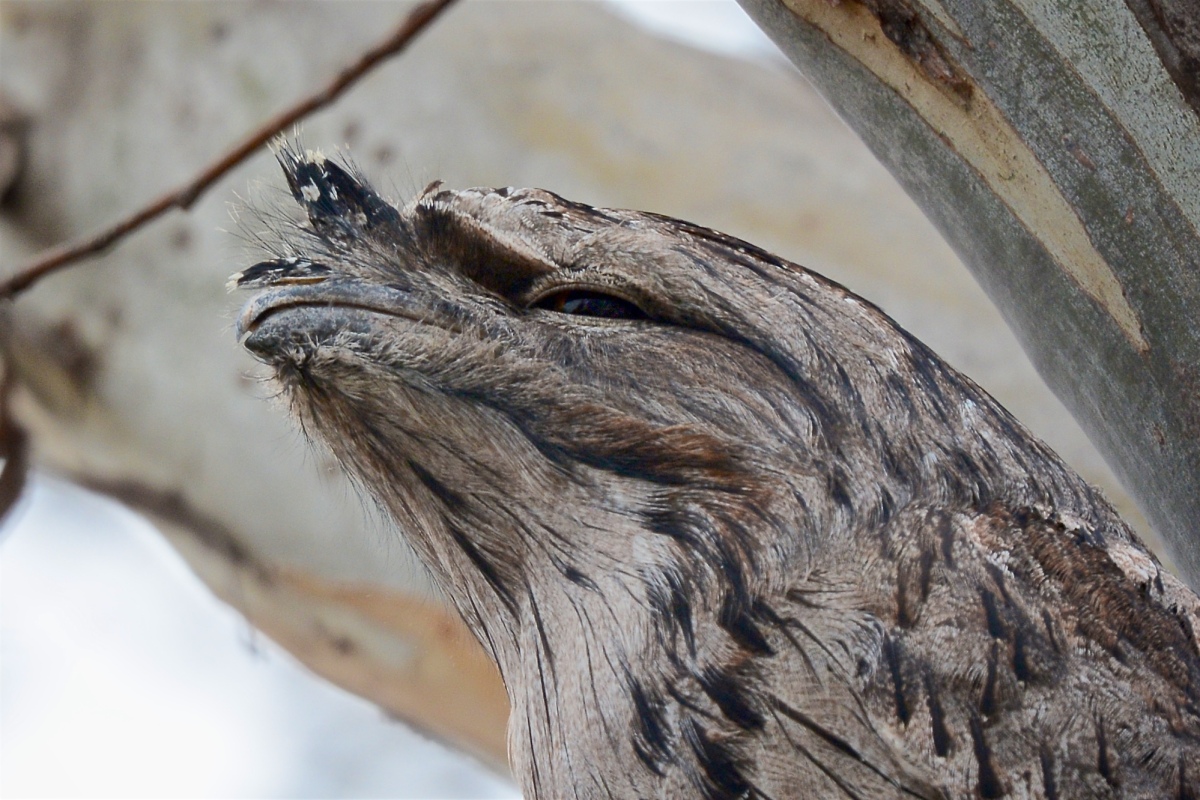
Tawny Frogmouth, quite near the Main Office area  and completely oblivious to our presence.
Tawny Frogmouth, quite near the Main Office area and completely oblivious to our presence.

Walking the Backpaddock with intent

After our earth shattering discovery of access to the Backpaddock, it was obvious we’d soon make a return trip for a good look at what the robins might be up to.

Again the weather dudes, made it pretty certain that a bleak, and perhaps not monumental storm was on the way, and that dire and severe and as it turned out, over active imagination weather was predicted.
We figured to go on Wednesday, and by the late afternoon of Tuesday, the weather prognosticators seemed to have the upper hand.  And in the end ‘common sense’ prevailed and I decided to stay home.
However, as seems the case so often, by morning, although a bit windy, the sky was blue. Horizon to horizon.  Quick phone call to Mr An Onymous, and he was soon on the way, the car was loaded, and we headed to the Northern Subs.

Once inside the gate, it didn’t take too long for three pairs of eyes, (on second thoughts, make that four pairs of eyes, as EE was with us), to locate a pair of very active, but somewhat suspicious of human activity  Red-capped Robins.  They were in an area that had not had a pair of birds for at least two seasons, so I figured them to be a new couple.   I’m beginning to contemplate that the birds I first saw all those years ago have reached their use by date and that its only now that a new younger generation of birds are building up the numbers again.  Fine theory, but??

The “Three Brothers” flock  of Flame Robins were no where to be seen, but I went to look for “Sam”, and eventually found him, but he certainly didn’t want anyone leaving Tripod Holes on his Forest, and promptly disappeared.
A pair of Scarlet Robins were also in the area, and EE spent  a bit of time with them, eventually getting the male to become bold enough to come in quite close.
Mr An, and I, followed a hunting party of Flames down through the scrub and eventually out manoeuvred them, and were sitting waiting for them to turn up, and they did.  Sunshine, Robins, close up, and a good sit spot. Perfect.   Probably shot more useful images in the hour or so than I have all season so far.

A problem for the robins was the presence of a couple of Whistling Kites, a pair of very vocal and fast, Brown Falcons, and a very noisy and low flying Brown Goshawk.  The slightest alarm call from the thornbill flock and everybody went for cover.

This small Flame flock are new birds for me, and consisted of about 4 males, several females, and 4-5 juveniles. Not having any knowledge of the history of this flock, its a bit hard to determine, but I’d be betting they are on their way back from somewhere, and have chosen to tank up in the forest.  They had joined the mobile Thornbill flock, of about 20-30 birds, so it was  pretty noisy convoy moving through the open areas.

At least the visit proved what we’d been contemplating, that the food source inside was better than outside, and the shelter of the understory in the Grey Box suits them.

And of course today, the weather has turned feral, so we are not likely to be out there again for at least the mid of the following week.
With only a few weeks to go, its a bit hard to think the season is going to provide much data on the flocks.  The encouraging thing I found was that the males were not vocal, and a female matriarch still seemed to be the one that controlled the flock movement.

Enjoy.

On the look out for those pesky photographers.
I've only a handful of pics of red-cap pairs together.  He was very defensive.
I’ve only a handful of pics of red-cap pairs together. He was very defensive.
I'm hoping this lovely lass will begin to accept me and we can get some interesting pictures   She reminds me so much of  my old friend Primrose with her wonderful buff dusting on the chest.
I’m hoping this lovely lass will begin to accept me and we can get some interesting pictures She reminds me so much of my old friend Primrose with her wonderful buff dusting on the chest.
He began to get bolder in his hunting close up, perhaps had figured out we were benign.
Good enough for another pose
This male has an unusual eye ring, and I'm wondering it it might be a young male still moulting in.
This male has an unusual eye ring, and I’m wondering it it might be a young male still moulting in.
Always hard to gain their confidence.
This is Mr Yellow Sash, and he is alertly watching the pair of vocal Brown Flacons pass by.
Think this is the Matriarch.  Her chits and calls seem to bring everybody to attention
Think this is the Matriarch. Her chits and calls seem to bring everybody to attention
One of several pairs of Scarlets we encountered