No one needs to be told that today was a cold day. Oh, 14degrees feels like 3.7, so the weather dude said. 3.7??? Now how can you predict that accurately?
Anyway it wasn’t even close in the strong winds running in to the 50+kph, it felt more like -3.7 say -4, whose going to quibble over whole numbers.
Cold. When the wind rips through a Driazabone jacket, I’m here to tell its COLD.
Had a date with Kalav -the Brave. He was going to be in a lot of trouble hunting in this wind. But, did you notice Brave in there somewhere?
By the time I’d arrived, he’d already decimated one part of the hunting ground and had moved to new premises. Seemed more interested in keeping Kitty well supplied than in a silly old dude in a Drizabone pointing a lens at him.
4 mice, in 10 minutes. And all within a stones throw, (not that I threw stones at him) of where I was hunkered down behind the the fencepost, the only protection around.
Onya bloke. You deserve a rest for a few hours.
Steadying in the wind was a real effortOn targetAt lift offOne foot techniqueTucking up the mouseOh, Kitty, where are you, Kitty, Kitty.
Its been said, that I’ve lost my bird karma, and over the past few weeks, probably my weather karma as well.
Can’t recall a good day in the sunshine, so we’ve been, as we say on Flickr, practicing.
I’ve been keeping an eye on a pair of Black-shouldered Kites at The Office. (Werribee River Park).
And today, with some sunshine, I needed a place to practice, I’d been reading John Shaw and he seemed to have some pretty fine results using the Nikon 3D tracking, so thought I’d give it a go. Never been one of my favourite settings, I do have to concede.
Knowing I only had a few minutes, I grabbed the D7100 with the 300mm PF. A pretty nice combo now I’ve made some focus adjustments care of Reikan’s FoCal software.
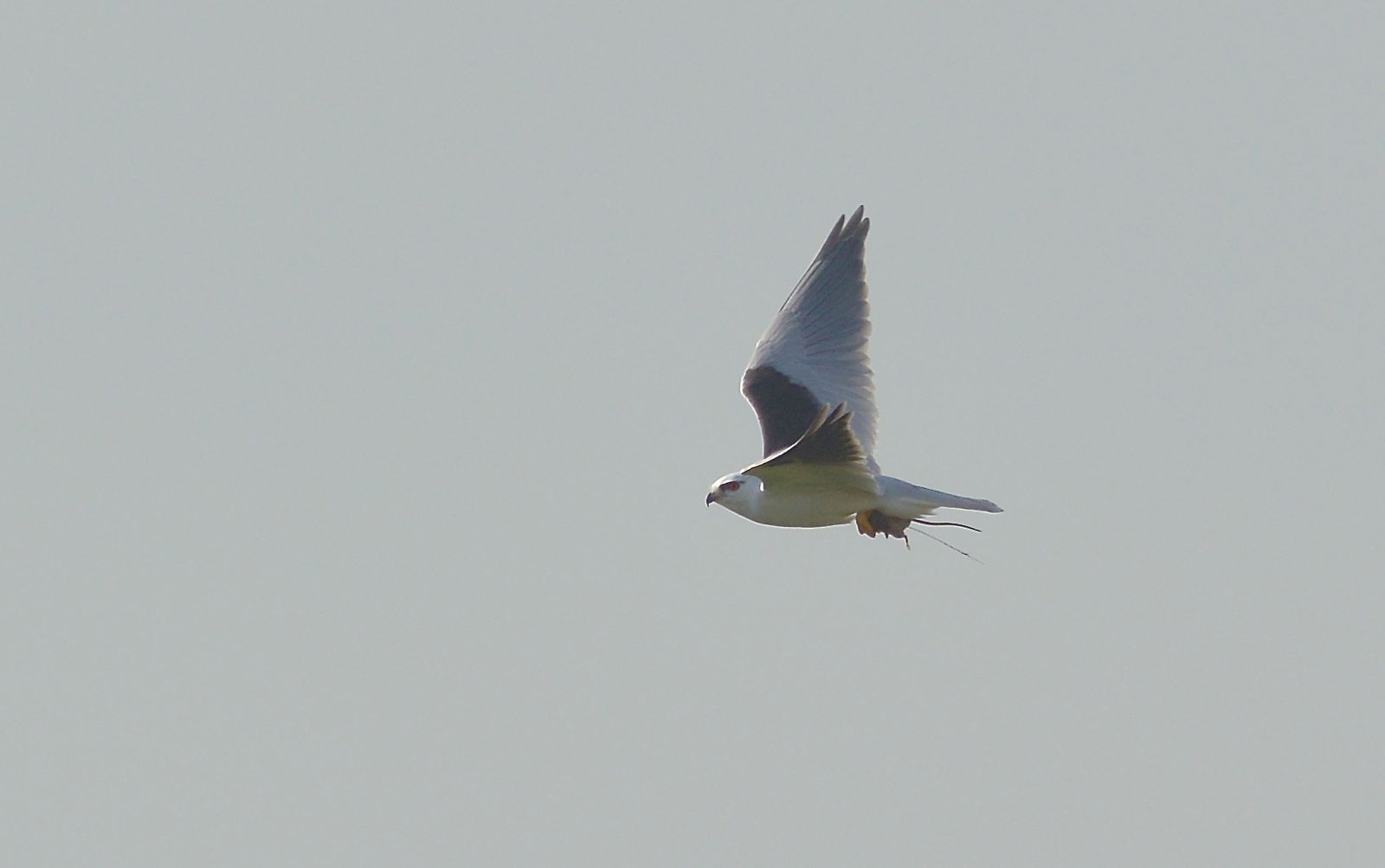
After a little messing with some distant falcons and Black Kites, I was about to return home when sailing over the trees came a Black-shouldered Kite with a mouse, and pretty much immediately pursued by a female crying out for her food.
That was enough for me to drop into the open paddock, (among all the stinging nettles as it turned out!!! – that wasn’t in John’s book!), and see him come in with several mice over the next half hour or so.
Here’s a selection.
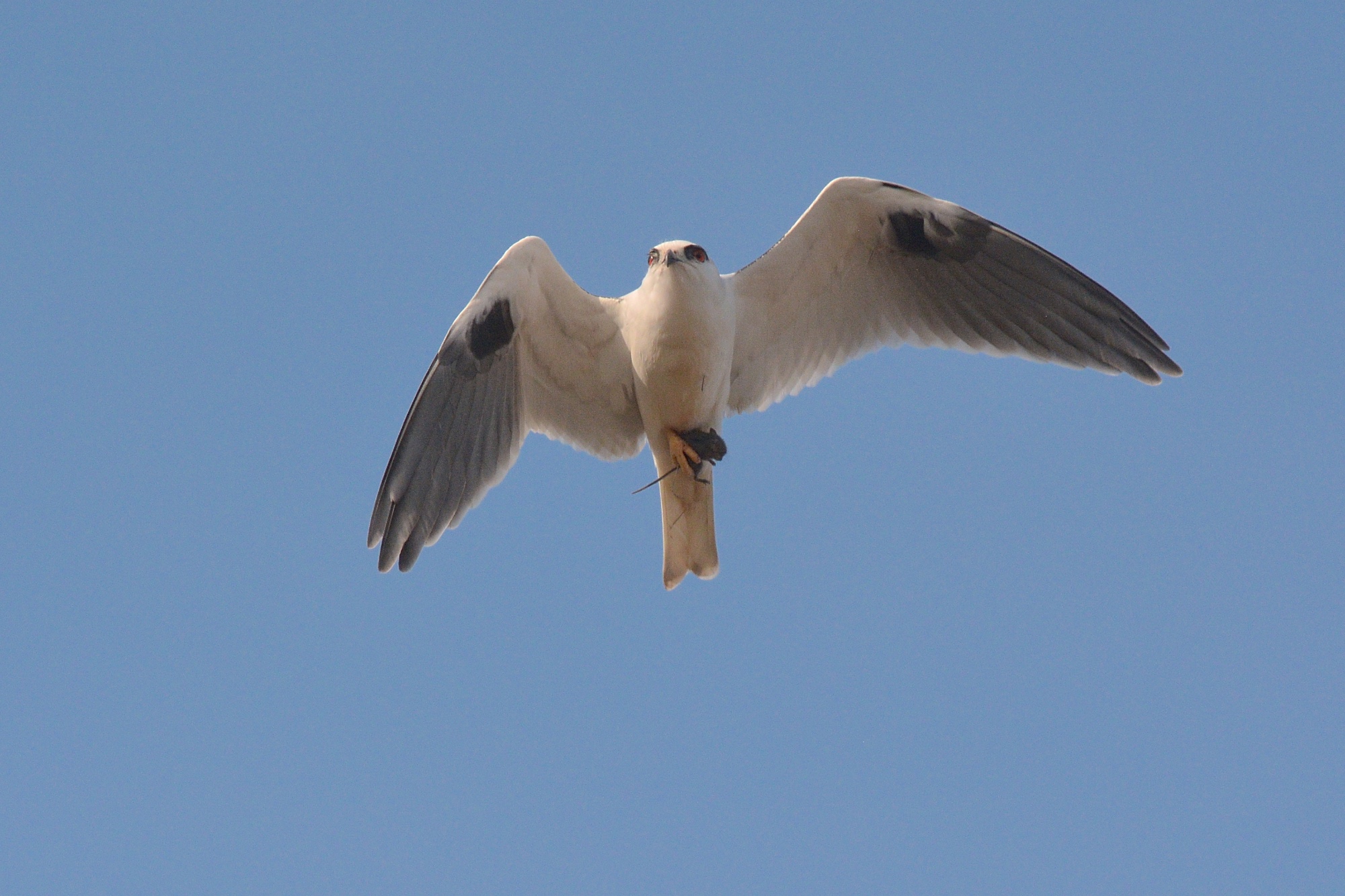
Alley Oop, Black-shouldered Kite style.He followed her back to the feeding perch.Well fed, its time to get on with the important house renovationsWhere is the nest again?Ahhh so that is where you are workingMouse eye view of the male leaving for a huntWhat’s that I see, oh, just another mouse dinner“Hold still will you, we are going to be on WordPress, and I don’t want to mess it up.
We’ve been sitting in our mobile hide (the little i20), near a tree that has a Black-shouldered Kite nest and the female in residence.
As is typical of her species, the nest is just below tree top and hidden well in among the fine uppermost branches. Once she is under the canopy she is gone!
He off course is on hunting duty, and every so often turns up with a nice fresh mouse. So all we have to do is point the camera, (attached, I might add to the WImberley Gimbal head), and wait either for him to arrive and/or her to emerge or reenter.
Now, if you’ve ever watched them, the first thing you’ll recall is that it can be a long long long time inbetween feeds.
Sometimes even she gets a bit anxious and sends out some pretty interesting Kite calls just to make sure he gets the message.
So we wait.
And of course in the waiting is the challenge. So we, well at least I, keep the shorter 300mm f4 PF on a second camera and practice my flight shots on anything that spins past.
So here are a few from the other day.
Australian Magpie
Oh, and Mr Grey-head just had to come and see what I was upto.
Crested Pigeon
Fantail Cuckoo, first I’ve seen at WTP
Fantail Cuckoo, airborne
The male on a mission. He has been told in no uncertain terms what the requirements for a snack are.
Had some really interesting and forthright emails and comments on the last long blog on ‘why we press the shutter’. Funny how sometimes things just mesh in harmony and we all have a chance to stop and at least make a quick ponder on our special place in the photographic endeavour.
But it must be in the air at the moment, as I received an email update from Jon Young, he of “What the Robin Knows” and founder of 8 Shields Institute. For those that haven’t grasped his work, have a look at the website. He is primarily a mentor for developing the, ‘nearly lost art of understanding bird and animal language’. Sites are here Jon Young and here Bird Language. Ok, its a place to buy stuff, but look among the ideas. They also have a Free 8 week course, which is really a condensation of the book “What the Robin Knows”.
Anyway marketing pitch off, I got an email from one of his colleagues Josh Lane, and you can find the whole page here, Seeing with New Eyes
He puts it best this way, and I’m lifting out a couple of paragraphs, so hope the thought police are not on the job too much. Check out Josh’s full quote above.
“On one level, this ability to perceive and behave unconsciously helps us in daily life, as we can learn to do many things at once without having to think about them. On the other hand, we can too easily go into “autopilot” and miss out on a lot of the world around us.
The next time you walk out of your front door, or go to your sit spot, set the intention first to approach that place with beginner’s mind, as if you have never been there before.
Open your senses up. Pretend to be a tourist admiring the architecture of the building, or a birder who is on a distant safari watching and listening keenly for exotic new birds. Let nothing escape your attention.
Develop this practice for a week. Perhaps that same tree you have walked by 100 times before will catch your attention in a new way; maybe the afternoon light will hit the branches in a way you have never noticed before. Or, a flower growing in the cracks of the sidewalk will call to your senses and remind you of the beauty of the earth. Let your awareness be open and expansive, as you see familiar places with new eyes!”
Think this is what I’m wrestling with in my own work. As I replied to Steve Hayward He of Devophoto here on Flickr;
” I’ve been struggling of late between the need for technical shots of details and the need to develop a sense of place for the bird.”
And I think now that Josh has sussed it out. Being so conscious of the right exposure, and the right location, and the right angle and the difficulty of filling the frame, I’ve been forgetting to look, to be open and expansive and to see the familiar with new eyes.
We’ll see. (pun intended).
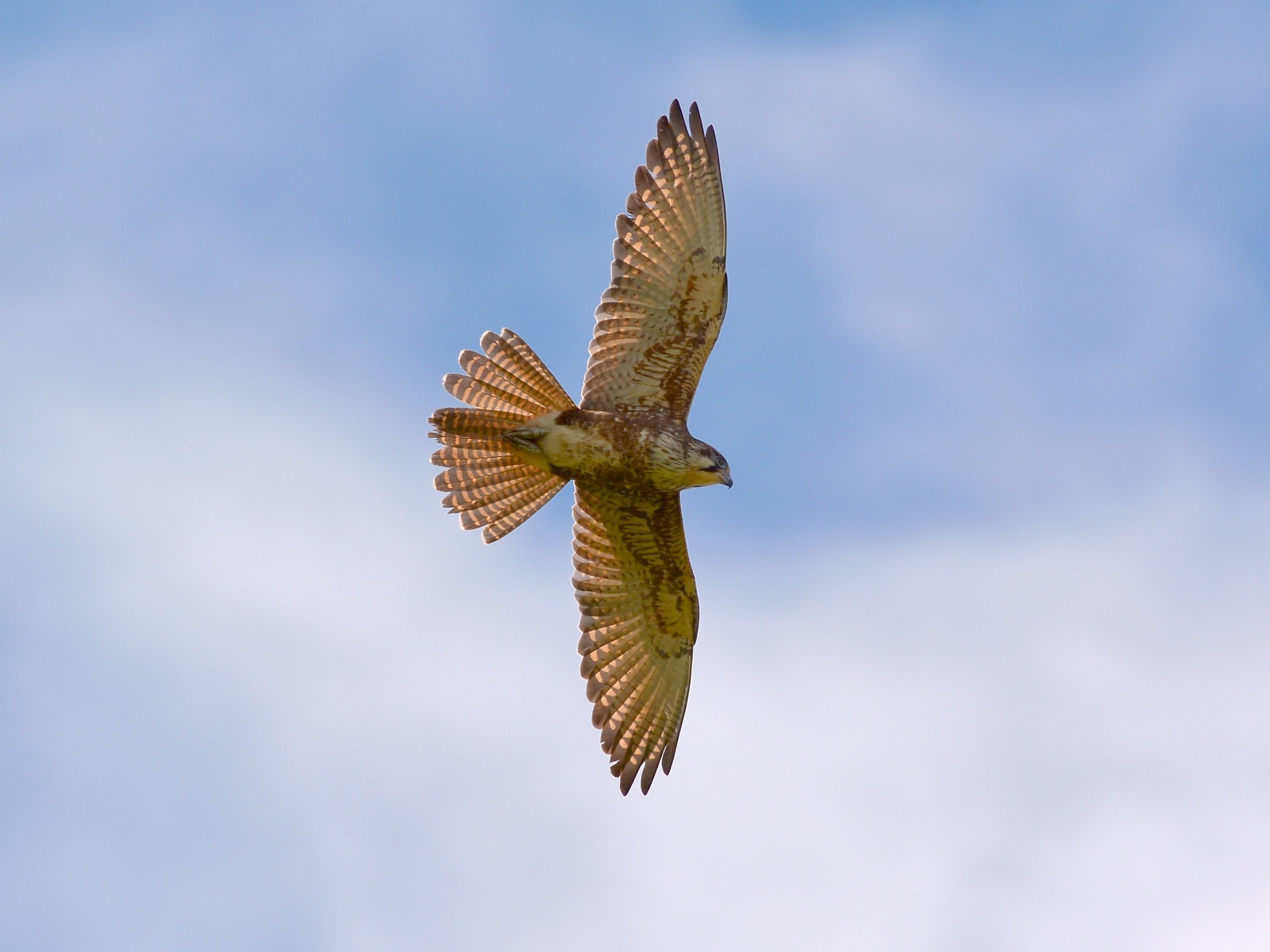
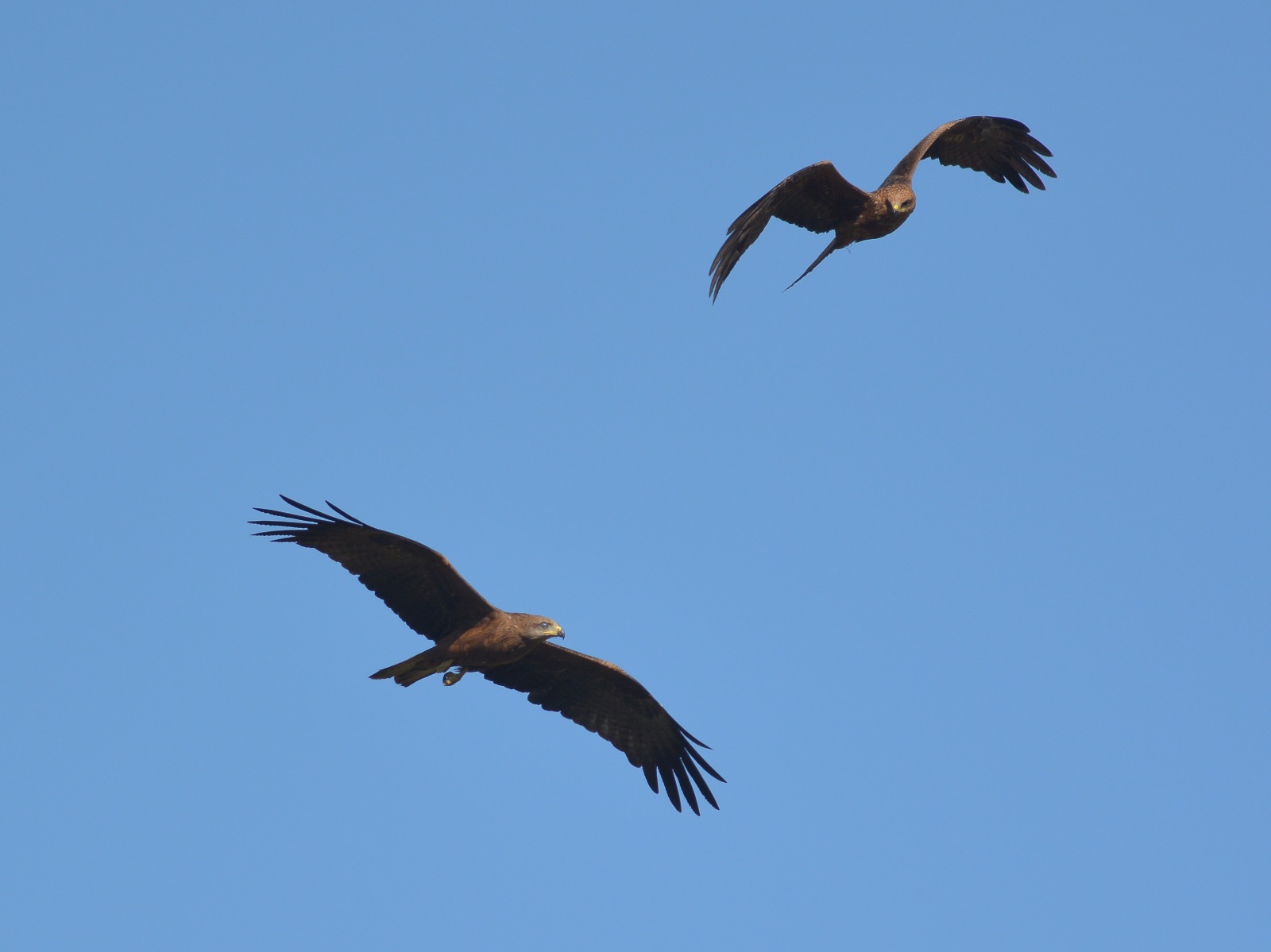
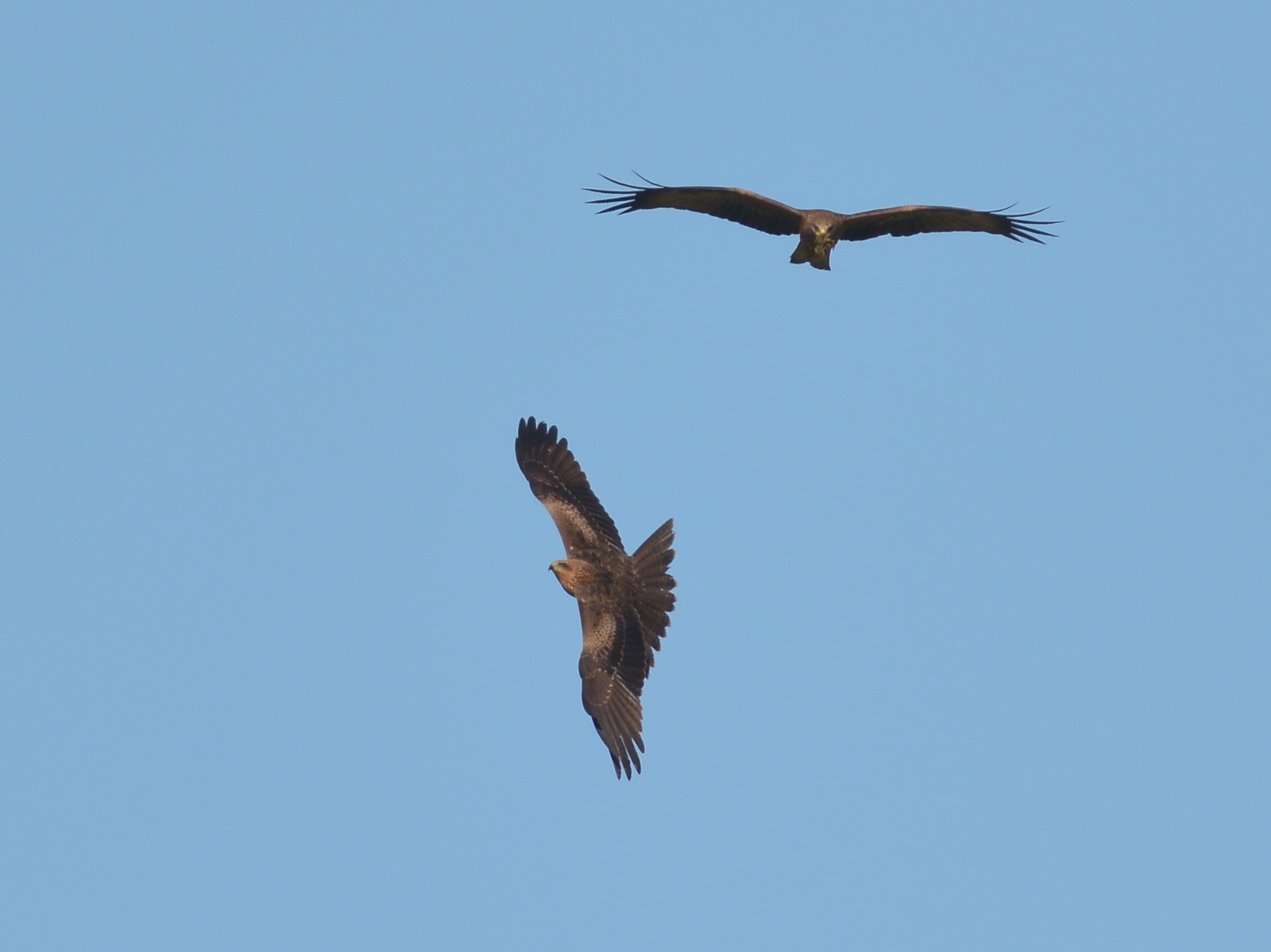
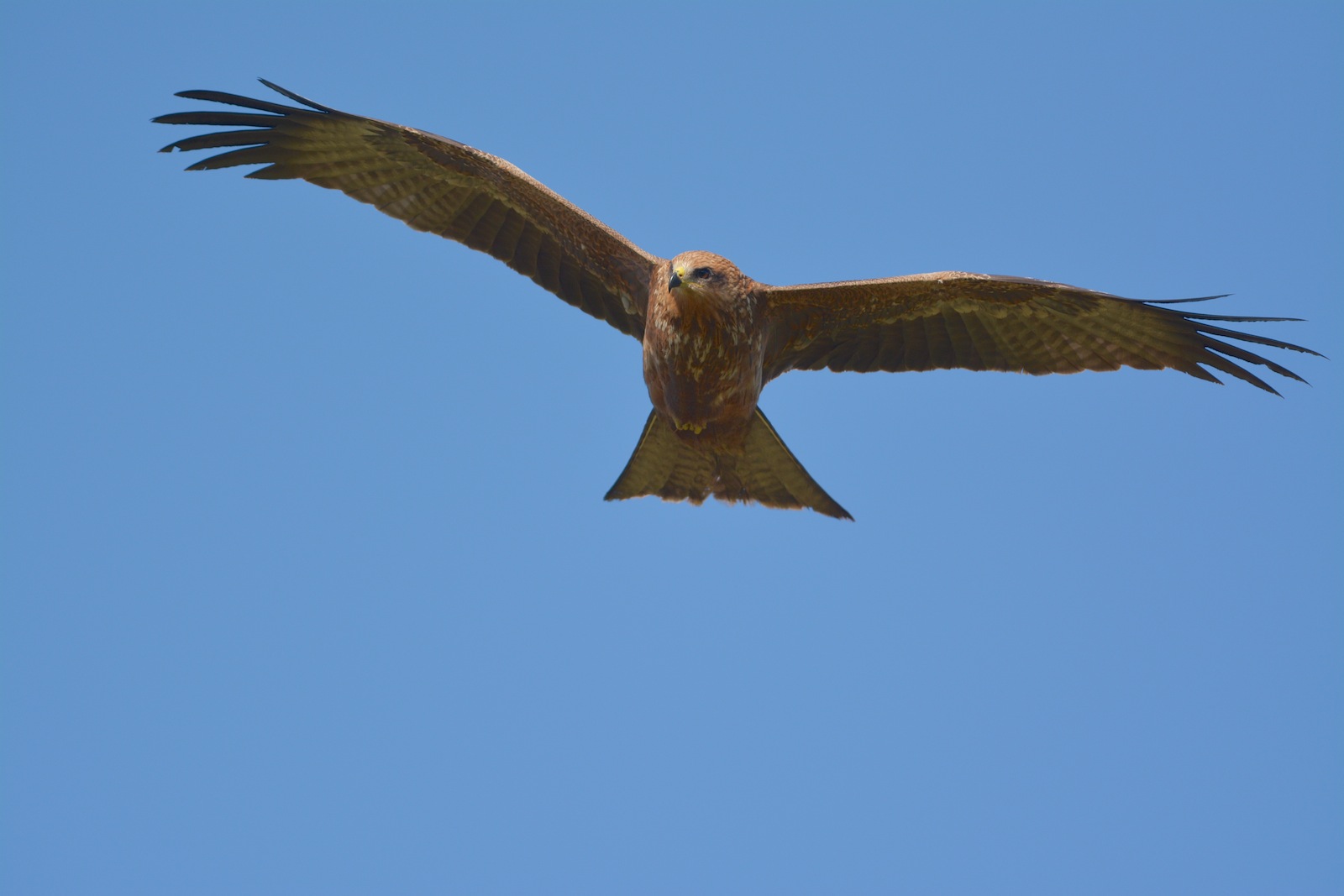
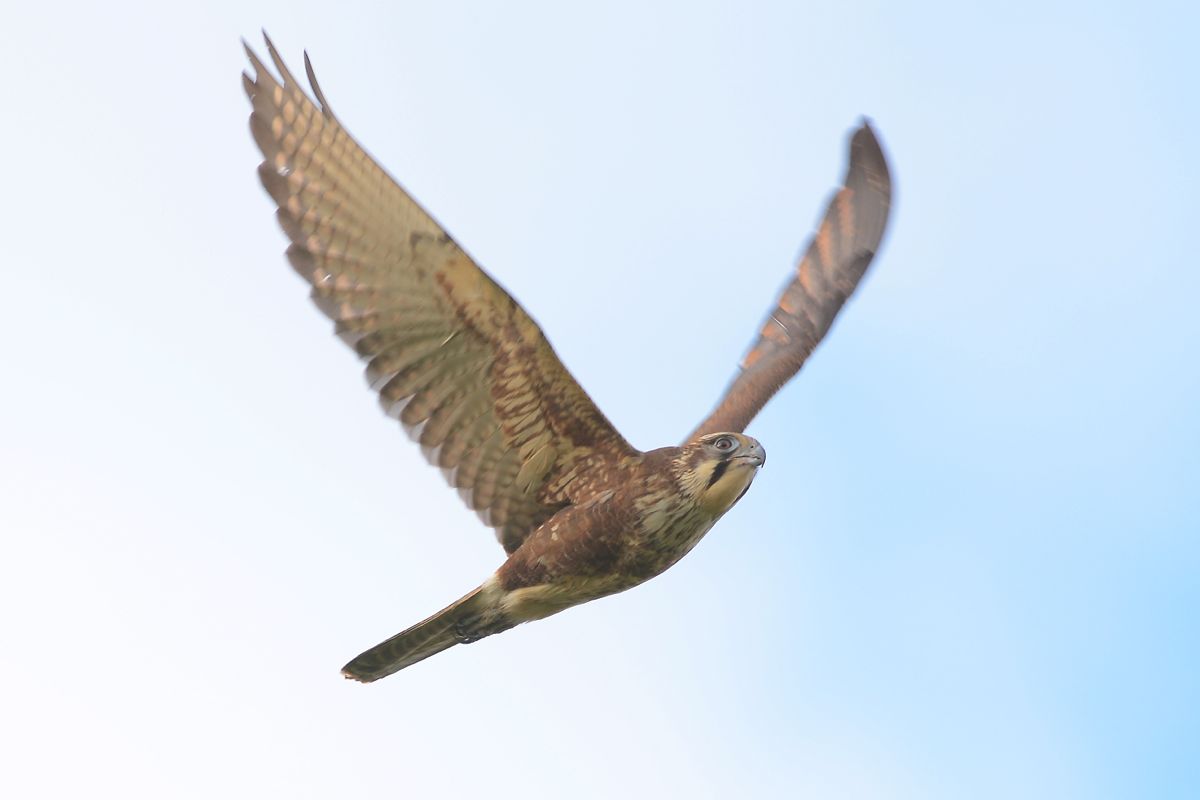
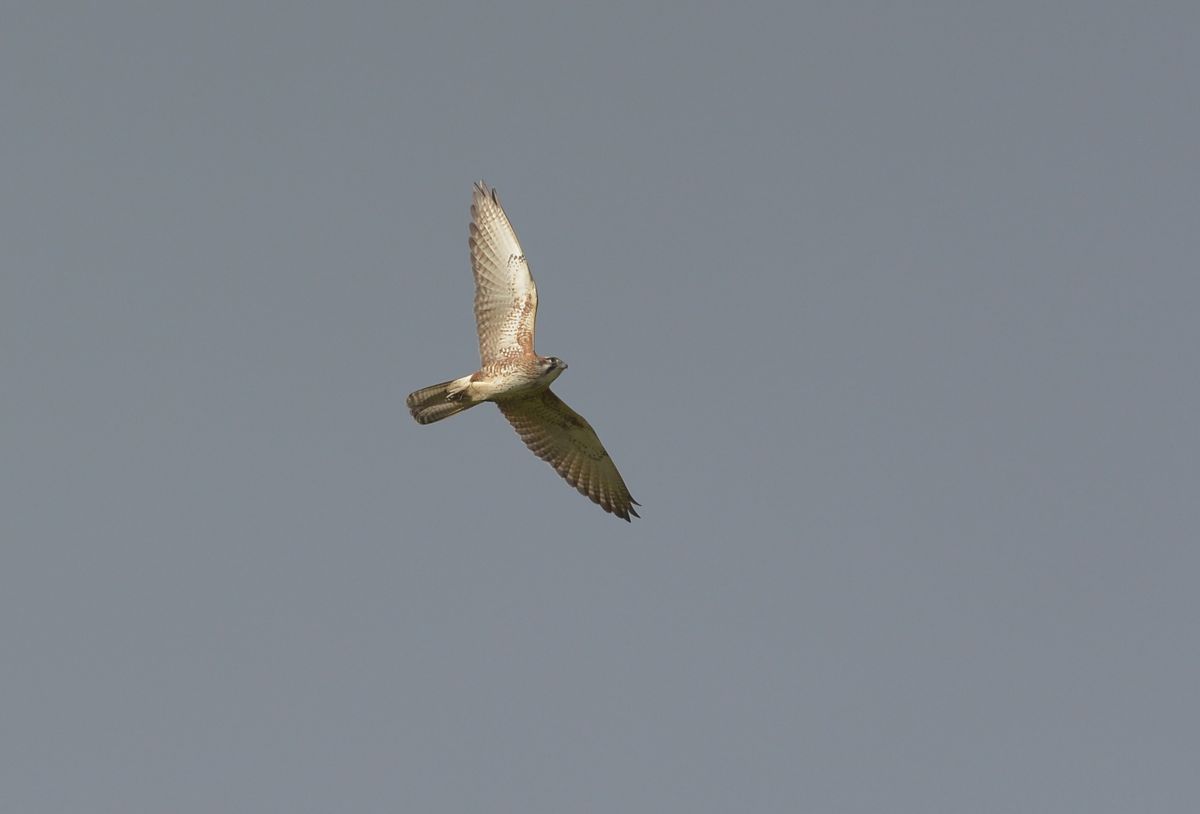
Brown Falcon on a turn. She has a nesting site in mind, I’m sure. She, because it is the larger of the pair.Black Kites dancing together in the late afternoon sunshine
This one is carrying what looks to be a large tuft of grass. He(?) scooped it off the top of the river sand cliffs.
With all the mice they are consuming, the high octane fuel is filling them up.
Most here would know that I am a Flickr addict. I love to log on, post a picture of two from my latest time out in the field and have developed a good range of Flickr friends who also share their work. But one of the limitations that Flickr has for me as a story teller is the inability to keep a story line intact. No point in posting 15 images there, as after the first couple, most will move on to the next posting. (I speak as much as from personal experience as anything else). There is only so many times you can post, “Oh, great photo of a Little Button Quail”.
Birds as Poetry blog I’ve always wanted to be a visual diary of the birds that we come across. We, being in the first instance, my muse, best friend, partner for life and finest critic, Dorothy she of the EE moniker. We, sometimes includes those who might take the risk and travel about with me. Mr An Onymous, Neil A, Ray, and Richard A (he of the Woodlands List fame) being all well known to the long term reader (whoever you are!)
One of the challenges I guess a bird photographer faces, is that sometimes the light, the bird and the area just don’t come together in a cohesive way, and over on Flickr I created the “Not Terribly Good Club” (apologies to Stephen Pile who created the “Not Terribly Good Club of Great Britain” which eventually had over 30,000 members, and thus failed its own test!) that listing at least gave me a chance to put up work that I’d always hoped would encourage people that sometimes in spite of our efforts the photography process, like any good art reaches into the soul of the artist, but not always does the result achieve the intended result.
Today, I received an email from Earthbound Light by Bob Johnson. Now I’ve never met Bob, but often his writing vibrates with my own thoughts and I think, “I wish I’d said that”.
Been pondering the past few days about how many more, as EE succinctly states, “How many more pictures of a bird on a stick does the world need?” Which has always got me to pondering why take another photo? (not Why take another photo, but rather why Take another photo. ) And I think Bob sums it up beautifully in his blog today. I don’t have permission to quote him directly. (Very conscious of Intellectual Property Rights, and copyright issues), so please feel free to pop over to the page and take a gander.
He talks to the photo moment as: absorbed in my own process and perception. With the resulting image being a sum of what went into the making, the subject, the lighting, the angle of view and the photographer. And I might add the enthrallement of those who view the images as it reaches out to their perception.
What struck me was the concept of the utter simplicity of the present moment, as the shutter is pressed. Only you, and I, will see the bird, the mountain, the party, the moment, in that one single unique way. So does the world need more birds on a stick. Probably not, but the process is to me such an extension of the moment that I observed and absorbed, that at another level, there just cannot be too many birds on sticks or bird in the air images.
Now, if, by some quirk of fate, you’ve read all the way down here, you probably think, “hmm, forgot to take his tablets today,” or more charitably, “I wonder where this is going. ”
I’m hoping it will mean more posting of the story of the birding day in this blog.
Not much rambling of words, but a look into the insight of what ‘we’ saw during the time out. Flickr still gets my attention, but I won’t have the pressure of tying to create a coherent poem out of unrelated photos. Will the quality be better here or there. In other words, do I really hang out to put the best images I can make on Flickr, or include them here to a much smaller audience. (Hmm, yet to tell how I’ll deal with that). But it will mean more shots of what ever Button Quail or its equivalent ‘we’ run across and draws us into their lives for even a brief instant in the universe.
So, here is a few from an hour or so among the birds on the Werribee River Park.
In the words of Bob Johnson, “Next time your out photographing, (Or birding), stop, and pay attention. Thanks Bob.
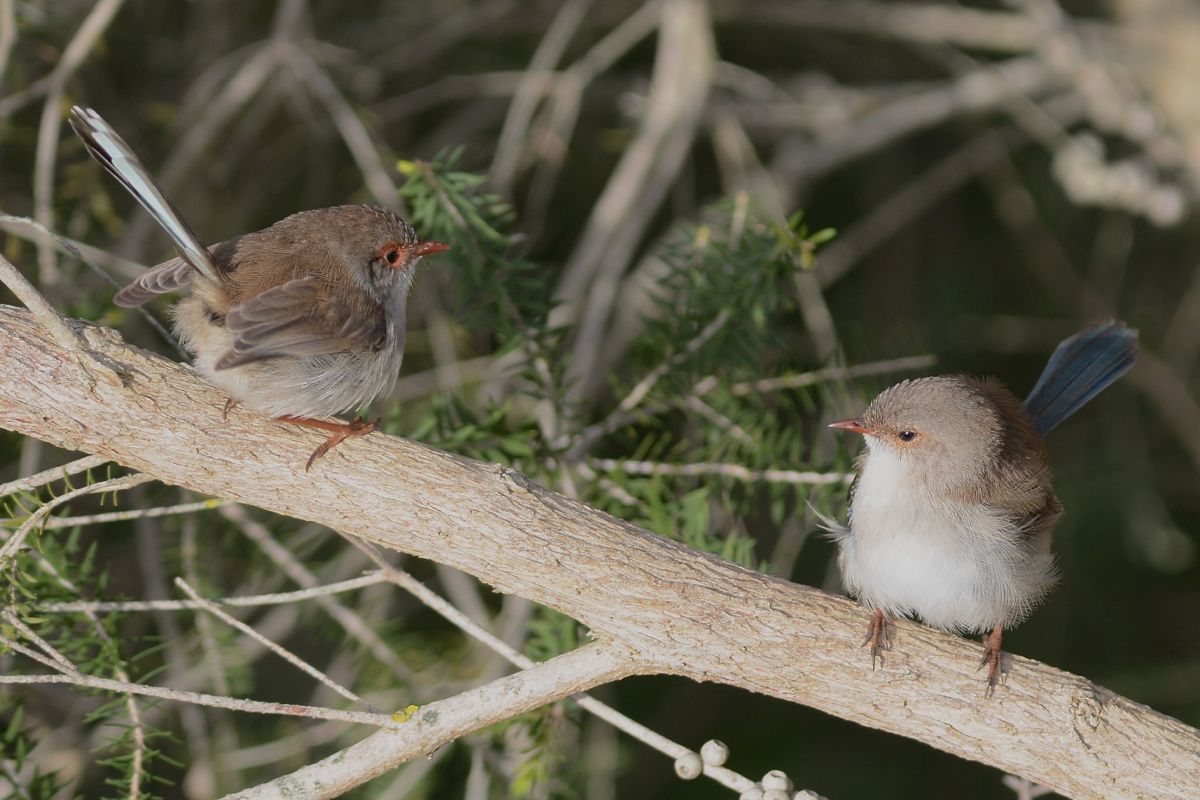
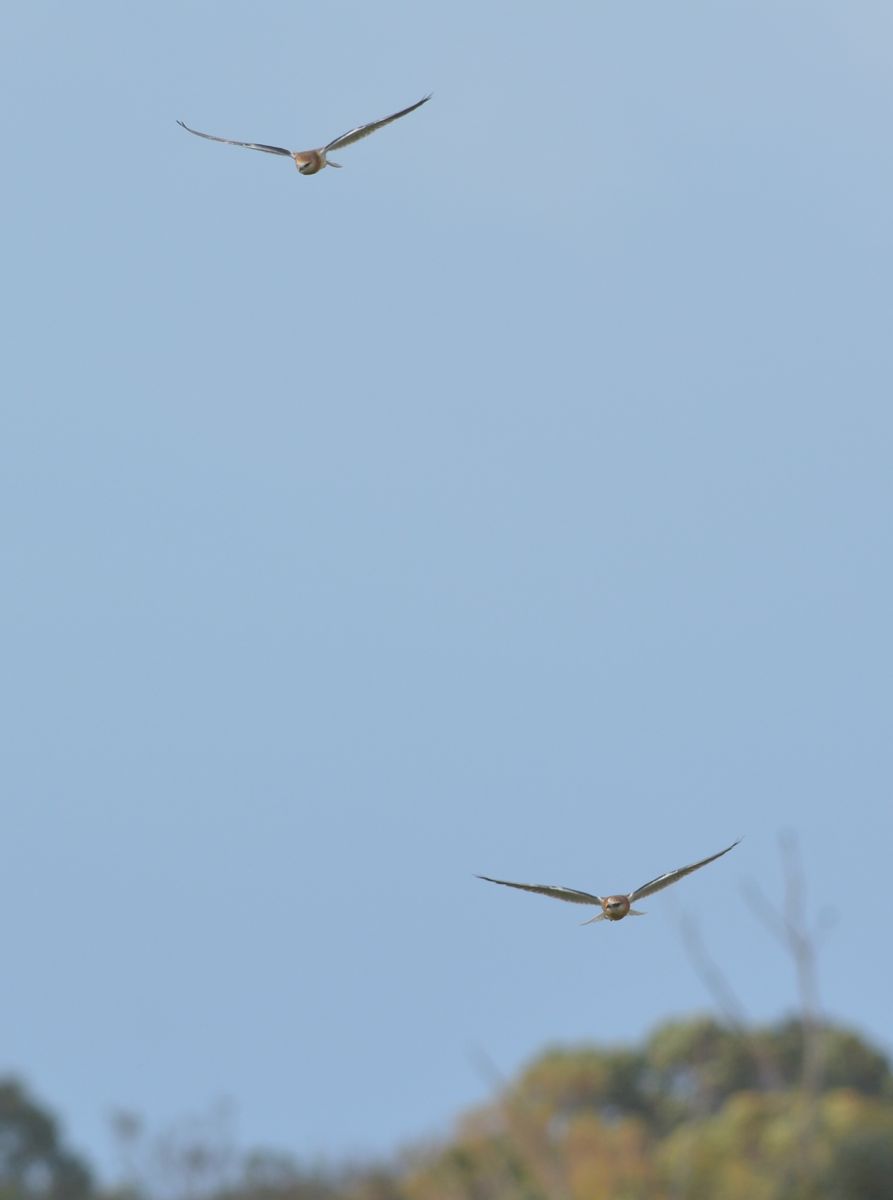
Snugglepot and Cuddlepie. Two really friendly Supeb Blue-wrens who entertained us with the antics.Just lookin’ for a home. A Brown Falcon that has taken over part of the park as a territory, and wishes everyone to know about it.Late sun glistens on the wings of the vocal Brown FalconSparrows, fleeing from a bathing moment. The approach of the Falcon was enough to set off a Magpie Lark, and its first high-pitched call had the sparrows on the move as one.Two recently fledged Black-shouldered Kites waiting for Dad to move that raucous Brown Falcon on.Precision flying team. Not yet, but they are beginning to learn to hover in light breezes. Part of those games include close passes with one another.
EE and I had a few spare hours on Sunday morning, but as we went to bed, the outside temps, and the icons on the news weather maps didn’t look all that good, so we decided on a long breakfast.
But looking out the window in the morning with blue sky, golden sunshine, the only thing was to bolt breakfast and head out. We decided “The Office” deserved a quick look, and its only a few minutes away, and before you can say, “Let’s go”, we did.
The Werribee River Park, (The Office) is just across a bridge over the Geelong Freeway, and once off the tarmac, its pretty much paddock. Some very old Pines must have been part of a homestead in the area, I suppose, and last week I’d spotted two Black-shouldered Kites sitting together on the tops of the pinecones. So I figured, that they might have been considering a nesting. How wrong was that!
Not only had they considered, but had just fledged in the past couple of days, two really healthy and vocal youngsters. The young sat on old stump of the tree and were fed in the sunshine. Well done Mum.
We’d also noted a pair of Black Kites in the same tree line, and they were still in attendance, no doubt there is a nest in the offing.
After a few minutes with a lone Brown Falcon a bit further on we stopped at the Park carpark. And immediately the harsh screech of a female Black-shouldered kite was joined by the higher pitched screeches of young ones. And then slowly it dawned on me.
I’d been watching and reporting on this pair for the best part of 3 weeks now, and was pretty convinced with all the activity that they were “planning” a nesting. But no. Wrong again!!!
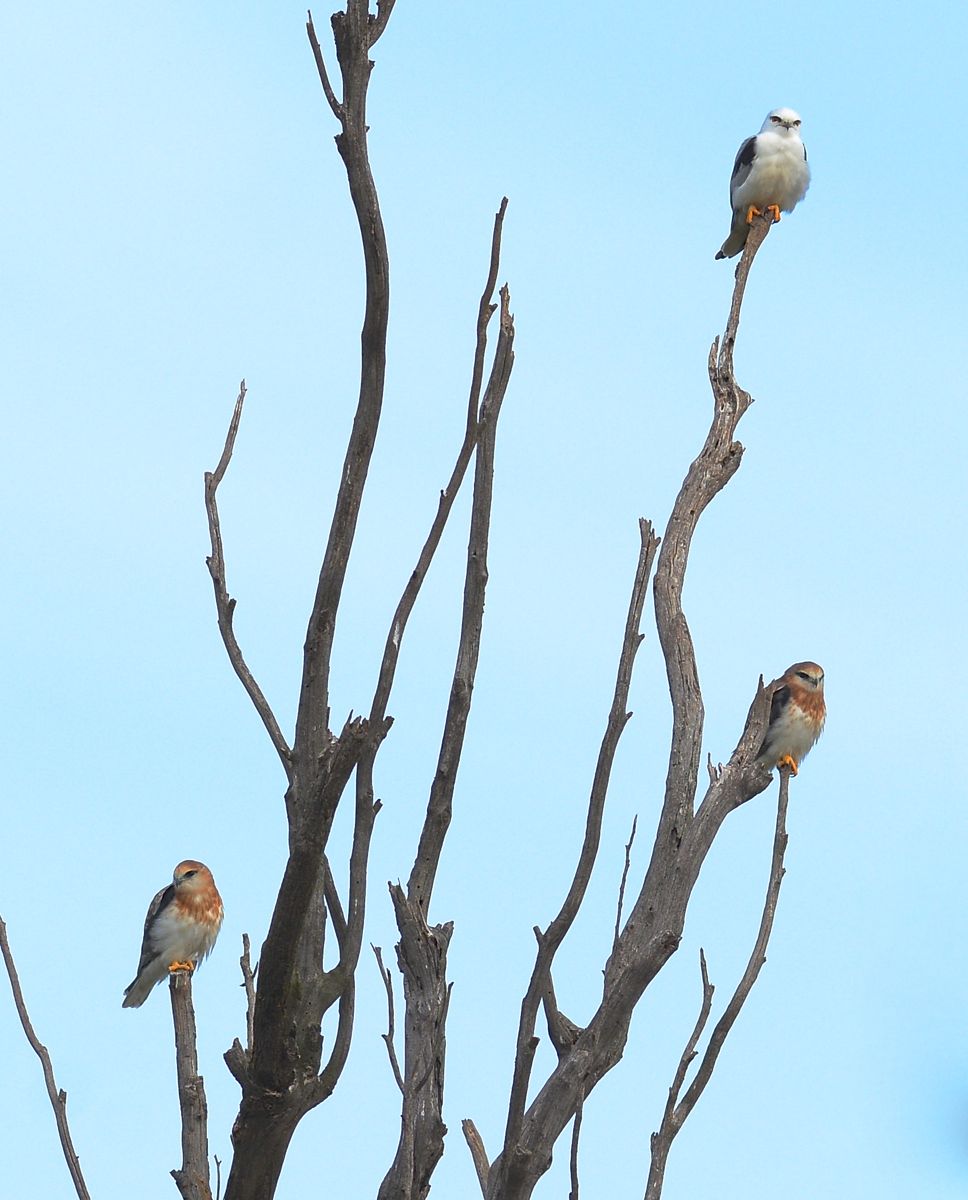
She has just fledged, not one, not two, but three, beautifully marked birds. No wonder the male was so busy catching mice the past couple of weeks. Put mouse in one end, and out pops a beautifully fledged cinnamon and ginger Black-shouldered Kite.
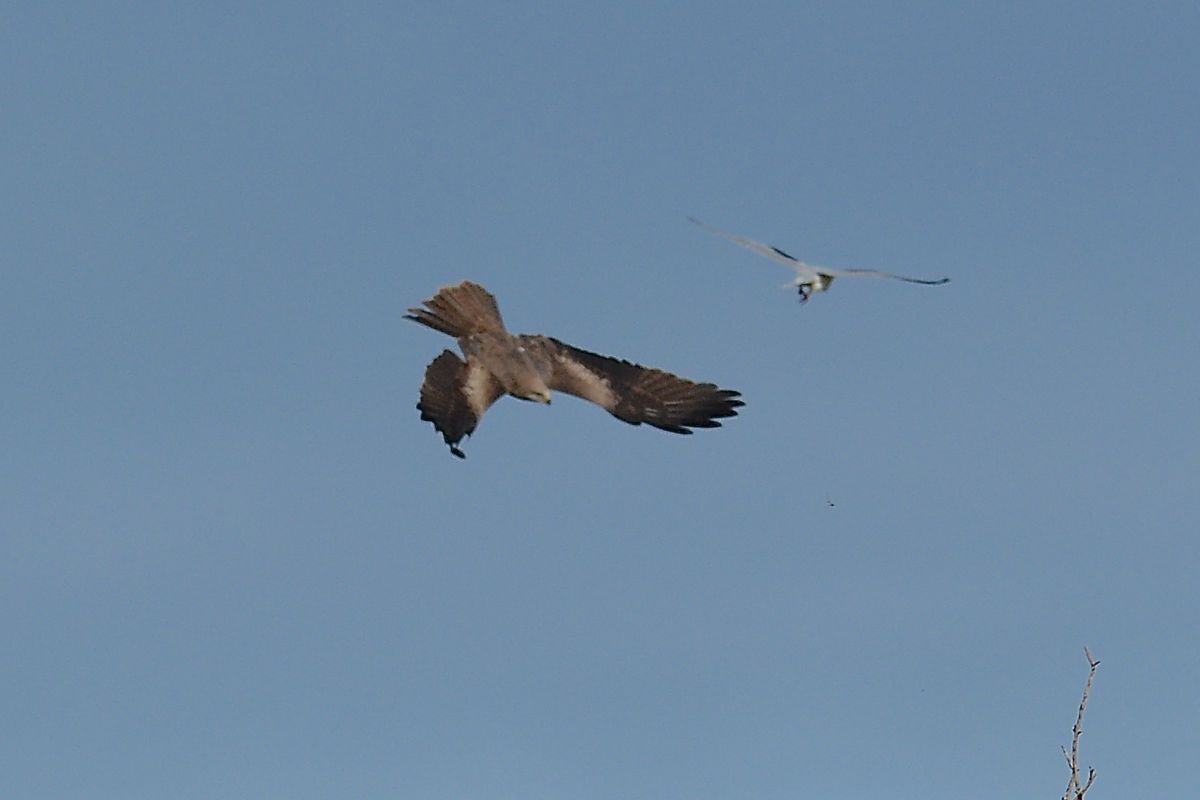
Now all this activity does not go unnoticed by those who make their living by preying on others. A Black Kite swept up from the River flats and hung around the young. At first I thought it might be going to threaten the young, but its true intent was even more devious. Dad flew in with a mouse and the Black Kite began harassing the much smaller bird, for his catch. In the end, better speed, and skilful harrowing, caused the Black-shouldered Kite to drop the mouse. And the Black moved straight on to it as it fell. But now Mum and Dad were free to harass the Kite and in the end it moved away. It tried again later, but both birds were not to be caught off guard again, and Mum took the prize to the nest tree and the young followed her down into the top of the tree where the nest must be concealed. (It’s too far in behind chain fence for me to get a good looksee.)
Then of course, the weather changed, time ran out, and we decided to retreat for the day.
But with 5 young birds in such a small area we’ll no doubt be back. Oh, and we saw the family of Flame Robins, as well, but didn’t get that close.
“OK, you got me out here, how about something to eat”. One young with harassed adult.Just a quick, ‘hitch up” of the mouse for better travelling.The beautiful markings of this fledgling are shown as it tucks into some nice mouse.Yum, the tail is always the best bitThat rich ginger and cinnamon deserve a bit of sunlight to see at their best.Female calling to her young as the Black Kite sweeps by.Dropped it, or Got it, depending on which kite. Not pinsharp, but the mouse is visible in free fallThe probable nest site. She took a mouse under the canopy and two of the young followed.Family portrait.
I’ve discovered a new park area (new for me), closer to home. It cuts along the ridge of the Werribee River plain near the Werribee Mansion. Its called the Werribee River Park, and is run by Parks Vic. It butts up to the very eastern edge of the Western Treatment Plant. I’ve looked at the area on a map a number of times and pondered how to get there as it seems to have bike track that connects to the Federation Bike Track that runs all the way back to Altona and beyond. Not wanting to lug all the gear in over 3 kilometres or more I’ve been thwarted by no road access.
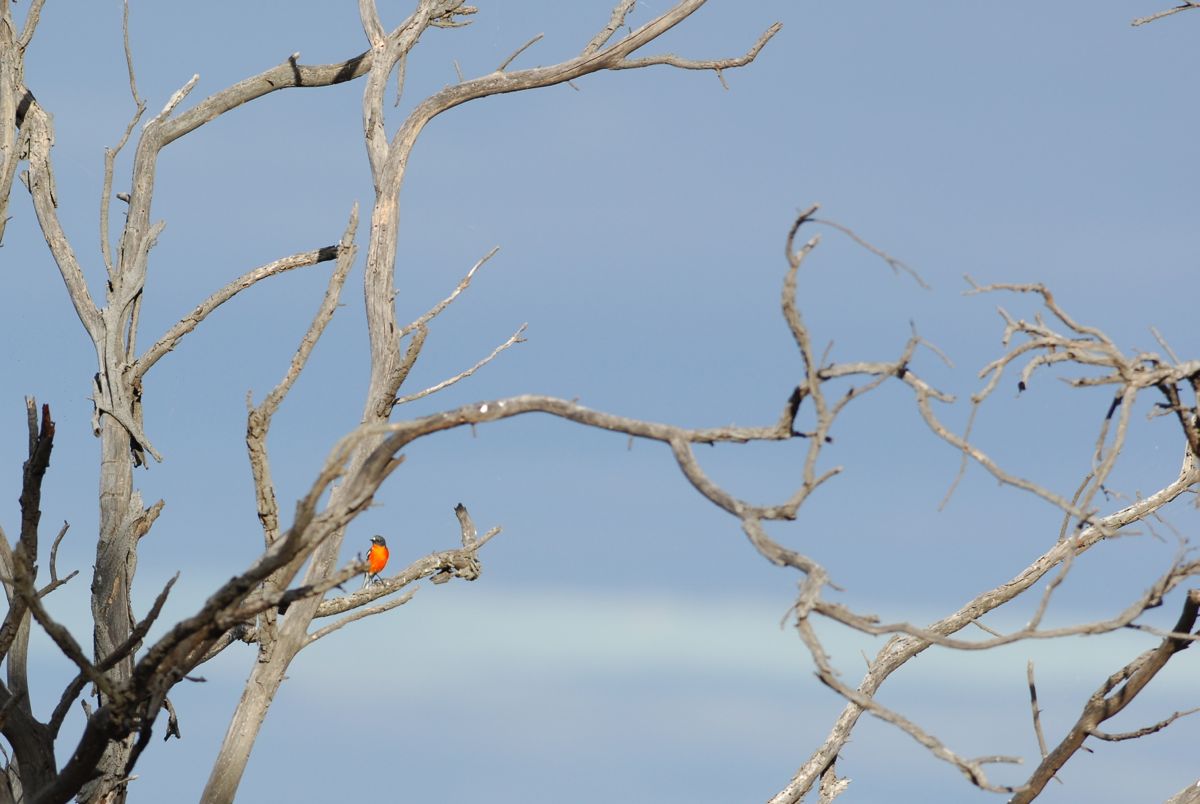
But, it seems, wrong I was. A road access to a small carpark at the top of the ridge is indeed available, and as it runs on the WTP boundary, has lots to offer the raptor photographer. And. I may not have mentioned this elsewhere, but it also has a population of Flame Robins in residence for the winter. So what’s not to like.
Access is via New Farm Road, past the Melbourne Water Discovery Centre and over the Geelong Freeway, and just before a very well locked and secure gate a small dirt road marked with an explanatory sign “Werribee River” leads onto the road to the carpark about another kilometre in. Out of the car, and the first thing I discover is a pair of Black-shouldered Kites who are obviously thinking seriously about a nesting run.
I suspect that the run of very warm weather has helped the mouse population and Mrs Mouse has seen it as her bound duty to extend the population as much as possible. To of course the great delight of the Kites.
Had an hour or so to myself and decided to see what the afternoon sunshine would bring. No great load up here, simply put in the lens and camera, drive for 15 mins and sit in the carpark. About as hard as bird photography can get.
Said pair are quite along in the relationship, the female has probably completed the nest. I would hazard a guess at its location from her perching positions. He on the other hand now has to prove his ability to provide food. So while she sits high on the tallest dead limb, offering him her screeching cry for both encouragement and direction, he sets out to provide the snacks.
The river has cut through the old sand here and at this point is several hundred yards wide, and the cliffs are 20 m or so high. The grassland is an obvious place for Mrs Mouse and her tribe and so the Male is readily able to fly along the old river flat and hunt. When he is over the plain he is probably not much more than 30m or so over the ground, which for a photographer on the top of the bank is such an advantage as he is directly in front or below my camera line.
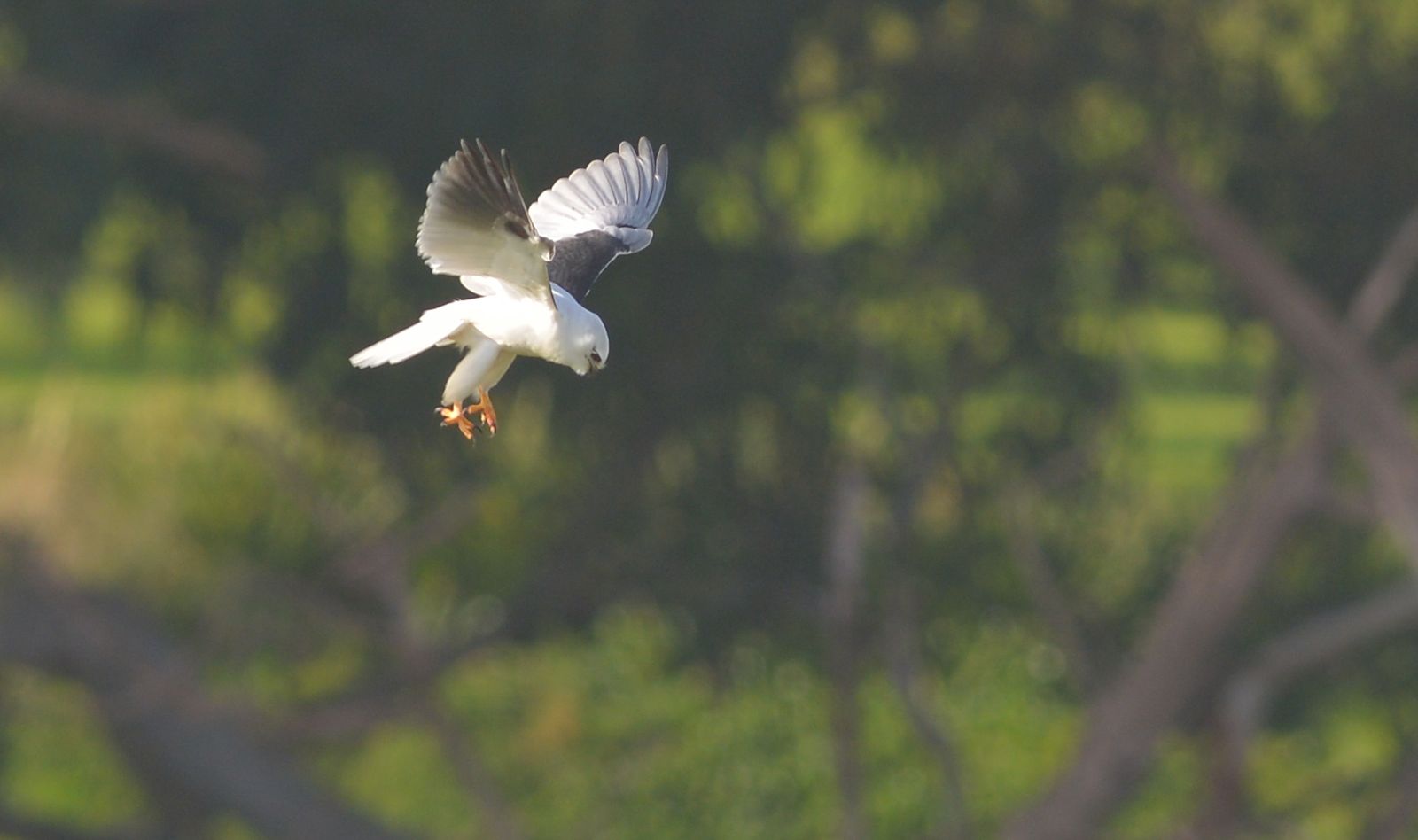
All I have to do is wait. And not for long. I reckoned he was getting a mouse about every 10 minutes. His hunting time was down to a minute or less. And out of about 8 strikes I saw he was successful on 6 of them.
So he hunted and I watched. Swinging the 300mm around became a bit of a chore, so next time, the tripod and Wimberley head will be part of the deal.
Enjoy.
Evening sunshine gives nice shadows for him to work in.I noticed he always works with the light over his shoulder. My Mum’s best advice to budding photographers.The legs down are part of the balance and positioning.Closing in.That little dude is down there somewhere.All concentrationTurning into the light to come round for another run.Another one bites the dust.All feathers and legs at work gaining the balance for the stationary head.No, I’m not on the tucker list.So great to be able to almost reach out and touch him.
Birdlife Australia, in conjunction with bayside councils and environmental groups all across the country have been running an awareness programme titled “Farewell to Shorebirds”
They have a web site, and videos and information about this year’s migration of these determined little flyers. Farewell to Shorebirds.
The events culminate (I think that is the right word) with “World Migratory Bird Day 2014” This is a United Nations sanctioned event and lots of events on the day bring an awareness of the efforts of those who are working with the birds and the supreme efforts of the birds themselves as they make their 14,000km trip to their breeding grounds in Siberia. Here is the link to the international organisation.
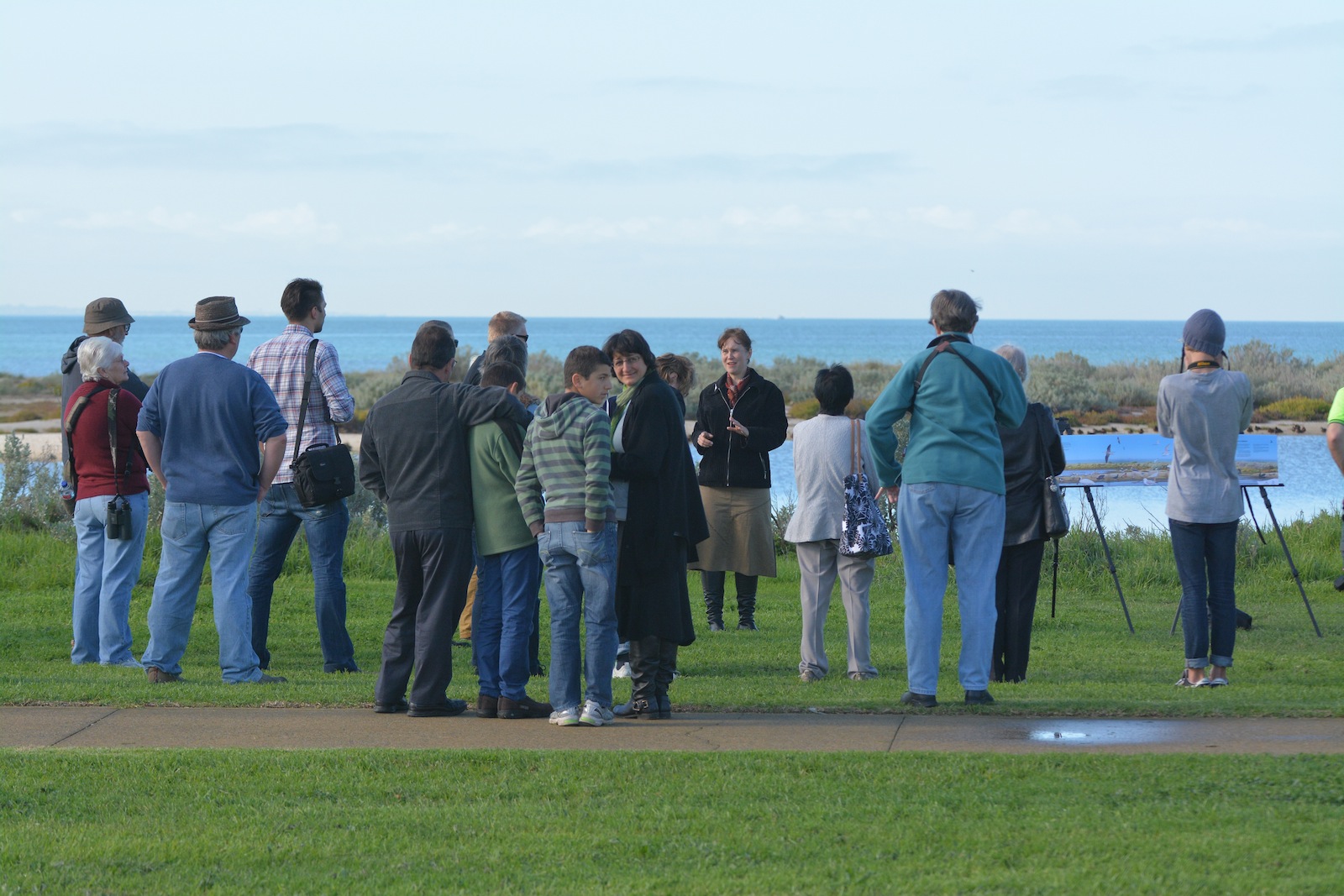
At a local level, the Hobsons Bay City Council and Birdlife Australia set up a morning of activities and information to celebrate the day. As it turns out, The day the UN has set aside for World Migratory Bird Day, is the second Sunday in May. Which as it turns out, coincides with our normal, “Mothers Day”. The perfect opportunity for Spin Doctors and Word Smiths.
The event this year was held in a foreshore park in the Altona area, and as a ‘free’ bbq was promised, there seemed no reason not to abandon normal programmes and head on down.
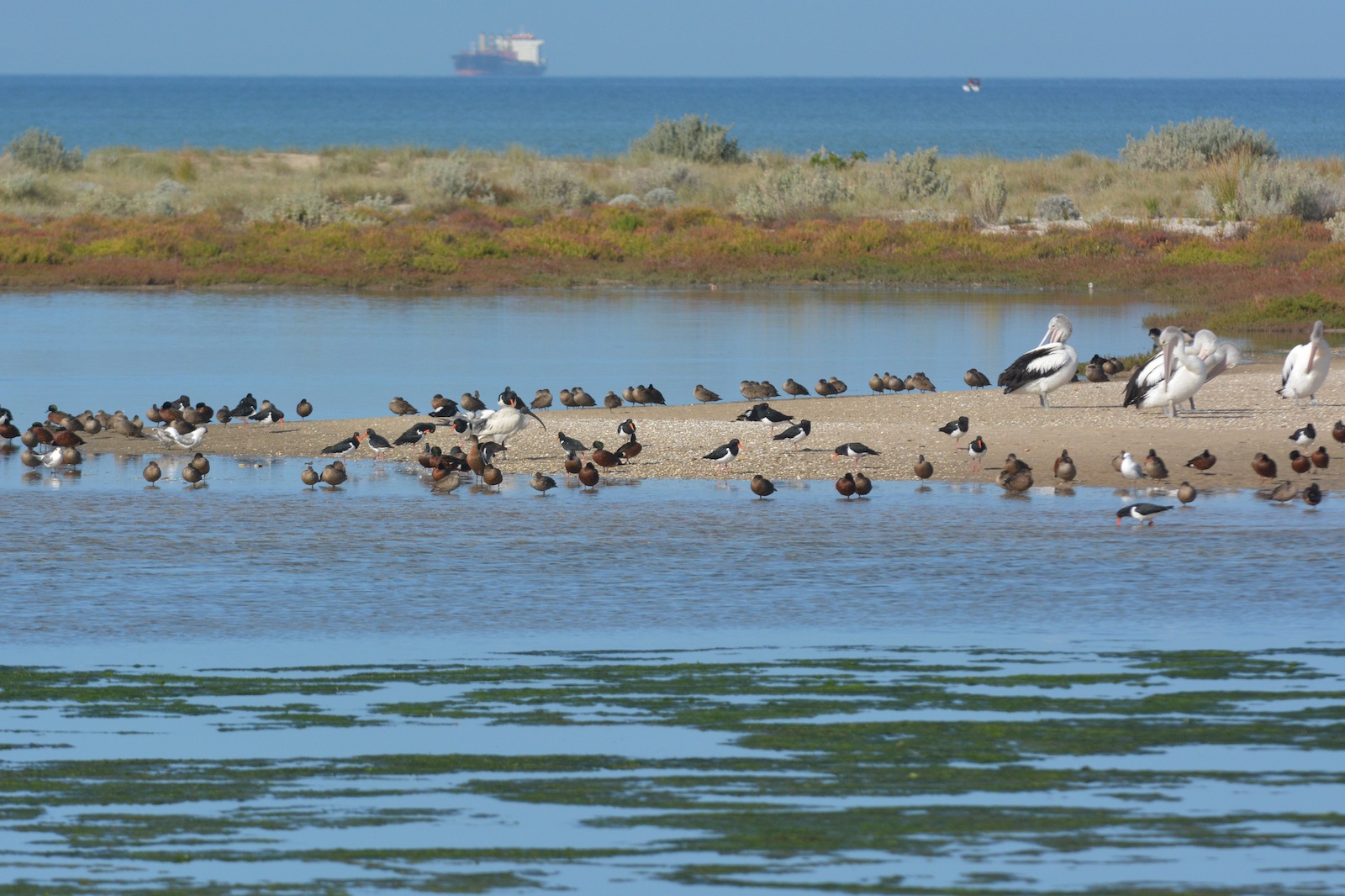
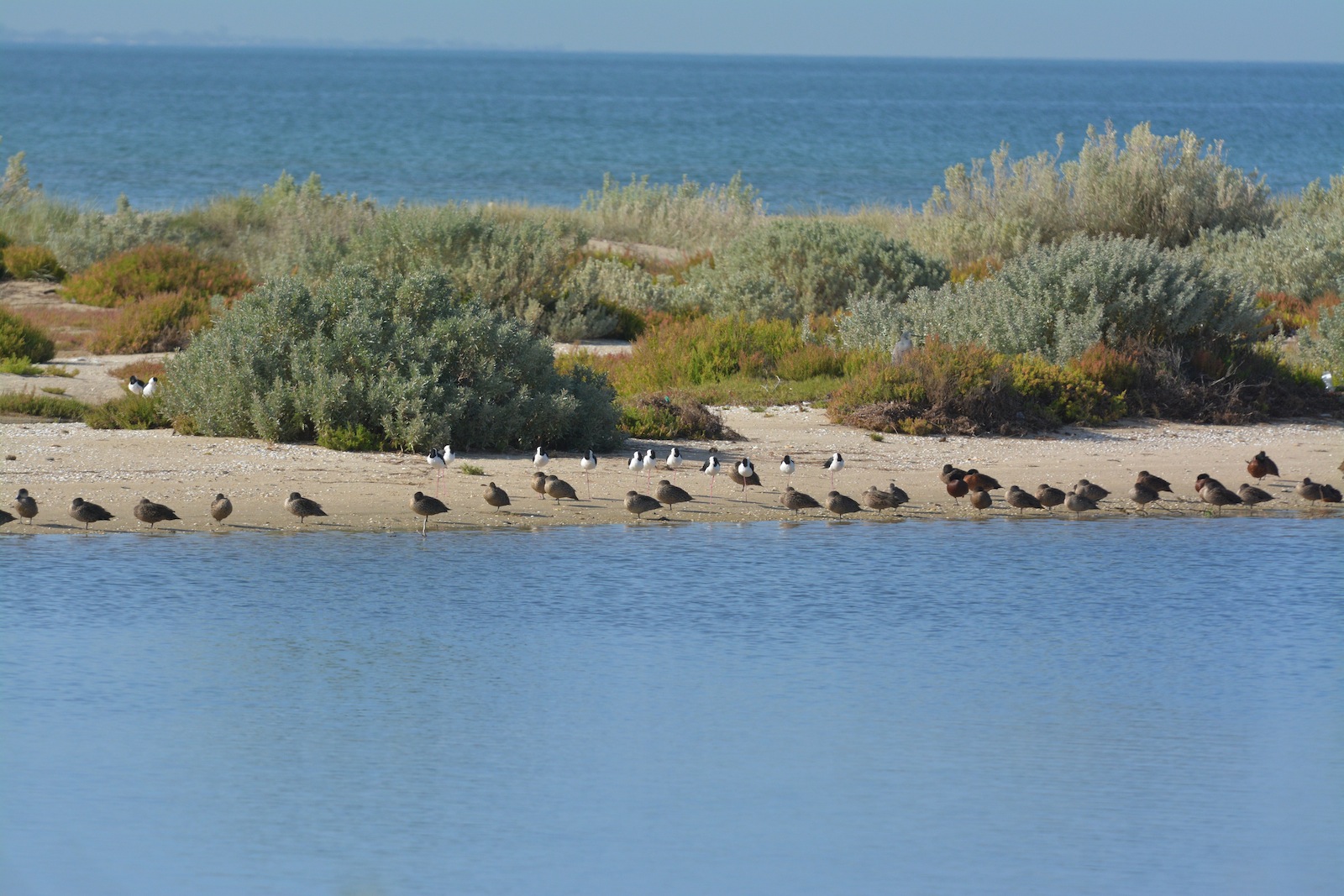
The weather was sunny day, light breeze and relatively low tide. So the shoreline had lots of ducks, swans, pelicans, oystercatchers, terns, spoonbills, herons, egrets and more ducks. But no waders! Of course not, Silly. They’ve left for the north. So we stood around and pondered the flight of about 40gm to Siberia. That is about 12 jellybeans. And as the festivities, (and the bbq) got going we were able to view the variety of birds that call the mouth of the Laverton Creek home.
The local Mayor, Birdlife Aust dignitaries and the local ranger, gave some interesting stats on the birds, their habitats, their travels and the like. The Spin Doctors were ahead on points as the connection to Mothers Day and the little tiny mothers, heading for the Siberian river flats was drawn to our attention. Also not forgetting the ‘daddy’ birds who were also on the way, and without, if you’ll pardon the pun, their input, the process would be pretty much doomed to failure. But I digress.
We were also alerted to the difficulty of the little travellers on their way and on the return because of the impact that human development has had on feeding areas. (A point that I have to admit that cannot be too highly stressed. Problem with a blog is you get personal reflections!) I digress.
One of the issues addressed was the difficulty of dogs running free in Dogs off Leash areas. Just happened that is where we were standing. And then like a stage managed concert, (Janet Jackson would have a been impressed), two large dogs, decided that all this talk was annoying them, and started what is commonly termed a “Dog Fight”. These were big brutes, one a German Shepherd the size of a small horse, ((Insert thought, wonder how much it costs to feed the thing for a year.) (Probably a small third world country food budget)) I digress.
So the whole event had to wait until the ‘Responsible Dog Owners’ managed to seperate the protagonists and things quietened down. Me, whenever I see a dog salivating after a toe to toe, I know that its a dog under stress, and a dead set danger to others. Still, to the credit of the speaking group, they regathered their collective thoughts and continued on. However I think the point of danger to birds, dogs, humans and the like was already well made. Well done demonstration team. NOT.
More birds, more talk, more looking, and over to the bbq we strolled. Well done team.
Thanks for all those involved in the organisation, their participation, and their friendliness and help to all who wanted to know just a little more about these wonderful travellers who call the shores of Hobson’s Bay home for part of their year. We await with interest for their return, and the return of their new offspring.
A pretty good way to spend Mothers Day, or any day.
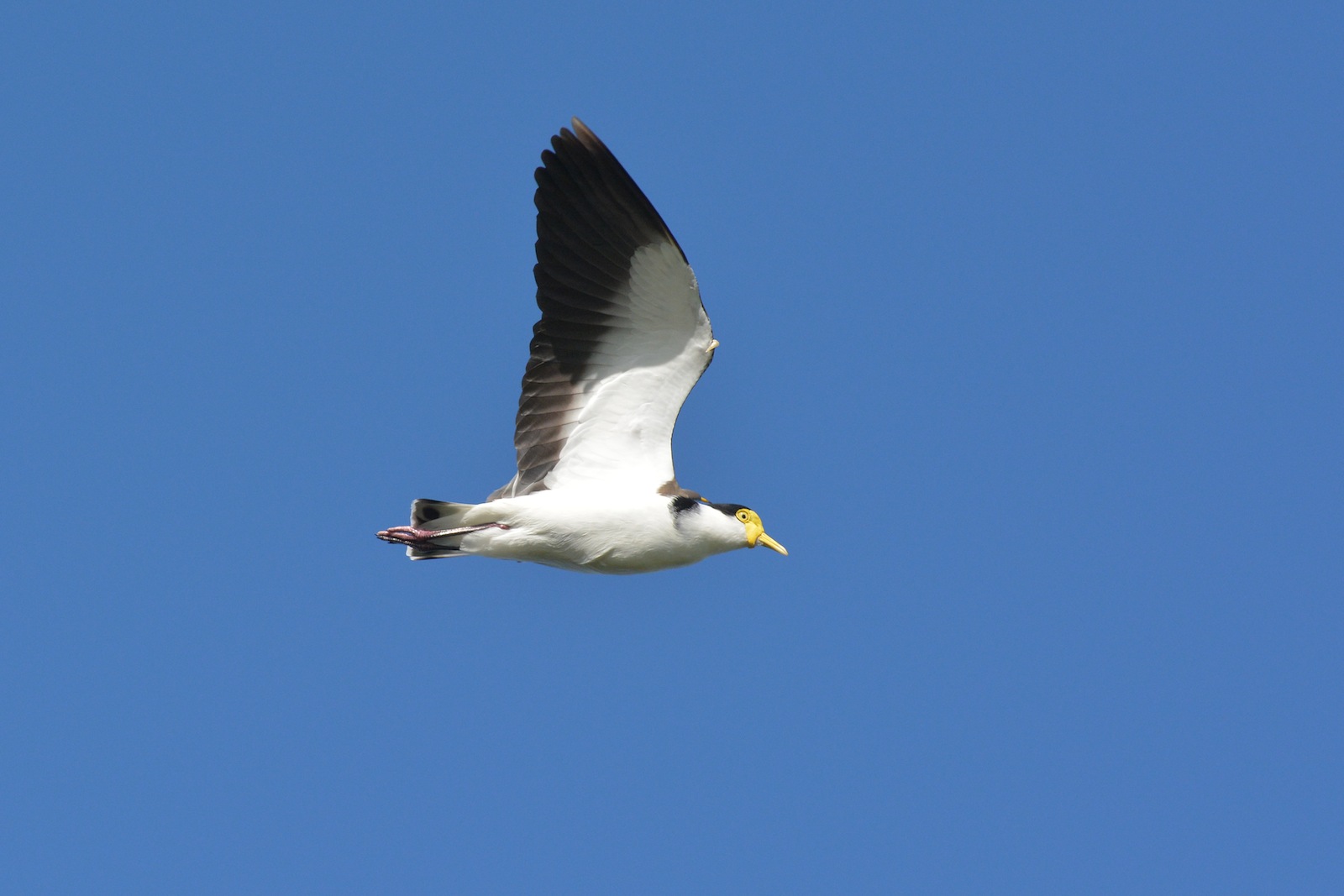
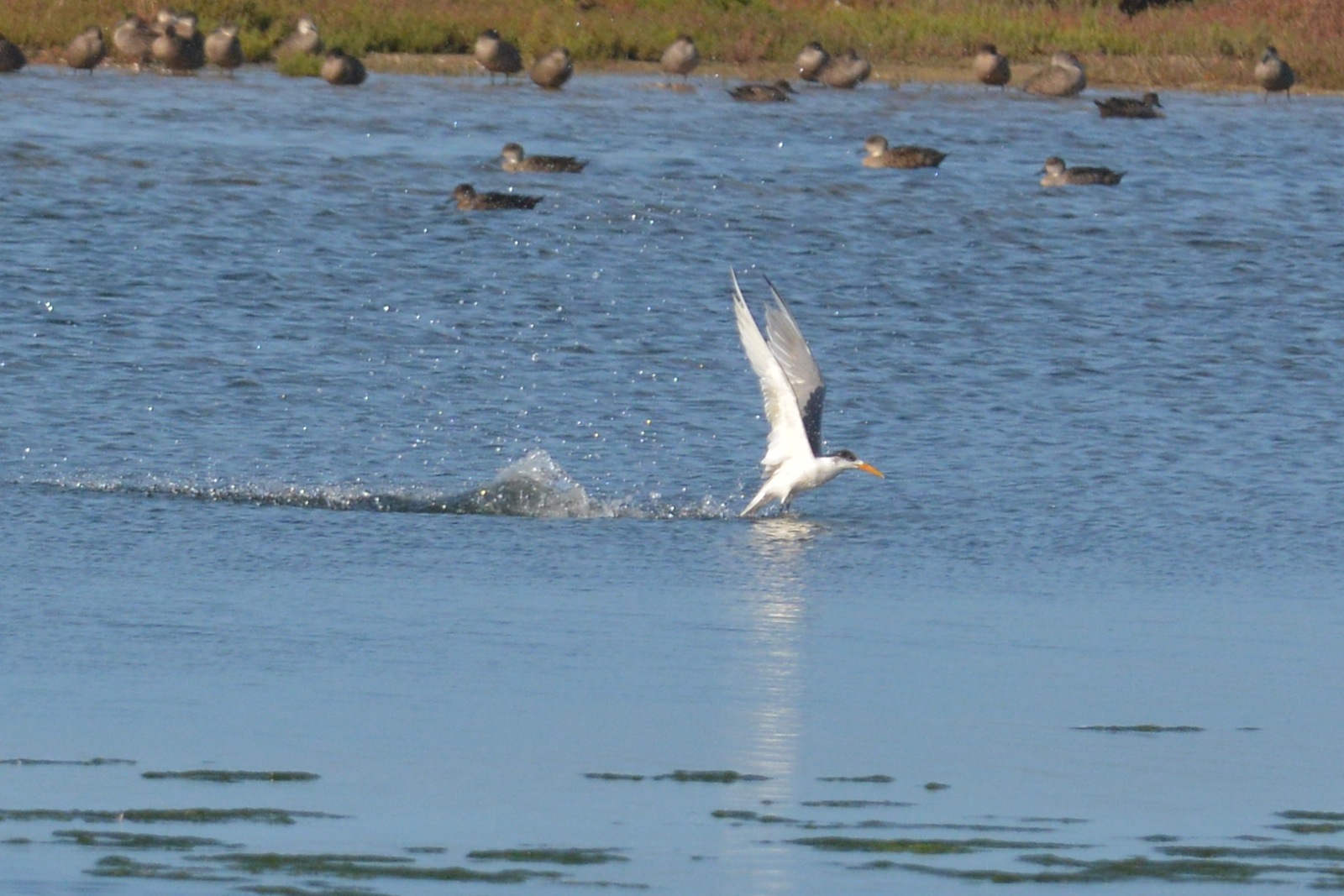
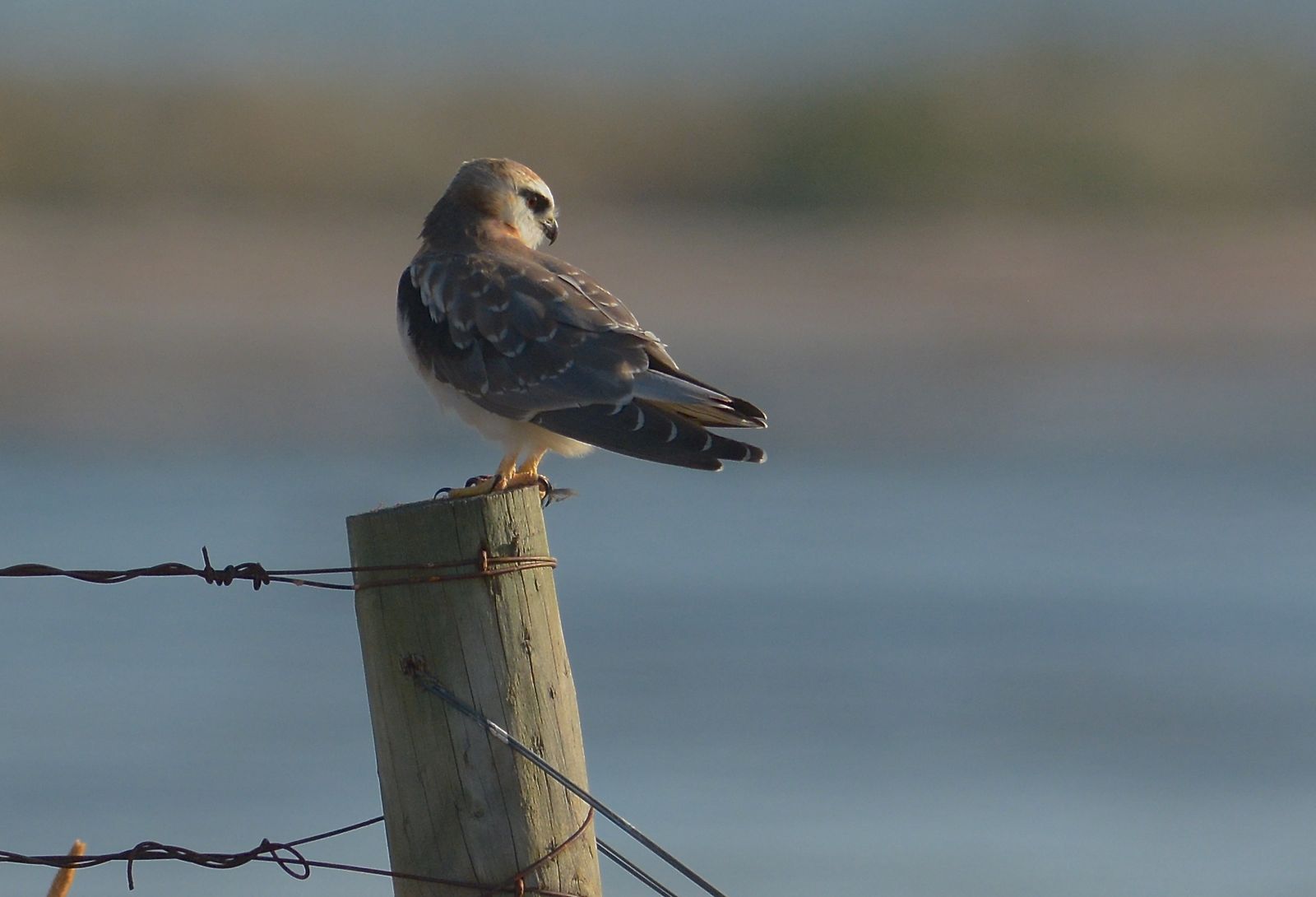
Hobson’s Bay Mayor opening proceedings.Part of the official party. Thanks team.A collection of local inhabitants on the sands of the Laverton Creek outflowThat is why we used to call them “Spur-winged Plovers” before they were called Masked LapwingsAn Australasian Gannet way out in the bay fishingTern closer in fishingWhat its all about. Birds relaxing in the sunshine by the outflow.I know, its not a Shorebird, but this juvenile Black-shouldered Kite was just sitting around.
One part of the family was off to Sydney for a holiday. So how about we leave our car with you and go to Avalon airport? Now the cool thing about saying yes to the request of course is that Avalon is but a mere 5 minutes from the WTP. And well, we’d have to come back that way after all the farewells, and book ins and security checks, and stuff.
So we found ourselves on the Beach Road in the middle of the afternoon on a not too brilliant for photography day. The folk at the farm had taken the opportunity of the change in the weather to conduct some control burns in some of the bigger fields. And off course the raptors simply couldn’t resist the chance of fried or roasted or bbq locusts, mice, grasshoppers, lizards and the like.
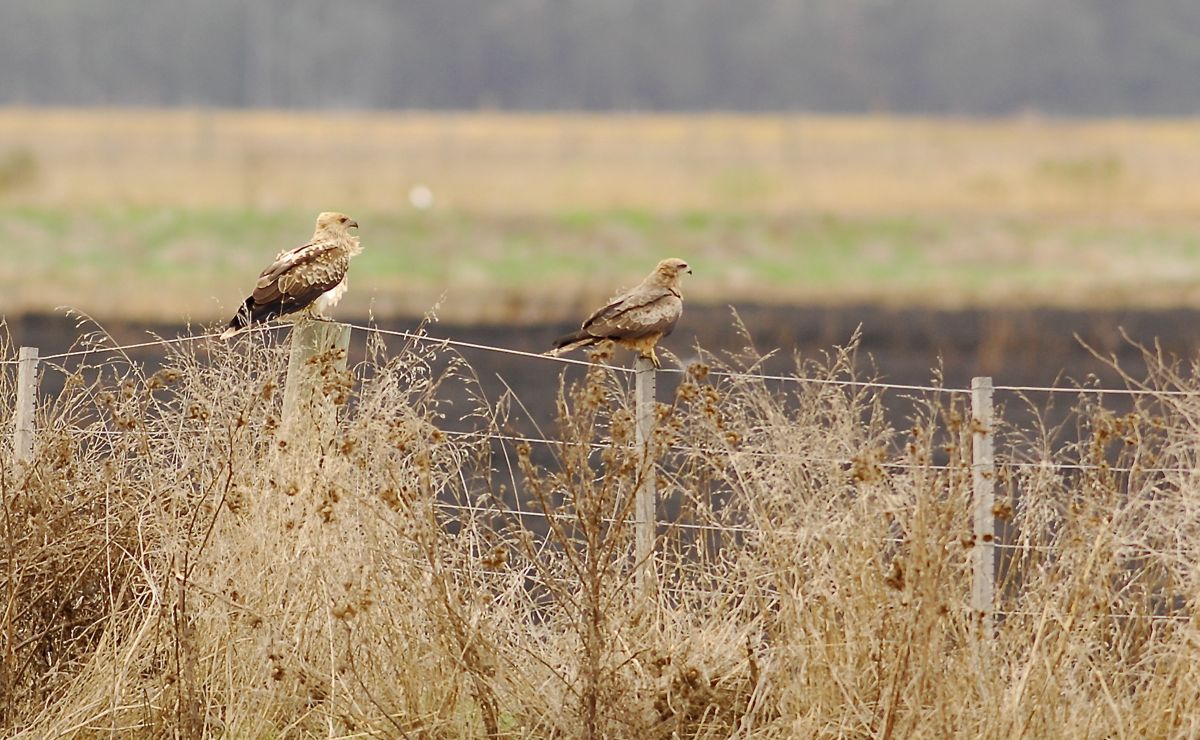
As we travelled down the Beach Road, the sky was awash with larger birds. Perhaps as many as 20 Whistling Kites, twice that number of Black Kites, at least two Australian Kestrels, and an assortment of Ravens, several squadrons of Australian Magpie and innumerable Magpie Larks.
From a photography point of view, the light was wrong and the birds too far away, but the old D2xS on the 300mm f/2.8, stepped up to the challenge. So the big birds swept over the still smouldering ground, or made a landing and picked up a morsel or two. Their friends sat on the fence line and the Whistling Kites kept up a constant call. In the end, we just watched, and enjoyed them enjoying themselves.
A Black Kite became a target for a rather aggressive Whistling Kite and a sky wide battle ensued. At first the Whistling Kite was much faster, could turn quicker, gain height faster and generally outfly the Black Kite. Quite a number of direct hits from above, below and the side ensued. In the end, I decided that perhaps the Black was just taking it all and wasn’t really concerned by the output of energy by the Whistling Kite. It ended by the Black gaining height and just sailing away. The Whistler settled down for a rest on the fence.
On the other side of the road a Black-shouldered Kite busied itself in finding mice for its evening snack.
We also found a large family of Flame Robins. The males looking a treat in the sunshine. But far too far away to do them justice.
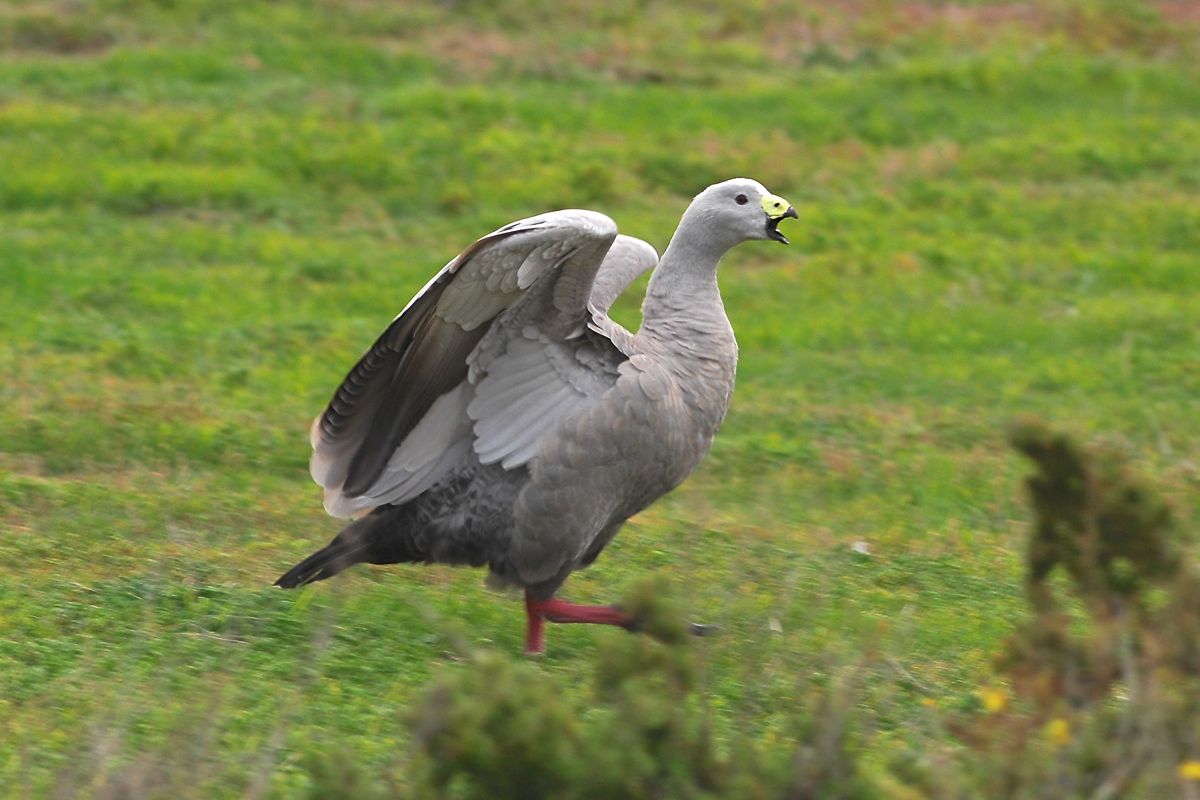
As we drove around Lake Borrie on the return home a pair of Cape Barren Geese were feeding in an open area. Really perturbed by our audacity to encroach on their feeding spot, the male gave me a lecture and wing-waving display. I apologised and we parted in good company. Just have to be more careful about sneaking up on him.
With the light finally drifting into greyness, it was considered time for home.
A burst of late evening sunlight highlights the maize against the brilliant dark sky.Red burst from a Flame Robin male, one of 4 males and about 6-8 female/juveniles in the area.Two Black Kites. They are at completely different heights.Australian Kestrel turning for another sweep over the still smouldering paddock.One post one KiteIn times of plenty everyone is friendsWhistling Kite, vs Black Kite. Probably not as one sided as it at first appeared.Completely uninterested in the bbq, this Black-shouldered Kite stuck to its larder. A mouse.Cape Barren Goose. He is giving me a lecture on my tardiness in being in his territory.Late evening light over the You Yangs
With the hot weather just making day trips so hard for photography, hard on the birds, hard on the photographer and hard on great images, we’ve been a bit subdued of late.
A small dry cool change wafted through and we took the chance to go back out on the Murtcain(m) to see if we could sight those elusive Brolgas.
The evening light played such a fine tune over the scene, and the breeze from the ocean was really refreshing. The birds seem to enjoy it too.
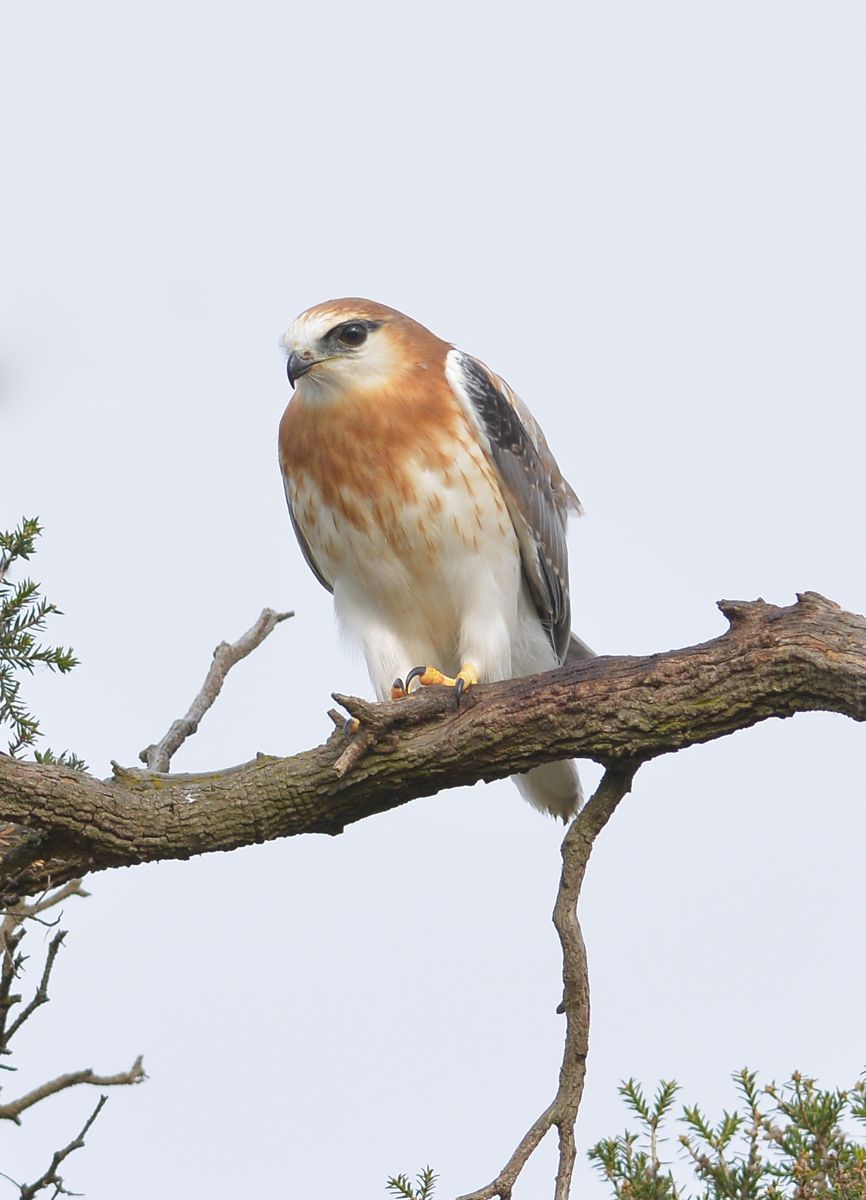
Black-shouldered Kite on a high vantage point.Juvenile Black-shouldered Kite, with its wonderful brown ginger markings.Zebra Finch.Yellow-billed Spoonbills settling in for an evening meal.Sharp-tailed Sandpiper.Swamp Harrier, all a bustle as it turns its body to keep up with the intended targetRoyal Spoonbill who stopped in the middle of a preen for a bit of a dance in the water.Not to be outdone, a Yellow-billed Spoonbill perfuming in the water. Perhaps the cool breeze gave them pleasure too.Oh, so elusive Brolga. Late evening stroll.Black-shouldered Kite hunting right on sundown. It lifts its head to be sure there is no sneak attack.
It had been awhile since we’d made a pilgramige to the WTP, and Mr An Onymous had wanted an opportunity to try out the new lens. All 300mm of it.
So it seemed in view of the really hot days, an early morning and then somewhere nice for lunch and a coffee, preferably inside and with air-conditioning made a lot of sense.
We went down along the area east across Little River from the Bird Hide. The track takes a bit of a run along the narrow edge between land and sea, and usually has a 50metre section that is, well, rough. Its just a collection of rocks that the waves pound remorselessly. As such, ok with the Landcruiser and the high clearance, but nigh on impossible in the little car. However on this trip we discovered that the water rates had been making good use of themselves and the kind people at WTP had managed to get a surface over the short section and it is among the best parts of the roads down there. Excellent. Thanks to all as it save me heaps of time not having to double back to get around the former rough area.
We parked and waited. No Sea-eagles, but a pretty obliging Golden-headed Cisticola with its nesting activities kept us busy for quite awhile. We even parked on the new tarmac, and photographed waders as they worked among the rocks and sand. Nice one.
Down near the area called The Borrow Pits, we came across a couple of recently flown Black-shouldered Kites. Guess they’ve only been out a week or so, still have the beautiful cinnamon and ginger chest and head feathers. Mum and Dad are still providing food and it was interesting to watch a couple of food passes.
And on the way back some Whiskered Terns entertained us with their antics as they swept along the bunds catching the tiniest of insects.
And the big lens proved its worth with the shot of the day an Australian Hobby in brake, dive and turn mode with all the feathers out, and the tail spread at different angles as it made an amazing change of direction. My lens missed it completely. But. More power to him.
We’re off again to Goschen at the end of the month.
Brown Falcon at hunt in the early morning light.
Hobby at remarkable speed turn.
Golden-headed Cisticola with nesting materials
Two juvenile Black-shouldered Kites waiting for Mum to arrive with a mouse. They had just spotted her coming and began such a racket.
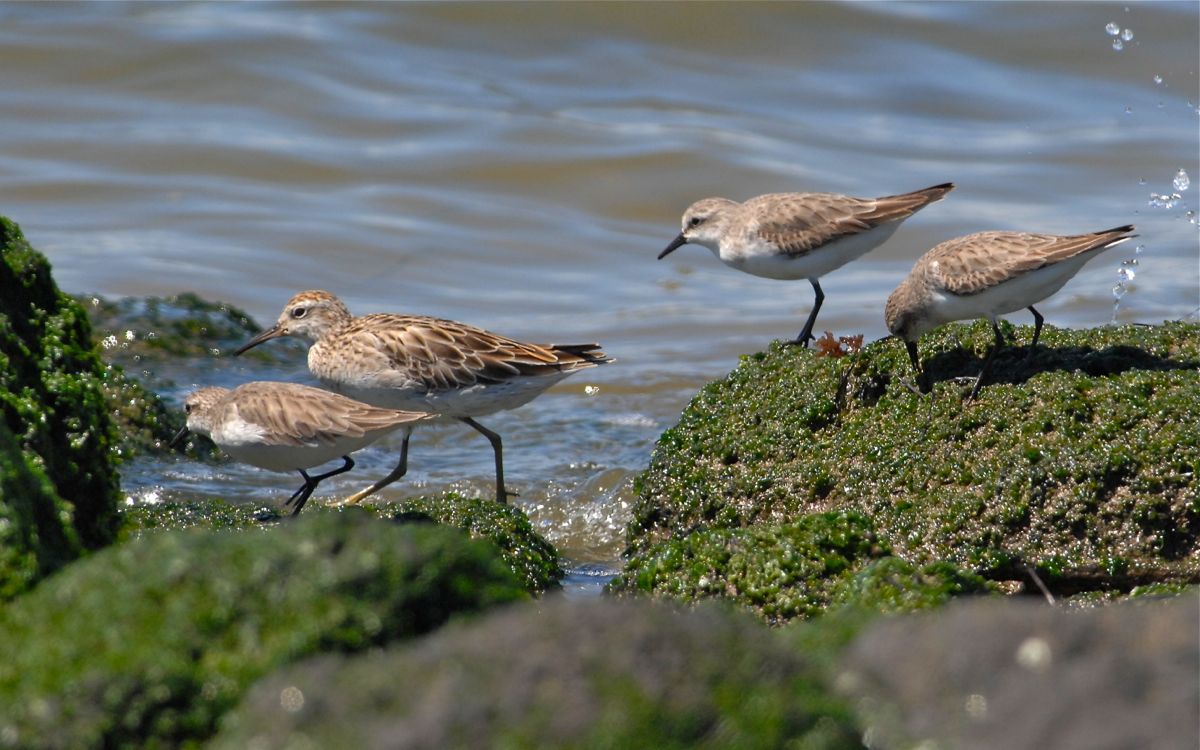
Red-necked Stint and Sharp-tailed Sandpipers at the ‘new’ water crossing at WTP
There is no doubt about it, timing in the bird photo world is just about everything. You can come back from the Camera Exchange with some of the best goodies on the planet,(and a severe bend in the credit card), and walk about for days and not see much at all.
You can turn up with your old gear, not well prepared and not expecting much, and it suddenly all happens around you.
We, Dieter, Dorothy and I, took an early morning mark down to the Western Treatment Plant on Thursday.
Weather was supposed to be cloudy overcast, and we mostly went for the cups of tea, the chats, the play with the cameras (two of us are breaking in new kit from Camera Exchange), I had to make do with my ‘old’ technology stuff. Feel almost antiquated now.
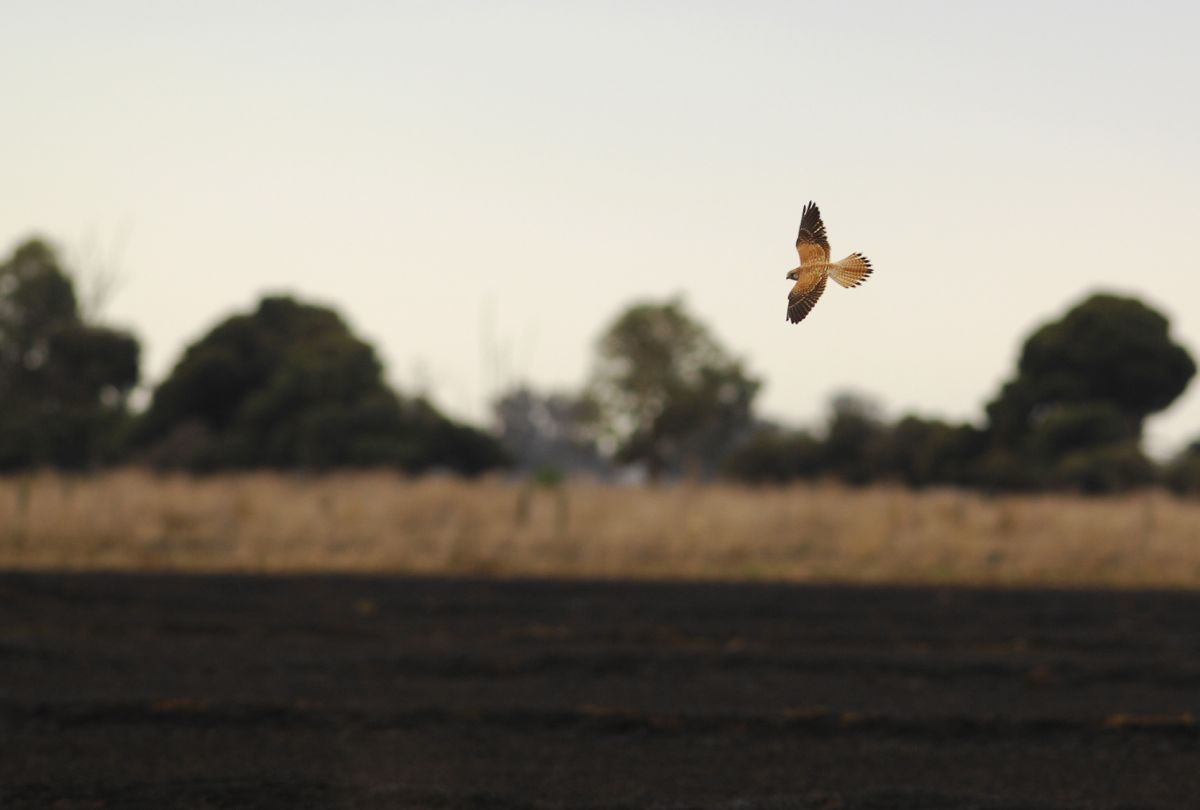
We strarted out on the river on the road to Ryan’s Swamp. A female Nankeen was in the dead trees in the creek, and was pretty happy to let us get close enough for some good shots in the early morning light. A good start, but it got better.
As it turned, the sun burnt of the soft mist clouds by mid-morning and we had some decent sunny-breaks.
Down near the outflow at the end of 15 East Road ( I Bet it has a name, I just don’t know it), we were greeted by a small flock, yes, a flock of Black-shouldered Kites at play, or mating, or territorial. Bit hard to work out when they don’t put up signs.
Anyways, these four birds were engaged in aerial combat right over our heads, some times coming alarmingly close. What a great sight. What a great picture opportunity. A couple of unfortunate Silver Gulls found themselves the target of this aerial mayhem, and were hopelessly out gunned.
The main feature of the event was birds that locked talons and then spiralled down. I wonder if the bird who gets to turn head-first wins? while the other has to be unceremoniously twisted backwards? No one I guess seems to know.
A female sat on a post on the beach, and offered lots of screaming encouragement , and then too joined in the foray.
At that point we would have been satisfied for the day.
We drove back along the track past the Bird-hide by the beach, and found a Brown Falcon (think it be the same bird from a previous post.) It sat while the team inched up toward it, and then the magic line was crossed and it was airborne. All of about 5 metres. And again, and again. Good stuff.
I drove the car up to where it was perched on a box-thorn bush on the side on the road, and it didn’t flinch. Needless to say the team got some good pics, while I positioned the car. We moved on. About two minutes later it passed by the driver’s side window of the car about 3 metres off the ground and about 5 metres away. It paced us for a few seconds then sped up, and sat on another box-thorn bush. This time I assembled the camera kit and edged the car up to where it was. Again it held its ground.
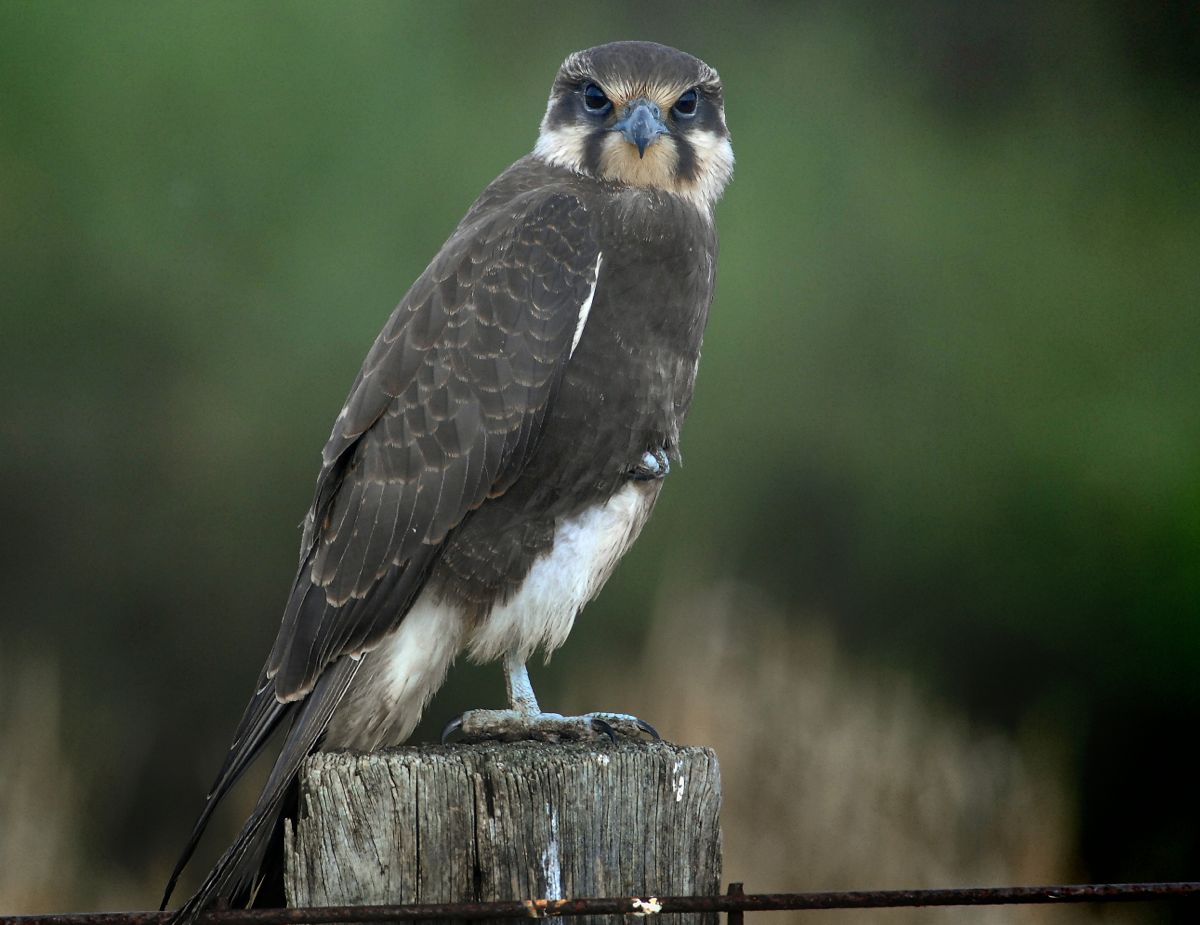
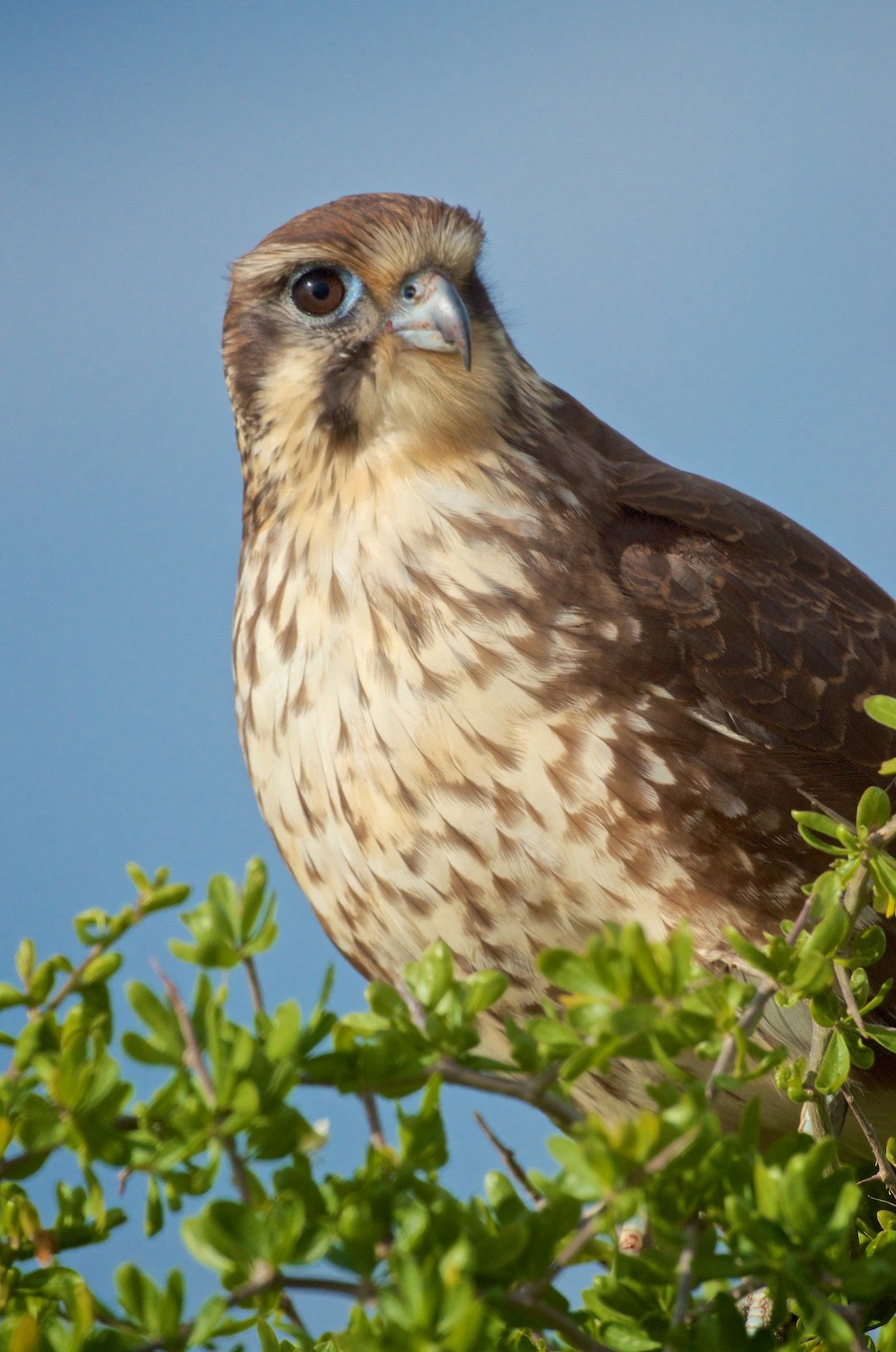
So there we were, me and the bird. It was so close, even a vertical could not get it all in, so I opted for head and shoulders portraits. We are thinking of name it Elvis, as it just didn’t want to leave the building.
It flinched when I started the car, but held its nerve and we drove on leaving it in peace. A nice day’s work.
A little further on, I spotted a female Nankeen Kestrel on a post near the road, and at first thought she must have damaged a leg as she was having difficulty on the post top, but she flew to the next post, and lo and behold, she was holding a mouse in the foot, and couldn’t get a grip on the post. Then she settled herself and enjoyed the mouse from one end to the other. Lots of mouse fur flying in the strong breeze.
A couple of over enthusiastic kites who locked talons and twisted about in the air. The noise of the talons scraping was like fingers down a blackboard.This female Nankeen Kestrel made short work of her mouse-takeawayThis Brown Falcon was hardly camera shy. We think he might be Elvis in disguise.
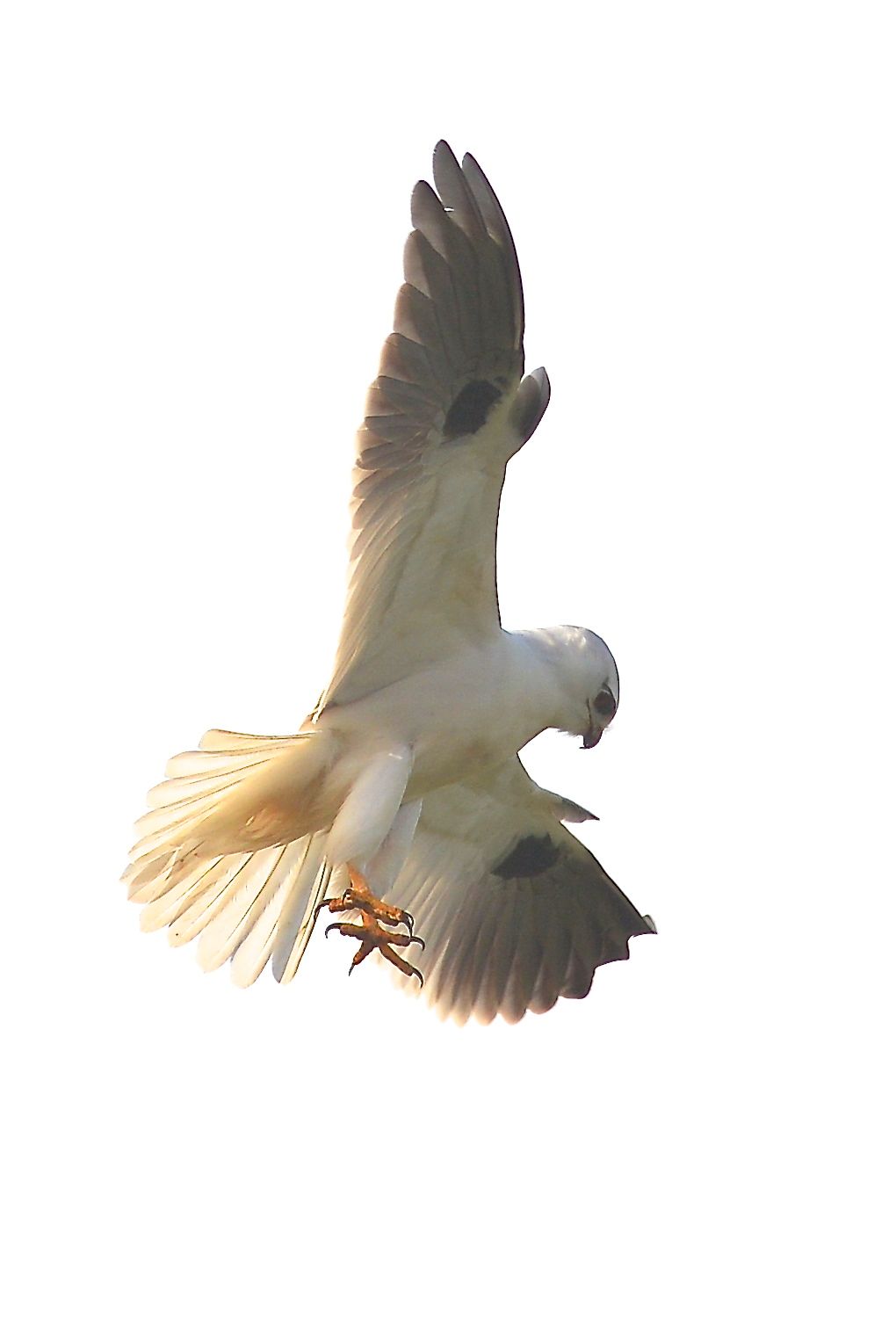
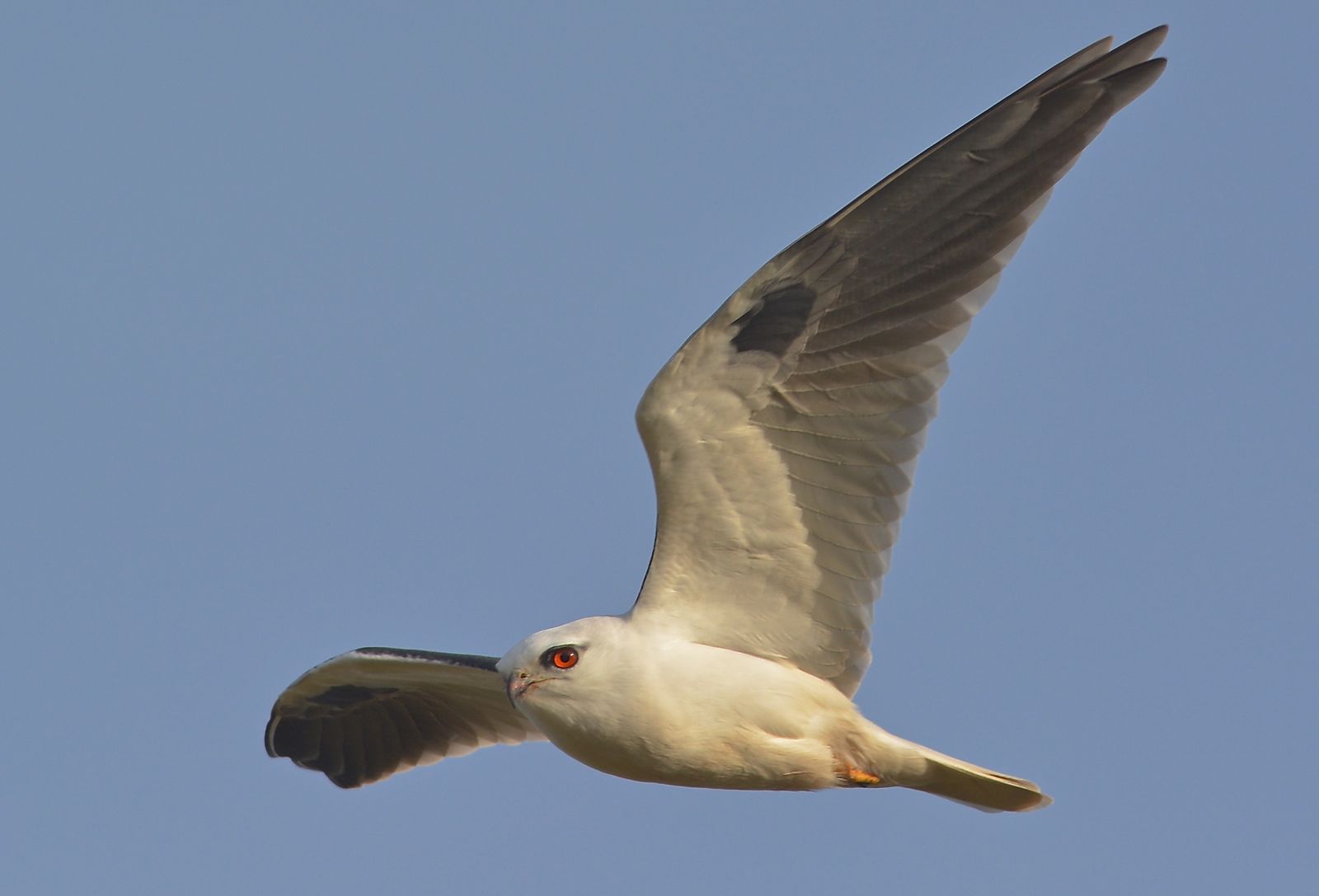
One of the great delights of photography is the various elements, lighting, and juxtapositions that provide visual excitement and interest in an image. One of those that brings life, feeling, brightness and subtly of form is High Key images.
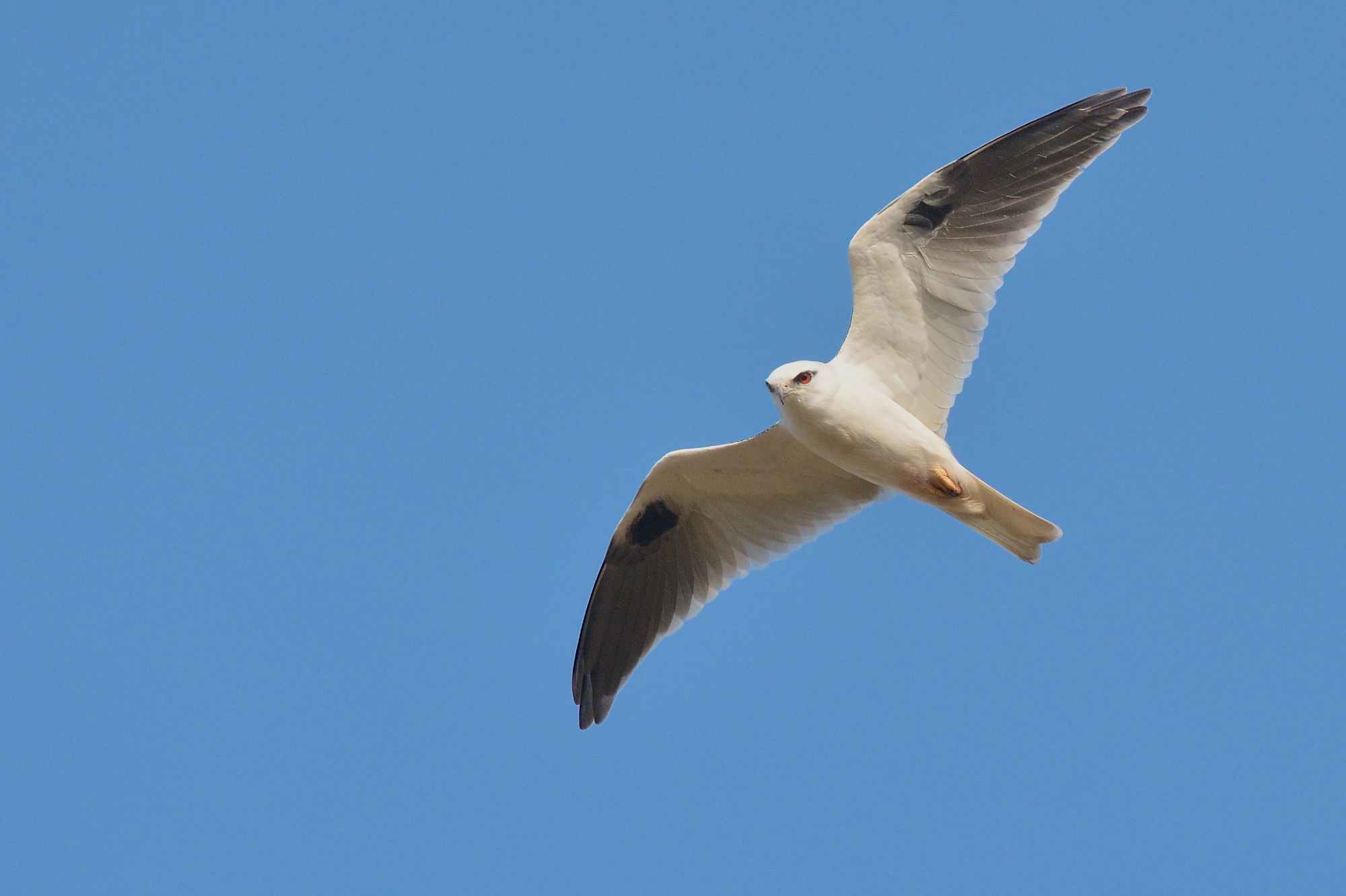
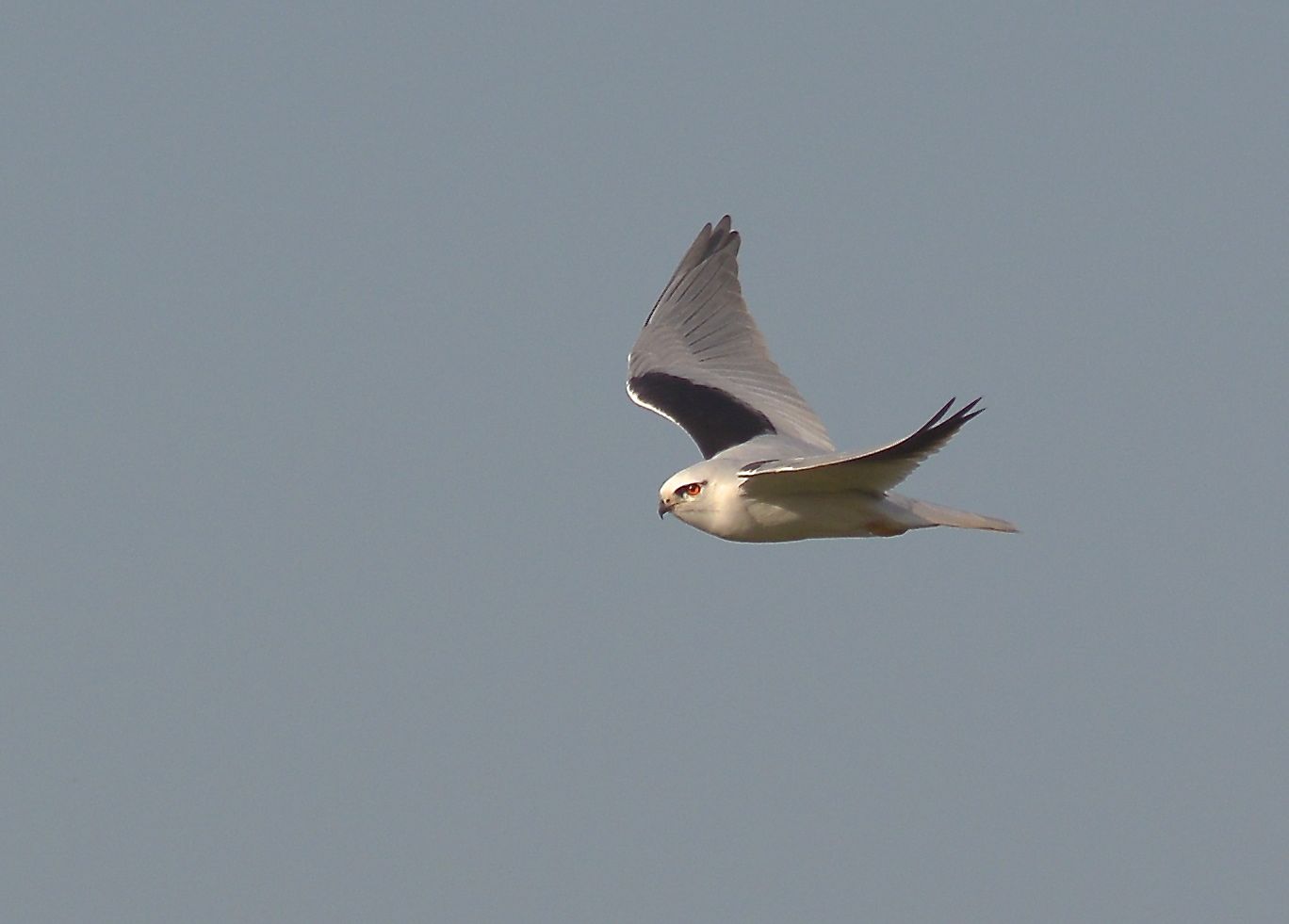
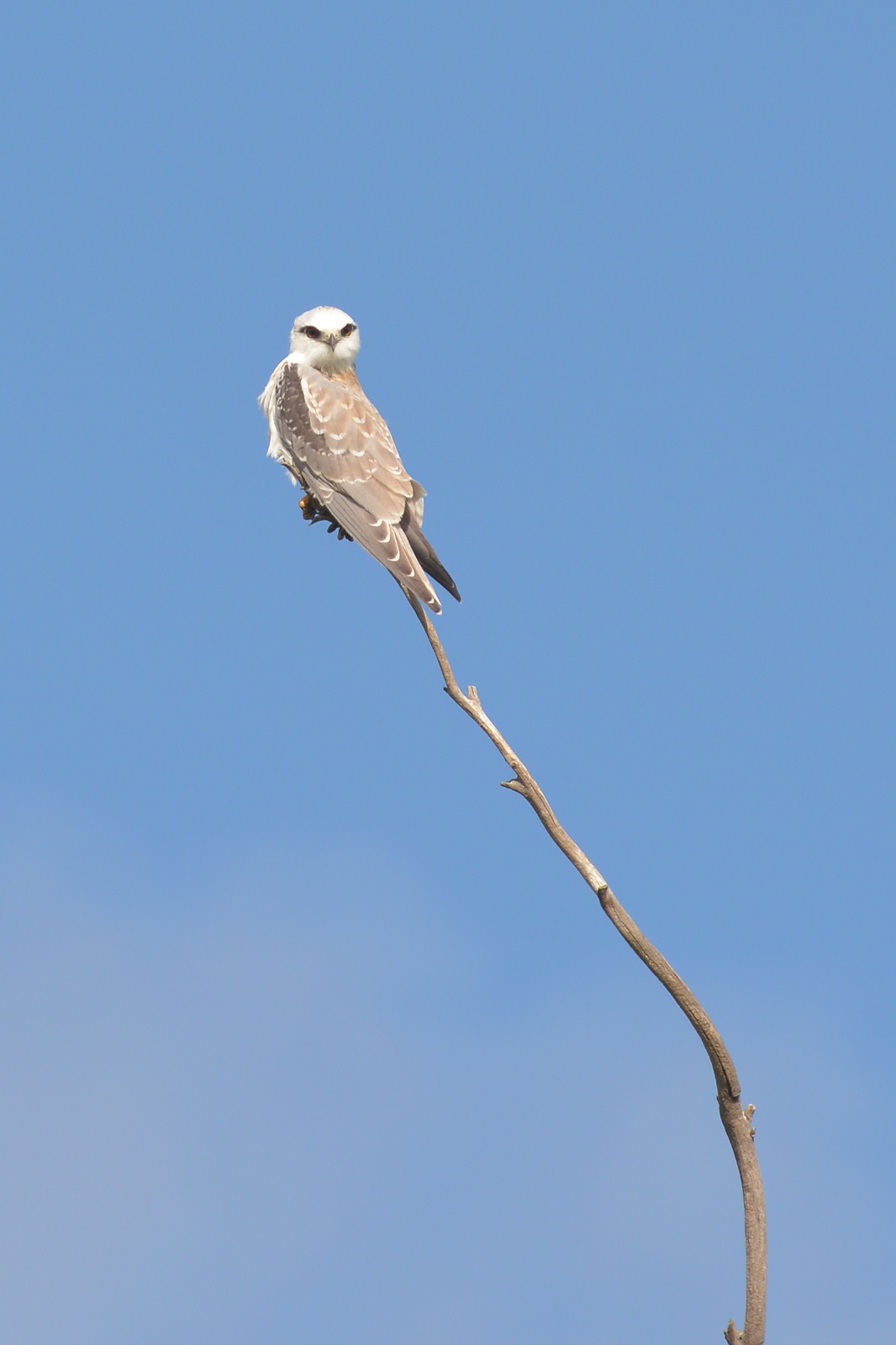
The Black-shouldered Kite lends itself to this form as its delicate grey and white matches the requirements. Then the lighting has to match, and the pose has to be effective and the exposure just about right, and so it goes.
Here is one I prepared earlier. The bird’s brilliant red eye makes a lovely counterpoint for the high key treatment.
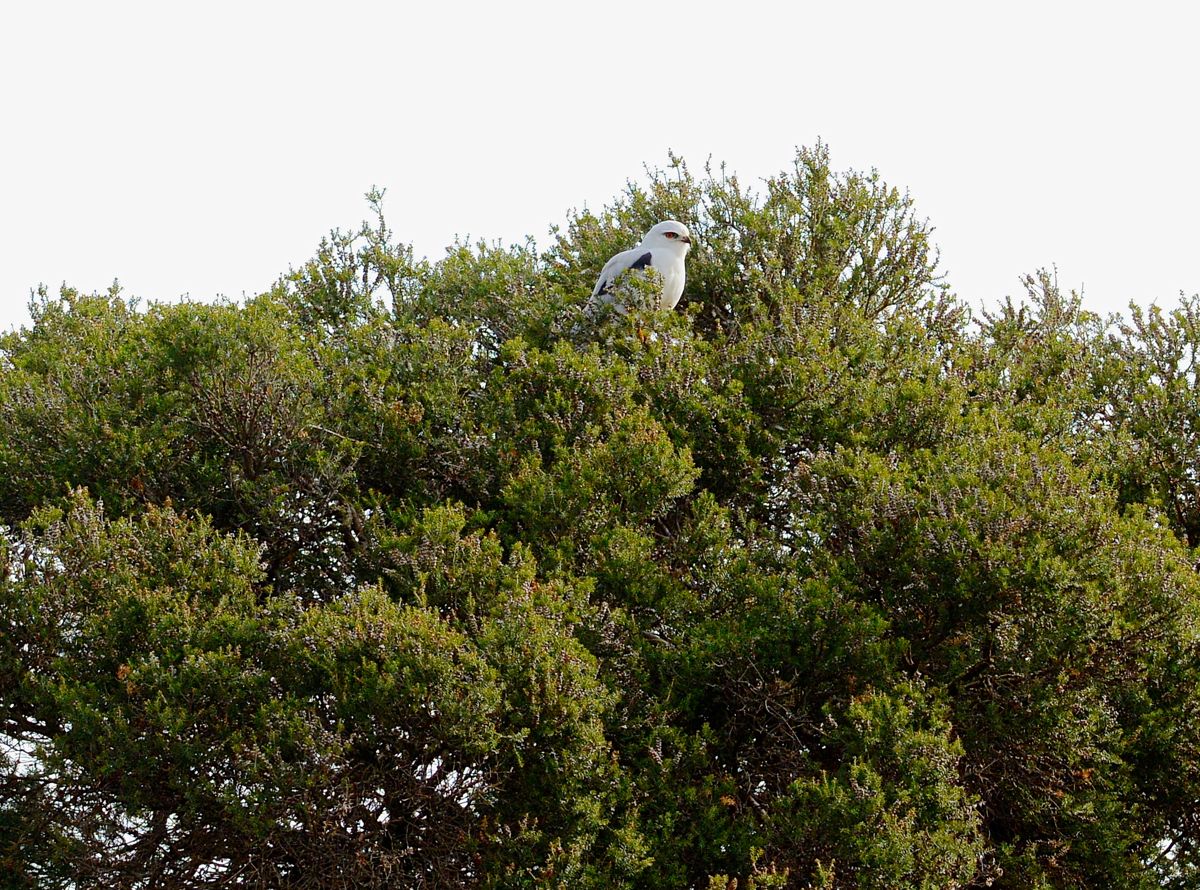
We’re in the WTP. So is a resting Black-shouldered Kite. It however has made the tactical error of landing in a Willie Wagtails favourite tree. Or perhaps it was just on patrol, and it’s “Time to move along”
Either way, the immovable object verses the unstoppable energy is on display.
The wagtail made numerous passes at the Kite, its only reaction was to once raise its wings, but I suspect that was just a balance thing more than anything else.
In the end the kite gave ground, and the wagtail, chattering as it went, moved on to the next tree to see if the Magpie was also moveable. Such is the life of a little black and white location police person.
This was shot from the car with a 500m mounted on “David’s Folly”, a beautiful engineered window car mount that I purchased from Outdoorphotogear.com.
It is made in Germany and really is the best thing. Probably stronger than the car door. The folly like all follies is that it will do the impossible. But when it comes to holding the camera, keeping it ready, securely attached to the car, and rock steady in mounting, it really is a great piece of kit. Just people keep stopping to ask, “Looks like you’re ready for anything'”, or “What is that”. My answer, David’s Folly.
Think I will put up a page to show it in action, then it will be simpler to explain.
Its all about position position position. Just being the larger bird in a dispute does not necessarily give you landing rights.


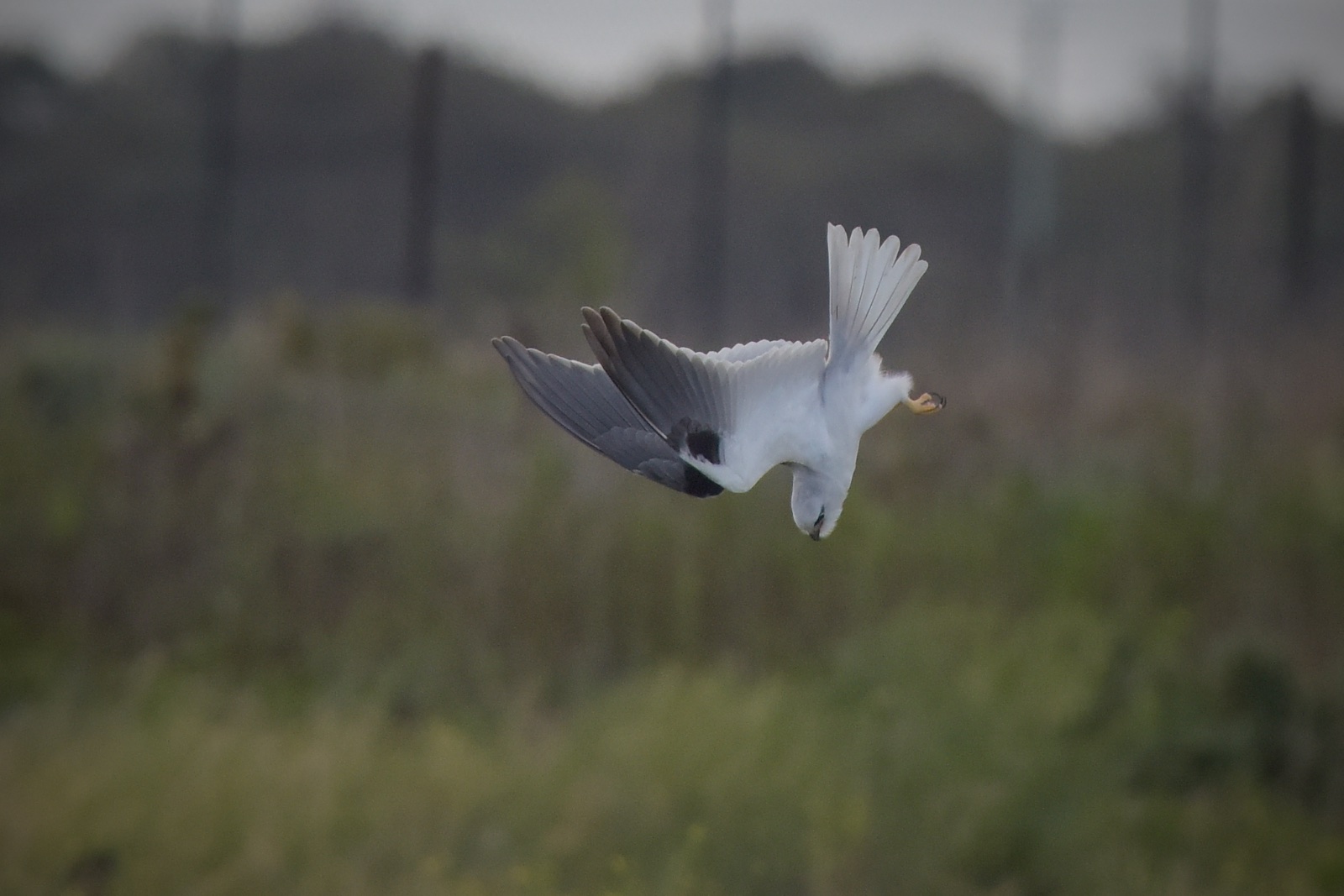
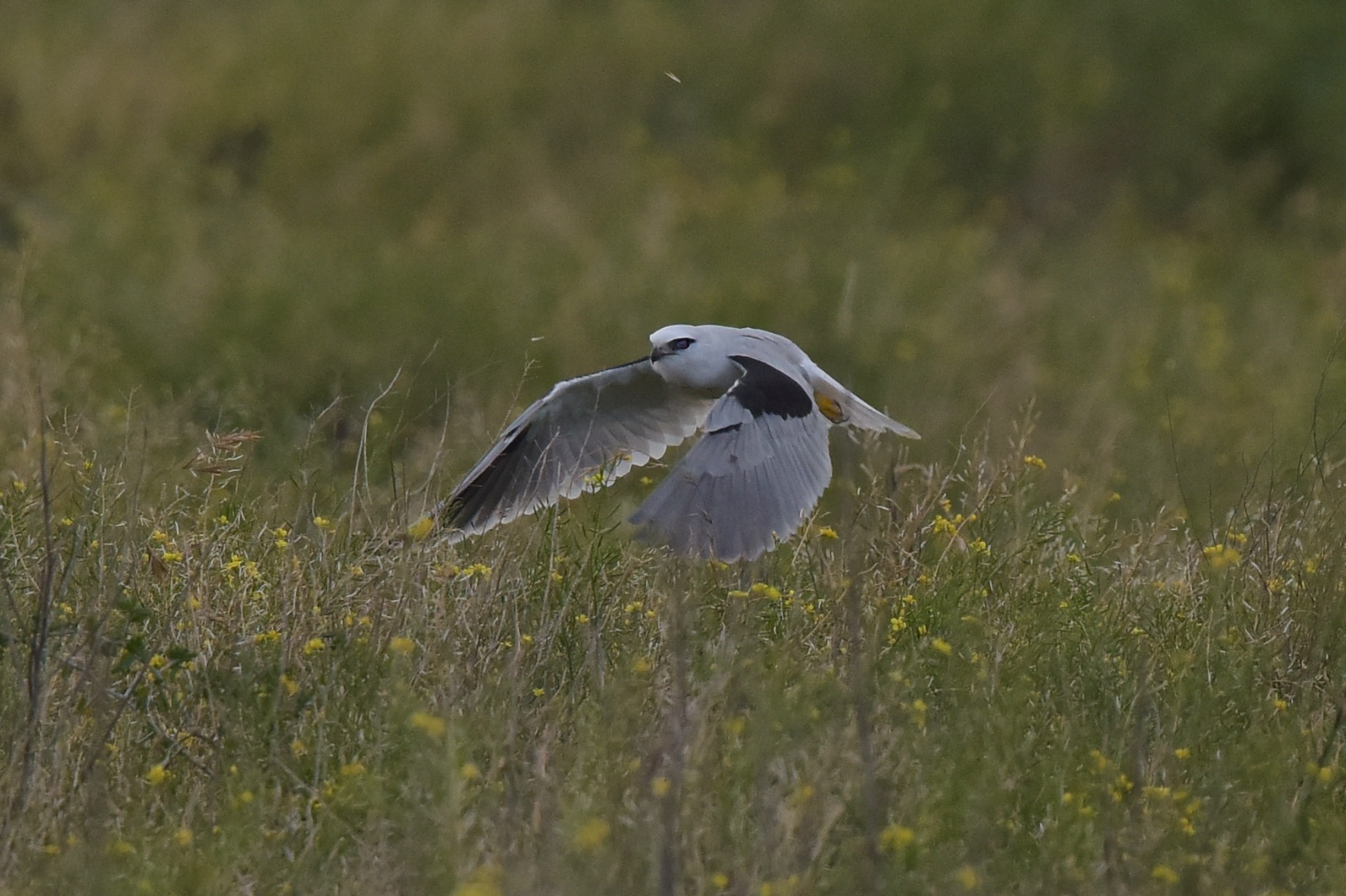


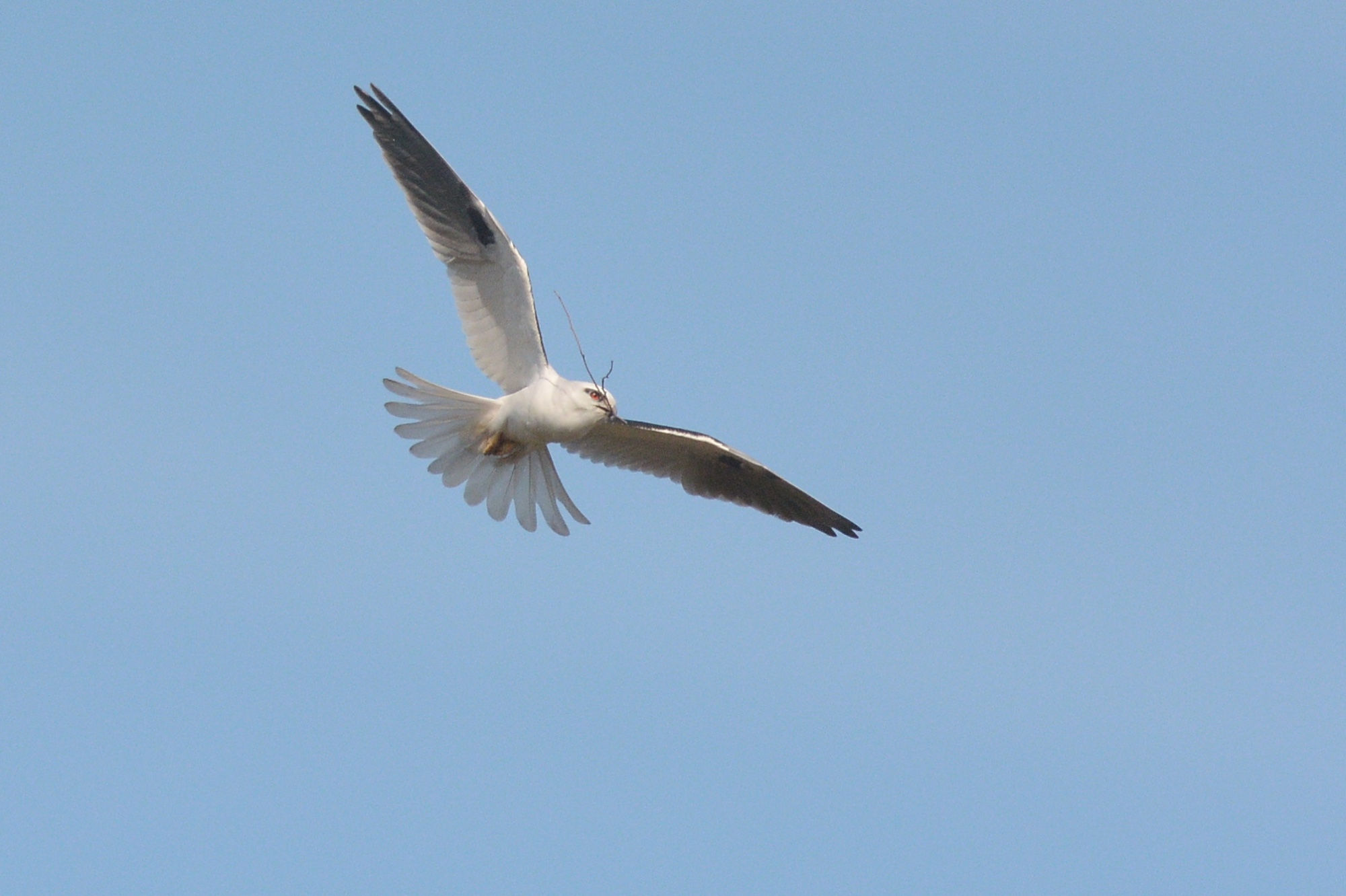
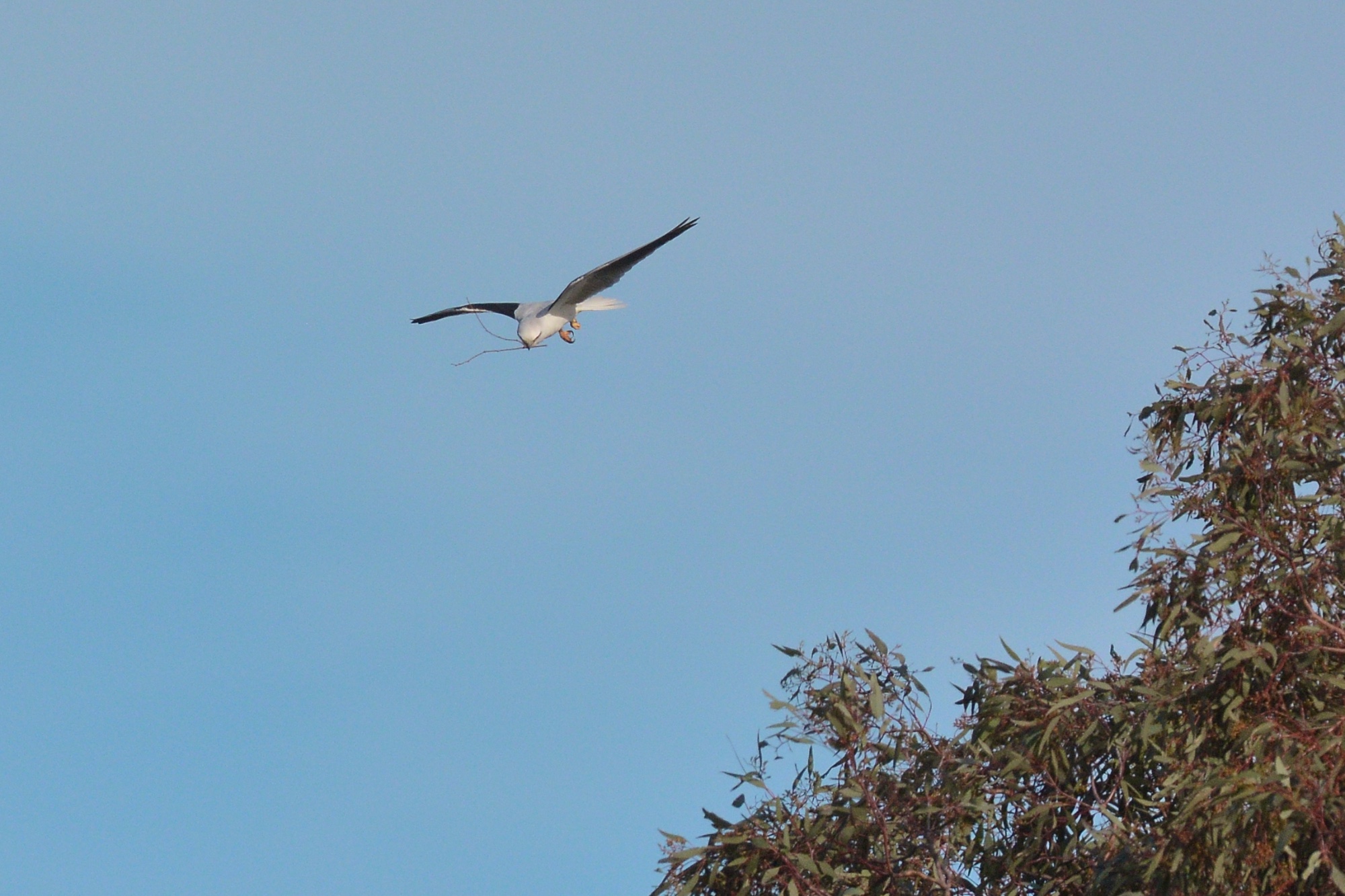
































 Birds as Poetry —— Just because I WANDER doesn't mean I'm LOST