Woodlands and Robins

I don’t normally do updates and bird alerts, but with the Flame Robins gone, and most of the Red-caps on nesting duty, I didn’t expect to find much when I did a quick walk through today.

And I was right.

The Backpaddock gates now carry a new sign indicating poisoning for Foxes with 1080, and the park will be closed for at least another month, which is the middle of October.  And I’ve come to the conclusion that it will be closed for a good while after that.

I do hope the bandicoots are worth it.

Not that it’s a big deal, as I’m off to look for Brown Falcons and Nankeen Kestrels in the far part of the park for the next few weeks anyway.

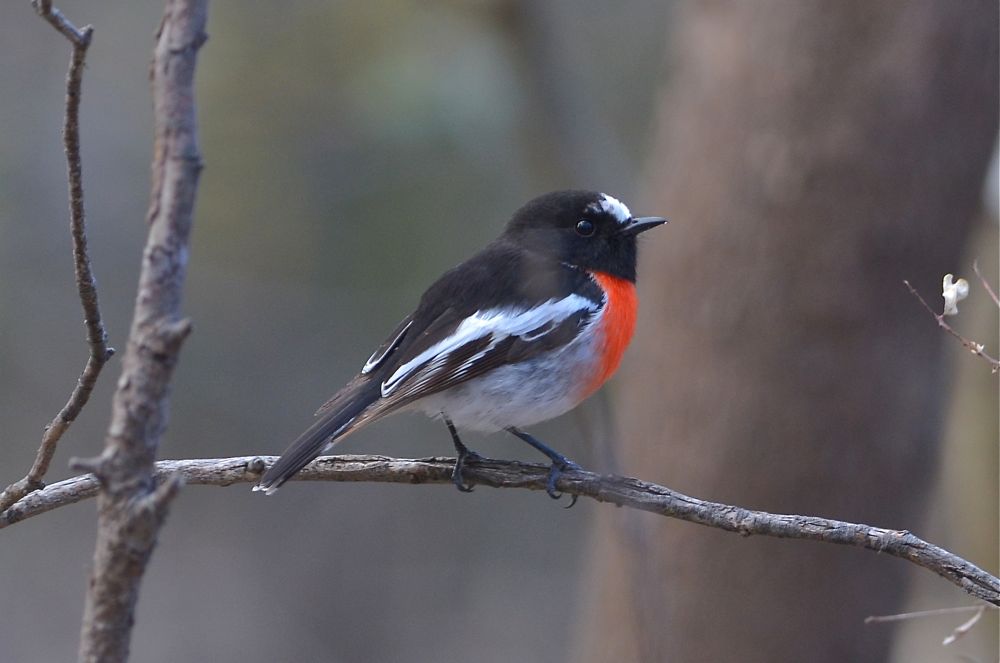
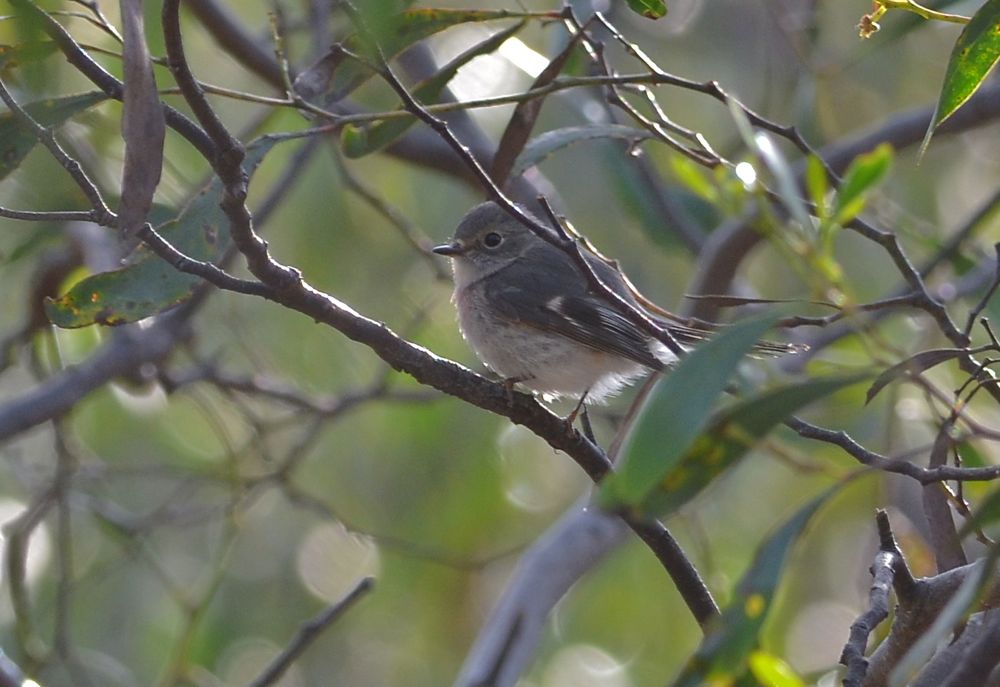
On the way down the track, I heard the call of a Scarlet Robin. Which stopped me in my tracks.  After all they will have departed. And we haven’t seen any activity from them for about two weeks, so I looked about then discounted it as a call from perhaps a Grey Fantail.

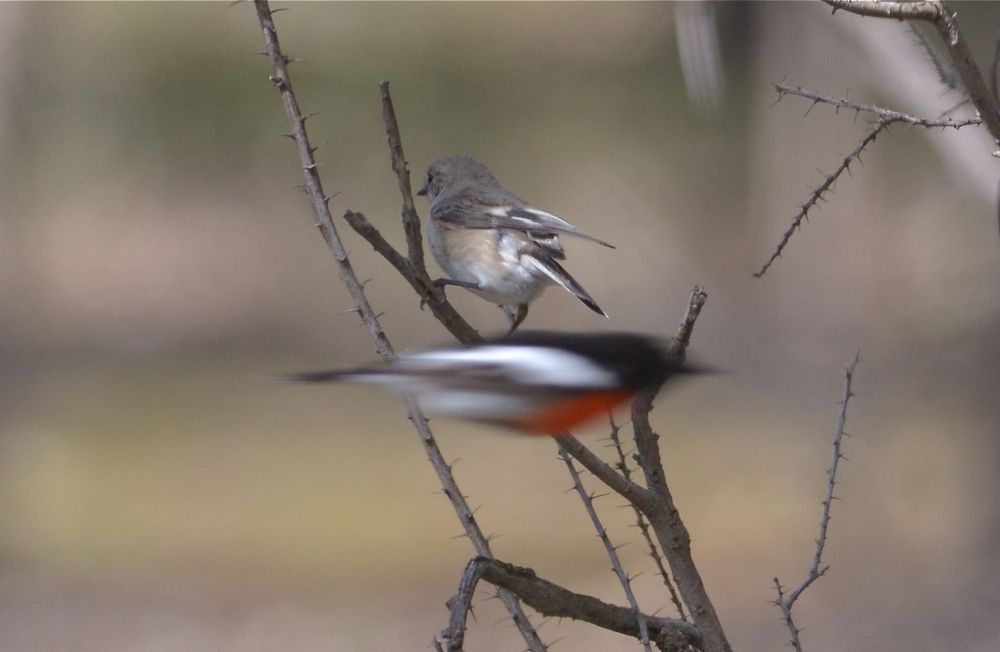
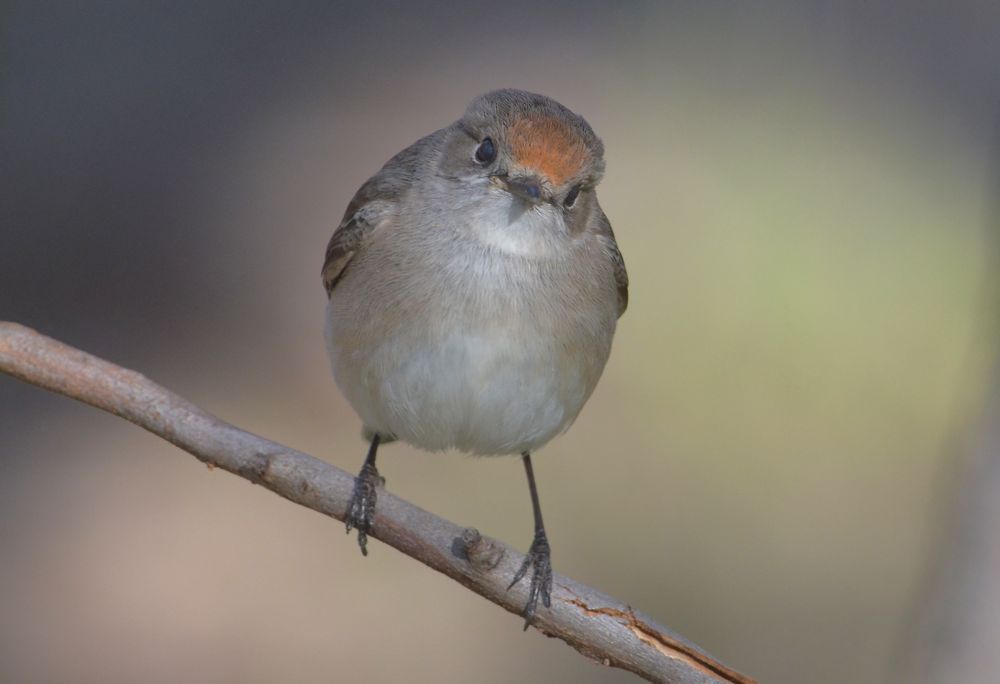
However on the way back, Lockie was in hot pursuit of something, and as I watched, it turned out to be the Scarlet Male. And he didn’t take to kindly to being harassed by a mere Red-capped Robin, so the pursuer, became the pursued, and Lockie retreated in the end.  The Scarlet is so much larger, and quite a bit faster, so the poor red-cap could only call at him from a safe distance.

Now, of course I’m wondering if Mrs Scarlet, – would she be Scarlet O’Hara? is in the area as well.  I can see an early morning start sometime this week to investigate.


Travelling to Echuca

The past few days have seen us up around Echuca with the Birdlife Australia, Melbourne Photogroup.

We spent a day around the Kamarooka Forest and then a day out on the Barmah Lakes, and an afternoon along Pericoota Road out of Moama. On the way home the Terrick Terricks  kept us busy for most of the day.

I’ll put a long winded report up on a seperate page when I get organised. But here are a couple of images from the days.

Gums in the flood at Barmah Forest
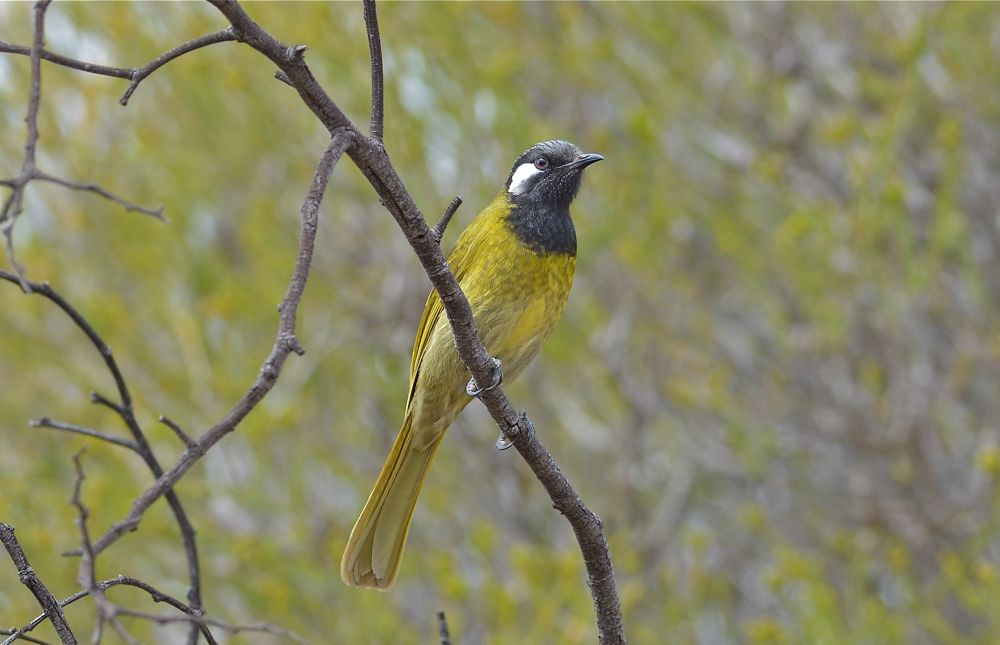
White-eared Honeyeater at Kamarooka. This is one of a number of birds that were highly agitated by our presence because they were just beginning nesting. I did feel sorry for them.
Restless Flycatcher, called a “Scissors Grinder” because of the unusual noise it makes. This is one of a pair that were performing in the late afternoon sunshine along the banks of the Murray. They were taking the opportunity in the sunshine to bathe, preen and play with one another, would have stayed there for a longer time had it been possible.


Chestnut-rumped Thornbill. This wonderful little bird was flitting around the bushes on the climb up to the top of Mt Terrick Terrick. It was always just to far away to get those great shots. But it was a new bird for me, so I was pretty happy.


Along Three Chain Road to the pie shop

With the weather looking decidedly blah, our plans for a day at WTP were simply scuttled. We (Dorothy, I, and Mr A Nonymous) decided instead on a drive north to Kilmore and along Three Chain Road, which can only be described as a ‘honey-pot’ for birding.  Rain began immediately we set off, but I regailled everyone, with promises of a pie and sauce at Mt Macedon for lunch.

Three Chain Road easily lived up to its reputation, and we quickly had sights and shots of Eastern Yellow Robins, Eastern Yellow Robin juvenile, Flame Robins, male and female, Jacky Winter, a female Hooded Robin, White throated and Brown Treecreepers, and a single Rose Robin. The rain stayed around and we eventually had to go look for a pie shop.  There is an offshoot road along Three Chain Road, that looks like it might go somewhere. Evidence of the previous night’s storm were everywhere over the road, and the clean-up crews were still out as we drove by.
The next turn was so promising.  PY-along. So we were going in the right direction! At the next junction, I abandoned all hope of getting to Mt Macedon, and we went on to Heathcote. The Gaffney’s Bakery just opposite the footy oval is renowed for its fare, and has a number of pie comp awards to prove it.  We settled in for the lamb-tandoori, beef burgundy and beef and onion. Worth the drive any day.  A good pie takes a bit of beating.

So with a couple of cold lamb-tandori’s to pop into the oven at home, we set off down the highway.
The road from Tooborac to Lancefield, was once described by a visitor as “Rock Farm Road”, every paddock has beautiful Tors that make great photo subjects.  The sunlight began to creep out, and we began to stop more often to admire the scenery, and look for birds.  What a pity I hadn’t put any short lenses in, but got some nice tight telephoto landscapes anyway.
Turning off from Sunbury along the backroad to Woodlands, we found a Wedgetailed Eagle being harassed by the local magpie brigade.  To its credit, it just slipped away in the wind.  Nice end to a good day out.

This slideshow requires JavaScript.

Larger images here. Three Chain Road.

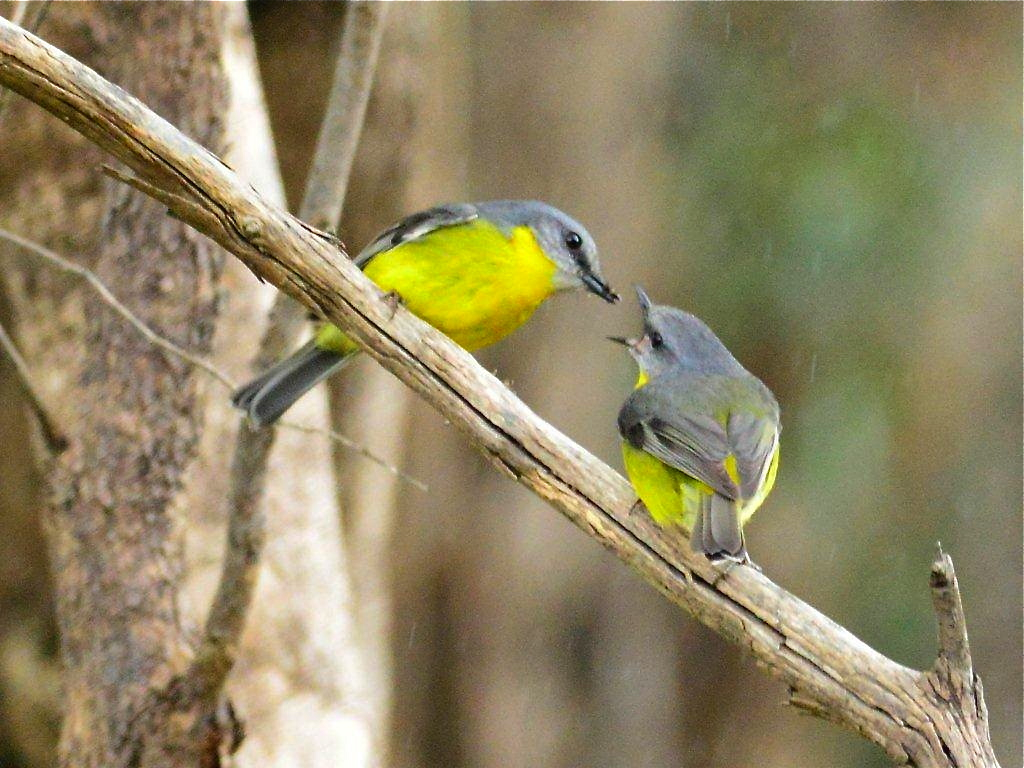
Here is an image supplied by Mr A Nonymous of the Male Eastern Yellow Robin, feeding the female in the rain.

Too cool.

Photography by Mr A Nonymous (credited)

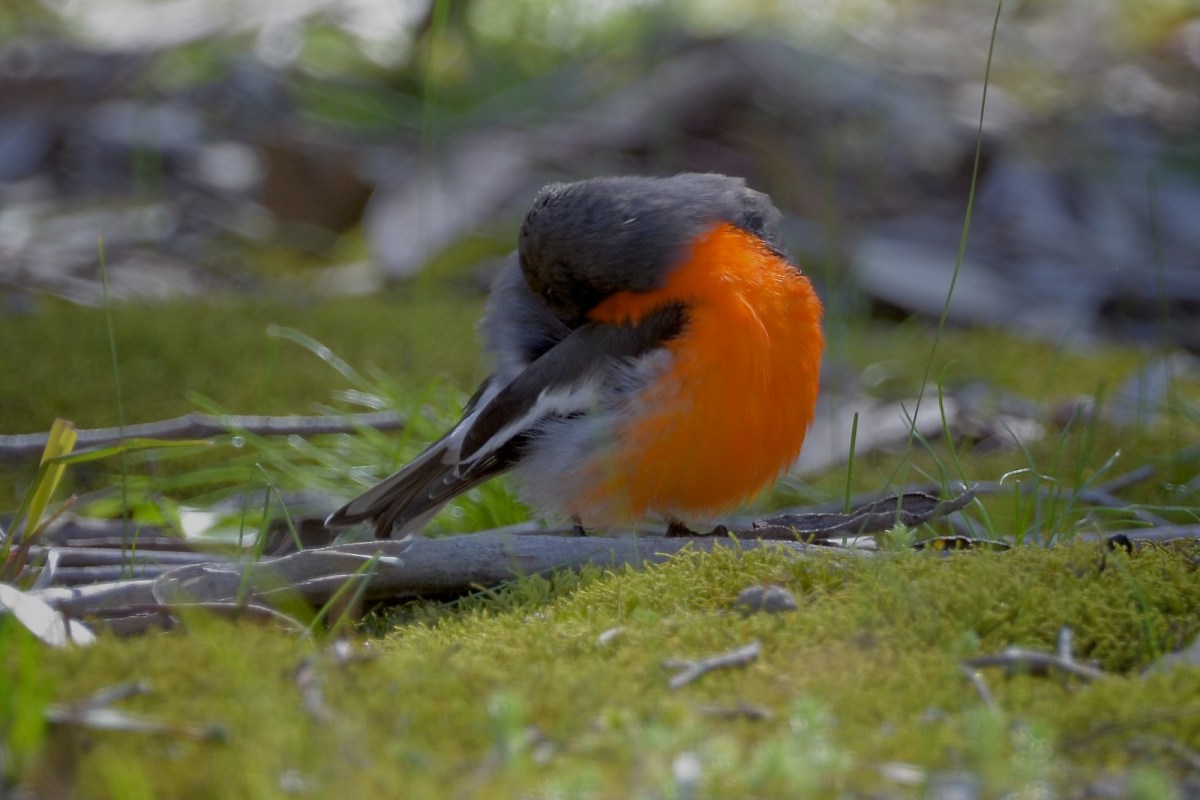
Flame Robin colour shape and form

Thought I would add this one from this morning.

I just love the shape, and the colour and the texture and form of this preening bird. Not a great image of birdy perfection, but it fits nicely in my poetical rendition. Enjoy, he obviously was. 

House building with Emma, the Red-capped Robin

After yesterday’s boon day, it was going to be hard to better it.

But we headed out with high hopes, after all the alternative was mowing the lawn. I’ve always thought if I wanted to mow lawns, I’d have become a green keeper at a golf club, rather than a picture maker.

Found Lockie and Primrose around the park entrance track, and saw a fleeting glimpse of a male Flame Robin but couldn’t get anywhere near it to identify or photograph.
Then a lot of sitting in the sun. Which was nice.  But no birds.

The Scarlet pair are conspicuous by their absence with no loud carolling through the treetops, so I must admit with a small degree of sadness that they have moved on and won’t be staying over to colour up the park with their cheery appearance and happy call.

Our stay over families of Flames are now definitely gone.  No sign of them anywhere today, and we could always count on hearing their clippy little chants.  What we’ve got instead are the calls of a couple of Horsfields Cuckoos and at least one Fantail Cuckoo.
So with the backpaddock still well and truly locked, and the Bandicoots enjoying a very nicely prepared new residence and hopefully the foxes all contained and the echidnas trained not to exit the fence with out permission, our best bet lay in looking for some new areas. And we set out for a bit of an explore.

As it happens we pulled up in the sunshine on  a log to enjoy a cuppa, and a little brown/red streak zoomed past.  We followed its path into a tree, and then multiple branch jumping, and zig-zaging through the branches, we noted it to be a female Red-capped Robin.  “She has a nest”, I confidently announced.   (having seen that sort of behaviour on more than one occasion.)

A few seconds later, and she was busy putting in a new layer on the edge, tidying things up a bit, re-arranging the kitchen, hanging curtains and setting up the entertainment area.  (no only kidding, she’s a bird).

Her mate, Alec, turned up, and he and Emma, (that’s her new name,) both inspected the work in progress, and with the usual nest twittering, approved the operation, and she got on with attaching even more extensions.  He hunted, and no doubt shared some food with her, but I didn’t see that, as it happened behind another thick wattle tree, and I could only hear the twittering.

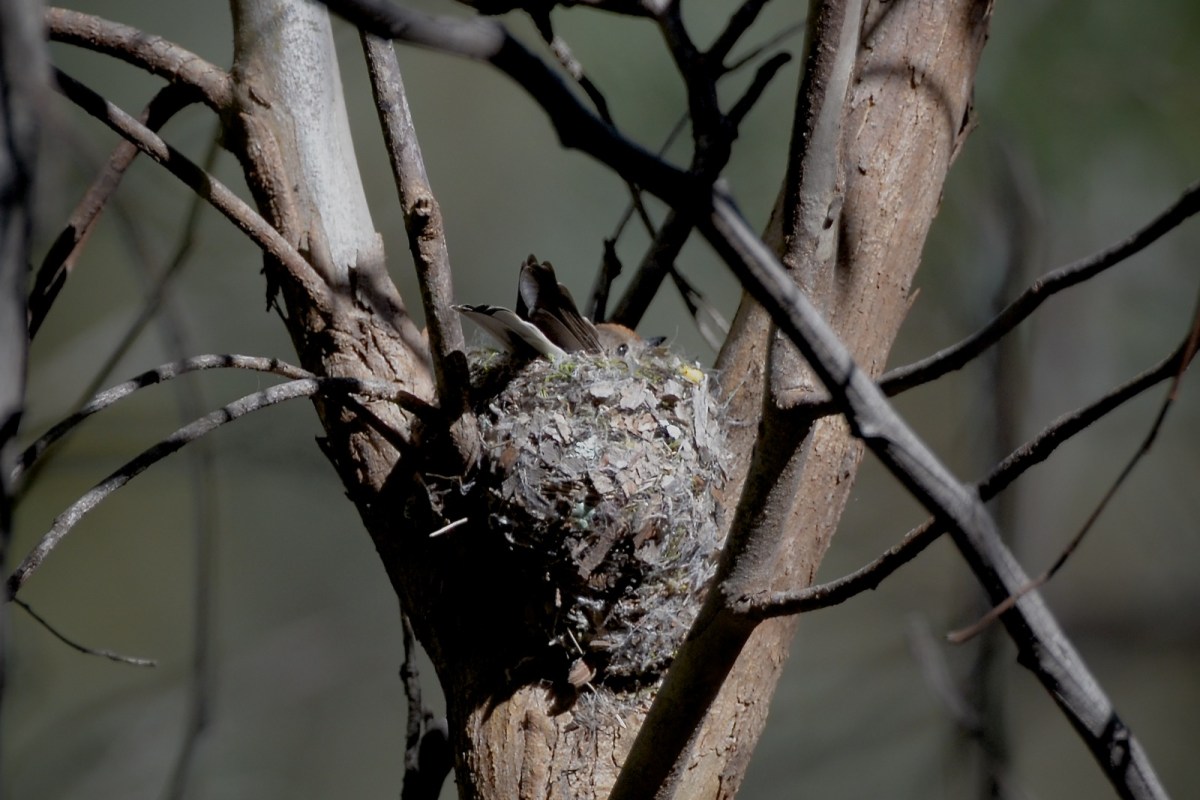
So, here she is in all her splendour at home. We’ll not go over that way for a few weeks, so it will be interesting to see how well she fares.   I mostly try to work out where the nests are so I can stay away from the area and give her the privacy she so deservers. Hope it all goes well.

While it looks like a pretty secure home, it’s not until you see her wiggling and jiggling to get it to fit her body, that you appreciate how really fragile it all is. Still it seems to work.

Father’s Day among the Robins


Late last week we managed to find among the rain and the overcast, quite a large flock of Flame Robins, at the time I guessed that they were being held back by the winds that were blowing North/East. Too hard for little wings to fight that strong headwind.  My informant called the other day and said there is something like two metres of snow in Mt Hotham.  So if they did go up there, there would be nothing to eat.  Not surprisingly then we found the flock on thrusday and spent an hour or so with them among the dashes of sunshine that appeared.

But hadn’t been back since, and with Father’s day, a bbq at Woodlands seemed like the go. Family and kids all being too far away or inconvenienced with other stuff, so we headed out for a quick look and then on to the bbq or so we thought.
Mr Camera Clinic had dutifully repaired the D7000, and to be honest, I was pretty hesitant about working with it again.  But the sunny day helped my mood, and we started to look about.  What we found kept us busy for the next 4 1/2 hours!

Between us we managed to flatten 3 batteries and fill up 3 memory cards.  Now at 16gb that is a lot of images.  I also shot a number of short video clips and that added to the haul.

What we had located was a hunting party of about 3 males, 6-8 females/juveniles, and a couple of young males moulting in.  From the markings and their behaviour it was pretty certain they are not the usual flock we have seen out in that part of the park.  (They were still hunting along the roadway and in the cemetery as we came down).

We eventually ended up sitting on a downed log, and they simply hunted past, around, behind, infront, and then repeated the entire performance.  The challenge was not where to point the camera incase a bird came by, but where to point it next, as the trees became alive with hunting robins.  Lockie came by for a couple of visits as well.

Editing down was going to be the problem, and the few images below are only typical of the days shoot.  At times they hunted so close we were unable to get focus. A pretty exciting way to spend a fathers’s day or any day I reckon.
Needless to say, by the time it was all over, we just came home, and the bbq will have to be another day.

So its seems Woodlands is a bit of a staging area before the trip north.  There are today about 25-30 birds in the general area, and how many might be behind the wire in the back paddock?
The big birds ate so much so quickly, that they had to sit still on a branch to let it all digest for a few minutes, which made it a delight for the photography.


There are a few more over on Flickr.  Click Here

DJ Laments

Last week Andrew- see his blog here-  and I travelled across town to have an evening with the Bird Life Australia Melbourne Photography Group Study Evening.  What a great night a bunch of keen photographers and birdos sharing their knowledge.

I was fortunate to learn my profession as an assistant to several photographers, and it was in the sharing of ideas, techniques and great discussion that the art of it all became amalgamated with the science and still I reckon stands me in good stead to this day. The great part I’ve never forgotten was the wonderful way in which photographers readily share their skill sets with others.  It means at any get together of photographers the talk fest is wonderful and the new ideas, applications and experiments pass on info to the beginners as well as the seasoned professionals.

And so it was on this study night. Great image makers talked about the hardware, the techniques and the art of making great bird photos.  And it was supported in a number of cases with some stunning images. What a great night, and thanks to Andrew for transporting me across town.  Hopefully we can do it all again sometime.
DJ’s Lament

(This should be read with your tongue planted firmly in your cheek. It is written that way!!!)

What I suppose I did learn from all the passionate discussion is that I’ll never make it as a bird photographer.  I just do so many things the wrong way round.

I don’t use Back-button Focus.  Two reason, m’lord, one I have an arthritic thumb that doesn’t react fast enough and secondly, I am, strange as it may seem, Left-eye focused. Which means when I hold the camera up to use BBF, my big fat thumb pokes me in the eye.  So I’ve learnt not to even try it out.  I do prefer the method advocated by Geoff Jones, from the study group in March 2011. Geoff explained the system of ‘focus pumping’, where the camera shutter is lightly tapped to keep the focus working on the subject, until the moment you depress the shutter to make the shot.  He learned it from Jim Neiger in Downtown Florida, at a wonderful place called Kissemee, where Jim runs training schools.   That explains why on a given day, most of not all of my pics are out of focus.  I knew there must be a reason.

I use a tripod in the field. Not a mono-pod with super duper camera attachments and not hand-held.  So I cannot react quick enough to unexpected happenings, and miss most of the good photo opportunities that go by.

I don’t use a lens with VR or IS or OS or what ever the latest image stabilising system is.  I’m happy with my old, outdated, antiquated, in need of replacement non VR lens.  I also don’t use VR when the camera is on the tripod, for the same reason. No wonder my pics are so blurry and prone to camera shake.

I shoot at fairly high ISO levels, 800 being typical.  I don’t overexpose the image, so I don’t gain the benefit of lower noise levels.  I shoot highest speed I can get and higher if I have too, and I run it though a piece of Noise Reduction software,  so I’ll have to put up with loosing sharpness at several levels there too.  Noise Ninja, Topaz Sharpener, Neat Image and Nik Sharpener Pro, are all among my stable of fall backs.  But I see now the error of my ways and will delete them from the workflow, just as soon as I work out what a workflow is supposed to work or flow.

I’ve been known to  shoot JPEG and make no apologies for it.  It stands for Joint PHOTOGRAPHIC EXPERTS Group.  I understand such things as DCT (discrete cosine transforms) and how that affects the compression of the image.   I used to make regularly 30 inch prints from my jpeg files, but as they only appeared to be sharp, I’ll have to rethink the workflow again and move on to raw images.  (which is not an acronym and doesn’t stand for anything expect raw data, that is 2 bits of Green, 1 bit of Blue and 1 Bit of Red)  So I’ll have to get an appropriate raw converter to make up for all that extra green data  floating around in there. (BTW, the green data is where we get the detail, and jPEg doesn’t compress the green channels, so we keep the detail in a jPEg. )

A wondrous discussion on Color Management, moved to Color correction which moved to something called White Balance, and how it can only be controlled in raw coveters.  Which is odd, ’cause I thought White Balance was a video term and used to describe the colour temperature of light, as in degrees Kelvin. But I probably slept through that class at college.  I’m just not going to be much good at birds as I run my WB setting at Auto.  I thought the camera to be very clever, but silly me, no wonder my pics don’t come out with the right colour temp.   BTW, I have two colour temp. meters for sale.
I also learned that my practice of NOT doing colour correction on my laptop under any circumstances was a serious show of my lack of understanding of the technology now built into laptop screens.  I’ll just continue to colour correct on a fully profiled colour monitor back in the office and turn out badly balanced pics I suppose.

I also learned that Brown Falcons should not be photographed in English Box-thorn bushes, so will keep a chain saw in the back of the car, to remove any offending box thorn I find.  Which might just be a full time job out at the WTP.

We also learned about the wonders of a Grey Card.  This amazing piece of equipment apparently is good for everything including putting out the cat at night and making a halfway decent Caffe Macchiato. It apparently reflects 18% of the light in a scene and because it is ‘neutral’ gives those of us with Lightroom or Photoshop somewhere to point our mid-tone eyedroppers when we ‘color correct’. (The question which didn’t get started was ” is that 18% reflectance or luminance?” a subject bound to take you to 2:30am on any given morning.

Nobody mentioned the need in the 18% theory to correct the given exposure by 1/2 of a stop. Now this is curious as the Kodak instructions. (Hey they made this stuff up, even before there was colour film, and long long long before digital cameras), state that it is necessary.  If you can find a copy of Ansel Adams’s book “The Negative”, and check on pages 33 and 42 and 43, the old film master gives his reasons for 18% as a standard.  But then he shot filum what ever that was!

BTW, as an added bonus point, Kodak’s instructions for the card changed in the ’70s ’cause some young-know-everything copy writer left the vital sentence out of the instruction sheet R-27. My archive copy (1948), has the paragraph, and it was reinstalled -red-facedly- at sometime in the 80’s.  Presumably the copyrighter had gone on to be head of communications or something else like that at the great Yellow Father HQ in Rochester.

I also learned that a bird image should show the bird to advantage with no distracting elements like branches, twigs or backhoes. It should also show the bird in its environment, with an eye to good composition and a broader view of the overall scene to enable the viewer to gain an appreciation of the varying light and dark tones in the scene along with any leading lines patterns, textures and reflections that would add interest to the viewer and and understanding of birds in general.

Rodger once again convinced me that the red-gun sight is beyond any doubt the best thing since sliced-bread, and full credit to him as he showed a range of Welcome Swallow shots that would be the envy of any budding photographer. I want one.

Ohh, and as for the bloke with the beanbags he needs to get a life!

So, I’ll just have to accept that my best  days as a bird photographer are ahead of me. I’ll need to spend a bit to update the tripod and the lens, and the software, and the chainsaw and get my eyes checked even more regularly, and most off all, not take everything, I hear seriously.

Remember rule one”  Read this with your tongue  planted firmly in your cheek”, and get ready for next year’s study night.  There is so much to learn.

Thanks by the way to all those who put out their time and energy to help all of us gain a better understanding of the vast range of techniques that are available to this wonderful, challenging and rewarding past time.

You may now extract your tongue from the side of your cheek. Normal programming will resume shortly. <gggg>

Someone new in the neighbourhood

Last week we came across a female Red-capped Robin in area where we’d not seen any previously.  I wondered if it was just co-incidence, but took time yesterday to have a good scout round. So armed with camera gear and a nice pot of tea, I settled into one of the likely areas and waited.  Not too long as it turned out.  Didn’t even get to drink the tea, and a familiar “Deritt, derritt drree deritt” came from a small stand of new growth Greybox saplings.
So I wandered over, and sure enough after a few minutes little miss popped out to feed and call.

She doesn’t have a very distinctive red cap, and I am half inclined to conclude that she is a first year bird. I spent over an hour with her, and didn’t see a mate, not necessarily unusual, but she is certainly calling and he wasn’t responding.

She was quite un-preturbed by me, and hunted around my legs on a couple of occasions. So close that the focus wouldn’t lock.  When this happens I just stop breathing, push the camera to one side and enjoy the company.  Tiny little chest feathers that move in an out with her breathing is a delight to behold.

I wonder if she might be from one of the clutches from the birds in the area from last year or has she made her way from somewhere else. There is also the possibility , of course, it is the young female red-cap that came in with the Scarlet male early in the year. But I’ve no way of being sure one way or the other.  One of the mysteries I shall never know.

I’ve named her Fiona, and she seemed to like that. So it’ll stick.

More on this young lasses progress to follow.

Single Female Red-capped Robin. Very energetic and calling as she goes. No sign of a male companion as yet.
Up close and personal. She ducked in an out of a large blackwood wattle in flower so the light was a bit ordinary.
Hello Fiona.
At this distance it feels like she is just in front of the lens. She was.

Season ending with a Fanfare

Today, managed some time in the bush with sunshine.

Found a number of Flame Robins who were very hungry, and who were constantly on the move.  As fast as I could locate them they moved on.  No predictability, just pure old luck.

Found a few that seemed to be moving across a moss bed, so settled in and waited, and sure enough some others came by in about twenty minutes. Which was good ’cause me poor old bones were starting to get a bit cramped up from sitting and kneeling for so long.  They were polite creatures and sat in the sun among the thin clumps of spindly blackwood.

Also Lockie came for a bit of a look and he was most helpful in posing.

Most shots are with the 500mm and T2.0  which I do have to say I seem to have worked out some of its wrinkles, and am getting a fair number of sharp focused shots. So even though it adds to the complexities, it also can be useful when I cannot get any closer to the birds.

Several female Flame Robins dropped round too, so it was nice to add a couple of decent images to my scant collection.

But it all comes at a price.  Each bird is now extremely vocal with the ‘Come to the sea with me, if you will” call.  A sure sign they are rounding up to move on. So the bush rings with their calls, but it is a bit sad for the season to end.  I think the only thing holding them is a strong North wind, which would be a head wind for them going home, and they will wait for a wind change I suspect.

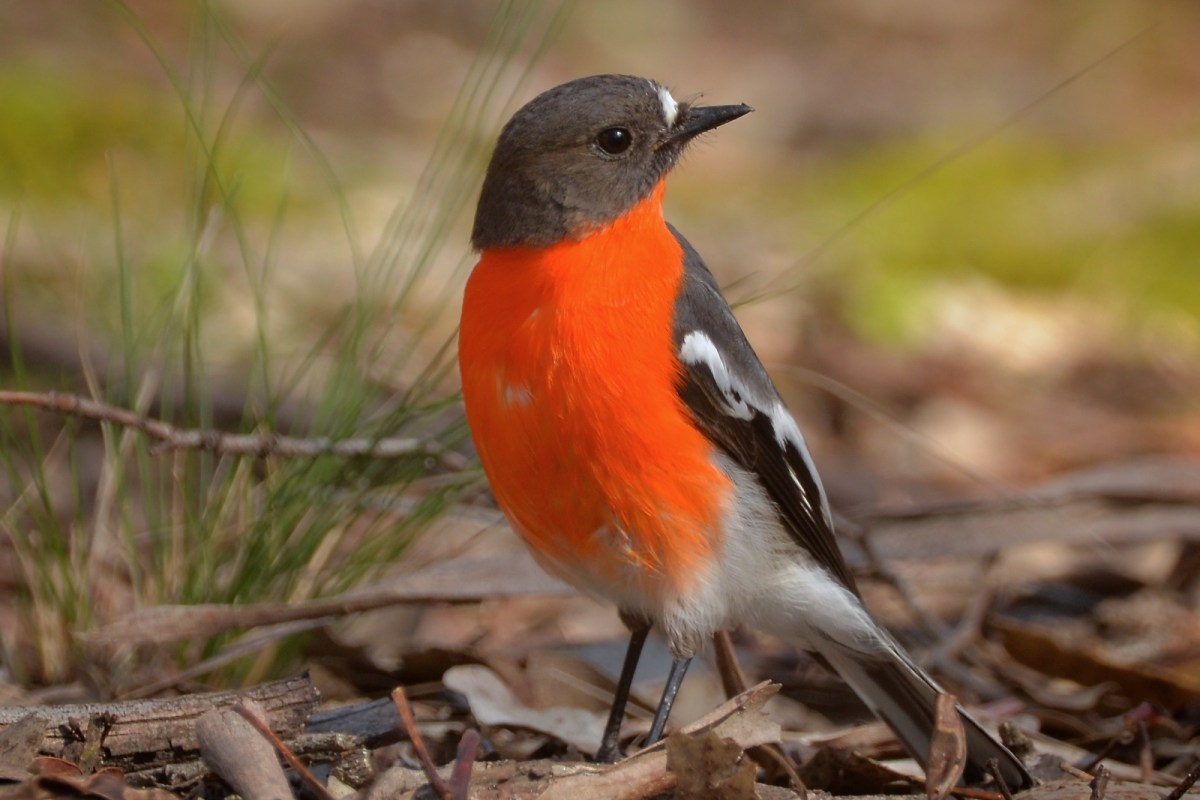
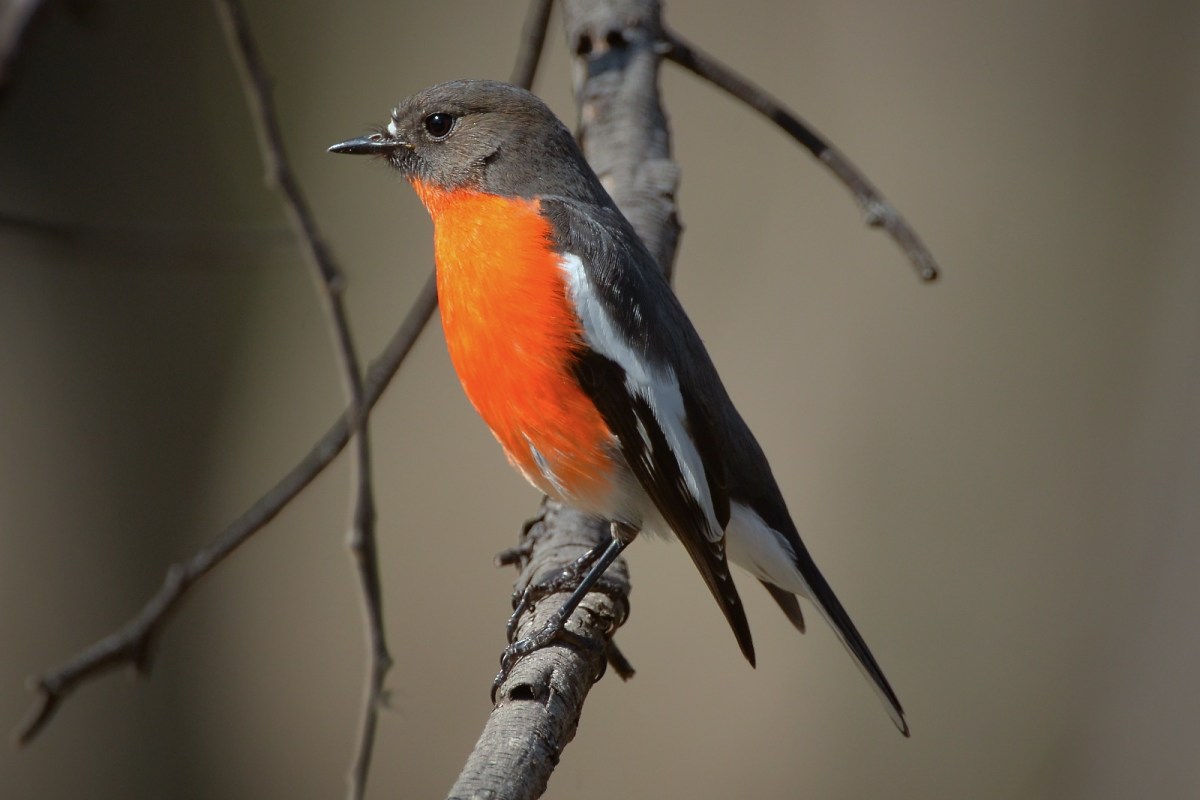
Male Flame Robin sitting in the sunshine waiting for the next meal.
Female Flame Robin at work across a little moss bed. She spent quite a few minutes only metres from my camera position.
Lockie at work. Checking out all the ‘invaders’ moving through his territory. He seemed to be able to hunt off or make them move along with both verbal threats and fly-passes.

A day out with the Sisters

Took sometime this morning from the routine things and Dorothy and I headed to the park, inspite of the weather.  There was a cold north wind blowing the trees around home and it didn’t look all that good for the park.  However, as these things do, the sun managed to find openings in the clouds and a sundrenched Tawny Frogmouth was preening in the tree near the carpark. A good start.

Down along the track toward the still locked conservation area, we managed to find a few Flame Robins. Mostly females. This is a bit of a change as they have been few and far between this season. Mostly I think because they have been hunting down the range inside the proposed Bandicoot area. ‘Nuff said about that.

Not that the ladies were in any way inclined to be helpful, hunting among the smaller trees and among the dead blackwood wattles.  Little light in there, and hard to see a bird, let alone apply the autofocus to them. Hunting may be what they were doing, but so was the autofocus.
Then the male Scarlet Robin put in an appearance.  And managed to place himself in the sunshine and not among all the loose sticks and leaves and for the first time in quite awhile I managed couple of reasonable shots, and also the chance to get a really good look at him. And how he has changed since those early days in December when he first arrived, looking all brown and dishevelled.  My money was on it being a female, for a couple of weeks, and then slowly the feathers began to moult in. Now to see him, full grown, remarkable deep black head, stunning red chest, and a lovely white cap over his beak.  He really is the part.

Now he has his own lady, and I’m hoping that they may stay over, it would be such a treat for the forest.
The little female red-cap hasn’t been seen since the gates were closed for Bandicooting, so I really don’t know what has become of her.  I did come across a small, single female down along the old hospital fence-line last week. After about 40 minutes there was no sign of any male companion, so she does appear on her own. I want to get another day in to check on that.  Perhaps this might be the lone female?  I can only guess and speculate.  There are probably a number of displaced young from the last season.

The Flames sisters came past at rate of knots, keeping on the move all the time, so it was really a matter of catch them as I could.  But so quickly come, so quickly gone.

Here are a couple that gave me a few seconds to get organised.

Tawny Frogmouth in preening mode in the late morning sunshine. It was so intent that it didn’t adopt the traditional stance, but happily worked away at its feathers.
Male Scarlet Robin, now a most elegant looking bird.
Lone male Flame Robin hunting along the park access track
Lockie on fence wire, I like the out of focus sweep of the wire.
Lovely female Flame Robin. The sunlight poured through the leaves of the trees as the strong wind moved them about. I waited until a break of sunshine came.
Flame Robin in “HIgh Key”. I’ve rambled on before about high key, but it does provide, life, excitement, freshness to an image. The camera nailed the exposure. Pretty much as shot.

Red-caps and Flame Robins

Redcap 106 by birdsaspoetry
Redcap 106, a photo by birdsaspoetry on Flickr.

The weather is certainly not co-operating for bird photographers. We have been out about 6 times and only one of them has had any sunshine, and when it did, the birds were no where to be found.
After looking at the gloomy weather in the morning, it was already time to call it quits, but I had changed cameras due to a technical glitch with one of them. (Technical glitch is tech speak for the #@$$% shutter packed it in and it will have to take a trip to camera hospital, and most likely the outcome will be, “Cheaper to buy a new camera mate”, always said with a smile.
So to try out the old system, we loaded up, and headed on out.
It is so late in the season now, that the Flames are not likely to be seen as a flock, in fact, my guess is that another week and they will be gone.
Found Lockie and Primrose, both very busy with the business of breakfast. She captured a great big moth, and spent a few seconds tendering it up on a brach, before gulping it down and looking very pleased with herself.
We also found a small hunting family of Flame Robins and they were very furtive. One landed in a tree and gave me a few seconds to get a peekaboo shot through the leaves.
Also saw a pair a of Scarlet Robins. We are both hoping that they will setup a territory. He is most vocal and travels about the canopy displaying as he goes. Time I guess will tell.

Via Flickr:
This little male was hunting in the early morning rain, and took to working from a stump about 6 metres from me. He filled the frame on the 500m +TC2.0, and when he dropped on to the ground to feed he was beyond the closest focus of the lens, but I had a really good view of him that close. DOF is so small that its legs and eyes, cap and chest iin focus, everything else is out of focus.

These images I’ve posted directly. Cannot figure out how to get them out of Flickr as a set.

This bird landed in a small growth tree and proceeded to play peekaboo through the leaves at me. The TC20 on the 500mm lens made autofocus a real nightmare. But. The result was worth the persistence.
Sometimes images make me smile and this one does.
This female has already built at least one nest, and is starting to show the egg patch in her chest feathers. Perhaps with a few days of warmer weather she might be ready to lay.
This is one of two males in a small hunting party. They are moving so quickly through the scrub now as they bulk up for their soon coming journey to the high country. He landed just near my camera position but was gone without stopping to feed. Obviously looking for the best stuff now.

Woodlands and Red-capped Robins

I might have mentioned in the previous post that timing is everything.  And it is, so is getting close.
We never ever seem to have a short distance between our lens and the birds we love.  We sneak up, we sit and wait, we drive about hoping to find a bird that is inquisitive enough to come-look-see, and we buy expensive, long focal length lenses when it becomes apparent that aside from patience, not much else works. (Luck of course being the factor that most other people have.  I was once a member of a junior football club, the coach began by explaining, “We’ve been having a run of luck lately.  …… Long pause….. “All bad.”

So I’ve been haunting the camera stores, pouring over pages on ebay, all hoping that I could find that magic lens at an even more magic price.  Not that my AF-S 500m F/4 is a slacker.   Just want it to be longer.   So after a bit of soul-searching, (most would tell you that wouldn’t take long in my case), I decided to get Nikon’s new TC20eIII televerter.  Now the websites will tell you it won’t focus, won’t work, isn’t sharp, won’t put the cat out at night, and makes appalling coffee, but I’ve learned to ignore most of that.

Truth be told it does focus.  Somewhat erratically on my D700, well on my D200. The problem is the little elves inside get tired of trying and give up.  So the lens sometimes locks, or it loses focus and then goes all the way from one end of the range to the other, hopefully stopping at the right spot on the way back. Sometimes.  Sometimes the elves get distracted by the light coming through the trees, or the highlights on a leaf.  But, hey its 1000mm and if it was an old manual focus lens, I would have to rock back and forward over the focus point anyway. For those young’ns who don’t understand that sentence, back in the days before autofocus we used to manually- by hand and eye-  focus the lens.  Strange but there you have it.

So here I am in the forest.  2x on board.

And up pops Primrose.  For a bit of a chat.  The first image is full frame.  She was that close.  7 metres it says.  The second image is also close to full frame. just cropped a bit of the top. 5 metres it says.  Couldn’t get all of her in the frame. Just in case anyone is guessing, according to the book she stands 10-11 cm tall.  And she kept on coming closer.  In the end the focus just gave up, and I had a minute or so of a very tiny bird hunting on the roadway alongside my knee. Who said birding is hard?

But all this is about Check the sharpness.  Just a little pre-sharpening using Nik Presharpener 2.0  The image has heaps of feather detail, has kept colour and contrast and all in all if I’d have sprung the zillion dollars for the 800mm Nikon, it wouldn’t be that much better and twice as heavy to get into the bush anyway.

Also found the most beautiful Scarlet Robin female, who also posed nicely, but not quite as close. All in all a good day, and a good start to my relationship with the 2x converter.

How close can you get? Now turn to the right, work it, work it.
She is as close as the focus can work. TC20eIII on 500mm lens.
Found this beautiful Scarlet Robin in the sun on a side track. She waited long enough for me to get organised
The light was a little soft and kind. She wasn’t as close as Primrose.


Just for a bit of fun.
The photographer is the big ugly dude on the right with all the hardware. The bird, subject of said photographer, is the little tiny smudge on the lefthand side. Sort of puts it all in perspective really.


Western Treatment Plant: Timing is everything

There is no doubt about it, timing in the bird photo world is just about everything. You can come back from the Camera Exchange with some of the best goodies on the planet,(and a severe bend in the credit card), and walk about for days and not see much at all.

You can turn up with your old gear, not well prepared and not expecting much, and it suddenly all happens around you.

We, Dieter, Dorothy and I, took an early morning mark down to the Western Treatment Plant on Thursday.
Weather was supposed to be cloudy overcast, and we mostly went for the cups of tea, the chats, the play with the cameras (two of us are breaking in new kit from Camera Exchange), I had to make do with my ‘old’ technology stuff. Feel almost antiquated now.

We strarted out on the river on the road to Ryan’s Swamp.  A female Nankeen was in the dead trees in the creek, and was pretty happy to let us get close enough for some good shots in the early morning light. A good start, but it got better.

As it turned, the sun burnt of the soft mist clouds by mid-morning and we had some decent sunny-breaks.

Down near the outflow at the end of 15 East Road ( I Bet it has a name, I just don’t know it), we were greeted by a small flock, yes, a flock of Black-shouldered Kites at play, or mating, or territorial. Bit hard to work out when they don’t put up signs.

Anyways, these four birds were engaged in aerial combat right over our heads, some times coming alarmingly close.  What a great sight. What a great picture opportunity.  A couple of unfortunate Silver Gulls found themselves the target of this aerial mayhem, and were hopelessly out gunned.

The main feature of the event was birds that locked talons and then spiralled down.  I wonder if the bird who gets to turn head-first wins? while the other has to be unceremoniously twisted backwards?   No one I guess seems to know.
A female sat on a post on the beach, and offered lots of screaming encouragement , and then too joined in the foray.

At that point we would have been satisfied for the day.

We drove back along the track past the Bird-hide by the beach, and found a Brown Falcon (think it be the same bird from a previous post.)  It sat while the team inched up toward it, and then the magic line was crossed and it was airborne.  All of about 5 metres. And again, and again. Good stuff.

I drove the car up to where it was perched on a box-thorn bush on the side on the road, and it didn’t flinch. Needless to say the team got some good pics, while I positioned the car.  We moved on.  About two minutes later it passed by the driver’s side window of the car about 3 metres off the ground and about 5 metres away. It paced us for a few seconds then sped up, and sat on another box-thorn bush.  This time I assembled the camera kit and edged the car up to where it was. Again it held its ground.

So there we were, me and the bird.  It was so close, even a vertical could not get it all in, so I opted for head and shoulders portraits. We are thinking of name it Elvis, as it just didn’t want to leave the building.

It flinched when I started the car, but held its nerve and we drove on leaving it in peace.  A nice day’s work.

A little further on, I spotted a female Nankeen Kestrel on a post near the road, and at first thought she must have damaged a leg as she was having difficulty on the post top, but she flew to the next post, and lo and behold, she was holding a mouse in the foot, and couldn’t get a grip on the post.  Then she settled herself and enjoyed the mouse from one end to the other. Lots of mouse fur flying in the strong breeze.

A couple of over enthusiastic kites who locked talons and twisted about in the air. The noise of the talons scraping was like fingers down a blackboard.
This female Nankeen Kestrel made short work of her mouse-takeaway
This Brown Falcon was hardly camera shy. We think he might be Elvis in disguise.

Robins’ Bath Time

There can be no doubt about it, water in small pools is a huge attraction to the small birds. It seems that once one finds a spot for an afternoon tub, the sounds of splashing water brings them all out for their turn.

After some very overcast weather and a bit of rain, I had given up hope of a day in the forest and consoled myself with looking at Bill Majoros’ site Third Bird from the Sun it is a treat and has some lovely photos and information. Worth a visit.

Anyway, by early afternoon the rain had abated, still was overcast, but I had some weekend shopping to do, so on the off chance put in the 3oomm lens and the 1,4 converter and headed out.

I hadn’t gone very far along the track when I came a small pool of water from the morning’s rain, and a flutter of wings and a male Flame Robin leapt out of the water, landed on a branch near me and began to preen.  Interesting, but what happened next was one by one the flock came down to take their afternoon bath too. They are very organised about it, and there is much cheeping and clicking involved in working out who’s turn it is next.  They don’t seem to bully one another for position and each waits patiently for the one to finish. Or steps in at the other end, just hurry things along.

That they enjoy the bath is evident by all the chattering that goes on.  So I watched and pressed the shutter, scolding myself for leaving the big lens and tripod at home- but them’s the breaks.

Toward the end of the session the local female Red-capped Robin turned up and took her place in the line.  Then some Yellow-rumped Thornbills moved in, and a Scarlet Robin,  However the Thornbills fled, and everybody followed. That is the way of a flock.

If I’d of had some sunshine, it probably would have been a red-letter day as it is, I went home with a card full of images and some pretty nice memories.

To fit them all in the page, I’ve added them as a gallery. Click on an image it will go to a larger size and you can navigate through them. Enjoy, I did. And, more importantly so did they.