Hey, yep, know I’ve been a bit remiss on keeping these publishing gems up to date, but I suspect that by the time I’ve finished them I’m finished.
So enjoy our end of year round up.
Birds as Poetry —— Just because I WANDER doesn't mean I'm LOST
Just because I WANDER doesn't mean I'm LOST
Hey, yep, know I’ve been a bit remiss on keeping these publishing gems up to date, but I suspect that by the time I’ve finished them I’m finished.
So enjoy our end of year round up.


Astute reader that you are, you’ll have recalled that the last posting here was a trip to Eynesbury for a visit to some Woodswallows at Nursery.
Decided on a whim today, to take another trip to the same spot not that we expected to find the Woodswallows still on nest, but y’know, perhaps we might be lucky.
Well time, tide and Woodswallow fledglings wait for no photographer, and they had indeed taken to wing. Now of course it was a new challenge.
But there is something relaxing indeed about a pot of tea, (Earl Grey- see the connection?) in a Grey Box forest. So we sat. And slowly the forest began to reveal those hidden secrets.
Over there, Tree Martins, still feeding young. On the other side a pair of Rufous Whistlers who entertained with their calls. More Brown Treecreepers than you can count, and most of them either at nest, or ferrying food for demanding young.
And my favourite find. Jacky Winter. The pair near out sit spot had two young and were keeping them up in the tops of the trees, but we still had enjoyable encounters.
Off to look for Matilda the Pacific-black Duck who has taken over a hollow, and to my surprise, she was still domicile, but only her carefully crafted wing tip feathers were showing her presence. Must be close for her now. I’ve no idea where she is going to lead them to water, but the nearest must be about 2km away through the scrub.
In the same area, lo and behold a second pair of Jacky Winter, with two well advanced young. I’d be betting these were the same birds we photographed in the area last year. One of the adults adjusted to my presence in a few minutes and continued to feed and preen quite closely. Then it (she?) sat down on the ground a few metres away and “sun-hazed” and quite went into a trance. Satisfied I was no danger, it allowed some fine portraits to be made.
And the I heard the wheezy call of a Diamond Firetail watching the portrait session.
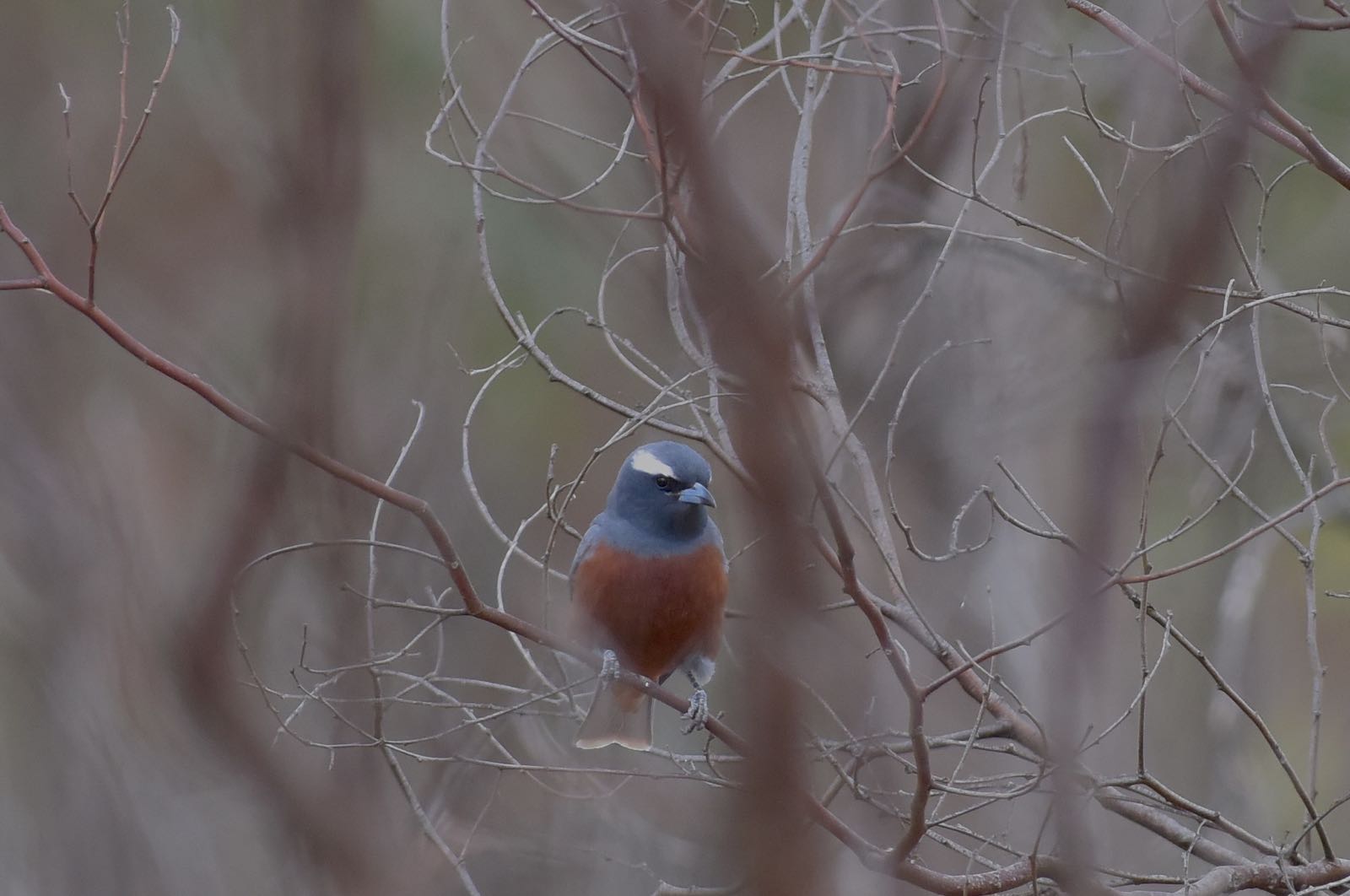
As we started for home we came across the White-browed Woodswallows feeding some young, and then a family of Brown Treecreepers looking after their growing juveniles.
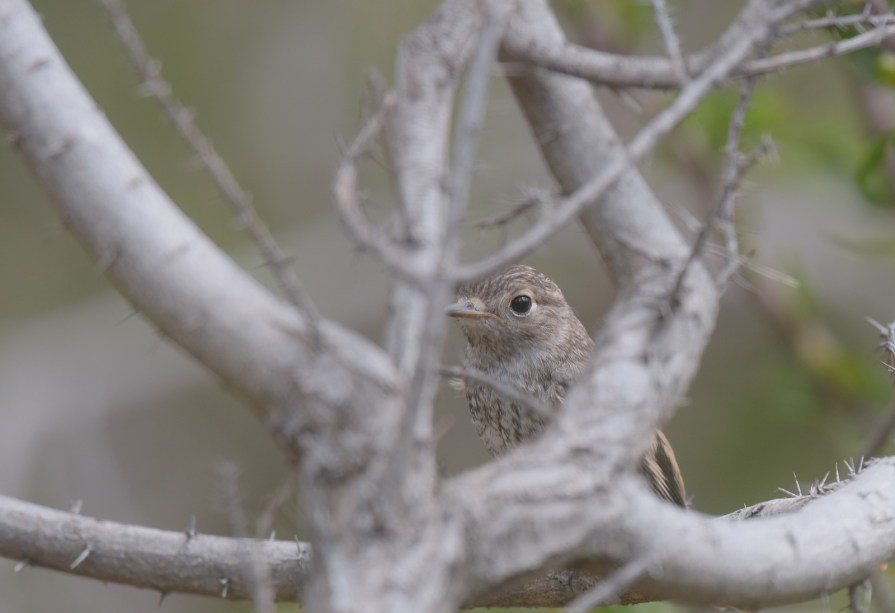
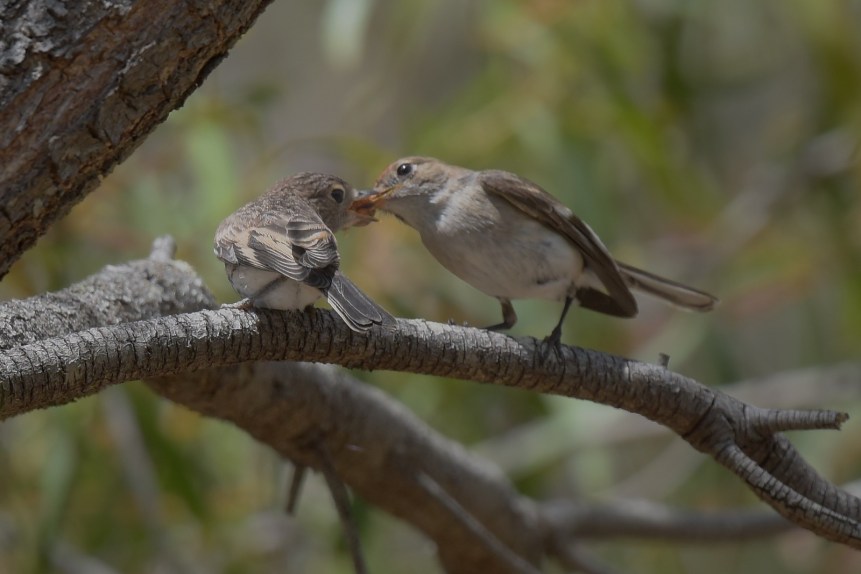
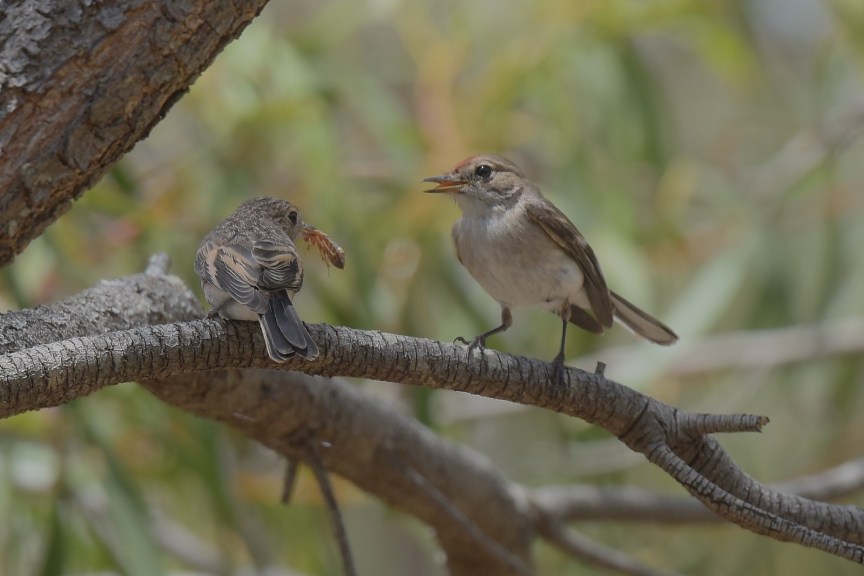
Of course no trip to Eynesbury would be complete without a sighting of the elusive Speckled Warbler, and to both our delights one flew by as we walked back to the car, and then began to feed on the small slope nearby. No close approaches with this bird, so my score of great photos of this little dude is still intact. Zero.
Enjoy


When I was a little tacker, The Gould League of Bird Lovers conducted a range of programmes at primary schools, intended mostly I think now with hindsight to stop young boys from stealing eggs during the spring season. “Bird Nesting”, t’was called, and the eggs were kept in small containers lined with cotton wool, and each, well, each had a story of “Daring-do” in how it was retrieved. Often from tall trees, or so it seemed.
Being a bit on the scared of heights side of things, it now seems appropriate to tell, that I never collected a single egg. But used to marvel at the tales of those who did.
Not that I didn’t go out with intent. If I lacked the means, I certainly did not lack the enthusiasm. Which I suppose taught me by some empirical osmosis the signs of a nesting bird. Jon Young makes a point of having a “Sit Spot” in which you return to day after day, season after season, and learn the lore of the land in that spot.
Today, of course we are much to busy to have a 30min break with the birds, and would have to travel distances to get anywhere like open bush. So we do it a bit vicariously, squeezing a few minutes here or there. One reason I always enjoyed my closeness to Woodlands Historic Park was the ability to slip in and out at a moments notice and stay in touch with the birds in their territories.
Like riding a bicycle, the signs of birds and their ways may not be a honed skill anymore, but I found today, that I can still pick some of the tell-tale signs. Which brings us to Eynesbury Grey Box Forest.
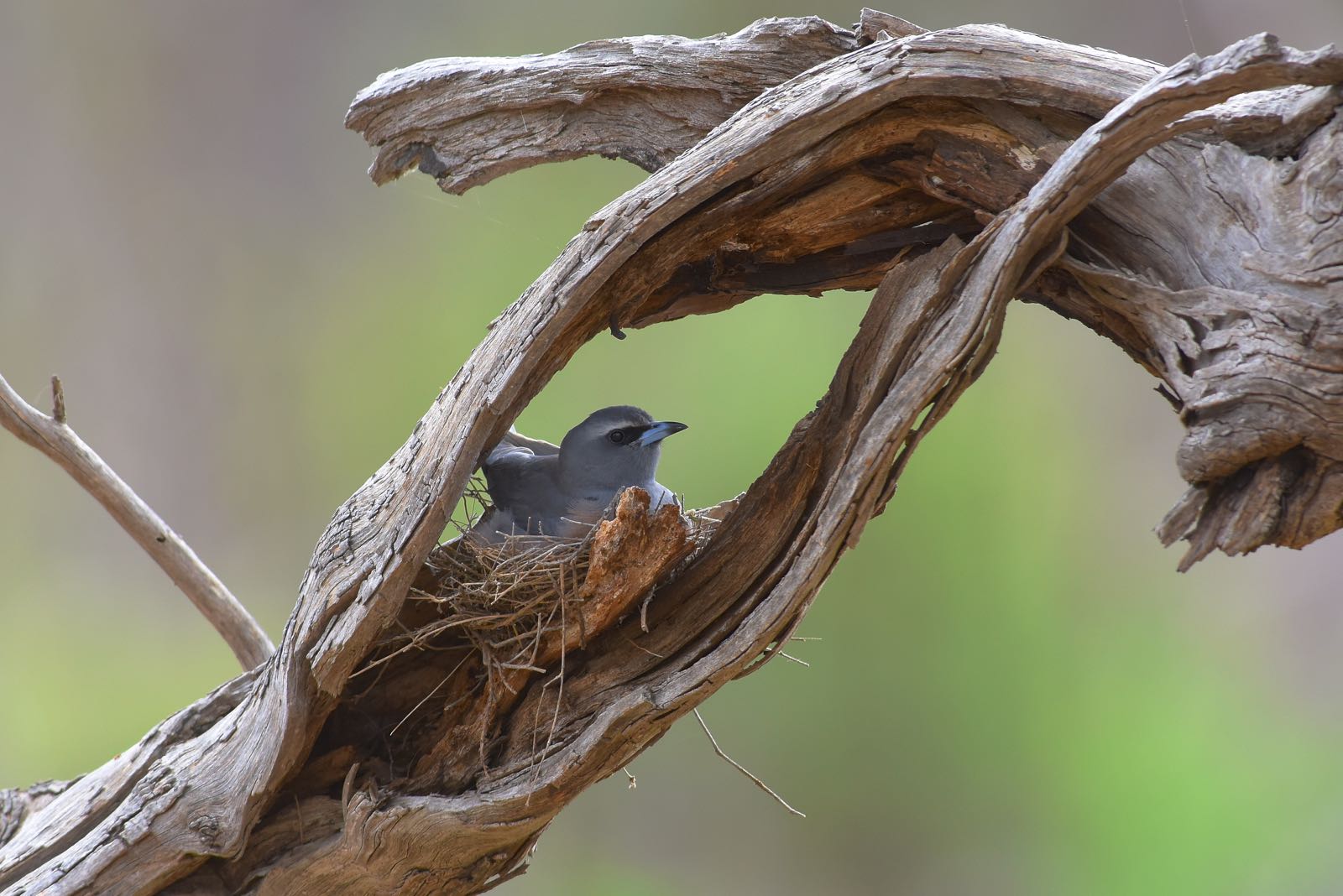
Within a few minutes of arriving at a small clearing in the area, it became apparent that there were some White-browed Woodswallows (among others) that were engaged in their breeding programme. Just where the nest was, high, low, open, exposed or secretive, was at that stage bit of a mystery, but again some latent skills began to yawn, stretch and point. “Over there”, saith I. Where said EE. Well it took a few more minutes of close observation, and finally there it was. And what a view.
Talk about a bird with a sense of design and location. This one ticks all the boxes. The local realestate folk would be proud. Long sweeping curves, carefully crafted. Magnificent views, a shot flight to the shops, and an enclosing verandah. A must for the aspiring home-maker. A Winner by any standards.
White-browed Woodswallows, share the nesting duties, each one sitting for 15-20 minutes or so, and then relieved by the other partner who sits on a branch close by, and in what can only be Woodswallowese, calls out, “Hurry up, its my turn to sit now.”
Enjoy.



We had gazed at weather tv presenters, peered at tiny newspaper weather maps, and consulted the occassional web weather site, and it seemed pretty conclusive.
A high moving in during the day would give us that special “Golden Hour”. Nothing else to do really except pack in a cuppa, the cameras, the WTP access key, drop a note to the controller of our intention, and drive.
We had a spot in mind, and as it turned, we arrived travelling in the wrong direction to the sun. Not an error, but just the way things worked out. And of course, as we had already half expected, a White-bellied Sea-eagle was on a post against the light and looking pretty elegant, resplendant, and pretty well pleased with itself.
And then it flew. And EE was the only one out of the car, and the bird passsed on her side of the road, and I couldn’t get the door open as I’d stopped right up hard on a bush, and well, I missed it.
The spot we were heading for has a little bit of open grass and usually good beach on low tide. (Twas high this night!), and an outflow. And a couple of good radio mast perches.
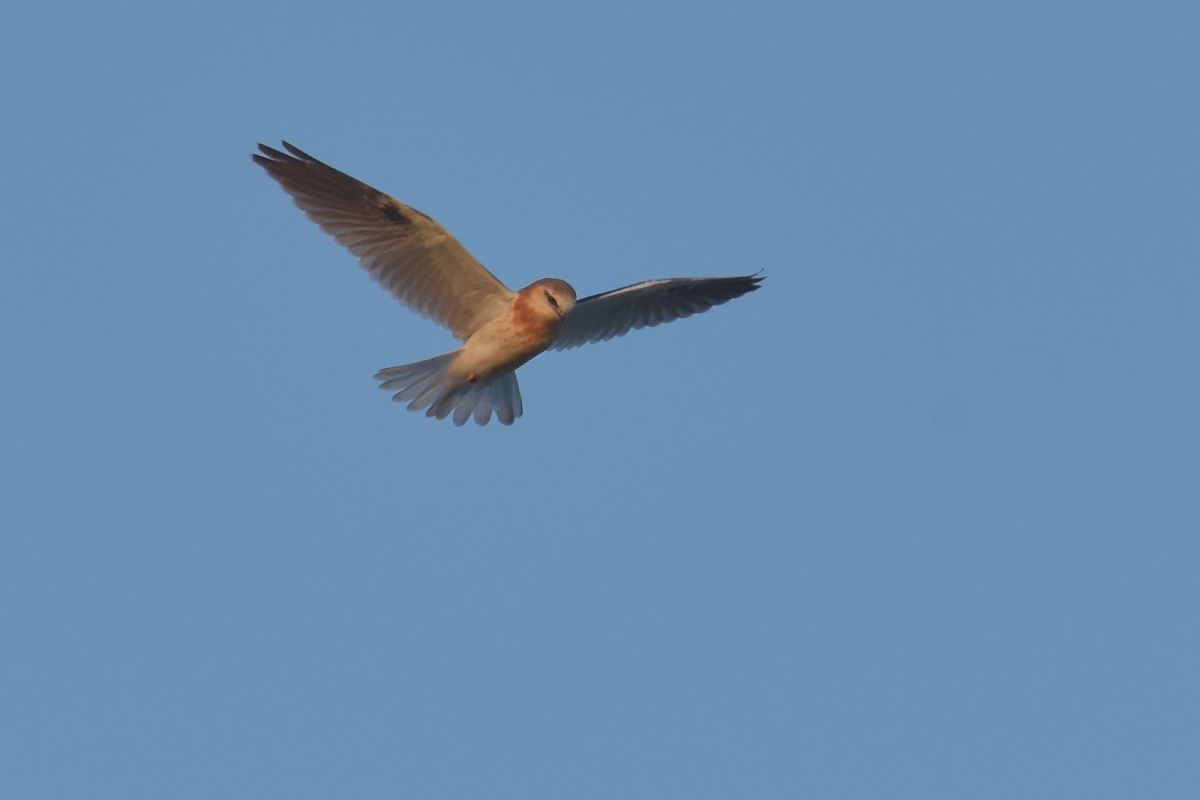
A young Black-shouldered Kite had chosen the area to perch on while Mum gathered food. So we sat, enjoyed the sunshine, the Earl of Grey, and the antics of this beautifully marked bird.
Even if the bird hadn’t been there the weather was so nice.


Its all the rage against isn’t it. Star Wars.
Still remember sitting spell-bound in the theatre watching the sheer bulk of the Star Destroyer that seemed to go on and on.
So we segue way to Timmy. We last left our hero looking much better with his new appendage appearing in fine form.
Today’s visit showed he had continued to grow the tail, and we learned a few new things about his life. Firstly he and several of the females are carrying food in to the bush where the nest is located. I’ve not been given privilege to go see, so can’t confirm what is going on in there.
Perhaps they are not feeding young, but rather keeping the nesting female well supplied in food.
Secondly his tail has started to come on quite nicely, and he still can hammer out a song.
And thirdly. As its gotten bigger, so has his territorial aspirations.
Today saw him take quite a number of forays into Tommy the Tailful’s territory. Timmy was able to advance about 10-15m more that last week, and even has established for himself a couple of calling posts, so this seemingly disadvantaged lad has made good.
Timmy seems to have accepted my being in the area, and is able to use the closest perches without the least concern for my being there.
Enjoy a good visit, we did.


Astute reader that you are, you’ll recall several times I’ve said that I think I have Grey Box sap flowing in my veins.
We had to motor to the northern subs today for medical things, so it was not a big ask to travel that little bit further to Woodlands Historic Park. Haven’t been there in many a long day, and now we are pretty much in the one day tourist category.
The wind was strong, the weather hot, and it didn’t look all the promising. Till. We found “Petite”, and again Astute reader that you are, you’ll remember, in some detail I hope 🙂 that she is a very charming if very small Red-capped Robin. What was more exciting was that she had two juveniles she was attending. Clever girl, small though she is, she must have started early in the season and all things worked to her favour and the gene pool ends up the winner.
I’ve not worked with this bird very much so would have expected her to be quite wary. And she was. Flying further away and taking the young with her.
Yet after about 20 minutes or so, she worked out that I meant no harm, and that I wouldn’t invade her space with the young and then it all changed. She bought them back to the bushes near us, and was happy to feed around me. Hunting quite close to me on the ground and encouraging the young to do the same. Awesome.
Her young are well on the wing, and yet are still masterly marked to keep them safe. The little grey chevrons make a perfect match to the Grey Box scrub.
Also those who have been brave enough to follow along on Flickr might have noted a slight change in direction for me at the moment. Mostly I am wrestling with the exploration of the craft and the process of both bird photography and my expression of that.
Found this piece suitable for today.
There are moments in our lives there are moments in a day, when we seem to see beyond the usual–become clairvoyant. We reach them then into reality. Such are the moments of our greatest happiness. Such are the moments of our greatest wisdom. It is the rare few who able to continue in the experience and find expression for it. Robert Henri – The Art Spirit
Thank you Petite for sharing the moment with me.






Last week, dear reader, like the old Saturday Arvo Kids Matinee at the movies, we left Timmy with a a problem.
Took a hour or so today, to go back and visit our brave hero and see how he was handling his injury.
And surprise, his tail is indeed regrowing. Not bad for about 2 weeks. So its pretty certain that he is well on the road to recovery.
In the hour or so we sat with him it was pretty obvious that his condition hadn’t dented his enthusiasm, or his strong singing voice. And we learned a little about life in Wren land. He also seemed completely undeterred by our presence and would land on his favourite perches with no concern of our being there.
Another favourite spot
Timmy has a rival across the path. Called him Tommy the Tailful. Because, well, he is looking pretty attractive in the Tail Stakes. It also seems that Timmy’s territory covers the path and about 10 metres into the bush on the other side, and then after a small no-man’s land, Tommy is in charge.
Now, I’m sure the rules are well written, but a bit hard to follow, but its seems that the border really is a no go zone. Neither Tim nor Tom managed to cross over into each other’s territory. In spite of some fearful calling battles. But what was obvious is that the young ladies on both Tim and Tom’s side feel no such limitation and freely crossed back and forth between the two territories. Much to the delight and the chagrin of both males. Each time a young lass would appear from the other side they were treated very well, and the male sat with them and performed all around the branches. But when one of the wayward locals moved over and returned they got a right royal talking to.
In the end, it’s pretty certain that the only winner in all this is of course, the Gene Pool. Female wrens not being noted for their fidelity, but rather the males end up raising young from other territories. As this seems to have worked down through the years, one can only conclude that they benefit from the excursions.
So Timmy is well in control, well on the way to developing his new tail, and quite capable of bashing out a strong territory song.
Onya Timmy.


Don’t you just love a feel good story.
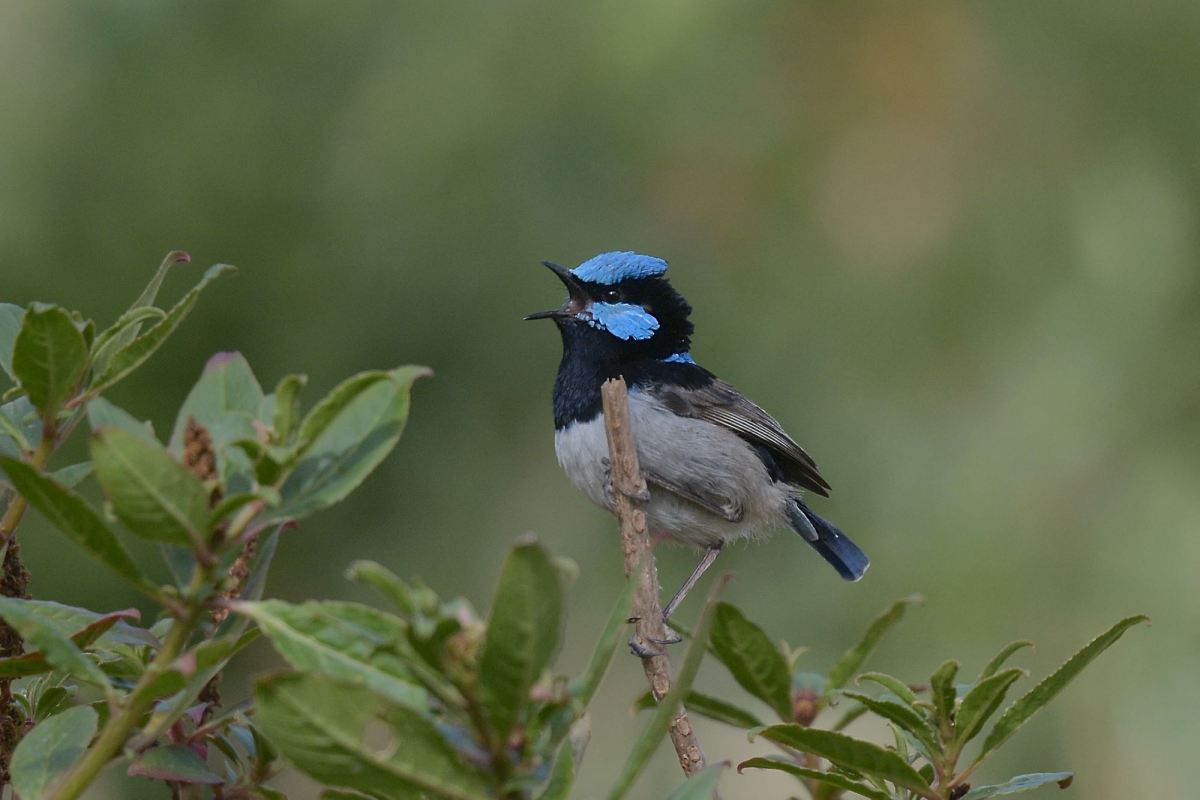
On the day of a great feel good story from the Melbourne Cup, I found Timmy on the mend.
I’m not much of a fan of horse racing, but have to admit that the story of Michelle Payne, the wonderful horse Prince of Penzance, her brother as the strapper, and the trainer/connections story is one that fairy tale dreams are made of.
See the story here.
Steven the Strapper to qoute the article; “Steven, who has Down syndrome, was responsible for drawing Prince of Penzance’s number one barrier, and correctly predicted the horse would be “in front at 200 metres [to go]“.
And rather than go up market, they have stayed with their roots and enjoyed the evening at a battler’s pub in St Kilda.
Love it when we stay true to our convictions.
Now its not that I don’t like horses, I’ve photographed a few of them in my time, and its not that I don’t enjoy a good day at the races. Love the food, the atmosphere and the excitement of country racing. Just don’t fancy seeing my money going into an endless pit, and watching an endless parade of horses around a track. Now before some one calls me, I really believe that horses love to run. And to run fast, and to jostle and parade. It’s just that I don’t get the gratification thing for humans.
But back to Timmy.
You’ll remember when we left our hero that he was looking a bit down in the wardrobe department with the mysterious departure of his beautiful tail. So we paid him a repeat visit today, and another fairy tale come true.
Timmy has begun to replace the missing wardrobe piece.
Still as active as ever, and just as vocal, and still chasing and harassing the females in his territory. So tailless or not, life has gone on for Timmy. What a great story.
Enjoy
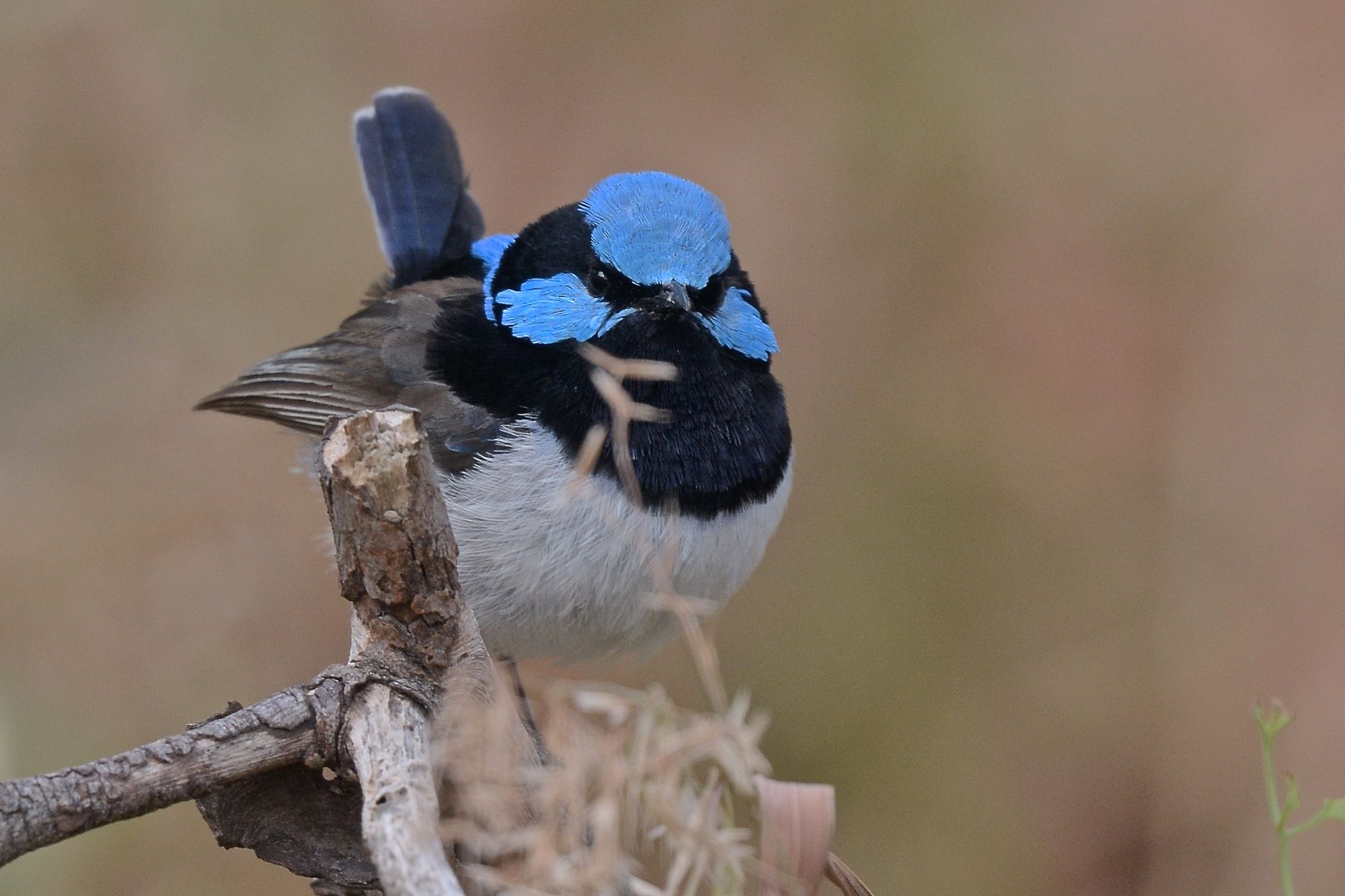


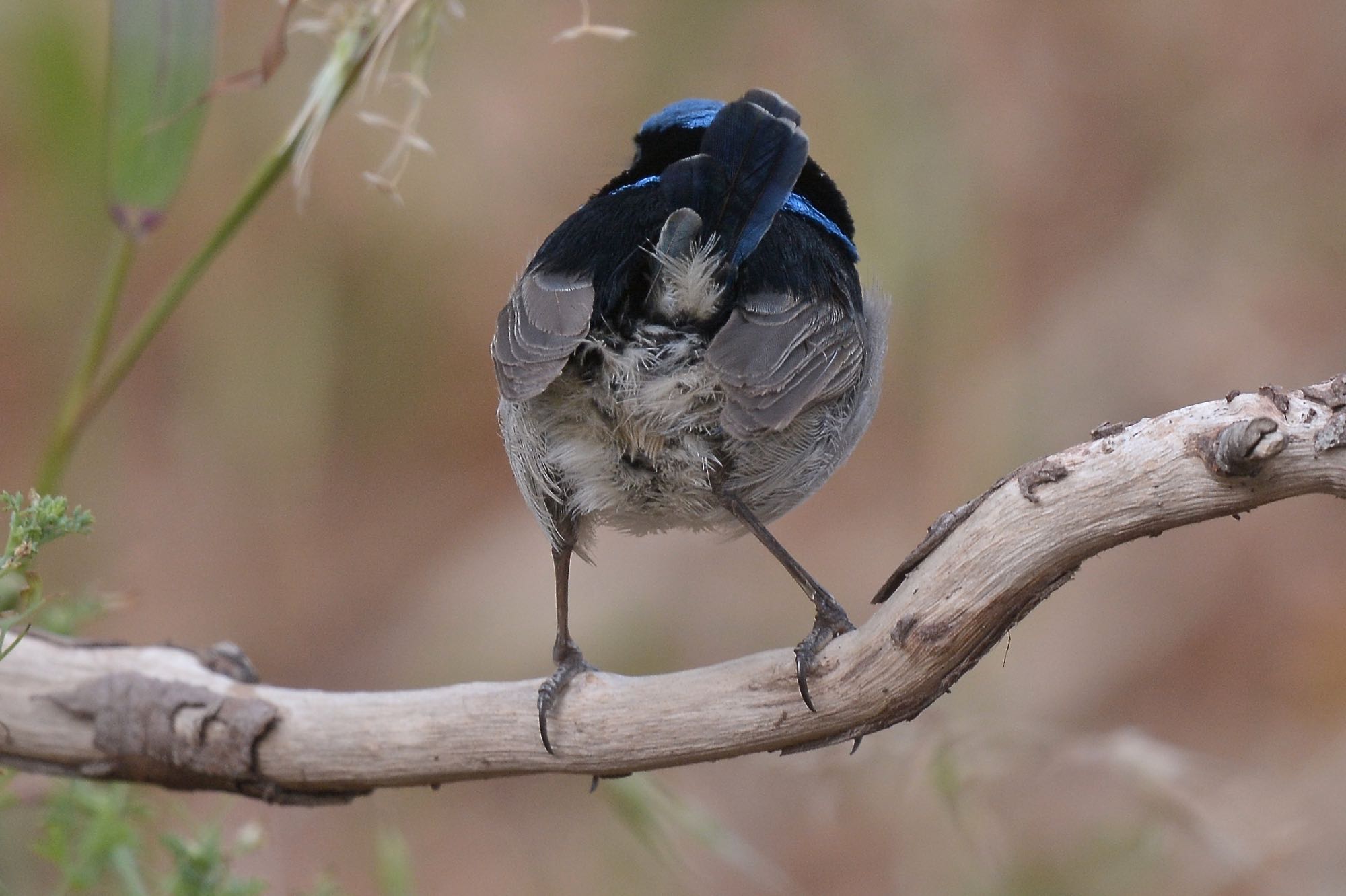
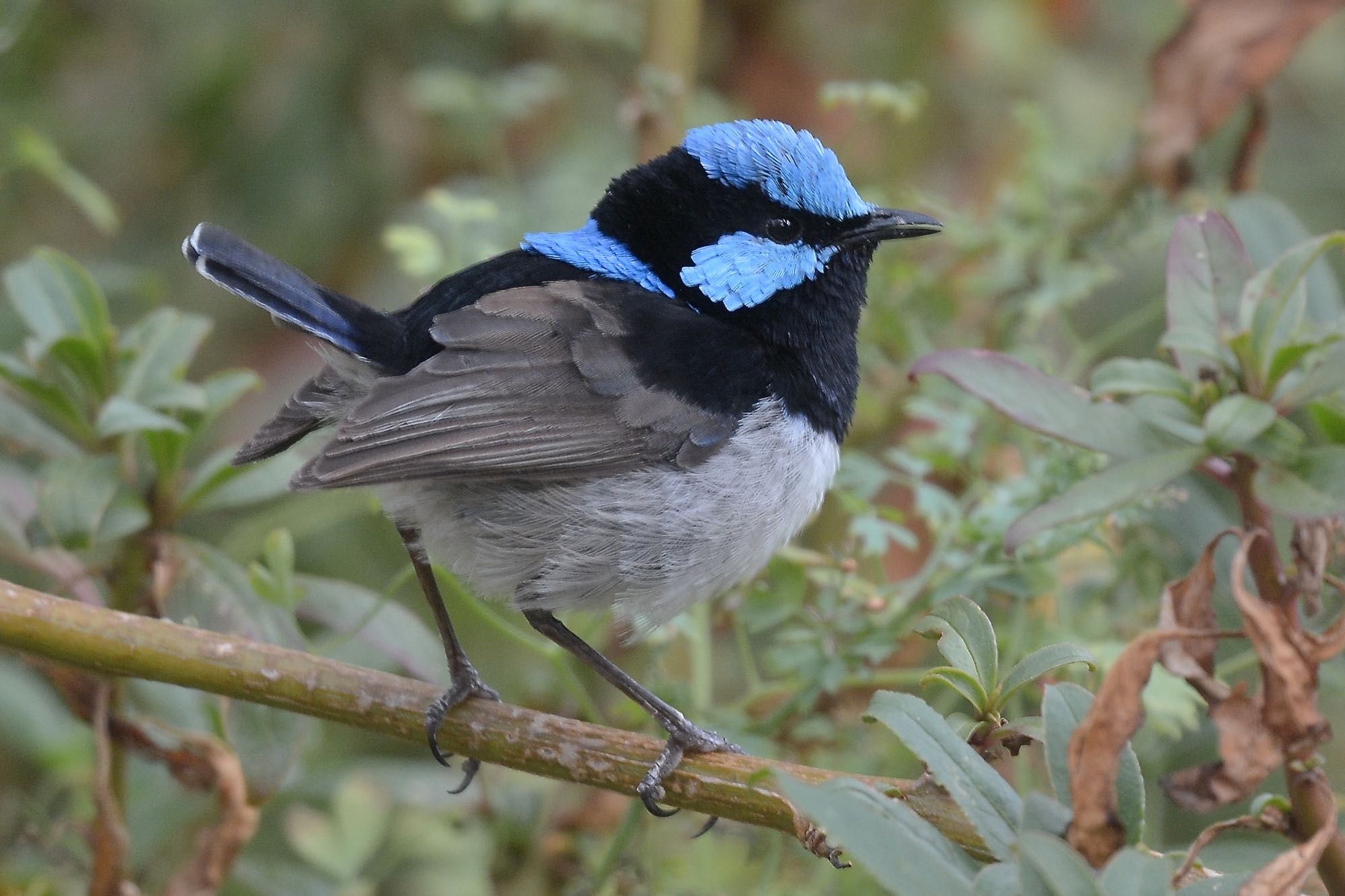

What’s wrong with this picture?
At first glance all seems well, but on a second take, well, its obvious. Timmy doesn’t have a tail. And there-in lies the tale.
Was working with a pair of Willie Wagtails and had been sitting quietly for perhaps 15 minutes or more as they worked out strategy and tactics for building of their new domicile. If all goes well, expect more of that story.
When suddenly up pops Timmy. And at first glance I thought, “Oh, another Fairy-wren”, but then it was obvious that something wasn’t right.
Happen to be reading “blink: The power of thinking without thinking”, by Malcolm Gladwell. A good book for bird photographers as it suggests that the power of making choices in an instant. Actually its more about the power of marketing, and why we all recognise a can of Coca Cola, even if we don’t drink the stuff.
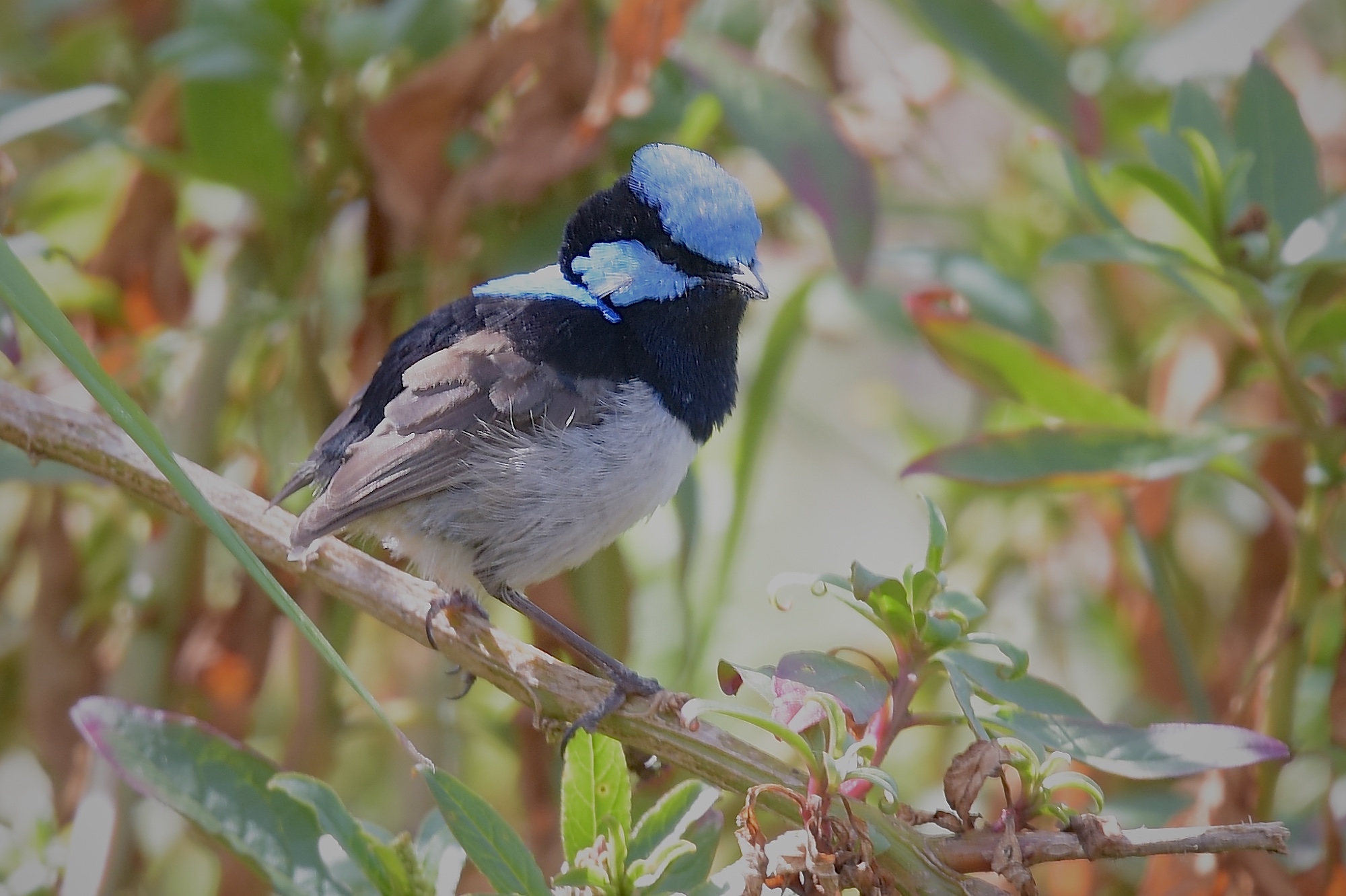
But, it didn’t seem right. So I looked, and sure enough Timmy is Tail-less. Otherwise a perfectly healthy Male, Superb Fairy-wren, and quite able to defend vocally his territory. Also seems to have a flotilla of females in a bush area some 30m from where I was sitting and they all treat him as usual. (That is giving him lectures from bushes).
So what happened to Timmy? Something disastrous, or is he also helping nesting and has lost his tail in the process, or has he had a bad attack of the moults? Or is its even more complicated. Perhaps someone has some info on what might have happened.
In our backyard, there are two resident Blackbirds. For most of the early part of the season, they seemed to be engaged in battles that were more than courtship, and occasionally I’d see quite a few feathers fly, and find a few on the patio. Now, as they settle to nesting, and don’t seem anywhere near as aggressive, I’ve noted that both of them are tail-less.
Other Blackbirds I’ve seen in the area are well tail endowed, so its just this pair.
Did they manage to pull each one’s tail feathers out in the ensuing battles?
Will keep an eye on Timmy, will be interesting to see if he regrows his glory.
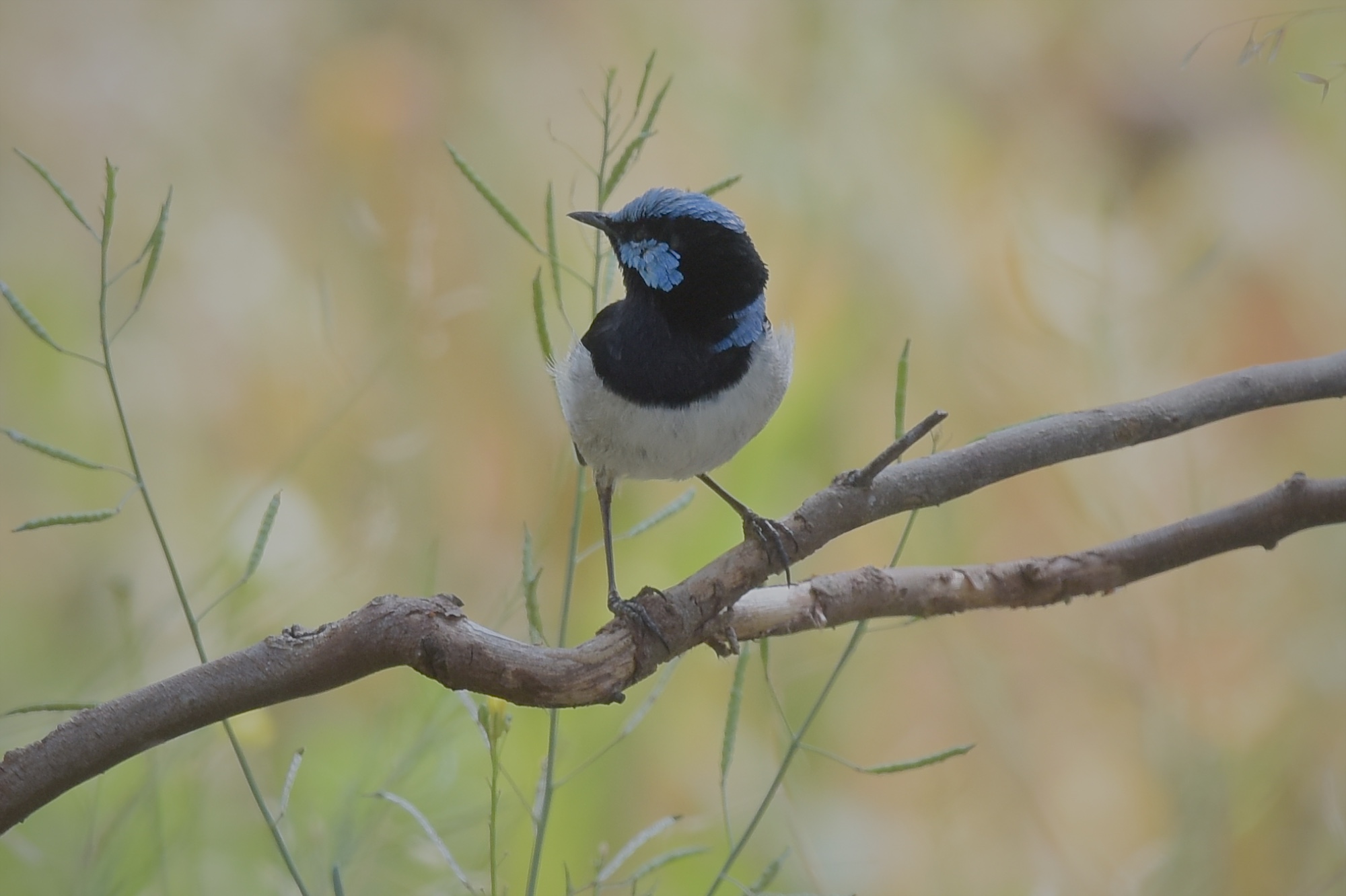
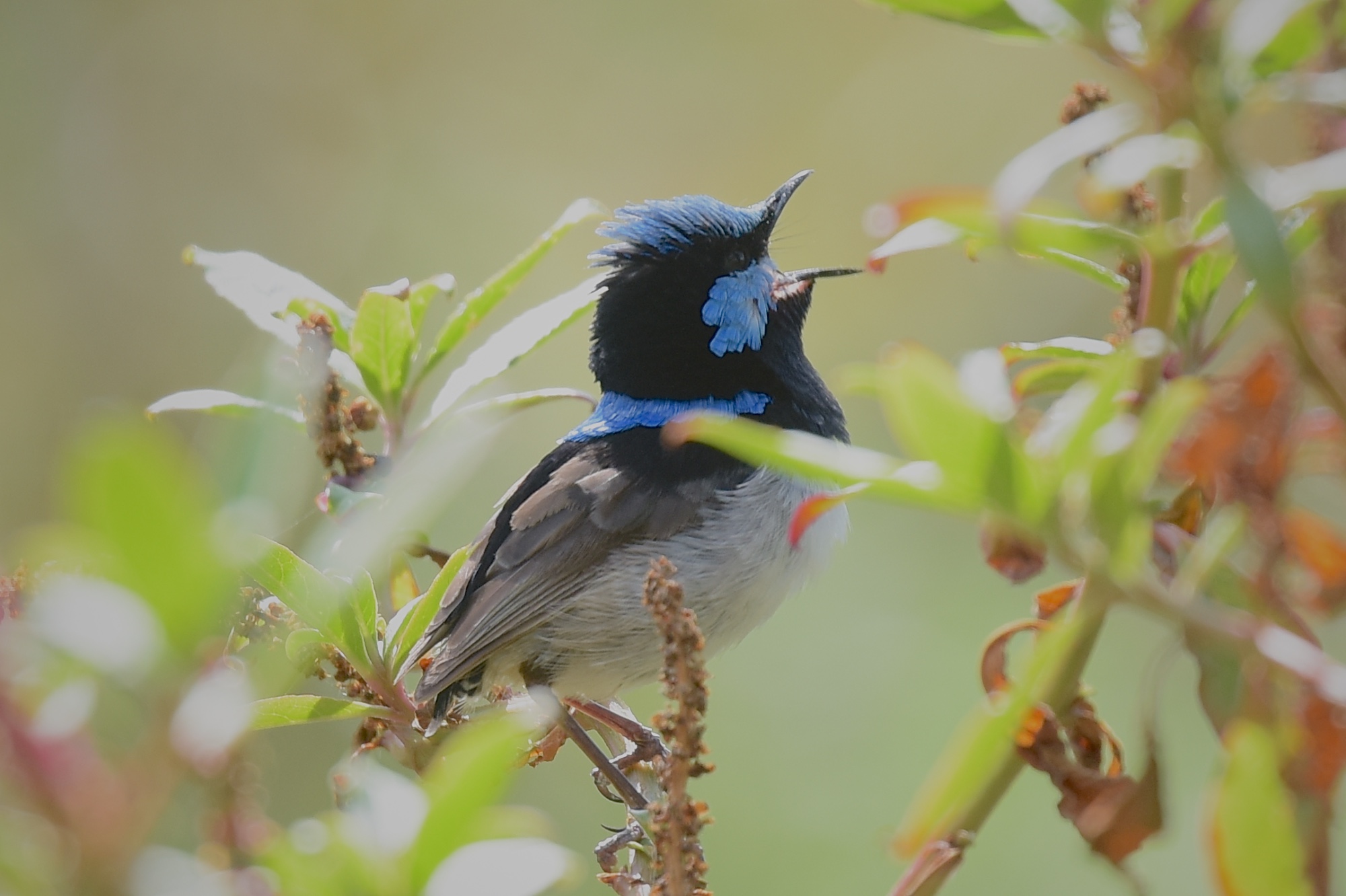



Fresh from watching Alfred the Brown Falcon give hunting pointers for snakes, we were out at the WTP in the wind and the cold this afternoon, and to our collective surprise, a Magpie plopped down in the grass nearby.
With in a few seconds it emerged and with much delight took to the air with a snake in its beak. Then we were lucky enough that it landed on a roadway about 50m up and so we went to looksee.
Maggie wasn’t that impressed with spectators, and after a bit of relocating sat down to the work of despatching said snake.
The high wind made it a bit more difficult for Maggie to concentrate, and to be honest, I think it was quite cautious about its approach and even when the head had been removed after some difficulty, any slight movement of the carcass would have Maggie on the defensive and two steps back.
But it persisted and eventually got down to enjoying the remainder of the meal.
Well done Maggie. And just to add a word of warning to others as much as ourselves we had not more than 10 minutes before been standing in that area working with a Black-shouldered Kite. Time methinks to reconsider where we are standing.
Enjoy.


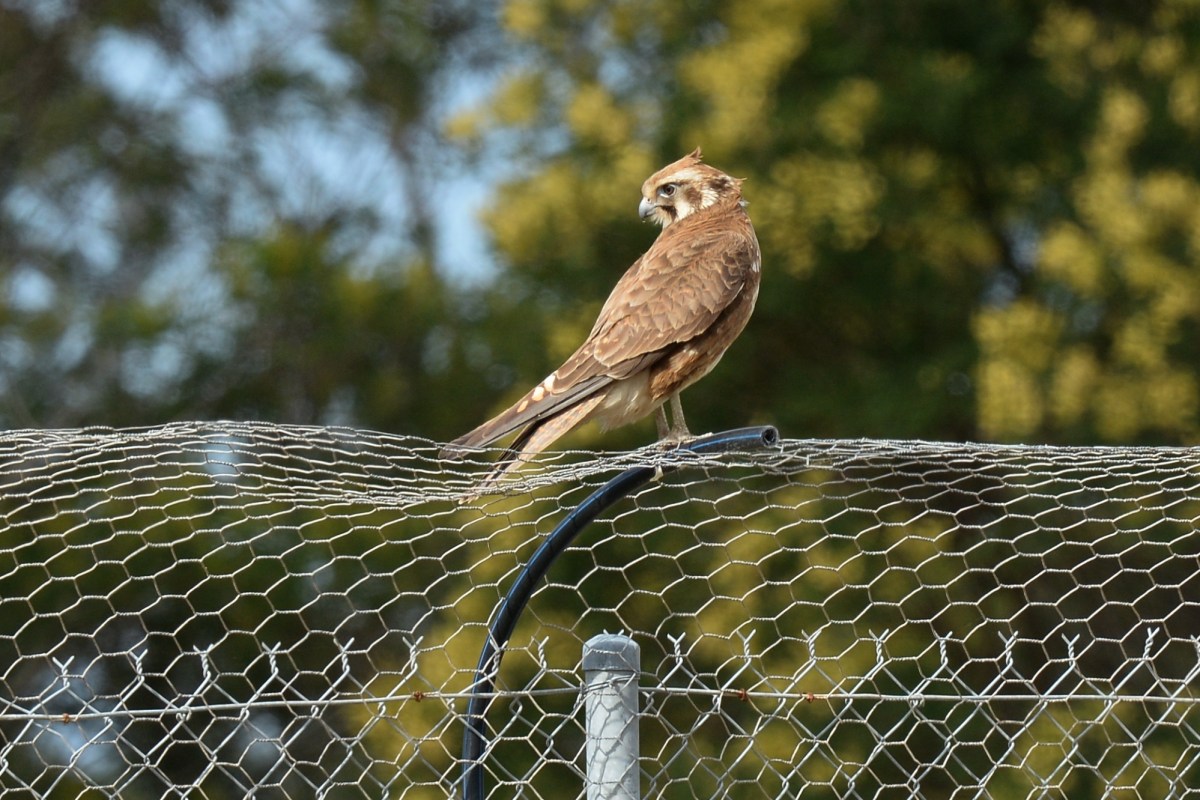
I just about know this bird well enough now to give him a name, so Alfred it is. I haven’t really met his lady as she is quite hidden amongst the tree with a nestling.
Alfred has a tree at the end of the Office carpark, and will often be seen looking out over the paddocks. Such was the case on Friday afternoon.
He is pretty dismissive of the human kind and simply sees them as passing traffic. So its not to hard to move around to get a good angle on this lovely bird’s rich coat. Almost from the moment he landed, twas obvious that something had his attention. No preening, just a constant scanning. At first I thought it might be he was a bit wary of the resident Black-shouldered Kites.
However after about 10 minutes or so, he dropped quietly off the tree and whiffled down on to the bike track opposite. After standing on the track for a few minutes, he stepped into the grass and again seem engrossed in an area just near him.
Then.
He struck.
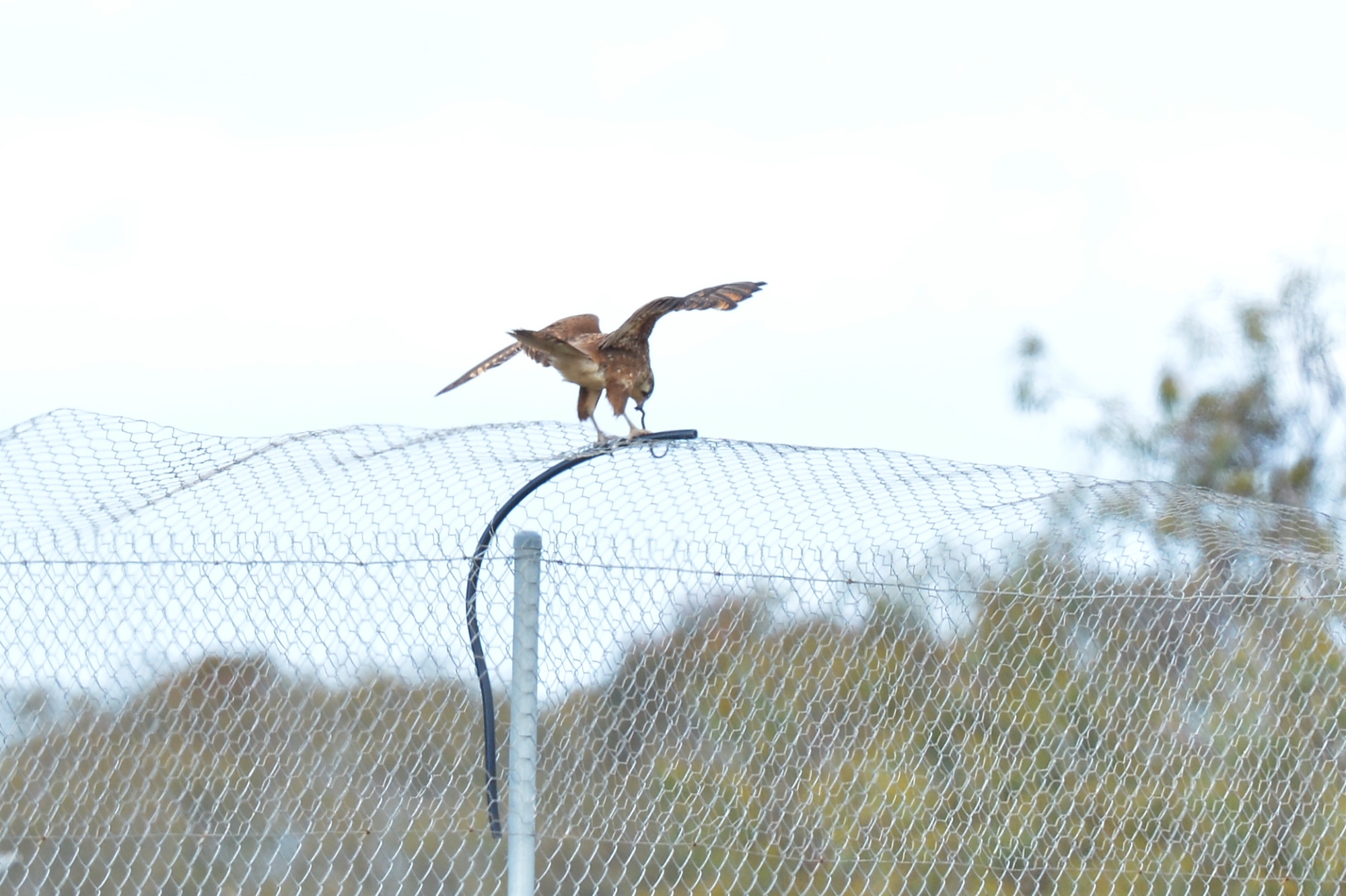
And immediately lifted off with a small snake as prize. Off to the nearest perch, the fence line, and a few minutes to enjoy his meal.
I am pretty certain that I can conclude that not long after he landed in the tree that he spotted the snake, and then worked out a best place strategy for his attack. Then again once he landed on the biketrack there was some fine tuning of his planned approach and then finally the single stroke attack.
As Mr An Onymous said, “What incredible eyesight to spot it from that distance.”
Alfred just sat in the afternoon sun, grinning.




We’ve been up around the Newstead area this past week. Went up for the annual Werribee Birdlife (Formerly Werribee Wagtails) camp out.
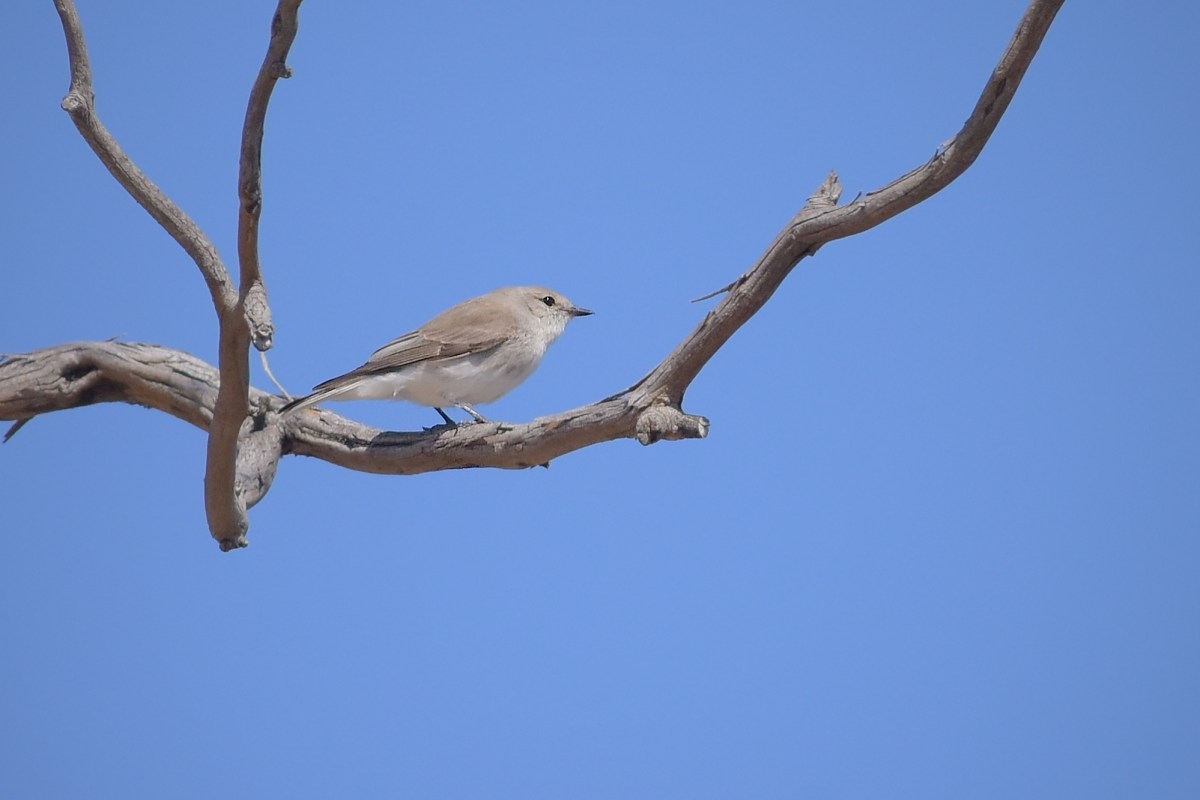
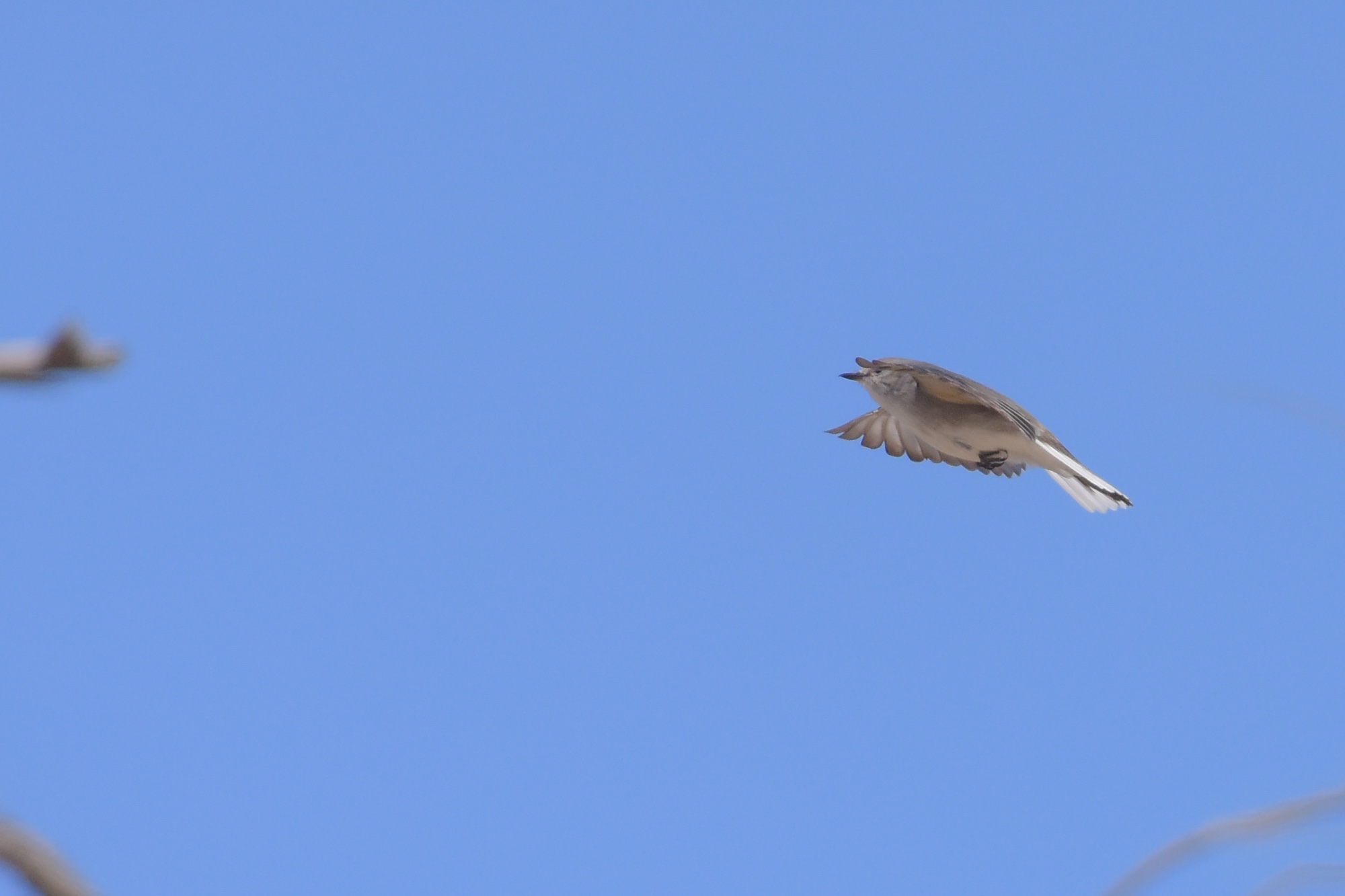
On one afternoon in the RIse and Shine Bushland area we were quietly travelling through the forest, when I was pretty sure I’d heard the familiar “Peter, Peter Peter” of Jacky.
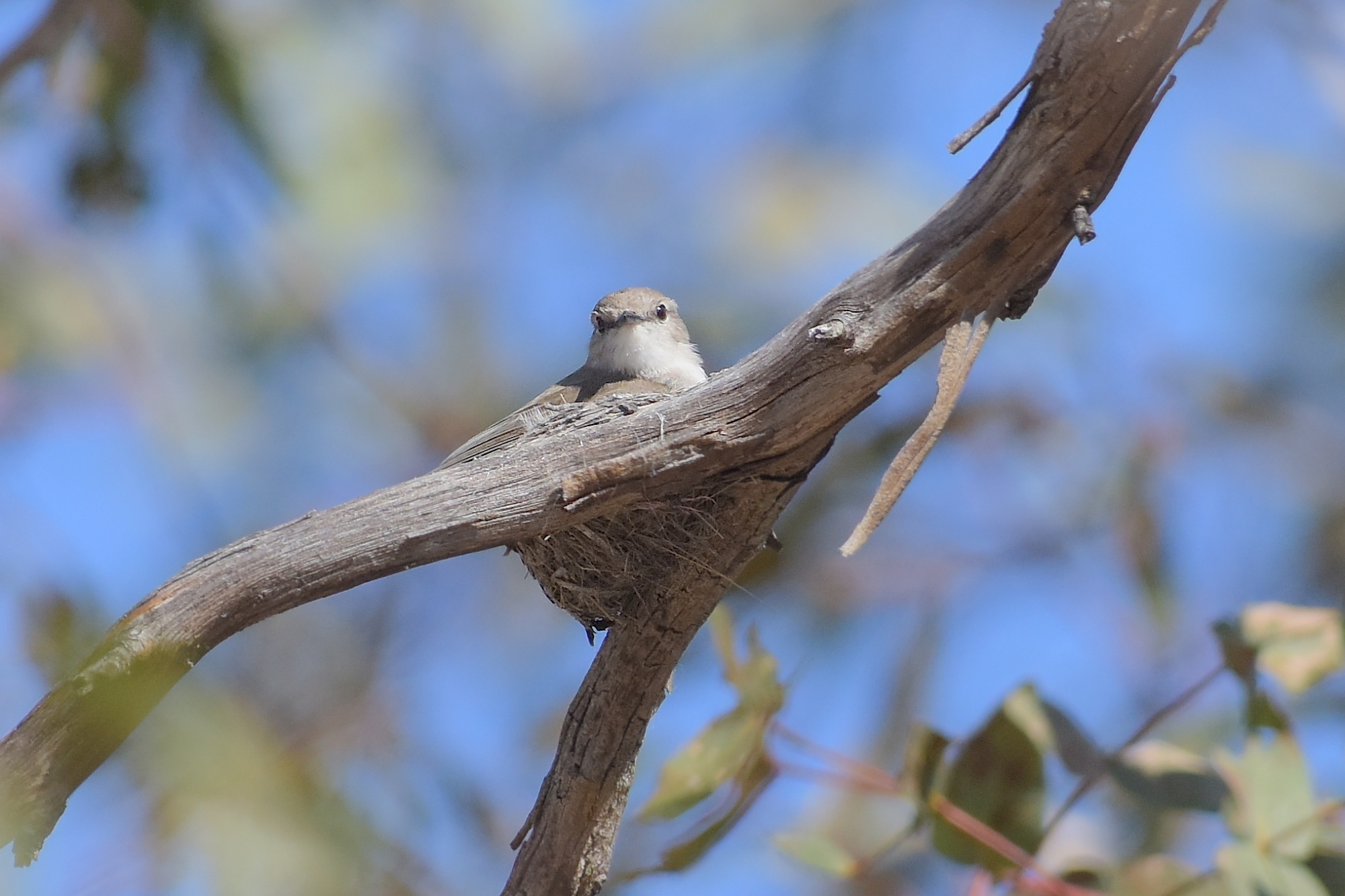
So we stopped and eventually I reckoned it about 500mm further down so we went to look. No doubt about it, a Jacky Winter, and quite vocal, and very busy. The EE spotted a pattern of flying into one tree, and a few minutes later announced, like some magician about to pull a rabbit from a hat. “Look, she is building a nest!”.
Now of course you have got to have seen a Jacky Winter nest before to have any idea what you are looking for. Mr An Onymous who was with us peered into the trees, scratched his head, got out his ever dependable Nikon binos and looked again. “Where?” Which is a pretty good question as Jacky doesn’t exactly go in for high class up market building. If there was one of those ‘reality building’ shows for birds she’d be among the bottom of the backyards.
And there on a tiny Y in branch was an almost imperceptible bulge. And pretty soon Jacky confirmed that by adding some more spider web to hold it all together.
Hope she is successful.
Enjoy.



I posted a couple of weeks back about the Alan (Curly) Hartup Exhibition at Newstead.
We took the time to drive up for the day, (well actually we stayed up for about a week, but that will become clear as more posts are placed).
Alan Hartup was, for those who are interested, a remarkable local identity at Newstead. He ran the local service station and so came into contact on a daily basis with most of the locals. His other passions included photography and wildlife.
I had the good fortune, almost serendipitous luck, to have worked with him at several photographic conventions and national and international judging panels over the years. But always that infectious smile and the humble ability to take the time to listen to questions and help the person find the answer around them would lead to marvellous personal discoveries. In the bush he was the consummate bushman. I’ve travelled the scrub over the years with many fine bushmen(and women), but none I think rivalled his ability to find, to read, to take note of, to ponder, to investigate and to tread carefully across a landscape as Curly.
He worked in a time of slow ISO (ASA in those days), black and white film, and colour film that had impossible slow speeds. Think 50ISO agfapan.
No mulitburst, nor long focal length lenses for Curly. His work was patient, persistent and thorough. A nest might take days to set up a hide, to wait for the light, to brave the elements and to wrestle with cameras, tripods, flash units and cables that were built by little elves with a weird sense of humour. And 12 exposures on the beat-up Mamyia C33 was your lot mate! Still.
In the end it was never the photo to Curly it was the story of the bird.
Seeing his work harmonising together on the wall the other day as a body of work, (not of course his complete story), it was quite astonishing to come to the realisation that in a visual way Curly exemplified much of what Jon Young calls ‘building the thread’ It’s based on the story of the Kalahari bushman who says that each time he sees a bird a small thread is established which grows to be a large rope connecting both man and bird.
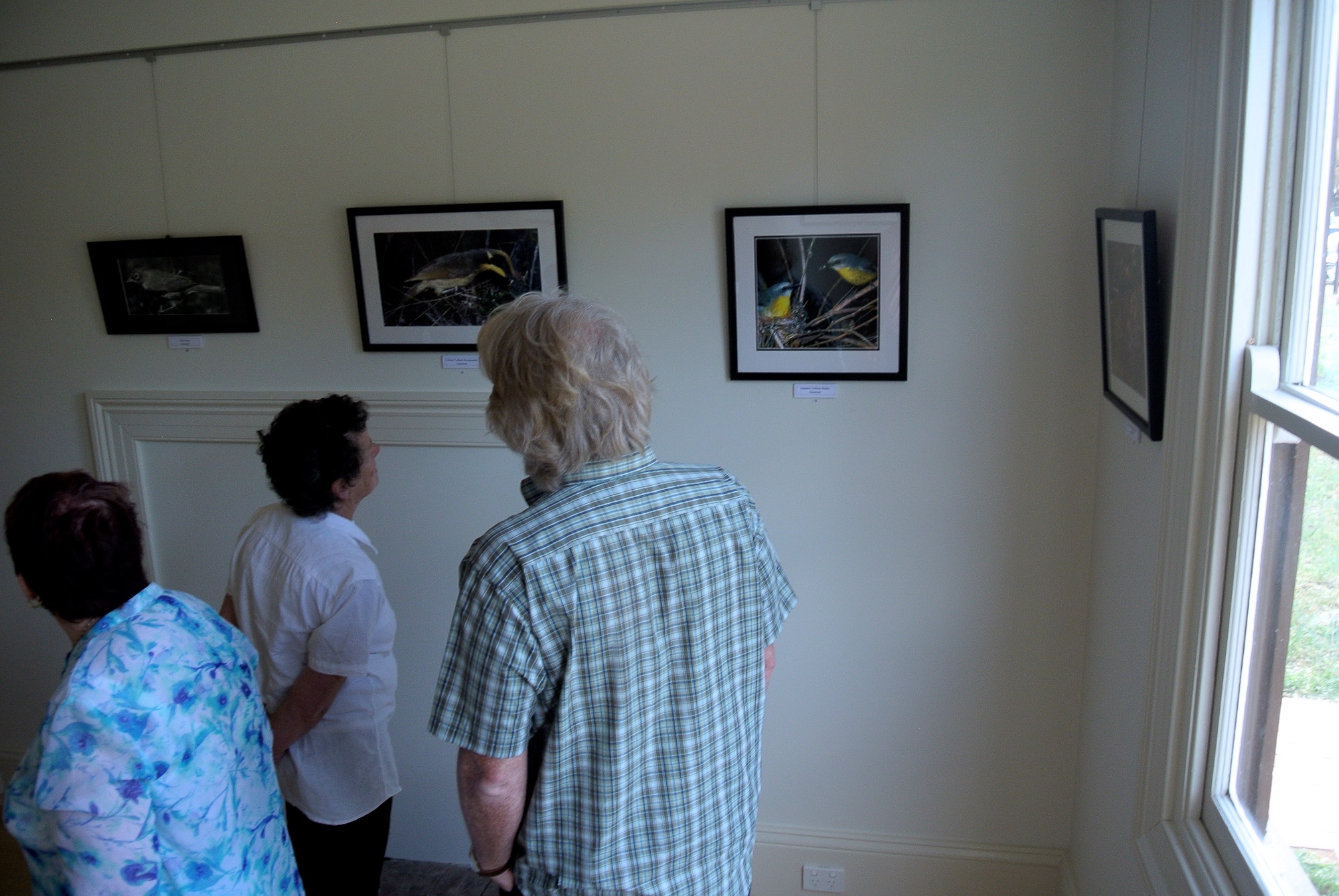
Curly’s pictures are a visible expression of that thread. The amazing story of the Wedge-tailed Eagle with the damaged wing. The intimate portrait of the Rufous Fantail at nest. The exquisite shots of the Possum taken from his living room while watching tv!! The stunning find of the White-browed Babbler on a nest. A bird for most who now walk the Newstead forest areas have yet to see in the area.
Complete involvement. Can’t be taught has to be experienced.
We had, that morning, early before the sun was up, enjoyed the company of a pair of White-faced Herons and their three delightful young on the nest. We’d moved locations to be entertained by White-browed Scrubwrens several of which were happy to feed not only at my feet but alongside my elbow resting on a log for support. To stare into those little bright eyes and ponder the intelligences going on in there. And then just before we went to the exhibition opening; to be enamoured by a pair of White-throated Treecreepers (See EE on Flickr for those – see here), as they worked hard on a tiny opening in a tree to provide their soon coming family with a safe secure home. Building threads. Surely the reason we’d travel that distance.
So what a thrill it was to take the time to enjoy again the work of such a man, and to enjoy the stories that he wanted to tell.
More power to Geoff Park (he of Natural Newstead blogsite – see here), and the Hartup family for bringing together such a body of work for a new generation of photographers to enjoy, and more importantly to experience.
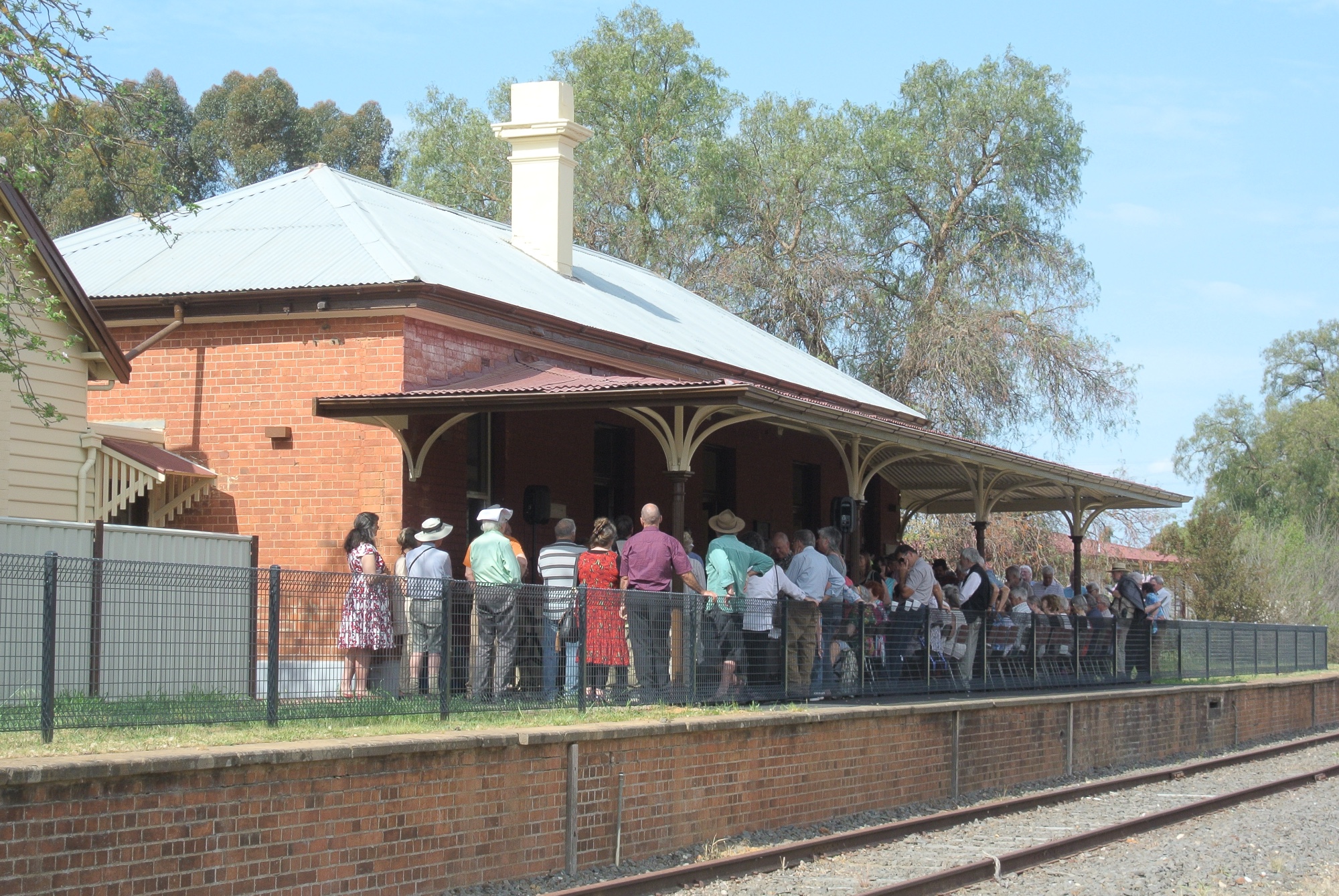
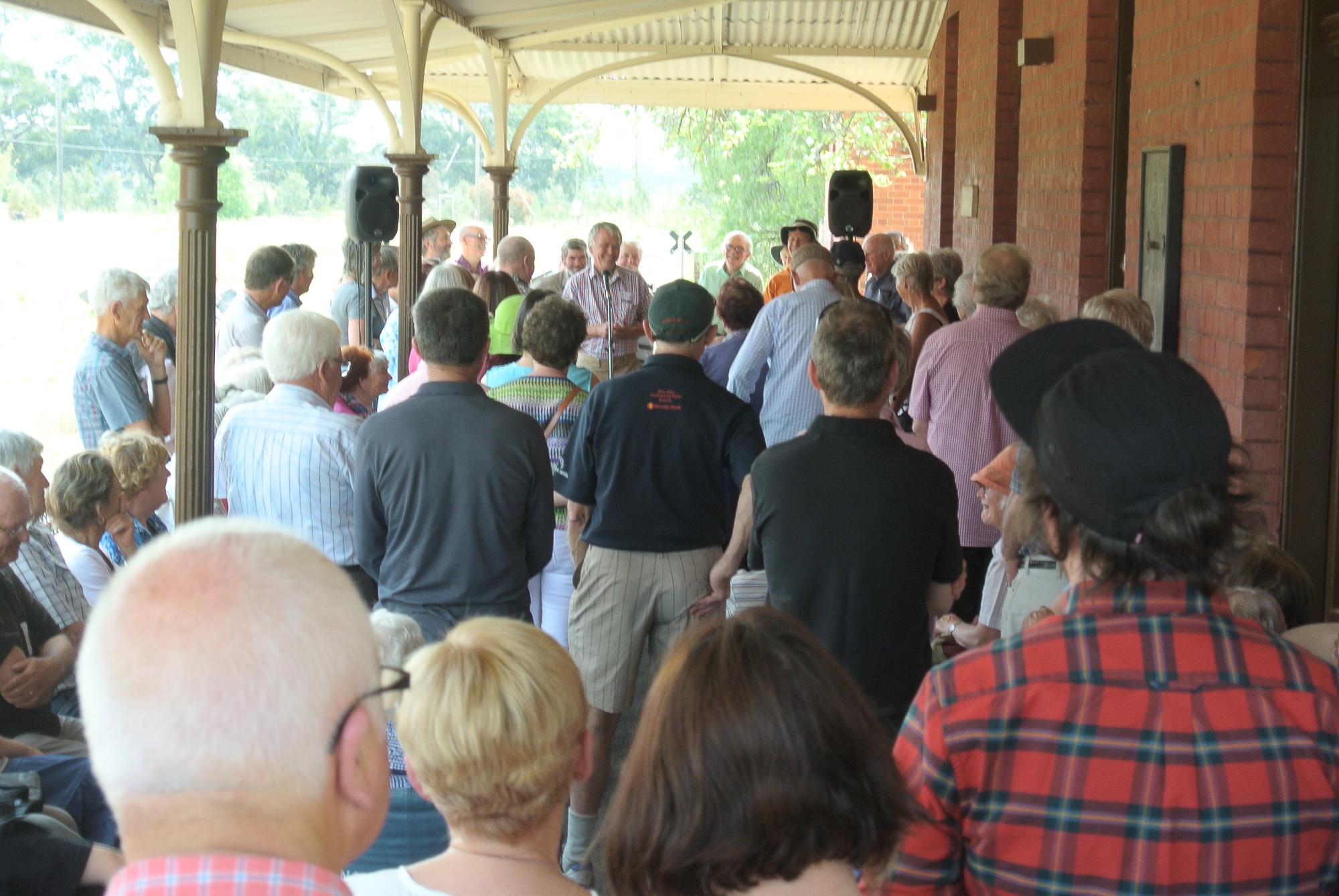
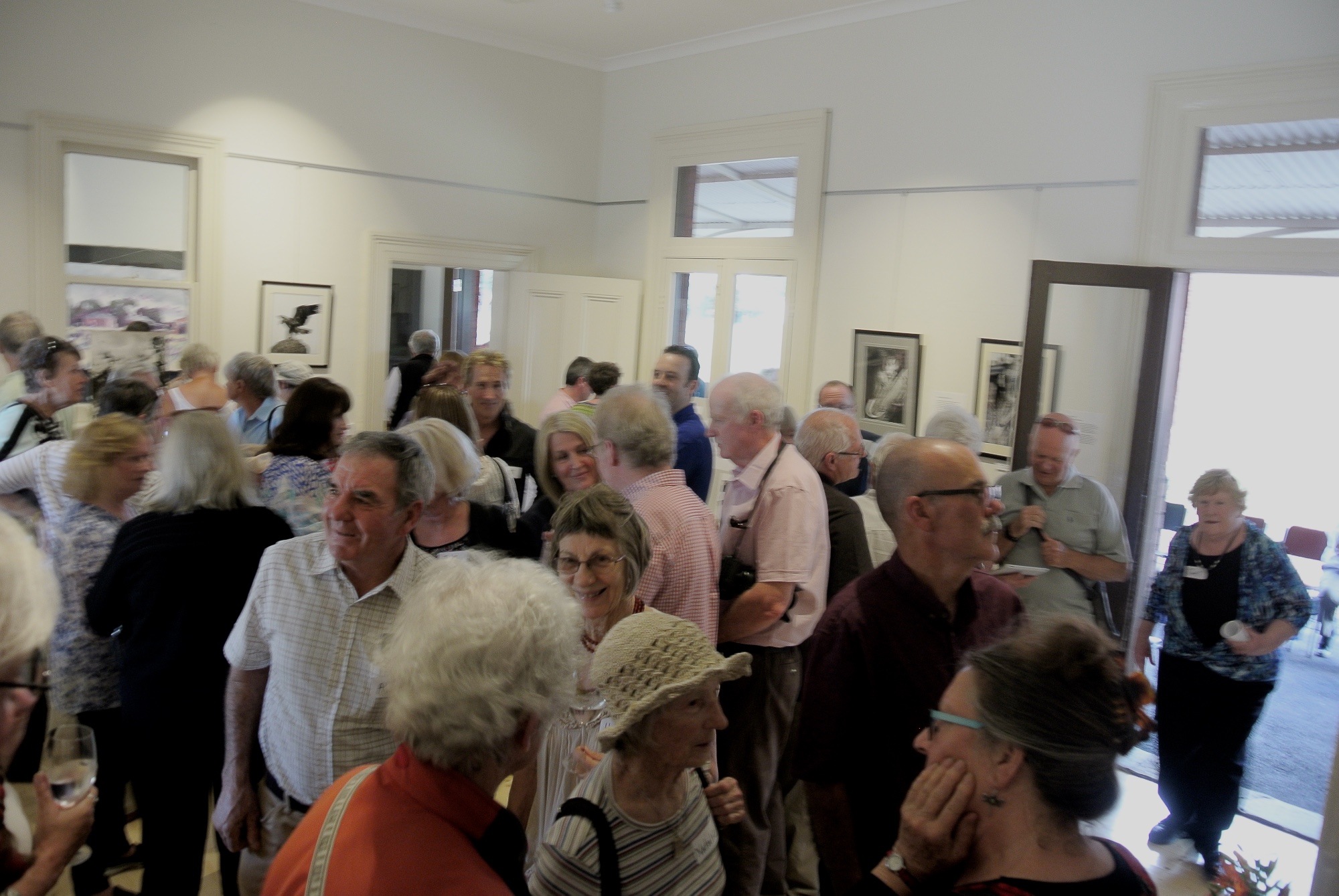
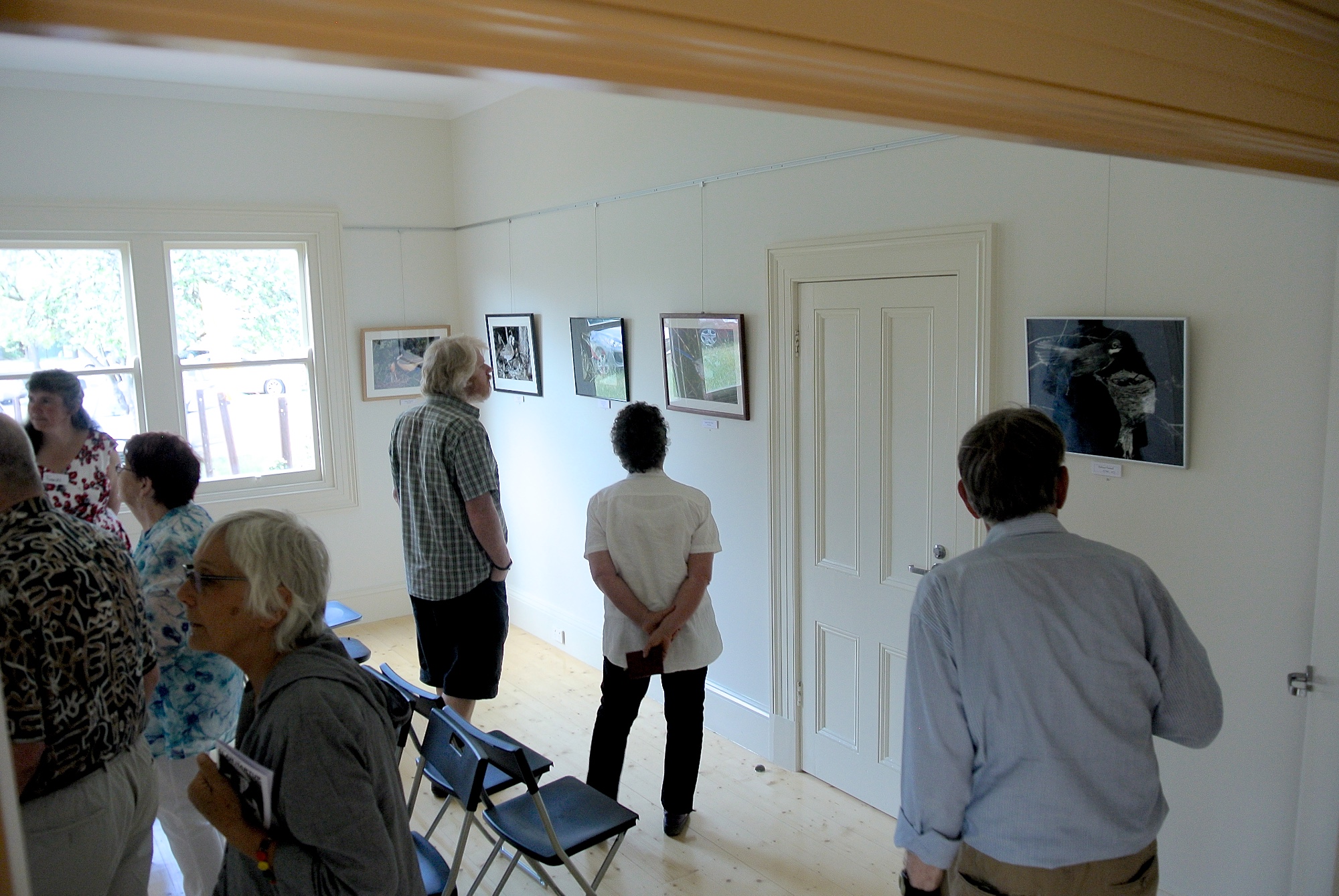
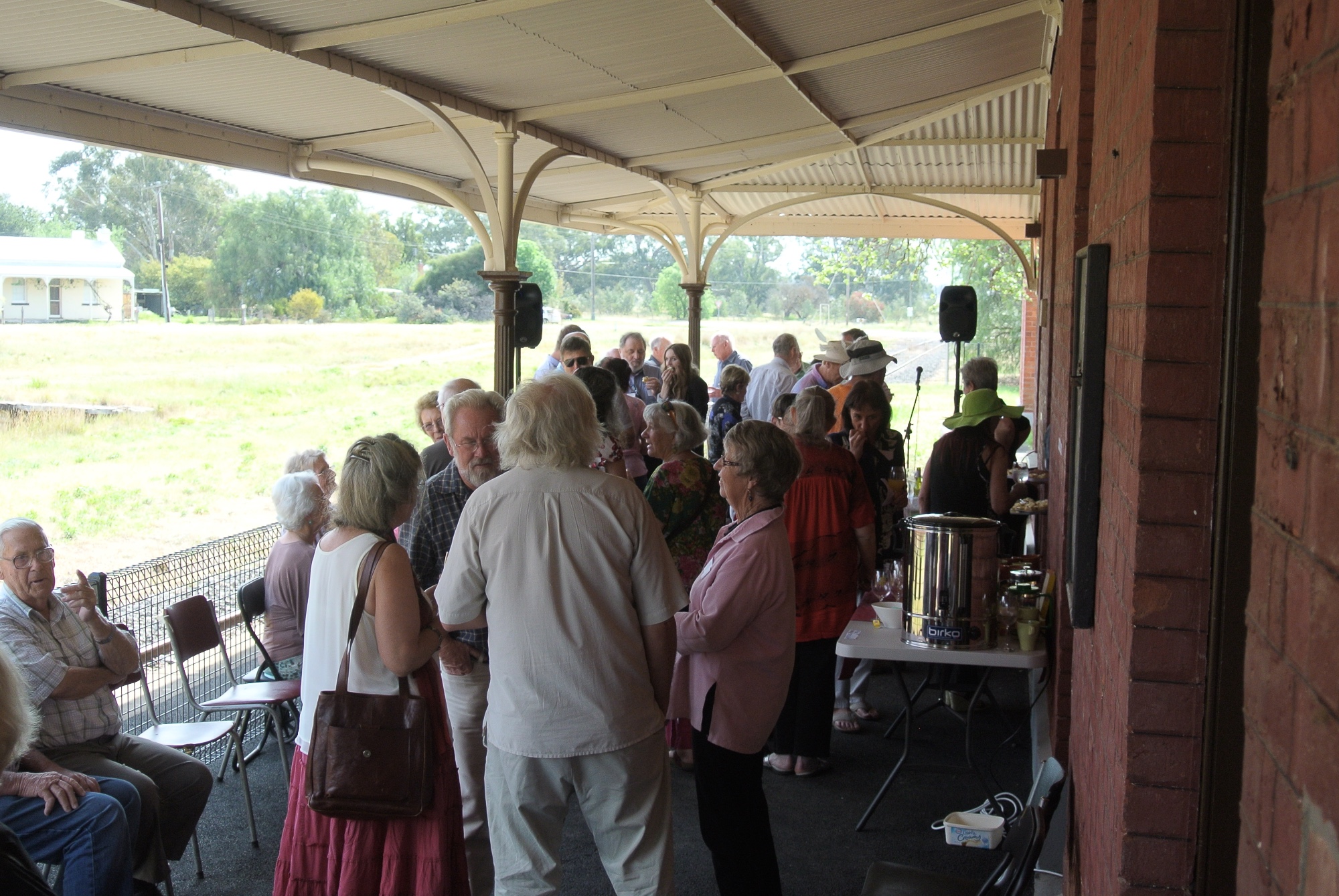
Here few shots of the day under the old Railway Station at Newstead. What a great way to use the building and what a pleasure to have been part of a bustling crowd that filled the platform and gave a small feel of what it might have been like as new and old stories were played out.
And there over it all, the portraits that said so much about Alan Hartup and his care for the lives of the creatures.



 Birds as Poetry —— Just because I WANDER doesn't mean I'm LOST