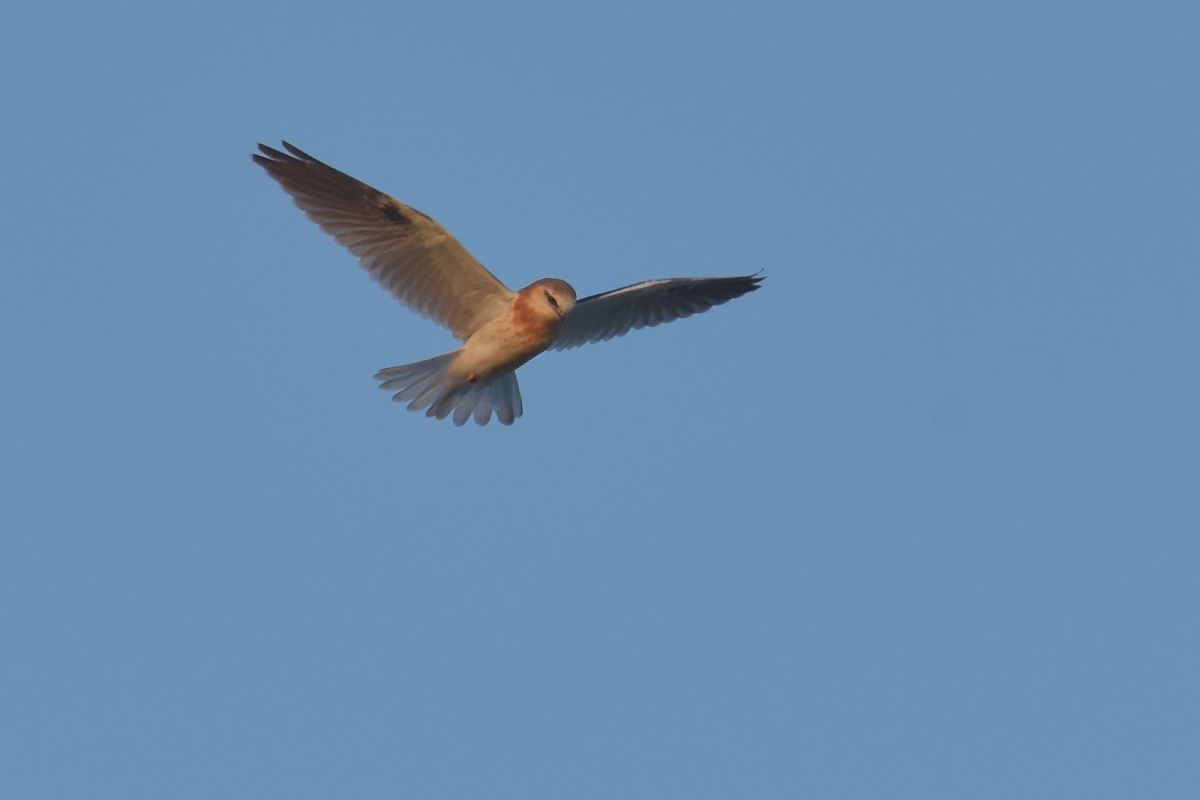
With most of the scientific names of Australian birds derived from Latin or Greek words, it’s great to come across one that recognises the language of indigenous Australians. Berigora is the Aboriginal name for the Brown FalconFalco berigora, a common raptor of the plains country around Newstead. This individual allowed me within ten metres yesterday afternoon – it was using the fence line for perches from which to chase grasshoppers and was not that keen to move far in late afternoon heat. What a beautiful raptor!
Brown Falcon near Walker’s Swamp, Moolort Plains, 1st January 2016.
Given that chapter one was a runaway success, I decided to continue in the theme of “Sneaking up on a Swamp Harrier- The Completely Gullible Edition”
First of all find your Swamp Harrier. Seems logical enough and those big pools of water with the reedbeds seem the most obvious place to start. And from a Russell Coight perspective “Endless reedbeds that stretch as far as the eye can see… And with binoculars, even further”
And of course this classic on Emus, modified for Swamp Harriers
“Swamp Harriers tend to travel in pairs, or alone, or in groups and tend to eat at night or day.”
We were it turned on the look out for the elusive Sea-eagle. So suitably stationed on what we considered to be one of its flight paths we waited. And.
Waited.
and Waited.
And had a cuppa, and waited.
In between, the only Brown Falcon for miles sat on a boxthorn bush and waited.
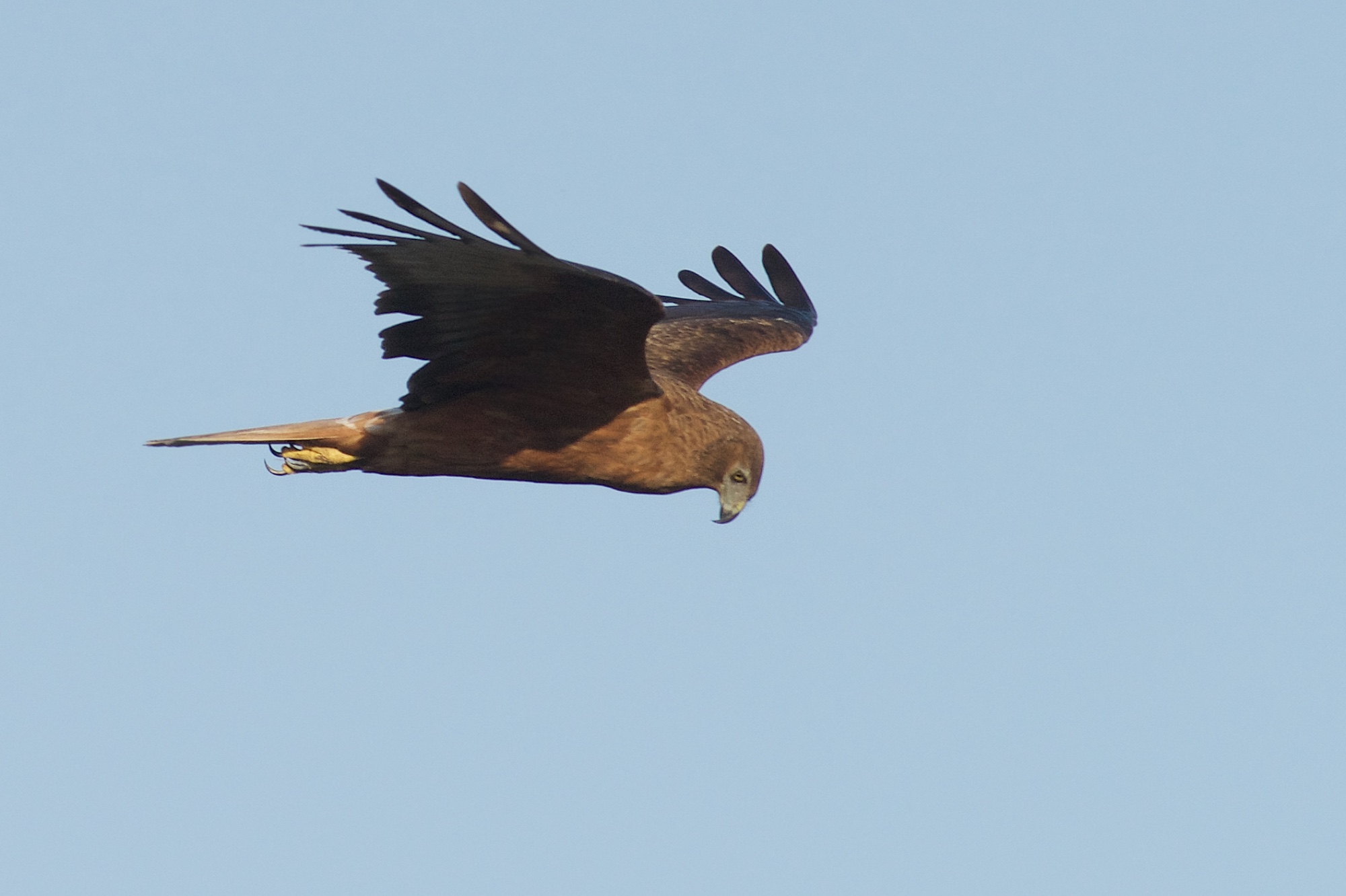
Then along the shore line scrub a Swamp Harrier appeared. Deep in concentration it was simply following its road map. Anything that was out of the ordinary was checked out. I am convinced, that they are not looking for things so much as comparing the current data with previously collected data. A bit like google mapping without the old out-of-date photos. You know the ones that show the empty paddock down the road that is now a supermarket and carpark. Or the open land by a creekline that is now 6 laned freeway.
In the same way that astronomers used to look for comets in photos by comparing night sky shots, I reckon Swampie has a visual shot of the bushes and is really looking for anything that is different on this pass. Such as a new hatched Purple Swamphen, or a sleeping Eurasian Coot. (which according to Russell Coight, “Most Coots generally sleep with their eyes shut…….unless they’re open……or they’re awake.”)
Down the scrub it came. Head down. No need to look up, it knew where it was going. And no other bird is going to stop in its way, and make it turn to the left or the right. It rules the skyway.
And unless this is your first post, esteemed reader, you’ll know what happens next. The map is compared, “What are those humans doing there!!!!!”, and it turns away 180 degrees and is gone.
Head down locked on the ground belowEverthing is checked and filed away for future referenceWhat is the human doing there!!!!!!In the next milli-second it has turnedAnyone who has seen or photographed these birds, knows this LOOK> It might seem to be checking me out, but in reality it’s readjusting the online database and making a note to avoid that area in the future.This bird then cut out to sea, and glided past our position before coming back in to continue its journey along the beach scrubGliding in to take up station for its next run.
Russell Coight Quotes: All Aussie Adventures. (Website address a bit dubious)
My Flickr Mate Lindsay, Lynz Wee was down for his annual pilgrimage to the Western Treatment Plant.
He came in for a Friday jaunt, but, the weather had other ideas and we had 3 DAYS of Total Fire Ban. And WTP is closed on such days. So, he had to ‘cool his heels’, (can’t believe I wrote that about 40+ C days.)
We managed an afternoon on Monday. Started out good weather and promised a low tide around dusk, so all was set for an interesting day. One thing about driving about with Lindsay, there is never a dull moment and the conversation crackled back and forth at at right royal pace. Even managed a few stops for photography.
After a late afternoon tea-break at The Borrow Pits we headed back to a spot on 145W Outflow. The tide runs out well here and the sand-mud flats expose quickly and it can be a good place for the odd wader or so.
We settled in, and at first there was only a handful of the usual suspects and a squadron or two of Silver Gull.
“Must have my wader repellant on,” quoth he. “Give it time, once the tide goes out a bit they’ll come by”, reassured I, and wondering where else we might travel to find something.
More time passed and the gulls were now in flotilla formation and numbers. “Must be Gull attractor I’m wearing”, quips he.
We also had a sneaking suspicion that a White-bellied Sea-eagle would put in an appearance, but I guess the bird didn’t know of our appointment.
Then from down the coast a dark swirling cloud began to mass up. And we are talking dark, swirling.
The closer it came the more birds joined in, until, like one of those video clips you see of England or Naples, a veritable murmuration began to take shape. And still they kept coming. The speed of the turns, and the flashing dark/white shapes and the beauty of the sweeping masses was a sight to behold.
It’s impossible to describe and impossible to show visually with only a long lens that picks out just a small part of the hoard that made its way to the sandbar. Things were looking up in the wader department.
Thousand of Stints and Sandpipers and a host of other waders all swept across the sky. Literally from horizon to horizon.
“How’s that”, I cried. But he was too busy running the Canon at 10 frames per second, not missing any of the action. Then they settled on the exposed mudflats and began their meal. Within minutes the area only metres from our tripod legs were hundreds of busy little feeders. Not caring about the human presence, they simply tucked in.
And it was all going so well, until. “My battery is flat, have to go back and get another”.
And so we trekked back to the car. Only to find EE waving frantically at us, and pointing, so we good naturedly waved back. And chatted about what we’d just witnessed, and how EE has probably been photographing all sorts of good things while we were otherwise engaged, including of course the Elusive Sea-eagle.
When we got there, it was, “Did you see the Sea-eagle???? I was waving out to you, it nearly went right over your heads!!!”.
NO!!! Well it didn’t matter anyway as the Canon battery was flat. But….
Here is a few frames to try and capture the way the gathering gathered in.
I only had the long lens on board, so this really just an small section, think 20 or more times to get the real feel.
Just a tiny portion of the huge numbers of birds that came down to feed.
Settling in, there is hardly space between birds.Can only begin to imagine what it looks like when they are migrating to and from Siberia.
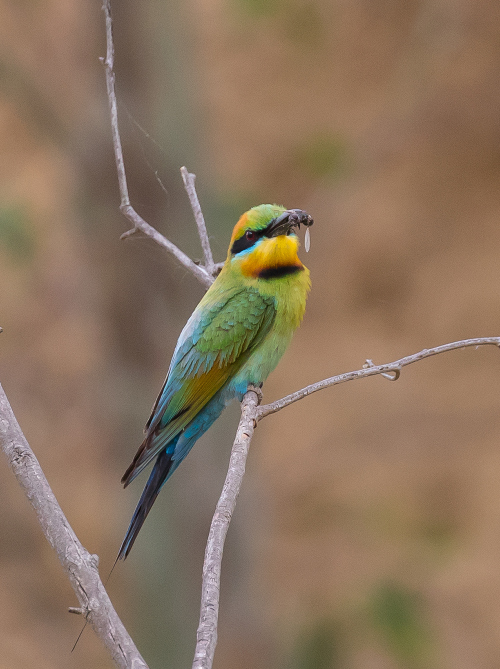
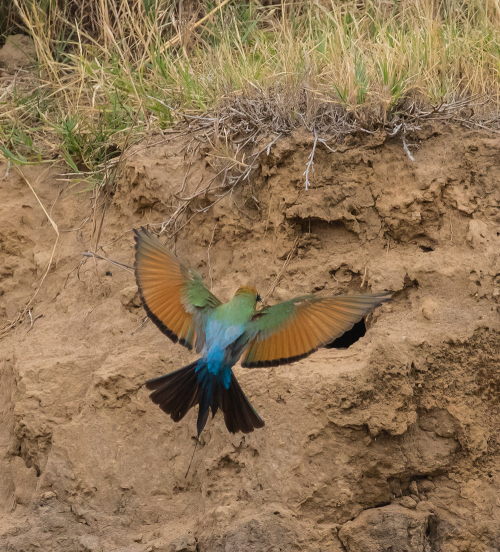
I’ve been somewhat frustrated over recent weeks chasing Rainbow Bee-eaters. The usual suspects at the Newstead Cemetery have been elusive and time has prevented visits to other local haunts. Luckily there are a few pairs nesting along the Loddon River at the moment and it was pleasing to get some images of adults arriving with food for the next generation.
Rainbow Bee-eater, Loddon River @ Newstead, 21st December 2015.
Oxymoron: (def). is a figure of speech that juxtaposes elements that appear to be contradictory.
Hence “Sneaking up on a Swamp Harrier”.
And just to be sure that I am clearly not misunderstood; there is no Book.
Just my bemused attempt of dealing with a bird that seems to be lightyears ahead of my feeble attempts to get a good shot. If there was such a book it would be very short on in pages. A real theoretical experience. And the first chapter would be the last. Sneaking and Swamp Harrier are not compatible.
They are the masters of the bunds along the Treatment Plant. Wafting in the breeze, dropping on unsuspecting prey, harriering the water birds until exhausted they fall easy pickings. And, I believe, they have the area ‘mapped’, so that anything out of place is either open to inspection or senses danger and the bird shys away. Do I then have some respect for these birds. Absolutely.
wouldn't you know it that was the moment the autofocus in the camera decided to recalculate and settle on the reed beds
So take your average evening light, hope its sunny, sit among the reeds and wait. Trying to chase them down only results in a flurry of white tail feathers disappearing over the next bund, and they don’t return.
The spot we’d chosen was on a short bund, with plenty of reed cover. The car was about 150m back buried in some more reeds. We set up the cameras and waited. There are some rules about this- not mine, just the birds. First: Don’t move. Second: Don’t Move Third Don’t MOVE.
Riders to said rule. Don’t get all excited and exclaim to no one in particular. “Look, its coming toward us”.
And don’t make that the moment that you move the tripod/camera for a better shot, or swing said camera toward the bird.
A head down searching Swamp Harrier is a committed bird. It knows what was down there last pass, and knows if anything looks out of place. And will react accordingly.
After about 15 minutes, (no fidgeting please), along the far bank a lone Swamp Harrier began its run. And about the same time, the sun slipped for the last time behind some cloud and the light went to porridge. Enough to make me prepare to go home.
However, back to said bird on said bund. By now it had worked its way along about half of the 300m or so of reedbed. I’d begun to take the occasional shot. Too far away for much detail, and not enough light now for much interest.
Mark Knofler (Dire Straights) wrote lines for such occasions. “Too far away from me. ” and “It’s just that the light was wrong, Juliet” (apologies for word change)
Because of the moderate breeze blowing, the most amazing thing was in the over 300m of its flight path, it didn’t flap a wing once. Just turned its body on an angle and simply sailed along like a kite in the breeze, or canoe crossing a fast running water.
Not sure what I was most impressed by, but the almost energy-less movement was certainly something to behold. With unconscious awareness it came on.
When it reached the end of the bund line, it changed direction, and wing tactics and began to pull up the reed bed in our direction. Lower now, because of the need for wing flapping, and also because the reeds were blowing over.
We waited. (see above)
And sure enough on it came. Head down, completely absorbed; in eloquent silence.
Then, the moment I had anticipated. It pulled up, saw a change that was unexpected. And turned in an instant. And wouldn’t you know it that was the moment the autofocus in the camera decided to recalculate and settle on the reed beds 250m away. I dream of the days of manual focus.
A bitter sweet result.
Yet I still have the memory of its almost effortless track across the bund. We shall go again.
Enjoy.
High in the evening breeze. Simply drifting along the reed bedsReaching the end of the first run.A change of direction along the bund toward us.Working harder in the head windStill engrossed in its mission.The moment of awareness. I checked the EXIF the is about 1/10th of a second between this and the next shot.On the Turn, those big surgical legs swinging out like a pendulum.
One of the down sides of moving across town has been our loss of ready access to the Woodlands Historic Park. In particular a stand of Sugar Gums that held all sorts of interesting birdlife.
It’s also probable that you recall that EE (Eagle-Eyed for the uninitiated), had established a Water Feature in the gums and would on a regular (daily) basis keep the small plastic container filled with fresh water over the hot summer months. Not to attract the birds for photography, but simply to give them some relief. “If only one bird ever drinks from it, it will be worth the effort,” quoth she.
As it turned, as you may recall, a pair of Eastern Yellow Robins became quite attached to EE and her water feature, and would follow her into the forest and then with much calling would head for the water feature when she came along. It was, at the very least a noble gesture on the part of the birds, and to tell the truth was quite spine tingling to hear two little birds get all excited and eagerly await her arrival. (Now its not time to lecture on ‘dependant’ birds, as they were the ones who chose to live in the dry area in the first place. ) Besides, its pretty humbling to have two Eastern Yellow Robins sitting about a metre away watching the water being poured into a tiny dish.
We have been working a part of the Grey Box forest in the You Yangs almost for two years. Early on in our visits, EE established another ice-cream container water feature besides a log. But, we don’t have ready access, and it is only visited occasionally, and once in three weeks would be more the norm. So it hasn’t been possible to build up any permanent relationship with the inhabitants. And as EE readily acknowledges, “Its most likely the little Black Swamp Wallabies that take the water, as the container is often misplaced.”
Still with more patience and determination, every visit sees a bottle of water left for the locals. And we had really never seen the locals make the pilgrimage to the area. Perhaps a passing Flycatcher would be the most likely suspect.
We went in today to look to see how the pair of Eastern Yellow Robins are going with their young fledgling. And of course to topup the water.
Done.
What happened next is the source of great delight and much mirth.
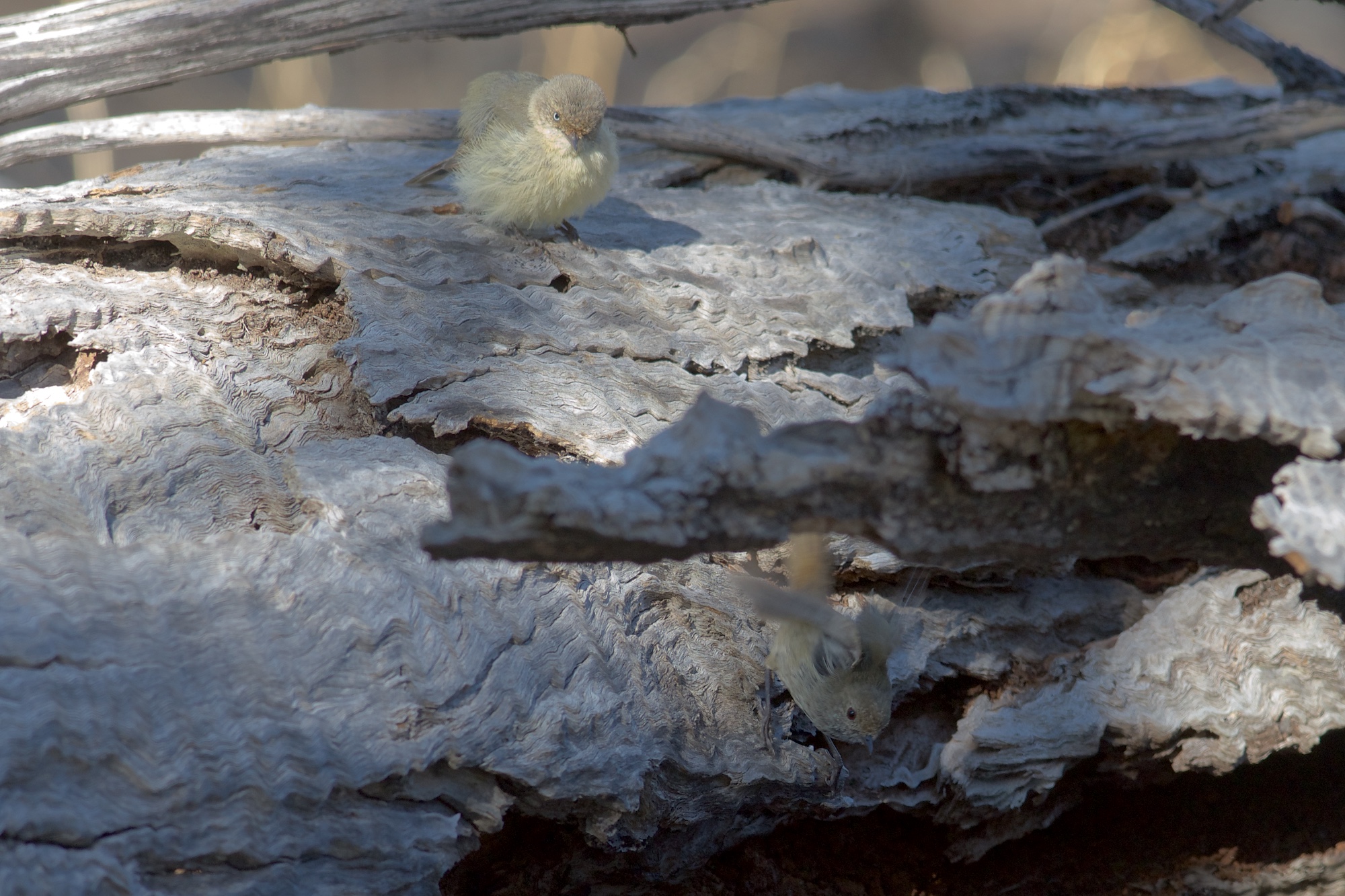
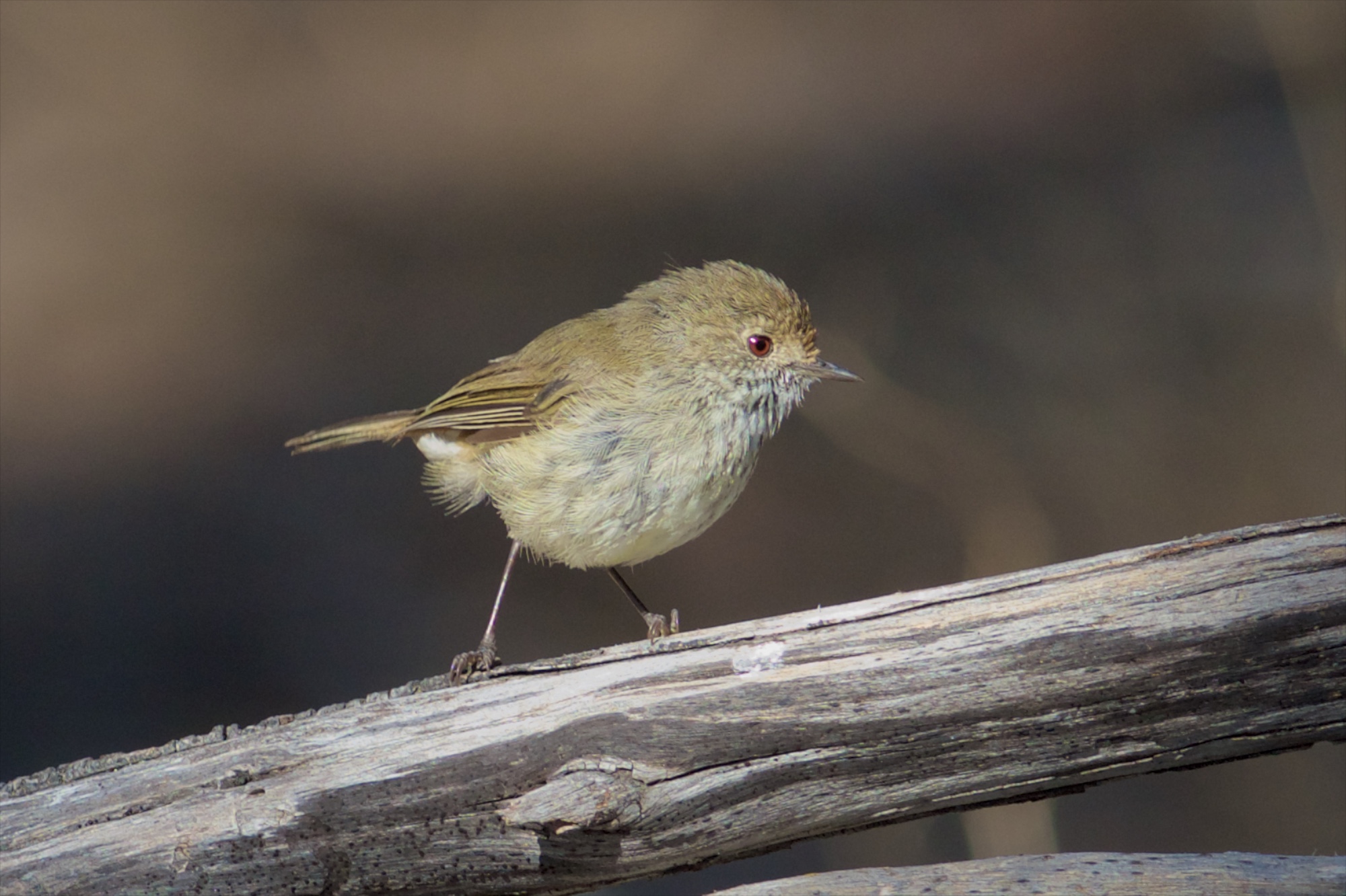
At first we continued in the hunt for the Robins, and I found a pair of Weebills that were working through the tree tops. Then. First one, then another, then another bird dropped by the log and checked out the water.
Within a few minutes a bold Grey Fantail had dropped into the water and began the splashing. Which acted like a ‘Jungle Drum’. The sound of water on whirring wings must have some sort of magnetic attraction. The sound went, as they say on You-tube, “VIRAL”, and birds came from all around. Including the two Eastern Yellow Robins, more thornbills than I could count and ‘my’ pair of Weebills. Each waited in turn, (not much room in an ice-cream container). and after a few minutes there were wet feathers everywhere drying in the sunshine.
Then just as quickly “Jungle Drums” played another tune and they were gone! Leaving two photographers with the widest grins, and filled memory cards.
I can see another trip down there very soon.
Enjoy.
Eastern Yellow Robin waiting, you can just see the other one at the bottom of the frame in the water.Patiently waiting its turn, the Weebill had to watch the spray flying from the activity belowEastern Yellow Robin, soaked, not stirredBold enough now to make the plungeWeebill drying off with Grey Fantail being typically hyper-activeBrown Thornbill.
You’ll find some more pics by the Water Feature Manager over on EE’s Flickr site.
See here.
Astute reader that you are, you’ll have recalled that the last posting here was a trip to Eynesbury for a visit to some Woodswallows at Nursery.
Decided on a whim today, to take another trip to the same spot not that we expected to find the Woodswallows still on nest, but y’know, perhaps we might be lucky.
Well time, tide and Woodswallow fledglings wait for no photographer, and they had indeed taken to wing. Now of course it was a new challenge.
But there is something relaxing indeed about a pot of tea, (Earl Grey- see the connection?) in a Grey Box forest. So we sat. And slowly the forest began to reveal those hidden secrets.
Over there, Tree Martins, still feeding young. On the other side a pair of Rufous Whistlers who entertained with their calls. More Brown Treecreepers than you can count, and most of them either at nest, or ferrying food for demanding young.
And my favourite find. Jacky Winter. The pair near out sit spot had two young and were keeping them up in the tops of the trees, but we still had enjoyable encounters.
Off to look for Matilda the Pacific-black Duck who has taken over a hollow, and to my surprise, she was still domicile, but only her carefully crafted wing tip feathers were showing her presence. Must be close for her now. I’ve no idea where she is going to lead them to water, but the nearest must be about 2km away through the scrub.
In the same area, lo and behold a second pair of Jacky Winter, with two well advanced young. I’d be betting these were the same birds we photographed in the area last year. One of the adults adjusted to my presence in a few minutes and continued to feed and preen quite closely. Then it (she?) sat down on the ground a few metres away and “sun-hazed” and quite went into a trance. Satisfied I was no danger, it allowed some fine portraits to be made.
And the I heard the wheezy call of a Diamond Firetail watching the portrait session.
As we started for home we came across the White-browed Woodswallows feeding some young, and then a family of Brown Treecreepers looking after their growing juveniles.
Of course no trip to Eynesbury would be complete without a sighting of the elusive Speckled Warbler, and to both our delights one flew by as we walked back to the car, and then began to feed on the small slope nearby. No close approaches with this bird, so my score of great photos of this little dude is still intact. Zero.
Enjoy
Jacky WInterJacky WInter JuvenileThanks for the food Mum!Tree MartinJacky WInter,JuvenileWhite-browed Woodswallow, fledglingDiamond FiretailBrown TreecreeperSpeckled Warbler
When I was a little tacker, The Gould League of Bird Lovers conducted a range of programmes at primary schools, intended mostly I think now with hindsight to stop young boys from stealing eggs during the spring season. “Bird Nesting”, t’was called, and the eggs were kept in small containers lined with cotton wool, and each, well, each had a story of “Daring-do” in how it was retrieved. Often from tall trees, or so it seemed.
Being a bit on the scared of heights side of things, it now seems appropriate to tell, that I never collected a single egg. But used to marvel at the tales of those who did.
Not that I didn’t go out with intent. If I lacked the means, I certainly did not lack the enthusiasm. Which I suppose taught me by some empirical osmosis the signs of a nesting bird. Jon Young makes a point of having a “Sit Spot” in which you return to day after day, season after season, and learn the lore of the land in that spot.
Today, of course we are much to busy to have a 30min break with the birds, and would have to travel distances to get anywhere like open bush. So we do it a bit vicariously, squeezing a few minutes here or there. One reason I always enjoyed my closeness to Woodlands Historic Park was the ability to slip in and out at a moments notice and stay in touch with the birds in their territories.
Like riding a bicycle, the signs of birds and their ways may not be a honed skill anymore, but I found today, that I can still pick some of the tell-tale signs. Which brings us to Eynesbury Grey Box Forest.
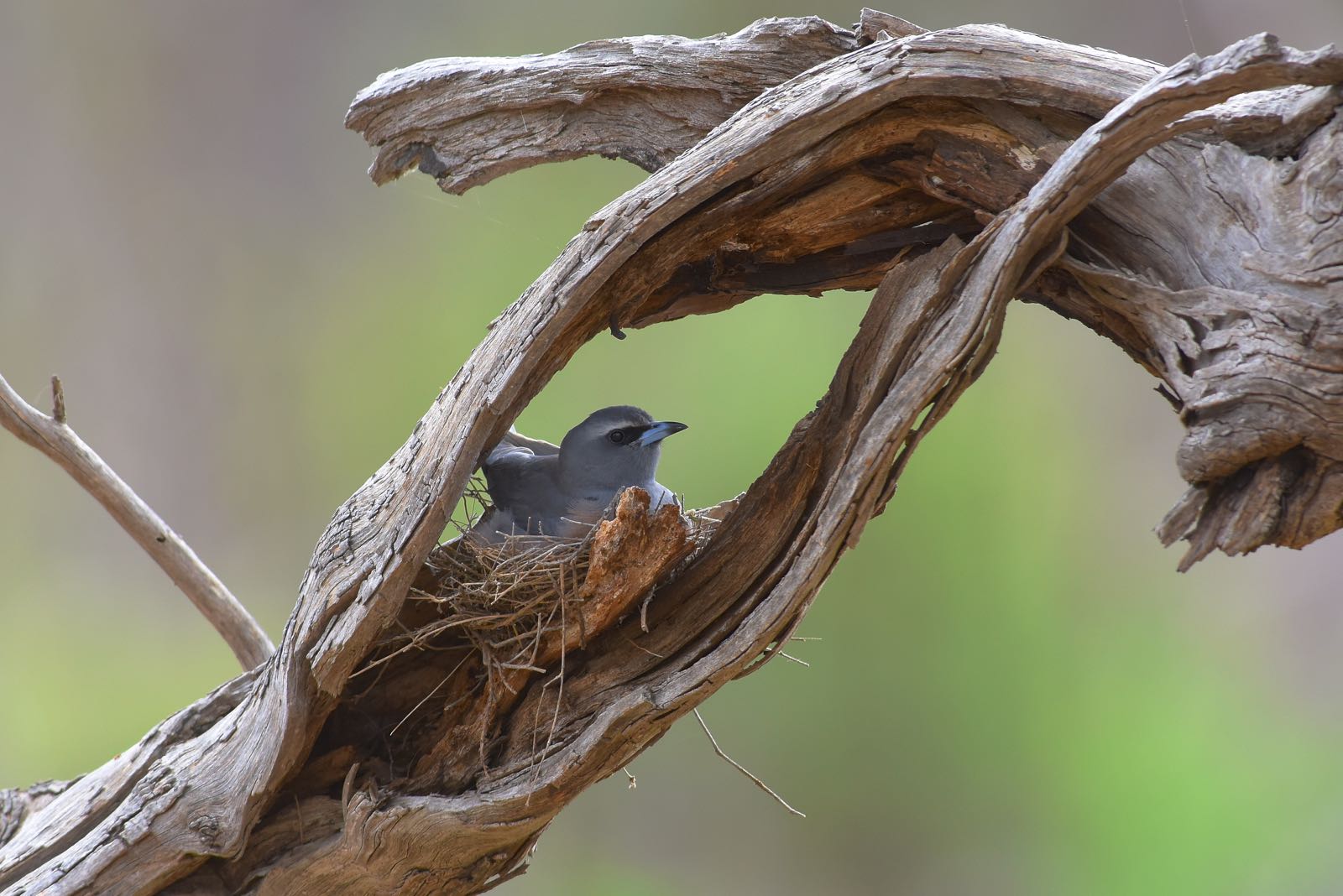
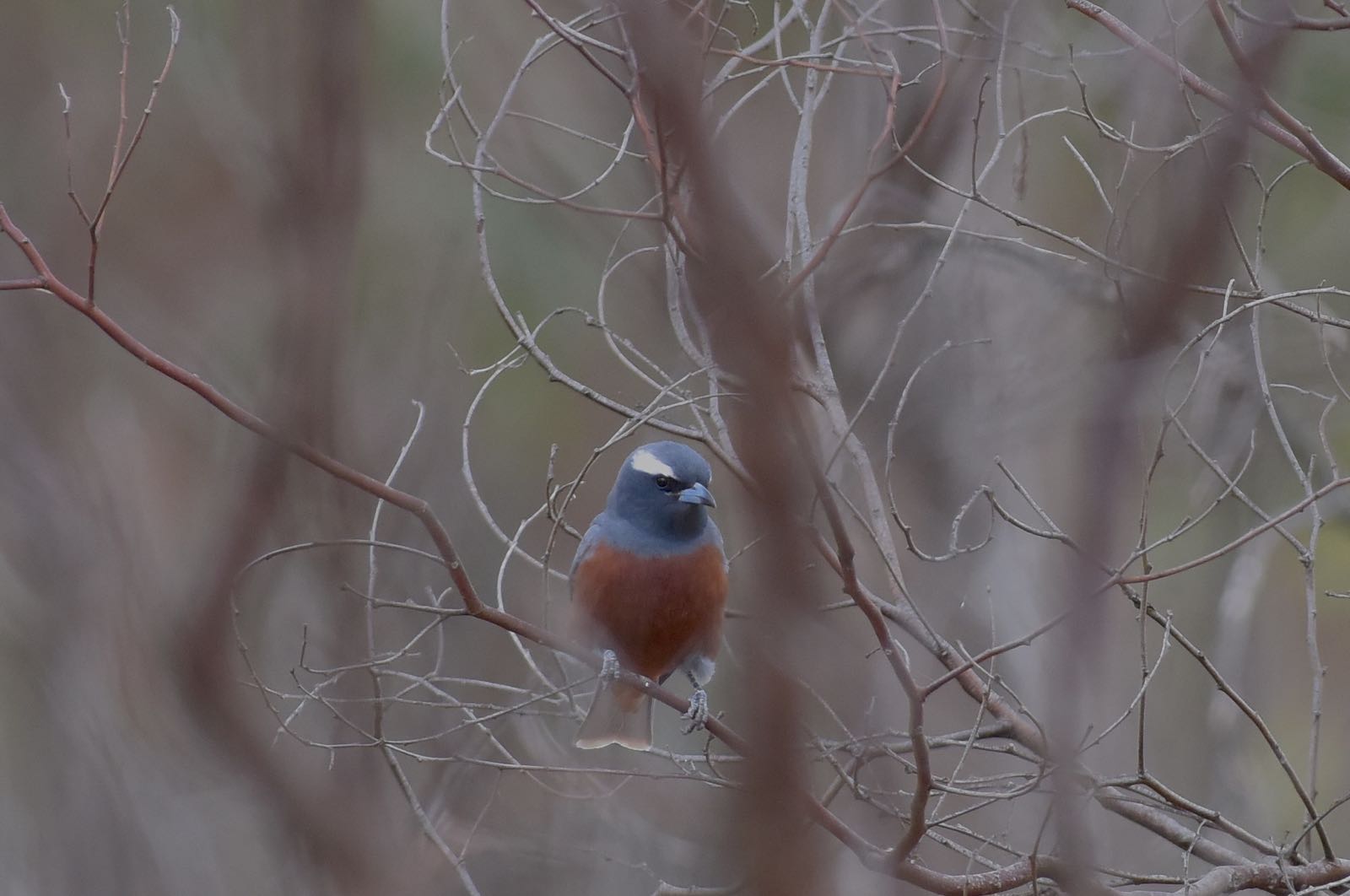
Within a few minutes of arriving at a small clearing in the area, it became apparent that there were some White-browed Woodswallows (among others) that were engaged in their breeding programme. Just where the nest was, high, low, open, exposed or secretive, was at that stage bit of a mystery, but again some latent skills began to yawn, stretch and point. “Over there”, saith I. Where said EE. Well it took a few more minutes of close observation, and finally there it was. And what a view.
Talk about a bird with a sense of design and location. This one ticks all the boxes. The local realestate folk would be proud. Long sweeping curves, carefully crafted. Magnificent views, a shot flight to the shops, and an enclosing verandah. A must for the aspiring home-maker. A Winner by any standards.
White-browed Woodswallows, share the nesting duties, each one sitting for 15-20 minutes or so, and then relieved by the other partner who sits on a branch close by, and in what can only be Woodswallowese, calls out, “Hurry up, its my turn to sit now.”
Enjoy.
Something, told me, straight away that this bird was nestingThe Ultimate Room with a ViewView from the South SideView from the East Side, showing the exclusive verandahWaiting for its turn to move on to the nest
We had gazed at weather tv presenters, peered at tiny newspaper weather maps, and consulted the occassional web weather site, and it seemed pretty conclusive.
A high moving in during the day would give us that special “Golden Hour”. Nothing else to do really except pack in a cuppa, the cameras, the WTP access key, drop a note to the controller of our intention, and drive.
We had a spot in mind, and as it turned, we arrived travelling in the wrong direction to the sun. Not an error, but just the way things worked out. And of course, as we had already half expected, a White-bellied Sea-eagle was on a post against the light and looking pretty elegant, resplendant, and pretty well pleased with itself.
And then it flew. And EE was the only one out of the car, and the bird passsed on her side of the road, and I couldn’t get the door open as I’d stopped right up hard on a bush, and well, I missed it.
The spot we were heading for has a little bit of open grass and usually good beach on low tide. (Twas high this night!), and an outflow. And a couple of good radio mast perches.
A young Black-shouldered Kite had chosen the area to perch on while Mum gathered food. So we sat, enjoyed the sunshine, the Earl of Grey, and the antics of this beautifully marked bird.
Even if the bird hadn’t been there the weather was so nice.
Very recently fledged birdResplendent in the afternoon sunshine
Where’s my mouseWhen its the only perch for miles, its the perch of choiceSailing on the soft breeze in the warm sunshine. That life could always be this goodZeroed in for landingSo close I cropped the tail tip.
Still remember sitting spell-bound in the theatre watching the sheer bulk of the Star Destroyer that seemed to go on and on.
So we segue way to Timmy. We last left our hero looking much better with his new appendage appearing in fine form.
Today’s visit showed he had continued to grow the tail, and we learned a few new things about his life. Firstly he and several of the females are carrying food in to the bush where the nest is located. I’ve not been given privilege to go see, so can’t confirm what is going on in there.
Perhaps they are not feeding young, but rather keeping the nesting female well supplied in food.
Secondly his tail has started to come on quite nicely, and he still can hammer out a song.
And thirdly. As its gotten bigger, so has his territorial aspirations.
Today saw him take quite a number of forays into Tommy the Tailful’s territory. Timmy was able to advance about 10-15m more that last week, and even has established for himself a couple of calling posts, so this seemingly disadvantaged lad has made good.
Timmy seems to have accepted my being in the area, and is able to use the closest perches without the least concern for my being there.
Enjoy a good visit, we did.
They seem to be quite busy with food delivery to the nest site.He spent a lot of the morning delivering food.Not the best angle, but you can see the tail is coming along nicely“Who are you calling Short Tail?”Hey, can you hear me over there.This is the favourite perch. He commands the area from here.
Astute reader that you are, you’ll recall several times I’ve said that I think I have Grey Box sap flowing in my veins.
We had to motor to the northern subs today for medical things, so it was not a big ask to travel that little bit further to Woodlands Historic Park. Haven’t been there in many a long day, and now we are pretty much in the one day tourist category.
The wind was strong, the weather hot, and it didn’t look all the promising. Till. We found “Petite”, and again Astute reader that you are, you’ll remember, in some detail I hope 🙂 that she is a very charming if very small Red-capped Robin. What was more exciting was that she had two juveniles she was attending. Clever girl, small though she is, she must have started early in the season and all things worked to her favour and the gene pool ends up the winner.
I’ve not worked with this bird very much so would have expected her to be quite wary. And she was. Flying further away and taking the young with her.
Yet after about 20 minutes or so, she worked out that I meant no harm, and that I wouldn’t invade her space with the young and then it all changed. She bought them back to the bushes near us, and was happy to feed around me. Hunting quite close to me on the ground and encouraging the young to do the same. Awesome.
Her young are well on the wing, and yet are still masterly marked to keep them safe. The little grey chevrons make a perfect match to the Grey Box scrub.
Also those who have been brave enough to follow along on Flickr might have noted a slight change in direction for me at the moment. Mostly I am wrestling with the exploration of the craft and the process of both bird photography and my expression of that.
Found this piece suitable for today.
There are moments in our lives there are moments in a day, when we seem to see beyond the usual–become clairvoyant. We reach them then into reality. Such are the moments of our greatest happiness. Such are the moments of our greatest wisdom. It is the rare few who able to continue in the experience and find expression for it. Robert Henri – The Art Spirit
Thank you Petite for sharing the moment with me.
Petite with food for the youngstersFine the juvenile Red-capped RobinOh, there you are.This should be a mouthful for one of themIts a nice bug, and you’ll enjoy it. Stop fussingThere you go. LovelyEat it all up or no dessertThe wonderful marking on the young match the scrub perfectlyWell established now, they are able to hunt on their own. If somewhat clumsily at the momentWe got so friendly as to be able to make portraits.
Last week, dear reader, like the old Saturday Arvo Kids Matinee at the movies, we left Timmy with a a problem.
Took a hour or so today, to go back and visit our brave hero and see how he was handling his injury.
And surprise, his tail is indeed regrowing. Not bad for about 2 weeks. So its pretty certain that he is well on the road to recovery.
In the hour or so we sat with him it was pretty obvious that his condition hadn’t dented his enthusiasm, or his strong singing voice. And we learned a little about life in Wren land. He also seemed completely undeterred by our presence and would land on his favourite perches with no concern of our being there.
Another favourite spot
Timmy has a rival across the path. Called him Tommy the Tailful. Because, well, he is looking pretty attractive in the Tail Stakes. It also seems that Timmy’s territory covers the path and about 10 metres into the bush on the other side, and then after a small no-man’s land, Tommy is in charge.
Now, I’m sure the rules are well written, but a bit hard to follow, but its seems that the border really is a no go zone. Neither Tim nor Tom managed to cross over into each other’s territory. In spite of some fearful calling battles. But what was obvious is that the young ladies on both Tim and Tom’s side feel no such limitation and freely crossed back and forth between the two territories. Much to the delight and the chagrin of both males. Each time a young lass would appear from the other side they were treated very well, and the male sat with them and performed all around the branches. But when one of the wayward locals moved over and returned they got a right royal talking to.
In the end, it’s pretty certain that the only winner in all this is of course, the Gene Pool. Female wrens not being noted for their fidelity, but rather the males end up raising young from other territories. As this seems to have worked down through the years, one can only conclude that they benefit from the excursions.
So Timmy is well in control, well on the way to developing his new tail, and quite capable of bashing out a strong territory song.
Onya Timmy.
Looking like the real deal nowTime for a songWell Hello! Tommy shows his stuffCan you hear me yet!One of many well used singing perchesJust a show of the new appendage. This by the way, is the favourite perch by far.Another favourite spot

 Brown Falcon near Walker’s Swamp, Moolort Plains, 1st January 2016.
  II
II  III
III  IV
IV  V
V 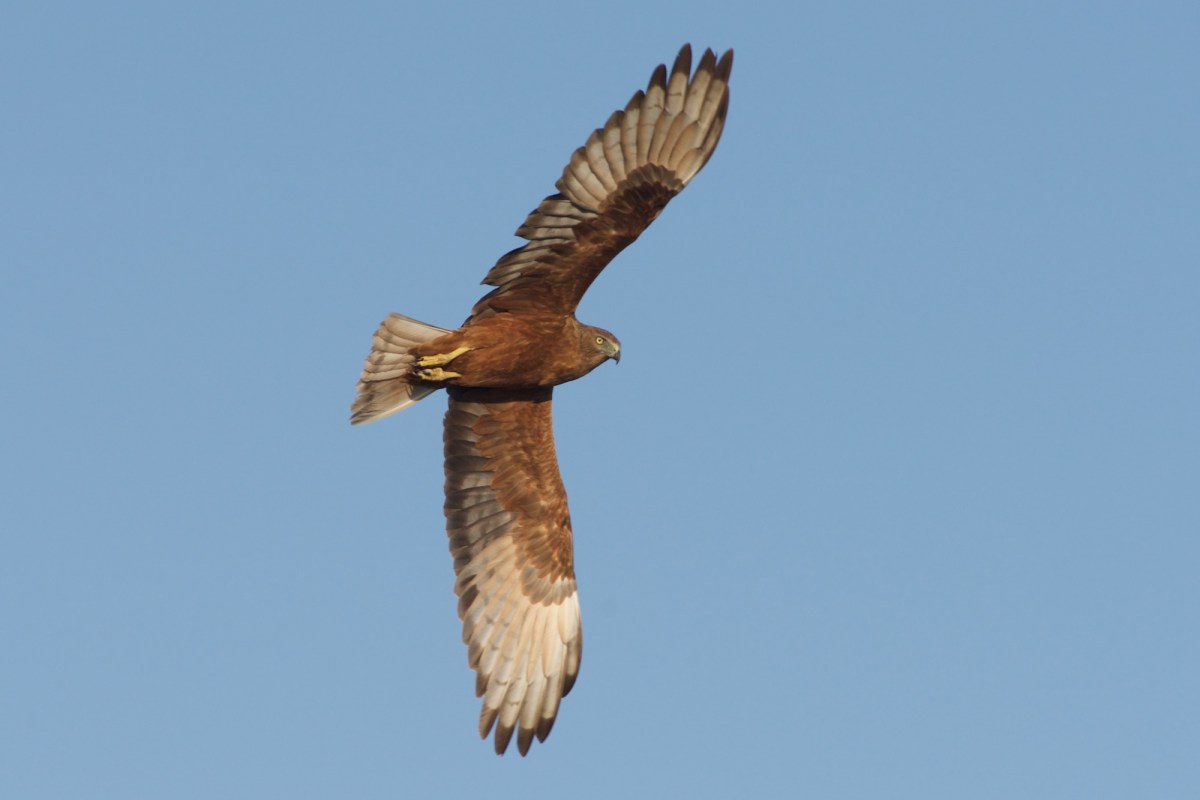

















 Birds as Poetry —— Just because I WANDER doesn't mean I'm LOST