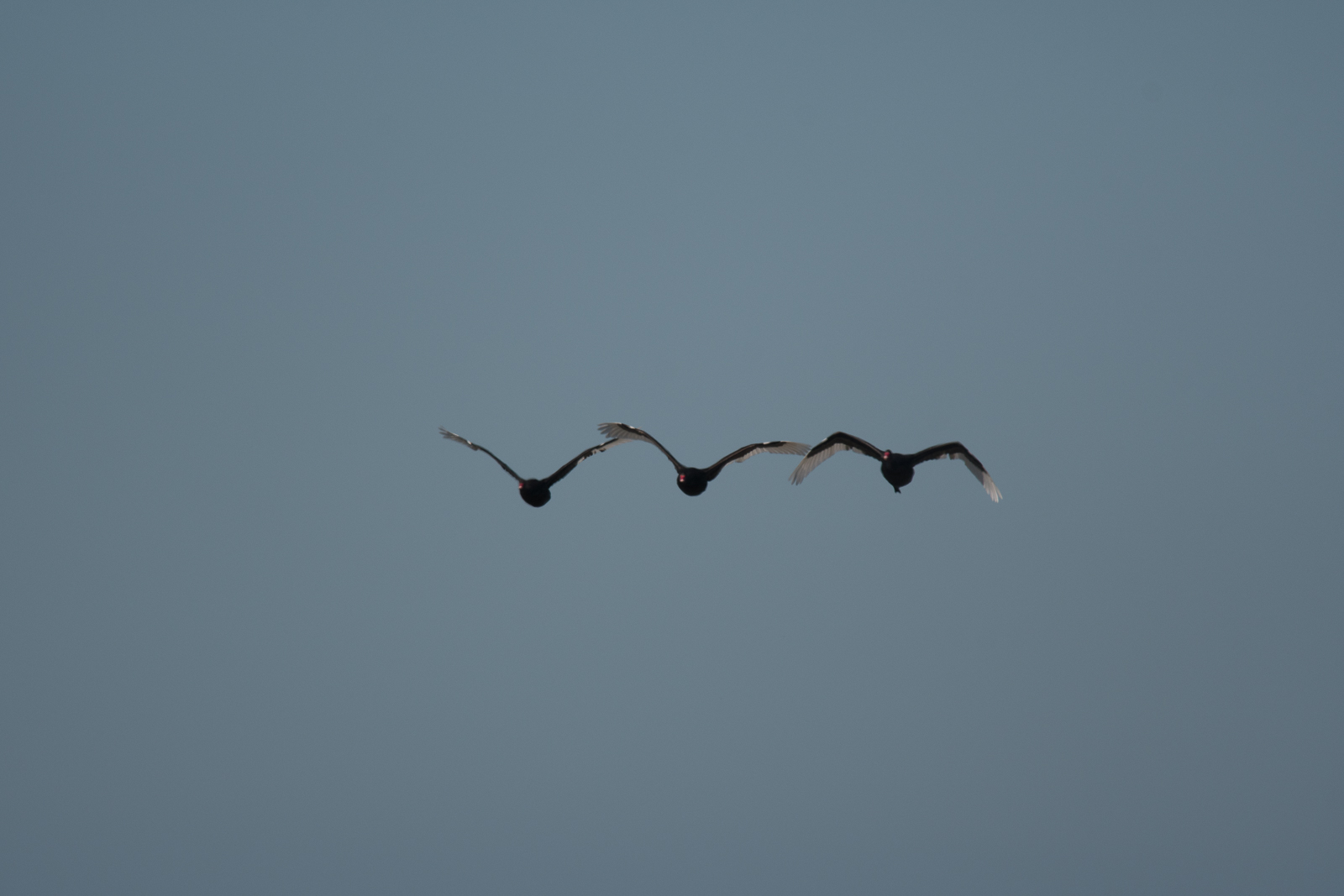
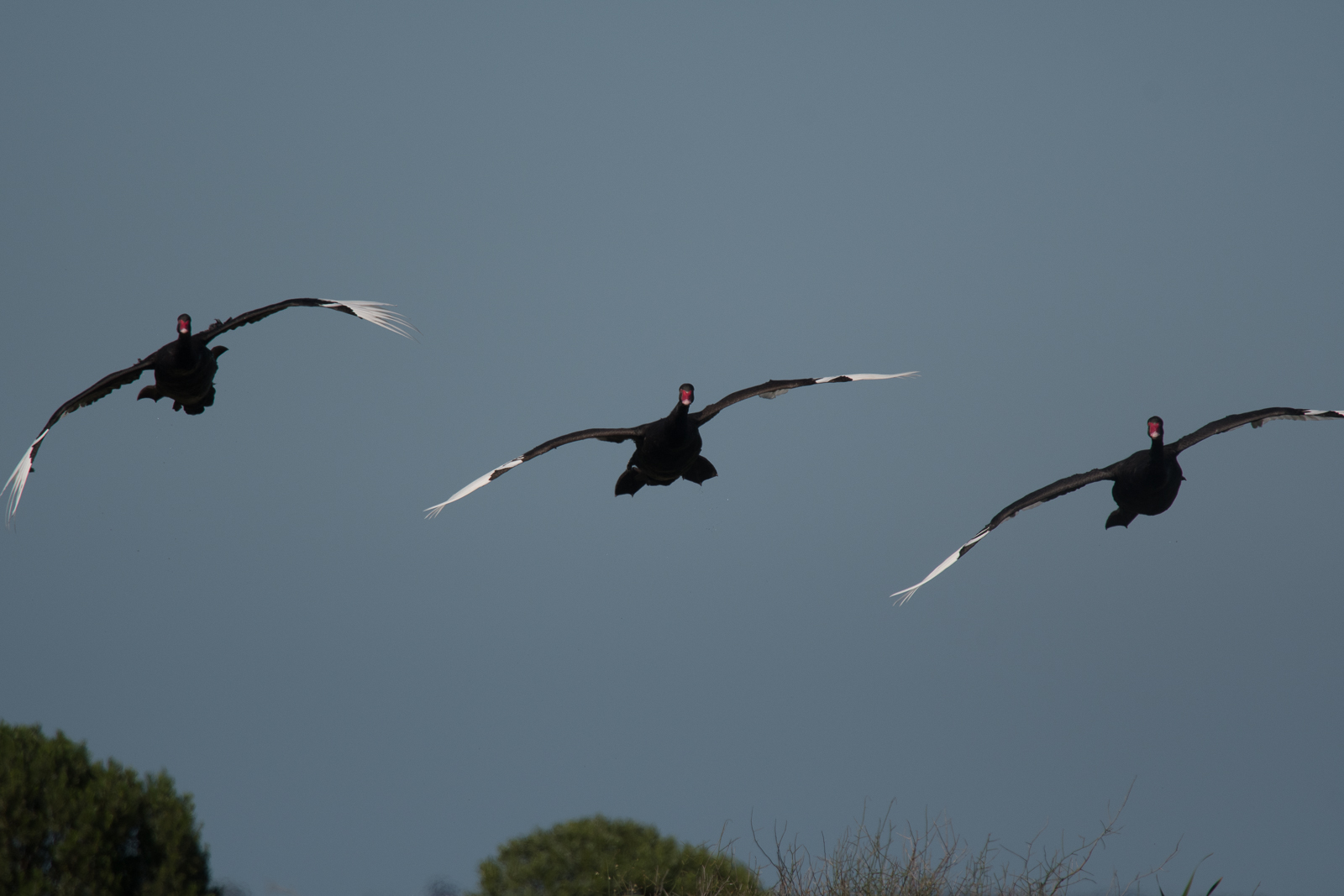
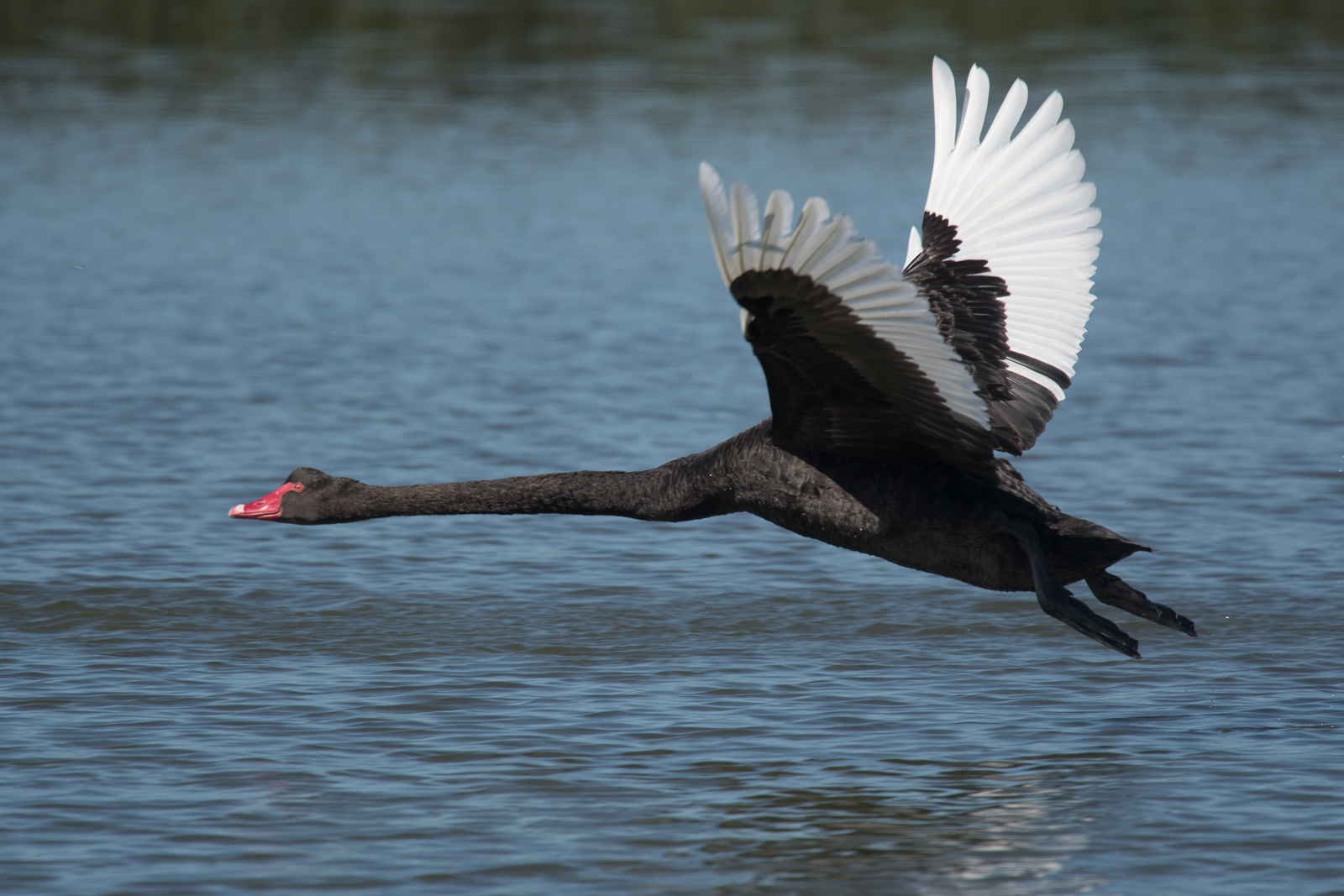
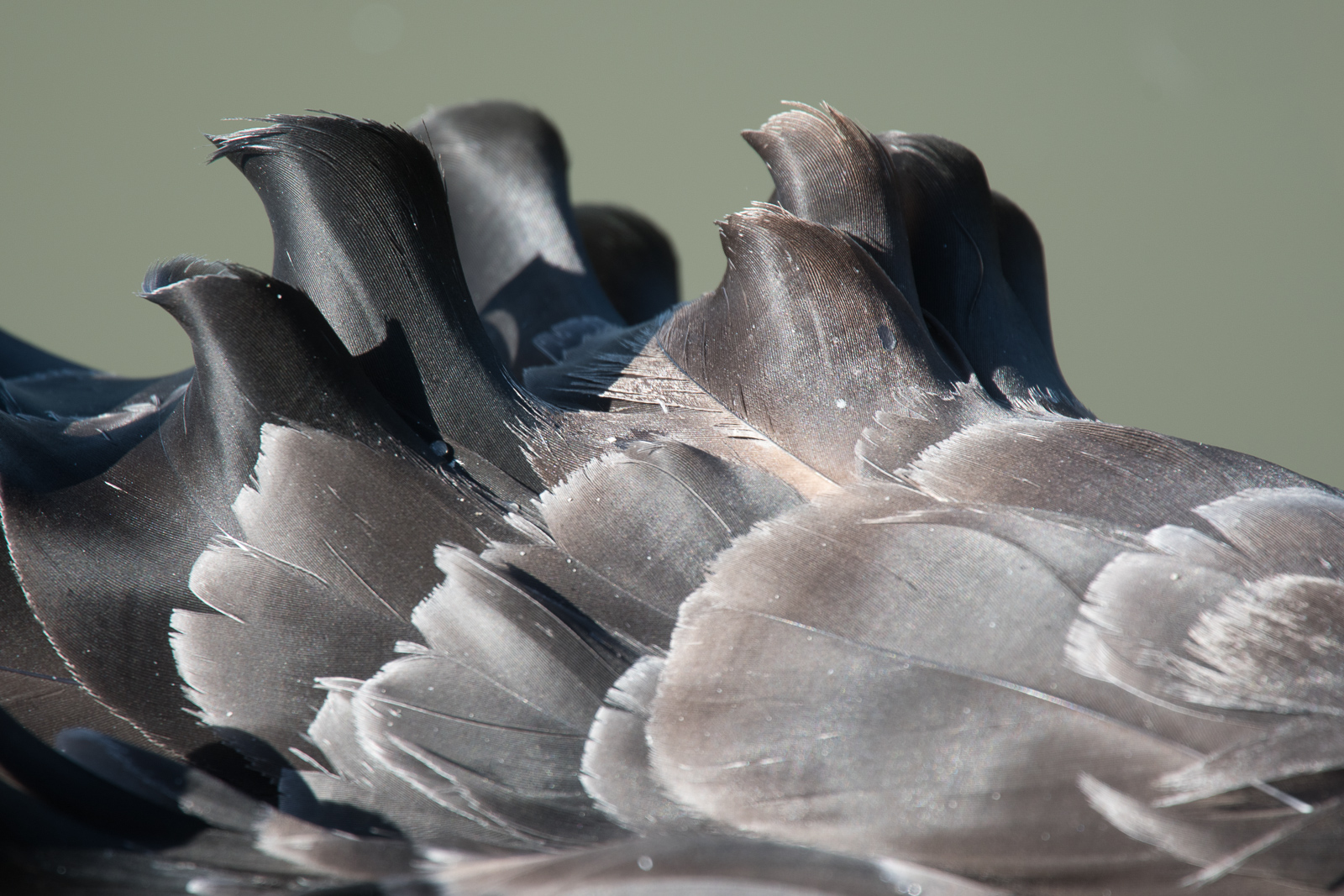
Snapshots: Freckled Duck Antics

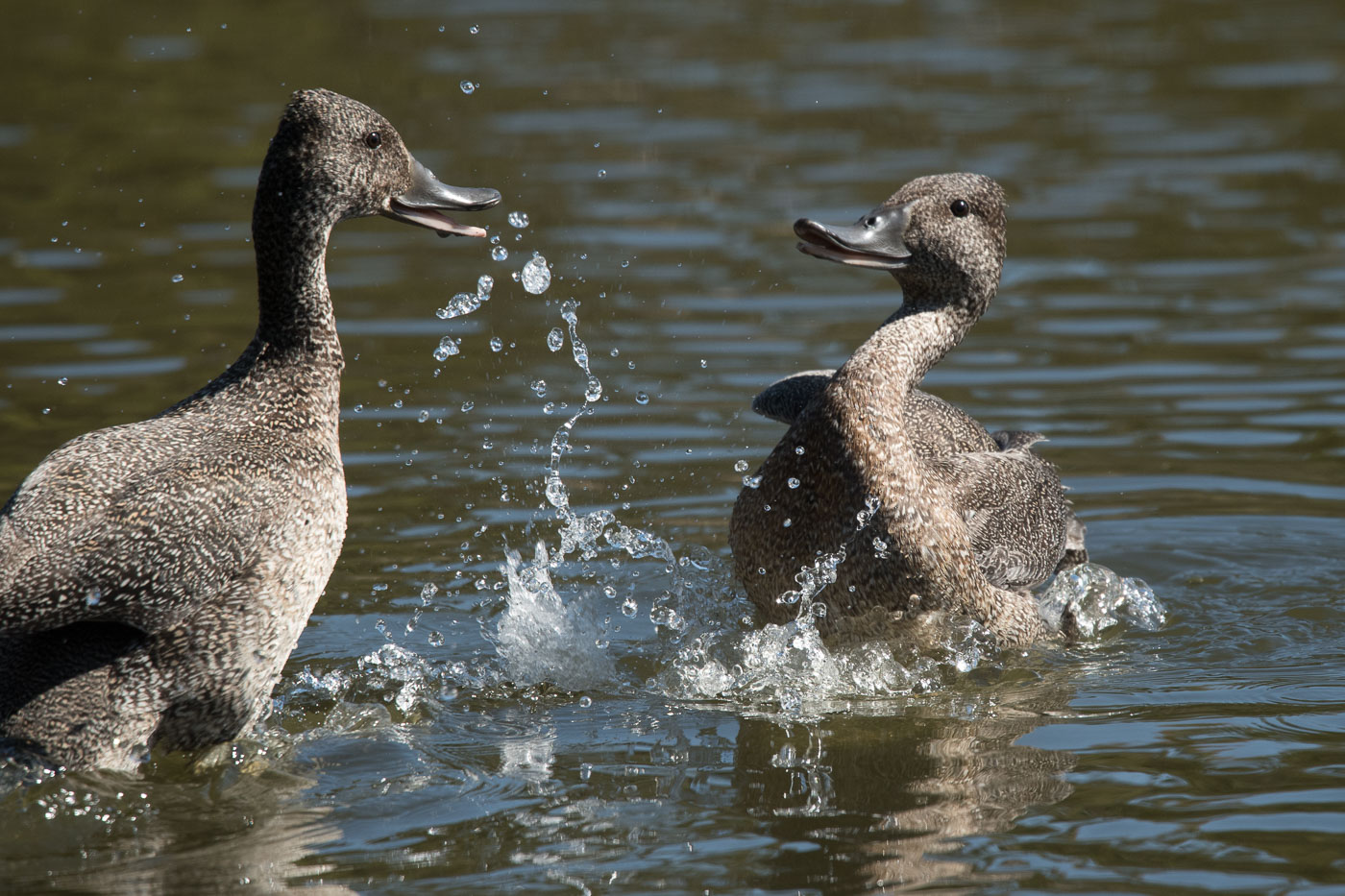
Had to wrestle with the title.  After all the majority of Freckled Ducks I’ve ever seen have been asleep on the bank or on logs.  No swimming about for these ducks.  Sleeping is their number one activity. And I suspect they have turned it into an art form.
At Eynesbury there is a small clan of Freckled Duck and they seem pretty content with the area and are to be found most days we travel out there.
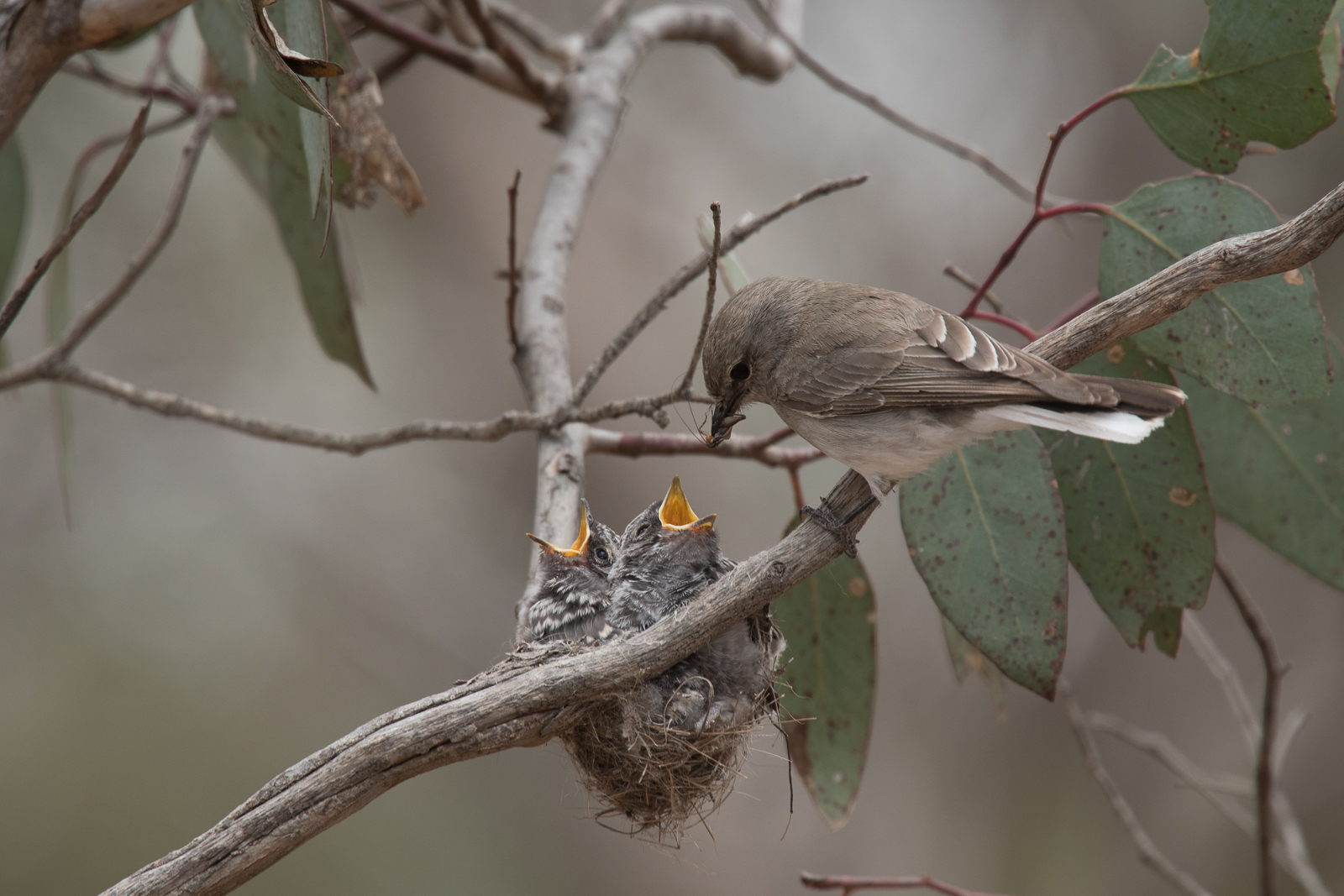
We were coming back to the vehicle after spending an afternoon with the nesting Jacky Winter and had stopped at a table by the dam for a quick cuppa before the trip home.

Which is when for some Duck Reason, the Freckled all sailed off the little island were they had been preening or snoozing and came by for a quick swim about. Didn’t take us long to replace the cuppa with the camera and here are a few of the more exciting moments.


There is always time to declare territory or pecking order


Just perhaps in this case the victim turned out to be the victor


Out of my way, or I’ll peck your tail!


1812-10_DWJ_8572
This is the first time I can recall seeing the wings outspread


A little water bath and a good wing stretch. Time for a nap

Enjoy, We did

Eynesbury Gems: Take #3

Been pondering anew, my approach to Bird Photography, again.  Yes dear reader, tis that time of year again for tinsel, things red and white, muzak that dumbs the mind at the shopping centre and of course my annual “where is my photography going to bend in 2019”. But

Fear not, this is not that blog.
Great gasps of relaxation and sighs of relief heard across the ‘blogosphere’.


I really wanted to get the remainder of the shots from our Eynesbury excursions, (incursions?) out.

So rather than belabour, here is the best of the rest sort of feature.
There is still one more chapter to put up, but I’m going to do that as a Snapshots type blog as it concerns our favourite Jackys and their now well fledged young.  Might even get that done the next few days.

Here tis.

After about 20 attempts this is as good as it got. A Tree Martin flying in with food for the young. I think that Tree Martins have multiple families at nest inside the hollows.


A very young Black Kite. We sat with the young bird for several hours over three days, but didnot see the adults come to the nest.
However there was a constant overflying as they kept check on the young one for above.


Another from the Black Kite at Play series


Another from the Black Kite at Play series. It is coming out of a turn and heading into the wind using all the speed it gained on the run with the wind


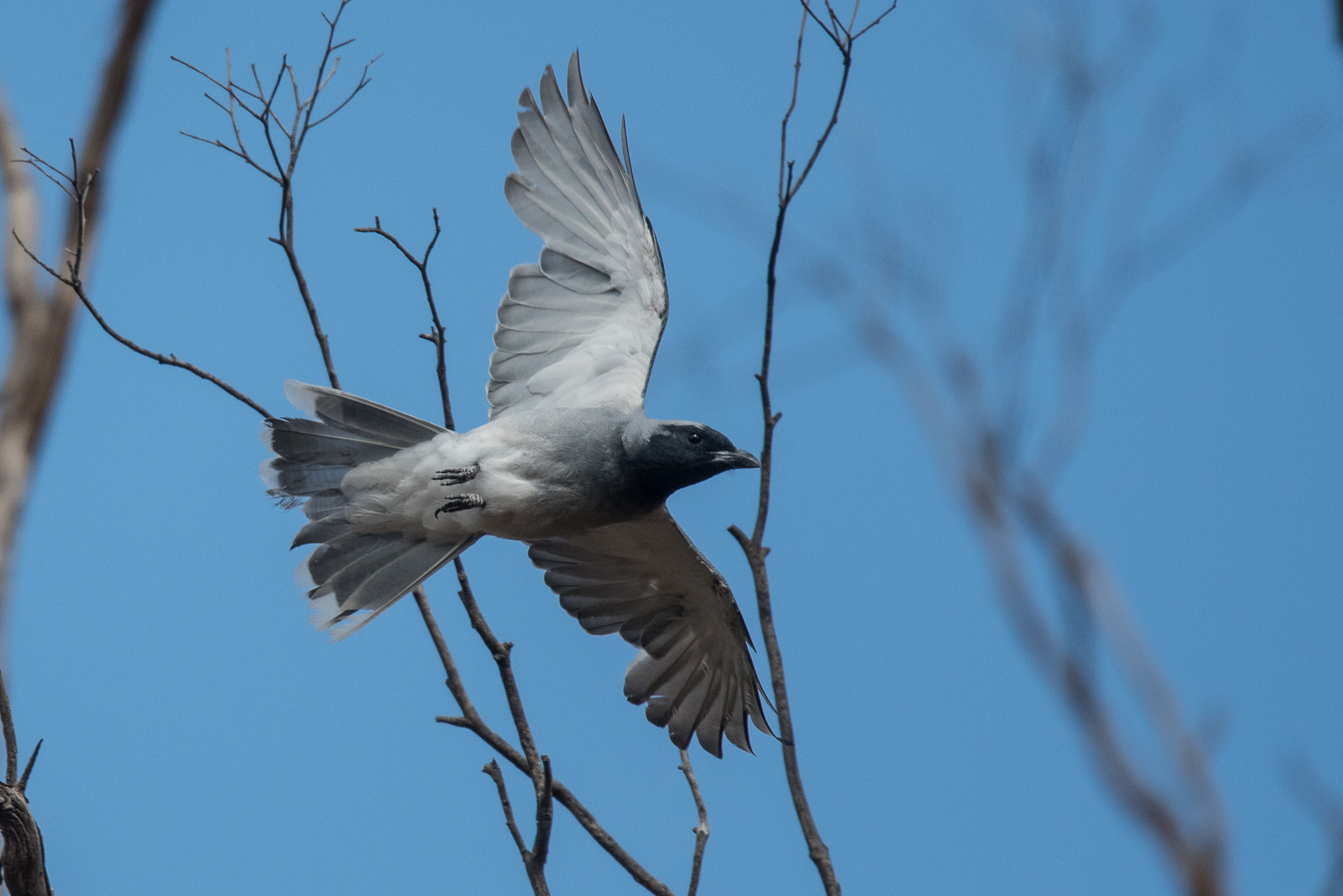
Black-faced Cuckooshrike


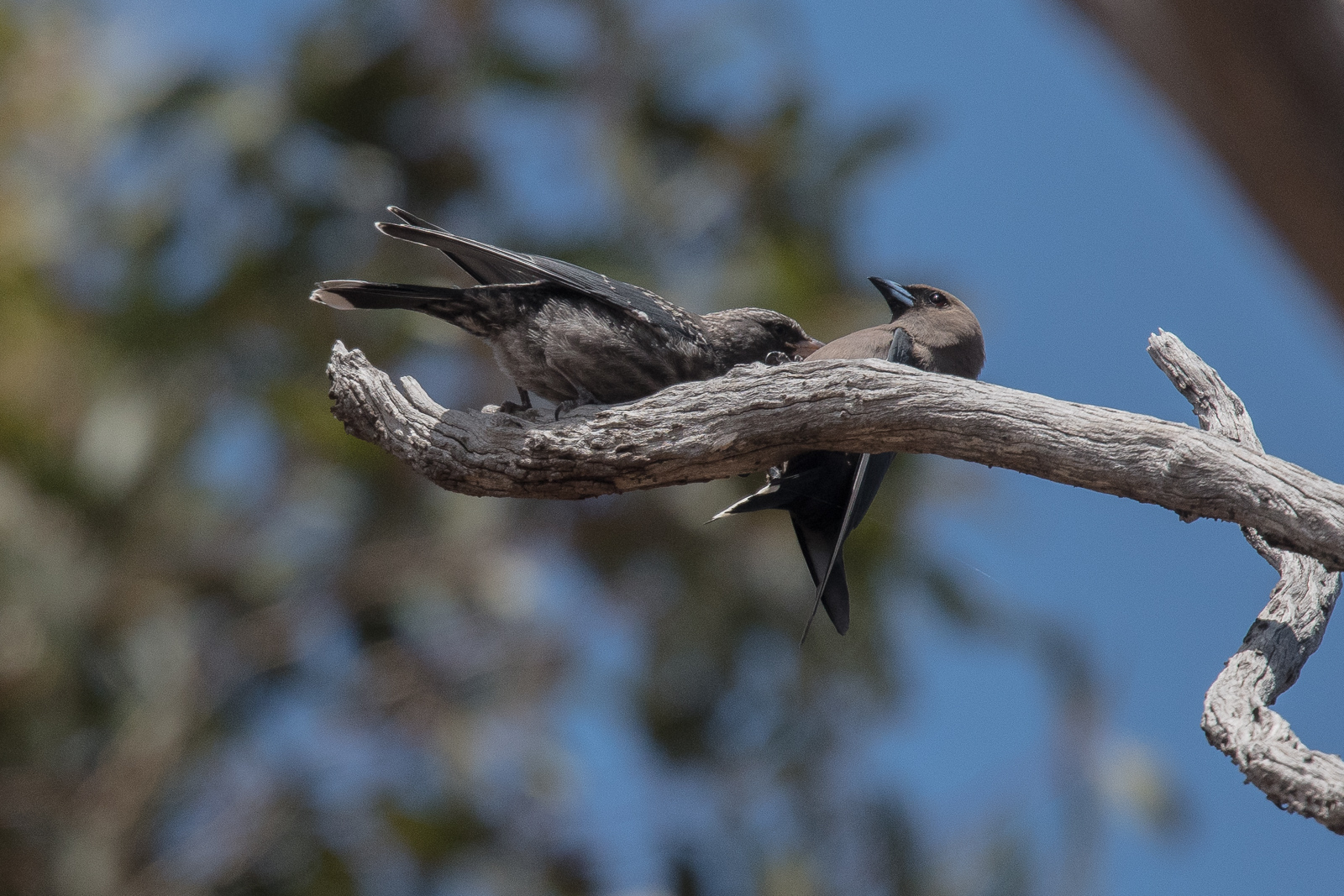
Overenthusiastic young one just about unperches the adult. I love the look on the adutls face.


This looks like family fun, however food is involved and when the adult arrived to feed the lower bird, the upper one flew in. Then to get in a better position to be fed, it ‘stepped’ over its rival.
The adult sovled the problem by flying off the end of the branch, circling and landing nearer the lower bird. It’s not always the loudest and largest beak that gets filled.


Little Eagle. Eynesbury has a resident pair of Little Eagle. I suspect, from the calls, that there is a nest located on the western side of the forest, but have to say I’ve been out of luck locating it.


And of course Jacky Winter

Watching Jacky feed is quite interesting. The young don’t cry out for food. Most times they don’t even respond to Mum or Dad arriving. Then there must be a quiet call, and they quickly pop up, the food is delivered and they both settle straight down. It’s also not unusual for the adult to spend a few minutes alongside the nest making sure all is well before flying off.


Saturday Evening Post #010 Gone at the Speed of Light

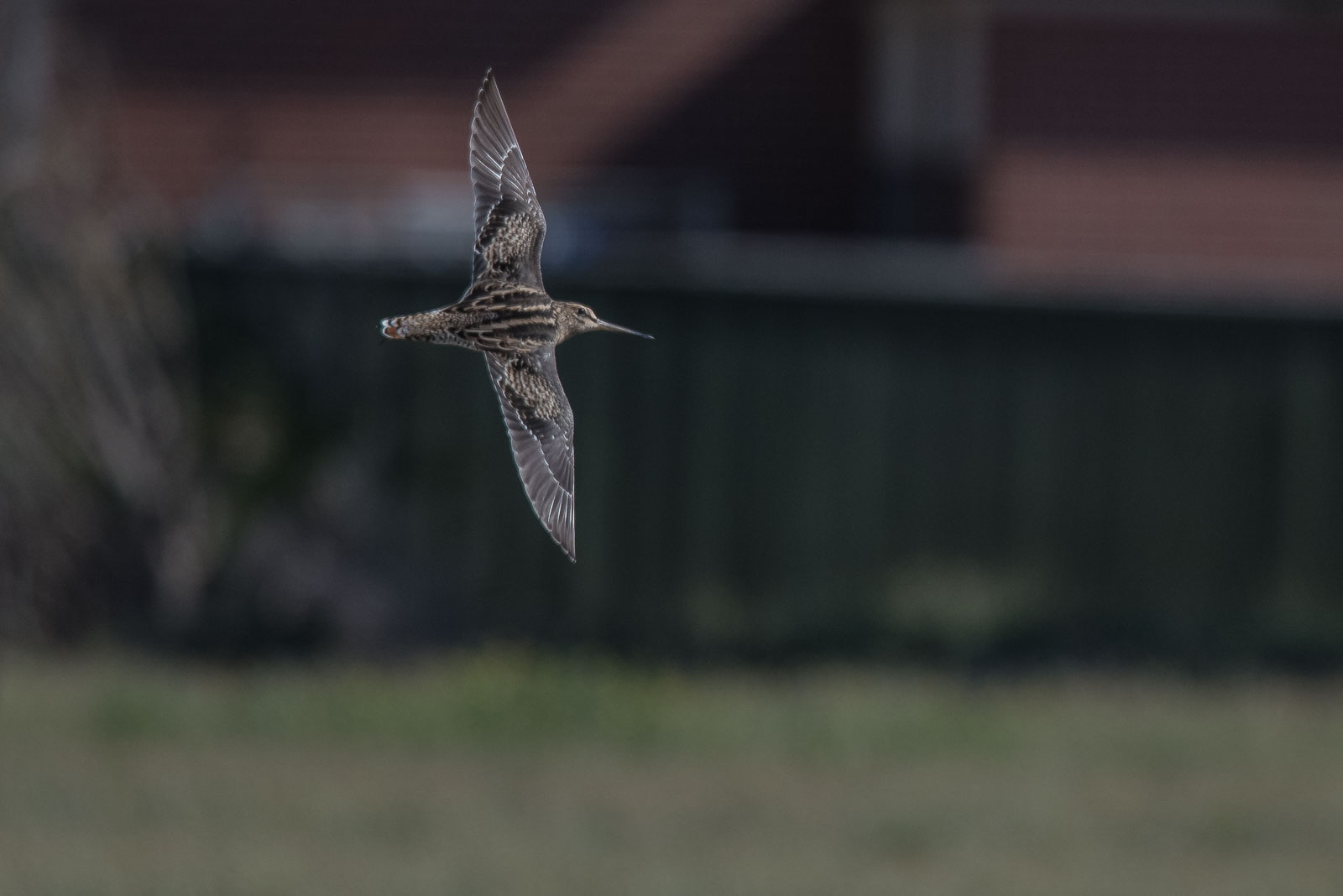
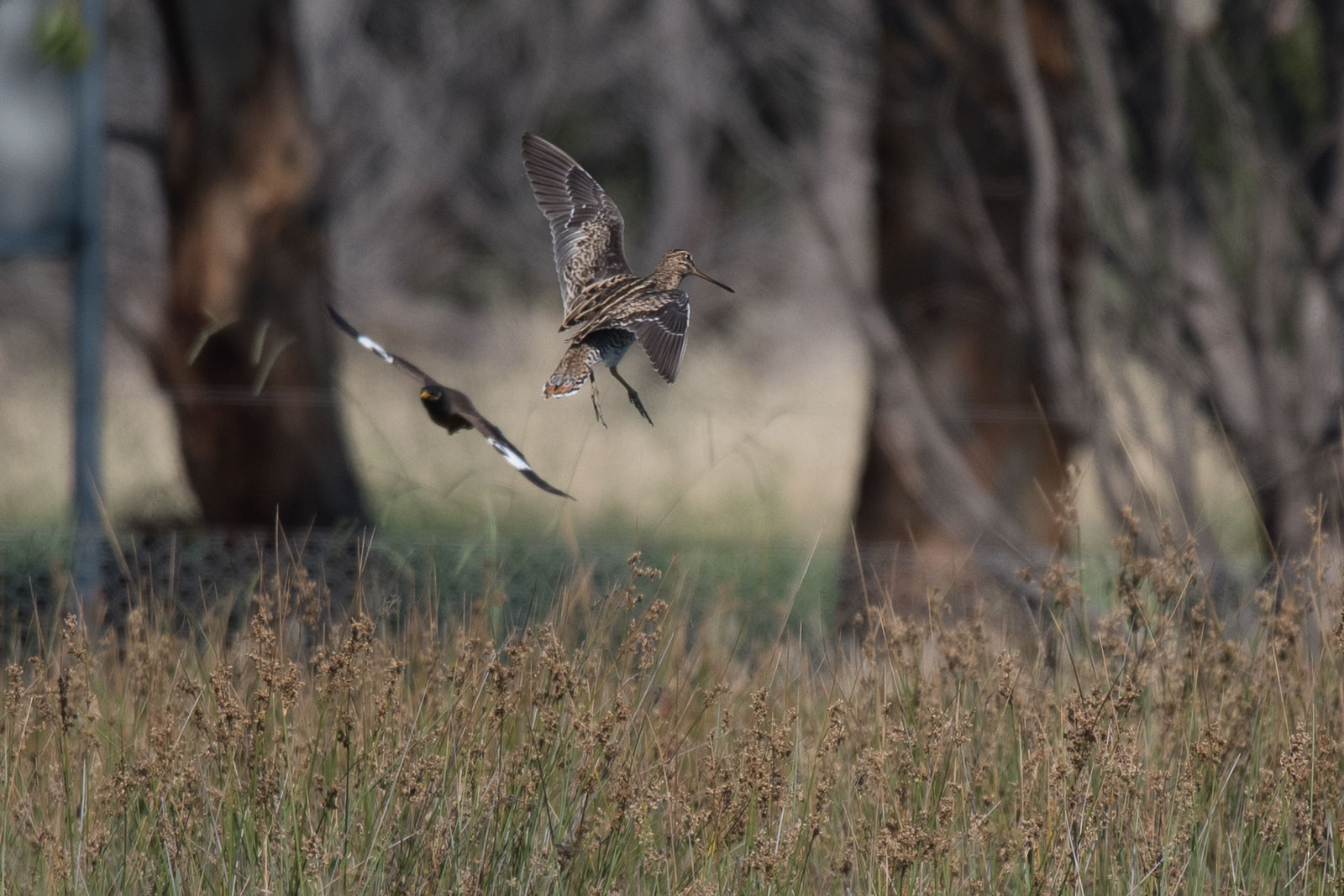
Latham’s (or Japanese) Snipe.

Not a bird I have to say that I’ve spent much time pursing. Given they are a skulking creature around wetlands and the only real time I’ve ever seen them is when someone flushes from a “Snipe Count Day”.  And from that I learned they go fast.

Fascinating creatures that have the ability to hop from northern Japan to southern Australia in less than a week. There is an apocryphal story I can’t track down tonight of one, fitted with a satellite tracker that may have achieved the journey in three days.  And just before you reach for the pocket calculator or uncle google, that is about 7,000km.

There are a number of sites on the web about the research projects and this one seem among the best.

https://lathamssnipeproject.wordpress.com/

In a wetlands in the very heart of Werribee township, at the Heathdale Glen Orden wetlands to be precise, a number of Snipe have taken up residence. Perhaps 15-20 by a moderate conservative count.   And down the road a bit at Harpley estate another wetlands holds perhaps as many again.

So suitably armed with appropriate Snipe photographing equipment, I have the past few Friday afternoons ventured out to Heathdale Glen Orden.

The wetlands is in a flood retarding basin with houses and football grounds, swings and slides around its periphery. Once the main water channel becomes full, it overflows across the surrounding low-lying land and of recent weeks has had between 10 -20cm of water among some lovely low grass tussocks, and mud.  Ideal for your visiting Snipe it seems.

They feed in the early morning and late afternoon and then squat for most of the day. But walk past one, and it takes the air with a rasping “Chakzak”, and well, its gone.
Irritatingly for the average in flight photographer they zig zag as they go making it next to impossible to keep them in the viewfinder.

To be honest, they are not a bird I have info on, other than what I can google and chat to a few folk who have done serious bird counts.  More of that to follow I suspect.

So to Friday.

We have have had a couple of day of torrential rain. As much as 60mm or more over the two days.
And Friday morning looked like it was going to continue.  So I put aside ideas of a trip down to Heathdale Glen Orden.  But by lunchtime it had cleared up and blue skies were the order of the day, and with a cheerful heart I grabbed the D500, the 300mm PF and a pair of gumboots.
But, and you knew that was coming.

But, by the time I arrived, and its only a 10min trip, the sky had gone leaden. Still, I concluded, I was here and I may as well go look see.

And as I wrote on Flickr the other night, you’ve got to picture old dude, with camera sloshing about in gumboots in 20cm of water and really sticky mud, looking for an impossible find. When Chakzak, there goes one. Swing camera, locate bird, wait for for D500/300PF to do its thing. Bird gone. Oh.

Take two sloshing steps.  Chahzak, there goes another, Chahzak, oh, now two, and I can’t get the beasts focused no matter what. Except I’ve some nice sharp shots of the lignum they flew past.
Chahzak, and another and another and… well you get the idea.

It’s the zig zag that does it. They have an ability to turn at speed, that has to be seen to be understood.

This is from a previous week with sunshine

And as I worked my way across the waterlogged landscape the light began to turn to porridge and the shutter speed went down, and that wasn’t the only down as a light rain began to hiss out of the darkening clouds.
The next couple that took off gave me a chance as they ran along a fence line with plenty of open space, and the camera/lens combo kicked into life.  And the raindops became larger and more frequent, and I was now about 10 minutes from the car.
One last Chahzak, and a brief view in the finder and it was over.  Slosh back to the car.

Funny really, old dude, water, mud, rain.  No wonder the little 8 year old kid used to love to follow Magpie Larks around. Although then we called them Muddies for obvious reasons. Still among my fav birds. All very Taoist to have returned to the beginning.

By the time I was back at the car reality had set in and the raindrops were now serious.  In the 10 minutes to home it turned into a major downpour, and I’d only put the kettle on for a cuppa when the thunder and lighting began, and the rain gauge began to fill up for the first time in a very long time.

More work to be done on Snipe.  Just needs some good light and patience.


Eynesbury Gems— Take #2

You can guess that it is raining here today. ‘Cause I’m stuck inside and I’ve cleaned the cameras and formatted the memory cards, (twice) and charged the batteries.  And its still raining.  Beaut really as it will freshen up a very tired bush.

But on the other hand the only thing left on the todo list is to finish off the Eynesbury Series.  So here is episode #2.


Not much to add from the previous ramble so here we go with eight more shots from the day.

Enjoy

Varied Sittella, showing off its usual pattern of going down the tree in hunt for food


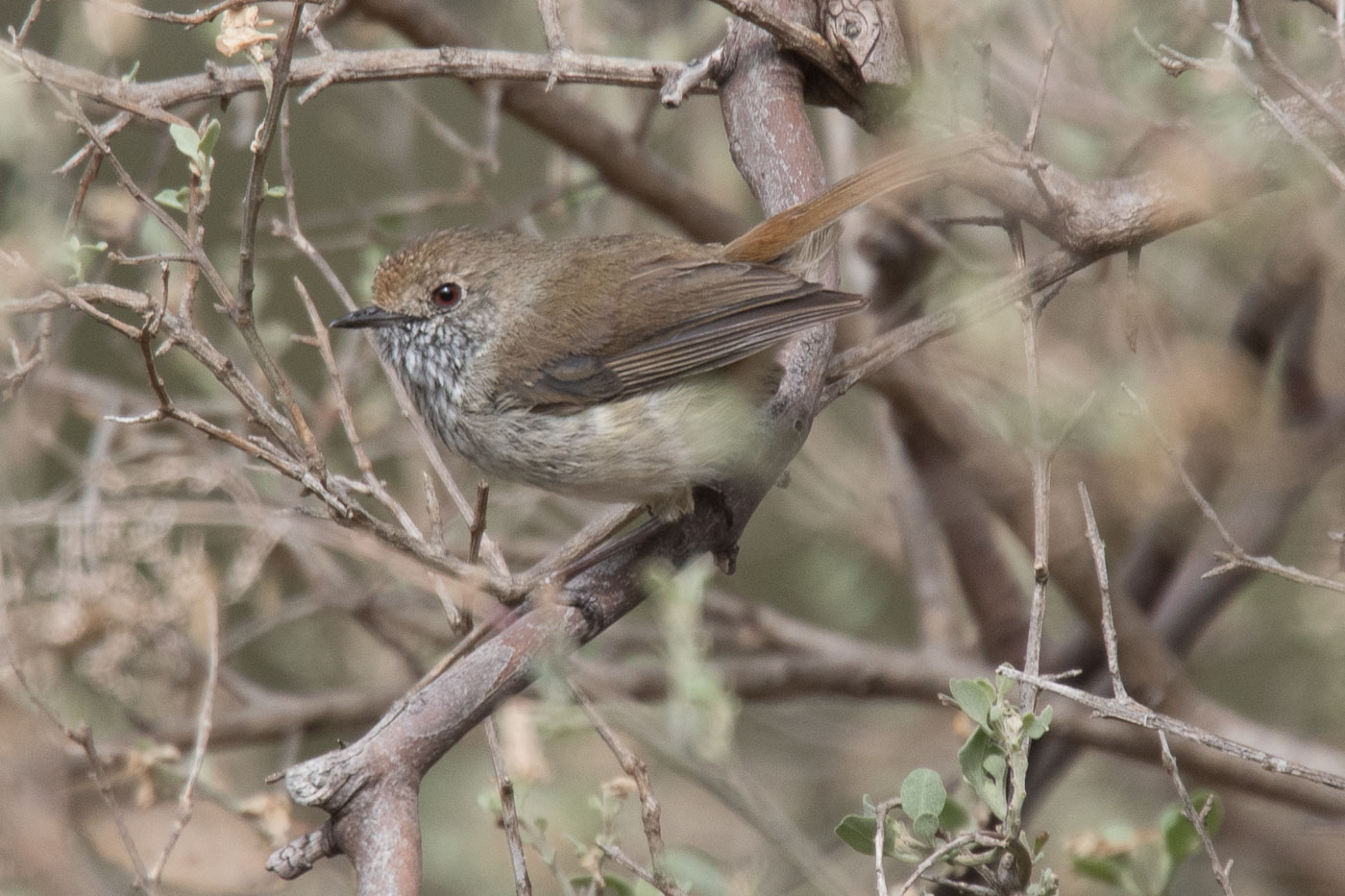
Brown Thornbill. Not often I get a shot of it out in the open. Usually only just hear them or see a movement in the bushes


Speckled Warbler, and this is as good as it got. There seems to be four or more pairs at work in various parts of the Grey Box. Hearing them is one thing, getting a view another, but photographing them an whole new ball game. Still it keeps us going out


Striated Pardalote


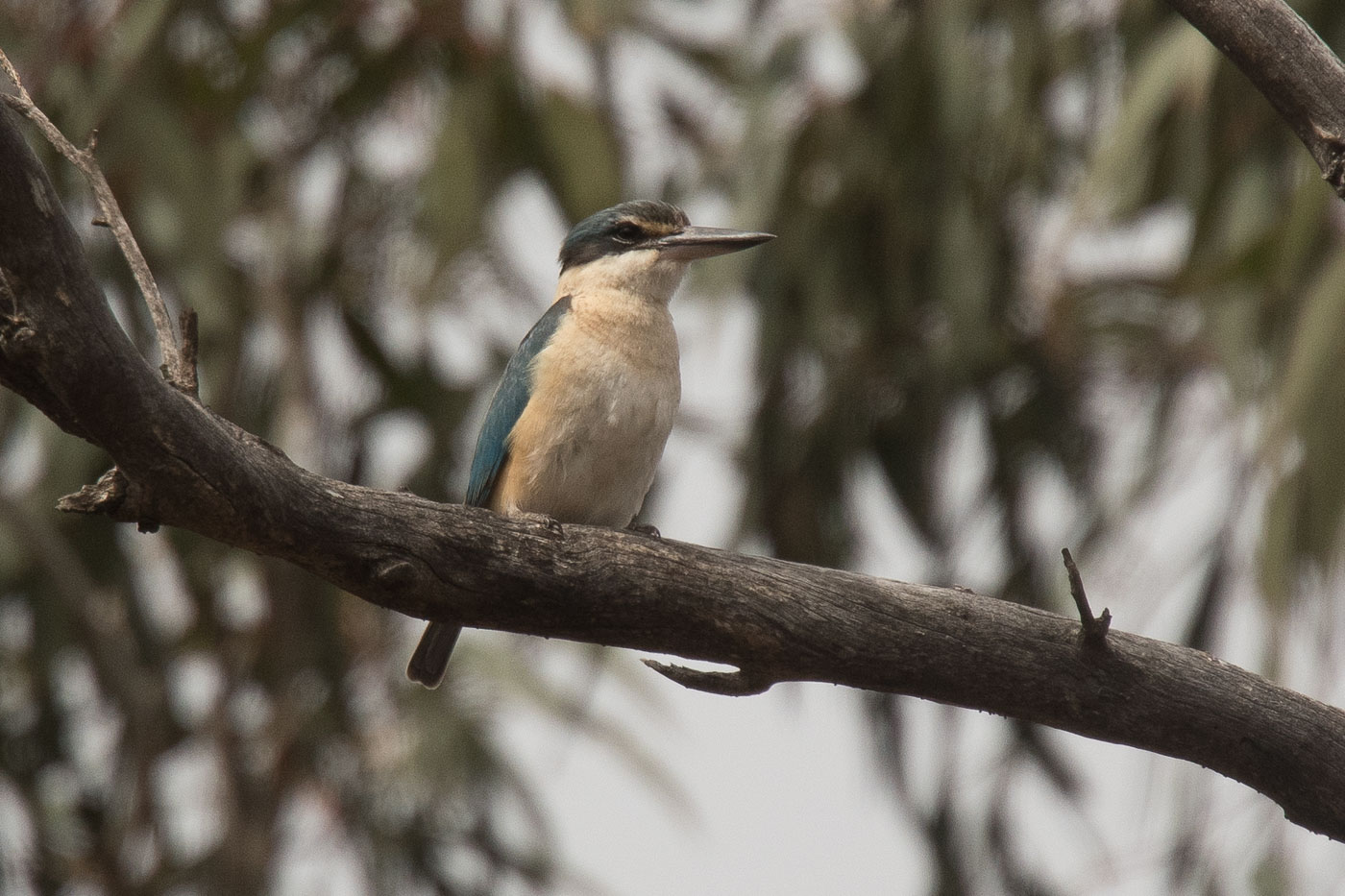
Pretty excited with this find as its the first Sacred Kingfisher that I’ve seen in Eynesbury. Given the number of “Pee Pee Pee” calls I’d be certain of a number of them being in the forest.


A very young Pacific Black Duck. I’ve included it as its a rather special little duck. Somehow it has been seperated from its family. We’ve seen it from a very small duckling and each time have been a little surprised that it has managed to survive on its own. There certainly are other families of young ducks out there, but none that are at the same age as this loner. Good luck little duck.


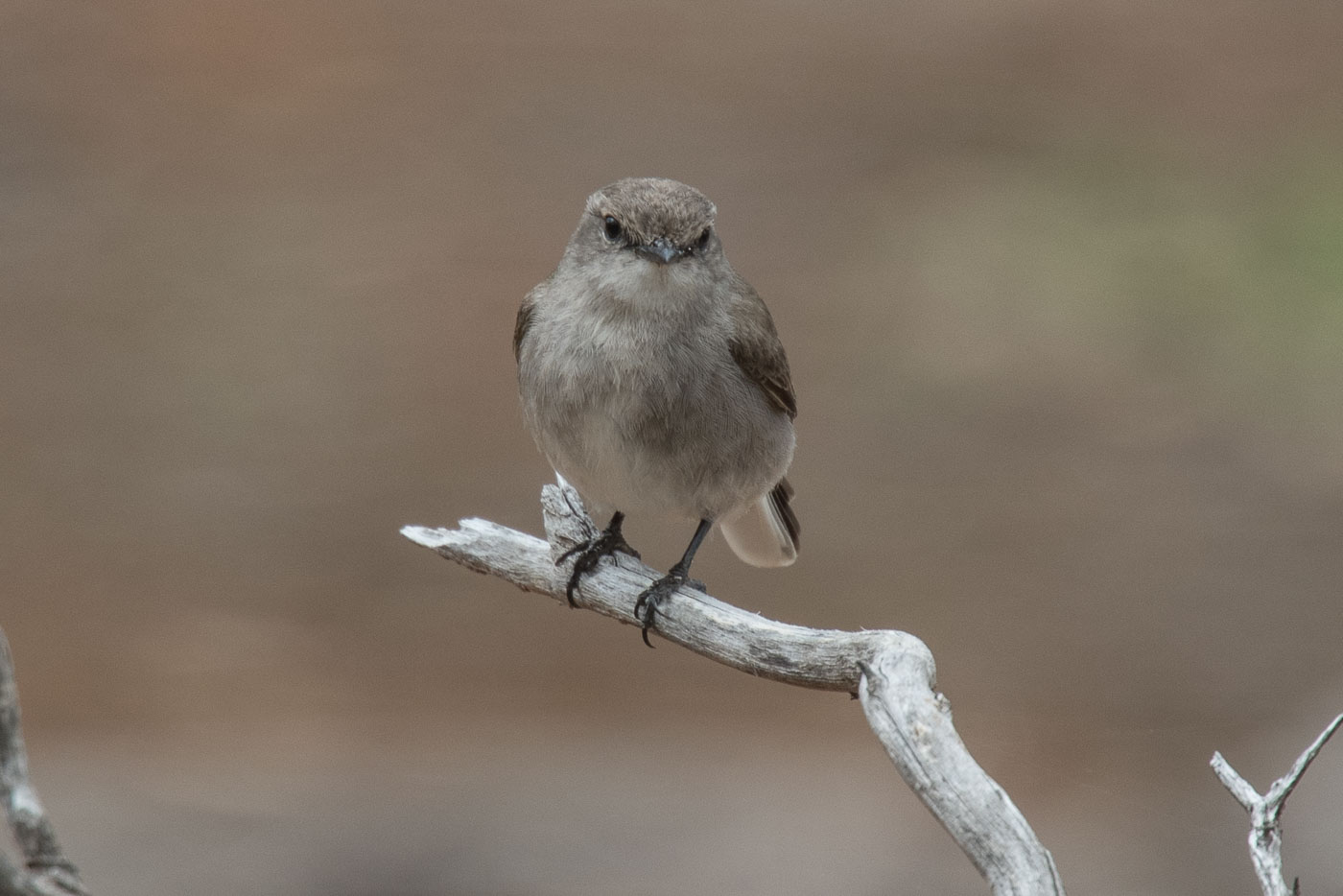
And of course it wouldn’t be a trip without a visit to Jacky Winter. Shows how far I am behind in the Blogging business. They have since fledged the two young they were nursing. So there is two new Jackys in the forest. Will do a blog on their exploits in the not to distant future.

Saturday Evening Post #009

Had been looking forward to getting a second Eynesbury story to the blog this week, but sad, to say between bad weather, bad organisation, a day at Hanging Rock with Werribee Wagtails,  and a couple of family events, time just frittered away.


This is from my Enyesbury journal.
The Sulphur-crested Cockatoos have been feasting among the black wattle now that the flowers have gone to seed. Plenty of work for a large flock, and each individual seems to have its own technique for dealing with the rich smorgasbord.
And because of their ability to deal with the human condition a close approach didn’t seem to be all that hard.  All I had to do was wait for the leaves to be in the right spot, and the bird ready to draw up the next offing.

I’ve been using the Teleconverter TC1.7 on the PF 300mm f/4 lens of late.  It makes it a bit on the slow side, but it is quite a light and easy to handle kit for many bush birds.  Not my favourite for inflights, but life as they say is a compromise.
I’ve done a few tests and while it is sharp, it’s not as sharp as the Sigma 150-600 Sport. But that kit is a lot heavier.
Just for the record, I think the TC 1.7 works better at higher shutter speeds and the VIbration Reduction (VR) turned off.  The net has so many arguments about how the VR performs when left on, but you’ve only got look at EE’s Flickr site to see how good it can be on the TC1.4  EE has had the TC 1.4 on from day 1 and the VR set to Normal.  Sometimes we get to be too gear conscious and miss the simplicity of working at the photo rather than extolling the equipment.  As David DuChemin says, “Gear is good, but, Vision is Better.


This shot is nearly a full frame, cropped only for effect.


Keep takin’ photos. We do.


Saturday Evening Post #008: Book Review

Normally I don’t do book reviews, nor equipment boosts and the like.  I also have refrained on this blog from entering into discussion on Politics, Religion or Sport.  Except of course for the occasional swipe at these hot potatoes.

So what is a book doing here?  Hardly birds.
And right you are.

However Obama an Intimate Portrait is by a photographer.  Pete Souza by name.  Not one the average birdo will have heard of, but stay with me on this and we’ll see where it goes.

First I’m not asking, suggesting or hinting you go out and buy this book.  Its big, bold and expensive.  Interlibrary loan is a good option. Worked for me.

I first found out about Pete’s work from The Online Photographer (TOP) blog.

Mike Johnston has been an editor I’ve followed for many a year, he used to be editor of a magazine called PHOTOtechnique, which used to explore some great photographic processes in the days of film (I refuse to call it analogue or Analogue).

Anyway here is Mike on the book,

And a link to Pete Souza’s site about the book.

For those who enjoy people photography there is so much to like about the book, and dare I say it out loud, but also to gain an understanding of the man at the center of the photos. Obama.
Pete spent most days, and many hours of the day with the President.  He collected over 2 million images.
And it began to dawn on this old brain, that had I not pursued my photographic path,  I might have enjoyed being able to photograph, not as a paparazzi, but working with people to make compelling intimate portraits.

And ding!!!!!

There is the connection.

Much of what I either show here or on Flickr or place as wall art, or calendar or book work, with the wide variety of birds that I have the privilege to work with, is to bring intimate portraits of fascinating moments in their lives.

Now, I’m not comparing to Pete’s work, just pondering the way roads diverge and converge at the most unpredictable times.

Obama writes the foreward to the book, and I’m going to take the journalistic license to quote one small piece.  See if it resonates with your own work, or your interest in birds.

“… what makes Pete such an extraordinary photographer, I think, is something more than his ability to frame an interesting moment. It’s his capacity to capture the mood, the atmosphere, and the meaning of that moment. And for all the unique and often historic images he captured, he never made himself part of the story those images told.”

You’ve probably noted the “No Shape No Shadow” trailer I added to the site. (a Tai Chi thing), I think Pete might have been happy to accept that as his working mantra.

Back to birds next week. Promise.

I really liked this spread as it shows the man, “POTUS”, as Pete nicknamed him, putting his foot on a weigh machine for one of his staff, and relaxing as any Dad would like to on the lawn with one of the kids.


Eynesbury Gems—Episode #1

Eynesbury township just a few minutes from Melton, was established around a golf-club. Part of the deal concerns a stand of Grey Box Forest, that is in close to original condition, or perhaps, well established with old trees and understory, might be a better description.
It was used until the mid 1950s as a pastoral area, and the forest was used to run the shorn sheep from the shearing sheds in the area.

Many long term readers will know that its been noted that I have Grey Box sap running in my veins and a visit to the Eynesbury Forest is enough to rejuvenate the lowest of my spirits.

The local Eynesbury Conservation Group, you can look them up on Facebook, conduct a walk on a Sunday morning every two months. Usually led by the award-winning Chris Lunardi, a local identity; EE and I make it a point to turn up if at all possible.

Much to see in a day, so we cheated, and went back for a second look the following day.

Here are some of the Gems of the Forest.1811-28_DWJ_6412.jpg
Little Eagle, one of a pair. And try as I might I’ve not been able to locate their current nest site.

1811-28_DWJ_6492.jpg
Peregrine Falcon, a new bird for me at Eynesbury, this one is working on short wings with quick flutters. Target— Tree Martins that are nesting in the forest. We found at least one carcass to confirm its skills.

1811-28_DWJ_6517.jpg
A fledged Jacky Winter. Not from our usual pair, but one of two young birds on the wing. Well done Jacky

1811-28_DWJ_6527.jpg

A trip through the Greybox will always be accompanied by the trills from the many Brown Treecreepers in the area. A threatened species, so its good to see them so active in the forest
1811-28_DWJ_6536.jpg
At the lake, an Australasian Grebe was nurturing at least one new addition to the family

1811-28_DWJ_6562.jpg
Big, bold, noisy and hungry. Sulphur-crested Cockatoos are working in the wattles that have seeded

1811-28_DWJ_6590.jpg
“Our’ Jacky Winter young. The nest is near falling apart, and the young still have a few days to go to fledge. Jacky made it quite clear today, that we were not welcome. So we moved on quickly

1811-28_DWJ_6664.jpg
Normally at this time of the year the forest would be ringing with the calls of hundreds of Dusky Woodswallows. Again, it is feared they are in decline, and this is the first season we’ve seen so few. But those that have come down, have wasted no time in getting off their first batch. This pair are feeding two young

1811-28_DWJ_6794.jpg
Two Black Kites were in the air having the best time on the strong winds. it really deserves a blog page of its own to describe and show the antics of this couple of birds, but two should do eh?

And finally two of the Tawny Frogmouth from the Children’s Playground park. Other photographers, you know who you are Lyndell, seem to be able to get them on days when they are low down, in the open and all together. They seem to be quite happy to sit in the trees while kids play about on the swings and climbing things just metres below.

Another episode to come I think.


Saturday Evening Post #007

I was really keen to put up yet another Wagtail Nursery set, as we’ve several along the river at the moment.

But perhaps a change is a good thing, so here’s a Swamp Harrier.
Perhaps the most challenging of the raptors that we work with.  These birds are have a zero tolerance policy when it comes to humans, and most often what we see is the white tail feathers of a Swampie disappearing in front of us.

This one came up the paddock toward us, but was searching for an updraft and as soon as it reached it the bird rose at a great rate with hardly a flick of the wings.

Which caused me to ponder that little bit, that how do they sense where the updrafts are happening?  Eagles, Pelicans, Kites, Ibis and many others seem to be able to work their way along and then rise with the thermal.

Unknown, but still things that make going out and watching a most pleasing experience.


‘tails free along the river

Here’s a story I’ve been waiting to tell. It’s the followup from last Saturday Evening’s Post.

EE and I have been searching along the trees at the Werribee River for a pair of Tawny Frogmouth and their young.  Thanks to a friendly tip from a member of BirdLife Werribee, (formerly Werribee Wagtails), we were able to eventually make the connection.
What we also discovered.  We in that phrase meaning EE spotted. What we also discovered was several pairs of Willie Wagtails that had all gone to nest about the same time, and within about 50m or so of each other.

To our delight one pair were only  a metre of so from the little walking track.  Little and Walking in that sentence are more an euphemism for—gaps among the scrub.

For as many afternoons as we can fit in, we’ve been dropping in to see how they are going. And the last day or so, in spite of the drenching weather,  they have flown!

Here is the visuals of the story unfolding.  Quite a few shots, but it takes about 14 days to hatch, and about 14 days to fledge.  You can take a lot of pictures of a nest on a stick in that time.

Good luck littleuns, hope to see your tails flying free for a long time.

Click on each image for a larger view

1811-08_DWJ_2850.jpgTaking a snack to work. This one is still sitting eggs

1811-08_DWJ_2869.jpg
The casual work approach

1811-11_DWJ_6266.jpg
First sight of the little featherless, blind young

1811-11_DWJ_6274.jpg
A couple of days later and Mum is sitting on the tucking them down and look at the size of her ‘eyebrow’. A very upset bird.

1811-11_DWJ_6296.jpgMore hi power food going in

1811-15_DWJ_6545Several days later and the first signs of wing feathers sheaths are beginning to show.

1811-15_DWJ_6629.jpgSnuggling down over the young to keep them safe from view1811-15_DWJ_6632.jpg
In spite of her care, one of the young pokes out the back to see what’s going on

1811-17_DWJ_4295.jpgNow they are really developing a full set of feathers

1811-17_DWJ_4301.jpgMore food going in.

1811-19_DWJ_4820.jpgTrying to distract me by pretending to be an injured bird.

1811-19_DWJ_4913.jpg
Each day brings them closer to fledging

1811-21_DWJ_5123.jpgFledging day.   Not more than 10 minutes later all three were on the wing.  The poor old nest is beginning to suffer from their activities and the heavy rain the night before

1811-21_DWJ_5285.jpgAnd here we are young ‘tails on the move

1811-21_DWJ_5321-2.jpgSee Mum, I can fly. I can fly.

Saturday Evening Post #006

Hope you like the new site. I like the design as it will work well on pads and phones. Each block will be in a single line down the page, and as there is a limited number of posts on the front page, it shouldn’t go on and on and on forever.
It also seems that unless I ante up some cash and take on a ‘paid’ site then anyone on my mailing list for blog updates will get emails which include ‘clickbait’ ads for stuff you don’t need.

Not my fault I cry, but it does mean that come the new year I’ll have to take a paid site to get rid of the problem.  And I see any such intrusions into people’s trust and relationships as INTRUSION.

Also get ready to see lots of photos of Willie Wagtails at nest.  After what has been a very slow start by the Wagtail community to the increase of their species, they seem to have thrown everything at it the past couple of weeks.  Even a stroll around our morning walk site has revealed 3 pairs hard at work, and we weren’t trying hard.  Add another 4 or 5 pair at The Office, and its certainly going to be a busy wagtail season anytime soon.

Look at the eyebrow in the header image. That is one annoyed Willie.

And on a positive note, a check on our local Tawny Frogmouth young this afternoon reveals they have flown.  Well done Tawnys.

1811-08_DWJ_2869.jpg

This one is so busy that it took a snack to work while it was doing its share of nesting duties.  The eggs hadn’ t hatch this time last week.

Saturday Evening Post #005

The Werribee Mansion was built by the Chirnside family back in the late 1880s.  They were  pastoral dynasty that reaped significant profits and the Mansion was among one of their many extravagant projects.  They also maintained a deer park, in the vicinity of the suburb Deer Park. Makes sense right?

They also were members of the Acclimatisation Society, that set out to import species into Australia to provide sport hunting, and included foxes, rabbits, alpacas, pheasants, sparrows and thrushes. It’s a long painful list that we still pay for among decimation of native species. 

One part of the gardens was turned into an ornamental pond. However because of the quality of the sandy river soil, the lake was mostly left empty as it drained quickly.  It was only ever topped up when ‘important’ guests were in residence.

It is interesting to walk among the huge trees in the garden and contemplate that the layout, and those who conceived it, was for another generation. Now stately and immaculately maintained by Parks Vic, it is a pleasure to wander the gardens and see locals and visitors enjoying the grounds.

The Ornamental Pond is still there and is always filled with water these days.  Which makes it a home for freeloading ducks, coots and waterhens and the like. Some, such as grebes and cormorants and egrets have to ply their trade among the frogs, bugs and small fish that seem to be in abundance in the lake.

One Great Egret is regularly found there.  I’ve named it ‘Grace’, for Graceful and Gracious.  Not habituated, but neither afraid of humans, this bird works the pond and its verges and also spends time preening on the trees and small island in the area.
Which makes it a most interesting photo subject.

So much so that I have become quite clued to its body language and can often predict a flight, and a flight path, and sometimes, predict a landing point.
Given the right sunshine, the richness of the dark shadows among the trees, and a hint of luck, a very happy hour or so can be spent by the pond.
Thanks to the foresight of the ‘landed gentry’ who would know doubt be horrified to see common folk picnicking or conducting weddings on their lawns.

1810-23_DWJ_9730.jpg

Saturday Evening Post #4 Mother’s Little Secret

Well it’s out.
One of those secrets that eventually would be too much of a story to keep quiet.

The pair of New Holland Honeyeaters that are in the bushes in the garden over the fence, have been busy.

And a couple of days back we got our first glimpse of their hard work.
A new addition to the family.

We’ve been watching them both fly into the bushes, and out and about.  Then carrying in tiny insects and larger ones, much work among the burgeoning bottle brush and spending time hunting off the local sparrow and starling population. 

I’ve been working with the 300mm f/4 PF Nikon lens of late, without the usual TC1.4 extender.  Couple of reasons, but mostly handling and I wanted to see if the small lens could become a viable lens for the direction of my bird work.  I’m getting a bit to tired and sore from carrying the larger longer lenses.  And of course, like all good secrets, I guess I have a somewhat dreamy acquisition in mind. 😉 More to follow I guess.

And just in case you thought I’d gone to sleep on the job, the much vaunted change to the blog layout is underway, its becoming more a ‘long’ term project, but I think it will have some advantages to the phone and tablet viewers. 


Saturday Evening Post #003

Sometimes the action just gets ahead of the photographer. Or as a friend on mine was wont to say about other occasions.  “Never let your ambitions overweigh your capabilities.”

Seemed an easy shot. Duck takes off.

Just a bit slow on the ‘panning’ on this one.  A hint to all those who have ambitions of developing a good panning technique.
1. Be very sure you know where the action is going to be when you press the shutter.
2. Face that direction. Adopt a “Bow Stance”, see tai chi details or an archery class.
3. Wind yourself back in the direction of the oncoming action.
4. Pickup and follow the subject
5. Unwind as you go
6. When at the position established in Point 1. release the shutter.
7. Continue to follow through at the same pace as the moving subject.

Reason being quite clear if you think about it, you wind up, tension and all, then unwind, tensionless and the shutter goes off while you are perfectly balanced.

All good in practice, but when the duck explodes from the water.
So I ended up with the Male Chestnut Teal with its beak and wings right on the edge of the frame. 😦

This is a bit of a rescue in Photoshop.  Opened up the Canvas Size, and then added some water/ripples etc from another shot at the same location/time.

Aren’t ducks wonderful.

IMG_1325-1.jpg

Heads Up: Changes Coming

Every so often, I look at the overall feel of the blog site and ponder how to make it more friendly and viewer effective.
I’ve been using the current template for a couple of years and have enjoyed the chance to let the images do most of the work on the blog. As they should.

But the winds of change are coming to Birdsaspoetry.
I’m gearing up to turn the front page into small tiles of each post.  That way its easier to see a Body of Work, rather than scroll down interminably to see what has been going on the past few months.
A challenge with the new style is what to do with all those sidebar, bottom bar additions. But, I suspect not to many rock on to the site expecting to see new stuff down there. So they may well diminish in number and it won’t be the first time I’ve dropped stuff off.
Here is a sneak preview of what it might look like.

Screen Shot 2018-10-22 at 5.01.36 pm.jpg