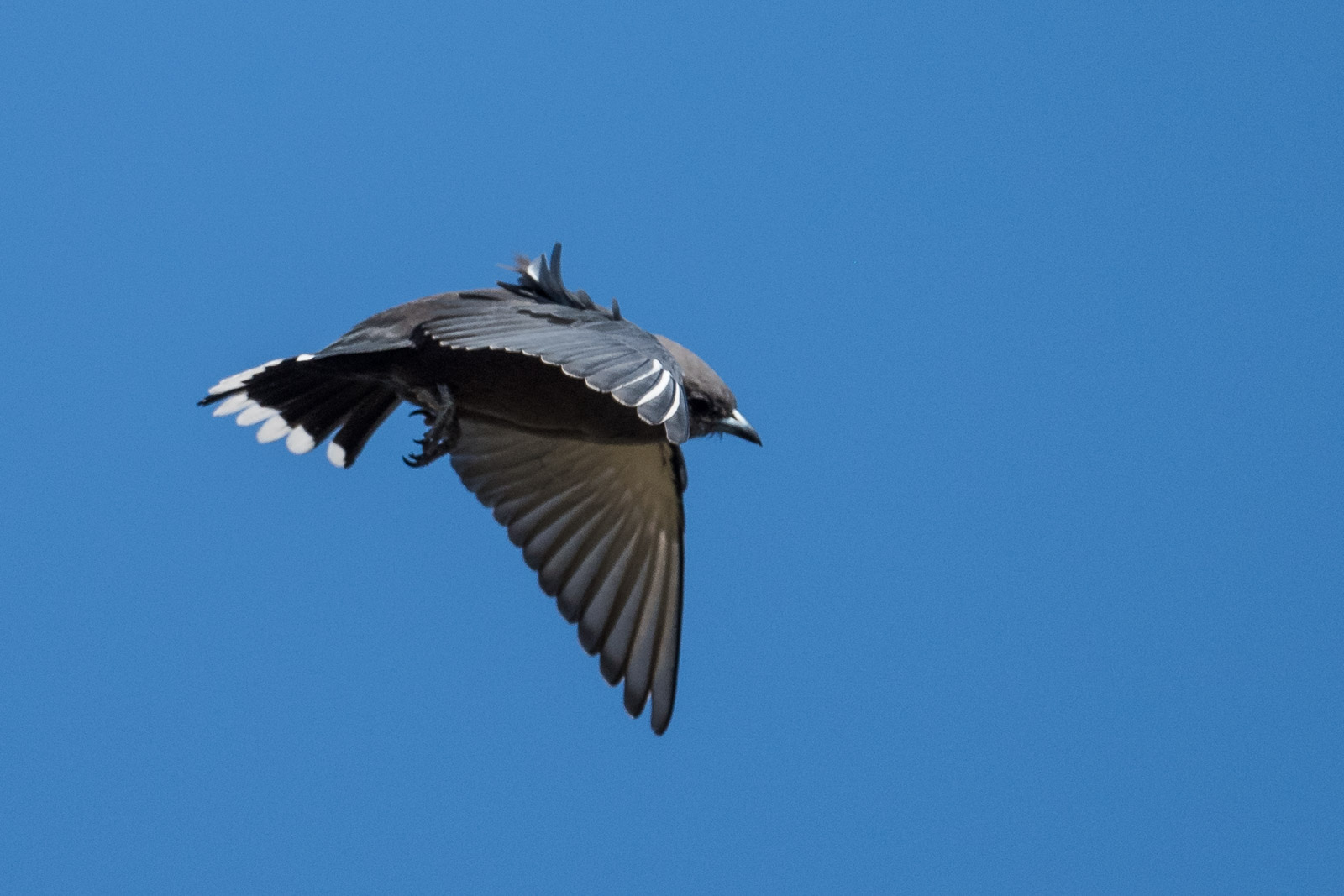
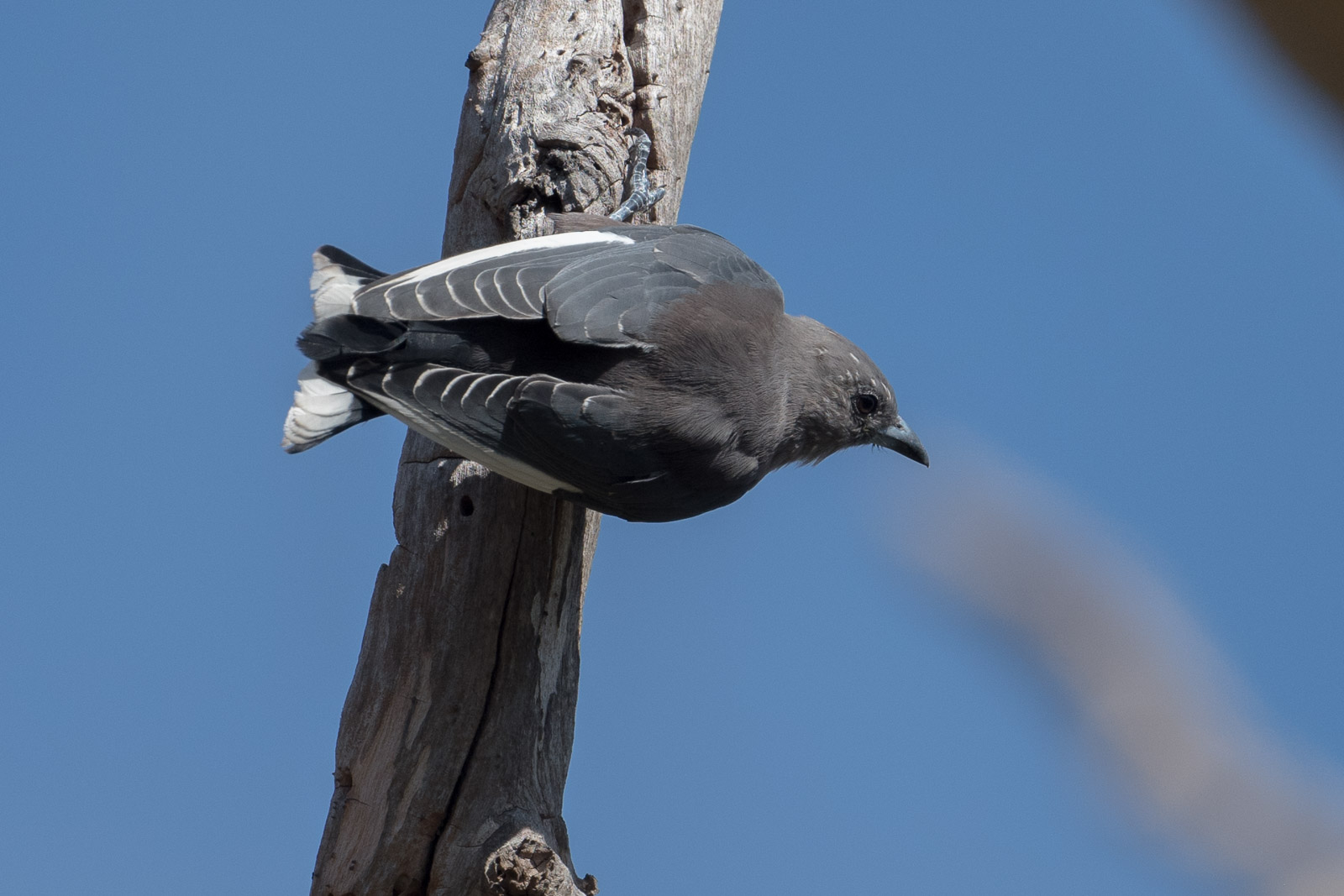
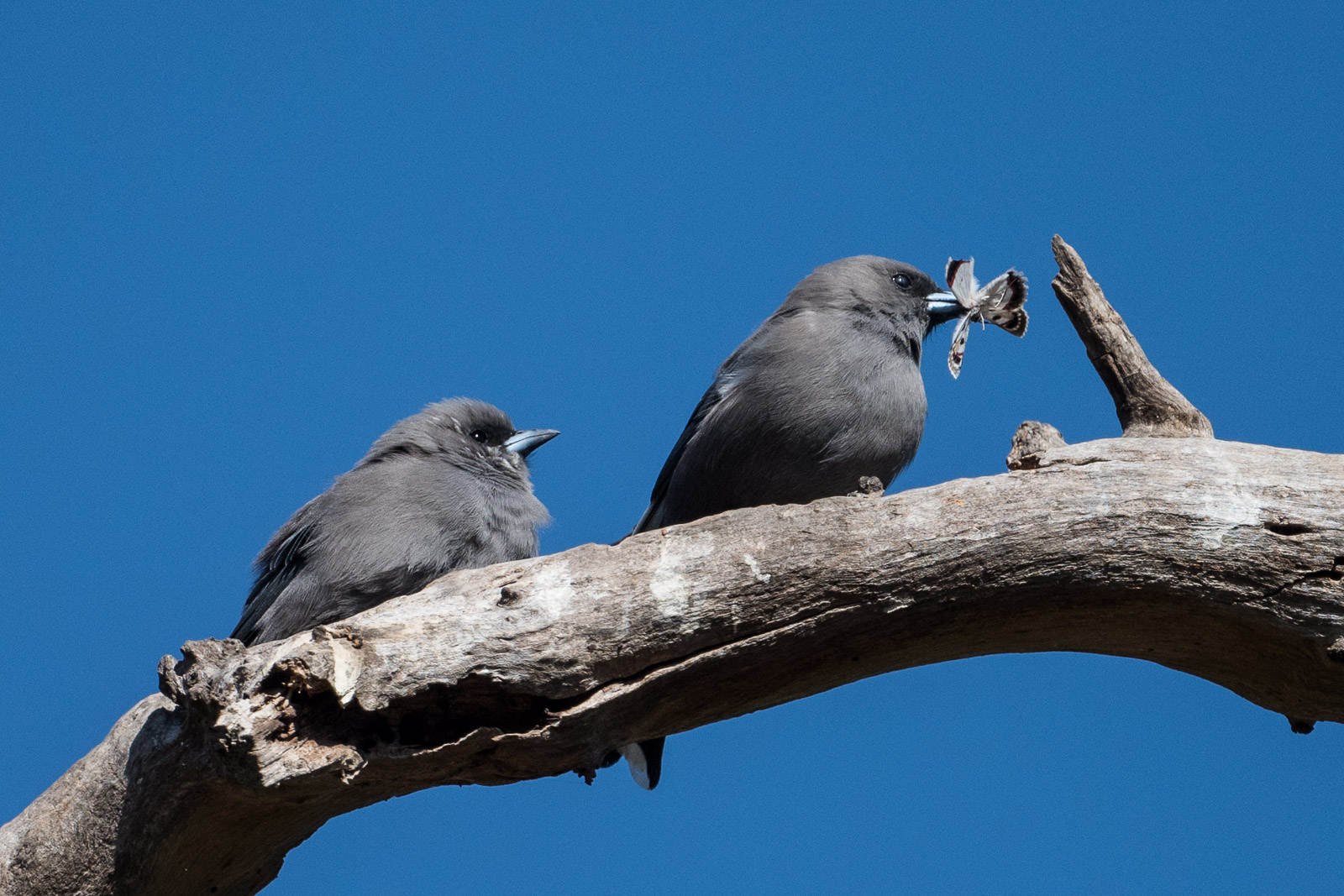
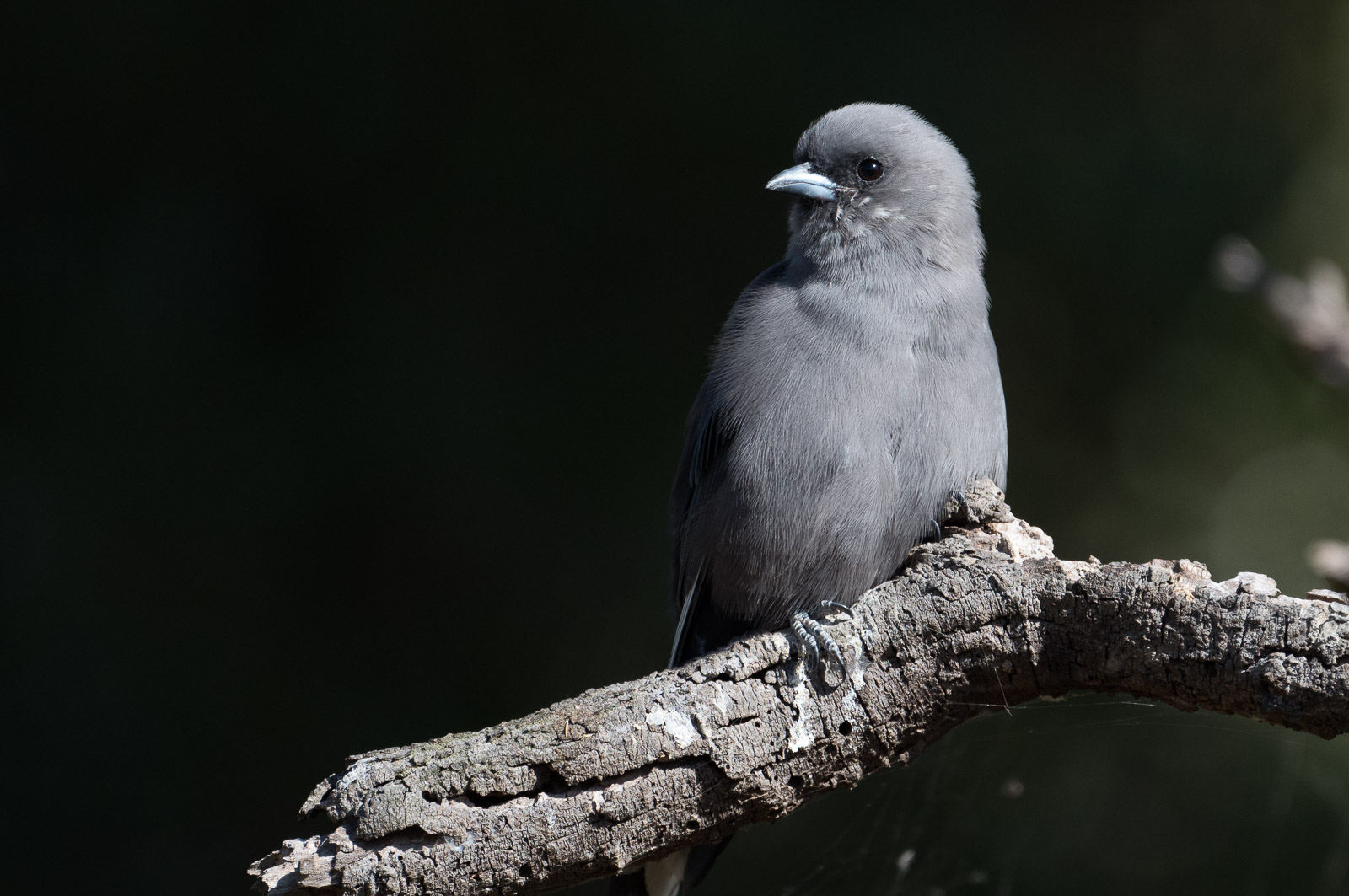
Snapshots: Dusky Woodswallow Morning

EE and I went to the Office a couple of mornings ago.

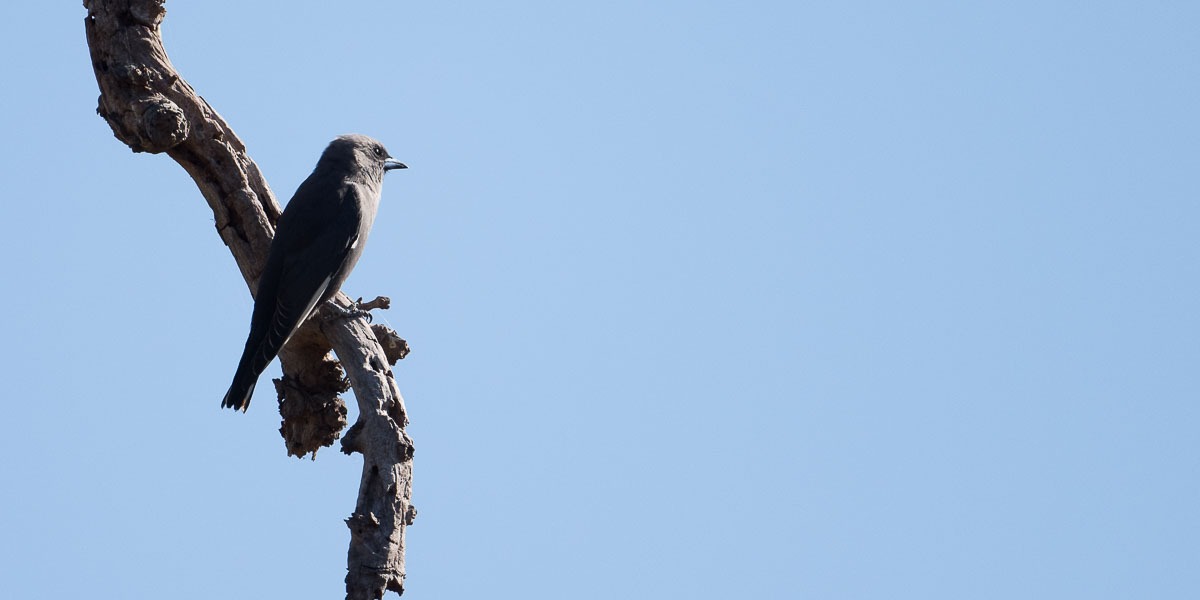
As we were walking over the river bridge we were discussing the small number of Dusky Woodswallows that had nested in the area.  And how they were now probably well on their way north.
When to our surprise, as much as anything, we heard the calls of them as hawked for insects in the sky overhead.
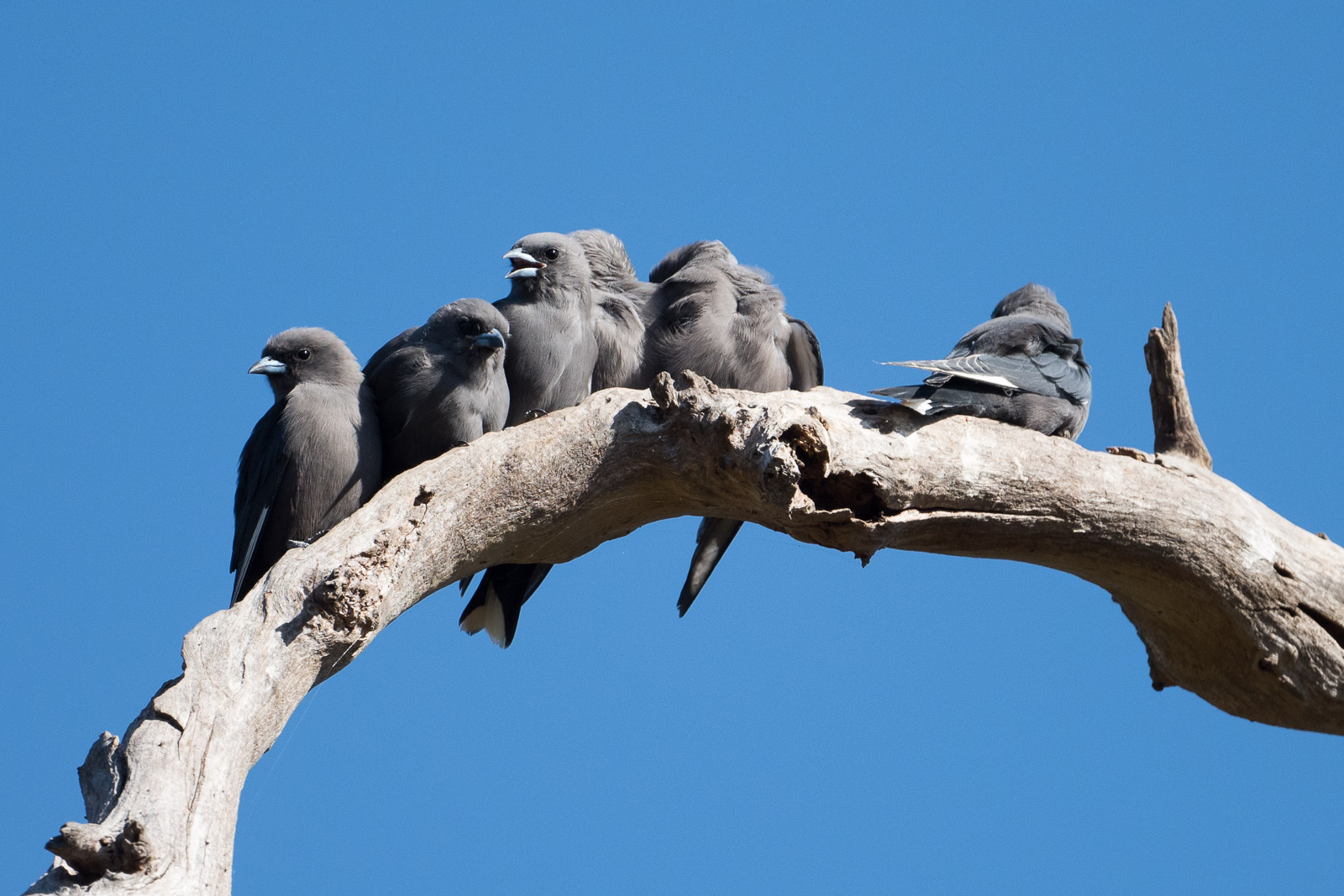
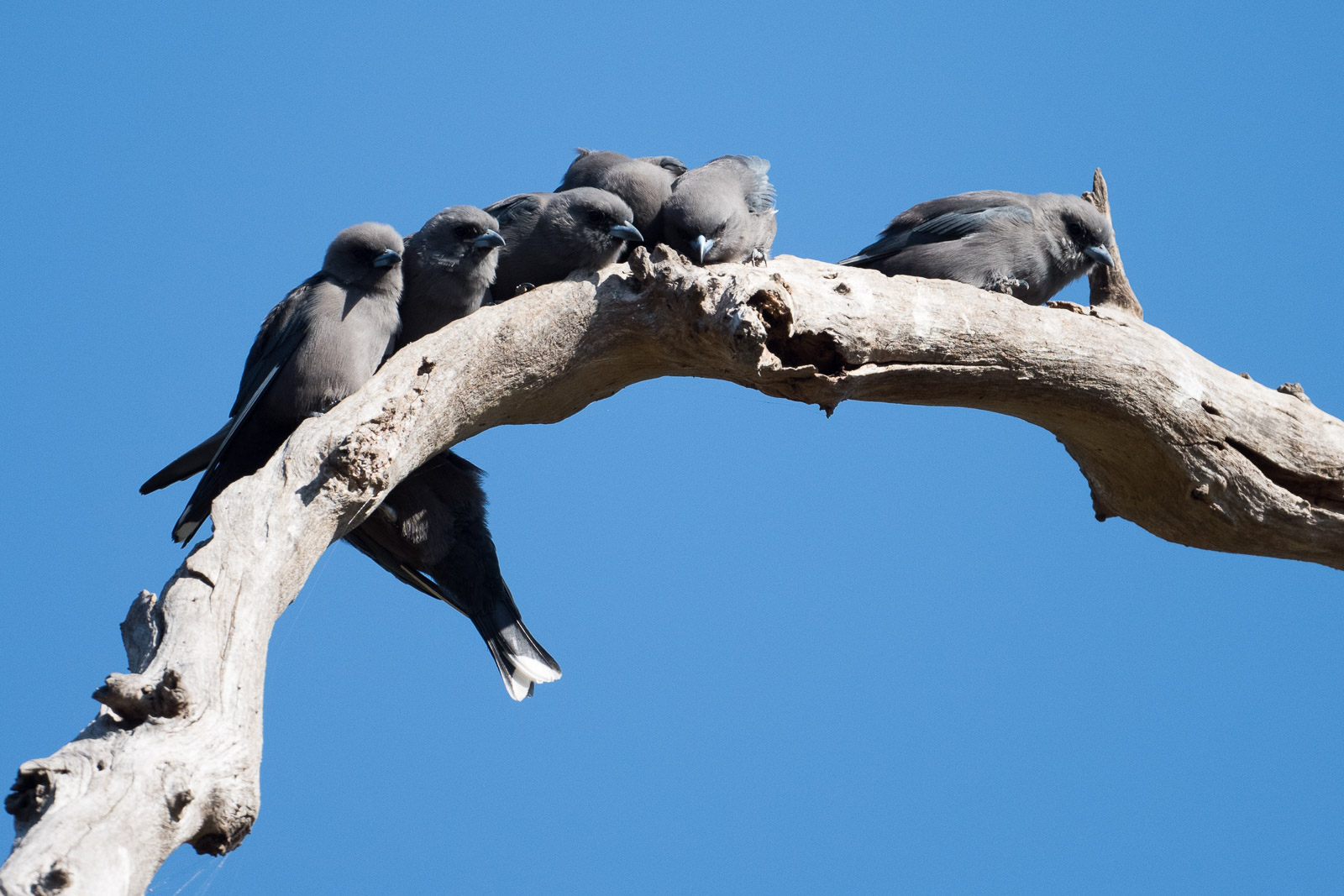
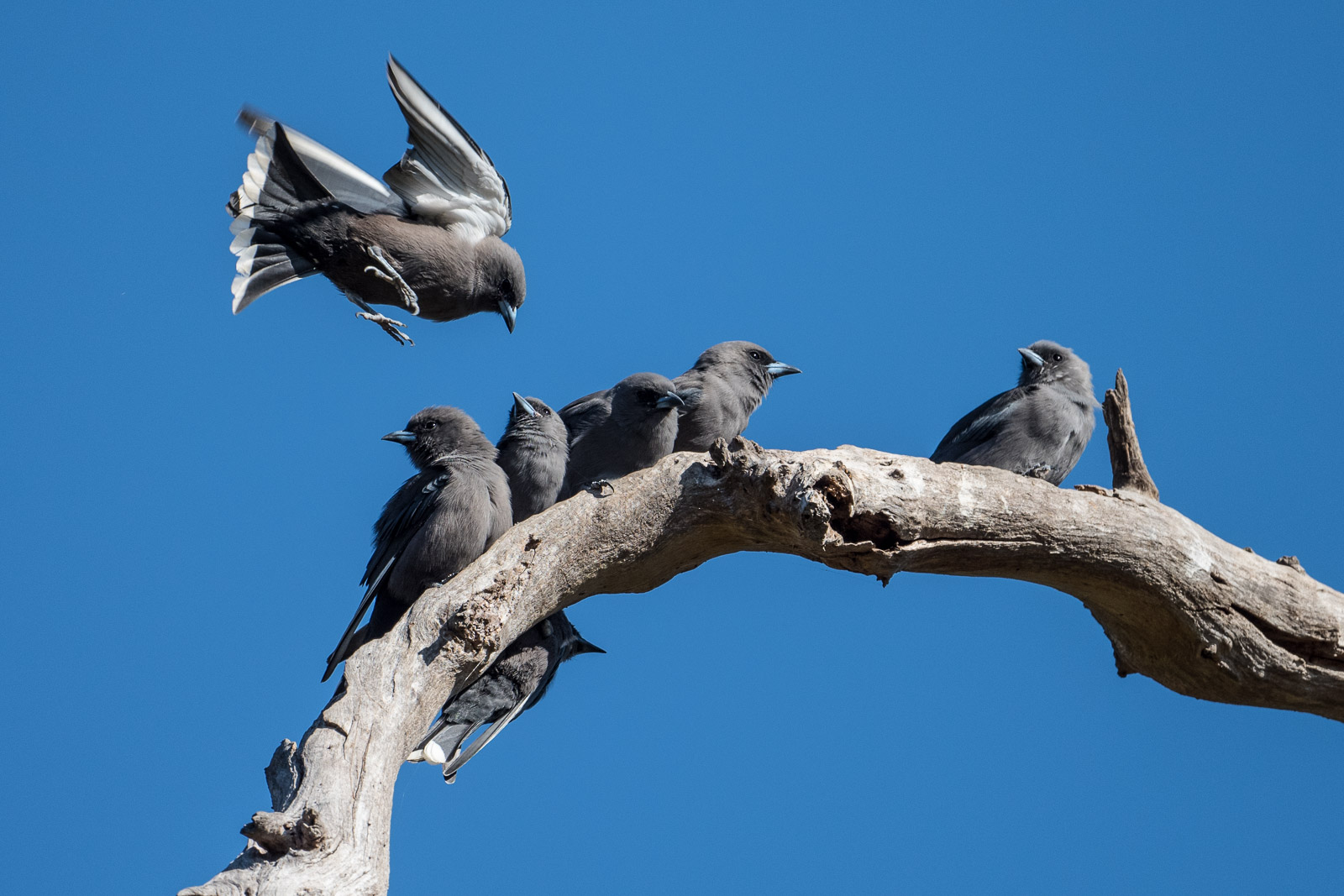
Like Choughs they are very community dependent, and its not unusual to see dozens of them sitting on the one branch all jostling for the best position. These are no exceptions. However with good grace the birds make room for one another, even if it means flying off and relanding.

They were still feeding young ones, so I concluded they must have had a late season nesting before the cold weather sets in.

Close, closer, closest
If you can’t get the spot you want, you go underneath and then popup on the other side. Everybody always moves up graciously
Incoming, make room
Woodswallows have the ability to both fly and glide like swallows.
They have a wonderful marking set on the wing edges, which is not always easy to see
Food is still in abundance.
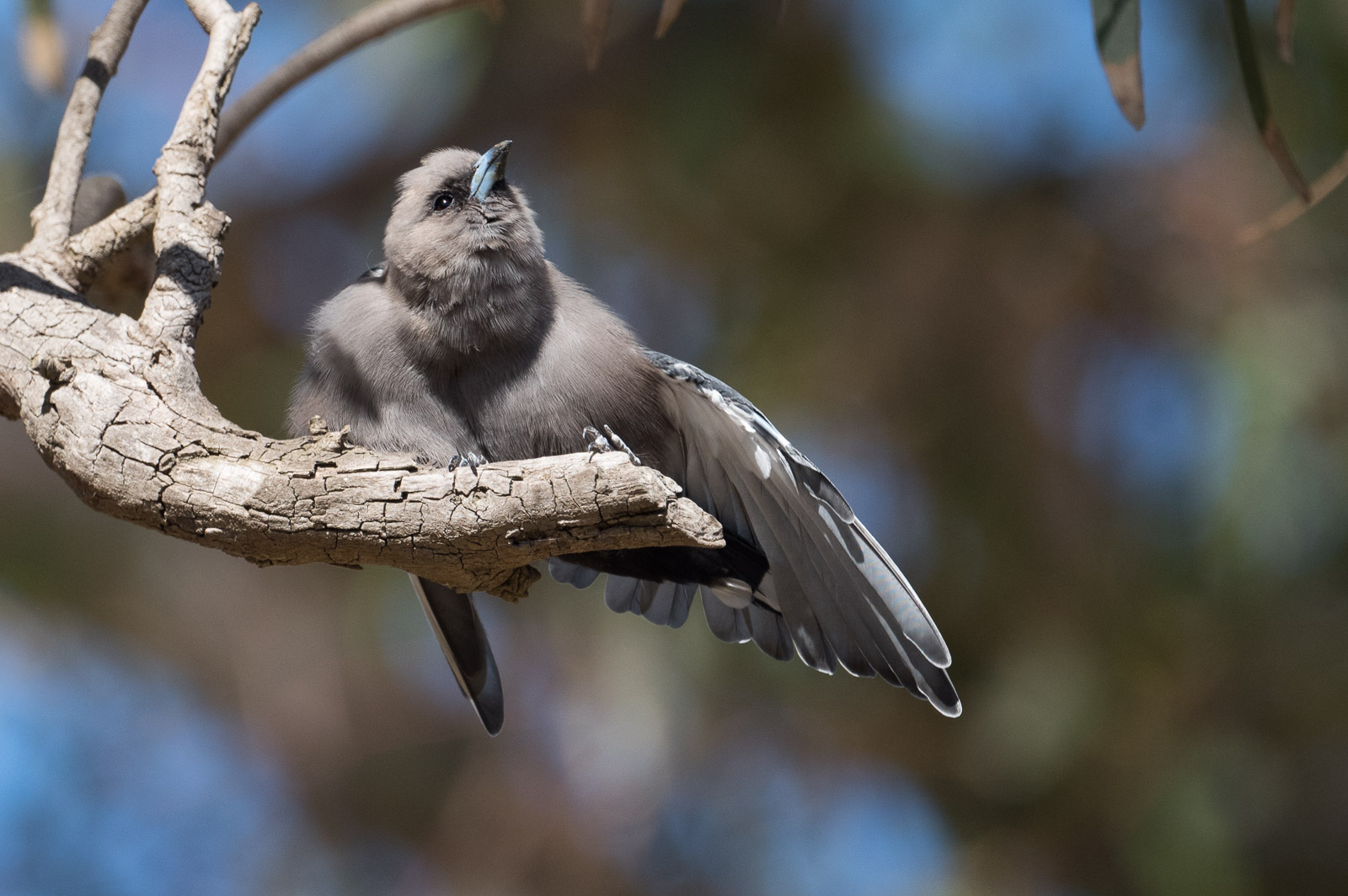
Spent a few minutes with the patient bird, making portraits. While it talked constantly to its neighbours
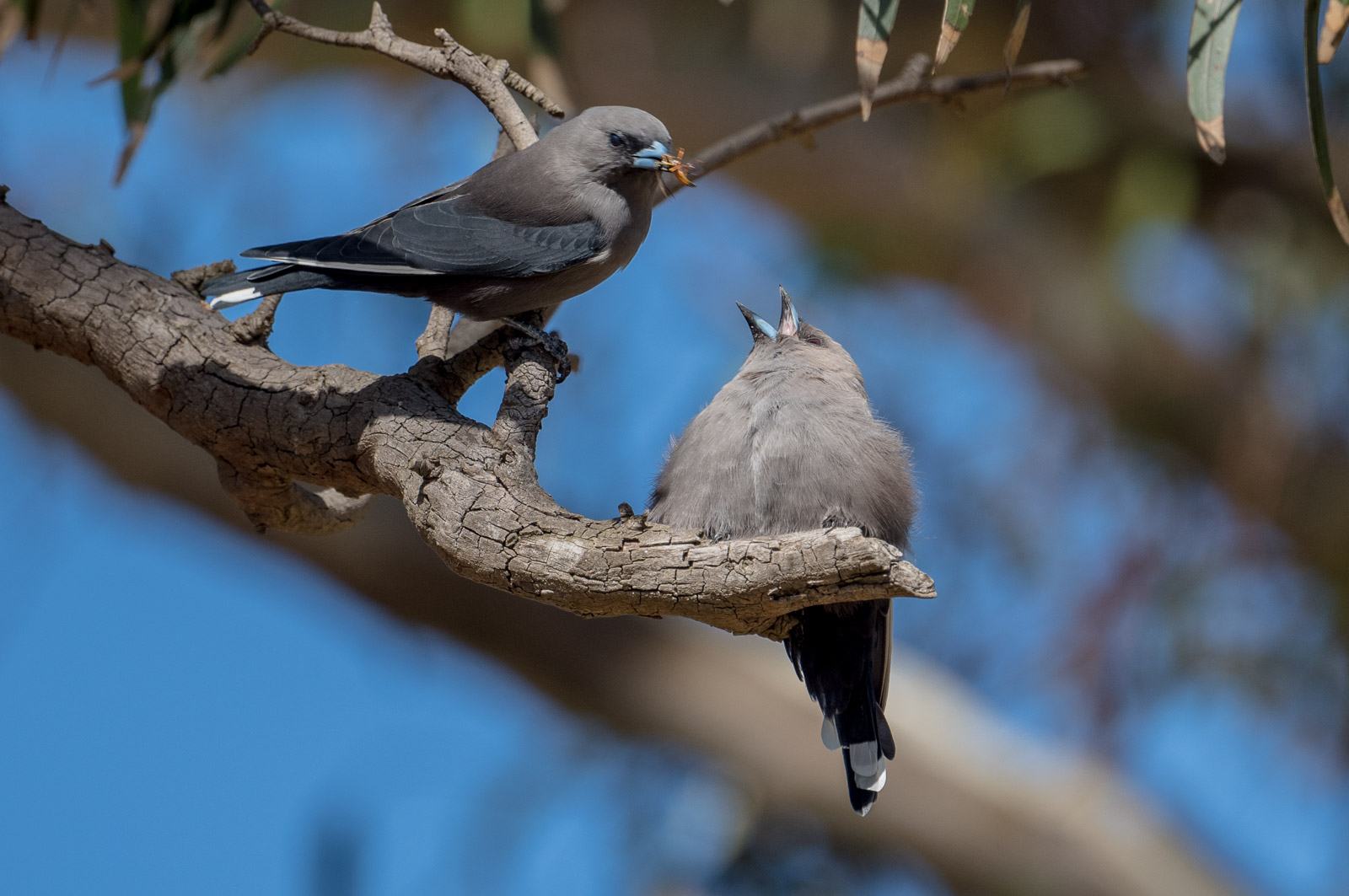
Hard to guess, but this one is a juvenile, now looking like the adults
An adult turns up with a food topup

Snapshots: Biting of More than You can Chew

Here’s a quickie, hope it makes you smile.

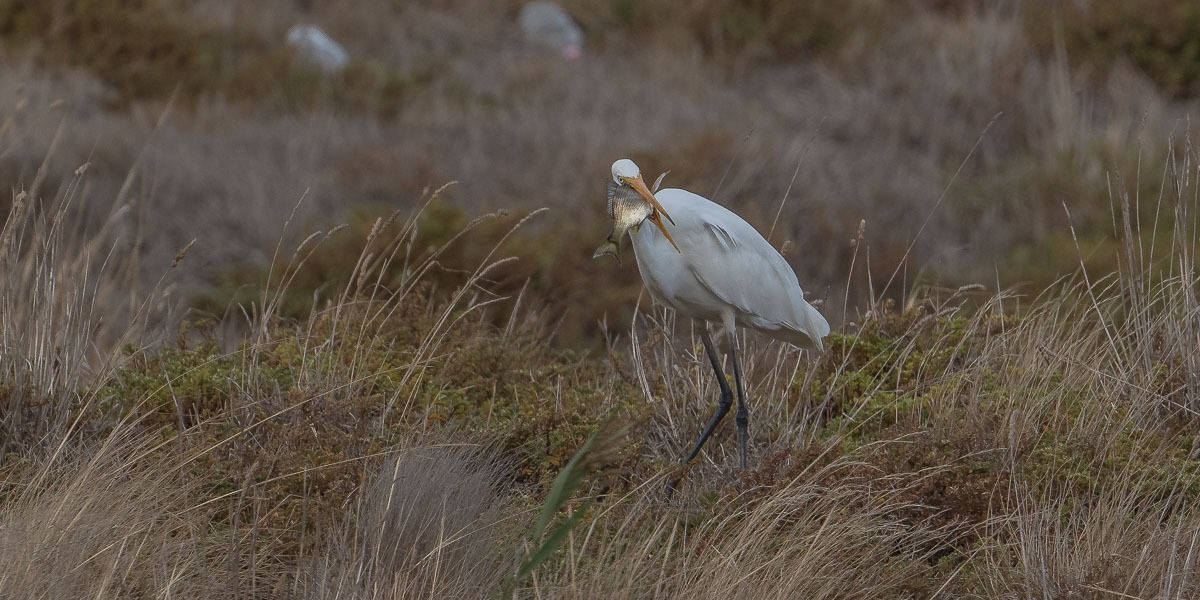
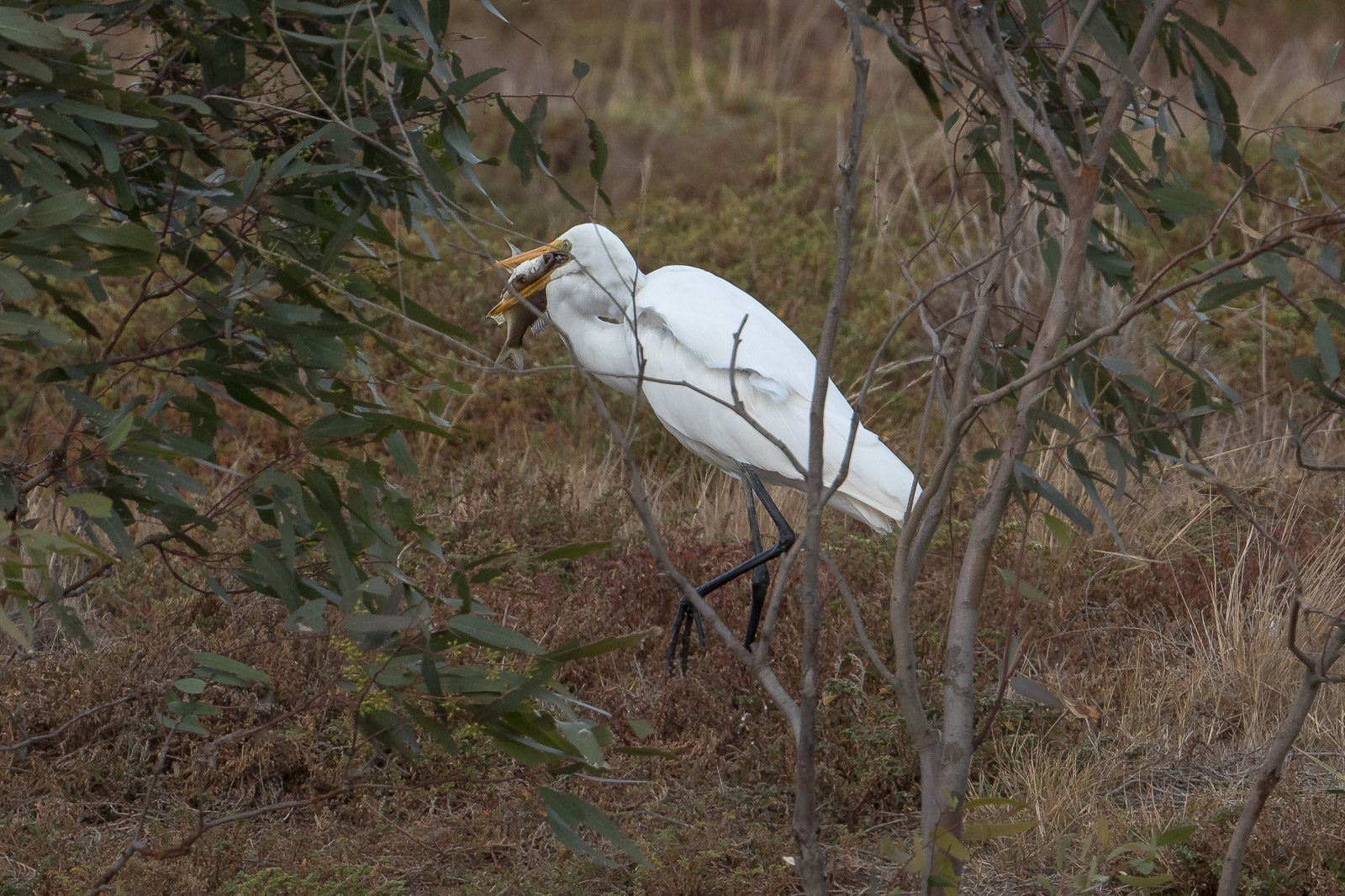
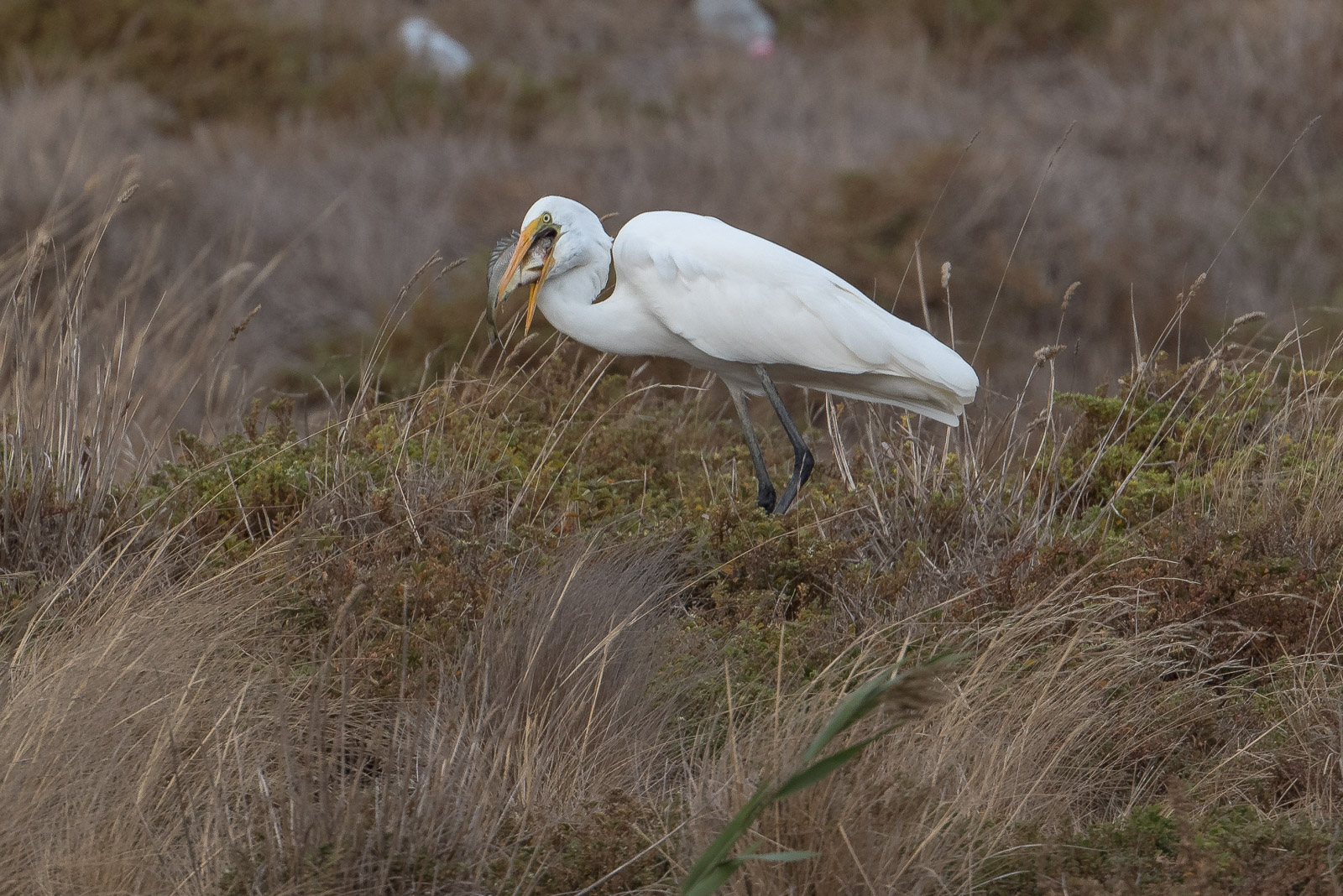
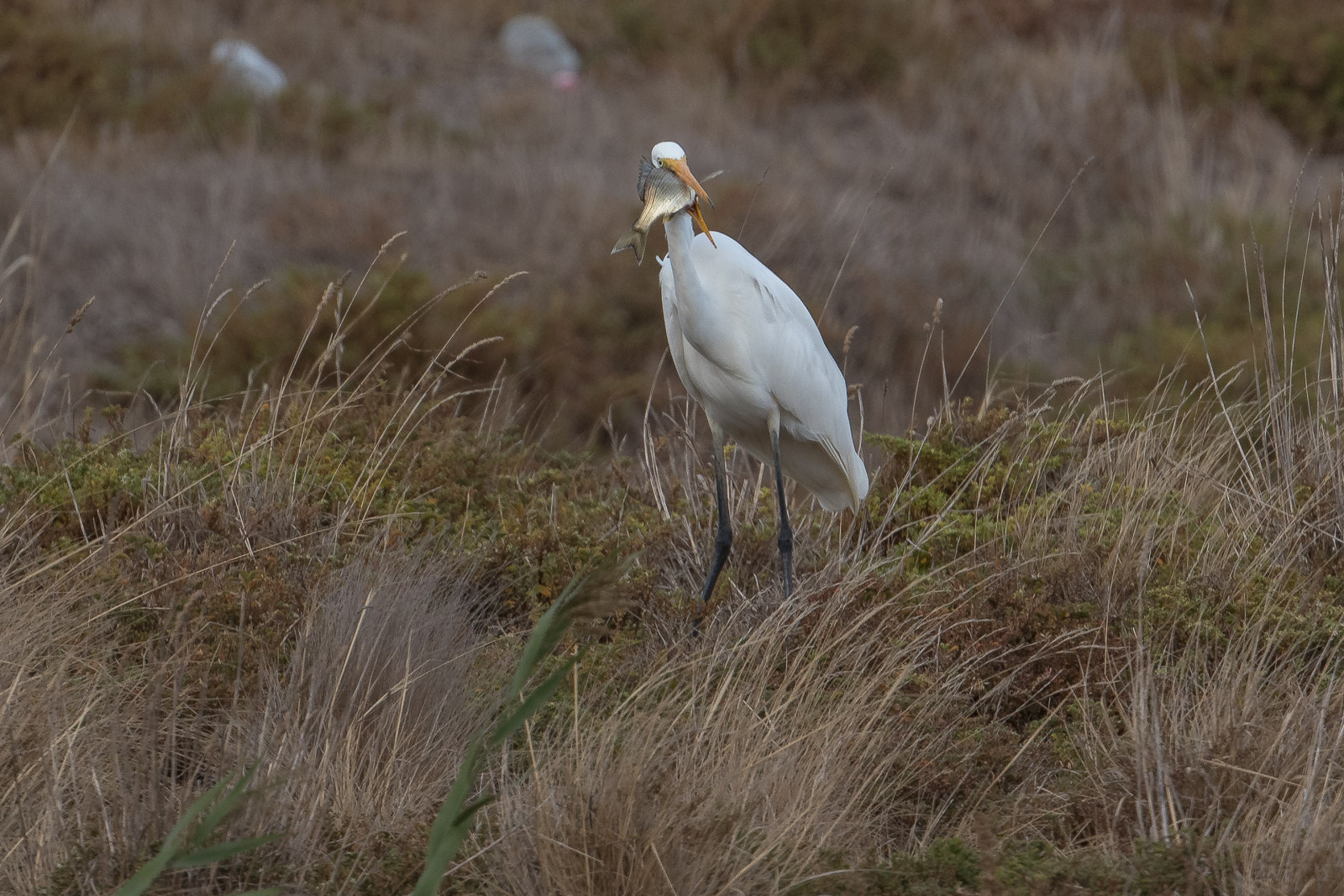
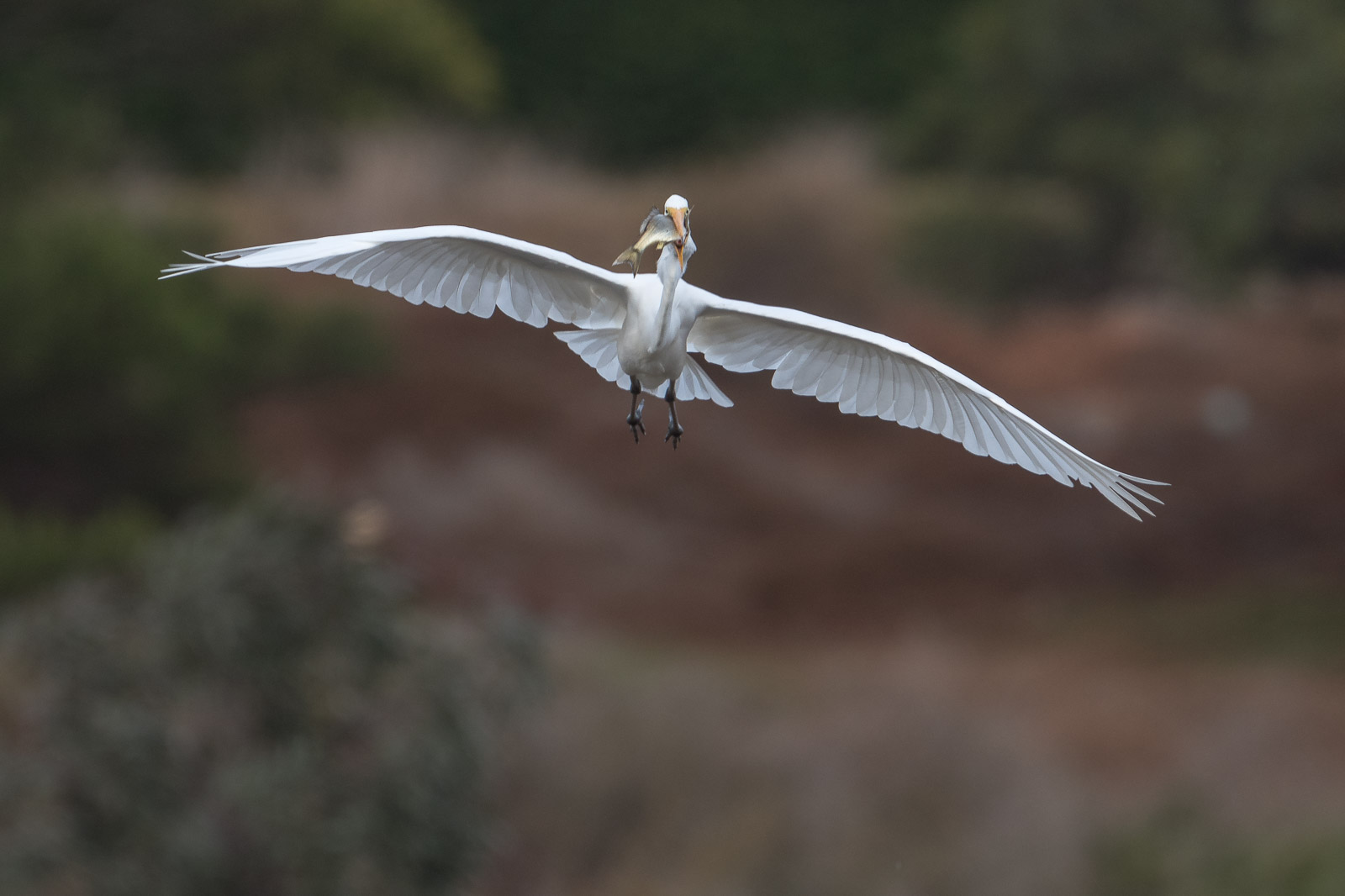
Sometimes a day at the office for this Great Egret brings on more than expected.

Or
The tale of the Egret that hoped to grow up to be an Osprey.

As my old footy coach used to say, “Never let you Ambitions Outweigh your Capabilities.”

I was sitting at The Shallows, and well, it wasn’t as the tide was running high, so not much happening. And the weather was blowing all get out and deep dark clouds were appearing.

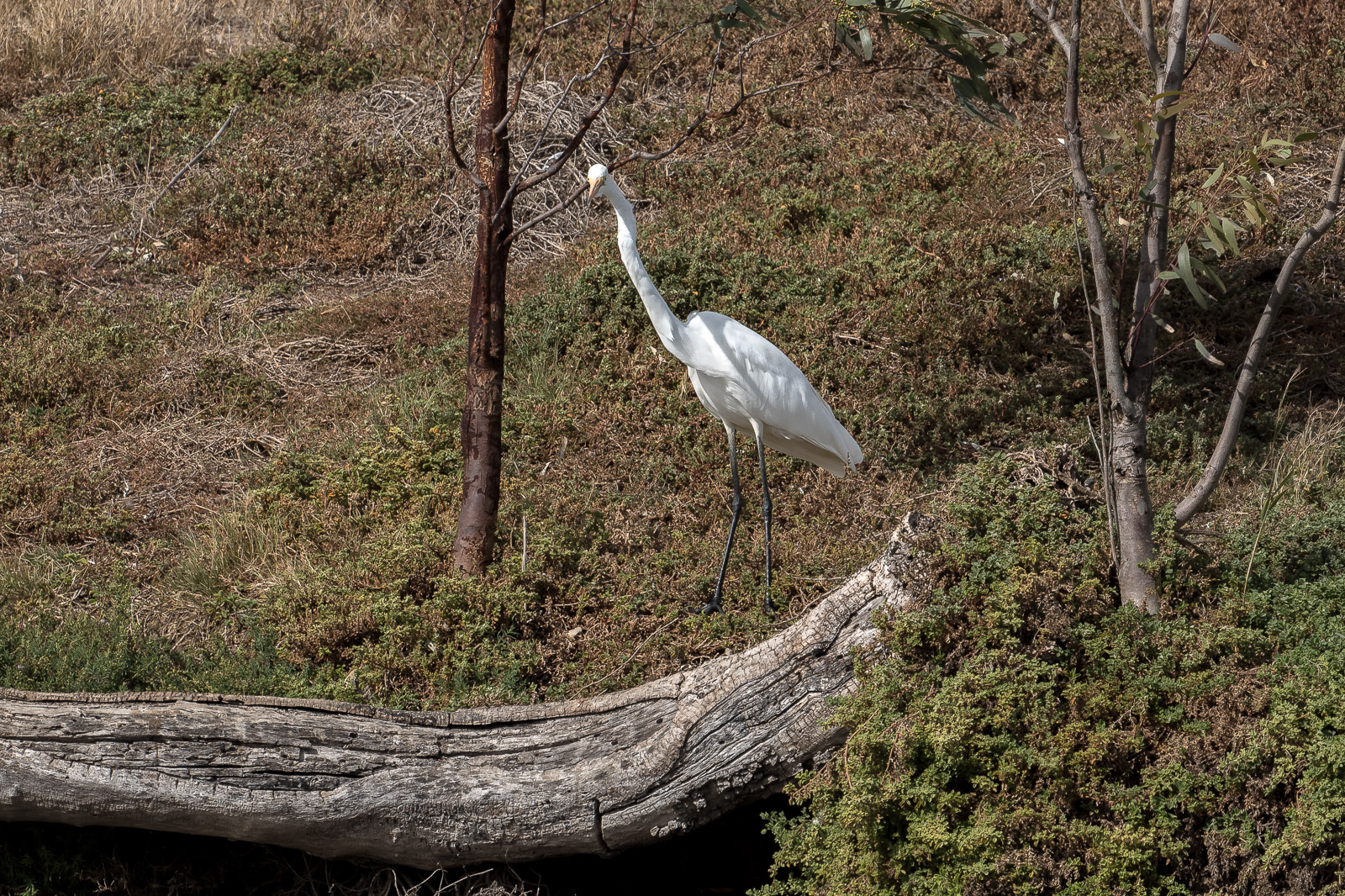
I saw this Egret on the other side of the river. Too far for much real work, and besides it was mostly hunkered down among the small trees, trying to keep out of the wind. I spent more time with some dotterels and a few spoonbills, and was well into my second cup of Grey of Earl, when I heard a loud “SPLASH”, and without turning round, I knew instantly what had happen. The Egret had gone into the water. What I didn’t know was what it had caught. Hard to get it in the water and  it was on the bank and behind the trees before you could say, “That’s a big Fish!”.

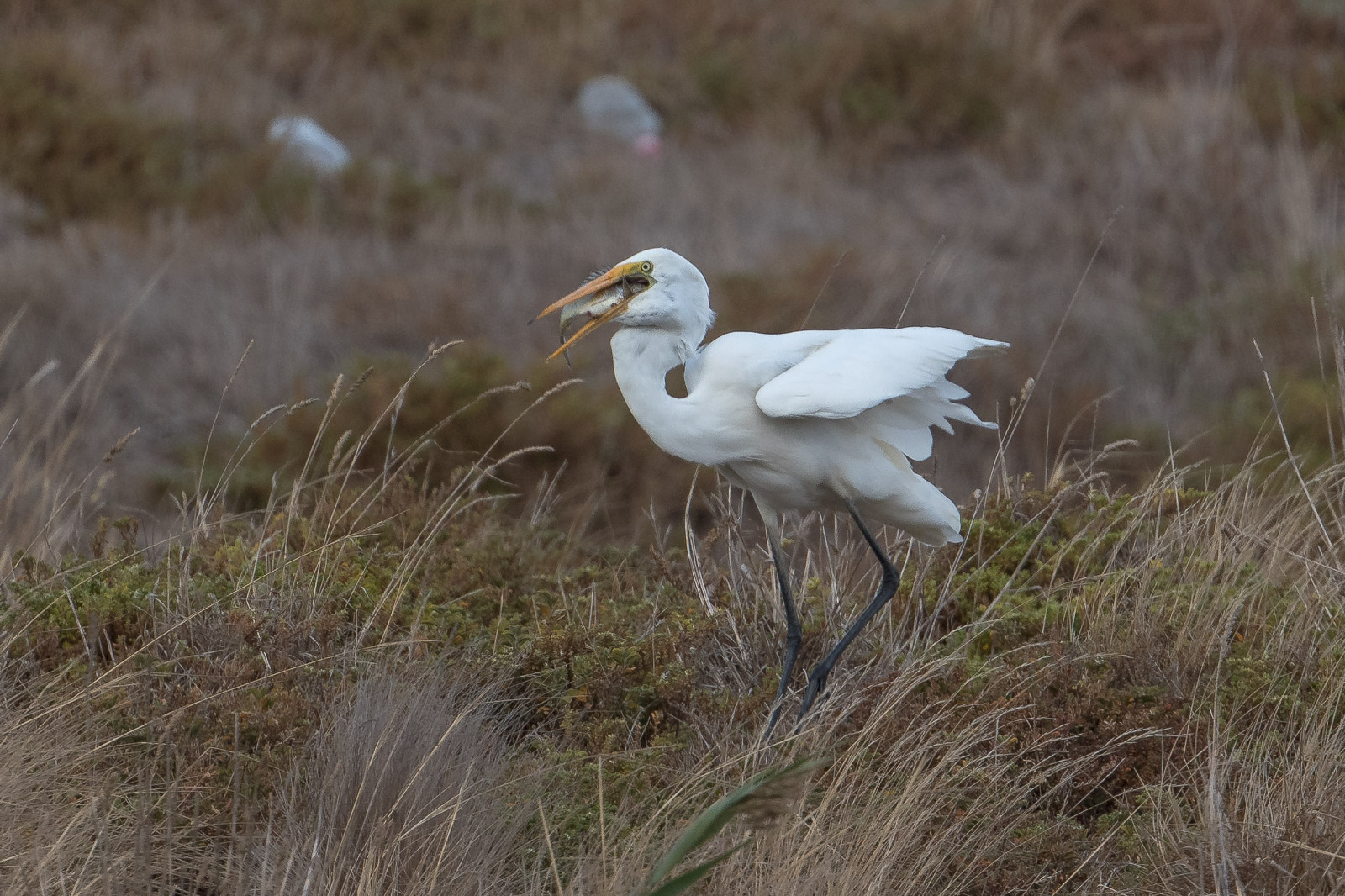
The next few minutes were between hilarious and painful, as it wrestled to get that size fish into a position to swallow. And to make things worse its new friends the Straw-necked Ibis  were getting close hoping to get a morsel or two.
In the end after much neck manipulation, and headshaking, it decided that a new approach was needed and it took off behind the river bank, and I lost sight of the outcome.

I waited, but in the end the weather, and time ran out, and I left not knowing how it had fared.

Enjoy

Saturday Evening Post #26 Responding with Wonder

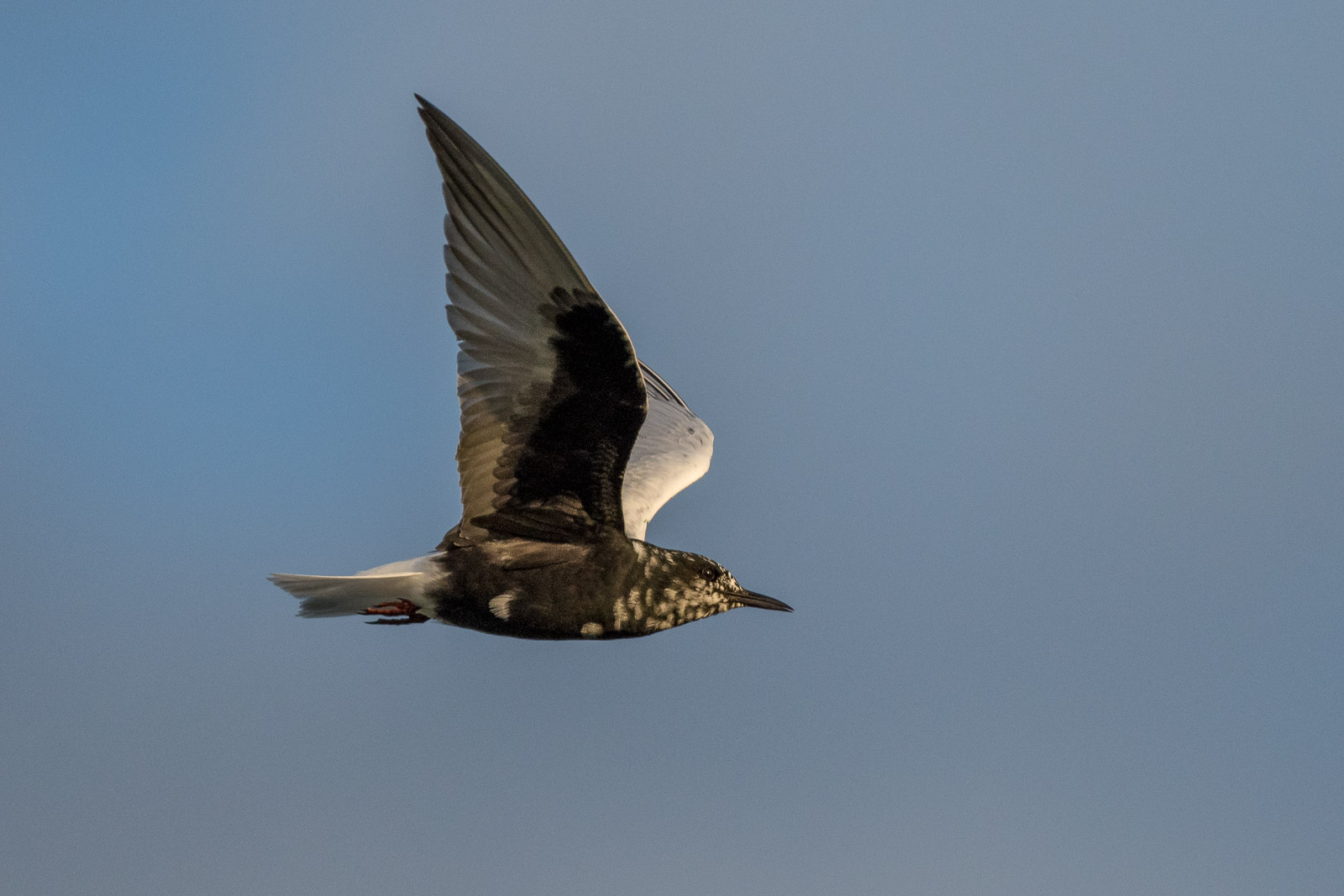
Every year the White-winged Terns (not very aptly named I suggest), wing their way south and a group of them visit the Western Treatment Plant.

They come in varying stages of breeding plumage from white (hence the name), to mottled black, to an impressive Jet Black. To be graced by the presence of these birds is a real highlight for me and we spend several sessions down a the WTP trying to capture them in flight.  Not always easy, as tricky as they are, sometimes they hunt on ponds that are inaccessible from the roadway. But when the light is right, they are hunting close and the action is fast and furious it is indeed a photographic delight.

After my confusing rant last week which had started out well enough on an examination of lighting techniques and the astounding work of Dean Collins, I thought I’d be a bit more circumspect this week and stick to, well, you know, birds.  And the enjoyment of images.

Seeing as Freeman Patterson explains it, is “…using your senses, intellect and your emotions. Encountering your subject with your whole being.
It means looking beyond the labels of things and discovering the wonderful world around you.”

These birds fill me with awe, they travel to us from Asia, or maybe Northern Europe. They don’t breed here, but spend their time feeding up for their trip to warmer climes.  My challenge is not to just capture their presence, but also to grasp a hint of their freedom to roam the world, not encumbering it, but making it a little more enjoyable for those who accept their invitation to wonder.

White-winged Tern in late evening light

StudioWerkz: Darter On Show

As EE is becoming much more comfortable with Dolly, we decided on a morning around the Ornamental Lake at Werribee Mansion.  The tracks are wellformed and its possible to get close to the action without long walks.

The only part of our plan that was not controllable was the weather, and we ended up with mostly an overcast morning. Also there was little activity at the Lake, perhaps most of the food has diminished and the birds have moved away.

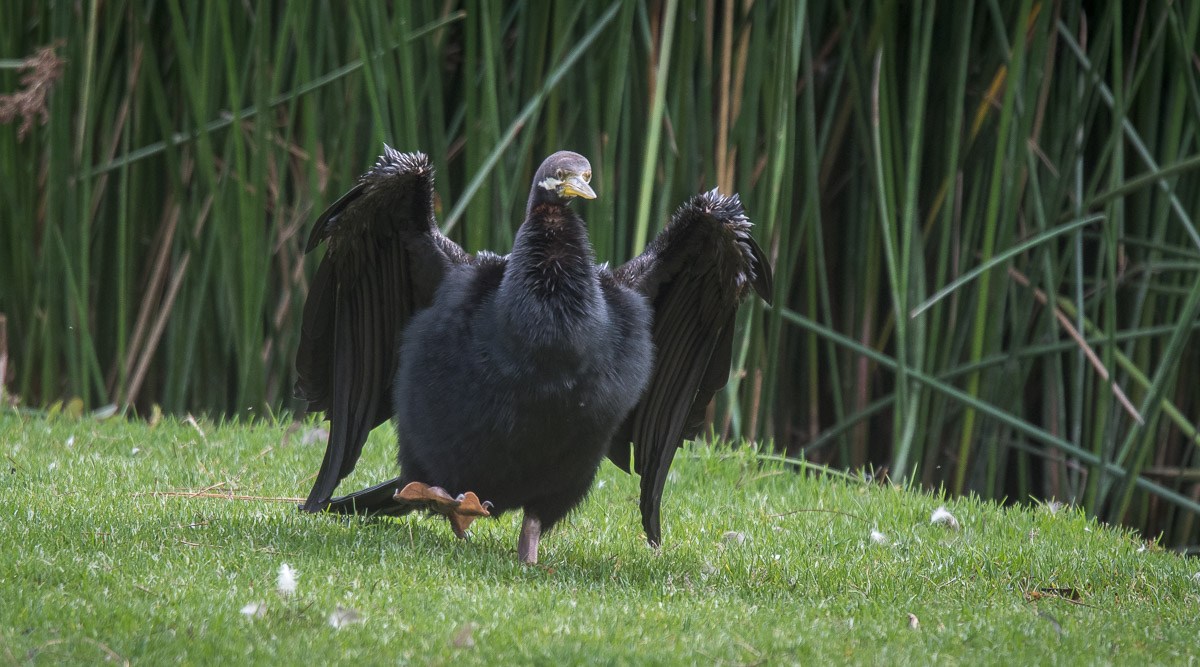
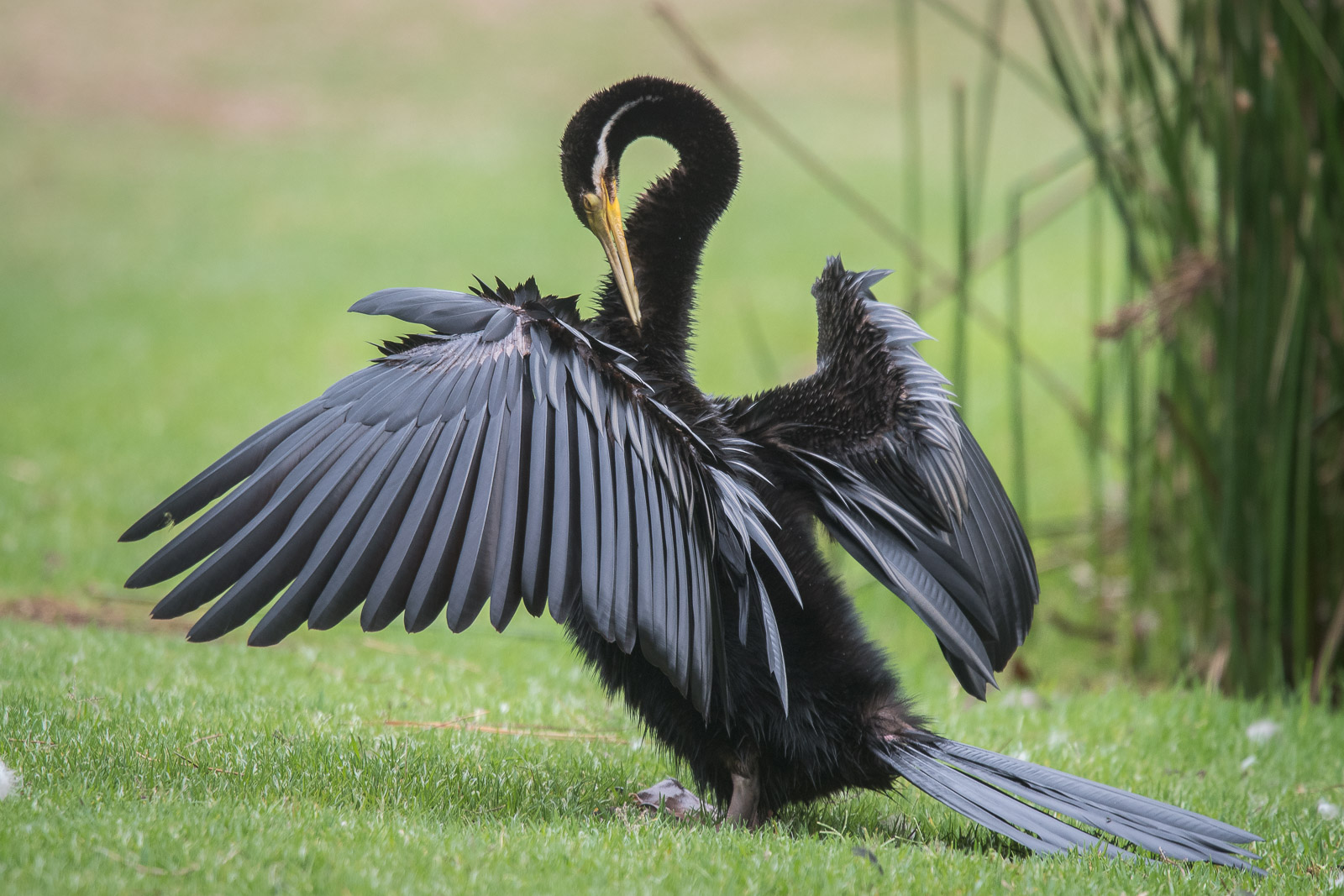
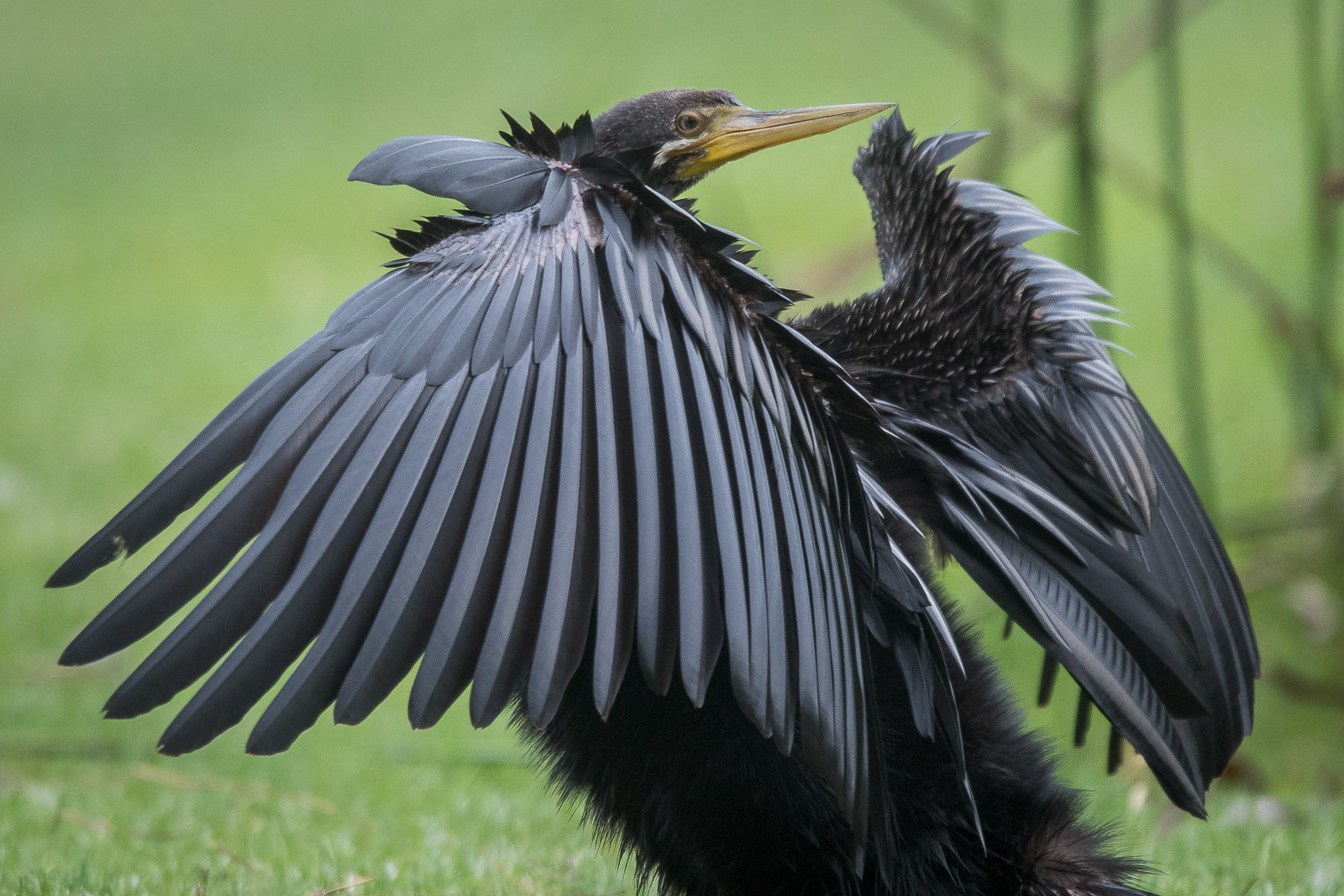
We were sitting on the grass near the lake enjoying a cuppa when an Australasian Darter launched itself out of the water, from between the reeds and waddled up onto the grass.  So close that I had to inch back along the grass to get it all in the frame.  I guess that I was at grass level, and not standing up, the bird felt comfortable enough to go about its preening and drying business.

So, rather than repeat my rant from the Saturday Evening Post on Dean Collins, here is the few moments as they played out.

Enjoy

Saturday Evening Post #25 The Dean of Light

Mr An Onymous and I have been experimenting a bit of late with the Exposure modes in the Nikon system. For almost all my digital life, I’ve been a staunch supporter of Nikon’s Active Matrix exposure system.

Briefly it reads the light value of the scene, and then compares that to a database of similar image values and determines exposure setting, f/stop, shutter speed, and/or ISO value to match with the current scene values for correct exposure.  Internet gurus (know it alls) may disagree, but its worked well for me the past 15 or so years.

What Mr A and I were experimenting with is the value of 18% reflectance and the need to determine a ‘correct’ exposure.
Now long time blog readers will be quite familiar with my rants on the “Mystery and mystic of 18% grey” and the more memorable “The 18% Grey Myth and how we’ve been Conned”, so there is not need to continue that further tonight.

One of the greatest teachers of the correct use of light, its values and how to gain correct exposure with Colour Slide, (Transparency, or ‘Chromes) was Dean Collins.  A US based commercial photographer. I had the great fortune to have attended one of his Seminar events and his clear, concise and skilled explanations of all things lighting was indeed one of the highlights of my life.

Dean’s premise for portraits was to get the Diffused Value of the skin at a specific exposure value, for various skin types, dark, light, tanned, etc.  Then set that and either add light for shadow control or remove it for highlight control. There I just saved you the $1000K for the seminar.  Thanks Dave!

Dean had established through experimentation that if the Diffused value is correctly exposed then Photographic White, (no detail) would be 2 1/3 stop more exposure and Photographic Black (no detail) would be 4 1/3 below.  They didn’t call him “The Dean of Light” without good reason.

The rest is just fascinating tech wizardry and dry boring numbers, so we shall not pursue further other than to suggest that a look at some of Dean’s work will reveal how clever with light he really was. One of the best photos is at the bottom of this blog, along with the whole story,
https://strobist.blogspot.com/2006/08/review-best-of-dean-collins-on.html
What is most amusing about this shot, is it was setup with gazillions of flash units running on a sensor, fire the sensor light and all the lights go off.  Except.  As they were getting ready for a shoot, a Japanese tourist came by, pulled out his little camera and took a shot, and set off every bank of flash, all gazillions of them. 🙂

Today, we can’t in the field, make those changes to the light, but clever Photoshop, and to some extent, Lightroom and others  can help. (I’m deliberately avoiding the issue of fill-in flash to help balance out those shadows, in my opinion, it’s so overused and so mostly poorly handled that the results remove the form of the subject)

I loaded the Yellow-plumed Honeyeater file into PS and hunted around with the Eyedropper tool for a value about 127-128 (Mid tone, think Diffused Value if you were paying attention)  Not finding one where I wanted it, I raised the Exposure slider until the area just under our model’s chin was as that value.  All good.

Now I need a Black of about 4 1/3rd less. Past experiments would say that is the 0 value, right?, but I think it’s better at about 25-30, so I dropped the “Shadows” slider until I was getting 25 in the black under the eye. Next is Photo White, and I hunted around the sky values until I found some that read 255 (white), but again from experience I think that is excessive, so I usually use dropped the “Highlights” slider to a value of around 230-235.  Here I went with 235. That way I get a tiny hint of form in the white. (Which by the way look like clouds in this shot, but clever reader you’d be misinformed).

Perfect highlights giving an excellent Hi Key Portrait. Dean would have approved.

And all this because I managed to get a pretty close exposure for the Diffused Value in the first place.  Thanks to Mr A’s theory.

This is not a solution for resurrecting badly over/underexposed photos.
Someone at a bird photography seminar once said to me, “Yes, but I don’t do it that way!!!” to which I responded, “True, but then you don’t get the results I do.”

Herein endeth the lesson.
Keep takin pictures,  we do.

Oh, and I’m not going to answer responses about 8, 10, 12 or 16 bit imaging.

Snapshots: A Most Valuable Commodity

It’s been dry. Last decent soaking rain was over 2 months back.
Its dry.

EE is getting on quite comfortably with her walking aid, now dubbed “Dolly the Trolley”. So she said, that we might take a trip down to the You Yangs, and have a walk on some of the tracks around the carpark. Sounded good, but its dry, very dry.  So I didn’t have much hope of finding many birds.

Suitably loaded with morning tea and a banana smoothie, and securing Dolly into the boot of the car, we set out.  And what a fine morning the weather had put on. No wind and an enjoyable warm sunshine.

We arrived at the carpark at Big Rock and Dolly immediately sprang into action. First sighting was a Nankeen Kestrel, then a Brown Goshawk, and two families of White-winged Choughs. And to my amazement, the Scarlet Robin pair that normally are in residence.  Off to a good start. Dolly is good about this, as EE can go to a spot, and instead of having to stand or sit awkwardly on a log or stone, Dolly is ready and willing. So a comfortably seated EE is a happy EE.

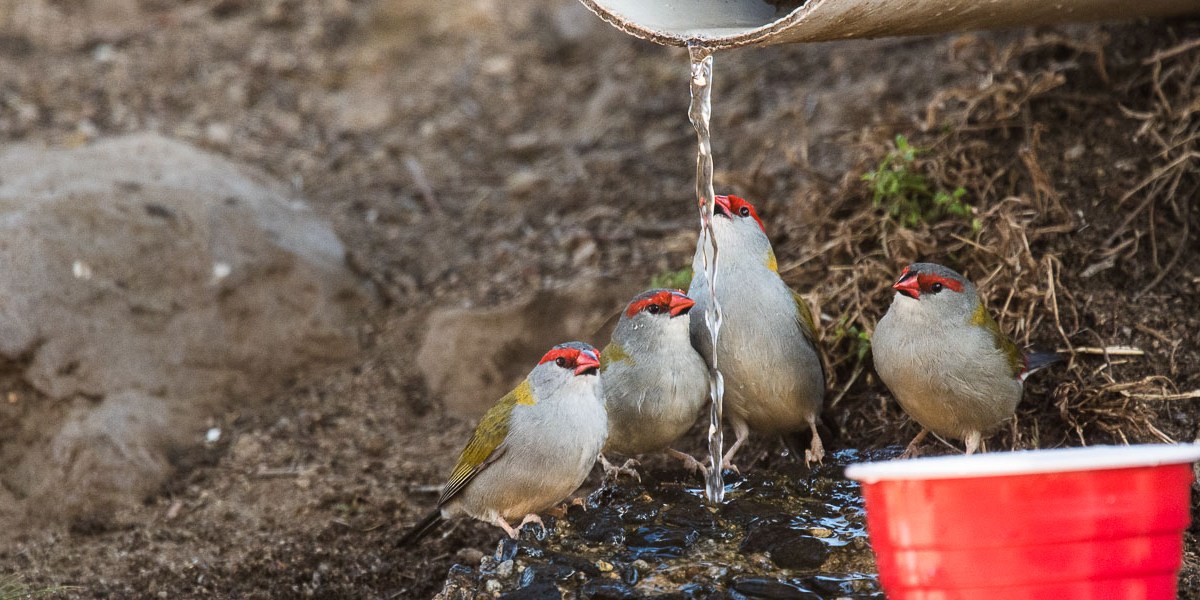
While she sat in the shade, I looked about a bit to see if any of the usual suspects were about. By the time I got back, EE was under a tree, near a piece of pvc pipe running out of the ground. And a red plastic cup! (?)

She had noted a couple of wrens inspecting the pipe, and concluded, rightly so, that it sometimes held water, and the birds were looking for a drink.  Enterprisingly, she located the ominous red cup, filled it from the handbasin at the toilet, poured it into the end of the pipe, so the water dripped out slowly into a tiny pool she had created among the rocks, and…

Add water—Instant Birds!

They must be able to smell it.
Or hear the tinkle tinkle of it dropping. But within a few minutes, she had quite a mixed flock on hand. Only problem that the water was only good for a couple of minutes. Which is when I arrived.  Now, we’ve seen the pipe dozens, if not hundreds of times, and never taken a lot of notice. But from the location, I figured it was the run-off from the handbasin at the toilet block.  Let’s see. Hold down the tap, let a couple of litres of water run down and go see.
There.
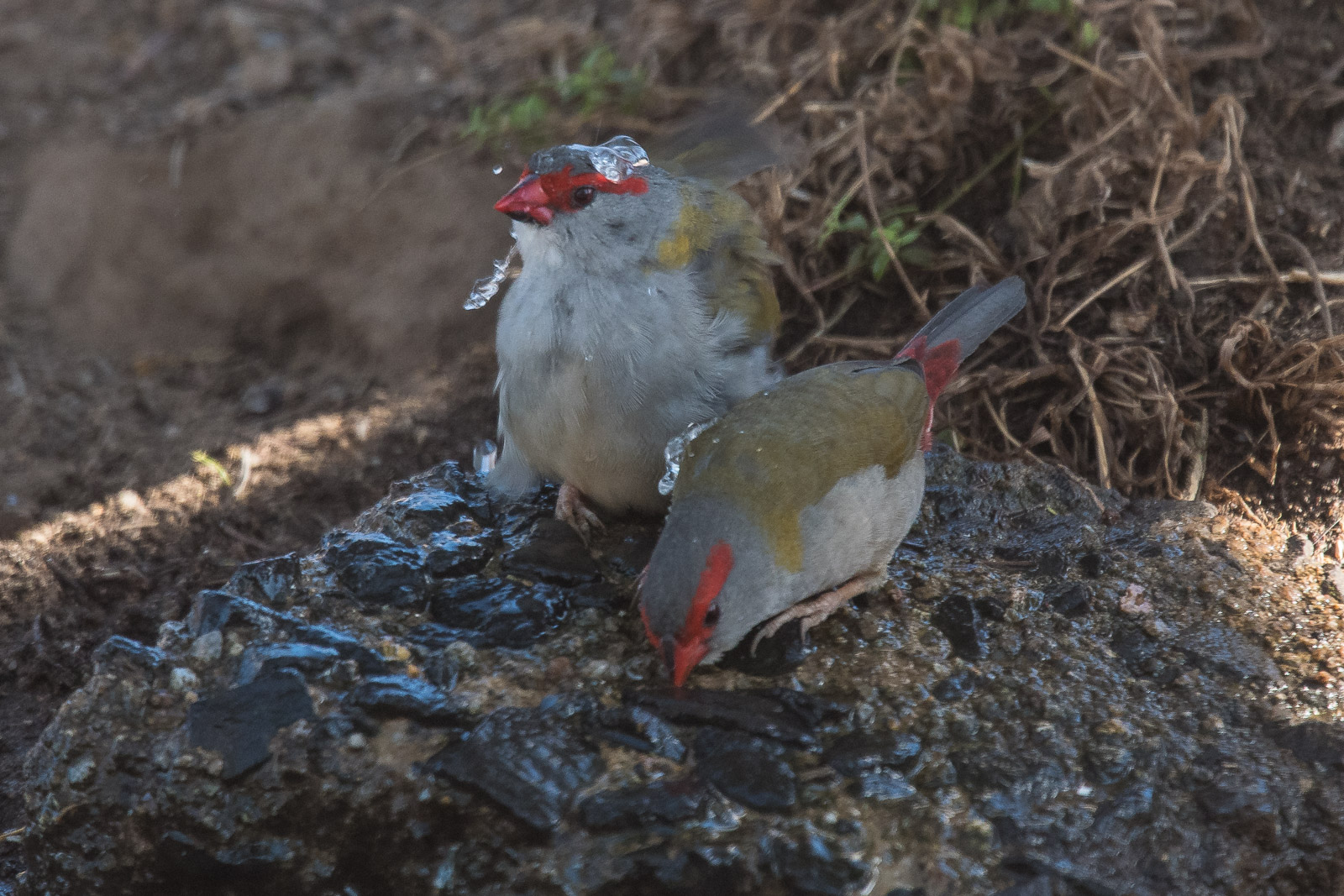
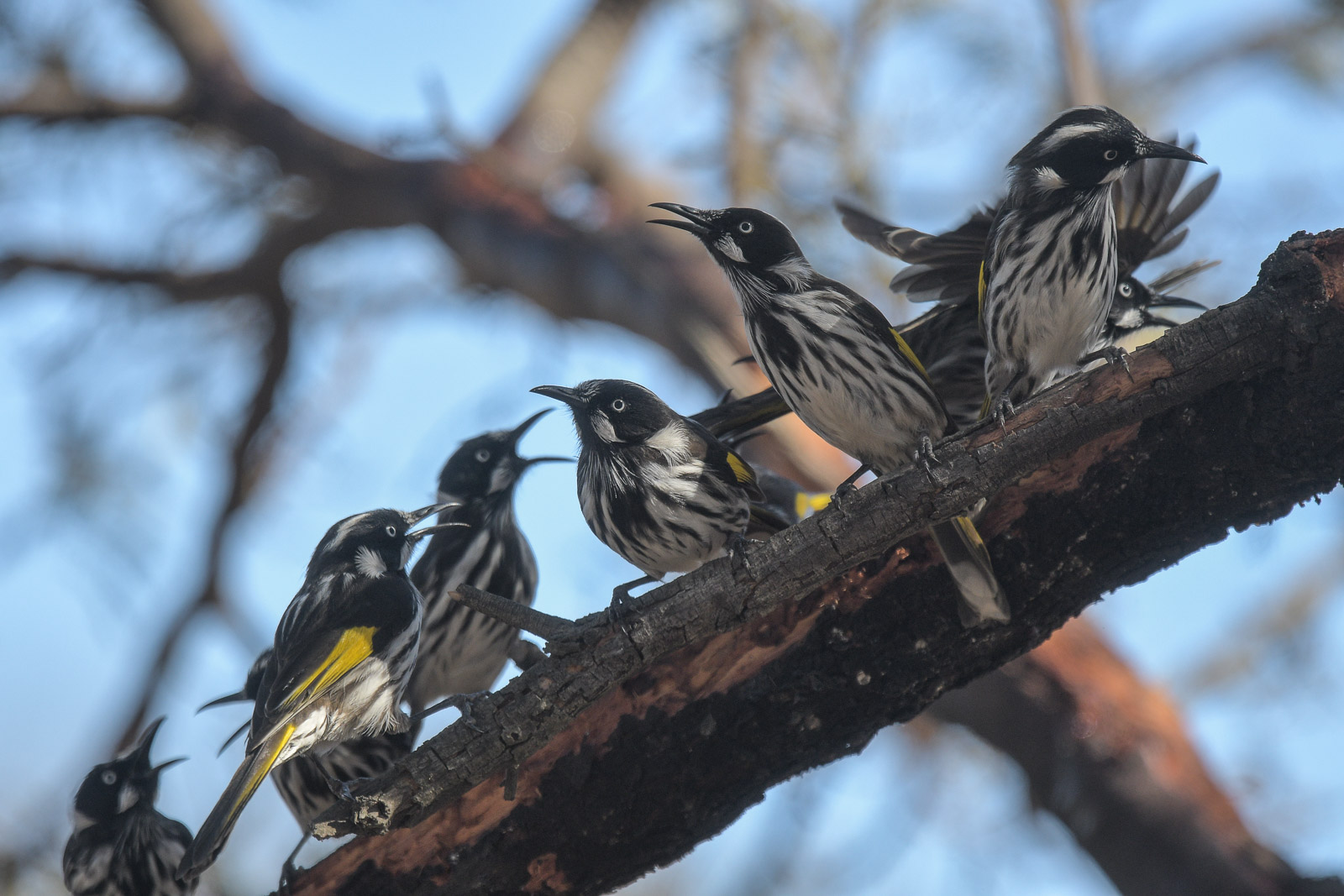
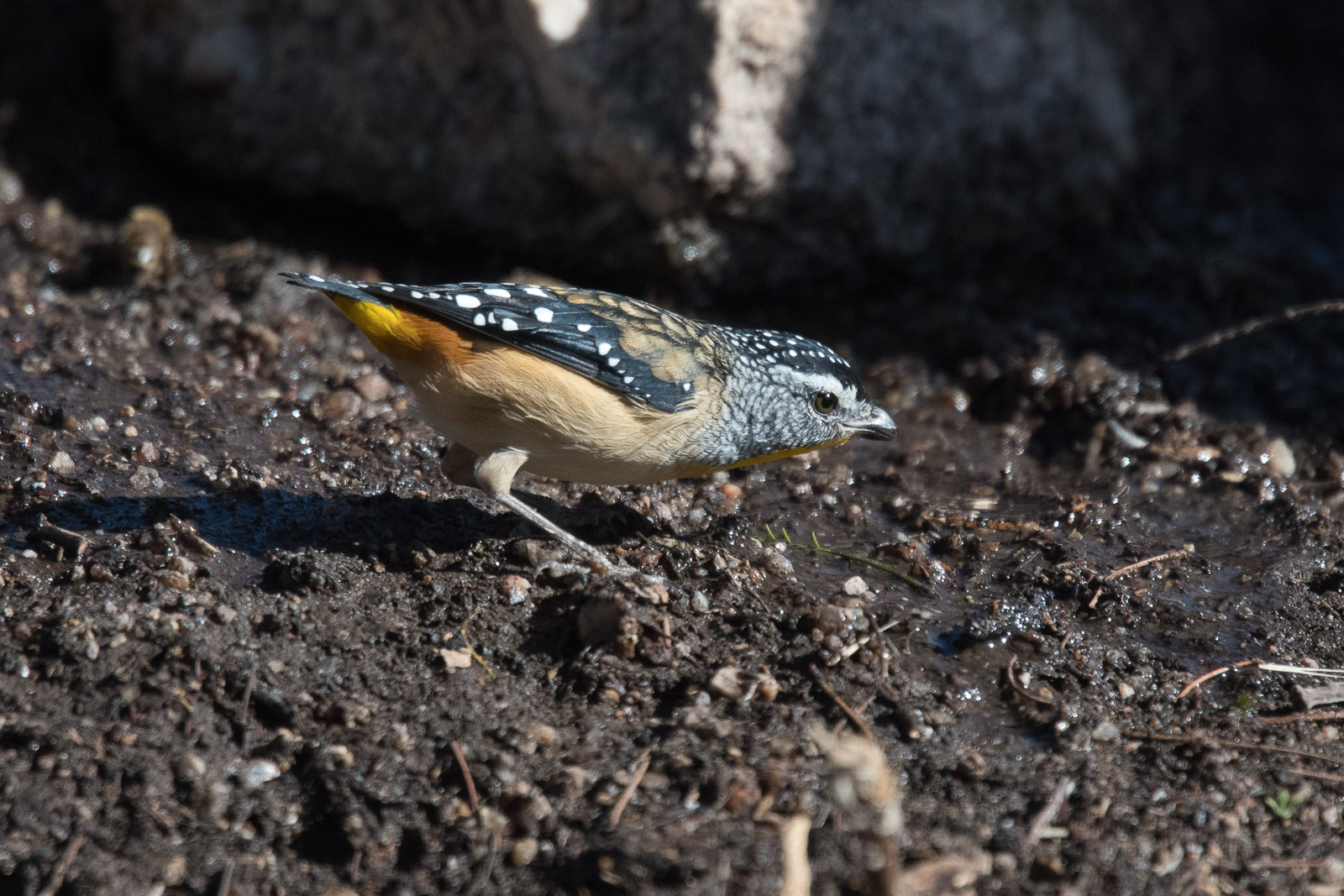
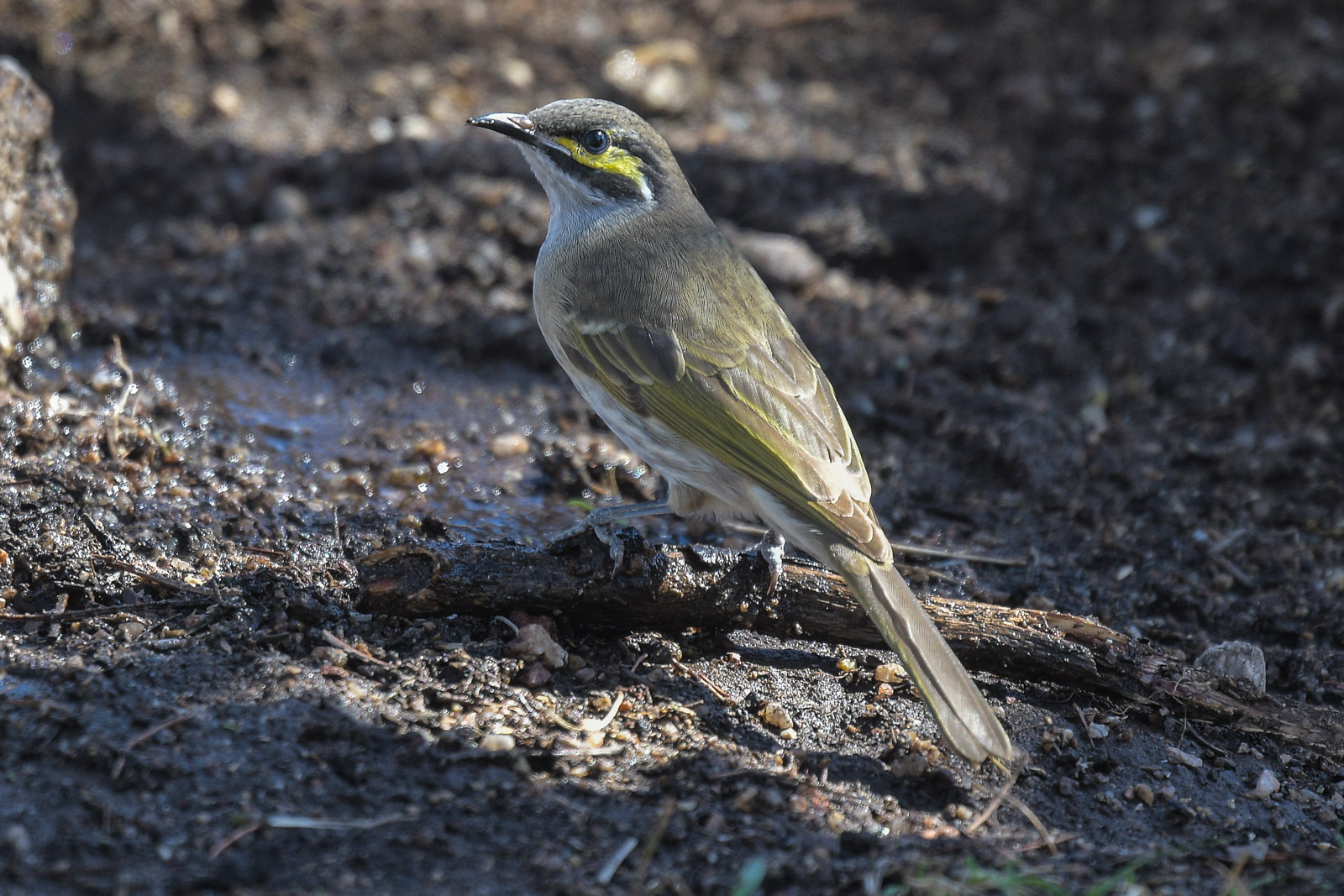
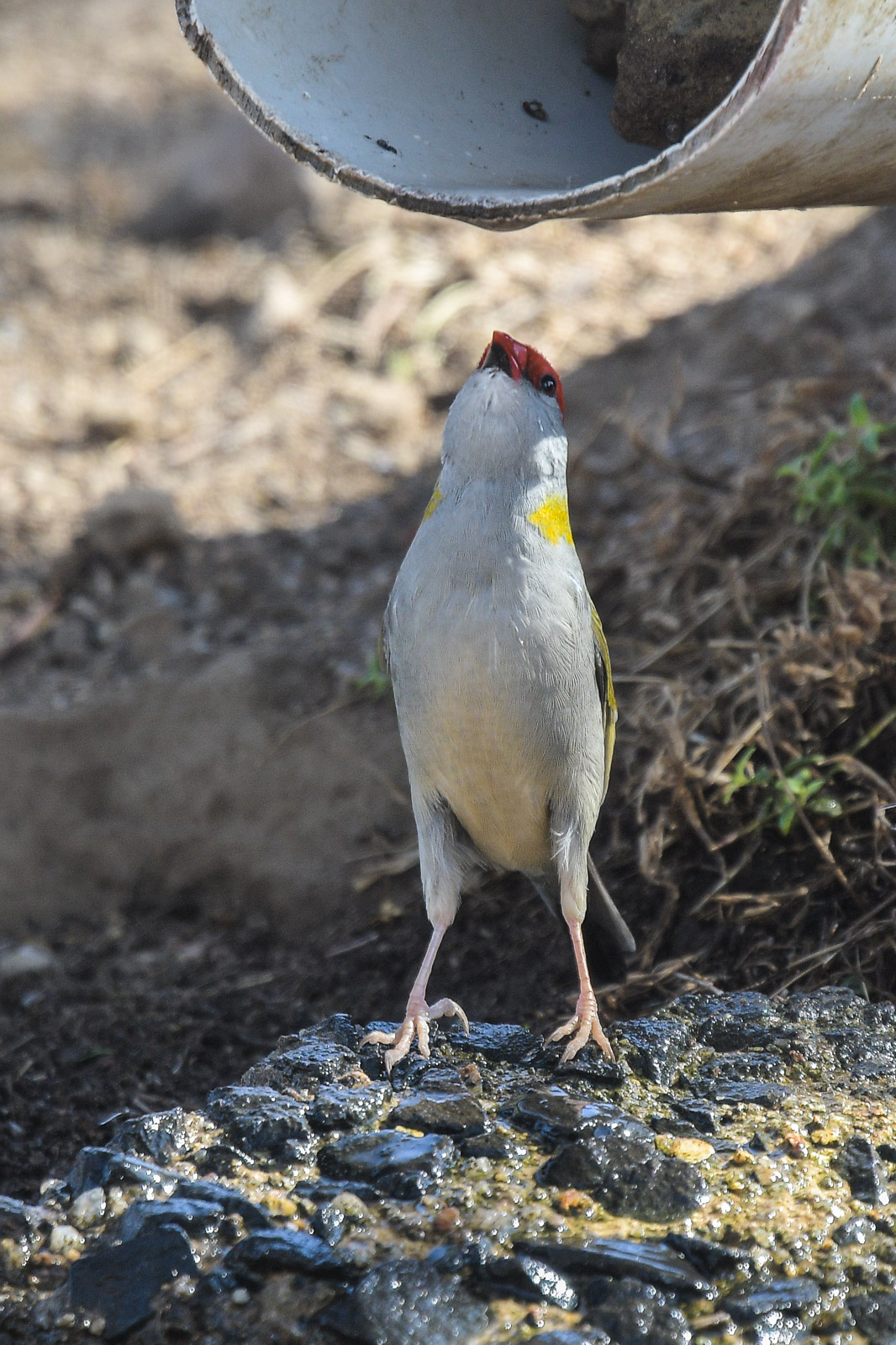
Slowly a tiny trickle of water appeared, and then a stream.  And before you could say, “What a waste of Water!!!!”, we had flocks of Red-browed Finches, Spotted Pardalotes, New Holland Honeyeaters, Silvereyes, White-naped and Yellow-faced Honeyeaters, a few familes of Superb Fairywrens, Brown Thornbills, Red Wattlebirds, and two bossy Magpies. Then to top it off both Scarlet Robins made a quick appearance.

So, we sat, occasionally egressing to push some more water down the pipeline, and drank a cuppa, enjoyed the fun, and felt pretty happy that they were able to enjoy such a precious commodity. When a few Crimson Rosellas came by to inspect, we thought we were made. But the Rosellas didn’t stay. Likewise a passing Grey Fantail, but being photographed was not on its todo list.

Satisfied with a morning’s work, and two memory cards bulging with images, it was time to leave. I gave the tap a run for an extra minute or so and didn’t feel the least stressed about ‘wasting’ water.  The birds were more than happy.

We loaded EE and Dolly back in the car and went for a well-earned coffee at Gary’s at the local servo.

Enjoy.


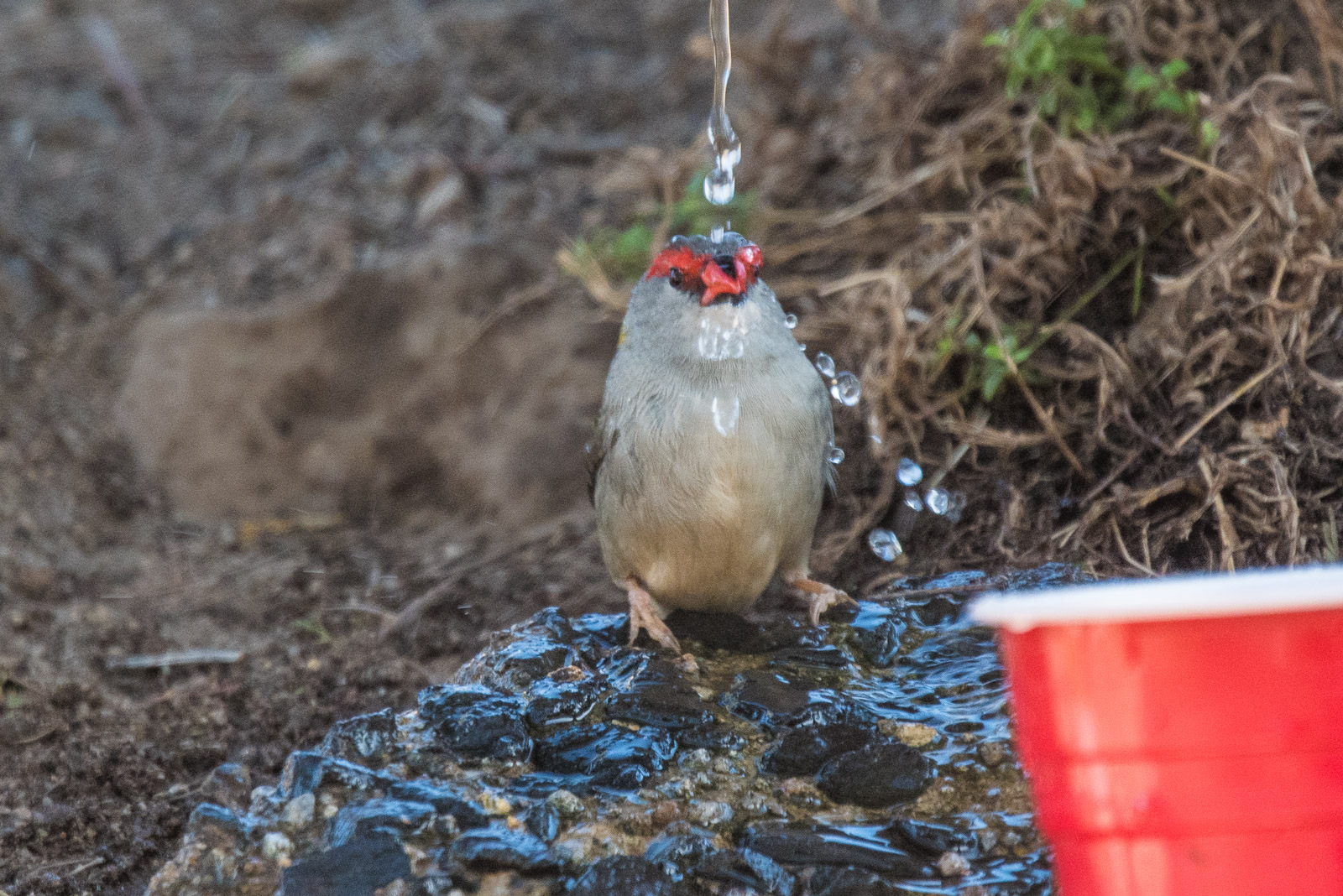
The Red-browed Finches seemed to enjoy the water running over them.
The Finches seemed to have no trouble working out where the water was coming from
Silvereyes were happier to drink from the ground
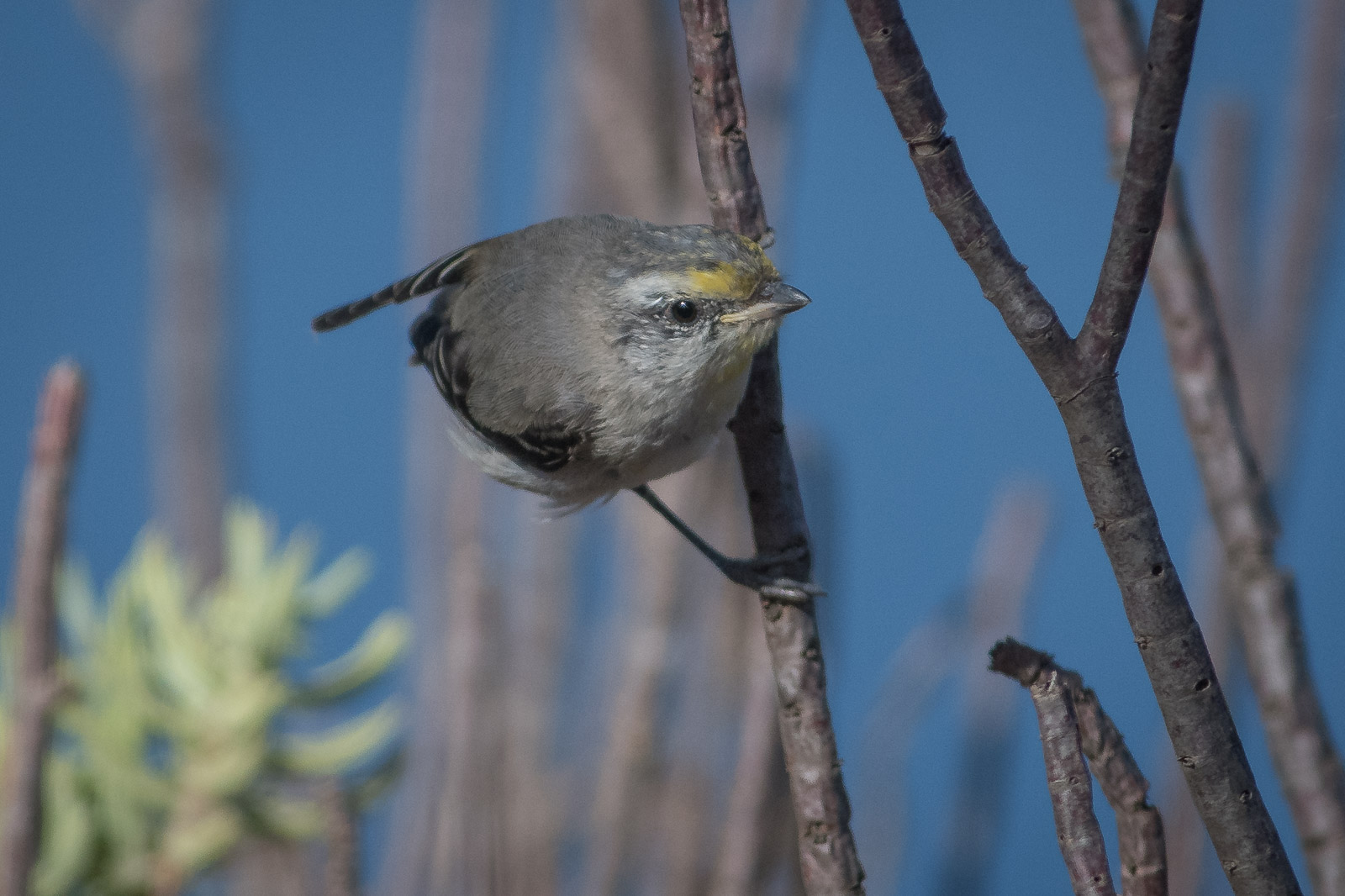
A Striated Pardalote watching the bathing.
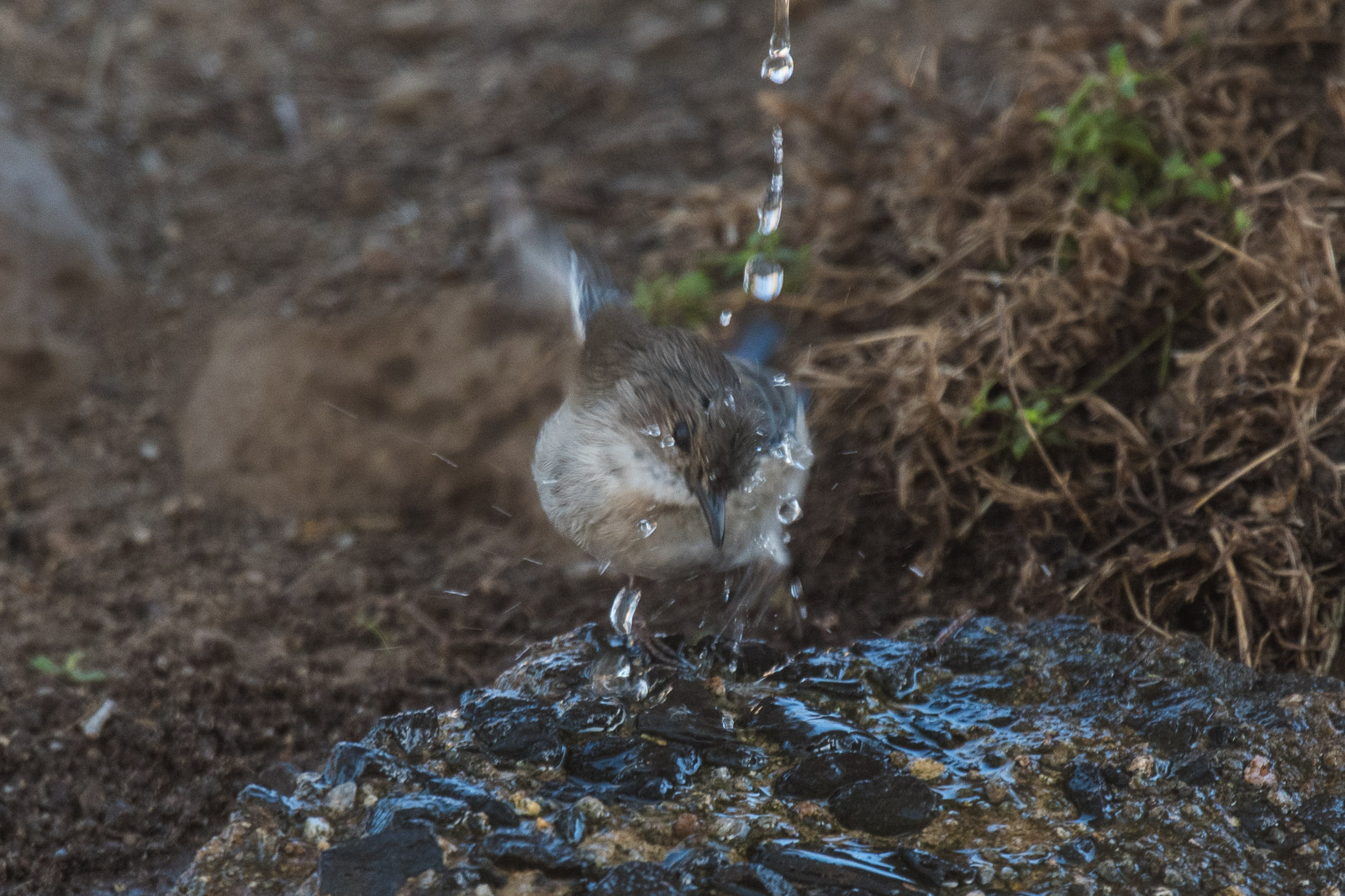
Interestingly the wrens seemed to be able to time the droplets and catch them in midair, just like insects I suppose. This one was taking advantage of the stream.
One of several White-naped Honeyeaters.
This is how you enjoy the water.

Brown Thornbill after a bath
New Holland Honeyeater using its long tongue to sip up the amazing nectar
Anytime you add water and New Hollands, you get the inevitable and rowdy discussion about whose turn is it next.
When the Magpies showed up, everybody else took off.
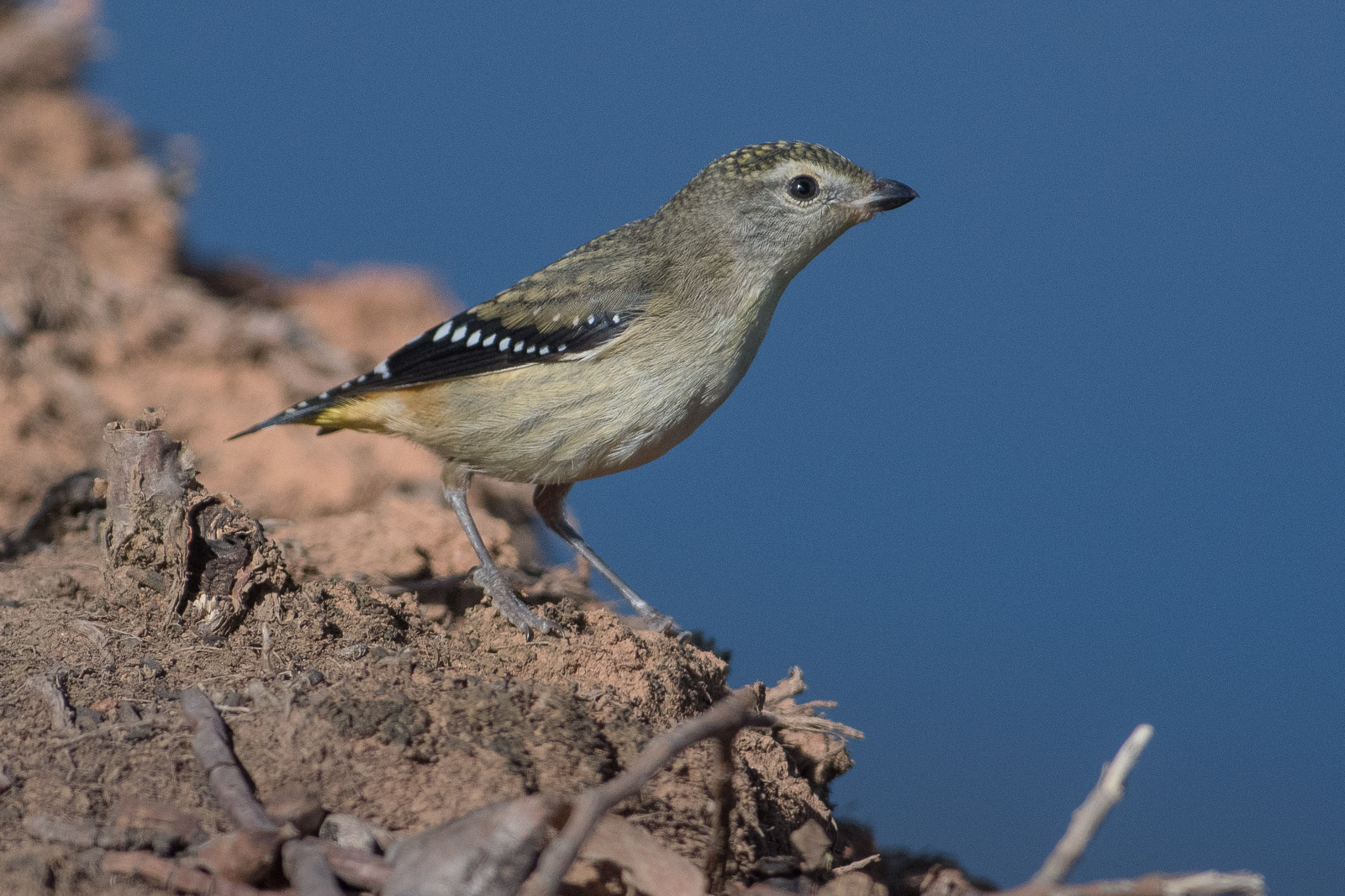
Spotted Pardalote Male
Yellow-faced Honeyeaters were very cautious about approaching with two cameras pointed at them
Oh, oh, please, just one more drop, one more drop.

Saturday Evening Post: #24 Ephemerality

Still on my Freeman Patterson  binge.

As I wandered about the various shops and buildings in Queenscliff, I came across the photographer’s shop. At first I thought I’d just grab it for a record.  But when I looked harder I noted the ‘double glaze’ reflection. One of those AH! moments.

I walked across the road, and began to swing the little zoom in to action, the first two or three frames were ok, and the idea was good, but… I had a dark jacket on at the time, and a lighter coloured shirt, (Well it was actually grey), so I took off the jacket and got a much crisper looking evanesence in the window.  And this is where the zoom started to earn its keep.

I needed to move forward enough to give me just the right size reflection, and at the same time keep the frame of the window and the building.  Which inevitably ended up being about the middle of the road. Thankfully it wasn’t peak hour traffic on the main Queenscliff highway, so I had a minute or two to work it out.

As Patterson says,

“Nothing is more valuable to you in meeting the challenge of subject and yourself than an awareness of the symbolic content of your subject matter.
What does it suggest to you?
What does it evoke?
What is it likely to suggest to others?”

On that I leave you to ponder.

Snapshots: Crested Tern Feeding Young

Over the past few weeks I’ve been working on a new “Sit” spot at “The Office”.
At one point the Werribee River as it cuts through the old sandhills that once were part of the lake that became Port Philip Bay, runs over a stony bottom and has not been able to cut deeply, but rather has formed an area of shallow water at low tide.

To compensate, the river water spreads out into a number of small backwater lagoons or billabongs, so there is quite a range of areas for the birds to congregate and feed.

The Werribee Golf Club skirts the river at this point, so access to the area is relatively easy from the K Road carpark. A great feature is that the afternoon light is coming from behind the photographer, and as my Mum used to say when we used the Box Camera, “Keep the Sun over your left shoulder dear”, so she’d love the lighting happening here.

It’s only a couple of kilometres to the River Mouth at South Werribee, and the fish regularly come and go with the tides.

No doubt I’ll feature more of this area as I settle into working from the river bank. A couple of hours with a ‘cuppa’, and a bit of patience brings all sorts of activity along the river.

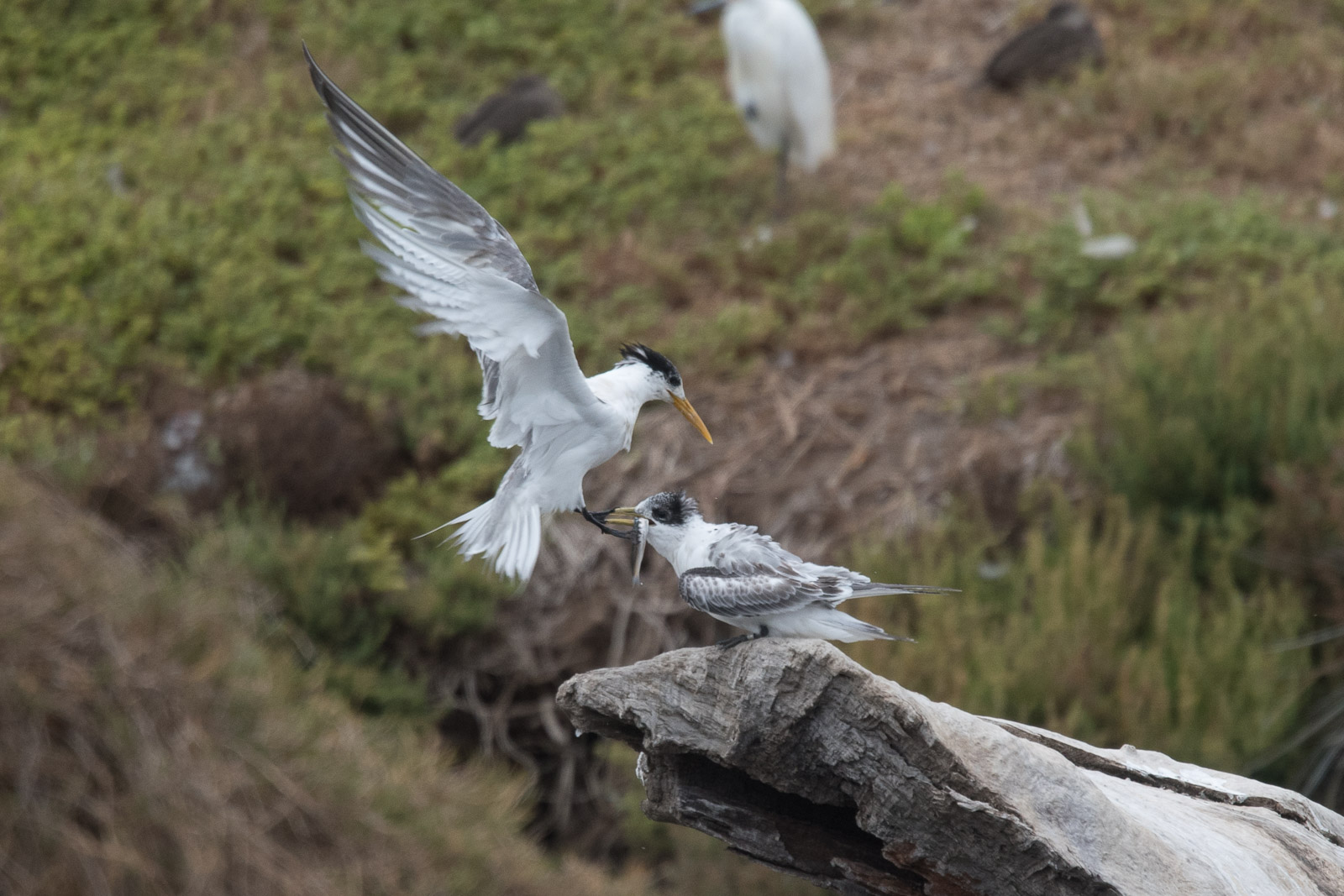
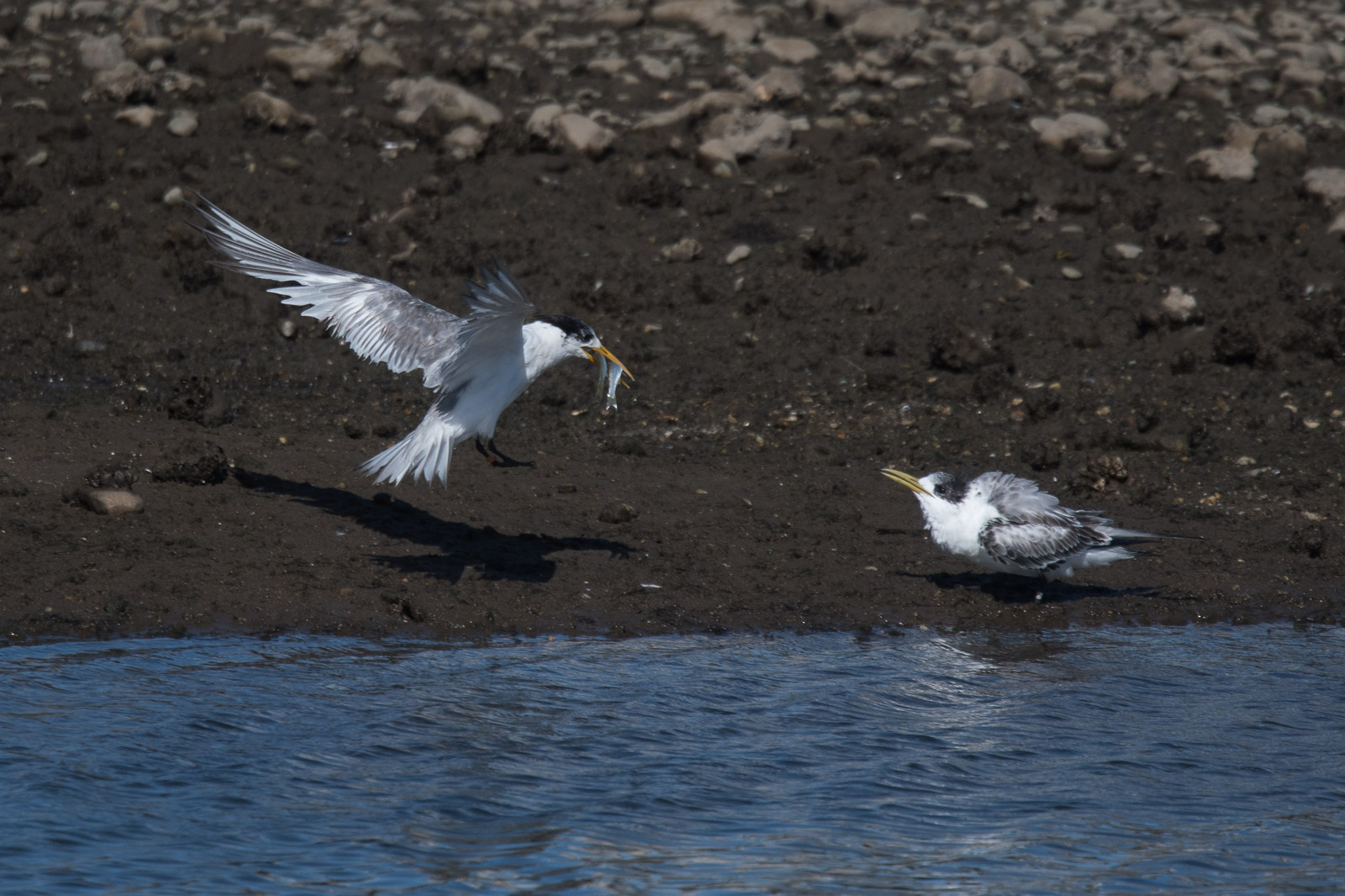
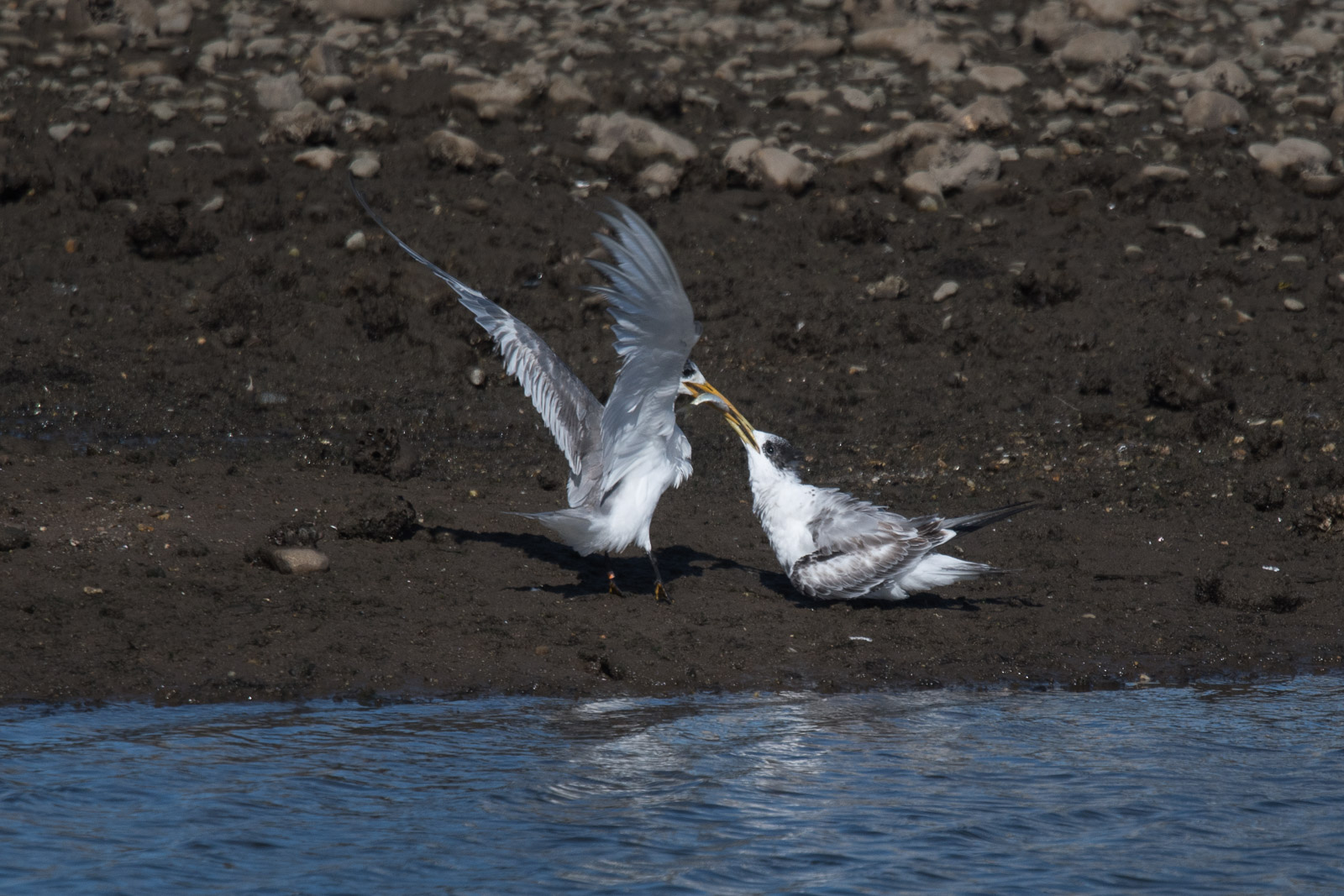
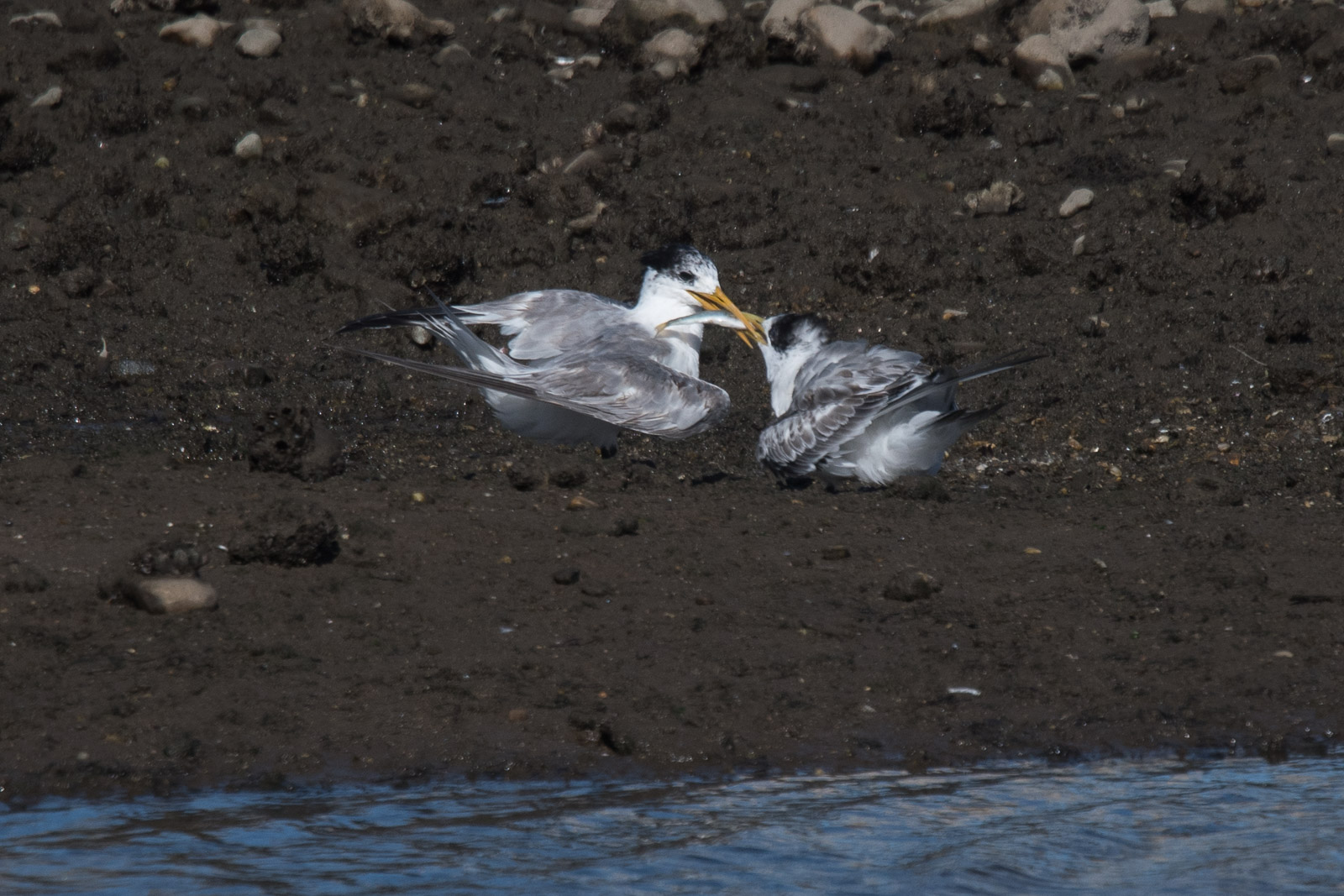
One of the birds in the area are Great Crested Terns, and at the moment they are feeding their juveniles.  I just can’t get close enough to the far bank, but sometimes the Tern will sweep by with its payload.

Enjoy

There that should keep you quiet
I know when food is on the way as the young one puts up quite a racket
The parent just doesn’t miss the mark
Sweeping in with a fresh fish
Two at a time is good fishing


While I was waiting a flock of Fairy Martins began to hunt insects among the reeds.

Saturday Evening Post #23: For the Joy of It


Vale Innocence—Christchurch 15th March 2019

I had written this blog earlier in the week, but felt I needed to add my heartfelt support and condolences to all those affected by the unspeakable tragedy in the quiet, wonderful, heartwarming township of Christchurch in New Zealand. For all those affected directly by the atrocities, for their families and friends and colleagues, for the amazing first responders and the superb work of all the authority services involved and all New Zealanders.

May Peace come on Healing Wings.


EE and I have been away on a break the past week.  Took a get-away with some of the people in our village to the quiet township of Portalington for some shopping, eating, entertaining and general good-natured company.  No cameras, birding, bird photography, early morning get-aways or late evening stay outs. Company!

Still as I was doing the last of the packing the weather forecast looked like some of the outdoor activities would likely be a washout or freeze out, so I pondered a day or two indoors and grabbed a book. (and a camera and lens—more to follow).

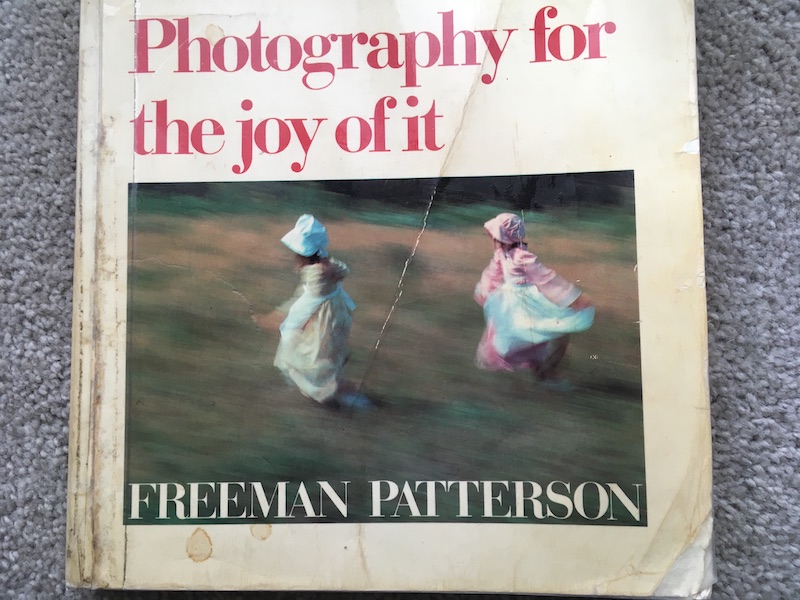
The book I chose was “Photography for the Joy of It“, by Freeman Patterson.  A great Canadian photographer and teacher.
He is one of those whose style was introduced to me when I was making a career change, and his work gave me a new direction for my own picture making at the time.  My copy of Photography for the Joy of It, is, to say the least, well-worn, and dog-eared.  Here tis.

It has been through a few updates since my copy was first published, but the simplicity of Freeman’s images and his honesty with the text is still a delight to read and view and to ponder.  So much so that by the end of the first day inside because of the weather, and bad tv programmes, :-), I was reaching for the D7100 with my rapidly becoming favourite walkabout lens the f/4 70-200. I was even seeing possibilities through the window of the unit.

Patterson is now in his 80s and still going strong. freemanpatterson.com  will find him if you are interested.  His “Images, Ideas, and Reflections” letter is a beaut source of creative inspiration, and some good quotes too.

A lot of his work that excited me at the time had to do with the application of Gestalt psychology, “an organized whole that is perceived as more than the sum of its parts”

Alignments, shapes and patterns being a big part of it.  Let’s not get technical.

So with a day to fill-in on a shopping field trip to the local Queenscliff area, and my head ringing with—Proximity, Similarity, Continuity, Closure, and Connectedness, (you’ve got to look that up), I entrusted EE to the group, and began to stroll the main street in the sunshine, armed with said lens and a polarising filter attached. Gotta make the most of colour.

One thing that comes out of looking through the book is the way he has assembled so many photos that seem at first to be too simple.  The thought runs continually, “Oh, I could have made that”, which is precisely his teaching style.
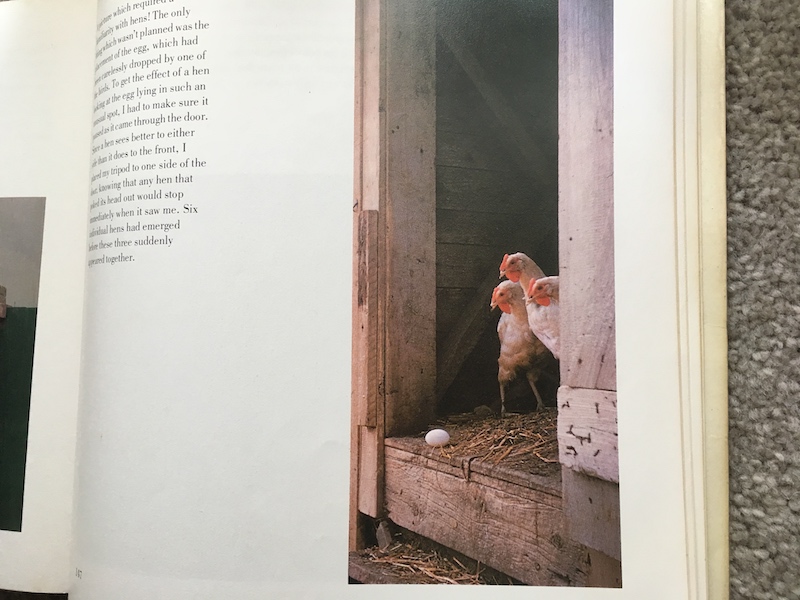
Here is an image of his that I have always been enjoyed.  I don’t have permission to reproduce it here, but this is a shot from a page in the book.  I acknowledge All rights, use and intellectual properties are the ownership of Freeman Patterson.

The title he chose for this fascinating view is “Maybe Maggie Left it Here!”

Now chooks might not fascinate you, but his patience in getting the elements to work in just the rich way says much to the Proximity motif.

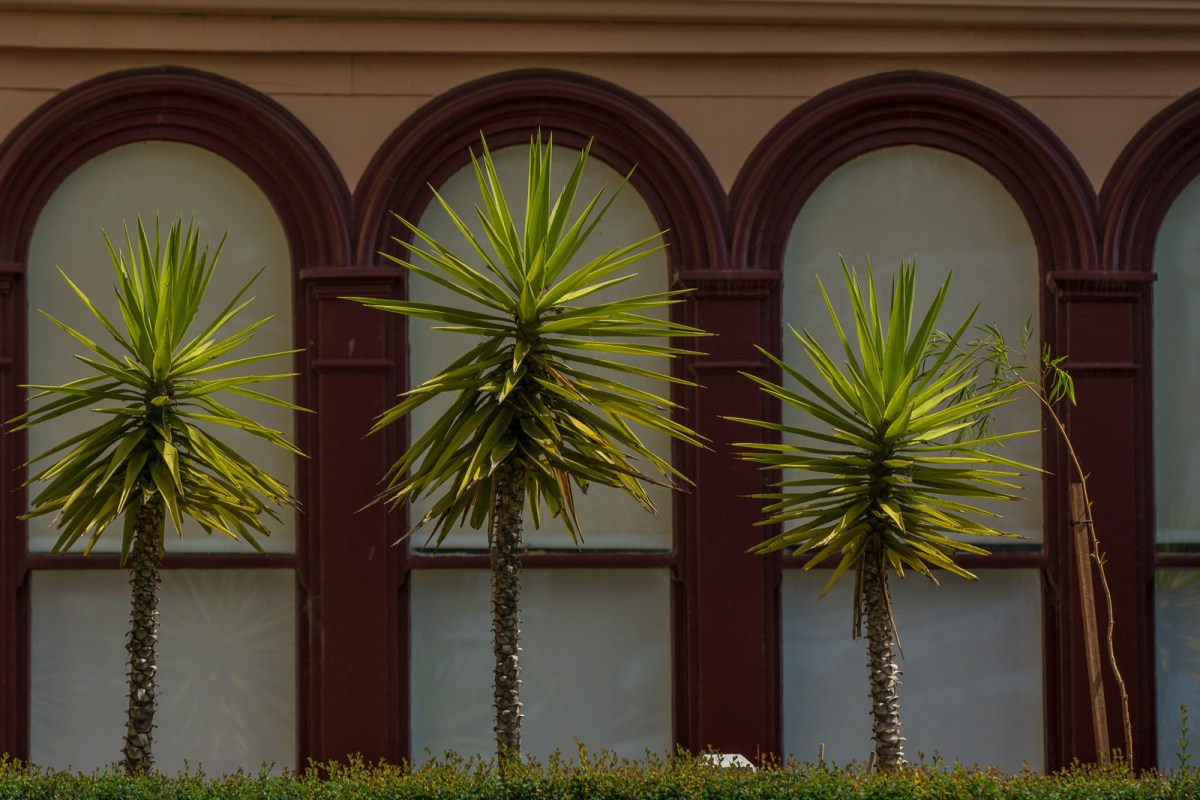
I didn’t find any chooks, but had a fascinating day exploring the buildings and shapes and tones, colour and textures and incongruities of the way as humans we assemble the things in our lives.

In case you don’t ever read the book, here is the last line in the last chapter.

“Photography is a good way to explore yourself and your place in the scheme of things.
Try to understand your personal responses to different subjects—those you photograph and those you avoid
Then the techniques you use will make sense.

The Joy of Photography is the Joy of Self-discovery.”

Window detail Queenscliff March 2019

Saturday Evening Post #22 DJ’s “Cazenaux Tree”

-During the early 1900s photographers were beginning to really push out the boundaries of the technologies and they sought to work to a “Pictorial Style”, soft out-of-focus areas, misty muted tones, concentration on the ‘feel’ of the moment rather than the subject. All sorts of add-on techniques were used to get just the right ‘experience’. —Sound familiar? anyone who has downloaded Presets for Lightroom, Photoshop or added a Topaz or Nik filter will recognise the style.  Nothing new under the sun.

At the other extreme of creative work were clubs of photographers seeking a more realistic style. One such group was an American Group of 7 photographers, including Ansel Adams, Imogen Cunningham, and Edward Weston. They formed a group called “f/64″, named of course for the greater depth of field and enhanced sharpness. Now there is more to this than just a few lines here will bring, because at the back of it all was a political movement or action for change, going on. Part of their manifesto included: ” … the battle against the tide of oppressive pictorialism” (What@!!)

f/64 and other similar US based groups had a marketing strength and became quite well known.  Not so well known were similar groups in Australia. One was the Sydney Camera Circle, establishing the “Sunshine Circle”. One of its members was  Harold Cazenaux, and part if its manifesto included, “…to work and to advance pictorial photography and to show our own Australia in terms of sunlight rather than those of greyness and dismal shadows…”  The rest of the story is for you to consult the Google University.

Here are a couple of links

http://www.photo-web.com.au/AustPictorial/default.htm
https://www.weekendnotes.com/cazneauxs-tree-flinders-ranges/

And no doubt there are more.

One of his most enduring or endearing or defining photographs was made in the Flinders Ranges, near Wilpena Pound.
It was titled, “Spirit of Endurance” and features an old large River Red Gum on the edge of a dry creek bed, with the Pound in the background.

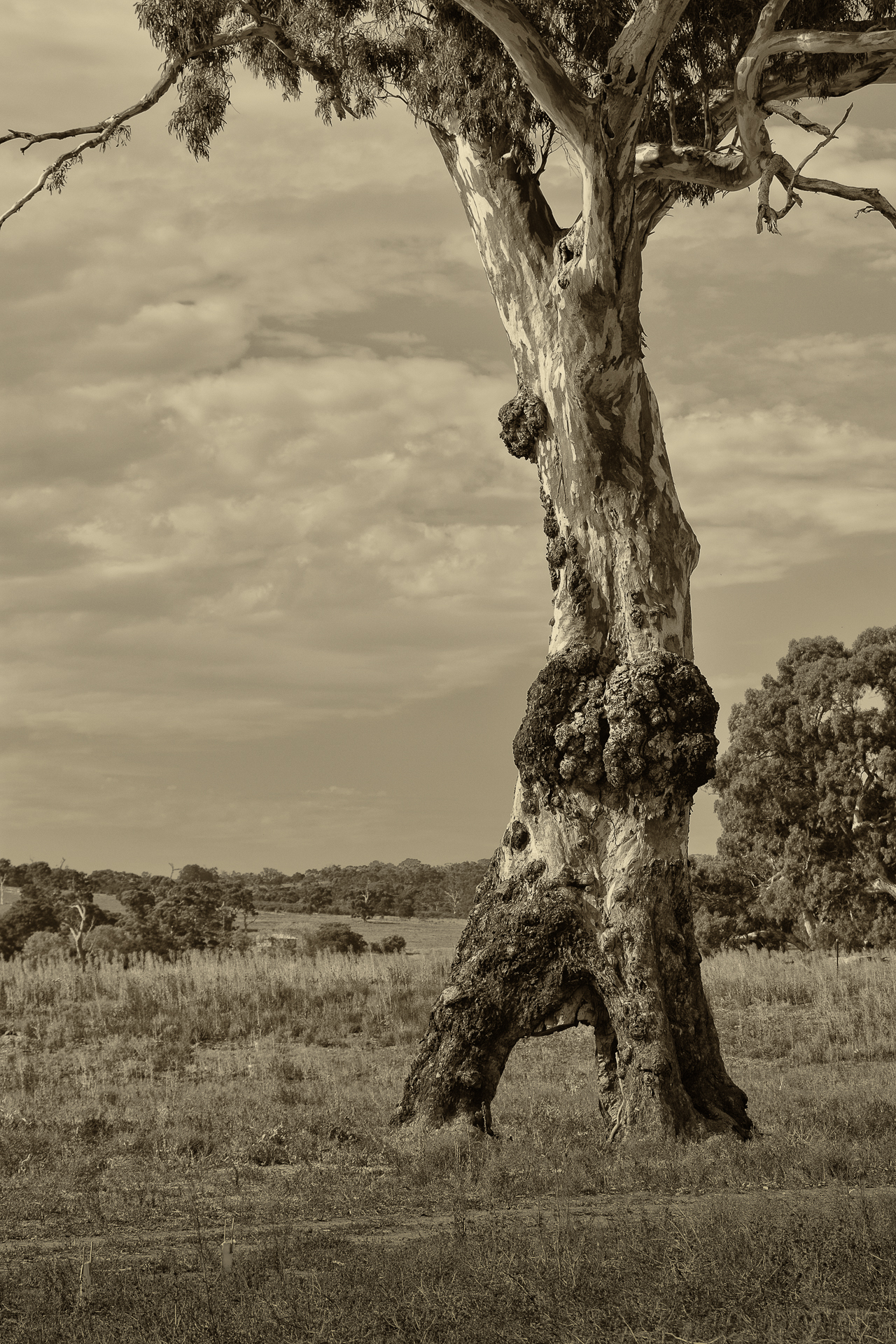
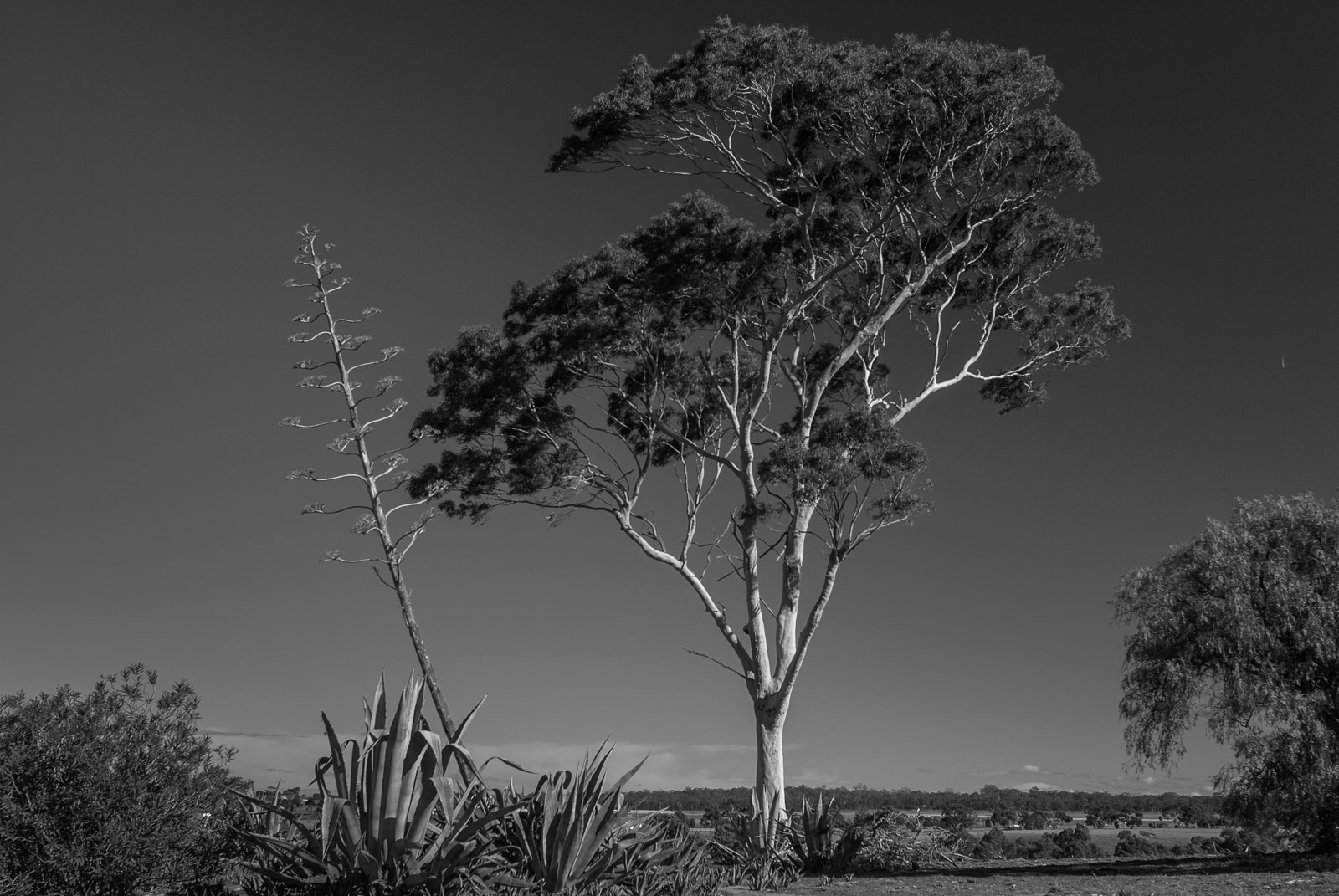
BirdLife Werribee, formerly Werribee Wagtails, conduct a number of quarterly bird counts in several area, on one of the properties stands a large Red Gum, and when I first spied it, I immediately thought of Harold Cazenaux’s photograph. Here is a link to an online copy of his image. https://www.artgallery.nsw.gov.au/collection/works/134.1975/
And note that all the shots usually shown these days on the web do not seem to have the same perspective as Harold’s original.  The Answer:  He flipped the negative during printing.

I’ve walked past my stately gum a few times over the years, and each time, promising to bring out the right lens and be there on the right light to give the tree the majesty and presence it needs, to depict its stand against the forces of nature.

Now, I do not in anyway expect my poor humble image of a tree to even cause a dent in the majesty of Harold’s grand moment. However it is true that we stand on the shoulders of Giants.

We had a morning out on the farm, Mr An Onymous, The award winning Chris, he of Eyenesbury fame and a BirdLife representative, and while the others strolled around and discussed bird counting details, I went down to my “Cazenaux Tree’ armed with the 70-200 Zoom, and managed a fair to happy composition.  I had tried wideangle, but it doesn’t give the power of the tree in balanced perspective.

Had I made this on the reliable old Linhoff Super Tecnika, 5×4 inch,  I’d have used an Ilford FP3 emulsion, deep yellow filter, slow development in diluted D.23 developer and would have printed the resulting soft negative on a wonderful Kodak paper called “Royal Bromesko”. But.

I shot it on the D7100 and ran it through Nik Silver Efex Pro, and added a slight yellow/brown for the same effect.

Capturing the tree, in terms of our own Australian Sunlight.

Enjoy

When it comes to Landscape, I must admit to being very old school. The awesomeness of the bulk of the tree and its survival with its wound had to be the hero of the moment.


Snapshots: The Eloise Collection

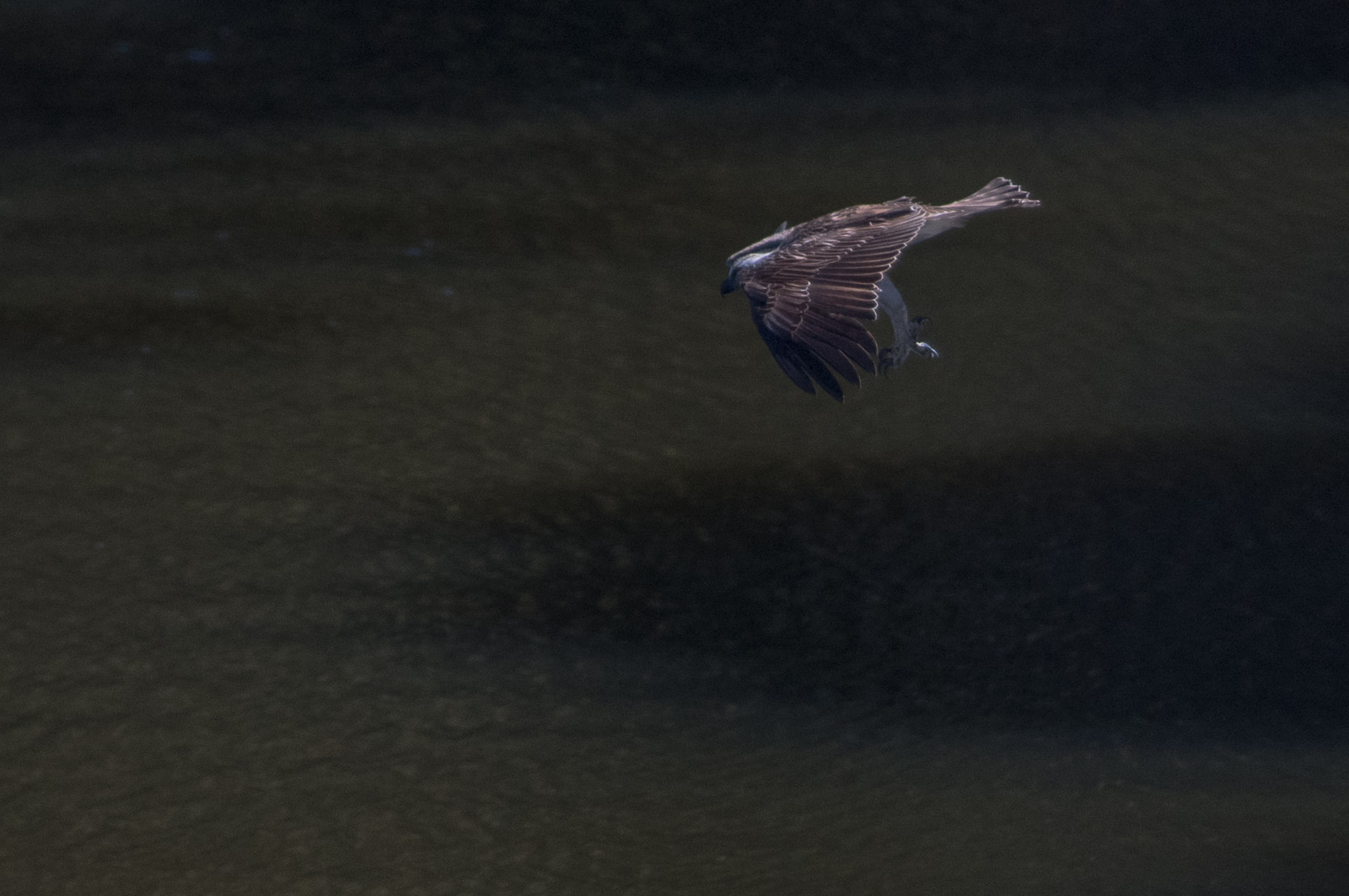
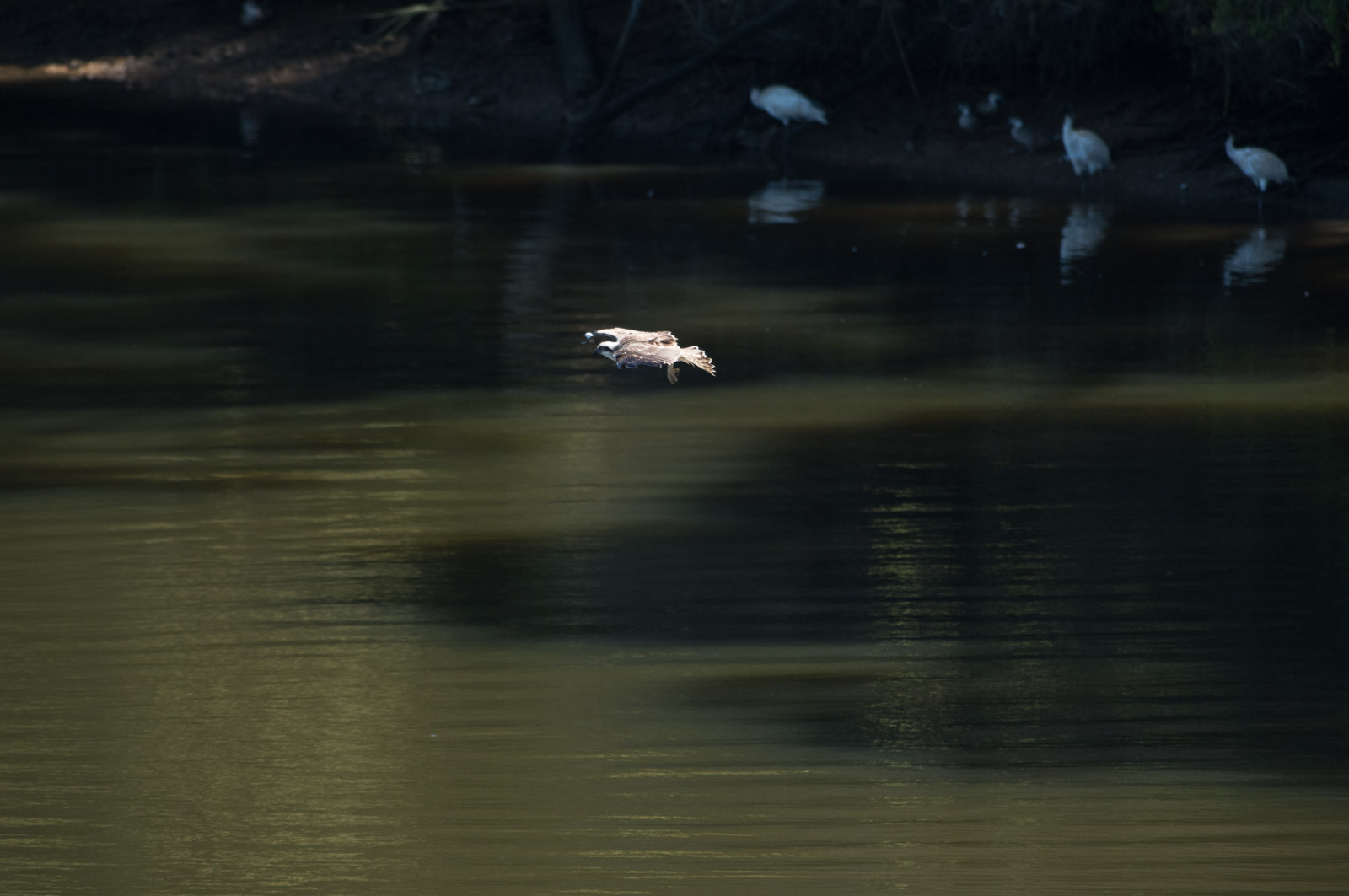
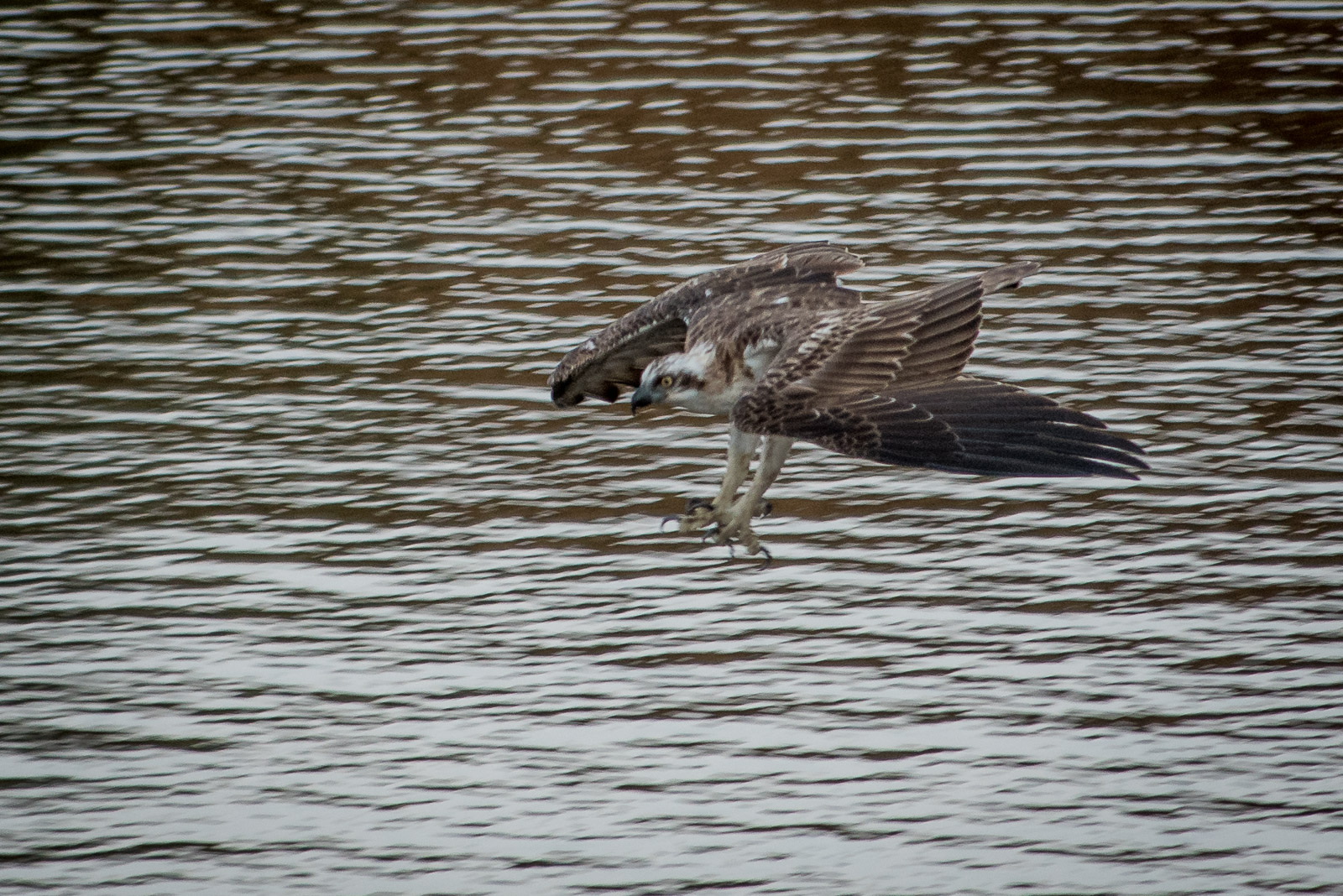
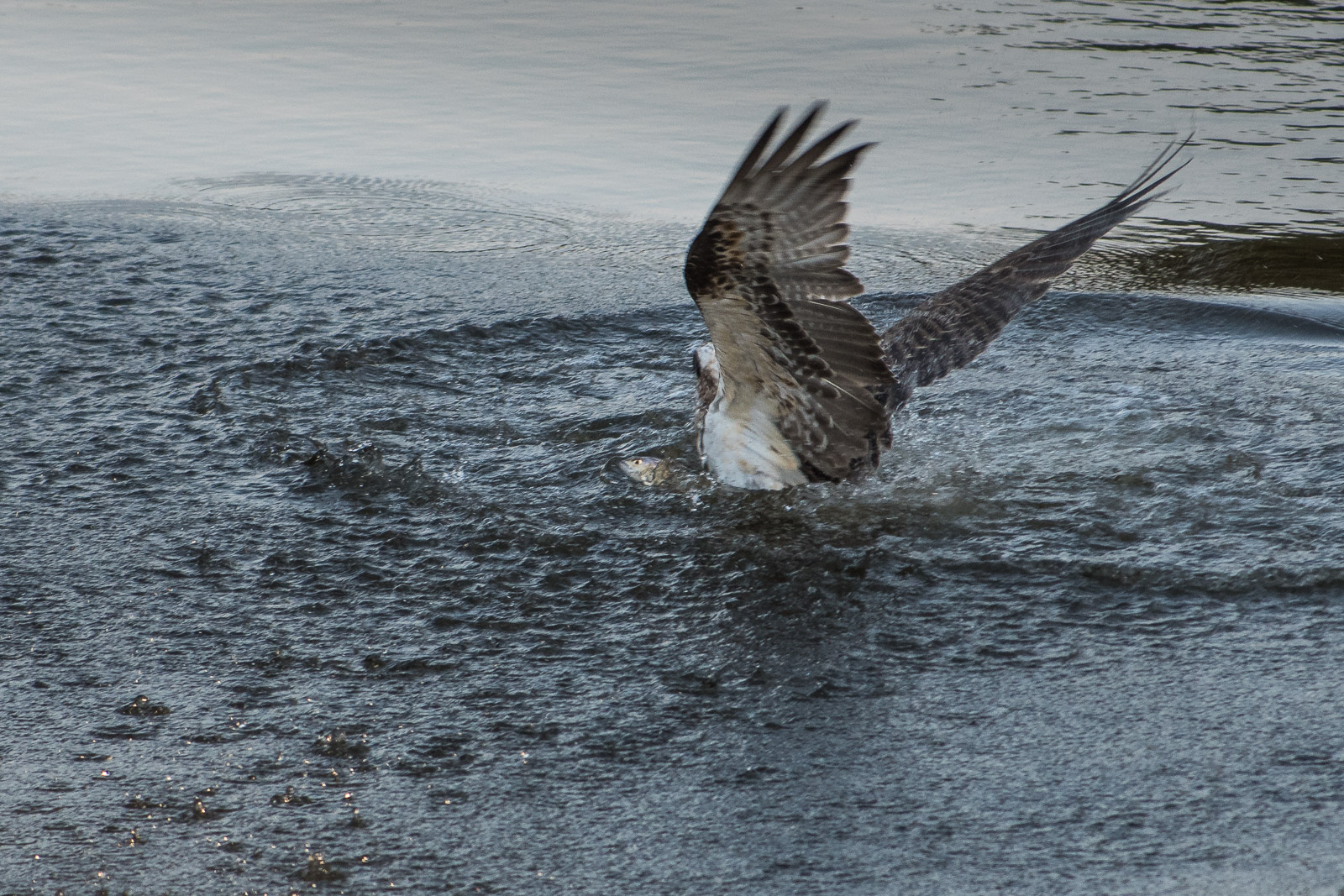
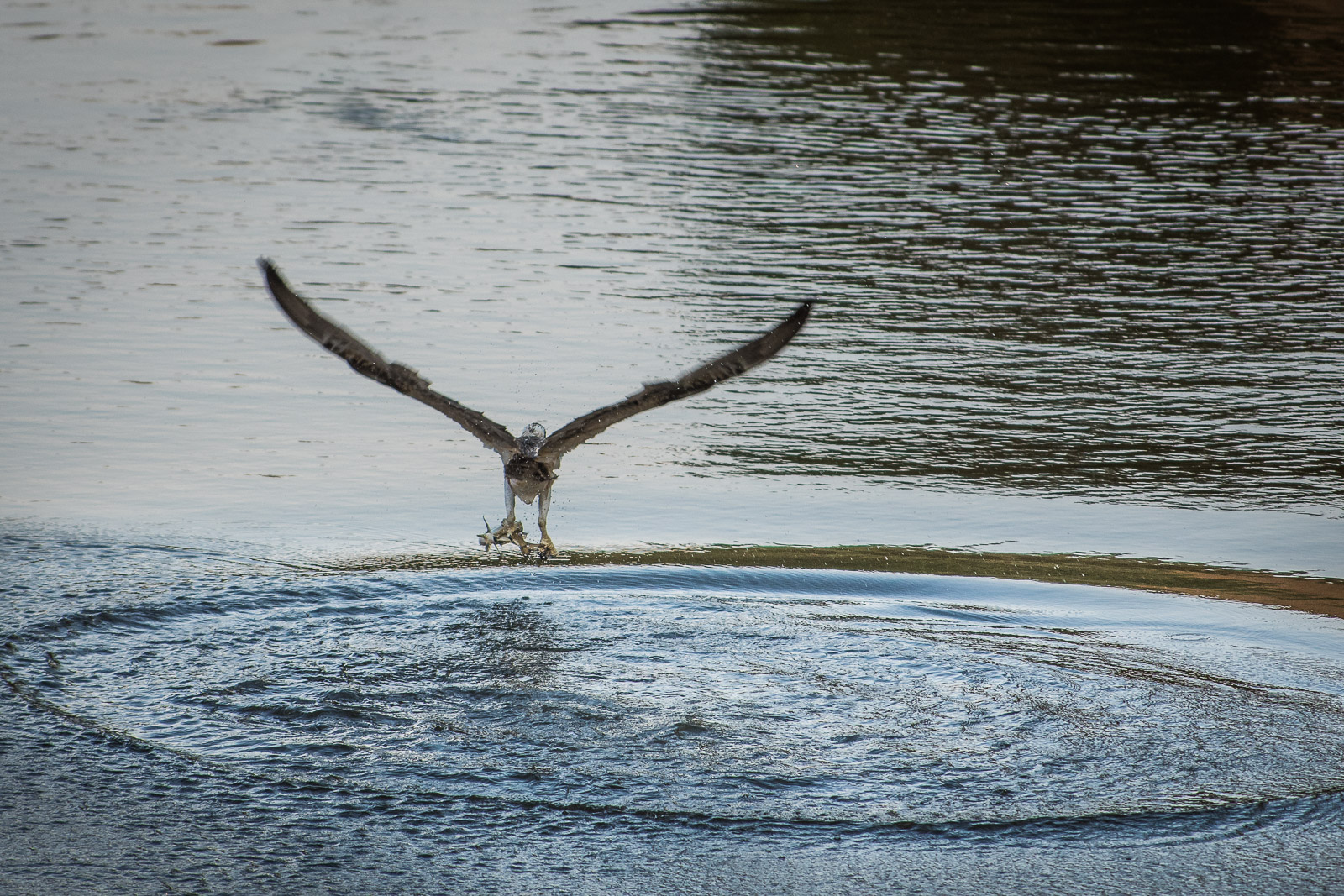
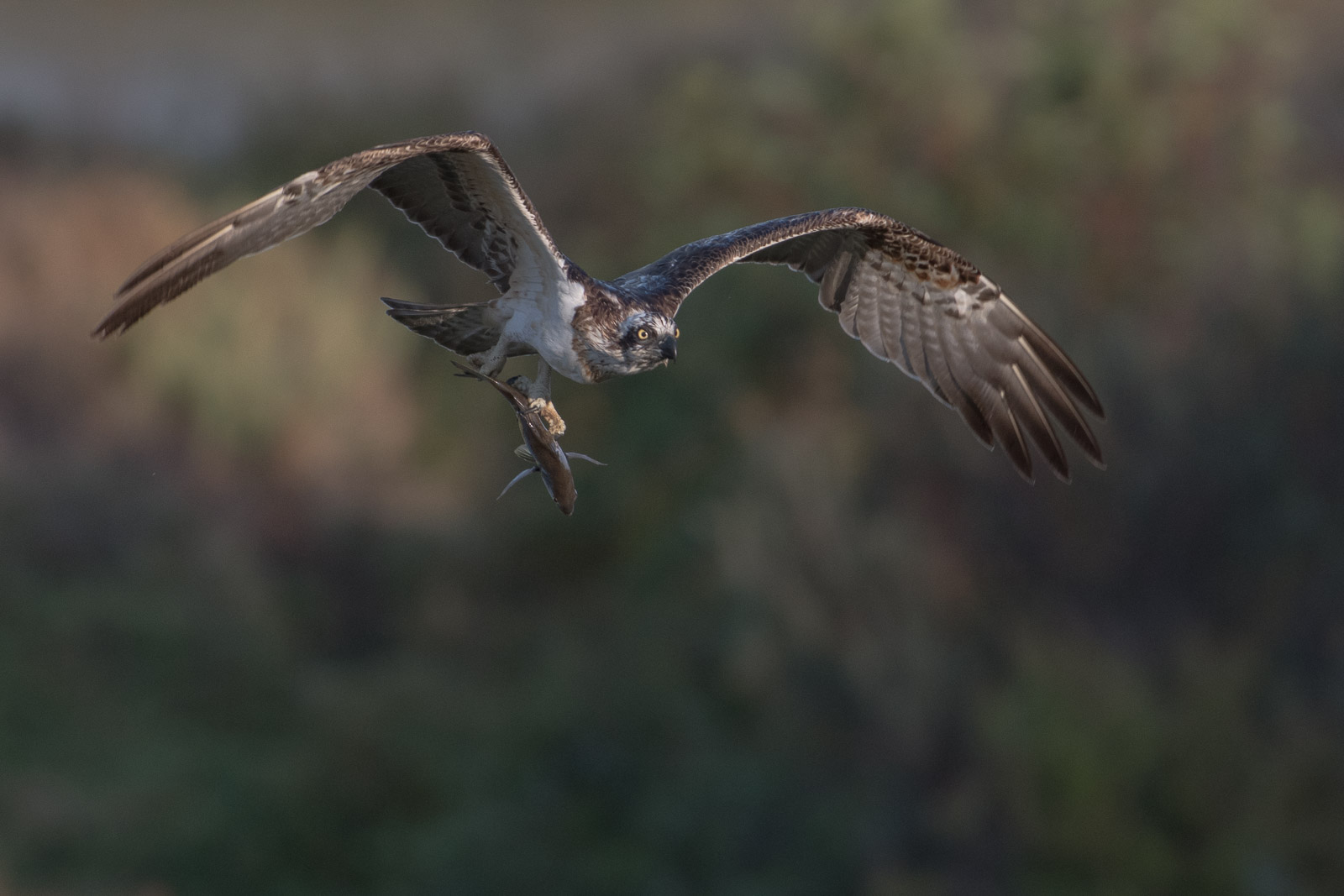
Been amassing quite a collection of shots of the Eastern Osprey as she has been working in the Werribee River area. Rather than break it up into various days or activities, I’ve become a bit self-indulgent and also saving myself some time by making a collection.

Enjoy.

Is that a fish down there?
I should investigate
Looks like a good meal.
On second thoughts I’ll wait for a bigger one.
Keyed on
Reading to pounce
All systems locked on and ready for impact
One bream coming up
Taking a bit of effort to get free from the water
All good to go.
Hey, Look, fresh fish.

Saturday Evening Post: #21 A Piece of Paper, part two

*Don’t adjust your calendar, late night Saturday Evening, early Start Sunday, missed my deadline 🙂 *

I finished last weekend’s post needing to know.

The following day after school, I headed for the local library. Small country town, it wasn’t going to have a lot of books devoted to photography, the practice and theory.

Still, to my surprise now to recall, they did have several books in the children’s section.  In those far off days, my library card was marked “Children” and I couldn’t imagine going into the ‘Adult’ section.

I went straight to the card catalogue and looked through the cards to find “Photography”, and there it was 4 cards if I remember. Reciting the magic number in my head, I made a beeline to the shelves.
One of the books, the name I shamefully have forgotten was something like, “The Young Photographer“, and it was superbly written. It had answers to all the questions I had and lots of things to practice and in the end, I probably borrowed it dozens of times.
A second book was “All in One Camera Book” by E D Emmanuel for Focal Press, and it began a relationship with Focal books that has continued to this day. All in One I think was cleverly conceived and simply illustrated. It went through many revisions, but how it explained Aperture, Shutter and Light, and reciprocity was light-years ahead of the also-ran info I stumble across on the internet all the time.

So armed with these venerable tour guides my journey began.

After I’d borrowed the Emmanuel book for about the third time, a kindly librarian noted my interest and said, “Would you like to look in the Adult section and see if there is anything that might help.” Isn’t it funny how some simple things just happen.

So every so gingerly and reverently I crept into the adult section, by then I even knew the right catalogue number 771.

I skimmed through a large folio book. It was something like, “Great Photographers”, and had names I had never heard of, Weston, Adams, Karsh, Minor White, David Duncan Douglas, and W. Eugene Smith. (I’d never heard of Eugene as a name so that was fascinating to begin with— and I was seriously impressed by someone who would put their first name Initial.  I had a lot to learn as a country kid).

The book had several Smith pictures, one of which was Albert Schweitzer in clinic in Africa. Here is a link http://www.alteredimagesbdc.org/eugene-smith-albert-schweitzer/

And I knew what I wanted to do. I wanted to take my camera to Africa and photograph Schweitzer. This time I knew, but I didn’t know what I needed to know.
So I borrowed the book and learned why the Masters work had such power to move our minds.

And I sat each night in the laundry making contract prints of the flowers in the garden, my family, and off course the legendary Blackie. Reading my precious Young Photographer, learning how to make great quality prints and dreaming.
A long way from Africa, but I could dream dreams.

Cumberland Homestead ruins Gum and Aloe Vera
28mm with a Polarising Screen.

A Day like No Other

We’ve been cooped up inside since EE’s “Incident” a few weeks back. But with some improvement and a bit of willpower, she decided that a morning visit with Eloise would be therapeutic. And well, who am I to argue with the ‘good doctor’.  So a check on the weather, and it seemed early morning would be still, great light and not too hot.

A couple of kind souls offered the advice when we arrived, “Don’t Hurry.  She’s not here yet”.  And like one of those prophetic statements that just becomes self-fulfilling, it did. While we waited around,  EE sitting quietly on her new ‘mobile’ seat,  didn’t take long to discover some thing that most others  had overlooked.

A family of Spotted Pardalote had nested in the cliff bank, just below the edge, and as there were quite a number of exposed roots offering great perches in the sunshine, the little birds were moving back and forth encouraging their young ones out into the open.

By mid-morning and a reassuring cuppa of Grey of Earl, we pretty much concluded that Eloise was fishing elsewhere this fine morning.

About that time our flickr mate, Derek turned up hoping to try out his new 500mm f/5.6 PF lens, so I had a chance to ooh, and ahhh, and drool just as bit.  Hope he has remarkable success with it, and it does look a great lens to walk about with. EE even tried on the mobile and expressed interest. So there goes my bank balance I’m thinking.  Mind with the shortage of the lenses worldwide, I should have ample time to save up enough bottletops and bits of string by this time next year for her lens. 🙂

New lenses must be in the air, as I’ve taken control of a 70-200 f/4, for a beaut walkabout narrow landscape lens.  It also works a treat on birds, if I can get close enough.  Funny how sometimes equipment just ‘feels’ right.  I’ve only ever had that happen to a few lenses I’ve owned, but the little 70-200 is sweet. Thinks back to when I purchased a 30-100mm Powerzoom for the Nikon 1 system.  I just loved to carry that lens around, but could never get inspired to make great pictures. But  it felt like the Tao just flowed from it.

Mike Johnson of the “Online Photographer” has this to say about Laws of Lenses, if you want a bit of a smile. https://theonlinephotographer.typepad.com/the_online_photographer/2019/02/mikes-seven-laws-of-lenses.html

Sadly our morning ended without the Lady making an entrance.

So to work.

Australasian Darter hanging out the sheets to dry


Little Black Cormorants. They surfaced and almost immediatley went under again


Grey Teal


Way across the river at the golf club, Toby the Kelpie and his friend the Blue Heeler were helping the groundspeople prepare the greens for the morning


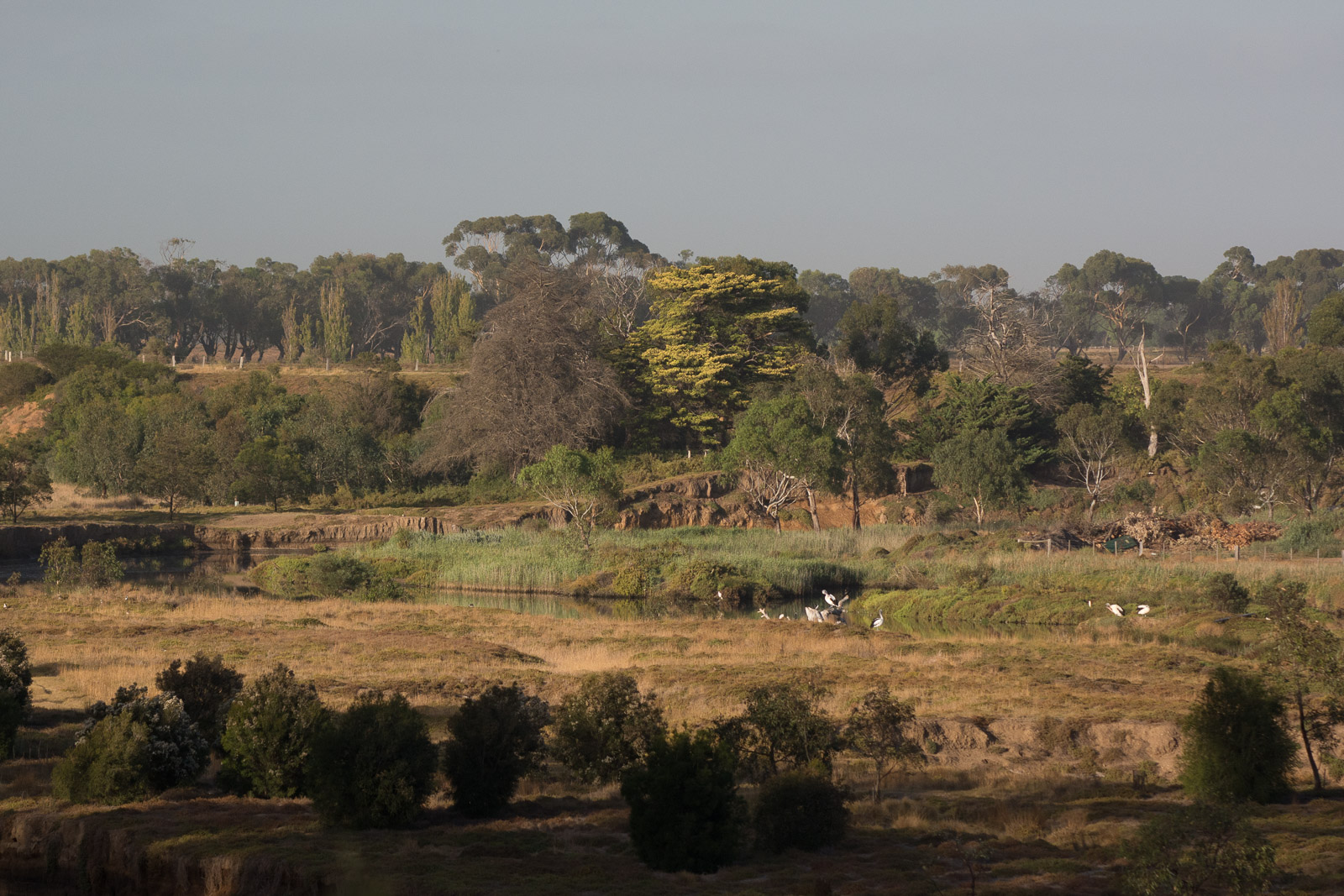
I often talk about a “Day at the Office” on the blog. This is looking over the river toward that area


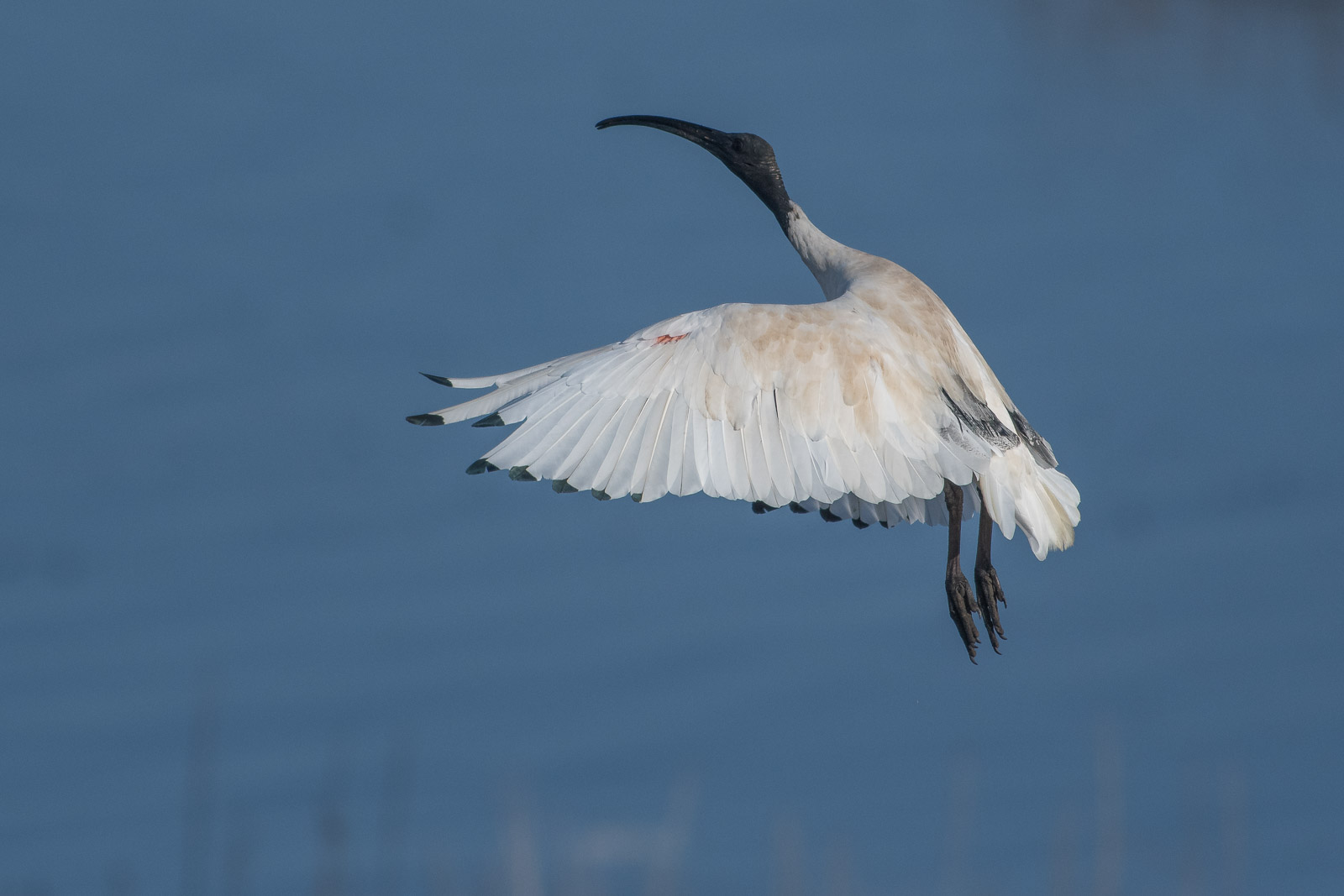
Lots of Australian White Ibis entertained us with the landing styles


Female Spotted Paralote at the river’s edge
Another view of the Spotted Pardalote


Juvenile Spotted Pardalote


A male Superb Fairywren about to go into eclipse. I rather wonder if its not a previous season male who is getting ready to move out into the world on his own

Saturday Evening Post #20: A Piece of Paper

It was only a small piece of paper, about 75mm square (2 1/2x 2 1/2 inches to be precise).

It was sitting on the bench top, vivid in its whiteness against the dark top.
Next to it sat three small plastic trays. Each contained a clear fluid.

I was given a small pair of metal tongs and told to pick up the paper and place it in the first tray. I did.

It sat on the top of the liquid and surface tension took over and it stayed floating only partially submerged. “Push it under”.  I did.

A clock with big hands started to tick the background.

And.  Nothing much else happened.

And after about a minute as I peered at the wet paper under the orange glow of the ‘safelight’, a faint change began to occur. Light grey blurs began to appear, and slowly they became shapes and the shapes took on form and tone, and eerily out of the white paper a photo of “Blackie” our cat, began to emerge.

After the clock ticked off its time, I transferred, Blackie, with a considerable reverence, into the second and then the third trays.  Several minutes later, “Mind your eyes, ” Dad said, and the room lights were turned on. And there sitting in the dish was indeed a photograph of Blackie. And, more importantly for the moment, one that I had produced.

I was hooked. At around 12 years of age, my life, as they say—changed, and a direction for life was set.  I not only wanted to know, I knew that I wanted to know more about this fascinating process that could make white paper into a real photograph.

It was a contact print from a negative that I’d made some days before.  And, yet, it was,in all its monochrome glory, a Photograph.

I had to know.  And in a small country town, I knew where to look.
The local library.

The journey continues.

Enjoy a great week.

_DSC9281 - Version 2_Aperture_preview
This is Thomas, my nextdoor neighbour’s cat. Tom used to come for visits and would sit in the sunshine on the window sill of the front of the house and watch the garden. Thomas is a rich ginger cat. Guess which colour filter I used to bring out the best in his rich ginger markings. I’ve resisted adding a tonal colour.


(The negative of Blackie the cat is long gone.)
The Header shot is pretty much a direct B+W conversion from colour.  No clever stuff, just Tom and I would spend lots of time working window lighting for effect.