Apologies again. I didn’t press the button to Post. 🙂
There is a long standing photo adage, “Previsualise (always with a ‘z’) the photo”. Promolagated by St Ansel (Adams). His point had little to do with the content of the picture and all to do with making sure the exposure was set correctly to cover the gradient range of the “Zone System” But more of that on another occassion.
The term seems to have wandered its way into the vocabularly of creative photographers, as in “I pre-visualised the way this picture would look, feel, express what I thought, etc etc. blah. “
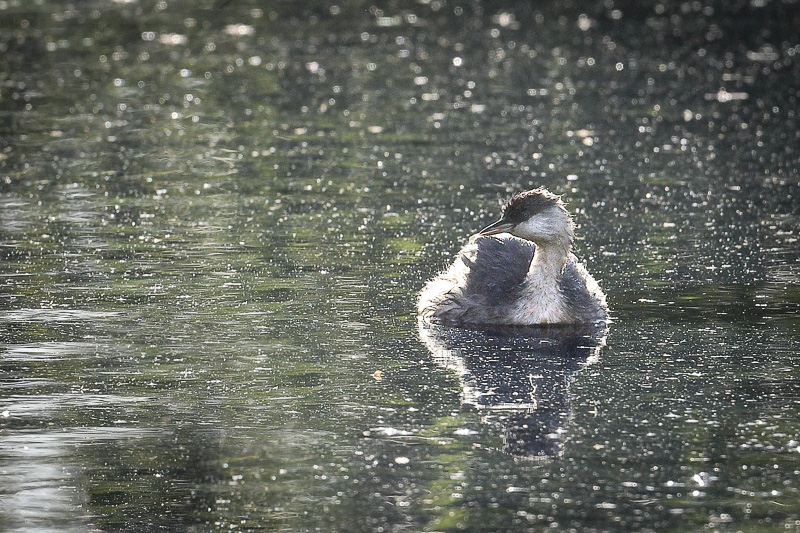
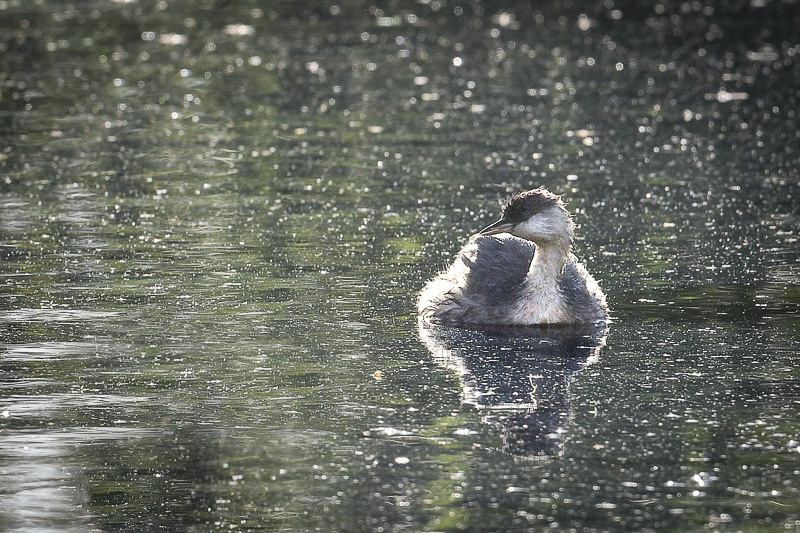
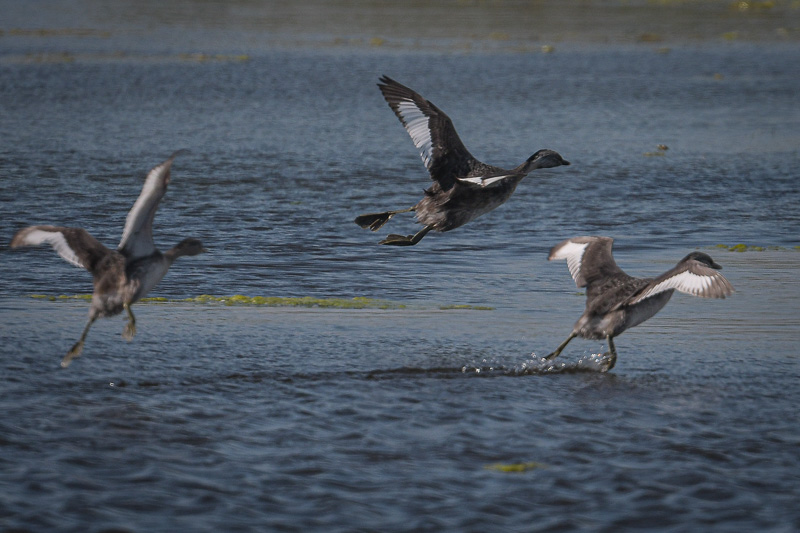
Sometimes tis true, just by the sheer magic of a moment. I knew when I saw this little Hoary-headed Grebe that it would look great against the be-jewelled backdrop of the early morning light on the water. That amazing rim-light running around the edges of the bird was just too good to ignore.
But also I knew that the little Grebe would be terribly dark and underexposed. Perhaps two shots and merge then in Layers in Photoshop was one response. In the end, I opted to make the exposure for the middle densities and hope that Lightroom would handle the highlights and a bit of work with a brush might bring out some of the detail of the ‘underexposed’ Grebe. That’s why the puruists will tell you, ‘We Shot raw!!” Gives us so much flexibiltiy in post-processing. For the record.
We have had good numbers of Hoary-headed Grebes at a number of locations over the past few months. Not that we don’t see them regularly, just the large numbers are quite unusual. Some ponds at the Treatment Plant have had 30-40 birds on occassions.
We were at the T-Section area, and in the pond near where we’d parked IamGrey, it was hard not to notice the 15-20 or so Hoary-headed Grebes all swimming about together.
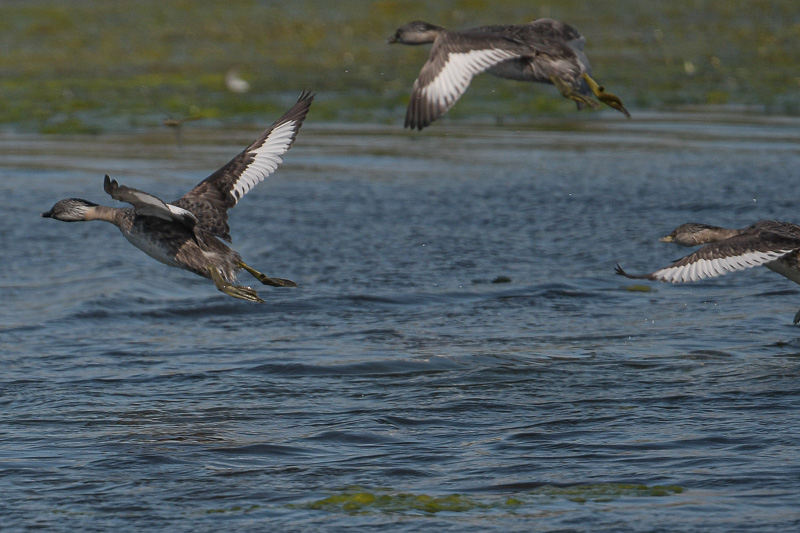
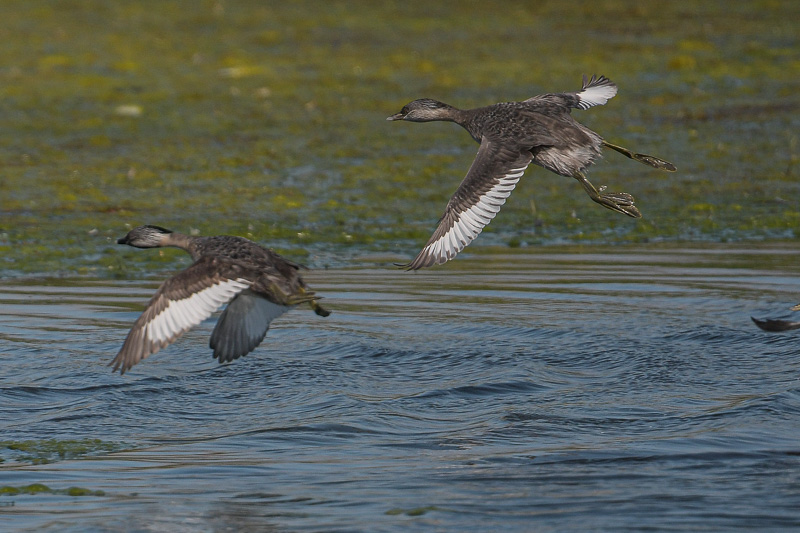
What turned out to be unusual was they all drifted down to the far end of the pond on a strong breeze, and then with a hop, skip and a jump, they launched themselves into the air and flew the 150m or so to the other end of the pond, drifted back and flew again.
It is most unusal to see any grebe airborne, so this was particularly intruiging. The books tend to say that “they fly at night”, but I suspect that is because no one sees them in daylight, and the conclusion is obvious, “I haven’t seen grebes flying in daylight, so…. They must fly at night”
These ones, obviously hadn’t read that book. And they continued to repeat the performance I’ve also been told, on reasonable authority, that Grebes tend to lose the ability to fly the longer they are in a permanent pond. Some Little Aussie battlers can have several seasons in the same pond, and if the theory is correct, then the wing muscles etc, must atrophy and they are for all intents, flightless.
And the Hoary-headed continued to drift up the pond and then fly back. Presumably they were using the rather strong wind blowing down the pond to help get lift. We began to wonder if they were perhaps getting some training in to re-develop the flight muscles
We stayed in the area for a couple of hours and to our surprise when we checked, just as we were leaving, there were only a couple of Grebes still in the pond. The rest had flown!
And of course we missed that. Often see them sitting in the ponds and doing a wing-stretch and conclude that those wings aren’t all that big for such a small bird. But, stretched out in flight they obviously get enough lift. With those little stuck-on legs dangling out behind. Enjoy
It’s possible on a day at the Western Treatment Plant to clock up over 100 kilometres of driving. The entire plant is over 10,000 hectares — a little smaller than Philip Island.
Some recent changes to the access areas means that those who formely had limited access may now, from the 31st of July 2023, enter what was previously the “Special Access” area and required a different key. Now, One Key, (as they say in Tolkien) rules them all.
I think it’s fair to say that these days there are three sorts of people who visit the plant.
1. The true birdo. Dedicated to seeing as many species as possible in the shortest time, and of course to find that elusive ‘visitor’ to add to the total. These folk have been the mainstay if not the major visitors for many years. Travelling every road and side road is part and parcel of the visit.
2. Now it seems that photographers are becoming the dominant “species”. Again, desiring to see and photograph as many birds in the day and be able to have them all posted to Instadump or Spacebook before anyone else. Speed of travel is their essential hallmark, and sometimes it seems to me, to resemble a Rally-cross event (I used to photograph such events a long time ago so understand the techniques)
3. The art photographer. Not yet a huge group, but growing I feel. They have a need to find a bird and provide the ‘best possible’ image of said bird that shows not only the best of the bird, but their ’empathy’ for the species. Also prepared to stand around and pontificate about the latest mirrrorless kit and lens that is a ‘game changer’. Clambering over grass, through salt-bush, crawling along the beach and the mudflats, is de rigueur for that expressive moment. Often I’ve noted of late, dressed in camo and ghillie-suits, looking more like an SAS Sniper. Willing to stop in the middle of a bund road to walk, crawl, or sneak to a spot to get that shot. Meanwhile the roadway is blocked to all other passersby. ( I know, I think I used to do this!- sans the ghillie)
A fourth visitor group, just to show I can count beyond three: is more the traveller about the plant, seeing birds and generally enjoying an outing. These days, I have to admit to fitting somewhere between 3 and 4.
We no longer do the ‘full tour’ We have a few ponds and areas that we’ll go to, sit for awhile, and then move on. Most days, it’s an early morning start, and by lunch time, it’s time to go on up the road to The Highway Lounge, and one of Gerry’s well made hot brews.
With the sun streaming in through the window at breakfast time, the other morning, it didn’t take long to abandon other projects for the day, and head on down to the WTP.
Here are a few from the day. Click on an image to move to a Gallery experience
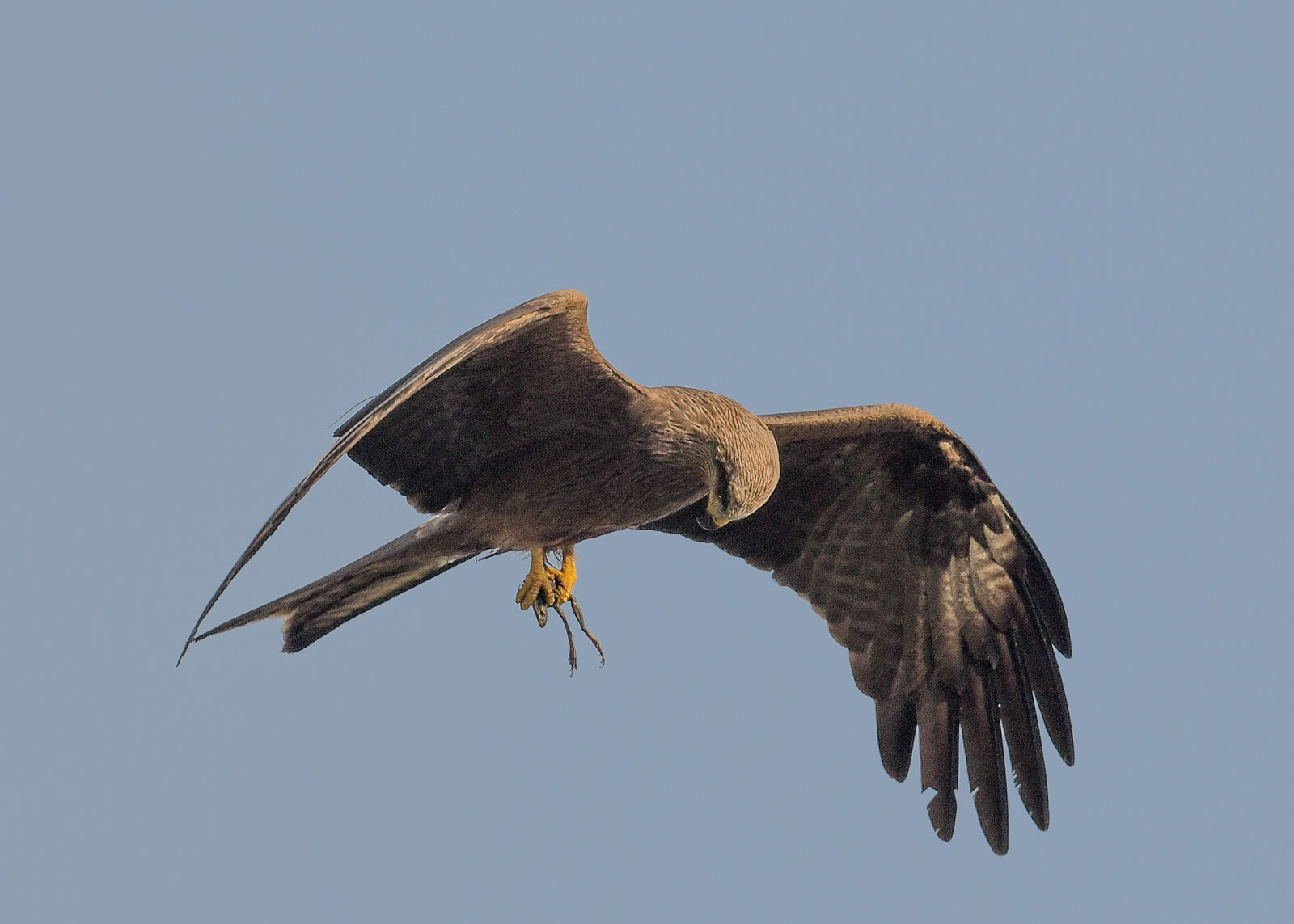
Black Kite,Black KiteFan-tailed Cuckoo. We seem to have quite a number of these birds wintering over. This one seemed happy to sit in he sunshine and callBrown Falcon: Another bird fluffed up soaking up the sunshineThis little Hoary-headed Grebe seemed as happy out of the water as in.
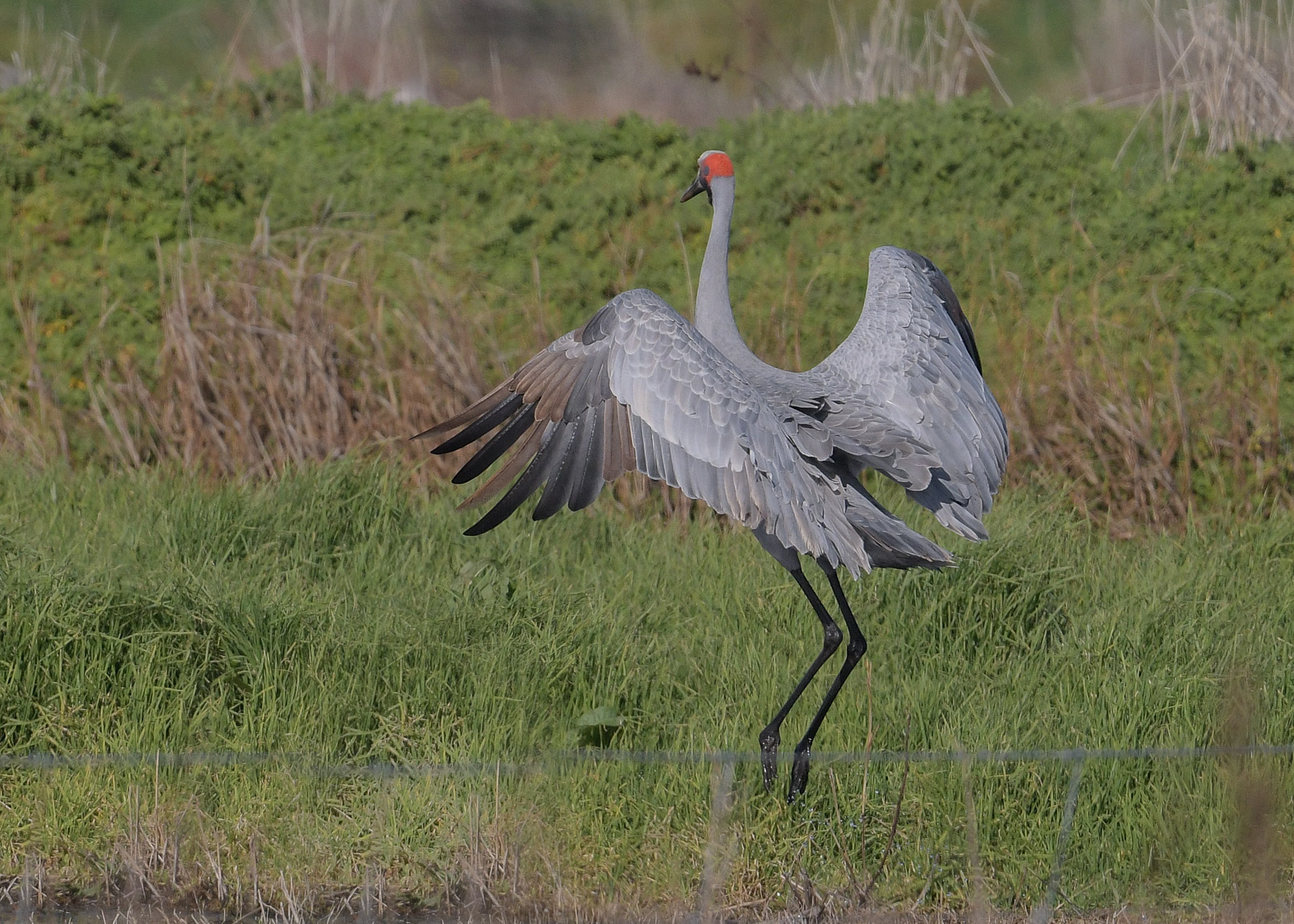
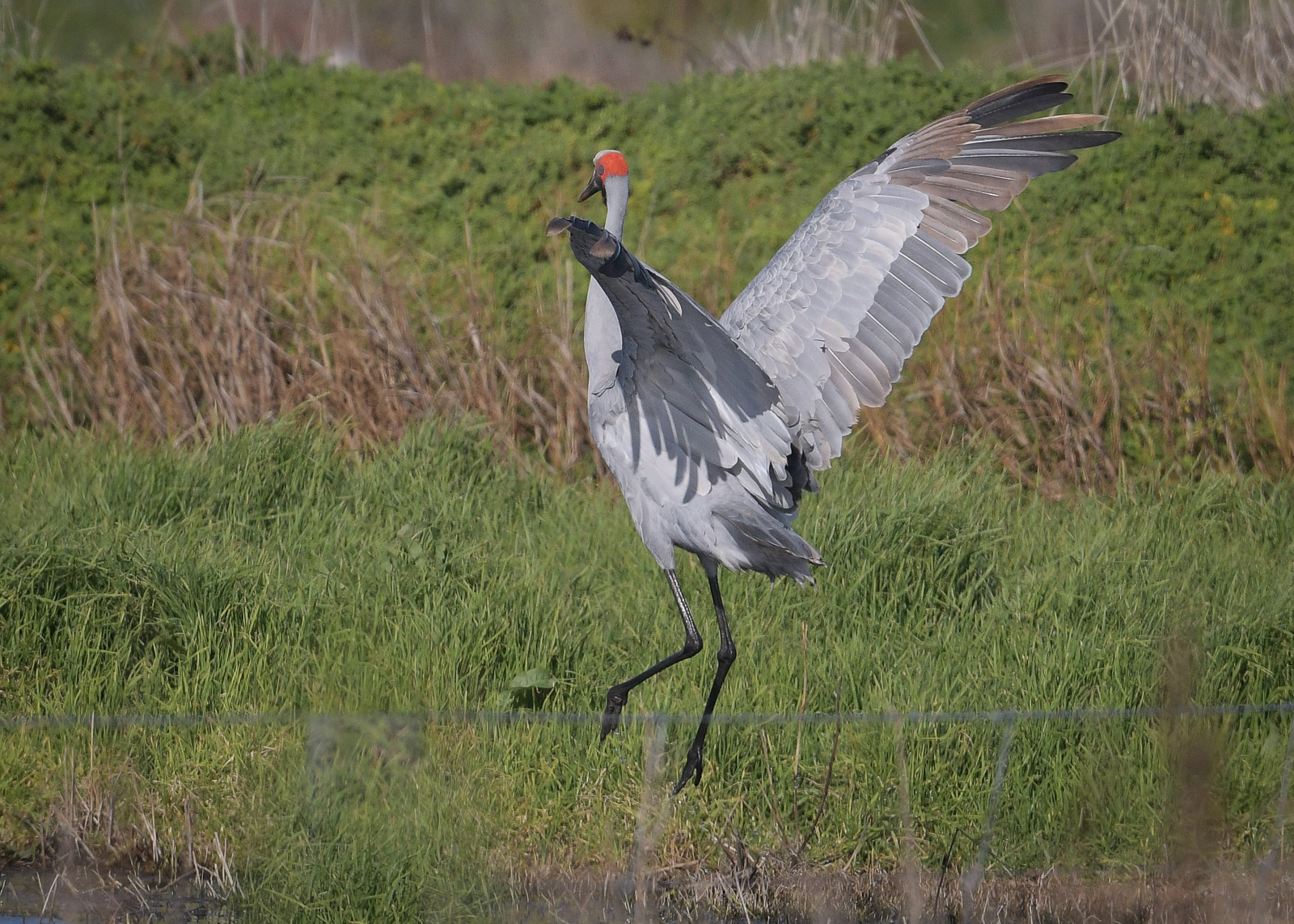
Most unusual to see one walking aboutClean, clean clean. A Musk Duck busy with ablutionsCome Dance with me. A Brolga that also seemed delighted with the warmth of the sunshineCome dance with meBlack Kite Games birds play. This was one of several that were swooping down, picking up grass and twigs and just doing it for funPart of a four Brolga squadron, adjusting for landing.
Sedge is the collective noun it seemsCome dance with me. This one was picking up twigs from a bush and performing its balletWe stopped on the roadway as we left to watch a Kestrel at work. It landed on the road in front of me, and I had to move back to get the focus
After the last couple of ranty posts, I thought I fine day at the plant might be a good idea. 🙂
The Western Treatment Plant is about the size of Phillip Island and to travel all the tracks and explore all the possible bird sites can easily consume an entire day, and a goodly chunk out of the fuel budget for the week. 🙂
We tend to be a bit selective about the areas we travel through. Preferring to stop at one location for a time and see what is moving about. It also depends a lot upon the weather. Being a flat farmland, there is little shelter from high winds or the heat of midday.
So we tend to go either late in the afternoon when conditions are good, or early in the morning. Morning can be hard at first as the long drive in from the main road is directly into the rising sun. But once in the bird area it becomes easier.
We had decided to go on the morning as the weather looked promising, and if the wind picked up as predicted then back to the Highway Lounge and a Gerry Coffee.
Here then is a look at how the morning, and the birds progressed.
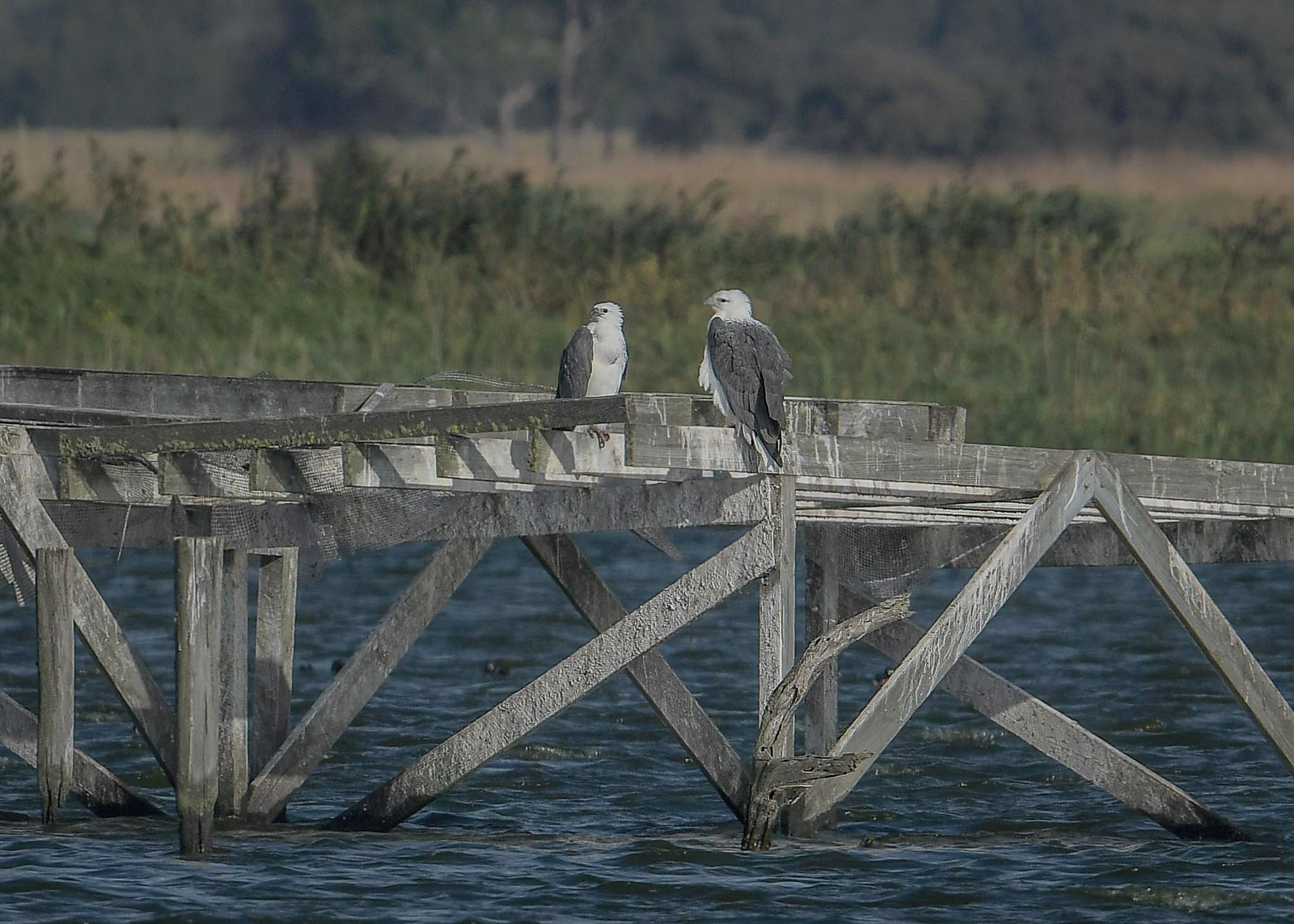
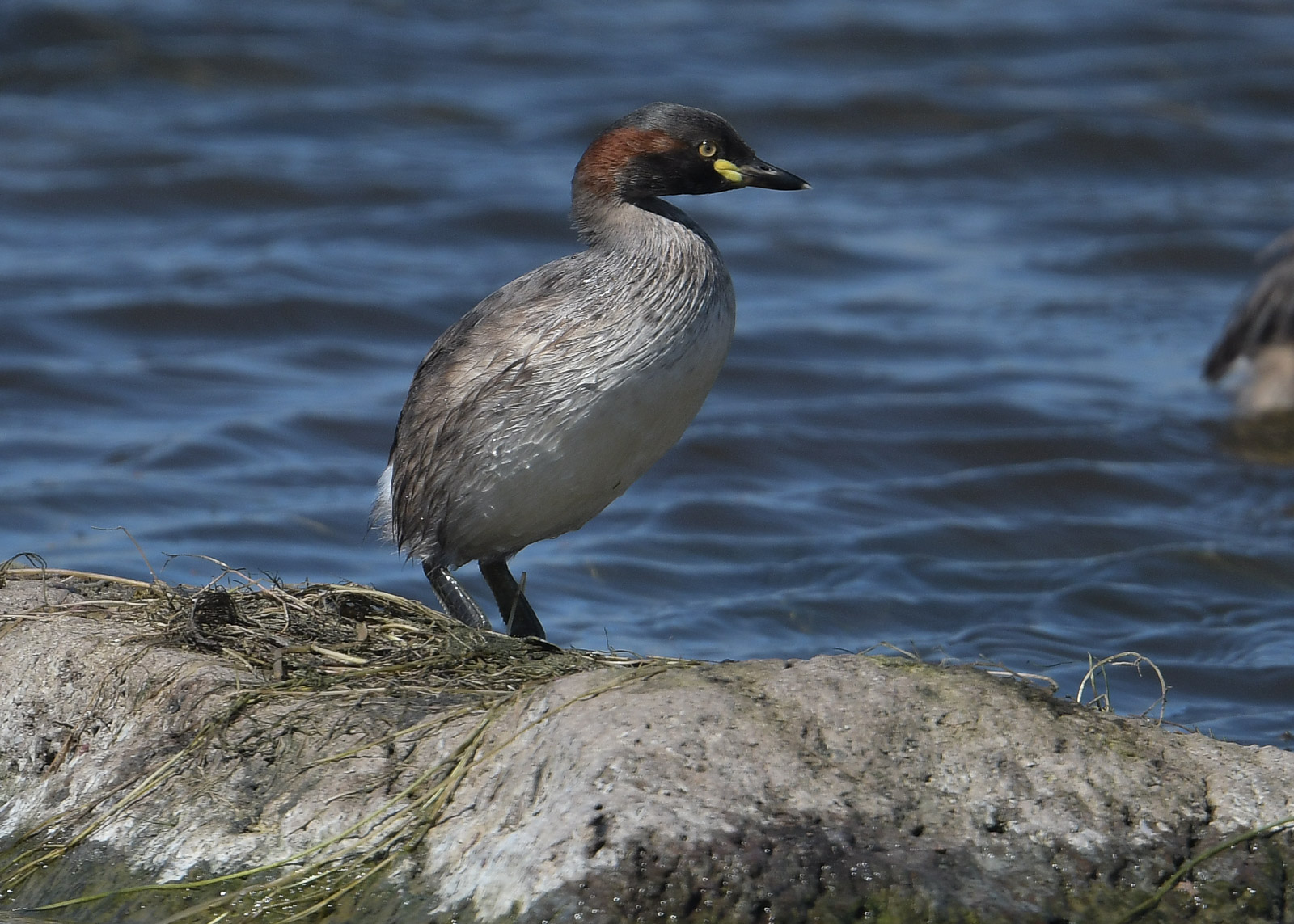
White-bellied Sea-eagle being harassed by a passing Swamp Harrier. I don’t think the apex predator was fazed.Said Swamp Harrier, then made a close pass over the reeds on our side of the lake. The ponds held many Hoary-headed Grebes.A committee meeting. These two Sea-eagles were resting a long way out in the middle of the large lake. Meanwhile up close the Reedbirds were moving about in the sunshineA small selection of the many hundreds of Hoary-headed Grebes.Whatever the current title, I still refer to them as Mountain Duck. The nomenclature police seem to think they are Australasian Shelduck. I don’t think the birds care really. They now all have nice new feathers and will be journeying northward soonNot sure if this Sea-eagle was from the earlier lake ones, or whether it came in from south along the beachline. But there could be as many as four working in the area at present.This Collared Sparrowhawk was making the most of the increasing high winds. And showing off that extended middle toe.Fueling up for a long trip ahead. Curlew SandpiperThese two Sharp-tailed Sandpipers are starting to colour up. Here they are ‘hiding’ out of the strong wind behind some reedsIt has been an increasing good year for Brolga at the Plant. We saw one pair with two well grown young. A second pair with a young one, and this third pair on their ownOne of my fav inflight birds. The Little EgretI can’t ever recall seeing an Austalasian Grebe standing up, nor on a rock. Perhaps a nest is on the way. Also managed a great wing display just for bonus points.












 Birds as Poetry —— Just because I WANDER doesn't mean I'm LOST