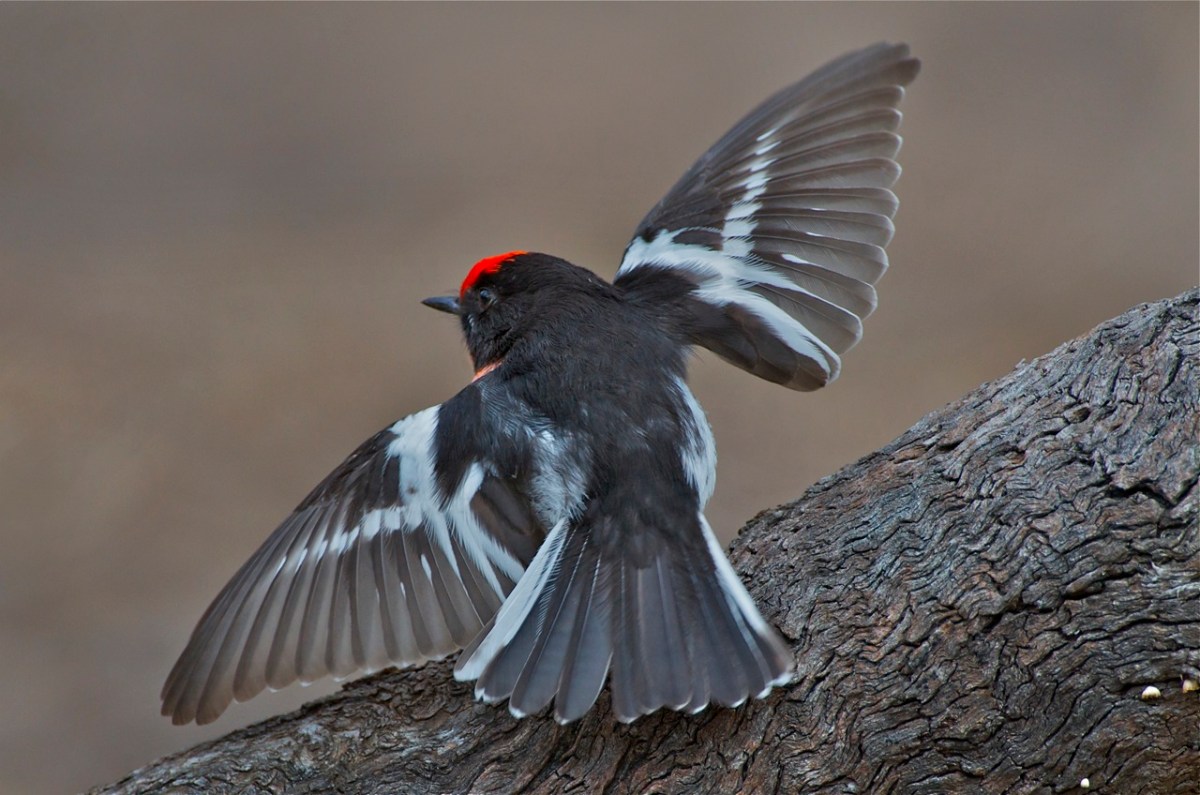
Working with Eastern Yellow Robins

Its almost becoming a complaint I can put to music. “No Redcaps about at the moment”. No access to the Bandicoot Big Brother House.  blah blah blah.

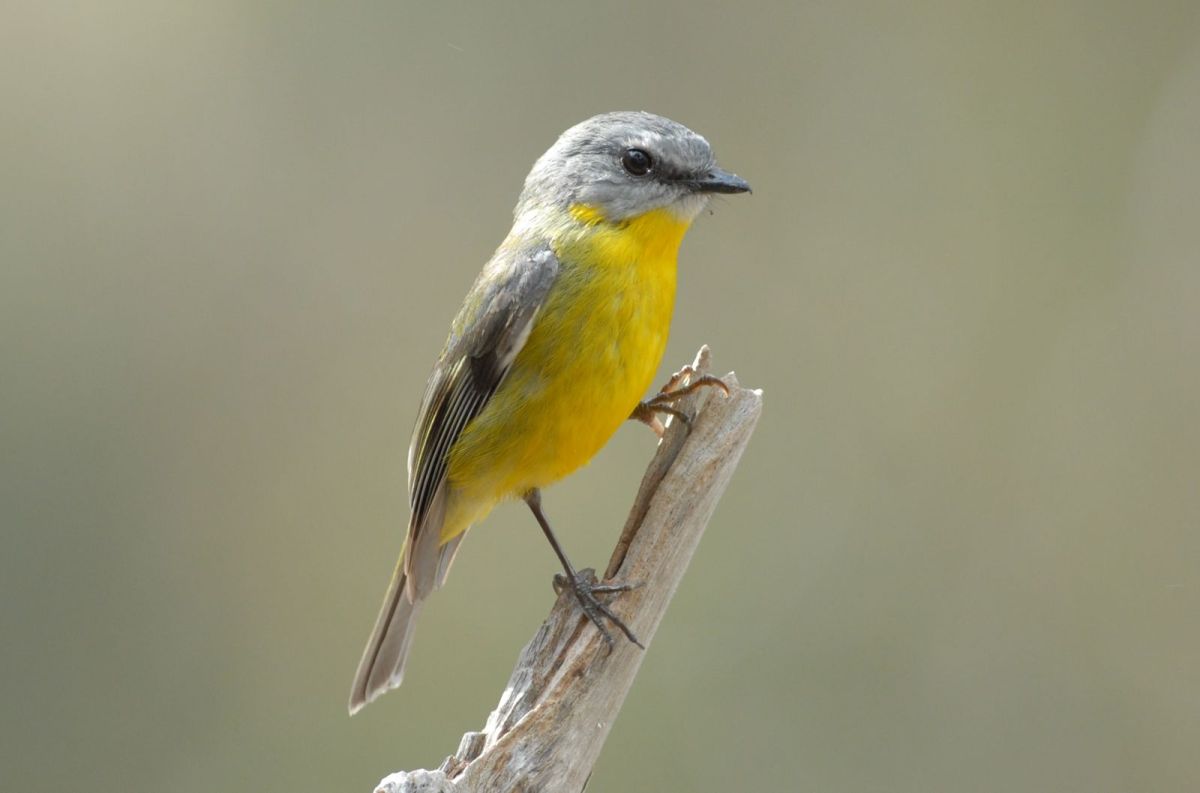
We’ve been lucky enough to be put on to a pair of Eastern Yellow Robins, so we’ve taken to travelling out there of late.

As it turns out, we’ve spotted three birds.  A pair and a helper.  The ever reliable HANZAB tells the tale of how the helpers are called in to assist with nesting duties.  I’m going to call the second one a male, as it seems to get chased by the male, and there has been a number of branch dancing performances with one bird flying off backward.  A pretty sure sign of defeat in the territory stakes, I’m told.

Still it flys in with building material and the odd grub or two for food. The female readily accepts it, but the male will come in and round it up for another flying round trees and branch dance session.  Time will tell.

I’ve also been lucky with the light.  Soft mostly, and once a little rain to and sunshine to reflect back into the shadows. Nice, I couldn’t do that in a studio.

We’ll see how they go over the next few weeks, and continue to look for redcaps, and of course the Kestrel patrol. Not having much luck there either. See the first couple of sentences. <gg>

These elegant Eastern Yellow Robins are becoming a little easier to work with each day. Its feathers are damp as it was raining at the time.
A food offering for the female hard at work on the early stages of the nest.
The male Eastern Yellow Robin. Landed on the stick, just as a light shower of rain began, and the sun broke through to reflect from the rain to fill in the shadows. This has had no image enhancement, other than a slight crop. Cool

Still in town

It’s been a few days since we’ve ventured out.  A few home things being a bit more pressing than normal.

There are a number of birds at nest in the Woodlands Park area, and the main one is the Tawny Frogmouth, near the carpark.  Just down the track a bit, is a Brown Goshawk, and just inside the carpark area is a Black-faced Cuckoo Shrike.  We found anther Brown Goshawk today down by the Sugar Gums, and the only ones that seem to be in recession are the robins.

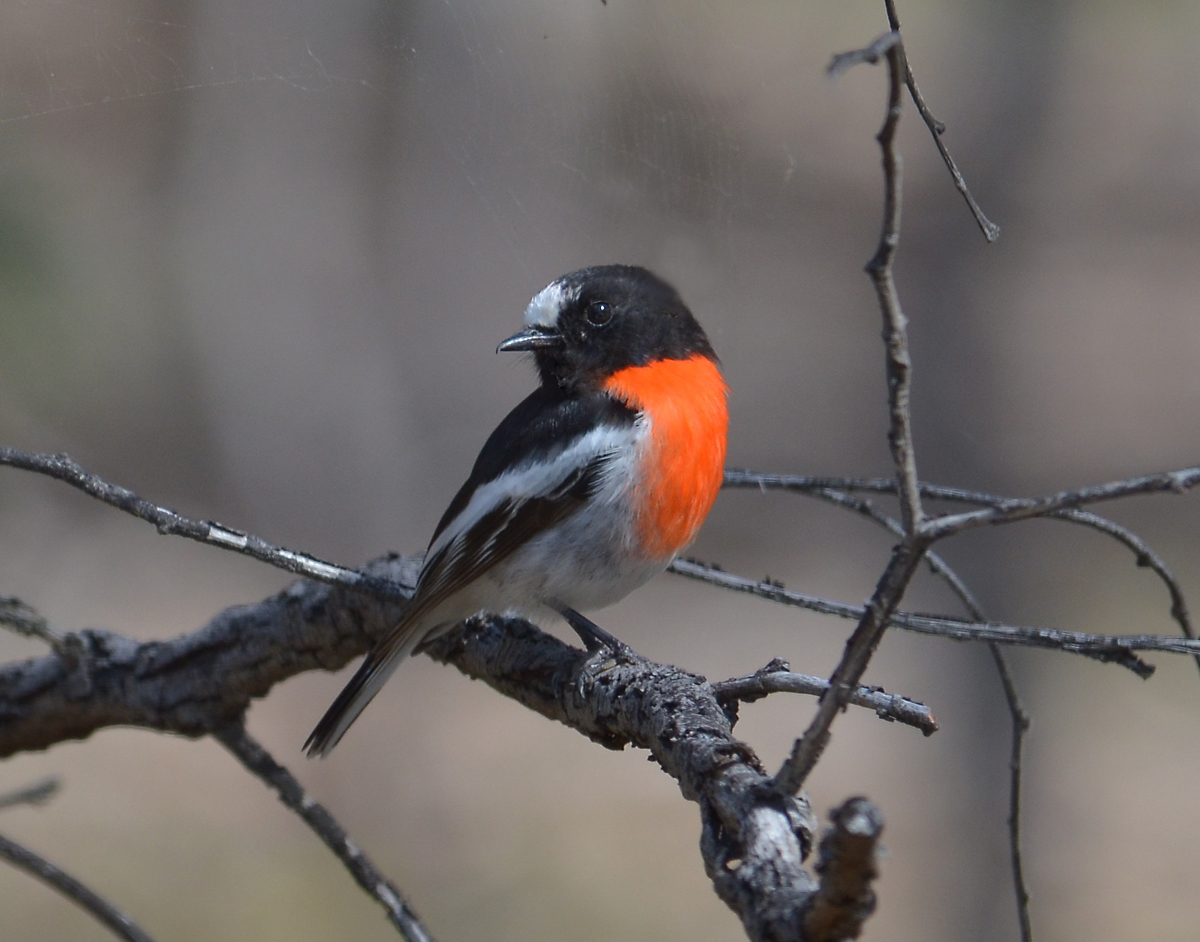
Not that that is stopping the Will o’Scarlet.  He is like Eddie Everywhere, and came bowling up to meet me in the morning sunshine.
Every-time I see him I amazed at the transformation from the scruffy little chap that first appeared nearly a year ago.

What gets a Chough all agitated

Remember from yesterday.  See below, if you missed the great missive.

The White-winged Choughs bailed up something on the ground and were very agitated.

On the way back from the long walk around the long paddock, I stopped off at roadway where all the fuss took place, and there in the sun was the biggest lizard.  This one is at least 75-90 cm. And about the size around of my wrist. (These are approximate dimensions only, I had no intention of disturbing it for several reasons. ) I also decided “gardening’ to tidy up was out of the question.

No wonder the Choughs were a bit careful about their interaction.

By the time I got organised the sun had disappeared behind cloud, but I took it anyway.

How old do these things grow?

Back in Town and still around- Scarlet Robin Reappearance

I had to get some prints framed today, and dropped by the printer place.  “No worries, be ready in a couple of hours.” Good. But what to do in the meantime. So…

I thought if I’m going to drive home and find stuff to do, I might just as easily go look for birds. As the weather had taken a particularly fine turn of events, it didn’t take me too long to get the car pointing in the right direction.

Didn’t have a arsenal of photo gear, but reckoned a 300mm and a 1.4 TC would do ok.  No tripod, just a monopod, but it was only for  a look see anyway.

Went down to where I’d seen the Scarlet Robin earlier in the week, settled in and did what I like doing. Waiting. No fidgeting, no walking about, no peering with binoculars. Just. Waiting.

After about 15 minutes, the birds had pretty much returned to normal, and the Thornbills, Fantails and Wagtails were feeding as usual. But no Robins.  Another 15 minutes went by, and a black/white and red blur zipped by about 50 metres away, and at first I thought it was Lochie, but no, it was the Scarlet Male.  I waited, and after about 10 minutes the black/white and red, zipped past my shoulder and landed about 10 metres away, in the sunshine.  This was more like it.

To cut a long story short, I spent about the next hour or so moving closer, and watching him fly away, but then the distances got less, a lot less, and eventually he seemed quite ready to accept my advances.

There was no sign of any female Scarlet, although a lone Red-capped Female did make several appearances.  So I wonder if this might be the same pair from earlier in the year.  Looks like another sitting and waiting job next week.

Male Scarlet Robin in the afternoon sunshine
Male Scarlet Robin, checking me out, and letting me get with in reasonable photographing distance. He was quiet all afternoon, no loud vocals at all.

Woodlands and Robins

I don’t normally do updates and bird alerts, but with the Flame Robins gone, and most of the Red-caps on nesting duty, I didn’t expect to find much when I did a quick walk through today.

And I was right.

The Backpaddock gates now carry a new sign indicating poisoning for Foxes with 1080, and the park will be closed for at least another month, which is the middle of October.  And I’ve come to the conclusion that it will be closed for a good while after that.

I do hope the bandicoots are worth it.

Not that it’s a big deal, as I’m off to look for Brown Falcons and Nankeen Kestrels in the far part of the park for the next few weeks anyway.

On the way down the track, I heard the call of a Scarlet Robin. Which stopped me in my tracks.  After all they will have departed. And we haven’t seen any activity from them for about two weeks, so I looked about then discounted it as a call from perhaps a Grey Fantail.

However on the way back, Lockie was in hot pursuit of something, and as I watched, it turned out to be the Scarlet Male. And he didn’t take to kindly to being harassed by a mere Red-capped Robin, so the pursuer, became the pursued, and Lockie retreated in the end.  The Scarlet is so much larger, and quite a bit faster, so the poor red-cap could only call at him from a safe distance.

Now, of course I’m wondering if Mrs Scarlet, – would she be Scarlet O’Hara? is in the area as well.  I can see an early morning start sometime this week to investigate.


Travelling to Echuca

The past few days have seen us up around Echuca with the Birdlife Australia, Melbourne Photogroup.

We spent a day around the Kamarooka Forest and then a day out on the Barmah Lakes, and an afternoon along Pericoota Road out of Moama. On the way home the Terrick Terricks  kept us busy for most of the day.

I’ll put a long winded report up on a seperate page when I get organised. But here are a couple of images from the days.

Gums in the flood at Barmah Forest
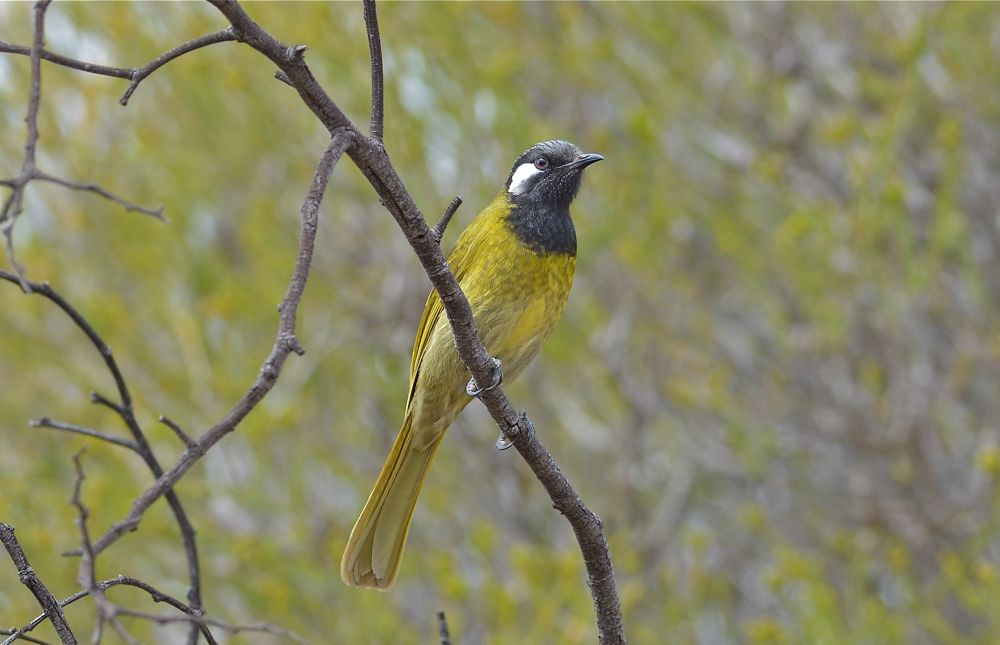
White-eared Honeyeater at Kamarooka. This is one of a number of birds that were highly agitated by our presence because they were just beginning nesting. I did feel sorry for them.
Restless Flycatcher, called a “Scissors Grinder” because of the unusual noise it makes. This is one of a pair that were performing in the late afternoon sunshine along the banks of the Murray. They were taking the opportunity in the sunshine to bathe, preen and play with one another, would have stayed there for a longer time had it been possible.


Chestnut-rumped Thornbill. This wonderful little bird was flitting around the bushes on the climb up to the top of Mt Terrick Terrick. It was always just to far away to get those great shots. But it was a new bird for me, so I was pretty happy.


Father’s Day among the Robins


Late last week we managed to find among the rain and the overcast, quite a large flock of Flame Robins, at the time I guessed that they were being held back by the winds that were blowing North/East. Too hard for little wings to fight that strong headwind.  My informant called the other day and said there is something like two metres of snow in Mt Hotham.  So if they did go up there, there would be nothing to eat.  Not surprisingly then we found the flock on thrusday and spent an hour or so with them among the dashes of sunshine that appeared.

But hadn’t been back since, and with Father’s day, a bbq at Woodlands seemed like the go. Family and kids all being too far away or inconvenienced with other stuff, so we headed out for a quick look and then on to the bbq or so we thought.
Mr Camera Clinic had dutifully repaired the D7000, and to be honest, I was pretty hesitant about working with it again.  But the sunny day helped my mood, and we started to look about.  What we found kept us busy for the next 4 1/2 hours!

Between us we managed to flatten 3 batteries and fill up 3 memory cards.  Now at 16gb that is a lot of images.  I also shot a number of short video clips and that added to the haul.

What we had located was a hunting party of about 3 males, 6-8 females/juveniles, and a couple of young males moulting in.  From the markings and their behaviour it was pretty certain they are not the usual flock we have seen out in that part of the park.  (They were still hunting along the roadway and in the cemetery as we came down).

We eventually ended up sitting on a downed log, and they simply hunted past, around, behind, infront, and then repeated the entire performance.  The challenge was not where to point the camera incase a bird came by, but where to point it next, as the trees became alive with hunting robins.  Lockie came by for a couple of visits as well.

Editing down was going to be the problem, and the few images below are only typical of the days shoot.  At times they hunted so close we were unable to get focus. A pretty exciting way to spend a fathers’s day or any day I reckon.
Needless to say, by the time it was all over, we just came home, and the bbq will have to be another day.

So its seems Woodlands is a bit of a staging area before the trip north.  There are today about 25-30 birds in the general area, and how many might be behind the wire in the back paddock?
The big birds ate so much so quickly, that they had to sit still on a branch to let it all digest for a few minutes, which made it a delight for the photography.


There are a few more over on Flickr.  Click Here

DJ Laments

Last week Andrew- see his blog here-  and I travelled across town to have an evening with the Bird Life Australia Melbourne Photography Group Study Evening.  What a great night a bunch of keen photographers and birdos sharing their knowledge.

I was fortunate to learn my profession as an assistant to several photographers, and it was in the sharing of ideas, techniques and great discussion that the art of it all became amalgamated with the science and still I reckon stands me in good stead to this day. The great part I’ve never forgotten was the wonderful way in which photographers readily share their skill sets with others.  It means at any get together of photographers the talk fest is wonderful and the new ideas, applications and experiments pass on info to the beginners as well as the seasoned professionals.

And so it was on this study night. Great image makers talked about the hardware, the techniques and the art of making great bird photos.  And it was supported in a number of cases with some stunning images. What a great night, and thanks to Andrew for transporting me across town.  Hopefully we can do it all again sometime.
DJ’s Lament

(This should be read with your tongue planted firmly in your cheek. It is written that way!!!)

What I suppose I did learn from all the passionate discussion is that I’ll never make it as a bird photographer.  I just do so many things the wrong way round.

I don’t use Back-button Focus.  Two reason, m’lord, one I have an arthritic thumb that doesn’t react fast enough and secondly, I am, strange as it may seem, Left-eye focused. Which means when I hold the camera up to use BBF, my big fat thumb pokes me in the eye.  So I’ve learnt not to even try it out.  I do prefer the method advocated by Geoff Jones, from the study group in March 2011. Geoff explained the system of ‘focus pumping’, where the camera shutter is lightly tapped to keep the focus working on the subject, until the moment you depress the shutter to make the shot.  He learned it from Jim Neiger in Downtown Florida, at a wonderful place called Kissemee, where Jim runs training schools.   That explains why on a given day, most of not all of my pics are out of focus.  I knew there must be a reason.

I use a tripod in the field. Not a mono-pod with super duper camera attachments and not hand-held.  So I cannot react quick enough to unexpected happenings, and miss most of the good photo opportunities that go by.

I don’t use a lens with VR or IS or OS or what ever the latest image stabilising system is.  I’m happy with my old, outdated, antiquated, in need of replacement non VR lens.  I also don’t use VR when the camera is on the tripod, for the same reason. No wonder my pics are so blurry and prone to camera shake.

I shoot at fairly high ISO levels, 800 being typical.  I don’t overexpose the image, so I don’t gain the benefit of lower noise levels.  I shoot highest speed I can get and higher if I have too, and I run it though a piece of Noise Reduction software,  so I’ll have to put up with loosing sharpness at several levels there too.  Noise Ninja, Topaz Sharpener, Neat Image and Nik Sharpener Pro, are all among my stable of fall backs.  But I see now the error of my ways and will delete them from the workflow, just as soon as I work out what a workflow is supposed to work or flow.

I’ve been known to  shoot JPEG and make no apologies for it.  It stands for Joint PHOTOGRAPHIC EXPERTS Group.  I understand such things as DCT (discrete cosine transforms) and how that affects the compression of the image.   I used to make regularly 30 inch prints from my jpeg files, but as they only appeared to be sharp, I’ll have to rethink the workflow again and move on to raw images.  (which is not an acronym and doesn’t stand for anything expect raw data, that is 2 bits of Green, 1 bit of Blue and 1 Bit of Red)  So I’ll have to get an appropriate raw converter to make up for all that extra green data  floating around in there. (BTW, the green data is where we get the detail, and jPEg doesn’t compress the green channels, so we keep the detail in a jPEg. )

A wondrous discussion on Color Management, moved to Color correction which moved to something called White Balance, and how it can only be controlled in raw coveters.  Which is odd, ’cause I thought White Balance was a video term and used to describe the colour temperature of light, as in degrees Kelvin. But I probably slept through that class at college.  I’m just not going to be much good at birds as I run my WB setting at Auto.  I thought the camera to be very clever, but silly me, no wonder my pics don’t come out with the right colour temp.   BTW, I have two colour temp. meters for sale.
I also learned that my practice of NOT doing colour correction on my laptop under any circumstances was a serious show of my lack of understanding of the technology now built into laptop screens.  I’ll just continue to colour correct on a fully profiled colour monitor back in the office and turn out badly balanced pics I suppose.

I also learned that Brown Falcons should not be photographed in English Box-thorn bushes, so will keep a chain saw in the back of the car, to remove any offending box thorn I find.  Which might just be a full time job out at the WTP.

We also learned about the wonders of a Grey Card.  This amazing piece of equipment apparently is good for everything including putting out the cat at night and making a halfway decent Caffe Macchiato. It apparently reflects 18% of the light in a scene and because it is ‘neutral’ gives those of us with Lightroom or Photoshop somewhere to point our mid-tone eyedroppers when we ‘color correct’. (The question which didn’t get started was ” is that 18% reflectance or luminance?” a subject bound to take you to 2:30am on any given morning.

Nobody mentioned the need in the 18% theory to correct the given exposure by 1/2 of a stop. Now this is curious as the Kodak instructions. (Hey they made this stuff up, even before there was colour film, and long long long before digital cameras), state that it is necessary.  If you can find a copy of Ansel Adams’s book “The Negative”, and check on pages 33 and 42 and 43, the old film master gives his reasons for 18% as a standard.  But then he shot filum what ever that was!

BTW, as an added bonus point, Kodak’s instructions for the card changed in the ’70s ’cause some young-know-everything copy writer left the vital sentence out of the instruction sheet R-27. My archive copy (1948), has the paragraph, and it was reinstalled -red-facedly- at sometime in the 80’s.  Presumably the copyrighter had gone on to be head of communications or something else like that at the great Yellow Father HQ in Rochester.

I also learned that a bird image should show the bird to advantage with no distracting elements like branches, twigs or backhoes. It should also show the bird in its environment, with an eye to good composition and a broader view of the overall scene to enable the viewer to gain an appreciation of the varying light and dark tones in the scene along with any leading lines patterns, textures and reflections that would add interest to the viewer and and understanding of birds in general.

Rodger once again convinced me that the red-gun sight is beyond any doubt the best thing since sliced-bread, and full credit to him as he showed a range of Welcome Swallow shots that would be the envy of any budding photographer. I want one.

Ohh, and as for the bloke with the beanbags he needs to get a life!

So, I’ll just have to accept that my best  days as a bird photographer are ahead of me. I’ll need to spend a bit to update the tripod and the lens, and the software, and the chainsaw and get my eyes checked even more regularly, and most off all, not take everything, I hear seriously.

Remember rule one”  Read this with your tongue  planted firmly in your cheek”, and get ready for next year’s study night.  There is so much to learn.

Thanks by the way to all those who put out their time and energy to help all of us gain a better understanding of the vast range of techniques that are available to this wonderful, challenging and rewarding past time.

You may now extract your tongue from the side of your cheek. Normal programming will resume shortly. <gggg>

Someone new in the neighbourhood

Last week we came across a female Red-capped Robin in area where we’d not seen any previously.  I wondered if it was just co-incidence, but took time yesterday to have a good scout round. So armed with camera gear and a nice pot of tea, I settled into one of the likely areas and waited.  Not too long as it turned out.  Didn’t even get to drink the tea, and a familiar “Deritt, derritt drree deritt” came from a small stand of new growth Greybox saplings.
So I wandered over, and sure enough after a few minutes little miss popped out to feed and call.

She doesn’t have a very distinctive red cap, and I am half inclined to conclude that she is a first year bird. I spent over an hour with her, and didn’t see a mate, not necessarily unusual, but she is certainly calling and he wasn’t responding.

She was quite un-preturbed by me, and hunted around my legs on a couple of occasions. So close that the focus wouldn’t lock.  When this happens I just stop breathing, push the camera to one side and enjoy the company.  Tiny little chest feathers that move in an out with her breathing is a delight to behold.

I wonder if she might be from one of the clutches from the birds in the area from last year or has she made her way from somewhere else. There is also the possibility , of course, it is the young female red-cap that came in with the Scarlet male early in the year. But I’ve no way of being sure one way or the other.  One of the mysteries I shall never know.

I’ve named her Fiona, and she seemed to like that. So it’ll stick.

More on this young lasses progress to follow.

Single Female Red-capped Robin. Very energetic and calling as she goes. No sign of a male companion as yet.
Up close and personal. She ducked in an out of a large blackwood wattle in flower so the light was a bit ordinary.
Hello Fiona.
At this distance it feels like she is just in front of the lens. She was.

Season ending with a Fanfare

Today, managed some time in the bush with sunshine.

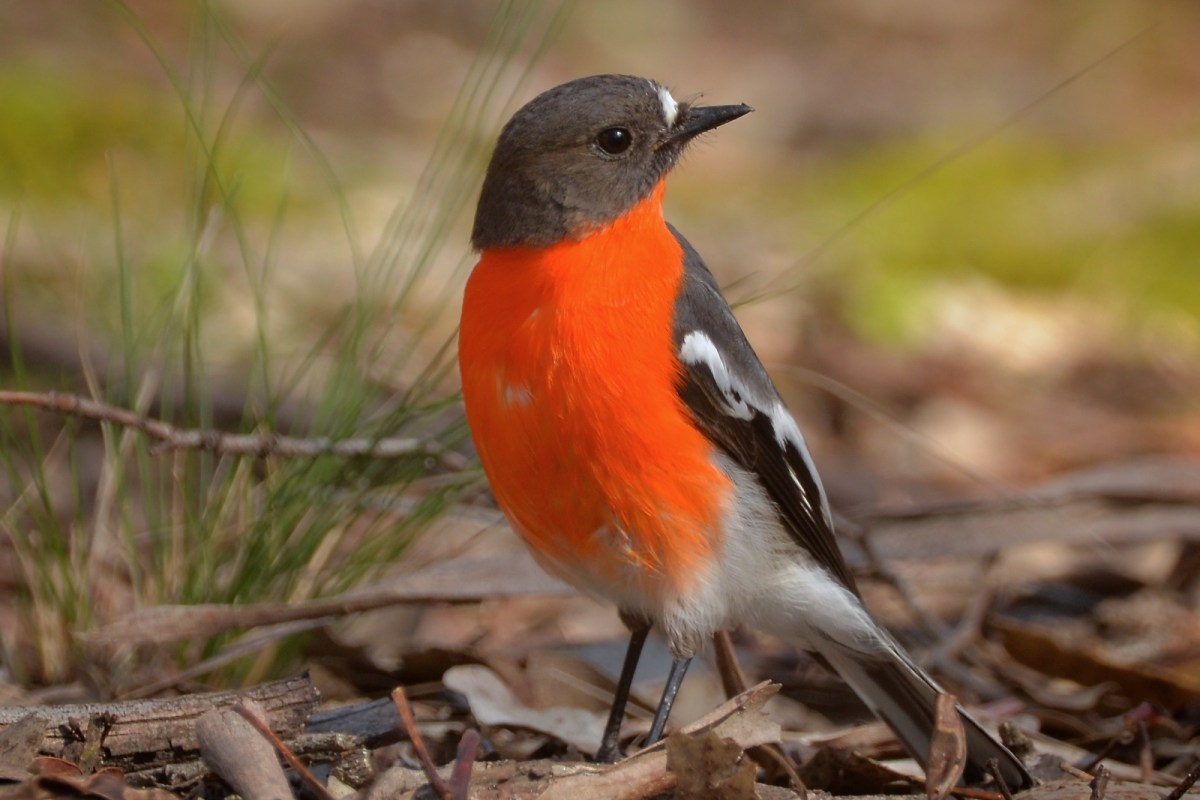
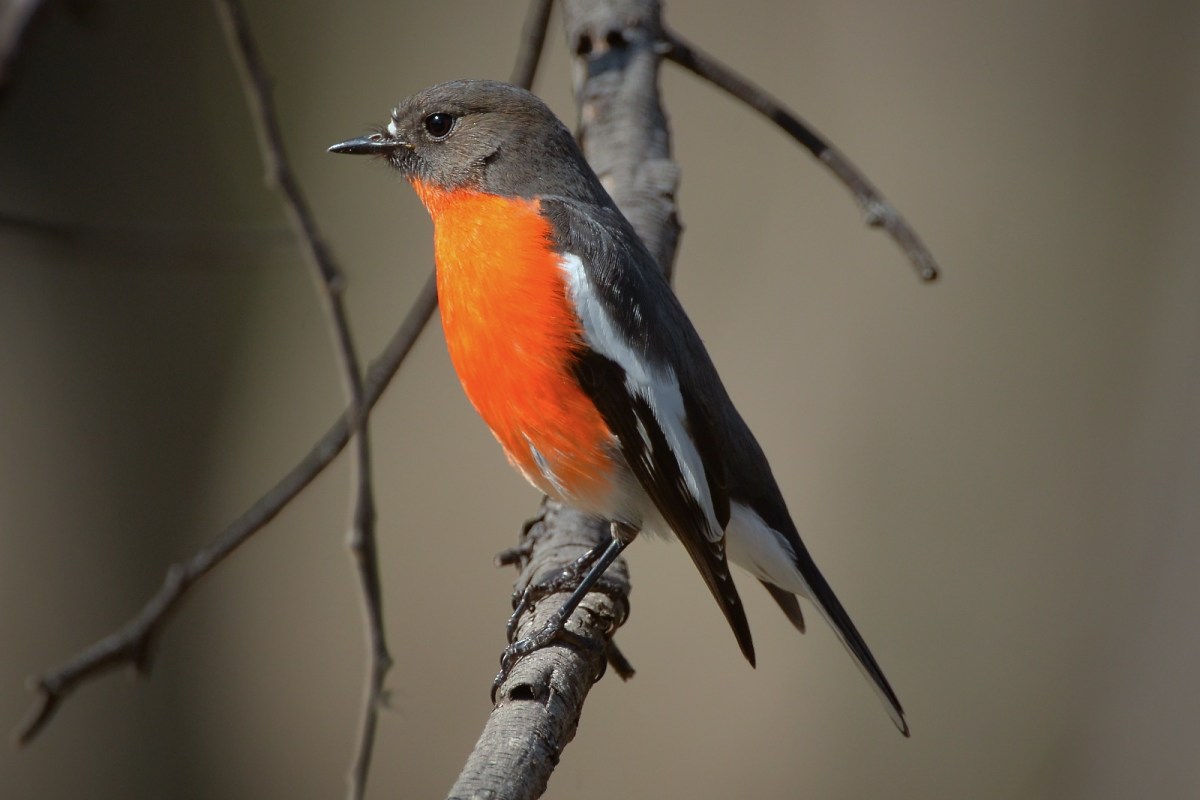
Found a number of Flame Robins who were very hungry, and who were constantly on the move.  As fast as I could locate them they moved on.  No predictability, just pure old luck.

Found a few that seemed to be moving across a moss bed, so settled in and waited, and sure enough some others came by in about twenty minutes. Which was good ’cause me poor old bones were starting to get a bit cramped up from sitting and kneeling for so long.  They were polite creatures and sat in the sun among the thin clumps of spindly blackwood.

Also Lockie came for a bit of a look and he was most helpful in posing.

Most shots are with the 500mm and T2.0  which I do have to say I seem to have worked out some of its wrinkles, and am getting a fair number of sharp focused shots. So even though it adds to the complexities, it also can be useful when I cannot get any closer to the birds.

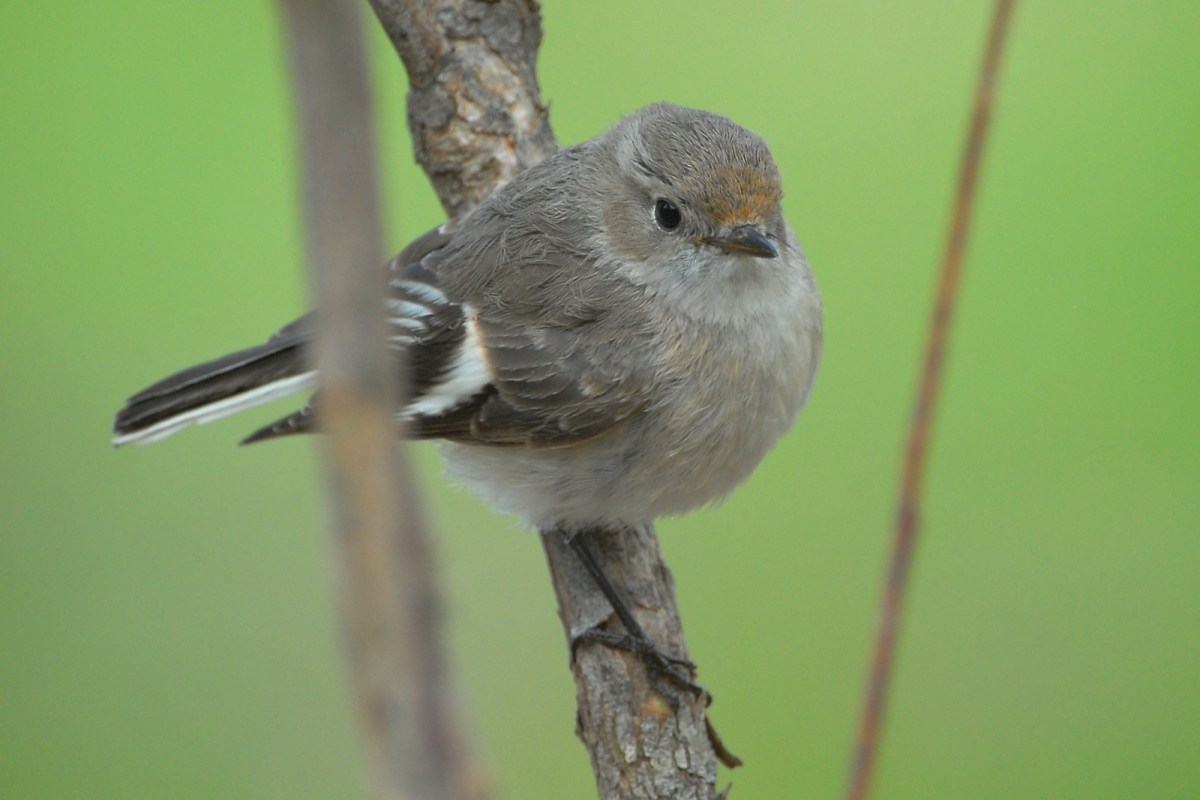
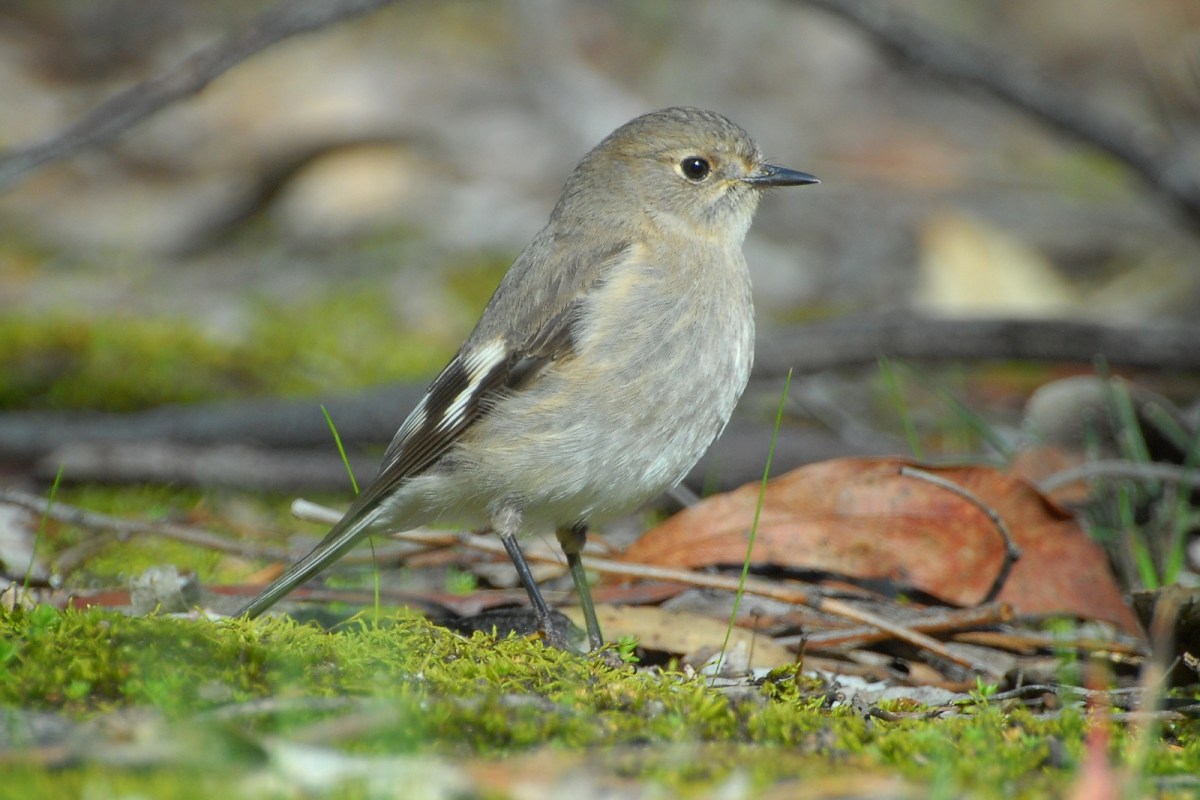
Several female Flame Robins dropped round too, so it was nice to add a couple of decent images to my scant collection.

But it all comes at a price.  Each bird is now extremely vocal with the ‘Come to the sea with me, if you will” call.  A sure sign they are rounding up to move on. So the bush rings with their calls, but it is a bit sad for the season to end.  I think the only thing holding them is a strong North wind, which would be a head wind for them going home, and they will wait for a wind change I suspect.

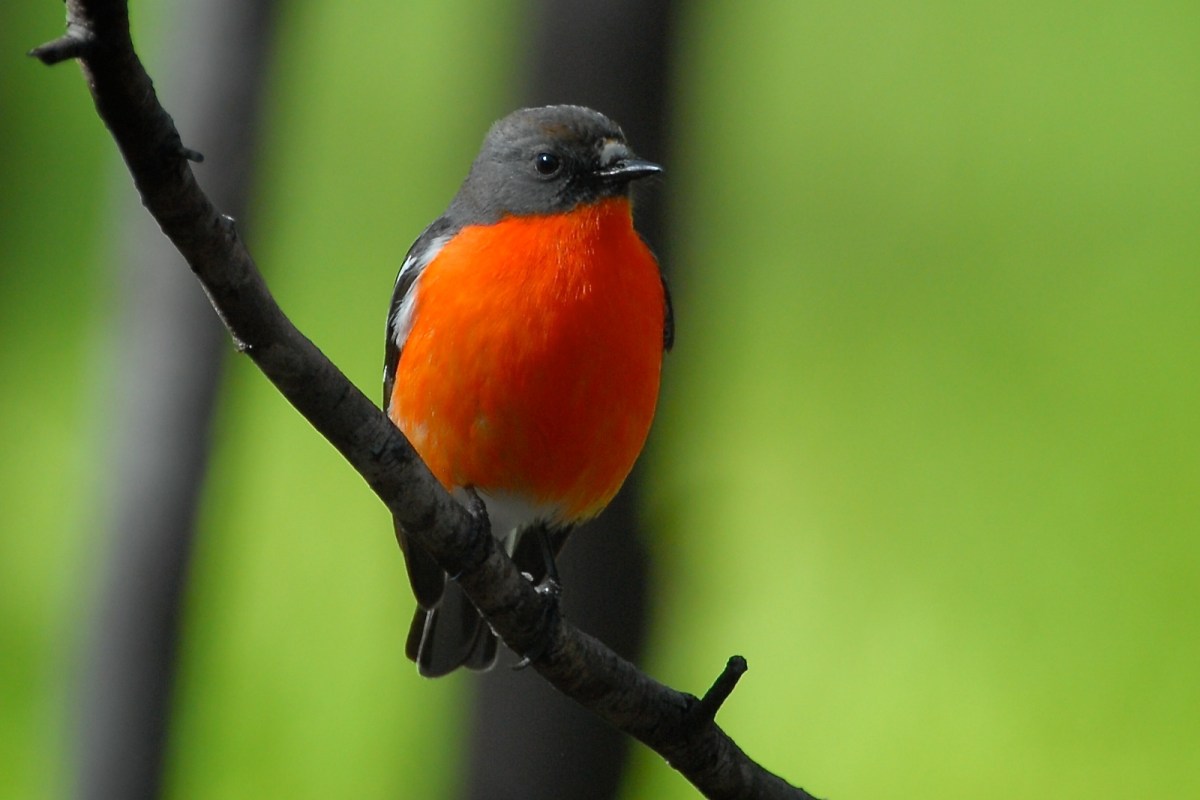
Male Flame Robin sitting in the sunshine waiting for the next meal.
Female Flame Robin at work across a little moss bed. She spent quite a few minutes only metres from my camera position.
Lockie at work. Checking out all the ‘invaders’ moving through his territory. He seemed to be able to hunt off or make them move along with both verbal threats and fly-passes.

Big Birds up at WTP

It started out as a windy day, and stayed that way.

Good day for big birds we thought as Dieter and I drove down to Werribee. We went too look for the elusive Oriental Pratincole. However the roads were still pretty much awash from the  rain of the last few days, and Austin Road, where the best sighting had been made was literally mud from end to end. When a guy in a four-wheel drive arrived and chatted about the bird and how many 4be’s had been down Austin Road on the weekend,  that was just about it for my little humble two wheel drive milk and bread pickup vehicle. He also announce, ‘there is no hope of me going down there in this. (referring to the 4Be), so that was enough for us to wander on to other roads that were much better suited to the milk and bread pickup.

To our delight we found a Black-shouldered Kite that was hunting just along the roadside and got some lovely views as it came up to the car, circled around and then continued on down past the car. Wonderful.

I noticed some commotion among the silver-gulls and ducks on Lake Borrie, and a sweep with the binos revealed a White-bellied Sea Eagle on a tree. So far away.  Now to get to there we had no option but to go the long way, as the road down along the bay was pretty much closed for the mile and bread van.  In the end it took us about a15 minutes to get round near the trees, and lo and behold the Eagle was still in attendance along with a flock of very angry gulls.  So we had plenty of time to get some reasonable pics before the poor eagle left the demented gulls to their own business.

WTP evening

Getting a bit cold for an evening drive, so we thought we’d start early. Like after lunch!

It’s a long way to WTP, if the weather is only so so, and if its not being very helpful, the best idea we reckon is to stay home. But throwing out best advice out the window, we went anyway.  Hadn’t been for a couple of weeks, and wanted to see who things were going.

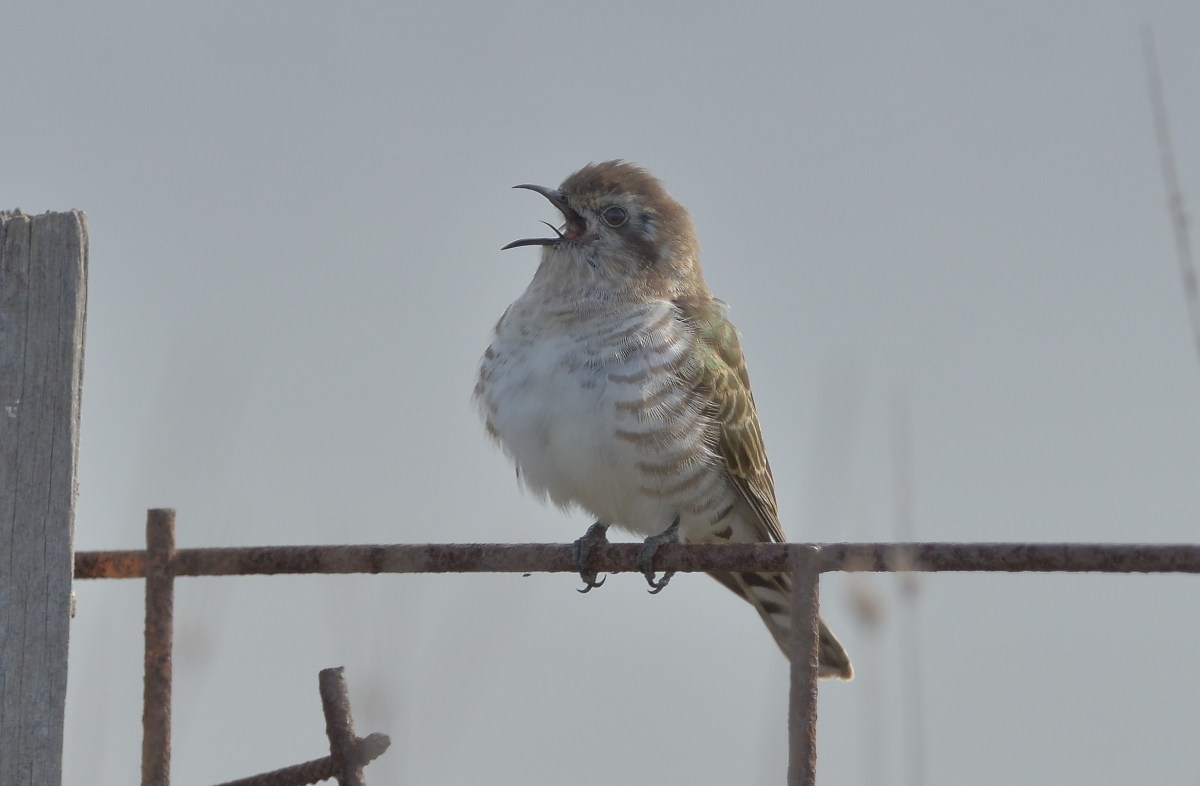
Along the Spit area, a Horsfield Cuckoo sat on a post and piped for us, it was answered by at least two other birds, and we have just recently spotted about six or seven sitting on the fence rails. This one co-operated and sat in the very weak sunshine, which was good as it meant no harsh shadow detail loss.

Further along were several Red-capped Plovers and a number of Red-necked Stints in the shallows at the Murtcain Outlflow.

Down along the Beach Drive near Lake Borrie we came across an ambitious White-bellied Seaeagle taking home a duck dinner.  It was pursued by a pack of very angry Silver Gulls, and perhaps it wasn’t duck on the menu afterall?

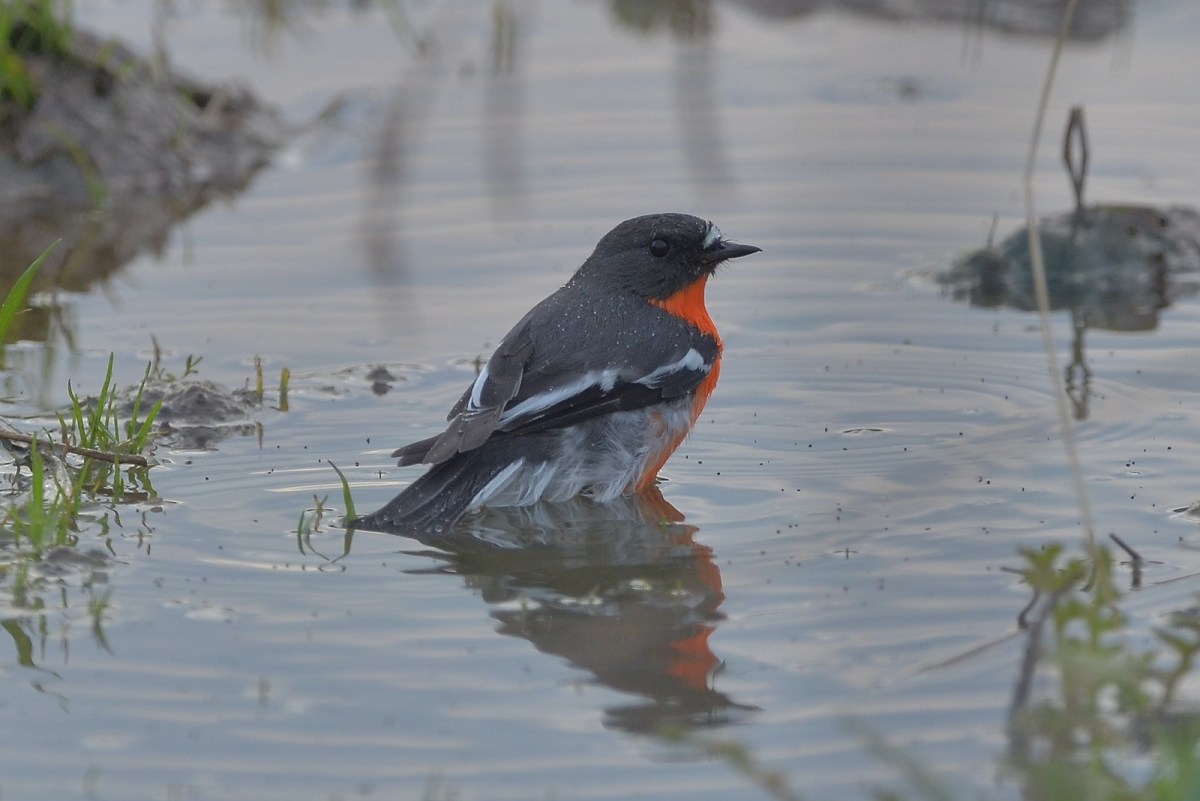
As we were leaving with the sun well and truly set behind the You Yangs, right on the Paradise Road exit gate, Dorothy spotted a Flame Robin taking its evening bath and then a few minutes to dry out all the feathers. Made a great end to a day.

Horsfeld’s Cuckoo in call mode
White-bellied Sea Eagle escaping with someone’s relative
Male Flame Robin taking an evening bath
Male Flame Robin after a bath

On a Road, 40 Years Ago

This is not a post about birds, or my photographic life. It is about life, and humanity and how a thoughtful, aware and intuitive photographer has dealt with an extraordinary subject with a great concern and tenderness. Well worth the read just to see McNally at his finest.
It is to direct you to the Joe McNally’s Blog and look at the post

On a Road, 40 Years Ago


Hello Mr Mighty, or I think I might take up photography, seems easy enough

Hello Mr Mighty.  This bird is usually patrolling the territory around the gate at Backpaddock.  He gained a bit of notoriety last year when he appeared on cover of the penultimate edition of Bird Observer in August ’11.

I have not seen him for a few months and was beginning to think he had moved on. Neil A, had sent me a pic a few days back and I was pretty certain it was the same bird.

Armed with that bit of advice, I headed out, and sure enough within a few minutes of searching about, he had come by for a visit. He will tic tic back to my poor examples of toc, toc, tongue click, and of all the birds out there is perhaps the most relaxed.  The give-away 3 white moustache feathers is his particular dress.

So, he hunted about, flew off, came back, it was all very therapeutic.

His lady has the most beautiful ginger/copper cap, and I’m hoping she is going to turn up as well.

Three hours in the bush, one photograph.  Who said photography of birds was tough. (Oh, did I mention the 3 months of fruitless searching?  Not to mention the endless cups of tea?)


Mr Mighty with a wing flick on a stump. It is a hunting technique. But he is really just showing off for you and me.