Change of weather- things take a change at Warrnambool

I know that all good things must come to an end, but when the weather goes from nice sunny, enjoyable, to cold, rain, windy, it’s a bit of a shock. So we woke to hear the rain rattling on the roof, the trees bent  over and the bushes behind our unit tap tap tapping on the wall.  Didn’t look good. Pull doona over head.  Nope that didn’t help.  Today we were off to Tower Hill Park, and the Beach, and a spot of looking about Port Fairy.

Stoically prepare lunch. Nice hot vegetable and barley soup into the pre-warmed Thermos. That proved to be one of my best moves of the day.  Pack in the Drizabone jacket. Second good move of the day.  Step out door. Not such a flash move. By the time we convoyed to Tower Hill, not much had changed, except now I was wearing said Drizabone.  And.  It was working, and it worked all day. Isn’t it great when a product does just what it says.  I would later stand on the beach and contemplate the bravery of early sailors in frail wooden ships that plied these impossible waters, and they used a product just like my Drizabone.

A walk around part of the lake gave  us a few birds and the highlight was probably a Rufous Whistler, but it took 18 people quite  bit of time to find it among the foliage.  We went on round to the Visitor Centre area, and walked around the Lava Flow Track.  Rain threatened and then retreated. Oh, good.   We arrived at a Bird Hide, and were getting ready to enter when it became quite urgent, as a huge squall began dumping water by the tankful. Just as well we were so close when it came down.

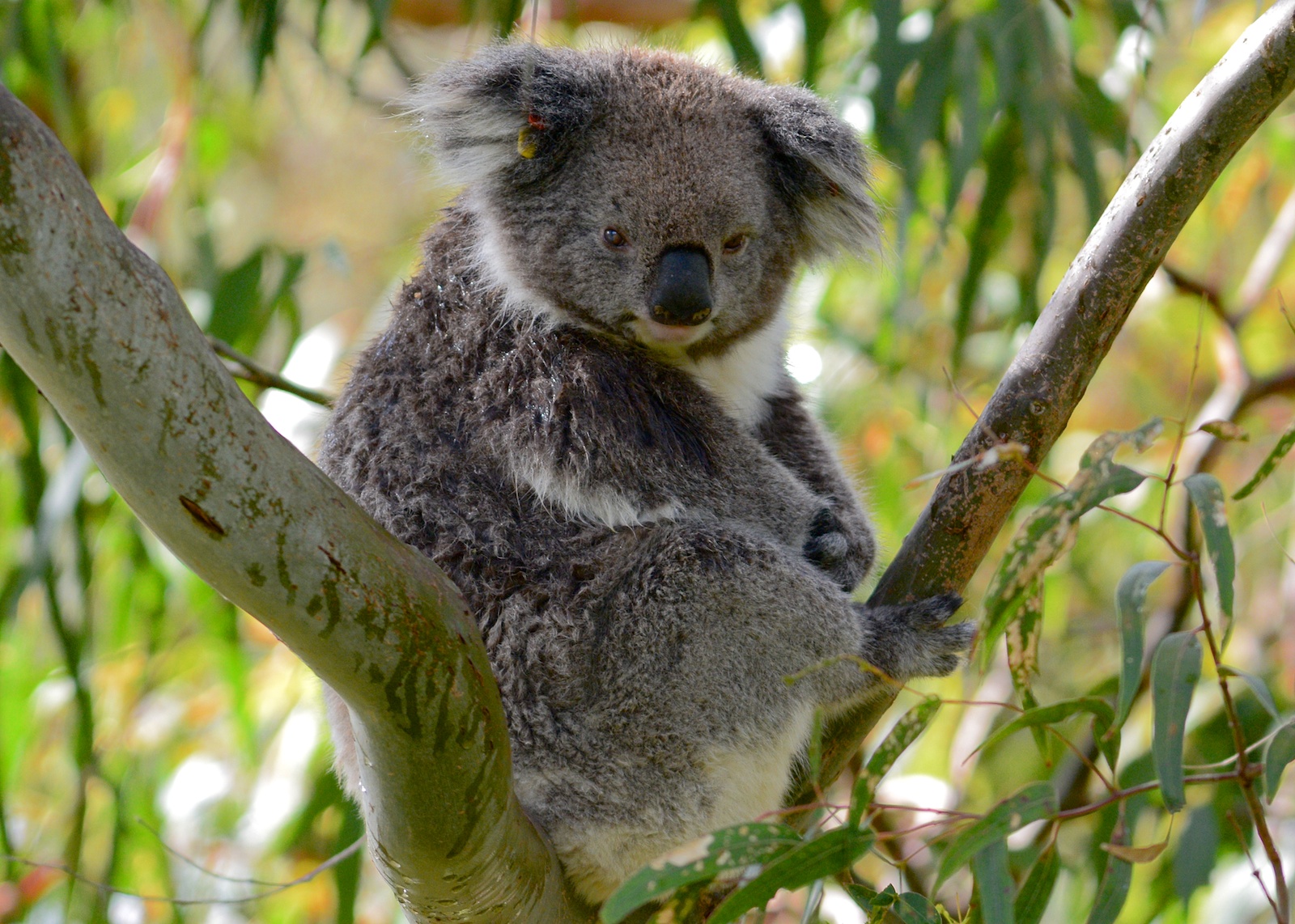
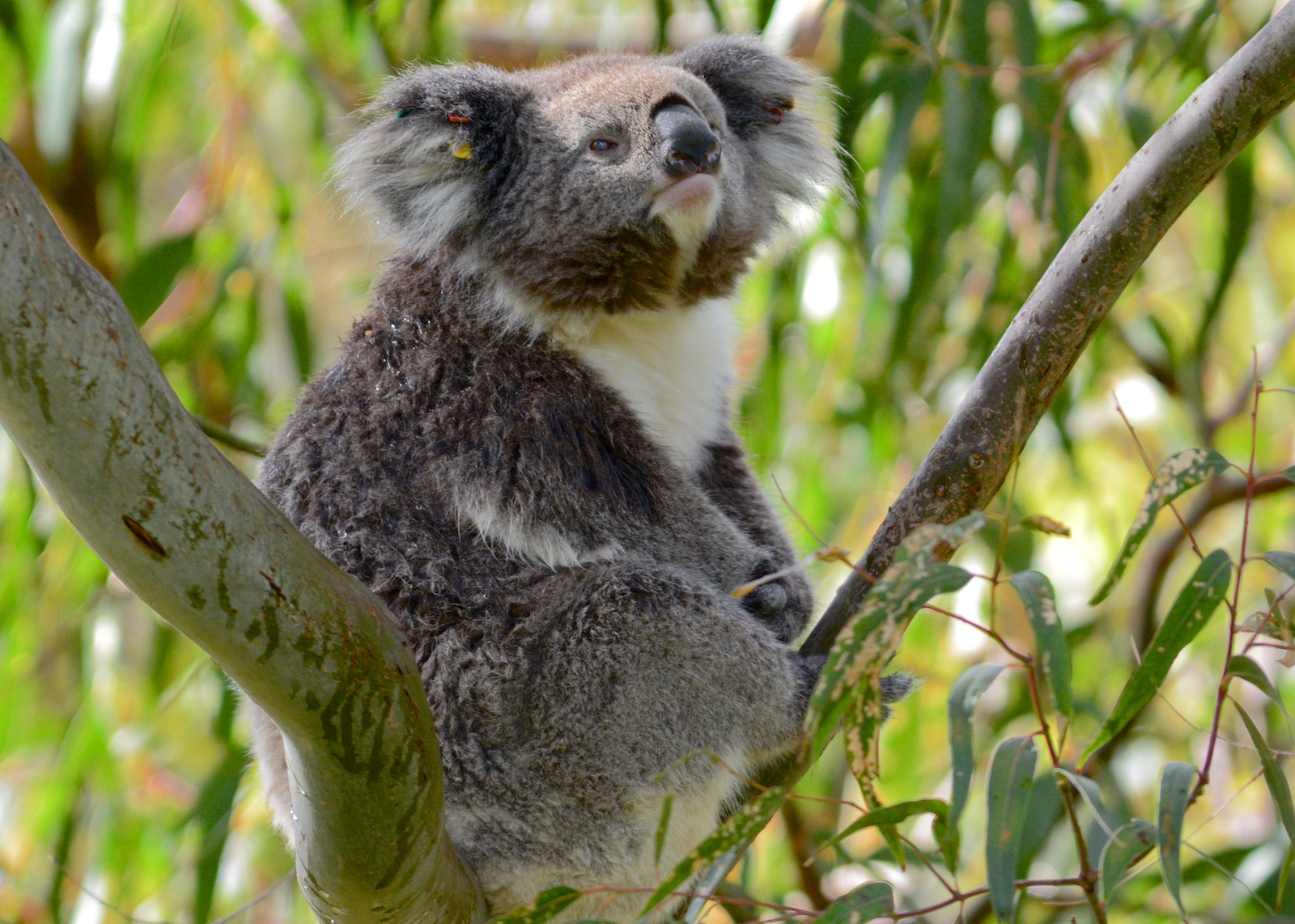
Back to the carpark for a warm morning tea and some nice cake provided by members, and a look at several Koalas that were in the area.  One took one look at us, the weather, and just tucked itself down even more.

Onwards to Belfast Beach, and a drive down Gorman’s Road.  Its a great place, and if you are in the area, make it part of the plan.  A inlet has created a small lagoon beyond the sandbar, and only at high tide does the water flow in. But its a great feeding area for all sorts of shore birds.  We parked the cars in a small carpark at the end of the road, and I was getting ready to go, put on Drizabone, put on warm gloves, add rainproof to camera, and … what’s this everyone is coming back.  “Oh, nothing to see?”, I enquired. “There is a large rain squall heading this way”, was the reply. And just as I opened the car door it struck. Pelted down.

So we sat in the car, and played, tic-tac-toe, I spy with my little eye something beginning with “R”, discussed the causes of world troubles, and in the end just stared out at the rain.  My Tai Chi master would have been happy.  “Ah glasshoppr, fold into your mind and see from within.”, so I wrapped the scarf closer and was absorbed by the universe.  Eventually reality set in and the rain stopped.

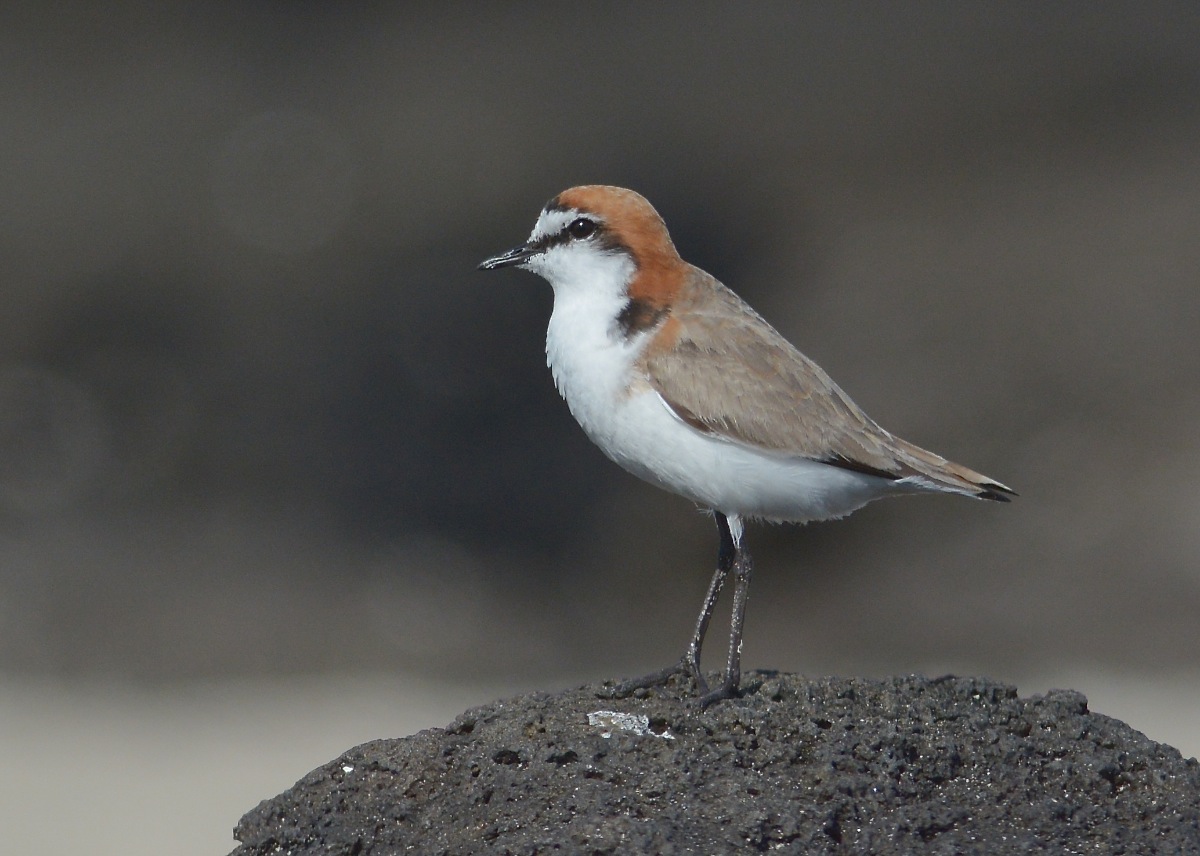
Down to the beach.  With a light rain, and a strong wind. Nope, make that a very very strong wind.  In between the tears being ripped out of my eyes, I could make out a range of shorebirds, and many Red-capped Plovers, several Ruddy Turnstones, and what I’m reliably informed was a Sanderling.  All hiding behind any cover they could find.   Its ok with birders as they stand back and look with long field-scopes, but us poor photographers have to get closer. So I set about slogging across the windswept sand and settled into a spot near where the waders had been actively feeding. After a few minutes they returned and I was rewarded with some reasonable closeups. Imagine if the weather had been fine.   With the rain, the salt borne on the wind, and the freezing wind, I lasted until the last man standing departed back to the cars.

Now to find lunch. Well the pre-prepared lunch spot at a sports ground in Killarney was at best windswept. So it was decided to go to Port Fairy and the rotunda on the quayside.  Third best move of the day. Shelter. Warm soup, great company and a little hint of sunshine.

From there the walk of about 4km around the coastline Griffiths Island, into the teeth of the same gale was on the agenda.  What amazing large waves and we walked past the burrows of Shearwaters. These amazing water birds with such flying skill have taken to living in burrows to have their young. Seems almost both out of character and somewhat unfair.   We could see their dark shapes riding the wild waves about 1 Km out.  An robust looking  Lighthouse stand at the far end of the island, and we found a White-bellied Sea-eagle nest in a huge pine tree on the way back.
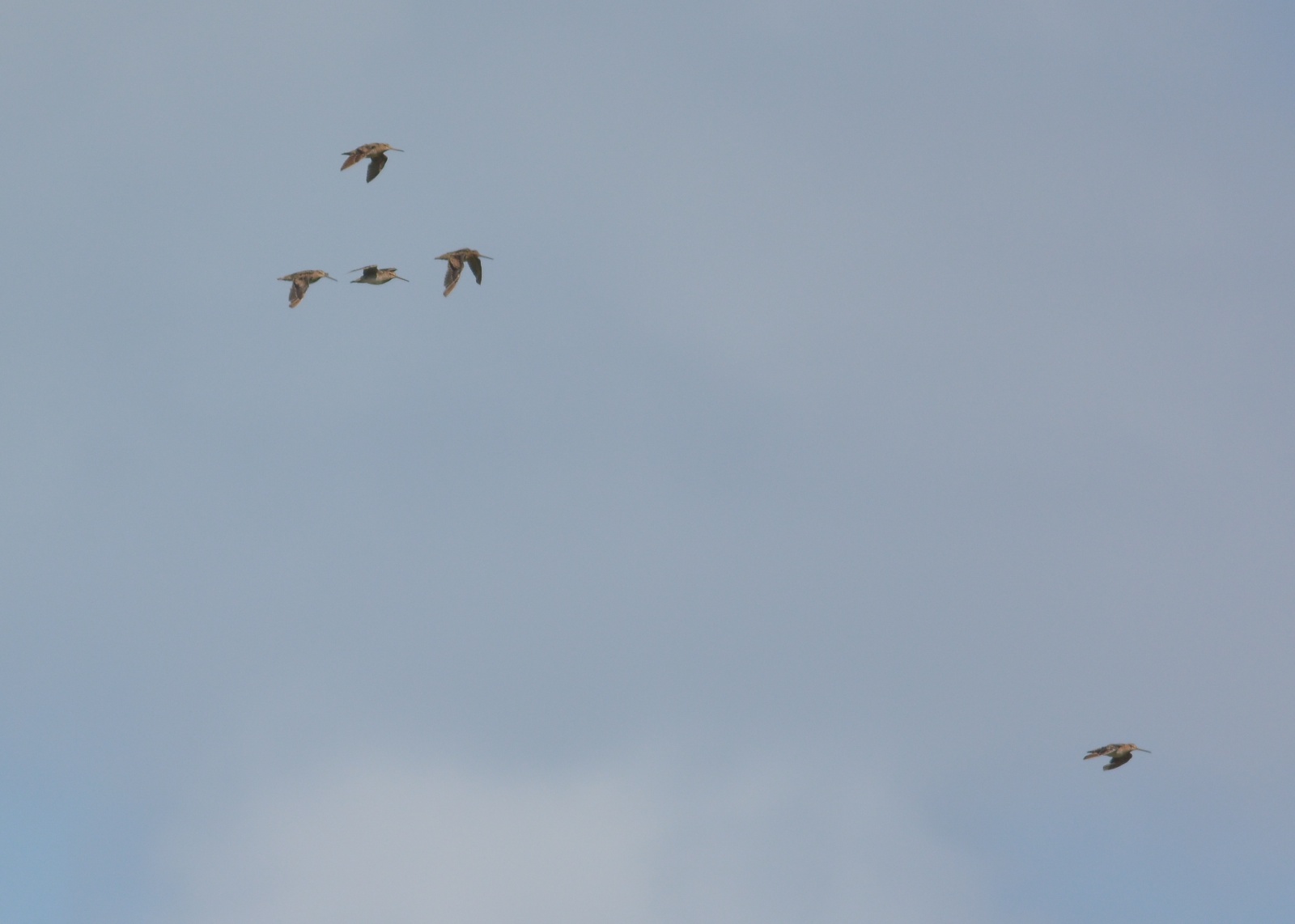
Next on the list was a look for some Latham’s Snipes in a water hole in the township. This piece of land is used by over a hundred snipe, but is in eminent danger of being developed into townhouses. Once more I was reminded that Birds Don’t Vote in council elections.

From there the idea was to head back to our accommodation. So we took the opportunity for a bit a walk along the food strip in Port Fairy, and ended up in a lovely cafe for coffee and cake.  Bella Claire (see here https://www.facebook.com/BellaClaireCafePortFairy  set us out nicely with coffee and some amazing Lime Cheesecake. Yum. I also noted on the menu board, “Chicken Tandoori Pie”, must make a note of that I thought.   They also have a great little Photobook of the renovations and setting up, as well as events and ‘famous’ people who have been there.  Great way to make a use of photo books.   And… there is more.  Across the road is Cobbs Bakery. No prizes for guessing where I headed next.  Some fine rye bread and a great Scottish Fruit Loaf were worth the walk.

So back home in the rain, hoping that the weather might blow itself out over night.

Enjoy.

Rufous Whistler
Rufous Whistler
Ruddy Turnstone, in the wind and the rain.
Must be the world's greatest optimist. Red-capped Plover trying to hide behind a small bump on the beach.
Must be the world’s greatest optimist. Red-capped Plover trying to hide behind a small bump on the beach.
Food handling skills. Some poke, some dig
Trying to feed and avoid the rain and wind behind an old piece of wooden palette.
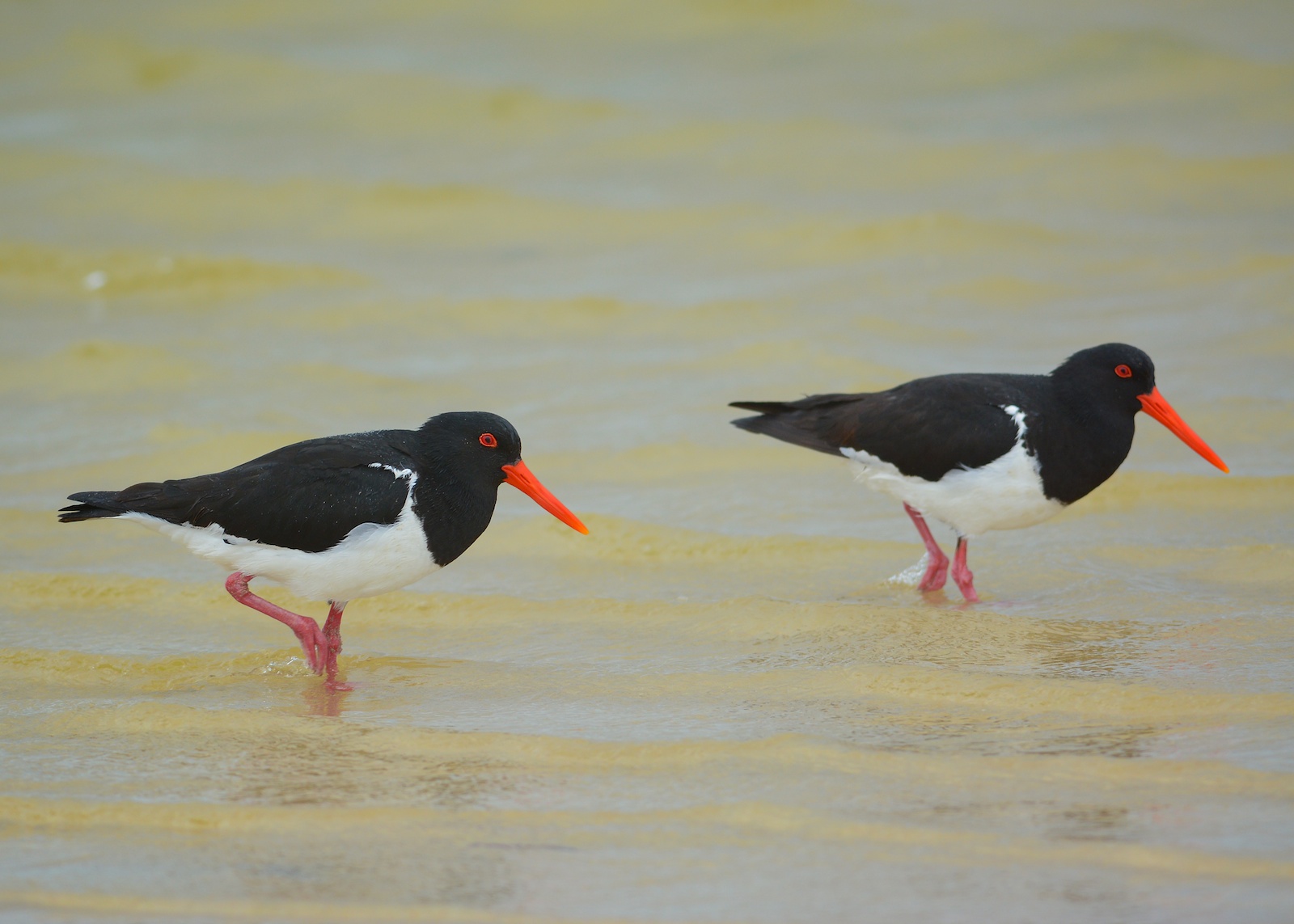
Pied Oyster Catchers in the Lagoon on the beach at the end of Gorman's Road
Pied Oyster Catchers in the Lagoon on the beach at the end of Gorman’s Road
What is all the noise?
Oh, humans!
Oh, humans!
They smell funny, and its about to rain methinks
Snuggle up, back to sleep, hopefully they'll all go away.
Snuggle up, back to sleep, hopefully they’ll all go away.
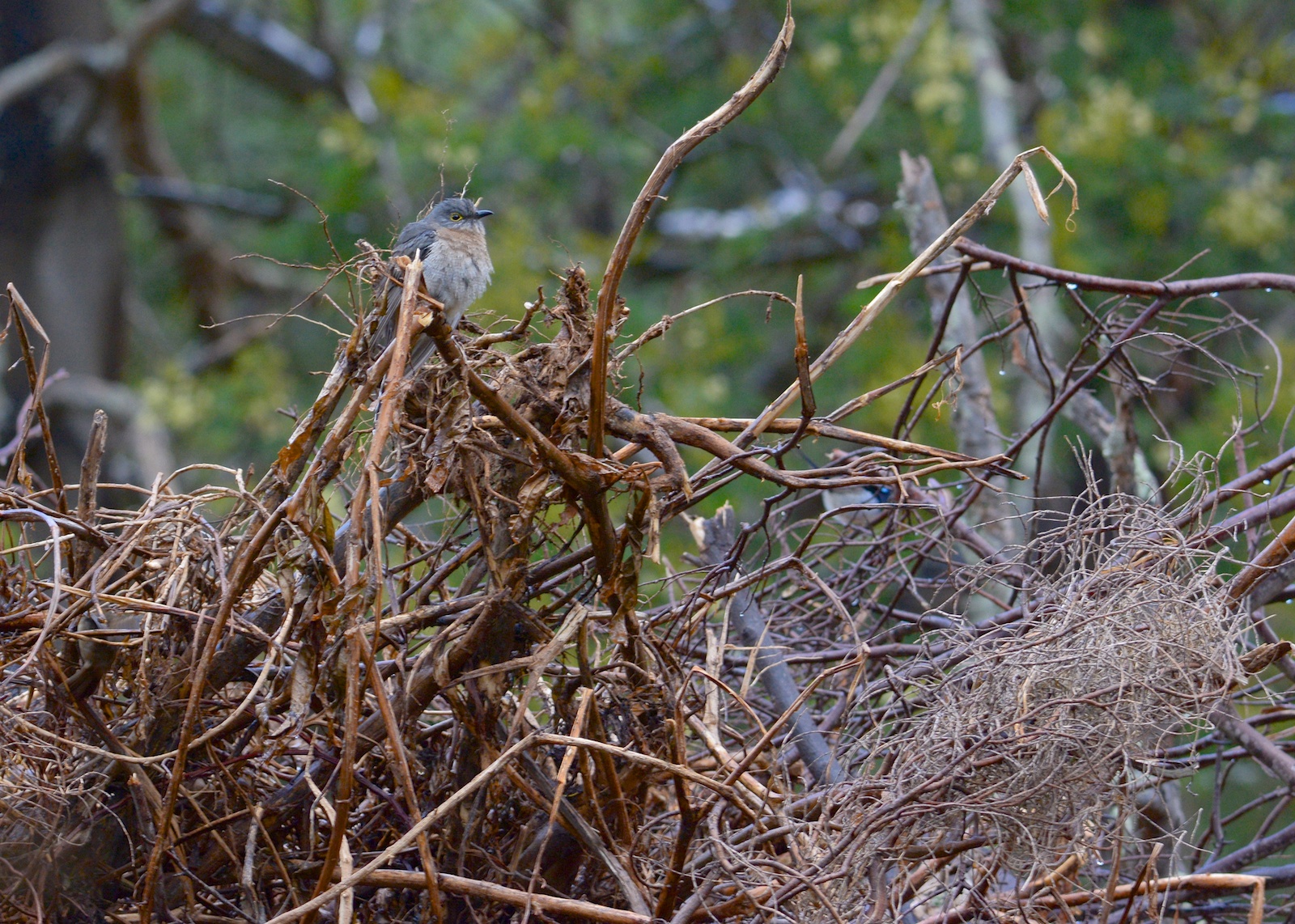
This clever Fantail Cuckoo was sitting on a large pile of cleaned up logs and sticks. It's hosts, the Superb Fairy Wrens were nesting among the logs. Just wait.
This clever Fantail Cuckoo was sitting on a large pile of cleaned up logs and sticks. It’s hosts, the Superb Fairy Wrens were nesting among the logs. Just wait.
An Australasian Gannet against the elements.  I really wanted to find a way to show the awesome skill of these birds against the endless seas.
An Australasian Gannet against the elements.
I really wanted to find a way to show the awesome skill of these birds against the endless seas.
Black Cormorant on Griffiths Island, its sheer audacity against the incoming waves was inspiring.
Sharp-tailed Sandpipers back from Siberia
A few of the many Latham's Snipe in Port Fairy
A few of the many Latham’s Snipe in Port Fairy


Wandering around Warrnambool Day 2

The next day, we went out to meet up with the Wagtails that were still travelling down to Warrnambool. Several spots along the way had given them a pretty full day. The last stop of the day was at the Ralph Illige Sanctuary about 20 minutes drive back from our accommodation. We decided to meet up with the group mid-afternoon, and go directly there and have lunch and  look about.

“Ralph Illidge, a photographer from Warrnambool, acquired this 40ha property in 1958. In 1975, to make sure that the property remained in its natural state, he donated the property (Bimbimbi, which is Aboriginal for “place of many birds”) to the former Victorian Conservation Trust (now Trust for Nature).

Ralph Illidge passed away on 11 April, 1975. It is the hope of the Trust that, through this Sanctuary, visitors will come to understand the foresight of the man who made it possible. Ralph Illidge Sanctuary contains, in addition to the native flora of the area, such rare wildlife species as the Long nosed Potoroo, the Powerful Owl, the Rufous Bristlebird and the White Goshawk. The Trust acquired a further 51 hectares (north of the Warrnambool-Cobden Road) in June 1987, which was added to the Sanctuary. The funds were raised by the Warrnambool Nature Reserves Society with contributions from foundations and the State Government.

The Sanctuary was severely burnt during the Ash Wednesday bushfires of 1983. Fire demolished the original house and outbuildings and severely damaged the native bush and vegetation.”  From the Ralph Illidge Sanctuary Website

This wonderful piece of forest is a treat mainly Messmate and its surrounding understorey.  It is a tribute to the forest that in-spite of the destruction over 30 years the forest is in fine condition with lovely big trees and plenty of understory.

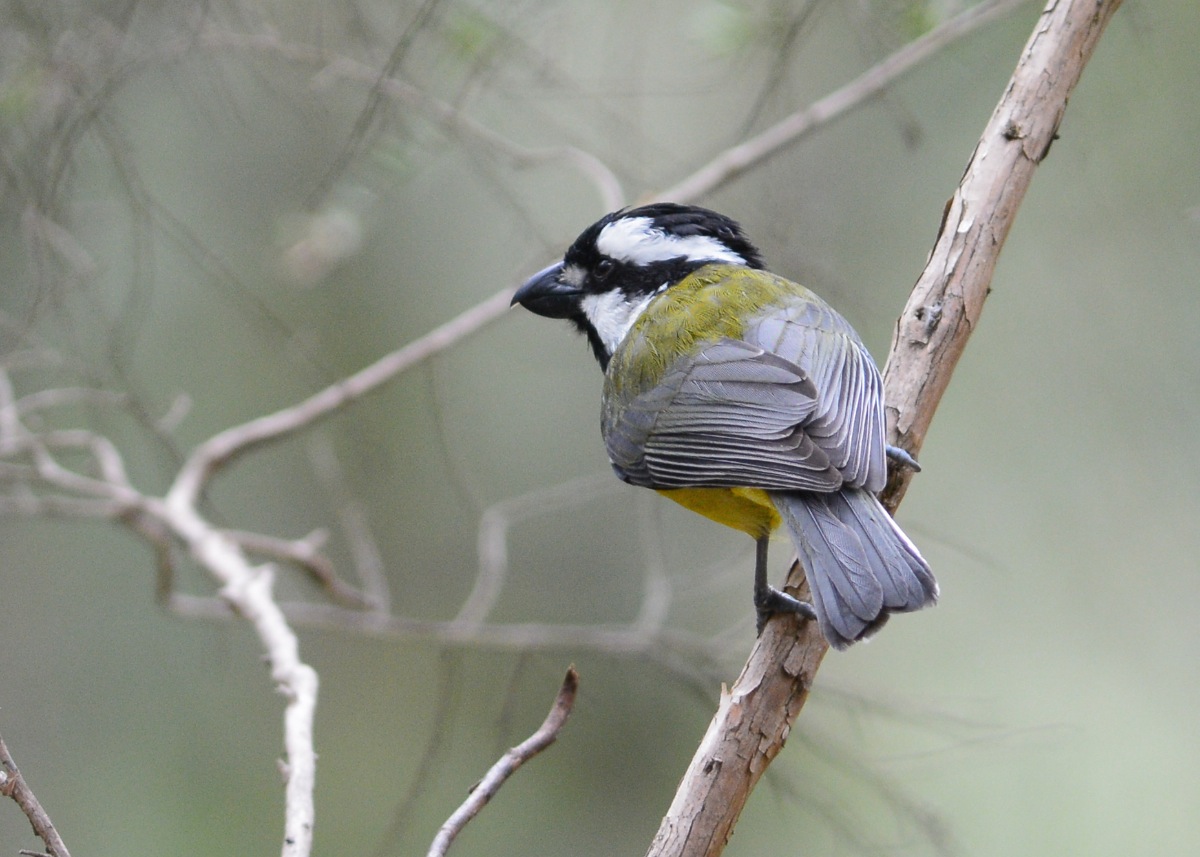
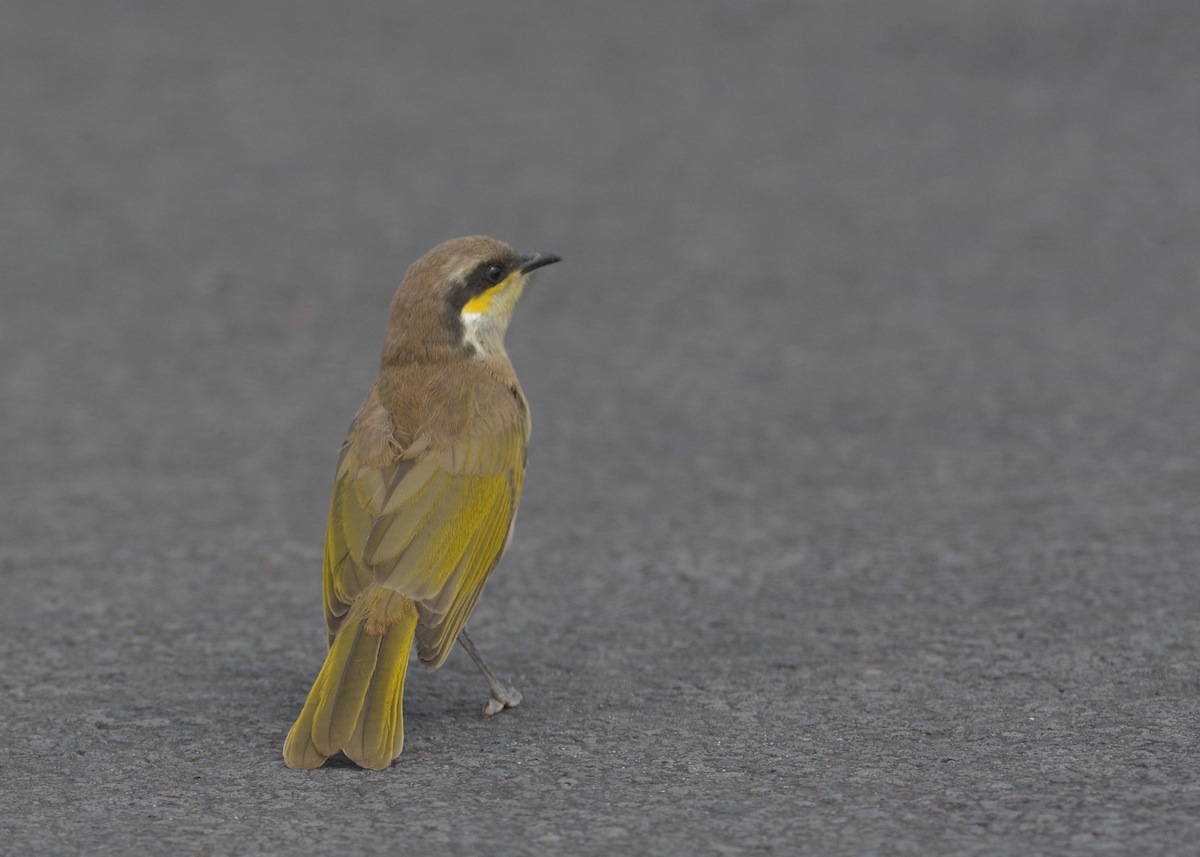
We arrived and decided that a walk to the ‘Creek’ would be the first order of the day, and besides the arrow on the sign pointed that way.  Plenty of bird calls indicated this to be a wise move.  In not more than a few minutes we’d found a small flock of Yellow-faced Honeyeaters, a couple of pairs of Eastern Yellow Robins, and a Crested Shrike-tit.  As well as the other songster, the Grey Shrike Thrush.  We ambled down to the creek area and a couple of very old and overgrown foot bridges led over the more marshy spots.  It was about this time that one of our party discovered an added traveller.  Leeches. Strange how a nice pair of white socks can take on a macabre colour set in a few minutes.

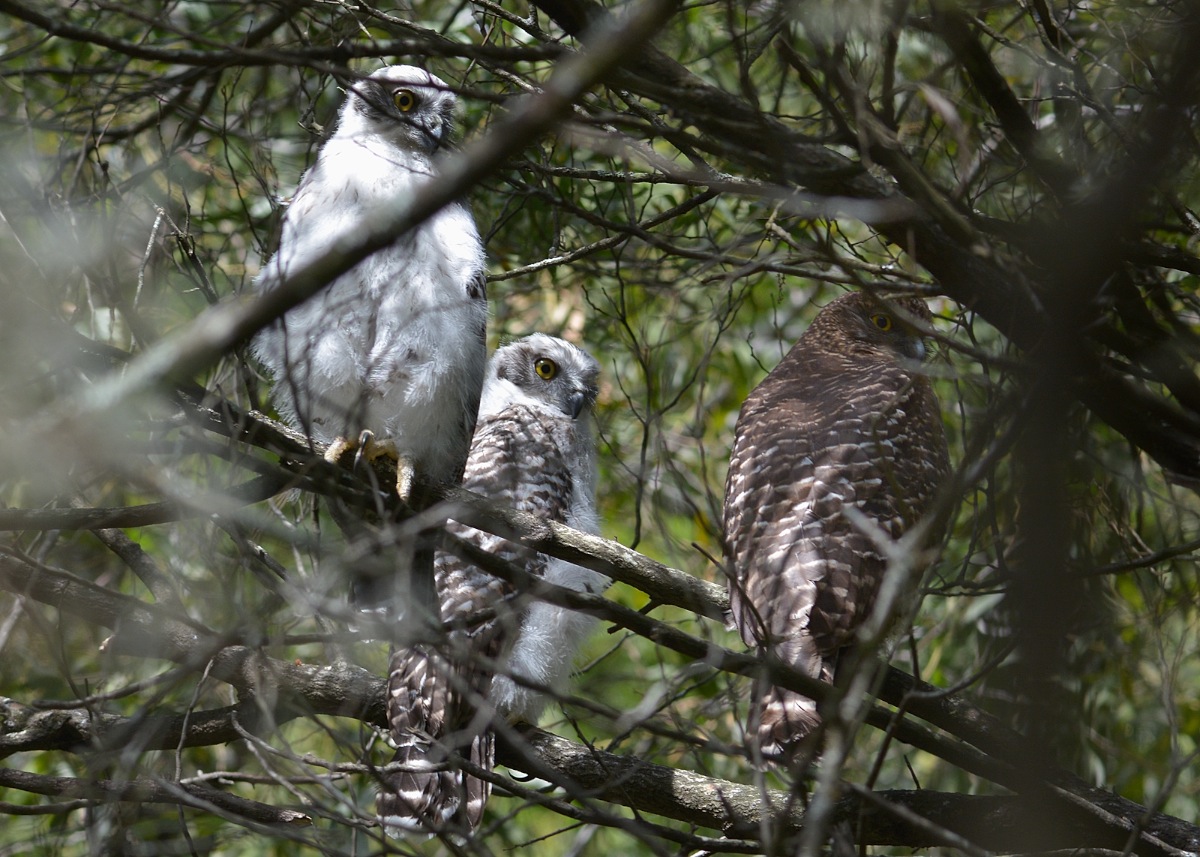
About the same time EE (well, you’d have expected that wouldn’t you!!), said. “Look Powerful Owls.” The emphasis being on Owls. We looked and through the dense scrub high up, sure enough, two lovely looking juvenile Powerful Owls, and by twisting you head around, and looking under the overhanging branches, it was just possible to make out an adult.  The young owls thought we were the best thing to happen all day, (expect of course the possum breakfast, possum lunch, and possum dinner- but I digress).  The heads, well the eyes mostly, bobbed back and forth to see these really interesting moving things in their forest.  The adult (I’m going to assume Mum), seemed less interested.

After putting up with gesticulating, cries of ‘Oh the view is better here’, and “Can you get across the creek for a better view”, Mum decided it was all too much and lifted off and moved about 50 metres to another tree.

While I tried to get into a position where I could get a clear shot of her, she suddenly launched.  And, Silently, wafted through the trees, scrub and overhanging branches, flicking the wings and tail to move effortlessly, and soundlessly to a tree about 100m away.   It’s the second time in about 3 weeks that I’ve seen an owl fly in daylight, and the silent movement is simply awesome.

Back to lunch, and as we sat under the shelter, I was caught by movement on the other side of the road.  It was a pair of Eastern Yellow Robins moving back and forth.  After about 5 minutes, I confidently announced.  “There is a pair of Eastern Yellow Robins across the road, and I bet they have a nest just near there!” Of course the usual guffaws and improbable scorn and how much would the bet be? ensued.  Still to her credit, after lunch, EE picked up the D3300 and the 70-200mm and wandered into the scrub on the far side of the road.   Within about 5 more minutes, she informed us, it wasn’t a nest. -and everybody thought “I should have taken that bet!!!”- “No”, she rejoined, “there’s a couple of fledglings!!!!”

Mad scramble to get cameras and to get into the bush, but  this time the Robins failed to see the joke, and politely moved their offspring to much safer locations inside the bracken and downed timber.  Managed one good look, and shot of one of them and a flutter of wings of the other as it abandoned its hiding spot.

Mr An and I took off to look for the famed Grey Goshawk.  Now what I know about Goshawks is they are wily, furtive and deadly, so this was addressed carefully as we walked along a track. At one point a Grey flash of wings headed out over a paddock, but have to say no positive id.  The rest of the group joined us, and we re-visited the owls, but no sign of Mum.

Back to base and a trip to the RSL for dinner.  Regrettably no pie on the menu.  So I settled for the pan-fried Barra.

Here’s how the day looked.

Not one, not two, but three. Doesn't get much better than this.  A family portrait of Powerful Owls
Not one, not two, but three. Doesn’t get much better than this.
A family portrait of Powerful Owls
Crested Shrike-tit. One of two working along the trees near our walking track.
Yellow-faced Honeyeater
Hard-working and quickly harassed Eastern Yellow Robin parent.
A recently fledged Eastern Yellow Robin.  Nice to see these birds having a bit more luck than our locals.
A recently fledged Eastern Yellow Robin. Nice to see these birds having a bit more luck than our locals.
No its not a new bird species. These two young Powerful Owls were close together in the treeline

Wending in Warrnambool with the Wandering Werribee Wagtails.

The Werribee Wagtails, (now officially Birdlife Werribee), held their annual ‘camp out’ at Warrnambool this past week.

EE and I decided to attend, and Mr An Onymous and Ms In Cognito also came down.  We took a couple of days earlier just to settle in, and stayed at the Warrnambool Surfside Caravan Park, close to the beach, close to the shops, close to the … you get the idea.

Nothing like at trip down the coast to improve the appetite, and we stopped at Routley’s Bakery in Geelong to top up with one of their selection of fine pies, and a coffee, then about 3 hours later we settled into our accommodation in Warrnambool.  Over a leisurely dinner, we discussed the possibilities and decided that a peek at Whale Watching from the designated watching area would be a good start.  Only one mother and babe in attendance, but quite close in and it was fascinating to watch these huge dark grey bulges, roll back and forth in the swell.  What got me thinking was the huge distances these creatures travel, and how this young one had just begun that adventure.

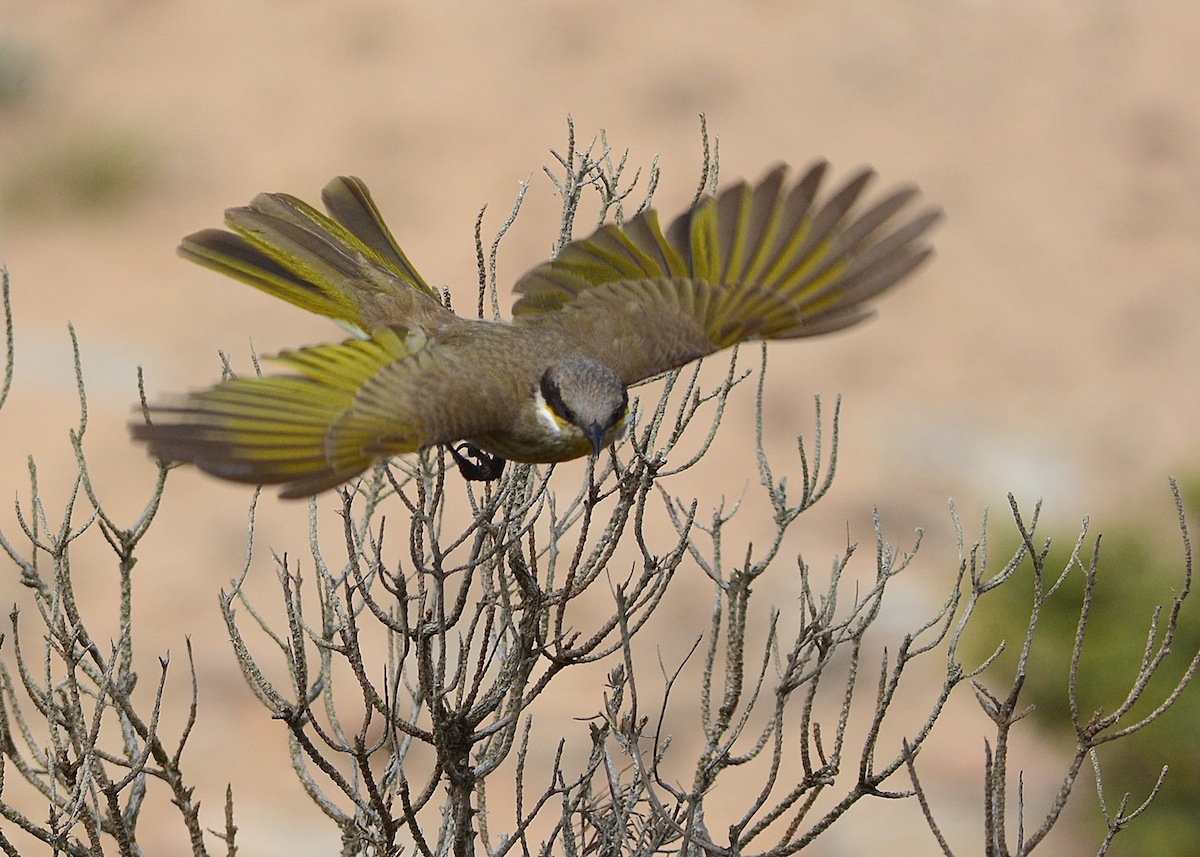
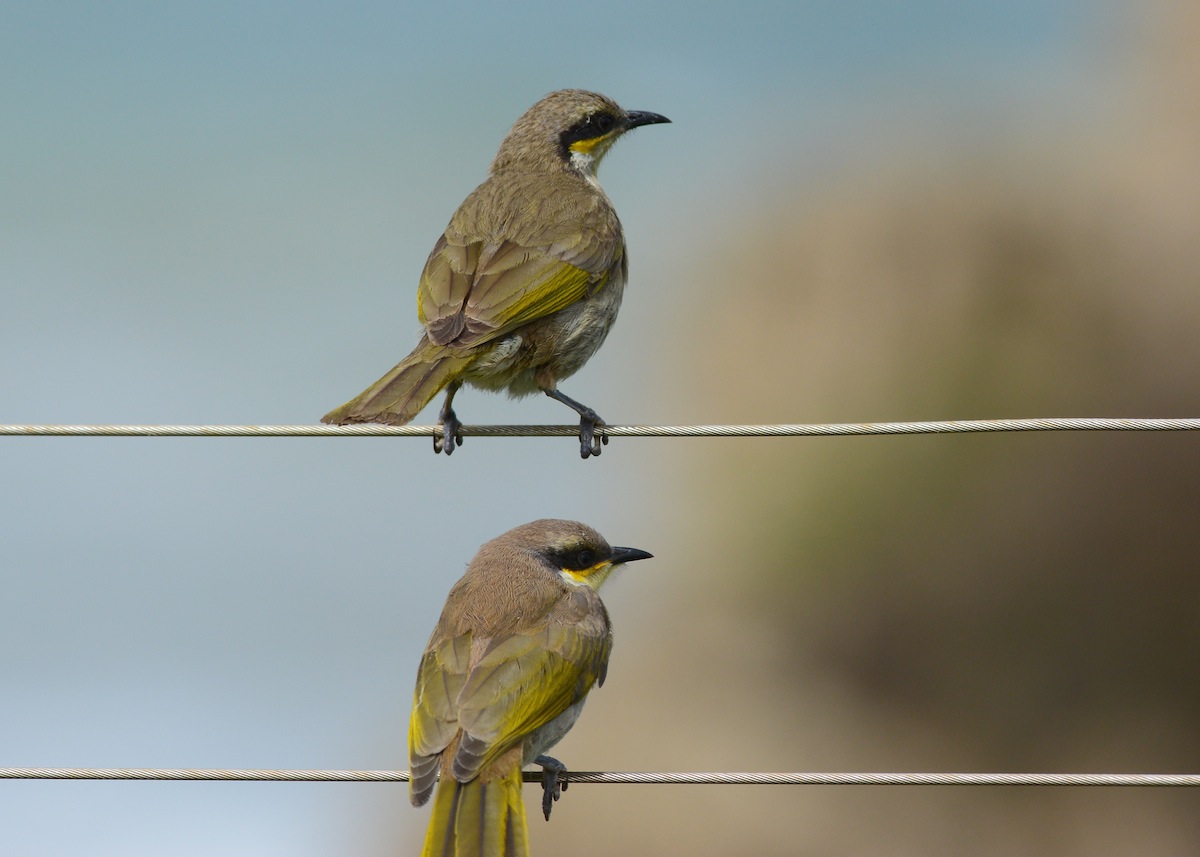
We stopped at the Hopkins River mouth, and after a walk along the beach had only a few of the  usual suspects in view. We moved to the other side of the river and up on the cliff line and even before we had exited the car, Singing Honeyeaters were there to greet us.  No fear of us humans at all as they sat on the bull-bar of the 4WD next to us, danced on the fence posts, swung on the fence wire, and played bump off games on the signage. Close ups were that easy.

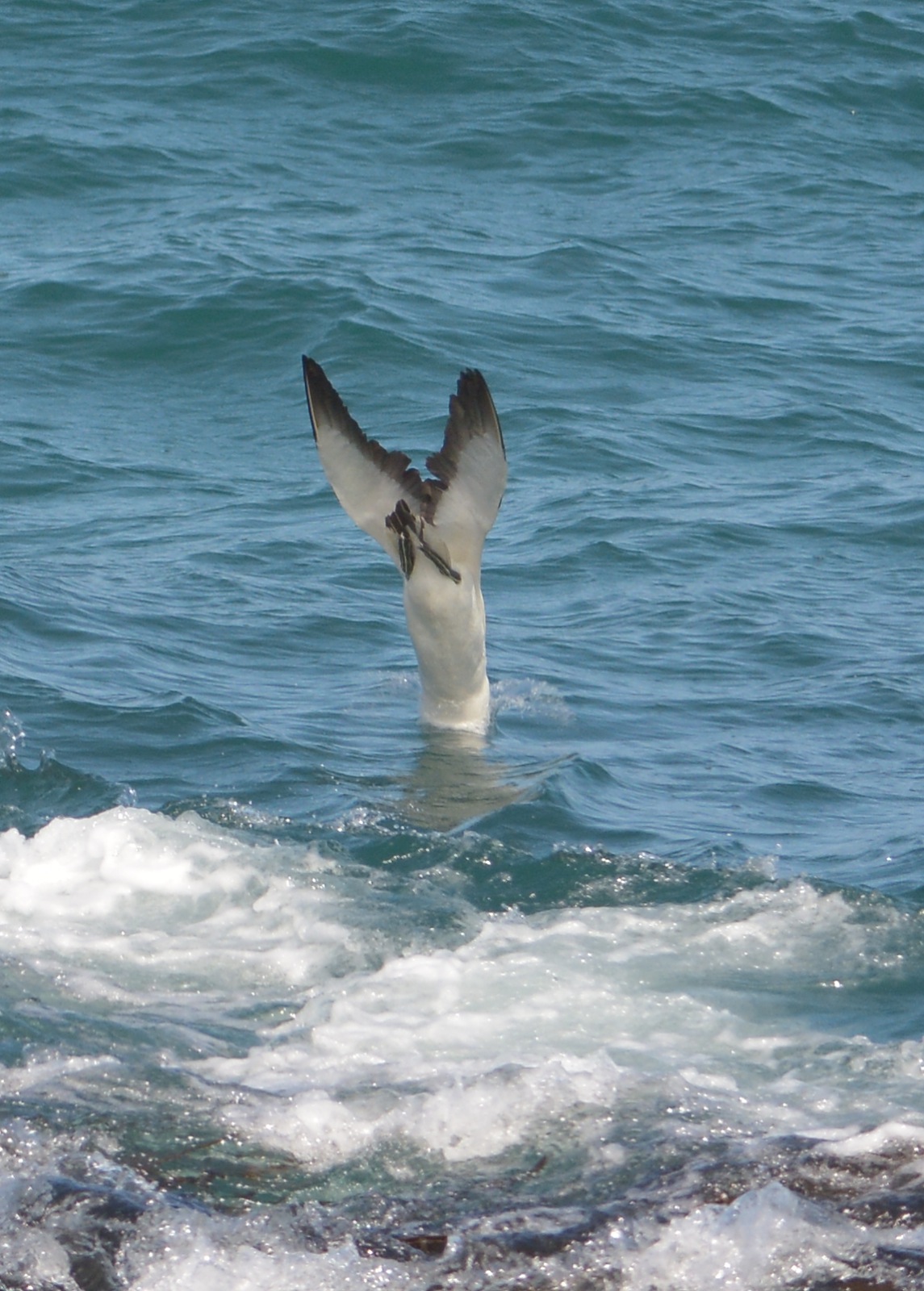
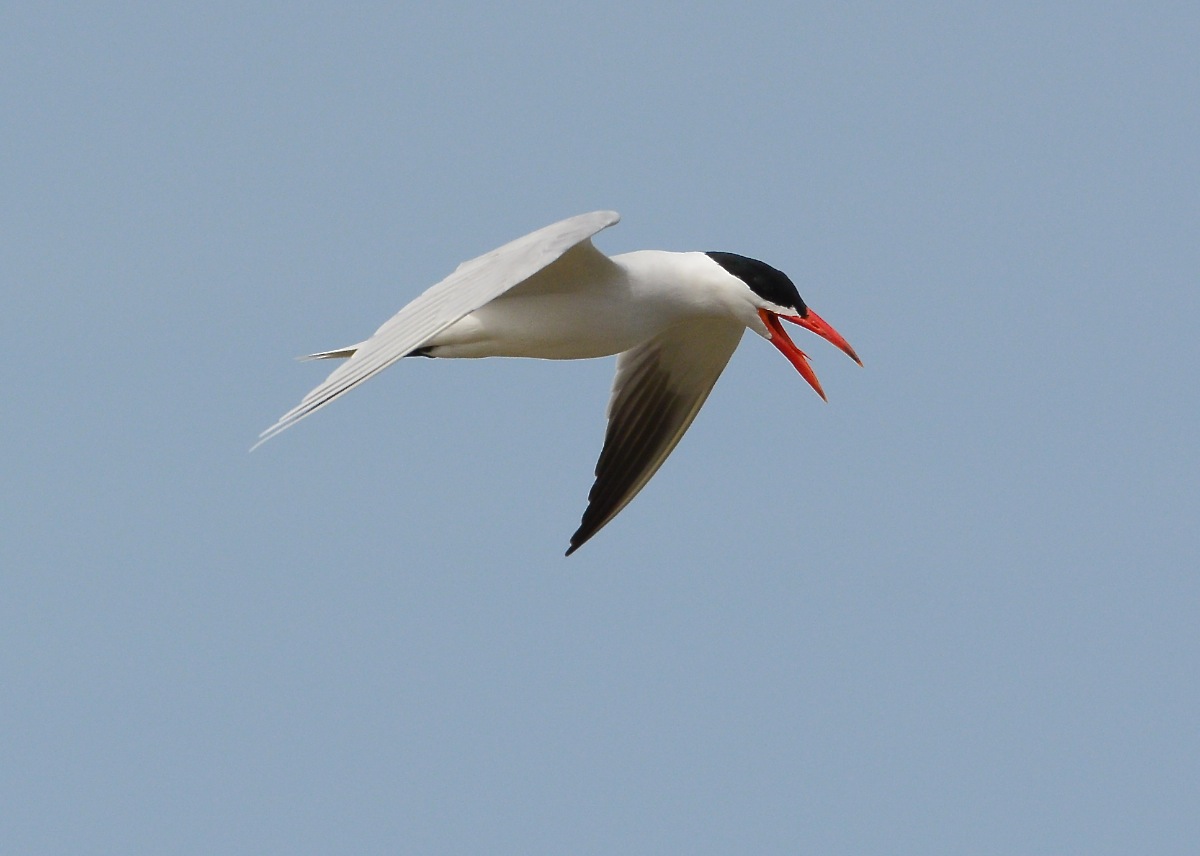
A pair of Black Cormorants dominated the rocky area, and a lone Caspian Tern made runs along the cliff line just above out heads.  Then an Australasian Gannet caught my attention as it swept along the rolling sea line, then out to sea, speed back on the wind, turning over the Hopkins outflow and repeating the performance about ever 5-6 minutes.  Then it rolled over, and plunged headlong into the water.  Emergering after about 30 seconds or more. Then after a preen, it began the run over the waves to get enough speed to become airborne.  Funny to see it running up and over the crest of the wave, and the gliding to the next wave to repeat the running to get speed.

We meandered on down to the Warrnambool Pavillion Cafe Bar, for lunch.What a great spot with excellent views along the beach and over the harbour. We sat in the sun, and enjoyed great service and amazing food. I opted out of the Thai Chicken Pie, but had to look on while In enjoyed the fare.   We did the usual thing over food, told one another amazing impossible stories and sipped coffee and tea. The biggest Pot of Earl Grey I’ve ever seen.  Must have had about 4 tablespoons of tea in the strainer.  You could smell the aroma all over the cafe.

From there our journey took us to the Kilarney Beach Area, and some more Terns, and a few Red-capped Plovers. Then on to  Tower Hill Park.

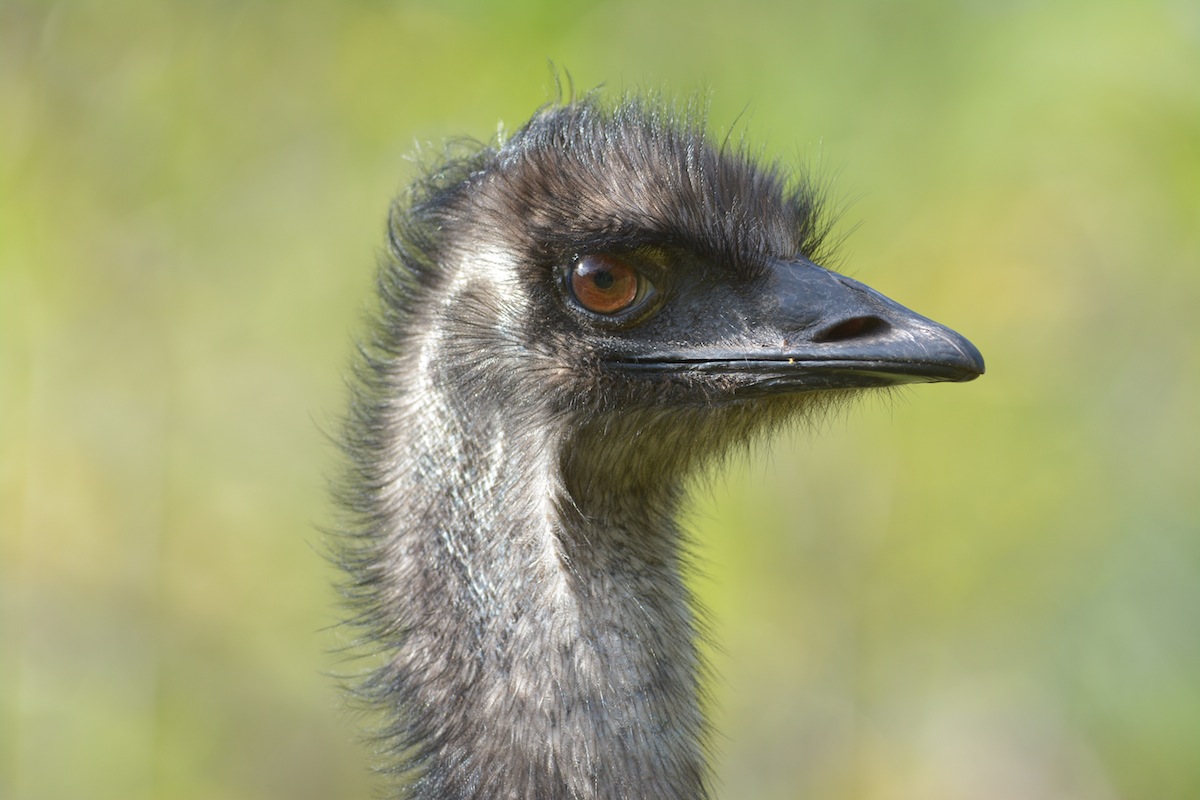
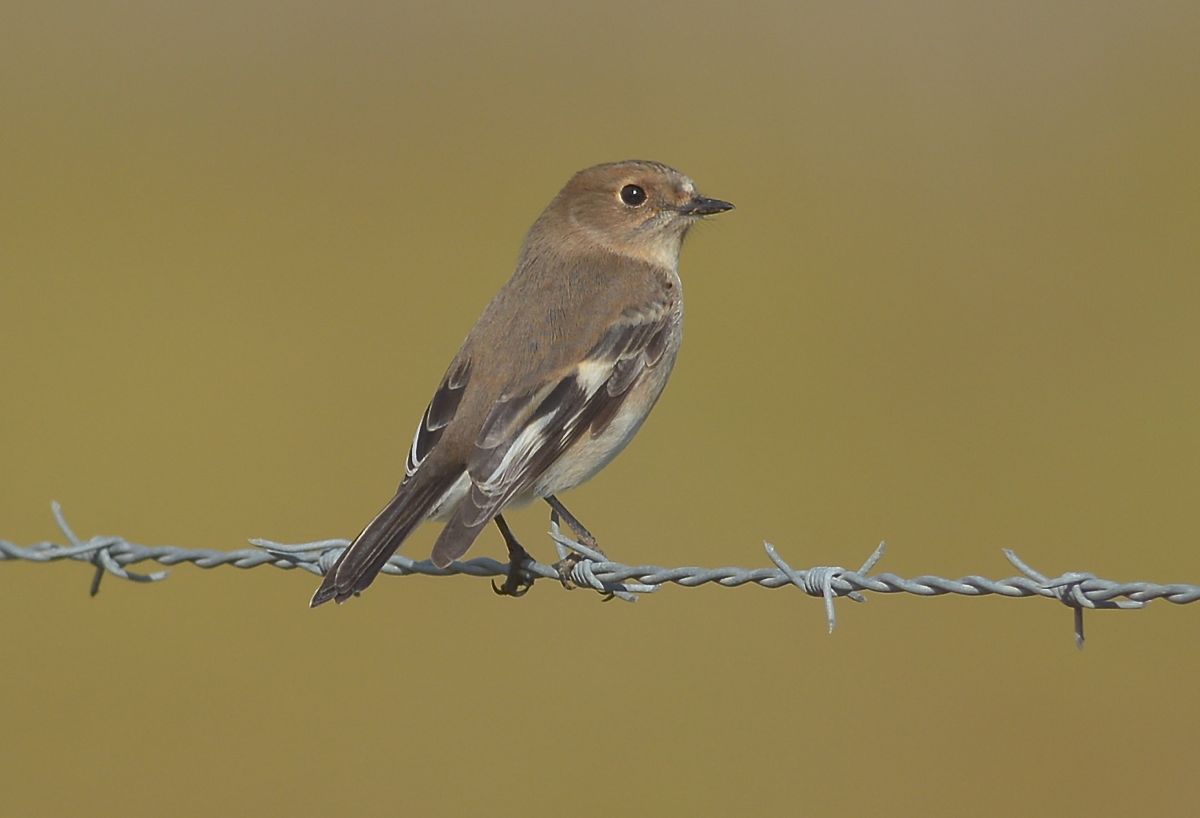
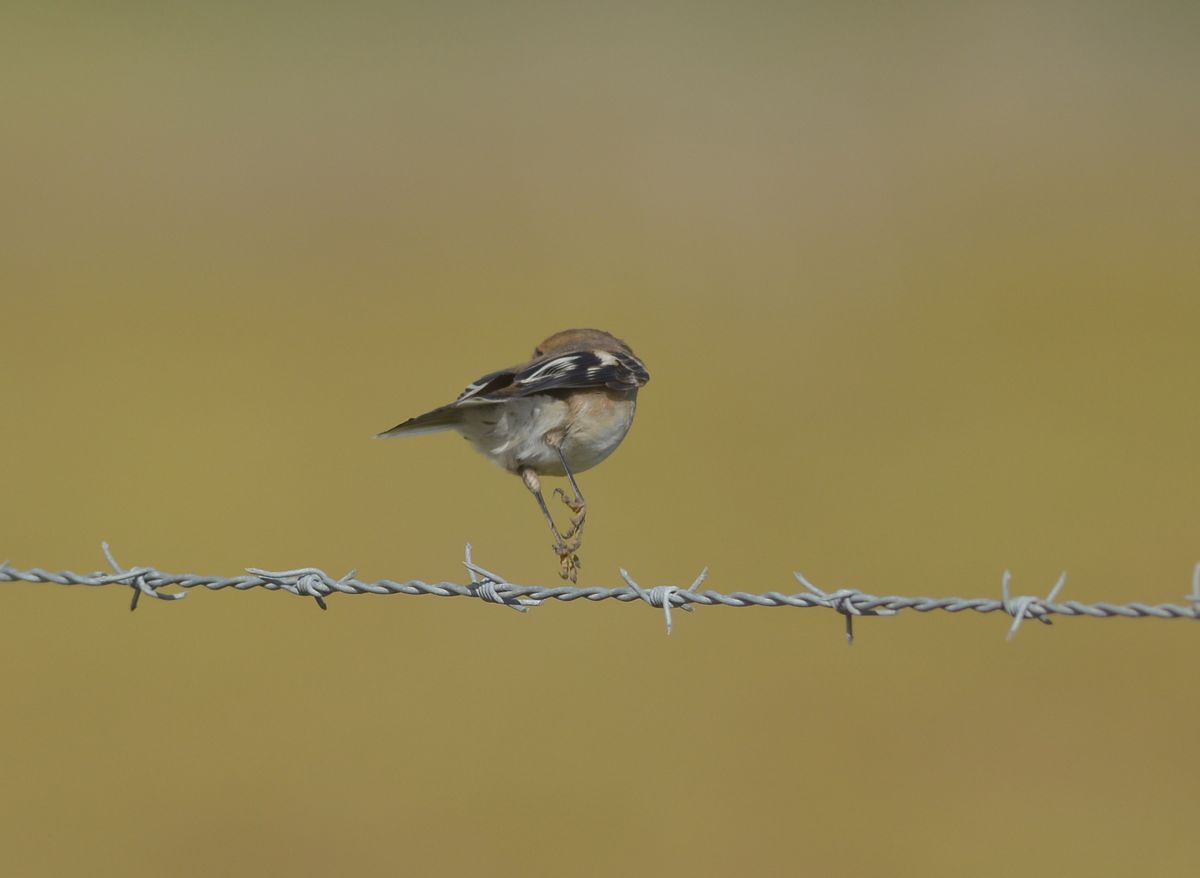
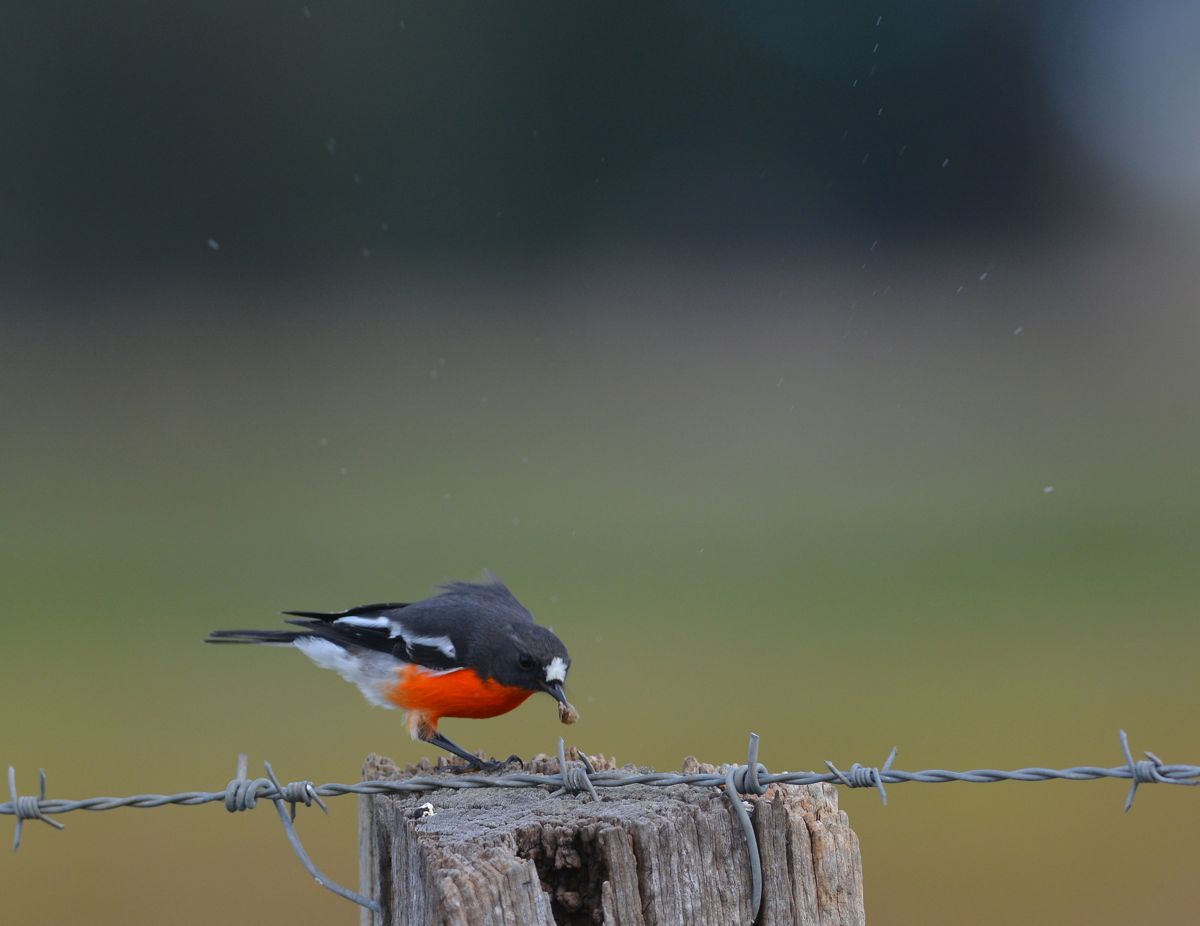
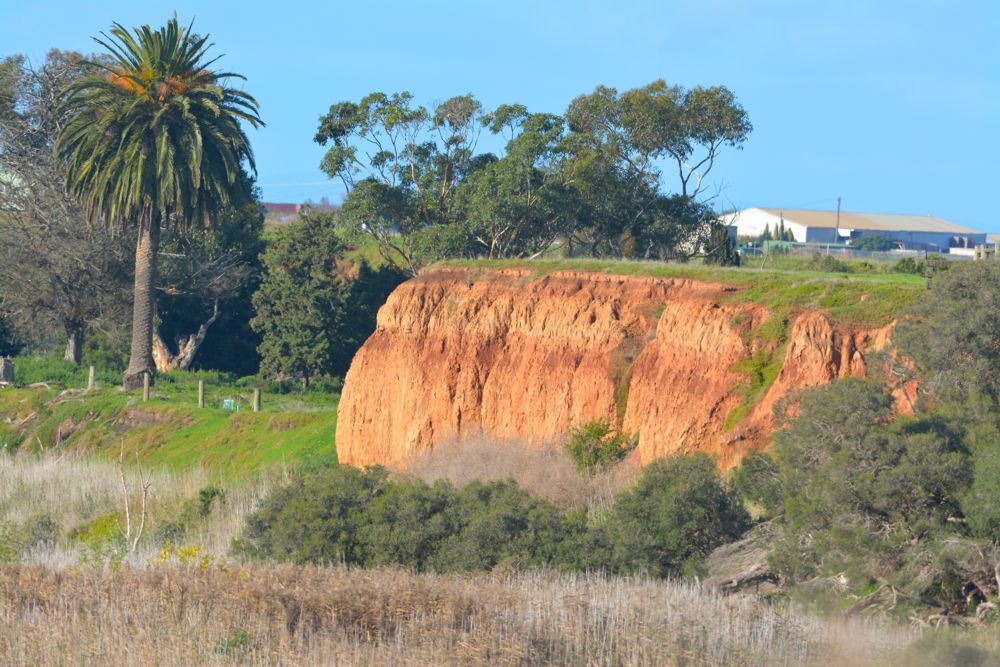
Highlights were up close and personal with a squadron of Emus, a visit by the most beautiful Spotted Harrier, and a Koala asleep in the carpark tree.

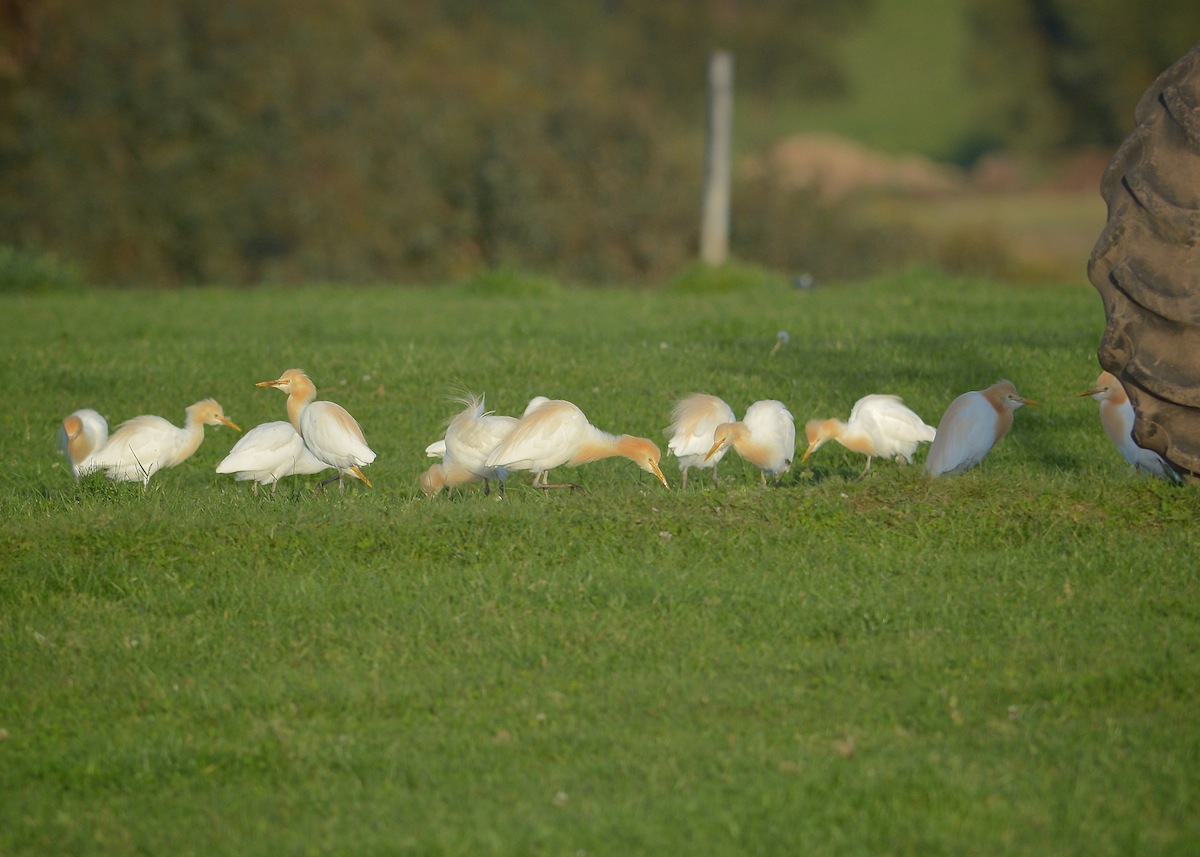
Back along the road home in the late afternoon sunshine we came up a paddock full of Cattle Egrets, with lots in breeding plumage. Guesses at 60-70 were made, but the more we looked the more we saw.  Good way to end a day.

Day two to follow.  Here is how it all looked.

Mum and bub.  Rolling in the swell.
Mum and bub. Rolling in the swell.
My one and only shot of a Sooty Oystercatcher.  I couldn't get over the small gap in the cliff to get any close.
My one and only shot of a Sooty Oystercatcher. I couldn’t get over the small gap in the cliff to get any closer.
"See, I own this carpark"
“See, I own this carpark”
Jump start
Jump start
No, I didn't move the camera, they were sitting in line
No, I didn’t move the camera, they were sitting in line
Portrait session with  a Singing Honeyeater
Portrait session with a Singing Honeyeater
Just me and me mate.
Study in colour combos
Black Cormorant with every feather working hard to control landing in the stiff breeze
Dive, dive, dive.  Gannet at impact
Dive, dive, dive. Gannet at impact
With a run, hop, skip, jump, more run... Airborne
With a run, hop, skip, jump, more run… Airborne
Caspian Tern
Caspian Tern
Sitting pretty
Sitting pretty
Up close and personal
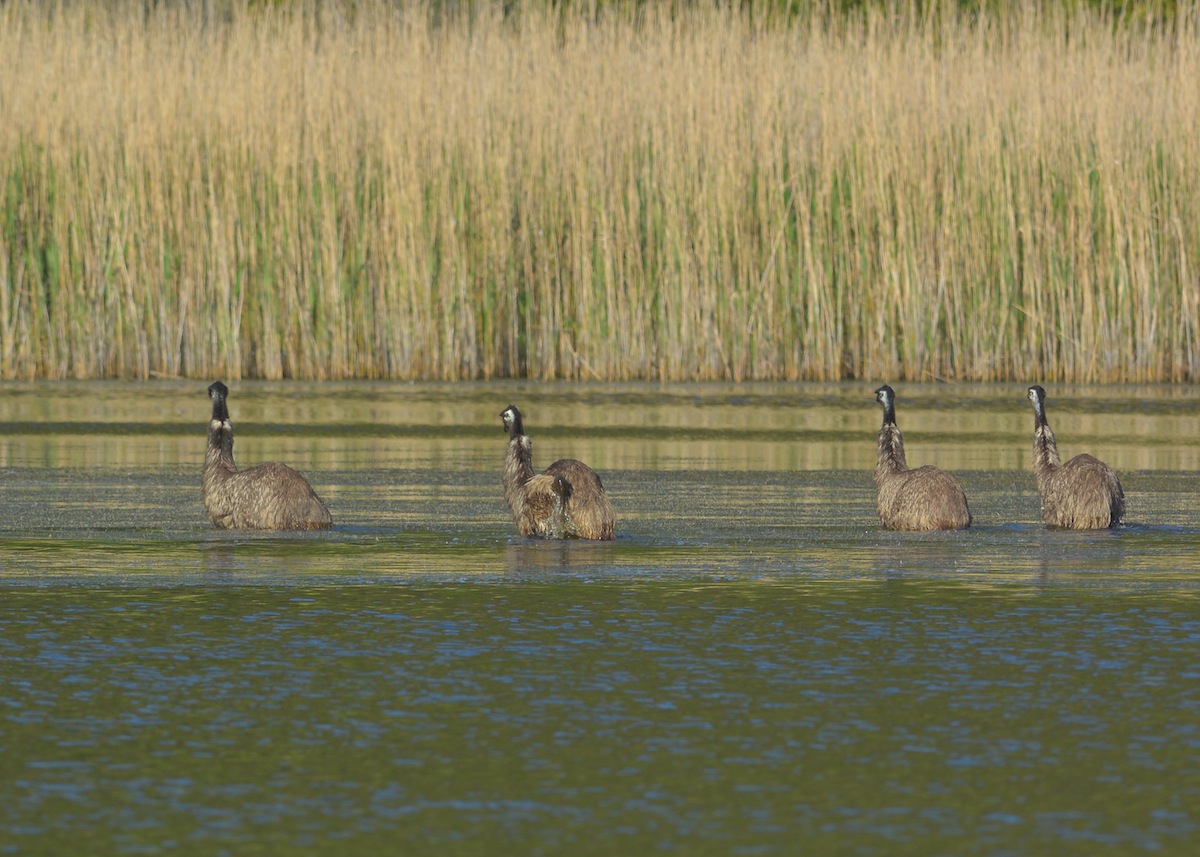
Four Emus tracking across the lake where the water is Emu deep
Late afternoon sunshine gracing Cattle Egrets

Thought you might be interested

No, I haven’t fallen into some sludge pit at the Treatment Plant!  Just that with the weather being only average at best, we’ve not been out much, and when we have its been, well, average. Hope to publish a compilation on the weekend, but here is a quick look at a project I provided an image for.

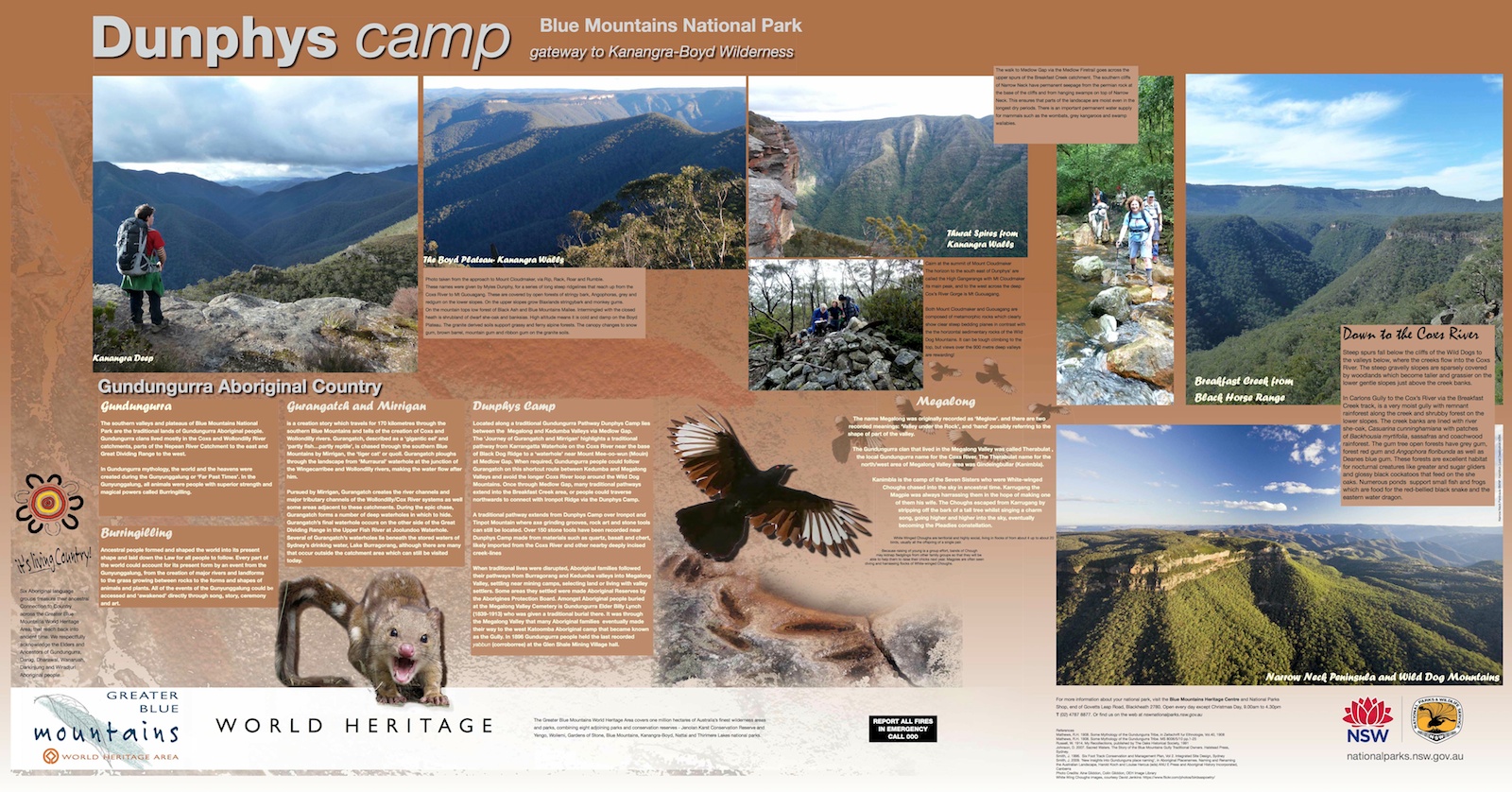
The National Parks Service of NSW have created some interpretation boards for the centre at the Dunphys Camp in the Blue Mountains National Park, and one of my White-winged Chough images forms part of the motif.

I really like the overall feel of the finished result, and would even if my image wasn’t on there.

So here is a jpg quick look.

DUNPHYS CAMP  draft sides 2 (1)

and Here is a larger pdf DUNPHYS CAMP draft sides 2
The original image is over in Flickr here.

White-winged Chough

Having walked in this area so many years ago when I had legs that could carry me over that terrain, it really appreciate the effort made here.

Thanks for the creative team for their super work.


September Wag Tales Newsletter

Well I survived the first copy as editor, so swung by for another attempt

The August version was reduced in file size to make it easier to upload and download, but folk with big big monitors report that the pics looked  a tad unsharp.  So.

This time around the pdf is a bit larger.  Looked ok when I printed it, and was fine on the 27″ mac.
Enjoy.

Some of the images will go up on a Flickr Page. But, that’s tomorrows job.

The link on the Wag Tales tab will take you there, but for the tab weary, or wary.

September 2014 Wag Tales


… And you don’t mess around with Jim! Or his territory

One of the delights of  photographing out at Werribee River Park, is the awesome amount of raptors that call the area home, or at least call it the Supermarket.  

I’ve mentioned a couple of times in the past about a spot we’ve taken to sitting near a bend in the river under some old River Redgums and watching the comings and goings from a distinguished looking old dead tree on the far side of the river.

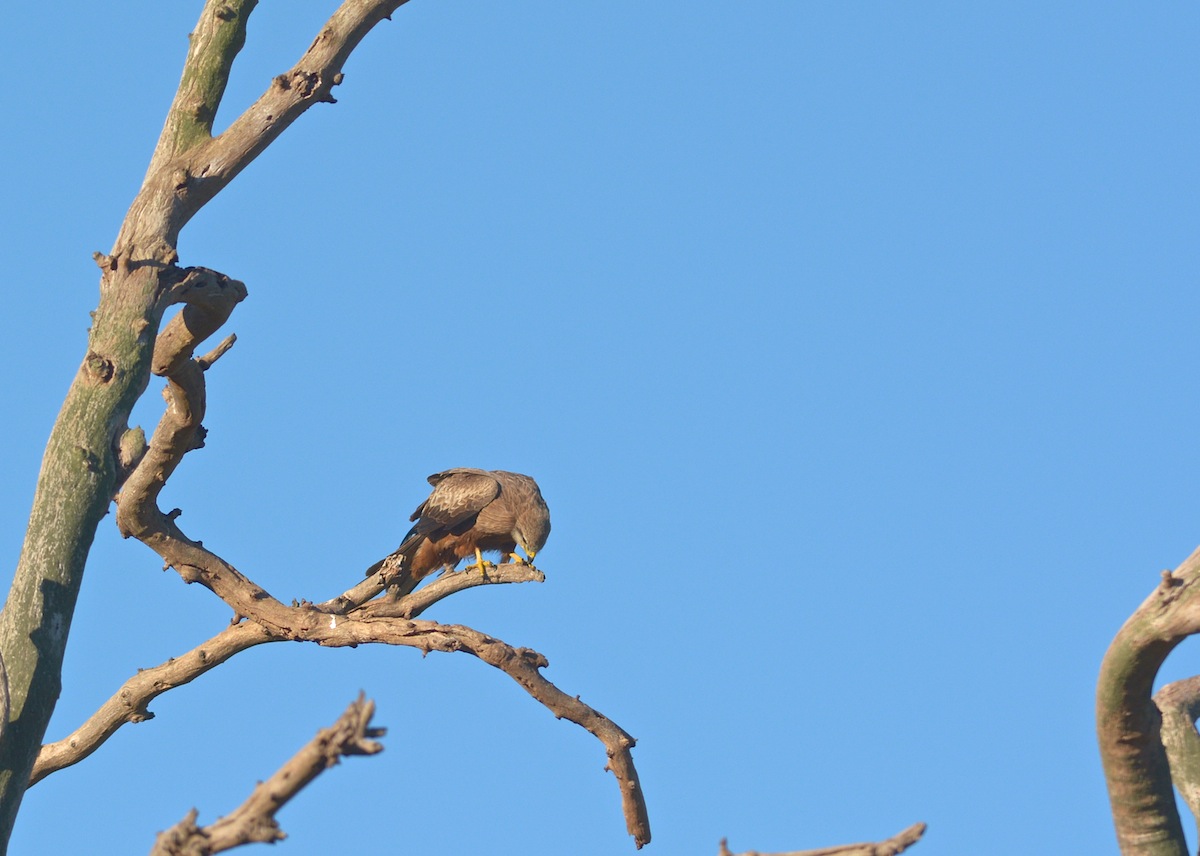
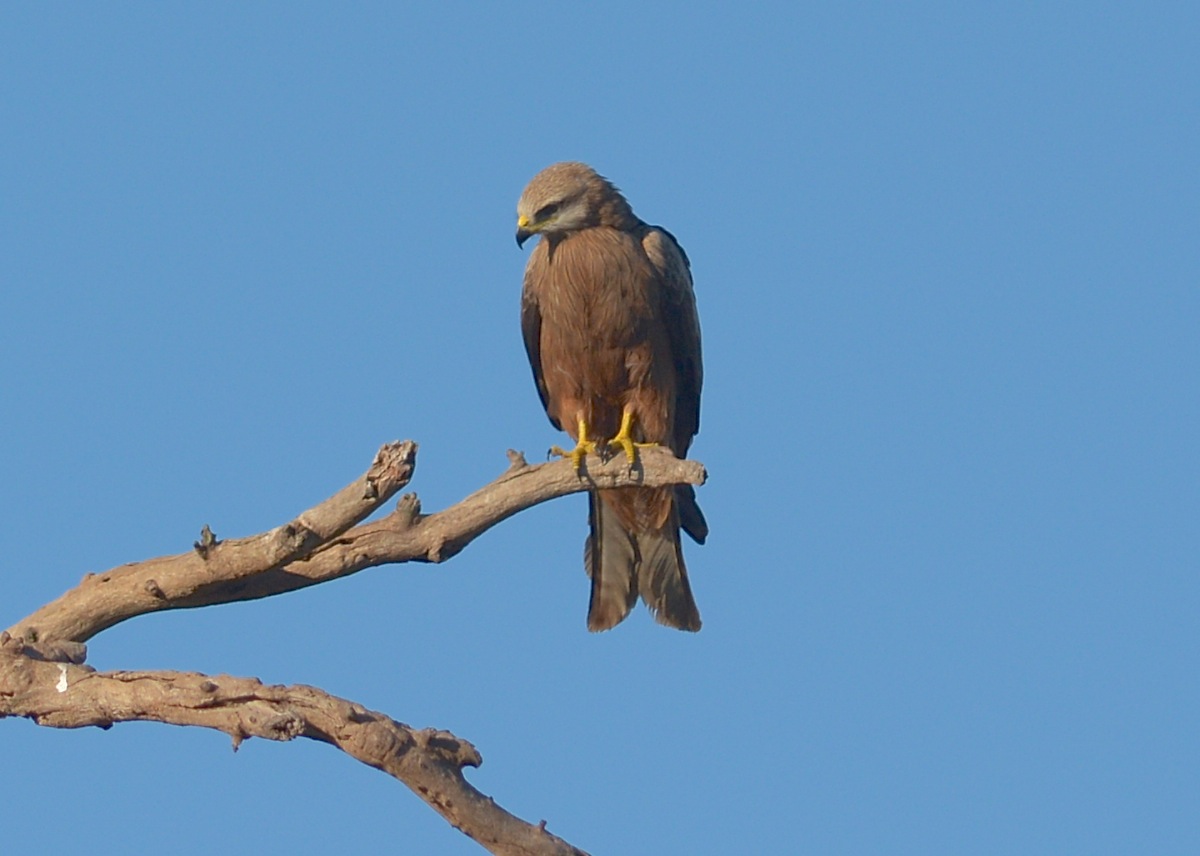
We noted the past couple of times activity by a pair of Black Kites, and with a bit of detective work, a heap of guessing and smidgen of luck we’ve decided they have a nest in the area.  We’ve seen them at work building the nest, going through the necessary motions of creating the eggs to go in to the nest, and watched the male feed the good lady.

Over the weeks their activity has become obvious, and as they always seem to leave and reappear from one direction, and the variety of calls coming from that area, its been possible to isolate what ‘quarter’ the nest is located.  

Now, I’m not a bird-nester, even as a little tacker, I just couldn’t get with the programme of climbing up, taking eggs and then ‘blowing’ them and popping them into shoeboxes, or old discarded cigar boxes, all laid out on cotton wool.  Not a height thing, after all small boys were made to climb.  Well they used to be, until it became politically incorrect in some Occupational Health and Safety manual. 

Just couldn’t seem to have the need to deprive birds of eggs.  Mind you the morals of a 10year old are bit hard to fathom; if you start to unravel all the pieces: Doctor, should I lay on the couch now? 

Wind forward to the present day, and while I like to be able, still, to find a bird’s nest, perhaps for the same reason as a girl’s essay, quoted in Mateship with Birds, by A.H. Chesterton, who said,

“The Wagtail’s nest is beautiful,
with the eggs it is more beautiful
with the fond mother sitting on the nest it is most beautiful.”

So it became obvious to both EE and I, that a trip to the other side of the river was going to be essential. If for no other reason than to see how ‘beautiful’ it was.
Now as luck, and the fine work of the Parks people, a bridge over said river had been provided, so like Billie Goats Gruff, we set off. 

Big pile of sticks up in a tree, seemed to be a pretty good idea of what to look for, and as we crossed the bridge and checked trees, at least we had found trees that didn’t fit the scheme. And then.  She flew in.

And a few steps more and off the track, and there was the nest, seen, but not easy to photograph.  So I meandered up the track about 50m, and found a small clearing and was able to move in the extra 75m or so, to get a good view of both the nest and a long black tail protruding out.  One or two shots, and I turned to go back the way I’d come.

Which, in simple 10 year old boy, thought was seemingly pretty easy.   But while I’d been spying out the lay of the land, I’d been spied on by the male Black Kite, and he’d ‘cunningly’ eased his way through the trees and now sat on a branch that literally barred my way back to the bridge.  At first I thought I’d try my luck, but his calls changed to a hoarse bark, and each step I took, he raised the scale.  He was about 30m up, and about 40 m from me. When he launched.

Not your jump off the branch, flap a bit and glide off down the river, but. 

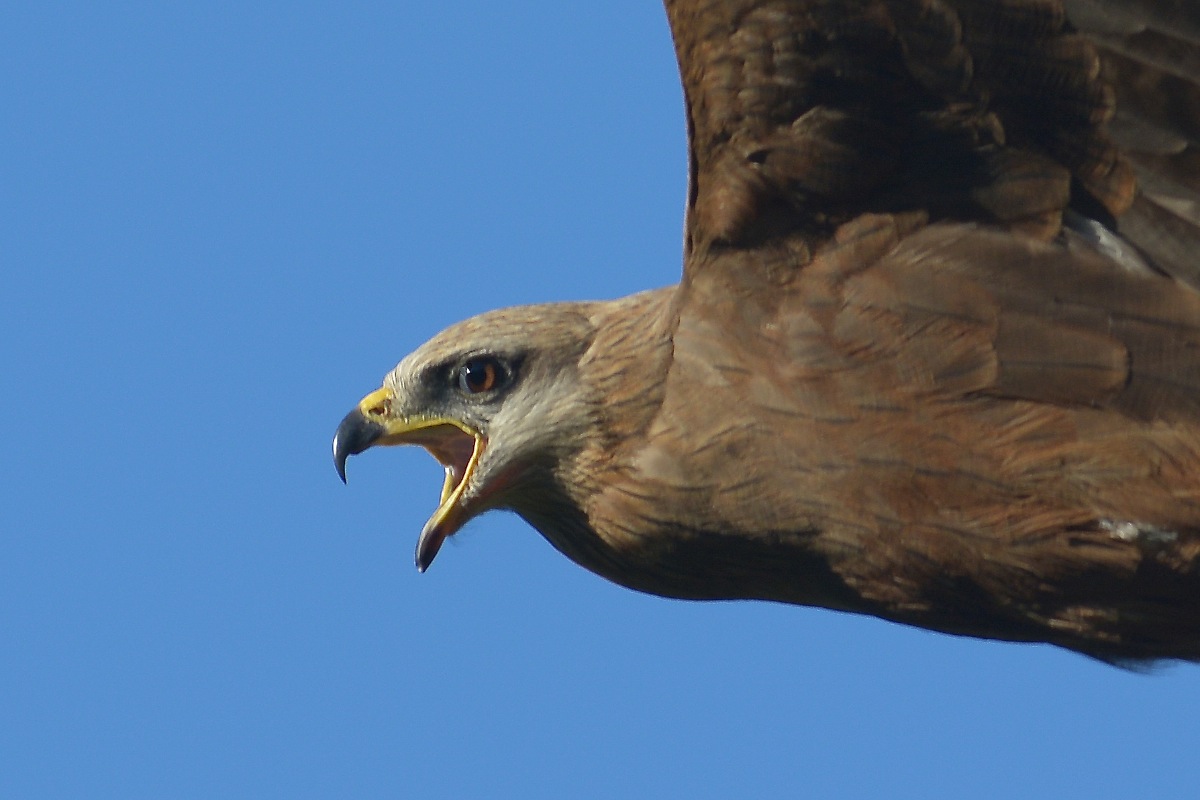
Launch.  Coiled up those long muscular legs under him, turned sideways over the branch, and then with maximum propulsion launched like a torpedo, wings up before he started, so as to get the maximum speed at launch. Straight toward me. Barking in a very shrill and agitated way. How close he went by, I don’t know.  I was ducking behind the camera held up and out.  But given the space it would have been not much more than 5 metres.  He barrelled down the small cleaning and did  fast sweeping turn at the end, and headed back, but this time at least i got of 3 frames. As he went past, I made it to the track and back the way I’d come.  He landed on a branch across the track, behind me,  and barked. I turned to see and he did the same launch, but this time away from me, the power of the throw is simply spectacular. 
Most of my experience with Black Kites has lead me to the (false) assumption that they were fairly docile easy going dudes.  

I’ve seen them follow a tractor for hours in a paddock, up, and down, pulling out at the end of the run, two wing flaps for speed, and then back on the track of the tractor and keeping station with its speed.  I’ve seen over 100 of them all in the air at the same time, dropping out of the high sky, like airborne paratroopers. Invisible a first and then as they descend more and more becoming visible.  I’ve had them waft over my position just to see what I’m doing, and pass close enough to see them breath, but I’ve never crossed the line with one before.   

As I got back to Billie Goats Gruff bridge, EE passed on the best help of the day.  “That was close and you are white!”

I decided to call him Jim.  There is a song by Jim Croce, which has the lines

You don’t tread on Superman’s cape, 
You don’t spit into the wind
You don’t take the mask of the ole Lone Ranger
And
You don’t mess about with Jim.

Me. Well I changed lenses, and went off to photograph reflections in the water for awhile, much more soothing and less dangerous.

My main annoyance, as I’ve tried to explain on Flickr, is that I carelessly crossed the line with this bird.  A huge mistake on my part. I don’t blame him for taking umbrage, after all its his family at stake.  What I would have liked to have done is get his permission to be in attendance, and that takes a lot more time than just stumbling about in the bush.  I am a great believer in their face recognition ability, and I think it will be hard to become accepted by this bird now.

For that, I guess as Jon Young puts it, “Setting aside collision in favour of connection always  feels deeply right  Seeking to be a beneficiary of the Kite’s courtesy, and not break the treaty.”, is what we try to do each trip out. 
Given,I reckon she’s put in two to thee weeks already, and probably has another five to six weeks before the young is (are?) fledged, we still have a bit of work to do. 

Here’s the day.

Female finishing a meal on the change over tree
Female on the change over tree.
Simple straight out launch to head back to the nest
Ah, there you are.  She is still setting in.
Ah, there you are. She is still setting in.
You don't mess about with Jim.  He has just turned at the edge of the clearning and heading if for another run at me.
You don’t mess about with Jim. He has just turned at the edge of the clearing and heading back for another run at me.
Male, sitting on a branch over the track. He has 360 degree views from here.
That Power Launch. Tipping sideways off the branch, and pulling the wings down for maximum speed. Awesome
That Power Launch. Tipping sideways off the branch, and pulling the wings down for maximum speed. The legs like huge springs just drive him off the branch. Awesome

Werribee Wagtails, newsletter, Wag-Tales Aug 14

Just a note to say have a look under the Wagtales tab on the top of the site and you’ll find access to the Werribee Wag Tales newsletter.

This enthusiastic group of birdwatchers have favoured me with arranging the monthly news, and I’ve decided to have a copy available to everyone here.

Hint: Its just a little bit different to the members one. A bit tighter edited an a few small housekeeping things left off.

If you enjoy watching, observing, counting or photographing birds, and you enjoy the company of other folk, you’ll soon see why we appreciate the outings.
Its been said before, but its worth repeating,  “Bird watching is not a spectator sport”

Enjoy


Walking in the Backpaddock at Woodlands Historic Park

The BackPaddock is now open.  For the first time since early Feb 2014, the back paddock has been opened up to mere mortals.

We haven’t visited the area in over 2 months.  No point if the access to the gorgeous piece of Grey Box forest and grassland is inaccessible. Tired I was of pressing my cold nose up against the unforgiving and unrelenting chain mesh.  Besides the Robins, the reason we visited were obviously living the high life further down the paddock and not trips out.

Our style of photography of these delightful winter visitors, is to find the flocks, note the best feeding areas and the size and direction of the flocks and how the mixed flock is moving about.  Then finding one of those spots and waiting.  If followed, they just fly further and further from reach, but a hunting flock coming into an area is unaffected by human presence. (or in my case my presence, and that solves the asking about ‘human?”)

EE and I had reason to travel north and stopped into Greenvale shopping centre for lunch, and on a whim, as we were near, “Let’s go and walk down the Providence Road track”.  Now the alternative was a long dreary drive home on the ring road, so as the Banjo said, we went.

We weren’t going to the back paddock and were in a bit of a hurry, but a quiet walk down to the old dam area and the forest in the area can be profitable, and we started off.  A red-cap pair distracted us and I walked the last few hundred metres to the back paddock to peer through the chain mesh. And.  The gate was unlocked!  Access!!!!

The fox, must be deceased,or as Python put it. “This fox is no more! He has ceased to be! ‘E’s expired and gone to meet ‘is maker! ‘E’s a stiff! Bereft of life, ‘e rests in peace!  ‘e’d be pushing up the daisies! ‘Is metabolic processes are now ‘istory! ‘E’s off the twig! ‘E’s kicked the bucket, ‘e’s shuffled off ‘is mortal coil, run down the curtain and joined the bleedin’ choir invisible!! THIS IS AN EX-FOX!!”

Dilemma. With only a minimum of equipment, would we make a walk, or as time was not on our side, just go with our original idea.  EE pushing through the gate sort of decided the next step.

And the forest was deadly quiet. Gone are the pardalotes, thornbills, treecreepers, honeyeaters and robins.  The usual spots were all deserted.  Not even the Rosellas we’d watched earlier were wrestling for spots, and above all the Red-rumped Parrots, not a sign.

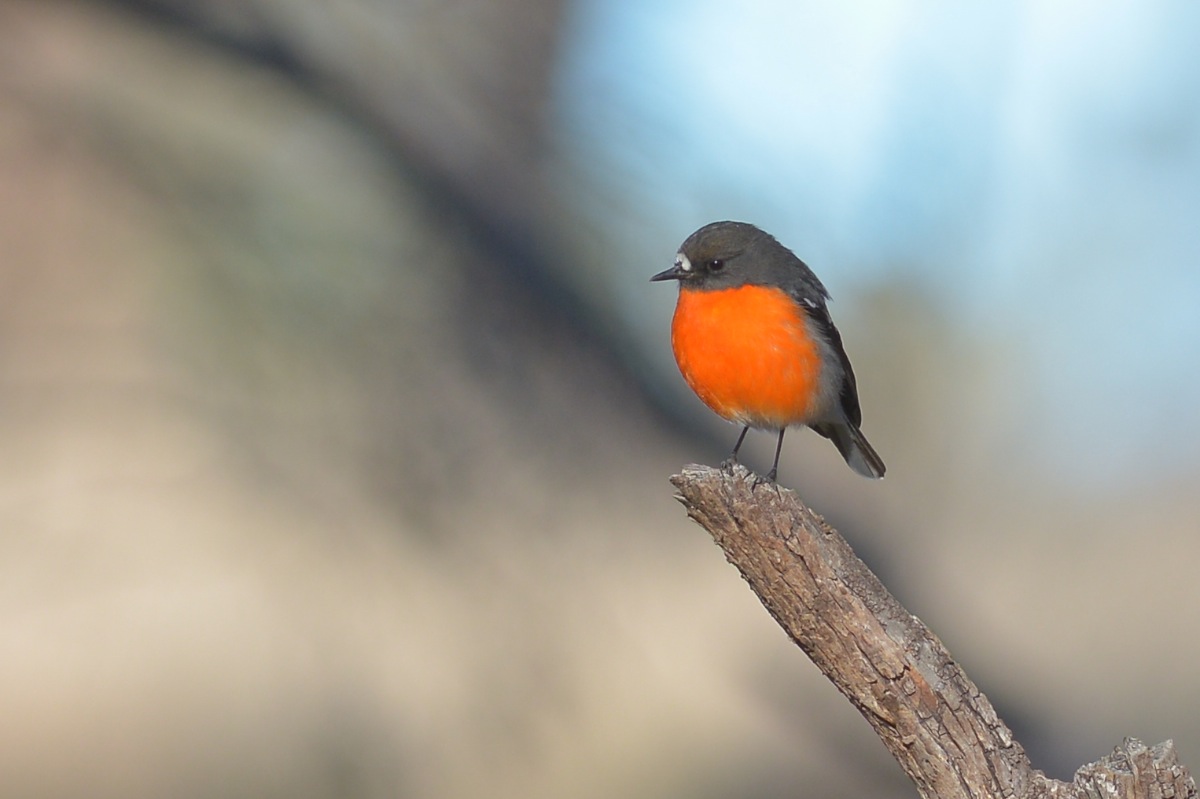
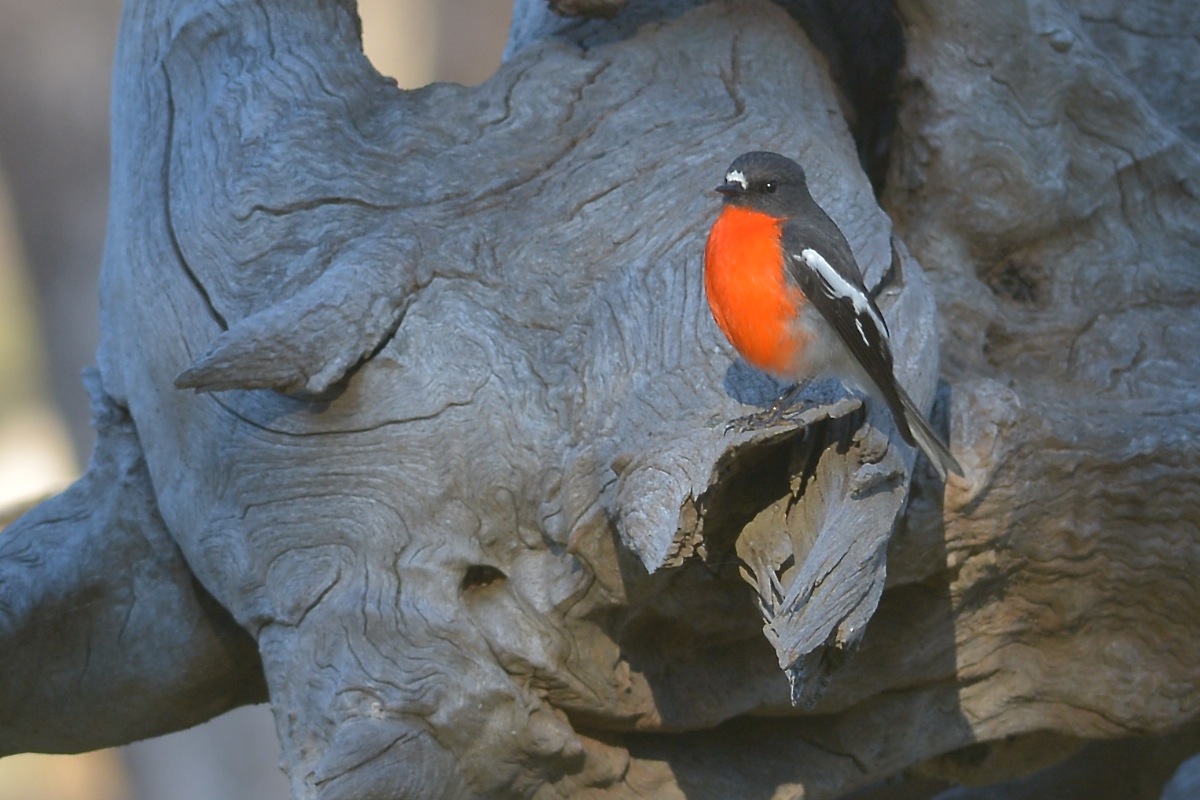
Something has happened to the food chain in this piece of Grey Box. (I’ve seen flocks of 70 or more Flame Robins work here, what with as many thornbills, honeyeaters and the like a winter flock could be well over 100 birds. Easy to find because of the noise.
Deadly quiet.

EE was feeling well, so we ambled down the track to the famous “Three Way” Junction, or “Snake City” depending on whose telling the story.  The last of our ‘cuppa’ was finished and we were pondering the drive home, when along the top of the ridge among the old downed trees, a wing flap. Then another.  It was the old ‘Three Brothers hunting group”.  3 bold males, and a number of juveniles, and at this late stage of the season with the females starting to regroup.

Gone were thoughts of a freeway, and an early dinner and tv.
Not easy to work with a group of birds that don’t want to be approached, but in the end we managed a few useable images.  And learned a few things about the late season feeding.  No longer trying to find quick food among the moss beds, these birds were after much bigger, bulking up food.  Which means, sit, jump, eat, move on.  Hard to keep up with 20+ birds going hard at it.

In the middle of all this, a resident Red-capped Robin came down to see what all at the fuss was about. After all its been nearly 6 months since he’s had humans stomping all over his front lawn.
He reminded me of Yosemite Sam of Looney Tunes, so I named him Sam.
One of Sam’s great lines slightly paraphrased seemed to be on this little bird’s mind as he hopped about watching the activity.  “Tripod holes,  Some low-down ornery photographer is gettin’ tripod holes all over my Forest. ”
Yosemite Sam said it this ways. :”Great horny toads … a trespasser gettin’ footie prints all over my desert”

In the end they moved one time too many and disappeared over a ridge line.(probably heading for an evening roosting spot), and the light was beating us.  So we headed for the gate.  Met Andrew H, on the way, and so nice to catchup after so long.

Good to have access the Bandicoot Hilton once again.  Just need some reasonable weather to be able to sort out the hunting orders and have at the birds relax around us.  Time is of the essence, as they will be gone by the mid of August. 3 weeks perhaps.

Here tis

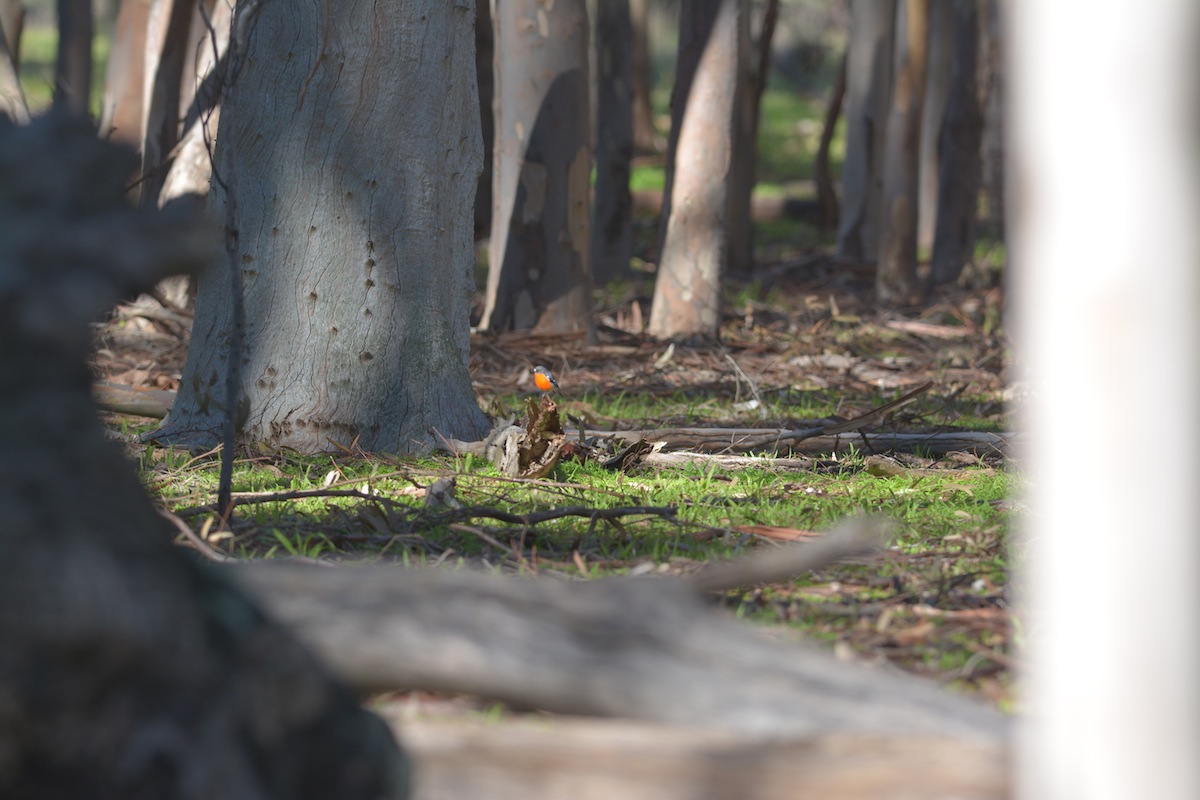
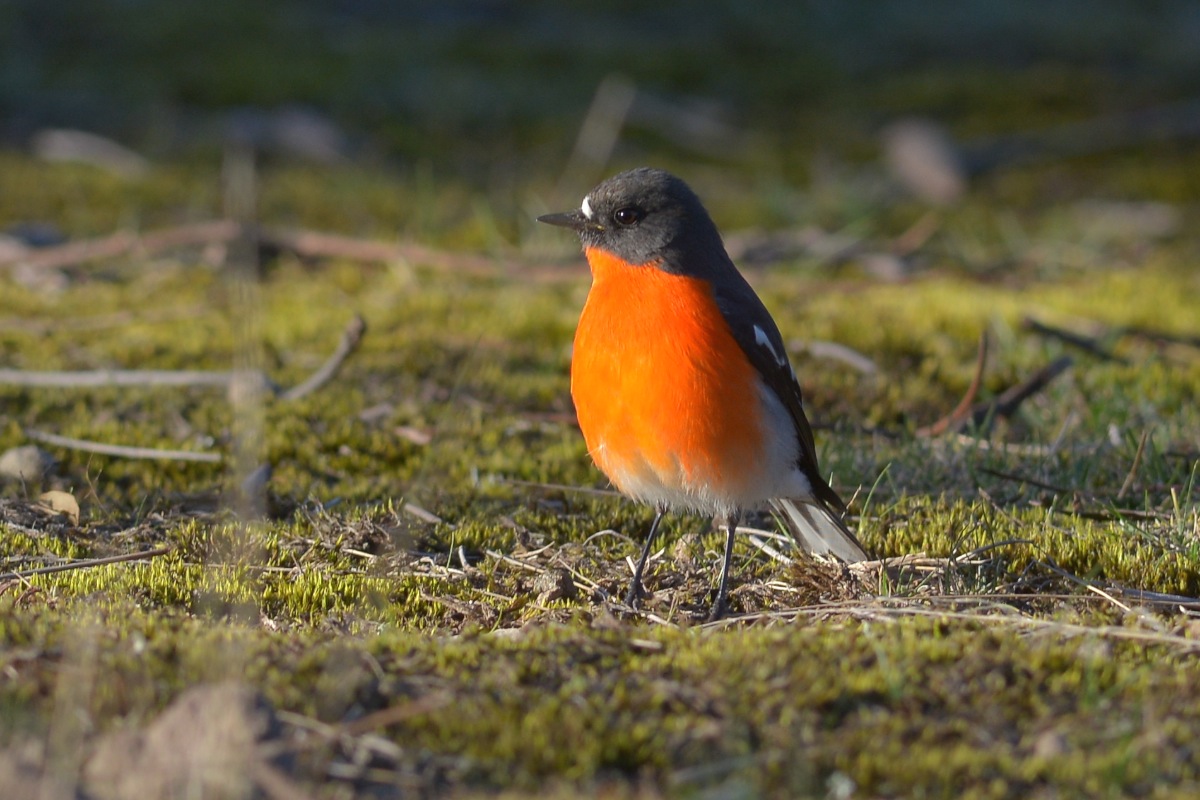
The Flame of the forest
Wedge-tailed Eagle being given its marching orders by a very territorial Little Raven
Getting close, but still a long ways to go
I think this one was letting a meal digest, while it sat in the sunshine.
Big juicy and  more than a Robin can easily handle
Big juicy and more than a Robin can easily handle
Female running with the brothers.
Local resident Robin. I'm going to call him Sam.  As in Yosemite Sam. (Looney Tunes)
Local resident Robin.
I’m going to call him Sam.
As in Yosemite Sam. (Looney Tunes)
One of the great delights of watching the Flame Robins hunt is watching one working methodically across an open area.

New addition to the Signature Series

I managed to get a front row seat in a bit of aerial drama yesterday with several Whistling Kites and a pair of nesting Black Kites.

Lovely to see both the aerial ballets and battles as well as be completely ignored by the birds in their business.

Decided that I’d add an image from the day to the Signature Series, so I’ve sent it off to the printers to get another shot for “the Wall”.

Here it is.

https://www.flickr.com/photos/birdsaspoetry/14520536298/in/photostream

Counting birds with the Werribee Wagtails at Mt. Rothwell

My astute reader, whoever you are, should have noted by now a few minor changes to the layout.  I’m going to take a great risk visually soon and take out all the side bar material. Probably not to many of us take much notice of that stuff anymore, me thinks.   Also you’ll have noted that the background has become a cork board.  That is a bit of a hark back to the old website, and perhaps I’ll just bring back the coloured backdrop. But most likely the design will change somewhat.

One of the major environmental activities that Werribee Wagtails group gets involved in is the surveying of several areas  every quarter to record bird numbers.  The areas are pretty much fixed and each circuit reveals changing bird numbers.

Mt Rothwell is a northern outcrop of the You Yangs, and offers one of the Grey Box and original scrub areas near the You Yangs. It is also a private environmental research centre. You can read about it here

I’ve written about our previous visits and some of the activities of the centre.
Today, however it was pretty much business as usual, and we managed to locate 42 species, and some with quite good numbers, over 60+ Red-rumped Parrots, and quite a number of raptors, Brown Falcons, Black Kites, Whistling Kites and  several Harriers.  But the raptor numbers were a bit down. Perhaps the hunting is better elsewhere.

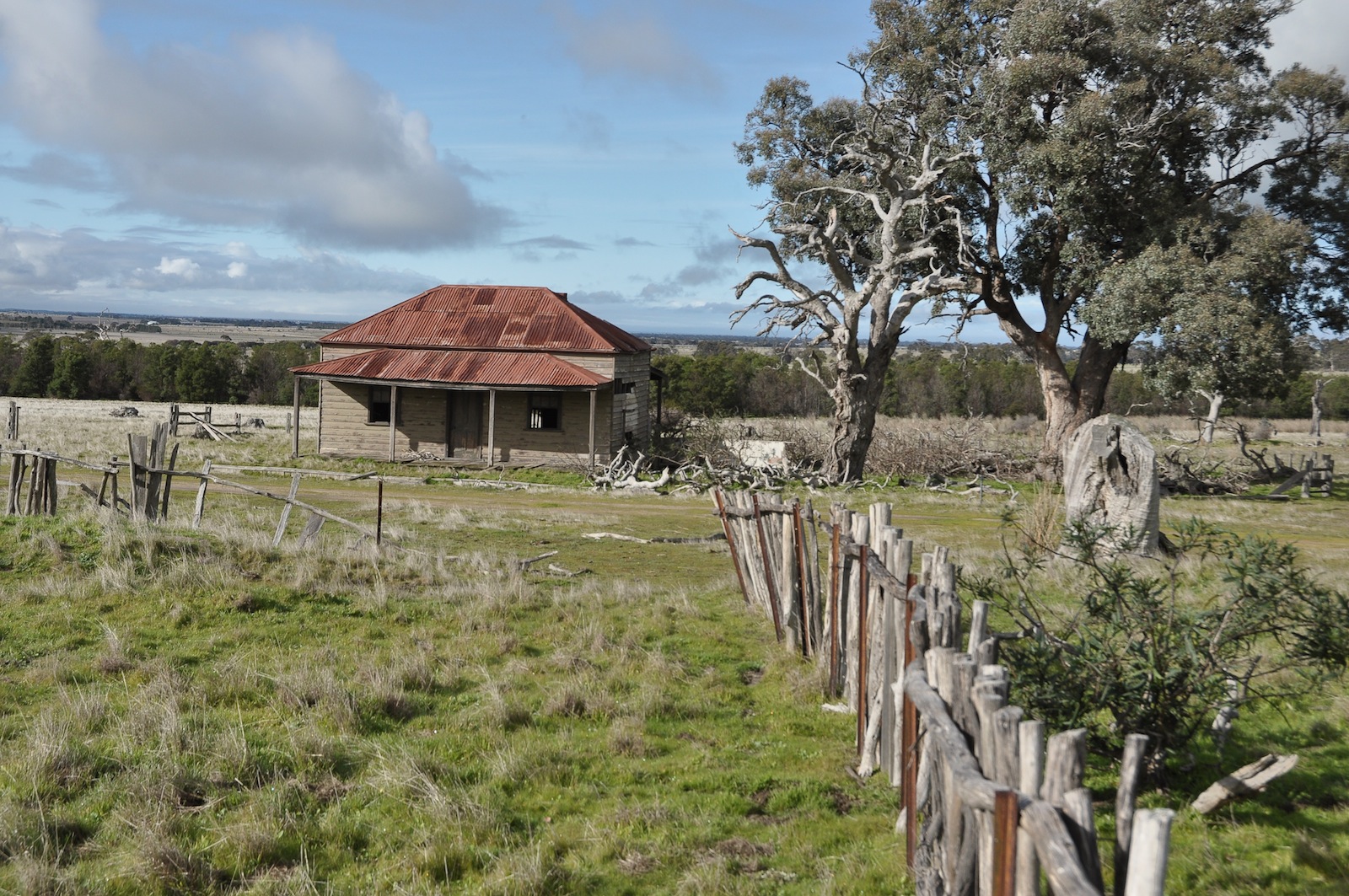
On the site is the remains of an old movie set. I’ve reported this as the set for the Ned Kelly Movie with Mick Jagger, but better informed it apparently is the set from the Heath Ledger version in 2003.  Still, its quite in ruin, and even more dilapidated than when I saw it last time.

One of the highlights of the visit is the climb to Mt Rothwell, not a hard climb, but the view is simply stunning as its open from the East, North and West.  It show off some lovely big rock faces and some isolated tors.  A landscape photographers delight, if the light is right.

My astute reader, (whoever you are) will recall that I got myself a bit misplaced on a previous visit because I’d been silly enough to stop to take a photograph (actually several photographs), and was banned from carrying a camera if I came again.  The next time I followed the rules, and borrowed EE’s Panasonic FZ200 for a number of shots. But, I stayed with the group.

This time hidden under my plastic bag of sandwiches and soup, I had a (shhhh, don’t tell) a camera with my favourite 18-70 zoom lens.  So any rock or tree or building that appealed, I would surrupitiously  ease out the camera, slip to the side of the group, and “click” hoping no one would either notice my missing presence, or hear the offending noise.  And … well it seemed to work, and I survived the day.  Not too many bird pics, is true to be told, but hey, who needs another bird on a stick?

Early morning drizzle mutes the colours
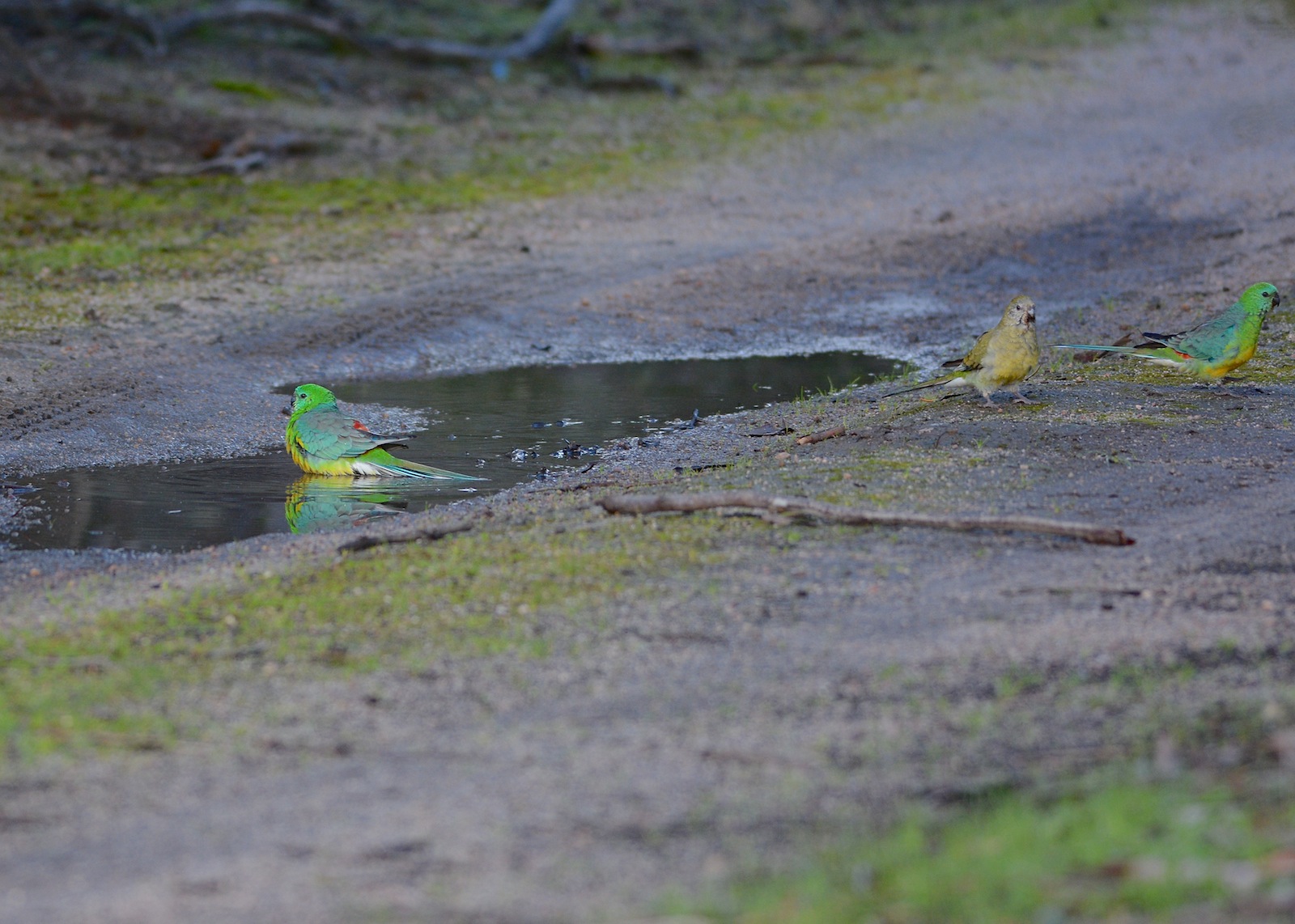
Red-rumped Parrots at bath


Many birds on many sticks


Sitting in the morning sunshine warming up
Sunlight rocks.
Sunlight rocks.
"Glenrowan" Set
“Glenrowan” Set
"Glenrowan Hotel" Set
“Glenrowan Hotel” Set
Fence line at "Glenrowan" note the metal star pickets to hold it up.
Fence line at “Glenrowan” note the metal star pickets to hold it up.
Bird watching should always be this much fun.
Last little spray of sunshine before the weather changed

A feast of Raptors.

Been awhile since I’ve posted, but its been lack of good weather more than anything.
The area close to home, on the Werribee River Park, that I’ve taken to euphemistically calling ‘The Office”, has an amazing number of raptors, and I thought I’d introduce them and what they are up to.

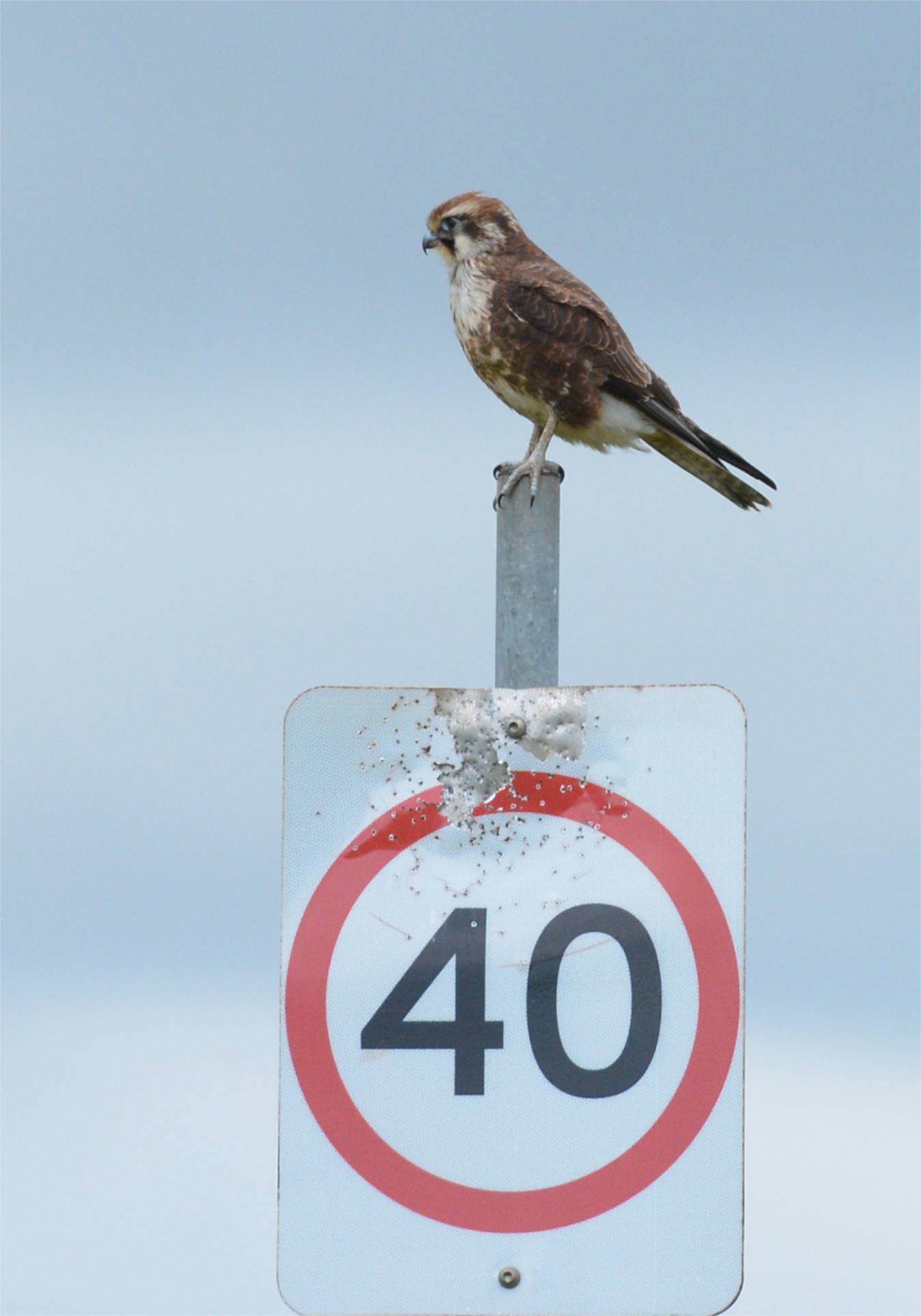
On the roadway in, just over the Geelong Freeway, there is a fence line and a few old pines.  Here a pair of Black-shouldered Kites have just flown their two orange and cinnamon young. In the same tree line a pair of Black Kites appear to be setting up house, if not already at work on brooding.  Next tree or three down, is a pair of Brown Falcons. Not nesting yet, but certainly staking out their claim to the territory. Much to the anger of the Black-shouldered Kites.

Down the road a little just before the carpark off in the paddocks a second pair of Brown Falcons are at work on territorial rights.  Also regularly in the area a pair of Wedge-tailed Eagles, although the moment, it probably  is just a convenient perching location.

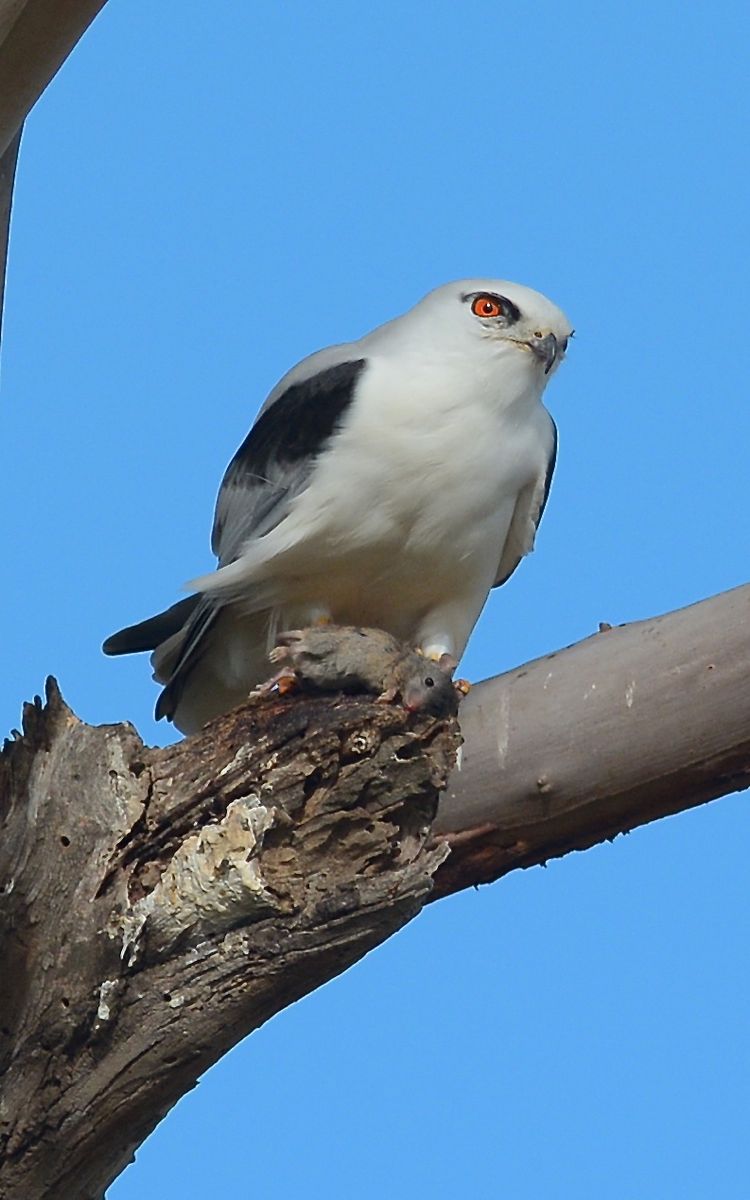
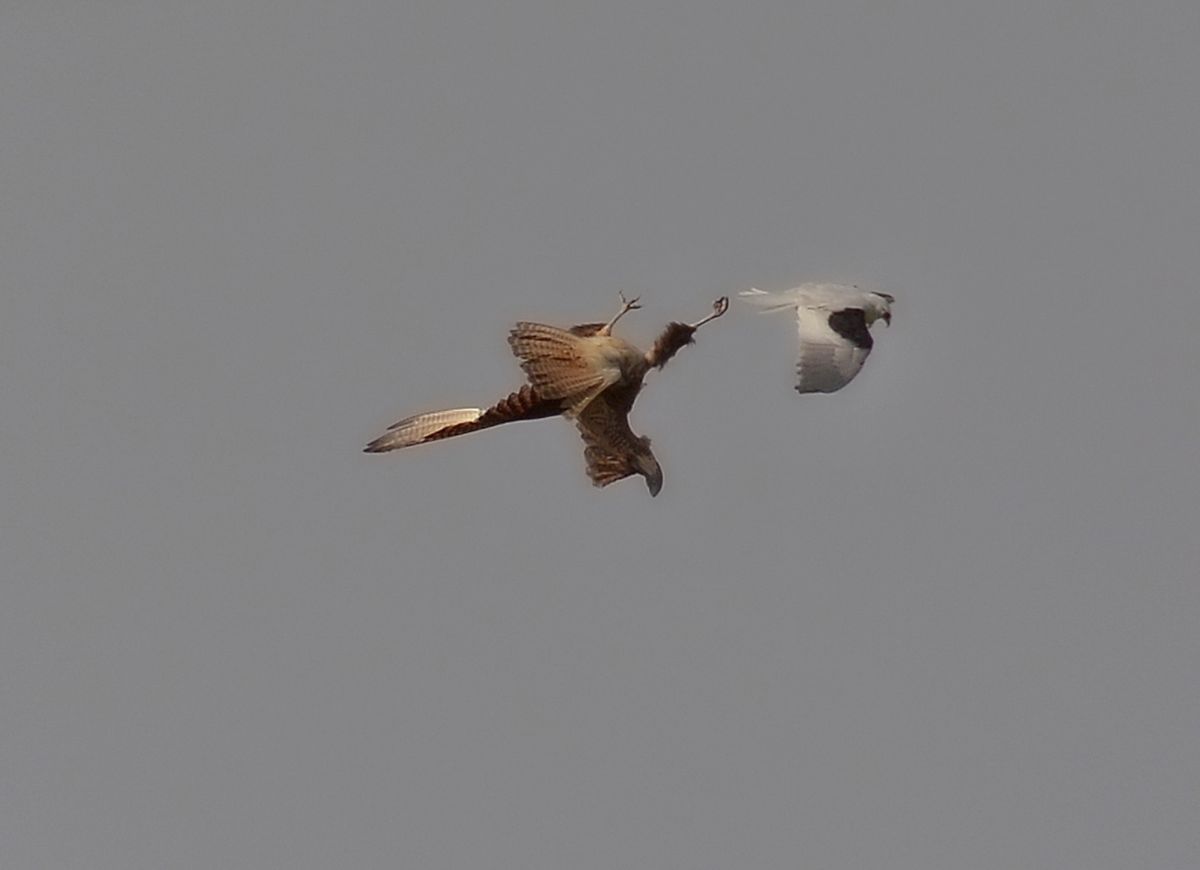
At the carpark proper, a pair of Black-shouldered Kites and their recently fledged three teenagers.  Not more than a dozen trees down from them is a pair of Black Kites and  a nest that is work in progress. I’ve not checked up close, but there is either brooding or feeding going on.  The male seems quite adept at pursing a laden Black-shouldered Kite and getting it to release its mouse capture.

A pair of Brown Falcons are constantly in the trees just off the river cliffs line, and I’d be tempted to say its a likely spot for a nest.

Further out in the field and well away from my prying lens is a pair of Australian Kestrels, and again they are too early for nesting, but are certainly building good pair bonding.

Combine that with the regular visits by any number of Whistling Kites and the area is certainly busy.   A few days back an arrow shaped bird sped through the trees and caused quite a stir among the smaller birds and the one really good look suggested Peregrine Falcon, and I’ve seen one briefly on the fence line on the way in.

So here are a few of the birds at work.  The food in the area must be exceptional to support such a range of nesting and preparing birds.

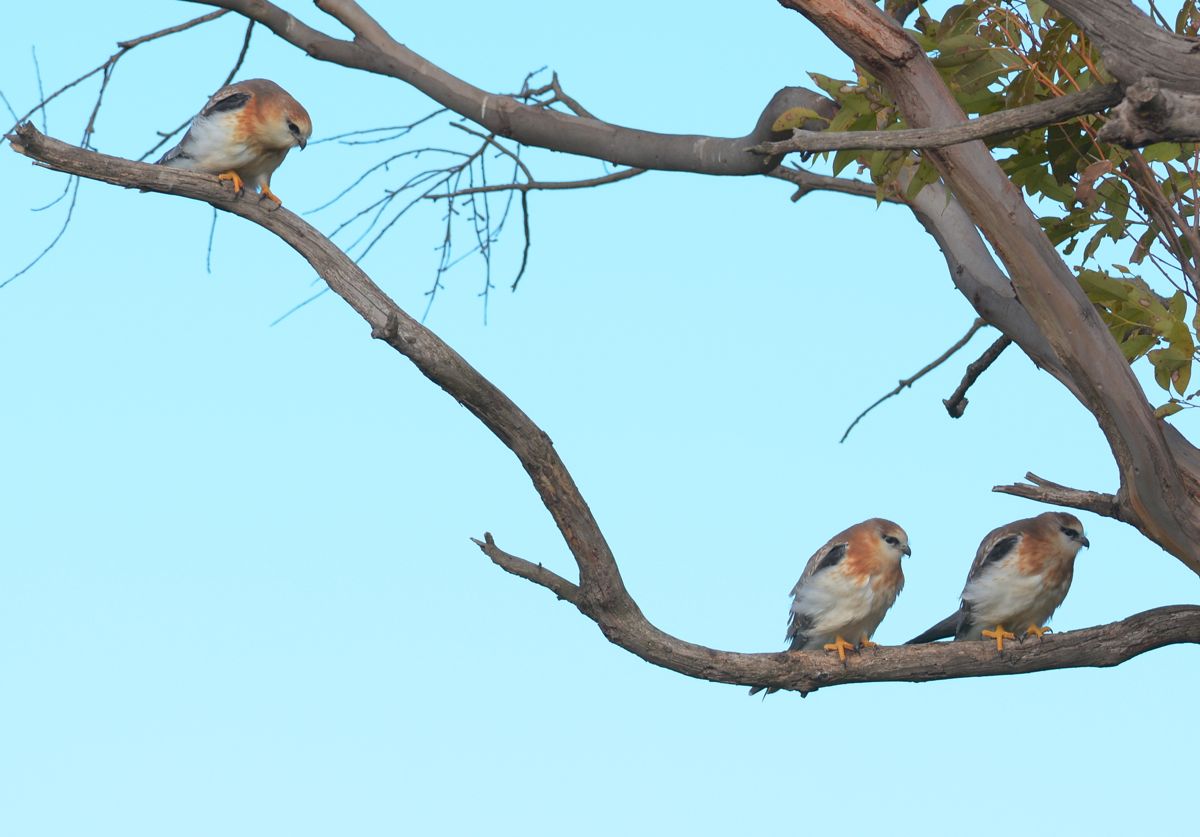
Recently fledged pair. In training.
One of two Brown Falcons that are using these trees in the river flats.
Wedge-tailed Eagle, fences make good perches.
The wind was much to strong for this trio to practice their hunting skills.
The trio in the wind.
Dad with a mouse, but he's waiting for a chance to deliver without losing it to the Black Kite
Dad with a mouse, but he’s waiting for a chance to deliver without losing it to the Black Kite
A Black Kite circling, hoping to take a mouse from a Black-shouldered Kites.
Brown Falcon, near a favourite perch.
Territory is everything. This is a pass on a Brown Falcon to get it to move away from the fledglings.
Posts make ideal perches when there are so few tall trees.
That fence again.
That fence again.

Working with a Flame Robin clan

This past Sunday was one of those great days for photography.  Beaut sun, a little cloud, some good breeze for the big birds.  I wrote previously about the pair of Australian Kestrels at play, but while all that was going on a small clan of Flame Robins was feeding in the area.

I was sitting on the ground with my feet hanging over the cliffs, like a schoolboy at the pier, watching the work of a Black Kite over the nearby treeline when I heard the familiar “chip chip” contact call of a Flame Robin.  There on the roadway behind me were two males, feeding, with several juveniles on the fence line behind.
I moved to a spot next to a melaleuca shrub, and settled in to see if they would approach.   And down the road they marched.  It gave me the chance to get enough shots to be able to differentiate between them.  One became Mr Yellow Feather because   his bright yellow chest feather, and the other Mr Red, as he is a brilliant Scarlet red.  While they didn’t get very close, it was a start.

I worked out that the turn around time in the feeding is just about 30 minutes, and there was  a definite pattern to the moving around, with the exception that bike riders and people with dogs would turn them to fly way down the paddock and be inaccessible   So I sat and waited and within the 30 mins they were back.  In this clan there are 4 or 5 juveniles, perhaps 3 females, and the two males.  One of the females is the Matriarch, and  she is the one which controls the clan movement.  One chirp from her and they are gone.

Because of the lack of trees in the area, its much harder photographic work than the birds in a Grey Box forest with plenty of perching locations.   But they manage.  The fence lines are the obvious, and the big patches of grass also work well.

My closest encounter for the day was the Matriarch. She landed in the back of the melaleuca bush behind me and I could hear her distinctly calling to the group, and I may be wrong, but it seemed the conversation went like this.
“See this big dopey photographer, stay away.”   “I don’t like the look of that big eye he keeps pointing at us.”.  “I’m going to get closer for a better look”.  Then an alarm chirrup, and she flew right by my ear,  less than a handspan away.  Heard the little wings coming, but I’ve learned that its best not to react, as the bird already has the flight path worked out. What I noted was the whirring of the wings was normal flight sound, not the fast pulsing sound of a panic mode.

She landed directly opposite me on the fence and another Chrrriip, which I took to be “He’s probably benign, you can ignore him”, then she hunted on the grass on the far side of the fence.   “Benign” is a term that Jon Young uses in his book, ‘What the Robin Knows’ and refers to local birds concluding that the human presence is of no threat, and they will work in settled, not panic mode. A young cheeky juvenile landed near by, and I concluded that the lesson for me was over for the day.

The office.  Looking along the wide river cliffs over the river plain below. In the flood of 2011 water was part way up the cliffs.
The office. Looking along the wide river cliffs over the river plain below. In the flood of 2011 water was part way up the cliffs.
Bold male holding his station  as I approached.
Bold male holding his station as I approached.
Mr Yellow Feather on fence.
Probably a female or juvenile female.
Matriarch in the field.
The Matriarch. What she says goes.  She has just done a fly-by to determine my danger to her brood.
The Matriarch. What she says goes. She has just done a fly-by to determine my danger to her brood.


The Matriarch, satisfied I was no threat she dropped off the fence to hunt.  Not big panic wing flap here.
The Matriarch, satisfied I was no threat she dropped off the fence to hunt. Not big panic wing flap here.
Mr Red. Brilliant rich red chest.
Mr Yellow Feather, with a hint of his yellow chest feather.
Young male, juvenile.  Showing his developing feathers.
Young male, juvenile. Showing his developing feathers.
Matriarch, ready to leave and take the clan with her.
Mr Red, with a score.  He came down the fence line toward me to prepare the bug.  I took that as an acceptance. (Of course I could be wrong and it was just a handy perch.)
Mr Red, with a score. He came down the fence line toward me to prepare the bug. I took that as an acceptance. (Of course I could be wrong and it was just a handy perch.)
Bug preparation 101. First belt it a few times on something solid. Bits of bug dust going in all directions.

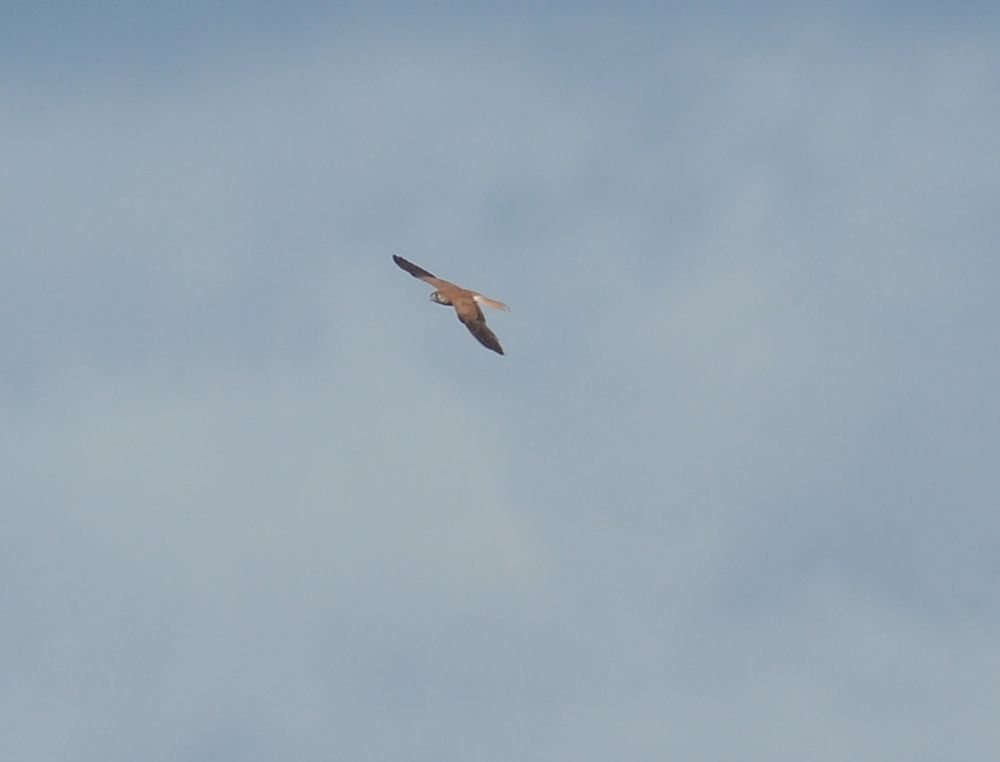
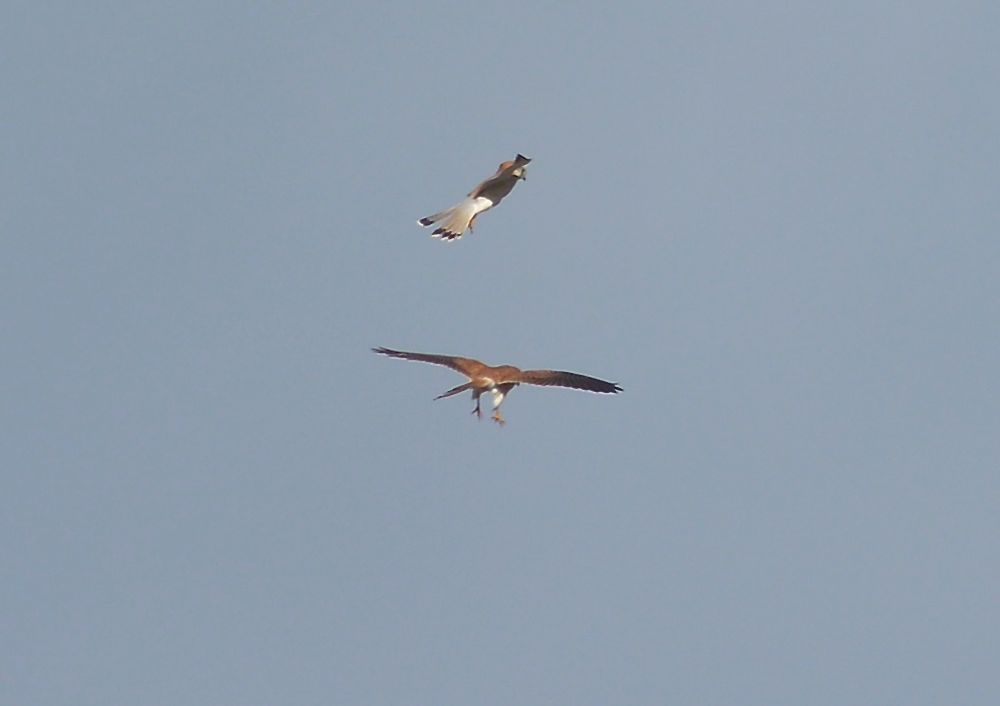
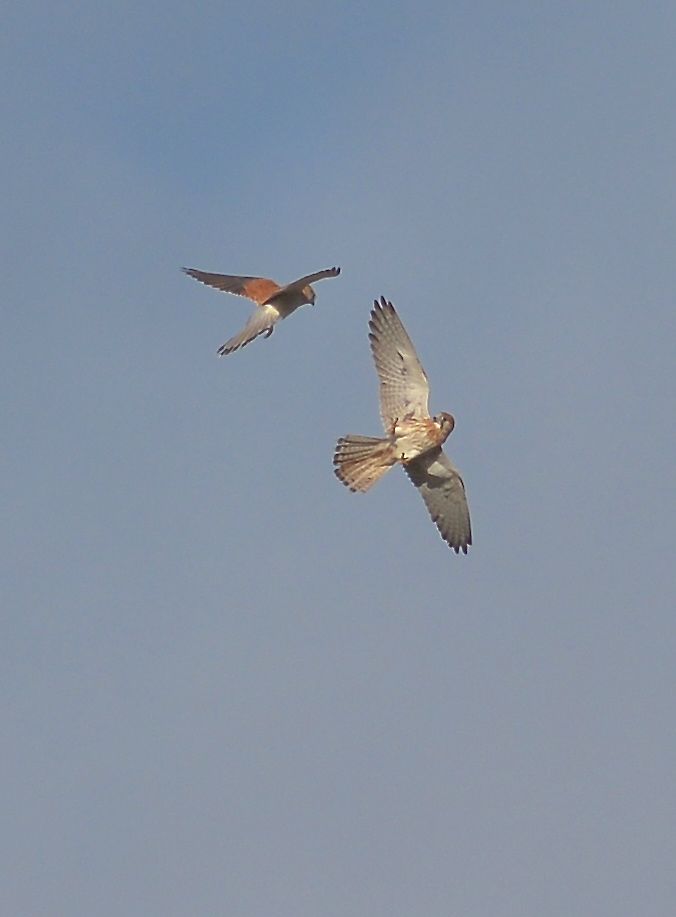
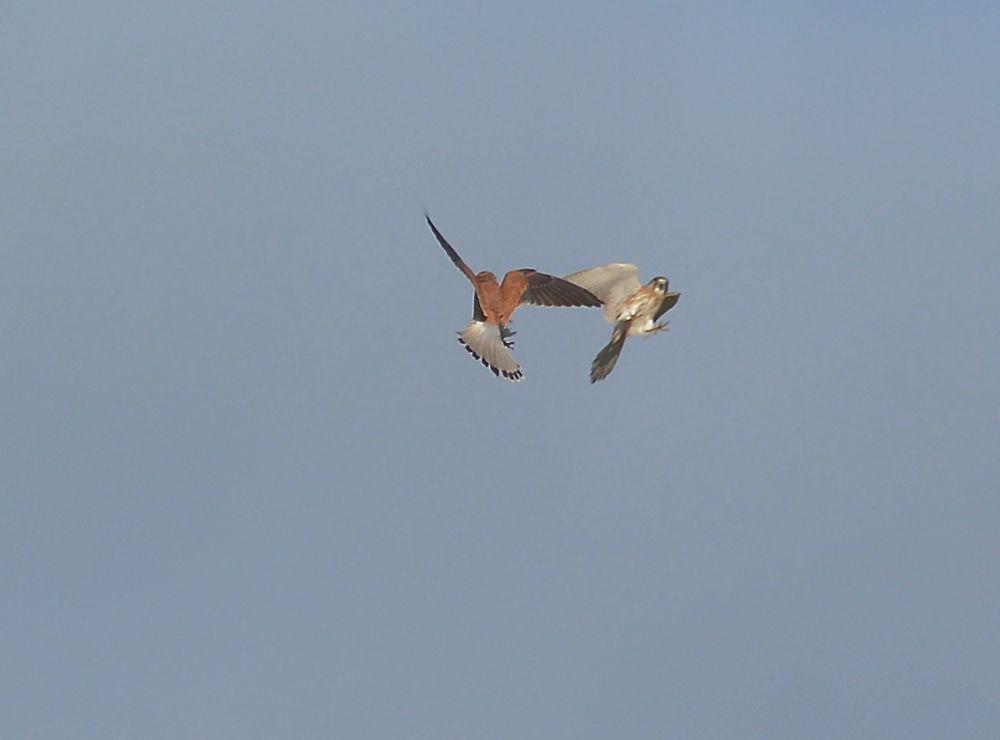
Australian Kestrel pair building their bond.

Nice to be working in the new “Office”.  I’ve had a few trips now to the Werribee River Park and although its fairly open area with few trees, it does have a bit of activity across its open paddocks.
The river has cut through the old sand hills and river flats and is about 300m or more wide in some places.  Its an easy stroll along the cliff edge, and the birds use the updraft to advantage.   Sitting, watching, drinking Earl of Grey, and the toughest part is carrying in the tripod with the Wimberley head.

Today the weather was a photographers delight, light fluffy clouds and plenty of blue sky for brilliant sunshine, simply add birds.

Apart from a range of Kites, Whistling, Black and Black-shouldered, along with a particularly vocal Brown Falcon, there is at the moment a pair of Australian Kestrels working in the fields, but a long way from the road way.    But, the raucous shriek of the female, and the piping hunting call of the male, alerted me that something was going on.   I eventually located them and they were preforming mock battles, he mostly coming in from above, she turning to repel him with her outstretched talons.  The duet was both vocal and aerial, and I kept hoping it would drift towards my location, but, typical of Kestrels, they kept control of their position in the sky and stayed well down field.
None the less, I thought you might like to see a little of the ballet.
The images are pretty large crops, and I apologise for that.  No Mr Darcy and Elizabeth here.
For those who can peer closely enough,  the Male is the smaller, and has a single bar on a grey tail. She is dressed in her best brown, cinnamon, and has the swept back tail with the multiple bars.

Enjoy

View from the Office window.
Australian Kestrels Aerial Ballet.