
We all love Rainbow Lorikeets. Big, Bold, Colourful. A circus in a small feathered package.
Except, when there is too, too many of them, and they become a pest.
We have a small area adjacent to a golf course and sandwiched between the course and the river. I suspect some of the undulating ground is from trailings dumped when they scraped the course. The river is not always contained in its banks, and in flood will fill up many of the lower laying areas of the forest.
There are quite a few resident River Red Gums, some many hundreds of years old, and a lot more younger trees that could have been planted after the golfcourse construction was complete. The younger trees have created quite a canopy as they reach to get their share of sunlight.
So there are quite a number of suitable nesting trees and the Rainbow Lorikeets have commandered the best and the second and third best sites.
Smaller parrots, the Purple-crowned and Red-rumps have had to find other nest opportunites. And also the visiting Sacred Kingfishers, but more of that on the next post.
EE and I were out looking, and listening for Sacred Kingfishers. It was getting late in the season, normally they would have a spot picked by late November and be nesting in early December. But time was running out as all the suitable holes and places where they could open up a new hole were taken.
Trying to find a nesting pair of Kingfishers in a dense forest is really the job for Sir Pecivale of grail fame, but then… we have EE.
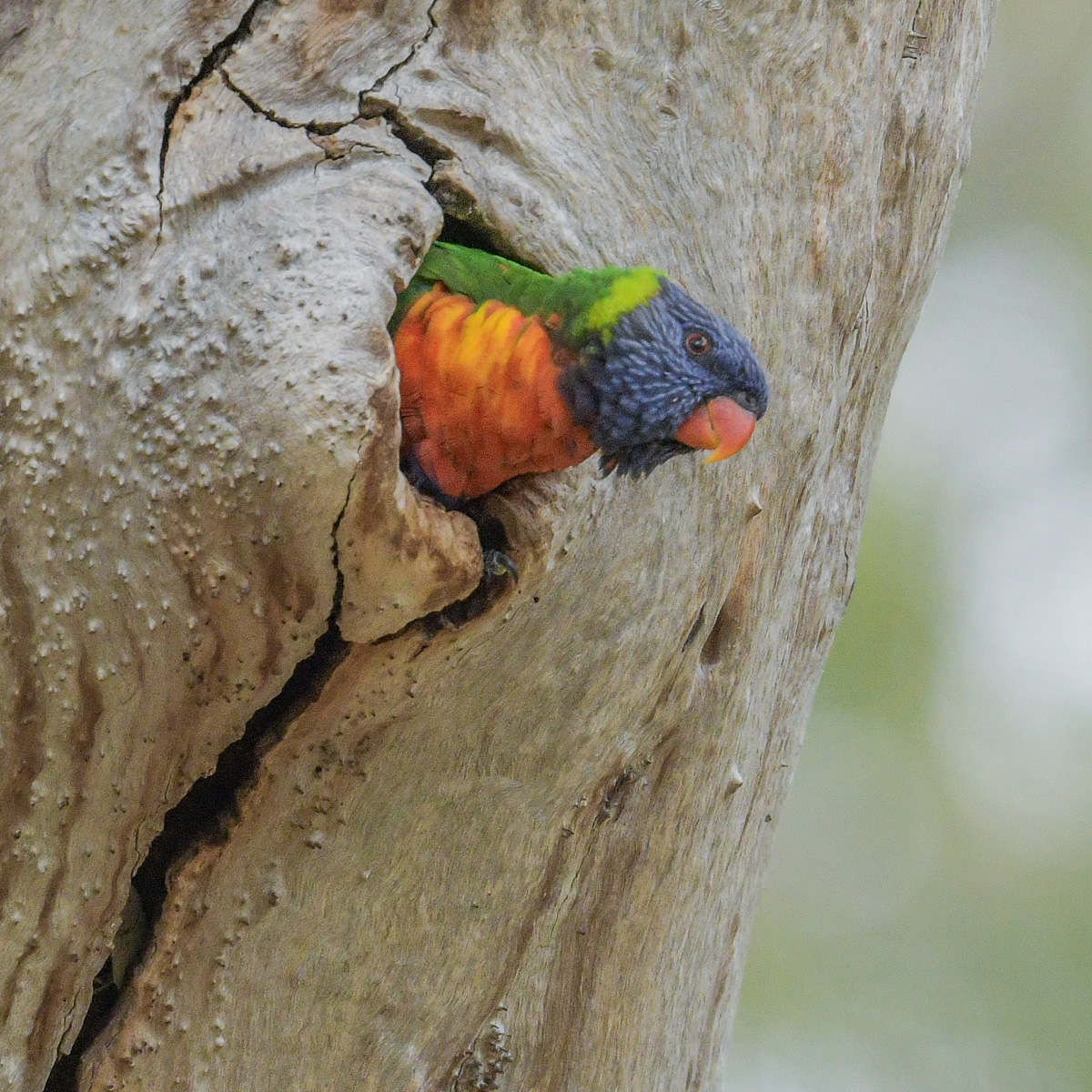
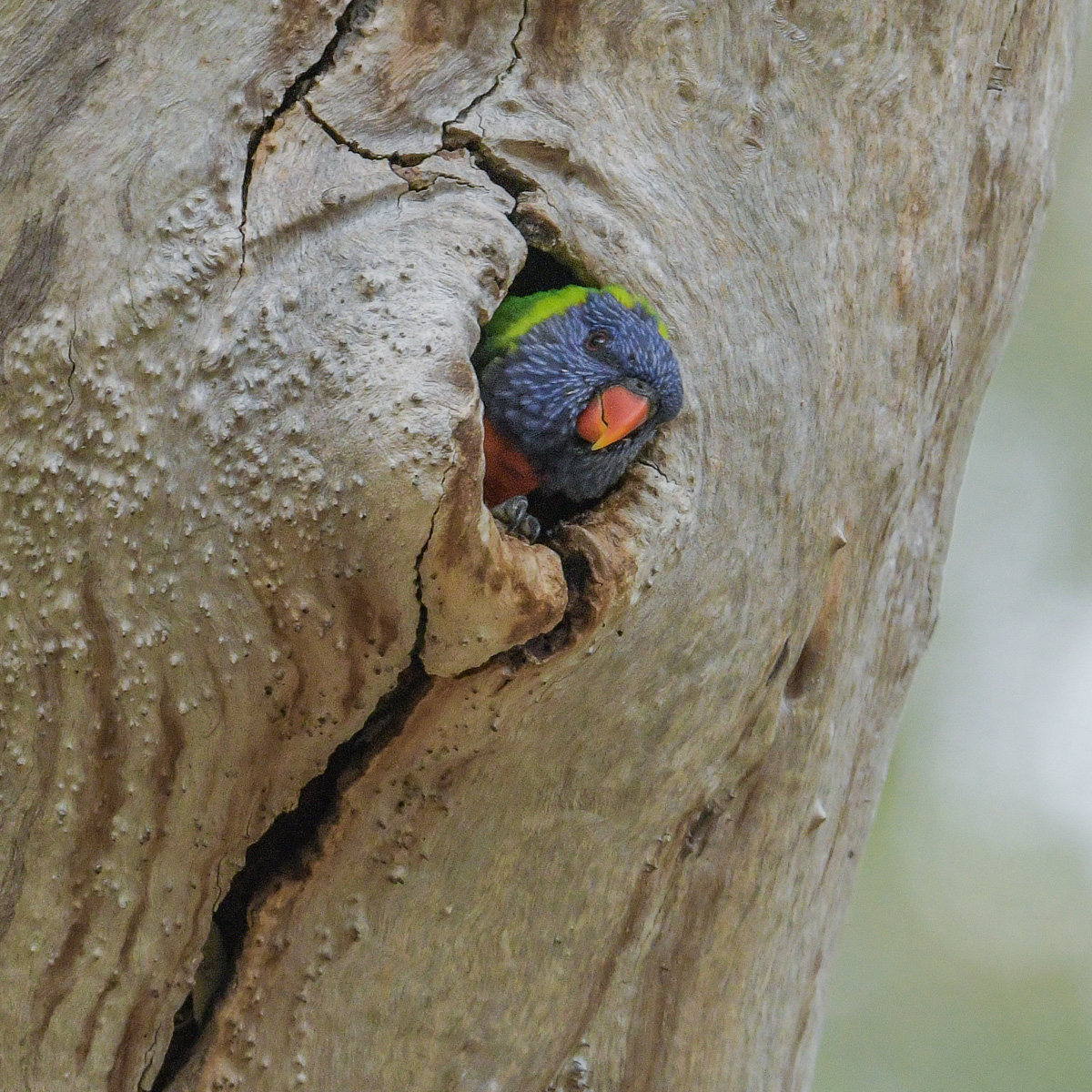
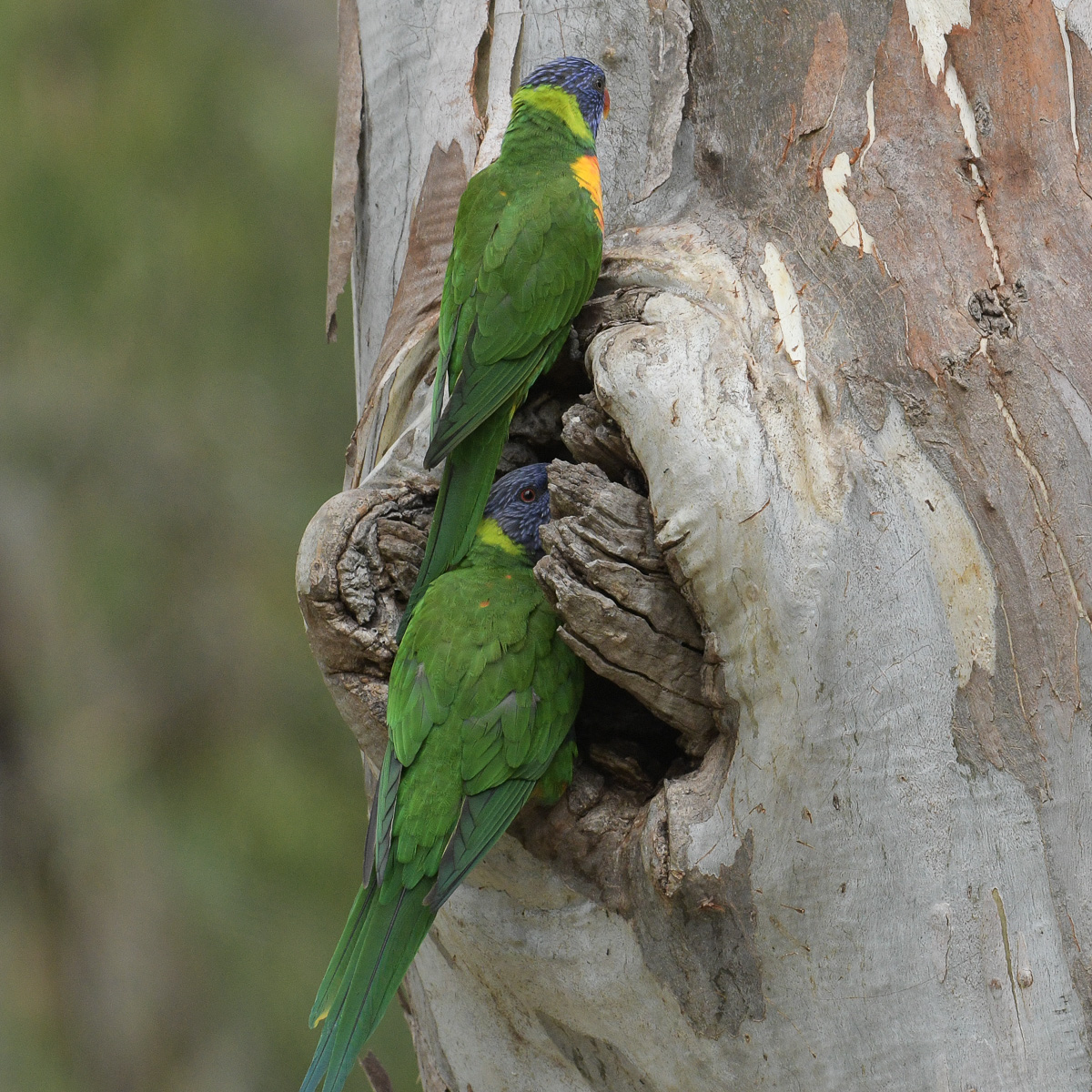
We were passing by a hole that was used in a previous year by the Kingfishers and not surprisingly, a Rainbow head popped out.
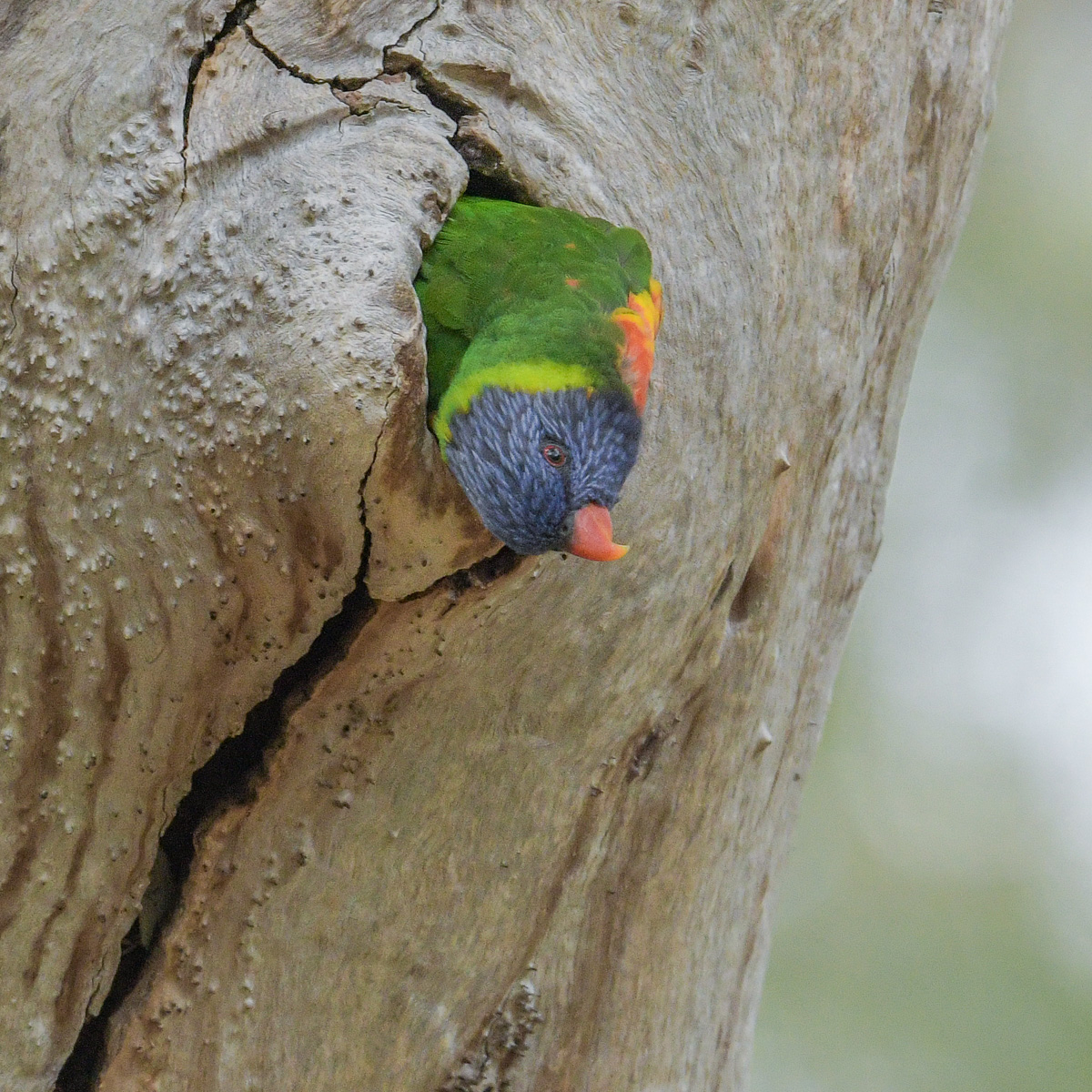
I now, rarely bother to even aim the camera at them, so went on a few steps. And again it swung its head out, and pulled it back, and repeated the action. Given they are so cheeky, I didn’t take much more notice. Like voting, I don’t do it, because it only encourages them.
Two or three more steps, and the bird repeated the process again.
And I realised.
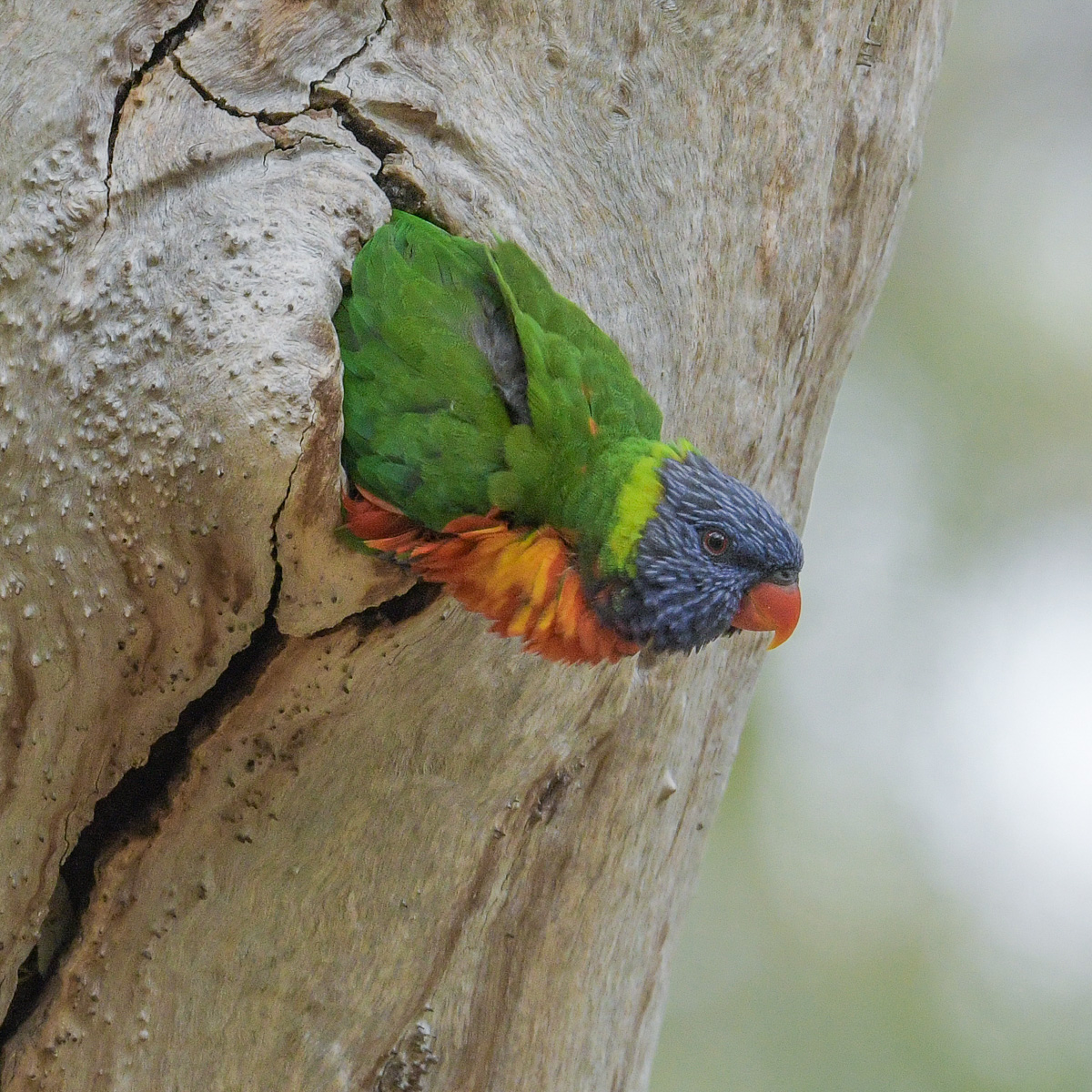
It was having difficulty getting out of the tiny hole. It could get its wings out, but not its tummy and feet, or its feet, but the wing width wouldn’t fit.
The Kingfishers tend to excavate a hole with a small entrance compartment, and then turn the hole, in this case, to the right. Then, I’m guessing, build the nesting chamber behind the little plug near the front. So to get in they must enter, and then turn sharp right. Easy if you are as small as a Kingfisher… not so easy if… you’re a big fat Lorikeet.
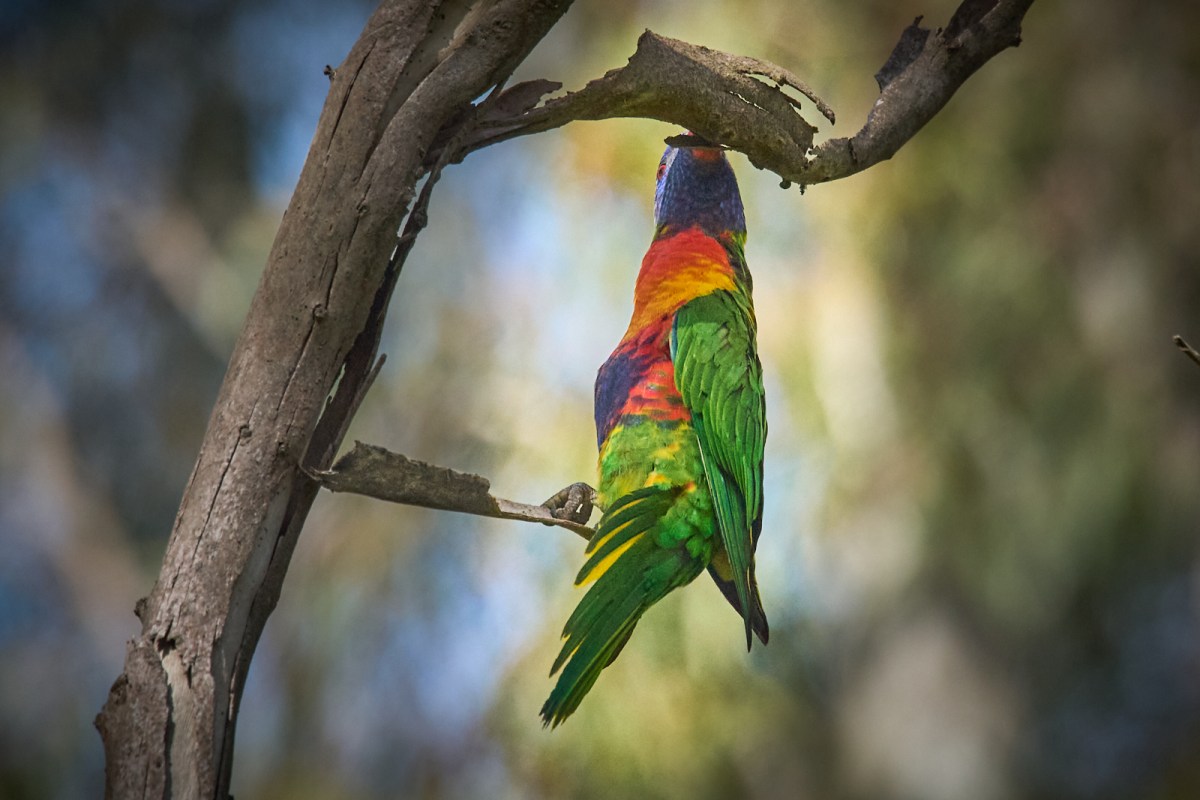
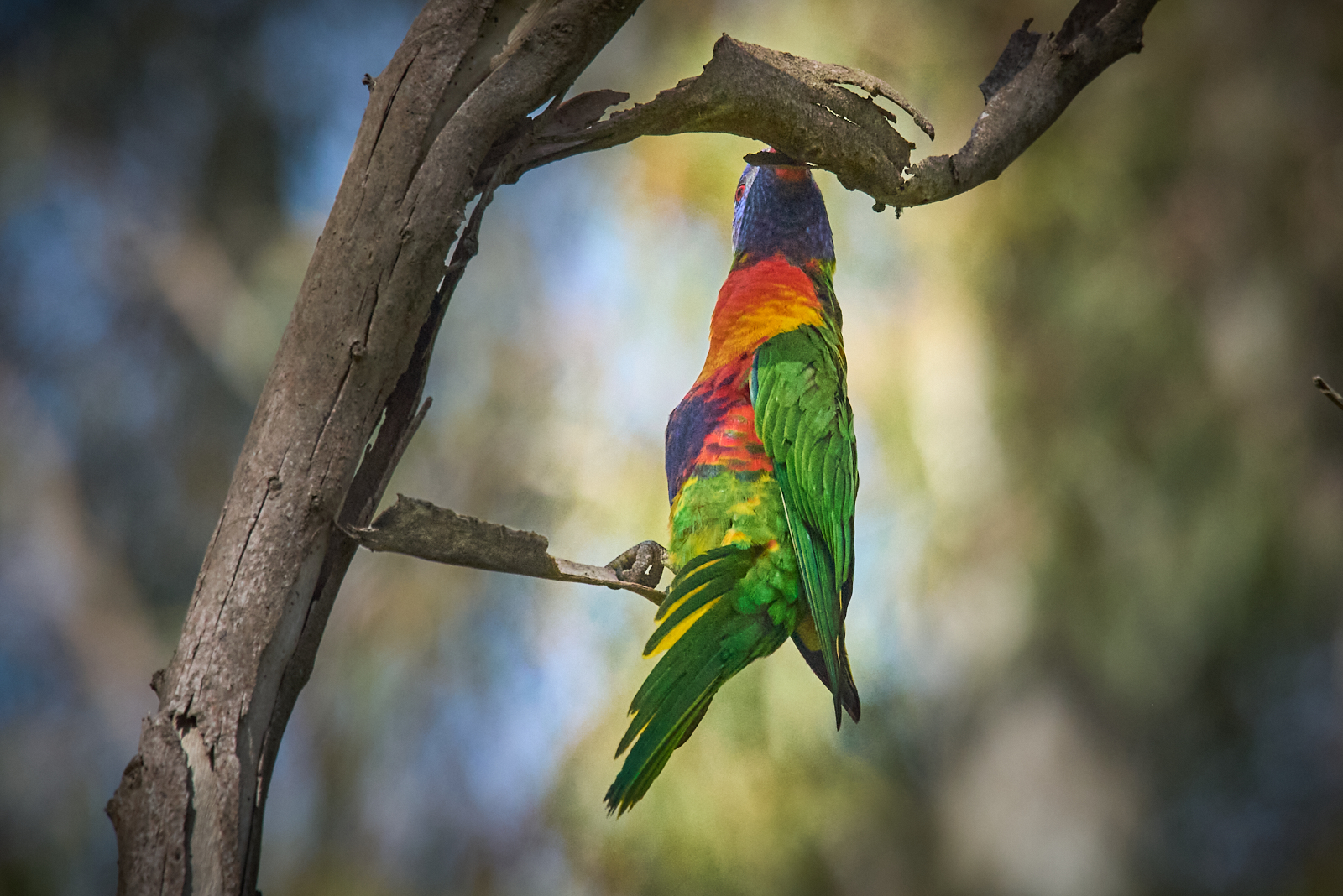
I’m not sure if this one was entirely stuck, or just couldn’t get a purchase with its beak to leverage the wider bits out of the tiny hole. So it stuck its head out, and as much of its body as possible, and swung about trying to get a beak grip.
After a couple of minutes, I do have to add, I said, “Well it’s your own silly fault” and decided to move on. Then with a big effort and some extra leverage it managed to slip out.
When I returned later past the tree the pair where inspecting another, larger, and hopefully more suitable accomadation.
Enjoy
Click on an image to got to larger size slideshow.






 Birds as Poetry —— Just because I WANDER doesn't mean I'm LOST