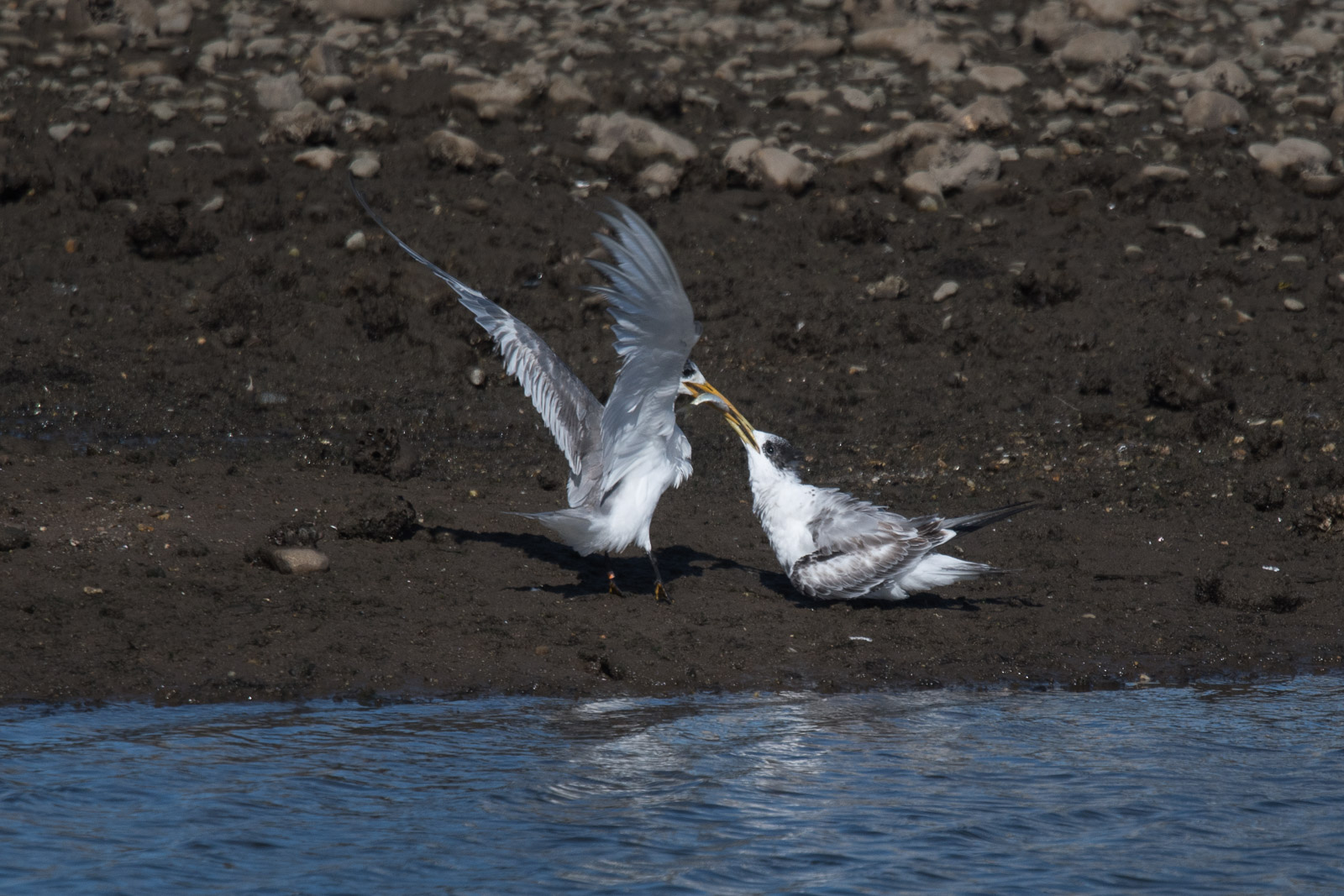
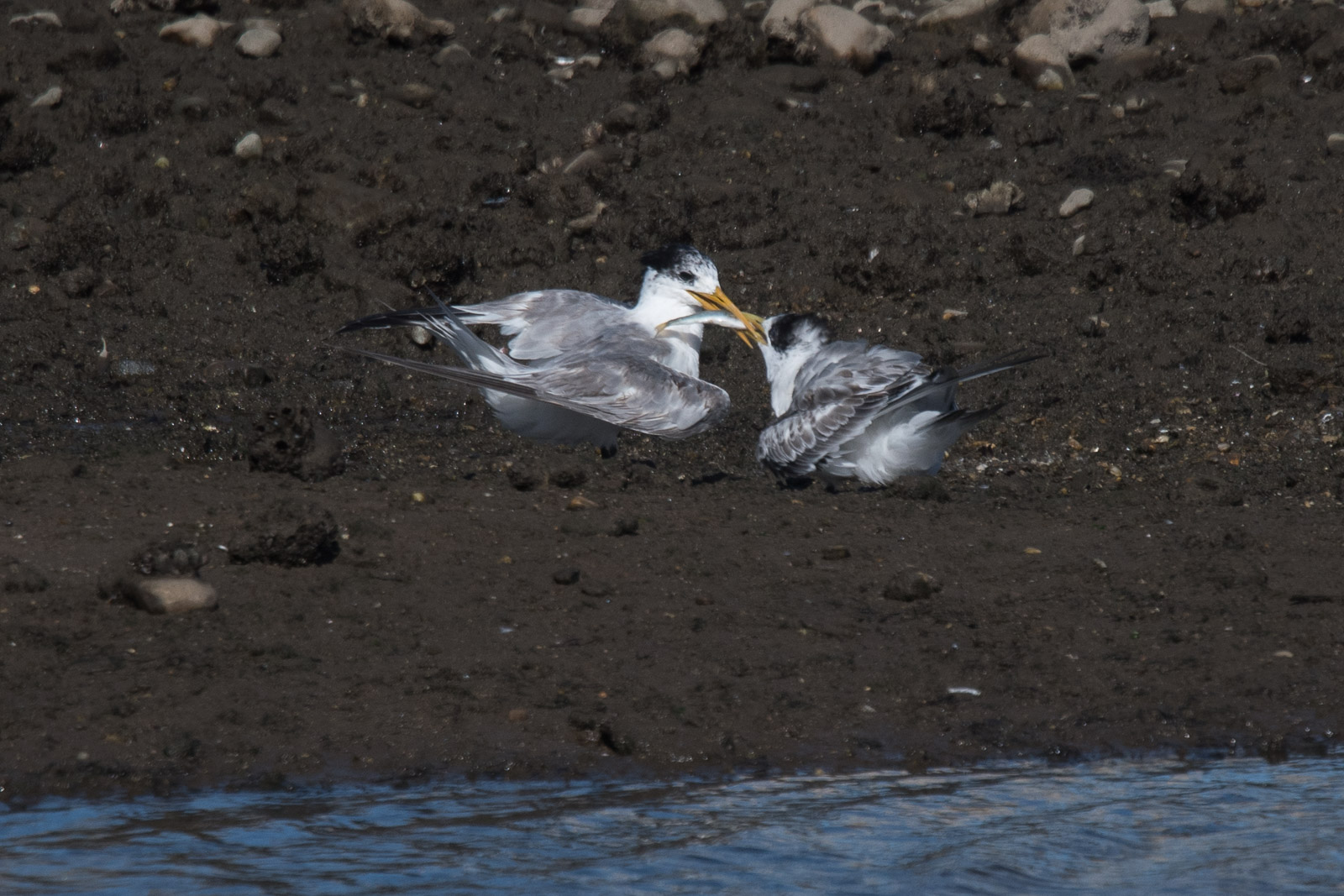
Beach Day: Crested Terns

On a free day, with some good sunshine, a place I like to check out is on the end of a little point on Port Phillip Bay.
Because of the formation of the area with a long tongue of basalt from ages past volcanic eruptions, there is a mudflat that extends out several hundred metres. On low tide the flats are well exposed and some of the rock edges allow the birds to rest out of the water.

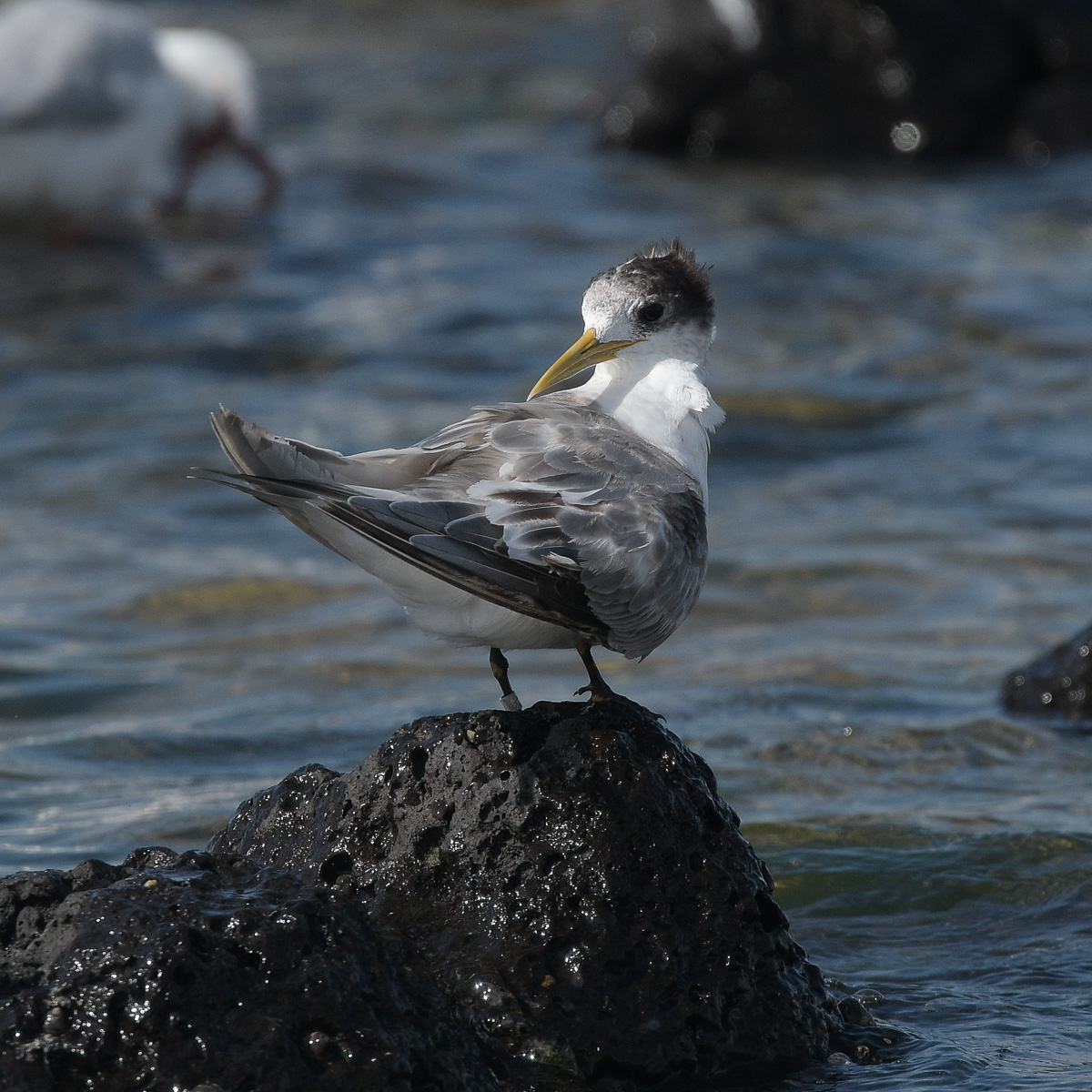
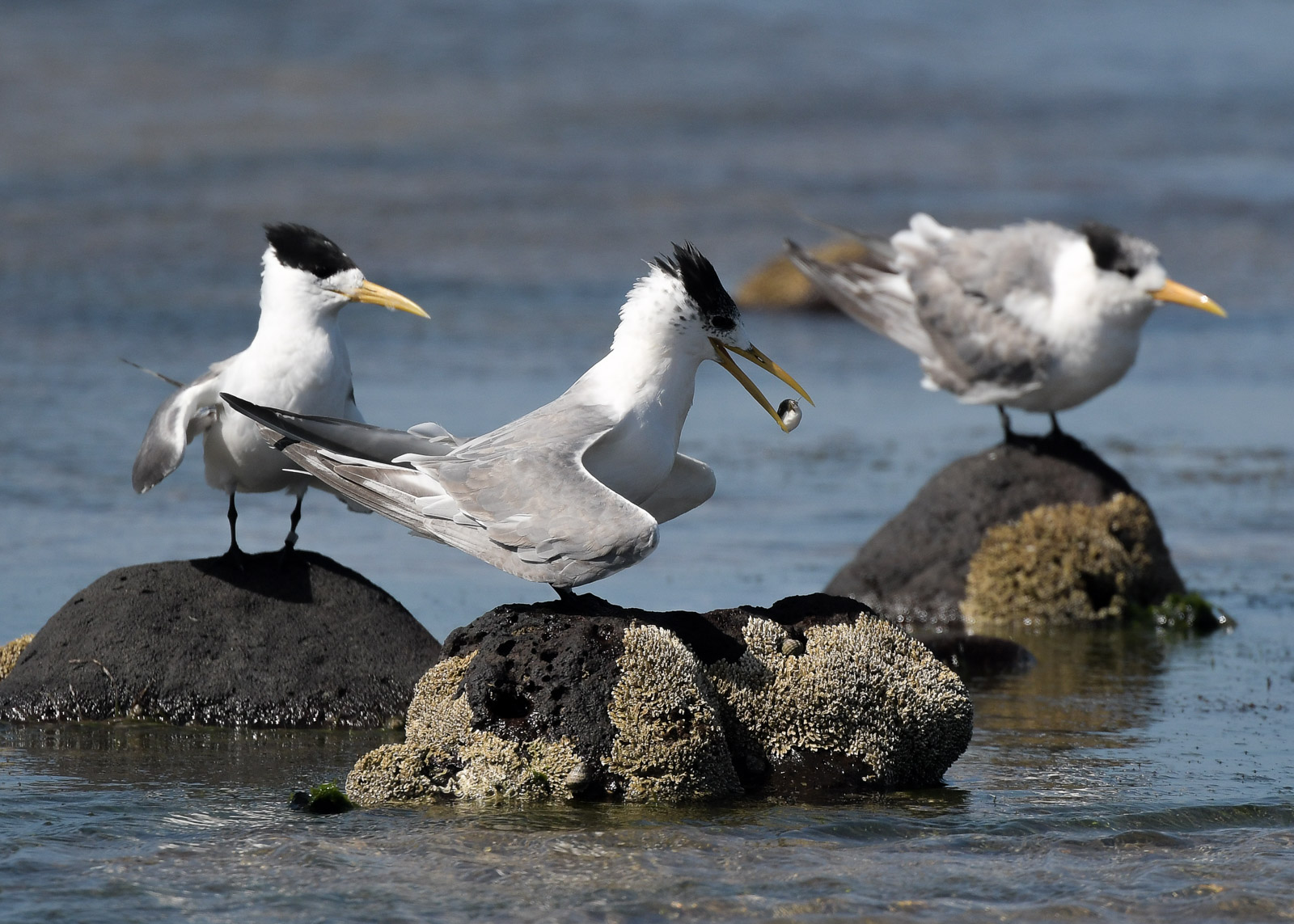
A small colony of Greater Crested Terns are regulars, but recently over summer they have been away on nesting duties, as there is no suitable area nearby.

So it was good to walk out on the damp sand and sit on the rocks with the Terns and watch them preen and hunt and interact with their noisy, always crying young.

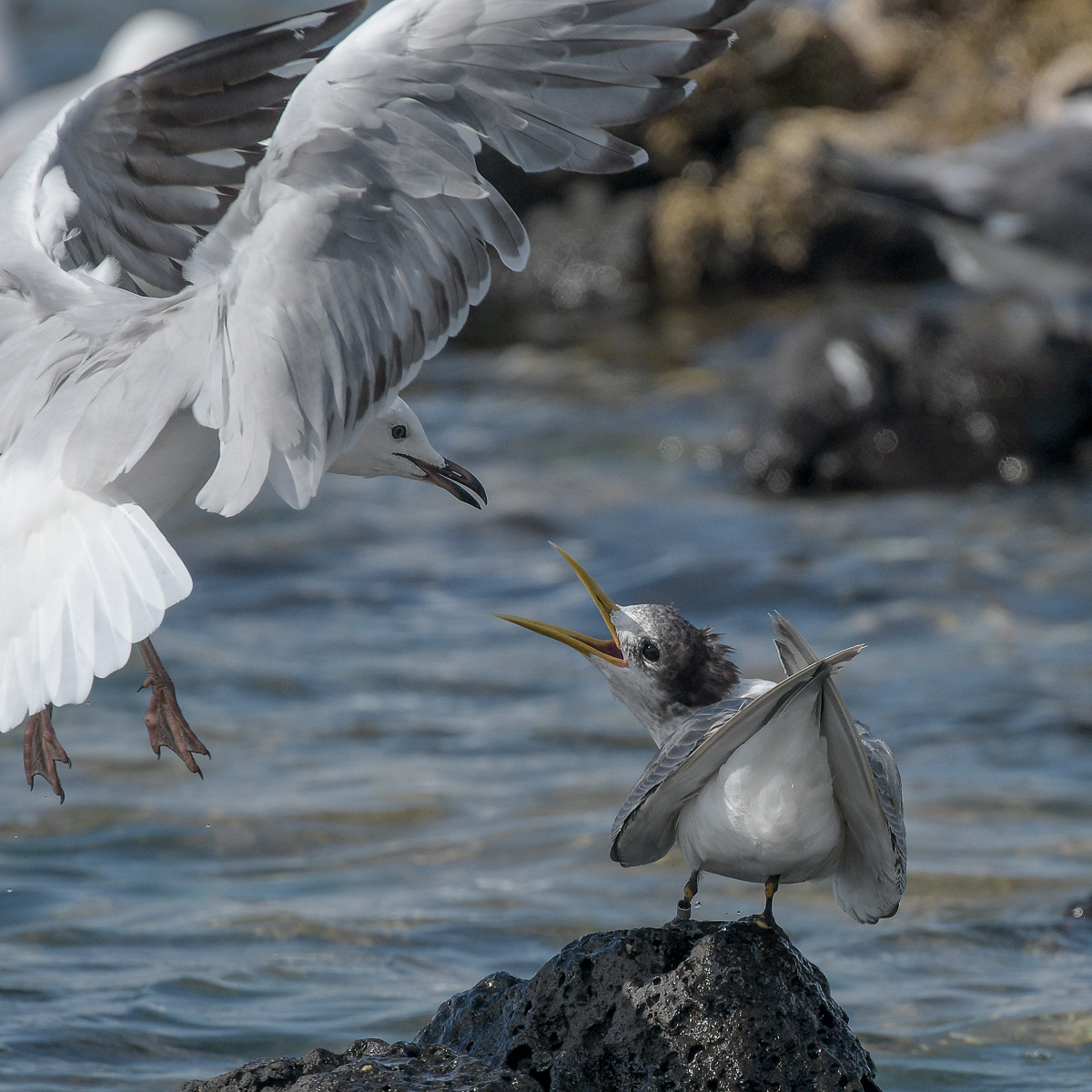
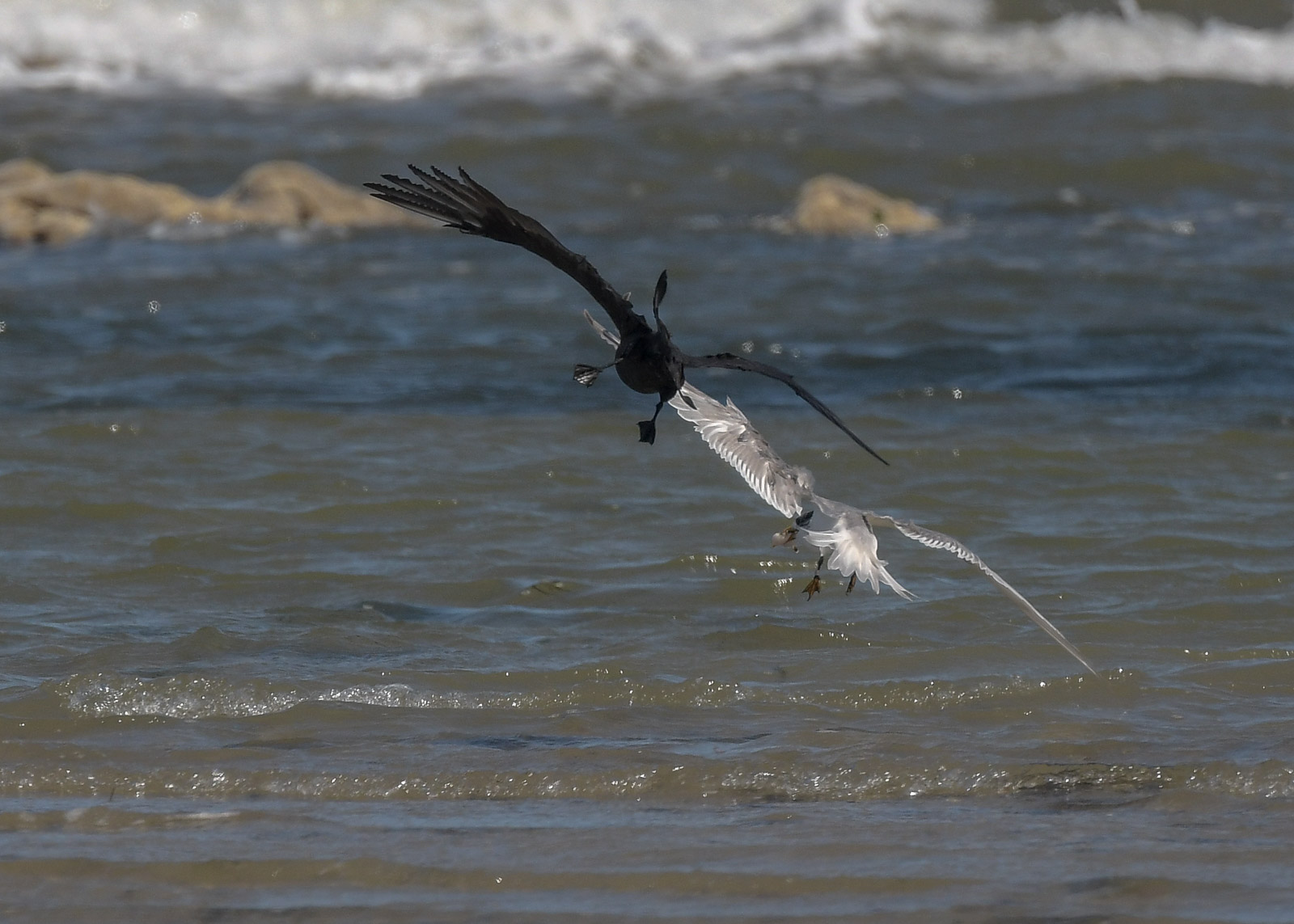
With so many gulls around any catch that was made was hotly pursued by the gulls. And at one point a frustrated Tern decided to attack the annoying gull.

And all too soon the tide began to flow in, and it was time to slosh back to the dry sand.

Enjoy

Click on a photo for a larger view in a slide show.

Along The Track: Teach Fishing

So the old story goes:
Give a man a fish and you feed him for a day.
Teach him to fish
And he’ll sit in a boat all day drinking beer. (at least I think that’s how it goes)

EE was out for the day, and as the weather was fine in the afternoon, I decided to go to a special place at Point Cook park. We don’t usually go out that far, as its a long haul through some very loose slippery sand so we avoid it.

A point in the park was formed millenia ago when the great western plains lava flows occurred. The lava jutted a tongue out into what was to become Port Phillip Bay. Over the years, sand has been deposited on both sides of the rocks, and two tiny little bays have been formed with the sand keeping the water shallow.
On low tide the point can go out for about 150m or more, and on very low tide the sands are exposed and its possible to walk out most of the way.

The rocks form a lovely resting spot for the seabirds and it’s not unusual, even on high tide, to find cormorants, gulls and terns, and occassionally swans and pelicans making the most of the view.

I like it as a quiet, lonesome place. One of my preferred solo birding spots.

So I pushed on through the pine plantation, slogging over the hot slippery sand until I reached the coolness of the shoreline. Then a few minutes along the beach to the point. Luck would have it, it was late on a falling tide so there was some exposed sand I could walk out on. Because of the little bays, the water is pretty shallow and it’s easy to take off boots and socks and roll up the Levis and wade out a bit.

Greater Crested Terns were in abundance and fishing further out, but returning to enjoy a meal on the rocks. A scattering of Red-necked Stints were also in attendance, getting ready for their epic journey.
When I walk out in the water paralled to the rocks, the birds generally are relaxed and don’t seem to pay any attention. Except for a pair of Pied Oystercatchers, that immediately moved as far away as they could to the sand on the far side. Then they do what Oystercatchers do best. They glared at me.

A tern came in with its latest catch and seemed to want to brag to everyone about its good fortune, and flew about from rock to rock cackling and playing with the meal.

I moved back to the sanddune and sat on the grass with a brew of the Earl’s finest and soaked up the feeling of isolation.

With a loud call and wing flurry the gulls all took to the air and at first I missed the action, then a dark shape flew over the rocks. Regaining composure, and the camera, I called out to no one in particular, “Arctic Jaeger”, and as there was no one else, its just as well I didn’t call to anyone in particular.

Sure enough. A Jaeger was looking for an afternoon snack, and what better way than to relieve some hapless gull of its meal.
But they were gone. It turned to head along the beachline, just as an unsuspecting Tern flew in with its latest meal. The Jaeger summed the matter up in a split second and the chase was on. Jaegers have a surprising turn of speed and incredible air contol, at one point, its head was going in one direction, its wings in another, the body in yet another direction and its feet controlling the action.

Somehow the Tern managed to lose enough height to get onto the sand, and mantle its meal with its wings. Thwarted the Jaeger moved along the beach to retrieve some other offering and in the flick of a wing was gone.

Time had run out, so it was time for me to slog back through the pines and home.

Enjoy

Greater Crested Terns
A Greater Crested Tern doing a spin dry to remove excess water
A young Greater Crested Tern picking up from the shallows
One of a handful of Red-necked Stints working the area
Showing off its prize
Don’t play with your food.
Arctic Jaegar. A summer visitor, not one I’d usually see, and certainly not in close to shore
A very surprised Tern
Jaeger applying the brakes
A serious chase and one the Tern does not want to lose
Closing in
The Tern was heading for the safety of the beach and managed to land with its food intact.
Thwarted the Jaeger collected something from the beach before flying off
And for bonus points! As I was leaving a Black-faced Cormorant flew in. They normally reside futher south in the Bay, so its been good to have a few around.

Little Visits: Enjoying the Morning Sunshine

Funny old weather Melbourne.  Biting cold for days, then, such a tiny break of stable weather.  Frost on the ground, breathing out ‘steam’, and calm winds. Ideal.

So. I, as the Banjo wrote, “Sent him a email, which I had for want of better knowledge sent to his mail address, in case he was home.
Just on Spec, titled as follows, “A trip to Point Cook is in the offing”.
And an answer came directed in a manner I expected.  “Mr An Onymous will meet you there”.

So, as #kneetoo is on the move, but not willing to venture too far at the moment, I went.

As the weather icon ladies had predicted, the morning was crisp, still and sunny. Ideal.

After the usual “G’days” and, the like, we set off for a walk through the pines.

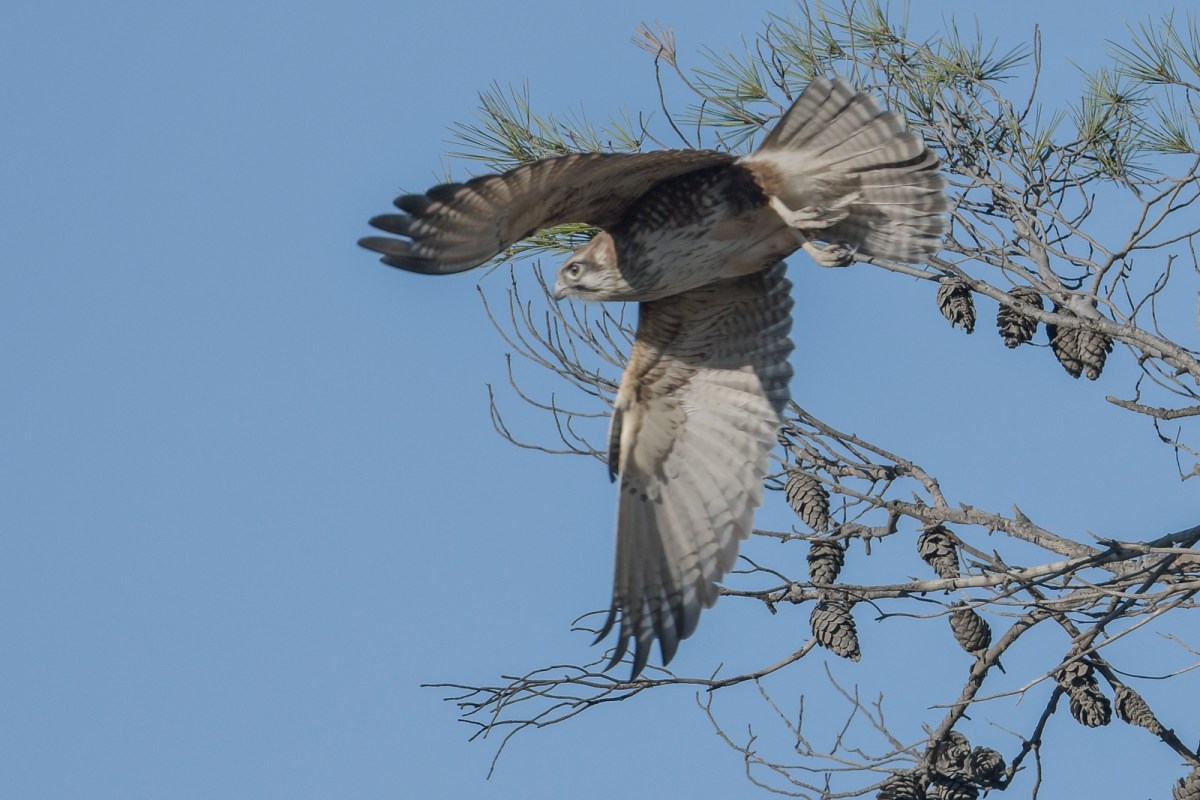
We’d not walked more than a few hundred metres when I turned to glance a Brown Falcon that had set itself up in a sheltered, warm spot in the sunshine. Had I kept going, he’d have stayed I’m guessing, but too much activity too close, and he unfurled the big brown sails and was gone.
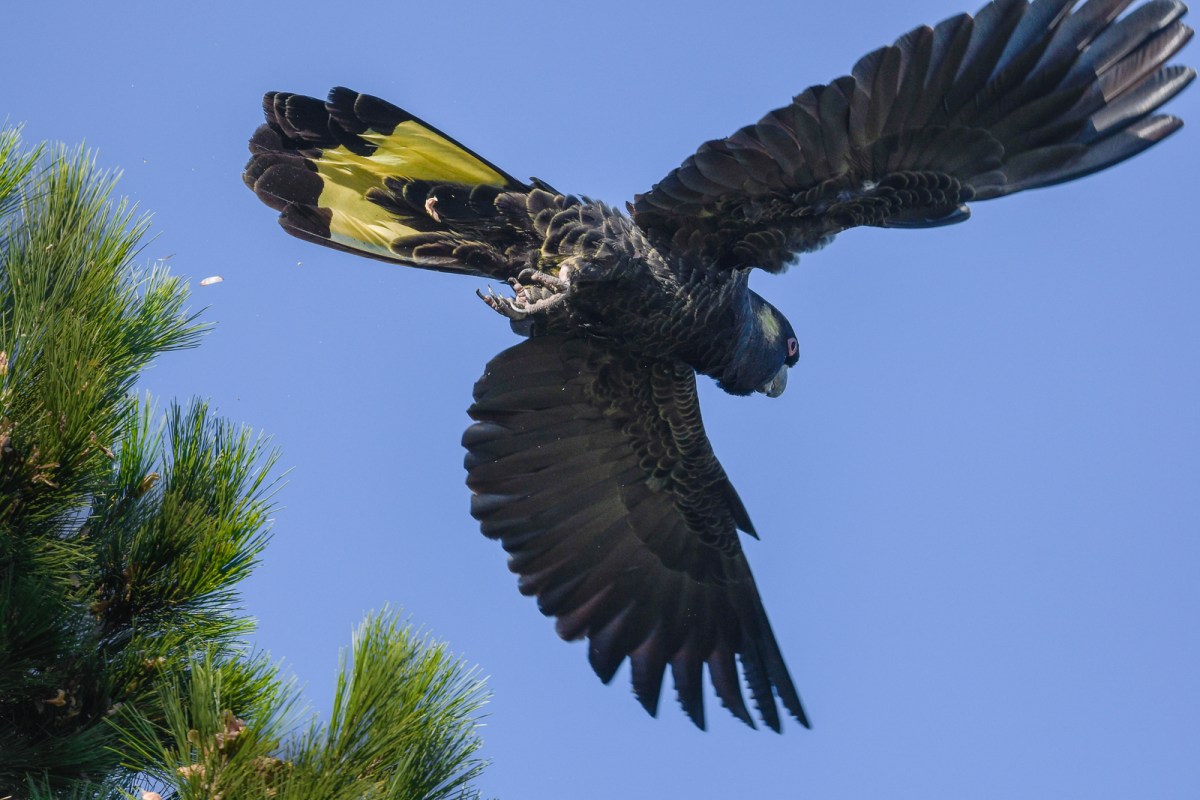
Next the call of Yellow-tailed Black Cockatoos rang across the frosty grass, and there on the other side of the paddock we say around 6-8 descend on the large pines. To be followed in quick succession by a second group of more than 20, and then another smaller mob of about 10. By the time we’d arrived close up, they were well in to their feast of the young cones in what can only be described as an open area dining area.


Then one of the young ones, crying, caught my attention and we managed a view of it being fed.  Beak to beak.

Onward for a cuppa of the Earl’s best and a sit by the water’s edge.  The moon was pulling in a high, high tide and the still waters lapped and laughed as they kissed the sand, and retreated, having enjoyed the moment so much to quickly repeat the performance.
Sometimes, just slowing down, and watching the small things, like small child exploring the beach, not over-awed by the expanse of sand and water, but rather inspecting the grains of sand on its fingers.

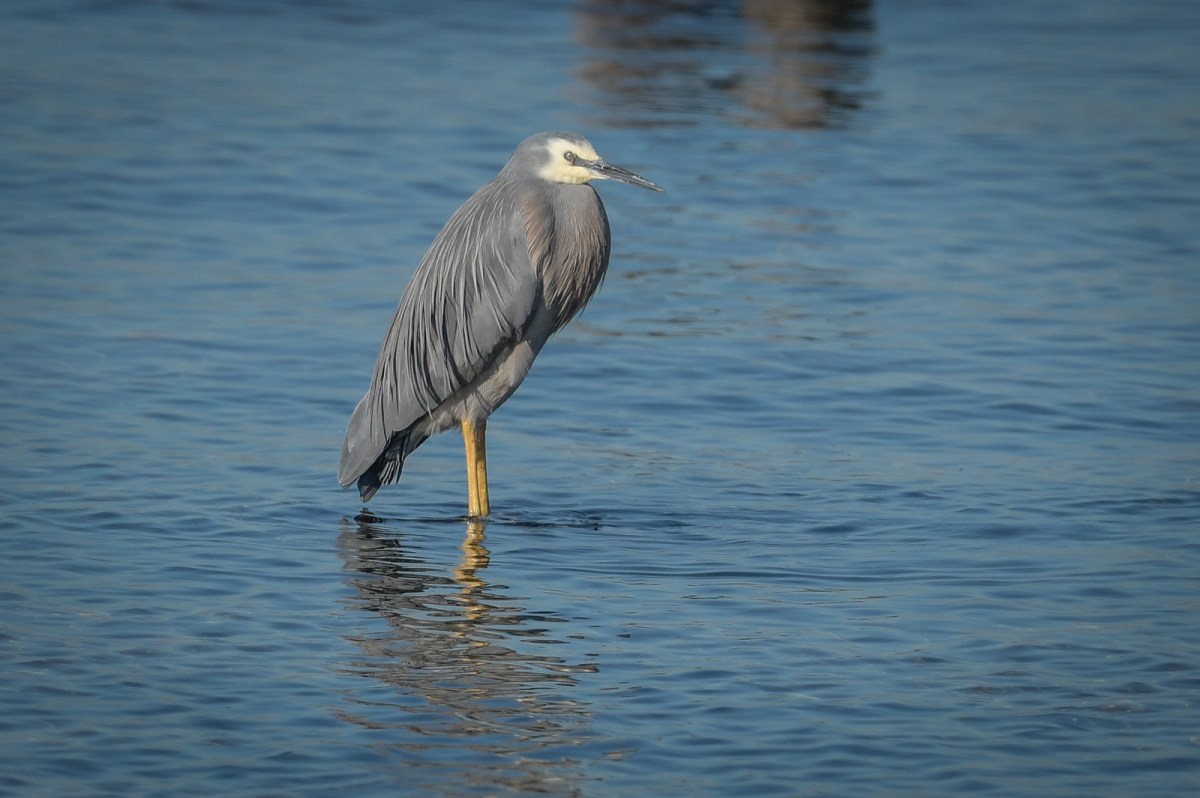
A Greater Crested Tern was fishing, and I missed the head shake as it came out of the water.   Then a White-faced Heron again standing perfectly still.

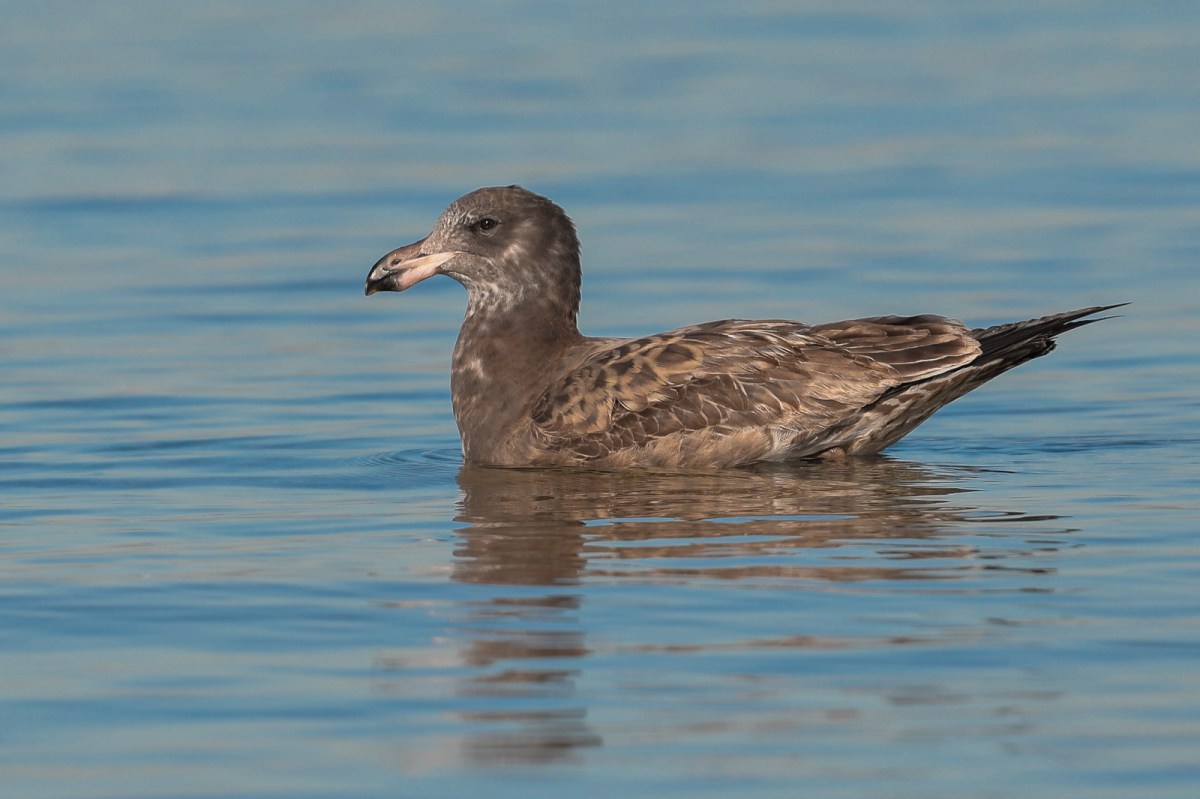
Several young Pacific Gulls were paddling in the clear waters, and an adult was doing its best Otis Redding impersonation of “Watchin’ the Tide Roll Away…”
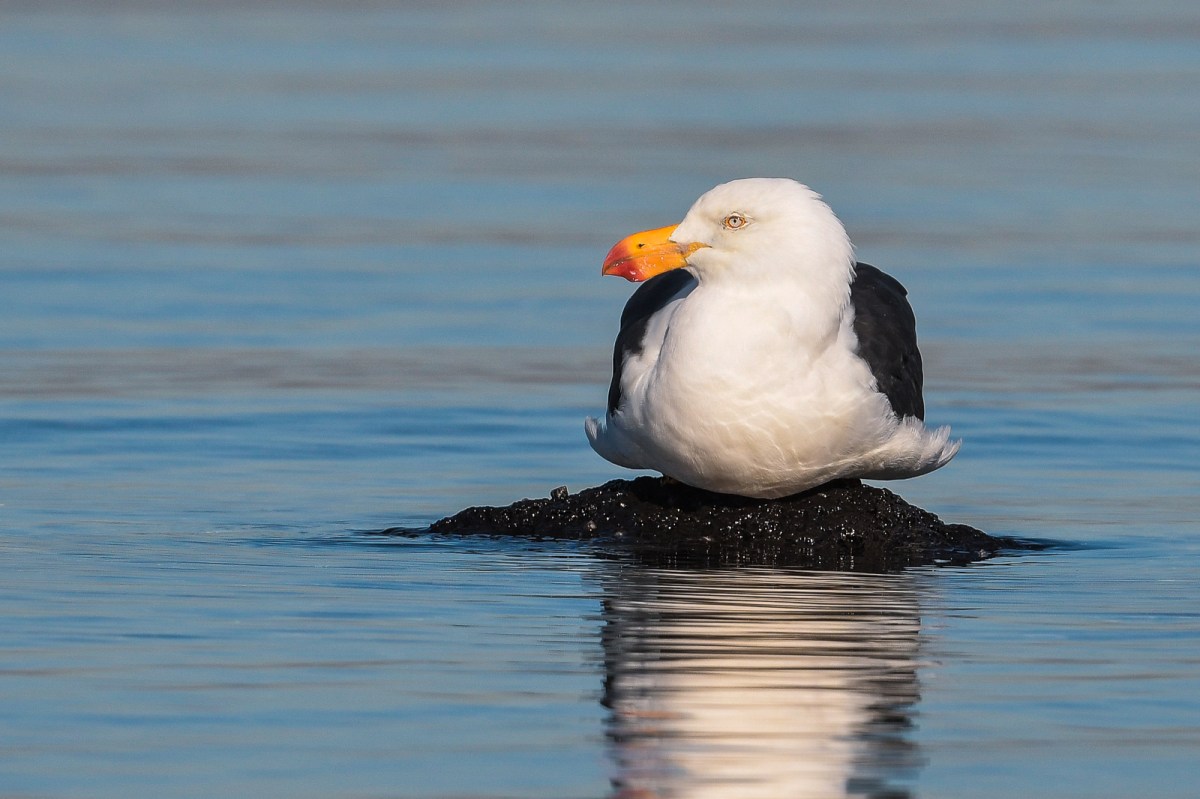
We could have stayed all day, but each of us had other things family to attend to, and we retreated to the vehicles and a local coffee shop.
Great day for birds, relaxing and a bit of a natter.

As we left the beach an Australian Pelican beat its way along the water’s edge, flying low to make the most of the lift of the water.

Snapshots: Crested Tern Feeding Young

Over the past few weeks I’ve been working on a new “Sit” spot at “The Office”.
At one point the Werribee River as it cuts through the old sandhills that once were part of the lake that became Port Philip Bay, runs over a stony bottom and has not been able to cut deeply, but rather has formed an area of shallow water at low tide.

To compensate, the river water spreads out into a number of small backwater lagoons or billabongs, so there is quite a range of areas for the birds to congregate and feed.

The Werribee Golf Club skirts the river at this point, so access to the area is relatively easy from the K Road carpark. A great feature is that the afternoon light is coming from behind the photographer, and as my Mum used to say when we used the Box Camera, “Keep the Sun over your left shoulder dear”, so she’d love the lighting happening here.

It’s only a couple of kilometres to the River Mouth at South Werribee, and the fish regularly come and go with the tides.

No doubt I’ll feature more of this area as I settle into working from the river bank. A couple of hours with a ‘cuppa’, and a bit of patience brings all sorts of activity along the river.

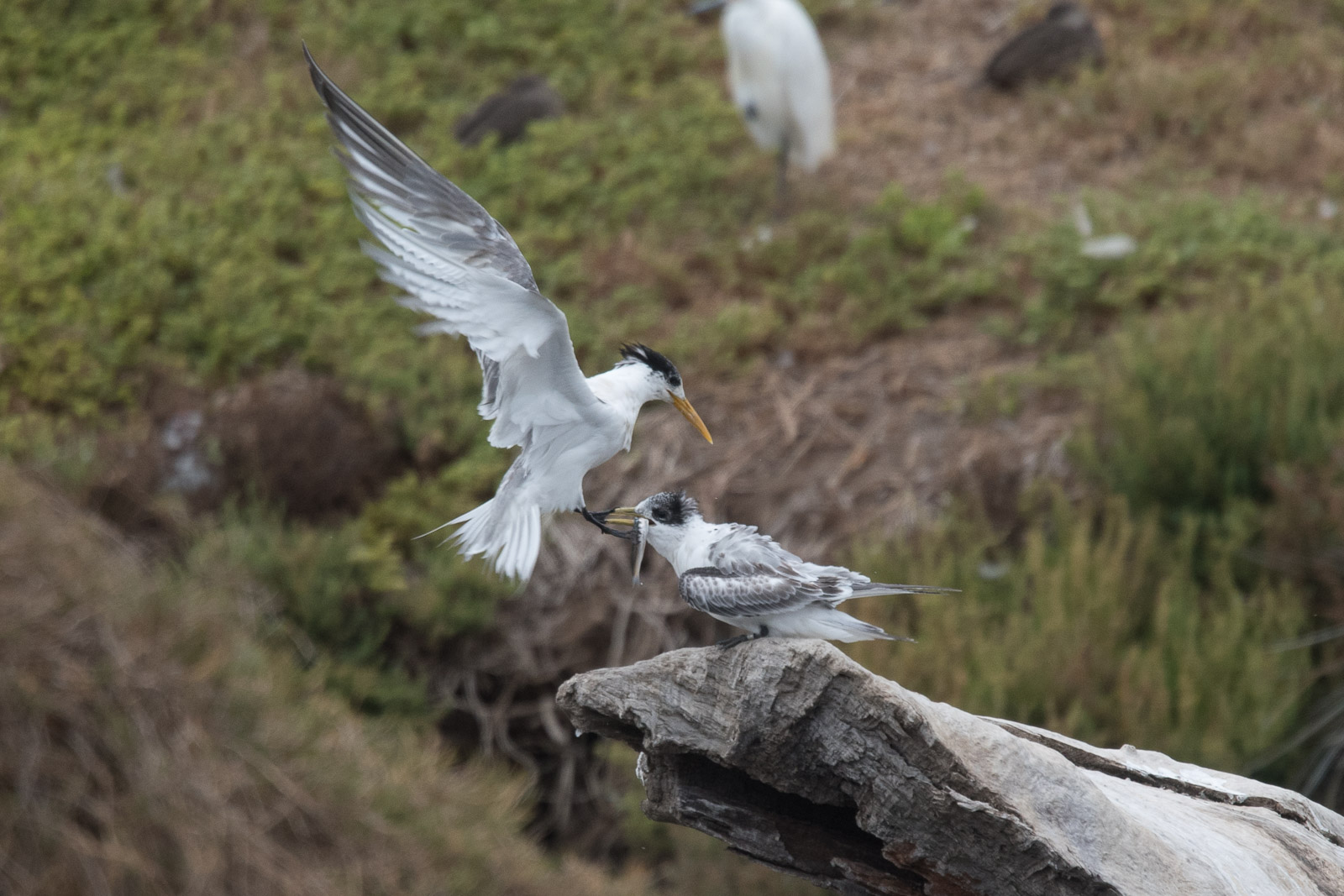
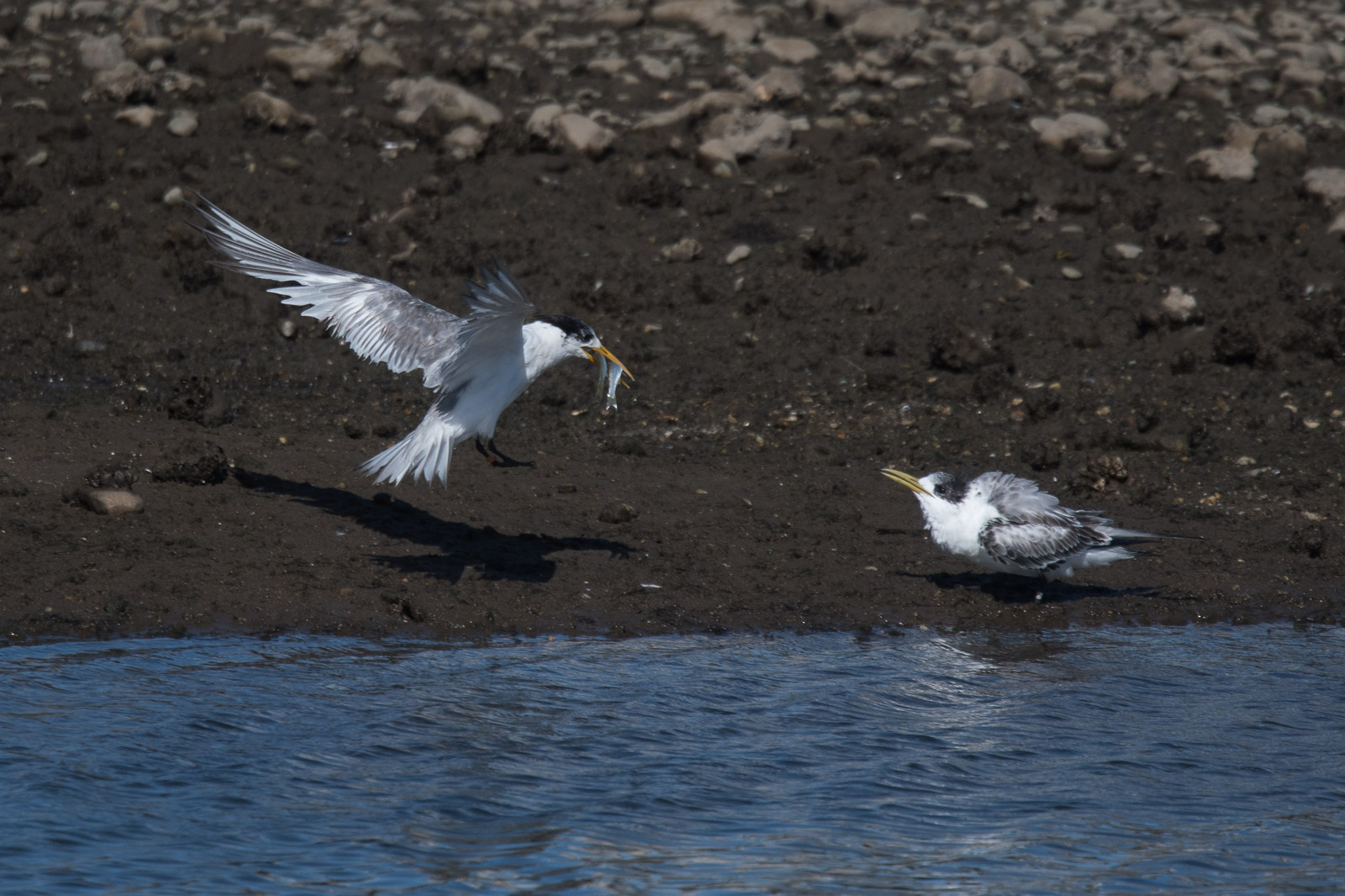
One of the birds in the area are Great Crested Terns, and at the moment they are feeding their juveniles.  I just can’t get close enough to the far bank, but sometimes the Tern will sweep by with its payload.

Enjoy

There that should keep you quiet

I know when food is on the way as the young one puts up quite a racket

The parent just doesn’t miss the mark

Sweeping in with a fresh fish

Two at a time is good fishing


While I was waiting a flock of Fairy Martins began to hunt insects among the reeds.