Working with a Flame Robin clan

This past Sunday was one of those great days for photography.  Beaut sun, a little cloud, some good breeze for the big birds.  I wrote previously about the pair of Australian Kestrels at play, but while all that was going on a small clan of Flame Robins was feeding in the area.

I was sitting on the ground with my feet hanging over the cliffs, like a schoolboy at the pier, watching the work of a Black Kite over the nearby treeline when I heard the familiar “chip chip” contact call of a Flame Robin.  There on the roadway behind me were two males, feeding, with several juveniles on the fence line behind.
I moved to a spot next to a melaleuca shrub, and settled in to see if they would approach.   And down the road they marched.  It gave me the chance to get enough shots to be able to differentiate between them.  One became Mr Yellow Feather because   his bright yellow chest feather, and the other Mr Red, as he is a brilliant Scarlet red.  While they didn’t get very close, it was a start.

I worked out that the turn around time in the feeding is just about 30 minutes, and there was  a definite pattern to the moving around, with the exception that bike riders and people with dogs would turn them to fly way down the paddock and be inaccessible   So I sat and waited and within the 30 mins they were back.  In this clan there are 4 or 5 juveniles, perhaps 3 females, and the two males.  One of the females is the Matriarch, and  she is the one which controls the clan movement.  One chirp from her and they are gone.

Because of the lack of trees in the area, its much harder photographic work than the birds in a Grey Box forest with plenty of perching locations.   But they manage.  The fence lines are the obvious, and the big patches of grass also work well.

My closest encounter for the day was the Matriarch. She landed in the back of the melaleuca bush behind me and I could hear her distinctly calling to the group, and I may be wrong, but it seemed the conversation went like this.
“See this big dopey photographer, stay away.”   “I don’t like the look of that big eye he keeps pointing at us.”.  “I’m going to get closer for a better look”.  Then an alarm chirrup, and she flew right by my ear,  less than a handspan away.  Heard the little wings coming, but I’ve learned that its best not to react, as the bird already has the flight path worked out. What I noted was the whirring of the wings was normal flight sound, not the fast pulsing sound of a panic mode.

She landed directly opposite me on the fence and another Chrrriip, which I took to be “He’s probably benign, you can ignore him”, then she hunted on the grass on the far side of the fence.   “Benign” is a term that Jon Young uses in his book, ‘What the Robin Knows’ and refers to local birds concluding that the human presence is of no threat, and they will work in settled, not panic mode. A young cheeky juvenile landed near by, and I concluded that the lesson for me was over for the day.

The office.  Looking along the wide river cliffs over the river plain below. In the flood of 2011 water was part way up the cliffs.
The office. Looking along the wide river cliffs over the river plain below. In the flood of 2011 water was part way up the cliffs.
Bold male holding his station  as I approached.
Bold male holding his station as I approached.
Mr Yellow Feather on fence.
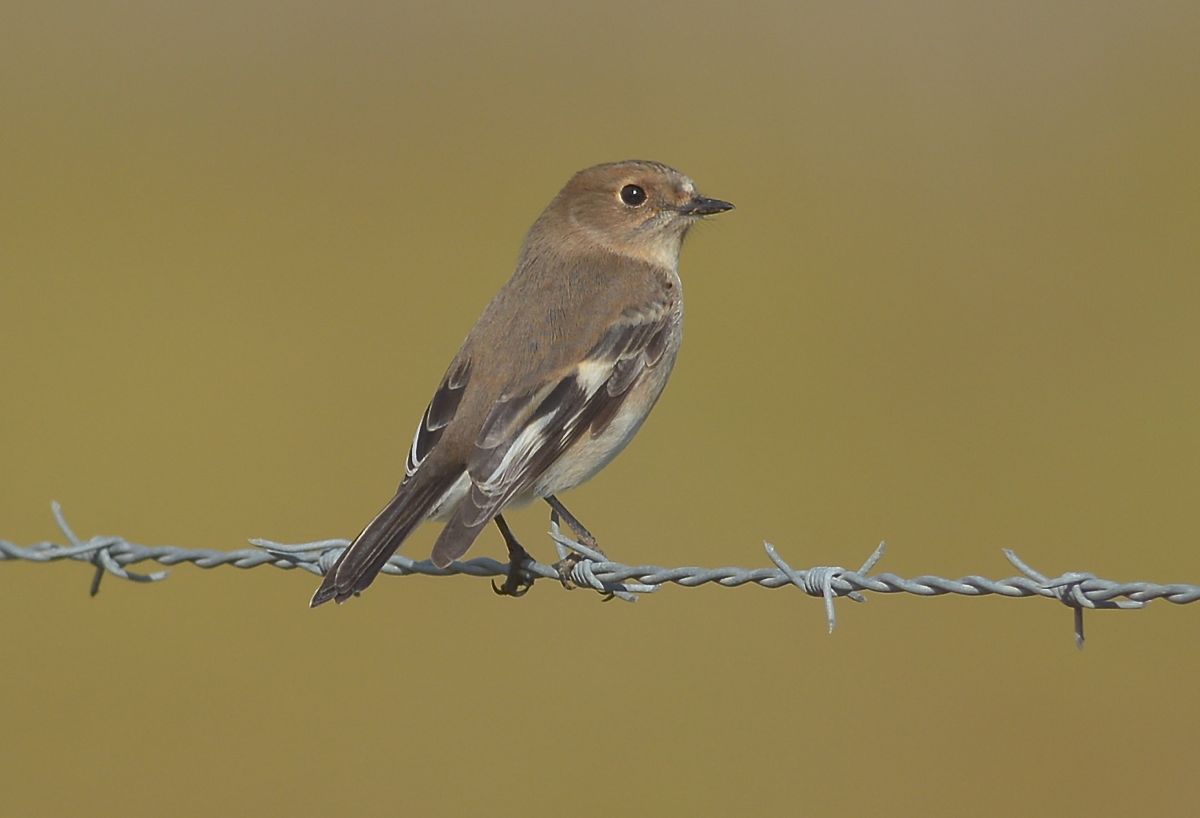
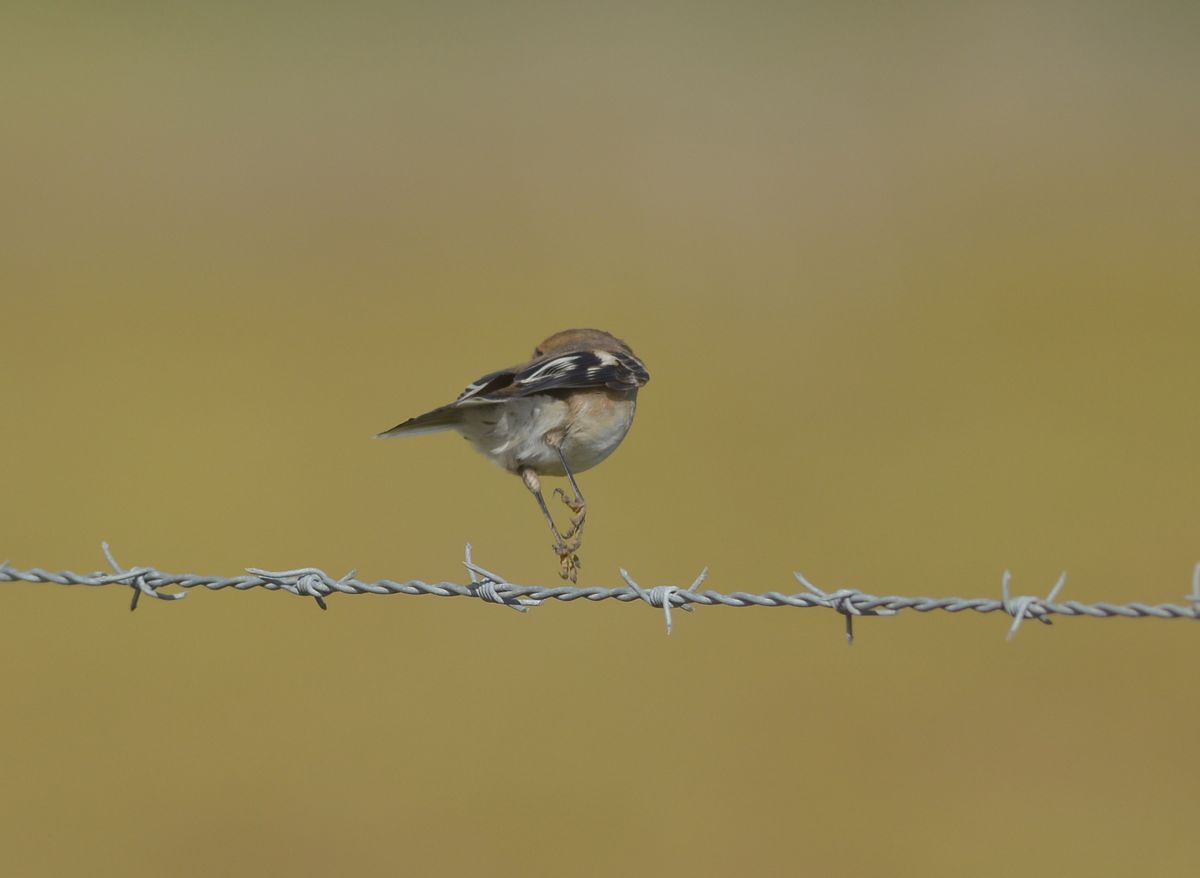
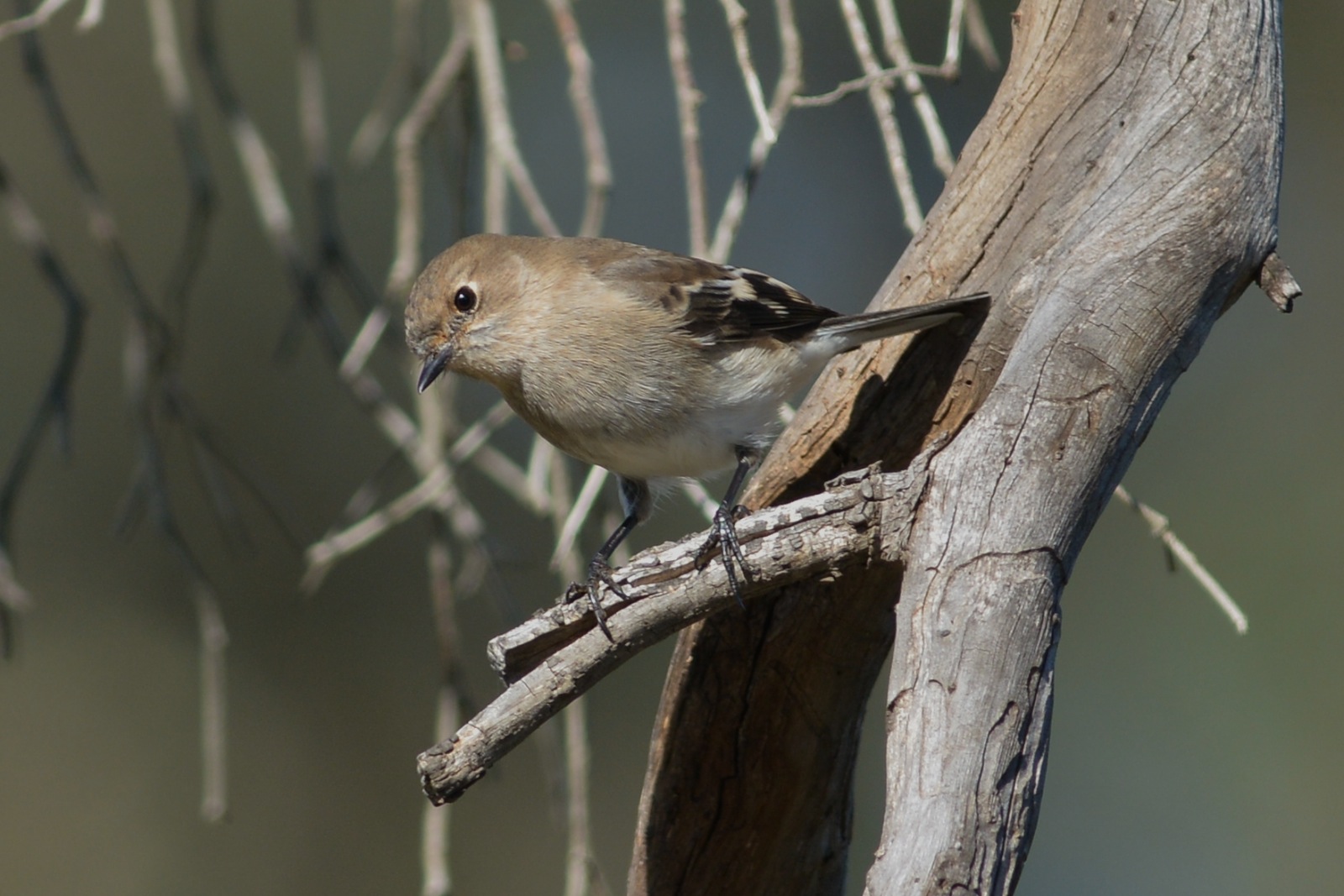
Probably a female or juvenile female.
Matriarch in the field.
The Matriarch. What she says goes.  She has just done a fly-by to determine my danger to her brood.
The Matriarch. What she says goes. She has just done a fly-by to determine my danger to her brood.


The Matriarch, satisfied I was no threat she dropped off the fence to hunt.  Not big panic wing flap here.
The Matriarch, satisfied I was no threat she dropped off the fence to hunt. Not big panic wing flap here.
Mr Red. Brilliant rich red chest.
Mr Yellow Feather, with a hint of his yellow chest feather.
Young male, juvenile.  Showing his developing feathers.
Young male, juvenile. Showing his developing feathers.
Matriarch, ready to leave and take the clan with her.
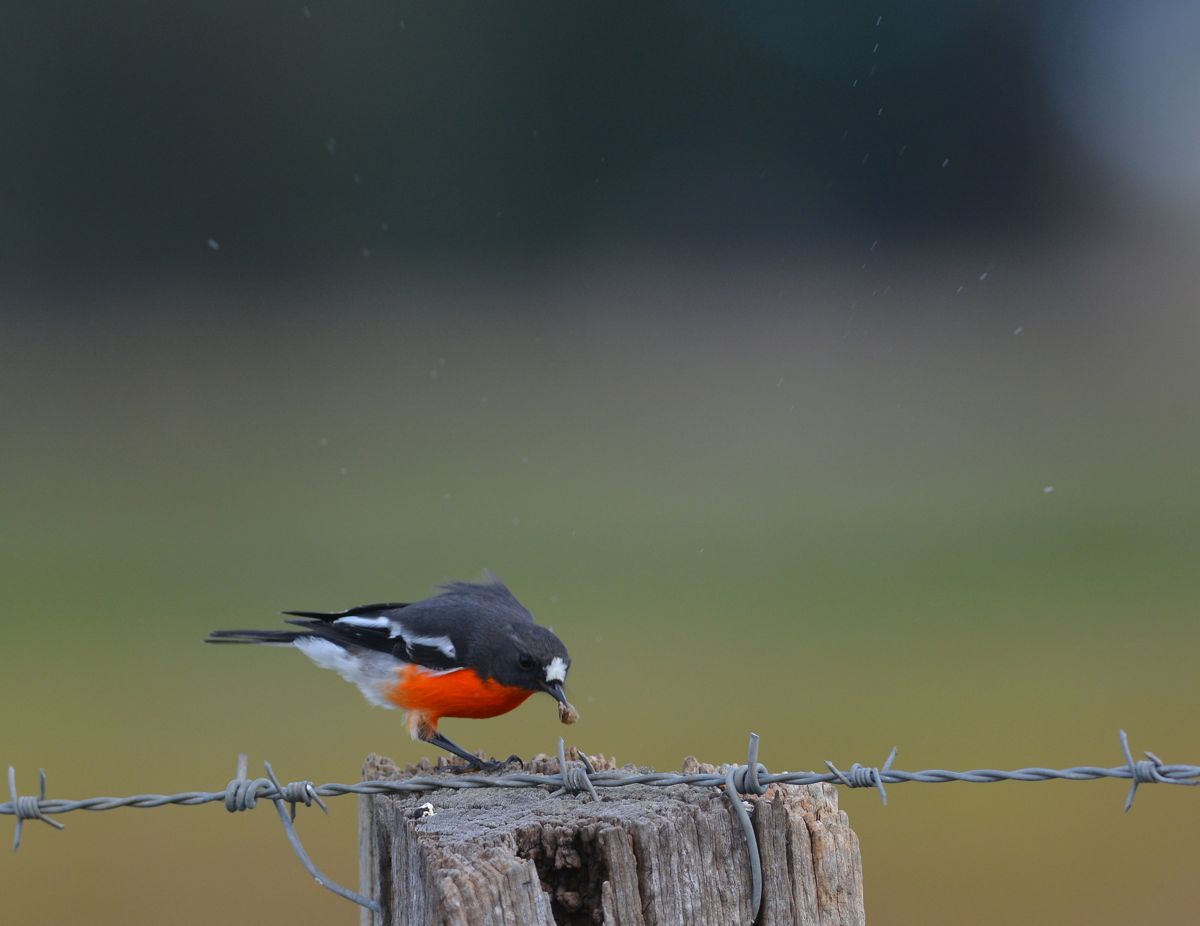
Mr Red, with a score.  He came down the fence line toward me to prepare the bug.  I took that as an acceptance. (Of course I could be wrong and it was just a handy perch.)
Mr Red, with a score. He came down the fence line toward me to prepare the bug. I took that as an acceptance. (Of course I could be wrong and it was just a handy perch.)
Bug preparation 101. First belt it a few times on something solid. Bits of bug dust going in all directions.

Black-shoulder Kite Hunting

I’ve discovered a new park area (new for me), closer to home. It cuts along the ridge of the Werribee River plain near the Werribee Mansion.  Its called the Werribee River Park, and is run by Parks Vic.  It butts up to the very eastern edge of the Western Treatment Plant. I’ve looked at the area on a map a number of times and pondered how to get there as it seems to have  bike track that connects to the Federation Bike Track that runs all the way back to Altona and beyond.    Not wanting to lug all the gear in over 3 kilometres or more I’ve been thwarted by no road access.
But, it seems, wrong I was.  A road access to a small carpark at the top of the ridge is indeed available, and as it runs on the WTP boundary, has lots to offer the raptor photographer.   And.  I may not have mentioned this elsewhere, but it also has a population of Flame Robins in residence for the winter. So what’s not to like.
Access is via New Farm Road, past the Melbourne Water Discovery Centre and over the Geelong Freeway, and just before a very well locked and secure gate a small dirt road marked with an explanatory sign “Werribee River”  leads onto the road to the carpark about another kilometre in.  Out of the car, and the first thing I discover is a pair of Black-shouldered Kites who are obviously thinking seriously about a nesting run.
I suspect that the run of very warm weather has helped the mouse population and Mrs Mouse has seen it as her bound duty to extend the population as much as possible.  To of course the great delight of the Kites.

Had an hour or so to myself and decided to see what the afternoon sunshine would bring.   No great load up here, simply put in the lens and camera, drive for 15 mins and sit in the carpark.  About as hard as bird photography can get.

Said pair are quite along in the relationship,  the female has probably completed the nest.  I would hazard a guess at its location from her perching positions.  He on the other hand now has to prove his ability to provide food.  So while she sits high on the tallest dead limb, offering him her screeching cry for both encouragement and direction, he sets out to provide the snacks.

The river has cut through the old sand here and at this point is several hundred yards wide, and the cliffs are 20 m or so high.  The grassland is an obvious place for Mrs Mouse and her tribe and so the Male is readily able to fly along the old river flat and  hunt.  When he is over the plain he is probably not much more than 30m or so over the ground, which for a photographer on the top of the bank is such an advantage as he is directly in front or below my camera line.

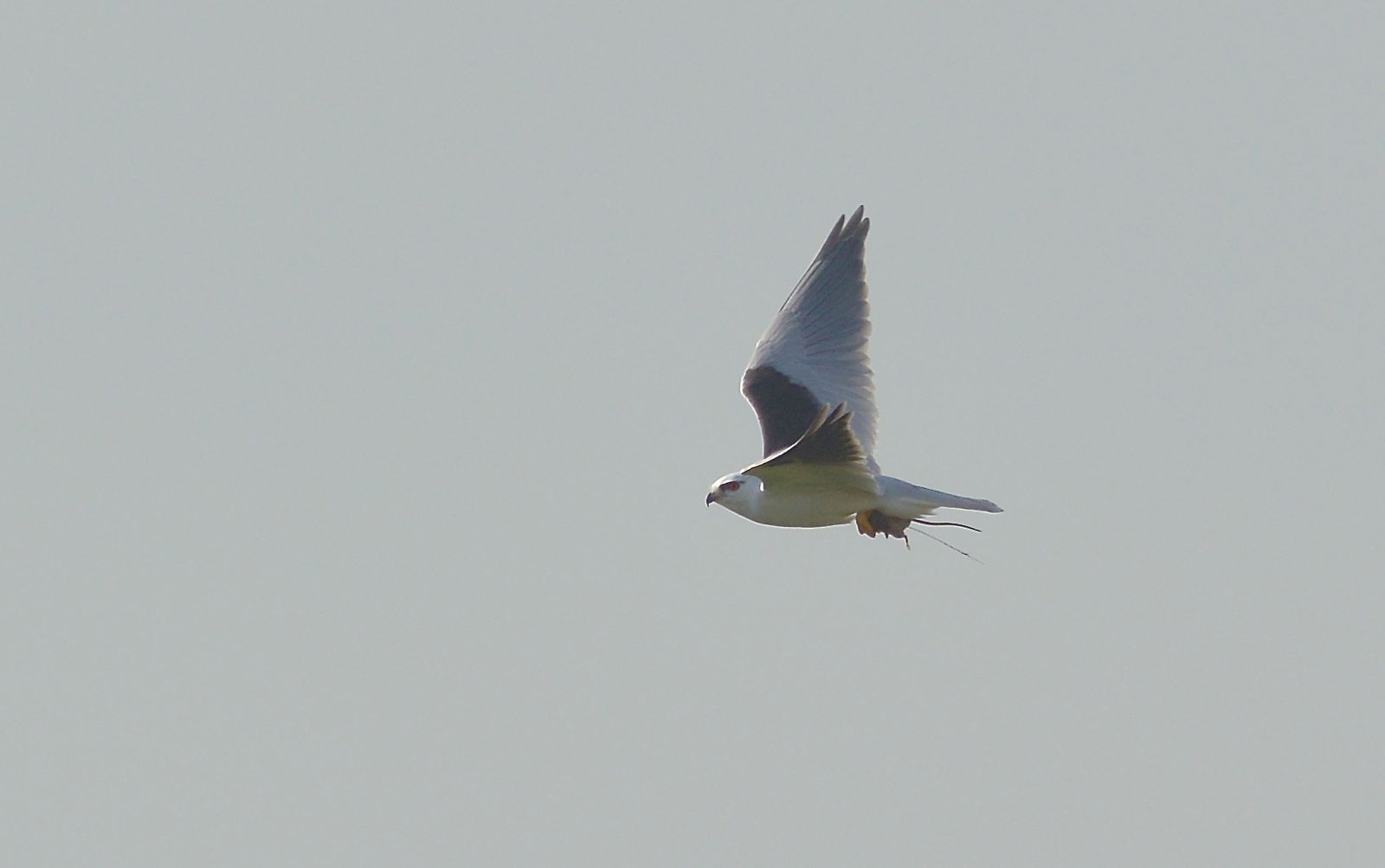
All I have to do is wait.  And not for long.  I reckoned he was getting a mouse about every 10 minutes.  His hunting time was down to a minute or less. And out of about 8 strikes I saw he was successful on 6 of them.

So he hunted and I watched.   Swinging the 300mm around became a bit of a chore, so next time, the tripod and Wimberley head will be part of the deal.
Enjoy.


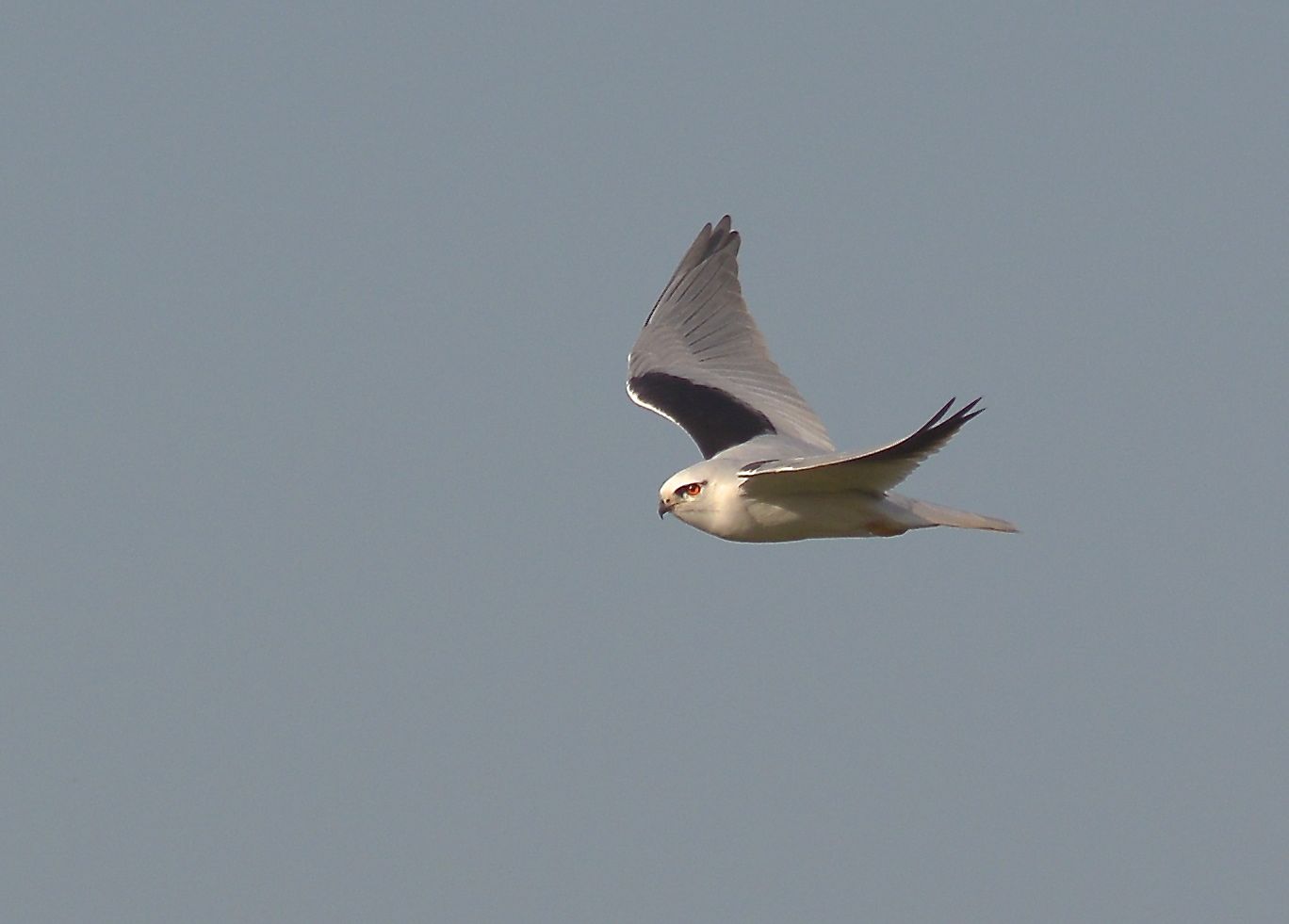
Evening sunshine gives nice shadows for him to work in.
I noticed he always works with the light over his shoulder. My Mum's best advice to budding photographers.
I noticed he always works with the light over his shoulder. My Mum’s best advice to budding photographers.
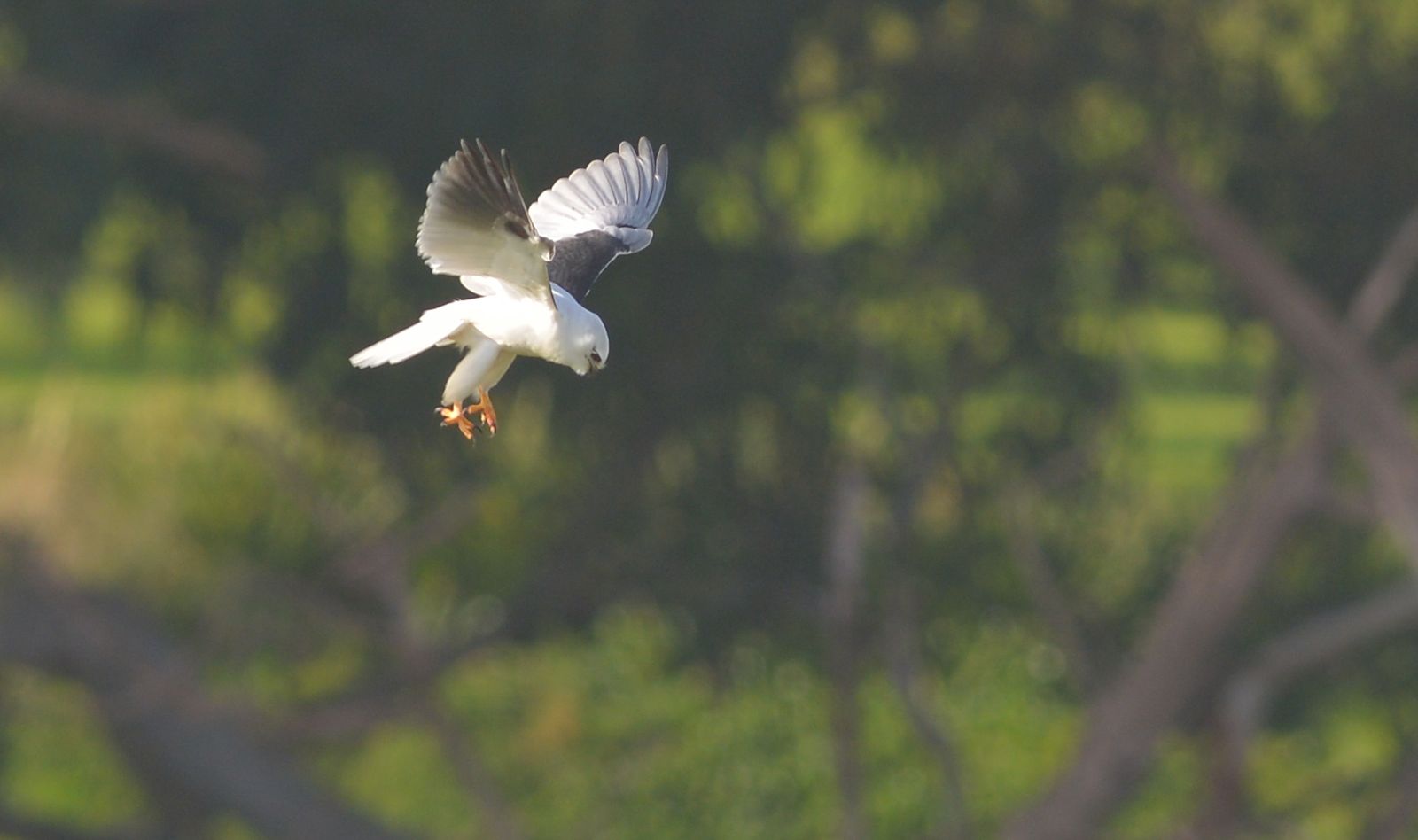
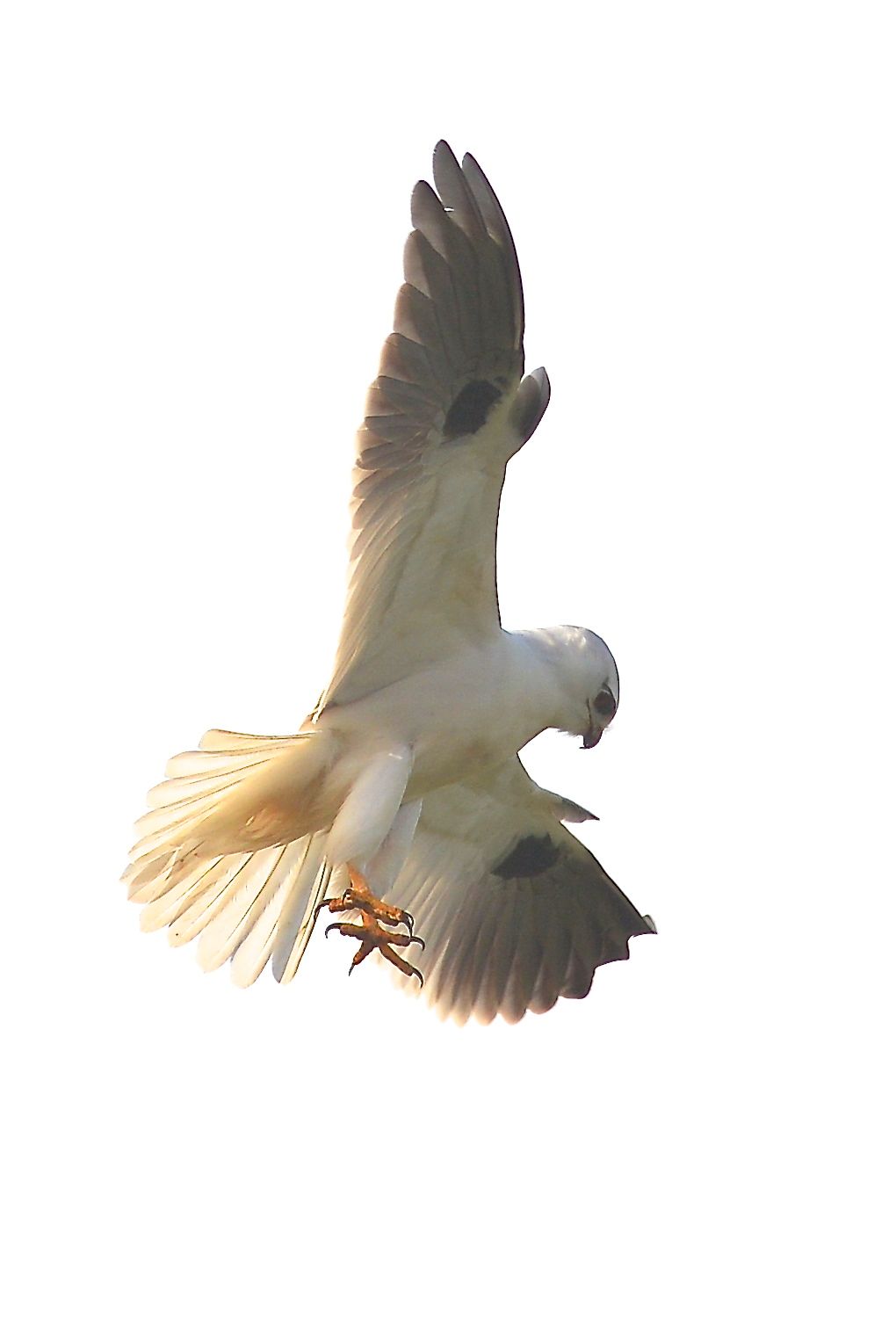
The legs down are part of the balance and positioning.
Closing in.
Closing in.
That little dude is down there somewhere.
All concentration
All concentration
Turning into the light to come round for another run.
Another one bites the dust.
DSC_5329
All feathers and legs at work gaining the balance for the stationary head.
No, I'm not on the tucker list.
No, I’m not on the tucker list.
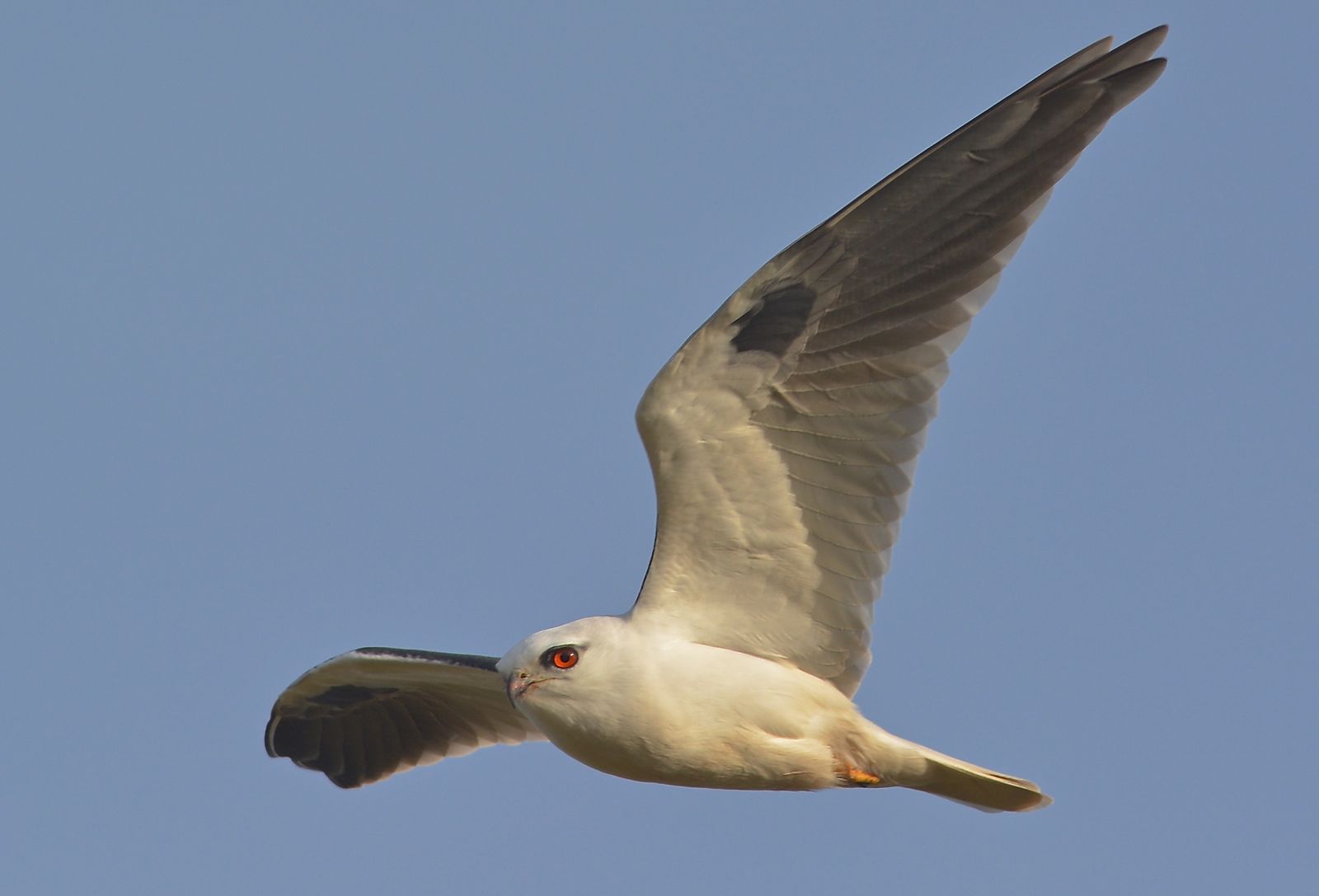
So great to be able to almost reach out and touch him.

One day, Six Robins

As opposed to 3 days and no robins.

Had to motor to the northern subs today for a doc appointment.   Well I got that out of the way, and EE and I decided to make use of the time and take a trip down to Woodlands Historic Park and see if the Flame Robins had learned how to fly over the off limits to humans, Backpaddock.

The paddock is a secure area of about that is part of the Eastern Bandicoot Re-establishment programme. Currently locked because a fox has managed to get into the area and threaten the bandicoots.  One bandicoot making not much more than a take-away snack for a hungry fox.   Fox,by the way, was let into the area, by some banana-boat who propped the secure gates open. The team from the Conservation Volunteers and Park staff have been working since the incursion in early April 2014 to nail the little critter. Apparently at this stage without success.

Grew up in the country, (The Mallee), we had a Fox-terrier Blue-heeler Cross.   She was able to smell a fox spore from out the back of a ute.  Took about half an hour to find said fox.  And little more than a few seconds to despatch it. Quick, clean, neat, and cost effective.    Now, “Dog” (that was her official name.  Said so on the council paper) is of course no longer with us.   But given her efficiency, many a scalp hung on the fence line.  Dog would explode off the back of the ute and be on the job in about a millisecond.  So I’m personally a bit non-plussed that in this day and age, its taken from April to now (early June) to find, locate, and despatch a fox that is within a fenced off area.

I can’t imagine someone is standing in the middle of the park calling ‘Foxy, Foxy” or expecting said criminal to come out with its paws up.    No doubt the foxes of the 21st century have GPS and close contact radar warning and other technical stuff to improve their efficiency.

But, I digress.

Public Disclaimer:  The team working on the Bandicoot programme have done some fantastic work, in spite of some complex issues and I sincerely wish them all the best  of success.  My poor bird photography doesn’t come anywhere in the scheme of things.  Good on ya Travis. 

We went instead to visit Jack of Eastern Yellow Robin fame.  And about as fast as “Dog”, Jack came bounding out to see us.  It was more like him visiting us, than the other way around. Took great delight in sharing a bath in some water EE had tracked in, and then spent time preening before speeding off.  And so did we.  Not much else happening in that area, Except, funnily enough, as  we were walked back to the car,  just down toward the rangers work area, we spotted two Foxes.

Pretty easy to pick. Brown looking things, with long tails and sharp teeth.  We watched them go about their respective businesses and smiled that poor old “Dog” would not have been allowed in the park to deal with them.

Back at the car we travelled further out and were able to find our new friend “Ambrose” and he looked resplendent in his lovely rose red dress.   Then to our surprise he had a friend,   A female  Pink Robin.   She was a little less enthusiastic for the camera, but it was a good find.   Think we also have Ambrose’s lady,  “Rosy” in there somewhere too, but couldn’t make the connection. On to the further east toward Sunbury and we found several Flame Robins, and the figured it was lunch time, so moved on again.

After lunch it was time for home, and EE suggested why not go back past Woodlands, call into Providence Road and have a look for the Red-caps we’d seen  on a previous trip.  Suits me. On the way down to the dam area, we came across a family of White-winged Choughs. Very intent about their business, and we were soon surrounded by about 30 birds.  Lots of choughness going on.  And even mutual preening.

And then, “Peter” the male  Red-capped Robin turned up, and his lovely little lady. She is without doubt the smallest Red-capped Robin I’ve ever seen. Minute, not petite. To top if off a pair of Scarlet Robins came down the roadway, and we’d the chance to write up 6 different Robins for the day. Not a bad effort considering.

Dog would have been pleased with our hunting experience.

Jack, the Eastern Yellow Robin,  The cocked tail is not for my benefit, he's connecting with Jill a little further in the scrub.
Jack, the Eastern Yellow Robin, The cocked tail is not for my benefit, he’s connecting with Jill a little further in the scrub.
Ambrose.
Ambrose.
Pink Robin. Female.  Nice to see.
Pink Robin. Female. Nice to see.
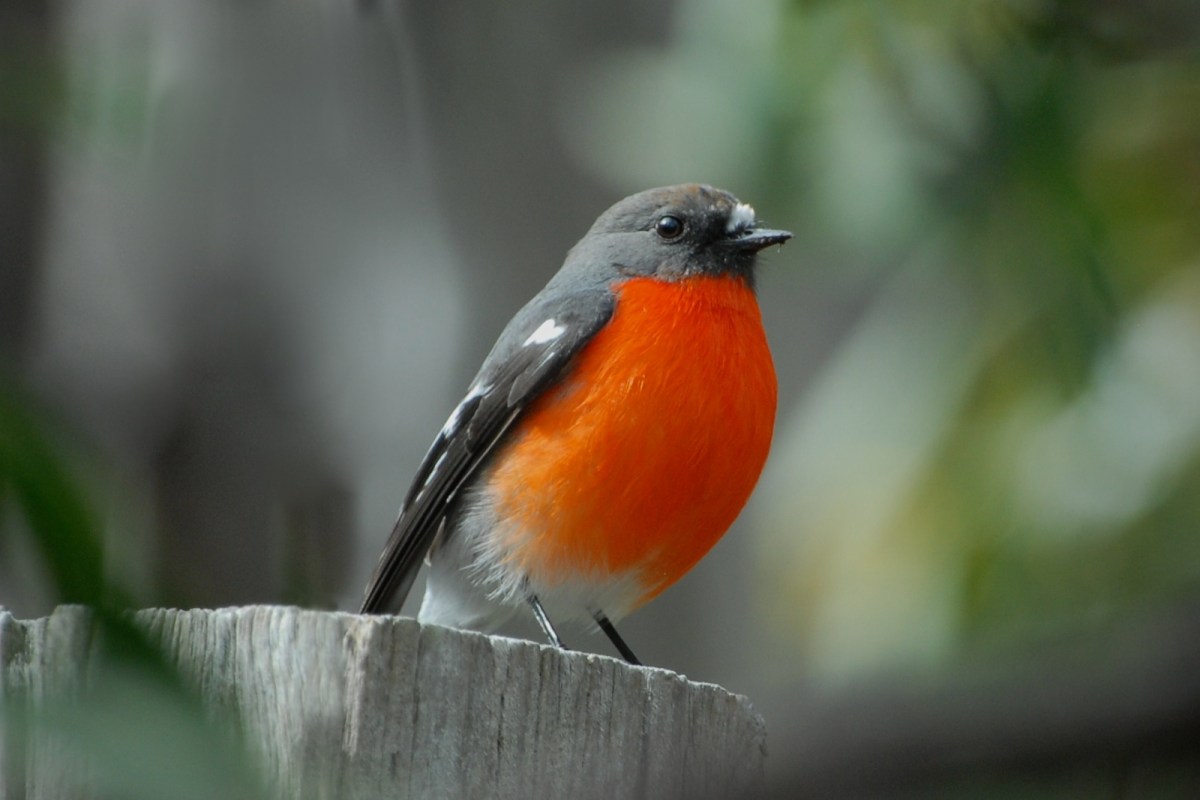
Contemplative Flame Robin.  Perhaps he's wondering why we aren't working with his family in the back paddock.
Contemplative Flame Robin. Perhaps he’s wondering why we aren’t working with his family in the back paddock.
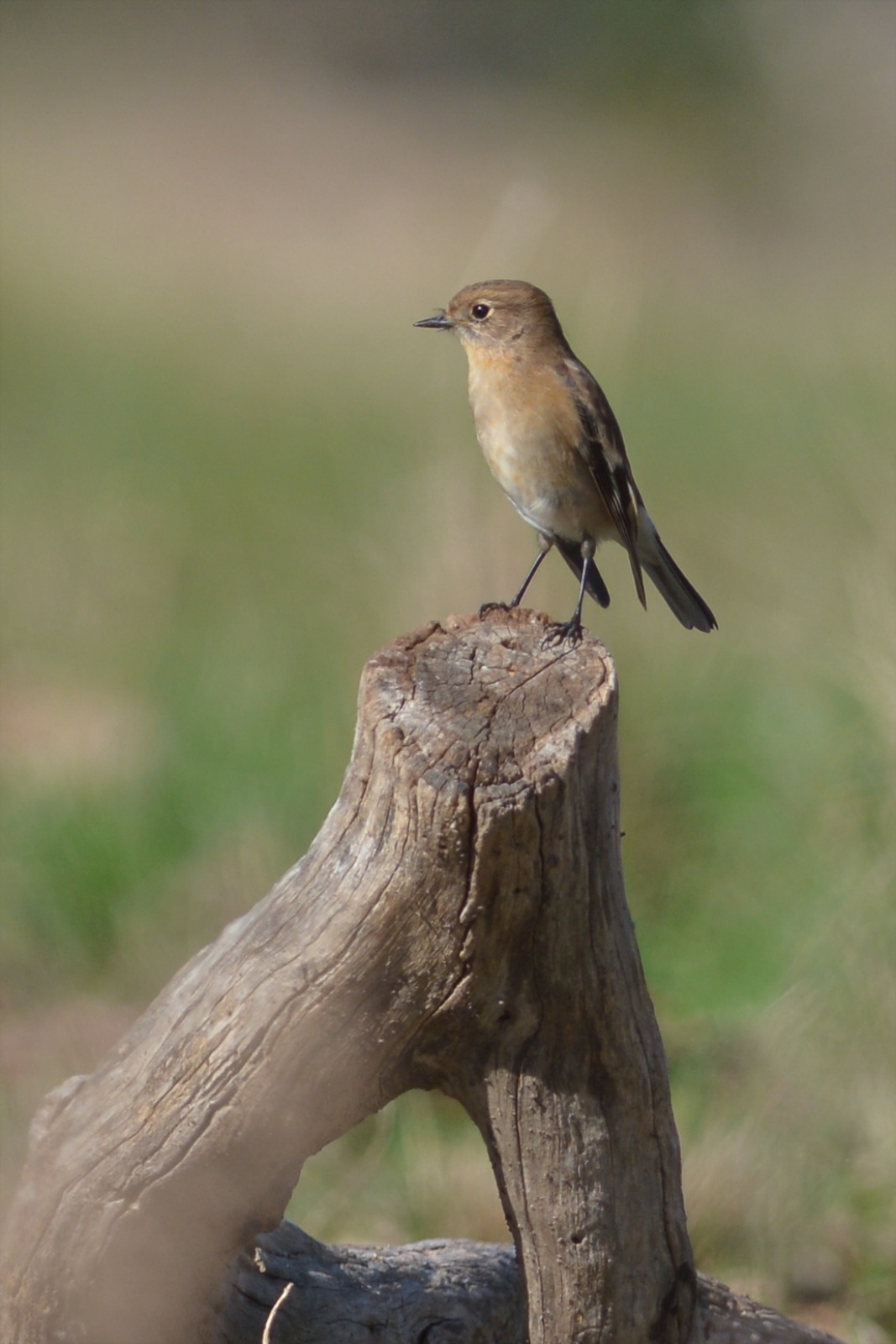
Female Flame Robin.
Female Flame Robin.
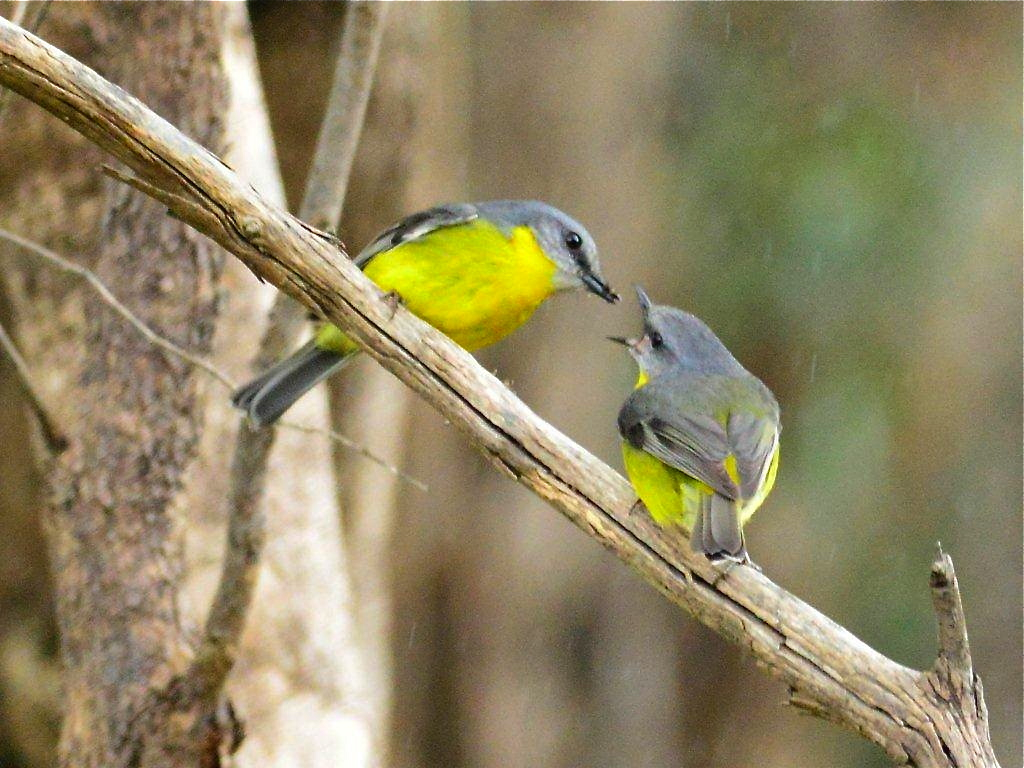
Two Flame Robin blokes, have a bit of a discussion about photography.  Not often to see them in the same tree, but they were chatting away.
Two Flame Robin blokes, have a bit of a discussion about photography. Not often to see them in the same tree, but they were chatting away.
Scarlet Robin, male, not the best I've done, but nice to see him.
Scarlet Robin, male, not the best I’ve done, but nice to see him.
Hiding, but I found her.  Scarlet female.
Hiding, but I found her. Scarlet female.
All Choughed up and now where to go.  A sentry took time out for a bit of choughcleaning.
All Choughed up and no where to go. A sentry took time out for a bit of choughcleaning.
Peter, the Red-capped Robin.  Almost working with me now.
Peter, the Red-capped Robin. Almost working with me now.
Such a tiny female Red-capped Robin.

Our Flame Robin drought is finally over


The Flame Robins travel down from the Victorian High Country where they have replenished the species over summer and spend the winter in the lower country.  Bit hard for a little beak to find food under several metres of snow!

Our former main area of Woodlands Historic Park has been a major stop over for them as they migrate down along the bayside areas.   Some families don’t continue travelling but remain around the Grey Box forest areas at Woodlands and set up feeding territories and have been a great source of picture making pleasure for us over the years.   But, we don’t have close access this year, and the couple of trips we’ve made have been blocked by a large sign on a gate explaining the need for the Parks people to manage a fox that has managed to breach the secure area for the Eastern Barred Bandicoots.  So rather than having nearly a month of good work with the Flame Robins, we’ve been in a bit of a drought. Spotting the odd one or two at a distance is not quite the same somehow.

As we move into winter, the weather has also played its part in keeping us at home. After all what is the point of standing in a cold forest on a grey day with the light completely obscured by the incessant rain.  Not that I’m against getting wet, just not much point photographically.

Our friends,  Richard and Gwen A (he of Woodlands Birds List fame) wanted to have lunch at Eynesbury Golf Club and a bit of a walk in the forest.  Again this  should be a good area for Flame Robins, so we accepted the offer, and waited for a ‘reasonable day’.  It arrived. Beaut cold morning. 2 degrees, plenty of sunshine and little breeze.  Great.  So we, EE, Mr An Onymous, and I set off early to get a good start and work up an appetite for lunch.  We had previously found several robins in an area within pretty easy walking distance of the carpark and so we decided to start there.  Brown Treecreepers, a few Dusky Woodswallows, a White-winged Triller and an assortment of Thornbills were enjoying the change in the weather too.

We eventually found a small family of Flame Robins, and set down to work.   There is something very satisfying about sitting quietly while a dozen or more birds feed back and forth around you.  These birds have the name “Petroica” which roughly translated means “Rock dwellers” and where they were working was indeed the rocky side of a slope.  So we sat in the sunshine and enjoyed the activity.  None seemed to really be too sure of us, but at least they allowed some good, if not great shots.   But like all good days out, it was both enjoyable and a learning experience. Armed with our new knowledge of the feeding area of these birds will give us a head start next time we are out that way. And of course, with such great little subjects its going to be sooner than later.

We caught up for lunch, and then had an hour or so to wander in another part of the forest.  Looked hard for Diamond Firetails, but had to settle for two Whistling Kites, and two Black Kites.  On the way back the fluting call of a Little Eagle led us to some great views of a circling bird.   No Freckle or Blue-billed Ducks on the club Lake, but we did see a golf ball badly sliced off the tee drop into the lake with a satisfying “perlop”.

Always a delight to see in the sunshine a male Red-rumped Parrot
Called "Rock dwellers' they remained true to name in this part of the forest
Called “Rock dwellers’ they remained true to name in this part of the forest
Dapper lad
Dapper lad
Tiny little birds always manage to get behind a stalk of grass or two.
Inbound
Inbound
A female that landed on the fence line next to where I was sitting
Lift off.
Lift off.
Hunting from a low perch
Showing off her lovely markings
A Jacky Winter came by to see what all the fuss was about. Perhaps it was ticking of humans for its online human list.

Fire, smoke, an open paddock, simply add birds for action

One part of the family was off to Sydney for a holiday.  So how about we leave our car with you and go to Avalon airport?  Now the cool thing about saying yes to the request of course is that Avalon is but a mere 5 minutes from the WTP.  And well, we’d have to come back that way after all the farewells, and book ins and security checks, and stuff.

So we found ourselves on the Beach Road in the middle of the afternoon on a not too brilliant for photography day.    The folk at the farm had taken the opportunity of the change in the weather to conduct some control burns in some of the bigger fields.    And off course the raptors simply couldn’t resist the chance of fried or roasted or bbq locusts, mice, grasshoppers, lizards and the like.

As we travelled down the Beach Road, the sky was awash with larger birds.  Perhaps as many as 20 Whistling Kites, twice that number of Black Kites, at least two Australian Kestrels, and an assortment of Ravens, several squadrons of Australian Magpie and innumerable Magpie Larks.

From a photography point of view, the light was wrong and the birds too far away, but the old D2xS on the 300mm f/2.8, stepped up to the challenge. So the big birds swept over the still smouldering ground, or made a landing and picked up a morsel or two. Their friends sat on the fence line and the Whistling Kites kept up a constant call.   In the end, we just watched, and enjoyed them enjoying themselves.
A Black Kite became a target for a rather aggressive Whistling Kite and a sky wide battle ensued.   At first the Whistling Kite was much faster, could turn quicker, gain height faster and generally outfly the Black Kite. Quite a number of direct hits from above, below and the side ensued.    In the end, I decided that perhaps the Black was just taking it all and wasn’t really concerned by the output of energy by the Whistling Kite.   It ended by the Black gaining height and just sailing away.  The Whistler settled down for a rest on the fence.

On the other side of the road a Black-shouldered Kite busied itself in finding mice for its evening snack.

We also found a large family of Flame Robins.  The males looking a treat in the sunshine.  But far too far away to do them justice.
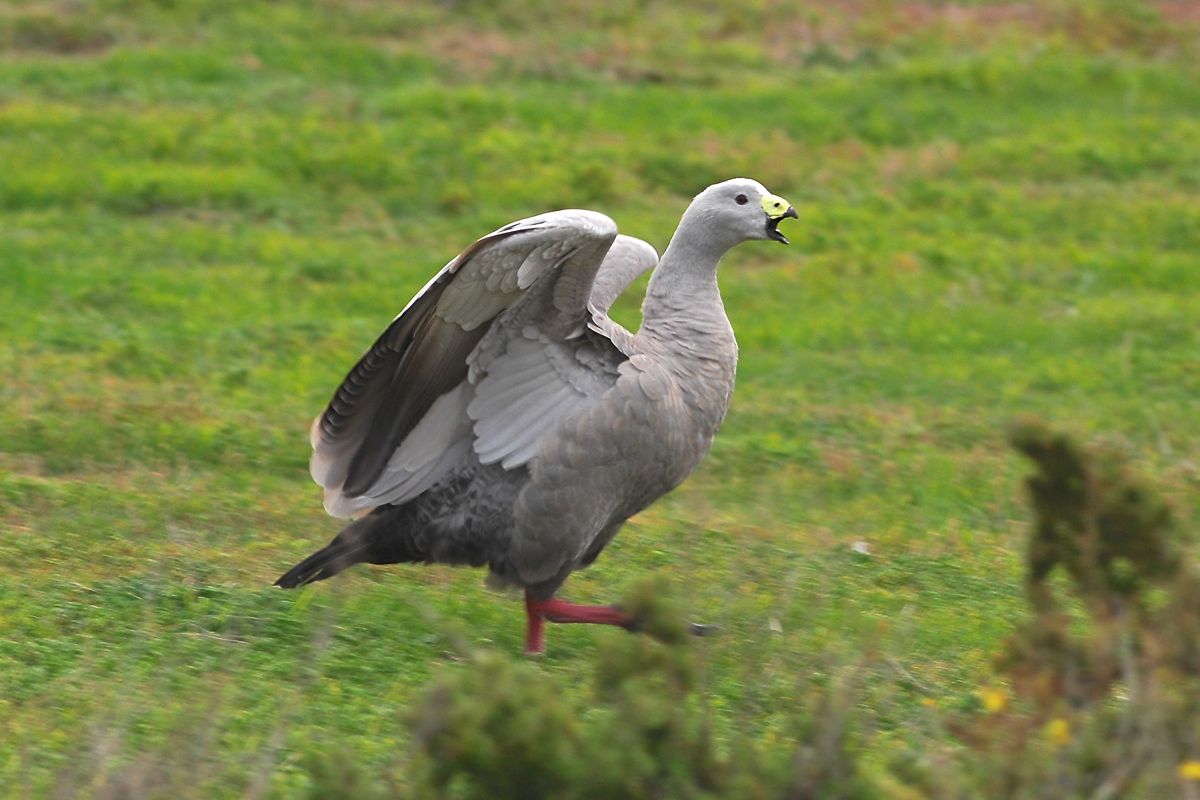
As we drove around Lake Borrie on the return home a pair of Cape Barren Geese were feeding in an open area.  Really perturbed by our audacity to encroach on their feeding spot, the male gave me a lecture and wing-waving display.  I apologised and we parted in good company.     Just have to be more careful about sneaking up on him.

With the light finally drifting into greyness, it was considered time for home.


A burst of late evening sunlight highlights the maize against the brilliant dark sky.
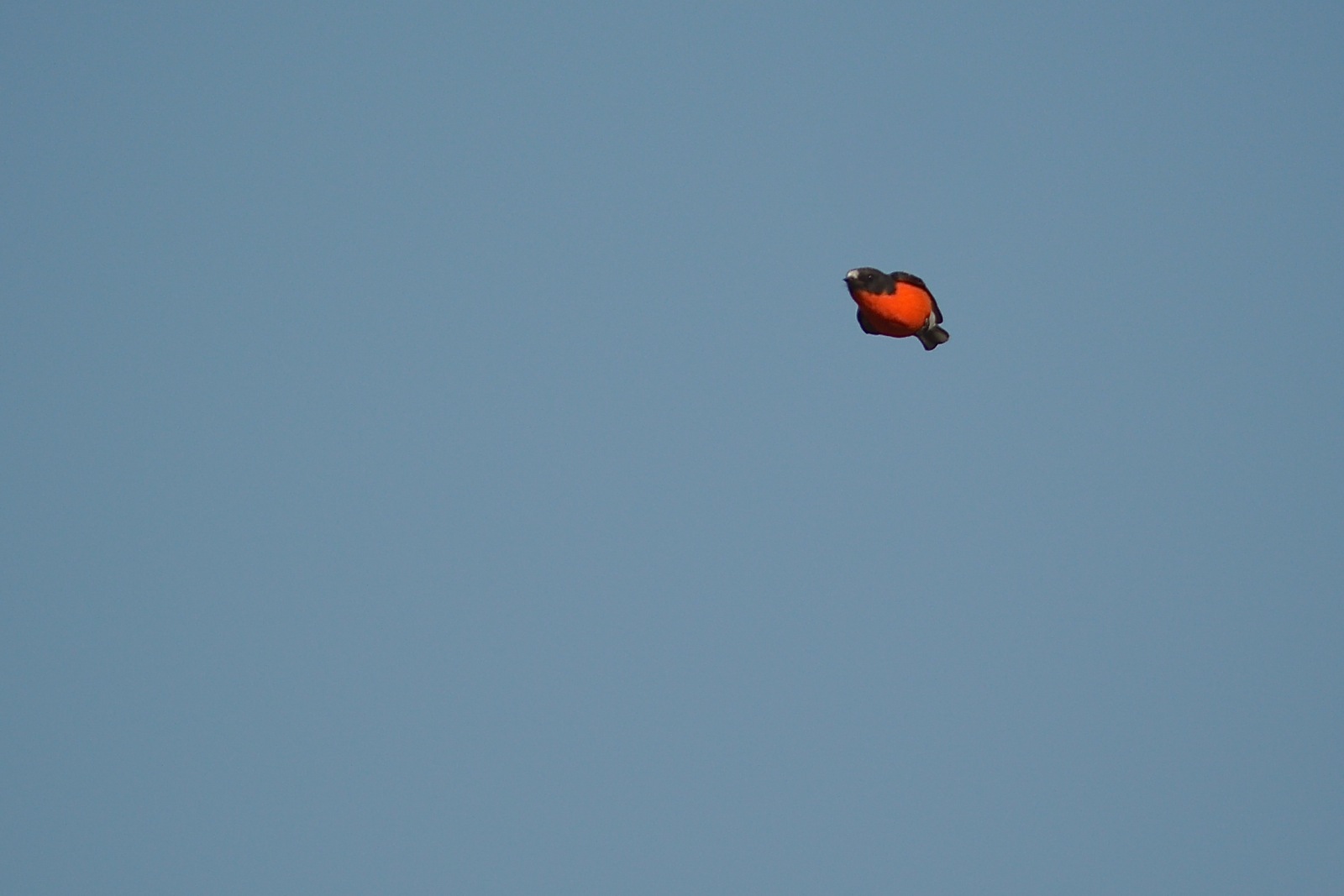
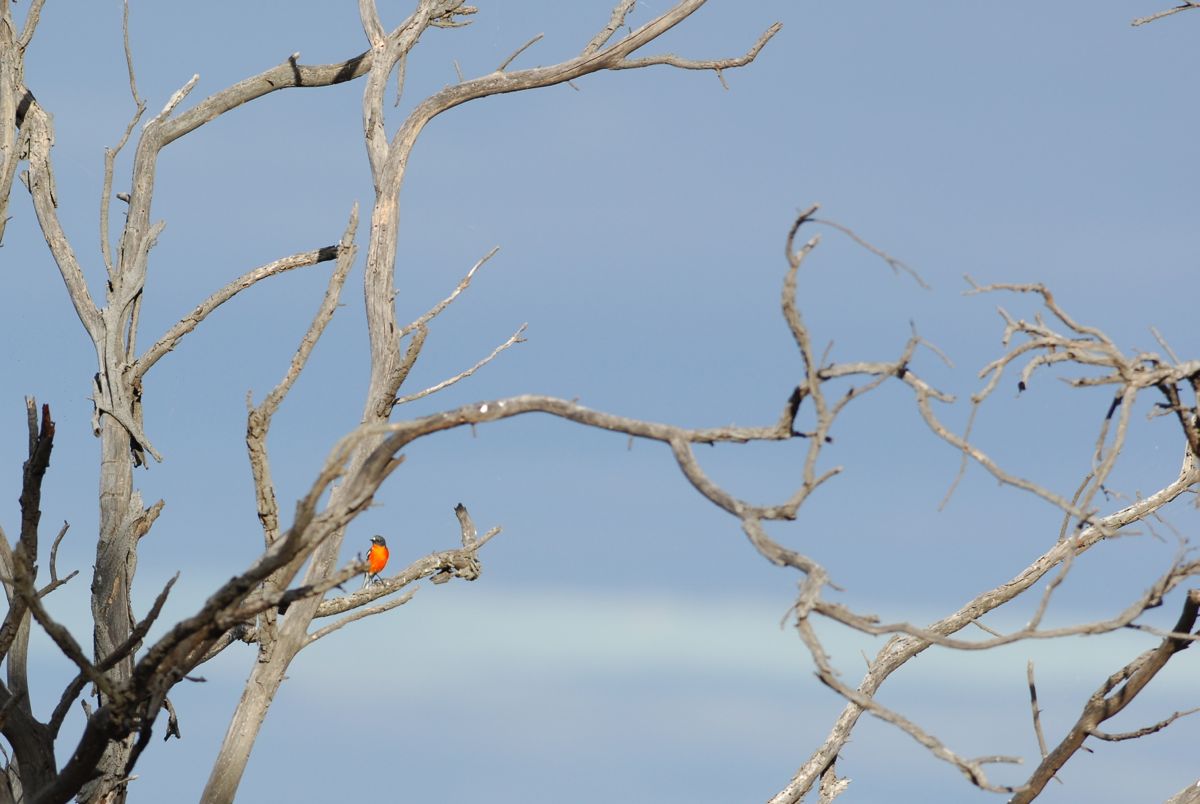
Red burst from a Flame Robin male, one of 4 males and about 6-8 female/juveniles in the area.
Two Black Kites.  They are at completely different heights.
Two Black Kites. They are at completely different heights.
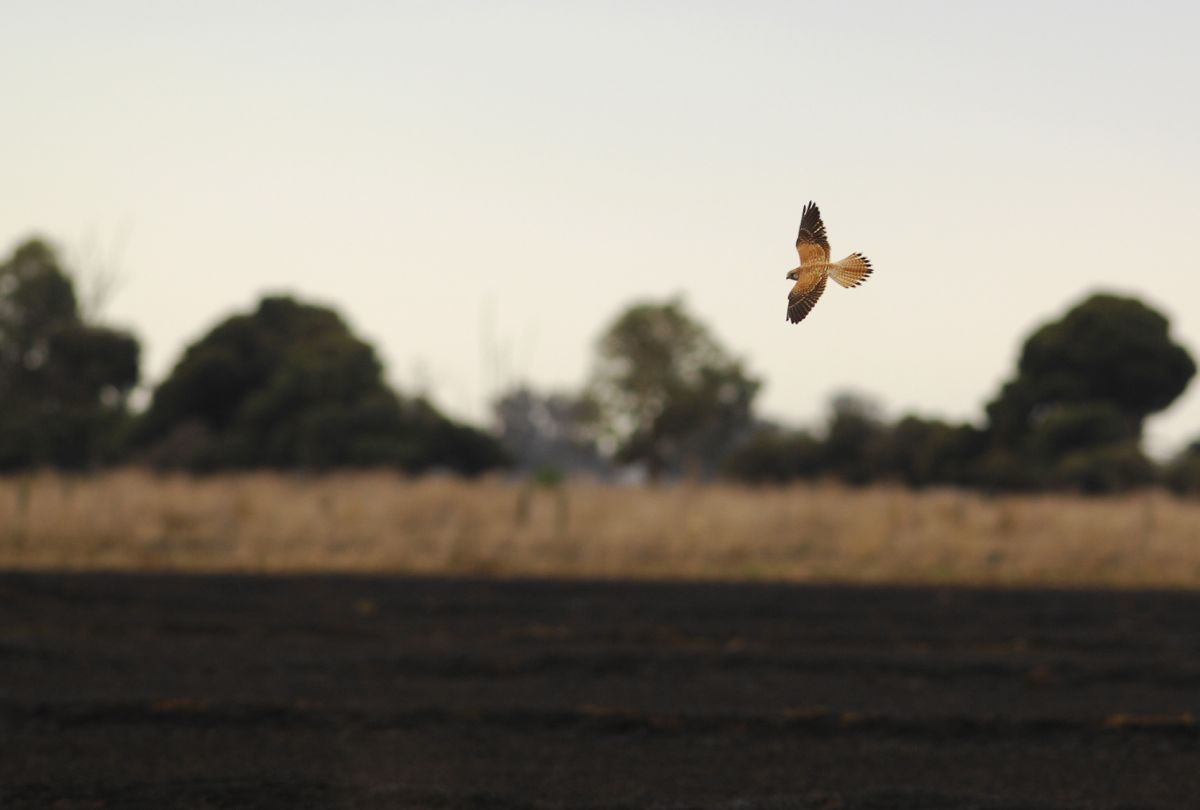
Australian Kestrel turning  for another sweep over the still smouldering paddock.
Australian Kestrel turning for another sweep over the still smouldering paddock.
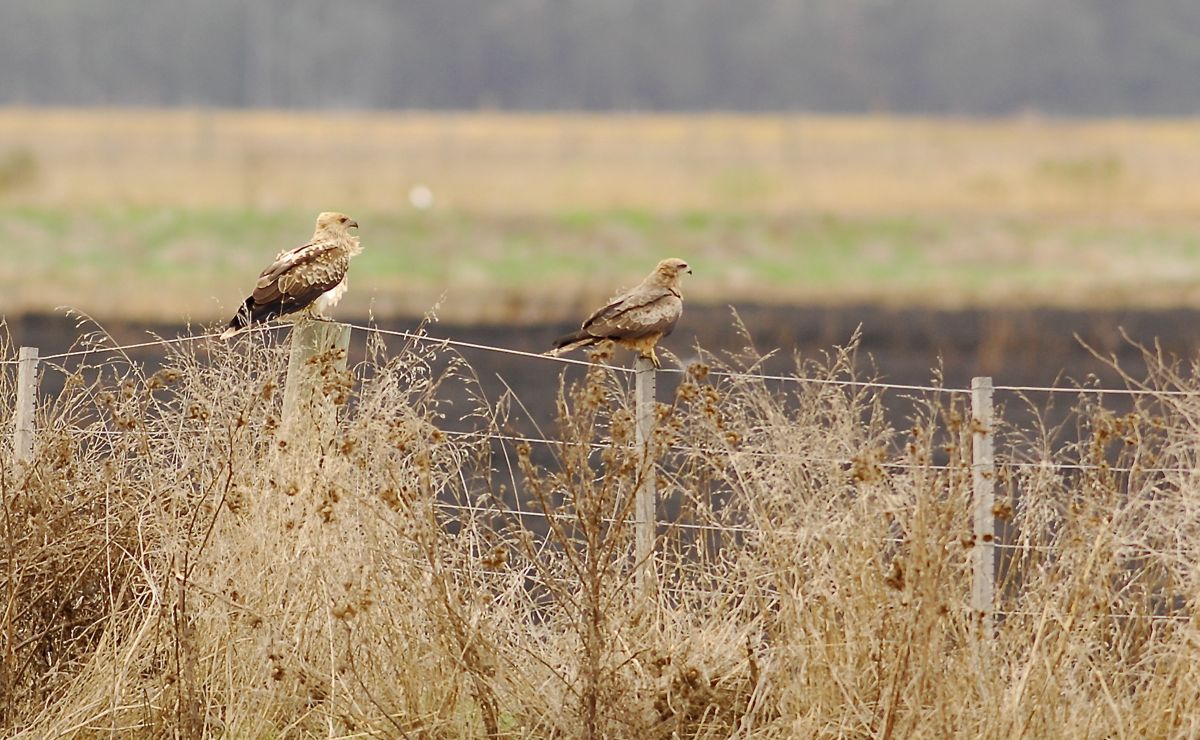
One post one Kite
One post one Kite
In times of plenty everyone is friends
Whistling Kite, vs Black Kite.  Probably not as one sided as it at first appeared.
Whistling Kite, vs Black Kite. Probably not as one sided as it at first appeared.
Completely uninterested in the bbq, this Black-shouldered Kite stuck to its larder.  A mouse.
Completely uninterested in the bbq, this Black-shouldered Kite stuck to its larder. A mouse.
Cape Barren Goose.  He is giving me a lecture on my tardiness in being in his territory.
Cape Barren Goose. He is giving me a lecture on my tardiness in being in his territory.
Late evening light over the You Yangs

Some days its just great to be out and about: Or the Flame Robins have returned

We had a couple of hours in the afternoon to spare, and as the weather looked anything other than rain, or rain, we decided the Craigieburn Grasslands was to far from the car if things went, well, you’know, rainy.

What a about the Backpaddock to look for the Scarlet Robins, seemed the go.

Given it was threatening rain, and we weren’t going far, I opted for the short lens as its easier to carry. The 70-200 being off at the repair shop for a new set of tyres and a grease and oil change.

We walked down to the backpaddock gate, half expecting to see that it was ‘closed for park renovations’, again, but no.  The Bandicoot Hilton was available for mere mortals and we stepped inside.   We’d remarked on the walk down, about how quiet it was not even a Thornbill to break the silence. I took that as a good sign that they had gathered their collective wings together to begin to form a winter flock. So find one, find many.

And.  As soon as we had entered the gate at the backpaddock I heard them calling, and looking through the trees there they were.  And.  Some bright splashes of red, and a few lovely brown bundles as well.  The Flame Robins are back. !

At this stage they are just interested in topping up with food, and getting to work out in the paddock where the good hunting spots are, so they are very much on the move.  Which makes photography a whole new challenge. FInd a robin, say at about 20 metres, move toward it. It flies 50 metres, total distance camera to bird 65 metres.  Move toward bird, it flies  50 metres. Total distance, camera to bird, now 105 metres.  It’s why most of my photography is done from a single stationery position. Find birds. Wait for them.   Mind if you wait on the wrong side of the flyway, you see nothing anyway.  Still we call that experience.

We also came across a new pair of Red-caps.  One I think is Julia (she of the vivid red-cap), the other must be her new bloke.  (Mr Mighty I think has passed on).

So that fills up the area near the shelter once again.

It began to rain, and after much dodging of showers we decided home was a good place, and set out.  Just as we got through the gate, on the opposite side of the road, the cemetery work crews have their gear locked in a 20foot Container.  To both our surprises there was a family group of Flame Robins on top. Male, female, and 5 juveniles.   They were enjoying the water on the top of the container.  The rain must have filled up some of the corrugations on top of the container, and even though it was raining they seemed to enjoy the bath. Best 15 minutes we’d spent all day, as they hopped about, chattered, bathed and queued up for their turns.  Nice way to stand about in the rain I think.

So the Flames are on the way back. No big flock yet, but a pretty nice start.

Julia has returned to the back paddock.
dj0213
Lining up on the Container Bathing facility
Rain or shine a bath is a good time.
Flame Robin, male. Waiting patiently for his turn at the bath.
All spruced up after a dip, and wet now from the rain.

Along Three Chain Road to the pie shop

With the weather looking decidedly blah, our plans for a day at WTP were simply scuttled. We (Dorothy, I, and Mr A Nonymous) decided instead on a drive north to Kilmore and along Three Chain Road, which can only be described as a ‘honey-pot’ for birding.  Rain began immediately we set off, but I regailled everyone, with promises of a pie and sauce at Mt Macedon for lunch.

Three Chain Road easily lived up to its reputation, and we quickly had sights and shots of Eastern Yellow Robins, Eastern Yellow Robin juvenile, Flame Robins, male and female, Jacky Winter, a female Hooded Robin, White throated and Brown Treecreepers, and a single Rose Robin. The rain stayed around and we eventually had to go look for a pie shop.  There is an offshoot road along Three Chain Road, that looks like it might go somewhere. Evidence of the previous night’s storm were everywhere over the road, and the clean-up crews were still out as we drove by.
The next turn was so promising.  PY-along. So we were going in the right direction! At the next junction, I abandoned all hope of getting to Mt Macedon, and we went on to Heathcote. The Gaffney’s Bakery just opposite the footy oval is renowed for its fare, and has a number of pie comp awards to prove it.  We settled in for the lamb-tandoori, beef burgundy and beef and onion. Worth the drive any day.  A good pie takes a bit of beating.

So with a couple of cold lamb-tandori’s to pop into the oven at home, we set off down the highway.
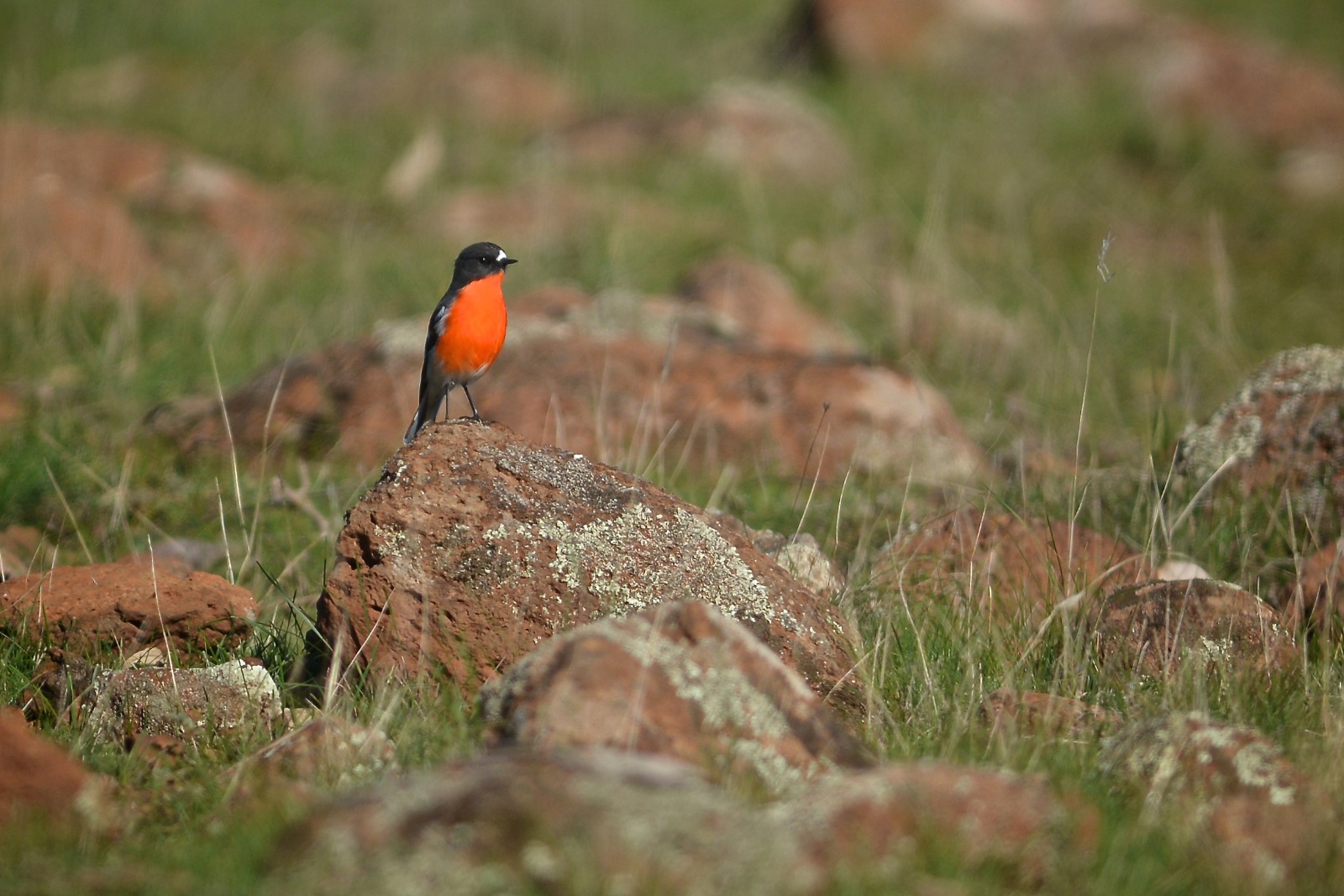
The road from Tooborac to Lancefield, was once described by a visitor as “Rock Farm Road”, every paddock has beautiful Tors that make great photo subjects.  The sunlight began to creep out, and we began to stop more often to admire the scenery, and look for birds.  What a pity I hadn’t put any short lenses in, but got some nice tight telephoto landscapes anyway.
Turning off from Sunbury along the backroad to Woodlands, we found a Wedgetailed Eagle being harassed by the local magpie brigade.  To its credit, it just slipped away in the wind.  Nice end to a good day out.

This slideshow requires JavaScript.

Larger images here. Three Chain Road.

Here is an image supplied by Mr A Nonymous of the Male Eastern Yellow Robin, feeding the female in the rain.

Too cool.

Photography by Mr A Nonymous (credited)

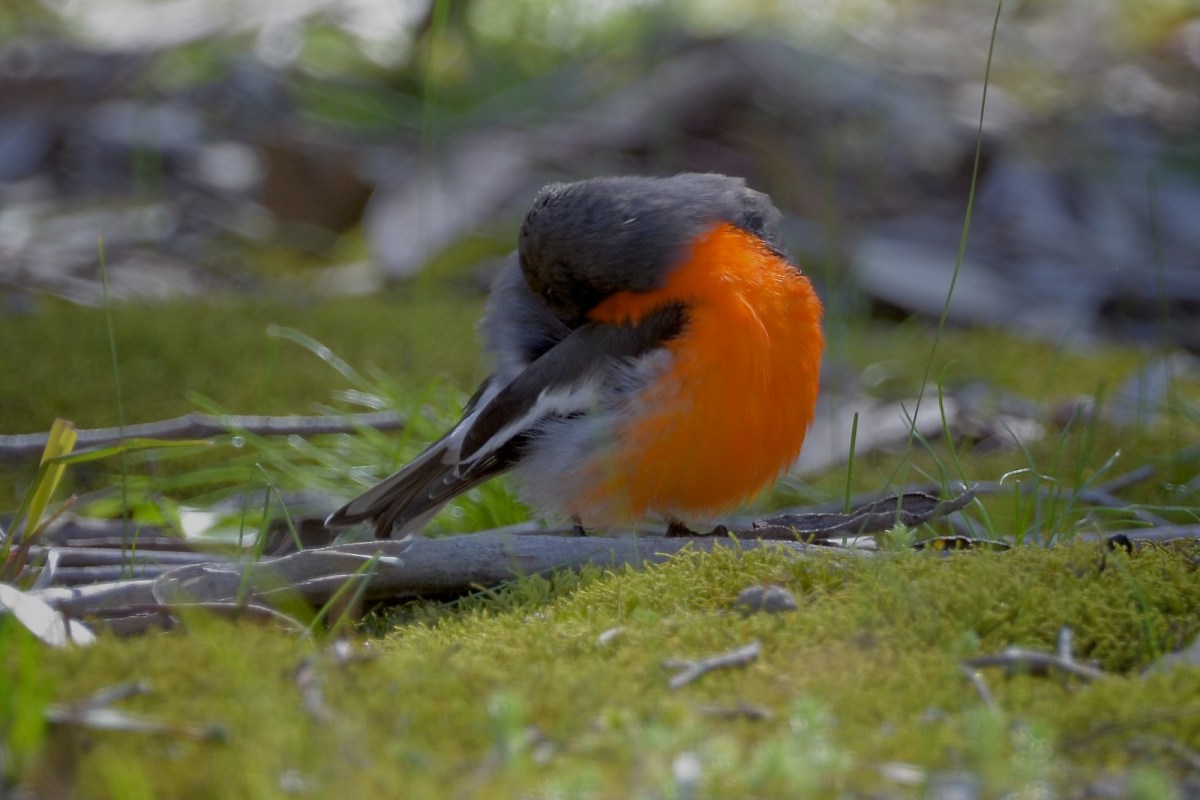
Flame Robin colour shape and form

Thought I would add this one from this morning.

I just love the shape, and the colour and the texture and form of this preening bird. Not a great image of birdy perfection, but it fits nicely in my poetical rendition. Enjoy, he obviously was. 

A day out with the Sisters

Took sometime this morning from the routine things and Dorothy and I headed to the park, inspite of the weather.  There was a cold north wind blowing the trees around home and it didn’t look all that good for the park.  However, as these things do, the sun managed to find openings in the clouds and a sundrenched Tawny Frogmouth was preening in the tree near the carpark. A good start.

Down along the track toward the still locked conservation area, we managed to find a few Flame Robins. Mostly females. This is a bit of a change as they have been few and far between this season. Mostly I think because they have been hunting down the range inside the proposed Bandicoot area. ‘Nuff said about that.

Not that the ladies were in any way inclined to be helpful, hunting among the smaller trees and among the dead blackwood wattles.  Little light in there, and hard to see a bird, let alone apply the autofocus to them. Hunting may be what they were doing, but so was the autofocus.
Then the male Scarlet Robin put in an appearance.  And managed to place himself in the sunshine and not among all the loose sticks and leaves and for the first time in quite awhile I managed couple of reasonable shots, and also the chance to get a really good look at him. And how he has changed since those early days in December when he first arrived, looking all brown and dishevelled.  My money was on it being a female, for a couple of weeks, and then slowly the feathers began to moult in. Now to see him, full grown, remarkable deep black head, stunning red chest, and a lovely white cap over his beak.  He really is the part.

Now he has his own lady, and I’m hoping that they may stay over, it would be such a treat for the forest.
The little female red-cap hasn’t been seen since the gates were closed for Bandicooting, so I really don’t know what has become of her.  I did come across a small, single female down along the old hospital fence-line last week. After about 40 minutes there was no sign of any male companion, so she does appear on her own. I want to get another day in to check on that.  Perhaps this might be the lone female?  I can only guess and speculate.  There are probably a number of displaced young from the last season.

The Flames sisters came past at rate of knots, keeping on the move all the time, so it was really a matter of catch them as I could.  But so quickly come, so quickly gone.

Here are a couple that gave me a few seconds to get organised.

Tawny Frogmouth in preening mode in the late morning sunshine. It was so intent that it didn’t adopt the traditional stance, but happily worked away at its feathers.
Male Scarlet Robin, now a most elegant looking bird.
Lone male Flame Robin hunting along the park access track
Lockie on fence wire, I like the out of focus sweep of the wire.
Lovely female Flame Robin. The sunlight poured through the leaves of the trees as the strong wind moved them about. I waited until a break of sunshine came.
Flame Robin in “HIgh Key”. I’ve rambled on before about high key, but it does provide, life, excitement, freshness to an image. The camera nailed the exposure. Pretty much as shot.

Red-caps and Flame Robins

Redcap 106 by birdsaspoetry
Redcap 106, a photo by birdsaspoetry on Flickr.

The weather is certainly not co-operating for bird photographers. We have been out about 6 times and only one of them has had any sunshine, and when it did, the birds were no where to be found.
After looking at the gloomy weather in the morning, it was already time to call it quits, but I had changed cameras due to a technical glitch with one of them. (Technical glitch is tech speak for the #@$$% shutter packed it in and it will have to take a trip to camera hospital, and most likely the outcome will be, “Cheaper to buy a new camera mate”, always said with a smile.
So to try out the old system, we loaded up, and headed on out.
It is so late in the season now, that the Flames are not likely to be seen as a flock, in fact, my guess is that another week and they will be gone.
Found Lockie and Primrose, both very busy with the business of breakfast. She captured a great big moth, and spent a few seconds tendering it up on a brach, before gulping it down and looking very pleased with herself.
We also found a small hunting family of Flame Robins and they were very furtive. One landed in a tree and gave me a few seconds to get a peekaboo shot through the leaves.
Also saw a pair a of Scarlet Robins. We are both hoping that they will setup a territory. He is most vocal and travels about the canopy displaying as he goes. Time I guess will tell.

Via Flickr:
This little male was hunting in the early morning rain, and took to working from a stump about 6 metres from me. He filled the frame on the 500m +TC2.0, and when he dropped on to the ground to feed he was beyond the closest focus of the lens, but I had a really good view of him that close. DOF is so small that its legs and eyes, cap and chest iin focus, everything else is out of focus.

These images I’ve posted directly. Cannot figure out how to get them out of Flickr as a set.

This bird landed in a small growth tree and proceeded to play peekaboo through the leaves at me. The TC20 on the 500mm lens made autofocus a real nightmare. But. The result was worth the persistence.
Sometimes images make me smile and this one does.
This female has already built at least one nest, and is starting to show the egg patch in her chest feathers. Perhaps with a few days of warmer weather she might be ready to lay.
This is one of two males in a small hunting party. They are moving so quickly through the scrub now as they bulk up for their soon coming journey to the high country. He landed just near my camera position but was gone without stopping to feed. Obviously looking for the best stuff now.

Robins’ Bath Time

There can be no doubt about it, water in small pools is a huge attraction to the small birds. It seems that once one finds a spot for an afternoon tub, the sounds of splashing water brings them all out for their turn.

After some very overcast weather and a bit of rain, I had given up hope of a day in the forest and consoled myself with looking at Bill Majoros’ site Third Bird from the Sun it is a treat and has some lovely photos and information. Worth a visit.

Anyway, by early afternoon the rain had abated, still was overcast, but I had some weekend shopping to do, so on the off chance put in the 3oomm lens and the 1,4 converter and headed out.

I hadn’t gone very far along the track when I came a small pool of water from the morning’s rain, and a flutter of wings and a male Flame Robin leapt out of the water, landed on a branch near me and began to preen.  Interesting, but what happened next was one by one the flock came down to take their afternoon bath too. They are very organised about it, and there is much cheeping and clicking involved in working out who’s turn it is next.  They don’t seem to bully one another for position and each waits patiently for the one to finish. Or steps in at the other end, just hurry things along.

That they enjoy the bath is evident by all the chattering that goes on.  So I watched and pressed the shutter, scolding myself for leaving the big lens and tripod at home- but them’s the breaks.

Toward the end of the session the local female Red-capped Robin turned up and took her place in the line.  Then some Yellow-rumped Thornbills moved in, and a Scarlet Robin,  However the Thornbills fled, and everybody followed. That is the way of a flock.

If I’d of had some sunshine, it probably would have been a red-letter day as it is, I went home with a card full of images and some pretty nice memories.

To fit them all in the page, I’ve added them as a gallery. Click on an image it will go to a larger size and you can navigate through them. Enjoy, I did. And, more importantly so did they.

Woodlands Historic Park robin season


With the ongoing closure of the Backpaddock at Woodlands, the opportunities for following Flame Robin families has been greatly diminished.  I have to admit defeat at this stage, as here we are getting close to the end of the winter over season, and I really only have a few images that I am  satisfied with. Problem is of course not being able to follow the birds as they move across the light Grey Box scrub along the ridge lines in the Backpaddock.
Not that it is doom and gloom as a few parties come out on raiding sessions into the area outside the park, but it’s impossible to predict where and when, so it is pretty much hit and miss.

Also not being able to track the Red-capped Robins movements, it will slow me down a bit when they go to nest, as I don’t have any idea where they are in the territory, and they certainly aren’t going to put up flags.  (Not that I am tracking nests, but rather where it is all happening so I can prepare for shots of the fledged young. I try not to disturb the nesting birds as she will get anxious and abandon a nest at any stage.  I think her main concern is Cuckoos, but Ravens made havoc of several nests sites last year.)

So here is a compilation of the work from about the past two weeks.  Weather has not been kind either.

The female is Primrose, and she has a territory that is outside the backpaddock. She is currently being courted by two males, but I think she seems to favour Lockie, so things will be as previous.  I do hope the younger male finds a mate as he seems most capable of defending himself.  With all the young that were produced in the area past season, it is a ponder as to where they all go.

The Flame males were beginning to call with their territory call the last few days.  They usually are gone in a fortnight or so after that.   They go early, and then the females follow about a week or so later.  But, I haven’t seen very many females, and am assuming they are up on the grey box ridges.

*** The images in the blog are now part of a gallery.  As such if you click on an image it will open them all up in a slide show.  That way you can advance through the photos rather then see them one by one and have to come back to this page for a new pic.  I think it’s more elegant, and I wish I had figured it out earlier in the blog.

Hope you like it.

Australasian Grebe

Seems like forever since I had a chance to put up a post.  Didn’t think, ” Went out got wet, saw nothing”, was going to be a big hit in the blogging world.

With the Woodlands Backpaddock area being out of bounds to mere humans, and especially photographers, while the great Fox hunt is on, the best I can do is put my nose up against the fence like a little kid in a lolly shop and dream.

The new Eastern Barred Bandicoot programme in the park is in full swing.  One of the first jobs is to remove all the ferals that are in there. Notably cats, and foxes. They have done a good job of rejuvenating the fences, so all the remains is to get rid of the last of the more persistent foxes.  My guess based on just sitting and watching, is that there is upwards of a dozen in there.  And my guess, totally untechnical of course is that some of them are breeding. Which would explain the occasional smaller animals I see.  My other non technical guess is my money is on the foxes.  The release of the fresh bandicoot families can not go ahead until they are absolutely certain the area is now free of ferals.  But how long that will take is anyone’s guess.

Meanwhile the Flame robins are still in the area, but our time begins to run out pretty soon as they will be getting ready to move back to the high country by August.

So.  What to do.  Down to the Dam area today with my mate Neil A.  We found a few Flame males and a couple of Australasian Grebes and I was lucky enough to get a reasonable handheld shot of said Grebe. Really like the reflection, and I added just a brush full of contrast to make it stand out more from the water.

Australasian Grebe and reflection
Male Flame Robin who came to my side of the fence for a little visit.

Looking for Flame Robins

Monday dawned all nice and bright.  No rain, little wind, a good day for a stroll along Moonee Ponds Creek at Woodlands to look for Flame Robins.

But, by the time I’d arrived and walked into the paddock, the weather turned a dismal shade of grey.  So back to the car, put on the Driazabone (they really are!), and put in the wet weather covers for the cameras. Thank you Mr Aqua-shield.

As it turned out, I had only arrived down at the creek, when the first of a number of Flame Robins began hunting in the area near me.  In between showers, I managed to find 5 birds, and all of them seemed to be young males in state of moulting through.  I didn’t spy any males nor single females.

But the rain set in.  Down by the Billabongs is a lovely place,  lots of wonderful Red Gums and plenty of shelter from the rain, so I headed there. So did a large and significant sized flock of Yellow-rumped Thornbills, together with their tame, pet Willie Wagtail and a flotilla of Silver-eyes. So we all sat in the shelter of the Red Gums.  I had chosen a particularly large tree with a dry side, and plenty of shelter from the wind.  I think the birds chose it at as  an alternative feeding area.

The rain eased and I took the time to walk around to near the Cumberland homestead site.  I could hear the “Mip, Mip” of a Black-shouldered Kite and through the mist eventually I spotted one on a tree, and then another further down the range.  They both flew when the rain eased and one came down to a tree near me, but the rain was simply toomuch to pursue the issue any further.

Heading back up the hill toward the old Church site, I spotted the Flame Robins at work in the paddock.

Here is a male who posed long enough for me to get organised.

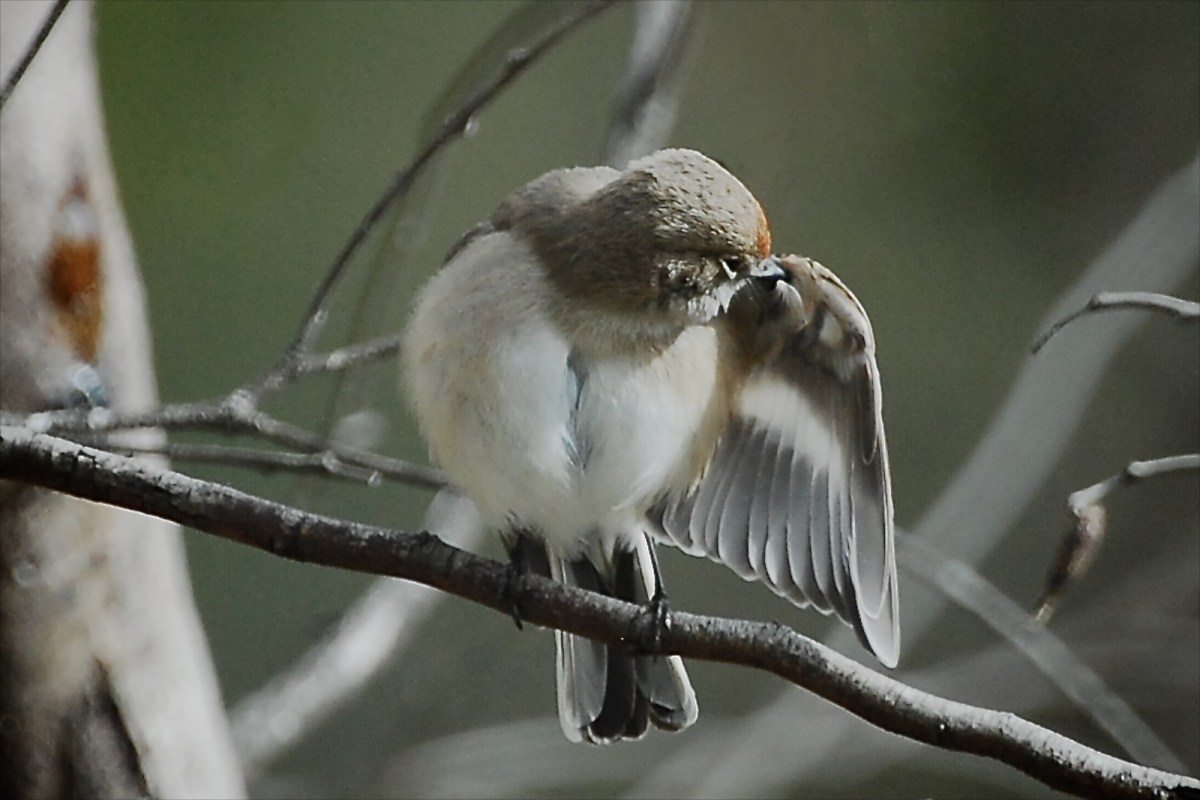
Young Flame Robin in moult. He is hunting down along the Moonee Ponds Creek, near the Billabongs area at Woodlands.