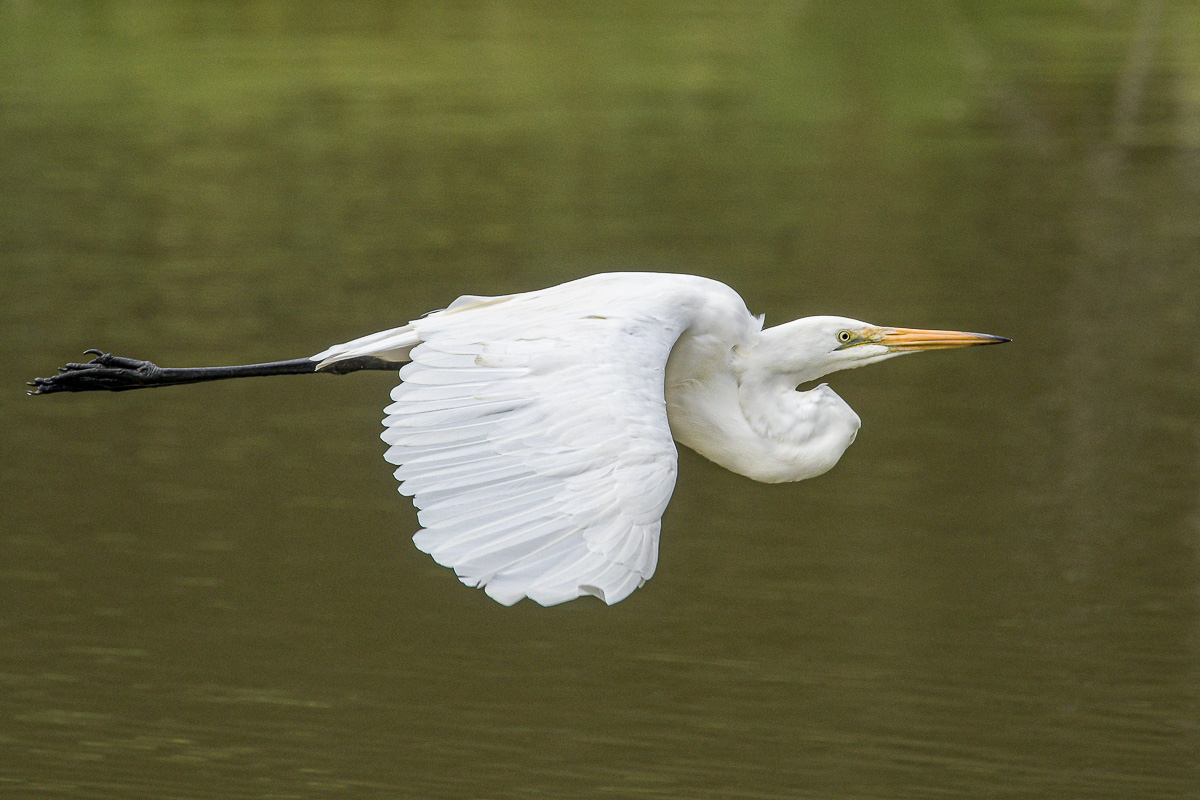
Yo Ho Ho

EE and I had been out in the morning for some important appointment(s)

Being in the area of the local boat harbour, and fancying a coffee, we also had an ulterior motive that we should check to ‘monitor the Great Crested Grebes ‘ that had made the harbour area home at present.

So with coffee in one hand, trusty camera in t’other, (we just happened to have the cameras in IamGrey— who’d have guessed.)

“We should only be a few minutes, and then home for lunch,” we had assured ourselves.

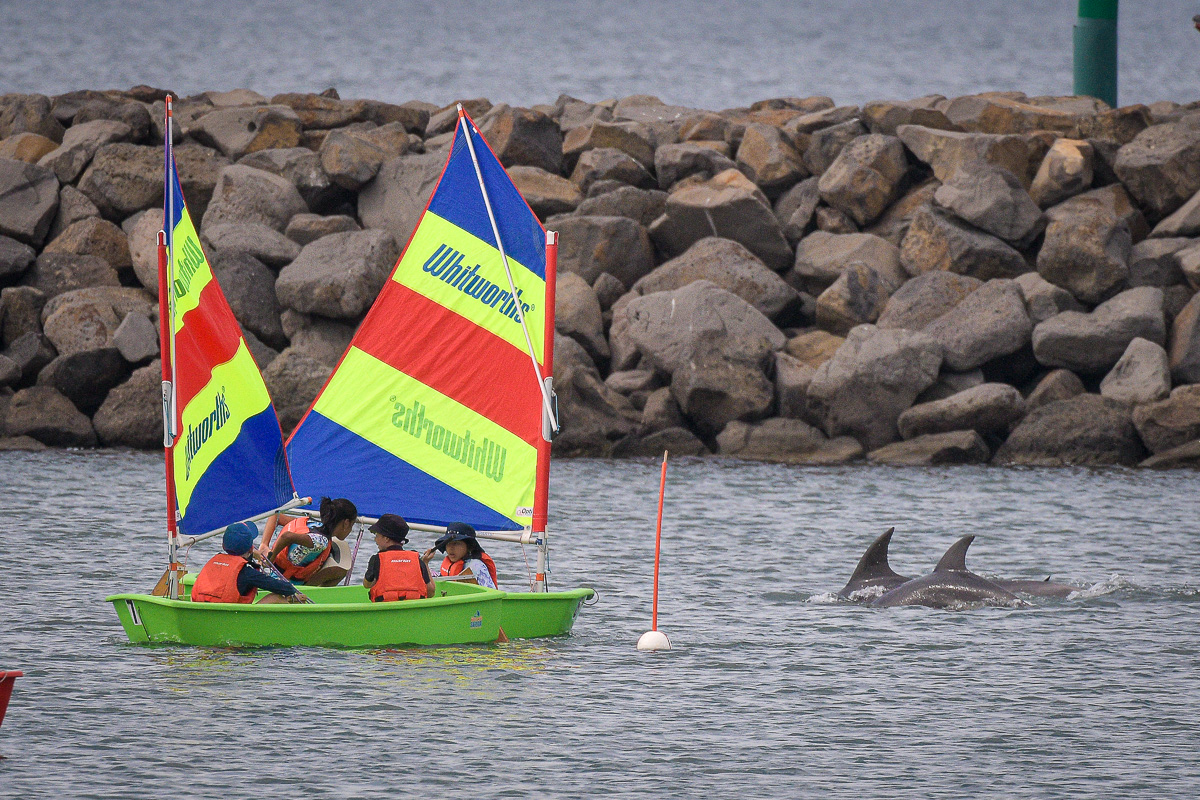
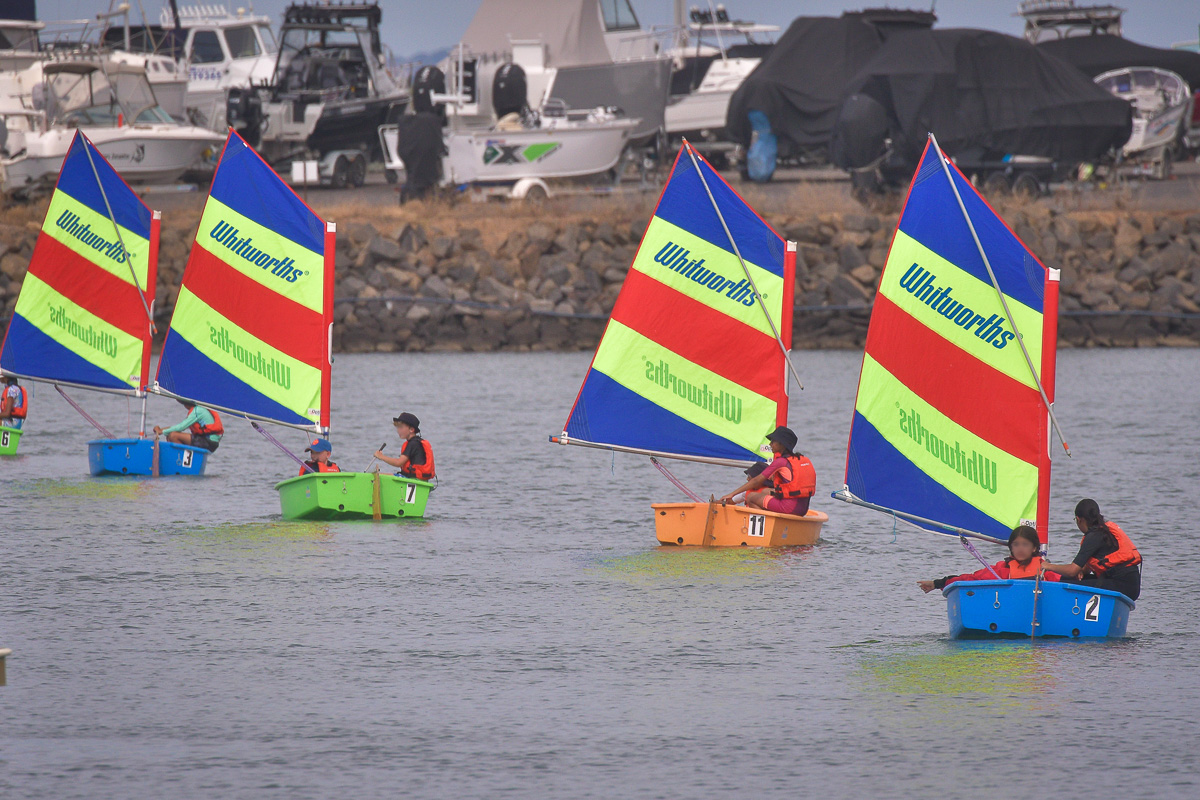
The local sailing school was running lessons in the safety of the harbour, so we didn’t think it would yield many Grebes.
So as the yatchees sailed out, we walked along the boardwalk.
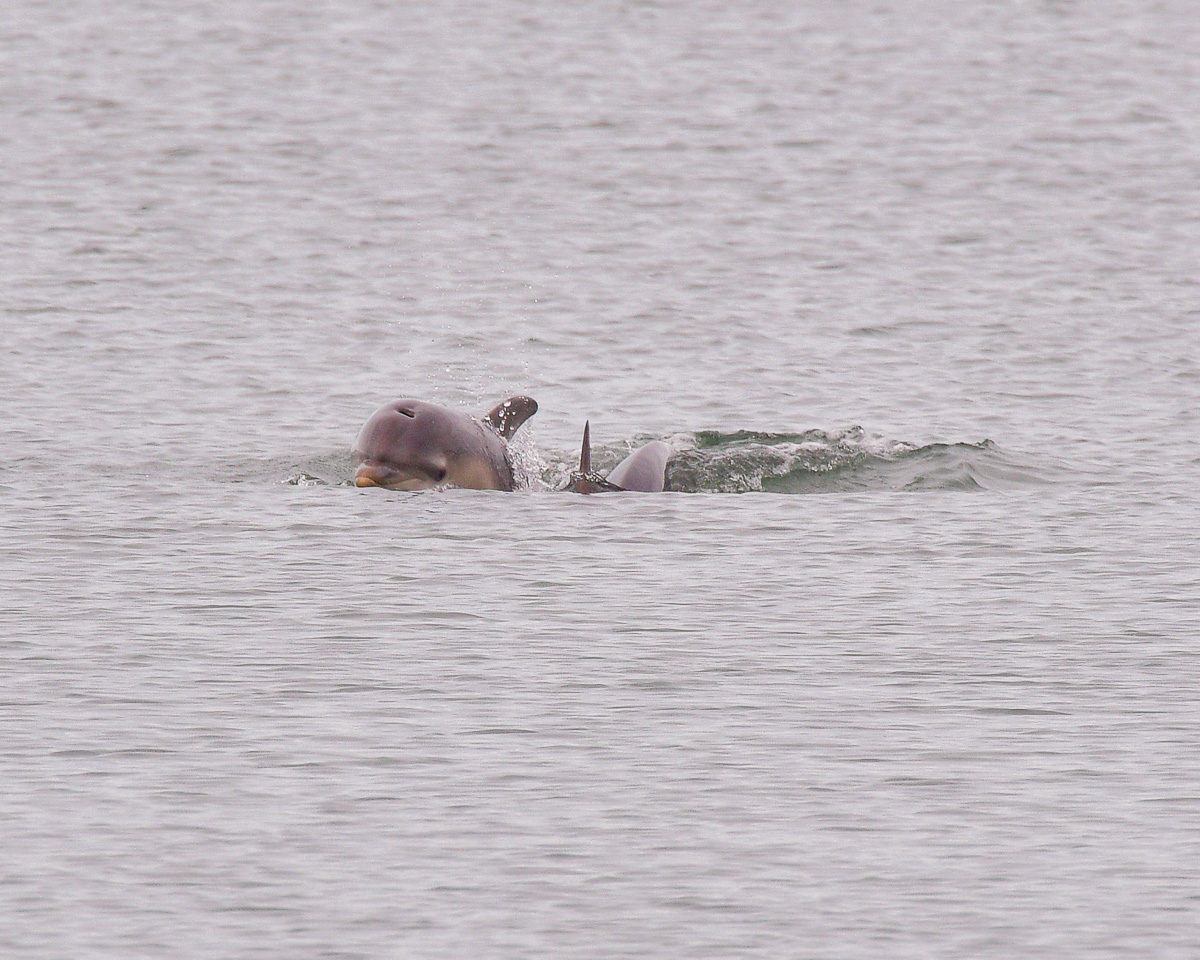
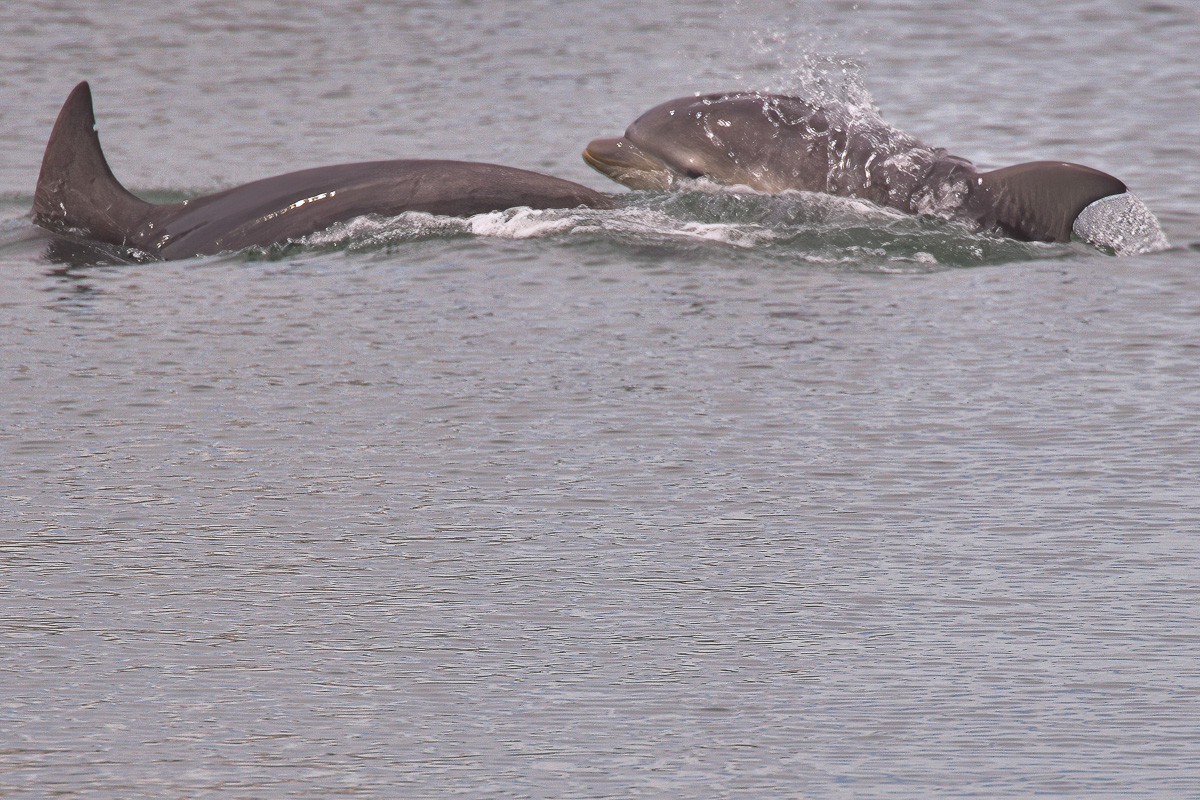
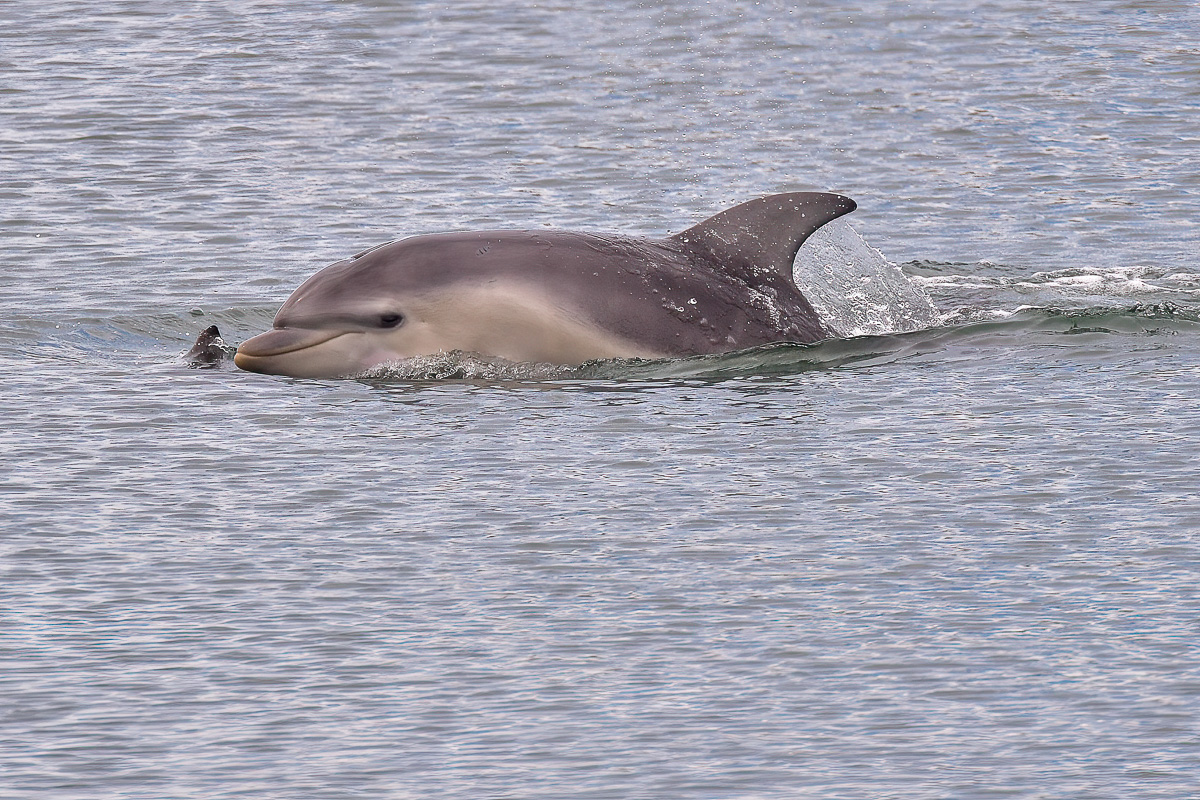
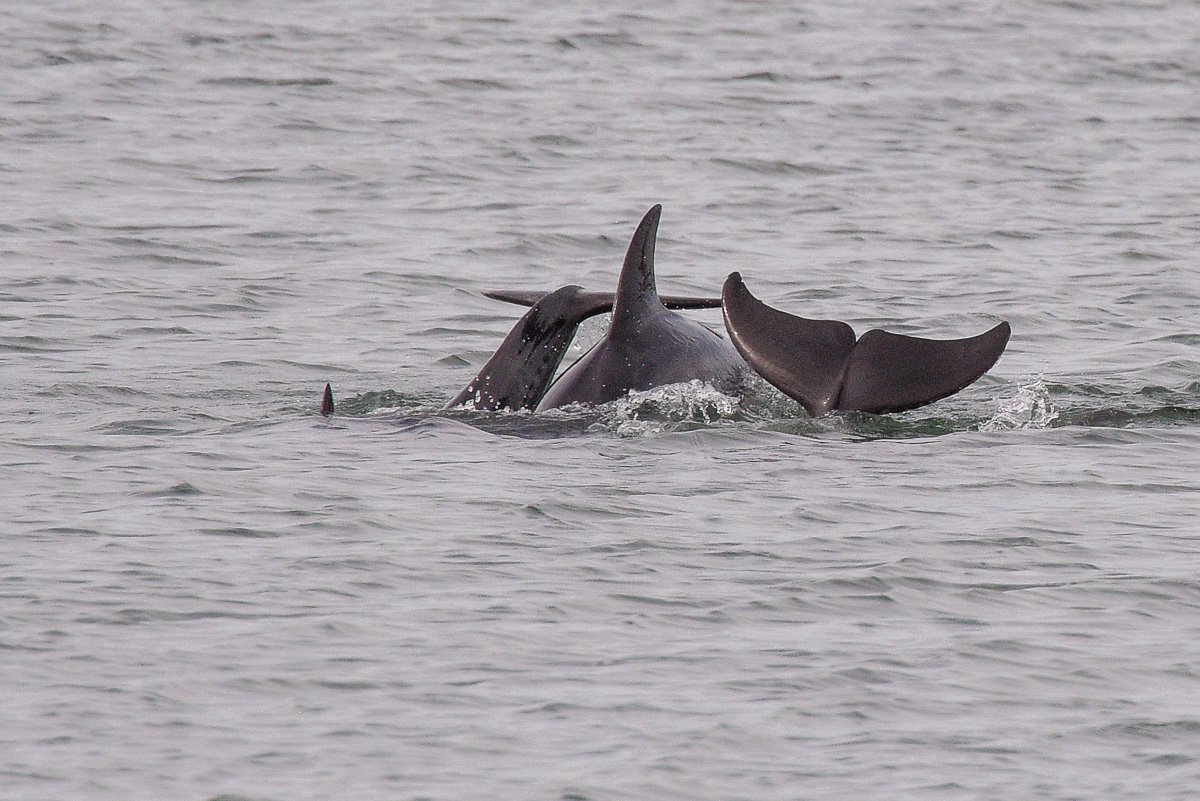
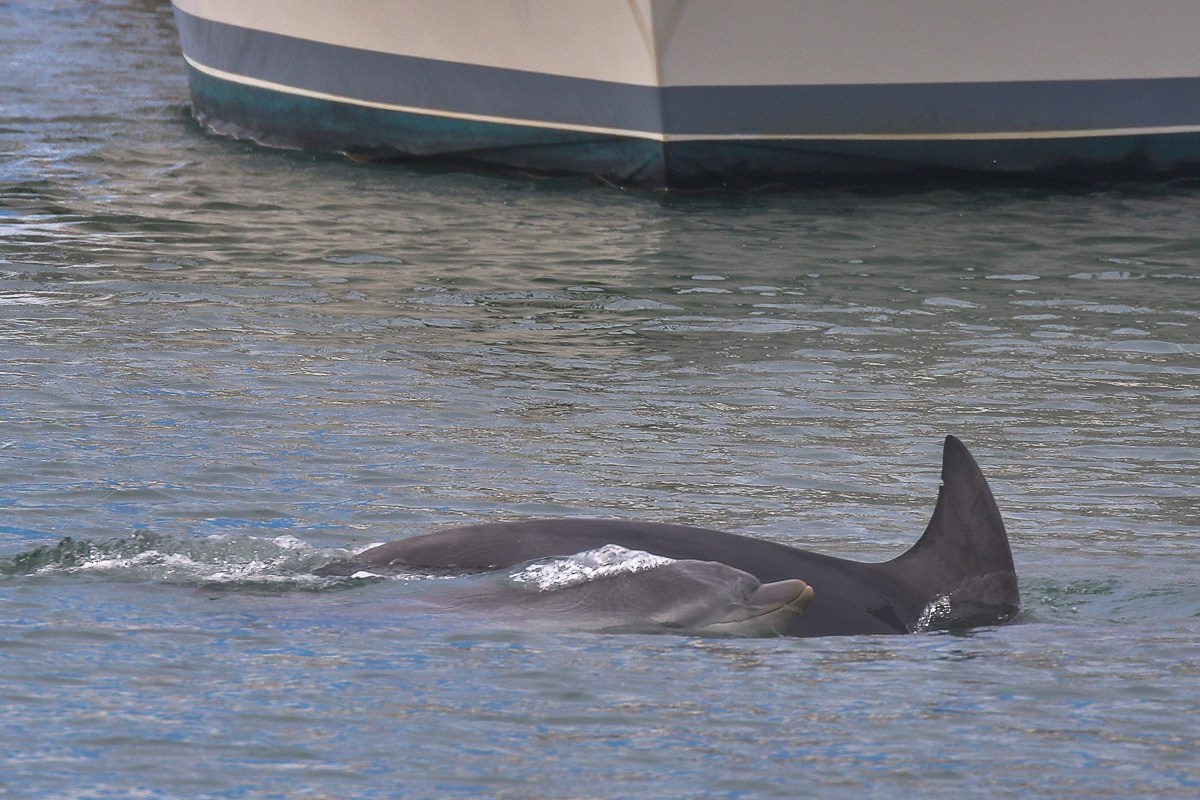
When suddenly, and certainly, to all watching, a huge surprise, some grey shapes rolled out of the water in the harbour and made their way among the boats.
I’m not sure if the kids were squealing with fear, mock fear, or just plain enjoyment.
The pod, at least two young and adults and two or three other adults, were Bottlenose Dolphins (Tursiops truncatus)
Being a protected species, there are certain rules about distances of approach and the like, to protect the creatures, but it seems this pod had not read those regulations and were happy to move among the moored boats in the harbour as well as provide some extra excitement for the kids as they passed close by.
And you can only image how jealous I was of those kids, in a good way.

In the end, my coffee was cold, I’d learned a lot about how ineffective I am at predicting where a dolphin might surface and, well—look at that—over an hour or more had gone by.
What amused me somewhat was a couple of sailor-types on their floating mansion who declared, “Well, we’ve never seen dolphins here, in all the years….” to no one in particular.

Here is just a few from the day.
Bluey

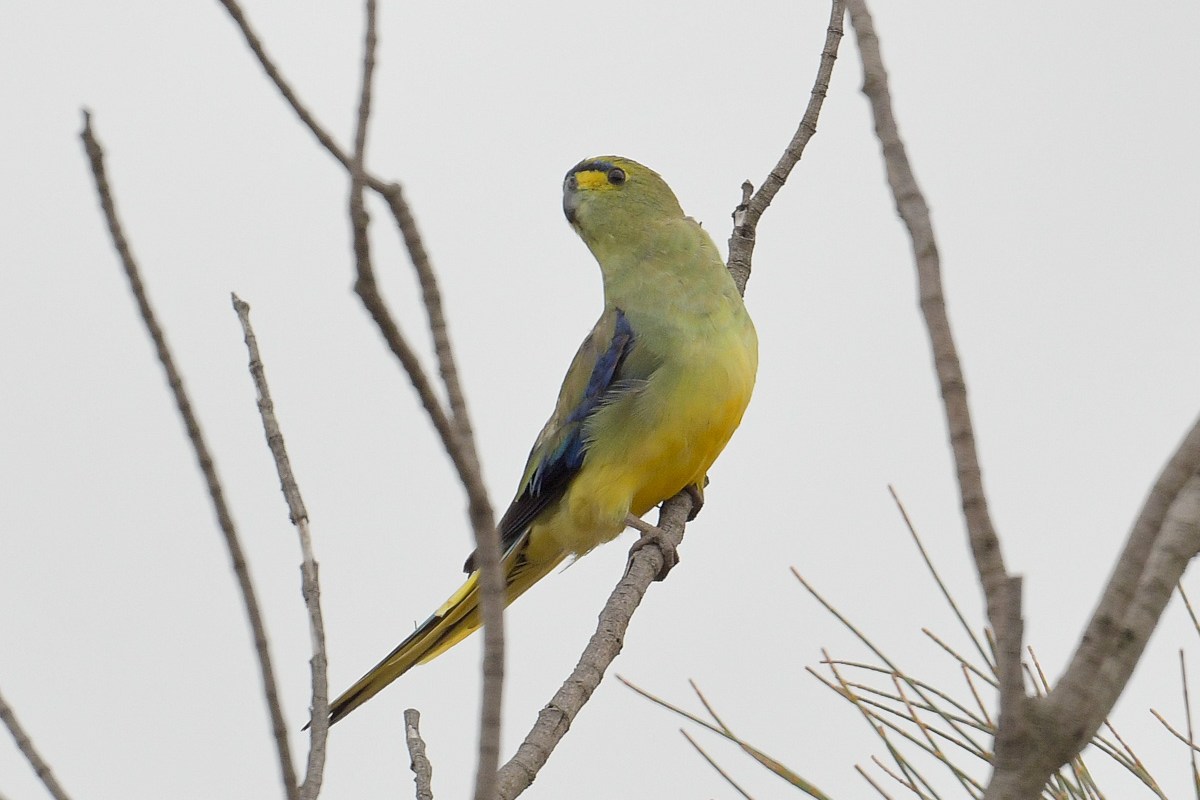
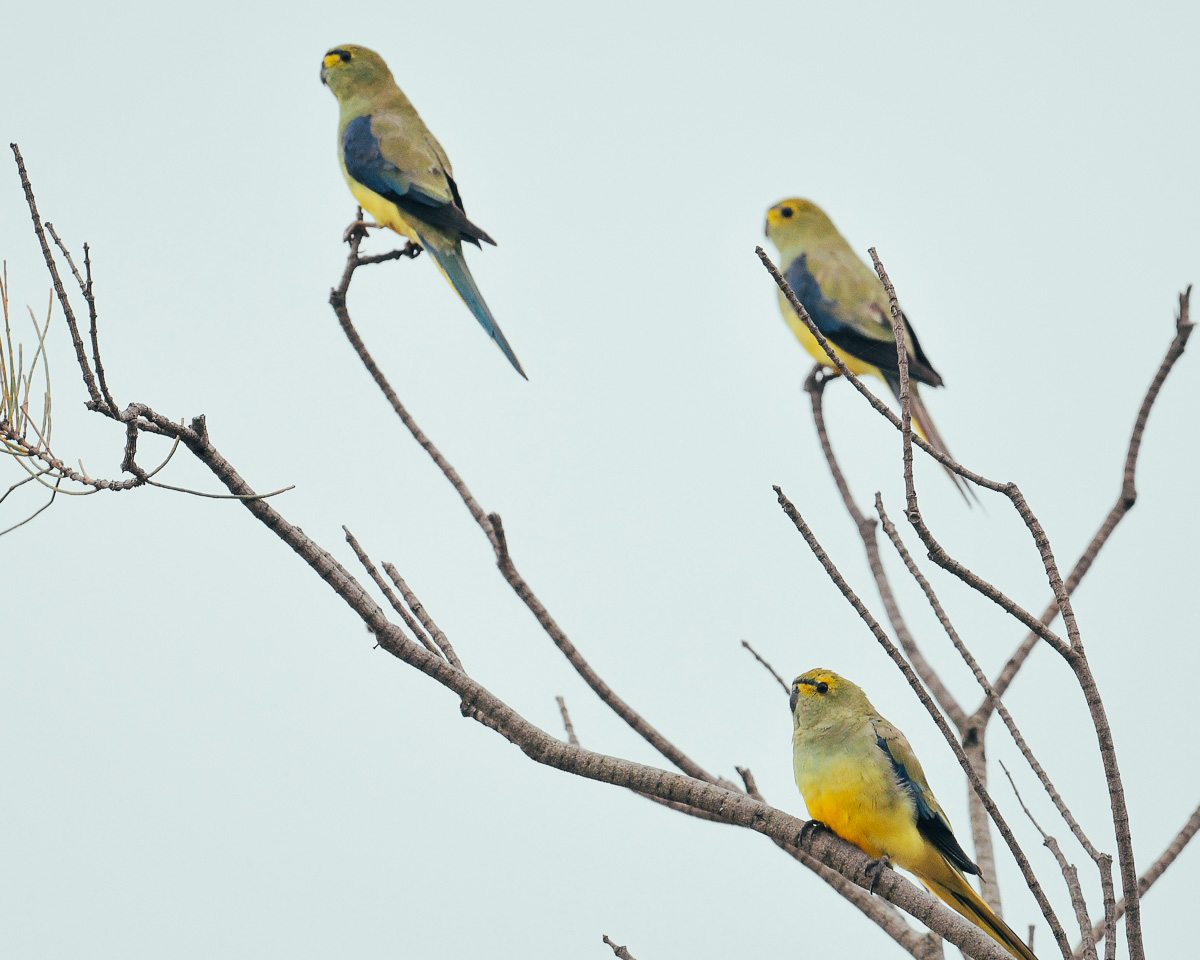
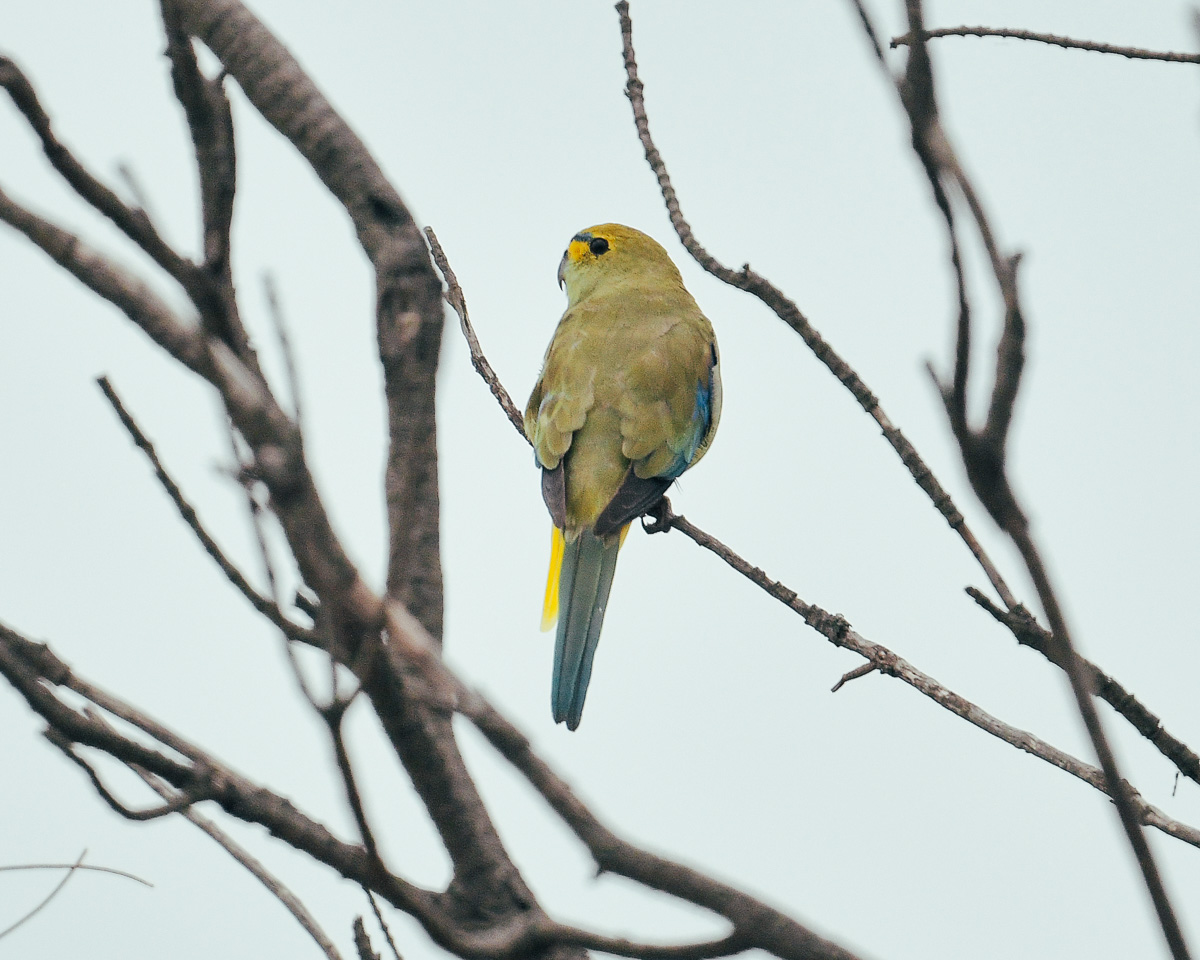
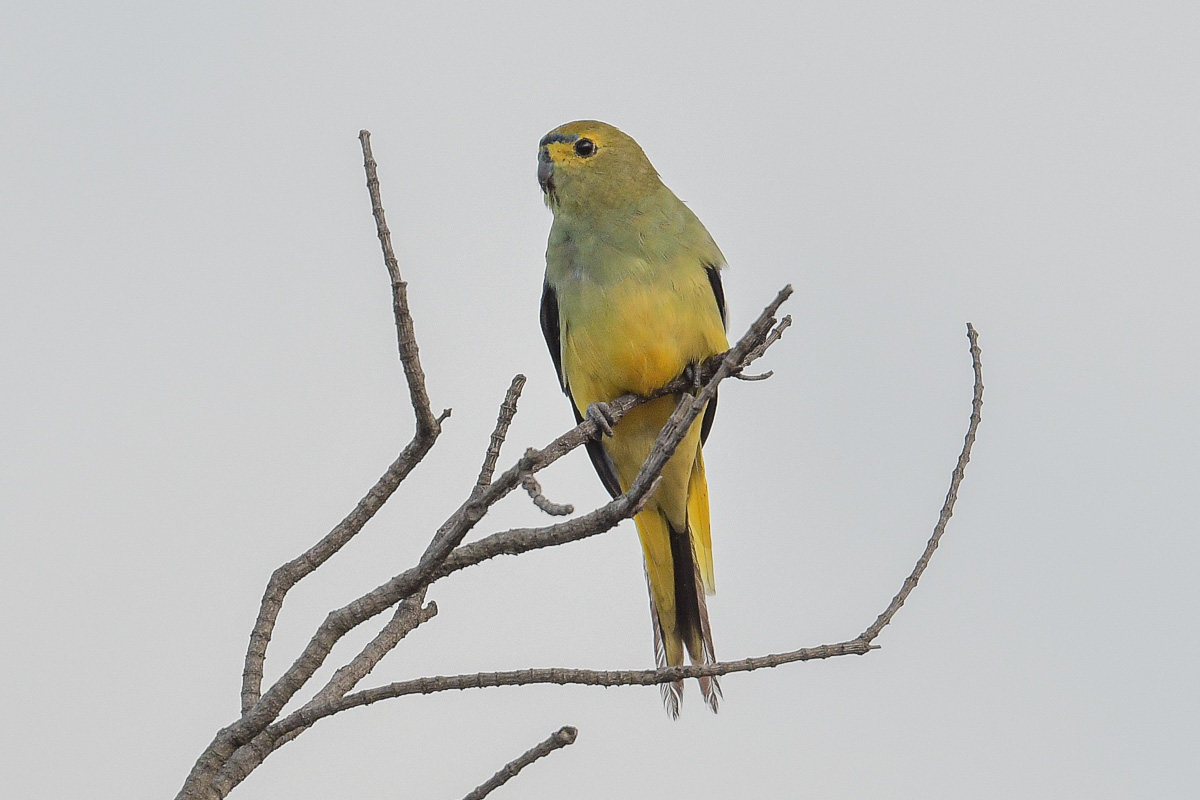
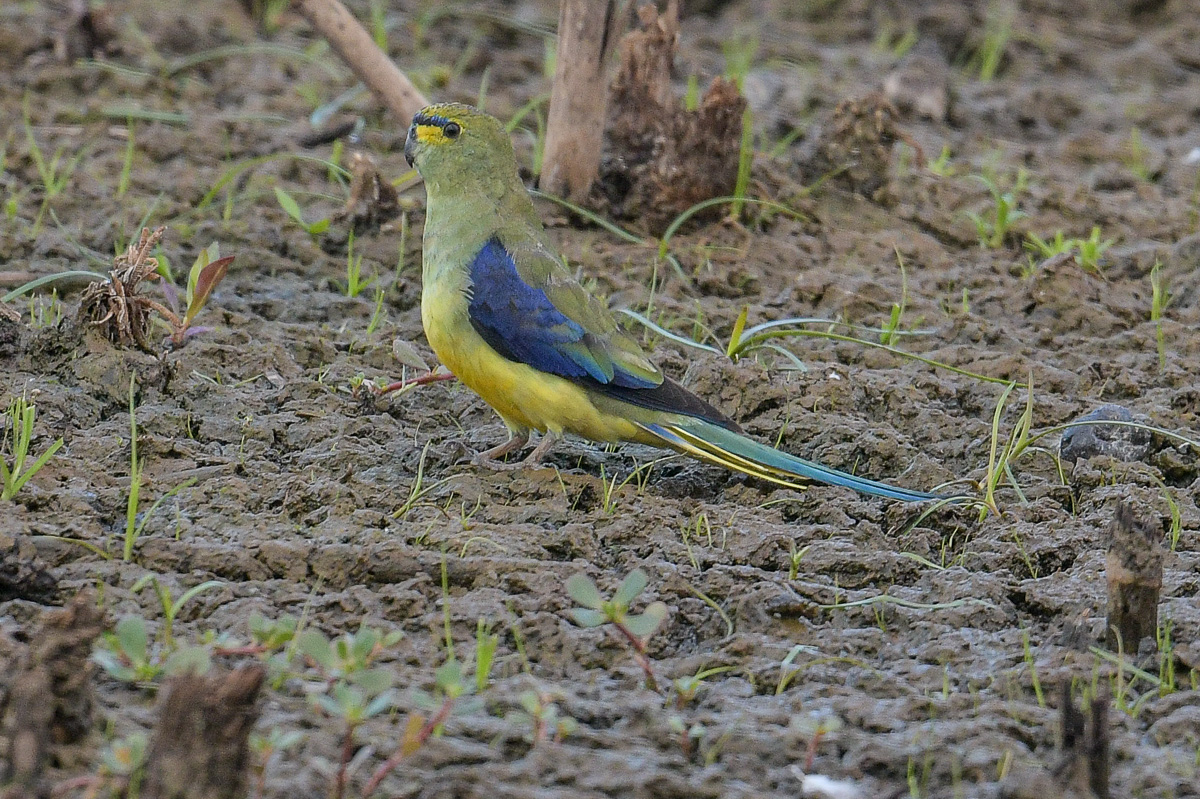
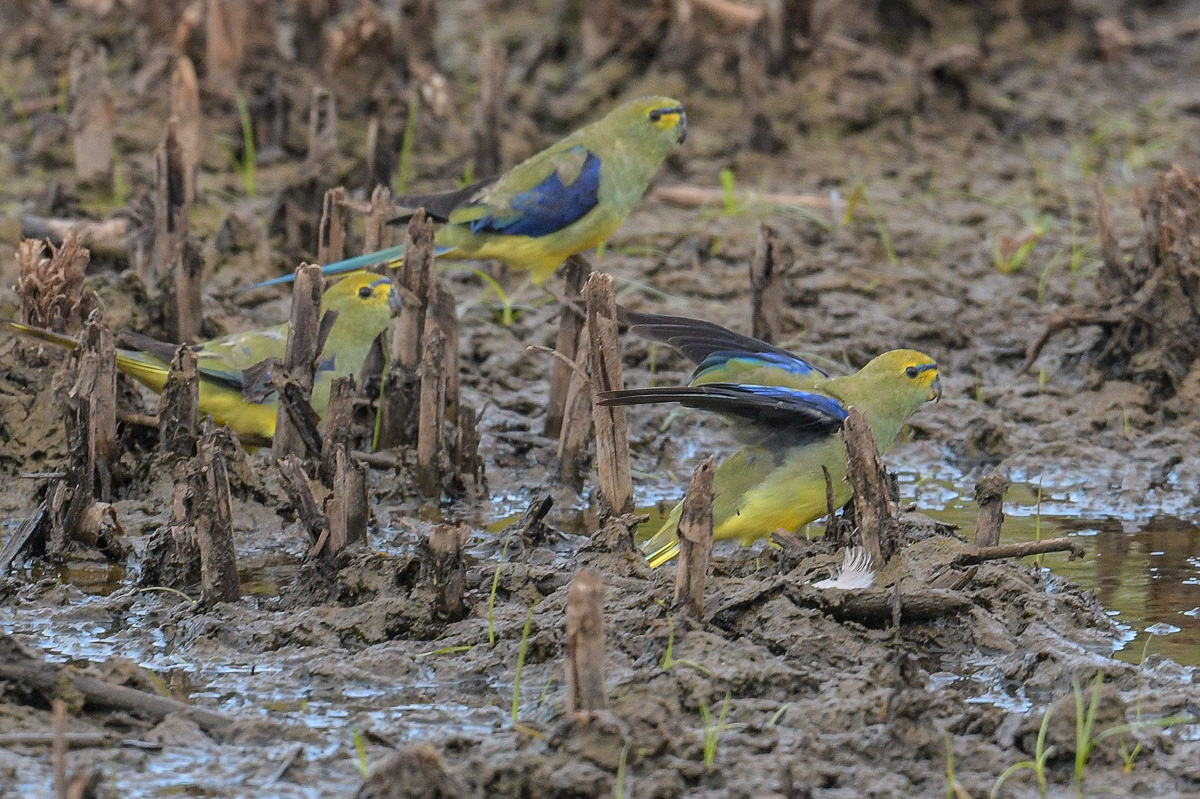
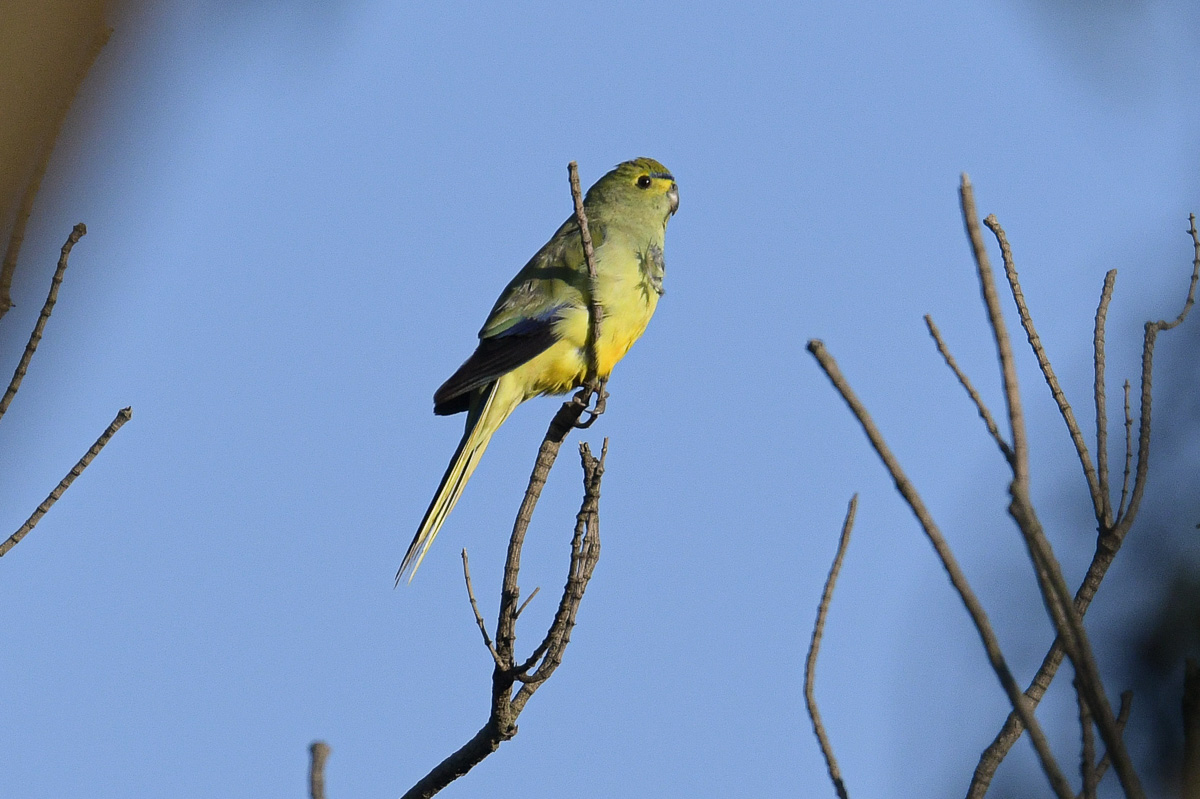
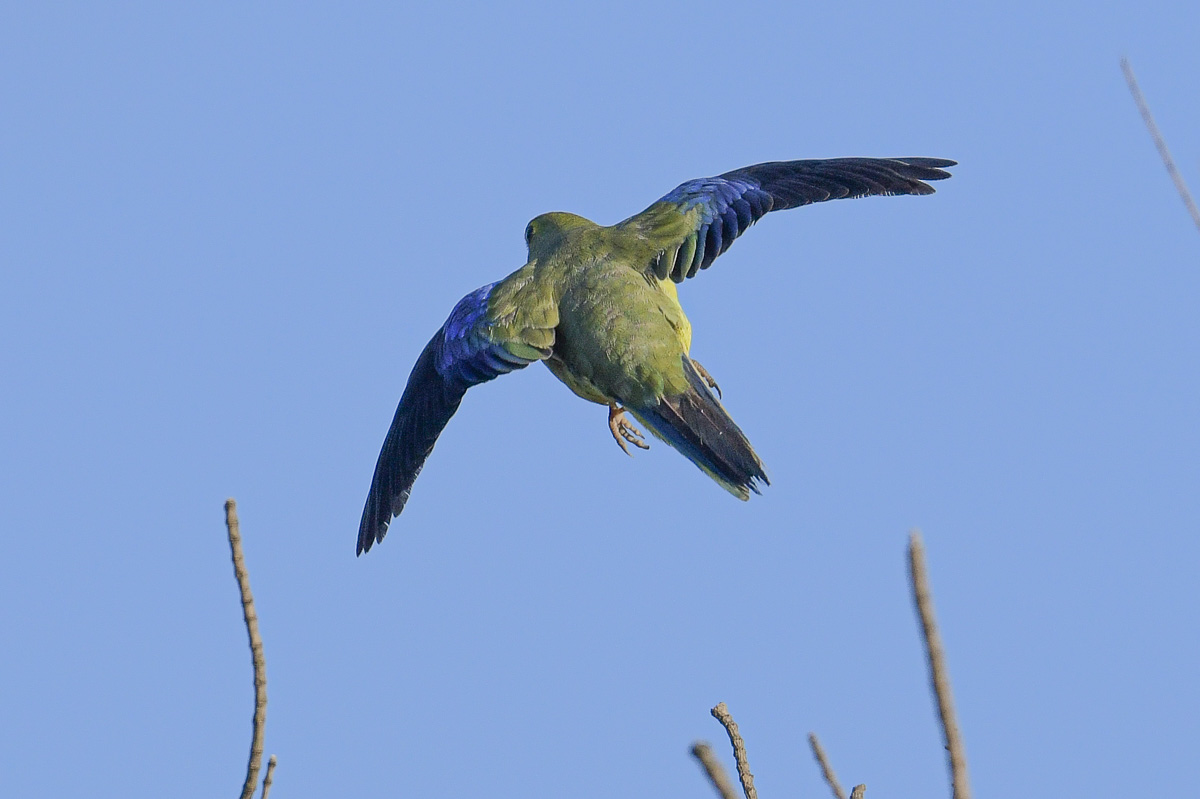
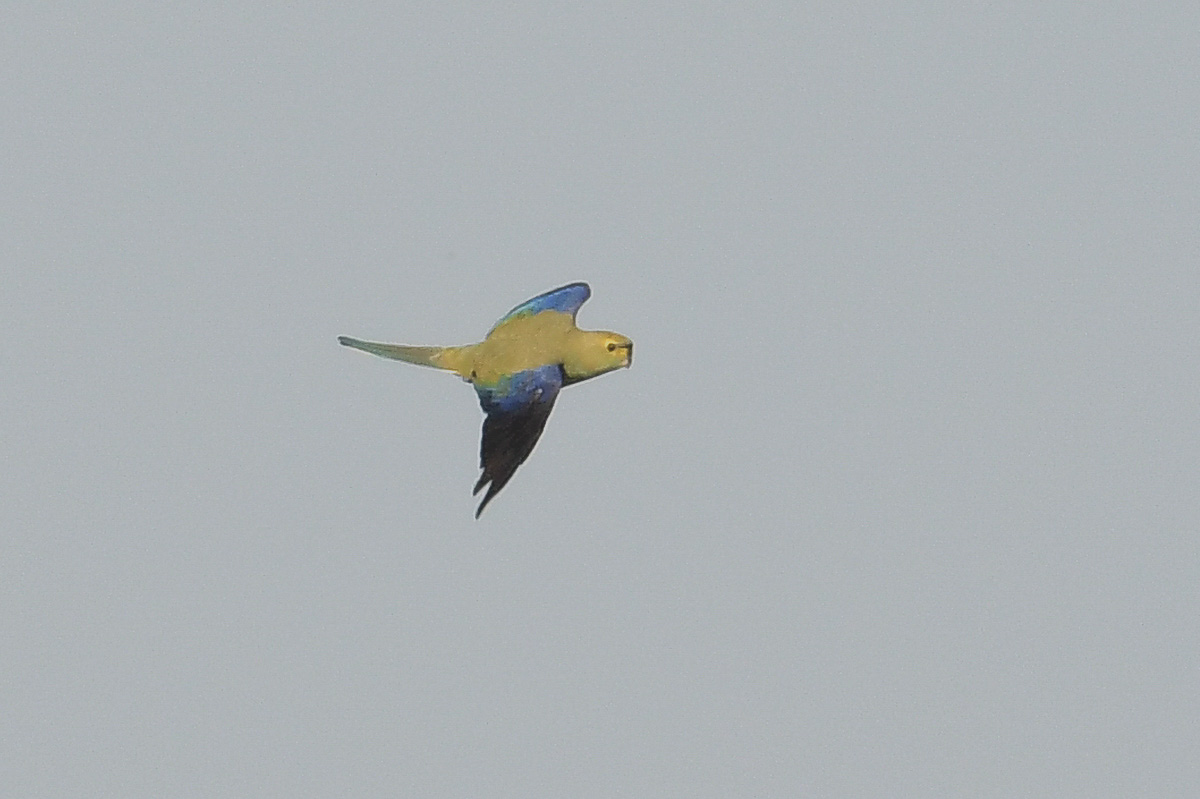
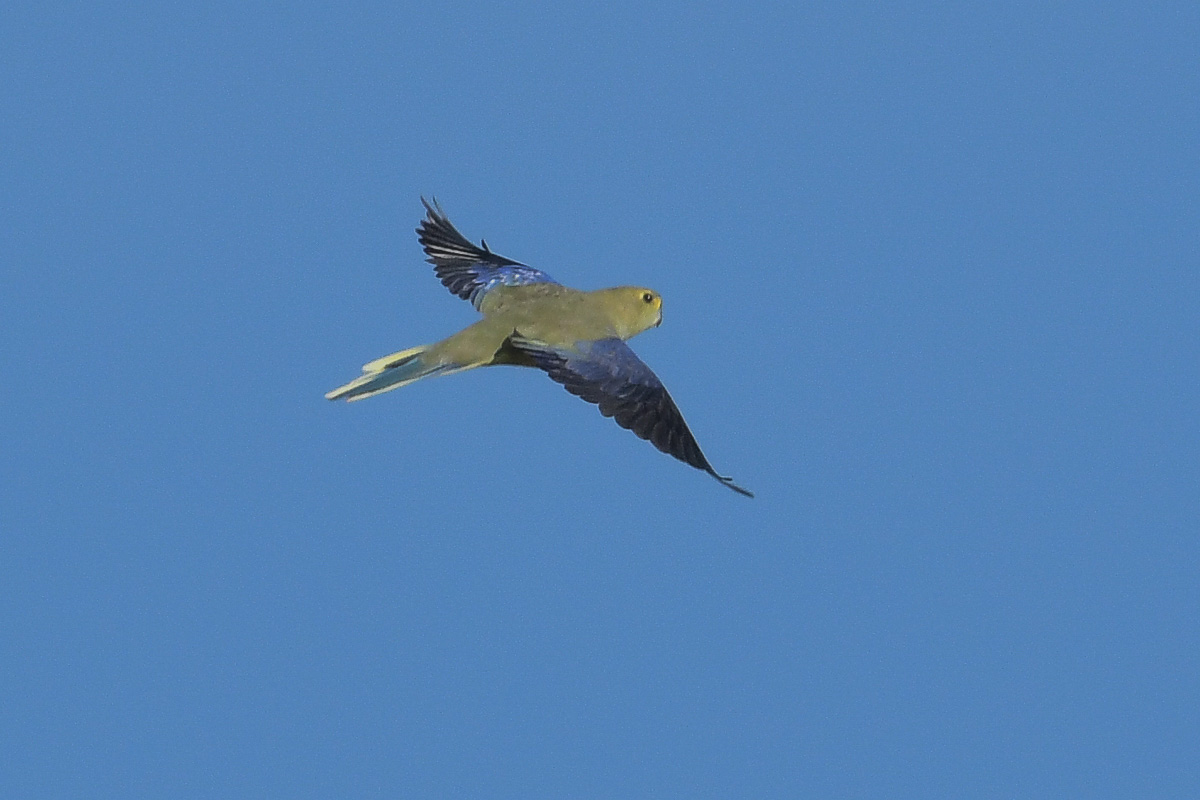
At the risk of starting a social-media-stampede, the past couple of weeks we’ve been waiting and watching to see if some Blue-winged Parrots would make the trek across from Tasmania to winter over among the saltbush marshes along Port Phillip Bay.

Nothing is prefect in the prediction of their arrival, or indeed where they might show up. But we do have a secret weapon: the dogged determination and persistence of EE when it comes to scanning through miles of seemingly endless grasslands.

Now the Blue-winged might not have quite the mystic of their Orange-bellied relatives, but given there are a few more of them in play the odds do increase a little.

However.
Our old nemesis the weather has contributed more than its fair share of cold, blowy, overcast days, and even finding them, the photo opportunities are slim. The little parrots are also quite ready to fly at an instant, so close approaches are hardly the order of the day.
We picked up a small flock, about 6-7 recently on the outskirts of a salty lake with some reasonable stands of gums among the saltbush flats.
Several days of very ordinary weather added to the difficulty, but at least they seemed more than just passing migrants and we located them a few times from recent trips.

The precious little birds gave us some good views and the opportunity to enjoy their company. As an aside, I once used “precious” in an article and was berated by the editor as I was putting value on some inanimate object. 😦

These days it seems copywriters have scraped the bottom of the adjective barrel as everything from icecream to sporting events or foodaramas are described as —blockbuster, awesome, mega**, sensational, crazy, off-the-chart, sustained performance— blah, blah, blah.

Here then is a handful to introduce the birds

Enjoy

Bird Count

A friend of mine sent me a link to a research project that among other things suggested that Birdwatching might improve your cognitive skills and reserve.

You can follow the article here.

Putting aside the thought that the research person quoted was named, “Wing”, there are some intriguing numbers that can be pulled from the data.

F’instance: “bird experts were better at identifying birds than novices”
Must admit that one was hardly a surprise.

Without going into the details here, they showed people photos of single birds and then in groups of four.
The expert birders managed a hit rate of 83%
AND as expected the non-birders managed a hit rate of 44%.

But. What I took away from those numbers is a slightly different conclusion.

On your average outing, Experienced birders might get 4 out of 5 (80%) right.
So next time you are on a trip and someone calls, “Yellow-tufted Honeyeater”, and you’ve never seen one before, it’s worth recalling that it might be, or…. might not be so.
Over the years I’ve seen some pretty outrageous id calls made, and because no one either saw, or could recognise it, the beginners all stood in awe of the great skill.

I know I’ve told the story of EE on a birding day, when a very experienced birder was instructing novices, when a white shape flew by. He casually called, “Silver Gull” and went back to pontificating about the bird he’d seen 10 years ago on a trip to the Simpson Desert.
EE called clearly, “Black-shouldered Kite”, – and as you’d guess. It was.
He refused to speak to her for the rest of the day.
Also for the beginner it stands better I think, at 1 out of 2 they will get right. (44-50%).
So don’t feel bad if you’re unsure of what a species might be.

And in the meantime, we are improving our brain health.

Bonus.

Here’s a few to practice on. 🙂

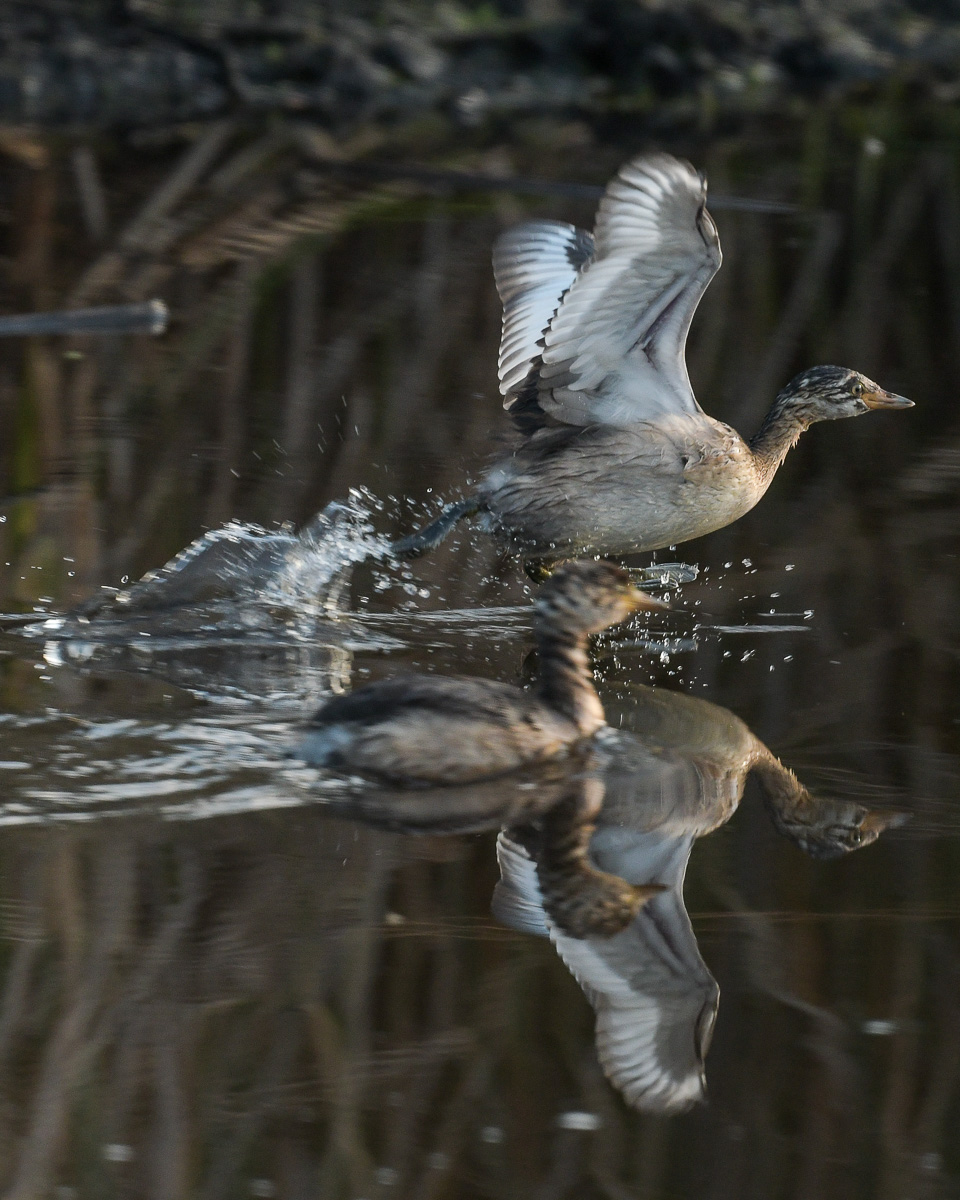
Juvenile Australasian Grebe putting in some wing practice.
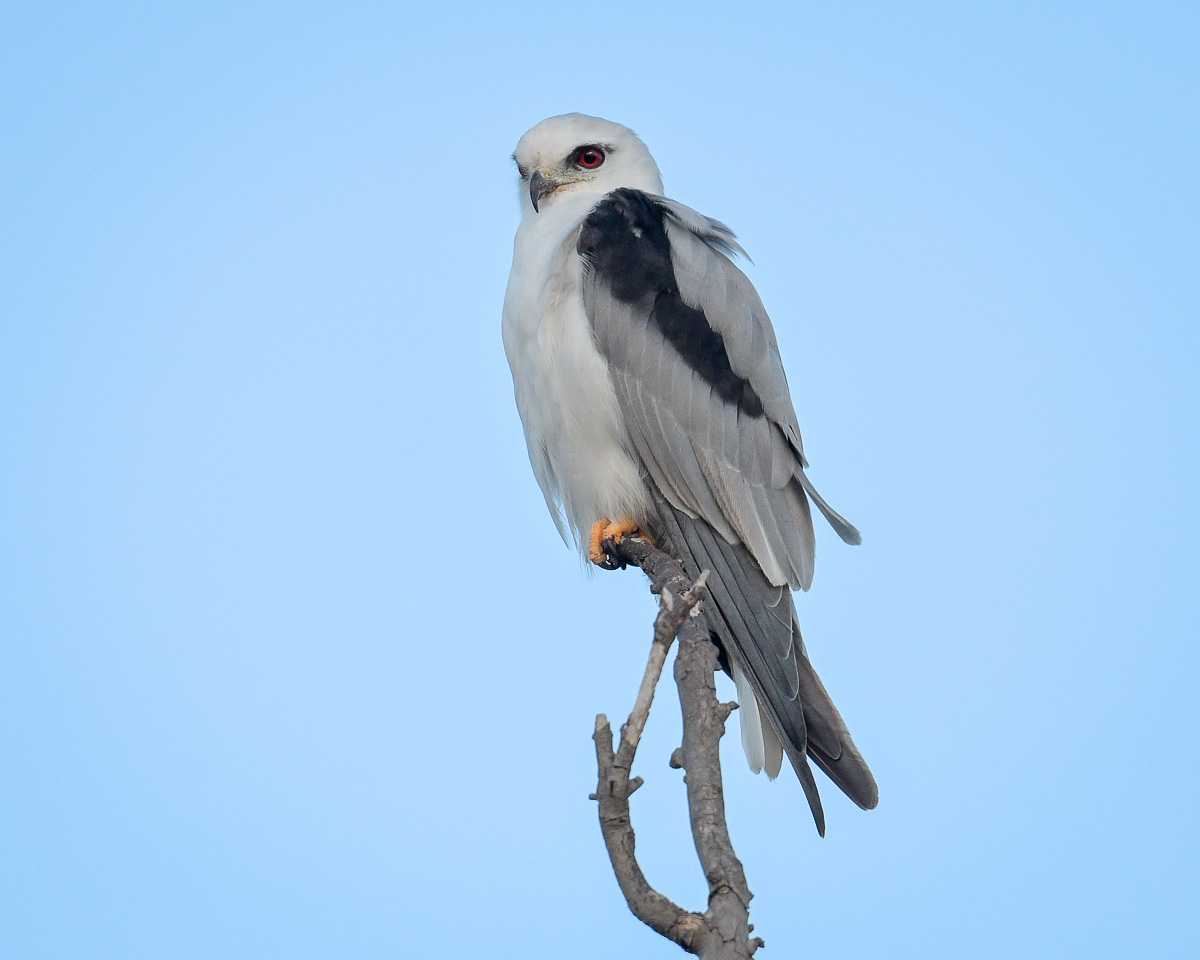
One of a pair of Black-shouldered Kites that have moved into the area.
I’m hoping they might stay
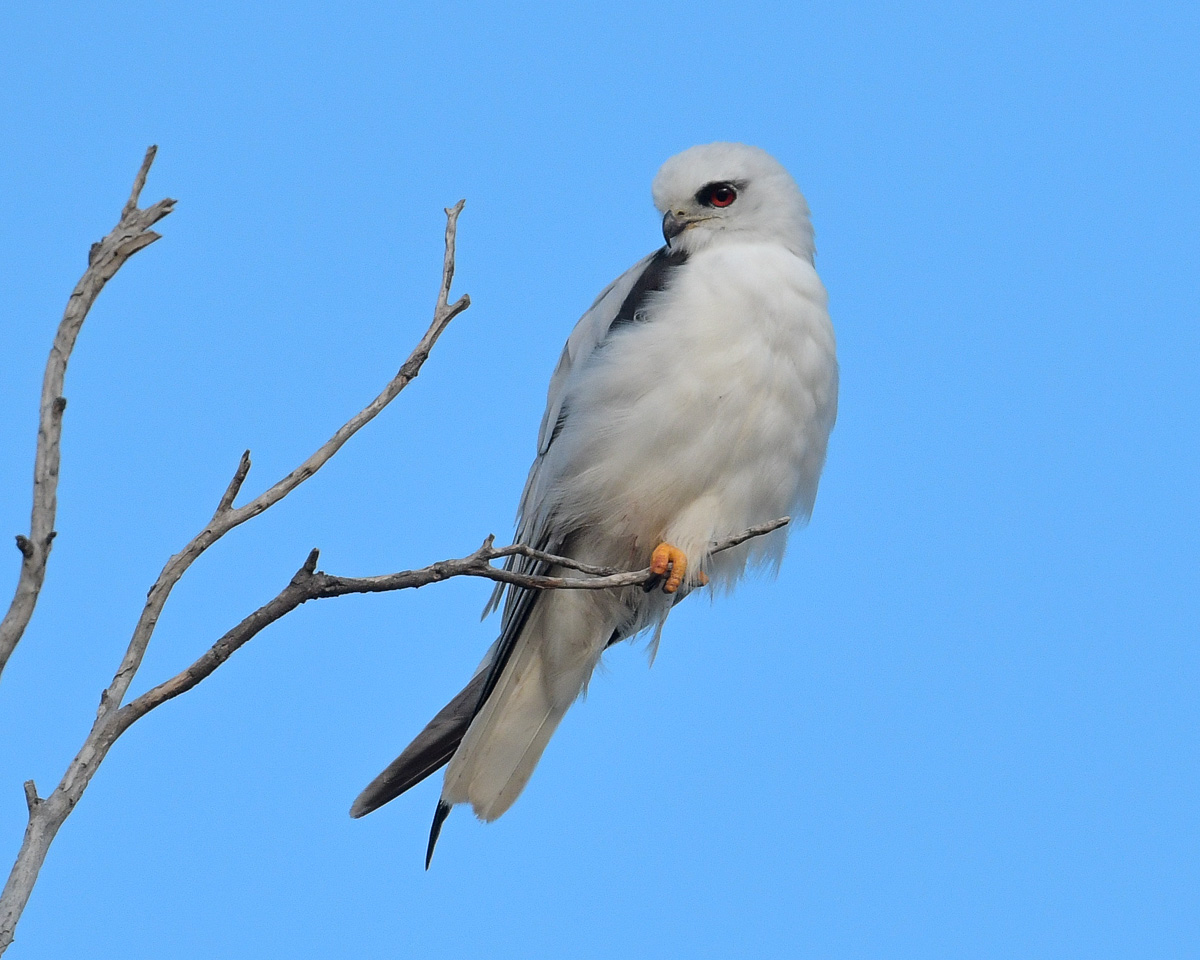
This is the other of the pair. Think from the activity this might be the female.
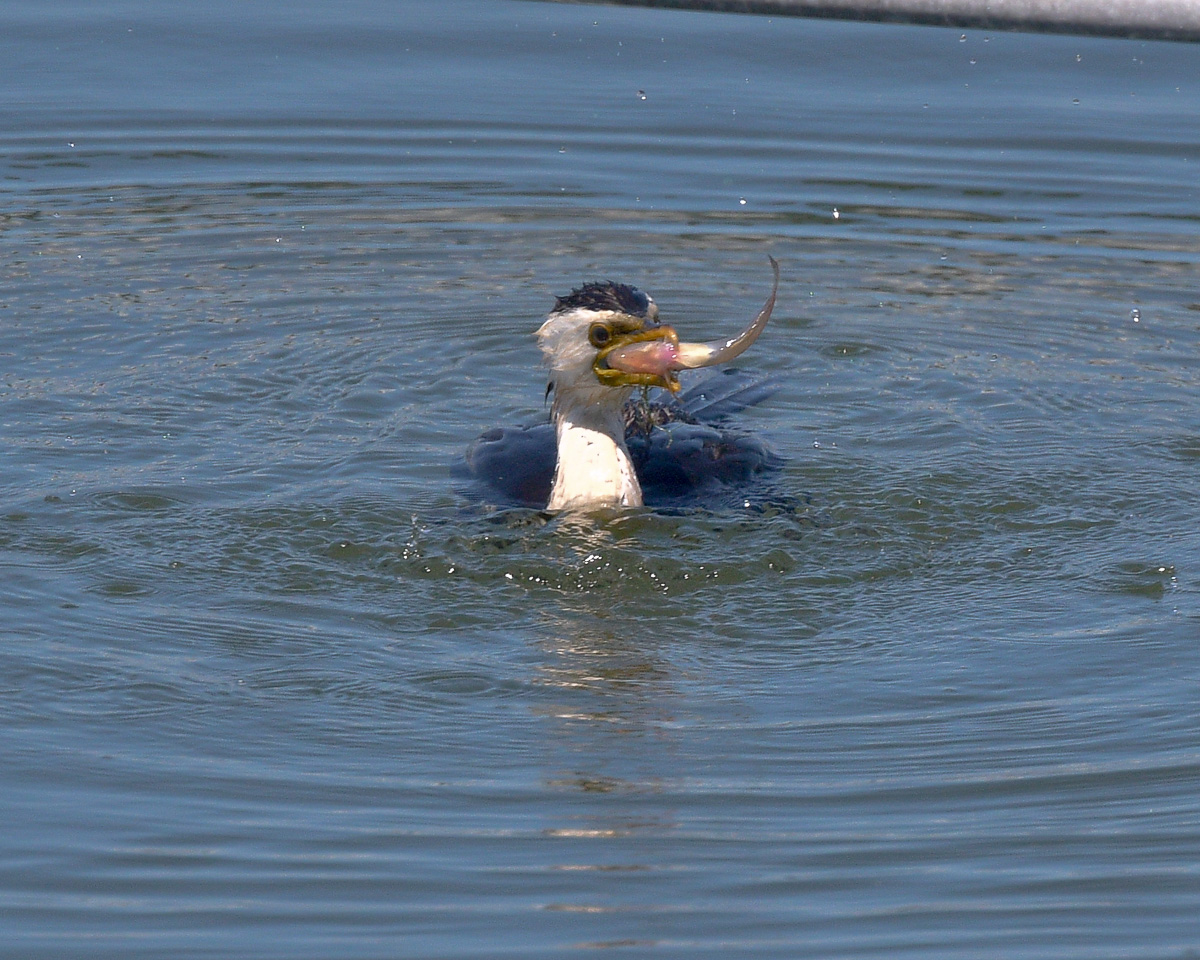
Little Pied Cormorant.
This one has been fishing in the local boat harbour
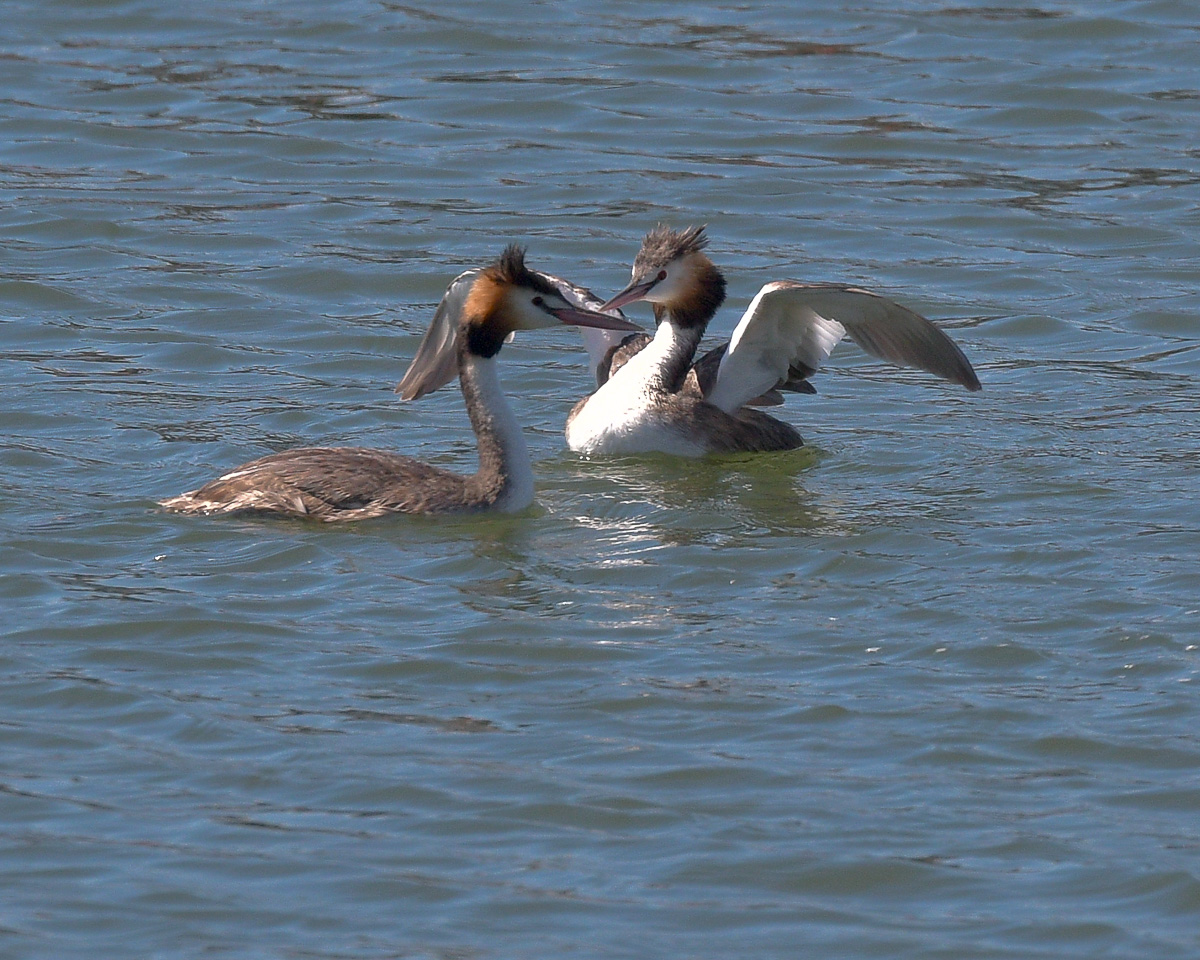
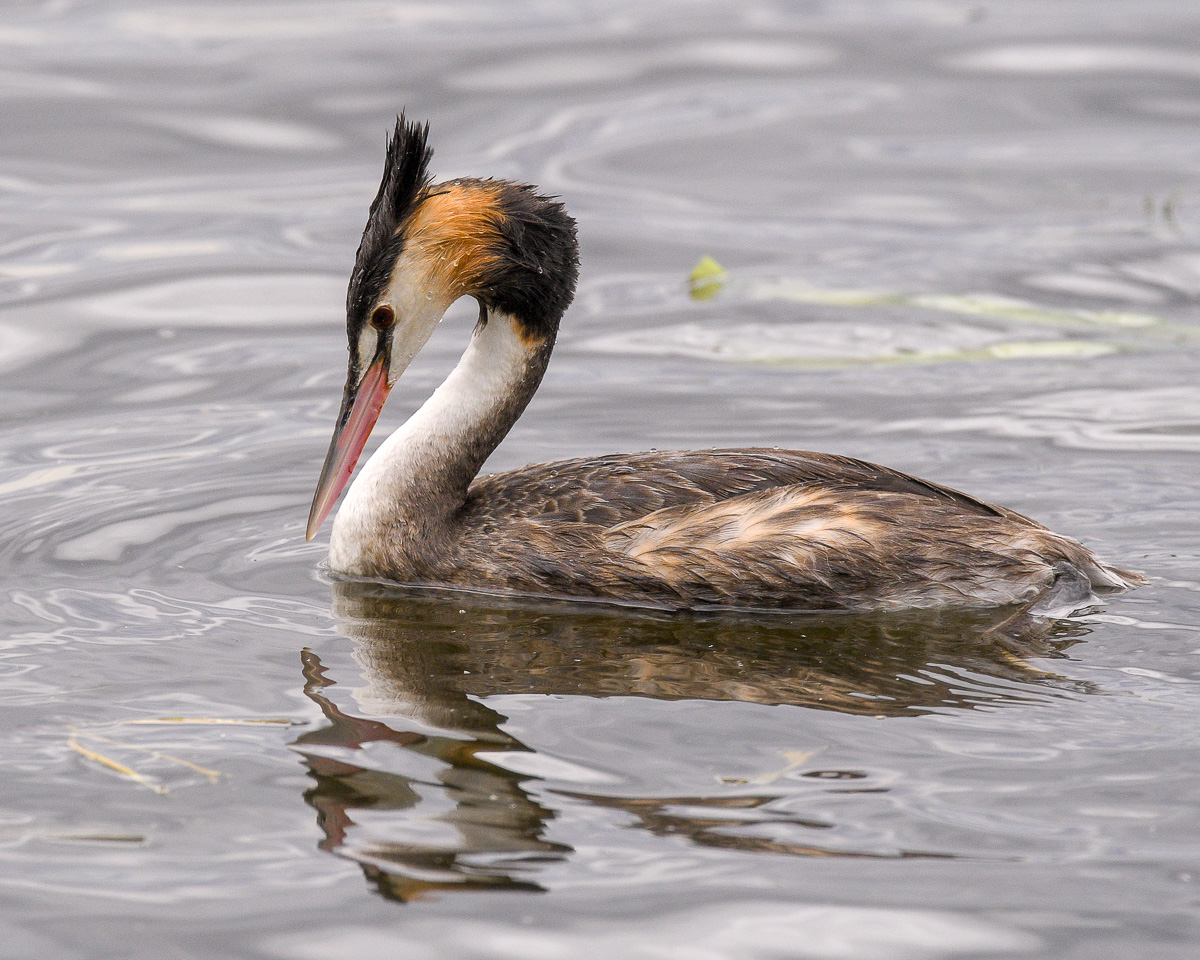
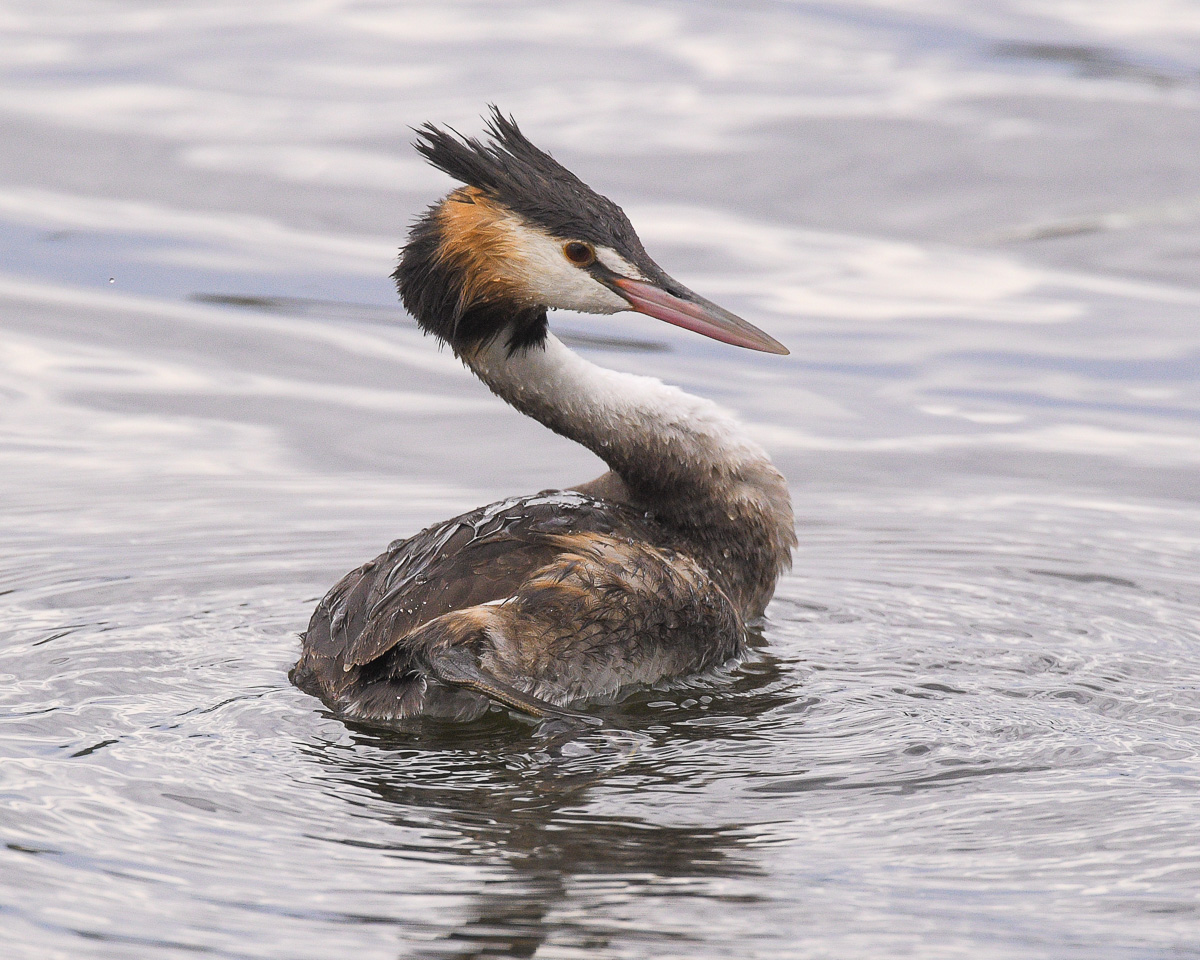
Great Crested Grebe.
About 16 of them have moved into the same boat harbour.
They do fly up and down the area, so its highly unlikely they’ll be resident.
And there is little shelter if they were to try to nest.
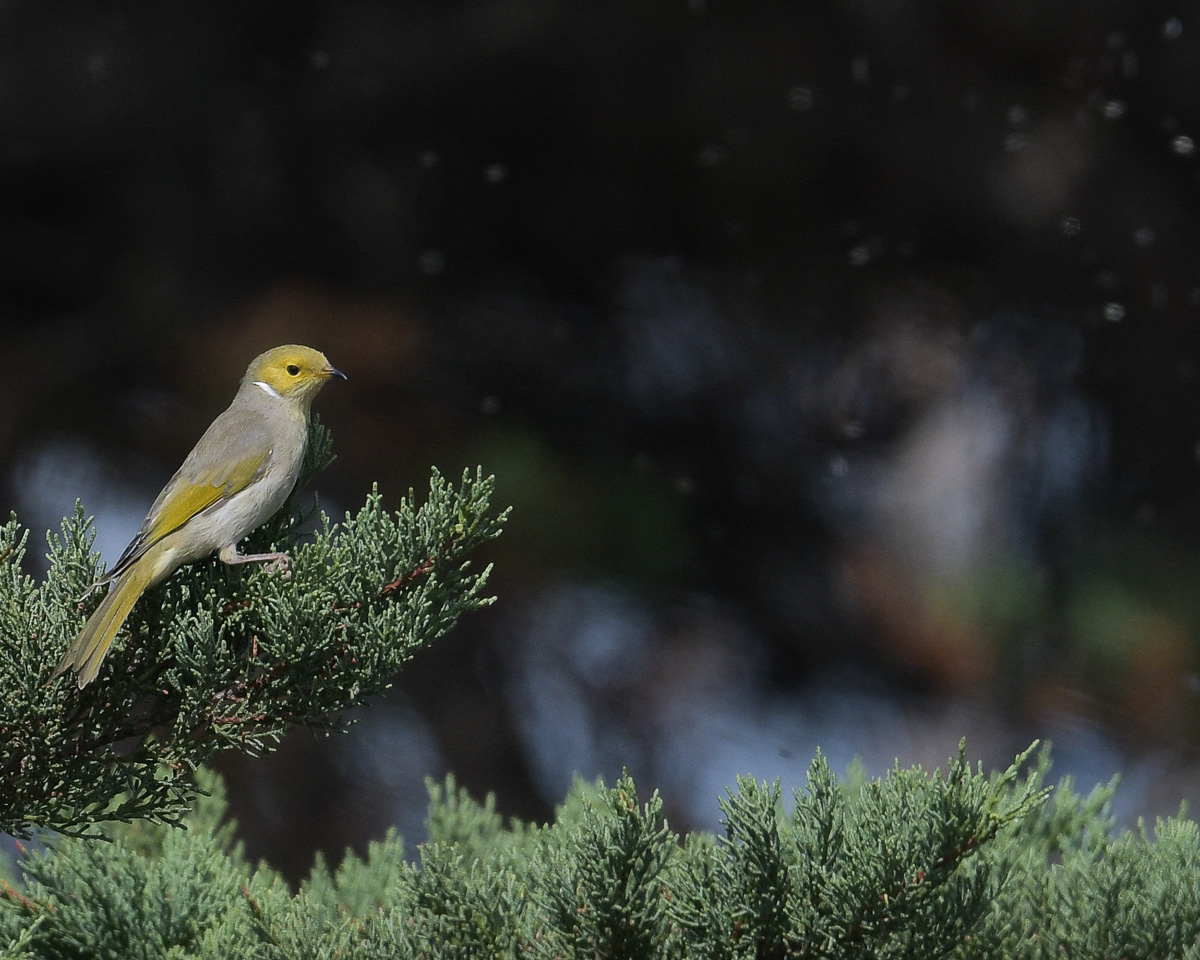
White-plumed Honeyeater.
Hunting for insects of the pine
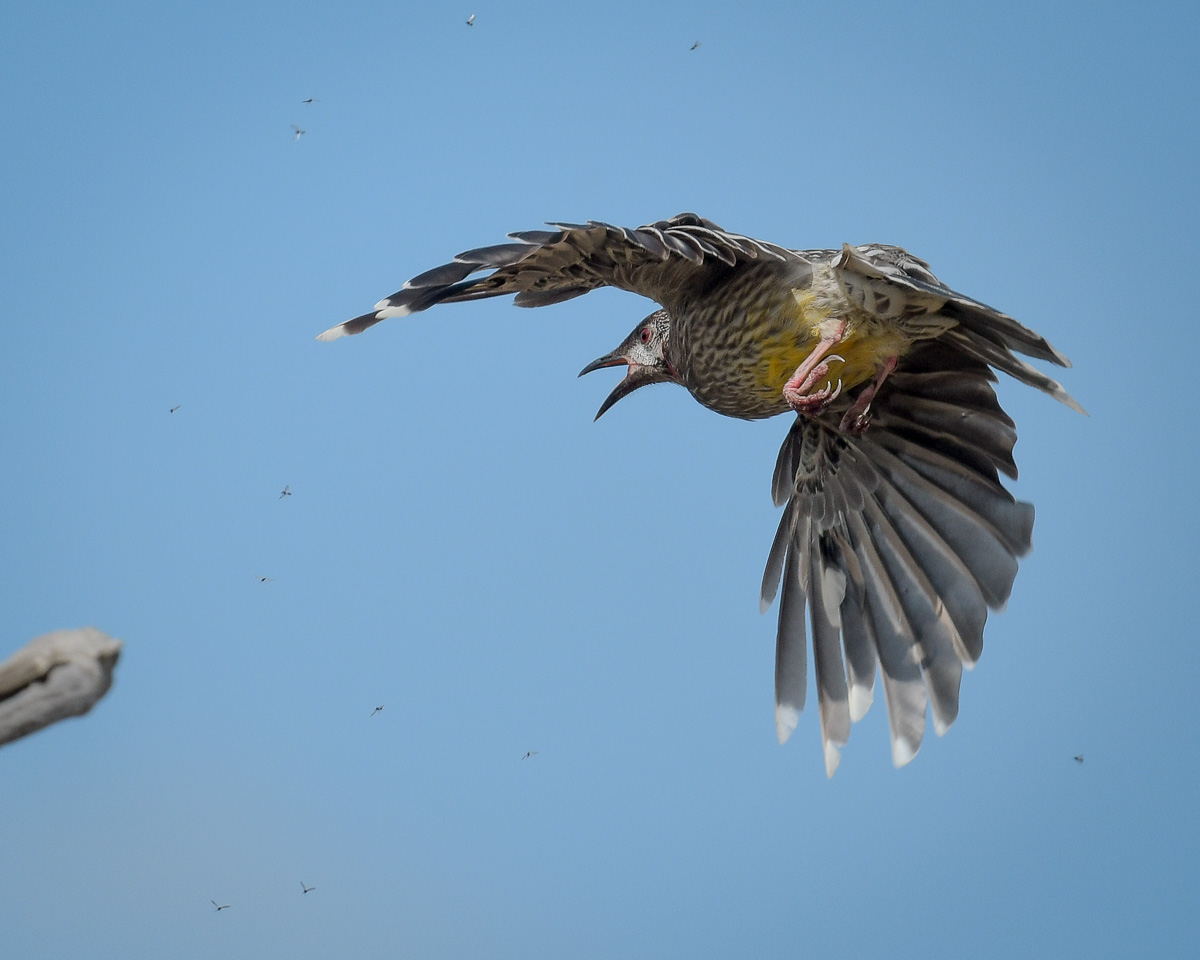
Red Wattlebird
So many insects all they had to do was fly about with an open beak
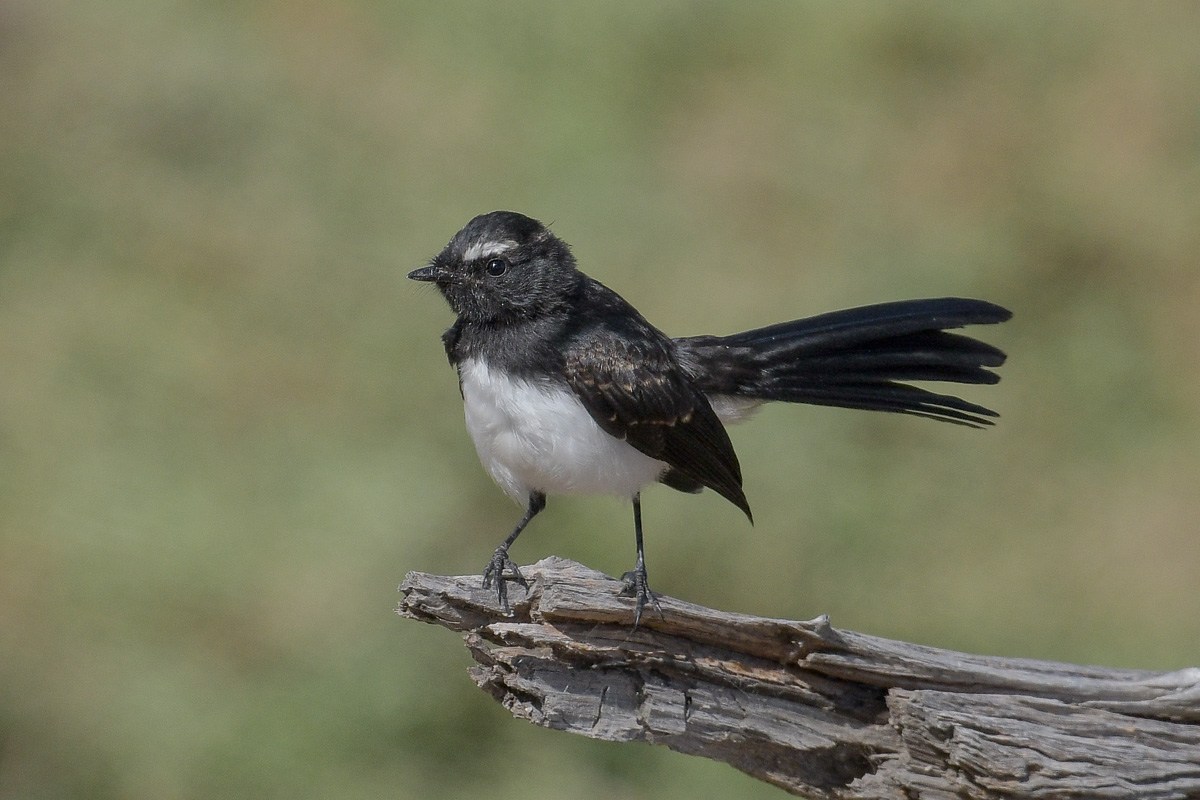
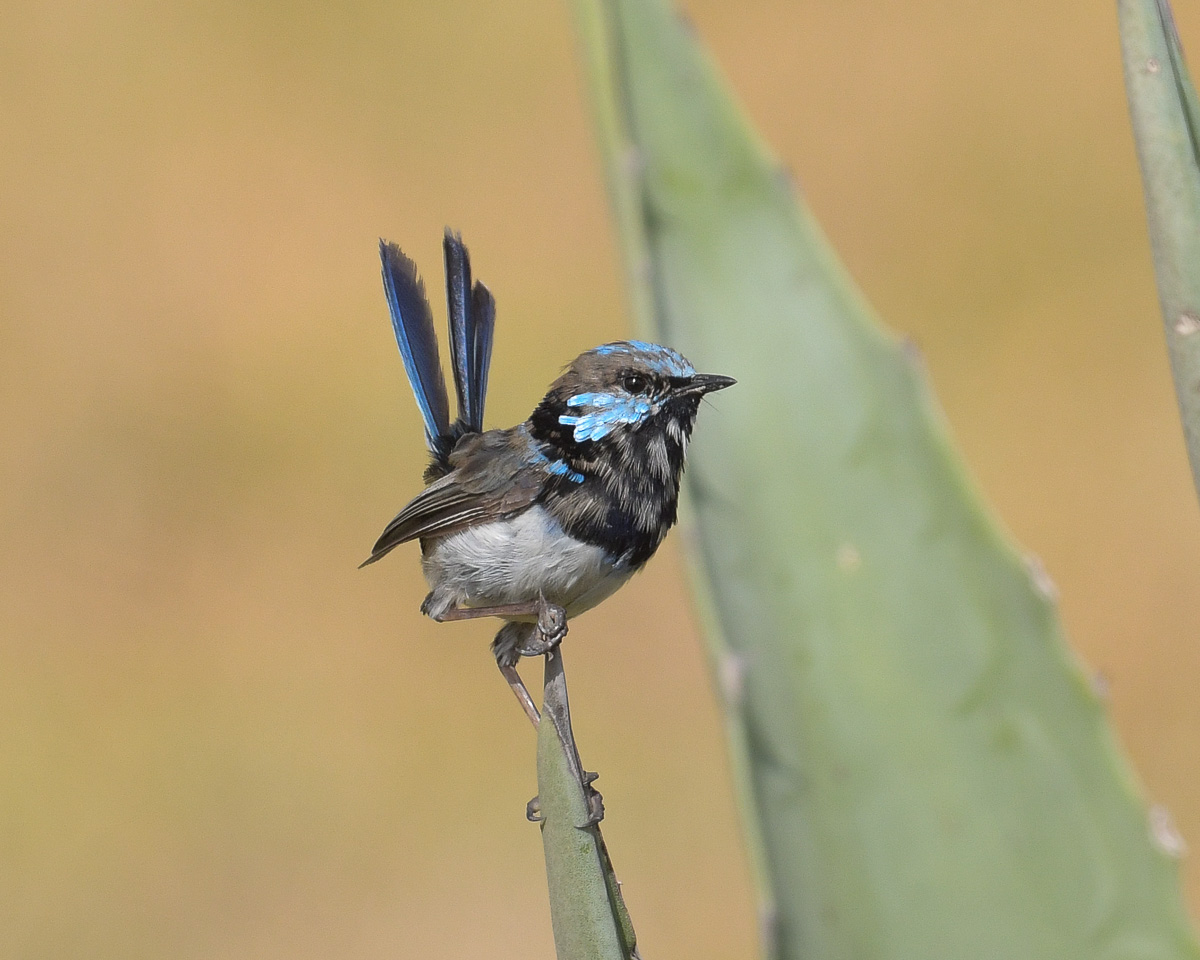
Superb Fairywren
This fellow is beginning to go into ‘eclipse’ as he loses his bold summer dress.

Enjoy

A Mixed Bag

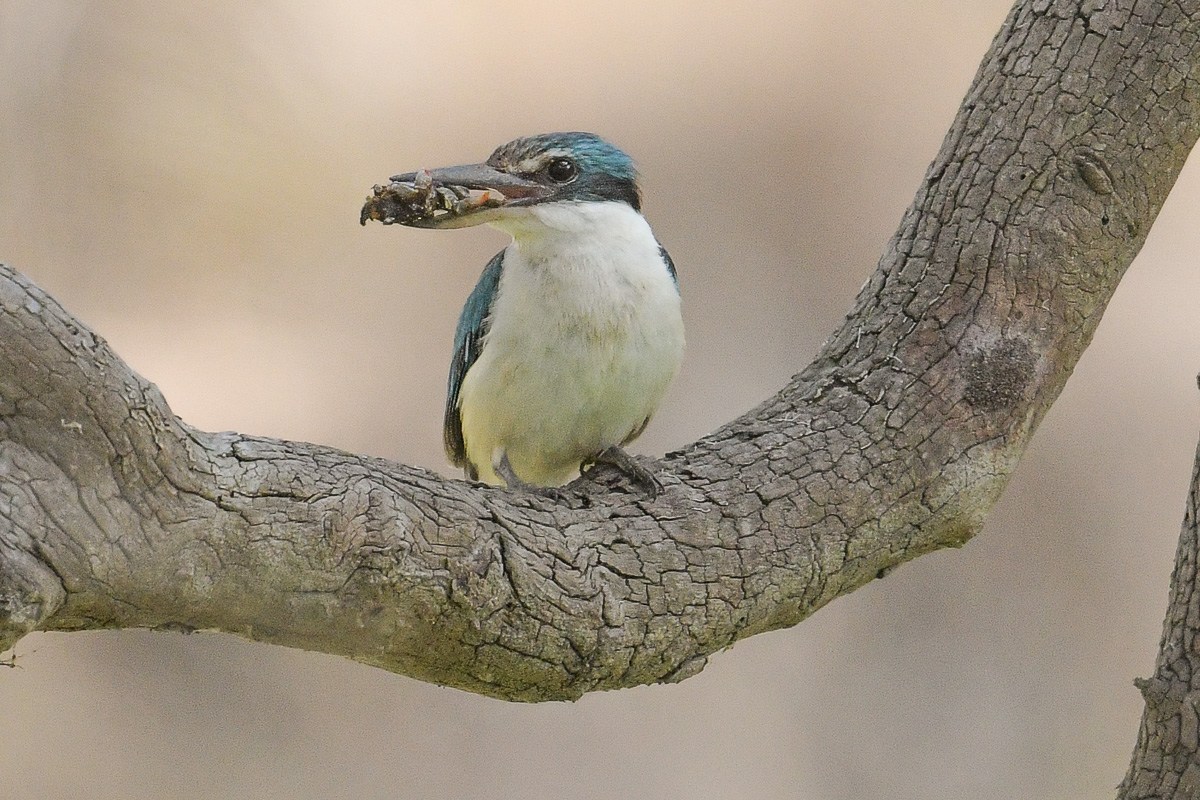
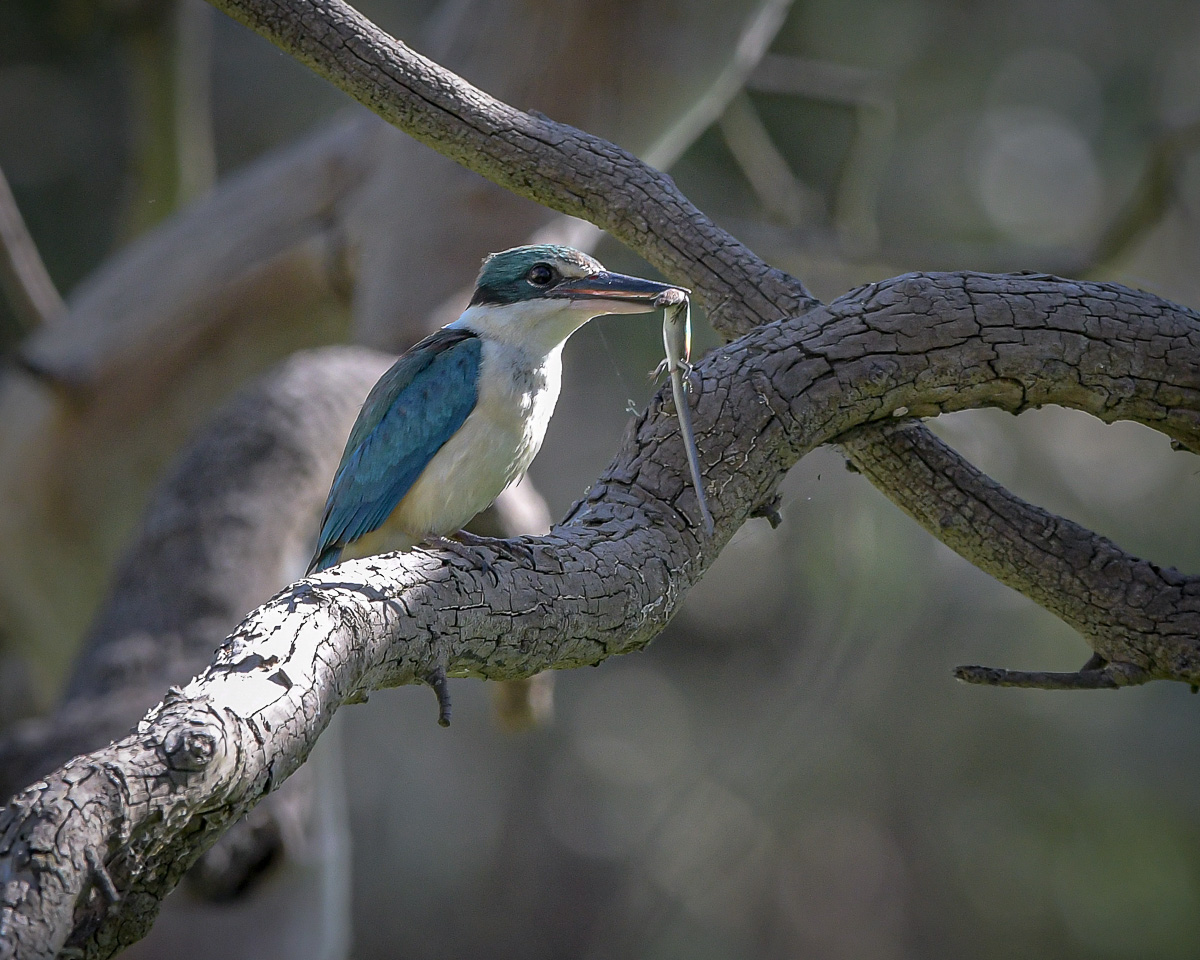
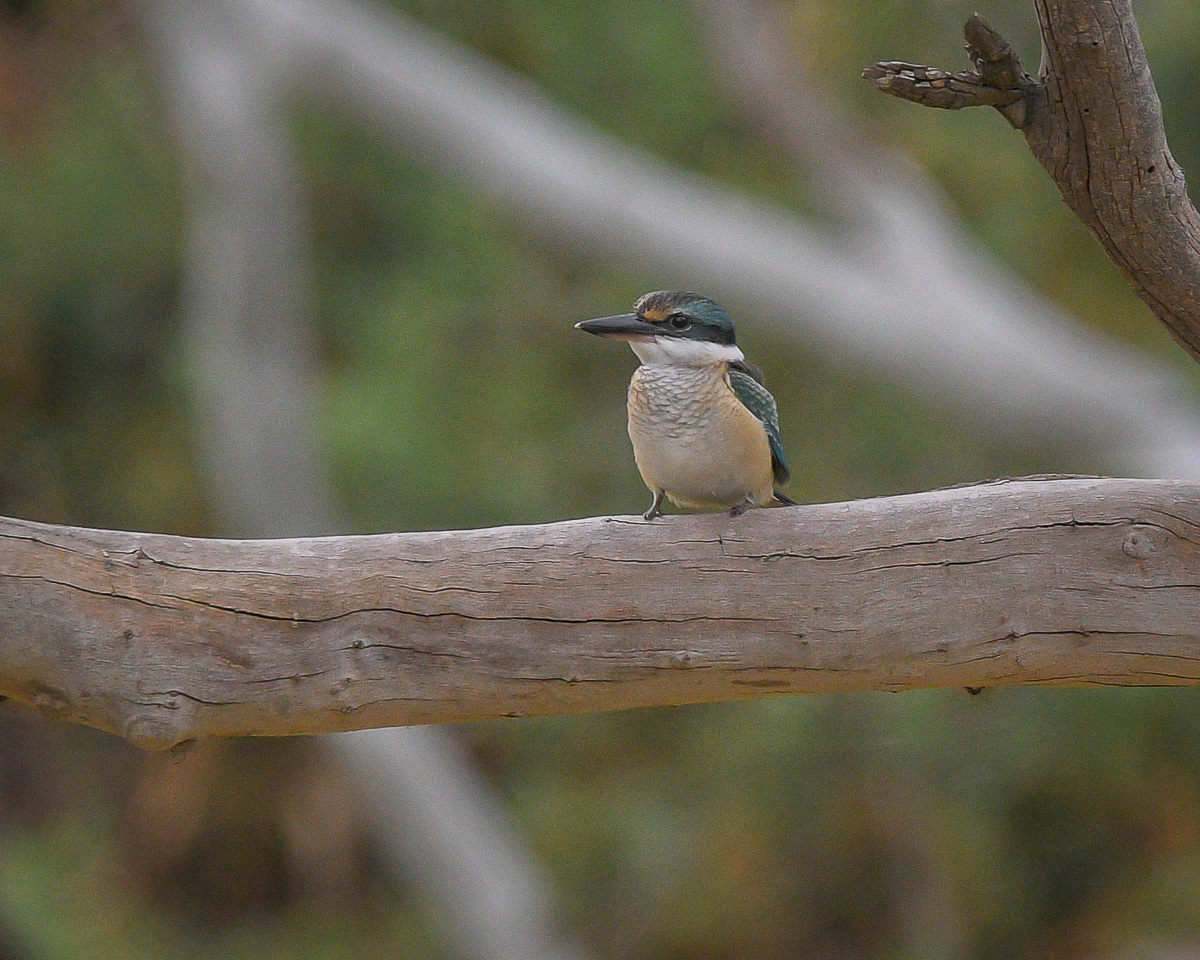
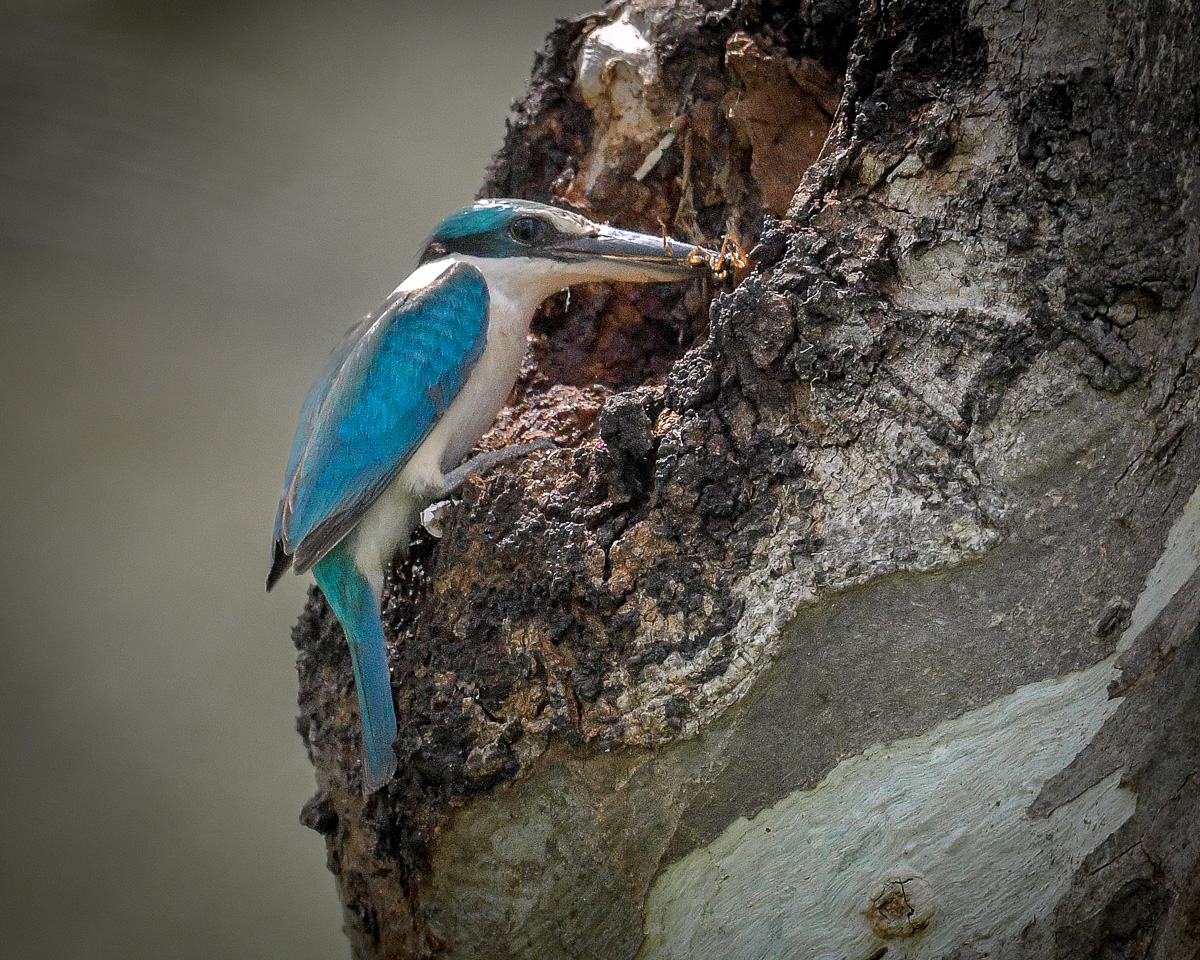
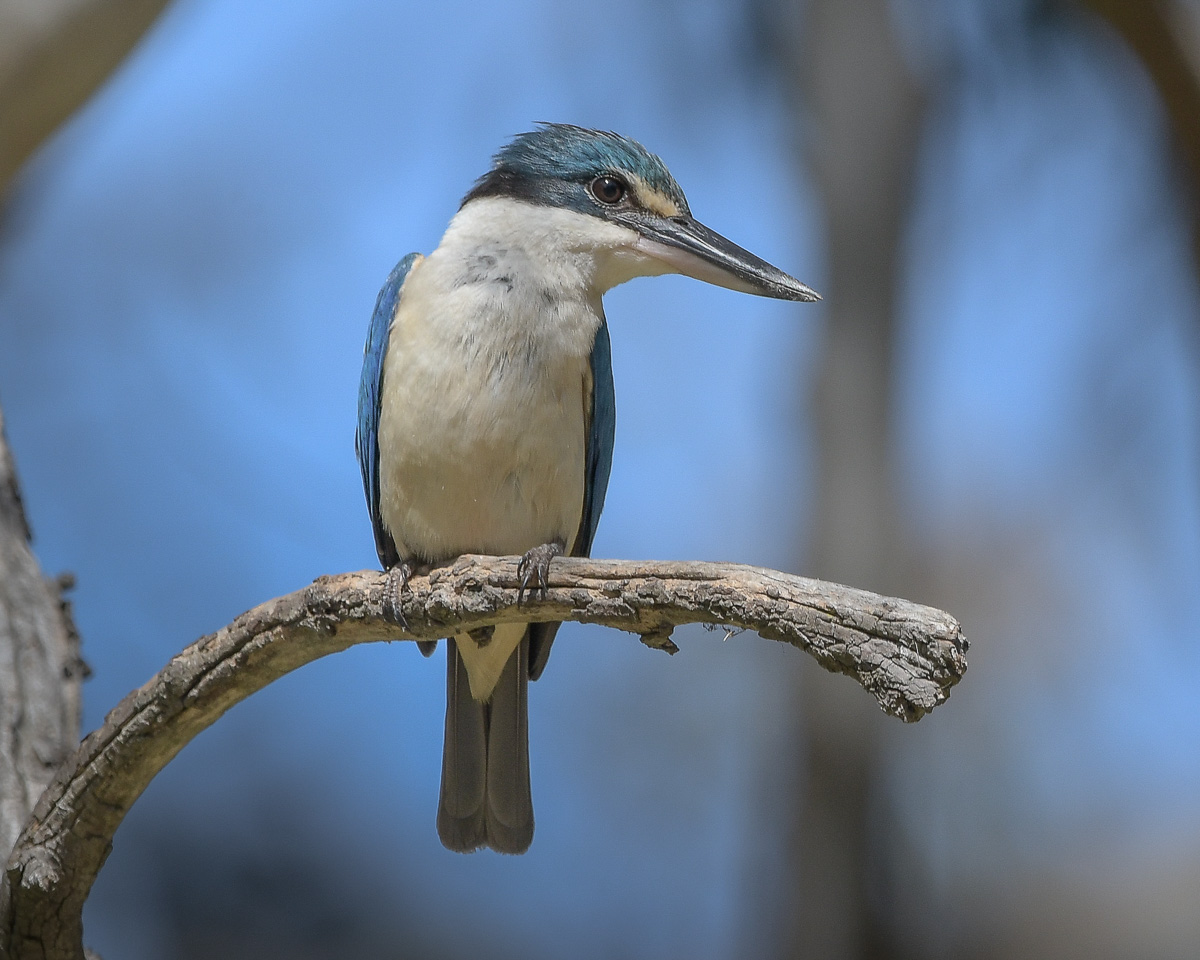
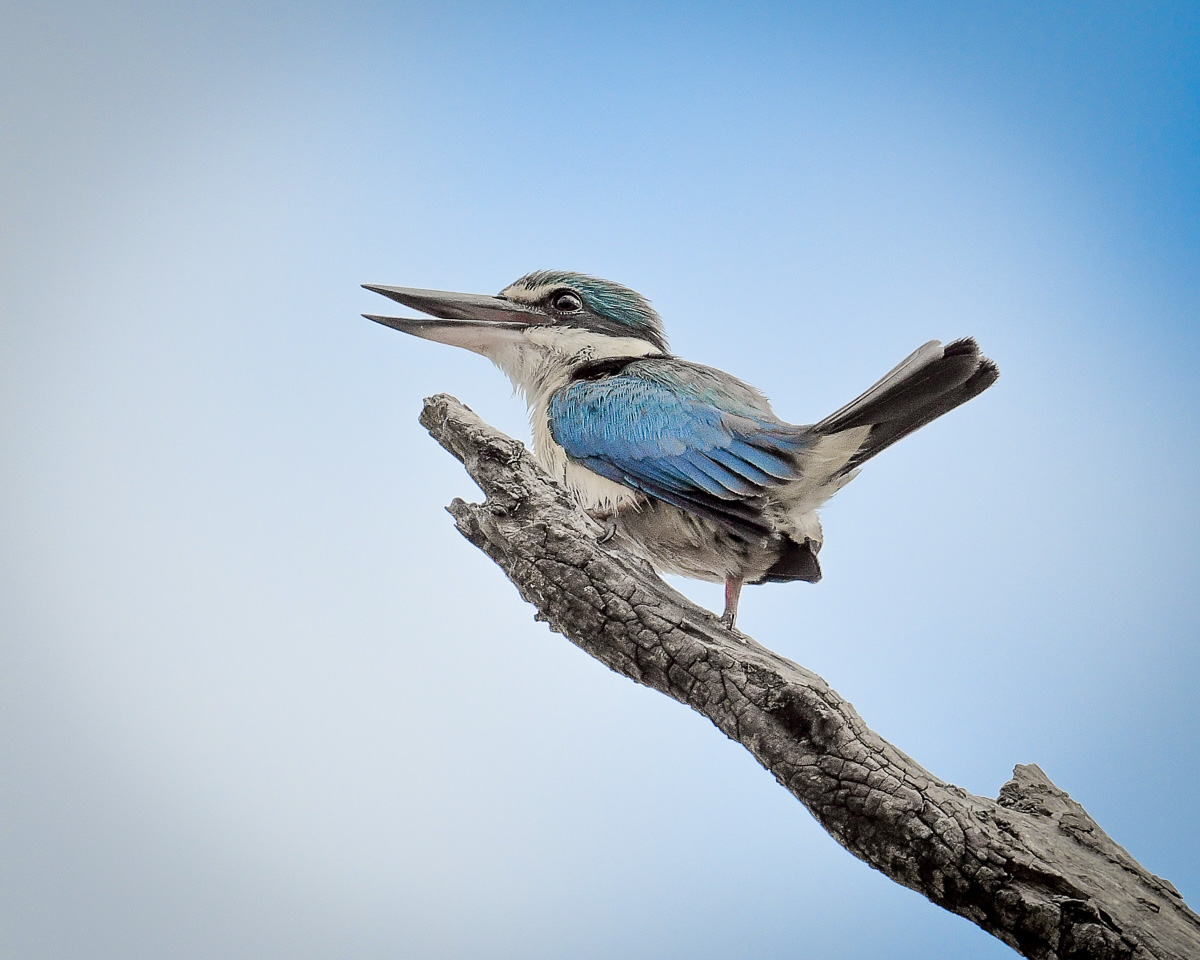
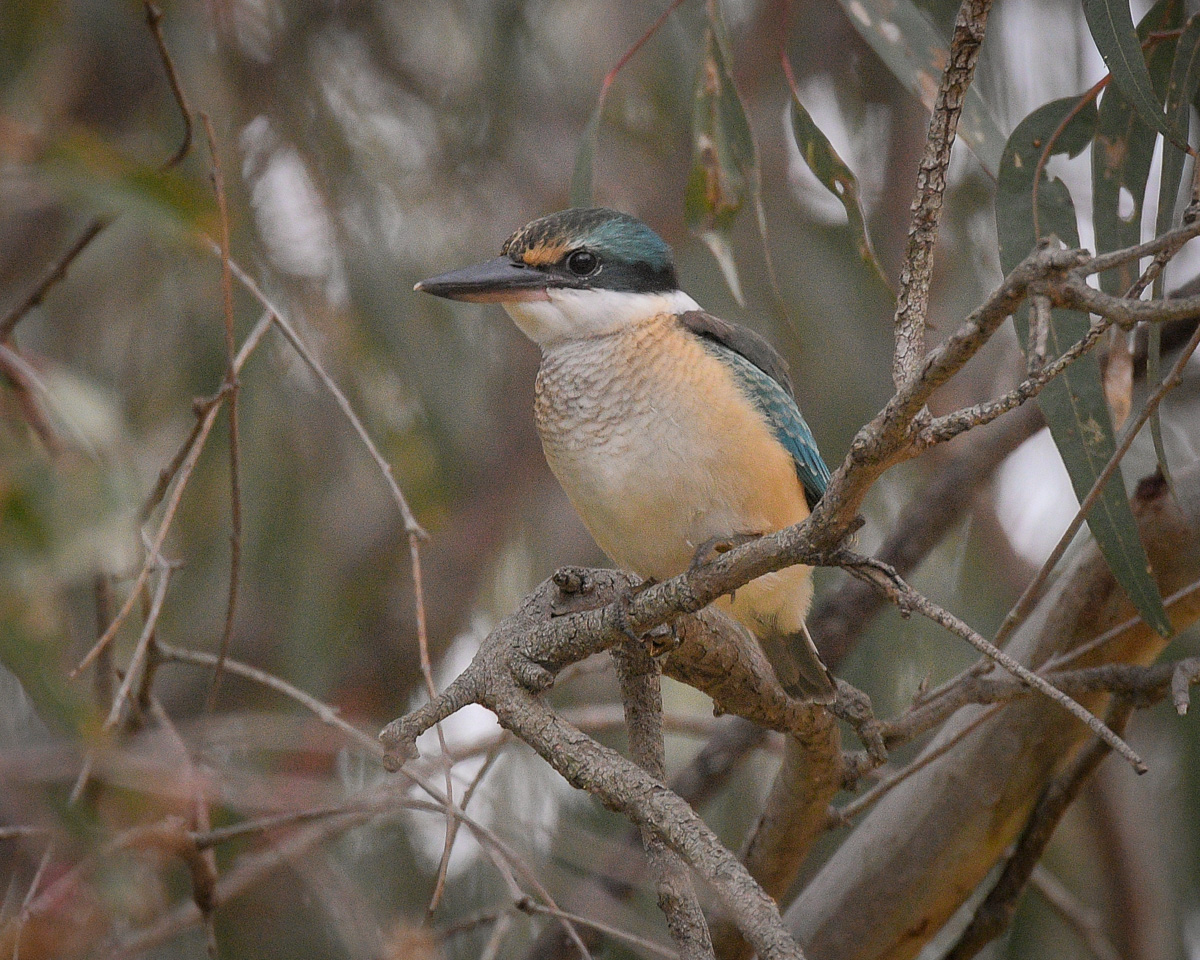
For so many reasons we don’t understand, this season’s nesting for Sacred Kingfisher has been a lot quieter in our area than usual.
One lone bird came in, set up territory, and the mate failed to show up. Another pair abandoned several attempts at finding a suitable home among the old River Red Gums.

And it wasn’t for not trying. EE had recovered from her ‘fetlock’ operation and was able to wander about the river haunts, but apart from a few calls, no birds were located at nest.

We were back in the area just before the end of December, and were chatting with the rangers and a couple of folk who were looking for “THE OWL”, (which at that stage had also debunked to the other side of the river), when EE took off and a few minutes later came back grinning.
Found.

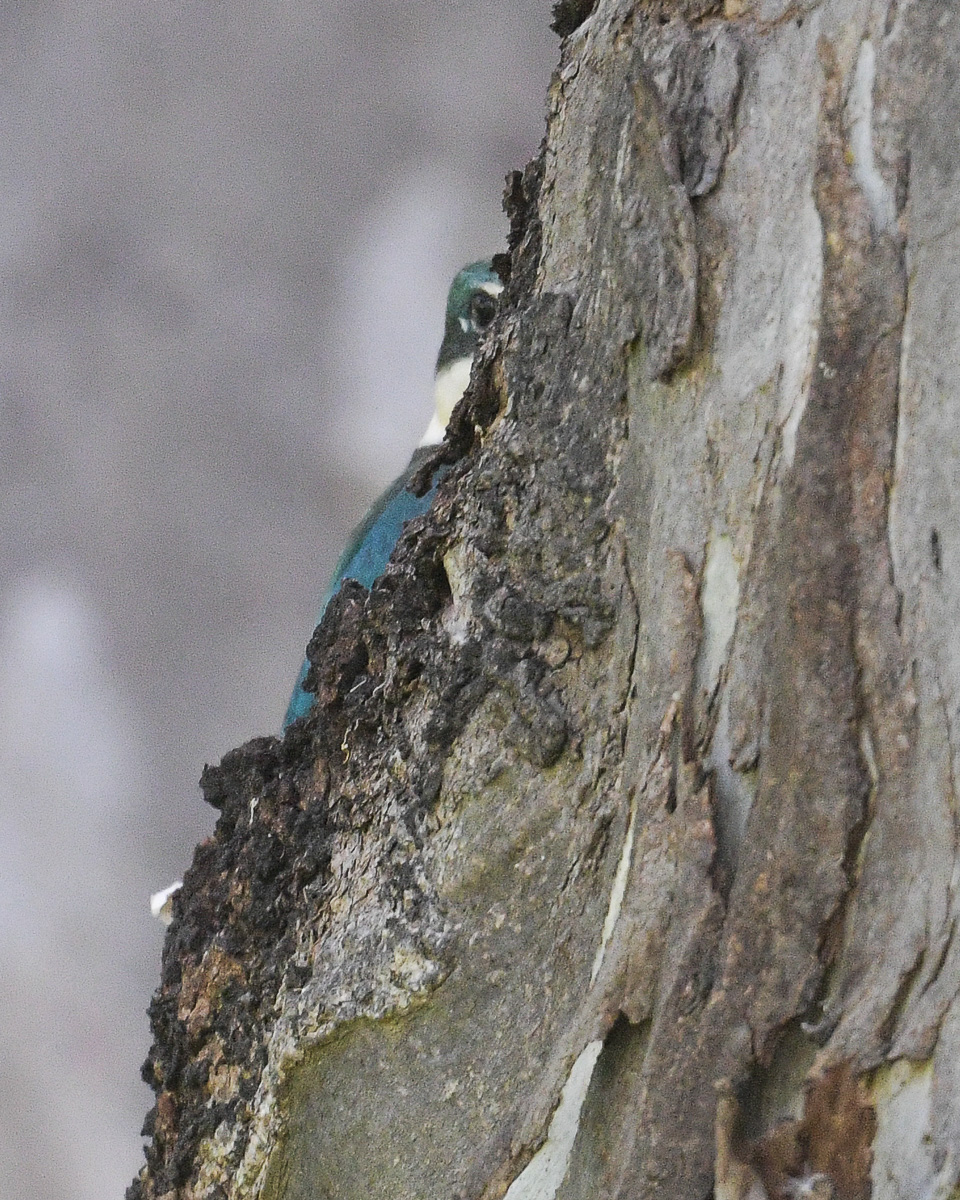
The clever pair had chosen a hole in a gum, but it was on the edge of a river-couse and facing away from prying eyes. No chance of getting to the far side because of chain wire fences, and despite bending around as much as possible, not much chance of seeing activity at the nest hole.

To add to that, the pair were entirely anti-human involvement. Any approaches to where they were working was enough to send them off into the trees and not be seen. So we retreated and watched from a respectable distance.

This whole business of working with birds has now plummeted to a new level. The sheer volume of photographers, let alone genuinely interested bird watchers, is now putting strains on all sorts of relationships with birds, parks people, and the environment.
I am not one to start offering edicts, as I enjoy being in the company of birds as much as anyone.
Nor do I want to see places locked out because of the volume of visitors.
The Barking Owl, The Orange-bellied Parrots and the Rainbow Bee-eaters have certainly been “loved to death” on social media. And those are just the one’s I’ve had contact with, no doubt there are others.


But I think all that palls into insignificance when I read an article on ABC news about the plight of the Little Penguins in Tasmania.
A quote from the article
“One longtime penguin watcher says, “most tourists want to do the right thing, but there are many tourists that can’t and won’t””.
Here it is if you are interested.
https://www.abc.net.au/news/2026-02-20/people-interacting-with-tasmanian-penguins-and-harming-them/106361614

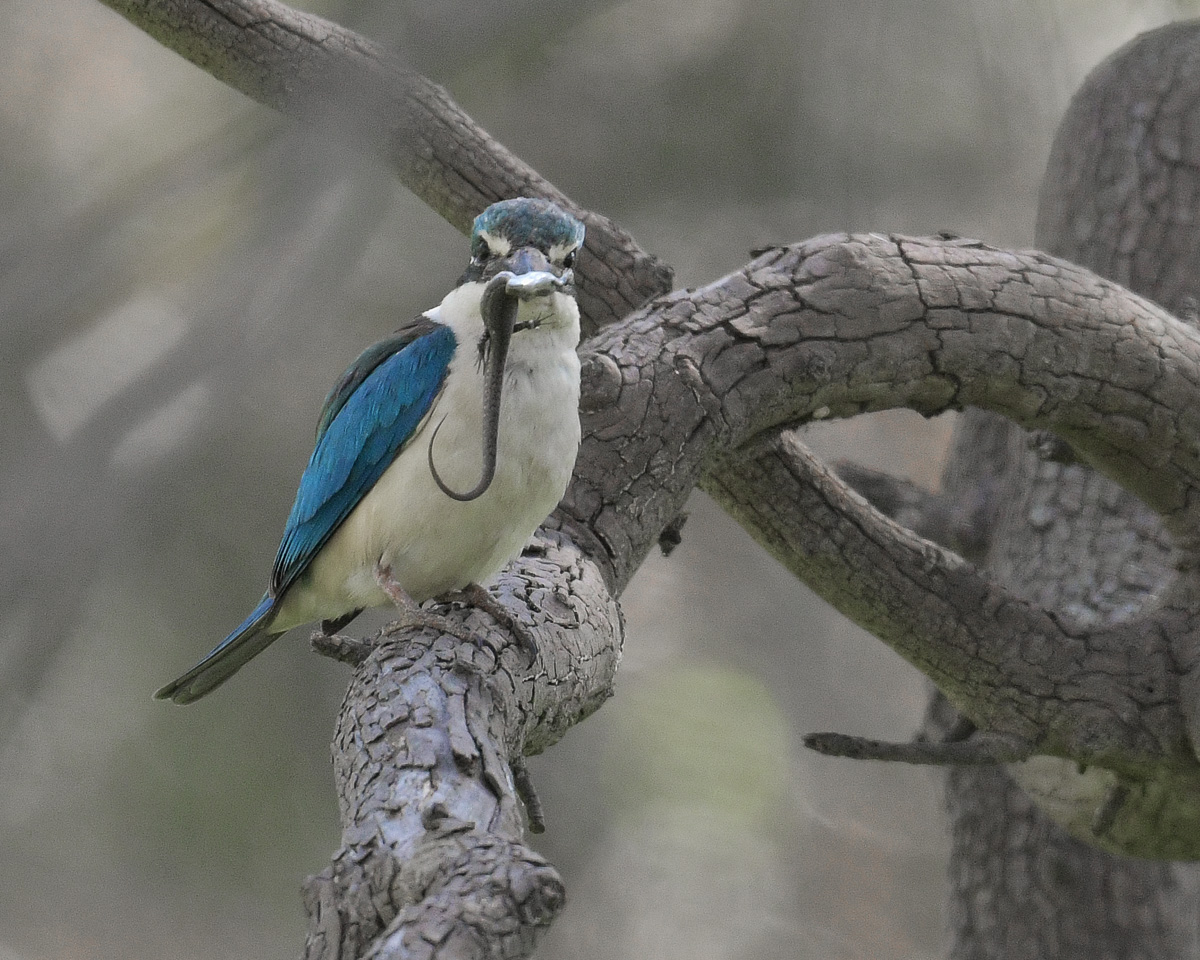
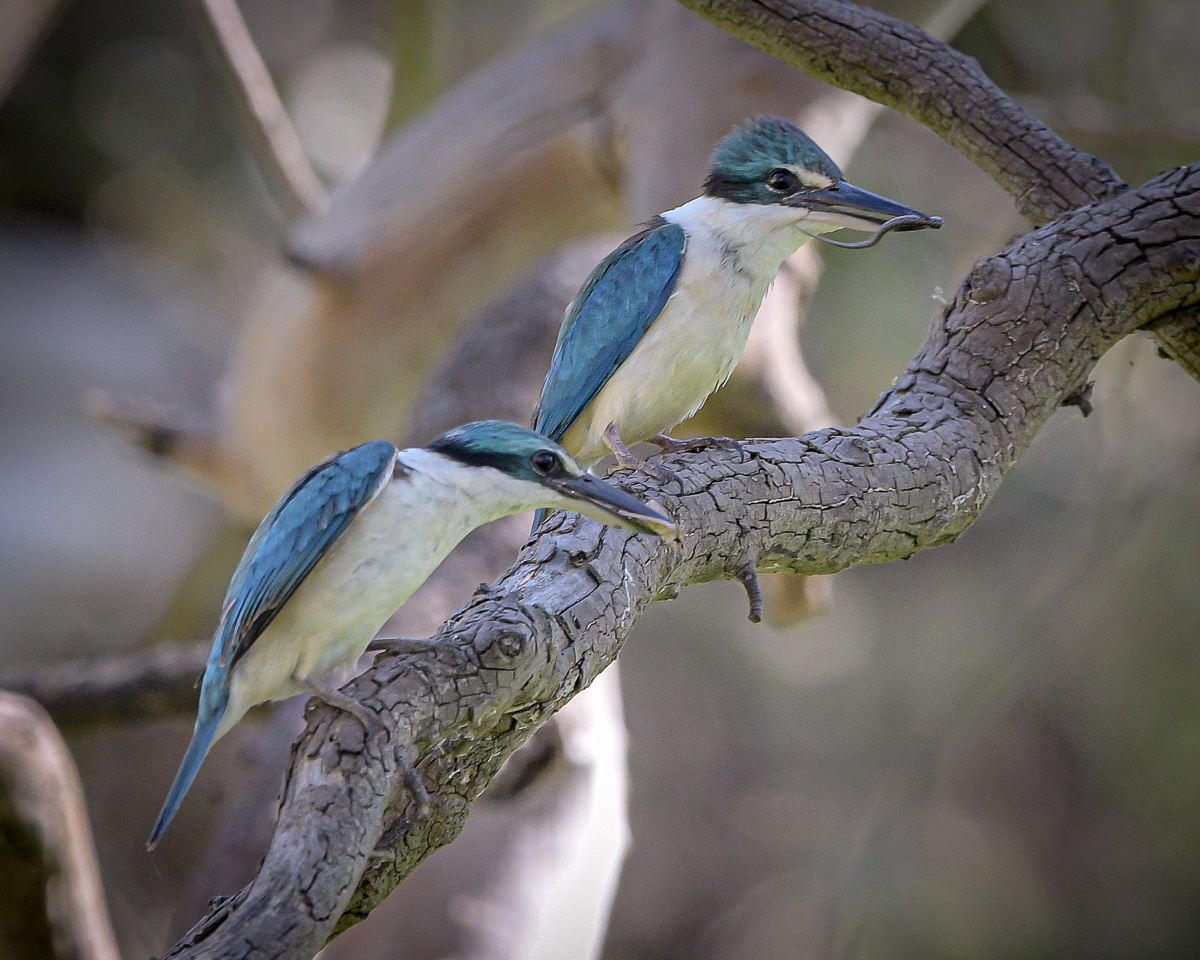
On a happier note here are a few from the Sacred Kingfisher nesting. We did in the end get some sighting of the two young that fledged.

So near, so far. Clever bird
Plenty of food was being delivered, but the birds were very cautious around us.
At one stage both parents arrived at the same time. Not sure if they were challenged by us being there, or were they working out in which order to fly to the nest
The one perch seemed to be the preferred launch point for feeding
I did manage one moment of getting a clear look at the nest. But it was a physical difficulty and the birds were not impressed so I didn’t try again
This one came out to hunt on the open area where we were standing
Flight Day. We didn’t see the young at all, but the Male did put up quite a commotion when some Black Kites flew overheard
Just as we were leaving, disappointed, a young one flew over the clearing and landed close by
And on another visit we found this one over the old creek line

Enjoy

Along the Track: Interlude at the Lake

We had an invitation for lunch with our Ballarat connection, so decided to leave a little earlier, spend a few minutes around the Ballarat Lake, while we had the opportunity.
As the day would have it, it was porridge skies, but sometimes, as I’ve discovered lately those softer melded light conditions are really good for detail of bird feathers.
Mind, I’m partial to a run of sunshine too. 🙂

As they say,—have you ever wondered who ‘they’ are?—obviously not ‘us’,—anyway as ‘they’ say, what we found were the ‘usual suspects’

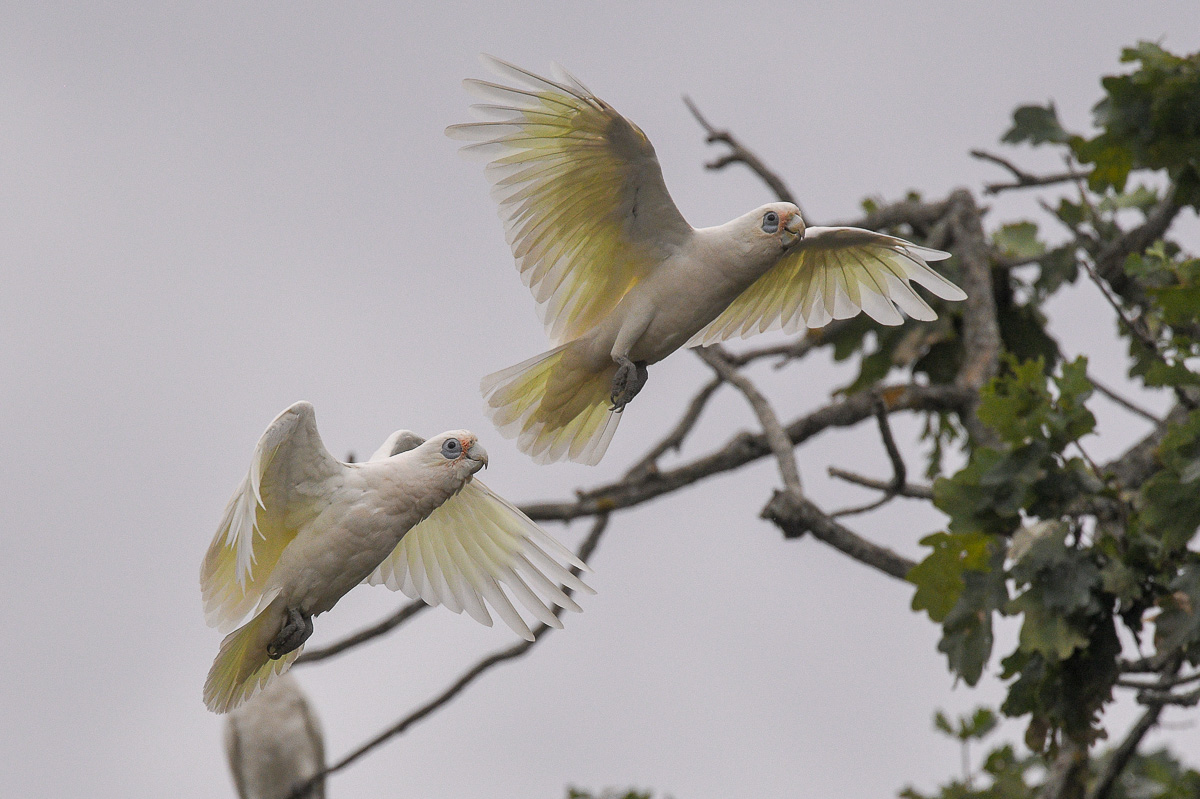
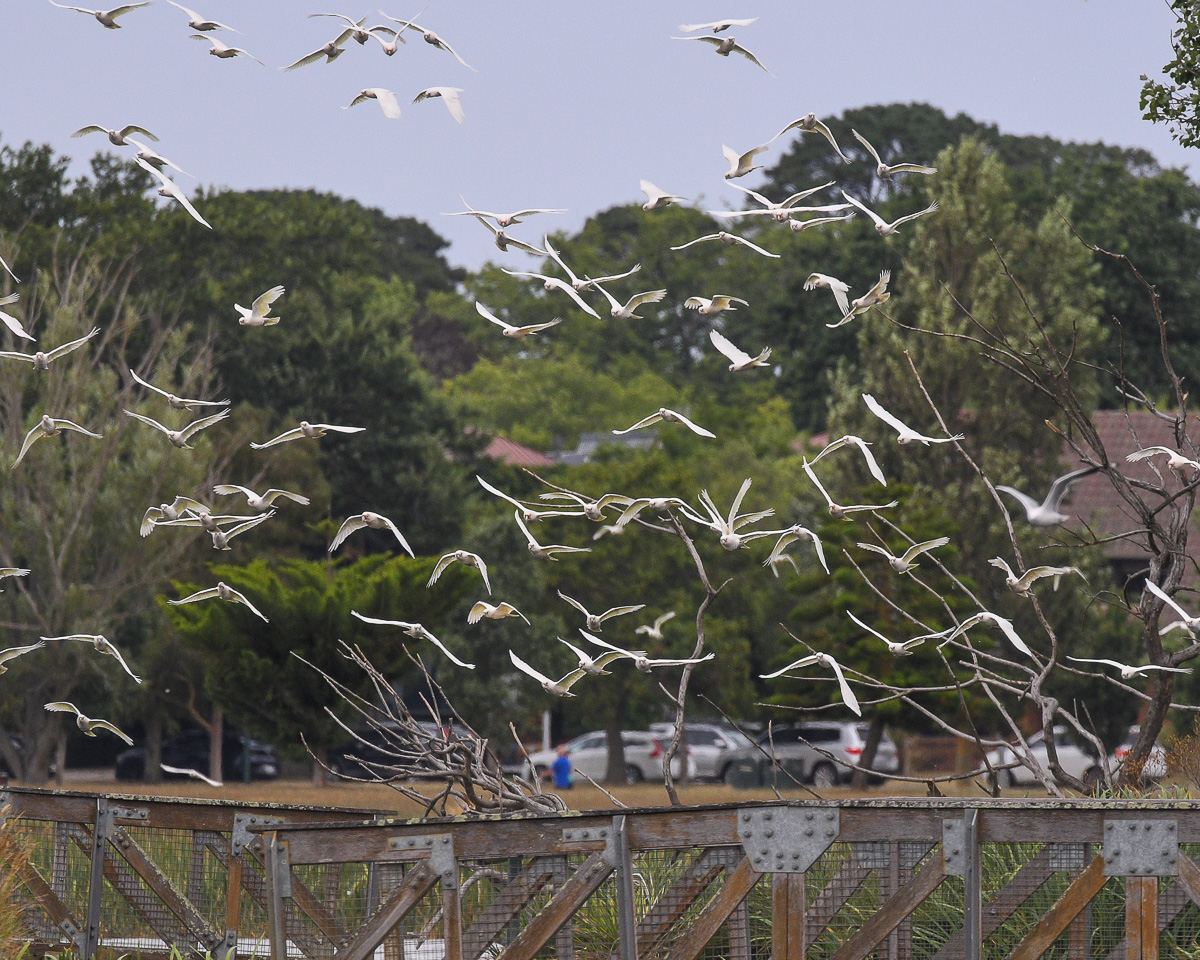
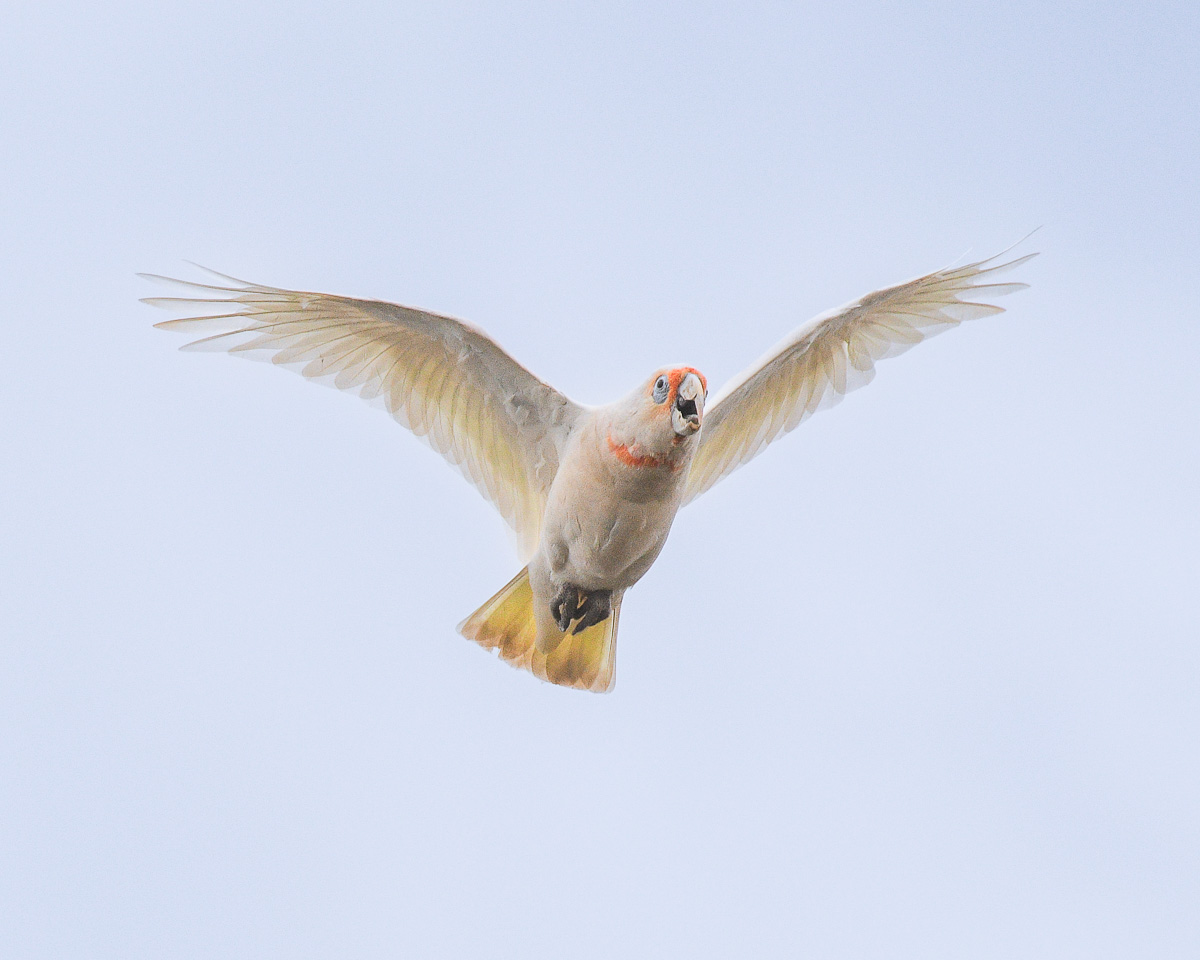
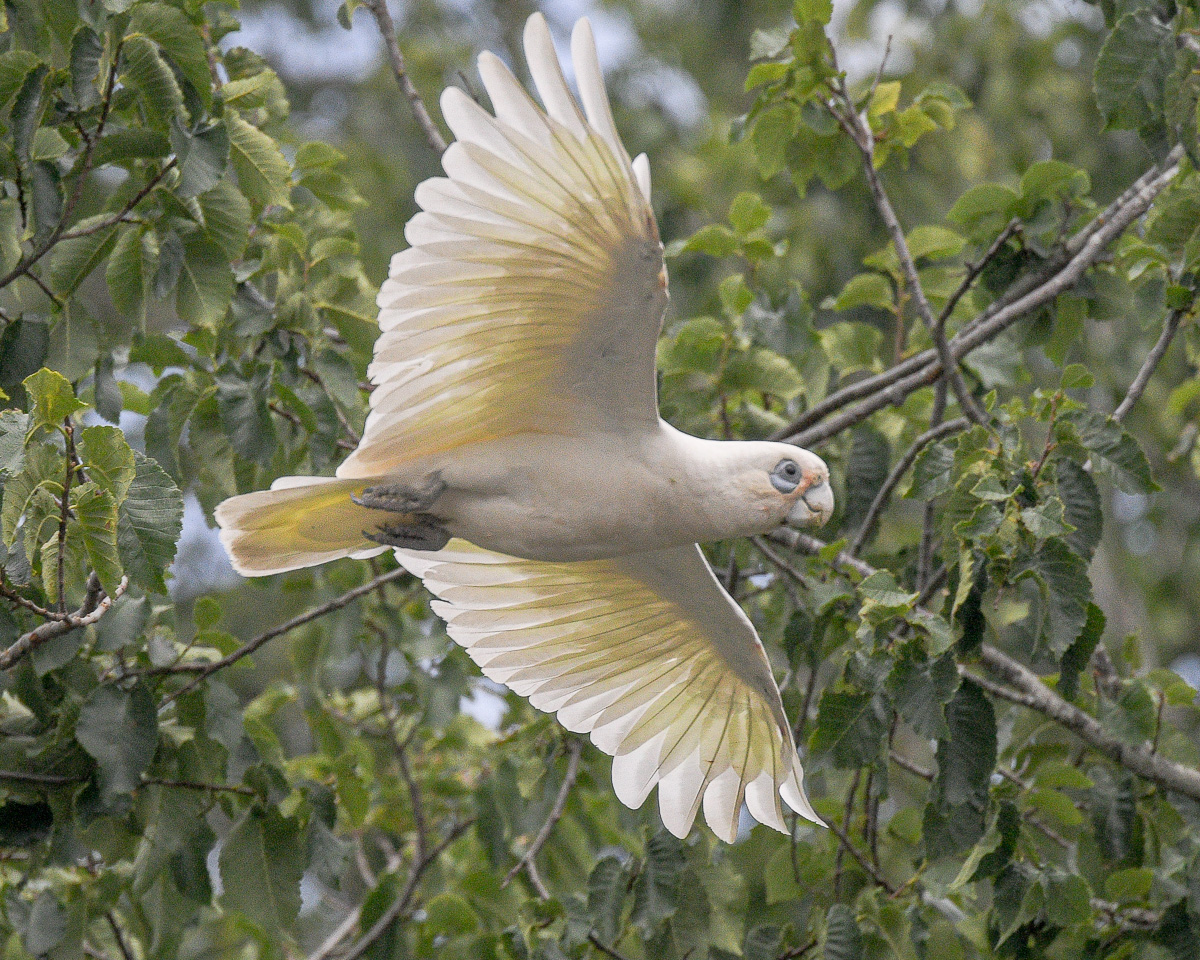
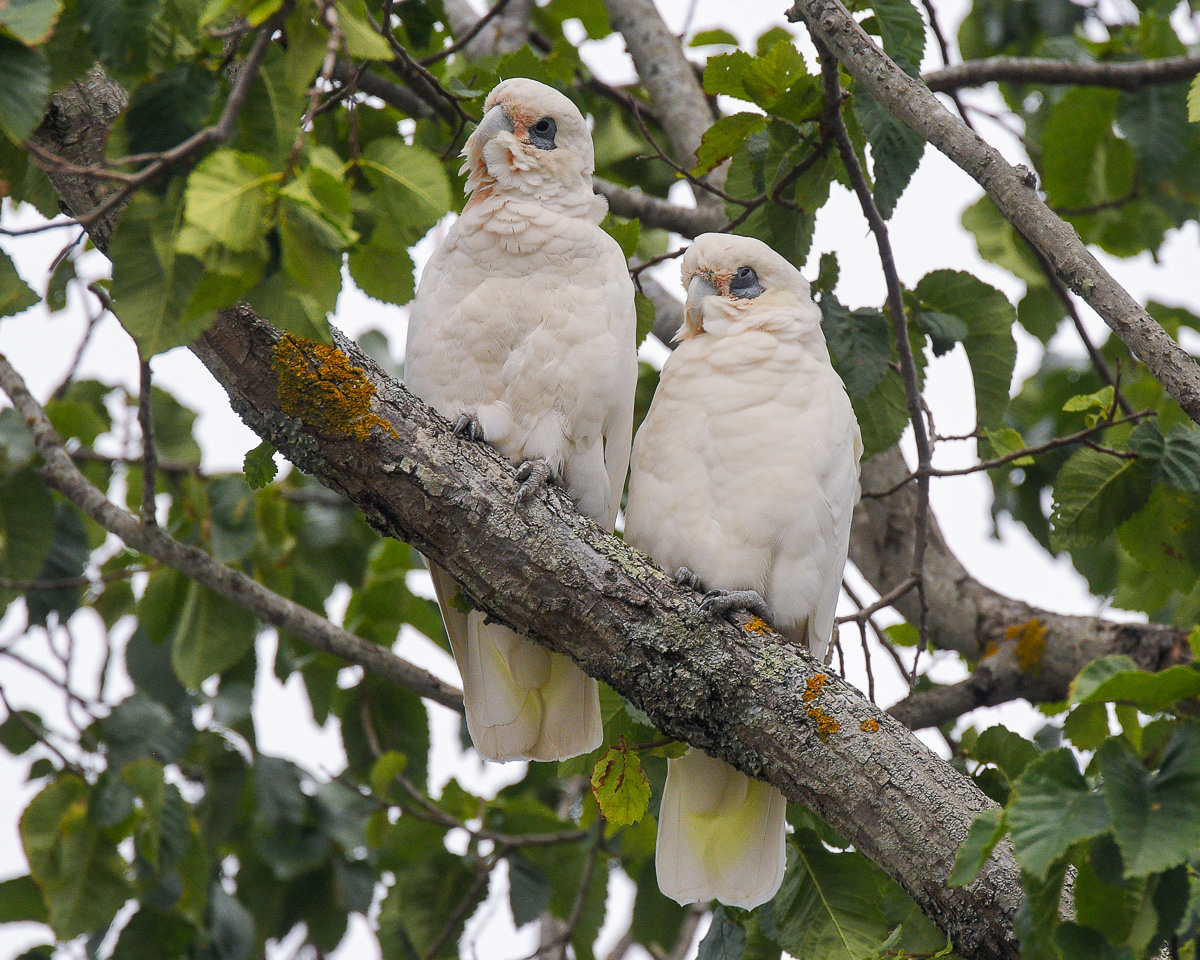
The highlight of the hour or so was several Great Crested Grebes. And we did spend quite a bit of time photographing insane Corellas as they flew about in large, super-noisy flocks. I’ve never been sure as to what puts them into a frenzy, but once started its self-multiplying and they just keep going until everyone runs out of energy.

So here in no particular order.

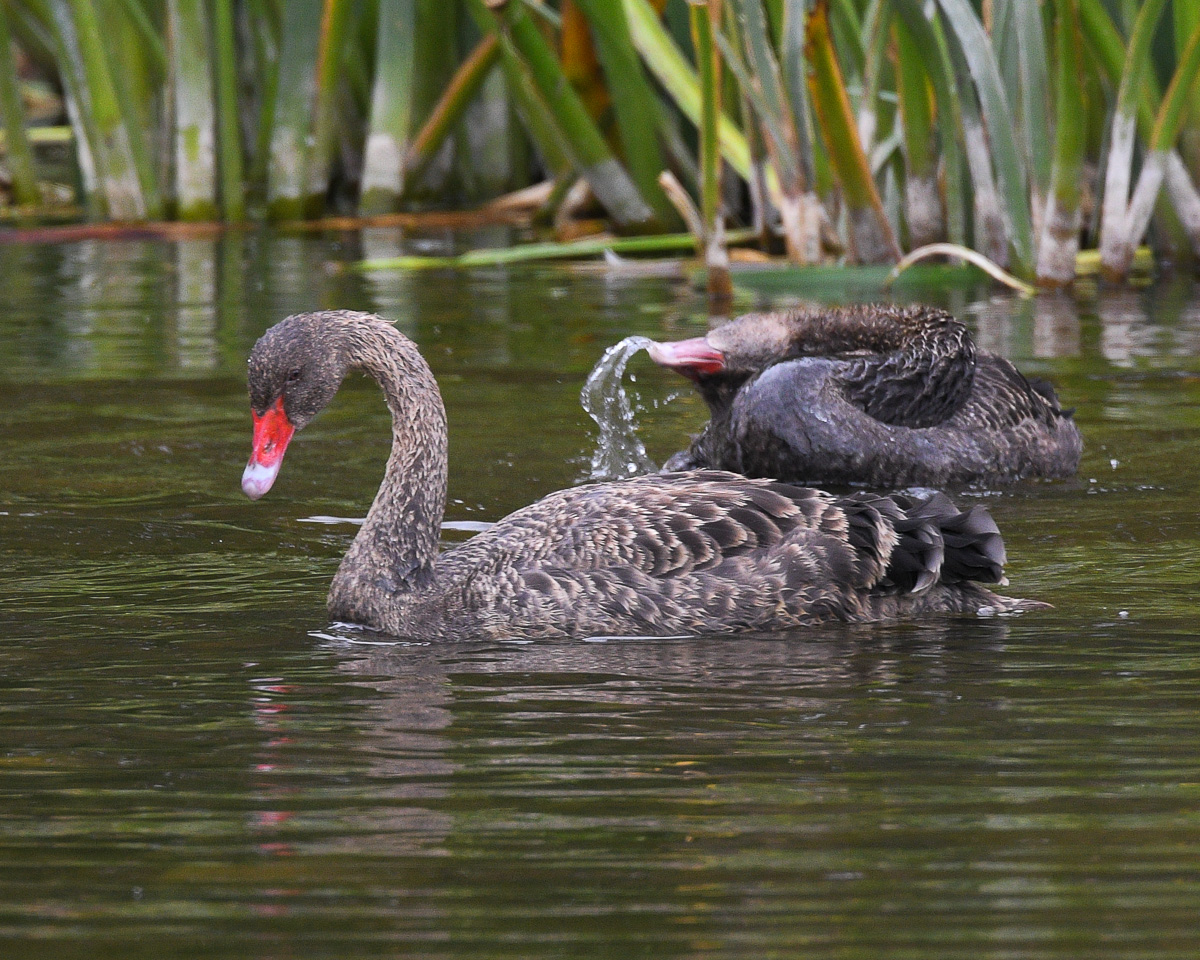
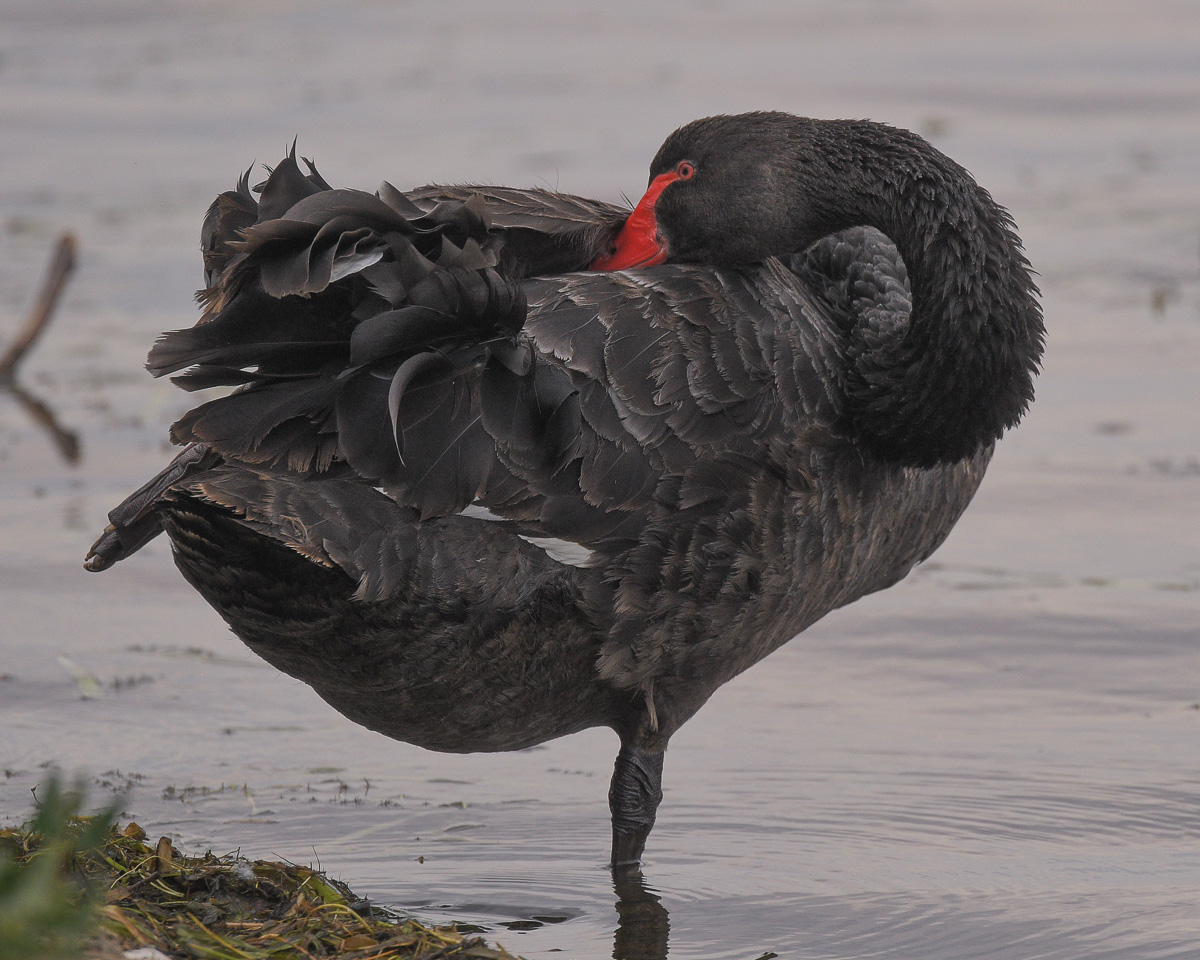
Lake Wendouree has no end of Black Swans, and there always seems to be new clutches on the way. This one is quite advanced and good to see those feathers taking shape.
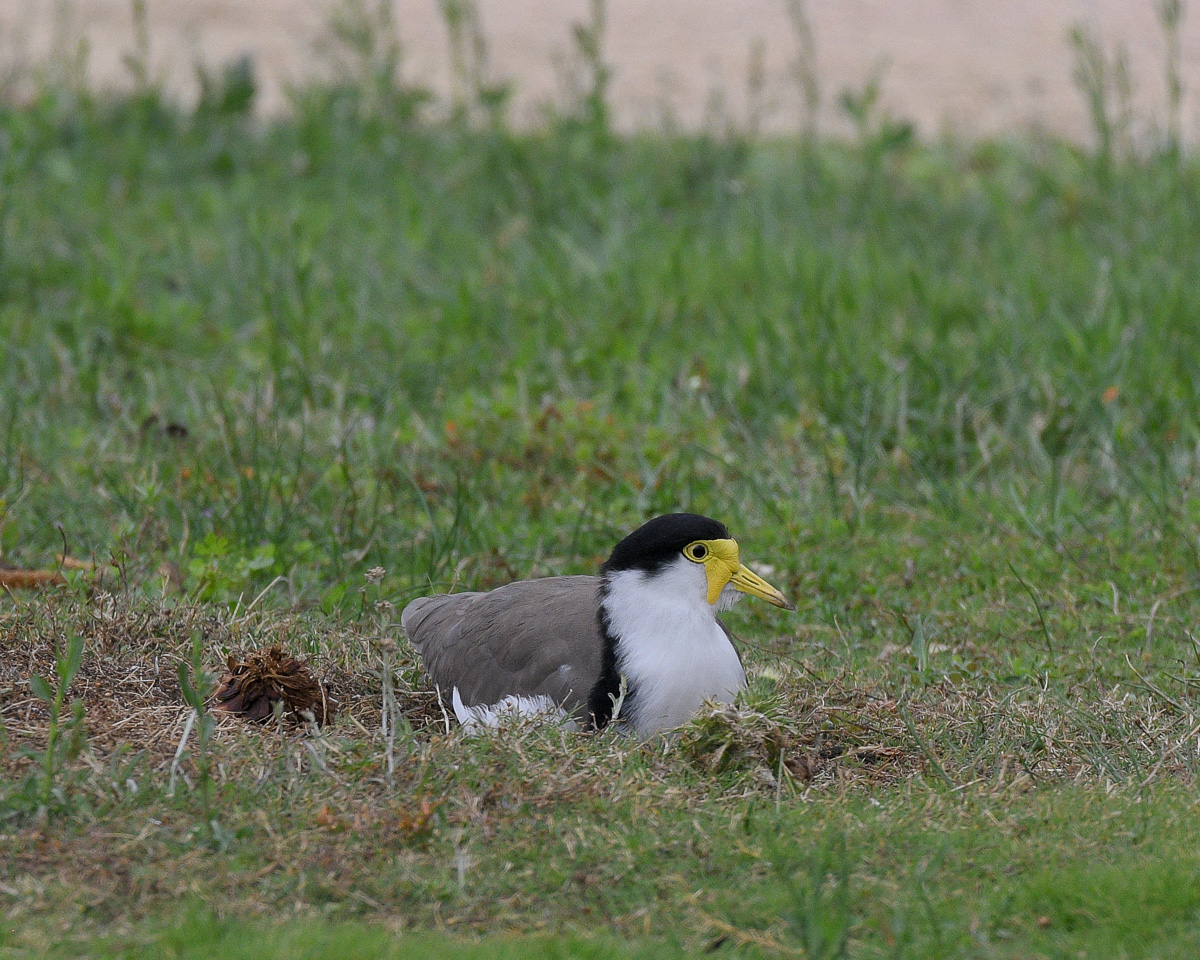
A Masked Lapwing has decided to take a snooze on the side of the track. Totally unphased by passing foot traffic.
Always good to find these birds. Dreaming of seeing, and photographing them dancing.
And here they come. This is the 4,234 trip up and down the lake, calling raucously as they go.
With so much action its hard to keep just one in frame. This is a Long-billed Corella
And a Little Corella zipping between the trees
They’ve seen it all before. This time they are just going to sit and watch it all happen.
Too good not to share another one
Never cease to be amazed that such a big bird can balance so well on one leg and nap at the same time.
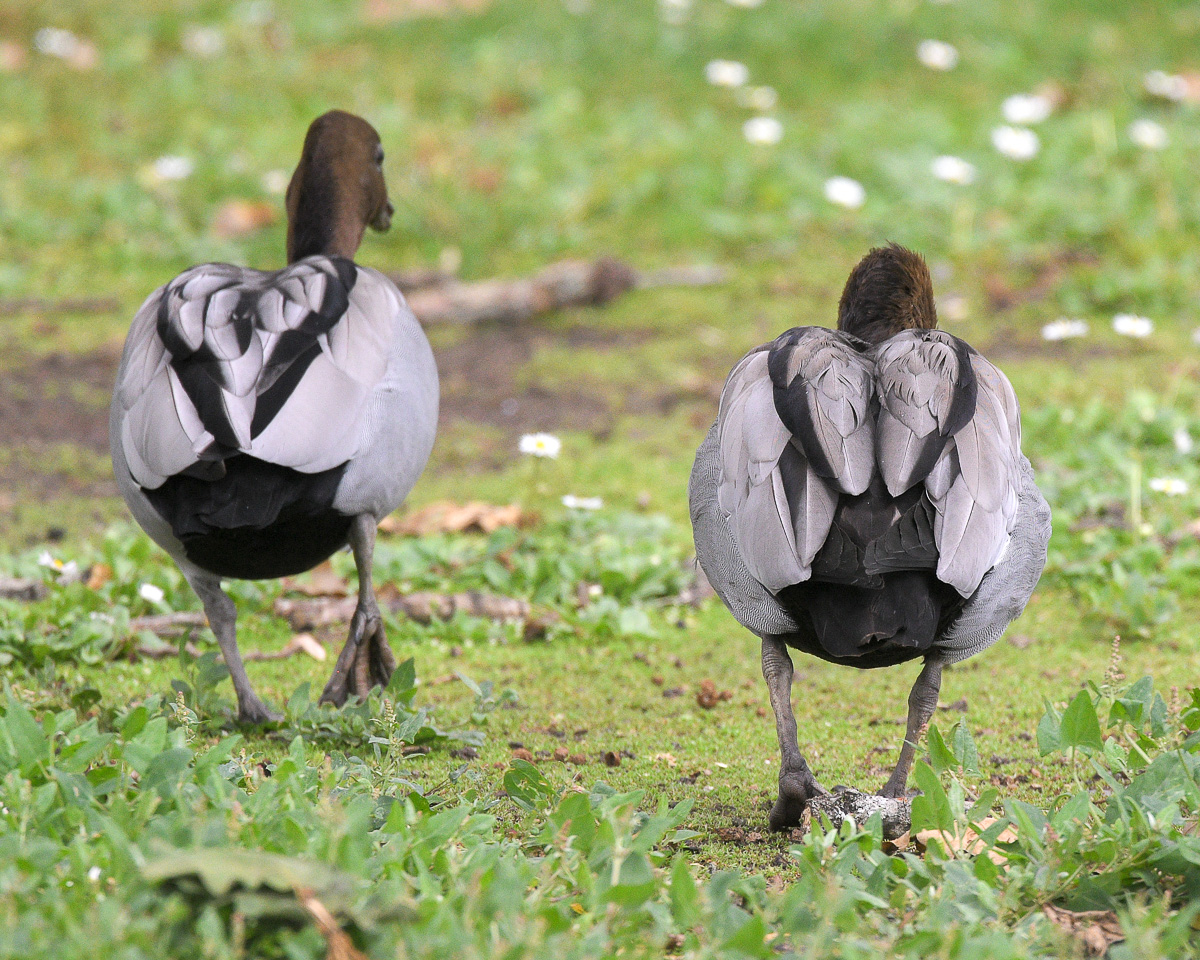
Maned Ducks have such distinctive markings on their backs and folded feathers. Something we often miss with the front
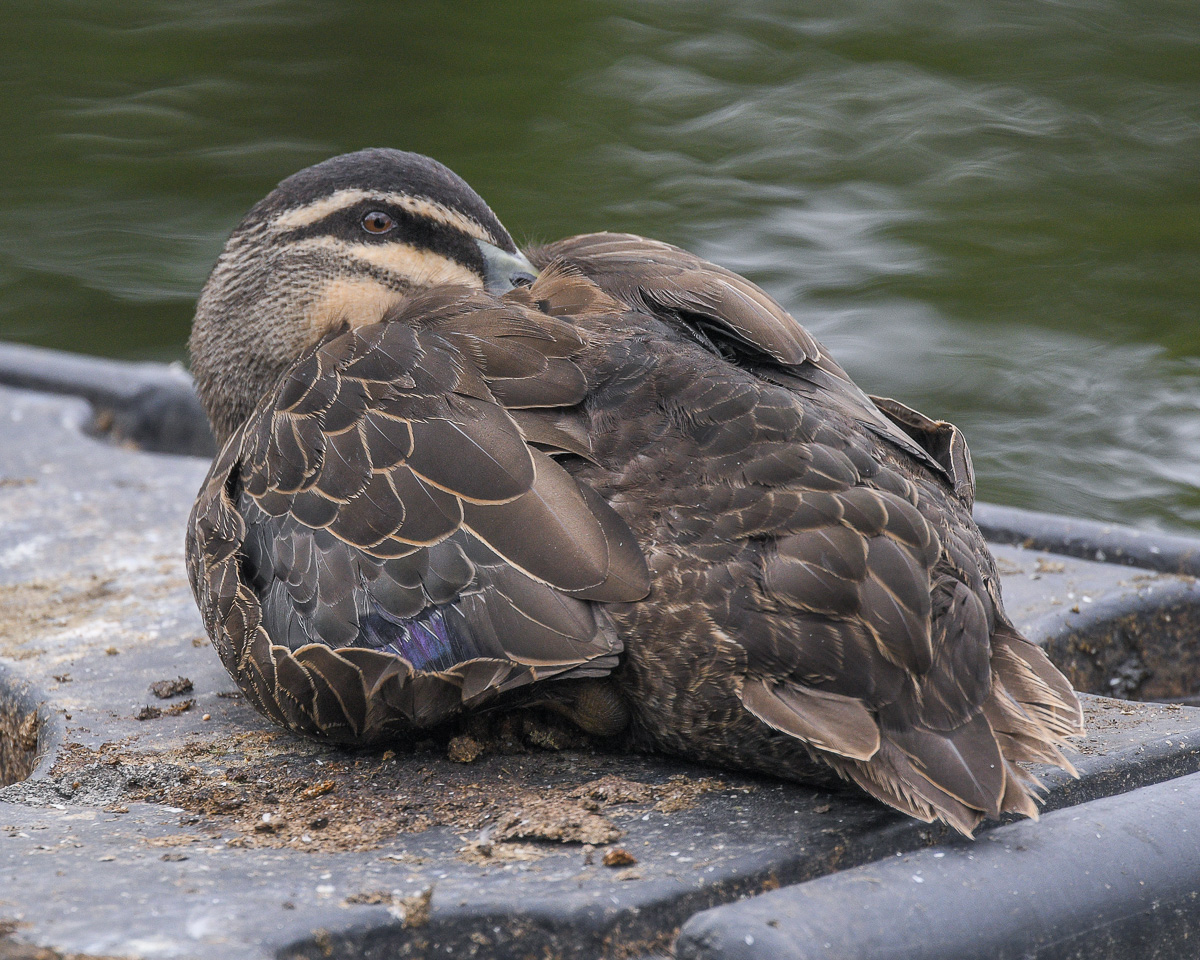
No matter the place, or the occasion, a Pacific Black Duck knows how to work a space.

Enjoy.

Peter Slater Falcons Book

Sometimes serendipity does it strange and unusual activities.

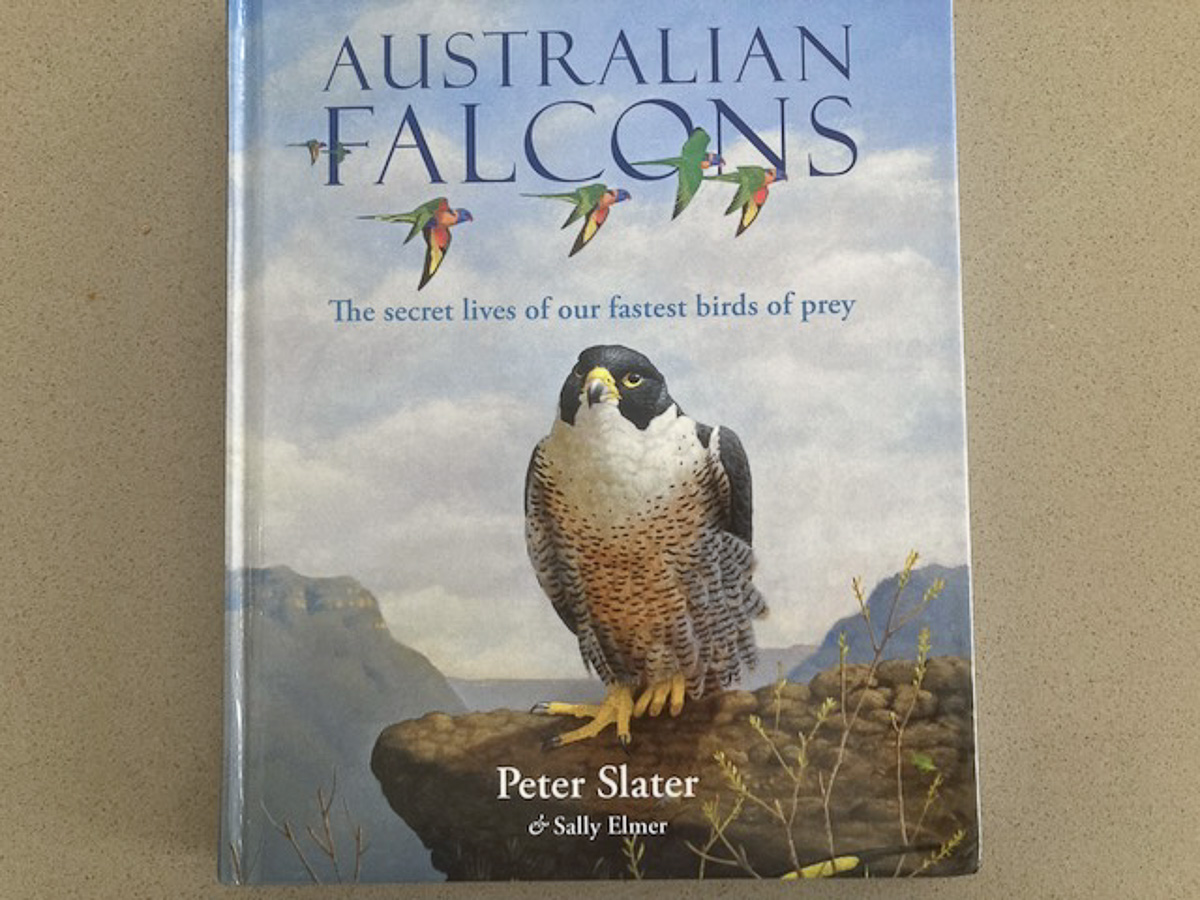
I’d place and order for Peter Slater, and artist Sally Elmer’s new book “Australian Falcons” a few weeks ago and had almost forgotten about it until the other day Postman Pete turned up with a fine package containing the book.

I have a warm spot for Peter’s work as my first real bird guide was his little “Slater Field Guide” It suffers a bit these days from the species and race arrangement used, and also, of course. because so many birds have been reclassified since its update in 2003.
However it’s still my ‘Go To” when trying to id a tricky bird as the quality of the illustrations and the variations are such that they look just like the bird I’m trying to id.

It also happens, serendipitously that a large part of the new book has quite an extensive range of photos, and information on Brown Falcon.
Some I guess is readily available, some I have to admit I’d wondered about, but had never read anywhere.

From Page 45.
…Vigors and Horsfield …named “Falco Berigora” The notes accompanying the description read: “The native name of this bird, which we have adopted as its specific name is Berigora. It is called by the settlers Orange-speckled Hawk.
… Considering the variability of the Brown Falcon its not surprising that it has been given a variety of names, most of which are synomous…

Birdaspoety blog has rarely engaged in equipment or book reviews, nor am I about to start.

However here are few highlights from my copy.

The book has a variety of photos and paintings.

Each bird chapter has some stories of his encounters with Australian Falcons and in the Brown Falcon pages is a fascinating story of raising a young female that has a damaged eye. While Peter has an aversion to giving birds names, I, on the other hand, find it useful in working with them. So much nicer to speak of Cassia, of Cinnamon, than that ” That falcon with the marble chest that is down along the lower fence line” or something.

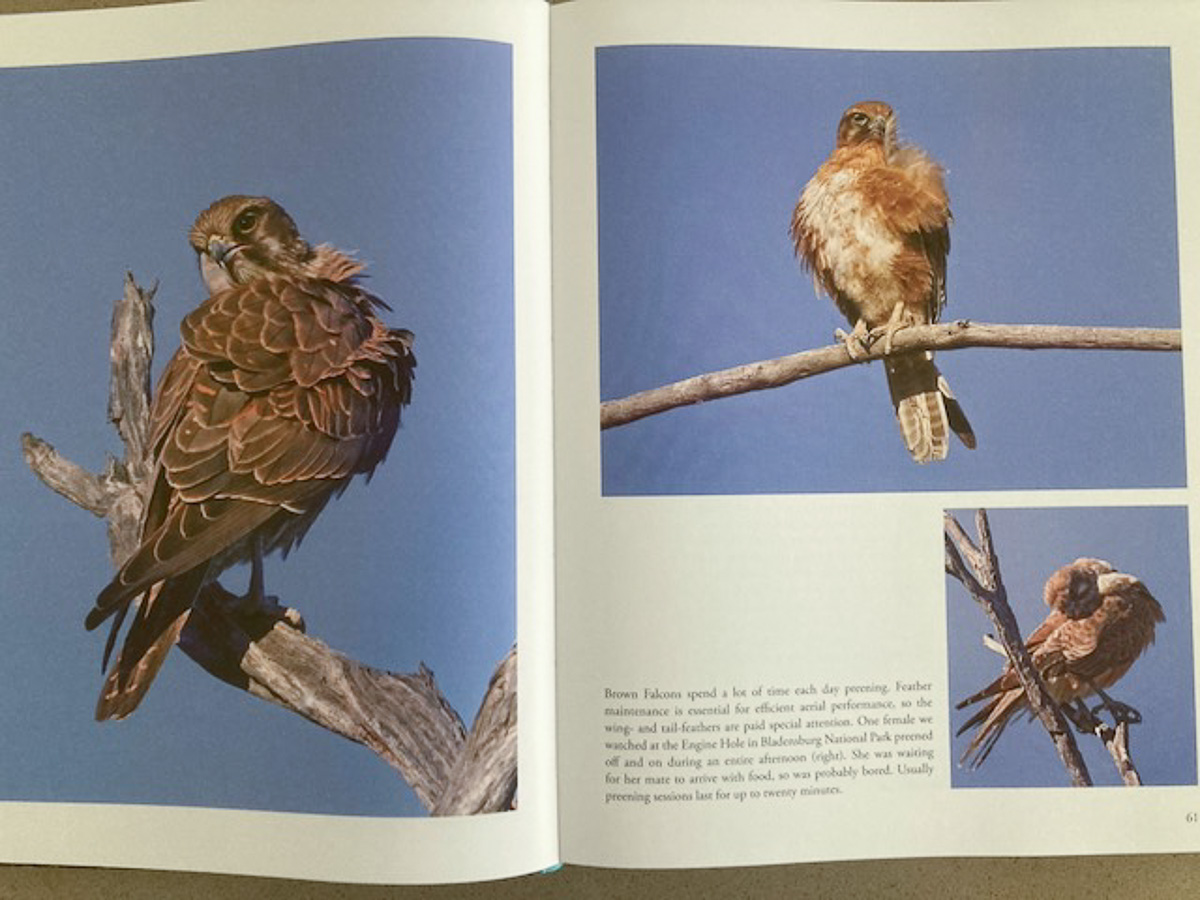
Here is a typical page from inside. Always interesting to have a Brown that is relaxed enough to preen.
I do have a theory that the preening is sort of nervous reaction. “I’ll preen and show you I’m not intimidated by your long lens.”

On page 54, he discusses hunting technique
…The hunting technique… utilises a vantage point.. There the falcon waits patiently until a mammal, reptile or insect appears, then swoops down in a long glide. One strike we measured covered more than two hundred metres, a testament to the bird’s eyesight.

I have some photos of a bird that, after sitting for about 20 minutes, stiffened up, peered across the paddock(s) and then launched. Running right over my head, in a long slow controlled glide. It disappeared from view near some bushes that would have been close to 800 metres out. I don’t know what it caught, but I have no doubt its intention would have been fulfilled.

Peter also discusses the variability of the birds and how current research suggests that the colours do change as each individual ages and depending on the sex.

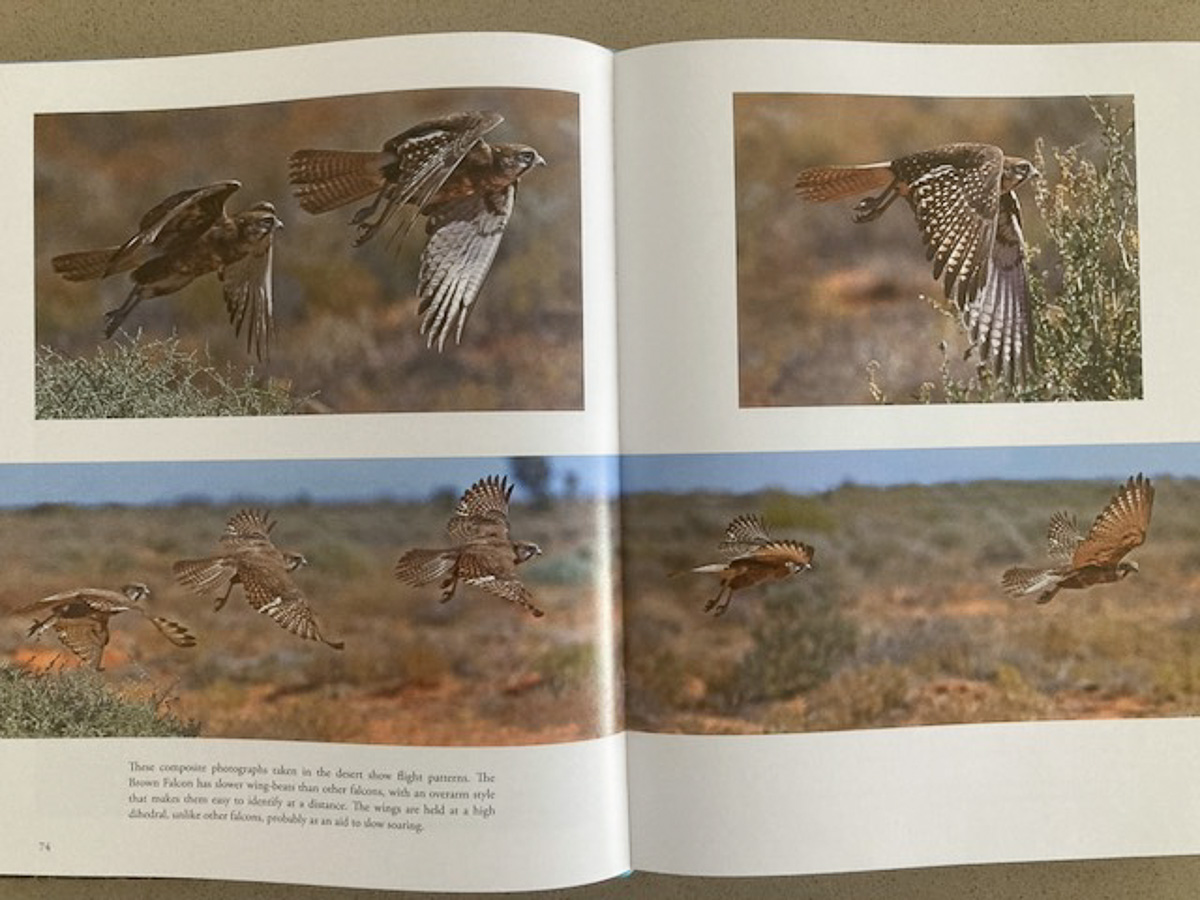
p 74-5 have some composite photos of a bird at launch and show the deliberate wing strokes that give them both speed and the ability to glide hardly using any energy I expect.

But if for nothing else, I appreciate the book for his close affection for the birds. It comes through on every page with descriptions like, “one of the most beautifully marked”, and “handsome male”, and “The equisite bird..,”
So I won’t feel bad about using such terms on the blog for some Brown Falcon shots that are bound to come up soon. (That is a hint, I think- more seredipity.

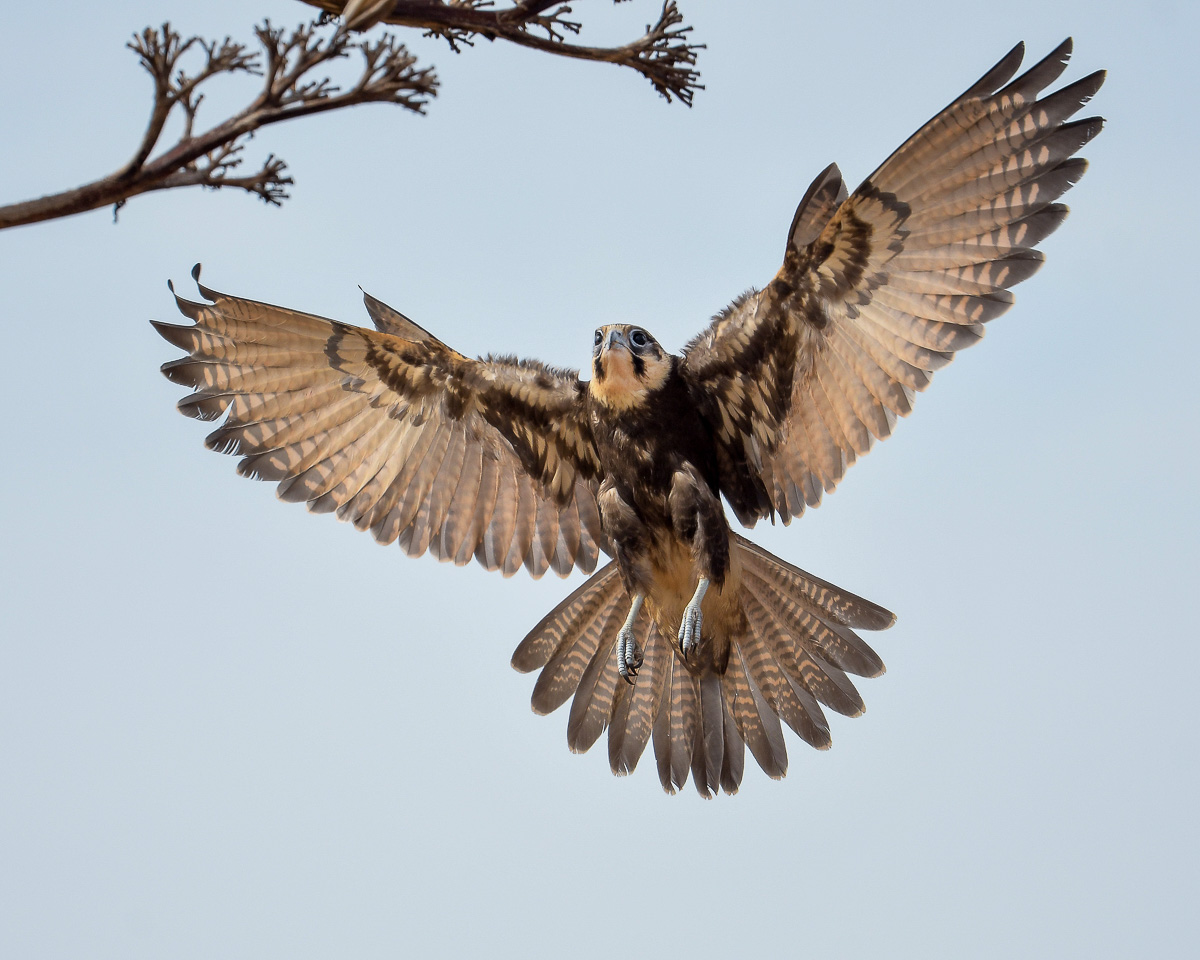
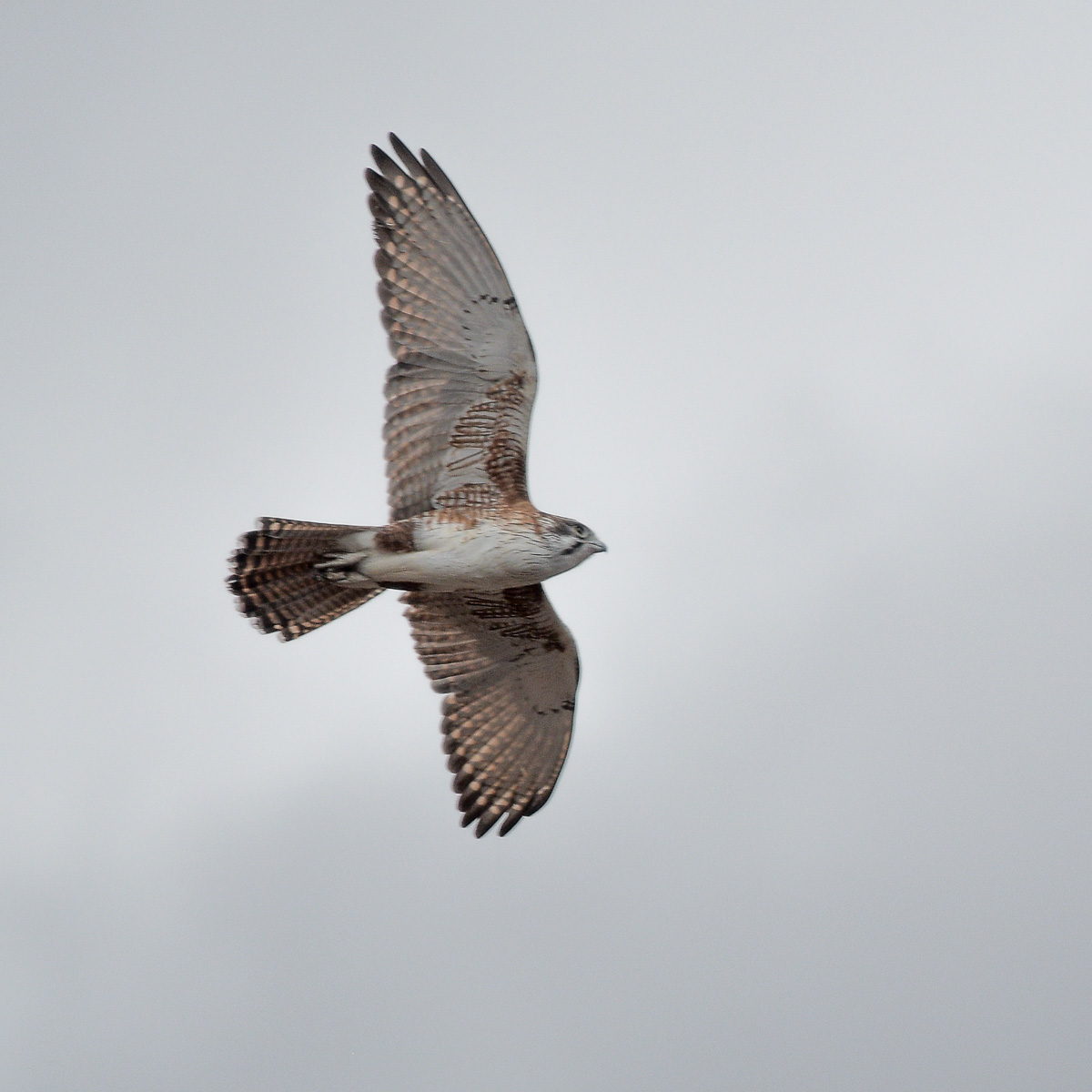
A fine wing and tail display as the bird heads for a perch on a ‘100 year old’ plant (Agave Americana)

Enjoy

Along the Track: Varying Variations

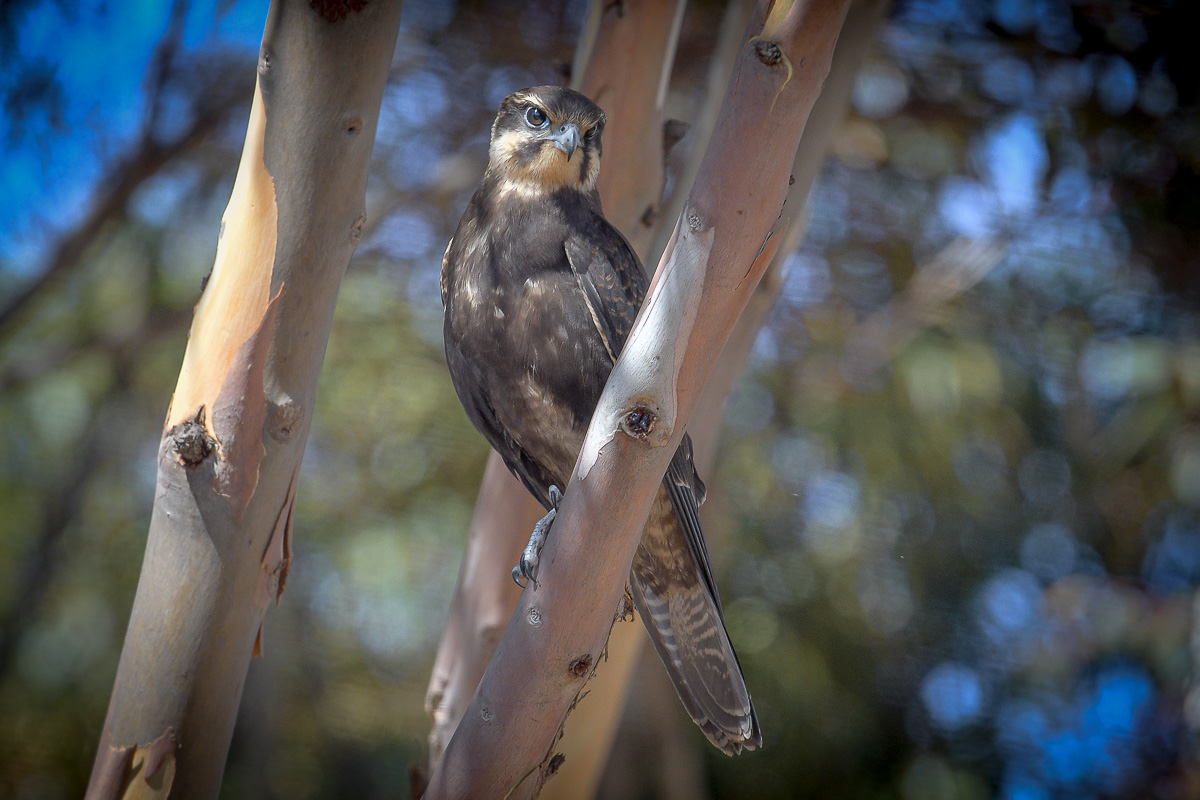
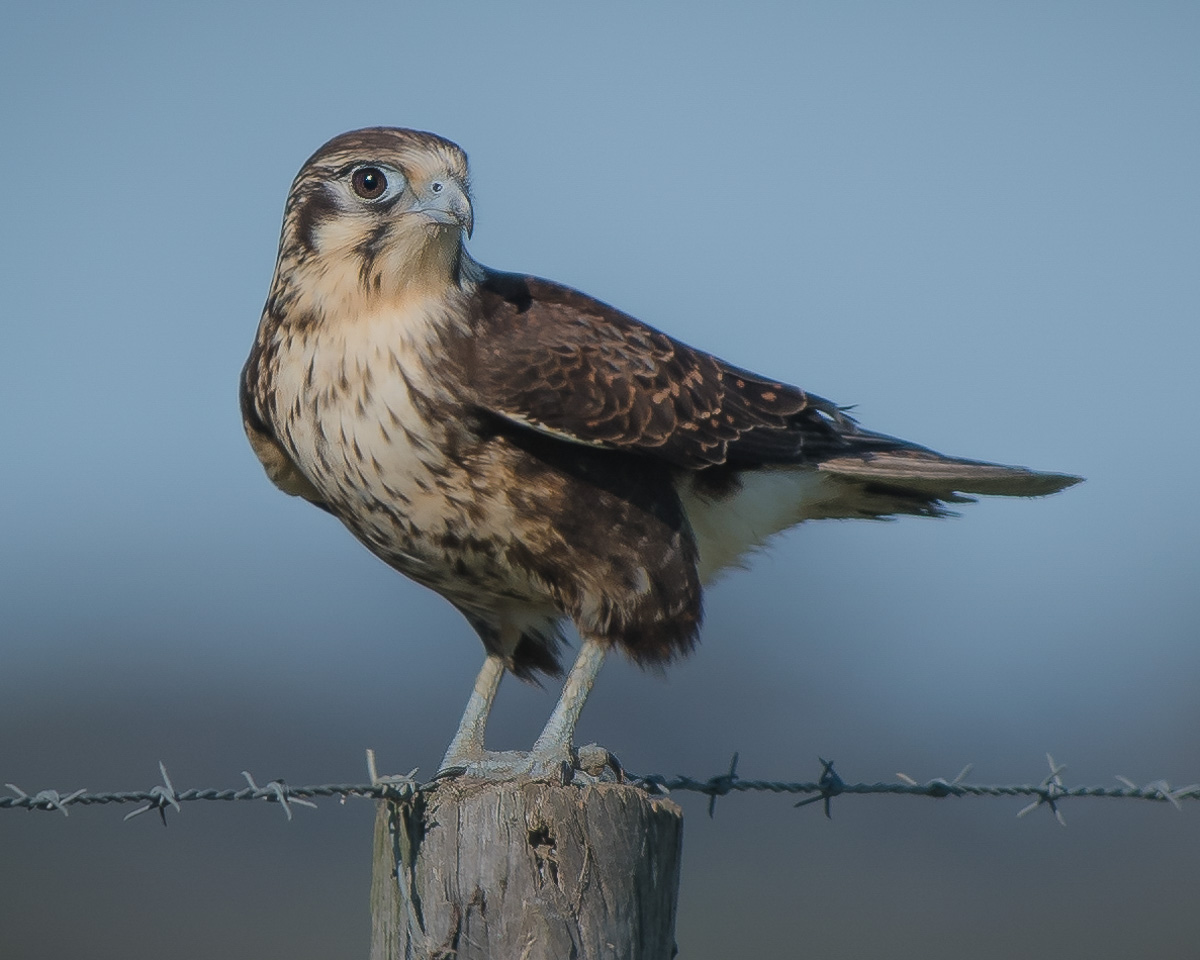
Brown Falcons

Was out with a group conducting a quarterly bird survey. The area is open woodland and grasslands Ideal Brown Falcon territory.

We had turned a corner into an open area, and a bird rose off the ground up ahead. With outstretched white wings and body, the first thought from the group was “Nankeen Kestrel”.

But the body size and wing action was of a Brown Falcon, and as it flew past, I managed a few frames, and sure enough. Brown Falcon. Which at the time I described it as “White-Brown Falcon”.
Which started the usual birdo discussions of nomenclature, bird naming, morph styles and correcting my error of naming it as “White”.

Click on photo for a larger view

The “White” Brown Falcon that started the discussion

In the afternoon walk, Mr An Onymous and I left the group to follow a track along a ridge-line as it was in shade and cooler. In a few minutes we saw on Brown on a tree, then heard the raucous call of an incoming bird. A food delivery no doubt and we went to look. The “White” bird flew into a tree with a snack, and the first bird followed and after some in-depth Falcon discussion they both flew out together with two rich brown juveniles.

And thinking back over the experience, I began to wonder how many ‘White” Falcons I’d seen over the years. There used to be a theory that the lighter morph (there I used the term) were of the forest, while the darker variety were of the open plains. Now it seems the changes in colour might have something to do with age, and also sex. There are some magicians of the black art variety that are able to look at the variations of the dress, and cere and eye-ring and determine age and sex. It is I have to say an art that I have failed in on all occassions.

So here are a few of the local birds that I’ve encountered over the years.

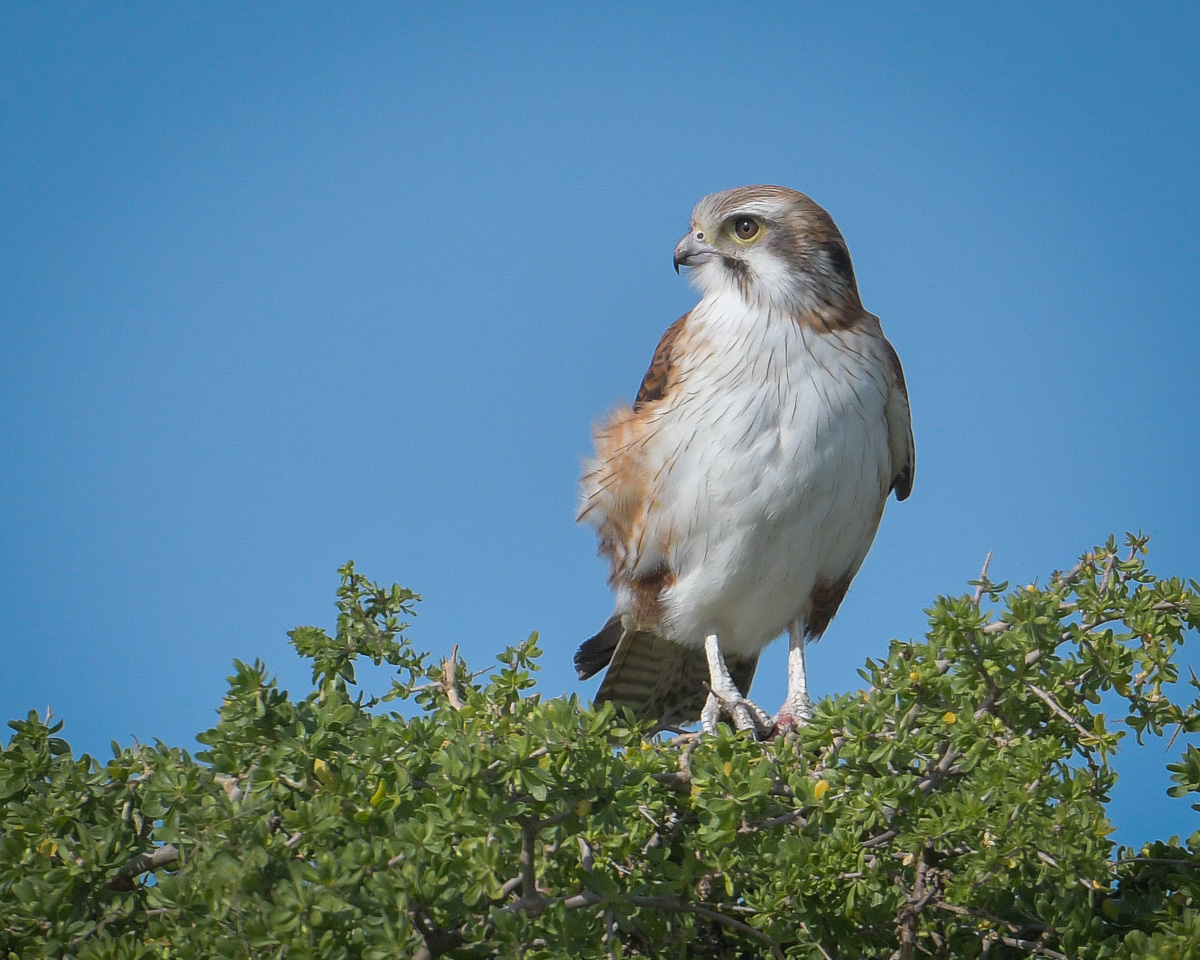
This handsome bird was one of a pair of Light coloured birds that were in our area over the winter

This is the same “White” bird that I had noted from a previous count

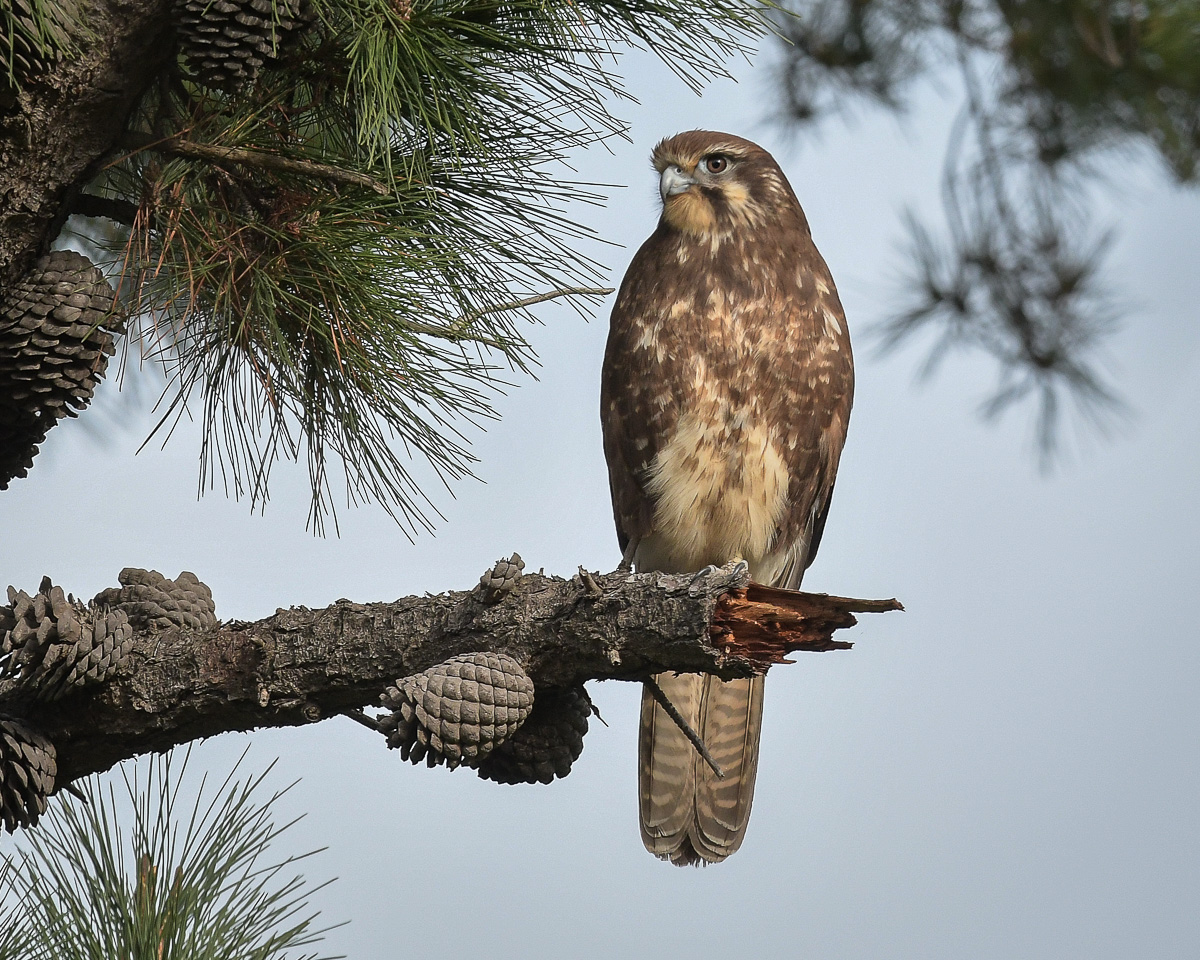
Long time readers may remember Cassia, of Cinnamon
She was sitting among the pines, keeping out of the wind
I nearly missed spotting her, and had to go back for a second look.
Then the sun came out.
It really burnished her recent moult into rich brown new feathers.

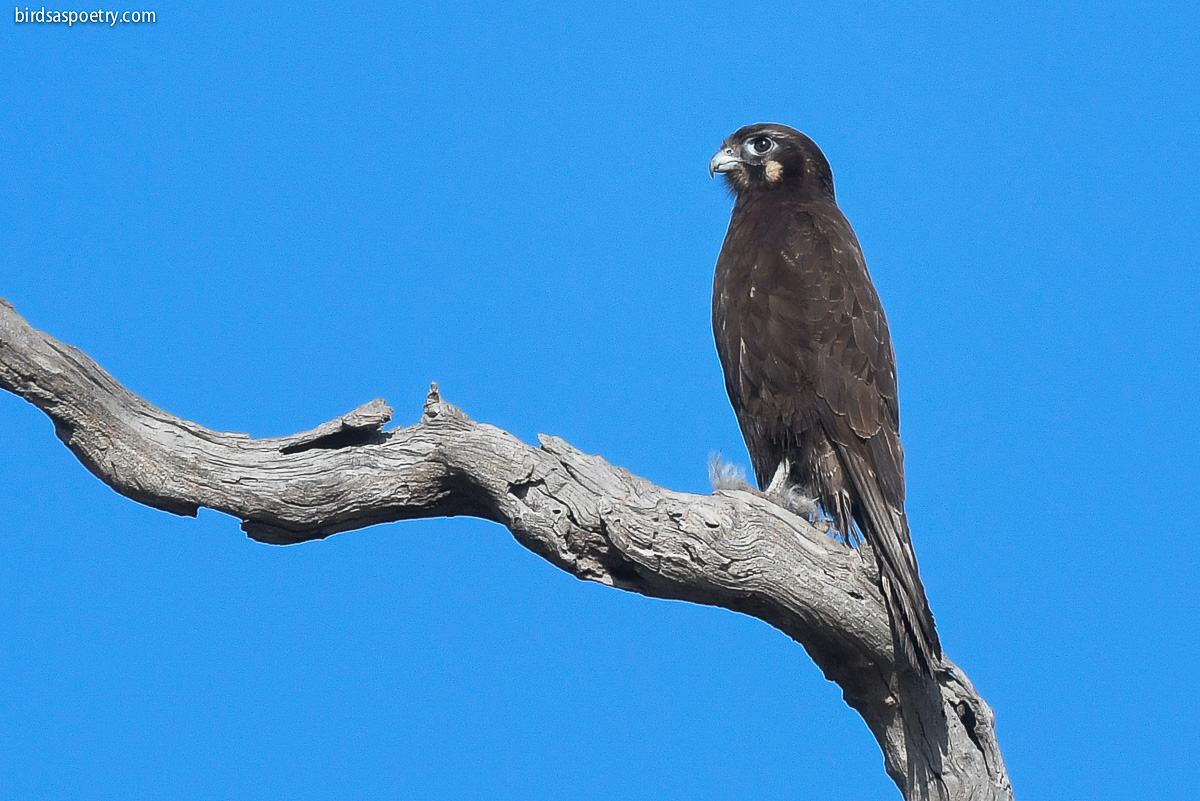
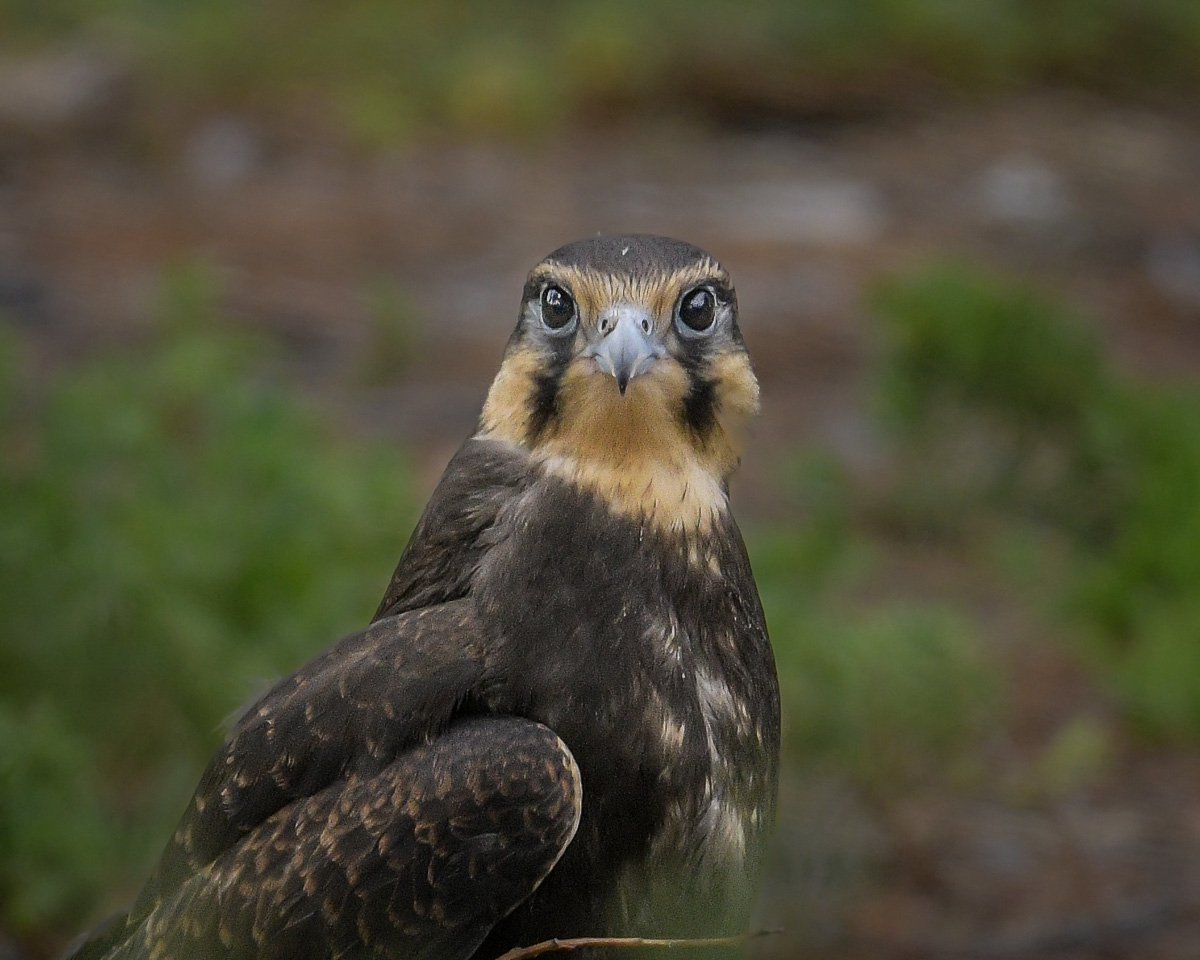
Another bird that caused consternation for those who spotted it. Such a dark chocolate colour that at a distance looked like a Black Falcon.
However on closer examination the face mask and stance were of a very dark Brown Falcon.

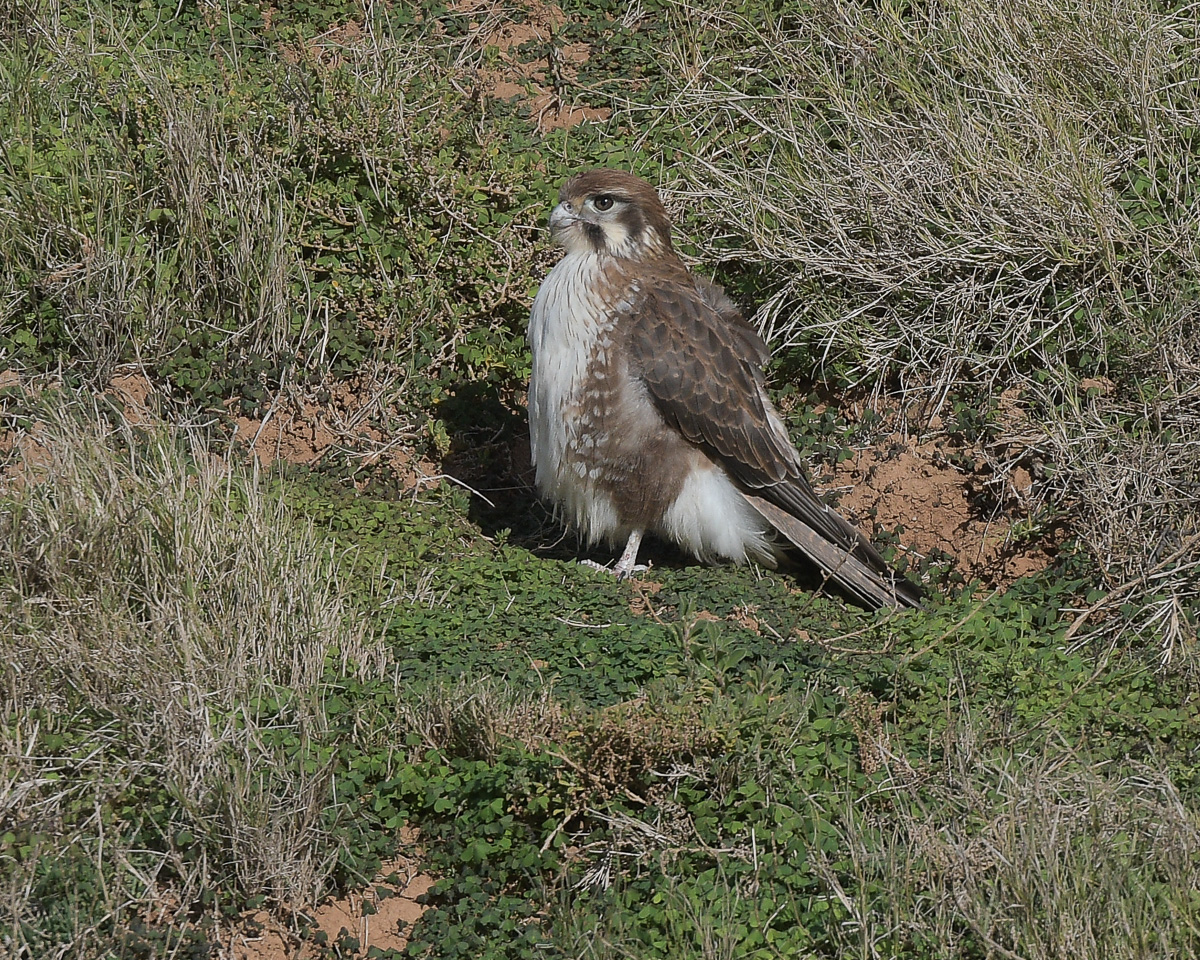
This one was on the side of the road and at a distance I thought it would be a Kestrel.

And interesting combo of a light marbled chest.
It’s not wary of me, but of a vehicle that is coming down the road, going fast and then slow. Vehicles at speed they can deal with, but the erratic causes them concern.

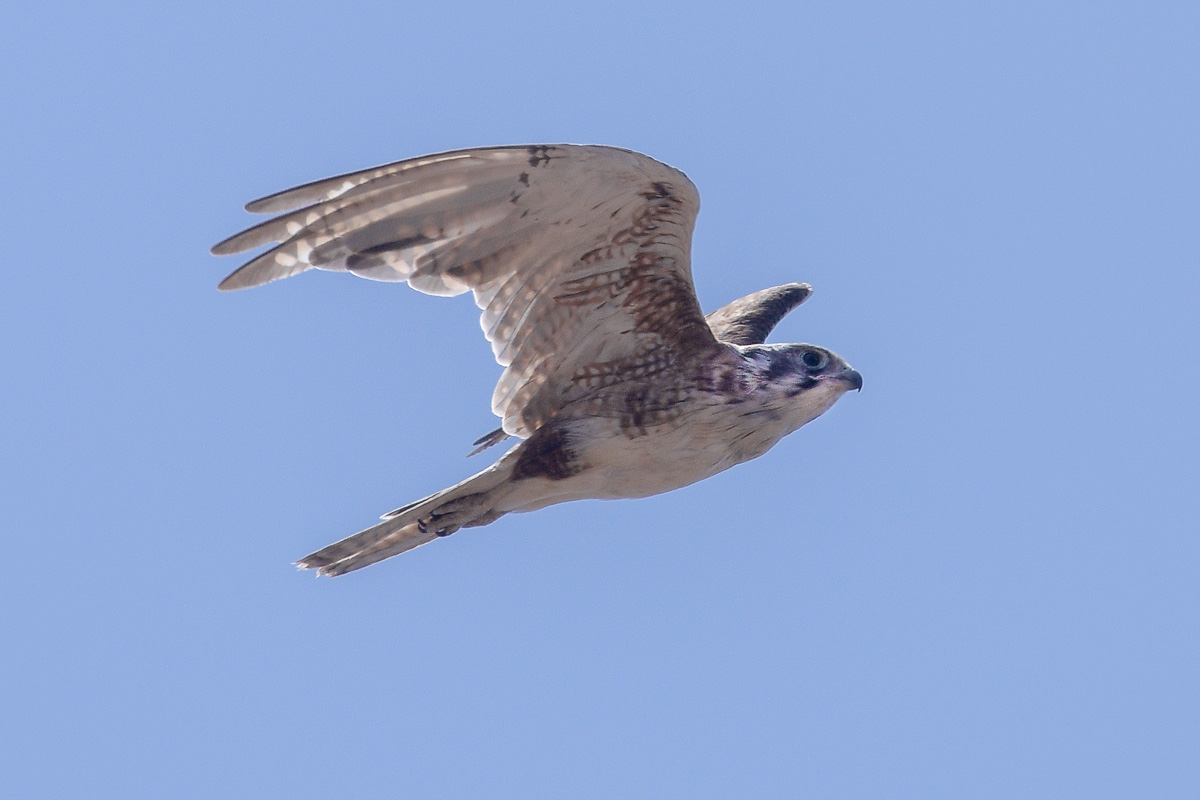
The rich honey colours of a recently fledged bird.
The dark juvenile colours will change out at the first moult. Interestingly the rich honey tones will change lighter as the bird spends time in the open sunshine.

High Action

Enjoy

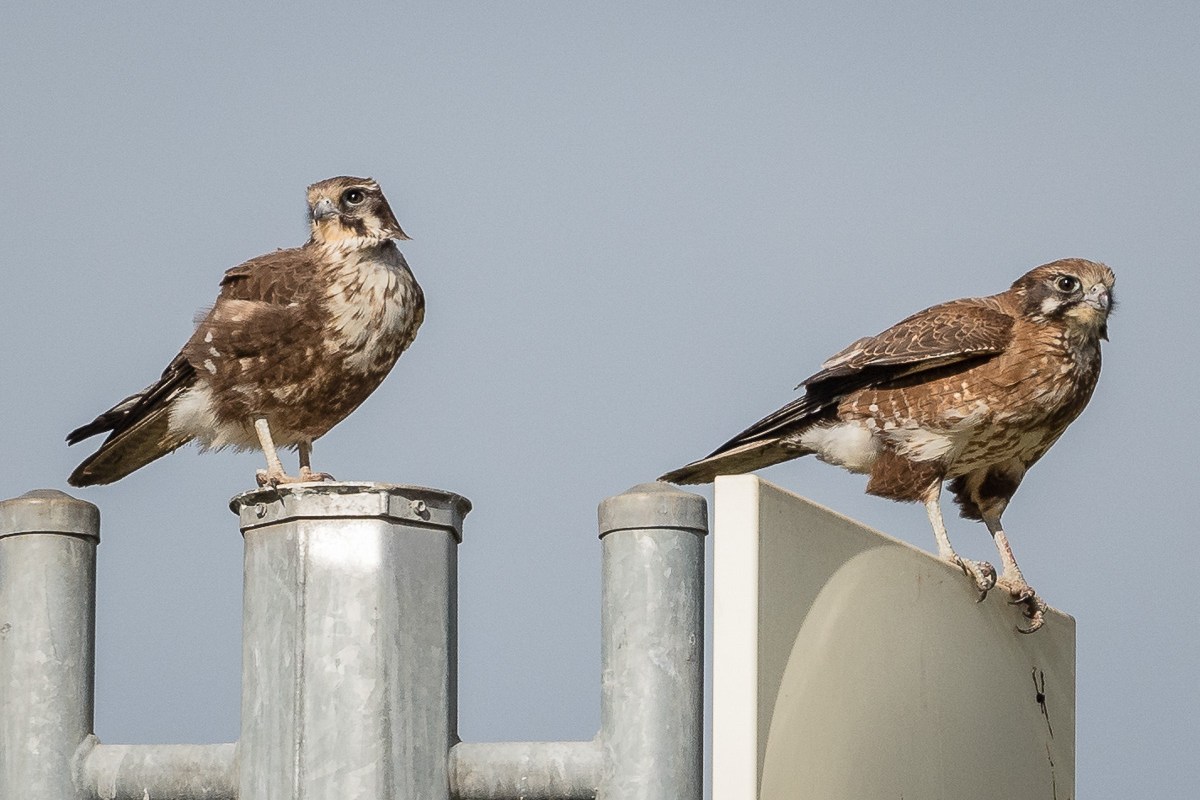
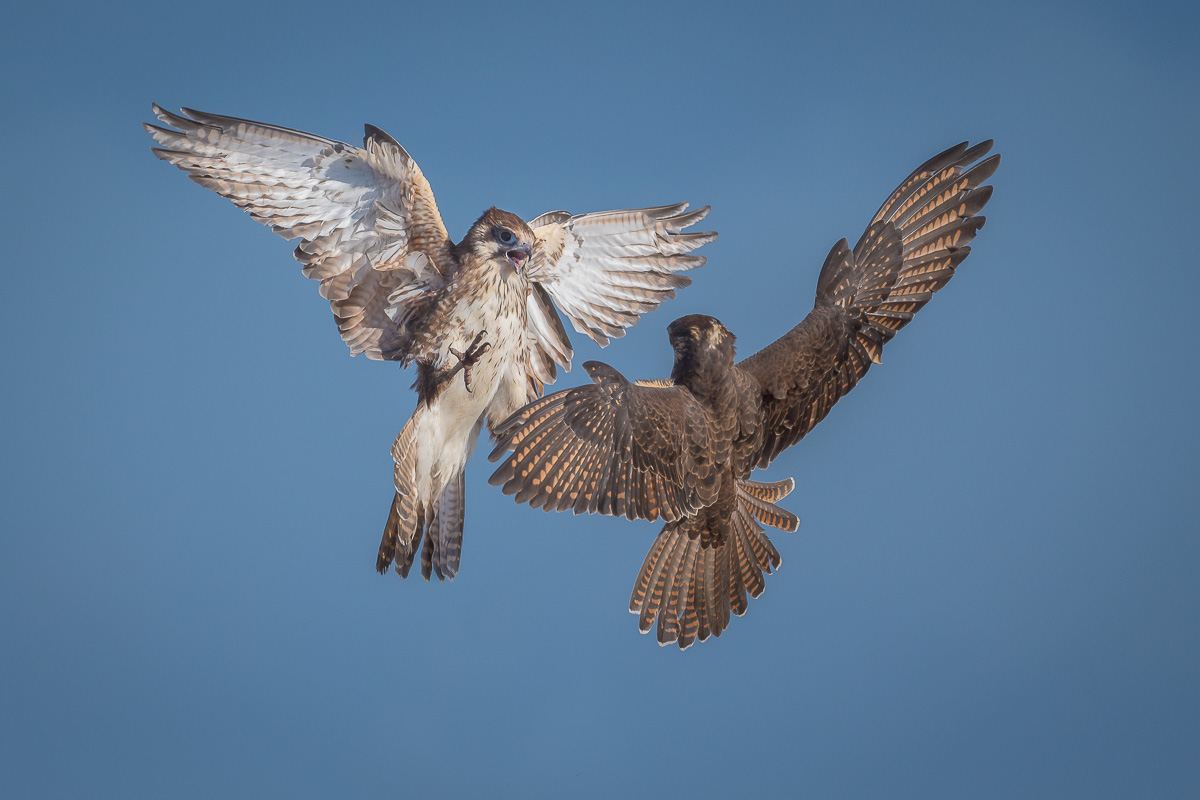
PS Betcha can pick the male from the female in the header photo

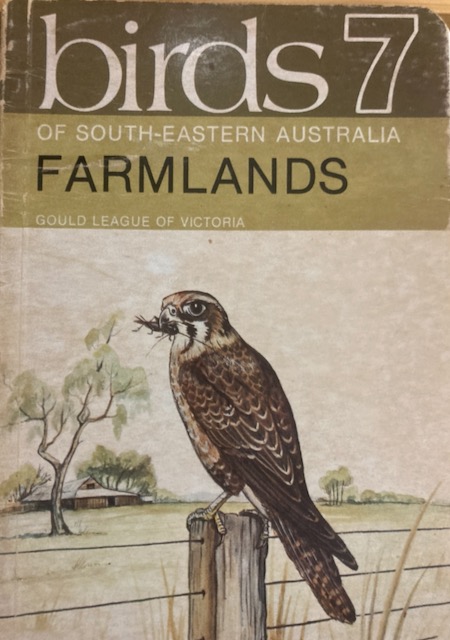
I always think of this cover painting by Susan McInnes from the Gould League “Birds of South-eastern Australia” series. This book has been much travelled in our family

Little Journeys: Newstead

Mr An Onymous and Ms In Cognito had needs to travel up toward Newstead, and invited EE and I for the day.
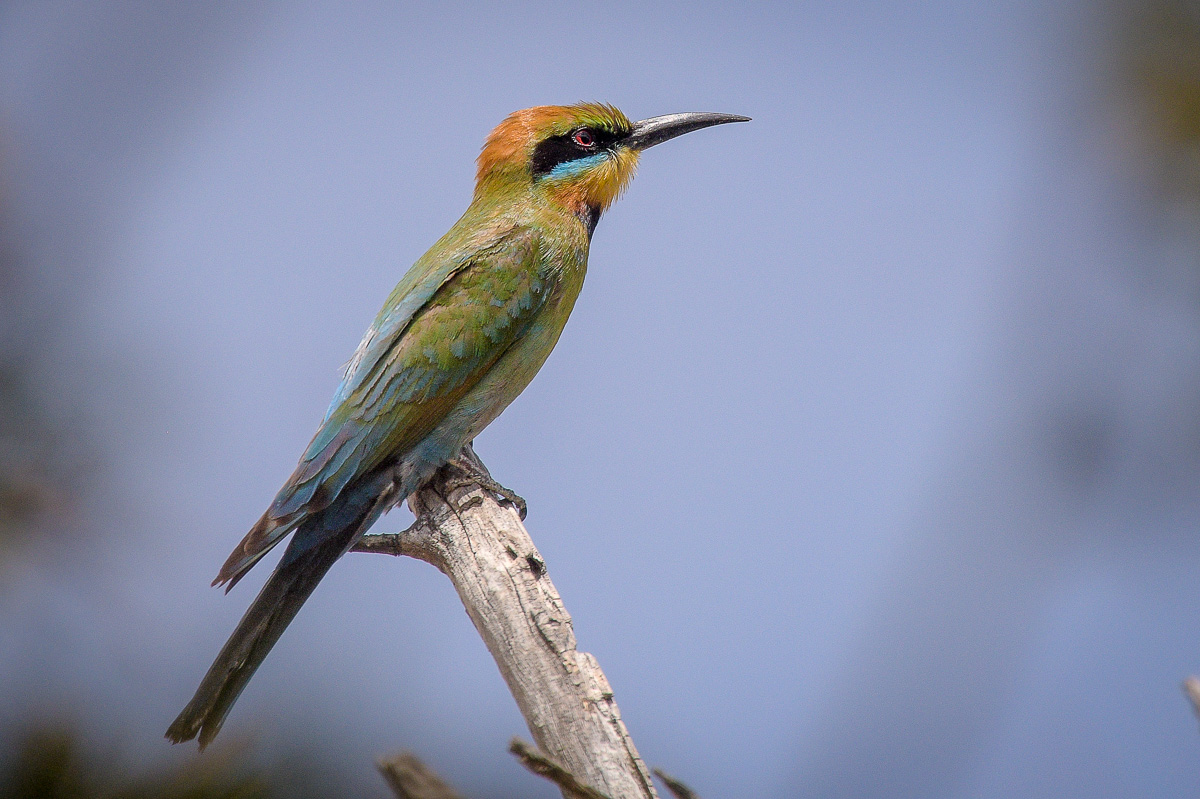
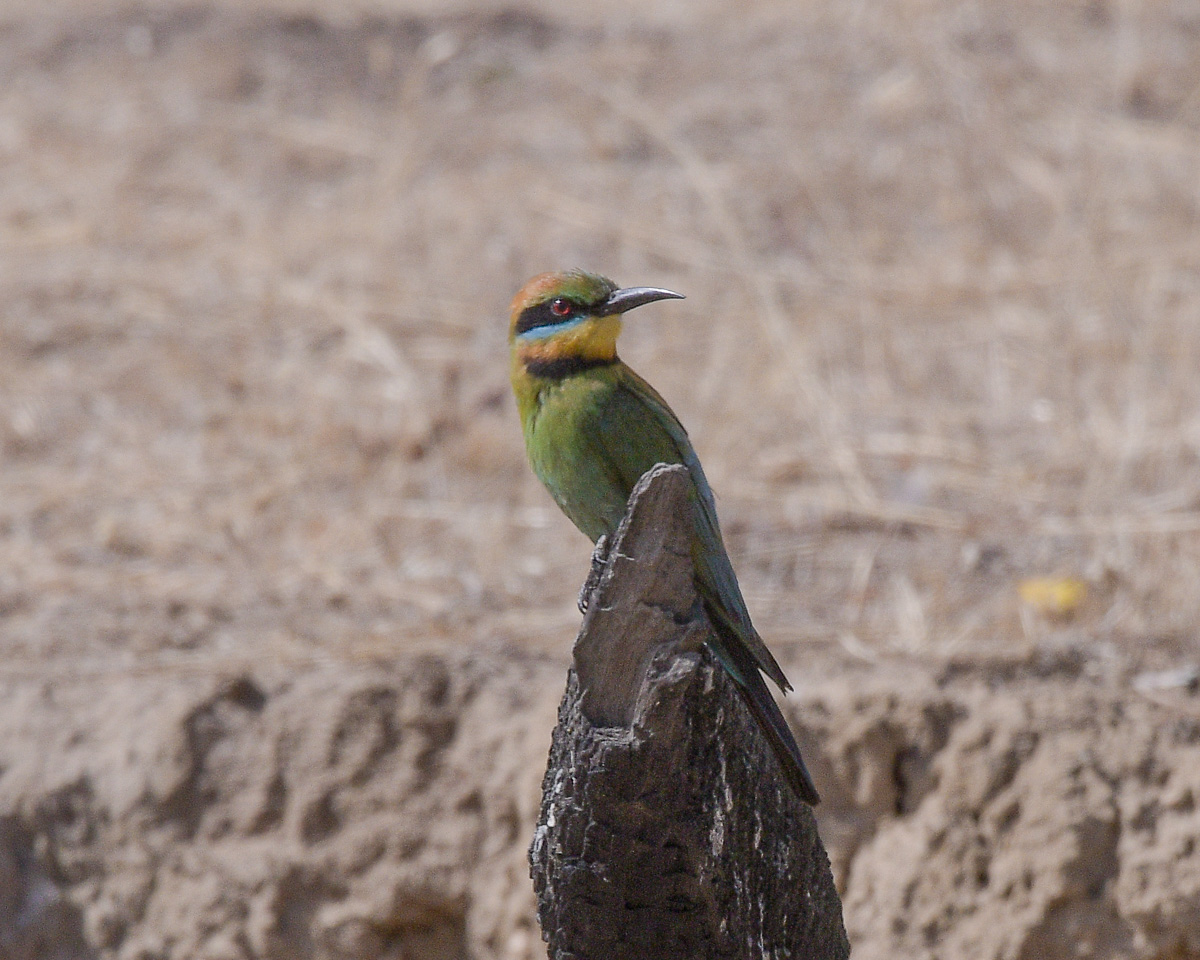
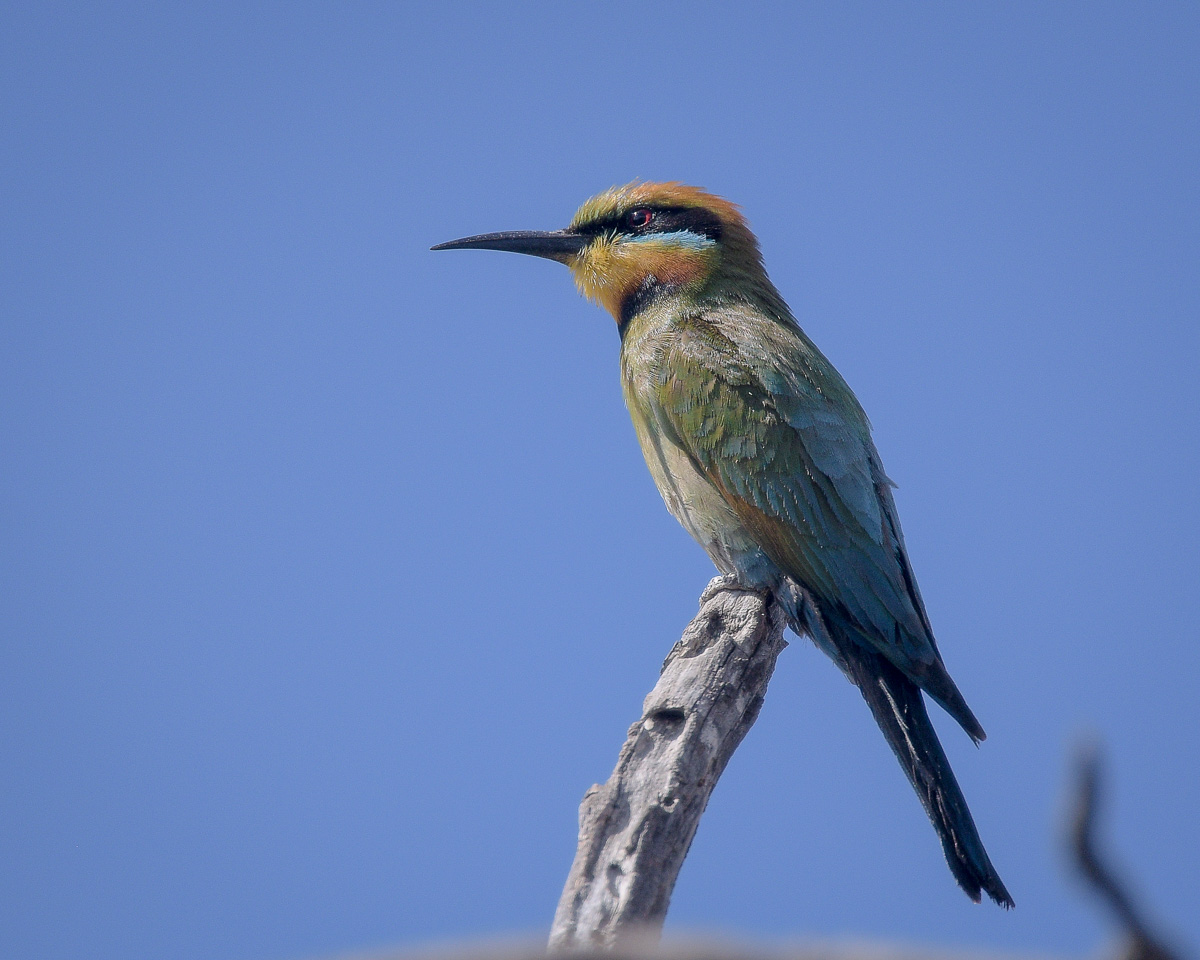
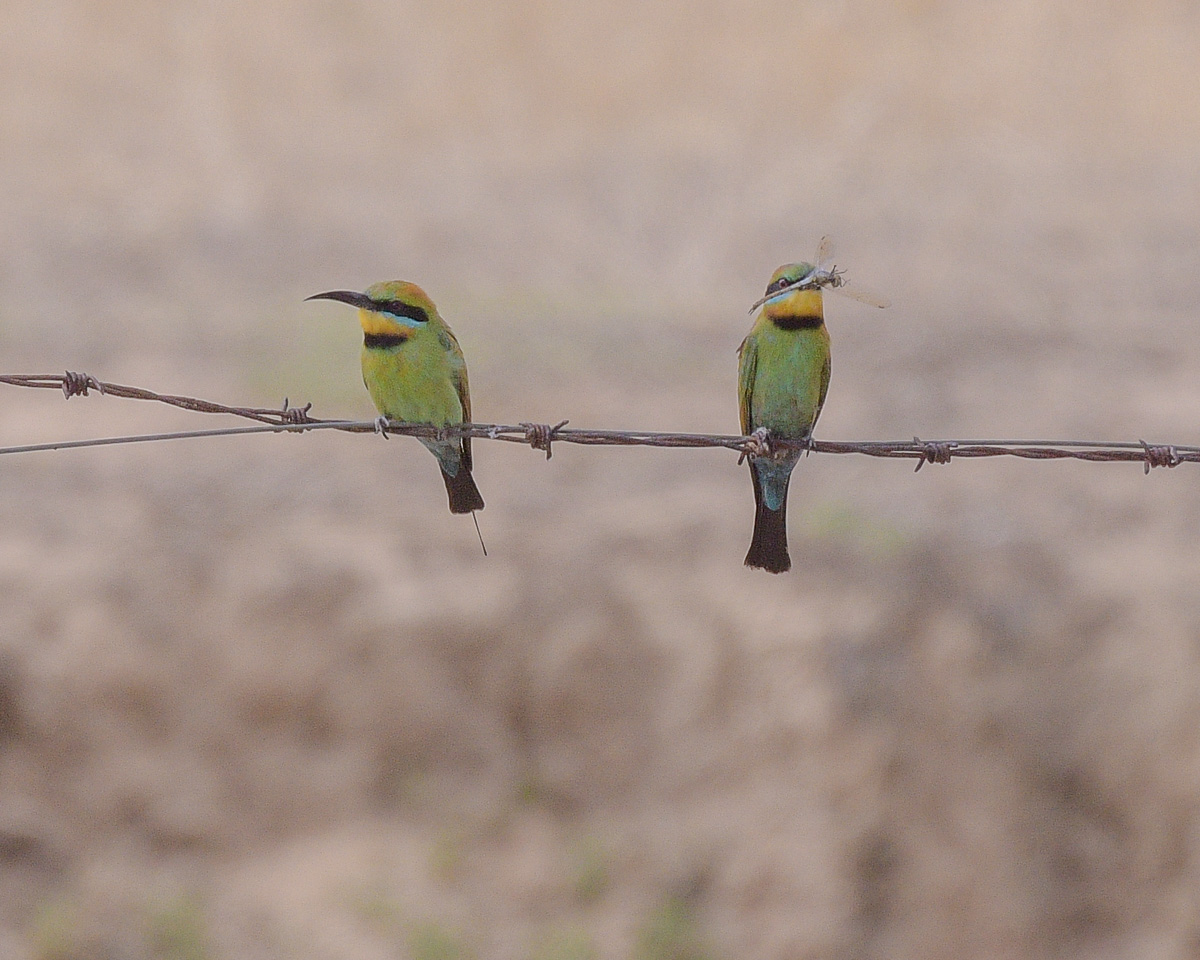
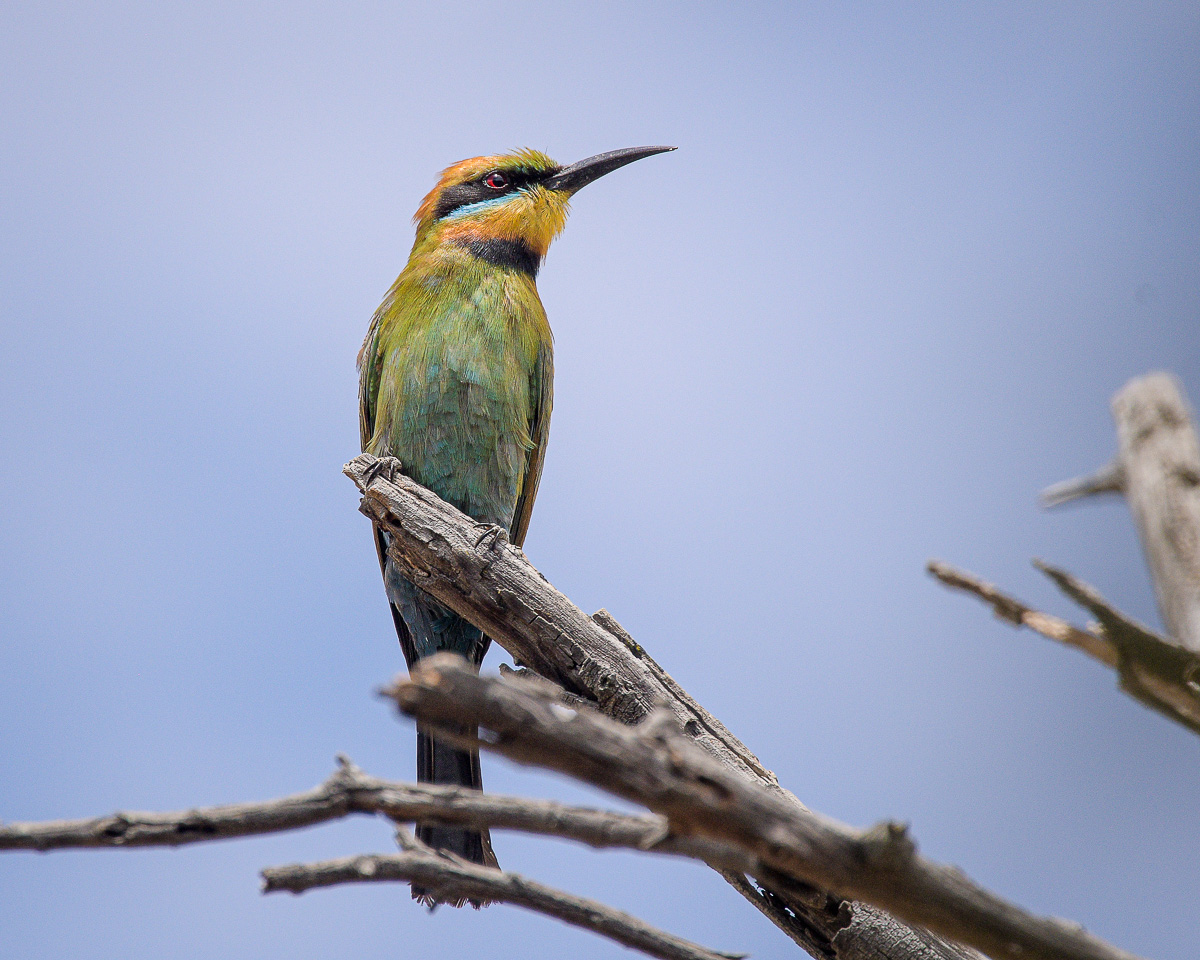
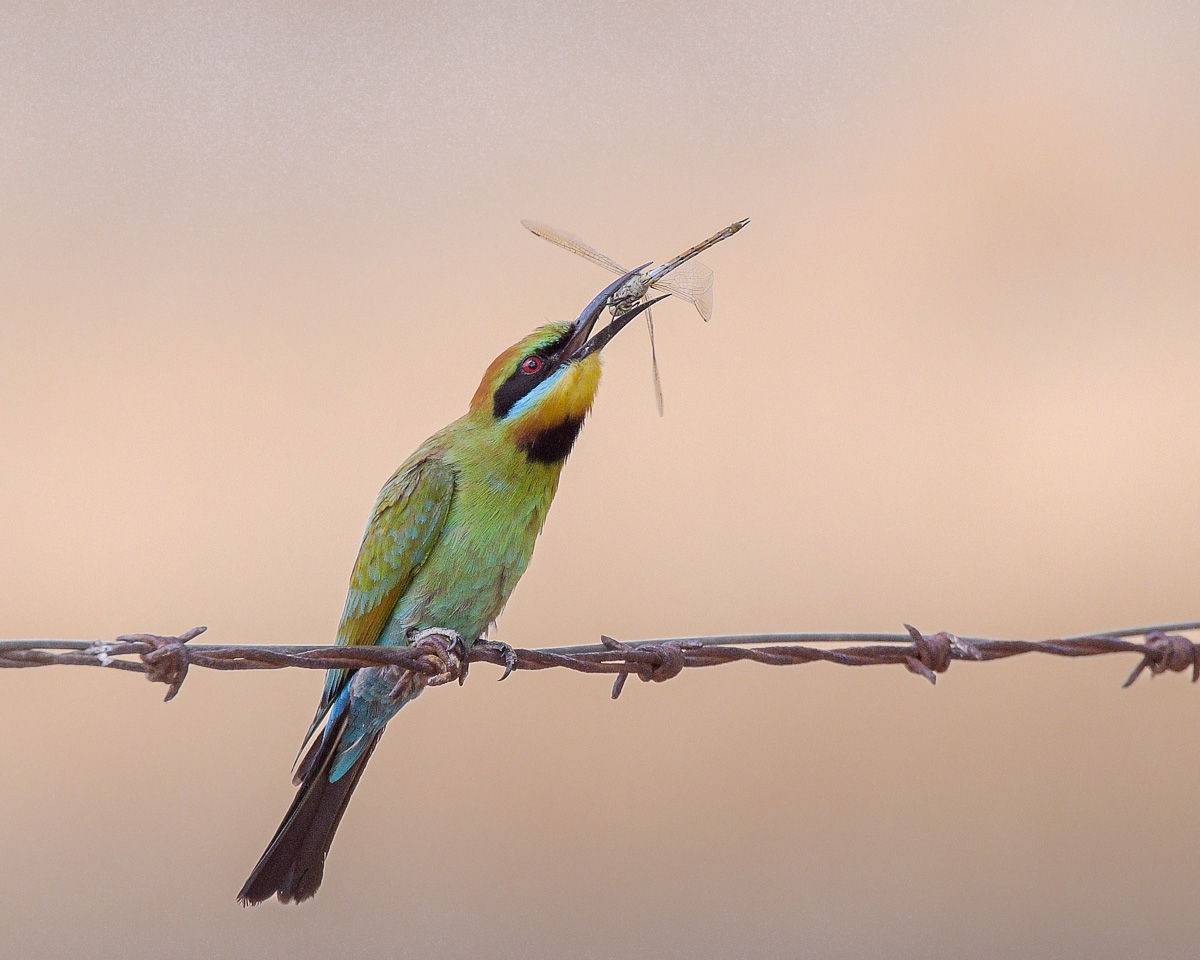
We decided a detour to the Newstead Cemetery was on the bill of fare as we might get to see the Rainbow Bee-eaters. Bit late in the season for nesting, but, well, while we were close, enjoy the visit.

Long time readers, (thanks for enduring), may recall that we used to make the pilgramage up there most years. The Cemetry is situated on a (usually) dry creek bed a few km from town, and well off the main road. Seemed like a secure, quiet area for a Bee-eater pair to raise their young.

Interesting to return to an area after so long and to contemplate so many changes.
The digital revolution, at its beginning was still the realm of dedicted birdos with some new equipment. Now, since the covid years, so much has changed. Equipment has become more sophisticated, more user friendly, far less expensive and the output can reach millions via social media.

It’s the instantaneous gratification of social media that intrigues me. I was reading an article t’other day about a scenic location in the Blue Mountains in NSW that is being closed to tourists as the impact of 3,000 or more a day to get just the right sunset motif is causing damage to the area, and the risks that are being taken on the cliff tops is but one step from disaster. Such is the power of getting a ‘fav’ or ‘star’ or a new follower.

Article here: https://www.abc.net.au/news/2026-01-20/popular-lookout-lincolns-rock-in-blue-mountains-closed/106245326

Sadly for me, at least, birding seems to now be following the same direction. We found signs attached to the fence at the Cemetery reminding people to be mindful of the birds and that they were nesting, and not to go traipsing over the private farmland nearby. Can’t recall that ever before.
The reporting of a sighting of a bird will have line of cars making the journey for that ‘shot’, and then next week on the winds-of- change-of- the-‘net’ off somewhere else to repeat the process. (Nearly wrote performance)
The life and character of the bird overlooked for the importance of ‘best’.

So leaving that aside, it was good to settle into the area near the creek and wait to see what was in play. Sadly we only saw two pairs, (at least I took it to be pairs), and they flew back and forth along the creek and trees catching a snack or two. They didn’t seem to be intersted in the nesting locations, so I concluded that we had, indeed, missed the action.

Photography over, we completed the journey to town, and found a country cafe to enjoy some great country cooking and a coffee.
All agreed we should make the trip again just for the tucker 🙂

Enjoy

Busman’s Holiday

At the beginning of the year, we receive an invite to enjoy a guided bus tour around the now defunct Cheetham Saltworks at Point Cook.
Our friends, at the City of Hobsons Bay make an offer so good that we can’t refuse. The old Saltworks is now but a shadow of its former glory. Established in the 1920s it is a series of ponds and lagoons that cover over 400 hectares. The saltworks closed in 1990 and the area is now managed by Parks Victoria. They keep a supply of water flowing through the ponds and in the right season the area attracts many waterbirds. Some nest in the drier ponds.

Normally the only way to view the area is from an observation tower at the northern end of the Point Cook Park, but, with some kind cooperation, of the Park Vic rangers, the Hobsons Bay Rangers take a small number of interested folk into the ‘inner workings’ of the area to see what bird species might be in residence.

It has become, for EE, Mr An Onymous, Ms In Cognito, our friend DT and others a little bit of a yearly pilgrimage. Sort of a birders version of watching the Summer Solstice at Stonehenge. 🙂

One of the employees of the Saltworks joined Parks when the change-over took place. Bernie had years of experience and was, (still is, just retired) passionate about the area and maintaining it.
When Bernie joined the trips he’d regale us with stories of the area and the bird and animal inhabitants. At the end of the day I always came away knowing so much more about the area, and realised that I’d only put a tiny dent in a scratch of the surface of Bernie’s knowledge.

With many species of birds away up north because of the huge ephemeral waters in Queensland and New South Wales, the numbers of birds at present is quite small. But the sun was shining, the company was pleasant, and the intrigue of perhaps finding something special made the day all the more inviting.

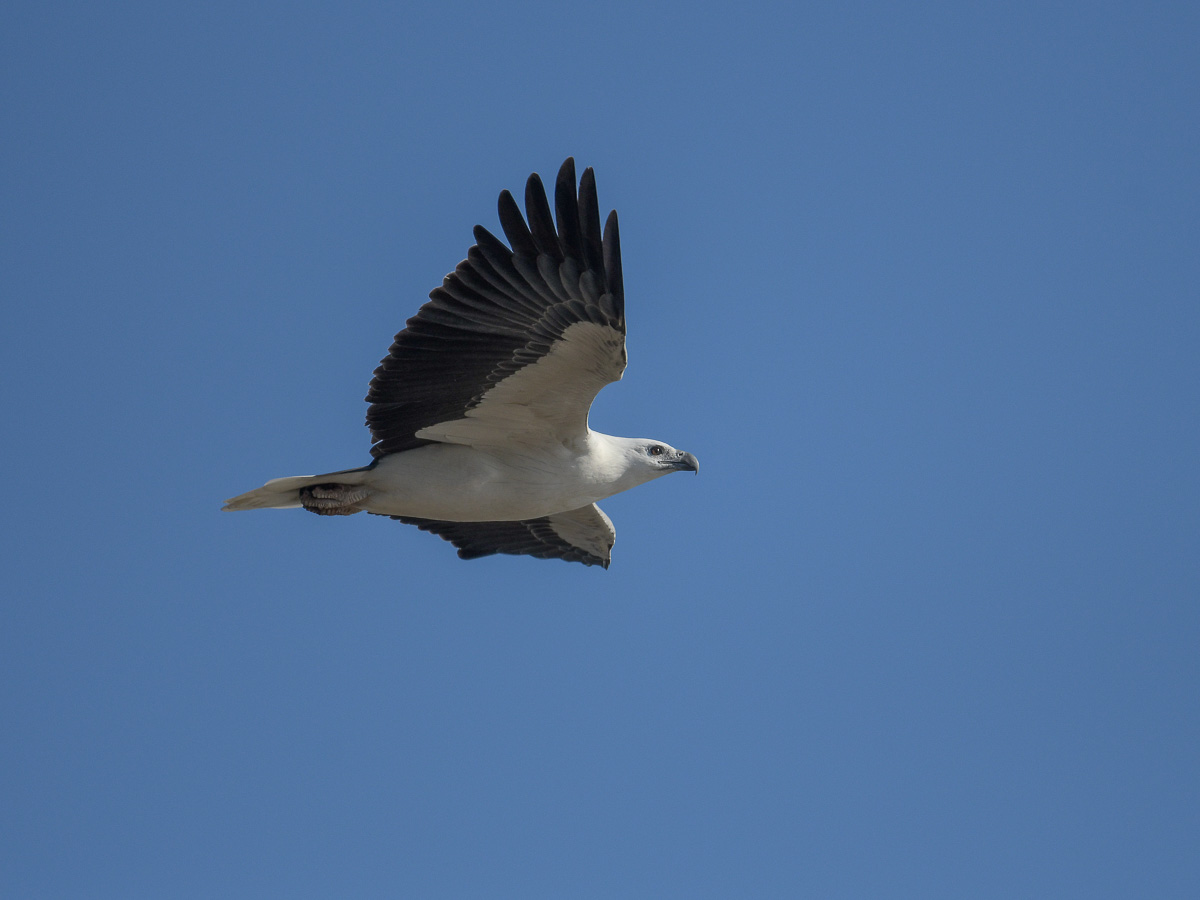
Our intrepid Ranger team soon had us on the way through the first gate and the sharp eyes of the front seat passsenger quickly located a White-bellied Sea-eagle in the sky up ahead. Ahh! the sharp eyes of youth. But for us in the centre of the bus all we could see was… the inside of the bus. A stop and we all piled out and, yes, it was indeed a Sea-eagle. Put that on the list.

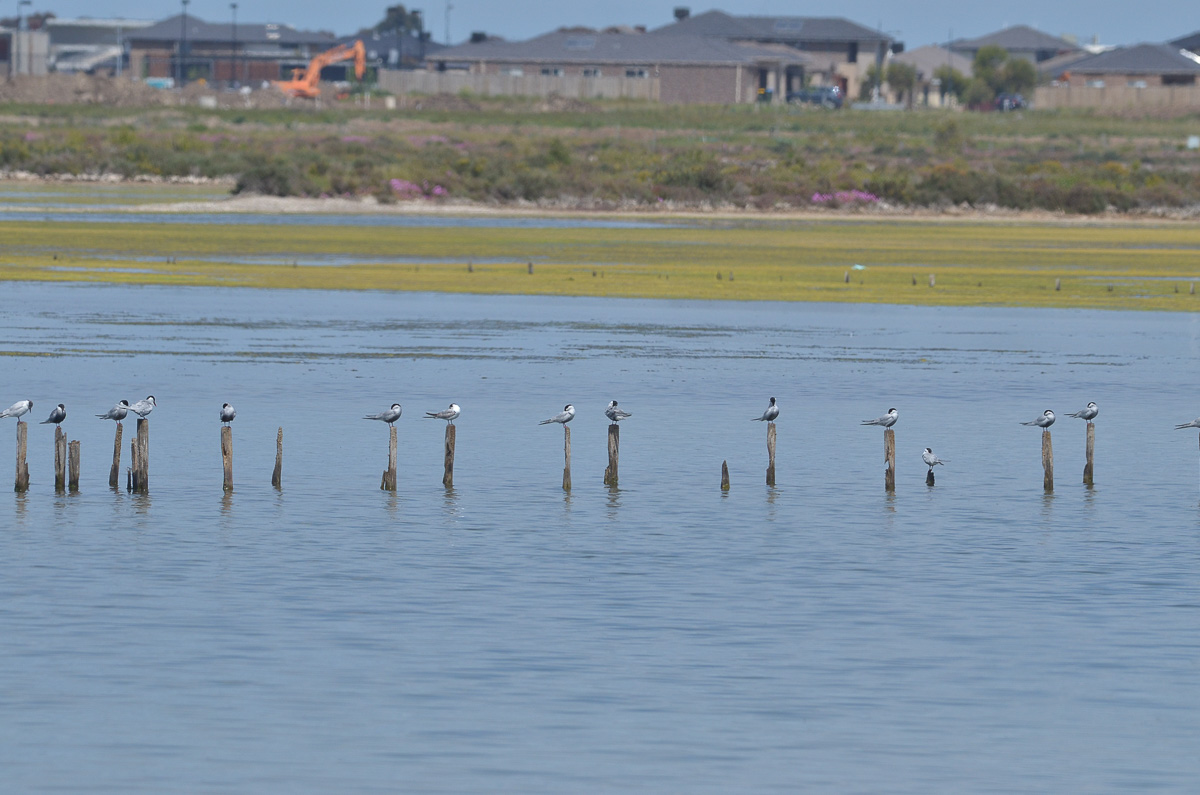
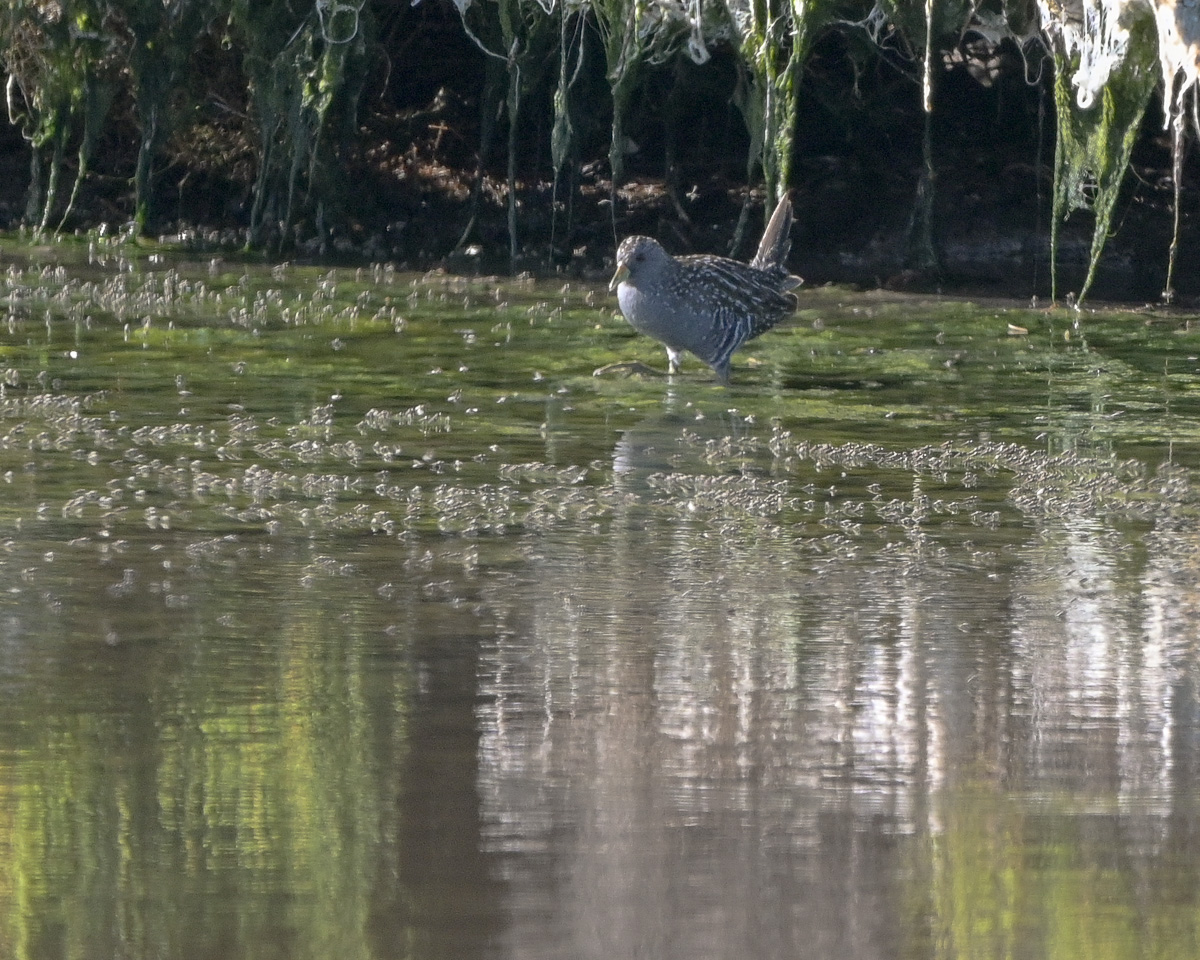
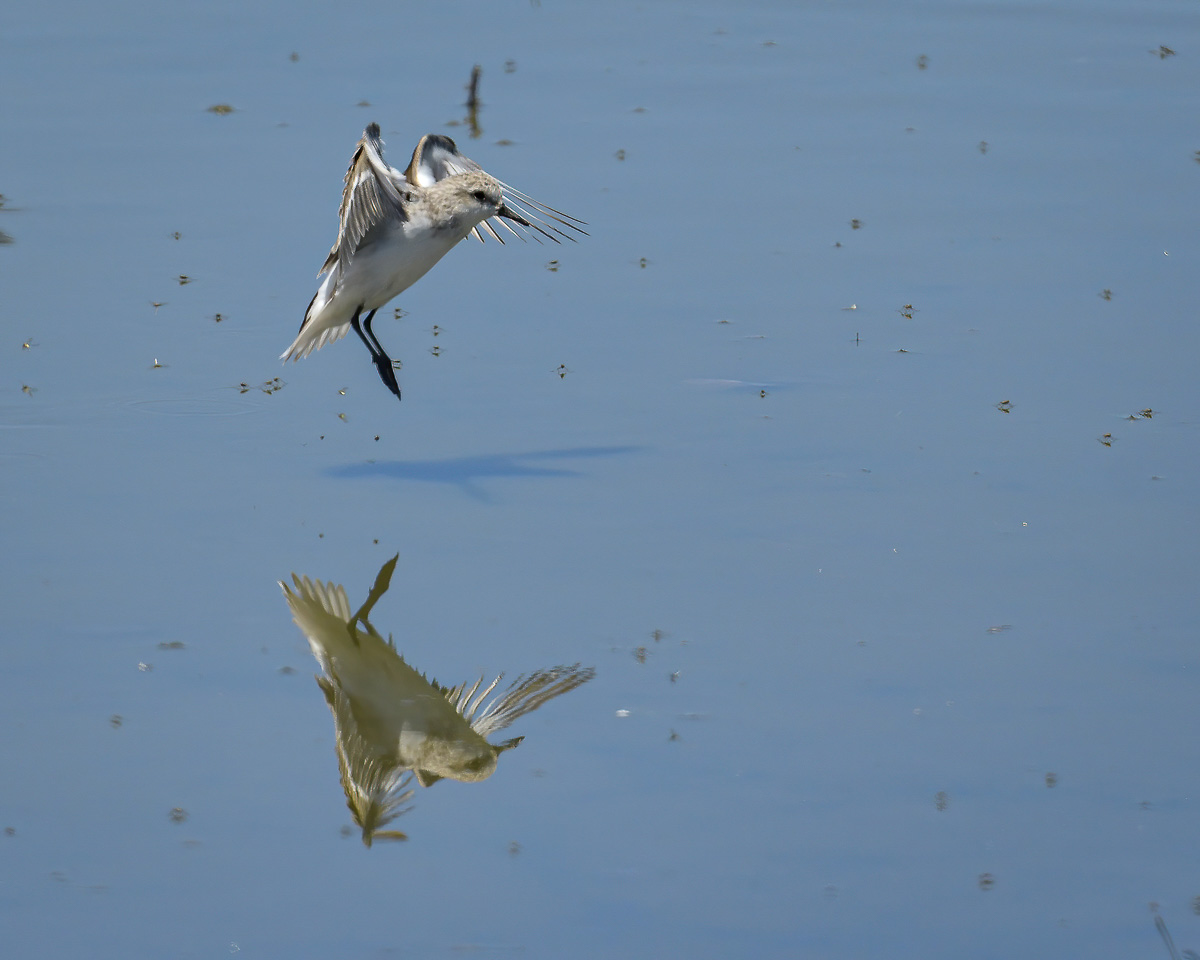
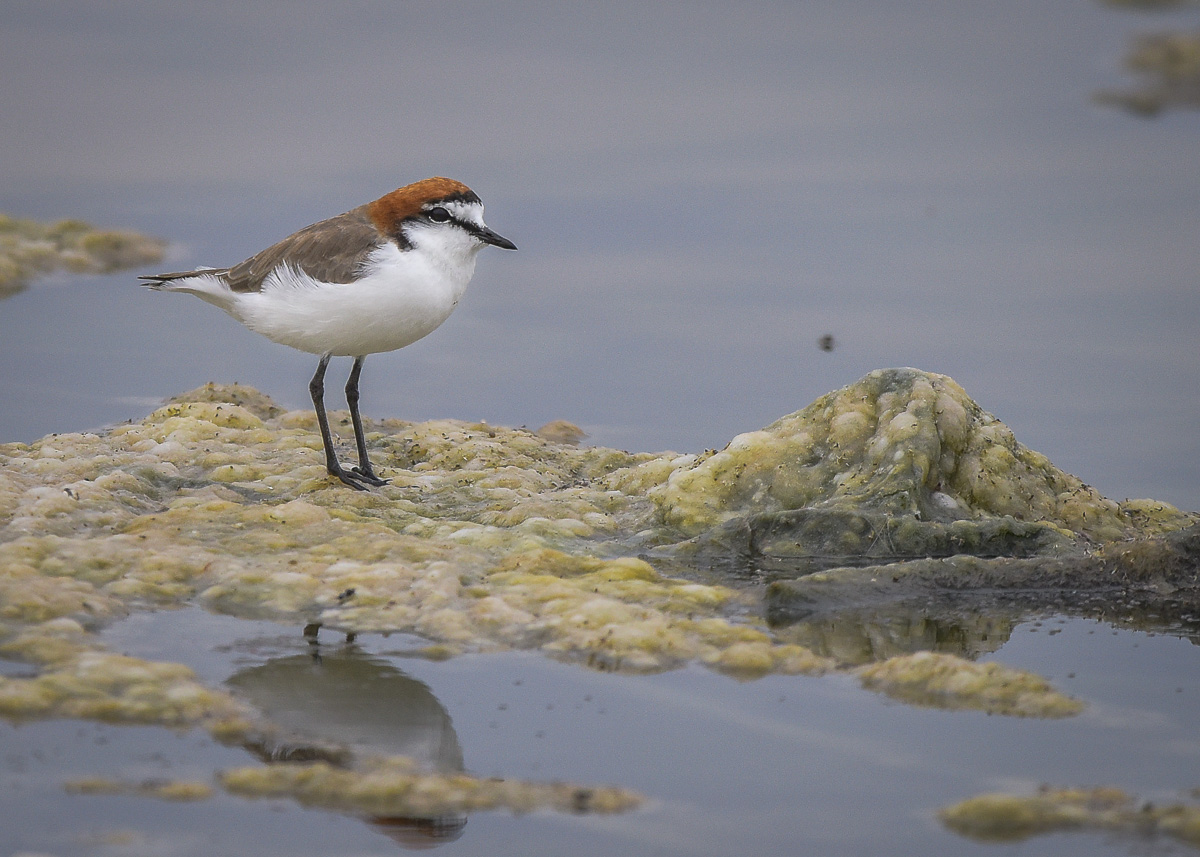
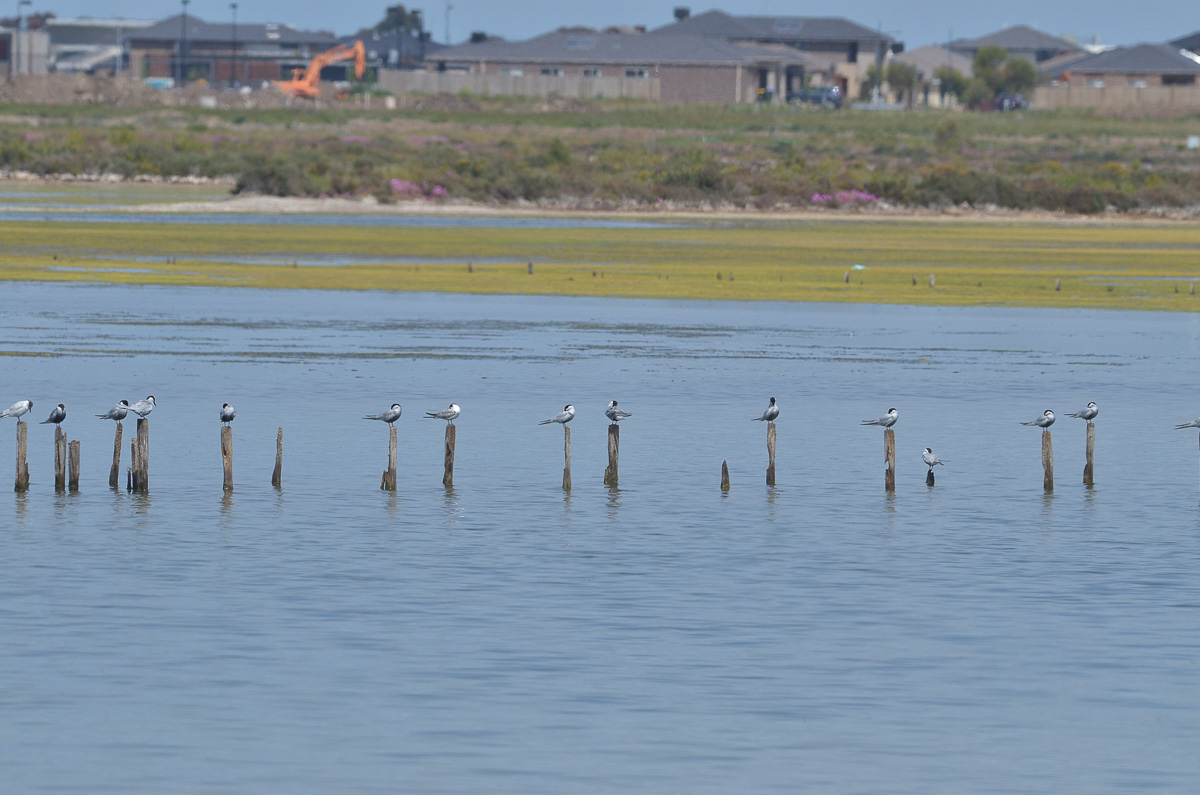
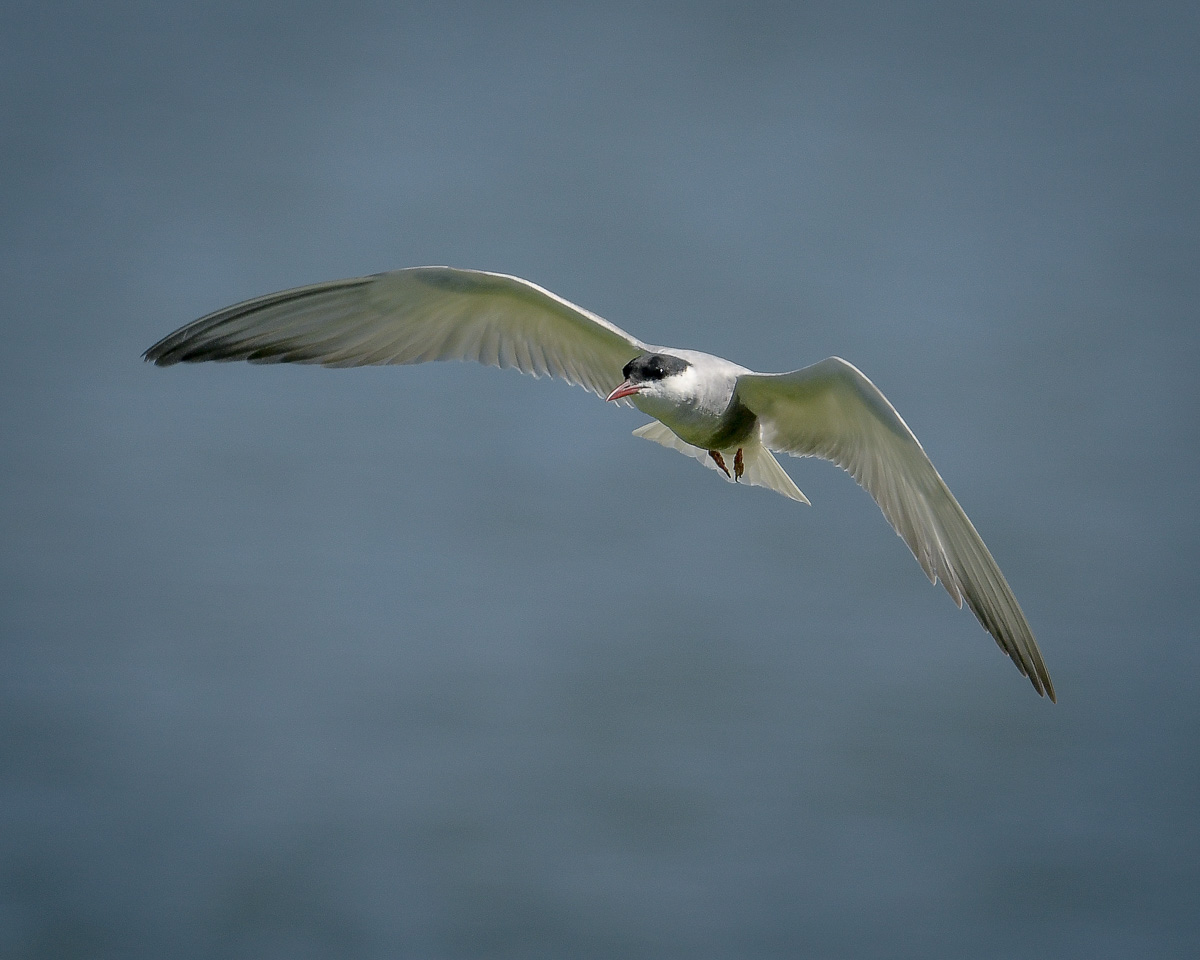
The remainder of the morning included quite a number of Whiskered Tern, Red-capped Plover (with young), and a Spotted Crake. I also had a bit of fun calling ‘Mountain Duck” as a handful of Australian Shelduck flew over. Shelduck used to be called Moutain Duck, although I’m not sure anyone knows why. Perhaps its because they are never found in the mountains.
Interestingly they come down late in the year and then shed their flight feathers, which take a few weeks to regrow, and makes them vulnerable to predators.

Our journey north along the ponds came to end when a locked gate barred the way, so rather than walk on the “North Beach, we did a ‘mystery tour’ to find the fabled, “South Beach”. This proved to be much easier, and I learned the name of a beach area that we occasionally walk past.

In the end, smiles all round, and our little group of travellers went on for a cuppa and chat to complete the morning.

Must remember to mark it in the diary for next year.

Enjoy

Unlikely Visitor

When I first heard the call, I couldn’t quite place it.

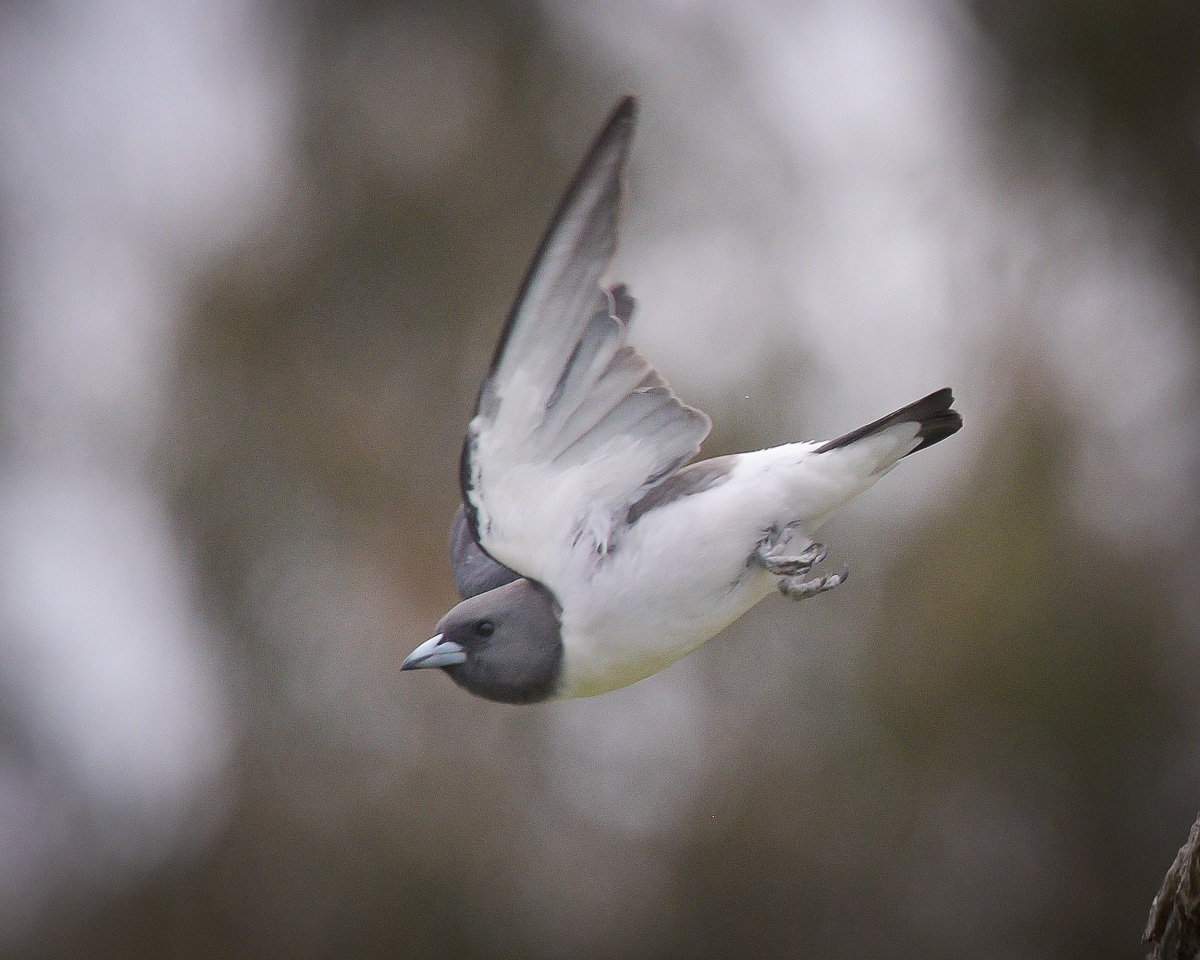
Sounded a bit like a Woodswallow? But, not the usual call of the Dusky Woodswallow that we see in the area. Some years back we would get good numbers of the Dusky and they would nest among the River Red-gums.

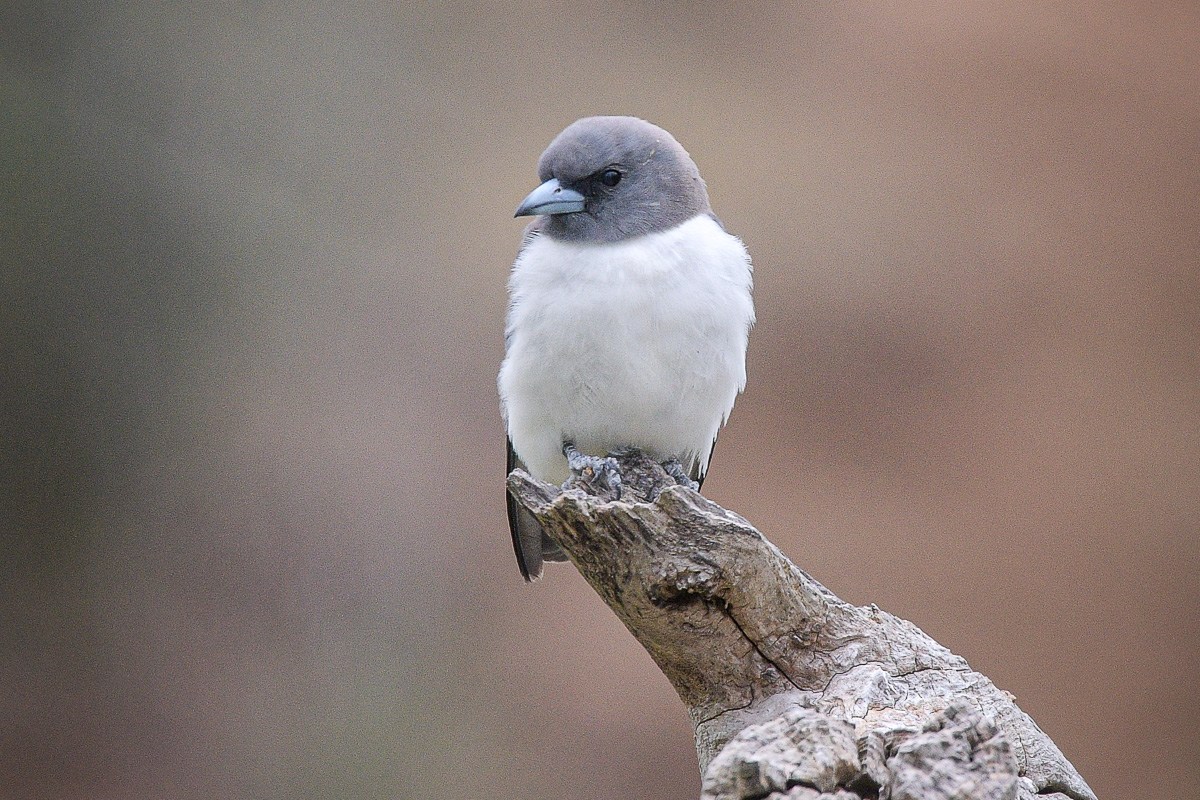
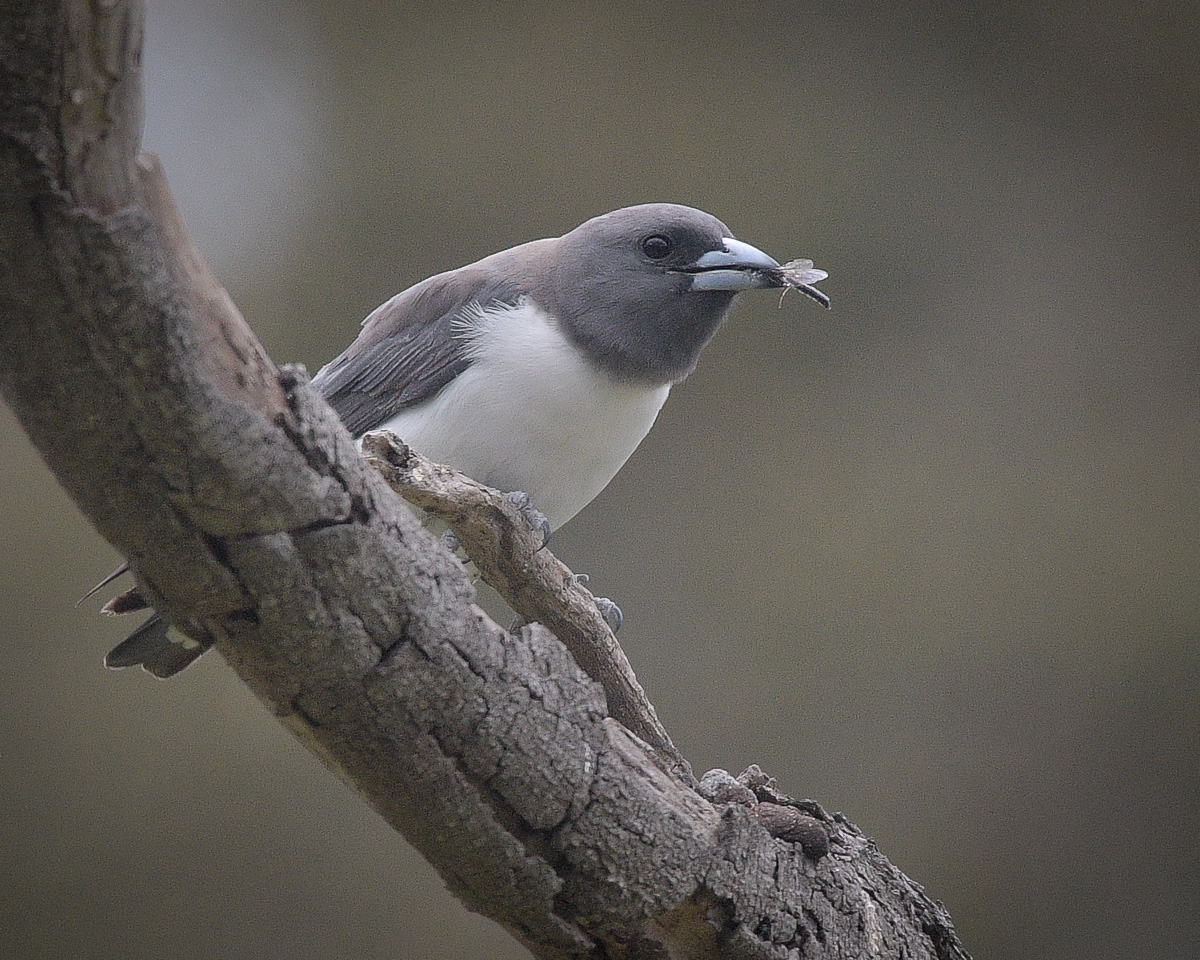
But this call was different. Hard to tell when the birds were hawking for insects high up in the sky. Then I got a good glimpse of one, and it was grey-backed, and had a brillant white breast.
A White-breasted Woodswallow.
Normally the White-breasted do not come down this far south, and stay the northern side of the hills.
In the end I found five of them flitting about between the trees and working through the sky above.

In the river flats area of the Murray River where I grew up, it was not unusual to see large flocks of them each year. They are a communal bird and sometimes we’d see 50 or more of them along a power-line or 10-15 on a long horizontal branch. They played “Roll over and one fell out”, as one would land on the branch near the trunk of the tree and everybody would shuffle up the branch, until the one of the end had nowhere to go and would fly.

Time to sit down and wait. They began to come down lower and take rest breaks on some of the older stumps and trees in an open area. I was as eager to make some photos as they were to be back in the air hunting but we both compromised.

For about three weeks they were domicle in the one open area along the creekline, but eventually they disappeared.

Here are few from the first couple of weeks.

Social Media Sensation

A quick review of birding social media pages in Victoria, Australia, will bring lots of hits for one of the latest ‘must see, must have’ birds in our area.
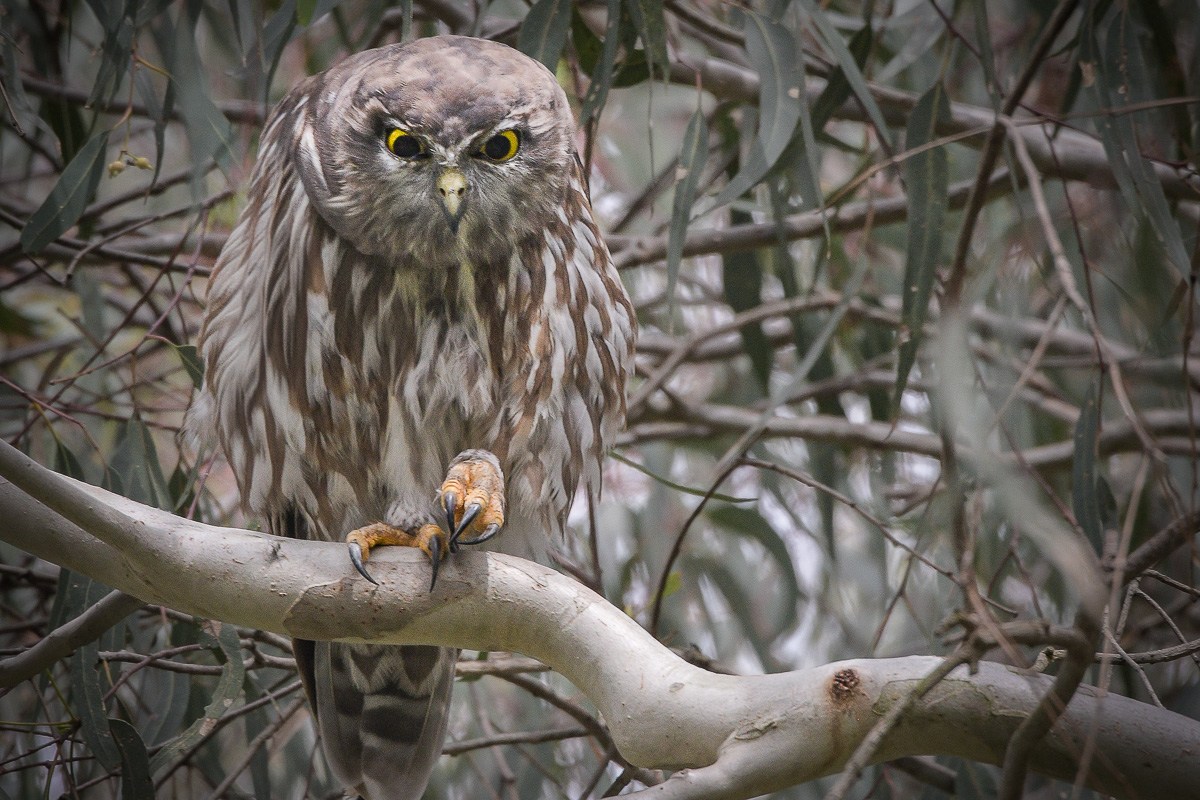
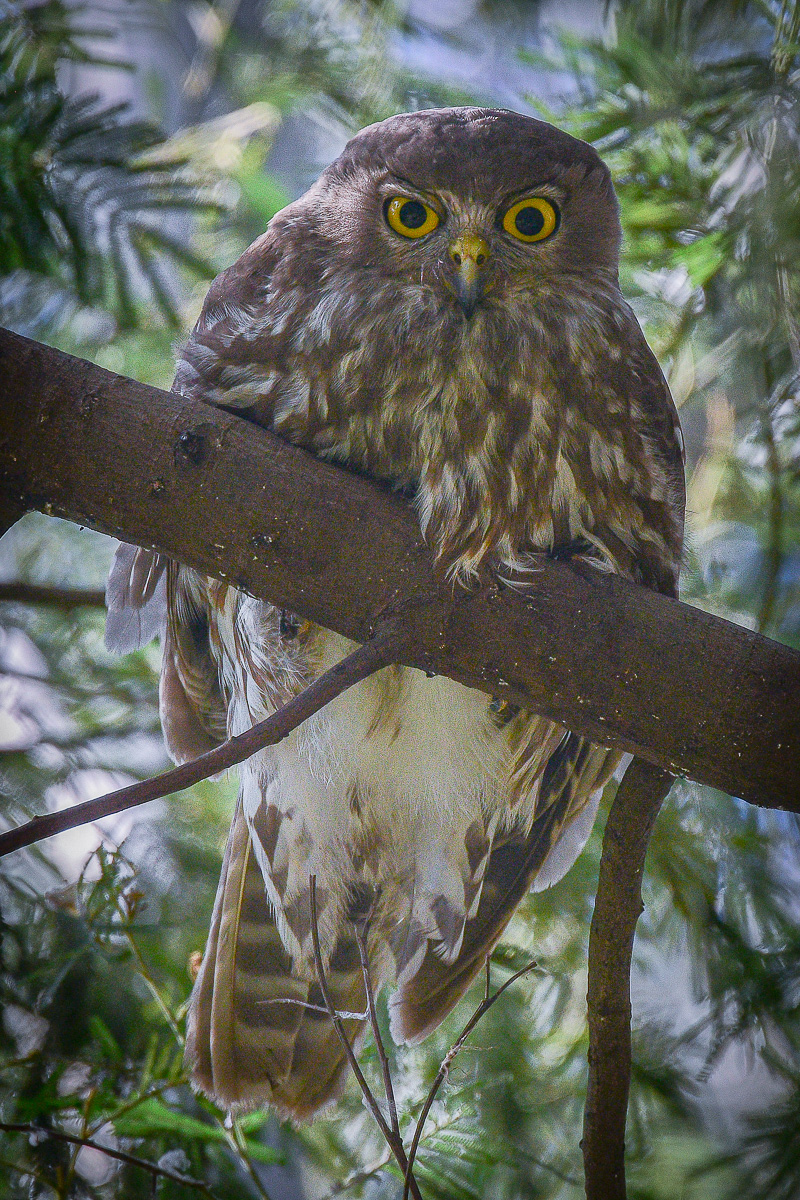
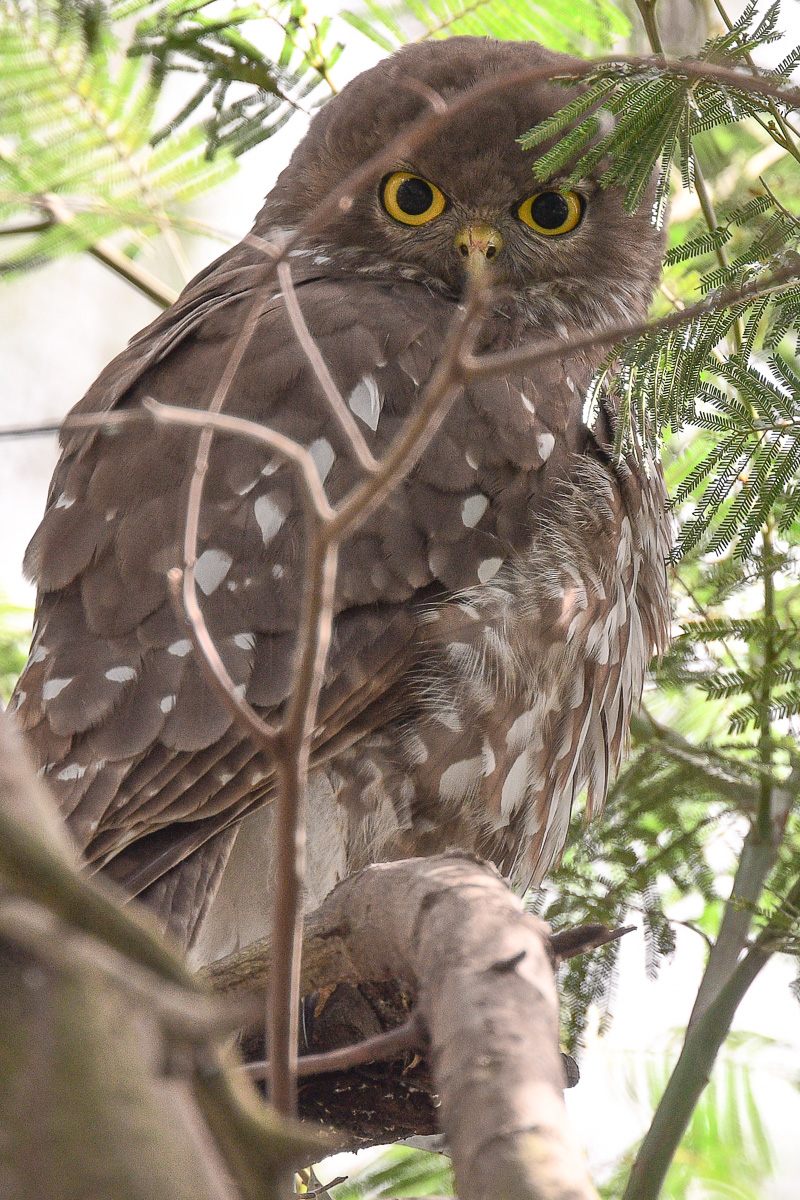
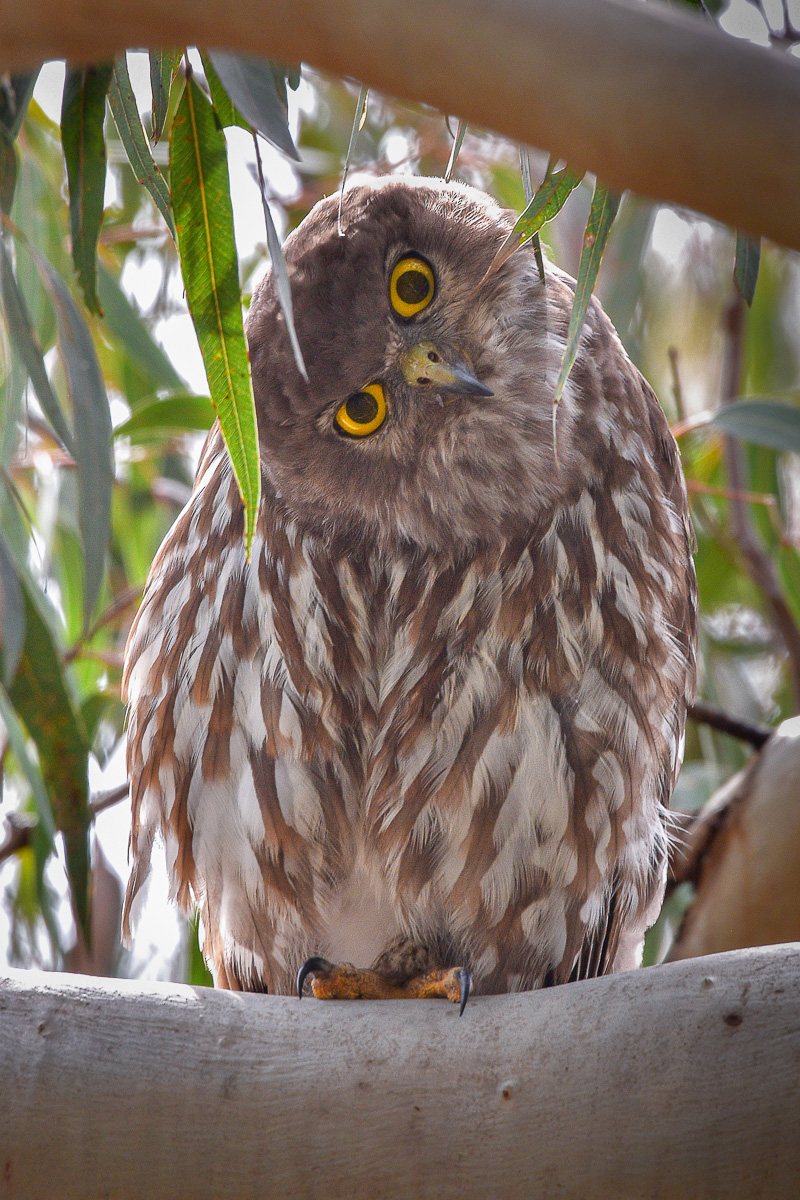
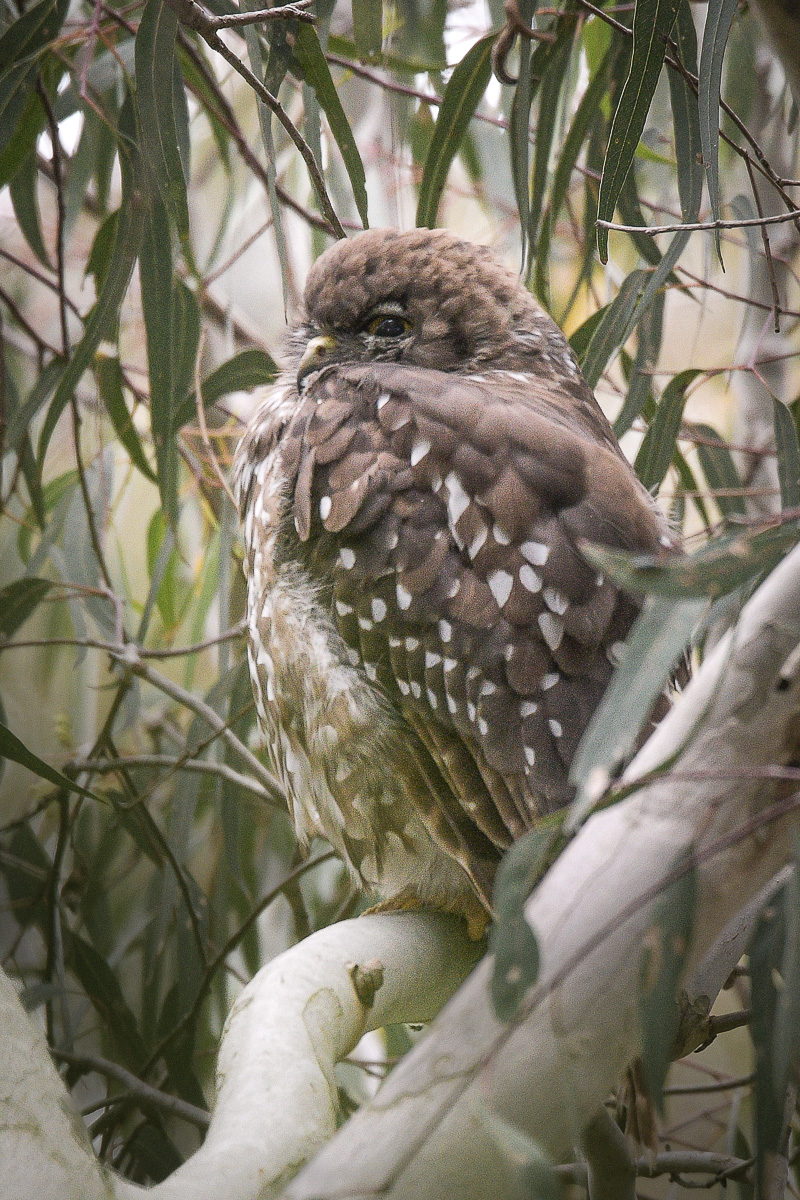
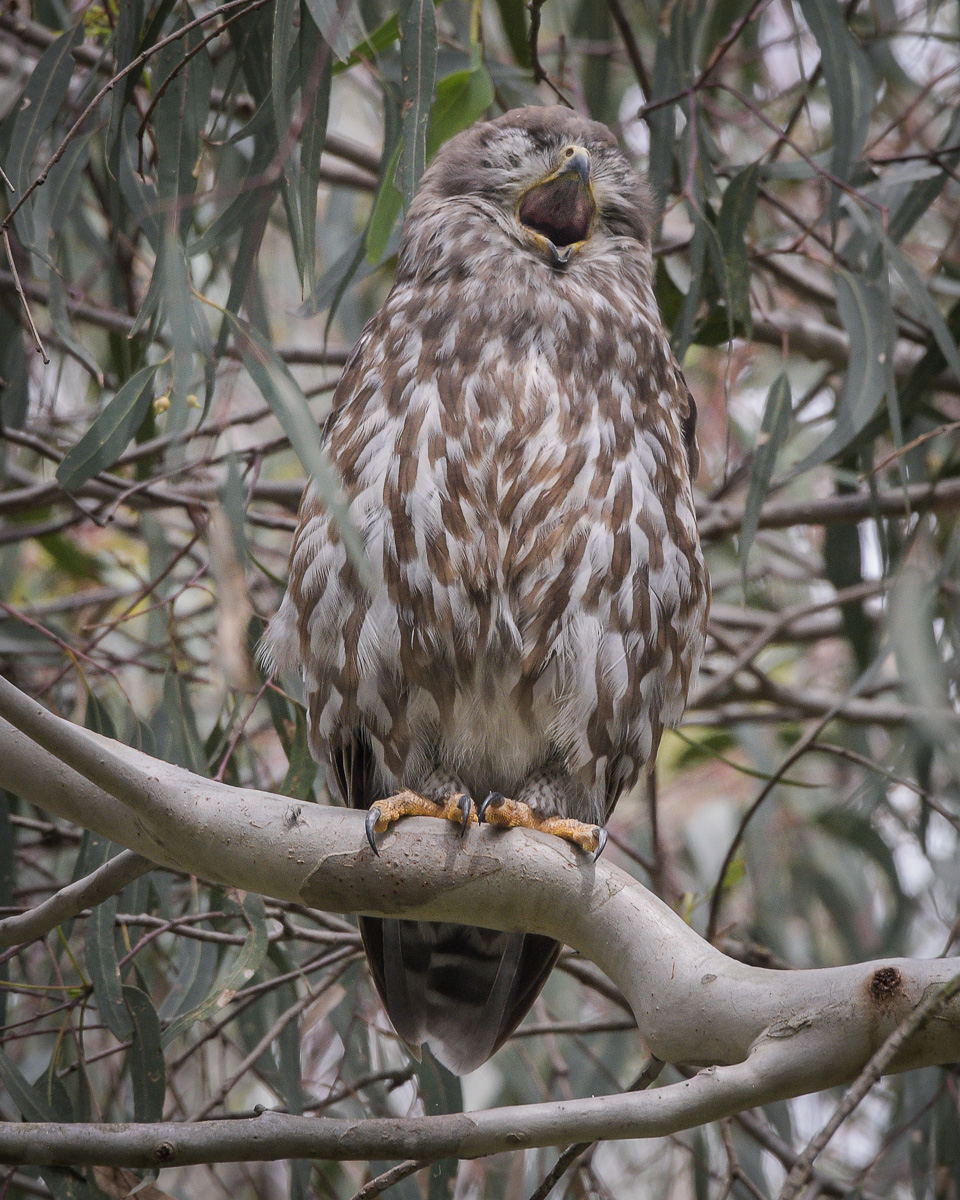
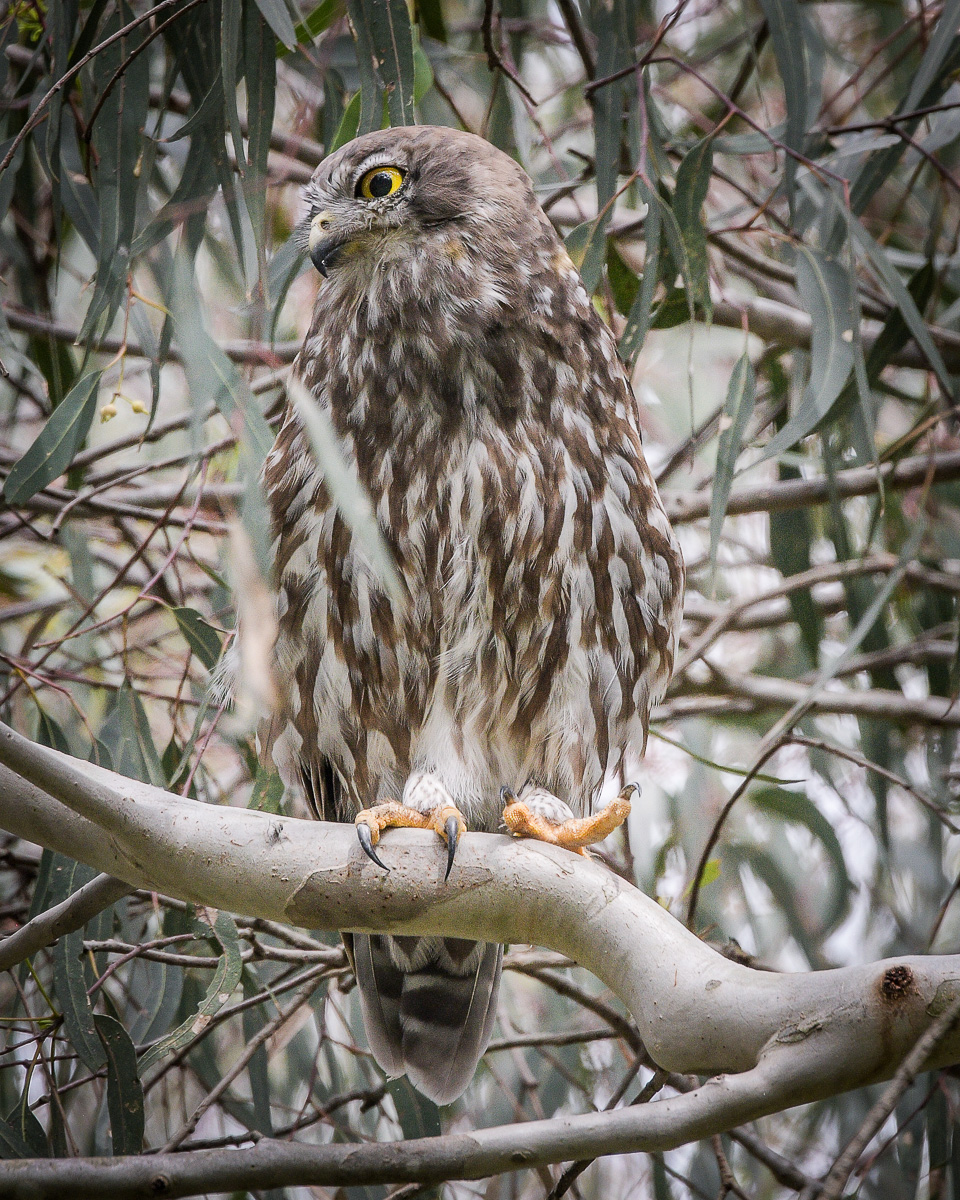
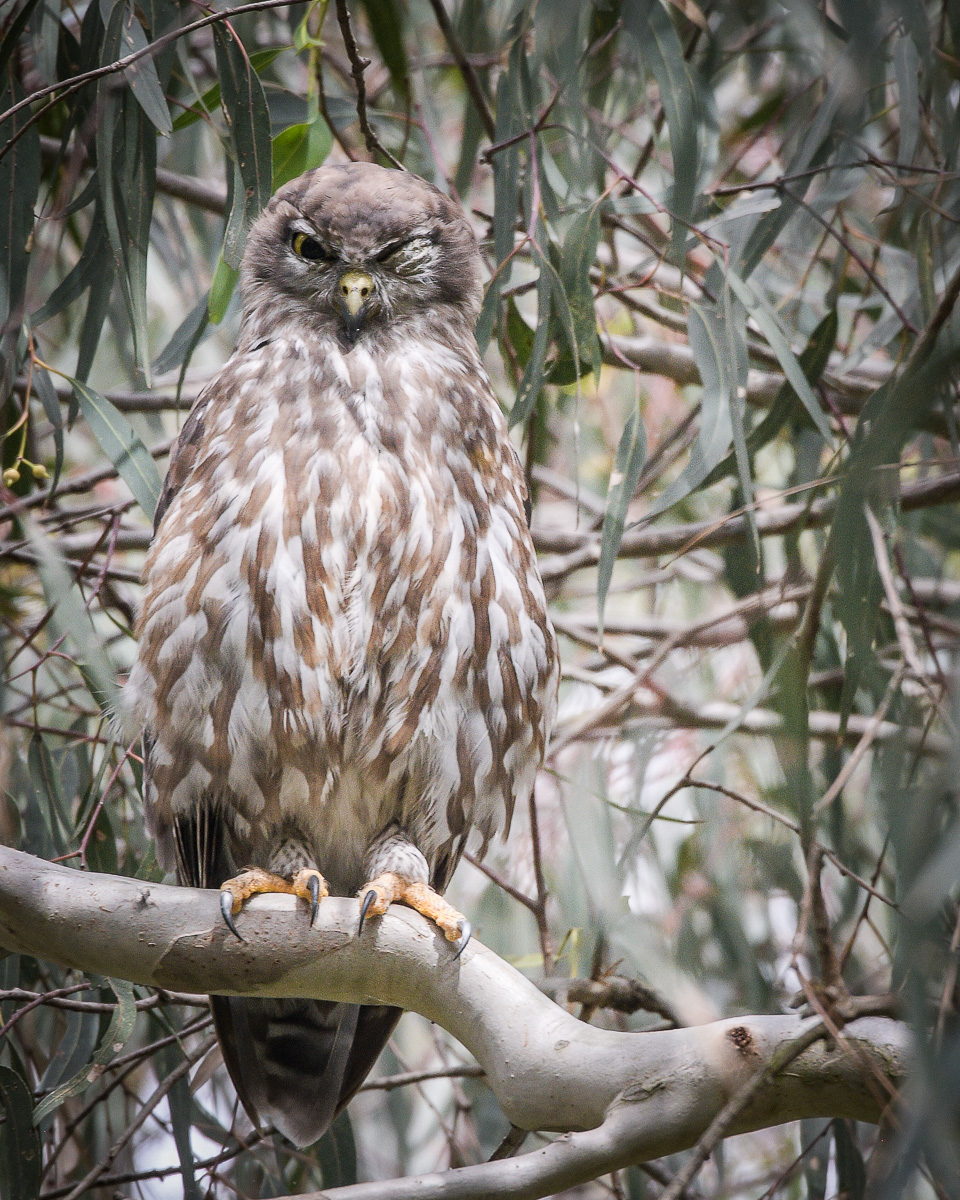
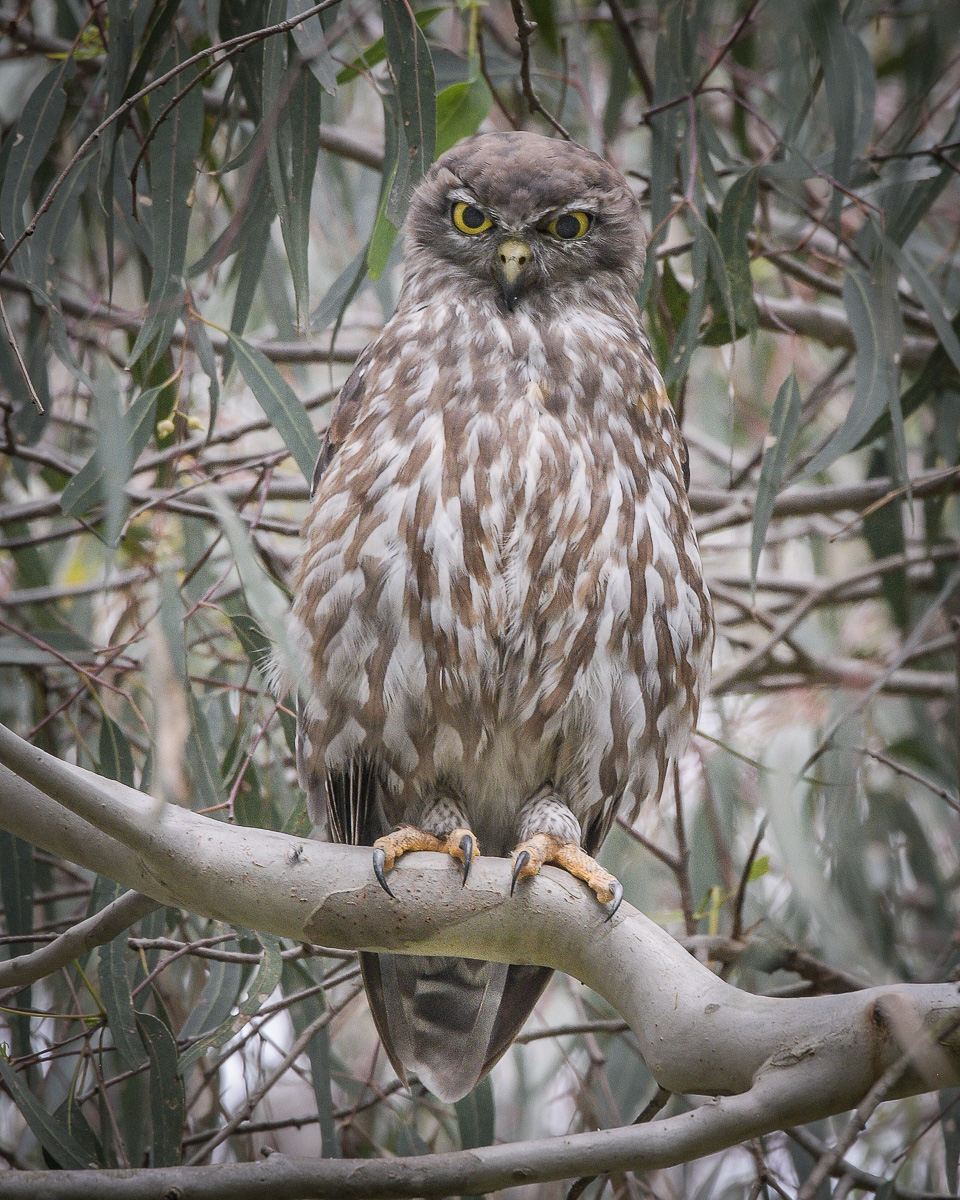
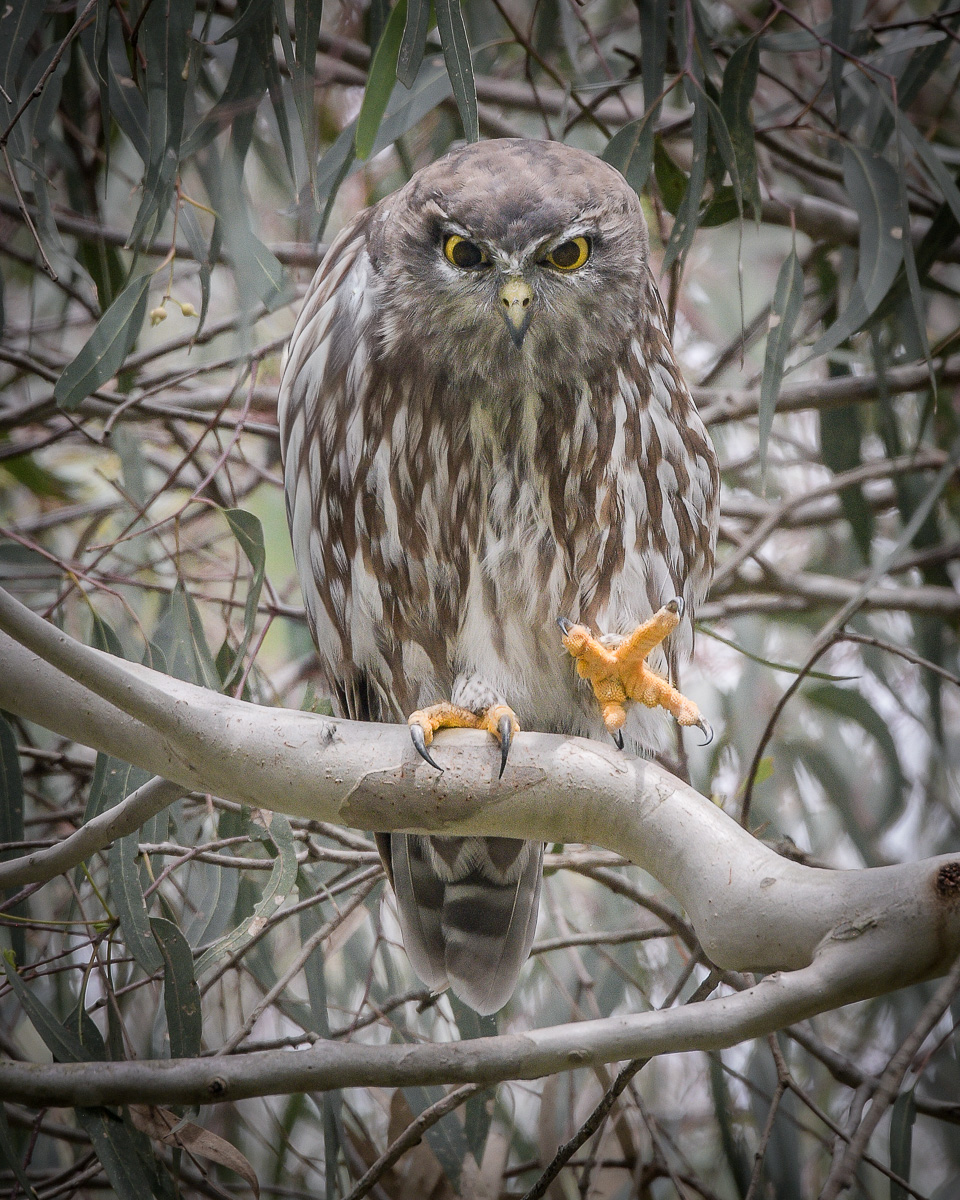
Several months ago, a Barking Owl, began its ‘woof woof’ calls along the banks of the Werribee River.
Like all media senstations, what began as a trickle quickly escalated into a flood of postings and every birder and photographer worth their “Hits Record” began the, as Pooh would say, “Expotition” to find the Owl.
Unlike Owl, in the Pooh stories, this one did not have a notice at the door. For those who have forgotten (how could you!) , here are the notices from “Winnie the Pooh (1926)

two notices (which were written by Christopher Robin):"PLES RING IF AN RNSER IS REQIRD", and "PLEZ CNOKE IF AN RNSR IS NOT REQIRD"

You might also recall that the cord for the bell-ringer was in fact Eyore’s tail. But that is another blog.
Owl also lived in a tree, “He lives in a tree known as The Chestnuts,” described as an “old world residence of great charm”, and spells his name, “Wol”

And there any similarities between Pooh’s friend and THE Owl end.

Referred to by those who know, or wish to know, or are searching for, as “THE” Owl, as in ‘Have you seen THE owl”, or, “THE Owl is on the tree by the ford.” Or, “Here are 47 of my photos, taken with my new Cannikony with the 200-3,400 zoom lens at 64000 ISO and processed from a ‘raw’ file in the latest CapShop software using a LUT designed by little eleves in a forest of the wol.
3,590 hits and counting. “

EE and I had generally left the owl in peace since its arrival. And as EE had thrown a fetlock, we had been spending less and less time in the area, until finally surgery brought our adventures to a stand still (pun sort of intended)

So being cognisant that I’m going to add to the internest incest of “THE Owl” here are a few from the past few months.

Enjoy

Drops of Jupiter in Her Hair

“Now she’s back in the atmosphere…”
You may know the song by the group, “Train”.  It’s a fine piece of poetry that suits this blog well as I’ve not published for nigh on six months.

It also has a line, that as a photographer I’m enamoured with, “Did you dance along the light of day…”

So no, the blog hasn’t been busy the past few months, and mostly because your scribe and his character set have been either busy on other things, or in the case of EE laid up with a bung knee, that in the end has had some surgery, and finally the pain has gone and now its some exercises, mostly walking, to bring  the episode to a conclusion.

So we have spent little time in the bush, and even less time working with bird photography.    And just as well, as many of the locations we normally would work at bereft of birds.  Like someone came with a big vacuum cleaner and scooped them all up.

Followers of the blog from early days, may recall  that I usually re-jig the web page during the end of the year break and move in a slightly different direction for the new year.

Haven’t figured it out in detail yet, but after a bit of introspection, I decided to pay the hosting and naming rights for 2026, so figured I should at least attempt to get some of my money’s worth.

Blogs of this sort seem to become a little like dinosaours, overwhemed by the next new tech thing. Several I’ve followed over the years are now either defunct, closed, or just a mere shadow of their former glory.

So,  watch this space, as they used to say.

I’m thinking that one photo and a few words or a few photos and less words might be the direction.
Also, I’m including a link to my Flickr site as that has regular new work featured and it will show up at the bottom of the blog as a clickable presentation. 

To everyone how has stuck with the blog, and those who have been recent viewers, Thanks.   I appeciate your comments.

I hope the festive season be one of joy and peace and that 2026 be the year for great photo opportunities for you.

“… may the wind sweep you off your feet”

Brown Falcon: Looking for a Better View
From my Flickr Site Click to scroll through the current images.

Come, Dance with Me

EE, Mr An Onymous and I had made an early morning trip to the Western Treatment Plant.
One of those days that only Melbourne in winter can produce. Out of the box. No wind, crystal clear blue skies and warming sunshine. Brisk, glad to be alive temperatures. Air quality: Still.

We spent an hour or so with a group who were staked out waiting for the “legendary” Orange-bellied Parrot to make an appearance. And of course we’d heard it all before. “Oh, they were on those shrubs about 45 minutes ago…. 😦

Still we did manage to see a couple of them streak over the bushes and hide among some trees.

We ventured on.

Later in the day, (my, how time flies on a blog), we spotted a Brown Falcon zip across a bund and over a pond, to land on what looked like a small mound of stones and earth. This bird was particularly interesting as it had an almost pure white chest. And, as it turned out, was one of a pair, both in light morph. But that is for another story.

We parked near said Falcon, and EE noted, as she does, up the track was a pair of Brolga.
We slowly walked up toward them. They had settled on a small ‘peninsula’ of grasses on the pond so felt safe enough, and after a couple of checks went about their business. We stopped at a repecting distance. They were in no hurry, and neither were we, so it was a great opportunity just to watch.

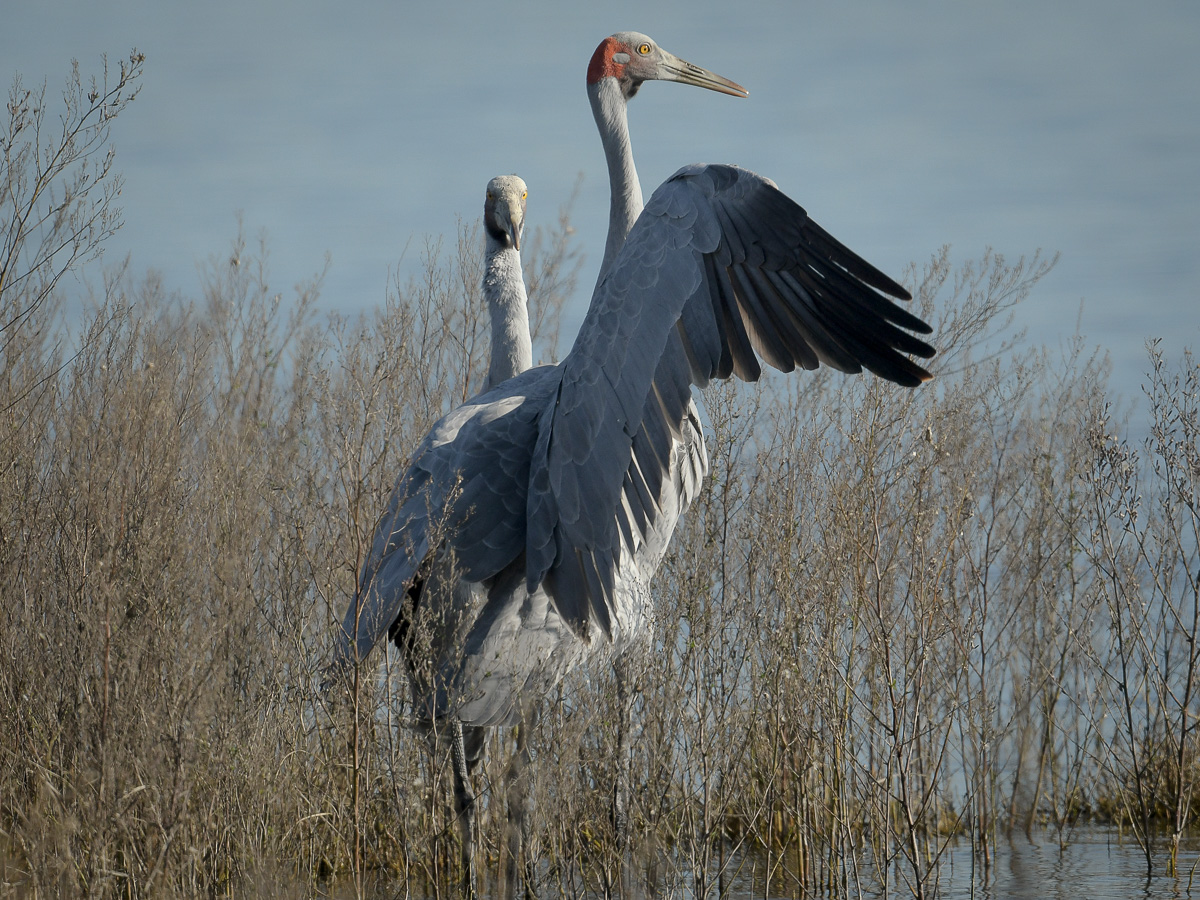
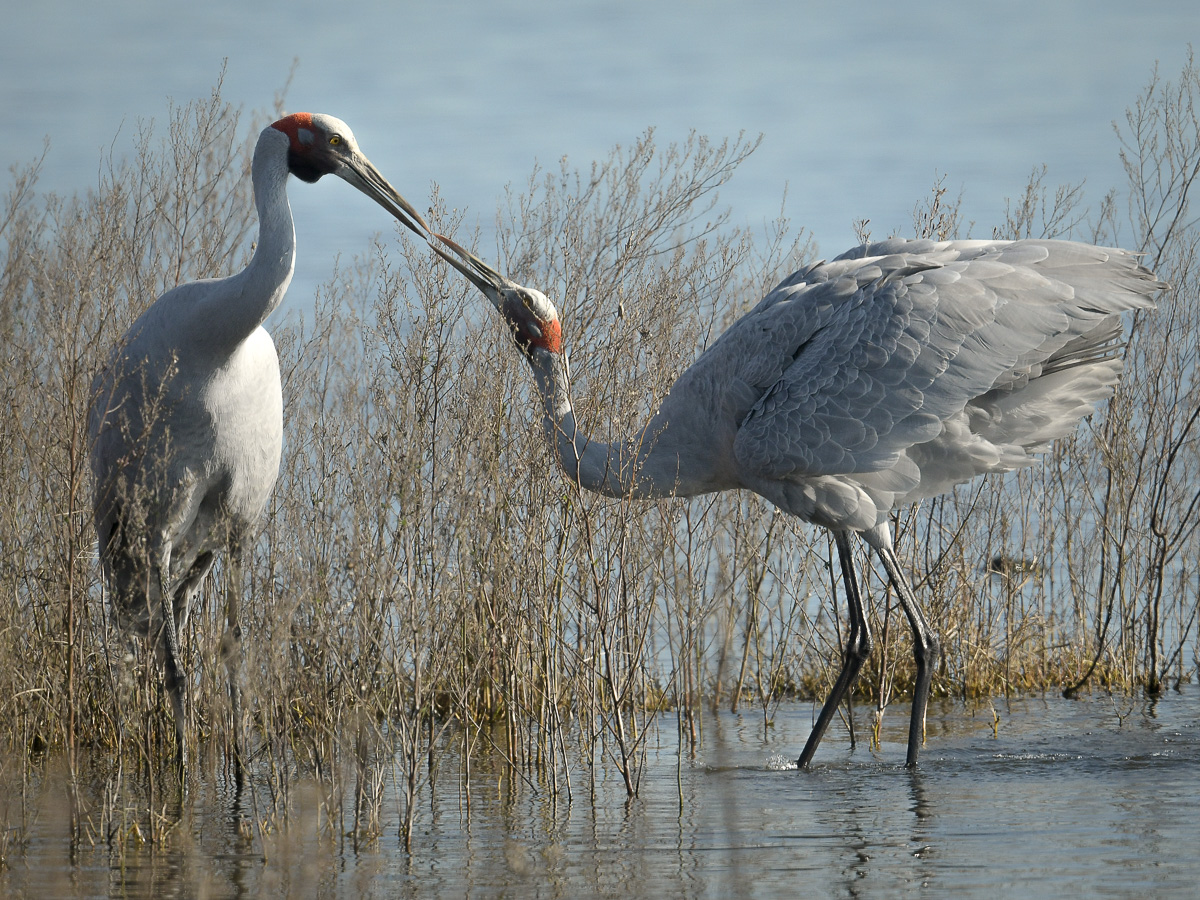
When on a sudden, one stood up, waved its wings, touched beaks with the other and proceeded to waltz around the grasses and out in to the water.

And for the next five minutes we were spellbound by the performance. Sadly I was much too close with the long lens and missed all of the aerial leaps and bounds.
Fascinating to see such a big bird delicately lift into the air and featherlike return to the water.
Finally there was another round of beak-touching and a small splash in the water to cool down.

They walked up the bank, and crossed the road in front of us without any hesitation. Once across the road, into the next pond, a preening session completed the performance for the day.
With three large grins we walked back to iAmgrey and headed off to Gerry’s for a coffee and chat about the experience. It was one of those days when a short piece of video would have been just the ticket.

Enjoy.
Down the Up side

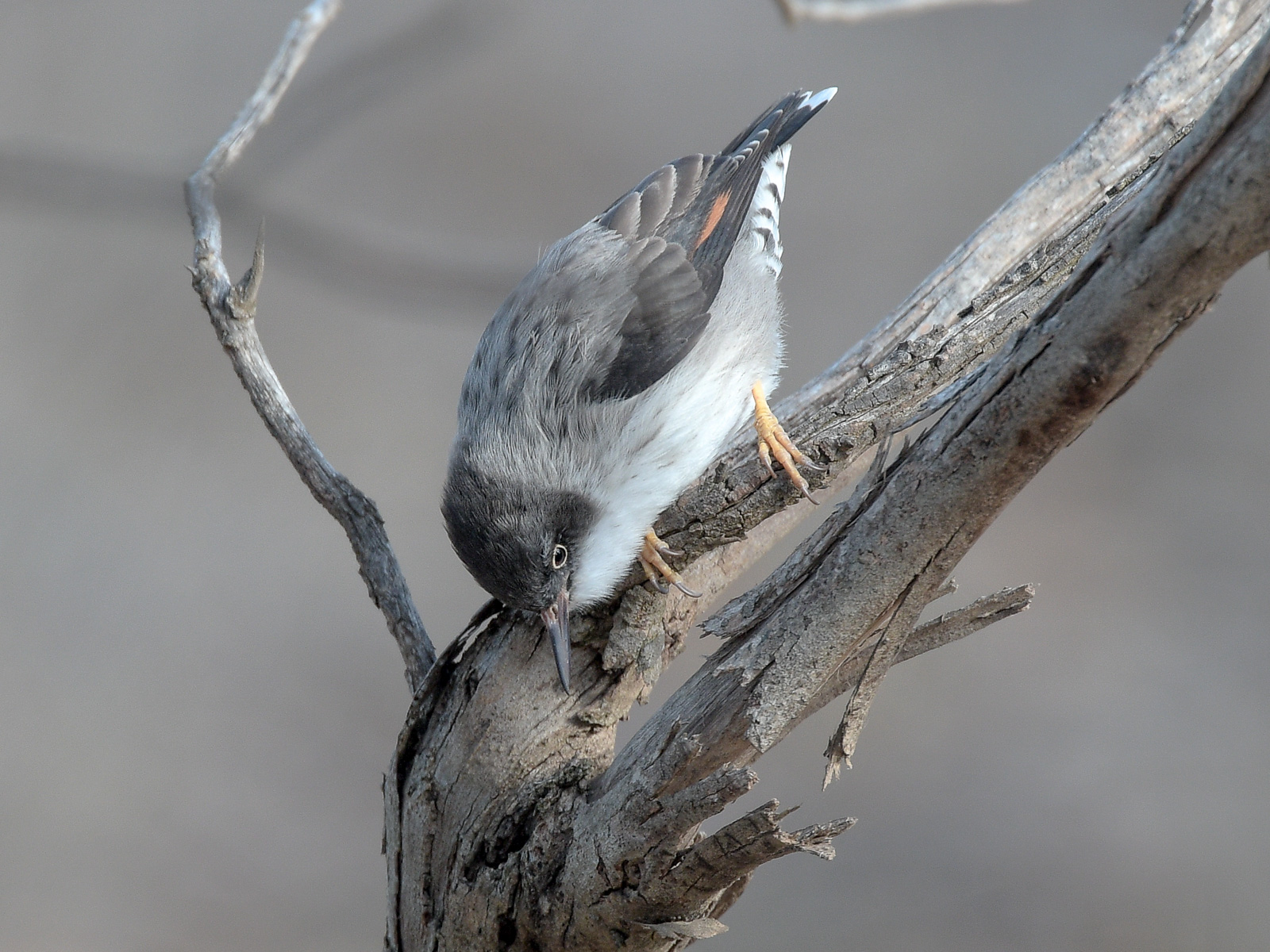
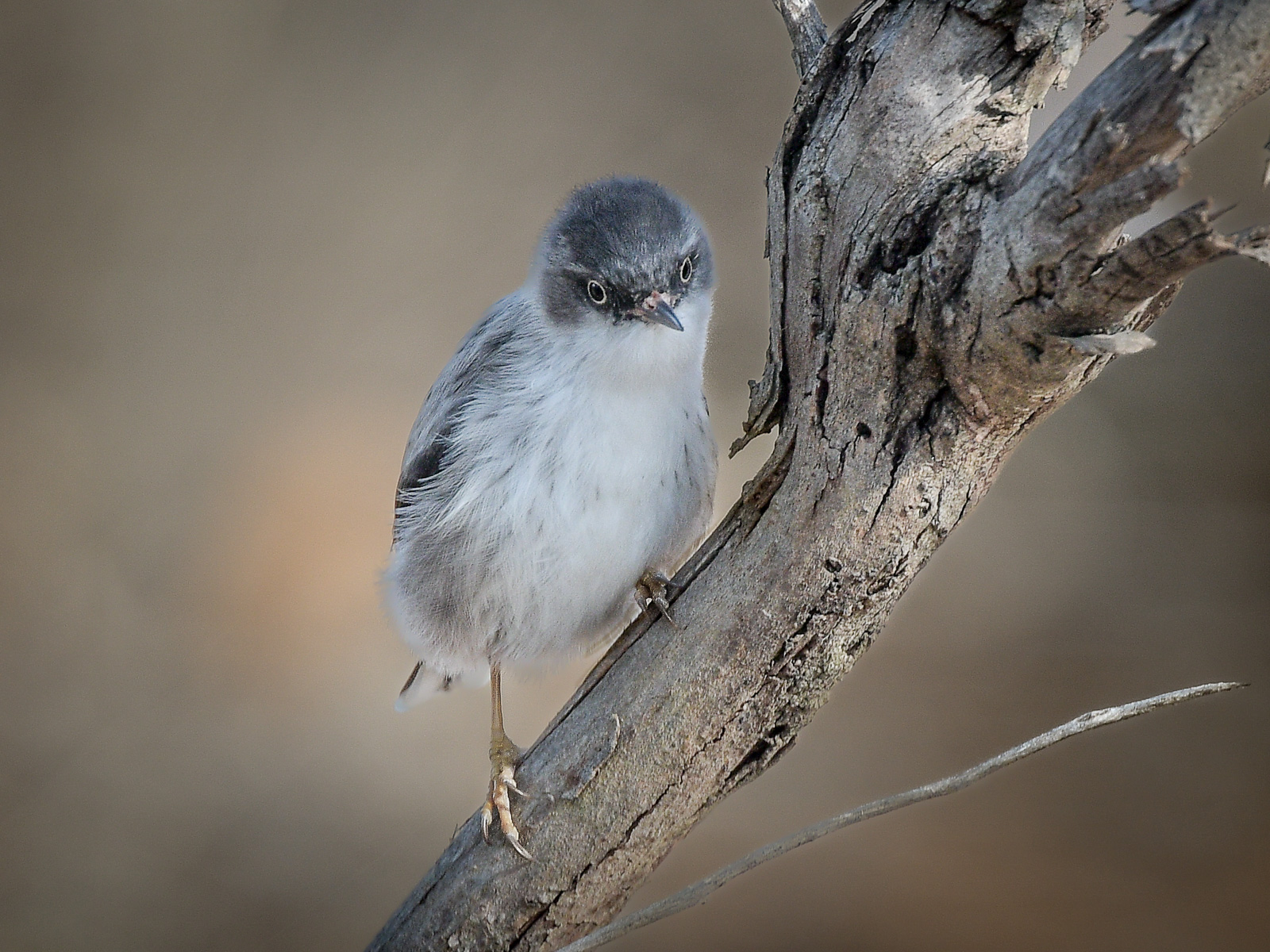
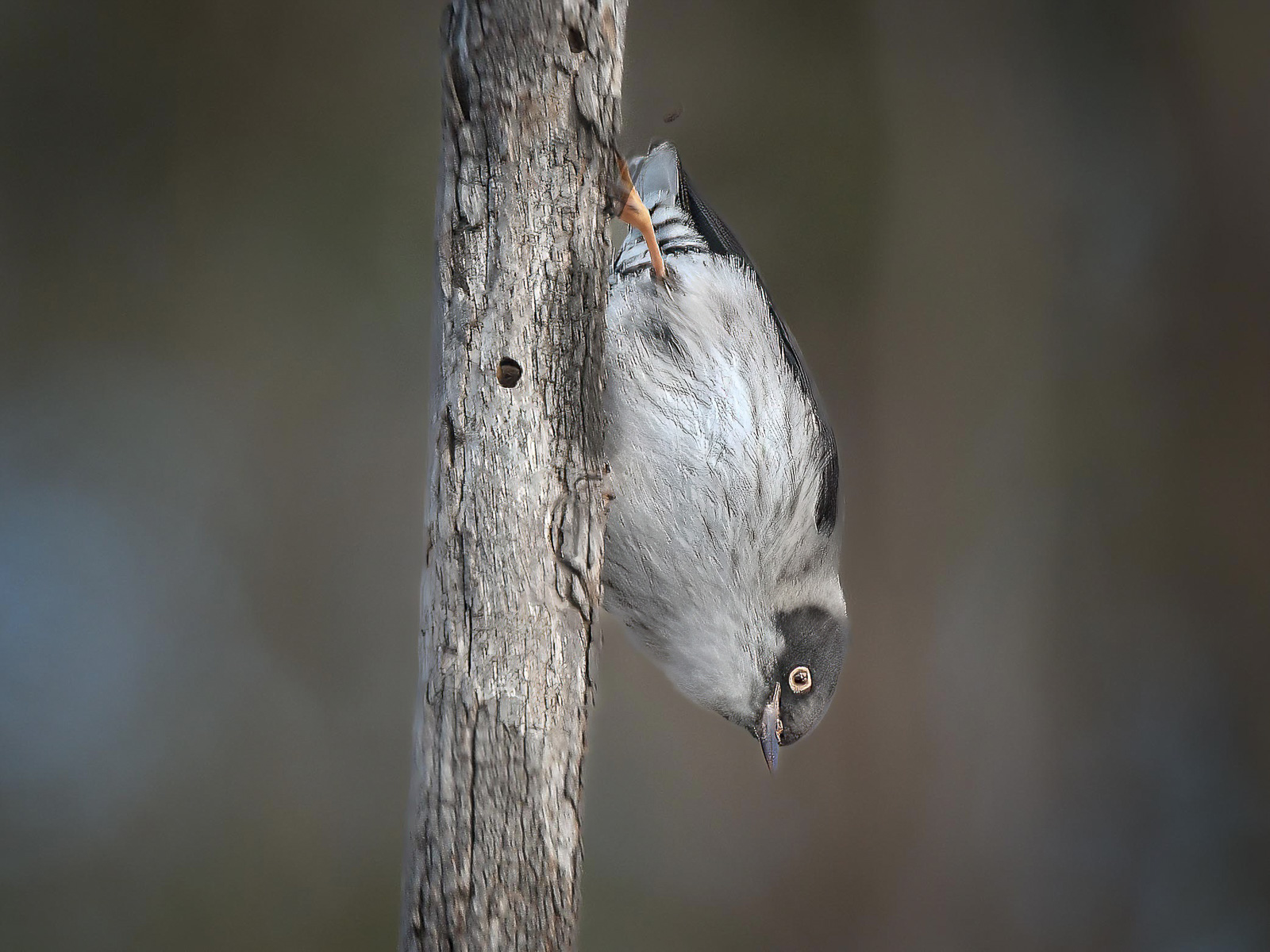
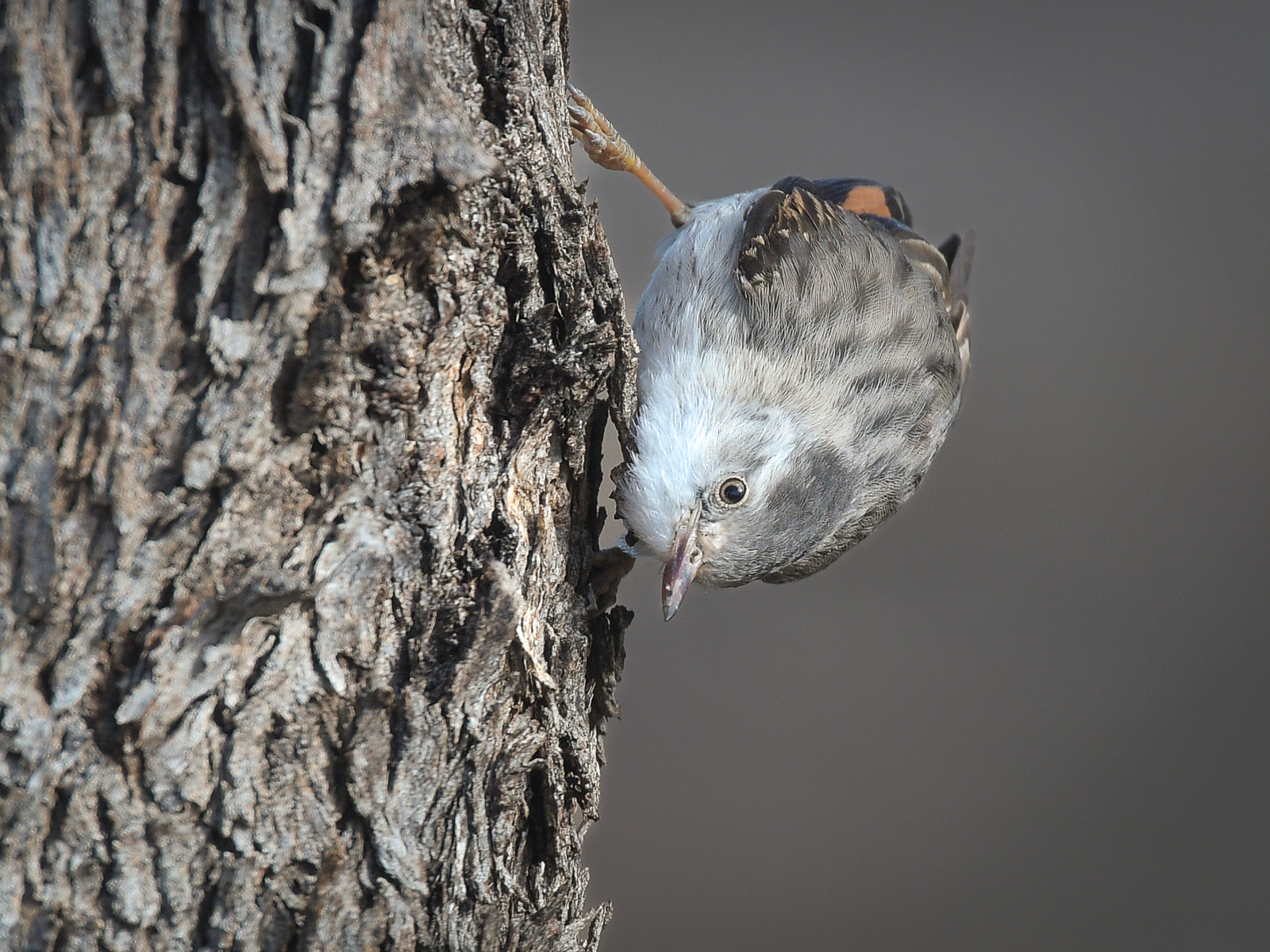
Varied Sittellas form part of mixed winter flocks in Grey Box Forests. (Probably do in other forest settings but for this page, I was working in my fav forest type. Grey Box.)
We found a mixed flock that included some lovely Golden Whistlers, Silvereye, Flame Robins a number of Honeyeaters, including Brown-headed, together with several Jackie Winter as well as a mix of Zebra Finches and Thornbills, mostly Yellow-rumped. And 8-10 Sittellas.

Sittellas are interesting as they tend to work over a tree by starting at the top and then spiralling downward. Unlike Treecreepers which tend to work up trees.

With so much happening it was hard to know where to look next, but I stuck with the rapidly moving Sittellas, (only to be distracted occassionally by the Jackie Winters- as you would expect if you’ve been following this blog for any length of time.)

In the end, I ran out of time, as my transport for the day was ready to move on, but I was pleased to drop the files into Lightroom and re-enjoy the time.

Enjoy.