
Category: Uncategorized
Few Changes in Birds as Poetry blogsville
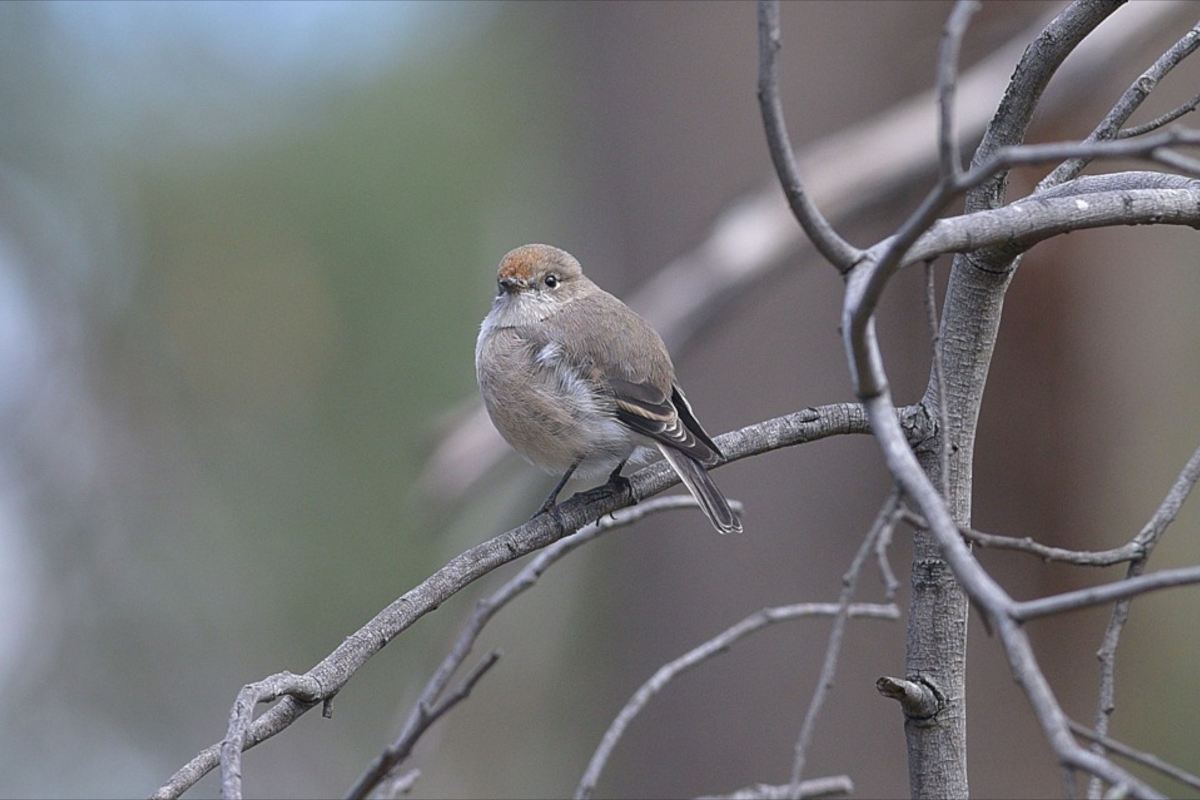
Astute reader that you are, you’ll note that the corkboard backdrop (sooo yesterday, – Paris Hilton), has disappeared
Also each new blog will get a single header image to establish the theme of the blog.
Also for the time being, the images/story will be generated on my other site and sent here for re-blogging. (Not much else on other site, but I can experiment there to get the best look here.
Expect to see the overall theme change on this page, although I’ve said that before and its never happened.
Oh, and while I’ll continue on Flickr, expect to see the images on this site show more of the story of each event. I can’t make Flickr tell a complete tale.
More to come as I try and redevelop this to express where I’m going photographically in 2015 and beyond.
Probably see many more quotes from Jon Young and Rod MacKiver, and Lao Tze and Winnie the Pooh. Oh, well its that sort of mind.
Enjoy the ride.
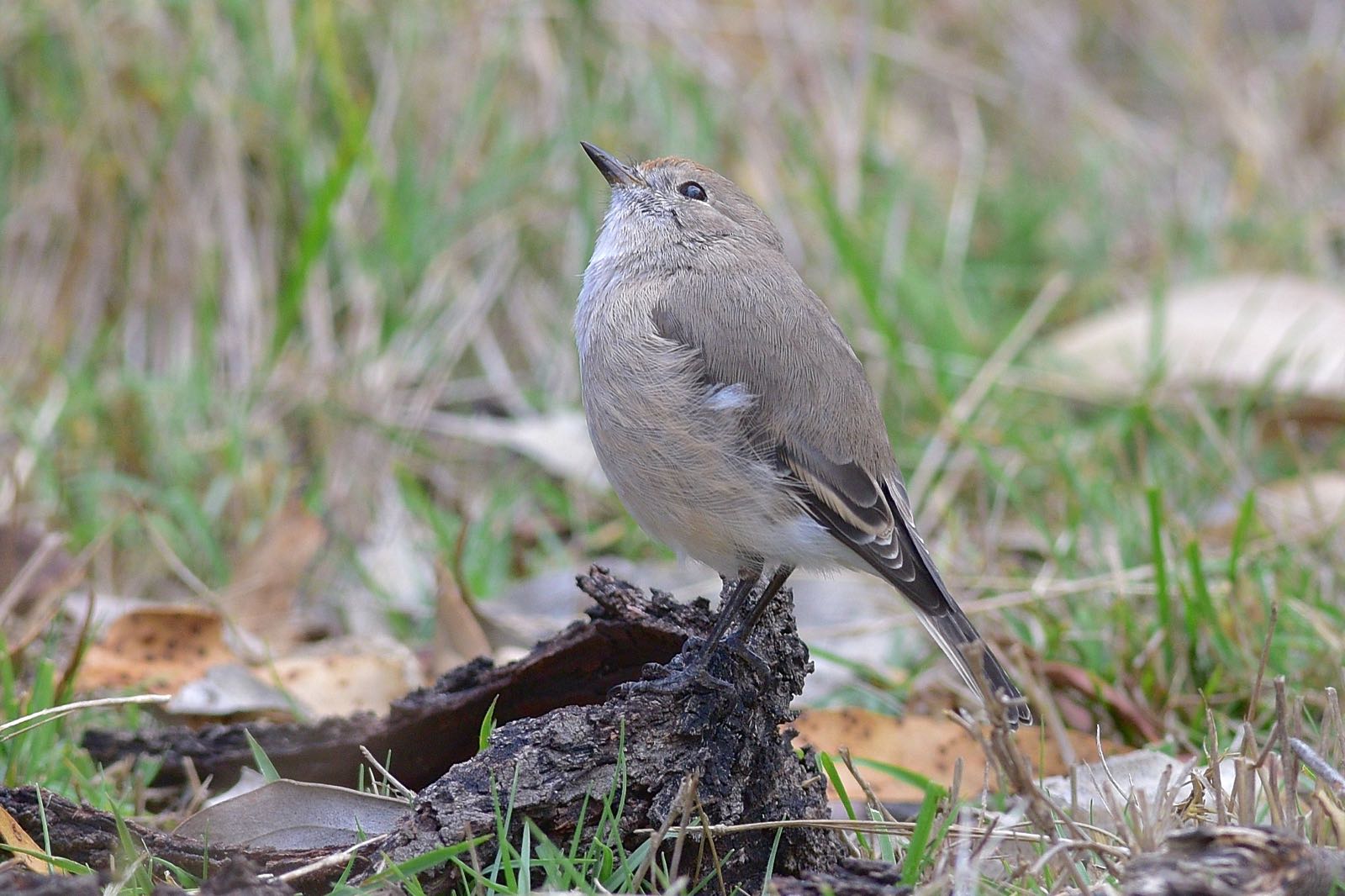
Walking at Woodlands

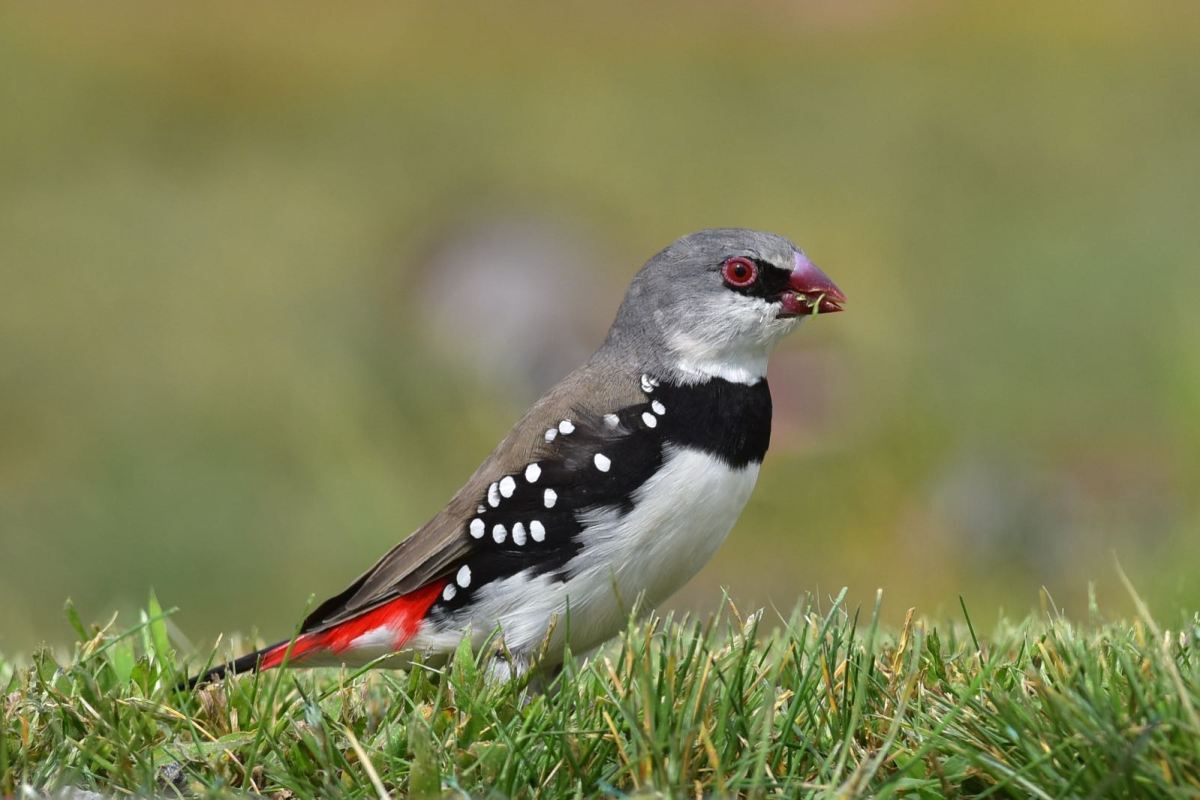
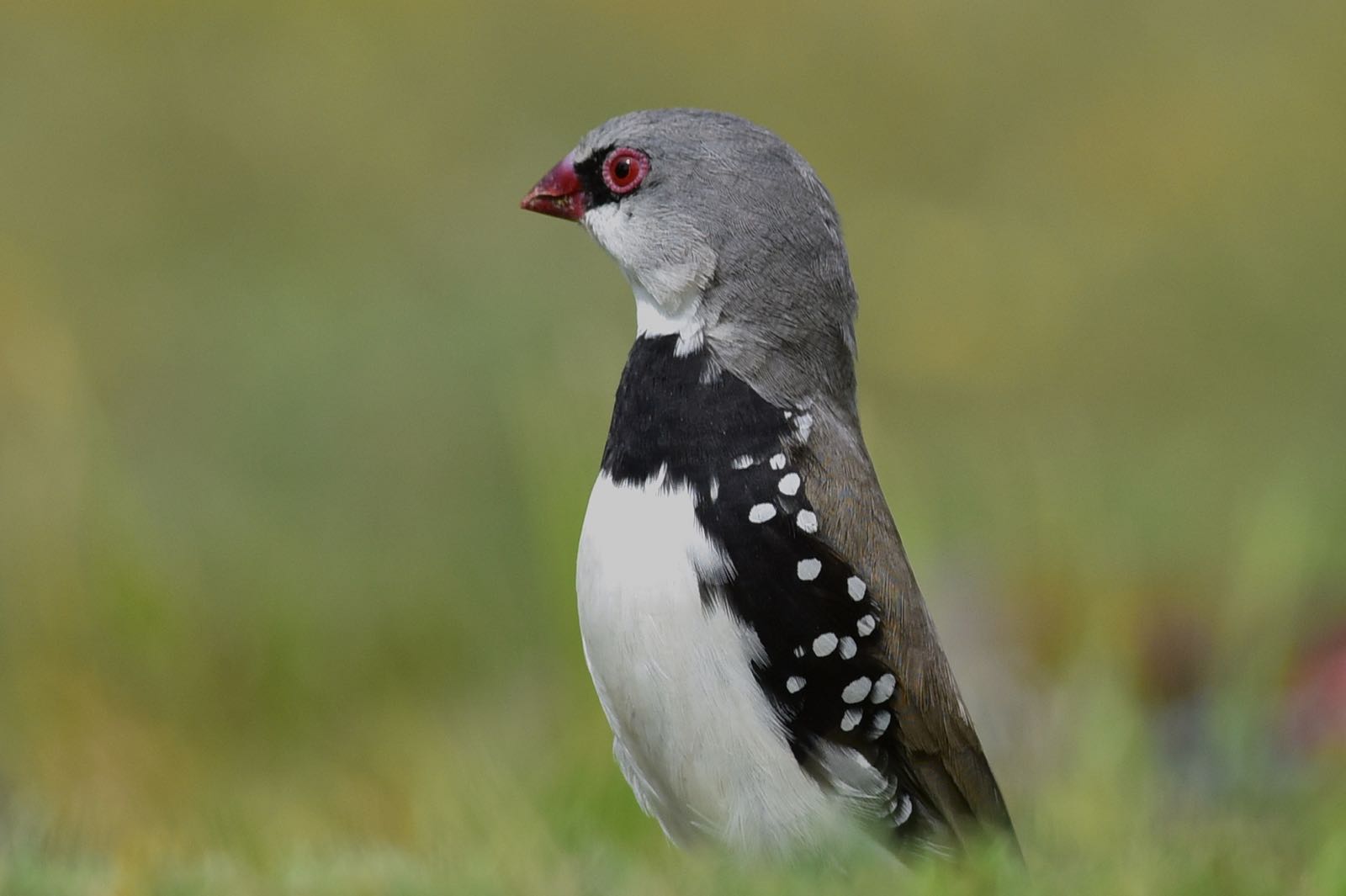
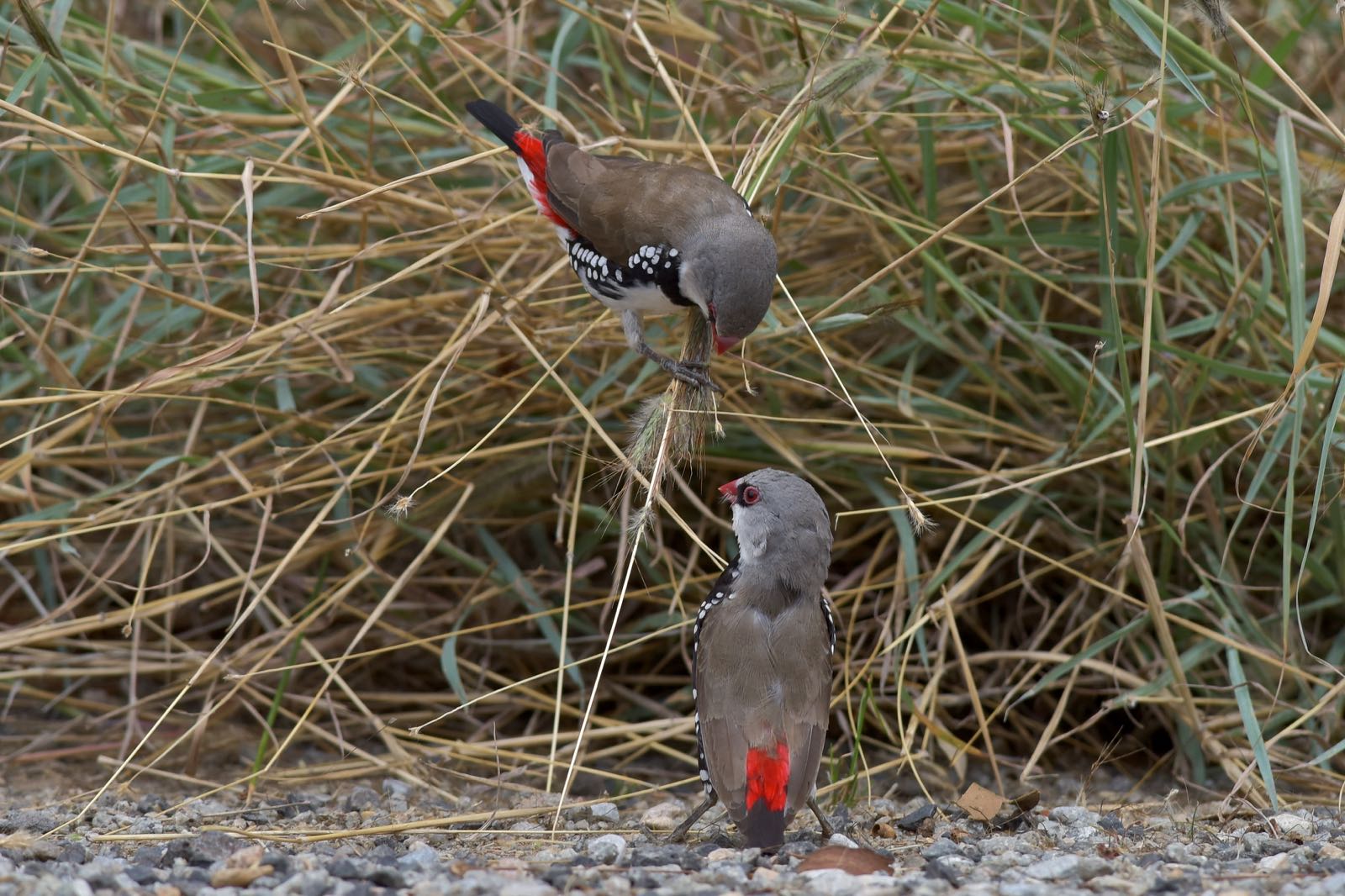
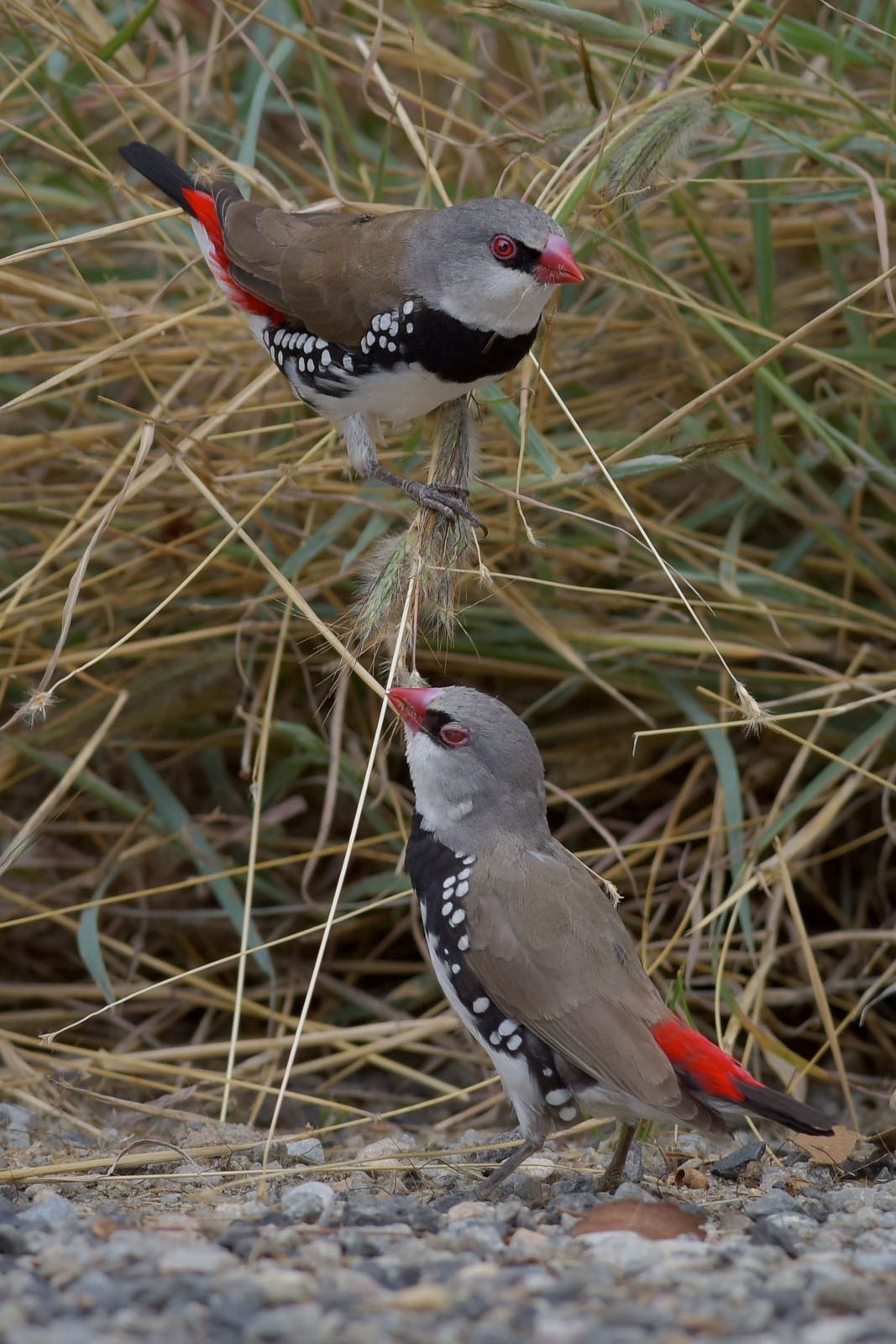
Diamond Firetails at Eynesbury
Someone dropped me a line and asked had I abandoned the Birds As Poetry blog.
No not really.
Forgotten about it. Perhaps
Ignored it. Certainly
Too busy to do much. Probably.
So busy with Flickr. That’s a fact.
Slowed down by the new WordPress interface for inputting blog pages. Yep, that would do it to.
But abandoned, is such a, well, final, word.
So a lot of things I could write on have been let go.
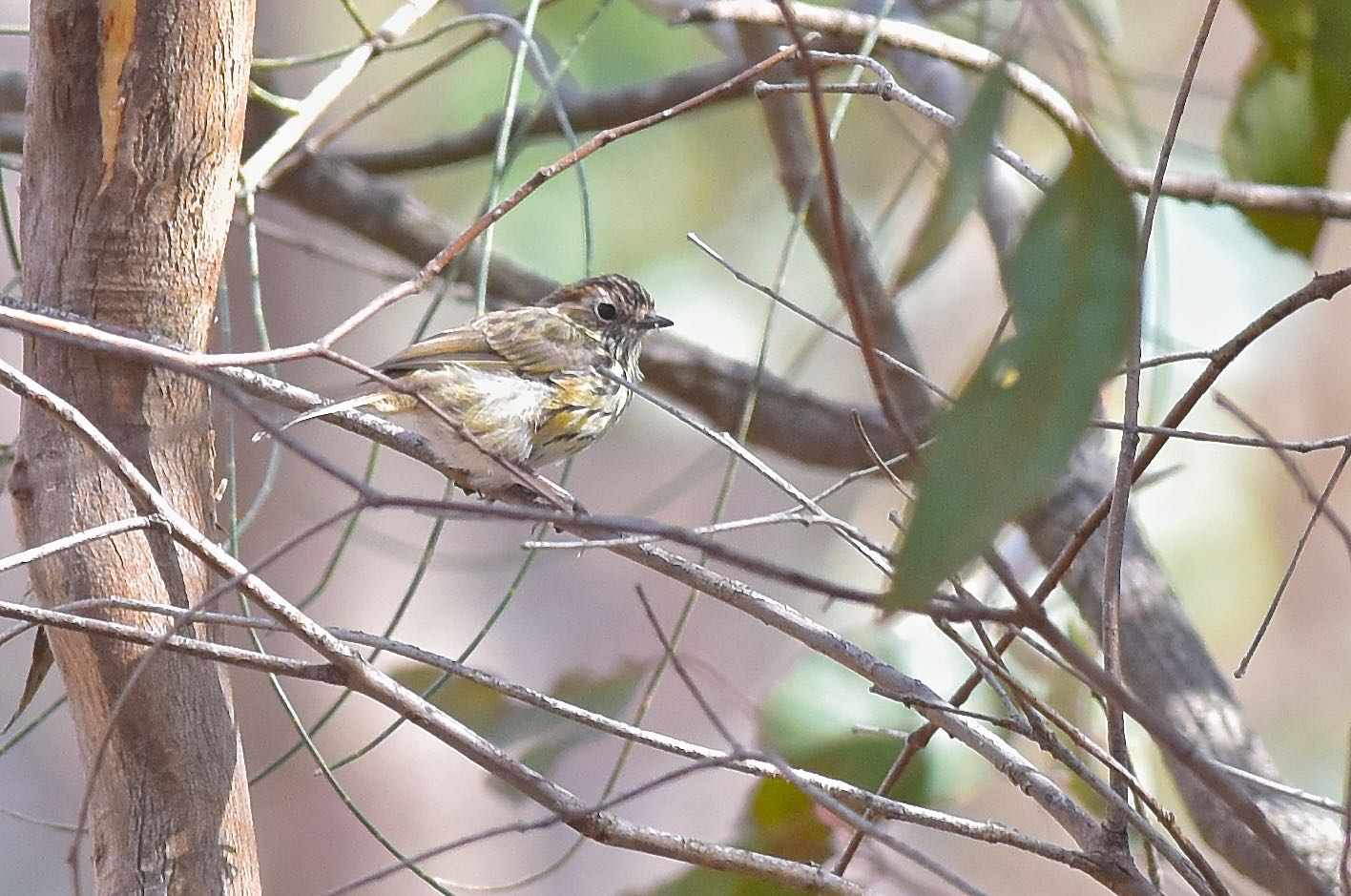
We took a day out to Eynesbury to look for specifically “Speckled Warblers”.
In the end we were getting ready to load up the gear and come home when EE said, we should check over in that scrub just near the golfcourse. And so, we went.
Now this area is actually the pathway for the golfing dudes on their motorised buggies to get from one spot to another. So its a little gravel track, and a beautifully maintained lawn on either side.
And it just so happens that the grass had been mowed that very day, and it freed up all the seed for easy access to your average seed eating bird. And what we found was a large party of hunting Diamond Firetails.
Now as it happened EE had taken the camera with her. Mr Skeptic had left his in the car. Too heavy to carry the 50 metres and besides lunch was looking the better alternative.
Now of course the dilemma run (well in my case walk quickly) back to the car, by which time said Firetails will be gone, or just sit and watch someone else gleefully photograph the birds. No much of an option is it?
So by the time I’d arrived back EE and the birds had become quite friendly, and she was up nice and close. Of course big dude with big lens stomping over the grass was only going to have one effect and that would be “No birds”. So I sat a few minutes and watched. In that time golfing dudes had trundled their little truckies along the gravel, and the birds had retreated to the trees, but in quick succession returned to feed. Ah ha! saith I.
I edged over the lawn to within about 10m of the track. Next golfing trio to pass by of course put the birds up, and I moved up the extra 5 metres from the roadside and waited…
And.
Sure enough, trundling truckie disappearing in the distance, the Firetails descended.
Only problem now what which ones to aim at.
Well, that was infact the second problem. I’d lain (laid?) on the grass thinking I would be less conspicuous, but one of the things golfing grounds maintenance staff do, is to water said grass. So here I am laying in the swamp that is the well watered said grass. Soaking it up.
Still I know about wet. You eventually get dry, so I got back to the job in hand.
Enjoy.
I certainly did.

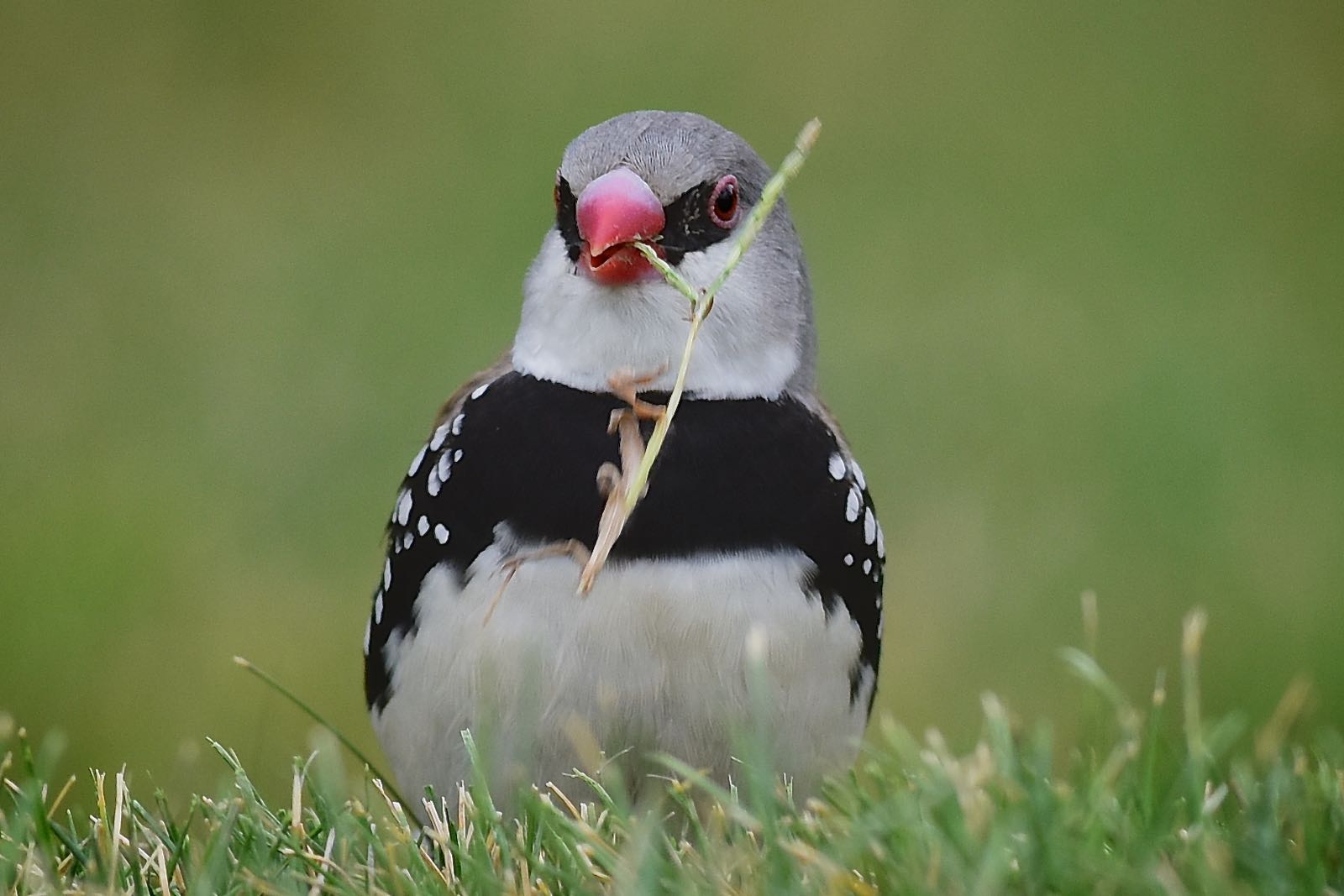
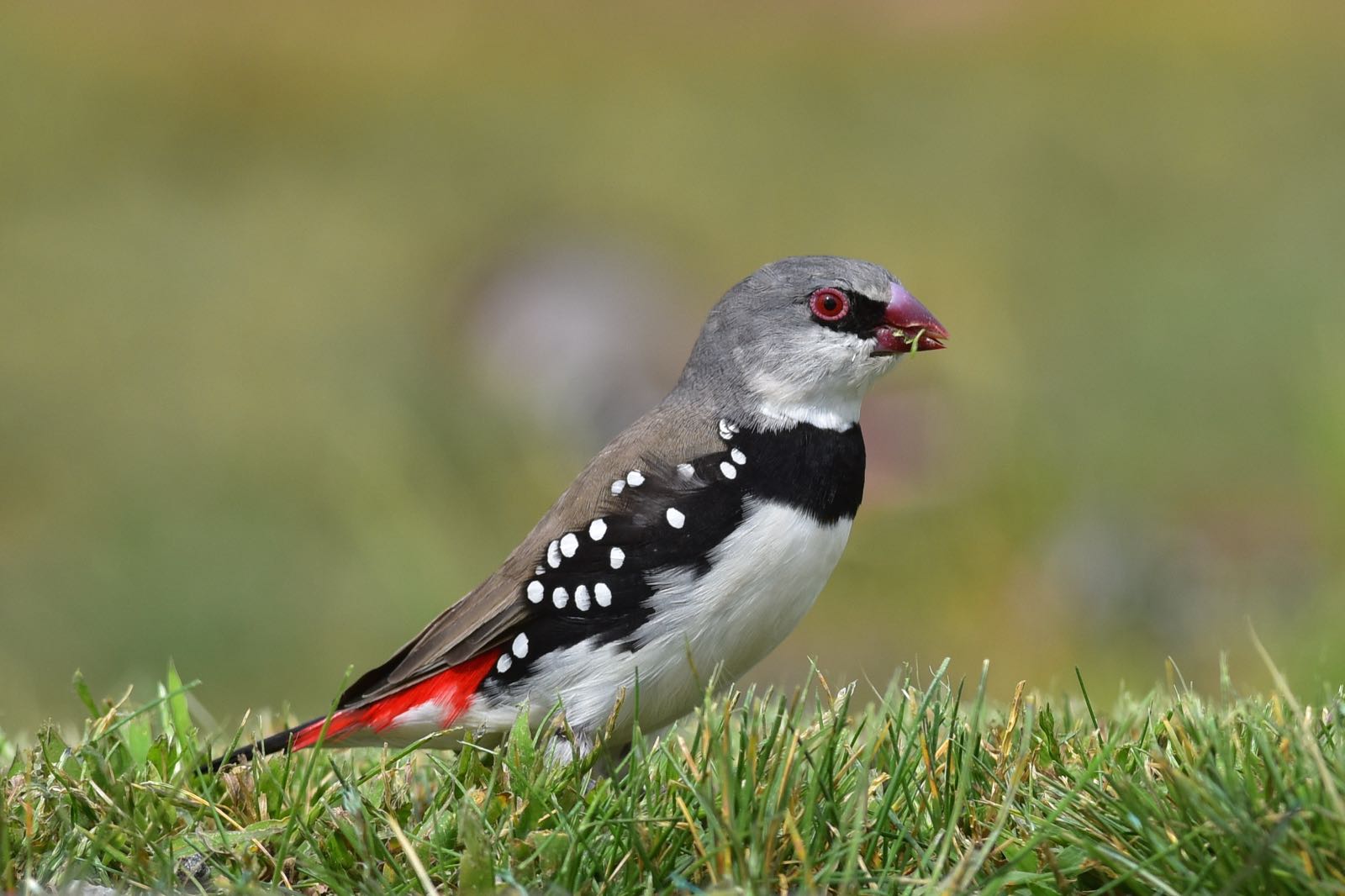
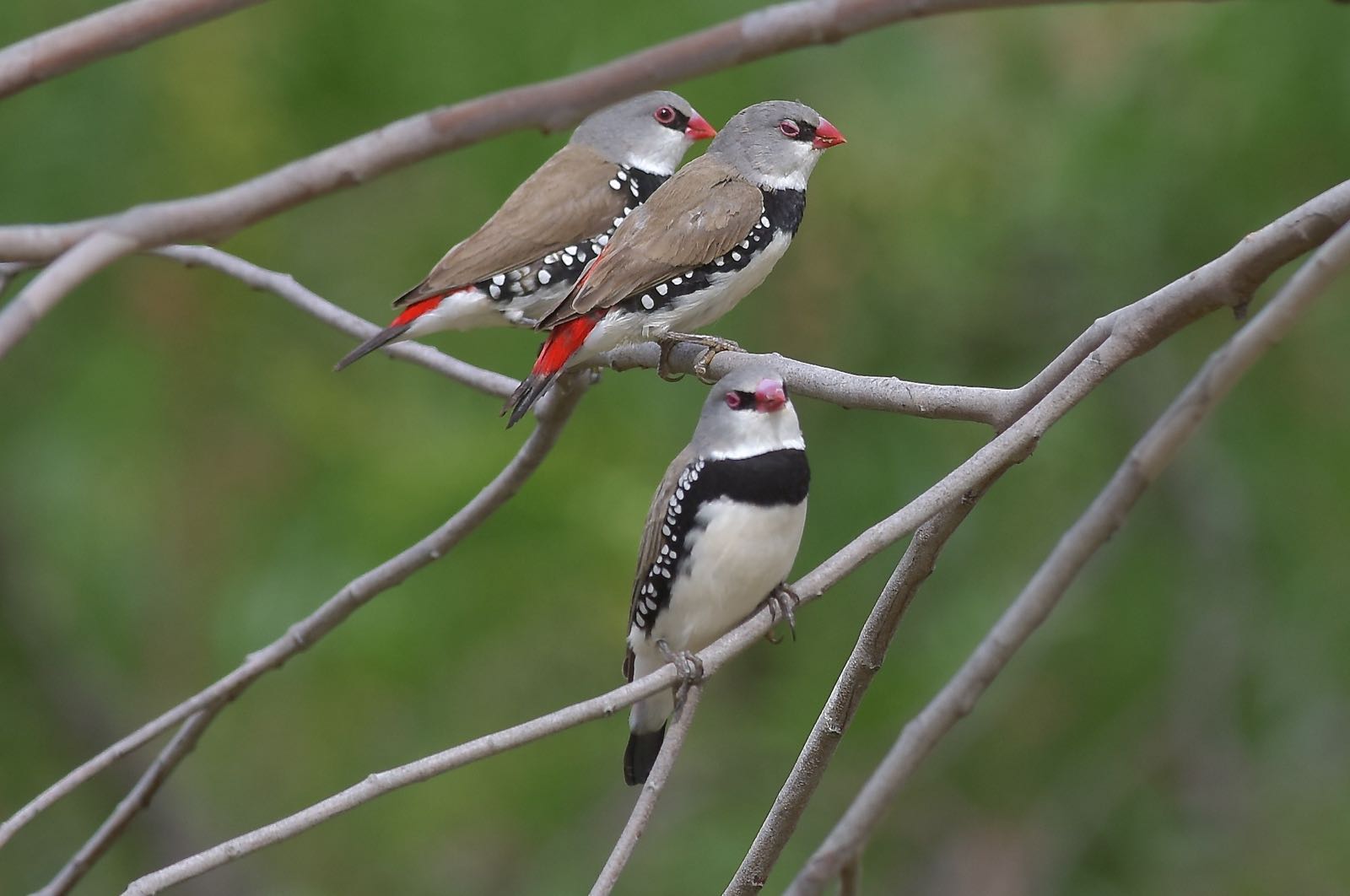

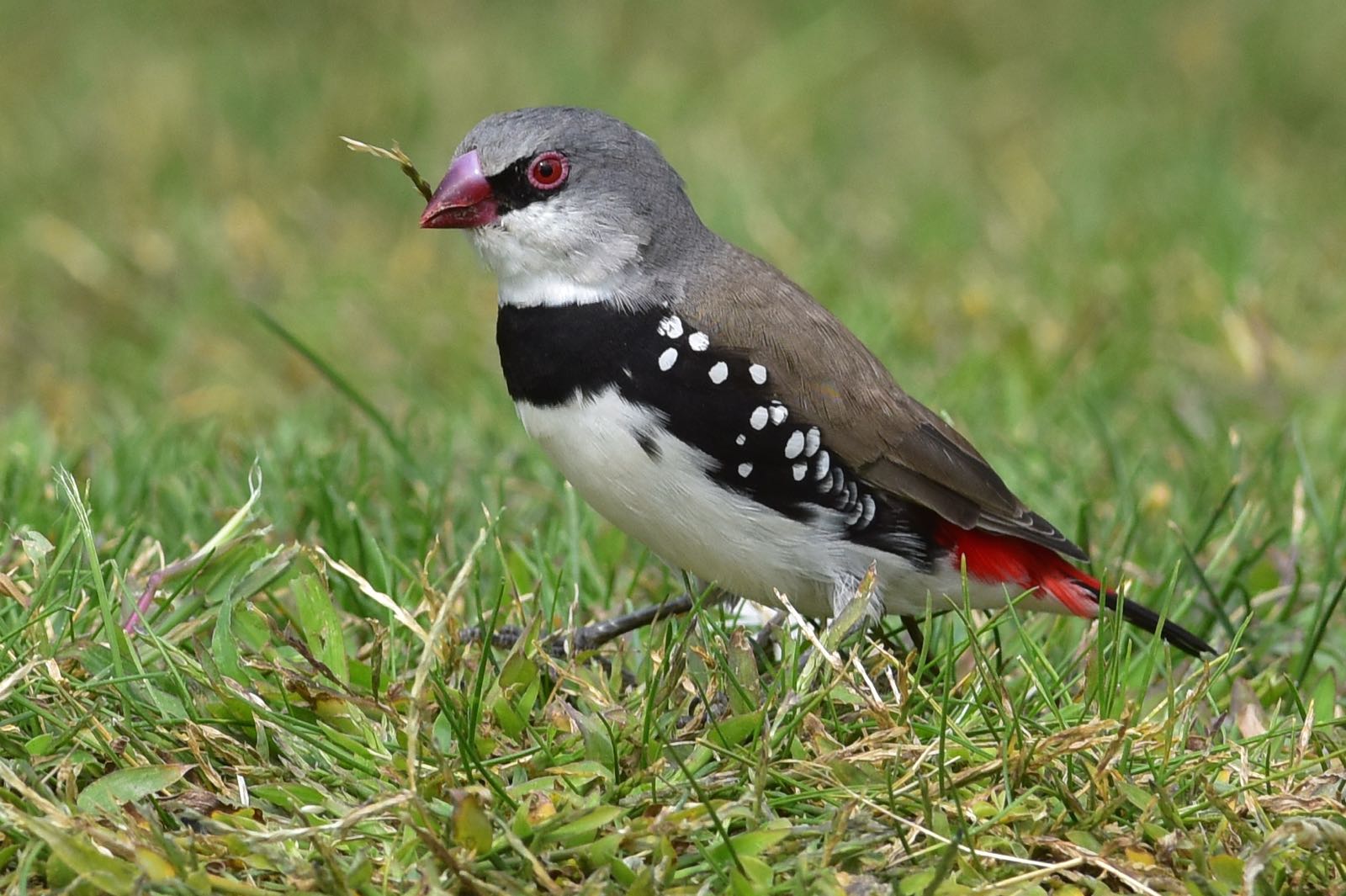

Everybody needs a Hobby
The long delay between posts here is not due to slackness necessarily, but rather to the quiet woodlands around us at the moment. (Oh, and a bit of slackness of my part!)
So skip ahead to today. The Weather man promised some delightful looking sunshine and no real wind. A clear morning both weather and diary, so we made a quick decision to go for an early morning look-see at the Treatment Plant.
For those that know the area, early morning is both a good and bad thing. As you enter the plant, you drive straight into the rising sun. Nothing to see, and hard on both driver and attitude. And we didn’t see anything, except this big yellow blob hanging in the mist on the horizon. Brilliant.
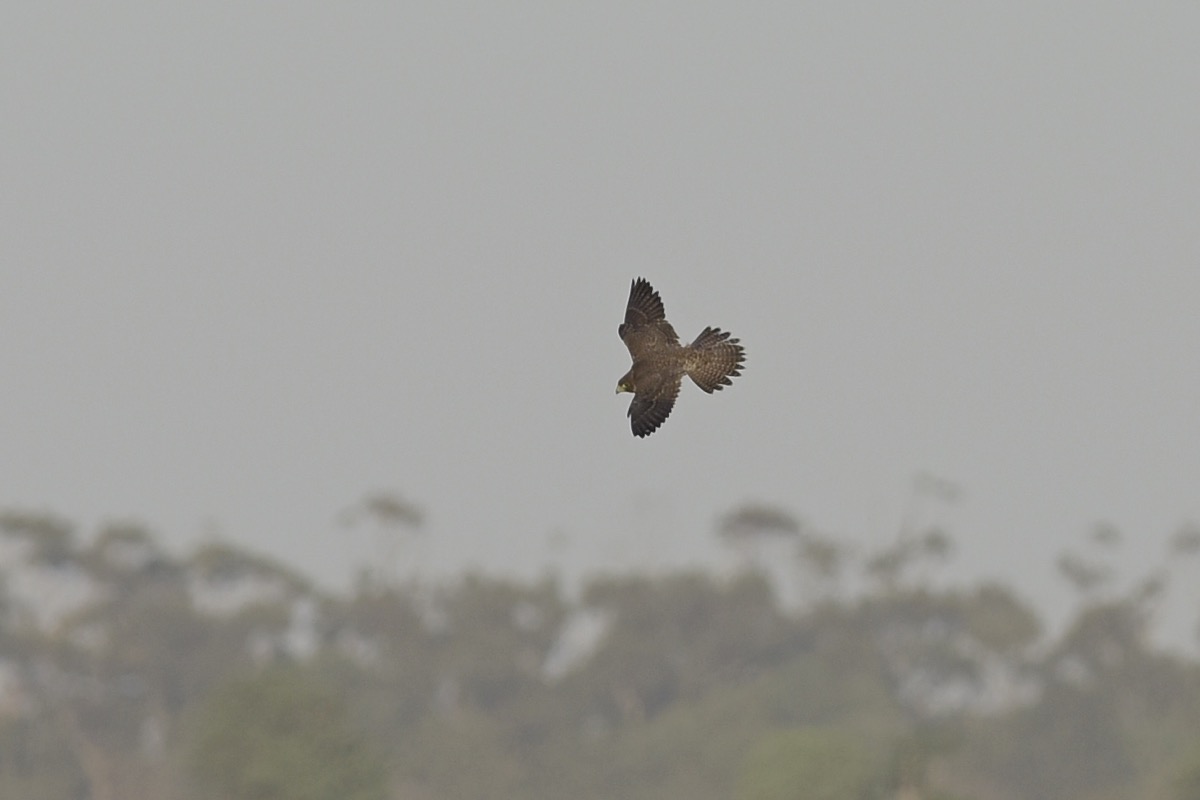
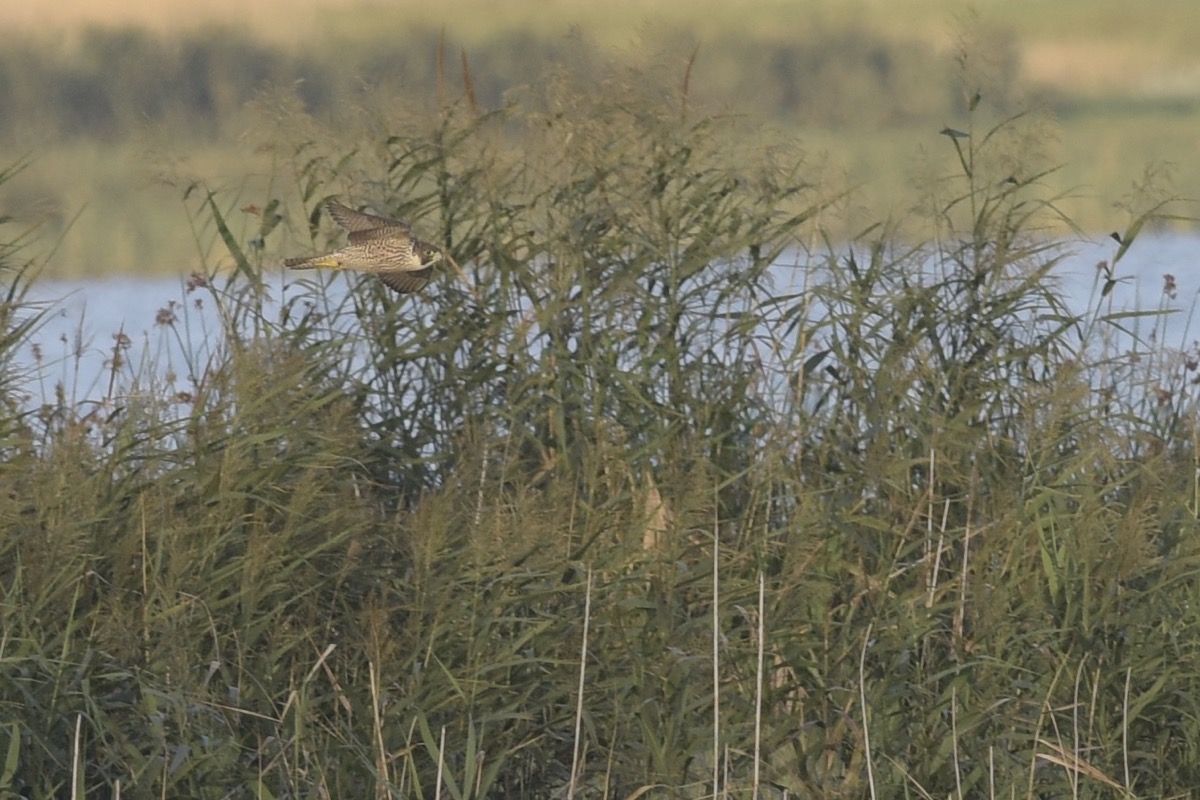
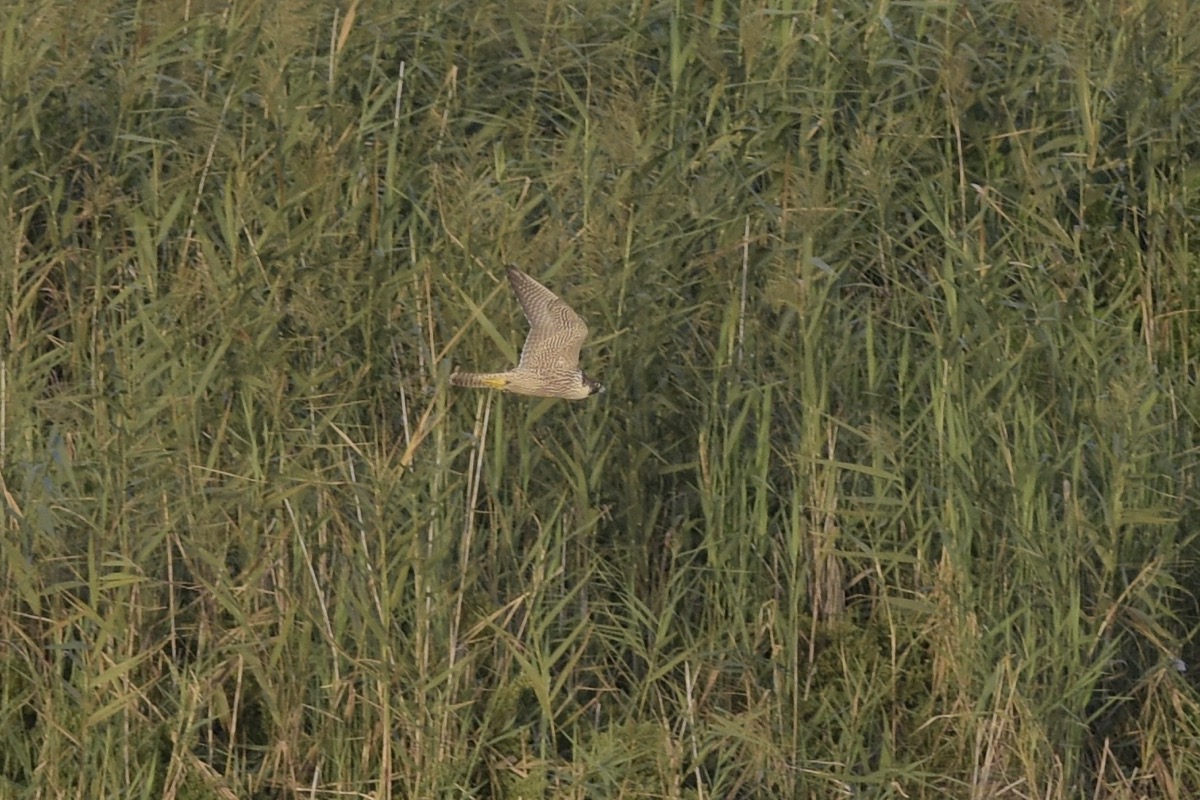
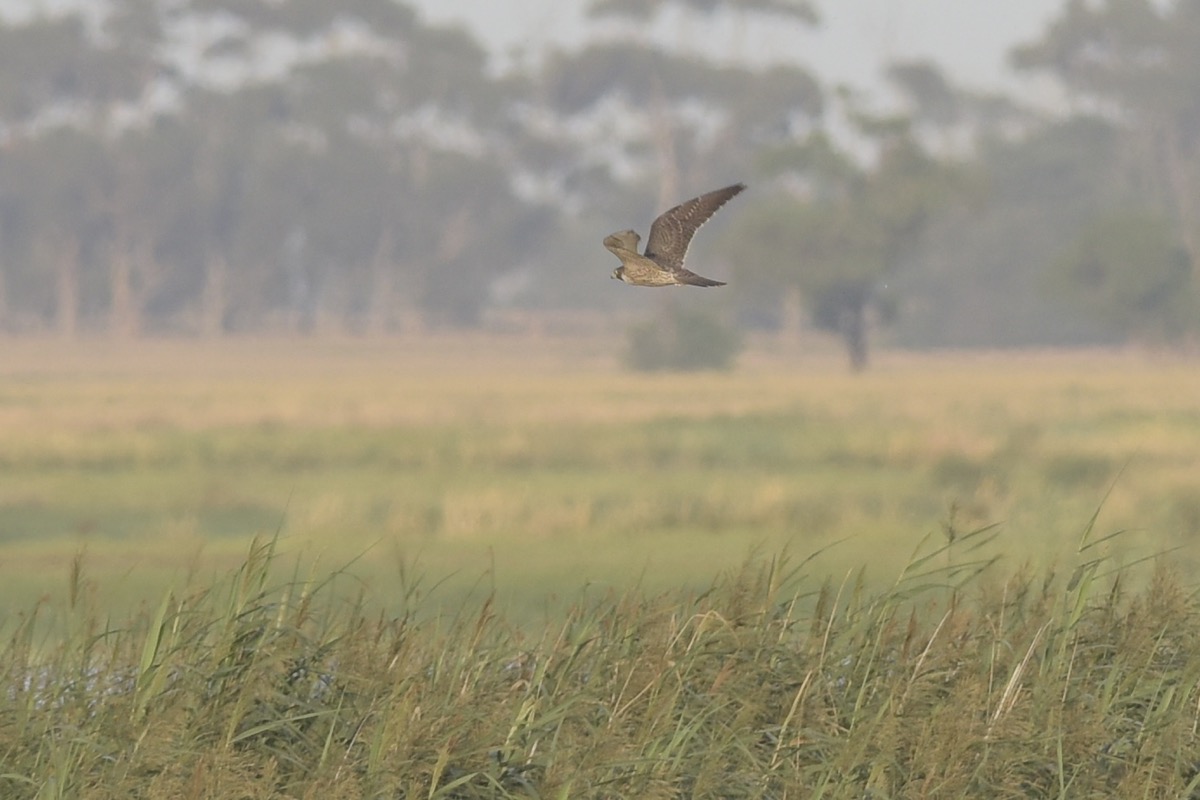
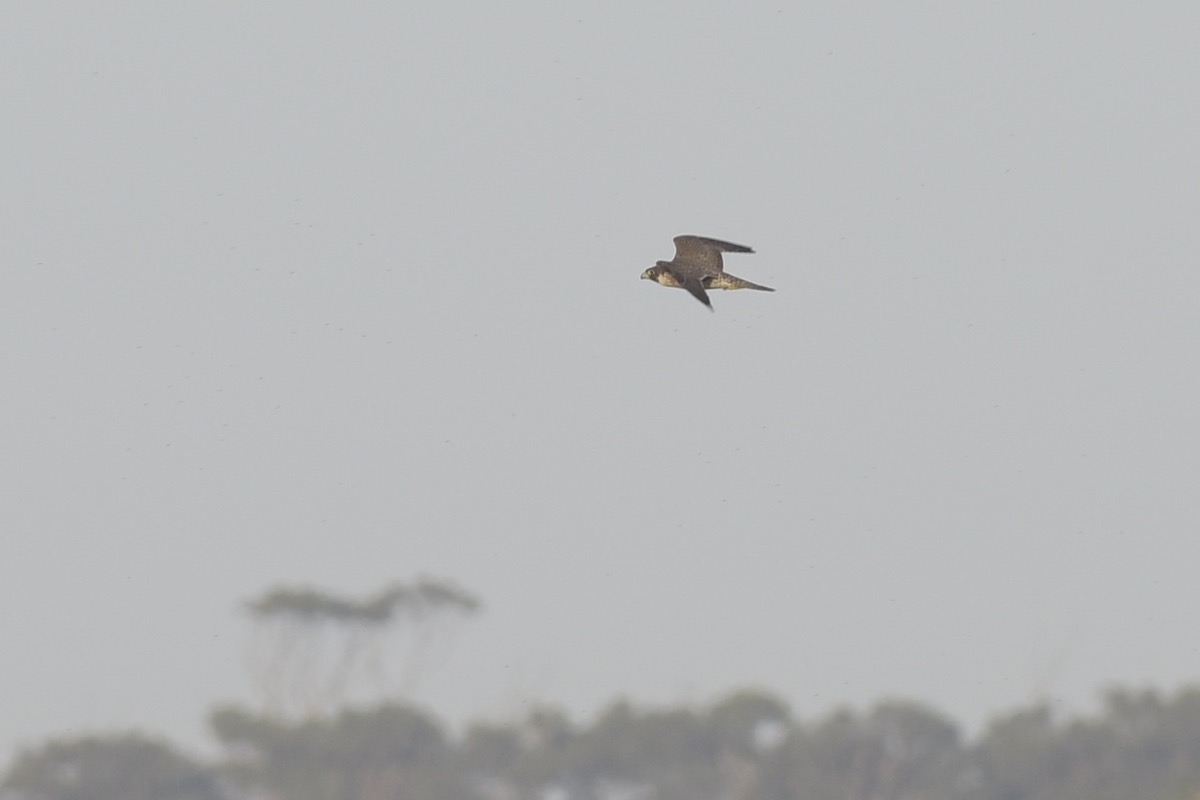
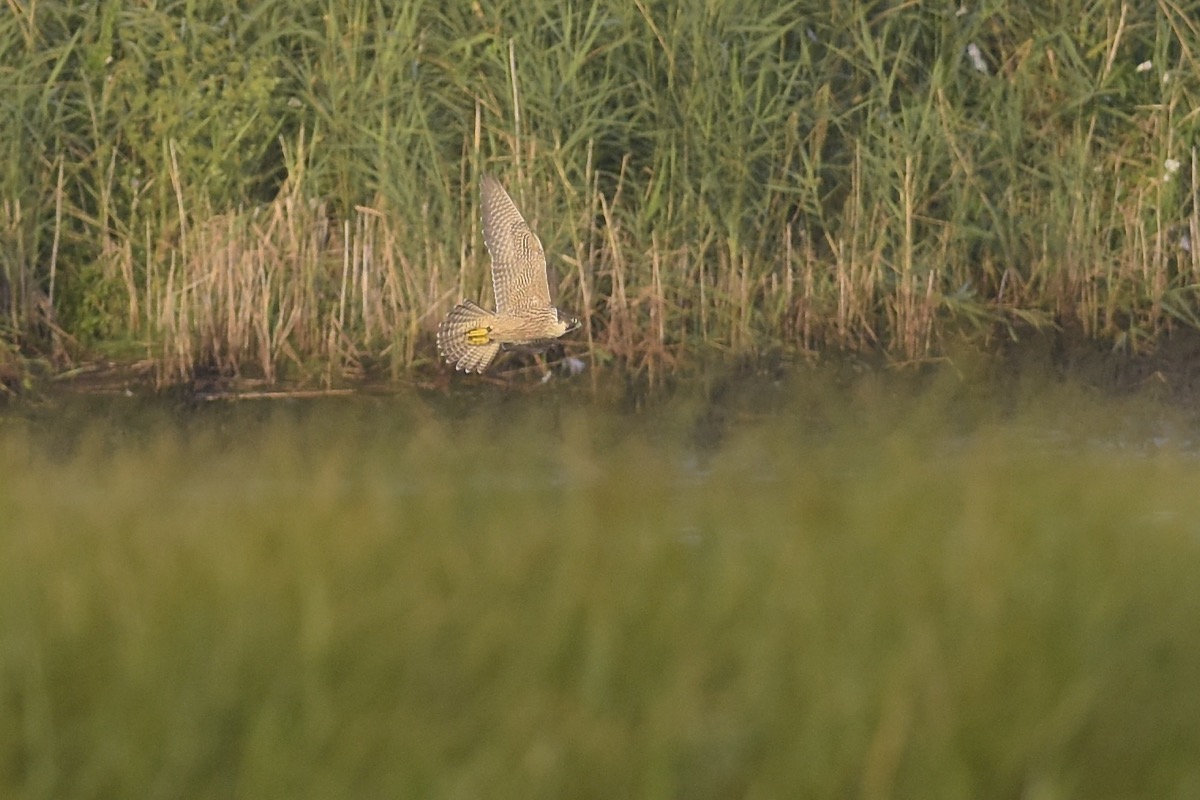
The point of all this is as we were rounding the road that skirts along the Little River, I noted a streak heading across the reed beds on the far side of the river. Only one thing it could be. An Australian Hobby. Used to be called an Australian Falcon, (a much more descriptive name). I think this is the most beautifully marked of our raptors and its falcon like thin wings with the ripple pattern is a treat to see. In flight the speed is awesome. Easy to mis read as a Peregrine I think.
Sure enough that brown streak zipped up over the reeds and I started to get focus on the bird. Using the new AF 350II Focus deal on the D810, it just ripped into spot on focus and held like a fox terrier. The 300mm AF was chattering away trying to keep up. And for the most part the focus held.
Even against the reed beds, where most of my cameras would have gone. These focus elves seem very professional.
On looking at the images, and the bird was indeed too far away for great detail, it looks like this one has ‘rings’ on each leg. So someone has marked the bird.
It made at least 5 passes through the reeds, and even though I was a long way away it was still pretty impressive to see the bird come out of the reeds, climb, stoop and then barrel through the reed beds time after time. You have to be impressed with the speed.
Rather than go on here, the images sort of speak for themselves. Nice way to spend a morning.




The Way of Jacky Winter
Been a tad busy with the occasional family thing and a couple of other events and have kind of gotten all out of time sync.
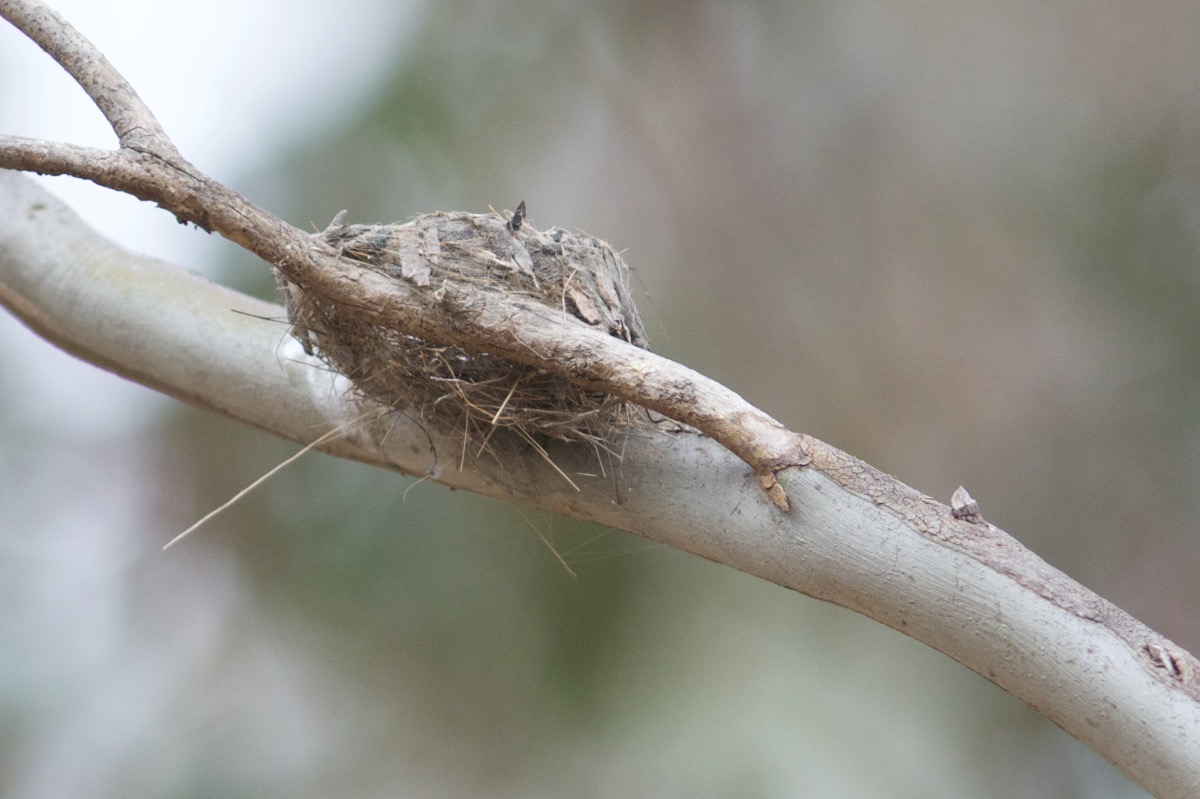
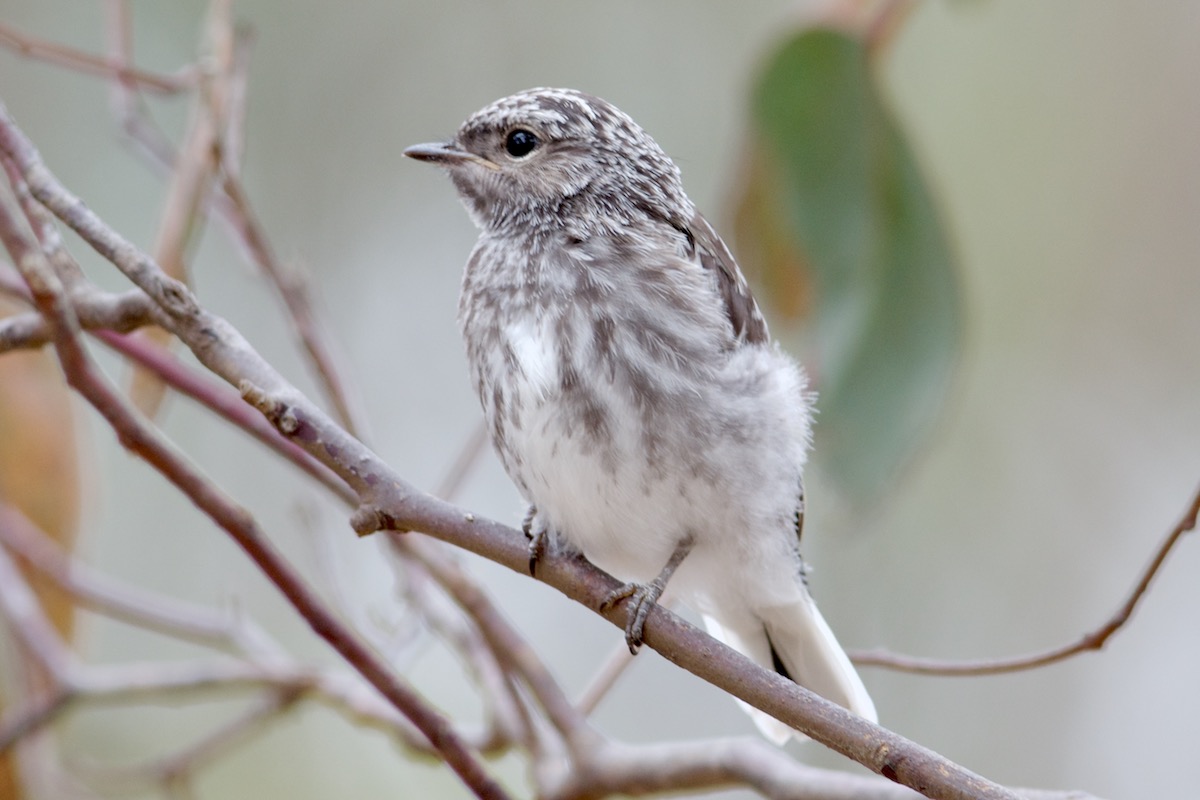
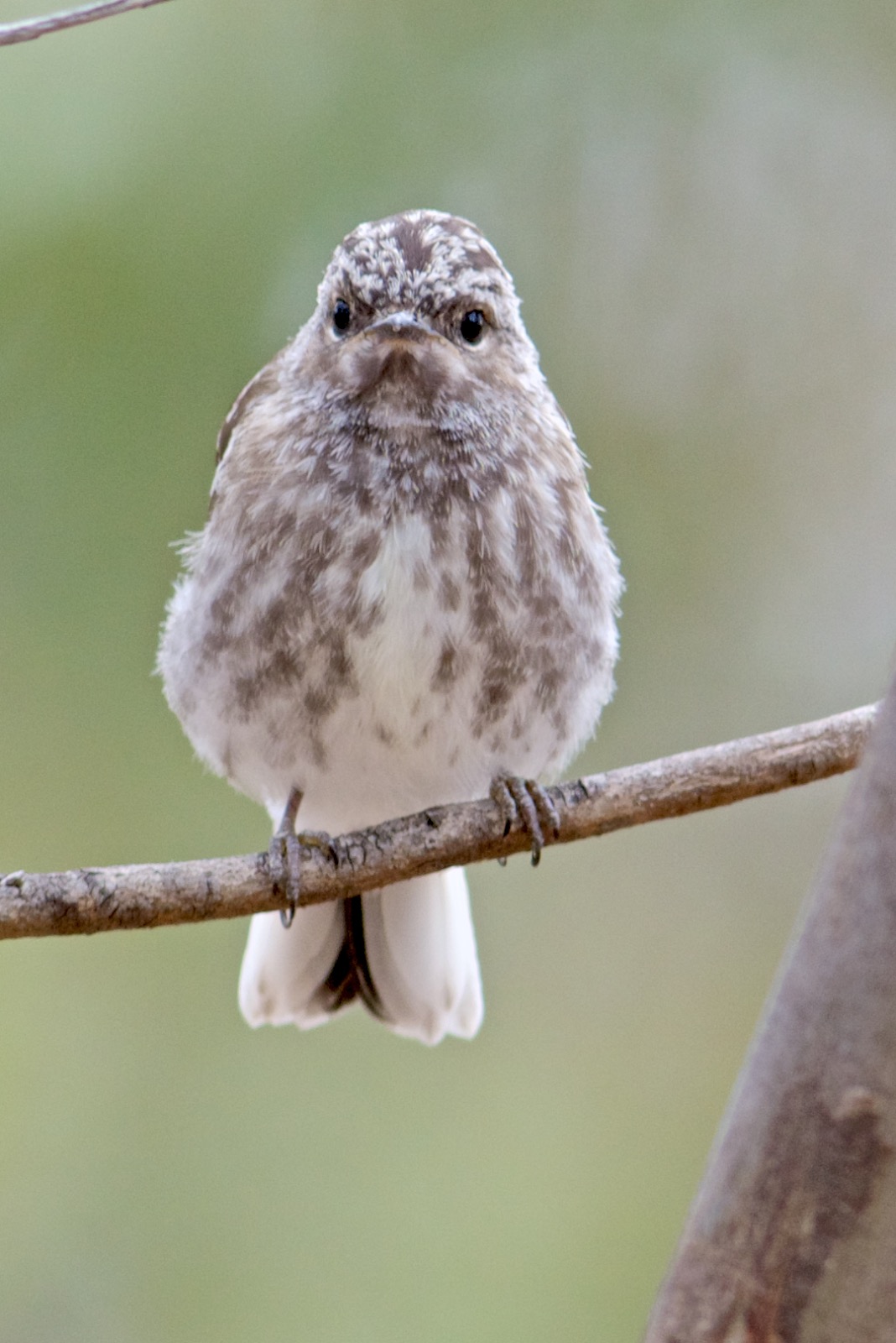
We’ve followed up on the Jacky Winter family a couple of times, and as it happens the two young are well fledged and now after about 2 weeks on the wing quite expert at getting about. But not feeding on their own yet.
As we are going back up to the family acres (pun in there somewhere), for the next week, we headed out this morning to see how the young were doing.
And as we had plenty of time, I was able to sit back and learn some of the ways of Jacky.
Mum has one chick on oneside of the road, and Dad has the other chick across the road. Both are quite capable on the wing, and can easily fly along with the parent.
Still, the trick is to leave them in the scrub and feed them. First thing I learned is that they are keeping them low on the bushes, so they can see what hunting is all about, and are being actively encouraged to drop on to the ground and search about, even if they haven’t quite figured out what to look for.
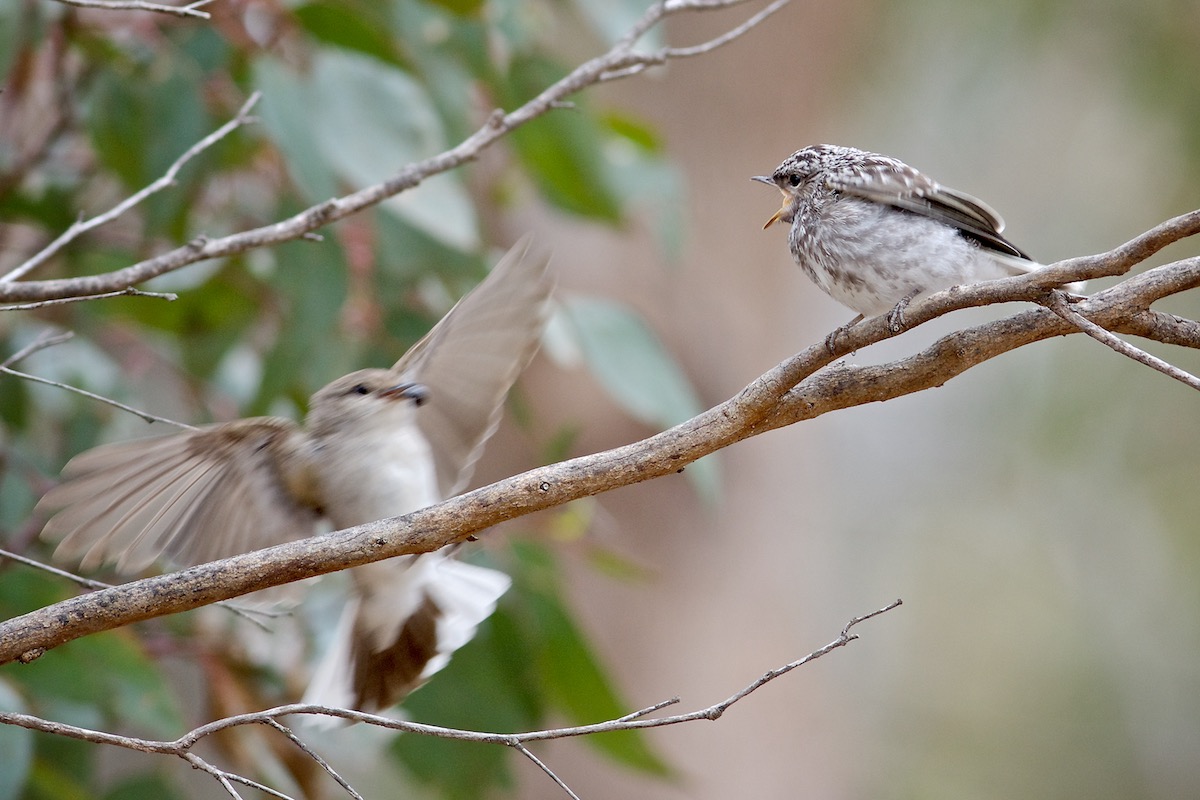
The next thing I learned is that the young are quite adept already at the Jacky Winter hover and when trying to land on a branch can hover up to it with ease.
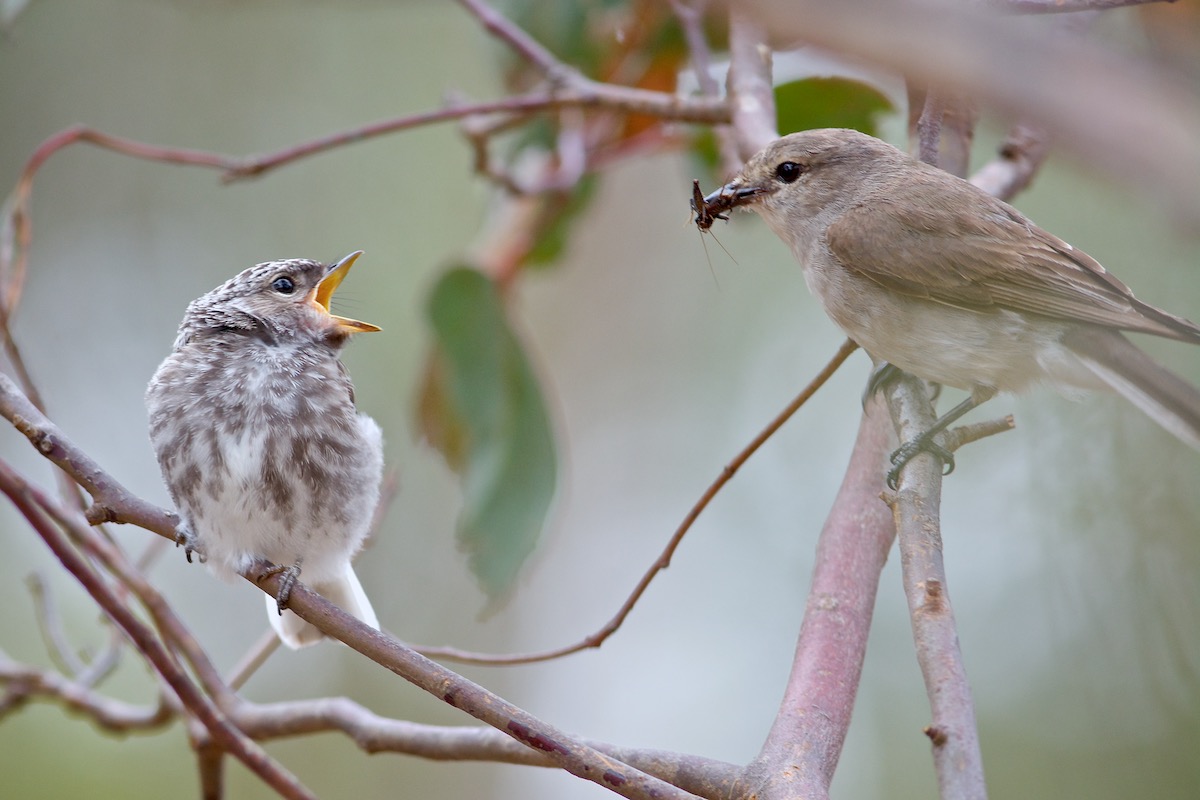
Once they have been fed the adult sits with them for quite a number of seconds, perhaps as re-assureance, or maybe to check that the spot is still safe to hide
I also learned that the lovely dusky grey and white colours of the parent is an ideal match with the surrounding scrub, and several times I missed the bird as it was motionless and matched the colours of the trees. Not until the famous Tail-wag showed the white tail feathers was I able to locate them.
Another Jacky trick is that of, with food to offer, flying right past the juvenile, (who remains silent), and then going out 50-70 metres before making a dramatic U turn and flying back through the scrub, making more U turns as it goes. Then quickly negotiating the upper leaves or the lower scrub depending on where the little dude is located. Makes it pretty hard for the average predator to find either parent or young.
I also discovered that there are certain perches that are used again and again for hunting. One particular one near where I was watching was in the Y of a branch, and Jacky simply disappeared when on that one.
I got two rapid flybys, and then after that quick a few slower flybys at about 1-2 m. So I think I was considered benign.
It was a cold morning and the little birds were fluffed up to keep warm, and that made them look larger when the Parent sat alongside. I’m pretty impressed with the concern shown to the young one, and Mum is quite happy to sit with it, and exchange some ‘peeps’ and ‘cheeps’ to reassure it. Quite charming, but then Jacky is a very charming bird.
Here are some from the last couple of visits.





2014 in review: Always a riveting read.
WordPress impress me by sending out stats at the end of the year. Not sure why, but anyway here is where we all went together this year.
My hope is that 2015 will bring the most amazing images to your lens, and take the time to share them with us over on Flickr.
Have a goodun.
The WordPress.com stats helper monkeys prepared a 2014 annual report for this blog.

Here’s an excerpt:
The concert hall at the Sydney Opera House holds 2,700 people. This blog was viewed about 11,000 times in 2014. If it were a concert at Sydney Opera House, it would take about 4 sold-out performances for that many people to see it.
A day at Eynesbury
Took a bit of a look at the date on the last missive here and its been a while. A long while. Could regale you with stories about this and that getting in the way, but reality is I’ve just been putting it off, and lots of good activities have become lost in the mists of time, (well at least 6 weeks anyway).
One reason has been the weather. It has been drifting from unkind to downright ugly as any of my Flickr shots will show.
Sat by the tv last night watching the weather icons, (no not the presenter@!!!!), and thought, if that wind stays and the cloud moves across bet that the morrow will be a lovely clear morning till about midday. What do you reckon, a trip to Enynesbury? I asked. EE responded, not until I see what the weather is like in the morning. Fair enough.
In the meantime I packed all the gear and waited till the blue sky showed through the window. We were going!
One of the reasons to journey out there is the Diamond Firetail and the impossible “Speckled Warbler”.
As it turns out, we saw both, and photographed badly the Warbler, but it was enough to enthuse us for another run.
Rather than ramble on about walking in a grey box forest, and seeing Little Eagles with a rabbit, and all the other things that I never got the camera on, here are a few we did see.


Werribee Wag Tales November 2014
G,day,
Uploaded the November Birdlife Werribee (Formerly Werribee Wagtails) newsletter.
Here tis.
November Wag Tales 2014
The forest gradually, quietly, and lovingly reveals its secrets
It’s no surprise to my (suffering?) long term reader that just on 12 months ago we relocated to the western side of Melbourne. It’s also no surprise that if you look back over the achives for this site, that the majority of my ramblings and my photos have tried to detail my amberlings through the wonderful Grey Box forest that is a legacy for Woodlands Historic Park.
This small section of forest, close to the airport, and close to home, was for many years my ‘backyard’. The range and quantity of Robins that worked the park and their actions and territories became pretty much my daily activity. The coming and goings of the migrant birds over winter was a never ending source of pleasure and expectation. As I had the time to work in the area, the birds began to give me, I think, some leeway in approaching them, and several pairs of birds became so graceful as to actually come along and visit with me when I turned up in their area. It sounds strange to relate, but there is something pretty humbling to have a small female Red-capped Robin, dance around the branches near where I was sitting and then drop on to the ground and feed around my feet. Her male would sit on a perch within arms reach and chatter away to me about all sorts of Robin things.
Then off course there was the Australian Kestrel family that gave me two great seasons, the Eastern Yellow Robins, who took EE on as a close personal friend, and their young, before they departed.
How it all comes about is one of constant wonder to me. I like the work of Jon Young he of “What the Robin Knows” fame, and his work as a tracker and a bird language trainer (seems a funny word in that sentence)
I’ve quoted from him often both here an on Flickr, not because he is some guru, but because what he sees, and what he explains is by and large what I’ve been able to experience in the few paddocks and tree covered ridges at Woodlands. People often want to know when I announce “Oh, I photograph birds”, about all the exotic places I’ve visited to track down some special bird. The surprise is, I haven’t. Most of the work is a daily practical, patient working away with the small entertaining birds in my ‘backyard’.
Here’s Jon ” If we’re in bird language mode, however, we’re moving with a whole different frame of mind and venturing into another’s realm with awareness and intention and curiosity. We don’t have ‘hunting’ (-insert birding/photography-) intentions. We have diffuse awareness, curiosity, perception and questions. We’re walking carefully, slowly, stopping and looking. Not sneaking as that fools nobody out here. Looking at every bird, sound, and movement as an individual. ”
It’s why in this blog you’ll have noticed that most of the birds get names. It’s not an anthropomorphical hangup, “its because the individual birds are not just scientific names, but creatures like you and me,” to quote Jon again.
So some say, “Oh, you are a bird whisperer”. No!
But I do listen to the whispers of birds. Their songs, alarms and companion calls -very closely. Jon says, “Add up all the accumulated experience and knowledge and input and you end up with a gut feeling of uncanny accuracy”
But as I’ve indicated above it all takes time.
We thought we’d continue to travel the hour or so to Woodlands on a regular basis and stay in touch. What we found was it was just too much. Too much time travelling there and back, too much time catching up, to have time to learn new stuff and just not having the right day/weather/season combination to keep up the conversations. So we have become tourists in our ‘backyard’.
We’ve also of late taken to working in the Werribee River Park, “The Office”. This is primarily a stand of River Red Gums along a short length of the Werribee River as it passes by the Werribee Mansion Precinct.
At first it was mostly because the larger raptors worked the paddocks and fields nearby and were worthy photo subjects. But not easy birds to gain the inner confidence, and always too far away to do much more than record their movements.
Down in the tracks along the forest, its mostly overgrown, (as befits the surrounds of a flooding river), and difficult and dangerous (consider snakes), to just get around.
But,
We have taken the time to begin to sit, listen, watch, ponder and contemplate, to observe flight paths, and listen to retreating calls, and see the forest as more than a collection of big trees, but as a whole.
And.
Slowly, very slowly, the area has opened up to reveal some of its secrets. The Bream, that come up the river with the rise and fall of the tides. The Herons that have made the Red Gums home for their young, to listen and occasionally see the Reed Warblers. And to see the big birds using the Gums as nesting points for their offspring.
As well as,
The range of small birds that have begun to work out their lives with us in close proximity and not be too fussed. So we know where the Willie Wagtails are nesting. (about 8 nests as I count), how many Musk Lorikeets are working in the canopy, where the vocal Red-rumped Parrots are nesting, (about 5 pairs so far),
And slowly but surely we are getting some understanding of the conversations.
All this leads to a pair of Sacred Kingfisher who have returned to display and to setup a nesting cycle somewhere in the forest.
Their pleasing Kee, Kee, Kee, Schrammp, schrampf, as they work out the territory is always pleasing to hear. After nearly two weeks of working with them at a distance, the other evening, things changed. We were invited to share with them. Now how do I know that. Well, sitting on the grass around a feeding area, the female came down to about 10m and then quickly moved to about 5m and then surprise, landed on a branch within arms reach, called to its mate, and checked me out. Considering me to be a nondescript, it hunted in the long grass alongside me, caught a skink and returned to the tree about 5m away. Connection.
Last evening we took Mr An Onymous down for a look. It’s a long process to bring someone else into the circle. But this gracious little bird found a perch and sat there while An got close enough of some good portraits.
Phased by the interaction? No, not at all, infact chose to pose on the left, then the right, how about head on. Hmmm should I look up.
What was awesome for me, (I was standing back about 30m, like to give them some room, both An, and EE were able to work with the bird over what can only be considered close encounters.
Now. Just to be sure, there are no bird calling, no food or baiting, no chasing or harassing.
We are in their territory, (and loving it), they call the shots, they approach or disappear, and it’s their connection that graces us. Jon calls it “immersion’. And I’d do it even if I never took a photograph.
So slowly, quietly, almost silently, the forest has begun to invite us to enjoy the connection, and things change.
Here is a few images from my couple of sessions with the birds. (They don’t have names yet, they will).


The Latest Bumper edition of Werribee Wag-Tales, the Warrnambool adventure- is now ready for reading
Whew, by the time I’d typed the heading I’d forgotten what it was all about.
But the pdf of the next Wag-Tales for October is now available for download.
Enjoy
Counting Birds at Mt Rothwell
One of the activities that the Werribee Wagtails group, (now officially Birdlife Werribee), is conducting quarterly surveys at Mt Rothwell conservation park.
I’ve written about the park before, but this little piece of protected area is just to the north of the You Yangs and has its own unique woodlands and lovely rocky outcrops.
The weather was a bit on the average side, has been now for several weeks. But we none the less walked around the three areas and had a chance to see the forest in its late spring garb. There are usually quite a range of raptors in the air, and today was no exception. The number of Brown Falcons and Whistling Kites seemed a bit lower than normal, but with so much of the open plain for them to hunt, its not necessarily a bad thing.
One of the highlights of the morning was the call of Sacred Kingfisher, and with a bit sleuthing we were able to track down what I’d suspect is a pair. Whether they were looking for a nesting spot or simply passing through will of course remain a mystery. But it was the first I’d seen this season, so I felt pretty good. We also heard and again tracked down a pair of Rainbow Bee-eaters, and eventually I counted at least 7, and probably there were a couple more. Again, not sure if they are nesting in the area, but they do regularly in the You Yangs and its but a mere wing flap or two for the travelling Bee-eater.
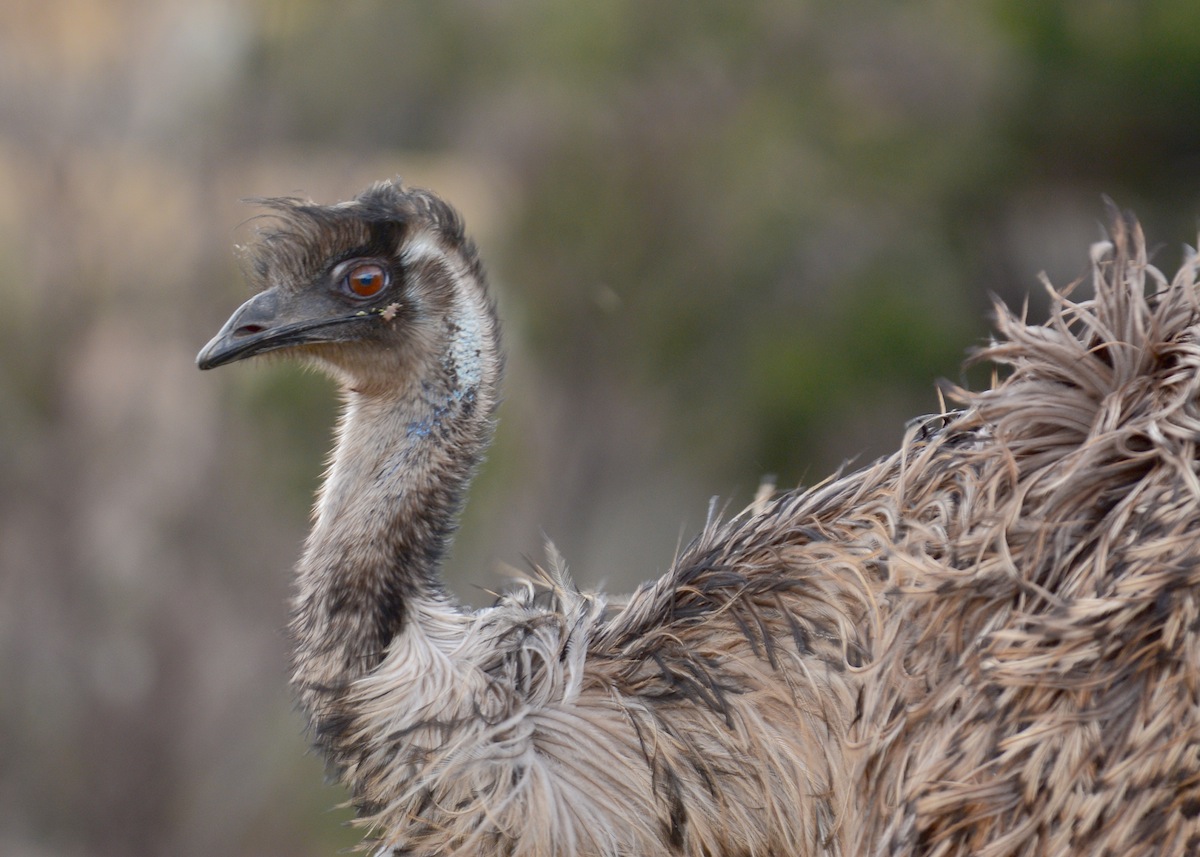
After lunch we entered the enclosed conservation area, and to our surprise we met “Fluffy” the Emu. She(?) is a recent addition to the enclosure having been obtained from somewhere, staff were a bit unsure of the details. But she (we’ll stick with that), is a bit human friendly, and came trotting down to see what the humans were upto, and after politely introducing herself to several of our group she wandered around with us and among us, for the next half hour or so.
My mate An Onymous was with us and had a green neck scarf that flapped in the breeze. Fluffy seemed quite taken by said scarf and made several attempts to relieve An of it, and when he wasn’t looking to take a peek into his camera bag, just in case there was something that may suit a growing Emu.
We had to leave Fluffy at the exit gate, so she wandered off to look for some other Emu amusement.
Enjoy


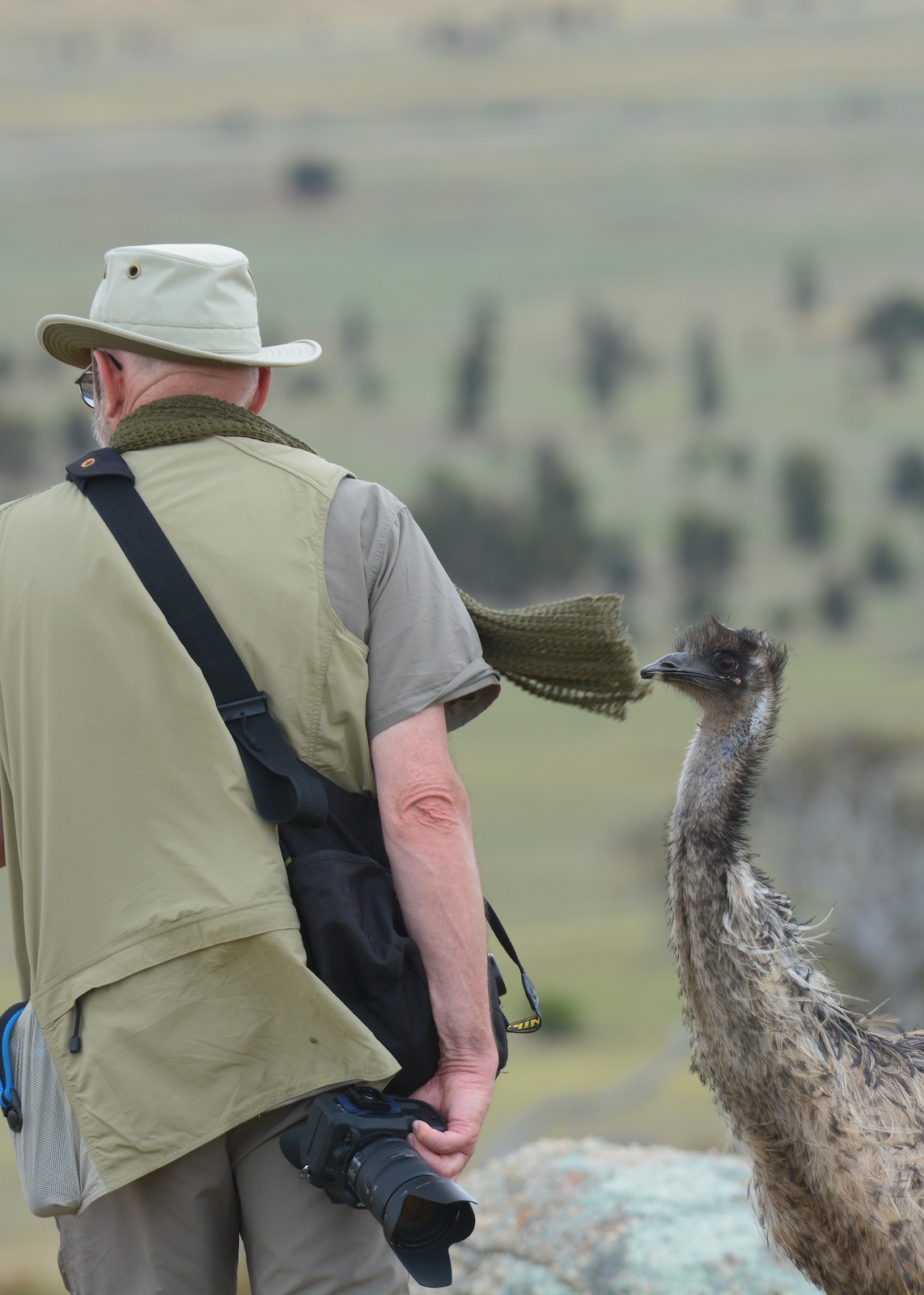

Carefully taken to keep the masked man’s identity secret.

Down at the Gannet Colony: Point Danger, Victoria
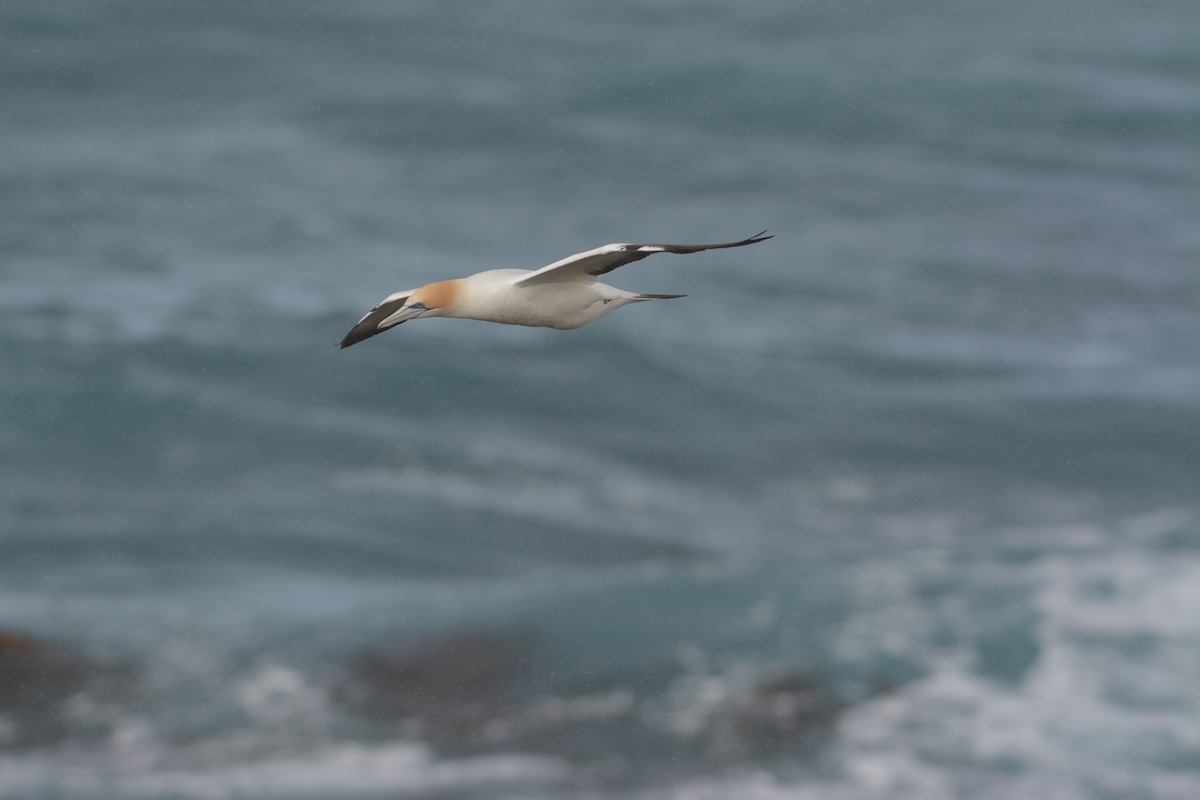
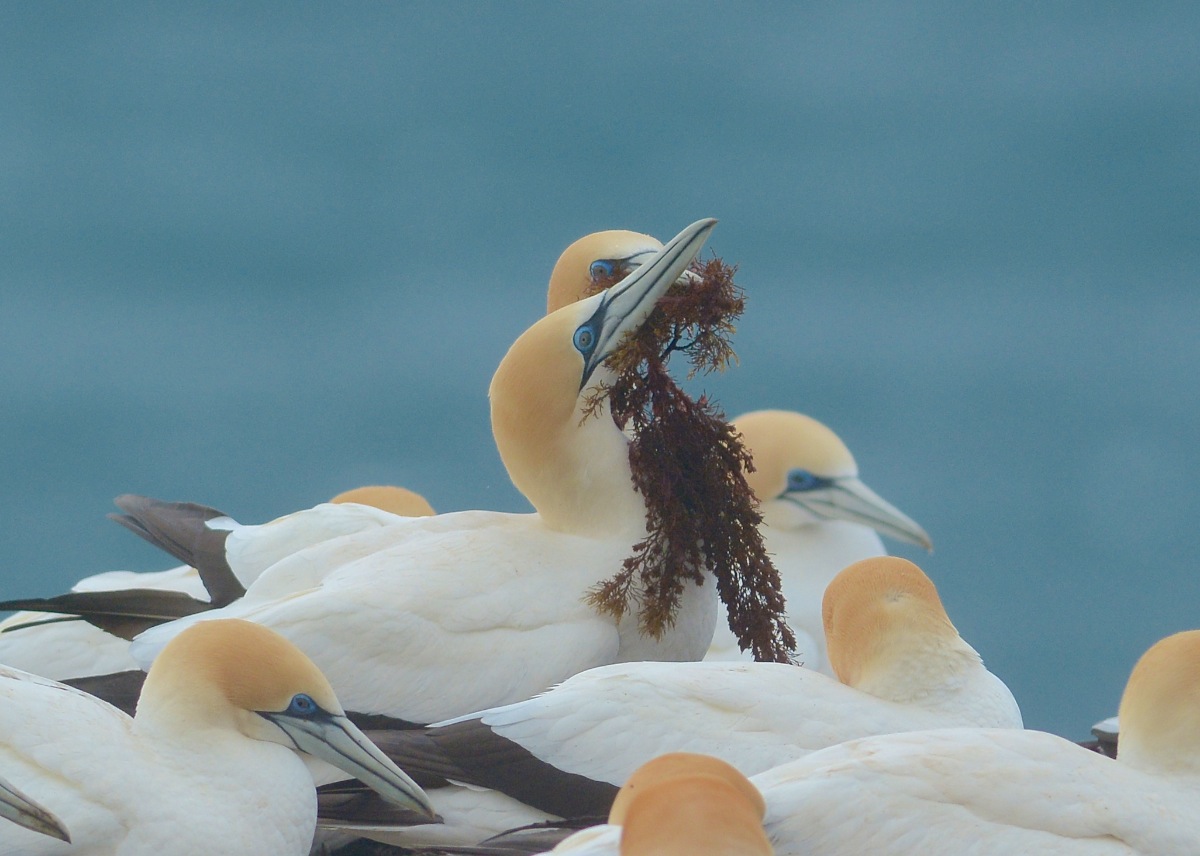
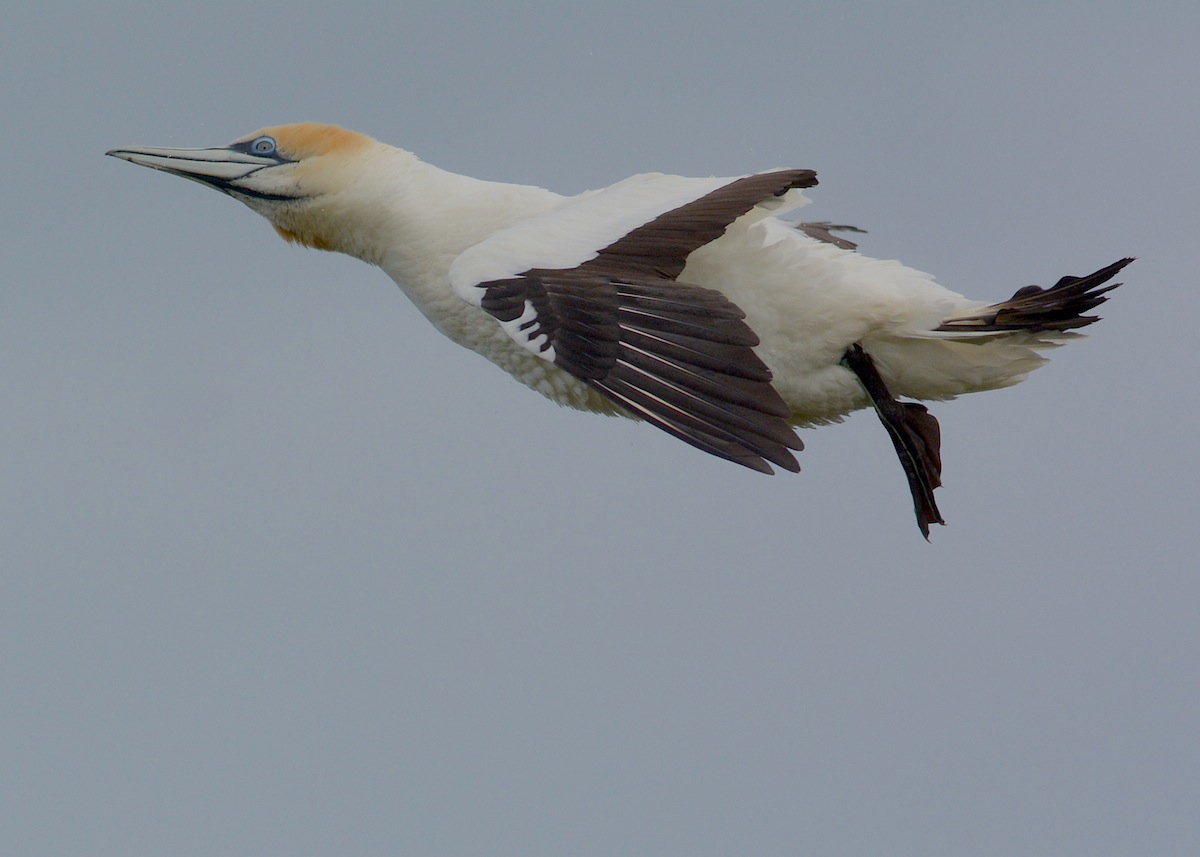
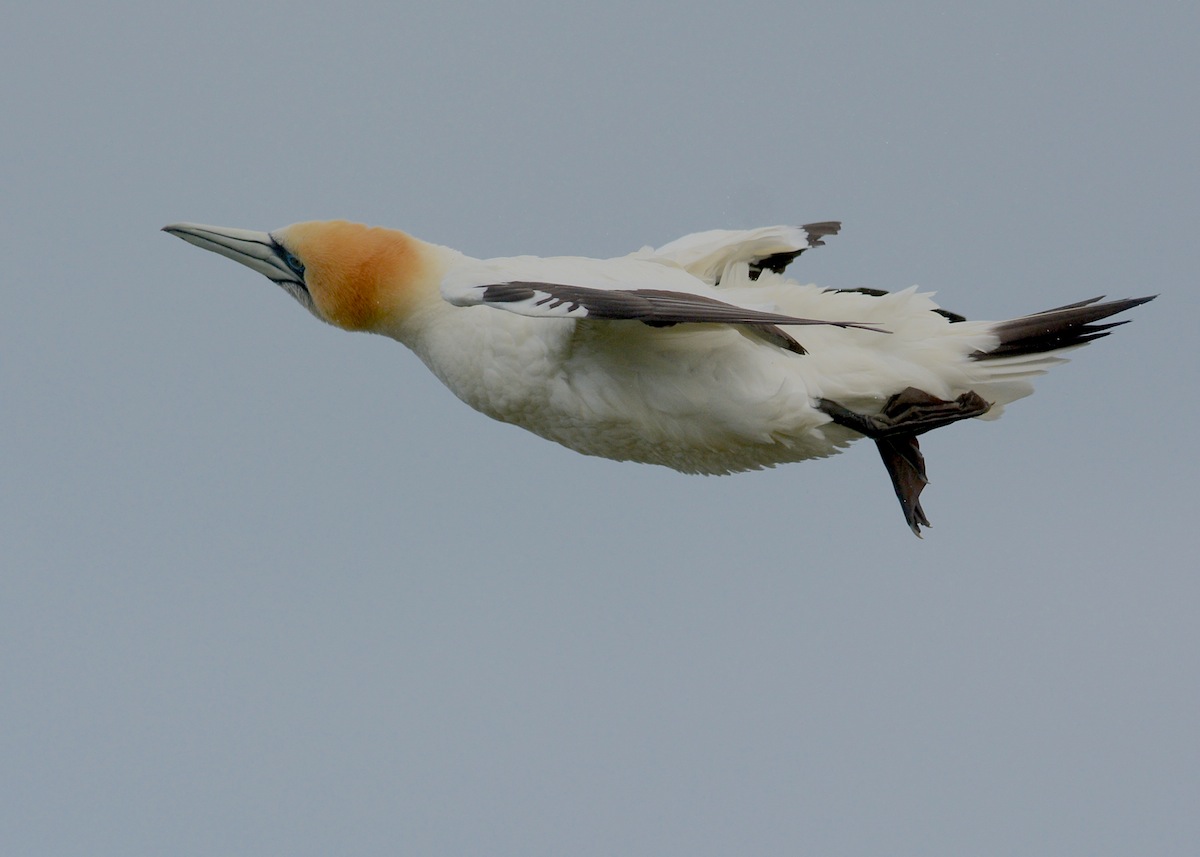
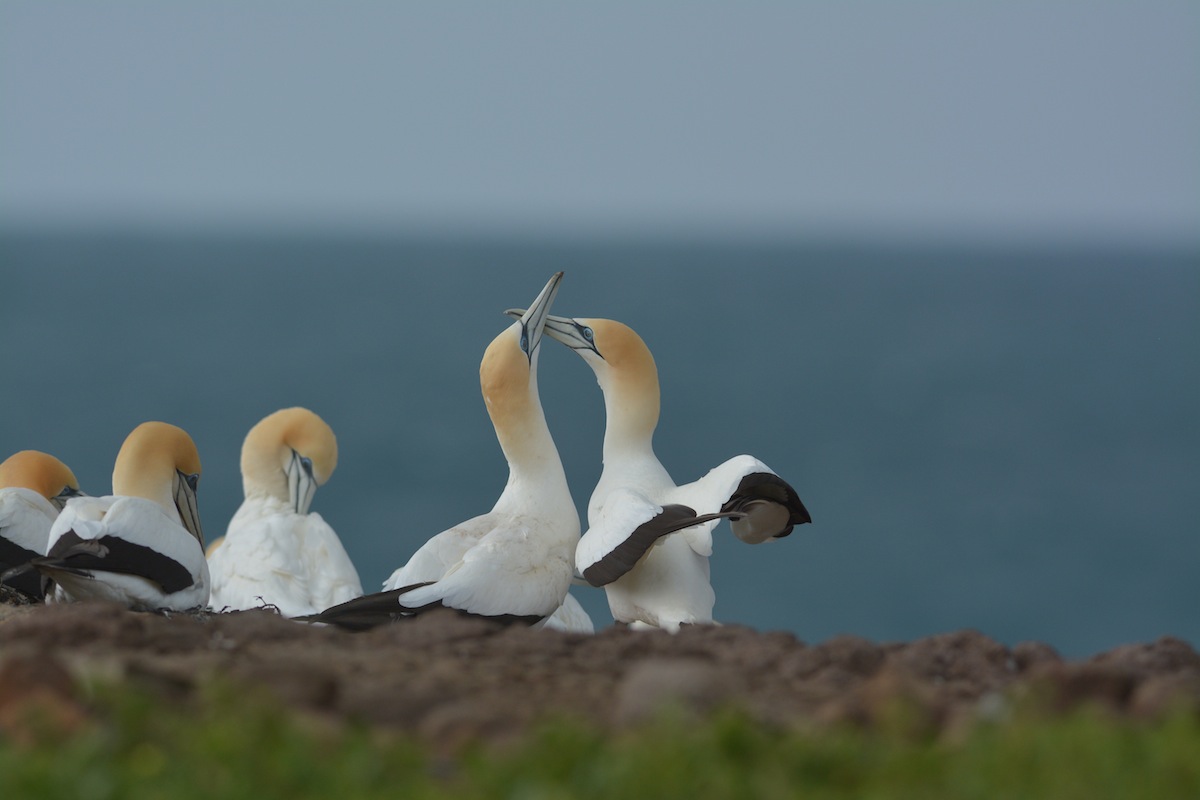
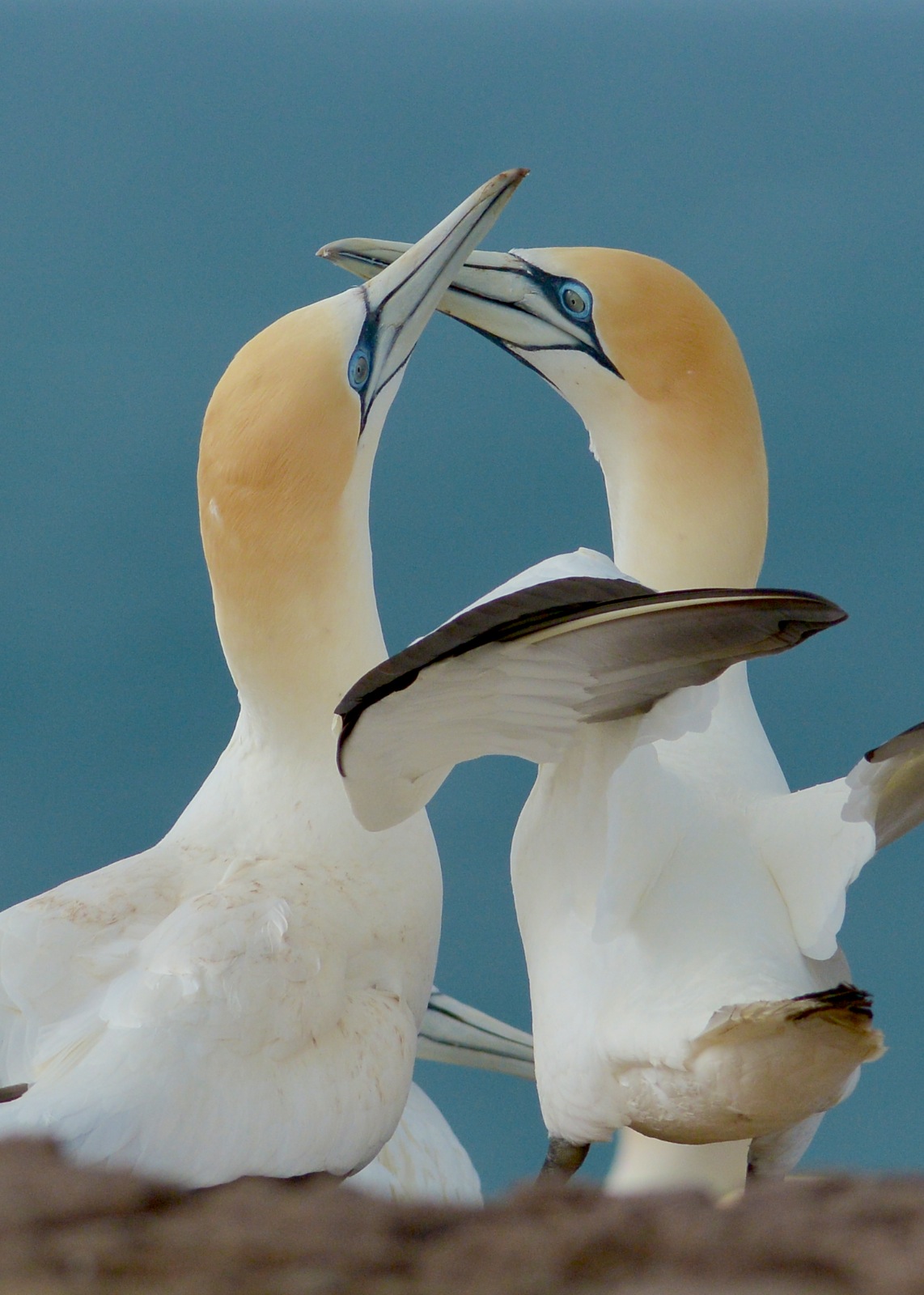
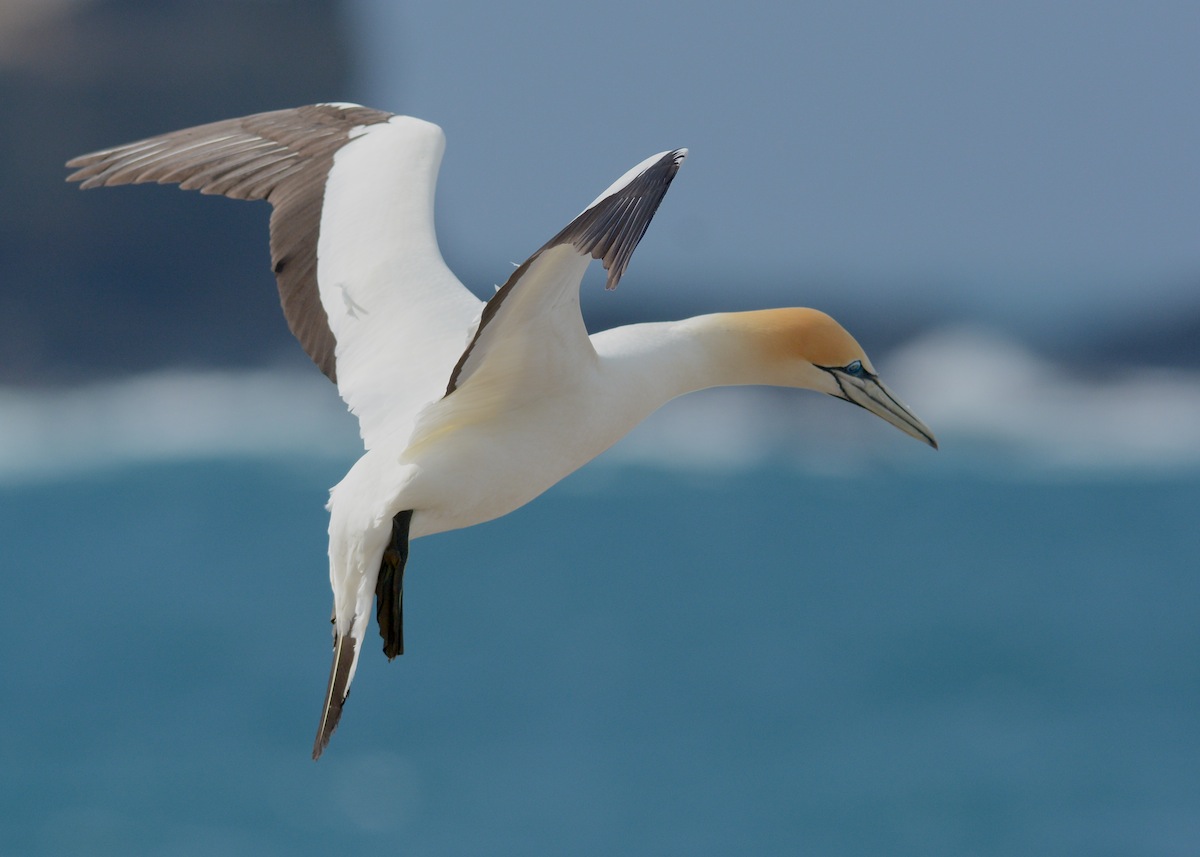
The Gannet Colony offered so many possibilities for photos that I thought I’d show a second line of the images.
I used the D7100 with a 300mm f/2.8 and a TC 1.4 Teleconverter. The camera/lens was mounted on a tripod, with a Wimberley Gimbal Head. This setup makes the camera quite weightless to use. And it can be turned at an amazing speed to keep up with most inflight. I have to spend a couple of minutes getting it aligned horizontally, so it spins around in line with the horizon. It also allows me to let the camera go, and it will remain pointed at that spot. (unless off course in a high wind, when it acts more like a wind vane, but that is one of ‘benefits’.
The weather was overcast, squally, high wind and dreadfully poor light. I ran at both 400 and 800 ISO, and all those with the new Full Frame cameras, will go “Nah, neh nar nee nar!” but I can deal with that. Mostly I never shoot no Multi-burst. First and foremost, my bird photography doesn’t need it, and I see no future in having 25 shots of the same bird on the same perch with only minimal differences. If the differences are that good, then my one shot will get it anyway.
The 300mm f/2/8 is down to f/4 with the TC and I usually stop down to f/5.6. No real reason, just old photo dude stuff. The actually depth of field gain is negligible over the short distances I work. If I want great dof, I’ll use a 12mm lens and stand up really close to the bird.
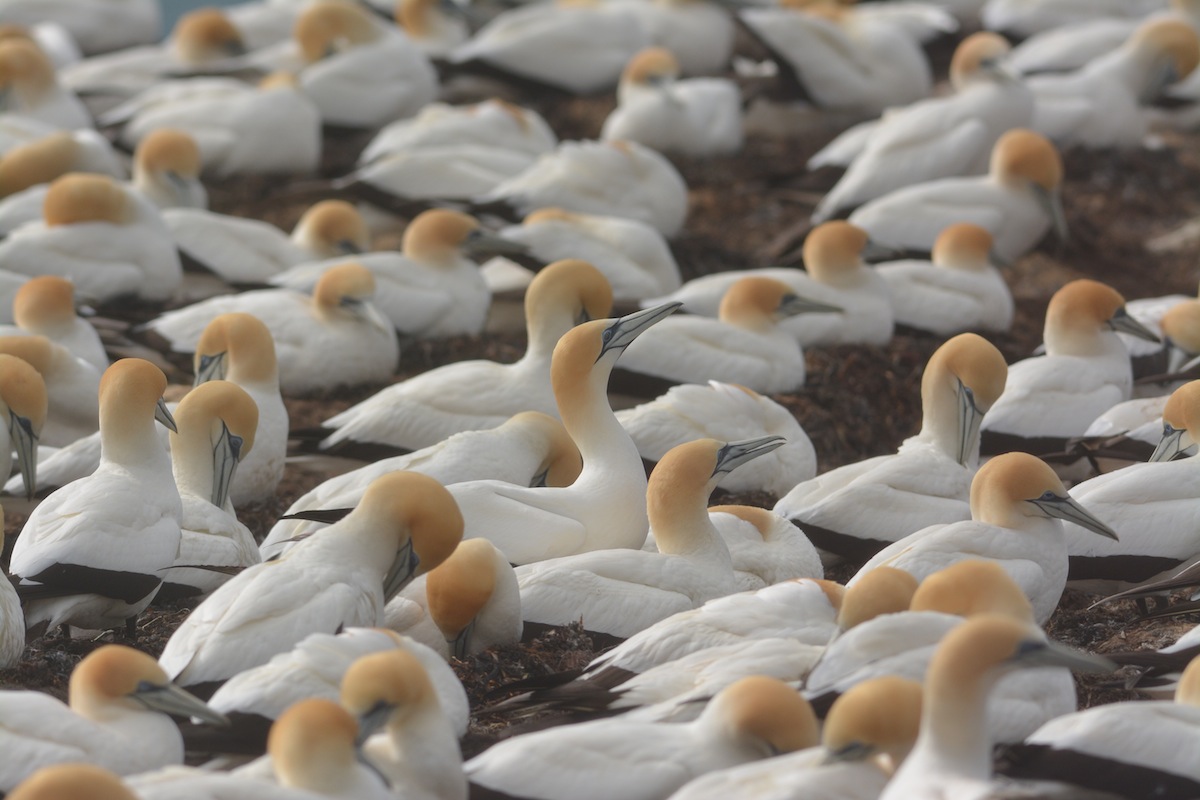
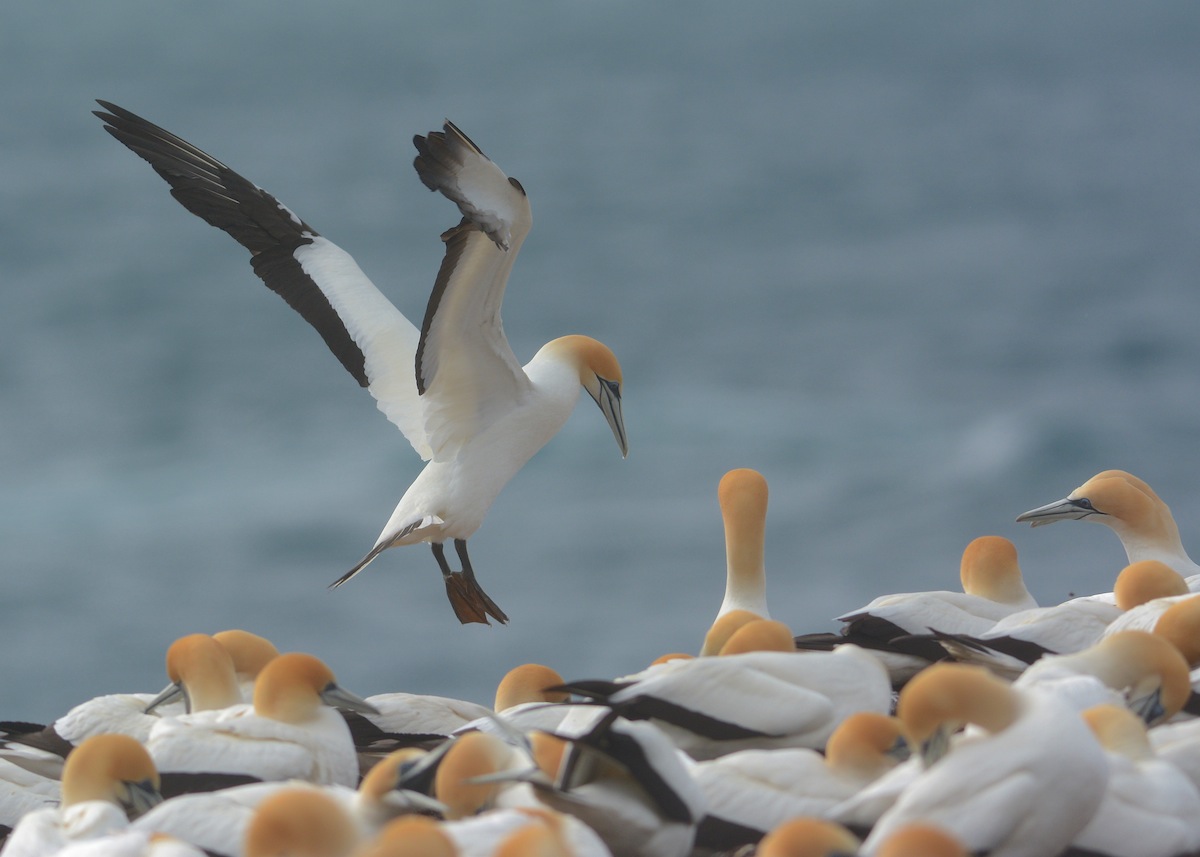
What became intriguing as I settled in to working with these birds was the size of the nesting flock. There was literally no gaps between nesting birds. What was even more interesting was that the returning bird had no trouble picking out its mate nor its landing spot. No, ‘Oh, where did I leave her/him? I wish he/she had a red umbrella so I could find them.” Nope, just fly over, point your beak down and land on the right spot. Super.
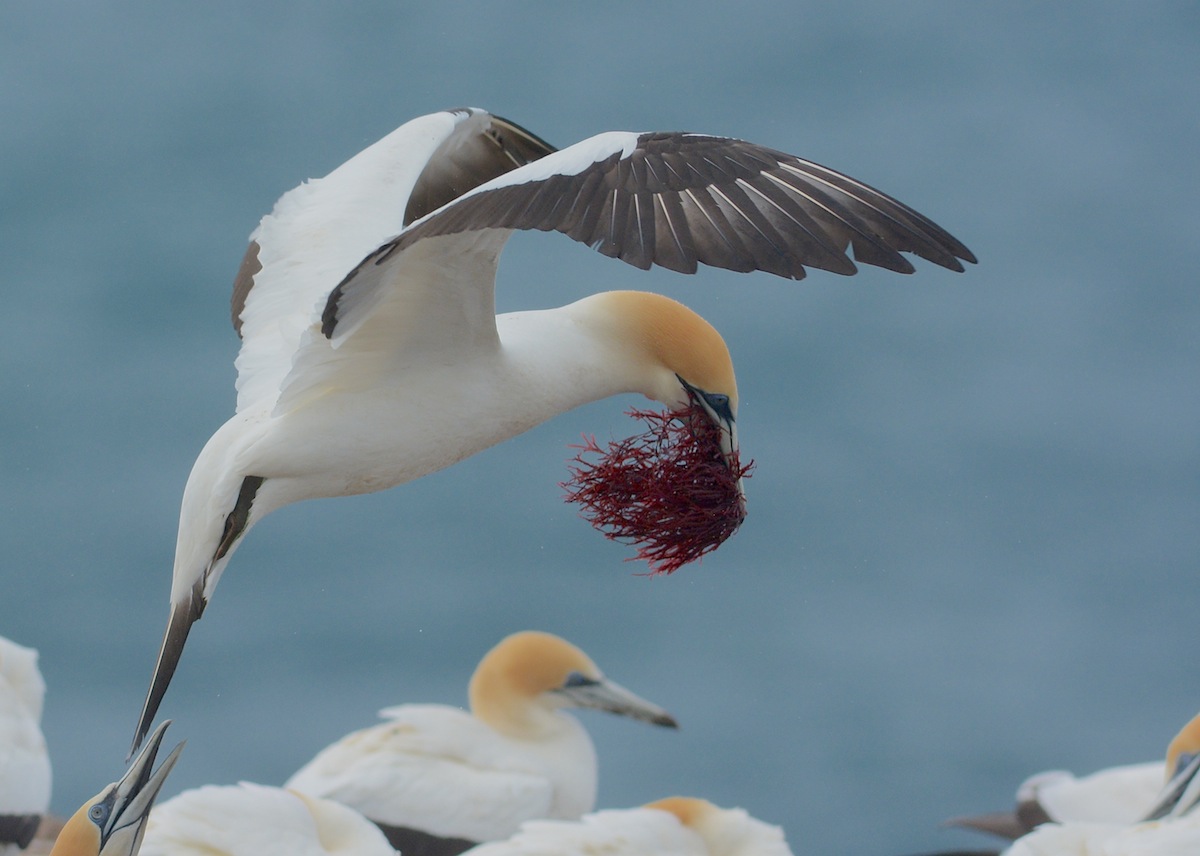
Invariably there would be some mutual ‘petting’ go on between them, and the resting bird did not always fly off immediately. Some were still in nest building mode and carried in the most amazing collection of seaweed and grasses to beautify the home. No widescreen tv or coffee machines.
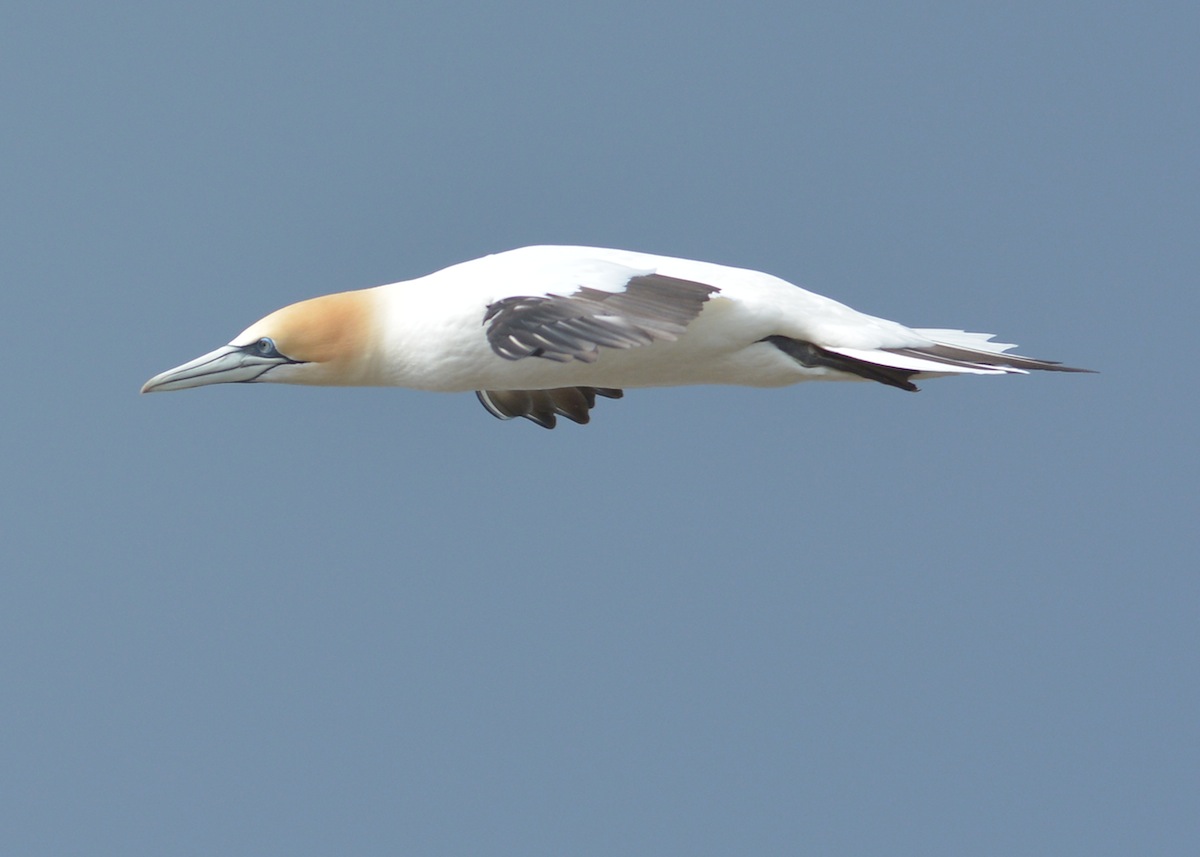
When the resting bird took to the air, they all gave a similar ritual of shaking themselves mid air, or ‘running’ in the air. Perhaps a muscle relief thing. There was a constant coming and going and I have to confess that once I got into the groove it was easy to run off 15-20 frames on one bird as it swept in from the sea, or the rituals that happened on land. In Tia Chi, Master Lam would call that “Chen, or sinking, and Hou – agility, just to keep up with them. Thanks Doc.
Off course I had to edit them and the out of focus ones were minimal. And because of the Wimberley, hardly one that was a camera shake error. Quite a few were poorly framed as the birds sweep in on the wind at such a pace, and the best technique would be hard pressed to keep up with them, especially as many were well under 10m from camera.
From my camera position there was a little extent of deep blue sea beyond the cliff face and I tried really hard to get the birds against that narrow blue strip for a contrast. But, the small angle of the blue, the speed and my inability led to many that didn’t quite make the grade. I even tried hand-held at one stage, but tired quickly in the biting cold rain/wind.
My gear is protected by Lens Coat, and LensWrap. Both are waterproof, and I wasn’t concerned by the gear getting wet. Had it turned to a complete continuous deluge, I’d have probably retreated anyway.
Because the area is out in the open, not trees or shrubs, the light was still good enough to work with higher shutters speeds, and many were 1/1600th or above. So stopping action was moderately easy.
Here is a sample from the day, enjoy


(Masters is a local hardware supplier)


Down to the Gannet Colony at Portland part #1
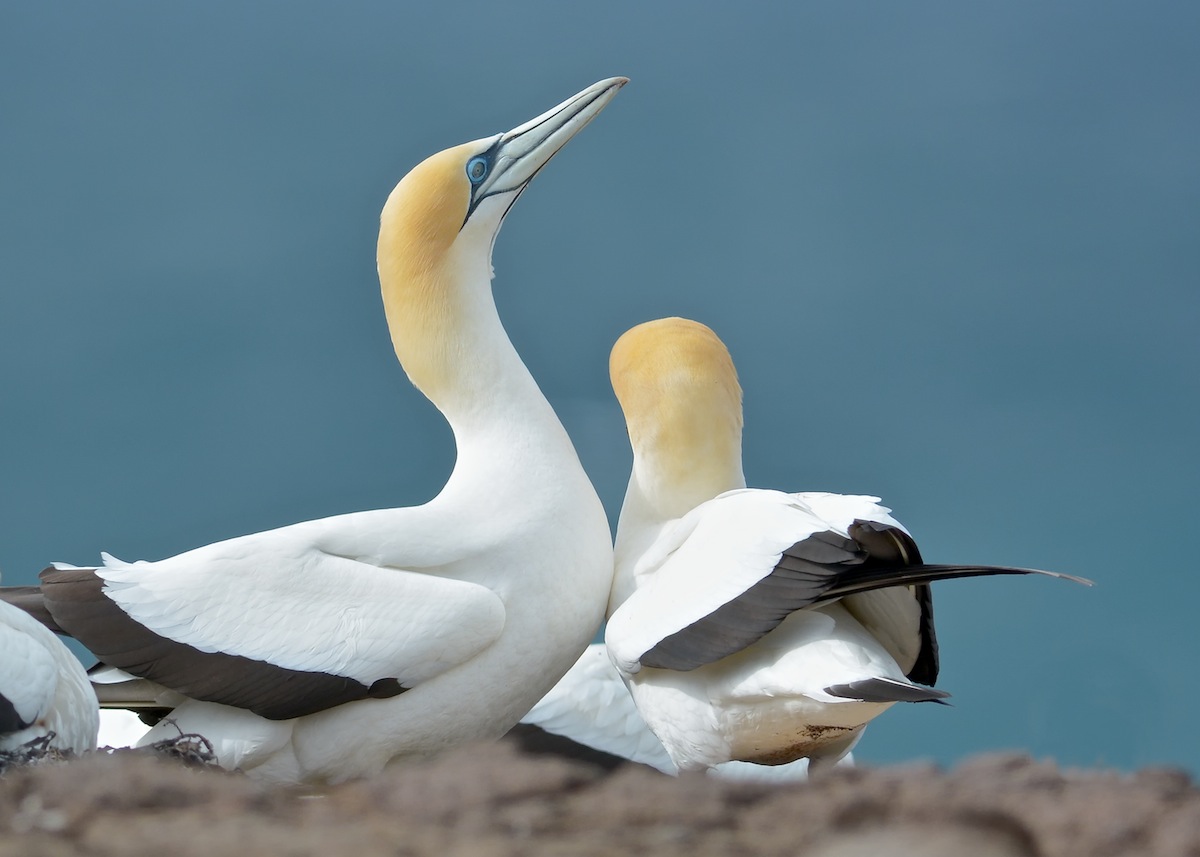
Today’s trip was an early start and an hour or so’s drive to Portland. Destination: The Australasian Gannet Colony at Point Danger. This is Australia’s only mainland colony. We had, thanks to arrangements by our trip leader Iian Denham, the opportunity to get up close and personal with the birds. Iian had made arrangements with Rob Farnes, to gain access into the nesting colony area. Not right in, but up to a low wire fence. 5 metres is pretty close with such a big bird.
There are around 200 pairs on the headland, and they are nesting at the moment. Not much of a nest, but some seaweed and grass stuck to the rock with the most handy material available. Bird Poo.
Now the weather had only changed slightly from yesterday, and the main change being an occasional hint of sunshine between the squalls. We needed to leave the cars and access the area through a locked gate, and at the appropriate time Rob came down and let us in. About 14 birders and two whacky photographers. I’d chosen to run with the Wimberley Gimbal head. Given the birds were in a set location, and I didn’t want to be swinging that long lens around in the wind. Oh, did I not mention the wind. Blustery Southerly is how it was described. Evil intent wind with designs of sweeping me of the rock is how I describe it.
I also foolishly made the command decision NOT to take the long Driazabone nor my gloves, figuring the weather might hold. (shows how little I know about weather) Within about 5 minutes of being too far from the car to go back, the rain set in.
Most of the group headed for the ‘shelter’ of some low shrubs, but I decided not to leave expensive camera, tripod and lens to the elements, and hung on grimly. My hands began to ache in the cold. The Gannets seemed not concerned at all.
Just off shore (about 2 km) or about 3 wing flaps for a Gannet, is the main breeding colony of Lawrence Rocks, up to 6,000 pairs are out there. I could just make it out in the rain.
One of the opportunities for the birders here was a Cape Gannet that had attached itself to the flock, but try as hard as we might, we didn’t get a sighting.
I’m going to share more of the photographic challenges in a second blog, as I want to show a wider range of photos.
After getting back to the car, and turning on the heater, and attaching my gloves, we headed off to the Lighthouse area, for both morning tea and Rufous Bristlebirds. We opted for a quick cuppa outside, but those who ventured into the coffee shop, got not only a fine hot coffee and cake, but, just the best views of the Bristlebirds performing in the open. You gets what you pays for!!!!
After a look among the scrub, a walk to the top where the lighthouse stands, we bade farewell to the group, and began the drive back home. We had an appointment for Wednesday, and so it was impossible to stay longer.
By the time we were going through Port Fairy, it was lunch time and we were feeling just a little peckish, and the joint chief of staff decision was made to take fare at Port Fairy. Now- I recalled that yesterday I’d seen “Chicken Tandoori Pie” on the menu at Bella Claire Coffee shop, and we parked outside and then enjoyed a super pie, and another coffee. Things were indeed looking up. The service was great, the food amazing, and I found another pie place to add to my ‘Pies I’ve eaten” book.
To top it off back across the road to Cobbs Bakery and I picked up some Pasties to travel home with us for dinner. Too much fun.
We had a bit of time so went for another look along Gorman’s Lane. No rain, but, the tide was out and the waders were a long way down the beach. Too far for this adventure.
Here is some Gannet moments. More to come tomorrow.




The hapless bird moved.

 Birds as Poetry —— Just because I WANDER doesn't mean I'm LOST