My friend Dieter and I planned a day down at WTP, he because he wanted to try out the new D800, and me because I like to go down there.
We left early and beat the morning traffic, and were just getting the gear out of of the camera bags at the turn off to Point Wilson, when an explosive whistle and cry came from directly overhead in the trees, after a few seconds it was obvious it was a Whistling Kite in full voice. Followed by an equally loud squeal from a Black-shouldered Kite, before both of them came barrelling out of the tree line. The Whistling Kite being fairly aggressively attacked by the Black-shouldered Kite.
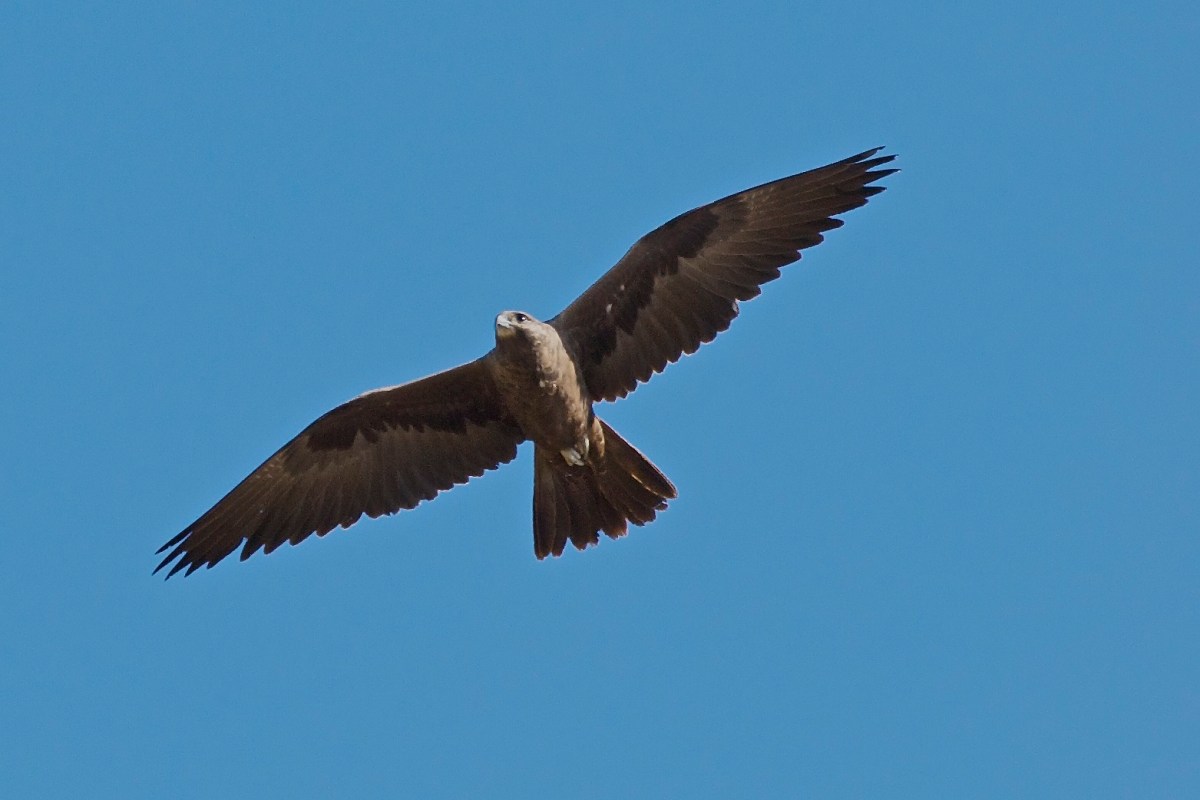
By this time we had the cameras out and were hard at work. The BSK made a number of fast passes over the struggling for wind speed, Whistling Kite, and it was struck several times by its protagonist. The shot here shows the Whistling Kite with claws out as it has just defended off the aggro Black-shouldered Kite, it is possible to see a few loose feathers floating away.
After a heavy pursuit, the Whistling Kite gained some height and speed, and by then it was well away from the tree-line. The Black-shouldered Kite came back and started a second pursuit of a Goshawk, but it managed to slip away without any thing more damaged than its pride. The BSK, then patrolled the treeline and all and sundry were aware of its stake to territory.
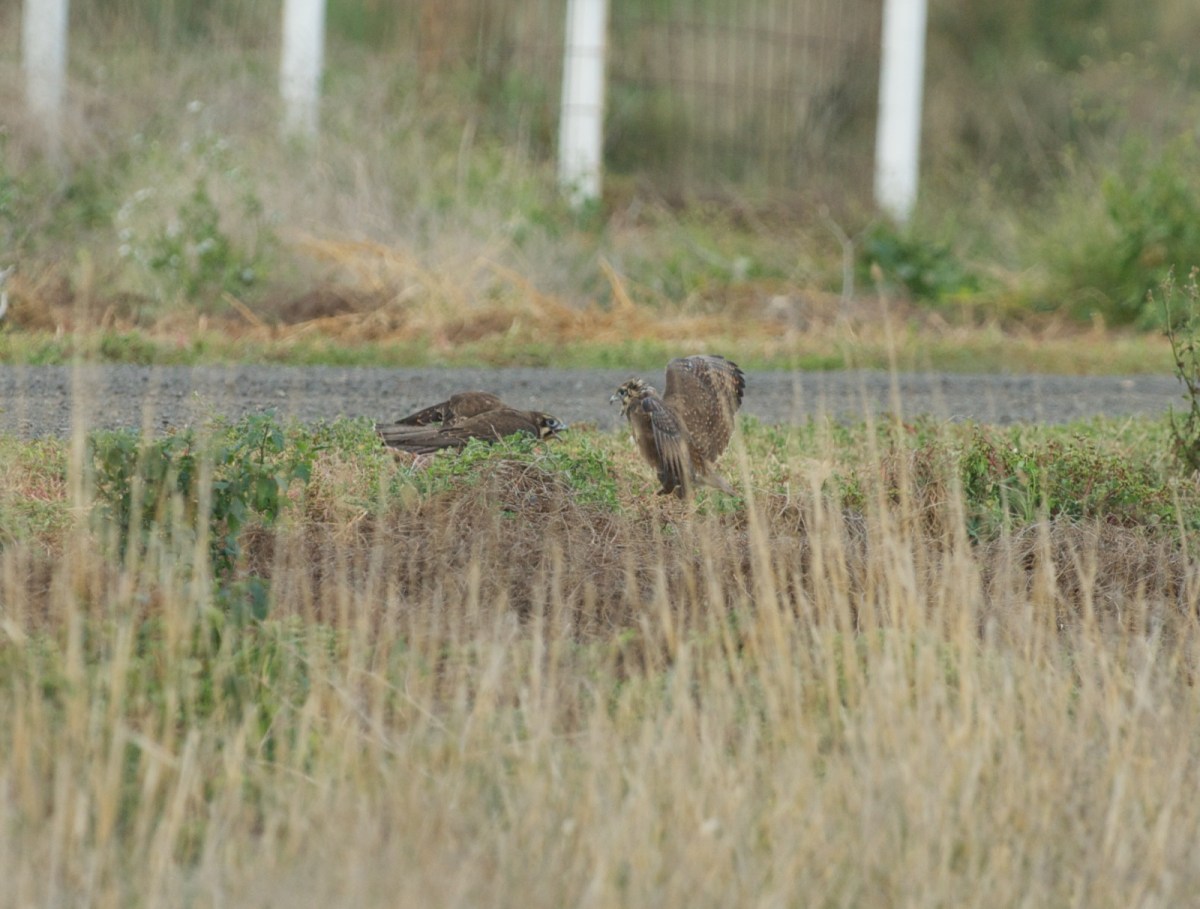
The rest of the day was nowhere near as dramatic, except for a Brown Falcon playing catch me if you can along a fence line. But I was driving and Dieter was the one working in the new D800.
A Black-shoudlered Kite making an aggressive pass on a Whistling Kite who was doing all it could to defend itself against a constant attack. The loose feathers are from a direct hit by the BSK.
Just look at the calendar! It’s the end of April already. Although I suppose a look out the window at anytime would confirm it is coming on to winter.
I make no excuses, I like to go to the Treatment Plant in the afternoons. The light just runs down the roadways at a better angle. Because there are so many limitations about position in Werribee getting the light direction is one of the keys to great photos down there. So daylight saving is my friend in all this endevour.
But come winter, well, things change a bit. The sun is down by 5 pm, and so there is little time to get about the places we like to work from. So for the next few months, we are back to early morning starts. (No point getting there at lunch time as the birds are past the hungry at all costs mode). The light is harder to work with because the angle of the early morning sun is always lower and 3/4 backlight at best.
So in keeping with all that we loaded the car in the evening, set the alarm, and ventured out just as it was breaking daylight. A better run down the Ring-road too.
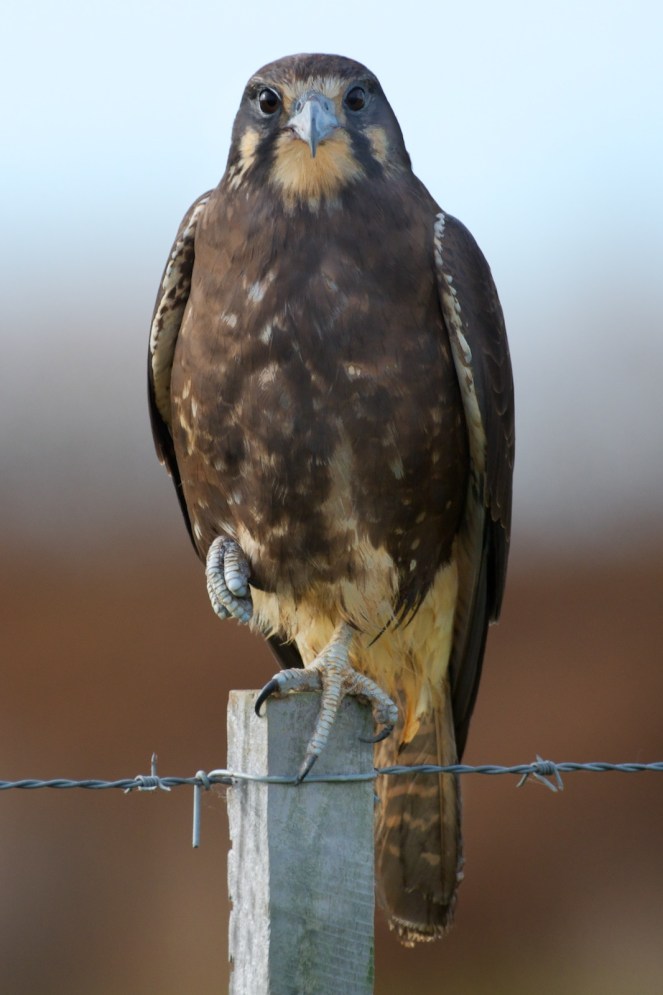
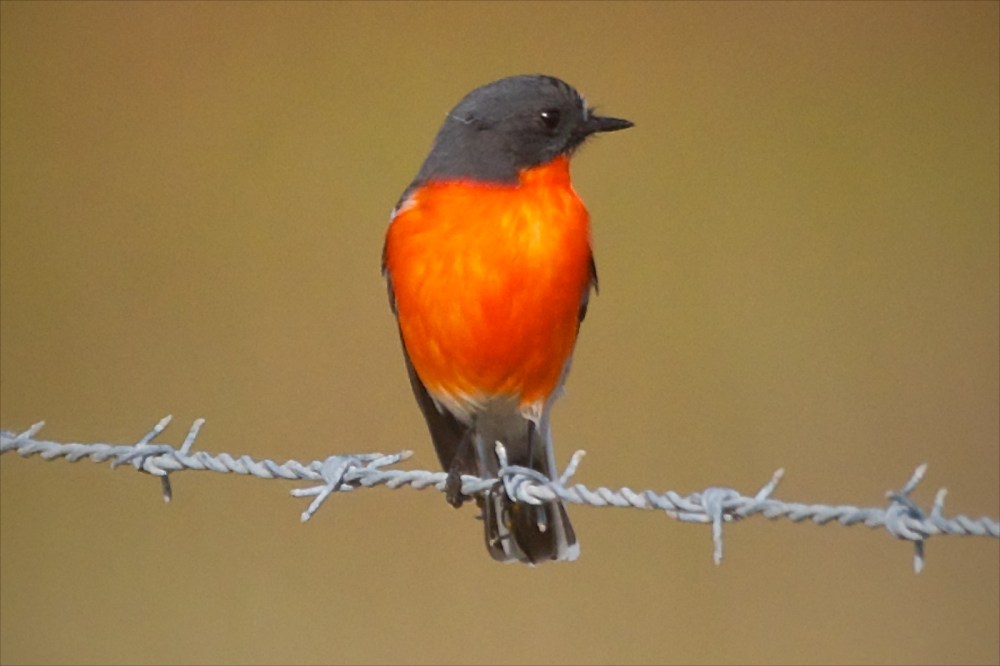
As soon as we turned of the freeway onto Point Wilson Road, we found some Red-rumped Parrots. A short distance along and Flame Robins were on the fence. And on the Paradise Road, and the road to Ryans Swamp, past the pumphouse. And a lovely Brown Falcon who sat motionless on a fence post and stared us down. I edged the car past it, on the far far side of the road, and with the long 500mm had to shoot vertically to get it all in. And then it flew. So I got a crop, but am pretty happy with the result.
More Flames down at Chirnside Road gate, and then a fruitless search for Swan J19.
We travelled back along the road to the Bird Hide and in quick succession scored a lovely Swamp Harrier, a pair of White-bellied Sea Eagles and a Buff-banded Rail. Not content we stopped near the Outflow from Lake Borrie and were entertained by five Black-shouldered Kites who seemed to be enjoying the light breeze and playing a game of ring-around-a-rosie, from the outflow sign and a large bush. No aggression, just plain fun.
More Flames along Beach Road, and a tree full of lovely yellow/green parrots.
We trundled down 29 Mile Road, and were amazed to find a single male Nankeen Kestrel,- the first we have seen at WTP (I had heard of it from reports on Victoria BirdLine.). It hunted up the paddock, dive-snatched a mouse, and sat on the fence line to consume it. So I moved the car forward a bit, it moved up about 3 posts. I moved again, it moved up 4 posts, I moved again, and it moved even further. A game of diminishing returns for me, and a success for the Kestrel. Still I managed to get a few record shots of it at work. Must go again. Hope its still there. The farm management were in the process of some controlled burns on the grass lands, and amongst the smoke could be seen 5 or 6 Whistling Kites waiting for some action. They seemed to be calling to one another, which is such a great sound, sends shivers down my spine.
Brown Falcon in early morning light. It allowed us to bring the car with in about 10m, which meant with the long lens I had to shoot vertical to get it all in.Just airborne. I waited, as it went though all the pre-flight checks, and probably was a little too early on the shutter. Was shooting vertical, so had to put up with a horizontal crop in the end.This one is at Chirnside Road GateIt made a turn out of the waterway just in front of our position. The early morning light filtered through the mist has kept contrast down, and highlight the wing and tail feathers. No clever post processing, just a little lightening up on the head.
It comes as no surprise that Birdos go out for various reasons. For some it might be to see a new area and see what birds are about, for others a trip to a location to add one more bird to the great bird list. Others enjoy the chance to see birds in their habitat doing bird things. For others it might just be the keeping track of the birds and any environmental changes. Others go because the birds are there. Some even go to take cameras and record something of what they have seen.
For others, like us, it is even more intangible. We just love to see them, to watch their antics and to enjoy a day out in the wide open spaces. “A bad day in the bush is better than a good day in the office” or so the bumper sticker goes.
Which leads us to driving down the Beach Road to the Werribee Treatment Plant.
There have been plenty of reports of Black Falcons in the area, but in-spite of trying hard, we hadn’t had any success, and figured while it would be nice, probably not this season.
Till we got to the Beach Road/29 Mile Road junction on Monday, and in the trees in front of us there were two black shapes. Probably didn’t get the car parked right, and we ended up a bit too far away, and I didn’t want to tramp down the road and send them into the air, but I needn’t have worried. They spent about 10 minutes or so in personal grooming, and then both took to the air, to work their way up and around in an air current off the road. Then they spent about 5 minutes overhead and around us, playing in the breeze. With a bit of exercise behind them, they both pursued every Raven, Magpie, Pigeon, and any other birds flying by. The intention didn’t seem to be direct attack, but rather close passes just because they could.
Tiring of this game they hunted on down the tree line becoming the usual black blobs in the distance, then both turned and gained height before plunging down the roadway and racing past at incredible speeds, just where we were standing.
The speed was phenomenal. It would make a Peregrine look up and take notice, and then with a dash of wing tip, they would turn on nothing and repeat the performance up the road again. This is our first encounter with these birds, and it goes with out saying, we were simply awestruck at the speed and agility. Satisfied with themselves, they proceeded down the 29 Mile Road and we lost sight of them.
Black Falcon in the early evening breeze. It is gaining height for a sweep down the roadway.
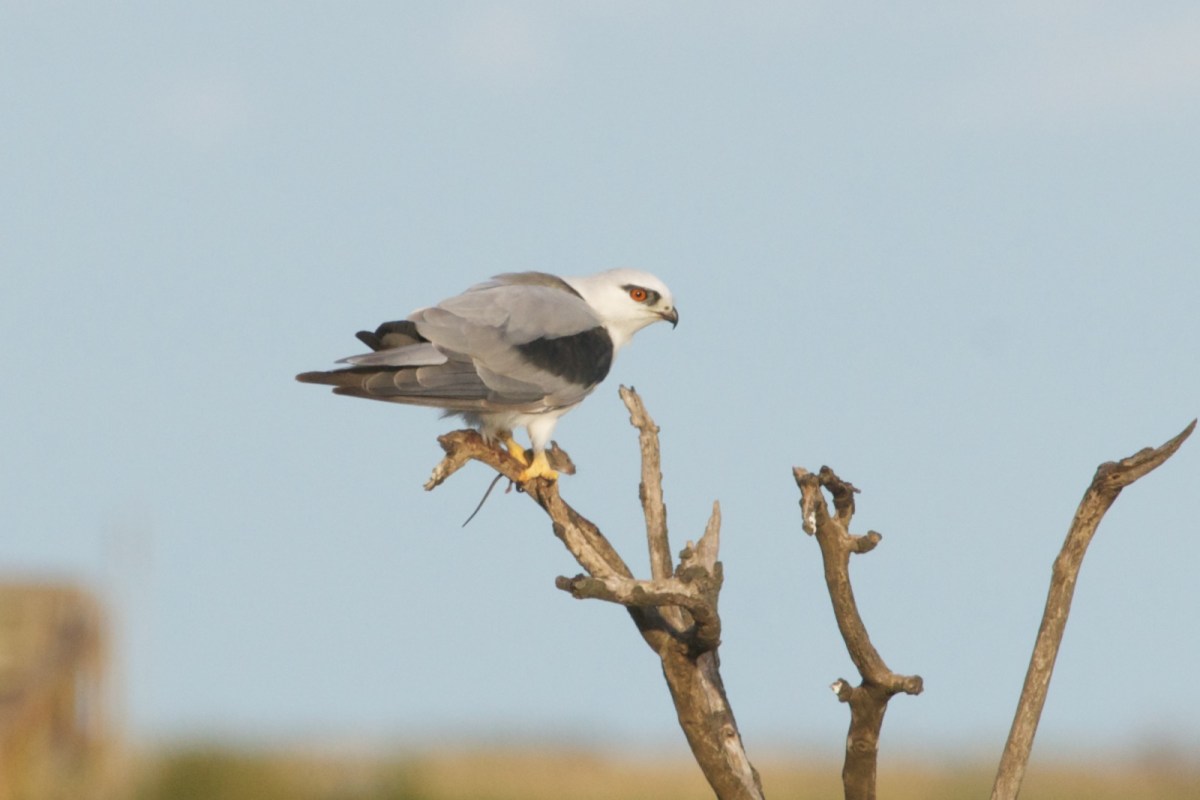
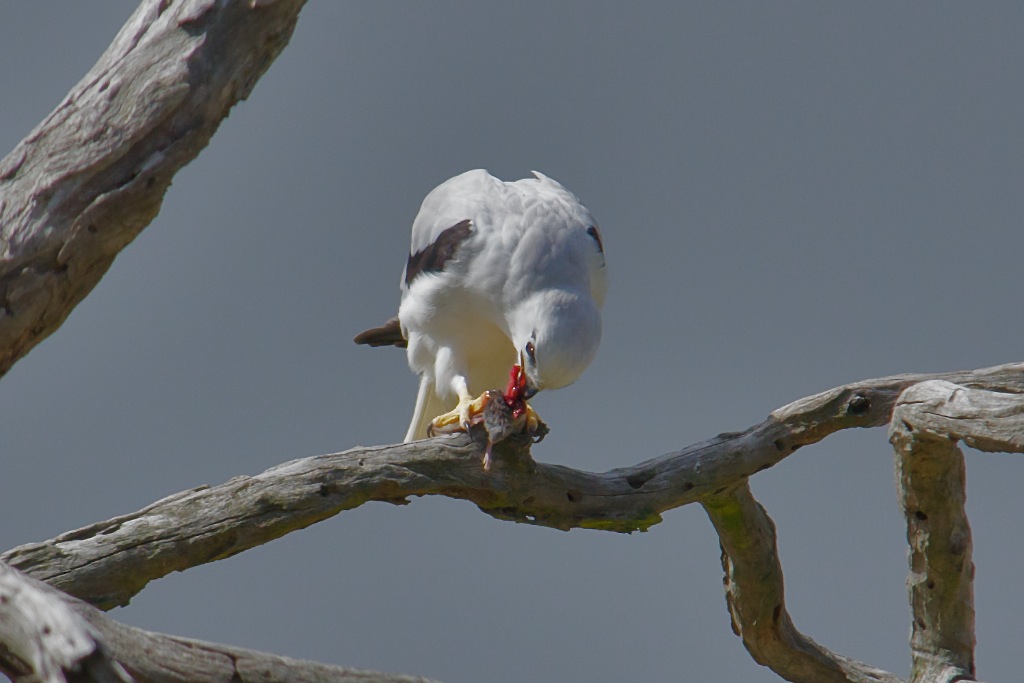
Our next encounter in the evening light was a Black-shouldered Kite that had just taken a mouse. Again I missed with parking the car, and ended up about 10 metres too far back. So the shot is a bit from the back of the bird. But it polished off the mouse in record time and went to look for another.
Black-Shouldered Kite and fresh mouse take-away. Just a snack before sunset.
Our next major find was to engross us both for the best part of half an hour. We had just turned off the main track past the Little River Ford, when we noticed two Brown Falcons about 60 metres further down on the roadway. What ensued next was worthy of David Attenborough.
They began to play chasing games, which led to aerial dogfights and then a game of hide-and-seek among the shrubs and bushes, one would disappear and the other would trundle (how else do you describe the way they walk about) along until both would leap into the air in mock attack. This lead to another game which has to be called “king of the castle’. One took up a position on a high clump of weeds, and then the other would move around trying to gain attack advantage. When it was in position it would crouch down in the same was as a cat or dog might and then leap up and onto the stack, hoping to push the other one off.
It became clear to us that the ‘king’ had the advantage and didn’t get dethroned. So after about 10 minutes, the attacker trundled down the road to its own grass heap, and the other bird came down to attack. It then turned into a game of sneak aerial attack, as it swooped over the head of the ‘king’ causing it to duck and weave.
When we next looked at the time, over 3o minutes had gone by and the light was rapidly fading. Both seemed to have tired of the games and went to hunt.
I will put up a number of images from the sequence on another page in the next day or so. Such an interesting pair.
Took a walk out to Cumberland homestead ruins and paddocks out in the middle of the Backpaddock. I’ve been avoiding it of late as the grass is simply too long and too dense to make safe walking across the paddocks. What a change from the dry years when there wasn’t a blade of grass to be seen.
The Parks people have been playing with their little green tractor and other toys and have slashed quite a few of the open areas, and put in a few tracks across the larger paddocks. At least it is possible to walk about.
I heard the “mhip mhip” cry of a Black-shouldered Kite and looked everywhere, sky, trees, treeline, fenceline, and didn’t at first see it. It was on the ground among the mown grass intent on feeding. To give me bonus points a second bird turned up, and its job was to harass the many Little Ravens in the old trees. Normally it is the ravens who have the task of harassing, but this kite not only put them off the trees, but was actively involved in attacking them in flight. For once the ravens were outgunned. Not only can the kite turn on nothing, but its speed and agility allowed it to easily move the ravens on. For once they didn’t even argue.
It returned to the first one and sat on the grass behind it, not that interested in the feast. Patiently waiting and occasionally taking to the air to move another flock of ravens on. Eventually the well fed bird took to the trees, taking a piece of the feast with it. The second bird then turned up with a stick in its beak. Last time I saw this sort of behaviour was in Spring at the treatment plant and a nest followed soon after. Interesting.
When they moved on, I walked down the track and searched in the grass and found the remains of a rabbit. This is the first time I have ever seen Black-shouldered Kites on carrion. No doubt something bigger had made the kill and the leftovers made a feast for the pair.
Also found the male of a pair of Red-caps and an early post had a picture of the female of the pair. So I think that I can now identify three territories, with probably a fourth one further down the creek-line.
Two Black-shoudered Kites on the remains of a rabbit. I have never seen them take carrion before, but this must have been quite a feast for them.
The forecast looked good. There should be open sky through to sundown. I like the evening light on the Treatment Plant as it’s interesting direcitonal light across the ponds. On a good night with plenty of birds it gives that lovely crispness that we struggle for.
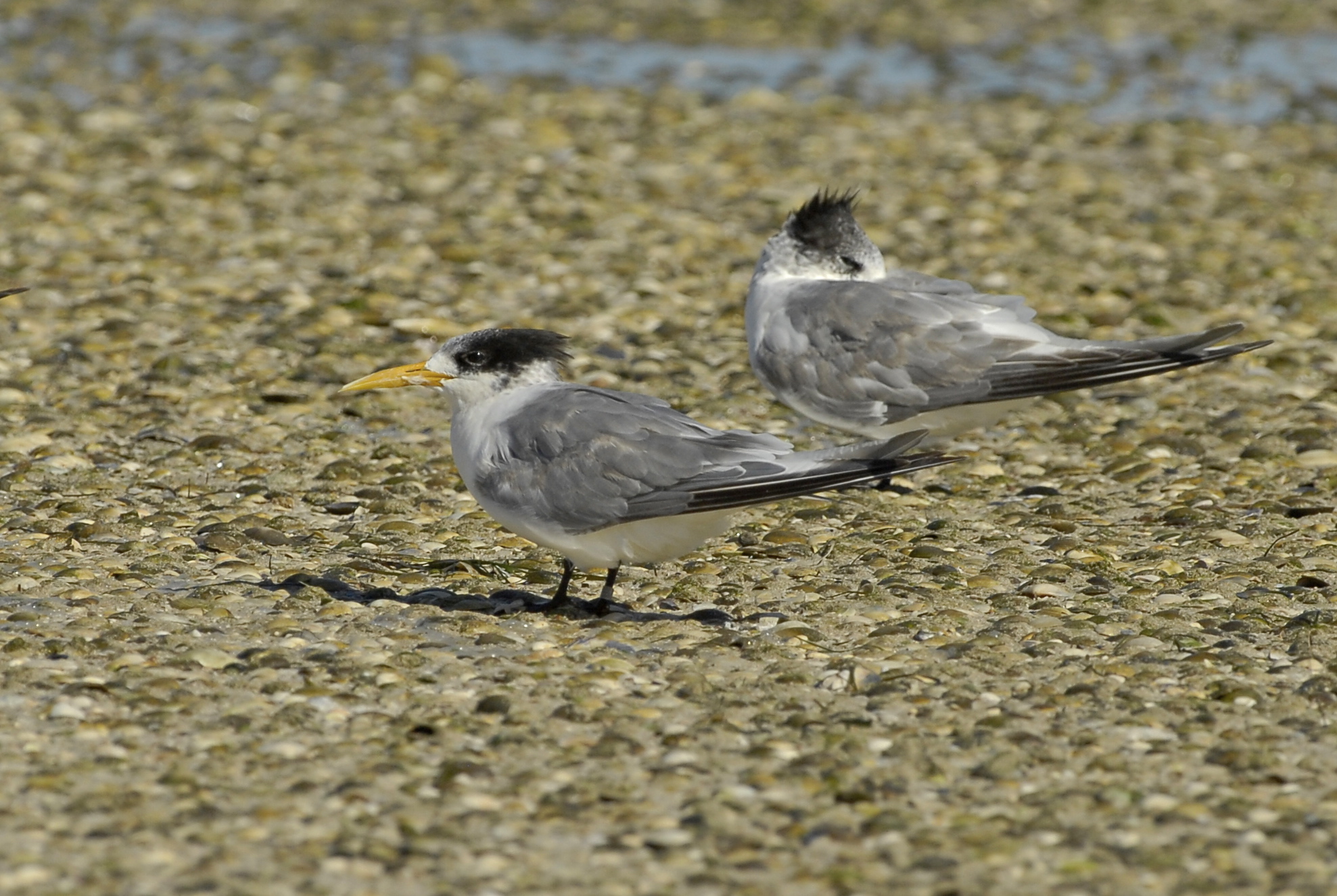
Along The Spit area, the terns were resting on the outgoing tidal flats and in some places, it is possible to get reasonably close.
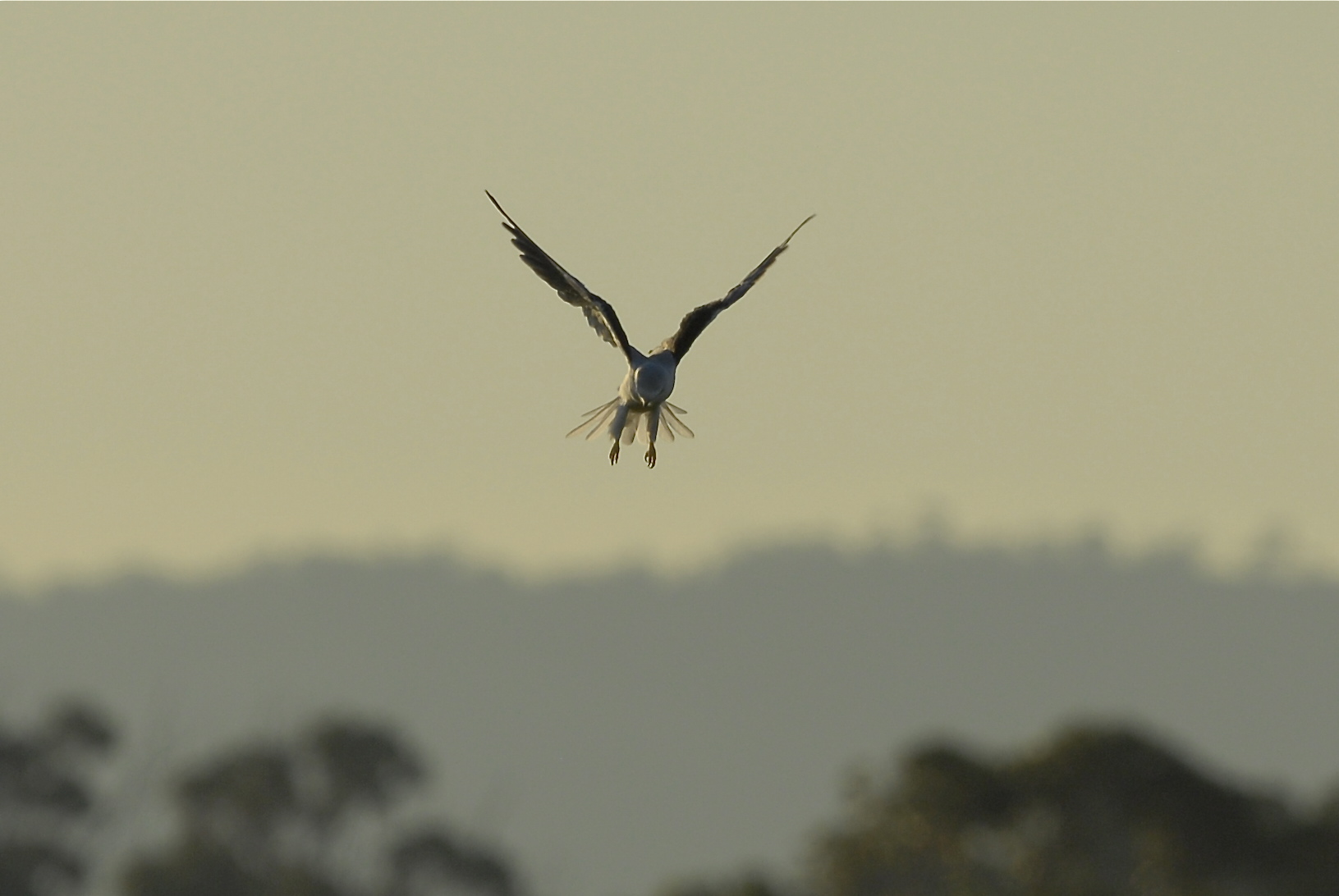
There is always a Black-shouldered Kite or two to be found and this evening was no exception. This is one of those images, that has only been cropped. No clever manipulation, as shot. Love the deep red glowing eye.
As the sun dropped toward the horizon, it left a soft haze that draped itself over the You Yangs and made a lovely light grey and then an orange curtain against which the birds, although backlit, became intriguing silhouettes.
On a very hot February evening we headed on down to the Western Treatment Plant. Because of other commitments, it was now or not until a few weeks time.
The day was hot, the birds were hot, and scarce and who could blame them.
Found this Black-shouldered Kite on a limb near the boat ramp and moved the car into a good position for a shot. Its wings were spread out from its body in an endeavour to keep cool. But it also attacted attention from the local Willie Wagtail harassment team.
As if it wasn’t hard enough now it had to endure constant bombardment from the wagtails. As a team they are pretty relentless, one distracting while another dives or pulls tail feathers or in this case lands on the back.
Not sure if it was the harassment, the heat or the closeness of the car, but in the end it moved off to the tree line along the road to sit in the shade with another kite that was smart enough to avoid the wagtails and sit in the shade.
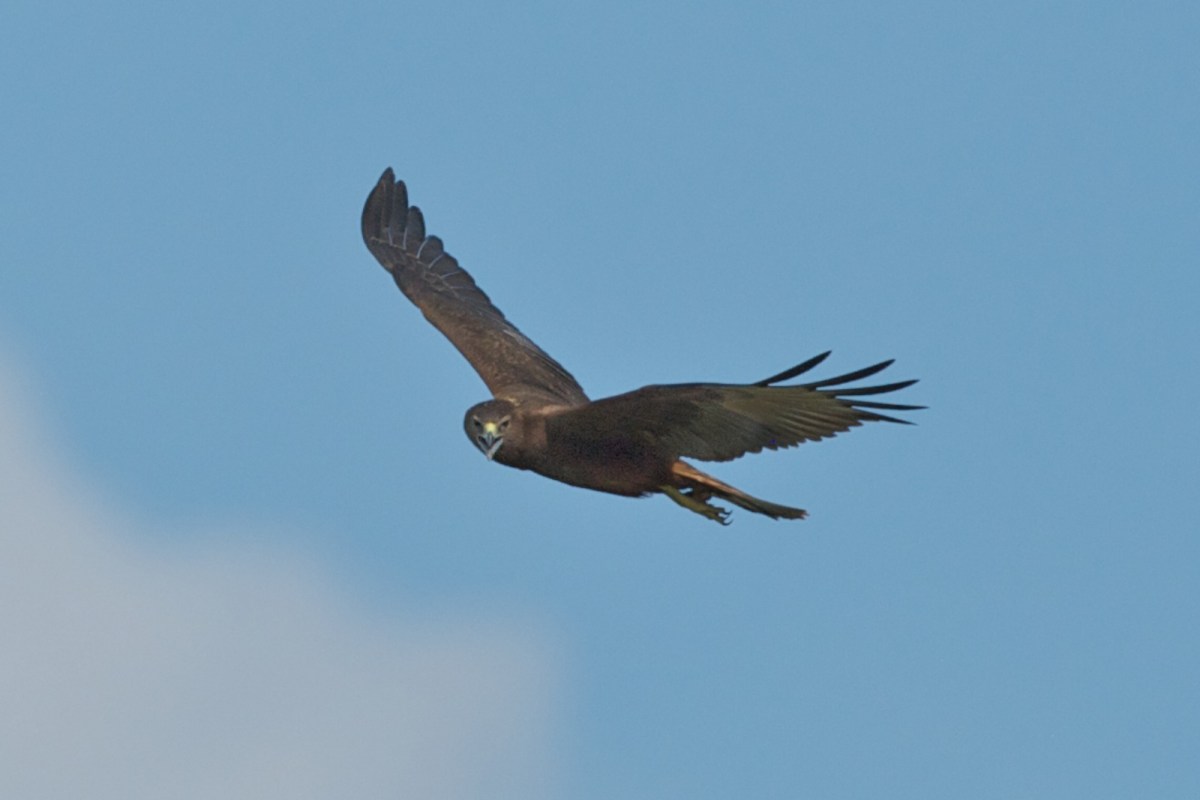
Also found a Swamp Harrier working along the river with its beak open scooping in air, and its tongue handing out.
A Black-shouldered Kite being harassed by a Willie Wagtail. This one had just landed on the back of the kite.Swamp Harrier flying down the Little River, with its beak wide open and its tongue out. Perhaps trying to keep cool
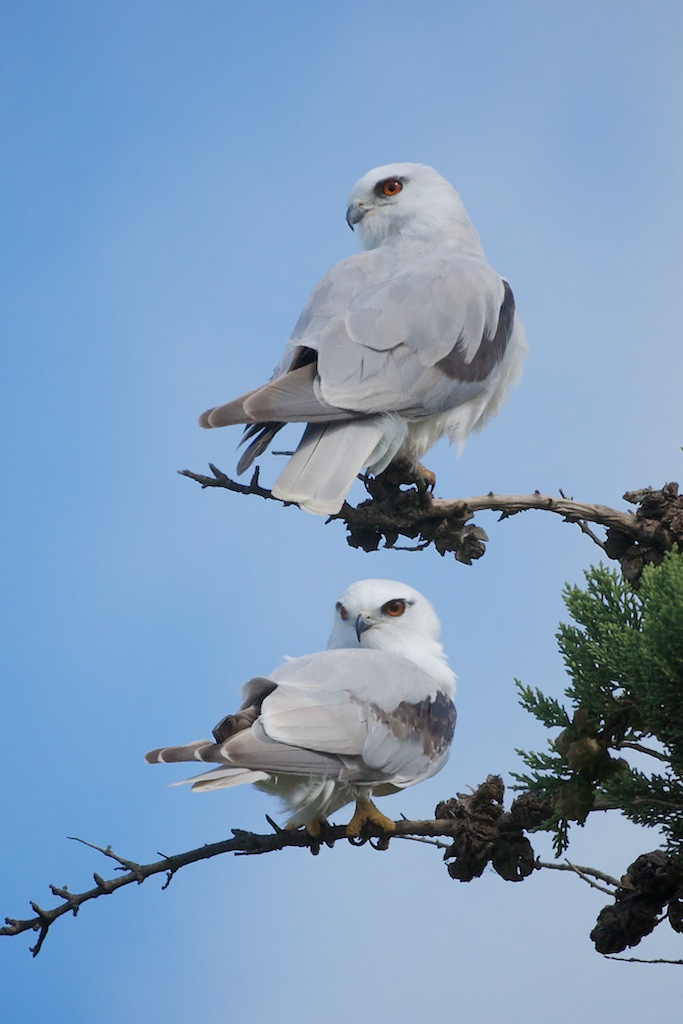
This pair of kites are roosting on a tree near one of the main roads around the WTP, we were hoping that they might be going to nest, but over the past few weeks we have not seen any indication of intent. Perhaps she is resting after a brood earlier in the season.
A pair of Blackshouldered kites in the afternoon sun.
Some days it is very quiet, and other days are quite exciting. On the way home after a fairly quite afternoon’s ramble, I discovered a Black-shouldered Kite hunting along one of the main roads past Woodlands. It was able to catch mice from the roadside verge and spent an hour or more before I had to get on the way home. Probably was just passing through, but it certainly had no problem locating food by the roadside. It’s biggest problem was avoiding the fast moving traffic when it took off with its latest catch.
During the cooler months, we had taken going to the WTP in the early morning.Light is much more intense and there has usually been a soft haze or even mist or fog on some morning.
We were coming around a corner near the Little River, and found these three enjoying the early morning sun.
The young bird still has the ginger/cinnamon feathers. I crept down the roadway close to the fenceline to get as close as I could. At about 38metres, it was just starting to concern the bird behind the young one. I managed a few shots but the best was when they all turned inward.
300mm lens. Hand-held ISO400 f/5.6 1/1000 sec.
Black shouldered kite family in the early morning sun at WTP








 Birds as Poetry —— Just because I WANDER doesn't mean I'm LOST