If you assemble a group of half a dozen birders together and ask a question about bird id, you’ll likely get about 10 or more different answers.
Birds don’t make it easy. Some have unusual juvenile plumage and are easy to spot. Some don’t. Some differ between breeding and non-breeding plumage (Consider the Red-necked Stint, it’s most unusual in Australia to see them fully coloured up rich red).
Discussions begin about the intricacies of variation in moult patterns, in feeding styles, of nesting and a whole range of features and characteristics.
Discussion also turns to cover all sorts of anecdotal material, and some wise birders seem to be able to determine not only the sex of every bird, but on which side of the tree the nest was on.
It’s enough for the beginner to shake their head and wander away thinking, “I only wanted to know if it was a Sparrow or an Emu!”
Most birds don’t have a wide variation of plumage so its pretty easy to settle on what a Little Pied Cormorant looks like, and why it’s not to be id’d as a Australian Pied Cormorant. Or, some are distinctive enough, think Laughing Kookaburra, as to not be easily confused.
But when it comes to Brown Falcons
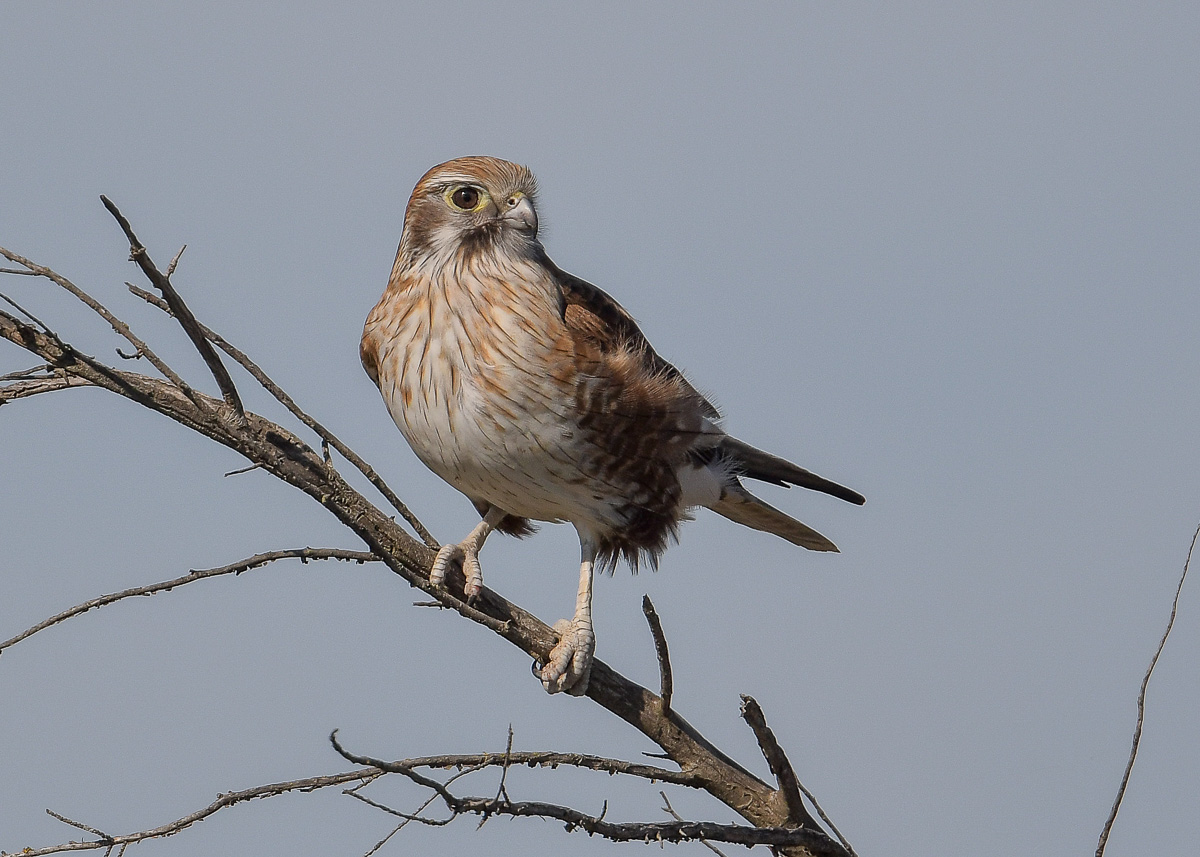
This past week my Flickr and WP friend Eleanor, had made a trip to the Western Treatment Plant, and photographed a bird which, at first blush looked like a Nankeen Kestrel. It certainly started some conversation around my group of birders.
Browns are birds of the open plains and open forests.
As the text books say, “Brown bird with a variable plumage.” Which is where the problems of id begin to surface.
And variable is what seems to make id complicated sometimes.
Browns can vary from dark chocolate brown, through a marbling light brown on white, to white chests and underwings.
At a distance, a light morph Brown is easily mistaken for a Nankeen Kestrel
Here are three that show some of the variations. All of these are local birds that I’ve come across in the past couple of years.
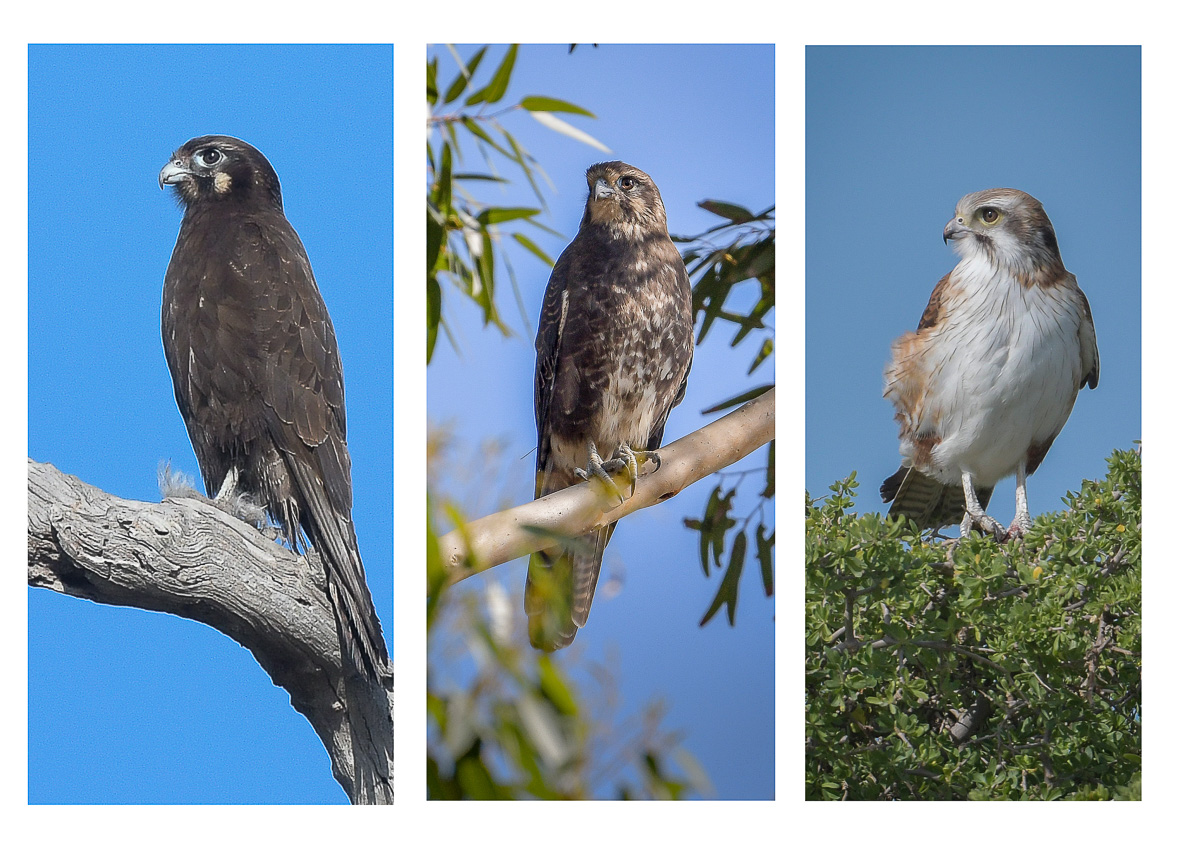
See. “With variations”
Here is one that is similar, (if not the same bird, but I’m only guessing) that Eleanor found
For a greater discussion there is an interesting PDF file from the publication, The Emu 2003.
Much of the research was made at the Western Treatment Plant.
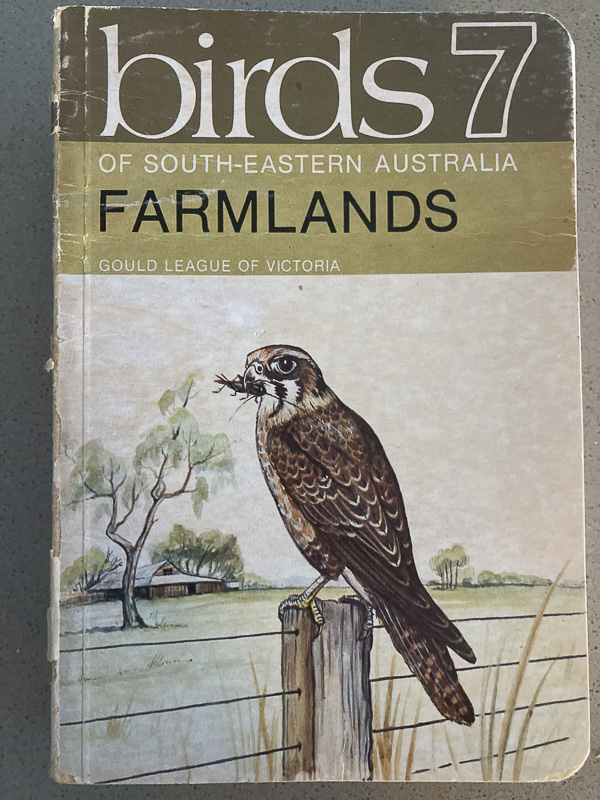
And here is a lovely cover of an old Gould League of Victoria publication with paintings by Susan McInnes. As can be seen, this particular book has had a long journey in our family.
It used to be said, that light coloured birds were from the wide open plains and darker birds from forested areas. But, like all anecdotal stories, they may only be true under certain circumstances. As a young tacker growing up in the wide ranging open fields of the Mallee in Victoria, it was not unusual to see light through dark birds.
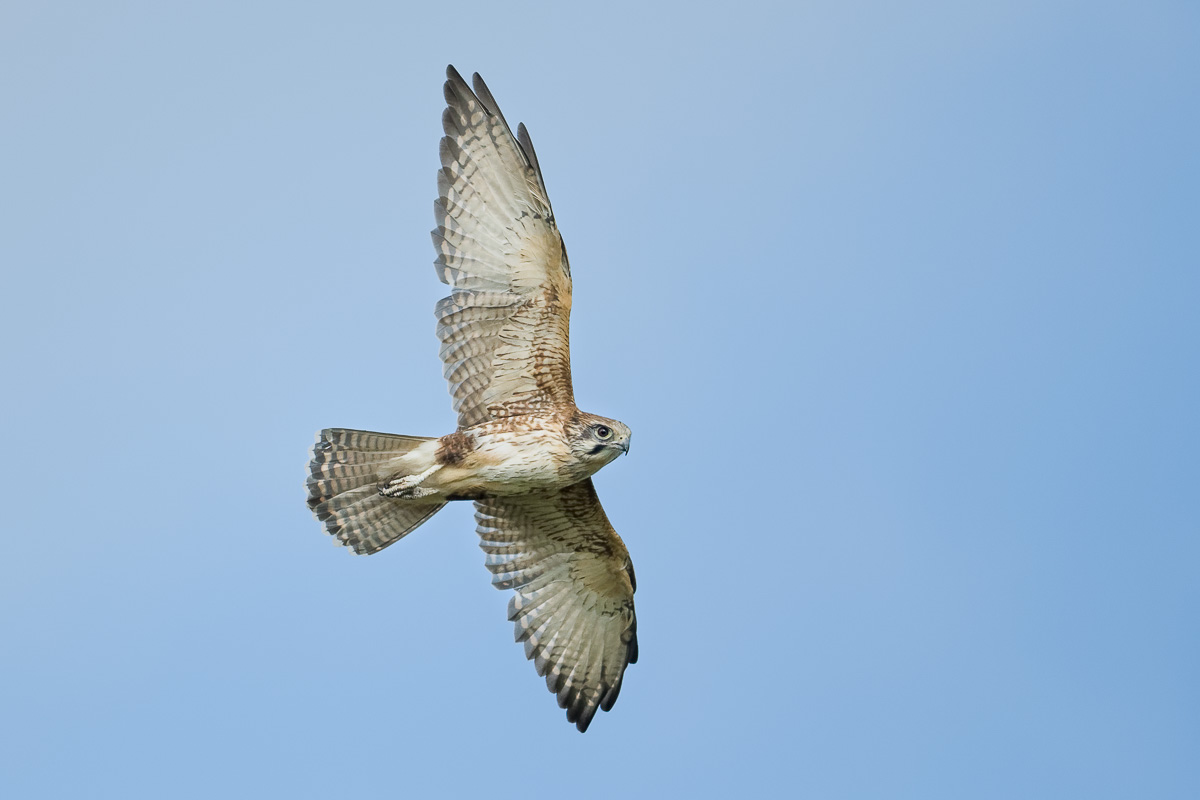
Long term readers know we regularly have contact with a pair of Browns. She is of the mid-tone marbled chest, but her handsome male, that I call “Alistair” is a very light morph bird. Here he is on a turn.
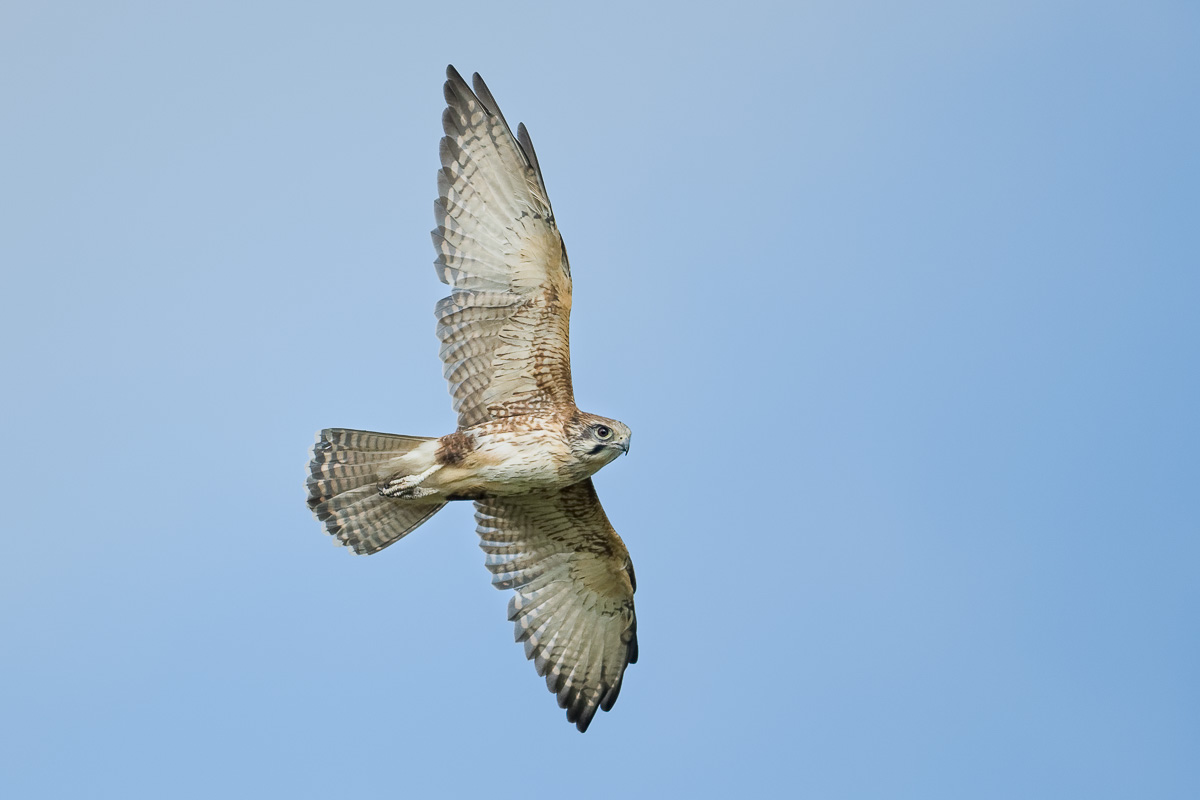
To add to the complexities, some like Alistair have yellow cere and eye marks, while others are a grey-blue.
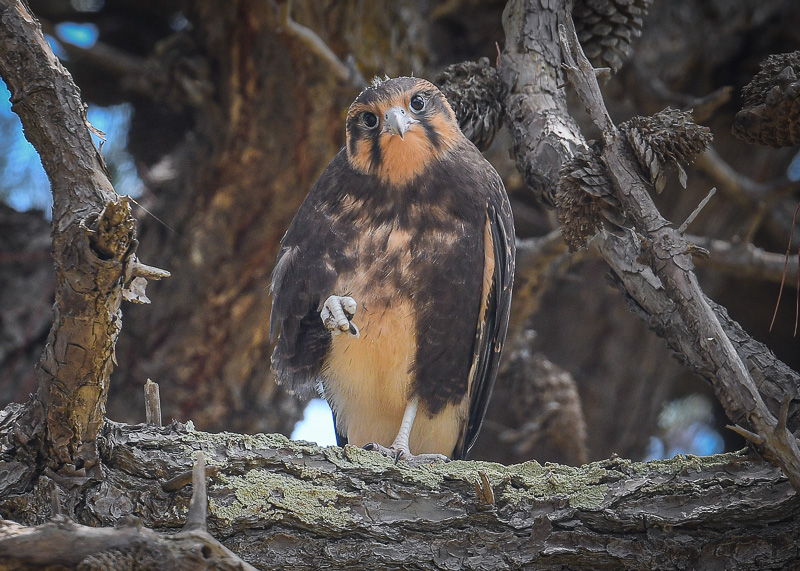
And for completeness, here is a young bird that had only been fledged a couple of days, the baby down is still showing on its head, as is the rich apricot colours.
Good Luck with id.
Enjoy.
 Birds as Poetry —— Just because I WANDER doesn't mean I'm LOST